

Submitted:
01 January 2026
Posted:
08 January 2026
You are already at the latest version
Abstract
The localization of the Sustainable Development Goals (SDGs) has become a central dimension of sustainable urban development, as local governments play an increasingly important role in translating global sustainability agendas into place-based action. This study aims to provide a state-of-the-art assessment of how scholarly research has examined the relationship between local governance and SDG implementation over the period 2018–2025. A mixed-method review approach was employed, combining bibliometric mapping using VOSviewer with qualitative content analysis conducted through NVivo. Based on predefined inclusion criteria, 143 peer-reviewed articles indexed in the Web of Science database were systematically analyzed. The results reveal several dominant thematic clusters, including institutional coordination, sustainable urban planning, data-driven governance, accountability mechanisms, and the growing use of policy tools such as Voluntary Local Reviews (VLRs). The findings indicate an increasing emphasis on performance-based monitoring, participatory governance approaches, and multilevel institutional frameworks supporting the integration of the SDGs into local policy and planning processes. At the same time, persistent challenges are identified, particularly with regard to equity considerations, data inconsistencies, and the limited inclusion of marginalized urban communities in SDG-related decision-making. Overall, this review offers a structured and comprehensive overview of current research on SDG localization in urban governance and identifies key gaps and priorities for future research and policy development aimed at more inclusive, measurable, and context-sensitive pathways to sustainable urban development.
Keywords:
sustainable development goals (SDGs)
; SDG assessment
; SDG localization
; local governments
; urban governance
; voluntary local reviews (VLRs)
1. Introduction
In recent years, the localization of the Sustainable Development Goals (SDGs) has emerged as a central concern within global sustainability research, reflecting a growing recognition of local governments as key actors in the implementation of the 2030 Agenda. Although the SDGs were formulated as universal global objectives, their realization ultimately depends on effective action at the subnational level, where public policies directly shape social, economic, and environmental outcomes in everyday life [1,2,3]. Consequently, local authorities are increasingly framed not merely as service providers, but as strategic partners in sustainability governance, engaged in areas such as climate action, urban planning, social inclusion, and institutional resilience [4,5,6].
Over the past decade, scholarly work at the intersection of SDGs and local governance has evolved substantially. Early contributions largely focused on normative alignment between global goals and decentralized governance structures [7,8], often relying on qualitative case studies from high-income contexts such as Japan [15], Norway [16], and Spain [4,17,18]. These studies established a foundational understanding that municipalities, despite contextual and administrative diversity, share a common responsibility in translating global sustainability ambitions into local strategies [19,20]. As the field expanded geographically and methodologically, research attention shifted toward operationalization, monitoring, and governance mechanisms that enable or constrain local SDG implementation [9,10,11,12].
Subsequent comparative studies across Europe [25,26,27,28], Latin America [29,30], and Asia [31,32] revealed significant heterogeneity in municipal capacity, commitment, and policy integration. While some cities demonstrate strong alignment of SDGs with strategic planning processes [33], others selectively adopt specific goals based on political priorities, institutional resources, or fiscal constraints [16,34]. These findings underscore that SDG localization is neither linear nor uniform, but shaped by a complex interaction of institutional, financial, cultural, and political factors operating across scales [35,36,37,38].
A critical turning point in the literature coincided with the COVID-19 pandemic, which exposed structural vulnerabilities in local governance systems and intensified the urgency of resilient and adaptive urban policies [39,40,41,42]. Research during this period increasingly emphasized empirical assessment tools, including Voluntary Local Reviews (VLRs), sustainability indicators, digital monitoring platforms, and institutional innovations [43,44,45,46,47,48,49]. Particular attention has been paid to the interaction between core urban-related goals—such as SDG 11 (Sustainable Cities and Communities), SDG 13 (Climate Action), and SDG 16 (Peace, Justice and Strong Institutions)—and cross-cutting issues including gender equity, transparency, public health, and stakeholder participation [50,51,52,53,54,55,56].
Despite this growing body of research, several controversies persist. One major debate concerns whether SDG localization should be driven primarily through top-down regulatory frameworks or bottom-up innovation and community-led initiatives [61,62]. Another line of critique questions the capacity of indicator-based assessment systems to capture the socio-cultural complexity of urban sustainability and governance processes [63,64,65,66]. Moreover, the literature remains uneven in its geographical coverage, with Global South contexts still underrepresented, particularly regarding fiscal decentralization, institutional asymmetries, and post-colonial policy trajectories [67,68,69,70,71].
Against this backdrop, the present study provides a comprehensive state-of-the-art review of the intellectual landscape linking local governments and SDGs between 2018 and 2025. Drawing on 143 peer-reviewed articles indexed in the Web of Science database, the study applies a hybrid methodology combining bibliometric mapping with SDG-aligned qualitative content analysis [1,2,3,4,5,6,7,8,9,10,11,12,13,14,15,16,17,18,19,20,21,22,23,24,25,26,27,28,29,30,31,32,33,34,35,36,37,38,39,40,41,42,43,44,45,46,47,48,49,50,51,52,53,54,55,56,57,58,59,60,61,62,63,64,65,66,67,68,69,70,71,72,73,74,75,76,77,78,79,80,81,82,83,84,85,86,87,88,89,90,91,92,93,94,95,96,97,98,99,100,101,102,103,104,105,106,107,108,109,110,111,112,113,114,115,116,117,118,119,120,121,122,123,124,125,126,127,128,129,130,131,132,133,134,135,136,137,138,139,140,141,142,143]. This approach enables the visualization of the field’s interdisciplinary evolution, the identification of dominant thematic clusters, and the tracing of shifting research emphases from normative alignment toward implementation, accountability, and performance assessment.
The analysis reveals three broad waves of scholarly development. The first wave (2018–2019) focused on conceptual debates surrounding the translation of SDGs into local policy frameworks, highlighting issues of legitimacy, institutional capacity, and the tension between global universality and local specificity [72,73,74,75,76,77,78,79,80,81,82,83]. The second wave (2020–2022), shaped by the COVID-19 crisis, prioritized empirical assessments of governance resilience, digital monitoring tools, and performance metrics [84,85,86,87,88,89,90,91,92,93,94,95,96,97,98,99], while also exposing asymmetric implementation challenges across regions [100,101,102,103,104,105,106,107]. The most recent wave (2023–2025) reflects a critical turn in the literature, questioning technocratic approaches to SDG localization, the political implications of indicator-driven governance, and the symbolic use of VLRs as accountability instruments [113,114,115,116,117,118,119,120,121,122,123].
Overall, this study contributes to the literature by offering a structured and integrative synthesis of current research on SDG localization in urban governance. It highlights key theoretical debates, empirical gaps, and emerging priorities, and underscores the need for more inclusive, context-sensitive, and reflexive assessment frameworks capable of supporting sustainable urban development beyond the 2030 horizon.
2. Materials and Methods
This study adopts a hybrid methodological framework that integrates quantitative bibliometric techniques with qualitative content analysis aligned with the Sustainable Development Goals (SDGs). It aims to examine the evolution of scholarly discourse connecting local governments and the SDGs between 2018 and 2025. The methodological design is structured in three stages: (1) data retrieval and screening; (2) bibliometric network analysis; and (3) thematic content coding based on the United Nations SDG framework.
2.1. Data Retrieval and Selection Criteria
The dataset was constructed by querying the Web of Science Core Collection using the following search string applied to the Topic (TS) field:
TS = (“local government” OR “municipality”) AND (“Sustainable Development Goals” OR “SDGs”)
The search was limited to peer-reviewed journal articles and review papers published in English between January 2018 and September 2025. To ensure scholarly rigor, conference proceedings, editorials, notes, and other non-peer-reviewed materials were excluded. Additionally, only articles indexed under the subject categories of Urban Studies, Public Administration, Environmental Sciences, and Sustainability were included.
After applying the inclusion and exclusion criteria, 141 articles were retained for analysis. For each article, metadata—including DOIs, titles, abstracts, keywords, authorship, and source journals—was exported in both BibTeX and CSV formats for further processing. The complete reference list will be made available in an open-access repository upon publication.
An overview of the data retrieval and screening process is illustrated in Figure 1.
2.2. Bibliometric Network Analysis
To uncover the intellectual structure of the field, bibliometric mapping was conducted using two complementary tools: VOSviewer (v1.6.19) and the Bibliometrics R package (v4.2.1). Three types of bibliometric networks were constructed:
- Co-authorship networks, to visualize collaboration patterns among individual scholars and institutions;
- Keyword co-occurrence networks, to identify thematic concentrations and emerging research hotspots;
- Citation networks, to trace influential publications and conceptual lineages within the field.
To improve the accuracy of the mapping process, a comprehensive data cleaning procedure was applied. This included term normalization (e.g., merging variants such as “local government” and “municipalities”), and keyword thresholds were set at a minimum of five occurrences to ensure statistical relevance. Additionally, fractional counting was applied to co-authorship links to account for variations in author contributions across multi-authored publications.
2.3. SDG-Based Qualitative Content Coding
To complement the quantitative bibliometric mapping, a qualitative content analysis was conducted using a predefined coding scheme based on the United Nations Global Indicator Framework for the Sustainable Development Goals (SDGs). The full texts of all 141 selected articles were reviewed and systematically coded using NVivo 14 software.
Three researchers independently applied thematic codes corresponding to each of the 17 SDGs. The coding process accounted for two distinct types of alignment:
Explicit references, where articles directly cited specific SDGs (e.g., SDG 11: Sustainable Cities and Communities);
Implicit alignments, where thematic content was conceptually related to SDG objectives without direct mention (e.g., equity-focused discussions linked to SDG 10: Reduced Inequalities).
Inter-coder reliability was assessed using Cohen’s Kappa, which yielded a score exceeding 0.86, indicating a high level of agreement among coders. Any discrepancies were resolved through collaborative discussion and consensus-building. To enhance methodological rigor, the final coded dataset was cross-validated against the bibliometric keyword clusters identified in Section 2.2, ensuring alignment between thematic and citation-based structures.
An overview of the SDG coding process, including the distinction between explicit and implicit linkages, is illustrated in Figure 2.
3. Results
This meta-analysis of 143 peer-reviewed publications (2018–2025) offers a comprehensive overview of the evolving academic discourse linking local governments and the Sustainable Development Goals (SDGs). The findings are structured into four interconnected subsections:
(i) thematic and knowledge clusters;
(ii) collaboration patterns;
(iii) SDG alignment distribution; and
(iv) temporal evolution of the literature.
3.1. Thematic Structure and Knowledge Clusters
The keyword co-occurrence analysis revealed four major thematic clusters, reflecting the interdisciplinary contours of the field (Figure 3):
Cluster A: Urban Sustainability and SDG Localization
Dominated by terms such as “sustainable cities,” “urban planning,” “localization,” and “resilience”, this cluster emphasizes the integration of SDGs into urban policy frameworks and local adaptation strategies.
Cluster B: Governance and Institutional Capacity
Centered around terms like “governance,” “transparency,” “participation,” and “multi-level governance”, this theme highlights institutional arrangements and intergovernmental coordination in SDG implementation.
Cluster C: Environmental Responsibility and Climate Action
Closely aligned with SDG 13, this cluster features keywords such as “climate change,” “green infrastructure,” and “adaptation,” underscoring the environmental dimension of local governance.
Cluster D: Performance Indicators and Accountability
A more technical cluster, including “data governance,” “monitoring,” “performance measurement,” and “Voluntary Local Reviews (VLRs)”, focusing on evidence-based policymaking.
3.2. Collaborative Patterns in the Field
The co-authorship network analysis reveals pronounced regionalized and transnational collaboration patterns among scholars researching the intersection of local governments and the Sustainable Development Goals (SDGs). Based on institutional affiliations extracted from 143 peer-reviewed articles, several key trends are identified:
European and Latin American scholars frequently form tightly integrated subnetworks, often engaging in cross-institutional collaborations centered on SDG governance, urban resilience, and climate action. These regional clusters are frequently supported by European Union-funded programs and South–South cooperation frameworks.
A North American cluster, primarily composed of researchers based in the United States and Canada, shows a strong focus on urban data governance, performance measurement, and the institutionalization of Voluntary Local Reviews (VLRs).
Asian institutions, particularly those based in China, South Korea, and India, have significantly expanded their research output in recent years. While some work appears relatively isolated, several notable collaborations with institutions in Australia and the United Kingdom focus on sustainable infrastructure and climate adaptation.
International organizations such as UN-Habitat, UNDP, and ICLEI emerge as key bridging actors within the co-authorship network, linking otherwise regionalized research clusters. These entities frequently co-author applied policy research and facilitate transnational knowledge exchange between global and local governance arenas.
As shown in Figure 4, the global co-authorship network map visualizes these patterns of collaboration across regions. Countries with higher publication outputs are represented with darker shades, and connecting lines indicate co-authorship links between nations.
In addition, citation analysis shows that seminal works published between 2018 and 2020 continue to serve as foundational references. More recent citation activity, however, is concentrated on applied topics such as SDG localization mechanisms, VLR reporting frameworks, and multi-level governance models. This indicates a growing shift in the literature from conceptual discussions toward practical implementation.
3.3. SDG Linkage Patterns in Local Governance Literature
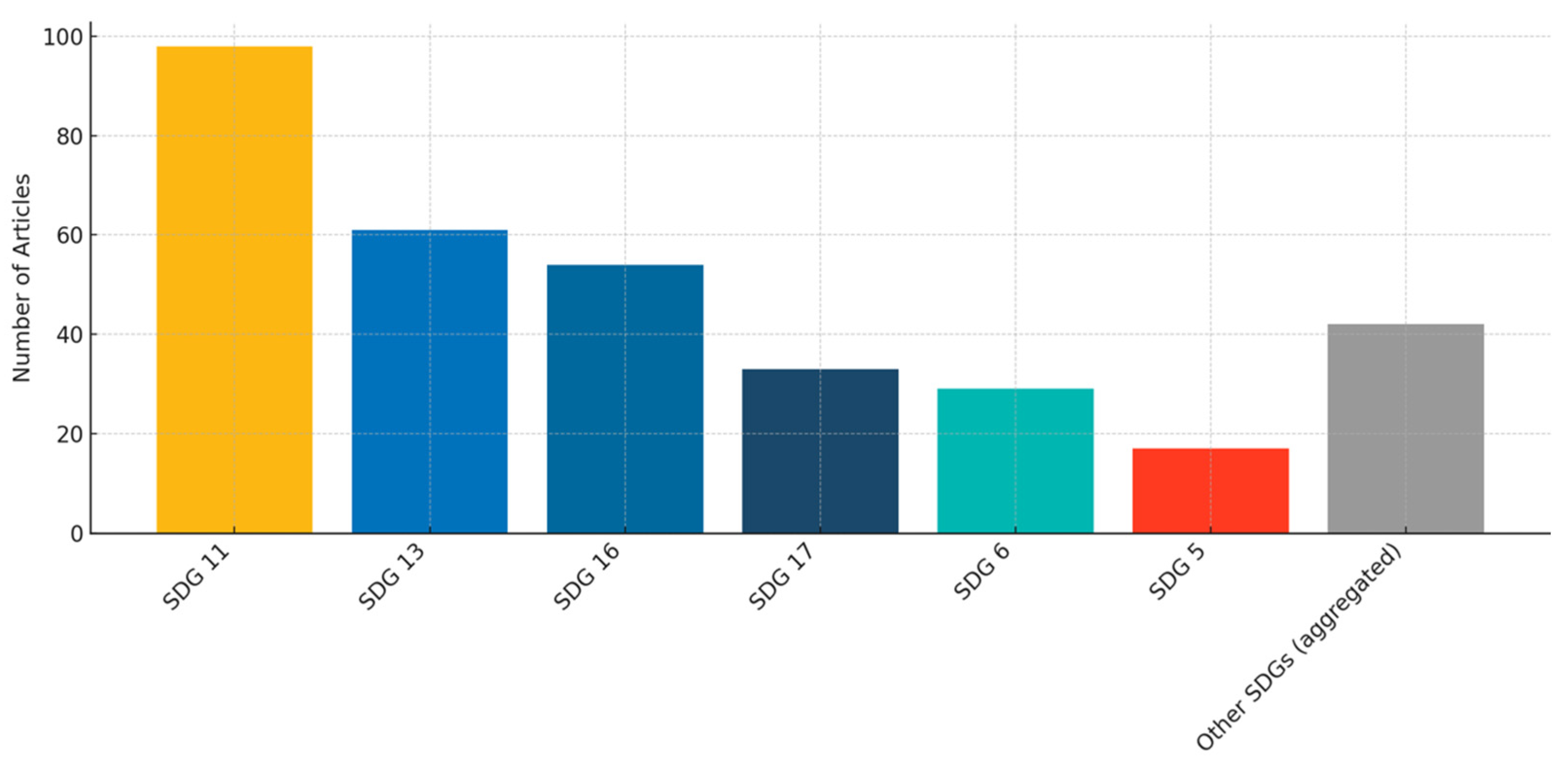
The qualitative content analysis, guided by the 17 Sustainable Development Goals (SDGs), reveals an uneven distribution of goal alignment across the reviewed literature. SDG 11 (Sustainable Cities and Communities) emerged as the most frequently referenced, followed by SDG 13 (Climate Action) and SDG 16 (Peace, Justice and Strong Institutions). This pattern underscores the dominant role of urban governance and environmental concerns in the localization of the SDGs.

Table 1.
Frequency of SDG Alignment in Reviewed Articles (n = 143).
| SDG | Number of Articles |
|---|---|
| SDG 11: Sustainable Cities and Communities | 98 |
| SDG 13: Climate Action | 61 |
| SDG 16: Peace, Justice and Strong Institutions | 54 |
| SDG 17: Partnerships for the Goals | 33 |
| SDG 6: Clean Water and Sanitation | 29 |
| SDG 5: Gender Equality | 17 |
| Other SDGs (aggregated) | 42 |
The strong emphasis on urban sustainability reflects both the policy mandate of local governments and the rising global visibility of cities as critical nodes in sustainable development strategies. Although SDG 5 (Gender Equality) and SDG 1 (No Poverty) were cited less explicitly, conceptual alignment with these goals was still evident in sub-themes such as gender inclusion, social justice, and participatory urban planning.
To complement the tabulated frequencies, a visual summary of the relative prominence of the most cited SDGs is presented in Figure 5.
4. Discussion
The findings of this meta-analysis offer a comprehensive understanding of how the intersection of Sustainable Development Goals (SDGs) and local governments has evolved both conceptually and empirically between 2018 and 2025. In line with previous studies that emphasized the role of cities as key implementers of global sustainability agendas [1,4,5], our results reaffirm the centrality of SDG 11 (Sustainable Cities and Communities) in local governance research. However, the present study extends earlier work by illuminating a shift from abstract alignment narratives to applied mechanisms such as Voluntary Local Reviews (VLRs), performance indicators, and institutional adaptation strategies.
The keyword co-occurrence analysis identified four robust thematic clusters: urban sustainability, governance capacity, environmental responsibility, and accountability mechanisms. These clusters reflect the interdisciplinary nature of the field. They are consistent with earlier typologies proposed by scholars such as Bulkeley and Betsill (2013), and reinforce the argument that urban sustainability is inherently linked to governance frameworks and institutional arrangements [22,28].
The co-authorship network map revealed pronounced regional clusters and cross-continental collaborations, particularly among European, Latin American, and Asian scholars. This observation aligns with recent findings in the bibliometric literature, which suggest that SDG-related research is increasingly driven by multi-actor and transnational partnerships [44,58]. Moreover, the emergence of intergovernmental organizations (e.g., UN-Habitat, ICLEI) as co-authorship hubs highlights their growing role not only as facilitators of implementation but also as producers of knowledge.
One of the most notable contributions of this study is its documentation of temporal shifts within the research landscape. The early phase (2018 to 2020), characterized by normative discourse, gradually transitioned into a more instrumental and empirical phase after 2020, catalyzed by the COVID-19 pandemic. This shift mirrors broader trends in global governance during the pandemic, where local governments assumed central roles not only in public health responses but also in reconfiguring urban resilience and digital governance systems [39,84].
Interestingly, while SDG 5 (Gender Equality) and SDG 10 (Reduced Inequalities) are mentioned less frequently, the content analysis suggests that themes of equity and inclusion are often embedded indirectly. These appear in discussions concerning vulnerable populations, participatory planning, and social justice. This finding raises methodological concerns about overreliance on keyword-based analyses when tracking SDG engagement, and suggests the need for more nuanced, context-aware coding approaches in future research.
In recent years, particularly between 2023 and 2025, a critical perspective has emerged. Scholars have become increasingly skeptical of purely technocratic approaches to SDG localization. There is growing concern that tools such as indicators, dashboards, and VLRs may risk depoliticizing sustainability or reinforcing managerialism [117,118,119,120]. These critiques resonate with broader debates in sustainability governance, especially those addressing the tension between measurement and meaning, and underscore the importance of developing context-sensitive, participatory, and justice-oriented models for localization.
In summary, this study not only synthesizes a previously fragmented body of literature but also demonstrates how the field has matured. It has evolved from aspirational frameworks to empirical analysis, and from descriptive mapping to normative critique. These findings carry important implications for both researchers and policymakers navigating the complex dynamics of SDG localization in urban contexts.
5. Conclusions
This meta-analysis maps the evolving intellectual architecture connecting local governments and the Sustainable Development Goals (SDGs) between 2018 and 2025. By integrating bibliometric network analysis with SDG-aligned qualitative content coding across 143 peer-reviewed publications, the study offers novel insights into the thematic structures, collaboration patterns, and conceptual transformations within this rapidly expanding field.
Key findings highlight the centrality of SDG 11 (Sustainable Cities and Communities) in urban governance discourse, the growing institutionalization of SDG monitoring instruments, and the emergence of multi-actor networks that link cities, researchers, and international organizations. The transition from normative alignment with global agendas to applied mechanisms of implementation and accountability represents a significant evolution in both scholarly inquiry and policy design.
Despite notable advancements, several gaps persist in the literature. These include the limited attention to underrepresented SDGs, the continued power asymmetries in global–local governance dynamics, and unresolved ethical concerns related to the use of data-driven decision-making tools. Future research should therefore prioritize comparative analyses in Global South contexts, adopt intersectional approaches that reflect social complexity, and critically assess the implications of technocratic governance models.
Achieving the 2030 Agenda will require more than technical instruments and localized indicators. It demands sustained political commitment, strengthened institutional capacities, and the meaningful inclusion of diverse stakeholders. As cities continue to function as laboratories for sustainability innovation, the knowledge generated through this research can contribute to building more equitable, resilient, and accountable urban futures.
Supplementary Materials
Not applicable.
Author Contributions
Conceptualization, V.E.Ç. and Y.A.; methodology, V.E.Ç.; software, H.Sh.M.; validation, V.E.Ç., Y.A. and H.Sh.M.; formal analysis, V.E.Ç.; investigation, M.A. and L.A.; resources, A.Ç.; data curation, M.A.; writing—original draft preparation, V.E.Ç.; writing—review and editing, Y.A. and L.A.; visualization, H.Sh.M.; supervision, Y.A.; project administration, V.E.Ç.; funding acquisition, A.A.All authors have read and agreed to the published version of the manuscript.
Funding
This research received no external funding. The Article Processing Charge (APC) was funded by the authors.
Institutional Review Board Statement
Not applicable.
Informed Consent Statement
Not applicable.
Data Availability Statement
The data presented in this study are available on request from the corresponding author. The data are not publicly available due to institutional repository restrictions.
Acknowledgments
During the preparation of this manuscript, the authors used ChatGPT (OpenAI, GPT-4, 2026) for the purpose of language editing and grammar improvement. The authors have reviewed and edited the output and take full responsibility for the content of this publication.
Conflicts of Interest
The authors declare no conflicts of interest. The funders had no role in the design of the study; in the collection, analyses, or interpretation of data; in the writing of the manuscript; or in the decision to publish the results.
Abbreviations
The following abbreviations are used in this manuscript:
| MDPI | Multidisciplinary Digital Publishing Institute |
| DOAJ | Directory of open access journals |
| TLA | Three letter acronym |
| LD | Linear dichroism |
References
- Martínez-Córdoba, P.-J.; Raimo, N.; Vitolla, F.; Benito, B. Achieving Sustainable Development Goals. Efficiency in the Spanish Clean Water and Sanitation Sector. Sustainability 2020, 12, 3015. [CrossRef]
- Lim, S., & Jung, S.-H. (2020). Local Government and Network Governance in the Era of UN Sustainable Development Goals (SDGs): Gyeongsangbukdo Province and Daegu Metropolitan City in South Korea. México y la Cuenca del Pacífico, 9(27), 161–190. [CrossRef]
- Bisogno, M., Cuadrado-Ballesteros, B., Manes Rossi, F., & Peña-Miguel, N. (2023). Sustainable development goals in public admirations: Enabling conditions in local governments. International Review of Administrative Sciences, 89(4), 1223–1242. [CrossRef]
- Benito, B., Guillamón, M.-D., & Ríos, A.-M. (2023). The sustainable development goals: How does their implementation affect the financial sustainability of the largest Spanish municipalities. Sustainable Development, 31(2), 2836–2850. [CrossRef]
- Guha, J., & Chakrabarti, B. (2019). Achieving the Sustainable Development Goals (SDGs) through decentralisation and the role of local governments: A systematic review. Commonwealth Journal of Local Governance, 22, 6855. [CrossRef]
- Palos-Sánchez, P. R., Baena-Luna, P., García-Ordaz, M., & Martínez-López, F. J. (2023). Digital Transformation and Local Government Response to the COVID-19 Pandemic: An Assessment of Its Impact on the Sustainable Development Goals. SAGE Open, 13(2), 1–12. [CrossRef]
- Masuda, H., Okitasari, M., Morita, K., Katramiz, T., Shimizu, H., Kawakubo, S., & Kataoka, Y. (2021). SDGs mainstreaming at the local level: Case studies from Japan. Sustainability Science, 16, 1539–1562. [CrossRef]
- Reinar, M. B., & Lundberg, A. K. (2024). Goals à la carte: Selective translation of the Sustainable Development Goals in strategic municipal planning in Norway. Journal of Environmental Planning and Management, 67(11), 2442–2458. [CrossRef]
- Ríos, A.-M., Guillamón, M.-D., Cifuentes-Faura, J., & Benito, B. (2022). Efficiency and sustainability in municipal social policies. Social Policy & Administration, . [CrossRef]
- Khalid, A.M. Creating Synergies among the Sustainable Development Goals and Climate Action: Insights from a Developing Economy. Sustainability 2023, 15, 13137. [CrossRef]
- Wang, Y.; Wu, T.; Huang, M. China’s River Chief Policy and the Sustainable Development Goals: Prefecture-Level Evidence from the Yangtze River Economic Belt. Sustainability 2022, 14, 3357. [CrossRef]
- Benito, B., Guillamón, M.-D., & Ríos, A.-M. (2025). What factors make a municipality more involved in meeting the Sustainable Development Goals? Empirical evidence. Environment, Development and Sustainability, 27, 10737–10760. [CrossRef]
- Rieiro-García, M., Amor-Esteban, V., & Aibar-Guzmán, C. (2023). ‘Localizing’ the sustainable development goals: a multivariate analysis of Spanish regions. AIMS Environmental Science, 10(3), 356–381. [CrossRef]
- Mestdagh, B.; Sempiga, O.; Van Liedekerke, L. The Impact of External Shocks on the Sustainable Development Goals (SDGs): Linking the COVID-19 Pandemic to SDG Implementation at the Local Government Level. Sustainability 2023, 15, 6234. [CrossRef]
- Martínez-Córdoba, P.-J.; Amor-Esteban, V.; Benito, B.; García-Sánchez, I.-M. The Commitment of Spanish Local Governments to Sustainable Development Goal 11 from a Multivariate Perspective. Sustainability 2021, 13, 1222. [CrossRef]
- Delgado-Baena, J.; García-Serrano, J.d.D.; Toro-Peña, O.; Vela-Jiménez, R. The Influence of the Organizational Culture of Andalusian Local Governments on the Localization of Sustainable Development Goals. Land 2022, 11, 214. [CrossRef]
- Ortiz-Moya, F., & Yang, Y. (2025). Cities’ review of the sustainable development goals and insights from voluntary local reviews. NPJ Urban Sustainability, 5, 58. [CrossRef]
- Reinar, M. B., & Lundberg, A. K. (2023). Goals à la carte: selective translation of the Sustainable Development Goals in strategic municipal planning in Norway. Journal of Environmental Planning and Management, 67(11), 2442–2458. [CrossRef]
- Stamos, I.; Vivas, L.; Enrique Regueira, I.; Bertozzi, C. What Does SDG Monitoring Practice Tell Us? An Analysis of 120 Voluntary Local Reviews. Sustainability 2024, 16, 10649. [CrossRef]
- Ruano-López, S., Blanco-Morett, Á., & Trabadela-Robles, J. (2024). Cross-sectional analysis of the environment in Agenda 2030: Public diplomacy on municipal websites in Portugal. Communication & Society, 37(2), 49–69. [CrossRef]
- Khalid, A.M. Creating Synergies among the Sustainable Development Goals and Climate Action: Insights from a Developing Economy. Sustainability 2023, 15, 13137. [CrossRef]
- Amato, E., Fraudatario, M. C., & Bernaschi, D. (2025). The local implementation of the 2030 Agenda: The challenge of administrative sustainability. International Review of Administrative Sciences. [CrossRef]
- Ríos, A.-M., Guillamón, M.-D., Cifuentes-Faura, J., & Benito, B. (2022). Efficiency and sustainability in municipal social policies. Social Policy & Administration, 56(7), 1103–1118. [CrossRef]
- Trošić Sanja, J., Tošović Stevanović, A., & Zakà, B. (2023). Scientific review challenges of sustainable development and implementation of the Sustainable Development Goals of Serbia and the countries in the region. International Review, (12), 79–89. [CrossRef]
- Martínez-Córdoba, P.-J.; Amor-Esteban, V.; Benito, B.; García-Sánchez, I.-M. The Commitment of Spanish Local Governments to Sustainable Development Goal 11 from a Multivariate Perspective. Sustainability 2021, 13, 1222. [CrossRef]
- Rieiro-García, M., Amor-Esteban, V., & Aibar-Guzmán, C. (2023). ‘Localizing’ the sustainable development goals: A multivariate analysis of Spanish regions. AIMS Environmental Science, 10(3), 356–381. [CrossRef]
- Caído, R. G. G., Filho, W. L., Gonçalves Quelhas, O. L., Nascimento, D. L. M., & Ávila, L. V. (2018). A literature-based review on potentials and constraints in the implementation of the sustainable development goals. Journal of Cleaner Production, 198, 1276–1288. [CrossRef]
- Mestdagh, B.; Sempiga, O.; Van Liedekerke, L. The Impact of External Shocks on the Sustainable Development Goals (SDGs): Linking the COVID-19 Pandemic to SDG Implementation at the Local Government Level. Sustainability 2023, 15, 6234. [CrossRef]
- Hickmann, T. (2021). Locating cities and their governments in multi-level sustainability governance. Politics and Governance, 9(1), 361–369. [CrossRef]
- Kamala, R., Ravindran, R. M., Krishnan, R. A., Nair, S., Varma, R. P., Srilatha, S., Iype, T., & Vidhukumar, K. (2023). Role of decentralised governance in implementing the National AIDS Control Programme in Kerala. Public Health Action, 13(Supplement 1), 1–5. [CrossRef]
- Alonso-Morales, N., Sáez-Martín, A., & Haro-de-Rosario, A. (2025). The role of local public spending in the achievement of the social dimension of sustainable development: An empirical analysis. Sustainable Futures, 9, 100475. [CrossRef]
- Tilly, N., Yigitcanlar, T., Degirmenci, K., He, S. Y., Loo, B., & Paz, A. (2025). Electric vehicles and sustainable development goals: A multi-level governance analysis. Transport Policy, 171, 239–255. [CrossRef]
- Nilssen, M., & Hanssen, G. S. (2022). Institutional innovation for more involving urban transformations: Comparing Danish and Dutch experiences. Cities, 131, 103845. [CrossRef]
- Reinar, M. B., & Lundberg, A. K. (2025). From global development to local responsibility: Framing the scale of the Sustainable Development Goals in Norway. Norsk Geografisk Tidsskrift - Norwegian Journal of Geography, 79(5), [Article Number if available]. [CrossRef]
- Martynenko, V., Koliada, T., Skoryk, M., Sokolova, O., Korzh, M., & Jadallah, O. (2023). Financial support for the implementation of the Sustainable Development Goals in the context of decentralisation: The case of Ukraine. Financial and Credit Activity: Problems of Theory and Practice, 1(60), 91–110. [CrossRef]
- Anju, R., Sadanandan, R., Vijayakumar, K., Raman Kutty, V. I., Soman, B., Ravindran, R. M., & Varma, R. P. (2023). Decentralisation, health and Sustainable Development Goal 3. Public Health Action, 13(Supplement 1), 51–66. [CrossRef]
- Benito, B., Guillamón, M.-D., Ríos, A.-M., & Cifuentes-Faura, J. (2024). The relationship between culture and sustainable development goal compliance at the municipal level. Sustainable Development, 33(1), 333–348. [CrossRef]
- Annan-Aggrey, E., Bandauko, E., & Arku, G. (2021). Localising the Sustainable Development Goals in Africa: Implementation challenges and opportunities. Commonwealth Journal of Local Governance, 0(24), 4–19. [CrossRef]
- Guerrero-Gómez, T.; Navarro-Galera, A.; Ortiz-Rodríguez, D. Promoting Online Transparency to Help Achieve the Sustainable Development Goals: An Empirical Study of Local Governments in Latin America. Sustainability 2021, 13, 1837. [CrossRef]
- Ugwu, C. N. M., Ugwu, O. P.-C., Alum, E., Eze, V. H. U., Basaja, M., Ugwu, J. N. B., Ogenyi, B., Clinton, A. B., Egenti-Nwadiaro, R. I., Okon, M. B., Egba, S. I., & Uti, D. E. (2025). Sustainable development goals (SDGs) and resilient healthcare systems: Addressing medicine and public health challenges in conflict zones. Medicine, 104(7), e41535. [CrossRef]
- Reinar, M. B. (2025). Moving metrics: Exploring local sustainability indicators as a mobile policy in Norway. Cities, 158, 105662. [CrossRef]
- Luhtala, M., Welinder, O., & Vikstedt, E. (2025). Glocalizing sustainability: How accounting begins for sustainable development goals in city administration. Journal of Public Budgeting, Accounting & Financial Management, 37(2), 196–223. [CrossRef]
- Ibañez Iralde, N.S.; Lecocq, E.M.; Pascual, J.; Martí Audí, N.; Salom, J. Harmonising Indicators to Report Sustainable Development Goals and Sustainable Energy and Climate Action Plan: Systemic Analysis of Existing Regional and City Indicators Sets. Sustainability 2024, 16, 7943. [CrossRef]
- González-Ruiz, J. D., Mejía-Escobar, J. C., & Alonso-Conde, A.-B. (2023). Green bonds for renewable energy in Latin America and the Caribbean. The Energy Journal, 44(5). [CrossRef]
- Patole, M. Localization of SDGs through Disaggregation of KPIs. Economies 2018, 6, 15. [CrossRef]
- Saunders, W. S. A., Kelly, S., Paisley, S., & Clarke, L. B. (2020). Progress toward implementing the Sendai Framework, the Paris Agreement, and the Sustainable Development Goals: Policy from Aotearoa New Zealand. International Journal of Disaster Risk Science, 11(2), 190–205. [CrossRef]
- Ding, Q.; Zhang, L.; Huang, S. Research on Environmental Pollution Control Based on Tripartite Evolutionary Game in China’s New-Type Urbanization. Sustainability 2024, 16, 6363. [CrossRef]
- Masuda, H., Kawakubo, S., Okitasari, M. and Morita, K. (2022), Exploring the role of local governments as intermediaries to facilitate partnerships for the Sustainable Development Goals, Sustainable Cities and Society, Volume 82, July 2022, 103883, . [CrossRef]
- Jasiński, J., & Żabiński, M. (2022). Quality management and sustainable development in local communes – Evidence from Poland. Public Organization Review, 22(3), 763–782. [CrossRef]
- Rönkkö, J., & Luhtala, M. (2025). Empirical review of local government annual reports in Finland: Considerations of sustainability. Public Money & Management. [CrossRef]
- Kawakubo, S., Murakami, S., Ikaga, T., & Asami, Y. (2017). Sustainability assessment of cities: SDGs and GHG emissions. Building Research & Information, 46(5), 528–539. [CrossRef]
- Xu, X.; Yang, H. Analyzing the Effective Contributions of Local Governments in Promoting Regional Sustainable Development: Evidence from Hainan, China. Sustainability 2025, 17, 5173. [CrossRef]
- Mosso, E. (2024). Una inyección de fondos: Los Objetivos del Desarrollo Sostenible en las políticas habitacionales de la Argentina. Revista de Direito da Cidade, 16(1), 393–426. [CrossRef]
- Dang, M. H. (2024). Empowering local governance for gender parity: Enacting Vietnam’s commitment to SDG 5 and beyond. Journal of East Asia & International Law, 17(2), Notes & Comments. [CrossRef]
- Liu, B., Wang, T., Zhang, J., Wang, X., Chang, Y., Fang, D., Yang, M., & Sun, X. (2021). Sustained sustainable development actions of China from 1986 to 2020. Scientific Reports, 11, Article 8008. [CrossRef]
- Ojeda Medina, T. (2020). El rol estratégico de los gobiernos locales y regionales en la implementación de la Agenda 2030: Experiencias desde la cooperación Sur-Sur y triangular [The strategic role of local and regional governments in the implementation of the 2030 Agenda: experiences from South-South and triangular cooperation]. OASIS, (31), enero-junio. Universidad Externado de Colombia. [CrossRef]
- Guarini, E., Mori, E., & Zuffada, E. (2022). Localizing the Sustainable Development Goals: A managerial perspective. Journal of Public Budgeting, Accounting & Financial Management, 34(5), 583–601. [CrossRef]
- Rakesh, P. S., Nair, S., Kamala, R., Manu, M. S., Mrithyunjayan, S. K., Valamparampil, M. J., Kutty, V. Raman, & Sadanandan, R. (2023). Local government stewardship for TB elimination in Kerala, India. Public Health Action, 13(Supplement 1), 44–50. [CrossRef]
- Ningrum D, Malekpour S, Raven R, Moallemi EA, Bonar G (2024). Three perspectives on enabling local actions for the sustainable development goals (SDGs). Global Sustainability 7, e22, 1–11. [CrossRef]
- Marzouki, A.; Chouikh, A.; Mellouli, S.; Haddad, R. From Sustainable Development Goals to Sustainable Cities: A Social Media Analysis for Policy-Making Decision. Sustainability 2021, 13, 8136. [CrossRef]
- Perry, B., Diprose, K., Buck, N. T., & Simon, D. (2021). Localizing the SDGs in England: Challenges and value propositions for local government. Frontiers in Sustainable Cities, 3, Article 746337. [CrossRef]
- Yamasaki, K., & Yamada, T. (2022). A framework to assess the local implementation of Sustainable Development Goal 11. Sustainable Cities and Society, 84, 104002. [CrossRef]
- Sinervo, L.-M., Vikstedt, E., Luhtala, M., Laihonen, H., & Welinder, O. (2024). Fostering sustainability in local government: The institutional work perspective on the accounting–management nexus. Financial Accountability & Management, 40(4), 592–612. [CrossRef]
- Nerland, R., Nilsen, H. R., & Andersen, B. (2022). Biosphere-based sustainability in local governments: Sustainable development goal interactions and indicators for policymaking. Sustainable Development, 31(1), 39–55. [CrossRef]
- Karyy, O.; Hlynskyy, N.; Gvozd, M.; Horbal, N.; Skowron, Ł.; Golec, E.; Artyukhova, N. Gender Profiles of Local Government Heads and Economic Capacity of Territorial Communities: Evidence from Ukraine. Sustainability 2025, 17, 2090. [CrossRef]
- Çelikyay, H. H., & Bayraktar, H. K. (2025). An analysis of the activities of the Union of Turkish World Municipalities from the perspective of sustainable development. Present Environment and Sustainable Development, 19(1). [CrossRef]
- Nair, M. R., Kumar, S. S., Babu, S. S., Chandru, B. A., Kunjumon, K. S., Divya, C. S., & Varma, R. P. (2023). Health inequities around gender, disability and internal migration: Are local governments doing enough? Public Health Action, 13(Supplement 1), 6–11. [CrossRef]
- Ammartsena, A., & Dittapan, S. (2023). The swiftlet house business in Thailand sustainable development goals: Study in the legal and policy. Environmental and Sustainability Indicators, 20, 100306. [CrossRef]
- Engstrom, R., Thomson, D., Ek, J., & Kuffer, M. (2021, July). Development of a multi-city deprived area mapping ecosystem. In 2021 IEEE International Geoscience and Remote Sensing Symposium IGARSS (pp. 9555–9558). IEEE. [CrossRef]
- Costa, T., & Alvim, L. (2021). A Agenda 2030 e a ciência da informação: o contributo das bibliotecas e centros de informação. Revista Ibero-Americana de Ciência da Informação, 14(2), 617–628. [CrossRef]
- Pokhriyal, N., Letouzé, E., & Vosoughi, S. (2022). Accurate intercensal estimates of energy access to track Sustainable Development Goal 7. EPJ Data Science, 11(60). [CrossRef]
- Bisogno, M; Cuadrado-Ballesteros, B; Rossi, FM; Peña-Miguel, N. Sustainable Development Goals in Public Administrations: Enabling Conditions in Local Governments, International Review of Administrative Sciences 2023, Vol. 89(4) 1223–1242, . [CrossRef]
- Mastrantonas, A., Kokkas, P., Chatzopoulos, A., Papoutsidakis, M., Stergiou, C., Vairis, A., & Kanetaki, Z. (2024). Identifying the effects of Industry 4.0 in the pharmaceutical sector: Achieving the sustainable development goals. Discover Sustainability, 5(460). [CrossRef]
- Miao, J., Cao, D., Liu, S., Chen, M., & Guo, Y. (2023). Landscape patterns and ecosystem services are critical for contributions to sustainable development goals. Ecosystem Health and Sustainability, 9(1), e03101. [CrossRef]
- Almeida, F. (2024). The role of partnerships in municipal sustainable development in Portugal. International Journal of Urban Sustainable Development, 16(1), 231–244. [CrossRef]
- Jain, G., & Espey, J. (2022). Lessons from nine urban areas using data to drive local sustainable development. npj Urban Sustainability, 2(7). [CrossRef]
- van der Klashorst, E. (2024). For the community, by the community: Refugee and migrant empowerment through co-designed leisure programmes. Annals of Leisure Research, 28(1), 28–38. [CrossRef]
- Habib, Y., Rahman, N. R. A., Hashmi, S. H., & Ali, M. (2025). Green finance and environmental decentralization drive OECD low carbon transitions. Scientific Reports, 15, Article 28140. [CrossRef]
- Que, Z.; Zhang, Y.; Cheng, X. Judicial Innovation in Enhancing Forest Carbon Sinks: Evidence from China. Forests 2025, 16, 369. [CrossRef]
- Benito, B; Guillamón, MD; Ríos, AM. (2023), The sustainable development goals: How does their implementation affect the financial sustainability of the largest Spanish municipalities, Sustainable Development, Volume31, Issue4, Pp. 2836-2850, . [CrossRef]
- López Sabater, Á., García López de Andújar, V., & Laumain, X. (2022). The SDGs as a useful tool in vernacular architecture management: The case of “17 objectives and a map”. In HERITAGE 2022 - International Conference on Vernacular Heritage: Culture, People and Sustainability (pp. 671–678). Editorial Universitat Politècnica de València. [CrossRef]
- Li, S. Legal Instruments for the Integration and Cooperation in the Guangdong-Hong Kong-Macao Greater Bay Area (GBA): Better Implementation of the SDGs. Sustainability 2021, 13, 12485. [CrossRef]
- Koh, J., Huh, T., & Ye, M. (2021). Developing an index of sustainable development goals for local governments: The case of Gyeonggi Province in Korea. Ecosystem Health and Sustainability, 7(1), Article e1980437. [CrossRef]
- Pazmiño, A.; Serrao-Neumann, S.; Low Choy, D. Towards Comprehensive Policy Integration for the Sustainability of Small Islands: A Landscape-Scale Planning Approach for the Galápagos Islands. Sustainability 2018, 10, 1228. [CrossRef]
- Valenzuela-Levi, N. (2019). Factors influencing municipal recycling in the Global South: The case of Chile. Resources, Conservation and Recycling, 150, 104441. [CrossRef]
- Ratnasari, S.; Mizuno, K.; Herdiansyah, H.; Simanjutak, E.G.H. Enhancing Sustainability Development for Waste Management through National–Local Policy Dynamics. Sustainability 2023, 15, 6560. [CrossRef]
- Tosun, J.; Leopold, L. Aligning Climate Governance with Urban Water Management: Insights from Transnational City Networks. Water 2019, 11, 701. [CrossRef]
- Miszczak, K., Kiviniš, A., & Kaze, V. (2024). Challenges and drivers of green and sustainable spatial development: A case study of Lower Silesia and Latvia. Entrepreneurship and Sustainability Issues, 12(2), 85–98. [CrossRef]
- Gomes, J. F. (2024). Um caminho para o alcance da Agenda Urbana Global: a perspectiva do community driven multilateralism. Revista de Direito da Cidade, 15(N.4), 2205–2231. [CrossRef]
- Karademir, M.; Özbakır Acımert, B.A. Sustainable Waste Governance Framework via Web-GIS: Kadikoy Case. Sustainability 2024, 16, 7171. [CrossRef]
- Farzaneh, H.; de Oliveira, J.A.P.; McLellan, B.; Ohgaki, H. Towards a Low Emission Transport System: Evaluating the Public Health and Environmental Benefits. Energies 2019, 12, 3747. [CrossRef]
- McKenzie, M.; Marx, B. A Post-Mortem of Municipal Audit Action Plans Used to Resolve Financial Distress in South Africa. Sustainability 2025, 17, 1535. [CrossRef]
- Enab, D.; Zawawi, Z.; Monna, S. Sustainable Urban Design Model for Residential Neighborhoods Utilizing Sustainability Assessment-Based Approach. Urban Sci. 2024, 8, 33. [CrossRef]
- Kadhila, T., de Wit, M. P., & Schenck, R. (2023). A conceptual framework for sustainable waste management in small municipalities: the cases of Langebaan, South Africa and Swakopmund, Namibia. Environmental Science and Pollution Research, 30, 125088–125105. [CrossRef]
- Mortimer, A.; Ahmed, I.; Johnson, T.; Tang, L.; Alston, M. Localizing Sustainable Development Goal 13 on Climate Action to Build Local Resilience to Floods in the Hunter Valley: A Literature Review. Sustainability 2023, 15, 5565. [CrossRef]
- Tsai, W.-T.; Lin, Y.-Q. Analysis of Promotion Policies for the Valorization of Food Waste from Industrial Sources in Taiwan. Fermentation 2021, 7, 51. [CrossRef]
- Gundogdu, A. S. (2019). Determinants of success in Islamic public-private partnership projects (PPPs) in the context of SDGs. Turkish Journal of Islamic Economics, 6(2), 25–43. [CrossRef]
- Zeng, G.; Zhang, C.; Li, S.; Sun, H. The Dynamic Impact of Agricultural Fiscal Expenditures and Gross Agricultural Output on Poverty Reduction: A VAR Model Analysis. Sustainability 2021, 13, 5766. [CrossRef]
- Di Foggia, G.; Arrigo, U.; Beccarello, M. Policy Insights from a Single-Operator Model for Municipal Solid Waste Management. Urban Sci. 2025, 9, 145. [CrossRef]
- Rangoni Gargano, E.; Cornella, A.; Sacco, P. Governance Model for a Territory Circularity Index. Sustainability 2023, 15, 4069. [CrossRef]
- Reames, T.G.; Wright, N.S. The Three E’s Revisited: How Do Community-Based Organizations Define Sustainable Communities and Their Role in Pursuit of? Sustainability 2021, 13, 8825. [CrossRef]
- Nordjoh, E., Alhassan, A., Okomahasi, M., Boadu, E. S., Boon, E., Ofori-Ankrah, B., Khodolik, R., & Kwawu, G. (2025). Fostering collaboration and stakeholder engagement for sustainable decent work policies in Africa: Lessons from Ghana. Public Administration and Development, 45(3), 281–295. [CrossRef]
- Balkoski, D.; Lalović, K.; Stupar, A.; Mihajlov, V.; Pencić, D. Opportunities for the Transformation of Border Towns into Sustainable Systems in the Republic of North Macedonia by Applying the Integral Theory. Sustainability 2023, 15, 12713. [CrossRef]
- Hunt, S.; Maher, J.; Swapan, M.S.H.; Zaman, A. Street Verge in Transition: A Study of Community Drivers and Local Policy Setting for Urban Greening in Perth, Western Australia. Urban Sci. 2022, 6, 15. [CrossRef]
- Yang, X., Liu, B., Liu, Q., Zhang, R., Tang, S., & Story, M. (2020). Improving maternal and child nutrition in China: An analysis of nutrition policies and programs initiated during the 2000–2015 Millennium Development Goals era and implications for achieving the Sustainable Development Goals. Journal of Health, Population and Nutrition, 39(1), Article 12. [CrossRef]
- Peters, O., & Liedloff, V. (2025). Rethinking urban sustainability monitoring: Lessons learnt from the SDG indicators for municipalities in Germany. Urban Planning, 10(2025), [Article e10.2025.781]. [CrossRef]
- Okbandrias, M., & Nordjö, E. (2024). Localising decent work for poverty reduction in Africa: A case study of the decent work pilot project in Ghana. Journal of Social and Economic Development. [CrossRef]
- Jin, X.; Chen, C.; Li, Y.; Yu, Y. Impact of Green Finance on Regional Green Innovation Performance. Sustainability 2024, 16, 10519. [CrossRef]
- Xu, P., Zhu, L., Yang, L., & Yan, J. (2024). Manpower, financial, material resources, and participation level in national fitness: A fuzzy-set QCA approach. Frontiers in Public Health, 12. [CrossRef]
- Barro, L., Drew, V. J., Poda, G. G., Tagny, C. T., El-Ekiaby, M., Owusu-Ofori, S., & Burnouf, T. (2018). Blood transfusion in sub-Saharan Africa: Understanding the missing gap and responding to present and future challenges. Vox Sanguinis, 113(8), 726–736. [CrossRef]
- Liu, G.; Doronzo, D.M. A Novel Approach to Bridging Physical, Cultural, and Socioeconomic Indicators with Spatial Distributions of Agricultural Heritage Systems (AHS) in China. Sustainability 2020, 12, 6921. [CrossRef]
- McLean, C.T.; Roberts, D.C.; Slotow, R. The Evolution of Open Space Planning within a Developing, Biodiverse City (Durban, South Africa). Sustainability 2024, 16, 3073. [CrossRef]
- das Dores de Jesus Da Silva, L.; Kubisch, S.; Aguayo, M.; Castro, F.; Rojas, O.; Lagos, O.; Figueroa, R. Chilean Disaster Response and Alternative Measures for Improvement. Soc. Sci. 2024, 13, 88. [CrossRef]
- Lessy, M. R., Lassa, J., & Zander, K. K. (2025). Towards Resilient Communities: Adopting Destana Standard to Measure Community Resilience for Small Islands in Indonesia. Environmental Management, 76(4), e2026. [CrossRef]
- Pradhan, P., Subedi, D. R., Khatiwada, D., Joshi, K. K., Kafle, S., Chhetri, R. P., Dhakal, S., Gautam, A. P., Khatri, P. P., Manlay, J., ... & Kropp, J. P. (2021). The COVID-19 pandemic not only poses challenges, but also opens opportunities for sustainable transformation. Earth’s Future, 9(7), e2021EF001996. [CrossRef]
- Ali, L., Gato, S., & Imteaz, M. (2025). Green infrastructure and urban flooding: A survey of prevailing issues and current modelling approaches. Water Resources Management, 39, 3697–3714. [CrossRef]
- Du, L.; Xu, L.; Li, Y.; Liu, C.; Li, Z.; Wong, J.S.; Lei, B. China’s Agricultural Irrigation and Water Conservancy Projects: A Policy Synthesis and Discussion of Emerging Issues. Sustainability 2019, 11, 7027. [CrossRef]
- Magliacani, M. (2023). How the sustainable development goals challenge public management: Action research on the cultural heritage of an Italian smart city. Journal of Management and Governance, 27, 987–1015. [CrossRef]
- Zhang, Y.; Liu, X.; Yang, J. Digital Economy, Green Dual Innovation and Carbon Emissions. Sustainability 2024, 16, 7291. [CrossRef]
- Chaudhary, A., Mair, L., Strassburg, B. B. N., Brooks, T. M., Menon, V., & McGowan, P. J. K. (2022). Subnational assessment of threats to Indian biodiversity and habitat restoration opportunities. Environmental Research Letters, 17(5), 054022. [CrossRef]
- Bühler, M.M.; Sebald, C.; Rechid, D.; Baier, E.; Michalski, A.; Rothstein, B.; Nübel, K.; Metzner, M.; Schwieger, V.; Harrs, J.-A.; et al. Application of Copernicus Data for Climate-Relevant Urban Planning Using the Example of Water, Heat, and Vegetation. Remote Sens. 2021, 13, 3634. [CrossRef]
- Krishnan, A. J., Varma, R. P., Kamala, R., Anju, R. K., Vijayakumar, K., Sadanandan, R., Jameela, P. K., Shinu, K. S., Soman, B., & Ravindran, R. M. (2023). Re-engineering primary healthcare in Kerala. Public Health Action, 13(Suppl 1), 25–27. [CrossRef]
- Dhonju, H.K.; Uprety, B.; Xiao, W. Geo-Enabled Sustainable Municipal Energy Planning for Comprehensive Accessibility: A Case in the New Federal Context of Nepal. ISPRS Int. J. Geo-Inf. 2022, 11, 304. [CrossRef]
- Somohano-Rodríguez, F. M., David, F., & Azevedo, T. C. (2023). Spanish business commitment to the 2030 Agenda in uncertain times. AIMS Environmental Science, 10(2), 246–266. [CrossRef]
- Wang, H., Chen, Z., Li, Z., He, X., & Subramanian, S. V. (2024). How economic development affects healthcare access for people with disabilities: A multilevel study in China. SSM - Population Health, 25, 101594. [CrossRef]
- Xiao, X., Xin, C., Qi, Z., Jing, S., Li, L., Lederman, Z., Schurer, J. M., Poeta, P., Rahman, M. T., Zhu, L., Kasségné, K., Yin, Y., Zhang, Y., Xia, S., Liu, Q., Liu, L., Xue, H., Zhao, H.-Q., Wang, X.-H., Wang, L., ... Zhou, X.-N. (2023). Tackling global health security by building an academic community for One Health action. Infectious Diseases of Poverty, 12(70). [CrossRef]
- Mwebesa, M. E., Yoh, K., & Doi, K. (2021). Developing the logical cross-sectoral framework of local SDGs project targeting safety and sustainability. IATSS Research, 45(1), 49–59. [CrossRef]
- Zaman, A. Waste Management 4.0: An Application of a Machine Learning Model to Identify and Measure Household Waste Contamination—A Case Study in Australia. Sustainability 2022, 14, 3061. [CrossRef]
- Ma, W., de Jong, M., de Bruijne, M., & Mu, R. (2021). Mix and match: Configuring different types of policy instruments to develop successful low carbon cities in China. Journal of Cleaner Production, 282, 125399. [CrossRef]
- Agaton, C. B., & Collera, A. A. (2022). Now or later? Optimal timing of mangrove rehabilitation under climate change uncertainty. Forest Ecology and Management, 503, 119739. [CrossRef]
- Haider, S.; Bao, G.; Larsen, G.L.; Draz, M.U. Harnessing Sustainable Motivation: A Grounded Theory Exploration of Public Service Motivation in Local Governments of the State of Oregon, United States. Sustainability 2019, 11, 3105. [CrossRef]
- Pham, N. T. T., Nong, D., & Garschagen, M. (2021). Natural hazard’s effect and farmers’ perception: Perspectives from flash floods and landslides in remotely mountainous regions of Vietnam. Science of The Total Environment, 759, 142656. [CrossRef]
- Chen, M., Tan, X., Zhu, J., & Dong, R. K. (2025). Can supply chain digital innovation policy improve the sustainable development performance of manufacturing companies? Humanities and Social Sciences Communications, 12, Article 307. [CrossRef]
- Blank, J.L.T.; Niaounakis, T.K. Economies of Scale and Sustainability in Local Government: A Complex Issue. Sustainability 2021, 13, 13262. [CrossRef]
- Shao, L.; Jia, G.; Qiu, Y.; Liu, J. Evaluation and Analysis of the County-Level Sustainable Development Process in Guangxi, China in 2014–2020. Sustainability 2024, 16, 1641. [CrossRef]
- Wang, X.; Yan, F.; Zeng, Y.; Chen, M.; Su, F.; Cui, Y. Changes in Ecosystems and Ecosystem Services in the Guangdong-Hong Kong-Macao Greater Bay Area since the Reform and Opening Up in China. Remote Sens. 2021, 13, 1611. [CrossRef]
- Promdon, N., Thraweesak, S., Sumiak, P., Mongkolsmit, S., Hengboonpong, P., & Puthasri, W. (2025). Participatory health impact assessment for health and well-being policy at local level in Thailand. Health Promotion Journal of Australia, 36(3). [CrossRef]
- Wu, S.; He, B.-J. Assessment of Economic, Environmental, and Technological Sustainability of Rural Sanitation and Toilet Infrastructure and Decision Support Model for Improvement. Sustainability 2024, 16, 4384. [CrossRef]
- Lu, Y.; Park, S.D. Time Series Analysis of Policy Discourse on Green Consumption in China: Text Mining and Network Analysis. Sustainability 2022, 14, 14704. [CrossRef]
- Tsai, W.-T. Recycling Waste Electrical and Electronic Equipment (WEEE) and the Management of Its Toxic Substances in Taiwan—A Case Study. Toxics 2020, 8, 48. [CrossRef]
- Aberilla, J. M., Gallego-Schmid, A., Stamford, L., & Azapagic, A. (2020). Environmental assessment of domestic water supply options for remote communities. Water Research, 175, 115687. [CrossRef]
- Ouyang, S.; Wen, J. Spatial Distribution Patterns and Sustainable Development Drivers of China’s National Famous, Special, Excellent, and New Agricultural Products. Agriculture 2025, 15, 1430. [CrossRef]
- Romanchuk, L., Abramova, I., Moroz, Y., Poplavskyi, P., & Svitshyn, I. (2024). Funding for sustainable development of rural communities: European experience. Agricultural and Resource Economics: International Scientific E-Journal, 10(4), Article 04. [CrossRef]
Figure 1.
Literature Selection Process.
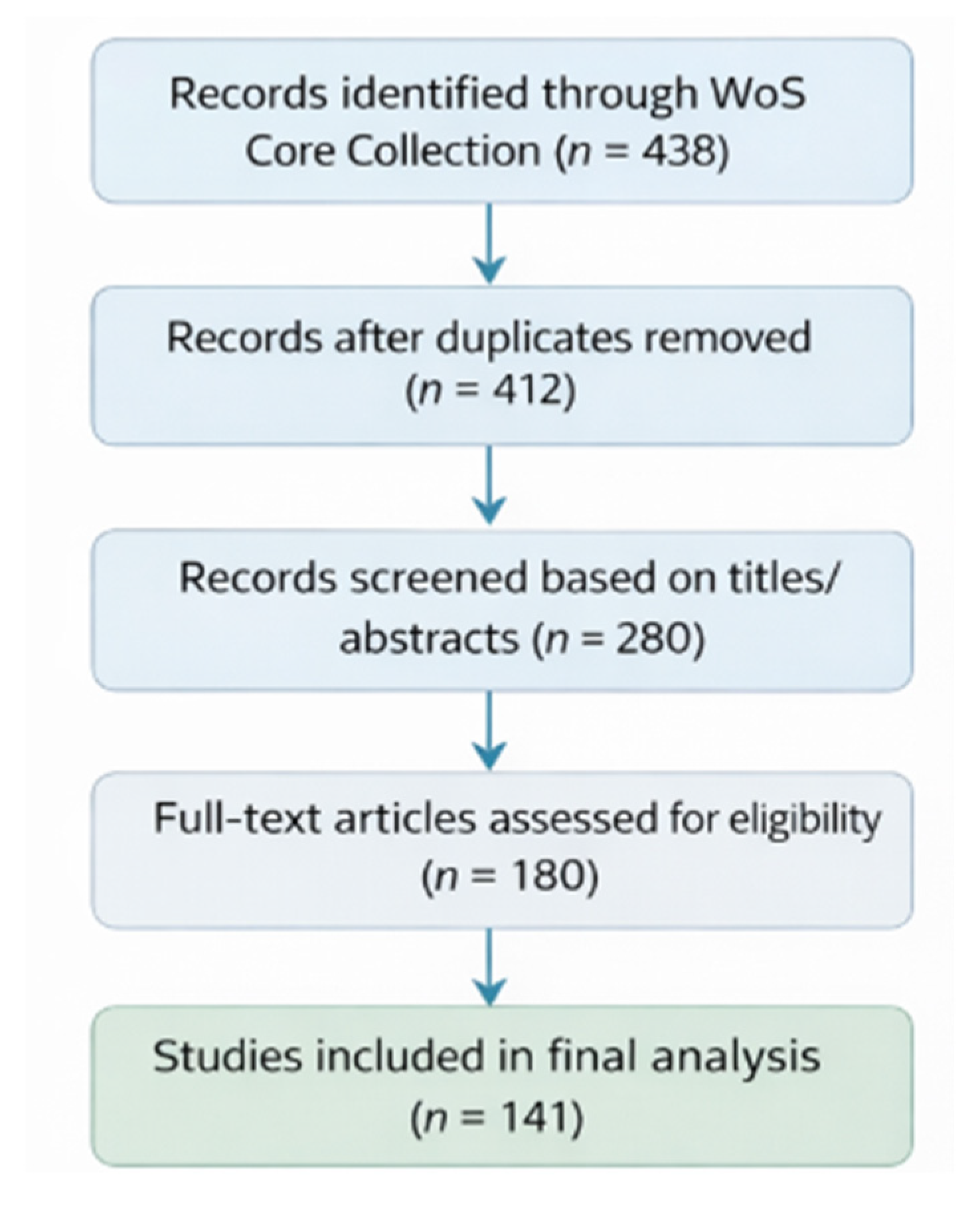
Figure 2.
SDG-Based Qualitative Coding Framework.
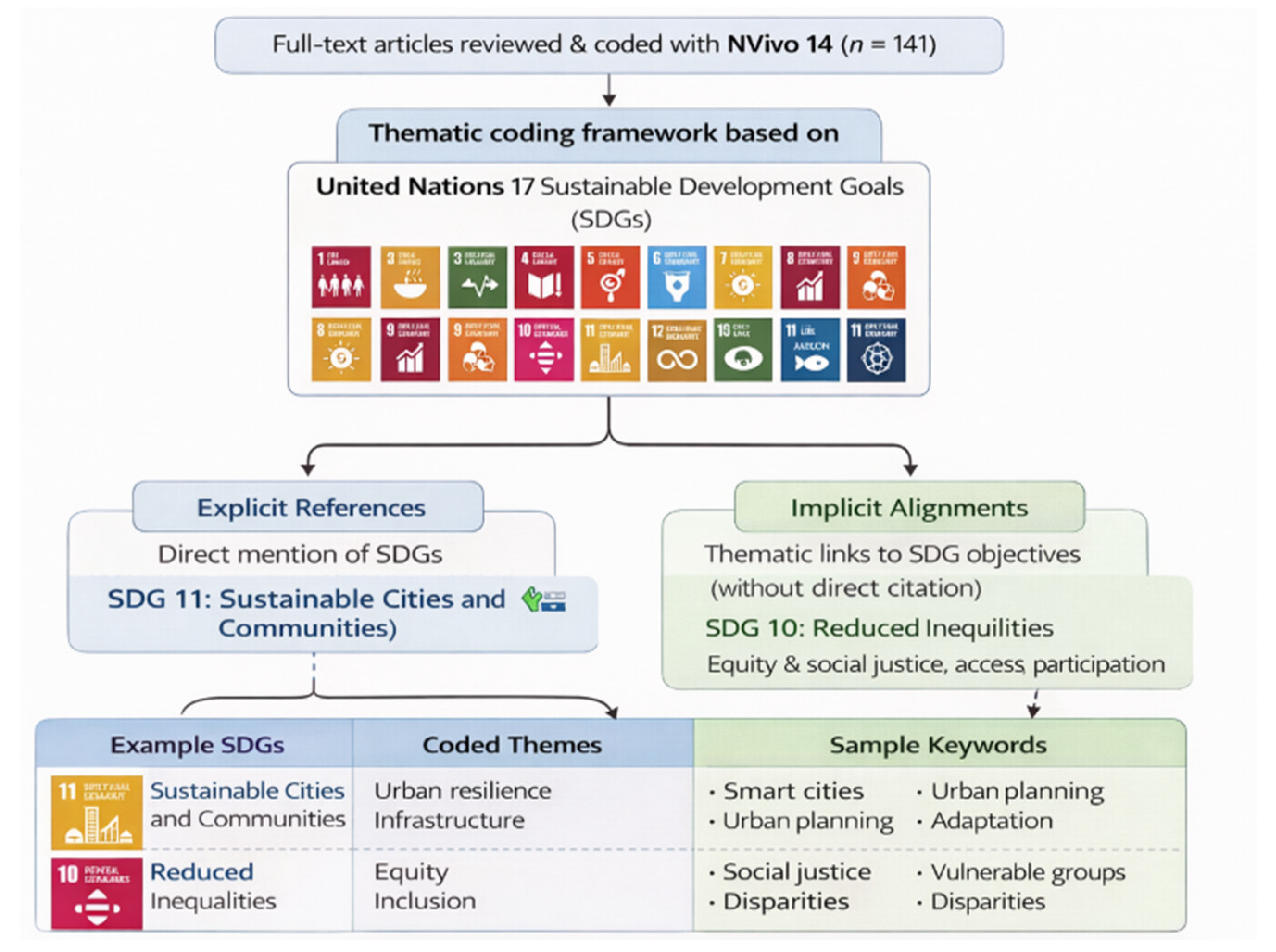
Figure 3.
This is a figure. Schemes follow the same formatting.
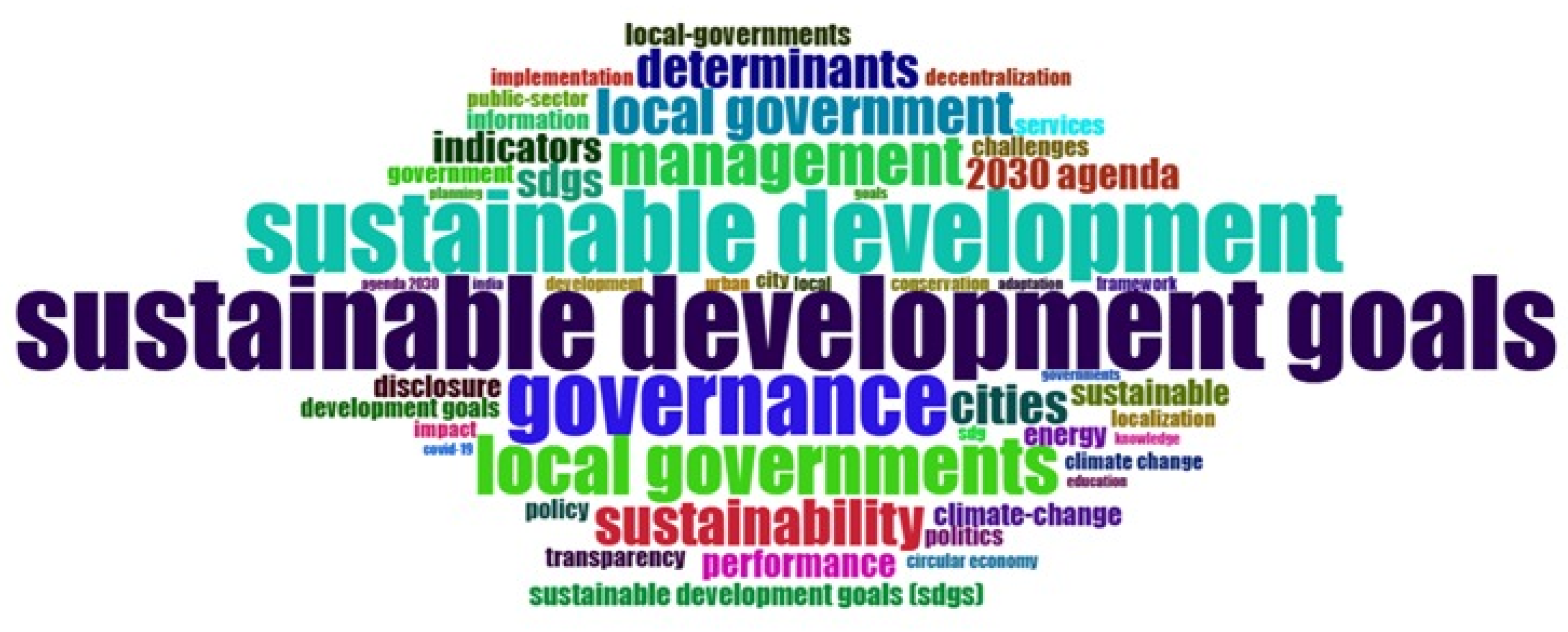
Figure 4.
Global Co-Authorship Network in SD–Local Government Research (2018–2025): This map presents international research collaboration based on co-authorship data. It highlights the geographic distribution of publication volume and the extent of transnational linkages among contributing institutions.
Figure 4.
Global Co-Authorship Network in SD–Local Government Research (2018–2025): This map presents international research collaboration based on co-authorship data. It highlights the geographic distribution of publication volume and the extent of transnational linkages among contributing institutions.
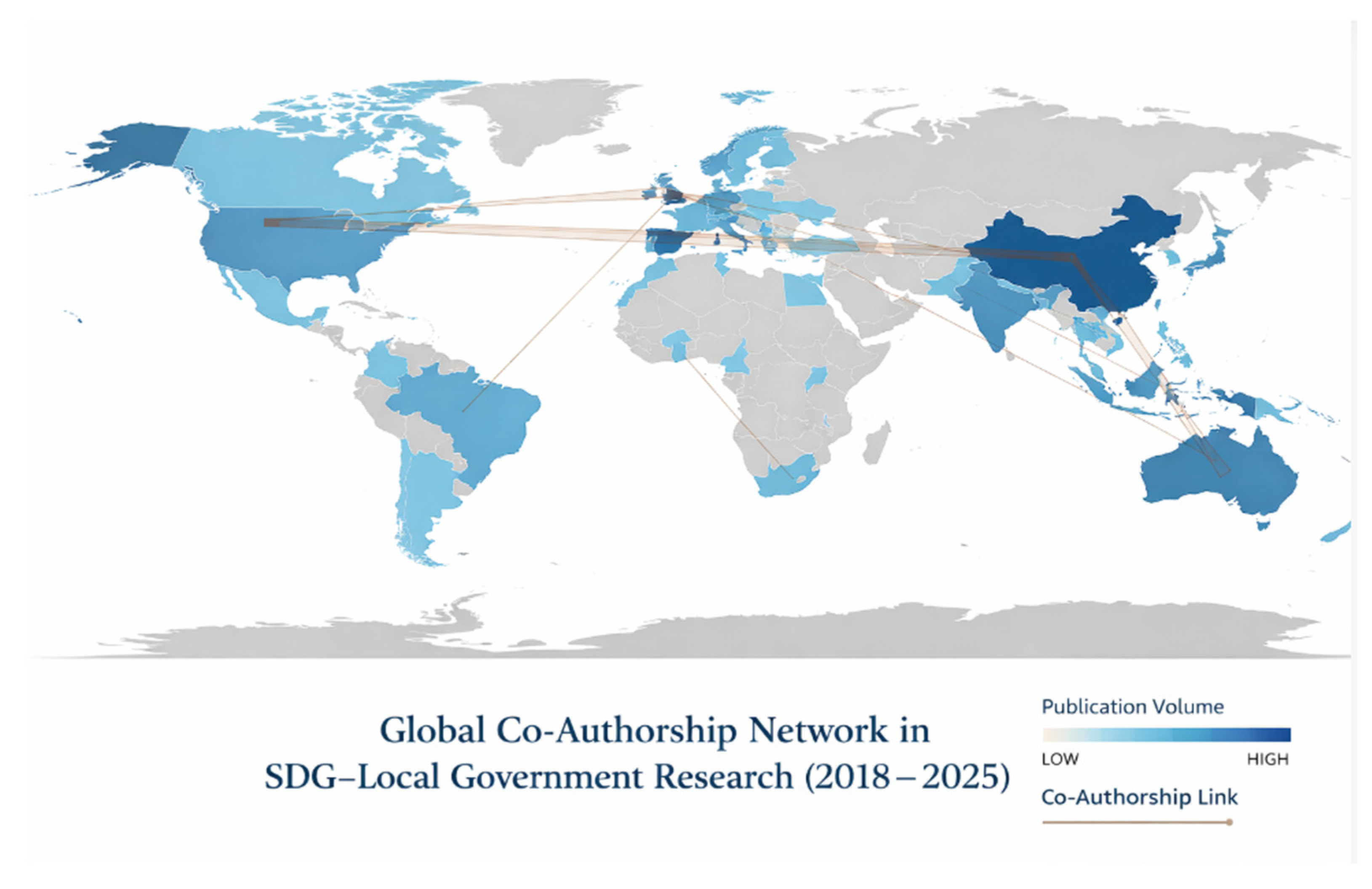
Figure 5.
Article Frequency by SDG: Visual representation of the top SDGs cited in the reviewed literature, based on qualitative coding.
Figure 5.
Article Frequency by SDG: Visual representation of the top SDGs cited in the reviewed literature, based on qualitative coding.
Disclaimer/Publisher’s Note: The statements, opinions and data contained in all publications are solely those of the individual author(s) and contributor(s) and not of MDPI and/or the editor(s). MDPI and/or the editor(s) disclaim responsibility for any injury to people or property resulting from any ideas, methods, instructions or products referred to in the content. |
© 2026 by the authors. Licensee MDPI, Basel, Switzerland. This article is an open access article distributed under the terms and conditions of the Creative Commons Attribution (CC BY) license (http://creativecommons.org/licenses/by/4.0/).
Copyright: This open access article is published under a Creative Commons CC BY 4.0 license, which permit the free download, distribution, and reuse, provided that the author and preprint are cited in any reuse.


