

Submitted:
11 December 2025
Posted:
12 December 2025
You are already at the latest version
Abstract
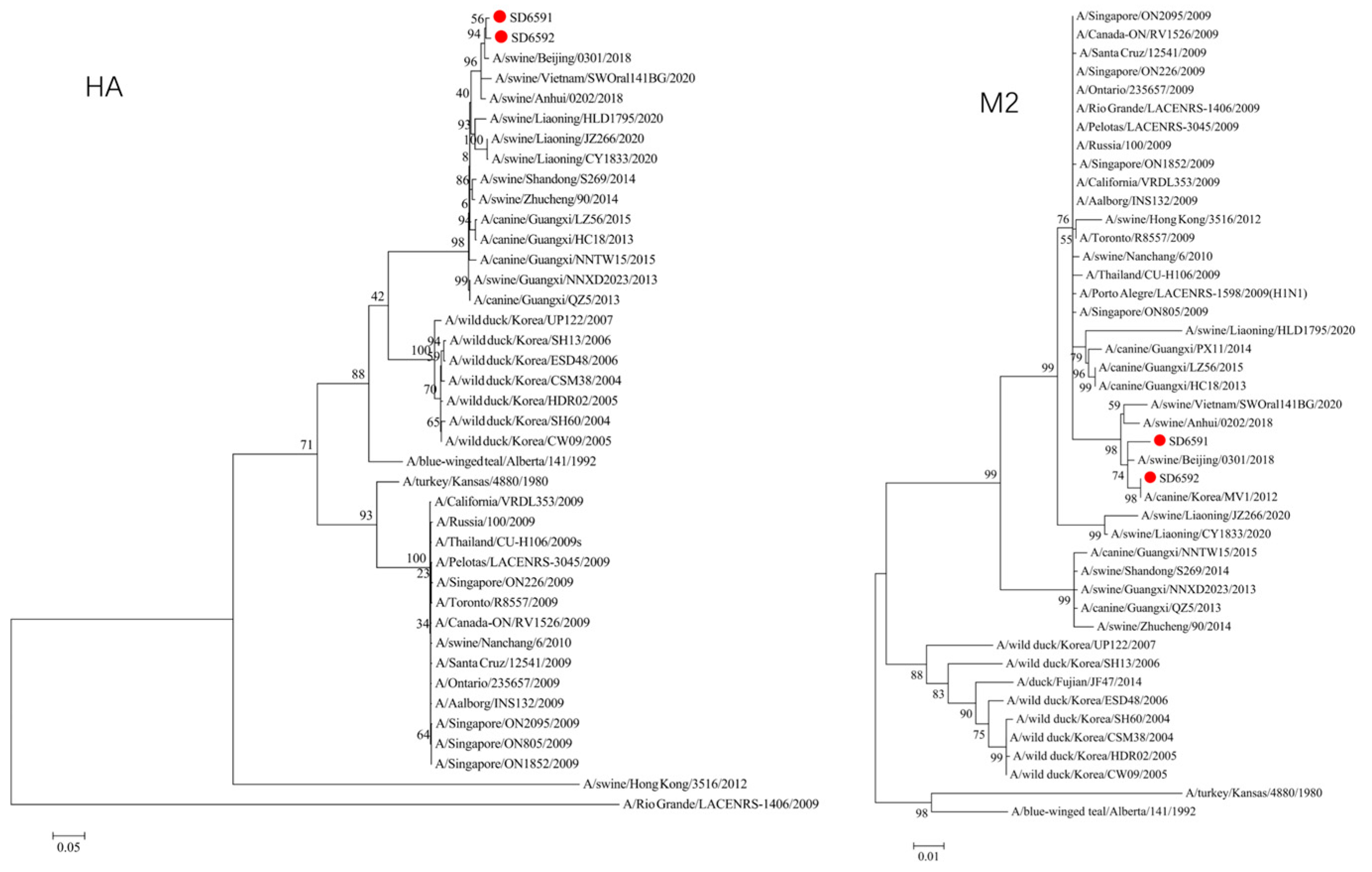
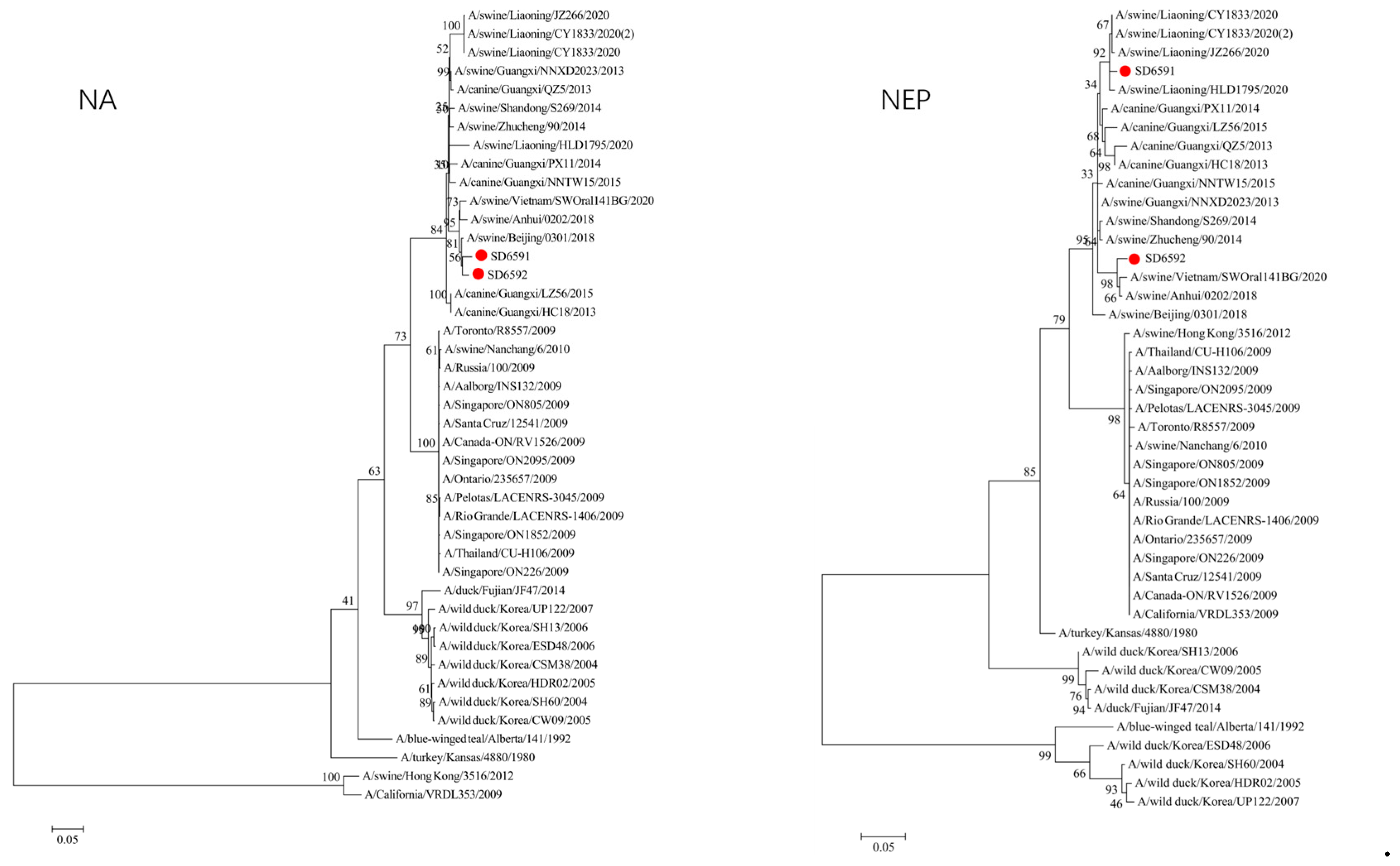
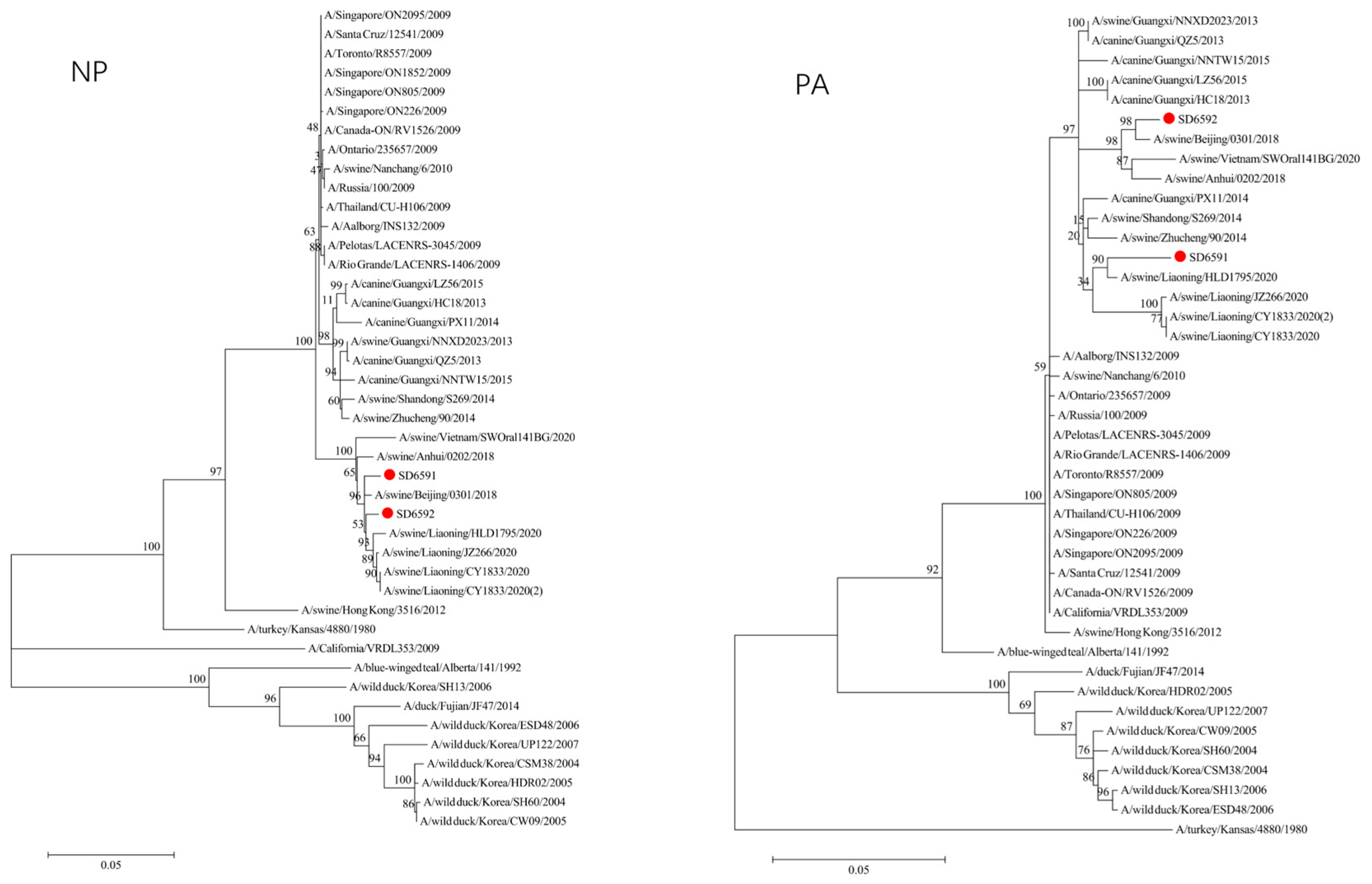
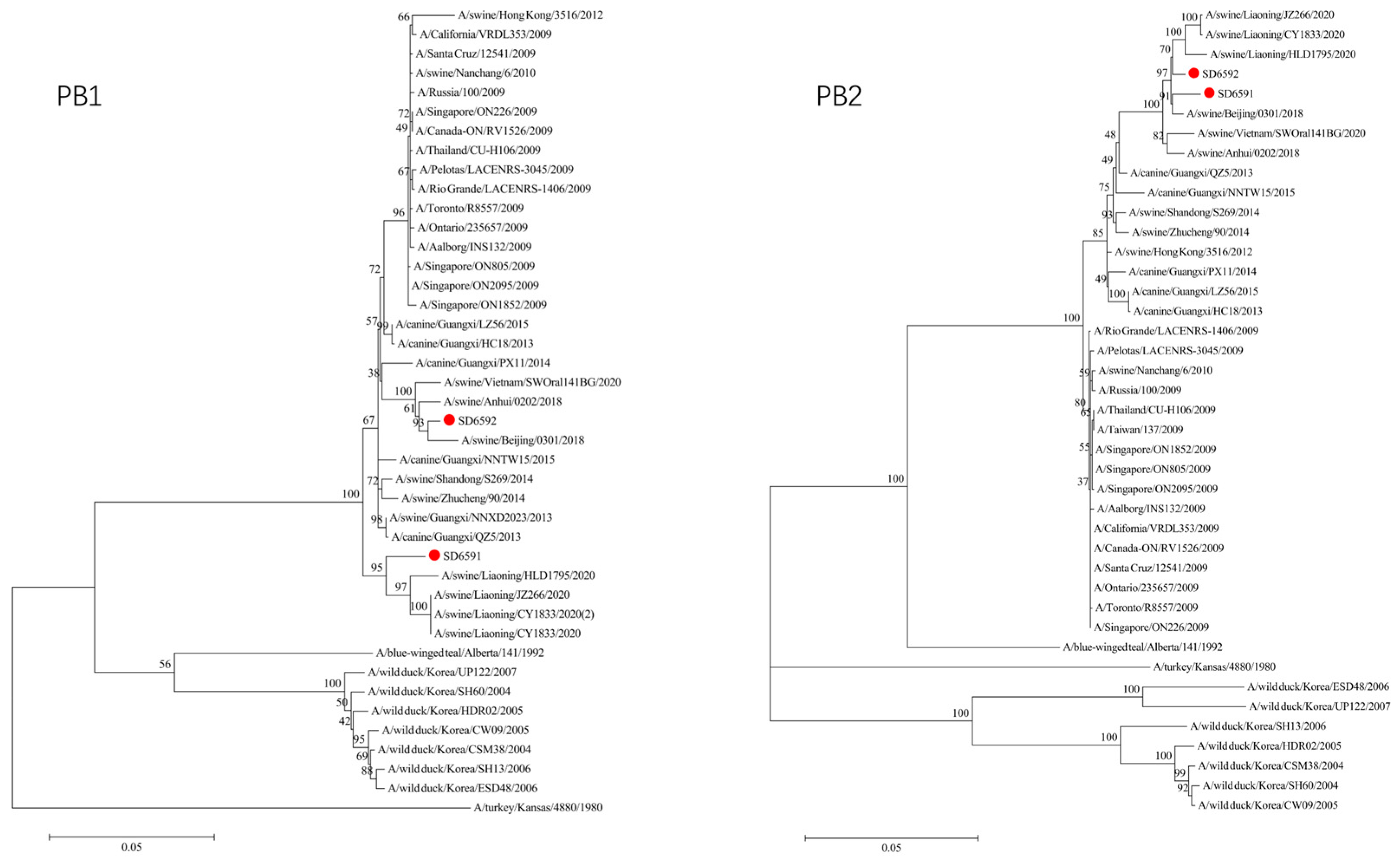
Influenza A viruses exhibit broad host tropism, infecting multiple species including humans, avian species, and swine. Swine influenza virus (SIV), while primarily circulating in porcine populations, demonstrates zoonotic potential with sporadic human infections. In this investigation, we identified two H1N1 subtype swine influenza A virus strains designated A/swine/China/SD6591/2019(H1N1) (abbreviated SD6591) and A/swine/China/SD6592/2019(H1N1) (abbreviated SD6592) in Shandong Province, China. The GenBank accession numbers of the SD6591 viral gene segments are PV464931-PV464938, and the GenBank accession numbers corresponding to each of the eight SD6592 viral gene segments are PV464939-PV464946. Phylogenetic and recombination analyses suggest potential evolutionary differences between the isolates. SD6591 displayed a unique triple-reassortant genotype: comparative nucleotide homology assessments demonstrated that the PB2, PB1, NP, NA, HA, and NEP genes shared highest similarity with classical swine-origin H1N1 viruses. In contrast, SD6592 maintained genomic conservation with previously characterized H1N1 swine strains, although neither of these two isolates exhibited significant intrasegmental recombination events. Through comprehensive sequence analysis of these H1N1 SIVs, this study provides preliminary insights into their evolutionary history and underscores the persistent risk of cross-species transmission at the human-swine interface. These findings establish an essential foundation for enhancing national SIV surveillance programs and informing evidence-based prevention strategies against emerging influenza threats.
Keywords:
1. Introduction
2. Materials and Methods
2.1. Sample Processing and Sequencing
2.2. Bioinformatic and Phylogenetic Analysis
2.3. Genetic Recombination Analysis
3. Results
3.1. Virus Gene Sequencing and Sequence Submission
3.2. Bioinformatic Analysis
3.3. Phylogenetic Analysis
3.4. Genetic Recombination Analysis
4. Discussion
5. Conclusions
Author Contributions
Funding
Data Availability Statement
Acknowledgments
Conflicts of Interest
References
- Yu H, Sun Y, Zhang J, Zhang W, Liu W, Liu P, Liu K, Sun J, Liang H, Zhang P, Wang X, Liu X, Xu X (2024) Influenza A virus infection activates caspase-8 to enhance innate antiviral immunity by cleaving CYLD and blocking TAK1 and RIG-I deubiquitination. Cell Mol Life Sci 81:355. [CrossRef]
- Avanthay R, Garcia-Nicolas O, Ruggli N, Grau-Roma L, Parraga-Ros E, Summerfield A, Zimmer G (2024) Evaluation of a novel intramuscular prime/intranasal boost vaccination strategy against influenza in the pig model. PLoS Pathog 20:e1012393. [CrossRef]
- Gray GC, Bender JB, Bridges CB, Daly RF, Krueger WS, Male MJ, Heil GL, Friary JA, Derby RB, Cox NJ (2012) Influenza A(H1N1)pdm09 virus among healthy show pigs, United States. Emerg Infect Dis 18:1519-1521. [CrossRef]
- Avanthay R, Garcia-Nicolas O, Zimmer G, Summerfield A (2023) NS1 and PA-X of H1N1/09 influenza virus act in a concerted manner to manipulate the innate immune response of porcine respiratory epithelial cells. Front Cell Infect Microbiol 13:1222805. [CrossRef]
- Xing L, Chen Y, Chen B, Bu L, Liu Y, Zeng Z, Guan W, Chen Q, Lin Y, Qin K, Chen H, Deng X, Wang X, Song W (2021) Antigenic Drift of the Hemagglutinin from an Influenza A (H1N1) pdm09 Clinical Isolate Increases its Pathogenicity In Vitro. Virol Sin 36:1220-1227. [CrossRef]
- Kuznetsova N, Siniavin A, Butenko A, Larichev V, Kozlova A, Usachev E, Nikiforova M, Usacheva O, Shchetinin A, Pochtovyi A, Shidlovskaya E, Odintsova A, Belyaeva E, Voskoboinikov A, Bessonova A, Vasilchenko L, Karganova G, Zlobin V, Logunov D, Gushchin V, Gintsburg A (2023) Development and characterization of chimera of yellow fever virus vaccine strain and Tick-Borne encephalitis virus. PLoS One 18:e0284823. [CrossRef]
- Du S, Xu F, Lin Y, Wang Y, Zhang Y, Su K, Li T, Li H, Song Q (2022) Detection of Porcine Circovirus Type 2a and Pasteurella multocida Capsular Serotype D in Growing Pigs Suffering from Respiratory Disease. Vet Sci 9. [CrossRef]
- Holzer B, Rijal P, McNee A, Paudyal B, Martini V, Clark B, Manjegowda T, Salguero FJ, Bessell E, Schwartz JC, Moffat K, Pedrera M, Graham SP, Noble A, Bonnet-Di Placido M, La Ragione RM, Mwangi W, Beverley P, McCauley JW, Daniels RS, Hammond JA, Townsend AR, Tchilian E (2021) Protective porcine influenza virus-specific monoclonal antibodies recognize similar haemagglutinin epitopes as humans. PLoS Pathog 17:e1009330. [CrossRef]
- Mac Kain A, Joffret ML, Delpeyroux F, Vignuzzi M, Bessaud M (2021) A cold case: non-replicative recombination in positive-strand RNA viruses. Virologie (Montrouge) 25:62-73. [CrossRef]
- Ren C, Chen T, Zhang S, Gao Q, Zou J, Li P, Wang B, Zhao Y, OuYang A, Suolang S, Zhou H (2023) PLK3 facilitates replication of swine influenza virus by phosphorylating viral NP protein. Emerg Microbes Infect 12:2275606. [CrossRef]
- Zhu W, Wang L, Dong Z, Chen X, Song F, Liu N, Yang H, Fu J (2016) Comparative Transcriptome Analysis Identifies Candidate Genes Related to Skin Color Differentiation in Red Tilapia. Sci Rep 6:31347. [CrossRef]
- Galindo-Fraga A, Del Carmen Guerra-de-Blas P, Ortiz-Hernandez AA, Rubenstein K, Ortega-Villa AM, Ramirez-Venegas A, Valdez-Vazquez R, Moreno-Espinosa S, Llamosas-Gallardo B, Perez-Patrigeon S, Noyola DE, Magana-Aquino M, Vilardell-Davila A, Guerrero ML, Powers JH, Beigel J, Ruiz-Palacios GM, Mexican Emerging Infectious Disease Clinical Research N (2024) Prospective cohort study of patient demographics, viral agents, seasonality, and outcomes of influenza-like illness in Mexico in the late H1N1-pandemic and post-pandemic years (2010-2014). IJID Reg 12:100394. [CrossRef]
- Tapia R, Mena J, Garcia V, Culhane M, Medina RA, Neira V (2023) Cross-protection of commercial vaccines against Chilean swine influenza A virus using the guinea pig model as a surrogate. Front Vet Sci 10:1245278. [CrossRef]
- Schmitt K, Curlin J, Remling-Mulder L, Moriarty R, Goff K, O’Connor S, Stenglein M, Marx P, Akkina R (2020) Mimicking SIV chimpanzee viral evolution toward HIV-1 during cross-species transmission. J Med Primatol 49:284-287. [CrossRef]
- Si L, Bai H, Oh CY, Jin L, Prantil-Baun R, Ingber DE (2021) Clinically Relevant Influenza Virus Evolution Reconstituted in a Human Lung Airway-on-a-Chip. Microbiol Spectr 9:e0025721. [CrossRef]
- Yu J, Liu R, Zhou B, Chou TW, Ghedin E, Sheng Z, Gao R, Zhai SL, Wang D, Li F (2019) Development and Characterization of a Reverse-Genetics System for Influenza D Virus. J Virol 93. [CrossRef]
- Simon PF, McCorrister S, Hu P, Chong P, Silaghi A, Westmacott G, Coombs KM, Kobasa D (2015) Highly Pathogenic H5N1 and Novel H7N9 Influenza A Viruses Induce More Profound Proteomic Host Responses than Seasonal and Pandemic H1N1 Strains. J Proteome Res 14:4511-4523. [CrossRef]
- Kasturi SP, Kozlowski PA, Nakaya HI, Burger MC, Russo P, Pham M, Kovalenkov Y, Silveira ELV, Havenar-Daughton C, Burton SL, Kilgore KM, Johnson MJ, Nabi R, Legere T, Sher ZJ, Chen X, Amara RR, Hunter E, Bosinger SE, Spearman P, Crotty S, Villinger F, Derdeyn CA, Wrammert J, Pulendran B (2017) Adjuvanting a Simian Immunodeficiency Virus Vaccine with Toll-Like Receptor Ligands Encapsulated in Nanoparticles Induces Persistent Antibody Responses and Enhanced Protection in TRIM5alpha Restrictive Macaques. J Virol 91. [CrossRef]

| Gene | Virus with the highest nucleotide identity | Accession no. | Identity |
| PB2 PB1 NA |
A/swine/Beijing/0301/2018(H1N1) | MN416329.1 | 98.88% |
| A/swine/Anhui/HD21/2020(H1N1) | OL744679.1 | 97.65% | |
| A/swine/Beijing/0301/2018(H1N1) | MN416693.1 | 98.30% | |
| PA NP |
A/Hong Kong/H090-721-V10/2009(H1N1) | CY111816.1 | 96.99% |
| A/swine/Beijing/0301/2018(H1N1) | MN418733.1 | 99.13% | |
| HA M2 NEP |
A/swine/China/S69-kid/2018(H1N1) | OM149829.1 | 98.98% |
| A/Porto Alegre/LACENRS-1598/2009(H1N1) | KY925142.1 | 97.93% | |
| A/swine/Liaoning/CY1833/2020(H1N1) | OL311131.1 | 98.96% | |
| Gene PB2 |
Virus with the highest nucleotide identity | Accession no. | Identity |
| A/swine/Beijing/0301/2018(H1N1) | MN416329.1 | 98.88% |
| Gene | Virus with the highest nucleotide identity | Accession no. | Identity |
| PB2 PB1 NP |
A/swine/Beijing/0301/2018(H1N1) | MN416329.1 | 99.25% |
| A/swine/Beijing/0301/2018(H1N1) | MN416416.1 | 98.94% | |
| A/swine/Beijing/0301/2018(H1N1) | MN418733.1 | 99.20% | |
| NA PA |
A/swine/Beijing/0301/2018(H1N1) | MN416693.1 | 98.68% |
| A/swine/Beijing/0301/2018(H1N1) | MN416516.1 | 98.70% | |
| HA M2 NEP |
A/swine/Shandong/LY059/2019(H1N1) | MW127000.1 | 98.53% |
| A/swine/Shandong/LY059/2019(H1N1) | MW127003.1 | 99.29% | |
| A/swine/Anhui/0202/2018(H1N1) | MN418656.1 | 98.81% | |
| Gene PB2 |
Virus with the highest nucleotide identity | Accession no. | Identity |
| A/swine/Beijing/0301/2018(H1N1) | MN416329.1 | 99.25% |
Disclaimer/Publisher’s Note: The statements, opinions and data contained in all publications are solely those of the individual author(s) and contributor(s) and not of MDPI and/or the editor(s). MDPI and/or the editor(s) disclaim responsibility for any injury to people or property resulting from any ideas, methods, instructions or products referred to in the content. |
© 2025 by the authors. Licensee MDPI, Basel, Switzerland. This article is an open access article distributed under the terms and conditions of the Creative Commons Attribution (CC BY) license (http://creativecommons.org/licenses/by/4.0/).