

Submitted:
10 December 2025
Posted:
11 December 2025
You are already at the latest version
Abstract
Existing soil remediation approaches are either lacking in cost effectiveness, environmental impacts or societal acceptance. Environmental remediation techniques are often characterized by considerable time requirements, and may leave residual effects on the natural ecosystems, thereby potentially compromising net environmental benefits. This study investigated the oil adsorption capacity of aerogels produced from waste orange peels. Aerogels are highly porous three-dimensional materials made from organic and inorganic materials, with low density, and high adjustable specific surface area. Orange peels aerogel was produced from waste orange peels using combined methods of physical, chemical, and thermal modification process, and was dried using freeze-drying method. Adsorption and reusability test were conducted after characterization of the aerogel. Surface characterization of the orange peels aerogel indicated it has an ultra-light density of 0.010417g/cm3, high porosity of 99%, and contact angle measurement of 102o. Adsorption experiment was conducted with sandy and clay soils, and the maximum oil adsorption capacities of the orange peels aerogel was 13.55mg/g and 9.60mg/g for sandy and clay soil respectively. High oil adsorption capacity was shown by the produced aerogel and attributed to the ultra-light density of 0.010417g/cm3 and high porosity of 99% of the orange peel aerogel. In conclusion, the higher oil adsorption capacity of orange peels aerogel in sandy soil than clay soil indicated that soil texture and aerogel properties influenced the oil remediation capacity of orange peel aerogels. The reusability test in three adsorption trials indicated that orange peels aerogel is a sustainable material for the remediation of oil-contaminated soil.
Keywords:
aerogels
; orange peel
; oil adsorption
; hydrophilic
; hydrophobic
1. Introduction
Global population is projected to hit 9.8 billion by 2050. As the population grows, the demand for land resources to develop infrastructure, such as housing, and to accommodate human activities increases. This expansion leads to higher extraction of natural resources, greater waste production, and intensified pressure on limited land resources. With increased mining to meet growing needs (Michaux 2021), weak legislation and lack of compliance (Sam et al., 2023), land resources continue to be contaminated. However, existing remediation approaches are time consuming and seldom inefficiently in restoring contaminated sites to meet societal needs and demands (Boulkhessaim et al., 2022; Lee et al., 2024). There is also an increased need to integrate a circular economy principle to addressing land contamination to reduce household waste.
Although different remediation methods exist. there are critical limitations. For example, while chemical methods are effective and could engender rapid remediation of hazardous waste, their impact on the natural environment and resource utilization could affect the achievement of sustainable development goals (Vlet et al., 2017; Smith et al., 2019), and its general societal acceptability. Evidence from research indicates that bioremediation could be the most sustainable approach for removing certain hazardous waste (Lee et al., 2023), especially as they are reported to account for almost zero greenhouse emissions, however, they are time consuming, and often unable to biodegrade recalcitrant contaminants (Kästner et al., 2016). Thus, there is an increasing need for rapid, efficient and sustainable remediation approaches (Azuazu et al., 2023).
Aerogels are highly porous three-dimensional materials made from organic and inorganic substances with low density and high specific surface area that can easily be adjusted (Zhu et al., 2017). They are a fascinating type of adsorbents having superhydrophobic and super oleophilic qualities and have demonstrated high sorption capacities (Keshavarz et al., 2021). Studies have shown that aerogels prepared from organic and inorganic materials have been applied in different areas, such as adsorption of contaminants including dyes, heavy metals, and oil from water and air (Zhu et al., 2017; Keshavarz et al., 2021). Aerogels produced from organic sources such as waste biomass are abundant and renewable, reduces dependence on fossil-based chemicals for aerogels production, promoting circular economy practices, lowering greenhouse gas emissions, and encourages the advancement of solvent-free or low-toxicity aerogels systems (Sheesley, et al., 2003; Kelly et al., 2018). The preparation method, structural properties, and performance of cellulose aerogels will largely depend on the biomass type and the amount of cellulose in the biomass. Aerogels prepared from agricultural wastes has received wide application in environmental remediation, due to the amount of cellulose in agricultural wastes (Li et al., 2020; Wang et al., 2020). The fabrication of aerogels from agricultural wastes is inspired by circular economic principles, and the need to reduce amount of waste to landfill (Franco et al., 2021). Also, because most agricultural wastes are cellulose based and abundant in nature, they are cheap materials for fabricating aerogels. Considering that they are soluble in water and organic solvents, this makes them simple and easy to undergo chemical modifications (Tu et al., 2022; Cai et al., 2017; Singh et al., 2017).
Cellulose is high in hydroxyl groups. This justifies the reason most agricultural wastes aerogels do not require crosslinking agent during the preparation phase (Tran et al., 2020; Dai et al., 2023). They are soluble in water and organic solvents making them easier to modify (Long et al., 2018). The drying process is the most critical stage in aerogel preparation. There are two different methods of drying cellulose-based gels, the supercritical fluid method, and the freeze-drying method. The supercritical method usually shows a cauliflower-like structure, while the freeze-drying method shows sheet-like cellulose structure with large, interconnected pores (Franco et al., 2021). Freeze-drying is simple, economical, and an environmentally low risk drying process compared to the other methods and can be used to create a highly spongy aerogel with minimal carbon footprints (Do et al., 2020; Dilamian & Noroozi, 2021; Jumbo et al., 2022). During freeze drying the liquid within the sample is solidified and then transferred under very low pressure by a vacuum pump, making the material spongier than other aerogels with different drying methods (Dai et al., 2022; Dilamian & Noroozi, 2021). The freezing intensity plays key role in the freeze-drying method and can change the consistency of pores (Verma et al., 2020).
According to reports cellulose-based aerogels prepared by the freeze-drying method are among the most promising and studied aerogels for adsorption of contaminants (Nguyen et al., 2019; Wang et al., 2020; Pung et al., 2022). Zhu et al. (2017) stated that aerogels derived from freeze-drying and carbonization processes showed good interconnected mesoporous structure, large specific area of 734.96 m2/g needed for adsorption. Also, good structural morphology and adsorption capacities was derived from pineapple fibre and banana stem (Jeng et al., 2020; Tu et al., 2023). The summary of existing studies on agricultural wastes aerogels in Table 1 shows that significant number of agricultural wastes have been successfully modified as cellulose aerogels. However, the results obtained from using waste biomass based cellulose aerogels particularly in contaminants remediation is variable due to factors such as hydrophilicity and need chemical modification, selective absorption of oil, and poor structural integrity especially in harsh or industrially contaminated environments (Muhammad et al., 2024; Ouyang et al., 2023; Table 1).
There is scarce literature evidence on studies of aerogels that can sustainably remediate contaminated soils due to these limitations. However, the elemental composition of orange peel indicates a promising feature in aerogel for sustainable contaminants remediation in soils (Table 2). As indicated in Table 2, adsorption capacities of orange peels can be significantly improved by modifying their structural properties (Michael-Igolima et al. 2023). In this context, superhydrophobic and oleophilic aerogels derived from orange peels using the freeze-drying method were innovatively applied in a modified adsorption technique to investigate its remediation potency in oil contaminated soils.
2. Materials and Method
2.1. Preparation of Superhydrophobic and Oleophilic Orange Peels Adsorbent
2.1.1. Physical Modification Process
Superhydrophobic aerogels were prepared by combined methods of physical and chemical modification processes. Fresh orange peels sourced locally from a smoothie shop in Bristol, England, were washed in fresh tap water to remove impurities and dried in oven at 75o C for 48hours. The dried peels were ground and sieved to powder using a 300µm sieve. The obtained orange peels powder was used in the chemical modification process.
2.1.2. Chemical Modification Process
According to studies, incorporating relevant chemicals into a biomass improves the structural properties of the biomass and increases the adsorption capacities (Feng et al. 2009). Treating orange peels with a base such as NaOH(aq) increases the number of carboxylates and binding sites on the peel by converting methyl esters to carboxylate groups (Feng et al. 2009; Liang et al. 2009). In this study, 150g of dried orange peel powder was soaked in a mixture of 500ml of (1 mol) NaOH(aq) and 500ml of ethanol in a fume cupboard at room temperature. After 24h, the mixture was decanted and washed with distilled water until PH7 was obtained using a PH meter. Then the sample was dried for 48h in an oven at 75oC to obtain the chemical modified orange peels (CMOP).
2.1.3. Thermal Modification Process
Research has shown that chemical treatment increases the number of binding sites on the biomass (Feng et al., 2009), therefore heating the biomass at high temperatures will increase the adsorption capacities of a biomass (El-gheriany et al. 2020). Research has shown that calcination of orange peels at temperature range of 400o C to 500o C increase adsorption capacities of the peel, however, the rate of adsorption starts to decrease at temperatures above 500o C (El-Gheriany et al. 2020). The thermal modified orange peels were obtained by carbonizing the chemical modified orange peels (CMOP) in a furnace at 500o C for 1hr as previously reported by El-Gheriany et al. (2020).
2.1.4. Preparation of Aerogels
To prepare aerogels, 5g of modified orange peels were added to 150ml of water in a glass beaker, and 3g of Oxoid CM0003 Nutrient Agar powder was also added to the beaker. The beaker was placed on a hot plate and stirred continuously with a magnetic stirrer, after about 15minutes the mixture was poured into a plastic beaker and left to cool to obtain an orange peels gel. Drying of the orange peel gel being the most critical step in aerogel preparation was carried out using the freeze-drying technique. For the aerogels to form, the samples were frozen at 0oc for 24hours, then freeze dried for 48hours using a freeze-drying machine and an aerogel is formed. A pictorial summary of different stages involved in the preparation of superhydrophobic, and oleophilic orange peels aerogel is shown in Figure 1.
2.2. Characterization of Prepared Aerogel
The prepared aerogel was characterized using FEI Quanta 650 field emission scanning electron microscope and Fourier transform infrared spectroscopy (FT-IR) to study the morphology, and chemical properties of the aerogel. In addition, surface area analysis of the sample was carried out using Keyence digital microscope.
2.2.1. Scanning Electron Microscope
The structural morphology of fabricated aerogels was studied with FEI Quanta 650 field emission scanning electron microscope. The samples were coated with gold colored foil to increase their conductivity and mounted with conductive double-coated carbon tape adhesive. The obtained SEM micrographs of prepared aerogel was studied and was compared with images of other cellulose based aerogels found in literatures.
2.2.2. Fourier Transform Infrared Spectroscopy (FT-IR)
FT-IR spectroscopy of the aerogels was conducted with FT-IR spectrometer in the range of 400 to 4000cm-1 to determine the chemical composition of prepared aerogel.
2.2.3. Surface Area Analysis
The pore diameter, and the average pore size of prepared aerogels was determined using Keyence digital microscope. Bulk density was calculated using the equation.
where M is the mass of aerogel measured by weighing the aerogel, V is volume of the aerogel calculated by measuring diameter, thickness, and weight of prepared aerogels.
Porosity was determined manually using the equation 2, as shown in Trans et al. (2020).
where d is bulk density of the sample and p is true density of crystalline cellulose (1.528g/cm3)
2.3. Hydrophobic Test
2.3.1. The Floating Test
The hydrophobic test of orange peels aerogel was conducted by visual examination using floating test. This involves dipping the aerogel in a transparent glass beaker containing water to observe the extent of floatation exhibited in water.
Water Contact Angle Measurement
The water contact angle of prepared aerogel was measured using a water contact angle meter (goniometer), three measurements were taken for each sorbent at separate locations on the aerogel to obtain the mean water contact angle of the aerogels.
2.4. Adsorption Experiments
Adsorption experiment was conducted in both sandy and clay soil to determine oil adsorption capacities of prepared aerogels in the media. Unconsolidated homogenous mixture of sand and clay soils was packed separately into 2000ml plastic beakers and allowed to consolidate for two weeks. Holes were drilled into the consolidated soil samples up to the bottom of the soil container (both for sand and clay samples), wide enough for the aerogels to enter the hole. 200ml of sunflower oil was poured into a glass beaker, as shown in Table 3. The adsorbents were fixed into the drilled holes, before uniformly spilling the oil on the soil and a contact time of 60minutes was allowed following the ASTM F 726-99 standard method for testing oil spill adsorbents (Figure 2). The aerogel was initially weighed to determine the initial weight before it was put in a perforated paper napkin and placed in open holes created in the soil. The napkin is to prevent the attachment of soil to the aerogel, which may alter oil adsorption result of the Orange peels aerogel (Figure 2). A contact time of 60minutes in the soils (sandy, clay) was allowed for the orange peels aerogel to adsorb more oil. The aerogel was removed from soil, weighed, and the new weight of the aerogel was recorded. The process was repeated in triplicates and recorded in Table 3. The absorbed oil was removed from the aerogel using the squeezing method as reported in Ifelebuegu et al. (2016). Ability of the adsorbent to extract oil was evaluated by investigating the rate of removal, and the adsorption capacities of the aerogels (mg/g) and was obtained using the equation in Imran et al. (2020), as shown in equation 3.
where Q is the sorption capacity of adsorbent, Wi (g) is initial weight of the adsorbent, and WF is the weight of the adsorbent after adsorption.
To ensure the accuracy, reliability, and reproducibility of the collected data, all biosorption experiments were performed in triplicates.
3. Results and Discussion
3.1. Morphology and Structure of the Aerogel
Aerogels are characterised by an open, highly porous, low density, and air-filled structure with high degree porosity and surface area (Anovitz & Cole 2015; Franco et al., 2021). They have very high adsorption capacities due to their peculiar properties (Nita et al., 2020; Franco et al., 2021).
3.1.1. Densities and Porosities
The results of characterisation of the orange peels aerogel were shown in Table 4. From Table 4, the surfaces area has a mean pore size of 58nm, the diameter 51nm, and porosity of 99%. In the table, the aerogel had ultra-light density of 0.010417g/cm3, which makes it a good material for adsorption of contaminants. These obtained results (Table 4) corroborate with the research of Luu et al. (2020), Phat et al. (2022), and Cai et al. (2017) where the researchers independently used pineapple leaf, coconut peat, and cabbage-based aerogels for adsorption of oil and concluded that organic aerogels are good oil adsorbents. Table 5 showed absorption properties of aerogel produced from various agricultural biomass waste, however, compared with the results from Table 4, the produced orange peel aerogel has improved properties and more suitable for adsorption of oil from soil having shown higher porosity of 99%, and a minimum adsorption capacity of about 5.3 g/g.
3.1.2. SEM Image of Prepared Orange Peel Aerogel
Scanning electron microscope (SEM) was used to study morphological structure of prepared orange peels aerogels. The image in Figure 3 is a SEM micrograph of orange peels aerogel showing a rough and porous structure. The image in Figure 3 has an average pore size of 51nm (Table 4), which implied a high specific surface area for enhanced adsorption (Shi et al. 2019; Pung et al. 2022). Figure 3 has a porous structure that is loosely packed with open spaces which enhanced the adsorption of oil. Similar image has been reported for grapefruits aerogel though with reduced porosity (Imran et al., 2020). High adsorption capacities of aerogels can be attributed to the pore size and density of the aerogel which subsequently enhances adsorption of oil and organic solvents (Huang et al. 2022; Dai et al. 2022).
3.1.3. FT-IR of Prepared Orange Peel Aerogel
FT-IR spectroscopy was used to analyse chemical composition of prepared orange peel aerogels (Figure 4). The characteristic peak at 3374.93cm-1 which stretches to 3400cm-1 indicated the stretching vibration of hydroxyl groups in orange peels. This was reduced to 3278.41cm-1 in the aerogel sample (Figure 4), which could be linked to the destruction of the hydroxyl functional groups during the freeze-drying process. This finding is corroborated by Do et al. (2020) and Thai et al. (2020) where it was stated that prolonged drying negatively impacts on hydroxyl functional groups during the formation of aerogel. The peak at 2917.86cm-1 shown by the stretching vibration of C-H groups was increased to 2922.65cm-1 (Figure 4). The bands in 1732.44cm-1 and 1644.52cm-1 assigned to the carboxyl and ester groups respectively are present at 1614.85cm- and 1409.85cm-1 in the aerogel sample (Figure 4), is attributed to the removal of majority of lignin and hemicellulose after treatment with NaOH. This corroborates reports of Nguyen et al. (2022) and Tu et al. (2022) that pretreatment process by alkalization effectively removes lignin and increases the cellulose.
3.1.4. Hydrophobic Tests of the Aerogel
Water droplets on the sample shown in Figure 5 formed a spherical shape on the surface which was used in measuring water contact angle values of the aerogel (Figure 5). Sessile image of the sample in Figure 5 (a) reveals that water droplets could stand and maintain a spherical shape on the aerogel surface for more than 30secs, showing an average water contact angle of 102.7oC. The water contact angle of a good aerogel should range from 100oC to 160o C, and this range of angle influences the rate of adsorption in cellulose materials (Pan et al. 2011; Yue et al. 2018). Also, Yue et al. (2018) and Do et al. (2020) in their research concluded that aerogels with water contact angles higher than 100oC have high adsorption capacities. Thus, the water contact angle value of 102.7oC reported by this study (Figure 5) showed that the orange peels aerogel is a superhydrophobic and oleophilic material. To confirm the hydrophobicity a visual examination using the floating test in water was performed with result shown in Figure 5(b). The aerogel was observed to float in water (Figure 5(b)) with a uniform mirror reflection observed on the surface of the sample which may be caused by formation of interface between entrapped air in the aerogel and the surrounding water due to the surface structure shown in Figure 3 and the presence of the hydroxyl group shown in Figure 4. This corroborates the report of Yue et al. (2018) on the surface wettability of banana peels aerogels and wastepaper aerogels where the researchers stated that wettability can be related to presence of the hydroxyl group.
3.2. Oil Adsorption of Prepared Aerogels
Results of the oil adsorption test (Table 6) shows that sunflower oil penetrated the orange peels aerogel upon contact with the aerogel and have oil adsorption capacities of 13.55 mg/g in the sand and 9.60mg/g in clay soil. The high oil adsorption capacity of the orange peel aerogel in both soil (sandy and clay) was attributed to the ultra-light density of 0.010417g/cm3 and high porosity of 99% of the aerogel (Table 4). The investigation further showed that oil adsorption capacity of the orange peels aerogel was more in sandy than in clay soil, which was attributed to the soils texture and properties. This research agreed with the research of Atai et al. (2023) where the researchers stated that remediation of oil vary with soil types.
The oil adsorption capacities of three orange peels adsorbent materials, including pristine orange peels adsorbent, chemical modified orange peels adsorbent, and orange peels aerogel adsorbent in Table 6 showed 60% oil adsorption capacity for the orange peels aerogel, and a 20% oil adsorption capacity for chemical modified orange peels, while the pristine orange peels adsorbent had very low adsorption capacity lower than 1%. The result shows that the orange peels aerogel has the highest oil adsorption capacity and more suited for the remediation of oil in sandy and clay soils. This finding was corroborated by Lv et al. (2023) where the researchers stated that aerogels can accelerate remediation of oil polluted soils.
4. Implications of the Study
As transition from fossil fuel dependency to renewable energy sources accelerates globally, a substantial legacy of liabilities persists in many countries, notably numerous oil-contaminated sites left behind by decommissioned and non-decommissioned petroleum operations. These sites are often classified as abandoned and sometimes derelict due to the high costs and resource-intensive nature of conventional remediation methods (Sharma et al., 2018). Developing cost-effective, rapid remediation strategies holds promise for efficiently restoring these sites and facilitating their reuse, ultimately reducing environmental hazards and economic burdens.
This research demonstrates the potential of orange peel-derived aerogels as an innovative and sustainable approach for the remediation of oil-contaminated soils. Leveraging their intrinsic superhydrophobic and oleophilic properties, further enhanced through chemical and physical modifications, these aerogels exhibit high porosity and an extensive array of binding sites, rendering them highly effective for oil adsorption (Deschamps et al., 2003). The deployment of such materials in industrial and environmental remediation practices could introduce an innovative paradigm (Sam et al., 2023), enabling faster and more sustainable land clean-up processes. Moreover, when combined with existing bioremediation techniques, this approach could enhance remediation efficiency, thereby accelerating the reclamation of contaminated sites in an environmentally responsible manner.
The intrinsic biodegradability of the orange peel aerogel is a critical feature derived from its high cellulose content. As a naturally occurring biopolymer, cellulose exhibits excellent biocompatibility and undergoes biodegradation through microbial activity in the environment. This characteristic ensures that the aerogel materials can be used repeatedly over multiple remediation cycles without accumulating persistent environmental residues. Additionally, at the end of their functional lifespan, these aerogels can be safely degraded in situ, minimizing long-term ecological impacts and aligning with environmental sustainability objectives. Consequently, orange peel aerogels present a sustainable solution not only for effective remediation but also for eco-friendly disposal, reinforcing their role as a circular and environmentally responsible technology.
An additional advantage of this approach is its resourcefulness in reducing orange waste, aligning with circular economy principles aimed at zero waste generation. Transforming orange peels, an abundant agricultural by-product, into functional remediation materials offers a sustainable waste management solution and also significantly reduces volume of waste moved to landfill. Consequently, this strategy could mitigate leachate production from landfills, a major pathway for groundwater contamination, thus contributing to the protection and preservation of critical water resources.
5. Conclusions
A superhydrophobic and oleophilic aerogel was successfully produced with orange peels wastes. The produced aerogel had improved surface roughness and porosity alongside increased binding sites by converting methyl esters to carboxyl groups. SEM micrograph of the orange peel aerogel showed a rough and porous structures with high specific surface area of mean pore size of 51nm. The porous structure was loosely packed having open spaces which enhanced oil adsorption of the aerogel thereby increasing its oil remediation capacity. The freeze-drying process reduced the stretching vibration of the hydroxyl groups in the aerogel by 3.6%, therefor in producing aerogel using orange peels waste, there is need for controlled freeze drying to achieve optimum output. Similarly, reduction in the bands of 6.8% and 14.3% for carboxyl and ester groups respectively was found in the aerogel sample which is linked to the removal of majority of lignin and hemicellulose after treatment with NaOH. The sessile image of orange peels aerogel revealed that water droplets could stand and maintain a spherical shape on the aerogel surface for more than 30secs, with an average water contact angle of 102.7oC. A further hydrophobic test conducted by visual examination using the floating test, revealed that the aerogel remained afloat in water indicating that the orange peels aerogel is a superhydrophobic and oleophilic adsorbent. The oil adsorption capacities of the prepared orange peels aerogel were 13.55 mg/g and 9.60 mg/g respectively for sandy and clay soils. The high oil adsorption capacity is attributed to the ultra-light density of 0.010417g/cm3 and high porosity of 99% of the aerogel. The study concluded that the higher oil adsorption capacity by the orange peels aerogel in sandy soil than clay soil indicated that soil texture and aerogel properties influence the oil remediation capacity of orange peel aerogels. In sum, this study promotes resourcefulness, and reduce reliance on traditional less sustainable remediation methods. The outputs of this study can be adopted in rapid remediation of oil polluted fields and wetlands.
Author Contributions
All authors were involved in the conception and design of the study. Uloaku Michael-Igolima: Conceptualization, Visualization, Methodology, Writing – original draft, Formal analysis, Writing – review & editing. Samuel J. Abbey: Conceptualization, Visualization, Methodology, Supervision, Writing – review & editing. Augustine O. Ifelebuegu: Conceptualization, Supervision, Writing - review & editing. Raphael Butler Jumbo: writing and editing, analysis, review, and visualisation. Kabari Sam: writing and editing, analysis, review, and visualisation.
Funding
This research did not receive any specific grant from funding agencies in the public, commercial, or not-for-profit sectors.
Institutional Review Board Statement
Not applicable.
Informed Consent Statement
All authors agree and approved current version of the manuscript.
Data Availability Statement
Data will be made available on request.
Acknowledgments
The lead author is thankful to the supervisory team for their support.
Conflicts of Interest
The authors have no relevant financial or non-financial interests to disclose.
References
- Anovitz, L.M.; Cole, D.R. Characterization and Analysis of Porosity and Pore Structures. Reviews in Mineralogy and Geochemistry [online]. 2015, 80, pp. 61–164. (accessed on 2 July 2020).
- Atai, E.; Jumbo, R. B.; Andrews, R.; Cowley, T.; Azuazu, I.; Coulon, F.; Pawlett, M. Bioengineering remediation of former industrial sites contaminated with chemical mixtures. Journal of Hazardous Materials Advances 2023, 10, 100319. [Google Scholar] [CrossRef]
- Azuazu, I.N.; Sam, K.; Campo, P.; Coulon, F. Challenges and opportunities for low-carbon remediation in the Niger Delta: towards sustainable environmental management. Science of the Total Environment 2023, 900, 165739. [Google Scholar] [CrossRef] [PubMed]
- Barus, D.A.; Humaidi, S.; Ginting, R.T.; Sitepu, J. Enhanced adsorption performance of chitosan/cellulose nanofiber isolated from durian peel waste/graphene oxide nanocomposite hydrogels. Environmental Nanotechnology, Monitoring & Management [online]. 2022, 17, p. 100650. (accessed on 9 March 2022).
- Boulkhessaim, S.; Gacem, A.; Khan, S.H.; Amari, A.; Yadav, V.K.; Harharah, H.N.; Elkhaleefa, A.M.; Yadav, K.K.; Rather, S.U.; Ahn, H.J.; Jeon, B.H. Emerging trends in the remediation of persistent organic pollutants using nanomaterials and related processes: A review. Nanomaterials 2022, 12(13), 2148. [Google Scholar] [CrossRef]
- Cai, T.; Wang, H.; Jin, C.; Sun, Q.; Nie, Y. Fabrication of nitrogen-doped porous electrically conductive carbon aerogel from waste cabbage for supercapacitors and oil/water separation. Journal of Materials Science: Materials in Electronics [online] 2017, 29(5), 4334–4344. (accessed on 8 December 2021). [Google Scholar] [CrossRef]
- Chaudhary, S.; Dora, D.T.K.; Porwal, S.K. Silicon-free PSMA-modified aerogel derived from waste fruit peels for efficient oil recovery. Biomass Conversion and Biorefinery [online]. 2023. (accessed on 13 September 2023).
- Chergui, S.; Yeddou, A.R.; Chergui, A.; Halet, F.; Nadjemi, B.; Ould-Dris, A. Removal of Cyanide from Aqueous Solutions by Biosorption onto Sorghum Stems: Kinetic, Equilibrium, and Thermodynamic Studies. Journal of Hazardous, Toxic, and Radioactive Waste [online] 2021, 26(1). [Google Scholar] [CrossRef]
- Chhajed, M.; Verma, C.; Sathawane, M.; Singh, S.; Maji, P.K. Mechanically durable green aerogel composite based on agricultural lignocellulosic residue for organic liquids/oil sorption. Marine Pollution Bulletin [online]. 2022, 180, p. 113790. (accessed on 15 November 2022).
- Cuong, T.V.; Quoc, P.N.; Kien, L.A.; Khoi, T.A.; Minh, P.C. Carbon Aerogel from Jackfruit Waste as New Material for Electrodes Capacitive Deionization. Chemical Engineering Transaction [online] 2022, 97, 2283–9216. [Google Scholar]
- Dai, Q.; Li, D.; Sun, Y.; Wang, H.; Lu, Y.; Yang, D. Low temperature-resistant superhydrophobic and elastic cellulose aerogels derived from seaweed solid waste as efficient oil traps for oil/water separation. Chemosphere [online] 2023, 336, 139179. [Google Scholar] [CrossRef] [PubMed]
- Dai, Y.; Jing, Z.; Qiu, Z.; Zhu, Y.; Qiu, F.; Pan, J.; Zhang, T.; Li, C. Multifunctional biomass carbon fiber aerogel based on resource utilization of agricultural waste-peanut shells for fast and efficient oil–water/emulsion separation. In Materials Science and Engineering; B [online], 2022; Volume 283, p. 115819. [Google Scholar]
- Deschamps, G.; Caruel, H.; Borredon, M.-E.; Albasi, C.; Riba, J.-P.; Bonnin, C.; Vignoles, C. Oil Removal from Water by Sorption on Hydrophobic Cotton Fibers. 2. Study of Sorption Properties in Dynamic Mode. Environmental Science & Technology [online] 2003, 37(21), 5034–5039. [Google Scholar]
- Dilamian, M.; Noroozi, B. Rice straw agri-waste for water pollutant adsorption: Relevant mesoporous super hydrophobic cellulose aerogel. Carbohydrate Polymers [online]. 2021, 251, p. 117016. Available online: https://www.sciencedirect.com/science/article/abs/pii/S0144861720311899 (accessed on 30 October 2021).
- Do, N.; Truong, B.; Nguyen, P.; Le, K.; Duong, H.; Le, P. Composite aerogels of TEMPO-oxidized pineapple leaf pulp and chitosan for dyes removal. Separation and Purification Technology [online] 2022, 283, 120200. [Google Scholar] [CrossRef]
- Do, N.H.N.; Tran, V.T.; Tran, Q.B.M.; Le, K.A.; Thai, Q.B.; Nguyen, P.T.T.; Duong, H.M.; Le, P.K. Recycling of Pineapple Leaf and Cotton Waste Fibers into Heat-insulating and Flexible Cellulose Aerogel Composites. Journal of Polymers and the Environment [online] 2020, 29(4), 1112–1121. (accessed on 14 February 2023). [Google Scholar] [CrossRef]
- Septiani, Eka Lutfi; Prastuti, Okky Putri; Kurniati, Yuni; Fauziyah, Mar’atul; Widiyastuti, W.; Setyawan, Heru; Wahyudiono; Kanda, H.; Goto, M. Sorption Efficiency in Dye Removal and Thermal Stability of Sorghum Stem Aerogel. Materials Science Forum [online]. 2019, 966, pp. 175–180. (accessed on 12 September 2023).
- Fadeeva, E.; Schlie-Wolter, S.; Chichkov, B.N.; Paasche, G.; Lenarz, T. Structuring of biomaterial surfaces with ultrashort pulsed laser radiation Author links open overlay panel E. Fadeeva 1, S. Schlie-Wolter 1, B.N. Chichkov 1, G. Paasche 2, T. Lenarz 2; 2016; pp. 145–172. [Google Scholar]
- Feng, N.; Guo, X.; Liang, S. Adsorption study of copper (II) by chemically modified orange peel. Journal of Hazardous Materials [online] 2009, 164(2–3), 1286–1292. (accessed on 28 September 2020). [Google Scholar] [CrossRef] [PubMed]
- Franco, P.; Cardea, S.; Tabernero, A.; De Marco, I. Porous Aerogels and Adsorption of Pollutants from Water and Air: A Review. Molecules [online]. 2021, 26, p. 4440. (accessed on 14 November 2021).
- Huang, J.; Li, D.; Huang, L.; Tan, S.; Liu, T. Bio-Based Aerogel Based on Bamboo, Wastepaper, and Reduced Graphene Oxide for Oil/Water Separation. Langmuir [online]. 2022, 38, pp. 3064–3075. (accessed on 17 May 2022).
- Imran, M.; Islam, A.; Farooq, M.U.; Ye, J.; Zhang, P. Characterization and adsorption capacity of modified 3D porous aerogel from grapefruit peels for removal of oils and organic solvents. Environmental Science and Pollution Research [online] 2020, 27(35), 43493–43504. [Google Scholar] [CrossRef] [PubMed]
- Jumbo, R. B.; Coulon, F.; Cowley, T.; Azuazu, I.; Atai, E.; Bortone, I.; Jiang, Y. Evaluating different soil amendments as bioremediation strategy for wetland soil contaminated by crude oil. Sustainability 2022, 14(24), 16568. [Google Scholar] [CrossRef]
- Kästner, M.; Miltner, A. Application of compost for effective bioremediation of organic contaminants and pollutants in soil. Applied microbiology and biotechnology 2016, 100(8), 3433–3449. [Google Scholar] [CrossRef] [PubMed]
- Kelly, J. M.; Doherty, R. M.; O’Connor, F. M.; Mann, G. W. The impact of biogenic, anthropogenic, and biomass burning volatile organic compound emissions on regional and seasonal variations in secondary organic aerosol. Atmos. Chem. Phys. 2018, 18, 7393–7422. [Google Scholar] [CrossRef]
- Keshavarz, L.; Ghaani, M.R.; MacElroy, J.M.D.; English, N.J. A comprehensive review on the application of aerogels in CO2-adsorption: Materials and characterisation. Chemical Engineering Journal [online] 2021, 412(Volume 412 128604), 128604. (accessed on 16 March 2021). [Google Scholar] [CrossRef]
- Kumar, G.; Dora, D.T.K.; Jadav, D.; Naudiyal, A.; Singh, A.; Roy, T. Utilization and regeneration of waste sugarcane bagasse as a novel robust aerogel as an effective thermal, acoustic insulator, and oil adsorbent. Journal of Cleaner Production [online] 2021, 298(126744), 126744. (accessed on 12 October 2022). [Google Scholar] [CrossRef]
- Lee, H.; Sam, K.; Coulon, F.; De Gisi, S.; Notarnicola, M.; Labianca, C. Recent developments and prospects of sustainable remediation treatments for major contaminants in soil: A review. Science of the Total Environment 2024, 912, 168769. [Google Scholar] [CrossRef] [PubMed]
- Li, J.; Li, J.; Wang, G.; Zhang, T.; Dai, W.; Ho, K. F.; Wang, Q.; Shao, Y.; Wu, C.; Li, L. Molecular characteristics of organic compositions in fresh and aged biomass burning aerosols. Science of The Total Environment 2020, 741, 140247. [Google Scholar] [CrossRef] [PubMed]
- Li, L.; Lei, S.; Xi, J.; Ye, D.; Hu, W.; Song, L.; Hu, Y.; Cai, W.; Gui, Z. Bio-based multifunctional carbon aerogels from sugarcane residue for organic solvents adsorption and solar-thermal-driven oil removal. Chemical Engineering Journal [online] 2021, 426(129580), 129580–129580. (accessed on 12 September 2023). [Google Scholar] [CrossRef]
- Liang, S.; Guo, X.; Feng, N.; Tian, Q. Application of orange peel xanthate for the adsorption of Pb2+ from aqueous solutions. Journal of Hazardous Materials [online] 2009, 170(1), 425–429. (accessed on 18 May 2022). [Google Scholar] [CrossRef] [PubMed]
- Luu, T.P.; Do, N.H.N.; Chau, N.D.Q.; Lai, D.Q.; Nguyen, S.T.; Le, D.; Thai, Q.B.; Le, P.K.; Duong, H.M. Morphology control and advanced properties of bio-aerogels from pineapple leaf waste. Chemical Engineering 2020, 78, 433–438. [Google Scholar]
- Lv, Y.; Bao, J.; Dang, Y.; Liu, D.; Li, T.; Li, S.; Yu, Y.; Zhu, L. Biochar aerogel enhanced remediation performances for heavy oil-contaminated soil through biostimulation strategy. Journal of Hazardous Materials 2023, 443, 130209. [Google Scholar] [CrossRef] [PubMed]
- Michael-Igolima, U.; Abbey, S.J.; Ifelebuegu, A.O.; Eyo, E.U. Modified Orange Peel Waste as a Sustainable Material for Adsorption of Contaminants. Materials;Materials [online] 2023, 16(3), 1092. [Google Scholar] [CrossRef] [PubMed]
- Michaux, S.P. The mining of minerals and the limits to growth; Geological Survey of Finland: Espoo, Finland, 2021. [Google Scholar]
- Muhammad, S.; Albadn, Y. M.; Yahya, E. B.; Nasr, S.; Khalil, H. A.; Ahmad, M. I.; Kamaruddin, M. A. Trends in enhancing the efficiency of biomass-based aerogels for oil spill clean-up. Giant 2024, 100249. [Google Scholar] [CrossRef]
- Nguyen, D.D.; Vu, C.M.; Vu, H.T.; Choi, H.J. Micron-Size White Bamboo Fibril-Based Silane Cellulose Aerogel: Fabrication and Oil Absorbent Characteristics. Materials [online]. 2019, 12, p. 1407. Available online: https://www.mdpi.com/1996-1944/12/9/1407/htm (accessed on 17 March 2021).
- Nguyen, H.; Tran, K.A.; Tram, H.N.N.; Le, Kien Anh; Le, P.K. Fabrication of Carbon Aerogels from Coir for Oil Adsorption. IOP conference series [online], 2022; 964, pp. 012033–012033. (accessed on 13 September 2023). [Google Scholar]
- Nita, L.E.; Ghilan, A.; Rusu, A.G.; Neamtu, L.; Chiriac, A.P. New Trends in Bio-Based Aerogels. Pharmaceutics [online] 2020, 12(5). [Google Scholar] [CrossRef] [PubMed]
- Ouyang, D.; Lei, X.; Zheng, H. Recent advances in biomass-based materials for oil spill cleanup. Nanomaterials 2023, 13(3), 620. [Google Scholar] [CrossRef] [PubMed]
- Pan, Y.; Han, G.; Mao, Z.; Zhang, Y.; Duan, H.; Huang, J.; Qu, L. Structural characteristics and physical properties of lotus fibres obtained from Nelumbo nucifera petioles. Carbohydrate Polymers [online]. 2011, 85, pp. 188–195. (accessed on 23 May 2021).
- Tu, Phan Minh; Chau, N.; Ngan, Le Thanh; Lam, Cao Vu; Thang, Tran Quoc; Duyen, K.; Toan, Huynh Phuoc; Son, Nguyen Truong; Hieu, Nguyen Huu. Superhydrophobic banana stem–derived carbon aerogel for oil and organic adsorptions and energy storage. Biomass Conversion and Biorefinery [online]. 2023. (accessed on 11 September 2023).
- Phat, L.N.; Nguyen, H.C.; Khoa, B.D.D.; Khang, P.T.; Tien, D.X.; Thang, T.Q.; Trung, N.K.; Nam, H.M.; Phong, M.T.; Hieu, N.H. Synthesis and surface modification of cellulose cryogels from coconut peat for oil adsorption. 2022, pp. 2435–2447. (accessed on 18 May 2022).
- Pung, T.; Ponglong, N.; Panich-pat, T. Fabrication of Pomelo-Peel Sponge Aerogel Modified with Hexadecyltrimethoxysilane for the Removal of Oils/Organic Solvents. Water, Air, & Soil Pollution [online]. 2022, 233. (accessed on 14 January 2023).
- Sam, K.; Onyena, A.P.; Zabbey, N.; Odoh, C.K.; Nwipie, G.N.; Nkeeh, D.K.; Osuji, L.C.; Little, D.I. Prospects of emerging PAH sources and remediation technologies: insights from Africa. Environmental Science and Pollution Research 2023, 30(14), 39451–39473. [Google Scholar] [CrossRef] [PubMed]
- Sharma, S.; Tiwari, S.; Hasan, A.; Saxena, V.; Pandey, L.M. Recent advances in conventional and contemporary methods for remediation of heavy metal-contaminated soils. 3 Biotech 2018, 8(4), 216. [Google Scholar] [CrossRef] [PubMed]
- Sheesley, R. J.; Schauer, J. J.; Chowdhury, Z.; Cass, G. R.; Simoneit, B. R. Characterization of organic aerosols emitted from the combustion of biomass indigenous to South Asia. Journal of Geophysical Research: Atmospheres 2003, 108(D9). [Google Scholar] [CrossRef]
- Shi, G.; Qian, Y.; Tan, F.; Cai, W.; Li, Y.; Cao, Y. Controllable synthesis of pomelo peel-based aerogel and its application in adsorption of oil/organic pollutants. In Royal Society Open Science [online]; 2019; 6, 2. Available online: https://www.ncbi.nlm.nih.gov/pmc/articles/PMC6408386/ (accessed on 20 October 2020).
- Singh, A.K.; Ketan, K.; Singh, J.K. Simple and green fabrication of recyclable magnetic highly hydrophobic sorbents derived from waste orange peels for removal of oil and organic solvents from water surface. Journal of Environmental Chemical Engineering [online] 2017, 5(5), 5250–5259. (accessed on 9 August 2022). [Google Scholar] [CrossRef]
- Smith, P.; Adams, J.; Beerling, D.J.; Beringer, T.; Calvin, K.V.; Fuss, S.; Griscom, B.; Hagemann, N.; Kammann, C.; Kraxner, F.; Minx, J.C. Land-management options for greenhouse gas removal and their impacts on ecosystem services and the sustainable development goals. Annual Review of Environment and Resources 2019, 44(1), 255–286. [Google Scholar] [CrossRef]
- Tran, D.T.; Nguyen, S.T.; Do, N.D.; Thai, N.N.T.; Thai, Q.B.; Huynh, H.K.P.; Phan, A.N. Green aerogels from rice straw for thermal, acoustic insulation and oil spill cleaning applications. Materials Chemistry and Physics [online] 2020, 253, 123363. [Google Scholar]
- Verma, A.; Thakur, S.; Goel, G.; Raj, J.; Gupta, V.K.; Roberts, D.; Thakur, V.K. Bio-based sustainable aerogels: New sensation in CO2 capture Current Research in Green and Sustainable Chemistry 2020. [CrossRef]
- Wu, J.; Dong, Yong Ping; Xu, M.; Xia, J.; Liu, Z.; Cao, Y. Aerogels made from soybean stalk with various lignocellulose aggregating states for oil spill clean-up. Cellulose [online]. 2021, 28, pp. 9873–9891. (accessed on 12 September 2023).
- Xing, H.; Fei, Y.; Cheng, J.; Wang, C.; Zhang, J.; Niu, C.; Fu, Q.; Cheng, J.; Lu, L. Green Preparation of Durian Rind-Based Cellulose Nanofiber and Its Application in Aerogel. Molecules [online]. 2022, 27, p. 6507. (accessed on 30 October 2022).
- Yue, X.; Zhang, T.; Yang, D.; Qiu, F.; Li, Z. Hybrid aerogels derived from banana peel and wastepaper for efficient oil absorption and emulsion separation. Journal of Cleaner Production [online] 2018, 199, 411–419. Available online: https://www.sciencedirect.com/science/article/abs/pii/S0959652618321711 (accessed on 17 September 2020). [CrossRef]
- Zhu, L.; Wang, Y.; Wang, Y.; You, L.; Shen, X.; Li, S. An environmentally friendly carbon aerogels derived from waste pomelo peels for the removal of organic pollutants/oils. Microporous and Mesoporous Materials [online]. 241. 2017, 241, pp. 285–292. (accessed on 15 April 2023).
Figure 1.
Pictorial presentation of various stages involved in preparing orange peels aerogels.
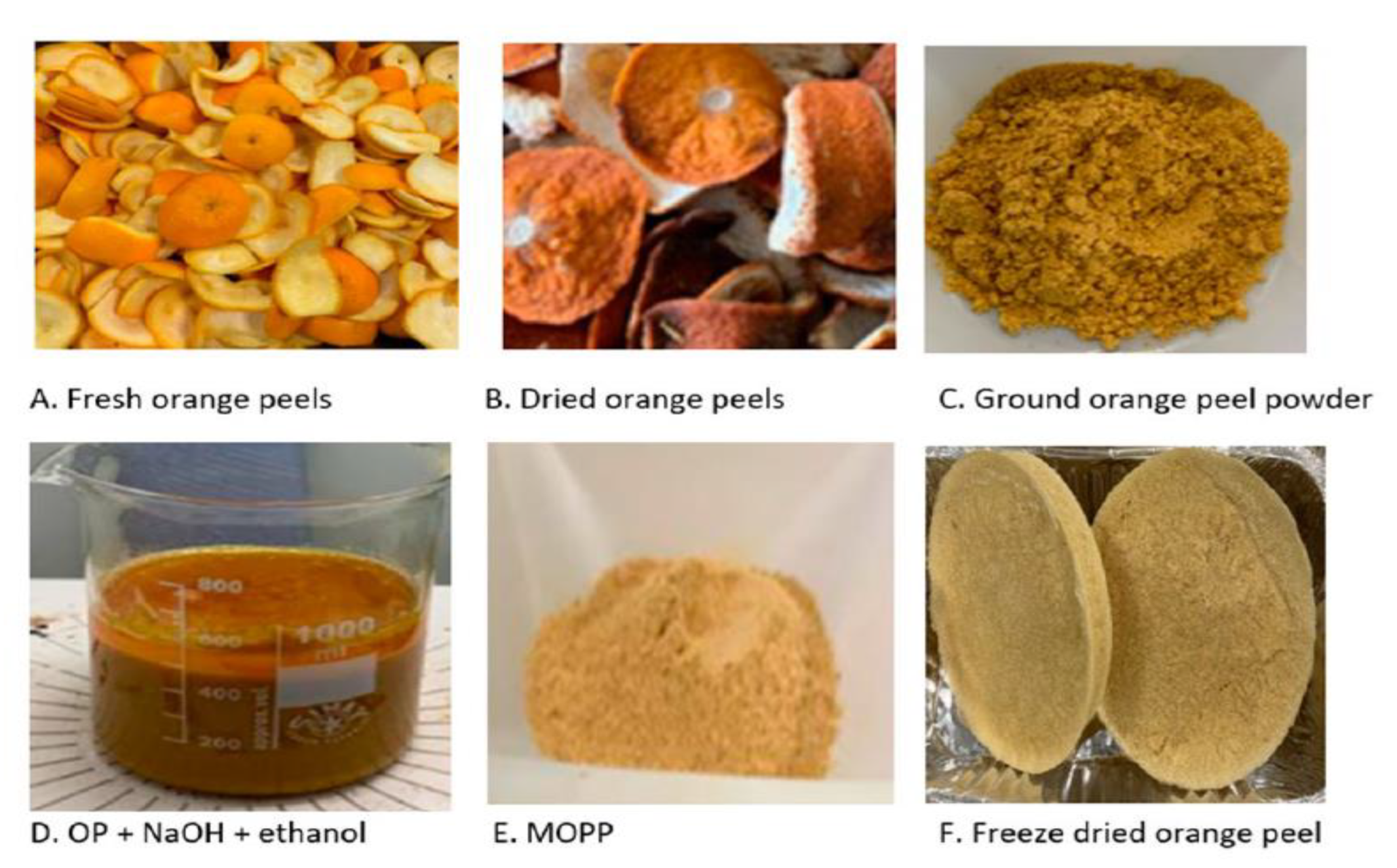
Figure 2.
(a) Orange peels aerogel in sand and clay soil, (b) oil-soaked orange peels aerogel in a napkin.
Figure 2.
(a) Orange peels aerogel in sand and clay soil, (b) oil-soaked orange peels aerogel in a napkin.
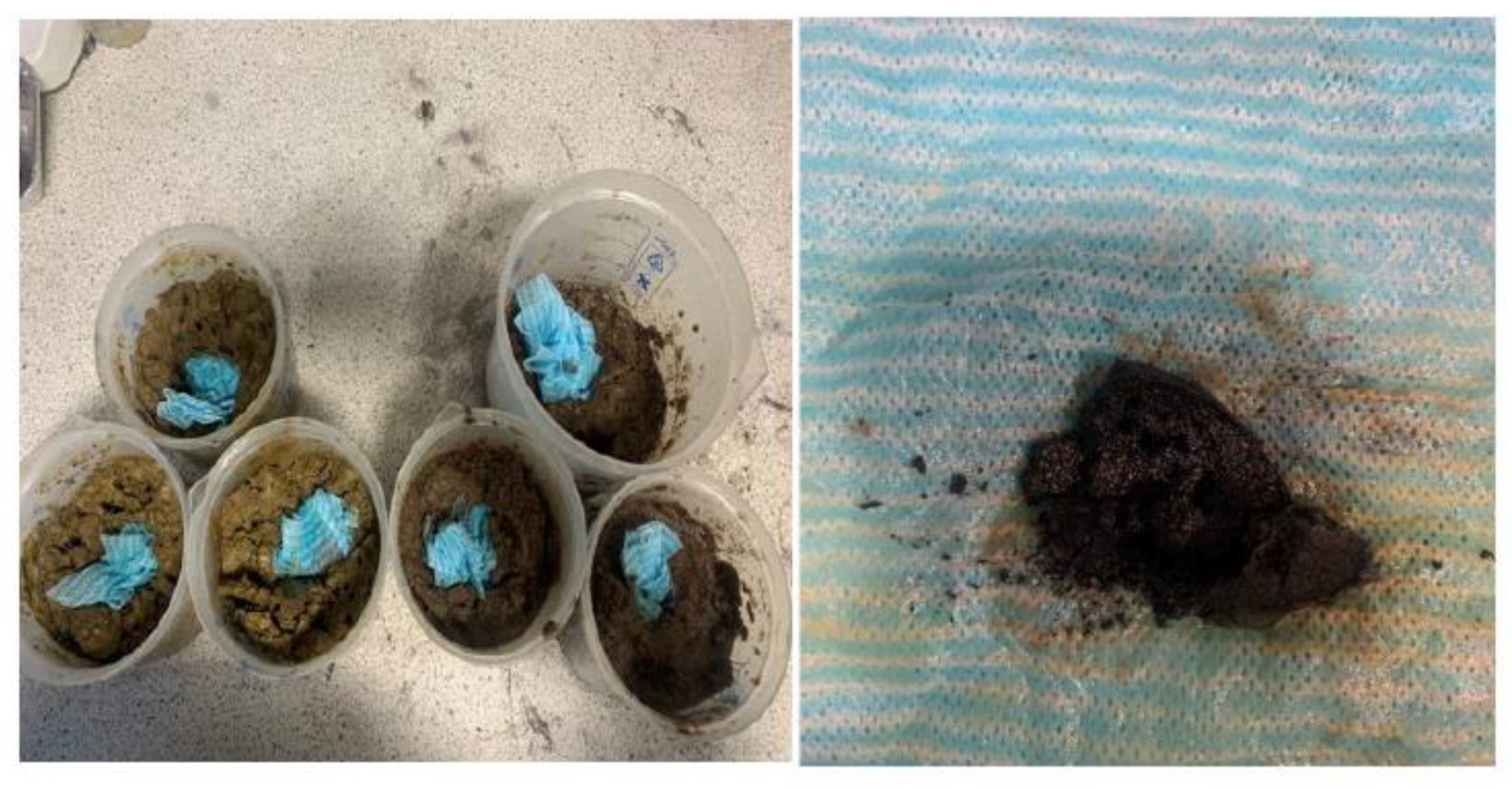
Figure 3.
SEM image of orange peels aerogel.
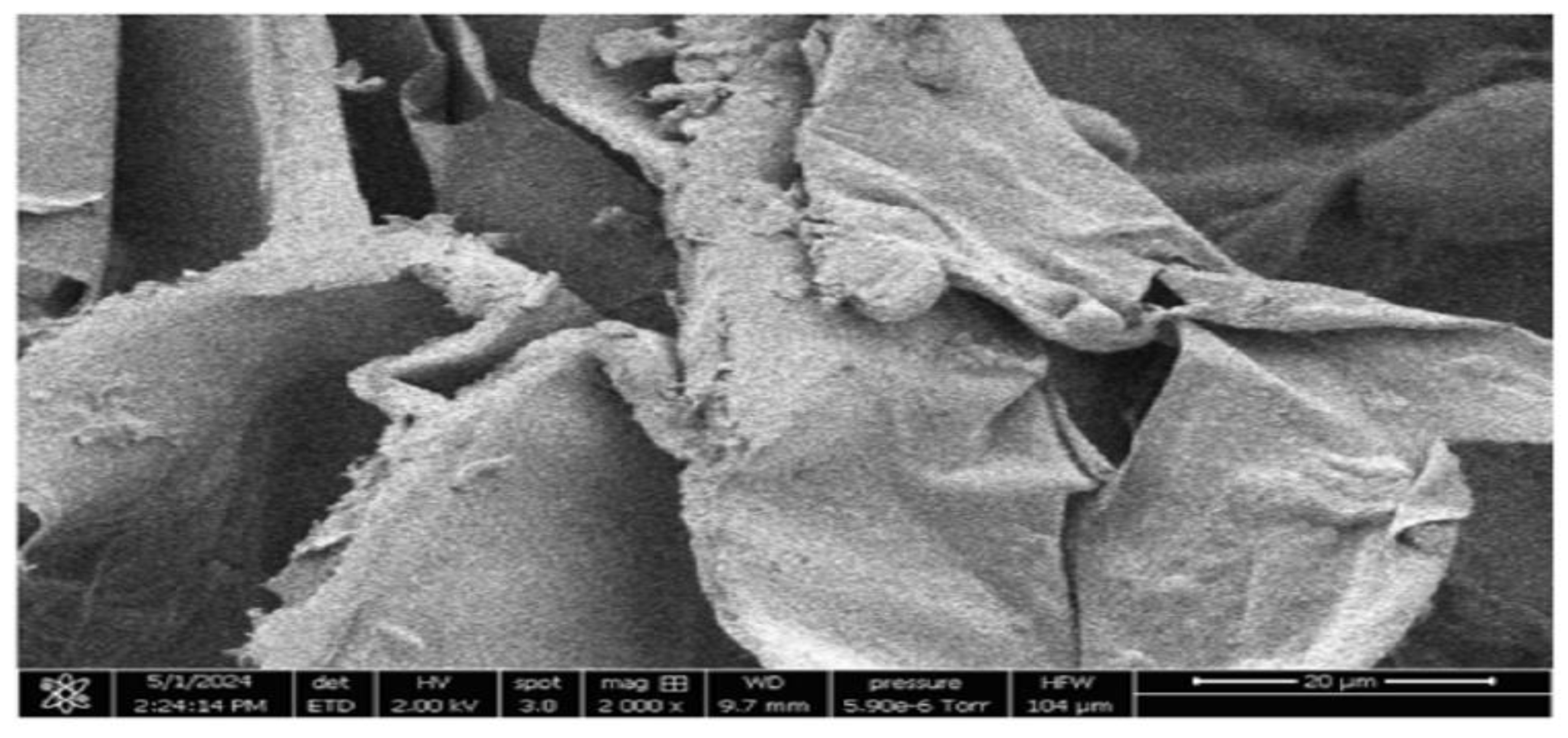
Figure 4.
FT-IR image of orange peels aerogel.
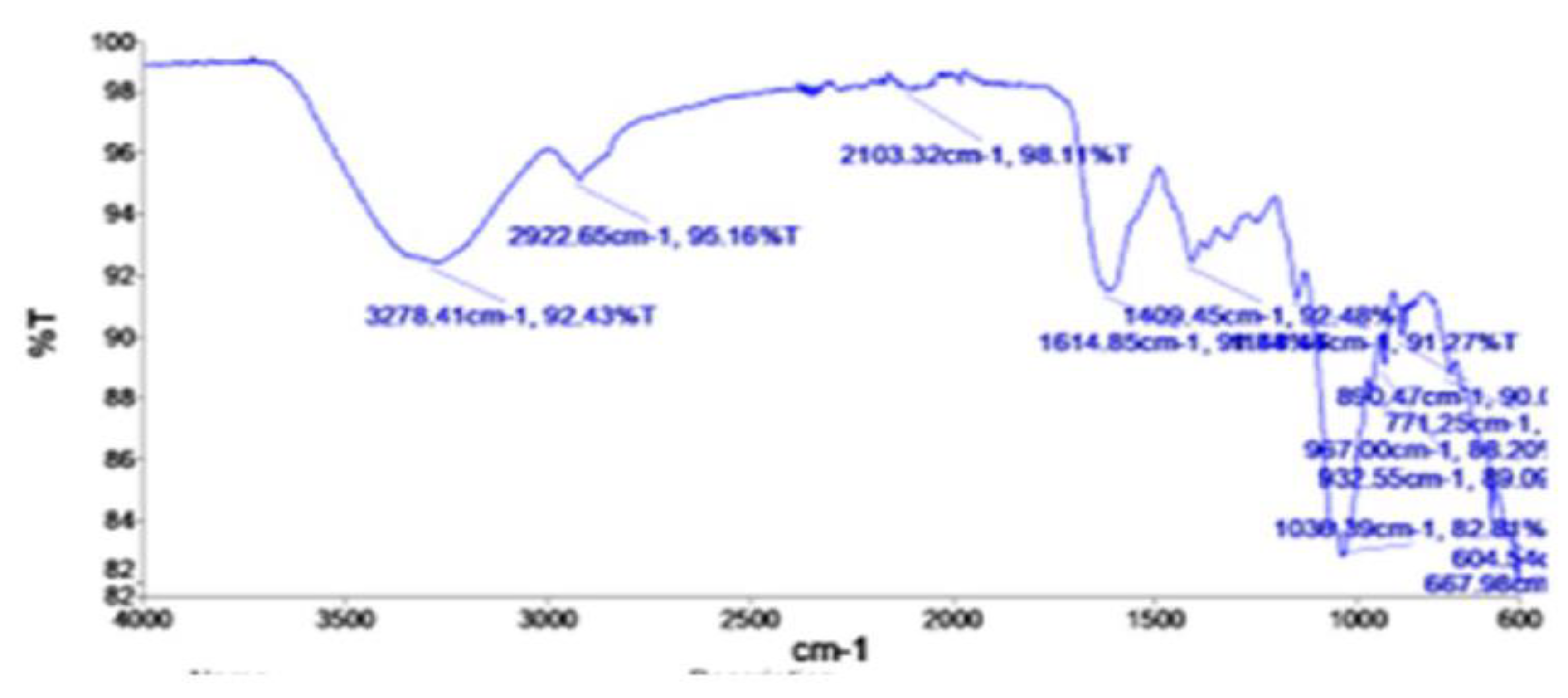
Figure 5.
(a) sessile image, (b) floating image of orange peels aerogel in a 250ml beaker.
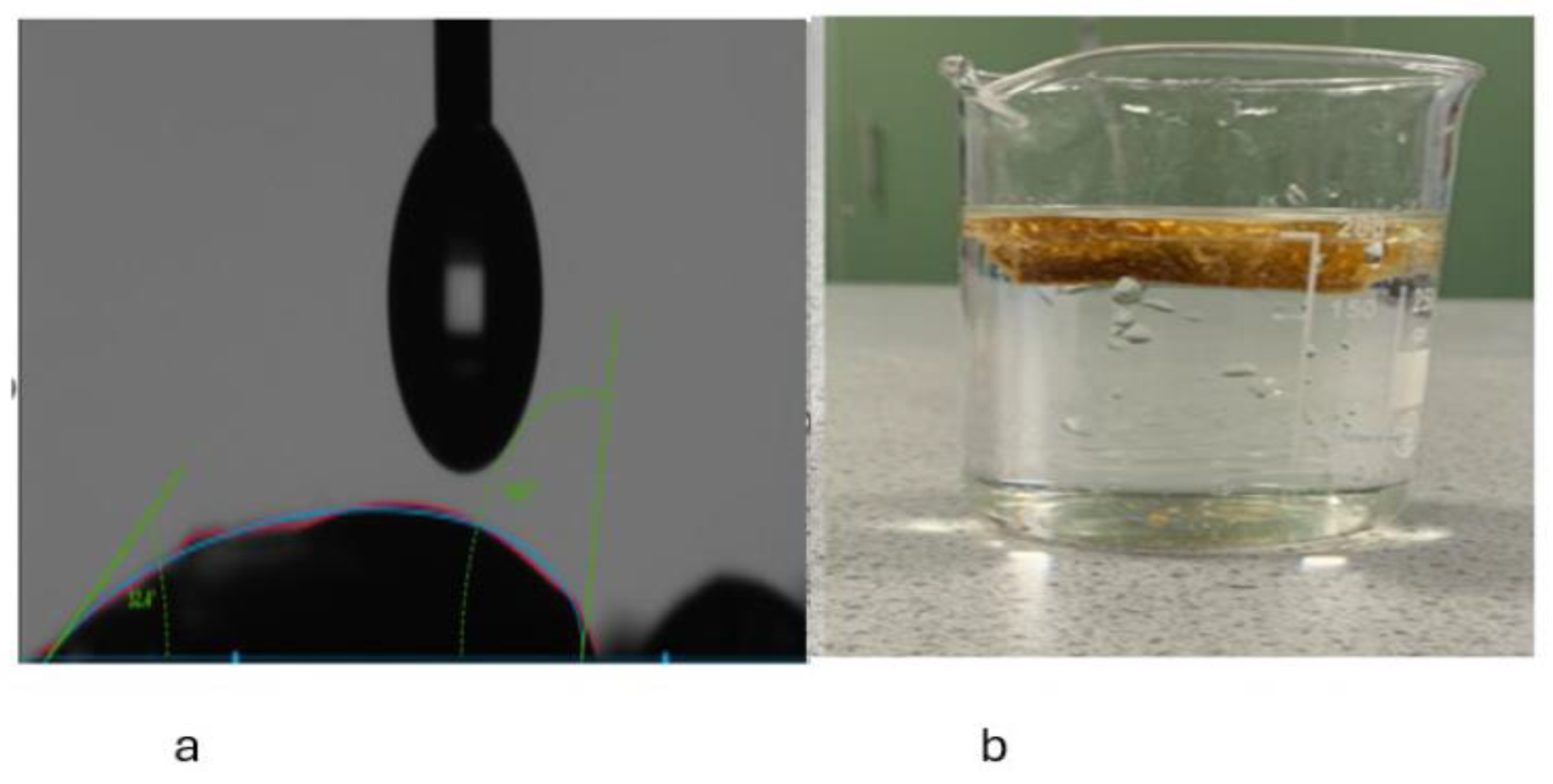

Table 1.
Summary of existing studies on aerogels derived from agricultural wastes.
| Waste material | Preparation process | Density g/cm3 |
Porosity % |
Contact angle | Sorption capacities g/g | Application | Reference |
|---|---|---|---|---|---|---|---|
| Banana leaf | Freeze drying | 0.14-0.28 | - | - | - | Thermal insulation | Raji et al., 2023 |
| Banana leaf | Freeze drying | 0.015 | - | 149o | 35 - 115 | Adsorption of oil/organic solvents |
Yue et al., 2018 |
| Banana stem | Freeze drying + Pyrolysis | - | - | 135o | 35 | Thermal insulation | Tu et al., 2023 |
| Pineapple leaf | Freeze drying | 0.127 – 0.326 | 97 – 99 | - | - | Thermal insulation | Luu et al., 2020 |
| Pineapple leaf | Freeze drying | 0.063 – 0.093 | 92 – 94 | - | - | Thermal insulation | Do et al., 2020 |
| Pineapple leaf | Freeze drying | 0.013 – 0.033 | 96 – 99 | 140o | 38 | Adsorption of oil |
Do et al., 2020 |
| Pineapple leaf + Cotton waste | Freeze drying | 0.019 – 0.046 | 96 | - | - | Thermal insulation | Do et al., 2022 |
| Peanut shell | Freeze drying + Carbonization | - | 98 | 141o | 27-50 | Adsorption of oil/organic solvents | Dai et al., 2022 |
| Seaweed solid waste | Freeze drying + Carbonization | - | - | 153o | 11-30 | Adsorption of oil |
Dai et al., 2023 |
| Rice straw | Freeze drying | 0.012 | 99.5 | 120o | 28 - 70 | Adsorption of oil/organic solvents | Chhajed et al., 2022 |
| Rice straw | Freeze drying | 0.002 – 0.024 | 98.4 – 99.8 | 151o | 98 - 170 | Adsorption of oil/organic solvents. | Dilamian et al., 2021 |
| Rice straw | Freeze drying | 0.05 – 0.06 | 97 | 150o | 13 | Thermal insulator | Tran et al., 2020 |
| Bamboo powder + Wastepaper | Freeze drying | 0.011 | - | 118o – 142o | 67 – 121 | Adsorption of oil | Huang et al., 2022 |
| Soybean stalk | Freeze drying | - | 95 – 97 | - | 16 – 31 | Adsorption of oil | Wu et al., 2021 |
| Sugarcane bagasse | Freeze drying | 0.016 – 0.122 | 91.9 – 98.9 | - | Adsorption of oil/organic solvent | Li et al., 2020 | |
| Sugarcane bagasse | Freeze drying | 0.016 – 0.112 | 92 - 99 | - | 25 | Adsorption of oil/organic solvent | Thai et al., 2020 |
| Sugarcane bagasse | Freeze drying | 0.012 – 0.108 | 92.9 – 99.2 | 140o | 23 | Thermal insulation/oil adsorption | Kumar et al., 2021 |
| Sorghum stem | Freeze drying | 0.146 – 0.167 | 90 | - | - | Adsorption of dyes | Septiani et al., 2019 |
| Sorghum stem | Freeze drying | - | - | - | 0.076 | Adsorption of organic and inorganic solvents | Chergui et al., 2021 |
| Lupin hull | Freeze drying | 0.030 | 98.1 | - | - | Food packaging | Ciftci et al., 2017 |
| Lupin hull | SCCO2 Freeze drying |
0.009 0.05 |
99.4 96.6 |
- | - | Food packaging | Deniz Ciftci, 2017 |
| White bamboo | Freeze drying | 0.085 – 0.144 | 90 – 95 | 114o – 132o | - | Adsorption of oil | Nguyen et al., 2019 |
| Durian | Ultrasonic | 0.003 – 0.012 | 99 | - | Xing et al., 2022 | ||
| Durian | Freeze drying | 0.5 | - | - | - | Supercapacitor | Wang et al., 2020 |
| Jackfruit | Freeze drying | 0.275 | - | - | - | Supercapacitor | Lee et al., 2020 |
| Watermelon rind | Freeze drying + Pyrolysis | - | 91 – 94 | 127o | 53.51 – 70.52 | Adsorption/energy storage | Tu et al., 2022 |
| Pomelo | Freeze drying | - | - | 128o – 135o | 5 - 36 | Adsorption of organic pollutants and oil | Zhu et al., 2017 |
| Pomelo | Freeze drying + Carbonization | 0.020 | 98 | 132o | 49.2 – 71.3 | Adsorption of organic pollutants and oil | Shi et al., 2019 |
| Pomelo | Freeze drying | 0.18 – 0.23 | 80 – 87 | - | 1.7 – 3.9 | Adsorption of organic pollutants and oil | Pung et al., 2022 |
| Pomelo fruit peels + wastepaper | Freeze drying | 0.611 | 99 | 139o | Adsorption of oil | Chaudhary et al., 2023 | |
| Coconut peat | Freeze drying | 28.21 | 98 | - | 2.1 – 2.5 | Adsorption of oil | La et al., 2021 |
| Coconut peat | Freeze drying | 98 | 24.52 | Adsorption of oil | Phat et al., 2022 | ||
| Coconut fibre | Freeze drying + Carbonization | 0.034 – 0.063 | 96 - 98 | - | 0.63 – 0.65 | Adsorption of dye | Nguyen et al., 2022 |
| Cabbage | Freeze drying | - | - | - | - | Adsorption of oil and organic solvent/ supercapacitor | Cai et al., 2017 |
| Grapefruit peels | Freeze drying | 0.051 | - | 141o | - | Adsorption of oil and organic solvent. | Imran et al., 2020 |
Table 2.
Elemental composition of orange peel.
| Chemical composition | Mass% (Zapata et al., 2009) |
Mass% (Santos et al., 2015) |
Mass% This study |
|---|---|---|---|
| Carbon | 49.59 | 44.5 | 48.67 |
| Hydrogen | 6.95 | 6.1 | - |
| Oxygen | 39.7 | 47.3 | 36.46 |
| Na | - | - | 4.44 |
| Nitrogen | 0.66 | 1.5 | - |
| K | - | - | 0.95 |
| Ca | - | - | 1.08 |
| Sulphur | 0.06 | 0.4 | - |
| Chloride | 0.001 | - | 8.39 |
| Ash | 3.05 | 4.0 | - |
| Water | 2.73 | - | - |
Table 3.
Physical characteristics of some oil at room temperature.
| Oil type | Density (g/cm) | Viscosity (pas) |
|---|---|---|
| Vegetable oil | 0.910 | 0.061 |
Table 4.
Surface area analysis of prepared aerogels.
| Type of aerogel | Average pore size (nm) | Pore diameter (nm) | Bulk density g/cm3 | Porosity % |
Water contact angle | Adsorption capacity (g/g) |
|---|---|---|---|---|---|---|
| orange | 58 | 51 | 0.010417 | 99 | 102.7 | 5.3 - 8.0 |
Table 5.
Summary of the surface area analysis of some cellulose-based aerogels.
| Waste material | Preparation process | Density g/cm3 |
Porosity % |
Contact angle | Application | Reference |
|---|---|---|---|---|---|---|
| Pineapple leaf | Freeze drying | 0.013 – 0.033 | 96 | 140o | Adsorption of oil |
Do et al. 2020 |
| Peanut shell | Freeze drying + Carbonization | - | 98 | 141o | Adsorption of oil/organic solvents | Dai et al. 2022 |
| Seaweed solid waste | Freeze drying + Carbonization | - | - | 153o | Adsorption of oil |
Dai et al. 2023 |
| Bamboo powder + Wastepaper | Freeze drying | 0.011 | - | 118o – 142o | Adsorption of oil | Huang et al. 2022 |
| Sugarcane bagasse | Freeze drying | 0.016 – 0.122 | 91.9 | - | Adsorption of oil/organic solvent | Li et al. 2021 |
| Sugarcane bagasse | Freeze drying | 0.016 – 0.112 | 92 | - | Adsorption of oil/organic solvent | Thai et al. 2020 |
| White bamboo | Freeze drying | 0.085 – 0.144 | 90 – 95 | 114o – 132o | Adsorption of oil | Nguyen et al. 2019 |
| Pomelo | Freeze drying | - | - | 128o – 135o | Adsorption of organic pollutants and oil | Zhu et al. 2017 |
| Pomelo | Freeze drying + Carbonization | 0.020 | 98 | 132o | Adsorption of organic pollutants and oil | Shi et al. 2019 |
| Pomelo | Freeze drying | 0.18 – 0.23 | 80 – 87 | - | Adsorption of organic pollutants and oil | Pung et al. 2022 |
| Pomelo fruit peels + wastepaper | Freeze drying | 0.611 | 99 | 139o | Adsorption of oil | Chaudhary et al. 2023 |
| Coconut peat | Freeze drying | 28.21 | 98 | - | Adsorption of oil | La et al. 2021 |
| Coconut peat | Freeze drying | 98 | Adsorption of oil | Phat et al. 2022 | ||
| Grapefruit peels | Freeze drying | 0.051 | - | 141o | Adsorption of oil and organic solvent. | Imran et al. 2020 |
Table 6.
Adsorption tests for pristine, chemical modified orange peels, and orange peels aerogel.
| Orange peels adsorbents | Oil adsorption capacities (mg/g) | |||
|---|---|---|---|---|
| OPA | 1st test | 2nd test | 3rd test | Average |
| Dry weight | 6.5 | 6.5 | 6.5 | 6.5 |
| Final weight | 74 | 74 | 73.5 | 73.83333 |
| Adsorption capacities | 10.38 | 10.38 | 10.35 | 10.37 |
| CMOP | 1st test | 2nd test | 3rd test | Average |
| Dry weight | 6.5 | 6.5 | 6.5 | 6.5 |
| Final weight | 52 | 52 | 51 | 51.66667 |
| Adsorption capacities | 7 | 7 | 6.8 | 6.933333 |
| Pristine | 1st test | 2nd test | 3rd test | Average |
| Dry weight | 6.5 | 6.5 | 6.5 | 6.5 |
| Final weight | 6.7 | 7 | 6.8 | 6.833333 |
| Adsorption capacities | 0.03 | 0.08 | 0.05 | 0.053333 |
Disclaimer/Publisher’s Note: The statements, opinions and data contained in all publications are solely those of the individual author(s) and contributor(s) and not of MDPI and/or the editor(s). MDPI and/or the editor(s) disclaim responsibility for any injury to people or property resulting from any ideas, methods, instructions or products referred to in the content. |
© 2025 by the authors. Licensee MDPI, Basel, Switzerland. This article is an open access article distributed under the terms and conditions of the Creative Commons Attribution (CC BY) license (http://creativecommons.org/licenses/by/4.0/).
Copyright: This open access article is published under a Creative Commons CC BY 4.0 license, which permit the free download, distribution, and reuse, provided that the author and preprint are cited in any reuse.


