

Submitted:
09 December 2025
Posted:
11 December 2025
You are already at the latest version
Abstract
Background: This review examines the relationship between gratitude and flourishing in adults from the perspective of Positive Psychology. It departs from the traditional empha-sis of psychology on mental illness, highlighting instead a comprehensive understanding of mental health that includes well-being and personal strengths. Methods: This study provides a narrative review of empirical studies published in the last decade, integrating the principal theoretical and methodological contributions in this field. Relevant studies were identified through searches in PubMed, Scopus, and Web of Science. Results: The available evidence suggests that gratitude functions as a psychological resource that sup-ports human flourishing by promoting greater life satisfaction, positive affect, and health-ier physical and mental functioning. Its association with better outcomes in groups facing significant stressors (e.g., emerging adults, older adults, people with chronic pain, depres-sion, or disabilities, forced migrants, etc.) and the promising results of gratitude-based in-terventions indicate that it is not only a dispositional trait but also a modifiable target for clinical and preventive programs. In addition, the findings underscore that empirical lit-erature on the relationship between gratitude and flourishing remains scarce and frag-mented. Conclusions: Gratitude is intimately connected to flourishing, as it operates as a positive emotion-focused coping strategy that supports and enhances overall well-being. Further research is required to clarify the mechanisms involved, to examine its long-term effects on flourishing, and to determine how best to integrate gratitude and flourishing in-to culturally and gender-sensitive, scientific evidence-based clinical practices.
Keywords:
gratitude
; human flourishing
; adults
; well-being
; positive psychology
1. Introduction
Traditionally, Psychology has been oriented toward the study and understanding of psychopathology and mental illness, generating a substantial body of knowledge that has made it possible to formulate theories about human mental functioning and to develop new pharmacological and psychological treatments for mental disorders, thereby achieving important advances in patients’ recovery [1].
Seligman and Csikszentmihalyi [1] argue that this strong emphasis of classical psychology on illness has led to the neglect of positive aspects such as well-being, satisfaction, hope, optimism, flow, and happiness; and thus, the potential benefits of these phenomena for individuals have been largely overlooked.
Interest in illness is also rooted in a predominantly biomedical scientific model, in which health has traditionally been understood primarily as the absence of disease, an approach that has itself evolved over time. In fact, the concept of health and illness has undergone significant conceptual development. The World Health Organization (WHO) notably broadened this concept by defining health as a state of complete physical, mental, and social well-being, rather than merely the absence of disease [2]. This definition emphasizes that genuine health entails not only being free from diagnosable pathology but also experiencing positive functioning and well-being across multiple domains of life, thereby providing a conceptual bridge between traditional biomedical perspectives and more recent approaches, such as Positive Psychology, that focus explicitly on well-being and human flourishing [1]. Subjective well-being is understood as the overall evaluation individuals make of their own lives, encompassing emotional responses, satisfaction in different life domains, and global judgments about life as a whole [3]. It is typically described as having two main components: an affective–emotional dimension, referring to moods and emotional states, and a cognitive–evaluative dimension, referring to individuals’ appraisal of their life satisfaction [3].
In this context, Positive Psychology emerges with the aim of investigating human strengths and virtues and the effects that these have on people’s lives and on the societies in which they live. At the individual level, it examines traits such as the capacity for love and vocation, courage, interpersonal skills, aesthetic sensitivity, perseverance, forgiveness, originality, spirituality, talent, and wisdom. At the societal level, it explores civic virtues and the institutions that encourage individuals to become better citizens, including responsibility, altruism, civility, tolerance, and a strong work ethic [1]. Therefore, Positive Psychology also attempts to develop interventions directed toward the cultivation of such strengths [3,4]. In this way, Positive Psychology seeks to enhance quality of life and to prevent the onset of mental disorders and psychopathology [3].
Nevertheless, Positive Psychology remains a relatively young and evolving field of inquiry that requires further empirical examination regarding the robustness, generalizability, and mechanisms of its purported benefits. In this sense, additional rigorous research is required -particularly longitudinal and experimental studies with different populations- to clarify under which conditions positive psychological interventions are most effective, which specific components are responsible for observed changes, and how these interventions interact with contextual and sociocultural factors. Such evidence would allow for the refinement of theoretical models and the design of more targeted, evidence-based programs aimed at promoting well-being and preventing mental health problems.
Building on these broader calls for more nuanced and context-sensitive research within Positive Psychology, one promising avenue of inquiry concerns the role of specific character strengths in fostering optimal functioning. In particular, gratitude warrants closer examination as a potential mechanism through which positive psychological processes translate into higher-order outcomes such as flourishing. Focusing on gratitude in this way may help to address existing gaps in the literature by clarifying how, and under what conditions, this construct contributes not only to subjective well-being and mental health, but also to more comprehensive models of human flourishing.
From a positive psychology perspective, gratitude has been conceptualized as a core strength that can promote higher levels of well-being and, potentially, human flourishing, by facilitating positive emotions, meaning in life, and high-quality social relationships [5,6,7]. Although an extensive body of research has linked gratitude to indicators of subjective well-being and mental health, the specific association between gratitude and flourishing—as conceptualized in contemporary flourishing models—remains comparatively underexamined [8,9,10,11]. Further empirical work is therefore needed to clarify the nature, strength, and direction of this relationship across different populations and cultural contexts.
Flourishing can be conceptualized as a multidimensional construct encompassing psychosocial and emotional components that reflect optimal functioning and well-being [8,12]. These dimensions typically include meaning and purpose, engagement, competence, positive emotions, positive relationships, and self-esteem, each of which contributes uniquely yet interdependent to a global sense of flourishing in life [8,12]. The following section briefly elaborates on the different dimensions of flourishing (See Figure 1 for further details).
1.1. Meaning and Purpose
Meaning and purpose refer to experiencing one’s life as guided by personally significant values, goals, and commitments. This dimension is closely aligned with eudaimonic conceptions of well-being, which emphasize living in accordance with deeply held principles rather than solely pursuing pleasure. It involves perceiving one’s activities as valuable and worthwhile, often in ways that transcend self-interest—for instance, through community involvement, caregiving roles, or social-impact initiatives that are experienced as contributions to a “greater good” [13,14].
From a developmental perspective, meaning and purpose also entail a sense of temporal coherence, that is, the perception that one’s present life is consistent with past experiences and future aspirations. Ryff’s model of psychological well-being conceptualizes this as “purpose in life,” emphasizing having goals, a sense of directedness, and feeling that life has meaning [15]. When individuals report high levels of meaning and purpose, they tend to show higher psychological resilience, better coping with adversity, and more sustained engagement in prosocial behavior, all of which are characteristic markers of flourishing [13,14,15].
1.2. Engagement
Engagement involves a state of deep absorption, concentration, and involvement in activities that are perceived as meaningful or intrinsically rewarding. It is conceptually related to the construct of flow, in which individuals lose track of time and self-consciousness while fully immersed in a challenging but manageable task. Within Positive Psychology, engagement is considered one of the core pillars of flourishing and is explicitly identified as such in Seligman’s PERMA model or Well-Being Theory [14].
For individuals to flourish optimally, Seligman [14] suggests that deliberate effort should be directed toward developing and sustaining the five components of the PERMA model. These components are: (1) Positive emotions, which involve pleasant feelings and affective experiences and are considered the most immediate route to happiness; (2) Engagement, referring to deep involvement or absorption in activities that capture an individual’s interest; (3) Relationships, reflecting the human need for love, attention, and significant connections with others; (4) Meaning, which relates to the sense of purpose or significance individuals ascribe to their lives, motivating them to continue living and striving; and (5) Accomplishment, encompassing achievements that drive individuals to keep improving and to pursue goals beyond their current level of functioning.
At the level of everyday functioning, engagement reflects sustained commitment and involvement in life domains that the person deems important, such as work, study, creative pursuits, or caregiving. It is also connected to Ryff’s dimensions of environmental mastery and personal growth, insofar as individuals who feel capable of shaping their environments and developing their potential are more likely to invest effort and attention in valued activities [15]. Empirical work on “orientations to happiness” suggests that an engagement-oriented life—characterized by deep involvement and flow experiences—predicts higher life satisfaction and is an important pathway to a “full life” [16].
1.3. Competence
Competence refers to the perceived ability to effectively manage the demands of everyday life, meet responsibilities, and respond adaptively to challenges. It encompasses a sense of efficacy in handling tasks, problems, and roles in several life domains (i.e., family, work, community). Conceptually, it overlaps with Ryff’s dimensions of environmental mastery and autonomy, which involve feeling able to shape one’s surroundings and regulate one’s behavior according to personally endorsed values rather than external pressures [15].
A strong sense of competence is not limited to technical or cognitive skill; it also includes feeling capable of making decisions, regulating one’s behavior, and persisting in the face of obstacles. Autonomy is considered central to this dimension because it underpins self-determined action—the capacity to initiate and sustain behavior that is congruent with one’s goals and identity. In the context of flourishing, competence contributes to a broader sense of agency and control, reinforcing self-esteem and supporting long-term goal pursuit, both of which are associated with psychological well-being and resilience. This view is consistent with self-determination theory, which conceptualizes competence and autonomy as basic psychological needs that support a sense of agency, self-regulation, and sustained goal pursuit, thereby promoting psychological well-being and resilience [17,18,19,20,21].
1.4. Pleasant Emotions
Pleasant emotions within flourishing are generally understood in line with hedonic models of well-being, involving frequent experiences of positive affect such as joy, contentment, interest, and life satisfaction. They reflect both the cognitive evaluation of one’s life (i.e., satisfaction with life) and the frequency and intensity of pleasant emotional states. These emotions are not merely epiphenomenal; contemporary theories argue that they serve adaptive functions. For instance, the broaden-and-build theory proposes that pleasant emotions broaden individuals’ thought–action repertoires and, over time, help build enduring psychological, social, and physical resources [13,22].
In this sense, pleasant emotions contribute to flourishing by expanding the range of possible responses to stressors, enhancing creative problem-solving, and fostering more flexible, adaptive coping. Positive affect is also linked to more constructive social interactions and stronger interpersonal bonds, which in turn feed back into well-being. Peterson and Seligman’s work on character strengths similarly highlights the role of pleasant emotions in reinforcing virtuous behavior and facilitating the development of strengths over time [6,16]. Thus, pleasant emotions appears to be both an indicator and a mechanism of flourishing, supporting adaptive functioning across multiple contexts.
1.5. Positive Relationships
Positive relationships refer to close, supportive, and mutually satisfying connections with others. They involve perceiving oneself as cared for, valued, and understood, as well as having opportunities to offer care and support in return. This dimension is reflected in Ryff’s construct of “positive relations with others,” which emphasizes empathy, intimacy, and the capacity to form warm, trusting relationships [15], and it is also central to the flourishing construct proposed by Diener et al. [8], where high-quality relationships are a core domain of psychological well-being.
Positive relationships are not limited to intimate or family ties; they also include friendships, collegial relationships, and broader community connections. Empirical research consistently shows that social support and a sense of belonging are robust predictors of mental health, lower stress, and better physical health [23,24]. Within flourishing, such relationships serve both instrumental and emotional functions: they provide tangible help and resources, offer emotional validation, and contribute to a sense of meaning and shared identity. In Seligman’s PERMA framework, “relationships” is a distinct pillar, underscoring its non-reducible contribution to well-being [14].
1.6. Self-Esteem
Self-esteem is understood as the evaluative dimension of the self-concept, that is, the overall value or worth individuals attribute to themselves. It is shaped by one’s learning history and cumulative experiences within different environments (i.e., family, school, work, community), particularly those that provide safety, recognition, and opportunities to experience competence and success [6]. Contexts that communicate acceptance, support, and confidence in an individual’s abilities tend to foster higher, more stable self-esteem [25,26].
This construct involves how people appraise their physical appearance, moral principles, weaknesses, abilities, and attitudes, as well as how they believe they are seen and valued by others. Self-knowledge (awareness of one’s traits, motives, and limitations) and self-concept (the cognitive representation of who one is) are closely related to self-esteem and jointly shape how individuals perceive and behave toward themselves, others, and the broader environment. Within models of flourishing, self-esteem is often embedded in broader domains such as self-acceptance and optimism [8,15]. Adequate self-esteem contributes to psychological resilience, encourages active engagement with challenges, and supports the pursuit of personally relevant goals, all of which are key features of a flourishing life [27,28,29].
In light of accumulating evidence that self-esteem exerts substantial effects on real-world outcomes, understanding how self-esteem develops has become a matter of considerable societal relevance. Unravelling how self-esteem forms and changes across the lifespan is crucial for informing educational practices, parenting approaches, and prevention programs targeting mental health problems and maladaptive behaviors. In this sense, research on self-esteem development provides a critical basis for designing interventions and policies that foster more resilient, motivated, and socially integrated individuals [29].
Based on previous finding and considering the relevance of these processes, the current narrative review aims to explore the relationship between gratitude and human flourishing in adults. Through this analysis, it seeks to provide an up-to-date and integrative synthesis of an as yet relatively fragmented body of evidence, thereby contributing to the clarification of key conceptual links and the identification of gaps in a field in which the available empirical evidence is still relatively limited.
2. Materials and Methods
This study adopts a comprehensive narrative review methodology to examine current evidence on the relationship between gratitude and human flourishing in adults. The literature search was conducted in PubMed, Scopus, and Web of Science.
2.1. Inclusion and Exclusion Criteria
Inclusion criteria comprised empirical studies that: (1) peer-reviewed articles published in English over the past ten years; (2) focusing in gratitude and human flourishing; (3) in adults.
Exclusion criteria included: (1) duplicated studies; and (2) publications without primary data.
2.2. Search Strategy
The search strategy was based on Medical Subject Headings (MeSH) terms to enhance precision and consistency in the identification of relevant literature. The following key terms were used: Gratitude, Human Flourishing, and Adults. Boolean operators were applied to combine terms and refine the search results.
2.3. Study Selection Process
The study selection process began with an initial screening of titles and abstracts, followed by full-text review of the articles that met the inclusion criteria. Two independent reviewers (J.A. C-R. and C.M.G-S.) conducted the selection process to minimize bias and ensure the quality of the included studies. In cases of disagreement, the rest of authors were consulted to resolve discrepancies and reach consensus.
2.4. Quality Assessment
Because this is a narrative review, a formal risk-of-bias assessment was not undertaken. Instead, the included studies were subjected to critical appraisal to evaluate their methodological quality and main limitations. Specifically, the following aspects were considered: clarity of study design, adequacy of sample size, validity of measurement instruments, and consistency of reported outcomes. In addition, the methodological limitations and potential sources of bias acknowledged by the original authors were examined.
2.5. Data Analysis
For data analysis, the principal findings from the final set of included studies were organized into thematic categories. Descriptive and comparative approaches were employed to identify key patterns and trends within the reviewed literature.
3. Results
The results are organized into three subsections to facilitate a coherent presentation of the evidence. First, the section Human Flourishing Models outlines the main contemporary conceptualizations and operational definitions of flourishing. Second, Gratitude and Human Flourishing in Adults synthesizes empirical findings on the associations between gratitude and different indicators of flourishing in adult populations. Finally, the main limitations and research gaps identified in the reviewed studies are presented.
3.1. Human Flourishing Models
The studies reviewed draw on different conceptualizations of human flourishing; accordingly, it was deemed pertinent to begin by examining the principal theoretical models underpinning this construct.
Flourishing is commonly used to describe a state of high subjective well-being [12] that goes beyond the mere absence of distress. It typically refers to a combination of frequent positive emotions, a sense of meaning and purpose, satisfying relationships, and effective psychological functioning across multiple life domains.
Operational definitions of flourishing lead to substantial variability in prevalence estimates, illustrating how strongly results depend on the specific criteria and cut-off points adopted. The population distribution of high levels of well-being—referred as flourishing—constitutes a key area of epidemiological inquiry and has generated considerable international interest in the development and validation of appropriate psychometric measures [12]. Table 1 provides an overview of four relevant operational definitions of flourishing used in contemporary psychological research, highlighting their core components, measurement instruments, and criteria for classification. As shown, these models differ in their conceptualization of flourishing, the domains they emphasize, and the scoring or threshold strategies they employ, which have important implications for the comparability of findings and the prevalence rates reported across studies.
3.2. Gratitude and Human Flourishing in Adults
Gratitude is conceived as a life orientation characterized by the recognition and appreciation of positive aspects of life, which is closely linked to eudaimonic well-being and human flourishing [7]. Eudaimonic well-being is understood as a life lived to the fullest—involving the realization of human potential through autonomy, environmental mastery, personal growth, purpose in life, and self-acceptance—core components of flourishing to which gratitude has been systematically related [7] (see Figure 2 for further details). Within this framework, the present research examines how gratitude is associated with indicators of flourishing. In the following paragraphs, we present the results regarding levels of gratitude and flourishing in different samples, as well as the relationships between these constructs.
The expression and experience of gratitude appear to be shaped by sociodemographic and cultural factors, such as age, gender, marital status, educational attainment, religious involvement, and broader cultural context. For instance, older adults, women, married individuals, retirees or self-employed persons, those with more years of education, and individuals who frequently attend religious services tend to report higher levels of gratitude [30] (see Table 2 for further details).
Moreover, higher levels of gratitude were consistently associated with indicators of human flourishing. Participants reporting greater gratitude showed higher life satisfaction and more frequent positive emotions, together with lower psychological distress, including fewer depressive symptoms and reduced suicidal ideation. Gratitude was also linked to better physical health, reflected in more favorable cardiovascular functioning, lower obesity, fewer sleep problems, and a more positive perception of overall health. In the social domain, higher gratitude was related to stronger social support and greater involvement in community activities. In addition, more grateful individuals reported healthier lifestyle behaviors, such as lower substance and alcohol use, as well as more frequent participation in religious services, which might reinforce a sense of purpose and spiritual connection [30].
In addition to cross-sectional evidence, longitudinal studies have clarified the directionality of the relationship between gratitude and human flourishing variables, identifying gratitude as a factor in reducing stress and demonstrating the beneficial effects of gratitude-based interventions on perceived stress and flourishing in older adults [9].
Nevertheless, there is still a limited body of research that specifically examines the relationship between gratitude and flourishing in adults. The existing literature remains scarce and somewhat fragmented, underscoring the need for further investigation in this field. In what follows, the findings of the main empirical studies identified to date are presented. These studies, conducted in diverse sociocultural and educational contexts, provide an initial overview of how gratitude may contribute to well-being and flourishing in this population.
The association between gratitude and flourishing among emerging adults (18–25-years-old) with divorced parents was reported as positive and statistically significant [10]. In this context, gratitude might have greater explanatory power for flourishing than forgiveness. As a positive emotional coping strategy, gratitude facilitates emotional regulation in emerging adults by increasing positive emotions, sense of engagement, relationship quality, meaning in life, and accomplishments, all of which are core components of flourishing [10]. The two dimensions of gratitude, “appreciation for the people who are part of my life” and “appreciation for the ongoing experiences of life,” showed a strong correlation with the positive emotions and meaning dimensions of flourishing. This suggests that gratitude enables emerging adults to interpret events and experiences in a more positive way, to strengthen their interpersonal bonds, and to foster the construction of a sense of purpose in their lives [10].
Moreover, the relationship between gratitude and flourishing has also been examined in the context of chronic pain, where these constructs have been identified as relevant psychological resources that can reduce symptomatology, support positive coping strategies, and contribute to better perceived quality of life despite persistent symptoms [31]. For instance, in a qualitative study grounded in Aristotelian virtue theory, five patients with chronic osteoarthritis were interviewed in depth. The thematic analysis yielded five central themes: strength, prudence, gratitude, self-worth, and insight into flourishing. Gratitude emerged explicitly as one of the core virtues that patients identified as relevant for “thriving in the face of chronic disease,” that is, for living as well as possible despite ongoing illness. Insight into flourishing was identified as another key theme, linked to patients’ understanding of what it means to “live well through chronic illness,” representing a form of flourishing within this context. The findings highlight gratitude and flourishing as two of the five main thematic axes describing virtues that help individuals with chronic osteoarthritis to live well and “flourish” despite their condition [31].
Phillips et al. [32] carried out a longitudinal study in adults with disabilities and reported higher levels of gratitude at baseline were associated with higher levels of flourishing nearly two years later. Gratitude also predicted greater adaptation to disability at the intermediate time point, and this adaptation, in turn, partially explained the link between early gratitude and later flourishing, accounting for approximately 27% of the total effect. Both gratitude and adaptation to disability showed significant positive contributions to subsequent flourishing, underscoring the role of gratitude as a psychological strength that can facilitate better adjustment and enhanced well-being over time in this population [32].
Another research [33] highlights gratitude as a key psychosocial resource for coping and flourishing among forcibly displaced migrants in South Africa. According to participants’ narratives, gratitude is expressed as the acknowledgement of positive events or benefits received—from other people, from a divine source, or from the broader environment. This experience goes beyond merely saying “thank you” and encompasses affective and motivational components [33]. From an emic perspective, participants described how gratitude helped them confront traumatic experiences and foster a sense of relief and renewed perspective. For instance, some expressed thankfulness for being alive, for having escaped oppressive contexts, and for the community connections that enabled changes in their life circumstances. Gratitude was also intertwined with other internal resources, such as hope and optimism, underscoring the interconnected nature of these character strengths [33].
Regarding interventions in this field, they are limited evidence in this regard. Nevertheless, Braghetta et al. [34] developed a flourishing intervention consisted of a 12-week, evidence-based multidimensional program delivered in 90-minute group sessions. Main topics included mental and physical health, gratitude, acts of kindness, happiness, social relationships, forgiveness, resilience, spirituality, and life purpose and meaning, among others. The intervention was associated with significant reductions in depressive symptoms and significant improvements in several secondary outcomes (i.e., personal flourishing, quality of life, spirituality, social support, happiness, forgiveness, gratitude, and life satisfaction).
In this study [34], gratitude was assessed using the Brazilian Gratitude Scale (B-GRAT-20), which evaluates gratitude related to life experiences; higher scores reflect greater levels of gratitude. Following the intervention, participants showed significant increases in gratitude, with an effect size of 0.34. Participants reported feeling more grateful for life and their everyday experiences. Qualitative feedback indicated that the program encouraged them to reflect on gratitude and to appreciate positive aspects of their lives more consciously. In sum, the flourishing intervention not only contributed to a reduction in depressive symptoms but also enhanced gratitude and other positive dimensions of personal well-being [34].
3.3. Main Limitations and Research Gaps
The current evidence base on gratitude and flourishing remains relatively limited, both in volume and methodological diversity. Most available studies rely on cross-sectional designs, convenience samples, and self-report measures, which restricts the possibility of drawing conclusions about directionality and causality. In addition, many investigations are concentrated in specific cultural or sociodemographic contexts, which narrows the generalizability of the findings and may overlook important sources of variability in how gratitude and flourishing are experienced and expressed. Nevertheless, it is important to acknowledge the value of the studies conducted and their contributions to the initial development of research on this topic.
Beyond these constraints, several gaps emerge from the existing literature. There is a clear need for longitudinal and mixed-methods designs that clarify underlying mechanisms and developmental trajectories, as well as for culturally sensitive research that examines how values, norms, gender relations, and intersecting forms of vulnerability shape opportunities for gratitude and flourishing. Further work is also required to refine and adapt measurement tools across contexts, to explore lay conceptions of flourishing, and to evaluate structured interventions that explicitly target gratitude and flourishing in diverse populations. In sum, these lines of inquiry would strengthen the empirical basis for scientific evidence-based clinical practice and inform policies aimed at promoting well-being at the population level.
4. Discussion
The discussion section first examines the present findings considering current empirical evidence on gratitude and human flourishing, highlighting points of convergence and divergence with previous research. In addition, it includes a subsection on Clinical Relevance and Future Research Directions, which addresses the practical implications of these findings for assessment and intervention, and identifies key gaps and priorities for future empirical work and clinical practice.
4.1. Gratitude and Human Flourishing in Adults: Toward a Deeper Understanding
Seligman [14] argues that flourishing is one of the most central and promising constructs in Positive Psychology, as it offers crucial insights for enhancing quality of life for all individuals. The term is commonly used to describe a person’s overall state of well-being. In this study, flourishing was selected as one of the focal constructs because it reflects the capacity of adults to cope with daily challenges and adversity.
The notion of human flourishing is clearly different from subjective well-being, which primarily assesses happiness, and from psychological well-being, which focuses mainly on self-processes. Instead, flourishing integrates elements of both subjective and psychological well-being into a more comprehensive framework [14]
Human flourishing -as a multidimensional state of overall well-being- encompasses happiness, physical health, a sense of meaning in life, positive interpersonal relationships, financial stability, and character development. Within this framework, gratitude is identified as a central factor in fostering flourishing, as it is associated with a wide range of psychological, social, and physical benefits [30].
In terms of mental well-being, gratitude is linked to higher life satisfaction, more frequent positive emotions, and lower levels of psychological distress, including reduced depressive symptoms and diminished suicidal ideation. With regard to physical health, gratitude has been associated with better cardiovascular functioning, lower rates of obesity, fewer sleep disturbances, and an enhanced subjective perception of general health. At the social level, gratitude appears to strengthen interpersonal bonds by promoting social support and encouraging participation in community activities, thereby contributing to collective well-being [30].
According to the reviewed studies, gratitude helps adults regulate their emotions, strengthen their relationships, derive meaning from their experiences, and attain personal accomplishments, all of which are key aspects of the PERMA model of flourishing [10,12,14].
In the same line, gratitude plays a central role in psychological well-being, as it is closely linked to increased positive emotions, enhanced interpersonal relationships, and a greater capacity to derive meaning from life. According to the current research, gratitude supports individuals in coping with adversity by shifting their perspective toward a more positive outlook, enabling them to value both their experiences and the people who are part of their lives. Gratitude also contributes to well-being by strengthening social bonds, fostering positive emotions, and helping individuals to find meaning in the challenges they face. It may also enhance engagement in daily activities and promote the attainment of personal goals [10,12,30,31,32,33,34,35]. Individuals with higher levels of gratitude tend to be more proactive and, consequently, are much more likely to engage in more positive and effective coping strategies when facing stressful life situations. In turn, they are also more likely to develop and mobilize their social support network and to activate other psychological strengths, such as optimism and resilience, all of which contributes to fostering better mental health and preventing mental disorders and emotional disturbances.
The studies reviewed underscore the central role of gratitude in the process of human flourishing, particularly among vulnerable populations and individuals undergoing life transitions or periods of crisis. This finding is especially relevant, as it may point to a set of protective factors that could be beneficial not only during diagnosis and treatment, but also as part of mental health prevention strategies. Such problems often remain under-recognized due to the stigma associated with them and the difficulties involved in accessing appropriate care resources.
Older adults are included in this group because of the challenges associated with this stage of life, together with the potential comorbidities and health problems that frequently emerge in later adulthood. Emerging evidence also points to gratitude as a protective factor in reducing stress, particularly in later life, and highlights the beneficial impact of gratitude-based interventions on perceived stress and flourishing in older adults. Programs that systematically cultivate gratitude—such as gratitude journaling or guided reflection on positive life events—have been associated with lower levels of psychological strain and higher reports of meaning, positive affect, and overall well-being in this population [9]. These findings are consistent with the so-called paradox of ageing, a term used to describe the observation that life satisfaction tends to increase as people grow older [36]. The idea that, despite the physical, cognitive, and social losses typically experienced, later life is associated with higher levels of well-being has become a central theme in the ageing literature [36]. We hypothesize that gratitude and the level of flourishing attained function as mediating or antecedent factors in this phenomenon, a possibility that warrants further empirical investigation.
In contemporary societies, which are dominated by youth-oriented values such as strength, speed, innovation, and efficiency, later adulthood has often been associated with economic poverty, inactivity in the labour market, sociocultural marginalization, and ill health. This representation of ageing has given rise to the so-called “decline model”, which focuses on deficits and has contributed to the proliferation of stereotypes about old age. There is therefore a clear need to reconsider the prevailing social representations of ageing and older adults and to actively counteract ageism. By contrast, the “personal growth model” – grounded in a life-span developmental perspective – underscores the potential advantages of later life, such as increased free time, reduced responsibilities, and a greater capacity to focus on what is truly important [36]. Within this framework, gratitude aligns closely with a model centred on personal growth and on the promotion of active and healthy ageing.
In the case of emerging adults with divorced parents, gratitude assists them in coping with the stress and difficulties associated with parental separation, allowing them to strengthen family relationships and find meaning in their lived experiences. Thus, gratitude constitutes a key factor in optimizing flourishing within this group [10]. Gratitude appears to be a powerful resource for fostering flourishing, as it assists them in managing stress and in developing healthier and more meaningful relationships [10]. It is important to recognize that divorce often constitutes a stressful life event for sons and daughters. Although in many cases it does not lead to a full-blown crisis or become consolidated as a traumatic event, in many others it does. When the inherently stressful nature of divorce is combined with the fact that the transition to adulthood is marked by a series of changes and events that also generate stress (e.g., beginning university, entering the labour market, psychophysiological changes, shifts in social roles and expectations, changes in responsibilities, identity transitions, and the exploration of new relationships and social networks), it becomes particularly relevant to examine how gratitude may contribute to well-being and help ensure that the transition to adulthood occurs under the most favourable conditions. In this way, gratitude might foster an adequate process of flourishing and the strengthening of coping resources that will be crucial across subsequent life stages.
According to the study of Tessy [10], several factors contribute to well-being or flourishing in emerging adults. The authors reported the significant role of both gratitude and forgiveness. Gratitude promotes positive emotions, strengthens interpersonal relationships, facilitates the construction of meaning from experiences, and supports greater engagement and personal achievement. Forgiveness, in turn, involves the capacity to let go of negative emotions such as anger, and to replace them with more positive states such as empathy and compassion. In this way, forgiveness contributes to improved relationships, helps individuals to derive meaning from difficult experiences, and supports emotional well-being. At the emotional level, forgiveness may facilitate the experience of gratitude by releasing negative emotions such as resentment toward those who have caused harm, individuals may become more receptive to acknowledging and appreciating the positive aspects of their lives and relationships. In a complementary way, forgiveness and gratitude jointly promote well-being—while forgiveness reduces negative affect and contributes to the repair of damaged relationships, gratitude cultivates positive emotions and reinforces social bonds [10]. Both processes also play a significant role in flourishing, as they are linked to key components of the PERMA model, including positive emotions, relationships, and meaning. Taken together, they may be particularly effective in enhancing the well-being of emerging adults. Thus, forgiveness and gratitude are not only related but mutually reinforcing in their capacity to improve emotional well-being and interpersonal functioning [10].
From a clinical standpoint, the constructs of gratitude and flourishing are closely aligned with third-wave behavioral therapies, particularly Acceptance and Commitment Therapy (ACT) [37]. ACT explicitly aims to promote a rich, full, and purposeful life, rather than merely reducing symptoms, by fostering psychological flexibility, values-based action, and acceptance of difficult internal experiences. Within this framework, gratitude can be understood as a practice that orients attention toward valued aspects of one’s life and context, even in the presence of pain or illness, while flourishing reflects the broader outcome of living in accordance with personally worthwhile values. Integrating gratitude-focused exercises into ACT-based interventions might therefore strengthen individuals’ capacity to engage with their lives in a more open, appreciative, and committed way, supporting well-being that extends beyond symptom control or the absence of disease.
In the same line, in the context of chronic osteoarthritis, the study framed within Aristotelian virtue theory underscores gratitude and flourishing as two central virtue-based resources [31]. Gratitude appears to function as a facilitating factor for quality of life and for the development of a salient life despite pain and its accompanying symptoms. This is one of the principal therapeutic objectives in the treatment of patients with chronic pain, as these symptoms are often disabling and individuals’ autonomy, social networks, and life projects tend to be adversely affected by both the pain and its chronic nature. Evaluating and intervening in gratitude and flourishing in the context of chronic pain is particularly important because these constructs shift the clinical focus from mere symptom control to the possibility of living a valuable life alongside pain [39,40]. In this sense, working explicitly with gratitude and flourishing does not imply denying the reality of pain, but rather enlarging the therapeutic horizon to include growth, purpose, and connection as legitimate and attainable outcomes of chronic pain treatment. In the context of flourishing, gratitude emerged as a capacity that can catalyze personal growth and healing not only at the individual level but also within the family domain. Close relationships, particularly familial ones, were frequently mentioned as settings in which virtues such as gratitude are experienced and embodied, thereby contributing to well-being and flourishing in the midst of adversity [31].
In addition, the longitudinal findings of Phillips et al. [32] with adults with disabilities reinforce the notion that gratitude operates as a prospective predictor of flourishing and not merely as a concurrent correlate of well-being. Higher gratitude at baseline was associated with greater flourishing nearly two years later, suggesting that grateful dispositions may set in motion processes that support long-term psychological adjustment. Importantly, adaptation to disability partially mediated this association, accounting for a substantial proportion of the total effect. This pattern indicates that gratitude may contribute to flourishing, at least in part, by facilitating more effective adaptation to the challenges imposed by disability. In other words, individuals who cultivate gratitude appear better able to adjust to their functional limitations, and this enhanced adaptation is reflected in higher levels of flourishing over time. Such results align with strengths-based perspectives in rehabilitation psychology and highlight gratitude and flourishing as a promising target for interventions aimed at promoting both adaptive functioning and a fuller, more substantive life in the context of disability [32,41,42]. In line with this perspective, our findings support the idea of reimagining rehabilitation and health care beyond a deficit-correction model focused solely on restoring bodily “normality.” Emphasizing gratitude and flourishing invites clinicians to consider how people can lead rich, personally significant, and dignified lives even when pain, illness, or disability persist. This shift aligns rehabilitation goals with broader notions of human development and well-being, rather than limiting success to symptom reduction or functional recovery alone [41].
Qualitative work with forcibly displaced migrants in South Africa further also underscores gratitude as a central psychosocial resource for coping and flourishing [33]. From an emic standpoint, gratitude was portrayed as helping individuals face traumatic experiences, providing a sense of relief and a renewed outlook on their circumstances; migrants reported feeling thankful for being alive, for having escaped oppressive contexts, and for the community ties that facilitated change in their lives. Gratitude was also closely linked to other inner strengths, such as hope and optimism, highlighting the interconnected nature of these positive dispositions [7,14,33]. In relation to flourishing, gratitude emerged as a capacity that can foster personal growth and healing at both individual and family levels, with close—especially familial—relationships described as key contexts in which gratitude is experienced, embodied, and translated into well-being and flourishing despite ongoing adversity [33]. Participants in the study reported that gratitude allowed them to value their survival, learn from difficult experiences, and develop new ways of understanding their circumstances. This disposition not only supported them in coping with hardship but also functioned as a catalyst for personal growth and resilience. Moreover, gratitude emerged as a psychosocial resource that can positively shape family and community relationships, contributing to an “upward spiral” of collective well-being [33].
Gratitude also emerged as one of the core components of personal flourishing in the study of Braghetta et al [34] which explores the effects of the flourishing intervention among individuals with depressive symptoms. Gratitude appears to contribute to flourishing through several interrelated pathways. One possible explanation points out that gratitude is closely associated with the experience of positive emotions (i.e., satisfaction and happiness) which play a relevant role in well-being and flourishing. Participants in the intervention reported feeling more grateful and placing greater value on positive aspects of their lives, which likely supported their overall sense of well-being. Moreover, gratitude is associated with strengthened social relationships, as it tends to foster empathy, connectedness, and appreciation of others. These relational benefits are highly relevant to flourishing, which encompasses close social ties and perceived social support.
Moreover, gratitude may exert a protective effect on mental health. By promoting a more positive focus and reframing experiences, gratitude can contribute to reductions in depressive symptoms and improvements in quality of life, aligning with the broader aims of the flourishing intervention to enhance psychological and emotional well-being. Participants’ qualitative reports suggested a significant shift in perspective, characterized by a more positive outlook on life and increased appreciation of their experiences. Such attitudinal change can be considered a key element of personal flourishing [4,34]. Therefore, gratitude appears to function as a facilitating factor for flourishing by enhancing positive affect, strengthening social relationships, and supporting psychological and emotional well-being [4,34].
Furthermore, individuals who report higher levels of gratitude tend to engage in healthier lifestyle behaviors, such as lower consumption of substances and alcohol, which may indirectly support both physical and psychological health. Finally, gratitude is also related to a higher frequency of participation in religious services, which can reinforce a sense of purpose, belonging, and spiritual connection, and thus further contribute to the overall experience of human flourishing [30].
Drawing on moral affect theory, gratitude can be understood as a moral emotion that orients individuals toward prosocial behavior and relationship-enhancing responses. From this perspective, expressions of gratitude do more than simply reflect momentary positive feelings; they serve to acknowledge benefits received from others and to reinforce perceptions of others as benevolent and trustworthy [38]. In this way, gratitude promotes the formation, maintenance, and strengthening of social bonds. These closer relationships, in turn, expand individuals’ interpersonal resources—such as emotional support, practical assistance, and informational guidance—which are critical for effective coping. Thus, gratitude not only fosters a sense of connection and reciprocity but also indirectly enhances coping capacity by increasing access to social and psychological resources that can be mobilized in the face of stress or adversity.
4.2. Clinical Relevance and Future Research Direction
The present findings suggest several relevant implications for clinical practice and mental health promotion, particularly among those with lower levels of gratitude (e.g., younger individuals, men, the unemployed and people with lower levels of religious participation). First, gratitude-based interventions could be integrated as low-cost, scalable tools within primary care, community health programs, and psychological services. Practices such as writing gratitude letters, keeping gratitude journals, and/or expressing appreciation to significant others might act as effective strategies to enhance emotional well-being, complementing existing scientific evidence-based treatments [30].
In addition, given that human flourishing is influenced by cultural, social, and demographic variables [30], clinicians should consider these contextual factors when designing and implementing gratitude-focused interventions. For example, the way gratitude is expressed and experienced may differ across cultures, age groups, and socioeconomic contexts. Adapting the language, format, and delivery of gratitude and flourishment exercises to the values and norms of specific populations may increase their acceptability, engagement, and effectiveness.
In the same line, cross-cultural research indicates that the determinants of well-being are not universal, but are shaped by the cultural context in which individuals are embedded. For instance, in more individualistic societies, personal autonomy, self-expression, and the pursuit of individual goals tend to emerge as particularly strong predictors of well-being. By contrast, in more collectivistic cultures, the quality of interpersonal relationships, a sense of belonging, and the fulfilment of social roles carry greater weight in explaining subjective well-being and flourishing [3]. These differences suggest that what it means to “live well” is partly defined by culturally shared values and norms, and that psychological constructs such as flourishing and gratitude may be experienced, expressed, and prioritized in distinct ways across cultural settings.
These considerations underscore the relevance of systematically accounting for cultural factors when designing and interpreting research on well-being and gratitude. Measures developed in one cultural context may not fully capture relevant aspects of flourishing in another, and the relative contribution of different dimensions (e.g., autonomy, social network, material stability, spiritual life, etc.) might vary across populations. Similarly, interventions aimed at enhancing gratitude and well-being are unlikely to be equally effective if they do not align with culturally salient values and relational expectations.
Therefore, these findings point to the need for culturally sensitive research and intervention programs. Future studies should explicitly examine how cultural norms and value systems shape the links between gratitude and flourishing, and adapt intervention components accordingly. Incorporating cultural perspectives can enhance the ecological validity, acceptability, and effectiveness of gratitude-based interventions, ensuring that they are responsive to the lived realities of diverse communities.
Furthermore, gratitude-based practices may be particularly useful in prevention and health promotion settings. Incorporating brief gratitude exercises into school curricula, workplace wellness programs, and community-based initiatives could help foster resilience, strengthen social bonds, and reduce stress levels. In clinical populations, these interventions might also contribute to improving mood, enhancing perceived social support, and promoting adherence to treatment recommendations.
Moreover, from a clinical perspective, the evidence on gratitude, forgiveness, and flourishing, particularly among those groups that are most vulnerable or currently experiencing periods of crisis and/or transition (i.e., emerging adults, older adults, chronic pain patients, people with disabilities, people with depression, forced migrants, etc.) highlights several important implications for assessment and intervention.
For instance, for clinical practice with older adults, incorporating gratitude and flourishing into assessment and intervention offers a valuable complement to traditional symptom-focused approaches. Integrating these elements into psychosocial and rehabilitative programs may therefore promote more holistic well-being in later life, supporting older adults not only to cope with loss and decline, but also to maintain a sense of growth, dignity, and fulfillment.
In the case of emerging adults with divorced parents, mental health professionals working with this population may benefit from systematically evaluating levels of gratitude and forgiveness as potential protective factors that influence the impact of family stress and relational disruption [10]. Integrating gratitude- and forgiveness-based exercises into therapeutic protocols might support emotional regulation, reduce negative affect such as anger and fear, and strengthen key dimensions of flourishing (i.e., positive emotions, meaningful relationships, and sense of purpose). Moreover, fostering these dispositions may enhance engagement in daily activities and promote adaptive goal pursuit, thereby contributing to more resilient trajectories of development during the transition to adulthood. In this sense, gratitude and forgiveness can be conceptualized not only as outcomes of psychological adjustment but also as clinically relevant mechanisms that can be intentionally cultivated to optimize well-being in emerging adults exposed to the stressors associated with parental divorce.
In the field of disability, integrating the constructs of gratitude and flourishing into assessment and intervention may offer valuable avenues for enhancing mental health and quality of life. Fostering gratitude can help individuals orient attention toward purposeful aspects of their lives and social environments, even in the presence of functional limitations, while a focus on flourishing emphasizes agency, personal growth, and valued participation rather than deficit and impairment. Clinical interventions that explicitly incorporate gratitude practices and explore pathways to flourishing (for example, through values clarification, strengths-based work, and support for social connection) may therefore contribute to greater psychological adjustment, resilience, and a more positive identity.
Similarly, in the context of chronic pain, incorporating gratitude and flourishing into clinical practice can complement traditional approaches and broaden therapeutic goals beyond pain reduction. Encouraging patients to cultivate gratitude—for supportive relationships, coping resources, or relevant activities they can still engage in—may facilitate more adaptive pain acceptance and reduce the emotional burden associated with persistent symptoms. At the same time, a flourishing-oriented perspective invites clinicians and patients to collaboratively identify and pursue valued life domains, promoting a richer and more worthwhile life alongside pain. These strategies have the potential to promote psychological flexibility, improve mood and functioning, and foster a sense of growth and coherence in the face of long-term pain.
In addition, intervening with forced migrants from the perspective of positive psychology, and specifically through the promotion of gratitude and flourishing, is particularly relevant given their heightened vulnerability to chronic stress and social marginalization [33]. Traditional interventions have often focused primarily on symptom reduction and trauma processing; while necessary, these approaches may be insufficient to foster long-term adaptation and well-being. Integrating strengths-based strategies that cultivate gratitude can contribute to rebuilding a sense of identity, meaning, and hope, while reinforcing personal and collective resources. Such interventions have the potential not only to alleviate negative emotional states, but also to enhance resilience, support healthier family and community dynamics, and promote more sustainable processes of social integration and flourishing. In this sense, working from a framework that emphasizes flourishing responds to an ethical and clinical imperative to move beyond mere survival and to support these individuals in leading lives they experience as dignified, meaningful, and fulfilling.
Regarding, future lines of research, the assessment of flourishing is highly relevant for informing public policy initiatives aimed at promoting population well-being, but this requires systematic evaluation procedures and psychometrically robust instruments to generate actionable evidence [12]. The absence of consensus regarding the theoretical, conceptual, and operational definition of flourishing constrains the interpretability and cross-study comparability of epidemiological data, highlighting the need for greater international collaboration to move towards more standardized measurement frameworks. Moreover, decisions about thresholds for classifying individuals as flourishing are particularly consequential, as they critically shape reported prevalence rates and the conclusions drawn from them. Although the models differ in emphasis and structure, they show a moderate to high degree of convergence (e.g., Keyes and Seligman approaches), with some approaches aligning more closely than others [12]. Therefore, studies should also employ prototype analyses to examine how lay perceptions of flourishing maps onto academic definitions, which may, in turn, contribute to refining existing measures. In sum, the study underscores the need to standardize flourishing assessments in order to enhance their usefulness for research and policy development [12].
Future research should further develop the study of gratitude and flourishing, moving beyond predominantly cross-sectional designs toward longitudinal approaches that can clarify the mechanisms underlying their effects on mental health. Such designs would allow for a better understanding of temporal and causal pathways, as well as the dynamic interplay between these constructs and other psychological resources. In addition, it is essential to incorporate a gender-sensitive and intersectional perspective, examining how social positions and overlapping forms of vulnerability shape experiences of gratitude and opportunities for flourishing. Finally, more studies are needed with diverse populations—across different cultural, socioeconomic, and migratory contexts—to assess the generalizability of current findings and to identify context-specific factors that may enhance or hinder the benefits of gratitude for mental health and well-being.
5. Conclusions
Gratitude can be understood as a psychological resource that enhances both physical and mental health, thereby contributing in a substantial way to human flourishing. Defined as the tendency to recognize and appreciate what one has in life, gratitude has been consistently associated with higher life satisfaction, greater positive affect, reduced psychological distress, healthier lifestyle behaviors, and better physical health outcomes. These findings position gratitude as a potentially important protective factor for mental health, particularly in populations exposed to significant stressors or life transitions (i.e., emerging adults, older adults, chronic pain patients, people with disabilities, people with depression, forced migrants, etc.). Moreover, evidence that gratitude-based interventions (e.g., writing messages of appreciation, journal of gratitude, etc.) yield short-term improvements in emotional well-being suggests that gratitude is not only a dispositional trait but also a modifiable target for clinical and preventive interventions.
In sum, these results indicate that gratitude might play a pivotal role in promoting flourishing at both individual and collective levels, reinforcing key dimensions such as positive emotions, relationships, meaning, and accomplishment. Nevertheless, despite growing empirical support, further research is needed to clarify the mechanisms through which gratitude exerts its effects on mental health, to examine its longitudinal impact on flourishing across the life span, and to explore its relevance in diverse cultural and sociodemographic contexts. Future studies should also investigate how gratitude can be systematically incorporated into mental health services and public health strategies, with the aim of designing culturally sensitive, scientific evidence-based interventions that use gratitude to enhance psychological well-being and human flourishing on a broader societal scale.
Author Contributions
Carmen M. Galvez-Sánchez: Conceptualization; Formal analysis; Methodology; Resources; Project administration; Supervision; Validation; Visualization; Roles/Writing - original draft; Writing - review & editing; Funding acquisition. Julio A. Camacho-Ruiz: Conceptualization; Data curation; Formal analysis; Investigation; Methodology; Resources; Validation; Visualization; Roles/Writing - original draft; Writing - review & editing. Rosa M. Limiñana-Gras: Conceptualization; Formal analysis; Resources; Project administration; Supervision; Validation; Visualization; Writing - review & editing: Funding acquisition.
Funding
This research was funded by Project 12590: Evaluation, Counseling, and Psychological Intervention in the Context of Health. IDCQ HOSPITALES Y SANIDAD, S.L.
Institutional Review Board Statement
Not applicable.
Informed Consent Statement
Not applicable.
Data Availability Statement
The data that support the findings of this study are available on request from the corresponding author.
Conflicts of Interest
The authors declare no conflicts of interest.
References
- Seligman, M. E. P.; Csikszentmihalyi, M. Positive psychology: An introduction. American Psychologist. 2000, 55(1), 5–14. [Google Scholar] [CrossRef] [PubMed]
- World Health Organization. (n.d.). Constitution. World Health Organization. Available online: https://www.who.int/es/about/governance/constitution.
- Cuadra, H.; Florenzano, R. El bienestar subjetivo: Hacia una psicología positiva. Rev. Psicol. 2003, 12(1), 83–96. [Google Scholar] [CrossRef]
- Boggiss, A.L.; Consedine, N.S.; Brenton-Peters, J.M.; Hofman, P.L.; Serlachius, A.S. A systematic review of gratitude interventions: Effects on physical health and health behaviors. J. Psychosom. Res. 2020, 135, 110165. [Google Scholar] [CrossRef] [PubMed]
- Emmons, R.A.; McCullough, M.E. Counting blessings versus burdens: An experimental investigation of gratitude and subjective well-being in daily life. J. Pers. Soc. Psychol. 2003, 84(2), 377–389. [Google Scholar] [CrossRef]
- Peterson, C.; Seligman, M.E.P. Character strengths and virtues: A handbook and classification; Oxford University Press: England, 2004. [Google Scholar]
- Wood, A.M.; Froh, J.J.; Geraghty, A.W.A. Gratitude and well-being: A review and theoretical integration. Clin. Psychol. Rev. 2010, 30(7), 890–905. [Google Scholar] [CrossRef]
- Diener, E.; Wirtz, D.; Tov, W.; Kim-Prieto, C.; Choi, D.; Oishi, S.; Biswas-Diener, R. New well-being measures: Short scales to assess flourishing and positive and negative feelings. Soc. Indic. Res. 2010, 97(2), 143–156. [Google Scholar] [CrossRef]
- Killen, A.; Macaskill, A. Using a gratitude intervention to enhance well-being in older adults. J. Happiness Stud. 2015, 16(4), 947–964. [Google Scholar] [CrossRef]
- Tessy, N.R.B.; Setiasih; Nanik. Forgiveness, gratitude, and the flourishing of emerging adults with divorced parents. Psikohumaniora. 2022, 7(1), 77–90. [Google Scholar] [CrossRef]
- Valdez, J.P.M.; Datu, J.A.D. How do grit and gratitude relate to flourishing? The mediating role of emotion regulation. In Multidisciplinary perspectives on grit: Contemporary theories, assessments, applications and critiques; van Zyl, L.E., Olckers, C., van der Vaart, L., Eds.; Springer, 2021; pp. 1–16. [Google Scholar] [CrossRef]
- Hone, L.C.; Jarden, A.; Schofield, G.M.; Duncan, S. Measuring flourishing: The impact of operational definitions on the prevalence of high levels of wellbeing. Int. J. Wellbeing 2014, 4(1), 62–90. [Google Scholar] [CrossRef]
- Agenor, C.; Conner, N.E.; Aroian, K.J. Flourishing: An evolutionary concept analysis. Issues Ment. Health Nurs. 2017, 38(11), 915–923. [Google Scholar] [CrossRef]
- Seligman, M.E.P. Flourish: A visionary new understanding of happiness and well-being; Atria/Simon & Schuster: New York, 2011. [Google Scholar]
- Ryff, C.D. Happiness is everything, or is it? Explorations on the meaning of psychological well-being. J. Pers. Soc. Psychol. 1989, 57(6), 1069–1081. [Google Scholar] [CrossRef]
- Peterson, C.; Park, N.; Seligman, M.E.P. Orientations to happiness and life satisfaction: The full life versus the empty life. J. Happiness Stud. 2005, 6(1), 25–41. [Google Scholar] [CrossRef]
- Deci, E.L.; Ryan, R.M. The “what” and “why” of goal pursuits: Human needs and the self-determination of behavior. Psychol. Inq. 2000, 11(4), 227–268. [Google Scholar] [CrossRef]
- Ryan, R.M.; Deci, E.L. Self-determination theory and the facilitation of intrinsic motivation, social development, and well-being. Am. Psychol. 2000, 55(1), 68–78. [Google Scholar] [CrossRef]
- Ryan, R.M.; Deci, E.L. Self-determination theory: Basic psychological needs in motivation, development, and wellness. The Guilford Press. 2017. [Google Scholar] [CrossRef]
- Vansteenkiste, M.; Ryan, R.M.; Soenens, B. Basic psychological need theory: Advancements, critical themes, and future directions. Motiv. Emot. 2020, 44(1), 1–31. [Google Scholar] [CrossRef]
- Neufeld, A.; Malin, G. Exploring the relationship between medical student basic psychological need satisfaction, resilience, and well-being: A quantitative study. BMC Med. Educ. 2019, 19, 405. [Google Scholar] [CrossRef] [PubMed]
- Fredrickson, B.L. The role of positive emotions in positive psychology: The broaden-and-build theory of positive emotions. Am. Psychol. 2001, 56(3), 218–226. [Google Scholar] [CrossRef] [PubMed]
- Holt-Lunstad, J. Social connection as a critical factor for mental and physical health: Evidence, trends, challenges, and future implications. World Psychiatry. 2024, 23(3), 312–332. [Google Scholar] [CrossRef]
- Zell, E.; Stockus, C.A. Social support and psychological adjustment: A quantitative synthesis of 60 meta-analyses. Am. Psychol. 2025, 80(1), 33–46. [Google Scholar] [CrossRef]
- Leary, M.R. Sociometer theory and pursuit of relational value: Getting to the root of self-esteem. Eur. Rev. Soc. Psychol. 2005, 16, 75–111. [Google Scholar] [CrossRef]
- Krauss, S.; Orth, U.; Robins, R.W. Family environment and self-esteem development: A longitudinal study from age 10 to 16. J. Pers. Soc. Psychol. 2020, 119(2), 457–478. [Google Scholar] [CrossRef] [PubMed]
- Paz, C.; Hermosa-Bosano, C.; Hidalgo-Andrade, P.; García-Manglano, J.; Sábada Chalezquer, C.; López-Madrigal, C.; Serrano, C. Self-esteem, happiness, and flourishing in times of COVID-19: A study during the lockdown period in Ecuador. Int. J. Public Health. 2022, 67, 1604418. [Google Scholar] [CrossRef] [PubMed]
- Vilca-Pareja, V.; Luque Ruiz de Somocurcio, A.; Delgado-Morales, R.; Medina Zeballos, L. Emotional intelligence, resilience, and self-esteem as predictors of satisfaction with life in university students. Int. J. Environ. Res. Public. Health. 2022, 19(24), 16548. [Google Scholar] [CrossRef] [PubMed]
- Orth, U.; Robins, R.W. The development of self-esteem. Curr. Dir. Psychol. Sci. 2014, 23(5), 381–387. [Google Scholar] [CrossRef]
- Okuzono, S.S.; Cowden, R.G.; Padgett, N.; Yancey, G.; Johnson, B.R.; VanderWeele, T.J. Sociodemographic variation in gratitude using a cross-national analysis with 22 countries. Int. J. Appl. Posit. Psychol. 2025, 10, 60. [Google Scholar] [CrossRef]
- Swift, T.L.; Ashcroft, R.E.; Tadd, W.; Campbell, A.V.; Dieppe, P.A. Living well through chronic illness: The relevance of virtue theory to patients with chronic osteoarthritis. Arthritis Rheum. 2002, 47(5), 474–478. [Google Scholar] [CrossRef]
- Phillips, B.N.; Fleming, A.R.; Bean, B.; Umucu, E.; Lee, B.; Roundtree, S.M.; Grenawalt, T.A. Relations among gratitude, adaptation to disability, and flourishing among adults with disabilities: A longitudinal mediation model. Rehabil. Psychol. 2022, 67(4), 546–555. [Google Scholar] [CrossRef]
- Tesfai, A.; Captari, L.E.; Meyer-Weitz, A.; Cowden, R.G. Coping resources among forced migrants in South Africa: Exploring the role of character strengths in coping, adjustment, and flourishing. Int. J. Environ. Res. Public. Health. 2024, 21, 50. [Google Scholar] [CrossRef]
- Braghetta, C.C.; Gonçalves, J.P.B.; Alvarenga, W.A.; Cowden, R.G.; Gorenstein, C.; Lucchetti, G.; Vallada, H. Promoting the wellbeing of the whole person: A within-subjects mixed methods study exploring the effects of the flourishing intervention among individuals with depressive symptoms. Front. Psychiatry 2025, 16, 1532843. [Google Scholar] [CrossRef]
- Hlava, P.; Elfers, J. The lived experience of gratitude. J. Humanist. Psychol. 2013, 54(4), 434–455. [Google Scholar] [CrossRef]
- Fernández-Ballesteros, R..; Moya, R.; Iñiguez, J.; Zamarrón, M. D. Qué es la psicología de la vejez; Biblioteca Nueva: Madrid, 1999. [Google Scholar]
- McCracken, L.M.; Vowles, K.E. Acceptance and commitment therapy and mindfulness for chronic pain: Model, process, and progress. Am. Psychol. 2014, 69(2), 178–187. [Google Scholar] [CrossRef]
- McCullough, M.E. Forgiveness as human strength: Theory, measurement, and links to well-being. J. Soc. Clin. Psychol. 2000, 19(1), 43–55. [Google Scholar] [CrossRef]
- Makhoul, M.; Bartley, E.J. Exploring the relationship between gratitude and depression among older adults with chronic low back pain: A sequential mediation analysis. Front. Pain Res. 2023, 4, 1140778. [Google Scholar] [CrossRef]
- Ng, M.Y.; Wong, W.S. The differential effects of gratitude and sleep on psychological distress in patients with chronic pain. J. Health Psychol. 2013, 18(2), 263–271. [Google Scholar] [CrossRef]
- Haque, O.S.; Lenfest, Y.; Peteet, J.R. From disability to human flourishing: How fourth wave psychotherapies can help to reimagine rehabilitation and medicine as a whole. Disabil. Rehabil. 2020, 42(11), 1511–1517. [Google Scholar] [CrossRef]
- Van den Noortgaete, F. Generous being: The environmental-ethical relevance of ontological gratitude. Ethics Environ. 2016, 21(2), 119–142. [Google Scholar] [CrossRef]
Figure 1.
Main Dimensions of Human Flourishing in Adults. Note: Figure developed based on Diener et al. [8] and Hone et al. [12].
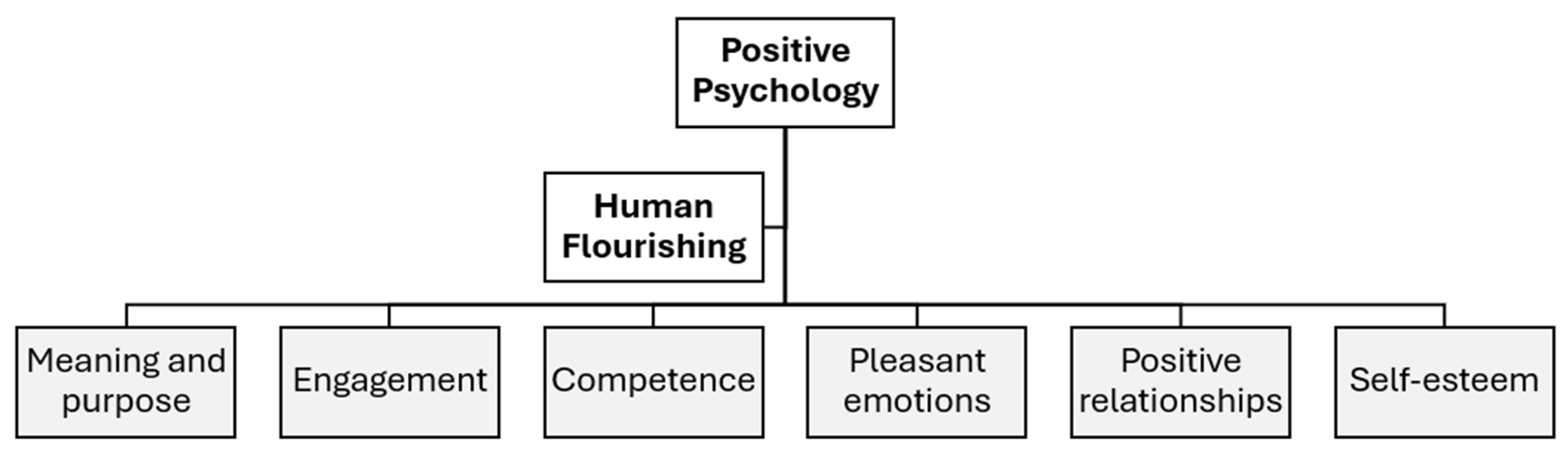
Figure 2.
Conceptual Model of Gratitude and Human Flourishing. Note: Figure developed based on Wood et al. [7].
Figure 2.
Conceptual Model of Gratitude and Human Flourishing. Note: Figure developed based on Wood et al. [7].
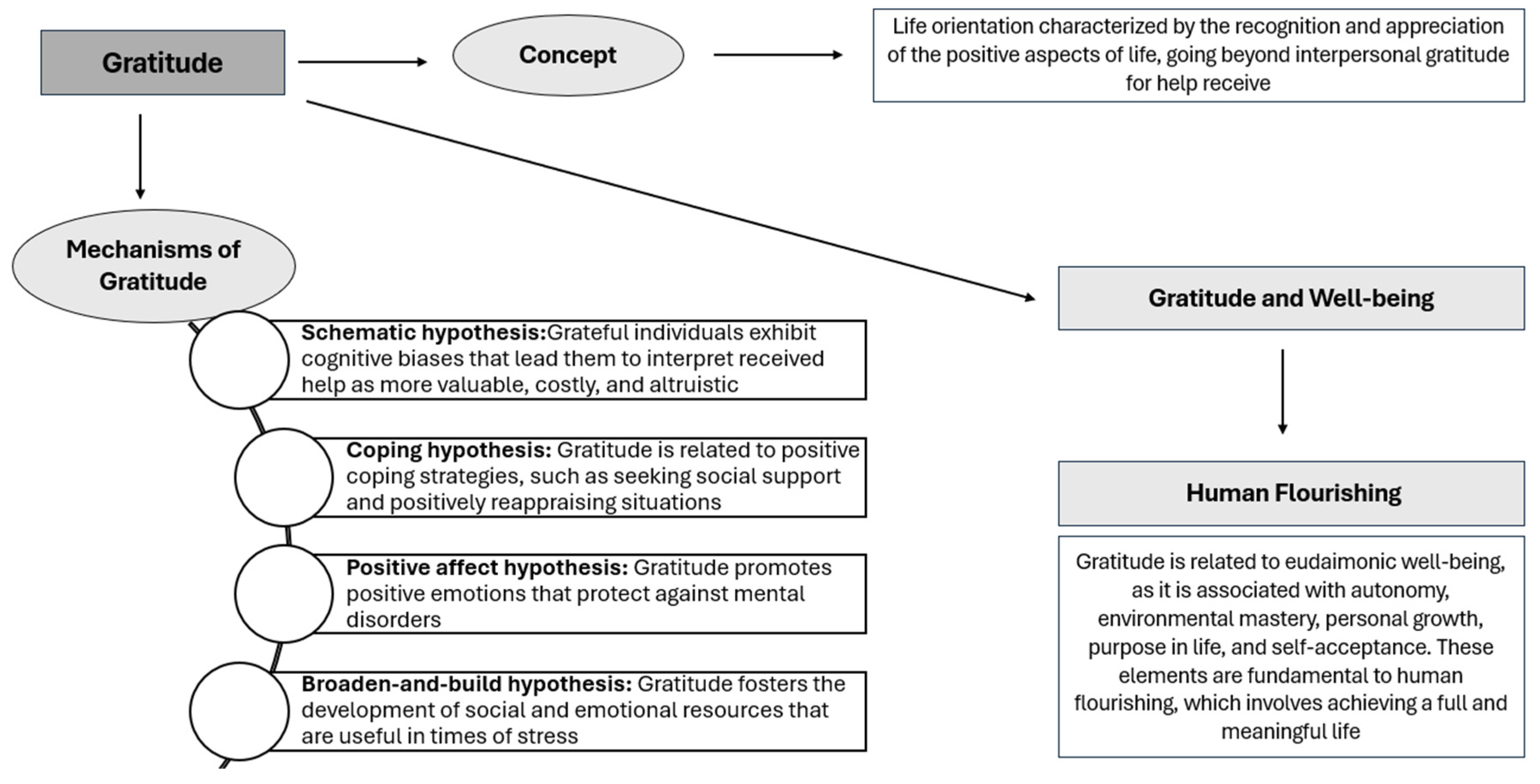

Table 1.
Operational Definitions of Flourishing in Contemporary Psychological Research.
| Model / Approach | Operational definition of flourishing | Instrument (items) | Main components included | Flourishing criteria / scoring approach |
|---|---|---|---|---|
| Keyes’ Mental Health Continuum model. | Flourishing is defined as the simultaneous presence of high levels of emotional, psychological, and social well-being. | MHC-SF (Mental Health Continuum–Short Form), 14 items. | Emotional, psychological, and social well-being (3-component structure). | Classified as flourishing when at least 7 of 14 symptoms are experienced “almost every day” or “every day”. |
| Huppert & So’s flourishing model. | Flourishing is defined in terms of the presence of positive features that are conceptual opposites of common mental disorder symptoms (e.g., depression, anxiety). | Various survey items (10 positive features). | Competence, emotional stability, engagement, meaning, optimism, positive emotion, positive relationships, resilience, self-esteem, vitality. | Classified as flourishing when there is strong endorsement of positive emotion together with several additional positive features and aspects of positive functioning. |
| Diener et al.’s Flourishing Scale. | Flourishing is conceptualized as high psychological functioning across several domains of optimal functioning. | Flourishing Scale, 8 items. | Purpose in life, positive relationships, engagement, social contribution, competence, self-respect, optimism, and social relationships. | Higher total scores indicate greater flourishing; no specific cut-off score is formally established for the 8-item version. |
| Seligman’s PERMA model. | Well-being is defined by five interrelated pillars: Positive Emotion, Engagement, Relationships, Meaning, and Accomplishment (PERMA). | PERMA-Profiler, 16 core items (+ 1 general well-being item). | Positive emotions, engagement, relationships, meaning, accomplishment (PERMA), plus an overall well-being indicator. | No universally accepted diagnostic threshold; flourishing is typically inferred from higher scores across the PERMA dimensions (dashboard approach). |
Notes: Table elaborated based on Hone [12]. The models differ in their components, response formats, and criteria for categorizing individuals as flourishing, which contributes to substantial variation in reported prevalence rates across studies.
Table 2.
Patterns of Gratitude and Sociodemographic Factors.
| Sociodemographic variable | Main Findings |
|---|---|
| Age | Older age groups (60–69, 70–79, and 80 years or above) reported higher levels of gratitude compared to younger groups. |
| Gender | Women tended to report higher levels of gratitude than men. |
| Marital Status | Married and widowed individuals reported higher levels of gratitude than those who were single or divorced. |
| Employment Status | Retired and self-employed participants showed higher levels of gratitude, whereas unemployed individuals and students reported lower levels. |
| Education | Participants with more than 16 years of education reported higher levels of gratitude. |
| Religious Service Attendance | Gratitude levels were higher among individuals who attended religious services more than once a week. |
| Immigrants Status | Immigrants reported slightly higher levels of gratitude than individuals born in the country. |
Notes: Table elaborated based on Okuzono [30].
Disclaimer/Publisher’s Note: The statements, opinions and data contained in all publications are solely those of the individual author(s) and contributor(s) and not of MDPI and/or the editor(s). MDPI and/or the editor(s) disclaim responsibility for any injury to people or property resulting from any ideas, methods, instructions or products referred to in the content. |
© 2025 by the authors. Licensee MDPI, Basel, Switzerland. This article is an open access article distributed under the terms and conditions of the Creative Commons Attribution (CC BY) license (https://creativecommons.org/licenses/by/4.0/).
Copyright: This open access article is published under a Creative Commons CC BY 4.0 license, which permit the free download, distribution, and reuse, provided that the author and preprint are cited in any reuse.


