

Submitted:
10 December 2025
Posted:
11 December 2025
You are already at the latest version
Abstract
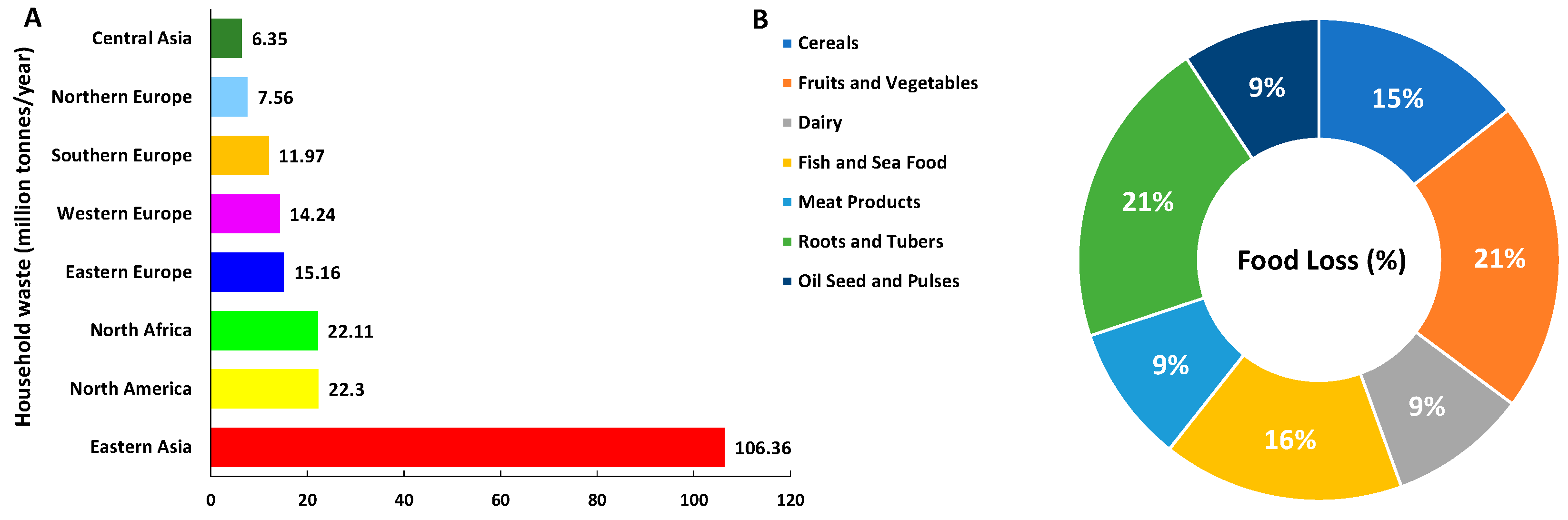
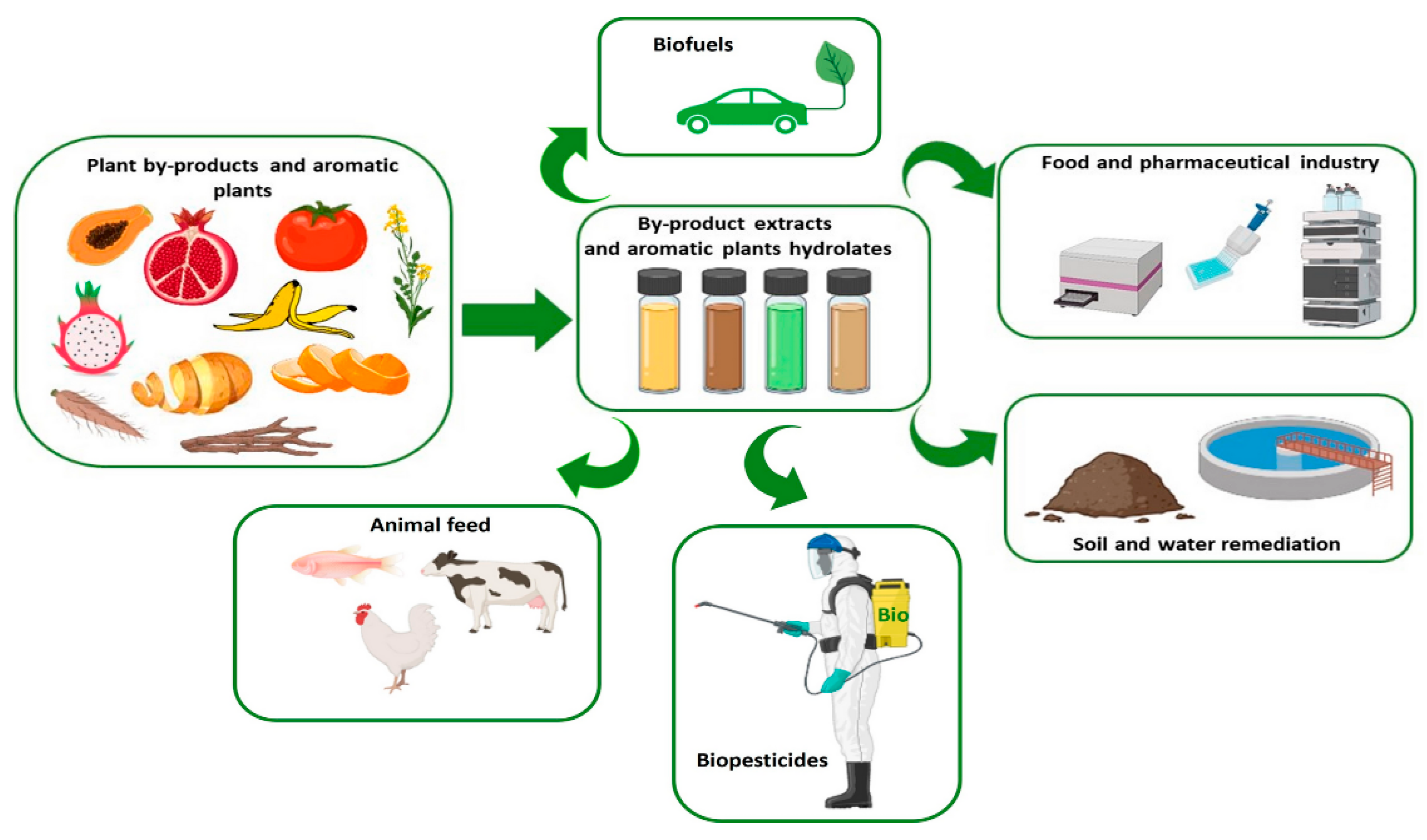
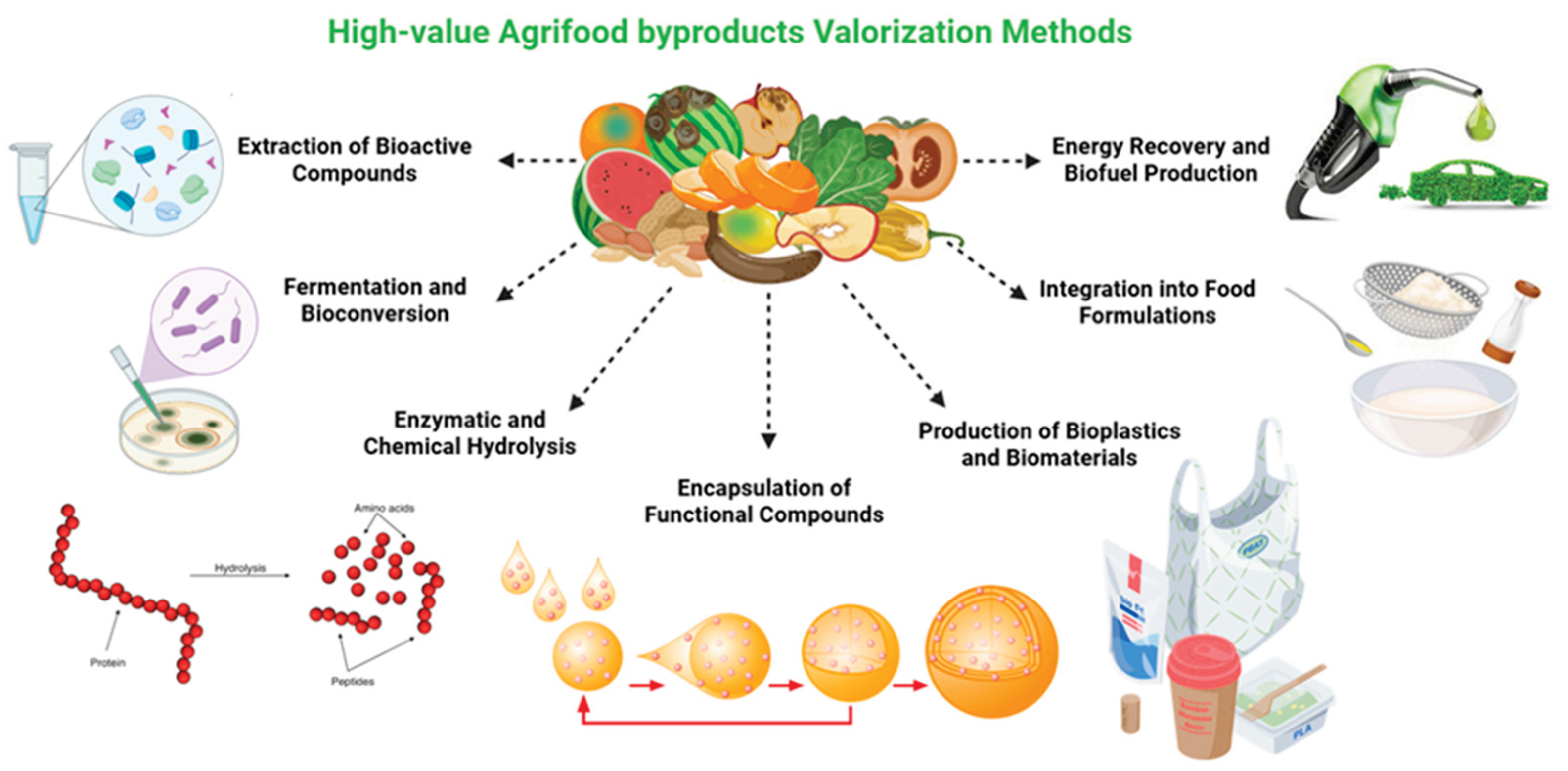
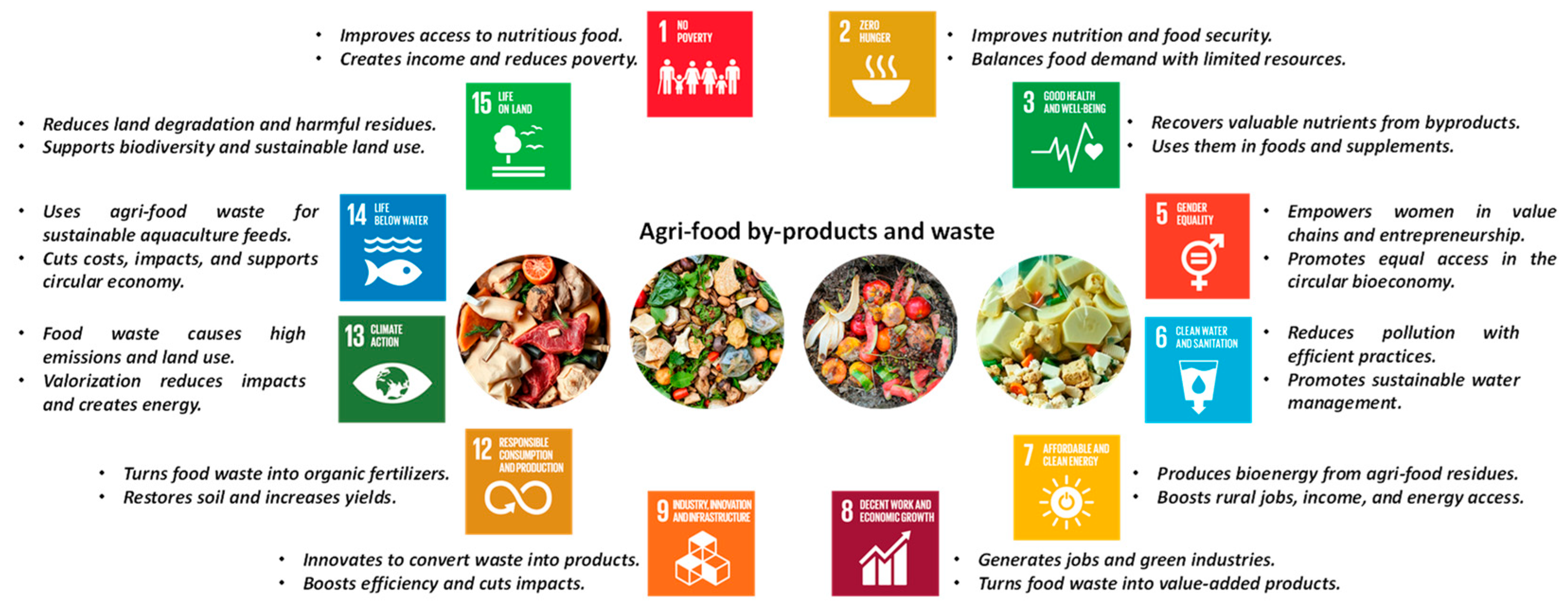
Approximately a third (1.3 billion tons) of the food that is generated globally is lost each year, and it accounts for over 20% of the global greenhouse gas emissions. Most of this loss is by-products generated during post-harvest and food processing, which account for 30–50% of raw materials, including shells, skins, pulp, stems, and seeds. While generally wasted, such by-products contain precious bioactive molecules such as phenolic acids, bioactive peptides, carotenoids, fibers, and secondary metabolites (e.g., terpenes, polyphenols, alkaloids) and minerals, amino acids, and vitamins. This review outlines how these high value agrifood by-products can be utilized towards achieving sustainable development goals (SDGs). It encompasses extraction methods, characterization, and potential uses of such active compounds in the food, pharmaceutical, packaging, and cosmetic sectors. Moreover, it examines the interaction between valuing agrifood by-products and key SDGs like eliminating hunger (SDG 2), ensuring good health and well-being (SDG 3), promoting affordable and clean energy (SDG 7), promoting economic growth and decent work (SDG 8), ensuring responsible consumption and production (SDG 12), and tackling climate action (SDG 13). These approaches have high potential to improve food security and economic sustainability of the world's food systems.
Keywords:
1. Introduction
2. Active Ingredients in Agri-Food by-Products
2.1. Polyphenols
2.2. Carotenoids
2.3. Dietary Fibers
2.4. Proteins and Bioactive Peptides
2.5. Bioactive Lipids
2.6. Pectins and Oligosaccharides
2.7. Alkaloids
2.8. Saponins
2.9. Terpenoids
2.10. Glucosinolates and Isothiocyanates
3. High-Value Agrifood By-Products Valorization Methods
3.1. Extraction of Bioactive Compounds
3.2. Fermentation and Bioconversion
3.3. Enzymatic and Chemical Hydrolysis
3.4. Encapsulation of Functional Compounds
3.5. Production of Bioplastics and Biomaterials
3.6. Integration into Food Formulations
3.7. Integration into Food Formulations
4. Analysis of Relationship Between Agrifood By-Products Valorization and Key SDGs
4.1. SDG 1: No Poverty
4.2. SDG 2: Zero Hunger
4.3. SDG 3: Good health and Well-Being
4.4. SDG 5: Gender Equality
4.5. SDG 6: Clean Water and Sanitation
4.6. SDG 7: Affordable and Clean Energy
4.7. SDG 8: Decent Work and Economic Growth
4.8. SDG 9: Industry, Innovation and Infrastructure
4.9. SDG 12: Responsible Consumption and Production
4.10. SDG 12: Responsible Consumption and Production
4.11. SDG 14: Life Below Water
4.12. SDG 15: Life on Land
5. Challenges and Limitations
6. Conclusions and Future Prospective
Author Contributions
Funding
Institutional Review Board Statement
Informed Consent Statement
Data Availability Statement
Acknowledgments
Conflicts of Interest
References
- Mizik, T.; Nagy, J.; Molnár, E.M.; Maró, Z.M. Challenges of Employment in the Agrifood Sector of Developing Countries—a Systematic Literature Review. Humanit Soc Sci Commun 2025, 12, 62. [Google Scholar] [CrossRef]
- Duarte, L.A.P.; Méndez, M.R.; Muñoz-Rojas, J. Territorial Embeddedness of Sustainable Agri-Food Systems: A Systematic Review. Agroecology and Sustainable Food Systems 2025, 49, 948–988. [Google Scholar] [CrossRef]
- Vachanelidou, O.; Karelakis, C.; Loizou, E.; Zafeiriou, E. Relationships and Interdependencies of the Agri-Food Sector in a Regional Economy: Employing an Input-Output Model. Journal of International Food & Agribusiness Marketing 2024, 36, 23–46. [Google Scholar] [CrossRef]
- Barrett, C.B.; Reardon, T.; Swinnen, J.; Zilberman, D. Agri-Food Value Chain Revolutions in Low- and Middle-Income Countries. Journal of Economic Literature 2022, 60, 1316–1377. [Google Scholar] [CrossRef]
- FAO Employment Indicators 2000–2022. October 2024 Update; FAOSTAT Analytical Briefs; FAO: Rome, Italy, 2024.
- Berenguer, C.V.; Andrade, C.; Pereira, J.A.M.; Perestrelo, R.; Câmara, J.S. Current Challenges in the Sustainable Valorisation of Agri-Food Wastes: A Review. Processes 2023, 11, 20. [Google Scholar] [CrossRef]
- The Global Initiative on Food Loss and Waste Reduction Collaborates with the EU Committee of Regions for Regional and Local Policy Development. Available online: https://www.fao.org/platform-food-loss-waste/regions/reu/news-and-events/news/news-detail/The-Global-Initiative-on-Food-Loss-and-Waste-Reduction-collaborates-with-the-EU-Committee-of-Regions-for-regional-and-local-policy-development-/en (accessed on 2 December 2025).
- Amicarelli, V.; Bux, C. Food Waste Measurement toward a Fair, Healthy and Environmental-Friendly Food System: A Critical Review. British Food Journal 2020, 123, 2907–2935. [Google Scholar] [CrossRef]
- Roy, P.; Mohanty, A.K.; Dick, P.; Misra, M. A Review on the Challenges and Choices for Food Waste Valorization: Environmental and Economic Impacts. ACS Environ Au 2023, 3, 58–75. [Google Scholar] [CrossRef]
- Fesenfeld, L.; Rudolph, L.; Bernauer, T. Policy Framing, Design and Feedback Can Increase Public Support for Costly Food Waste Regulation. Nat Food 2022, 3, 227–235. [Google Scholar] [CrossRef]
- UNEP Food Waste Index Report 2021 | UNEP - UN Environment Programme. Available online: https://www.unep.org/resources/report/unep-food-waste-index-report-2021 (accessed on 2 December 2025).
- Singh, R.; Das, R.; Sangwan, S.; Rohatgi, B.; Khanam, R.; Peera, S.K.P.G.; Das, S.; Lyngdoh, Y.A.; Langyan, S.; Shukla, A.; et al. Utilisation of Agro-Industrial Waste for Sustainable Green Production: A Review. Environmental Sustainability 2021, 4, 619–636. [Google Scholar] [CrossRef]
- Dos Santos, F.K.F.; Barcellos-Silva, I.G.C.; Leite-Barbosa, O.; Ribeiro, R.; Cunha-Silva, Y.; Veiga-Junior, V.F. High Added-Value by-Products from Biomass: A Case Study Unveiling Opportunities for Strengthening the Agroindustry Value Chain. Biomass 2024, 4, 217–242. [Google Scholar] [CrossRef]
- Ravindran, R.; Jaiswal, A.K. Exploitation of Food Industry Waste for High-Value Products. Trends Biotechnol 2016, 34, 58–69. [Google Scholar] [CrossRef]
- Usman, I.; Saif, H.; Imran, A.; Afzaal, M.; Saeed, F.; Azam, I.; Afzal, A.; Ateeq, H.; Islam, F.; Shah, Y.A.; et al. Innovative Applications and Therapeutic Potential of Oilseeds and Their By-Products: An Eco-Friendly and Sustainable Approach. Food Sci Nutr 2023, 11, 2599–2609. [Google Scholar] [CrossRef] [PubMed]
- Asgharnejad, H.; Khorshidi Nazloo, E.; Madani Larijani, M.; Hajinajaf, N.; Rashidi, H. Comprehensive Review of Water Management and Wastewater Treatment in Food Processing Industries in the Framework of Water-Food-Environment Nexus. Compr Rev Food Sci Food Saf 2021, 20, 4779–4815. [Google Scholar] [CrossRef]
- Papaioannou, E.H.; Mazzei, R.; Bazzarelli, F.; Piacentini, E.; Giannakopoulos, V.; Roberts, M.R.; Giorno, L. Agri-Food Industry Waste as Resource of Chemicals: The Role of Membrane Technology in Their Sustainable Recycling. Sustainability 2022, 14, 1483. [Google Scholar] [CrossRef]
- Vardanega, R.; Prado, J.M.; Meireles, M.A.A. Adding Value to Agri-Food Residues by Means of Supercritical Technology. The Journal of Supercritical Fluids 2015, 96, 217–227. [Google Scholar] [CrossRef]
- Arshadi, M.; Attard, T.M.; Lukasik, R.M.; Brncic, M.; Lopes, A.M. da C.; Finell, M.; Geladi, P.; Gerschenson, L.N.; Gogus, F.; Herrero, M.; et al. Pre-Treatment and Extraction Techniques for Recovery of Added Value Compounds from Wastes throughout the Agri-Food Chain. Green Chem. 2016, 18, 6160–6204. [Google Scholar] [CrossRef]
- Ominski, K.; McAllister, T.; Stanford, K.; Mengistu, G.; Kebebe, E.G.; Omonijo, F.; Cordeiro, M.; Legesse, G.; Wittenberg, K. Utilization of By-Products and Food Waste in Livestock Production Systems: A Canadian Perspective. Anim Front 2021, 11, 55–63. [Google Scholar] [CrossRef]
- Wang, H.; Luo, N.; Liu, Y.; Gong, Y. Evaluating the Environmental Impact of Agri-Food Waste Reduction: A Bibliographic Analysis and Conceptual Framework. Environmental Impact Assessment Review 2024, 105, 107425. [Google Scholar] [CrossRef]
- Programme, U.N.E. Food Waste Index Report 2021; 2021; ISBN 978-92-807-3851-3. [Google Scholar]
- Rațu, R.N.; Veleșcu, I.D.; Stoica, F.; Usturoi, A.; Arsenoaia, V.N.; Crivei, I.C.; Postolache, A.N.; Lipșa, F.D.; Filipov, F.; Florea, A.M.; et al. Application of Agri-Food By-Products in the Food Industry. Agriculture 2023, 13, 1559. [Google Scholar] [CrossRef]
- Dhiman, S.; Thakur, B.; Kaur, S.; Ahuja, M.; Gantayat, S.; Sarkar, S.; Singh, R.; Tripathi, M. Closing the Loop: Technological Innovations in Food Waste Valorisation for Global Sustainability. Discov Sustain 2025, 6, 258. [Google Scholar] [CrossRef]
- Carpentieri, S.; Soltanipour, F.; Ferrari, G.; Pataro, G.; Donsì, F. Emerging Green Techniques for the Extraction of Antioxidants from Agri-Food By-Products as Promising Ingredients for the Food Industry. Antioxidants (Basel) 2021, 10, 1417. [Google Scholar] [CrossRef]
- Negi, T.; Anand, A.; Samkaria, S.; Kaushik, R. Bioactive Compounds from Food Waste. In Sustainable Technologies for Food Waste Management; CRC Press, 2025. [Google Scholar]
- Ivanović, N.; Ilić, T.; Ćirić, M.Z.; Todorović, V.; Djuričić, I.; Dabetić, N. Agri-Food by-Products as a Source of Sustainable Ingredients for the Production of Functional Foods and Nutraceuticals. 2023, 73, 190–204. [Google Scholar] [CrossRef]
- Wibisono, D.A.S.; Saw, C.-Y.; Wu, T.-Y.; Chau, C.-F. Advancing Industrial Food Byproduct Management: Strategies, Technologies, and Progress in Waste Reduction. Processes 2025, 13, 84. [Google Scholar] [CrossRef]
- Osorio, L.L.D.R.; Flórez-López, E.; Grande-Tovar, C.D. The Potential of Selected Agri-Food Loss and Waste to Contribute to a Circular Economy: Applications in the Food, Cosmetic and Pharmaceutical Industries. Molecules 2021, 26, 515. [Google Scholar] [CrossRef]
- Ezeorba, T.P.C.; Okeke, E.S.; Mayel, M.H.; Nwuche, C.O.; Ezike, T.C. Recent Advances in Biotechnological Valorization of Agro-Food Wastes (AFW): Optimizing Integrated Approaches for Sustainable Biorefinery and Circular Bioeconomy. Bioresource Technology Reports 2024, 26, 101823. [Google Scholar] [CrossRef]
- Santagata, R.; Ripa, M.; Genovese, A.; Ulgiati, S. Food Waste Recovery Pathways: Challenges and Opportunities for an Emerging Bio-Based Circular Economy. A Systematic Review and an Assessment. Journal of Cleaner Production 2021, 286, 125490. [Google Scholar] [CrossRef]
- Georgeson, L.; Maslin, M.; Poessinouw, M. The Global Green Economy: A Review of Concepts, Definitions, Measurement Methodologies and Their Interactions. Geo: Geography and Environment 2017, 4, E36. [Google Scholar] [CrossRef]
- Soloha, R.; Lukasa, L.K.; Dace, E. Estimation and Bio-Valorisation of Food Industry by-Products in Northern Europe. Biomass Conv. Bioref. 2025, 15, 4349–4370. [Google Scholar] [CrossRef]
- Tchonkouang, R.D.; Onyeaka, H.; Miri, T. From Waste to Plate: Exploring the Impact of Food Waste Valorisation on Achieving Zero Hunger. Sustainability 2023, 15, 10571. [Google Scholar] [CrossRef]
- Skoutida, S.; Malamakis, A.; Geroliolios, D.; Karkanias, C.; Melas, L.; Batsioula, M.; Banias, G.F. The Latent Potential of Agricultural Residues in Circular Economy: Quantifying Their Production Destined for Prospective Energy Generation Applications. Bioenerg. Res. 2024, 18, 11. [Google Scholar] [CrossRef]
- Kobayashi, T.; Nakajima, L. Sustainable Development Goals for Advanced Materials Provided by Industrial Wastes and Biomass Sources. Current Opinion in Green and Sustainable Chemistry 2021, 28, 100439. [Google Scholar] [CrossRef]
- Campbell, B.M.; Hansen, J.; Rioux, J.; Stirling, C.M.; Twomlow, S.; (Lini) Wollenberg, E. Urgent Action to Combat Climate Change and Its Impacts (SDG 13): Transforming Agriculture and Food Systems. Current Opinion in Environmental Sustainability 2018, 34, 13–20. [Google Scholar] [CrossRef]
- Yadav, S.; Malik, K.; Moore, J.M.; Kamboj, B.R.; Malik, S.; Malik, V.K.; Arya, S.; Singh, K.; Mahanta, S.; Bishnoi, D.K. Valorisation of Agri-Food Waste for Bioactive Compounds: Recent Trends and Future Sustainable Challenges. Molecules 2024, 29, 2055. [Google Scholar] [CrossRef] [PubMed]
- Mohammadnezhad, P.; Valdés, A.; Álvarez-Rivera, G. Bioactivity of Food By-Products: An Updated Insight. Current Opinion in Food Science 2023, 52, 101065. [Google Scholar] [CrossRef]
- Hrelia, S.; Barbalace, M.C.; Angeloni, C. Agri-Food Wastes as Natural Source of Bioactive Antioxidants—Third Edition. Antioxidants 2025, 14, 198. [Google Scholar] [CrossRef]
- Gueboudji, Z.; Kadi, K.; Mahmoudi, M.; Hannachi, H.; Nagaz, K.; Addad, D.; Yahya, L.B.; Lachehib, B.; Hessini, K. Maceration and Liquid-Liquid Extractions of Phenolic Compounds and Antioxidants from Algerian Olive Oil Mill Wastewater. Environ Sci Pollut Res Int 2023, 30, 3432–3439. [Google Scholar] [CrossRef] [PubMed]
- Perrone, P.; De Rosa, C.; D’Angelo, S. Mediterranean Diet and Agri-Food By-Products: A Possible Sustainable Approach for Breast Cancer Treatment. Antioxidants 2025, 14, 789. [Google Scholar] [CrossRef]
- Chen, J.; Lou, W. Millettia Speciosa and By-Products: A Comprehensive Review of Chemical Composition, Bioactivities, Safety, and Industrial Applications. Foods 2025, 14, 2035. [Google Scholar] [CrossRef]
- Shahidi, F.; Vamadevan, V.; Oh, W.Y.; Peng, H. Phenolic Compounds in Agri-Food by-Products, Their Bioavailability and Health Effects. Journal of Food Bioactives 2019, 5, 57–119. [Google Scholar] [CrossRef]
- Tarchi, I.; Boudalia, S.; Ozogul, F.; Câmara, J.S.; Bhat, Z.F.; Hassoun, A.; Perestrelo, R.; Bouaziz, M.; Nurmilah, S.; Cahyana, Y.; et al. Valorization of Agri-Food Waste and by-Products in Cheese and Other Dairy Foods: An Updated Review. Food Bioscience 2024, 58, 103751. [Google Scholar] [CrossRef]
- Boudalia, S.; Smeti, S.; Dawit, M.; Senbeta, E.K.; Gueroui, Y.; Dotas, V.; Bousbia, A.; Symeon, G.K. Alternative Approaches to Feeding Small Ruminants and Their Potential Benefits. Animals 2024, 14, 904. [Google Scholar] [CrossRef] [PubMed]
- Dhanya, M.S. Perspectives of Agro-Waste Biorefineries for Sustainable Biofuels. In Zero Waste Biorefinery; Nandabalan, Y.K., Garg, V.K., Labhsetwar, N.K., Singh, A., Eds.; Springer Nature: Singapore, 2022; pp. 207–232. ISBN 978-981-16-8682-5. [Google Scholar]
- Fernandes, F.; Delerue-Matos, C.; Grosso, C. Unveiling the Potential of Agrifood By-Products: A Comprehensive Review of Phytochemicals, Bioactivities and Industrial Applications. Waste Biomass Valor 2025, 16, 2715–2748. [Google Scholar] [CrossRef]
- Vicente-Zurdo, D.; Gómez-Mejía, E.; Morante-Zarcero, S.; Rosales-Conrado, N.; Sierra, I. Analytical Strategies for Green Extraction, Characterization, and Bioactive Evaluation of Polyphenols, Tocopherols, Carotenoids, and Fatty Acids in Agri-Food Bio-Residues. Molecules 2025, 30, 1326. [Google Scholar] [CrossRef] [PubMed]
- Yu, W.; Zhang, Y.; Lu, Y.; Ouyang, Z.; Peng, J.; Tu, Y.; He, B. Recent Research on the Bioactivity of Polyphenols Derived from Edible Fungi and Their Potential in Chronic Disease Prevention. Journal of Functional Foods 2025, 124, 106627. [Google Scholar] [CrossRef]
- Vilas-Franquesa, A.; Casertano, M.; Tresserra-Rimbau, A.; Vallverdú-Queralt, A.; Torres-León, C. Recent Advances in Bio-Based Extraction Processes for the Recovery of Bound Phenolics from Agro-Industrial by-Products and Their Biological Activity. Crit Rev Food Sci Nutr 2024, 64, 10643–10667. [Google Scholar] [CrossRef]
- Mallamaci, R.; Budriesi, R.; Clodoveo, M.L.; Biotti, G.; Micucci, M.; Ragusa, A.; Curci, F.; Muraglia, M.; Corbo, F.; Franchini, C. Olive Tree in Circular Economy as a Source of Secondary Metabolites Active for Human and Animal Health Beyond Oxidative Stress and Inflammation. Molecules 2021, 26, 1072. [Google Scholar] [CrossRef]
- Yahia, E.M.; de Jesús Ornelas-Paz, J.; Emanuelli, T.; Jacob-Lopes, E.; Zepka, L.Q.; Cervantes-Paz, B. Chemistry, Stability, and Biological Actions of Carotenoids. In Fruit and Vegetable Phytochemicals; John Wiley & Sons, Ltd, 2017; pp. 285–346. ISBN 978-1-119-15804-2. [Google Scholar]
- Saini, R.K.; Keum, Y.-S.; Daglia, M.; Rengasamy, K.R. Dietary Carotenoids in Cancer Chemoprevention and Chemotherapy: A Review of Emerging Evidence. Pharmacol Res 2020, 157, 104830. [Google Scholar] [CrossRef]
- Plakantonaki, S.; Roussis, I.; Bilalis, D.; Priniotakis, G. Dietary Fiber from Plant-Based Food Wastes: A Comprehensive Approach to Cereal, Fruit, and Vegetable Waste Valorization. Processes 2023, 11, 1580. [Google Scholar] [CrossRef]
- Sharma, S.K.; Bansal, S.; Mangal, M.; Dixit, A.K.; Gupta, R.K.; Mangal, A.K. Utilization of Food Processing By-Products as Dietary, Functional, and Novel Fiber: A Review. Crit Rev Food Sci Nutr 2016, 56, 1647–1661. [Google Scholar] [CrossRef]
- Bhatia, L.; Sarangi, P.K.; Singh, A.K.; Srivastava, R.K.; Chandel, A.K. Pre-, pro-, and Postbiotics Development from Vegetable, Fruit, and Lignocellulosic Biomass: A Perspective. Food Bioscience 2024, 61, 104589. [Google Scholar] [CrossRef]
- Moreno-González, M.; Ottens, M. A Structured Approach to Recover Valuable Compounds from Agri-Food Side Streams. Food Bioprocess Technol 2021, 14, 1387–1406. [Google Scholar] [CrossRef]
- Zaky, A.A.; Simal-Gandara, J.; Eun, J.-B.; Shim, J.-H.; Abd El-Aty, A.M. Bioactivities, Applications, Safety, and Health Benefits of Bioactive Peptides From Food and By-Products: A Review. Front. Nutr. 2022, 8. [Google Scholar] [CrossRef]
- Mahgoub, S.; Alagawany, M.; Nader, M.; Omar, S.M.; Abd El-Hack, M.E.; Swelum, A.; Elnesr, S.S.; Khafaga, A.F.; Taha, A.E.; Farag, M.R.; et al. Recent Development in Bioactive Peptides from Plant and Animal Products and Their Impact on the Human Health. Food Reviews International 2023, 39, 511–536. [Google Scholar] [CrossRef]
- Ahamad, A.; Ahamad, J. Glycosides, Alkaloids, and Glycoalkaloids. In Bioactive Compounds from Food; CRC Press, 2024. [Google Scholar]
- Fritsch, C.; Staebler, A.; Happel, A.; Cubero Márquez, M.A.; Aguiló-Aguayo, I.; Abadias, M.; Gallur, M.; Cigognini, I.M.; Montanari, A.; López, M.J.; et al. Processing, Valorization and Application of Bio-Waste Derived Compounds from Potato, Tomato, Olive and Cereals: A Review. Sustainability 2017, 9, 1492. [Google Scholar] [CrossRef]
- Kaur, R.; Mishra, V.; Gupta, S.; Sharma, S.; Vaishnav, A.; Singh, S.V. Industrial and Environmental Applications of Plant-Derived Saponins: An Overview and Future Prospective. J Plant Growth Regul 2024, 43, 3012–3026. [Google Scholar] [CrossRef]
- Lim, J.G.; Park, H.-M.; Yoon, K.S. Analysis of Saponin Composition and Comparison of the Antioxidant Activity of Various Parts of the Quinoa Plant (Chenopodium Quinoa Willd.). Food Sci Nutr 2020, 8, 694–702. [Google Scholar] [CrossRef]
- Yang, W.; Chen, X.; Li, Y.; Guo, S.; Wang, Z.; Yu, X. Advances in Pharmacological Activities of Terpenoids. Natural Product Communications 2020, 15, 1934578X20903555. [Google Scholar] [CrossRef]
- Abdel-Massih, R.M.; Debs, E.; Othman, L.; Attieh, J.; Cabrerizo, F.M. Glucosinolates, a Natural Chemical Arsenal: More to Tell than the Myrosinase Story. Front. Microbiol. 2023, 14. [Google Scholar] [CrossRef] [PubMed]
- Mitsiogianni, M.; Koutsidis, G.; Mavroudis, N.; Trafalis, D.T.; Botaitis, S.; Franco, R.; Zoumpourlis, V.; Amery, T.; Galanis, A.; Pappa, A.; et al. The Role of Isothiocyanates as Cancer Chemo-Preventive, Chemo-Therapeutic and Anti-Melanoma Agents. Antioxidants (Basel) 2019, 8, 106. [Google Scholar] [CrossRef] [PubMed]
- Vandorou, M.; Plakidis, C.; Tsompanidou, I.M.; Adamantidi, T.; Panagopoulou, E.A.; Tsoupras, A. A Review on Apple Pomace Bioactives for Natural Functional Food and Cosmetic Products with Therapeutic Health-Promoting Properties. International Journal of Molecular Sciences 2024, 25, 10856. [Google Scholar] [CrossRef] [PubMed]
- Kurćubić, V.S.; Stanišić, N.; Stajić, S.B.; Dmitrić, M.; Živković, S.; Kurćubić, L.V.; Živković, V.; Jakovljević, V.; Mašković, P.Z.; Mašković, J. Valorizing Grape Pomace: A Review of Applications, Nutritional Benefits, and Potential in Functional Food Development. Foods 2024, 13, 4169. [Google Scholar] [CrossRef] [PubMed]
- Khwaldia, K.; Attour, N.; Matthes, J.; Beck, L.; Schmid, M. Olive Byproducts and Their Bioactive Compounds as a Valuable Source for Food Packaging Applications. Compr Rev Food Sci Food Saf 2022, 21, 1218–1253. [Google Scholar] [CrossRef]
- Kim, Y.; Kim, Y.-J.; Shin, Y. Comparative Analysis of Polyphenol Content and Antioxidant Activity of Different Parts of Five Onion Cultivars Harvested in Korea. Antioxidants 2024, 13, 197. [Google Scholar] [CrossRef]
- Colombo, R.; Moretto, G.; Barberis, M.; Frosi, I.; Papetti, A. Rice Byproduct Compounds: From Green Extraction to Antioxidant Properties. Antioxidants (Basel) 2023, 13, 35. [Google Scholar] [CrossRef]
- Lopes, J. da C.; Madureira, J.; Margaça, F.M.A.; Cabo Verde, S. Grape Pomace: A Review of Its Bioactive Phenolic Compounds, Health Benefits, and Applications. Molecules 2025, 30, 362. [Google Scholar] [CrossRef]
- Tapia-Quirós, P.; Montenegro-Landívar, M.F.; Reig, M.; Vecino, X.; Cortina, J.L.; Saurina, J.; Granados, M. Recovery of Polyphenols from Agri-Food By-Products: The Olive Oil and Winery Industries Cases. Foods 2022, 11, 362. [Google Scholar] [CrossRef] [PubMed]
- Ikram, A.; Rasheed, A.; Ahmad Khan, A.; Khan, R.; Ahmad, M.; Bashir, R.; Hassan Mohamed, M. Exploring the Health Benefits and Utility of Carrots and Carrot Pomace: A Systematic Review. International Journal of Food Properties 2024, 27, 180–193. [Google Scholar] [CrossRef]
- Drosou, C.; Laina, K.T.; Dimoula, M.; Eleni, P.M.; Boukouvalas, C.J.; Topakas, E.; Krokida, M. Valorization of Tomato By-Products: Advanced Extraction Methods and Bioprocessing of Bioactive Compounds and Functional Products. Applied Sciences 2025, 15, 3914. [Google Scholar] [CrossRef]
- Crupi, P.; Faienza, M.F.; Naeem, M.Y.; Corbo, F.; Clodoveo, M.L.; Muraglia, M. Overview of the Potential Beneficial Effects of Carotenoids on Consumer Health and Well-Being. Antioxidants (Basel) 2023, 12, 1069. [Google Scholar] [CrossRef]
- Tan, B.L.; Norhaizan, M.E.; Chan, L.C. Rice Bran: From Waste to Nutritious Food Ingredients. Nutrients 2023, 15, 2503. [Google Scholar] [CrossRef]
- Chandel, V.; Biswas, D.; Roy, S.; Vaidya, D.; Verma, A.; Gupta, A. Current Advancements in Pectin: Extraction, Properties and Multifunctional Applications. Foods 2022, 11, 2683. [Google Scholar] [CrossRef]
- Tlais, A.Z.A.; Fiorino, G.M.; Polo, A.; Filannino, P.; Di Cagno, R. High-Value Compounds in Fruit, Vegetable and Cereal Byproducts: An Overview of Potential Sustainable Reuse and Exploitation. Molecules 2020, 25, 2987. [Google Scholar] [CrossRef]
- Zhu, Y.; Chen, G.; Diao, J.; Wang, C. Recent Advances in Exploring and Exploiting Soybean Functional Peptides-a Review. Front Nutr 2023, 10, 1185047. [Google Scholar] [CrossRef]
- Hadidi, M.; Aghababaei, F.; McClements, D.J. Sunflower Meal/Cake as a Sustainable Protein Source for Global Food Demand: Towards a Zero-Hunger World. Food Hydrocolloids 2024, 147, 109329. [Google Scholar] [CrossRef]
- Luparelli, A.; Trisciuzzi, D.; Schirinzi, W.M.; Caputo, L.; Smiriglia, L.; Quintieri, L.; Nicolotti, O.; Monaci, L. Whey Proteins and Bioactive Peptides: Advances in Production, Selection and Bioactivity Profiling. Biomedicines 2025, 13, 1311. [Google Scholar] [CrossRef]
- Jardim, T.; Domingues, M.R.M.; Alves, E. An Overview on Lipids in Nuts and Oily Fruits: Oil Content, Lipid Composition, Health Effects, Lipidomic Fingerprinting and New Biotechnological Applications of Their by-Products. Crit Rev Food Sci Nutr 2024, 64, 9132–9160. [Google Scholar] [CrossRef] [PubMed]
- Alves, E.; Simoes, A.; Domingues, M.R. Fruit Seeds and Their Oils as Promising Sources of Value-Added Lipids from Agro-Industrial Byproducts: Oil Content, Lipid Composition, Lipid Analysis, Biological Activity and Potential Biotechnological Applications. Crit Rev Food Sci Nutr 2021, 61, 1305–1339. [Google Scholar] [CrossRef] [PubMed]
- Haque, S.M.; Kabir, A.; Ratemi, E.; Elzagheid, M.; Appu, S.P.; Ghani, S.S.; Sarief, A. Greener Pectin Extraction Techniques: Applications and Challenges. Separations 2025, 12, 65. [Google Scholar] [CrossRef]
- Oleszek, M.; Kowalska, I.; Bertuzzi, T.; Oleszek, W. Phytochemicals Derived from Agricultural Residues and Their Valuable Properties and Applications. Molecules 2023, 28, 342. [Google Scholar] [CrossRef]
- Câmara, J.S.; Perestrelo, R.; Ferreira, R.; Berenguer, C.V.; Pereira, J.A.M.; Castilho, P.C. Plant-Derived Terpenoids: A Plethora of Bioactive Compounds with Several Health Functions and Industrial Applications—A Comprehensive Overview. Molecules 2024, 29, 3861. [Google Scholar] [CrossRef]
- Zhang, Y.-H.; Liao, X.-Y.; Li, Z.-H.; Guo, Y.-F.; Ma, M.-X.; Zhang, G.-Q. Insight into the Sulforaphane Content and Glucosinolate Profile of Broccoli Stems After Heat Treatment. Horticulturae 2025, 11, 383. [Google Scholar] [CrossRef]
- Shinali, T.S.; Zhang, Y.; Altaf, M.; Nsabiyeze, A.; Han, Z.; Shi, S.; Shang, N. The Valorization of Wastes and Byproducts from Cruciferous Vegetables: A Review on the Potential Utilization of Cabbage, Cauliflower, and Broccoli Byproducts. Foods 2024, 13, 1163. [Google Scholar] [CrossRef]
- Alibrahem, W.; Nguyen, D.H.H.; Kharrat Helu, N.; Tóth, F.; Nagy, P.T.; Posta, J.; Prokisch, J.; Oláh, C. Health Benefits, Applications, and Analytical Methods of Freshly Produced Allyl Isothiocyanate. Foods 2025, 14, 579. [Google Scholar] [CrossRef] [PubMed]
- Galanakis, C.M. Recovery of High Added-Value Components from Food Wastes: Conventional, Emerging Technologies and Commercialized Applications. Trends in Food Science & Technology 2012, 26, 68–87. [Google Scholar] [CrossRef]
- Barcelos, M.C.S.; Ramos, C.L.; Kuddus, M.; Rodriguez-Couto, S.; Srivastava, N.; Ramteke, P.W.; Mishra, P.K.; Molina, G. Enzymatic Potential for the Valorization of Agro-Industrial by-Products. Biotechnol Lett 2020, 42, 1799–1827. [Google Scholar] [CrossRef] [PubMed]
- Chemat, F.; Vian, M.A.; Fabiano-Tixier, A.-S.; Nutrizio, M.; Jambrak, A.R.; Munekata, P.E.S.; Lorenzo, J.M.; Barba, F.J.; Binello, A.; Cravotto, G. A Review of Sustainable and Intensified Techniques for Extraction of Food and Natural Products. Green Chem. 2020, 22, 2325–2353. [Google Scholar] [CrossRef]
- Rao, P.; Rathod, V. Valorization of Food and Agricultural Waste: A Step towards Greener Future. Chem Rec 2019, 19, 1858–1871. [Google Scholar] [CrossRef]
- Machado, M.; Silva, S.; Costa, E.M. Byproducts as a Sustainable Source of Cosmetic Ingredients. Applied Sciences 2024, 14, 10241. [Google Scholar] [CrossRef]
- Verni, M.; Casanova, F. The Potential of Food By-Products: Bioprocessing, Bioactive Compounds Extraction and Functional Ingredients Utilization. Foods 2022, 11, 4092. [Google Scholar] [CrossRef] [PubMed]
- Živković, J.; Šavikin, K.; Janković, T.; Ćujić, N.; Menković, N. Optimization of Ultrasound-Assisted Extraction of Polyphenolic Compounds from Pomegranate Peel Using Response Surface Methodology. Separation and Purification Technology 2018, 194, 40–47. [Google Scholar] [CrossRef]
- Ben-Othman, S.; Jõudu, I.; Bhat, R. Bioactives From Agri-Food Wastes: Present Insights and Future Challenges. Molecules 2020, 25, 510. [Google Scholar] [CrossRef] [PubMed]
- Bagade, S.B.; Patil, M. Recent Advances in Microwave Assisted Extraction of Bioactive Compounds from Complex Herbal Samples: A Review. Crit Rev Anal Chem 2021, 51, 138–149. [Google Scholar] [CrossRef]
- Uwineza, P.A.; Waśkiewicz, A. Recent Advances in Supercritical Fluid Extraction of Natural Bioactive Compounds from Natural Plant Materials. Molecules 2020, 25, 3847. [Google Scholar] [CrossRef] [PubMed]
- Šelo, G.; Planinić, M.; Tišma, M.; Tomas, S.; Koceva Komlenić, D.; Bucić-Kojić, A. A Comprehensive Review on Valorization of Agro-Food Industrial Residues by Solid-State Fermentation. Foods 2021, 10, 927. [Google Scholar] [CrossRef]
- Bejenaru, L.E.; Radu, A.; Segneanu, A.-E.; Biţă, A.; Manda, C.-V.; Mogoşanu, G.D.; Bejenaru, C. Innovative Strategies for Upcycling Agricultural Residues and Their Various Pharmaceutical Applications. Plants (Basel) 2024, 13, 2133. [Google Scholar] [CrossRef]
- Lima, P.C.; Karimian, P.; Johnston, E.; Hartley, C.J. The Use of Trichoderma Spp. for the Bioconversion of Agro-Industrial Waste Biomass via Fermentation: A Review. Fermentation 2024, 10, 442. [Google Scholar] [CrossRef]
- Shrestha, S.; Khatiwada, J.R.; Sharma, H.K.; Qin, W. Bioconversion of Fruits and Vegetables Wastes into Value-Added Products. In Sustainable Bioconversion of Waste to Value Added Products; Inamuddin, Khan, A., Eds.; Springer International Publishing: Cham, 2021; pp. 145–163. ISBN 978-3-030-61837-7. [Google Scholar]
- Chourasia, R.; Phukon, C.L.; Abedin, M.M.; Sahoo, D.; Rai, A.K. Microbial Transformation during Gut Fermentation. In Bioactive Compounds in Fermented Foods; CRC Press, 2021. [Google Scholar]
- Wang, T.; Li, Q.; Zhang, H.; Chen, J. Flavonoids from Citrus Reticulata: Inhibitory Activity against Pathogenic Fungi and Biocontrol Potential. Physiological and Molecular Plant Pathology 2024, 131, 102250. [Google Scholar] [CrossRef]
- Nurmilah, S.; Frediansyah, A.; Cahyana, Y.; Utama, G.L. Biotransformation and Health Potential of Isoflavones by Microorganisms in Indonesian Traditional Fermented Soy Products: A Review. Journal of Agriculture and Food Research 2024, 18, 101365. [Google Scholar] [CrossRef]
- Rojas, L.F.; Zapata, P.; Ruiz-Tirado, L. Agro-Industrial Waste Enzymes: Perspectives in Circular Economy. Current Opinion in Green and Sustainable Chemistry 2022, 34, 100585. [Google Scholar] [CrossRef]
- Hunsakul, K.; Laokuldilok, T.; Sakdatorn, V.; Klangpetch, W.; Brennan, C.S.; Utama-Ang, N. Optimization of Enzymatic Hydrolysis by Alcalase and Flavourzyme to Enhance the Antioxidant Properties of Jasmine Rice Bran Protein Hydrolysate. Sci Rep 2022, 12, 12582. [Google Scholar] [CrossRef] [PubMed]
- Ortizo, R.G.G.; Sharma, V.; Tsai, M.-L.; Wang, J.-X.; Sun, P.-P.; Nargotra, P.; Kuo, C.-H.; Chen, C.-W.; Dong, C.-D. Extraction of Novel Bioactive Peptides from Fish Protein Hydrolysates by Enzymatic Reactions. Applied Sciences 2023, 13, 5768. [Google Scholar] [CrossRef]
- Liu, D.; Tang, W.; Yin, J.-Y.; Nie, S.-P.; Xie, M.-Y. Monosaccharide Composition Analysis of Polysaccharides from Natural Sources: Hydrolysis Condition and Detection Method Development. Food Hydrocolloids 2021, 116, 106641. [Google Scholar] [CrossRef]
- Chen, Y.; Xie, Y.; Ajuwon, K.M.; Zhong, R.; Li, T.; Chen, L.; Zhang, H.; Beckers, Y.; Everaert, N. Xylo-Oligosaccharides, Preparation and Application to Human and Animal Health: A Review. Front. Nutr. 2021, 8. [Google Scholar] [CrossRef]
- Yan, F.; Tian, S.; Du, K.; Xue, X.; Gao, P.; Chen, Z. Preparation and Nutritional Properties of Xylooligosaccharide from Agricultural and Forestry Byproducts: A Comprehensive Review. Front. Nutr. 2022, 9. [Google Scholar] [CrossRef] [PubMed]
- Meyyappan, K.; Morris, S.; Vishal, S.K.; Ashwinth, K.; Doriya, K. Application of Enzymatic Technique for the Synthesis of Fermentable Sugars from Different Agrobiomasses. In Agricultural Biomass for the Synthesis of Value-Added Materials; CRC Press, 2024. [Google Scholar]
- Misra, S.; Pandey, P.; Mishra, H.N. Novel Approaches for Co-Encapsulation of Probiotic Bacteria with Bioactive Compounds, Their Health Benefits and Functional Food Product Development: A Review. Trends in Food Science & Technology 2021, 109, 340–351. [Google Scholar] [CrossRef]
- Nguyen, C.T.; Nguyen Di, K.; Phan, H.C.; Kha, T.C.; Nguyen, H.C. Microencapsulation of Noni Fruit Extract Using Gum Arabic and Maltodextrin – Optimization, Stability and Efficiency. International Journal of Biological Macromolecules 2024, 269, 132217. [Google Scholar] [CrossRef]
- Ghadiri Amrei, S.M.H.; Ahmadi, M.; Shahidi, S.-A.; Ariaii, P.; golestan, L. Preparation, Characterization, and Antioxidant Activity of Nanoliposomes-Encapsulated Turmeric and Omega-3. Food Measure 2023, 17, 2697–2707. [Google Scholar] [CrossRef]
- Phupaboon, S.; Matra, M.; Prommachart, R.; Totakul, P.; Supapong, C.; Wanapat, M. Extraction, Characterization, and Chitosan Microencapsulation of Bioactive Compounds from Cannabis Sativa L., Cannabis Indica L., and Mitragyna Speiosa K. Antioxidants 2022, 11, 2103. [Google Scholar] [CrossRef]
- Paulo, F.; Santos, L. Deriving Valorization of Phenolic Compounds from Olive Oil By-Products for Food Applications through Microencapsulation Approaches: A Comprehensive Review. Crit Rev Food Sci Nutr 2021, 61, 920–945. [Google Scholar] [CrossRef] [PubMed]
- Bioplastics from Agricultural Waste. In Biopolymers and Biocomposites from Agro-Waste for Packaging Applications; Woodhead Publishing, 2021; pp. 141–169.
- Taib, N.-A.A.B.; Rahman, M.R.; Huda, D.; Kuok, K.K.; Hamdan, S.; Bakri, M.K.B.; Julaihi, M.R.M.B.; Khan, A. A Review on Poly Lactic Acid (PLA) as a Biodegradable Polymer. Polym. Bull. 2023, 80, 1179–1213. [Google Scholar] [CrossRef]
- Thamarai, P.; Vickram, A.S.; Saravanan, A.; Deivayanai, V.C.; Evangeline, S. Recent Advancements in Biosynthesis, Industrial Production, and Environmental Applications of Polyhydroxyalkanoates (PHAs): A Review. Bioresource Technology Reports 2024, 27, 101957. [Google Scholar] [CrossRef]
- Laftah, W.A.; Wan Abdul Rahman, W.A. Rice Waste–Based Polymer Composites for Packaging Applications: A Review. Polymers and Polymer Composites 2021, 29, S1621–S1629. [Google Scholar] [CrossRef]
- Freitas, P.A.V.; Arias, C.I.L.F.; Torres-Giner, S.; González-Martínez, C.; Chiralt, A. Valorization of Rice Straw into Cellulose Microfibers for the Reinforcement of Thermoplastic Corn Starch Films. Applied Sciences 2021, 11, 8433. [Google Scholar] [CrossRef]
- Turcu, R.P.; Panaite, T.D.; Untea, A.E.; Vlaicu, P.A.; Badea, I.A.; Mironeasa, S. Effects of Grape Seed Oil Supplementation to Broilers Diets on Growth Performance, Meat Fatty Acids, Health Lipid Indices and Lipid Oxidation Parameters. Agriculture 2021, 11, 404. [Google Scholar] [CrossRef]
- Valková, V.; Ďúranová, H.; Havrlentová, M.; Ivanišová, E.; Mezey, J.; Tóthová, Z.; Gabríny, L.; Kačániová, M. Selected Physico-Chemical, Nutritional, Antioxidant and Sensory Properties of Wheat Bread Supplemented with Apple Pomace Powder as a By-Product from Juice Production. Plants 2022, 11, 1256. [Google Scholar] [CrossRef]
- Fontana, M.; Murowaniecki Otero, D.; Pereira, A.M.; Santos, R.B.; Gularte, M.A. Grape Pomace Flour for Incorporation into Cookies: Evaluation of Nutritional, Sensory and Technological Characteristics. Journal of Culinary Science & Technology 2024, 22, 850–869. [Google Scholar] [CrossRef]
- Chabi, I.B.; Zannou, O.; Dedehou, E.S.C.A.; Ayegnon, B.P.; Oscar Odouaro, O.B.; Maqsood, S.; Galanakis, C.M.; Pierre Polycarpe Kayodé, A. Tomato Pomace as a Source of Valuable Functional Ingredients for Improving Physicochemical and Sensory Properties and Extending the Shelf Life of Foods: A Review. Heliyon 2024, 10, e25261. [Google Scholar] [CrossRef]
- Stoica, F.; Rațu, R.N.; Veleșcu, I.D.; Stănciuc, N.; Râpeanu, G. A Comprehensive Review on Bioactive Compounds, Health Benefits, and Potential Food Applications of Onion (Allium Cepa L.) Skin Waste. Trends in Food Science & Technology 2023, 141, 104173. [Google Scholar] [CrossRef]
- Yan, J.; Zhao, Y.; He, H.; Cai, Y.; Zhao, Y.; Wang, H.; Zhu, W.; Yuan, X.; Cui, Z. Anaerobic Co-Digestion of Dairy Manure and Maize Stover with Different Total Solids Content: From the Characteristics of Digestion to Economic Evaluation. Journal of Environmental Chemical Engineering 2022, 10, 107602. [Google Scholar] [CrossRef]
- Saravanan, A.; Senthil Kumar, P.; Rangasamy, G.; Hariharan, R.; Hemavathy, R.V.; Deepika, P.D.; Anand, K.; Karthika, S. Strategies for Enhancing the Efficacy of Anaerobic Digestion of Food Industry Wastewater: An Insight into Bioreactor Types, Challenges, and Future Scope. Chemosphere 2023, 310, 136856. [Google Scholar] [CrossRef] [PubMed]
- Rahimi, Z.; Anand, A.; Gautam, S. An Overview on Thermochemical Conversion and Potential Evaluation of Biofuels Derived from Agricultural Wastes. Energy Nexus 2022, 7, 100125. [Google Scholar] [CrossRef]
- Ohile, S.; Aboje, A.; Uthman, H.; Usman, R.; Ighodaro, O. Optimization and Characterization of Biodiesel Production from Mango Seed Oil (Magnifera Indica) Via Transesterification Reaction. Journal of Energy Technology and Environment 2023, 5. [Google Scholar] [CrossRef]
- Jamil, F. A Review on Biodiesel Production, Analysis, and Emission Characteristics from Non-Edible Feedstocks. ChemistrySelect 2023, 8, e202300800. [Google Scholar] [CrossRef]
- SDG Indicators. Available online: https://unstats.un.org/sdgs/report/2025/ (accessed on 7 December 2025).
- Ligarda-Samanez, C.A.; Huamán-Carrión, M.L.; Calsina-Ponce, W.C.; la Cruz, G.D.; Calderón Huamaní, D.F.; Cabel-Moscoso, D.J.; Garcia-Espinoza, A.J.; Sucari-León, R.; Aroquipa-Durán, Y.; Muñoz-Saenz, J.C.; et al. Technological Innovations and Circular Economy in the Valorization of Agri-Food By-Products: Advances, Challenges and Perspectives. Foods 2025, 14, 1950. [Google Scholar] [CrossRef]
- Ariom, T.O.; Dimon, E.; Nambeye, E.; Diouf, N.S.; Adelusi, O.O.; Boudalia, S. Climate-Smart Agriculture in African Countries: A Review of Strategies and Impacts on Smallholder Farmers. Sustainability 2022, 14, 11370. [Google Scholar] [CrossRef]
- Arouna, A.; Lokossou, J.C.; Wopereis, M.C.S.; Bruce-Oliver, S.; Roy-Macauley, H. Contribution of Improved Rice Varieties to Poverty Reduction and Food Security in Sub-Saharan Africa. Global Food Security 2017, 14, 54–60. [Google Scholar] [CrossRef]
- Muriithi, B.W.; Affognon, H.D.; Diiro, G.M.; Kingori, S.W.; Tanga, C.M.; Nderitu, P.W.; Mohamed, S.A.; Ekesi, S. Impact Assessment of Integrated Pest Management (IPM) Strategy for Suppression of Mango-Infesting Fruit Flies in Kenya. Crop Protection 2016, 81, 20–29. [Google Scholar] [CrossRef]
- Citaristi, I. Other Biodiversity-Related Conventions. In The Europa Directory of International Organizations 2022; Routledge, 2022. [Google Scholar]
- Torres-León, C.; Ramírez-Guzman, N.; Londoño-Hernandez, L.; Martinez-Medina, G.A.; Díaz-Herrera, R.; Navarro-Macias, V.; Alvarez-Pérez, O.B.; Picazo, B.; Villarreal-Vázquez, M.; Ascacio-Valdes, J.; et al. Food Waste and Byproducts: An Opportunity to Minimize Malnutrition and Hunger in Developing Countries. Front. Sustain. Food Syst. 2018, 2. [Google Scholar] [CrossRef]
- SOFA 2019 - The State of Food and Agriculture in the World. Available online: https://www.fao.org/interactive/state-of-food-agriculture/2019/en/ (accessed on 7 December 2025).
- Searchinger, T.; Waite, R.; Hanson, C.; Ranganathan, J.; Matthews, E. Creating a Sustainable Food Future; 2019; ISBN 978-1-56973-963-1. [Google Scholar]
- Arora, N.K.; Mishra, I. Current Scenario and Future Directions for Sustainable Development Goal 2: A Roadmap to Zero Hunger. Environmental Sustainability 2022, 5, 129–133. [Google Scholar] [CrossRef]
- Caprita, D.E. Reducing Food Waste in Order to Become the Zero Hunger Generation. International Conference on Competitiveness of Agro-food and Environmental Economy Proceedings 2016, 187–201. [Google Scholar]
- Cattaneo, A.; Federighi, G.; Vaz, S. The Environmental Impact of Reducing Food Loss and Waste: A Critical Assessment. Food Policy 2021, 98, 101890. [Google Scholar] [CrossRef]
- Wang, B.; Dong, F.; Chen, M.; Zhu, J.; Tan, J.; Fu, X.; Wang, Y.; Chen, S. Advances in Recycling and Utilization of Agricultural Wastes in China: Based on Environmental Risk, Crucial Pathways, Influencing Factors, Policy Mechanism. Procedia Environmental Sciences 2016, 31, 12–17. [Google Scholar] [CrossRef]
- Spiker, M.L.; Hiza, H.A.B.; Siddiqi, S.M.; Neff, R.A. Wasted Food, Wasted Nutrients: Nutrient Loss from Wasted Food in the United States and Comparison to Gaps in Dietary Intake. J Acad Nutr Diet 2017, 117, 1031–1040.e22. [Google Scholar] [CrossRef]
- Chen, C.; Chaudhary, A.; Mathys, A. Nutritional and Environmental Losses Embedded in Global Food Waste. Resources, Conservation and Recycling 2020, 160, 104912. [Google Scholar] [CrossRef]
- Girotto, F.; Alibardi, L.; Cossu, R. Food Waste Generation and Industrial Uses: A Review. Waste Management 2015, 45, 32–41. [Google Scholar] [CrossRef] [PubMed]
- Oludipe, E.O.; Ajayi, A.O.; Owolabi, A.O.; Olojede, A.O.; Afolabi, Y.T.; Nwonuma, C.O.; Adewumi, B.G.; Dada, E.O.; Owa, S.O. Food Waste from Parkia Biglobosa Seed Processing as a Potential Biomass Resource for Valorization. Front. Sustain. Food Syst. 2024, 8. [Google Scholar] [CrossRef]
- Ngwasiri, P.N.; Adanmengwi, V.A.; Ambindei, W.A.; Ngangmou, N.T.; Fonmboh, D.J.; Ngwabie, N.M.; Ngassoum, M.B.; Aba, E.R. Effect of Traditional Process Methods on the Physicochemical and Functional Properties of a Traditional Food Salt (Nikkih) Obtained from Waste Biomass Peels of Musa Paradisiaca and Musa Acuminate. International Journal of Chemical Engineering 2021, 2021. [Google Scholar] [CrossRef]
- Boudalia, S.; Gueroui, Y.; Boumaza, B.; Bousbia, A.; Benada, M.; Leksir, C.; Mezroua, E.Y.; Zemmouchi, K.R.; Saoud, A.; Chemmam, M. Evaluation of Physicochemical Properties and Sensory Qualities of Pasta Enriched with Freeze-Dried Sweet Whey. Scientia Agriculturae Bohemica 2020, 51, 75–85. [Google Scholar] [CrossRef]
- De Toledo, N.M.V.; De Camargo, A.C.; Ramos, P.B.M.; Button, D.C.; Granato, D.; Canniatti-Brazaca, S.G. Potentials and Pitfalls on the Use of Passion Fruit By-Products in Drinkable Yogurt: Physicochemical, Technological, Microbiological, and Sensory Aspects. Beverages 2018, 4, 47. [Google Scholar] [CrossRef]
- Bekavac, N.; Krog, K.; Stanić, A.; Šamec, D.; Šalić, A.; Benković, M.; Jurina, T.; Gajdoš Kljusurić, J.; Valinger, D.; Jurinjak Tušek, A. Valorization of Food Waste: Extracting Bioactive Compounds for Sustainable Health and Environmental Solutions. Antioxidants 2025, 14, 714. [Google Scholar] [CrossRef]
- Nicastro, R.; Carillo, P. Food Loss and Waste Prevention Strategies from Farm to Fork. Sustainability 2021, 13, 5443. [Google Scholar] [CrossRef]
- Heng, K.; Tan, K.; Chan, A.; Lee, C.C.C. Food Waste Valorization: Leveraging Singapore’s Zero Waste Master Plan and 30-by-30 Goal. Sustainability 2024, 16, 7321. [Google Scholar] [CrossRef]
- Evaluation of Micronutrient Losses from Postharvest Food Losses (PHL) in Kenya, Cameroon and India – Implications on Micronutrient Deficiencies in Children under 5. Available online: https://www.fao.org/platform-food-loss-waste/flw-events/events/events-detail/evaluation-of-micronutrient-losses-from-postharvest-food-losses-(phl)-in-kenya-cameroon-and-india-implications-on-micronutrient-deficiencies-in-children-under-5/en (accessed on 7 December 2025).
- Surchat, M.; Irakoze, M.; Kantengwa, S.; Konlambigue, M.; Späth, L.; Wilde, B.; Six, J.; Krütli, P.; Stauffacher, M. “The Bad Job Brings the Good One”: Photovoice Study with Female and Male Waste Workers in Rwanda. Local Environment 2024, 29, 565–592. [Google Scholar] [CrossRef]
- Ramona, C. The Impact of Gender on Food Waste at the Consumer Level. Studia Universitatis „Vasile Goldis” Arad – Economics Series 2019, 29, 41–57. [Google Scholar] [CrossRef]
- Yoon, B.; Lee, J.; Lim, H. Campus Dining Sustainability: A Perspective from College Students. Sustainability 2023, 15, 2134. [Google Scholar] [CrossRef]
- Sultana, D.; Rokis, R.; Al-Attas, F. Encouraging Women’s Empowerment: A Qualitative Analysis on Household Food Waste Management in Bangladesh Utilizing 5R Approach. Saudi Journal of Humanities and Social Sciences 2024, 9, 238–251. [Google Scholar] [CrossRef]
- Noel, C. Solid Waste Workers and Livelihood Strategies in Greater Port-Au-Prince, Haiti. Waste Management 2010, 30, 1138–1148. [Google Scholar] [CrossRef] [PubMed]
- Ansari, S.A.; Kumar, T.; Sawarkar, R.; Gobade, M.; Khan, D.; Singh, L. Valorization of Food Waste: A Comprehensive Review of Individual Technologies for Producing Bio-Based Products. Journal of Environmental Management 2024, 364, 121439. [Google Scholar] [CrossRef] [PubMed]
- Water Scarcity: Global Challenges for Agriculture. In Food, Energy, and Water; Elsevier, 2015; pp. 395–429.
- Muezzinoglu, A. Future Trends in Olive Industry Waste Management: A Literature Review. In Wastewater from Olive Oil Production: Environmental Impacts, Treatment and Valorisation; Souabi, S., Anouzla, A., Eds.; Springer International Publishing: Cham, 2023; pp. 221–297. ISBN 978-3-031-23449-1. [Google Scholar]
- Agro-Industrial Effluents: Generation, Characteristics, Impacts, and Applications for Bio-Based Product Recovery in a Biorefinery. In Biorefinery of Industrial Effluents for a Sustainable Circular Economy; Elsevier, 2025; pp. 53–66.
- Foti, P.; Romeo, F.V.; Russo, N.; Pino, A.; Vaccalluzzo, A.; Caggia, C.; Randazzo, C.L. Olive Mill Wastewater as Renewable Raw Materials to Generate High Added-Value Ingredients for Agro-Food Industries. Applied Sciences 2021, 11, 7511. [Google Scholar] [CrossRef]
- Mishra, R. The Effect of Eutrophication on Drinking Water. British Journal of Multidisciplinary and Advanced Studies 2022, 4. [Google Scholar] [CrossRef]
- Kathi, S.; Singh, S.; Yadav, R.; Singh, A.N.; Mahmoud, A.E.D. Wastewater and Sludge Valorisation: A Novel Approach for Treatment and Resource Recovery to Achieve Circular Economy Concept. Front. Chem. Eng. 2023, 5. [Google Scholar] [CrossRef]
- Ganta, A.; Bashir, Y.; Das, S. Dairy Wastewater as a Potential Feedstock for Valuable Production with Concurrent Wastewater Treatment through Microbial Electrochemical Technologies. Energies 2022, 15, 9084. [Google Scholar] [CrossRef]
- Akansha, J.; Nidheesh, P.V.; Gopinath, A.; Anupama, K.V.; Suresh Kumar, M. Treatment of Dairy Industry Wastewater by Combined Aerated Electrocoagulation and Phytoremediation Process. Chemosphere 2020, 253, 126652. [Google Scholar] [CrossRef] [PubMed]
- Rhodes, C.J. The Imperative for Regenerative Agriculture. Sci Prog 2017, 100, 80–129. [Google Scholar] [CrossRef] [PubMed]
- Ebikade, E.; Athaley, A.; Fisher, B.; Yang, K.; Wu, C.; Ierapetritou, M.G.; Vlachos, D.G. The Future Is Garbage: Repurposing of Food Waste to an Integrated Biorefinery. ACS Sustainable Chem. Eng. 2020, 8, 8124–8136. [Google Scholar] [CrossRef]
- Zhang, J.; Gu, D.; Chen, J.; He, Y.; Dai, Y.; Loh, K.-C.; Tong, Y.W. Assessment and Optimization of a Decentralized Food-Waste-to-Energy System with Anaerobic Digestion and CHP for Energy Utilization. Energy Conversion and Management 2021, 228, 113654. [Google Scholar] [CrossRef]
- Uçkun Kiran, E.; Trzcinski, A.P.; Ng, W.J.; Liu, Y. Bioconversion of Food Waste to Energy: A Review. Fuel 2014, 134, 389–399. [Google Scholar] [CrossRef]
- Chamdimba, H.B.; Omosa, I.; Wandera, S.M. A Comprehensive Review of Biomethanation of Urban Food Waste in Nairobi City County, Kenya. J. Energy Environ. Chem. Eng. 2021, 6, 131–144. [Google Scholar] [CrossRef]
- Zheng, L.; Hou, Y.; Li, W.; Yang, S.; Li, Q.; Yu, Z. Biodiesel Production from Rice Straw and Restaurant Waste Employing Black Soldier Fly Assisted by Microbes. Energy 2012, 47, 225–229. [Google Scholar] [CrossRef]
- Karamustafa, E.Y.; Arsan, B.; Alkan, D.P. How Can the Circular Economy Contribute to the Achievement of SDG 8: Decent Work and Economic Growth? In Transition to the Circular Economy Model: The Case of Turkey; Ketenci, N., Ed.; Springer Nature Switzerland: Cham, 2024; pp. 37–47. ISBN 978-3-031-52700-5. [Google Scholar]
- Maina, S.; Kachrimanidou, V.; Koutinas, A. A Roadmap towards a Circular and Sustainable Bioeconomy through Waste Valorization. Current Opinion in Green and Sustainable Chemistry 2017, 8, 18–23. [Google Scholar] [CrossRef]
- Surchat, M.; Irakoze, M.; Hansmann, R.; Kantengwa, S.; Konlambigue, M.; Späth, L.; Wilde, B.; Six, J.; Krütli, P. Jobs in the Circular Bioeconomy under Scrutiny: The Challenging Reality of Compost Production in Rwanda. World Development Sustainability 2023, 3, 100094. [Google Scholar] [CrossRef]
- Herrero, M.; Thornton, P.K.; Mason-D’Croz, D.; Palmer, J.; Bodirsky, B.L.; Pradhan, P.; Barrett, C.B.; Benton, T.G.; Hall, A.; Pikaar, I.; et al. Articulating the Effect of Food Systems Innovation on the Sustainable Development Goals. The Lancet Planetary Health 2021, 5, e50–e62. [Google Scholar] [CrossRef]
- Manzoor, S.; Fayaz, U.; Dar, A.H.; Dash, K.K.; Shams, R.; Bashir, I.; Pandey, V.K.; Abdi, G. Sustainable Development Goals through Reducing Food Loss and Food Waste: A Comprehensive Review. Future Foods 2024, 9, 100362. [Google Scholar] [CrossRef]
- Sellars, M.J.; Rao, M.; Polymeris, N.; Irvin, S.J.; Cowley, J.A.; Preston, N.P.; Glencross, B.D. Feed Containing Novacq Improves Resilience of Black Tiger Shrimp, Penaeus Monodon, to Gill-Associated Virus-Induced Mortality. Journal of the World Aquaculture Society 2015, 46, 328–336. [Google Scholar] [CrossRef]
- Porep, J.U.; Kammerer, D.R.; Carle, R. On-Line Application of near Infrared (NIR) Spectroscopy in Food Production. Trends in Food Science & Technology 2015, 46, 211–230. [Google Scholar] [CrossRef]
- Hanumante, N.; Maitre, N. Can Agro-Biomass Valorization Be the Fulcrum for Sustainable Development? Front. Agron. 2023, 5. [Google Scholar] [CrossRef]
- Barampouti, E.M.; Mai, S.; Malamis, D.; Moustakas, K.; Loizidou, M. Exploring Technological Alternatives of Nutrient Recovery from Digestate as a Secondary Resource. Renewable and Sustainable Energy Reviews 2020, 134, 110379. [Google Scholar] [CrossRef]
- Giuseppe, M.; Emanuele, C.; Rita, P.; Roberta, S.; Biagio, P. Performance Evaluation of Digestate Spreading Machines in Vineyards and Citrus Orchards: Preliminary Trials. Heliyon 2020, 6, e04257. [Google Scholar] [CrossRef] [PubMed]
- Manea, E.E.; Bumbac, C.; Dinu, L.R.; Bumbac, M.; Nicolescu, C.M. Composting as a Sustainable Solution for Organic Solid Waste Management: Current Practices and Potential Improvements. Sustainability 2024, 16, 6329. [Google Scholar] [CrossRef]
- Amiri, H.; Aghbashlo, M.; Sharma, M.; Gaffey, J.; Manning, L.; Moosavi Basri, S.M.; Kennedy, J.F.; Gupta, V.K.; Tabatabaei, M. Chitin and Chitosan Derived from Crustacean Waste Valorization Streams Can Support Food Systems and the UN Sustainable Development Goals. Nat Food 2022, 3, 822–828. [Google Scholar] [CrossRef]
- Grant, F.; Rossi, L. The Italian Observatory on Food Surplus, Recovery, and Waste: The Development Process and Future Achievements. Front. Nutr. 2022, 8. [Google Scholar] [CrossRef]
- Quintieri, L.; Nitride, C.; De Angelis, E.; Lamonaca, A.; Pilolli, R.; Russo, F.; Monaci, L. Alternative Protein Sources and Novel Foods: Benefits, Food Applications and Safety Issues. Nutrients 2023, 15, 1509. [Google Scholar] [CrossRef]
- Grant, F.; Rossi, L. Sustainable Choices: The Relationship between Adherence to the Dietary Guidelines and Food Waste Behaviors in Italian Families. Front. Nutr. 2022, 9. [Google Scholar] [CrossRef]
- Temesgen, H.; Woyraw, W.; Feleke, F.W.; Mezgebu, G.S.; Taye, K.; Awoke, T. Iron Folic Acid Supplementation Adherence Level and Its Associated Factors among Pregnant Women in Ethiopia: A Multilevel Complex Data Analysis of 2019 Ethiopian Mini Demographic and Health Survey Data. Front. Nutr. 2024, 11. [Google Scholar] [CrossRef]
- Sadiq, M.B.; Secondi, L.; Velickova, E.; Rocha, J.M.; Rossi, L.; Schmidt Rivera, X.; Difonzo, G.; Loizzo, M.R.; Ozögul, F. Editorial: Nutrition and Sustainable Development Goal 12: Responsible Consumption. Front. Nutr. 2024, 11. [Google Scholar] [CrossRef]
- Crippa, M.; Solazzo, E.; Guizzardi, D.; Monforti-Ferrario, F.; Tubiello, F.N.; Leip, A. Food Systems Are Responsible for a Third of Global Anthropogenic GHG Emissions. Nat Food 2021, 2, 198–209. [Google Scholar] [CrossRef] [PubMed]
- Skaf, L.; Franzese, P.P.; Capone, R.; Buonocore, E. Unfolding Hidden Environmental Impacts of Food Waste: An Assessment for Fifteen Countries of the World. Journal of Cleaner Production 2021, 310, 127523. [Google Scholar] [CrossRef]
- RedCorn, R.; Fatemi, S.; Engelberth, A.S. Comparing End-Use Potential for Industrial Food-Waste Sources. Engineering 2018, 4, 371–380. [Google Scholar] [CrossRef]
- Berge, N.D.; Li, L.; Flora, J.R.V.; Ro, K.S. Assessing the Environmental Impact of Energy Production from Hydrochar Generated via Hydrothermal Carbonization of Food Wastes. Waste Management 2015, 43, 203–217. [Google Scholar] [CrossRef] [PubMed]
- Arora, N.K.; Mishra, I. Responsible Consumption and Production: A Roadmap to Sustainable Development. Environmental Sustainability 2023, 6, 1–6. [Google Scholar] [CrossRef]
- Prabakusuma, A.S.; Wardono, B.; Fahlevi, M.; Zulham, A.; Djoko Sunarno, M.T.; Syukur, M.; Aljuaid, M.; Saniuk, S.; Apriliani, T.; Pramoda, R. A Bibliometric Approach to Understanding the Recent Development of Self-Sufficient Fish Feed Production Utilizing Agri-Food Wastes and by-Products towards Sustainable Aquaculture. Heliyon 2023, 9, e17573. [Google Scholar] [CrossRef]
- Coppola, D.; Lauritano, C.; Palma Esposito, F.; Riccio, G.; Rizzo, C.; de Pascale, D. Fish Waste: From Problem to Valuable Resource. Marine Drugs 2021, 19, 116. [Google Scholar] [CrossRef]
- Cooney, R.; de Sousa, D.B.; Fernández-Ríos, A.; Mellett, S.; Rowan, N.; Morse, A.P.; Hayes, M.; Laso, J.; Regueiro, L.; Wan, A.HL.; et al. A Circular Economy Framework for Seafood Waste Valorisation to Meet Challenges and Opportunities for Intensive Production and Sustainability. Journal of Cleaner Production 2023, 392, 136283. [Google Scholar] [CrossRef]
- Racioppo, A.; Speranza, B.; Campaniello, D.; Sinigaglia, M.; Corbo, M.R.; Bevilacqua, A. Fish Loss/Waste and Low-Value Fish Challenges: State of Art, Advances, and Perspectives. Foods 2021, 10, 2725. [Google Scholar] [CrossRef]
- Måren, I.E. Food Systems for Sustainable Terrestrial Ecosystems (SDG 15). Food ethics 2019, 2, 155–159. [Google Scholar] [CrossRef]
- Sieradzka, M.; Jerzak, W.; Mlonka-Mędrala, A.; Marszałek, A.; Dudziak, M.; Kalemba-Rec, I.; Błoniarz, A.; Reinmöller, M.; Kopia, A.; Nowak, W.; et al. Valorisation of Food Industry Waste into High-Performance Biochar for Environmental Applications. Sci Rep 2025, 15, 26195. [Google Scholar] [CrossRef]
- Wegner, G.I.; Murray, K.A.; Springmann, M.; Muller, A.; Sokolow, S.H.; Saylors, K.; Morens, D.M. Averting Wildlife-Borne Infectious Disease Epidemics Requires a Focus on Socio-Ecological Drivers and a Redesign of the Global Food System. EClinicalMedicine 2022, 47, 101386. [Google Scholar] [CrossRef]
- Ariffin, H.; Ahmed, O.; Marsal, C. Food Wastes for Enhancing Soil and Crop Productivity in Tropical Acid Soils. Pertanika Journal of Tropical Agricultural Science 2025, 48. [Google Scholar] [CrossRef]
- Meier, M.S.; Stoessel, F.; Jungbluth, N.; Juraske, R.; Schader, C.; Stolze, M. Environmental Impacts of Organic and Conventional Agricultural Products – Are the Differences Captured by Life Cycle Assessment? Journal of Environmental Management 2015, 149, 193–208. [Google Scholar] [CrossRef] [PubMed]
- Wang’ombe, A. Waste Management and Resource Efficiency in Livestock Farming. International Journal of Sustainable Livestock Practices 2023, 1, 20–29. [Google Scholar]
- Vlek, P.L.G.; Khamzina, A.; Azadi, H.; Bhaduri, A.; Bharati, L.; Braimoh, A.; Martius, C.; Sunderland, T.; Taheri, F. Trade-Offs in Multi-Purpose Land Use under Land Degradation. Sustainability 2017, 9, 2196. [Google Scholar] [CrossRef]
- Selvan, T.; Panmei, L.; Murasing, K.K.; Guleria, V.; Ramesh, K.R.; Bhardwaj, D.R.; Thakur, C.L.; Kumar, D.; Sharma, P.; Digvijaysinh Umedsinh, R.; et al. Circular Economy in Agriculture: Unleashing the Potential of Integrated Organic Farming for Food Security and Sustainable Development. Front. Sustain. Food Syst. 2023, 7. [Google Scholar] [CrossRef]

| Group | Subgroup/type | Agri-Food By-product Sources |
References |
|---|---|---|---|
| Polyphenols | Flavonoids | Apple peels, grape skins, onion skins, olive leaves | [41,68,69,70,71] |
| Phenolic acids | Pomegranate peel, grape pomace, rice bran | [69,72,73] | |
| Tannins | Olive mill wastewater, grape seeds | [41,74] | |
| Stilbenes | Grape skins, peanut skins | [69,73] | |
| Carotenoids | β-carotene, Lycopene, Lutein, Zeaxanthin |
Carrot pulp, tomato skins, citrus peels, pumpkin waste | [75,76,77] |
| Dietary Fibers | Soluble fibers (pectin, inulin, gums) | Fruit pomace (apple, citrus), cereal bran, chicory root, oilseed cakes | [78,79] |
| Insoluble fibers (cellulose, lignin) | Cereal husks, fruit peels, vegetable residues | [78,80] | |
|
Proteins and Peptides |
Bioactive peptides | Soybean meal, sunflower cake, rapeseed meal, whey, brewers’ spent grain | [81,82,83] |
| Bioactive Lipids | MUFA, PUFA, Tocopherols, Phytosterols | Olive pits, avocado peels, nut skins and shells | [84,85] |
| Pectins and Oligosaccharides | Pectins, pectic oligosaccharides | Citrus peels, apple pomace | [68,86] |
| Alkaloids | Tropane, Steroidal, Pyridine alkaloids | Potato peels, tomato stems, eggplant waste | [48,76] |
| Saponins | Triterpenoid, Steroidal Saponins | Soybean hulls, sugar beet pulp, quinoa husks, chickpea pods, alfalfa stems | [81,87] |
| Terpenoids | Mono-, Sesquiterpenoids | Citrus peels, mint leaves, tomato waste | [76,88] |
| Glucosinolates | — | Cauliflower stems, broccoli leaves and stalks | [89,90] |
| Isothiocyanates | Sulforaphane, Allyl isothiocyanate | Broccoli stems, mustard seed cake, cabbage cores, radish skins | [89,90,91] |
Disclaimer/Publisher’s Note: The statements, opinions and data contained in all publications are solely those of the individual author(s) and contributor(s) and not of MDPI and/or the editor(s). MDPI and/or the editor(s) disclaim responsibility for any injury to people or property resulting from any ideas, methods, instructions or products referred to in the content. |
© 2025 by the authors. Licensee MDPI, Basel, Switzerland. This article is an open access article distributed under the terms and conditions of the Creative Commons Attribution (CC BY) license (http://creativecommons.org/licenses/by/4.0/).


