

Submitted:
10 December 2025
Posted:
10 December 2025
You are already at the latest version
Abstract
This study proposes an integrated agility assessment system that combines Millimeter-Wave (MMW) radar, Ultra-Wideband (UWB) ranging, and Mixed Reality (MR) technologies to quantitatively evaluate athlete performance with high accuracy. The system utilizes the fine motion-tracking capability of MMW radar and the immersive real-time visualization provided by MR to ensure reliable operation under low-light conditions and multi-object occlusion, thereby enabling precise measurement of mobility, reaction time, and movement distance.To address the challenge of player identification during doubles testing, a one-to-one UWB configuration was adopted, in which each base station was paired with a wearable tag to distinguish individual athletes. UWB identification was not required during single-player tests. The experimental protocol included three specialized agility assessments—Table Tennis Agility Test I (TTAT I), Table Tennis Doubles Agility Test II (TTAT II), and the Agility T-Test (ATT)—conducted with more than 80 table tennis players of different technical levels (80% male and 20% female). Each athlete completed two sets of two trials to ensure measurement consistency and data stability.Experimental results demonstrated that the proposed system effectively captured displacement trajectories, movement speed, and reaction time. The MMW radar achieved an average measurement error of less than 10%, and the overall classification model attained an accuracy of 91%, confirming the reliability and robustness of the integrated sensing pipeline. Beyond local storage and MR-based live visualization, the system also supports cloud-based data uploading for graphical analysis and enables MR content to be mirrored on connected computer displays. This feature allows coaches to monitor performance in real time and provide immediate feedback.By integrating the environmental adaptability of MMW radar, the real-time visualization capability of MR, UWB-assisted athlete identification, and cloud-based data management, the proposed system demonstrates strong potential for professional sports training, technical diagnostics, and tactical optimization. It delivers timely and accurate performance metrics and contributes to the advancement of data-driven sports science applications.
Keywords:
millimeter-wave radar
; UWB radar
; mixed reality
; table tennis
1. Introduction
Agility is a critical determinant of athletic performance, particularly in racket sports such as table tennis, where athletes must continuously adjust their positions, respond to highly variable ball trajectories, and execute complex technical movements with precision. Conventional agility assessment methods—such as stopwatch timing and video-based post hoc analysis—provide only limited dynamic information and often lack objectivity, accuracy, and real-time responsiveness. Although image-based motion-tracking systems are widely used in research and training, they remain highly sensitive to lighting conditions, camera occlusion, and computational latency, thereby limiting their reliability in high-intensity or multi-athlete environments. These shortcomings highlight the need for a real-time, robust, and highly accurate agility assessment framework capable of supporting diverse training conditions [1].
Recent advancements in sensing and immersive visualization technologies have expanded the possibilities for sports performance analysis. Millimeter-wave (MMW) radar provides fine-grained motion tracking with strong resilience against low-light environments and multi-athlete interference [2]. Ultra-wideband (UWB) positioning offers high-precision localization and reliable identity differentiation, which is particularly advantageous in dual-player or multi-target agility tests where individual trajectory separation is required [3]. Meanwhile, mixed reality (MR) visualization delivers intuitive, real-time representations of movement data, enhancing situational awareness and enabling interactive feedback between athletes and coaches. The convergence of these technologies presents a promising pathway toward creating an objective, adaptive, and real-time feedback–driven agility assessment system [4].
Building upon these technological developments, this study proposes an integrated agility assessment system that combines MMW radar, UWB positioning, and MR-based visualization to achieve high-precision, real-time performance quantification [5]. The proposed framework overcomes the limitations of traditional timing and video-based methods by accurately capturing displacement trajectories, movement velocity, and reaction time. The inclusion of UWB-based athlete identification further enables individualized analysis during dual-player tests, while cloud-assisted data processing extends the system's functionality from real-time visualization to long-term analytics, historical comparisons, and performance management [6].
To validate the system’s effectiveness, three specialized agility tests were administered to 80 table tennis athletes with varying skill levels. Experimental results indicate high measurement precision and reliable performance classification across all test scenarios. Collectively, the proposed system demonstrates substantial potential as an advanced tool for professional training, technique diagnosis, and strategy optimization, offering objective, timely, and highly actionable performance insights that contribute to the advancement of sports science and athlete development..
2. Materials and Methods
2.1. Millimeter-Wave Radar
Millimeter-wave (MMW) radar systems typically operate based on the principles of Frequency-Modulated Continuous Wave (FMCW) sensing, wherein the radar transmits a linearly frequency-modulated chirp signal and simultaneously receives the echoes reflected from targets. By mixing the transmitted and received signals, a beat frequency is generated. This frequency component preserves information about the time delay and Doppler shift, enabling the estimation of target range, radial velocity, and angle of motion through frequency-domain processing. Standard FMCW signal processing pipelines—such as range FFT, Doppler FFT, angle-of-arrival estimation, and constant false alarm rate (CFAR) detection—further enhance the radar’s capability to distinguish multiple dynamic objects within the sensing field.
The use of high-frequency millimeter-wave bands (typically 60–77 GHz) provides intrinsic advantages, including fine range resolution, high angular precision, and strong robustness against illumination changes, occlusion, and adverse environmental conditions. These characteristics make MMW radar particularly well suited for scenarios requiring reliable, continuous motion monitoring. Additionally, its immunity to background clutter and electromagnetic interference enables stable performance even in complex indoor environments, where optical systems often suffer from noise, reflections, or line-of-sight limitations.
Due to these advantages, MMW radar has been widely adopted in applications such as autonomous driving, advanced driver-assistance systems (ADAS), indoor human motion tracking, sports performance assessment, gesture recognition, health and physiological monitoring, industrial automation, and real-time safety systems. In sports analytics specifically, MMW radar supports precise measurement of micro-motions, rapid changes in direction, and high-speed movement trajectories, making it an effective sensing modality for quantifying athlete performance in dynamic, fast-paced environments.
2.2. Mixed Reality Head-Mounted Display (HoloLens 2)
The system utilizes the HoloLens 2 Mixed Reality Head-Mounted Display (HMD) as the primary visualization platform. This device is equipped with a Qualcomm Snapdragon 850 processor and integrates multiple interactive mechanisms, including eye tracking, voice commands, and gesture recognition.
In the system, gesture-based interaction is specifically employed to facilitate the intuitive and real-time visualization of agility test data, thereby enhancing user engagement and feedback efficiency.
Application development is conducted within the Microsoft Visual Studio and Unity engine environment. Furthermore, the Mixed Reality Toolkit (MRTK) is incorporated to provide essential modules for spatial mapping, gesture tracking, and user interface design, which ensures the efficient implementation of the MR-based visualization and interaction components.
3. Results
3.1. Millimeter-Wave Radar Sensing System
The millimeter-wave (MMW) radar subsystem adopts a dual-port communication architecture consisting of (1) a configuration port and (2) a dedicated data transmission port. The configuration port is responsible for radar initialization, chirp parameter tuning, frame structure setup, and the activation of sensing modes. Through this channel, users can adjust key FMCW parameters—including start frequency, bandwidth, chirp duration, sampling rate, and antenna configuration—to optimize sensing performance for indoor sports applications.
The data port independently handles the continuous high-throughput stream of reflected signal measurements, including raw ADC samples, range–Doppler maps, point-cloud data, and cluster-level outputs depending on the selected processing pipeline. The separation of control and data channels prevents command interference, reduces latency, and improves synchronization reliability during real-time motion tracking. In addition, the dual-port design mitigates packet loss under high sampling rates, ensuring stable acquisition of rapid movement trajectories commonly observed during table tennis agility tests.
This architecture enhances overall system robustness, enabling consistent multi-target detection even under occlusion, rapid direction changes, and variable indoor conditions.
3.2. Graphical User Interface (GUI)
A MATLAB-based graphical user interface (GUI) was developed to integrate, visualize, and manage data streams from both the MMW radar and the UWB positioning modules. The system provides real-time dual-player motion visualization during table tennis agility assessments, enabling synchronized monitoring of movement trajectories, reaction times, and spatial displacement.
The UWB subsystem assigns unique color-coded identifiers to each player, ensuring robust identity tracking even when physical trajectories overlap. Radar-derived point-cloud and track-centric outputs are plotted simultaneously, generating continuous movement paths that reflect instantaneous velocity changes and directional transitions.
3.3. Mixed Reality Visualization Interface
The mixed reality (MR) visualization component was implemented on the Microsoft HoloLens 2 platform using Unity3D and the Mixed Reality Toolkit (MRTK). This interface transforms processed radar and UWB metrics into immersive, spatially anchored visual elements that enhance interpretability during performance evaluation.
A Python-based TCP socket server transmits real-time analytics—including movement duration, instantaneous and average velocity, direction changes, and classification results—to the HoloLens client application. Upon receiving the streamed data, the MR interface renders dynamic holographic panels, trajectory lines, and metric dashboards within the user’s field of view.
MRTK enables advanced interaction features, including gesture-based panel manipulation, hand-tracking interactions, spatial anchoring, and user-defined layout adjustments. Coaches and athletes can reposition visual elements in three-dimensional space, facilitating personalized instruction and collaborative analysis. Environmental understanding features, such as spatial mapping and occlusion handling, ensure that holograms remain accurately aligned with the physical environment.
Furthermore, Microsoft Holographic Remoting is utilized to mirror the MR display to a connected PC in real time. This capability allows multiple observers—including coaches, analysts, and researchers—to simultaneously view ongoing agility assessments, making the system suitable for training sessions, demonstrations, and group feedback discussions.
4. Discussion
4.1. Dual-Player Table Tennis Agility Test
To assess the system’s applicability in real training environments, the dual-player table tennis agility test defined by the National Taiwan University of Sport was adopted as the experimental protocol. The test integrates UWB positioning, MMW radar tracking, and automatic movement segmentation to enable accurate and real-time agility evaluation.
A total of 80 trained table tennis athletes participated, each completing two repeated trials for validation. Sensor-derived measurements were automatically recorded and cross-verified with manual stopwatch timing to ensure data reliability. This experimental setup confirmed the system’s operational stability and consistency across different participants and testing conditions, thereby supporting the development of quantitative agility performance metrics.
Test Configuration
As illustrated in Figure 1, the testing field consists of a 0.8 m × 0.5 m start zone and six cone-marked target points (A–F). The MMW radar was positioned 4 m in front of the start area to capture player trajectories. The proposed analysis system automatically identifies movement phases and segments, enabling real-time detection, recording, and visualization (Figure 2). This automated process improves testing efficiency while enhancing the accuracy of agility assessment.
4.2. Data Analysis
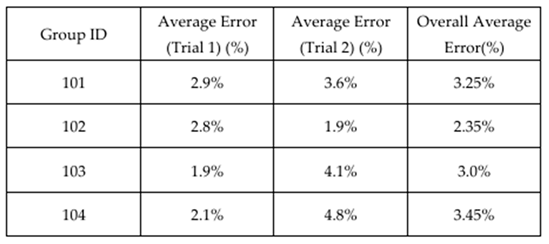
The reliability of the proposed motion analysis framework was rigorously validated through the assessment of temporal measurement accuracy. Table 1 presents the precise time measurements for distinct movement segments across both Player 1 (Segments 1–4) and Player 2 (Segments 5–8). The MMW radar demonstrated high performance in accurately capturing the duration of these segmented actions, yielding an overall average percentage error of 3.5%.To provide a comprehensive view of the system's robustness, Table 2 summarizes the error metrics across all participant groups. The analysis reveals remarkable consistency, with the measurement error constrained within a narrow range: a minimum percentage error of 1.9% and a maximum of 4.8%. The aggregated mean percentage error across the entire cohort stands at a low 3.01%. This minute deviation corresponds to a mean time difference of only 0.16 seconds when referenced against the average segmented duration of 4.875 s. This low error rate confirms the high temporal fidelity and reliability of the MMW radar-based system for precise kinematic segmentation in dynamic sports environments.
Furthermore, as illustrated in Figure 3, the distribution of average movement speeds clearly reveals performance disparities between individual players. The variance observed in these speed data serves as a comprehensive quantitative indicator of several key athletic capabilities, specifically, the achievement of higher average speeds directly corresponds to superior movement coordination, more acute reaction capability, and enhanced overall agility. We emphasize that these qualities are crucial in synchronized and fast-paced scenarios, such as doubles play. Consequently, these objective quantitative findings generated by the MMW radar system provide indispensable reference points for professional coaching staff, particularly useful for evaluating player synchronization, precisely identifying performance gaps, and optimizing and refining training strategies, thereby transforming raw data into practical, action-oriented support for decision-making.
4.3. Mixed Reality Visualization Synchronization Test
System integration was further validated through a Mixed Reality–based visualization workflow using the Microsoft HoloLens 2. Upon completion of each test, the system automatically calculated the duration and average speed of every segment and generated corresponding visual analytics for display within the Mixed Reality environment.
As shown in Figure 4, the Mixed Reality interface presents segment-level timing results in real time. When multiple athlete groups are compared, the system aggregates their average speed data and visualizes the results directly on the headset, enabling immediate performance assessment and side-by-side comparison for coaching applications.
In addition to on-device visualization, the system supports cloud-based synchronization and web-platform result management. As illustrated in Figure 5, users can access, organize, and edit testing records online, expanding analytical accessibility and enhancing data management across multiple training sessions.
4.4. Web-Based Visualization
The system also supports cloud synchronization and web-based result visualization. As illustrated in Figure 5, users can access, organize, and edit test data through an online interface, thereby enhancing analytical accessibility and streamlining data management across training sessions.
5. Conclusions
This study presented an integrated agility assessment system that combines millimeter-wave radar, ultra-wideband positioning, and Mixed Reality visualization to deliver precise, real-time, and objective measurements of athletic performance. By leveraging the robust motion-tracking capability of MMW radar under low-light and multi-target conditions, the high-accuracy identity recognition of UWB for dual-player evaluations, and the immersive, real-time visualization provided by Mixed Reality, the system effectively addresses the limitations of conventional agility testing approaches.
Experimental results collected from 80 table tennis athletes demonstrated an average measurement error below 10% and a classification accuracy of 91%, confirming the reliability and adaptability of the proposed framework. With added support for cloud-based data management and Mixed Reality mirroring, the system enables immediate performance feedback and streamlined training supervision.
Overall, the proposed solution offers strong potential for professional sports training, performance diagnostics, and tactical optimization, contributing valuable advancements to sports science and technology-assisted coaching. Despite the successful validation of this integrated system, its potential for further optimization and expansion remains high. Future work should focus on the application level, particularly expanding the developed system to analyze the agility and movement patterns of other sports, such as tennis or badminton. Furthermore, the system is poised for integration into smart sport venues, leveraging edge computing and cloud platforms to develop real-time training monitoring and remote coaching assistance, providing comprehensive and precise data support to athletes, coaches, and sports medicine teams. This research, therefore, lays a solid foundation for the application of sports technology and embedded Artificial Intelligence, demonstrating significant potential for high-value deployment and future promotion.
Author Contributions
Conceptualization, Sheng-K Wu and Yung-Hoh Sheu; methodology, Li-Wei Tai; software, Li-Wei Tai; validation, Li-Wei Tai, ; formal analysis, Li-Wei Tai; investigation, Li-Wei Tai; resources, Sheng-K Wu and Yung-Hoh Sheu ; data curation, Li-Wei Tai; writing—original draft preparation, Li-Wei Tai; writing—review and editing, Sheng-K Wu, Yung-Hoh Sheu, Li-Chun Chang and Tz-Yun Chen; visualization, Li-Wei Tai; supervision, Sheng-K Wu and Yung-Hoh Sheu; project administration, Yung-Hoh Sheu; funding acquisition, Sheng-K Wu and Yung-Hoh Sheu. All authors have read and agreed to the published version of the manuscript.
Funding
This research was funded by the National Science and Technology Council (NSTC), Taiwan, under the project "Integration of Information Technology and Sports Medicine in Intelligent Table Tennis: From Taiwan to International Perspectives," grant number NSTC 114-2425-H-028-003. The APC was funded by the above-mentioned grant (grant number NSTC 114-2425-H-028-003).
Data Availability Statement
Data is unavailable due to privacy or ethical restrictions. The data presented in this study are not publicly available due to privacy concerns regarding the human subjects involved.
Acknowledgments
The authors would like to sincerely thank the Department of Electrical Engineering for providing the necessary laboratory space and experimental equipment essential for this research.
Conflicts of Interest
The authors declare no conflicts of interest. The funders had no role in the design of the study; in the collection, analyses, or interpretation of data; in the writing of the manuscript; or in the decision to publish the results.
References
- Yang W, Wang J, Zhao Z, Cui Y. Accuracy of an Ultra-Wideband-Based Tracking System for Time–Motion Analysis in Tennis. Sensors. 2025; 25(4):1031. [CrossRef]
- . [CrossRef]
- J. W. Choi, S. S. Nam and S. H. Cho, "Multi-Human Detection Algorithm Based on an Impulse Radio Ultra-Wideband Radar System," in IEEE Access, vol. 4, pp. 10300-10309, 2016. [CrossRef]
- . [CrossRef]
- H. Cui and N. Dahnoun, "Real-Time Short-Range Human Posture Estimation Using mmWave Radars and Neural Networks," in IEEE Sensors Journal, vol. 22, no. 1, pp. 535-543, 1 Jan.1, 2022. [CrossRef]
- Soumya A, Krishna Mohan C, Cenkeramaddi LR. Recent Advances in mmWave-Radar-Based Sensing, Its Applications, and Machine Learning Techniques: A Review. Sensors. 2023; 23(21):8901. [CrossRef]
- Z. F. Chen, Y. H. Sheu and S. K. Wu, "The Agility Analysis System Applied Millimeter Wave Radar," 2024 International Symposium on Intelligent Signal Processing and Communication Systems (ISPACS), Kaohsiung, Taiwan, 2024, pp. 1-2. [CrossRef]
- Yung Hoh Sheu ,Li Wei Tai ,Sheng K Wu ,Tz Yun Chen,Li Chun Chang,Millimeter wave radar and MIXED REALITY virtual reality system for agility analysis, World Masters Games 2025.
Figure 1.
Illustration of Target Overlap Recognition.
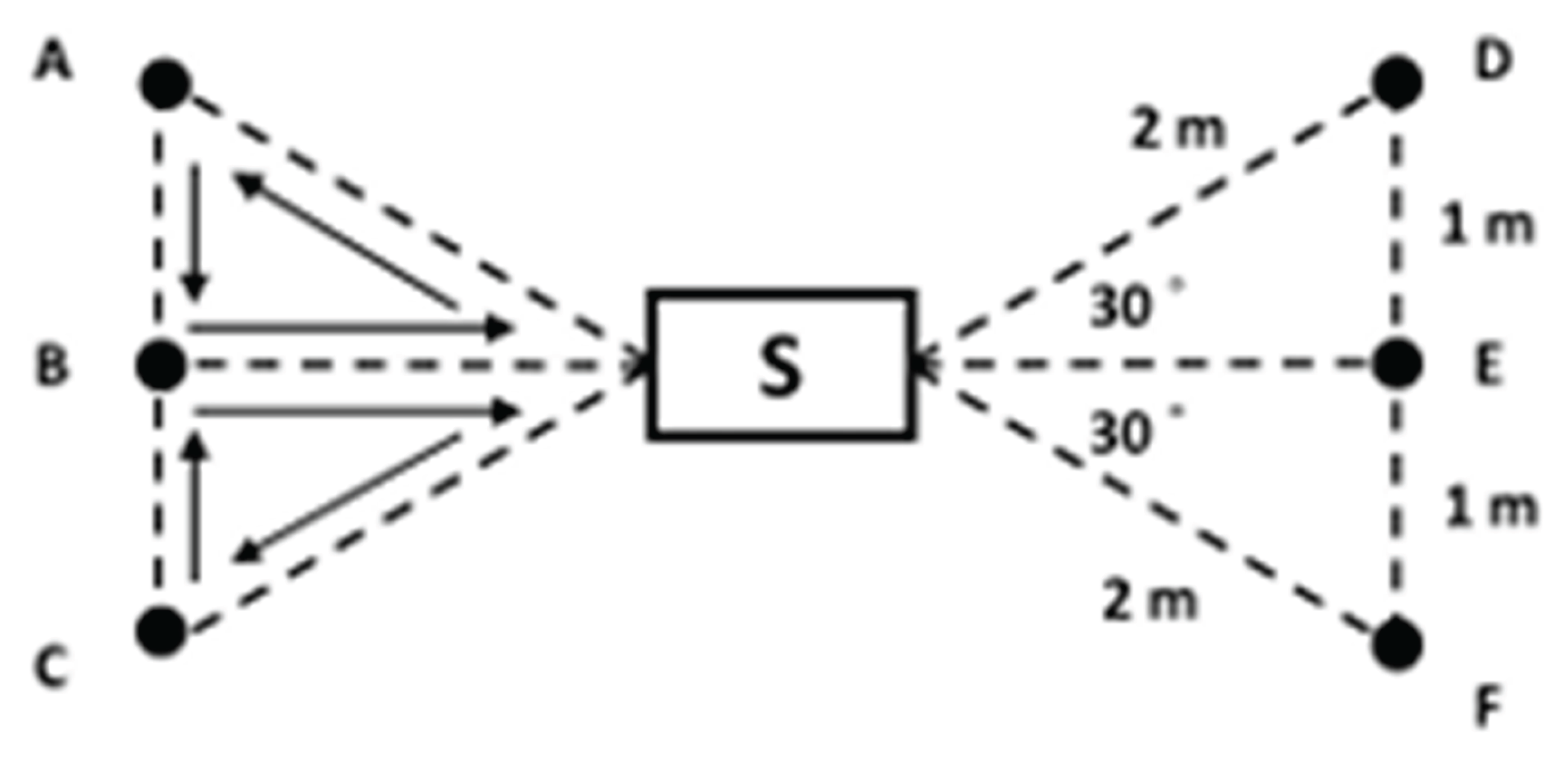
Figure 2.
Flowchart of the Dual-Player Table Tennis Agility Test Procedure.
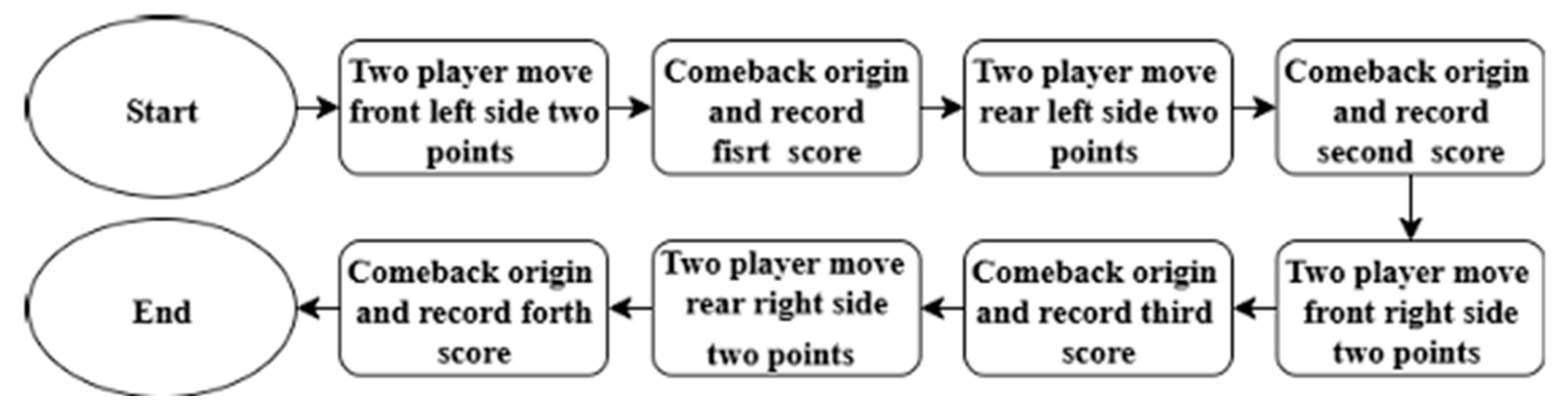
Figure 3.
Average speed comparison in Table Tennis Agility Test II.
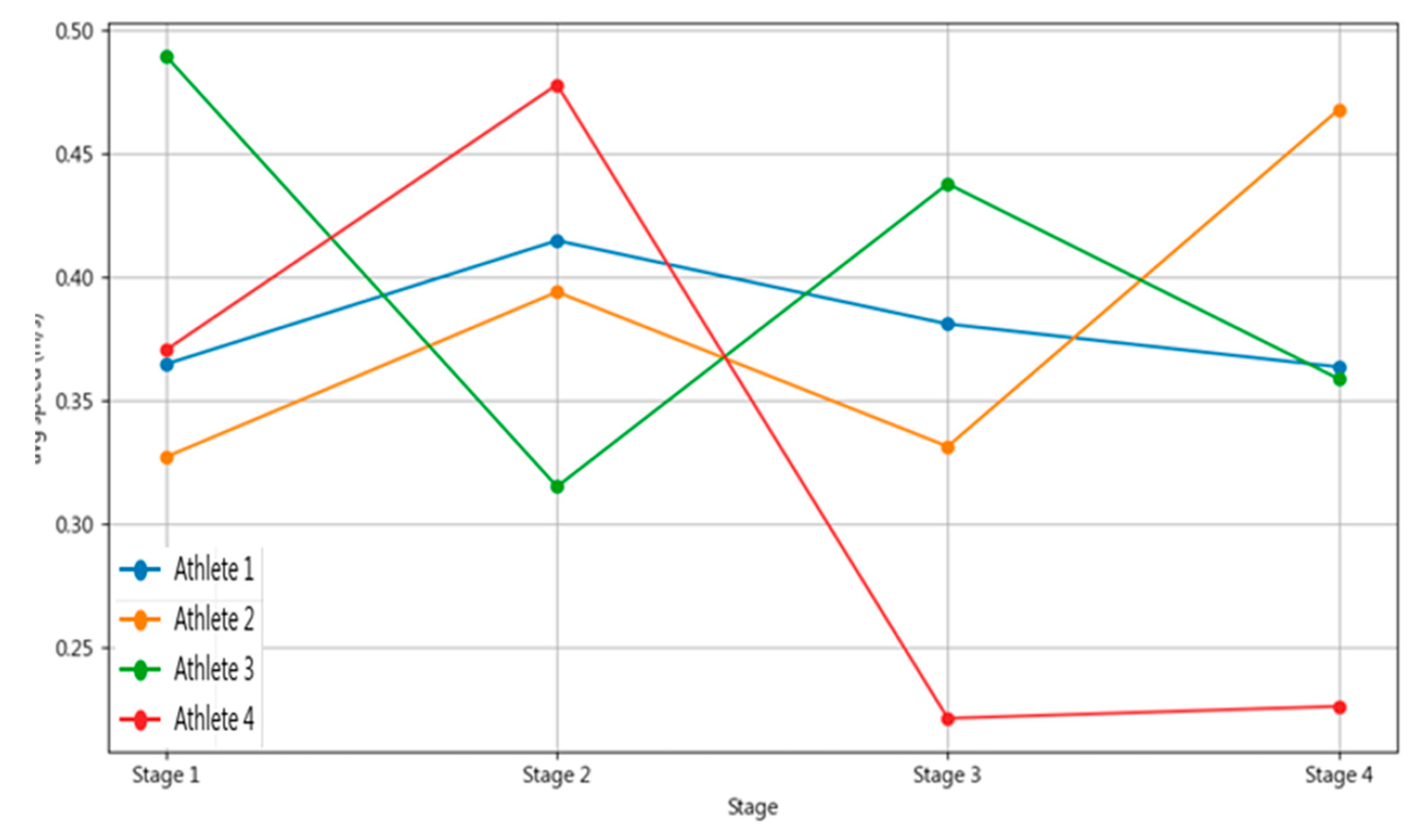
Figure 4.
Mixed Reality headset visualization of time consumption across test segments.
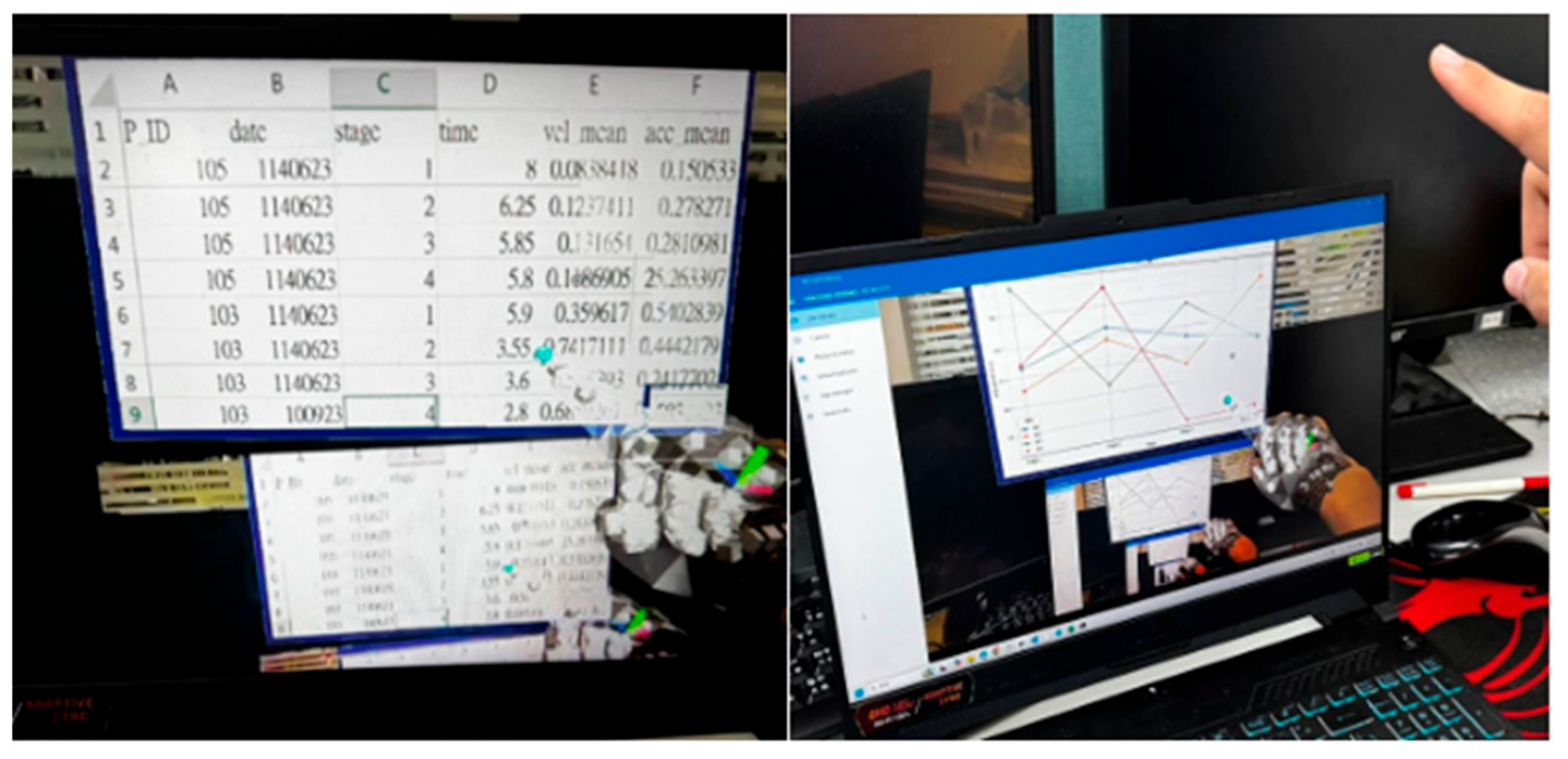
Figure 5.
Web-based dashboard interface of the agility analysis system.
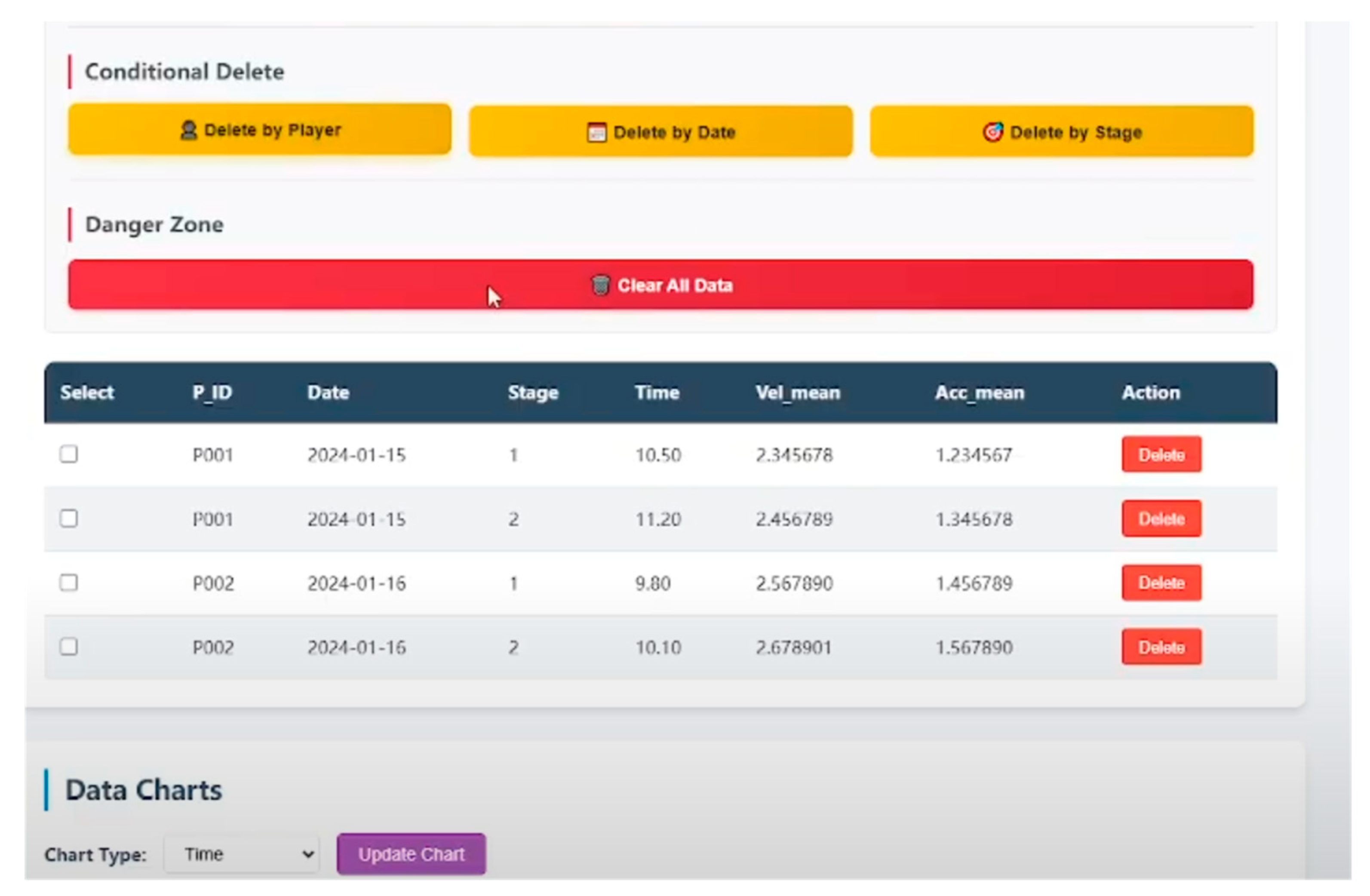

Table 1.
Segmented timing and error data for the dual-player table tennis agility test.
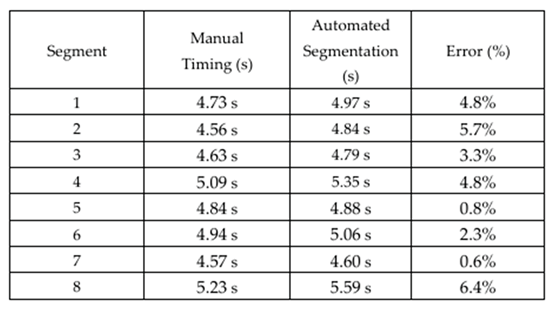 |
Table 2.
Comparison of average segmented errors in the dual-player agility test.
 |
Disclaimer/Publisher’s Note: The statements, opinions and data contained in all publications are solely those of the individual author(s) and contributor(s) and not of MDPI and/or the editor(s). MDPI and/or the editor(s) disclaim responsibility for any injury to people or property resulting from any ideas, methods, instructions or products referred to in the content. |
© 2025 by the authors. Licensee MDPI, Basel, Switzerland. This article is an open access article distributed under the terms and conditions of the Creative Commons Attribution (CC BY) license (http://creativecommons.org/licenses/by/4.0/).
Copyright: This open access article is published under a Creative Commons CC BY 4.0 license, which permit the free download, distribution, and reuse, provided that the author and preprint are cited in any reuse.


