

Submitted:
09 December 2025
Posted:
10 December 2025
You are already at the latest version
Abstract
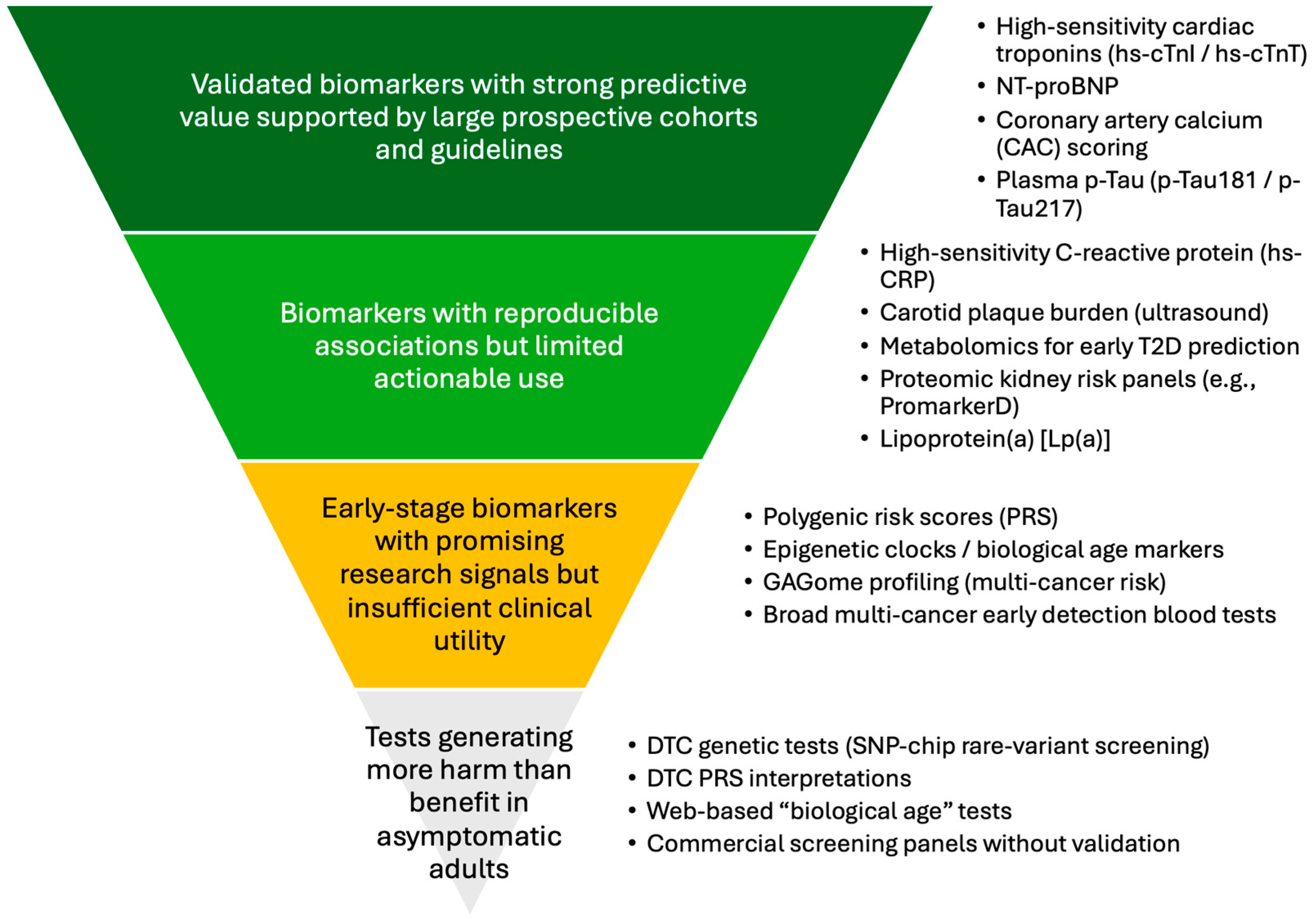
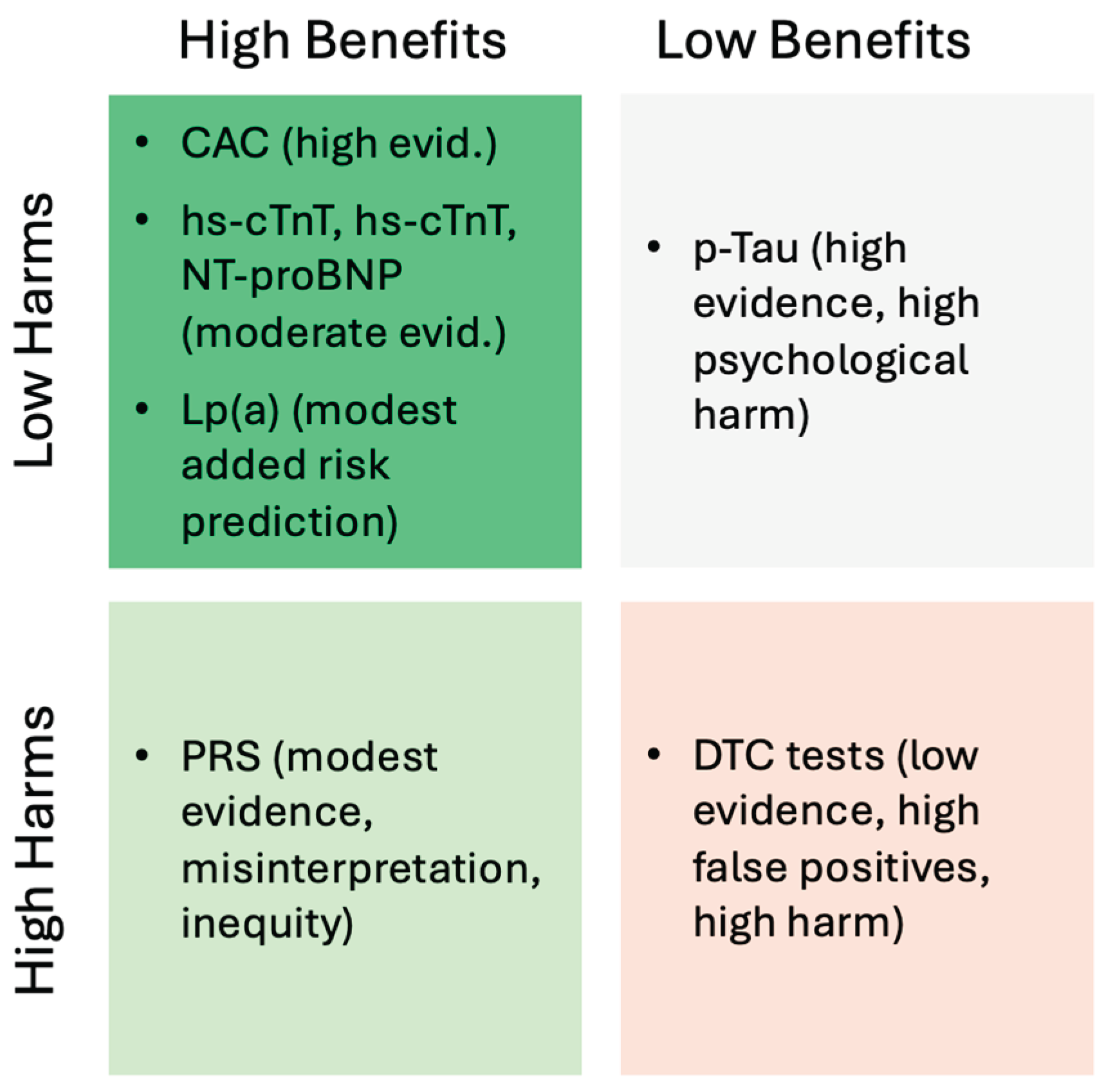
Background/Objectives: Biomarker-based prevention is rapidly expanding, driven by advances in molecular diagnostics, genetic profiling, and commercial direct-to-consumer (DTC) testing. General practitioners (GPs) increasingly encounter biomarker results of uncertain relevance, often introduced outside the guideline frameworks. This creates new challenges in interpretation, communication, and equitable resource use in primary care. Methods: This narrative review synthesizes evidence from population-based studies, guideline frameworks, consensus statements, and communication research to evaluate the predictive value, limitations, and real-world implications of biomarkers in asymptomatic adults. Attention is given to polygenic risk scores, DTC genetic tests, neurodegenerative and cardiovascular biomarkers, and emerging multi-omics and aging markers. Results: Several biomarkers, including high-sensitivity cardiac troponins, N-terminal pro–B-type natriuretic peptide, lipoprotein(a), coronary artery calcium scoring, and plasma p-tau species, showed robust predictive validity. However, many widely marketed biomarkers lack evidence of clinical utility, offer limited actionable benefits, or perform poorly in primary care populations. Unintended consequences, such as overdiagnosis, false positives, psychological distress, diagnostic cascades, and widening inequities, are well documented. Patients often misinterpret unvalidated biomarker results, whereas DTC testing amplifies demand without providing adequate counseling or follow-up. Conclusions: Only a minority of biomarkers currently meet the thresholds of analytical validity, clinical validity, and clinical utility required for preventive use in general practices. GPs play a critical role in contextualizing biomarker results, guiding shared decision-making, and mitigating potential harm. The responsible integration of biomarkers into preventive medicine requires clear communication, strong ethical safeguards, robust evidence, and system-level support for equitable, patient-centered care.
Keywords:
1. Introduction
2. Methods
3. Predictive Biomarkers and Polygenic Risk Scores in Preventive Medicine
3.1. Cardiovascular Biomarkers
3.1.1. High-Sensitivity Cardiac Troponins (hs-cTnI, hs-cTnT)
3.1.2. N-terminal pro–B-type natriuretic peptide (NT-proBNP)
3.1.3. High-Sensitivity C-Reactive Protein (hs-CRP)
3.1.4. Lipoprotein(a)
3.2. Imaging Biomarkers
3.3. Metabolic Biomarkers
3.3.1. Metabolomic Signatures for Type 2 Diabetes
3.3.2. Autoantibodies for Type 1 Diabetes
3.3.3. Proteomic Panels for Diabetic Kidney Disease
3.4. Neurodegenerative Biomarkers
3.4.1. Plasma p-Tau Species (p-Tau181, p-Tau217)
3.4.2. Imaging Biomarkers (Amyloid PET)
3.4.3. Genetic Risk Markers
3.5. Non-Invasive Biomarkers for Cancer Detection and Biological Aging
3.5.1. Urinary Glycosaminoglycan Profiling in Elevated Cancer Risk
3.5.2. Epigenetic and Biological Age Biomarkers
3.6. Polygenic Risk Scores
3.6.1. Predictive Potential and Emerging Clinical Applications
3.6.2. Limitations, Risk of Bias, and Ethical Considerations
3.6.3. Implementation and Future Directions
3.7. Reliability of Direct-to-Consumer Biomarker Tests
3.8. Synthesis
4. Patient Interpretation of Unvalidated Biomarker Results
5. Harms and Ethical Challenges in Preventive Biomarker Use
5.1. Overdiagnosis, Overtreatment, and Diagnostic Cascades
5.2. Psychological Distress and Uncertainty
5.3. Stigma, Discrimination, and Privacy
5.4. Equity, Justice, and Societal Implications
6. Frameworks and Guidelines for Evaluating Biomarker Usefulness in Preventive Medicine
6.1. General Evaluation Frameworks
- Neurology: The Alzheimer's guidelines specify standards for validation and reporting [146].
6.2. Omics, Machine Learning, and Equity
7. Communication, Clinical Stewardship, and GP Responses to Biomarker Demand
7.1. Communicating Uncertainty and Limitations
7.2. Shared Decision-Making and Expectation Management
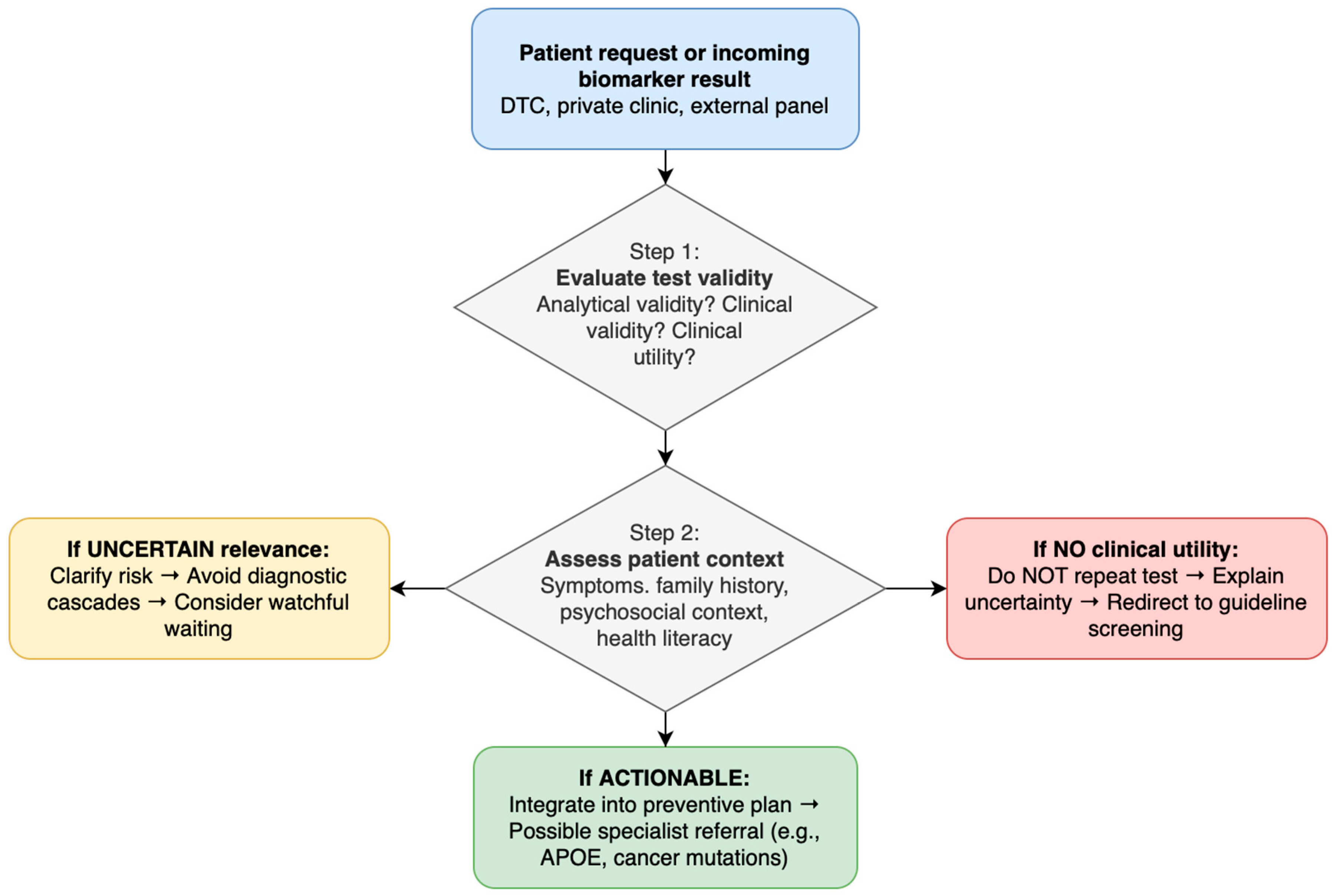
7.3. Managing Private Biomarker Requests
7.3.1. Educating Patients and Setting Realistic Expectations
7.3.2. Upholding Evidence-Based Practice and Discouraging Non-Recommended Testing
7.4. When to Refer and When to Decline Testing
7.5. The GP Dekalog for Responsible Biomarker Use in Preventive Practice

| Number | Principle | Guidance for General Practitioners |
| 1 | Prioritize validated biomarkers | Use only biomarkers with strong analytical and clinical validity(e.g., hs-cTnT, hs-TNI, NT-proBNP, CAC, Lp(a), p-Tau). |
| 2 | Do not rely on unvalidated or commercial panels | Avoid DTC tests, SNP-chip rare-variant panels, and unproven “wellness” markers. |
| 3 | Use biomarkers only when actionability exists | Order or interpret tests only when results would meaningfully change management. |
| 4 | Integrate biomarker results into clinical context | Interpret results alongside symptoms, risk factors, and family history. |
| 5 | Communicate uncertainty clearly | Explain probabilistic results, limitations, and lack of deterministic predictions. |
| 6 | Avoid diagnostic cascades | Do not repeat low-value tests; avoid unnecessary imaging or referrals. |
| 7 | Address psychological impacts | Anticipate anxiety, stigma, or false reassurance; provide balanced counseling. |
| 8 | Ensure equity and fairness | Avoid reinforcing disparities created by private testing accessibility. |
| 9 | Redirect focus to evidence-based prevention | Emphasize lifestyle interventions, screening programs, and risk-factor management. |
| 10 | Uphold stewardship and continuity of care | Use biomarkers judiciously and maintain longitudinal guidance in patient partnerships. |
8. Conclusion
- interpret biomarker findings within the context of patients’ health status, preferences, and daily lives,
- maintain focus on established preventive strategies,
- help patients navigate expectations shaped by online or commercial offers, and
- support a measured approach that avoids unnecessary medicalization.
Author Contributions
Funding
Institutional Review Board Statement
Informed Consent Statement
Data Availability Statement
Acknowledgments
Conflicts of Interest
Abbreviations
| AD | Alzheimer’s disease |
| AHA | American Heart Association |
| APOE | Apolipoprotein E |
| ASCO | American Society of Clinical Oncology |
| BRCA1/2 | Breast cancer gene ½ |
| CAC | Coronary artery calcium |
| CAP | College of American Pathologists |
| DTC | Direct-to consumer |
| EGTM | European Group on Tumor Markers |
| GAGome | Glycosaminoglycan genome |
| GP | General practitioner |
| hs-CRP | High-sensitivity C-reactive protein |
| hs-cTnI | High-Sensitivity Cardiac Troponin I |
| hs-cTnT | High-Sensitivity Cardiac Troponin T |
| HTA | Health technology assessment |
| LDL-C | Low-density lipoprotein cholesterol |
| Lp(a) | Lipoprotein(a) |
| NACB | National Academy of Clinical Biochemistry |
| NIH | National Institutes of Health |
| NT-proBNP | N-terminal pro–B-type natriuretic peptide |
| p-Tau | Plasma p-Tau species |
| PET | Positron emission tomography |
| PRS | Polygenic risk score |
| PSA | Prostate-specific antigen |
| SANRA | Scale for the Assessment of Narrative Review Articles |
References
- Gronowski, A.M.; Budelier, M.M. The Ethics of Direct-to-Consumer Testing. Clin Lab Med 2020, 40, 93–103. [CrossRef]
- Pack, A.; Russell, A.; Kircher, S.; Weldon, C.; Bailey, S.C.; Lockwood, K.; Marquart, T.; Afonso, A.S.; Payakachat, N.; Wolf, M. Current Communication Practices for Biomarker Testing in Non-Small Cell Lung Cancer: Exploring Patient and Clinician Perspectives. Patient Educ Couns 2023, 114, 107839. [CrossRef]
- Normanno, N.; Apostolidis, K.; Wolf, A.; Al Dieri, R.; Deans, Z.; Fairley, J.; Maas, J.; Martinez, A.; Moch, H.; Nielsen, S.; et al. Access and Quality of Biomarker Testing for Precision Oncology in Europe. Eur J Cancer 2022, 176, 70–77. [CrossRef]
- NACB LMPG Committee Members; Myers, G.L.; Christenson, R.H.M.; Cushman, M.; Ballantyne, C.M.; Cooper, G.R.; Pfeiffer, C.M.; Grundy, S.M.; Labarthe, D.R.; Levy, D.; et al. National Academy of Clinical Biochemistry Laboratory Medicine Practice Guidelines: Emerging Biomarkers for Primary Prevention of Cardiovascular Disease. Clin Chem 2009, 55, 378–384. [CrossRef]
- Esteve-Pastor, M.A.; Roldán, V.; Rivera-Caravaca, J.M.; Ramírez-Macías, I.; Lip, G.Y.H.; Marín, F. The Use of Biomarkers in Clinical Management Guidelines: A Critical Appraisal. Thromb Haemost 2019, 119, 1901–1919. [CrossRef]
- Eggener, S.E.; Rumble, R.B.; Armstrong, A.J.; Morgan, T.M.; Crispino, T.; Cornford, P.; van der Kwast, T.; Grignon, D.J.; Rai, A.J.; Agarwal, N.; et al. Molecular Biomarkers in Localized Prostate Cancer: ASCO Guideline. J Clin Oncol 2020, 38, 1474–1494. [CrossRef]
- Duffy, M.J.; Harbeck, N.; Nap, M.; Molina, R.; Nicolini, A.; Senkus, E.; Cardoso, F. Clinical Use of Biomarkers in Breast Cancer: Updated Guidelines from the European Group on Tumor Markers (EGTM). Eur J Cancer 2017, 75, 284–298. [CrossRef]
- Arbyn, M.; Ronco, G.; Cuzick, J.; Wentzensen, N.; Castle, P.E. How to Evaluate Emerging Technologies in Cervical Cancer Screening? Int J Cancer 2009, 125, 2489–2496. [CrossRef]
- Ferraro, S.; Biganzoli, E.M.; Castaldi, S.; Plebani, M. Health Technology Assessment to Assess Value of Biomarkers in the Decision-Making Process. Clin Chem Lab Med 2022, 60, 647–654. [CrossRef]
- Jansen, S.N.G.; Kamphorst, B.A.; Mulder, B.C.; van Kamp, I.; Boekhold, S.; van den Hazel, P.; Verweij, M.F. Ethics of Early Detection of Disease Risk Factors: A Scoping Review. BMC Med Ethics 2024, 25, 25. [CrossRef]
- Smedinga, M.; Tromp, K.; Schermer, M.; Richard, E. Ethical Considerations in the Use of Biomarker Testing for Early Alzheimer Diagnosis: Preliminary Findings of a Systematic Review. Alzheimers Dement 2017, 13, P1339–P1340. [CrossRef]
- Walker, P.L.C.; Crook, M. Tumour Marker Requesting in Primary Care and the Role of the Laboratory. J Clin Pathol 2011, 64, 443–446. [CrossRef]
- Pichler, T.; Mumm, F.; Dehar, N.; Dickman, E.; Díez de Los Ríos de la Serna, C.; Dinkel, A.; Heinrich, K.; Hennink, M.; Parviainen, A.D.; Raske, V.; et al. Understanding Communication between Patients and Healthcare Professionals Regarding Comprehensive Biomarker Testing in Precision Oncology: A Scoping Review. Cancer Med 2024, 13, e6913. [CrossRef]
- Bell, D.; Bryce, R.; Delfino, R.; Godin-Heymann, N.; Horne, J.; Jäger, L.; Jones, M.; Magnell, N.; Sharma, V.; Shera, D.; et al. Access to Treatment-Guiding Biomarkers in the UK: Surveys of Cancer Patients and Healthcare Professionals. Future Oncol 2025, 21, 2625–2636. [CrossRef]
- Baethge, C.; Goldbeck-Wood, S.; Mertens SANRA-a Scale for the Quality Assessment of Narrative Review Articles. Res Integ Peer Rev 2019, 4, 5. [CrossRef]
- Romero-Cabrera, J.L.; Ankeny, J.; Fernández-Montero, A.; Kales, S.N.; Smith, D.L. A Systematic Review and Meta-Analysis of Advanced Biomarkers for Predicting Incident Cardiovascular Disease among Asymptomatic Middle-Aged Adults. Int J Mol Sci 2022, 23, 13540. [CrossRef]
- Wu, Z.; Pilbrow, A.P.; Liew, O.W.; Chong, J.P.C.; Sluyter, J.; Lewis, L.K.; Lasse, M.; Frampton, C.M.; Jackson, R.; Poppe, K.; et al. Circulating Cardiac Biomarkers Improve Risk Stratification for Incident Cardiovascular Disease in Community Dwelling Populations. EBioMedicine 2022, 82, 104170. [CrossRef]
- Farmakis, D.; Mueller, C.; Apple, F.S. High-Sensitivity Cardiac Troponin Assays for Cardiovascular Risk Stratification in the General Population. Eur Heart J 2020, 41, 4050–4056. [CrossRef]
- Shrivastava, P.; Sharma, T.; Gautam, S. Evaluation of Efficacy of Inflammatory Novel Biomarkers for Risk Prediction of Cardiovascular Disease among Clinically Asymptomatic Individuals–A Systematic Review. Res Cardiovasc Med 2024, 13, 97–104.
- Neumann, J.T.; de Lemos, J.A.; Apple, F.S.; Leong, D.P. Cardiovascular Biomarkers for Risk Stratification in Primary Prevention. Eur Heart J 2025, 46, 3823–3843. [CrossRef]
- Akbar, H.A.; Khan, J.; Khan, W.; Subhan, M.; Iftikhar, R.; Naz, S.; Musthafa, H.; Abuasaker, H.K.; Hameed, A.K.A. High-Sensitivity Troponin for Cardiovascular Risk Stratification in Asymptomatic Individuals with Subclinical Atherosclerosis: Insights into Sex-Specific Differences and Emerging Clinical Applications – a Meta-Analysis with Crucial Implications for Cardiovascular Risk Assessment. Insights J Health Rehabil 2025, 3, 103–110.
- Wilson, D.P.; Jacobson, T.A.; Jones, P.H.; Koschinsky, M.L.; McNeal, C.J.; Nordestgaard, B.G.; Orringer, C.E. Use of Lipoprotein(a) in Clinical Practice: A Biomarker Whose Time Has Come. A Scientific Statement from the National Lipid Association. J Clin Lipidol 2022, 16, e77–e95. [CrossRef]
- Kotani, K.; Serban, M.-C.; Penson, P.; Lippi, G.; Banach, M. Evidence-Based Assessment of Lipoprotein(a) as a Risk Biomarker for Cardiovascular Diseases - Some Answers and Still Many Questions. Crit Rev Clin Lab Sci 2016, 53, 370–378. [CrossRef]
- Reyes-Soffer, G.; Ginsberg, H.N.; Berglund, L.; Duell, P.B.; Heffron, S.P.; Kamstrup, P.R.; Lloyd-Jones, D.M.; Marcovina, S.M.; Yeang, C.; Koschinsky, M.L.; et al. Lipoprotein(a): A Genetically Determined, Causal, and Prevalent Risk Factor for Atherosclerotic Cardiovascular Disease: A Scientific Statement From the American Heart Association. Arterioscler Thromb Vasc Biol 2022, 42, e48–e60. [CrossRef]
- Kronenberg, F.; Mora, S.; Stroes, E.S.G.; Ference, B.A.; Arsenault, B.J.; Berglund, L.; Dweck, M.R.; Koschinsky, M.; Lambert, G.; Mach, F.; et al. Lipoprotein(a) in Atherosclerotic Cardiovascular Disease and Aortic Stenosis: A European Atherosclerosis Society Consensus Statement. Eur Heart J 2022, 43, 3925–3946. [CrossRef]
- Arsenault, B.J.; Kamstrup, P.R. Lipoprotein(a) and Cardiovascular and Valvular Diseases: A Genetic Epidemiological Perspective. Atherosclerosis 2022, 349, 7–16. [CrossRef]
- Welsh, P.; Welsh, C.; Celis-Morales, C.A.; Brown, R.; Ho, F.K.; Ferguson, L.D.; Mark, P.B.; Lewsey, J.; Gray, S.R.; Lyall, D.M.; et al. Lipoprotein(a) and Cardiovascular Disease: Prediction, Attributable Risk Fraction, and Estimating Benefits from Novel Interventions. Eur J Prev Cardiol 2022, 28, 1991–2000. [CrossRef]
- Trinder, M.; Uddin, M.M.; Finneran, P.; Aragam, K.G.; Natarajan, P. Clinical Utility of Lipoprotein(a) and LPA Genetic Risk Score in Risk Prediction of Incident Atherosclerotic Cardiovascular Disease. JAMA Cardiol 2021, 6, 287–295. [CrossRef]
- Patel, A.P.; Wang (汪敏先), M.; Pirruccello, J.P.; Ellinor, P.T.; Ng, K.; Kathiresan, S.; Khera, A.V. Lp(a) (Lipoprotein[a]) Concentrations and Incident Atherosclerotic Cardiovascular Disease: New Insights From a Large National Biobank. Arterioscler Thromb Vasc Biol 2021, 41, 465–474. [CrossRef]
- Ridker, P.M.; Moorthy, M.V.; Cook, N.R.; Rifai, N.; Lee, I.-M.; Buring, J.E. Inflammation, Cholesterol, Lipoprotein(a), and 30-Year Cardiovascular Outcomes in Women. N Engl J Med 2024, 391, 2087–2097. [CrossRef]
- Bhatia, H.S.; Rikhi, R.; Allen, T.S.; Yeang, C.; Guan, W.; Garg, P.K.; Tsai, M.Y.; Criqui, M.H.; Shapiro, M.D.; Tsimikas, S. Lipoprotein(a) and the Pooled Cohort Equations for ASCVD Risk Prediction: The Multi-Ethnic Study of Atherosclerosis. Atherosclerosis 2023, 381, 117217. [CrossRef]
- Bhatia, H.S.; Ambrosio, M.; Razavi, A.C.; Alebna, P.L.; Yeang, C.; Spitz, J.A.; Patel, J.; Tsai, M.Y.; Sperling, L.; Shapiro, M.D.; et al. AHA PREVENT Equations and Lipoprotein(a) for Cardiovascular Disease Risk : Insights From MESA and the UK Biobank. JAMA Cardiol 2025, 10, 810–818. [CrossRef]
- Koschinsky, M.L.; Bajaj, A.; Boffa, M.B.; Dixon, D.L.; Ferdinand, K.C.; Gidding, S.S.; Gill, E.A.; Jacobson, T.A.; Michos, E.D.; Safarova, M.S.; et al. A Focused Update to the 2019 NLA Scientific Statement on Use of Lipoprotein(a) in Clinical Practice. J Clin Lipidol 2024, 18, e308–e319. [CrossRef]
- Willeit, P.; Ridker, P.M.; Nestel, P.J.; Simes, J.; Tonkin, A.M.; Pedersen, T.R.; Schwartz, G.G.; Olsson, A.G.; Colhoun, H.M.; Kronenberg, F.; et al. Baseline and On-Statin Treatment Lipoprotein(a) Levels for Prediction of Cardiovascular Events: Individual Patient-Data Meta-Analysis of Statin Outcome Trials. Lancet 2018, 392, 1311–1320. [CrossRef]
- Pickhardt, P.J.; Graffy, P.M.; Zea, R.; Lee, S.J.; Liu, J.; Sandfort, V.; Summers, R.M. Automated CT Biomarkers for Opportunistic Prediction of Future Cardiovascular Events and Mortality in an Asymptomatic Screening Population: A Retrospective Cohort Study. Lancet Digit Health 2020, 2, e192–e200. [CrossRef]
- Baber, U.; Mehran, R.; Sartori, S.; Schoos, M.M.; Sillesen, H.; Muntendam, P.; Garcia, M.J.; Gregson, J.; Pocock, S.; Falk, E.; et al. Prevalence, Impact, and Predictive Value of Detecting Subclinical Coronary and Carotid Atherosclerosis in Asymptomatic Adults: The BioImage Study. J Am Coll Cardiol 2015, 65, 1065–1074. [CrossRef]
- Azcui Aparicio, R.E.; Ball, J.; Yiallourou, S.; Venkataraman, P.; Marwick, T.; Carrington, M.J. Imaging-Guided Evaluation of Subclinical Atherosclerosis to Enhance Cardiovascular Risk Prediction in Asymptomatic Low-to-Intermediate Risk Individuals: A Systematic Review. Prev Med 2021, 153, 106819. [CrossRef]
- Pinto-Sietsma, S.-J.; Velthuis, B.K.; Nurmohamed, N.S.; Vliegenthart, R.; Martens, F.M.A.C. Computed Tomography and Coronary Artery Calcium Score for Screening of Coronary Artery Disease and Cardiovascular Risk Management in Asymptomatic Individuals. Neth Heart J 2024, 32, 371–377. [CrossRef]
- Blaha, M.J.; Silverman, M.G.; Budoff, M.J. Is There a Role for Coronary Artery Calcium Scoring for Management of Asymptomatic Patients at Risk for Coronary Artery Disease?: Clinical Risk Scores Are Not Sufficient to Define Primary Prevention Treatment Strategies among Asymptomatic Patients. Circ Cardiovasc Imaging 2014, 7, 398–408; discussion 408. [CrossRef]
- Temtem, M.; Mendonça, M.I.; Gomes Serrão, M.; Santos, M.; Sá, D.; Sousa, F.; Soares, C.; Rodrigues, R.; Henriques, E.; Freitas, S.; et al. Predictive Improvement of Adding Coronary Calcium Score and a Genetic Risk Score to a Traditional Risk Model for Cardiovascular Event Prediction. Eur J Prev Cardiol 2024, 31, 709–715. [CrossRef]
- Garg, P.K.; Bhatia, H.S.; Allen, T.S.; Grainger, T.; Pouncey, A.L.; Dichek, D.; Virmani, R.; Golledge, J.; Allison, M.A.; Powell, J.T. Assessment of Subclinical Atherosclerosis in Asymptomatic People In Vivo: Measurements Suitable for Biomarker and Mendelian Randomization Studies. Arterioscler Thromb Vasc Biol 2024, 44, 24–47. [CrossRef]
- Ahola-Olli, A.V.; Mustelin, L.; Kalimeri, M.; Kettunen, J.; Jokelainen, J.; Auvinen, J.; Puukka, K.; Havulinna, A.S.; Lehtimäki, T.; Kähönen, M.; et al. Circulating Metabolites and the Risk of Type 2 Diabetes: A Prospective Study of 11,896 Young Adults from Four Finnish Cohorts. Diabetologia 2019, 62, 2298–2309. [CrossRef]
- Khine, A.; Quandt, Z. From Prediction to Prevention: The Intricacies of Islet Autoantibodies in Type 1 Diabetes. Curr Diab Rep 2025, 25, 38. [CrossRef]
- Lui, J.K.C.; Peters, K.E.; Fernandez, G.; Joubert, I.A.; Lumbantobing, T.S.C.; Davis, T.M.E.; Lipscombe, R.J.; Bringans, S.D. Analytical and Clinical Performance of a Novel Immunoassay-Based Test System to Predict Diabetic Kidney Disease. J Appl Lab Med 2025, 10, 1140–1153. [CrossRef]
- Khorsand, B.; Ghanbarian, E.; Rabin, L.; Sajjadi, S.A.; Ezzati, A. Incremental Value of Plasma Biomarkers in Predicting Clinical Decline Among Cognitively Unimpaired Older Adults: Results from the A4 Trial 2025, 2025.07.22.25332015.
- De Meyer, S.; Schaeverbeke, J.M.; Luckett, E.S.; Reinartz, M.; Blujdea, E.R.; Cleynen, I.; Dupont, P.; Van Laere, K.; Vanbrabant, J.; Stoops, E.; et al. Plasma pTau181 and pTau217 Predict Asymptomatic Amyloid Accumulation Equally Well as Amyloid PET. Brain Commun 2024, 6, fcae162. [CrossRef]
- Sala, G.; Cuffaro, L.; Pozzi, F.E.; Andreoni, S.; Bazzini, C.; Conti, E.; Zoia, C.P.; Beretta, S.; Tremolizzo, L.; Bellelli, G.; et al. Multi-Pathway Blood Biomarkers to Target and Monitor Multidimensional Prevention of Cognitive and Functional Decline (Nested in the IN-TeMPO Study Framed within the World-Wide FINGERS Network). Front Aging Neurosci 2025, 17, 1581892. [CrossRef]
- Xu, Y.; Vasiljevic, E.; Deming, Y.K.; Jonaitis, E.M.; Koscik, R.L.; Van Hulle, C.A.; Lu, Q.; Carboni, M.; Kollmorgen, G.; Wild, N.; et al. Effect of Pathway-Specific Polygenic Risk Scores for Alzheimer’s Disease (AD) on Rate of Change in Cognitive Function and AD-Related Biomarkers Among Asymptomatic Individuals. J Alzheimers Dis 2023, 94, 1587–1605. [CrossRef]
- Schipper, H.M. Presymptomatic Apolipoprotein E Genotyping for Alzheimer’s Disease Risk Assessment and Prevention. Alzheimers Dement 2011, 7, e118-123. [CrossRef]
- Yu, J.-T.; Tan, L.; Hardy, J. Apolipoprotein E in Alzheimer’s Disease: An Update. Annu Rev Neurosci 2014, 37, 79–100. [CrossRef]
- Marshe, V.S.; Gorbovskaya, I.; Kanji, S.; Kish, M.; Müller, D.J. Clinical Implications of APOE Genotyping for Late-Onset Alzheimer’s Disease (LOAD) Risk Estimation: A Review of the Literature. J Neural Transm (Vienna) 2019, 126, 65–85. [CrossRef]
- Ritchie, M.; Sajjadi, S.A.; Grill, J.D. Apolipoprotein E Genetic Testing in a New Age of Alzheimer Disease Clinical Practice. Neurol Clin Pract 2024, 14, e200230. [CrossRef]
- Elias-Sonnenschein, L.S.; Viechtbauer, W.; Ramakers, I.H.G.B.; Verhey, F.R.J.; Visser, P.J. Predictive Value of APOE-Ε4 Allele for Progression from MCI to AD-Type Dementia: A Meta-Analysis. J Neurol Neurosurg Psychiatry 2011, 82, 1149–1156. [CrossRef]
- Belloy, M.E.; Andrews, S.J.; Le Guen, Y.; Cuccaro, M.; Farrer, L.A.; Napolioni, V.; Greicius, M.D. APOE Genotype and Alzheimer Disease Risk Across Age, Sex, and Population Ancestry. JAMA Neurol 2023, 80, 1284–1294. [CrossRef]
- Berkowitz, C.L.; Mosconi, L.; Rahman, A.; Scheyer, O.; Hristov, H.; Isaacson, R.S. Clinical Application of APOE in Alzheimer’s Prevention: A Precision Medicine Approach. J Prev Alzheimers Dis 2018, 5, 245–252. [CrossRef]
- Solomon, A.; Turunen, H.; Ngandu, T.; Peltonen, M.; Levälahti, E.; Helisalmi, S.; Antikainen, R.; Bäckman, L.; Hänninen, T.; Jula, A.; et al. Effect of the Apolipoprotein E Genotype on Cognitive Change During a Multidomain Lifestyle Intervention: A Subgroup Analysis of a Randomized Clinical Trial. JAMA Neurol 2018, 75, 462–470. [CrossRef]
- Angelopoulou, E.; Paudel, Y.N.; Papageorgiou, S.G.; Piperi, C. APOE Genotype and Alzheimer’s Disease: The Influence of Lifestyle and Environmental Factors. ACS Chem Neurosci 2021, 12, 2749–2764. [CrossRef]
- Dittrich, A.; Blennow, K.; Tan, K.; Benedet, A.L.; Skoog, I.; Höglund, K.; Ashton, N.J.; Zetterberg, H.; Kern, S. Evaluation of Two Plasma-Based Proteotyping Assays against APOE Ε4 Genotyping in a Memory Clinic Setting: The Gothenburg H70 Clinical Studies. Alzheimers Dement 2025, 21, e14610. [CrossRef]
- Kojima, N.; Matsuda, K.; Hattori, H.; Daitho, M.; Tsukie, T.; Obinata, A.; Miyashita, A.; Ikeuchi, T. Development and Evaluation of Clinically Effective “APOE Genotyping PCR-based Assay Kit” in Alzheimer’s Disease Patients. Alzheimer’s & Dementia 2024, 20, e095484.
- Meißner, D.; Denker, A.; Stallmann, S.; Milbredt, S.; Venkataraman, I.; Saschenbrecker, S.; Steller, U. New Real-time PCR Test for APOE Genotyping in Patients with Alzheimer’s Disease before Anti-amyloid Therapy. Alzheimer’s & Dementia 2024, 20, e087290.
- Narasimhan, S.; Holtzman, D.M.; Apostolova, L.G.; Cruchaga, C.; Masters, C.L.; Hardy, J.; Villemagne, V.L.; Bell, J.; Cho, M.; Hampel, H. Apolipoprotein E in Alzheimer’s Disease Trajectories and the next-Generation Clinical Care Pathway. Nat Neurosci 2024, 27, 1236–1252. [CrossRef]
- Belaidi, A.A.; Bush, A.I.; Ayton, S. Apolipoprotein E in Alzheimer’s Disease: Molecular Insights and Therapeutic Opportunities. Mol Neurodegener 2025, 20, 47. [CrossRef]
- Wetmore, J.B.; Rodriguez, S.; Diaz Caro, D.; Cabán, M.; Uhlmann, W.; Goldman, J.; Leu, C.-S.; Godinez, J.D.; Camarillo, I.A.; Ferber, R.; et al. Designing and Implementing the IDEAL Study: A Randomized Clinical Trial of APOE Genotype Disclosure for Late-Onset Alzheimer’s Disease in an Urban Latino Population. Alzheimers Dement (N Y) 2024, 10, e70016. [CrossRef]
- Rao, A.; Anderson, L.; Wilkes, T.; Verdooner, S.R. Remote APOE Counseling and Genotyping via Telehealth: Early Findings from a New Care Delivery Model in the United States. Alzheimers Dement 2024, 20, e095786.
- Gatto, F.; O’Donnell, E.; Davies, M.; Field, J. Multi-Cancer Risk Prediction in Asymptomatic Adults Using Urinary Glycosaminoglycan Profiling. J Clin Oncol 2025, 43, 10522–10522. [CrossRef]
- Gatto, F. Abstract 6088: Predicting the Risk of Any-Type Cancer in Asymptomatic Adults Using Noninvasive Glycosaminoglycan Profiling. Cancer Res 2024, 84, 6088. [CrossRef]
- Skinner, M.K. Epigenetic Biomarkers for Disease Susceptibility and Preventative Medicine. Cell Metab 2024, 36, 263–277. [CrossRef]
- Waziry, R. Cross-Tissue Comparison of Aging Biology Measures as Novel Biomarkers for Healthy Aging. Innov Aging 2023, 7, 449.
- Chan, M.S.; Arnold, M.; Offer, A.; Hammami, I.; Mafham, M.; Armitage, J.; Perera, R.; Parish, S. A Biomarker-Based Biological Age in UK Biobank: Composition and Prediction of Mortality and Hospital Admissions. J Gerontol A Biol Sci Med Sci 2021, 76, 1295–1302. [CrossRef]
- Torkamani, A.; Wineinger, N.E.; Topol, E.J. The Personal and Clinical Utility of Polygenic Risk Scores. Nat Rev Genet 2018, 19, 581–590. [CrossRef]
- Chatterjee, N.; Shi, J.; García-Closas, M. Developing and Evaluating Polygenic Risk Prediction Models for Stratified Disease Prevention. Nat Rev Genet 2016, 17, 392–406. [CrossRef]
- Sun, L.; Pennells, L.; Kaptoge, S.; Nelson, C.P.; Ritchie, S.C.; Abraham, G.; Arnold, M.; Bell, S.; Bolton, T.; Burgess, S.; et al. Polygenic Risk Scores in Cardiovascular Risk Prediction: A Cohort Study and Modelling Analyses. PLoS Med 2021, 18, e1003498. [CrossRef]
- Marston, N.A.; Pirruccello, J.P.; Melloni, G.E.M.; Koyama, S.; Kamanu, F.K.; Weng, L.-C.; Roselli, C.; Kamatani, Y.; Komuro, I.; Aragam, K.G.; et al. Predictive Utility of a Coronary Artery Disease Polygenic Risk Score in Primary Prevention. JAMA Cardiol 2023, 8, 130–137. [CrossRef]
- Mavaddat, N.; Michailidou, K.; Dennis, J.; Lush, M.; Fachal, L.; Lee, A.; Tyrer, J.P.; Chen, T.-H.; Wang, Q.; Bolla, M.K.; et al. Polygenic Risk Scores for Prediction of Breast Cancer and Breast Cancer Subtypes. Am J Hum Genet 2019, 104, 21–34. [CrossRef]
- Natarajan, P.; Young, R.; Stitziel, N.O.; Padmanabhan, S.; Baber, U.; Mehran, R.; Sartori, S.; Fuster, V.; Reilly, D.F.; Butterworth, A.; et al. Polygenic Risk Score Identifies Subgroup With Higher Burden of Atherosclerosis and Greater Relative Benefit From Statin Therapy in the Primary Prevention Setting. Circulation 2017, 135, 2091–2101. [CrossRef]
- Mars, N.; Koskela, J.T.; Ripatti, P.; Kiiskinen, T.T.J.; Havulinna, A.S.; Lindbohm, J.V.; Ahola-Olli, A.; Kurki, M.; Karjalainen, J.; Palta, P.; et al. Polygenic and Clinical Risk Scores and Their Impact on Age at Onset and Prediction of Cardiometabolic Diseases and Common Cancers. Nat Med 2020, 26, 549–557. [CrossRef]
- Klarin, D.; Natarajan, P. Clinical Utility of Polygenic Risk Scores for Coronary Artery Disease. Nat Rev Cardiol 2022, 19, 291–301. [CrossRef]
- Lu, X.; Liu, Z.; Cui, Q.; Liu, F.; Li, J.; Niu, X.; Shen, C.; Hu, D.; Huang, K.; Chen, J.; et al. A Polygenic Risk Score Improves Risk Stratification of Coronary Artery Disease: A Large-Scale Prospective Chinese Cohort Study. Eur Heart J 2022, 43, 1702–1711. [CrossRef]
- Vernon, S.T.; Brentnall, S.; Currie, D.J.; Peng, C.; Gray, M.P.; Botta, G.; Mujwara, D.; Nicholls, S.J.; Grieve, S.M.; Redfern, J.; et al. Health Economic Analysis of Polygenic Risk Score Use in Primary Prevention of Coronary Artery Disease - A System Dynamics Model. Am J Prev Cardiol 2024, 18, 100672. [CrossRef]
- Yadav, S.; Pruthi, S.; Klassen, C.; Stan, D.L.; Fraker, J.; Chumsri, S.; Khan, S.A.; Khatri, L.; Vachon, C.M.; Schaid, D.J. Clinical Impact of Integrating Polygenic Risk Scores with Breast Cancer Risk Assessment Models: Results from the Prospective Multisite GENRE-2 Clinical Trial.; American Society of Clinical Oncology, 2025; ISBN 0732-183X.
- Mavaddat, N.; Michailidou, K.; Dennis, J.; Lush, M.; Fachal, L.; Lee, A.; Tyrer, J.P.; Chen, T.-H.; Wang, Q.; Bolla, M.K.; et al. Polygenic Risk Scores for Prediction of Breast Cancer and Breast Cancer Subtypes. Am J Hum Genet 2019, 104, 21–34. [CrossRef]
- Padrik, P.; Tõnisson, N.; Hovda, T.; Sahlberg, K.K.; Hovig, E.; Costa, L.; Nogueira da Costa, G.; Feldman, I.; Sampaio, F.; Pajusalu, S.; et al. Guidance for the Clinical Use of the Breast Cancer Polygenic Risk Scores. Cancers (Basel) 2025, 17, 1056. [CrossRef]
- Prasad, R.B.; Hakaste, L.; Tuomi, T. Clinical Use of Polygenic Scores in Type 2 Diabetes: Challenges and Possibilities. Diabetologia 2025, 68, 1361–1374. [CrossRef]
- Siena, L.M.; Baccolini, V.; Riccio, M.; Rosso, A.; Migliara, G.; Sciurti, A.; Isonne, C.; Iera, J.; Pierri, F.; Marzuillo, C.; et al. Weighing the Evidence on Costs and Benefits of Polygenic Risk-Based Approaches in Clinical Practice: A Systematic Review of Economic Evaluations. Am J Hum Genet 2025, 112, 1735–1753. [CrossRef]
- Riveros-Mckay, F.; Weale, M.E.; Moore, R.; Selzam, S.; Krapohl, E.; Sivley, R.M.; Tarran, W.A.; Sørensen, P.; Lachapelle, A.S.; Griffiths, J.A.; et al. Integrated Polygenic Tool Substantially Enhances Coronary Artery Disease Prediction. Circ Genom Precis Med 2021, 14, e003304. [CrossRef]
- Groenendyk, J.W.; Greenland, P.; Khan, S.S. Incremental Value of Polygenic Risk Scores in Primary Prevention of Coronary Heart Disease: A Review. JAMA Intern Med 2022, 182, 1082–1088. [CrossRef]
- O’sullivan, J.; Choung, M.; Thompson, D.; Weale, M.; Riveros-Mckay, F.; Samani, N.; Wells, D.; Plagnol, V.; Ashley, E.; Donnelly, P.; et al. Preventing Premature Deaths through Polygenic Risk Scores. Eur Heart J 2025, 46, ehaf784.3541. [CrossRef]
- Martin, A.R.; Kanai, M.; Kamatani, Y.; Okada, Y.; Neale, B.M.; Daly, M.J. Clinical Use of Current Polygenic Risk Scores May Exacerbate Health Disparities. Nat Genet 2019, 51, 584–591. [CrossRef]
- Polygenic Risk Score Task Force of the International Common Disease Alliance Responsible Use of Polygenic Risk Scores in the Clinic: Potential Benefits, Risks and Gaps. Nat Med 2021, 27, 1876–1884. [CrossRef]
- Konuma, T.; Okada, Y. Statistical Genetics and Polygenic Risk Score for Precision Medicine. Inflamm Regen 2021, 41, 18. [CrossRef]
- Andreoli, L.; Peeters, H.; Van Steen, K.; Dierickx, K. Polygenic Risk Scores in the Clinic: A Systematic Review of Stakeholders’ Perspectives, Attitudes, and Experiences. Eur J Hum Genet 2025, 33, 266–280. [CrossRef]
- Ramsay, G.; Brooks, R.; Wade, C.; Liew, J.J.M.; Alphonse, P.; McIntosh, J.G.; Forrest, L.; Emery, J.; Saya, S. General Practitioner Perspectives on Genomics in Primary Care: Using Polygenic Risk Scores to Evaluate Cancer Risk. Br J Gen Pract 2025, BJGP.2025.0159. [CrossRef]
- Russo, L.; Farina, S.; Perilli, A.; Adduci, A.; Cristiano, A.; Pastorino, R.; Boccia, S.; Ioannidis, J.P.A. A Review on Efficacy of Polygenic Risk Score Information on Behavioral Change and Clinical Outcomes. Eur J Public Health 2024, 34, ckae144. 1962.
- Takase, M.; Hozawa, A. The Role of Polygenic Risk Score in the General Population: Current Status and Future Prospects. J Atheroscler Thromb 2025, 32, 1079–1097. [CrossRef]
- Sanderson, S.C.; Inouye, M. Psychological and Behavioural Considerations for Integrating Polygenic Risk Scores for Disease into Clinical Practice. Nat Hum Behav 2025, 9, 1098–1106. [CrossRef]
- Lambert, S.A.; Abraham, G.; Inouye, M. Towards Clinical Utility of Polygenic Risk Scores. Hum Mol Genet 2019, 28, R133–R142. [CrossRef]
- Andreoli, L.; Peeters, H.; Van Steen, K.; Dierickx, K. Taking the Risk. A Systematic Review of Ethical Reasons and Moral Arguments in the Clinical Use of Polygenic Risk Scores. Am J Med Genet A 2024, 194, e63584. [CrossRef]
- Slunecka, J.L.; van der Zee, M.D.; Beck, J.J.; Johnson, B.N.; Finnicum, C.T.; Pool, R.; Hottenga, J.-J.; de Geus, E.J.C.; Ehli, E.A. Implementation and Implications for Polygenic Risk Scores in Healthcare. Hum Genomics 2021, 15, 46. [CrossRef]
- Schunkert, H.; Di Angelantonio, E.; Inouye, M.; Patel, R.S.; Ripatti, S.; Widen, E.; Sanderson, S.C.; Kaski, J.P.; McEvoy, J.W.; Vardas, P.; et al. Clinical Utility and Implementation of Polygenic Risk Scores for Predicting Cardiovascular Disease: A Clinical Consensus Statement of the ESC Council on Cardiovascular Genomics, the ESC Cardiovascular Risk Collaboration, and the European Association of Preventive Cardiology. Eur Heart J 2025, 46, 1372–1383. [CrossRef]
- Xia, C.; Xu, Y.; Li, H.; He, S.; Chen, W. Benefits and Harms of Polygenic Risk Scores in Organised Cancer Screening Programmes: A Cost-Effectiveness Analysis. Lancet Reg Health West Pac 2024, 44, 101012. [CrossRef]
- Covolo, L.; Rubinelli, S.; Ceretti, E.; Gelatti, U. Internet-Based Direct-to-Consumer Genetic Testing: A Systematic Review. J Med Internet Res 2015, 17, e279. [CrossRef]
- Hull, L.E.; Aday, A.W.; Bui, Q.M.; Luzum, J.A.; Muchira, J.M.; Wand, H.; Chahal, C.A.A.; Chung, M.K.; Kwitek, A.E.; Molossi, S.; et al. Direct-to-Consumer Genetic Testing for Cardiovascular Disease: A Scientific Statement From the American Heart Association. Circulation 2025, 151, e905–e917. [CrossRef]
- Nolan, J.J.; Ormondroyd, E. Direct-to-Consumer Genetic Tests Providing Health Risk Information: A Systematic Review of Consequences for Consumers and Health Services. Clin Genet 2023, 104, 3–21. [CrossRef]
- Tandy-Connor, S.; Guiltinan, J.; Krempely, K.; LaDuca, H.; Reineke, P.; Gutierrez, S.; Gray, P.; Tippin Davis, B. False-Positive Results Released by Direct-to-Consumer Genetic Tests Highlight the Importance of Clinical Confirmation Testing for Appropriate Patient Care. Genet Med 2018, 20, 1515–1521. [CrossRef]
- Moscarello, T.; Murray, B.; Reuter, C.M.; Demo, E. Direct-to-Consumer Raw Genetic Data and Third-Party Interpretation Services: More Burden than Bargain? Genet Med 2019, 21, 539–541. [CrossRef]
- Toland, A.E. New Study Shows the Inaccuracy of At-Home Genetic Tests. Oncol Times 2021, 43, 15.
- O’Sullivan, J.W.; Raghavan, S.; Marquez-Luna, C.; Luzum, J.A.; Damrauer, S.M.; Ashley, E.A.; O’Donnell, C.J.; Willer, C.J.; Natarajan, P.; American Heart Association Council on Genomic and Precision Medicine; Council on Clinical Cardiology; Council on Arteriosclerosis, Thrombosis and Vascular Biology; Council on Cardiovascular Radiology and Intervention; Council on Lifestyle and Cardiometabolic Health; and Council on Peripheral Vascular Disease Polygenic Risk Scores for Cardiovascular Disease: A Scientific Statement From the American Heart Association. Circulation 2022, 146, e93–e118. [CrossRef]
- Abraham, G.; Rutten-Jacobs, L.; Inouye, M. Risk Prediction Using Polygenic Risk Scores for Prevention of Stroke and Other Cardiovascular Diseases. Stroke 2021, 52, 2983–2991. [CrossRef]
- Kilbride, M.K.; Bradbury, A.R. Evaluating Web-Based Direct-to-Consumer Genetic Tests for Cancer Susceptibility. JCO Precis Oncol 2020, 4, PO.19.00317. [CrossRef]
- Kaphingst, K.A.; McBride, C.M.; Wade, C.; Alford, S.H.; Reid, R.; Larson, E.; Baxevanis, A.D.; Brody, L.C. Patients’ Understanding of and Responses to Multiplex Genetic Susceptibility Test Results. Genet Med 2012, 14, 681–687. [CrossRef]
- Mohindra, N.A.; Trosman, J.R.; Houseknecht, S.; Feliciano, J.L.; Sacks, R.L.; Souter, B.; Waugh, W.; Martin, J.; Woodyard, J.; Schmidt, L.; et al. Awareness of Biomarker Test Timing and Purpose in Patients with Non-Small Cell Lung Cancer (NSCLC). JCO Oncol Pract 2023, 19, 138–138. [CrossRef]
- Clauer, J.S.; Nesathurai, A.; George, M. Communication of Cancer Biomarker Testing Results: What Patients Need. J Clin Oncol 2025, 43, 51–51. [CrossRef]
- Luzak, A.; Schnell-Inderst, P.; Bühn, S.; Mayer-Zitarosa, A.; Siebert, U. Clinical Effectiveness of Cancer Screening Biomarker Tests Offered as Self-Pay Health Service: A Systematic Review. The European Journal of Public Health 2016, 26, 498–505.
- Bulliard, J.-L.; Chiolero, A. Screening and Overdiagnosis: Public Health Implications. Public Health Rev 2015, 36, 8. [CrossRef]
- Dunn, B.K.; Woloshin, S.; Xie, H.; Kramer, B.S. Cancer Overdiagnosis: A Challenge in the Era of Screening. J Natl Cancer Cent 2022, 2, 235–242. [CrossRef]
- Loomans-Kropp, H.A.; Umar, A. Cancer Prevention and Screening: The next Step in the Era of Precision Medicine. NPJ Precis Oncol 2019, 3, 3. [CrossRef]
- Francis, A.; Thomas, J.; Fallowfield, L.; Wallis, M.; Bartlett, J.M.S.; Brookes, C.; Roberts, T.; Pirrie, S.; Gaunt, C.; Young, J.; et al. Addressing Overtreatment of Screen Detected DCIS; the LORIS Trial. Eur J Cancer 2015, 51, 2296–2303. [CrossRef]
- Klotz, L. Overdiagnosis in Urologic Cancer : For World Journal of Urology Symposium on Active Surveillance in Prostate and Renal Cancer. World J Urol 2022, 40, 1–8. [CrossRef]
- Lowenstein, L.M.; Basourakos, S.P.; Williams, M.D.; Troncoso, P.; Gregg, J.R.; Thompson, T.C.; Kim, J. Active Surveillance for Prostate and Thyroid Cancers: Evolution in Clinical Paradigms and Lessons Learned. Nat Rev Clin Oncol 2019, 16, 168–184. [CrossRef]
- Charkhchi, P.; Cybulski, C.; Gronwald, J.; Wong, F.O.; Narod, S.A.; Akbari, M.R. CA125 and Ovarian Cancer: A Comprehensive Review. Cancers (Basel) 2020, 12, 3730. [CrossRef]
- Bulliard, J.-L.; Beau, A.-B.; Njor, S.; Wu, W.Y.-Y.; Procopio, P.; Nickson, C.; Lynge, E. Breast Cancer Screening and Overdiagnosis. Int J Cancer 2021. [CrossRef]
- Kale, M.S.; Korenstein, D. Overdiagnosis in Primary Care: Framing the Problem and Finding Solutions. BMJ 2018, 362, k2820. [CrossRef]
- Parikh, N.D.; Tayob, N.; Singal, A.G. Blood-Based Biomarkers for Hepatocellular Carcinoma Screening: Approaching the End of the Ultrasound Era? J Hepatol 2023, 78, 207–216. [CrossRef]
- Kahwati, L.C.; Avenarius, M.; Brouwer, L.; Crossnohere, N.L.; Doubeni, C.A.; Miller, C.; Siddiqui, M.; Voisin, C.; Wines, R.C.; Jonas, D.E. Multicancer Detection Tests for Screening : A Systematic Review. Ann Intern Med 2025, 178, 1591–1604. [CrossRef]
- Mielke, M.M.; Fowler, N.R. Alzheimer Disease Blood Biomarkers: Considerations for Population-Level Use. Nat Rev Neurol 2024, 20, 495–504. [CrossRef]
- Sajid, I.M.; Frost, K.; Paul, A.K. “Diagnostic Downshift”: Clinical and System Consequences of Extrapolating Secondary Care Testing Tactics to Primary Care. BMJ Evid Based Med 2022, 27, 141–148. [CrossRef]
- Hansson, O.; Edelmayer, R.M.; Boxer, A.L.; Carrillo, M.C.; Mielke, M.M.; Rabinovici, G.D.; Salloway, S.; Sperling, R.; Zetterberg, H.; Teunissen, C.E. The Alzheimer’s Association Appropriate Use Recommendations for Blood Biomarkers in Alzheimer’s Disease. Alzheimers Dement 2022, 18, 2669–2686. [CrossRef]
- Aitken, C.A.; van Agt, H.M.E.; Siebers, A.G.; van Kemenade, F.J.; Niesters, H.G.M.; Melchers, W.J.G.; Vedder, J.E.M.; Schuurman, R.; van den Brule, A.J.C.; van der Linden, H.C.; et al. Introduction of Primary Screening Using High-Risk HPV DNA Detection in the Dutch Cervical Cancer Screening Programme: A Population-Based Cohort Study. BMC Med 2019, 17, 228. [CrossRef]
- Romeikat, N.L.; Sullivan, F.; Daly, F.; Kong, W. The Importance of Comorbidities at Baseline and 5-Year Follow-Up in a Lung Cancer Biomarker Screening Trial. J Clin Med 2025, 14, 2116. [CrossRef]
- Fichtner, U.A.; Maun, A.; Farin-Glattacker, E. Predictors for Psychosocial Consequences of Screening for Liver Diseases: A Data-Driven Approach. PLoS One 2025, 20, e0319488. [CrossRef]
- McBride, E.; Marlow, L.A.V.; Forster, A.S.; Ridout, D.; Kitchener, H.; Patnick, J.; Waller, J. Anxiety and Distress Following Receipt of Results from Routine HPV Primary Testing in Cervical Screening: The Psychological Impact of Primary Screening (PIPS) Study. Int J Cancer 2020, 146, 2113–2121. [CrossRef]
- Dennison, R.A.; Clune, R.J.; Tung, J.; John, S.D.; Moorthie, S.A.; Waller, J.; Usher-Smith, J.A. Societal Views on Using Risk-Based Innovations to Inform Cancer Screening and Referral Policies: Findings from Three Community Juries. BMC Public Health 2025, 25, 801. [CrossRef]
- Rainey, L.; van der Waal, D.; Jervaeus, A.; Wengström, Y.; Evans, D.G.; Donnelly, L.S.; Broeders, M.J.M. Are We Ready for the Challenge of Implementing Risk-Based Breast Cancer Screening and Primary Prevention? Breast 2018, 39, 24–32. [CrossRef]
- Cosgrove, L.; Karter, J.M.; Vaswani, A.; Thombs, B.D. Unexamined Assumptions and Unintended Consequences of Routine Screening for Depression. J Psychosom Res 2018, 109, 9–11. [CrossRef]
- Erickson, C.M.; Largent, E.A.; O’Brien, K.S. Paving the Way for Alzheimer’s Disease Blood-Based Biomarkers in Primary Care. Alzheimers Dement 2025, 21, e14203. [CrossRef]
- Lawler, M.; Keeling, P.; Kholmanskikh, O.; Minnaard, W.; Moehlig-Zuttermeister, H.; Normanno, N.; Philip, R.; Popp, C.; Salgado, R.; Santiago-Walker, A.E.; et al. Empowering Effective Biomarker-Driven Precision Oncology: A Call to Action. Eur J Cancer 2024, 209, 114225. [CrossRef]
- Pepe, M.S.; Etzioni, R.; Feng, Z.; Potter, J.D.; Thompson, M.L.; Thornquist, M.; Winget, M.; Yasui, Y. Phases of Biomarker Development for Early Detection of Cancer. J Natl Cancer Inst 2001, 93, 1054–1061. [CrossRef]
- Nagler, M. Translating Laboratory Tests into Clinical Practice: A Conceptual Framework. Hamostaseologie 2020, 40, 420–429. [CrossRef]
- Lord, S.J.; St John, A.; Bossuyt, P.M.; Sandberg, S.; Monaghan, P.J.; O’Kane, M.; Cobbaert, C.M.; Röddiger, R.; Lennartz, L.; Gelfi, C.; et al. Setting Clinical Performance Specifications to Develop and Evaluate Biomarkers for Clinical Use. Ann Clin Biochem 2019, 56, 527–535. [CrossRef]
- Bernhardt, A.M.; Tiedt, S.; Teupser, D.; Dichgans, M.; Meyer, B.; Gempt, J.; Kuhn, P.-H.; Simons, M.; Palleis, C.; Weidinger, E.; et al. A Unified Classification Approach Rating Clinical Utility of Protein Biomarkers across Neurologic Diseases. EBioMedicine 2023, 89, 104456. [CrossRef]
- Harris, L.N.; Ismaila, N.; McShane, L.M.; Andre, F.; Collyar, D.E.; Gonzalez-Angulo, A.M.; Hammond, E.H.; Kuderer, N.M.; Liu, M.C.; Mennel, R.G.; et al. Use of Biomarkers to Guide Decisions on Adjuvant Systemic Therapy for Women With Early-Stage Invasive Breast Cancer: American Society of Clinical Oncology Clinical Practice Guideline. J Clin Oncol 2016, 34, 1134–1150. [CrossRef]
- Hayes, D.F.; Bast, R.C.; Desch, C.E.; Fritsche, H.; Kemeny, N.E.; Jessup, J.M.; Locker, G.Y.; Macdonald, J.S.; Mennel, R.G.; Norton, L.; et al. Tumor Marker Utility Grading System: A Framework to Evaluate Clinical Utility of Tumor Markers. J Natl Cancer Inst 1996, 88, 1456–1466. [CrossRef]
- Li, X.; Blount, P.L.; Reid, B.J.; Vaughan, T.L. Quantification of Population Benefit in Evaluation of Biomarkers: Practical Implications for Disease Detection and Prevention. BMC Med Inform Decis Mak 2014, 14, 15. [CrossRef]
- Chow, S.L.; Maisel, A.S.; Anand, I.; Bozkurt, B.; de Boer, R.A.; Felker, G.M.; Fonarow, G.C.; Greenberg, B.; Januzzi, J.L.; Kiernan, M.S.; et al. Role of Biomarkers for the Prevention, Assessment, and Management of Heart Failure: A Scientific Statement From the American Heart Association. Circulation 2017, 135, e1054–e1091. [CrossRef]
- Sepulveda, A.R.; Hamilton, S.R.; Allegra, C.J.; Grody, W.; Cushman-Vokoun, A.M.; Funkhouser, W.K.; Kopetz, S.E.; Lieu, C.; Lindor, N.M.; Minsky, B.D.; et al. Molecular Biomarkers for the Evaluation of Colorectal Cancer: Guideline From the American Society for Clinical Pathology, College of American Pathologists, Association for Molecular Pathology, and the American Society of Clinical Oncology. J Clin Oncol 2017, 35, 1453–1486. [CrossRef]
- Zeng, X.; Chen, Y.; Sehrawat, A.; Lee, J.; Lafferty, T.K.; Kofler, J.; Berman, S.B.; Sweet, R.A.; Tudorascu, D.L.; Klunk, W.E.; et al. Alzheimer Blood Biomarkers: Practical Guidelines for Study Design, Sample Collection, Processing, Biobanking, Measurement and Result Reporting. Mol Neurodegener 2024, 19, 40. [CrossRef]
- Ostermann, M.; Zarbock, A.; Goldstein, S.; Kashani, K.; Macedo, E.; Murugan, R.; Bell, M.; Forni, L.; Guzzi, L.; Joannidis, M.; et al. Recommendations on Acute Kidney Injury Biomarkers From the Acute Disease Quality Initiative Consensus Conference: A Consensus Statement. JAMA Netw Open 2020, 3, e2019209. [CrossRef]
- Mateos-Haro, M.; Garcia-Santa-Vinuela, A.; Molano-Franco, D.; Solà, I.; Gordo-Vidal, F.; Martín-Delgado, M.C.; Lopez-Alcalde, J.; Zamora, J. Recommendations for the Use of Biomarkers for the Management of Adults with Sepsis: A Scoping Review and Critical Appraisal. BMJ Open 2025, 15, e090922. [CrossRef]
- Robin, J.; Harrison, J.E.; Kaufman, L.D.; Rudzicz, F.; Simpson, W.; Yancheva, M. Evaluation of Speech-Based Digital Biomarkers: Review and Recommendations. Digit Biomark 2020, 4, 99–108. [CrossRef]
- Polley, M.-Y.C.; Dignam, J.J. Statistical Considerations in the Evaluation of Continuous Biomarkers. J Nucl Med 2021, 62, 605–611. [CrossRef]
- Mi, X.; Zou, B.; Zou, F.; Hu, J. Permutation-Based Identification of Important Biomarkers for Complex Diseases via Machine Learning Models. Nat Commun 2021, 12, 3008. [CrossRef]
- Flevaris, K.; Davies, J.; Nakai, S.; Vučković, F.; Lauc, G.; Dunlop, M.G.; Kontoravdi, C. Machine Learning Framework to Extract the Biomarker Potential of Plasma IgG N-Glycans towards Disease Risk Stratification. Comput Struct Biotechnol J 2024, 23, 1234–1243. [CrossRef]
- Llorente-Saguer, I.; Oxtoby, N.P. A Data-Driven Framework for Biomarker Discovery Applied to Optimizing Modern Clinical and Preclinical Trials on Alzheimer’s Disease. Brain Commun 2024, 6, fcae438. [CrossRef]
- Plans-Beriso, E.; Babb-de-Villiers, C.; Petrova, D.; Barahona-López, C.; Diez-Echave, P.; Hernández, O.R.; Fernández-Martínez, N.F.; Turner, H.; García-Ovejero, E.; Craciun, O.; et al. Biomarkers for Personalised Prevention of Chronic Diseases: A Common Protocol for Three Rapid Scoping Reviews. Syst Rev 2024, 13, 147. [CrossRef]
- Simpkin, A.L.; Armstrong, K.A. Communicating Uncertainty: A Narrative Review and Framework for Future Research. J Gen Intern Med 2019, 34, 2586–2591. [CrossRef]
- Puntambekar, M.; Shery, N.; Parokkaran, I.; Al-Hamas, M. Predictive Biomarkers in Cancer Immunotherapy: A Narrative Review Across Selected Solid Tumors. Cureus 2025, 17, e88647. [CrossRef]
- Mete, O.; Boucher, A.; Schrader, K.A.; Abdel-Rahman, O.; Bahig, H.; Ho, C.; Hasan, O.K.; Lemieux, B.; Winquist, E.; Wong, R.; et al. Consensus Statement: Recommendations on Actionable Biomarker Testing for Thyroid Cancer Management. Endocr Pathol 2024, 35, 293–308. [CrossRef]
Disclaimer/Publisher’s Note: The statements, opinions and data contained in all publications are solely those of the individual author(s) and contributor(s) and not of MDPI and/or the editor(s). MDPI and/or the editor(s) disclaim responsibility for any injury to people or property resulting from any ideas, methods, instructions or products referred to in the content. |
© 2025 by the authors. Licensee MDPI, Basel, Switzerland. This article is an open access article distributed under the terms and conditions of the Creative Commons Attribution (CC BY) license (http://creativecommons.org/licenses/by/4.0/).


