
Submitted:
08 December 2025
Posted:
11 December 2025
You are already at the latest version
Abstract
This study examines how internal motivations and external social influences in heritage tourism combine to shape tourists' pro-environmental behaviors at World Heritage Sites. Building on an extended norm activation model, we propose an integrative framework that combines self-determination theory (autonomy, competence, and relatedness) and social norm theory (injunctive/descriptive norms). Analyzing survey data from 510 visitors at Pingyao Ancient City in China, we find that (1) personal norms (via environmental awareness/responsibility) are necessary but insufficient for PEBs; (2) internal motivations strengthen the personal norm-PEB link, especially when autonomy is present; and (3) travel companions’ social norms influence PEBs both directly and by moderating personal norms’ effectiveness. These findings advance the theory by elucidating the interaction between psychological needs and normative pressure in heritage tourism. Practically, they suggest designing PEB interventions that simultaneously cater to tourists’ autonomy and harness their group dynamics.
Keywords:
pro-environmental behavior
; self-determination motivation
; social norm
; norm activation model
; travel companions
1. Introduction
Tourists’ pro-environmental behaviors (PEBs) play a vital role in mitigating environmental degradation and potentially reversing destruction at heritage sites (Lange & Dewitte, 2019). The cultivation and reinforcement of such behaviors are therefore essential for both preserving heritage assets and ensuring the long-term sustainability of heritage tourism (Lange & Dewitte, 2019; Wu et al., 2021). A growing body of research has focused on issues such as carbon emissions (e.g., Akadiri et al., 2020; Peng et al., 2022), waste generation (e.g., Koliotasi et al., 2023), the depletion of natural resources, damage to the natural environment (e.g., Michailidou et al., 2016), and air, water and land pollution (e.g., Ahmad et al., 2019) at tourist destinations, including heritage sites (e.g., Al-Ansi et al., 2021). Although the scholarly focus on PEBs varies from field to field, for years most studies have been highly interested in what drives tourists’ PEBs (Kim & Stepchenkova, 2020; Loureiro et al., 2022; Wu et al., 2021) and have often explained them as resulting from a process involving norms (Schwartz, 1973). According to the norm activation model (NAM), people’s awareness of consequences and their ascription of responsibility for those consequences are important prerequisites for activating personal norms (Park et al., 2018; Setiawan et al., 2021). Personal norms are known to be influenced by morality, and people with stronger ones have proven more likely to engage in PEBs while traveling (De Groot et al., 2021). For instance, because using non-environmentally friendly vehicles can increase carbon emissions and noise levels at heritage sites (i.e., awareness of consequences), they have created a sense of responsibility for implementing PEBs (i.e., sense of responsibility), as well as a moral obligation to minimize their impacts on heritage sites, by using public transportation and other more environmentally friendly modes of transportation as a personal norm (Arroyo et al., 2020).
At the same time, group travel dynamics involving family, friends, classmates, or colleagues can generate interpersonal interactions that are significantly different from individual travel behavior (Xu, 2018). Therefore, PEBs are also influenced by external factors outside of itself (e.g., social interactions, group norms) (Silvi&Padilla, 2021; Li&Wu, 2020). Existing research frequently underestimates the significant influence of travel companions in shaping tourists’ PEBs (Su et al., 2022). Thus, along with personal norms, social norms formed by travel companions are feasible intervention measures to encourage tourists to participate in PEBs (De Groot et al., 2021; Keizer & Schultz, 2018; Nyborg, 2018). Unlike personal moral constraints, social norms depend heavily on external stimuli (Wang & Zhang, 2020). When people travel with their travel companions (i.e., relatives, friends, or colleagues), social norms can be viewed as the members’ understanding and perception of rules in the tourist environment (Cialdini & Frost, 1998). Because the self is rooted in the social system, the norms of travel companions that are valued (i.e., PEBs) become internalized as the standard for self-judgment (Wang & Zhang, 2020). In this way, the PEB of travel companions may be the most effective motivation for people to participate in the same behavior, and people may integrate into it with the same behavior, avoiding opposition from other travel companions and/or seeking respect from peers (Farrow et al., 2017). Therefore, whereas the personal norms of tourists have internal motivation, the social norms of peers provide external guidance and constraints, and together they can promote the formation of PEBs among tourists at heritage sites.
PEB is also influenced by internal factors among travel companions, including self-determination motives. For example, family tourists typically seek happiness (Miyakawa and Oguchi, 2022) and wish to travel together, sharing special moments in travel related activities. According to the self-determination theory (STD), when family members seek happiness, they actually seek higher levels of autonomy, ability, and relevance in their travel activities with other family members (Deci&Ryan, 2000). These perceptions contribute to generating positive emotions, which are crucial for the development of PEB (Lu et al., 2020).
In sum, PEBs within tourism can be understood as emanating from a process of activating norms as a major psychological mechanism, with antecedents of self-determination as tourists’ motivation for seeking well-being and antecedents of social norms among travel companions that influence each other. Because travel companions are a complex combination of individual, interpersonal, and collective identities (Melvin et al., 2020), each member may seek their own goals (e.g., well-being) when on vacation, even as other members’ experiences and desired objectives frequently overlap and impact each other, sometimes in the form of social norms (Lehto et al., 2009). In turn, both research and practice have confirmed that PEBs are a powerful tool for alleviating environmental problems and maintaining environmental sustainability (Grilli & Curtis, 2021). Even so, existing research has largely overlooked the dual impact of tourists’ self-determination and social norms generated among travel companions on PEB.
To fill those gaps in research, in our study we sought to contribute to the literature by focusing on the internal and external factors that affect tourists’ PEBs. In particular, we explored how tourists’ PEBs are formed by internal influences (i.e., self-determination), external influences (i.e., social norms), and psychological mechanisms (i.e., moral psychological mechanisms). Our study contributes by extending the NAM and providing a theoretical framework for better understanding tourists’ PEBs at heritage sites as a standardized process of internalization influenced by travel companions. In so doing, we seek to promote tourists’ PEBs at heritage sites in practices from those two perspectives. The specific objectives of our study were:
- To develop a comprehensive framework to clearly understand tourists’ PEBs at heritage sites;
- To explore the formation of tourists’ PEBs as a process of internalizing personal norms; and
- To explore the impact of internal motivation and travel companions’ influences on the formation of tourists’ PEBs.
2. Literature Review
2.1. Self-Determination Theory (SDT)
The SDT is a fundamental theory of motivation and personality that centers around the motivation for self-determination and divides the driving factors of behavior into forms of intrinsic motivation and extrinsic motivation (Deci & Ryan, 1985). The motivation for self-determination is endogenous and originates from an individual’s self-awareness instead of external drive (Deci & Ryan, 2000). On the one hand, intrinsic motivation guides people to view an activity as a goal and to persevere in doing something (Fishbach & Woolley, 2022). From that perspective, people are driven to do things (e.g., PEBs) not by external incentives but because those things are interesting, happy, and/or satisfying in themselves (Faraz et al., 2021; Legault, 2020). On the other hand, after early childhood, individuals engage in activities due to other types of motivation that are the opposite of intrinsic motivation—that is, extrinsic motivation (Legault, 2020). Unlike intrinsic motivation, which is based on interest and enjoyment, people’s extrinsic motivation for certain behavior is primarily based on their own sense of value—put differently, because they believe that those activities are worthwhile (Ryan & Deci, 2020). Therefore, whereas intrinsic motivation reflects the spontaneity and will of an individual, extrinsic motivation reflects an individual’s desire to achieve specific results through action (Deci & Ryan, 2008; Kim et al., 2020). Motivation theory soundly explains people’s intention to engage in PEBs, and many studies have explored the effects of intrinsic and extrinsic motivation on PEBs (Baxter & Pelletier, 2020; Deci & Ryan, 1985, 2000).
According to SDT, drive-based behavior is closely related to three basic psychological needs: the need for autonomy, the need for competence, and the need for relatedness (Deci & Ryan, 2000). First, the need for autonomy, with autonomy defined as a person’s behavior of determining and controlling themselves (Deci & Ryan, 2000; Ryan & Deci, 2000), means that people have an inherent recognition of and support for their own behavior (Deci & Ryan, 2000; Dworkin, 1988). Intrinsic motivation is a manifestation of autonomy, for as people feel satisfied and happy when doing certain things, their behavior originates from intrinsic drive and is completely voluntary (Autin et al., 2022; Gagné & Deci, 2005). For instance, when tourists have a high degree of empathy for heritage sites, they are often more aware of the value and purpose of their actions and are willing to spontaneously participate in activities of environmental protection (Deci et al., 2017; Li et al., 2022). Second, the need for competence refers to the individual’s desire to complete targeted and challenging tasks through their own efforts in order to demonstrate their ability and strengthen their sense of self-existence and value (Deci & Ryan, 2000). The need for competence is an important aspect of self efficacy that influences an individual’s autonomous motivation and behavior; for example, when people believe that they have the knowledge and skills to engage in and sustain PEBs, they are often willing to actively participate in such behaviors (Khan, 2023). Third, the need for relatedness refers to an individual’s desire to establish connections with others and gain their recognition as well as respect (Deci & Ryan, 2000). According to SDT, internalized motivation, ongoing psychological development, and overall well-being all depend on meeting the fundamental psychological needs for competence, relatedness, and autonomy (Deci & Ryan, 1985).
SDT also assumes that people tend to pay attention not only to themselves but also to their social surroundings, that they can work well on teams, and that they can develop attachments and a sense of belonging to particular groups and their members (Barszcz et al., 2023). People are often deeply influenced by friends and family and actively seek acceptance and recognition from their social circles (Tyson et al., 2021). If their peers or family members participate in PEBs, then they will engage in the same behavior based on a desire for belonging and acceptance (Videras et al., 2012).
2.2. Norm Activation Model (NAM)
The NAM is regarded as the best-equipped model for explaining PEBs (Kiatkawsin & Han, 2017; Ritchie et al., 2022; Silvi & Padilla, 2021; Zhang et al., 2018). It explains how individuals generate corresponding behaviors (e.g., engage in certain activities or abstain from doing so) by activating their internal moral norms when facing social and moral issues such as environmental degradation (Shin et al., 2018; Silvi & Padilla, 2021). The model consists of three variables: personal norms, awareness of consequence, and ascription of responsibility (Han et al., 2015). Among them, personal norms refer to personal behavioral norms influenced by a strong sense of moral obligation, awareness of consequence means considering the outcomes that arise from specific behaviors, and ascription of responsibility refers to who should be responsible for a certain consequence (Ariestiningsih et al., 2020; Khan et al., 2019; Schwartz, 1973). Awareness of a problem and the ascription of responsibility for resolving it are considered to be the key components that activate personal norms (Kang, 2022). Personal norms are crucial to the NAM because they directly influence people’s behavior (D’Arco et al., 2023). High levels of the ascription of responsibility affect personal norms, which in turn affect related actions. However, high levels of the same ascription of responsibility are also influenced by high levels of awareness of a problem (Schwartz, 1977). People with strong senses of responsibility frequently mobilize their own actions and activities to mitigate the harmful effects of particular behaviors (D’Arco et al., 2023).
2.3. Hypotheses Development
Research has shown that personal norms significantly impact PEBs (Esfandiar et al., 2020; Landon et al., 2018; Wu et al., 2022). One reason for that dynamic is that when people realize the importance of PEBs and the negative impact of behavior that damages the environment (e.g., climbing cultural relics and historical sites), it triggers their personal norms (Esfandiar et al., 2020). In other words, people’s environmental concerns can affect their awareness of a problem and their ascription of responsibility for it, thereby triggering PEBs through personal norms (Wu et al., 2022). Per NAM, an individual’s awareness of foreseeable harmful consequences triggers their sense of moral obligation to avert the negative consequences of environmentally unfriendly behavior, which activates their personal norms to adopt PEBs in order to avoid negative consequences (Kim & Hwang, 2020). Thus, the prerequisite for activating the personal norms of PEBs is that individuals should have awareness of problems needing environmental protection and the ascription of responsibility for such protection (Landon et al., 2018).
Personal norms are considered to be internal normative components of motivation and moral requirements that conform to an individual’s belief system (Esfandiar et al., 2020; Huang et al., 2018; Schwartz, 1977). Individuals with strong intrinsic motivation related to the environment often exhibit strong PEBs (Sharpe et al., 2021). Personal norms of participating in PEBs, as an intrinsic motivation for doing so, exist because people believe that such behaviors are correct and align with a sense of moral obligation (Ateş, 2020; Kim & Seock, 2019). Put differently, travelers’ PEBs are determined by their sense of moral obligation (Nguyen et al., 2018). Meanwhile, studies have also shown that perceived benefits of PEBs can stimulate personal norms (De Groot & Steg, 2009). Therefore, PEBs can be regarded as originating from people’s inherent beliefs about other human and environmental impacts and actions taken based on that belief to reduce the aforementioned impacts (Landon et al., 2018). In that way, personal norms have a beneficial influence on PEBs (Han et al., 2017; Schwartz, 1977; Van Riper & Kyle, 2014; Yan & Chai, 2021). Along those lines, we hypothesized that:
H1. Self-determination motivation significantly influences awareness of problem.
H2.Self-determination motivation significantly influences ascription of responsibility.
H3. Self-determination motivation significantly influences personal norm.
H4. Awareness of problem significantly influences ascription of responsibility.
H5. Ascription of responsibility significantly influences on personal norm.
H6. Personal norm significantly influences on pro-environmental behavior.
Norms are a workable intervention that can be used to promote PEBs and modify behavior while traveling (Landon et al., 2018; Wang et al., 2023; Wu et al., 2021). Studies examining PEBs have deemed psychological elements such as norms, both social and personal, to be crucial (Loureiro et al., 2022). Between them, social norms refer to common behaviors within specific groups and cultures as well as shared beliefs that adhere to those behaviors (Farrow et al., 2017). Social norms are informal rules for managing social group behavior that which do not have mandatory effects as laws do but nevertheless establish common rules and standards for group behavior and thus have a certain binding force on people’s behavior (Bicchieri et al., 2018; Keizer & Schultz, 2018). Social norms regulate people’s behavior through descriptive norms and injunctive norms, between which descriptive norms refer to what most people do, and individuals, given their perception of the typicality and universality of a certain behavior, are likely to be influenced by others’ behavior in deciding their own behavior. By contrast, injunctive norms refer to behaviors that most others approve or disapprove of and that influence individual behavior by stimulating their motivation to seek social encouragement and avoid social punishment (Cialdini et al., 1990). Social norms often fulfill positive social functions. On that point, an increasing number of studies have shown that social norms significantly impact PEBs (Bergquist et al., 2019; Bicchieri et al., 2018; De Groot et al., 2021; Helferich et al., 2023). The reason for that trend is that in specific groups or cultures, people expect individuals to comply with PEBs (Setiawan et al., 2020). Therefore, in our study, social norms refer to an individual’s perception of whether their travel companions should engage in PEBs.
At the same time, social norms also stimulate personal norms and thus promote PEBs, for people often care about the group pressure brought about by the opinions of others around them, including family members and friends (Esfandiar et al., 2020; Fu et al., 2017; Han, 2021; Meng et al., 2022). That is, when a person’s community or family or friends have PEBs, it greatly affects their own PEBs (Czajkowski et al., 2017). In other words, an understanding of social norms affects personal norms (Huber et al., 2018). Many times, social norms play an important role in individual PEBs directly or indirectly by cultivating a strong sense of environmental responsibility, which is also the process of internalizing social norms (Kim & Seock, 2019). However, a clear difference exists between personal norms and social norms, for personal norms emphasize the moral standards held by individuals, not the common group standards in society (De Groot et al., 2021).
Based on Doran and Larsen’s (2016) results, both social norms and personal norms seem to be related to people’s environmental behavior during travel. When a behavior is universal (i.e., descriptive norms) or important people approval or disapproval of certain behaviors (i.e., injunctive norms) and they have a moral obligation to do so (i.e., personal norms), they are more likely to choose PEBs while traveling. Thus, we formulated four more hypotheses:
H7. Injunctive norm significantly influences personal norm.
H8. Injunctive norm significantly influences pro-environmental behavior.
H9. Descriptive norm significantly influences personal norm.
H10. Descriptive norm significantly influences pro-environmental behavior.
The integrated structural model delineating the connections between the constructs of our study is illustrated in Figure 1.
Figure 1 Alt Text: The conceptual framework explains the formation process of tourist’ pro-environmental behavior. Tourists’ PEBs is a process of internalizing personal norms (i.e., awareness of problem, ascription of responsibility, and personal norm), which activated via internal motivational influences (i.e., autonomy, competence, and relatedness) and external social norm influences (i.e., injunctive and descriptive norm).
3. Methods
3.1. Data Collection
Data were collected from tourists who visited the Pingyao Ancient City, which we chose as a research site due to its rich cultural connotations as a World Heritage Site and, as such, its opportunities for examining tourists’ sustainable behaviors. In a survey conducted from March 31 to April 4, 2023, a team of 60 experienced surveyors who majored in tourism management and frequently engage in survey tasks were employed. Each surveyor was assigned 12 questionnaires to distribute on the streets and at the entrances and exits of Pingyao Ancient City. Of the 618 questionnaires distributed, 523 were completed, for a response rate of 84.6%. After all outliers and incomplete questionnaires were removed, 510 responses remained for analysis.
3.2. Measures
Because the measurement items were created based on published research, the validity and reliability of all measures have been empirically verified. A 7-point rating system, ranging from 1 (strongly disagree) to 7 (strongly agree), was used to assess each measurement item. Measurement items for the constructs of the NAM, adopted from Han and Hyun (2017) as well as Sharma and Gupta (2020), included four items concerning problem awareness (e.g., “Tourism can hurt the sustainability of destinations”), three items concerning ascribed responsibility (e.g., “I feel responsible for the sustainability problems caused by tourism activities”), and four items concerning personal norms (e.g., “When traveling, I feel the obligation to contribute to improving sustainability”). To access PEBs, five items were adopted from Filimonau et al. (2018) and Park et al. (2018), including “I perform green practices to protect the environment on my trips.” For social norms, items were taken from Shi et al. (2017), Wang and Zhang (2020), and White et al. (2009): four concerning include injunctive norms (e.g., “They would prefer/approve of behaving in an environmentally friendly way while traveling”) and four concerning descriptive norms (e.g., “Most of them participate in environmental protection while traveling”). To assess motivation for self-determination, we adopted items from Sheldon et al. (2014), including three items for autonomy (e.g., “I want my choices to be based on my true interests and values while performing sustainable behaviors at destinations”), three items for competence (e.g., “I want to successfully complete difficult tasks and projects while performing PEBs at Pingyao Ancient City”), and three items for relatedness (e.g., “I want to have a sense of contact with my family who care for me and whom I care for”), adopted from Sheldon et al. (2001). Last, the questionnaire’s face validity was verified by a pretest and examined by experts and scholars in tourism, and the final version of the questionnaire was back-translated. Table 1 details the measurement items.
3.3. Sample Profile
The demographic features of the respondents were determined in descriptive analysis. Of the 510 respondents, 42.7% (n = 218) were men, and 57.3% (n = 292) were women; 27.1% (n = 138) were married, and 69.2% (n = 353) were single; 34.3% (n = 175) were under 20 years old, 29.8% (n = 152) were 21–25 years old, 14.9% (n = 76) were 26–30 years old, 13.0% (n = 66) were 31–39 years, and 8.0% (n = 41) were more than 40 years old. Regarding level of education, 11.4% (n = 58) had graduated high school, 73.7% (n = 376) had a bachelor’s or master’s degree, and 9.8% (n = 50) had a postgraduate degree. As for family income, 11.4% (n = 58) reported an annual income less than CN ¥3,000, 20.8% (n = 106) an annual income of CN ¥3,001–6,000, 23.5% (n = 120) an annual income between CN ¥6,001–9,000, 18.2% (n = 93) an annual income CN ¥9,001–12,000, and 26.1% (n = 133) an annual income exceeding CN ¥12,000.
4. Results
4.1. Confirmatory Factor Analysis
The measuring model was evaluated using confirmatory factor analysis, which revealed the model’s overall fit index to be adequate (χ2 =761.86, df = 398, p < .001, χ2/df = 1.914, RMSEA =.042, CFI = .97, IFI = .97, TLI = .97). All measurement items were also significantly loaded to the latent variable (p < .001), as shown in Table 1. Moreover, internal consistency was supported because values of composite reliability, ranging from .84 to 94, exceeded a threshold of .60 (Bagozzi & Yi, 1988). Moreover, Cronbach’s alpha values exceeded the suggested threshold of .70, which indicated sufficient internal consistency. Discriminant validity was assessed by using the values of average variance extracted ranging from .64 to .80, which exceeded the suggested .50 (Fornell & Larcker, 1981). Discriminant validity was also supported because values for average variance extracted exceeded the square of correlations between a pair of constructs (Fornell & Larcker, 1981), as shown in Table 2.
4.2. Structural Equation Modeling
To examine the relationships among our study’s constructs, structural equation modeling was performed (see Table 3). The results revealed that the measurement model fit the data well (χ2 = 841.47, df = 418, p < .001, χ2/df = 2.01, RMSEA = .05, CFI = .97, IFI = .97, TLI = .97). Self-determination improved the ascription of responsibility and personal norms but had little effect on awareness of the problem. Thus, H1 was rejected, whereas H2 (β = .53, t = 10.66, p < .05) and H3 (β = .27, t = 4.03, p < .001) were supported. Awareness of the problem and ascription of responsibility were two factors that trigger personal norms, which in turn had a significant impact on an individual’s PEBs. Therefore, H4 (β = .20, t = 4.34, p < .001), H5 (β = .48, t = 9.96, p < .001), and H6 (β = .30, t = 6.51, p < .001) were accepted. PEBs were directly impacted by both injunctive and descriptive norms as social norms, while the distinction was that personal norms were influenced by injunctive norms instead of descriptive norms. As a result, H7 (β = .29, t = 4.31, p < .001), H8 (β = .32, t = 4.41, p < .001), and H10 (β = .25, t = 3.82, p < .001), except for H9 (β = −.11, t = −.1.64, p < .001), were all accepted.
Note: 2. = 1161.974, df=393, p < .001, χ2/df = 2.957, RMSEA = .062, CFI = .93, IFI = .93, TLI = .92.
Figure 2 Alt Text: The structural equation model shows the influence of intrinsic motivation and external social norms on the personal norms and pro-environmental behavior of tourists.
5. Discussion and Conclusions
5.1. Summary of Findings
Family tourists form the majority of visitors to Pingyao Ancient City, and their PEBs significantly impact the sustainable development of heritage sites (Melvin et al., 2020; Meng & Luo, 2024). Therefore, the purpose of our study was to support the sustainable development of heritage sites by studying the mechanism by which tourists’ PEBs are formed. Our results supplement and improve past related research by showing the internal and external factors and psychological mechanisms that contribute to the formation of tourists’ PEBs.
Contrary to our expectations, we did not find a direct effect for self-determination on awareness of the problem (H1) nor a direct effect between descriptive norms on personal norms (H6). Regarding H1, people who engage in PEBs can feel that they have made a positive contribution to the heritage site, which results in greater well-being and perceived social value than those who do not engage in PEBs (Lv et al., 2024). Meanwhile, it may also be because PEBs help them to avoid guilt and/or shame (Deci & Ryan, 2000). Self-determination directly links a person’s inner beliefs to their behavior instead of influencing their environmental awareness (Barszcz et al., 2023). Regarding H6, descriptive norms refer to the universal understanding of a certain behavior among members of a group (Cialdini & Jacobson, 2021). People often follow rules through simple imitation (e.g., PEBs) instead of making them requirements of their personal moral system (Elgaaied-Gambier et al., 2018; Gross & Vostroknutov, 2022). For instance, in family tourism, children may engage in PEBs only due to observing and imitating their parents’ behavior (Ding et al., 2024).
Research on PEBs has been abundant, with most studies focusing on tourists’ PEBs as individuals (e.g., Davari et al., 2024; Su et al., 2025; Wu et al., 2021). This study seeks to examine the internal and external factors influencing individuals’ pro-environmental behavior (PEB) within the context of travel companionship. While tourists may hold personal standards for environmentally conscious conduct, their actions are also shaped by the social dynamics and norms that emerge within their travel groups. To capture these multifaceted influences, our research integrates social norms, the social dilemma theory (STD), and the norm activation model (NAM) into a comprehensive theoretical framework tailored to the tourism sector. This framework elucidates the interplay of external factors, internal drivers, and moral psychological mechanisms in shaping PEB.
5.2. Theoretical Implications
First, from a theoretical standpoint, this study advances prior research by addressing a critical gap in the literature. While existing studies have predominantly examined individual tourists’ motivations for PEB, they have largely overlooked the interplay of internal and external factors—particularly the influence of travel companions. Our work systematically integrates these dimensions, offering a more comprehensive understanding of PEB in tourism contexts. In that vein, clarifying the internal and external influencing factors of tourists’ PEBs is pivotal for the environmental protection and sustainable development of heritage sites. Research has shown that SDT and social norms play an important role in promoting environmental behavior, for both effectively promote the improvement of environmental awareness and the implementation of environmental behavior to promote PEBs among tourists.
Second, although society encourages certain behaviors (e.g., PEBs), not everyone can follow them. However, when individuals internalize external unwritten norms into their own norms, moral obligations, sense of social responsibility, beliefs, and values, individuals who do not follow those internalized beliefs will not only be punished by their travel companions but also condemned internally. The recognition of the harmful consequences and attribution of responsibility for environmentally unfriendly behaviors at heritage sites can have a positive impact on the personal norms of tourists’ PEBs.
Third, from the perspective of internal influence, the motivation for achievement and well-being is a mechanism of influence on tourists’ PEBs. Studies have shown that engaging in PEBs can improve personal well-being (Zhang & Tu, 2021) by encouraging individuals to form inherent environmental awareness and consciously engage in behaviors of environmental protection. Such self-determination is an important driving force for individual PEBs. At the same time, tourists’ PEBs meets their basic psychological needs, which enhances their sense of achievement and well-being. Conversely, the motivation for achievement and well-being aiso affect tourists’ PEBs. It encourages individuals to form an inherent pro-environmental awareness and thereby consciously engage in PEBs. Such self-determination is an important driving force for individual PEBs. Tourists’ PEBs satisfy basic psychological needs and thus promote social development and enhance the personal sense of achievement and well-being. From another perspective, individuals with higher levels of personal well-being are also more likely to engage in PEBs by actively pursuing environmental protection.
Fourth, regarding external influences, the mechanism by which various social influences impact tourists’ PEBs has been proven. Social norms have a significant positive moderating effect on tourists’ PEBs, which indicates the importance of social norms in shaping and promoting PEBs. The social expectations from travel companions (i.e. prohibition norms) and observed peer behavior patterns (i.e. descriptive norms) have a significant impact on tourists’ PEB. Those two norms work together to encourage tourists to adopt more environmentally friendly behaviors. Between them, injunctive norms influence individual behavior via social pressure and group expectations from travel companions, which indirectly affect the formation and implementation of individual norms. If travel companions strongly expect certain PEBs, then the expectation will be transformed into personal intrinsic motivation—that is, personal norms—which consequently affect individual behavior.
Five, this study conceptualizes travel companions as serving dual roles: as transmitters of normative information and as enforcers of normative compliance. This approach establishes a comprehensive behavioral intervention framework encompassing the complete “perception-internalization-externalization” chain. The findings demonstrate that tourists’ PEBs stem not merely from internalized individual norms, but rather from the dynamic interplay between externally-induced social conformity (facilitated by travel companions) and internally-driven psychological needs. These results provide robust empirical evidence for understanding the multi-layered determinants of PEB in tourism contexts.
5.3. Practical Implications
First, Enhancing Visitor Autonomy (SDT-Based Approach). To promote PEBs in heritage tourism, this study suggests empowering tourists by offering meaningful, engaging choices that align with their interests. Practical strategies include: Providing eco-friendly options (e.g., green hotels, sustainable dining); Encouraging participation in conservation activities (e.g., reward-based recycling programs); and Designing interactive experiences that let tourists co-create value, fostering intrinsic motivation.
Second, Dual-Pathway Framework for Behavior Change. PEBs can be encouraged through norm internalization and habit formation: Norm internalization involves implementing real-time feedback systems (e.g., displays showing “85% of tourists choose eco-friendly routes”), establishing a “Heritage Guardian certification” program where tourists earn badges for completing PEB tasks, and creating interactive digital pledge walls to strengthen social identity through public conservation commitments; Habit formation involves unlocking exclusive heritage content (e.g., virtual tours) as rewards for consistent PEB participation and personalized feedback– Real-time behavioral tracking with progress notifications (e.g., “You’ve properly sorted waste for three consecutive visits”).
Third, Moral Psychology Interventions (NAM-Based Approach). To activate tourists’ sense of responsibility, the study proposes: Impact Visualization, using AR to show how behaviors affect heritage sites (e.g., “Your low-carbon choice extends this site’s lifespan by 50 days”); Moral Identity Reinforcement, post-visit reports quantifying individual conservation efforts; Symbolic Recognition: honorary titles (e.g., “Protector of Pingyao Ancient City”) to reinforce eco-friendly self-image.
Four, Peer Influence & Social Learning. A peer-based demonstration system leverages social norms to encourage PEBs: Implicit normative cues through AR-guided tours featuring virtual companions modeling eco-friendly choices; Quantitative social reference via real-time displays comparing group performance (e.g., “Your group‘s environmental score exceeds 72% of concurrent teams”); Peer Performance Displays: Showing how similar tourists behave (e.g., “89% of your age group recycled correctly last week”); Collaborative Tasks: Group activities (e.g., heritage quizzes) to turn observation into action.
Last, Behavioral Loop: Perception →Decision → Reinforcement. A continuous feedback system sustains eco-friendly habits by: Context-Aware Prompts: Notifications (e.g., “93% recycle at the next station”); AR Impact Visualization: Showing consequences of different choices; Social Reinforcement: Instant positive feedback (e.g., digital applause for green actions). This framework combines autonomy (informed choices), social belonging (peer influence), and moral identity (responsibility) to create a extended theory-driven approach to heritage tourism.
5.4. Limitations
Our findings have some limitations that can be strengthened in further research. First, due to time and resource constraints, we could form only a limited sample and could not cover a larger population. Second, Pingyao Ancient City, the selected research site, has unique environmental, cultural, and social characteristics that may have limitations as a single survey site. Third, while this study examines how travel companions serve as social norms influencing tourists’ PEBs, it does not investigate the dynamic interpersonal interactions between tourists and their companions. This represents a promising avenue for future research to further elucidate the social mechanisms underlying sustainable tourism behaviors.
References
- Ahmad, F., Draz, M. U., Su, L., & Rauf, A. (2019). Taking the bad with the good: The nexus between tourism and environmental degradation in the lower middle-income southeast asian economies. Journal of Cleaner Production, 233, 1240–1249. [CrossRef]
- Akadiri, S. S., Lasisi, T. T., Uzuner, G., & Akadiri, A. C. (2020). Examining the causal impacts of tourism, globalization, economic growth and carbon emissions in tourism island territories: bootstrap panel Granger causality analysis. Current Issues in Tourism, 23(4), 470–484. [CrossRef]
- Al-Ansi, A., Lee, J. S., King, B., & Han, H. (2021). Stolen history: Community concern towards looting of cultural heritage and its tourism implications. Tourism Management, 87, 104349. [CrossRef]
- Ariestiningsih, E. S., Muchtar, A. A., Marhamah, M., & Sulaeman, M. (2020). The role of ascription of responsibility on Pro Environmental Behavior in Jakarta communities. In Conference On Recent Innovation (ICRI 2018). Jakarta: Scitepress-Science and Technology (pp. 2251-2258).
- Arroyo, R., Ruiz, T., Mars, L., Rasouli, S., & Timmermans, H. (2020). Influence of values, attitudes towards transport modes and companions on travel behavior. Transportation research part F: traffic psychology and behaviour, 71, 8-22. [CrossRef]
- Ateş, H. (2020). Merging theory of planned behavior and value identity personal norm model to explain pro-environmental behaviors. Sustainable Production and Consumption, 24, 169-180. [CrossRef]
- Autin, K. L., Herdt, M. E., Garcia, R. G., & Ezema, G. N. (2022). Basic psychological need satisfaction, autonomous motivation, and meaningful work: a self-determination theory perspective. Journal of Career Assessment, 30(1), 78-93. [CrossRef]
- Barszcz, S. J., Oleszkowicz, A. M., Bąk, O., & Słowińska, A. M. (2023). The role of types of motivation, life goals, and beliefs in pro-environmental behavior: the Self-Determination Theory perspective. Current Psychology, 42(21), 17789-17804. [CrossRef]
- Baxter, D., & Pelletier, L. G. (2020). The roles of motivation and goals on sustainable behaviour in a resource dilemma: A self-determination theory perspective. Journal of Environmental Psychology, 69, 101437. [CrossRef]
- Bagozzi, R. P., & Yi, Y. (1988). On the evaluation of structural equation models. Journal of the academy of marketing science, 16, 74-94.
- Bergquist, M., Nilsson, A., & Schultz, W. P. (2019). A meta-analysis of field-experiments using social norms to promote pro-environmental behaviors. Global Environmental Change, 59, 101941. [CrossRef]
- Bicchieri, C., Muldoon, R., & Sontuoso, A. (2018). Social norms. The Stanford encyclopedia of philosophy.
- Cialdini, R. B. (1998). Social influence: Social norms, conformity, and compliance. The handbook of social psychology/McGraw-Hill.
- Cialdini, R. B., Reno, R. R., & Kallgren, C. A. (1990). A focus theory of normative conduct: Recycling the concept of norms to reduce littering in public places. Journal of personality and social psychology, 58(6), 1015.
- Cialdini, R. B., & Jacobson, R. P. (2021). Influences of social norms on climate change-related behaviors. Current Opinion in Behavioral Sciences, 42, 1-8. [CrossRef]
- Czajkowski, M., Hanley, N., & Nyborg, K. (2017). Social norms, morals and self-interest as determinants of pro-environment behaviours: the case of household recycling. Environmental and Resource Economics, 66, 647-670. [CrossRef]
- Davari, D., Nosrati, S., & Kim, S. (2024). Do cultural and individual values influence sustainable tourism and pro-environmental behavior? Focusing on Chinese millennials. Journal of Travel & Tourism Marketing, 41(4), 559-577. [CrossRef]
- D’Arco, M., Marino, V., & Resciniti, R. (2023). Exploring the pro-environmental behavioral intention of Generation Z in the tourism context: The role of injunctive social norms and personal norms. Journal of Sustainable Tourism, 1-22. [CrossRef]
- Deci, E. L., & Ryan, R. M. (1985). The general causality orientations scale: Self-determination in personality. Journal of research in personality, 19(2), 109-134. [CrossRef]
- Deci, E. L., & Ryan, R. M. (2000). The “what” and “why” of goal pursuits: Human needs and the self-determination of behavior. Psychological Inquiry, 11(4) , 227- 268. [CrossRef]
- Deci, E. L., & Ryan, R. M. (2008). Self-determination theory: A macrotheory of human motivation, development, and health. Canadian psychology/Psychologie canadienne, 49(3), 182. [CrossRef]
- Deci, E. L., Olafsen, A. H., & Ryan, R. M. (2017). Self-determination theory in work organizations: The state of a science. Annual review of organizational psychology and organizational behavior, 4, 19-43. [CrossRef]
- Deci, E. L., & Ryan, R. M. (1985). Motivation and self-determination in human behavior. New York: Plenum Press.
- De Groot, J. I., & Steg, L. (2009). Morality and prosocial behavior: The role of awareness, responsibility, and norms in the norm activation model. The Journal of social psychology, 149(4), 425-449.
- De Groot, J. I., Bondy, K., & Schuitema, G. (2021). Listen to others or yourself? The role of personal norms on the effectiveness of social norm interventions to change pro-environmental behavior. Journal of Environmental Psychology, 78, 101688. [CrossRef]
- Ding, M., Liu, X., & Liu, P. (2024). Parent-child environmental interaction promotes pro-environmental behaviors through family well-being: An actor-partner interdependence mediation model. Current Psychology, 43(18), 16476-16488. [CrossRef]
- Doran, R., & Larsen, S. (2016). The relative importance of social and personal norms in explaining intentions to choose eco-friendly travel options. International Journal of Tourism Research, 18(2), 159-166. [CrossRef]
- Dworkin, G. (1988).The theory and practice of autonomy. New York: Cambridge University Press.
- Elgaaied-Gambier, L., Monnot, E., & Reniou, F. (2018). Using descriptive norm appeals effectively to promote green behavior. Journal of Business Research, 82, 179-191. [CrossRef]
- Esfandiar, K., Dowling, R., Pearce, J., & Goh, E. (2020). Personal norms and the adoption of pro-environmental binning behaviour in national parks: An integrated structural model approach. Journal of Sustainable Tourism, 28(1), 10-32. [CrossRef]
- Faraz, N. A., Ahmed, F., Ying, M., & Mehmood, S. A. (2021). The interplay of green servant leadership, self-efficacy, and intrinsic motivation in predicting employees’ pro-environmental behavior. Corporate Social Responsibility and Environmental Management, 28(4), 1171-1184. [CrossRef]
- Farrow, K., Grolleau, G., & Ibanez, L. (2017). Social norms and pro-environmental behavior: A review of the evidence. Ecological Economics, 140, 1-13. [CrossRef]
- Filimonau, V., Matute, J., Mika, M., & Faracik, R. (2018). National culture as a driver of pro-environmental attitudes and behavioural intentions in tourism. Journal of Sustainable Tourism, 26(10), 1804–1825. [CrossRef]
- Fishbach, A., & Woolley, K. (2022). The structure of intrinsic motivation. Annual Review of Organizational Psychology and Organizational Behavior, 9, 339-363.
- Fornell, C., & Larcker, D. F. (1981). Evaluating structural equation models with unobservable variables and measurement error. Journal of marketing research, 18(1), 39-50.
- Fu, L., Zhang, Y., & Bai, Y. (2017). Pro-environmental awareness and behaviors on campus: Evidence from Tianjin, China. EURASIA Journal of Mathematics, Science and Technology Education, 14(1), 427-445.
- Gagné, M., & Deci, E. L. (2005). Self-determination theory and work motivation. Journal of Organizational behavior, 26(4), 331-362. [CrossRef]
- Grilli, G., & Curtis, J. (2021). Encouraging pro-environmental behaviours: A review of methods and approaches. Renewable and Sustainable Energy Reviews, 135, 110039. [CrossRef]
- Gross, J., & Vostroknutov, A. (2022). Why do people follow social norms?. Current Opinion in Psychology, 44, 1-6. [CrossRef]
- Han, H., Hwang, J., Kim, J., & Jung, H. (2015). Guests’ pro-environmental decision-making process: Broadening the norm activation framework in a lodging context. International Journal of Hospitality Management, 47, 96-107. [CrossRef]
- Han, H., Hwang, J., & Lee, M. J. (2017). The value–belief–emotion–norm model: Investigating customers’ eco-friendly behavior. Journal of Travel & Tourism Marketing, 34(5), 590-607.
- Han, H. (2021). Consumer behavior and environmental sustainability in tourism and hospitality: A review of theories, concepts, and latest research. Sustainable Consumer Behaviour and the Environment, 1-22.
- Han, H., & Hyun, S. S. (2017). Drivers of customer decision to visit an environmentally responsible museum: Merging the theory of planned behavior and norm activation theory. Journal of Travel & Tourism Marketing, 34(9), 1155-1168. [CrossRef]
- Helferich, M., Thøgersen, J., & Bergquist, M. (2023). Direct and mediated impacts of social norms on pro-environmental behavior. Global Environmental Change, 80, 102680. [CrossRef]
- Huang, C. H., Lings, I., Beatson, A., & Chou, C. Y. (2018). Promoting consumer environmental friendly purchase behaviour: A synthesized model from three short-term longitudinal studies in Australia. Journal of Environmental Planning and Management, 61(12), 2067-2093. [CrossRef]
- Huber, R. A., Anderson, B., & Bernauer, T. (2018). Can social norm interventions promote voluntary pro environmental action?. Environmental science & policy, 89, 231-246. [CrossRef]
- Kang, S. E. (2022). Travelers’ pro-environmental behaviors in the Hyperloop context: Integrating norm activation and AIDA models. International Journal of Tourism Research, 24(6), 813-826. [CrossRef]
- Keizer, K., & Schultz, P. W. (2018). Social norms and pro-environmental behaviour. Environmental psychology: An introduction, 179-188. [CrossRef]
- Khan, A. N. (2024). Elucidating the effects of environmental consciousness and environmental attitude on green travel behavior: Moderating role of green self-efficacy. Sustainable Development, 32(3), 2223-2232. [CrossRef]
- Khan, F., Ahmed, W., & Najmi, A. (2019). Understanding consumers’ behavior intentions towards dealing with the plastic waste: Perspective of a developing country. Resources, Conservation and Recycling, 142, 49-58. [CrossRef]
- Kiatkawsin, K., & Han, H. (2017). Young travelers’ intention to behave pro-environmentally: Merging the value-belief-norm theory and the expectancy theory. Tourism management, 59, 76-88. [CrossRef]
- Kim, J. J., & Hwang, J. (2020). Merging the norm activation model and the theory of planned behavior in the context of drone food delivery services: Does the level of product knowledge really matter?. Journal of Hospitality and Tourism Management, 42, 1-11. [CrossRef]
- Kim, M. J., Bonn, M., & Lee, C. K. (2020). The effects of motivation, deterrents, trust, and risk on tourism crowdfunding behavior. Asia Pacific Journal of Tourism Research, 25(3), 244-260. [CrossRef]
- Kim, M. S., & Stepchenkova, S. (2020). Altruistic values and environmental knowledge as triggers of pro-environmental behavior among tourists. Current Issues in Tourism, 23(13), 1575-1580. [CrossRef]
- Kim, S. H., & Seock, Y. K. (2019). The roles of values and social norm on personal norms and pro-environmentally friendly apparel product purchasing behavior: The mediating role of personal norms. Journal of Retailing and Consumer Services, 51, 83-90. [CrossRef]
- Koliotasi, A. S., Abeliotis, K., & Tsartas, P. G. (2023). Understanding the Impact of Waste Management on a Destination′ s Image: A Stakeholders′ Perspective. Tourism and Hospitality, 4(1), 38-50. [CrossRef]
- Landon, A. C., Woosnam, K. M., & Boley, B. B. (2018). Modeling the psychological antecedents to tourists’ pro-sustainable behaviors: An application of the value-belief-norm model. Journal of sustainable tourism, 26(6), 957-972. [CrossRef]
- Lange, F., & Dewitte, S. (2019). Measuring pro-environmental behavior: Review and recommendations. Journal of Environmental Psychology, 63, 92-100. [CrossRef]
- Legault, L. (2020). Intrinsic and extrinsic motivation. Encyclopedia of personality and individual differences, 2416-2419.
- Lehto, X. Y., Choi, S., Lin, Y. C., & MacDermid, S. M. (2009). Vacation and family functioning. Annals of Tourism Research, 36(3), 459-479.
- Li, Q., & Wu, M. (2020). Tourists’ pro-environmental behaviour in travel destinations: Benchmarking the power of social interaction and individual attitude. Journal of Sustainable Tourism, 28(9), 1371-1389. [CrossRef]
- Li, X., Liu, Z., & Wuyun, T. (2022). Environmental value and pro-environmental behavior among young adults: the mediating role of risk perception and moral anger. Frontiers in psychology, 13, 771421. [CrossRef]
- Loureiro, S. M. C., Guerreiro, J., & Han, H. (2022). Past, present, and future of pro-environmental behavior in tourism and hospitality: A text-mining approach. Journal of Sustainable Tourism, 30(1), 258-278. [CrossRef]
- Lu, H., Zou, J., Chen, H., & Long, R. (2020). Promotion or inhibition? Moral norms, anticipated emotion and employee’s pro-environmental behavior. Journal of Cleaner Production, 258, 120858. [CrossRef]
- Lv, X., Shi, K., Xu, S., & Wu, A. (2024). Will tourists’ pro-environmental behavior influence their well-being? An examination from the perspective of warm glow theory. Journal of Sustainable Tourism, 32(8), 1453-1470. [CrossRef]
- Melvin, J., Winklhofer, H., & McCabe, S. (2020). Creating joint experiences-Families engaging with a heritage site. Tourism Management, 78, 104038. [CrossRef]
- Meng, B., Lee, M. J., Chua, B. L., & Han, H. (2022). An integrated framework of behavioral reasoning theory, theory of planned behavior, moral norm and emotions for fostering hospitality/tourism employees’ sustainable behaviors. International Journal of Contemporary Hospitality Management, 34(12), 4516-4538. [CrossRef]
- Michailidou, A. V., Vlachokostas, C., & Moussiopoulos, Ν. (2016). Interactions between climate change and the tourism sector: Multiple-criteria decision analysis to assess mitigation and adaptation options in tourism areas. Tourism Management, 55, 1-12. [CrossRef]
- Miyakawa, E., & Oguchi, T. (2022). Family tourism improves parents’ well-being and children’s generic skills. Tourism Management, 88, 104403.
- Nguyen, T. N., Lobo, A., & Nguyen, B. K. (2018). Young consumers’ green purchase behaviour in an emerging market. Journal of Strategic Marketing, 26(7), 583-600. [CrossRef]
- Nyborg, K. (2018). Social norms and the environment. Annual Review of Resource Economics, 10(1), 405-423.
- Park, E., Lee, S., Lee, C. K., Kim, J. S., & Kim, N. J. (2018). An integrated model of travelers’ pro-environmental decision-making process: The role of the New Environmental Paradigm. Asia Pacific Journal of Tourism Research, 23(10), 935–948. [CrossRef]
- Peng, Y. T., Saboori, B., Ranjbar, O., & Can, M. (2022). The effects of tourism market diversification on CO2 emissions: evidence from Australia. Current Issues in Tourism, 26(4), 518–525. [CrossRef]
- Ritchie, B. W., Prideaux, B., Thompson, M., & Demeter, C. (2022). Understanding tourists’ attitudes toward interventions for the Great Barrier Reef: an extension of the norm activation model. Journal of Sustainable Tourism, 30(6), 1364-1383. [CrossRef]
- Ryan, R.M. & Deci, E.L. (2000), “Self-determination theory and the facilitation of intrinsic motivation, social development, and well-being”, American Psychologist, 55 (1), 68-462.
- Ryan, R.M. & Deci, E.L. (2020). Intrinsic and extrinsic motivation from a self-determination theory perspective: Definitions, theory, practices, and future directions. Contemporary educational psychology, 61, 101860. [CrossRef]
- Schwartz, S. H. (1973). Normative explanations of helping behavior: A critique, proposal, and empirical test. Journal of experimental social psychology, 9(4), 349-364. [CrossRef]
- Schwartz, S. H. (1977). Normative influences on altruism. In Advances in experimental social psychology (Vol. 10, pp. 221-279). Academic Press.
- Setiawan, B., Afiff, A. Z., & Heruwasto, I. (2020). Integrating the theory of planned behavior with norm activation in a pro-environmental context. Social Marketing Quarterly, 26(3), 244-258. [CrossRef]
- Setiawan, B., Afiff, A. Z., & Heruwasto, I. (2021). Personal norm and peo-environmental consumer behavior: an application of norm activation theory. ASEAN Marketing Journal, 13(1), 3. [CrossRef]
- Sharpe, E. J., Perlaviciute, G., & Steg, L. (2021). Pro-environmental behaviour and support for environmental policy as expressions of pro-environmental motivation. Journal of Environmental Psychology, 76, 101650. [CrossRef]
- Sharma, R., & Gupta, A. (2020). Pro-environmental behaviour among tourists visiting national parks: Application of value-belief-norm theory in an emerging economy context. Asia Pacific Journal of Tourism Research, 25(8), 829-840. [CrossRef]
- Sheldon, K. M., Elliot, A. J., Kim, Y., & Kasser, T. (2001). What is satisfying about satisfying events? Testing 10 candidate psychological needs. Journal of personality and social psychology, 80(2), 325.
- Shi, H., Fan, J., & Zhao, D. (2017). Predicting household PM2. 5-reduction behavior in Chinese urban areas: An integrative model of Theory of Planned Behavior and Norm Activation Theory. Journal of Cleaner Production, 145, 64-73. [CrossRef]
- Shin, Y. H., Im, J., Jung, S. E., & Severt, K. (2018). The theory of planned behavior and the norm activation model approach to consumer behavior regarding organic menus. International Journal of Hospitality Management, 69, 21-29. [CrossRef]
- Silvi, M., & Padilla, E. (2021). Pro-environmental behavior: Social norms, intrinsic motivation and external conditions. Environmental Policy and Governance, 31(6), 619-632. [CrossRef]
- Su, L., Cheng, J., Wen, J., Kozak, M., & Teo, S. (2022). Does seeing deviant other-tourist behavior matter? The moderating role of travel companions. Tourism Management, 88, 104434. [CrossRef]
- Su, L., Li, M., Wen, J., & He, X. (2025). How do tourism activities and induced awe affect tourists’ pro-environmental behavior?. Tourism Management, 106, 105002. [CrossRef]
- Tyson, A., Kennedy, B., & Funk, C. (2021). Gen Z, Millennials stand out for climate change activism, social media engagement with issue.
- Van Riper, C. J., & Kyle, G. T. (2014). Understanding the internal processes of behavioral engagement in a national park: A latent variable path analysis of the value-belief-norm theory. Journal of environmental psychology, 38, 288-297.
- Videras, J., Owen, A. L., Conover, E., & Wu, S. (2012). The influence of social relationships on pro-environmental behaviors. Journal of Environmental Economics and Management, 63(1), 35-50. [CrossRef]
- Wang, S., Wang, J., Wan, L., & Wang, H. (2023). Social norms and tourists’ pro-environmental behaviors: Do ethical evaluation and Chinese cultural values matter? Journal of Sustainable Tourism, 31(6), 1413–1429. [CrossRef]
- Wang, X., & Zhang, C. (2020). Contingent effects of social norms on tourists’ pro-environmental behaviours: The role of Chinese traditionality. Journal of Sustainable Tourism, 28(10), 1646-1664. [CrossRef]
- White, K. M., Smith, J. R., Terry, D. J., Greenslade, J. H., & McKimmie, B. M. (2009). Social influence in the theory of planned behaviour: The role of descriptive, injunctive, and in-group norms. British journal of social psychology, 48(1), 135-158. [CrossRef]
- Wu, L., Zhu, Y., & Zhai, J. (2022). Understanding waste management behavior among university students in China: environmental knowledge, personal norms, and the theory of planned behavior. Frontiers in Psychology, 12, 771723. [CrossRef]
- Wu, J., Font, X., & Liu, J. (2021). Tourists’ pro-environmental behaviors: Moral obligation or disengagement?. Journal of Travel Research, 60(4), 735-748. [CrossRef]
- Xu, X. (2018). Does traveler satisfaction differ in various travel group compositions? Evidence from online reviews. International Journal of Contemporary Hospitality Management, 30(3), 1663-1685.
- Yan, H., & Chai, H. (2021). Consumers’ intentions towards green hotels in China: An empirical study based on extended norm activation model. Sustainability, 13(4), 2165. [CrossRef]
- Zhang, D., & Tu, Y. (2021). Green building, pro-environmental behavior and well-being: Evidence from Singapore. Cities, 108, 102980. [CrossRef]
- Zhang, X., Liu, J., & Zhao, K. (2018). Antecedents of citizens’ environmental complaint intention in China: An empirical study based on norm activation model. Resources, Conservation and Recycling, 134, 121-128. [CrossRef]
Figure 1.
Research Model.
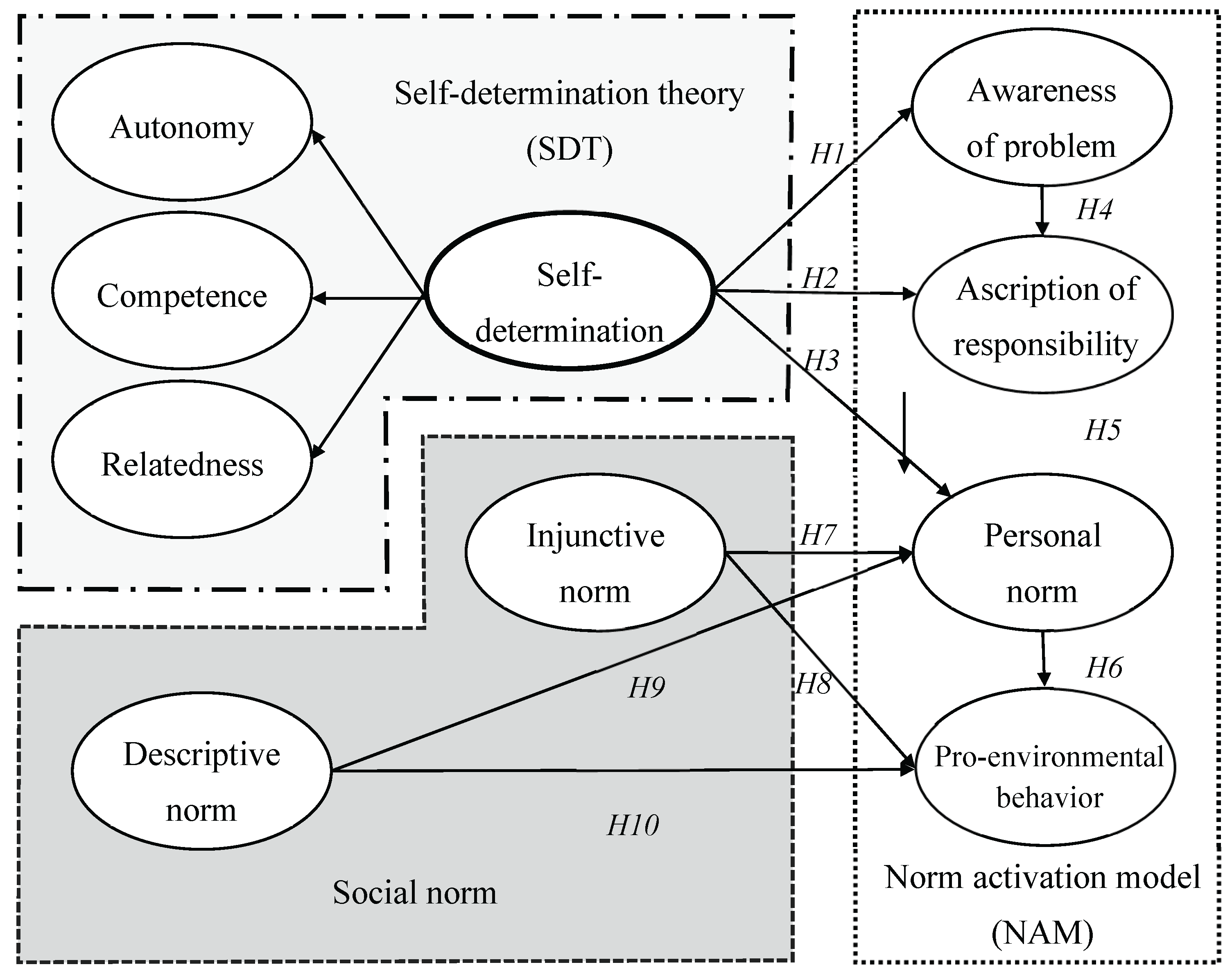
Figure 2.
Results of structural equation model.
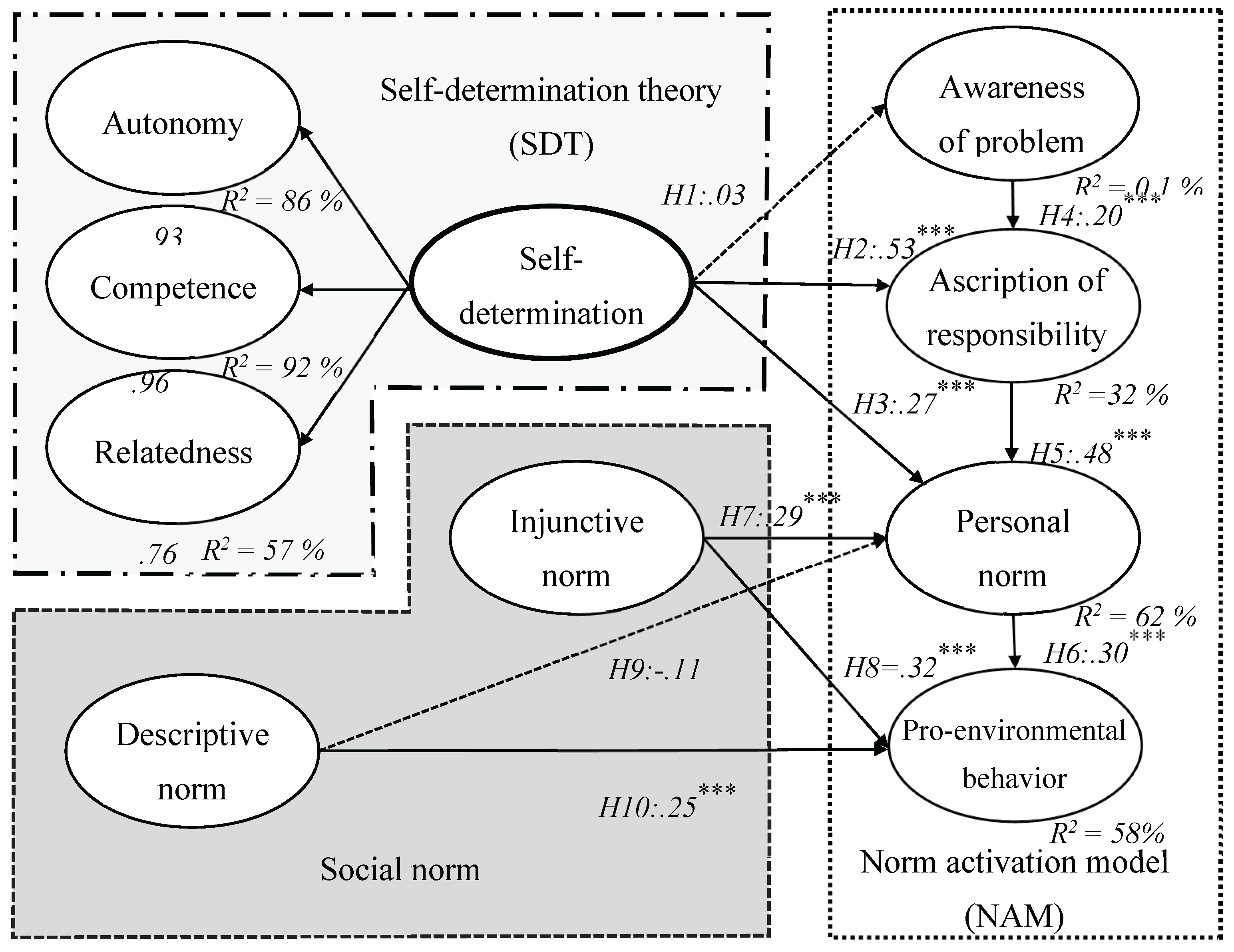

Table 1.
Measures, loadings, and reliability.
| Measures | Standardized loading |
Cronbach’s α |
|---|---|---|
|
Awareness of problem Tourism can hurt the sustainability of heritage at tourism destinations. The tourism industry can cause climate change. The tourism industry can cause depletion of natural resources. |
.66 .87 .86 |
.83 |
|
Ascription of responsibility I feel responsible for the environmental problems caused by tourism activities. Travelers are responsible for avoiding environmental problems caused by tourism activities. Travelers are responsible for contributing to protect the environment and heritage during their travels. |
.77 .83 .86 |
.86 |
|
Personal norm When traveling, I feel the obligation to contribute to improve the environment and heritage. When traveling, I feel the obligation to comply with recommendations of heritage and environmental protection. When traveling, I feel the obligation to comply with of heritage and environmental protection. When traveling, I feel the obligation to encourage anyone to have a vision of heritage and environmental protection. |
.84 .92 .90 .73 |
.90 |
|
Injunctive norm For those who are important to you (like relatives, friends, or colleagues) ~ they would say/think I should act pro-environmentally when travelling. they think that engaging in environmental protection while travelling is something that one ought to do. they would prefer/approve of behaving in an environmentally friendly way while travelling. they expect me to participate in environmental protection when travelling. |
.88 .88 .91 .89 |
.94 |
|
Descriptive norm For those who are important to you (like relatives, friends, or colleagues) ~ a high percentage of them take part in environmental protection during travel. they engage in environmental protection during travel. most of them participate in environmental protection while travelling. they are very likely to engage in environmental protection when travelling. |
.90 .91 .90 .87 |
.94 |
|
Autonomy I want my choices to be based on my true interests and values while performing pro-environmental behaviors at Pingyao ancient city. I want to be free to do things my own way while performing pro-environmental behaviors at Pingyao ancient city. I want my choices to be expressed my “true self” while performing pro-environmental behaviors at Pingyao ancient city. |
.89 .91 .62 |
.92 |
|
Competence I want to successfully complete difficult tasks and projects while performing pro-environmental behaviors at Pingyao ancient city. I want to take on and master challenges while performing pro-environmental behaviors at Pingyao ancient city. I want to be capable in what I will do while performing pro-environmental behaviors at Pingyao ancient city. |
.89 .83 .84 |
.89 |
|
Relatedness I want to have a sense of contact with my companions (family, friends, locals, etc.) who care for me, and whom I care for. I want to close and connected with my companions (family, friends, locals, etc.) while performing sustainable behaviors at destinations. I want to have a strong sense if intimacy with my companions (family, friends, locals, etc.) I spent time with while performing pro-environmental behaviors at Pingyao ancient city. |
.88 .92 .85 |
.91 |
|
Pro-environmental behavior I perform green practices to protect the environment on my trips. I act responsibly to protect the destination’s environment on my trips. I do not disrupt the fauna and flora on my trips. I consume natural resources responsibly on my trips. |
.85 .85 .83 .87 |
.90 |
Table 2.
Results of the confirmatory factor analysis.
| AP | AR | PN | IN | DN | Aut | Com | Rel | PEB | |
|---|---|---|---|---|---|---|---|---|---|
| AP | 1.00 | ||||||||
| AR | .23a(.05)b | 1.00 | |||||||
| PN | .04(.00) | .71(.50) | 1.00 | ||||||
| IN | .01(.00) | .48(.23) | .62(.38) | 1.00 | |||||
| DN | .07(.00) | .46(.21) | .54(.29) | .81(.66) | 1.00 | ||||
| Aut | .01(.00) | .46(.21) | .57(.32) | .68(.46) | .71(.50) | 1.00 | |||
| Com | .04(.00) | .52(.27) | .63(.40) | .72(.52) | .74(.55) | .90(.81) | 1.00 | ||
| Rel | .00(.00) | .39(.15) | .49(.24) | .58(.34) | .59(.35) | .73(.53) | .70(.49) | 1.00 | |
| PEB | -.03(.00) | .51(.26) | .62(.38) | .70(.49) | .66(.44) | .63(.40) | .70(.49) | .64(.41) | 1.00 |
| AVE | .64 | .68 | .72 | .79 | .80 | .67 | .73 | .78 | .72 |
| C.R. | .84 | .86 | .91 | .94 | .94 | .85 | .89 | .91 | .91 |
| Mean | 4.13 | 5.49 | 5.79 | 5.76 | 5.59 | 5.37 | 5.55 | 5.37 | 5.69 |
| S.D. | 1.37 | 1.18 | 1.05 | 1.05 | 1.09 | 1.11 | 1.08 | 1.17 | .97 |
Note 1. AP = awareness of problem, AR = ascription of responsibility, PN = personal norm, IN = injunctive norm, DN = descriptive norm, Aut = autonomy, Com = competence, Rel = relatedness, PEB = Pro-environmental behavior. Note 2. AVE = average variance extracted; C.R.= composite reliability. Note 3. Model measurement fit: χ2 = 761.86, df= 398, p<.001, χ2/df = 1.914, RMSEA = .042, CFI = .97, IFI = .97, TLI = .97.a Correlations between constructs. b Squared correlations.
Table 3.
Results of the structural equation modeling.
| Hypotheses | Paths | Coefficients | t-values | Hypothesis |
|---|---|---|---|---|
| Hypothesis 1 | SD → AP | .03 | .55 | Not supported |
| Hypothesis 2 | SD → AR | .53 | 10.66*** | Supported |
| Hypothesis 3 | SD → PN | .27 | 4.03*** | Supported |
| Hypothesis 4 | AP → AR | .20 | 4.34*** | Supported |
| Hypothesis 5 | AR → PN | .48 | 9.96*** | Supported |
| Hypothesis 6 | PN → PEB | .30 | 6.51*** | Supported |
| Hypothesis 7 | IN → PN | .29 | 4.31*** | Supported |
| Hypothesis 8 | IN → PEB | .32 | 4.41*** | Supported |
| Hypothesis 9 | DN → PN | -.11 | -1.64 | Not supported |
| Hypothesis 10 | DN → PEB | .25 | 3.82*** | Supported |
| Variance explained | Total effect on PEB: | Indirect effect on PEB: | ||
|
R2 (AP) = 0.1% R2 (AR) = 32% R2 (PN) = 62% |
R2 (PEB) = 58% | βIN→PEB = .38** |
βIN→ PN →PEB = .09** βDN→ PN →PEB = -.03 |
|
| βDN→PEB = .19** | ||||
Note 1: AP = awareness of problem, AR = ascription of responsibility, PN = personal norm, IN = injunctive norm, DN = descriptive norm, Aut = autonomy, Com = competence, Rel = relatedness, PEB = Pro-environmental behavior. Note 2: Goodness-of-fit statistics: χ2 = 841.47, df = 418, p < .001, χ2/df = 2.01, RMSEA = .05, CFI = .97, IFI = .97, TLI = .97. *p < .05, ***p < .001.
Disclaimer/Publisher’s Note: The statements, opinions and data contained in all publications are solely those of the individual author(s) and contributor(s) and not of MDPI and/or the editor(s). MDPI and/or the editor(s) disclaim responsibility for any injury to people or property resulting from any ideas, methods, instructions or products referred to in the content. |
© 2025 by the authors. Licensee MDPI, Basel, Switzerland. This article is an open access article distributed under the terms and conditions of the Creative Commons Attribution (CC BY) license (http://creativecommons.org/licenses/by/4.0/).
Copyright: This open access article is published under a Creative Commons CC BY 4.0 license, which permit the free download, distribution, and reuse, provided that the author and preprint are cited in any reuse.


