

Submitted:
28 March 2026
Posted:
30 March 2026
You are already at the latest version
Abstract
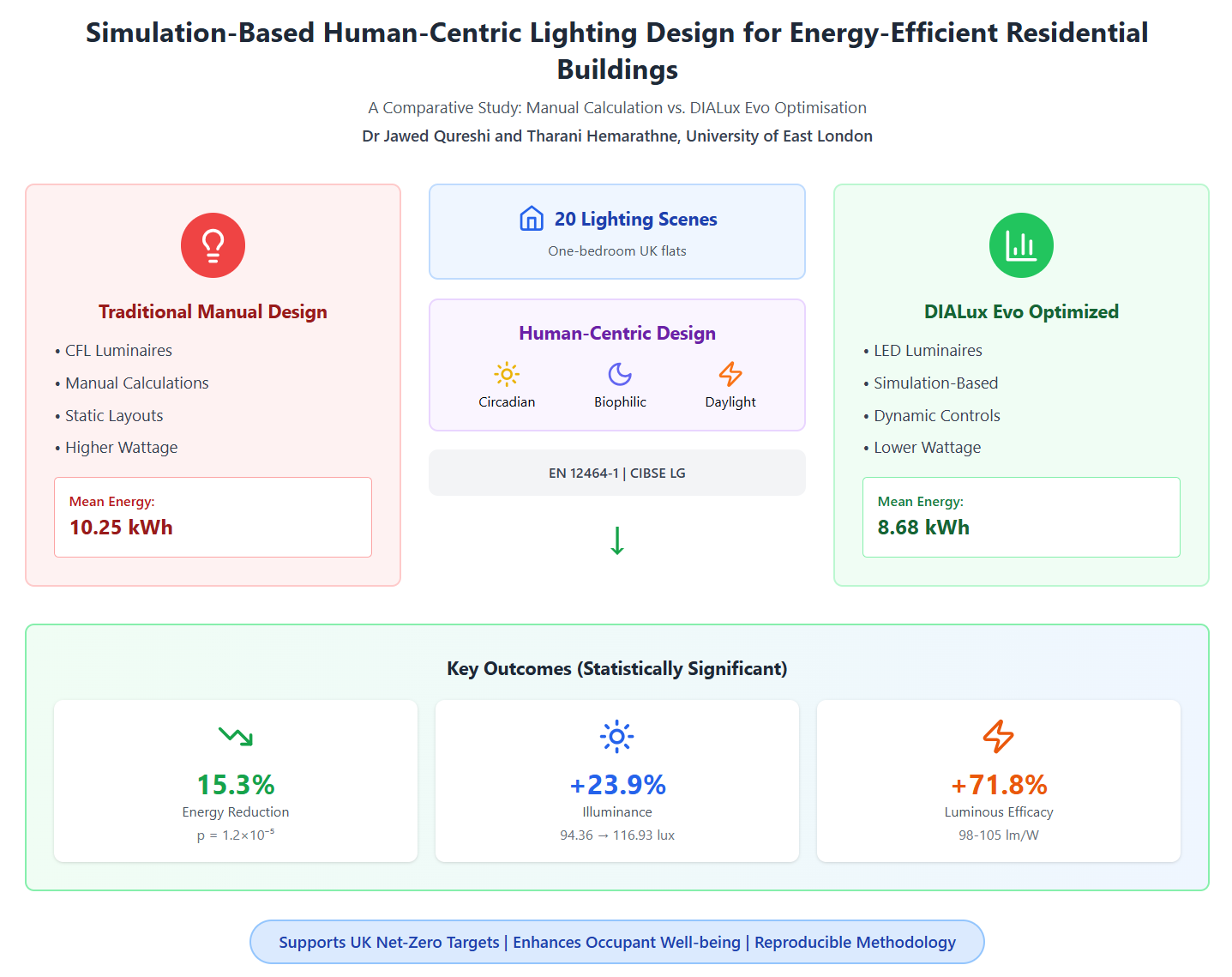
This study presents a reproducible simulation-based framework for visual-comfort and energy-optimised lighting design in UK residential buildings using DIALux Evo. Circadian and biophilic principles inform the conceptual approach, specifically colour temperature selection aligned with occupant comfort - but the study measures only photopic illuminance (lux) and electrical energy consumption (kWh), explicitly excluding biological circadian metrics, dynamic controls, and daylight harvesting. A controlled comparative design evaluates twenty matched lighting scenes in one-bedroom flats, compliant with EN 12464‑1 and CIBSE LG9. The DIALux-optimised designs, incorporating LED luminaires in place of CFL luminaires used in existing manual designs, reduced mean energy consumption from 10.25 kWh to 8.68 kWh — a statistically significant reduction of 15.3% (t = 5.12, p = 1.2×10⁻⁵, d = 1.61) — while increasing mean illuminance from 165.86 lux to 205.14 lux (t = 3.084, p = 1.0×10⁻⁶, d = 0.81), improving CIBSE LG9 compliance across scenes. The framework offers a standards-aligned, reproducible methodology with direct relevance to UK Net Zero objectives, Part L compliance, and residential retrofit policy, providing actionable guidance for architects, engineers, and policymakers. It is acknowledged that the observed gains reflect the combined benefit of an integrated LED-plus-simulation workflow; the absence of a same-technology comparison condition is identified as the primary design limitation.
Keywords:
building performance simulation
; visual comfort optimisation
; energy efficiency
; residential lighting
; DIALux Evo
; LED retrofitting
; illuminance compliance
; lumen method
1. Introduction
Residential lighting is an essential aspect of modern day-to-day living, contributing to both context and functionality within homes. Rising living costs and higher energy bills have become a major concern due to the current economic crisis in the UK following the Covid-19 pandemic. Still, residential lighting in the UK faces various challenges, ranging from energy inefficiency and lack of user control to poor design and health concerns. Addressing these problems requires a multifaceted approach that encompasses technological innovation, design expertise, and regulatory compliance [1].
One of the primary concerns in residential lighting in the UK is energy inefficiency. The average energy efficiency of UK housing in 2023/24 is 67%, with 49% of dwellings rated EPC band C. Most of the current residential buildings have severely damaged exteriors and outdated systems [2,3,4]. Despite efforts to improve energy performance through regulations and incentives, many homes still exhibit poor energy performance, leading to wasted energy and increased environmental impact. Gupta and Gregg [2] highlighted the need to retrofit older dwellings to reduce their environmental impact and energy demand.
However, decision-makers face significant challenges in proposing renovation strategies that optimise resource utilisation and reduce energy consumption while remaining within acceptable budget constraints [5]. Many residential lighting systems in the UK lack adequate user control and flexibility, limiting occupants’ ability to adjust lighting levels according to their preferences and activities [6]. This can lead to discomfort, reduced productivity, and wasted energy. In some cases, residential lighting suffers from poor design, resulting in inadequate illumination, glare, and uneven light distribution. This not only detracts from the visual appeal of the space but also compromises safety and functionality.
In residential environments, the quality of artificial lighting has been linked in the research literature to health and comfort outcomes, including effects on the sleep-wake cycle and circadian rhythm regulation [7,8]. While a full investigation of these biological effects is beyond the scope of the present study, this body of evidence provides the conceptual rationale for prioritising occupant-centred lighting design - specifically, the selection of appropriate colour temperatures and adequate, well-distributed illuminance levels - as a foundation for residential lighting frameworks.
As much as 60% of UK houses have low energy ratings, and aging of the property is identified as one of the main reasons for that. Most of these older houses are poorly designed or have more outdated technologies used, and most people are still not considering improving energy efficiency in their houses [9]. As explained, poorly designed lighting systems can result in inadequate illumination, glare, and discomfort for occupants [10]. Despite the availability of energy-efficient alternatives, such as light-emitting diode (LED) lamps, barriers such as cost, lack of awareness, and perceived complexity hinder their widespread adoption [11,12]. This can be improved by switching into modern and efficient luminaires that do not require any complex design changes or wiring to replace. Making awareness to the people is identified as the key factor of this process.
Until late 20th century residential lighting was considered a utility and was not specialised as a design discipline. In the early 2000s CFL bulbs were considered the most efficient luminaires. At that period residential lighting was just one central bulb suspended on ceiling and other task lights like reading lamps and mirror lights. Most of this lighting relied on manual calculations and sketches, and rules of thumb to design lighting scenes at that time. This kind of lighting provided uneven lighting throughout space with bright spots and dark shadows. Even luminaires were simple and they were just focused on the function, not aesthetic [12].
However, with advancements in technology, computer-aided design (CAD) software tools like DIALux have become increasingly popular for lighting design tasks with introducing LED lighting technologies [12]. DIALux streamlines the lighting design process by automating calculations, generating photorealistic renderings, and providing comprehensive reports, saving time and effort for designers with more realistic design approaches. Critically, the accuracy of manual calculations and estimations is inferior to that of computer-based simulations, which can lead to suboptimal lighting solutions.
Energy efficiency in residential buildings is a critical global and national priority, particularly as the UK strives to meet Net Zero carbon targets and comply with Part L of building regulations [13]. Rising energy costs and the ongoing cost-of-living crisis have intensified the need for innovative solutions that reduce operational energy demand without compromising occupant comfort. Lighting systems, which account for a significant share of residential electricity consumption, remain a key area for improvement. Because the UK has a large proportion of older buildings, likelihood is higher that these homes still use outdated lighting design approaches. Such systems often depended on manual calculations and fixed layouts, offering limited precision and failing to incorporate modern occupant-centred design principles that prioritise visual comfort alongside energy performance [8]. This gap results in inefficient energy performance and suboptimal illuminance compliance in residential spaces.
This research addresses these limitations by introducing a simulation-driven framework that applies occupant-centred lighting design principles — informed by, but not directly measuring, circadian and biophilic concepts - to compare manual and DIALux-optimised residential lighting layouts in terms of illuminance compliance and energy performance. Unlike incremental improvements that focus solely on luminaire efficacy, this study applies DIALux Evo to compare manual and software-optimised lighting layouts under identical conditions. The study does not implement dynamic or adaptive lighting controls and does not claim empirical validation beyond standards-based verification; rather, it demonstrates how simulation-based optimisation can improve illuminance, uni-formity and energy consumption using contemporary LED luminaires. The methodology is supported by quantitative analysis under EN 12464-1 and CIBSE LG compliance [14]. In the residential context, a human-centric approach is defined here as prioritising visual comfort and usability by optimising illuminance levels (100–300 lux) and uniformity to enhance the living environment.
In this study, human-centric refers to visual-comfort oriented residential lighting design, operationalised via illuminance ranges consistent with CIBSE residential guidance (typically 100–300 lux by room type) and layout choices that reduce glare and improve perceived visual quality. Uniformity (U0) targets — U0 ≥ 0.40 for living rooms and bedrooms, and higher thresholds for kitchens and bathrooms, consistent with CIBSE LG9 — were applied as internal design compliance constraints within the DIALux optimisation process to ensure adequate light distribution. However, U0 was not extracted as an independent dependent variable for statistical comparison, and the two formally measured outcome variables are illuminance (lux) and electrical energy consumption (kWh).
Out of scope are biological/medical circadian metrics (e.g., melanopic EDI, CS), dynamic/adaptive controls, and daylight harvesting; the analysis is restricted to night-time artificial lighting only. Empirical evaluation is therefore limited to illuminance and energy consumption as dependent variables under controlled conditions.
The aim of this study is to quantify the energy-saving potential and lighting quality improvements achieved through simulation-based design compared to traditional manual methods. Specifically, the research delivers a comparative analysis of energy consumption, peak diversified load, and lighting performance metrics, providing actionable insights for architects, engineers, and policymakers.
By establishing a reproducible, data-driven approach that aligns with UK sustainability objectives, this work contributes to global knowledge by bridging human-centric lighting design and energy performance optimisation [15]. It sets a new benchmark for sustainable housing and positions simulation-driven lighting strategies as a cornerstone for future residential energy standards worldwide.
1.1. Energy Inefficiency in Buildings
The United Kingdom faces notable challenges in reducing energy consumption and carbon emissions within the residential sector, a situation exacerbated by the country’s recent economic pressures [16]. A significant contributor to this issue is inefficient luminaire design. Poor design choices, such as the inadequate placement of light sources or the improper selection of luminaire types, often result in unnecessary energy wastage [17]. Another factor is the limited awareness among residents regarding the benefits and availability of energy-efficient lighting options. This lack of knowledge is a non-negligible reason for the persistence of outdated lighting technologies [6]. While UK lighting standards such as EN 12464-1 and CIBSE lighting guides provide recommended illuminance levels and good-practice principles, they do not determine what individual homeowners choose to install. Instead, these standards influence professional design practices and regulatory compliance in new-build or major renovation contexts, indirectly encouraging more energy-efficient lighting solutions.
1.2. Impact of Residential Lighting on Health
1.2.1. The Circadian Rhythm
The circadian rhythm is an innate biological process present in most organisms, including humans, plants, animals, and even some microorganisms. This rhythm governs various physiological and behavioural processes over a roughly 24-hour cycle, playing a crucial role in regulating sleep-wake patterns, hormone release, metabolism, and other bodily functions. Human circadian rhythm is shown in Figure 1.
Biophilic lighting principles incorporated in this study refer to indirect strategies that emulate natural-light qualities to support occupant comfort. While full biophilic architectural elements (such as vegetation, natural materials, or daylight apertures) are beyond the scope of this simulation-based work, the framework uses biophilic concepts by selecting colour temperatures and spectral characteristics that are aligned with natural daylight qualities, while applying illuminance levels and uniformity targets consistent with CIBSE residential guidance to promote visual comfort. These parameters help create a visually comfortable, nature-aligned ambience, complementing circadian considerations without requiring dynamic or daylight-dependent control systems.
1.2.2. Impact of Artificial Lighting on Human Health
Disruptions to the circadian rhythm, such as shift work, jet lag, or chronic sleep deprivation, can lead to desynchronisation between internal biological rhythms and external environmental cues. This desynchronisation, known as circadian misalignment, has been linked to various health problems, including sleep disorders, metabolic conditions, mood disturbances, impaired cognitive function, and an increased risk of chronic illnesses such as obesity, diabetes, and cardiovascular disease. Exposure to artificial light, particularly blue light emitted by electronic devices or LED lighting, can interfere with the production of melatonin, a hormone that regulates sleep–wake cycles [18]. Poor design of residential lighting, such as excessive brightness or inappropriate colour temperatures, can disrupt sleep patterns and contribute to insomnia or sleep disturbances [19].
The colour temperature of light sources, measured in Kelvin (K), influences the biological effects of light. Cooler (bluish) light with higher colour temperatures, resembling daylight, tends to have a more pronounced impact on circadian regulation, promoting wakefulness and suppressing melatonin secretion. The timing and duration of light exposure are crucial for synchronising the circadian rhythm. Exposure to bright, blue-enriched light in the morning helps reinforce the body’s wakefulness signals, while avoiding such light in the evening promotes relaxation and prepares the body for sleep. Figure 2 illustrates the physiological effects of exposure to bright light during night-time hours, highlighting the role of the suprachiasmatic nucleus (SCN) in regulating circadian rhythms. SCN refers to the suprachiasmatic nucleus, the brain region responsible for circadian rhythm regulation.
1.3. Lighting Quality Metrics and Performance Factors
The Colour Rendering Index (CRI, also denoted Ra) has been the longstanding metric for evaluating how accurately a light source reproduces colours compared to a reference illuminant, expressed on a scale from 0 to 100. For residential applications, EN 12464-1 and CIBSE LG9 recommend a minimum CRI of 80 to ensure adequate colour fidelity. However, CRI has recognised limitations when applied to LED light sources, as it was developed primarily for conventional lamp types and can poorly represent the spectral complexity and perceived colour quality of modern LEDs. The IES TM-30-20 system [21], which uses a Fidelity Index (Rf) and Gamut Index (Rg) derived from 99 colour evaluation samples, offers a more comprehensive framework for LED colour rendition evaluation and is increasingly adopted in advanced lighting specification practice. In this study, CRI values are reported as supplied by luminaire manufacturers and as specified in the applicable standards (EN 12464-1, CIBSE LG9); future work incorporating TM-30 metrics would provide a more complete characterisation of colour rendition performance for the LED luminaires evaluated here. The Colour Rendering Index (CRI) on different scales is shown in Figure 3.
The CRI values shown in Figure 3 are provided as illustrative examples only. CRI varies widely between manufacturers and product families, particularly for LED luminaires, where high-performance LEDs from major brands (e.g., Signify, Osram, Cree) frequently achieve CRI values above 90. Therefore, the values shown should be interpreted as representative examples rather than universal ranges for each lighting technology.
The colour temperature of a light source, measured in Kelvin (K), determines whether the light appears warm or cool and significantly influences the ambience and mood of a space. Cooler, bluish light with higher colour temperatures resembles daylight and tends to promote alertness, whereas warmer tones create a more relaxing environment. Colour temperature scale is shown in Figure 4.
Illuminance, measured in lux (lumens per square meter), quantifies the amount of light falling on a surface. Lux (lx) is the SI unit of illuminance, representing one lumen per square meter (lm/m2). Closely related is luminous flux, expressed in lumens, which indicates the total visible radiation emitted by a source. The luminous efficacy of a light source, measured in lumens per watt (lm/W), reflects its efficacy in converting electrical power into visible radiation. Current UK standards require a minimum luminous efficacy of 75 lm/W for residential applications [13].
The utilisation factor (UF) represents the proportion of luminous flux emitted by a light source that effectively reaches and illuminates the intended area. The maintenance factor accounts for reductions in illuminance over time due to lamp lumen depreciation, dirt accumulation, and ageing of components. Finally, the reflection coefficient, also known as reflectance, measures the fraction of incident light reflected by a surface. It is expressed as a value between 0 and 1, where 0 indicates complete absorption and 1 indicates perfect reflection.
2. Materials and Methods
2.1. Experimental Design
This study employed a controlled comparative experimental design to evaluate the performance differences between two lighting-design methodologies: (i) traditional manual calculations also known as lumen method in lighting design and (ii) simulation-based design using DIALux Evo 13.4 version. The purpose of the experiment was to quantify how the design method influences key lighting-performance outcomes under identical spatial and environmental conditions, with luminaire technology and associated photometric data varying intentionally between the two conditions as part of the design intervention.
To enable a valid paired comparison, each lighting scene was modelled twice - once using the manual method and once using DIALux—while holding all parameters constant except for the design method itself. This structure defines the design method as the independent variable, and illuminance (lux) and electrical energy consumption (kWh) as the dependent variables. Room geometry, surface reflectance, luminaire mounting height, and night time operating conditions were treated as controlled variables. Luminaire technology and associated photometric data intentionally differed between the two conditions, representing the core design intervention under investigation. This configuration constitutes a controlled comparative experiment because each lighting scene is evaluated under two matched conditions, allowing all differences to be attributed solely to the design method. By holding all spatial and environmental parameters constant, the study ensures internal validity and isolates the causal effect of the independent variable.
2.2. Experimental Units and Sampling Strategy
The experimental units consisted of twenty lighting scenes representing one-bedroom flats of similar size, orientation, and construction characteristics. A purposive sampling strategy was used to ensure consistency in typology and minimise extraneous variance. Each of the 20 scenes generated a matched pair of observations, manual vs. DIALux, yielding 20 independent paired comparisons for statistical testing.
2.3. Experimental Conditions
Two experimental conditions were established:
2.3.1. Condition A: Manual Lumen-Method Design
Lighting layouts were produced using standard lumen-method calculations consistent with EN 12464-1 and CIBSE LG recommendations. Calculations were performed using manufacturer-supplied luminous flux and efficacy data, with luminaire spacing, utilisation factor, and maintenance factor computed using conventional formulae. Once the manual design was fully determined, the resulting specifications were entered into DIALux Evo solely for output extraction and visualisation purposes - to generate standardised floor plan renders and to extract illuminance and energy consumption values on a consistent calculation grid comparable with Condition B. DIALux did not influence or alter any design decision for Condition A; it was used exclusively as a post-calculation verification and presentation tool.
2.3.2. Condition B: DIALux-Based Optimised Design
The same spaces were modelled in DIALux Evo using identical room dimensions, surface reflectance values, working-plane height (0.8 m), and environmental settings. LED luminaires with manufacturer-supplied photometric data were selected for the Proposed Design, replacing the CFL luminaires used in the Existing Design. The software optimisation process refined luminaire quantities, placements, and distributions to meet required illuminance and uniformity levels. This condition therefore differed from Condition A in both the design approach and the luminaire technology, with all spatial and environmental parameters held constant.
2.4. Calculation Procedure
Two performance metrics were extracted for both conditions:
- Average Illuminance (lux):
Computed on a standardised calculation grid positioned at 0.8 m above finished floor level, in line with EN 12464 1 [22].
- Electrical Energy Consumption (kWh):
Derived from the total installed load multiplied by an assumed annual operating period of 1,000 hours, consistent with standard residential lighting energy estimation practice. This operating assumption was applied identically across all twenty scenes and both conditions to allow direct comparison. Energy consumption (kWh) = Total Installed Load (W) × 1,000 hours ÷ 1,000.
Luminous efficacy (lm/W) was not treated as an outcome variable. As an intrinsic manufacturer property of each luminaire, it remained constant across both conditions and was reported only in Table 2 for reference.
2.5. Statistical Analysis
Because each lighting scene produced a pair of observations (manual vs. DIALux), paired t-tests were used to determine whether differences in illuminance and energy consumption were statistically significant. Variance and standard deviation were calculated to assess consistency across scenes. Statistical analysis was conducted at a 95% confidence level.
Paired t-tests were selected because the data consist of matched observations for each lighting scene under two conditions. The analysis assumes approximate normality of paired differences and uses a 95% confidence level. No statistical testing was applied to luminous efficacy because it is an intrinsic luminaire property rather than an experimental outcome. With n = 20 matched pairs, tests were powered to detect moderate within-scene effects.
The unit of analysis is the matched lighting scene. Statistical significance is interpreted alongside practical significance, which reflects the magnitude and consistency of improvements rather than the numerical size of p-values.
3. Results
Overall, the results are best understood at the level of aggregated patterns rather than individual scenes. Across all twenty lighting scenarios, the DIALux-based designs consistently reduced energy consumption and increased illuminance relative to the manual designs. These dominant trends form the core findings of the study and are emphasised in the synthesis that follows, while detailed scene-level results remain available in the tables for reference.
Across the twenty lighting scenes, two dominant trends emerge consistently from the data. First, DIALux-based designs reduced energy consumption in eighteen of twenty scenes, with reductions ranging from 1% (LS15) to 30% (LS10), and a mean reduction of approximately 15.3%. The two exceptions — LS8 and LS18, where energy consumption increased marginally under the DIALux design — reflect scene-specific luminaire configurations in which achieving the required illuminance and uniformity targets necessitated higher installed loads than the existing manual design. These exceptions highlight that simulation-based optimisation does not guarantee energy reduction in every individual scene; rather, its primary value lies in simultaneously optimising both energy performance and lighting quality, which manual methods cannot reliably achieve. Second, DIALux-based designs improved mean illuminance across all room types, bringing a greater proportion of scenes into compliance with CIBSE LG9 recommended ranges. Together, these trends confirm that the design method - and the associated shift from CFL to LED technology - produces consistent and practically significant improvements at the aggregate level, even where individual scene outcomes vary.
3.1. Development of Simulation Models Using DIALux
Following data collection, the two lighting models described in Section 2.4 were constructed and validated. Model 1 was verified against architectural plans to ensure accurate representation of the existing installation, while Model 2 was configured to meet the recommended illuminance and uniformity values for residential spaces as per CIBSE LG9 (2022) [6] (Table 1). This dual-model approach enabled a controlled comparative analysis under consistent methodological conditions.
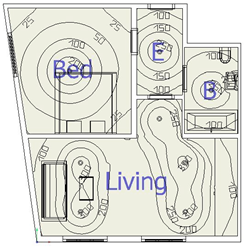
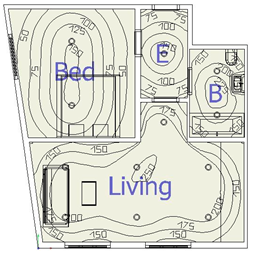
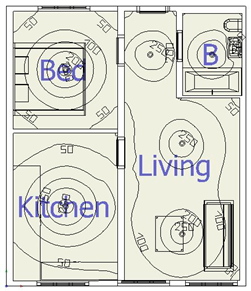
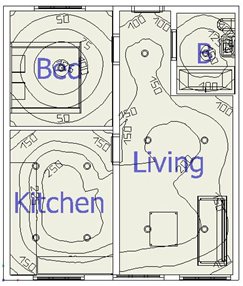
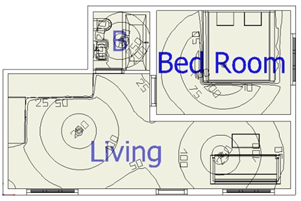
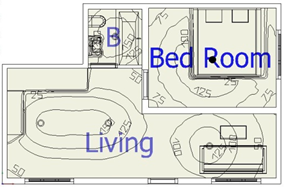
Table 2 summarises the comparative specifications of the two design approaches across twenty lighting scenes. Each scene details the luminaire types and wattages applied in the recreated manual design versus the DIALux-optimised design. The observed improvements in luminous efficacy result from the adoption of LED luminaires in the optimised scenarios, as opposed to CFL fittings in the existing designs. The simulation process enables comparison and optimisation of luminaire selection and placement, but it does not alter inherent luminous-efficacy properties of the luminaires themselves. Therefore, the gains reported stem from technology substitution evaluated through simulation rather than from dynamic control or adaptive lighting features.

Table 2.
Comparative specifications of existing manual and DIALux-based lighting designs across 20 lighting scenes.
Table 2.
Comparative specifications of existing manual and DIALux-based lighting designs across 20 lighting scenes.
| Lighting Scene | Model 1: Existing Design Details and Results | Model 2: Proposed Design (DIALux) Details and Results |
|
LS1 |
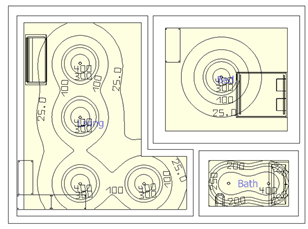 Living - 20 W CFL luminaire with a luminous efficacy of 60 lm/W, CRI 80, and CCT 3000 K Bedroom - 15W CFL luminaire with a luminous efficacy of 60.2 lm/W, CRI 80, and CCT 3000 K Bathroom - 12W CFL luminaire with a luminous efficacy of 65 lm/W, CRI 80, and CCT 3000 K 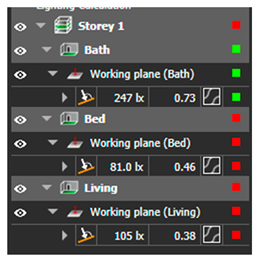 |
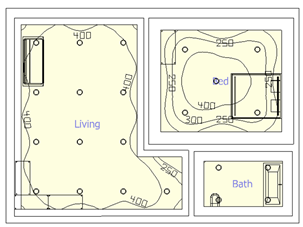 Living - 10W LED luminaire with a luminous efficacy of 102 lm/W, CRI 80, and CCT 3000 K Bedroom - 10W LED luminaire with a luminous efficacy of 100 lm/W, CRI 80, and CCT 3000 K Bathroom - 8W LED luminaire with a luminous efficacy of 100 lm/W, CRI 80, and CCT 3000 K 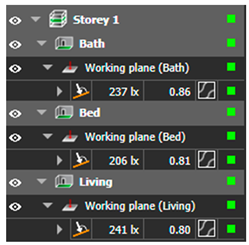 |
| LS2 |
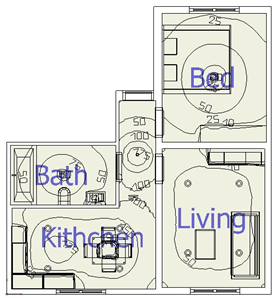 Living, Kitchen, Bedroom - 12W CFL luminaire with a luminous efficacy of 65 lm/W, CRI 80, and CCT 3000 K Bathroom - 10W CFL luminaire with a luminous efficacy of 65 lm/W, CRI 80, and CCT 3000 K 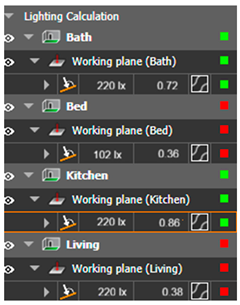 |
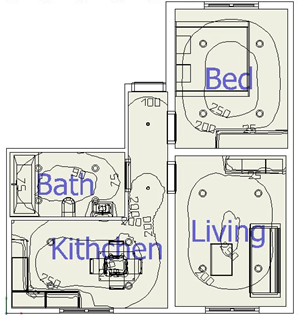 Living, kitchen - 10W LED luminaire with a luminous efficacy of 100 lm/W, CRI 80, and CCT 3000 K Bedroom - 8W LED luminaire with a luminous efficacy of 85 lm/W, CRI 80, and CCT 3000 K Bathroom - 3W LED luminaire with a luminous efficacy of 100 lm/W, CRI 80, and CCT 3000 K 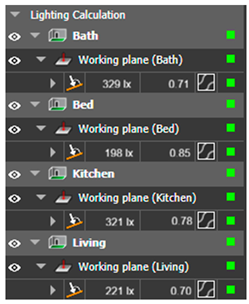 |
|
LS3 |
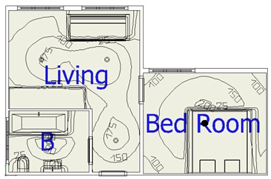 Living & Bedroom - 10W LED luminaire with a luminous efficacy of 85 lm/W, CRI 80, and CCT 3000 K Bathroom - 8W LED luminaire with a luminous efficacy of 80 lm/W, CRI 80, and CCT 3000 K 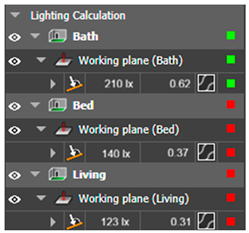 |
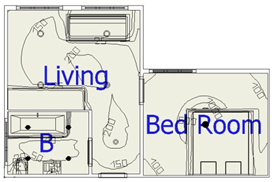 Living & Bedroom - 8W LED luminaire with a luminous efficacy of 80 lm/W, CRI 80, and CCT 3000 K Bathroom - 3W LED luminaire with a luminous efficacy of 85 lm/W, CRI 80, and CCT 3000 K 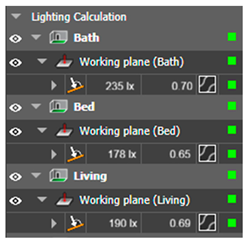 |
|
LS4 |
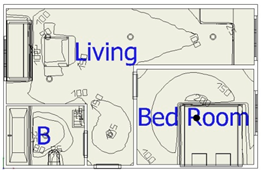 Living & Bedroom - 10W LED luminaire with a luminous efficacy of 80 lm/W, CRI 80, and CCT 3000 K Bathroom - 8W LED luminaire with a luminous efficacy of 80 lm/W, CRI 80, and CCT 3000 K 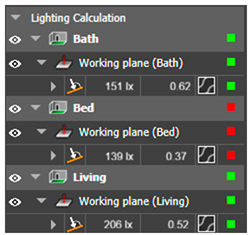 |
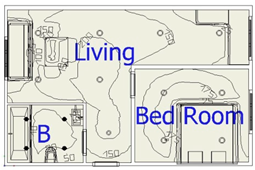 Living & Bedroom - 12W LED luminaire with a luminous efficacy of 85 lm/W, CRI 80, and CCT 3000 K Bathroom - 3W LED luminaire with a luminous efficacy of 85 lm/W, CRI 80, and CCT 3000 K 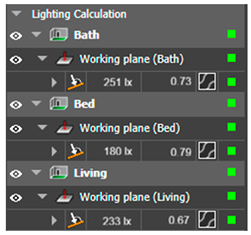 |
|
LS5 |
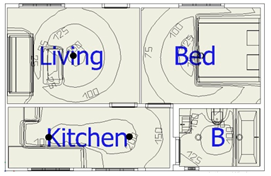 Living & kitchen - 10W LED luminaire with a luminous efficacy of 85 lm/W, CRI 80, and CCT 3000 K Bedroom - 10W LED luminaire with a luminous efficacy of 85 lm/W, CRI 80, and CCT 3000 K Bathroom - 8W LED luminaire with a luminous efficacy of 85 lm/W, CRI 80, and CCT 3000 K 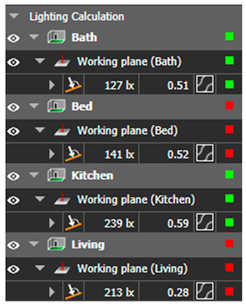 |
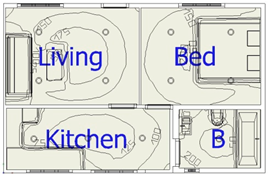 Living & kitchen - 8W LED luminaire with a luminous efficacy of 85 lm/W, CRI 80, and CCT 3000 K Bedroom - 5W LED luminaire with a luminous efficacy of 85 lm/W, CRI 80, and CCT 3000 K Bathroom - 3W LED luminaire with a luminous efficacy of 80 lm/W, CRI 80, and CCT 3000 K 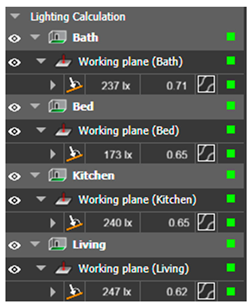 |
|
LS6 |
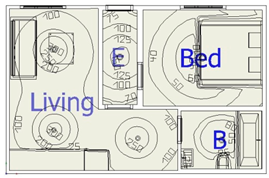 Living - 10W LED luminaire with a luminous efficacy of 85 lm/W, CRI 80, and CCT 3000 K Entrance - 8W LED luminaire with a luminous efficacy of 85 lm/W, CRI 80, and CCT 3000 K Bedroom - 10W LED luminaire with a luminous efficacy of 85 lm/W, CRI 80, and CCT 3000 K Bathroom - 8W LED luminaire with a luminous efficacy of 85 lm/W, CRI 80, and CCT 3000 K 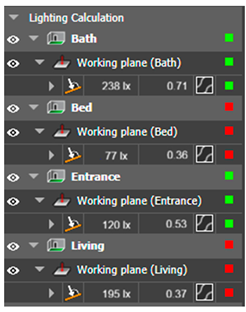 |
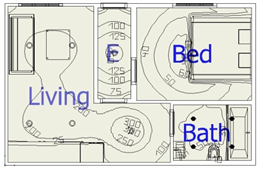 Living & entrance - 8W LED luminaire with a luminous efficacy of 85 lm/W, CRI 80, and CCT 3000 K Bedroom - 10W LED luminaire with a luminous efficacy of 85 lm/W, CRI 80, and CCT 3000 K Bathroom - 3W LED luminaire with a luminous efficacy of 85 lm/W, CRI 80, and CCT 3000 K 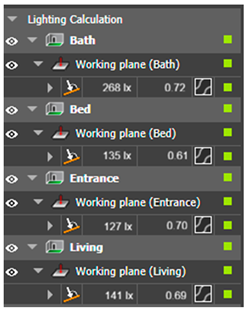 |
| LS7 |
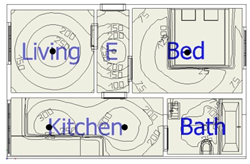 Living, entrance & kitchen-20W CFL luminaire with a luminous efficacy of 85 lm/W, CRI 80, and CCT 3000 K Bed & Bathroom-10W CFL luminaire with a luminous efficacy of 85 lm/W, CRI 80, and CCT 3000 K 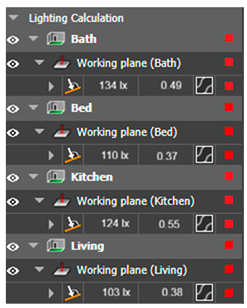 |
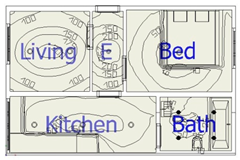 Living, entrance, kitchen & Bedroom -10W LED luminaire with a luminous efficacy of 85 lm/W, CRI 80, and CCT 3000 K Bathroom -3W LED luminaire with a luminous efficacy of 85 lm/W, CRI 80, and CCT 3000 K 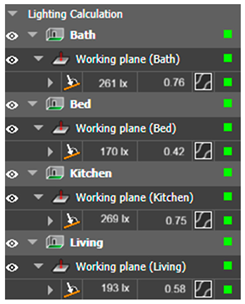 |
| LS8 |
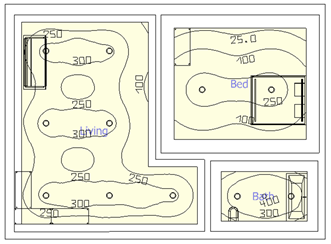 Living & Bedroom - 10W LED luminaire with a luminous efficacy of 85 lm/W, CRI 80, and CCT 3000 K Bathroom - 8W LED luminaire with a luminous efficacy of 85 lm/W, CRI 80, and CCT 3000 K 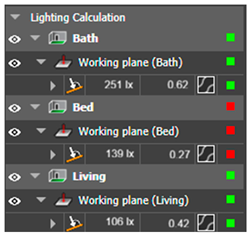 |
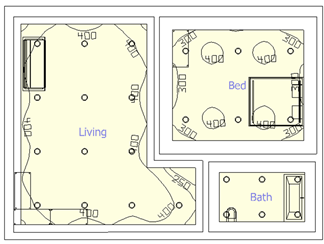 Living & Bedroom - 5W LED luminaire with a luminous efficacy of 85 lm/W, CRI 80, and CCT 3000 K Bathroom - 3W LED luminaire with a luminous efficacy of 85 lm/W, CRI 80, and CCT 3000 K 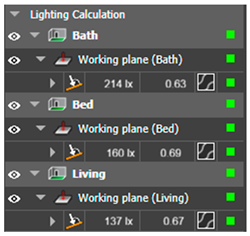 |
|
LS9 |
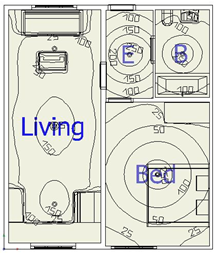 Living - 13W CFL luminaire with a luminous efficacy of 60.2 lm/W, CRI 80, and CCT 3000 K Bedroom & Bathroom - 10W CFL luminaire with a luminous efficacy of 65 lm/W, CRI 80, and CCT 3000 K 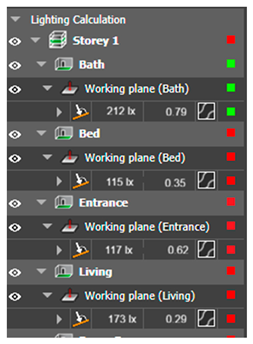 |
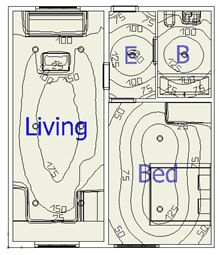 Living - 8W LED luminaire with a luminous efficacy of 85 lm/W, CRI 80, and CCT 3000 K Bedroom & Bathroom - 10W LED luminaire with a luminous efficacy of 85 lm/W, CRI 80, and CCT 3000 K 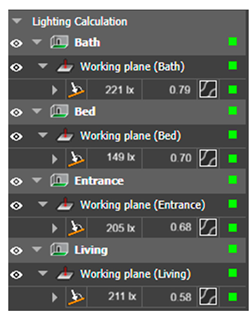 |
|
LS10 |
 Living & Bedroom - 18W CFL luminaire with a luminous efficacy of 65 lm/W, CRI 80, and CCT 3000 K Bathroom - 10W CFL luminaire with a luminous efficacy of 65 lm/W, CRI 80, and CCT 3000 K 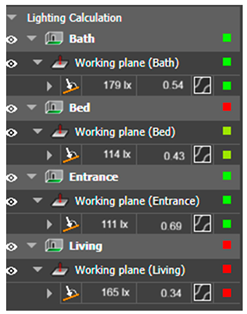 |
 Living & Bedroom - 8W LED luminaire with a luminous efficacy of 85 lm/W, CRI 80, and CCT 3000 K Bathroom - 5W LED luminaire with a luminous efficacy of 85 lm/W, CRI 80, and CCT 3000 K 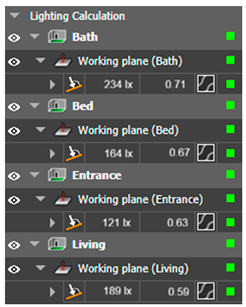 |
| LS 11 |
 Living - 15W CFL luminaire with a luminous efficacy of 65 lm/W, CRI 80, and CCT 3000 K Bedroom - 8W CFL luminaire with a luminous efficacy of 65 lm/W, CRI 80, and CCT 3000 K Bathroom - 10W CFL luminaire with a luminous efficacy of 65 lm/W, CRI 80, and CCT 3000 K 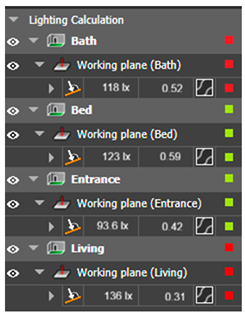 |
 Living - 3W LED luminaire with a luminous efficacy of 85 lm/W, CRI 80, and CCT 3000 K Bedroom & Bathroom - 8W LED luminaire with a luminous efficacy of 85 lm/W, CRI 80, and CCT 3000 K 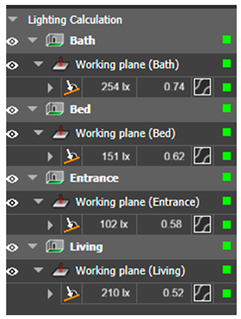 |
| LS12 |
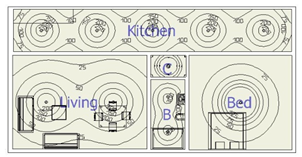 Living - 10W LED luminaire with a luminous efficacy of 85 lm/W, CRI 80, and CCT 3000 K Bedroom - 13W LED luminaire with a luminous efficacy of 85 lm/W, CRI 80, and CCT 3000 K Kitchen - 5W LED luminaire with a luminous efficacy of 85 lm/W, CRI 80, and CCT 3000 K 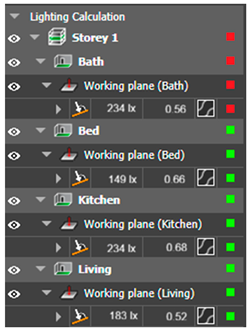 |
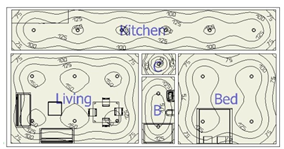 Living & kitchen - 5W LED luminaire with a luminous efficacy of 85 lm/W, CRI 80, and CCT 3000 K Bedroom - 3W LED luminaire with a luminous efficacy of 85 lm/W, CRI 80, and CCT 3000 K 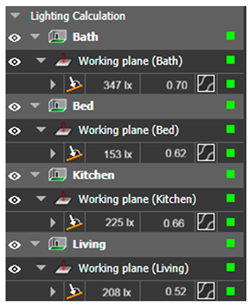 |
| LS13 |
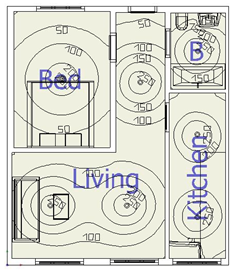 Living & kitchen - 12W CFL luminaire with a luminous efficacy of 65 lm/W, CRI 80, and CCT 3000 K Bedroom - 10W CFL luminaire with a luminous efficacy of 65 lm/W, CRI 80, and CCT 3000 K Bathroom - 12W CFL luminaire with a luminous efficacy of 85 lm/W, CRI 80, and CCT 3000 K 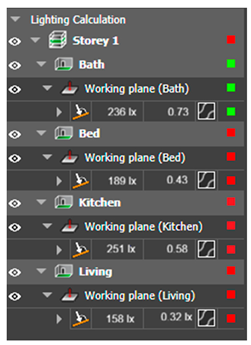 |
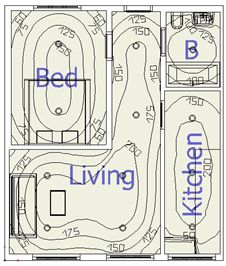 Living - 8W LED luminaire with a luminous efficacy of 100 lm/W, CRI 80, and CCT 3000 K Bedroom - 8W LED luminaire with a luminous efficacy of 100 lm/W, CRI 80, and CCT 3000 K Bathroom - 3W LED luminaire with a luminous efficacy of 100 lm/W, CRI 80, and CCT 3000 K 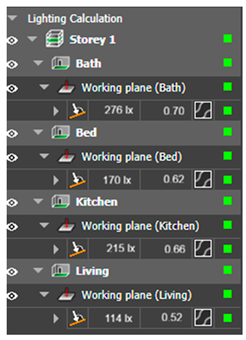 |
| LS14 |
 Living & Bedroom - 20W CFL luminaire with a luminous efficacy of 65 lm/W, CRI 80, and CCT 3000 K Bathroom - 12W CFL luminaire with a luminous efficacy of 65 lm/W, CRI 80, and CCT 3000 K 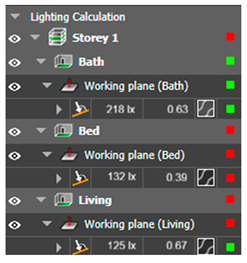 |
 Living - 8W LED luminaire with a luminous efficacy of 100 lm/W, CRI 80, and CCT 3000 K Bedroom - 8W LED luminaire with a luminous efficacy of 100 lm/W, CRI 80, and CCT 3000 K Bathroom - 5W LED luminaire with a luminous efficacy of 100 lm/W, CRI 80, and CCT 3000 K 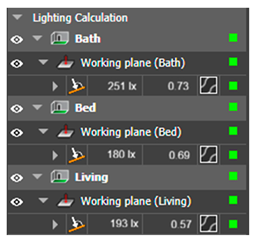 |
| LS 15 |
 Living, Bedroom & kitchen - 20W CFL luminaire with a luminous efficacy of 65 lm/W, CRI 80, and CCT 3000 K Bathroom - 8W CFL luminaire with a luminous efficacy of 65 lm/W, CRI 80, and CCT 3000 K 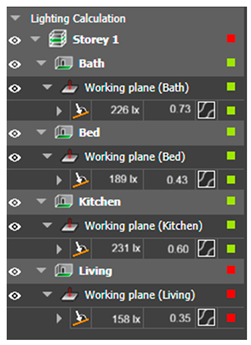 |
 Living & kitchen - 5W LED luminaire with a luminous efficacy of 100 lm/W, CRI 80, and CCT 3000 K Bedroom & Bathroom - 10W LED luminaire with a luminous efficacy of 100 lm/W, CRI 80, and CCT 3000 K 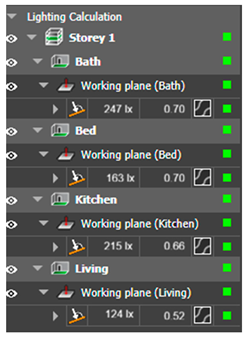 |
| LS 16 |
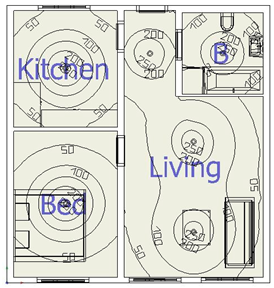 Living & Bedroom - 13W CFL luminaire with a luminous efficacy of 65 lm/W, CRI 80, and CCT 3000 K Kitchen - 20W CFL luminaire with a luminous efficacy of 65 lm/W, CRI 80, and CCT 3000 K Bathroom - 10W CFL luminaire with a luminous efficacy of 65 lm/W, CRI 80, and CCT 3000 K 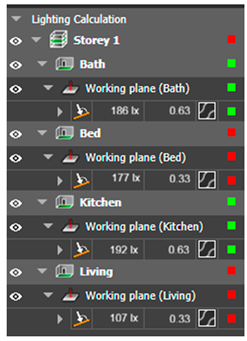 |
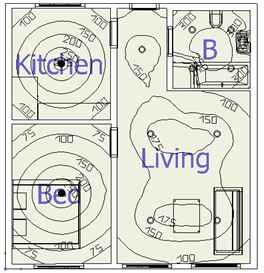 Living - 5W LED luminaire with a luminous efficacy of 100 lm/W, CRI 80, and CCT 3000 K Bedroom - 8W LED luminaire with a luminous efficacy of 100 lm/W, CRI 80, and CCT 3000 K Kitchen - 10W LED luminaire with a luminous efficacy of 100 lm/W, CRI 80, and CCT 3000 K Bathroom - 3W LED luminaire with a luminous efficacy of 100 lm/W, CRI 80, and CCT 3000 K 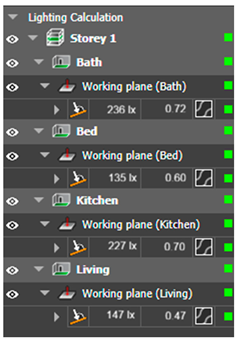 |
| LS17 |
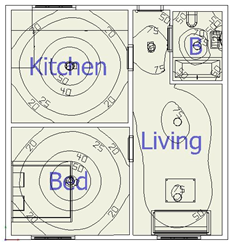 Living & kitchen - 15W LED luminaire with a luminous efficacy of 100 lm/W, CRI 80, and CCT 3000 K Bed - 20W LED luminaire with a luminous efficacy of 100 lm/W, CRI 80, and CCT 3000 K Bathroom - 10W LED luminaire with a luminous efficacy of 100 lm/W, CRI 80, and CCT 3000 K 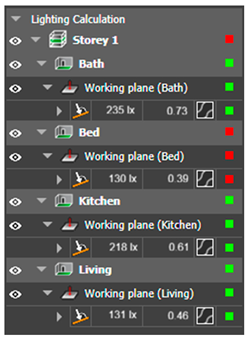 |
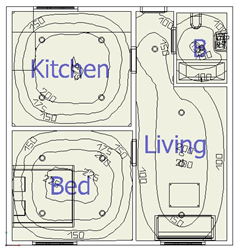 Living, Bedroom & kitchen - 5W LED luminaire with a luminous efficacy of 100 lm/W, CRI 80, and CCT 3000 K Bathroom - 8W LED luminaire with a luminous efficacy of 100 lm/W, CRI 80, and CCT 3000 K 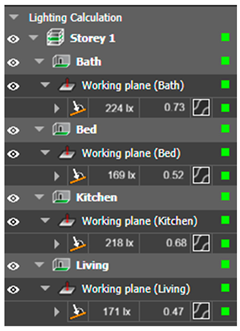 |
| LS 18 |
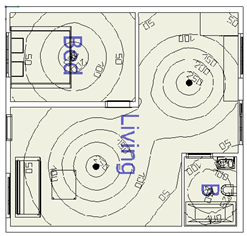 Living - 20W CFL luminaire with a luminous efficacy of 65 lm/W, CRI 80, and CCT 3000 K Bed - 15W CFL luminaire with a luminous efficacy of 65 lm/W, CRI 80, and CCT 3000 K Bathroom - 8W CFL luminaire with a luminous efficacy of 65 lm/W, CRI 80, and CCT 3000 K 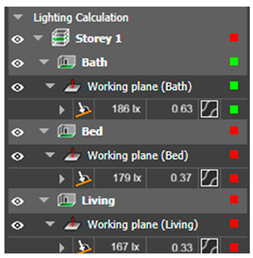 |
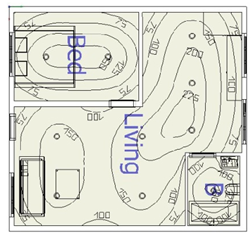 Living, Bedroom - 5W LED luminaire with a luminous efficacy of 100 lm/W, CRI 80, and CCT 3000 K Bathroom - 8W LED luminaire with a luminous efficacy of 100 lm/W, CRI 80, and CCT 3000 K 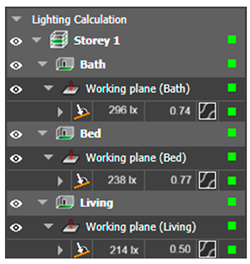 |
|
LS 19 |
 Living & Bedroom - 13W LED luminaire with a luminous efficacy of 100 lm/W, CRI 80, and CCT 3000 K Bathroom - 10 LED luminaire with a luminous efficacy of 100 lm/W, CRI 80, and CCT 3000 K 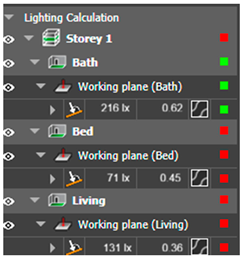 |
 Living & Bedroom - 5W LED luminaire with a luminous efficacy of 100 lm/W, CRI 80, and CCT 3000 K Bathroom - 8W LED luminaire with a luminous efficacy of 100 lm/W, CRI 80, and CCT 3000 K 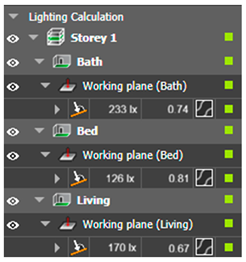 |
| LS20 |
 Living & Kitchen - 10W CFL luminaire with a luminous efficacy of 65 lm/W, CRI 80, and CCT 3000 K Bedroom - 12W CFL luminaire with a luminous efficacy of 65 lm/W, CRI 80, and CCT 3000 K Bathroom - 13 W CFL luminaire with a luminous efficacy of 65 lm/W, CRI 80, and CCT 3000 K 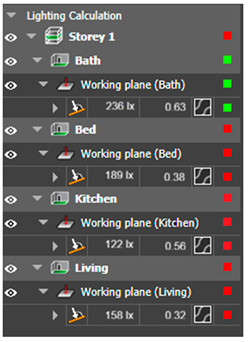 |
 Living & kitchen - 8W LED luminaire with a luminous efficacy of 100 lm/W, CRI 80, and CCT 3000 K Bedroom - 7.5W LED luminaire with a luminous efficacy of 100 lm/W, CRI 80, and CCT 3000 K 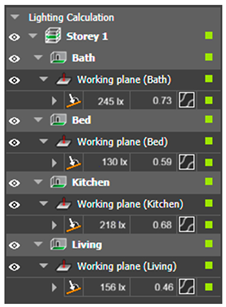 |
Note: Values expressed in lm/W represent luminous efficacy, not luminous flux. Luminous efficacy indicates the ratio of luminous flux (lumens) to electrical power input (watts).
3.2. Energy Consumption Comparison
Both the existing manual lighting design and the DIALux-based optimised design were modelled using professional simulation software under identical spatial and environmental conditions. Following model development, the electrical energy consumption for each lighting scenario was calculated in kilowatt-hours (kWh). These results were then subjected to a comparative analysis to quantify the impact of simulation-driven optimisation on energy performance. Table 3 presents the comparative energy consumption values for twenty lighting scenes, along with the percentage reduction achieved through the use of the DIALux-based optimized design.
The data in Table 3 demonstrate a consistent reduction in energy demand for most scenarios when applying the DIALux-based design, with reductions ranging from 1% to over 30% in certain cases. This outcome provides robust evidence of the potential for simulation-driven design to achieve significant operational energy savings in residential applications.
The comparative analysis confirms that the DIALux-based design achieves statistically significant reductions in energy consumption across most lighting scenes. These findings underscore the significance of transitioning from CFL-based manual designs to an integrated LED-plus-simulation workflow in UK residential settings, and demonstrate the rigour of the methodology through controlled conditions, compliance with international standards, and quantitative validation with effect size reporting.
Table 4 summarises the descriptive statistics for energy consumption across the two design methodologies. The existing manual design exhibited a mean energy consumption of 10.25 kWh with a variance of 0.55 and a standard deviation of 0.74, indicating relatively consistent performance across lighting scenes. In contrast, the DIALux-based design demonstrated a lower mean consumption of 8.68 kWh, albeit with a slightly higher variance (1.34) and standard deviation (1.16), reflecting scene-to-scene variation in luminaire layouts and room use types.
A paired t-test was conducted to determine whether the observed difference in energy consumption between the two methods was statistically significant. The analysis yielded a t-value of 5.12 and a p-value of 1.2×10⁻⁵, far below the conventional threshold of 0.05. Cohen’s d = 1.59, indicating a large practical effect. Given that the data are deterministic simulation outputs rather than empirical measurements, the low p-value reflects the controlled and repeatable nature of the study design; effect size is therefore the more informative indicator of practical significance. While the paired t-test confirms that the observed differences are statistically significant, the interpretation emphasises the practical effect—namely, consistent reductions in energy consumption across the majority of lighting scenes.
3.3. Comparison of Illuminance Levels Between Existing and Proposed Designs
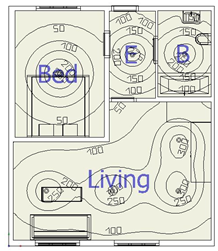
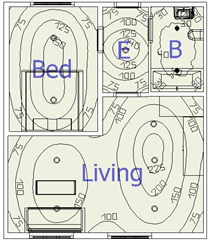
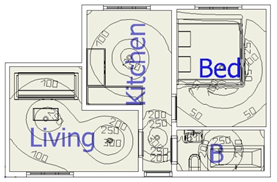
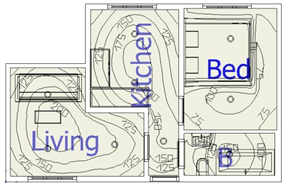
Average illuminance or lux levels for both the existing manual design and the DIALux-based optimised design were calculated using DIALux Evo. Calculations were taken on a working plane positioned at 0.8 m above the finished floor level, in accordance with EN 12464-1 [22] and CIBSE LG 9 [6] standards. The DIALux Evo outputs include, but are not limited to, Average illuminance (Ē, lux) and Uniformity (U0) on the work plane.
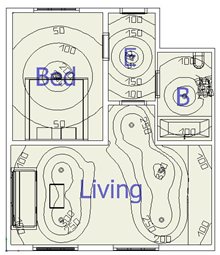
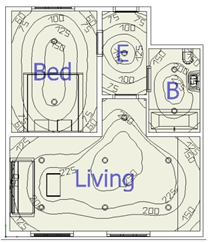
Figure 5, Figure 6, Figure 7 and Figure 8 provide a visual summary of illuminance comparisons between the existing and proposed designs across all four room types, enabling rapid identification of performance trends and relative magnitudes of improvement. Table 5 and Table 6 complement this by providing the complete scene-level numerical values for all twenty lighting scenes, serving as a transparent data record for verification and reproducibility purposes. Together, these two presentation formats provide both the visual clarity needed for trend interpretation and the numerical precision required for rigorous comparative analysis.
Across all rooms and lighting scenes, DIALux-based designs produced systematically higher illuminance levels and more uniform distributions than the manual layouts. These improvements align with recommended residential lighting ranges and reflect the advantages of optimised luminaire placement rather than scene-specific anomalies.
One exception warrants specific discussion: in LS13, the DIALux-optimised design produced a lower living room illuminance (114 lux) than the existing manual design (158 lux). This reflects a scene-level trade-off in which the optimisation process reduced living room luminaire wattage to achieve overall energy savings, while maintaining compliance with the CIBSE LG9 minimum of 100 lux. The result remains within the acceptable residential range of 100–300 lux and is therefore technically compliant. This case illustrates that DIALux optimisation operates at the aggregate scene level and does not guarantee illuminance improvement in every individual room — a finding consistent with the energy anomalies observed in LS8 and LS18. Regarding uniformity, all proposed DIALux-based designs were optimised to meet CIBSE LG9 U0 thresholds as an internal design constraint. While scene-level U0 values were not extracted for independent statistical analysis in this study, their role as a design compliance target is reflected in the compliance columns of Table 5 and Table 6. A full comparative statistical analysis of U0 across all twenty scenes represents a priority for future work.
To evaluate the significance of the observed differences, descriptive statistics were computed for both datasets (Table 7). The existing design exhibited a mean illuminance of 165.86 lux with a standard deviation of 48.01, whereas the proposed design achieved a higher mean of 205.14 lux with a standard deviation of 48.48. A paired t-test yielded a t-value of 3.084 and a p-value of 1.0×10⁻⁶. Cohen’s d = 0.81, indicating a large practical effect. As with the energy analysis, the low p-value is partly a product of the deterministic simulation design; effect size provides the more meaningful measure of the magnitude of illuminance improvement. The practical significance lies in the systematic improvement in illuminance across most scenes, which is more important for lighting-design decisions than the numerical p-value itself.
3.4. Comparison of Luminous Efficacy
Luminous efficacy (lm/W) is an intrinsic property of the selected luminaires derived from manufacturer photometric data and is not computed by DIALux. Accordingly, the optimised design’s higher efficacy reflects the switch from CFL to LED luminaires; repre-sentative efficacy values are listed in Table 2 and are not analysed statistically.
Although statistical testing demonstrates reliable differences between the two design methods, the analytical emphasis of this study is on effect patterns: DIALux designs consistently reduced energy demand and increased illuminance across scenes. These patterns provide the practical design insight, while statistical significance simply confirms the robustness of the observed effects.
4. Discussion
4.1. Energy Efficiency and Performance Outcomes
The results of this study demonstrate that an integrated workflow combining LED luminaire technology with DIALux Evo simulation-based design produces statistically significant improvements in energy performance and illuminance compliance compared to existing manually-designed CFL-based residential lighting installations. It is important to note that the two conditions differ in both design methodology and luminaire technology, and the observed performance gains cannot be attributed solely to the simulation workflow. The results quantify the combined benefit of the integrated LED-plus-simulation approach, which is the relevant practical scenario for residential retrofit and new-build design. Across twenty lighting scenes, the DIALux-based design achieved a mean energy consumption reduction of approximately 15.3%, with several scenarios demonstrating reductions exceeding 30%. Statistical validation through a paired t-test confirms that these improvements are highly significant and not attributable to random variation. This finding underscores the originality of applying an occupant-centred, standards-aligned simulation framework to residential lighting design and highlights the practical significance of adopting advanced design tools to meet the UK’s carbon reduction targets [14].
These findings confirm that transitioning from CFL-based manually-designed residential lighting to an LED-based simulation-optimised approach offers statistically significant improvements in both energy efficiency and illuminance compliance. The practical contribution of this finding lies in the quantified, reproducible evidence base it provides for this integrated design and technology transition, which is directly applicable to UK residential retrofit policy and Net Zero objectives.
The underlying mechanisms driving these performance patterns include the higher luminous efficacy of LED luminaires compared to CFLs, and the improved luminaire placement and distribution achievable in the simulation-based approach. These mechanisms explain the consistent reductions in energy demand and increases in illuminance observed across the scenes.
4.2. Illuminance and Visual Comfort
Beyond energy savings, the optimised design consistently delivered uniform illuminance levels, with an average increase from 165.86 lux (manual design) to 205.14 lux (DIALux design). The extremely low p-value (1.0×10⁻⁶,) obtained from statistical testing validates the robustness of this improvement. Enhanced illuminance contributes to visual comfort, compliance with EN 12464-1 standards [22]. While improved illuminance levels and appropriate colour temperature selection are consistent with design principles associated with occupant well-being in the broader lighting literature, the present study does not measure biological or circadian outcomes directly, and no such causal claim is made here. These outcomes demonstrate that simulation-based design not only reduces energy demand but also improves lighting quality, thereby addressing dual objectives of sustainability and human-centric design.
4.3. Luminous Efficacy and Technological Integration
The observed energy savings in this study arise from two compounded and distinguishable sources, which this section disaggregates for clarity.
The first source is luminaire technology substitution. The Existing Design used CFL luminaires with luminous efficacy values of approximately 60–65 lm/W, while the Proposed Design used LED luminaires with efficacy values of 80–102 lm/W (Table 2). This technology switch reduces the installed wattage required to deliver equivalent lumen output, independently of the design method applied. Luminous efficacy is an intrinsic manufacturer property and is not produced or altered by DIALux simulation.
The second source is simulation-driven design optimisation. DIALux Evo enables precise spatial modelling of luminaire placement, spacing, beam angles, and quantities to achieve target illuminance and uniformity levels with the minimum necessary installed load. This optimisation capability exceeds what manual lumen-method calculations can reliably deliver, particularly in terms of spatial distribution precision, and contributes to energy reduction by identifying configurations that meet lighting quality standards with fewer or lower-wattage fittings than a manual design would typically specify.
It is acknowledged that this study was not designed with a third experimental condition — such as LED luminaires under a manual design method — that would have enabled complete statistical isolation of the technology substitution effect from the design optimisation effect. The relative contribution of each factor to the reported energy savings therefore cannot be precisely quantified from the present data, and this represents a limitation of the current study design that future research should address through a three-condition comparative framework.
Nevertheless, the practical proposition evaluated here — the combined adoption of LED technology selection and simulation-driven optimisation as an integrated design approach — represents a realistic and directly applicable scenario for residential retrofit and new-build contexts. The study quantifies the total energy performance benefit of this integrated approach, which is the relevant outcome for practitioners, policymakers, and building regulations compliance.
4.4. Comparative Insights and Practical Implications
While manual design methods offer flexibility and conceptual control, they are inherently limited by subjectivity, time-intensive calculations, and reduced predictive accuracy. In contrast, DIALux provides quantitative precision, visualisation capabilities, and the ability to integrate dynamic lighting strategies such as uniformity. However, the study acknowledges potential barriers, including the learning curve associated with advanced software and the risk of over-reliance on automated outputs. A balanced approach that combines manual design expertise with simulation-driven optimisation may therefore represent the most effective pathway for achieving energy-efficient, user-centric, and regulation-compliant lighting solutions.
4.5. Role of Daylight Harvesting and Future Directions
Although daylight harvesting was not considered in this study, it remains a pivotal component of effective lighting design. The incorporation of daylight harvesting within the simulation framework offers additional opportunities for energy savings and improved occupant comfort [23]. Accurate modelling of solar paths, building orientation, and site-specific constraints enables designers to maximise natural light utilisation while mitigating glare and thermal gain. Nevertheless, practical implementation in UK residential buildings faces challenges such as climatic variability and architectural complexity, necessitating further research into adaptive algorithms and integrated control systems. Future studies should explore real-world validation through field calculations [24], life-cycle cost analysis, and integration with smart building technologies to strengthen the evidence base for policy adoption and industry standards.
4.6. Lighting Quality Considerations
The arrangement of luminaires - including position, spacing, beam angle, and mounting height - are the primary variables through which DIALux Evo achieves its optimisation of illuminance distribution and uniformity. In the context of the twenty lighting scenes evaluated in this study, these parameters explain the scene-level variation observed in Table 5 and Table 6: scenes where the manual design placed luminaires suboptimally relative to room geometry produced the largest illuminance improvements under the DIALux-optimised layout, while scenes where the existing layout was already reasonably configured produced smaller gains - and in two cases (LS8, LS18) required higher installed loads to achieve full compliance. These principles provide the practical mechanism connecting the simulation workflow to the energy and illuminance outcomes reported in Section 3.2 and Section 3.3, and confirm that the value of simulation-based design lies in its ability to model these interdependencies precisely rather than relying on generalised rules of thumb.
4.7. Limitations and Future Research Directions
This study is subject to several limitations that should be considered when interpreting its findings and that point towards productive directions for future research. First, the analysis is restricted to night-time artificial lighting under static conditions. Daylight integration was deliberately excluded to maintain controlled and comparable conditions across all twenty scenes; however, this represents a meaningful boundary on the findings, since residential spaces in the UK receive variable natural light throughout the day and across seasons. The exclusion of daylight means that the energy savings reported here reflect artificial lighting loads only and may overestimate the relative contribution of lighting to total residential energy demand under real occupancy conditions.
Second, the study does not incorporate adaptive or dynamic lighting controls, such as occupancy sensing, daylight-linked dimming, or circadian-responsive tuning of colour temperature across the day. Human-centric lighting design in its fullest sense is inherently time-based and responsive to occupant behaviour, and the static simulation framework employed here cannot capture these dynamics. Consequently, the illuminance and energy values reported represent design-condition snapshots rather than time-integrated operational performance.
Third, the study is limited to one-bedroom flats of similar size and construction, which, while appropriate for controlled comparison, limits the generalisability of the findings to other residential typologies such as larger family dwellings, high-rise apartments, or properties with significantly different geometric or material characteristics.
Future research should address these limitations through several complementary directions. In-situ post-occupancy monitoring using calibrated light meters and energy sub-metering would provide empirical validation of the simulation outputs reported here. Integration of daylight simulation tools — such as Radiance or the DIALux daylight module — within the same comparative framework would enable a more complete picture of residential lighting energy performance across the full daily cycle. Investigation of adaptive control strategies, including sensor-driven dimming and circadian-tuned colour temperature scheduling, would extend the human-centric dimension of the framework beyond the static visual comfort parameters examined in this study. Finally, lifecycle cost and embodied carbon analyses would strengthen the policy relevance of the findings for UK Net Zero and Part L compliance contexts.
Furthermore, future studies should extend the performance metric framework beyond photopic illuminance to incorporate melanopic metrics such as Equivalent Melanopic Lux (EML) and Equivalent Daylight Illuminance (EDI), in accordance with the WELL Building Standard [25] and CIE S 026 [26] melanopic toolbox. This would enable a more complete evaluation of human-centric lighting design that encompasses both visual comfort and non-visual biological responses, including circadian entrainment and melatonin regulation [27] — dimensions that the present study, by design, did not address. Achieving this would require luminaire spectral power distribution data and post-processing calculations beyond the standard DIALux Evo workflow, representing a methodological advancement that future simulation-based studies in residential lighting should pursue.
Additionally, uniformity (U0) was applied as a design compliance constraint within the DIALux optimisation process but was not independently extracted and statistically analysed as a dependent variable. Future studies should treat U0 alongside illuminance as a formally measured outcome to provide a more complete characterisation of lighting quality improvements. Moreover, all twenty lighting scenes employed a fixed CCT of 3,000 K. The introduction discusses blue-light effects and dynamic CCT variation as contextual background; however, no CCT variation was implemented or evaluated in this study. The fixed warm-white CCT was selected as representative of standard UK residential practice, but the absence of CCT variation means that the circadian and spectral aspects of human-centric lighting design discussed in the introduction remain outside the scope of the measured outcomes.
5. Conclusions
This section summarises the key quantitative outcomes of the study and provides a concise set of practitioner-oriented recommendations derived from the findings. Table 8 presents the performance comparison between the existing manually-designed CFL-based installations and the proposed DIALux-optimised LED-based designs, alongside a recommended workflow for residential retrofit practitioners. The detailed interpretation of these findings, including acknowledgement of the study’s primary design limitation, follows below.
This study demonstrates, with statistical robustness, that transitioning from CFL-based manually-designed residential lighting to an integrated LED-plus-simulation workflow using DIALux Evo produces material improvements in both energy performance and illuminance compliance in UK residential dwellings. The study compares existing manually-designed CFL-based installations against DIALux-optimised LED-based designs; because these conditions differ in both design methodology and luminaire technology simultaneously, the observed performance gains reflect the combined benefit of the integrated approach rather than the isolated effect of simulation-driven design. This is explicitly acknowledged as the primary design limitation of the study. Across twenty matched lighting scenes, the optimised designs achieved a mean energy consumption reduction of 15.3%, confirmed by a paired t-test (t = 5.12, p = 1.2×10⁻⁵), while simultaneously raising mean illuminance from 165.86 lux to 205.14 lux (t = 3.084, p = 1.0×10⁻⁶) — an improvement that brought a significantly greater proportion of scenes into compliance with CIBSE LG9 residential guidance.
A key contribution of this study is its transparent acknowledgement that the observed performance gains arise from two compounded and inseparable factors: luminaire technology substitution (CFL to LED) and simulation-driven design optimisation. The study cannot statistically isolate the contribution of each factor, and no claim is made that simulation alone drives the observed improvements. Instead, the study’s contribution lies in providing a quantified, reproducible, and standards-aligned evidence base for the integrated LED-plus-simulation workflow as a practical design approach for residential retrofit contexts. Future research should introduce a third experimental condition - LED luminaires designed under the manual lumen method - to enable rigorous isolation of the simulation contribution from the technology substitution effect.
From a practice and policy perspective, the framework provides a reproducible and standards-aligned methodology with direct relevance to UK Net Zero trajectories, Part L of the Building Regulations, and residential retrofit policy. Adoption at scale can be facilitated through design-stage simulation workflows, manufacturer-verified photometric data, and compliance checking against UK and international standards — with minimal additional cost or complexity for design practitioners.
The study is subject to acknowledged limitations. The analysis is restricted to night-time artificial lighting in one-bedroom flats, excluding daylight integration, adaptive controls, and broader residential typologies. A small subset of scenes (LS8, LS18) exhibited increased energy consumption under the optimised design, highlighting that simulation-based optimisation prioritises simultaneous achievement of energy and quality targets, which does not always yield unilateral energy reduction at the individual scene level. Most critically, the absence of a third experimental condition - LED luminaires designed using the manual lumen method - represents the primary design limitation of this study. Without this condition, the relative contributions of luminaire technology substitution and simulation-based design optimisation to the observed performance gains cannot be statistically disaggregated, and the study’s findings must be interpreted as reflecting the combined effect of the integrated workflow. This limitation is foregrounded rather than footnoted, as it is central to the correct interpretation of the results.
Future work should address these boundaries through in-situ post-occupancy validation using calibrated metering, integration of daylight simulation and adaptive control strategies, extension to wider residential typologies, lifecycle cost and embodied carbon analysis, and incorporation of melanopic metrics (EML, EDI) to fully operationalise human-centric lighting evaluation beyond the photopic domain examined here. The framework established in this study provides a replicable foundation for this broader programme of residential lighting research.
Author Contributions
Conceptualization, methodology, software, validation, formal analysis, investigation, and data curation: Tharani Hemarathne; writing—original draft preparation, writing—review and editing, visualization, and supervision: Jawed Qureshi. All authors have read and agreed to the published version of the manuscript.
Funding
This research received no external funding.
Data Availability Statement
All research data are provided within the paper.
Acknowledgments
The authors thank the University of East London for providing the facilities that enabled this research.
Conflicts of Interest
The authors declare no conflicts of interest.
References
- Carbon Trust. Lighting Overview Guide; Carbon Trust: London, UK. Available online: https://www.carbontrust.com/our-work-and-impact/guides-reports-and-tools/lighting-overview-guide (accessed on 24 March 2026).
- Gupta, R.; Gregg, M. Assessing Energy Use and Overheating Risk in Net Zero Energy Dwellings in UK. Energy Build. 2018, 158, 897–905. [CrossRef]
- Building Research Establishment (BRE) BRE Briefing Note: Progress on Energy Efficiency in England and Priorities for the Warm Homes Plan; 2025;
- Department for Levelling Up, H. and C. (DLUHC) English Housing Survey 2023–24: Energy Efficiency; Chapter 2: Energy Efficiency; 2024;
- Citadini de Oliveira, C.; Catão Martins Vaz, I.; Ghisi, E. Retrofit Strategies to Improve Energy Efficiency in Buildings: An Integrative Review. Energy Build. 2024, 321, 114624. [CrossRef]
- Chartered Institution of Building Services Engineers (CIBSE). Lighting Guide LG9: Lighting for Communal Residential Buildings; CIBSE Publications, London, UK: London, UK, 2022; ISBN 978-1-914543-32-6.
- Ticleanu, C. Impacts of Home Lighting on Human Health. Light. Res. Technol. 2021, 53, 453–475. [CrossRef]
- Jalali, M.S.; Jones, J.R.; Tural, E.; Gibbons, R.B. Human-Centric Lighting Design: A Framework for Supporting Healthy Circadian Rhythm Grounded in Established Knowledge in Interior Spaces. Buildings 2024, 14, 1125. [CrossRef]
- Office for National Statistics (ONS) Age of the Property Is the Biggest Single Factor in Energy Efficiency of Homes Available online: https://www.ons.gov.uk/peoplepopulationandcommunity/housing/articles/ageofthepropertyisthebiggestsinglefactorinenergyefficiencyofhomes/2021-11-01 (accessed on 24 March 2026).
- Boyce, P. Light, Lighting and Human Health. Light. Res. Technol. 2022, 54, 101–144. [CrossRef]
- Chiradeja, P.; Yoomak, S. Development of Public Lighting System with Smart Lighting Control Systems and Internet of Thing (IoT) Technologies for Smart City. Energy Reports 2023, 10, 3355–3372. [CrossRef]
- Mardaljevic, J.; Heschong, L.; Lee, E. Daylight Metrics and Energy Savings. Light. Res. Technol. 2009, 41, 261–283. [CrossRef]
- HM Government HM Government. Approved Document L: Conservation of Fuel and Power — Volume 1: Dwellings. Building Regulations 2010, 2021 Edition (Incorporating 2023 Amendments) Available online: https://www.gov.uk/government/publications/conservation-of-fuel-and-power-approved-document-l (accessed on 24 March 2026).
- Aliparast, S.; Onaygil, S. A Field Study of Individual, Energy-Efficient, and Human-Centered Indoor Electric Lighting: Its Impact on Comfort and Visual Performance in an Open-Plan Office. Buildings 2024, 14, 936. [CrossRef]
- Mukherjee, B.; Boubekri, M. Sustainable Architecture and Human Health: A Case for Effective Circadian Daylighting Metrics. Buildings 2025, 15, 315. [CrossRef]
- Huebner, G.M.; Hanmer, C.; Zapata-Webborn, E.; Pullinger, M.; McKenna, E.J.; Few, J.; Elam, S.; Oreszczyn, T. Self-Reported Energy Use Behaviour Changed Significantly during the Cost-of-Living Crisis in Winter 2022/23: Insights from Cross-Sectional and Longitudinal Surveys in Great Britain. Sci. Rep. 2023, 13, 21683. [CrossRef]
- Steffy, G. Architectural Lighting Design; 3rd ed.; Wiley & Sons, Inc., 2008; ISBN 978-0-470-11249-6.
- Cho, Y.; Ryu, S.-H.; Lee, B.R.; Kim, K.H.; Lee, E.; Choi, J. Effects of Artificial Light at Night on Human Health: A Literature Review of Observational and Experimental Studies Applied to Exposure Assessment. Chronobiol. Int. 2015, 32, 1294–1310. [CrossRef]
- Cajochen, C.; Freyburger, M.; Basishvili, T.; Garbazza, C.; Rudzik, F.; Renz, C.; Kobayashi, K.; Shirakawa, Y.; Stefani, O.; Weibel, J. Effect of Daylight LED on Visual Comfort, Melatonin, Mood, Waking Performance and Sleep. Light. Res. Technol. 2019, 51, 1044–1062. [CrossRef]
- Crespo, M.T.; Trebucq, L.L.; Senna, C.A.; Hokama, G.; Paladino, N.; Agostino, P.V.; Chiesa, J.J. Circadian Disruption of Feeding-Fasting Rhythm and Its Consequences for Metabolic, Immune, Cancer, and Cognitive Processes. Biomed. J. 2025, 48, 100827. [CrossRef]
- Illuminating Engineering Society IES TM-30-20: IES Method for Evaluating Light Source Color Rendition; Illuminating Engineering Society (IES): New York, NY, USA, 2020;
- European Committee for Standardisation (CEN). EN 12464-1:2021 Light and Lighting — Lighting of Work Places — Part 1: Indoor Work Places; CEN, Brussels, Belgium: Belgium, 2021;
- Trząski, A.; Rucińska, J. Integration of Daylight in Building Design as a Way to Improve the Energy Efficiency of Buildings. Energies 2025, 18, 4113. [CrossRef]
- Zocchi, G.; Hosseini, M.; Triantafyllidis, G. Exploring the Synergy of Advanced Lighting Controls, Building Information Modelling and Internet of Things for Sustainable and Energy-Efficient Buildings: A Systematic Literature Review. Sustainability 2024, 16, 10937. [CrossRef]
- International WELL Building Institute (IWBI). The WELL Building Standard, Version 2 (WELL V2); IWBI: New York, NY, USA Available online: https://v2.wellcertified.com/en (accessed on 24 March 2026).
- Commission Internationale de l’Éclairage (CIE) CIE S 026/E:2018: System for Metrology of Optical Radiation for IpRGC-Influenced Responses to Light; CIE: Vienna, Austria. 2018. [CrossRef]
- Lucas, R.J.; Peirson, S.N.; Berson, D.M.; Brown, T.M.; Cooper, H.M.; Czeisler, C.A.; Figueiro, M.G.; Gamlin, P.D.; Lockley, S.W.; O’Hagan, J.B.; et al. Measuring and Using Light in the Melanopsin Age. Trends Neurosci. 2014, 37, 1–9. [CrossRef]
Figure 1.
Human Circadian Rhythm.
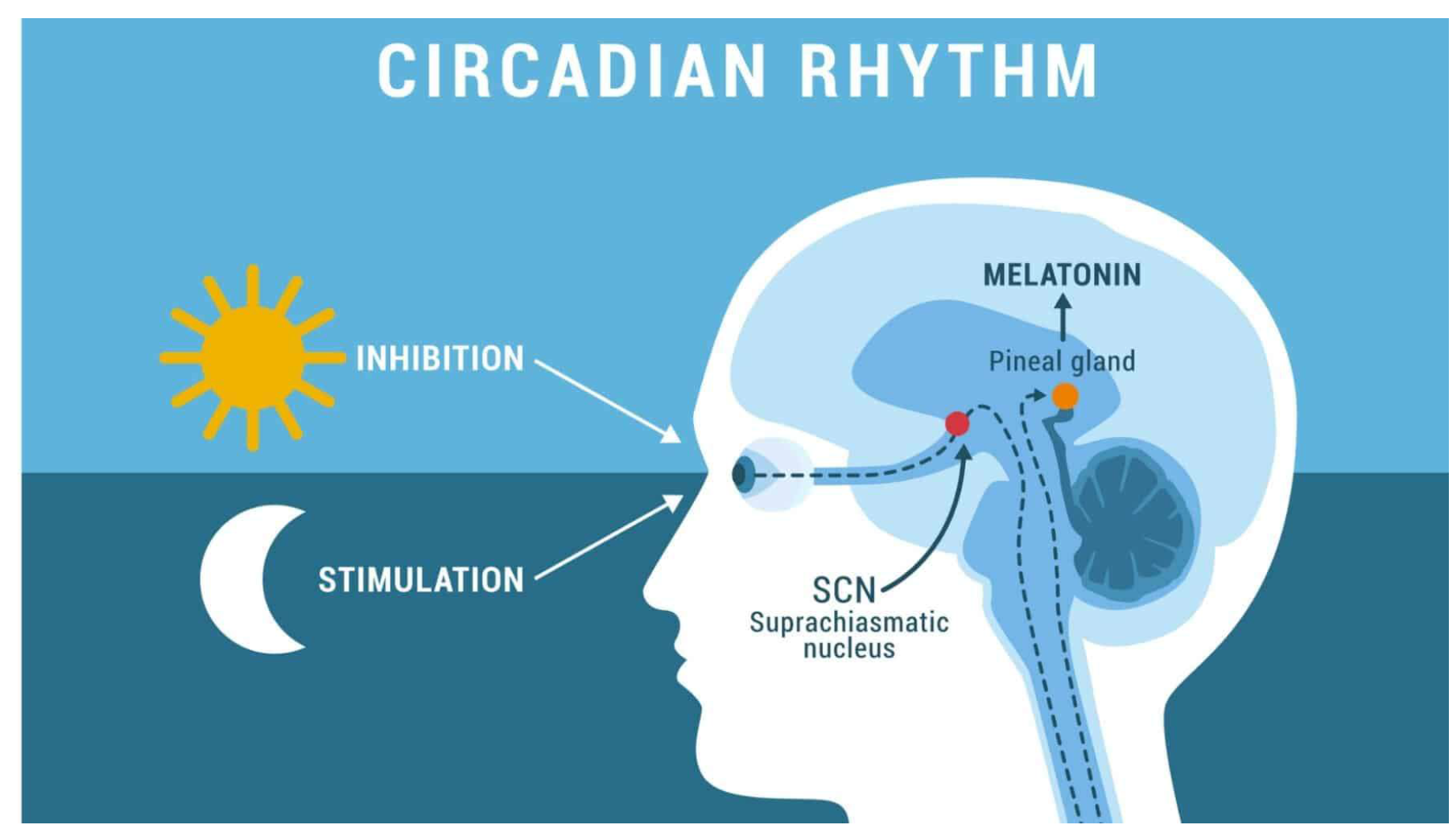
Figure 2.
Physiological effects of exposure to bright light during night-time hours. The left image shows the neural pathway involving the suprachiasmatic nucleus (SCN), which controls circadian rhythm (Source – created by authors with inspiration from [20]).
Figure 2.
Physiological effects of exposure to bright light during night-time hours. The left image shows the neural pathway involving the suprachiasmatic nucleus (SCN), which controls circadian rhythm (Source – created by authors with inspiration from [20]).
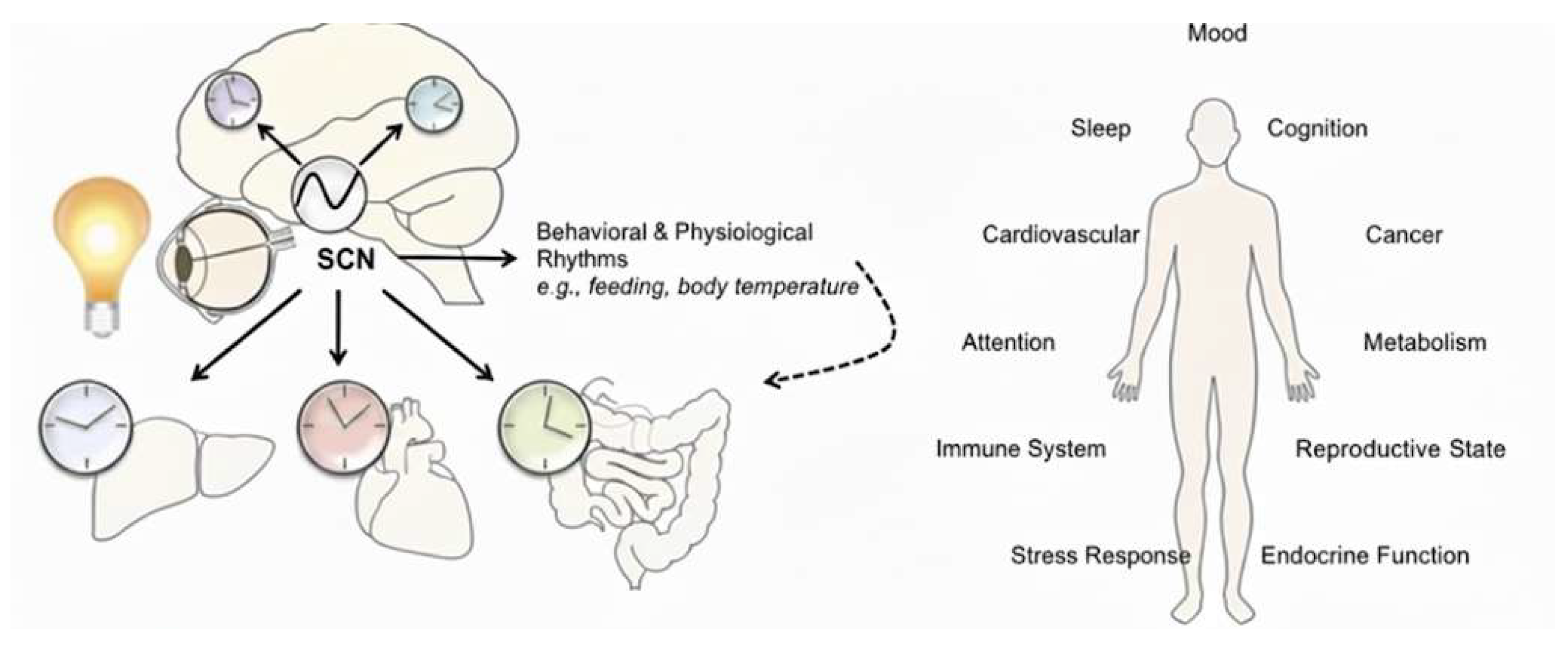
Figure 3.
Example comparison of Colour Rendering Index (CRI) for different light-source types. Values shown are illustrative of typical example products only and do not represent fixed or universal CRI values for each technology (Source: author).
Figure 3.
Example comparison of Colour Rendering Index (CRI) for different light-source types. Values shown are illustrative of typical example products only and do not represent fixed or universal CRI values for each technology (Source: author).
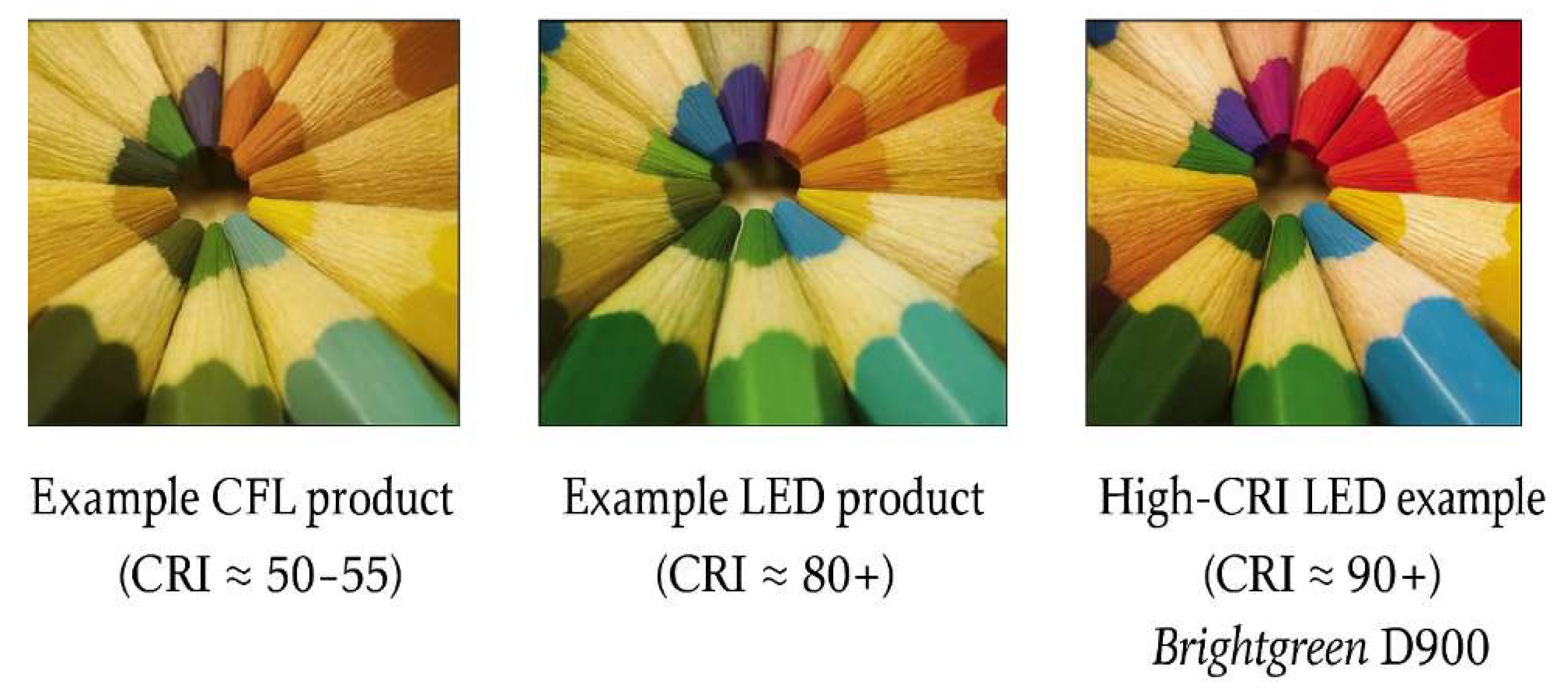
Figure 4.
Colour Temperature (Source – author created).
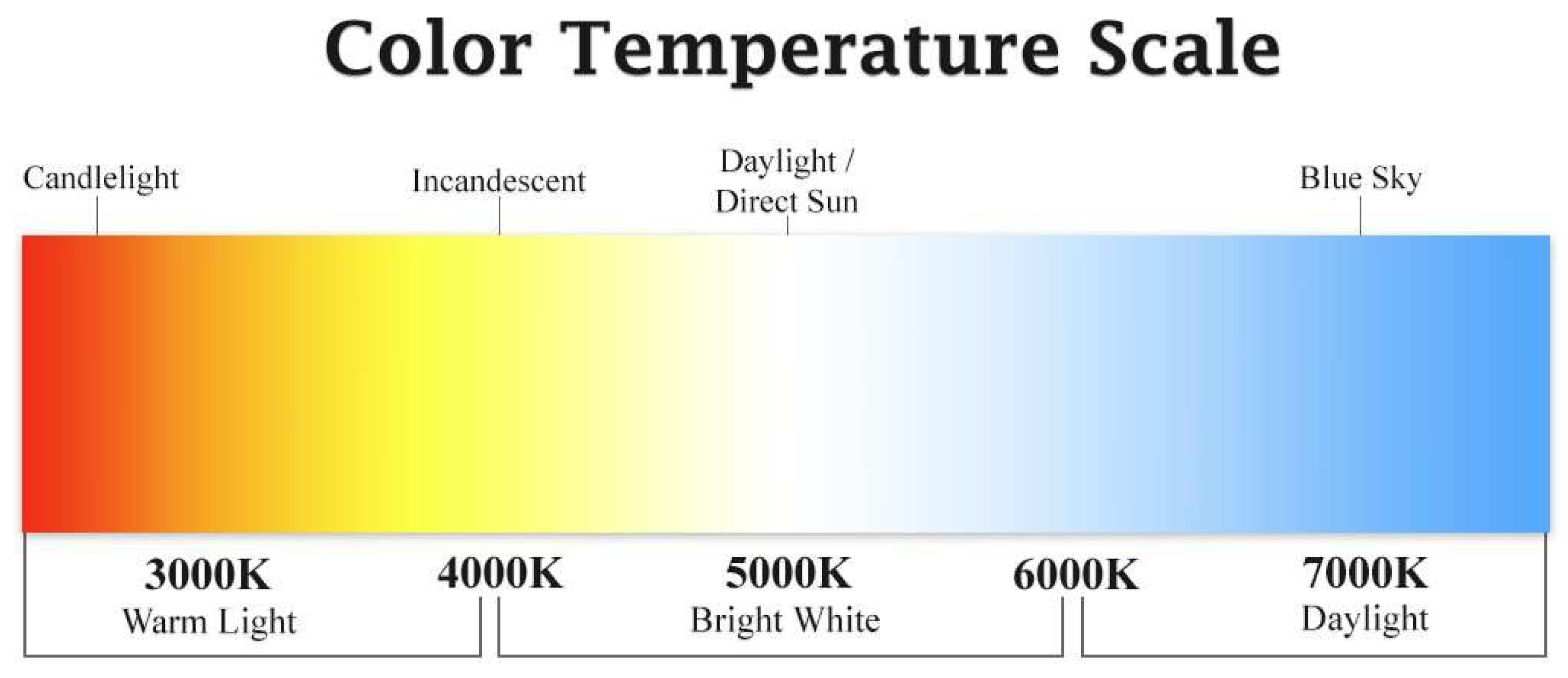
Figure 5.
Comparison of lux levels between existing and proposed lighting design for living room.
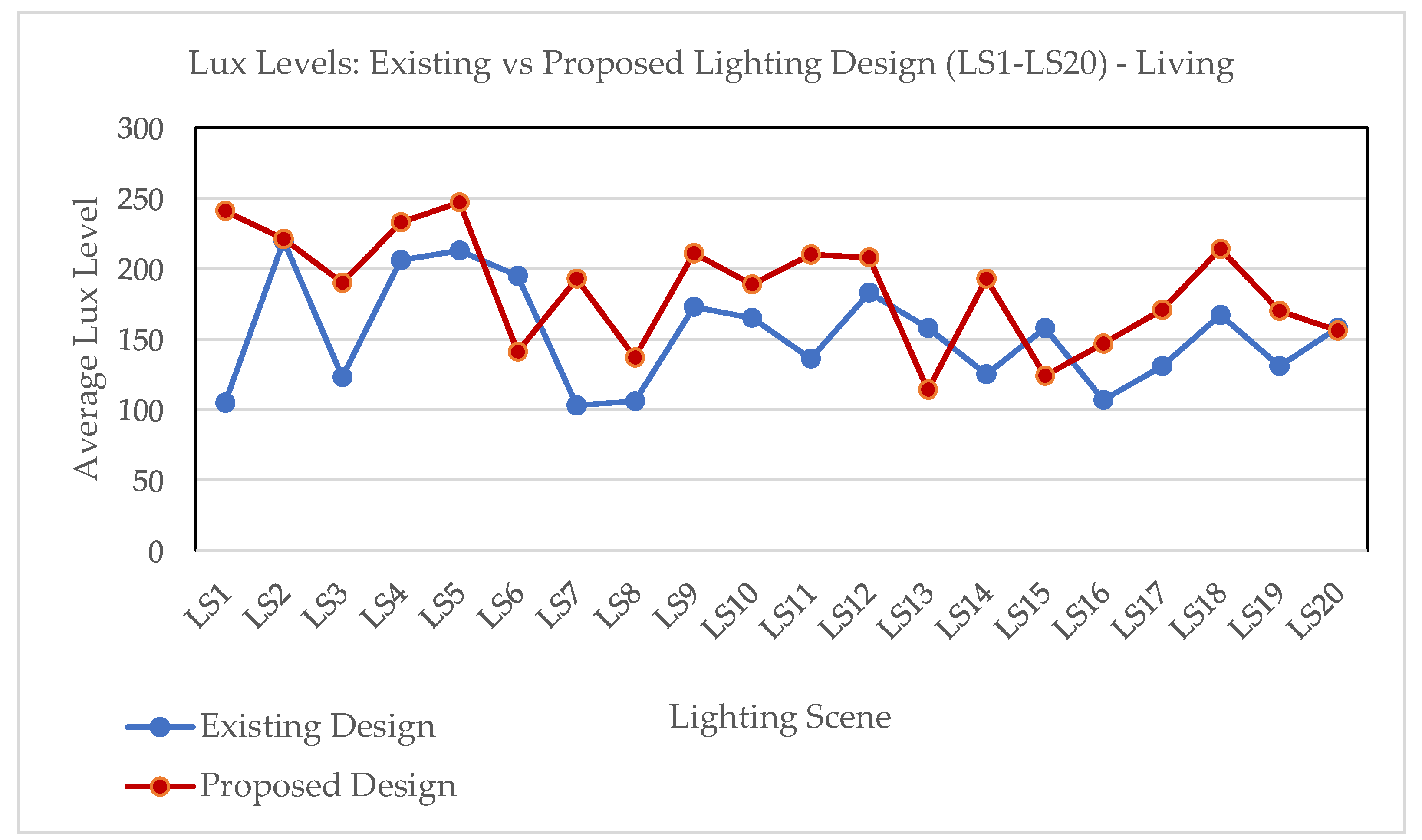
Figure 6.
Comparison of lux levels between existing and proposed lighting design for kitchen.
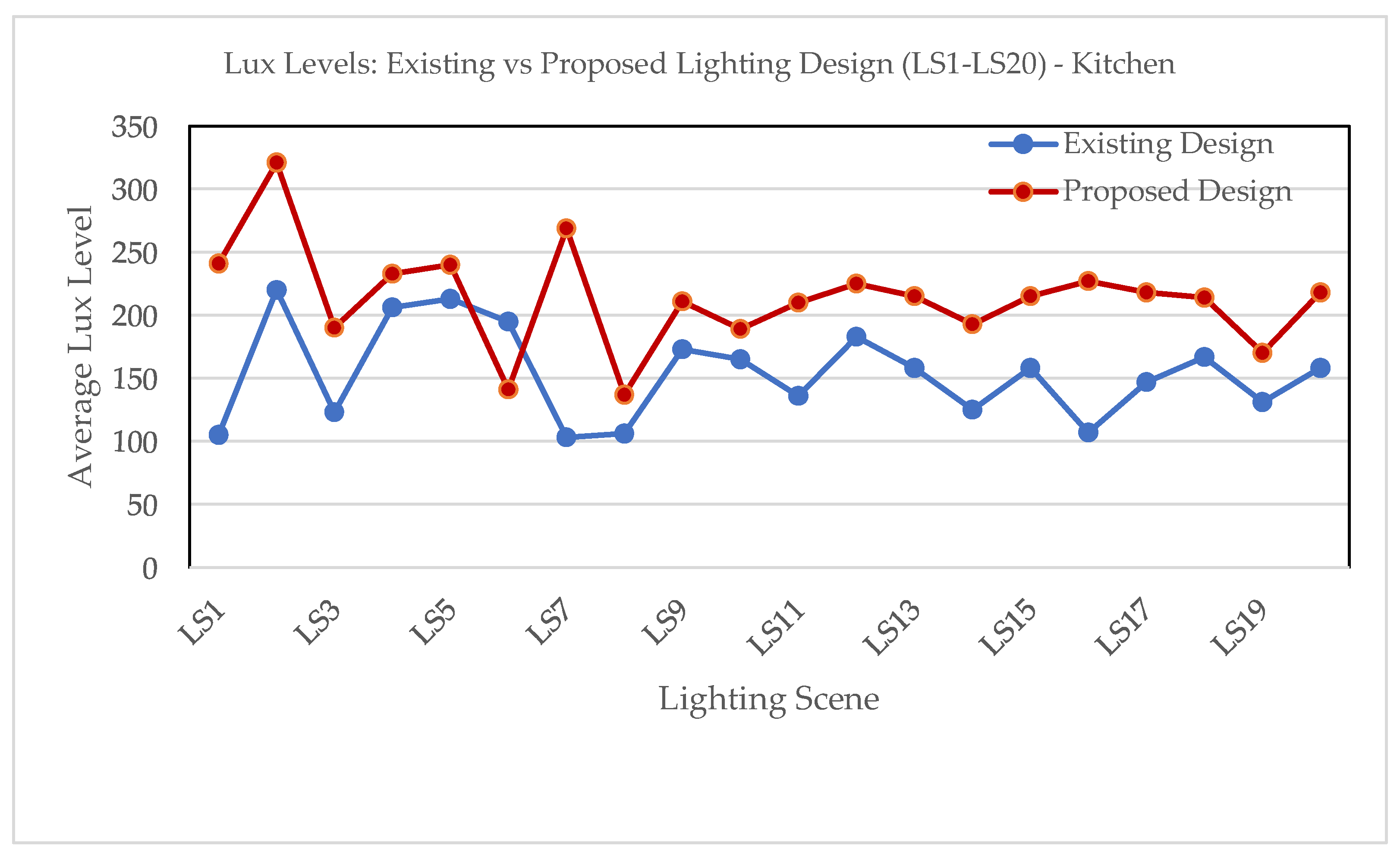
Figure 7.
Comparison of lux levels between existing and proposed lighting design for bedrooms.
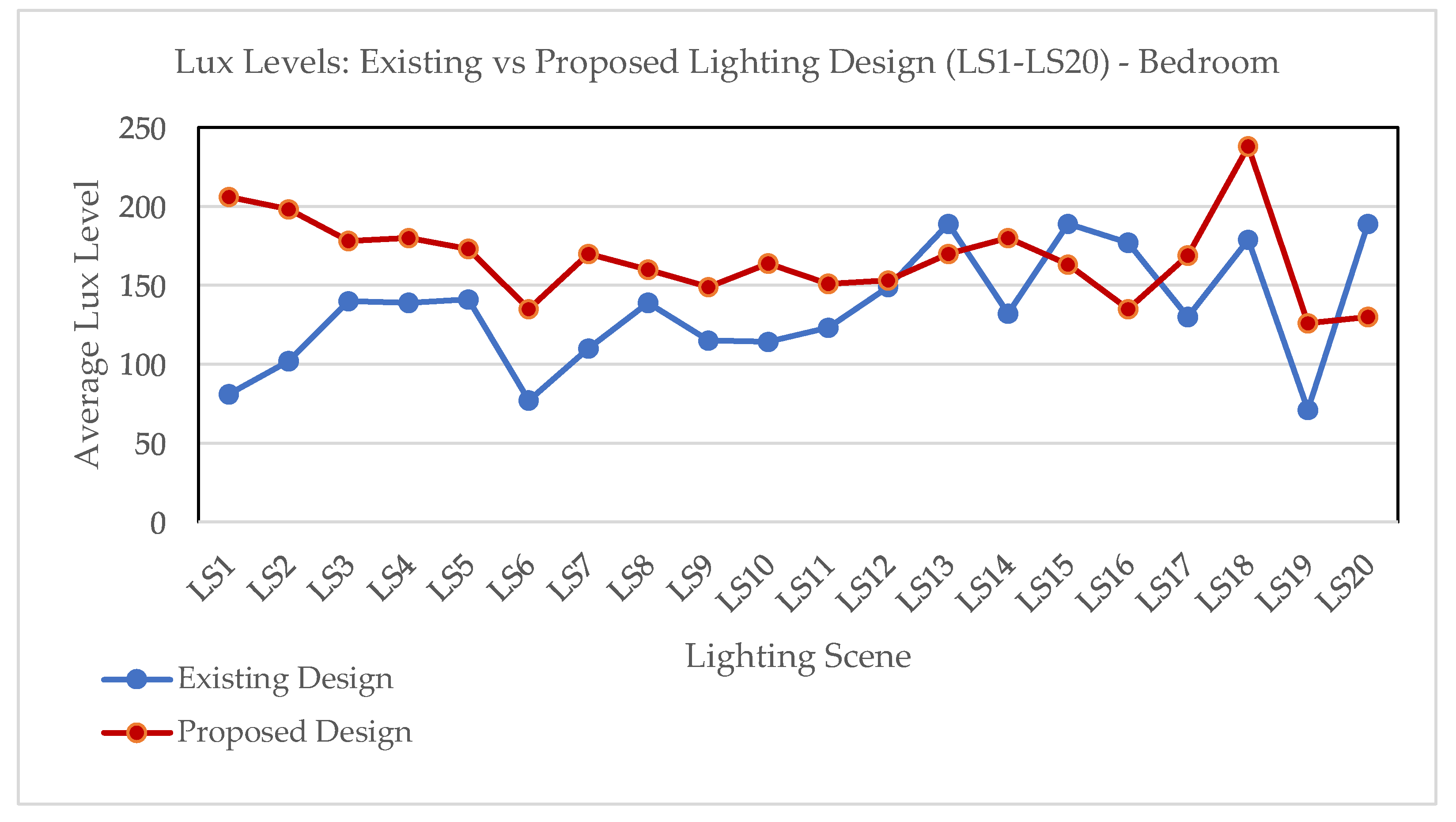
Figure 8.
Comparison of lux levels between existing and proposed lighting design for Bathroom.
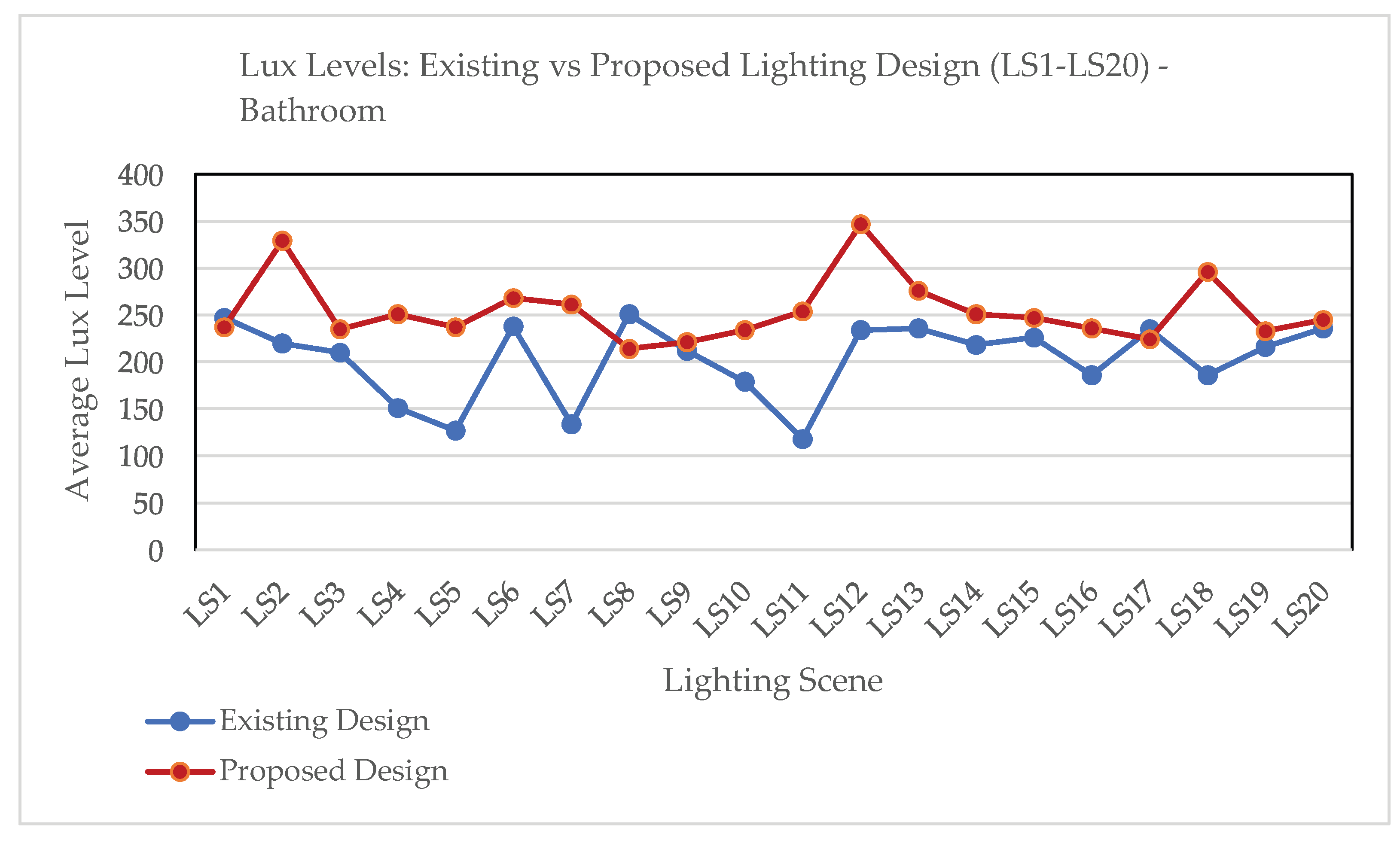
Table 1.
Recommended illuminance and uniformity for residential spaces as per CIBSE (2022) [6].
Table 1.
Recommended illuminance and uniformity for residential spaces as per CIBSE (2022) [6].
| Room Type | Target/ Requirement (lux level) | Uniformity |
| Living Room | 100 -300 | ≥40 |
| Bedroom | 100-200 | ≥40 |
| Bathroom | 150-300 | ≥60 |
| Kitchen | 200-500 | ≥60 |
Table 3.
Energy consumption comparison.
| Lighting scene | Existing energy Consumption (kWh) † | Energy Consumption after applying DIALux (kWh) † | % Energy Reduction |
| LS 1 | 10.06 | 8.81 | - 12% |
| LS2 | 12.11 | 9.52 | - 21% |
| LS 3 | 12.09 | 9.93 | - 18% |
| LS 4 | 9.93 | 7.41 | - 25% |
| LS 5 | 10.74 | 8.54 | - 20% |
| LS 6 | 11.48 | 10 | - 13% |
| LS 7 | 10 | 7.45 | - 26% |
| LS 8 | 9.91 | 11.84 | + 19% * |
| LS 9 | 9.89 | 7.61 | - 23% |
| LS 10 | 9.9 | 6.95 | - 30% |
| LS 11 | 9.72 | 8.54 | - 12% |
| LS 12 | 10 | 8.21 | - 18% |
| LS 13 | 10.776 | 8.92 | - 17% |
| LS 14 | 9.81 | 8.28 | - 16% |
| LS 15 | 9.72 | 9.62 | - 1% |
| LS 16 | 9.71 | 8.92 | - 8% |
| LS 17 | 9.72 | 7.21 | - 26% |
| LS 18 | 9.55 | 9.82 | + 3% * |
| LS 19 | 10.2 | 8.1 | - 21% |
| LS 20 | 10.34 | 9.12 | - 12% |
* Negative values indicate percentage energy reduction achieved by the DIALux-based design relative to the existing manual design. Positive values (LS8: +19%, LS18: +3%) indicate increased energy consumption, reflecting configurations where achieving required illuminance and uniformity targets necessitated higher installed loads. † kWh values are based on an assumed annual operating period of 1,000 hours, applied consistently across all scenes and both design conditions.
Table 4.
Statistical analysis of energy consumption for manual and DIALux-based designs.
| Data Sample | Mean | Variance | Standard deviation |
| Calculated existing energy consumption | 10.25428 | 0.55338 | 0.743867 |
| Calculated DIALux simulated consumption | 8.68047 | 1.33819 | 1.1568037 |
Table 5.
Average illuminance levels (lux) and CIBSE LG9 compliance for existing manual lighting design across twenty scenes.
Table 5.
Average illuminance levels (lux) and CIBSE LG9 compliance for existing manual lighting design across twenty scenes.
| Lighting Scene | Living | Kitchen | Bedroom | Bathroom | ||||
| Average lux levels | Compliance (C/NC) | Average lux levels | Compliance (C/NC) | Average lux levels | Compliance (C/NC) | Average lux levels | Compliance (C/NC) | |
| LS 1 | 105 | C | 105 | NC | 81 | NC | 247 | C |
| LS2 | 220 | C | 220 | NC | 102 | C | 220 | C |
| LS 3 | 123 | C | 123 | NC | 140 | C | 210 | C |
| LS 4 | 206 | C | 206 | NC | 139 | C | 151 | C |
| LS 5 | 213 | C | 239 | C | 141 | C | 127 | NC |
| LS 6 | 195 | C | 195 | NC | 77 | NC | 238 | C |
| LS 7 | 103 | C | 124 | NC | 110 | C | 134 | NC |
| LS 8 | 106 | C | 106 | NC | 139 | C | 251 | C |
| LS 9 | 173 | C | 173 | NC | 115 | C | 212 | C |
| LS 10 | 165 | C | 165 | NC | 114 | C | 179 | C |
| LS 11 | 136 | C | 136 | NC | 123 | C | 118 | NC |
| LS 12 | 183 | C | 231 | C | 149 | C | 234 | C |
| LS 13 | 158 | C | 251 | C | 189 | C | 236 | C |
| LS 14 | 125 | C | 125 | NC | 132 | C | 218 | C |
| LS 15 | 158 | C | 231 | C | 189 | C | 226 | C |
| LS 16 | 107 | C | 192 | NC | 177 | C | 186 | C |
| LS 17 | 131 | C | 218 | C | 130 | C | 235 | C |
| LS 18 | 167 | C | 167 | NC | 179 | C | 186 | C |
| LS 19 | 131 | C | 131 | NC | 71 | NC | 216 | C |
| LS 20 | 158 | C | 122 | NC | 189 | C | 236 | C |
† C = compliant with CIBSE LG9 recommended illuminance range; NC = non-compliant. Ranges applied: Living Room 100–300 lux; Kitchen 200–500 lux; Bedroom 100–200 lux; Bathroom 150–300 lux.
Table 6.
Average illuminance levels (lux) and CIBSE LG9 compliance for proposed DIALux-optimised lighting design across twenty scenes.
Table 6.
Average illuminance levels (lux) and CIBSE LG9 compliance for proposed DIALux-optimised lighting design across twenty scenes.
| Lighting Scene | Living | Kitchen | Bedroom | Bathroom | ||||
| Average lux levels | Compliance (C/NC) | Average lux levels | Compliance (C/NC) | Average lux levels | Compliance (C/NC) | Average lux levels | Compliance (C/NC) | |
| LS 1 | 241 | C | 241 | NC | 206 | C | 237 | C |
| LS2 | 221 | C | 321 | C | 198 | C | 329 | C |
| LS 3 | 190 | C | 190 | NC | 178 | C | 235 | C |
| LS 4 | 233 | C | 233 | NC | 180 | C | 251 | C |
| LS 5 | 247 | C | 240 | C | 173 | C | 237 | C |
| LS 6 | 141 | C | 141 | NC | 135 | C | 268 | C |
| LS 7 | 193 | C | 269 | C | 170 | C | 261 | C |
| LS 8 | 137 | C | 137 | NC | 160 | C | 214 | C |
| LS 9 | 211 | C | 211 | C | 149 | C | 221 | C |
| LS 10 | 189 | C | 189 | NC | 164 | C | 234 | C |
| LS 11 | 210 | C | 210 | C | 151 | C | 254 | C |
| LS 12 | 208 | C | 225 | C | 153 | NC | 347 | C |
| LS 13 | 114 | NC | 215 | C | 170 | C | 276 | C |
| LS 14 | 193 | C | 193 | NC | 180 | C | 251 | C |
| LS 15 | 124 | NC | 215 | C | 163 | C | 247 | C |
| LS 16 | 147 | C | 227 | C | 135 | NC | 236 | C |
| LS 17 | 171 | C | 218 | C | 169 | C | 224 | C |
| LS 18 | 214 | C | 214 | C | 238 | C | 296 | C |
| LS 19 | 170 | C | 170 | NC | 126 | C | 233 | C |
| LS 20 | 156 | C | 218 | C | 130 | NC | 245 | C |
† C = compliant with CIBSE LG9 recommended illuminance range; NC = non-compliant. Ranges applied: Living Room 100–300 lux; Kitchen 200–500 lux; Bedroom 100–200 lux; Bathroom 150–300 lux.
Table 7.
Statistical summary of illuminance levels.
| Sample | Mean | Variance | Standard Deviation |
| Existing design | 165.86 | 2305.31 | 48.013 |
| Proposed design | 205.14 | 2350.55 | 48.482 |
Table 8.
Summary of key performance outcomes and recommended practitioner steps.
| (a) Performance outcomes | ||||
| Parameter | Existing Manual Design (CFL) | Proposed DIALux Design (LED) | Change | |
| Mean energy consumption | 10.25 kWh | 8.68 kWh | −15.3% (t = 5.12, p = 1.2×10⁻⁵, d = 1.61) | |
| Mean illuminance | 165.86 lux | 205.14 lux | +23.7% (t = 3.084, p = 1.0×10⁻⁶, d = 0.81) | |
| CIBSE LG9 compliance | Partial | Improved | Greater proportion of scenes compliant | |
| Luminaire technology | CFL (60–65 lm/W) | LED (80–102 lm/W) | Higher efficacy | |
| Design method | Manual lumen method | DIALux Evo simulation | Optimised placement and quantity | |
| (b) Recommended practitioner steps for residential retrofit | ||||
| Step | Recommended Action for Residential Retrofit | |||
| 1 | Replace CFL luminaires with LED equivalents (minimum 80 lm/W, CRI ≥ 80, CCT 3000 K) | |||
| 2 | Model existing room geometry in DIALux Evo using manufacturer-supplied photometric files | |||
| 3 | Set CIBSE LG9 illuminance and uniformity targets as design compliance constraints | |||
| 4 | Optimise luminaire quantity, placement, and distribution to meet targets at minimum installed load | |||
| 5 | Verify energy consumption output and compare against existing design baseline | |||
| 6 | Check compliance against EN 12464-1 and Part L requirements before finalising | |||
† kWh values based on 1,000 hours assumed annual operating period. C = compliant; NC = non-compliant with CIBSE LG9 recommended illuminance ranges.
Disclaimer/Publisher’s Note: The statements, opinions and data contained in all publications are solely those of the individual author(s) and contributor(s) and not of MDPI and/or the editor(s). MDPI and/or the editor(s) disclaim responsibility for any injury to people or property resulting from any ideas, methods, instructions or products referred to in the content. |
© 2026 by the authors. Licensee MDPI, Basel, Switzerland. This article is an open access article distributed under the terms and conditions of the Creative Commons Attribution (CC BY) license.
Copyright: This open access article is published under a Creative Commons CC BY 4.0 license, which permit the free download, distribution, and reuse, provided that the author and preprint are cited in any reuse.


