

Submitted:
03 December 2025
Posted:
04 December 2025
You are already at the latest version
Abstract
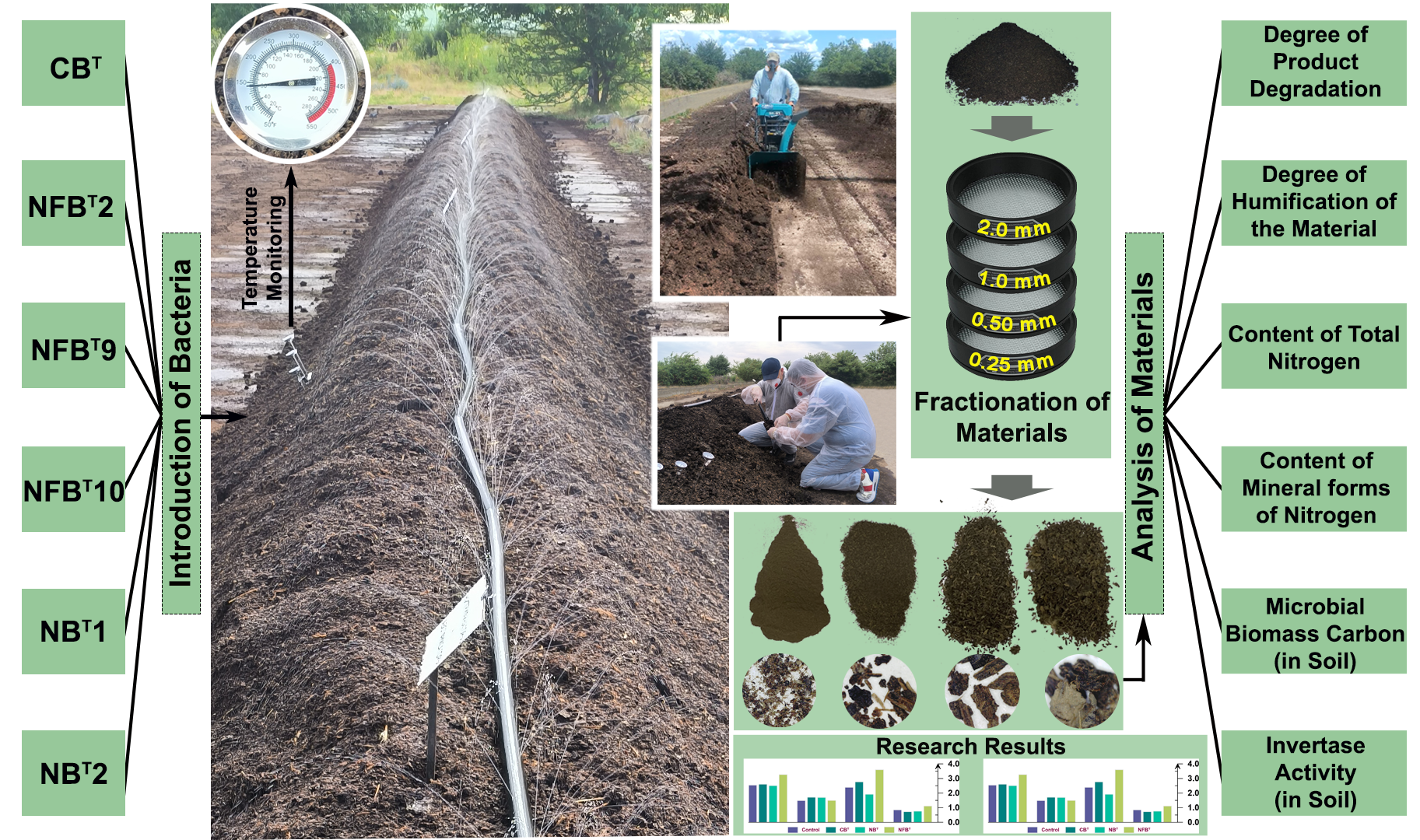
The aim of the study was to evaluate the biotechnological potential of thermophilic mi-croorganisms isolated from chernozem soil during composting of poultry manure. The ef-ficiency of the strains was determined by their effect on organic matter degradation, humi-fication intensity, and nitrogen accumulation. The correlation between the quality indica-tors of composting process was assessed with the gross values, taking into account the proportion of compost fractions. The strains were identified as: Aeribacillus pallidus KCTC 3564T (cellulolytic), Neobacillus sedimentimangrovi FJAT-2464T, Aeribacillus composti N.8T, Caldifermentibacillus hisashii N-11T (nitrogen fixers) and Acinetobacter pittii CIP 70.29T, Pseudomonas plecoglossicida NBRC 103162T (nitrifies). It was found that all the bacteria increase the proportion of small fractions by 19.0-19.9%. The gross content of humic acids increases under the influence of nitrifiers (15.5%) and nitrogen fixers (5.5%). The total nitrogen content increases under cellulolytics (13.8%) and nitrogen fixers (20.2%). The smallest fraction (≤0.25 mm) in nitrogen fixers and nitrifies variants has the greatest bioreclamation properties, by 16.4% and 12.9%. Targeted microbial strains pro-vide the direction of the transformation processes while biocomposting. It can also be con-cluded that assessing the quality of composting based on the fraction distribution can be a promising element of the biofermentation process monitoring.
Keywords:
thermophilic bacteria
; nucleotide sequence of genes
; 16S rRNA
; biofermentation
; poultry manure
1. Introduction
When discussing organic raw materials obtained in the livestock industry, definitions should reflect their status. Until recently, the term “livestock waste” was widely used in relation to manure, which, given their agrobiotechnological potential, was not objective. This position was taken into account in the new Federal Law No. 248-FZ of July 14, 2022, “On Livestock By-Products and Amendments to Certain Legislative Acts of the Russian Federation,” which classifies livestock waste as a product.
One of the most valuable livestock by-products of an agronomic perspective is poultry manure. Approximately 20 million tons of poultry manure are generated annually in the Russian Federation [1]. The fertilizing potential of manure (natural moisture) in terms of mineral components with a nitrogen, phosphorus, and potassium content of 2.1%, 1.44%, and 0.64%, respectively [2] is comparable to 420 thousand tons of the active substance of mineral fertilizers for nitrogen, 288 thousand tons for phosphorus, and 128 thousand tons for potassium. Manure is also rich in associated mesoelements important for plant nutrition. Thus, according to [3], manure contains 0.7% magnesium oxide, 2.4% calcium, and 0.4% sulfur, which is equivalent to 140, 480, and 820 thousand tons of the active substance, respectively.
The value of poultry manure is not limited to its mineral nutrient content. Its biorecovering properties are equally important, as carbon-containing substances provide energy for both native soil microflora and those introduced through commercial biopreparations. Microorganisms, in turn, are key factors in soil formation, which is essential for restoring the carbon sequestration capacity of the land surface, which has significantly decreased since 2023 and is possibly responsible for the continued rise in atmospheric temperature. According to [4], June 2023, 2024, and 2025 got recorded the highest total temperatures in the history of meteorological observations.
The climate effect of organic fertilizers from poultry manure also includes reducing the carbon footprint of crop production by partially or completely replacing mineral fertilizers. The contribution of the mineral fertilizers to the overall carbon footprint of grain crops can reach 25% [5], and in the structure of the carbon footprint of the final product (wheat bread), it accounts for up to 15% [6].
The effectiveness of using poultry manure as fertilizer is largely determined by the processing technology. The choice of technology must be consistent with both environmental and economic considerations. One of the most accessible technologies for processing poultry manure is solid-state aerobic fermentation (composting) [7,8]. Despite the widespread use of this technology, which originated over a century ago with the recommendations of the German farmer Kranz for aging manure in piles and producing “noble” manure [9], it has significant potential for further modernization. Improvements to this technology are largely associated with the selection of specialized microbial strains to produce materials that meet sanitary and epidemiological requirements [10,11,12,13,14] and, less commonly, to control the improvement of their quality [15,16,17].
The concept of creating a microbial consortium for solid-state fermentation (composting) of livestock by-products should take into account the key stages of transformation of organic raw materials and the biophilic elements they contain. The most important stages in composting material are the destruction of primary organic matter and its humification, therefore, it is logical to select bioagents that accelerate these processes. Such bioagents can include specific strains of thermophilic microorganisms, the use of which meets economic interests by shortening the cycle time for creating the final fertilizer. During the humification process, nitrogen compounds are actively transformed, and therefore the risk of reducing the loss of valuable plant nutrients in gaseous form can be limited by selecting specific microorganisms involved in the nitrogen cycle.
The concept should take into account quantitative indicators of the final product: the degree of product degradation (proportion of fine fraction (%)), the degree of humification of the material (proportion of humic substances, mg/kg), the content of total nitrogen (%) and its mineral forms (g/kg), as well as the bioreclamation properties of the final product.
The aim of the study was to evaluate the biotechnological potential of thermophilic microorganisms of various physiological groups isolated from ordinary chernozem during the composting of poultry manure with aerobic solid-state fermentation.
2. Materials and Methods
Soil samples for the isolation of target strains were collected from ordinary chernozem in the steppe zone of the Kabardino-Balkarian Republic from a long-term observation site included in the Geographic Network of Long-Term Experiments (Station No. 037, 1948) for monitoring the effects of various types of fertilizers.
Thermophilic Cellulolytic Bacteria (CBT) were isolated using the Koch plate method, followed by cultivation under different temperature conditions on Hutchinson-Clayton growth medium with the following composition: glucose – 10 g/l; NaNO3 – 2.5 g/l; K2HPO4 – 1.0 g/l; MgSO4×7H2O – 0.3 g/l; NaCl – 0.1 g/l; CaCl2×4H2O – 0.1 g/l; FeCl3×6H2O – 0.01 g/l.
Nitrogen-Fixing non-associative Bacteria (NFBT) were isolated to accumulate atmospheric nitrogen in compost. Thermophilic nitrogen-fixing microorganisms were isolated on Ashby’s selective medium with the addition of Fedorov’s trace elements of the following composition: sucrose – 20.0 g/l; K2HPO4 – 0.2 g/l; MgSO4×7H2O – 0.2 g/l; NaCl – 0.2 g/l; K2SO4 – 0.1 g/l; CaCO3 – 5.0 g/l; agar – 2.0 g/l; 1 ml of stock solution containing H3BO3 in an amount of 5.0 g/l; (NH4)MoO4×2H2O – 5.0 g/l; ZnSO4×7H2O – 0.2 g/l; KI and NaBr – 0.5 g/l each; Al2(SO4)3×18H2O – 0.3 g/l in 1000 ml of distilled water. The suspension was incubated for 24 hours at 47 °C in a thermoshaker (160 rpm). Pure cultures were isolated by subsequent transfer to a solid nutrient medium - Fish Protein Hydrolysate [18].
Nitrifying Bacteria (NBT) used to limit nitrogen losses in gaseous form during fermentation of poultry manure, isolated under different temperature conditions on S.N. Vinogradsky’s selective nutrient medium consisting of: (NH4)2SO4 – 2.0 g/l; K2HPO4 – 1.0 g/l; MgSO4 – 0.5 g/l; FeSO4 – 0.4 g/l; NaCl – 2.0 g/l; tap water. Pure cultures were isolated by subsequent transfer to solid media [18].
The strains were identified based on the nucleotide sequence of the 16 rRNA genes.
For composting poultry manure with the isolated microorganisms, an experimental compost pile was constructed on a concrete pad with the following dimensions: length – 36 m, width – 1.5 m, and height – 1 m (Figure 1a).
Microorganisms were added with a knapsack sprayer at a rate of 1 liter of culture liquid (2–4 x 10⁸) per 1 ton of dry poultry manure. Taking into account the bulk density of fresh poultry manure of 0.3 t/m³, 4.5 meters of stack were allocated for each treatment. Cellulose-degrading microorganisms were added as a monoculture. Three strains of nitrogen-fixing microorganisms were added together – 0.35 l/t of each strain, and two strains of nitrifying microorganisms were added at 0.5 l/t of each one.
Manure pile turning was carried out using a STEVIMAN SX-61 snow blower (Figure 1b). The turning frequency was 110 hours, in accordance with recommendations [19]. The pile moisture content was maintained at 60–65% and monitored using a professional MS-7828 Soil moisture meter. The ambient temperature during the experiment (June–July 2025) ranged from 29–38 °C during the day and from 22–26 °C at night. The composting period lasted 21 days. An average biomass sample for analysis was collected by cutting across the entire height of the pile (Figure 1c). The composted material was located in the Kabardino-Balkarian Republic, Urvan District, Kakhun village, on the territory of the former collective farm “Kakhunsky”.
The rate of organic matter destruction was determined by sifting air-dried compost through sieves of ≤0.25 mm, 0.5 mm, 1.0 mm, and ≥2.0 mm. The compost was first physically destroyed in a Stegler LM-250 laboratory mill for 20 seconds.
The degree of mineralization of the organic matter in poultry manure under the influence of the soil microbial strains was determined by measuring the proportion of organic carbon in the fractions. Organic carbon was determined using the Tyurin method.
The degree of humification was determined by measuring the humic acid (HA) content spectrophotometrically in each fraction differentially [20].
The nitrogen status of the resulting compost was determined based on the total nitrogen content and the proportion of mineral nitrogen compounds. The total nitrogen content was determined in accordance with [21] using an AKV-10 semiautomatic Kjeldahl apparatus using the titrimetric method. The nitrate content was determined using the method of V.B. Zamyatina [22,23]. The content of the ammonium form of nitrogen [24] was determined using the Nessler reagent [22].
The bioreclamation properties of the compost samples were determined fractionally. For this purpose, a laboratory experiment was conducted with 2.3 grams of each fraction (≤0.25 mm, 0.5 mm, 1.0 mm, and ≥2.0 mm) added to trays containing 500 grams of ordinary chernozem. After 14 days, the effect of each compost fraction on the carbon content of the microbial biomass and changes in soil invertase activity was assessed for each microbial treatment.
3. Results and Discussions
3.1. Cultural and Physiological-Biochemical Properties of Isolated Microorganisms
All isolated microorganisms and used in the study were Gram-positive bacteria belonging to five different genus (Table 1).
CBT are spore-forming, solitary, round bacteria that are urease-, phosphatase-, and amylase-positive, catalase-negative, no proteolytic active, and utilize nitrogen from nitrate salts and are capable of degrading cellulose. Their optimal growth temperature is 45–55 °C, with growth occurring at temperatures up to 65 °C and no growth at 30 °C.
NFBT2 are spore-forming, rod-shaped bacteria that are catalase-, phosphatase-, urease-, and amylase-negative, possessing proteolytic activity, atmospheric nitrogen-fixer and able to utilize ammonium salts. Their optimal growth temperature is 47–50 °C, with no growth at 30 °C.
NFBT9 are spore-forming, solitary, elongated bacteria that are urease-negative, catalase-, phosphatase-, and amylase-positive, lacking proteolytic activity, and assimilate nitrogen from atmospheric air. Optimum growth temperature is 47–50 °C; no growth occurs at 30 °C.
NFBT10 are spore-forming, solitary, round-ended bacteria that are urease-negative, catalase-, phosphatase-, and amylase-positive, lacking proteolytic activity, and assimilate nitrogen from atmospheric air. Optimum growth temperature is 47–50 °C; no growth occurs at 30 °C.
NBT1 are thermotolerant, non-spore-forming, round, solitary bacteria that are urease- and catalase-positive, phosphatase- and amylase-negative, and possess proteolytic activity. They assimilate nitrogen from atmospheric air, nitrates, and ammonium salts, and possess the ability to mobilize phosphates. The optimal growth temperature is 30–40 °C, with a maximum temperature of up to 50 °C.
NBT2 are thermotolerant, non-spore-forming, solitary, elongated bacteria that are urease-, catalase-, and phosphatase-positive, and amylase-positive, possessing proteolytic activity. They assimilate nitrogen from nitrates and ammonium salts, and possess the ability to mobilize phosphates. The optimal growth temperature is 30–40 °C, with a maximum temperature of up to 50 °C.
3.2. Degree of Organic Matter Destruction
Accelerating the decomposition of organic matter is a fundamental element of composting technologies. However, the authors did not find any use the proportion of individual fractions (fragmentation) in assessing the composting process of poultry manure in the scientific literature. It is logical to assume that an increase in the proportion of the smallest fractions reflects the intensity of biochemical reactions in the compost. At the same time, the authors propose separating the concepts of “decomposition,” which reflects deeper processes of biochemical transformation of organic matter, such as humification, from “destruction,” which reflects the quantitative expression of physical parameters such as particle size of the composted material. Thus, the fractions presented in the table can be roughly divided into small (≤0.25 mm and 0.5 mm), reflecting the intensity of decomposition, and large (1.0 mm and ≥2.0 mm), the proportion of which reflects the advisability of continuing the composting process. The analysis results demonstrate the influence of the studied microorganisms on the destruction of organic matter with varying degrees of intensity (Table 2).
Considering the effect of the isolated strains on the destruction of organic matter in poultry manure, it should be noted that, based on the sum of fractions ≤0.25–0.5 mm, the strains of nitrifying thermotolerant microorganisms were the most effective, increasing the breakdown rate of organic matter by 9.7%. A cellulose-degrading strain and a consortium of thermophilic nitrogen-fixing microorganisms increased this rate by 7.9% and 8.8%, respectively. It was expected that cellulolytic microorganisms would be more aggressive in increasing the proportion of degraded matter. The greater effectiveness of nitrifying microorganisms may be due to their ability to release mineral nitrogen, which acts as an activator of the native cellulolytic microflora of poultry manure. The proportion of undestroyed or slightly destroyed organic material (fraction ≥2.0 mm) was observed in the control variant (20.8%), which turned out to be 18.8–30.8% higher than under the influence of the studied microorganisms.
3.3. Organic Matter Mineralization by Fraction
During composting, active decomposition of organic matter occurs, and the degree of mineralization is estimated by the proportion of total carbon in the biomass. The analysis data (Figure 2a) demonstrate that the introduction of the studied strains into the composted material can accelerate the mineralization of organic matter.
The minimum degree of mineralization (43.2% on average) was observed in the control variant, in which the proportion of organic carbon increased by 33.4%–51.9% as the fraction size increased.
Of the compared strains, nitrifying (30.1%) and nitrogen-fixing microorganisms (31.0%) contributed the most to mineralization. No clear pattern of mineralization by fraction was observed - carbon content by fraction ranged from 26.2% to 33.3% for nitrifying microorganisms and from 28.4% to 33.9% for nitrogen-fixing microorganisms. The cellulose-decomposing microorganisms mineralizes organic matter on average up to 35.5%, but the spread across fractions is more significant – 28.0–39.5%.
3.4. Organic Matter Humification by Fraction
One of the ultimate goals of composting livestock byproducts is the accumulation of HA, transformed from primary organic matter by microorganisms [25].
The influence of microorganisms on humic substance accumulation varies by fraction (Figure 2b). The maximum amount of HA in the smallest fraction (≤0.25 mm) is formed under the influence of nitrifiers (20.0 g/kg) and nitrogen fixers (19.7 g/kg), which is 7.0% and 5.3% higher than in the control variant. In the 0.5 mm fraction, nitrogen fixers increase the HA content by 8.3%.
As fractions increase (1.0 and ≥2.0 mm), the maximum HA content is observed in the control variant – 22.7 and 21.8 g/kg, respectively. The impact of cellulose-degrading microorganisms on the humification process is minimal. At the same HA value in the ≤0.25 mm fraction as in the control, a decrease of 10.4%, 19.8%, and 26.6% was observed in the 0.5 mm, 1.0 mm, and ≥2.0 mm fractions, respectively. These data may serve as the basis for reconsidering the use of cellulolytics in the processing of animal byproducts. Thus, they can be added to the composted mass in combination with microbial strains of other physiological groups, or used at later stages of fermentation. A more objective assessment of the humus status of fractions can be made based on their total HA content, calculated based on the HA concentration (g/kg) and the fraction’s proportion (%) in the compost (Figure 2c).
The figure shows that the smallest fraction (≤0.25 mm) in 1 ton of finished compost accumulates between 4.2 and 5.26 kg of HA, depending on the microorganisms used. The maximum effect is achieved with the addition of nitrifying (5.26 kg/t) and nitrogen-fixing (4.81 kg/t) microorganisms. This is 15.4% and 5.5% higher than in the control, respectively. In the next-largest fraction, 0.5 mm, the maximum accumulation of HA occurs under the influence of nitrogen-fixing microorganisms (4.97 kg/t), which is 29.4% higher than in the control (4.56 kg/t). The effects of cellulose-degrading organisms and nitrifiers were relatively equal: 4.33 and 4.39 kg/t, respectively, which is 12.8 and 14.3% higher than the control value (3.84 kg/t).
As the fraction size increases, the total HA content in the experimental variants decreases relative to the control value. Thus, the 1.0 mm fraction contains 7.92 kg/t of HA compost, which is 15.1% higher than in the CBT variant, 13.1% higher than in the nitrifier variant, and 5.7% higher than in the nitrogen-fixing variant. This trend persists in the ≥2.0 mm fraction. The maximum content (4.53 kg/t) was found in the control variant, which is 26.5–96.7% higher than in the variants using microorganisms.
3.5. Total Nitrogen Content in Compost Fractions
The objective of preserving nitrogen in compost during the processing of waste by-products is a key quality indicator.
The analysis results (Figure 3a) indicate variations in compost nitrogen content by fraction depending on the physiological characteristics of the microbial strains used in biofermentation. In the ≤0.25 mm fraction, the nitrogen content was higher than in the control by 13.8% (CBT), 4.8% (NBT), and 20.2% (NFBT). In the 0.5 mm and 1.0 mm fractions, the difference between treatments narrowed. The maximum total nitrogen content (1.98%) relative to the control (1.77%) was observed with the use of nitrogen fixers in the 0.5 mm fraction, with a relative difference of 11.9%. In the 1.0 mm fraction, the difference was 10.7%.
The effect of cellulolytics in the 0.5 mm and 1.0 mm fractions was noted by a slight increase in total nitrogen – by 5.7% and 3.6%. Under the influence of nitrifiers, there was a tendency for the total nitrogen content to decrease as the fraction size increased. Thus, compared to the control variant, in the 0.5 mm, 1.0 mm, and ≥2.0 mm fractions, nitrogen decreased by 2.8%, 5.4%, and 34.0%, respectively.
The control variant, relative to the experimental variants, shows an excess of total nitrogen content in the ≥2.0 mm fraction. Compared to cellulolytics, nitrifiers, and nitrogen fixers, the difference is 32.7%, 51.4%, and 20.8%, respectively. The fertilizer value for total nitrogen in individual fractions, as in the case of HA, should be assessed taking into account their share in the finished compost (Figure 3b).
The total nitrogen content in the compost under the influence of the studied microorganisms varies within the range of 9.1–7.0%, where the minimum content was noted in the variant with nitrifying microorganisms (16.9 kg/t). The maximum (19.73 kg/t) was found in the variant with nitrogen-fixing thermophiles. The total nitrogen content of cellulolytics does not differ from that of the control variant. At the same time, differentiation of nitrogen content by fractions demonstrates more significant differences. The effect of microorganisms on the accumulation of total nitrogen is more pronounced in the smallest fractions (≤0.25 mm and 0.5 mm). Thus, the nitrogen content under the influence of cellulolytics, nitrifiers and nitrogen fixers increases by 6.3%, 12.9% and 20.0%, respectively, for the fraction ≤0.25 mm and by 33.0%, 9.1% and 33.8% for the fraction 0.5 mm.
A large amount of nitrogen accumulates in the 1.0 mm fraction. For this fraction, the maximum effect was observed in the treatments with cellulolytics (6.58 kg/t) and nitrogen fixers (6.90 kg/t), which is 12.3% and 17.78% higher than in the control. Nitrifiers were less effective for this fraction (5.49 kg/t), representing a 6.3% reduction.
In the largest fraction (≥2.0 mm), the maximum total nitrogen content (4.47 kg/t) was observed in the control, that can be attributed to its lower degree of mineralization. Under the influence of microorganisms, 2.33–2.60 kg of nitrogen is accumulated in this fraction per 1 ton of compost. The importance of the method for differentiated compost quality assessment by fractions is associated not only with the ability to monitor the intensity and direction of biofermentation processes but also with the ability to more reliable interpretation the obtained data. As an example, the correlations between total nitrogen and HA values based on the initial analysis results and after their conversion to gross values taking into account the proportion of each individual fraction (Table 3) can be seen.
As can be seen from the table, the correlations between total nitrogen and HA values based on relative values do not show a consistent pattern in their content across fractions. Correlation coefficients vary and range from r = -0.765 to r = 0.716.
When converting relative values to absolute values and then taking into account the proportion of each fraction, we obtain highly positive. The correlation coefficients range from r = 0.902 to 0.976.
3.6. The Impact of Microorganisms on the Content of Mineral Nitrogen
One of the main goals of biological fermentation of livestock byproducts is to increase nitrogen availability to plants through the intensive mineralization of nitrogen-containing organic compounds. At the same time, the risk of significant nitrogen loss as ammonia must be considered. The study of various microbial strains is aimed at finding ways to limit non-productive nitrogen losses while improving the overall nitrogen status of compost.
The expediency of introducing selected strains into compostable material is confirmed by test results (Figure 3c).
Thermophilic nitrogen-fixing microorganisms had the greatest impact on the accumulation of mineral nitrogen. Thus, with the exception of the 0.5 mm fraction, which contained 15.7% less nitrogen, in the fractions ≤0.25 mm, 1.0 mm, and ≥2.0 mm, the increase was 28.3%, 41.9%, and 83.6%, respectively. The cellulolytic thermophilic strain also proved effective, but to a lesser extent. For fractions ≤0.25 mm, 1.0 mm, and ≥2.0 mm, increases of 9.4%, 7.0%, and 22.1% were observed. In the 0.5 mm fraction, a decrease of 8.4% was observed.
The effectiveness of nitrifying microorganisms in mineral nitrogen accumulation was minimal compared to the other strains. For fractions 0.5 mm and ≥2.0 mm, increases of 2.5% and 9.6% were observed. Decreases of 8.3% and 18.8% were observed in the ≤0.25 mm and 1.0 mm fractions.
The proportions of compost fractions when calculating the mineral nitrogen content by physical weight (kg per ton of compost) introduce certain adjustments that more accurately reflect the nitrogen status of each fraction (Figure 3d). In terms of the overall accumulation of mineral nitrogen forms in compost, nitrogen fixers are the most effective, with an accumulation rate of 8.85 kg per ton of compost. This is more than 30% higher than the control (6.79 kg/t). The increase in nitrogen due to cellulolytics is 7.2% (7.28 kg/t). Nitrifiers contribute to a decrease in mineral nitrogen content by 5.3% (6.43 kg/t).
Given the narrow functionality of nitrifying microorganisms, it is more accurate to evaluate their effect not through their influence on the total mineral nitrogen content, but on its nitrate form in the compost. In this case, for individual fractions, we see results consistent with their function, specifically the accumulation of nitrate nitrogen and a significant reduction in the ratio with ammonium nitrogen (Figure 4).
Looking at the figure, it should be noted that the ammonium nitrogen content is higher than the nitrate nitrogen content in most variants. On average, nitrogen-fixing microorganisms have the greatest influence on the total ammonium content across fractions. Under their influence, 6.95 kg/t accumulates in the compost, which is 37.6% higher than in the control variant (5.05 kg/ha). Ammonium nitrogen, 5.46 kg/t, accumulates in the compost under the influence of cellulolytic bacteria (+8.1%). The minimum accumulation of ammonium nitrogen (4.52 kg/t) was observed in the variant with nitrifying bacteria, which is 10.5% lower than in the control variant. In terms of nitrate nitrogen, nitrifying microorganisms proved to be the most effective, producing 1.92 kg/t of NO3 in the compost, which is 9.7% higher than the control (1.75 kg/t) and 5.5% higher than the cellulolytics-based treatment (1.82 kg/t). Nitrogen fixers were slightly inferior to nitrifiers in their ability to accumulate nitrate nitrogen in the compost (1.90 kg/t).
A distinctive feature of the nitrifying strain was their activity in larger compost fractions. For example, in the 1.0 mm and ≥2.0 mm fractions, NO3 accumulation was higher than in the control by 30.2% and 51.6%. In the largest fraction, nitrifiers were significantly more effective than cellulolytics and nitrogen fixers by 193.8% and 62.1%, respectively. It can be assumed that large fractions of compost mass provide a favorable ecological niche for nitrifying activity. This thesis is supported by the narrow ratio of nitrate to ammonium nitrogen. This ratio in the fraction ≥2.0 mm is 1.68, while for other variants it is 0.57 (Control), 0.29 (CBT), and 0.35 (NFBT).
The influence of nitrifying microorganisms in this case can be assessed as climatically favorable, as it is accompanied by a decrease in the proportion of ammonium, a key predictor of nitrous oxide flux into the atmosphere [26].
Fractional differentiation of the nitrogen status of the compost demonstrates closer correlations when comparing nitrate, ammonium forms, and their sums with the total nitrogen content (Figure 5). The figure shows that recalculating the mineral nitrogen content of compost by fractions more accurately reflects their relationship with the total nitrogen content.
3.7. Bioreclamation Properties of Individual Compost Fractions
Biological indicators are increasingly being used as indicators of soil fertility. Given the subject of the study—the influence of microorganisms on the transformation of organic matter from livestock byproducts—microbial biomass carbon and invertase activity were used as bioindicators. Microbial biomass carbon represents an important part of the labile fraction of soil organic matter, responsible for effective fertility [27]. Invertase, in turn, indicates the intensity of organic matter decomposition [28].
The application of compost treated with different microbial strains to soil has different effects on the accumulation of microbial biomass carbon (Figure 6a).
Thus, under the influence of the smallest compost fraction (≤0.25 mm), the maximum accumulation of microbial biomass carbon is observed in the soil variant using thermophilic nitrogen fixers (342 g/m2), which is 50.0% higher than in the control variant (228 g/m2). Nitrifiers increase this indicator by 25.0% (285 g/m2). The Microbial Biomass Carbon (MBC) content under the influence of cellulolytics is equivalent to that in the control variant.
Under the influence of the 0.5 mm compost fraction, all studied strains (NFBT, NBT, CBT) increase the MBC content by 78.4%, 43.6%, and 83.0%, respectively.
Under the influence of the 1.0 mm compost fraction, an increase in MBC content is observed only in the variant using nitrifiers, and it is maximum – 93.8%. Cellulolytics reduce the content by 14.9%. The reduction under the influence of nitrogen fixers does not exceed the 5% threshold.
The coarse compost fraction (≥2.0 mm) obtained with nitrogen fixers and nitrifiers increased MBC by 66.7% and 41.7%, respectively. Cellulosolytics, on the other hand, reduced microbial carbon content by 16.7%.
Summarizing the assessment of compost bioreclamation properties based on microbial biomass carbon, it can be concluded that nitrogen fixers and nitrifiers in compost in most cases act as activators of the accumulation of labile organic matter in the soil.
Changes in soil invertase activity under the influence of biofermented compost are observed mainly with the addition of the smallest fraction (Figure 6b). The highest invertase activity is observed in soil samples fertilized with the smallest compost fraction (≤0.25 mm). This trend applies to all experimental variants, but with different degrees. When examining the effects of the treatments within a single fraction of ≤0.25 mm, it can be noted that the use of nitrogen-fixing and nitrifying strains in biofermentation increases the bioremediation properties of compost by 16.4% and 12.9%, respectively. Conversely, the treatment with cellulolytics reduces soil invertase activity by 10.0%.
Differences in the effects of microorganisms on invertase activity in larger fractions of 0.5 mm, 1.0 mm, and ≥2.0 mm narrow and range from 26.9–29.7, 24.7–29.3, and 27.8–29.6 mg glucose/24h/1 g soil, respectively.
4. Conclusions
Data analysis suggests that the use of bioagents (target microbial strains) can influence the direction of transformation processes in biocompostable materials, improving the quality of the final product—the degree of fragmentation (destruction), humification, and nitrogen balance, which ultimately impacts the bioreclamation properties of the compost.
The study also suggests that compost fractionation can be considered as a promising method for assessing the quality of poultry manure biofermentation, where the proportion of the smallest fractions reflects the rate of degradation of the primary raw material. Thus, the rate of degradation (fragmentation) of the compost depended on the microorganisms used. The proportion of the smallest compost fraction (≤0.25 mm) increased by 7.8% compared to the control variant under the influence of nitrifying bacteria. In the 0.5 mm fraction, all compared strains were effective, with the maximum degradation properties (25.6%) demonstrated by cellulolytic microorganisms.
The total HA content in the ≤0.25 mm and 0.5 mm fractions increased by 15.4% and 12.8% under the influence of nitrogen-fixers. Under the influence of nitrifiers, the increase was 5.5% and 14.3%. Cellulolytics were more effective only in the 0.5 mm fraction, whose share increased by 29.4%.
The studied microorganisms also had a positive effect on the nitrogen balance in the compost. Thus, with a relatively small spread in total nitrogen content in the compost across treatments: 18.44 kg/t (Control); 18.47 kg/t (CBT); 16.91 kg/t (NBT); and 19.27 kg/t (NFBT), its redistribution into the fine fractions was observed under the influence of the microorganisms. Thus, in the ≤0.25 mm fraction, the total nitrogen content increases by 6.3% (CBT), 12.9% (NBT), and 20.0% (NFBT). Under the influence of the same microorganisms, the total nitrogen content in the 0.5 mm fraction increases by 33.0%, 9.1%, and 33.8%, respectively.
Methodologically, it was more appropriate to calculate the total content of HA and various forms of nitrogen, taking into account the fraction distribution. This was established by the correlation coefficients between the analytical parameters expressed in g/kg compost and the total content, recalculated per kg/t compost, taking into account the fraction proportions. Thus, in the first case, the spread of the correlation coefficients across the variants was r = 0.041 (Control), r = 0.716 (CBT), r = -0.765 (NBT), and r = 0.468 (NFBT). When taking into account the total nitrogen content, the correlation coefficients in the same variants were: r=0.943, r=0.976, r=0.902, and r=0.969, respectively. A similar pattern was found when comparing the sum of mineral nitrogen forms with its total nitrogen content. In the first case, the correlation coefficients did not follow a consistent pattern and were: r=-0.06 (Control), r=0.760 (CBT), r=-0.24 (NBT), and r=0.55 (NFBT). When considering the total nitrogen content, the correlation coefficients were positive, with medium and high correlation levels: r=0.64 (Control), r=0.720 (CBT), r=0.530 (NBT), and r=0.890 (NFBT).
The use of microorganisms in the fermentation of poultry manure also increased the bioremediation potential of the fine fractions of the compost. The increase in soil invertase activity and microbial biomass carbon accumulation increased by 50% and 16.4%, respectively, with the addition of the minimum fraction (≤0.25 mm) of compost processed with nitrogen fixers. These parameters increased by 25.0% and 12.9%, respectively, with nitrifiers. The maximum effect of cellulolytics (83.0%) on the growth of MBC in soil was achieved with the addition of the 0.5 mm compost fraction.
Prospects for further research include choosing the sequence for adding the isolated strains to the composted mass and determining the optimal time intervals between microbial applications.
Declarations
No human or animal studies are present in the manuscript.
Author Contributions
All the authors have participated sufficiently in the intellectual content, conception and design of this work or the analysis and interpretation of the data, as well as the writing of the manuscript. Conceptualization, supervision, writing—review and editing A.Z.; data curation, visualization, Z.D.; methodology, writing—original draft preparation, M.A.; resources, validation, R.T.; investigation, D.D.
Funding
The study was supported by grant No. 25-16-00243 from the Russian Science Foundation, https://rscf.ru/project/25-16-00243/.
Data Availability Statement
The datasets used or analyzed during the current study are available from the corresponding author upon reasonable request.
Acknowledgments
This work was supported by the Russian Science Foundation, project number 25-16-00243, https://rscf.ru/project/25-16-00243/. The authors express their deep gratitude for the support.
Conflicts of Interest
The authors declare that they have no known competing financial interests or personal relationships that could have appeared to influence the work reported in this paper.
Abbreviations
The following abbreviations are used in this manuscript:
| CBT | Thermophilic Cellulolytic Bacteria |
| NBT | Nitrifying Bacteria |
| NFBT | Nitrogen-Fixing non-associative Bacteria |
| rRNA | Ribosomal ribonucleic acid |
| HA | Humic acids |
| MBC | Microbial biomass carbon |
References
- Zazykina, L.A. Market potential of by-products of poultry farming. J Agr Environ. 2023, 8(36), 1–6. [CrossRef]
- Teuchezh, A.A. Use of poultry manure as organic fertilizer. Polythmatic online Sci J Kuban St Agr Univ. 2017, 128, 914-931. [CrossRef]
- Bekmyrza, A.K.; Akbasova, A.D.; Aimbetova, I.O. Method for obtaining new ameliorative fertilizers from poultry manure. Proceedings of the IX International Student Scientific Conference “Student Scientific Forum”. 2017. https://files.scienceforum.ru/pdf/2017/38910.pdf. Accessed 10 November 2025.
- Sinking carbon sinks. Nat Clim Chan. 2025. 15(905). [CrossRef]
- Abdo, A.I.; Sun, D.; Yang, K.; Li, Y.; Shi, Z.; Abd Allah, W.E.; El-Sobky, E.E.A.; Wei, H.; Zhang, J.; Kuzyakov, Y. Carbon footprint of synthetic nitrogen under staple crops: A first cradle-to-grave analysis. Glob Chan Bio. 2024, 30(4). [CrossRef]
- Bashkin, V.N. Greenhouse gas emissions as a measure of energy efficiency in assessing the life cycle of fertilizers. Life of the Earth. 2024, 46(1), 20–32. [CrossRef]
- Kachurin, V.V.; Narukov, E.S.; Redreev, G.V. Modern technologies for processing chicken manure. Vestnik of Omsk SAU. 2022, 4(48), 207-216. [CrossRef]
- Uvarov, R.A.; Kravchenko, A.S.; Shtang, A.A.; Ermochenko, A.I. Feasibility study for organic waste solid-phase aerobic fermentation. ESSUTM Bul. 2024, 3(94), 21-29. [CrossRef]
- Periturin, F.T. New about “noble” manure. Month Sci Tech J Commit Chemicaliz USSR Nati Econom”Fertilizer and Harvest”. 1929, 1, 27-34.
- Ivasenko, D.A.; Frank, Yu.A.; Perchenko, R.V.; Rybkin, D.S.; Gerasimchuk, A.L. Bioconversion of solid livestock waste using a consortium of organotrophic microorganisms: Results of the pilot experiment. Tomsk St Univ J Bio. 2024, 66, 213-233. [CrossRef]
- Tremasova, A.M.; Tremasov, J.M.; Erokhondina, M.A.; Titova, V.J.; Valiullin, L.R.; Papunidi, K.Kh. The use of microorganisms-degraders for biodegradation of organic waste in the facilities for agricultural purposes. Scientific notes of the Kazan St Acad of Veterinary Med named after N.E. Bauman. 2019, 238(2), 206-210. [CrossRef]
- Popov, V.N.; Korneeva, O.S.; Iskusnykh, О.Yu.; Iskusnykh, A.Yu. Innovative ways to process poultry waste. Proc VGUIT. 2020, 82(1), 194–200. [CrossRef]
- Rynk, R.; Cooperband, L.; Oshins, C.; Wescott, H.; Bonhotal, J.; Schwarz, M.; Sherman, R.; Brown, S. Why compost? The Composting Handbook. Acad Press. 2022, pp. 1–26. [CrossRef]
- Wang, Y.; Gong, J.; Li, J.; Xin, Y.; Hao, Z.; Chen, C.; Li, H.; Wang, B.; Ding, M.; Li, W.; Zhang, Z.; Xu, P.; Xu, T.; Ding, G.C.; Li, J. Insights into bacterial diversity in compost: Core microbiome and prevalence of potential pathogenic bacteria. The Sci Tot Enviro. 2020, 718. [CrossRef]
- Semenov, M.V.; Zhelezova, A.D.; Ksenofontova, N.A.; Ivanova, E.A.; Nikitin, D.A. Chicken manure as an organic fertilizer: composting technologies and impact on soil properties (a review). Dokuchaev Soil Bull. 2023, 115, 160-198. [CrossRef]
- Guerra-Rodríguez, E.; Vazquez, M.; Díaz-Raviña, M. Dynamics of the composting of barley waste with liquid poultry manure. J Sci Food Agric. 2003, 83(3), 166–172. [CrossRef]
- Kelleher, B.P.; Leahy, J.J.; Henihan, A.M.; O’dwyer, T.F.; Sutton, D.; Leahy, M.J. Advances in poultry litter disposal technology – a review. Biores Tech. 2002, 83(1), 27–36. [CrossRef]
- Netrusov, A.I.; Egorova, M.A.; Zakharchuk, L.M. Microbiology workshop: A textbook for students of higher education institutions. Moscow: Publi Cent “Academy”. 2005, 608 p.
- Yakovlev, A.V. Technology of preparation and aerobic solid-phase fermentation of manure at poultry farms. Dissertation of candidate of agricultural sciences, Russian Res Tech Inst Poultry Farming, 2003, 127 p.
- Brichkov, A.S.; Zharkova, V.V. Method for spectrophotometric determination of humic substance content in liquid humic preparations. 2022, Russian Federation Patent 2778504.
- GOST R 58596-2019 [State Standard of the Russian Federation]. Soils. Methods for the determination of total nitrogen. 2019, 8 p.
- Sheudzhen, A.Kh.; Suetov, V.P.; Bondareva, T.N.; Gutorova, O.A.; Onishchenko, L.M.; Khurum, Kh.D.; Drozdova, V.V.; Osipov, M.A.; Kizinek, S.V. Nitrogen and humus: methods of their determination. Maykop: OJSC “Polygraph-Yug”. 2021, 176 p.
- Radov, A.S. Workshop on agrochemistry. M.: Kolos. 1971, 335 p.
- GOST 26716-85 [State standard of the USSR] Organic Fertilizers. Methods for Determining Ammonium Nitrogen. 1985, 28 p.
- Temirov, U.Sh.; Reimov, A.M.; Namazov, Sh.S.; Usanbaev, N.Kh. Humification of dung organic substances in composting them with unconditioned phosphorites. Universum: Tech Sci. 2016, 8, 43–47.
- Han, Z.; Leng, Y.; Sun, Z.; Li, Z.; Xu, P.; Wu, S.; Liu, S.; Li, S.; Wang, J.; Zou, J. Substitution of organic and bio-organic fertilizers for mineral fertilizers to suppress nitrous oxide emissions from intensive vegetable fields. J Enviro Manag. 2024, 349. [CrossRef]
- Belousov, A.A.; Belousova, E.N.; Bugaeva, А.V. The dynamics of carbon microbial biomass and the degree of stability of ordinary chernozem under the conditions of transition to processing minimization. Bulletin of KSAU. 2020, 5(158), 31–39. [CrossRef]
- Magda, E.V.; Mazirov, M.A.; Zinchenko, M.K. Activity of catalase and invertase by different tillage intensity soil. Vladimir Agricolist. 2022, 2, 24-30. [CrossRef]
Figure 1.
View of the experimental pile (a), turning over the pile (b) and sampling for analysis by cutting along the entire height of the pile (с).
Figure 1.
View of the experimental pile (a), turning over the pile (b) and sampling for analysis by cutting along the entire height of the pile (с).
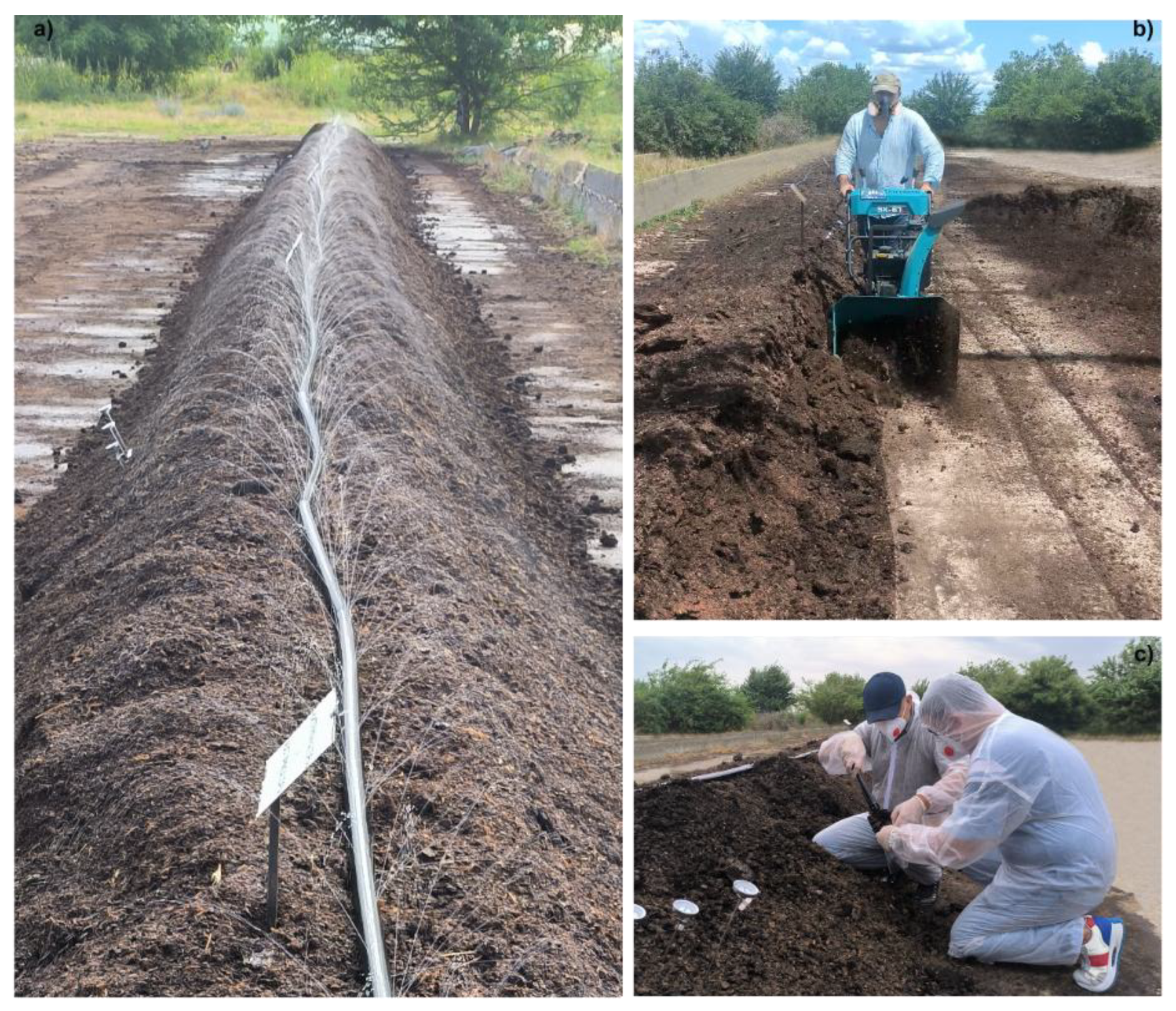
Figure 2.
Content of (a) organic carbon by fractions, (b) humic acids and (c) total of humic acids in different fractions of compost.
Figure 2.
Content of (a) organic carbon by fractions, (b) humic acids and (c) total of humic acids in different fractions of compost.
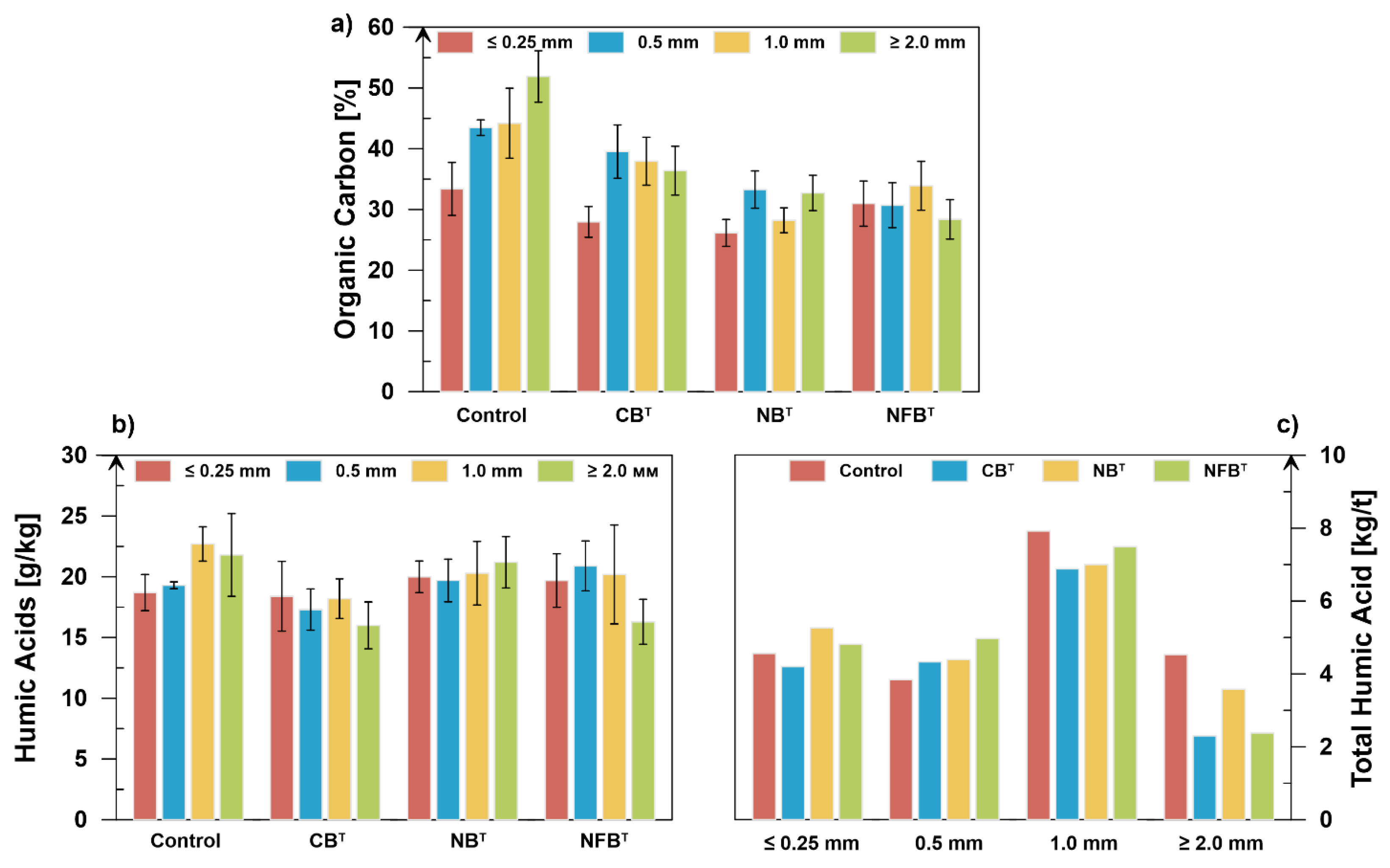
Figure 3.
Relative content of (a) total nitrogen by fractions, (b) total content of total nitrogen in compost, (c) mineral forms of nitrogen (NO3+NH4) by fractions and (d) total content of mineral forms of nitrogen taking into account the proportion of fraction.
Figure 3.
Relative content of (a) total nitrogen by fractions, (b) total content of total nitrogen in compost, (c) mineral forms of nitrogen (NO3+NH4) by fractions and (d) total content of mineral forms of nitrogen taking into account the proportion of fraction.
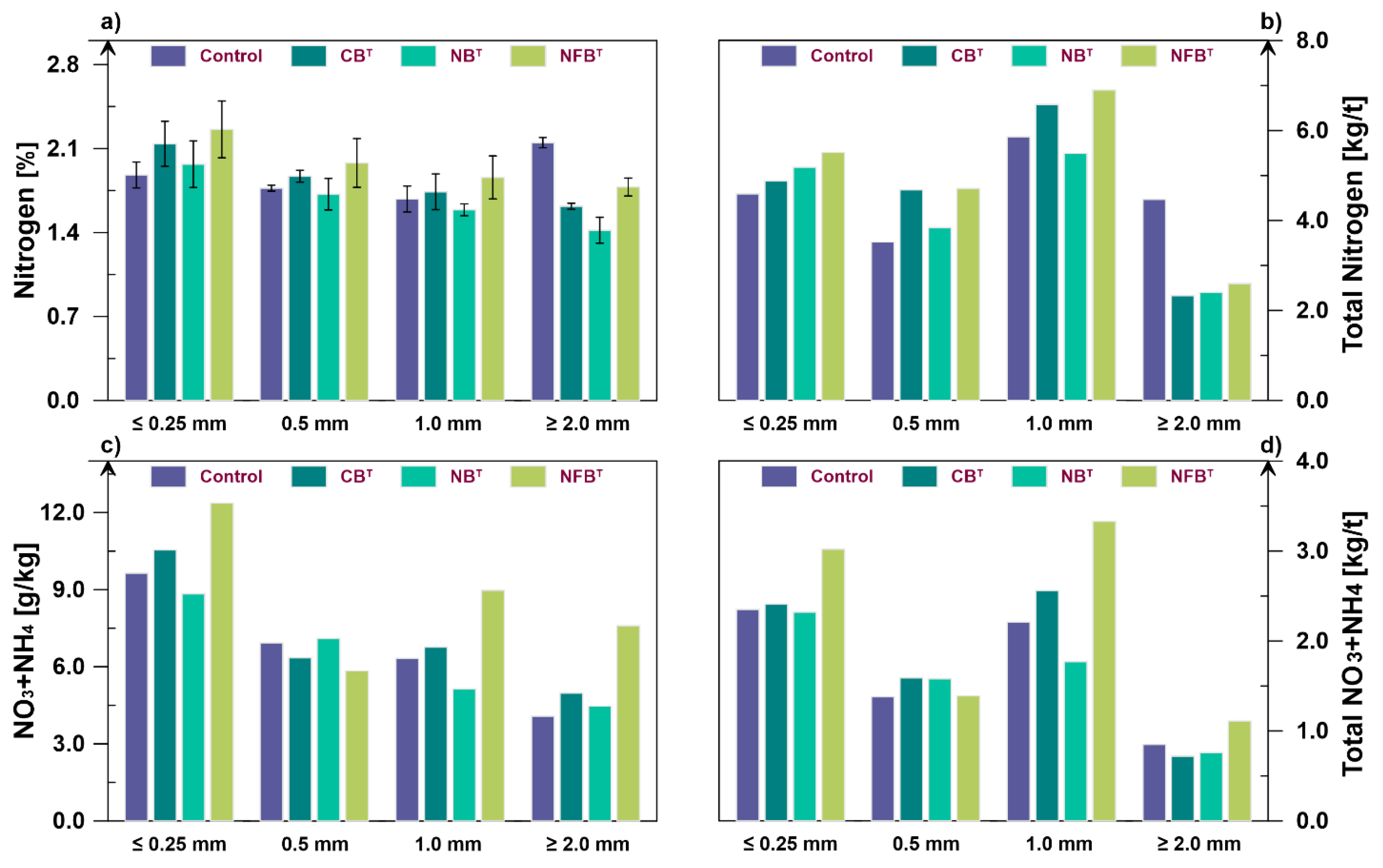
Figure 4.
Distribution of mineral forms of nitrogen in compost by fractions: a) ≤0.25 mm; b) 0.5 mm; c) 1.0 mm and d) ≥2.0 mm.
Figure 4.
Distribution of mineral forms of nitrogen in compost by fractions: a) ≤0.25 mm; b) 0.5 mm; c) 1.0 mm and d) ≥2.0 mm.
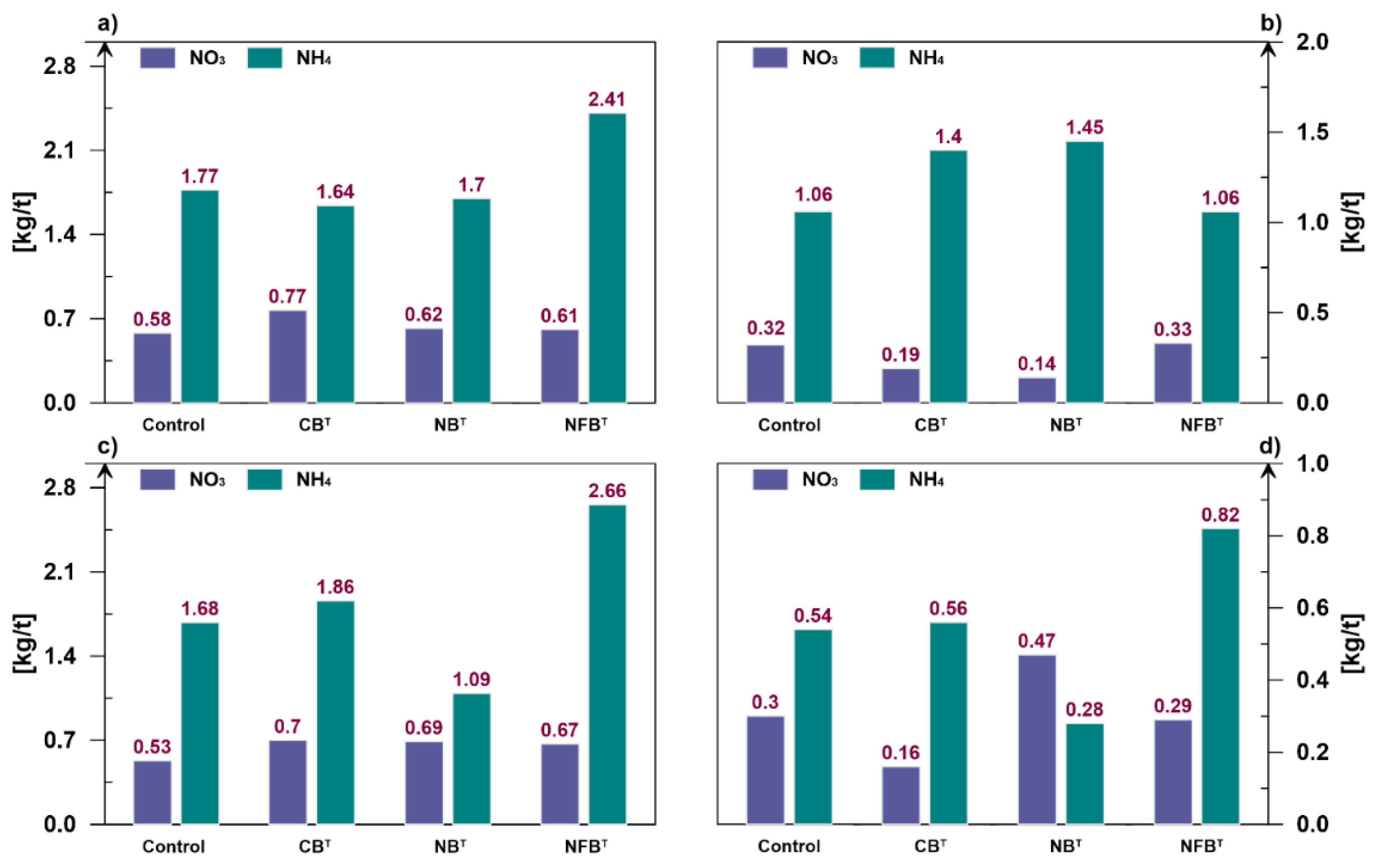
Figure 5.
Correlation relationships between mineral forms of nitrogen and total nitrogen in compost (a) without and (b) with the proportion of fractions.
Figure 5.
Correlation relationships between mineral forms of nitrogen and total nitrogen in compost (a) without and (b) with the proportion of fractions.
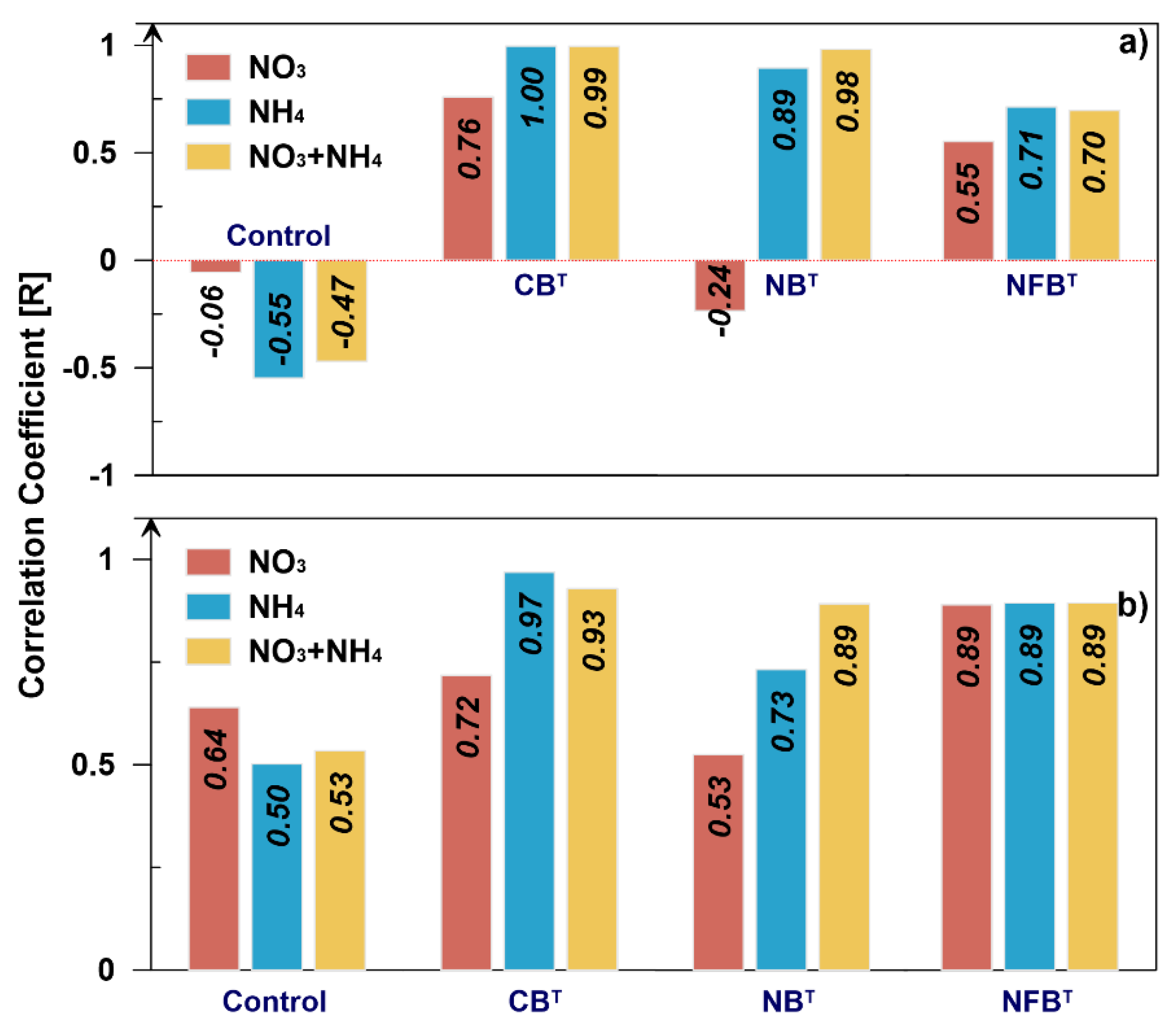
Figure 6.
Content of microbial biomass carbon (a) and invertase activity in soil fertilized with different fractions of compost (b).
Figure 6.
Content of microbial biomass carbon (a) and invertase activity in soil fertilized with different fractions of compost (b).
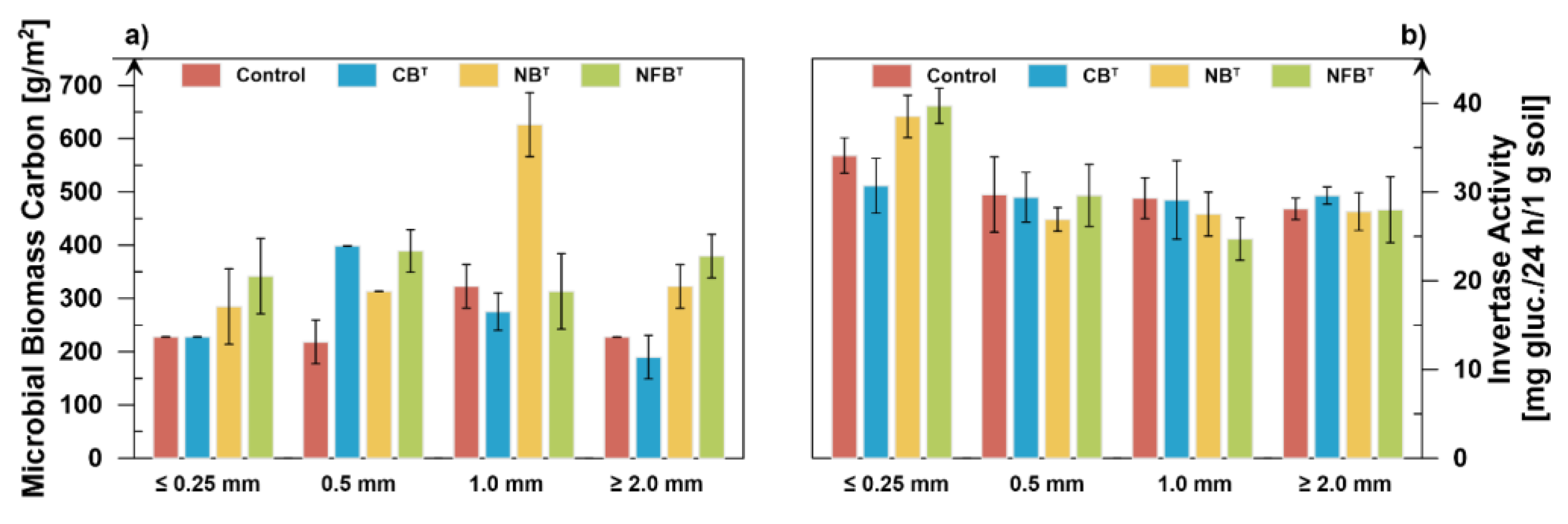

Table 1.
Phylogenetic analysis of nucleotide sequences of 16S rRNA gene fragments of soil microorganism strains.
Table 1.
Phylogenetic analysis of nucleotide sequences of 16S rRNA gene fragments of soil microorganism strains.
| Strains | Closely related type strain | № GenBank | Similarity, % | Number of nucleotides, units |
| CBT | Aeribacillus pallidus KCTC 3564T | CP017703 | 100 | 1272 |
| NFBT2 | Neobacillus sedimentimangrovi FJAT-2464T | MN963926 | 100 | 1384 |
| NFBT9 | Aeribacillus composti N.8T | LT594972 | 100 | 1293 |
| NFBT10 | Caldifermentibacillus hisashii N-11T | AB618491 | 100 | 814 |
| NBT1 | Acinetobacter pittii CIP 70.29T | APQP01000001 | 100 | 792 |
| NBT1 | Pseudomonas plecoglossicida NBRC 103162T | BBIV01000080 | 100 | 790 |
Table 2.
Degree of decomposition of poultry manure after biocomposting (%).
| Variants | Fractions, mm | |||||||
| ≤0.25 | Variation, % | 0.5 | Variation, % | 1.0 | Variation, % | ≥2.0 | Variation, % | |
| Start | 16.0 | - | 16.3 | - | 28.7 | - | 39.0 | - |
| Control | 24.4 | - | 19.9 | - | 34.9 | - | 20.8 | - |
| CBT | 22.8 | -6.6 | 25.0 | 25.6 | 37.8 | 8.3 | 14.4 | -30.8 |
| NBT | 26.3 | 7.8 | 22.3 | 12.1 | 34.5 | -1.2 | 16.9 | |
| NFBT | 24.4 | - | 23.8 | 19.6 | 37.1 | 6.3 | 14.6 | -29.8 |
Table 3.
Correlations between nitrogen and HA content.
| Options (Based on the analysis results) | ||||||||
| Factions | Control (%) | CBT (%) | NBT (%) | NFBT (%) | ||||
| N | HA | N | HA | N | HA | N | HA | |
| ≤0.25 | 1.88 | 1.87 | 2.14 | 1.84 | 1.97 | 2.00 | 2.26 | 1.97 |
| 0.5 | 1.77 | 1.93 | 1.87 | 1.73 | 1.72 | 1.97 | 1.98 | 2.09 |
| 1.0 | 1.68 | 2.27 | 1.74 | 1.82 | 1.59 | 2.03 | 1.86 | 2.02 |
| ≥2.0 | 2.15 | 2.18 | 1.62 | 1.60 | 1.42 | 2.12 | 1.78 | 1.63 |
| r= | 0.041 | 0.716 | -0.765 | 0.468 | ||||
| Options (In terms of absolute units, taking into account the proportion of fractions) | ||||||||
| Factions | Control (%) | CBT (%) | NBT (%) | NFBT (%) | ||||
| N | HA | N | HA | N | HA | N | HA | |
| ≤0.25 | 4.59 | 4.56 | 4.88 | 4.20 | 5.18 | 5.26 | 5.51 | 4.81 |
| 0.5 | 3.52 | 3.84 | 4.68 | 4.33 | 3.84 | 4.39 | 4.71 | 4.97 |
| 1.0 | 5.86 | 7.92 | 6.58 | 6.88 | 5.49 | 7.0 | 6.9 | 7.49 |
| ≥2.0 | 4.47 | 4.53 | 2.33 | 2.3 | 2.4 | 3.58 | 2.6 | 2.38 |
| r= | 0.943 | 0.976 | 0.902 | 0.969 | ||||
Disclaimer/Publisher’s Note: The statements, opinions and data contained in all publications are solely those of the individual author(s) and contributor(s) and not of MDPI and/or the editor(s). MDPI and/or the editor(s) disclaim responsibility for any injury to people or property resulting from any ideas, methods, instructions or products referred to in the content. |
© 2025 by the authors. Licensee MDPI, Basel, Switzerland. This article is an open access article distributed under the terms and conditions of the Creative Commons Attribution (CC BY) license (http://creativecommons.org/licenses/by/4.0/).
Copyright: This open access article is published under a Creative Commons CC BY 4.0 license, which permit the free download, distribution, and reuse, provided that the author and preprint are cited in any reuse.