

Submitted:
02 December 2025
Posted:
02 December 2025
You are already at the latest version
Abstract
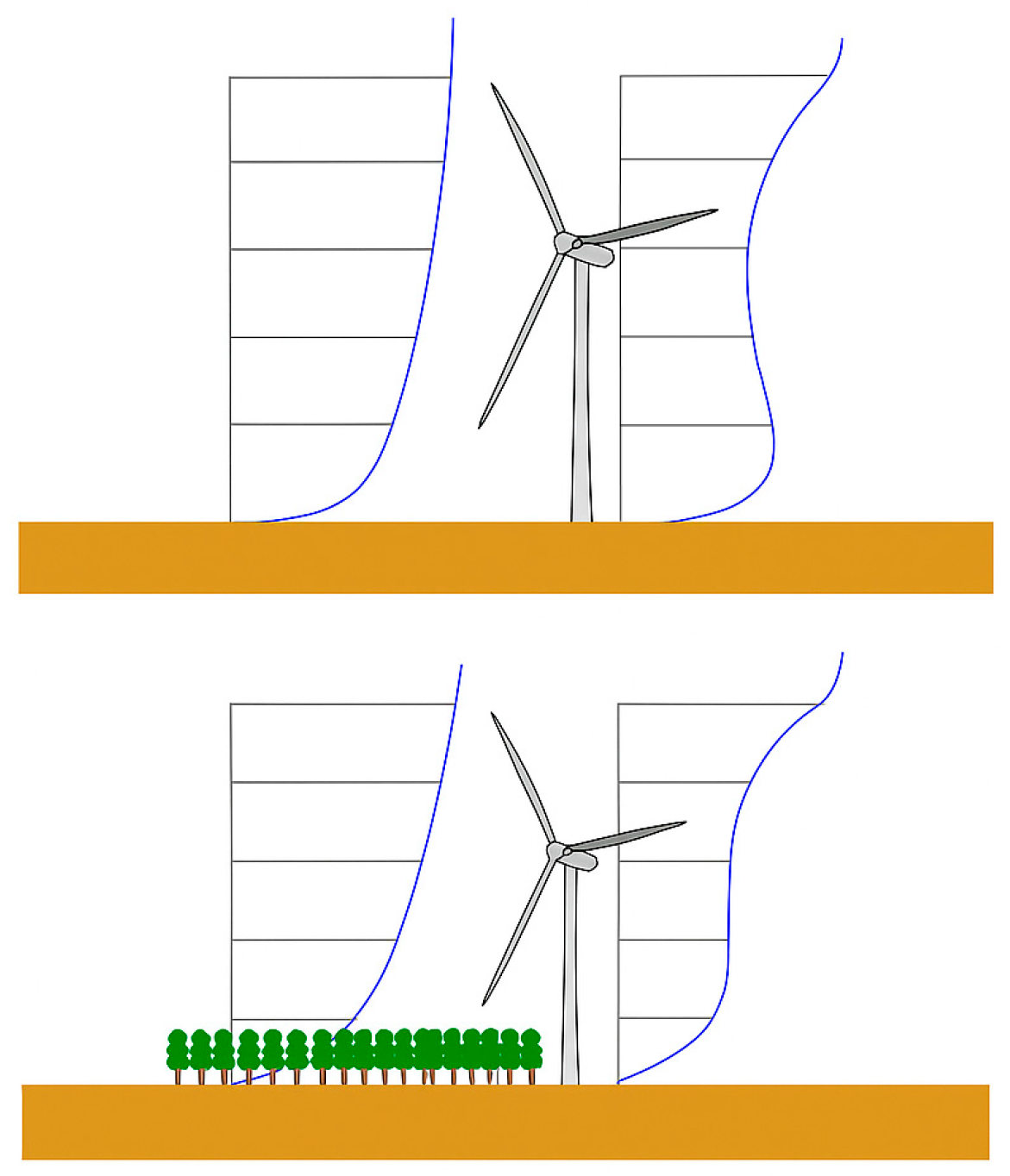
Forests play a vital role in influencing wind flow by modifying turbulence intensity and vertical wind shear. As wind turbines are susceptible to these conditions, accurately describing wind flow in forested environments is vital for ensuring structural reliability and realistic energy yield assessments. In Latvia, where approximately 51,3% of the territory is covered by forests, the likelihood of wind turbine deployment in such areas is considerable. However, wind behaviour within and above forests is complex and strongly influenced by canopy effects, which in turn affect wake dynamics, structural fatigue, and power production. Advancing research in this field is therefore crucial for improving the accuracy of wind resource assessment and supporting evidence-based engineering solutions that enable the sustainable development of wind energy. Moreover, a better understanding of forest–atmosphere interactions contributes to more precise estimations of the Levelized Cost of Energy (LCOE), as accurate wind flow modelling directly impacts energy yield predictions, project feasibility, and long-term economic performance.
Keywords:
1. Introduction
2. Materials and Methods
3. Results
3.1. Study Area
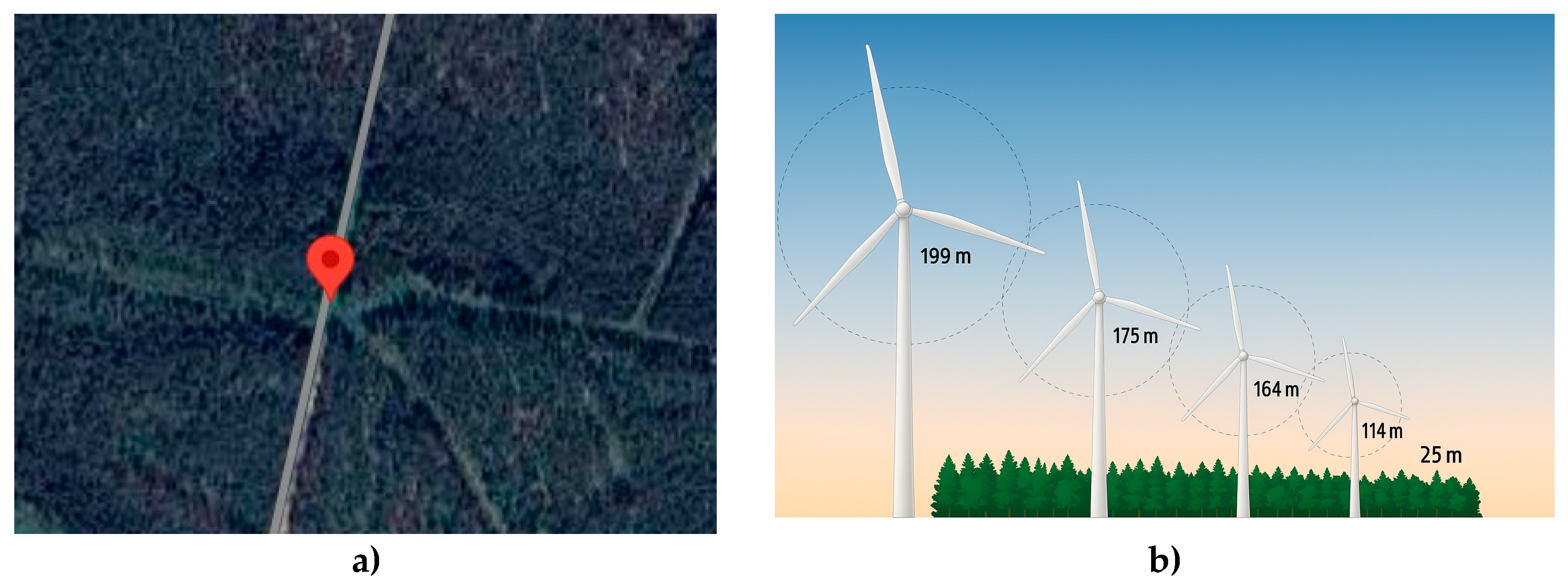
3.2. Effect of Seasonal Wind Variation on Energy Yield
3.3. Effect of Canopy Height on Annual Energy Production
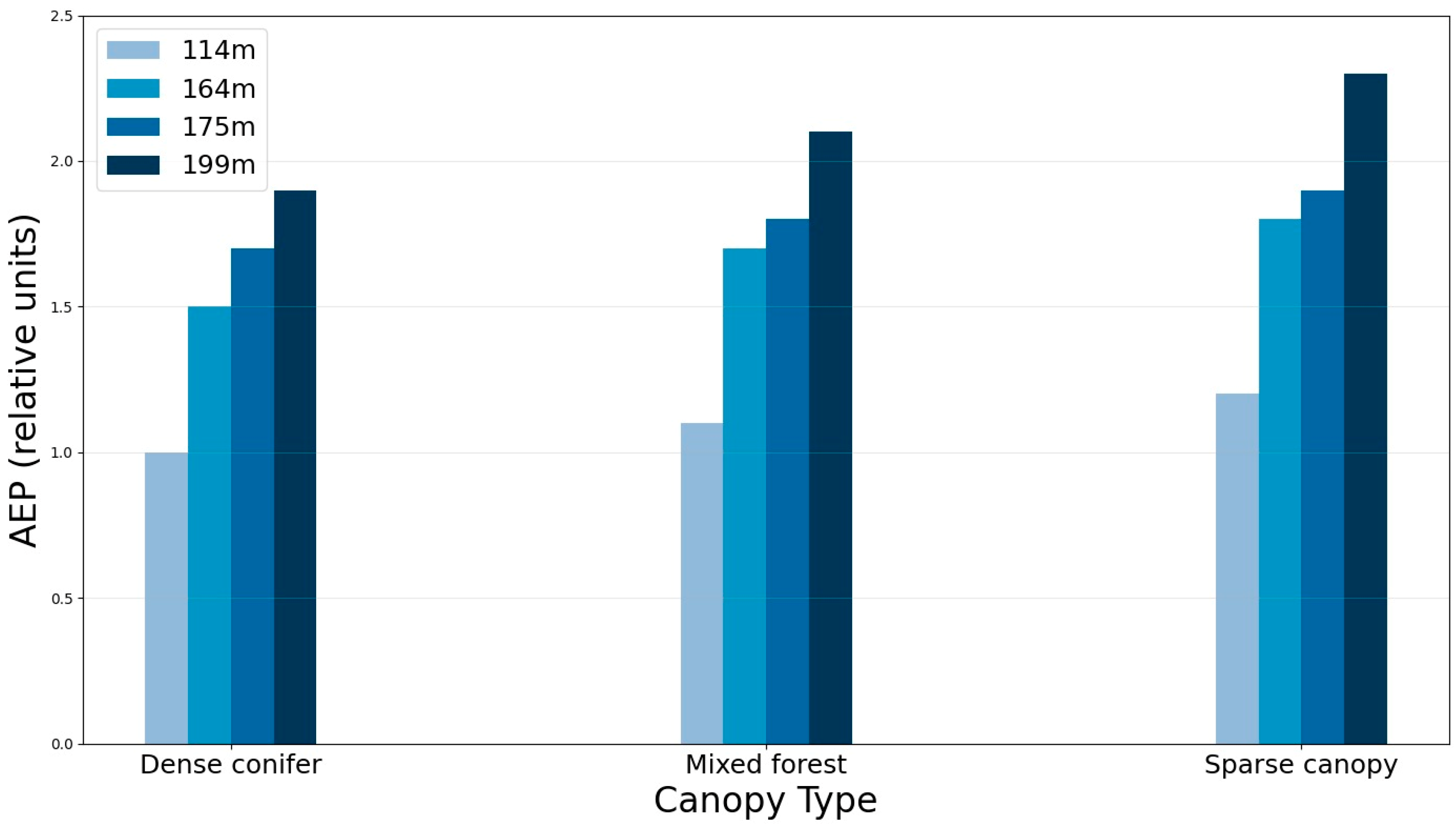
3.4. Effect of Forest Canopy Type on Annual Energy Production
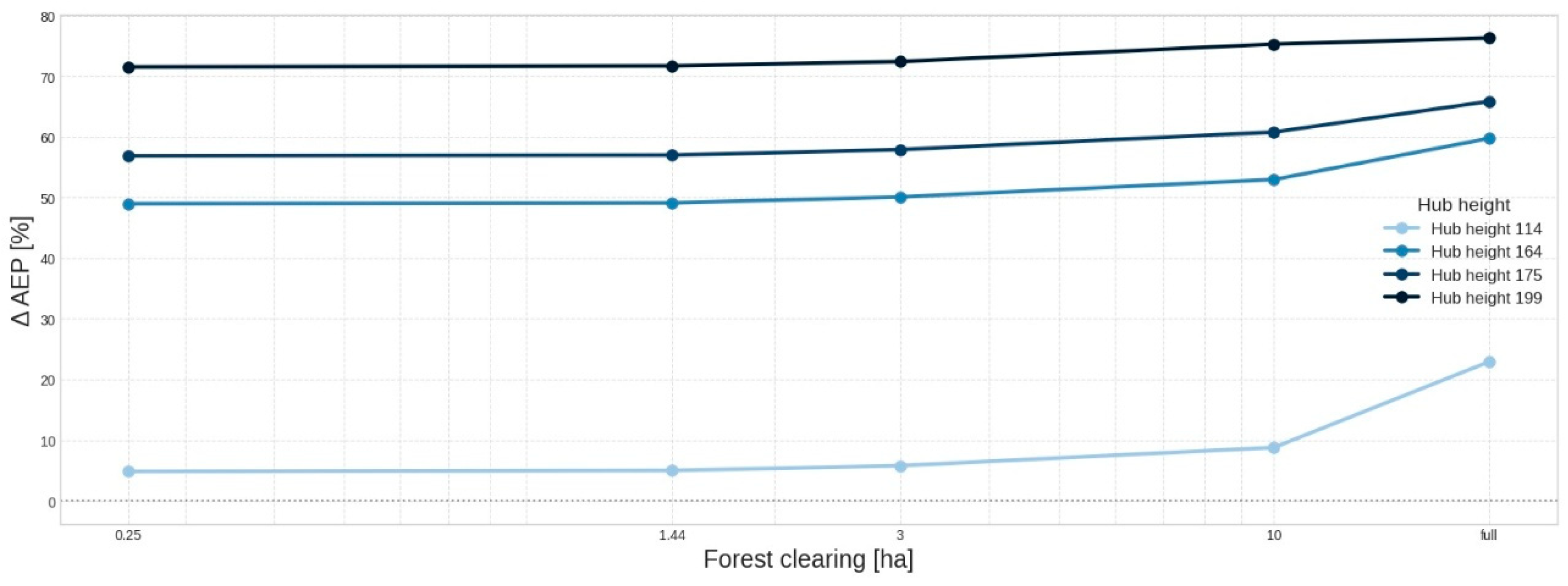
3.5. Effect of Forest Clearing Area on Annual Energy Production
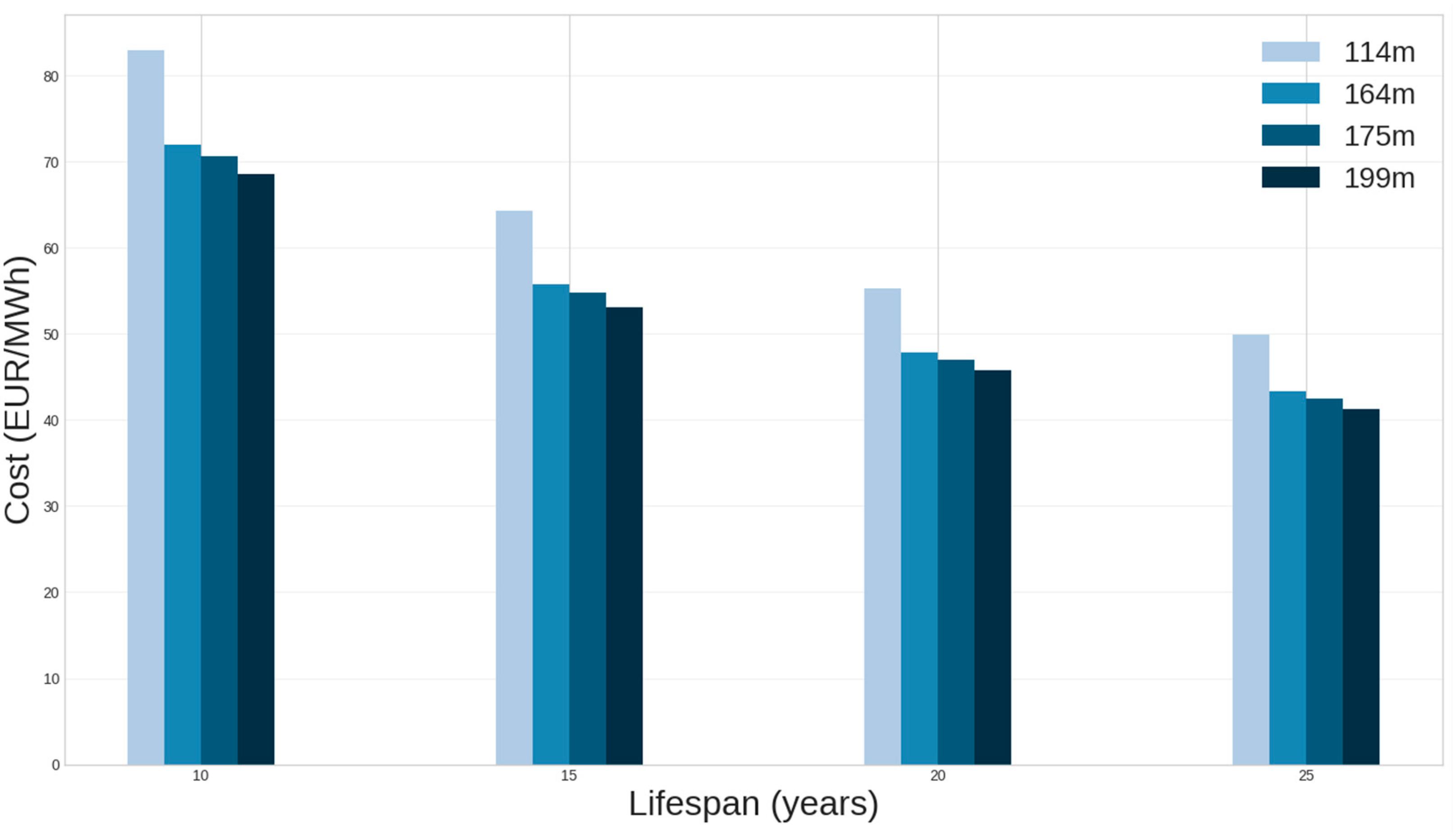
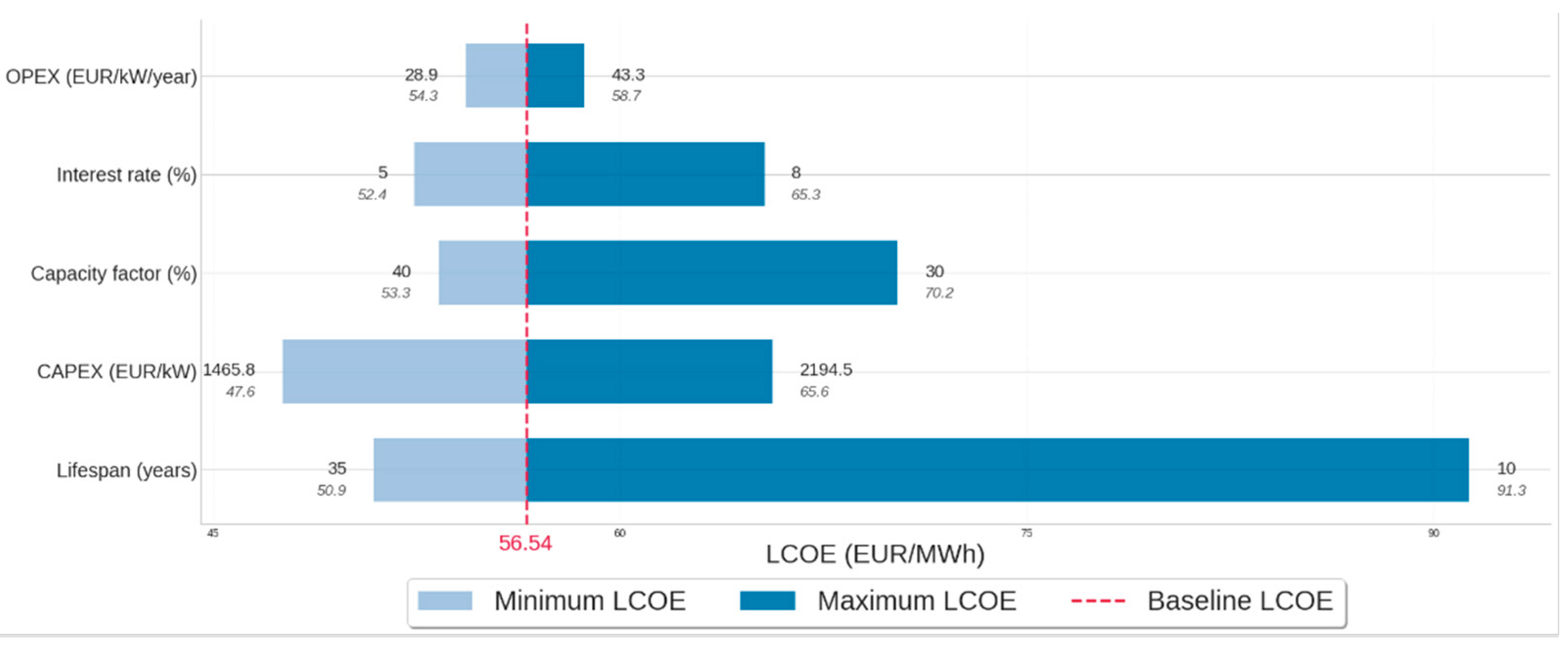
3.6. Evaluation of Economic Efficiency Using the Levelized Cost of Electricity (LCOE)

Conclusions
Author Contributions
Funding
Conflicts of Interest
References
- A European Green Deal - https://ec.europa.eu/info/strategy/priorities-2019-2024/european-green-deal, 2023-05-12.
- Fit for 55: delivering the EU's 2030 Climate Target on the way to climate neutrality - https://eur-lex.europa.eu/legal-content/EN/TXT/?uri=CELEX:52021DC0550.
- European Commission. European Wind Power Action Plan. Available online: https://eur-lex.europa.eu/legal-content/EN/TXT/?uri=celex:52023DC0669 (accessed on 19 September 2025).
- Central Statistical Bureau of Latvia. Renewable Resource Consumption up by 11.2% in the Past Five Years. Press Release; 10 September 2025. Available online: https://stat.gov.lv/en/statistics-themes/business-sectors/energy/press-releases/23598-consumption-renewable-energy (accessed on 17 September 2025).
- Artelys. Integration of Renewable Energy in the Latvian Grid: Executive Summary; Augstsprieguma Tīkls AS (AST). Available online: https://www.ast.lv/sites/default/files/editor/Executive_summary_Artelys.pdf (accessed on 18 September 2025).
- Stakens, J.; Mutule, A.; Lazdins, R. Agriculture Electrification, Emerging Technologies, Trends and Barriers: A Comprehensive Literature Review. Available online: https://www.scopus.com/pages/publications/85161545841 (accessed on 30 October 2025).
- Korõtko, T.; Plaum, F.; Häring, T.; Mutule, A.; Lazdins, R.; Borščevskis, O.; Rosin, A.; Carroll, P. Assessment of Power System Asset Dispatch under Different Local Energy Community Business Models. Energies 2023, 16, 3476. Available online: https://www.scopus.com/pages/publications/85156138329 (accessed on 30 October 2025).
- Baylis, S., M. Colls, P. Marek and A. Head, 2014: Parameterised turbine performance. Proceedings 9th meeting of the Power Curve Working Group, 16 December 2014, Glasgow, Scotland. [Available at http://www.pcwg.org/].
- Stuart, P., 2013: Introduction to the Power Curve Working Group. Proceedings from EWEA workshop Resource Assessment, 25-26 June 2013, Dublin, Ireland. [Available at http://www.ewea.org/events/workshops/wp-content/uploads/2013/06/EWEA-RA2013Dublin-3-1-Peter-Stuart-RES.pdf ].
- Baylis, S., M. Colls, P. Marek and A. Head, 2014: Parameterised turbine performance. Proceedings 9th meeting of the Power Curve Working Group, 16 December 2014, Glasgow, Scotland. [Available at http://www.pcwg.org/].
- EC 61400-1:2019 (Edition 4). Wind Energy Generation Systems—Part 1: Design Requirements. International Electrotechnical Commission, Geneva, Switzerland. Available online: https://webstore.iec.ch/en/publication/26423\ (accessed on 3 November 2025).
- Kazda, J.; Zendehbad, M.; Chokani, N.; Abhari, R.S. (2017). Impact of Forest-Elevated Turbulence Levels on Wind Farm Performance. J. Phys.: Conf. Ser., 854, 012041. [CrossRef]
- Levelized Cost of Electricity—Renewable Energy Technologies; Fraunhofer Institute for Solar Energy Systems ISE: Freiburg, Germany, 2024. Available online: https://www.ise.fraunhofer.de/content/dam/ise/en/documents/publications/studies/EN2024_ISE_Study_Levelized_Cost_of_Electricity_Renewable_Energy_Technologies.pdf (accessed on 31 October 2025).
- International Renewable Energy Agency (IRENA). Renewable Power Generation Costs in 2024; International Renewable Energy Agency: Abu Dhabi, 2025. Available online: https://www.rinnovabili.it/wp-content/uploads/2025/07/IRENA-RENEWABLE-POWER-GENERATION-COSTS-IN-2024.pdf.
- NREL. Cost of Wind Energy Review: 2024 Edition; National Renewable Energy Laboratory: Golden, CO, USA, 2025. Available online: https://www.nrel.gov/docs/fy25osti/91775.pdf (accessed on 31 October 2025).
- BalticWind.eu. “IRENA Report: Onshore and Offshore Wind — the Most Cost-Competitive Power Generation Globally.” BalticWind.eu, 28 Jul 2025. Available online: https://balticwind.eu/irena-report-onshore-and-offshore-wind-the-most-cost-competitive-power-generation-globally/ (accessed on 31 October 2025).
- Agafonova, O. A Numerical Study of Forest Influences on the Atmospheric Boundary Layer and Wind Turbines. Ph.D. Thesis, Lappeenranta University of Technology, Lappeenranta, Finland, 2017.
- Cheng, S.; Elgendi, M.; Lu, F.; Chamorro, L.P. On the Wind Turbine Wake and Forest Terrain Interaction. Energies 2021, 14, 7204. [CrossRef]
- Nebenführ, B.; Davidson, L. Prediction of Wind-Turbine Fatigue Loads in Forest Regions Based on Turbulent LES Inflow Fields. Wind Energy 2014, 17 (3), 337–350. Available online: https://onlinelibrary.wiley.com/doi/abs/10.1002/we.2076 (accessed on 30 October 2025).
- Anderson, E.; Antkowiak, M.; Butt, R.; Davis, J.; Dean, J.; Hillesheim, M.; Hotchkiss, E.; Hunsberger, R.; Kandt, A.; Lund, J.; Massey, K.; Robichaud, R. Broad Overview of Energy Efficiency and Renewable Energy Opportunities for Department of Defense Installations; U.S. Department of Energy: Washington, DC, USA, 2011. [CrossRef]
- Troen, I.; Lundtang Petersen, E. European Wind Atlas; Risø National Laboratory: Roskilde, Denmark, 1989.
- EMD International A/S. WAsP—The Wind Atlas Analysis and Application Program: User Guide and Technical Reference. EMD International A/S, Aalborg, Denmark, 2019. Available online: https://www.emd.dk/wasp (accessed on 3 November 2025).
- Vestas. Energy Solutions. Onshore Wind Turbines. Available online: https://www.vestas.com/en/energy-solutions/onshore-wind-turbines/enventus-platform/V172-7-2-MW (accessed on 17 October 2025).
- Norwegian Meteorological Institute. THREDDS Data Server Open Access to Meteorological and Oceanographic Data. Available online: https://thredds.met.no/thredds/catalog.html (accessed on 19 October 2025).
- FM Global. FM Property Loss Prevention Data Sheets 13-10: Wildland Fire; FM Global: Johnston, RI, USA, 2021; p. 15. Available online: https://www.fm.com/-/media/project/publicwebsites/fmglobal/documentum-new/data-sheet-individual/13-mechanical/fmds1310.pdf (accessed on 17 October 2025).
- The Confederation of Fire Protection Associations Europe (CFPA-E). Wind Turbines Fire Protection, Guideline No. 22:2022 F. CFPA-E: Stockholm, Sweden, 2022. Available online: https://cfpa-e.eu/app/uploads/2022/05/CFPA_E_Guideline_No_22_2022_F.pdf (accessed on 17 October 2025).
- Aldersey-Williams, J.; Rubert, T. Levelised Cost of Energy—A Theoretical Justification and Critical Assessment. Energy Policy 2019, 124, 169–179. [CrossRef]

| Country | LCOE [€/MWh] | Reference |
| Germany (DE) | 43–92 | [13] |
| Poland (PL) | ≈37 | [14] |
| Finland (FI) | ≈39 | [15] |
| Sweden (SE) | ≈36 | [15] |
| Spain (ES) | ≈47 | [15] |
| United States (US) | ≈39 | [15] |
| Baltic States (EE, LV, LT) | ≈47 ± 10 | [15,16] |
| Model | V172-7.2 MW [23] |
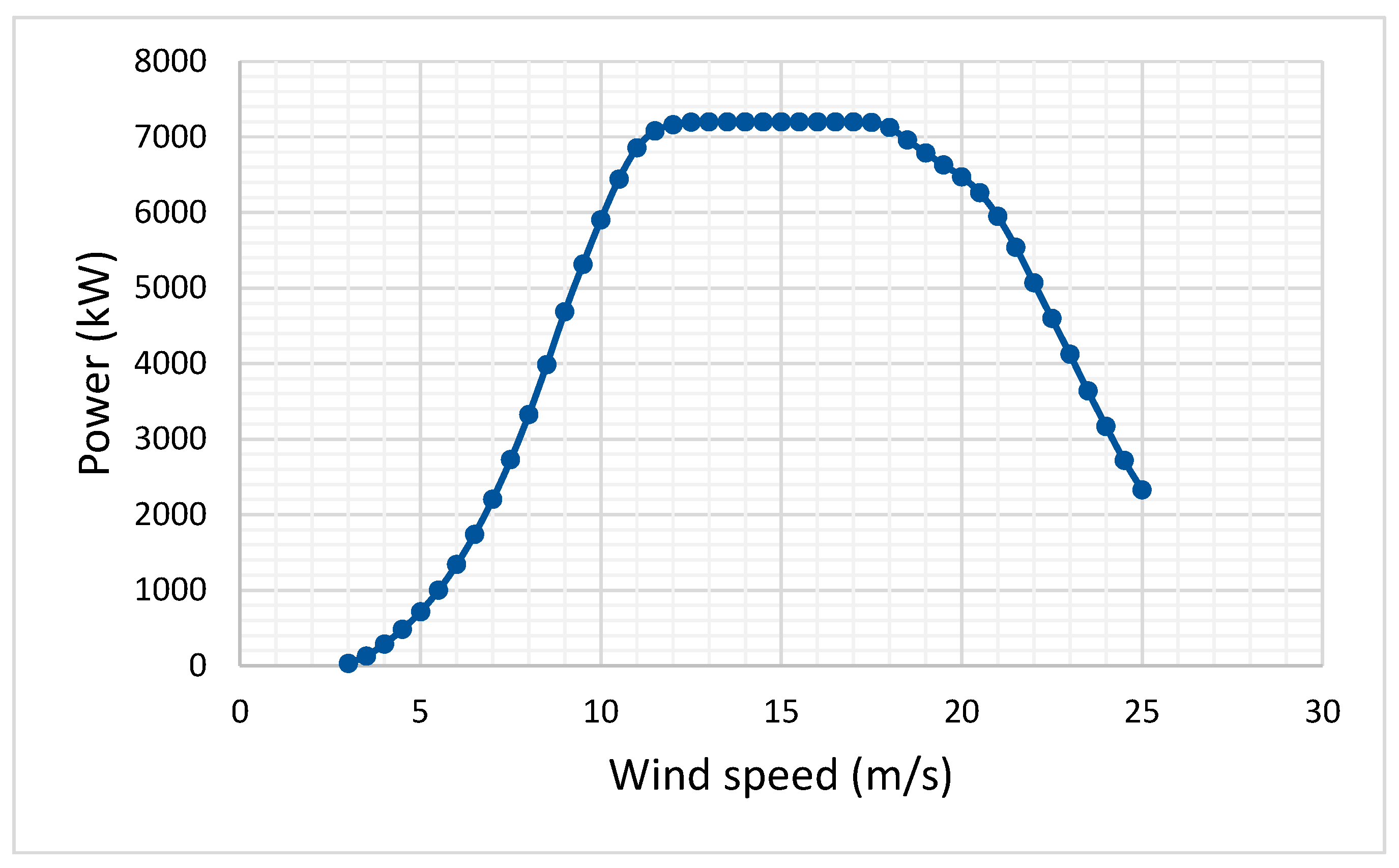
| Standard rated power | 7200 kW |
| Cut-in wind speed | 3 m/s |
| Cut-out wind speed | 25 m/s |
| Wind class | IEC S |
| Maximum sound power | 107.8 dB(A) |
| Rotor diameter | 172 m |
| Rotor swept area | 23235 m2 |
| Available hub heights | 114 m; 150 m; 164 m; 166 m; 175 m; 199 m |
| Frequency | 50/60 Hz |
Disclaimer/Publisher’s Note: The statements, opinions and data contained in all publications are solely those of the individual author(s) and contributor(s) and not of MDPI and/or the editor(s). MDPI and/or the editor(s) disclaim responsibility for any injury to people or property resulting from any ideas, methods, instructions or products referred to in the content. |
© 2025 by the authors. Licensee MDPI, Basel, Switzerland. This article is an open access article distributed under the terms and conditions of the Creative Commons Attribution (CC BY) license (http://creativecommons.org/licenses/by/4.0/).


