
Submitted:
01 December 2025
Posted:
03 December 2025
You are already at the latest version
Abstract
This study deals with the classificational aspects of raags of Hindustani Classical music by grouping raags into thaats and timings. The raags are classified based on the notes and the time of the day. The different timings of the days portrays various emotions, and these emotions are expressed through raags.
Keywords:
raags
; thaats
; timings
; moods
; emotions
1. Thaats in Hindustani Classical Music
The thaat system in Hindustani Classical music is a classification scheme which organizes the various raags based on certain rules (which we will describe in detail). This can be said to be a framework through which the raags can be grouped together under an umbrella definition. It is well understood that raags existed before the system of thaats was developed. thaats were developed and created by Pt. Vishnu Narayan Bhatkhande, who was inspired from the Mela System of Carnatic Music from South India [1,2]. To understand a detailed description of Hindustani Classical Music and the meaning of terms used in Hindustani Classical Music, please refer to [3,4]. Figure 1 shows the various thaats in Hindustani classical music.
The table below shows the various thaats and the notes which are used in them.
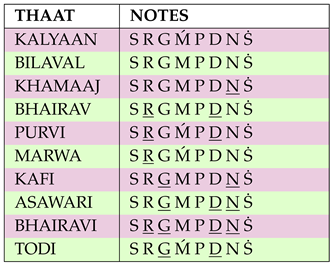
- should include a minimum of 7 out of the 12 notes (including komal and teevra)
- can only have a single aaroh
- thaats are not raags, but raags are derivatives of thaats.
- thaats cannot have both pure notes and the komal or teevra of that particular note
We will keep our description of the thaats to the fundamental level and not being extremely detailed. The aim this article is to give an exposure to the fundamentals of thaats and the various raags belonging to the thaats. In our future research, we would definitely like to study each thaat in a more detailed and exhaustive way.
2. Prahar System of Hindustani Classical Music
The prahar system of Hindustani Classical Music is based of the time period of a day. A day is divided into 8 prahars with each prahar being a 3 hour period. Each prahar is based on the mood, energy, feeling and other emotions which someone goes through depending on the time of the day [1,2,5,8,9,10]. The reasoning behind the raags associated with timings is because raags are not just scales or a collection of notes. Every part of the day is associated with a certain emotion due to the sunrise, or start of the day, going towards mid-day, then afternoon and then sunset. The dynamics and nature of each part of the day has a variety depending on the mood of the day, so the raags are allocated timings which bring out those particular emotions. Some raags may be common in multiple prahars because of the various sources we have used. The prahars and their timings are shown in the table below:
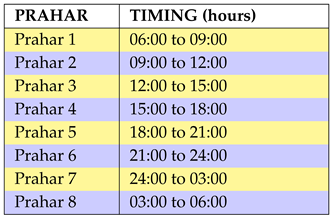
The basics of each prahar, along with the moods, emotions aesthetics and the raags belonging to the various prahars are described in the following sections.
2.1. Prahar 1
Prahar 1 is from 06:00 to 09:00 hours and is also called Purvanha. The various emotions, aesthetics and moods associated with prahar 1 are:
- associated with beginning of a new day
- displays a sense of being optimistic and freshness
- the earth awakens and so does divine energy
- instills the quality of rejuvenation
- peacefulness and fresh energy
- meditative, serene, melancholic and full of hope and devotion
- usually melodic and gentle compositions and raags are played which portray the peaceful nature of the morning
- a mood of contemplation is also expressed through the raags of this prahar
- the intricate patterns and the complexity of melodies portray emotions of invigorating qualities of the nature which is felt in the early morning hours
- the vibrant colors of the early morning are easily felt through the performances of the raags of this prahar
- some other emotions which the raags express are hope, calmness of the beginning, meditation and also the refreshing behavior of the start of something new
2.2. Prahar 2
Prahar 2 is said to be from 09:00 to 12:00 hours. It is also known as Madhyanha. This time period symbolizes the transitioning from early morning to mid-day. The moods, emotions and aesthetics of prahar 2 are,
- transitioning from morning hours to mid-day hours signifies the increase in energy
- this prahar requires more dynamical and more energetic musical expressions
- the music encompasses intricate rhythms, patterns and increased complexity
- there is also more variations compared to prahar 1
- usually fast paced and high intensity
- generally a faster tempo is used to show the raags and the variations in the raag patterns
- the emtions which connect with prahar 2 are joy and enthusiasm with lots of liveliness which is evident from a faster tempo
- compositions with intricate patterns and complexities are expressed with quite a few variations
- feelings of uplifting from a fresh start and going forward with full energy is expressed
- stimulating and invigorating feeling
- the atmosphere and ambience is crisp with increasing warmth and hence energy.
- expresses curiosity towards what the day will bring forward as it progresses
2.3. Prahar 3
Prahar 3 is assigned to the time frame from 12:00 to 15:00 hours. It is also referred to as Aparanha and is also called mid-day. The characteristics of this prahar are,
- during time the sun is at its zenith and the energy is at the peak
- regarded as a time period of high intensity
- percussion instuments such as tabla and pakhavaj are significantly used
- intricate and complex patterns along with a lot of improvisations are used
- the noon-afternoon essence is usually connected with a vibrant energy
- this is generally regarded as a prahar of dynamism and power
- some raags with heroic moods are also played in this prahar
- various diverse aspects of music are applied due to a wide range of emotions
- cheerful emotion along with energy and celebrations are often seen in the raags
- the warm atmosphere of the noon-afternoon time period is also expressed through optimistic energy and more creativity
- high creativity is also connected and carried with a celebration mood
- a multitude of emotions as mentioned above with festival like ambience is usually expressed
The raags which fall in prahar 3 are shown in Figure 6 below.
2.4. Prahar 4
This section is on prahar 4 which has been given the time slot of 15:00 to 18:00 hours, and is also known as Sayanha. We can see that this connects mid-day to late afternoon. The emotions and aesthetics of this prahar are as follows.
- the energy of the day starts to calm down and the transition is seen from the mellowing down of the intensity towards more of a serene ambience
- starts realizing inner reflection and contemplative mood
- the raags in this prahar are more towards inner thoughts
- soothing emotions with introspection and tranquility
- there is a transition from high energy towards serene rhythmic improvisations
- there is a delicate balance of energy and a peaceful atmosphere, and also sometimes invoking a feeling of longing
- the transition from the heat of the day towards a gradual cooling of the late afternoon is regularly shown through the raags of this prahar
- the music during this prahar also shows self reflection and an equilibrium with the environment
- some raags also portray a feeling of majesty
- overall this prahar symbolizes a serene and cooling emotion along with a reflective touch
The raags which fall in prahar 4 are shown in Figure 7 below.
2.5. Prahar 5
This section describes the raags in prahar 5. Prahar 5 is also known as Prodasha and it has been alloted the time slot of 18:00 to 21:00 hours. This is associated with the evening and the twilight hours. The emotional characteristics of this prahar are,
- represents the delicate transition from day to evening, encompassing the twilight hours within itself
- this prahar is generally associated with mysticism because of the gradually setting of the sun
- it signifies romantic atmosphere and a beautifully melodic ambience
- there is a great emphasis on melodic structures which express beauty of the twilight hours
- along with the romantic signature, this prahar also connects with the serene ambience of the transition of daylight towards sunset
- expressions of longing and contemplative mood
- melodic improvisations and gently expressed structure and patterns which display calmness
- a sense of pathos and melancoly emotion is felt
- deep emotions of longing, yearning, transitioning from day to darkness
- the poetic beauty along with the romantic longing emotional attachment is regularly felt through the raags of prahar 5
- some emotions of nostalgia also sets in due to the twilight ambience
- this prahar also shows the winding down of the day and gradual self reflective nature through its raags
- on the whole, the raags of prahar 5 express the transition of energy towards calming down and more romantic and longing nature
2.6. Prahar 6
The time duration of 21:00 to 24:00 hours is allocated to prahar 6. This prahar is also called Nishita and it marks the transition from the late evening hours to the late night period. The characteristics of this period are,
- this period is generally attributed to the emotions of mysticism and introspection of oneself
- the transition from late evening to late night delves into the depths of sprituality and deep self understanding emotions
- brings out the emotions of inner reflection and understanding of oneself and gives a feeling of mysticism that comes along with the deepening of the night
- an important aspect of this prahar is that the music invokes a feeling of deep meditation and a contemplative nature
- the raags performed during this prahar have a devotional aspect and deep spirituality connected with them
- some emotions and sentiments such as surrendering to nature, and longing are also felt through the raags of this prahar
- in general the raags are performed with a relatively slow pace expression grace and sensitivity and intricate patterns are shown which bring out the emotions of this prahar
- the self immersing nature of the raags are beautifully brought out and the gentleness of longing along with calmness is felt
- some other emotions which can be felt through the raags of this prahar are nostalgia, peace, romantic longing, a bit of sadness and introspection
2.7. Prahar 7
Prahar 7 starts at 00:00 hours and goes till 03:00 hours. This prahar is also known as Triyama, and it represents the late night hours which are characterized by the the darkness and depth of night. The emotionals aspects of the raags in this prahar are as follows.
- the stillness of the night is expressed emotionally through the raags of prahar 7
- during these late hours everything stands still and there is an aura of silence in the surrounding
- the raags also show emotions of introspection and lead towards spiritual expressivness
- aspects of inner peace and meditative state are also expressed
- intricate ornamentations and melodic phrases are used in such a way that express the aesthetic emotions of Indian Classical Music
- the calmness and profound stillness of the late night hours can be felt through the raags of this prahar
- the smooth and calm rhythmic melodies and contemplative improvisations often helps in shedding distractions and focus on the self understanding
- the stillness of late night may also invoke the feeling of longing and incompleteness
- introspection is a very strong emotion during this time period because the calmness and meditative state is relatively easier to focus on
- some raags may also express the romantic nature of the night and some raags also bring out the devotional aspects which is usually seen when there is a state of calmness
- overall, this period focusses on the emotions associated with the peacefulness, calmness and the profound stillness of the late night hours
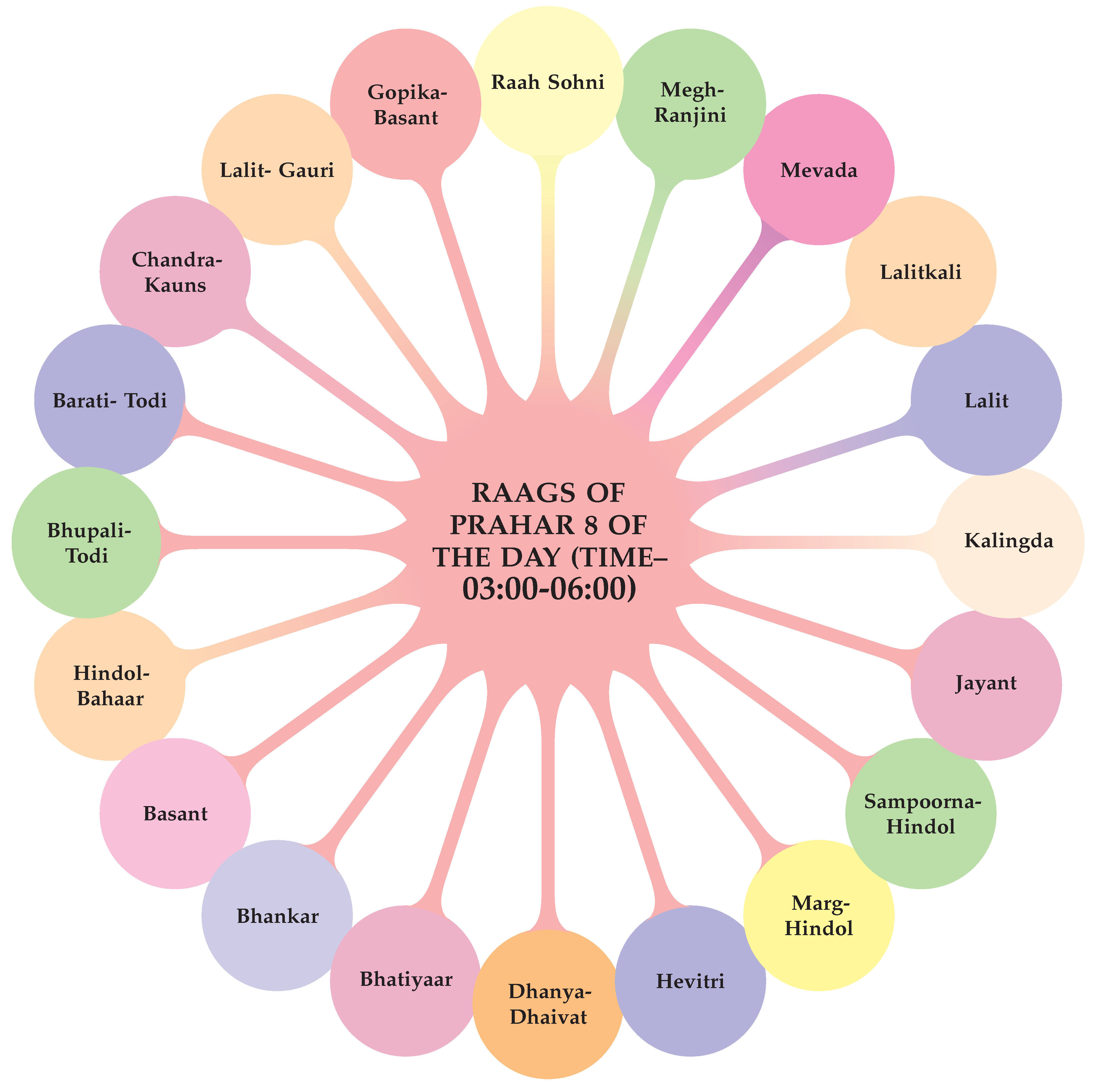
2.8. Prahar 8
This period which extends from 03:00 hours to 06:00 hours is prahar 8, and is mostly known as Usha in Sanskrit and in Hindi. This period can readily be understood to be a transition period from the late night hours to the early morning hours. The characteristics of this time period are as follows.
- the transition period from the late hours to the early morning hours is is the main significance here and is expressed through the depth of the late night stillness towards the awakening emotions of the starting of a new day or a new chapter in life
- it shows the beautiful transition from darkness to the rising of the new light of the starting of the day
- a very important expression is portrayed which mystical and also a soul searching aura of a fresh awakening
- the raags of this prahar express emotions of soul searching of a beginning and show a transition from the stillness of the darkness to beginnings of a new chapter
- melodic patterns and improvisations are shown through the raags of this prahar in a subtle and graceful way
- quick motions are generally avoided because of the aesthetic nature of the transition towards sunrise
- a transition towards awakening and renewed and rejouvenated energy is readily seen through the raags of this prahar
- the longing of the late night hours are transitioned into rising up and the start of a search within oneself is beautifully portrayed
- since this prahar signifies a transition towards a beginning, the emotions of trying to connect with the divine is also expressed
- on the whole the wmotions of meditation, yearning and spirituality are seen through the raags of this prahar
The raags which fall in prahar 8 are shown in Figure 8 below.
3. Conclusion and Future Work
This study is a detailed study of the various thaats and the classification and grouping of raags based on thaats, the timing and the moods of the various time period of a day. The readers of Hindustani Classical Music or even light music should be able to connect with the different aspects of raags through this study. The diagramatic approach makes the information easily accessible to readers because they don’t have to go through multiple resources, including books and the internet.
Our future work is to understand each thaat in more depth and detail along with the respective raags in those thaats. Currently, we are also working towards a deeper and a more fundamental understanding of the thaats and their respective raags.
Funding
The authors Preet Sharma and Kamal Hyder did not receive any type of external funding for this study.
Acknowledgments
The authors acknowledge various resources from which they have studied from. The authors also acknowledge a lot of people who have indirectly shown us through their flawed teaching, directionless learning and unacceptable performing as to what not to do during the learning and performing process. We also thank the authors and owners of various books, documents and electronic media.
Conflicts of Interest
The authors Preet Sharma and Kamal Hyder declare no conflict of interest.
Glossary
References
- Bhatkhande, V.N.; Garga, L. Hindustānī saṅgīta-paddhati: kramika pustaka-mālikā; 1999.
- Melody, R. ragamelody-website — ragamelody.com. Available online: https://www.ragamelody.com/2017/02/ashta-prahar-ragas.html/ (accessed on 27 October 2025).
- Sharma, P.; Hyder, K. Raag Yaman. Preprints 2025. [Google Scholar] [CrossRef]
- Hyder, K.; Sharma, P. Raag Shankara and its Structural Understanding. Preprints 2025. [Google Scholar] [CrossRef]
- Pandya, S. Thaat Classification System — Sur Sangat — sursangatacademy.com. Available online: https://www.sursangatacademy.com/blog/thaat-classification-system-in-hindustani-music (accessed on 15 October 2025).
- Thakur, O. Sangitanjali. Oferenda Musical), Hathras, Sangit Kayalay 1955, 6.
- Vasant, V. Sangeet Visharad, 1998.
- raagtime. Listing Ragas - Raagtime — raagtime.com. Available online: https://raagtime.com/ragas?filter%5Bthaat%5D=Kalyan (accessed on 24 September 2025).
- Nayar, S. Bhatkhande’s contribution to music: A historical perspective; Popular Prakashan, 1989.
- melamusic. Prahar System - Mela Music — melamusic.live. Available online: https://www.melamusic.live/prahar-system/ (accessed on 29 October 2025).
Figure 1.
Various thaats.
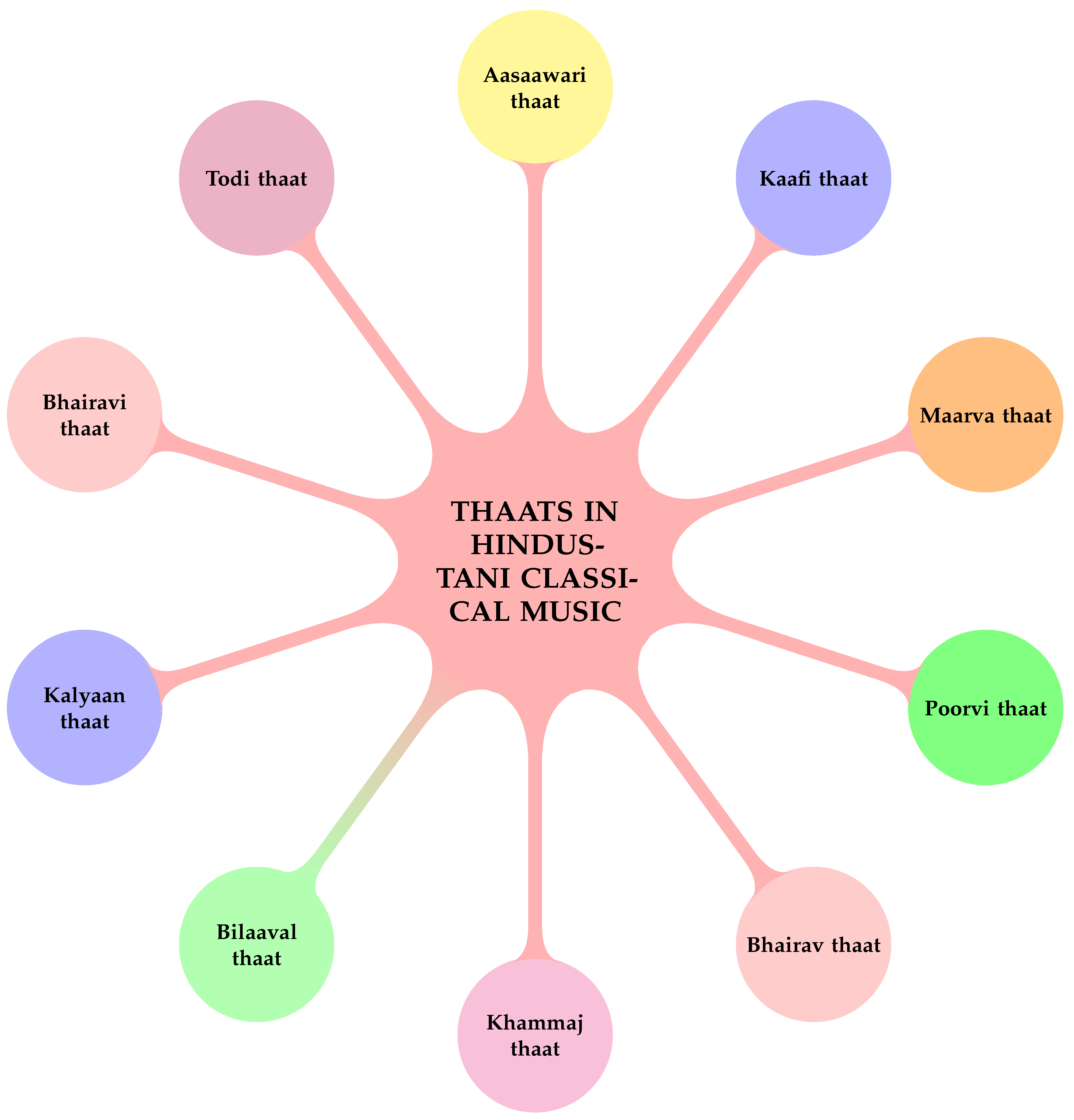
Figure 2.
Prahar 1 raags.
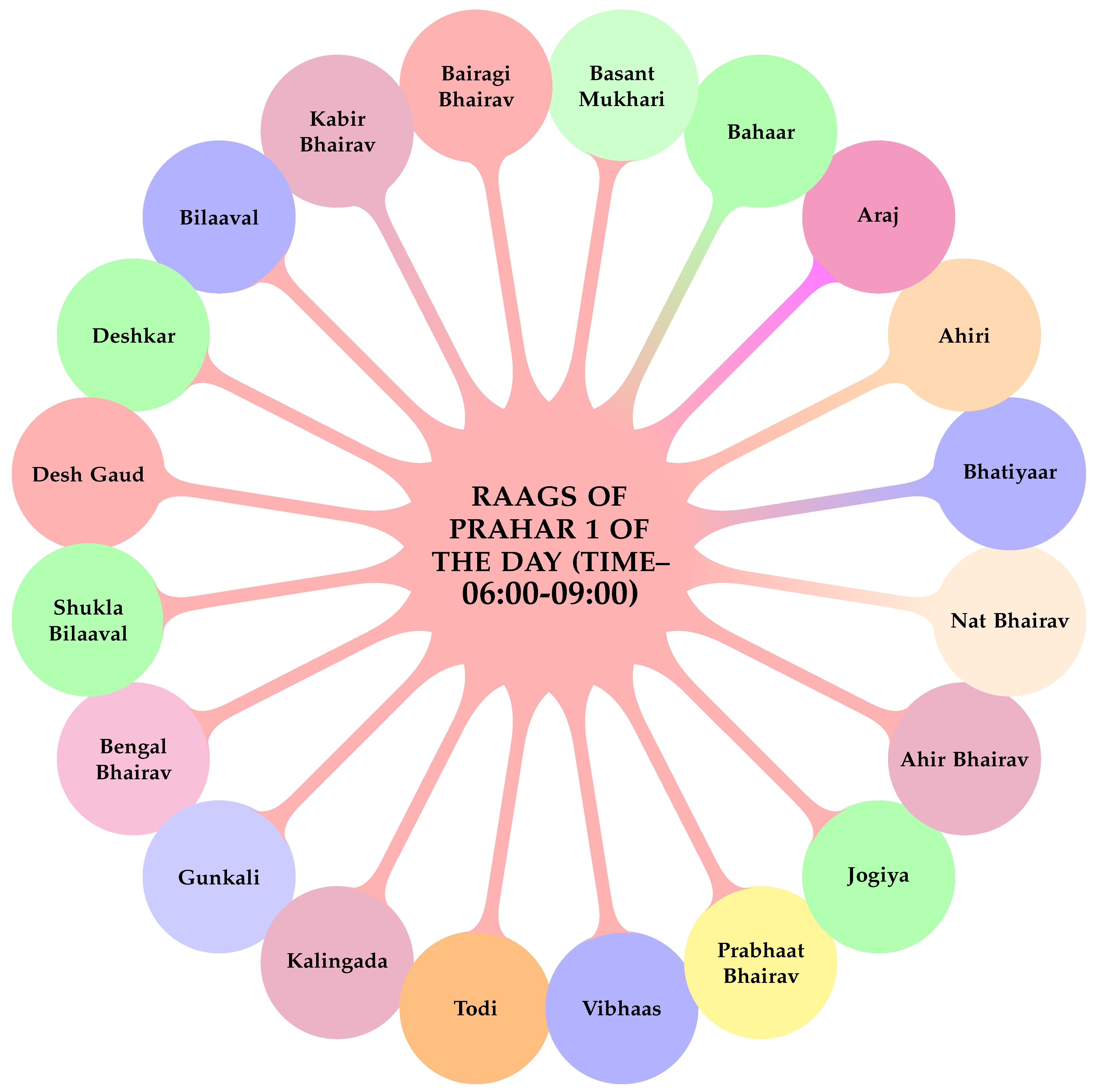
Figure 3.
Prahar 1 raags.
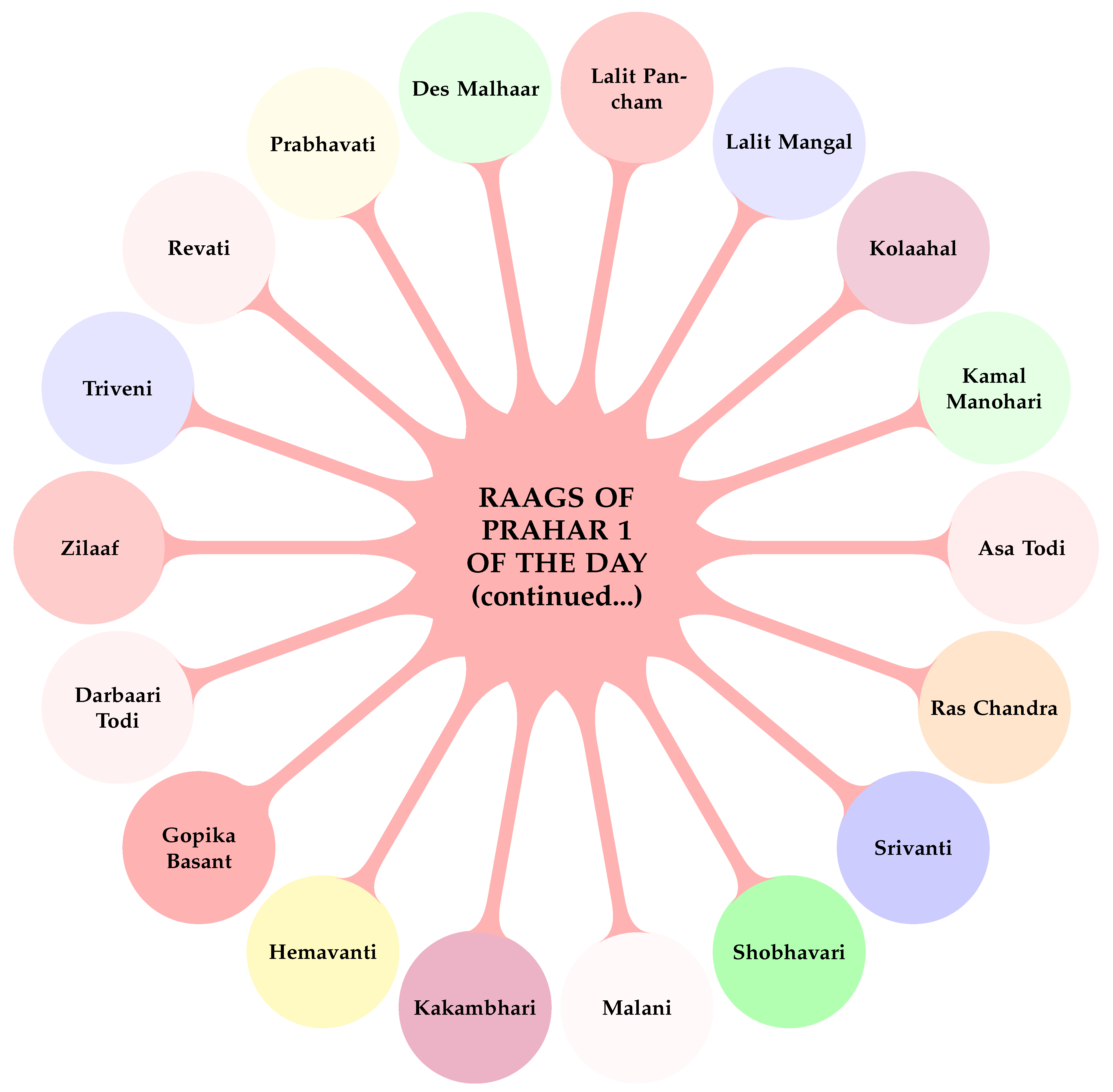
Figure 4.
Prahar 2 raags.
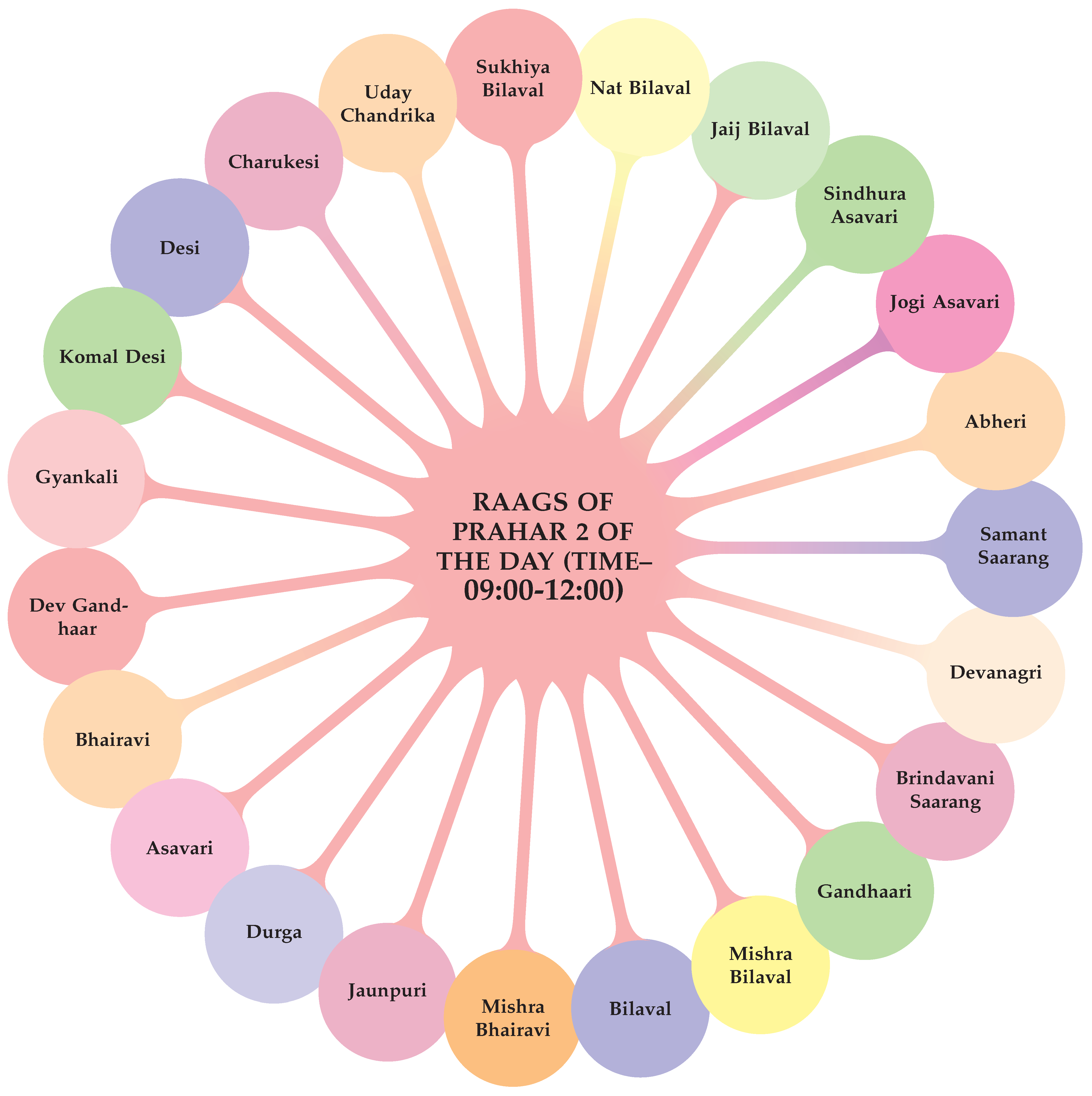
Figure 5.
Prahar 2 raags.
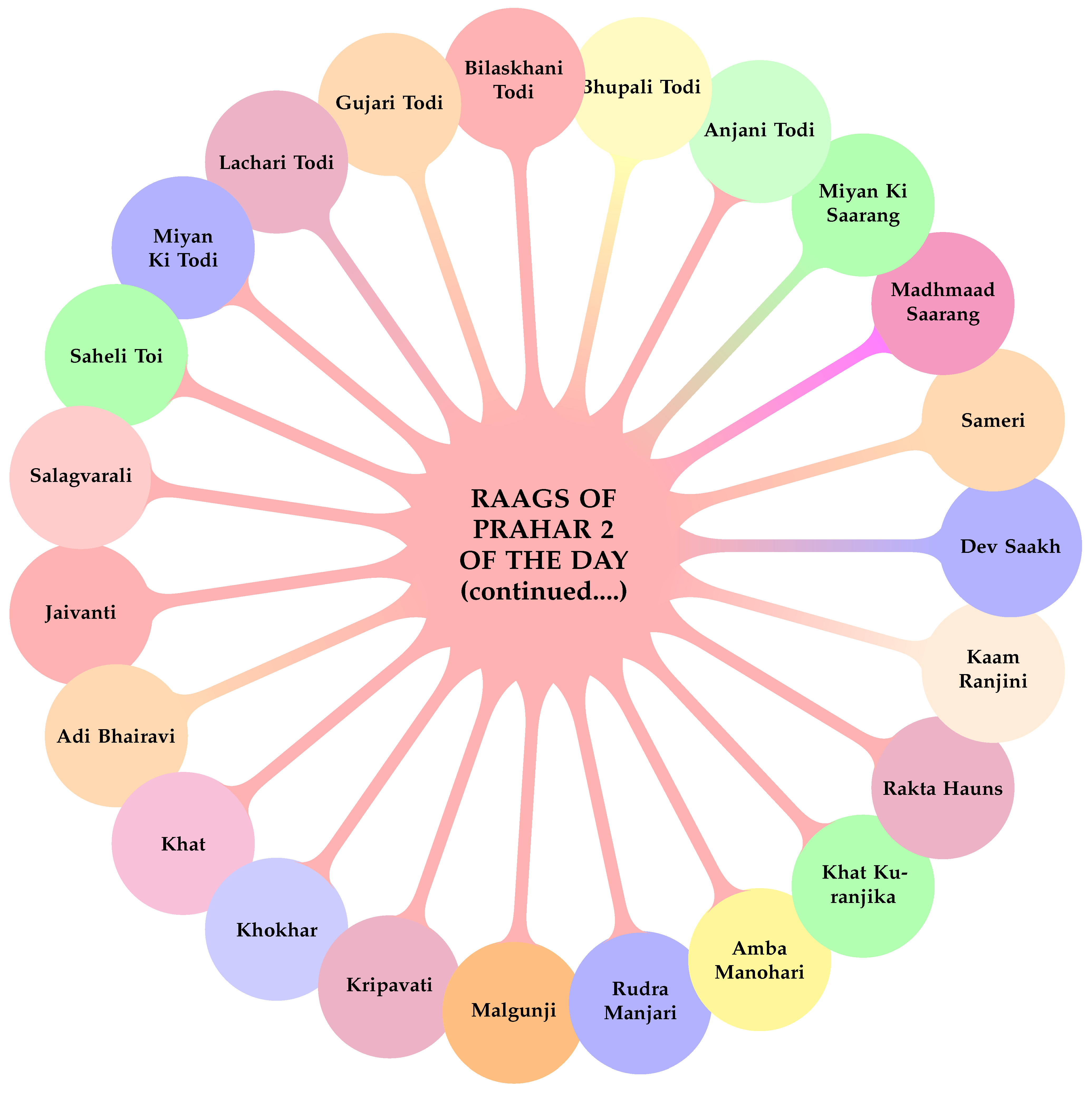
Figure 6.
Prahar 3 raags.
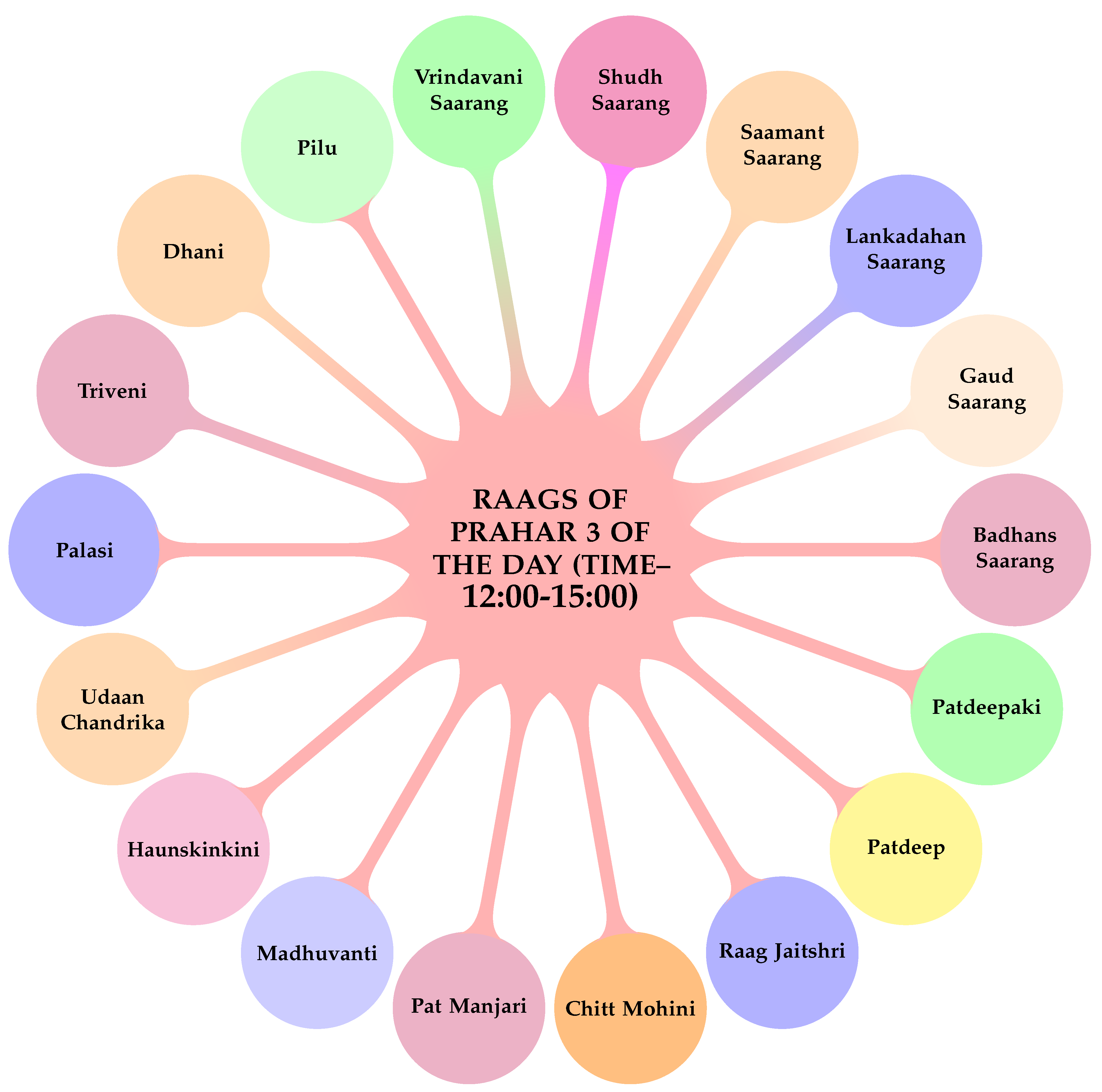
Figure 7.
Prahar 4 raags.
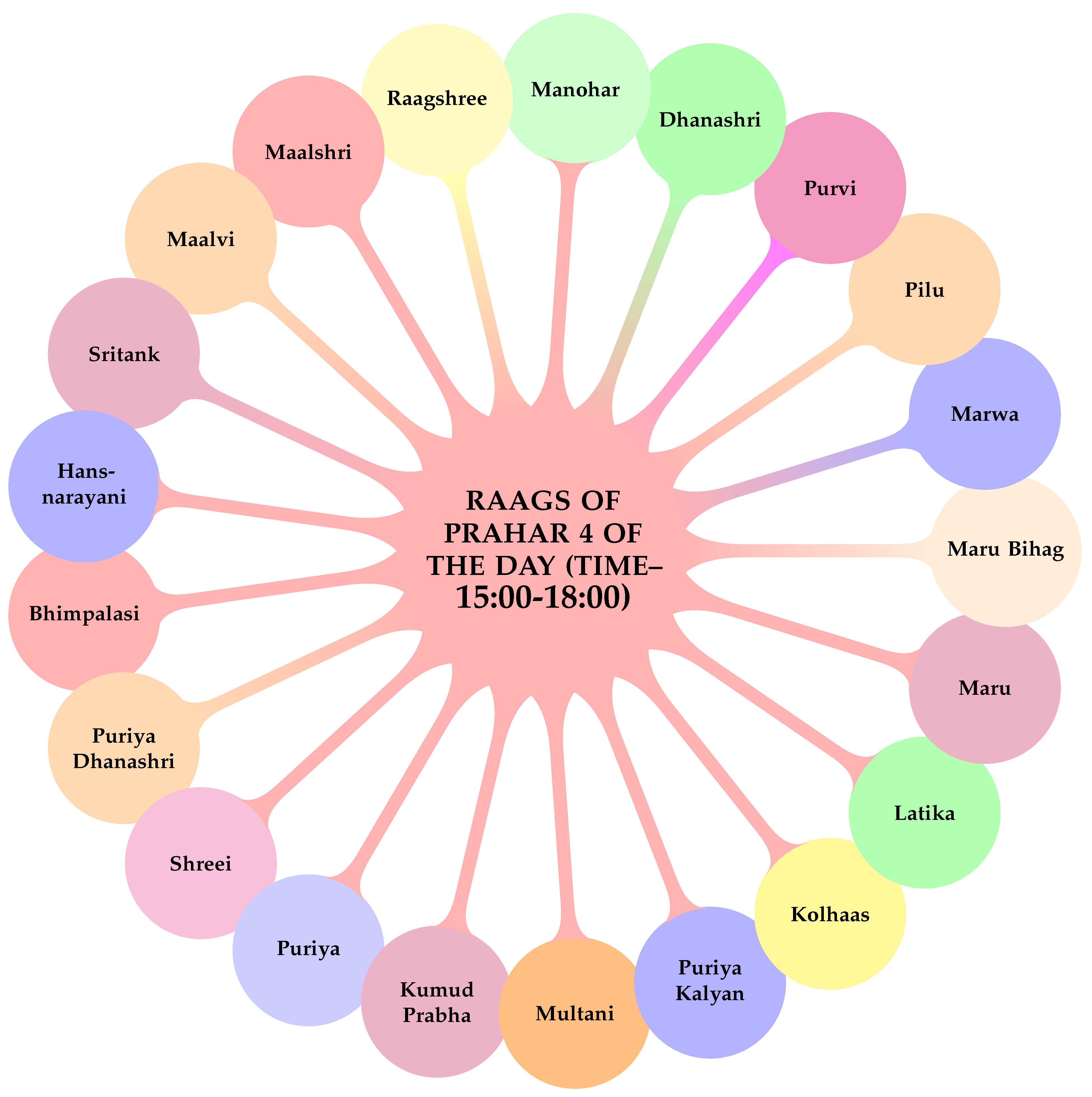
Figure 8.
Prahar 5 raags.
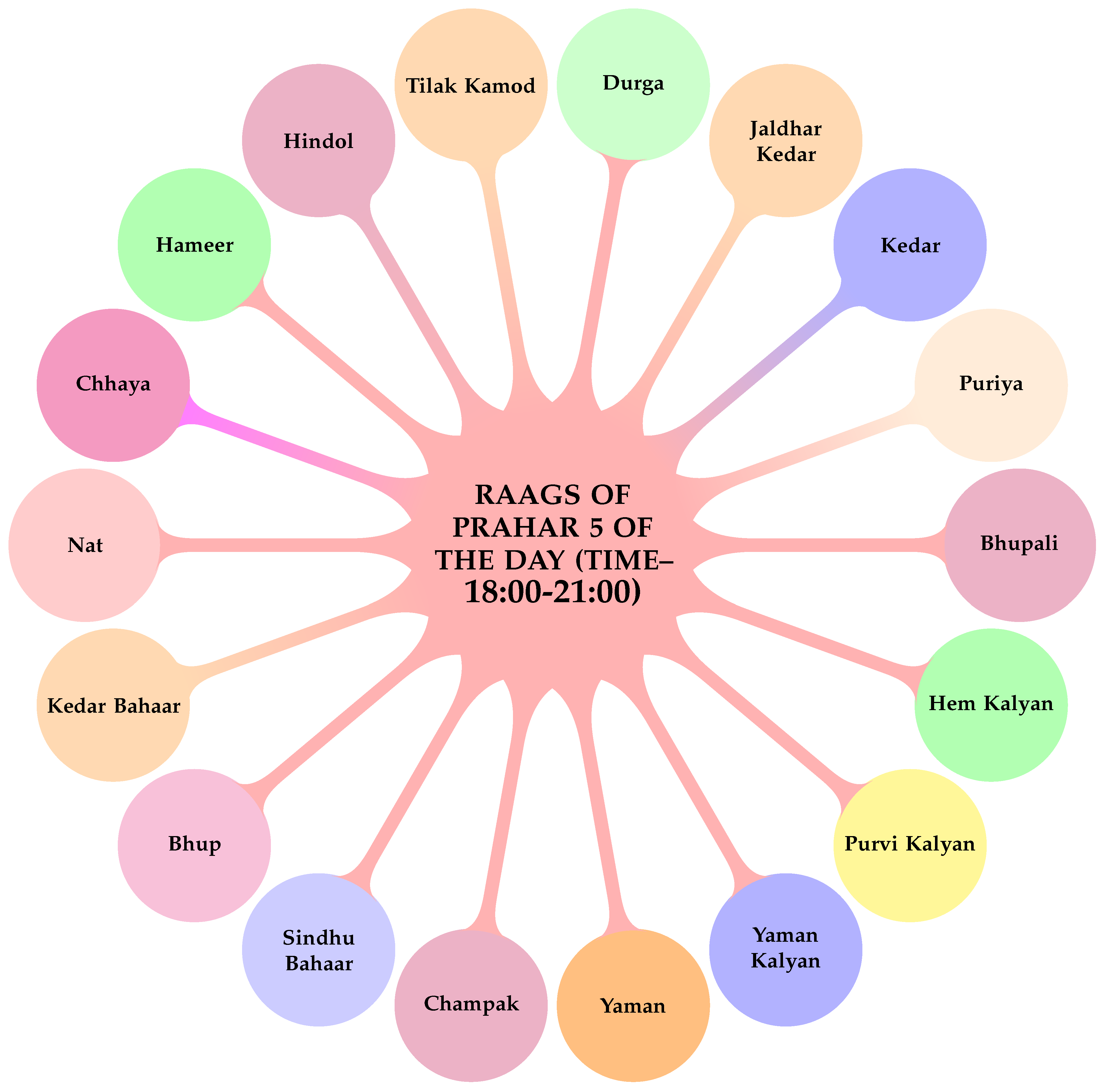
Figure 9.
Prahar 5 raags.
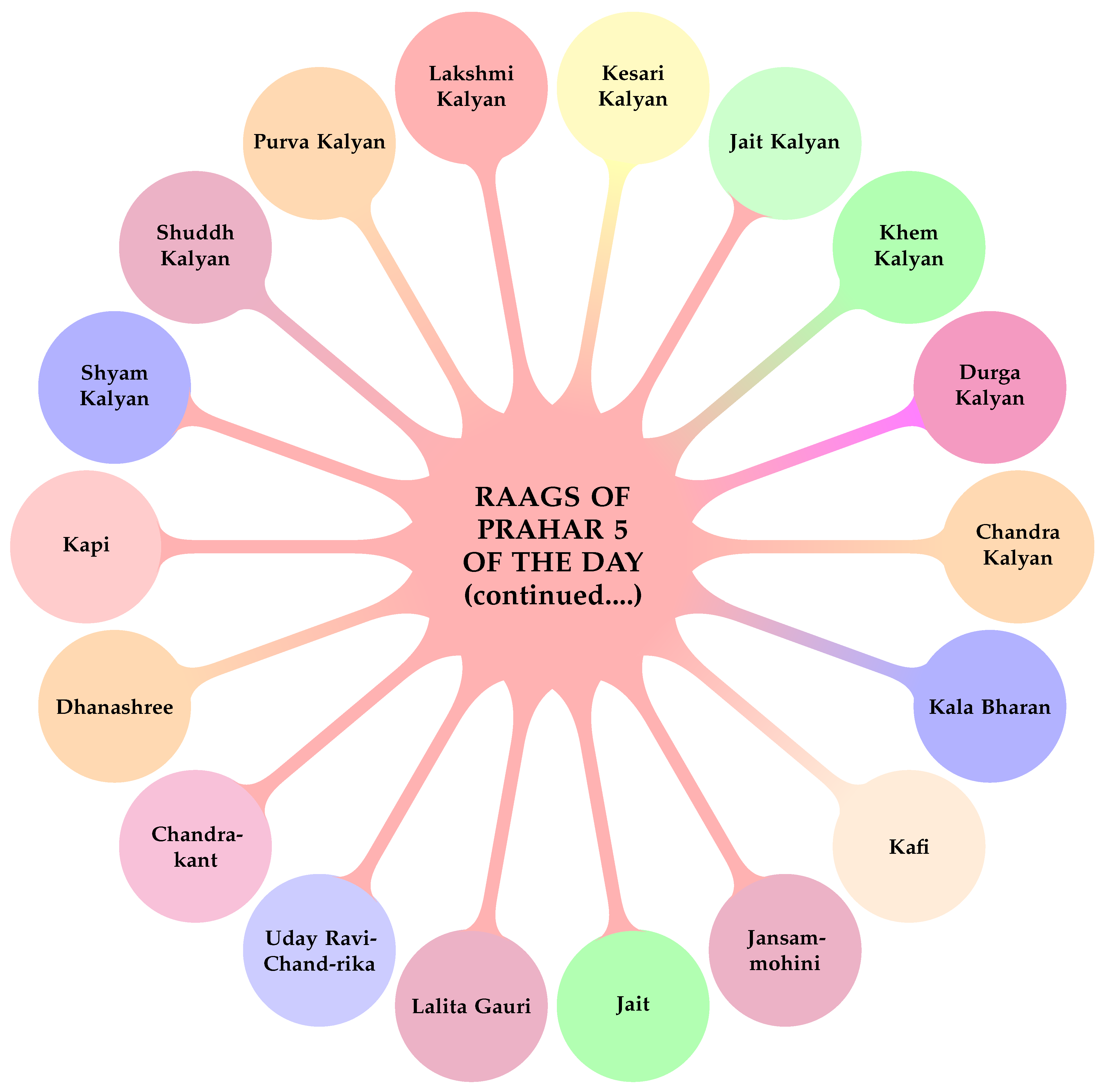
Figure 10.
Prahar 5 raags.
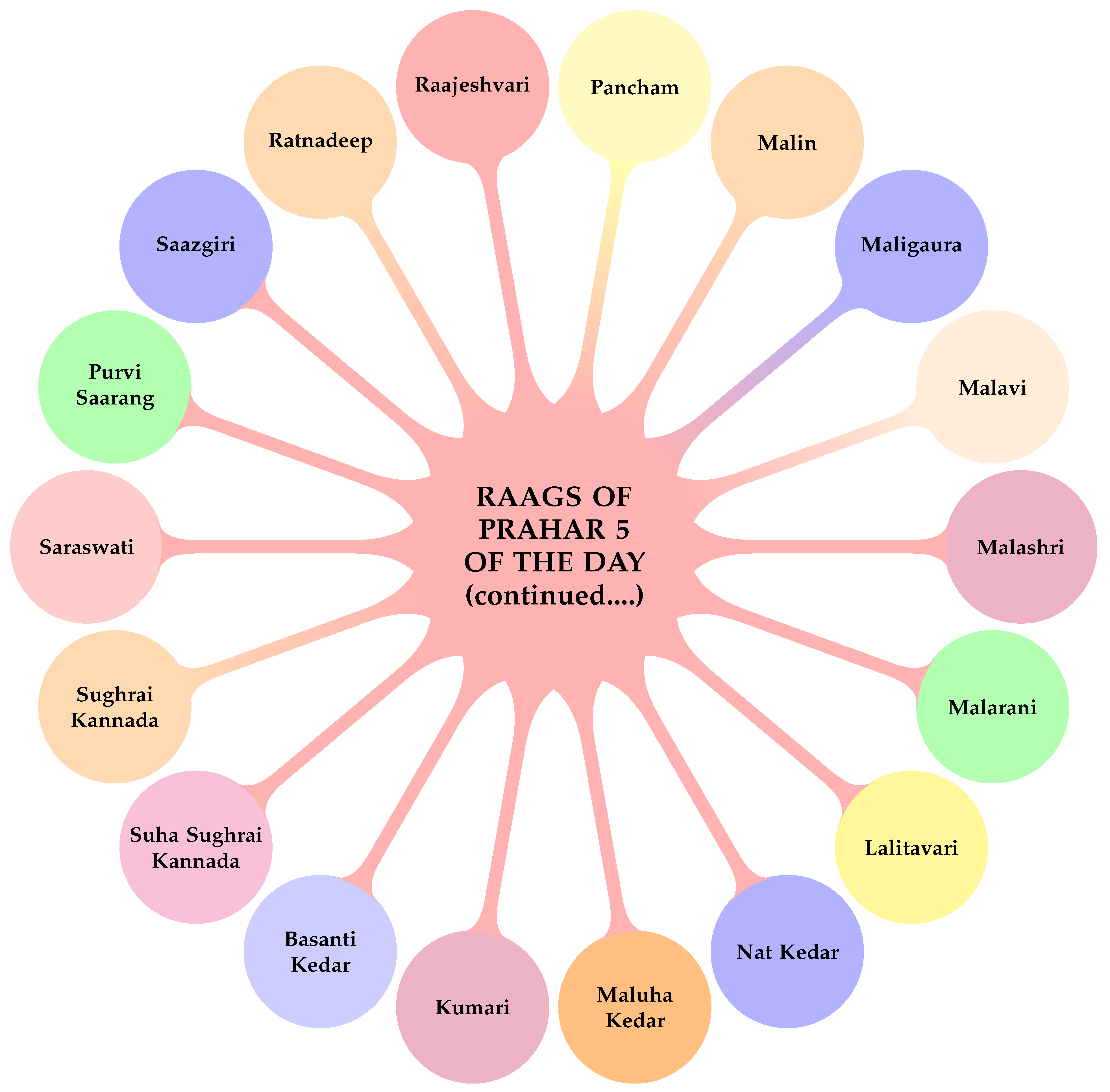
Figure 11.
Prahar 5 raags.
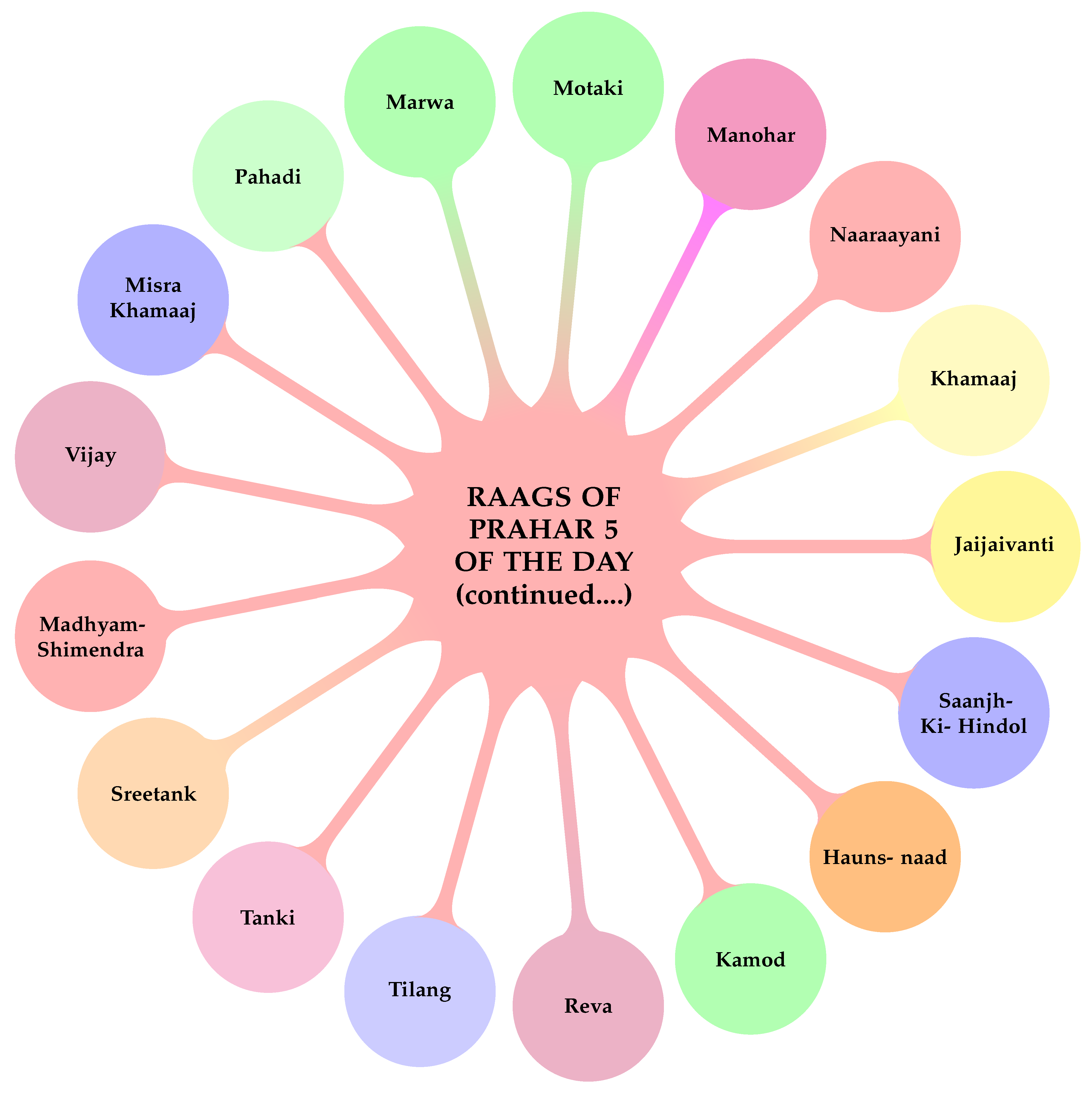
Figure 12.
Prahar 6 raags.
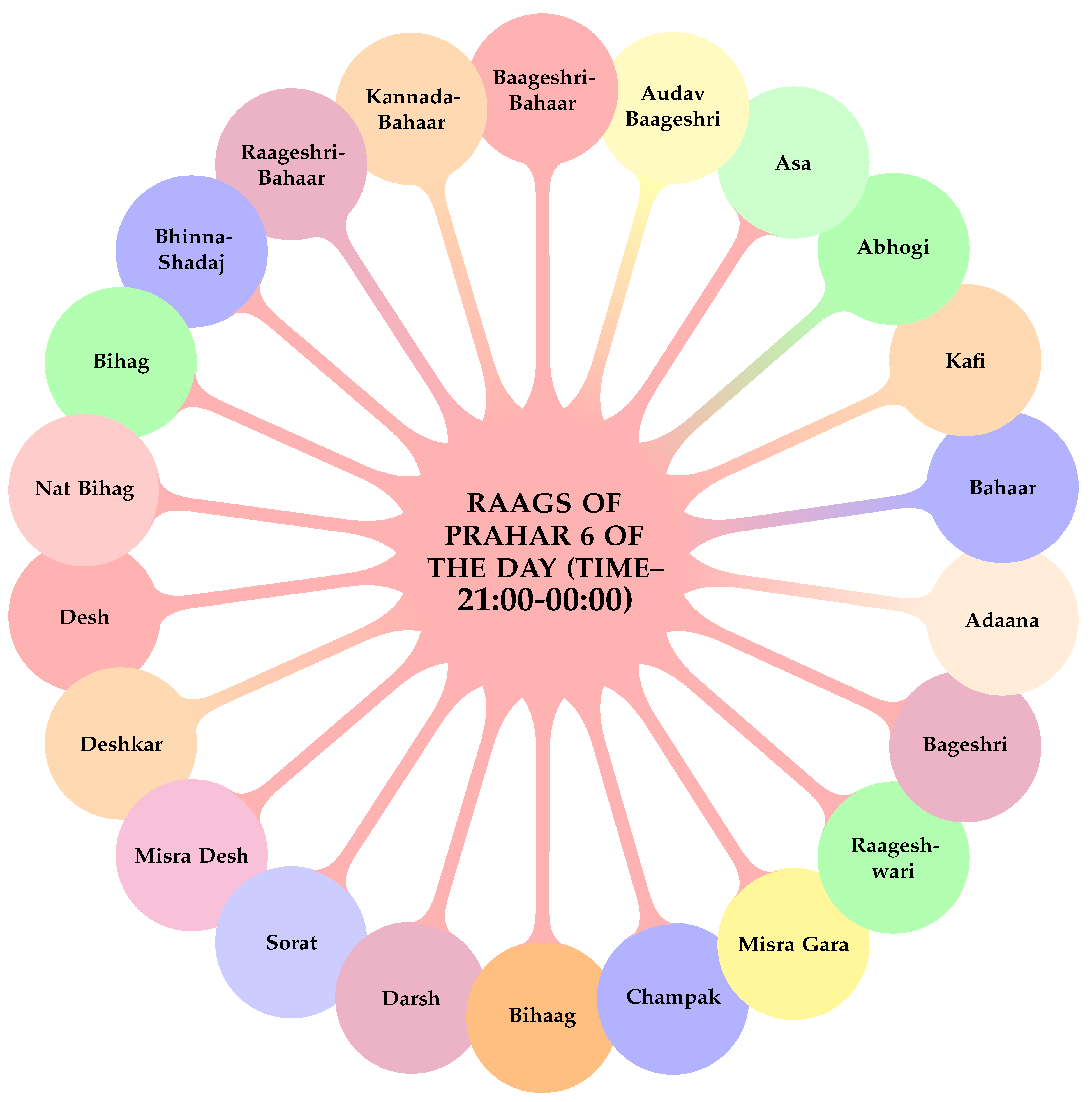
Figure 13.
Prahar 6 raags.
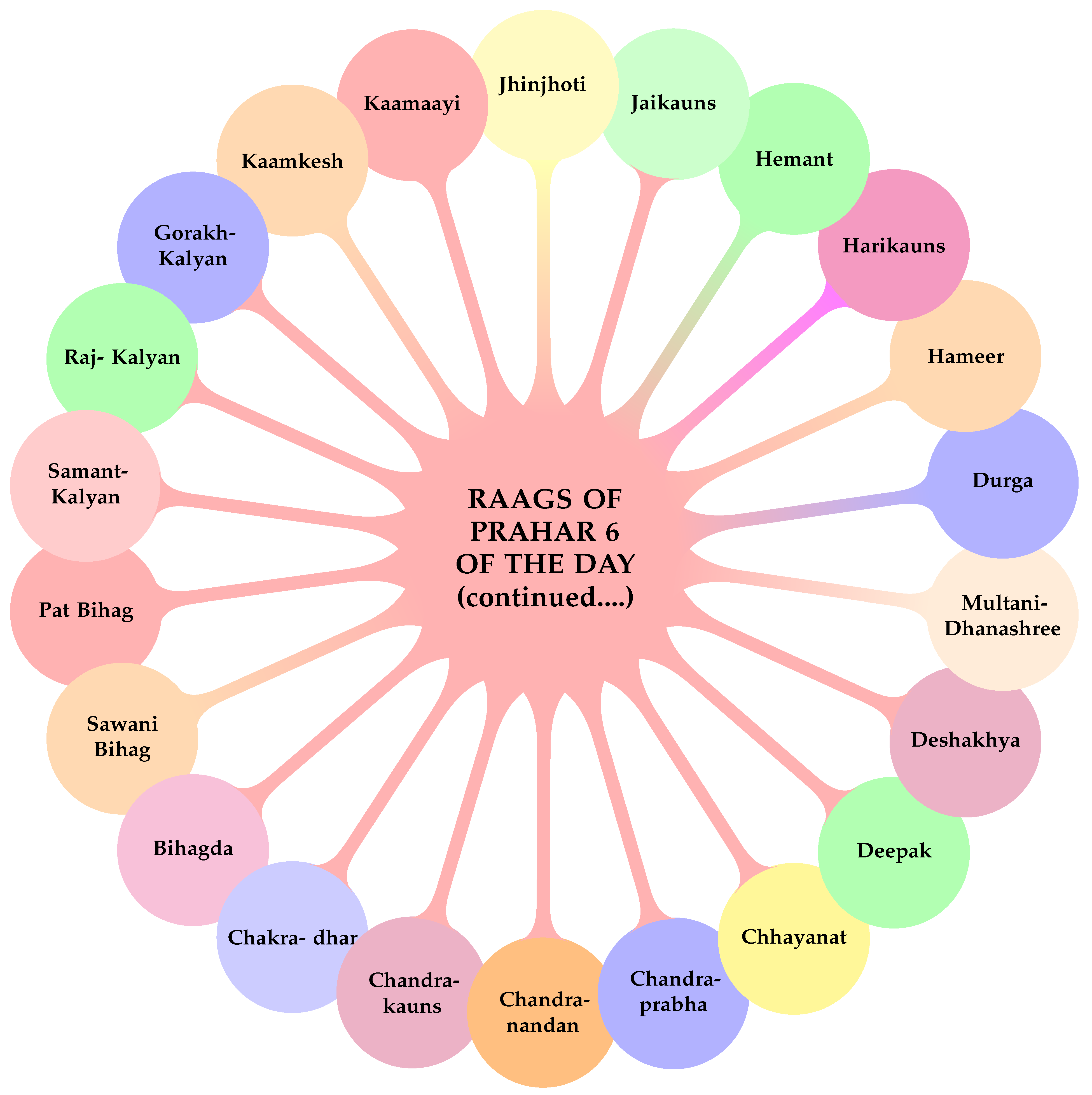
Figure 14.
Prahar 6 raags.
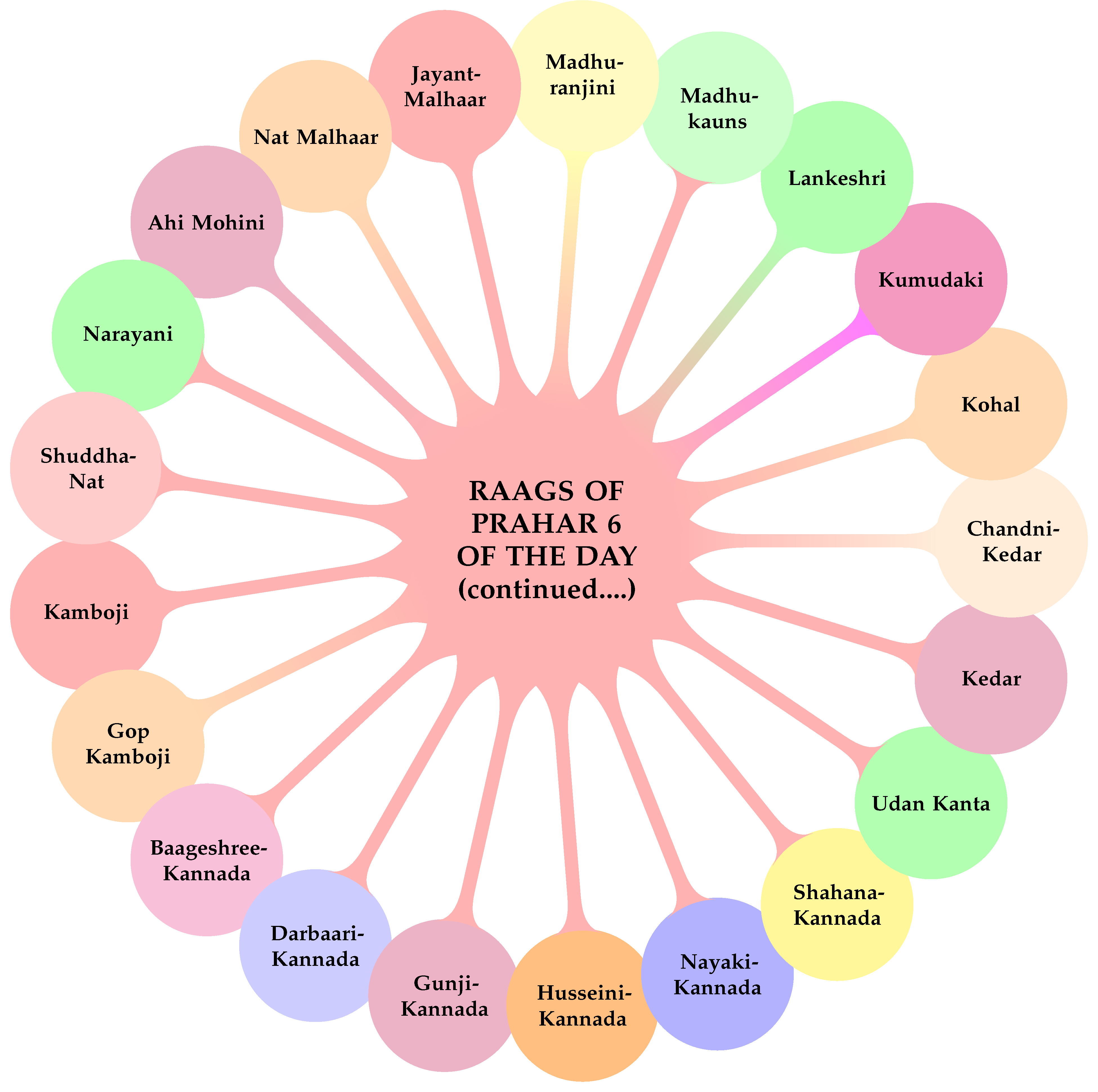
Figure 15.
Prahar 6 raags.
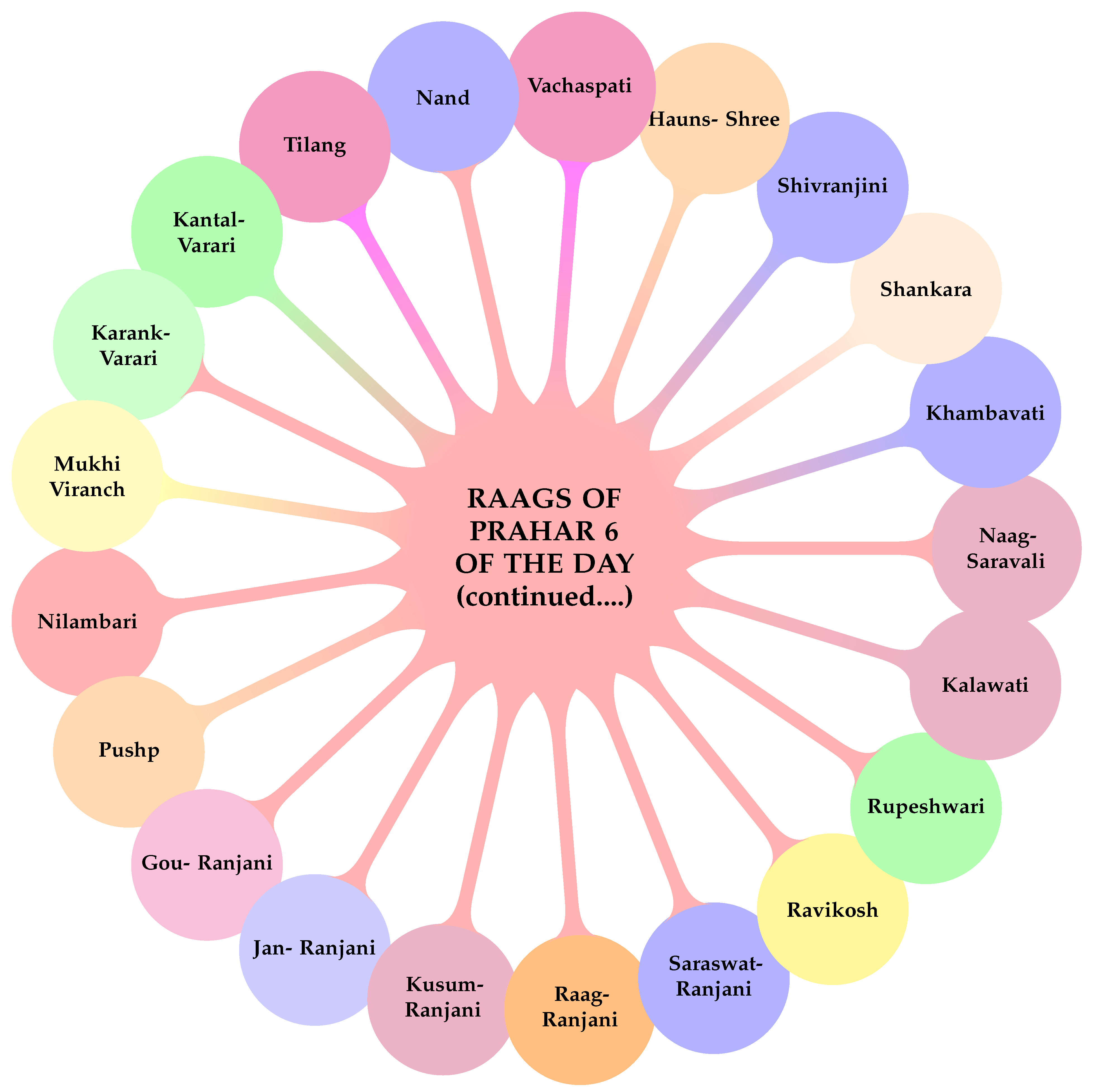
Figure 16.
Prahar 7 raags.
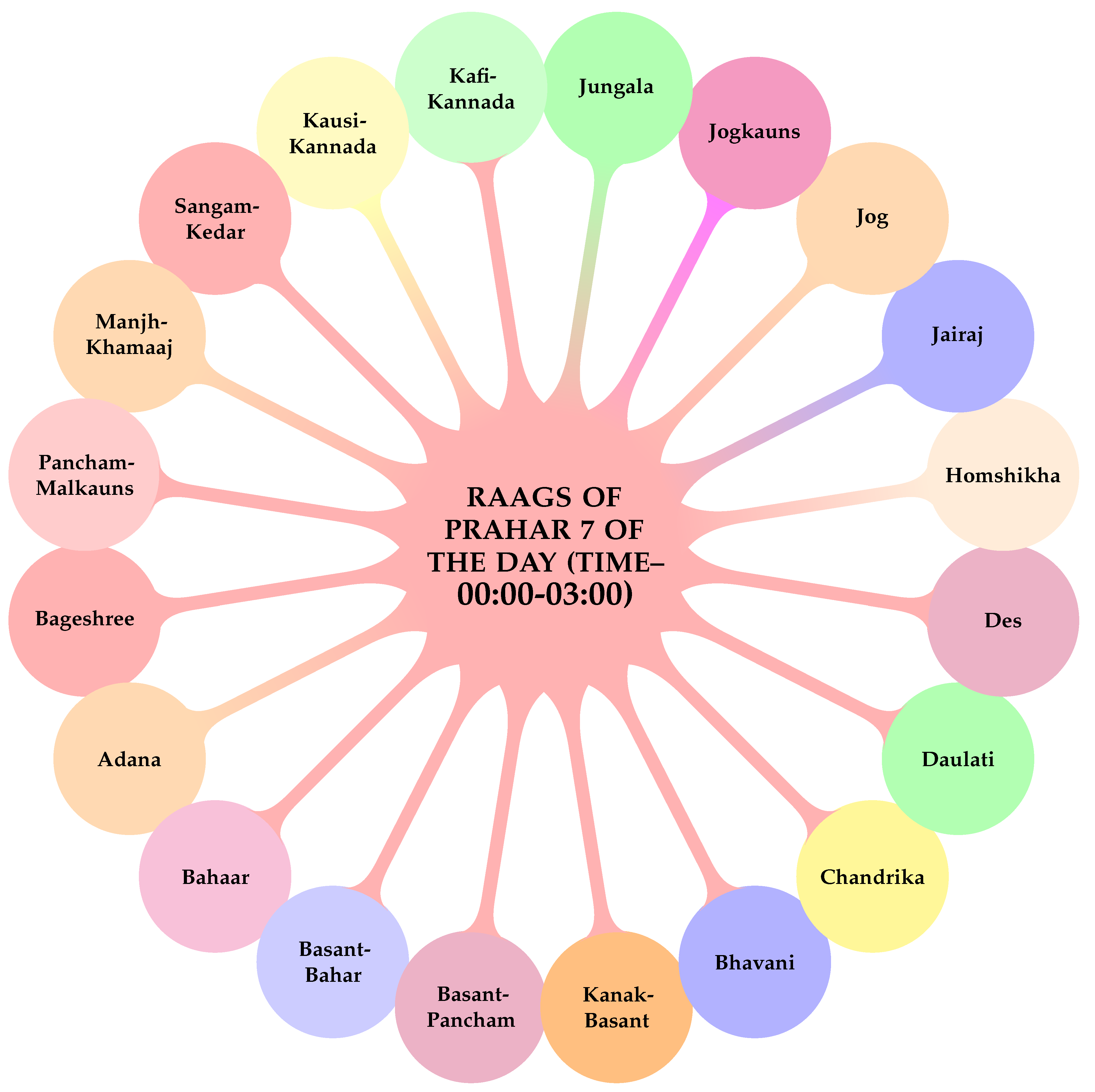
Figure 17.
Prahar 7 raags.
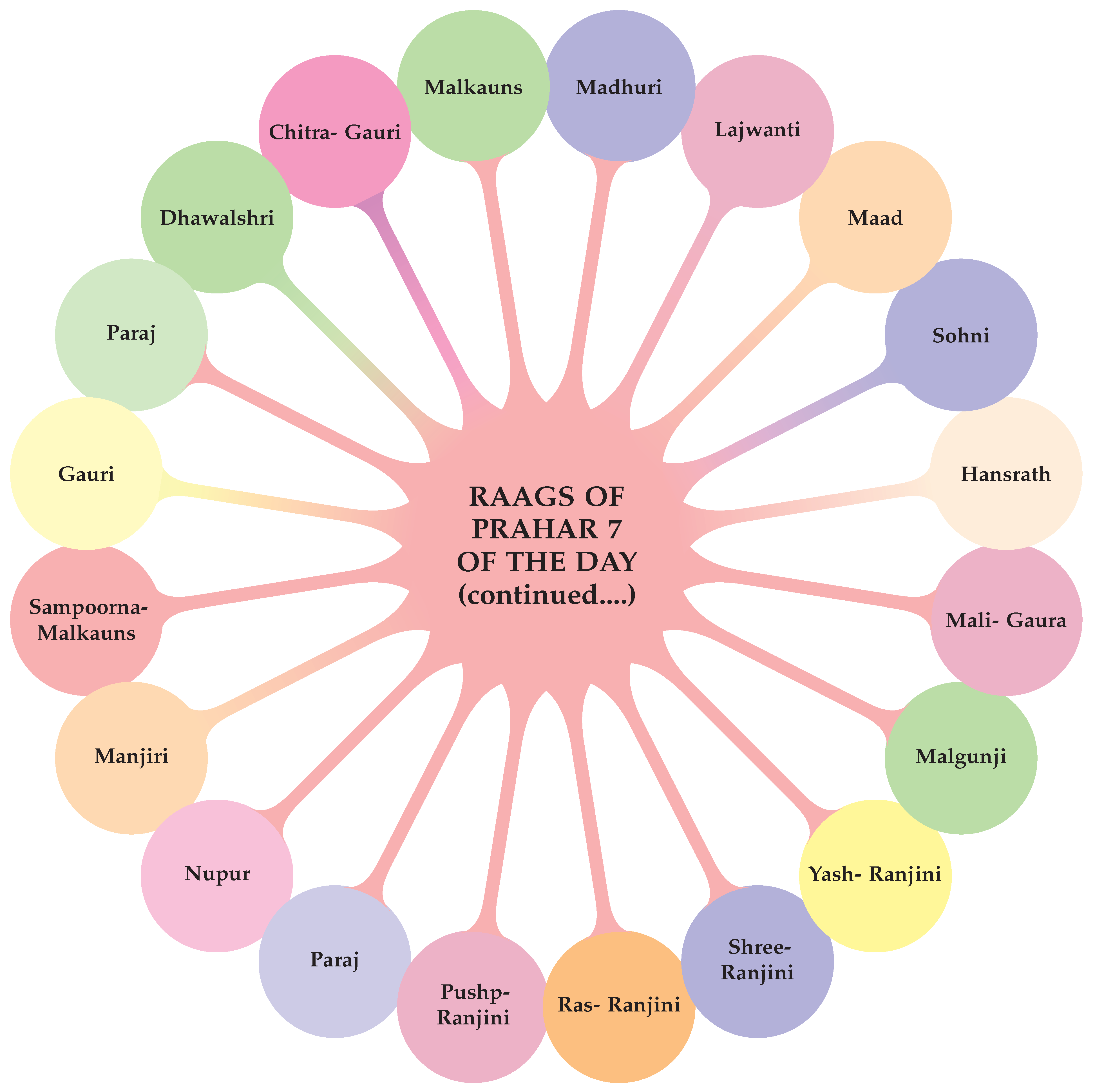
Figure 18.
Prahar 8 raags.
Disclaimer/Publisher’s Note: The statements, opinions and data contained in all publications are solely those of the individual author(s) and contributor(s) and not of MDPI and/or the editor(s). MDPI and/or the editor(s) disclaim responsibility for any injury to people or property resulting from any ideas, methods, instructions or products referred to in the content. |
© 2025 by the authors. Licensee MDPI, Basel, Switzerland. This article is an open access article distributed under the terms and conditions of the Creative Commons Attribution (CC BY) license (http://creativecommons.org/licenses/by/4.0/).
Copyright: This open access article is published under a Creative Commons CC BY 4.0 license, which permit the free download, distribution, and reuse, provided that the author and preprint are cited in any reuse.


