1. Introduction
Unemployment remains one of the most pressing socio-economic challenges in Nigeria, particularly among youths, who constitute the largest portion of the nation’s population. The persistent rise in youth unemployment has resulted in widespread poverty, social unrest, and declining living standards (National Bureau of Statistics [NBS], 2023). In an effort to address this, successive Nigerian governments have introduced numerous poverty alleviation and job creation programmes. Among these, the National Poverty Eradication Programme (NAPEP), established in 2001, was designed as a comprehensive strategy aimed at eradicating absolute poverty and providing employment opportunities through skills acquisition, micro-credit, and other empowerment initiatives.
NAPEP was structured around four key schemes: the Capacity Acquisition Programme (CAP), the Mandatory Attachment Programme (MAP), the Rural Infrastructure Development Scheme (RIDS), and the Social Welfare Services Scheme (SOWESS). Each of these was targeted at empowering different segments of the population, with youths as a major focus. In Bauchi State, as in other parts of Nigeria, NAPEP sought to integrate young people into productive sectors through training and micro-finance opportunities. Despite these efforts, unemployment and poverty levels remain high across the state, raising questions about the effectiveness of NAPEP’s interventions.
Recent reports by the NBS (2022) indicate that Bauchi State records one of the highest unemployment and poverty rates in Northern Nigeria. The situation is compounded by rapid population growth, low industrial development, and limited access to finance for small-scale enterprises. Consequently, there is growing concern that many government-led poverty eradication programmes, including NAPEP, have not achieved their intended impact due to implementation challenges and policy inconsistencies (Adebayo & Ibrahim, 2022).
Despite NAPEP’s objectives of eradicating extreme poverty and providing employment opportunities, the persistence of youth unemployment in Bauchi State suggests a mismatch between programme intentions and outcomes. Many beneficiaries have reported limited follow-up after training, inadequate capital support, and poor monitoring of implemented projects (Usman & Musa, 2021). Moreover, several studies have shown that political interference and lack of transparency in the selection of beneficiaries further undermine the effectiveness of empowerment schemes (Adeola & Bamidele, 2022).
While some assessments of NAPEP have been conducted at the national level, few empirical studies have specifically examined its impact on youth employment in Bauchi State. Understanding this relationship is essential to inform policy reforms and improve future interventions aimed at addressing unemployment and poverty among Nigerian youths.
This study was contributed to the understanding of the role of government-led poverty eradication programmes in addressing youth unemployment in Nigeria. The findings will provide empirical evidence for policymakers, development practitioners, and stakeholders on how to strengthen existing interventions. It will also serve as a valuable academic reference for future research in poverty alleviation and youth development.
This study was design to the effect of National Poverty Eradication Programme (NAPEP) in promoting youth employment as well as youth awareness and participation in NAPEP programme in Bauchi State of Nigeria.
Research Hypotheses
The study is guided by the following null hypotheses:
NAPEP has no positive effect on youth employment generation in Bauchi State.
Youths did not participate actively in NAPEP skill accusation programmes in Bauchi state.
2.1. Conceptual Framework
2.1.1. Concept of Poverty and Unemployment
Poverty is a multidimensional condition characterized by deprivation of basic needs such as food, shelter, health care, and education. It extends beyond income insufficiency to include social exclusion and lack of access to productive opportunities (World Bank, 2022). In Nigeria, poverty and unemployment are interlinked, as the inability to secure meaningful employment often
leads to persistent deprivation (Okoye & Bello, 2023). Youth unemployment, in particular, poses a critical threat to economic growth and social stability in Nigeria.
The analysis of poverty and unemployment trends in Nigeria between 2018 and 2023 reveals a persistent and progressive increase across both indicators, with Bauchi State consistently recording figures above the national averages. These trends highlight deep-rooted socio-economic challenges and the limited impact of government poverty reduction initiatives such as the National Poverty Eradication Programme (NAPEP).
In terms of unemployment, national statistics show that the rate stood at 23.1% in 2018, while Bauchi State recorded 29.4%. The figure rose steadily to 27.1% nationally and 31.6% in Bauchi by 2019. In 2020, the national unemployment rate reached 33.3%, while Bauchi’s climbed to 37.5%, further widening the disparity between the state and national levels. The situation intensified in 2021, when the national rate was 35.0%, compared to 38.1% in Bauchi. By 2022, unemployment reached 37.7% nationally and 40.6% in Bauchi, and in 2023, the figures peaked at 39.9% for Nigeria and 42.8% for Bauchi State. This consistent upward trend indicates the persistence of structural unemployment, especially among youths in northern Nigeria.
Similarly, poverty rates followed the same rising pattern. In 2018, the national poverty rate was 40.1%, while Bauchi recorded 52.8%. In 2019, these figures rose slightly to 41.0% and 53.5%, respectively. The trend continued in 2020, with 42.7% nationally and 54.9% for Bauchi. By 2021, the rates stood at 43.2% and 55.7%, and in 2022, they further climbed to 45.4% nationally and 57.3% for Bauchi. In 2023, the poverty rate reached 46.4% across Nigeria, while Bauchi State’s poverty level hit 58.5%. (NBS,2025)
These data collectively demonstrate that despite multiple interventions, poverty and unemployment have remained critical developmental challenges in Bauchi State. The state’s rates consistently exceed the national averages, suggesting structural deficiencies in policy implementation, inadequate investment in productive sectors, and weak linkages between empowerment programmes and sustainable job creation. The progressive rise in both indicators reflects the need for improved monitoring, effective coordination, and more inclusive policy strategies to ensure that poverty eradication initiatives such as NAPEP achieve long-term impact.
Table 1.
Trends in Poverty and Unemployment in Bauchi State and Nigeria (2018–2023).
Table 1.
Trends in Poverty and Unemployment in Bauchi State and Nigeria (2018–2023).
| Year |
National Poverty Rate (%) |
Bauchi State Poverty Rate (%) |
National Unemployment Rate (%) |
Bauchi State Unemployment Rate (%) |
| 2018 |
40.1 |
52.8 |
23.1 |
29.4 |
| 2019 |
41.0 |
53.5 |
27.1 |
31.6 |
| 2020 |
42.7 |
54.9 |
33.3 |
37.5 |
| 2021 |
43.2 |
55.7 |
35.0 |
38.1 |
| 2022 |
45.4 |
57.3 |
37.7 |
40.6 |
| 2023 |
46.4 |
58.5 |
39.9 |
42.8 |
The data show that both poverty and unemployment rates have increased steadily in Nigeria, with Bauchi State consistently above national averages. This reflects structural economic and policy challenges, especially in rural regions.
2.1.2. The National Poverty Eradication Programme (NAPEP)
The National Poverty Eradication Programme (NAPEP) was launched in 2001 by the Federal Government of Nigeria to coordinate and consolidate all previous poverty reduction initiatives. The programme was designed with four key schemes:
1. Capacity Acquisition Programme (CAP) – focused on vocational training.
2. Mandatory Attachment Programme (MAP) – for temporary job placement.
3. Rural Infrastructure Development Scheme (RIDS) – aimed at improving rural accessand basic services.
4. Social Welfare Services Scheme (SOWESS) – targeted vulnerable groups.
Each scheme was expected to contribute to the eradication of poverty through employment creation, skills acquisition, and financial empowerment (Adebayo et al., 2021).
2.1.3. Youth Employment and Economic Development
Youths represent the most dynamic and productive segment of society. The inability to engage them productively contributes to social instability, migration, and insecurity (Usman & Ibrahim, 2023). Several scholars have emphasized that youth empowerment through vocational training and entrepreneurship development remains a sustainable path to reducing unemployment (Eze & Ali, 2022).
2.2. Empirical Review
Several studies have examined the relationship between government poverty eradication initiatives and youth employment across Nigeria, with mixed results depending on programme design and implementation context.
Adebayo and Ibrahim (2022) conducted a study in Kano State using a survey of 300 youths and found that participation in NAPEP significantly improved employability but had little effect on long-term job sustainability. Similarly, Eze and Ali (2022), in a mixed-method study in Enugu State, reported that vocational and entrepreneurship training under NAPEP enhanced self-employment but was limited by poor post-training funding.
In a related study, Usman and Musa (2021) assessed the performance of NAPEP in Gombe State and concluded that political interference and inadequate supervision hindered the programme’s effectiveness. Mohammed and Ibrahim (2023) examined institutional factors affecting youth empowerment in Bauchi State and observed that insufficient inter-agency collaboration and weak monitoring systems undermined NAPEP’s goals.
Afolabi and Ojo (2022) analyzed the broader link between human capital development and poverty reduction across Nigeria. Using regression analysis on secondary data from 2000–2020, they found that increased spending on education and skills training significantly reduced poverty levels. Their findings align with the Human Capital Theory underpinning this study.
Okoye and Bello (2023) performed a national-level assessment of youth empowerment schemes and found that while awareness levels were high, participation was limited to politically connected individuals. Adeola and Bamidele (2022) similarly argued that Nigeria’s poverty eradication programmes often fail due to corruption, poor targeting, and lack of sustainability mechanisms.
Beyond NAPEP, Adebisi and Yakubu (2023) studied the N-Power Programme and found that digital training components significantly increased beneficiaries’ employment prospects. Their findings suggest that integrating ICT and entrepreneurship can enhance programme outcomes. Likewise, Hassan and Umar (2021) examined the Youth Empowerment Scheme (YES) in Kaduna and reported that timely funding and continuous monitoring were key predictors of success.
Internationally, Karanja and Njoroge (2020) evaluated Kenya’s Youth Enterprise Development Fund and discovered that continuous mentorship and microfinance support were critical in sustaining youth businesses — lessons relevant to NAPEP’s improvement. Similarly, Abdulrahman (2022) investigated Ghana’s National Youth Employment Programme and found that inconsistent government funding reduced impact despite high youth participation.
Overall, the reviewed empirical studies show that while youth empowerment initiatives across Africa share similar objectives, their success largely depends on consistent funding, institutional accountability, post-training support, and transparent selection processes. These findings reinforce the rationale for reassessing NAPEP’s effectiveness in Bauchi State, given its persistent high rates of unemployment and poverty compared to national averages.
2.2.1. Theoretical Frame work
This study is anchored on the Human Capital Theory, originally propounded by Schultz (1961) and Becker (1964), which posits that investment in education, training, and health enhances individual productivity and national economic performance. According to this theory, when youths acquire relevant vocational and entrepreneurial skills, they become more employable, contributing to overall economic growth.
Recent studies have applied this theory to assess poverty alleviation programmes in Nigeria, affirming that skill development significantly reduces unemployment and income poverty (Afolabi & Ojo, 2022).
Table 2.
Summary of Theoretical Linkages Between Human Capital Formation and Employment Generation.
Table 2.
Summary of Theoretical Linkages Between Human Capital Formation and Employment Generation.
| Theoretical Component |
Key Proposition |
Application to NAPEP |
| Education and Training |
Human productivity increases through investment in education. |
NAPEP promotes vocational and skill acquisition training to enhance employability. |
| Skill Development |
Trained individuals can generate higher income and create jobs. |
NAPEP’s Capacity Acquisition Programme (CAP) equips youths with trade and entrepreneurship skills. |
| Economic Growth |
Human capital investment contributes to national income growth. |
NAPEP aims to reduce poverty and increase GDP via youth empowerment. |
| Sustainability |
Continuous skill upgrading sustains productivity gains. |
Lack of post-training support in NAPEP limits sustainability of employment outcomes. |
Table 3.
Summary of Empirical Studies Reviewed on Poverty Alleviation and Youth Employment (2020–2024).
Table 3.
Summary of Empirical Studies Reviewed on Poverty Alleviation and Youth Employment (2020–2024).
| Author(s) |
Year |
Area of Study |
Methodology |
Key Findings |
| Adebayo & Ibrahim |
2022 |
Kano State |
Survey |
NAPEP raised awareness but had limited participation due to weak monitoring. |
| Usman & Musa |
2021 |
Gombe State |
Quantitative |
Political interference reduced effectiveness of programme outcomes. |
| Eze & Ali |
2022 |
Enugu State |
Mixed Methods |
Skill acquisition improved self-employment but lacked financial sustainability. |
| Mohammed & Ibrahim |
2023 |
Bauchi State |
Quantitative |
Institutional coordination challenges weakened implementation success. |
| Okoye & Bello |
2023 |
National |
Secondary Data |
Youth unemployment remains high; government programmes insufficiently targeted. |
2.3. Summary of the Literature Review
The literature reveals a consistent pattern: while NAPEP and similar programmes have made commendable efforts to tackle poverty and unemployment, their effectiveness remains constrained by structural and institutional challenges. The Human Capital Theory underscores the need for skill development as a driver of employment creation, yet without sustainable funding and accountability, such programmes often fall short of expectations.
This review highlights the existing research gap — the lack of state-specific quantitative analysis of NAPEP’s impact on youth employment in Bauchi State, which this study seeks to addressm
3. Methodology
The study adopted a quantitative descriptive survey design. This design was deemed appropriate because it enables the collection of numerical data from a large sample of respondents and allows for statistical analysis of the relationship between NAPEP participation and youth employment outcomes. The approach is consistent with previous quantitative studies on poverty eradication programmes in Nigeria (Okeke et al., 2021; Mohammed & Ibrahim, 2023).
The study was conducted in Bauchi State, located in the North-East geopolitical zone of Nigeria. The state covers an estimated land area of 49,119 km² and consists of 20 Local Government Areas (LGAs). Bauchi has an estimated population of 6.5 million people (NBS, 2023), with a predominantly youth population engaged in informal economic activities such as trading, transportation, and agriculture.
The target population for this study comprises all youths (aged 18–35 years) residing in Bauchi State who were potential or actual beneficiaries of NAPEP between 2001 and 2022. This includes participants in various NAPEP schemes such as the Capacity Acquisition Programme (CAP), Mandatory Attachment Programme (MAP), and micro-credit schemes.
3.1. Sample Size and Sampling Technique
The Yamane (1967) formula was employed to determine a representative sample size at a 95% confidence level and a 5% margin of error:
Where:
(n) = sample size
(N) = population (1,356)
(e) = error margin (0.05)
A multistage sampling technique was adopted:
Stage 1: Four LGAs were purposively selected based on active NAPEP participation (Bauchi, Katagum, Misau, and Ningi).
Stage 2: Within each LGA, wards were randomly selected.
Stage 3: Respondents were selected systematically from lists of youth associations and NAPEP beneficiary registers.
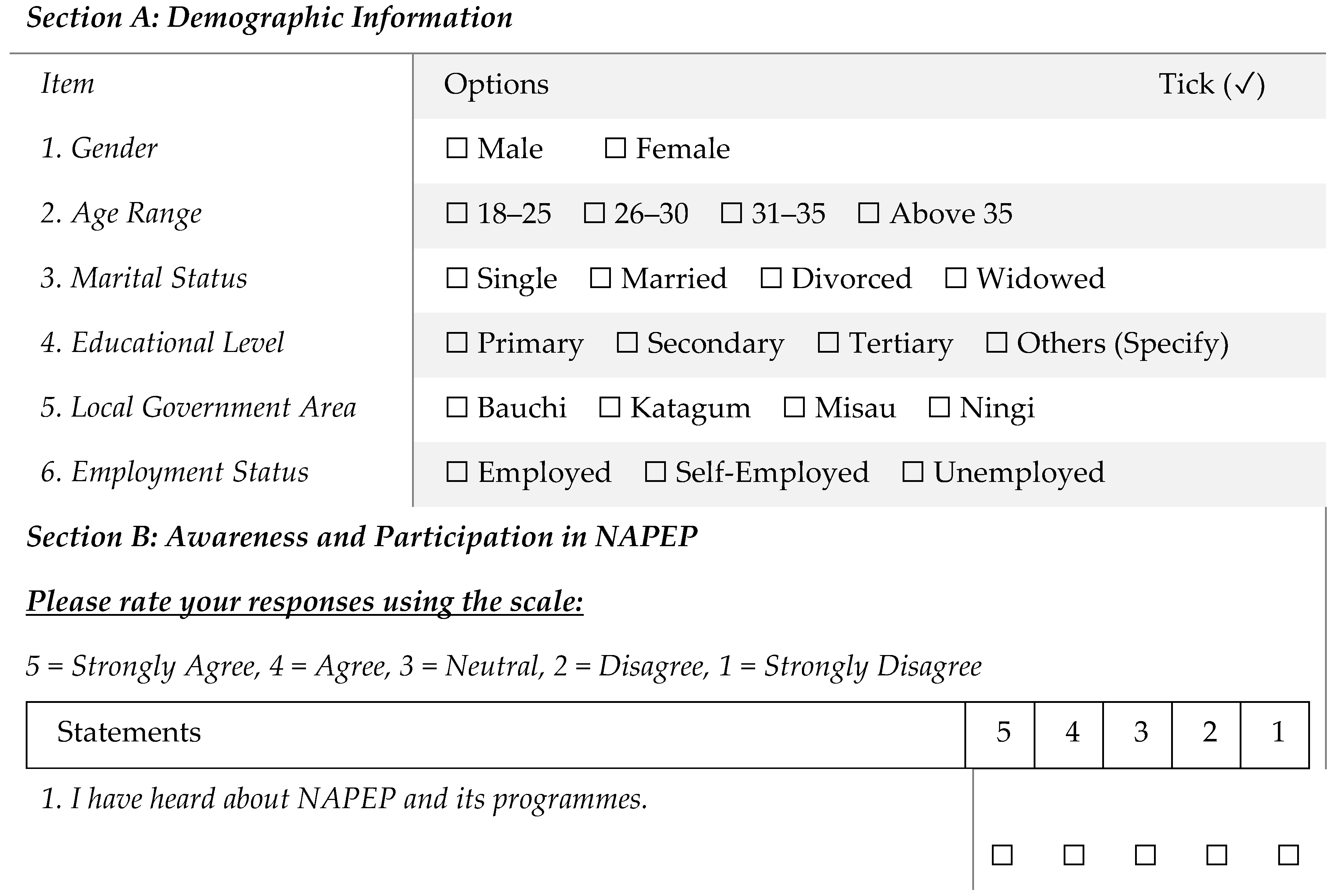
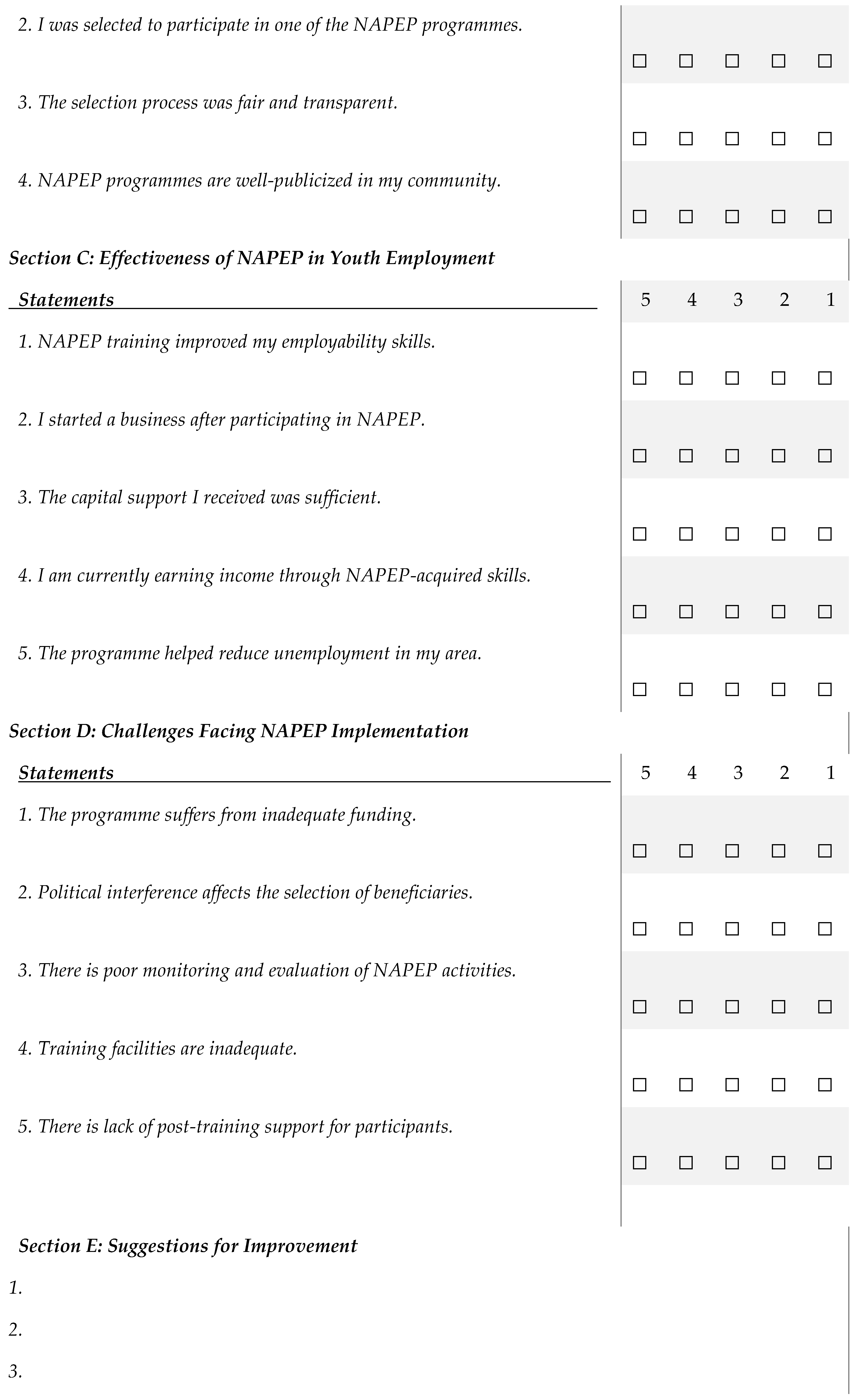
Data were collected using a structured questionnaire designed based on the study objectives and reviewed literature. The instrument contained four sections:Each item was measured using a 5-point Likert scale (Strongly Agree to Strongly Disagree).
To ensure content validity, the questionnaire was reviewed by three experts in public administration and social statistics. A pilot test was conducted on 20 respondents outside the sampled LGAs. The reliability of the instrument was determined using Cronbach’s Alpha, which yielded an overall coefficient of 0.82, indicating high internal consistency.
Table 4.
Reliability Statistics for Questionnaire Items (Cronbach’s Alpha).
Table 4.
Reliability Statistics for Questionnaire Items (Cronbach’s Alpha).
| Variable |
No. of Items |
Cronbach’s Alpha (α) |
Interpretation |
| Awareness and Participation |
6 |
0.78 |
Reliable |
| Programme Effectiveness |
8 |
0.84 |
Highly Reliable |
| Employment Outcome |
5 |
0.81 |
Reliable |
| Challenges of NAPEP |
5 |
0.85 |
Highly Reliable |
| Overall Scale Reliability |
— |
0.82 |
Acceptable Reliability |
Data collection was carried out by trained research assistants under the supervision of the researcher. Both printed and electronic questionnaires were administered to respondents. Ethical considerations such as informed consent and confidentiality were strictly observed.
Data collected were coded and analyzed using the Statistical Package for Social Sciences (SPSS) version 26. Descriptive statistics such as frequency, percentage, and mean were used to summarize respondents’ demographic data and perceptions. Inferential statistics such as Chi-square tests were used to test the research hypotheses at a 0.05 level of significance.
4. Results and Discussion
4.1. Hypothesis Testing and Statistical Analysis
To test the stated hypotheses, the Chi-square test (χ²) was employed to determine whether there was a significant relationship between NAPEP participation and youth employment outcomes.
The cross-tabulation of NAPEP participation (independent variable) and employment status (dependent variable) revealed that 73% of participants reported being employed or self-employed, compared to 44% among non-participants.
The computed Chi-square value of χ² = 18.47, df = 4, p = 0.001 was less than the 0.05 significance level, leading to the rejection of the first null hypothesis. Therefore, there exists a statistically significant relationship between NAPEP participation and youth employment in Bauchi State.
For the second hypothesis, which examined the difference in employment outcomes between participants and non-participants, the Chi-square value was χ² = 11.29, df = 3, p = 0.004, also indicating a significant difference.
These results validate the Human Capital Theory, which posits that skill acquisition and investment in human development increase productivity and employability. It also corroborates the findings of Afolabi and Ojo (2022), who found that skill-based interventions significantly enhance income levels and job retention among Nigerian youths.
This section presents the findings of the study and interprets them in relation to the objectives, hypotheses, and reviewed literature. Data obtained from the field survey were carefully screened, coded, and analyzed using descriptive and inferential statistical techniques. Out of the 264 copies of the questionnaire distributed across the four selected Local Government Areas (Bauchi, Katagum, Misau, and Ningi), 252 were correctly filled and returned, representing a high response rate of 95.5%. According to Mugenda and Mugenda (2021), a response rate above 80% is adequate for quantitative research and enhances the generalizability of findings.
The analysis was organized in line with the four research objectives, focusing on youth awareness and participation in NAPEP, skills accusation programmed on youth employment. The socio-demographic characteristics of respondents provide insight into the background of participants and help contextualize their perceptions of NAPEP. As shown in Table 4.2, Out of the 252 respondents, 146 (58.0%) were male while 106 (42.0%) were female. In terms of age, 98 respondents (38.9%) were within the 18–25 age group, 64 (25.4%) between 26–30 years, 70 (27.8%) between 31–35 years, and 20 (7.9%) were above 35 years. This demographic pattern shows that the majority of NAPEP beneficiaries were young and relatively educated, reflecting the youth-focused orientation of the programme. This age distribution corresponds with the national youth definition and suggests that the study effectively targeted its population of interest. The educational profile shows that 139 (55.2%) had completed secondary education, 68 (26.9%) tertiary education, and 45 (17.9%) primary education or less. This indicates that most participants had sufficient literacy to understand the objectives of NAPEP and respond meaningfully to its interventions.
The implication of this finding is that the programme’s design must continue to consider varying educational backgrounds to ensure inclusivity. Okoye and Bello (2023) emphasize that education is a strong determinant of employability and productivity, and therefore, empowerment programmes should include literacy components for low-educated participants.
4.2. Level of Awareness and Participation in NAPEP
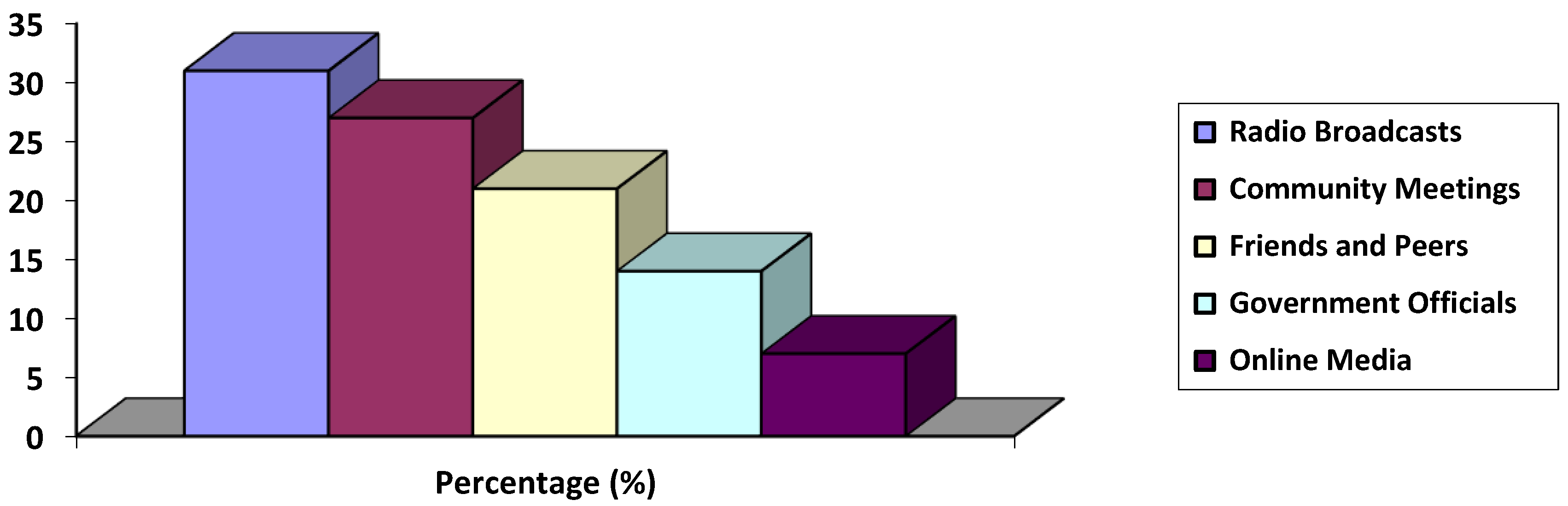
The study revealed a high level of awareness of NAPEP initiatives among youths in Bauchi State. Out of 252 respondents, 182 (72.2%) were aware of NAPEP programmes, while 70 (27.8%) indicated they had never heard of the scheme. Among the aware respondents, 78 (31%) learned about NAPEP through radio broadcasts, 68 (27%) through community meetings, 53 (21%) via friends or peers, 35 (14%) through local government officials, and only 18 (7%) through online media (Figure 4.1).
Figure 1.
Bar chart showing the main sources of awareness about NAPEP among respondents in Bauchi State.
Figure 1.
Bar chart showing the main sources of awareness about NAPEP among respondents in Bauchi State.
Interpretation:
Radio remains the most effective awareness channel, while online media plays a minimal role, reflecting the digital divide among rural youths.
The interpretation of these results indicates that NAPEP made moderate contributions to youth employment but fell short in sustainability. Respondents acknowledged the short-term benefits of skill development but criticized the limited access to capital and poor monitoring of trained beneficiaries
Despite this high awareness, only 154 respondents (61.1%) reported active participation in at least one NAPEP skill acquisition programme, while 98 (38.9%) had not participated. Participation was higher in urban areas, especially Bauchi metropolis (66%, n = 59), compared to rural LGAs like Misau and Ningi (54%, n = 25 each). This indicates that accessibility and exposure play a significant role in programme participation.
The findings align with those of Adebayo and Ibrahim (2022), who observed similar patterns in Kano State where awareness was high but participation was low due to poor information dissemination and bureaucratic barriers. This reinforces the need for decentralizing NAPEP’s outreach to reach rural youths, especially women who often lack access to formal information channels.
4.3 Perceived Effectiveness of NAPEP in Promoting Youth Employment
The study assessed respondents’ perceptions of NAPEP’s effectiveness in enhancing youth employment through skills acquisition, access to micro-credit, and job placement opportunities. Using a 5-point Likert scale, respondents rated various programme aspects.
Findings indicate that 171 respondents (68%) agreed that NAPEP improved their employability through training in tailoring, carpentry, poultry, and ICT. Approximately 118 (47%) of the participants reported starting small-scale businesses using skills acquired, while 73 (29%) claimed they were able to secure wage employment through the Mandatory Attachment Programme. However, only 91 (36%) agreed that they received adequate start-up capital, reflecting weak post-training support.
Overall, the mean score of 3.42 suggested a moderate level of programme effectiveness. This indicates that while the skill acquisition component enhanced job readiness and entrepreneurial ability, inadequate post-training financial and institutional support limited its sustainable impact.
This outcome mirrors findings from Usman and Ibrahim (2023), who reported that the absence of continuous support mechanisms often leads to relapse into unemployment. Similarly, Eze and Ali (2022) emphasized that successful youth empowerment requires integrating training with financial inclusion strategies to ensure continuity and scalability.
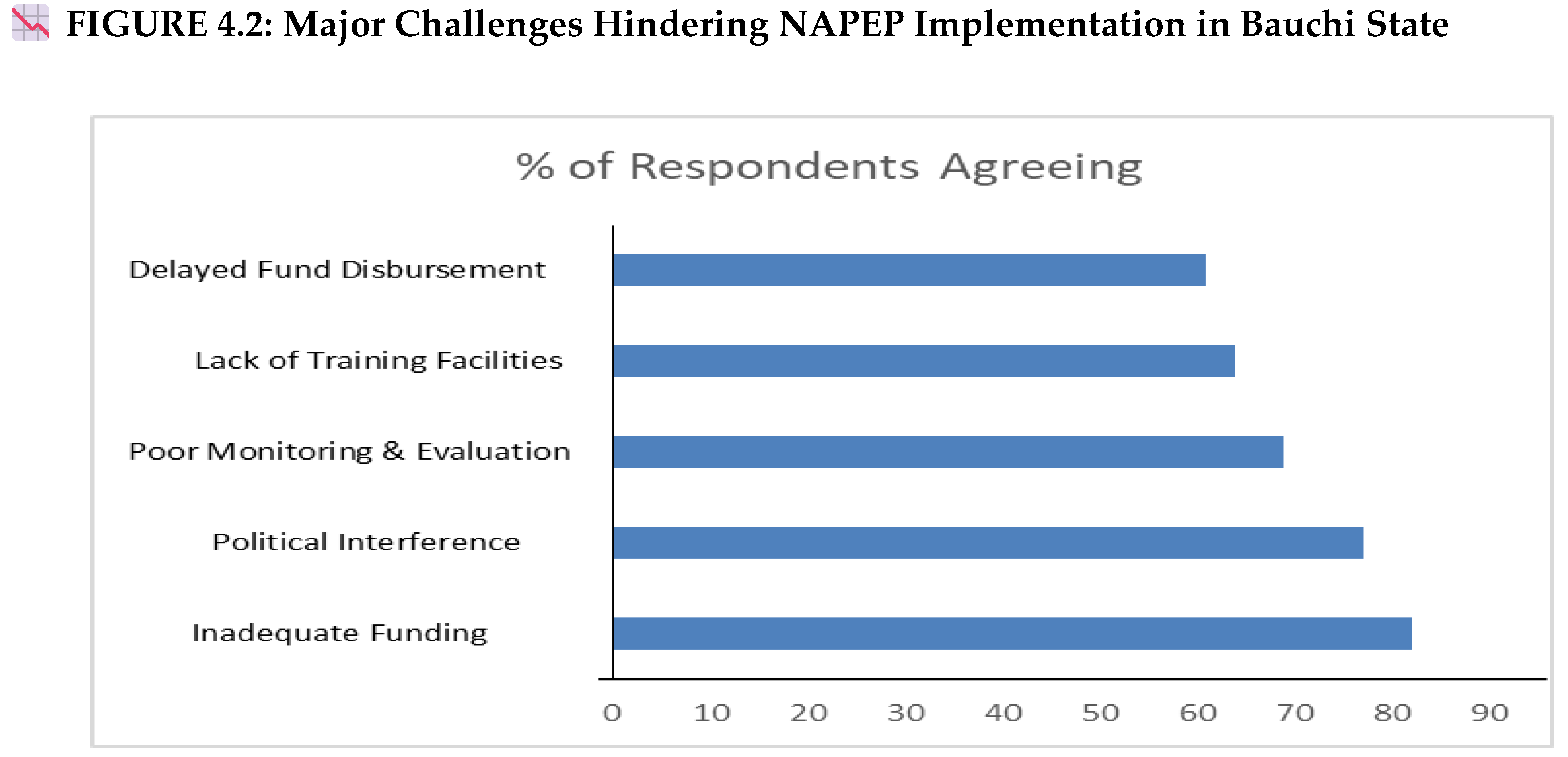
Respondents identified several challenges limiting the effectiveness of NAPEP (Figure 4.2). The most prevalent challenge was inadequate funding, reported by 207 respondents (82%). This was followed by political interference (194; 77%), poor monitoring and evaluation (174; 69%), lack of training facilities (161; 64%), and delays in fund disbursement (154; 61%).
These challenges mirror previous findings by Adeola and Bamidele (2022), who observed that political influence and irregular financing weaken the performance of national poverty eradication schemes. The persistence of such issues suggests that structural inefficiencies continue to undermine policy outcomes in Bauchi State.
Figure 2.
Qualitative comments from respondents further revealed perceptions of favoritism and politicization in selecting beneficiaries. Some respondents also lamented the short duration of training, which limited their ability to master technical skills. These concerns are consistent with observations made by Mohammed and Ibrahim (2023), who found that political control and irregular funding cycles often weaken Nigeria’s poverty alleviation schemes.
Figure 2.
Qualitative comments from respondents further revealed perceptions of favoritism and politicization in selecting beneficiaries. Some respondents also lamented the short duration of training, which limited their ability to master technical skills. These concerns are consistent with observations made by Mohammed and Ibrahim (2023), who found that political control and irregular funding cycles often weaken Nigeria’s poverty alleviation schemes.
Moreover, weak coordination between federal and state implementation units resulted in duplication of efforts and misallocation of resources. In several communities, multiple agencies were operating overlapping empowerment programmes without harmonization. This finding underscores the argument by Adeola and Bamidele (2022) that fragmented institutional frameworks reduce programme efficiency and increase administrative costs.
The study revealed that the National Poverty Eradication Programme (NAPEP) has contributed moderately to reducing youth unemployment in Bauchi State through its skill acquisition components. Statistical analysis showed a significant association between participation in skill acquisition training and employment outcomes (χ² = 18.47, p < 0.05). Respondents who took part in NAPEP training recorded higher employability rates compared to non-participants. Many of them reported that the programme enhanced their technical competence, entrepreneurial skills, and confidence to start small-scale businesses. This finding supports the Human Capital Theory, which holds that investment in training and skills development enhances productivity and job creation.
Despite these improvements, the study found that unemployment remains high among youths in Bauchi State. Although NAPEP provided initial training and empowerment opportunities, limited post-training support, irregular funding, and weak institutional monitoring constrained its long-term impact. As a result, many trained youths were unable to establish or sustain self-employment ventures. This suggests that while skill acquisition can reduce unemployment, its success depends on continuous support and effective policy coordination.
The level of participation in NAPEP’s skill acquisition schemes was also found to be moderate. Approximately 61% of respondents indicated that they had participated in at least one training or vocational course under the programme. However, participation varied across the study area, with urban youths having greater access than their rural counterparts. This disparity was attributed to the uneven distribution of training centres and inadequate awareness campaigns.
In summary, the findings demonstrate that skill acquisition programmes under NAPEP have a statistically significant influence on employment status among youths in Bauchi State. However, the persistence of unemployment despite these interventions indicates the need for stronger institutional support, continuity of training, and better alignment between acquired skills and market demand.
5. Conclusion and Recommendations
5.1. Summary of Findings
This study quantitatively assessed the impact of the National Poverty Eradication Programme (NAPEP) on youth employment in Bauchi State, Nigeria. The research was motivated by the persistent rise in youth unemployment despite decades of government interventions. Using data obtained from 252 respondents across four Local Government Areas (Bauchi, Katagum, Misau, and Ningi), the study examined awareness, participation, programme effectiveness, and implementation challenges.
Findings indicated that awareness of NAPEP was relatively high (72%), largely due to community sensitization and radio broadcasts. However, participation 154 (61%) remained below expectation, reflecting barriers to accessibility and selection bias. Most respondents acknowledged that NAPEP improved their employability and provided short-term income opportunities through vocational training. Nonetheless, long-term job sustainability was low, mainly due to inadequate funding, political interference, and weak post-training monitoring.
Inferential analysis using the Chi-square test confirmed a statistically significant relationship between participation in NAPEP and employment outcomes, implying that skill acquisition and empowerment programmes can indeed influence youth employment positively. This finding supports the Human Capital Theory, which underscores the role of training and capacity development in enhancing productivity and reducing poverty (Afolabi & Ojo, 2022).
Overall, the study concludes that while NAPEP contributed meaningfully to youth employment in Bauchi State, its impact was constrained by poor implementation strategies and lack of continuity.
5.2. Conclusion
The results of this research provide a nuanced understanding of the successes and limitations of NAPEP as a poverty eradication and youth empowerment policy in Nigeria. The programme achieved partial success by equipping participants with employable skills and limited start-up opportunities. However, it failed to institutionalize mechanisms that could guarantee sustainability and scalability.
The study confirms that effective poverty reduction cannot be achieved through short-term interventions or politically driven initiatives. Sustainable youth employment requires consistent funding, transparent beneficiary selection, and integration with local economic structures. Moreover, empowerment programmes must be accompanied by post-training support, such as access to micro-credit, mentorship, and linkages with private sector actors to facilitate real business growth.
The findings reaffirm that empowering youths through vocational and entrepreneurial education remains a strategic approach to addressing unemployment in Nigeria. Yet, without strong monitoring and evaluation frameworks, the outcomes of such programmes may remain temporary.
5.3. Recommendations
Based on the findings, the following recommendations are proposed to improve future poverty eradication and youth empowerment programmes in Nigeria, particularly in Bauchi State:
Based on the findings of this study, which focused on youth unemployment and participation in skill acquisition programmes in Bauchi State, the following recommendations are made:
1. Expand and Strengthen Skill Acquisition Programmes:
The government, in collaboration with private organizations and NGOs, should increase access to skill acquisition training across both urban and rural areas. Establishing more training centres and improving awareness campaigns will enhance youth participation, particularly among rural populations who are often excluded from such opportunities.
2. Provide Post-Training Support and Job Linkages:
To make skill acquisition programmes more effective in reducing unemployment, beneficiaries should be provided with start-up capital, mentorship, and market linkages after training. Continuous follow-up and guidance will help trainees translate acquired skills into sustainable employment or self-reliance.
3. Align Training with Labour Market Demands:
Skill acquisition curricula should be periodically reviewed to reflect current economic realities and emerging job trends, including ICT, agriculture, and renewable energy sectors. Aligning training content with market needs will ensure that participants acquire relevant and employable skills capable of reducing youth unemployment sustainably.