Preprint
Article

This version is not peer-reviewed.

Current Insights into Sporothrix schenckii: From Basic Biology to Virulence Mechanisms

A peer-reviewed article of this preprint also exists.

Submitted:

28 November 2025

Posted:

01 December 2025

You are already at the latest version

Abstract

Sporothrix schenckii is a thermodimorphic fungus and one of the main etiological agents of sporotrichosis, a globally distributed subcutaneous mycosis that primarily affects the skin, subcutaneous tissue, and lymphatic system. Historically regarded as the classical species within the Sporothrix pathogenic clade, S. schenckii remains a clinically relevant pathogen and an important biological model for studying fungal dimorphism, virulence, and host–pathogen interactions. Major virulence factors include melanin production, thermotolerance, hydrolytic enzymes, and adhesins, all of which contribute to its survival and dissemination within the host. Clinically, S. schenckii causes a broad spectrum of manifestations ranging from fixed and lymphocutaneous cutaneous forms to disseminated and extracutaneous infections, particularly in immunocompromised individuals. This species exhibits a cosmopolitan distribution with endemic foci in the Americas, Asia, and Africa, and can be transmitted through both sapronotic and zoonotic routes. Diagnosis relies on fungal isolation, molecular identification, and histopathological examination, whereas treatment mainly involves itraconazole, potassium iodide, and amphotericin B for severe cases. This review integrates current knowledge on the biology, virulence, immune response, epidemiology, and treatment of S. schenckii, providing an updated overview of its significance as a medically important fungal pathogen with global relevance.

Keywords: 
;  ;  ;  ;  ;  

1. Introduction

Sporotrichosis is known to be a chronic fungal infection in humans and other mammals, which mainly affects the skin, subcutaneous tissue, and, rarely, internal organs [1,2]. The causative agents of this infection are members of the Sporothrix clinical clade, which includes Sporothrix schenckii, Sporothrix brasiliensis, Sporothrix luriei, and Sporothrix globosa [3]. These species have different distribution patterns. In the case of S. brasiliensis, it is restricted to Brazil and other South American countries, while S. schenckii and S. globosa have a worldwide distribution. However, reported cases are concentrated in a greater proportion in America and Asia, respectively [4,5,6,7].
Although sporotrichosis is an infection that was described more than a century ago, it is still a neglected infection; the case report is not currently mandatory to report to any National Ministry of Health, except in some Brazilian states [8,9]. Given this, current knowledge of this disease and its various causative agents remains limited compared to other types of mycosis, such as candidiasis, aspergillosis, and cryptococcosis [10].
The increment of cases of human and feline sporotrichosis in recent years, along with the limited information in terms of diagnosis and treatment, has awakened a growing interest from the scientific community to study this infection and its etiological agents [11,12]. Within the pathogenic clade, S. schenckii is the most studied species and the one on which most of the available knowledge is concentrated, due to the number of cases documented over time [12]. S. schenckii is a thermodimorphic fungus that has historically been considered the main etiological agent of sporotrichosis [13]. Under environmental conditions, it grows as a conidium-producing mycelium, while at 37 °C, within the host tissues, it adopts a yeast-like morphology, a key characteristic in its pathogenicity [14,15]. This species has been isolated from various organic substrates, such as soil, decaying vegetation, and plant thorns, linking it to the classic transmission by traumatic inoculation, although zoonotic forms of transmission, via direct contact with open injuries in infected cats, have also been described, especially in endemic regions [16].
In addition to its thermal adaptability, S. schenckii possesses various virulence factors, including hydrolytic enzymes, melanin, adhesins, and cell wall components that contribute to its ability to evade the host’s immune response [17,18]. These characteristics have positioned S. schenckii as a valuable model for studying the biology, virulence, and host–pathogen interaction mechanisms of Sporothrix species.
Therefore, this review provides an integrated overview of the current knowledge on S. schenckii, focusing on its biology, cell wall composition, virulence factors, and the complex interplay with the host immune system.

2. Biological Aspects

General Aspects

Sporothrix schenckii is one of the main causative agents of human sporotrichosis, a subcutaneous mycosis with the first reported case in 1898 by Benjamin R. Schenck [13,19]. S. schenckii belongs to the Ascomycota division, class Pyrenomycetes, order Ophiostomatales, family Ophiostomataceae [13]. It was thought that S. schenckii was the sole etiological agent of sporotrichosis; however, taxonomic studies in the early years of this century defined other Sporothrix species of clinical relevance: S. brasiliensis, S. globosa, Sporothrix mexicana, and S. luriei [14,20]. These species were grouped as the Sporothrix schenckii complex [21].
S. schenckii is a thermodimorphic fungus, found in soils, plant organic matter, and decomposing organic matter in nature [1]. It has been reported that acquisition of the infection by this pathogen is mainly by traumatic inoculation in outside activities [1] and zoonotic transmission by biting or scratching of infected animals [22].
S. schenckii is globally distributed, has been isolated from most of the American countries, including Argentina, Bolivia, Brazil, Colombia, Guatemala, Mexico, Peru, Venezuela, and the United States. In the European continent has been isolated from France, Italy, and the United Kingdom. Finally, in the African and Asian continents, it has been isolated from South Africa, Madagascar, India, China, Thailand, and Japan [4,23,24].

Morphology

S. schenckii has a mycelial saprophytic phase with characteristics of slender, hyaline, septate, and branched hyphae that contain conidiophores. These structures form grouped conidia of 2 to 4 µm each, denominated denticles, forming a typical morphology that seems like a flower bouquet [1]. In addition, conidia of this species are known for having a dark cell wall, helping to discriminate S. schenckii from other nonpathogenic species [21] (Figure 1A and 1B).
On the other hand, S. schenckii may undergo dimorphism to yeast-like cells, with spindle-shaped or oval cells of 2.5 to 5 µm in diameter, resembling a cigarette [1].
At the macroscopy level, mycelial form can be observed as filamentous colonies, with a white cream color that can turn to brown black after a few days, with an appearance smooth and rough appearance in potato dextrose agar and malt extract. Colonies containing yeast-like cells can be observed as creamy and smooth colonies in Saboraud dextrose agar (Figure 1C, 1D, and 1E) [21].
Temperatures of 25 °C and 37 °C for mycelium and yeast-like cells, respectively, are the best to obtain these structures in vitro; however, factors like pH, CO2, and the carbon source can affect the growth [25]. Besides, at the molecular level, there are other aspects to consider in the control of dimorphism, such as calcium/calmodulin-dependent protein kinases or a pathway that involves the interaction of a cytosolic phospholipase with a G protein [26,27].

Cell Wall

As in other fungi, the cell wall is a relevant component for S. schenckii, as it provides structural integrity and represents the first line of contact with the host. In addition, it works as a molecular scaffold to display various antigenic determinants and virulence factors [28]. In this dimorphic fungus, the cell wall not only plays a protective role but also participates actively in adhesion to host tissues, immune evasion, and modulation of the inflammatory response. Furthermore, its composition varies between the mycelial and yeast phases, reflecting metabolic and structural adaptations to environmental conditions or the host’s internal environment [28].
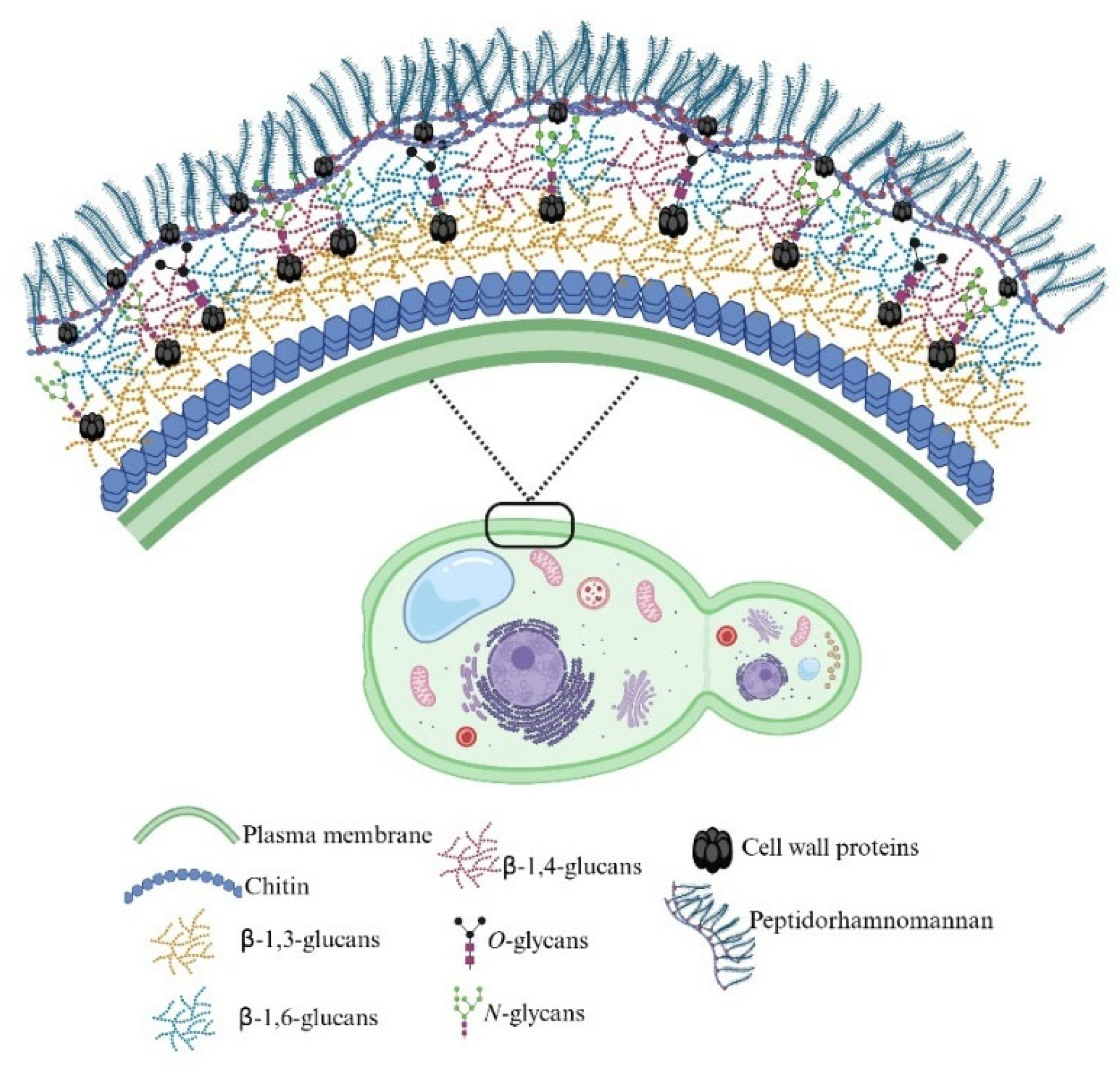
The latest proposed model for the S. schenckii cell wall places in the outermost layer a glycoconjugate called peptidorhamnomannan (PRM), which is composed of several proteins modified with rhamnose- and mannose-containing O- and N-linked glycans [28,29,30]. The innermost layer contains chitin, β-1,3-glucan, and β-1,6-glucan, which provide rigidity and structural support, while alpha glycogen particles are observed around the plasma membrane, which probably function as energy reservoirs to sustain the synthesis of wall polysaccharides (Figure 2) [34]. Silencing of genes involved in glycosylation pathways, such as OCH1, ROT2, MNT1, and PMT2, has revealed notable alterations in wall organization and composition, as well as a reduction in fungal virulence, confirming the relevance of the integrity of this structure for the fungus’s infectious success [31,32,33].
The PRM is composed of more than 300 proteins, some of them likely to be moonlighting peptides [29]. Among the characterized proteins are Pap1 and Hsp60, which have adhesin properties to extracellular matrix (ECM) components [29]. Another relevant cell all protein is Gp70, a glycoprotein with heterogeneous glycosylation patterns, highly antigenic, and also involved in ECM adhesion [34,35,36,37]. These surface proteins not only mediate interaction with the host but can also modulate immune recognition and participate in resistance to cellular defense mechanisms [29,34].
Several studies have shown that environmental and cultivation conditions significantly influence the composition of the cell wall of S. schenckii. Cells grown in YP and YNB media showed a significant reduction in the rhamnose and mannose content, with a compensatory increment in the glucan concentration, suggesting that a change in the media can affect the synthesis of oligosaccharides and polysaccharides [38]. In addition, cells showed a 50% reduction in the ability to bind Alcian blue, suggesting defects in the synthesis of both N-linked and O-linked glycans [38]. These experiments also showed the relevance of cell wall rhamnose-containing glycans for fungal virulence, as cells with low cell wall rhamnose content showed virulence attenuation [38]. This observation was later confirmed by analyzing the cell wall of different S. schenckii strains, and those with naturally low rhamnose levels at the cell wall displayed low virulence, when compared with the high cell wall rhamnose-content strains [39].
In addition to nutritional conditions, fungal morphology significantly influences cell wall architecture [40,41]. In the mycelial phase, β-glucans and chitin predominate, while in the yeast phase, the proportion of glycoproteins and PRM increases, which is associated with greater adhesion capacity and immune response evasion [39]. During the temperature-induced morphological transition, S. schenckii remodels its cell wall through the coordinated action of glycosyltransferases, chitinases, and glucanases, modifying the exposure of PAMPs and adapting its surface to the parasitic phase. This dynamic process of structural reorganization is a key factor in the thermal virulence and survival of the fungus in the host [39].

Genome

In 2014, S. schenckii and S. brasiliensis were compared by genomic sequence assemblies and annotations, and the results concluded that both species have a genome identity of 97.5% [42]. Analysis showed that the S. schenckii genome is 32.4 megabases (Mb) in size, yielding 16 scaffolds with N50 of 4.3 Mb and 327 contigs [42]. The same study reported 10, 293 protein-coding genes and a G + C content of 62% [42]. These data contrast with the protein-coding genes identified within the S. brasiliensis genome, which was significantly smaller (9091 genes) [42]. The mitochondrial genome assembly is about 26.5 Kb with a similarity of 99% with S. brasiliensis [42]. Transposable elements (TEs) are present in a proportion of 0.34% in the genome of S. schenckii, while in S. brasiliensis, a proportion of 0.62%, with two major groups, LINEs and LTRs, and de absence of SINE elements was documented [42]. The proportion of TEs in comparison with other fungi is lower, even with its closely related species, Paracoccidioides brasiliensis (TEs of 8-9% of its genome) and similar to others that are not so closely related, such as Trichoderma and Fusarium graminearum [42]. Even though the intron frequency is similar for both S. sncheckii and S. brasiliensis, in the latter, the intron length is significantly higher (123.4 bd vs. 91.2) [42]. Finally, the analysis of plody in S. schenckii indicated that this organism is haploid [43].

3. Virulence Factors

In S. schenckii, as in other medically important pathogenic fungi, various virulence factors have been described, which contribute to the establishment and progression of infection [18]. These elements are essential during interaction with the host, and their absence can lead to a significant decrease in virulence [44]. Among the most relevant factors reported in S. schenckii are adhesins, proteins involved in interaction with ECM components, the ability to form biofilms, the production of hydrolytic enzymes that facilitate tissue invasion, dimorphism and thermotolerance, as adaptation mechanisms, as well as immune evasion strategies, melanin synthesis, and the participation of proteins associated with cell wall structure and remodeling [44]. Knowledge about these factors in S. schenckii is still incomplete; however, their identification is essential for understanding the mechanisms underlying fungal pathogenicity. To this end, a BLASTp analysis (https://blast.ncbi.nlm.nih.gov/Blast.cgi, accessed August 2025) was performed using Candida albicans, Aspergillus fumigatus, and Cryptococcus neoformans as reference organisms to predict putative genes in S. schenckii associated with virulence factors (Table 1).
Cell adhesion is an initial and decisive step in the fungal infection process, as it facilitates colonization of tissue surfaces and subsequent dissemination of the pathogen within the host [34,45,46]. In pathogenic fungi, surface adhesins, usually proteins anchored to the cell wall, mediate interaction with components of the ECM, such as fibronectin, laminin, collagen, and elastin, promoting the establishment of infection [29,47,48]. In S. schenckii, the characterization of specific adhesins is still limited; however, several studies have shown that this fungus has cell wall glycoproteins capable of recognizing and binding to ECM proteins, including fibronectin, laminin, and type II collagen [29,34,48]. These interactions not only promote adhesion to host cells and tissues but also enhance other processes of pathogenesis, such as invasion and evasion of the immune response. The adhesin Gp70 is currently the most studied in the Sporothrix complex, and is expressed in S. schenckii, S. brasiliensis, and S. globosa (Table 2) [34,36,49]. In S. schenckii, Gp70 is a highly abundant wall glycoprotein. In addition to being attached to the cell wall, it has also been detected as a secreted protein associated with extracellular vesicles, suggesting pleiotropic roles [34,36]. Functionally, Gp70 has been implicated in the adhesion of S. schenckii to components of the host ECM. In vitro studies have shown that the purified protein can bind to fibronectin and laminin, and blocking with anti-Gp70 antibodies reduced the fungus’s adhesion to these proteins [34,35]. The generation of GP70 silencing mutants in S. schenckii resulted in a significant decrease in adhesion to laminin and fibrinogen, when compared to the wild-type strain, experimentally confirming its role as an adhesin [34]. An interesting aspect is that the abundance of Gp70 appears to be inversely correlated with the degree of virulence of the strain, i.e., highly virulent isolates of S. schenckii often show low expression of Gp70 on their surface, while isolates with reduced virulence exhibit higher protein density in the cell wall [35]. This suggests that, in addition to its adhesive role, Gp70 has a strong antigenic load, and it has been reported that some strains can modulate their Gp70 expression as a strategy to evade immune surveillance [50].
It was recently reported that the chaperonin GroEl/Hsp60 and Pap1 have adhesive properties against various components of ECM, including laminin, elastin, fibrinogen, and fibronectin, while Pap1 also has an affinity for type-I and type-II collagen [29]. Comparative analyses suggest that Pap1 is found in S. schenckii and S. brasiliensis but is absent in S. globosa, which could be related to the lower virulence observed in this species [29]. These findings reinforce the notion that both classic cellular stress proteins, such as GroEl/Hsp60, in moonlighting functions, and recently characterized proteins such as Pap1, expand the repertoire of adhesins in S. schenckii and contribute to its ability to interact with the host.
Comparative in silico analyses of the S. schenckii genome have identified a set of proteins with a possible adhesin function, mainly glycoproteins anchored to the cell wall by glycosylphosphatidylinositol anchors, predicted using tools such as ProFASTA and FungalRV [42]. Most of these proteins are annotated as hypothetical or belong to families with functions that have not yet been characterized, making it necessary to validate their expression and biological role using proteomic and functional approaches [42]. Several of these candidate adhesins are related to basic fungal cell functions, such as cell wall maintenance, carbohydrate hydrolysis, or hydrolase activity [42]. These findings suggest that, if their role in adhesion is confirmed, many of them would correspond to moonlighting proteins, whose primary function is not directly associated with pathogen-host interaction, but which could contribute to the S. schenckii colonization and persistence within the host [53].
Although the experimental characterization of adhesins in S. schenckii is still limited, bioinformatics analyses represent a valuable tool for identifying candidates with potential roles in cell adhesion. BLAST analysis of the S. schenckii genome identified several putative orthologs of adhesins described in reference pathogenic fungi (Table 1). Specifically, no obvious orthologs were found for the C. albicans Als family members (Als1–9) or for well-characterized candidate adhesins such as Eap1, Hwp1, or Iff4 (Table 1). However, candidates with high similarity to Ecm33, Int1, and Mp65 proteins involved in C. albicans cell wall interaction and adhesion/biofilm formation were identified [54,55,56]. Analysis against A. fumigatus revealed putative orthologs of CalA, Scw11, and Gel1/Gel2, suggesting the presence of multiple enzymes related to cell wall remodeling and polysaccharide processing that could mediate interactions with the host matrix [57,58,59]. Compared to C. neoformans, a partial ortholog for Mp98 was detected [60]. In contrast, other adhesins from A. fumigatus and C. neoformans (RodA, RodB, AspF2, Mp1, AfCalAp, Cfl1, Cpl1) showed no clear orthologs in S. schenckii (Table 1). Taken together, these findings point to two relevant ideas: (i) S. schenckii possesses a repertoire of proteins related to the cell wall and polysaccharide hydrolysis/modification that could act directly or indirectly as adhesins. However, proteomic and functional validation studies are required to confirm their expression and characterize their actual contribution to the colonization and virulence process in S. schenckii. (ii) The absence of obvious orthologs of classical multicentric adhesins suggests that S. schenckii has adopted different molecular solutions for adhesion, possibly resorting to proteins with a primary structural/enzymatic function that also perform moonlighting functions in host interaction.
Biofilms are a fundamental component in the biology of numerous fungi, as they promote their persistence in various niches and contribute to pathogenesis [61]. In Sporothrix spp., their development begins with cell adhesion to biotic or abiotic surfaces, followed by fungal proliferation accompanied by the production of a polymeric extracellular matrix, and culminates in dispersion to new surfaces [18,61]. These biofilms have a complex architecture characterized by a dense network of hyphae immersed in the extracellular matrix and the formation of aqueous channels, which facilitate both nutrient transport and the structural maintenance of the fungal community [62,63]. Unlike the biofilms of other microorganisms, those of Sporothrix spp. exhibit slower growth, which could be related to their three-dimensional organization [62]. Recent evidence suggests that the ability to form biofilms is a key factor in the virulence of the genus, as it confers adaptive advantages against the host and the environment.
In the specific case of S. schenckii, biofilm formation has been documented in both in vitro and in ex vivo models, where its filamentous morphology favors the generation of organized structures characterized by intertwined hyphal networks, extracellular matrix, and water channels [63]. In addition, its ability to develop biofilms on keratin-rich surfaces, such as cat nail fragments, has been demonstrated, which is relevant for understanding the mechanisms of sporotrichosis zoonotic transmission [63]. Comparatively, S. schenckii exhibits greater metabolic activity in the early stages of biofilm growth than S. brasiliensis, although the latter shows greater resistance to antifungal agents in vitro [63]. These findings reinforce the idea that biofilm in Sporothrix, and in particular in S. schenckii, constitutes an essential adaptive strategy that not only favors colonization and transmission but also resistance to adverse environmental and host conditions. Bioinformatic analyses suggest that S. schenckii possesses putative orthologs of proteins previously associated with biofilm regulation in other pathogenic fungi (Table 1). This observation, together with experimental evidence of its ability to form biofilms [61,62], indicates that this process could be based on partially conserved molecular mechanisms. However, it is likely that Sporothrix has developed additional regulators or adapted them to its biology, underscoring the importance of validating these candidates and identifying new determinants involved in the organization and functionality of its biofilms.
Although factors such as adhesins and biofilm formation have been widely recognized as determinants of pathogenicity in various fungi, dimorphism represents another crucial element in the Sporothrix biology [18,64]. This phenomenon allows it to alternate between the saprophytic mycelial phase and the parasitic yeast-like phase, a fundamental transition for its adaptation to the host and dissemination in tissues [64,65]. Transcriptomic studies have shown that this transition involves profound genetic reprogramming, with regulation of pathways related to energy metabolism, cell wall remodeling, oxidative stress response, and cell signaling [42,65]. Among the molecules involved are heat shock proteins (Hsp70, Hsp90) and the histidine kinase SsDRK1, homologous to factors described in other dimorphic fungi, underscoring the conservation of molecular mechanisms associated with dimorphism [64,65,66]. In addition, calcium has been shown to play a central role in morphological transition by stimulating calmodulin-dependent signaling pathways (CaMK). In this context, the protein kinase Sscmk1 has been identified as an essential regulator of morphogenetic and proliferative processes in S. schenckii (Table 2) [52]. This evidence confirms that dimorphism in S. schenckii is a multifactorial and finely regulated process, the elucidation of which remains fundamental to understanding the biology and pathogenesis of the Sporothrix genus.
Although some molecular regulators of dimorphism in S. schenckii are known, information is still limited, and further experimental studies are needed to fully elucidate the proteins involved in this process. In C. albicans, regulators such as Cph1, Hgc1, Nrg1, and Tup1 play central roles in the morphological transition, controlling hyphal formation and the repression of genes associated with the yeast phase [67,68,69]. According to our bioinformatic analysis, the S. schenckii genome contains putative orthologs for these genes, suggesting the conservation of key regulatory pathways (Table 1). Similarly, in C. neoformans, proteins such as Mob2, Cbk1, Tao3, and Sog2 participate in the RAM (Regulation of Ace2 and Morphogenesis) pathway, which is involved in cell organization and polarity [70,71]. Our analysis identified orthologous candidates in S. schenckii, indicating that this fungus may share conserved regulatory elements with other dimorphic pathogens. These results suggest that the control of dimorphism in S. schenckii likely involves a network of transcriptional and signaling factors that are partially conserved with C. albicans and C. neoformans but also include genes that have not yet been characterized and that could be adapted to the biology of this genus.
Given that morphological transition is closely related to environmental conditions, the ability to grow and survive at 37 °C becomes an indispensable prerequisite for completing this process [46]. Thus, thermotolerance is not only necessary for the establishment of the parasitic yeast phase but also represents an essential virulence factor in Sporothrix [46]. Thermotolerance is an indispensable trait for the adaptation of pathogenic fungi to the host. As in other dimorphic fungi, the response to increased temperature activates a series of cellular protection mechanisms that include heat shock proteins, calcium-dependent signaling pathways, and cell wall remodeling, all of which are essential for maintaining viability and infectivity [65]. This property has been considered a key virulence factor, as strains unable to sustain growth at physiological temperatures show marked attenuation in experimental models, highlighting the close relationship between thermotolerance, dimorphism, and pathogenesis in Sporothrix [46]. Likewise, clinical isolates from cutaneous and disseminated forms have shown efficient growth between 37 °C and 38 °C, indicating that most strains of S. schenckii possess effective thermotolerance [46]. At the molecular level, chaperone proteins, such as Hsp90 and kinases, such as Sscmk1, actively participate in the response to heat stress, regulating homeostasis and morphological maintenance at physiological temperatures [26]. However, this capacity has some limitations, with optimal growth of S. schenckii observed between 20 and 30 °C, decreasing significantly above 40 °C [1]. Taken together, these findings reinforce that thermotolerance is a dynamic and highly regulated mechanism, essential for the adaptation of S. schenckii to the host environment and closely linked to its morphogenetic and virulence capacity.
Knowledge about the molecular mechanisms that regulate heat tolerance in S. schenckii is still limited. However, BLASTp analysis allowed us to identify several putative orthologs of genes involved in the heat response of reference pathogenic fungi (Table 1). Orthologs of the heat shock proteins Hsp60, Hsp104, Ssa1, and Ssb1 from C. albicans were detected, all of which are involved in maintaining protein homeostasis and cell survival under heat stress [72,73]. Similarly, orthologs of A. fumigatus, corresponding to CrgA, Sch9, Hsf1, BiP/Kar2, Ssc70, Hsp88, Lhs1/Orp150, and Hsp90 were identified, which perform essential functions in the regulation of protein folding, cell signaling, and response to environmental stress conditions [74,75]. In addition, an ortholog of Ccr4 described in C. neoformans was found, related to transcriptional regulation and adaptation to adverse thermal conditions [76]. Among these genes, Hsp90 stands out, which has been experimentally characterized in S. schenckii and whose participation is crucial for thermal tolerance and maintenance of the yeast phase at 37 °C [26]. The presence of orthologs of these and other conserved genes reinforces the hypothesis that S. schenckii uses a molecular repertoire like that of other dimorphic fungi, supported mainly by heat shock proteins and signaling regulators, to resist the physiological conditions of the host.
Hydrolase production (proteases, lipases, phospholipases, among others) is a mechanism frequently associated with the invasion and spread of pathogenic fungi to the host [77]. In S. schenckii, although this field has been less researched, there is evidence that these enzymes contribute to cell damage and tissue adaptation [78]. For example, studies have shown that fungal proteases can induce cytopathic effects in human epithelial cells, using assays with substrates, such as azocoll and zymograms, and that their activity is maintained at different pH levels (5 and 7) [78]. In addition, S. schenckii strains have shown lipolytic activity with different substrates (olive oil, Rhodamine B, or Tween 80), suggesting that secreted lipases could participate in the degradation of host lipids and adaptation to infection niches [79]. Proteomic assays of the cell wall under oxidative stress conditions have also revealed secreted or extracellular proteins that could have hydrolytic or wall remodeling functions as part of the response to the host environment. These observations support the hypothesis that S. schenckii deploys a battery of hydrolytic enzymes as part of its virulence strategy [51,78,80].
Based on the bioinformatic analysis performed, it was possible to identify several putative orthologs of proteins reported in C. albicans and A. fumigatus associated with the production of hydrolytic enzymes, such as phospholipases, lipases, and proteases, in the S. schenckii genome (Table 1). Orthologs of the Lip5-8, Sap1-8, and Plb1-3 proteins from C. albicans were found, as well as Pep1, Pep2, Ap1, CtsD, and PlaA from A. fumigatus [81,82]. These proteins perform key functions in other pathogenic fungi, such as the degradation of host components, tissue invasion, and evasion of the immune response [83].
Other virulence factors play an important role in the biology of pathogenic fungi, including immune evasion, melanin production, and cell wall synthesis. About immune evasion, S. schenckii has developed various strategies that allow it to survive and establish itself within the host, even in the face of a phagocytic cell response. This process involves coordinated mechanisms, such as biofilm formation, protease secretion, morphological changes, and the synthesis of proteins with immunomodulatory functions [46,84]. The mechanisms described include the secretion of molecules that interfere with complement activation, structural modification of cell wall components, such as differential exposure of β-glucans and glycoproteins, and the release of extracellular vesicles that transport antigens and immune recognition-modulating enzymes [46,84]. These strategies reduce detection by pattern recognition receptors, such as dectin-1 and TLR2, favoring fungal persistence in infected tissues. Proteomic studies have identified several proteins related to these processes in the S. schenckii yeast-like phase, including aminopeptidase I, manganese superoxide dismutase, 70 kDa heat shock protein (Hsp70), glyceraldehyde-3-phosphate dehydrogenase (GAPDH), hydroxymethylglutaryl-CoA lyase, acetyl-CoA hydrolase, and 3-oxoacyl-[acyl carrier protein] reductase [42,85]. These proteins play key roles in the dimorphic transition, extracellular vesicle production, protection against oxidative stress, and tissue invasion. Aminopeptidase I could contribute to the weakening of host defenses, while 3-oxoacyl reductase, involved in rhamnolipid biosynthesis, has been associated with direct interaction with immune cells [85]. Likewise, surface proteins, such as Gp70 and Hsp60, in addition to their adhesive role, act as immunodominant antigens capable of modulating the activation of immune cells, facilitating the evasion of the immune response and the persistence of the fungus in the host [29,34,35]. Although several proteins potentially involved in the immune evasion of S. schenckii have been identified, further experimental evidence is still needed to fully understand the complex network of interactions that allows it to resist the action of the host’s immune system. The BLASTp analysis performed in this study contributes to expanding knowledge about this process by revealing the presence of putative orthologs of genes known for their involvement in immune evasion in other pathogenic fungi. These include Hgt1, Msb2, and Sit1 from C. albicans, PksP/Alb1 from A. fumigatus, and Rim101 from C. neoformans (Table 1).
In addition to mechanisms that enable evasion of the immune response, other factors contribute significantly to S. schenckii’s ability to persist and cause infection in the host. These include melanin production and cell wall synthesis and remodeling, two closely related processes that provide physical and chemical protection against immune system defenses and adverse environmental conditions [86,87]. Melanin is a pigment associated with the cell wall that acts as an important virulence factor in S. schenckii, conferring protection against the host’s immune response and adverse environmental conditions [46,86]. This polymer can mask immune recognition epitopes and neutralize reactive oxygen and nitrogen species, contributing to the survival of the fungus during infection [88]. In S. schenckii, the production of at least three types of melanin has been described: DHN-melanin, eumelanin, and pyomelanin, each synthesized by distinct but functionally complementary biosynthetic pathways [88,89]. In addition to its role in immune evasion, melanin also confers resistance to antifungal agents such as amphotericin B and terbinafine, as well as to nitrogen-derived oxidants [88].
Comparative studies have shown that S. schenckii produces detectable amounts of DHN-melanin in both its mycelial and yeast-like phases, although in lower proportions than S. brasiliensis, which could be related to the differences in virulence observed between these species [46,88,90]. The bioinformatics analysis performed in this study identified putative protein orthologs in S. schenckii associated with melanin synthesis, previously characterized in A. fumigatus, such as Fet3 oxidase and phenoloxidase-type enzymes, all involved in the polymerization and deposition of the pigment within the cell wall (Table 1).
Complementarily, cell wall synthesis and remodeling in S. schenckii constitute another essential component of its virulence. The wall, composed mainly of chitin, β-1,3-glucan, β-1,6-glucan, and peptidorhamnomannan, undergoes a profound structural reorganization during the mycelium-yeast transition, which modifies the exposure of immunogenic determinants and affects recognition by host receptors, such as dectin-1 and TLR2 [29,39,40,91]. In this regard, proteins involved in wall biosynthesis and assembly, such as chitin synthases, glucanases, and GPI-anchored proteins, could function dually, participating in both cell architecture and host interaction [92].
Taken together, the virulence factors described reflect that S. schenckii has a remarkable ability to adapt to the host, supported by coordinated mechanisms that include adhesion, dimorphism, thermotolerance, melanization, and cell wall remodeling. Although its virulence is considered intermediate within the pathogenic clade, compared to S. brasiliensis, the differences seem to lie less in the presence or absence of specific factors and more in their level of regulation and functional efficiency [46,65]. In this sense, S. brasiliensis exhibits greater expression of genes associated with energy metabolism, oxidative stress, and melanin production, which could confer advantages in colonization and tissue dissemination [42]. However, S. schenckii maintains a sufficient repertoire of strategies to cause both cutaneous and disseminated infections, demonstrating physiological plasticity that ensures its persistence in various environments and hosts [46]. Understanding the molecular and functional variations between the two species will be key to clarifying the evolutionary determinants of virulence within the Sporothrix genus.

4. Immune Response Against S. schenckii

During the interaction between S. schenckii and the host, the innate immune response plays a fundamental role in controlling infection [93]. This process begins with the recognition of PAMPs by pattern recognition receptors (PRRs) expressed in immune system cells [28,94]. PAMPs are conserved structures that the host cannot synthesize and are present in various microorganisms, including pathogenic fungi. In S. schenckii, the cell wall is the main source of these PAMPs, as it is composed of chitin, β-glucans, melanin, glycoproteins, and PRM. These components act as recognizable signals for the immune system and trigger the activation of initial inflammatory responses [39,40,41,95]. Among them, PRM, rich in mannose and rhamnose residues, has been identified as a key PAMP in immune recognition due to its ability to activate C-type lectin receptors (CLRs) and Toll-like receptors (TLRs) and promote the release of proinflammatory cytokines [96,97]. In addition, it has been shown that the structure and morphology of the fungus directly influence its recognition by the host [41,91,98]. Variations in the exposure of wall polysaccharides can modify the activation of PRRs, affecting the efficacy of the innate response and conditioning the subsequent induction of adaptive immunity [99].
The recognition of S. schenckii cell wall components is mediated by a wide variety of PRRs expressed mainly in macrophages, dendritic cells, neutrophils, and human peripheral blood mononuclear cells (PBMCs) [41,91,95,96,98]. Among these, TLRs and CLRs play a central role [100,101,102]. Several studies have shown that TLR2 and TLR4 recognize components of the fungal wall and contribute to the production of proinflammatory cytokines, such as TNF-α, IL-6, and IL-1β, which promote the recruitment of immune cells to the infection site [100,102,103]. For their part, CLRs, especially Dectin-1, recognize β-1,3-glucan residues, activating Syk- and NF-κB-dependent signaling pathways, which promote the release of inflammatory mediators and the activation of adaptive immunity [41,96,104]. Together, the coordinated activation of these receptors allows for the early detection of S. schenckii and the initiation of effector mechanisms that limit its spread [96]. In parallel, activation of the complement system, particularly the C3 component, facilitates opsonization of the fungus and enhances phagocytosis by macrophages and neutrophils, thus reinforcing early defense mechanisms [93,99].
Once PRRs detect S. schenckii components, multiple innate immunity effector pathways are activated, involving the participation of phagocytic cells such as macrophages and granulocytes [91,98,101,105,106]. In particular, neutrophils play a crucial role in the early stages of infection. It has recently been shown that different fungal morphologies, conidia, germlings, and yeast-like cells induce different responses in human granulocytes, modulating phagocytosis, cytokine release, and the formation of neutrophil extracellular traps (NETs) [91]. The S. schenckii yeast-like cells stimulate vigorous NET formation, and β-1,3-glucan, as well as N- and O-glycans present in the cell wall, were identified as the main PAMPs for interaction with granulocytes [91]. In addition, it was observed that different species of the Sporothrix genus use different recognition pathways. In S. globosa, the dectin-1-dependent pathway predominates, while in S. brasiliensis, detection occurs mainly through TLR4 and the complement receptor CR3. This suggests that the composition of the cell wall determines the recognition mechanism and the magnitude of the neutrophilic response [91].
Complementarily, PBMCs also actively participate in the initial stages of S. schenckii infection. These cells recognize fungal wall components, including β-1,3-glucans, N-glycans, and O-glycans through receptors such as dectin-1, TLR2, and TLR4, triggering the production of proinflammatory cytokines, such as TNF-α, IL-6, and IL-1β [41]. The elimination of O-glycans in S. schenckii conidia significantly reduced the production of these cytokines, confirming the immunomodulatory role of these sugars in the fungus-host interaction. Furthermore, the magnitude of activation varies according to the fungus morphology, with yeast-like cells stimulating the most robust cytokine response [41,98].
Macrophages constitute one of the main lines of defense against S. schenckii, as they perform phagocytosis functions and produce microbicidal mediators [95,101,106]. After recognizing the fungus through TLR2, TLR4, and Dectin-1, these cells release proinflammatory cytokines, such as TNF-α, IL-1β, IL-6, and IL-12, which promote the recruitment and activation of other immune cells [95,107]. Phagocytosis is enhanced by opsonization with antibodies or complement components, which increases the activation of Fc and CR3 receptors and amplifies the production of inflammatory mediators [95,96]. During this process, macrophages generate reactive oxygen species (ROS) and nitric oxide (NO), which are essential for controlling infection [108]. However, S. schenckii can partially resist these mechanisms by producing melanin and reorganizing its cell wall, strategies that reduce oxidative stress and allow its intracellular persistence [109]. Murine models with deficient ROS production show a significant decrease in the ability of macrophages and neutrophils to eliminate S. schenckii, highlighting the importance of oxidative mechanisms in the early fungus containment [108,110,111].
It has also been identified that the approximately 70 kDa glycoprotein (Gp70) on the surface of S. schenckii acts as a target for antibodies that facilitate opsonization and macrophage-mediated phagocytosis, evidencing the cooperation between the cellular and humoral components of the immune response [34,105]. Human monocyte-derived dendritic cells also actively participate in the recognition of S. schenckii and in the link between innate and adaptive immunity. It has been shown that phagocytosis of conidia and yeast-like cells depends on receptors such as the mannose receptor, complement receptor CR3, DC-SIGN, and TLR4, which cooperate in the internalization of the fungus [95]. The elimination of N- and O-glycans from the wall significantly reduced fungal uptake, suggesting that the organization of glycans on the surface is critical for their recognition. Once activated, these cells secrete proinflammatory cytokines, including TNF-α, IL-6, IL-1β, and IL-12 in proportions that vary according to fungal morphology, promoting an environment that favors the differentiation of Th1 and Th17 lymphocytes in the early stages of infection [95,112].
After initial activation, the adaptive immune response plays a decisive role in controlling and resolving the S. schenckii infection. The activation of CD4+ T lymphocytes occurs after the presentation of fungal antigens, in the context of the major histocompatibility complex class II (MHC-II), which induces their differentiation into effector subpopulations with specialized functions [113]. In both experimental models and in patients, it has been shown that a Th1-type response characterized by the production of IFN-γ and TNF-α is essential for macrophage activation and intracellular elimination of the fungus, while a Th17 profile, mediated by IL-17 and IL-22, contributes to neutrophil recruitment and early control of infection [99,114,115]. In contrast, a predominantly Th2 response, associated with the production of IL-4 and IL-10, is linked to reduced fungicidal capacity and a more severe disease progression. Taken together, these findings confirm that the balance between Th1 and Th17 responses determines the outcome of infection and underscore the relevance of interactions between innate and adaptive immunity [99].
In addition to T cell-mediated cellular immunity, the humoral response also plays an important role in defense against S. schenckii [116,117]. Specific antibodies targeting cell wall glycoproteins have been identified, including Gp70, an immunodominant antigen with opsonic capacity that enhances phagocytosis by macrophages and neutrophils [116]. These antibodies can modulate the inflammatory response and neutralize virulence factors. Likewise, immunization models with inactivated or purified S. schenckii antigens have shown that simultaneous activation of the Th1 and Th17 pathways confers partial protection against infection, accompanied by an increase in the production of IFN-γ, IL-17, and specific antibodies [118]. The generation of memory T cells and the persistence of high antibody titers suggest the possibility of inducing long-lasting protective immunity, which opens up prospects for the development of vaccines or immunotherapies based on fungal antigens [119].
Overall, the available evidence shows that the immune response to S. schenckii results from a dynamic interaction between the host’s innate and adaptive mechanisms. Early recognition of cell wall components such as β-glucans, glycans, PRM, and the Gp70 glycoprotein triggers the coordinated activation of macrophages, neutrophils, dendritic cells, and PBMCs, generating a proinflammatory microenvironment that favors the polarization of lymphocytes toward Th1 and Th17 phenotypes. These subpopulations, together with the production of specific antibodies, form an effective defense network capable of containing the infection and limiting its spread. However, S. schenckii has developed immune evasion strategies, including melanin production and cell wall reorganization, which allow it to reduce PAMP exposure, resist oxidative stress, and evade elimination by host effector cells.

5. Sporotrichosis Associated with Sporothrix schenckii

Sporotrichosis is a subcutaneous mycosis caused by members of the pathogenic clade of the Sporothrix genus and is reported in humans and other mammals, like cats. It is globally distributed with a high prevalence in tropical and subtropical areas, with several clinical forms, ranging from a fixed cutaneous form to a disseminated form that can affect deep-seated organs, such as bones and lungs [4,120]. The infection is commonly acquired by traumatic inoculation with contaminated vegetal matter (sapronosis) or the scratch-bite of an animal with sporotrichosis (zoonosis), with a high prevalence in immunocompetent patients [22]. Although S. brasiliensis is the species responsible for the highest number of cases currently recorded, S. schenckii continues to be a species of great clinical and epidemiological relevance, associated with numerous historical outbreaks and cases reported in different regions of the world. [121,122,123].
The main regions with S. schenckii-associated sporotrichosis are South Africa, Australia, North and Central America, Western South America, Madagascar, Thailand, Japan, and China [23,24,124]. This wide distribution reflects the cosmopolitan nature of the species and its ability to adapt to different ecological niches [4]. Throughout the 20th century, S. schenckii was considered the classic etiological agent of sporotrichosis, responsible for multiple epidemic outbreaks, such as those in South Africa and the United States, associated with the handling of contaminated vegetables and decaying organic material [125]. These historical events laid the foundations for knowledge about the ecology, transmission, and clinical variability of the Sporothrix complex, consolidating S. schenckii as the most studied model within the genus [4].
Infections caused by S. schenckii show remarkable clinical variability, resulting from both the characteristics of the host and the biological diversity of the fungus itself [21]. In general terms, the fixed and lymphocutaneous skin forms are the most common, especially in immunocompetent individuals exposed through traumatic inoculation of contaminated plant material [12,21]. However, S. schenckii is also capable of causing extracutaneous manifestations, including osteoarticular, ocular, pulmonary, and disseminated forms, which can compromise deep organs and have a more severe course, particularly in immunocompromised patients [126,127]. These clinical variants reflect the fungus’s adaptive capacity to colonize different tissues, as well as its ability to modulate the host’s immune response and persist in adverse conditions. Taken together, the available evidence positions S. schenckii as a versatile pathogen with zoonotic and sapronotic potential, whose global distribution translates into a wide range of clinical presentations that vary in frequency and severity between geographic regions [128,129,130].
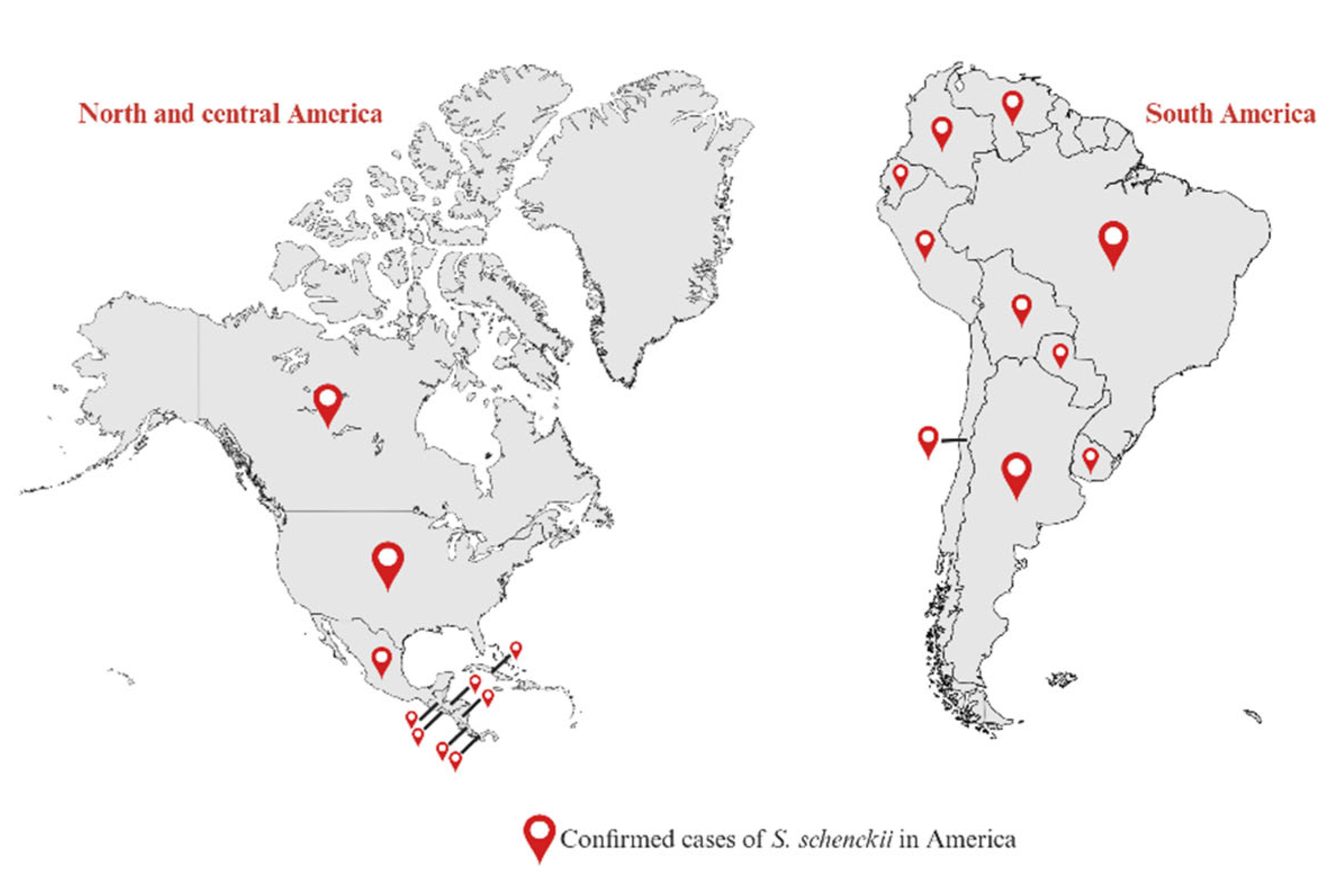
In countries such as Canada, the United States, Mexico, Costa Rica, Guatemala, Honduras, Panama, Cuba, Venezuela, Colombia, Brazil, Peru, Paraguay, Uruguay, and Chile, numerous cases of sporotrichosis attributed to S. schenckii have been documented (Figure 3) [12,131,132,133,134,135]. Historical reports place the Americas as one of the regions with the greatest clinical and ecological diversity of this pathogen [4,12].
Molecular analyses have identified two main lineages: clade IIa, which includes homogeneous isolates from North and South America (Argentina, Bolivia, Colombia, and Peru), and clade IIb, restricted mainly to the Southern Cone, especially in Peru and Argentina, suggesting a continental expansion of the S. schenckii complex favored by environmental and occupational factors [4,136]. Several epidemic outbreaks have been documented in the United States during the 20th century, one of the most significant being in 1988, when more than 80 people in 15 states were infected after handling contaminated sphagnum moss used in nurseries and gardening [137]. In Mexico, sporotrichosis is one of the most common subcutaneous mycoses, with more than 2,700 cases recorded between 1914 and 2019, of which approximately 67% correspond to the lymphocutaneous form and 26% to the fixed form. Most patients were immunocompetent and acquired the infection through traumatic inoculation of contaminated plant material [1,120,138,139,140].
Extracutaneous forms, particularly osteoarticular and pulmonary, have also been described, accounting for about 10–15% of cases, mainly in individuals with predisposing factors, such as alcoholism or immunosuppression [12,126,127]. In Central America, countries such as Costa Rica, Guatemala, and Panama have reported sporadic cases related to the handling of contaminated soil and vegetation, while in western South America, S. schenckii remains the main etiological agent of human sporotrichosis in regions of Venezuela, Colombia, Peru, and Chile [4,132,135]. Overall, epidemiological evidence shows that more than 80% of S. schenckii infections in the Americas are cutaneous (fixed or lymphocutaneous), while systemic manifestations constitute a smaller but clinically relevant percentage, reflecting the fungus’s adaptive capacity to colonize different tissues and persist under diverse immunological conditions [4].
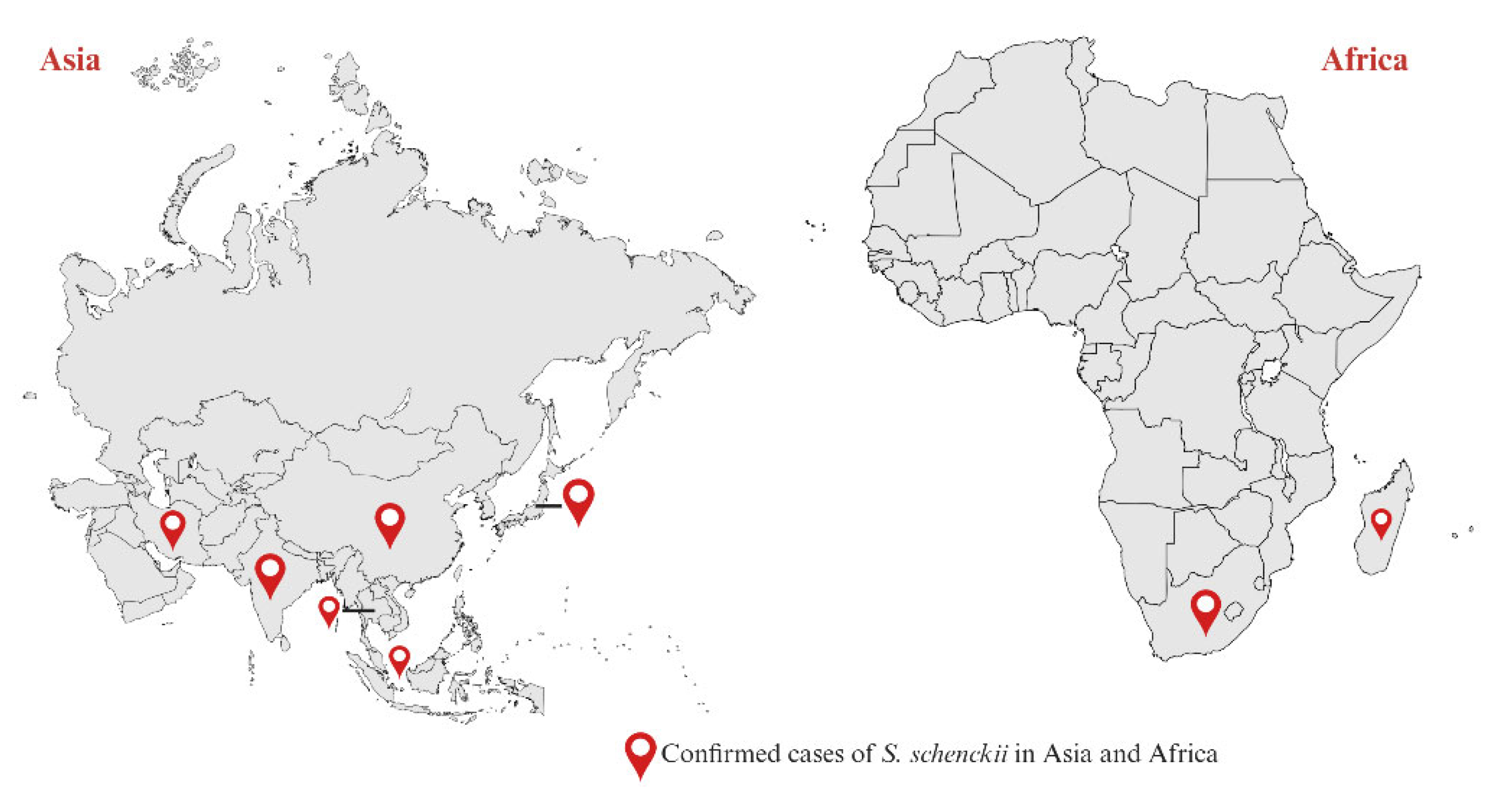
In Asia, S. schenckii continues to be the main species associated with human sporotrichosis, with widespread distribution in countries such as China, Japan, India, and Thailand (Figure 4) [141,142,143]. In China, this mycosis is one of the most prevalent subcutaneous infections, with more than 3,000 cases documented in recent decades, of which more than 90% are attributed to S. schenckii [4,121,144]. The northeastern provinces, particularly Jilin, Heilongjiang, and Liaoning, have the highest disease burden, favored by the cold and humid climate that promotes the survival of the fungus in the soil and in decaying plant matter [4,121]. Most infections are cutaneous, especially the fixed and lymphocutaneous forms in immunocompetent individuals. However, extracutaneous osteoarticular, pulmonary, and ocular cases have been reported, especially in immunocompromised patients or those with a history of prolonged corticosteroid treatment [121,145]. In Japan, S. schenckii has historically been the predominant agent, with numerous cases reported in agricultural workers, gardeners, and flower growers exposed to contaminated organic material [4]. Cases are mainly concentrated in temperate regions, where humidity and intensive agricultural activities favor transmission; in addition, a marked seasonality has been observed, with peaks in incidence in spring and early summer [4].
In India, S. schenckii has been recognized as the predominant etiological agent since the mid-20th century, with most cases concentrated in the northern and northeastern states, particularly Himachal Pradesh, Uttarakhand, and Sikkim [4]. Between 1960 and 2013, more than 400 cases were documented, with marked endemicity in mountainous regions with a temperate and humid climate, where the fungus is associated with agricultural soils and decaying vegetation. The lymphocutaneous form accounts for about 75–80% of infections, followed by the fixed form. However, extracutaneous forms, mainly osteoarticular and pulmonary, have been described in immunocompromised patients or those undergoing prolonged steroid treatment [146]. Localized outbreaks have been linked to rural activities, such as handling hay and thorny branches, while in urban settings, cases related to gardening have been reported.
In Thailand, sporadic cases of sporotrichosis have been reported through both sapronotic and zoonotic transmission. In one of the first reports, a 71-year-old man with chronic diseases and owner of an infected cat developed progressive lymphocutaneous lesions after being scratched, while a healthy 31-year-old woman developed skin ulcers after contact with a sick cat. In both cases, S. schenckii was identified by culture and mass spectrometry [4,147]. Recent studies confirm the presence of S. schenckii in Thai human isolates, suggesting the persistence of endemic foci in tropical rural areas, as well as the possibility of transmission between domestic animals and humans [142].
In Malaysia, a six-year study recorded 19 confirmed cases, of which 68.4% were lymphocutaneous, and a similar proportion were patients with a history of trauma or cat bites [142]. Subsequently, molecular analysis identified 25 clinical isolates of S. schenckii in humans and cats, confirming that all were S. schenckii and shared genetic identity, suggesting the presence of a clonal lineage in the country. The coexistence of human and feline strains reinforces the relevance of zoonotic transmission, in addition to the traditional sapronotic route [148,149]. In addition, in other countries, such as Iran, eight cases of sporotrichosis were reported, five women and three men between the ages of 23 and 60, with a predominance of fixed and lymphocutaneous forms, and one case of osteoarticular sporotrichosis [94]. All isolates corresponded to S. schenckii, with no evidence of zoonotic transmission, suggesting that infection in that region persists mainly as a sapronosis of environmental origin.
On the African continent, S. schenckii has historical significance as the classic agent of sporotrichosis [150]. South Africa was the scene of some of the most extensive outbreaks recorded worldwide, especially between the 1940s and 1980s, when thousands of gold miners contracted the infection after coming into contact with contaminated wood used in tunnel construction [125,150]. During this period, it was estimated that more than 3,000 cases occurred in the Transvaal region, consolidating South Africa as a historical endemic focus of the disease. The predominant clinical manifestations were the lymphocutaneous and fixed forms, while extracutaneous presentations were rare and mainly observed in immunocompromised individuals. Although the incidence has declined since the end of occupational outbreaks, sporotrichosis remains endemic in some rural regions of South Africa and Madagascar, where S. schenckii continues to be the most frequent etiological agent (Figure 4) [4,23].
More recently and unusually, cases of osteoarticular sporotrichosis caused by S. schenckii have been reported, characterized by a chronic and indolent course that often delays diagnosis and initiation of appropriate treatment. These infections usually involve large joints, such as the knee, elbow, or ankle, with nonspecific clinical findings that mimic bacterial or mycobacterial arthritis [130,151,152,153]. In most cases, the infection originates from hematogenous spread or direct extension from a previous skin lesion, although primary cases with no apparent entry point have also been documented [131]. Vertebral, synovial, and tenosynovial infections have also been described in immunocompromised patients, chronic alcoholics, or patients undergoing prolonged treatment with corticosteroids [126]. The clinical course is usually prolonged, with periods of months or even years before definitive diagnosis, and isolation of the fungus in synovial fluid or bone biopsies remains the gold standard for etiological confirmation.
Overall, global epidemiological evidence shows that S. schenckii maintains a wide geographical distribution and remarkable ecological plasticity, allowing it to adapt to diverse environments and hosts. Although transmission patterns differ between regions, with sapronosis predominating in Asia and Africa and sapronotic and zoonotic routes coexisting in the Americas, the species retains a remarkable capacity for environmental persistence and infection in immunocompetent individuals. The cutaneous, fixed, and lymphocutaneous clinical forms continue to be the most common forms in all continents. However, extracutaneous cases, although less common, represent a diagnostic and therapeutic challenge, especially in patients with immunosuppression or underlying chronic diseases. This overview highlights the biological and pathogenic versatility of S. schenckii, as well as the need to strengthen epidemiological surveillance and molecular studies to better understand the transmission dynamics and genetic diversity of this species globally.

Domestic Animals’ Infection by Sporothrix schenckii

S. schenckii infections in domestic animals represent an important, although often underestimated, route of transmission to humans [154]. Even though most of the literature on Sporothrix zoonosis has focused on S. brasiliensis, especially in cats in Brazil, S. schenckii continues to be reported in cats, dogs, and other domestic mammals in different countries [4,122,123].
Young adult cats, males, with uncontrolled outdoor access are those most frequently stricken by sporotrichosis, associated with inter-animal aggression [155,156]. The clinical presentation can range from isolated cutaneous lesions to fatal systemic ones [21]. In the first case, the most common lesion pattern is cutaneous ulcers, granulomatous nodules, and crusts, as well as lymphangitis and lymphadenitis on different parts of the body, especially on the head, nose, ears, distal limbs, and base of the tail [157,158]. The most frequently documented extracutaneous manifestations are associated with respiratory involvement, including symptoms such as sneezing, rhinorrhea, and dyspnea. These are directly linked to therapeutic failure and increased mortality [159,160]. Mucous membrane involvement, notably affecting the ocular mucosa, is also commonly reported in feline cases [157,161]. Notably, concurrent infections with feline leukemia virus or feline immunodeficiency virus do not significantly influence the clinical presentation or prognosis in affected cats [21,162].
Feline sporotrichosis caused by S. schenckii has been documented in Europe, the United States, and Asia. However, the disease has not exhibited the same clinical or epidemiological impact as the hyperendemic situation associated with S. brasiliensis in Brazil [142,163,164,165,166]. Sporotrichosis caused by S. schenckii in Japan, Malaysia, and Thailand has been observed with a clinical pattern characterized by a high prevalence of lesions located in cooler areas of the feline body, such as the nasal region and especially the tips of the ears [156,165,167]. This distribution could be related to the lower relative heat tolerance of S. schenckii compared to S. brasiliensis, which would favor its growth in peripheral areas of the feline body, where the temperature is lower than in the core. Given that cats have an average physiological temperature of 38–39 °C, this difference could influence the location of lesions and susceptibility to deeper infections.
In a recent study, the in vitro interaction between S. schenckii and feline phagocytes was evaluated, observing a lower rate of phagocytosis and cytotoxicity compared to S. brasiliensis, as well as morphophysiological differences, including early hyphal formation, suggesting specific mechanisms of immune evasion and persistence [118]. In Australia, although cases of feline sporotrichosis are rare, a high fungal load has been reported in skin lesions, representing a significant risk of zoonotic transmission [108].
A classic study conducted in Brazil isolated S. schenckii in 100% of 148 cats with clinical signs and in 66.2% of nasal cavities, 41.8% of oral cavities, and 39.5% of nails, even in some apparently healthy animals in household contact with positive cases. These findings suggest the possibility of asymptomatic colonization and its role as a domestic reservoir [154]. Similarly, a more recent report in Belém (Pará, Brazil) documented the first isolation of S. schenckii in a cat with possible zoonotic transmission to its owner, highlighting the underreporting of these cases and the persistent risk in urban environments [168].
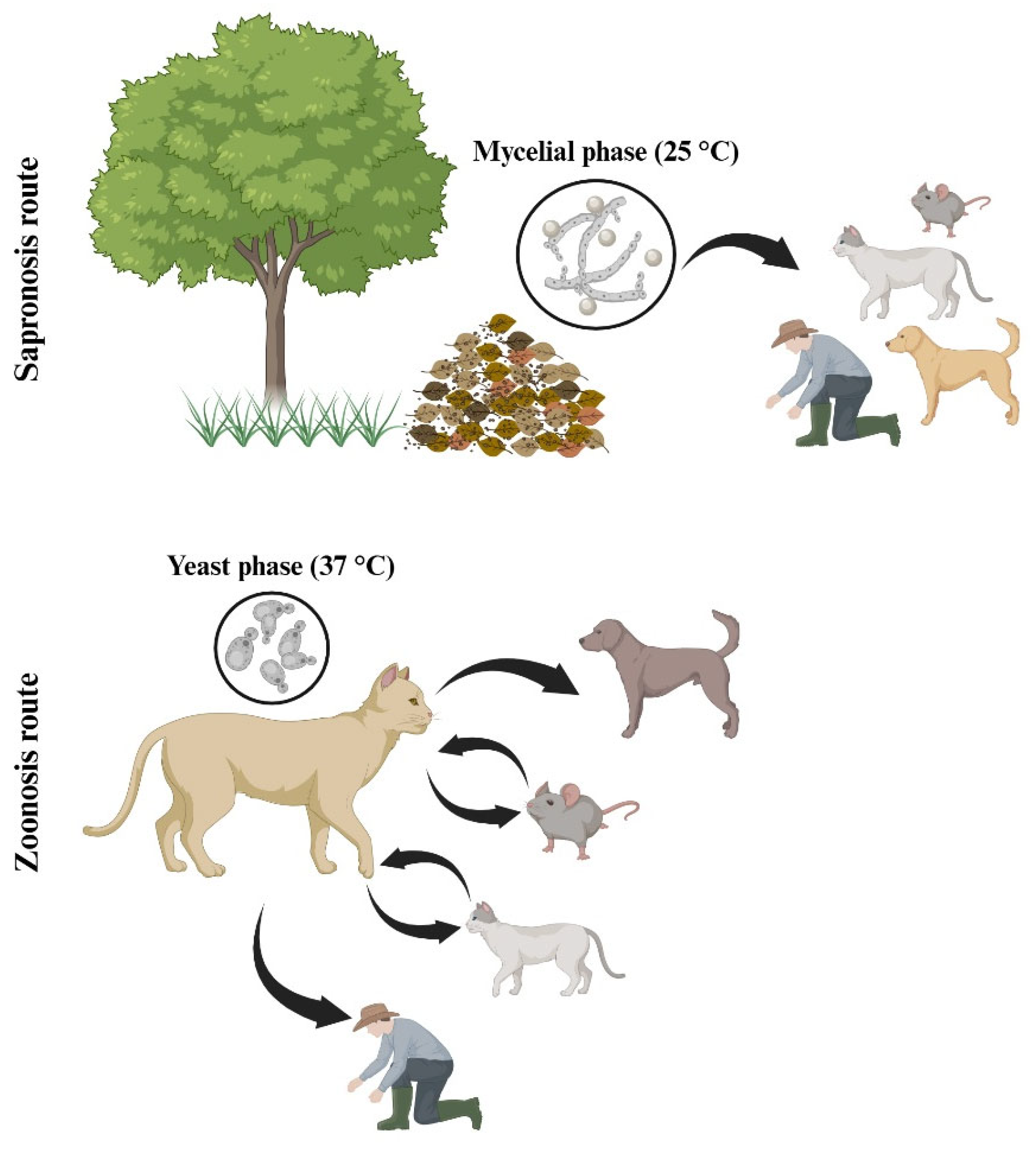
Overall, the available evidence indicates that cats, particularly unneutered males with free access to the outdoors and prone to fighting or biting, act as reservoirs and sources of transmission of the fungus (Figure 5). Although most recent studies focus on S. brasiliensis, the clinical and epidemiological relevance of S. schenckii in the zoonotic cycle persists. These findings underscore the need to strengthen veterinary surveillance, environmental control, and health education.
Dogs are the second most affected vertebrates, mainly because of their close contact with cats. S. brasiliensis and S. schenckii are the primary species causing clinical sporotrichosis in this vertebrate (Figure 5) [156,169,170,171]. However, in dogs, the condition occurs less frequently and is often characterized by multiple cutaneous and subcutaneous lesions on the head, ears, and thorax. Osteoarticular and disseminated manifestations have also been documented, though they are rare [169,171]. Transmission can result from injuries incurred during hunting activities, such as those caused by thorns or wood splinters [170].
A recent case reported in Brazil described a natural infection by S. schenckii in a guinea pig (Cavia porcellus), which is the first documented case in this species [172]. The animal, which lived with five cats with free access to the outdoors, showed exudative crusted lesions on the dorsal region, with the infection confirmed by PCR and direct cytology. Treatment with itraconazole (5 mg/kg/day for 45 days), combined with the topical application of ozonated sunflower oil, achieved complete remission of the lesions [172]. This finding broadens the spectrum of hosts susceptible to the S. schenckii complex and reinforces the role of cats as the primary source of transmission to other domestic animals and humans.
Taken together, these cases confirm that S. schenckii maintains a broad adaptive capacity among domestic and companion mammals, including canines and rodents, and that interspecies transmission occurs frequently in environments where infected animals coexist. The identification of new host species, such as guinea pigs, highlights the importance of active veterinary surveillance, early molecular diagnosis, and the implementation of biosecurity measures in the management of infected animals.

6. Identification and Diagnostic

Detection and diagnosis of sporotrichosis caused by S. schenckii represents a challenge; there are reports about clinical cases where the diagnosis is not correct and, as a consequence, neither the treatment [173].
First-line phenotypic techniques, such as cultures in different media like Saboraud agar, Saboraud dextrose agar, blood agar, and brain-heart infusion at different temperatures (25 °C and 37 °C), are commonly used in the identification of S. schenckii. These techniques allow for observing the typical forms and color of the colonies between 5-10 days, as well as the characteristic mycelium and yeast-like cell morphologies when inspected under the microscope [142,173]. Lactophenol cotton blue staining is also used as a confirmatory technique due to its effect on the fungal structures; in the case of S. schenckii is easy to observe the typical septate hypha and the conidia flower bouquet [142].
On the other hand, immunological techniques have been described for the identification of S. schenckii, based on agglutination and immunoenzymatic assays that were performed with a fraction of the PRM and anti-S. schenckii rabbit serum. This cell wall fraction was recognized by patients’ IgG antibodies; however, it is not effective in the diagnosis of patients with acute sporotrichosis or with past infections. Furthermore, the identification at the species level is not possible [174]. Thus, more research is necessary on this kind of technique to be useful in the future.
Although the techniques mentioned are very helpful in the correct diagnosis, it’s necessary the use more precise tools for the confirmation of an infection caused by Sporothrix species. For S. schenckii, molecular tools have been reported to be useful in their identification. The amplification of the chitin synthase 1 gene by polymerase chain reaction (PCR) was the first molecular technique described in the identification of this fungus [175]. Another PCR assay has been designed to target the 18S rRNA gene sequence, used as a confirmatory method to isolate previously evaluated by phenotypic techniques, helping in a fast a correct diagnosis in the sporotrichosis cases [176]. In Mexico, a technique based in the restriction fragment length polymorphism of the mitochondrial DNA was used to characterize thirteen S. schenckii isolates coming from different sporotrichosis cases, finding out that all of them belonged to the group A in a phylogenic tree previously established for the nithocondrial DNA, confirming the prevalence of the group A in the Americas and the differences between these isolates [177]. In the same way, other targets as the topoisomerase II gene, β-tubulin gene, ITS regions, or some regions of the large-subunit rDNA, like D1-D2 in the 28S, have been used for the identification of genetic differences between strains of the same species or for the first identification of S. schenckii in some regions that have not been identified before [178]. Sequence analysis of the calmodulin gene and the use of the universal primer T3B in PCR fingerprinting have been reported as useful in the differentiation of species like S. schenckii from other closely related species, providing valuable information about the variations that could exist even between members of the same species, opening the possibilities at the moment of confirm a microbiological data in combination with one or more molecular techniques, making easier a fast and correct identification of S. schenckii [179].
Recently, a new method based on a multiplex real-time PCR using as target the calmodulin gene showed a high fidelity at the moment of the identification between different Sporothrix species, being able to detect a coinfection or giving a positive result in strains that were not able to grow in a typical culture. This could represent a new alternative that does not need previous phenotypic results, saving time and giving the patient the possibility of start its treatment as soon as possible. However, it is mentioned that this method has not been tested with clinical isolates, and it is necessary to prove its efficacy in the field [180].
Matrix-assisted laser-desorption/ionization time-of-flight mass spectrometry is another technique that has been used to identify species in a fast way, based on the analysis of the ribosomal proteins, and has demonstrated efficacy at the moment of being compared with other techniques, such as the calmodulin gene sequencing. The work made by Oliveira et al. [181] showed a validation of a method that allowed the identification of different species of Sporothrix spp., and at the same time, the enrichment of a database library to be used as a guide in the future identification of species like S. schenckii [181]. This technique has already been used in the identification of S. schenckii in clinical cases of patients with sporotrichosis caused by this pathogen [142], confirming its efficacy in combination with other identification methods.

7. Treatment

The therapeutic management of sporotrichosis depends primarily on the clinical form, the patient’s immune status, and the antifungal susceptibility of the isolate. Over time, treatment strategies have evolved from the use of iodinated compounds to second-generation azoles, which currently represent the basis of management with excellent clinical results [21,182].
Itraconazole remains the drug of choice for most cutaneous and lymphocutaneous forms [21,183]. This antifungal agent is effective and safe, with low toxicity and good tolerance even in prolonged treatments [184]. It is administered orally at doses of 100–200 mg/day for an average period of 3 to 6 months, extending therapy for at least 2 to 4 weeks after complete clinical resolution of the lesions [21,25,182]. Its effectiveness is related to its adequate oral bioavailability and fungistatic activity against S. schenckii, with minimum inhibitory concentrations (MICs) reported between 0.03 and 1 µg/mL [185]. In cases of disseminated or refractory disease, the dose may be increased to 200 mg every 12 hours.
Terbinafine represents a safe and effective therapeutic alternative, with in vitro activity comparable to that of itraconazole and MICs ranging from 0.03 to 0.5 µg/mL [186]. It is administered at doses of 250 to 1000 mg/day, with a treatment duration similar to that of itraconazole [187]. In a comparative study, doses of 250 mg/day of terbinafine and 100 mg/day of itraconazole achieved cure rates of 92.7% and 92%, respectively, demonstrating that terbinafine is an equally effective and well-tolerated option for cutaneous sporotrichosis [188]. Clinical studies have also shown that the combination of terbinafine and itraconazole can have a synergistic effect, shortening the time to resolution of lesions [21]. However, the high cost of terbinafine compared to itraconazole remains a significant limitation, especially in developing countries [183].
Another alternative treatment for uncomplicated cutaneous forms is potassium iodide, one of the oldest treatments, which continues to be an effective and economical alternative, especially in rural areas or areas with limited access to azole antifungals. However, its use has been limited by adverse gastrointestinal effects, hypersalivation, thyroid disorders, and low tolerability [189,190].
Disseminated, osteoarticular, pulmonary, or meningeal forms of sporotrichosis require a more aggressive therapeutic approach [1,25]. In these cases, amphotericin B is the treatment of choice, especially in patients with systemic involvement or immunosuppression. The liposomal formulation (3–5 mg/kg/day) is recommended due to its better safety profile and lower nephrotoxicity. However, when it is not available, the deoxycholate formulation (0.7–1 mg/kg/day) can be used until clinical improvement is achieved [183]. Once the initial response has been achieved, consolidation therapy with itraconazole (200 mg every 12 hours) is indicated for a period of 6 to 12 months to prevent relapse and ensure complete resolution of the infection [183]. In cases of meningeal or disseminated disease, it may be necessary to prolong antifungal therapy or maintain a long-term suppressive therapy regimen [16]. Lipid formulations of amphotericin B have demonstrated comparable efficacy with a significant reduction in renal toxicity, making them the preferred option when available.
In this context, second-generation azoles, such as posaconazole and voriconazole, have shown excellent in vitro activity against the S. schenckii complex, with average MICs between 0.06 and 0.5 µg/mL, although clinical evidence remains limited [191,192]. A recent comparative study evaluated the susceptibility of various species of the genus Sporothrix to conventional and new-generation agents, demonstrating greater sensitivity of S. schenckii to posaconazole and voriconazole, while some strains showed a lower response to fluconazole and amphotericin B, reinforcing the importance of antifungal monitoring and targeted therapy [193]. In contrast, fluconazole has inconsistent activity and is not recommended as a first-line drug [183]. In recent years, combination therapeutic strategies have been explored, such as itraconazole–terbinafine or amphotericin B–azoles, which have shown promising results both in vitro and in refractory clinical cases, suggesting a possible synergistic effect [21,188].
Likewise, there has been growing interest in natural metabolites with antifungal potential, including terpenoids, flavonoids, and phenolic compounds, which have demonstrated inhibitory activity against S. schenckii and could act as adjuvants in conventional therapeutic regimens [194]. Although these alternatives are still in the experimental stages, their study broadens the prospects for the development of new antifungal agents with a better safety profile and lower risk of resistance [21].
Although conventional antifungal therapies and new combination strategies have significantly improved the prognosis of sporotrichosis, clinical management remains challenging in immunocompromised patients [195,196]. In individuals with HIV infection, undergoing immunosuppressive treatment, or with severe comorbidities, S. schenckii infections tend to have a longer, more refractory course and a higher risk of systemic dissemination. In these cases, antifungal treatment should be maintained for longer periods, accompanied by close clinical and mycological monitoring, as well as correction of immunosuppression when possible [195].
At the same time, complementary immunotherapeutic strategies have been explored to enhance the host response [197,198]. In murine models, immunization with cell wall proteins and the use of monoclonal antibodies directed against the Gp70 glycoprotein, a surface adhesin of S. schenckii, have been shown to reduce the fungal load and modulate the inflammatory response, opening up new perspectives for the integration of immunomodulatory approaches in the treatment of sporotrichosis [197].
In special populations, treatment must be carefully adjusted. In pregnant women, amphotericin B is the drug of choice, given the teratogenic risk associated with the use of azoles and the adverse thyroid effect of potassium iodide [183]. In pediatric patients, both itraconazole and potassium iodide are safe and effective, with doses adjusted to body weight and a favorable clinical response [21,183].
Overall, therapeutic advances have substantially improved the prognosis of sporotrichosis caused by S. schenckii. However, the recent identification of strains with reduced susceptibility to itraconazole and amphotericin B [193], variability in clinical response among species of the S. schenckii complex, and the absence of specific therapies for severe or refractory forms represent persistent challenges. These limitations underscore the need to develop new antifungal compounds, optimize combination strategies, and advance immunotherapeutic approaches that improve the efficacy and reduce the toxicity of available treatments [199].

Conclusions

Sporothrix schenckii remains one of the most representative and versatile species within the Sporothrix pathogenic clade, notable for its wide geographical distribution, remarkable phenotypic plasticity, and ability to infect multiple hosts. Although recent scientific attention has focused on S. brasiliensis, S. schenckii continues to play an essential role in understanding the evolutionary, physiological, and molecular mechanisms underlying sporotrichosis and other dimorphic mycoses.
Advances in genomics, transcriptomics, and proteomics have made it possible to delineate the main components involved in virulence and host adaptation, including factors associated with cell wall remodeling, dimorphic transition, melanin production, and adhesin expression. However, many of the mechanisms that regulate these responses remain unclear, and their elucidation could open new avenues for the design of targeted therapies and more effective immunomodulatory strategies.
In the future, it will be a priority to conduct more in-depth comparative studies between species of the S. schenckii complex, with special attention to differences in virulence, immune response, antifungal susceptibility, and zoonotic transmission capacity.
Overall, S. schenckii remains a reference species in modern medical mycology. A comprehensive study covering everything from molecular biology to ecological and clinical dynamics will provide the basis for developing more sensitive diagnostic tools, safer therapies, and preventive strategies adapted to current epidemiological realities. Consolidating this knowledge will strengthen our understanding of emerging mycoses and contribute significantly to global public health.

Author Contributions

Conceptualization, M.G.-G., D.A.B.-M., N.F.-R., A.R.d.S.B. and H.M.M.-M.; investigation, M.G.-G., D.A.B.-M., N.F.-R., A.R.d.S.B. and H.M.M.-M.; re-sources, A.R.d.S.B. and H.M.M.-M.; data curation, H.M.M.-M., A.R.d.S.B., and M.G.-G.; writing —original draft preparation, M.G.-G., D.A.B.-M., N.F.-R., A.R.d.S.B. and H.M.M.-M.; supervision, A.R.d.S.B. and H. M. M.-M.; project administration, A.R.d.S.B. and H.M.M.-M.; funding acquisition, A.R.d.S.B. and H.M.M.-M. All authors have read and agreed to the published version of the manuscript.

Funding

This work was supported by Secretaría de Ciencia, Humanidades, Tecnología e Innovación [Ciencia de Frontera 2019-6380 and CBF2023-2024-655], and Red Temática Glicociencia en Salud [CONACYT-México]. A.R.d.S.B. is a research fellow at the National Council for Scientific and Technological Development (PQ-CNPq 308986/2022-9) and a member of REDE MICOLOGIA RJ.

Institutional Review Board Statement

Not applicable.

Data Availability Statement

Not applicable.

Acknowledgments

Not applicable.

Conflicts of Interest

The authors declare no conflict of interest. The funders had no role in the design of the study; in the collection, analyses, or interpretation of data; in the writing of the manuscript, or in the decision to publish the results.

References

  1. Lopes-Bezerra, L.M.; Mora-Montes, H.M.; Bonifaz, A. Sporothrix and Sporotrichosis. In Current Progress in Medical Mycology, Mora-Montes, H.M., Lopes-Bezerra, L.M., Eds.; Springer International Publishing: Cham, 2017; pp. 309–331. [Google Scholar]
  2. Lopez-Romero, E.; Reyes-Montes M del, R.; Perez-Torres, A.; Ruiz-Baca, E.; Villagomez-Castro, J.C.; Mora-Montes, H.M.; Flores-Carreon, A.; Toriello, C. Sporothrix schenckii complex and sporotrichosis, an emerging health problem. Future Microbiol 2011, 6, 85–102. [Google Scholar] [CrossRef] [PubMed]
  3. de Beer, Z.W.; Duong, T.A.; Wingfield, M.J. The divorce of Sporothrix and Ophiostoma: solution to a problematic relationship. Stud Mycol 2016, 83, 165–191. [Google Scholar] [CrossRef]
  4. Chakrabarti, A.; Bonifaz, A.; Gutierrez-Galhardo, M.C.; Mochizuki, T.; Li, S. Global epidemiology of sporotrichosis. Med Mycol 2015, 53, 3–14. [Google Scholar] [CrossRef]
  5. Mora-Montes, H.M.; Dantas Ada, S.; Trujillo-Esquivel, E.; de Souza Baptista, A.R.; Lopes-Bezerra, L.M. Current progress in the biology of members of the Sporothrix schenckii complex following the genomic era. FEMS Yeast Res 2015, 15. [Google Scholar] [CrossRef]
  6. Etchecopaz, A.N.; Lanza, N.; Toscanini, M.A.; Devoto, T.B.; Pola, S.J.; Daneri, G.L.; Iovannitti, C.A.; Cuestas, M.L. Sporotrichosis caused by Sporothrix brasiliensis in Argentina: Case report, molecular identification and in vitro susceptibility pattern to antifungal drugs. J Mycol Med 2020, 30, 100908. [Google Scholar] [CrossRef] [PubMed]
  7. Xavier, M.O.; Poester, V.R.; Trápaga, M.R.; Stevens, D.A. Sporothrix brasiliensis: epidemiology, therapy, and recent developments. Journal of Fungi 2023, 9, 921. [Google Scholar] [CrossRef] [PubMed]
  8. Mora-Montes, H.M. Special Issue “Sporothrix and Sporotrichosis 2.0”. J Fungi (Basel) 2022, 8, 821. [Google Scholar] [CrossRef]
  9. Gremião, I.D.F.; Martins da Silva da Rocha, E.; Montenegro, H.; Carneiro, A.J.B.; Xavier, M.O.; de Farias, M.R.; Monti, F.; Mansho, W.; de Macedo Assunção Pereira, R.H.; Pereira, S.A.; et al. Guideline for the management of feline sporotrichosis caused by Sporothrix brasiliensis and literature revision. Braz J Microbiol 2021, 52, 107–124. [Google Scholar] [CrossRef]
  10. Brown, G.D.; Denning, D.W.; Gow, N.A.; Levitz, S.M.; Netea, M.G.; White, T.C. Hidden killers: human fungal infections. Sci Transl Med 2012, 4, 165rv113. [Google Scholar] [CrossRef]
  11. Mora-Montes, H.M. Special Issue “Sporothrix and Sporotrichosis”. J Fungi (Basel) 2018, 4, 116. [Google Scholar] [CrossRef]
  12. Hernández-Castro, R.; Pinto-Almazán, R.; Arenas, R.; Sánchez-Cárdenas, C.D.; Espinosa-Hernández, V.M.; Sierra-Maeda, K.Y.; Conde-Cuevas, E.; Juárez-Durán, E.R.; Xicohtencatl-Cortes, J.; Carrillo-Casas, E.M.; et al. Epidemiology of clinical sporotrichosis in the Americas in the last ten years. J Fungi (Basel) 2022, 8, 588. [Google Scholar] [CrossRef]
  13. Téllez, M.D.; Batista-Duharte, A.; Portuondo, D.; Quinello, C.; Bonne-Hernández, R.; Carlos, I.Z. Sporothrix schenckii complex biology: environment and fungal pathogenicity. Microbiology (Reading) 2014, 160, 2352–2365. [Google Scholar] [CrossRef]
  14. Marimon, R.; Cano, J.; Gené, J.; Sutton, D.A.; Kawasaki, M.; Guarro, J. Sporothrix brasiliensis, S. globosa, and S. mexicana, three new Sporothrix species of clinical interest. J Clin Microbiol 2007, 45, 3198–3206. [Google Scholar] [CrossRef]
  15. de Lima Barros, M.B.; Schubach, A.O.; de-Vasconcellos Carvalhaes De-Oliveira, R.; Martins, E.B.; Teixeira, J.L.; Wanke, B. Treatment of cutaneous sporotrichosis with Itraconazole—Study of 645 patients. Clin Infect Dis 2011, 52. [Google Scholar] [CrossRef]
  16. Orofino-Costa, R.; Macedo, P.M.; Rodrigues, A.M.; Bernardes-Engemann, A.R. Sporotrichosis: an update on epidemiology, etiopathogenesis, laboratory and clinical therapeutics. An Bras Dermatol 2017, 92, 606–620. [Google Scholar] [CrossRef]
  17. Rodrigues, A.M.; de Hoog, G.S.; de Cássia Pires, D.; Brihante, R.S.; Sidrim, J.J.; Gadelha, M.F.; Colombo, A.L.; de Camargo, Z.P. Genetic diversity and antifungal susceptibility profiles in causative agents of sporotrichosis. BMC Infect Dis 2014, 14, 219. [Google Scholar] [CrossRef] [PubMed]
  18. Tamez-Castrellón, A.K.; Romeo, O.; García-Carnero, L.C.; Lozoya-Pérez, N.E.; Mora-Montes, H.M. Virulence factors in Sporothrix schenckii, one of the causative agents of sporotrichosis. Curr Protein Pept Sci 2020, 21, 295–312. [Google Scholar] [CrossRef] [PubMed]
  19. Hektoen, L.; Perkins, C.F. Refractory subcutaneous abscesses caused by Sporothrix schenckii. A new pathogenic fungus. J Exp Med 1900, 5, 77–89. [Google Scholar] [CrossRef] [PubMed]
  20. Marimon, R.; Gené, J.; Cano, J.; Guarro, J. Sporothrix luriei: a rare fungus from clinical origin. Med Mycol 2008, 46. [Google Scholar] [CrossRef]
  21. Barros, M.B.d.L.; de Almeida Paes, R.; Schubach, A.O. Sporothrix schenckii and sporotrichosis. Clin Microbiol Rev 2011, 24, 633–654. [Google Scholar] [CrossRef]
  22. Lopes-Bezerra, L.M.; Mora-Montes, H.M.; Zhang, Y.; Nino-Vega, G.; Rodrigues, A.M.; de Camargo, Z.P.; de Hoog, S. Sporotrichosis between 1898 and 2017: The evolution of knowledge on a changeable disease and on emerging etiological agents. Med Mycol 2018, 56, S126–S143. [Google Scholar] [CrossRef] [PubMed]
  23. Rasamoelina, T.; Maubon, D.; Raharolahy, O.; Razanakoto, H.; Rakotozandrindrainy, N.; Rakotomalala, F.A.; Bailly, S.; Sendrasoa, F.; Ranaivo, I.; Andrianarison, M.; et al. Sporotrichosis in the highlands of Madagascar, 2013-2017(1). Emerg Infect Dis 2019, 25, 1893–1902. [Google Scholar] [CrossRef] [PubMed]
  24. Tovikkai, D.; Maitrisathit, W.; Srisuttiyakorn, C.; Vanichanan, J.; Thammahong, A.; Suankratay, C. Sporotrichosis: the case series in Thailand and literature review in Southeast Asia. Med Mycol Case Rep 2020, 27, 59–63. [Google Scholar] [CrossRef] [PubMed]
  25. Lopes-Bezerra, L.M.; Schubach, A.; Costa, R.O. Sporothrix schenckii and sporotrichosis. Anais da Academia Brasileira de Ciências 2006, 78, 293–308. [Google Scholar] [CrossRef]
  26. Rodriguez-Caban, J.; Gonzalez-Velazquez, W.; Perez-Sanchez, L.; Gonzalez-Mendez, R.; Rodriguez-del Valle, N. Calcium/calmodulin kinase1 and its relation to thermotolerance and HSP90 in Sporothrix schenckii: an RNAi and yeast two-hybrid study. BMC Microbiol 2011, 11, 162. [Google Scholar] [CrossRef]
  27. Valentín-Berríos, S.; González-Velázquez, W.; Pérez-Sánchez, L.; González-Méndez, R.; Rodríguez-Del Valle, N. Cytosolic phospholipase A2: a member of the signalling pathway of a new G protein alpha subunit in Sporothrix schenckii. BMC Microbiol 2009, 9, 100. [Google Scholar] [CrossRef]
  28. Díaz-Jiménez, D.; Pérez-García, L.; Martínez-Álvarez, J.; Mora-Montes, H. Role of the fungal cell wall in pathogenesis and antifungal resistance. Curr Fungal Infect Rep 2012, 6, 275–282. [Google Scholar] [CrossRef]
  29. García-Carnero, L.C.; Salinas-Marín, R.; Lozoya-Pérez, N.E.; Wrobel, K.; Wrobel, K.; Martínez-Duncker, I.; Niño-Vega, G.A.; Mora-Montes, H.M. The Heat shock protein 60 and Pap1 participate in the Sporothrix schenckii-host interaction. J Fungi (Basel) 2021, 7, 960. [Google Scholar] [CrossRef]
  30. Lopes-Bezerra, L.M. Sporothrix schenckii cell wall peptidorhamnomannans. Frontiers in Microbiology 2011, 2. [Google Scholar] [CrossRef]
  31. Gómez-Gaviria, M.; Martínez-Álvarez, J.A.; Martínez-Duncker, I.; Baptista, A.R.S.; Mora-Montes, H.M. Silencing of MNT1 and PMT2 shows the importance of O-linked glycosylation during the Sporothrix schenckii-host interaction. J Fungi (Basel) 2025, 11, 352. [Google Scholar] [CrossRef]
  32. López-Ramírez, L.A.; Martínez-Duncker, I.; Márquez-Márquez, A.; Vargas-Macías, A.P.; Mora-Montes, H.M. Silencing of ROT2, the encoding gene of the endoplasmic reticulum glucosidase II, affects the cell wall and the Sporothrix schenckii-host interaction. J Fungi (Basel) 2022, 8, 1220. [Google Scholar] [CrossRef]
  33. Lozoya-Pérez, N.E.; Casas-Flores, S.; de Almeida, J.R.F.; Martínez-Álvarez, J.A.; López-Ramírez, L.A.; Jannuzzi, G.P.; Trujillo-Esquivel, E.; Estrada-Mata, E.; Almeida, S.R.; Franco, B.; et al. Silencing of OCH1 unveils the role of Sporothrix schenckii N-linked glycans during the host-fungus interaction. Infect Drug Resist 2019, 12, 67–85. [Google Scholar] [CrossRef] [PubMed]
  34. López-Ramírez, L.A.; Martínez-Álvarez, J.A.; Martínez-Duncker, I.; Lozoya-Pérez, N.E.; Mora-Montes, H.M. Silencing of Sporothrix schenckii GP70 reveals its contribution to fungal adhesion, virulence, and the host-fungus interaction. J Fungi (Basel) 2024, 10, 302. [Google Scholar] [CrossRef]
  35. Castro, R.A.; Kubitschek-Barreira, P.H.; Teixeira, P.A.C.; Sanches, G.F.; Teixeira, M.M.; Quintella, L.P.; Almeida, S.R.; Costa, R.O.; Camargo, Z.P.; Felipe, M.S.S.; et al. Differences in cell morphometry, cell wall topography and Gp70 expression correlate with the virulence of Sporothrix brasiliensis clinical isolates. PLoS ONE 2013, 8, e75656. [Google Scholar] [CrossRef]
  36. Rodrigues, A.M.; Kubitschek-Barreira, P.H.; Fernandes, G.F.; de Almeida, S.R.; Lopes-Bezerra, L.M.; de Camargo, Z.P. Immunoproteomic analysis reveals a convergent humoral response signature in the Sporothrix schenckii complex. J Proteomics 2015, 115, 8–22. [Google Scholar] [CrossRef]
  37. Martínez-Álvarez, J.A.; García-Carnero, L.C.; Kubitschek-Barreira, P.H.; Lozoya-Pérez, N.E.; Belmonte-Vázquez, J.L.; de Almeida, J.R.; A, J.G.-I.; Curty, N.; Villagómez-Castro, J.C.; Peña-Cabrera, E.; et al. Analysis of some immunogenic properties of the recombinant Sporothrix schenckii Gp70 expressed in Escherichia coli. Future Microbiol 2019, 14, 397–410. [Google Scholar] [CrossRef]
  38. Lozoya-Pérez, N.E.; Clavijo-Giraldo, D.M.; Martínez-Duncker, I.; García-Carnero, L.C.; López-Ramírez, L.A.; Niño-Vega, G.A.; Mora-Montes, H.M. Influences of the culturing media in the virulence and cell wall of Sporothrix schenckii, Sporothrix brasiliensis, and Sporothrix globosa. J Fungi (Basel) 2020, 6, 323. [Google Scholar] [CrossRef] [PubMed]
  39. Villalobos-Duno, H.L.; Barreto, L.A.; Alvarez-Aular, Á.; Mora-Montes, H.M.; Lozoya-Pérez, N.E.; Franco, B.; Lopes-Bezerra, L.M.; Niño-Vega, G.A. Comparison of cell wall polysaccharide composition and structure between strains of Sporothrix schenckii and Sporothrix brasiliensis. Front Microbiol 2021, 12, 726958. [Google Scholar] [CrossRef]
  40. Lopes-Bezerra, L.M.; Walker, L.A.; Niño-Vega, G.; Mora-Montes, H.M.; Neves, G.W.P.; Villalobos-Duno, H.; Barreto, L.; Garcia, K.; Franco, B.; Martínez-Álvarez, J.A.; et al. Cell walls of the dimorphic fungal pathogens Sporothrix schenckii and Sporothrix brasiliensis exhibit bilaminate structures and sloughing of extensive and intact layers. PLoS Negl Trop Dis 2018, 12, e0006169–e0006169. [Google Scholar] [CrossRef] [PubMed]
  41. Martínez-Álvarez, J.A.; Pérez-García, L.A.; Mellado-Mojica, E.; López, M.G.; Martínez-Duncker, I.; Lópes-Bezerra, L.M.; Mora-Montes, H.M. Sporothrix schenckii sensu stricto and Sporothrix brasiliensis are differentially recognized by human peripheral blood mononuclear cells. Front Microbiol 2017, 8, 843. [Google Scholar] [CrossRef]
  42. Teixeira, M.M.; de Almeida, L.G.; Kubitschek-Barreira, P.; Alves, F.L.; Kioshima, E.S.; Abadio, A.K.; Fernandes, L.; Derengowski, L.S.; Ferreira, K.S.; Souza, R.C.; et al. Comparative genomics of the major fungal agents of human and animal sporotrichosis: Sporothrix schenckii and Sporothrix brasiliensis. BMC Genomics 2014, 15, 943. [Google Scholar] [CrossRef] [PubMed]
  43. Ferreira, B.H.; Ramírez-Prado, J.H.; Neves, G.W.P.; Torrado, E.; Sampaio, P.; Felipe, M.S.S.; Vasconcelos, A.T.; Goldman, G.H.; Carvalho, A.; Cunha, C.; et al. Ploidy determination in the pathogenic fungus Sporothrix spp. Front Microbiol 2019, 10, 284. Front Microbiol 2019, 10, 284. [Google Scholar] [CrossRef]
  44. Rementeria, A.; López-Molina, N.; Ludwig, A.; Vivanco, A.B.; Bikandi, J.; Pontón, J.; Garaizar, J. Genes and molecules involved in Aspergillus fumigatus virulence. Rev Iberoam Micol 2005, 22, 1–23. [Google Scholar] [CrossRef]
  45. Teixeira, P.A.C.; de Castro, R.A.; Nascimento, R.C.; Tronchin, G.; Pérez Torres, A.; Lazéra, M.; de Almeida, S.R.; Bouchara, J.-P.; Loureiro y Penha, C.V.; Lopes-Bezerra, L.M. Cell surface expression of adhesins for fibronectin correlates with virulence in Sporothrix schenckii. Microbiology 2009, 155, 3730–3738. [Google Scholar] [CrossRef]
  46. Almeida-Paes, R.; de Oliveira, L.C.; Oliveira, M.M.E.; Gutierrez-Galhardo, M.C.; Nosanchuk, J.D.; Zancopé-Oliveira, R.M. Phenotypic characteristics associated with virulence of clinical isolates from the Sporothrix complex. BioMed Res Int 2015, 2015, 212308. [Google Scholar] [CrossRef]
  47. Lima, O.C.; Figueiredo, C.C.; Pereira, B.A.; Coelho, M.G.; Morandi, V.; Lopes-Bezerra, L.M. Adhesion of the human pathogen Sporothrix schenckii to several extracellular matrix proteins. Braz J Med Biol Res 1999, 32, 651–657. [Google Scholar] [CrossRef]
  48. Lima, O.C.; Bouchara, J.P.; Renier, G.; Marot-Leblond, A.; Chabasse, D.; Lopes-Bezerra, L.M. Immunofluorescence and flow cytometry analysis of fibronectin and laminin binding to Sporothrix schenckii yeast cells and conidia. Microb Pathog 2004, 37, 131–140. [Google Scholar] [CrossRef] [PubMed]
  49. Ruiz-Baca, E.; Toriello, C.; Pérez-Torres, A.; Sabanero-López, M.; Villagómez-Castro, J.C.; López-Romero, E. Isolation and some properties of a glycoprotein of 70 kDa (Gp70) from the cell wall of Sporothrix schenckii involved in fungal adherence to dermal extracellular matrix. Med Mycol 2009, 47, 185–196. [Google Scholar] [CrossRef] [PubMed]
  50. Almeida, S.R. Therapeutic monoclonal antibody for sporotrichosis. Front Microbiol 2012, 3, 409. [Google Scholar] [CrossRef] [PubMed]
  51. Da Rosa, D.; Gezuele, E.; Calegari, L.; Goñi, F. Excretion-secretion products and proteases from live Sporothrix schenckii yeast phase: immunological detection and cleavage of human IgG. Rev Inst Med Trop Sao Paulo 2009, 51, 1–7. [Google Scholar] [CrossRef]
  52. Valle-Aviles, L.; Valentin-Berrios, S.; Gonzalez-Mendez, R.R.; Rodriguez-Del Valle, N. Functional, genetic and bioinformatic characterization of a calcium/calmodulin kinase gene in Sporothrix schenckii. BMC Microbiol 2007, 7, 107. [Google Scholar] [CrossRef] [PubMed]
  53. Arvizu-Rubio, V.J.; García-Carnero, L.C.; Mora-Montes, H.M. Moonlighting proteins in medically relevant fungi. PeerJ 2022, 10, e14001. [Google Scholar] [CrossRef]
  54. Calderone, R. The INT1 of Candida albicans. Trends Microbiol 1998, 6, 300–301. [Google Scholar] [CrossRef] [PubMed]
  55. Martinez-Lopez, R.; Park, H.; Myers, C.L.; Gil, C.; Filler, S.G. Candida albicans Ecm33p is important for normal cell wall architecture and interactions with host cells. Eukaryot Cell 2006, 5, 140–147. [Google Scholar] [CrossRef]
  56. Sandini, S.; Stringaro, A.; Arancia, S.; Colone, M.; Mondello, F.; Murtas, S.; Girolamo, A.; Mastrangelo, N.; De Bernardis, F. The MP65 gene is required for cell wall integrity, adherence to epithelial cells and biofilm formation in Candida albicans. BMC Microbiology 2011, 11, 106. [Google Scholar] [CrossRef]
  57. Zhao, W.; Lü, Y.; Ouyang, H.; Zhou, H.; Yan, J.; Du, T.; Jin, C. N-Glycosylation of Gel1 or Gel2 is vital for cell wall β-glucan synthesis in Aspergillus fumigatus. Glycobiology 2013, 23, 955–968. [Google Scholar] [CrossRef]
  58. Liu, H.; Lee, M.J.; Solis, N.V.; Phan, Q.T.; Swidergall, M.; Ralph, B.; Ibrahim, A.S.; Sheppard, D.C.; Filler, S.G. Aspergillus fumigatus CalA binds to integrin α(5)β(1) and mediates host cell invasion. Nat Microbiol 2016, 2, 16211. [Google Scholar] [CrossRef]
  59. Millet, N.; Latgé, J.P.; Mouyna, I. Members of glycosyl-hydrolase family 17 of A. fumigatus differentially affect morphogenesis. J Fungi (Basel) 2018, 4, 18. [Google Scholar] [CrossRef]
  60. Steen, B.R.; Zuyderduyn, S.; Toffaletti, D.L.; Marra, M.; Jones, S.J.; Perfect, J.R.; Kronstad, J. Cryptococcus neoformans gene expression during experimental cryptococcal meningitis. Eukaryot Cell 2003, 2, 1336–1349. [Google Scholar] [CrossRef]
  61. Brilhante, R.S.N.; de Aguiar, F.R.M.; da Silva, M.L.Q.; de Oliveira, J.S.; de Camargo, Z.P.; Rodrigues, A.M.; Pereira, V.S.; Serpa, R.; Castelo-Branco, D.; Correia, E.E.M.; et al. Antifungal susceptibility of Sporothrix schenckii complex biofilms. Med Mycol 2018, 56, 297–306. [Google Scholar] [CrossRef] [PubMed]
  62. Sánchez-Herrera, R.; Flores-Villavicencio, L.L.; Pichardo-Molina, J.L.; Castruita-Domínguez, J.P.; Aparicio-Fernández, X.; Sabanero López, M.; Villagómez-Castro, J.C. Analysis of biofilm formation by Sporothrix schenckii. Med Mycol 2021, 59, 31–40. [Google Scholar] [CrossRef]
  63. Dos Santos, G.M.P.; Borba-Santos, L.P.; Vila, T.; Ferreira Gremião, I.D.; Pereira, S.A.; De Souza, W.; Rozental, S. Sporothrix spp. biofilms impact in the zoonotic transmission route: feline claws associated biofilms, itraconazole tolerance, and potential repurposing for miltefosine. Pathogens 2022, 11, 206. [Google Scholar] [CrossRef]
  64. Zheng, F.; Gao, W.; Wang, Y.; Chen, Q.; Zhang, Q.; Jiang, X.; Hou, B.; Zhang, Z. Map of dimorphic switching-related signaling pathways in Sporothrix schenckii based on its transcriptome. Mol Med Rep 2021, 24, 646. [Google Scholar] [CrossRef] [PubMed]
  65. He, D.; Zhang, X.; Gao, S.; You, H.; Zhao, Y.; Wang, L. Transcriptome analysis of dimorphic fungus Sporothrix schenckii exposed to temperature stress. Int Microbiol 2021, 24, 25–35. [Google Scholar] [CrossRef]
  66. Zhang, Z.; Hou, B.; Wu, Y.Z.; Wang, Y.; Liu, X.; Han, S. Two-component histidine kinase DRK1 is required for pathogenesis in Sporothrix schenckii. Mol Med Rep 2018, 17, 721–728. [Google Scholar] [CrossRef]
  67. Zheng, X.; Wang, Y.; Wang, Y. Hgc1, a novel hypha-specific G1 cyclin-related protein regulates Candida albicans hyphal morphogenesis. Embo j 2004, 23, 1845–1856. [Google Scholar] [CrossRef]
  68. Kebaara, B.W.; Langford, M.L.; Navarathna, D.H.; Dumitru, R.; Nickerson, K.W.; Atkin, A.L. Candida albicans Tup1 is involved in farnesol-mediated inhibition of filamentous-growth induction. Eukaryot Cell 2008, 7, 980–987. [Google Scholar] [CrossRef]
  69. Kornitzer, D. Regulation of Candida albicans Hyphal Morphogenesis by Endogenous Signals. J Fungi (Basel) 2019, 5, 21. [Google Scholar] [CrossRef] [PubMed]
  70. Magditch, D.A.; Liu, T.B.; Xue, C.; Idnurm, A. DNA mutations mediate microevolution between host-adapted forms of the pathogenic fungus Cryptococcus neoformans. PLoS Pathog 2012, 8, e1002936. [Google Scholar] [CrossRef] [PubMed]
  71. Chadwick, B.J.; Pham, T.; Xie, X.; Ristow, L.C.; Krysan, D.J.; Lin, X. The RAM signaling pathway links morphology, thermotolerance, and CO(2) tolerance in the global fungal pathogen Cryptococcus neoformans. Elife 2022, 11, e82563. [Google Scholar] [CrossRef]
  72. Burnie, J.P.; Carter, T.L.; Hodgetts, S.J.; Matthews, R.C. Fungal heat-shock proteins in human disease. FEMS Microbiol Rev 2006, 30, 53–88. [Google Scholar] [CrossRef]
  73. Gong, Y.; Li, T.; Yu, C.; Sun, S. Candida albicans heat shock proteins and Hsps-associated signaling pathways as potential antifungal targets. Frontiers in Cellular and Infection Microbiology 2017, 7. [Google Scholar] [CrossRef]
  74. Fabri, J.; Rocha, M.C.; Fernandes, C.M.; Campanella, J.E.M.; Cunha, A.F.D.; Del Poeta, M.; Malavazi, I. The heat shock transcription factor HsfA plays a role in membrane lipids biosynthesis connecting thermotolerance and unsaturated fatty acid metabolism in Aspergillus fumigatus. Microbiol Spectr 2023, 11, e0162723. [Google Scholar] [CrossRef] [PubMed]
  75. Fabri, J.H.T.M.; Rocha, M.C.; Fernandes, C.M.; Persinoti, G.F.; Ries, L.N.A.; Cunha, A.F.d.; Goldman, G.H.; Del Poeta, M.; Malavazi, I. The heat shock transcription factor HsfA is essential for thermotolerance and regulates cell wall integrity in Aspergillus fumigatus. Frontiers in Microbiology 2021, 12. [Google Scholar] [CrossRef]
  76. Havel, V.E.; Wool, N.K.; Ayad, D.; Downey, K.M.; Wilson, C.F.; Larsen, P.; Djordjevic, J.T.; Panepinto, J.C. Ccr4 promotes resolution of the endoplasmic reticulum stress response during host temperature adaptation in Cryptococcus neoformans. Eukaryot Cell 2011, 10, 895–901. [Google Scholar] [CrossRef]
  77. Polke, M.; Hube, B.; Jacobsen, I.D. Candida survival strategies. Adv Appl Microbiol 2015, 91, 139–235. [Google Scholar] [CrossRef]
  78. Sabanero López, M.; Flores Villavicencio, L.L.; Soto Arredondo, K.; Barbosa Sabanero, G.; Villagómez-Castro, J.C.; Cruz Jiménez, G.; Sandoval Bernal, G.; Torres Guerrero, H. Proteases of Sporothrix schenckii: Cytopathological effects on a host-cell model. Rev Iberoam Micol 2018, 35, 32–38. [Google Scholar] [CrossRef] [PubMed]
  79. Carissimi, M.; Stopiglia, C.D.O.; Souza, T.; Corbellini, V.A.; Scroferneker, M. Comparison of lipolytic activity of Sporothrix schenckii strains utilizing olive oil-rhodamine B and tween 80. Tecno-Lógica 2007, 11, 33–36. [Google Scholar]
  80. Tsuboi, R.; Sanada, T.; Takamori, K.; Ogawa, H. Isolation and properties of extracellular proteinases from Sporothrix schenckii. J Bacteriol 1987, 169, 4104–4109. [Google Scholar] [CrossRef] [PubMed]
  81. Gácser, A.; Trofa, D.; Schäfer, W.; Nosanchuk, J.D. Targeted gene deletion in Candida parapsilosis demonstrates the role of secreted lipase in virulence. J Clin Invest 2007, 117, 3049–3058. [Google Scholar] [CrossRef]
  82. Lan, D.M.; Yang, N.; Wang, W.K.; Shen, Y.F.; Yang, B.; Wang, Y.H. A novel cold-active lipase from Candida albicans: cloning, expression and characterization of the recombinant enzyme. Int J Mol Sci 2011, 12, 3950–3965. [Google Scholar] [CrossRef]
  83. Schaller, M.; Borelli, C.; Korting, H.C.; Hube, B. Hydrolytic enzymes as virulence factors of Candida albicans. Mycoses 2005, 48, 365–377. [Google Scholar] [CrossRef] [PubMed]
  84. Ikeda, M.A.K.; de Almeida, J.R.F.; Jannuzzi, G.P.; Cronemberger-Andrade, A.; Torrecilhas, A.C.T.; Moretti, N.S.; da Cunha, J.P.C.; de Almeida, S.R.; Ferreira, K.S. Extracellular vesicles from Sporothrix brasiliensis are an important virulence factor that induce an increase in fungal burden in experimental sporotrichosis. Frontiers in Microbiology 2018, 9. [Google Scholar] [CrossRef] [PubMed]
  85. Rossato, L.; Moreno, L.F.; Jamalian, A.; Stielow, B.; de Almeida, S.R.; de Hoog, S.; Freeke, J. Proteins potentially involved in immune evasion strategies in Sporothrix brasiliensis elucidated by ultra-high-resolution mass spectrometry. mSphere 2018, 3, e00514–00517. [Google Scholar] [CrossRef] [PubMed]
  86. Jacobson, E.S. Pathogenic roles for fungal melanins. Clin Microbiol Rev 2000, 13, 708–717. [Google Scholar] [CrossRef]
  87. Qin, Y.; Xia, Y. Melanin in fungi: advances in structure, biosynthesis, regulation, and metabolic engineering. Microbial Cell Factories 2024, 23, 334. [Google Scholar] [CrossRef]
  88. Almeida-Paes, R.; Figueiredo-Carvalho, M.H.G.; Brito-Santos, F.; Almeida-Silva, F.; Oliveira, M.M.E.; Zancopé-Oliveira, R.M. Melanins protect Sporothrix brasiliensis and Sporothrix schenckii from the antifungal effects of terbinafine. PLOS ONE 2016, 11, e0152796. [Google Scholar] [CrossRef]
  89. Morris-Jones, R.; Youngchim, S.; Gomez, B.L.; Aisen, P.; Hay, R.J.; Nosanchuk, J.D.; Casadevall, A.; Hamilton, A.J. Synthesis of melanin-like pigments by Sporothrix schenckii in vitro and during mammalian infection. Infect Immun 2003, 71, 4026–4033. [Google Scholar] [CrossRef]
  90. Fernandes, G.F.; dos Santos, P.O.; Rodrigues, A.M.; Sasaki, A.A.; Burger, E.; de Camargo, Z.P. Characterization of virulence profile, protein secretion and immunogenicity of different Sporothrix schenckii sensu stricto isolates compared with S. globosa and S. brasiliensis species. Virulence 2013, 4, 241–249. [Google Scholar] [CrossRef]
  91. Galván-Hernández, A.K.; Gómez-Gaviria, M.; Martínez-Duncker, I.; Martínez-Álvarez, J.A.; Mora-Montes, H.M. Differential recognition of clinically relevant Sporothrix species by human granulocytes. J Fungi (Basel) 2023, 9, 986. [Google Scholar] [CrossRef]
  92. Lenardon, M.D.; Munro, C.A.; Gow, N.A. Chitin synthesis and fungal pathogenesis. Curr Opin Microbiol 2010, 13, 416–423. [Google Scholar] [CrossRef]
  93. Martinez-Alvarez, J.A.; Perez-Garcia, L.A.; Flores-Carreon, A.; Mora-Montes, H.M. The immune response against Candida spp. and Sporothrix schenckii. Rev Iberoam Micol 2014, 31, 62–66. [Google Scholar] [CrossRef]
  94. Kirkland, T.N.; Fierer, J. Innate immune receptors and defense against primary pathogenic fungi. Vaccines (Basel) 2020, 8, 303. [Google Scholar] [CrossRef]
  95. Gómez-Gaviria, M.; Martínez-Duncker, I.; García-Carnero, L.C.; Mora-Montes, H.M. Differential recognition of Sporothrix schenckii, Sporothrix brasiliensis, and Sporothrix globosa by human monocyte-derived macrophages and dendritic cells. Infect Drug Resist 2023, 16, 4817–4834. [Google Scholar] [CrossRef]
  96. Kischkel, B.; Lopes-Bezerra, L.; Taborda, C.P.; Joosten, L.A.B.; Dos Santos, J.C.; Netea, M.G. Differential recognition and cytokine induction by the peptidorhamnomannan from Sporothrix brasiliensis and S. schenckii. Cell Immunol 2022, 378, 104555. [Google Scholar] [CrossRef] [PubMed]
  97. Tamez-Castrellón, A.K.; van der Beek, S.L.; López-Ramírez, L.A.; Martínez-Duncker, I.; Lozoya-Pérez, N.E.; van Sorge, N.M.; Mora-Montes, H.M. Disruption of protein rhamnosylation affects the Sporothrix schenckii-host interaction. Cell Surf 2021, 7, 100058. [Google Scholar] [CrossRef] [PubMed]
  98. García-Carnero, L.C.; Martínez-Duncker, I.; Gómez-Gaviria, M.; Mora-Montes, H.M. Differential recognition of clinically relevant Sporothrix species by human mononuclear cells. J Fungi (Basel) 2023, 9, 448. [Google Scholar] [CrossRef] [PubMed]
  99. García Carnero, L.C.; Lozoya Pérez, N.E.; González Hernández, S.E.; Martínez Álvarez, J.A. Immunity and treatment of sporotrichosis. J Fungi (Basel) 2018, 4, 100. [Google Scholar] [CrossRef]
  100. Sassá, M.F.; Saturi, A.E.; Souza, L.F.; Ribeiro, L.C.; Sgarbi, D.B.; Carlos, I.Z. Response of macrophage Toll-like receptor 4 to a Sporothrix schenckii lipid extract during experimental sporotrichosis. Immunology 2009, 128, 301–309. [Google Scholar] [CrossRef]
  101. Alegranci, P.; de Abreu Ribeiro, L.C.; Ferreira, L.S.; Negrini Tde, C.; Maia, D.C.; Tansini, A.; Gonçalves, A.C.; Placeres, M.C.; Carlos, I.Z. The predominance of alternatively activated macrophages following challenge with cell wall peptide-polysaccharide after prior infection with Sporothrix schenckii. Mycopathologia 2013, 176, 57–65. [Google Scholar] [CrossRef]
  102. Negrini, T.d.C.; Ferreira, L.S.; Alegranci, P.; Arthur, R.A.; Sundfeld, P.P.; Maia, D.C.G.; Spolidorio, L.C.; Carlos, I.Z. Role of TLR-2 and fungal surface antigens on innate immune response against Sporothrix schenckii. Immunol Invest 2013, 42, 36–48. [Google Scholar] [CrossRef]
  103. Sassá, M.F.; Ferreira, L.S.; Ribeiro, L.C.; Carlos, I.Z. Immune response against Sporothrix schenckii in TLR-4-deficient mice. Mycopathologia 2012, 174, 21–30. [Google Scholar] [CrossRef]
  104. Reid, D.M.; Gow, N.A.; Brown, G.D. Pattern recognition: recent insights from Dectin-1. Curr Opin Immunol 2009, 21, 30–37. [Google Scholar] [CrossRef]
  105. Franco Dde, L.; Nascimento, R.C.; Ferreira, K.S.; Almeida, S.R. Antibodies against Sporothrix schenckii enhance TNF-α production and killing by macrophages. Scand J Immunol 2012, 75, 142–146. [Google Scholar] [CrossRef]
  106. Huang, L.; Zhang, J.; Du, W.; Liang, Z.; Li, M.; Wu, R.; Chen, S.; Hu, X.; Huang, H. Chitin-rich heteroglycan from Sporothrix schenckii sensu stricto potentiates fungal clearance in a mouse model of sporotrichosis and promotes macrophages phagocytosis. BMC Microbiol 2021, 21, 190. [Google Scholar] [CrossRef]
  107. Maia, D.C.; Gonçalves, A.C.; Ferreira, L.S.; Manente, F.A.; Portuondo, D.L.; Vellosa, J.C.; Polesi, M.C.; Batista-Duharte, A.; Carlos, I.Z. Response of cytokines and hydrogen peroxide to Sporothrix schenckii exoantigen in systemic experimental infection. Mycopathologia 2016, 181, 207–215. [Google Scholar] [CrossRef]
  108. Fernandes, K.S.; Neto, E.H.; Brito, M.M.; Silva, J.S.; Cunha, F.Q.; Barja-Fidalgo, C. Detrimental role of endogenous nitric oxide in host defence against Sporothrix schenckii. Immunology 2008, 123, 469–479. [Google Scholar] [CrossRef]
  109. Romero-Martinez, R.; Wheeler, M.; Guerrero-Plata, A.; Rico, G.; Torres-Guerrero, H. Biosynthesis and functions of melanin in Sporothrix schenckii. Infect Immun 2000, 68, 3696–3703. [Google Scholar] [CrossRef] [PubMed]
  110. Guzman-Beltran, S.; Perez-Torres, A.; Coronel-Cruz, C.; Torres-Guerrero, H. Phagocytic receptors on macrophages distinguish between different Sporothrix schenckii morphotypes. Microbes Infect 2012, 14, 1093–1101. [Google Scholar] [CrossRef] [PubMed]
  111. de Miranda, L.H.M.; Santiago, M.A.; Frankenfeld, J.; Reis, E.G.D.; Menezes, R.C.; Pereira, S.A.; Gremião, I.D.F.; Hofmann-Lehmann, R.; Conceição-Silva, F. Neutrophil oxidative burst profile is related to a satisfactory response to itraconazole and clinical cure in feline sporotrichosis. J Fungi (Basel) 2024, 10, 422. [Google Scholar] [CrossRef] [PubMed]
  112. Verdan, F.F.; Faleiros, J.C.; Ferreira, L.S.; Monnazzi, L.G.; Maia, D.C.; Tansine, A.; Placeres, M.C.; Carlos, I.Z.; Santos-Junior, R.R. Dendritic cell are able to differentially recognize Sporothrix schenckii antigens and promote Th1/Th17 response in vitro. Immunobiology 2012, 217, 788–994. [Google Scholar] [CrossRef] [PubMed]
  113. Uenotsuchi, T.; Takeuchi, S.; Matsuda, T.; Urabe, K.; Koga, T.; Uchi, H.; Nakahara, T.; Fukagawa, S.; Kawasaki, M.; Kajiwara, H.; et al. Differential induction of Th1-prone immunity by human dendritic cells activated with Sporothrix schenckii of cutaneous and visceral origins to determine their different virulence. Int Immunol 2006, 18, 1637–1646. [Google Scholar] [CrossRef] [PubMed]
  114. Sgarbi, D.B.; da Silva, A.J.; Carlos, I.Z.; Silva, C.L.; Angluster, J.; Alviano, C.S. Isolation of ergosterol peroxide and its reversion to ergosterol in the pathogenic fungus Sporothrix schenckii. Mycopathologia 1997, 139, 9–14. [Google Scholar] [CrossRef] [PubMed]
  115. Remer, K.A.; Brcic, M.; Jungi, T.W. Toll-like receptor-4 is involved in eliciting an LPS-induced oxidative burst in neutrophils. Immunol Lett 2003, 85, 75–80. [Google Scholar] [CrossRef]
  116. de Almeida, J.R.; Kaihami, G.H.; Jannuzzi, G.P.; de Almeida, S.R. Therapeutic vaccine using a monoclonal antibody against a 70-kDa glycoprotein in mice infected with highly virulent Sporothrix schenckii and Sporothrix brasiliensis. Med Mycol 2015, 53, 42–50. [Google Scholar] [CrossRef]
  117. Portuondo, D.L.; Batista-Duharte, A.; Ferreira, L.S.; Martínez, D.T.; Polesi, M.C.; Duarte, R.A.; de Paula, E.S.A.C.; Marcos, C.M.; Almeida, A.M.; Carlos, I.Z. A cell wall protein-based vaccine candidate induce protective immune response against Sporothrix schenckii infection. Immunobiology 2016, 221, 300–309. [Google Scholar] [CrossRef]
  118. Alba-Fierro, C.A.; Pérez-Torres, A.; López-Romero, E.; Cuéllar-Cruz, M.; Ruiz-Baca, E. Cell wall proteins of Sporothrix schenckii as immunoprotective agents. Revista Iberoamericana de Micología 2014, 31, 86–89. [Google Scholar] [CrossRef]
  119. García-Carnero, L.C.; Pérez-García, L.A.; Martínez-Álvarez, J.A.; Reyes-Martínez, J.E.; Mora-Montes, H.M. Current trends to control fungal pathogens: exploiting our knowledge in the host-pathogen interaction. Infect Drug Resist 2018, 11, 903–913. [Google Scholar] [CrossRef]
  120. Bonifaz, A.; Vázquez-González, D. Diagnosis and treatment of lymphocutaneous sporotrichosis: What are the options? Curr Fungal Infect Rep 2013, 7. [Google Scholar] [CrossRef]
  121. Zhang, Y.; Hagen, F.; Stielow, B.; Rodrigues, A.M.; Samerpitak, K.; Zhou, X.; Feng, P.; Yang, L.; Chen, M.; Deng, S.; et al. Phylogeography and evolutionary patterns in Sporothrix spanning more than 14 000 human and animal case reports. Persoonia 2015, 35, 1–20. [Google Scholar] [CrossRef]
  122. Rodrigues, A.M.; de Hoog, G.S.; de Camargo, Z.P. Sporothrix species causing outbreaks in animals and humans driven by animal-animal transmission. PLoS Pathog 2016, 12, e1005638. [Google Scholar] [CrossRef]
  123. Gremião, I.D.F.; Miranda, L.H.M.; Reis, E.G.; Rodrigues, A.M.; Pereira, S.A. Zoonotic epidemic of sporotrichosis: cat to human transmission. PLOS Pathogens 2017, 13, e1006077. [Google Scholar] [CrossRef]
  124. Rabello, V.B.S.; Almeida, M.A.; Bernardes-Engemann, A.R.; Almeida-Paes, R.; de Macedo, P.M.; Zancopé-Oliveira, R.M. The historical burden of sporotrichosis in Brazil: a systematic review of cases reported from 1907 to 2020. Braz J Microbiol 2022, 53, 231–244. [Google Scholar] [CrossRef]
  125. Govender, N.P.; Maphanga, T.G.; Zulu, T.G.; Patel, J.; Walaza, S.; Jacobs, C.; Ebonwu, J.I.; Ntuli, S.; Naicker, S.D.; Thomas, J. An outbreak of lymphocutaneous sporotrichosis among mine-workers in South Africa. PLoS Negl Trop Dis 2015, 9, e0004096. [Google Scholar] [CrossRef]
  126. Hardman, S.; Stephenson, I.; Jenkins, D.R.; Wiselka, M.J.; Johnson, E.M. Disseminated Sporothix schenckii in a patient with AIDS. J Infect 2005, 51, e73–e77. [Google Scholar] [CrossRef]
  127. Silva-Vergara, M.L.; Maneira, F.R.; De Oliveira, R.M.; Santos, C.T.; Etchebehere, R.M.; Adad, S.J. Multifocal sporotrichosis with meningeal involvement in a patient with AIDS. Med Mycol 2005, 43, 187–190. [Google Scholar] [CrossRef]
  128. Carvalho, M.T.; de Castro, A.P.; Baby, C.; Werner, B.; Filus Neto, J.; Queiroz-Telles, F. Disseminated cutaneous sporotrichosis in a patient with AIDS: report of a case. Rev Soc Bras Med Trop 2002, 35, 655–659. [Google Scholar] [CrossRef] [PubMed]
  129. Almeida, H.L., Jr.; Lettnin, C.B.; Barbosa, J.L.; Dias, M.C. Spontaneous resolution of zoonotic sporotrichosis during pregnancy. Rev Inst Med Trop Sao Paulo 2009, 51, 237–238. [Google Scholar] [CrossRef] [PubMed]
  130. Lederer, H.T.; Sullivan, E.; Crum-Cianflone, N.F. Sporotrichosis as an unusual case of osteomyelitis: A case report and review of the literature. Med Mycol Case Rep 2016, 11, 31–35. [Google Scholar] [CrossRef] [PubMed]
  131. Pappas, P.G.; Tellez, I.; Deep, A.E.; Nolasco, D.; Holgado, W.; Bustamante, B. Sporotrichosis in Peru: description of an area of hyperendemicity. Clin Infect Dis 2000, 30, 65–70. [Google Scholar] [CrossRef]
  132. Mata-Essayag, S.; Delgado, A.; Colella, M.T.; Landaeta-Nezer, M.E.; Rosello, A.; Perez de Salazar, C.; Olaizola, C.; Hartung, C.; Magaldi, S.; Velasquez, E. Epidemiology of sporotrichosis in Venezuela. Int J Dermatol 2013, 52, 974–980. [Google Scholar] [CrossRef]
  133. Tai, F.; Jakubovic, H.; Alabdulrazzaq, S.; Alavi, A. A case of sporotrichosis infection mimicking pyoderma gangrenosum and the role of tissue culture in diagnosis: A case report. SAGE Open Med Case Rep 2020, 8, 2050313x20919600. [Google Scholar] [CrossRef]
  134. Toriello, C.; Brunner-Mendoza, C.; Ruiz-Baca, E.; Duarte-Escalante, E.; Pérez-Mejía, A.; Del Rocío Reyes-Montes, M. Sporotrichosis in Mexico. Braz J Microbiol 2021, 52, 49–62. [Google Scholar] [CrossRef]
  135. Álvarez-Acevedo, L.C.; Zuleta-González, M.C.; Gómez-Guzmán Ó, M.; Rúa-Giraldo Á, L.; Hernández-Ruiz, O.; McEwen-Ochoa, J.G.; Urán-Jiménez, M.E.; Arango-Arteaga, M.; Zancopé-Oliveira, R.M.; Evangelista de Oliveira, M.M.; et al. Phenotypic and genotypic characterization of Colombian clinical isolates of Sporothrix spp. Biomedica 2023, 43, 216-228. Biomedica 2023, 43, 216–228. [Google Scholar] [CrossRef] [PubMed]
  136. Zhou, X.; Rodrigues, A.M.; Feng, P.; Hoog, G.S. Global ITS diversity in the Sporothrix schenckii complex. In Fungal Divers; 2013.
  137. Dooley, D.P.; Bostic, P.S.; Beckius, M.L. Spook house sporotrichosis: a point-source outbreak of sporotrichosis associated with hay bale props in a halloween haunted house. Archives of Internal Medicine 1997, 157, 1885–1887. [Google Scholar] [CrossRef]
  138. Bonifaz, A.; Morales-Peña, N.; Tirado-Sánchez, A.; Jiménez-Mendoza, D.R.; Treviño-Rangel, R.J.; González, G.M. Atypical sporotrichosis related to Sporothrix mexicana. Mycopathologia 2020, 185, 733–735. [Google Scholar] [CrossRef]
  139. Bonifaz, A.; Tirado-Sánchez, A.; Paredes-Solís, V.; Cepeda-Valdés, R.; González, G.M.; Treviño-Rangel, R.J.; Fierro-Arias, L. Cutaneous disseminated sporotrichosis: clinical experience of 24 cases. J Eur Acad Dermatol Venereol 2018, 32, e77–e79. [Google Scholar] [CrossRef] [PubMed]
  140. Martínez-Duncker, I.; Mayorga-Rodríguez, J.; Gómez-Gaviria, M.; Martínez-Álvarez, J.A.; Baruch-Martínez, D.A.; López-Ramírez, L.A.; Mora-Montes, H.M. Phenotypic immunological profiling and antifungal susceptibility of Sporothrix schenckii clinical isolates from a hyperendemic region in western Mexico. Med Mycol 2025, 63, myaf073. [Google Scholar] [CrossRef] [PubMed]
  141. Fukushiro, R. Epidemiology and ecology of sporotrichosis in Japan. Zentralbl Bakteriol Mikrobiol Hyg A 1984, 257, 228–233. [Google Scholar] [CrossRef]
  142. Chieosilapatham, P.; Chuamanochan, M.; Chiewchavit, S.; Saikruatep, R.; Amornrungsun, E.; Preechasuth, K. Sporothrix schenckii sensu stricto related to zoonotic transmission in Thailand. Med Mycol Case Rep 2023, 41, 44–47. [Google Scholar] [CrossRef]
  143. Jin, W.; Liu, Y.; Ning, Q.; Wu, S.; Su, S.; Zheng, D.; Ma, S.; Zou, J.; Yang, M.; Hu, D.; et al. A case of chronic wounds caused by Sporothrix schenckii infection was rapidly detected by metagenomic next generation sequencing. Heliyon 2024, 10, e24420. [Google Scholar] [CrossRef]
  144. Cheng, S.; Zheng, S.; Zhong, M.; Gyawali, K.R.; Pan, W.; Xu, M.; Huang, H.; Huang, X. Current situation of sporotrichosis in China. Future Microbiol 2024, 19, 1097–1106. [Google Scholar] [CrossRef] [PubMed]
  145. Li, J.; Zhan, P.; Jiang, Q.; Gao, Y.; Jin, Y.; Zhang, L.; Luo, Y.; Fan, X.; Sun, J.; de Hoog, S. Prevalence and antifungal susceptibility of Sporothrix species in Jiangxi, central China. Med Mycol 2019, 57, 954–961. [Google Scholar] [CrossRef] [PubMed]
  146. Mehta, K.I.; Sharma, N.L.; Kanga, A.K.; Mahajan, V.K.; Ranjan, N. Isolation of Sporothrix schenckii from the environmental sources of cutaneous sporotrichosis patients in Himachal Pradesh, India: results of a pilot study. Mycoses 2007, 50, 496–501. [Google Scholar] [CrossRef] [PubMed]
  147. Reinprayoon, U.; Jermjutitham, M.; Tirakunwichcha, S.; Banlunara, W.; Tulvatana, W.; Chindamporn, A. Conjunctival sporotrichosis from cat to human: Case report. Am J Ophthalmol Case Rep 2020, 20, 100898. [Google Scholar] [CrossRef] [PubMed]
  148. Tang, M.M.; Tang, J.J.; Gill, P.; Chang, C.C.; Baba, R. Cutaneous sporotrichosis: a six-year review of 19 cases in a tertiary referral center in Malaysia. Int J Dermatol 2012, 51, 702–708. [Google Scholar] [CrossRef]
  149. Kamal Azam, N.K.; Selvarajah, G.T.; Santhanam, J.; Abdul Razak, M.F.; Ginsapu, S.J.; James, J.E.; Suetrong, S. Molecular epidemiology of Sporothrix schenkii isolates in Malaysia. Med Mycol 2020, 58, 617–625. [Google Scholar] [CrossRef]
  150. Vismer, H.F.; Hull, P.R. Prevalence, epidemiology and geographical distribution of Sporothrix schenckii infections in Gauteng, South Africa. Mycopathologia 1997, 137, 137–143. [Google Scholar] [CrossRef]
  151. Saeed, L.; Weber, R.J.; Puryear, S.B.; Bahrani, E.; Peluso, M.J.; Babik, J.M.; Haemel, A.; Coates, S.J. Disseminated cutaneous and osteoarticular sporotrichosis mimicking pyoderma gangrenosum. Open Forum Infect Dis 2019, 6, ofz395. [Google Scholar] [CrossRef]
  152. Sendrasoa, F.A.; Ranaivo, I.M.; Sata, M.; Razanakoto, N.H.; Andrianarison, M.; Ratovonjanahary, V.; Raharolahy, O.; Rakotoarisaona, M.; Rasamoelina, T.; Andrianarivelo, M.R.; et al. Osteoarticular sporotrichosis in an immunocompetent patient. Med Mycol Case Rep 2021, 32, 50–52. [Google Scholar] [CrossRef]
  153. Santos, A.; Mota, A.C.O.; Jesus, G.R.; Rocha, M.D.G.; Durço, D.; Rezende, L.; Silva, A.; Vilar, F.C.; Bollela, V.R.; Martinez, R. Disseminated sporotrichosis with osteoarticular involvement in a patient with acquired immunodeficiency syndrome: a case report. Rev Soc Bras Med Trop 2024, 57, e008092024. [Google Scholar] [CrossRef] [PubMed]
  154. Schubach, T.M.; de Oliveira Schubach, A.; dos Reis, R.S.; Cuzzi-Maya, T.; Blanco, T.C.; Monteiro, D.F.; Barros, B.M.; Brustein, R.; Zancopé-Oliveira, R.M.; Fialho Monteiro, P.C.; et al. Sporothrix schenckii isolated from domestic cats with and without sporotrichosis in Rio de Janeiro, Brazil. Mycopathologia 2002, 153, 83–86. [Google Scholar] [CrossRef]
  155. Duangkaew, L.; Yurayart, C.; Limsivilai, O.; Chen, C.; Kasorndorkbua, C. Cutaneous sporotrichosis in a stray cat from Thailand. Med Mycol Case Rep 2019, 23, 46–49. [Google Scholar] [CrossRef] [PubMed]
  156. Han, H.S.; Kano, R. Feline sporotrichosis in Asia. Braz J Microbiol 2021, 52, 125–134. [Google Scholar] [CrossRef]
  157. Gremião, I.D.; Menezes, R.C.; Schubach, T.M.; Figueiredo, A.B.; Cavalcanti, M.C.; Pereira, S.A. Feline sporotrichosis: epidemiological and clinical aspects. Med Mycol 2015, 53, 15–21. [Google Scholar] [CrossRef] [PubMed]
  158. Miranda, L.; Gillett, S.; Ames, Y.; Krockenberger, M.; Malik, R. Zoonotic feline sporotrichosis: a small case cluster in Perth, Western Australia, and a review of previous feline cases from Australia. Aust Vet J 2024, 102, 638–645. [Google Scholar] [CrossRef] [PubMed]
  159. Pereira, S.A.; Passos, S.R.; Silva, J.N.; Gremião, I.D.; Figueiredo, F.B.; Teixeira, J.L.; Monteiro, P.C.; Schubach, T.M. Response to azolic antifungal agents for treating feline sporotrichosis. Vet Rec 2010, 166, 290–294. [Google Scholar] [CrossRef]
  160. de Miranda, L.H.M.; Silva, J.N.; Gremião, I.D.F.; Menezes, R.C.; Almeida-Paes, R.; Dos Reis É, G.; de Oliveira, R.V.C.; de Araujo, D.; Ferreiro, L.; Pereira, S.A. Monitoring fungal burden and viability of Sporothrix spp. in skin lesions of cats for predicting antifungal treatment response. J Fungi (Basel) 2018, 4, 92. [Google Scholar] [CrossRef] [PubMed]
  161. Mothé, G.; Reis, N.; Melivilu, C.; Junior, A.; Santos, C.; Dieckmann, A.; Dantas Machado, R.L.; Rocha, E.; Baptista, A. Ocular lesions in a domestic feline:: a closer look at the fungal pathogen Sporothrix brasiliensis. Brazilian Journal of Veterinary Research and Animal Science 2021, 58, e183219. [Google Scholar] [CrossRef]
  162. Schubach, T.M.; Schubach, A.; Okamoto, T.; Barros, M.B.; Figueiredo, F.B.; Cuzzi, T.; Fialho-Monteiro, P.C.; Reis, R.S.; Perez, M.A.; Wanke, B. Evaluation of an epidemic of sporotrichosis in cats: 347 cases (1998-2001). J Am Vet Med Assoc 2004, 224, 1623–1629. [Google Scholar] [CrossRef]
  163. Gonzalez Cabo, J.F.; de las Heras Guillamon, M.; Latre Cequiel, M.V.; Garcia de Jalon Ciercoles, J.A. Feline sporotrichosis: a case report. Mycopathologia 1989, 108, 149–154. [Google Scholar] [CrossRef]
  164. Kano, R.; Okubo, M.; Siew, H.H.; Kamata, H.; Hasegawa, A. Molecular typing of Sporothrix schenckii isolates from cats in Malaysia. Mycoses 2015, 58, 220–224. [Google Scholar] [CrossRef]
  165. Siew, H.H. The current status of feline sporotrichosis in Malaysia. Med Mycol J 2017, 58, E107–e113. [Google Scholar] [CrossRef]
  166. Hennessee, I.; Barber, E.; Petro, E.; Lindemann, S.; Buss, B.; Santos, A.; Gade, L.; Lockhart, S.R.; Sexton, D.J.; Chiller, T.; et al. Sporotrichosis cluster in domestic cats and veterinary technician, Kansas, USA, 2022. Emerg Infect Dis 2024, 30, 1053–1055. [Google Scholar] [CrossRef]
  167. Nakamura, Y.; Sato, H.; Watanabe, S.; Takahashi, H.; Koide, K.; Hasegawa, A. Sporothrix schenckii isolated from a cat in Japan. Mycoses 1996, 39, 125–128. [Google Scholar] [CrossRef]
  168. Barbara Wilka Leal Silva, M.A.M. , Pedro Henrique Marques Barrozo, Jacqueline da Silva Brito, Caio Cezar Nogueira de Souza, Marcely Karen Santos do Rosário, Caroliny do Socorro Brito Santos, Alzira Alcantara Mendes Queiroz Neta, Fernanda Monik Silva Martins, Leonildo Bento Galiza da Silva, Lívia Medeiros Neves Casseb, Andréa Maria Góes Negrão, Mylenna de Cássia Neves Guimarães, Andrea Viana da Cruz, Alexandre do Rosário Casseb. First report of fungal Sporothrix schenckii complex isolation from feline with possible zoonotic transmission in the city of Belém, Pará, Brazil: Case report. Research, Society and Development 2022, 11, e26311225551. [Google Scholar] [CrossRef]
  169. Schubach, T.M.; Schubach, A.; Okamoto, T.; Barros, M.B.; Figueiredo, F.B.; Cuzzi, T.; Pereira, S.A.; Dos Santos, I.B.; Almeida Paes, R.; Paes Leme, L.R.; et al. Canine sporotrichosis in Rio de Janeiro, Brazil: clinical presentation, laboratory diagnosis and therapeutic response in 44 cases (1998-2003). Med Mycol 2006, 44, 87–92. [Google Scholar] [CrossRef] [PubMed]
  170. Cafarchia, C.; Sasanelli, M.; Lia, R.P.; de Caprariis, D.; Guillot, J.; Otranto, D. Lymphocutaneous and nasal sporotrichosis in a dog from southern Italy: case report. Mycopathologia 2007, 163, 75–79. [Google Scholar] [CrossRef] [PubMed]
  171. Viana, P.G.; Figueiredo, A.B.F.; Gremião, I.D.F.; de Miranda, L.H.M.; da Silva Antonio, I.M.; Boechat, J.S.; de Sá Machado, A.C.; de Oliveira, M.M.E.; Pereira, S.A. Successful treatment of canine sporotrichosis with terbinafine: case reports and literature review. Mycopathologia 2018, 183, 471–478. [Google Scholar] [CrossRef]
  172. Prazeres Júnior, F.R.; Moreira, A.C.; Medeiros, N.O.; Carmo, M.C.C.; Lima, M.P.S. Sporotrichosis in guinea pig (Cavia porcellu) - case report]. Arquivo Brasileiro de Medicina Veterinária e Zootecnia 2024, 76, e13132. [Google Scholar] [CrossRef]
  173. Mahmoudi, S.; Zaini, F. Sporotrichosis in Iran: A mini review of reported cases in patients suspected to cutaneous leishmaniasis. Curr Med Mycol 2015, 1, 39–45. [Google Scholar] [CrossRef] [PubMed]
  174. De Carolis, E.; Posteraro, B.; Sanguinetti, M. Old and new insights into Sporothrix schenckii complex biology and identification. Pathogens 2022, 11, 297. [Google Scholar] [CrossRef]
  175. Oliveira, M.M.; Almeida-Paes, R.; Gutierrez-Galhardo, M.C.; Zancope-Oliveira, R.M. Molecular identification of the Sporothrix schenckii complex. Rev Iberoam Micol 2014, 31, 2–6. [Google Scholar] [CrossRef]
  176. Hu, S.; Chung, W.H.; Hung, S.I.; Ho, H.C.; Wang, Z.W.; Chen, C.H.; Lu, S.C.; Kuo, T.T.; Hong, H.S. Detection of Sporothrix schenckii in clinical samples by a nested PCR assay. J Clin Microbiol 2003, 41, 1414–1418. [Google Scholar] [CrossRef]
  177. Arenas, R.; Miller, D.; Campos-Macias, P. Epidemiological data and molecular characterization (mtDNA) of Sporothrix schenckii in 13 cases from Mexico. Int J Dermatol 2007, 46, 177–1779. [Google Scholar] [CrossRef]
  178. Criseo, G.; Romeo, O. Ribosomal DNA sequencing and phylogenetic analysis of environmental Sporothrix schenckii strains: comparison with clinical isolates. Mycopathologia 2010, 169, 351–358. [Google Scholar] [CrossRef]
  179. de Oliveira, M.M.; Sampaio, P.; Almeida-Paes, R.; Pais, C.; Gutierrez-Galhardo, M.C.; Zancope-Oliveira, R.M. Rapid identification of Sporothrix species by T3B fingerprinting. J Clin Microbiol 2012, 50, 2159–2162. [Google Scholar] [CrossRef] [PubMed]
  180. Zhang, M.; Li, F.; Gong, J.; Yang, X.; Zhang, J.; Zhao, F. Development and evaluation of a real-time polymerase chain reaction for fast diagnosis of sporotrichosis caused by Sporothrix globosa. Med Mycol 2020, 58, 61–65. [Google Scholar] [CrossRef]
  181. Oliveira, M.M.; Santos, C.; Sampaio, P.; Romeo, O.; Almeida-Paes, R.; Pais, C.; Lima, N.; Zancopé-Oliveira, R.M. Development and optimization of a new MALDI-TOF protocol for identification of the Sporothrix species complex. Res Microbiol 2015, 166, 102–110. [Google Scholar] [CrossRef]
  182. Rodrigues, A.M.; Gonçalves, S.S.; de Carvalho, J.A.; Borba-Santos, L.P.; Rozental, S.; Camargo, Z.P.d. Current progress on epidemiology, diagnosis, and treatment of sporotrichosis and their future trends. Journal of Fungi 2022, 8, 776. [Google Scholar] [CrossRef] [PubMed]
  183. Mahajan, V.K. Sporotrichosis: an overview and therapeutic options. Dermatol Res Pract 2014, 2014, 272376. [Google Scholar] [CrossRef]
  184. Kauffman, C.A.; Bustamante, B.; Chapman, S.W.; Pappas, P.G. Clinical practice guidelines for the management of sporotrichosis: 2007 update by the Infectious Diseases Society of America. Clin Infect Dis 2007, 45. [Google Scholar] [CrossRef]
  185. Kohler, L.M.; Soares, B.M.; de Assis Santos, D.; Da Silva Barros, M.E.; Hamdan, J.S. In vitro susceptibility of isolates of Sporothrix schenckii to amphotericin B, itraconazole, and terbinafine: comparison of yeast and mycelial forms. Can J Microbiol 2006, 52, 843–847. [Google Scholar] [CrossRef] [PubMed]
  186. Borba-Santos, L.P.; Rodrigues, A.M.; Gagini, T.B.; Fernandes, G.F.; Castro, R.; de Camargo, Z.P.; Nucci, M.; Lopes-Bezerra, L.M.; Ishida, K.; Rozental, S. Susceptibility of Sporothrix brasiliensis isolates to amphotericin B, azoles, and terbinafine. Med Mycol 2015, 53, 178–188. [Google Scholar] [CrossRef] [PubMed]
  187. Chapman, S.W.; Pappas, P.; Kauffmann, C.; Smith, E.B.; Dietze, R.; Tiraboschi-Foss, N.; Restrepo, A.; Bustamante, A.B.; Opper, C.; Emady-Azar, S.; et al. Comparative evaluation of the efficacy and safety of two doses of terbinafine (500 and 1000 mg day(-1)) in the treatment of cutaneous or lymphocutaneous sporotrichosis. Mycoses 2004, 47, 62–68. [Google Scholar] [CrossRef] [PubMed]
  188. Francesconi, G.; Francesconi do Valle, A.C.; Passos, S.L.; de Lima Barros, M.B.; de Almeida Paes, R.; Curi, A.L.; Liporage, J.; Porto, C.F.; Galhardo, M.C. Comparative study of 250 mg/day terbinafine and 100 mg/day itraconazole for the treatment of cutaneous sporotrichosis. Mycopathologia 2011, 171, 349–354. [Google Scholar] [CrossRef] [PubMed]
  189. Yamada, K.; Zaitz, C.; Framil, V.M.; Muramatu, L.H. Cutaneous sporotrichosis treatment with potassium iodide: a 24 year experience in São Paulo State, Brazil. Revista do Instituto de Medicina Tropical de Sao Paulo 2011, 53. [Google Scholar] [CrossRef]
  190. Macedo, P.M.; Lopes-Bezerra, L.M.; Bernardes-Engemann, A.R.; Orofino-Costa, R. New posology of potassium iodide for the treatment of cutaneous sporotrichosis: study of efficacy and safety in 102 patients. J Eur Acad Dermatol Venereol 2015, 29, 719–724. [Google Scholar] [CrossRef]
  191. Bustamante, B.; Campos, P.E. Endemic sporotrichosis. Curr Opin Infect Dis 2001, 14, 145–149. [Google Scholar] [CrossRef]
  192. Borba-Santos, L.P.; Vila, T.; Rozental, S. Identification of two potential inhibitors of Sporothrix brasiliensis and Sporothrix schenckii in the Pathogen Box collection. PLoS One 2020, 15, e0240658. [Google Scholar] [CrossRef]
  193. Aroonvuthiphong, V.; Bangphoomi, N. Therapeutic alternatives for sporotrichosis induced by wild-type and non-wild-type Sporothrix schenckii through in vitro and in vivo assessment of enilconazole, isavuconazole, posaconazole, and terbinafine. Scientific Reports 2025, 15, 3230. [Google Scholar] [CrossRef]
  194. Masoko, P.; Picard, J.; Howard, R.L.; Mampuru, L.J.; Eloff, J.N. In vivo antifungal effect of Combretum and Terminalia species extracts on cutaneous wound healing in immunosuppressed rats. Pharm Biol 2010, 48, 621–132. [Google Scholar] [CrossRef]
  195. Freitas, D.F.; de Siqueira Hoagland, B.; do Valle, A.C.; Fraga, B.B.; de Barros, M.B.; de Oliveira Schubach, A.; de Almeida-Paes, R.; Cuzzi, T.; Rosalino, C.M.; Zancopé-Oliveira, R.M.; et al. Sporotrichosis in HIV-infected patients: report of 21 cases of endemic sporotrichosis in Rio de Janeiro, Brazil. Med Mycol 2012, 50, 170–178. [Google Scholar] [CrossRef]
  196. Pinto-Almazán, R.; Sandoval-Navarro, K.A.; Damián-Magaña, E.J.; Arenas, R.; Fuentes-Venado, C.E.; Zárate-Segura, P.B.; Martínez-Herrera, E.; Rodríguez-Cerdeira, C. Relationship of sporotrichosis and infected patients with HIV-AIDS: an actual systematic review. J Fungi (Basel) 2023, 9, 396. [Google Scholar] [CrossRef] [PubMed]
  197. de Almeida, J.R.; Santiago, K.L.; Kaihami, G.H.; Maranhão, A.Q.; de Macedo Brígido, M.; de Almeida, S.R. The efficacy of humanized antibody against the Sporothrix antigen, gp70, in promoting phagocytosis and reducing disease burden. Front Microbiol 2017, 8, 345. [Google Scholar] [CrossRef]
  198. de Almeida, S.R. Advances in vaccine development against sporotrichosis. Curr Trop Med Rep 2019, 6, 126–131. [Google Scholar] [CrossRef]
  199. Rodrigues, A.M.; Della Terra, P.P.; Gremião, I.D.; Pereira, S.A.; Orofino-Costa, R.; de Camargo, Z.P. The threat of emerging and re-emerging pathogenic Sporothrix species. Mycopathologia 2020, 185, 813–842. [Google Scholar] [CrossRef] [PubMed]
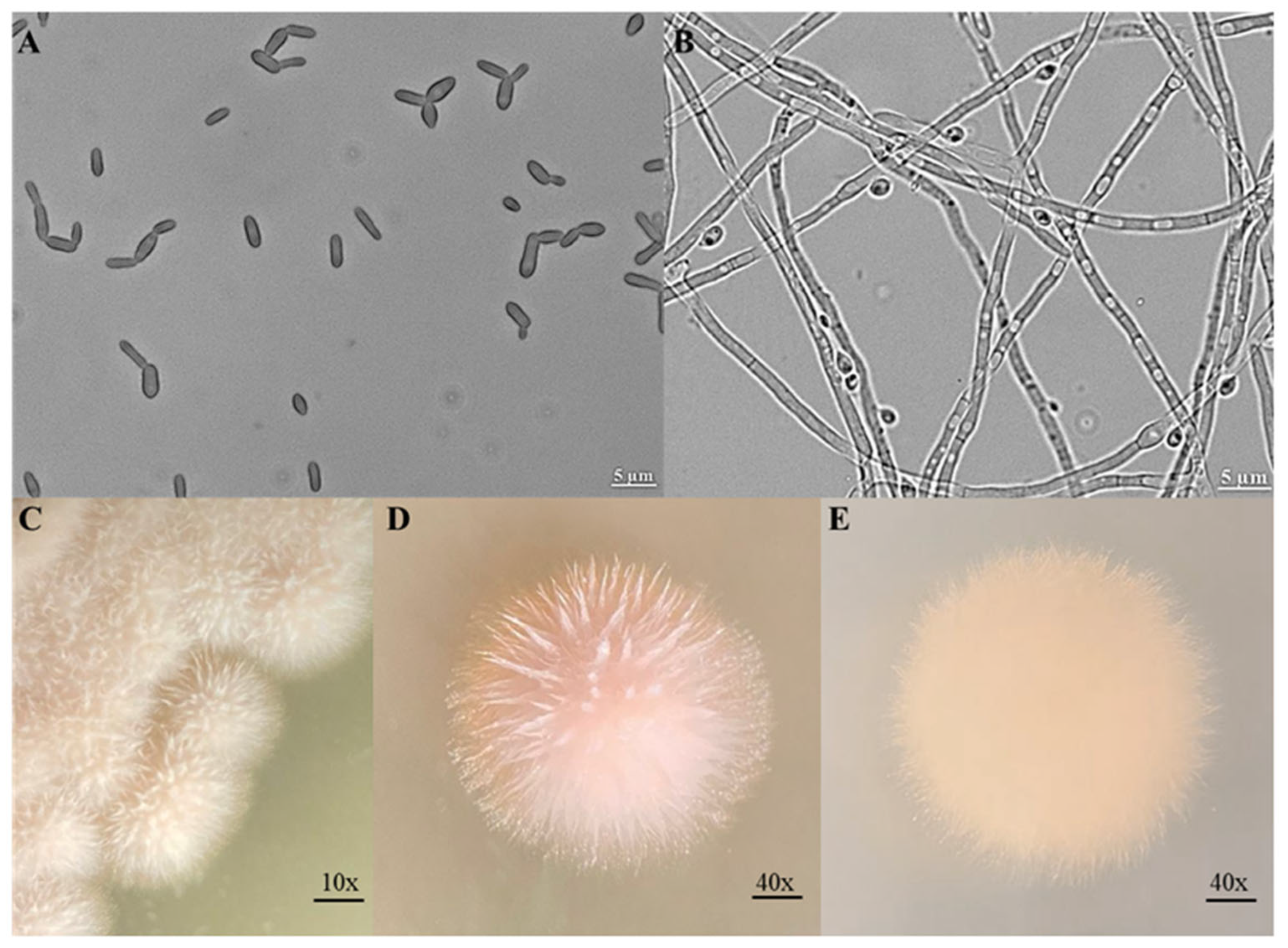
Figure 1. Morphologies of Sporothrix schenckii under different culture conditions. A, yeast-like form observed under light microscopy after incubation at 37 °C, showing oval and budding cells. B, mycelial form observed under light microscopy after growth at 25 °C, displaying septate hyphae and conidial structures. C–E, macroscopic colony morphology on solid medium at 25 °C. C, 10× view showing cottony texture. D, 40× view of a radial colony with a pinkish center. E, 40× view of a circular colony with homogeneous pigmentation.
Preprints 187314 g001
Figure 2. Schematic representation of the S. schenckii yeast cell wall composition. This schematic illustrates the multilayered organization of the S. schenckii cell wall. The inner layer, located adjacent to the plasma membrane, is mainly composed of structural polysaccharides, such as β-1,3-glucans, β-1,6-glucans, and chitin, which provide mechanical strength and maintain cellular integrity. In contrast, the outer layer contains numerous cell wall proteins, many of which are glycosylated with N- and O-linked glycans and enriched in mannose residues. A distinctive component of the outermost surface is the peptidorhamnomannan, a complex of glycoproteins rich in rhamnose- and mannose-containing oligosaccharides that is characteristic of Sporothrix species.
Preprints 187314 g002
Figure 3. Geographic distribution of Sporothrix schenckii in North, Central, and South America. This species is predominantly distributed throughout the American continent. In North and Central America, S. schenckii has been reported in countries such as Canada, the United States, Mexico, Guatemala, El Salvador, Honduras, Nicaragua, Costa Rica, Cuba, and Panama. In South America, its presence has been documented in Colombia, Venezuela, Ecuador, Bolivia, Peru, Brazil, Paraguay, Uruguay, Argentina, and Chile.
Preprints 187314 g003
Figure 4. Geographic distribution of Sporothrix schenckii in Asia and Africa. This species is widely distributed in Asia, with cases reported in China, Japan, India, Thailand, Malaysia, and Iran, involving both sapronotic and zoonotic transmission. In Africa, S. schenckii has been historically associated with major outbreaks in South Africa and sporadic cases in Madagascar, highlighting its persistence in environmental and occupational settings.
Preprints 187314 g004
Figure 5. Transmission routes of Sporothrix schenckii. The sapronosis route originates from the mycelial phase (25 °C) present in soil, decaying vegetation, and plant material, where conidia can be inoculated into humans or animals through traumatic injury. In the host, the fungus undergoes a dimorphic transition to the yeast phase, initiating infection. The zoonotic route mainly involves transmission from infected cats to humans, dogs, or other mammals through scratches, bites, or contact with exudates from ulcerated lesions. The zoonotic route mainly involves transmission from infected cats to humans, dogs, or other mammals through scratches, bites, or contact with exudates from ulcerated lesions. In addition, cats can acquire the infection from mice, and transmission can also occur in the opposite direction.
Preprints 187314 g005
Table 1. Prediction of some important virulence factors and determinants in Sporothrix schenckii.
Virulence factors Organism Protein S. schenckii
(Locus tag)
E-value* Similarity (%)*
Adhesins Candida albicans Als 1-9 No found - -
Eap1 No found - -
Ecm33 SPSK_05317 6e-46 73
Hwp1 No found - -
Iff4 No found - -
Int1 SPSK_07346 8e-52 50
Mp65 SPSK_05120 1e-38 74
Aspergillus fumigatus RodA
RodB
No found - -
AspF2 No found - -
CalA SPSK_05470 2e-94 71
Scw11 SPSK_04001 3e-137 69
Gel1 SPSK_05276 0 70
Gel2 SPSK_04169 2e-159 99
Mp1 No found - -
AfCalAp No found - -
Cryptococcus neoformans Cfl1 No found - -
Cpl1 No found - -
Mp98 SPSK_03393 2e-24 44
Biofilm C. albicans Bcr1 SPSK_01505 2e-24 76
Brg1 SPSK_05129 1e-13 78
Efg1 SPSK_07078 1e-57 65
Hsp90 SPSK_08698 0 85
Ndt80 SPSK_09140 3e-09 37
Rob1 SPSK_03010 7e-08 54
Csr1 SPSK_08605 1e-33 57
C. neoformans Lac1 SPSK_03091 3e-24 60
Ure1 SPSK_00695 0 99
Cap59 SPSK_09241 5e-15 50
Hydrolytic enzymes C. albicans Lip5-8 SPSK_03375 1e-60 86
Sap1-8 SPSK_06273 2e-52 53
Plb1-3 SPSK_01063 4e-145
57
A. fumigatus Pep1 SPSK_02149 0 60
Pep2 SPSK_00526 0 85
Ap1 SPSK_07865 8e-94 97
CtsD SPSK_01559 6e-82 58
PlaA SPSK_02253 2e-136 50
Dimorphism C. albicans Cph1 SPSK_07311
3e-72 78
Hgc1 SPSK_05321
4e-21 42
Nrg1 SPSK_00519
1e-10 55
Tup1 SPSK_02314 1e-139
67
C. neoformans Mob2 SPSK_01925
9e-44
57
Cbk1 SPSK_06025 1e-178
68
Tao3 SPSK_02910 4e-129
44
Sog2 SPSK_03988 9e-113
51
Thermotolerance C. albicans Hsp60 SPSK_01586 0 87
Hsp104 SPSK_08586 0 65
Ssa1 SPSK_08625 0 88
Ssb1 SPSK_03121 0 87
A. fumigatus CrgA SPSK_09995 6e-42 79
Sch9 SPSK_10850 0 71
Hsf1 SPSK_08498 7e-96 48
BiP/Kar2 SPSK_04019 0 87
Ssc70 SPSK_03148 0 88
Hsp88 SPSK_00430 0 75
BiP SPSK_06078 0 69
Lhs1/Orp150 SPSK_02198 0 61
Hsp90 SPSK_08698 0 91
C. neoformans Ccr4 SPSK_07136
2e-141
53
Immune evasion C. albicans Hgt1 SPSK_06192 7e-116
Hmx1 No found - -
Msb2 SPSK_07127
9e-18
44
Pra1 No found - -
Rbt5 No found - -
Sit1 SPSK_02970 5e-150
64
A. fumigatus Hyp1/RodA No found - -
Pksp/Alb1 SPSK_00653 0 60
C. neoformans Rim101 SPSK_07198
2e-36
70
Melanin production A. fumigatus Fet3 SPSK_07279 0 68
TilA SPSK_04101 6e-168
62
Dihydrogeodin/laccase SPSK_07219 2e-99
46
Cell wall synthesis C. albicans Fks1 SPSK_01365 2e-79 78
Dpm3 SPSK_02816 2e-19
63
Pmt2 SPSK_08548 0 65
A. fumigatus ChsG SPSK_06989 0 76
ChsA SPSK_08492 1e-112
88
ChsF SPSK_04841 2e-74
95
Dpm2 SPSK_08145 2e-32 83
Pmt1 SPSK_05892 0 72
Pmt4 SPSK_08628 0 78
Kre2/Mnt1 SPSK_09069 0 88
Ktr4 SPSK_05332 0 74
Och1 SPSK_03245 1e-37
51
Mnn9 SPSK_09403 9e-158 75
*Protein nomenclature corresponds to accession codes of the National Center for Biotechnology Information database (https://www.ncbi.nlm.nih.gov/; accessed August 2025). The C. albicans, A. fumigatus, and C. neoformans proteins were subjected to protein BLAST analysis (https://blast.ncbi.nlm.nih.gov/Blast.cgi?PROGRAM=blastp&PAGE_TYPE=BlastSearch&LINK_LOC=blasthome). The best hit was reported in the S. schenckii column. * The E value and similarity columns refer to the comparison of amino acid sequences of the encoded proteins from C. albicans, A. fumigatus, or C. neoformans with the putative S. schenckii ortholog.
Table 2. Virulence factors reported to S. schenckii.
Virulence factors Protein Reference
Adhesins Gp70 [35,49]
Hsp60 [29]
Pap1 [29]
Proteases Proteinase I [51]
Proteinase II [51]
Thermotolerance Hsp90 [26]
Sscmk1 [52]
Disclaimer/Publisher’s Note: The statements, opinions and data contained in all publications are solely those of the individual author(s) and contributor(s) and not of MDPI and/or the editor(s). MDPI and/or the editor(s) disclaim responsibility for any injury to people or property resulting from any ideas, methods, instructions or products referred to in the content.
Copyright: This open access article is published under a Creative Commons CC BY 4.0 license, which permit the free download, distribution, and reuse, provided that the author and preprint are cited in any reuse.
Prerpints.org logo

Preprints.org is a free preprint server supported by MDPI in Basel, Switzerland.

Subscribe

Disclaimer

Terms of Use

Privacy Policy

Privacy Settings

© 2026 MDPI (Basel, Switzerland) unless otherwise stated