

Submitted:
27 November 2025
Posted:
28 November 2025
You are already at the latest version
Abstract
Soto Zen Buddhist precepts, contemplative medicine, and nursing are used to examine ethical and spiritual ramifications of being silent in the face of environmental destruction and nuclear hazards. It explores how spiritual integrity can guide personal, professional, and planetary development using a personal narrative based on Soto Zen practice and training in contemplative medicine, as well as a scoping review on spirituality in the Anthropocene. The ongoing threat of nuclear disaster can lead to an instantaneous and irreversible detachment from life, even as climate change takes center stage in international debate. By integrating contemplative frameworks with nursing and interfaith perspectives, the paper positions spirituality as a critical dimension of sustainability and calls for a cultural and spiritual shift toward connection, humility, and reverence as a foundation for planetary health.
Keywords:
nuclear threat
; Soto Zen buddhism
; contemplative medicine
; nursing ethics
; spirituality
; Anthropocene
; environmental stewardship
; planetary health
1. Introduction: Bearing Witness in the Anthropocene
Earth’s winds whispering
Give to the planet kindness
Heal what greed ruptures
1.1. Context of the Anthropocene
As shown by population growth, increasing temperatures, biodiversity loss, plastic pollution, and melting ice caps, we are living in an era of growing planetary harm [1,2]. These issues are a result of the Anthropocene, the increasing effects of human activity on the planet and atmosphere [2]. These worldwide dangers point to an impending catastrophe, but there is an even worse concern that is rarely discussed: the spread of nuclear weapons that may wipe out all sentient life, which is made worse by recent declarations from a US President that he plans to resume nuclear testing [3]. Understanding the growing planetary harm is essential for the future development of a compassionate and respectful world and the well-being of all sentient beings.
1.2. Spirituality in Healthcare in a Time of Crisis
Spiritualities and contemplative practices can positively influence healthcare delivery by fostering resilience, empathy, and ethical clarity [4]. Research shows that mindfulness and meditation are linked to adaptive responses to environmental threats, including climate change and nuclear threats [5,6,7]. Nurses who often work within the spiritual domain of health, can integrate these practices into their care to support patients, communities, and themselves during ongoing environmental and nuclear crises. Organizations such as the American Holistic Nurses Association, Spiritual Care Association, and Spiritual Care communities offer substantial guidance on how nurses can incorporate spiritual frameworks into professional practice. These approaches can inform ethical decision-making, enhance professional conduct, and strengthen personal resilience. In a world facing escalating threats, the aspiration to cultivate compassion and goodness calls for deeper spiritual inquiry such as the Catholic practice of the daily examen or the Buddhist examination of the percepts. The daily examen ask a person to be aware of God’s presence, to review his or day with gratitude, to pay attention to any emotions experienced, to choose one piece of the day and pray from that piece, and then to look forward to tomorrow. Examining the precepts can vary based on one’s stage of practice, but involves reviewing the three refuges, the three pure precepts, and the 10 great precepts (Table 1). Both practices provide a pathway for aligning conduct with compassion and taming the soul.
Among the many ways that guide nurses through an uncertain world, this work walks one spiritual path, the way of Soto Zen. Grounded in vows of compassion and non-harming, it offers a sense for understanding environmental and nuclear harm as moral and relational concerns rather than distant abstractions. At the same time, it acknowledges shared wisdom across spiritual traditions, suggesting that contemplative practices can provide both ethical grounding and practical tools for navigating the Anthropocene’s profound challenges.
Open to the path
The sun lights the way ahead
Clear of distractions
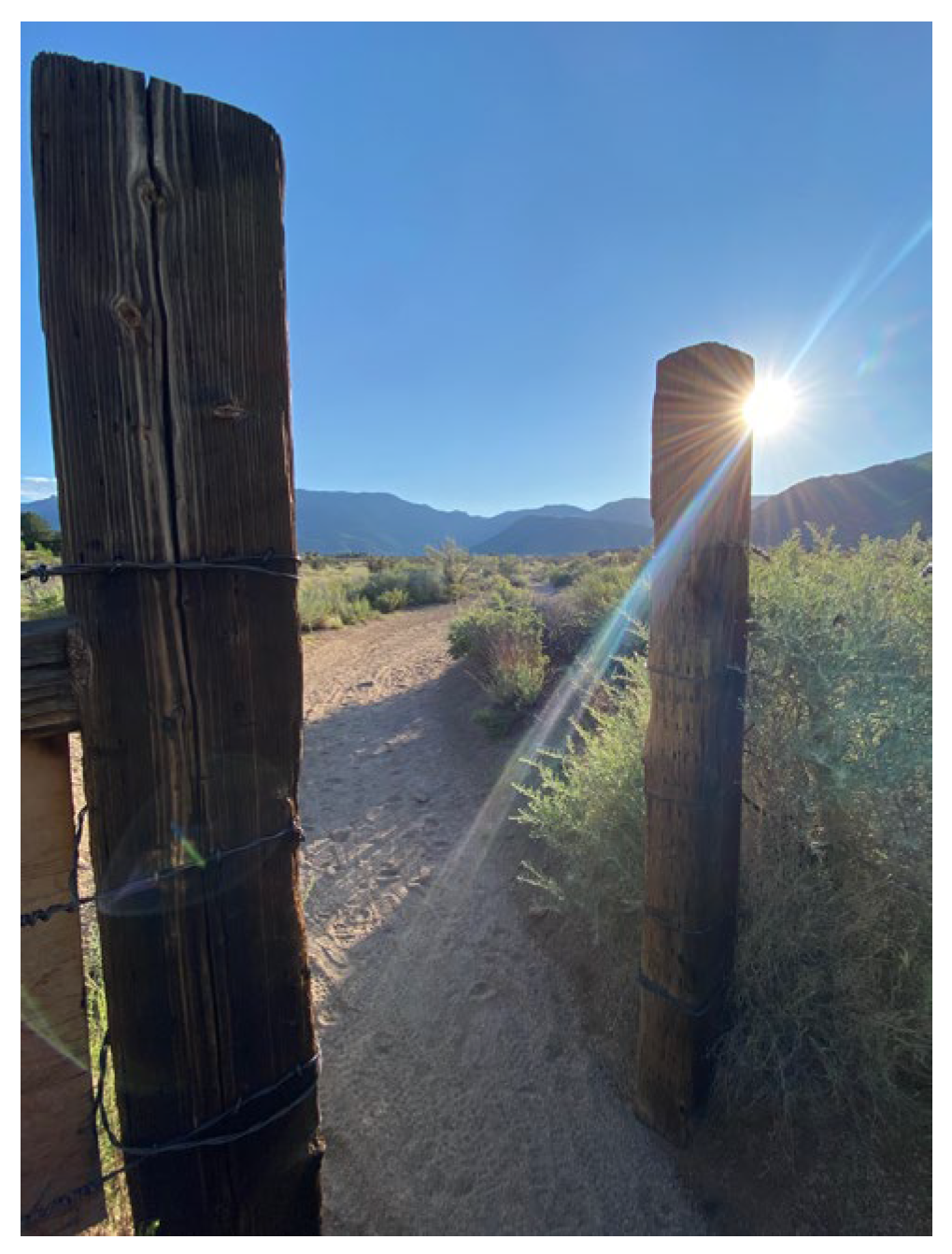
Figure 1.
Bear Canyon Open Space in Albuquerque, NM taken on August 8, 2024, by R. Lavin.
This paper reflects the perspective of Daiho Rōfū who stands simultaneously in spiritual and clinical roles: an ordained Soto Zen Buddhist priest, an environmental researcher, and a nurse trained in contemplative medicine. The Soto Zen precepts call for a respect for life, non-harming, doing good, and not harboring hatred or ill will. Each morning as I don my kesa (religious robe patched together to represent humility, simplicity, and renunciation) I join my sangha—a community of practitioners who practice zazen (sitting meditation) together to support and deepen our spiritual practice of zazen and mindfulness—and repeat the robe verse three time which ends, “We vow to save all sentient beings.” Thus, this forms a moral and spiritual foundation. Contemplative medicine complements this foundation by emphasizing compassion and human connection in the face of suffering[8]. Using a personal narrative alongside a scoping review of the literature on spirituality in the Anthropocene, this paper ask: How can spiritual practice, particularly Soto Zen and contemplative medicine, illuminate ethical contradictions in an era of environmental crisis and nuclear threat, and guide compassionate action within nursing and beyond? In doing so, it calls for cultural and spiritual transformation toward connection, humility, and reverence as foundations for planetary health.
2. Methodology: Integrating Lived Experience and Scholarly Inquiry
2.1. Search Strategy
The research team used Arksey and O’Malley’s methodological combined with the outline from Johanna Briggs Institute [9,10] to guide the scoping review. The search strategy to identify relevant spiritual paths and their link to either environmental or nuclear awareness included searches of 1) PubMed, 2) CINHAL, 3) PsycINFO, and 4) Google to identify relevant publications. Elicit was used to expand the search for articles and do an initial analysis of the articles for relevance. All articles were then uploaded to Covidence for analysis by two reviewers.
2.2. Inclusion and Exclusion Criteria
Searches were limited to research articles and publications from 2015 to 2025. The primary search terms included “nurse,” “environment,” “nuclear,” “Anthropocene,” “spiritual,” and “contemplative medicine.” Articles were excluded if they solely focused on technical nuclear policy, military strategy, or environmental science without ethical or spiritual framing or were not related to healthcare or spiritual practitioners.
2.3. Screening and Data Extraction
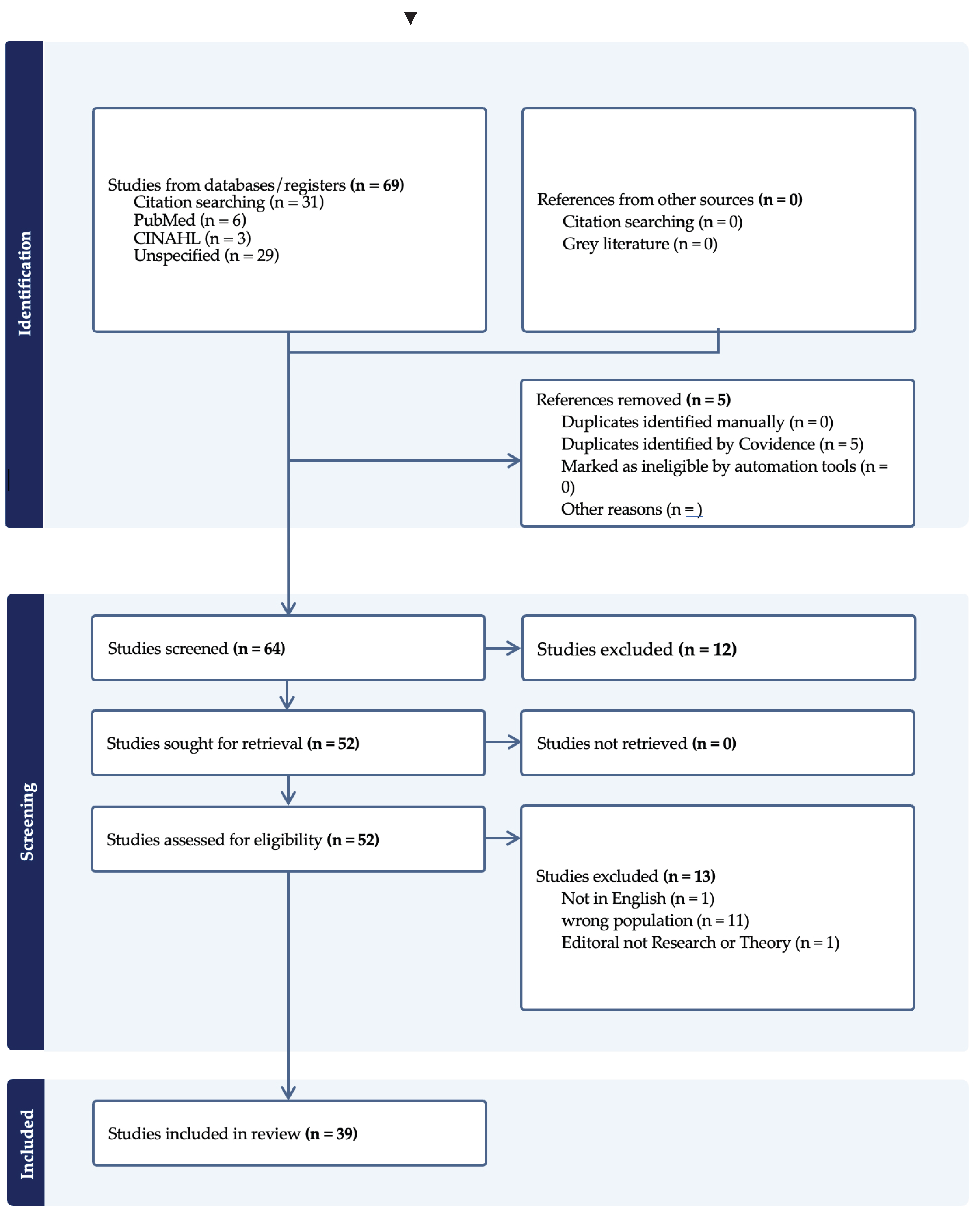
From the five databases, the research team reviewed 69 citations. The research team supplemented the dataset with articles from Elicit and references found handsearching articles. No other articles were found through the hand search. On initial review we removed 5 duplicates. Each title and abstract were screened by two team members. A total of 64 articles were screened of which 12 were excluded. A full text review of 52 articles was conducted. Thirteen studies were excluded for not being in English (n = 1), the wrong population (n = 11), and being an editorial (n = 1). Thirty-nine articles met the established criteria (Fig. 1).
Covidence was used to create a data extraction tool used for the 39 articles. The elements in the tool reflect the methodological framework and the paper’s purpose. Articles assigned for extraction were assigned to two members of the research team. One team member performed the initial extraction, the second member confirmed the extraction, and conflicts were resolved through consensus.
The analysis that resulted from the scoping review was used to identify similarities and differences with the personal narrative reflecting the lived experience and as a means of identifying similarities in experiences across religious traditions and countries that may support the need for cultural and spiritual transformation, a shift toward connection, humility, and reverence as a necessary path for planetary health.
2.3. Personal Narrative
The personal narrative provides a reflective account rooted Daiho Rōfū’s lived experience. Rather than presenting an empirical study, it serves as an interpretive lens intended to illustrate how spiritual and contemplative commitments can shape ethical reasoning and professional practice. Drawing on the Daiho Rōfū’s dual roles in clinical practice and spiritual leadership, the narrative offers context for the integration of contemplative principles into responses to planetary harm.
3. Personal Narrative
3.1. First Noticing the Ripples – Encounter with Radical Compassion
I joined the United States Administration for Children and Families to head a research and development project for a national disaster case management program. For me it was a career coming full circle that had begun by wanting to work with those experiencing homeless and had turned into 10 years of responding to mass migrations and extreme weather disasters. When Hurricanes Gustave and Ike stuck within a week of each other, I brought years of experience in disaster preparedness and response, guided by protocols, plans, and a firm conviction that trained healthcare professionals were essential to an effective recovery for the poor and underserved. Our partnership with Catholic Charities USA (CCUSA) was intended to extend the federal program’s reach and to bring a community structure that embraced the human side of disasters.
During the response to Hurricanes Gustave and Ike I chose to stay with the community volunteers at the Tracy Center rather than join the team of officers, so I could see the program in action. I watched as the Sisters gave out food to those in need even when it was clear that they had started dipping into their own food and that of the responders. Their belief was, “If they cannot eat, why should we?”
That moment changed everything I thought I knew about disaster preparedness and response and revealed the absence of something vital to me: the deep compassion that makes care truly human. It was not about professional skills, logistics, and financial management, but about radical compassion. Drawing on lectures by the Dalai Lama, Rodrigues describes radical compassion as a worldview that recognizes all people—clients, caregivers, colleagues—as beings who experience suffering and deserve compassion[11]. More than that, radical compassion is a deliberate practice of seeing suffering within its full social, environmental, and structural context and responding with actions designed to relieve suffering at both the individual and systemic level. Thus, sympathetic awareness and responsibility come together to listen without judgment, to protect all beings, to confront conditions that create harm, and to use policy, advocacy, and professional presence to foster justice and well-being. Through such compassion one refuses neutrality in the face of inequality and insists that care extend beyond the bedside to the places where harm originates[12]. I saw an act of giving that embodied a spirituality that I did not poses and it was radical compassion. It was pure presence, generosity, and moral clarity. I saw what CCUSA wanted me to see, that our task was not merely to manage the response and recovery, but to bear witness to the suffering with an open heart.
3.2. Transition to Academia and Environmental Awareness
When I transitioned from government service for academia, my focus shifted to educating nurses on disaster preparedness and conducting research on environmental health and nuclear readiness. Over time, I began to look beyond the simple data points and recognize the deeper interconnections of how human-caused and extreme weather disasters are inseparably linked with the broader environmental crisis. Human actions create ripples we often fail to see; greed, ignorance, separation, isolation, and alienation spread outward, manifesting as atmospheric carbon emissions, particulate matter pollution, and the massive energy demands of our technology. Like the stone cast into the water, the ripples extend far beyond their point of origin; where do all the ripples go?
3.3. Soto Zen Teaching on Interbeing and Remote Consequences
Soto Zen Master Eihei Dōgen (1200—1253) wrote that there are three patterns of causal relationships: Those that are near, those that are remote, and those so far that no one perceives their effects[13]. Humans tend to notice only the immediate effects, like the ripples in the water we do not see the consequences that unfold in the widening circles.
Dōgen urged practitioners to look for the distant consequences of action and to foster the compassion to act upon them[14]. Likewise, the Buddha taught, “Do not disregard good, “It will not come to me!” Even a water pitcher is filled by the falling of water drops. The wise person is filled with good, even collecting it little by little”[15] (p, 152). I now see the teaching as a moral ground for environmental health and preventing nuclear harm. The toxins emitted today, the nuclear waste that has been normalized, and the indifference manifested are the remote effects Dōgen warned us to see and bear witness to.
3.4. Contemplative Medicine and Nursing Practice
My training in Contemplative Medicine deepened this awareness of causality and the importance of compassion in nursing practice and daily life. The yearlong Contemplative Medicine Fellowship I participated in is designed to integrate the Buddhist principles of contemplative practice with the art of healing, which fosters a holistic approach to both patient care and self-awareness. Through eleven modules, participants explore themes such as the nature and causes of suffering, the four Noble Truths, and the Eightfold Path as a framework for compassionate care, and the cultivation of mindfulness, presence, and ethical action in clinical settings. The integration of mindfulness, ethics, and spiritual inquiry furthered my understanding of healing as a relational process that goes beyond the individual body to the collective body of the planet. Practicing presence becomes a way of being, a way of listening to the whole self, and way of being attuned to suffering that is not always visible. The training affirmed what both Dōgen and the Buddha taught, that even the smallest act of care has ripples that affect the lives of those who are so distant the impact on them may not be seen.
Soto Zen training calls us to awaken and to act with a wide perspective, to embrace interbeing and recognize that environmental harm reflects the interbeing of all life, to accept that each thing exists only through everything else, to feel sorrow when there is suffering and meet those suffering without barriers, and to renounce not only greed but the separation that blocks compassion. The precepts to do no harm, to not take what is not freely given, and to save all sentient beings, has become a practical guide for climate ethics and disaster response alike. They remind us that the suffering studied and the shared environment cannot be separated from those who study them.
It was not my own wisdom, nor solely the guidance of my teacher, that led me to ordination as a Soto Zen priest. Rather, it was the Sisters’ generosity that gave me eyes that see and ears that hear—a biblical phrase pointing to spiritual awakening, the moment when perception deepens and reality is truly heard and seen. What began as a professional service became a form of practice and awakened me to the inseparability of self and the world, science and compassion, response and presence.
In Soto Zen, we often say that when we are practicing zazen, sitting on the mat, it is the only time we are keeping all the precepts. This reminds us that practice is not confined to sitting; it must be carried into every moment of life. Slowly, I have learned to stand up from the mat and bring that practice into my research, my teaching, and my patient care. In clinical encounters, teaching, and research on environmental and nuclear disasters, this contemplative foundation urges me to act from awareness rather than fear. Nursing like Soto Zen practice, becomes an expression of interbeing, the profound interconnectedness of all life.
This leads to a larger question: How do other spiritual practices, illuminate ethical contradictions in the age of environmental crisis and nuclear threat? How might they guide compassionate action within nursing and beyond? And how is this like the Soto Zen path?
4. Results: Scoping Review
Table 2 provides an overview of the elements of the 39 articles that are included in this scoping review and are consistent with the intent of the paper. The articles are international in nature representing Asia (n = 12), Africa (n = 4), North America (n = 10), Europe (n = 8), Oceania: (n = 1), and multi-regional/global (n = 4). Populations included a wide range of participants including religious and spiritual practitioners (Vipassana meditators, Buddhist monastics, interfaith volunteers, clergy, and ecospiritual practitioners), community groups (Indigenous and rural communities of Amah Mutsan, Tarali Magar, and Pokot, environmental activists, and local faith groups), and other studies that were secondary data analysis, literature review or theoretical in nature. The studies also represented a broad range of spiritual traditions that accounted for approximately 45% of the articles and included Buddhist (n = 2), Islamic (n = 1), Catholic/Christian (n = 1), Indigenous/traditional spiritualities (n = 3), Ecospiritual/interfaith (n = 6), general religious/spiritual (n = 4), and Confucian or East Asian philosophical (n = 1). There was a strong trend of ecospiritual and interreligious collaboration rather than focus on a single religion or spirituality.
The articles can be divided into four broad themes of embodied practice, narrative meaning-making, interconnected ethics, and reflective integration. Embodied practice involves mind-body connection to enhance self-awareness and well-being whereas reflective integration is an approach that integrates the scientific and the spiritual. Each of these practice traditions foster environmental and nuclear awareness. Embodied practice is represented by long-term Vipassana meditators who describe direct bodily awareness as a foundation to recognizing through engagement of the senses which leads to perception of the fragility of the natural systems [7]. Likewise, the interfaith fire brigades in Indonesia demonstrated how mindful action and service to the community can be forms of prayer proclaimed through the body [16]. Narrative meaning-making is reflected in ritual storytelling and personal lived religious experience as a means for transforming ecological grief and ancestral memory into moral purpose [17,18]. The similarity between Indigenous and Buddhist worldviews and the understanding that human suffering and environmental degradation arise from the same relational conflicts clearly illustrates an interconnected ethic, acknowledging that all beings, actions, and conditions are mutually influential and interdependent [19,20]. The potential for a breakthrough through reflective integration was seen in studies where contemplative and faith-based education promoted participants to develop mindful awareness with ecological and social responsibility [21,22].

Table 2.
Articles evaluated in Covidence.
| Lead Author/ Year | Inclusion Criteria | Approach | Outcomes |
| Barbir, 2025 [23] | Studies on mindfulness and sustainability from Scopus database | Literature review | Conceptual framework linking mindfulness mediators to sustainability outcomes |
| Barrett, 2016 [24] | Adults interested in mindfulness and sustainability | Mindful Climate Action (MCA) program: 8-week course blending MBSR with climate/energy education, 2.5h weekly + retreat | Intended outcomes: ↓carbon footprint (transport, diet, purchasing, energy) and ↑health, well-being, self-efficacy |
| Bendell, 2021 [25] | Facilitated gatherings addressing societal disruption/collapse and adaptation | Deep Relating and facilitation practices (containment, uncertainty, emotions, othering) | Insights on effective facilitation for collapse-related dialogues |
| Billet, 2025 [26] | Peer-reviewed research on ecospirituality, nature as sacred | Narrative review | Synthesizes links between ecospirituality, pro-environmental attitudes, and well-being |
| Bock, 2024 [27] | Ecospiritual practice and climate action engagement | Ecospiritual praxis (conceptual cycle) | Framework to move from concern to action; connects religion/science for behavior change |
| Bryant, 2024 [28] | Local clergy engaged in disaster spiritual/emotional care | No experimental intervention (study focused on narrative documentation and reflection of real-world coping strategies and caregiving experiences | Identified coping strategies (psychological, social, religious) and contextual challenges |
| Budha, 2025 [29] | Indigenous community members with knowledge of ritual, agricultural, and spiritual practices | Not experimental; ethnographic documentation of rituals, weather forecasting, and farming practices | Identifies how shifting climes disrupt agricultural and ritual cycles; shows indigenous temporal concepts (nham = weather, sameu = time) as frameworks for interpreting climate change; highlights ecospiritual resilience and challenges in weather prediction |
| Cayir, 2022 [30] | Healthcare providers participating in simulation-based training | The Pause (brief contemplative practice) | There was a statistically significant effect on HRV. In the unadjusted model (model 1), participants in the intervention group had a post-Pause SDNN value of 56.0 (95% CI 47.0, 65.0) while those in the control group had 35.1 (95% CI 29.4, 40.8; p for difference <.001). When adjusting for baseline SDNN (model 2), participants in the intervention group had a post-Pause SDNN that was 11.8 (95% CI 2.7, 20.8; p =.01) points higher than those in the control group |
| Chavan, 2024 [31] | Participants in Ganesh idol immersion rituals | To examine the determinants of pro-environmental religious practices in the context of Ganesh idol immersion, focusing on the roles of religiosity, spirituality, and environmental consciousness | Positive relationship of spiritual values and environmental consciousness with pro-environmental practices; negative influence of spiritual belief |
| de Diego-Cordero, 2024 [32] | Empirical studies (2018–2023) in English/Spanish exploring ecospirituality and health | Systematic review | Ecospirituality linked with improved mental, physical, and global health |
| Fry, 2021 [33] | Leadership and sustainability scholarship | No direct Intervention, but the paper develops a new conceptual framework (global leadership for sustainability) integrating spiritual leadership principles, ethical principles for sustainability and a global mindset for fostering purpose. | Framework linking spirituality, ethics, and sustainability outcomes |
| Goralnik, 2020 [34] | Students engaged in sustainability curriculum with contemplative pedagogy | 5-minute pause integrated into sustainability teaching | Enhanced resilience, emotional intelligence, and engagement in sustainability issues |
| Hidayat, 2025 [16] | Interfaith volunteer organization engaged in fire mitigation | Faith-based fire prevention practices (wasathiyah and zhong yong principles) | Significant impact on efficiency in resource use, the formation of robust interfaith collaboration, and heightened ecological awareness within the community. Long-term implications for increasing resilience. |
| Ives, 2025 [16] | Studies and evidence on religion and climate change in cities | Religious-civic partnership model for climate action | Framework for engaging faith in urban climate adaptation and mitigation |
| Jadgal et al., 2024 [35] | Nursing students admitted before Sept 2022, willingness to participate | Questionnaires: demographic, environmental knowledge/attitude/behavior, environmental ethics, spiritual health. | Knowledge predicted environmental ethics. Environmental ethics and spiritual health were predictive of environmental protection behaviors. |
| Johnson, 2022 [36] | Indigenous-led perspectives on environmental governance and justice | Recognition and healing frameworks in planetary justice | Proposes planetary justice agenda grounded in Indigenous worldviews |
| Lee, 2015 [5] | Tzu-Chi organizational environmental initiatives published in 2 specified publications | Recycling practices, Buddhist environmental ethics | Religious environmentalism shaping climate discourse |
| Luetz, 2024 [37] | Studies and practices involving Indigenous worldviews, spirituality, and conservation | Not experimental; conceptual review of Indigenous ecotheology | Demonstrates that Indigenous ecotheology sustains biodiversity, conservation, and adaptation; critiques Western technocratic models; proposes inclusion of Indigenous spirituality as central to sustainability frameworks (e.g., SDGs, CBD, Earth Charter) |
| Maddrell, 2022 [38] | Participants in the annual Keeills prayer walks | Prayer walks, Celtic Christian spirituality | Bridging enchantment and eco-spirituality for environmental action |
| Markus, 2018 [39] | Buddhist perspectives on ecology and climate | Discussion of climate engineering proposals | Advocates ethical guidelines for geoengineering grounded in Buddhist values |
| Matthews, 2023 [40] | Indigenous-led initiatives on climate and health | Caring for Country practices, cultural revitalization | Highlights decolonization and Indigenous knowledge as vital for planetary health |
| Mayer, 2019 [41] | Responses to 'Laudato Si’ | Interdisciplinary analysis of Catholic environmental teaching | Integrates health, psychology, and theology perspectives on ecological crisis |
| Mohidem, 2023 [42] | Islamic scholarship on environment and health | Islamic principles: unity, balance, responsibility | Islamic framework for environmental health and sustainability |
| Mölkänen, 2025 [18] | Residents engaged with spirits/rituals in local ecologies | Not applicable | Religious/ritual practices shape conservation interactions; caution against dismissing lived religion |
| Mpofu, 2021 [43] | African perspectives on religion and climate change | Faith-based mission framing (healing, reconciliation, restoration) | Argues for extending liberation/restoration to human–nature relations |
| Oughton, 2016 [44] | Post-accident assessments and official reviews | Evacuation/remediation policies | Primary health effects were psychosocial; evacuation ethics were questioned; broader values were at stake |
| Pandya, 2021 [22] | Social workers working with environmental migrants | Not experimental; catalogues spiritually sensitive models/techniques | Regional and demographic differences in preferred models, assessments, techniques, and goals |
| Pike, 2024 [17] | Ritualized responses to climate/ecological grief | Rituals (funerals for extinct species, ceremonial fire, Red Rebel Brigade) | Rituals create sacred spaces, process grief, mobilize identity and care |
| Riordan, 2022 [45] | Adults eligible for Mindfulness Based Stress Reduction (MBSR); meditation-naïve controls; long-term meditators | 8-week MBSR; structurally matched active control; waitlist | MBSR did not uniquely improve targets vs. active control; some gains vs. waitlist in PEB and sustainable well-being |
| Schmid, 2020 [46] | Involvement in community-based eco-social initiatives | Mind-body practices (meditation, yoga, reflection) within activism | Mindfulness underpins togetherness, resilience, and political/spatial praxis |
| Shahida, 2024 [47] | Enrollment in UG science; participation in a semi-structured interview | Not experimental; documents household-level rituals/values | Religious/spiritual teachings can scaffold eco-ethics and attitudinal shifts in education |
| Somarathne, 2025 [7] | Long-term meditators (more than 3 years of practice) | Vipassana meditation (natural practice, not experimental intervention | Associations between mindfulness facets, positive lifestyle habits, quality of life, and carbon footprint domains |
| Stahl, 2024 [21] | Individuals engaged in eco-ministry leadership training | Eco-ministry certification program with spiritual and environmental practices | Guidance for resilient leadership and eco-spiritual formation to address climate crisis challenges |
| Tarusarira, 2022 [19] | Indigenous religious leaders involved in conflict contexts | Not experimental; analysis of religious sensemaking practices | Sacred framing influenced conflict dynamics, intensity, and resolution strategies |
| Taylor, 2016 [48] | Studies on religion and environmental attitudes or practices | Literature review of evidence to determine if world religions are becoming more environmentally friendly | Mixed evidence: some religious groups foster pro-environmental behavior, others hinder; lack of quantitative data |
| van Vugt, 2019 [20] | Monastics engaged in debate training | Analytical meditation and monastic debate training | Enhanced reasoning, attention, working memory, emotion regulation, and social connectedness |
| Wamsler, 2017 [49] | Students enrolled in relevant Master’s programs | Learning lab on mindfulness integrated into coursework | Identified positive effects of mindfulness on sustainability attitudes, resilience, and education |
| Yamaguchi, 2024 [50] | Ethnographic studies on kokoro no kea after 2011 disaster | Kokoro no kea teams; informal social activities; spiritual/religious support | Mixed reception of kokoro no kea; importance of social bonds (kizuna); gendered impacts |
| Zielke, 2023 [6] | Members engaged in eco-activism | Meditation, politics of care, eco-activist practices | Reframed Buddhist practices as eco-activism, promoting care as a transformative tool |
1 The table does not follow the normal format for a scoping review as it is designed to supplement the personal narrative.
5. Discussion
5.1. Convergence of Personal Narrative and Scoping Review
The findings of the studies in the scoping review converge with the personal narrative of Daiho Rōfū to illustrate that awareness does not arise from cognition alone, but through embodied, relational, and contemplative practices. These practices tame the soul, cultivate awareness, and transform despair into compassionate responsibility. Across religious and spiritual traditions and healthcare and other disciplines, the evidence suggest that spiritual and contemplative frames offer a moral compass for navigating the Anthropocene and the acute dangers of environmental degradation and nuclear proliferation.
My own journey began with disaster response framed by technical expertise and evolved into a recognition that radical compassion and not logistics, anchors ethical action. Bearing witness to suffering, as I learned from the Sisters in Baton Rouge who shared their food during disaster recovery, is not passive observation but an active stance of presence and solidarity. This insight echoes Dōgen’s teaching on remote consequences: the unseen ripples of harm—carbon emissions, radioactive waste, geopolitical aggression--are the forces that perpetuate global suffering and reveal the interconnection between the ecological and the human. To bear witness is to refuse indifference, to acknowledge interbeing, and to act from awareness rather than fear.
5.2. Contemplative Practices as Ethical Compass
Training in contemplative medicine deepened this orientation by integrating mindfulness, ethics, and relational healing. In clinical practice, contemplative presence becomes a way of listening to suffering that is not always visible, whether in a patient’s body or in the body of the planet. The scoping review affirms this link: contemplative practices foster resilience, empathy, and ecological consciousness, bridging inner transformation with outer responsibility [4,34]. Programs such as Mindful Climate Action demonstrate that mindfulness can reduce carbon footprints while enhancing well-being [24], and contemplative pauses in healthcare improve physiological resilience [30]. Nurses and healthcare professionals, guided by these frameworks, can embody a care ethic that extends beyond the individual to the community and ripple out beyond sight, resisting the fragmentation that fuels environmental and nuclear harm.
5.3. Spirituality as Catalyst for Planetary Health
This conceptual model (Figure 3) illustrates how spirituality, sustainability, and nursing converge through contemplative practices, anchored in dependent co-origination and framed by Soto Zen awakening. It integrates the four themes identified in the scoping review, embodied practice, narrative meaning-making, interconnected ethics, and reflective integration alongside sustainability principles and nursing ethics to show a holistic pathway for planetary health.
While climate change dominates social and political discussions, the nuclear threat remains an immediate and irreversible threat to all sentient beings. Silence in the face of such danger is a spiritual and ethical failure. The Soto Zen precept to “save all sentient beings” demands that practitioners confront this reality not as policymakers or clinicians or clergy alone, but as practitioners of radical compassion. The literature confirms my own experience that spiritual traditions can mobilize moral clarity and collective action against such existential risks [6,39]. This does require moving beyond the mere ritual into advocacy that integrates contemplative insight with civic responsibility.
This necessitates going beyond mere ritual to embrace advocacy that integrates contemplative insight with civic duty. In this context, responsibility is not a burden; rather, it is an expression of interbeing and the realization that the welfare of all beings arises through dependent co-origination. Understanding that no life exists independently from others leads to ethical action. To act for planetary health is to understand that the self and the world are one. This change in the story changes it from fear to vow, from reactive despair to proactive care and compassion. Spiritual integrity serves as a driving force for cultural transformation, encouraging collaboration between healthcare and faith communities to prevent harm and encourage reverence for life [26,37].
Believing falsely
Delusions lead to despair
6. Conclusions: A Path Forward
Awakening in the Soto Zen tradition is not an abstract ideal but a lived practice of interbeing, a recognition that no life stands apart from any part of the planet, even when it is parched by greed, aversion, and delusion. Within Soto Zen and contemplative medicine, responsibility is not a burden but a natural expression of dependent co-origination, an enactment of radical compassion that arises from this awareness. Bearing witness to suffering humanity has caused through environmental and nuclear negligence demands we turn greed into generosity, fear into presence, and knowledge into ethical action. The path of awakening, based in vows of compassion and non-harming, offers a spiritual foundation for sustainability and planetary health. Integrating contemplative practices into nursing, education, and society at large.
Filled with desire
Greed waters the dry desert
Thirst drains the people
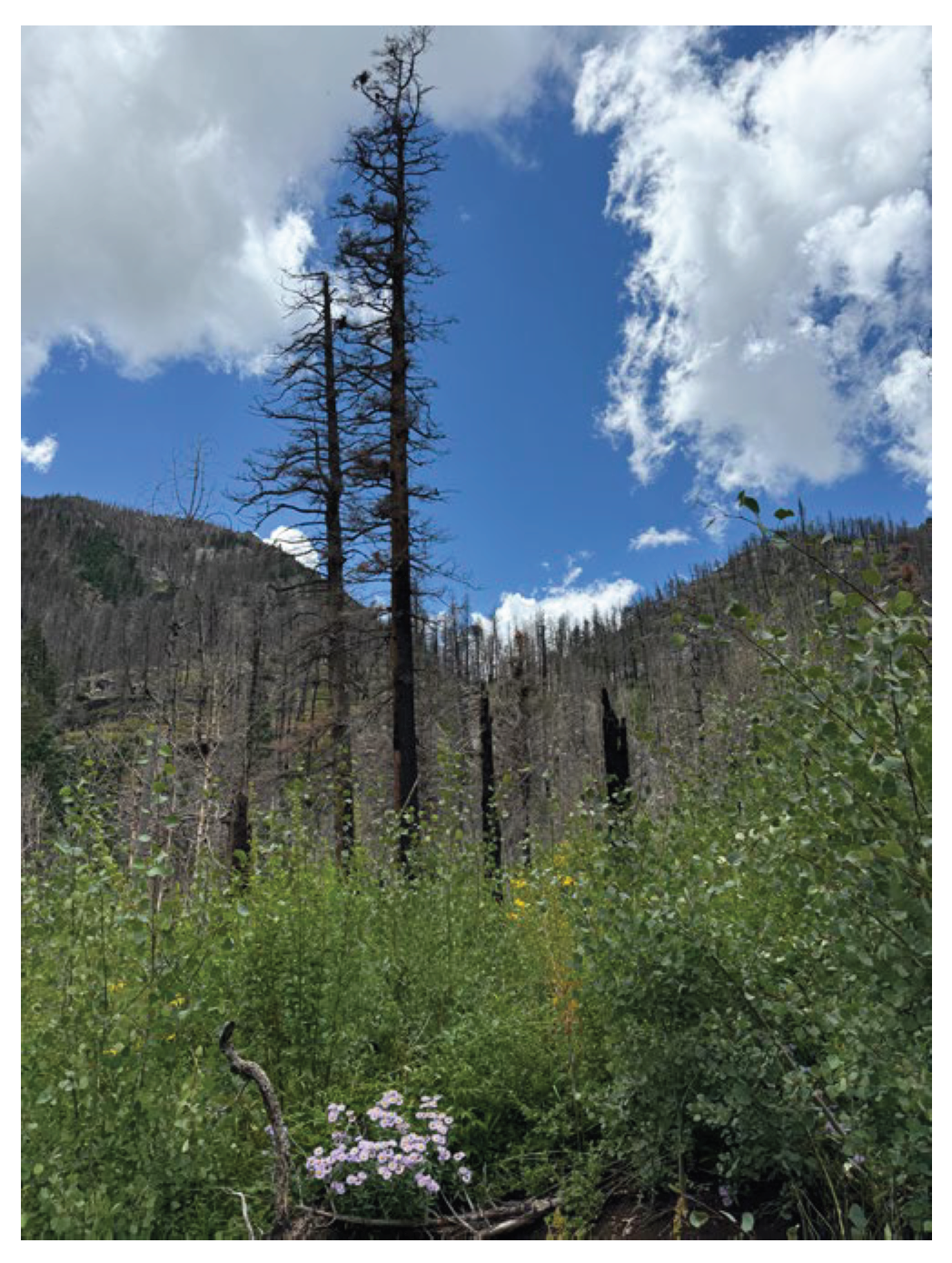
Figure 5.
Mora burn scar with undergrowth returning taken August 1, 2025 by R. Lavin.
This verse reflects the moral and ecological crisis of our time and points toward a cultural and spiritual transformation, quenching the thirst of desire with the waters of compassion.
Author Contributions
RL conceptualization, methods, article review, personal narrative, and writing. BK data collection, article review. All authors have read and agreed to the published version of the manuscript.
Funding
This research received no external funding.
Data Availability Statement
The full excel spreadsheet to the synthesized articles in the scoping review can be found on GitHub after publication at: https://github.com/rlavin10/Spirituality-and-the-Anthropocene.
Acknowledgments
Dr. Osama Rosan Yoshida is my Soto Zen teacher and has guided my study and understanding of Soto Zen and is an advocate for a global ethic. The New York Zen Center for Contemplative Care guided my study of Contemplative Medicine. During the preparation of this manuscript, the author used Elicit to search the relevant literature as a support to PubMed, PsychINFO, and CINHAL. Grammarly and ChatGPT were used to check grammar and readability, specifically to reduce technical jargon, biased language, identify redundancy, and readability. The author has reviewed and edited the output and takes full responsibility for the content of this publication.
Conflicts of Interest
The author declare no conflicts of interest.
References
- Trischler, H. The Anthropocene. NTM Z. Für Gesch. Wiss. Tech. Med. 2016, 24, 309–335. [Google Scholar] [CrossRef]
- Arbon, P.; Stoermer, E. The “Anthropocene. ” Glob. Change Newsl. 2000, 41, 17–18. [Google Scholar]
- Hunnicutt, T.; Shakil, I.; Singh, K.; Singh, K. Trump Tells Pentagon to Resume Testing US Nuclear Weapons. Reuters 2025.
- Moura, A.T.; Coriolano, A.M.; Kobayasi, R.; Pessanha, S.; Cruz, H.L.; Melo, S.M.; Pecly, I.M.; Tempski, P.; Martins, M.A. Is There an Association among Spirituality, Resilience and Empathy in Medical Students? BMC Med. Educ. 2024, 24, 704. [Google Scholar] [CrossRef] [PubMed]
- Lee, C.; Han, L. Recycling Bodhisattva: The Tzu-Chi Movement’s Response to Global Climate Change. Soc. Compass 2015, 62, 311–325. [Google Scholar] [CrossRef]
- Zielke, Z. Contesting Religious Boundaries with Care: Engaged Buddhism and Eco-Activism in the UK. Religions 2023, 14, 986. [Google Scholar] [CrossRef]
- Somarathne, E.A.S.K.; Gunathunga, M.W.; Lokupitiya, E. How Does Meditation Relate to Quality of Life, Positive Lifestyle Habits and Carbon Footprint? Heliyon 2025, 11, e41144. [Google Scholar] [CrossRef]
- Contemplative Medicine Fellowship | New York Zen Center for Contemplative Care. Available online: https://www.zencare.org/contemplative-medicine-fellowship (accessed on 10 November 2025).
- Arksey, H.; O’Malley, L. Scoping Studies: Towards a Methodological Framework. Int. J. Soc. Res. Methodol. 2005, 8, 19–32. [Google Scholar] [CrossRef]
- Joanna Briggs Institute The Joanna Briggs Institute Critical Appraisal Tools for Use in JBI Systematic Reviews: Checklist for Systematic Reviews and Research Syntheses 2017.
- Rodriguez, K.A.; Tarbox, J.; Tarbox, C. Compassion in Autism Services: A Preliminary Framework for Applied Behavior Analysis. Behav. Anal. Pract. 2023, 16, 1034–1046. [Google Scholar] [CrossRef]
- Lavin, R. Available online:. Available online: https://curseofanurse.com/ (accessed on 21 November 2025).
- Dōgen; Nearman, H. Shōbōgenzō. Vol. I : The Treasure House of the Eye of the True Teaching : A Trainee’s Translation of Great Master Dōgen’s Spiritual Masterpiece; Reformatted version.; Shasta Abbey Press: Mount Shasta, California., 2007; ISBN 978-0-930066-37-6.
- Dōgen; Nishijima, G.; Cross, C. Shōbōgenzō : The True Dharma-Eye Treasury. Vol. IV; BDK English Tripiṭaka.; 99-103; Numata Center for Buddhist Translation and Research: Berkeley, Calif., 2008; ISBN 978-1-886439-38-2.
- Sarao, K.T.S. The Dhammapada : A Translator’s Guide; Munshiram Manoharlal Publishers: New Delhi, 2009. [Google Scholar]
- Hidayat, S.; Tanggok, M.I.; Ho, E. Interfaith Response to Fire Mitigation: Islamic and Confucian Perspectives in Addressing Climate Change in Indonesia. Rev. Relig. Chin. Soc. 2025, 1–22. [Google Scholar] [CrossRef]
- Pike, S.M. Ritual Responses to Environmental Apocalypse in Activist Communities. Arch. Psychol. Relig. 2024, 46, 222–233. [Google Scholar] [CrossRef]
- Mölkänen, J. Living with Spirits and Environmental Conservation Efforts in Rural North-Eastern Madagascar. Approaching Relig. 2025, 15. [Google Scholar] [CrossRef]
- Tarusarira, J. Religious Environmental Sensemaking in Climate-Induced Conflicts. Religions 2022, 13, 204. [Google Scholar] [CrossRef]
- van Vugt, M.K.; Moye, A.; Pollock, J.; Johnson, B.; Bonn-Miller, M.O.; Gyatso, K.; Thakchoe, J.; Phuntsok, L.; Norbu, N.; Tenzin, L.; et al. Tibetan Buddhist Monastic Debate: Psychological and Neuroscientific Analysis of a Reasoning-Based Analytical Meditation Practice. Prog. Brain Res. 2019, 244, 233–253. [Google Scholar] [CrossRef]
- Stahl, W.J. Meaningful Vocation in a Climate-Changed World: Learnings from Seminary of the Wild. Relig. Educ. 2024, 119, 429–441. [Google Scholar] [CrossRef]
- Pandya, S. Social Work with Environmental Migrants: Exploring the Scope for Spiritually Sensitive Practice. Soc. Work 2021, 66, 148–156. [Google Scholar] [CrossRef]
- Barbir, J.; Baars, C.; Eustachio, J.H.P.P.; Sharifi, A.; Demarzo, M.; Filho, W.L. Observing Sustainability through the Mindfulness Lens: A Conceptual Framework Based on a Bibliometric Review Analysis. Sustain. Sci. 2025, 20, 251–267. [Google Scholar] [CrossRef]
- Barrett, B.; Grabow, M.; Middlecamp, C.; Mooney, M.; Checovich, M.; Converse, A.; Gillespie, B.; Yates, J. Mindful Climate Action: Health and Environmental Co-Benefits from Mindfulness-Based Behavioral Training. Sustainability 2016, 8, 1040. [Google Scholar] [CrossRef]
- Bendell, J.; Carr, K. Group Facilitation on Societal Disruption and Collapse: Insights from Deep Adaptation. Sustainability 2021, 13, 6280. [Google Scholar] [CrossRef]
- Billet, M.I.; Baimel, A.; Schaller, M.; Norenzayan, A. Ecospirituality. Curr. Dir. Psychol. Sci. 2025, 34, 97–104. [Google Scholar] [CrossRef]
- Bock, C. Ecospiritual Praxis: Cultivating Connection to Address the Climate Crisis. Religions 2024, 15, 1405. [Google Scholar] [CrossRef]
- Bryant, J.; Nyhof, M.; Hassler, M.W.; Abe, J.; Vives De León, A. Spiritual and Emotional Care Among Clergy as First Responder-Victims in Puerto Rico: A Longitudinal Qualitative Study. J. Relig. Health 2024, 63, 4580–4608. [Google Scholar] [CrossRef] [PubMed]
- Budha, J.B.; Daurio, M.; Turin, M. Climing Up, Thinking With, Feeling Through: Ritual, Spirituality and Ecoscience in Northwestern Nepal. Religions 2025, 16, 660. [Google Scholar] [CrossRef]
- Cayir, E.; Cunningham, T.; Ackard, R.; Haizlip, J.; Logan, J.; Yan, G. The Effects of the Medical Pause on Physiological Stress Markers among Health Care Providers: A Pilot Randomized Controlled Trial. West. J. Nurs. Res. 2022, 44, 1036–1046. [Google Scholar] [CrossRef] [PubMed]
- Chavan, P.; Sharma, A. Religiosity, Spirituality or Environmental Consciousness? Analysing Determinants of Pro-Environmental Religious Practices. J. Hum. Values 2024, 30, 160–187. [Google Scholar] [CrossRef]
- de Diego-Cordero, R.; Martínez-Herrera, A.; Coheña-Jiménez, M.; Lucchetti, G.; Pérez-Jiménez, J.M. Ecospirituality and Health: A Systematic Review. J. Relig. Health 2024, 63, 1285–1306. [Google Scholar] [CrossRef]
- Fry, L.W.; Egel, E. Global Leadership for Sustainability. Sustainability 2021, 13, 6360. [Google Scholar] [CrossRef]
- Goralnik, L.; Marcus, S. Resilient Learners, Learning Resilience: Contemplative Practice in the Sustainability Classroom. New Dir. Teach. Learn. 2020, 2020, 83–99. [Google Scholar] [CrossRef]
- Saeed Jadgal, M.; Bamri, A.; Ardakani, M.F.; Jadgal, N.; Zareipour, M. Investigation of Environmental Ethics, Spiritual Health, and Its Relationship with Environmental Protection Behaviors in Nursing Students. Investig. Amp Educ. En Enfermeria 2024, 42, 1–13. [Google Scholar]
- Johnson, A.; Sigona, A. Planetary Justice and ‘Healing’ in the Anthropocene. Earth Syst. Gov. 2022, 11, 100128. [Google Scholar] [CrossRef]
- Luetz, J.M. Can Indigenous Ecotheology Save the World? Affinities between Traditional Worldviews and Environmental Sustainability. Clim. Dev. 2024, 16, 730–738. [Google Scholar] [CrossRef]
- Maddrell, A. ‘It Was Magical’: Intersections of Pilgrimage, Nature, Gender and Enchantment as a Potential Bridge to Environmental Action in the Anthropocene. Religions 2022, 13, 319. [Google Scholar] [CrossRef]
- Markus, T.; Vivekānanda, B.; Lawrence, M. An Assessment of Climate Engineering from a Buddhist Perspective. J. Study Relig. Nat. Cult. 2018, 12, 8–33. [Google Scholar] [CrossRef]
- Matthews, V.; Vine, K.; Atkinson, A.-R.; Longman, J.; Lee, G.W.; Vardoulakis, S.; Mohamed, J. Justice, Culture, and Relationships: Australian Indigenous Prescription for Planetary Health. Science 2023, 381, 636–641. [Google Scholar] [CrossRef]
- Mayer, C.-H.; George, W.M.; Nass, E. “Care for the Common Home”: Responses to Pope Francis’s Encyclical Letter. J. Relig. Health 2020, 59, 416–427. [Google Scholar] [CrossRef]
- Mohidem, N.A.; Hashim, Z. Integrating Environment with Health: An Islamic Perspective. Soc. Sci. 2023, 12, 321. [Google Scholar] [CrossRef]
- Mpofu, B. Pursuing Fullness of Life through Harmony with Nature: Towards an African Response to Environmental Destruction and Climate Change in Southern Africa. HTS Teol. Stud. Theol. Stud. 2021, 77. [Google Scholar] [CrossRef]
- Oughton, D. Societal and Ethical Aspects of the Fukushima Accident. Integr. Environ. Assess. Manag. 2016, 12, 651–653. [Google Scholar] [CrossRef]
- Riordan, K.M.; MacCoon, D.G.; Barrett, B.; Rosenkranz, M.A.; Chungyalpa, D.; Lam, S.U.; Davidson, R.J.; Goldberg, S.B. Does Meditation Training Promote Pro-Environmental Behavior? A Cross-Sectional Comparison and a Randomized Controlled Trial. J. Environ. Psychol. 2022, 84, 101900. [Google Scholar] [CrossRef]
- Schmid, B.; Taylor Aiken, G. Transformative Mindfulness: The Role of Mind-Body Practices in Community-Based Activism. Cult. Geogr. 2020, 28, 3–17. [Google Scholar] [CrossRef]
- Shahida From Micro-Rituals to Macro-Impacts: Mapping Eco-Ethics via Religious/Spiritual Teachings into Higher Education. Ethics Educ. 2024, 19, 233–254. [CrossRef]
- Taylor, B.; Van Wieren, G.; Zaleha, B. The Greening of Religion Hypothesis (Part Two): Assessing the Data from Lynn White, Jr, to Pope Francis. J. Study Relig. Nat. Cult. 2016, 10, 306–378. [Google Scholar] [CrossRef]
- Wamsler, C.; Brossmann, J.; Hendersson, H.; Kristjansdottir, R.; McDonald, C.; Scarampi, P. Mindfulness in Sustainability Science, Practice, and Teaching. Sustain. Sci. 2017, 13, 143–162. [Google Scholar] [CrossRef]
- Yamaguchi, S. The Faultline of Kokoro No Kea: Mental Distress and Post-Disaster Psychosocial Care After the Great East Japan Earthquake. Rev. Gen. Psychol. 2025, 29, 199–210. [Google Scholar] [CrossRef]
Figure 3.
A conceptual framework incorporating Soto Zen awakening with nursing ethics, and environmental sustainability. The tree reflects dependent co-origination, illustrating how spirituality, sustainability, and nursing develop collective actions that make one think. The scoping review identified four themes in spirituality: embodied practice, narrative meaning-making, interconnected ethics, and reflective integration. Sustainability centers around ecological resilience and planetary health, while nursing concentrates on ethical care and compassionate presence.
Figure 3.
A conceptual framework incorporating Soto Zen awakening with nursing ethics, and environmental sustainability. The tree reflects dependent co-origination, illustrating how spirituality, sustainability, and nursing develop collective actions that make one think. The scoping review identified four themes in spirituality: embodied practice, narrative meaning-making, interconnected ethics, and reflective integration. Sustainability centers around ecological resilience and planetary health, while nursing concentrates on ethical care and compassionate presence.
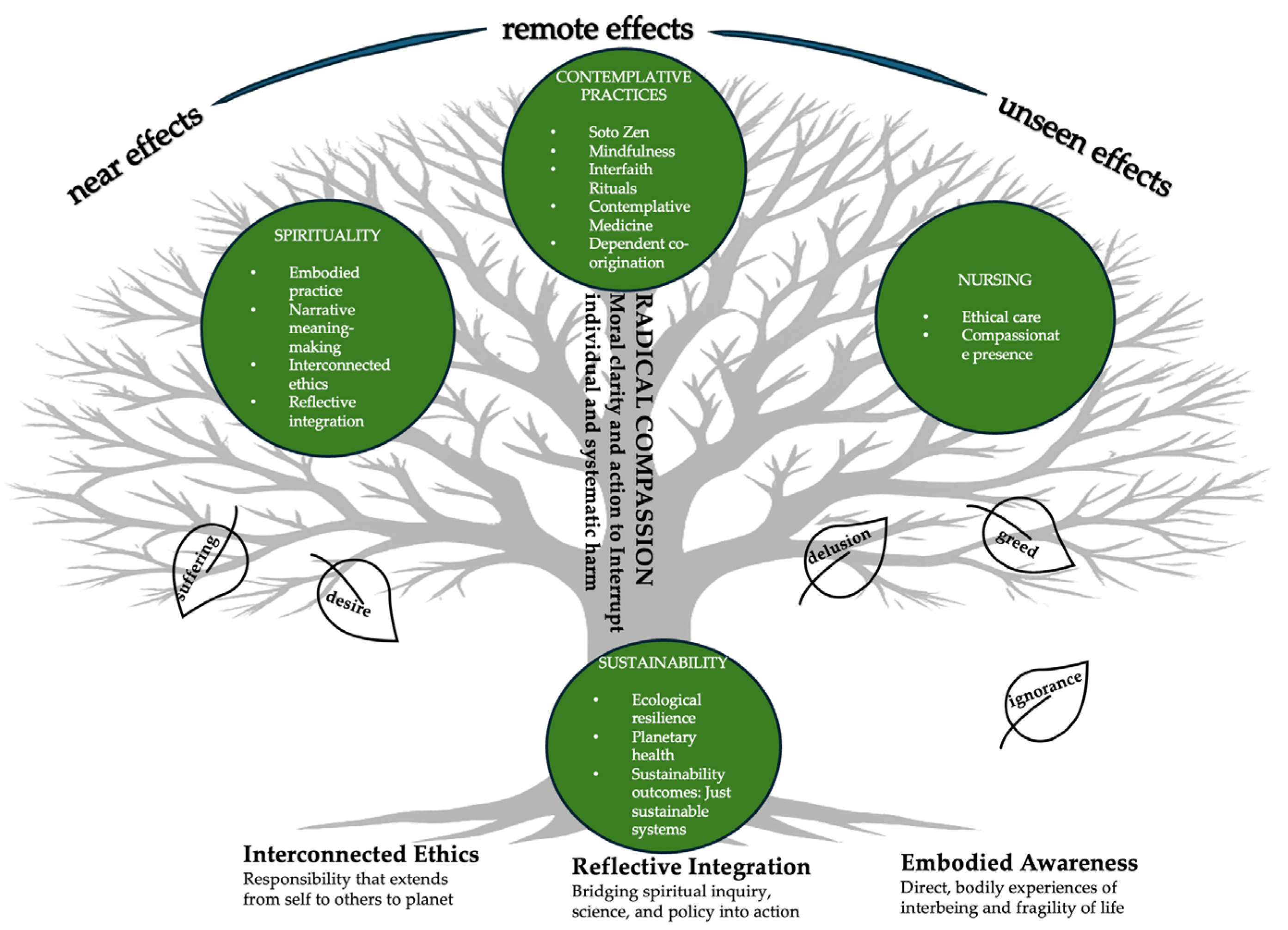
Table 1.
Buddhist Precepts Taken in Soto Zen Ordination.
| The Three Refuges | Three Collective Pure Precepts | Ten Great Precepts |
|
|
|
|
|
|
|
|
|
|
||
|
||
|
||
|
||
|
||
|
||
|
Disclaimer/Publisher’s Note: The statements, opinions and data contained in all publications are solely those of the individual author(s) and contributor(s) and not of MDPI and/or the editor(s). MDPI and/or the editor(s) disclaim responsibility for any injury to people or property resulting from any ideas, methods, instructions or products referred to in the content. |
© 2025 by the authors. Licensee MDPI, Basel, Switzerland. This article is an open access article distributed under the terms and conditions of the Creative Commons Attribution (CC BY) license (http://creativecommons.org/licenses/by/4.0/).
Copyright: This open access article is published under a Creative Commons CC BY 4.0 license, which permit the free download, distribution, and reuse, provided that the author and preprint are cited in any reuse.


