

Submitted:
24 November 2025
Posted:
25 November 2025
You are already at the latest version
Abstract
Hydrogels are gaining prominence in sustainable agriculture due to their water-retention capacity, biocompatibility, and tunable physicochemical behavior. Among natural polymers, alginate is particularly attractive because it forms hydrogels under mild conditions and provides a versatile platform for controlled release, soil conditioning, and environmental remediation. This review integrates advances in alginate-based hydrogel technologies from 2001 to 2024 through a combined bibliometric and patentometric analysis. A total of 266 scientific articles and 460 patent families were identified, revealing sustained growth in both research output and technological development. Encapsulation and controlled-release systems dominate the landscape, followed by soil and water treatment applications, while postharvest preservation, in vitro cultivation, and biodegradable packaging emerge as expanding areas. Overall, alginate-based hydrogels represent a multifunctional, biodegradable platform supporting precision agriculture and sustainable production systems within a circular bioeconomy framework.
Keywords:
hydrogels
; alginate
; Azotobacter vinelandii
; sustainable agriculture
; bibliometric analysis
; patentometric analysis
1. Introduction
Hydrogels are three-dimensional, water-swollen polymeric networks widely used in biomedicine, food technology, environmental engineering and agriculture due to their biocompatibility, tunable mechanical properties and capacity to retain large amounts of water [1,2,3,4,5,6,7]. Among natural hydrogel-forming polymers, alginate stands out because it forms gels under mild conditions and provides a versatile platform for designing materials with highly adjustable physicochemical characteristics [8,9].
The source of alginate plays a decisive role in the structure–function relationship of hydrogels. Although commercial alginate is mainly extracted from brown seaweeds such as Laminaria digitata, Macrocystis pyrifera and Ascophyllum nodosum [10,11,12], its composition and molecular weight (MW) can vary substantially depending on species, geography and harvesting season, which affects reproducibility and leads to marked differences in gel stiffness, porosity and swelling capacity [13,14,15]. This intrinsic variability often limits the consistency of alginate-based agricultural formulations.
In contrast, microbial systems offer far greater control over polymer architecture. Pseudomonas aeruginosa produces acetylated alginate associated with its mucoid phenotype, while Azotobacter vinelandii a non-pathogenic, industrially relevant bacterium synthesizes high-MW alginate whose block composition, acetylation pattern and epimerase activity respond to oxygen transfer and hydrodynamic conditions [16,17,18]. Engineered microbial strains can also produce alginates above 3,000 kDa when biosynthetic and depolymerization pathways are altered [19,20]. Taken together, algal alginates provide abundance and low cost, whereas microbial alginates offer higher reproducibility, controllable architecture and improved performance in applications requiring consistent hydrogel behavior attributes increasingly relevant for agricultural technologies.
The functionality of alginate hydrogels originates from the molecular architecture of the polymer [21]. Alginate is a linear anionic polysaccharide composed of β-D-mannuronic (M) and α-L-guluronic (G) acids arranged in MM, GG and MG/GM sequences, which determine ion affinity, crosslinking capacity and viscoelastic behavior [22]. Gelation typically proceeds through Ca2+-mediated ionic crosslinking, as described in the classical “egg-box” model, where G-blocks form cooperative junction zones that provide mechanical integrity [23,24]. Key structural parameters including M/G ratio, block distribution, degree of acetylation and molecular weight (MW) govern hydrogel stiffness, elasticity, porosity, swelling and degradation rates [14,25]. G-rich alginates form stronger but more brittle gels, while M-rich polymers produce softer and more elastic matrices [26,27]. Acetylation increases hydration and permeability [28], and high-MW alginates exhibit greater viscosifying power, mechanical robustness and slower degradation than lower-MW fractions [16,20,29].
Recent studies further show that crosslinking strategies and network architecture modulate hydrogel performance. The delivery form of Ca2+ alters mesh size, swelling and mechanical stability [30], and chemically modified cyclodextrins can increase storage modulus and modify release behavior [31]. Additional work highlights how marine biopolymer hybrids improve swelling, antioxidant activity and wound closure [32], and how pre-gelation rheology and post-deposition crosslinking influence the fidelity of 3D-printed alginate structures [33]. Together, these studies illustrate that alginate hydrogel performance results from the combined effects of polymer structure, crosslinking chemistry and network organization.
Figure 1 provides an overview of alginate chemical structure, its main biological sources and the broad spectrum of agricultural applications enabled by its hydrogel-forming capacity. Reported applications include the delivery of biostimulants in tomato [37], the release of Streptomyces fulvissimus for disease control in cucumber [38], slow-release fertilizers [39] and the preservation of recalcitrant plant tissues [40]. Alginate-based materials also contribute to biodegradable coatings [41,42] and nanosensors for pesticide detection [43].
Microbial alginate generally shows enhanced performance in these formulations, with higher molecular weight and acetylation patterns offering improved functionality compared to algal alginate [44,45]. This advantage supports its use in biofertilizer stabilization [46], pesticide bioremediation [47], pest management [48,49] and environmental remediation through alginate–biochar composites [15].
Amid soil degradation, water scarcity, agrochemical dependence and climate pressures, alginate-based hydrogels emerge as biodegradable, multifunctional materials capable of improving soil structure, nutrient efficiency and environmental sustainability. Accordingly, this review integrates bibliometric and patentometric evidence from 2001–2024 to map trends and identify emerging opportunities for alginate-based agricultural technologies.
2. Results and Discussion
2.1. Bibliometric Analysis of Scientific Production on Alginate Applications in Agriculture
2.1.1. Clustering Analysis
Table 1 summarizes the six keyword clusters identified in the analysis. The red and green clusters focus on encapsulation, microbial inoculants and biostimulants, while the blue and light-blue clusters highlight environmental applications such as biodegradation, adsorption and pollutant removal. The yellow and purple clusters relate to soil conditioners, hydrogels, water retention and plant growth promotion. Together, these clusters delineate the main thematic areas in which alginate is applied in agriculture.
Figure 2 visualizes how these six clusters interact within the keyword co-occurrence network. The map reveals strong connections among encapsulation technologies, soil and water management, plant growth promotion and environmental remediation, providing an integrated view of how the thematic areas identified in Table 1 structure the research landscape.
Together, Table 1 and Figure 2 show that alginate research in agriculture is organized into three main thematic axes: (i) microbial encapsulation and controlled release, (ii) soil improvement and water retention, and (iii) pollutant removal and environmental remediation. The table defines the content of each cluster, while the figure illustrates how these themes interconnect within a unified research landscape.
2.1.2. Categorization of Scientific Documents According to Clustering Categories and Validation Levels
Table 2 classifies alginate-based agricultural technologies according to their application category and level of experimental validation. Encapsulation and controlled-release systems dominate the scientific output, particularly those involving fertilizers, bioactive compounds and microorganisms. Technologies for soil and water treatment form the second major group, with significant contributions in hydrogels for water retention and bioremediation. Smaller but emerging categories include postharvest coatings and packaging, in vitro cultivation systems and miscellaneous formulations. Regarding validation stages, most studies remain at the in vitro (41.4%) or semi-controlled level (39%), while field trials are still limited (19.6%). This distribution reveals a strong research foundation but a persistent gap in large-scale, real-environment validation of alginate technologies.
Figure 3 presents a Sankey diagram illustrating how scientific documents between 2001 and 2024 are distributed across the main alginate application categories and their corresponding subcategories. The visualization highlights the predominance of encapsulation and controlled-release technologies, followed by treatments for agricultural soils and water. Hydrogels, soil amendments and bioremediation appear as key subfields, while postharvest applications, in vitro systems and other uses contribute smaller flows. Overall, the diagram provides a clear overview of how research efforts are allocated across technological domains.
2.1.3. Research Topics According to Clustering Categories
Building on the patterns identified in the clustering analysis, the following sections examine each research category in detail, highlighting the technological approaches, experimental trends, and agricultural applications that define their current development.
2.1.3.1. Encapsulation and Controlled Release Of Microorganisms and Agrochemicals
- 2.1.3.1.1. Encapsulation and Controlled Release Of Microorganisms and Spores
Alginate has been widely employed for immobilizing beneficial microorganisms and spores due to its biocompatibility, gentle gelation process and capacity to protect cells from desiccation, UV exposure and other environmental stresses. Encapsulation of Bacillus spp. in alginate beads has demonstrated significant improvements in root development and biomass accumulation in hazelnut seedlings, evidencing enhanced establishment and persistence of microbial inoculants in soil [50].
Likewise, spray-dried alginate–maltodextrin systems have been used to formulate Beauveria bassiana conidia, producing stable bioinsecticides with prolonged shelf-life and robust insecticidal activity [48]. In addition, alginate matrices have enabled the sustained release of Streptomyces-derived herbicidal metabolites, broadening the applicability of microbial-based weed control strategies [49]. Altogether, these advances confirm that alginate encapsulation strengthens microbial stability and field performance, consolidating its role in biocontrol and plant health technologies.
- 2.1.3.1.2. Encapsulation and Controlled Release of Fertilizers and Bioactive Compounds
Beyond microbial agents, alginate has shown great potential for encapsulating fertilizers, herbicides, and diverse bioactive molecules as part of controlled-release agricultural systems. Pickering capsules based on alginate have been engineered to gradually release nutrients, supporting precision fertilization while minimizing nutrient leaching and environmental losses [2]. More sophisticated designs include dual-encapsulation systems, where herbicides such as atrazine are retained in the inner core and biostimulants in the outer shell, allowing staggered and more efficient release profiles [51]. Multilayered alginate capsules have also been reported to improve nutrient-use efficiency under variable soil conditions, enhancing crop performance and reducing agrochemical input requirements [52]. Collectively, these advances highlight alginate as a versatile and environmentally friendly alternative to conventional delivery systems in modern agriculture.
- 2.1.3.1.3. Encapsulation and Controlled Release of Seeds
Alginate has also been incorporated into seed coating and priming technologies aimed at improving germination and early crop establishment. Alginate-based hydrogel coatings enriched with bioactive compounds have been shown to increase germination rates, enhance seedling vigor and improve tolerance to abiotic stresses such as drought and salinity [53]. By creating a hydrated and protective microenvironment around the seed, these coatings enable gradual release of nutrients or stimulatory molecules, ensuring more uniform seedling emergence and stronger establishment in field conditions. As a result, alginate seed encapsulation represents a promising strategy for developing climate-resilient seed technologies and improving crop performance under stress-prone agricultural systems.
2.1.3.2. Soil and Water Treatments
- 2.1.3.2.1. Soil amendments and Conditioners
Alginate-based formulations have been widely explored as soil amendments aimed at improving soil fertility, structure and biological activity. Alginate–fertilizer composites have been shown to enhance nutrient cycling within the rhizosphere, stimulating beneficial microbial populations and increasing nutrient availability for cultures [54]. Likewise, alginate mulches enriched with fertilizers increased soil microbial biomass and enzymatic activity, demonstrating positive impacts on soil health and crop productivity [55]. These findings illustrate alginate’s multifunctional role as both a soil conditioner and a nutrient carrier, positioning it as a promising tool for sustainable soil management and regenerative agricultural practices.
- 2.1.3.2.2. Hydrogels for Absorption and Water Retention
One of the most promising agricultural applications of alginate involves its use in hydrogel formulations designed to enhance soil water retention under drought-prone conditions. Alginate-graft-polyacrylamide (alginate-g-PAM) hydrogels markedly increased soil water-holding capacity and improved plant performance, raising photosynthetic efficiency and biomass accumulation in drought-stressed cultures [56]. Additional research has combined alginate with cellulose or starch derivatives to produce biodegradable hydrogels capable of maintaining soil moisture for extended periods while reducing irrigation needs [57]. Overall, alginate-based hydrogels represent highly effective nature-derived materials for mitigating water scarcity and improving crop resilience in water-limited environments.
- 2.1.3.2.3. Bioremediation of Agricultural Soils and Waters
Alginate also plays a significant role in bioremediation strategies aimed at reducing agricultural pollution. Alginate beads containing Azotobacter vinelandii were shown to degrade chlorpyrifos, leading to substantial reductions in cytotoxicity and genotoxicity in contaminated soils [47]. Furthermore, porous alginate–biochar–FeCl3 composites exhibited high adsorption capacities for heavy metals present in agricultural wastewater, demonstrating that alginate-based materials can serve as effective adsorbent matrices for soil and water purification [15]. Together, these approaches illustrate alginate’s dual contribution to environmental remediation both as a support for microbial degraders and as a component in engineered sorbent systems.
- 2.1.3.2.4. Fertilizers from Algal Extracts and Alginate Oligosaccharides
Alginate derivatives, particularly oligosaccharides and algal extracts rich in alginates, have gained growing interest as natural biofertilizers and plant biostimulants. Alginate oligosaccharides have been reported to enhance nutrient uptake efficiency, stimulate antioxidant responses, and increase tolerance to abiotic stresses such as drought and salinity [54]. Likewise, fertilizers based on seaweed extracts containing alginates promoted root elongation, supported secondary metabolic pathways, and improved stress resilience in horticultural cultures [58]. These strategies underscore the potential of alginate-derived compounds to support sustainable fertilization practices while reducing dependence on synthetic agrochemicals.
- 2.1.3.3. Postharvest Treatments and Biodegradable Packaging for Agricultural Products
- 2.1.3.3.1.
- Edible Coatings
Alginate-based edible coatings have been widely explored as an environmentally friendly strategy to prolong shelf life and maintain the physicochemical quality of fresh produce. These coatings form semi-permeable films that reduce moisture loss, delay physiological ripening, and inhibit microbial proliferation. Recent studies demonstrated that alginate coatings supplemented with essential oils or antioxidant compounds improved the postharvest quality of strawberries, tomatoes, and citrus fruits, reducing decay incidence while preserving firmness and color [59,60]. Moreover, composite formulations combining alginate with chitosan or cellulose derivatives enhanced antimicrobial activity and maintained desirable sensory attributes [61]. Altogether, these findings illustrate the potential of alginate-based edible coatings to reduce postharvest losses in a sustainable and consumer-safe manner.
- 2.1.3.3.2. Biodegradable Packaging
Alginate is also a promising candidate for the development of biodegradable films and packaging materials. Blends of alginate with starch, polyvinyl alcohol, or proteins have resulted in films with improved mechanical resistance and barrier properties, offering an eco-friendly alternative to petroleum-based plastics [56,62]. The incorporation of natural fillers, such as cellulose nanocrystals or plant fibers, further enhanced tensile strength and reduced water vapor transmission rates [63]. These biodegradable alginate-based materials not only reduce plastic pollution but also meet consumer demand for sustainable packaging in the food industry.
- 2.1.3.3.3. Other Postharvest Treatments
Beyond coatings and packaging, alginate-based systems have been applied in innovative postharvest technologies. Alginate hydrogels loaded with antimicrobial agents have been tested as inserts in packaging to create active systems that reduce microbial contamination [64]. Other approaches include the use of alginate beads as carriers for slow-release fumigants or ethylene absorbers to control ripening and decay in stored fruits and vegetables [65]. These emerging applications expand the role of alginate in integrated postharvest management, contributing to waste reduction and food safety.
- 2.1.3.4. In Vitro and Soilless Cultivation
- 2.1.3.4.1.
- In Vitro Cultivation
Alginate has long been utilized in plant tissue culture as an immobilization matrix and as a key material in artificial seed technology. Its mild gelation in the presence of divalent cations enables the encapsulation of somatic embryos, shoot tips, and microspores, providing mechanical protection during manipulation, transport, and storage. Recent studies have shown that alginate encapsulation enhances germination and conversion rates of somatic embryos in species such as Daucus carota and Capsicum annuum, contributing to more efficient and reliable micropropagation protocols [9,53]. Additionally, combining alginate with other biopolymers including carrageenan and agarose has improved bead integrity and prolonged storage duration without compromising embryo viability [56]. These advancements reaffirm alginate’s central role in developing synthetic seeds and optimizing micropropagation techniques across a range of plant species.
- 2.1.3.4.2. Substrates for Soilless Cultivation
Beyond tissue culture, alginate-based materials have been investigated as substrates for hydroponic and soilless cultivation systems. Alginate hydrogels exhibit high water-holding capacity and efficient nutrient retention, creating a stable growth environment that reduces irrigation needs while enhancing nutrient-use efficiency [49]. Furthermore, composites of alginate with perlite or vermiculite have been evaluated as sustainable alternatives to conventional soilless substrates, providing improved root aeration, moisture distribution, and mechanical stability [65]. These findings highlight alginate’s potential as a renewable medium for hydroponic production, supporting sustainable and resource-efficient horticultural practices.
- 2.1.3.5. Other Applications of Alginate in Agriculture
This category encompasses additional agricultural uses of alginate that fall outside the major application groups but nonetheless illustrate the polymer’s versatility as a functional material across diverse technological contexts.
- 2.1.3.5.1. Agricultural Formulations with Alginate (Unspecified Function)
Alginate is frequently incorporated into agricultural formulations in supporting roles where its specific function is not explicitly highlighted but contributes significantly to product performance. Many commercial bioformulations include alginate as a stabilizing or viscosity-enhancing agent, improving shelf-life, ease of handling and the physical stability of suspended biological or chemical inputs [66]. Alginate has also been employed as a binder in foliar sprays and soil amendments, where it enhances adhesion, persistence and uniform distribution of active compounds on plant surfaces [54]. These examples demonstrate that even when not serving as the primary active component, alginate plays a crucial role as an excipient that improves formulation quality and overall agricultural efficacy.
- 2.1.3.5.2. Miscellaneous: Pest Monitoring and Culture Protection
Alginate has also been applied in innovative pest management approaches. Alginate capsules containing volatile attractants have been tested for monitoring Drosophila suzukii in cherry orchards, increasing trap efficiency while reducing the environmental footprint associated with conventional formulations [67]. In parallel, alginate-based hydrogels integrated with silver nanoparticles have provided both antimicrobial protection and plant growth-promoting effects, functioning as dual-action materials for culture health management [68]. These developments reveal alginate’s adaptability in supporting novel strategies for pest surveillance and integrated culture protection.
2.1.4. Trends and Emerging Topics Research
Recent research has expanded alginate applications into cutting-edge agricultural technologies. Advances in nanotechnology have enabled the creation of alginate-based nanocomposites for smart, stimuli-responsive delivery of agrochemicals, designed to release payloads under specific pH or enzymatic conditions [2]. Furthermore, alginate has been incorporated into biosensor platforms aimed at monitoring soil moisture, nutrient availability and other key parameters relevant to precision agriculture [51]. These emerging approaches illustrate the growing convergence between materials science and digital agriculture, positioning alginate as a foundational component in next-generation agricultural systems.
2.2. Patentometric Analysis
Building upon the scientific trends identified in the bibliometric analysis, a patentometric evaluation was conducted to determine how these research advances translate into technological innovation and intellectual property protection. This complementary analysis reveals the maturity, industrial relevance and commercial trajectory of alginate-based technologies within the agricultural sector.
2.2.1. Patent Landscape of Alginate Hydrogel-Based Technologies
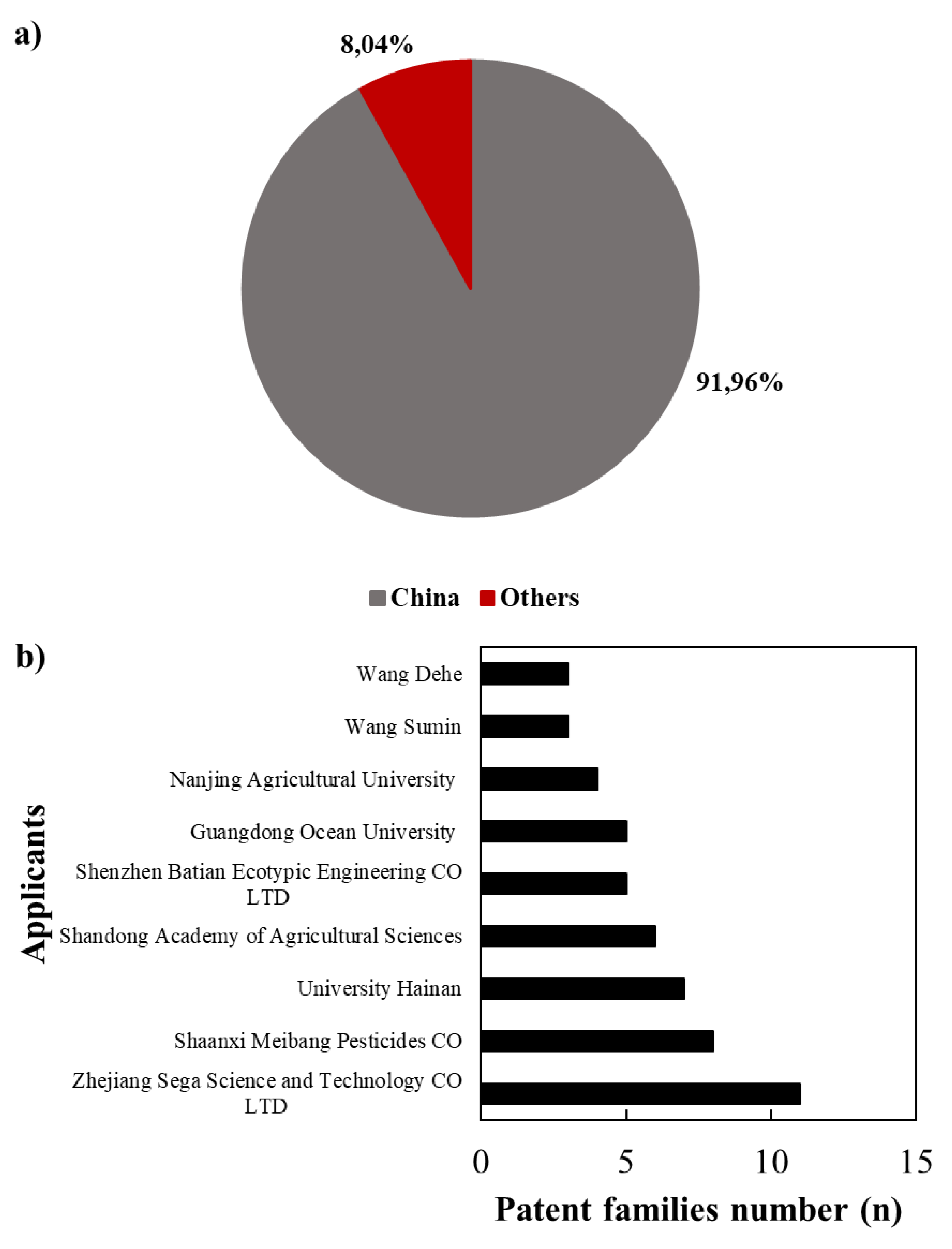
Figure 4 presents the global patent landscape for alginate-based technologies, including the geographic distribution of patent families and the main applicants ranked by number of filings. China overwhelmingly dominates the field, accounting for 423 of the 460 patent families identified. This is consistent with the top 10 assignees, all of which correspond to Chinese companies, universities, research institutes or independent inventors, highlighting the country’s strategic emphasis on intellectual property protection for alginate-related agricultural innovations.
A distant second is South Korea (11 families), followed by Russia (8), the United States (5), Mexico and Japan (3 each), and the WIPO and European Patent Office (2 each). Malaysia and Romania contribute a single patent family. This distribution reveals a highly asymmetric technological development pattern concentrated in Asia, particularly China.
Table 3 summarizes the top 10 IPC codes, which largely correspond to agrochemical mixtures (fertilizers, biocides, plant growth regulators, insecticides), biotechnological products containing microorganisms or fermentation derivatives, and seed treatment technologies. These classifications indicate that patented innovations are strongly aligned with controlled-release systems and biologically active formulations.
Among the largest patent families defined by the number of national applications three stand out: [69] (29 documents), [70] (28 documents), and [71] (24 documents). These relate respectively to seed-coating alginate formulations, in-furrow seed treatment, and alginate-coated agrochemical granules. Notably, [70] reaches the widest international protection, with filings in 18 jurisdictions.
However, technological relevance is better reflected by citation counts than by family size. The most cited patents [72] (38 citations), [73] (31 citations), and [74] (29 citations) involve alginate film coatings for mushrooms, sodium alginate–based nanocomposites for soil treatment, and seed-coating agents incorporating biomass carbon and alginate. These highly cited patents, all originating from Chinese universities, indicate China’s central role in defining foundational technologies upon which subsequent innovations are built.
2.2.2. Categorization of Patent Families According to Clustering Categories
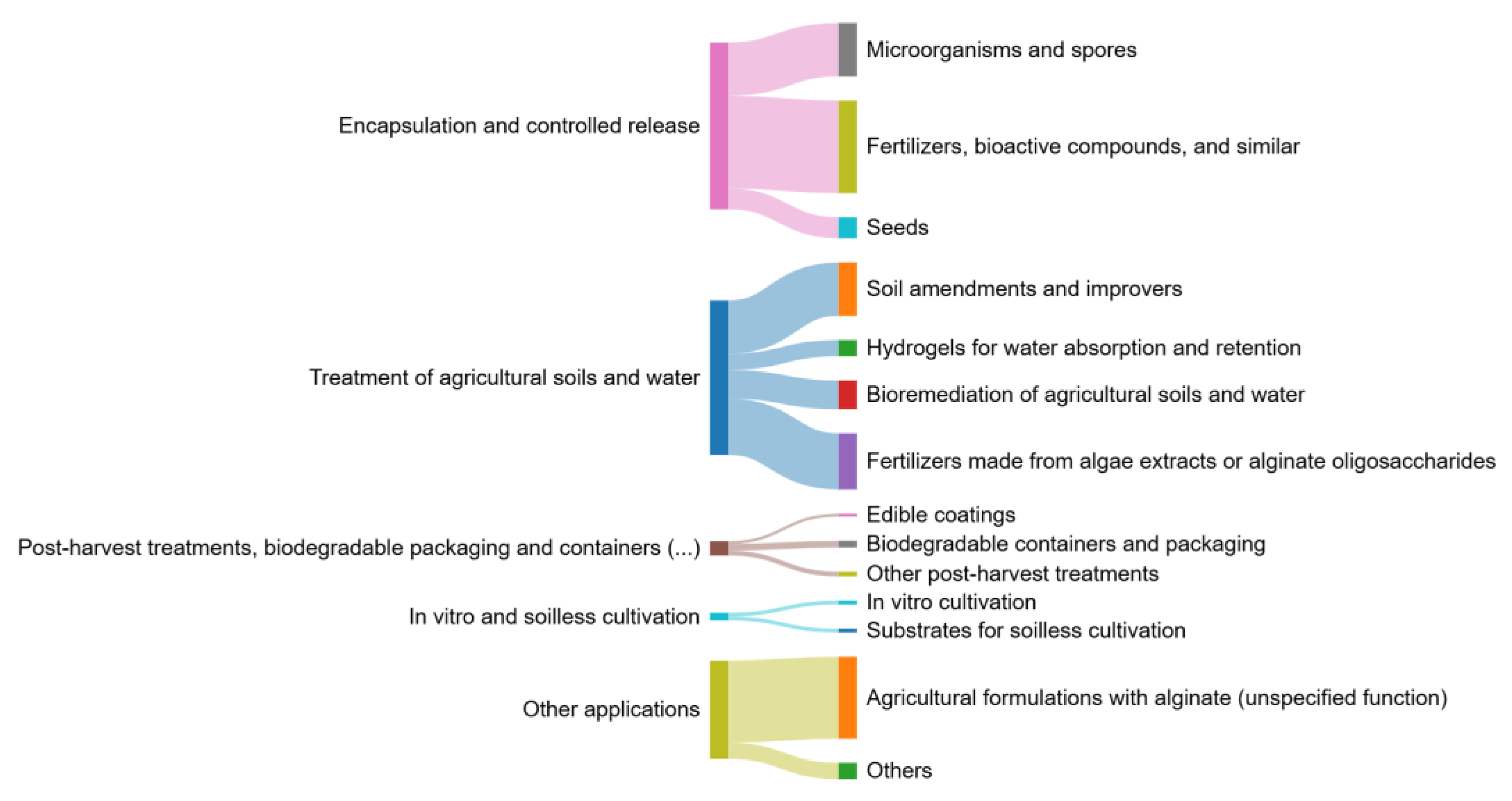
Figure 5 presents the categorization of patent families according to the same clustering framework applied to scientific publications. Encapsulation and controlled-release systems represent the dominant technological domain (175 families; 38%). Within this group, formulations containing fertilizers, bioactive compounds and related agents are most prevalent (97 families), followed by encapsulation of microorganisms and spores (56 families) and seed encapsulation (22 families). Importantly, two of the most cited global patents [73] and [74] fall within this category, reinforcing its technological relevance. Most IPC codes associated with this group refer to agrochemical or microbial mixtures delivered as hydrogels or similar controlled-release matrices.
The second largest technological domain corresponds to soil and water treatment (163 families; 35.5%). The prevalence of patents related to fertilizers derived from algal extracts or alginate oligosaccharides (59 families) indicates the expanding use of alginate as both a functional biostimulant and a carrier for active compounds. Additional filings include soil amendments and conditioners (56 families), bioremediation technologies (30 families) and hydrogels for water retention (17 families), reflecting a clear trend toward integrated soil restoration strategies and circular agricultural practices. These technologies leverage alginate’s water retention, soil-structuring and microbe-supporting properties.
Figure 4.
Patent landscape of alginate-based technologies: (a) Geographic distribution of alginate-related patent families by office or jurisdiction where the first application for the patent family was filed. (b) Top 10 main applicants ranked by number of alginate-related patent families.
Figure 4.
Patent landscape of alginate-based technologies: (a) Geographic distribution of alginate-related patent families by office or jurisdiction where the first application for the patent family was filed. (b) Top 10 main applicants ranked by number of alginate-related patent families.
Postharvest technologies and biodegradable packaging accounted for a smaller portion of patents (15 families; 3.3%), though their relevance is exemplified by the most cited patent globally [72], which relates to edible alginate-based coatings for mushroom preservation. Other patents in this category address biodegradable packaging films and postharvest treatment inserts.
In vitro and soilless cultivation represented a limited share (8 families; 1.7%), with equal contributions from alginate-based tissue culture materials and substrates for hydroponic systems.
Finally, the “other applications” group comprised 99 families (21.5%), most of which describe agricultural formulations containing alginate without a clearly specified functional role (86 families). This suggests that alginate is frequently included as an excipient improving viscosity, adhesion, stabilization or structural properties—even when not explicitly identified as the active component.
Figure 5.
Sankey diagram of the distribution categories and subcategories identified for families patent filled between 2001 and 2024. Figure created using SankeyMATIC.
Figure 5.
Sankey diagram of the distribution categories and subcategories identified for families patent filled between 2001 and 2024. Figure created using SankeyMATIC.
2.2.3. Technological Development Areas According to Clustering Categories
2.2.3.1. Encapsulation and Controlled Release of Microorganisms and Agrochemicals
- 2.2.3.1.1. Encapsulation and Controlled Release of Microorganisms and Spores
Patents in this category reveal a shift from simple bead-type encapsulation toward engineered systems that enhance microbial stability and targeted delivery. Representative inventions include in situ film formation directly on leaves ([75]), bioinspired adhesive matrices incorporating dopamine [76], and core–shell structures integrating biochar with alginate–chitosan for improved microbial protection [77]. Some technologies address extreme environments, combining alginate hydrogels with exopolysaccharide-producing bacteria to improve soil structure under arid conditions [78]. Collectively, these patents reflect increasing sophistication toward multifunctional and stress-resilient microbial delivery systems.
- 2.2.3.1.2. Encapsulation and Controlled Release of Fertilizers and Bioactive Compounds
Technological development in this subcategory emphasizes nanostructuring and stimulus-responsive release. Light-activated systems incorporating rare-earth ions ([79] exemplify active delivery mechanisms, while nanocapsules generated via microemulsion templating improve solubility and uptake of hydrophobic agrochemicals [80]. Efforts to minimize environmental contamination include chemically modified alginates, such as cholesterol-grafted copolymers designed to adsorb pesticides and reduce leaching [81]. These patents demonstrate a transition toward high-precision and environmentally conscious agrochemical formulations.
- 2.2.3.1.3. Encapsulation and Controlled Release of Seeds
Seed-related innovations increasingly rely on biomimetic architectures and nanotechnology. Examples include dual-layer artificial seeds designed to mimic protective seed coats [82] and alginate matrices stabilizing selenium nanoparticles to enhance germination and early vigor [83]. Additionally, inventions aimed at improving sowing efficiency—such as wax-coated gel spheres that standardize micro-seed size [84] highlight alginate’s relevance in seed handling and precision agriculture.
- 2.2.3.2. Soil and Water Treatments
- 2.2.3.2.1.
- Soil Amendments and Conditioners
Patents in this group focus on replacing synthetic mulches and improving soil structure. Examples include in situ formation of biodegradable mulch films via alginate–calcium reactions [85] and self-healing agricultural films combining alginate with PLA [86]. Alginate also appears as a key binder in substrates for slope restoration and erosion control [87]. These technologies emphasize sustainable alternatives to conventional soil covers and structural conditioners.
- 2.2.3.2.2. Hydrogels for Absorption and Water Retention
Innovations highlight advanced hydrogel architectures that couple moisture retention with controlled release of actives. Representative designs include sandwich-like structures separating water absorption layers from pesticide-releasing cores [88] and core–shell hydrogels that encapsulate nutrient-rich biomass residues [89]. Advances in gelation chemistry, such as EDTA-mediated crosslinking at neutral pH [90], address stability and soil compatibility limitations of traditional hydrogels.
- 2.2.3.2.3. Bioremediation of Agricultural Soils and Waters
Alginate-based systems play a growing role in remediation, often integrating adsorbent or catalytic materials. Examples include iron-crosslinked hydrogels that capture phosphates and repurpose them as fertilizers [91], alginate–biochar–TiO2 composites for arsenic adsorption [92], and magnetic or floating structures that facilitate post-treatment recovery of adsorbents [93]. These technologies combine pollutant removal with material recovery and resource circularity.
- 2.2.3.2.4. Fertilizers from Algal Extracts and Alginate Oligosaccharides
Patents using alginate oligosaccharides emphasize their roles as biostimulants, stress-mitigation agents and enhancers of rhizosphere activity. For instance, [94] describes oligosaccharide-mediated stimulation of beneficial bacterial motility, while [95] and [96] propose their use to counteract herbicide phytotoxicity or damage from immature organic amendments. These technologies position oligosaccharides as active contributors to culture resilience.
2.2.3.3. Postharvest Treatments and Biodegradable Packaging for Agricultural Products
- 2.2.3.3.1. Edible Coatings
Patents extend alginate coatings beyond passive barriers, incorporating self-repair functions [97], microbial consortia for biological preservation [98], and fat-absorption-modulating films that improve fried vegetable quality [72]. These systems enhance shelf life while adding functional properties to edible coatings.
- 2.2.3.3.2. Biodegradable Packaging
Alginate is increasingly integrated into active and structurally enhanced packaging materials. Innovations include films that modulate gas exchange for controlled respiration of fruits [99], coatings that release preservatives during storage [100], and solid biodegradable containers produced from biomass residues bound with alginate [101]. These patents illustrate alginate’s role in sustainable packaging transitions.
- 2.2.3.3.3. Other Postharvest Treatments
Additional patents propose cryoprotective alginate–calcium matrices that reduce damage during freeze–thaw cycles [102], oxygen-scavenging films incorporating glucose oxidase to delay browning [103], and alginate derivatives used both for flavor retention and removal of pesticide residues in plant infusions [104]. These multifunctional systems address several preservation challenges simultaneously.
2.2.3.4. In Vitro and Soilless Cultivation
- 2.2.3.4.1. In Vitro Cultivation
Patents demonstrate alginate’s utility in controlling the microenvironment of explants. Representative inventions include fungicide-loaded alginate matrices for persistent disinfection [105], anti-browning coatings that reduce oxidative stress [106], and nutrient-enriched encapsulation systems that support regeneration of small tissues such as meristems [107]. These technologies enhance sterility, viability and regeneration in tissue culture.
- 2.2.3.4.2. Substrates for Soilless Cultivation
Technological progress includes composite hydrogels for vertical farming that integrate water retention, ion buffering and microbial activity [108], the valorization of plant ash into alginate-modified substrates [109], and alginate–agarose matrices that prevent pathogen spread in recirculating systems [110]. These innovations align with sustainable controlled-environment agriculture.
2.2.3.5. Other Applications of Alginate in Agriculture
- 2.2.3.5.1. Agricultural Formulations with Alginate (Unspecified Function)
These patents incorporate alginate as a standard excipient (e.g., thickener, stabilizer or binder) without introducing structural or mechanistic innovations. Their presence reflects routine formulation use rather than technological advancement.
- 2.2.3.5.2. Miscellaneous: Pest Monitoring and Culture Protection
Emerging applications include alginate-based biosensors—for example, fluorescence devices produced via 3D printing for heavy-metal detection [111] and enzymatic electrochemical sensors for pesticide monitoring [112]. Additional patents propose anti-fog greenhouse films [113] and advanced delivery vehicles ranging from superabsorbent “wicks” for insecticides [114] to volatile-release capsules for attracting beneficial insects [115].
2.2.4. Technological Development Trends and Emerging Technologies
The patent analysis shows that alginate-based technologies have evolved from conventional hydrogel applications toward more advanced and multifunctional engineered materials. Five major innovation trends were identified.
First, architectural evolution is evident in the transition from homogeneous beads to hierarchical structures such as core–shell, multilayer and biomimetic systems that enhance protection, spatial control of release and mechanical stability.
Second, nanotechnology and chemical modification are increasingly integrated, with alginate matrices stabilizing nanoparticles or being chemically modified to create amphiphilic or functional copolymers, improving agrochemical delivery, pollutant adsorption and stress tolerance.
Third, smart and stimulus-responsive systems are emerging, including light-triggered release, self-healing coatings for fruits and greenhouse plastics, and biosensing platforms for monitoring contaminants or environmental conditions.
Fourth, in situ hydrogel formation represents a disruptive trend in which crosslinking occurs directly on plant surfaces or in soil, reducing manufacturing and transport requirements while improving adaptability and coverage under field conditions.
Finally, multifunctional composites aligned with circular-economy principles are gaining relevance, particularly formulations combining alginate with biochar, ash or other agricultural residues to create materials capable of simultaneous water retention, soil improvement and pollutant remediation. Together, these trends illustrate a clear technological shift toward more integrated, intelligent and sustainable alginate-based agricultural innovations.
2.2.5. Comparative Analysis of Scientific and Technological Production
Figure 6 presents the annual distribution of scientific publications (266 articles) and patent families (460) related to alginate applications in agriculture between 2001 and 2024. The dataset reveals distinct phases in the co-evolution of research and innovation. From 2001 to 2010, both scientific and technological outputs were minimal, with fewer than 10 documents per year. A first inflection point appeared in 2008, driven primarily by an increase in patent filings (15 families) related to controlled-release systems and soil conditioners, while scientific output remained comparatively low.
Between 2011 and 2017, patent activity expanded markedly reaching a peak of 50 families in 2017 whereas scientific publications grew more moderately, with only 14 articles reported that same year. This asymmetry indicates a period in which industrial development and intellectual property protection advanced faster than academic research, particularly in formulations involving encapsulation, fertilizers and microbial delivery.
A shift occurred after 2018. Patent filings stabilized between 22 and 49 families per year, but scientific publications increased sharply, surpassing patent activity for the first time in 2021 (31 articles vs. 27 patent families). This trend persisted through 2022–2024, culminating in 2024 with the highest scientific productivity of the entire period (59 articles), while patent activity also remained strong (49 families). Overall, the combined dataset comprises 460 patent families and 266 scientific articles.
These results demonstrate a progressive convergence between academic knowledge generation and technological development. Early dominance of patent activity reflects initial industrial leadership in alginate-based technologies. In contrast, the surge of scientific publications after 2018 indicates the consolidation of mechanistic understanding particularly regarding alginate structure–function relationships and hydrogel performance which has reinforced translational innovation. The parallel rise of publications and patent families in recent years highlights a growing synergy between academia and industry, positioning alginate as a key biomaterial for sustainable and bio-based agricultural technologies.
Notably, the categories and subcategories with the highest production volume align between scientific articles and patent families. It is noteworthy that, while temporal growth trends coincide in both documentary groups, the volume of patent families exceeds that of scientific articles by 1.7 times. This finding is counter-intuitive to the traditional R&D model, where a broad base of fundamental research would be expected to support a smaller number of protectable technological applications. This discrepancy becomes even more relevant when considering that only a minority fraction of academic research has reached experimental field validation.
The dominance of intellectual property not only underscores the immediate commercial applicability of alginate in agriculture but also evidences that patents constitute a critical reservoir of cutting-edge technology frequently ignored by academia. The omission of this source in bibliographic citations could be introducing a significant bias in the definition of the state of the art. Consequently, a systematic review integrating patent knowledge is indispensable to reorient scientific research lines towards designs with greater technology transfer potential.
3. Conclusions and Future Directions
Alginate-based hydrogels have emerged as versatile, biodegradable materials with strong potential to support sustainable agriculture. The 2001–2024 bibliometric and patentometric analysis shows a clear convergence between scientific research and technological innovation, with encapsulation and controlled-release systems leading both domains, followed by soil and water treatment applications. Although postharvest technologies, tissue culture, and biodegradable packaging are still developing, they represent promising areas for future growth. A key limitation is the limited number of field-scale studies, indicating the need for multidisciplinary efforts that integrate materials science, agronomy, and environmental engineering. Looking ahead, advances in stimuli-responsive hydrogels, nanocomposites, and in situ gelation are expected to drive the next generation of alginate-based technologies, reinforcing their role in climate-resilient and resource-efficient agricultural systems.
4. Materials and Methods
4.1. Bibliometric Analysis of Scientific Production on Alginate Applications in Agriculture
4.1.1. Data Collection and Processing
The bibliographic search was conducted in the Web of Science (WOS) database to retrieve scientific documents related to the technological applications of alginate in agriculture. The following search equation was applied:
TS = ((alginate OR “alginic acid”) AND agric)*
Only documents classified as research articles and published between 2001 and 2024 were considered. The records were filtered by relevant research areas, including Biotechnology Applied Microbiology, Agriculture Multidisciplinary, Agronomy, Food Science Technology, Applied Chemistry, Plant Sciences, Soil Science, Entomology, Environmental Sciences, Agricultural Engineering, Microbiology, Horticulture, Environmental Engineering, Marine Freshwater Biology, Nutrition & Dietetics, Biology, Forestry, Ecology, Green & Sustainable Science Technology, Polymer Science, Materials Science Coatings & Films, and Mycology.
After refining the dataset and excluding documents not directly related to the scope of the study, a total of 266 relevant articles were identified.
4.1.2. Clustering Analysis
Analysis clustering was performed using VOSviewer software. Thematic clusters were identified based on keyword co-occurrence, links and total link strength (TLS). “Occurrences” indicate the number of times a term appears in the title, abstract, or keywords of a scientific article. On the other hand, “link” indicates the number of other keywords in the network with which a keyword is connected (i.e., with which it co-occurs at least once). Finally, “TLS” is the most important metric. It measures the centrality and importance of a keyword across the entire network. A high TLS score means the topic is a central hub connecting many other areas.
4.1.3. Categorization of Scientific Documents According to Clustering Categories and Validation Levels
Based on the clustering of scientific publications performed with VOSviewer, a number of categories of technologies with their respective subcategories were established, which were subsequently applied to classify both the retrieved scientific documents. In addition, to determine the level of technological maturity, the technologies reported in scientific publications were classified according to their degree of experimental validation, considering the following categories: In vitro tests, semi-controlled condition tests, and field trials. In this case, for in vitro tests, testing level laboratory-level tests, mainly in vitro and under controlled conditions, were considered [116,117]. For semi-controlled conditions, culture trials with soil or artificial substrates in pots [118,119], trays [120], bags [121], or similar containers [122], or in climate-controlled chambers under semi-controlled conditions [40] were considered. Finally, for field trials, culture trials on agricultural land under environmental conditions [123,124] were considered.
4.2. Patentometric Analysis of Technological Applications of Alginate in Agriculture
4.2.1. Data Collection and Processing
The patent search was carried out using the European Patent Office (EPO) database – ESPACENET (https://worldwide.espacenet.com/) to identify patents related to the use of alginate in agriculture. In this database, the search results are organized by patent families, defined as groups of patent applications sharing the same original or priority filing date but submitted across different jurisdictions or intellectual property offices.
The following search Equation 2 was applied:
(ti = “alginate” OR ti = “alginic acid” OR ab = “alginate” OR ab =“alginic acid”) AND (ti = “agric” OR ab = “agric”)**
Patent families with original or priority filing dates between 2001 and 2024 were selected. It should be noted that a single patent family may include more than one individual patent document. After refining the dataset and excluding documents not directly related to the scope of the study, a total of 460 relevant patent families were identified.
4.2.2. Patent Landscape of Alginate Hydrogel-Based Technologies
The following information was determined at the global level:
- Main jurisdictions of patent filing.
- Leading applicants.
- Main International Patent Classification (IPC) codes.
- Patent families with the highest number of applications.
- Specific patent documents with the highest number of citations in other patents.
4.2.3. Categorization of Patent Families According to Clustering Categories
Based on the clustering of scientific publications performed with VOSviewer, categories of technologies with their respective subcategories were established and were applied to classify the retrieved patent families.
Supplementary Materials
The following supporting information can be downloaded at the website of this paper posted on Preprints.org, Figure S1: title; Table S1: title; Video S1: title.
Author Contributions
Conceptualization, J.D-B.; writing—original draft preparation, J.D-B. and B.P.; formal analysis, J.D-B. and B.P.; investigation, J.D-B. and B.P.; writing—review and editing, J.D-B., B.P., P.I-R. and I.C.; supervision, A.D-B.; project administration, A.D-B.; funding acquisition, A.D-B. All authors have read and agreed to the published version of the manuscript.
Funding
The author(s) declare that financial support was received for the research and/or publication of this article. This research was supported and funded by Agencia Nacional de Investigación y Desarrollo, Chile (ANID) through FONDECYT Regular project 1231075 (A.D-B.), Nacional Doctoral Scholarship N°21201148 and VIU project VIU24P0096 (B.P.).
Data Availability Statement
Data generated or analyzed during this study are included in this published article. Any additional information on the available datasets used and/or analyzed during the current study is available from the corresponding author on reasonable request.
Acknowledgments
This research was supported and funded by the Agencia Nacional de Investigación y Desarrollo, Chile (ANID) through FONDECYT Regular project 1231075 (AD) VIU project VIU24P0096 (BP).
Conflicts of Interest
The authors declare that the research was conducted in the absence of any commercial or financial relationships that could be construed as a potential conflict of interest.
References
- Segneanu, A.-E.; Bejenaru, L.E.; Bejenaru, C.; Blendea, A.; Mogoşanu, G.D.; Biţă, A.; Boia, E.R. Advancements in Hydrogels: A Comprehensive Review of Natural and Synthetic Innovations for Biomedical Applications. Polymers 2025, 17. [Google Scholar] [CrossRef] [PubMed]
- Zhang, K.; Li, Z.; Chen, Y.-C.; Liu, X.; Zhao, C. Shear and Compressive Stiffening of Dual-Cross-Linked Alginate Hydrogels with Tunable Viscoelasticity. ACS Applied Bio Materials 2025, 8, 3899–3908. [Google Scholar] [CrossRef] [PubMed]
- Park, S.J.; Hwang, T.; Jo, S.; Wooh, S.; Lee, H.; Jung, Y.; Yoo, J. Unveiling the Diverse Principles for Developing Sprayable Hydrogels for Biomedical Applications. Biomacromolecules 2025, 26, 753–772. [Google Scholar] [CrossRef] [PubMed]
- Nanda, D.; Behera, D.; Pattnaik, S.S.; Behera, A.K. Advances in Natural Polymer-Based Hydrogels: Synthesis, Applications, and Future Directions in Biomedical and Environmental Fields. Discover Polymers 2025, 2, 6. [Google Scholar] [CrossRef]
- Zhao, L.; Zhou, Y.; Zhang, J.; Liang, H.; Chen, X.; Tan, H. Natural Polymer-Based Hydrogels: From Polymer to Biomedical Applications. Pharmaceutics 2023, 15, 2514. [Google Scholar] [CrossRef]
- Nath, P.C.; Debnath, S.; Sridhar, K.; Inbaraj, B.S.; Nayak, P.K.; Sharma, M. A Comprehensive Review of Food Hydrogels: Principles, Formation Mechanisms, Microstructure, and Its Applications. Gels 2022, 9, 1. [Google Scholar] [CrossRef]
- Bao, Z.; Xian, C.; Yuan, Q.; Liu, G.; Wu, J. Natural Polymer-Based Hydrogels with Enhanced Mechanical Performances: Preparation, Structure, and Property. Advanced Healthcare Materials 2019, 8, 1900670. [Google Scholar] [CrossRef]
- Zhang, J.; Yan, K.; Huang, J. Photopolymerized multifunctional sodium alginate-based hydrogel for antibacterial and coagulation dressings. International Journal of Biological Macromolecules 2024, 260, 129428. [Google Scholar] [CrossRef]
- Chiew, C. S. C. , Poh, P. E., Pasbakhsh, P., Tey, B. T., Yeoh, H. K., & Chan, E. S. Physicochemical characterization of halloysite/alginate bionanocomposite hydrogel. Applied clay science, 2014, 101, 444-454. [CrossRef]
- Rodríguez-Montesinos, Y. E. , & Hernández-Carmona, G. Seasonal and geographic variations of Macrocystis pyrifera chemical composition at the western coast of Baja California. Ciencias Marinas, 1991, 17(3), 91-107, doi.org/10.7773/cm.v17i3.816.
- Savić Gajić, I. M. , Savić, I. M., Ivanovska, A. M., Vunduk, J. D., Mihalj, I. S., & Svirčev, Z. B. Improvement of alginate extraction from brown seaweed (Laminaria digitata L.) and valorization of its remaining ethanolic fraction. Marine Drugs, 2024, 22(6), 280.
- Bojorges, H. , Martínez-Abad, A., Martinez-Sanz, M., Rodrigo, M. D., Vilaplana, F., López-Rubio, A., & Fabra, M. J. Structural and functional properties of alginate obtained by means of high hydrostatic pressure-assisted extraction. Carbohydrate Polymers, 2023, 299, 120175. [Google Scholar]
- Peteiro, C. Alginate Production from Marine Macroalgae, with Emphasis on Kelp Farming. In: Rehm, B., Moradali, M. (eds) Alginates and Their Biomedical Applications. Springer Series in Biomaterials Science and Engineering, 2018, vol 11. Springer, Singapore.
- Kelly, B. J. , & Brown, M. T. Variations in the alginate content and composition of Durvillaea antarctica and D. willana from southern New Zealand. Journal of applied phycology, 2000, 12(3), 317-324.
- Mendoza-Cerezo, L.; Rodríguez-Rego, J.M.; Macias-García, A.; Iñesta-Vaquera, F.D.A.; Marcos-Romero, A.C. Study of Printable and Biocompatible Alginate–Carbon Hydrogels for Sensor Applications: Mechanical, Electrical, and Cytotoxicity Evaluation. Gels 2025, 11, 389. [Google Scholar] [CrossRef]
- Díaz-Barrera, A. , Sanchez-Rosales, F., Padilla-Córdova, C., Andler, R., & Peña, C. Molecular weight and guluronic/mannuronic ratio of alginate produced by Azotobacter vinelandii at two bioreactor scales under diazotrophic conditions. Bioprocess and Biosystems Engineering, 2021, 44(6), 1275-1287.
- Ponce, B.; Urtuvia, V.; Maturana, N.; Peña, C.; Díaz-Barrera, A. Increases in Alginate Production and Transcription Levels of Alginate Lyase (alyA1) by Control of the Oxygen Transfer Rate in Azotobacter Vinelandii Cultures under Diazotrophic Conditions. Electronic Journal of Biotechnology 2021, 52, 35–44. [Google Scholar] [CrossRef]
- Ponce, B.; Zamora-Quiroz, A.; González, E.; Andler, R.; Díaz-Barrera, A. Advances in Alginate Biosynthesis: Regulation and Production in Azotobacter Vinelandii. Frontiers in Bioengineering and Biotechnology 2025, 13, 1593893. [Google Scholar] [CrossRef]
- Medina, A.; Castillo, T.; Flores, C.; Núñez, C.; Galindo, E.; Peña, C. Production of Alginates with High Viscosifying Power and Molecular Weight by Using the AT9 Strain of Azotobacter Vinelandii in Batch Cultures under Different Oxygen Transfer Conditions. Journal of Chemical Technology & Biotechnology 2023, 98, 537–543. [Google Scholar] [CrossRef]
- Flores, C. , Díaz-Barrera, A., Martínez, F., Galindo, E., & Peña, C. Role of oxygen in the polymerization and de-polymerization of alginate produced by Azotobacter vinelandii. Journal of Chemical Technology & Biotechnology, 2015, 90(3), 356-365.
- Tan, J.; Luo, Y.; Guo, Y.; Zhou, Y.; Liao, X.; Li, D.; Lai, X.; Liu, Y. Development of alginate-based hydrogels: Crosslinking strategies and biomedical applications. International Journal of Biological Macromolecules 2023, 239, 124275. [Google Scholar] [CrossRef]
- Hecht, H.; Srebnik, S. Structural characterization of sodium alginate and calcium alginate. Biomacromolecules 2016, 17, 2588–2595. [Google Scholar] [CrossRef] [PubMed]
- Sahoo, D.R.; Biswal, T. Alginate and Its Application to Tissue Engineering. SN Applied Sciences 2021, 3, 30. [Google Scholar] [CrossRef]
- Wang, Y.-Q.; Zhang, Q.; Liu, J.-C.; Yan, J.-N.; Wang, C.; Lai, B.; Zhang, L.-C.; Wu, H.-T. Construction and Characterization of Alginate/Calcium β-Hydroxy-β-Methylbutyrate Hydrogels: Effect of M/G Ratios and Calcium Ion Concentration. International Journal of Biological Macromolecules 2024, 273, 133162. [Google Scholar] [CrossRef] [PubMed]
- Judith, R.; Adrián, V.N.; Gomes, C.É.T. Preparation of Sodium Alginate Films Incorporated with Hydroalcoholic Extract of Macrocystis Pyrifera L. Foods and Raw materials 2023, 11, 64–71. [CrossRef]
- Petersen, A.B.; Tøndervik, A.; Gaardløs, M.; Ertesvåg, H.; Sletta, H.; Aachmann, F.L. Mannuronate C-5 Epimerases and Their Use in Alginate Modification. Essays in Biochemistry 2023, 67, 615–627. [Google Scholar] [CrossRef]
- Han, L.; Zhai, R.; Hu, B.; Williams, P.A.; Yang, J.; Zhang, C.; Li, T. Preparation and Characterization of Hydrophobically-Modified Sodium Alginate Derivatives as Carriers for Fucoxanthin. Food Hydrocolloids 2024, 157, 110386. [Google Scholar] [CrossRef]
- Martínez-Cano, B.; Mendoza-Meneses, C.J.; García-Trejo, J.F.; Macías-Bobadilla, G.; Aguirre-Becerra, H.; Soto-Zarazúa, G.M.; Feregrino-Pérez, A.A. Review and Perspectives of the Use of Alginate as a Polymer Matrix for Microorganisms Applied in Agro-Industry. Molecules 2022, 27, 4248. [Google Scholar] [CrossRef] [PubMed]
- Peña, C.; Galindo, E.; Büchs, J. The Viscosifying Power, Degree of Acetylation and Molecular Mass of the Alginate Produced by Azotobacter Vinelandii in Shake Flasks Are Determined by the Oxygen Transfer Rate. Process Biochemistry 2011, 46, 290–297. [Google Scholar] [CrossRef]
- Kapatsila, S.; Taras, R.; Varchuk, D.; Nosova, N.; Varvarenko, S.; Samaryk, V. Influence of Calcium Crosslinker Form on Alginate Hydrogel Properties. Gels 2025, 11, 885. [Google Scholar] [CrossRef] [PubMed]
- Čič, M.; Petek, M. Sustainable Cyclodextrin Modification and Alginate Incorporation: Viscoelastic Properties, Release Behavior and Morphology in Bulk and Microbead Hydrogel Systems. Gels 2025, 11, 875. [Google Scholar] [CrossRef]
- Cheaburu, C.N.; Yilmaz, Ö. Development and Characterization of a Wound-Healing System Based on a Marine Biopolymer Hydrogel. Gels 2025, 11, 881. [Google Scholar] [CrossRef]
- Qin, Z. , Yang, Y., Zhang, Z., Li, F., Hou, Z., Li, Z., Shi, J. & Shen, T. A Critical Review: Gel-Based Edible Inks for 3D Food Printing: Materials, Rheology–Geometry Mapping, and Control. Gels, 2025, 11(10), 780.
- Yoneyama, F.; Yamamoto, M.; Hashimoto, W.; Murata, K. Production of Polyhydroxybutyrate and Alginate from Glycerol by Azotobacter Vinelandii under Nitrogen-Free Conditions. Bioengineered 2015, 6, 209–217. [Google Scholar] [CrossRef]
- Juříková, T.; Mácha, H.; Lupjanová, V.; Pluháček, T.; Marešová, H.; Papoušková, B.; Luptáková, D.; Patil, R.H.; Benada, O.; Grulich, M.; et al. The Deciphering of Growth-Dependent Strategies for Quorum-Sensing Networks in Pseudomonas Aeruginosa. Microorganisms 2023, 11, 2329. [Google Scholar] [CrossRef]
- Pacheco, D.; Miranda, G.; Rocha, C.P.; Pato, R.L.; Cotas, J.; Gonçalves, A.M.M.; Santos, S.M.D.; Bahcevandziev, K.; Pereira, L. Portuguese Kelps: Feedstock Assessment for the Food Industry. Applied Sciences 2021, 11, 10681. [Google Scholar] [CrossRef]
- Mousa, E. S. M.; Elbagory, M.; Mahdy, M. E.; Abo-Koura, H. A.; & Omara, A. E. D. Microencapsulation of Bacillus megaterium in humic acid-supplied alginate beads enhances tomato growth and suppresses the root-knot nematode Meloidogyne javanica under greenhouse conditions. Horticulturae, 1012. [Google Scholar]
- Saberi Riseh, R.; Moradi Pour, M.; & Ait Barka, E. A Novel route for double-layered encapsulation of Streptomyces fulvissimus Uts22 by alginate–Arabic gum for controlling of Pythium aphanidermatum in Cucumber. Agronomy, 2022, 12(3), 655.
- Merwe, R.D.T.; Goosen, N.J.; Pott, R.W.M. Macroalgal-Derived Alginate Soil Amendments for Water Retention, Nutrient Release Rate Reduction, and Soil pH Control. Gels 2022, 8, 548. [Google Scholar] [CrossRef]
- Pettinelli, N.; Sabando, C.; Rodríguez-Llamazares, S.; Bouza, R.; Castaño, J.; Valverde, J. C.; Rubilar, R.; Frizzo, M.; & Recio-Sánchez, G. Sodium alginate-g-polyacrylamide hydrogel for water retention and plant growth promotion in water-deficient soils. Industrial Crops and Products, 2024, 222, 119759.
- Pandey, V. K.; Shafi, Z.; Choudhary, P.; Pathak, A.; & Rustagi, S. ; & Rustagi, S. Navigating the Functional and Bioactive Landscape of Sodium Alginate-Based Edible Coatings for Modernized Fruit Preservation. Journal of Food Safety, 2025, 45(3), e70020.
- Zhang, Y.; Shen, Y.; Chen, C.; Gan, Z.; Chen, J.; & Wan, C. C. Loquat leaf extract and alginate based green composite edible coating for preserving the postharvest quality of Nanfeng tangerines. Sustainable Chemistry and Pharmacy, 2022, 27, 100674.
- Alwraikat, A.; Jaradat, A.; Marji, S. M.; Bayan, M. F.; Alomari, E. A.; Naser, A. Y.; & Alyami, M. H. Development of a Novel, Ecologically Friendly Generation of pH-Responsive Alginate Nanosensors: Synthesis, Calibration, and Characterisation. Sensors, 2023, 23(20), 8453, doi.org/10.3390/s23208453.
- Dorochesi, F.; Barrientos-Sanhueza, C.; Díaz-Barrera, Á.; Cuneo, I.F. Enhancing Soil Resilience: Bacterial Alginate Hydrogel vs. Algal Alginate in Mitigating Agricultural Challenges. Gels 2023, 9, 988. [Google Scholar] [CrossRef]
- Barrientos-Sanhueza, C.; Cargnino-Cisternas, D.; Díaz-Barrera, A.; & Cuneo, I. F. Bacterial alginate-based hydrogel reduces hydro-mechanical soil-related problems in agriculture facing climate change. Polymers, 2022, 14(5), 922.
- Velázquez-Herrera, F.D.; Lobo-Sánchez, M.; Carranza-Cuautle, G.M.; Sampieri, Á.; Rocío Bustillos-Cristales, M.; Fetter, G. Novel Bio-Fertilizer Based on Nitrogen-Fixing Bacterium Immobilized in a Hydrotalcite/Alginate Composite Material. Environmental Science and Pollution Research 2022, 29, 32220–32226. [Google Scholar] [CrossRef] [PubMed]
- Rizwan, K.; Rasheed, T.; Bilal, M. Alginate-Based Nanobiosorbents for Bioremediation of Environmental Pollutants. In Nano-Biosorbents for decontamination of water, air, and soil pollution; 2022; pp. 479–502, doi.org/10.1016/B978-0-323-90912-9. 0002. [Google Scholar]
- Khan, M.T.; Shah, L.A.; Fu, J. Highly Stretchable Natural Polymer Agar Reinforced Conductive Hydrogel for Strain Sensing and Artificial Skin Applications. International Journal of Biological Macromolecules 2025, 145976. [Google Scholar] [CrossRef]
- Zhou, X.; Wang, Y.; Ji, C. Advances in Preparation and Biomedical Applications of Sodium Alginate-Based Electrospun Nanofibers. Gels 2025, 11, 704. [Google Scholar] [CrossRef]
- Gheorghita Puscaselu, R.; Lobiuc, A.; Dimian, M.; Covasa, M. Alginate: From Food Industry to Biomedical Applications and Management of Metabolic Disorders. Polymers 2020, 12. [Google Scholar] [CrossRef]
- Liu, F.; Jiang, J.; Zhe, M.; Yu, P.; Xing, F.; Xiang, Z. Alginate-Based 3D Bioprinting Strategies for Structure–Function Integrated Tissue Regeneration. J. Mater. Chem. B 2025, 13, 12765–12811. [Google Scholar] [CrossRef]
- Xu, H.; Pan, J.; Ma, C.; Mintah, B.K.; Dabbour, M.; Huang, L.; Dai, C.; Ma, H.; He, R. Stereo-Hindrance Effect and Oxidation Cross-Linking Induced by Ultrasound-Assisted Sodium Alginate-Glycation Inhibit Lysinoalanine Formation in Silkworm Pupa Protein. Food Chemistry 2025, 463, 141284. [Google Scholar] [CrossRef]
- Singh, P.K.; Parikh, H.; Saxena, A.; Mishra, B.; Tyagi, R.; Awasthi, M.K.; Madhavan, A.; Sindhu, R.; Tiwari, A. Managing Municipal Wastewater Remediation Employing Alginate-Immobilized Marine Diatoms and Silver Nanoparticles. Energy & Environment 2025, 36, 2333–2344. [Google Scholar] [CrossRef]
- Méndez-López, A.; Sánchez-Vega, M.; Betancourt-Galindo, R.; Leal-Robles, A.I.; Pérez-Hernández, H. Foliar Application of Chitosan–Alginate and Chitosan–Maltodextrin Composites Improves Growth and Fruit Quality of ‘Anaheim Chili’ Pepper in Arid Soils. J Soils Sediments 2025. [Google Scholar] [CrossRef]
- Chen, Y.; Xu, Y.; El Idrissi, A.; Long, T.; Liu, Y.; Lu, L. Eco-Friendly Alginate-Urea-Fluroxypyr Hydrogel for Sustainable Agriculture: A Comprehensive Approach to Integrated Fertilizer Delivery and Weed Control. International Journal of Biological Macromolecules 2025, 310, 143257. [Google Scholar] [CrossRef]
- Li, S.; Wang, X.; Luo, Y.; Chen, Z.; Yue, T.; Cai, R.; Muratkhan, M.; Zhao, Z.; Wang, Z. A Green Versatile Packaging Based on Alginate and Anthocyanin via Incorporating Bacterial Cellulose Nanocrystal-Stabilized Camellia Oil Pickering Emulsions. International Journal of Biological Macromolecules 2023, 249, 126134. [Google Scholar] [CrossRef]
- Alves, P.; Simão, A.F.; Graça, M.F.P.; Mariz, M.J.; Correia, I.J.; Ferreira, P. Dextran-Based Injectable Hydrogel Composites for Bone Regeneration. Polymers 2023, 15, 4501. [Google Scholar] [CrossRef]
- Garcia-Garcia, A.; Muñana-González, S.; Lanceros-Mendez, S.; Ruiz-Rubio, L.; Alvarez, L.P.; Vilas-Vilela, J.L. Biodegradable Natural Hydrogels for Tissue Engineering, Controlled Release, and Soil Remediation. Polymers 2024, 16, 2599. [Google Scholar] [CrossRef]
- Song, H.; Jang, A.-R.; Lee, S.; Lee, S.-Y. Application of Sodium Alginate-Based Edible Coating with Citric Acid to Improve the Safety and Quality of Fresh-Cut Melon (Cucumis Melo L.) during Cold Storage. Food Sci Biotechnol 2024, 33, 1741–1750. [Google Scholar] [CrossRef] [PubMed]
- Kim, J.; Seo, J.; Kim, H.J.; Jeong, Y.; Lee, H.; Park, C.; Eom, Y. Synergistic Design of Pickering Emulsion Inks of Nanochitosan-Alginate-Beeswax for Edible Coating in Fruit Preservation. Food Hydrocolloids 2025, 167, 111462. [Google Scholar] [CrossRef]
- Vallejo-Torres, C.; Estévez, M.; Sánchez-Terrón, G.; Ventanas, S.; & Morcuende, D. Alginate-based Edible Coating Impregnated with Phenolic-rich Extract from Acorns Improves Oxidative Stability and Odor Liking in Ready-to-Eat Chicken Patties. Food Science of Animal Resources, 2024. [Google Scholar] [CrossRef]
- Rostamabadi, H.; Demirkesen, I.; Colussi, R.; Roy, S.; Tabassum, N.; de Oliveira Filho, J.G.; Bist, Y.; Kumar, Y.; Nowacka, M.; Galus, S. & Falsafi, S., R. Recent Trends in the Application of Films and Coatings Based on Starch, Cellulose, Chitin, Chitosan, Xanthan, Gellan, Pullulan, Arabic Gum, Alginate, Pectin, and Carrageenan in Food Packaging. Food Frontiers 2024, 5, 350–391. [Google Scholar] [CrossRef]
- Milbreta, U.; Andze, L.; Filipova, I.; Dortins, E. Effect of nanofibrillated cellulose on alginate and chitosan film properties as potential barrier coatings for paper food packaging. BioResources, 2024, 19(2), 3375. [CrossRef]
- Patel, A.K.; Vadrale, A.P.; Singhania, R.R.; Michaud, P.; Pandey, A.; Chen, S.-J.; Chen, C.-W.; Dong, C.-D. Algal Polysaccharides: Current Status and Future Prospects. Phytochem Rev 2023, 22, 1167–1196. [Google Scholar] [CrossRef]
- Rodriguez, Y.E.; Laitano, M.V.; Zanazzi, A.N.; Fernández-Gimenez, A.V.; Pereira, N. de los Á.; Rivero, G. Turning Fishery Waste into Aquafeed Additives: Enhancing Shrimp Enzymes Immobilization in Alginate-Based Particles Using Electrohydrodynamic Atomization. Aquaculture 2024, 587, 740846. [Google Scholar] [CrossRef]
- Flores-Céspedes, F.; Villafranca-Sánchez, M.; Fernández-Pérez, M. Alginate-Bentonite-Based Hydrogels Designed to Obtain Controlled-Release Formulations of Dodecyl Acetate. Gels 2023, 9. [Google Scholar] [CrossRef]
- Khanam, S.; Naz, F.; Ali, F.; Smita Jyoti, R.; Fatima, A.; Khan, W.; Singh, B.R.; Naqvi, A.H.; Siddique, Y.H. Effect of Cabergoline Alginate Nanocomposite on the Transgenic Drosophila Melanogaster Model of Parkinson’s Disease. Toxicology Mechanisms and Methods 2018, 28, 699–708. [Google Scholar] [CrossRef]
- Naveira-Souto, I.; Rosell-Vives, E.; Pena-Rodríguez, E.; Fernandez-Campos, F.; Lajarin-Reinares, M. Advances in Hydrophilic Drug Delivery: Encapsulation of Biotin in Alginate Microparticles. Pharmaceutics 2025, 17, 1117. [Google Scholar] [CrossRef]
- Van, Û. Alginate Coating for Seed Treatment. RU Patent Application 2016121153 A, filed on October 29, 2014. Available: https://worldwide.espacenet.com/patent/search/family/053005060/publication/RU2016121153A?q=pn%3D RU2016121153A. [Google Scholar]
- Timothy, M. In Situ Treatment of Seed in Furrow. CA Patent Application 3009097 A1, filed on December 08, 2016. Available: https://worldwide.espacenet.com/patent/search/family/057681754/publication/CA3009097A1?q=pn%3DC A3009097A1. [Google Scholar]
- Iida, T.; Yanagisawa, K.; Hirao, A. Agrochemical Granules with Coating. RU Patent Application 2017104637 A, filed on February 14, 2017. Available: https://worldwide.espacenet.com/patent/search/family/059410171/publication/RU2017104637A?q=pn%3D RU2017104637A. [Google Scholar]
- Hu, Q.; Chen, S.; Pei, F. Method for Producing Instant Straw Mushroom Chips by Adopting Vacuum Low-Temperature Dehydration Technology. CN Patent Application 102406161 A, filed on November 28, 2011. Available: https://worldwide.espacenet.com/patent/search/family/045908728/publication/CN102406161A?q=pn%3D CN102406161A. [Google Scholar]
- Jiacheng, L.; Qiang, L.; Huiqiong, Y. Method for Preparing Drug-Loading Nanocomposite through Ball-Milling Modification of Mineral Soil and Application. CN Patent Application 103039442 A, filed on January 21, 2013. Available: https://worldwide.espacenet.com/patent/search/family/048052489/publication/CN103039442A?q=pn%3D CN103039442A. [Google Scholar]
- Dong, J.; Fu, P.; Genxing, P. Crop Seed Coating Agent Prepared from Novel Biomass Carbon of Agricultural Wastes and Preparation Method of Coating Agent. CN Patent Application 103053244 A, filed on January 16, 2013. Available: https://worldwide.espacenet.com/patent/search/family/048096392/publication/CN103053244A?q=pn%3D CN103053244A. [Google Scholar]
- Genxuan, W.; Zhongji, S.; Xiaobin, O. Composite Type Antitranspirant, Its Preparation Method and Application. CN Patent Application 102626112 A, filed on March 23, 2012. Available: https://worldwide.espacenet.com/patent/search/family/046584644/publication/CN102626112A?q=pn%3D CN102626112A. [Google Scholar]
- Wen, L. Slow-Release Agricultural Micro-Organism Agent. CN Patent Application 108911858 A, filed on August 09, 2018. Available: https://worldwide.espacenet.com/patent/search/family/064404249/publication/CN108911858A?q=pn%3D CN108911858A. [Google Scholar]
- Zhang, B.; Li, C.; Zhu, H. Biochar-Based Bacillus thuringiensis Sustained-Release Microspheres and Preparation Method and Application Thereof. CN Patent Application 114027322 A, filed on November 17, 2021. Available: https://worldwide.espacenet.com/patent/search/family/080138110/publication/CN114027322A?q=pn%3D CN114027322A. [Google Scholar]
- Hu, Z.; Wang, L.; Geng, N. Bacillus velezensis and Application Thereof in Desert. CN Patent Application 118086120 A, filed on February 29, 2024. Available: https://worldwide.espacenet.com/patent/search/family/091143644/publication/CN118086120A?q=pn%3D CN118086120A. [Google Scholar]
- Cheng, J.; Zhao, J.; Cheng, C. Light-Controlled Sustained-Release Pesticide Preparation and Its Preparation Method. CN Patent Application 107333759 A, filed on June 22, 2017. Available: https://worldwide.espacenet.com/patent/search/family/060221166/publication/CN107333759A?q=pn%3D CN107333759A. [Google Scholar]
- Li, J.; Lin, Q.; Hu, W. Water-Suspension Nano Capsule and Preparation Method Thereof. CN Patent Application 103168773 A, filed on January 21, 2013. Available: https://worldwide.espacenet.com/patent/search/family/048629324/publication/CN103168773A?q=pn%3D CN103168773A. [Google Scholar]
- Li, J.; Feng, Y.; Yu, G. Method for Reducing Pesticide Migration from Soil to Water Environment. CN Patent Application 107258772 A, filed on August 21, 2017. Available: https://worldwide.espacenet.com/patent/search/family/060079779/publication/CN107258772A?q=pn%3D CN107258772A. [Google Scholar]
- Wu, Y.; Gu, R.; Xing, D. Making Method of Two-Layer Embedded Artificial Seeds of Orychophragmus violaceus. CN Patent Application 106134995 A, filed on June 30, 2016. Available: https://worldwide.espacenet.com/patent/search/family/057351105/publication/CN106134995A?q=pn%3D CN106134995A. [Google Scholar]
- Jurkova, I.; Omelchenko, A. Method of Stimulation of Germination of Wheat Seeds. RU Patent Application 2601578 C1, filed on June 25, 2015. Available: https://worldwide.espacenet.com/patent/search/family/057278105/publication/RU2601578C1?q=pn%3DR U2601578C1. [Google Scholar]
- Wu, Z.; Zhao, L.; Chen, S. Small and Micro Seed Aggregation Method. CN Patent Application 116897643 A, filed on July 04, 2023. Available: https://worldwide.espacenet.com/patent/search/family/088355654/publication/CN116897643A?q=pn%3D CN116897643A. [Google Scholar]
- Sato, K.; Nakamura, K. Mulch Film Substitute for Agriculture, Method for Producing the Same and Production Kit. JP Patent Application 2008035860 A, filed on July 13, 2007. Available: https://worldwide.espacenet.com/patent/search/family/039171620/publication/JP2008035860A?q=pn%3DJ P2008035860A. [Google Scholar]
- Tang, Y. Self-Repairing Agricultural Film and Preparation Process Thereof. CN Patent Application 113583416 A, filed on September 09, 2021. Available: https://worldwide.espacenet.com/patent/search/family/078241881/publication/CN113583416A?q=pn%3D CN113583416A. [Google Scholar]
- Sun, Y.; Gao, F.; Wang, X. Thermal Sparying Substrate and Application Method. CN Patent Application 110463565 A, filed on September 24, 2019. Available: https://worldwide.espacenet.com/patent/search/family/068516575/publication/CN110463565A?q=pn%3D CN110463565A. [Google Scholar]
- Zhou, L.; Li, C.; An, F. Sandwich Type Antibacterial Water-Retaining Agent and Preparation Method Thereof. CN Patent Application 115251071 A, filed on August 12, 2022. Available: https://worldwide.espacenet.com/patent/search/family/083751781/publication/CN115251071A?q=pn%3D CN115251071A. [Google Scholar]
- Fang, Y. Straw Biomass Based Water Retaining Agent and Preparation Method Thereof. CN Patent Application 107513139 A, filed on August 21, 2017. Available: https://worldwide.espacenet.com/patent/search/family/060723204/publication/CN107513139A?q=pn%3DCN107513139A. [Google Scholar]
- Zheng, D.; Huang, Y.; Yang, D. Full-Biomass Sodium Alginate/Lignin Water-Retaining Slow-Release Hydrogel as Well as Preparation Method and Application Thereof. CN Patent Application 117624647 A, filed on November 01, 2023. Available: https://worldwide.espacenet.com/patent/search/family/090024353/publication/CN117624647A?q=pn%3DCN117624647A. [Google Scholar]
- Achintya, B.; Almeelbi, T.B.; Quamme, M. Iron-Functionalized Alginate for Phosphate and Other Contaminant Removal and Recovery from Aqueous Solutions. US Patent Application 2014260468 A, filed on March 14, 2014. Available: https://worldwide.espacenet.com/patent/search/family/051521176/publication/US2014260468A1?q=pn%3DUS2014260468A1. [Google Scholar]
- Zhang, B.; Huang, J.; Wan, Z. Fe/Titanium-Based Biomass Carbon Composite Material as Well as Preparation Method and Application Thereof. CN Patent Application 104667866 A, filed on January 29, 2015. Available: https://worldwide.espacenet.com/patent/search/family/053303766/publication/CN104667866A?q=pn%3DCN104667866A. [Google Scholar]
- Jiang, G.; Chen, W.; Liu, Y. Preparation and Application of Floatable Magnetic Hollow Material for Removing Heavy Metal in Water and Soil. CN Patent Application 107398251 A, filed on July 25, 2017. Available: https://worldwide.espacenet.com/patent/search/family/060401396/publication/CN107398251A?q=pn%3DCN107398251A. [Google Scholar]
- Yuan, Y.; Zhang, H.; Chu, D. Application of Alginate Oligosaccharide in Promotion of Bacillus Movement and Field Planting in Plant Rhizosphere. CN Patent Application 115261267 A, filed on July 18, 2022. Available: https://worldwide.espacenet.com/patent/search/family/083765287/publication/CN115261267A?q=pn%3DCN115261267A. [Google Scholar]
- Zhao, X.; Liu, Q.; Yin, H. Method for Alleviating Toxicity of Herbicides to Crops. CN Patent Application 104798776 A, filed on January 28, 2014. Available: https://worldwide.espacenet.com/patent/search/family/053684341/publication/CN104798776A?q=pn%3DCN104798776A. [Google Scholar]
- Zhao, X.; Yinh, H.; Liu, Q. Mitigating Agent for Unrotten Organic Fertilizer Compost Harm and Application of Mitigating Agent. CN Patent Application 108147885 A, filed on December 04, 2016. Available: https://worldwide.espacenet.com/patent/search/family/062470065/publication/CN108147885A?q=pn%3DCN108147885A. [Google Scholar]
- Niu, Y.; Wang, Y.; Song, J. Bidirectional Crosslinking Intelligent Fruit Cracking Repairing Film Agent as Well as Preparation Method and Use Method Thereof. CN Patent Application 115433039 A, filed on August 23, 2022. Available: https://worldwide.espacenet.com/patent/search/family/084243888/publication/CN115433039A?q=pn%3DCN115433039A. [Google Scholar]
- He, Z.; Ling, H.; Yuan, W. Composite Microbial Agent and Application Thereof in Preservation and Fresh-Keeping of Agricultural Products. CN Patent Application 118303461 A, filed on December 29, 2023. Available: https://worldwide.espacenet.com/patent/search/family/091725233/publication/CN118303461A?q=pn%3DCN118303461A. [Google Scholar]
- Li, D. Film-Coating and Fresh-Keeping Method of Pomegranate. CN Patent Application 107318970 A, filed on July 28, 2017. Available: https://worldwide.espacenet.com/patent/search/family/060227696/publication/CN107318970A?q=pn%3DCN107318970A. [Google Scholar]
- Li, D. Fresh Keeping Method for Longan. CN Patent Application 107494717 A, filed on July 28, 2017. Available: https://worldwide.espacenet.com/patent/search/family/060689051/publication/CN107494717A?q=pn%3DCN107494717A. [Google Scholar]
- Hu, M.; Zhang, Y. Preparation Method of Environment-Friendly Biomass Packaging Material. CN Patent Application 107903646 A, filed on November 10, 2017. Available: https://worldwide.espacenet.com/patent/search/family/061844582/publication/CN107903646A?q=pn%3DCN107903646A. [Google Scholar]
- Li, X.; Zhang, N.; Zhao, L. Method of Quickly Freezing Heracleum Moellendorffii Hance. CN Patent Application 110279083 A, filed on July 23, 2019. Available: https://worldwide.espacenet.com/patent/search/family/068023840/publication/CN110279083A?q=pn%3DCN110279083A. [Google Scholar]
- Zhu, C.; Cheng, Z.; Gu, X. Method for Inhibiting Browning of Agaricus bisporus. CN Patent Application 118805821 A, filed on August 16, 2024. Available: https://worldwide.espacenet.com/patent/search/family/093065001/publication/CN118805821A?q=pn%3DCN118805821A. [Google Scholar]
- Zhao, C. Preparation Method of Chrysanthemum Morifolium ramat Scented Tea with Low Pesticide Residues and Good Ornamental Effects. CN Patent Application 107173493 A, filed on May 27, 2017. Available: https://worldwide.espacenet.com/patent/search/family/059835377/publication/CN107173493A?q=pn%3DCN107173493A. [Google Scholar]
- Liu, F. Method for Reducing Microbiological Contamination Rate by Encapsulating Explant by Virtue of Coating Film Containing Fungicide in Plant Tissue Culture. CN Patent Application 104521762 A, filed on January 23, 2015. Available: https://worldwide.espacenet.com/patent/search/family/052837546/publication/CN104521762A?q=pn%3DCN104521762A. [Google Scholar]
- Liu, F. Method for Reducing Explant Browning by Encapsulating Explants by Using Film-Coating Agent Containing Anti-Browning Agent in Plant Tissue Culture. CN Patent Application 104521763 A, filed on January 23, 2015. Available: https://worldwide.espacenet.com/patent/search/family/052837547/publication/CN104521763A?q=pn%3DCN104521763A. [Google Scholar]
- Liu, F. Coating Encapsulation Culture Method for Improving Explant Survival Rate of Plant Tissue Culture. CN Patent Application 104604681 A, filed on January 23, 2015. Available: https://worldwide.espacenet.com/patent/search/family/053139557/publication/CN104604681A?q=pn%3DCN104604681A. [Google Scholar]
- Zhang, M.; Zhu, G.; Liu, D. Soilless Culture Substrate for Organic Vegetables and Preparation Method Thereof. CN Patent Application 118435848 A, filed on May 21, 2024. Available: https://worldwide.espacenet.com/patent/search/family/092319381/publication/CN118435848A?q=pn%3DCN118435848A. [Google Scholar]
- Li, J. Soilless Culture Substrate for Tomato and Preparation Method Thereof. CN Patent Application 106613823 A, filed on October 31, 2016. Available: https://worldwide.espacenet.com/patent/search/family/058821500/publication/CN106613823A?q=pn%3DCN106613823A. [Google Scholar]
- Zhu, J.; Yu, P.; Zhang, Y. Modularized Indoor Agricultural Planting System Based on Gel Matrix. CN Patent Application 113057092 A, filed on March 26, 2021. Available: https://worldwide.espacenet.com/patent/search/family/076563634/publication/CN113057092A?q=pn%3DCN113057092A. [Google Scholar]
- Zhang, G.; Sheng, L.; Xu, J. Conjugated Polymer, Hydrogel Film Fluorescence Sensor, Portable Intelligent Sensing Platform and Preparation Method Thereof. CN Patent Application 119463127 A, filed on November 11, 2024. Available: https://worldwide.espacenet.com/patent/search/family/076563634/publication/CN113057092A?q=pn%3DCN113057092A. [Google Scholar]
- Zhang, S.; Xiong, F.; Cui, L. Preparation Method and Application of Acetylcholin Esterase Electrochemical Biosensor. CN Patent Application 103412020 A, filed on March 18, 2013. Available: https://worldwide.espacenet.com/patent/search/family/049605046/publication/CN103412020A?q=pn%3DCN103412020A. [Google Scholar]
- Bai, Y.; Wang, H.; Lai, Y. Anti-Fog Greenhouse Film Coating Liquid, Agricultural Anti-Fog Greenhouse Film and Preparation Method and Application of Agricultural Anti-Fog Greenhouse Film. CN Patent Application 117986939 A, filed on October 28, 2022. Available: https://worldwide.espacenet.com/patent/search/family/090892078/publication/CN117986939A?q=pn%3DCN117986939A. [Google Scholar]
- Choe, D.-H.; Rust, M.; Hoddle, M. Biodegradable Bait Station for Liquid Ant Bait. US Patent Application 10729121 B2, filed on July 27, 2015. Available: https://worldwide.espacenet.com/patent/search/family/055163892/publication/US10729121B2?q=pn%3DUS10729121B2. [Google Scholar]
- Long, Y.; Chen, H.; Qu, H. Parasitic Wasp Attractant for Tea Garden. CN Patent Application 117158420 A, filed on August 17, 2023. Available: https://worldwide.espacenet.com/patent/search/family/088930963/publication/CN117158420A?q=pn%3DCN117158420A. [Google Scholar]
- Tang, Y.; Liu, D.; He, H.; Zou, J.; Wang, D.; Yang, X.; Zhang, L.; Yang, C. Immobilization of Zirconium-Modified Activated Carbon in an Alginate Matrix for the Removal of Atrazine: Preparation, Performances and Mechanisms. Environmental Technology & Innovation 2024, 35, 103699. [Google Scholar] [CrossRef]
- Vinceković, M.; Jurić, S.; Vlahoviček-Kahlina, K.; Martinko, K.; Šegota, S.; Marijan, M.; Krčelić, A.; Svečnjak, L.; Majdak, M.; Nemet, I.; et al. Novel Zinc/Silver Ions-Loaded Alginate/Chitosan Microparticles Antifungal Activity against Botrytis Cinerea. Polymers 2023, 15, 4359. [Google Scholar] [CrossRef]
- Cruz-Barrera, M.; Izquierdo-García, L.F.; Gómez-Marroquín, M.; Santos-Díaz, A.; Uribe-Gutiérrez, L.; Moreno-Velandia, C.A. Hydrogel Capsules as New Delivery System for Trichoderma Koningiopsis Th003 to Control Rhizoctonia Solani in Rice (Oryza Sativa). World J Microbiol Biotechnol 2024, 40, 108. [Google Scholar] [CrossRef]
- Pettinelli, N.; Sabando, C.; Rodríguez-Llamazares, S.; Bouza, R.; Castaño, J.; Valverde, J.C.; Rubilar, R.; Frizzo, M.; Recio-Sánchez, G. Sodium Alginate-g-Polyacrylamide Hydrogel for Water Retention and Plant Growth Promotion in Water-Deficient Soils. Industrial Crops and Products 2024, 222, 119759. [Google Scholar] [CrossRef]
- Xiong, H.; Peng, H.; Ye, X.; Kong, Y.; Wang, N.; Yang, F.; Meni, B.-H.; Lei, Z. High Salt Tolerance Hydrogel Prepared of Hydroxyethyl Starch and Its Ability to Increase Soil Water Holding Capacity and Decrease Water Evaporation. Soil and Tillage Research 2022, 222, 105427. [Google Scholar] [CrossRef]
- Hernández-Montiel, L.G.; Chiquito Contreras, C.J.; Murillo Amador, B.; Vidal Hernández, L.; Quiñones Aguilar, E.E.; Chiquito Contreras, R.G. Efficiency of Two Inoculation Methods of Pseudomonas Putida on Growth and Yield of Tomato Plants. Journal of soil science and plant nutrition 2017, 17, 1003–1012. [Google Scholar] [CrossRef]
- Fregonezi, B.F.; Pereira, A.E.S.; Ferreira, J.M.; Fraceto, L.F.; Gomes, D.G.; Oliveira, H.C. Seed Priming with Nanoencapsulated Gibberellic Acid Triggers Beneficial Morphophysiological and Biochemical Responses of Tomato Plants under Different Water Conditions. Agronomy 2024, 14, 588. [Google Scholar] [CrossRef]
- Liu, Z.; Hu, Y.; Dong, R.; Zhang, S.; Li, H.; Chen, R. Synthesis and Characterization of Novel Water Hyacinth (Eichhornia Crassipes) Biodegradable Mulch Films. Industrial Crops and Products 2024, 222, 119548. [Google Scholar] [CrossRef]
- Gaber, E.I.; Hamed, L.M.M.; El-Refaie, E.M.S.A.; Samak, R.M.; Habashy, N.R. Fostering Sustainable Potato Prod: Enhancing Quality & Yield via Potassium & Boron Applications. International Journal of Agriculture and Natural Resources 2024, 51, 189–203. [Google Scholar] [CrossRef]
Figure 1.
Schematic of the main sources of alginate, its chemical structure and the wide range of agricultural applications enabled by its hydrogel-forming properties. Adapted from [34,35,36]. Created in https://BioRender.com.
Figure 1.
Schematic of the main sources of alginate, its chemical structure and the wide range of agricultural applications enabled by its hydrogel-forming properties. Adapted from [34,35,36]. Created in https://BioRender.com.
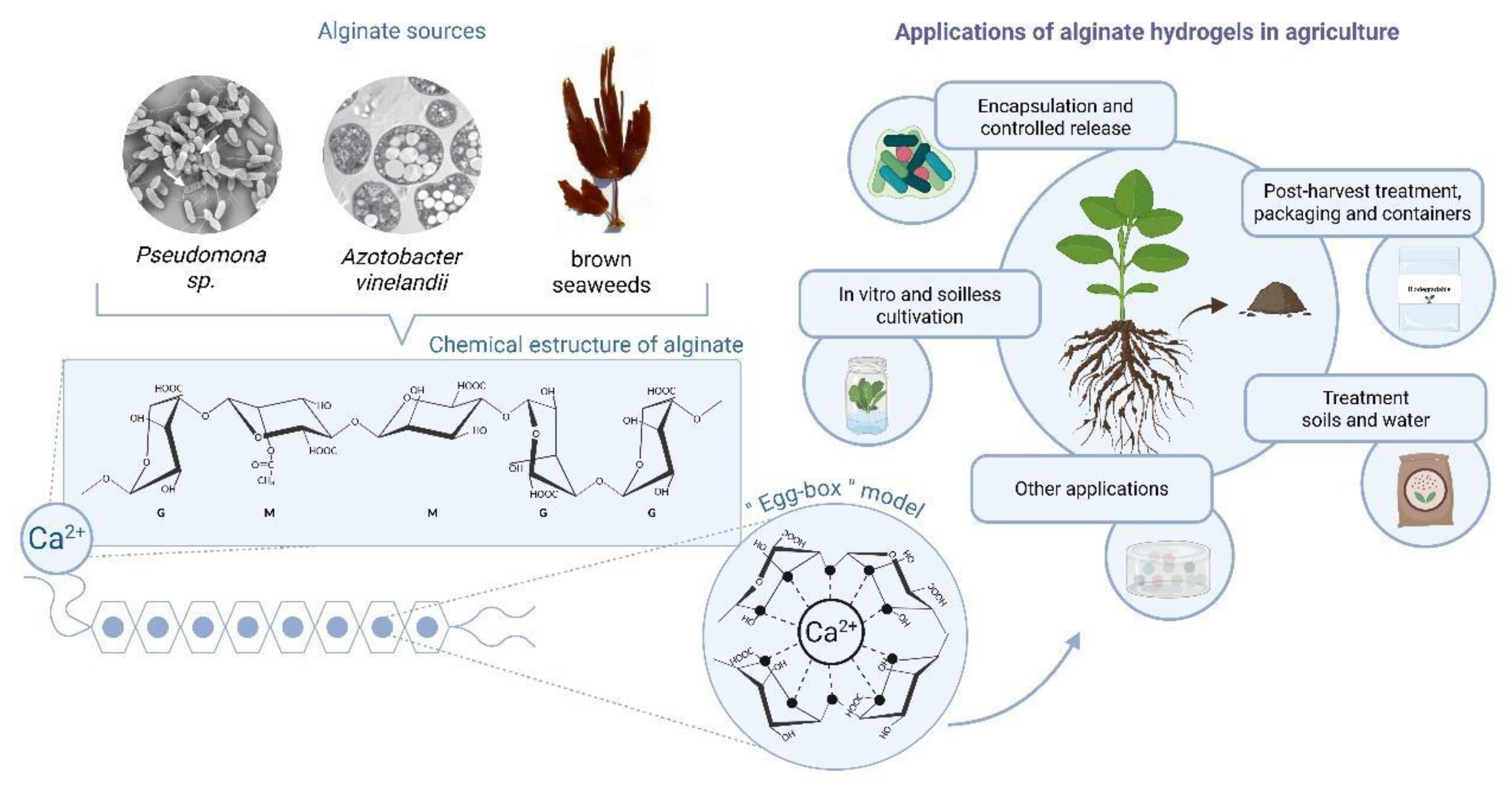
Figure 2.
Keyword co-occurrence network for scientific publications (266 articles) related to alginate applications in agriculture between 2001 and 2024. Created with VOSviewer.
Figure 2.
Keyword co-occurrence network for scientific publications (266 articles) related to alginate applications in agriculture between 2001 and 2024. Created with VOSviewer.
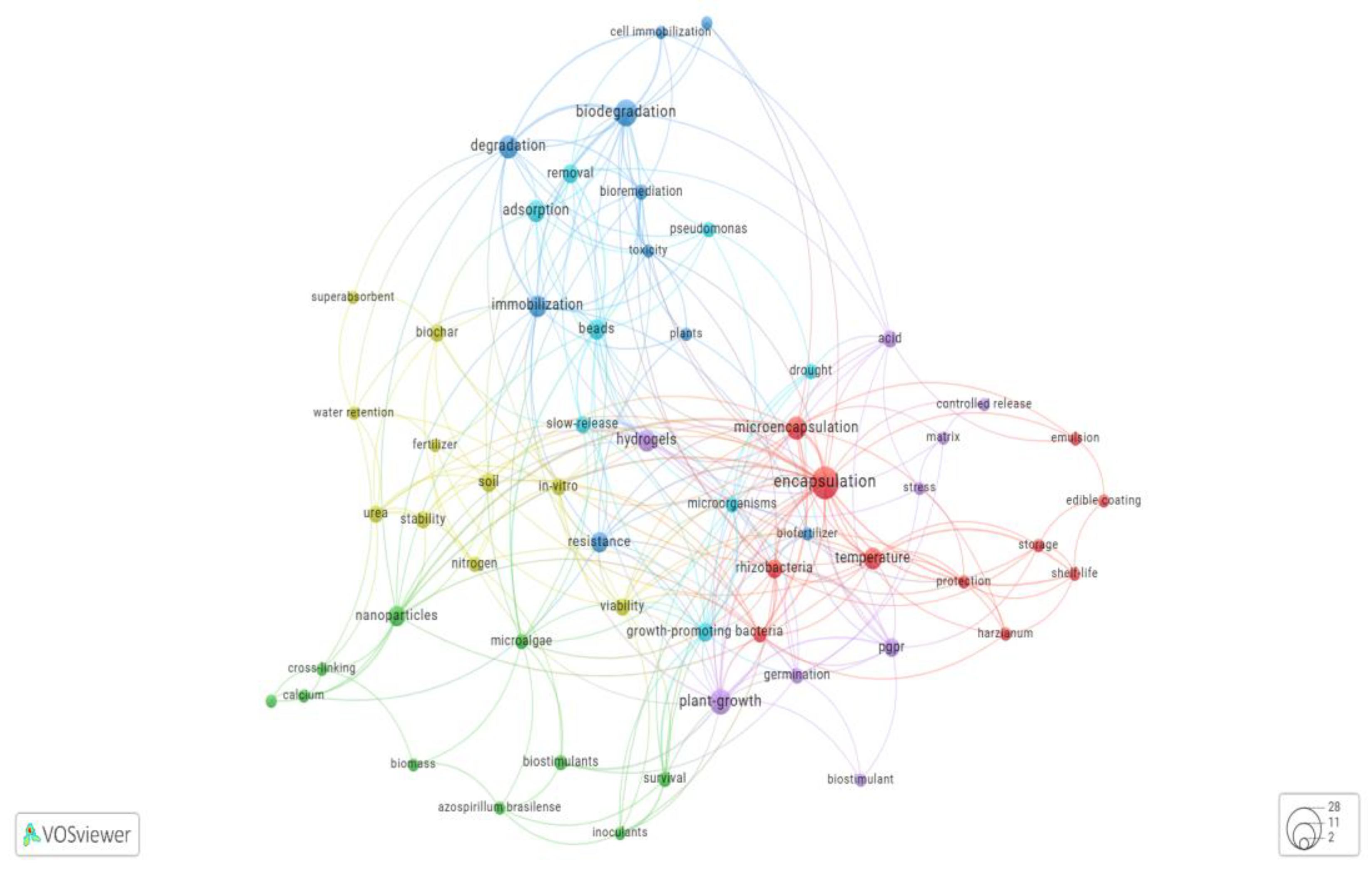
Figure 3.
Sankey diagram of the distribution categories and subcategories identified for scientific documents between 2001 and 2024. Diagram generated using SankeyMATIC.
Figure 3.
Sankey diagram of the distribution categories and subcategories identified for scientific documents between 2001 and 2024. Diagram generated using SankeyMATIC.
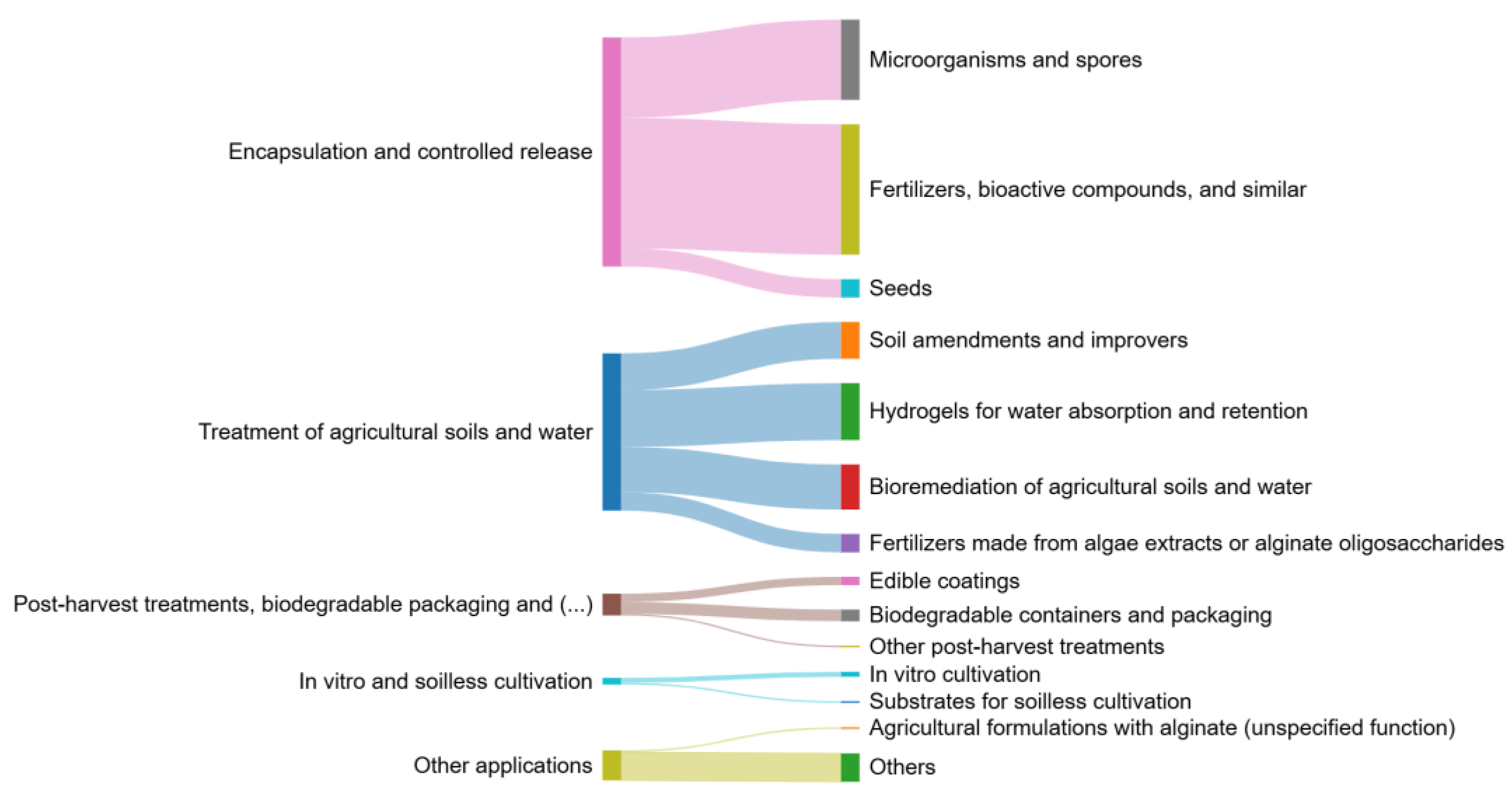
Figure 6.
Annual distribution of scientific publications (266 articles) and patent families (460) related to alginate applications in agriculture between 2001 and 2024.
Figure 6.
Annual distribution of scientific publications (266 articles) and patent families (460) related to alginate applications in agriculture between 2001 and 2024.
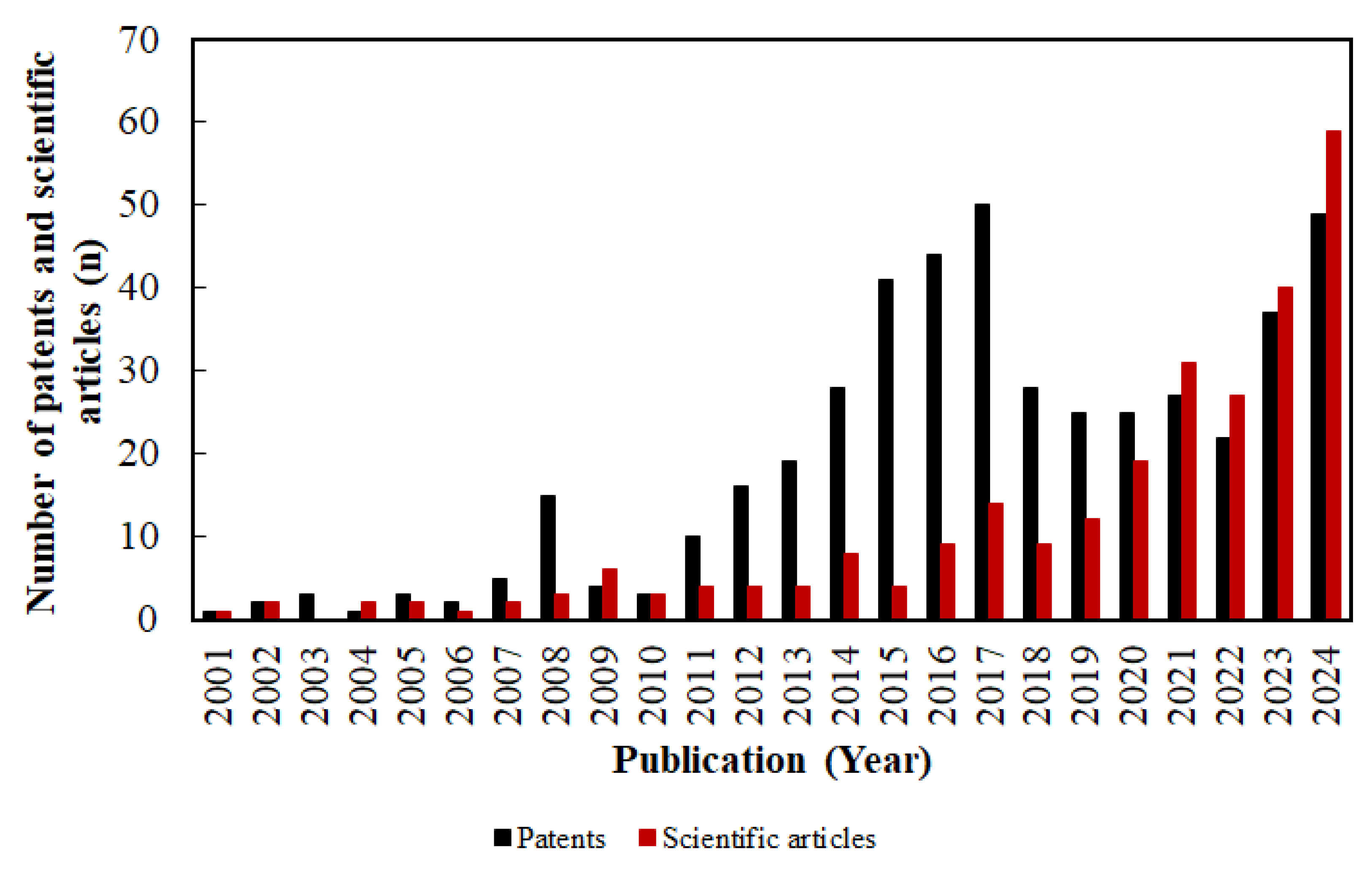

Table 1.
Cluster analysis based on keywords using VOSVIEWER.
| Clúster (color code) |
Top 5 keywords (ocurrences , links, TLS)* |
Analysis |
|---|---|---|
Red |
encapsulation (18, 29, 46), microencapsulation (9, 16, 24), temperature (8, 15, 17), rhizobacteria (6, 16, 21), biological control (4, 12, 16). |
The keywords reflect the role of alginate in the encapsulation and controlled release of microorganisms and bioactive compounds. |
Green
|
nanoparticles (7, 13, 17), microalgae (4, 11, 12) survival (4, 8, 11), biostimulants (4, 5, 6), inoculants (3, 7, 8) |
The keywords are closely related to the red cluster, emphasizing alginate as a matrix for microbial inoculants |
Blue
|
biodegradation (12, 16, 26), degradation (9, 13, 20), immobilization (8, 17, 22), bioremediation (4, 11, 13), toxicity (3, 8, 9) |
The keywords highlight the applications of alginate in the remediation of agricultural soils and water. |
Yellow
|
soil (6, 10, 10), stability (5, 5, 5), water retention (3, 7, 7), fertilizer (3, 5, 5), superabsorbent (3, 3, 3) |
The keywords are associated with soil amendments, water retention, and nutrient management |
Purple |
plant growth (11, 17, 24), hydrogels (8, 13, 15), plant growth-promoting rhizobacteria (PGPR) (6, 11, 15), matrix (3, 5, 5), controlled release (3, 2, 2) |
The keywords describe a transversal cluster linked to plant growth promotion. |
Light blue
|
growth-promoting bacteria (6, 16, 19), adsorption (8, 9, 12) beads (7, 17, 23), removal (6, 9, 12), slow release (5, 9, 11) |
The keywords also describe a transversal cluster related to pollutant removal. |
* Occurrences, links, and TLS are indicators of the number of times a term appears in the title, abstract, or keywords of a scientific article, as well as its connections with other keywords. Higher values are preferred. For more information, see the Materials and Methods section.
Table 2.
Classification of technologies described in scientific documents between 2001 and 2024 according to categories of technological applications of alginate and levels of experimental validation.
Table 2.
Classification of technologies described in scientific documents between 2001 and 2024 according to categories of technological applications of alginate and levels of experimental validation.
| Category | Subcategory | In vitro tests | Semi controlled conditions tests | Field trials |
|---|---|---|---|---|
| Encapsulation and controlled release of microorganisms and agrochemicals | Encapsulation and controlled release of microorganisms and spores | 15* | 30 | 3 |
| Encapsulation and controlled release of fertilizers, bioactive compounds, and similar substances | 33 | 33 | 12 | |
| Encapsulation and controlled release of seeds | 2 | 6 | 3 | |
| Treatment of agricultural soil and water |
Soil amendments and improvements | 2 | 11 | 9 |
| Hydrogels for water absorption and retention | 18 | 12 | 4 | |
| Bioremediation of agricultural soils and water | 22 | 2 | 3 | |
| Fertilizers made from algae extracts or alginate oligosaccharides | 2 | 7 | 2 | |
| Post-harvest treatments, biodegradable packaging and containers for agricultural products |
Edible coatings | 0 | 0 | 5 |
| Biodegradable containers and packaging |
5 | - | 2 | |
| Other post-harvest treatments |
0 | - | 1 | |
|
In vitro and soilless cultivation |
In vitro cultivation | 3** | - | - |
| Substrates for soilless cultivation | 0 | 1 | 0 | |
| Other applications | Agricultural formulations with alginate (unspecified function) | 0 | 1 | 0 |
| Others | 8 | 1 | 8 |
* Values in the columns refer to the number of scientific articles at each level of experimental validation. ** Applications relating to in vitro cultures were considered at the level of experimental validation of in vitro tests due to their nature.
Table 3.
Top 10 international patent classification codes for patent families filed between 2001 and 2024.
Table 3.
Top 10 international patent classification codes for patent families filed between 2001 and 2024.
| IPC codes | Description | Mentions |
|---|---|---|
| C05G 3/00 | Mixtures of one or more fertilizers with non-fertilizer additives. | 80 |
| C05G 3/80 | Mixtures of one or more fertilizers with non-fertilizer additives (...): Soil conditioners. | 56 |
| A01N 43/16 | Biocides, pest repellants or attractants, or plant growth regulators, containing heterocyclic compounds (...) having oxygen as a ring hetero atom. | 43 |
| A01P 7/04 | Insecticides. | 33 |
| A01N 43/90 | Biocides, pest repellants or attractants, or plant growth regulators, containing heterocyclic compounds (...) containing several defining heterocycles condensed among themselves or with a common carbocyclic system. | 32 |
| A01N 25/28 | Biocides, pest repellants or attractants, or plant growth regulators, characterized by their form, inactive ingredients, or methods of application; Substances reducing the noxious effects of the active ingredients on organisms other than pests (...) microcapsules. | 19 |
| A01N 63/22 | Biocides, pest repellants or attractants, or plant growth regulators, containing microorganisms, viruses, microscopic fungi, animals, or substances produced by, or obtained from, microorganisms, viruses, microscopic fungi, or animals, e.g. enzymes or fermentation products (...) Bacillus. | 19 |
| C12N 1/20 | Microorganisms, e.g. protozoa; Compositions comprising them; preparation of medicinal compositions containing bacterial antigens or antibodies; Processes for culturing or preserving microorganisms, or compositions containing them; Processes for the preparation or isolation of a composition containing a microorganism; Culture media (...) Bacteria. | 18 |
| A01P 21/00 | Plant growth regulators. | 18 |
| A01C 1/06 | Apparatus, or methods of use thereof, for testing or treating grain, roots, or the like, prior to sowing or planting (...) Coating or dressing of seeds. | 15 |
Disclaimer/Publisher’s Note: The statements, opinions and data contained in all publications are solely those of the individual author(s) and contributor(s) and not of MDPI and/or the editor(s). MDPI and/or the editor(s) disclaim responsibility for any injury to people or property resulting from any ideas, methods, instructions or products referred to in the content. |
© 2025 by the authors. Licensee MDPI, Basel, Switzerland. This article is an open access article distributed under the terms and conditions of the Creative Commons Attribution (CC BY) license (http://creativecommons.org/licenses/by/4.0/).
Copyright: This open access article is published under a Creative Commons CC BY 4.0 license, which permit the free download, distribution, and reuse, provided that the author and preprint are cited in any reuse.