

Submitted:
20 November 2025
Posted:
27 November 2025
You are already at the latest version
Abstract
Coral reef ecosystems represent one of the most biodiverse and productive marine habitats, yet they are increasingly threatened by a range of anthropogenic stressors. Among these, pharmaceutical and personal care products (PPCPs) have recently emerged as contaminants of growing concern due to their persistence, bioaccumulation potential, and complex interactions within reef environments. This review synthesizes current research on the occurrence, transport pathways, and ecological impacts of PPCPs on coral reef systems. Evidence indicates that compounds such as UV filters, antibiotics, and endocrine-disrupting chemicals can impair coral physiology, disrupt symbiotic relationships with zooxanthellae, and contribute to bleaching events. The review further highlights the variability in coral species’ sensitivity to these contaminants, with documented effects ranging from DNA damage and oxidative stress to reduced growth and reproductive capacity. Despite advances in detection and risk assessment, significant knowledge gaps remain regarding long-term exposure, mixture effects, and the influence of local environmental conditions on contaminant toxicity. By consolidating recent findings, this review underscores the urgent need for targeted research and policy action to mitigate the threat of emerging contaminants to coral reef ecosystems.
Keywords:
coral reef ecosystems
; emerging contaminants
; marine pollution
; pharmaceutical and personal care products (PPCPs)
; endocrine disrupting chemicals
; ecotoxicology
1. Introduction
Freshwater ecosystems comprise just 1% of Earth’s surface, in contrast to marine habitats, which dominate 71% and include diverse coastal and oceanic systems (Häder et al., 2020). However, the integrity of these ecosystems is increasingly undermined by pollution, a worldwide challenge intensified by urbanization, tourism, and unsustainable resource use (Mwadzombo et al., 2025; Vasilachi et al., 2021).
Discharges and runoff from urban (Cojoc et al., 2024), industrial (Dimitrakopoulou et al., 2024), and agricultural sources (Cossu et al., 2024) contaminate aquatic ecosystems, threatening potable water supplies and degrading both freshwater and marine ecosystems (Häder et al., 2020). According to recent studies, (Habimana & Sauvé, 2025; Li et al., 2025), the ecological trajectory and long-term fate of pollutants differs due to several factors, but limited to their nature, environmental conditions and residence time. Some of these factors themselves, for example environmental conditions may evolve with time, thus causing variations to the environmental fate of the contaminants.
Emerging contaminants (ECs) are recently discovered chemicals of both synthetic and natural origin or biological substances that have been found in the environment and have either been identified as potentially harmful or have recently been found to be harmful to ecosystems and humans (Wang et al., 2024). The risks posed by these contaminants are still not entirely recognized. The term “emerging contaminants” pertains mostly to pollutants that lack legal mandates for public disclosure or monitoring in wastewater or water supplies (Morin-Crini et al., 2022). Often their degradation products in water remain less understood.
The majority of ECs are artificially produced substances and include persistent organic compounds, UV filters, sunscreen ingredients, personal care products, disinfecting agents, prescription drugs, and their degradation products (Rizzi et al., 2023). These substances may enter and contaminate environmental matrices (air, water, soil, and food) via multiple vectors, including industrial effluent release, nutrient leaching and runoff, and improper waste disposal practices. They may combine to form intricate combinations of biological threats and chemical contaminants (Escher et al., 2020). Long-distance transit and further alteration of these ECs could result in the formation of unidentified and uncharacterized compounds and chemical contamination at considerable distance from the origin (García-Fernández et al., 2021).
Questions also remain around the toxic impacts of ECs on physiological metabolism of organisms and/or persistence (Kumar et al., 2022). This is because the potential of ECs to penetrate and often concentrate in the food chains is already well-established (Mofijur et al., 2024). Naturally which means that these contaminants will almost inevitably reach humans, through food chain dynamics, affecting human health. This risk necessitates sustained and continued research effort in determining ways to reduce their risks.
Progressive analytical developments for the detection of specific compounds in aquatic environments over recent decades (Vasilachi et al., 2021) as well as the rapid awareness of their existence and concerns around their impacts have led to the identification of several emerging contaminants, and the list grows (Wang et al., 2024). For instance, the identification of microplastics in the environment was made possible by improvements in analytical techniques like Fourier Transform Infrared (FTIR) spectroscopy and micro-Raman spectroscopy (Randhawa, 2023). In some cases, the emergence of previously unrecognized contaminants can often be attributed to the development of new synthetic compounds or to evolving patterns in the utilization and disposal of existing substances (Intisar et al., 2023).
1.1. Importance of Coral Reefs
Coral reefs constitute the most biologically diverse ecosystems within marine environments on Earth (Montano, 2020). Functioning as habitats for an estimated one-third of all known marine organisms alongside 32 of the 34 identified phyla, coral reefs represent the planet’s richest centers of biodiversity (Sobha et al., 2023). Coral reefs extend across a geographic range that includes over 100 countries and territories (Souter et al., 2021).
The coastal communities of Southeast Asia and the Pacific, encompassing millions of people, have relied on coral reefs for their sustenance where for thousands of years, reefs have supplied a large portion of the protein to these cultures through fish and shellfish (Morrison & Aalbersberg, 2022). Human reliance on coral reefs stems from their role as biodiversity reservoirs and providers of key ecosystem services ranging from food and income generation to carbon regulation and protection from storms (Eddy et al., 2021). Globally, coral reef ecosystems contribute an estimated annual economic value of $2.7 trillion, with tourism alone accounting for nearly $36bn (Souter et al., 2021). The GBR generates in excess of $6.4bn per year for the Australian economy and sustains approximately 64,000 employment opportunities. (Great Barrier Reef Foundation). Furthermore, it is widely recognized that coral reefs can save up to $4bn in flood protection costs (Sing Wong et al., 2022).
Coral’s symbiosis with algae, macroalgae, and other species are crucial to the functioning of ocean ecosystems (Rhodes & Naser, 2021). It preserves the biogeochemistry of oceans and open coastal regions (Rawat et al., 2024). For example, the New Caledonian harbors 3000 vascular plants species, nearly 80% of which are indigenous (Oedin et al., 2025). The GBR contains ~1,600-1,625 species of fish, hosts ~450-600 species of hard and soft corals (Great Barrier Reef Foundation), ~2,195 species of native plants across GBR islands and habitats, and vast seagrass meadows (DETSI, Queensland) that sustain nutrient cycling and food web (Burkepile & Hay, 2010; Rädecker et al., 2015). These diverse symbiotic relationships sustain the reef’s high productivity and ecological resilience (Emmett Duffy et al., 2017), even as the system faces increasing climate driven bleaching (Hughes et al., 2017). The Red Sea represents a distinctive marine system, bordered by a continuous coral reef framework and hosting some of the world’s most extensive and productive reef ecosystems (Fine et al., 2019). Though limited to 0.1% of the Earth’s surface, coral reefs maintain extraordinary biodiversity and contribute essential services that sustain millions in adjacent coastal regions (Ouédraogo et al., 2023).
1.2. The Decimation of Corals
At present, 75% of coral reef systems confront serious challenges arising from the overlap of global climate drivers and local anthropogenic impacts (Ouédraogo et al., 2021). Over the past four decades, approximately 20–50% of the world’s coral reefs have experienced loss or degradation. Regionally, coral decline has been recorded at approximately 53% in the Western Atlantic, 40% in the Indo-Pacific, and 50% in the Great Barrier Reef (GBR). Projections indicate that this downward trajectory is likely to persist throughout the century (Good & Bahr, 2021; Moeller et al., 2021).
As much as 50% of reef system decline has been attributed to reduced water quality alongside climate related impacts, including bleaching events (Kuempel et al., 2024). Within the Red Sea, Egyptian reef systems experience major impacts from land derived sediment loads and human induced disturbances (Temsah et al., 2021). Given that some of the most biologically vibrant and economically significant reefs are situated in underdeveloped regions (Burke et al., 2011), the difficulties in implementing integrated management solutions towards their stewardship is sometimes difficult to achieve, as has been said in the case of the Belize Reef (Gibson et al., 1998). Malaysia’s coral reefs, encompassing approximately 4,006 km² and hosting 550 species, are experiencing accelerated degradation due to combined effects of environmental and anthropogenic contaminants (Maznan et al., 2024).
Some anthropogenic causes of reef stressors via degraded water including overfishing, deforestation, fossil fuel burning, and the influx of nutrients and harmful chemicals can impair coral health by reshaping their ecological dynamics with competitors, predators, pathogens, and mutualistic species (Rhodes & Naser, 2021). The decline in biodiversity in coral reefs may be attributed to human activity, which started decades ago, but has achieved a dangerously high trajectory since resulting in unprecedented damage of ecosystem services (Hoegh-Guldberg et al., 2019).
When coupled with the impact of climate change, degraded water quality may cause more aggravated stress to coral reef ecosystems compared to the impact of individual stressors (for example elevated temperature or nutrient loading) alone (Uthicke et al., 2017) a phenomenon referred to as the ‘multiple stressor effect’ (Ellis et al., 2019). Neglecting local stresses might also raise the possibility of harmful synergistic or additive interactions with climate change, which could eventually reduce the efficacy of conservation measures (Andrello et al., 2022).
This review aims to elucidate the threats posed by emerging contaminants within ecologically sensitive reef environments. It provides an overview of contaminant metabolites and their biological significance, emphasizing the susceptibility of key coral-associated flora and fauna. Furthermore, case studies from major reef ecosystems worldwide, including the Great Barrier Reef in Queensland, Australia, are presented to illustrate the extent and variability of these impacts.
2. The Great Barrier Reef: Confronting a Complex Threat Environment
Stretching more than 2900 kilometers along the Queensland coast, the Great Barrier Reef (GBR) is the biggest and most well-known reefal system on the planet (McCaffrey et al., 2020). The esteemed reef, possessing substantial ecological, cultural, social, and economic significance, is concurrently facing heightened pressure from sediments, particulate nutrients, dissolved nutrients, pesticides, pollutants, and anthropogenic activities (Reef Water Quality Consensus, 2022). The GBR underpins extraordinary biodiversity, serving as a critical refuge for fish, corals, turtles, dugongs, whales, and countless additional species (Waterhouse et al., 2024). Being among the world’s most important reservoirs of biodiversity, it encompasses thousands of species, including numerous threatened taxa, distributed across 70 bioregions (30 reefal and 40 non-reefal). In addition to its ecological functions, it underpins the livelihoods of communities within and outside its region (Mckenzie et al., 2024).
Even under comprehensive governance structures spanning commonwealth and state authorities, the condition of GBR ecosystems has steadily degraded in recent decades (GBRMPA, 2019). Optimal water quality is imperative for coral reefs, both to sustain ecological health and to support recovery following stressors such as large-scale bleaching or intense weather events. Inshore reefs of the GBR, however, are persistently undermined by degraded water quality (Fabricius et al., 2024). Adverse weather interacts with land-based pollution to further degrade water quality, sustaining its role as a critical stress factor (Walpole & Hadwen, 2022). Pesticides, nutrients, and suspended sediments are the main pollutants of concern in the GBR (Kroon et al., 2020). In this context a pollutant refers to any substance or material present in concentrations or quantities that surpass naturally occurring baseline levels and can harm the ecosystem. Pesticides (Hook et al., 2024), dissolved inorganic nitrogen (DIN) (McCloskey et al., 2021), suspended sediment, and organic runoff (Bainbridge et al., 2024) are the main contaminants in the Great Barrier Reef catchment area (GBRCA).
2.1. Current Landscape of Emerging Contaminants in Coral Reef Ecosystems
Persistent emerging contaminants in water systems continue to represent a serious threat to environmental and public health. Such contaminants generally include compounds from pharmaceuticals, personal care items, surfactants, pesticides, and agricultural fertilizers (Rathi et al., 2021). Research into these pollutants is discussed in the next section.
2.1.1. Pharmaceuticals and Personal Care Products (PPCPs)
The global use of PPCPs has increased (Ziylan-Yavas et al., 2022). This creates an increasing challenge of their disposal, which gives them a pseudo-persistent presence in the environment. PPCPs come from various sources (Figure 1) and their inherent mechanism of action on living things makes them harmful to non-target creatures (Kar et al., 2020). These substances are present across freshwater and marine surface waters around the world, often at low concentrations that nonetheless have physiological significance (Osuoha et al., 2023). Between 0.01 and 6800 ng/L of 113 pharmaceutical compounds and their byproducts have been detected in coastal waterways (Prichard & Granek, 2016). Among these, the top 10 PPCPs are shown in Table 1.
Despite well documented presence in the environment and the broad agreement on their harmful impacts arising from their own inherent bioactive nature (Kar et al., 2020), the full long term impact and environmental ramifications of ECs remains unknown. Secondly, the concurrent use of numerous pharmaceuticals, now numbering in the hundreds, creates the potential for unrecognized interactions and synergistic outcomes. In addition, the scarcity of data on the ecological implications of prolonged, low-level drug exposure further challenges risk evaluation in aquatic habitats (Ginebreda et al., 2010). Finally, the environmental fate of ECs varies and can include interaction with each other forming complex chemical contaminants and presenting novel biological risks (Wang et al., 2024).
Similarly, personal care products (PCPs) that are not intended for internal use in humans (meaning that they are discharged unmetabolized) are released into waterways in large amounts globally (Kar et al., 2020). For instance, around 1500 tones of PCP-derived microplastics leak out of WWTPs and into global aquatic environments annually. Based on PCP use and microplastics levels, up to 12 kilotons of PCP-derived microplastics are emitted globally each year (Q. Sun et al., 2020). Numerous studies have confirmed that many such high use compounds exhibit bioactivity, persistence in the environment, and potential for bioaccumulation (Anand et al., 2022; Gao et al., 2025; Kar et al., 2020)
2.1.2. Nanoplastics and Microplastics
Plastic materials are employed on a large scale because they combine economic accessibility with durability and beneficial physicochemical characteristics (Du & Wang, 2021). The past six decades have witnessed a dramatic rise in plastic utilization, closely associated with industrial development and rapid population growth. Consequently, plastic waste has accumulated at unprecedented levels, jeopardizing marine environments, particularly coral reefs (Zhang et al., 2023). The per capita plastic waste production is shown in Figure 2. The most prevalent source for plastic garbage is landfills and open dumps, which makes them one of their main secondary point sources (Chandra & Walsh, 2024).
By serving as substrates for microbial attachment, plastics can enhance the proliferation of pathogens connected to disease outbreaks in the ocean (Zhong et al., 2023). For example, Vibrio on polypropylene debris causes white syndromes in corals (Lamb et al., 2018). It results in rapid tissue loss, revealing the white skeleton of the coral, and frequently causes colony mortality with little to no rebound even years after the outbreak (Hobbs et al., 2015). According to Lamb et al., analysis of 124,000 reef-building corals spanning 159 Asia-Pacific reefs revealed that plastic contact raises disease risk from 4-89%. Morphologically complex corals were disproportionately impacted, exhibiting an eightfold higher likelihood of being affected, posing risks to fisheries and to reef habitats supporting associated biota. Estimates of mismanaged plastic waste from terrestrial sources reaching the ocean are consistent with the levels documented on coral reefs.
Despite studies examining the risks from MPs and relating these to coral reef ecosystems, deriving methodologically sound comparisons across environments and taxa remains a challenge owing to methodological inconsistencies, non-uniform reporting standards, and spatial–temporal variability (Bakir et al., 2023). What is agreed upon, however is that their chemical inertness and low likelihood of complete removal, the concentrations will continue to gradually rise (Pantos, 2022).
2.1.3. Endocrine Disrupting Chemicals
Industrial chemicals, insecticides, plasticizing agents, polymeric materials, illicit drugs, endogenous hormones (such as estrogens and androgens), and a wide spectrum of pharmaceuticals and personal care products utilized in both human and veterinary medicine are all among the substances that demonstrate endocrine disruptor behavior. Once discharged into the aquatic environment, EDCs impair endocrine functions essential for reproductive maturation (Marlatt et al., 2022). They exhibit affinity for estrogen receptors, disrupting reproductive processes in affected fauna (Gonzalez et al., 2021). The common endocrine disruptors include bisphenol A (BPA), estradiol, ethinylestradiol etc.
In corals, these chemicals exert comparable effects by interfering with normal reproductive physiology and behavior (Gonzalez et al., 2021). Earlier, xenobiotics that bind to estrogen receptors and exert anti-estrogenic activity by inhibiting natural estrogen signaling, were the focus of EDCs. Recent investigations have revealed that multiple chemical classes exhibit complex and diverse modes of action, for instance, detection of phthalates and oxybenzone in coral tissues and their potential to bioaccumulate and affect reproductive physiology (Morgan et al., 2022). Further research encompasses diverse aspects of EDCs, including their effects on humans, fish, and other wildlife, the development of bioassay methodologies, and regulatory strategies aimed at mitigating associated risk (Metcalfe et al., 2022).
2.2. Ecological Ramifications of Contaminant Accumulation in Reef-Sensitive Zones
The vulnerability and response of individual reefs to specific contaminants or contaminant mixtures varies considerably based on the reef type(s) and the nature of contaminant(s). Additionally, factors like the life stage of the exposed organisms and their vulnerabilities and possible interactions with pollutants may differ markedly (Ouédraogo et al., 2023). For instance, coral larvae are particularly sensitive to pollutants due to their undeveloped defense mechanisms (Galgani et al., 2025), whereas adults may exhibit increased resilience, they may nonetheless have prolonged sublethal consequences (Mayer-Pinto et al., 2020). Likewise, reef fish and invertebrates exhibit distinct interactions with and bioaccumulation of contaminants, resulting in diverse ecological consequences (Mbandzi-Phorego et al., 2024; Mustafa et al., 2024).
Thus, wastewater contaminants having a myriad of effects on corals during distinct developmental phases pose equally complex challenges. Table 2 lists the effects of various contaminants on different coral species, highlighting their negative impacts on overall coral health and functioning.
3. Mechanisms of Pollutant Transport: From Catchment to Coast
3.1. The Role of Water
ECs arise from a spectrum of sources and, depending on their chemical characteristics, follow varied transport processes that culminate in their presence within soils, the atmosphere, or water bodies (Vasilachi et al., 2021). The primary pathway for chemical entry into marine environments is through terrestrial discharges, particularly rivers and streams contaminated by industrial, agricultural, or other land-based activities within the catchment (Bashir et al., 2020). Pollutants may be transported through surface or groundwater in particulate or dissolved forms (Durães et al., 2018)
Coral reefs in the inshore areas are more susceptible to underwater groundwater flow and land-based runoff due to their closer proximity to the catchments. They also deteriorate more quickly than reefs in outer coastal waters (Nalley et al., 2021). It is estimated that 25% of coral reef degradation in coastal regions is caused by adjacent anthropogenic impacts, such as the influx of pollutants and sediments from riverine sources into coastal waters. It is anticipated that this influence will grow over the next 50 years (Irwan et al., 2024).
Figure 3.
Framework for contaminant routes in marine ecosystems. Reproduced with permission from Sánchez-Bayo et al. (2011) under Creative Commons BY 4.0 license.
Figure 3.
Framework for contaminant routes in marine ecosystems. Reproduced with permission from Sánchez-Bayo et al. (2011) under Creative Commons BY 4.0 license.
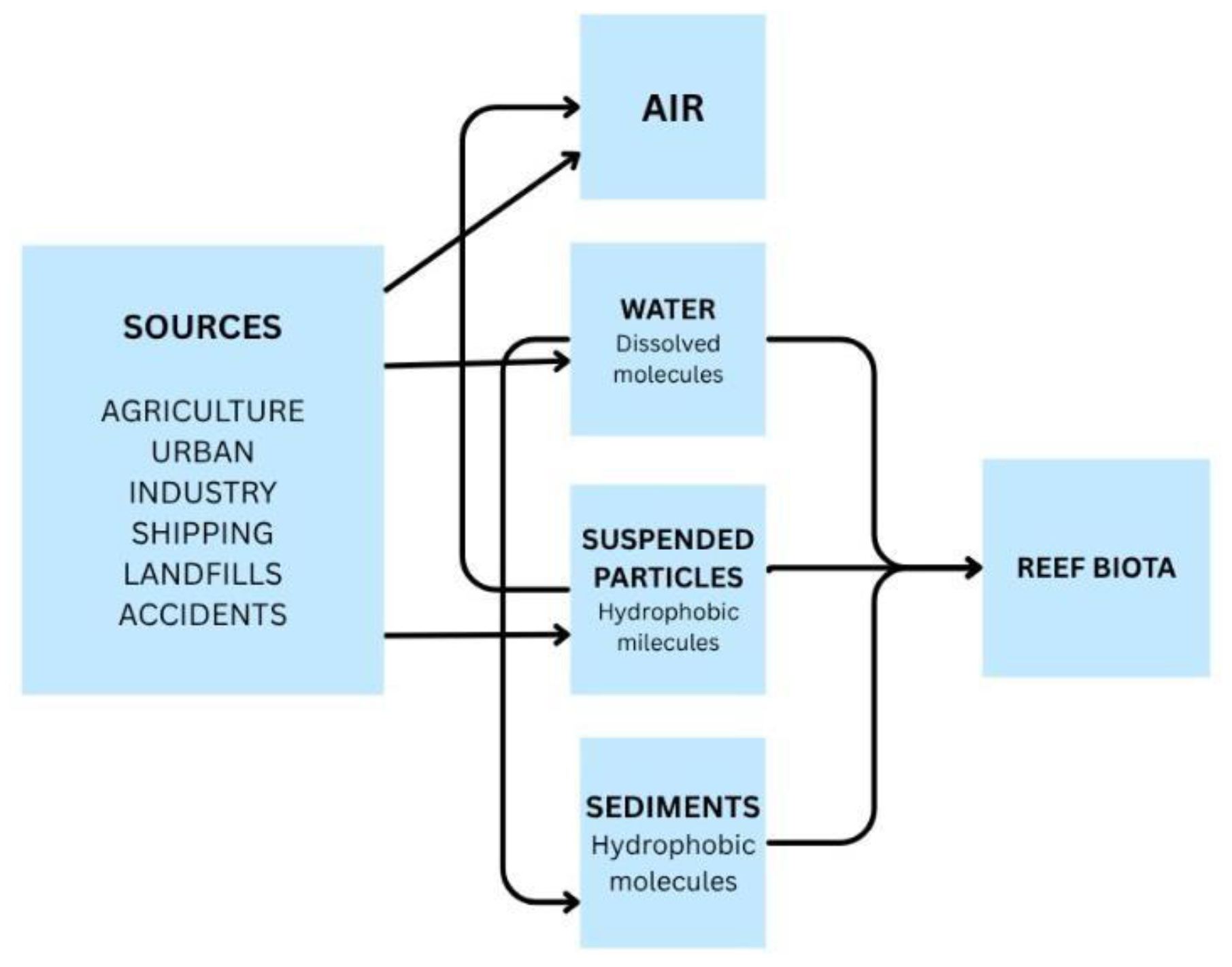
Due to the water-based solubility (and thus mobility through dissolution) of most chemicals (Wang et al., 2024) estuaries, wetlands, or adjacent urban centers with high density of runoff channels will unsurprisingly have the highest quantities of chemical stressors in the water loads. Added to this, the persistence of contaminants widens the risk into sites farther offshore through high volume movements of water, such as via monsoonal flood-plumes (Sánchez-Bayo et al., 2011) and floodwaters in tropical cyclones such as those frequenting North Queensland where the Great Northern Great Barrier Reef is found (Brodie et al., 2010).
4. Contaminant Toxicity
In appropriate disposal of pharmaceutical substances, along with insufficient wastewater treatment techniques, may lead to the environmental buildup of these chemicals. This accumulation can negatively impact non-target species and exert stress on the ecosystem (Eapen et al., 2024).
Chronic toxicity (sublethal effects) of PPCPs results from their tendency to disrupt endocrine systems and disturb the homeostasis of aquatic life, along with various other anomalies (Srain et al., 2021). For instance, exposure of the reef-building coral Stylophora pistillata to oxybenzone (benzophenone-3) has been demonstrated to cause endocrine-mediated developmental anomalies in planulae, such as loss of motility, morphological deformities, premature ossification, and sessility at environmentally relevant concentrations, with a reported deformity EC20 of around 6.5 µg·L⁻¹ (Downs et al., 2015). Similarly, the endangered coral Mussismilia harttii, when subjected to the synthetic oestrogen 17α-ethinylestradiol (EE2) at a concentration of 100 µg L⁻¹, demonstrated statistically significant alterations in microbial community composition (Vilela et al., 2021). Acute toxicity (lethal effects) of PPCPs arises when exposure results in mortality among aquatic organisms (Srain et al., 2021). Mortality of 33.3% was recorded in S. caliendrum subjected to 1000 µg L⁻¹ of EHMC (ethylhexyl methoxycinnamate) (He et al., 2019). Similarly, exposure of S. pistillata to octocrylene resulted in the accumulation of octocrylene-derived metabolites (otocrylene–fatty acid conjugates and octocrylene heterosides) and triggered mitochondrial dysfunction and cellular senescence (Thorel et al., 2022). Moreover, the interactions of PPCPs in mixtures results in harmful effects, despite individual PPCPs being present at low quantities (Srain et al., 2021). For example, exposure to 5% sunscreen water containing 422 µg/L ethylhexylmethoxy-cinnamate and 33.5 µg/L octocrylene resulted in considerably elevated mortality in S. caliendrum (66.7–83.3%) and P. damicornis (33.3–50%) as compared to their individual concentrations (He et al., 2019). In 2022, around 874 million women aged 15–49 years across the world utilized contraceptives that discharge chemicals like ethinylestradiol into aquatic habitats via human excrement (United Nations Department of Economics and Social Affairs, 2022). The environmental significance of this prevalent usage is emphasized by findings that EE2 exposure, even at trace concentrations of 5–6 ng/L, has been associated with feminization in male fish, underscoring the ecological hazards linked to the persistent release of pharmaceutical residues into aquatic ecosystems (Eapen et al., 2024).
Microplastics can adsorb PPCPs and serve as carriers, which can affect bioaccumulation and have toxicological and transgenerational consequences on aquatic life (Zhou et al., 2020). A laboratory study showed that NPs and MPs (made of polystyrene and polyethylene) significantly decreased freely dissolved concentrations of PPCPs like carbamazepine and triclocarban, indicating strong adsorption (of 1–2× orders of magnitude stronger than for MPs) by NPs (Zhu et al., 2023). The adsorption dynamics are influenced by pH, salinity, polymer type, and environmental conditions. These factors are critical for understanding vector transport behavior (Atugoda et al., 2021).
Despite the recognition of the potential harm caused by PPCPs, a large knowledge gap remains around understanding their full impact, especially in vulnerable ecosystems such as coral reefs. Most of the research has hitherto focused on the well-known, or legacy pollutants, e.g. pesticides, sediments and nutrients in the case of the GBR integrated management (Hook et al., 2024).
5. Risk Minimization and Policies
Marine pollution poses significant threats to oceanic ecosystems, influencing food availability, economic livelihoods, wildlife populations, and human welfare (Willis et al., 2022). Despite increasing evidence of ecological damage of PPCPs, regulatory solutions have always been disjointed and ineffective (Wilkinson et al., 2024). In the EU, pharmaceutical marketing authorizations have historically mandated the filing of an Environmental Risk Assessment (ERA). Nonetheless, the results of ERAs have had minimal impact on the approval decisions for human medications (Fumagalli, 2024). Recent studies (Caneva et al., 2014; Fumagalli, 2024; Haupt et al., 2021) reveal that numerous ERA submissions are either incomplete or of substandard quality, hence diminishing their practical utility in decision making. This regulatory disparity is pronounced: Veterinary medications may be rejected on environmental grounds (such as when they provide AMR hazards), whereas human medicines have, until very recently, been largely insulated from rejection based on environmental effects. Effective risk mitigation necessitates more than regulations and technologies, and including improved monitoring, reporting, and transparent assessment. Standardized reporting and evaluation instruments, such as the RIMES checklist and its implementation science extension (RIMES-SE), provide systematic advice for documenting the design, execution, and efficacy of risk minimization strategies in the pharmaceutical sector. The implementation of these reporting standards can enhance the quality of evidence utilized by regulators and facilitate cross jurisdictional learning regarding the efficacy of various policies and mitigation initiatives (Smith et al., 2024). Policy design must address inevitable trade-offs (Moermond et al., 2025). According to ethical-legal assessments, making environmental risk a determining factor in human medicine clearance decisions poses tough considerations concerning patient access, justice, and the prioritization of individual vs. collective health benefits (Harrison et al., 2025). Stronger approval-stage constraints on the environment can encourage positive industry change (greener design, lower emissions), but they may also raise costs, slow innovation, or limit access to critical medicines if not accompanied by mitigation techniques that protect clinical benefits (Gildemeister et al., 2023; Moermond et al., 2025). Therefore, current research advocates for a multifaceted policy package that includes: (1) improving ERA quality and transparency; (2) requiring and verifying workable mitigation measures at approval or as post-market conditions; (3) investing in targeted wastewater treatment in hotspots; and (4) harmonizing monitoring and reporting standards (so policy effects are measurable). This combined approach strikes a balance between environmental protection and the moral obligation to preserve access to necessary medications (Gildemeister et al., 2023; Harrison et al., 2025; Helwig et al., 2024; Zinken et al., 2024).
The European Union Directive (EU) 2024/3019 mandates quaternary treatment processes for micropollutants, including PPCPs, necessitating a minimum degradation rate of 80% in urban wastewater treatment plants (WWTPs) catering to populations of at least 150,000 population equivalents (p.e.) or ≥10,000 p.e. in areas vulnerable to micropollutant contamination. The directive requires achieving an average removal efficiency of 80% relative to the influent load, evaluated under dry weather flow conditions, for a minimum of six indicator substances. The selection of these substances follows a 2:1 ratio, with two compounds from Category 1 (pharmaceuticals such as amisulpride, carbamazepine, diclofenac, metoprolol, and venlafaxine) for every one compound from Category 2 (e.g., benzotriazole, candesartan, irbesartan, and methylbenzotriazole) (European Parliament and Council, Directive (EU) 2024/3019, 2024).
Reusing wastewater provides a sustainable way to restrict the introduction of ECs by lowering the direct release of treated effluent into rivers and coastal waterways. For instance, large scale reuse schemes in agriculture have been shown to lower the flux of PPCPs into receiving water bodies, compared with conventional disposal (Wolfand et al., 2023). Advanced treatment techniques including membrane bioreactors (MBRs), ozonation, and reverse osmosis improve the effectiveness of pollutant removal, removing >90–95% of metals and pharmaceuticals, making reuse a dependable choice for lowering marine pollution loads (Manyepa et al., 2024). Beyond pollution control, reuse helps alleviate freshwater scarcity which is a major driver of over extraction near coastal zones, while simultaneously acting as a risk management tool by diverting contaminant rich effluent away from sensitive ecosystems (Tzanakakis et al., 2023).
A protective framework towards sustainable marine resources stewardship ensures resource longevity and its dependent activities such as fishing, recreation and tourism. The GBR for instance, is worth $56bn (Great Barrier Reef Foundation) to the Australian economy, supporting 64,000 livelihoods (Great Barrier Reef Foundation). Timely interventions and actions lead to several advantages including preventing a contaminant from reaching the marine environment (if at all released). Sustainable management practices, for e.g. smarter synthetic fertilizer applications to minimize excess runoff from agriculture prevents eutrophication further downstream. Even altering packaging for potential contaminant materials can result in decreased risks of leaching or loss per item (Willis et al., 2022).
Even with dedicated traditional physical and chemical treatment processes, similar challenges including ineffective purification, reduced efficacy, high operational costs, and generation of hazardous residues like trihalomethanes (THMs), haloacetic acids (HAAs) and halogenated acetonitriles (HANs) as a result of chlorination (Mazhar et al., 2020), are among their drawbacks (Bilal et al., 2019), or overwhelming levels of influent water. Despite advances in waste management technologies, much of the global waste infrastructure remains outdated or underutilized. In rapidly growing populations, the deployment of waste reduction and mitigation methods often falls short of infrastructure demands (Willis et al., 2022).
6. Containment Strategies
Containment aims to arrest the nexus between source and recipients (Padhye et al., 2023). Containment strategies include physical, chemical, and biological technology. One strategy is the installation of ozonation or activated carbon barriers as a fourth treatment stage in wastewater plants, which physically block the discharge of micropollutants into receiving waters. Swiss full-scale plants reported up to 80% reduction in EC release after such upgrades (Margot et al., 2013). An alternative method involves the implementation of built wetlands and stormwater retention basins at discharge locations, which effectively filter and hold pharmaceuticals and personal care items prior to the effluent entering the coastal areas (Ilyas & van Hullebusch, 2020). Another option involves the implementation of permeable reactive barriers (PRBs) along groundwater flow pathways to the coastline, where layers of activated carbon or zero-valent iron intercept contaminated plumes and inhibit their ingress into marine waters (Erto et al., 2014). Graphene-based films and membranes offer a sophisticated passive approach for the containment of EC, surpassing traditional permeable barriers. Their high surface area, tunable composition, and antimicrobial function allow effective adsorption of pharmaceuticals, pesticides, and heavy metals, while also providing selective permeability and disinfection functions (Rajapaksha et al., 2018).
In regions affected by legacy pollution, thin-layer capping of coastal sediments with activated carbon or mineral composites has been employed to physically sequester contaminants and prevent their discharge into the surrounding waters (Rämö et al., 2022). Such efforts target the investigation of new materials and mechanisms for potential application in water pollution prevention and control (Abdel Rahman et al., 2023; Padhye et al., 2023).
7. Degradation and Biodegradation
Potential alternative technologies including advanced oxidation processes (AOPs), which are intended to safeguard aquatic ecosystems against harmful contaminants, may present feasibility (Priyadarshini et al., 2022). AOPs can destroy a variety of organic molecules due to their highly reactive oxygen species. These reactive species are scarce in conventional wastewater treatment systems, which makes them inappropriate for refractory wastewater. (Silva, 2025). Recently, diverse AOPs have been used for the degradation of pharmaceutical compounds (Roslan et al., 2024). Methods such as heterogeneous Fenton (rGO–nZVI/H₂O₂), classical Fenton, and catalytic ozonation are particularly efficient in degrading PPCPs. For instance, rGO–nZVI with H₂O₂ removed ~95–99% of a complex PPCP mixture in just 10 minutes (Masud et al., 2020).
TiO2 has emerged as a suitable catalyst for the photodegradation of some pharmaceutical chemicals (Musial et al., 2023). It has been used extensively in bench-scale photocatalytic investigations in ultrapure and tap water (Navidpour et al., 2024), and hospital wastewater (Kamani et al., 2023). For instance, under simulated sunlight, TiO₂ single-tube nanotubes were reported to degrade 94% of naproxen within 1 hour (Sepúlveda et al., 2024). TiO₂ exhibits outstanding photocatalytic performance, high chemical and thermal stability, low cost, and notable resistance to photocorrosion (Liang et al., 2025). When exposed to UV radiation, TiO2 produces electron–hole pairs which subsequently interact with oxygen and water molecules to produce reactive oxygen species (ROS) such as superoxide anions (O₂⁻•) and hydroxyl radicals (•OH). Several new contaminants, such as insecticides, dyes, and pharmaceuticals can be broken down by these extremely reactive ROS into environmentally neutral compounds like CO2 and H2O (Haleem et al., 2023; Kanakaraju et al., 2025). Most compounds in this group consist of chemically stable active pharmaceutical ingredients such as sulfamethoxazole (Musial et al., 2023), where the primary challenge is their extraction from aqueous phase. Alternative photocatalysts to TiO₂, such as metal oxide nanoparticles and quantum dots, have also proven effective in degrading pharmaceutical contaminants in aquatic environments (Krakowiak et al., 2021). Photocatalysis has been widely investigated in initiatives aimed at degrading chemical contaminants, such as the antibiotic sulfamethoxazole, and for the treatment of polluted waters (e.g., sulfamethoxazol achieved ~89% removal using TiO2/biochar composite under UV irradiation (Dang et al., 2023; Krakowiak et al., 2021).
8. Recommendations and Future Directions
Hospitals, care facilities, and veterinary clinics must implement pollution control prior to wastewater release. Continued action is needed to restrict toxic flame retardants and update existing flammability regulations (Weis, 2024). Activated sludge treatment is effective for organic load reduction but inadequate for trace-level emerging contaminants. Its use further leads to the generation of large volumes of waste sludge requiring disposal (Vasilachi et al., 2021).
In the case of microplastics and nanoplastics, more specific research gaps exist in the understanding of the mechanisms by which they affect corals. Investigations should extend to the molecular scale, with the effects of ocean warming under rapid climate change warranting closer analysis (Reichert et al., 2021). Further insight into trace element cycling, speciation, toxicity, and coral bioavailability under multiple stressors would enhance our comprehension of these complex systems (Zitoun et al., 2024).
Insufficient knowledge of the prolonged impacts of these compounds on marine systems, particularly coral reefs, hampers effective management planning. Protecting these fragile habitats requires more detailed research to assess their toxicity, potential for bioaccumulation, and interactions with additional environmental pressures. Key uncertainties remain regarding a) the ecological risks posed by PPCPs found in both nearshore and offshore reef environments, along with the plant and animal species most at risk; b) the hazards associated with PPCP metabolites within affected organisms; and c) the direct impacts on coral species and their growth processes arising from such exposure.
9. Concluding Remarks
Coral reefs are highly sensitive ecosystems that provide essential ecological, cultural, and economic services, yet they are increasingly undermined by the introduction of emerging contaminants, particularly pharmaceutical and personal care products (PPCPs). The evidence reviewed demonstrates that compounds such as UV filters, antibiotics, and parabens can bioaccumulate in coral tissues and exert a wide range of sub-lethal to lethal effects, including bleaching, oxidative stress, altered symbiont dynamics, and impaired reproduction. While considerable progress has been made in identifying contaminant classes and their acute impacts, knowledge remains limited regarding chronic exposures, interactive effects of contaminant mixtures, and the role of environmental stressors such as rising sea surface temperatures in amplifying toxic responses. These gaps present significant challenges for both ecological risk assessment and management. Addressing them will require multidisciplinary approaches that integrate ecotoxicology, oceanography, and reef ecology, alongside advances in contaminant monitoring technologies. Furthermore, the development of effective containment and wastewater treatment strategies is critical to preventing further contaminant inputs into coastal ecosystems. Strengthening policy frameworks to regulate PPCP discharge and promoting environmentally responsible consumer practices are equally essential. Protecting coral reef resilience in the face of emerging contaminants will depend on coordinated scientific, regulatory, and societal action.
References
- Abdel Rahman, R. O., El-Kamash, A. M., & Hung, Y. T. (2023). Permeable Concrete Barriers to Control Water Pollution: A Review. Water 2023, Vol. 15, Page 3867, 15(21), 3867. [CrossRef]
- Adenaya, A., Quintero, R. R., Brinkhoff, T., Lara-Martín, P. A., Wurl, O., & Ribas-Ribas, M. (2024). Vertical distribution and risk assessment of pharmaceuticals and other micropollutants in southern North Sea coastal waters. Marine Pollution Bulletin, 200, 116099. [CrossRef]
- Agawin, N. S. R., García-Márquez, M. G., Espada, D. R., Freemantle, L., Pintado Herrera, M. G., & Tovar-Sánchez, A. (2024). Distribution and accumulation of UV filters (UVFs) and conservation status of Posidonia oceanica seagrass meadows in a prominent Mediterranean coastal tourist hub. Science of The Total Environment, 948, 174784. [CrossRef]
- Anand, U., Adelodun, B., Cabreros, C., Kumar, P., Suresh, S., Dey, A., Ballesteros, F., & Bontempi, E. (2022). Occurrence, transformation, bioaccumulation, risk and analysis of pharmaceutical and personal care products from wastewater: a review. Environmental Chemistry Letters 2022 20:6, 20(6), 3883–3904. [CrossRef]
- Andrello, M., Darling, E. S., Wenger, A., Suárez-Castro, A. F., Gelfand, S., & Ahmadia, G. N. (2022). A global map of human pressures on tropical coral reefs. Conservation Letters, 15(1), e12858. [CrossRef]
- Atugoda, T., Vithanage, M., Wijesekara, H., Bolan, N., Sarmah, A. K., Bank, M. S., You, S., & Ok, Y. S. (2021). Interactions between microplastics, pharmaceuticals and personal care products: Implications for vector transport. Environment International, 149, 106367. [CrossRef]
- Australia Goverment. (2019). Great Barrier Reef Outlook Report 2019. Great Barrier Reef Marine Park Authority, 374. https://elibrary.gbrmpa.gov.au/jspui/handle/11017/3474.
- Bainbridge, Z. T., Olley, J. M., Lewis, S. E., Stevens, T., & Smithers, S. G. (2024). Tracing sources of inorganic suspended particulate matter in the Great Barrier Reef lagoon, Australia. Scientific Reports, 14(1), 1–13. [CrossRef]
- Bakir, A., Doran, D., Silburn, B., Russell, J., Archer-Rand, S., Barry, J., Maes, T., Limpenny, C., Mason, C., Barber, J., & Nicolaus, E. E. M. (2023). A spatial and temporal assessment of microplastics in seafloor sediments: A case study for the UK. Frontiers in Marine Science, 9, 1093815. [CrossRef]
- Bashir, I., Lone, F. A., Bhat, R. A., Mir, S. A., Dar, Z. A., & Dar, S. A. (2020). Concerns and threats of contamination on aquatic ecosystems. Bioremediation and Biotechnology: Sustainable Approaches to Pollution Degradation, 1–26. [CrossRef]
- Bilal, M., Adeel, M., Rasheed, T., Zhao, Y., & Iqbal, H. M. N. (2019). Emerging contaminants of high concern and their enzyme-assisted biodegradation – A review. Environment International, 124, 336–353. [CrossRef]
- Bratkovics, S., Wirth, E., Sapozhnikova, Y., Pennington, P., & Sanger, D. (2015). Baseline monitoring of organic sunscreen compounds along South Carolina’s coastal marine environment. Marine Pollution Bulletin, 101(1), 370–377. [CrossRef]
- Brodie, J., Schroeder, T., Rohde, K., Faithful, J., Masters, B., Dekker, A., Brando, V., & Maughan, M. (2010). Dispersal of suspended sediments and nutrients in the Great Barrier Reef lagoon during river-discharge events: conclusions from satellite remote sensing and concurrent flood-plume sampling. Marine and Freshwater Research, 61(6), 651–664. [CrossRef]
- Burke, L., Reytar, K., Spalding, M., & Perry, A. (2011). Reefs at risk revisited. 2. https://bvearmb.do/handle/123456789/1787.
- Burkepile, D. E., & Hay, M. E. (2010). Impact of Herbivore Identity on Algal Succession and Coral Growth on a Caribbean Reef. PLOS ONE, 5(1), e8963. [CrossRef]
- Caneva, L., Bonelli, M., Papaluca-Amati, M., & Vidal, J. M. (2014). Critical review on the Environmental Risk Assessment of medicinal products for human use in the centralised procedure. Regulatory Toxicology and Pharmacology, 68(3), 312–316. [CrossRef]
- Chandra, S., & Walsh, K. B. (2024). Microplastics in water: Occurrence, fate and removal. Journal of Contaminant Hydrology, 264, 104360. [CrossRef]
- Chapron, L., Peru, E., Engler, A., Ghiglione, J. F., Meistertzheim, A. L., Pruski, A. M., Purser, A., Vétion, G., Galand, P. E., & Lartaud, F. (2018). Macro- and microplastics affect cold-water corals growth, feeding and behaviour. Scientific Reports, 8(1), 1–8. [CrossRef]
- Cojoc, L., de Castro-Català, N., de Guzmán, I., González, J., Arroita, M., Besolí-Mestres, N., Cadena, I., Freixa, A., Gutiérrez, O., Larrañaga, A., Muñoz, I., Elosegi, A., Petrovic, M., & Sabater, S. (2024). Pollutants in urban runoff: Scientific evidence on toxicity and impacts on freshwater ecosystems. Chemosphere, 369, 143806. [CrossRef]
- Cossu, L. O., De Aquino, S. F., Mota Filho, C. R., Smith, C. J., & Vignola, M. (2024). Review on Pesticide Contamination and Drinking Water Treatment in Brazil: The Need for Improved Treatment Methods. ACS ES and T Water, 4(9), 3629–3644. [CrossRef]
- Dang, J., Pei, W., Hu, F., Yu, Z., Zhao, S., Hu, J., Liu, J., Zhang, D., Jing, Z., & Lei, X. (2023). Photocatalytic Degradation and Toxicity Analysis of Sulfamethoxazole using TiO2/BC. Toxics 2023, Vol. 11, Page 818, 11(10), 818. [CrossRef]
- DETSI, Q. (n.d.). From mermaid wineglasses to sea grapes – meet the Great Barrier Reef plants | Department of the Environment, Tourism, Science and Innovation (DETSI), Queensland. Retrieved August 26, 2025, from https://www.detsi.qld.gov.au/our-department/news-media/down-to-earth/great-barrier-reef-plants?utm_source=chatgpt.com.
- Dimitrakopoulou, M. E., Karvounis, M., Marinos, G., Theodorakopoulou, Z., Aloizou, E., Petsangourakis, G., Papakonstantinou, M., & Stoitsis, G. (2024). Comprehensive analysis of PFAS presence from environment to plate. Npj Science of Food, 8(1), 1–10. [CrossRef]
- Downs, C. A., Kramarsky-Winter, E., Segal, R., Fauth, J., Knutson, S., Bronstein, O., Ciner, F. R., Jeger, R., Lichtenfeld, Y., Woodley, C. M., Pennington, P., Cadenas, K., Kushmaro, A., & Loya, Y. (2015). Toxicopathological Effects of the Sunscreen UV Filter, Oxybenzone (Benzophenone-3), on Coral Planulae and Cultured Primary Cells and Its Environmental Contamination in Hawaii and the U.S. Virgin Islands. Archives of Environmental Contamination and Toxicology 2015 70:2, 70(2), 265–288. [CrossRef]
- Du, H., & Wang, J. (2021). Characterization and environmental impacts of microplastics. Gondwana Research, 98, 63–75. [CrossRef]
- Durães, N., Novo, L. A. B., Candeias, C., & Da Silva, E. F. (2018). Distribution, Transport and Fate of Pollutants. Soil Pollution: From Monitoring to Remediation, 29–57. [CrossRef]
- Eapen, J. V., Thomas, S., Antony, S., George, P., & Antony, J. (2024). A review of the effects of pharmaceutical pollutants on humans and aquatic ecosystem. Open Exploration 2019 2:5, 2(5), 484–507. [CrossRef]
- Eddy, T. D., Lam, V. W. Y., Reygondeau, G., Cisneros-Montemayor, A. M., Greer, K., Palomares, M. L. D., Bruno, J. F., Ota, Y., & Cheung, W. W. L. (2021). Global decline in capacity of coral reefs to provide ecosystem services. One Earth, 4(9), 1278–1285. [CrossRef]
- Ellis, J. I., Jamil, T., Anlauf, H., Coker, D. J., Curdia, J., Hewitt, J., Jones, B. H., Krokos, G., Kürten, B., Hariprasad, D., Roth, F., Carvalho, S., & Hoteit, I. (2019). Multiple stressor effects on coral reef ecosystems. Global Change Biology, 25(12), 4131–4146. [CrossRef]
- Emmett Duffy, J., Godwin, C. M., & Cardinale, B. J. (2017). Biodiversity effects in the wild are common and as strong as key drivers of productivity. Nature, 549(7671), 261–264. [CrossRef]
- Erto, A., Bortone, I., Di Nardo, A., Di Natale, M., & Musmarra, D. (2014). Permeable Adsorptive Barrier (PAB) for the remediation of groundwater simultaneously contaminated by some chlorinated organic compounds. Journal of Environmental Management, 140, 111–119. [CrossRef]
- Escher, B. I., Stapleton, H. M., & Schymanski, E. L. (2020). Tracking complex mixtures of chemicals in our changing environment. Science, 367(6476), 388–392. [CrossRef]
- European Parliament and Council. (2024). Directive (EU) 2024/3019 on the treatment of urban wastewater (recast). https://eur-lex.europa.eu/eli/dir/2024/3019/oj/eng.
- Fabricius, K., Brown, A., Songcuan, A., Collier, C., Uthicke, S., & Robson, B. (2024). 2022 Scientific Consensus Statement Question 2.2 What are the current and predicted impacts of climate change on Great Barrier Reef ecosystems (including spatial and temporal distribution impacts). [CrossRef]
- Fel, J. P., Lacherez, C., Bensetra, A., Mezzache, S., Béraud, E., Léonard, M., Allemand, D., & Ferrier-Pagès, C. (2019). Photochemical response of the scleractinian coral Stylophora pistillata to some sunscreen ingredients. Coral Reefs, 38(1), 109–122. [CrossRef]
- Fenni, F., Sunyer-Caldú, A., Mansour, H. Ben, & Diaz-Cruz, M. S. (2025). Occurrence and risks of pharmaceuticals in Mahdia’s coastline (Tunisia): distribution, antibiotic resistance, and ecotoxicological impact. Environmental Science and Pollution Research, 32(30), 18419–18433. [CrossRef]
- Fine, M., Cinar, M., Voolstra, C. R., Safa, A., Rinkevich, B., Laffoley, D., Hilmi, N., & Allemand, D. (2019). Coral reefs of the Red Sea — Challenges and potential solutions. Regional Studies in Marine Science, 25, 100498. [CrossRef]
- Fumagalli, D. (2024). Environmental risk and market approval for human pharmaceuticals. Monash Bioethics Review, 42(Suppl 1), 105–124. [CrossRef]
- Galgani, F., Jouet, M., Goulais, M., Tetaura, N.-L., Lo-Yat, A., Goulais, M., Tetaura, N.-L., & Lo-Yat, A. (2025). Assessment of Sediment Quality and Vulnerability of Tropical Marine Species in the Society Islands, French Polynesia. Under Review at Coral Reefs. [CrossRef]
- Gao, Y., Yuan, C., Cheng, S., Sun, J., Ouyang, S., Xue, W., Zhang, W., Zhou, L., Wang, J., & Sun, S. (2025). Potential risks and hazards posed by the pressure of pharmaceuticals and personal care products on water treatment plants. Environmental Pollution, 378, 126344. [CrossRef]
- García-Fernández, A. J., Espín, S., Gómez-Ramírez, P., Sánchez-Virosta, P., & Navas, I. (2021). Water Quality and Contaminants of Emerging Concern (CECs). Chemometrics and Cheminformatics in Aquatic Toxicology, 3–21. [CrossRef]
- Gibson, J., McField, M., & Wells, S. (1998). Coral reef management in Belize: an approach through integrated coastal zone management. Ocean & Coastal Management, 39(3), 229–244. [CrossRef]
- Gildemeister, D., Moermond, C. T. A., Berg, C., Bergstrom, U., Bielská, L., Evandri, M. G., Franceschin, M., Kolar, B., Montforts, M. H. M. M., & Vaculik, C. (2023). Improving the regulatory environmental risk assessment of human pharmaceuticals: Required changes in the new legislation. Regulatory Toxicology and Pharmacology, 142, 105437. [CrossRef]
- Ginebreda, A., Muñoz, I., de Alda, M. L., Brix, R., López-Doval, J., & Barceló, D. (2010). Environmental risk assessment of pharmaceuticals in rivers: Relationships between hazard indexes and aquatic macroinvertebrate diversity indexes in the Llobregat River (NE Spain). Environment International, 36(2), 153–162. [CrossRef]
- Gonzalez, J. A., Histed, A. R., Nowak, E., Lange, D., Craig, S. E., Parker, C. G., Kaur, A., Bhuvanagiri, S., Kroll, K. J., Martyniuk, C. J., Denslow, N. D., Rosenfeld, C. S., & Rhodes, J. S. (2021). Impact of bisphenol-A and synthetic estradiol on brain, behavior, gonads and sex hormones in a sexually labile coral reef fish. Hormones and Behavior, 136, 105043. [CrossRef]
- Good, A. M., & Bahr, K. D. (2021). The coral conservation crisis: interacting local and global stressors reduce reef resiliency and create challenges for conservation solutions. SN Applied Sciences, 3(3), 1–14. [CrossRef]
- Great Barrier Reef Foundation. (n.d.). The Great Barrier Reef explained: size, species, threats and why it matters. Retrieved August 26, 2025, from https://www.barrierreef.org/news/news/the-great-barrier-reef-explained.
- Habimana, E., & Sauvé, S. (2025). A review of properties, occurrence, fate, and transportation mechanisms of contaminants of emerging concern in sewage sludge, biosolids, and soils: recent advances and future trends. Frontiers in Environmental Chemistry, 6, 1547596. [CrossRef]
- Häder, D. P., Banaszak, A. T., Villafañe, V. E., Narvarte, M. A., González, R. A., & Helbling, E. W. (2020). Anthropogenic pollution of aquatic ecosystems: Emerging problems with global implications. Science of The Total Environment, 713, 136586. [CrossRef]
- Haleem, A., Shafiq, A., Chen, S. Q., & Nazar, M. (2023). A Comprehensive Review on Adsorption, Photocatalytic and Chemical Degradation of Dyes and Nitro-Compounds over Different Kinds of Porous and Composite Materials. Molecules 2023, Vol. 28, Page 1081, 28(3), 1081. [CrossRef]
- Han, Q. F., Song, C., Sun, X., Zhao, S., & Wang, S. G. (2021). Spatiotemporal distribution, source apportionment and combined pollution of antibiotics in natural waters adjacent to mariculture areas in the Laizhou Bay, Bohai Sea. Chemosphere, 279, 130381. [CrossRef]
- Hankins, C., Moso, E., & Lasseigne, D. (2021). Microplastics impair growth in two atlantic scleractinian coral species, Pseudodiploria clivosa and Acropora cervicornis. Environmental Pollution, 275, 116649. [CrossRef]
- Harrison, S., Barnett, C., Short, S., Uluseker, C., Silva, P. V., Pavlaki, M. D., Roberts, S., Vieira, M., Lofts, S., Loureiro, S., & Spurgeon, D. J. (2025). Continuous improvement towards environmental protection for pharmaceuticals: advancing a strategy for Europe. Environmental Sciences Europe, 37(1), 1–21. [CrossRef]
- Haupt, R., Heinemann, C., Hayer, J. J., Schmid, S. M., Guse, M., Bleeser, R., & Steinhoff-Wagner, J. (2021). Critical discussion of the current environmental risk assessment (ERA) of veterinary medicinal products (VMPs) in the European Union, considering changes in animal husbandry. Environmental Sciences Europe, 33(1), 1–21. [CrossRef]
- He, T., Tsui, M. M. P., Tan, C. J., Ma, C. Y., Yiu, S. K. F., Wang, L. H., Chen, T. H., Fan, T. Y., Lam, P. K. S., & Murphy, M. B. (2019). Toxicological effects of two organic ultraviolet filters and a related commercial sunscreen product in adult corals. Environmental Pollution, 245, 462–471. [CrossRef]
- Helwig, K., Niemi, L., Stenuick, J. Y., Alejandre, J. C., Pfleger, S., Roberts, J., Harrower, J., Nafo, I., & Pahl, O. (2024). Broadening the Perspective on Reducing Pharmaceutical Residues in the Environment. Environmental Toxicology and Chemistry, 43(3), 653–663. [CrossRef]
- Hobbs, J. P. A., Frisch, A. J., Newman, S. J., & Wakefield, C. B. (2015). Selective Impact of Disease on Coral Communities: Outbreak of White Syndrome Causes Significant Total Mortality of Acropora Plate Corals. PLOS ONE, 10(7), e0132528. [CrossRef]
- Hoegh-Guldberg, O., Pendleton, L., & Kaup, A. (2019). People and the changing nature of coral reefs. Regional Studies in Marine Science, 30, 100699. [CrossRef]
- Hook, S. E., Smith, R. A., Waltham, N., & Warne, M. S. J. (2024). Pesticides in the Great Barrier Reef catchment area: Plausible risks to fish populations. Integrated Environmental Assessment and Management, 20(5), 1256–1279. [CrossRef]
- Hughes, T. P., Kerry, J. T., Álvarez-Noriega, M., Álvarez-Romero, J. G., Anderson, K. D., Baird, A. H., Babcock, R. C., Beger, M., Bellwood, D. R., Berkelmans, R., Bridge, T. C., Butler, I. R., Byrne, M., Cantin, N. E., Comeau, S., Connolly, S. R., Cumming, G. S., Dalton, S. J., Diaz-Pulido, G., … Wilson, S. K. (2017). Global warming and recurrent mass bleaching of corals. Nature, 543(7645), 373–377. [CrossRef]
- Ilyas, H., & van Hullebusch, E. D. (2020). Performance Comparison of Different Constructed Wetlands Designs for the Removal of Personal Care Products. International Journal of Environmental Research and Public Health 2020, Vol. 17, Page 3091, 17(9), 3091. [CrossRef]
- Intisar, A., Ramzan, A., Hafeez, S., Hussain, N., Irfan, M., Shakeel, N., Gill, K. A., Iqbal, A., Janczarek, M., & Jesionowski, T. (2023). Adsorptive and photocatalytic degradation potential of porous polymeric materials for removal of pesticides, pharmaceuticals, and dyes-based emerging contaminants from water. Chemosphere, 336, 139203. [CrossRef]
- Irwan, Rani, C., Jompa, J., & Kadir, N. N. (2024). Coral reef condition at different trophic status in marginal waters of Bone Bay, South Sulawesi, Indonesia. IOP Conference Series: Earth and Environmental Science, 1410(1), 012006. [CrossRef]
- John Morrison, R., & Aalbersberg, W. G. L. (2022). Anthropogenic Environmental Impacts on Coral Reefs in the Western and South-Western Pacific Ocean. Coral Reefs of the World, 14, 7–24. [CrossRef]
- Kamani, H., Ashrafi, S. D., Lima, E. C., Panahi, A. H., Nezhad, M. G., & Abdipour, H. (2023). Synthesis of N-doped TiO2 nanoparticle and its application for disinfection of a treatment plant effluent from hospital wastewater. Desalination and Water Treatment, 289, 155–162. [CrossRef]
- Kanakaraju, D., Natashya, P. P., Lim, Y. C., & Tan, I. A. W. (2025). Functionalized TiO2-waste-derived photocatalytic materials for emerging pollutant degradation: synthesis and optimization. Environmental Monitoring and Assessment, 197(9), 1–22. [CrossRef]
- Kar, S., Sanderson, H., Roy, K., Benfenati, E., & Leszczynski, J. (2020). Ecotoxicological assessment of pharmaceuticals and personal care products using predictive toxicology approaches. Green Chemistry, 22(5), 1458–1516. [CrossRef]
- Krakowiak, R., Musial, J., Bakun, P., Spychała, M., Czarczynska-Goslinska, B., Mlynarczyk, D. T., Koczorowski, T., Sobotta, L., Stanisz, B., & Goslinski, T. (2021). Titanium Dioxide-Based Photocatalysts for Degradation of Emerging Contaminants including Pharmaceutical Pollutants. Applied Sciences 2021, Vol. 11, Page 8674, 11(18), 8674. [CrossRef]
- Kroon, F. J., Berry, K. L. E., Brinkman, D. L., Kookana, R., Leusch, F. D. L., Melvin, S. D., Neale, P. A., Negri, A. P., Puotinen, M., Tsang, J. J., van de Merwe, J. P., & Williams, M. (2020). Sources, presence and potential effects of contaminants of emerging concern in the marine environments of the Great Barrier Reef and Torres Strait, Australia. Science of The Total Environment, 719, 135140. [CrossRef]
- Kuempel, C. D., Thomas, J., Wenger, A. S., Jupiter, S. D., Suárez-Castro, A. F., Nasim, N., Klein, C. J., & Hoegh-Guldberg, O. (2024). A spatial framework for improved sanitation to support coral reef conservation. Environmental Pollution, 342, 123003. [CrossRef]
- Kumar, R., Qureshi, M., Vishwakarma, D. K., Al-Ansari, N., Kuriqi, A., Elbeltagi, A., & Saraswat, A. (2022). A review on emerging water contaminants and the application of sustainable removal technologies. Case Studies in Chemical and Environmental Engineering, 6, 100219. [CrossRef]
- Lamb, J. B., Willis, B. L., Fiorenza, E. A., Couch, C. S., Howard, R., Rader, D. N., True, J. D., Kelly, L. A., Ahmad, A., Jompa, J., & Harvell, C. D. (2018). Plastic waste associated with disease on coral reefs. Science, 359(6374), 460–462. [CrossRef]
- Leng, Y., Xiao, H., Li, Z., & Wang, J. (2020). Tetracyclines, sulfonamides and quinolones and their corresponding resistance genes in coastal areas of Beibu Gulf, China. Science of The Total Environment, 714, 136899. [CrossRef]
- Li, Y., Li, Y., Zhang, S., Gao, T., Gao, Z., Lai, C. W., Xiang, P., & Yang, F. (2025). Global Distribution, Ecotoxicity, and Treatment Technologies of Emerging Contaminants in Aquatic Environments: A Recent Five-Year Review. Toxics 2025, Vol. 13, Page 616, 13(8), 616. [CrossRef]
- Liang, H., Pan, C. G., Peng, F. J., Hu, J. J., Zhu, R. G., Zhou, C. Y., Liu, Z. Z., & Yu, K. (2024). Integrative transcriptomic analysis reveals a broad range of toxic effects of triclosan on coral Porites lutea. Journal of Hazardous Materials, 480, 136033. [CrossRef]
- Liang, X., Yu, S., Meng, B., Wang, X., Yang, C., Shi, C., & Ding, J. (2025). Advanced TiO₂-Based Photoelectrocatalysis: Material Modifications, Charge Dynamics, and Environmental–Energy Applications. [CrossRef]
- Liu, S., Li, X., Lou, S., Xu, Q., Jin, Y., Dorzhievna, R. L., Elena, N., Nikolavich, M. A., Tavares, A. J., & Viktorovna, F. I. (2023). Occurrence of sulfonamides and tetracyclines in the coastal areas of the Yangtze River (China) Estuary. Environmental Science and Pollution Research International, 30(56), 118567–118587. [CrossRef]
- Manyepa, P., Gani, K. M., Seyam, M., Banoo, I., Genthe, B., Kumari, S., & Bux, F. (2024). Removal and risk assessment of emerging contaminants and heavy metals in a wastewater reuse process producing drinkable water for human consumption. Chemosphere, 361, 142396. [CrossRef]
- Margot, J., Kienle, C., Magnet, A., Weil, M., Rossi, L., de Alencastro, L. F., Abegglen, C., Thonney, D., Chèvre, N., Schärer, M., & Barry, D. A. (2013). Treatment of micropollutants in municipal wastewater: Ozone or powdered activated carbon? Science of The Total Environment, 461–462, 480–498. [CrossRef]
- Marlatt, V. L., Bayen, S., Castaneda-Cortès, D., Delbès, G., Grigorova, P., Langlois, V. S., Martyniuk, C. J., Metcalfe, C. D., Parent, L., Rwigemera, A., Thomson, P., & Van Der Kraak, G. (2022). Impacts of endocrine disrupting chemicals on reproduction in wildlife and humans. Environmental Research, 208, 112584. [CrossRef]
- Masud, A., Chavez Soria, N. G., Aga, D. S., & Aich, N. (2020). Adsorption and advanced oxidation of diverse pharmaceuticals and personal care products (PPCPs) from water using highly efficient rGO–nZVI nanohybrids. Environmental Science: Water Research & Technology, 6(8), 2223–2238. [CrossRef]
- Mayer-Pinto, M., Ledet, J., Crowe, T. P., & Johnston, E. L. (2020). Sublethal effects of contaminants on marine habitat-forming species: a review and meta-analysis. Biological Reviews, 95(6), 1554–1573. [CrossRef]
- Mazhar, M. A., Khan, N. A., Ahmed, S., Khan, A. H., Hussain, A., Rahisuddin, Changani, F., Yousefi, M., Ahmadi, S., & Vambol, V. (2020). Chlorination disinfection by-products in municipal drinking water – A review. Journal of Cleaner Production, 273, 123159. [CrossRef]
- Maznan, N. A., Samshuri, M. A., & Jaafar, S. N. (2024). EFFECT OF SEA SURFACE TEMPERATURE ON CATALASE AND GLUTATHIONE S-TRANSFERASE ACTIVITIES IN SCLERACTINIAN CORAL ACROPORA. Researchgate.NetNURA MAZNAN, MA SAMSHURI, S NURTAHIRAHJournal of Sustainability Science and Management, 2024 researchgate.Net, 19(10), 25–38. [CrossRef]
- Mbandzi-Phorego, N., Puccinelli, E., Pieterse, P. P., Ndaba, J., & Porri, F. (2024). Metal bioaccumulation in marine invertebrates and risk assessment in sediments from South African coastal harbours and natural rocky shores. Environmental Pollution, 355, 124230. [CrossRef]
- McCaffrey, J. C., Wallace, M. W., & Gallagher, S. J. (2020). A Cenozoic Great Barrier Reef on Australia’s North West shelf. Global and Planetary Change, 184, 103048. [CrossRef]
- McCloskey, G. L., Baheerathan, R., Dougall, C., Ellis, R., Bennett, F. R., Waters, D., Darr, S., Fentie, B., Hateley, L. R., & Askildsen, M. (2021). Modelled estimates of dissolved inorganic nitrogen exported to the Great Barrier Reef lagoon. Marine Pollution Bulletin, 171, 112655. [CrossRef]
- Mckenzie, L., Pineda, M.-C., Grech, A., & Thompson, A. (2024). 2022 Scientific Consensus Statement Question 1.2/1.3/2.1 What is the extent and condition of Great Barrier Reef ecosystems, and what are the primary threats to their health? [CrossRef]
- Metcalfe, C. D., Bayen, S., Desrosiers, M., Muñoz, G., Sauvé, S., & Yargeau, V. (2022). An introduction to the sources, fate, occurrence and effects of endocrine disrupting chemicals released into the environment. Environmental Research, 207, 112658. [CrossRef]
- Mitchelmore, C. L., He, K., Gonsior, M., Hain, E., Heyes, A., Clark, C., Younger, R., Schmitt-Kopplin, P., Feerick, A., Conway, A., & Blaney, L. (2019). Occurrence and distribution of UV-filters and other anthropogenic contaminants in coastal surface water, sediment, and coral tissue from Hawaii. Science of The Total Environment, 670, 398–410. [CrossRef]
- Moeller, M., Pawlowski, S., Petersen-Thiery, M., Miller, I. B., Nietzer, S., Heisel-Sure, Y., Kellermann, M. Y., & Schupp, P. J. (2021). Challenges in Current Coral Reef Protection – Possible Impacts of UV Filters Used in Sunscreens, a Critical Review. Frontiers in Marine Science, 8, 665548. [CrossRef]
- Moermond, C. T. A., Puhlmann, N., Pieters, L., Matharu, A., Boone, L., Dobbelaere, M., Proquin, H., Kümmerer, K., Ragas, A. M. J., Vidaurre, R., Venhuis, B., & De Smedt, D. (2025). Eco-pharma dilemma: Navigating environmental sustainability trade-offs within the lifecycle of pharmaceuticals – A comment. Sustainable Chemistry and Pharmacy, 43, 101893. [CrossRef]
- Mofijur, M., Hasan, M. M., Ahmed, S. F., Djavanroodi, F., Fattah, I. M. R., Silitonga, A. S., Kalam, M. A., Zhou, J. L., & Khan, T. M. Y. (2024). Advances in identifying and managing emerging contaminants in aquatic ecosystems: Analytical approaches, toxicity assessment, transformation pathways, environmental fate, and remediation strategies. Environmental Pollution, 341, 122889. [CrossRef]
- Montano, S. (2020). The Extraordinary Importance of Coral-Associated Fauna. Diversity 2020, Vol. 12, Page 357, 12(9), 357. [CrossRef]
- Morgan, M. B., Ross, J., Ellwanger, J., Phrommala, R. M., Youngblood, H., Qualley, D., & Williams, J. (2022). Sea Anemones Responding to Sex Hormones, Oxybenzone, and Benzyl Butyl Phthalate: Transcriptional Profiling and in Silico Modelling Provide Clues to Decipher Endocrine Disruption in Cnidarians. Frontiers in Genetics, 12, 793306. [CrossRef]
- Morin-Crini, N., Lichtfouse, E., Liu, G., Balaram, V., Ribeiro, A. R. L., Lu, Z., Stock, F., Carmona, E., Teixeira, M. R., Picos-Corrales, L. A., Moreno-Piraján, J. C., Giraldo, L., Li, C., Pandey, A., Hocquet, D., Torri, G., & Crini, G. (2022). Worldwide cases of water pollution by emerging contaminants: a review. Environmental Chemistry Letters 2022 20:4, 20(4), 2311–2338. [CrossRef]
- Mozas-Blanco, S., Rodríguez-Gil, J. L., Kalman, J., Quintana, G., Díaz-Cruz, M. S., Rico, A., López-Heras, I., Martínez-Morcillo, S., Motas, M., Lertxundi, U., Orive, G., Santos, O., & Valcárcel, Y. (2023). Occurrence and ecological risk assessment of organic UV filters in coastal waters of the Iberian Peninsula. Marine Pollution Bulletin, 196, 115644. [CrossRef]
- Musial, J., Mlynarczyk, D. T., & Stanisz, B. J. (2023). Photocatalytic degradation of sulfamethoxazole using TiO2-based materials - Perspectives for the development of a sustainable water treatment technology. The Science of the Total Environment, 856(Pt 2). [CrossRef]
- Mustafa, S. A., Al-Rudainy, A. J., & Salman, N. M. (2024). Effect of environmental pollutants on fish health: An overview. Egyptian Journal of Aquatic Research, 50(2), 225–233. [CrossRef]
- Mwadzombo, N. N., Tole, M. P., Mwashimba, G. P., & Cornec, F. Le. (2025). Signatures of Natural and Human Activities Revealed from Sediment Archives: A Case Study of the Kenyan Coral Reef Ecosystems. Thalassas, 41(1), 1–18. [CrossRef]
- Nalley, E. M., Tuttle, L. J., Barkman, A. L., Conklin, E. E., Wulstein, D. M., Richmond, R. H., & Donahue, M. J. (2021). Water quality thresholds for coastal contaminant impacts on corals: A systematic review and meta-analysis. Science of The Total Environment, 794, 148632. [CrossRef]
- Navidpour, A., Ahmed, M., Nanomaterials, J. Z.-, & 2024, undefined. (n.d.). Photocatalytic Degradation of Pharmaceutical Residues from Water and Sewage Effluent Using Different TiO2 Nanomaterials. Mdpi.ComAH Navidpour, MB Ahmed, JL ZhouNanomaterials, 2024 mdpi.Com. Retrieved August 24, 2025, from https://www.mdpi.com/2079-4991/14/2/135.
- Navon, G., Nordland, O., Kaplan, A., Avisar, D., & Shenkar, N. (2024). Detection of 10 commonly used pharmaceuticals in reef-building stony corals from shallow (5–12 m) and deep (30–40 m) sites in the Red Sea. Environmental Pollution, 360, 124698. [CrossRef]
- Netshithothole, R., & Madikizela, L. M. (2024). Occurrence of Selected Pharmaceuticals in the East London Coastline Encompassing Major Rivers, Estuaries, and Seawater in the Eastern Cape Province of South Africa. ACS Measurement Science Au, 4(3), 283–293. [CrossRef]
- Newman, B. K., Velayudan, A., Petrović, M., Álvarez-Muñoz, D., Čelić, M., Oelofse, G., Colenbrander, D., le Roux, M., Ndungu, K., Madikizela, L. M., Chimuka, L., & Richards, H. (2024). Occurrence and potential hazard posed by pharmaceutically active compounds in coastal waters in Cape Town, South Africa. Science of The Total Environment, 949, 174800. [CrossRef]
- Oedin, M., Vajas, P., Dombal, Y., & Lavery, T. (2025). Nature under pressure in New Caledonia: Social crisis in a world key biodiversity hotspot. Ambio, 54(4), 734–739. [CrossRef]
- Ojemaye, C. Y., & Petrik, L. (2022). Pharmaceuticals and Personal Care Products in the Marine Environment Around False Bay, Cape Town, South Africa: Occurrence and Risk-Assessment Study. Environmental Toxicology and Chemistry, 41(3), 614–634. [CrossRef]
- Osuoha, J. O., Anyanwu, B. O., & Ejileugha, C. (2023). Pharmaceuticals and personal care products as emerging contaminants: Need for combined treatment strategy. Journal of Hazardous Materials Advances, 9, 100206. [CrossRef]
- Ouédraogo, D. Y., Delaunay, M., Sordello, R., Hédouin, L., Castelin, M., Perceval, O., Domart-Coulon, I., Burga, K., Ferrier-Pagès, C., Multon, R., Guillaume, M. M. M., Léger, C., Calvayrac, C., Joannot, P., & Reyjol, Y. (2021). Evidence on the impacts of chemicals arising from human activity on tropical reef-building corals; a systematic map. Environmental Evidence, 10(1), 1–18. [CrossRef]
- Ouédraogo, D. Y., Mell, H., Perceval, O., Burga, K., Domart-Coulon, I., Hédouin, L., Delaunay, M., Guillaume, M. M. M., Castelin, M., Calvayrac, C., Kerkhof, O., Sordello, R., Reyjol, Y., & Ferrier-Pagès, C. (2023). What are the toxicity thresholds of chemical pollutants for tropical reef-building corals? A systematic review. Environmental Evidence 2023 12:1, 12(1), 1–38. [CrossRef]
- Padhye, L. P., Srivastava, P., Jasemizad, T., Bolan, S., Hou, D., Shaheen, S. M., Rinklebe, J., O’Connor, D., Lamb, D., Wang, H., Siddique, K. H. M., & Bolan, N. (2023). Contaminant containment for sustainable remediation of persistent contaminants in soil and groundwater. Journal of Hazardous Materials, 455, 131575. [CrossRef]
- Pantos, O. (2022). Microplastics: impacts on corals and other reef organisms. Emerging Topics in Life Sciences, 6(1), 81–93. [CrossRef]
- Plastic Overshoot Day - Report 2025, EA-Earth Action, 2025. (2025). https://plasticovershoot.earth/report-2025/.
- Prichard, E., & Granek, E. F. (2016). Effects of pharmaceuticals and personal care products on marine organisms: from single-species studies to an ecosystem-based approach. Environmental Science and Pollution Research, 23(22), 22365–22384. [CrossRef]
- Priyadarshini, M., Das, I., Ghangrekar, M. M., & Blaney, L. (2022). Advanced oxidation processes: Performance, advantages, and scale-up of emerging technologies. Journal of Environmental Management, 316, 115295. [CrossRef]
- Rädecker, N., Pogoreutz, C., Voolstra, C. R., Wiedenmann, J., & Wild, C. (2015). Nitrogen cycling in corals: The key to understanding holobiont functioning? Trends in Microbiology, 23(8), 490–497. [CrossRef]
- Rajapaksha P, P., Power, A., Chandra, S., & Chapman, J. (2018). Graphene, electrospun membranes and granular activated carbon for eliminating heavy metals, pesticides and bacteria in water and wastewater treatment processes. Analyst, 143(23), 5629–5645. [CrossRef]
- Rämö, R., Bonaglia, S., Nybom, I., Kreutzer, A., Witt, G., Sobek, A., & Gunnarsson, J. S. (2022). Sediment Remediation Using Activated Carbon: Effects of Sorbent Particle Size and Resuspension on Sequestration of Metals and Organic Contaminants. Environmental Toxicology and Chemistry, 41(4), 1096–1110. [CrossRef]
- Randhawa, J. S. (2023). Advanced analytical techniques for microplastics in the environment: a review. Bulletin of the National Research Centre 2023 47:1, 47(1), 1–14. [CrossRef]
- Rathi, B. S., Kumar, P. S., & Show, P. L. (2021). A review on effective removal of emerging contaminants from aquatic systems: Current trends and scope for further research. Journal of Hazardous Materials, 409, 124413. [CrossRef]
- Rawat, V. S., Nautiyal, A., Ramlal, A., Kumar, G., Singh, P., Sharma, M., Robaina, R. R., Sahoo, D., & Baweja, P. (2024). Algae-coral symbiosis: fragility owing to anthropogenic activities and adaptive response to changing climatic trends. Environment, Development and Sustainability 2024, 1–28. [CrossRef]
- Reef Water Quality Consensus. (2022). Evidence. 2022 Scientific Consensus Statement. http://reefwqconsensus.com.au/evidence.
- Reichert, J., Arnold, A. L., Hoogenboom, M. O., Schubert, P., & Wilke, T. (2019). Impacts of microplastics on growth and health of hermatypic corals are species-specific. Environmental Pollution, 254, 113074. [CrossRef]
- Reichert, J., Tirpitz, V., Anand, R., Bach, K., Knopp, J., Schubert, P., Wilke, T., & Ziegler, M. (2021). Interactive effects of microplastic pollution and heat stress on reef-building corals. Environmental Pollution, 290, 118010. [CrossRef]
- Rhodes, E. R., & Naser, Humood. (2021). Natural resources management and biological sciences. https://books.google.com/books/about/Natural_Resources_Management_and_Biologi.html?id=NpYtEAAAQBAJ.
- Rizzi, C., Seveso, D., De Grandis, C., Montalbetti, E., Lancini, S., Galli, P., & Villa, S. (2023). Bioconcentration and cellular effects of emerging contaminants in sponges from Maldivian coral reefs: A managing tool for sustainable tourism. Marine Pollution Bulletin, 192, 115084. [CrossRef]
- Roslan, N. N., Lau, H. L. H., Suhaimi, N. A. A., Shahri, N. N. M., Verinda, S. B., Nur, M., Lim, J. W., & Usman, A. (2024). Recent Advances in Advanced Oxidation Processes for Degrading Pharmaceuticals in Wastewater—A Review. Catalysts 2024, Vol. 14, Page 189, 14(3), 189. [CrossRef]
- Sánchez-Bayo, F., Van Den Brink, P. J., & Mann, R. M. (2011). Ecological Impacts of Toxic Chemicals.
- Sepúlveda, M., Musiał, J., Saldan, I., Chennam, P. K., Rodriguez-Pereira, J., Sopha, H., Stanisz, B. J., & Macak, J. M. (2024). Photocatalytic degradation of naproxen using TiO2 single nanotubes. Frontiers in Environmental Chemistry, 5, 1373320. [CrossRef]
- Silva, J. A. (2025). Advanced Oxidation Process in the Sustainable Treatment of Refractory Wastewater: A Systematic Literature Review. Sustainability (Switzerland), 17(8), 3439. [CrossRef]
- Sing Wong, A., Vrontos, S., & Taylor, M. L. (2022). An assessment of people living by coral reefs over space and time. Global Change Biology, 28(23), 7139–7153. [CrossRef]
- Smith, M. Y., Morrato, E. H., Mora, N., Nguyen, V., Pinnock, H., & Winterstein, A. G. (2024). The Reporting Recommendations Intended for Pharmaceutical Risk Minimization Evaluation Studies: Standards for Reporting of Implementation Studies Extension (RIMES-SE). Drug Safety, 47(7), 655–671. [CrossRef]
- Sobha, T. R., Vibija, C. P., & Fahima, P. (2023). Coral Reef: A Hot Spot of Marine Biodiversity. 171–194. [CrossRef]
- Souter, D. (ed. ), Planes, S. (ed. ), Wicquart, J. (ed. ), Logan, M. (ed. ), Obura, D. (ed. ), & Staub, F. (ed. ). (2021). Status of coral reefs of the world: 2020: executive summary. https://bvearmb.do/handle/123456789/3190.
- Srain, H. S., Beazley, K. F., & Walker, T. R. (2021). Pharmaceuticals and personal care products and their sublethal and lethal effects in aquatic organisms. Cdnsciencepub.ComHS Srain, KF Beazley, TR WalkerEnvironmental Reviews, 2021 cdnsciencepub.Com, 29(2), 142–181. [CrossRef]
- Sun, C., Huang, Y., Bakhtiari, A. R., Yuan, D., Zhou, Y., & Zhao, H. (2024). Long-term exposure to climbazole may affect the health of stress-tolerant coral Galaxea fascicularis. Marine Environmental Research, 201, 106679. [CrossRef]
- Sun, Q., Ren, S. Y., & Ni, H. G. (2020). Incidence of microplastics in personal care products: An appreciable part of plastic pollution. Science of The Total Environment, 742, 140218. [CrossRef]
- Tang, J., Wu, Z., Wan, L., Cai, W., Chen, S., Wang, X., Luo, J., Zhou, Z., Zhao, J., & Lin, S. (2021). Differential enrichment and physiological impacts of ingested microplastics in scleractinian corals in situ. Journal of Hazardous Materials, 404, 124205. [CrossRef]
- Tarrant, A. M., Atkinson, M. J., & Atkinson, S. (2004). Effects of steroidal estrogens on coral growth and reproduction. Marine Ecology Progress Series, 269, 121–129. [CrossRef]
- Temsah, Y. A., Mohamed, A. W., Saad, A. M., Hussein, H. N. M., & Mohammad, A. S. (2021). Environmental and geological study of the suggested marine port site at Sahl Hasheesh area, Hurghada, red sea coast, Egypt (A case study). Egyptian Journal of Aquatic Biology and Fisheries, 25(2), 573. [CrossRef]
- Thorel, E., Clergeaud, F., Rodrigues, A. M. S., Lebaron, P., & Stien, D. (2022). A Comparative Metabolomics Approach Demonstrates That Octocrylene Accumulates in Stylophora pistillata Tissues as Derivatives and That Octocrylene Exposure Induces Mitochondrial Dysfunction and Cell Senescence. Chemical Research in Toxicology, 35(11), 2160–2167. [CrossRef]
- Tovar-Sánchez, A., Sánchez-Quiles, D., Basterretxea, G., Benedé, J. L., Chisvert, A., Salvador, A., Moreno-Garrido, I., & Blasco, J. (2013). Sunscreen Products as Emerging Pollutants to Coastal Waters. PLOS ONE, 8(6), e65451. [CrossRef]
- Tzanakakis, V. A., Capodaglio, A. G., & Angelakis, A. N. (2023). Insights into Global Water Reuse Opportunities. Sustainability 2023, Vol. 15, Page 13007, 15(17), 13007. [CrossRef]
- United Nations Department of Economics and Social Affairs, P. D. (2022). World Family Planning 2022: Meeting the changing needs for family planning: Contraceptive use by age and method.
- Uthicke, S., Fabricius, K., Brown, A., Molinari, B., & Robson, B. (2017). 2022 Scientific Consensus Statement Question 2.4 How do water quality and climate change interact to influence the health and resilience of Great Barrier Reef ecosystems? Question 2.4.1 How are the combined impacts of multiple stressors (including water quality) affecting the health and resilience of Great Barrier Reef coastal and inshore ecosystems? Question 2.4.2 Would improved water quality help ecosystems cope with multiple stressors including climate change impacts, and if so, in what way? [CrossRef]
- Value of the Reef - Great Barrier Reef Foundation - Great Barrier Reef Foundation. (n.d.). Retrieved February 10, 2025, from https://www.barrierreef.org/the-reef/the-value.
- Vasilachi, I. C., Asiminicesei, D. M., Fertu, D. I., & Gavrilescu, M. (2021). Occurrence and Fate of Emerging Pollutants in Water Environment and Options for Their Removal. Water 2021, Vol. 13, Page 181, 13(2), 181. [CrossRef]
- Vilela, C. L. S., Villela, H. D. M., Duarte, G. A. S., Santoro, E. P., Rachid, C. T. C. C., & Peixoto, R. S. (2021). Estrogen induces shift in abundances of specific groups of the coral microbiome. Scientific Reports, 11(1), 1–10. [CrossRef]
- Walpole, L. C., & Hadwen, W. L. (2022). Extreme events, loss, and grief—an evaluation of the evolving management of climate change threats on the Great Barrier Reef. Ecology and Society, 27(1), 37. [CrossRef]
- Wang, F., Xiang, L., Sze-Yin Leung, K., Elsner, M., Zhang, Y., Guo, Y., Pan, B., Sun, H., An, T., Ying, G., Brooks, B. W., Hou, D., Helbling, D. E., Sun, J., Qiu, H., Vogel, T. M., Zhang, W., Gao, Y., Simpson, M. J., … Tiedje, J. M. (2024). Emerging contaminants: A One Health perspective. The Innovation, 5(4). [CrossRef]
- Wanjeri, V. W. O., Okuku, E., Ngila, J. C., Ouma, J., & Ndungu, P. G. (2025). Distribution of pharmaceuticals in marine surface sediment and macroalgae (ulvophyceae) around Mombasa peri-urban creeks and Gazi Bay, Kenya. Environmental Science and Pollution Research, 32(7), 4103–4123. [CrossRef]
- Waterhouse, J., Pearson, R., Lewis, S., Davis, A., & Waltham, N. (2024). Great Barrier Reef Ecohydrology. Oceanographic Processes of Coral Reefs, 105–125. [CrossRef]
- Weis, J. S. (2024). Marine Pollution: What Everyone Needs to Know® - Judith S. Weis - Google Books. https://books.google.com.pk/books?hl=en&lr=&id=kAUZEQAAQBAJ&oi=fnd&pg=PP1&dq=weis+j+marine+pollution&ots=lxm_1xqrcz&sig=5dlbGEPVLwl2uBMihHN99INjgkM&redir_esc=y#v=onepage&q=weis%20j%20marine%20pollution&f=false.
- Wilkinson, J. L., Thornhill, I., Oldenkamp, R., Gachanja, A., & Busquets, R. (2024). Pharmaceuticals and Personal Care Products in the Aquatic Environment: How Can Regions at Risk be Identified in the Future? Environmental Toxicology and Chemistry, 43(3), 575–588. [CrossRef]
- Willis, K. A., Serra-Gonçalves, C., Richardson, K., Schuyler, Q. A., Pedersen, H., Anderson, K., Stark, J. S., Vince, J., Hardesty, B. D., Wilcox, C., Nowak, B. F., Lavers, J. L., Semmens, J. M., Greeno, D., MacLeod, C., Frederiksen, N. P. O., & Puskic, P. S. (2022). Cleaner seas: reducing marine pollution. Reviews in Fish Biology and Fisheries, 32(1), 145–160. [CrossRef]
- Wolfand, J. M., Sytsma, A., Taniguchi-Quan, K. T., Stein, E. D., & Hogue, T. S. (2023). Impact of wastewater reuse on contaminants of emerging concern in an effluent-dominated river. Frontiers in Environmental Science, 11, 1091229. [CrossRef]
- Xu, W., Ahmed, W., Mahmood, M., Li, W., & Mehmood, S. (2023). Physiological and biochemical responses of soft coral Sarcophyton trocheliophorum to doxycycline hydrochloride exposure. Scientific Reports, 13(1), 1–11. [CrossRef]
- Yan, Z., Cao, X., Su, H., Li, C., Lin, J., Tang, K., Zhang, J., Fan, H., Chen, Q., Tang, J., & Zhou, Z. (2025). Coral-Symbiodiniaceae symbiotic associations under antibiotic stress: Accumulation patterns and potential physiological effects in a natural reef. Journal of Hazardous Materials, 486, 137039. [CrossRef]
- Zhang, W., Sik Ok, Y., Bank, M. S., & Sonne, C. (2023). Macro- and microplastics as complex threats to coral reef ecosystems. Environment International, 174, 107914. [CrossRef]
- Zhong, H., Wu, M., Sonne, C., Lam, S. S., Kwong, R. W. M., Jiang, Y., Zhao, X., Sun, X., Zhang, X., Li, C., Li, Y., Qu, G., Jiang, F., Shi, H., Ji, R., & Ren, H. (2023). The hidden risk of microplastic-associated pathogens in aquatic environments. Eco-Environment & Health, 2(3), 142–151. [CrossRef]
- Zhou, R., Lu, G., Yan, Z., Jiang, R., Bao, X., & Lu, P. (2020). A review of the influences of microplastics on toxicity and transgenerational effects of pharmaceutical and personal care products in aquatic environment. Science of The Total Environment, 732, 139222. [CrossRef]
- Zhu, S., Qin, L., Li, Z., Hu, X., & Yin, D. (2023). Effects of nanoplastics and microplastics on the availability of pharmaceuticals and personal care products in aqueous environment. Journal of Hazardous Materials, 458, 131999. [CrossRef]
- Zinken, J. F., Pasmooij, A. M. G., Ederveen, A. G. H., Hoekman, J., & Bloem, L. T. (2024). Environmental risk assessment in the EU regulation of medicines for human use: an analysis of stakeholder perspectives on its current and future role. Drug Discovery Today, 29(12), 104213. [CrossRef]
- Zitoun, R., Marcinek, S., Hatje, V., Sander, S. G., Völker, C., Sarin, M., & Omanović, D. (2024). Climate change driven effects on transport, fate and biogeochemistry of trace element contaminants in coastal marine ecosystems. Communications Earth and Environment, 5(1), 1–17. [CrossRef]
- Ziylan-Yavas, A., Santos, D., Flores, E. M. M., & Ince, N. H. (2022). Pharmaceuticals and personal care products (PPCPs): Environmental and public health risks. Environmental Progress & Sustainable Energy, 41(4), e13821. [CrossRef]
Figure 1.
Categories of emerging contaminants. Adapted from Vasilachi et al. (2021).
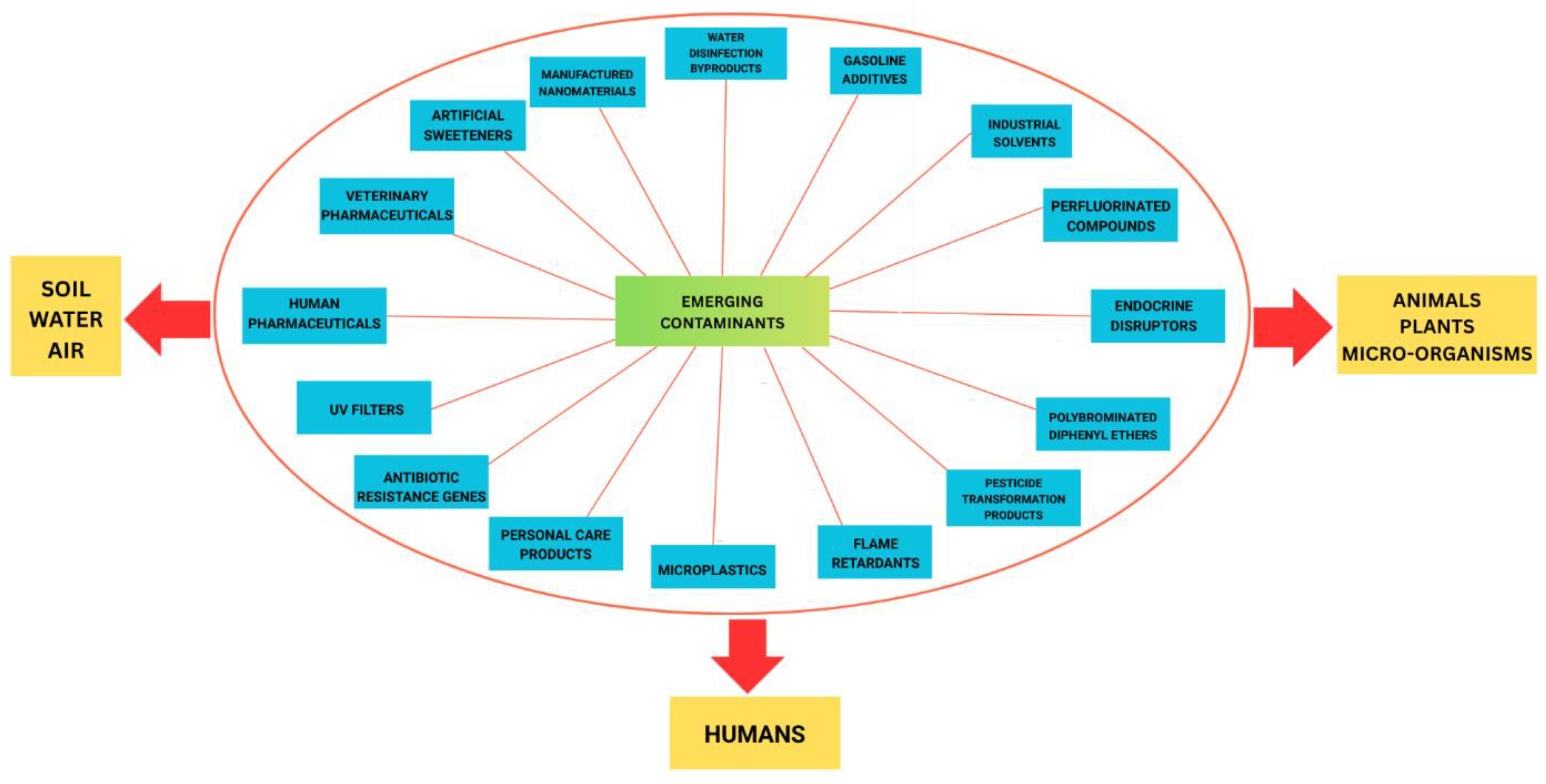
Figure 2.
Top 20 countries with the highest per capita plastic waste generation per year. Data source: Plastic Overshoot Day Report (2025).
Figure 2.
Top 20 countries with the highest per capita plastic waste generation per year. Data source: Plastic Overshoot Day Report (2025).
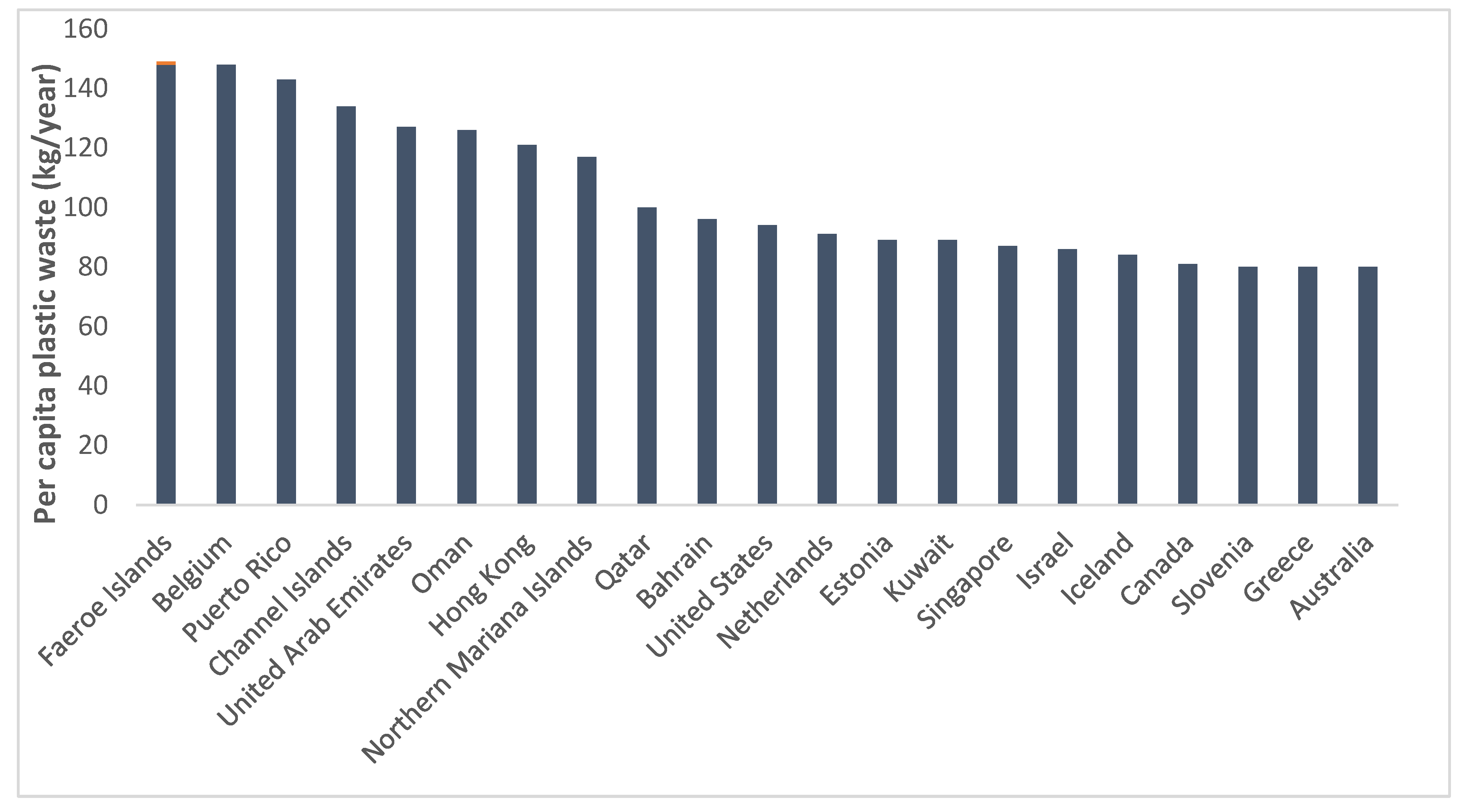

Table 1.
The top 10 pharmaceutical and personal care products found in coastal waters.
| PPCP | Found in | Reference |
|---|---|---|
| Sulfamethoxazole | Red sea stony corals Seawater of Eastern Cape coastline, South Africa |
(Navon et al., 2024) (Netshithothole & Madikizela, 2024) |
| Oxybenzone (Benzophenone-3) | Coastal waters of Oahu, Hawaii, Iberian coastal marine regions | (Mitchelmore et al., 2019) (Mozas-Blanco et al., 2023) |
| Caffeine | Southern North Sea coastal waters | (Adenaya et al., 2024) |
| Diclofenac | Mombasa Creeks & Ghazi Bay, Kenya False Bay, Cape Town, South Africa |
(Wanjeri et al., 2025) (Ojemaye & Petrik, 2022) |
| Ibuprofen | East London coastline, South Africa | (Netshithothole & Madikizela, 2024) |
| Acetylsalicylic acid (aspirin) / Salicylic acid | Cape Town, South Africa | (Newman et al., 2024) |
| Trimethoprim | Laizhou Bay, Bohai Sea, China | (Han et al., 2021) |
| Tetracyclines (e.g., tetracycline, oxytetracycline, chlortetracycline, doxycycline) | Coastal waters and surface sediments of the Yangtze River Estuary, Beibu Gulf, China Mahdia coastline, Mediterranean Tunisia |
(Liu et al., 2023) (Leng et al., 2020) (Fenni et al., 2025) |
| Octocrylene | South Carolina Oahu, Hawaii Balearic Islands, Mediterranean Sea |
(Bratkovics et al., 2015) (Mitchelmore et al., 2019) (Agawin et al., 2024) |
| Zinc Oxide (ZnO) | Surface microlayer nearshore water, Majorca Island (Spain) | (Tovar-Sánchez et al., 2013) |
Table 2.
Impact of emerging contaminants on coral reef species.
| Contaminant Group | Contaminant | Coral Species | Impact on coral health | Reference |
|---|---|---|---|---|
| Pharmaceutical and Personal care Products (PPCPs) | Climbazole | Galaxea fascicularis | Decline in photosynthetic efficiency, triggered oxidative stress | Sun et al., 2024) |
| Sunscreen formulations (ZnO) | Stylophora pistillata | Coral bleaching, loss of photosynthetic capacities | (Fel et al., 2019) | |
| Oxybenzone (Benzophenone-3) | Stylophora pistillata | Induced bleaching, DNA damage, skeletal malformation, high larval mortality | (Downs et al., 2015) | |
| Triclosan | Porites lutea | Lowers the density and Chlorophyll A content of the symbiotic zooxanthellae, impaired antioxidant enzyme activity | (Liang et al., 2024) | |
| Ofloxacin (Fluoroquinolone) | Galaxea fascicularis | Reduce antioxidant levels in the algal symbionts | (Yan et al., 2025) | |
| Doxycycline (DOX) | Sarcophyton trocheliophorum | Altered bleaching indicators, oxidative stress markers, enzyme and detox responses | (Xu et al., 2023) | |
| Microplastics | Pocillopora damicornis | Activates its apoptosis, disturb its symbiosis | (Tang et al., 2021) | |
| Lophelia pertusa | Decline in skeletal growth rates, reduces calcination | (Chapron et al., 2018) | ||
| Heliopora coerulea | Negative impacts on growth parameters, reduced calcification rates | (Reichert et al., 2019) | ||
| Pseudodiploria clivosa | Reduced calcification and tissue surface area | (Hankins et al., 2021) | ||
| Endocrine disrupting chemicals | Estradiol | Montipora spp | Reduction of egg–sperm bundles | (Tarrant et al., 2004) |
| Estrone | Montipora spp | Increase in tissue thickness | ||
| Bisphenol A (BPA) | Amphiprion ocellaris | Decreased aggression, altered brain transcript levels, interfered with gonad morphology and sex hormone profile | (Gonzalez et al., 2021) | |
| Ethinylestradiol (EE2) | Amphiprion ocellaris | Interfered with sex hormones and altered expression of one transcript in the brain toward the female profile | (Gonzalez et al., 2021) |
Disclaimer/Publisher’s Note: The statements, opinions and data contained in all publications are solely those of the individual author(s) and contributor(s) and not of MDPI and/or the editor(s). MDPI and/or the editor(s) disclaim responsibility for any injury to people or property resulting from any ideas, methods, instructions or products referred to in the content. |
© 2025 by the authors. Licensee MDPI, Basel, Switzerland. This article is an open access article distributed under the terms and conditions of the Creative Commons Attribution (CC BY) license (http://creativecommons.org/licenses/by/4.0/).
Copyright: This open access article is published under a Creative Commons CC BY 4.0 license, which permit the free download, distribution, and reuse, provided that the author and preprint are cited in any reuse.


