

Submitted:
15 November 2025
Posted:
18 November 2025
You are already at the latest version
Abstract
Background/Objectives: Academic sponsored cancer clinical trials (ACCTs) are essential for advancing patient-centered care, particularly in areas underserved by commercial re-search. In Canada, the Canadian Cancer Clinical Trials Network (3CTN) was established to support high-quality multi-centre ACCTs. This study evaluates the outcomes and im-pact of trials supported by 3CTN between 2015 and 2024. Methods: We conducted a descriptive analysis of 350 ACCTs that were closed to recruitment and had primary completion dates within the study period. Trial characteristics, results, publication rates, and in-corporation into clinical guidelines were assessed using registry data, peer-reviewed publications, and structured searches of oncology guidelines. Results: Among the 350 complete trials, 116 were Phase III studies. Of these, 36% were incorporated into clinical practice guidelines and 7% were likely to be incorporated. Overall, 81% of trials were published in journals, and 45% posted results in public registries. Trials addressed diverse cancer types, with notable contributions in rare cancers and vulnerable populations. Conclusions: 3CTN supported ACCTs had high completion and reporting rates, with substantial influence on clinical practice. These findings highlight the importance of sustained infrastructure and funding ACCTs and their role in improving cancer care. The impact achieved with relatively modest investment from public funders underscores the value of sustained investment in investigator-led research and coordinated network support.
Keywords:
academic cancer clinical trials
; Canadian Cancer Clinical Trials Network (3CTN)
; Phase III trials
; rare cancers
; trial outcomes
; trial reporting
; cancer research impact
; evidence‐based oncology
; clinical practice guidelines
; cancer guidelines
1. Introduction
Clinical trials are essential for advancing scientific knowledge, improving cancer care, and providing patients with access to innovative therapies [1]. Among these, cancer clinical trials led by academic investigators (ACCTs), and cooperative clinical trial groups are distinct in their purpose from industry-sponsored trials which are often driven by product development pipelines. Academic led trials often focus on underexplored clinical questions, rare cancers, real-world effectiveness of interventions, unmet clinical needs, or patient-centered outcomes such as quality of life assessments [2,3].
The influence of ACCTs on clinical practice has been significant, driving advances in screening, prevention and treatment approaches, including combination chemotherapy regimens, multimodality therapies and treatments of rare cancers. In the United States, 45.1% of National Cancer Institute Clinical Trials Network (NCTN) contributed to clinical guidelines or drug approvals [4]. In Canada, 62.8% of Phase III trials sponsored by the Canadian Cancer Trials Group (CCTG), were cited in clinical guidelines [5]. Despite their clinical and scientific value, ACCTs can face added resource constraints due to funding limitations and lower budgets as well as accrual challenges [6,7,8]. A lack of core funding to support clinical trial unit operations and increased expectations for institutional cost recovery have tended to favour participation in industry sponsored trials [9].
In response to observed year-over-year declines in Canada, in the number of new ACCTs, site participation and accruals to open trials [2], the Canadian Cancer Clinical Trials Network (3CTN, Network) was established in 2014 through public funding. Currently, there are 38 adult and 13 pediatric member cancer centers and hospitals located in 8 Canadian provinces. Member centres, organized into local-regional nodes overseen by the larger tertiary cancer centres, commit to participating in a portfolio of ACCTs (the 3CTN ‘Portfolio’). All trials are multicentered, have undergone peer review and some funding to support trial activities. Participating members report their Portfolio ACCT performance on a quarterly basis; members also participate in collaborative initiatives to improve the quality and efficient performance of trials opened locally. A central Coordinating Centre serves as the administrative and communication hub, providing systems support, oversight of data reporting processes, project coordination, and a comprehensive, accessible library of data informatics, best practice tools and resources.
To help ensure a robust Canadian ACCT ecosystem, Portfolio trial candidates are required to be peer-reviewed, academic-sponsored, interventional, and multicentered. The 3CTN governance and operating frameworks enable creation of relevant strategic priorities. Provincial core funding support for member centre trial units in each region creates capacity to achieve aligned objectives while incentive funding from the national funder can be earned by centres for surpassing performance targets aligned with the Network’s overall strategic goals for accrual and rapid trial activation. Over the course of ten years, funders provided an average of approximately $4.3 million annually, primarily from federal and provincial public sources. This represents the largest and most sustained investment in cancer clinical trials conduct in Canada.
Since its inception, there have been over 850 trials included in the 3CTN Portfolio. With member trial performance data, 3CTN holds one of the most comprehensive ACCT datasets in Canada. While Canada contributes strongly to global oncology research, there has not been a systematic assessment of ACCT outcomes and impact at the national level. This study addresses that gap.
This study goals were to assess the outcomes and impact of ACCTs supported by 3CTN between 2015 and 2024. Specifically, we:
- Identified trends and gaps in completed trials, including patterns in evidence dissemination and translation into clinical practice.
- Assessed the contributions of 3CTN-supported trials to peer-reviewed publications and clinical treatment guidelines.
2. Materials and Methods
This exploratory descriptive analysis used data from the 3CTN ACCT Portfolio. Trials that were closed to recruitment and had primary completion dates between 2015 and 2024 were included. This timeframe aligns with the period following the establishment of the 3CTN Portfolio and provides time for trial completion and publication. The data selection process is illustrated in Figure 1. The workflow used to assess practice-changing impact is detailed in Appendix Figure A1.
Trial status, design, and results data were extracted from the Portfolio database, ClinicalTrials.gov and PubMed. Manual searches were supplemented by a machine learning tool, which was used intermittently to validate linkages between trials and resulting publications [10]. Although not central to the analysis, these tools supported quality control and may offer future opportunities for automation.
Clinical impacts were assessed primarily for Phase III trials. Structured searches of North American and European oncology guidelines were conducted (see Appendix A2). Trials were considered “incorporated into practice” if cited in the evidence or recommendations sections of guidelines. Additionally, we defined the classification “likely to be incorporated into practice” for cases where a peer-reviewed source explicitly stated that the trial results are informing clinical decisions, are currently influencing practice, or are likely to be incorporated into clinical guidelines in the future. Regulatory impact was captured through FDA and Health Canada drug approval announcements.
Trial results were classified as positive, negative, or inconclusive based on primary outcome reporting. Detailed definitions and classification criteria are provided in Appendix A1. We summarized trial characteristics, outcomes, and reporting rates using counts and percentages. Where relevant, confidence intervals were calculated to indicate the precision of estimates.
3. Results
3.1. Trial Characteristics
Between 2015-2024, 350 ACCTs (41% of the 3CTN Portfolio) closed to recruitment, including 116 completed Phase III trials and 31 (9%) that closed prematurely with the most often cited reason being poor accrual (Appendix Table A3). Most trials evaluated drug therapies, were randomized and involved diverse cancer types and settings. Trials evaluating precision medicine strategies were common (68%) while 33% addressed rare cancers and 22% involved vulnerable populations (see Appendix Table A4 for the Characteristics of the Completed 3CTN Portfolio Trials 2015-2024).
3.2. Trial Outcomes
Of the 350 completed trials that were reviewed for results of the primary outcomes, 156 (44%) were classified as positive and 124 (35%) were negative and a small portion with inconclusive (1%) and no results reported (20%). Of the 68 trials with no results reported, 39 (57%) were closed between 2021 and 2024. Figure 2 highlights a peak in trial completions in 2020, followed by a decline in subsequent years, which may reflect broader trends such as the impact of the COVID-19 pandemic on trial performance or capacity or changes in research priorities among some sponsors and site institutions.
3.2.1. Reporting and Publication Rates
Rates for posting of Portfolio trial results in registries as well as publication in scientific journals are summarized in Table 2. Among all trials, 45% had reported results posted in a public registry, primarily on ClinicalTrials.gov. 81% published their findings as abstracts or full articles, with 117 trials being published in high impact journals, defined as those ranked within the top 10% based on 2022 CiteScores. The top three journals were Journal of Clinicla Oncology,JAMA Oncology and New England Journal of Medicine.
3.2.2. Practice Guideline Incorporation
Of 116 completed Phase III ACCTs, 36% (42/116) were incorporated into practice guidelines and 7% (9/116) were marked as likely to be incorporated into practice, as they were cited in practice guidelines for future consideration or contributed to new drug approvals. Of 43 positive Phase III clinical trials, 32 (74.4%) were either already, or likely to be incorporated into practice. Both positive and negative results contributed to evidence-based care (see Figure 3 for the distribution of the practice changing trials). Although Phase III trials were our key focus, we also identified a small portion of Phase II and Phase IV trials that have led to changes in practice. For the full review of the completed trials, refer to Figure 1.
3.2.3. Sponsorship and Practice-Changing Impact
Among the 116 completed Phase III trials in the 3CTN Portfolio, the two largest academic sponsors were the U.S. National Cancer Institute (NCI) and the Canadian Cancer Trials Group (CCTG). NCI sponsored 67 adult and pediatric trials (58%), while CCTG sponsored 39 trials (33%), reflecting the important role of cooperative groups in supporting academic oncology research.
Importantly, 42 trials (36%) led to changes in clinical practice through incorporation into guidelines or contribution to drug approval decisions. Of these, 31 trials (74%) were NCI-funded, highlighting a strong association between NCI sponsorship and practice-changing outcomes.
3.3. Recruitment Contributions from Network Sites
3CTN member sites contributed 17% of overall patient recruitment to completed global clinical trials. Contributions grew over time, climbing to 33% in 2024, highlighting the Network’s role in the accrual success of ACCT trials (Table 3).
4. Discussion
This review highlights the significant contributions of 3CTN Portfolio ACCTs to advancing scientific knowledge and evidence-based cancer care. Portfolio trials reflect a broad spectrum of high quality research, with a notable emphasis on rare cancers, supportive care, and vulnerable populations (i.e. pediatric or elderly patients) [11], areas often underserved by industry-sponsored trials. Our finding that 36% of Phase III trials were incorporated into guidelines or contributed to drug approvals compares favorably with existing literature. For example, Elimova et al. reported that 20% of positive Phase III trials published in high-impact journals between 1990–2010 were incorporated into practice guidelines [12]. While not directly comparable due to differences in inclusion criteria and timeframe, our analysis which encompasses both positive and negative trials shows that academic trials supported by 3CTN have had a substantial and diverse impact on clinical practice. Practice-changing contributions were often seen through repurposing, optimization of treatment regimens, or patient management strategies and were most prevalent in studies involving hematologic, breast, genitourinary, and gynecologic cancers. A selection of notable practice-changing trials is listed in Appendix Table A5.
To make these impacts visible and accessible to stakeholders, 3CTN developed an interactive outcome and publication search board for all Portfolio trials closed to recruitment. Built using Microsoft Power BI, this publicly available tool enhances transparency and enables users to explore trial-related publications, posted results, and impacts on clinical guidelines. It serves as a centralized resource for Network stakeholders. The full dataset and dashboard are available on the 3CTN website [13].
Canadian participation in NCI-sponsored trials has remained consistently high over the past decade, reflecting strong international collaboration and the strategic alignment between Canadian trial units and U.S. cooperative groups. The impact of this collaboration is substantial: of the 42 Phase III trials that led to changes in clinical practice, 74% (31 trials) were NCI-funded. This underscores the pivotal role of NCI sponsorship in generating practice-changing evidence and highlights Canada’s meaningful contribution to these global efforts.
Despite persistent challenges and limitations affecting our national trial system [9,14], the number of Canadian-led trials and recruitment to NCI-funded studies have increased. At the same time, Canadian-led trials have demonstrated leadership in areas often underserved by industry-sponsored research, including rare cancers, supportive care, systemic therapies, and radiotherapy. These contributions reflect the strength of Canada’s academic trial ecosystem and the value of sustained support for investigator-led research.
Approximately 280 (80%) completed trials had results reported at the time of review. Of the remainder, nearly 145 (60%) were closed between 2021 and 2024, suggesting that reporting delays may be due to factors such as ongoing analysis, and delays in publication processes including negative decisions. Overall, improvements in recruitment and outcomes reporting rates for completed trials occurred during the 3CTN period suggest a contributing role for the Network. 3CTN’s supportive infrastructure and initiatives designed to overcome barriers to ACCT conduct in Canada were aimed to increase participation of clinicians and patients and enable completion of trials and subsequent publication. The substantial impact achieved with a relatively modest annual budget demonstrates the value of a coordinated national program to support academic cancer clinical trials.
Journal publication rates may improve through enhancing recruitment, timeliness of reporting and adoption of innovative trial methods. Over time, the use of adaptive and master protocols for rare cancer histology or molecularly defined subgroups increased, as did decentralized trial conduct and digital tools for data collection. Trials testing precision medicine strategies also became more common. In addition, incenting researchers and journals to publish all trials, including those with negative outcomes. Future opportunities to improve trial accrual and completion include applied use of artificial intelligence to support translation of patient information materials into multiple languages to promote equitable access and improve screening of medical records against complex inclusion criteria.
Our analysis depended on trial performance data reported by 3CTN sites and available registry data, which varied in completeness. Data was reviewed and validated to the extent possible. Publication and guideline searches, while extensive and labor intensive, may have missed citations due to inconsistent and/or delayed referencing in guidelines. Use of natural language processing (NLP) and machine learning tools was incorporated for supplemental data validation activities and illustrated the potential for automating and enhancing these tasks. However, further validation will be required before routine use. In addition, recently completed trials may not yet have been included in practice guidelines, underestimating impact. Our use of publications and citations to assess impact, while important, does not fully capture broader policy or patient-level outcomes. Despite recent efforts to promote publication of negative results [15,16], further improvements are needed to ensure that all trial outcomes contribute to scientific knowledge and resource optimization [17].
5. Conclusions
3CTN-supported ACCTs have high completion and reporting rates, with substantial influence on practice guidelines and patient care. Their focus on identifying better treatments for patients with rare cancers, supportive care, and treatments for vulnerable populations highlight the value of ACCTs. 3CTN and member cancer centre trial units require long-term infrastructure support to sustain and expand upon performance improvements and beneficial impacts realized to date. Recognizing the essential role of the Network in supporting these achievements is critical. Coupled with sustained investments in academic cancer trials, system innovation, performance improvement, and strategic priorities for equitable trial access, Canada can leverage its strengths and position itself as a global leader in advancing patient-centered oncology research. Doing so is not only a scientific imperative, but also a strategic opportunity to shape the future of cancer care for all Canadians.
Author Contributions
Conceptualization, R.Y.X., D.K., S.S. and J.E.D.; methodology, R.Y.X., D.K., V.P., G.R.P. and J.E.D.; formal analysis, R.Y.X.,V.P.,J.S., G.R.P., and J.E.D; data curation, R.Y.X., V.P., R.C., and J.S.; writing—original draft preparation, R.Y.X., D.K. ,V.P., J.S., S.S., G.R.P and J.E.D.; Visualization,. R.Y.X., D.K., V.P., J.S., R.C., and S.S; Validation, R.Y.X., V.P., J.S., and R.C.; Supervision, S.S. and J.E.D.; Project administration, R.Y.X. and D.K; writing—review and editing, R.Y.X., D.K., V.P., G.R.P., J.S., R.C., S.S. and J.E.D. All authors have read and agreed to the published version of the manuscript.
Funding
Support for 3CTN and the production of this publication have been made possible through collaboration and financial support provided from the Canadian Partnership Against Cancer Corporation: 12208, and Health Canada, as well as the Ontario Institute for Cancer Research.
Institutional Review Board Statement
Not applicable.
Informed Consent Statement
Not applicable.
Data Availability Statement
The data presented in this study are contained within this article and also in 3CTN Portfolio Outcomes and Publications Search Board: https://3ctn.ca/outcomes-and-publication-search/ .
Acknowledgments
3CTN would like to acknowledge the support and contribution of its funders, partners and member centres. The authors would like to thank Dr. Joseph Pater, Chair, 3CTN Portfolio Committee and its members as well as Research Assistants Djarren Tan and Vithusha Vijayathas, for their support in this project. .
Conflicts of Interest
The authors declare no conflicts of interest. The funders had no role in the design of the study; in the collection, analyses, or interpretation of data; in the writing of the manuscript; or in the decision to publish the results.
Abbreviations
The following abbreviations are used in this manuscript:
| 3CTN | Canadian Cancer Clinical Trials Network |
| ACCT | Academic Cancer Clinical Trials |
| ALL | Acute Lymphoblastic Leukemia |
| ASCO | American Society of Clinical Oncology |
| ASTRO | American Society for Radiation Oncology |
| CCO | Cancer Care Ontario |
| CCTG | Canadian Cancer Trials Group |
| CNS | Central Nervous System |
| COG | Children’s Oncology Group |
| COVID-19 | Coronavirus Disease 2019 |
| CMA | Canadian Medical Association |
| DSMB | Data Safety Monitoring Board |
| EANM | European Association of Nuclear Medicine |
| ESMO | European Society for Medical Oncology |
| GU | Genitourinary |
| ML-DS | Myeloid Leukemia of Down syndrome |
| NCCN | National Comprehensive Cancer Network |
| OICR | Ontario Institute for Cancer Research |
| SIOPE | European Society for Paediatric Oncology |
| SNMMI | Society of Nuclear Medicine and Molecular Imaging |
Appendix A
Appendix A.1 Definitions and Flow Diagram of Impact Tracking Process for Practice Change Assessment
Definitions of the Study Results:
Positive: Results are reported in the literature and demonstrate a positive primary outcome:
- For phase III trials, a positive primary outcome was defined as a statistically significant (p < 0.05, or per the study’s pre specified threshold) and favourable effect for the experimental treatment compared with a placebo or active comparator.
- For earlier phase trials, a positive primary outcome was defined as sufficient efficacy/safety evidence to justify progression to a later phase trial, as stated by the authors.
Negative: Results are reported in the literature and demonstrate a negative primary outcome, meaning:
- For phase III trials, a negative primary outcome was defined as an effect that is not statistically significant or is statistically significant but favours the control arm.
- For earlier phase trials, a negative primary outcome was defined as insufficient evidence to justify progression to a later phase trial.
Inconclusive: Results were classified as inconclusive when the direction or significance of the primary outcome could not be determined from the available data, including cases where the study was prematurely terminated prior to reaching target accrual.
No Results Reported including the following:
- Not available: No peer reviewed results found, and the primary study completion date is < 24 months ago.
- No results: No peer reviewed results found, and the primary study completion date is ≥ 24 months ago.
- Pending final publication: No final, peer reviewed results for the entire study population, but interim or subgroup results are available, or a peer reviewed source explicitly states that results are pending or expected.
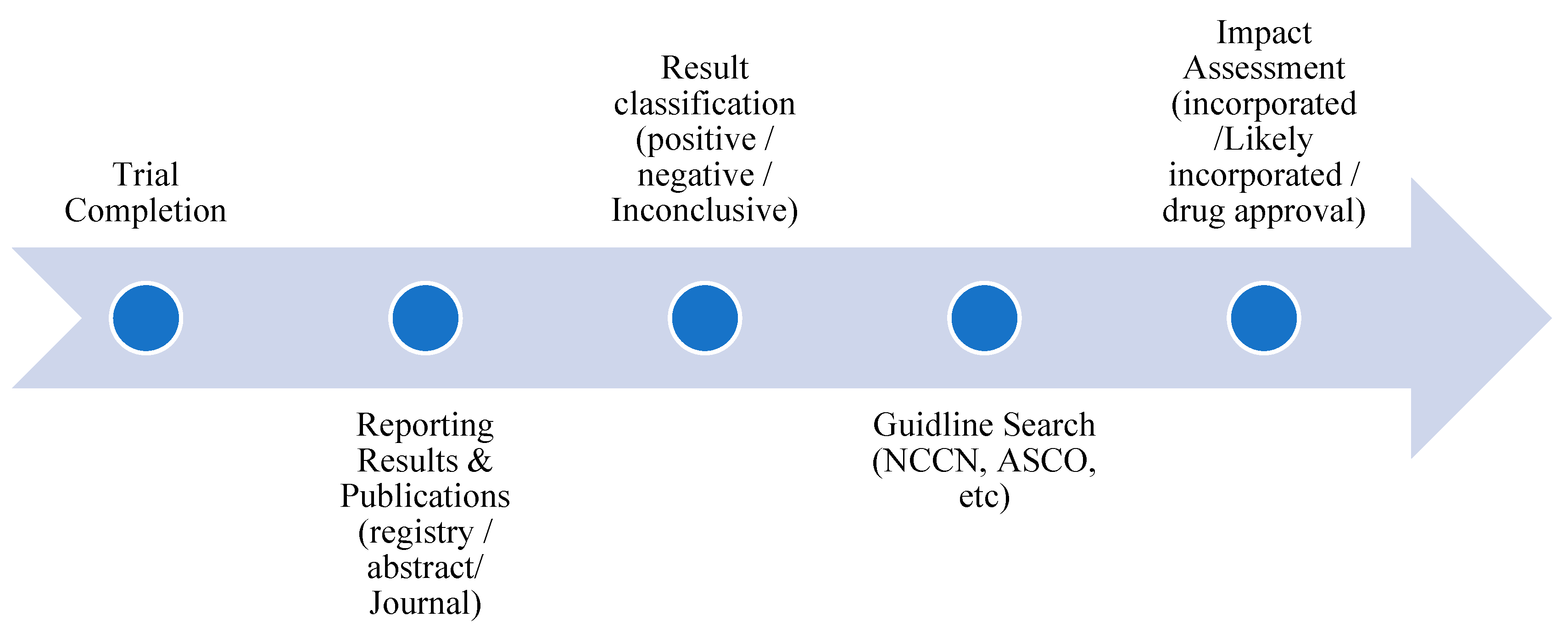
Appendix A2. Oncology Guidelines Reviewed for Practice Change Assessment
Guideline inclusion was assessed by reviewing recommendations from the following major oncology, general medical, and specialty-specific international bodies:
-
National Comprehensive Cancer Network (NCCN)
- ⚬
- via both the JNCCN journal (https://jnccn.org )
- ⚬
- and the official NCCN guideline PDFs (https://www.nccn.org/professionals/physician_gls ).
-
American Society of Clinical Oncology (ASCO)
- ⚬
- ⚬
- and ASCO Publications (https://ascopubs.org ) for joint or collaborative guidelines updates.
- American Society for Radiation Oncology (ASTRO) Guidelines
- European Society for Paediatric Oncology (SIOP Europe or SIOPE)
- International Childhood Liver Tumors Strategy Group – for pediatric liver cancer
- Cancer Care Ontario (CCO)
- American Urological Association Guidelines
- European Association of Urology – for prostate and bladder cancer.
- European Society for Radiotherapy and Oncology
- European Society for Medical Oncology (ESMO) – for European oncology practice
- European Association of Neuro-Oncology – for neuro-oncology
- Canadian Medical Association (CMA)
- Trip Database- https://www.tripdatabase.com – aggregates global guidelines.
- EANM/SNMMI Joint Guidelines for trials involving diagnostic imaging. These guidelines are published by the European Association of Nuclear Medicine and the Society of Nuclear Medicine and Molecular Imaging.
- The American Society for Transplantation and Cellular Therapy Practice Guidelines
- Society of American Gastrointestinal and Endoscopic Surgeons - GI Surgery for all GI Surgeons
Note: Searches will include both full guideline documents and peer-reviewed guideline updates to ensure that trials cited in collaborative or journal-based recommendations (e.g., ASCO–CCO updates, JNCCN articles) are captured. In the case of multiple guidelines are mentioned, we will cite the primary North American guidelines such as NCCN, ASCO and ASTRO.

Table A3.
Terminated and Withdrawn Trials by Phase (2015–2024).
| Reasons Cited for Termination | Phase I | Phase II | Phase III | Phase IV |
Grand Total |
| Drug company decision | 2 | 1 | 3 | ||
| DSMB review | 1 | 1 | |||
| Lack of funding | 1 | 1 | |||
| Negative study | 2 | 2 | |||
| Poor accrual | 3 | 14 | 1 | 1 | 19 |
| Staffing issues | 1 | 1 | |||
| Unacceptable Toxicity | 1 | 1 | |||
| Unknown | 2 | 2 | |||
| COVID-19 pandemic | 1 | 1 | |||
| Total | 3 | 22 | 4 | 2 | 31 |
Table A4.
Characteristics of completed 3CTN Portfolio trials 2015-2024.
| Trial Characteristics | Analysis | Phase III | Overall |
| Number of trials | N | 116 | 350 |
| Study Phase | I II III IV |
- - 116 - |
29(8%) 196(56%) 116(33%) 9(3%) |
| Disease Site | Bone Brain/CNS Breast Gastrointestinal Genito-Urinary Gynecological Head and neck Hematology Lung Neuroblastoma Other Sarcoma Skin / Melanoma |
1(1%) 8(7%) 16(14%) 11(9%) 17(15%) 12(10%) 3(3%) 23(20%) 10(9%) 1(1%) 9(8%) 4(3%) 1(1%) |
5(1%) 19(5%) 49(14%) 32(9%) 56(16%) 25(7%) 11(3%) 55(16%) 32(9%) 7(2%) 43(12%) 9(3%) 7(2%) |
| Country of Sponsor | Canada United States Other |
33(28%) 71(61%) 13(11%) |
192(55%) 142(41%) 16(5%) |
| Sponsor | NCI(USA) CCTG COG |
67(58%) 39 (33%) 21 (6%) |
123 (35%) 87 (25%) 41(12%) |
| Special Interest | Lifestyle Interventions Novel therapy Rare cancer setting Vulnerable populations Precision medicine |
4(3%) 9(8%) 39(33%) 26(22%) 80(68%) |
10(3%) 69(20%) 109(31%) 71(20%) 80(23%) |
| Interventions | Behavioral Drug Device Radiation Procedure Biological |
3(3%) 75(64%) 3(3%) 39(33%) 0(0%) 24(21%) |
13(4%) 232(66%) 8(2%) 82(23%) 58(17%) 51(15%) |
| Type of Design | Basket Trial Platform Trial Umbrella Trial Low complexity method Multiple steps |
0101 13 |
2 5 1 5 22 |
| Completion status | Closed to recruitment Completed Prematurely completed (terminated or withdrawn) |
60(52%) 52(45%) 4(3%) |
129(37%) 190(54%) 31(9%) |
Table A5.
Notable Phase III Trials in the 3CTN Portfolio.
| Trial | Practice-defining trial outcome | Disease Site | Active recruitment | NCT Number | Recruitment Contribution (%) | Publication | Practice Guidelines Changed |
| NRG-CC001 |
Recommended HA-WBRT plus memantine to reduce neurocognitive decline in patients with brain metastases. | Brain Metastases | 2016 - 2018 | NCT02360215 |
8.9% (46/518) |
[18] | NCCN [19] |
| (CCTG) MA.36 / Olympia |
Adjuvant Olaparib recommended for HER2-negative, BRCA-mutated early breast cancer with residual disease after neoadjuvant chemotherapy, based on Olympia trial results. FDA approves Olaparib for adjuvant treatment of high-risk early breast cancer. |
Breast | 2015 - 2019 | NCT02032823 | 1.9% (35/1837) |
[20] |
NCCN [21] |
| OCOG-2016-PETABC |
PETABC trial supported guideline recommendation for using 18F-FDG PET/CT in staging stage IIB–III breast cancer, showing improved detection of stage IV disease and influencing treatment decisions | Breast | 2016 -2022 | NCT02751710 | 100% (369/369) |
[22] |
EJNMMI [23] |
| (CCTG) MA.37 / PALLAS |
PALLAS trial showed no benefit of adjuvant palbociclib, leading to guideline recommendations against its use in early breast cancer. | Breast | 2017-2025 | NCT02513394 | 2.6% (152/5796) |
[24] | NCCN [25] |
| (EORTC) 1333-GUCG/PEACE III |
Combining radium-223 with enzalutamide for mCRPC showed improved progression-free survival and potential overall survival benefit. | GU/Prostate | 2018 - 2023 | NCT02194842 | 4.5% (20/446) |
[26] | NCCN [27] |
| GOG – 0275 |
For low-risk gestational trophoblastic neoplasia, supporting methotrexate and actinomycin-D are effective first-line single-agent therapies. |
Gyne/Gestational Trophoblastic | 2015 - 2017 | NCT01535053 | 3.5% (2/57) | [28] | NCCN [29] |
| (CCTG) ENC.1 / NRG-GY018 / MK-3475-868 | Pembrolizumab plus chemotherapy as a new standard for advanced or recurrent endometrial cancer, regardless of mismatch repair status; led to FDA approval and guideline inclusion. | Gyne/Endometrial | 2021 - 2022 | NCT03914612 | 3.7% (30/813) |
[30] | NCCN [31] |
| (CCTG) CLC.2 / Alliance A041202 |
Ibrutinib was superior to Bendamustine–rituximab for older patients with untreated CLL, supporting guideline recommendations and FDA-approved frontline use. | Chronic Lymphocytic Leukemia (CLL) | 2015 – 2016 | NCT01886872 |
7.9% (43/547) |
[32] | NCCN [33] |
| (COG) AHOD1331 |
Use of brentuximab Vedotin with AVE-PC for high-risk pediatric Hodgkin lymphoma showed superior efficacy and reduced need for radiation. | Hodgkin lymphoma | 2015 - 2019 | NCT02166463 |
6.5% (39/600) |
[34] | NCCN [35] |
| (COG) AALL1331 |
For relapsed pediatric B-ALL, Blinatumomab was as a treatment option despite early trial termination and no significant difference in disease-free survival. | B-ALL |
2015 - 2019 | NCT02101853 | 7.9% (53/669) | [36] | NCCN [37] |
| (COG) AAML1531 |
For ML-DS, supporting risk-based treatment and use of HD-AraC to improve outcomes in standard-risk patients. | ML-DS | 2016 - 2022 | NCT02521493 |
5.4% (15/280) | [38] | SIOP Europe [39] |
| (CCTG) ALC.4 (ECOG E1910) |
Adding Blinatumomab to consolidation chemotherapy for newly diagnosed B-lineage ALL, improving overall survival and establishing a new standard for BCR::ABL1-negative patients; | ALL | 2017 - 2019 | NCT02003222 | 1.8% (9/488) |
[40] | NCCN [41] |
| (CCTG) HDC.1/SWOG S1826 |
Nivolumab + AVD as first-line treatment for advanced-stage Hodgkin lymphoma, showing better progression-free survival than BV + AVD; now a Category 1 recommendation in NCCN guidelines. | Hodgkin Lymphoma | 2021 - 2022 | NCT03907488 | 1.8% (18/994) | [42] | NCCN [43] |
| (EORTC) STRASS |
No overall benefit of preoperative radiotherapy for retroperitoneal sarcoma, but supported selective use in Liposarcoma. | Sarcoma | 2015 – 2017 | NCT01344018 |
4.5% (12/266) |
[44] | NCCN [45] |
| (CCTG) SRC.7 / Alliance A091105 |
Sorafenib significantly improved progression-free survival in desmoid tumors; now recommended in NCCN guidelines as a systemic therapy option. | Sarcoma | 2015 – 2016 | NCT02066181 | 5.7% (5/87) |
[46] | NCCN [45] |
| (CCTG) SC.24 |
SC.24 trial showed stereotactic body radiotherapy improved pain control over conventional radiotherapy for spinal metastases; cited in Ontario guidelines for spine SBRT planning and delivery. | Spinal Metastases | 2015 – 2019 | NCT02512965 | 76.4% (175/229) | [47] | CCO [48] |
References
- Medicine, I.o., A National Cancer Clinical Trials System for the 21st Century: Reinvigorating the NCI Cooperative Group Program, ed. S.J. Nass, H.L. Moses, and J. Mendelsohn. 2010, Washington, DC: The National Academies Press. 316.
- Canadian Cancer Research Alliance, Report on the State of Cancer Clinical Trials in Canada. 2011: Toronto.
- Schilsky, R.L., Publicly Funded Clinical Trials and the Future of Cancer Care. The Oncologist, 2013. 18(2): p. 232-238.
- Unger, J.M., et al., Association of National Cancer Institute–Sponsored Clinical Trial Network Group Studies With Guideline Care and New Drug Indications. JAMA Network Open, 2019. 2(9): p. e1910593-e1910593.
- Tang, P.A.P., Joe; Thiessen, Maclean Harvey; Lee-Ying, Richard M; Monzon, Jose Gerard; Cheung, Winson Y., Impact of Canadian Cancer Trials Group (CCTG) phase III trials (P3Ts), in 2018 ASCO Annual Meeting. 2018.
- Bennette, C.S., et al., Predicting Low Accrual in the National Cancer Institute’s Cooperative Group Clinical Trials. JNCI: Journal of the National Cancer Institute, 2015. 108(2).
- Hauck, C.L., et al., Trial-level factors affecting accrual and completion of oncology clinical trials: A systematic review. Contemp Clin Trials Commun, 2021. 24: p. 100843.
- Seruga, B., et al., Barriers and challenges to global clinical cancer research. Oncologist, 2014. 19(1): p. 61-7.
- Bentley, C., et al., Barriers to conducting cancer trials in Canada: an analysis of key informant interviews. Curr Oncol, 2020. 27(3): p. e307-e312.
- Smalheiser, N.R. and A.W. Holt, A web-based tool for automatically linking clinical trials to their publications. J Am Med Inform Assoc, 2022. 29(5): p. 822-830.
- Schoales, J., et al., A novel and comprehensive framework for categorizing and evaluating the potential impact of academic cancer clinical trials [Poster Presentation], in 2019 Canadian Cancer Research Conference. 2019: Ottawa, Ontario, Canada.
- Elimova, E., et al., Updating Reports of Phase 3 Clinical Trials for Cancer. JAMA Oncology, 2021. 7(4): p. 593-596.
- Canadian Cancer Clinical Trials Network. Outcomes and Publication Search. 2025 October 27, 2025]; Available from: https://3ctn.ca/outcomes-and-publication-search/.
- Dancey, J., Canada needs a national system for cancer clinical trials, in Toronto Star. 2024.
- Joober, R., et al., Publication bias: what are the challenges and can they be overcome? J Psychiatry Neurosci, 2012. 37(3): p. 149-52.
- Dickersin, K. and I. Chalmers, Recognizing, investigating and dealing with incomplete and biased reporting of clinical research: from Francis Bacon to the WHO. J R Soc Med, 2011. 104(12): p. 532-8.
- Allegra, C.J., P.J. Goodwin, and P.A. Ganz, Can We Find the Positive in Negative Clinical Trials? JNCI: Journal of the National Cancer Institute, 2019. 111(7): p. 637-638.
- Brown, P.D., et al., Hippocampal Avoidance During Whole-Brain Radiotherapy Plus Memantine for Patients With Brain Metastases: Phase III Trial NRG Oncology CC001. J Clin Oncol, 2020. 38(10): p. 1019-1029.
- Nabors, L.B., et al., Central Nervous System Cancers, Version 3.2020, NCCN Clinical Practice Guidelines in Oncology. Journal of the National Comprehensive Cancer Network J Natl Compr Canc Netw, 2020. 18(11): p. 1537-1570.
- Tutt, A.N.J., et al., Adjuvant Olaparib for Patients with BRCA1- or BRCA2-Mutated Breast Cancer. N Engl J Med, 2021. 384(25): p. 2394-2405.
- National Comprehensive Cancer Network. NCCN Clinical Practice Guidelines in Oncology (NCCN Guidelines) Breast Cancer. 2025 [cited 2025 July 31]; Version 1.2024:[Available from: https://www.nccn.org/professionals/physician_gls/pdf/breast.pdf.
- Dayes, I.S., et al., Impact of 18F-Labeled Fluorodeoxyglucose Positron Emission Tomography-Computed Tomography Versus Conventional Staging in Patients With Locally Advanced Breast Cancer. Journal of Clinical Oncology, 2023. 41(23): p. 3909-3916.
- Vaz, S.C., et al., Joint EANM-SNMMI guideline on the role of 2-[18F]FDG PET/CT in no special type breast cancer. European Journal of Nuclear Medicine and Molecular Imaging, 2024. 51(9): p. 2706-2732.
- Gnant, M., et al., Adjuvant Palbociclib for Early Breast Cancer: The PALLAS Trial Results (ABCSG-42/AFT-05/BIG-14-03). Journal of Clinical Oncology, 2022. 40(3): p. 282-293.
- Giordano, S.H., A.D. Elias, and W.J. Gradishar, NCCN Guidelines Updates: Breast Cancer. Journal of the National Comprehensive Cancer Network J Natl Compr Canc Netw, 2018. 16(5S): p. 605-610.
- Gillessen, S., et al., LBA1 A randomized multicenter open label phase III trial comparing enzalutamide vs a combination of Radium-223 (Ra223) and enzalutamide in asymptomatic or mildly symptomatic patients with bone metastatic castration-resistant prostate cancer (mCRPC): First results of EORTC-GUCG 1333/PEACE-3. Annals of Oncology, 2024. 35: p. S1254.
- Schaeffer, E.M., et al., Prostate Cancer, Version 4.2023, NCCN Clinical Practice Guidelines in Oncology. Journal of the National Comprehensive Cancer Network, 2023. 21(10): p. 1067-1096.
- Schink, J.C., et al., An international randomized phase III trial of pulse actinomycin-D versus multi-day methotrexate for the treatment of low risk gestational trophoblastic neoplasia; NRG/GOG 275. Gynecol Oncol, 2020. 158(2): p. 354-360.
- Abu-Rustum, N.R., et al., Gestational Trophoblastic Neoplasia, Version 2.2019, NCCN Clinical Practice Guidelines in Oncology. Journal of the National Comprehensive Cancer Network J Natl Compr Canc Netw, 2019. 17(11): p. 1374-1391.
- Eskander, R.N., et al., Pembrolizumab plus Chemotherapy in Advanced Endometrial Cancer. New England Journal of Medicine, 2023. 388(23): p. 2159-2170.
- Abu-Rustum, N.R., et al., NCCN Guidelines® Insights: Uterine Neoplasms, Version 3.2025: Featured Updates to the NCCN Guidelines®. Journal of the National Comprehensive Cancer Network, 2025. 23(8): p. 284-291.
- Woyach, J.A., et al., Ibrutinib Regimens versus Chemoimmunotherapy in Older Patients with Untreated CLL. New England Journal of Medicine, 2018. 379(26): p. 2517-2528.
- Wierda, W.G., et al., Chronic Lymphocytic Leukemia/Small Lymphocytic Lymphoma, Version 2.2024, NCCN Clinical Practice Guidelines in Oncology. Journal of the National Comprehensive Cancer Network, 2024. 22(3): p. 175-204.
- Castellino, S.M., et al., Brentuximab Vedotin with Chemotherapy in Pediatric High-Risk Hodgkin’s Lymphoma. New England Journal of Medicine, 2022. 387(18): p. 1649-1660.
- National Comprehensive Cancer Network. NCCN Clinical Practice Guidelines in Oncology (NCCN Guidelines) Pediatric Hodgkin Lymphoma. 2025 June 9, 2025 [cited 2025 July 31]; Version 2.2025:[Available from: https://www.nccn.org/professionals/physician_gls/pdf/ped_hodgkin.pdf.
- Brown, P.A., et al., Effect of Postreinduction Therapy Consolidation With Blinatumomab vs Chemotherapy on Disease-Free Survival in Children, Adolescents, and Young Adults With First Relapse of B-Cell Acute Lymphoblastic Leukemia: A Randomized Clinical Trial. JAMA, 2021. 325(9): p. 833-842.
- National Comprehensive Cancer Network. NCCN Clinical Practice Guidelines in Oncology (NCCN Guidelines) Pediatric Acute Lymphoblastic Leukemia. 2025 August 11, 2025 [cited 2025 August 15]; Version 1.2026:[Available from: https://www.nccn.org/professionals/physician_gls/pdf/ped_all.pdf.
- Hitzler, J., et al., High-dose AraC is essential for the treatment of ML-DS independent of postinduction MRD: results of the COG AAML1531 trial. Blood, 2021. 138(23): p. 2337-2346.
- Childhood Liver Tumors Strategy Group (SIOPEL). Standard Clinical Practice Recommendations for Acute Myeloid Leukemia (AML) in Children and Adolescents. 2020 [cited 2025 July 31]; Available from: https://siope.eu/media/documents/acute-myeloid-leukemia.pdf.
- Litzow, M.R., et al., Consolidation Therapy with Blinatumomab Improves Overall Survival in Newly Diagnosed Adult Patients with B-Lineage Acute Lymphoblastic Leukemia in Measurable Residual Disease Negative Remission: Results from the ECOG-ACRIN E1910 Randomized Phase III National Cooperative Clinical Trials Network Trial. Blood, 2022. 140(Supplement 2): p. LBA-1-LBA-1.
- National Comprehensive Cancer Network. NCCN Clinical Practice Guidelines in Oncology (NCCN Guidelines) Acute Lymphoblastic Leukemia. 2025 June 27, 2025 [cited 2025 July 31]; Version 2.2025:[Available from: https://www.nccn.org/professionals/physician_gls/pdf/all.pdf.
- Herrera, A.F., et al., Nivolumab+AVD in Advanced-Stage Classic Hodgkin’s Lymphoma. New England Journal of Medicine, 2024. 391(15): p. 1379-1389.
- National Comprehensive Cancer Network. NCCN Clinical Practice Guidelines in Oncology (NCCN Guidelines) Hodgkin Lymphoma. 2025 January 30, 2025 [cited 2025 July 31]; Version 2.2025:[Available from: https://www.nccn.org/professionals/physician_gls/pdf/hodgkins.pdf.
- Bonvalot, S., et al., STRASS (EORTC 62092): A phase III randomized study of preoperative radiotherapy plus surgery versus surgery alone for patients with retroperitoneal sarcoma. Journal of Clinical Oncology, 2019. 37(15_suppl): p. 11001-11001.
- von Mehren, M., et al., Soft Tissue Sarcoma, Version 2.2018, NCCN Clinical Practice Guidelines in Oncology. Journal of the National Comprehensive Cancer Network J Natl Compr Canc Netw, 2018. 16(5): p. 536-563.
- Gounder, M.M., et al., Sorafenib for Advanced and Refractory Desmoid Tumors. New England Journal of Medicine, 2018. 379(25): p. 2417-2428.
- Sahgal, A., et al., Stereotactic body radiotherapy versus conventional external beam radiotherapy in patients with painful spinal metastases: an open-label, multicentre, randomised, controlled, phase 2/3 trial. The Lancet Oncology, 2021. 22(7): p. 1023-1033.
- A. Sahgal, S.K., T. Nguyen, P. Maralani, J. Greenspoon, K. Linden, A. Pearce, F. Siddiqi, M. Ruschin, SBRT for Spine Expert Panel. Consensus-based organizational guideline for the planning and delivery of spine stereotactic body radiotherapy treatment in Ontario. 2023 April 21, 2023 [cited 2025 July 31]; 21-6:[Available from: https://www.cancercareontario.ca/en/guidelines-advice/types-of-cancer/74056.
Figure 1.
Data selection process for included trials (2015–2024). Data lock: October 9, 2025.
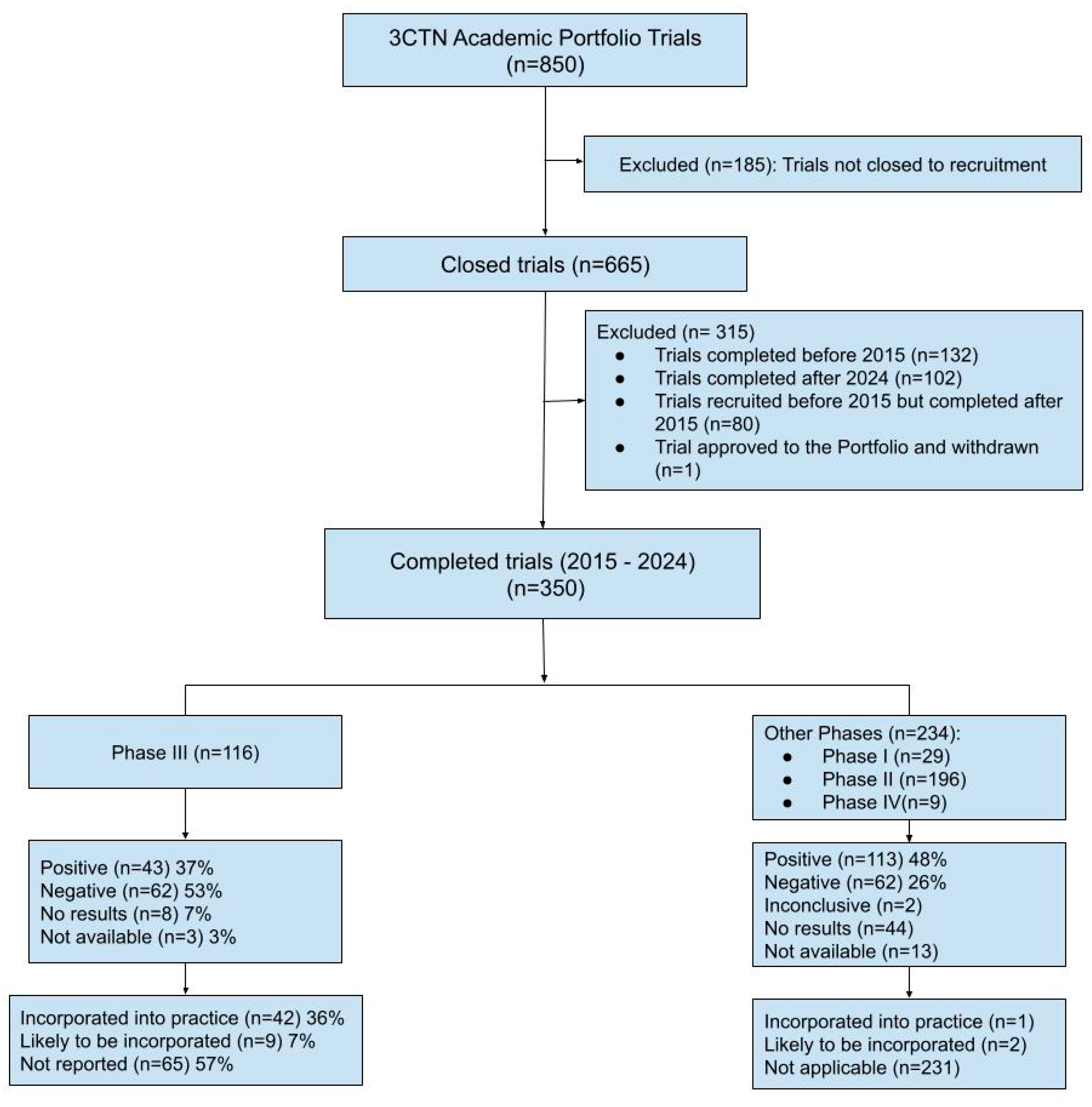
Figure 2.
Annual distribution of study results for completed trials (N=350).
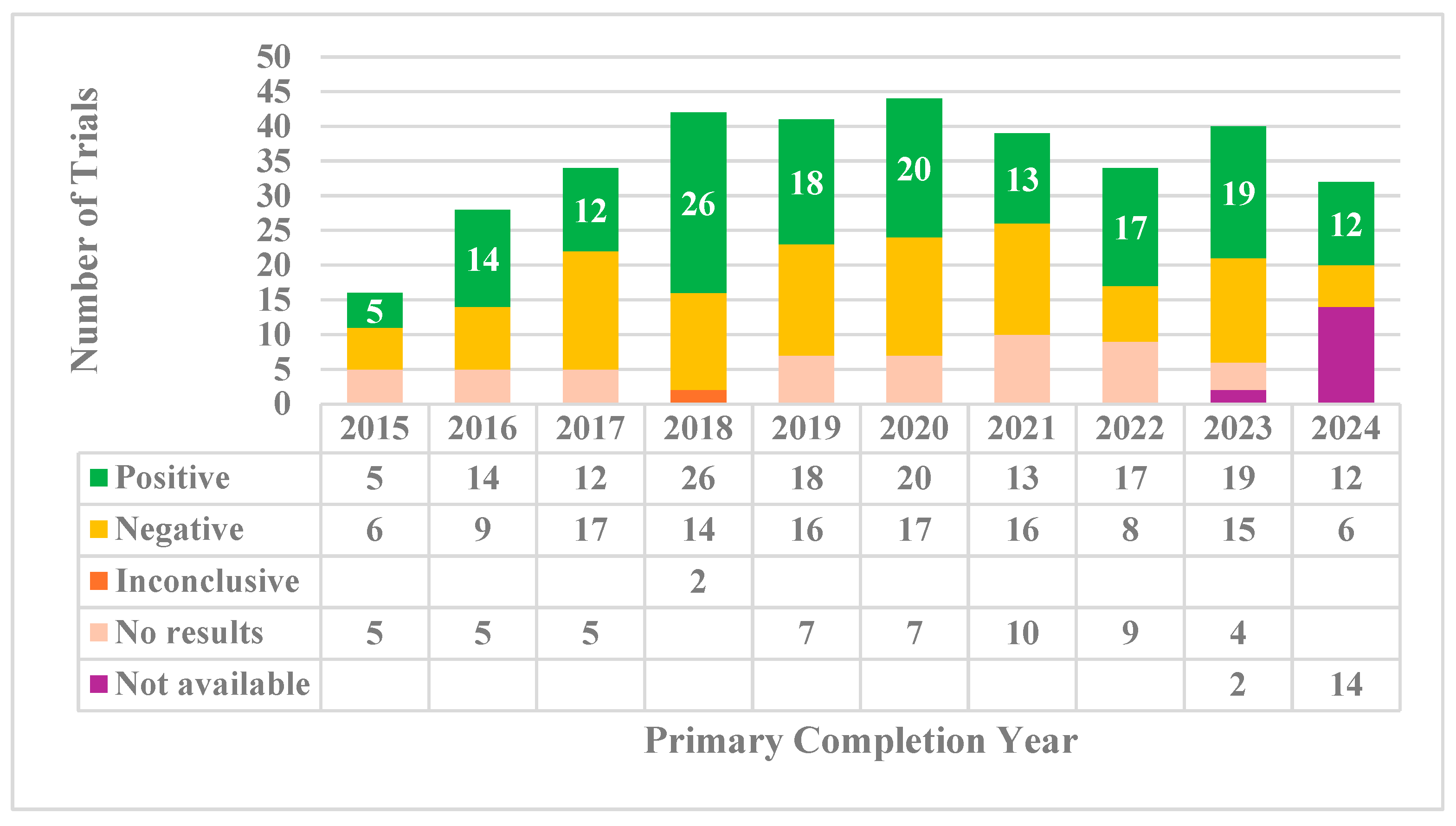
Figure 3.
Distribution of Practice-Changing Trials Incorporated into Guidelines.
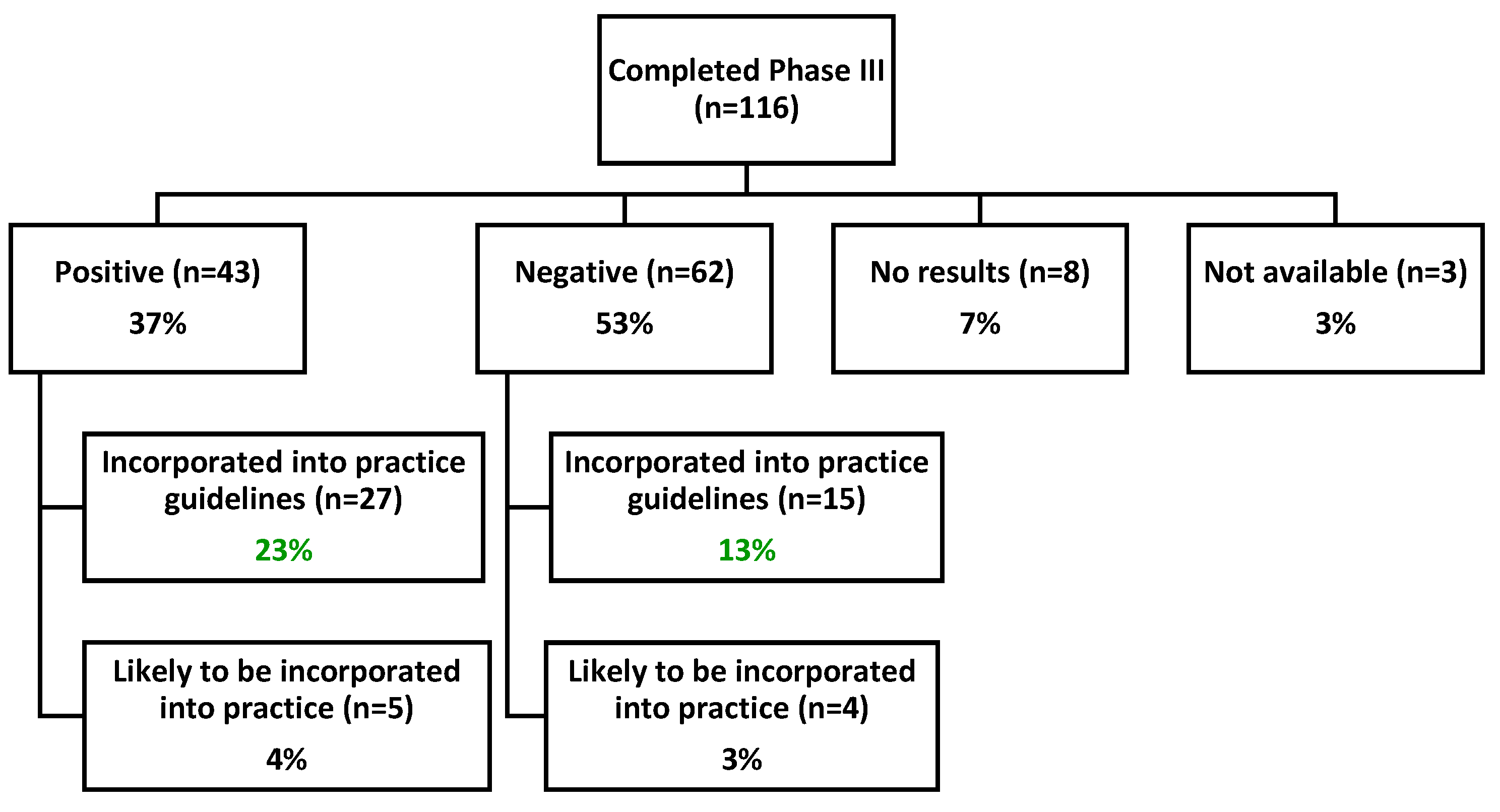
Table 2.
Completed trial results reporitng by phase.
| Phase | All trials | Reported in Registry | Journal Publication |
| Phase I | 29 | 2 (7%) | 21 (72%) |
| Phase II | 196 | 79 (40%) | 148 (76%) |
| Phase III | 116 | 76 (66%) | 105 (91%) |
| Phase IV | 9 | 2 (22%) | 8 (89%) |
| Total | 350 | 159 (45%) | 282 (81%) |
Table 3.
Annual Patient Recruitment to Completed Portfolio Trials (2015-2024).
| Trial Completion Year | # of ACCT Trials | Sample Size | Global Recruitment * | 3CTN Sites Recruitment | 3CTN Sites Contribution (%) |
| 2015 | 16 | 2930 | 2158 | 181 | 8% |
| 2016 | 28 | 4406 | 2894 | 836 | 29% |
| 2017 | 34 | 8861 | 7596 | 859 | 11% |
| 2018 | 42 | 14873 | 14231 | 3134 | 22% |
| 2019 | 41 | 14536 | 16554 | 2595 | 16% |
| 2020 | 44 | 20217 | 20458 | 2962 | 14% |
| 2021 | 39 | 11886 | 11221 | 2312 | 21% |
| 2022 | 34 | 25381 | 18903 | 2894 | 15% |
| 2023 | 40 | 18777 | 17821 | 2521 | 14% |
| 2024* | 32 | 11553 | 8223 | 2681 | 33% |
| Total | 350 | 133420 | 120059 | 20975 | 17% |
| Median | 36.5 | 13211 | 12726 | 2558 | 15% |
| IQR | 8.25 | 8267 | 9751.5 | 1618.5 | 7% |
*Global recruitment data for some trials is not available in clinicaltrials.gov.
Table 4.
3CTN member site contribution to Phase III ACCTs completed (2015-2024).
| Study Results | Number of Trials | Total Recruitment | 3CTN Member Sites Recruitment |
| Negative | 62 (53%) | 52999 | 3763 (7%) |
| No results | 8 (7%) | 1500 | 355 (24%) |
| Not available | 3 (3%) | 385 | 139 (36%) |
| Positive | 43 (37%) | 37679 | 3771 (10%) |
| Total | 116 | 92563 | 8028 (9%) |
Table 5.
Canadian ACCTs in Guidelines and 3CTN Global Recruitment Contribution.
| Study Results | Number of Trials* | Total Recruitment | 3CTN Sites Recruitment |
| Negative | 15 | 211518 | 958 (4.5%) |
| Positive | 28 | 32826 | 2593 (7.1%) |
| Total | 43 | 54007 | 3551 (6.6%) |
*Including phase III and IV practice changing trials of this period.
Disclaimer/Publisher’s Note: The statements, opinions and data contained in all publications are solely those of the individual author(s) and contributor(s) and not of MDPI and/or the editor(s). MDPI and/or the editor(s) disclaim responsibility for any injury to people or property resulting from any ideas, methods, instructions or products referred to in the content. |
© 2025 by the authors. Licensee MDPI, Basel, Switzerland. This article is an open access article distributed under the terms and conditions of the Creative Commons Attribution (CC BY) license (http://creativecommons.org/licenses/by/4.0/).
Copyright: This open access article is published under a Creative Commons CC BY 4.0 license, which permit the free download, distribution, and reuse, provided that the author and preprint are cited in any reuse.


