

Submitted:
12 November 2025
Posted:
13 November 2025
You are already at the latest version
Abstract
Strawberry cultivation in Brazil has evolved rapidly in recent years driven by the demand for sustainable, high-quality production systems that balance profitability and en-vironmental responsibility. This review describes the current knowledge and advances in strawberry cultivation in soil-based and soilless systems, with an emphasis on semi-hydroponic cultivation and the use of protected environments. Certified production systems such as the integrated production of strawberries (PiMo) and organic farming are highlighted for their regulatory compliance, traceability, and market differentiation. Soilless and semi-hydroponic systems enable the precise management of nutrition, fer-tigation, and phytosanitary practices, improving yield and fruit quality, although they require higher technical expertise and investment. Critical aspects include the selection and physicochemical characterization of substrates, the formulation and management of nutrient solutions, and environmental control strategies to optimize temperature, hu-midity, and light conditions. The adoption of protected environments, ranging from low tunnels to high-structure greenhouses, plays a key role in mitigating climatic risks and enhancing crop performance. This study provides a comprehensive technical overview to guide growers, researchers, and policymakers in selecting and managing strawberry cultivation systems best suited for diverse production contexts in Brazil.
Keywords:
Fragaria × ananassa
; soilless systems
; semi-hydroponics
; nutrient management
; protected cultivation
; sustainable agriculture
; organic agriculture
; organic strawberry
1. Introduction
Strawberries (Fragaria × ananassa Duch.) are an important source of income, particularly for small-scale farming. Global strawberry production reaches approximately 10.5 million tons per year, with China being the largest producer, accounting for 4.2 million tons, followed by Brazil with an annual production of 188 thousand tons [1].
The cropping system for a given crop consists of a set of practices adopted within a farm, defined by production factors such as land, capital, and labor, all interconnected through a management process aimed at maximizing production and, particularly, profitability [2]. Several production systems are available for strawberry cultivation, which can be selected according to the best cost-benefit ratio for the grower.
Cropping systems can be classified on the basis of various criteria. In this study, we address production systems as certified or non-certified. They can also be classified according to the cultivation base — soil-based or soilless — and according to the level of protection —protected cultivation (tunnels, greenhouses, or other covered environments) or open-field cultivation (“outdoors”).
Certified systems requires growers to adhere to specific cultivation standards and procedures [3,4]. Certification is a document that attests that established standards have been followed, according to the certifying body. For instance, producers can certify strawberries, under an Integrated Production System (PiMo), Pesticide-Free Plant Products (SAT), or Organic Production schemes. Certification distinguishes products in the market and can direct them to different market niches, potentially increasing in the product’s added value.
Noncertified systems, as their names imply, do not receive certification. However, these systems may still follow Good Agricultural Practices (GAP) and must allow for traceability. Regardless of the certification, production systems can be conventional, organic, or agroecological.
The choice of the combination of cultivation system types depends on technical knowledge, the amount of capital available to the grower, and, most importantly, existing regulations. For example, farmers with limited financial resources may grow strawberries in conventional systems, on soil, or without protection. In contrast, those with greater capital and technical expertise may opt for certified systems such as Integrated Production (IP) or semi-hydroponic systems in protected environments. In this study, we aimed to provide information to support the selection of the most suitable cultivation system for each specific situation.
2. Certified Systems
Farmers were not required to certify their food production areas. Non-certified production is the most commonly used system for strawberry cultivation. However, if there is an interest in gaining a market advantage by offering food of proven quality, it is possible to seek production certifications. Some available options for strawberries include Integrated Strawberry Production (PiMo) and adherence to organic production guarantee mechanisms [4,5].
2.1. Integrated Production Systems
Integrated Production (IP) is based on GAP and represents a comprehensive system that leads to certification. According to the Ministry of Agriculture, Livestock and Food Supply (MAPA), as cited by Menezes Júnior (2016) [6], IP is a high-quality production system that prioritizes sustainability principles, the use of natural resources, and the regulation of mechanisms to replace polluting inputs, employing appropriate monitoring tools and ensuring traceability throughout the process, making it economically viable, environmentally sound, and socially fair.
To obtain certification, the producer must comply with the PiMo standards, which are described in the Specific Technical Standards for Integrated Strawberry Production (NTE-PiMo) published in Normative Instruction No. 14 of April 1, 2008 (Official Gazette of the Union, Apr. 3, 2008, Section 1, pp. 3–5). To receive the “Brazil Certified” seal, the producer must hire a certification company that is organized according to ABNT ISO/IEC 17065:2013, which establishes the general requirements for bodies operating product certification systems, and is accredited by the General Coordination for Accreditation (CGCRE) for strawberry certification.
Farmers were not required to certify their food production areas. Noncertified production remains the most common system used for strawberry cultivation. However, when there is interest in obtaining a market advantage by offering food with verified quality, it is possible to pursue production certifications. Some options for strawberries include Integrated Strawberry Production (PiMo) and adherence to organic production guarantee mechanisms [4,5].
Integrated Production (IP) is based on GAP and represents a comprehensive system that leads to certification. According to the MAPA, as cited by Menezes Júnior (2016) [6], IP is a high-quality production system that prioritizes sustainability principles, the use of natural resources, and the regulation of mechanisms to replace polluting inputs, employing appropriate monitoring tools and ensuring traceability throughout the process, making it economically viable, environmentally sound, and socially fair.
To obtain certification, the producer must comply with the PiMo standards described in the Specific Technical Standards for Integrated Strawberry Production (NTE-PiMo) published in Normative Instruction No. 14 of April 1, 2008 (Official Gazette of the Union, Apr. 3, 2008, Section 1, pp. 3–5). To receive the “Brazil Certified” seal, the producer must hire a certification company that operates in accordance with ABNT ISO/IEC 17065:2013, which establishes the general requirements for bodies that operate product certification systems, and is accredited by the Cgcre for strawberry certification.
2.2. Organic Certification
For the commercialization of products as “organic,” it is mandatory to adhere to one of three guarantee mechanisms of organic quality: Social Control Organization (OCS), Participatory Guarantee System, or Audit-Based Certification [4]. OCS alone does not result in formal certification and is restricted to family farming with direct sales to consumers or through public procurement programs such as the National School Feeding Program (PAA).
All systems are based on Law No. 10,831/2003 and associated regulations, requiring documentation to ensure traceability and the use of approved techniques and inputs. For further details, it is recommended to consult specialized professionals and the Organic Conformity Assessment Body (OAC), which is responsible for certification. In the following section, we will address specific aspects of organic strawberry production.
Once the guaranteed system for organic production has been selected, the next step is to choose the scope of production that defines the products or processes to be evaluated for compliance within the organic system. In strawberry production, it is possible to certify not only the production itself but also processing, storage, and transportation. For example, to sell fruit in supermarkets, the production area must be certified. In other words, the farmer does not certify the product itself; the certification applies to the production area where strawberries are grown. If there is an interest in marketing processed organic strawberries, such as jams or juices, it is also necessary to certify the processing facility for compliance with the organic system.
The use of sustainable practices in organic systems is a legal requirement, including the use of approved inputs for fertilization, and pest and disease management, making organic strawberry production feasible. For fertilization, stabilized cattle manure (as a nitrogen source), natural thermophosphate or bone meal (phosphorus), wood ash (potassium), and supermagro biofertilizers (micronutrients) can be used. In semi-hydroponic systems, fertigation with boiled poultry manure can be performed in semi-hydroponic systems [7]. The use of all inputs must always be verified by a certified body. Additionally, regarding soil fertilization inputs, it is essential to avoid excessive nitrogen, as it can favor pests, such as sucking insects and mites, making control more difficult [8].
In pest management for organic systems, preventive practices are prioritized to reduce costs and promote natural processes within agroecosystems. Among these practices, crop management plays a key role in maintaining the balance between natural enemies and insect and mite populations, thereby preventing the latter from reaching pest levels. For this purpose, intercropping with repellent plants such as garlic and Chinese chives between strawberry rows can be adopted [9,10].
Moreover, to maintain natural enemies in the cultivation area, selective management of spontaneous plants can be implemented, retaining only those species that harbor predatory mites and beneficial insects [11,12,13]. These plants provide food and shelter for natural enemies, which can enhance the effectiveness of applied bioinputs, such as predatory mites, allowing them to persist longer in the cultivation area.
Organic soil-based strawberry production systems are relatively well-established. The main challenge lies in the production of soilless materials, particularly in semi-hydroponic systems. According to Ordinance No. 52 of March 2021, organic management cultivation may be conducted outside the soil, provided that the substrate is composed of approved materials and exhibits characteristics similar to those of natural soil environments, with proper authorization from the OCS or OAC [14].
Developing a substrate with these characteristics, combined with adequate plant nutrition using fertilization sources approved for organic farming, represents one of the greatest challenges. In conventional systems, nutrient element like nitrogen, phosphorus, and potassium can be easily balanced through various soluble sources. However, this flexibility is not possible in organic agriculture.
3. Strawberry Cultivation in Soil and Soilless Systems
One of the first decisions to be made when cultivating strawberries is the location and cultivation method. Thus, strawberries can be produced using soil or soilless systems.
3.1. Cultivation in Soil
Strawberry cultivation in soil is carried out on raised beds because the roots are sensitive to waterlogging and soil compaction. These conditions that reduce oxygen availability in the soil, cause poor nutrient uptake, and can eventually kill plants. Since more than 90% of new roots are concentrated within the top 25 cm of the soil, beds at least 30 cm high, slightly convex, and gently sloped along their lengths are recommended to prevent water accumulation.
The beds can be covered with either organic or synthetic mulch (plastic film). This practice helps reduce weed growth, moisture loss, and fruit contact with the soil. Organic mulches are low-cost, but tend to retain more moisture, which can favor disease development, especially in open-field systems. Plastic mulches, although less environmentally appealing, are more effective in producing high-quality fruits provided that they are installed properly, without creating areas where water can accumulate.
Soil-based systems require less technical expertise and investment because part of the plant nutrition is supplied by natural soil fertility supplemented with fertilizers. This also allows for a greater margin of error in nutrient management. However, it offers less nutritional control, a higher incidence of soil-borne diseases, and poor ergonomics because cultural practices and harvesting must be performed while bending or squatting.
In contrast, soilless cultivation, although more expensive and technically demanding, requiring fertigation and precise nutrient management, enables greater productivity, better control, and requires higher technical specialization.
3.2. Soilless Cultivation
Soilless cultivation systems can be classified as hydroponic, semi-hydroponic, or aeroponic.
In hydroponic systems, plant roots come into direct contact with a thin layer of nutrient solution supplied in cycles that allow for both root respiration and nutrient absorption. Examples of hydroponic systems include nutrient film Technique, deep flow Technique, and dynamic floating root techniques.
Semi-hydroponic systems use solid substrates, in which the nutrient solution is supplied intermittently according to the chemical, physical, and physicochemical properties of each substrate. These systems may operate with free drainage (“drain-to-waste”) or recirculating systems (in which the nutrient solution is reused). Nutrient delivery in semi-hydroponic systems can be manual, semi-automated, or fully automated.
In aeroponic systems, plant roots are suspended inside a dark chamber that receives a uniform mist of nutrient solution injected by nebulizers or microsprinklers, maintaining a relative humidity of 100%. In this case, the nutrient misting cycles ensure adequate conditions for water and nutrient uptake by the plants [15].
Based on these systems, several other models have been developed and are now available from specialized companies. The choice of a soilless cultivation system is primarily related to the economic return from the activity. In Brazil, semi-hydroponic systems that use horizontal or sloped benches have, in most cases, met this requirement at the producer level (Figure 1).
The semi-hydroponic system comprises several components: a protected environment, benches, substrate, cultivars, and seedlings; a fertigation system; and nutritional, phytotechnical, and phytosanitary management practices.
3.2.1. Benches
The purpose of the benches is to support the cultivation bags (“slabs”) or gutters and to allow free drainage in open systems, or to direct the nutrient solution back for recirculation in closed systems.
In open systems, cultivation bags and benches must be perfectly leveled to ensure uniform drainage, aeration, and distribution of water and nutrients, thereby promoting homogeneous plant growth and development.
The height of the benches should be adjusted according to the stature of the workers responsible for harvesting, typically at the waist height, to ensure ergonomic comfort during fruit collection.
Another important aspect concerns the spacing between the cultivation bags or gutters on the benches. This distance, which varies according to the vigor of the genotype, should allow sufficient light penetration for anthocyanin synthesis in fruits, reduce phytosanitary problems, and facilitate harvesting. In practice, unless new research indicates otherwise, the recommended distance is approximately the width of a single cultivation bag or gutter. For the less vigorous genotypes, an in-row plant spacing of 20-25 cm is recommended (Figure 2A). For plants with vigorous vegetative development it is not recommended less than 20 cm of spacing (Figure 2B).
In recirculating systems, benches must have a slope of 2–3% to allow proper collection and recirculation of the nutrient solution.
3.2.2. Basic Fertigation System
The basic fertigation system consists of a nutrient solution reservoir, which may be complemented by a separate water reservoir, one or more water pumps, a pressure gauge, a ring filter, distribution lines and valves, and drip tapes with 10 cm spacing between emitters or “spider”-type drippers. In the past, many growers manually operated these systems. Currently, the most common practice involves the use of an electrical control panel equipped with a timer (Figure 4). Automated fertigation systems available on the market may also be employed (Figure 5).
The size of the nutrient solution reservoir should take into account the water consumption of strawberry plants, which ranges from 0.5 to 1.0 liters per plant. Due to the greater difficulty in managing pH and EC, the installation of nutrient solution reservoirs with capacities exceeding 5,000 liters is not recommended [16].
The fertigation system should be operated such that the substrate remains moist but not waterlogged. Given the wide variability of substrates and the micrometeorological conditions of each production site, it is recommended that whenever a new substrate is purchased, the grower consult a qualified technician to determine the most appropriate strategy for supplying the nutrient solution [17,18].
3.2.3. Substrates
Substrates provide physical support to plants, allowing free drainage while maintaining the availability of water, oxygen, and nutrients for the root system. In principle, any material possessing these characteristics, provided that it is free from phytotoxic substances, heavy metals, pathogenic macro- or microorganisms, and seeds or propagules of undesirable plants, can be used as a substrate [19].
The substrate can be housed in cultivation bags (“slabs”), gutters, or any other type of container (such as bamboo, fiber-cement gutters, Tetra Pak packages, plastic film, among others) capable of supporting the system’s weight and ensuring drainage of excess liquid from the substrate.
In closed recirculating systems in which the nutrient solution is supplied more frequently and intermittently; it is advisable to use physically and chemically inert substrates. Under these conditions, the grower manages the supply of water, oxygen, and nutrients through nutrient solution circulation cycles, with the substrate primarily functioning to anchor roots and support the plants.
Conversely, in open systems, where the nutrient solution is supplied less frequently, substrates must retain an adequate amount of solution for a longer period to sustain plant nutrition, while still allowing sufficient drainage to maintain an aerated rhizosphere,—i.e., an environment with enough oxygen to support root respiration, which generates the energy required for active nutrient uptake. The substrates selected for open systems should have a high capacity for readily available water retention, sufficient air porosity, low salinity, slightly acidic pH, and moderate buffering capacity.
Substrates can be either formulated or purchased from specialized suppliers. Regardless of the origin, the initial step before applying any substrate is to conduct physical, chemical, and biological characterizations [19].
It is important to note that the chemical properties of substrates are more easily modified than their physical properties. Therefore, the choice of substrate must be made carefully because once it is placed in a container and the plant is introduced, its physical characteristics are difficult to alter. Table 1 presents the reference values considered ideal for the main physical properties of the substrates used in open semi-hydroponic systems with free drainage.
The principal chemical and/or physicochemical properties are cation exchange capacity (CEC), EC, and pH. The ideal CEC value of the substrate depends on the fertigation frequency. In closed semi-hydroponic recirculating systems, where fertigation is performed more frequently, physically and chemically inert substrates with the low CEC (< 20 cmolc L⁻¹) are preferred, such as gravel, perlite, rockwool, coconut fiber, and carbonized rice husk.
In open semi-hydroponic systems with free drainage, where part of the nutrient solution drains into the soil and fertigation or irrigation is carried out a few times per day (one to four times daily), substrates with components in various proportions that maintain nutrient availability and exhibit higher CEC values (> 20 to 120 cmol_c L⁻¹) are recommended, such as pine bark, vermiculite, and black peat [21,22].
Another very important aspect is that the retention of cationic nutrients and other cations increases with rising CEC. In turn, CEC increases with higher organic matter content, which also raises the risk of salinization and buffering capacity related to pH. Thus, substrates with high organic matter content and consequently elevated CEC (above 120 cmol_c L⁻¹) tend to salinize more easily and require additional water applications to prevent adverse effects on plant growth and development. Furthermore, these substrates resist pH fluctuations, making it difficult to maintain them at a pH of 6.0.
Strawberry plants are highly sensitive to salinity; therefore, it is recommended that the EC of the substrate at the time of transplanting is equal to or below 1.0 mS cm⁻¹. This facilitated root growth and initial plant development.
For initial reference values in substrate analysis, a pH range of 5.2 to 5.5 is recommended for organic-based substrates, while mineral-based substrates should have a pH between 6.0 and 7.0 [23].
3.2.4. Nutrient Solutions
Water quality is a key factor for the use of nutrient solutions. Water should be portable, and its composition must be assessed to prevent issues such as phytotoxicity, nutrient imbalances, precipitation, and substrate salinization.
The minimum recommended analyses include: physical (turbidity, indicating suspended solids), biological (fecal coliforms and pathogens), and chemical (pH; electrical conductivity; nitrogen, phosphorus, potassium, calcium, magnesium, sulfur, iron, manganese, zinc, copper, molybdenum, boron, chlorine, sodium, carbonates, sulfates, and chlorides) parameters (Table 2).
In addition to being potable, water used for soilless cultivation should have a salt concentration below 350 mg L⁻¹, which corresponds to approximately 0.5 mS cm⁻¹. When water analysis reveals a macronutrient exceeding 25% or a micronutrient exceeding 50% of the nutrient solution formulation, fertilizer doses should be recalculated by subtracting the respective nutrient(s) from the formulation.
The EC of irrigation water also determines the daily drainage percentage for application in substrate-based cultivation. The higher the EC of the irrigation water, the greater the daily drainage percentage required to promote the leaching of sodium and chloride ions present in high-EC waters, which can otherwise contribute to substrate salinization. The suggested drainage percentages based on the EC of the irrigation water are listed in Table 3. The drainage percentage is defined as the ratio of the daily drained volume to the daily irrigated/fertigated volume per cultivation container.
Nutrient solutions can be either formulated or purchased from specialized companies (commercial solutions). Table 4 and Table 5 list the fertilizer salts used to prepare the nutrient solutions, commercially available macro- and micronutrient mixtures (kits), and recommended formulated nutrient solutions for strawberry cultivation.
Table 6 and Table 7 present the recommended nutrient solution formulations for strawberry cultivation.
350 mg L-1 corresponds to an electrical conductivity of approximately 0.5 mS cm-1.
Adapted from Lejeune & Balestrazzi (1992) [24] and Bohme (1993) [25], cited in Martinez (1997) [22].
The following section outlines the steps to be followed in the preparation of nutrient solutions.
- Water analysis;
- Calculation of fertilizers;
- Weighing of fertilizers;
- Fill the tank with water to approximately 80–90% of its capacity;
- Adjust the water pH to 5.8–6.2;
- Predilution of each fertilizer in a bucket before addition to the solution tank
- Add the pre-diluted macronutrients to the solution tank except calcium nitrate;
- Add the pre-diluted micronutrients to the solution tank;
- Add the pre-diluted calcium nitrate last to the solution tank;
- Top up with water to reach the final volume;
- Measure and, if necessary, readjust the solution pH to 5.8–6.2;
- Measure the EC and, if necessary, adjust it to the recommended range.
3.2.5. Management of Nutrient Solutions
The pH is measured using portable digital “pen-type” pH meters which must be properly and regularly calibrated with standard solutions, as recommended by the manufacturer. An initial pH adjustment should be performed on the water used to prepare the nutrient solution. This prevents undesirable interactions between the ions (nutrients), rendering them unavailable. After adding the pre-diluted fertilizers, the final pH was adjusted. To lower the pH, phosphoric, nitric, or sulfuric acid can be used, while sodium hydroxide or, preferably, potassium hydroxide can be used to raise the pH. In organic semi-hydroponic systems, vinegar or lemon juice is recommended to lower the pH, while sodium bicarbonate is used to raise it. Naturally, the grower must account for the nutrients provided by these acids (P from phosphoric acid, N-NO₃ from nitric acid, and S-SO₄ from sulfuric acid) and their effects on the final nutrient solution. Excessive addition of pH adjusters can disrupt proper nutrient balance.
The monitoring and management of salt concentrations in a nutrient solution are performed using a device called a conductivity meter, which measures the ability of the solution to conduct electric current. The pure water without salts has zero EC. The higher the EC, the higher the salt concentration in the solution. For a fixed amount of salt, the salt concentration is inversely proportional to the volume of water. Therefore, the salt concentration and EC of the solution can be modified by changing the water volume relative to the amount of salt. Adding water dilutes the solution and consequently reduces the conductivity. Conversely, in recirculating systems, if no water is added, the salt concentration and conductivity increase because water is absorbed in greater amounts than nutrients [29]. Maintenance of the recommended EC for each growth stage and the water content in the substrate must always be monitored, regardless of whether the semi-hydroponic system uses free drainage or recirculation.
It is important to note that the conductivity meter measures the total salt concentration (ions of elements/nutrients) without identifying them individually.
For strawberry cultivation in semi-hydroponic systems, it is recommended that the EC of the nutrient solution be maintained at 0.7–1.2 mS cm⁻¹ during the vegetative stage and 1.2–1.4 mS cm⁻¹ during the fruiting stage. It is important to mention that for strawberries there is an inverse relationship between fruit quality and yield in relation to EC. EC values below the recommended range, up to a certain limit, can increase yield, but greatly reduce fruit quality. Conversely, increasing the EC improves fruit quality but reduces fruit production per plant.
It is recommended to prepare the nutrient solution in the late afternoon, when EC and pH readings and adjustments should be made to the reservoir. These measurements should then be repeated daily in the reservoir and in the drainage from the cultivation slabs in the morning after the first fertigation of the day to monitor these parameters.
In semi-hydroponic systems, the supply of nutrient solutions (or water) should be adjusted according to the substrate characteristics, EC, and micrometeorological variations that occur throughout the year in protected environments. In open semi-hydroponic systems (with free drainage), supplying only a nutrient solution can be sufficient for substrates with low chemical activity (e.g., carbonized rice husk and coconut fiber), where the EC of the drainage can be maintained close to that of the reservoir. This represents the ideal scenario.
However, it is often observed that commercial substrates accumulate salts because of their organic matter content, resulting in a drainage EC higher than that of the solution reservoir and above the recommended levels. In such cases, it is necessary to supply water to leach excess salts and maintain the substrate moisture to prevent salinization.
In practice, a nutrient solution is supplied in the early morning, allowing the excess solution to drain from the cultivation bags, which can then be collected for EC measurement. If the EC reading is appropriate and it is a day with low evapotranspirative demand (cooler days) and the substrate is sufficiently moist (near container capacity), the next fertigation is carried out the following day. On days with a higher evapotranspirative demand (hotter days) and substrates prone to salinization, it may be necessary to supply additional water once or twice a day in quantities sufficient to maintain substrate moisture, in addition to regular fertigation.
The nutrient solution in the cultivation tank was replaced as follows:
- In open systems: Replenish the amount of nutrient solution equivalent to the amount used relative to the initial solution, maintaining EC at the initial level.
- In recirculating systems: Replenish the nutrient solution when the EC drops by 0.3 mS cm⁻¹, using 20% of the nutrients from the initial formulation. It is recommended to clean the reservoir and completely replace the nutrient solution at least monthly owing to differential nutrient uptake, changes in water quality, and differential accumulation of nutrients and other elements (e.g., carbonates) in the nutrient solution reservoir. Furlani et al. (2004) [26] recommended that for recirculating systems, complete renewal of the nutrient solution be carried out every 15 days.
3.3. Cultivars and Plantlets
Both the short-day and day-neutral strawberry cultivars are recommended for cultivation in semi-hydroponic systems. The choice of cultivar is closely related to its adaptability to the components and management of the semi-hydroponic production system (substrate, nutrient solution, cultivation practices, etc.) as well as to the climatic and microclimatic conditions (associated with the protected environment) of each production site.
For example, in the Serra Gaúcha region (Rio Grande do Sul State), the cultivar Albion is preferred because its shows excellent adaptation to the semi-hydroponic cultivation conditions commonly used in that area. In contrast, under the conditions of the Alto Vale do Itajaí region, Santa Catarina (AVI-SC), Albion exhibits considerable plant losses during the production cycle, making San Andreas the preferred cultivar. It is worth noting that both cultivars tend to produce a similar total fruit biomass in AVI-SC, although San Andreas shows earlier fruiting [30].
In addition, the fruit quality should be considered. Cultivars that are less productive in low-altitude and warmer regions, such as Pircinque, may still be economically viable owing to their superior flavor and sensory quality, catering to more demanding consumer markets. Therefore, the selection of cultivars should consider both the market requirements and the adaptability of genotypes to specific cultivation conditions.
Plantlets can be purchased either as bare roots or plug transplants (produced in multicellular trays with a substrate). It is recommended that growers use plug transplants, because their establishment rates are close to 100%. Bare-root plantlets require special care during planting, particularly with respect to water supply, and additional irrigation is often necessary during the first week after transplanting. Although this also applies to plug transplants, the substrate surrounding the root system helps retain moisture near the roots.
Many semi-hydroponic systems use drip tape for irrigation, and during system installation, the emitters may not always be positioned sufficiently close to the roots of newly transplanted plantlets. In such cases, the substrate may appear adequately moist, whereas the water is distant from the roots, leading to plant loss due to water stress.
3.4. Basic Crop Management
One of the first questions growers commonly ask technical advisors relates to the optimal plant spacing for strawberries cultivated in semi-hydroponic systems. Naturally, the ideal spacing is that which maximizes both yield and fruit quality.
When defining spacing in strawberry cultivation, it is essential to consider the vigor of the cultivars, which directly influences the interception of photosynthetically active radiation by the plant canopy, biomass production, and light availability factors that affect anthocyanin formation, and, consequently, the quality of the fruits. Until recently, recommendations for plant spacing in semi-hydroponic strawberry systems in Santa Catarina, Brazil were based purely on empirical observations.
Studies conducted with the day-neutral cultivars Albion and San Andreas have shown that the optimal spacing between plants along growing bags is 20 cm, and the distance between adjacent bags corresponds to approximately the width of one cultivation bag [17]. This configuration promotes high productivity and fruit quality by minimizing intraspecific competition because increasing plant density does not necessarily result in higher yields.
Seedlings should be transplanted with their roots positioned vertically, ensuring that the crown is not buried deeper than its original level to avoid covering the apical meristems. For plugged plants, the transplanting depth should match the substrate surface level on which they were previously grown in the nursery trays.
During the first 15 days after planting, it is common for plants to begin flowering. These early flowers should be removed until the plants have developed at least five fully expanded leaves. Throughout the crop cycle, vegetative shoots that give rise to stolons should be removed, and regular sanitary pruning should be performed to eliminate dead or diseased leaves and flowers. All plant residues must be discarded from the protected environment and nearby water bodies to prevent the spread of pathogens.
Also, it is known that different dates of planting influences the fruit production and quality characteristics as pH, total titratable acidity and Ratio [31]. Then, it is an important decision to make before cultivating strawberries.
3.5. Protected Environments
The use of protected environments allows for greater control over production factors. In higher-investment systems such as semi-hydroponics, protection is indispensable given the significant capital required for infrastructure components such as benches and fertigation systems. These environments are designed to optimize the meteorological and micro-meteorological conditions inside the structure, thereby enhancing crop productivity and fruit quality while ensuring economic viability.
Generally, the higher the level of environmental control, the greater the likelihood of achieving successful production outcomes. However, this increases installation and maintenance costs. In strawberry cultivation, the primary function of the protected environment is the “umbrella effect.” The structure should remain open on its sides to allow pollinating insects to enter, while protecting plants from rainfall, which significantly reduces phytosanitary problems. Furthermore, protected cultivation enables improved nutrient management by preventing nutrient leaching, a common issue in open-field systems.
It is well established that strawberries, whether short-day or day-neutral cultivars, reduce flower emission—and consequently fruit production—when temperatures exceed 28 °C. Therefore, it is essential that protected structures are properly designed and equipped with ventilation systems that allow excess heat to dissipate through the side, roof, and ridge openings.
One of the main strategies for reducing the temperature inside protected environments is the use of shade screens. Since solar radiation is the primary factor responsible for heat buildup, shading screens should ideally be installed externally, approximately 0.5 to 0.8 m above the roof ridge. This configuration reduces the incoming solar radiation and, consequently, the internal heat accumulation. Both black and aluminized shading screens can be used. They should remain in place during periods of high temperature (summer) and should be removed during cloudy or low-radiation seasons (autumn–winter). Preference should be given to aluminized or bluish screens, as anthocyanin synthesis, the flavonoid responsible for the red pigmentation of fruits, depends on light exposure [32,33].
Additional temperature reduction can be achieved by using misting systems and ventilation. Misters should be adjusted so that water droplets do not contact the plants directly; if contact occurs, rapid evaporation must follow to prevent the development of phytopathogens. Therefore, their sole purpose should be air cooling. Air circulation within a protected environment can be enhanced using fans, similar to those employed in poultry houses. When used in combination with misting systems, fans can lower the internal air temperature by up to 7 °C, as reported by agronomists and strawberry growers (Rafael Kasuya), thereby maintaining the internal conditions close to those of the external environment (Figure 6).
High tunnels, fully enclosed structures, and insect-proof screens are not recommended as they reduce internal ventilation in the protected environment and also prevent the entry of pollinating insects, reducing the potential yield of strawberry [34]. Similarly, installing an excessive number of adjacent protected modules should be avoided because this configuration can create pockets of hot air, leading to increased temperatures and reduced yields in the central zones of the structure.
Excessive cold and frost events can cause flower abortion and/or malformation in fruits [35,36]. To prevent severe damage caused by low temperatures, it is recommended to cover plants with a milky white polyethylene film, preferably in the form of low tunnels, even when cultivation occurs within taller protected structures. It is also crucial to avoid irrigation or fertigation on the eve of frost, as water within the substrate just beneath the plastic film may freeze, damaging the roots and potentially killing the plants. The tunnels should be closed prior to the frost event, and after its occurrence, growers must carefully monitor for fruit-rot diseases that often develop under such conditions.
Protected environments with tall metal or wooden structures (suspended systems) can also be used for bed-based strawberry cultivation in soil. These systems offer the advantage of reduced need for frequent plastic handling, and structures, particularly those made of metal, tend to have greater durability. However, their main disadvantages include higher installation costs and, in many cases, the need for specialized labor to ensure a proper setup.
Another option is the use of low tunnels, which serve the same primary function as the previously described structures, preventing excessive humidity in the vegetative parts and fruits but at a considerably lower installation cost. In regions where frost events occur frequently, tunnels can be closed to minimize the potential damage.
A low-tunnel system is recommended for bed-based cultivation of soil. In this system, the entire planting bed was covered. The main components required for the installation include arches, covering materials, and protective and fastening elements. Arches can be made from various materials, such as galvanized iron, ¼-inch iron rods, or PVC pipes. The covering is typically composed of a plastic film. If the primary objective is to prevent the leaves and fruits from getting wet, plastic films between 50 and 100 microns in thickness are sufficient. During periods of intense solar radiation, growers may opt to use shade screens. Finally, protective and fastening materials are essential for maintaining the stability of the structure and reducing the wear caused by friction between components; examples include stakes, plastic straps, and protective cushions.
The main advantages of the low-tunnel system are its lower installation cost and ease of assembly compared to other types of protected cultivation. However, it requires greater labor input to manage plastic coverings, as the film should remain closed only during rainy periods. Subsequently, especially in regions with high temperatures, the tunnels must be opened to allow adequate air circulation.
4. General Considerations and Perspectives
Strawberry cultivation in Brazil has undergone several technological transformations. The modernization of cultivation practices in terms of genetics and management has enabled production under different soil conditions and microclimates. Cultivation in protected environments, especially in automated semi-hydroponic systems, promises higher yields with reduced use of inputs—particularly water, fertilizers, and conventional pesticides—while providing more humane working conditions and faster financial returns. This combination of factors allows for the production of food that is nutritionally and organoleptically superior and safe for consumption. Climate change is one of the current challenges. The key to overcoming it will be the development of new genotypes adapted to cultivation local climatic conditions (e.g. elevated or reduced temperature tolerant cultivars [36,37]) and adapted processes that make it possible to maintain and even expand cultivation areas.
Changes in strawberry production arrangement in the different regions must be taken in account. The closer the strawberry producer is to the consumer in terms of distance, the better. This is because the producer can harvest the fruits closer to the final stages of ripening, when they are almost fully mature. As a result, the marketed product is fresher and exhibits greater sweetness, characterized by higher soluble solids content and a higher ratio.
Despite significant advances in protected cultivation and fertigation management, critical challenges persist. One of the most pressing issues involves the development of substrates for semi-hydroponic systems that simultaneously ensure sustainability, physical stability, and compliance with organic certification requirements [4].
Future research should prioritize the integration of digital agriculture tools—such as sensors for real-time monitoring of pH, EC, and substrate moisture, as well as data-driven fertigation automation—to improve precision and reduce input losses. The coupling of these technologies with artificial intelligence–based decision-support systems could allow the development of predictive models for plant growth, fruit quality, and pest dynamics, enhancing the resilience of production systems to climate change [38,39,40,41]. And most importantly, it reduced the farmer’s manual labor and costs with additional employees, providing a better quality of life.
In summary, each cultivation system has its own advantages and limitations, and it is up to the grower or technical advisor to determine the system that is most appropriate for specific conditions.
Author Contributions
Conceptualization, J.T.V.R., F.O.G.M.J., M.U.V and F.T.H; investigation, J.T.V.R., F.O.G.M.J., M.U.V and F.T.H; writing—original draft preparation, F.O.G.M.J. and F.T.H; writing—review and editing, J.T.V.R. and M.U.V. All authors have read and agreed to the published version of the manuscript.
Data Availability Statement
Not applied.
Acknowledgments
The authors also acknowledge Conselho Nacional de Desenvolvimento Científico e Tecnológico (CNPq) for providing a research productivity fellowship to M.U.V and J.T.V.R.
Conflicts of Interest
The authors declare no conflicts of interest.
References
- Faostat. Food and Agriculture Organization of the United Nations. Crops and livestock products. https://www.fao.org/faostat/en/#data/QCL/visualize Accessed on: September 01, 2025.
- Hirakuri, M. H.; Debiasi, H.; Procópio, S. D. O.; Franchini, J. C.; Castro, C. D. Sistemas de produção: conceitos e definições no contexto agrícola. 2012. Londrina: Embrapa Soja, 14.
- Albersmeier, F.; Schulze, H.; Jahn, G.; Spiller, A. The reliability of third-party certification in the food chain: From checklists to risk-oriented auditing. Food Control 2009, 20, 927–935. [Google Scholar] [CrossRef]
- Prieto, L.B.M.; Hata, F.T.; Miguel, A.L.A.; Ferreira, N.Z.B.; Ventura, M.U.; da Costa, A.C.S. Institutionalization and legislation of organic production in Brazil, and how new regulations are impacting farmers. Nativa 2025, 13, 349–359. [Google Scholar] [CrossRef]
- Calegario, F.; Pereira, S.; Hammes, V.; Buschinelli, C.D.A.; Tanure, J.; Morandi, M.; Elisangeles Baptista de Souza, F.A.E.P. Produção integrada de morango (PIMo) como modelo de implementação de sistema de produção sustentável. In Agricultura e Meio Ambiente: A Busca pela Sustentabilidade; Morandi, M.A.B., Packer, A.P.C., Mendes, R., Tanure, J.P.M., Andrade, C.A., Menezes, C., Eds.; Embrapa Meio Ambiente: Brasília, DF, Brazil, 2024; pp. 169–207. [Google Scholar]
- Menezes Júnior, F.O.G. As boas práticas agrícolas e a produção integrada: Diferenças e indicações gerais de procedimentos das BPAs. In: Menezes Júnior, F.O.G.; Marcuzzo, L.L. (Eds.) Manual de Boas Práticas Agrícolas: Guia para a Sustentabilidade das Lavouras de Cebola do Estado de Santa Catarina; Epagri: Florianópolis, Brazil, 2016; 143 p.
- Galina, J.; Ilha, L.; Pagnoncelli, J. Cultivo orgânico do morangueiro em substrato. Cad. Agroecol. 2013, 8, 1–5. [Google Scholar]
- Hata, F.T.; Ventura, M.U.; de Souza, M.S.D.J.; de Sousa, N.V.; Oliveira, B.G.; da Silva, J.B. Mineral and organic fertilization affects Tetranychus urticae, pseudofruit production and leaf nutrient content in strawberry. Phytoparasitica 2019, 47, 513–521. [Google Scholar] [CrossRef]
- Hata, F.T.; Ventura, M.U.; Carvalho, M.G.; Miguel, A.L.; Souza, M.S.; Paula, M.T.; Zawadneak, M.A. Intercropping garlic plants reduces Tetranychus urticae in strawberry crop. Exp. Appl. Acarol. 2016, 69, 311–321. [Google Scholar] [CrossRef] [PubMed]
- Hata, F.T.; Ventura, M.U.; Béga, V.L.; Camacho, I.M.; de Paula, M.T. Chinese chives and garlic in intercropping in strawberry high tunnels for Neopamera bilobata Say (Hemiptera: Rhyparochromidae) control. Bull. Entomol. Res. 2019, 109, 419–425. [Google Scholar] [CrossRef] [PubMed]
- Araujo, E.S.; Benatto, A.; Mirás-Avalos, J.M.; Rogoski, T.; Oelke, S.F.; Schussler, M.; Zawadneak, M.A.C. Acarofauna present in organic strawberry fields and associated weed species in southern Brazil. Exp. Appl. Acarol. 2022, 86, 91–115. [Google Scholar] [CrossRef] [PubMed]
- Hata, F.T.; Togni, P.H.; Ventura, M.U.; da Silva, J.E.P.; Ferreira, N.Z.; Constantino, L. Diverse non-crop vegetation assemblages as banker plants for predatory mites in strawberry crop. Bull. Entomol. Res. 2022, 112, 389–398. [Google Scholar] [CrossRef]
- Busuulwa, A.; Revynthi, A.M.; Liburd, O.E.; Lahiri, S. Banker plant efficacy to boost natural predators for management of field populations of Scirtothrips dorsalis Hood (Thysanoptera: Thripidae) in strawberries. Insects 2024, 15, 776. [Google Scholar] [CrossRef]
- Brasil. Ministério da Agricultura, Pecuária e Abastecimento. Portaria Nº 52, de 15 de março de 2021. Estabelece o Regulamento Técnico para os Sistemas Orgânicos de Produção e as listas de substâncias e práticas para o uso nos Sistemas Orgânicos de Produção; MAPA: Brasília, DF, Brazil, 2021.
- Resh, H.M. Hydroponic Food Production, 5th ed.; Woodbridge Press: Santa Barbara, CA, USA, 1996; 527 p. [Google Scholar]
- Furlani, P.R.; Bolonhezi, D.; Silveira, L.C.P.; Faquin, V. Nutrição mineral de hortaliças, preparo e manejo de soluções nutritivas. Informe Agropecuário. 1999, 20, 90–98.
- Menezes Júnior, F.O.G.; Vieira Neto, J.; Sousa Resende, R. Produção de cultivares de morangueiro em sistema semihidropônico sob diferentes substratos e densidades populacionais. Rev. Thema 2018, 15, 79–92. [Google Scholar] [CrossRef]
- Menezes Júnior, F.O.G.; Souza, A.G.; Saraiva, F.R.S. Qualidade dos frutos de cultivares de morangueiro submetidos a pulverização com nutrientes em sistema semi-hidropônico. Vértices 2023, 1, 1–20.
- Abad, M.B.; Noguera, P.M. Sustratos para el cultivo sin suelo y fertirrigación. In Cadahia, C. (Ed.) Fertirrigación; Mundi-Prensa: Madrid, Spain, 1998; pp. 287–342. [Google Scholar]
- Menezes Júnior, F.O.G. Caracterização de Diferentes Substratos e Seu Efeito na Produção de Mudas de Alface e Couve-flor em Ambiente Protegido; M.Sc. Dissertation, Universidade Federal de Pelotas (UFPel), Pelotas, Brazil, 1998; p. 142. [Google Scholar]
- Abad, M.B.; Martínez, P.F.; Martínez, M.D.; Martínez, J. Evaluación agronómica de los sustratos de cultivo. Actas de Horticultura 1993, 11, 141–154. [Google Scholar]
- Martinez, H.E.P. Formulação de Soluções Nutritivas para Cultivos Hidropônicos Comerciais; FUNEP: Jaboticabal, Brazil, 1997; 31 p. [Google Scholar]
- Kämpf, A.N. Seleção de materiais para uso como substrato. In Substratos para Plantas: A Base da Produção Vegetal em Recipientes; Kämpf, A.N., Fermino, M.H., Eds.; Gênesis: Porto Alegre, Brazil, 2000; pp. 139–145. [Google Scholar]
- Lejeune, J.P.; Balestrazzi, E. L’importanza dell’acqua nella coltura idroponica. L’informatore Agrario 1992, 34, 71–75.
- Böhme, M. Effects of closed systems in substrate culture for vegetable production in greenhouses. Acta Hortic. 1995, 396, 45–54. [Google Scholar] [CrossRef]
- Furlani, P.R.; Fernandes Júnior, F. Cultivo hidropônico de morango em ambiente protegido. In Raseira, M.C.B.; Antunes, L.E.C., Trevisan, R., Eds.; Dias, E.G. (Eds.) 2º Simpósio Nacional do Morango – Palestras; Embrapa Clima Temperado: Pelotas, Brazil, 2004; pp. 102–114. [Google Scholar]
- Moraes, C.A.G.; Furlani, P.R. Cultivo de hortaliças de pseudofruto em hidroponia. Informe Agropecuário 1999, 20, 105–113.
- Gonçalves, M.A.; Vignolo, G.K.; Antunes, L.E.C.; Reisser Júnior, C. Produção de morango fora do solo. Embrapa Clima Temperado: Pelotas, Brazil, 2016; 32 p. (Documentos No. 410).
- Moraes, C.A.G. Hidroponia: Como cultivar tomates em sistema NFT; DISQ Editora: Jundiaí, Brazil, 1997; p. 147. [Google Scholar]
- Menezes Júnior, F.O.G.; Neto, J.V. Avaliação de cultivares de morangueiro dias neutros ‘Albion’ e ‘San Andreas’ sob cultivo semi-hidropônico no Alto Vale do Itajaí–SC. Rev. Thema 2019, 16(4), 845–854. [Google Scholar]
- Bernard, M. F.; Schiavon, A. V.; Alves, A. da S.; Bonow, S.; Herter, F. G.; Cantillano, R. F. F.; Antunes, L. E. C.. Effect of planting date on the yield and quality of Brazilian strawberry cultivars. Semina: Ciências Agrárias, 2025 (in press).
- Aragón-Ramírez, L.A.; Castillo-González, A.M.; Valdez-Aguilar, L.A.; del Rosario García-Mateos, M.; Ybarra-Moncada, M.C.; Avitia-García, E.; Fitz-Rodríguez, E. Quality of strawberry (Fragaria × ananassa Duch.) fruits from plants cultivated under colored shade nets. Agrociencia 2025, 59, 1–14.
- Wang, F.; Wang, J.; Ji, G.; Kang, X.; Li, Y.; Hu, J.; Wang, S. Regulation of anthocyanins and quality in strawberries based on light quality. Horticulturae 2025, 11, 377. [Google Scholar] [CrossRef]
- Menzel, C.M. A review of strawberry under protected cultivation: yields are higher under tunnels than in the open field. J. Hortic. Sci. Biotechnol. 2025, 100, 286–313. [Google Scholar] [CrossRef]
- Cui, M.; Pham, M. D.; Hwang, H.; Chun, C. Flower development and fruit malformation in strawberries after short-term exposure to high or low temperature. Sci. Hortic. 2021, 288, 110308. [Google Scholar] [CrossRef]
- Sierra-Almeida, A.; Morales, L. V.; Guerrero, D.; Hasbún, R. J.; Retamal, L.; Garrido-Bigotes, A.; Tamburrino, I.; Maruri, A. Thermal Vulnerability and Potential Cultivation Areas of Four Day-Neutral Strawberries in Chile: Implications for Climate Adaptation. Plants 2025, 14, 3205. [Google Scholar] [CrossRef]
- Nascimento, D. A.; Gomes, G. C.; de Oliveira, L. V. B.; de Paula Gomes, G. F.; Ivamoto-Suzuki, S. T.; Ziest, A. R.; Mariguele, K. H.; Roberto, S. R.; de Resende, J. T. V. Adaptability and stability analyses of improved strawberry genotypes for tropical climate. Horticulturae 2023, 9, 643. [Google Scholar] [CrossRef]
- Aarif, K.O., M.; Alam, A.; Hotak, Y. Smart sensor technologies shaping the future of precision agriculture: Recent advances and future outlooks. J. Sens. 2025, 2025, 2025, 2460098. [Google Scholar]
- Shahab, H.; Naeem, M.; Iqbal, M.; Aqeel, M.; Ullah, S. S. IoT-driven smart agricultural technology for real-time soil and crop optimization. Smart Agr. Technol. 2025, 10, 100847. [Google Scholar]
- Soussi, A.; Zero, E.; Sacile, R.; Trinchero, D.; Fossa, M. Smart sensors and smart data for precision agriculture: a review. Sensors 2024, 24, 2647. [Google Scholar] [CrossRef] [PubMed]
- Fuentes-Peñailillo, F.; Gutter, K.; Vega, R.; Silva, G. C. New generation sustainable technologies for soilless vegetable production. Horticulturae 2024, 10, 49. [Google Scholar] [CrossRef]
Figure 1.
The semi-hydroponic system has improved the producer’s quality of life. (Photo: Epagri – Miguel André Compagnoni).
Figure 1.
The semi-hydroponic system has improved the producer’s quality of life. (Photo: Epagri – Miguel André Compagnoni).
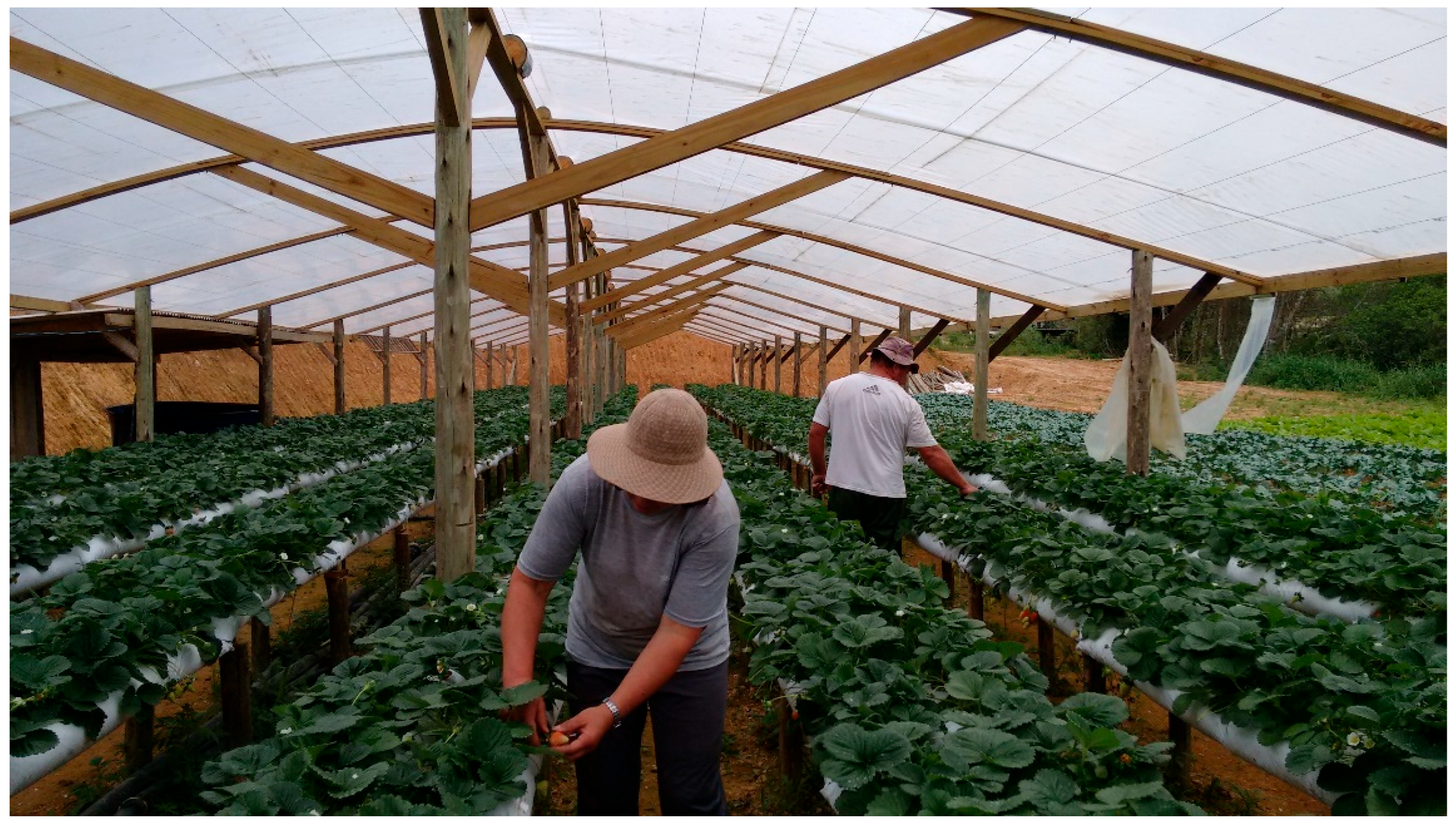
Figure 2.
Wooden benches at Epagri/EEItu with suggested dimensions (A); benches at a commercial grower where cultivation bags are positioned too close to each other (B). (Photos: Epagri – Francisco Olmar Gervini de Menezes Júnior).
Figure 2.
Wooden benches at Epagri/EEItu with suggested dimensions (A); benches at a commercial grower where cultivation bags are positioned too close to each other (B). (Photos: Epagri – Francisco Olmar Gervini de Menezes Júnior).
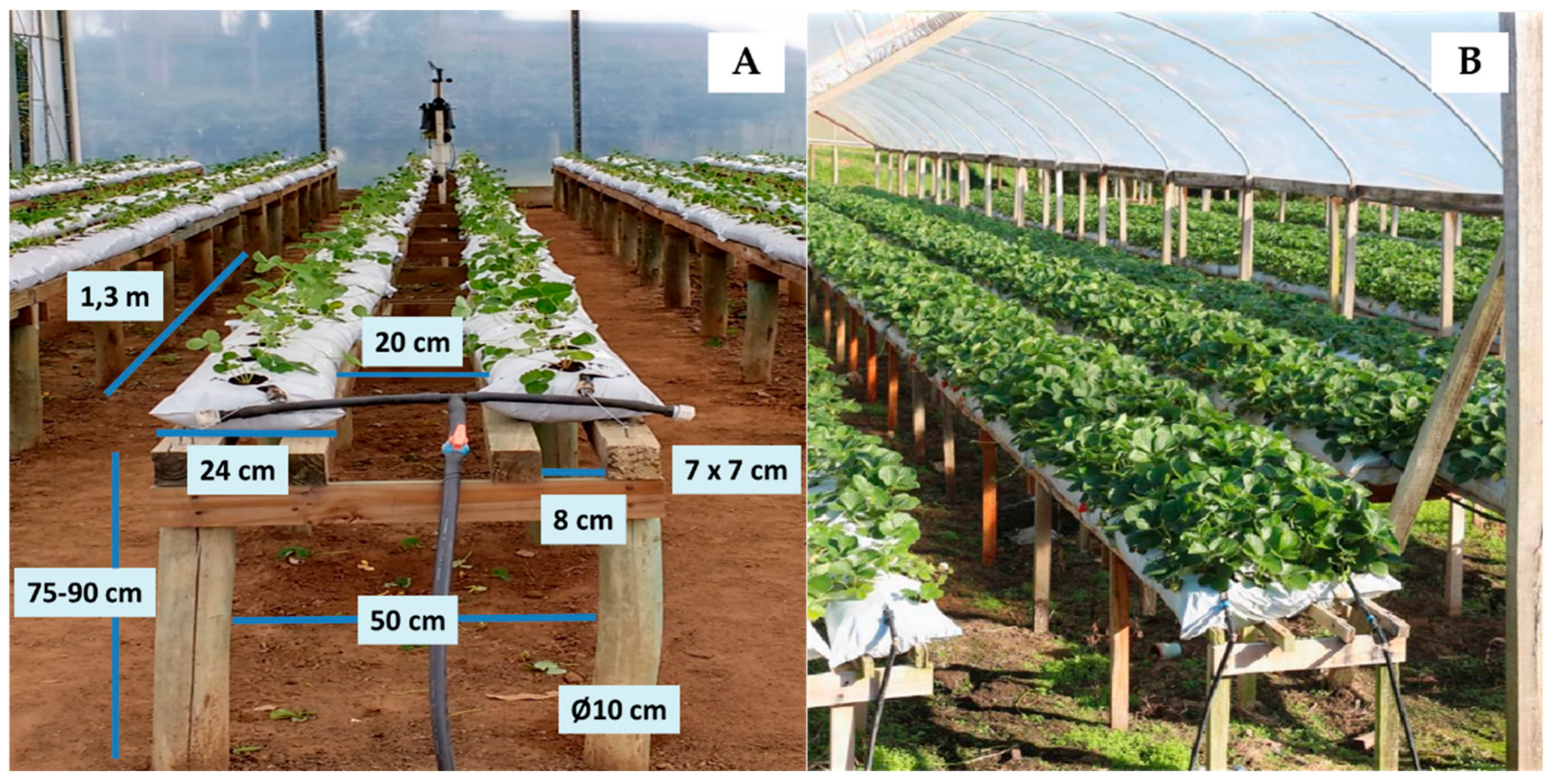
Figure 4.
Components of a basic fertigation system: water tanks (A), timer (B) and “spider”-type drippers (C, D). (Photo: Epagri – Francisco Olmar Gervini de Menezes Júnior).
Figure 4.
Components of a basic fertigation system: water tanks (A), timer (B) and “spider”-type drippers (C, D). (Photo: Epagri – Francisco Olmar Gervini de Menezes Júnior).
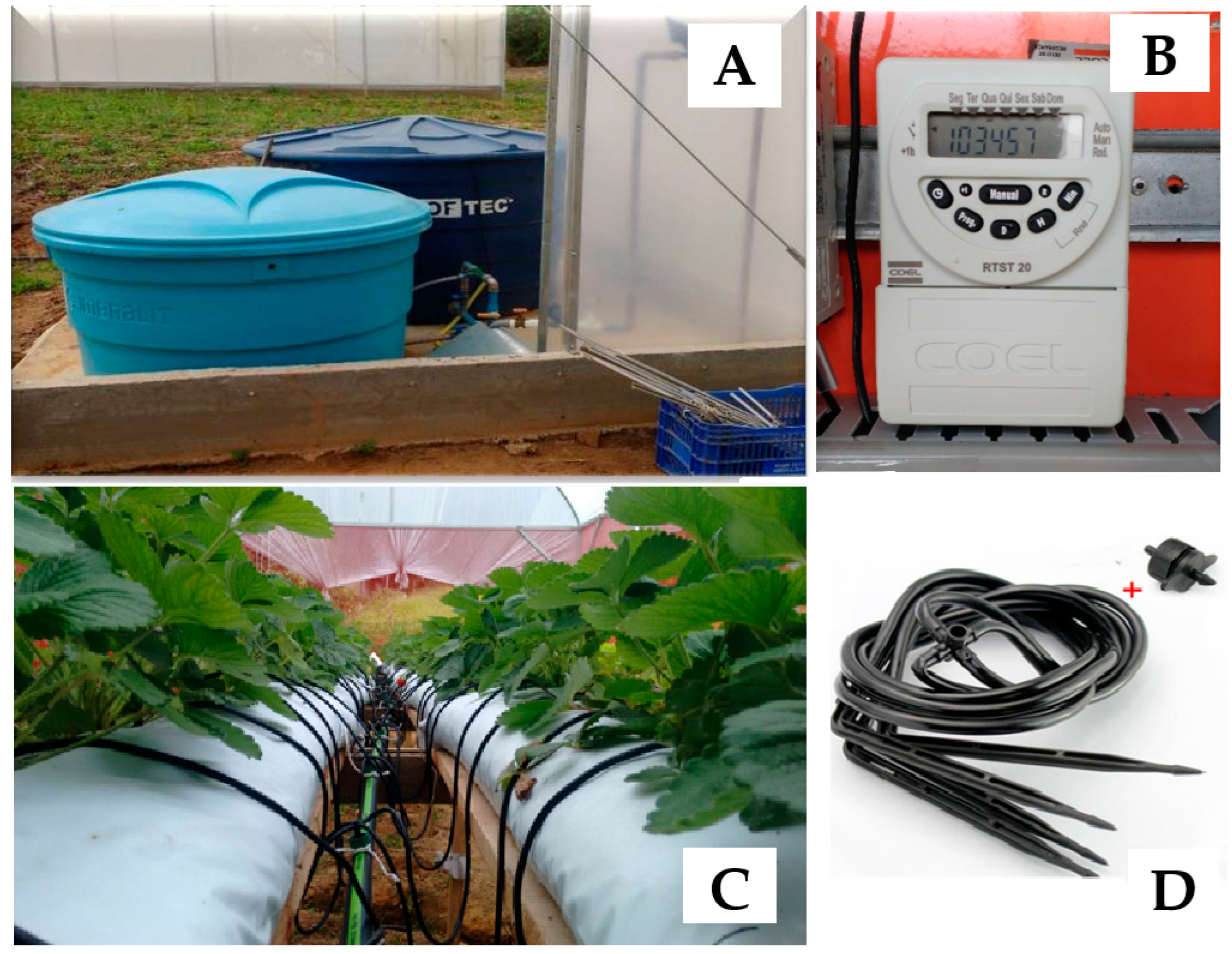
Figure 5.
Schematic diagram of an automated fertigation infrastructure, including an injection manifold (injectors), fertigation controller, stock solution reservoirs, pump motor, EC (electrical conductivity) and pH sensors, and an available input for a crop water-demand sensor. (Illustration: Epagri – Anderson Fernando Wamser).
Figure 5.
Schematic diagram of an automated fertigation infrastructure, including an injection manifold (injectors), fertigation controller, stock solution reservoirs, pump motor, EC (electrical conductivity) and pH sensors, and an available input for a crop water-demand sensor. (Illustration: Epagri – Anderson Fernando Wamser).
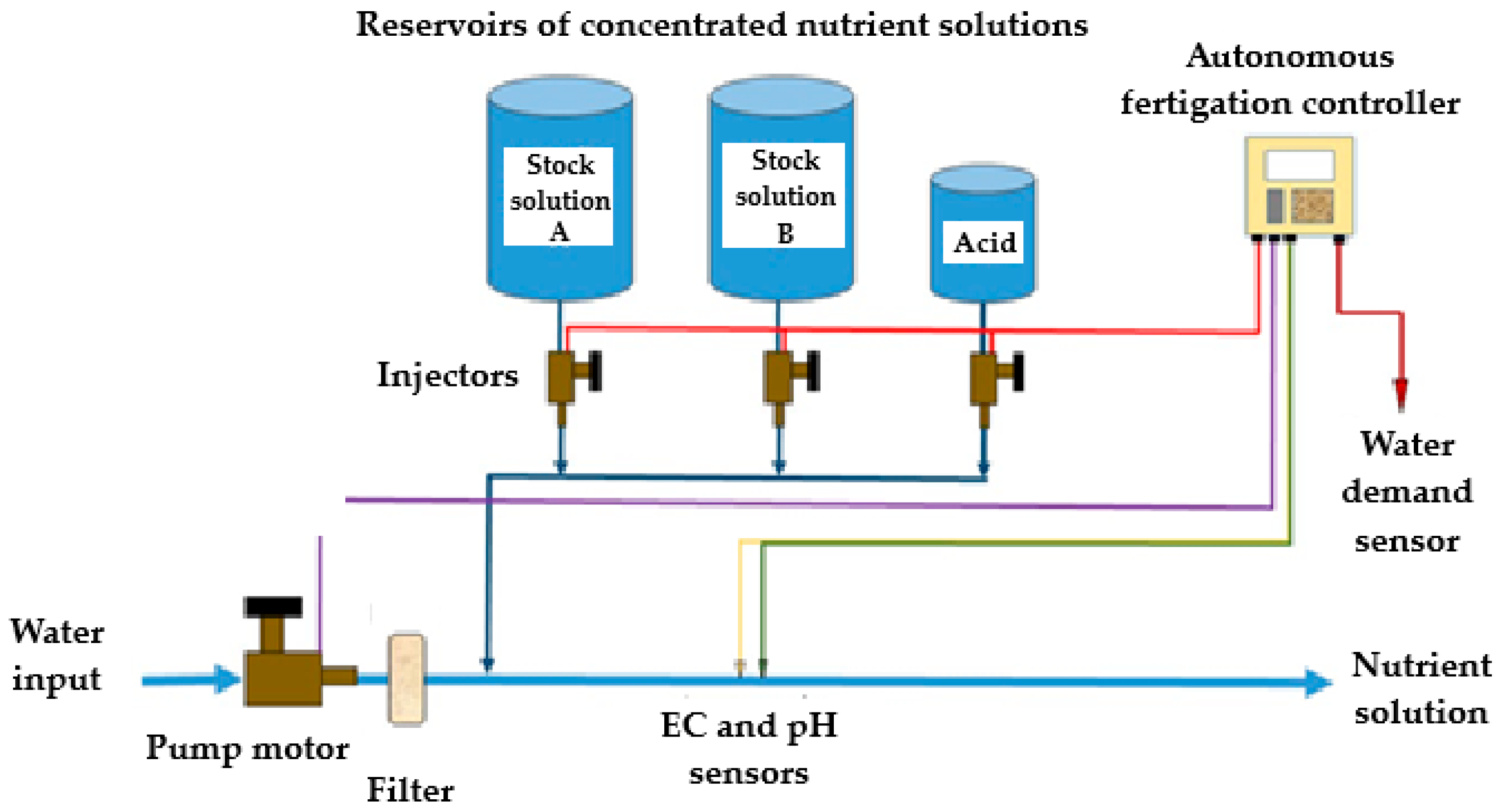
Figure 6.
Use of misting systems combined with fans to reduce the internal temperature of a protected environment for strawberry cultivation in a suspended system. Source: Fernando Teruhiko Hata.
Figure 6.
Use of misting systems combined with fans to reduce the internal temperature of a protected environment for strawberry cultivation in a suspended system. Source: Fernando Teruhiko Hata.
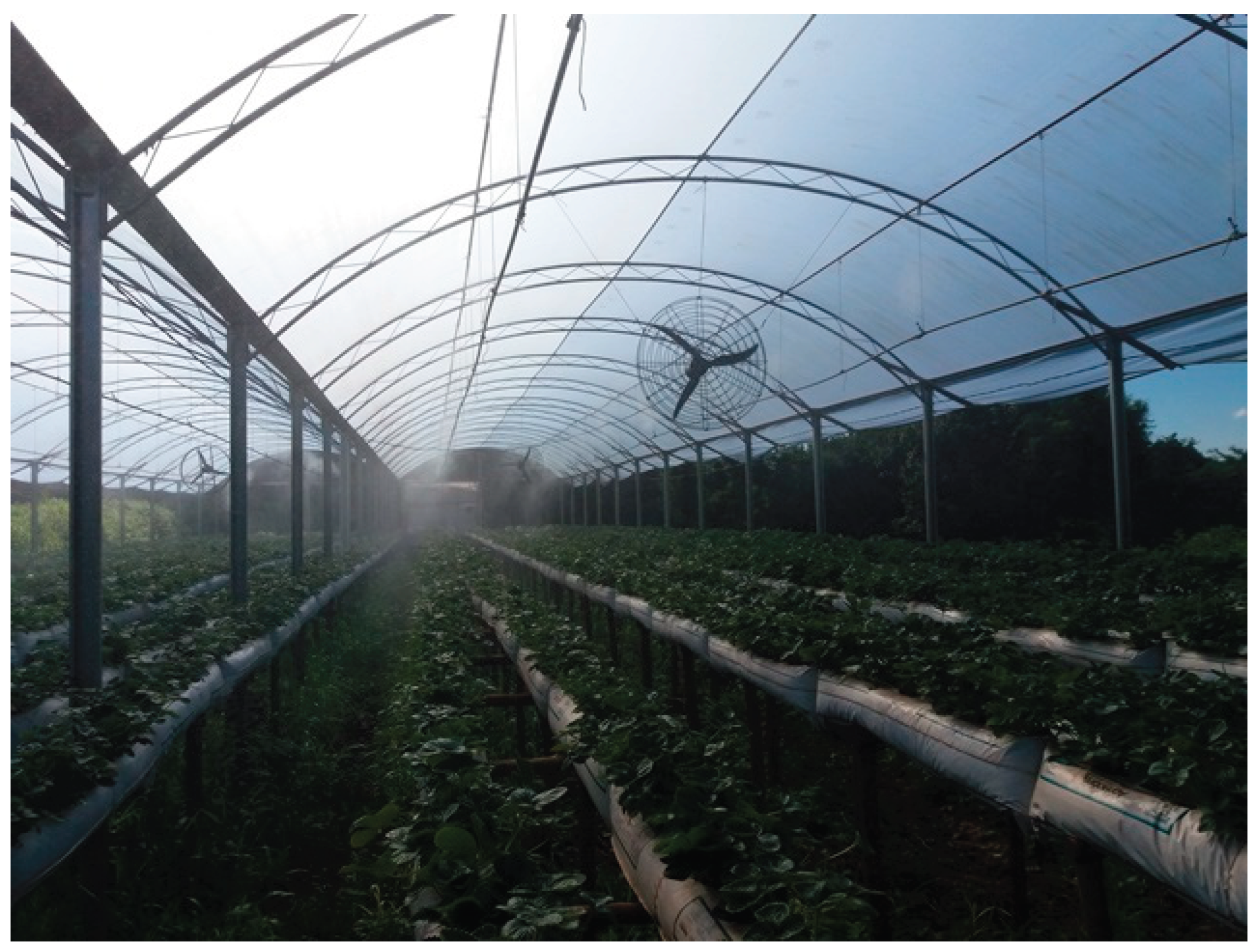

Table 1.
Reference values considered ideal for the main physical properties of substrates used in open semi-hydroponic systems with free drainage.
Table 1.
Reference values considered ideal for the main physical properties of substrates used in open semi-hydroponic systems with free drainage.
| Physical characteristic | Reference value |
|---|---|
| Dry density | 350 to 500 kg m-3 |
| Wet density | 500 to 750 kg m-3 |
| Total porosity or total pore space | 85 % |
| Aeration space | 20 to 30 % |
| Available water | 24 to 40 % |
| Readily available water | 20 to 30 % |
| Reserve or buffering water | 4 to 10 % |
| Residual or hardly available water | 20 to 30 % |
Source: Menezes Júnior (1998) [20].
Table 2.
Water quality indices and interpretation of analytical results for hydroponics.
| Determination | Suitable (mg L-1) |
Maximum Value (mg L-1) |
|---|---|---|
| Ca | 260.7 | 561.4 |
| Mg | < 12 | 12 |
| Na | 20 | 60 |
| SO4 | 26.6 | 66.8 |
| Carbonate | < 244 | 244 |
| Bicarbonate | 19.2 | 79.2 |
| Chloride | 40.5 | 101.5 |
| Fe | <1.12 | 1.12 |
| B | <0.27 | 0.27 |
| Zn | <0.32 | 0.32 |
| Cu | <0.06 | 0.06 |
| Mn | <0.24 | 0.24 |
| F | <0.47 | 0.47 |
| Cl | < 5 | 5 |
| Salt concentration | 1.12 | 200 or 350* |
| Electrical Conductivity (mS cm-1) | <0.75 | 0.5 a 2 |
| pH | 6.5 | 7.5 |
Table 3.
Recommended drainage percentage relative to the applied nutrient solution volume, according to the EC of the irrigation water (SANJUÁN & GAVILÁN, 2004).
Table 3.
Recommended drainage percentage relative to the applied nutrient solution volume, according to the EC of the irrigation water (SANJUÁN & GAVILÁN, 2004).
| Variable | Reference Level Range | ||||
|---|---|---|---|---|---|
| EC of irrigation water (dS m-1) | 0-0.5 | 0,5-1.0 | 1,0-2.5 | 2,5-3.5 | >3.5 |
| Recommended drainage (%) | 10-20 | 20-35 | 25-40 | 40-70 | >70 |
Table 4.
Salts or fertilizers used as sources of macronutrients for preparing nutrient solutions, including concentration, electrical conductivity (EC), and the amount required to prepare 1 mg L⁻¹ of the nutrient in solution.
Table 4.
Salts or fertilizers used as sources of macronutrients for preparing nutrient solutions, including concentration, electrical conductivity (EC), and the amount required to prepare 1 mg L⁻¹ of the nutrient in solution.
| Salt or Fertilizer | Supplied Nutrient | Concentration | EC (0.1% solution) |
Amount Required to Prepare 1 mg L⁻¹ of Each Nutrient | Equivalent Weight |
|---|---|---|---|---|---|
| % | mS | g 1,000 L-1 | |||
| Potassium nitrate (13-00-44) | K N-NO3 |
36.5 | 1.30 | 2.74 7.69 |
101 |
| Calcium nitrate | Ca N-NO3 N -NH4 |
19 14.5 1 |
≈1.20 | 5.26 6.90 100 |
118 |
| Magnesium nitrate | Mg N-NO3 |
9 11 |
0.9 | 11.1 9.1 |
128 |
| Monoammonium phosphate (MAP) | N -NH4 P |
11-12 26 |
≈1.00 | 9.09 – 9.92 3.91 |
115 |
| Ammonium nitrate | N-NO3 N -NH4 |
16.5 16.5 |
1.50 | 6.06 6.06 |
80 |
| Monopotassium phosphate (MKP) | K P |
29 23 |
0.70 | 3.45 4.35 |
136 |
| Potassium chloride (white) | K Cl |
52 47 |
1.70 | 1.92 2.13 |
75 |
| Potassium sulfate | K S |
41 17 |
1.20 | 2.44 5.88 |
87 |
| Magnesium sulfate | Mg S |
10 13 |
0.90 | 10 7.69 |
118 |
| Phosphoric acid 85%, D=1.70 | P | 27 | 1.00 | 3.7 (2.18 mL) | |
| Nitric acid 53%, D=1.33 | N-NO3 | 15.6 | 1.0 | 6.4 mL | |
| Ammonium sulfate | N-NH4 | 20 | 2.1 | 5.0 | 66 |
| Calcium chloride | Ca | 24 | 1.3 | 4.2 | 56 |
Source: adapted from Furlani et al., 2004 [26].
Table 5.
Salts or fertilizers used as sources of micronutrients for preparing nutrient solutions.
| Salt or Fertilizer | Supplied Nutrient | Concentration | Amount required to prepare 1 mg L⁻¹ of each nutrient |
|---|---|---|---|
| % | g 1000 L-1 | ||
| Fe-EDTA | Fe | 13 | 0.77 |
| Fe-EDDHA | Fe | 6 | 1.67 |
| Fe-EDDHMA | Fe | 6 | 1.67 |
| Fe-DTPA | Fe | 11 | 0.91 |
| Boric acid | B | 17 | 0.59 |
| Borax | B | 11 | 0.91 |
| Copper sulfate | Cu | 23 | 0.43 |
| Cu-EDTA | Cu | 14.5 | 0.69 |
| Manganese sulfate | Mn | 26 | 0.38 |
| Manganese chloride | Mn | 27 | 0.37 |
| Mn-EDTA | Mn | 13 | 0.77 |
| Zinc sulfate | Zn | 22 | 0.45 |
| Zinc chloride | Zn | 45 | 0.22 |
| Zn-EDTA | Zn | 14 | 0.71 |
| Sodium molybdate | Mo | 39 | 0.26 |
| Ammonium molybdate | Mo | 54 | 0.19 |
| Molybdic acid | Mo | 66 | 0.15 |
Source: Furlani et al., 2004 [26].
Table 6.
Adapted nutrient solution recommended for soilless strawberry cultivation – NFT system – during the vegetative and fruiting stages.
Table 6.
Adapted nutrient solution recommended for soilless strawberry cultivation – NFT system – during the vegetative and fruiting stages.
| Fertilizers | Vegetative stage | Fruiting stage |
|---|---|---|
| Fertilizer amount (g) for 1,000 liters of water | ||
| Calcium nitrate (15.5-0-0) | 900 | 1,060 |
| Potassium nitrate (12-0-45) | 650 | 800 |
| Monoammonium phosphate (11-60-0) | 240 | 240 |
| Monopotassium phosphate (0-51-33) | 0 | 0 |
| Magnesium sulfate | 400 | 400 |
| Boric acid | 1.5 | 3.5 |
| Copper sulfate | 0.25 | 0.25 |
| Manganese sulfate | 2.5 | 2.5 |
| Zinc sulfate | 1.0 | 1.0 |
| Sodium molybdate | 0.1 | 0.1 |
| Ferrous sulfate | 8.0 | 8.0 |
Table 7.
Recommended adapted nutrient solution for soilless strawberry cultivation according to substrate pH during the vegetative and fruiting stages.
Table 7.
Recommended adapted nutrient solution for soilless strawberry cultivation according to substrate pH during the vegetative and fruiting stages.
| Substrate with pH 5.2–5.5 | Substrate with pH above 7.0 | |||
|---|---|---|---|---|
| Fertilizer1 | Vegetative stage | Fruiting stage | Vegetative stage | Fruiting stage |
| Calcium nitrate (15.5-00-00) | 480 g | 480 g | 480 g | 480 g |
| Potassium nitrate (12-00-45) | 300 g | 300 g | 300 g | 180 g |
| Monoammonium phosphate (11-60-00) | 90 g | - | - | - |
| Monopotassium phosphate (00-51-33) | 108 g | 216 g | - | - |
| Magnesium sulfate (00-00-00-09) | 360 g | 360 g | 360 g | 360 g |
| Ammonium sulfate (20-00-00) | - | - | 50 g | 70 g |
| Potassium sulfate (00-00-50) | - | - | 70 g | 260 g |
| Phosphoric acid (85%) | - | - | 110 mL | 110 mL |
| Boric acid (17%B) | 1.8 g | 1.8 g | 1.8 g | 1.8 g |
| Copper sulfate (25%Cu) | 0.18 g | 0.18 g | 0.18 g | 0.18 g |
| Manganese sulfate (25%Mn) | 1.2 g | 1.2 g | 1.2 g | 1.2 g |
| Zinc sulfate (20%Zn) | 0.6 g | 0.6 g | 0.6 g | 0.6 g |
| Sodium molybdate (39%Mo) | 0.18 g | 0.18 g | 0.18 g | 0.18 g |
| Chelated iron (6% Fe) | 36 g | 36 g | 36 g | 36 g |
CAUTION: The EC of the solutions should be around 1.4–1.5 mS cm⁻¹. In semi-hydroponic cultivation, it is recommended to dilute them to the EC levels indicated for the vegetative and fruiting stages. Source: Gonçalves et al. (2016) [28]. 1 grams of fertilizer per 1,000 L.
Table 8.
Composition of concentrated nutrient solutions recommended for soilless strawberry cultivation.
Table 8.
Composition of concentrated nutrient solutions recommended for soilless strawberry cultivation.
| Salts or fertilizers | A | B | C |
|---|---|---|---|
| g per 10 L of water | |||
| Calcium nitrate | 1,600 | 0 | 0 |
| Potassium nitrate | 0 | 1,000 | 1,000 |
| Monoammonium phosphate | 0 | 300 | 0 |
| Monopotassium phosphate | 0 | 360 | 720 |
| Magnesium sulfate | 0 | 1,200 | 1,200 |
| Boric acid | 6.0 | 0 | |
| Copper sulfate | 0.6 | 0 | |
| Manganese sulfate | 4.0 | 0 | |
| Zinc sulfate | 2.0 | 0 | |
| Sodium molybdate | 0.6 | 0 | |
| Iron chelate (6% Fe) | 120 | 0 | |
Source: Furlani & Fernandes Júnior (2004) [26].
Table 9.
Dilution of concentrated nutrient solutions in 1,000 liters of water for the vegetative stage (solution A + B) and the fruiting stage (solution A + C) recommended for soilless strawberry cultivation.
Table 9.
Dilution of concentrated nutrient solutions in 1,000 liters of water for the vegetative stage (solution A + B) and the fruiting stage (solution A + C) recommended for soilless strawberry cultivation.
| Plant stage | Concentrated solution | ||
|---|---|---|---|
| A | B | C | |
| liters per 1,000 liters of water | |||
| Vegetative stage | 3.0 | 3.0 | - |
| Fruiting stage | 3.0 | - | 3.0 |
CAUTION: The electrical conductivity (EC) of the nutrient solutions should remain around 1.4 to 1.5 mS cm⁻¹. In semi-hydroponic cultivation, it is recommended to dilute the solution to achieve the EC levels appropriate for the vegetative and fruiting stages. Source: Furlani & Fernandes Júnior (2004) [26].
Disclaimer/Publisher’s Note: The statements, opinions and data contained in all publications are solely those of the individual author(s) and contributor(s) and not of MDPI and/or the editor(s). MDPI and/or the editor(s) disclaim responsibility for any injury to people or property resulting from any ideas, methods, instructions or products referred to in the content. |
© 2025 by the authors. Licensee MDPI, Basel, Switzerland. This article is an open access article distributed under the terms and conditions of the Creative Commons Attribution (CC BY) license (http://creativecommons.org/licenses/by/4.0/).
Copyright: This open access article is published under a Creative Commons CC BY 4.0 license, which permit the free download, distribution, and reuse, provided that the author and preprint are cited in any reuse.


