

Submitted:
10 November 2025
Posted:
11 November 2025
You are already at the latest version
Abstract
Conserving livestock biodiversity is vital for climate-resilient agriculture in sub-Saharan Africa. However, the indigenous West African Shorthorn (Muturu) cattle, valued for its trypanotolerance and low-input adaptability, faces population decline in Nigeria. This study assesses the feasibility of small-scale Muturu ranching (< 10 heads), estimating the initial upfront cost requirement for establishment of approximately €10,000, dominated by infrastructure costs such as fencing. Despite this high initial cost for smallholder farmers, Muturu’s adaptive efficiency may lower operating expenses and enhance farm business viability in small-scale farming systems. Findings underscore the need for concessional credit, infrastructure support, and indigenous beef market development to integrate conservation with rural livelihood resilience.
Keywords:
livestock biodiversity
; climate-resilient agriculture
; indigenous cattle breeds
; Muturu cattle conservation
; smallholder farming
Introduction
Biodiversity preservation has become an urgent global priority. Species extinction rates are reportedly accelerating at an alarming pace, driven by anthropogenic changes to the planet. Human activities, land-use conversion, climate change, invasive species, and commercial exploitation are widely recognized as key drivers in the ongoing biodiversity crisis (Atkins and Maroun, 2018; Oke et al. 2025). The stark decline in biodiversity has profound ecological, social, and economic implications: ecosystem functions are degraded, resilience to climate and zoonotic disease shocks is undermined, and the contributions of nature to human well-being diminish. For instance, Indigenous livestock breeds face severe erosion or extinction due to cross-breeding, genetic dilution, land-use transformation, neglect in favour of high-performance breeds, and poor small-holder management (Nweze and Otuma, 2020; Ajayi et al. 2022; Oke et al. 2025). Mwai et al. (2015) and Nyamushamba et al. (2016) argue that although over 150 African indigenous cattle breeds have been named, many remain uncharacterized and threatened by uncontrolled cross-breeding and introduction of non-native species. A particularly salient example is the West African Shorthorn (Muturu) cattle breed, native to the West African region and historically found in Nigeria’s Southwest and Southeast. The Muturu possesses invaluable traits such as heat- and trypanotolerance, a high meat-to-bone ratio, reproductive efficiency under low-input conditions, minimal management requirements, and a gentle temperament. The latter trait might be particularly well-suited to women and the youth in smallholder systems (Jabbar and Diedhiou, 2003; Ajayi et al., 2022). However, Evidence indicates that the Muturu now represents less than 0.76 % of Nigeria’s indigenous cattle population (Nweze and Otuma, 2020). In the Southwest (Lagos and Ogun States) the breed’s population is declining sharply, while in neighboring Ondo State it appears extinct (Ezekwe and Machebe, 2005; Ajayi et al., 2022). Smallholder farmers can be the stewards of Muturu conservation and biodiversity, and the custodians of traditional knowledge required to manage them sustainably but they must adopt improved practices and modern techniques for a favorable benefit-cost ration (Stocking et al. 2003). There is a call by a substantial number of studies (see Mwai et al. 2015; Nweze and Otuma, 2020; Ajayi et al. 2022; Oke et al. 2025) that upfront investments should be directed to modern small-scale farming techniques and practices in boosting Muturu breed biodiversity conservation. For instance, ranching approach in smallholder indigenous breed systems (especially in Africa) has been identified as a way forward (see Blench, 1999; Scholtz et al. 2002; Rewe et al. 2006; Rewe et al. 2006) but cost implications remains under-explored. However, most studies do not put a price tag on the upfront cost of biodiversity conservation in small-scale farming leading to critical gaps in the literature as well as policy orientation. Thus, cost-based evaluations of indigenous breed conservation, especially in smallholder contexts in sub-Saharan Africa, are scarce. Without a robust economic cost analysis of conservation interventions, it becomes difficult for relevant stakeholders to prioritize viable support mechanisms and business models. Without this information, strategic planning for breed conservation becomes weak. This study seeks to provide an initial upfront cost-based evaluation of the conservation and preservation of the Muturu cattle breed within smallholder ranching systems in Ogun State, contributing to both science and practice on biodiversity preservation in Nigeria. In doing so, this study positions breed conservation within broader frameworks of biodiversity preservation, smallholder livelihoods, climate resilience and sustainable development goals – SDGs (2 – zero hunger, 13 – climate action and 15 – life on land).
Literature Review
Biodiversity loss is not only a matter of ecological concern, but also one of social justice and development. This is because the communities, especially those in the global south, that most dependent on natural resources are often the ones least equipped to manage their loss due to high poverty, rapid land-use change, and often weaker institutional capacity (Klopper et al. 2002). In sub-Saharan Africa, rich species and genetic resources exist amid expanding agricultural frontiers, urban growth, and extractive pressures (Klopper et al. 2002; Saliu et al. 2023). Within this broad context, the conservation of indigenous genetic resources offers a compelling case through which to view biodiversity preservation. Indigenous livestock breeds represent unique genetic, cultural, ecological and economic assets (Mwai et al. 2015; Nyamushamba et al. 2016). They often display adaptive traits such as disease resistance, heat tolerance, efficient feed use, or reproduction in low-input systems, which are not observed in high-performance commercial breeds (Hoffmann et al. 2014; Woldeyohannes et al. 2023). As such, biodiversity conservation cannot be decoupled from sustainable development and community engagement (Saliu et al. 2025). The theoretical underpinnings draw on key insights from global biodiversity conservation, namely that conservation actions can succeed if they consider scaling and integration with local systems (Le et al. 2024; Zeng et al. 2022). Indeed, global meta-analysis shows that two-thirds of such conservation interventions produce positive outcomes for biodiversity, (Butchart et al. 2024). Löfqvist et al. (2023) found that, especially in biodiversity-rich but institutionally weaker regions of the global south, equity and local participation are critical to effective biodiversity management. Thus, integrating indigenous livestock breed conservation into smallholder systems offers multiple synergies: conserving adaptive genetic diversity, supporting smallholder livelihoods, reinforcing agro-biodiversity, enhancing climate resilience, and maintaining cultural heritage. Conserving biodiversity of certain threatened livestock breed in West Africa such as the Muturu cannot be confined to protected genetic gene-banks or specialized stations alone. Rather, it must extend into smallholder farming systems, where the breed is part of farming livelihoods and local socio-ecological systems (Nweze 2017; Nweze and Otuma, 2020; Ajayi et al. 2022). For instance, the Muturu breed encapsulates the paradox of indigenous livestock conservation, i.e., high adaptive and livelihood-relevance value but low adoption. Current trend in West Africa such as broad Muturu decline, land-use intensification and the marginalisation of smallholder farmers can be mitigated (Santoze and Gicheha, 2019). The current small-scale management of the Muturu in Nigeria is largely pastoral in nature, but suffers from poor feeding, inadequate breeding practices, and insufficient housing (Nweze and Otuma, 2020; Ajayi et al. 2022). Furthermore, Nweze (2017) argues that such practices if perpetuated will exacerbate the ongoing conflicts between pastoralists and crop farmers, and elevate competition for land resources in Southwest Nigeria. Thus, engaging smallholders benefits not only biodiversity goals but also improved livelihoods, an alignment increasingly recognized as essential in conservation science (Jabbar and Diedhiou, 2003; Stocking et al. 2003; Ajayi et al. 2022).
Material and Methods
This research study was conducted in Ogun State, southwestern Nigeria. An on-going Horizon Europe project - Fair Food and Trade Systems for Africa Through Food Convergence Innovation focuses on biodiversity and prescribes Muturu ranching as one of the strategies in increasing the household resilience against shocks such as climatic events (drought and floods), pest infestations and diseases, market disruptions etc. in Africa.
Ranching and herd size: Slightly over one hectare (1.2 ha to be precise) of farmland was dedicated to the Muturu cattle ranch in 2024. Overall, this farmland size and ranch is estimated to have the capacity to cater for less than 10 heads of Muturu cattle. This demonstration farm of Aglobe Development Center, a non-governmental organization, is located at Egbeda-Obafemi Owode Local Government Area of Ogun state and currently has four (4) heads of Muturu breed consisting three heifer and one bull (see Figure 1).
Fodder: Brachiaria (Urochloa brizantha) was cultivated as fodder for feeding of the herd along with supplementary feed such as Napier grass (Pennisetum purpureum), cassava (Manihot esculenta), maize (Zea mays) as well as other diverse grass to support animal health and growth (see Figure 1).
Structural infrastructure: The investment costs (Table 1) represent the initial capital outlay required to establish a functional and sustainable Muturu ranch. These costs are largely incurred at the inception phase and have long-term implications for production capacity and financial viability of the ranch for smallholder farmers. The following costs constitute the investment costs:
- Borehole Development: Water availability is critical for livestock welfare and pasture management. Investment in borehole drilling and water storage infrastructure constitutes a major cost. The amortization of water infrastructure over time contributes to system resilience. Alternatively, water would have been provided on a regular basis to water storage facilities, which would increase the operating costs.
- Physical Structures (Barns and Stables): Adequate housing and shelter are necessary for animal health, breeding management, and protection from adverse weather. Structural investments influence animal productivity and welfare standards.
- Other Essential Structures: Supporting facilities such as fencing, feed storage units, and handling facilities (e.g., crush pens) are critical to efficient farm operations. These structures reduce labor inefficiencies and animal stress.
- Basic Farm Machinery: This includes water pumps and hose, and pasture maintenance tools. The degree of mechanization is consideed low tech due to low herd size and production orientation.
Results
The establishment of the small-scale Muturu ranch (of max 10 head capacity on a 1.2 ha) in Southwest Nigeria requires an estimated €10,000 in initial upfront costs (see Table 1). These costs are those incurred prior to the initiation of production and are essential for developing a functional ranch capable of sustaining Muturu cattle under a semi-intensive management system. This imply that certain costs such as lease of land as well as purchase of cattle have not be considered in this study but they may vary depending on farm location and on-going market rates. It is important to note that there also opportunity costs involved in ranching, which may affect prices but is beyond the scope of this study. Table 1 presents the disaggregation of these costs, which include investments in water infrastructure, structural housing, essential support structures, and basic farm machinery such as motorcycle, cutlasses, hoses, grass binders etc. The highest share of total cost was attributed to physical housing structures, including construction of a barn and stable units as well as fencing, which accounted for €6,418. This represents approximately 67% of the total investment costs. Borehole development and water-storage infrastructure amounted to €2,014, representing around 21% of the total cost. Other essential structures (e.g., storage and animal handling units) accounted for €472, while basic farm machinery and support equipment (e.g., machines, hoses, fodder-handling tools etc.) accounted for €679. The estimated cost structure suggests that the most capital-intensive element of Muturu ranch establishment lies in infrastructure-related investment, rather than animal acquisition or feed-related costs. Primarily fixed cost considerations rather than variable cost shape the capital requirement and the financial threshold to entry.

Table 2.
Investment cost for cattle ranching infrastructure in Nigeria.
| Description | Total Costs (€ ) Max. Capacity (10 Head) | Unit Costs (€) of Current (4 Head) |
| Upfront Cost | ||
| Borehole and water infrastructure | 2,014 | 504 |
| Physical structure e.g., Barn Stable and Fencing | 6,418 | 1,605 |
| Other essential structure | 472 | 118 |
| Basic farm machinery | 679 | 170 |
| SUM | 9,583 | 2,397 |
The conversion rate of (€) Euro to (₦) Naira (1€ = ₦1,600).
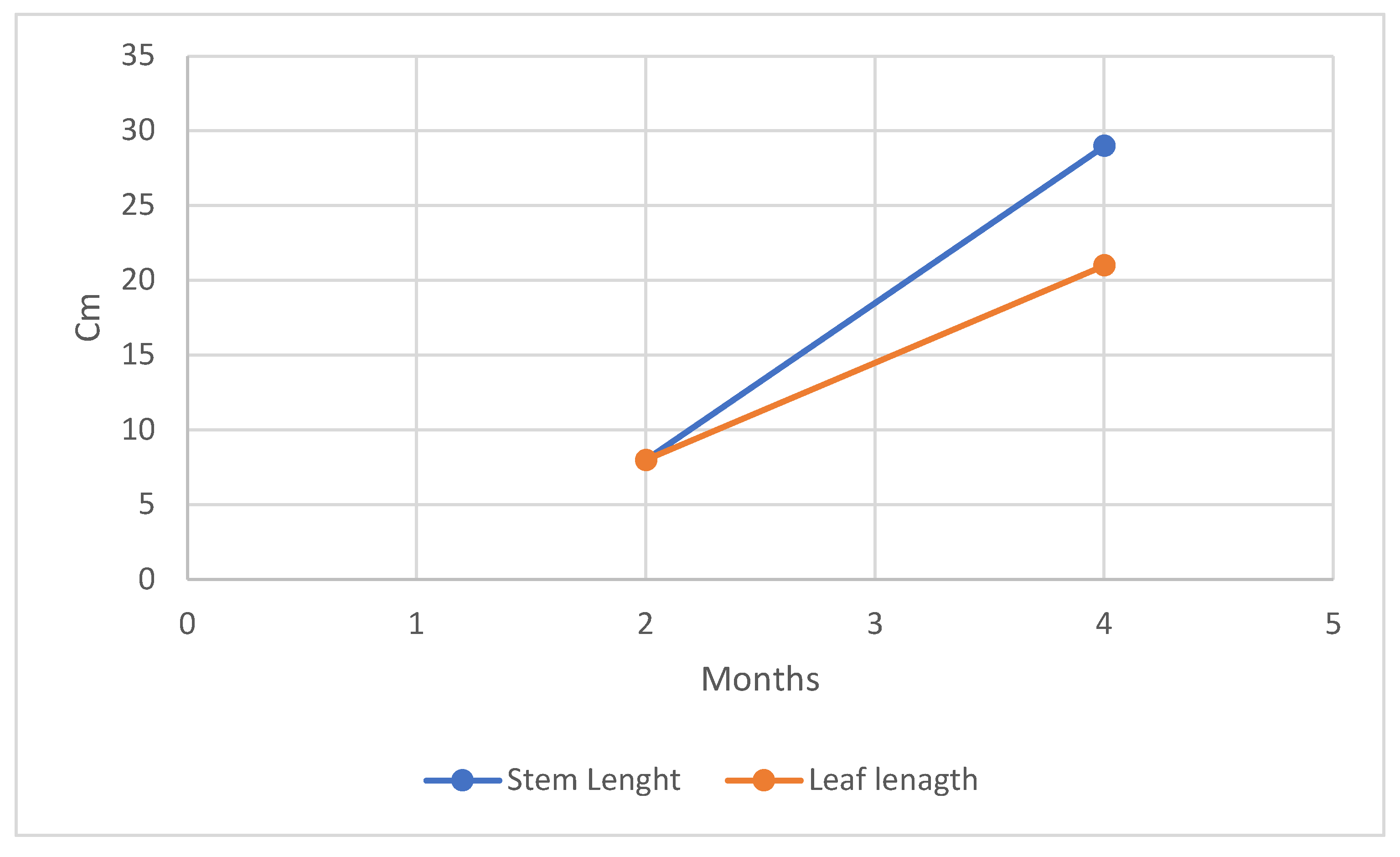
Approximately 0.2 of the 1.2 ha was dedicated to the cultivation of Brachiaria as fodder. The rest of the 1 ha was used for aforementioned mixed farming as well as housing and stable for the Muturu herd. Brachiaria was selected for its adaptability to tropical climates, high crude protein content, moderate drought tolerance, and suitability for cut-and-carry or semi-grazed feeding systems. Growth monitoring over the establishment period showed that after two months, both leaf and stem length were recorded at 8 cm (starting point in Figure 2), respectively. At 4 months, leaf length increased to 21 cm, and stem length to 29 cm (Figure 2). These growth values are consistent with early-stage establishment growth rates reported in semi-humid agroecological zones and indicate favorable adaptation to local soil and climatic conditions (Ramos et al. 2022).
With a sex ratio of three heifer and one bull observed, the herd is positioned for controlled breeding to enable gradual population expansion. The small herd structure is consistent with the genetic conservation objectives of the ranch, which emphasize maintaining reproductive viability while minimizing stress on the pasture during establishment.
Discussion
The analysis indicates that the €9,583 initial investment threshold presents a significant barrier for adoption among smallholder farmers. In a context where over 80% of farmers are resource-constrained (Anderson et al. 2017), and livestock investment decisions are shaped by liquidity, informal credit access, and household labor availability, such upfront capital requirements limit scalability. Structural infrastructure costs, which account for over two-thirds of the investment burden, are particularly prohibitive for subsistence and semi-subsistence-level farmers.
However, this high structural cost model serves an important strategic purpose. The ranching design promotes sedentary livestock management, reducing reliance on open grazing and mitigating herder-farmer conflict risks, which are widespread in sub-Saharan Africa. This is also an issue in Southwest Nigeria, where land-use conflict is a major constraint to livestock mobility (Akanwa et al. 2023). Transitioning from open-grazing to ranch-based systems therefore has both biodiversity conservation value and conflict mitigation benefits, aligning with recent policy shifts toward controlled grazing and livestock settlement development (Jyothi, 2022).
There is evidence that Muturu cattle, unlike larger Zebu another indigenous breed, do not require large-scale mechanized feed systems, making recurrent operating costs lower (Nweze and Otuma, 2020; Ajayi et al. 2022; Oke et al. 2025). Their natural trypanotolerance, heat tolerance, and low feed intake requirements reduce veterinary and supplementary feed expenses compared to larger, non-indigenous breeds (Oke et al. 2025). Therefore, while initial capital expenditure is high, long-term operating cost efficiency improves herd profitability prospects relative to high-maintenance cattle production systems.
As Muturu breed is undergoing rapid population decline in southwest Nigeria, this decline will adversely affect resilience-oriented agricultural systems. This is because Muturu smallholder-based conservation ranches perform a dual role of preserving indigenous livestock biodiversity, and strengthening agroecological resilience under climate and market shocks. Thus, its unique attributes provide strategic value for global frameworks such as the (i) Food and Agricultural Organization (FAO) Global Plan of Action for Animal Genetic Resources, (ii) Convention on Biological Diversity (CBD) as well as the (iii) United Nations Sustainable Development Goals (SDGs) – 2 (zero hunger), 13 (climate action) and 15 (life on land).
Brachiaria’s successful early establishment demonstrates the feasibility of low-cost, locally managed fodder systems for Muturu ranching. Given that feed typically constitutes 40-67% of total recurrent livestock production costs in African systems, the pasture-based fodder approach with Brachiaria materially enhances long-term financial viability (Oke et al. 2025). The observed growth rates indicate that the pasture will reach optimal harvesting height within 6-10 weeks of maintenance. Sustained rotational cutting and reseeding practices could generate sufficient year-round forage for a less than 10 head herd without requiring purchased feed inputs during the rainy season.
Scaling small-scale Muturu conservation ranches requires an enabling policy and market environment that lowers financial and technical barriers for smallholders. Given overall profitability of conventional Muturu farming (see Uza, 1995), access to concessional credit is fundamental to reducing capital-entry constraints, as limited liquidity and high borrowing costs remain major impediments to livestock investment and modernization in sub-Saharan Africa (Alary et al. 2016; Bageant and Barrett, 2017). Publicly supported infrastructure programs such as subsidized ranch construction and water systems can shift fixed-cost burdens from individual farmers to collective or government investment, enhancing inclusivity in livestock sector growth (De Boer et al. 2024).
Capacity building in fodder management, animal health, and breeding practices is equally critical. Targeted training interventions have been shown to significantly improve productivity and survival rates in smallholder livestock systems (Kristjanson et al. 2020). Establishing community-based nucleus herds for Muturu cattle would expand the genetic resource base and facilitate participatory breed improvement, consistent with the FAO’s Global Plan of Action for Animal Genetic Resources. Finally, market differentiation through “indigenous beef” labelling could generate premium demand (especially among the middle- to upper income consumers in Lagos and other cities) and incentivize conservation-oriented production, aligning biodiversity preservation with commercial viability (Garnett et al. 2021). An integrated approach combining financial inclusion, public investment, technical training, and market development could transform Muturu conservation ranching from a micro-scale initiative into a regionally scalable, climate-resilient livestock model.
Conclusion
This study demonstrates that while the upfront costs of establishing small-scale Muturu ranching systems in Southwest Nigeria are relatively high (approximately €10,000 on average), the long-term sustainability benefits may offer compelling justification for strategic investment. The findings confirm that fixed infrastructure, particularly water systems, housing and fencing, would constitutes the primary barrier to adoption of ranching, especially among resource-constrained farmers. However, once established, Muturu-based ranching models will most likely benefit from low recurrent costs, driven by the breed’s trypanotolerance, heat resistance, and modest feed requirements. These adaptive traits make Muturu cattle a viable option for low-input, climate-resilient livestock systems in the humid tropics. Beyond economic feasibility, Muturu conservation holds critical biodiversity and resilience value. The breed’s genetic attributes contribute to ecosystem stability and align with global frameworks such as the FAO Global Plan of Action for Animal Genetic Resources, the Convention on Biological Diversity, and the SDGs 2, 13 and 15. Supporting Muturu conservation within smallholder systems therefore strengthens both national food security and climate adaptation agendas. The study also underscores the importance of enabling conditions for scaling. Access to concessional credit and subsidized ranch infrastructure are essential to reduce entry barriers and encourage wider participation. Similarly, farmer training, particularly women and youths, in pasture development, breeding management, and animal health is necessary to improve productivity outcomes. Creating community-based Muturu nucleus herds could expand the genetic base and encourage participatory conservation, while market development for “indigenous beef” can link biodiversity preservation with economic incentives. Thus, Muturu ranching presents a scalable pathway for integrating biodiversity conservation, rural livelihood enhancement, and sustainable livestock transformation in West Africa. Policy frameworks that blend financial inclusion, public infrastructure investment, and value-chain innovation will be central to achieving this transition. Future research should assess long-term herd performance, ecosystem services, and market dynamics to optimize the Muturu conservation model as a replicable blueprint for indigenous livestock preservation and climate-resilient agriculture across sub-Saharan Africa.
Funding
This research was funded by the European Union under Horizon Europe, grant agreement No. 101182485, project name “Fair Food and Trade Systems for Africa through Food Convergence Innovation” (FCI4Africa). The views and opinions expressed are, however, those of the author(s) only and do not necessarily reflect those of the European Union. Neither the European Union nor the granting authority can be held responsible for them.
Acknowledgments
We would like to thank the management and staff of Aglobe Development Center (ADC), (www.aglobedc.org) Lagos, Nigeria. We would also like to express sincere gratitude to Mr. Olusola Kolawole Adelani, and Mr. Umar.
References
- Akanwa, A. O., Banerjee, A., Jhariya, M. K., Muoghalu, L. N., Okonkwo, A. U., Ikegbunam, F. I., ... & Madukasi, E. I. (2023). Climate-Induced Conflicts Between Rural Farmers and Cattle Herders: Implications on Sustainable Agriculture and Food Security in Nigeria. Ecorestoration for Sustainability, 373-416.
- Alary, V., Corniaux, C., & Gautier, D. (2016). Livestock’s contribution to poverty alleviation: How to measure it? World Development, 79, 94–109. [CrossRef]
- Anderson, J., Marita, C., Musiime, D., & Thiam, M. (2017). National survey and segmentation of smallholder households in Nigeria. Understanding Their Demand for Financial, Agricultural, and Digital Solutions.
- Atkins, J., & Maroun, W. (2018). Integrated extinction accounting and accountability: building an ark. Accounting, Auditing & Accountability Journal, 31(3), 750-786.
- Ajayi, F. T., Akintayo, O. I., Tiamiyu, A. K., Omodele, T., & Omotoso, S. O. (2022). Spatial Distribution and Management of Muturu Cattle in Southwest Nigeria: Implications for genetic conservation. Nigerian Journal of Animal Production, 49(4), 133-144.
- Bageant, E. R., & Barrett, C. B. (2017). Are there gender differences in demand for index-based livestock insurance? World Development, 94, 203–212. [CrossRef]
- Blench, R. (1999). Traditional livestock breeds: geographical distribution and dynamics in relation to the ecology of West Africa (Vol. 67). London, UK: Overseas Development Institute.
- Butchart, S. H., Akçakaya, H. R., Berryman, A. J., Brooks, T. M., Burfield, I. J., Chanson, J., ... & Vine, J. (2025). Measuring trends in extinction risk: a review of two decades of development and application of the Red List Index. Philosophical Transactions B, 380(1917), 20230206.
- De Boer, I. J. M., van Ittersum, M., Rugani, B., & van Zuilekom, M. (2024). Towards resilient, inclusive, sustainable livestock farming systems. Livestock Science, 296, 104075.
- Ezekwe, A. G., & Machebe, N. (2005). Milk yield and composition of muturu cattle under the semi intensive system of management. Nigerian Journal of Animal Production, 32(2), 287-292.
- 2025.
- Garnett, T., Godde, C. M., & Herrero, M. (2021). Climate-smart livestock systems: Lessons from practice. Global Food Security, 28, 100504. [CrossRef]
- Hoffmann, I., et al. (2014). The making of a livestock and adaptation paradigm. Animal: An International Journal of Animal Bioscience, 8(1), 97-103.
- Jabbar, M. A., & Diedhiou, M. L. (2003). Does breed matter to cattle farmers and buyers?: Evidence from West Africa. Ecological Economics, 45(3), 461-472.
- Jyothi, A. (2022). The Past, Present and Future of Pastoralists and the Pastoral Commons in the Sahel. Africa Review, 14(2), 171-191.
- Klopper, R. R., Smith, G. F., & Van Rooy, J. (2002). The biodiversity of Africa. Rebirth of science in Africa: a shared vision for life and environmental sciences, 60-86.
- Kristjanson, P., Waters-Bayer, A., Johnson, N., Tipilda, A., Njuki, J., Baltenweck, I., Grace, D., & MacMillan, S. (2020). Livestock and women’s livelihoods: A review of the recent evidence. Food Policy, 97, 101908. [CrossRef]
- Le, Q., et al. (2024). Fostering transformative change for biodiversity restoration through transdisciplinary research. GC Insights, 7(1), 57. [CrossRef]
- Löfqvist, S., Kleinschroth, F., Bey, A., De Bremond, A., DeFries, R., Dong, J., ... & Garrett, R. D. (2023). How social considerations improve the equity and effectiveness of ecosystem restoration. BioScience, 73(2), 134-148.
- Ngongolo, K., & Kyando, M. (2025). Biodiversity conservation and socio-economic development for Africa’s harmonious future: a scoping review. BMC Environmental Science, 2(1), 11.
- Nweze B. O. 2017. The use of Integer and stochastic model in pastoral farming and Animal productivity In Nigerian pastoral farming and pasture production. Dika Pub. Abakaliki, Nigeria pp 136-200.
- Nweze, B. O., & Otuma, M. O. (2020). Herd simulation model of muturu cattle under sedentary pastoral farming in derived savannah, Southeast, Nigeria. Nigerian Journal of Animal Production, 47(5), 1-12.
- Nyamushamba, G. B., Mapiye, C., Tada, O., Halimani, T. E., & Muchenje, V. (2016). Conservation of indigenous cattle genetic resources in Southern Africa’s smallholder areas: turning threats into opportunities—A review. Asian-Australasian journal of animal sciences, 30(5), 603.Oke, O. E., Akosile, O. A., Oliyide, K. M., Ibigbami, D. J., Adeniran, D. A., Oni, A. I., ... & Oluwatosin, B. O. (2025). Resilience and adaptation of indigenous cattle to harsh environments: a case study of the Muturu breed. Journal of Applied Animal Research, 53(1), 2568562.
- Saliu, A. O., Komolafe, O. O., Bamidele, C. O., & Raimi, M. O. (2023). The value of biodiversity to sustainable development in Africa. In Sustainable utilization and conservation of Africa’s biological resources and environment (pp. 269-294). Singapore: Springer Nature Singapore.
- Mwai, O., Hanotte, O., Kwon, Y. J., & Cho, S. (2015). African indigenous cattle: unique genetic resources in a rapidly changing world. Asian-Australasian journal of animal sciences, 28(7), 911.
- Santoze, A., & Gicheha, M. (2019). The status of cattle genetic resources in West Africa: a review. Advances in Animal and Veterinary Sciences, 7(2), 112-121.
- Scholtz, M. M., Matjuda, L. E., Motiang, D., & Rasebotsa, M. S. (2002). An integrated approach to beef cattle improvement through resource poor farmer participation in Southern Africa. Proceeding of the 7th World Congress of Genetics Applied to Livestock Production, 19–23 August, Montpellier, pp 377–380.
- Stocking, M., Kaihura, F., Liang, L., Tumuhairwe, J., Nkwiine, C., Kang’ara, J., ... & Kawangolo, J. (2003). Agricultural biodiversity in smallholder farms of East Africa.
- Ramos, B. L. P., dos Santos Pedreira, M., Santos, H. P., Cruz, N. T., Pezenti, E., Silva, A. S., ... & Fries, D. D. (2022). Forage production, morphogenetic and structural components, and nutritional value of tropical grasses in the semiarid condition. Semina: Ciências Agrárias, 43(6), 2499-2516.
- Rewe, T. O., Indetie, D., Ojango, J. M., & Kahi, A. K. (2006). Economic values for production and functional traits and assessment of their influence on genetic improvement in the Boran cattle in Kenya. Journal of Animal Breeding and Genetics, 123(1), 23-36.
- Rewe, T. O., P. Herold, A. K. Kahi, and A. Valle Zárate. “Breeding indigenous cattle genetic resources for beef production in Sub-Saharan Africa.” Outlook on AGRICULTURE 38, no. 4 (2009): 317-326.
- Uza, D. V. (1995). Evaluation of the performance of Muturu cattle under the traditional village management system in the Southern Guinea Savanna of Benue State, Nigeria (Doctoral dissertation).
- Woldeyohannes, T., Betsha, S., & Melesse, A. (2023). Genetic improvement approaches of indigenous cattle breeds for adaptation, conservation and sustainable utilization to changing climate in Ethiopia. Veterinary Integrative Sciences, 22(1), 231-250.
- Zeng, Y., Koh, L. P., & Wilcove, D. S. (2022). Gains in biodiversity conservation and ecosystem services from the expansion of the planet’s protected areas. Science Advances, 8(22), eabl9885. [CrossRef]
Figure 1.
Small-scale Muturu ranching with Brachiaria (Urochloa brizantha) and mixed grass cultivation at Aglobe Development Center demonstration farm in Ogun State in 2025, Southwest Nigeria.
Figure 1.
Small-scale Muturu ranching with Brachiaria (Urochloa brizantha) and mixed grass cultivation at Aglobe Development Center demonstration farm in Ogun State in 2025, Southwest Nigeria.
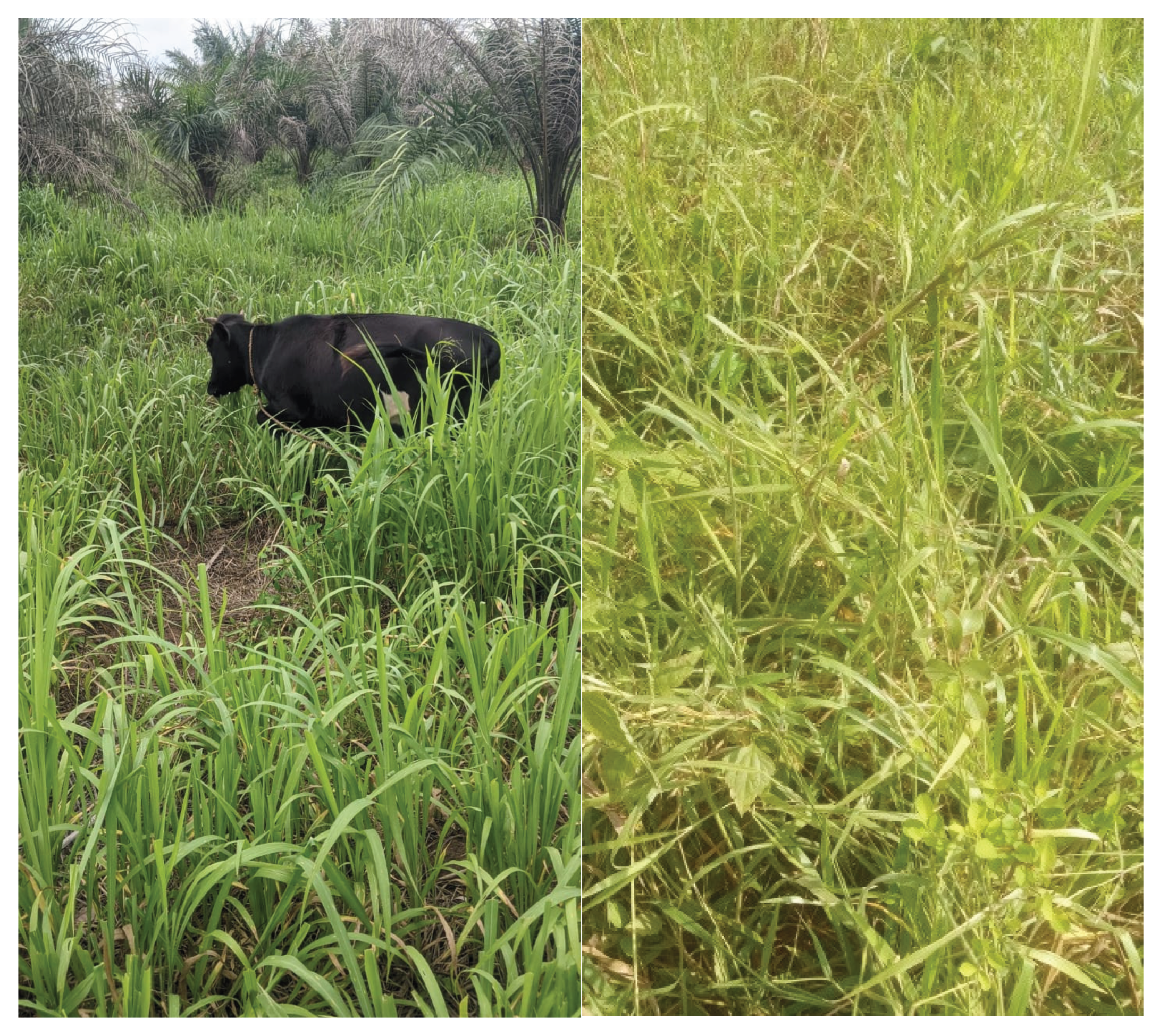
Figure 2.
Brachiaria Growth Rate measured by stem and leaf length.
Disclaimer/Publisher’s Note: The statements, opinions and data contained in all publications are solely those of the individual author(s) and contributor(s) and not of MDPI and/or the editor(s). MDPI and/or the editor(s) disclaim responsibility for any injury to people or property resulting from any ideas, methods, instructions or products referred to in the content. |
© 2025 by the authors. Licensee MDPI, Basel, Switzerland. This article is an open access article distributed under the terms and conditions of the Creative Commons Attribution (CC BY) license (http://creativecommons.org/licenses/by/4.0/).
Copyright: This open access article is published under a Creative Commons CC BY 4.0 license, which permit the free download, distribution, and reuse, provided that the author and preprint are cited in any reuse.


