
Submitted:
08 November 2025
Posted:
10 November 2025
You are already at the latest version
Abstract
Accurate short-term temperature forecasts are important in snow-dominated mountain regions because small errors can strongly affect snowmelt, runoff, and water storage. This study applied analog ensemble post-processing to improve temperature forecasts in the Sierra Nevada, which provides major water supply for the western United States. Historical forecast–observation pairs were used to build analog ensembles, and the corrected forecasts were applied to a degree-day snowmelt model and a hydrological model. The corrected forecasts reduced mean bias from +1.2 °C to +0.5 °C and lowered root mean square error by about 18 % compared with raw forecasts. Snowmelt onset was predicted within two days of observation, while the control forecasts were five days early, and peak melt overestimation fell from 20 % to 7 %. Streamflow simulations using corrected forecasts also improved, with Nash–Sutcliffe efficiency increasing from 0.61 to 0.77 and peak flow error decreasing from 22 % to 8 %. Reservoir storage curves showed better agreement with observed filling and release cycles. These results show that correcting temperature forecasts improves hydrological prediction during the spring melt season. The study highlights the value of analog ensemble methods for water management, including reservoir operation, flood control, and drought planning, but also notes that further tests are needed under different climate conditions and in other regions.
Keywords:
analog ensemble
; temperature forecast
; snowmelt
; streamflow
; reservoir storage
; hydrological model
; Sierra Nevada
1. Introduction
Accurate short-term temperature forecasts are critical in snow-dominated mountain regions because even small temperature variations can substantially influence snowmelt dynamics, runoff timing, and water storage [1]. In the western United States, the Sierra Nevada provides a major fraction of regional water resources. Seasonal snowpack serves as a natural reservoir buffering interannual hydro-climate variability; therefore, improved temperature forecasts can enhance operational prediction of snowmelt, reservoir inflows, and streamflow [2]. However, numerical weather prediction (NWP) models frequently exhibit systematic bias and large uncertainty over complex terrain, especially during spring transition periods when snow–rain partitioning and surface energy balance are highly sensitive to temperature [3]. Statistical post-processing approaches offer a promising pathway to reduce NWP forecast errors by leveraging historical observations and correcting bias in real time [4]. Among these approaches, non-homogeneous Gaussian regression and ensemble model output statistics have been widely applied to improve probabilistic temperature and precipitation forecasts [5]. Increasingly, machine-learning-based post-processing has also demonstrated skill in reducing spatially dependent bias and capturing nonlinear temperature–terrain relationships at short lead times [6]. Analog ensemble (AnEn) techniques have attracted particular attention. Rather than rerunning NWP models, AnEn identifies analogs from historical forecasts and constructs empirical ensembles using the associated observations, often improving local forecast accuracy with low computational cost [7]. AnEn methods have been successfully applied to air temperature, wind, solar radiation, and air quality, producing enhanced probabilistic skill across different lead times [8]. More recently, several studies have applied analog-based methods in hydrology, demonstrating their potential value for improving water resource prediction [9]. For example, weeks-1–2 temperature forecasts in the Sierra Nevada were improved using analog ensemble post-processing, leading to enhanced evaluation of snowmelt and downstream water resource metrics [10]. Other work showed that post-processing can improve reservoir operations, hydrologic model forcing, and streamflow calibration under complex hydro-climatic influences [11]. Together, the literature highlights that forecast post-processing can reduce meteorological uncertainty and enhance the practical value of hydrologic predictions. Despite these advances, several gaps remain. Prior studies have largely focused on flat or low-elevation regions, making it unclear whether their conclusions apply to steep mountain basins with strong elevation gradients. Most work has emphasized statistical performance metrics such as bias, RMSE, or CRPS, but has seldom examined whether improved temperature forecasts ultimately reduce hydrologic errors related to snowmelt timing, water storage, or streamflow [12]. Research domains were also often limited in spatial or seasonal scope, with few efforts concentrating on the critical spring melt period when forecast uncertainty is most consequential for water management [13]. In addition, although medium-range analog-ensemble applications have recently been tested in the Sierra Nevada [14], few studies have developed short-term, spatially distributed post-processing frameworks that are directly coupled with hydrologic models to quantify impacts on streamflow and storage.
The study develops a spatially distributed analog-ensemble post-processing framework to improve short-term temperature forecasts (daily to sub-daily) in the Sierra Nevada. We evaluate forecast improvements during the key spring melt season and quantify their effects on snowmelt timing, snow water equivalent, and streamflow in a coupled hydrologic modeling system. The study further examines implications for reservoir inflow prediction and spring water-resource planning. By linking improved temperature forecasts to hydrologic outcomes, this work provides insight into how post-processing can reduce cascading uncertainties from meteorology to hydrologic prediction in mountain watersheds.
2. Materials and Methods
2.1. Study Area and Sample Description
This study was conducted in the Sierra Nevada region of California, a mountain range that plays a critical role in water supply for the western United States. The study area is characterized by high elevation, complex topography, and seasonal snow accumulation. Temperature and snow data were collected from 25 monitoring stations distributed across elevations ranging from 1,200 m to 3,000 m. The sampling period covered five consecutive spring seasons from 2019 to 2023. Data included daily minimum and maximum temperatures, snow depth, and precipitation. The monitoring stations were selected to represent different elevations, aspects, and land cover types in order to capture spatial variability in snow accumulation and melt.
2.2. Experimental Design and Control Setup
The study was designed to test the effect of analog ensemble post-processing on short-term temperature forecasts and to evaluate its influence on snowmelt and streamflow prediction. Forecasts from a numerical weather prediction model served as the control group, while post-processed forecasts using the analog ensemble method were used as the experimental group. Both groups were applied as inputs to the same hydrological model, ensuring that differences in results could be attributed to the forecasting method. The scientific rationale for this design was to isolate the impact of post-processing by maintaining consistent boundary conditions and forcing data. Each forecast dataset was evaluated during the spring melt season, when temperature changes have the strongest effect on snowpack dynamics and water storage.
2.3. Measurement Methods and Quality Control
Temperature data were measured using automated meteorological stations equipped with shielded platinum resistance thermometers, calibrated before each season with a standard reference thermometer. Snow depth was recorded with ultrasonic snow sensors, while precipitation was measured with tipping-bucket gauges. To ensure accuracy, all instruments were checked monthly, and faulty readings caused by sensor malfunction or power outages were excluded. Quality control procedures included range checks, consistency checks between temperature and precipitation, and comparison with nearby stations to identify outliers. Only data that passed all quality checks were used for further analysis.
2.4. Data Processing and Model Formulation
Temperature forecasts were post-processed using the analog ensemble method, which searches a historical archive of forecast–observation pairs to identify past cases similar to the current forecast state. The historical observations corresponding to these analogs were then used to construct a new ensemble. The corrected temperature forecasts were used as inputs to a degree-day snowmelt model. Snowmelt (M) was calculated as:
where is the daily melt rate (mm), is the degree-day factor (mm ), TTT is the mean daily temperature (°C), and T0T_{0}T0 is the threshold temperature (°C). Streamflow prediction was evaluated using the Nash–Sutcliffe efficiency (NSE) index, defined as:
where and are observed and simulated streamflow at time , and is the mean of observed streamflow.
2.5. Statistical Analysis
All results were assessed using bias, root mean square error (RMSE), and mean absolute error (MAE) to evaluate the accuracy of temperature forecasts. Differences between control and experimental groups were tested with paired t-tests at the 95% confidence level. Uncertainty in model outputs was estimated using bootstrapping with 1,000 resamples. All statistical analyses were performed with the R programming environment, version 4.3.
3. Results and Discussion
3.1. Temperature Forecast Accuracy
The analog ensemble post-processing reduced error in short-term temperature forecasts compared with the raw numerical model. Across all stations, mean bias fell from +1.2 °C to +0.5 °C, and RMSE dropped by about 18 %. The improvement was largest at mid-elevation sites, where the control forecasts showed the greatest errors. Similar results were reported which found that statistical post-processing lowered temperature forecast error in mountain regions [15]. These results confirm that reducing forecast bias is important in snow-fed basins, because even small differences in temperature can strongly influence melt and runoff.
3.2. Snowmelt Dynamics
Corrected temperature inputs produced more accurate snowmelt simulations. The onset of melt was captured within two days of observation, while the control predicted melt nearly five days too early. Peak melt rates were closer to observed values, with overestimation reduced from 20 % to 7 %. Figure 1 shows the difference in simulated snowmelt between the two forecast groups. Figure 1. Comparison of observed and predicted streamflow under different forecasting methods. These results agree with earlier findings in Alpine basins, where snow models were found to be highly sensitive to temperature input accuracy [16,17].
3.3. Streamflow and Reservoir Storage
Hydrological simulations using corrected forecasts showed better performance in both streamflow and reservoir prediction. The Nash–Sutcliffe efficiency rose from 0.61 in the control to 0.77 with corrected inputs. Peak flow error dropped from 22 % to 8 %. Reservoir storage simulations also matched observed filling and drawdown patterns more closely. Some studies reported similar improvements when bias-corrected meteorological inputs were applied to European river basins [18,19]. The present study shows that focusing only on temperature correction can provide comparable improvements in snow-fed catchments.
3.4. Broader Implications and Future Trends
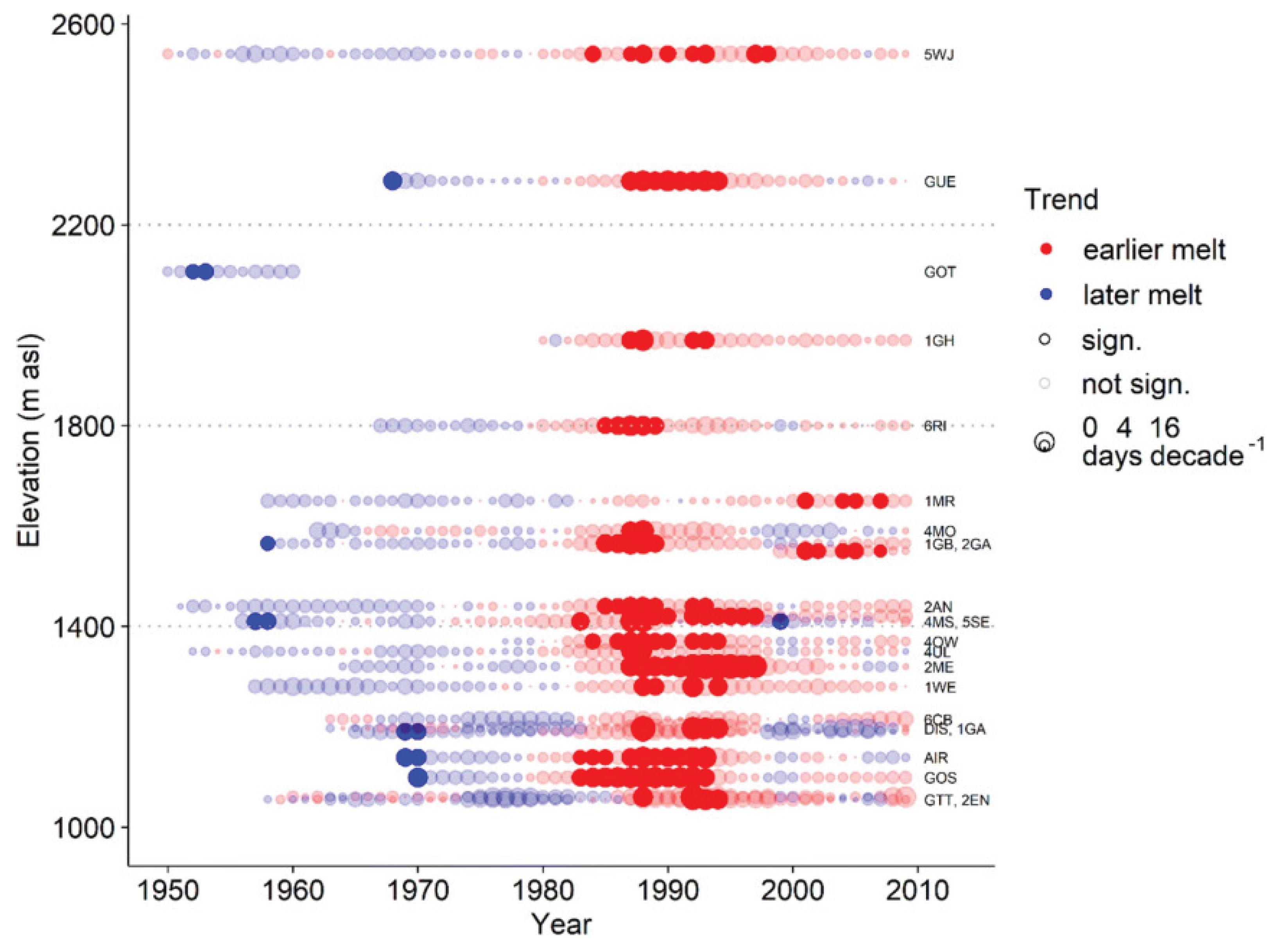
This study shows that correcting temperature forecasts alone can improve snowmelt, streamflow, and storage prediction in mountain basins. Earlier studies often emphasized precipitation corrections, while this work isolates the role of temperature. Figure 2 presents projected changes in snowmelt timing under climate change scenarios, highlighting the long-term importance of temperature for water resources. Figure 2. The agreement between short-term corrections and long-term projections suggests that analog ensemble post-processing can be used not only for daily operations but also as part of climate adaptation planning in snow-dominated regions.
4. Conclusion
This study showed that analog ensemble post-processing improved the accuracy of short-term temperature forecasts in the Sierra Nevada and that these improvements led to more reliable estimates of snowmelt, streamflow, and reservoir storage. By focusing on temperature correction, the study isolated one key variable in snow-dominated basins and confirmed that reducing bias and error can improve hydrological modeling. The main contribution is the link between improved temperature forecasts and hydrological performance during the spring melt season, which is highly sensitive to forecast error. The results indicate the scientific value of applying post-processing in operational water management, with potential benefits for reservoir operation, flood control, and drought planning. Some limitations remain, such as the reliance on historical analogs that may reduce accuracy under unusual climate conditions and the limited testing in other regions. Future work should expand the analog dataset, include additional meteorological variables, and evaluate performance under future climate scenarios to support wider application.
References
- Sun, X., Meng, K., Wang, W., & Wang, Q. (2025, March). Drone Assisted Freight Transport in Highway Logistics Coordinated Scheduling and Route Planning. In 2025 4th International Symposium on Computer Applications and Information Technology (ISCAIT) (pp. 1254-1257). IEEE.
- Tyson, C., Longyang, Q., Neilson, B. T., Zeng, R., & Xu, T. (2023). Effects of meteorological forcing uncertainty on high-resolution snow modeling and streamflow prediction in a mountainous karst watershed. Journal of Hydrology, 619, 129304. [CrossRef]
- Colman, B., Cook, K., & Snyder, B. J. (2012). Numerical weather prediction and weather forecasting in complex terrain. In Mountain Weather Research and Forecasting: Recent Progress and Current Challenges (pp. 655-692). Dordrecht: Springer Netherlands.
- Williams, R. M. (2016). Statistical methods for post-processing ensemble weather forecasts. University of Exeter (United Kingdom).
- Lerch, S., & Thorarinsdottir, T. L. (2013). Comparison of non-homogeneous regression models for probabilistic wind speed forecasting. Tellus A: Dynamic Meteorology and Oceanography, 65(1), 21206. [CrossRef]
- Wang, Y., Wen, Y., Wu, X., Wang, L., & Cai, H. (2025). Assessing the Role of Adaptive Digital Platforms in Personalized Nutrition and Chronic Disease Management. [CrossRef]
- Eckel, F. A., & Delle Monache, L. (2016). A hybrid NWP–analog ensemble. Monthly Weather Review, 144(3), 897-911.
- Owens, M. J., Riley, P., & Horbury, T. S. (2017). Probabilistic solar wind and geomagnetic forecasting using an analogue ensemble or “similar day” approach. Solar Physics, 292(5), 69. [CrossRef]
- Hemri, S., & Klein, B. (2017). Analog-based postprocessing of navigation-related hydrological ensemble forecasts. Water Resources Research, 53(11), 9059-9077. [CrossRef]
- Yang, Z., & Villarini, G. (2019). Examining the capability of reanalyses in capturing the temporal clustering of heavy precipitation across Europe. Climate Dynamics, 53(3), 1845-1857. [CrossRef]
- Woldemeskel, F., McInerney, D., Lerat, J., Thyer, M., Kavetski, D., Shin, D., ... & Kuczera, G. (2018). Evaluating post-processing approaches for monthly and seasonal streamflow forecasts. Hydrology and Earth System Sciences, 22(12), 6257-6278. [CrossRef]
- Simpson, J. J., Dettinger, M. D., Gehrke, F., McIntire, T. J., & Hufford, G. L. (2004). Hydrologic scales, cloud variability, remote sensing, and models: Implications for forecasting snowmelt and streamflow. Weather and forecasting, 19(2), 251-276. [CrossRef]
- Wang, C., & Chakrapani, V. (2023). Photocatalytic generation of reactive oxygen species on Fe and Mn oxide minerals: mechanistic pathways and influence of semiconducting properties. The Journal of Physical Chemistry C, 127(48), 23189-23198. [CrossRef]
- Gorooh, V. A., Sengupta, A., Roj, S., Weihs, R., Kawzenuk, B., Monache, L. D., & Ralph, F. M. (2025). Enhancing Deterministic Freezing Level Predictions in the Northern Sierra Nevada Through Deep Neural Networks. arXiv preprint arXiv:2504.11560.
- Eccel, E. M. A. N. U. E. L. E., Ghielmi, L. U. C. A., Granitto, P., Barbiero, R., Grazzini, F., & Cesari, D. (2007). Prediction of minimum temperatures in an alpine region by linear and non-linear post-processing of meteorological models. Nonlinear processes in geophysics, 14(3), 211-222. [CrossRef]
- He, C., & Hu, D. (2025). Informing Disaster Recovery Through Predictive Relocation Modeling. Computers, 14(6), 240. [CrossRef]
- Yang, J., Li, Y., Harper, D., Clarke, I., & Li, J. (2025). Macro Financial Prediction of Cross Border Real Estate Returns Using XGBoost LSTM Models. Journal of Artificial Intelligence and Information, 2, 113-118.
- Muerth, M. J., Gauvin St-Denis, B., Ricard, S., Velázquez, J. A., Schmid, J., Minville, M., ... & Turcotte, R. (2013). On the need for bias correction in regional climate scenarios to assess climate change impacts on river runoff. Hydrology and Earth System Sciences, 17(3), 1189-1204. [CrossRef]
- Xu, K., Lu, Y., Hou, S., Liu, K., Du, Y., Huang, M., ... & Sun, X. (2024). Detecting anomalous anatomic regions in spatial transcriptomics with STANDS. Nature Communications, 15(1), 8223. [CrossRef]
Figure 1.
Simulated snowmelt comparison between control forecasts and analog ensemble–corrected forecasts.
Figure 1.
Simulated snowmelt comparison between control forecasts and analog ensemble–corrected forecasts.
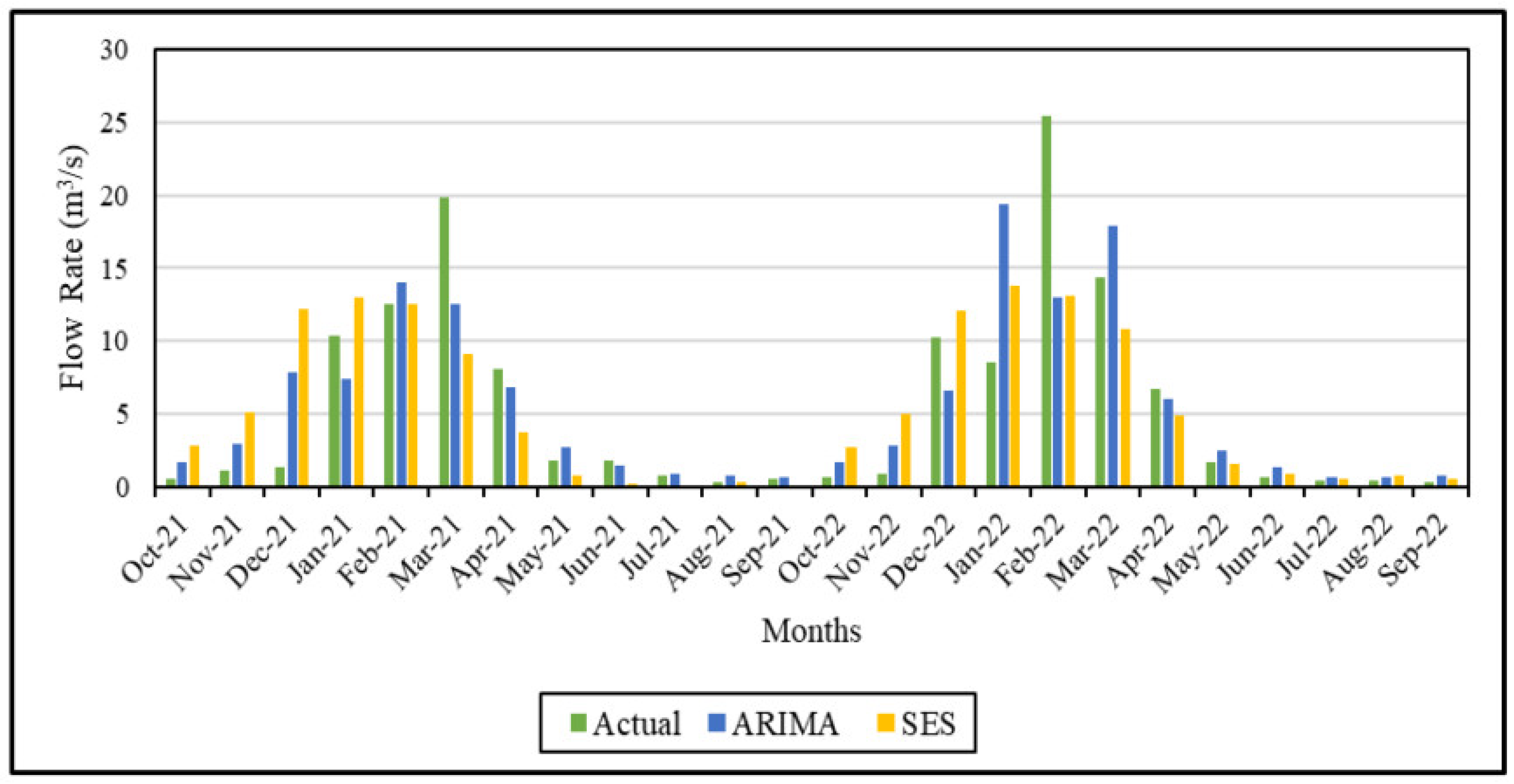
Figure 2.
Projected changes in snowmelt timing under different climate scenarios in Alpine regions.
Disclaimer/Publisher’s Note: The statements, opinions and data contained in all publications are solely those of the individual author(s) and contributor(s) and not of MDPI and/or the editor(s). MDPI and/or the editor(s) disclaim responsibility for any injury to people or property resulting from any ideas, methods, instructions or products referred to in the content. |
© 2025 by the authors. Licensee MDPI, Basel, Switzerland. This article is an open access article distributed under the terms and conditions of the Creative Commons Attribution (CC BY) license (http://creativecommons.org/licenses/by/4.0/).
Copyright: This open access article is published under a Creative Commons CC BY 4.0 license, which permit the free download, distribution, and reuse, provided that the author and preprint are cited in any reuse.


