

Submitted:
06 November 2025
Posted:
07 November 2025
You are already at the latest version
Abstract
This study explores the digital transformation and public value created through Taiwan’s smart city Mobile Payment APP and digital city token system within the context of sustainable governance. Using a mixed-methods approach, the research integrates Importance-Performance Analysis (IPA) surveys of users with in-depth stakeholder interviews to assess service quality, user satisfaction, and cross-sector collaboration effects. The findings reveal that the mobile payment platform significantly enhances digital service delivery, fosters user engagement, and supports sustainable urban development goals, including net-zero carbon emissions. Key challenges identified include limited merchant acceptance and technical usability issues, which suggest areas for policy and technological improvement. This study contributes empirical evidence on the integration of financial technology and public service innovation as a means to advance smart governance and sustainable urban ecosystems. The results provide actionable insights for policymakers, city planners, and service designers focused on promoting digital public services that facilitate economic vitality, environmental sustainability, and collaborative governance.
Keywords:
smart city
; E-governance
; mobile payment
; sustainable economy
; net-zero carbon emissions
; SDGs
; Importance-Performance Analysis (IPA)
1. Introduction
Compared to rural areas, cities possess more convenient transportation networks, diverse employment opportunities, and rich cultural and educational resources, thereby attracting a massive concentration of population. According to reports released by the United Nations, the global urban population share has climbed from 30% in 1950 to 54% in 2014, and it is estimated that by 2050, a substantial 66% of the world’s population will reside in cities, while 41 megacities (populations reaching 10 million) are projected to emerge by 2030[1]. Following rapid urban development and massive population influx, issues such as traffic congestion, environmental pollution, and energy consumption have become increasingly severe. Addressing the rising urban population and providing higher-quality public services in fields like education, healthcare, transportation, energy, and employment has become a critical and urgent challenge faced by nations worldwide.
In this context, the Smart City concept has emerged, grounded in Information and Communications Technology ICT. By integrating technologies such as the Internet of Things (IOT), Big Data, and Cloud Computing, it assists managers in obtaining real-time and accurate information, thereby enhancing the efficiency of Urban Governance [2]. This approach attempts to demonstrate resilience, inclusion, and sustainability in the face of challenges like aging, low birth rates, climate change, and evolving social values.
The promotion of smart cities focuses on “creating universal value through AI[3,4].” The core value driving this developmental thinking must be “citizen-centricity, industrial benefit, and governmental accountability.” The key lies in the integration of cross-domain services, where connecting heterogeneous data and systems from different fields is essential to form complete and meaningful public services that balance public welfare, industrial momentum, and governance effectiveness. In other words, citizens must genuinely perceive the change and value, industries must find innovative momentum, and the government must shoulder its governance responsibilities. By linking values with people, the environment, and the living area, public services are no longer fragmented but become an integrated and perceptible experience.
Lin [5] mentions in their research that the development of smart cities in Taiwan is primarily driven by a series of smart cities and rural areas programs. The central and local governments collaborate to identify the authentic needs of the 22 counties and cities, allowing technology to seamlessly integrate into citizens' daily lives. Treating the city as an integrated system with a digital nervous system, intelligent response capability, and the ability to optimize various layers, technology gradually becomes an integral part of life, whether in transportation, healthcare, agriculture, or urban governance.
To date, Taiwan’s Smart Cities and Rural Areas Programs have accumulated 158 demands for smart living and digital governance from local counties, attracted over 345 businesses, developed 258 smart services for local implementation, and facilitated 118 startups to return to their hometowns. These figures showcase the collaborative accumulation of industry, government, academia, and research sectors, ensuring that applications in transportation, health care, smart agriculture, and urban governance genuinely enter local domains. Through citizen feedback, the government and industry continuously attempt revisions, exploring viable models for service sustainability and further diffusion. Taiwan is progressively building its own smart service ecosystem through this process.
For instance, the case study city investigated in this research, guided by the philosophy of "citizen needs," addresses the challenges of the post-pandemic new normal by utilizing the latest technology and humane warmth to promote digital economy transformation, financial technology innovation, and net-zero carbon emissions goals, thereby progressing towards Sustainable Smart City development and constructing a cross-regional, nationwide, integrated digital economy ecosystem.
In July 2022, the local government piloted a “Mobile Payment APP”—an integrated mobile smart payment tool. This platform, centered on digital economic development, combined with the goal of promoting net-zero carbon emissions, issues bonus tokens through a municipal interaction incentive mechanism to accelerate digital payment transformation and create a zero-contact, low-carbon new economic model. It not only encourages active civic participation in municipal affairs but also leverages the platform's exposure for affiliated merchants and the consumer-driving effect of bonus incentives to stimulate the economy. The city also hosts public welfare marketing events to support disadvantaged groups and promotes energy saving and carbon reduction in daily life to respond to global climate action, providing carbon footprint calculation and incentives to boost participation. This joint effort with citizens achieves a win-win result in public welfare, social benefit, and environmental sustainability.
Such a "Mobile Payment APP" system and its supporting measures have consecutively won the “2023 WITSA Smart City Award Grand Prize,” the regional and national champion of the “2023 IDC Future Enterprise Award,” the “2023 International Innovation Awards (IIA) for Innovative Service,” and the grand prize for the “ASOCIO 2024DXAward’s Smart City Award in Public Sector.” This demonstrates the case city’s proactive implementation of carbon reduction initiatives, strong emphasis on Digital Public Services, and commitment to climate governance, striving to create a smart city economic ecosystem alongside its citizens and businesses.
In view of this, it is highly necessary to conduct a pilot study on the “Mobile Payment APP”—which represents the case city's proactive promotion of smart cities and the digital economy ecosystem and has garnered numerous international awards—by examining user satisfaction and feedback on the system. Furthermore, by employing Important-Performance Analysis (IPA), this research aims to clarify the distribution of key attributes, identify service elements valued and satisfied by citizens, provide administrators with a clear benchmark for service quality inspection and improvement, and ultimately identify critical success factors to offer a valuable reference for implementing relevant systems to collectively advance the ideal of carbon reduction and environmental sustainability.
2. Literature Review and Related Work Materials and Methods
2.1. The Current Development Status of Smart Cities in Taiwan
Research by Huang[6] indicates that with the flourishing development of Information and Communications Technologies ICT and the increasing popularity of digital technology applications, the aforementioned urban problems prompted cities to leverage advances in information technology to more intelligently pursue new observations and analyses in planning, design, finance, construction, governance, infrastructure operations, and services. Therefore, the implementation of a smart city should abandon old perspectives and adopt new policies for urban planning. Benninger [7] further proposed Intelligent Urbanism, arguing that appropriate technology and the creation of suitable urban life are overlapping and complementary. Since 2005, the term “Smart City” has been widely applied, evolving into an innovative activity of urban planning, development, and management based on technology. This involves constructing complex information systems to integrate the city's architecture, transportation, and public facility systems. Clearly, the definition of a smart city is diverse; approaching it from an information technology perspective means fully utilizing new ICT software and hardware tools to maximize urban operational efficiency and minimize energy consumption. This involves effectively integrating various activities—including people’s livelihoods, administrative services, industrial and commercial operations, and energy usage—as well as internal and external environmental resources [8]. Consequently, the Smart City concept emphasizes the goal of sustainable development in harmony with the natural environment. It involves applying the latest foundational technologies, such as smart grids, to build low-carbon and high-efficiency next-generation cities. The corresponding social infrastructure has expanded from focusing on electricity and water resources to covering transportation, logistics, and public services[9]. Caragliu et al.[10] also hold that a smart city invests in human and social capital, utilizing traditional and modern communication facilities, intelligent natural resource management, and participatory governance to promote sustainable economic development and a high-quality life. In other words, the ultimate goal is for citizens to enjoy good city living by using ICT tools to ensure that urban economics, transportation, and the environment move toward sustainable development, enhancing citizens' intelligence, government governance efficiency, and effective resource utilization. Subsequently, Harrison et al.[11] defined a smart city as “a city that optimizes its operations and services by integrating physical, digital, and social systems.” Research at this stage mainly focused on technological innovations, such as intelligent transportation systems, smart grids, and E-governance. Over time, the concept of a smart city gradually expanded to encompass broader social and environmental goals. Batty et al.[12] pointed out that a smart city is not merely a technology-driven urban development model but a comprehensive strategy that enhances urban sustainability and resident welfare through data-driven decision-making. This perspective emphasizes the smart city's potential in addressing urbanization challenges, such as resource scarcity, environmental pollution, and social inequality. Following this, the European Innovation Partnership on Smart Cities and Communities proposed that smart cities should achieve economic, social, and environmental sustainable development through the integration of technology, social innovation, and environmental protection[13]. Since 1998, Taiwan has begun its efforts to build a digital government, dedicating considerable resources to related digitalization infrastructure. Local governments have also prioritized smart cities as important policy initiatives, actively applying automation and intelligent technologies atop the foundation of digital city networking and digitalization infrastructure to integrate information across government, city, society, and enterprises. Through the Urban IOT and Cloud Computing Centers, resources involving comprehensive social management and public services—including the geographical environment, infrastructure, natural, social, economic, medical, educational, tourism, and human resources—are integrated. This facilitates the effective spatial allocation of urban resources, transitioning from passive usage through specific devices for specific populations to automatic integration into the lives of the general public. Citizens can now enjoy personalized services anytime and anywhere via smart terminal devices. From an active perspective, smart city governance promotes local economic development[14], enhances government efficiency[15], and increases resident civic participation[16]. After more than 20 years of effort, Taiwan has frequently ranked among the top in international digital governance assessments[17].
2.2. The Current Status of Digital Finance and Mobile Payment APP Promotion by Local Governments in Taiwan
In the era of internet penetration, Digital Finance has become a global trend in the financial industry, and the public is gradually becoming accustomed to conducting various financial operations online. Taiwan faces issues such as an aging population, which leads to labor shortages. Furthermore, since 2020, the impact of the novel coronavirus (COVID-19) pandemic has made people more inclined to use digital financial services to avoid public places
(1) Digital Finance refers to the diversification of financial business or transaction types due to the development of technologies such as the Internet, mobile communications, and social media. Through the Internet or mobile devices, consumers can enjoy various financial services, enabling them to conduct financial-related business through virtual channels, unrestricted by operating hours or location [18].
(2) In Taiwan, the government established the "Financial Market Development and Innovation Department" on January 1, 2025, to promote a policy of parallel safety and development, and to foster the sustainable development and innovation of the financial market.
(3) This department is responsible for formulating policies and integrating resources for "Green and Transition Finance," "Fintech and Innovation," and "Financial Market Development". In the area of "Green and Transition Finance," the department actively promotes green finance as an aid to Taiwan's net-zero transition, aligns with international transition finance trends, and proactively guides private capital to support sustainability-related infrastructure and the research and development of low-carbon technologies. It also works to strengthen the mechanism for responding to Environmental, Social, and Governance (ESG) and emerging risks, enhance sustainability awareness and capability building, exert financial influence, and elevate international visibility, while simultaneously intensifying efforts to support industrial decarbonization and transformation [19].
To adapt to the arrival of the digital era, the case study city of this research piloted an integrated mobile smart payment tool in July 2022. This system, based on a dedicated "Mobile Payment APP," includes mobile payment functions that allow consumers to bind credit cards for expenditure. It also features a built-in e-wallet for storing and redeeming digital bonus points, referred to as the "Digital City Token," or coupons. The APP is accepted by over 5,700 contracted merchants within the county, in addition to being usable at the four major convenience store chains, aiming to overcome the constraint faced by other counties where usage is limited to the local area8. The application scope of this "Mobile Payment APP" extends beyond consumption, product redemption, or coupons to include the online purchase of specific commodity tickets, light rail/MRT tickets, etc., fully meeting the needs of citizens. It effectively revitalizes the local commercial district economy, drives local characteristic tourism, stimulates local commerce through bonus incentives, and accelerates the digital payment transformation of both citizens and merchants. Future plans include gradually incorporating public venues for tax payments, fee payments, or charitable donations, and establishing a municipal promotion function to help citizens stay better informed about municipal affairs.
The advantages and promotional achievements of this platform, which integrates municipal mobile services, provides a commercial transaction platform, and offers instant municipal information, are summarized as follows:
(1) Integration of Municipal Mobile Services: The essential items for modern people have transitioned from traditional keys, wallets, and luggage to a greater reliance on mobile phones. Public sectors, facing the iteration of technology, should proactively keep up with the evolution of technology by setting up "technological" user-friendly services for citizens, thus adding favorable technological tools to the city's smart environment. The "Mobile Payment APP" clearly possesses this advantage. It not only provides citizens with a new choice for daily shopping and consumption tools but also establishes a new payment tool for various fees incurred in interactions between government agencies and the public. Simultaneously, it offers a new payment option for businesses and citizens within the jurisdiction. The high credibility, objectivity, and non-profit nature of the public sector can quickly assist businesses and citizens in establishing new transaction models.
(2) Provision of Commercial District Transaction Platform: Taiwan has over 1.59 million small and medium-sized enterprises (SMEs, accounting for more than 98% of all enterprises. SMEs employ 9.2 million people, which accounts for at least 80% of the national workforce14. While many SMEs possess strong product competitiveness, they are often hindered by a lack of a common technological platform to connect their limited individual resources and unified promotion efforts. The "Mobile Payment APP" promoted by the case study city utilizes government resources to introduce a universal technological tool that will help SMEs of various types and sizes within the commercial district rapidly build digital marketing platforms. Its technological functions not only facilitate interaction between consumers and SMEs but also simplify small-amount transaction processes and enhance transaction efficiency through integrated digital tools. This effectively resolves the constraints faced by SMEs in resource access and technology application, and contributes to the integration of their operating models with future technological development, thereby promoting the overall digital resilience and sustainable development of the commercial district.
(3) Provision of Instant Municipal Information: While most local government departments have established communication channels with the public, they lack an integrated single window to quickly build an effective communication platform for citizens. The "Mobile Payment APP" platform utilizes digital bonuses as an incentive tool. Whether citizens proactively seek correct government information or the government proactively communicates policies, the popularization of the "Mobile Payment APP" can strengthen policy publicity and synchronize municipal rewards and communication with the public. This further enhances the timeliness of policy dissemination and comprehensively improves the overall promotional effectiveness of the government.
(4) Inventory of Promotion Achievements: Regarding the download and registration status of the "Mobile Payment APP" system, statistical analysis based on system registration data shows a total of 48,745 registered members, with an average age of approximately 40 years old. The age distribution is highest for the 41-50 and 31-40 age groups18. Furthermore, the case government promoted the "Mobile Payment APP" through marketing events organized by seven municipal departments from July 2022 to February 2023. Registered members actively used the "Digital City Token" or coupons and purchased tickets. Specifically, approximately NTD 1.8 million of the "Digital City Token" was used, NTD 1.455 million in coupons were used, and 3,717 tickets were purchased, demonstrating excellent results in driving traffic and boosting consumer willingness. Concurrently, in 2023, the case city's government used this "Mobile Payment APP" to compete with entries from countries/regions worldwide, including the UK, the US, Brazil, Canada, Spain, Japan, China, Hong Kong, and Singapore. The APP won because it provides a convenient digital payment tool, notably its carbon footprint tracking and calculation to promote decarbonization rewards, aligning with the global net-zero future vision. It was awarded the "Service and Solution Category" prize at the “2023 IIA International Innovation Awards Ceremony,” making it the only government agency in Taiwan to win the award. Coupled with the same year's continuous recognition, including the “2023 WITSA Smart City Award Grand Prize” and the dual championship title in the Asia-Pacific and Taiwan regions of the “2023 IDC Future Enterprise Award,” and furthermore, winning the grand prize for the “Smart City Award in Public Sector” at the “ASOCIO 2024DX Award” in 2024, these multiple honors symbolize the extraordinary results of the case government in continuously utilizing ICT and digital tools to improve citizens' lives, actively building a digital low-carbon new economy, and promoting a smart, sustainable city.
2.3. IPA Important-Performance Analysis Method
The Important-Performance Analysis (IPA) method is a technique for prioritizing attributes related to a specific service or product through two major constructs: "Importance" and "Performance". "Importance" refers to the significance of the attribute to the consumer, while "Performance" is the consumer’s perceived measure of how well the attribute is executed. The analysis of importance is beneficial for resource allocation, deployment, or strategic prioritization decisions. The analysis of performance, conversely, assists as a reference for improving the quality of the product or service. It is used by consumers to assess their preference for product attributes based on their satisfaction from initial expectation to actual experience, and it can also evaluate the importance of providing these service quality attributes.
IPA is considered a valuable analytical method as it prioritizes the use of limited resources. It uses a two-dimensional matrix to delineate quadrants that highlight which areas are more or less important, serving as a reference for strategic recommendations [20]. The main concept involves plotting the average scores of importance and performance levels onto a two-dimensional matrix. By using the matrix to distinguish the relative positions of different average attribute scores, it facilitates the provision of practical recommendations and strategic applications for specific quality attributes [21].
In the IPA coordinate chart, the X-axis symbolizes "Importance" and the Y-axis symbolizes "Performance". The plotting is based on the combined assessment results of both importance and performance. Utilizing the overall mean of both importance (I) and performance (P) as the dividing points provides stronger judgmental power than using the scale's middle point. Therefore, the overall mean value from the questionnaire survey can be used as the dividing point for the X-axis and Y-axis. The consumer ratings for the importance and satisfaction levels of each attribute are then displayed in an easily understandable two-dimensional coordinate chart [22,23,24,25,26].
Figure 1.
Important-Performance Analysis (IPA) Matrix.
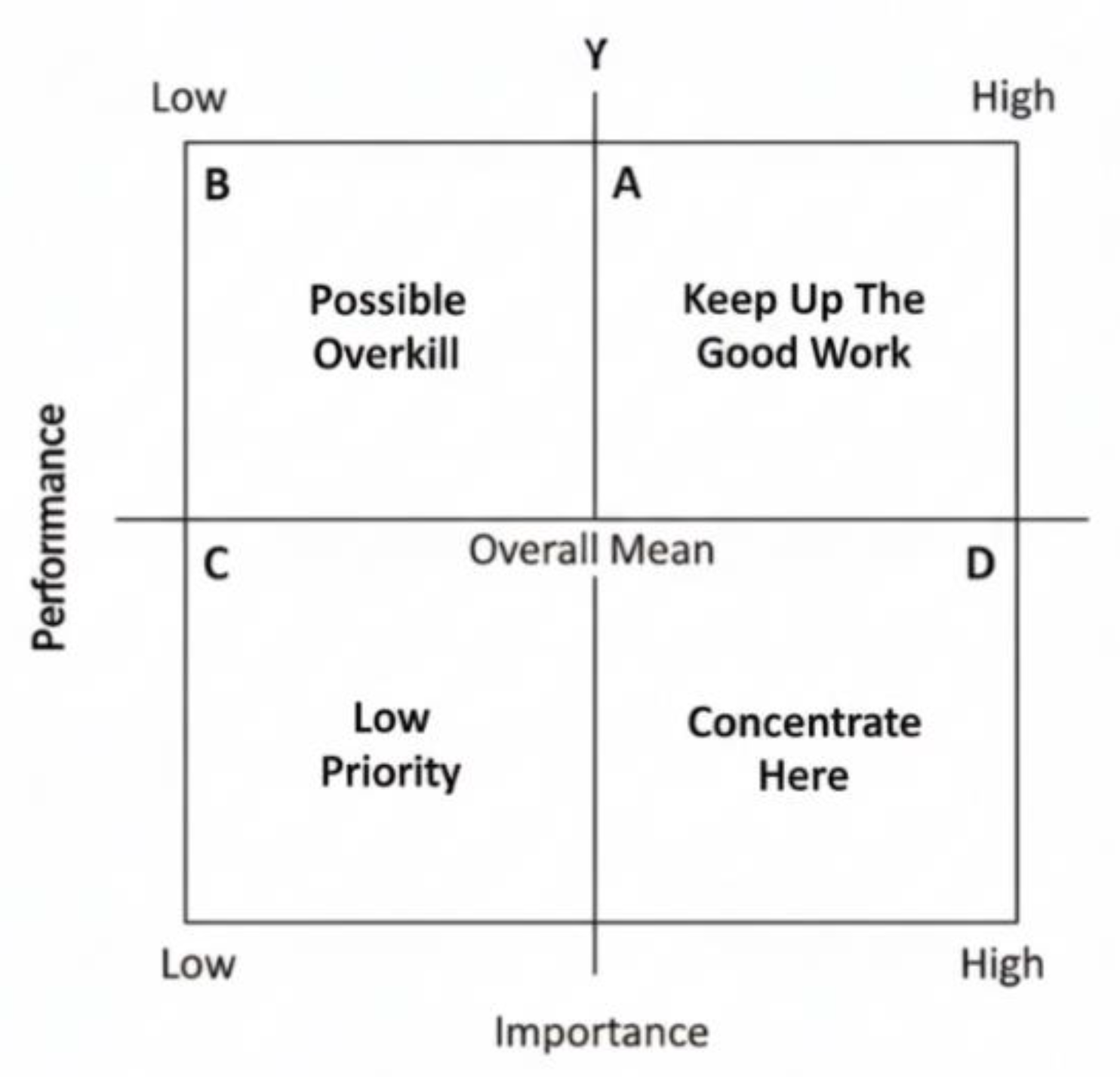
The IPA analysis method is divided into four quadrants:
(1) A Quadrant (Keep Up The Good Work): This is also known as the "Advantage Maintenance Zone". When certain attributes fall into this quadrant, customers rate both the importance and performance of these service attributes as high. This symbolizes that these attributes are key indicators valued by customers and are a source for operators to maintain a competitive advantage. Therefore, operators should continue to maintain the performance level of these attributes to ensure customer satisfaction.
(2) B Quadrant (Possible Overkill): When certain attributes fall into this quadrant, it indicates that the importance of these items is not high to the customer, but the satisfaction level is high. Substantively, this has little impact on increasing customer satisfaction, but the enterprise invests too many resources, resulting in waste. For attributes in this quadrant, operators could enhance customers' perception of their importance to elevate them into the advantageous and important quadrant.
(3) C Quadrant (Low Priority): This is also referred to as the "Secondary Improvement Zone". When certain attributes fall into this block, it means customers subjectively believe that both the importance and satisfaction levels of these attributes are low. This also implies that the resources invested by the operator are limited or nonexistent. Operators should treat these service attributes as secondary improvement targets to avoid improper resource allocation. It is worth noting that if competitors successfully leverage and create market demand for these attributes, it undoubtedly poses a threat.
(4) D Quadrant (Concentrate Here): This quadrant symbolizes that customers consider these attributes to be highly important but rate their satisfaction as ordinary or low. When certain attributes fall into this "Priority Improvement Zone", it represents an area that service or quality providers must concentrate on. Neglecting these product/service characteristics could cause a series of threats to the company. Thus, these attributes must be treated as priority improvement targets to prevent customer loss.
3. Research Methods
This study will first conduct a service quality and user analysis for the "Mobile Payment APP" promoted by the case city, including the measurement items for user background analysis and usage satisfaction in the survey questionnaire. Furthermore, this research will collect relevant practical cases of digital city tokens, bonuses/coupons from both domestic and international contexts. These cases will be cross-referenced against the types of practices, advantages, disadvantages, and critical success factors of similar mechanisms promoted by governments. This comparative analysis will serve as the basis for developing optimal improvement recommendations and as a reference for subsequent strategic planning.
3.1. Survey Questionnaire and Statistical Analysis
This study references the third stage, "Evaluation," in Umair's[27] user experience design development process. We collected users' perceptions of the "Mobile Payment APP" and evaluated the results and feelings of its usage. The evaluation scope focuses on the user's actual experience and assesses the APP's design. Based on the literature, the evaluation indicators included aspects of APP functionality and APP quality, with 26 preliminary items designed.
After a pilot test and discussions with experts and relevant city government personnel, the questionnaire draft was adjusted. The 26 items related to user actual usage experience were revised to 17 items. Each item asked respondents about their perceived level of Importance and Satisfaction, totaling 34 questions. Overall, the user questionnaire design consists of four parts:
- Part I: User's APP usage experience.
- Part II: User's perceived importance of the "Mobile Payment APP" functions.
- Part III: User's satisfaction level regarding the use of the "Mobile Payment APP" functions.
- Part IV: Respondent's basic information, including gender, age group, residence, and occupation.
Subsequently, the Important-Performance Analysis (IPA) method will be utilized to identify the gap in user perception, thereby developing subsequent improvement recommendations.
(1) Survey Target: The survey targets are general citizens. Respondents were asked to complete the usage experience and user interface satisfaction questionnaire. The questionnaire distribution methods included dispensing during related promotional events and utilizing the existing questionnaire platform within the "Mobile Payment APP".
(2) Data Analysis: After the questionnaires are collected, relevant statistical analyses will be conducted to understand the respondents' perspectives. The following statistical analysis methods will be adopted: descriptive statistics, reliability and validity analysis, t-test, and Important-Performance Analysis (IPA).
3.2. In-Depth Practical Interviews
In addition, this study invited affiliated merchants of the case city's "Mobile Payment APP" to participate in in-depth interviews, utilizing a semi-structured interview method. Relevant outlines were established first, followed by deeper exploration based on the respondents' answers. The interview objectives were to understand: (1) problems encountered by the merchants in APP operation or verification; and (2) the benefits and suggestions regarding the digital city token or coupons.
Furthermore, key personnel from the case city's primary government unit responsible and the "Mobile Payment APP" developer were also invited for in-depth interviews with relevant supervisors and staff, also employing a semi-structured approach. The interview objectives were to understand: (1) the smart city policy direction promoted by the case city, and the reasons, actual practices, and expected benefits of promoting the "Mobile Payment APP"; and (2) the initial concept and expected benefits of the "Mobile Payment APP" development and design, in order to collect further design-side information. This information was then compared with the user experience survey results to identify potential gaps for improvement.
4. Data Analysis and Results
To understand the user experience, this study conducted a survey using a questionnaire placed within the Municipal Awards-Questionnaire section of the Mobile Payment APP. The questionnaire was made available from April 1st to June 30th in 2025, and a total of 632 responses were received.
4.1. Descriptive Analysis
An analysis of the respondents’ basic information showed that males and females accounted for approximately half of the respondents. The age distribution was highest for the 31–40 years old group, accounting for approximately 37.4%, followed by the 41–50 years old group, at approximately 20.5%. The most common place of residence was New Taipei City, accounting for approximately 52.0%. The occupational type was predominantly other emerging industries and freelancers( 33.5%), followed by the service industry (24.3%).
4.2. Reliability and Validity Analysis
This study conducted a reliability analysis on respondents’ perceptions of the various functions, usage outcomes, and perceived importance and satisfaction levels of the “Mobile Payment App” promoted by the case city. The Cronbach’s α coefficients for each section of the survey were as follows: Part 1 – usage experience, Cronbach’s α = 0.91; Part 2 – importance evaluation of various “Mobile Payment App” functions, Cronbach’s α = 0.98; and Part 3 – satisfaction evaluation of various “Mobile Payment App” functions, Cronbach’s α = 0.94. All values exceeded 0.5, indicating satisfactory reliability; thus, the questionnaire demonstrates acceptable content validity.
Furthermore, according to Hair et al.[28] and Fornell and Larcker[29], the criteria for convergent validity require a composite reliability (CR) greater than 0.6 and an average variance extracted (AVE) greater than 0.5. The data show that the composite reliability values of the latent variables ranged from 0.734 to 0.936, and the AVE values ranged from 0.561 to 0.786. Therefore, the latent variables in this study exhibit good reliability and convergent validity.
4.3. Analysis of User Experience and Preferences for the "Mobile PaymentAPP"
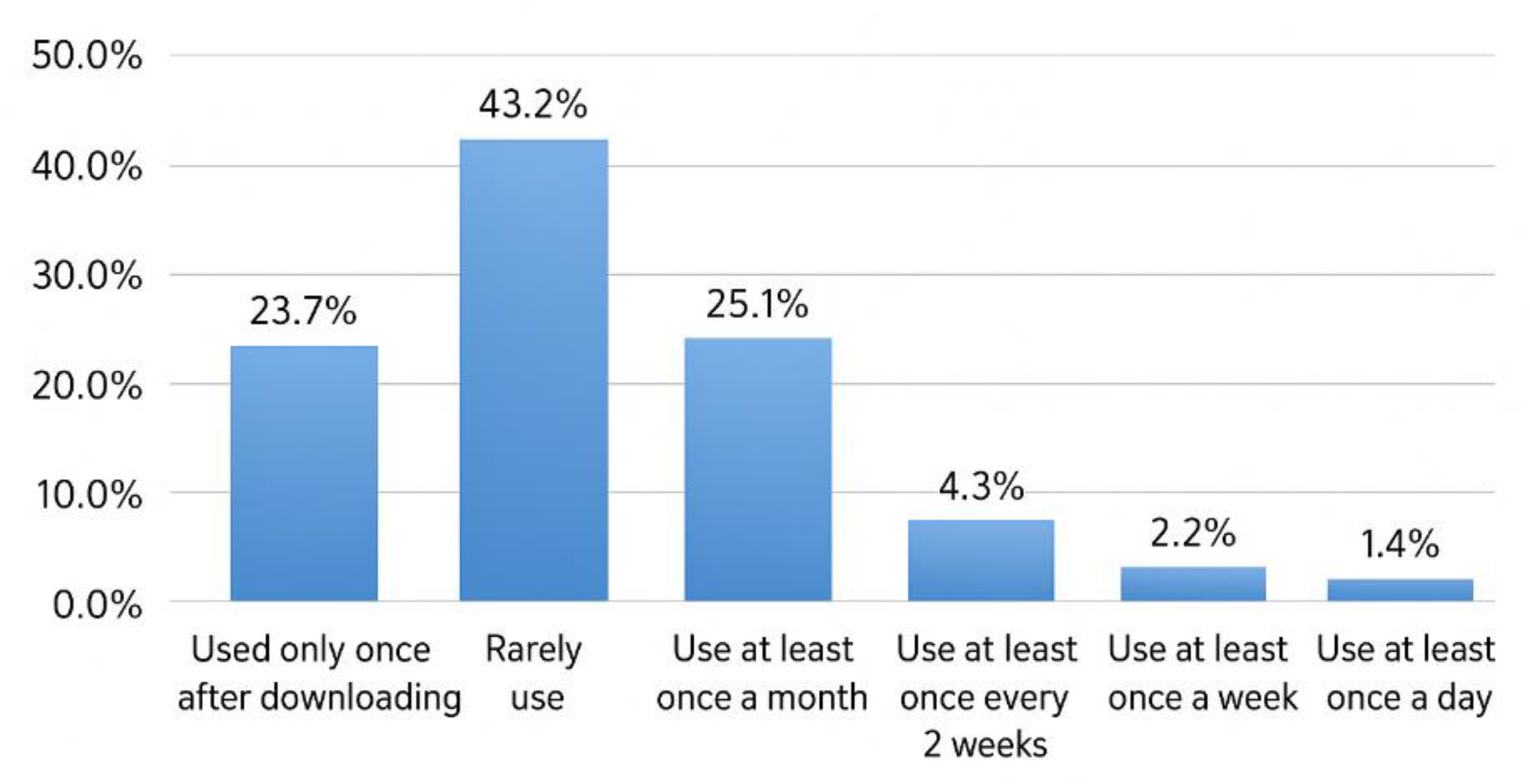
According to the responses from participants with prior usage experience, the majority reported using the “Mobile Payment App” very infrequently, accounting for approximately 43.2%, followed by those who used it at least once a month (about 25.1%). This indicates that most users have a low frequency of use, which may be related to the limited issuance of digital city tokens or coupons. However, as functions such as credit card linkage continue to be introduced, it remains to be seen whether users’ willingness to use the app will increase in the future.
Figure 2.
Distribution of usage frequency among user.
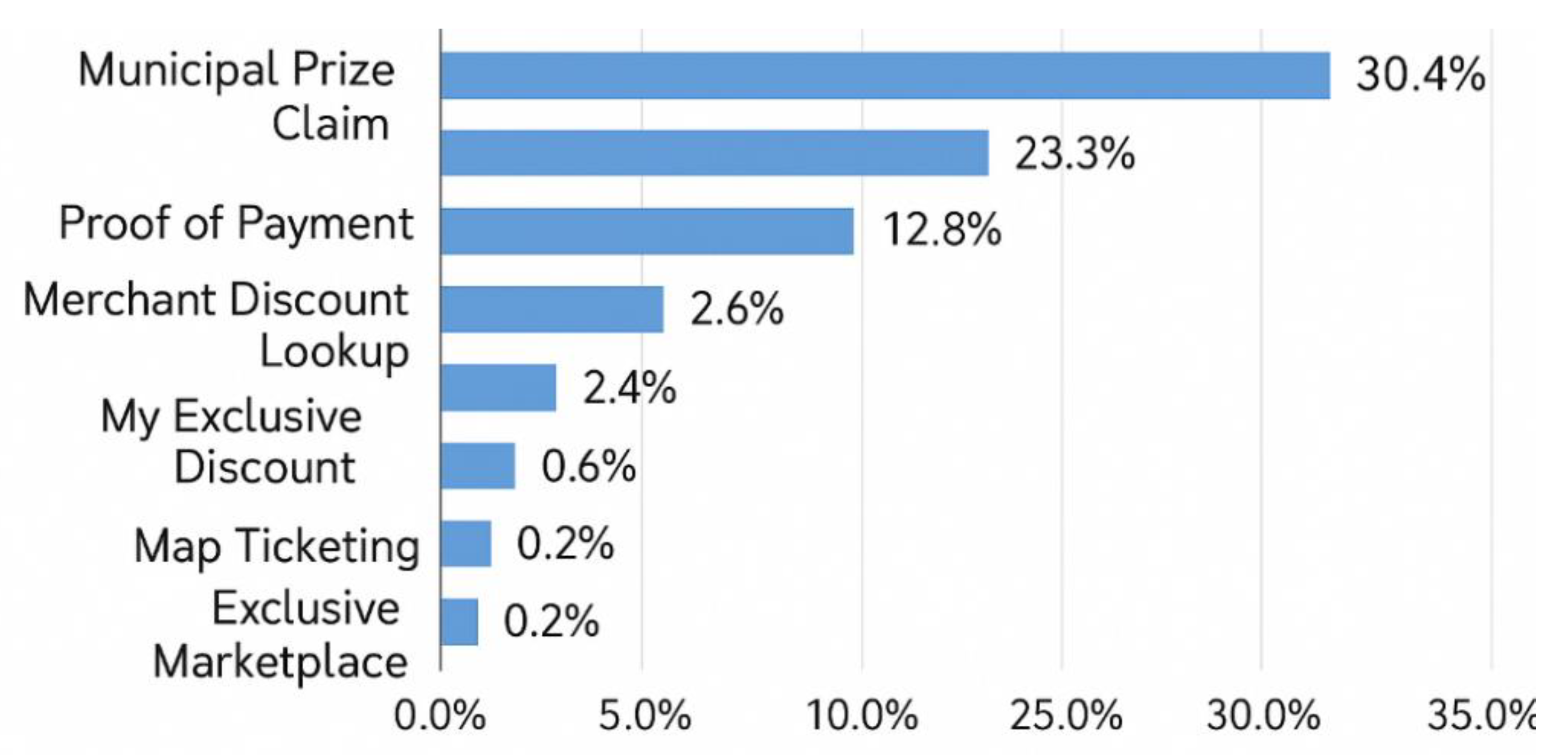
An 30. 4%), followed by digital city token transfers (about 27.3%), and payments (about 22.5%). The results are illustrated in the figure below.
These findings indicate that respondents mainly expect to obtain information about earning city tokens or coupons through municipal reward activities. After receiving bonus tokens or coupons, users tend to engage in consumption or token transfer behaviors. Therefore, the issuance of digital city tokens or coupons is indeed one of the most effective incentives for encouraging citizens to use the Mobile Payment App.
Figure 3.
Distribution of most common functions usage among users with experience.
An analysis of the functions that respondents considered the most useful shows that municipal rewards ranked the highest (about 31.8%), followed by digital city token transfers (about 29.6%), and payments (about 19.2%). The results are presented as follows:
Figure 4.
Distribution of features perceived as Most Useful by Users.
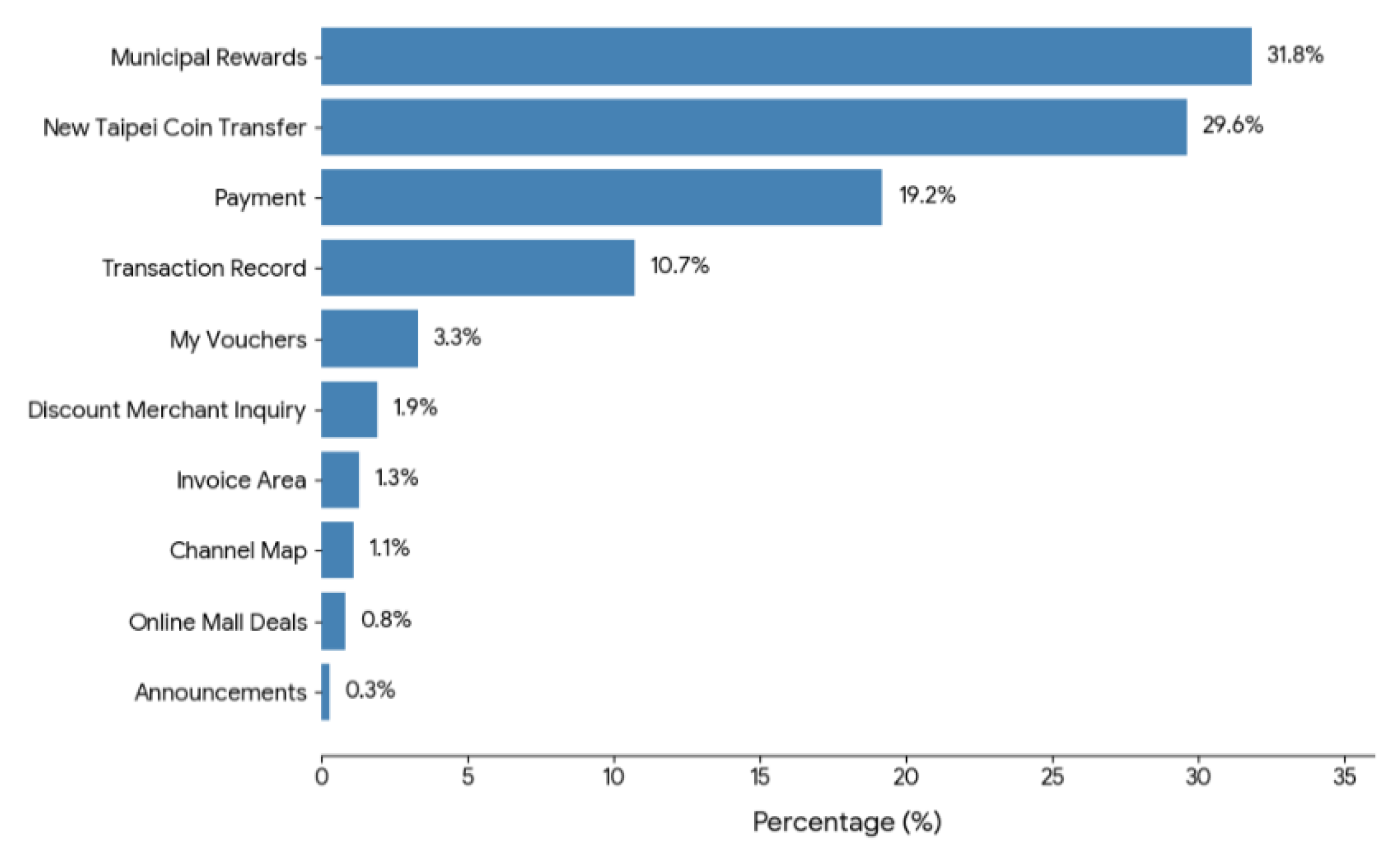
These findings suggest that respondents primarily obtain information about earning bonus tokens or coupons through municipal reward activities, which in turn motivates them to engage in consumption or token transfer behaviors.
An analysis was conducted to determine whether respondents were aware that digital city tokens or coupons could be directly used to offset purchases. Among them, 78% of respondents indicated that they were aware of this function, while 22% were not.
Further analysis of respondents with prior usage experience revealed that 86% had collected digital city tokens or coupons, whereas 14% had not. When asked about the channels through which they obtained these tokens or coupons, the majority cited physical promotional events (about 64%), followed by completing surveys (about 19%) and participating in municipal quizzes (about 15%). These findings indicate that most citizens obtained digital city tokens or coupons through participation in physical promotional activities.
In analyzing which app features respondents favored most, mobile payment ranked the highest (about 49.6%), followed by the municipal information assistant function (about 37.4%). This suggests that most users expect the app to offer more advanced payment functions and to serve as a source of municipal information.
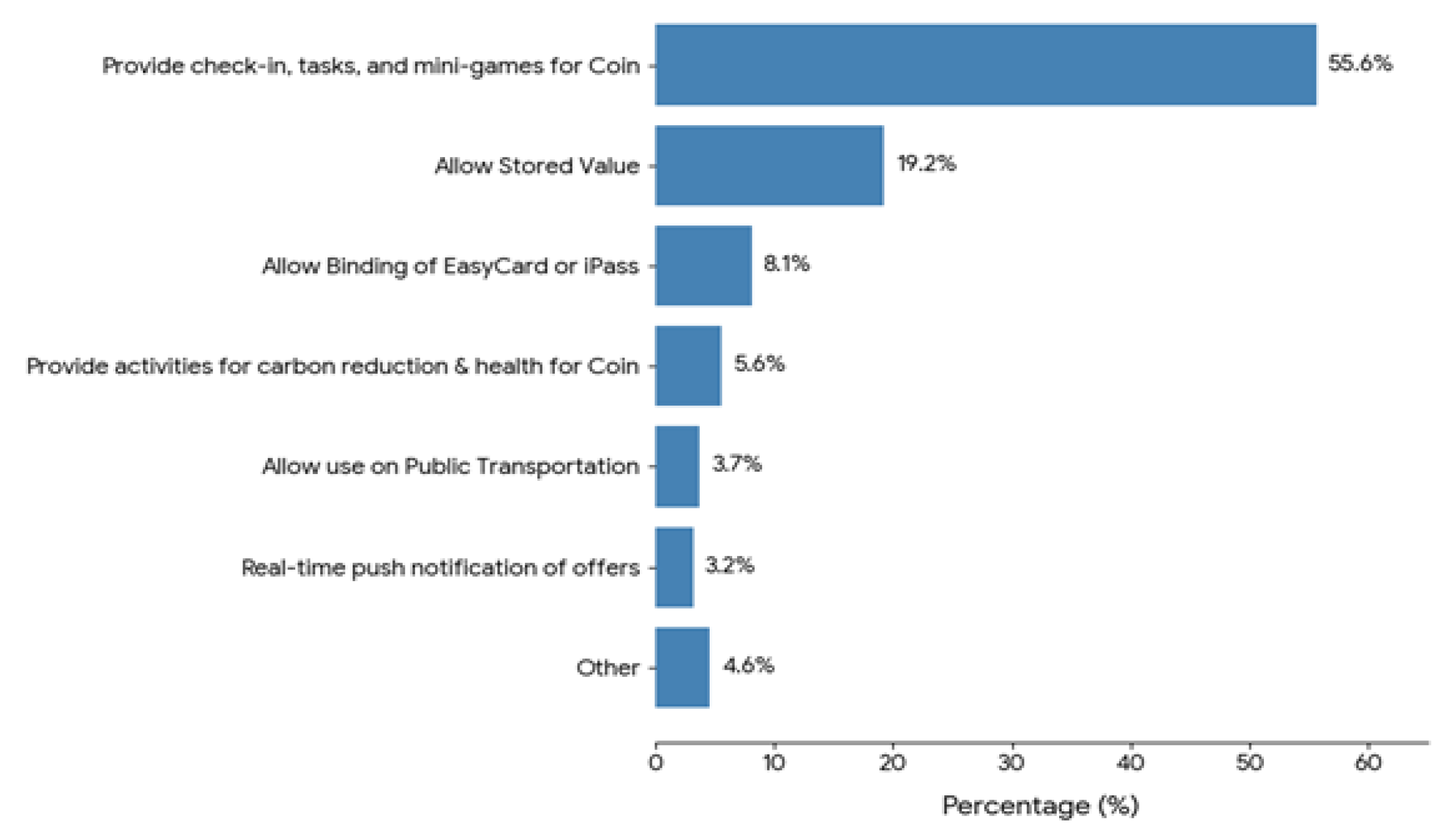
Finally, regarding respondents’ suggestions for features that could increase app usage, the results show that the most popular recommendation (about 55.6%) was to offer bonus tokens through check-ins, missions, or mini-games. This indicates that users hope the app will frequently launch promotional activities— even small token rewards can effectively motivate users to engage with the app.
Figure 5.
Distribution of Suggested Features to Increase Usage Rate.
In addition, regarding the functions that respondents considered least user-friendly in the Mobile Payment App, the payment function ranked highest (about 16.7%). Further user interviews revealed that the main reason was that users were required to enter a password for every transaction, and the app did not support alternative authentication methods such as fingerprint recognition.
The second most frequently cited issue was the search function for partner stores offering discounts (about 16.5%). Respondents mentioned that it was difficult to use due to scattered information, lack of keywords, and absence of location-based or categorical filtering. The third most common issue was the transaction record tracking function (about 14.9%), primarily because users found it difficult to locate the correct navigation path.
Figure 6.
Distribution of Features Perceived as Least Useful by Users with Usage Experience.

4.4. Importance and Satisfaction Analysis of "Mobile Payment APP
Functions Based on the respondents' usage experience with the case city's "Mobile Payment APP, a paired comparison was conducted between the importance and post-use satisfaction of the APP usage functions. The results showed that attributes concerning preferential merchant information, invoice section, digital city token or coupon collection activities, the number of affiliated merchants for digital city tokens or coupons, proactive notification of promotional event information, preferential merchant information search, payment function, credit card binding operation, convenience of switching between different functions, operational speed of functions, problem reporting function, and usability of functions all exhibited significant differences between importance and satisfaction. The average scores indicated that for all these items, importance exceeded satisfaction, revealing a user experience gap in the "Mobile Payment APP. The largest gaps were, in descending order, the number of affiliated merchants for digital city tokens or coupons, preferential merchant information search, proactive notification of promotional event information, and preferential merchant information. This indicates that users highly value the quantity and information regarding preferential merchants but feel insufficiently satisfied. This dissatisfaction might stem from an inadequate number or variety of preferential merchants, or inconvenient provision/searching of preferential merchant information.
Figure 7.
Comparison of Perceived Importance and Satisfaction with "Mobile Payment APP Functions.
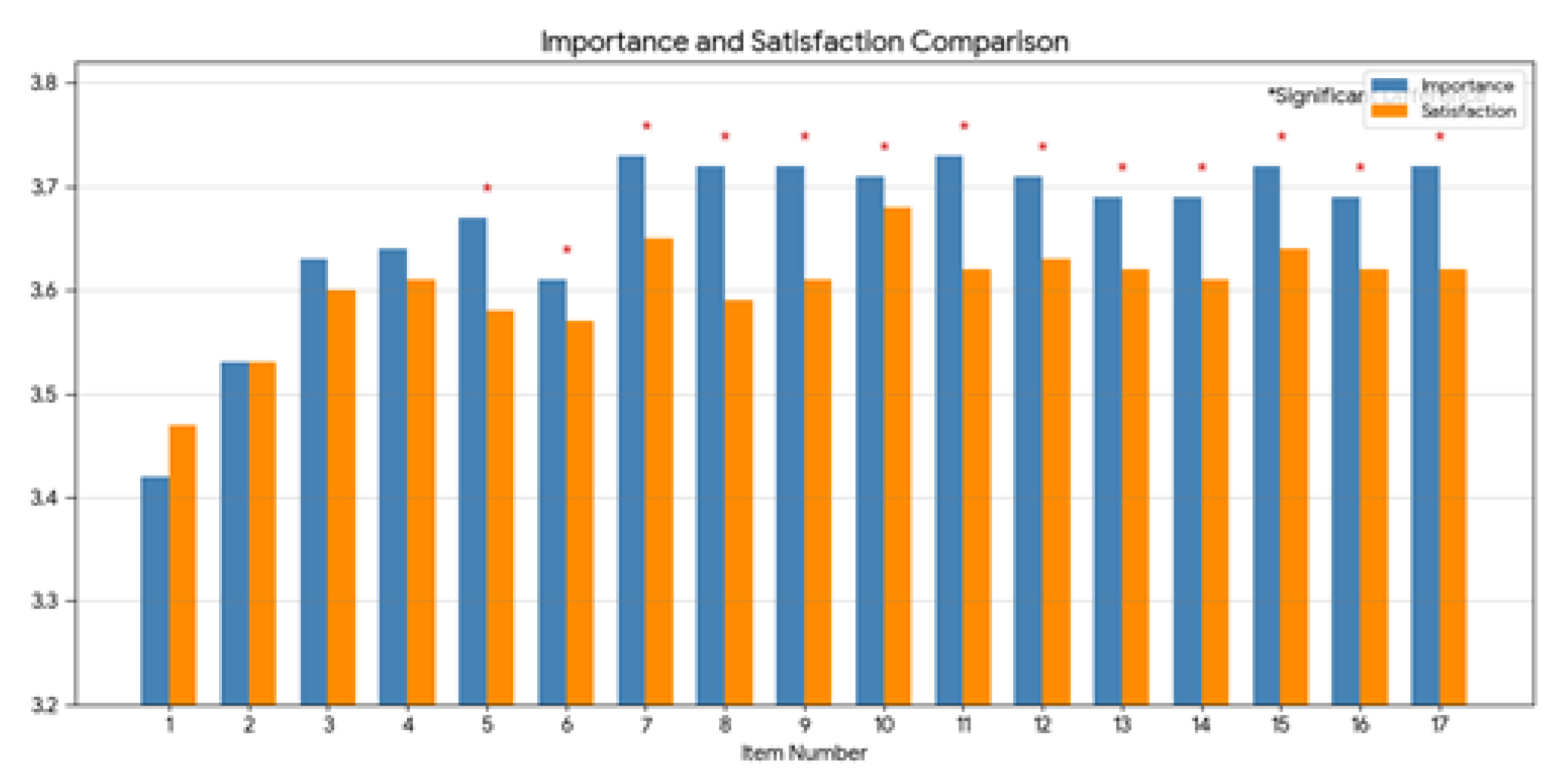
A comparative analysis of the perceived importance and post-use satisfaction for each of the 17 functions within the "Mobile Payment APP was conducted based on respondents' usage experience. The results are presented in the table below:
- Overall Gaps: The analysis revealed significant differences between importance and satisfaction for attributes including preferential merchant information, invoice section, digital city token or coupon collection activities, the number of affiliated merchants for digital city tokens or coupons, proactive notification of promotional event information, preferential merchant information search, payment function, credit card binding operation, convenience of switching between different functions, operational speed of functions, and problem reporting function. In all these cases, the average scores indicated that importance exceeded satisfaction, highlighting a perceived usage gap for these functions among respondents.
- Largest Discrepancies: Following the above, the largest discrepancies, in descending order, were found in the number of affiliated merchants for digital city tokens or coupons, preferential merchant information search, proactive notification of promotional event information, and preferential merchant information. This suggests that users highly value the quantity and information regarding preferential merchants but feel insufficiently satisfied, possibly due to an inadequate number or variety of merchants, or inconvenient provision/searching of merchant information.
-
Highest Rated Items:
- ○
- The top two highest-rated attributes for importance were: "Digital City Token or Coupon Collection Activities" (noted twice in the source, implying high importance for this category).
- ○
- The top three highest-rated attributes for satisfaction were: "Digital City Token Transfer Function," "Operational Speed of Functions," and "Payment Function."

Table 1.
Comparison of the importance and satisfaction of different functions.
| Items | Total | |||
|---|---|---|---|---|
| Importance | Satisfaction | Gap | ||
| 1 | Information Searching | 3.42 | 3.47 | 0.05 |
| 2 | Function Categorization | 3.53 | 3.53 | 0.00 |
| 3 | Transaction Record Inquiry | 3.63 | 3.60 | -0.02 |
| 4 | Municipal Reward Info | 3.64 | 3.61 | -0.03 |
| 5 | Discount Merchant Info | 3.67 | 3.58 | -0.10* |
| 6 | Invoice/Receipt Area | 3.61 | 3.57 | -0.05* |
| 7 | Token/Coupon Collection Activity | 3.73 | 3.65 | -0.08* |
| 8 | No. of Partner Merchants | 3.72 | 3.59 | -0.14* |
| 9 | Proactive Notification of Offers | 3.72 | 3.61 | -0.10* |
| 10 | Token Transfer Feature | 3.71 | 3.68 | -0.03 |
| 11 | Discount Merchant Info Inquiry | 3.73 | 3.62 | -0.11* |
| 12 | Payment Functionality | 3.71 | 3.63 | -0.07* |
| 13 | Credit Card Binding | 3.69 | 3.62 | -0.07* |
| 14 | Ease of Function Switching | 3.69 | 3.61 | -0.08* |
| 15 | Function Operation Speed | 3.72 | 3.64 | -0.08* |
| 16 | Problem Reporting Feature | 3.69 | 3.62 | -0.07* |
| 17 | Overall Function Usability | 3.72 | 3.62 | -0.09* |
| Overall Average | 3.67 | 3.60 | ||
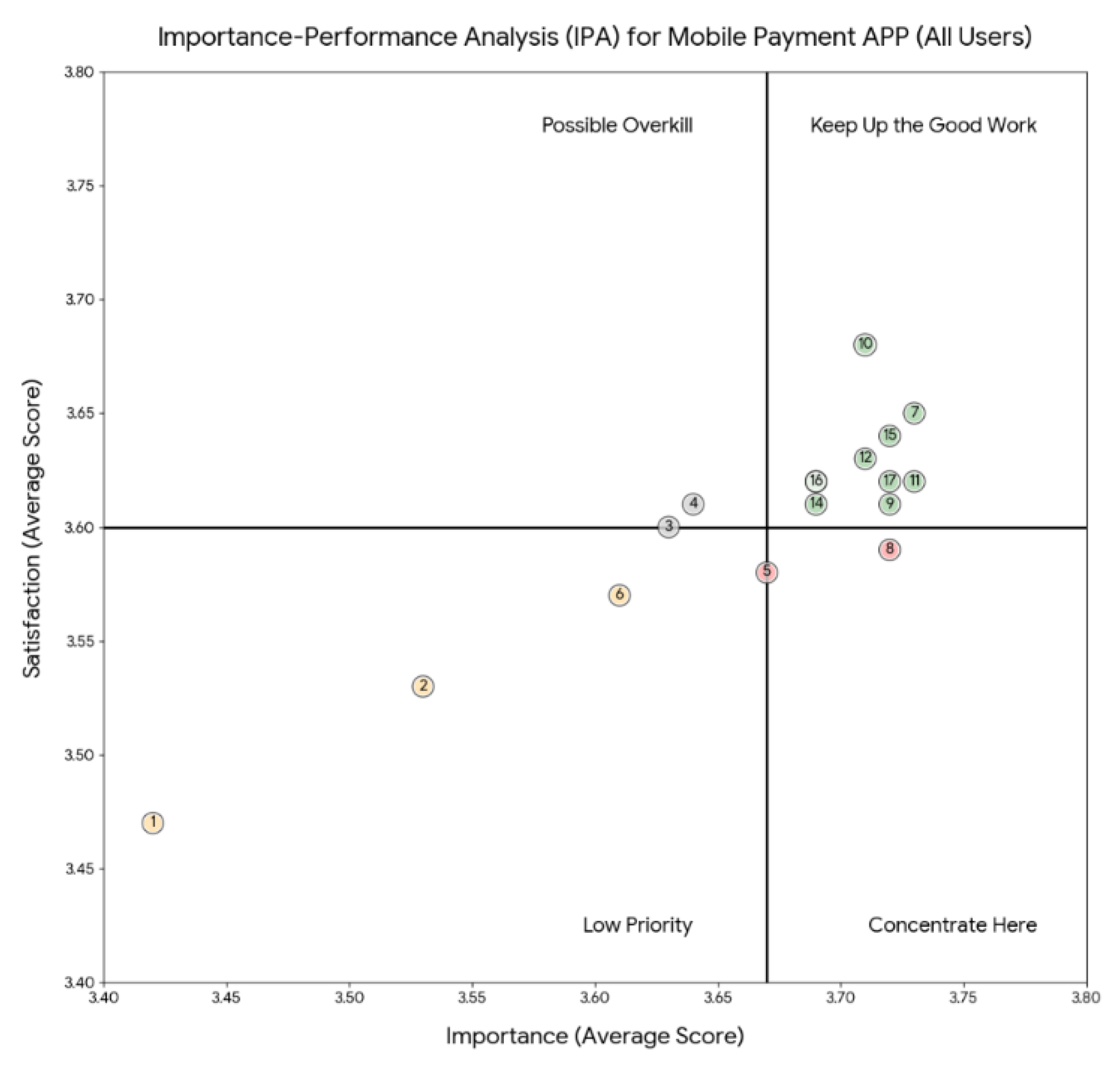
Based on the Importance-Performance Analysis (IPA) methodology, the mean scores of Importance and Satisfaction for all 17 survey items, as responded by all participants, are plotted onto a coordinate plane. The X-axis represents Importance, and the Y-axis represents Satisfaction. Each axis uses the overall average mean of its 17 items as the dividing line, thereby partitioning the coordinate plane into four quadrants. The results are shown in the figure below, with the items falling into the respective quadrants as follows:
- Quadrant I (Keep Up the Good Work): A total of 10 items, specifically: New Taipei Token or Coupon Collection Activities, Proactive Notification of Discount Activities, New Taipei Token Transfer Feature, Discount Merchant Information Inquiry, Payment Functionality, Credit Card Binding Operation, Ease of Switching Between Different Functions, Function Operation Speed, Problem Reporting Feature, and Usability of Functions.
- Quadrant II (Possible Overkill): A total of 2 items, specifically: Transaction Record Inquiry, and Municipal Reward/Claim Information.
- Quadrant III (Low Priority): A total of 3 items, specifically: Information Searching, Function Categorization, and Invoice/Receipt Area.
- Quadrant IV (Concentrate Here): A total of 2 items, specifically: Discount Merchant Information, and Number of Partner Merchants for New Taipei Token or Coupons.
Figure 8.
Importance-Performance Analysis (IPA) for Mobile Payment APP.
5. Discussion
As highlighted by Tetianaet al.[30], Information and Communication Technology (ICT) has been extensively employed in urban planning, service, and management, enabling the delivery of information to communities and individuals more swiftly and efficiently, and facilitating greater citizen engagement in government and municipal policy. In this study, in-depth interviews were conducted with key stakeholders, including the lead municipal department, the developers of the “mobile payment APP,” and special merchants, to derive the following substantive implications:
A. The case city in this study is characterized by its vast territory and dense population, with over 4 million residents, making it the most populous city in Taiwan. Facing global climate change, and in response to the global Net-Zero emission goal and SDG 13, the city was the first in Taiwan to declare a “Climate Emergency” in 2020, setting targets to reduce carbon emissions by 30% by 2030 and achieve Net-Zero by 2050. Therefore, the “Mobile Payment APP” developed here centers sustainability as a core value, combining the concept of sustainability and mobile payment, along with a reward system using digital city coins and coupons to provide incentives for low-carbon actions, promote resource circulation, and enhance environmental awareness. In line with Setijadi et al.[31], the smart government framework’s core lies in “strengthening the accessibility, efficiency, and sustainability of public services through digital technology.” The case city’s application of the mobile payment APP to promote carbon reduction feedback mechanisms and municipal interaction incentives reflects the principle of “technology-enabled sustainable governance.” By integrating digital payments and environmental actions, the local government demonstrates a proactive sustainable perspective and practical capability in smart governance.
B. Previous research has noted a sizeable gap between the theoretical “Smart Utopia” and the practical “Smart Reality” in smart city and smart governance endeavors. Many cities focus mainly on the adoption of technologies (e.g., sensors, big data platforms) rather than fundamentally reforming governance structures, decision-making procedures, or policy participation. As a result, the actual operation of smart governance often relies on outdated, inefficient administrative models and may lack clear value propositions or sustainable business models, whether for governments, businesses, or citizens[32]. In contrast, the case city innovatively introduced an APP system, using payment tools as a carrier, to push the latest municipal updates to citizens in real time, while establishing an interactive reward mechanism aimed at fostering citizen participation in municipal promotions, driving local tourism, and leveraging the platform’s visibility and customer-attraction effects for special merchants to revitalize the local commercial district economy. These concrete measures accelerate the transformation to digital payments for citizens and merchants, replacing traditional physical promotional materials with digital information, and thus fulfilling the core ideals of smart city and digital governance. This serves as a vital reference for advancing citizen engagement and smart sustainability policies.
C. Studies on the National Payments Corporation of India (NPCI) have noted that digital public infrastructure can face low citizen participation if it lacks integration and cross-departmental collaboration[33]. While the case government initially maintained active public communication according to departmental responsibilities, it suffered from the lack of a unified platform. Municipal information was scattered across different bureaus, preventing targeted communication and failing to incentivize citizen engagement. Consequently, the “Mobile Payment APP” was positioned as a tool to facilitate digitization and interdepartmental communication, optimizing information flow and incentives. By continually enhancing features such as bonus tokens and coupons, the city actively cultivates a smart city-friendly environment. Once citizen preferences are better understood, the system can proactively push relevant municipal information, marking a shift towards new-generation Web 2.0 interactive models and the beginning of digital governance with citizen participation. This constitutes an evolution from “passive reception” to “active engagement,” thereby aligning with the comprehensive smart governance approach advocated by Reichental [34] and others.
D. Within its jurisdiction, small and medium-sized enterprises (SMEs) often face operational constraints that stifle project development. The introduction of the “Mobile Payment APP” and “Digital City Coin” directly addresses the needs of the general public and SMEs by providing targeted support and incentivizing digital transactions. The APP is established as a trusted and secure digital transaction platform, encouraging more SMEs to participate in digital marketing strategies, including promotional discounts, new product launches, and diversified payment options. Through increased trust in government-provided platforms, patterns of use deepen, broaden, and persist, overcoming traditional local business district limitations, such as fragmented marketing communication and lack of digitization. Local business associations have begun to show interest in coordinated marketing campaigns, streamlining activities and integrating the characteristics of each business district, promoting communication among citizens, merchants, commercial districts, and the government. This essentially addresses the long-standing academic concern regarding the lack of empirical evidence for smart governance effectiveness[35], offering a concrete, replicable model and filling the gap in the literature on the empirical sustainable benefits of smart cities.
On the other hand, service effectiveness and user analysis for the “Mobile Payment APP” promoted by the case city revealed the following:
A. Overall, regarding the “Mobile Payment APP” promoted by the case city, among items measuring citizens’ perceived importance and satisfaction of actual usage functions, the mean satisfaction score was 3.60, slightly lower than the mean importance score of 3.67. Although citizens’ satisfaction level almost matches their perceived importance, it is recommended that the local government scrutinize each function that falls short of public expectations and address these deficiencies.
B. According to the analysis of the importance and satisfaction of various functions in the “Mobile Payment APP” conducted in this study, while the APP introduced by the case city has repeatedly received international recognition for its innovative and sustainable achievements, there still exists a notable gap between the importance and satisfaction perceived by users in several functional areas. For example, the number of partner merchants for digital city coins or coupons, the activities for collecting digital city coins or coupons, among others, were identified as areas needing improvement. It is suggested that the local government negotiate cooperation with other counties and cities to expand the scope of application for the “Mobile Payment APP” and digital city coins and even invite commercial businesses to participate in related incentive activities. By enlarging the breadth and depth of usage scenarios, it will further promote the sustainable development of Taiwan’s digital and low-carbon lifestyle circle.
C. Among the functions of the “Mobile Payment APP” promoted by the case city, the payment mechanism was considered the least user-friendly, accounting for about 16.7%. Further interviews with users revealed that the primary reason for dissatisfaction was the requirement to enter a password for every transaction with no support for alternative verification methods such as fingerprint recognition. This aspect, however, is closely tied to information security considerations for system e-wallets. Given the rampant fraud and scams currently occurring across Asian countries, although such a payment mechanism reduces operational convenience, it underscores the stringent security and information protection standards of the “Mobile Payment APP” promoted by the case city. This perspective resonates with Chien [36], who emphasized that the government should pay attention to misleading content, wrong links, erroneous scenarios, impersonation, manipulated content, technological fraud, and falsified content. Through establishing digital security protection mechanisms and personal rights protection systems, citizens’ potential risks in interactions or transactions on digital government platforms can be minimized, thereby enhancing the public’s trus[37].
D. Furthermore, the next most user-unfriendly function, as perceived by the citizens, was the merchant search feature for discounts, accounting for about 16.5%. Reasons included difficulty in searching, scattered merchant listings, and lack of keyword or regional categorization functions. The third most unfriendly area was the transaction record tracking feature, at about 14.9%, mainly due to unclear navigation paths. According to Yang et al.[38], citizens’ expectations for a smart government service platform are centered on “simplicity, intuitiveness, and sustainability” of the user experience. In view of this, this study recommends improvements to the platform’s UI (User Interface)—focusing on “how products and services are presented,” such as font size, typeface, button design, animation effects, and overall color scheme to provide an interface that is immediately understandable to users, thereby increasing their favorability and satisfaction; and UX (User Experience)—focusing on “how products and services feel to use,” by understanding user needs, observing user behavior, and ensuring logical steps in every process to improve flow and usability. Grounding these improvements in citizens’ demands, it is advised to further refine the operational functions of the APP.
6. Conclusions and Recommendations
This study utilizes a mixed-methods approach, combining quantitative IPA analysis and qualitative in-depth interviews, to investigate the effectiveness and user experience of a local Taiwanese government's innovative Mobile Payment APP and digital city token system within the context of Smart Governance. The findings confirm the platform's success as a comprehensive tool for advancing the city's commitment to digitalization, sustainability, and civic engagement.
First, the APP serves as a practical mechanism for promoting the global net-zero carbon emissions agenda and SDGs Goal 13 by integrating green concepts with mobile payment and utilizing bonus tokens to reward low-carbon actions. This positions the initiative as a significant reference for integrated sustainable governance.
Second, the platform effectively bridges the gap in Digital Public Services by creating a centralized interface for government-citizen communication. The digital city token acts as a crucial incentive for citizens to actively participate in municipal promotions and consume locally.
Third, the analysis highlights the platform's essential role in supporting small and medium-sized enterprises (SMEs. By establishing a common, trustworthy digital transaction platform, the APP aids SMEs in digital marketing and overcoming the limitations of traditional, fragmented business models, thus enhancing the digital resilience and overall economic development of local business districts.
Finally, the IPA results revealed that overall, the system largely aligns with citizens' perceived importance (mean=3.67) and satisfaction (mean=3.60) with the APP's functions, with only a minor gap existing between the two. The most critical gaps requiring immediate attention were identified in the number of affiliated merchants and the convenience of searching for preferential merchant information.
This research contributes to the literature on Smart Governance and Digital Public Services by:
- Extending the Digital Governance Model: Demonstrating a unique incentive-driven governance model where financial technology (mobile payment and city tokens) is strategically deployed as a public policy tool to drive civic behavior (consumption and low-carbon action), moving beyond traditional e-governance to Web 2.0 interactive modes.
- Validating the IPA Framework in Service Quality: Providing empirical evidence from a large-scale user survey (N=632) that the IPA method is effective in diagnosing user experience shortfalls in complex, multi-functional Digital Public Service systems.
The findings offer actionable strategies for the local government and other administrations:
- Expand and Deepen the Ecosystem: The primary goal should be to negotiate inter-city collaborations to expand the APP's utility and merchant base, thereby overcoming current geographical limitations and facilitating the wider adoption of a digital and low-carbon lifestyle.
- Balance Security and Usability: While the strict password payment mechanism was a major source of user dissatisfaction, it reflects the government's necessary emphasis on transaction security amidst rising fraud concerns. Future development should focus on enhancing UI (User Interface) design for crucial functions like merchant searching and transaction record tracking to address key user pain points.
Overall, the Mobile Payment APP serves not only as a tool for local governments to promote smart governance but also as a vital platform to achieve sustainable development and foster civic engagement. The true value of digital public services and the global trend toward smart governance can only be realized through cross-departmental integration, user-centered design, and inclusive digital strategies. This study focuses on a case in Taiwan; future research should conduct comparative analyses across different regions or types of Smart Governance platforms to validate and generalize the findings. Additionally, longitudinal studies are necessary to assess the long-term impact of digital city token systems on carbon emission reduction and sustained economic growth. Practically, it is recommended that local governments expand the APP's usage scenarios, engage businesses and merchants in incentive programs, and enhance system interface design and interaction logic. These measures are critical to improving user experience and participation willingness, thereby advancing the city toward a more resilient, inclusive, and smart sustainable future.
Institutional Review Board Statement
Not applicable.
Informed Consent Statement
Not applicable.
Data Availability Statement
The original contributions presented in this study are included in the article. Further inquiries can be directed to the corresponding author.
Acknowledgments
The author would like to thank the reviewers for their critical reviews and suggestions on how to improveing the quality of this manuscript.
Conflicts of Interest
The author declare no conflicts of interest.
References
- United Nations, Department of Economic and Social Affairs, Population Division. World Urbanization Prospects: The 2018 Revision; United Nations: New York, NY, USA, 2018; Available online: https://population.un.org/wup/assets/WUP2018-Report.pdf (accessed on 26 October 2025).
- Chen, M.-K. A Sustainable Future for Smart Cities: Integrating Technology and Environmental Protection. Interdiscip. Res. Mon. 2025, 10, 23–36. [Google Scholar]
- Bosco, G.; Riccardi, V.; Sciarrone, A.; D’Amore, R.; Visvizi, A. AI-driven innovation in smart city governance: Achieving human-centric and sustainable outcomes. Transform. Gov. People Process Policy 2024. [Google Scholar] [CrossRef]
- Kumar, S.; Verma, A. K.; Mirza, A. Artificial intelligence-driven governance systems: Smart cities and smart governance. In Digital Transformation, Artificial Intelligence and Society; Springer: Singapore, 2024; pp. 73–90. [Google Scholar] [CrossRef]
- Lin, Y.-F. Creating public value with AI: From smart cities to inclusive smart living. Taiwan Econ. Forum 2025, 23, 58–63. [Google Scholar]
- Huang, G.-H. Exploring Taiwan’s smart city development through the lens of Intelligent Urbanism. Q. J. Land Issues 2025, 113, 113–116. [Google Scholar]
- Benninger, C. Principles of intelligent urbanism. Ekistics 2001, 69, 39–65. [Google Scholar]
- MIC. Smart Cities Group, Cambridge, MA. Available online: http://smartcities.media.mit.edu/frame set.html (accessed on 7 February 2015).
- Chen, Y.-H.; Tso, C.-T. Next generation urban development trends: Low carbon smart cities. Taiwan Econ. Res. Mon. 2011, 34, 1–16. [Google Scholar] [CrossRef]
- Caragliu, A.; Del Bo, C.; Nijkamp, P. Smart City Policies and Urban Growth. Tinbergen Institute Discussion Paper 2011, 10, 133. [Google Scholar]
- Harrison, C.; et al. Foundations for smarter cities. IBM J. Res. Dev. 2010, 54, 1–16. [Google Scholar] [CrossRef]
- Batty, M. Big data, smart cities and city planning. Dialogues Hum. Geogr. 2013, 3, 274–279. [Google Scholar] [CrossRef]
- European Commission. European Innovation Partnership on Smart Cities and Communities; European Commission: Brussels, Belgium, 2020. [Google Scholar]
- Utary, S. Smart Community Governance Dalam Program Geopark NgaraiSianok di Kota Bukitting. JAKP (Jurnal Adm. Kebijak. Publik) 2019, 3, 109–124. [Google Scholar]
- Coe, A.; Paquet, G.; Roy, J. E-governance and smart communities: A social learning challenge. Soc. Sci. Comput. Rev. 2001, 19, 80–93. [Google Scholar] [CrossRef]
- Anthopoulos, L.; Fitsilis, P. From online to ubiquitous cities: The technical transformation of virtual communities. In Handbook of Research on Urban Innovation; Springer Berlin Heidelberg: Berlin/Heidelberg, Germany, 2009; pp. 360–372. [Google Scholar]
- Huang, Y.-C.; Huang, T.-Y. Do Citizens Cross the Digital Barrier? A Longitudinal Analysis of Digital Governance Services. Manag. Inf. Comput. 2022, 29, 335–368. [Google Scholar]
- Chen, H. H. Usability study of digital finance application interfaces. J. Ind. Des. 2023, 50, 24–29. [Google Scholar]
- Editorial Department. Interview with Director Hu Zehua of the Financial Market Development and Innovation Department: Financial innovation—Only innovation leads to sustainability. Account. Res. Mon. 2025, 2025, 62–65. [Google Scholar]
- Alsabbagh, A. A. A. Evaluating the quality of delivery service from the customer’s point of view using the importance-performance matrix. Int. J. Prof. Bus. Review. 2023, 8, 1–16. [Google Scholar] [CrossRef]
- Martilla, J. A.; James, J. C. Importance-Performance Analysis. J. Mark. Res. 1997, 14, 77–79. [Google Scholar] [CrossRef]
- Matzler, K.; Hinterhuber, H. H.; Baumgartner, M.; Renzl, B. The relationship between customer satisfaction and stock market performance. J. Serv. Res. 2004, 7, 7–19. [Google Scholar]
- O’Neill, M.; Wright, C.; Palmer, A. A qualitative exploration of the importance-performance matrix in evaluating quality in educational programmes. Total Qual. Manag. 2001, 12, 337–346. [Google Scholar]
- Skok, W.; Kophamel, S.; Richardson, J. Applying the Analytic Hierarchy Process to the evaluation of the strategic alignment of IT with business. J. Inf. Technol. 2001, 16, 185–193. [Google Scholar]
- Weber, P. J. Service quality assessment and the importance–performance matrix: A useful tool for managing visitor expectations. J. Tour. Consum. Res. 2000, 1, 1–11. [Google Scholar]
- Yang, C. C. The development of a model for evaluating the performance of information technology applications in hospitals. J. Am. Med. Inform. Assoc. 2003, 10, 60–67. [Google Scholar]
- Umair, M. A framework for understanding, communicating and evaluating user experience potentials [. Master’s Thesis, Technical University of Munich, Munich, Germany, 2015]. Available online: https://mediatum.ub.tum.de/doc/1276443/1276443. Available online: https://mediatum.ub.tum.de/doc/1276443/1276443 (accessed on 26 October 2025).
- Hair, J. F.; Anderson, R. E.; Tatham, R. L.; Black, W. C. Multivariate Data Analysis, 5th ed.; Prentice-Hall: Englewood Cliffs, NJ, USA, 1998. [Google Scholar]
- Fornell, C.; Larcker, D. F. Evaluating structural equation models with unobservable variables and measurement error. J. Mark. Res. 1981, 18, 39–50. [Google Scholar] [CrossRef]
- Tetiana Fesenko, T.; Avdiushchenko, A.; Fesenko, G. Smart City: Information-Analytical Developing Model (The Case of the Visegrad Region). Sustainability 2025, 17, 6640. [Google Scholar] [CrossRef]
- Setijadi Prihatmanto, A.; Andrian, R.; Danar Sunindyo, W.; Sutriadi, R. Transforming Public Services: A Systematic Review of Smart Government Frameworks, Architectures, and Implementation Challenges. IEEE Access 2024, 12, 135799–135810. [Google Scholar] [CrossRef]
- Anthopoulos, L. Smart Urban Governance and its Challenges. Int. J. Electron. Gov. Res. 2017, 14(4), 1–17. [Google Scholar]
- Desai, A.; Manoharan, A.P. Institutionalising Collaborative Governance to Manage Digital Platforms and Digital Public Infrastructure: A Case of India’s National Payment Corporation of India. In The Art of Digital Governance: Navigating Platforms and AI Revolution; Kim, Y., Ahn, M.J., Eds.; Springer: Cham, Switzerland, 2025; pp. 149–166. [Google Scholar] [CrossRef]
- Reichental, T. The Next Age of Cities: The Future of Urban Life; Wiley: New Jersey, Canada, 2020. [Google Scholar]
- Meijer, A.; Rodriguez, M. A. Smart Governance For Sustainable Cities: Findings from a Systematic Literature Review. J. Urban Technol. 2019, 26(4), 3–27. [Google Scholar] [CrossRef]
- Chien, T.-W. Why are people reluctant to use digital government? A Discussion on Q Methodology. Manag. Inf. Comput. 2023, 12 (S2), 64–73. Available online: http://www.asmr-journal.com/harper.html (accessed on 26 October 2025).
- Zheng, Z.; Xie, S.; Dai, H.-N.; Chen, X.; Wang, H. Blockchain challenges and opportunities: a survey. Int. J. Web Grid Serv. 2018, 14, 352–375. [Google Scholar] [CrossRef]
- Yang Zhu, Y.; Peng, Y.; Xin, L.; Zhang, X. Public demand and optimization of smart government service platform from the perspective of service life cycle based on the Kano model: A Chinese case study. PLoS ONE 2025, 20, e0319707. [Google Scholar] [CrossRef]
Disclaimer/Publisher’s Note: The statements, opinions and data contained in all publications are solely those of the individual author(s) and contributor(s) and not of MDPI and/or the editor(s). MDPI and/or the editor(s) disclaim responsibility for any injury to people or property resulting from any ideas, methods, instructions or products referred to in the content. |
© 2025 by the authors. Licensee MDPI, Basel, Switzerland. This article is an open access article distributed under the terms and conditions of the Creative Commons Attribution (CC BY) license (http://creativecommons.org/licenses/by/4.0/).
Copyright: This open access article is published under a Creative Commons CC BY 4.0 license, which permit the free download, distribution, and reuse, provided that the author and preprint are cited in any reuse.


