

Submitted:
03 November 2025
Posted:
05 November 2025
You are already at the latest version
Abstract
The main results of two case studies involving mechanized thinning operations in birch and oak hardwood stands are presented. The treatments consisted on semi-systematic thinnings opening 4-meter-wide strip roads with separation of 30 m. Felling and pro-cessing were performed using a shear feller-buncher mounted on a medium-sized ex-cavator, followed by two cut-to-length harvesting heads attached to another medi-um-sized excavator and a six-wheeled forest harvester, working as processors – de-branching and crosscutting -. The time distribution among work phases is described for the different machines. The productivity of processors was greater than this of the feller-buncher, as the processors worked on stacked trees. The main variable explaining productivity was stand density for the feller-buncher, while tree size had less influence due to the need to cut larger trees into two pieces before stacking. For processors, ex-tracted volume per hectare was the factor best explaining productivity. The productivity of the processor based on a medium-sized excavator was not significantly different than that of the processor based on a forest harvester, so excavator-based adapted machines can be a feasible and cost-efficient alternative for hardwood thinnings. The results demonstrate the technical feasibility of mechanized thinning in these stands, with minimal damage to the remaining trees.
Keywords:
cut-to-length processor
; Quercus robur
; Betula alba
; feller-buncher
; forest mechanization
; productivity
; time-and-motion study
1. Introduction
Mechanized harvesting operations have increased significantly in recent decades across many countries, particularly in the most industrialized ones, including Spain [1,2,3,4]. Forest operations are increasingly required to enhance productivity while simultaneously reducing production costs [2,5], and their mechanization provides significant advantages, including not only increased productivity compared to motor–manual operations but also greater work safety and improved ergonomics [6]. For example, in Apennine mountainous beech thinnings, mechanized processing with a light processor was less expensive than the motor-manual and a heavy harvester was preferable to motor-manual processing only when the annual output exceeds 5000 metric tonnes (t) per year. When this figure grows above 13,000 tonnes per year, it will profitably replace the light processor, for the inability of the lighter unit to cope with such a heavy workload [7]. This research also shows that mechanization can be more cost-efficient than motor–manual operations, resulting in cost reductions of 27% for a processing head attached to a light backhoe loader boom, and up to 38% for a heavy six-wheel harvesters. A recent review comparing previous scientific works about mechanized and motor-manual harvesting confirm these facts [8].
Mechanized systems have generally been applied to clearcutting operations involving coniferous or evergreen hardwood species, where maximum productivity can be achieved, or to conifer thinnings, but its use is not yet widespread in other types of fellings, particularly in hardwood stands [6,9,10]. There is growing interest in extending their application to hardwoods, particularly within the context of the most common silvicultural practices, such as thinnings [10]. Studies on high-powered harvesters operating in mixed beech and spruce stands [11] have shown longer lasting processing times for the hardwoods compared to the conifers. Mechanized harvesting in hardwoods shows a wide range of mechanized productivity outputs, often below those reported for conifers [2,3].
Timber harvesting productivity is influenced by numerous factors, including tree size and shape and stand density [10,11,12], terrain characteristics and site conditions [10,13], operator skill [14,15], and type of machines or work techniques employed [16]. Hardwood species in the Iberian Peninsula typically exhibit complex morphological characteristics (e.g., irregular crowns, large branches, frequent forks, prevalent high wood hardness) [10] that can difficult felling and processing operations. Besides, careful operational planning is increasingly required to minimize damage to remanent trees in hardwood stands.
In Northwestern Spain, hardwoods have been harvested traditionally by crews equipped with chainsaws and extracted using farm tractors adapted to forest use, and during the last decade by forwarders. Nowadays, commonly used machines include feller-bunchers, harvesters and forwarders. However, their suitability for hardwood harvesting operations has not yet been thoroughly evaluated. Scientific evidence remains limited regarding the adaptability, technical feasibility, and productivity of modern harvester technologies in hardwood stands under specific silvicultural and site conditions [20,21].
Previous studies in mixed-species and continuous-cover forests with a high proportion of deciduous trees [11,22] emphasized the importance of adapting harvesting systems to the morphological complexity of hardwoods [21,23]. Additional research is required to evaluate the performance and operational limits of existing harvesting system[20,21s under varying terrain conditions and needs to be put into local forest circumstances.
A system of a feller-buncher in conjunction with two processors [24] have been demonstrated to improve both productivity and cost efficiency in commercial forestry, with productivity gains of approximately 14–15 tonnes per productive machine hour compared with conventional harvester–processor systems in mixed Eucalyptus stands. These productivity improvements are, however, highly site-specific and depend on terrain, stand structure, extraction distance, market requirements, and other operational factors, underscoring the need for case-specific evaluations.
The main objective of this study is to evaluate the performance of a work system that includes a feller buncher followed by two different processors in two hardwood stands. This combination is commonly used in Northwestern Spain, while there are not scientific studies about it.
2. Materials and Methods
2.1. Forest Stands and Harvesting Machinery
The objective of the study was planned to be achieved through detailed time–motion and productivity analyses aimed at assessing the operational efficiency and feasibility of such technologies in the Northwestern Spain context (Galician region). Productivity was quantified using continuous time–motion studies combined with field inventory data.
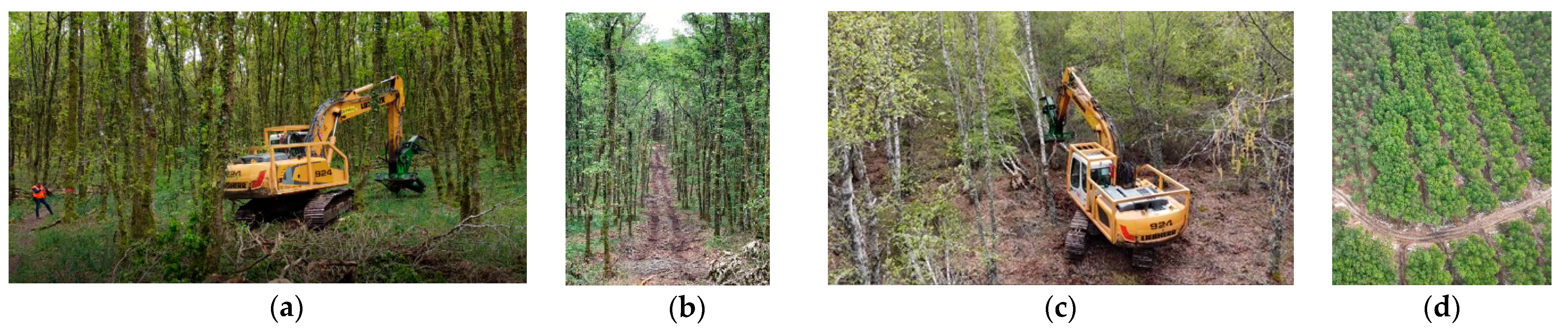
Field data were collected in two forest stands (trial 1 and 2, Quercus robur and Betula alba hardwood stands, respectively), where the two combinations of machines (feller-buncher + two types of processors) were monitored during thinning operations.
The study was conducted on moderate intensity thinnings, removing from 14 to 28% of the initial basal area. The treatments were thinnings from above, as the trees removed were 1.17-1.20 times bigger than average. The volume of the removed trees was 0.12 m3 tree−1 for birch and 0.28 m3 tree−1 in the oak case.
Three different machines were tried (Table 1). Felling was carried out by a shear feller-buncher head attached to a medium-sized excavator boom, and processing the stacked trees was performed by a LogMax® E6 harvester head mounted in a medium-sized excavator (for trial 1 - Oak) and a John Deere 1470 wheeled harvester with a Waratah® H4415X harvesting head (for trial 2 - Birch). The studied machines are commonly used for clearcutting operations both for conifers and fast-growing hardwoods plantations, mainly maritime pine and eucalypts. Their application to selective thinning in native hardwood stands represents an adaptation of those standard practices to more complex and sensitive silvicultural contexts.
The feller-buncher operated felling trees and then stacking the felled trees to be further processed by the above-mentioned harvesting heads. When tree felling and bunching are carried out using a feller-buncher, a processor subsequently operates to handle the felled stems (performing delimbing and crosscutting) before starting the forwarding phase.
Pre-harvest inventory data obtained from research collaborators were employed to characterize the stand conditions. For trial 1, data were provided by the Marteloscope of Labio (Lugo, Spain) belonging to Galician Government (Xunta de Galicia) and studied by the University of Santiago de Compostela [25], while for trial 2, inventory information was supplied by the company Ametlam S.L. All data sets were made available through the Galician Agency for Forest Industry (XERA).
Although some forest operations can be theoretically planned regarding their productivity and cost in advance [26,27], the specific characteristics of this study—particularly the involvement of hardwood species such as oak and birch—needed the identification and adaptation of a detailed set of operational phases to perform a proper detailed time-study. Each operation was time-tracked individually to quantify its duration. Data collection was conducted in situ through a continuous time-study method.
Field plots were defined as replications in each trial stand, and a stopwatch method was used for direct measurement. Three continuous timing protocols were employed for each work trial and machine. This approach was punctually supported by a video recording system installed in the operator’s cabin using a GoPro® camera, as well as aerial footage captured via a drone.
Figure 2.
(a) Shear feller-buncher in a medium size Liebherr® 924 RCL tracked backhoe loader; (b) Harvesting head mounted on a medium size Liebherr® R914 LI tracked excavator; (c) John Deere® 1470D wheeled harvester with Waratah® H4415X harvesting head.
Figure 2.
(a) Shear feller-buncher in a medium size Liebherr® 924 RCL tracked backhoe loader; (b) Harvesting head mounted on a medium size Liebherr® R914 LI tracked excavator; (c) John Deere® 1470D wheeled harvester with Waratah® H4415X harvesting head.
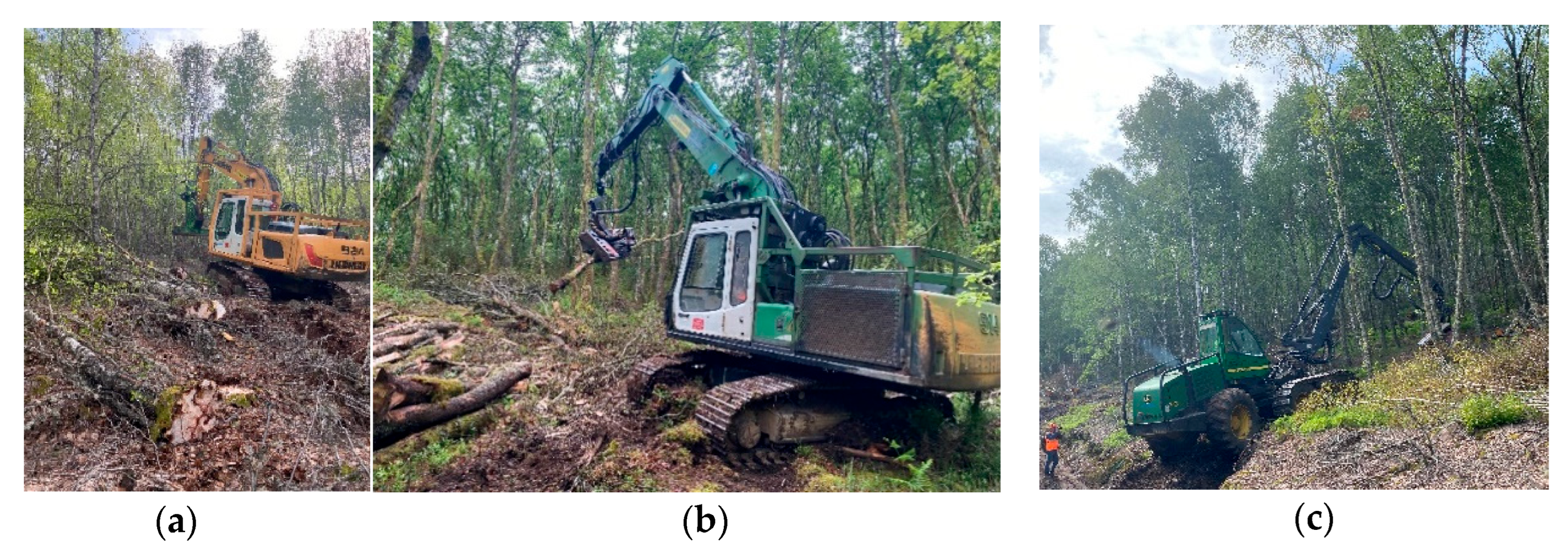
Figure 3.
(a) Feller-buncher working with oak trees; (b) 4-meter-wide strip roads in trial 1 (oak stand); (c) Feller-buncher working in trial 2 (birch stand); (d) 4-meter-wide strip roads in trial 2.
Figure 3.
(a) Feller-buncher working with oak trees; (b) 4-meter-wide strip roads in trial 1 (oak stand); (c) Feller-buncher working in trial 2 (birch stand); (d) 4-meter-wide strip roads in trial 2.
2.2. Time Study and Operational Analysis of Mechanized Harvesting Systems Remaining Trees Damage Assessment
To collect detailed data during active forestry operations, a conventional time-and-motion methodology was employed. Productivity estimations were obtained from the identified operational components and their durations, besides the measured volumes of green and dry biomass extracted (expressed in tonnes per effective work hour and productive machine hour).
Due to the large height and weight of some trees -particularly those with greater size - and the relatively steep and rough terrain conditions at the study sites, the operator of the feller-buncher felled most of the trees in two stages in order to avoid machine stability problems (Figure 4), in a similar way to other cases already studied [28].
The following operational elements were defined:
- MS: Movement of the felling head towards the tree.
- T1: Initial felling cut, performed either at the stump height or at a certain height (typically ~2.5 m), commonly for large trees, requiring a subsequent stump-level cut.
- T2: Second or final stump-level cut following a T1 high cut.
- TS: Final putting down and occasional severing of the tree upon contact with the ground, occurring after completion of both T1 and T2 operations.
- P: Breaks, including both productive (e.g., brief planning or repositioning) and non-productive pauses.
- D: Machine displacement without concurrent operational activity.
- M: Measurement and preparatory tasks prior to felling, such as height marking for T1 cuts.
- D+MS: Displacement while handling felled trees in the head.
- DR: Machine movement for refueling.
For the machines 2 and 3 (processors working with harvesting heads), the following operations were identified:
- MS: Boom movement towards the stacked trees.
- R: Delimbing.
- CS: Cross-cutting stacked logs on a forwarding pile.
- P: Operational breaks, whether related to work tasks or unproductive.
- D+MS: Machine displacement while transporting processed logs in the head.
- D: Machine displacement without performing additional operations.
After the thinning, the remaining trees within the studied area were counted, assessing the number of those with stem or crown damages (wounds affecting the wood or big branches broken).
Both descriptive and inferential statistics were applied to the results using Microsoft Excel and STATGRAPHICS Centurion 14.0. Graphics were depicted using Origin 2019.b software. The regression equations were fitted using simple and multiple linear regression techniques. When logarithmic transformations showed better results, nonlinear regression techniques were applied in order to obtain more significant goodness-of-fit statistics.
3. Results and Discussion
3.1. Duration of Cycles and Work Elements
Figure 5 shows the oak stand (trial 1) time operations analysis. In this trial, feller buncher (machine 1) showed a distribution of operations with the largest share corresponding to preparation times (42%), followed by displacement (32%). Felling trees accounted for 11%, while breaks represented 15% of total time. It highlights that most of the time was spent preparing and moving between trees.
In trial 1 (oaks), the time distribution for the activities of the processor mounted on the medium-sized excavator (machine 2), preparing before and after cutting logs took 53% of total time, while crosscutting the logs accounted for 25%, and displacement took a 19%. Breaks were small (3%), showing highly efficient operation. The feller buncher spent more time on displacement (32%) than the processor (19%), reflecting its higher mobility demands to each tree, compared to working on stacks.
In trial 2, feller buncher (machine) dedicated most of its time to displacement (38%) and preparation activities (35%), with a smaller portion spent in felling (11%) and breaks (16%). The processor (machine 3) invested more time in preparation (40%) and log cutting (34%), while displacement (20%) and breaks (6%) were less significant.
As in trial 1, the feller buncher had more displacement time, whereas the processor focused on stationary processing tasks. Overall, the processors demonstrated greater efficiency in productive activities, while the feller buncher spent more time in auxiliar movements.
In both trials and tree species, productive times (preparation and cutting phases) for the two processors were very similar, whether the base machine were a medium-size excavator (78 %) or a six-wheel harvester (74 %). This result shows that working on stacked trees, a medium-sized adapted machine can be so productive as a larger forest machine. In both cases, the feller buncher spent more percentage of displacement time than both processors.
3.2. Preharvest Inventory of Removal Trees and Productive Results
Table 2 shows the main results of the initial inventory and the calculated cycle time and productivity for specific logging equipment.
The average productivity was 9.1 m3/PMH, approximately one third of that referred to harvesting operations on beech stands [11] with much bigger DBHs, ranging from 30 to 40 cm. The productivity reported for mechanized eucalypts clearcutting with feller followed by processor, were 1.3 times higher, which may be explained by a slightly larger DBHs and twice as much extracted volume per hectare [24]. The results of this research, however, are about three times higher than those reported for hardwood coppice forests in Spain, with DBHs ranging from 6 to 11 cm [2,3]. Predictably, productivity improves with larger tree dimensions, a relationship more accentuated in mechanized systems, which are conventionally configured to process one or a few stems per operational cycle [7].
ANOVA of productivity and stand conditions (DBHs, Number of trees per hectare, slope) offers statistically significant differences (p-value < 0.05) between trial sites (species) Oak stand had bigger average DBHs (Figure 6) and less average slopes, but smaller stand density, more stand-alone trees than in the birch coppice.
Although the conditions of the two studied sites are significantly different (specie, slope, number of trees per hectare, average DBH) and this influence the work pattern of the feller-buncher, the processing machines do not show a significant difference in productivity, because of the homogeneity of the work system (processing stacked trees next to the strip roads).
The productivity of feller-buncher (Figure 7.a) shows a significantly higher value in trial 2 (Birch) than in trial 1 (Oak) with p-value = 0,0103, for a 95,0% confidence level. This may be due to the greater density and weight per hectare, together with the tree grouping (coppice). The greater the number of trees per hectare, the greater the number of trees accessible to the feller from each position, resulting in less displacement time per cubic meter.
According to previous work [19], feller-buncher can cut trees of varying diameters within a relatively similar time frame, the felling-bunching of larger trees can result in higher wood volume output per machine hour. On the other hand, the number of trees per unit area influences processing efficiency, as greater densities reduce the time required for machine travel, felling, and accumulation operations.
Regarding the slope, productivity trends to decrease as slope increases, steeper terrain slows down machine efficiency. In the case of the processors (Figure 7.b), both showed higher productivity compared with feller buncher in both stands. The difference between the two trials was not statistically significant at a 95% confidence level (p-value = 0.0661). Trial 2 (birch) trended to be processed faster or more efficiently, possibly due to the lower stem wood-hardness and to the presence of trees with less branches and forks, but mainly because of the bigger extracted volume per hectare, that means bigger or closer stacks of trees.
Harvester productivity is typically strongly influenced by tree sizes [1,2,4,11,24]. As tree volume increases, the production rate trends to rise, given that the processing time for larger trees is often comparable to that required for smaller ones. But in this context, the processors operated exclusively on the tree stacks previously arranged by the feller-buncher.
A statistically significant relationship between feller-buncher productivity and trees extracted per hectare, with a confidence level of 95.0%, was found (Figure 8.a and Figure 8.b).
Regarding the processors, multiple linear regression was fitted for their productivity. A positive effect of the volume per hectare and a negative effect of unit volume were observed. Although the effect of unit volume on productivity is generally positive [29], the need to cut each tree into two pieces when its height and/or volume is greater has probably played a negative role in the present case. Finally, the most significant variable was the extracted volume (m3 ha−1), with a p-value = 0.012 for a 95,0% confidence level (Figure 9). This is consistent with the proposed methodology, since the processor works on tree stacks; the greater the volume per ha, the more stacks per hectare or the larger the stacks. Adjusted by degrees of freedom, R2 was 94.5% and the average absolute value of the residues was 1.28 m3/PMH.
Given the limited sample size and variability among the case-studied conditions, results should be considered indicative of productivity trends. Further research is needed to better understand how tree morphology constraints mechanized processing. Findings should be interpreted within the operational and environmental context described in this study.
3.3. Damage Levels of Standing Future Trees
The incidence of damage among residual trees for future ranged from 1% to 4% of the post-harvest stand. This damage levels induced by both harvesting systems were low, closely matching those documented for motor-manual thinning in previous studies [30,31,32,33] and lower than other mechanized systems studied [4]. For the purpose of lowering remanent tree damages, the careful selection of cutting and logging strategies plays a crucial role in limiting damage to regeneration and preserving wood quality from a long-term management perspective, especially for hardwood silvicultural operations [34].
4. Conclusions
Under the conditions of this study – thinnings from above in hardwood stands with DBHs between 14 and 20 cm performed by a feller-buncher followed by two different harvesters acting as processors -, the average productivity of the shear feller-buncher ranged from 4.8 to 9.1 m3/PMH and the processors showed an average productivity of 14,1 m3/PMH. These results are consistent with international scientific literature confirming the influence of tree size and type of felling.
The productivity of the feller-buncher studied was significantly bigger in the birch stand than in the oak one, having the first stand a slightly greater extracted volume per hectare but significantly lower unit volume. The greater density and tree grouping in the birch stand reduced the movements, while tree volume positive effect on felling and bunching productivity was limited because of the need to cut the bigger trees into two pieces before stacking them for machine stability reasons. The most influencing explanatory variable on feller-buncher productivity was the stand density.
The processing productivity, performed by two different harvesting heads attached to a medium-sized excavator and to a six wheeled forest harvester, was always greater than the feller-buncher productivity, as they worked on previously stacked trees.
Although productivity was also greater in the birch stand, due to the greater extracted volume per hectare and consequent bigger stack size or number of stacks per hectare, the difference was not statistically significant. The explanatory variable which most influenced the processing productivity was the extracted volume per hectare.
Regarding the remanent stand damages, the tried harvesting machines achieved a low damage level – less than 5% of residual trees damaged -, so this does not seem to be a major constraint to these mechanized systems.
Although the results are indicative, they show that a felling head attached to a medium-sized excavator – widely used in Spanish fast-growing plantations clearcuts - may perform properly in hardwoods thinnings, and for processing in strip roads, lower-cost medium-sized excavators equipped with harvesting heads can be used to achieve similar productivities than forest harvester based processors, which represents a potentially more cost efficiency solution.
Author Contributions
Conceptualization, O.G.P., F.P and G.P; methodology, O.G.P., E.T., R.L., F.P and G.P.; validation, O.G.P., E.T. and R.L.; formal analysis, O.G.P., E.T. and R.L.; investigation, O.G.P., F.P and G.P.; resources, O.G.P., F.P and G.P; writing—original draft preparation, .G.P., F.P and G.P.; writing—review and editing, O.G.P., E.T. and R.L.; funding acquisition, O.G.P., F.P and G.P. All authors have read and agreed to the published version of the manuscript.
Funding
This research was funded by XERA, through a service contracted to the University of Vigo, code IN_0079_23.
Data Availability Statement
Research data are available from the corresponding author.
Acknowledgments
The authors would like to thank the participation of the machine companies, the collaboration of XERA-CIS Madeira, as well as the collaboration on inventory data with the company Ametlam SL and the Marteloscope of Labio (Xunta de Galicia) and University of Santiago de Compostela.
Conflicts of Interest
The authors declare no conflicts of interest.
Abbreviations
The following abbreviations are used in this manuscript:
DBH = diameter at breast height; PMH = productive machine hour; SD = Standard deviation.
References
- Tolosana Esteban E. Conservation by harvesting: opportunities and challenges of the XXI century - Conservar aprovechando: oportunidades y retos del siglo XXI. Cuadernos de la Sociedad Española de Ciencias Forestales. 2023. Vol. 49(2), 1–30. [CrossRef]
- Laina, R.; Tolosana, E.; Ambrosio, Y. Productivity and cost of biomass harvesting for energy production in coppice natural stands of Quercus pyrenaica Willd. in central Spain. Biomass and Bioenergy. 2013. Vol. 56, 221-229. [CrossRef]
- Tolosana, E.; Spinelli, R.; Aminti, G.; Laina, R.; López-Vicens, I. Productivity, Efficiency and Environmental Effects of Whole-Tree Harvesting in Spanish Coppice Stands Using a Drive-to-Tree Disc Saw Feller-Buncher. Croatina Journal of Forest Engineer. 2018. Vol 39, nº 163-172. ISSN: 1845-5719.
- Herguido-Sevillano, L.; Tolosana, E.; Laina, R.; Bergström, D.; Fernandez-Lacruz, R. Effects of Boom-Corridor and Selective Thinnings on Harvester Productivity in Dense Small Diameter Pyrenean Oak (Quercus pyrenaica Willd.) Coppices in Spain CROJFE 2024. 2024. [CrossRef]
- Hoesch, M. Technology development as driving force for rationalization in Forest Companies. In: High tech forest operations for mountainous terrain. Proc. of Austro. 2003. Oct. 5-9, Schlaegl, Austria.11 p. https://www.formec.org/images/proceedings/2003/51_hoesch.pdf.
- Spinelli, R.; Magagnotti, N.; Di Fulvio, F.; Bergström, D.; Danelon, M.; Alberti, G. Comparison of Cost Efficiency of Mechanized Fuel Wood Thinning Systems for Hardwood Plantations on Farmland. Croatian Journal of Forest Engineering. 2014. Vol. 35 (2), 111-123. Preuzeto s https://hrcak.srce.hr/126993.
- Spinelli, R., Magagnotti, N., Nati, C. Options for the Mechanized Processing of Hardwood Trees in Mediterranean Forests. International Journal of Forest Engineering. 2009. Vol. 20(1), 39–44. [CrossRef]
- Arnvik, W. Review of productivity models for harvesters, feller-bunchers, and harwarders published in 2013-2023. Second cycle, A2E. Umeå: SLU. 2024. Department of Forest Biomaterials and Technology (from 131204). http://urn.kb.se/resolve?urn=urn:nbn:se:slu:epsilon-s-20556.
- Cielo P., Zanuttini. R. La raccolta del legno nei pioppeti (Wood harvesting in poplar plantations). L’Italia Forestale eMontana. 2004. n. 6: 467-482. (In Italian, English summary). https://italiaforestalemontana.it/index.php/ifm/article/download/520/502/502.
- Mederski, P.S.; Bembenek, M.; Karaszewski, Z.; Łacka, A.; Szczepanska-Álvarez, A.; Rosinska, M. Estimating and modelling harvester productivity in pine stands of different ages, densities and thinning intensities. Croat. J. For. Eng. 2016. Vol. 37, 27–36. ISSN: 1845-5719. https://doaj.org/article/4c1f97e0823e461e95cabe817f43acdf.
- Labelle, E.R.; Windisch, J.; Gloning, P. Productivity of a single-grip harvester in a beech dominated stand: a case-study under Bavarian conditions. Journal of Forest Research. 2019. Vol. 24, 2, 100-106, . [CrossRef]
- Jiroušek, R.; Klvaˇc, R.; Skoupý, A. Productivity and costs of the mechanized cut-to-length wood harvesting system in clear-felling operations. J. For. Sci. 2007. Vol. 53, 476–482. [CrossRef]
- Eriksson, M.; Lindroos, O. Productivity of harvesters and forwarders in CTL operations in Northern Sweden based on large follow-up datasets. Int. J. For. Eng. 2014. Vol. 25, 179–200. [CrossRef]
- Purfürst, F.T. Learning curves of harvester operators. Croat. J. For. Eng. 2010. Vol. 31, 89–97. ISSN: 1845-5719. https://doaj.org/article/a16b44fb2b2647ec8d36093392d0f06a.
- Berry, M., Strandgard, M., Ghaffariyan, M.; Mitchell, R. Assessment of machine productivity for a feller-buncher, processor, and harvester: a case study in the southern pine plantations of Queensland, Australia. International Journal of Forest Engineering. 2025. Vol. 1-9. [CrossRef]
- Nurminen, T.; Korpunen, H.; Uusitalo, J. Time consumption analysis of the mechanized cut-to-length harvesting system. Silva Fenn. 2006. Vol. 40, 335–363. [CrossRef]
- Kellogg. L.D.; Bettinger P.; Robe, S.; Steffert, A. Mechanized harvesting: compendium of mechinazed harvesting research. Forest Research Laboratory, Oregon State University, Corvallis. 1992. Oregon. USA. pp: 401. https://ir.library.oregonstate.edu/downloads/rb68xh62x.
- Tolosana, E.; González de Linares, V. M.; Vignote, S. Timber harvesting (El aprovechamiento maderero). Fundación Conde del Valle de Salazar. 2000. 575 p. (in Spanish). ISBN : 84-7114-904-4.
- Akay, A.; Erdas, O.; Sessions, J. Determining Productivity of Mechanized Harvesting Machines. Journal of Applied Sciences (Asian Network for Scientific Information). 2004. Vol 4(1), 100–105. [CrossRef]
- Suchomel, C.; Becker, G.; Pyttel, P. Fully mechanized harvesting in aged oak coppice stands. Forest products journal. 2011. Vol. 61(4):290–6. [CrossRef]
- Mederski, P.S.; Schweier, J.; Đuka, A.; Tsioras, P.; Bont, L.; Bembenek, M. Mechanised Harvesting of Broadleaved Tree Species in Europe. Forest Engineering. 2022. Vol 8 1-19. [CrossRef]
- Labelle, E.R.; Windisch, J. Productivity of a single-grip TimberPro 620 harvester with a LogMax 7000 harvesting head in a beech dominated stand. In From Theory to Practice: Challenges for Forest Engineering. Proceedings of the 49th Symposium on Forest Mechanization. 2016. Warsaw University of Life Sciences, Poland. 9p. ISBN: 9788394388997.
- Labelle, E.R.; Bergen, M.;Windisch, J. The effect of quality bucking and automatic bucking on harvesting productivity and product recovery in a pine-dominated stand. Eur. J. For. Res. 2017. Vol. 136, 639–652. [CrossRef]
- Acuna, M. A.; Kellogg, L. D. Evaluation of Alternative Cut-to-Length Harvesting Technology for Native Forest Thinning in Australia. International Journal of Forest Engineering. 2009. Vol. 20(2), 17–25. [CrossRef]
- Integrated NetWork of Martelocopes. EFI. Websiten (acces at 29/10/2025). http://iplus.efi.int/uploads/ES_InfoSheet_Labio_en.pdf.
- Tampekis, S.; Kantartzis, A.; Arabatzis, G.; Sakellariou, S.; Kolkos, G.; Malesios, C. Conceptualizing Forest Operations Planning and Management Using Principles of Functional Complex Systems Science to Increase the Forest’s Ability to Withstand Climate Change. Land. 2024. Vol. 13, 217. [CrossRef]
- Tolosana, E. El aprovechamiento forestal mecanizado en las cortas de mejora de Pinus sylvestris L., modelos de tiempos, ren-dimientos, costes y estudio de sus efectos ambientales. Thesis. Technical University of Madrid - E.T.S.I. Montes (UPM). 1999. (in Spanish). [CrossRef]
- Bilici, E.; Akay, A.E.; Abbas, D. Assessing the effects of site factors on the productivity of a feller buncher: a time and motion analysis. J. For. Res. 2019. Vol. 30, 1471–1478. [CrossRef]
- Ferreira, F. A. C.; Lima, C. F.; Minette, L. J.; Lima, R. C. A.; Freitas, L. C.; Lima, F. A.; Souza, L. M.; Schettini, B. L. S.; Silva, A. A.; Silva, L. F.; Almeida J.P. P.; Leite, E.; Oliveira, L. C. Modeling as a tool for predicting the productive capacity of wood harvesting: Approach of FellerBuncher and Harvester. Revista Árvore. 2025. Vol. 49(1). [CrossRef]
- Magagnotti, N., Nati, C., Picchi, G., Spinelli, R. Mechanized thinning of walnut plantations established on exarable land. Agroforestry Systems. 2011. Vol. 82(1): 77–86. [CrossRef]
- Hartsough, B. Economics of harvesting to maintain high structural diversity and resulting damage to residual trees. Western Journal of Applied Forestry. 2003. Vol. 18(2): 133–142. [CrossRef]
- Spinelli R., Lombardini C., Magagnotti N. The effect of mechanization level and harvesting system on the thinning cost of Mediterranean softwood plantations. Silva Fennica. 2014. Vol. 48 no. 1. [CrossRef]
- LeDoux, C.B. Mechanized systems for harvesting eastern hardwoods. Gen. Tech. Rep. 2010. NRS-69. Newtown Square, PA: U.S. Department of Agriculture, Forest Service, Northern Research Station. 13 p. [CrossRef]
- Cataldo, M.F.; Lombardi, F.; Papandrea, S.F.; Mercuri, M.; Proto, A.R.; Marziliano, P.A. Effects of Cutting and Logging Processes on Tree Resprouting and Mortality in Chestnut Coppices in Southern Italy. Springer, Cham. Lecture Notes in Networks and Systems. 2024. Vol 1185. [CrossRef]
Figure 4.
Feller-buncher working with oaks in two stages: (a) head movement for felling; (b) positioning before high cut T1; (c) high cutting T1 and removing upper stem part. Cutting and the stump height (T2) is not shown in this sequence.
Figure 4.
Feller-buncher working with oaks in two stages: (a) head movement for felling; (b) positioning before high cut T1; (c) high cutting T1 and removing upper stem part. Cutting and the stump height (T2) is not shown in this sequence.
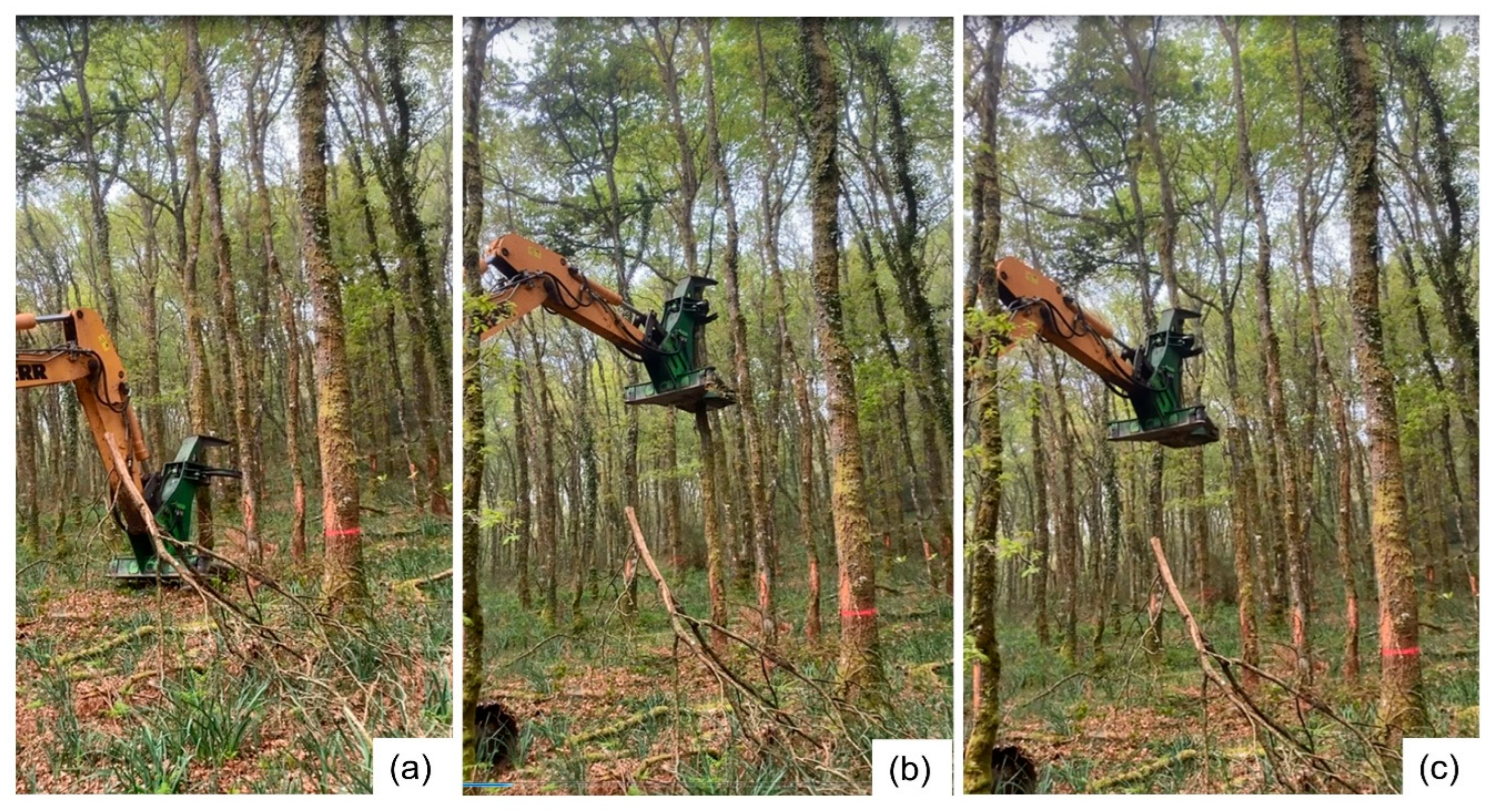
Figure 5.
Results of the time analysis per operation for machines 1, 2 and 3, in trial 1 and 2.
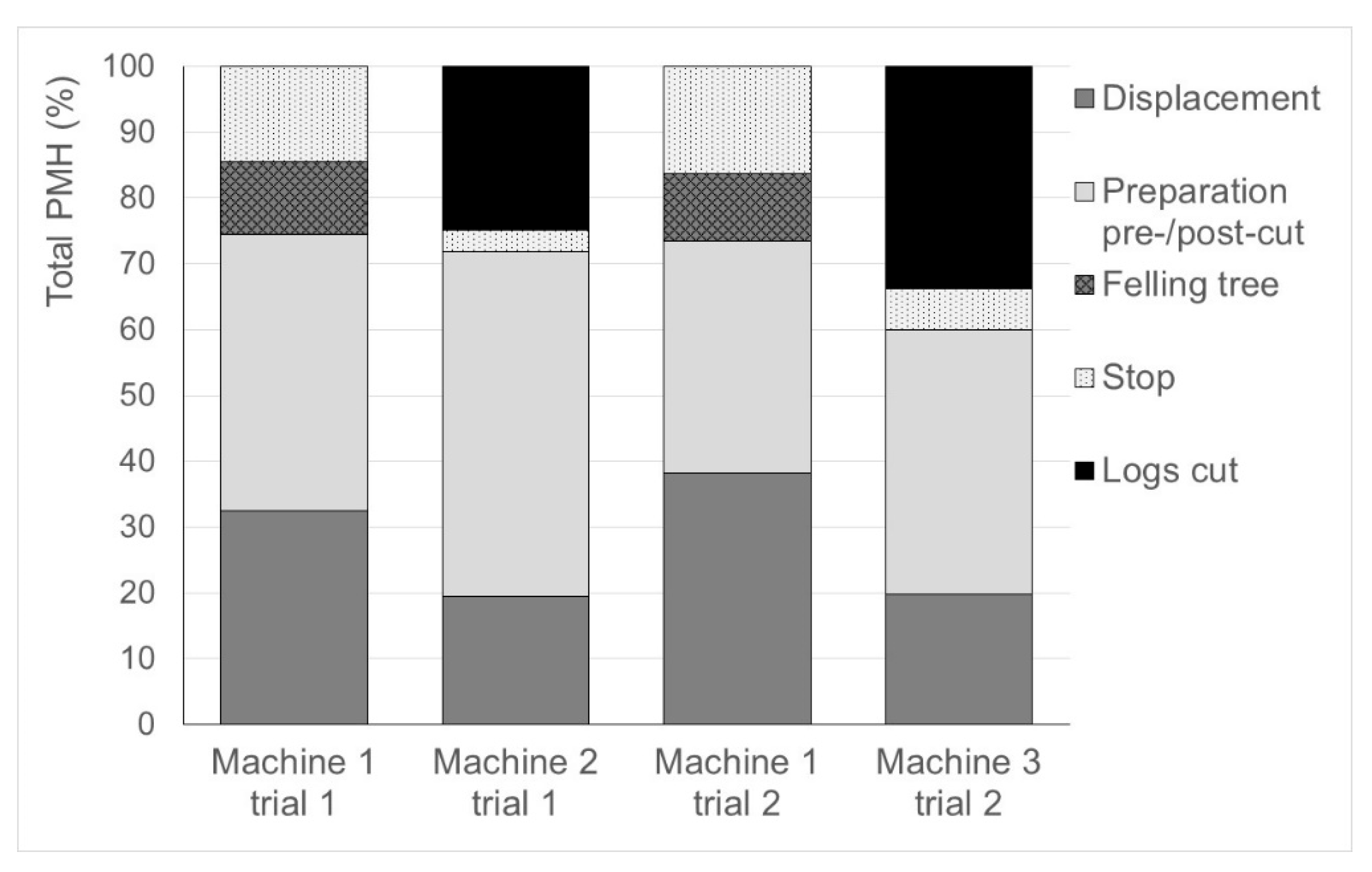
Figure 6.
Average DBH and SD (cm) in each stand replication.
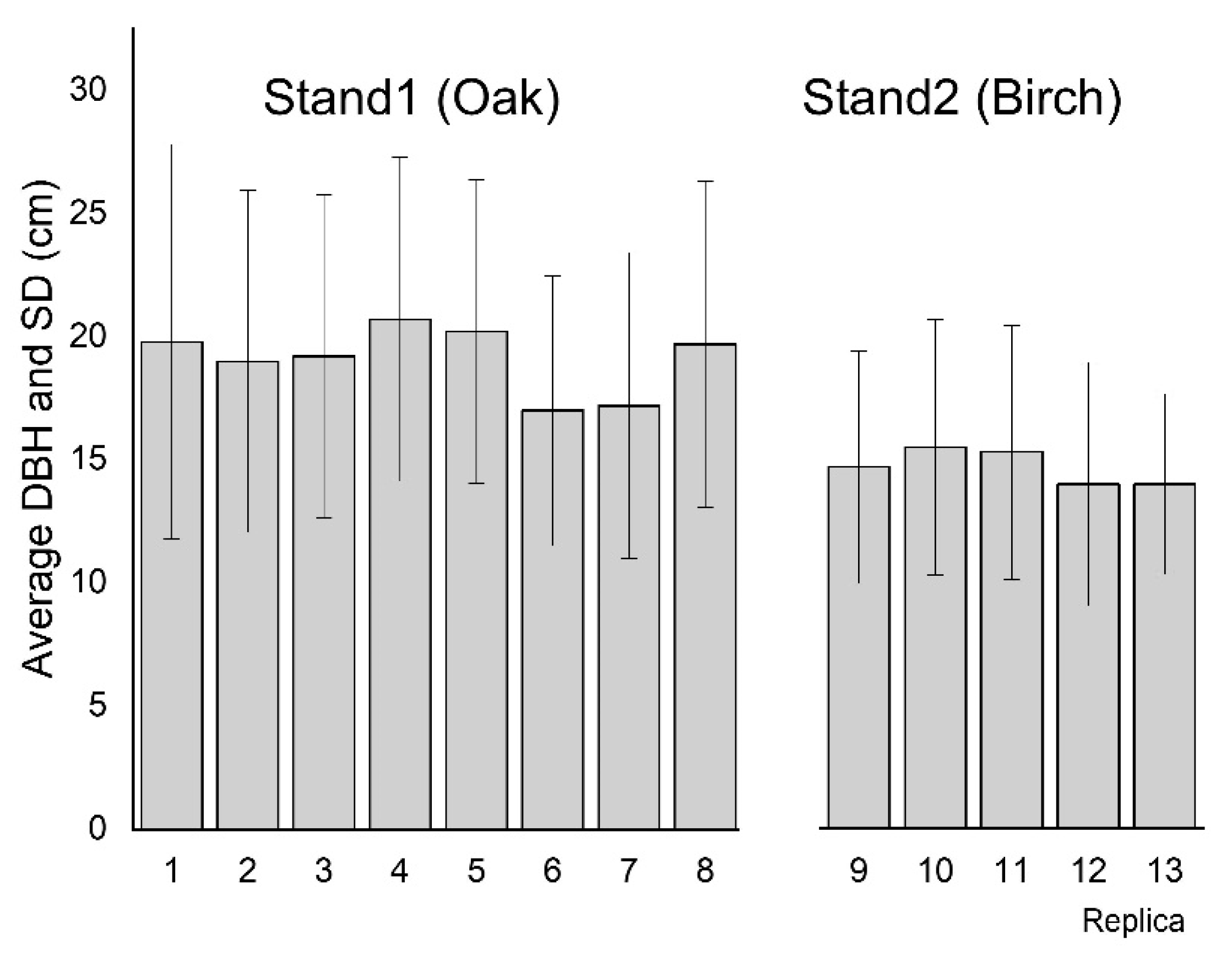
Figure 7.
Comparative results for both trees species, in productivity of feller-buncher (a), productivity of processor machines (b).
Figure 7.
Comparative results for both trees species, in productivity of feller-buncher (a), productivity of processor machines (b).
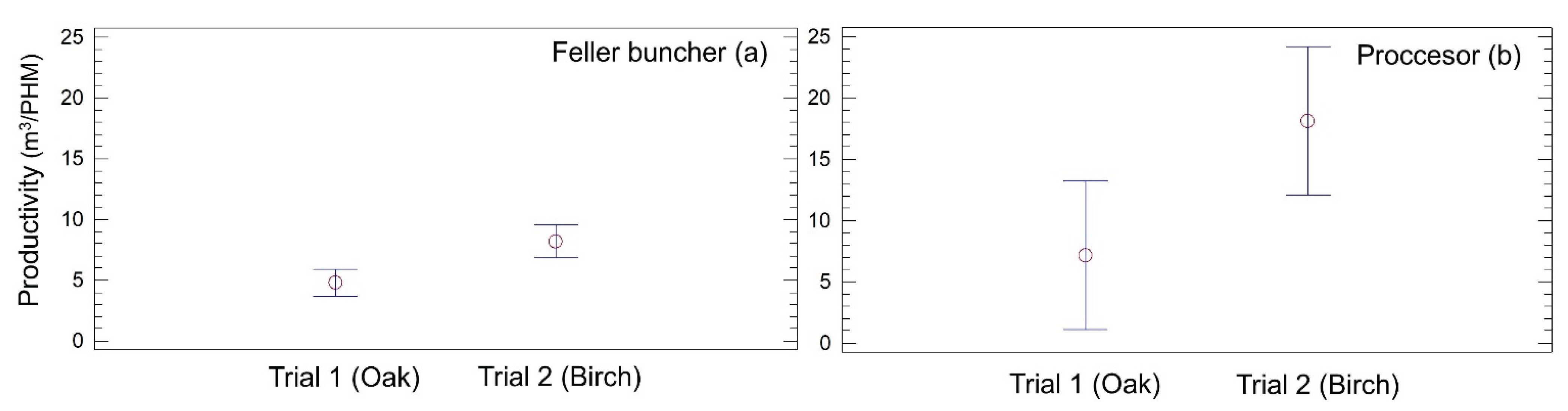
Figure 8.
Comparison between feller-buncher productivity (trial 1 and 2) for both species and trees extracted per surface area (a), and productivity of both species with the feller-buncher, observed and predicted (b).
Figure 8.
Comparison between feller-buncher productivity (trial 1 and 2) for both species and trees extracted per surface area (a), and productivity of both species with the feller-buncher, observed and predicted (b).
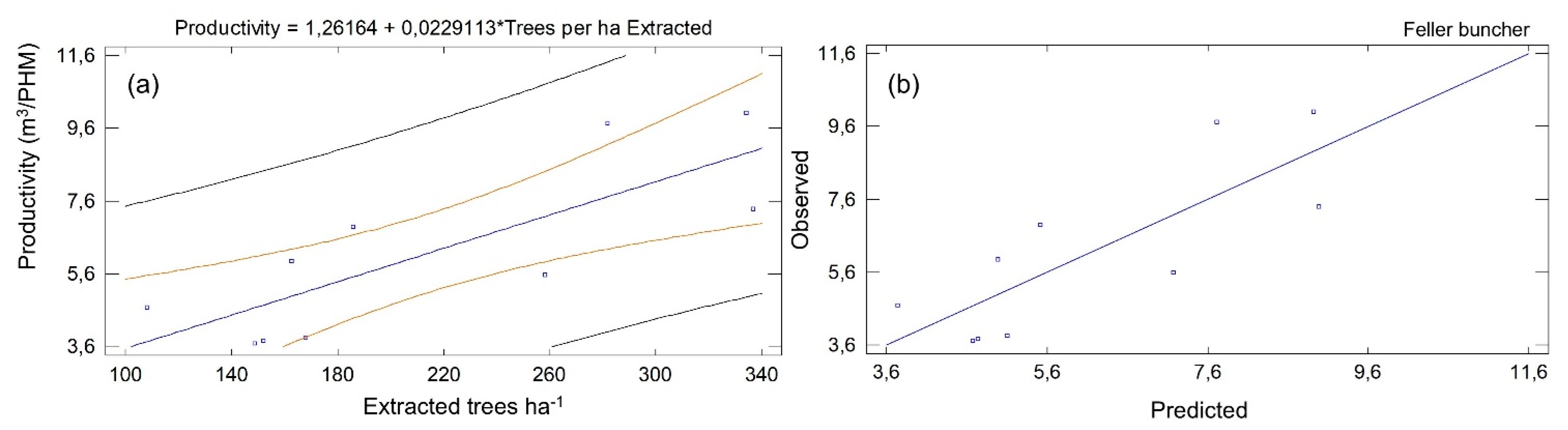
Figure 9.
Processor productivity versus volume extracted per surface area.
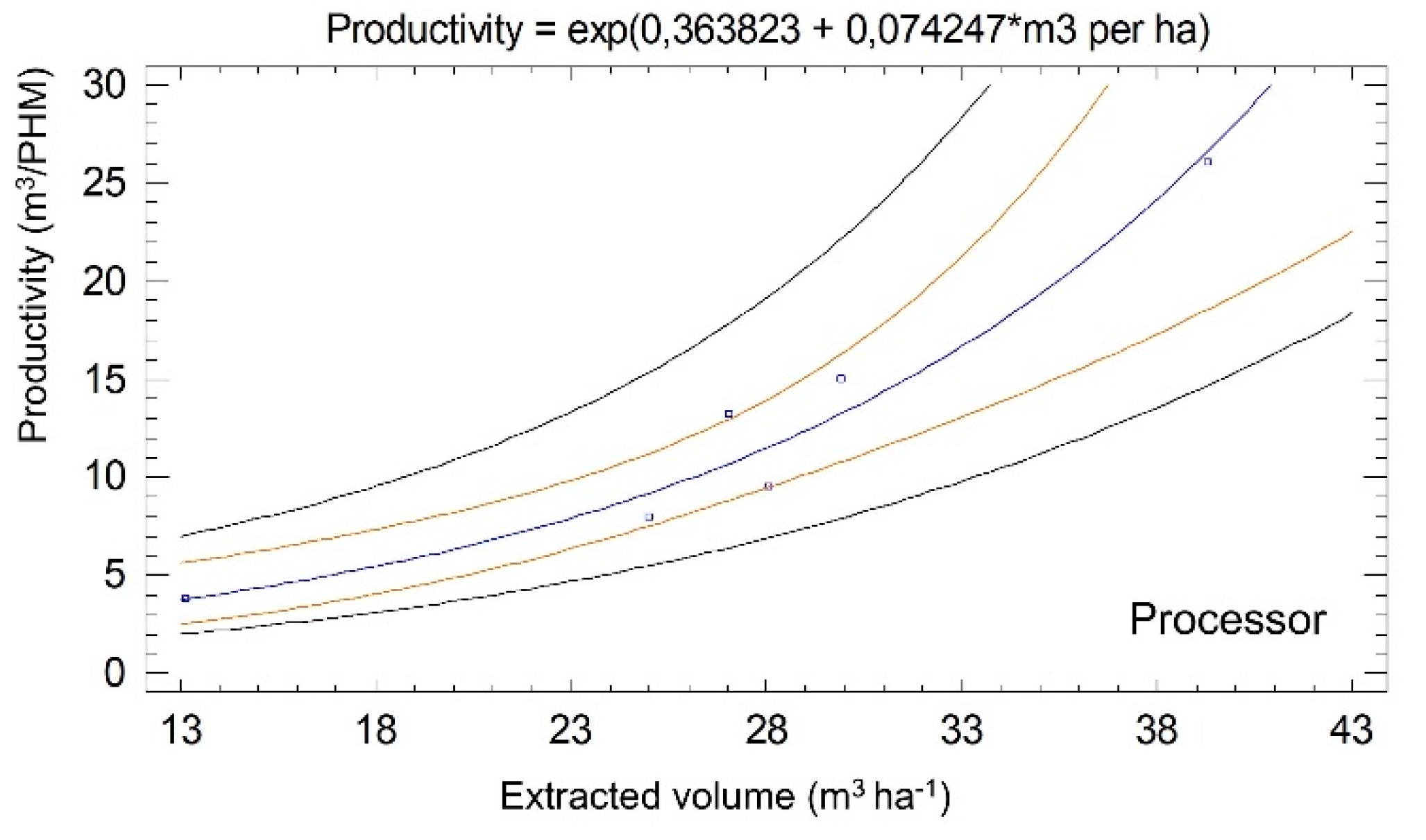

Table 1.
Trials, replications Nr., stand conditions and mechanized systems configuration in the studied thinnings.
Table 1.
Trials, replications Nr., stand conditions and mechanized systems configuration in the studied thinnings.
| Trial | Replications Nr. | Stands conditions |
Felling | Processing |
|---|---|---|---|---|
| 1 (Oak) | 9 | Specie: Oak 1230.7 trees ha−1 0.12 m3 tree1 Aver. slope 18 % |
Machine 1: feller buncher with a cutting capacity for trees diameter 60 cm, weight 1 tonne mounted on a medium size excavator Liebherr® 924 RCL, 163 HP (120 kW), weight of 26 tonnes | Machine 2: Processor* with a LogMax® E6 harvester head, cutting capacity of trees diameter of 65 cm, weight 1.6 tonnes on a medium size excavator Liebherr® R914 LI, 140 HP (100 kW), weight 24 tonnes |
| 2 (Birch) | 8 | Specie: Birch 1602.4 trees ha−1 0.12 m3 tree1 Aver. slope 30 % |
Machine 3: Processor* with a Waratah® H4415X harvester head, cutting capacity of trees diameter of 65 cm, weight 1.4 tonnes mounted on a John Deere® 1470D wheeled harvester, 245 HP (180 kW), weight 20 tonnes (tires with traction-enhancing gripper tracks) | |
| *Processor = harvesting head which delimbs and crosscuts stacked trees into specified lengths | ||||
Table 2.
Preharvest inventory of removal trees and productive results.
| Machines and trial Nr. | Nr. Of Replication |
Slope (%) | Initial trees ha−1 | Aver. DBH ± [SD] (cm) |
Extracted trees ha−1 |
PMH (s) |
Extracted m3 ha−1 |
Productivity (m3 PMH−1) |
|---|---|---|---|---|---|---|---|---|
| Machine 1 (feller buncher) trial 1 | 1 | 16.42 | 1058.75 | 18.1 ± [8.00] | 151.99 | 3265 | 30,46 | 3.757 |
| 2 | 14.9 | 1068.23 | 19.0 ± [6.94] | 108.25 | 2895 | 25,44 | 4.677 | |
| 3 | 16.7 | 1140.73 | 19.2 ± [6.54] | 185.87 | 5276 | 37,58 | 6.898 | |
| 4 | 16.84 | 1121.51 | 20.7 ± [6.57] | 162.77 | 7447 | 36,38 | 5.942 | |
| 5 | 14.16 | 1183.19 | 20.0 ± [6.15] | 167.96 | 12314 | 34,14 | 3.863 | |
| 6 | 16.71 | 1339.71 | 17.0 ± [5.48] | 149.02 | 11157 | 22,47 | 3.698 | |
| Machine 2 (processor) trial 1 | 7 | 21.2 | 1387.56 | 17.2 ± [6.22] | 120.12 | 3733 | 25,00 | 8.028 |
| 8 | 18.88 | 1156.99 | 19.0 ± [6.94] | 143.68 | 3687 | 28,05 | 9.530 | |
| Machine 1 (feller buncher) trial 2 | 9 | 26.33 | 1465.49 | 14.7 ± [4.72] | 258.33 | 6281 | 27,08 | 5.587 |
| 10 | 27.87 | 1423.31 | 15.5 ± [5.18] | 262.50 | 2124 | 31,28 | 12.722 | |
| 11 | 29.75 | 1675.58 | 15.3 ± [5.15] | 334.02 | 6887 | 39,28 | 10.021 | |
| 12 | 31.12 | 1476.25 | 14.0 ± [4.95] | 281.63 | 4920 | 27,15 | 9.733 | |
| 13 | 33.14 | 1772.29 | 14.0 ± [3.66] | 336.73 | 5713 | 29,92 | 7.392 | |
| Machine 3 (processor) trial 2 | 14* | 29.75 | 1757.98 | 15.3 ± [5.15] | 334.02 | 2646 | 39,28 | 26.083 |
| 15* | 31.12 | 1476.25 | 14.0 ± [4.95] | 280.49 | 3627 | 27,04 | 13.203 | |
| 16* | 33.14 | 1772.29 | 14.0 ± [3.66] | 336.73 | 2812 | 29,92 | 15.017 | |
| *Replications that took place at the same places as for machine 1 (trial 2) | ||||||||
Disclaimer/Publisher’s Note: The statements, opinions and data contained in all publications are solely those of the individual author(s) and contributor(s) and not of MDPI and/or the editor(s). MDPI and/or the editor(s) disclaim responsibility for any injury to people or property resulting from any ideas, methods, instructions or products referred to in the content. |
© 2025 by the authors. Licensee MDPI, Basel, Switzerland. This article is an open access article distributed under the terms and conditions of the Creative Commons Attribution (CC BY) license (http://creativecommons.org/licenses/by/4.0/).
Copyright: This open access article is published under a Creative Commons CC BY 4.0 license, which permit the free download, distribution, and reuse, provided that the author and preprint are cited in any reuse.


