

Submitted:
01 November 2025
Posted:
04 November 2025
You are already at the latest version
Abstract
The present paper discusses extended reality (XR) applications specifically designed to enhance experiential location-based learning in outdoor spaces, which are utilized in the context of an environmental education program of the Education Center for the Environment and Sustainability (E.S.E.C.) of Kastoria and were designed with the aim of enhancing the experiential experiences of the students in the neolithic lakeside settlement in Dispilio, Kastoria. With the use of augmented, mixed and virtual reality technologies, an attempt is made to enrich the knowledge and experiences of the students during their visit to the representation of the Neolithic settlement (open-air museum) and their active participation in the learning process. Students take on roles such as that of an archaeologist, a detective, and an explorer. By utilizing mobile devices and leveraging GPS technology, students search for and identify virtual findings at the excavation site, travel through time, and investigate the resolution of a mystery (crime) that occurred during the Neolithic period, exploring and navigating the space of the neolithic representation interacting with real and virtual objects, while through special VR glasses they discover the lifestyle of neolithic man. The paper presents the application design criteria, thematic focus, learning objectives, and basic functions. It also aims to provide ideas and guidance to educators of various specialties who wish to create applications that transform educational visits to open archaeological sites and museums into exciting extended reality experiences. In addition, the paper presents findings from quantitative research that evaluates the learning experience through a questionnaire, adapted for XR applications, as well as the views - attitudes of accompanying teachers. The results of the survey show that extended reality-enhanced (XR) educational activity enhanced students' interest and engagement and facilitated a collaborative learning environment.
Keywords:
extended reality
; augmented reality
; mixed reality
; virtual reality
; game-based learning
; cultural heritage
; archaeological sites
; neolithic settlement
; environment education
1. Introduction
In recent years, the convergence of educational technology, cultural heritage, and environmental education has led to the development of innovative learning experiences that exceed the boundaries of traditional teaching. One of the most significant innovations is Extended Reality (XR), a comprehensive term that includes Augmented Reality (AR), Mixed Reality (MR), and Virtual Reality (VR) [1,2,3].
Augmented Reality (AR) enhances the real environment with digital content, such as texts, images, videos, 3D models, or audio, which are displayed through smart mobile devices or portable AR systems. AR can be categorized into three principal forms [4]:
- Marker-based, where the augmentation is triggered by a virtual marker or object.
- Markerless, in which the augmentation is situated on surfaces of the natural environment.
- Location-based, in which the augmentation is triggered upon the user’s arrival at designated points of interest, with the assistance of GPS sensors.
Virtual Reality (VR) provides complete immersion in a three-dimensional virtual world, eliminating physical stimuli and enhancing the sense of presence (telepresence) [5].
Mixed Reality (MR) facilitates the coexistence of tangible and virtual objects that interact in real time [6].
XR applications have significantly progressed over the last decade, particularly in the sectors of education, tourism, and cultural heritage. Within the educational sector, XR technologies are fundamentally connected to the concepts of active and experiential learning, as they provide students with opportunities to engage in interactive, research-oriented, and multisensory experiences that enhance both cognitive and emotional engagement, thus moving the focus of learning from passive observation to active participation [3,7,8,9].
The current study highlights the development, application, and assessment of a thorough XR educational program, implemented at the Prehistoric Lakeside Settlement of Dispilio, situated in Kastoria. This archaeological site, which can be traced back to the 6th millennium B.C., is a remarkable example of a Neolithic settlement that has been preserved along the shores of Lake Orestiada. Currently, the site acts as an open museum, presenting opportunities for experiential and environmental education.
The Education Center for the Environment and Sustainability (E.S.E.C.) of Kastoria,
in collaboration with the Digital Media and Communication Strategy Laboratory of the Department of Communication and Digital Media at the University of Western Macedonia, has developed a series of XR digital applications that integrate archaeological research, environmental education, and contemporary technology. For the systematic development of digital experiences, the ADDIE model (Analysis–Design–Development–Implementation–Evaluation) was applied [10,11,12,13,14]. The program “Prehistoric Lakeside Settlement of Dispilio” was designed to engage students with the Neolithic past through processes of discovery, exploration, and creative interaction.
The applications that were developed include (see Figure 1):
- The augmented reality applications “Virtual Findings in Dispilio”, “Crime in the Lakeside Settlement”, and “Once Upon a Time in Dispilio”, leveraging TaleBlazer (MIT STEP Lab) and geolocation-based navigation [15].
- The MR application “Virtual Guide for the Mountainous Areas of Western Macedonia and the City of Kastoria,” which provides 3D models, avatar narratives, and interactive videos [16].
- and the virtual reality experiences titled “Representation of the Settlement” and “Through the Eyes of a Bird” (360° drone view) provide full immersion into the prehistoric setting.
The aforementioned digital applications are not functioning independently; instead, they are incorporated into a cohesive three-hour educational programme within the framework of the Education Center for the Environment and Sustainability (E.S.E.C.) of Kastoria. The learning process encompasses:
- Preparatory phase, involving guidance and familiarization with the applications.
- Investigation of the field through AR/MR activities.
- Immersion through VR videos.
- Reflection and evaluation, accompanied by discussion, worksheets, and questionnaires.
The educational programme is associated with several theoretical and pedagogical contexts:
- Situated learning [19], where knowledge is constructed within the real context;
Simultaneously, the educational approach of the program aligns with four Sustainable Development Goals (SDGs) of the UN [22], contributing to:
- quality education (Goal 4),
- sustainable development and employment (Goal 8),
- the preservation of cultural identity and sustainable communities (Goal 11), and
- responsible consumption and production (Goal 12).
By integrating digital content, physical space, and experiential interaction, XR applications in Dispilio exemplify a holistic learning approach that connects technology, culture, and the environment. This study aims to highlight how digital storytelling and gamification, when integrated into authentic learning environments, can enhance cognitive understanding, foster empathy, and empower students’ connection to their cultural heritage.
In summary, the proposed Holistic XR Educational Model (see Figure 2) illustrates the interconnection of three fundamental pillars — technological, pedagogical, and sustainable — which collectively form a comprehensive framework for experiential learning through extended reality (XR) technologies in the Prehistoric Lakeside Settlement of Dispilio.
The convergence of the three axes results in a holistic XR learning model, where technology serves as a means of immersion and interactivity, pedagogy acts as a framework for meaning-making, and sustainability is the aim of social and cultural empowerment [23,24].
The present study is directed by the subsequent research inquiries:
- To identify the appropriate software tools and technological platforms for the development of XR educational applications with a pedagogical focus.
- To determine the key design principles that render an XR experience attractive, functional, and educationally effective.
- To assess the educational, cultural, and social impact of XR applications within the context of environmental education and sustainable development.
The rest of the paper is structured as followes: Section 2 provides a concise overview of the literature, while Section 3 describes the educational programme. Materials and methods are described in Section 4. Section 5 contains an extensive overview of XR digital applications. The evaluation process and the results of the evaluation are presented in Section 6 and Section 7, respectively. In Section 9, the results and research findings are discussed, limitations are mentioned, and the final conclusions are presented.
2. Related Work
2.1. XR Technologies in Cultural Heritage and Education
The integration of Extended Reality (XR) technologies, which encompass Augmented Reality (AR), Mixed Reality (MR), and Virtual Reality (VR), has garnered significant research interest over the past decade, particularly in the fields of cultural heritage education and museum learning. The rapid advancement in computing power, portable devices, and interactive technologies has fundamentally transformed the presentation of cultural knowledge, transitioning from passive observation of items to experiential, participatory, and immersive learning [25,26]. XR applications enable users to interact effortlessly with their physical and digital surroundings, enhancing spatial understanding, multi-sensory experience, and emotional connection to the cultural space. Consequently, visitors and learners are able to investigate archaeological sites and museum collections in a manner that is interactive, narrative-driven, , and pedagogically focused approach, which enhances their knowledge and cultural empathy [27,28].
In a recent systematic review, Dordio et al. [29] assessed 52 academic articles focused on cultural heritage education through XR technologies, showcasing their value as essential teaching instruments in both formal and informal educational contexts. The research indicates that technologies of virtual, augmented, and mixed reality are applied throughout all educational stages, promoting access to cultural, historical, and archaeological heritage. The results indicate that the use of XR enhances student interest, engagement, and performance compared to traditional methods. At the same time, it emphasizes the necessity for interdisciplinary collaborations that will strengthen research and innovation in the field of educational utilization of cultural heritage.
Similarly, the study by Anwar et al. [30] proposes a structured framework for leveraging immersive technologies (XR, metaverse) in cultural heritage education, focusing on enhancing user experience, learning, and emotional connection. The text outlines assessment methodologies, investigates the influence of international standards on the creation of immersive environments, and suggests an architectural framework for XR/metaverse that promotes interactivity and collaborative learning.
In addition, the analysis conducted by Tromp et al. [31] showcases ten global case studies investigating the integration of XR technologies with archaeological dissemination practices and the management of cultural heritage. The study highlights the importance of interdisciplinary collaboration among computer science, human-computer interaction (HCI) design, and cultural institutions, emphasizing both the curation and dissemination of information as well as the enhancement of usability in XR applications.
Another significant review is by Lin et al. [32], which examines the emotional dimension of XR experiences in the field of cultural heritage. The research, which draws from an analysis of 60 pertinent studies, indicates that most applications are centered on depicting material cultural heritage—like historical structures and museum collections—while the strengthening of users’ enduring emotional ties to intangible heritage is overlooked. Through thematic analysis, researchers identify an imbalance in the study of emotional interaction, primarily focusing on interface stimuli and visual design. The review concludes that the integration of gamification elements and emotional design can significantly enhance the experiential and educational value of XR experiences, thereby contributing to the preservation and transmission of intangible cultural heritage.
The research conducted by Innocente et al. [33] suggests a theoretical framework for utilizing XR technologies in the realm of cultural heritage, derived from an examination of 65 studies. It highlights the advantages of immersive devices (head-mounted displays - HMDs) in enhancing presence, learning, and emotional engagement of visitors, while also pointing out challenges such as technical complexity, accessibility, and user experience evaluation.
The research conducted by Silva & Teixeira [34] offers a comprehensive overview of XR applications within museums, highlighting the multimodal use of digital media for the dissemination and communication of cultural heritage. The authors investigate the ways in which the incorporation of AR, MR, and VR technologies is reshaping the museum experience, offering immersive, interactive, and multisensory methods that surpass conventional exhibitions. The review, based on data from Scopus and Web of Science, summarizes case studies, historical developments, and trends of XR in museum environments, emphasizing its growing role in the education and interpretation of cultural heritage.
Finally, the study by Wang et al. [35] presents a systematic review of 177 research papers, analyzing the applications, technological approaches, and devices utilized for the immersive presentation of cultural heritage. The research highlights the role of XR technologies in the live and interactive representation of cultural experiences, while also pointing out the challenges and obstacles associated with their adoption — such as technical incompatibilities, high costs, and ethical issues. Finally, the authors identify critical directions for future research, aiming to enhance understanding, security, and innovation in immersive applications of cultural heritage.
2.2. Design Approaches, Evaluation and Challenges in XR for Cultural Heritage
The design, development, and evaluation of extended reality (XR) applications represent a field of intense interdisciplinary research, where human-computer interaction (HCI), pedagogical theory, and technological innovation are interconnected [28,36].
User interface (UI) and user experience (UX) are critical elements in the development of immersive applications, significantly affecting cognitive load, usability, and users’ emotional involvement [37]. Optimal practices recommend interfaces that adapt to the requirements of different age demographics, learning styles, and degrees of technological proficiency [38].
According to Komianos et al. [39], successful XR applications for museums and cultural spaces are associated with factors such as ease of use, real-world connectivity, and interaction quality. These factors significantly influence the acceptance and sustainability of immersive applications by the public. Similarly, Vlachou et al. [40] emphasize the importance of accessibility and metadata standardization to ensure that XR experiences are interoperable and facilitate collaboration among cultural institutions, educational entities, and technology providers.
The study conducted by Kourtesis et al., [41] presents a comprehensive interdisciplinary overview of XR applications in the Metaverse, emphasizing the capabilities of multimodal interfaces (haptics, eye tracking, brain-computer interfaces) as well as the ethical and psychological issues related to privacy, data security, addiction, and cybersickness. The authors emphasize that the increasing coexistence of XR and artificial intelligence (AI) necessitates new ethical and regulatory frameworks, particularly in applications that concern vulnerable social groups, students, or visitors to cultural spaces.
Similar concerns are articulated by Upadhyay et al. [42], who investigate the technological and organizational challenges faced during the application of XR in educational environments, highlighting the importance of technical reliability (system stability), software and hardware maintenance, and comprehensive training for users and instructors. It is noteworthy that despite the growing acceptance of immersive technologies, the learning curve and cognitive load continue to pose significant challenges to learning effectiveness.
Similarly, Davari & Bowman [43] propose the “Context-Aware Adaptation Framework,” which focuses on the adaptability of content based on the environment, lighting, and user behavior, aiming for a dynamic learning experience that adjusts in real-time. The research conducted by Chandramouli et al. [44] highlights that the design of XR applications must strike a balance between ‘interface learning’ and ‘conceptual learning’, ensuring that users concentrate on the learning experience without being distracted by the technical aspects of the interface. Simultaneously, Choi et al. [45], within the context of cultural education, propose a “user-centered participatory design” model for XR applications in archaeological sites, which is founded on co-creation with students and visitors, ensuring higher levels of engagement, authenticity, and sustainability.
Contemporary research approaches utilize mixed methods for the pedagogical assessment of Extended Reality (XR) experiences, integrating qualitative data such as observations and semi-structured interviews with quantitative indicators to evaluate both the cognitive and emotional engagement of participants, such as:
- Immersion [46], the degree of feeling present in the virtual environment.
- Presence and Co-presence [47], the personal sensation of immersion in a space or environment, along with the awareness of the existence of other individuals in the same space and the interaction with them.
- Usability and User Experience [48], referring to the usability and the experience of an individual during interaction.
- The concepts of Flow experience and Satisfaction [49] refer to the flow experience as a condition of total engagement in an activity, accompanied by feelings of satisfaction.
- Learning Effectiveness [50], the degree to which learning and cognitive objectives are achieved and the skills acquired.
Despite the rapid development, research in the field of XR [28,36,41,51,52,53,54,55] also highlights significant technical, pedagogical, and ethical challenges such as:
- Accuracy of georeferencing and calibration of GPS/SLAM, particularly in outdoor locations with limited satellite coverage.
- Battery and computational power limitations of portable devices.
- Interoperability between development tools (e.g., Unity vs Unreal) and platforms (iOS, Android, WebXR).
- Administration and refreshment of digital content to maintain scientific accuracy and educational consistency.
- Ethical considerations and accessibility issues concerning the equal participation of individuals with mobility or sensory difficulties.
- The phenomenon of cybersickness and psychological exhaustion, potentially affecting acceptance and prolonged use.
The demand for interdisciplinary partnerships is now crucial. The most successful educational applications arise from the collaboration of specialists in archaeology, education, Human-Computer Interaction (HCI) design, and XR technology, combined with active involvement of end users from the design phase [31,56,57].
2.3. Storytelling and Educational Frameworks in XR for Cultural Heritage
Narration is a foundational aspect of human communication and learning, enabling the organization of experiences and knowledge into logically coherent forms. Within the realm of immersive technologies, interactive storytelling allows users to shift from a passive viewing role to that of an engaged participant and co-creator of the story [58,59]. In XR applications, the narrative combines spatial, visual, and auditory elements, creating multimodal experiences that foster cognitive immersion and emotional connection with the content [60,61,62].
In XR environments, storytelling can act as a “bridge” linking the digital realm with the physical world — users engage with narratives that relate to the place and the items present in the environment. The application of transmedia storytelling in museums and immersive exhibitions, where the narrative extends across multiple mediums (image, sound, VR/AR), has proven effective in enhancing emotional connection and the sense of presence [63]. The research conducted by Brunetti et al. [64] emphasizes that immersive education relies on interactive storytelling, allowing users to become active participants in the narrative, with learning emerging within the framework of the scenario. Additionally, the study conducted by Wang et al. [65] merges narrative, environmental education, and immersive technologies, suggesting a holistic learning framework in which participants, via symbolic characters and interactive components, are motivated to take on roles and responsibilities, thus cultivating a sense of agency and personal influence.
The incorporation of storytelling components within XR cultural heritage applications is intended not merely for the depiction of events, but also for the transmission of meanings and cultural values [32,66]. Narratives assist students and visitors of archaeological and cultural sites in understanding complex historical contexts, recognizing cause-and-effect relationships, and developing empathy towards the individuals or communities depicted [29,67]. The immersive narratives also serve as “cognitive maps” that facilitate a comprehensive understanding of the cultural context, integrating content, space, and storytelling into a cohesive interactive whole [68].
The relational aspect of storytelling in XR environments is founded on the interaction among the user, the system, and the environment. The user engages in narrative nodes that are activated through exploration or action, making each experience non-linear and personalized. This method endorses the idea of embodied learning, which posits that knowledge is gained through both physical and digital interactions within a space [68,69,70].
In XR environments, interactive storytelling employs a range of techniques, including branching narrative, environmental storytelling, and procedural narrative generation. In virtual reality settings, the story’s design adapts to the user’s actions and decisions, facilitating agency and self-definition in the digital realm [71,72].
Additionally, modern XR platforms enable the development of complex narrative experiences that combine geospatial data, three-dimensional models, and AI avatars for scenario simulation. Avatar-based narratives depict historical figures, providing an emotionally charged dimension of interaction, where the visitor engages in conversation, asks questions, or experiences the space through the ‘eyes’ of another character [73].
The effectiveness of narrative XR experiences largely depends on their ability to evoke emotional immersion, which is linked to cognitive processing and the long-term retention of information [74,75]. Studies indicate that XR narratives, which engage the user in the roles of both observer and participant, result in higher levels of empathy and retention compared to traditional teaching methods [76].
Recent advancements integrate artificial intelligence (AI) to facilitate the development of adaptive storytelling experiences, in which the content is altered dynamically according to the user’s behavior, interests, or emotions [77,78,79]. These techniques are founded on sentiment analysis, user modeling, and real-time narrative branching, thereby creating new opportunities for personalized cultural education experiences [80,81].
In the context of culture, AI-driven XR systems facilitate the creation of collective narratives, where numerous users co-create a shared story within the physical space. This converts visitors of museums or archaeological sites into co-storytellers, promoting participation and experiential learning [30,82,83,84].
Despite the significant potential, interactive narratives in XR environments face challenges related to maintaining narrative consistency in non-linear scenarios, balancing user freedom with story structure, and addressing ethical issues arising from the use of AI for the creation or representation of cultural content [31,85]. The design of such experiences necessitates interdisciplinary skills and sensitivity to the sociocultural aspects of the content.
2.4. Gamification Mechanisms & Theoretical Foundations in XR for Cultural Heritage
The integration of gamification elements into extended reality (XR) environments for cultural heritage has emerged as one of the most effective strategies for enhancing user engagement, motivation, and experiential learning [86,87,88]. In contrast to the simple digital display of cultural content, gamified XR experiences convert cultural education into an engaging, cooperative, and narratively enriched process. Participants do not merely “observe” an exhibit or a narrative; rather, they engage in action, discovery, and problem-solving within an immersive framework [32,87,89].
The main gamification strategies utilized in XR cultural heritage settings consist of gathering points or objects, levels of progress, challenges, leaderboards, feedback, and achievements. These mechanisms are integrated with narrative and exploratory elements, resulting in a multimodal learning experience that enhances intrinsic motivation — that is, the internal drive for learning [30,90].
Research data confirms that gamified XR experiences enhance engagement, the sense of presence, and satisfaction, while also contributing to knowledge retention through experiential repetition. In cultural and archaeological sites, gamification has been employed to encourage visitors to engage with exhibits, solve historical “mysteries,” or reconstruct cultural narratives, thereby enhancing cognitive and emotional involvement [15,31,62,91,92,93,94].
The design of gamified Extended Reality (XR) experiences is theoretically grounded in the principles of constructivism, which posits that knowledge is not passively transmitted but is actively constructed by the individual through experience, reflection, and interaction with the environment [95].
An important development of this theoretical approach is the situated learning theory proposed by Lave and Wenger [19], which asserts that learning is most effectively achieved when it occurs within authentic contexts of action and is enhanced by social interactions.
In this context, XR environments provide users with the opportunity to “learn by doing” within culturally meaningful and realistic settings, taking an active role in exploration, discovery, and problem-solving [4,29,68].
Consequently, gamified XR environments exemplify the principles of constructivism in action, presenting opportunities for:
- Active construction of knowledge through action and interaction.
- Education within genuine settings (situated practice), in which the space and the storytelling influence the comprehension context.
- Collaborative participation in accordance with the “communities of practice.”
- Reflective engagement through immediate feedback and narrative consequences within the digital environment.
In summary, XR experiences are reshaping the teaching and learning landscape into a process that is embodied, multimodal, and socially mediated, connecting theoretical knowledge with experiential comprehension.
2.5. Summary of Findings and Research Gaps in XR for Cultural Heritage
From the aforementioned tasks, it is evident that the field of extended reality (XR) in cultural education has already established a robust research foundation, encompassing various approaches that address the technical, pedagogical, and emotional dimensions of the experience.
Nevertheless, there remain significant unresolved issues that require further investigation, such as the assessment of user experience and learning effectiveness, the maintenance of emotional engagement over time, the adaptability of applications to the needs of diverse users and contexts, the interoperability between systems and devices, as well as the documentation of best design practices that integrate technological and pedagogical innovation.
Overall, the international literature indicates that XR has the potential to transform cultural learning into an experiential, participatory, and emotionally enriched process, provided that future research focuses on interdisciplinary collaborations, universal design standards, continuous evaluation of immersive experiences, and how AI-driven adaptive XR frameworks can enhance experiential learning.
3. Related Educational Program
On the southern bank of Lake Kastoria, a Neolithic archaeological site reveals to researchers an invaluable wealth of findings and information concerning the civilization of the people who resided in the area nearly 7,500 years ago [96].
The Prehistoric Lakeside Settlement of Dispilio is recognized as one of the most important instances of prehistoric settlement in a water environment, revealing how Neolithic humans coordinated their lives in close engagement with the natural surroundings.
Situated close to the excavation site, the “Open Museum” of Dispilio presents a reconstruction of the settlement, giving visitors the opportunity to “explore” the past and understand the aspects of the social, productive, and cultural organization of the prehistoric community [97,98] .
The Education Center for the Environment and Sustainability (E.S.E.C.) of Kastoria, embracing contemporary global guidelines for promoting sustainable development and enhancing education regarding the environment and cultural heritage, has designed and implemented the educational program “Prehistoric Lakeside Settlement of Dispilio.”
Figure 3.
A representation of the prehistoric settlement in Dispilio.
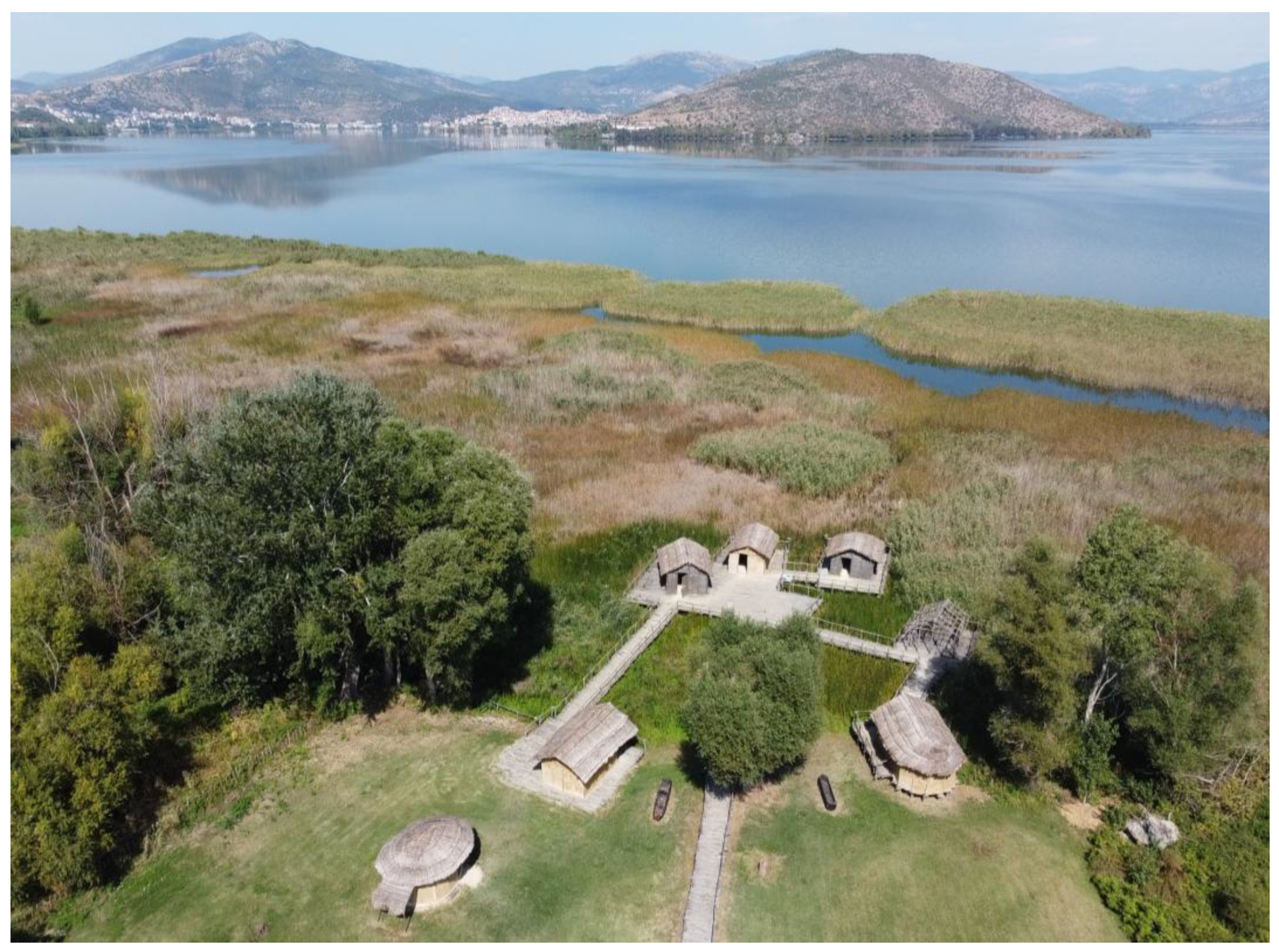
The educational program explores the historical relationship between humans and the environment through the example of the Neolithic culture that developed along the shores of Lake Kastoria, providing students with an experiential connection to the past and local heritage through investigative, and interdisciplinary learning approaches.
In collaboration with the Department of Communication and Digital Media at the University of Western Macedonia, a series of extended reality (XR) digital applications have been developed, which have been organically integrated into the educational program, transforming the archaeological site of Dispilio into an open learning laboratory.
The particular collaboration among educators, academic institutions, and scientific organizations has emerged as a paradigm for the integration of educational and technological practices, highlighting how digital media can act as a catalyst for active learning, understanding of the past, and the preservation of cultural memory.
Augmented Reality (AR), Mixed Reality (MR), and Virtual Reality (VR) applications provide multiple educational dimensions, linking the physical space, archaeological knowledge, and technological innovation.
Students integrate observation, research, and digital storytelling. The program, lasting three instructional hours, takes place exclusively outdoors, in accordance with the principles of experiential and embodied learning, situated cognition, and context-based learning. The stages of implementing the educational activity are:
Stage 1: Exploration and Digital Immersion
The learning activity commences with the utilization of three augmented reality (AR) applications: “Virtual Findings in Dispilio,” “Once Upon a Time in Dispilio,” and “Crime in the Lakeside Settlement”, which are based on location-based AR, guiding students in an exploratory investigation of the archaeological site.
During the exploration, students become active knowledge researchers, identifying virtual findings, solving puzzles, recognizing objects, and reconstructing elements of Neolithic life through interactive questions and gamified mechanisms (points, badges, puzzles).
The deployment of portable devices from the Education Center for the Environment and Sustainability (E.S.E.C.) of Kastoria promotes collaboration, allowing student teams to coordinate their activities for task completion and information exchange in the field (see Figure 4).
Subsequently, the students utilize the application “Virtual Guide for the Mountainous Areas of Western Macedonia,” which employs mixed reality (MR) technologies and location-based augmented reality (AR). Through this application, they gain access to three-dimensional (3D) models, multimedia content, transparent videos, and narratives featuring avatar characters that bring to life the daily life of the Neolithic period, allowing for the visualization of the constructions and activities of prehistoric inhabitants (see Figure 5).
Finally, by wearing Oculus glasses, students experience a fully immersive virtual reality (VR) experience within a digitally reconstructed environment of a prehistoric lake settlement. This virtual environment includes human figures, animals and objects, realistically depicting the daily life of the era. Additionally, the 360° panoramic experience “Through the Eyes of a Bird,” developed through drone aerial shots, provides an alternative visual approach to the landscape, linking spatial perception with emotional engagement and environmental awareness (see Figure 6).
Through the integration of AR-MR-VR technologies, the initial stage serves as a multi-sensory introduction to experiential learning, encouraging curiosity, investigation, and cognitive engagement, thus creating the necessary conditions for significant dialogue and reflection in the later stages of the activity.
Stage 2: Self-reflection and Cognitive Connection
Students are engaged in individual work using worksheets:
Students are working with worksheets that encourage linking Neolithic life to today’s reality:
- “The story of Linus Xelinos, a detective who solves riddles” (for elementary school students), linking Neolithic existence with natural resources and ecosystems
- “Utilize It Again” (for Secondary Education students) examines sustainable management practices and compares the past with the principles of linear and circular economy.
Through this process, environmental sensitivity, systemic thinking, and empathy towards Neolithic society are cultivated.
Stage 3. Expression and Evaluation
The students express their conclusions concerning life and the organization of the prehistoric settlement, while the program’s evaluation is conducted through questionnaires that assess the usability, usefulness, and experiential value of XR applications.
The implementation of XR technologies in the field of Dispilio illustrates that education, cultural heritage, and technology can harmoniously coexist, promoting collaborative, investigative, and experiential learning, and strengthening the relationship between students and their place, history, and environment.
4. Materials and Methods
4.1. Educational Activity Design Framework
In the context of designing and developing extended reality (XR) applications for the educational program “Prehistoric Lakeside Settlement of Dispilio,” the ADDIE model [10,11,12,13,14] (Analysis, Design, Development, Implementation, Evaluation) was employed as a reference point (see Figure 7).
Throughout all phases of execution, the educational team members of the Education Center for the Environment and Sustainability (E.S.E.C.) of Kastoria worked in close partnership with the scientific personnel of the Digital Media and Communication Strategy Laboratory of the Department of Communication and Digital Media at the University of Western Macedonia. This collaboration ensured the integration of educational, technological, and cultural parameters at all stages of the project.
4.2. Analysis Stage
During the analysis phase, a thorough examination of the needs and prerequisites for the design of the XR educational experience was carried out, with the objective of:
- the identification of instructional objectives and the intended learning results,
- the evaluation of the level of knowledge and skills possessed by the participating students,
- the assessment of technological parameters (GPS accuracy, connectivity, lighting, external conditions),
- and ensuring the appropriateness and validity of the content based on its scientific and educational value.
Emphasis was placed on the flexibility of AR, MR, and VR technologies in outdoor environments, as well as their capacity to foster experiential learning, collaborative exploration, and a sense of empathy with the surroundings and historical context.
4.3. Design Phase
In the design stage, the framework for the learning activities and their associated XR applications was defined. The subsequent elements were reviewed:
- the forms of interaction (tactile input, mobility, GPS activation, voice directives),
- the narrative structure of each application (exploratory, narrative, mystery),
- the various forms of multimedia content (3D models, sound, video, explanatory texts),
- and the elements of gamification (points, challenges, puzzles, avatars, feedback).
The design was based on the principles of storytelling-based learning and context-based education, enhancing the connection between knowledge and the real-world environment.
By employing the Google Maps API, the regions of interest were mapped out, and the Agents were specified, which are the points at which the digital content is engaged.
For instance, in the application “Virtual Discoveries at Dispilio,” these points correspond to virtual discoveries, whereas in the application “Crime in the Lakeside Settlement,” they serve as “nodes” of mystery and narrative.
4.4. Development Stage
In the course of the development stage, three applications of Augmented Reality (AR), one application of Mixed Reality (MR), and two applications of Virtual Reality (VR) were created, employing different software environments.
The TaleBlazer (MIT STEP Lab) was employed for the projects “Virtual Discoveries at Dispilio,” “Crime in the Lake Settlement,” and “Once upon a Time in Dispilio”. The foundation of TaleBlazer (https://taleblazer.org/, accessed on 1 October 2025) lies in visual programming, which facilitates the creation of interactive games based on GPS, utilizing the elements of Regions and Agents. The Regions define the map of the area (see Figure 8), while the Agents activate the content (texts, images, sounds, activities) when the user approaches the location (see Figure 9). Tablet devices were equipped with the applications and evaluated in the setting of the prehistoric lake settlement to verify GPS accuracy stability and user-friendliness.
The Mixed Reality application “Virtual Guide” was developed using Android Studio and the ARCore SDK (https://developers.google.com/ar, accessed on 1 October 2025), and it supports marker-based, marker-less, and location-based augmented reality. It includes 3D objects, transparent videos, Google Street View, audio narratives, and chatbot communication (ChatGPT API) (see Figure 10). The “Virtual Guide” was piloted in the representation of the prehistoric lake settlement of Dispilio, demonstrating the effectiveness of MR technology in cultural interpretation and educational immersion.
The development of Virtual Reality (VR) 3D video and 360° Drone View applications was accomplished through the use of Blender and Adobe Premiere Pro. The virtual reality experience illustrates the everyday lives of prehistoric residents via videos produced with the aid of artificial intelligence (AI-assisted modeling). Furthermore, the app “Through the Eyes of the Bird” includes panoramic aerial views of the settlement during different times of the year. These experiences were implemented on Oculus Quest glasses, offering full immersion and spatial comprehension.
To generate the three-dimensional models of the Prehistoric Lakeside Settlement of Dispilio along with the archaeological artifacts, a blend of photogrammetry methods and 3D modeling software was utilized, specifically 3DF Zephyr (see Figure 11), Blender, Polycam (see Figure 12) (https://poly.cam/, accessed on 1 October 2025) and Sketchfab (see Figure 13) (https://sketchfab.com/, accessed on 1 October 2025). This procedure included the acquisition of high-resolution images and videos, the creation of a dense point cloud, the production of a mesh and texture, and the optimization of models for application in XR environments (ARCore, TaleBlazer, MR headsets). The software AI Heygen (https://www.heygen.com/, accessed on 1 October 2025) and AI Hailuo (https://hailuoai.video/, accessed on 1 October 2025) were utilized for the creation of virtual characters (see Figure 14). The final models have been integrated into AR, MR, and VR applications, offering a high level of realism and interactivity.
The development was accompanied by continuous testing, feedback, and optimization, with active participation from both educators and students, ensuring the functionality and pedagogical coherence of the applications.
4.5. Implementation Stage
In the initial phase of the educational activity, students receive fundamental information regarding the content of extended reality applications, as well as usage instructions on how they operate. This preparatory process ensures that students understand the capabilities of the applications, enabling them to actively participate without technical difficulties in the subsequent learning experience.
Following the initial phase, the student groups are provided with tablet devices that have pre-installed extended reality applications. Through the screens of their devices, students can access digital maps that depict the layout of the Prehistoric Lakeside Settlement. Displayed on the maps are colored dots, which represent the successive destination points in the area. Each point is accompanied by usage instructions to facilitate navigation and understanding of the activity. Consequently, the process is transformed into a guided exploration, wherein students undertake a journey of discovery in the space, while at the same time engaging with the digital elements that enhance the authentic experience.
4.6. Evaluation Stage
A structured questionnaire was designed for the evaluation of the XR experience, based on existing studies and models of educational technology and gamification [11,92,99,100,101,102,103].
The questionnaire consisted of three sections:
- Demographic information (gender, age, prior experience with XR technologies).
- Evaluation of the educational activity (organization, participation, collaboration).
- Evaluation of digital applications employing a five-point Likert scale, across the subsequent categories: Challenge, Satisfaction / Enjoyment, Ease of use, Usefulness / Knowledge, Interaction / Collaboration, Intention to reuse.
5. Description of the XR Applications
The digital applications of extended reality were designed for outdoor use and developed with the aim of enhancing the educational aspect of the program “Prehistoric Lakeside Settlement of Dispilio,” providing students and visitors with a unique experience of exploring this particular archaeological site. The applications were implemented through the collaboration between the Education Center for the Environment and Sustainability (E.S.E.C.) of Kastoria and the Laboratory of Digital Media and Communication Strategy at the Department of Communication and Digital Media at the University of Western Macedonia.
- Taking advantage of XR technology’s capabilities, the applications were designed with specific goals in mind :
- To serve as innovative educational tools, integrating physical spaces with digital representations.
- To recreate the daily life of prehistoric people by integrating 3D models of their homes, tools, and activities into the real setting of the settlement
- To enhance experiential learning by allowing students to engage with historical contexts as if they were living in that period
- To foster collaboration and active participation through the use of digital devices (mobile phones, tablets, and MR headsets) familiar to students..
- To promote the development of observation skills, critical thinking, and digital literacy.
Although the applications primarily target students involved in educational programs, they also serve as an innovative cultural and tourist resource for every visitor to Dispilio, enhancing the understanding and attractiveness of the archaeological site.
5.1. Augmented reality (AR) application « Virtual Discoveries at Dispilio»
H ψηφιακή εφαρμογή επαυξημένης πραγματικότητας «Εικονικά Ευρήματα στο
The augmented reality digital application “Virtual Discoveries at Dispilio” is an innovative educational resource aimed at promoting experiential learning and facilitating direct engagement of students with archaeological research.
Participants take on the role of archaeologist-researchers, navigating the site with the aid of GPS to identify virtual points and findings displayed on the application’s digital map. At each location, participants are invited to discover an object, identify it, determine its possible material of construction (e.g., wood, bone, stone), and hypothesize its potential uses in the daily life of the prehistoric society of Dispilio. Through multiple-choice questions, students engage cognitively and participate in a playful exploration that integrates the physical space with the digital environment (see Figure 15).
The theoretical framework of the application is based on the principles of experiential and discovery learning, where knowledge is not passively transmitted but acquired through active participation, exploration, and interaction. Simultaneously, the development of observation skills, critical thinking, and collaboration is being promoted, while the understanding of archaeology as a science is being enhanced.
The application “Virtual Discoveries at Dispilio” enhances the educational visit to the archaeological site, transforming learning into an interactive discovery experience that bridges the past with the present through augmented reality technology.
5.2. Augmented reality (AR) application «Crime in the Lake Settlement»
The augmented reality application “Crime in the Lake Settlement” offers students and visitors of the Prehistoric Lakeside Settlement of Dispilio a unique exploratory experience through a mystery game.
Participants assume the role of detectives and are invited to resolve a crime that seems to have taken place in the prehistoric community. With the assistance of devices (smartphones or tablets) and utilizing the GPS function, they follow the red dots on the digital map, which indicate stop points-destinations in the area. Each point reveals signs, riddles, items, and characters that provide essential information and challenges to be addressed (see Figure 16).
By following this procedure, the students:
- participate in an interactive mystery adventure
- strengthen experiential learning by linking the physical environment to digital content,
- cultivate observation skills, collaboration, and critical thinking,
- discover elements of prehistoric life in Dispilio in a playful and engaging manner.
.This application converts a visit to the archaeological site into an educational journey of discovery, where the past is brought to life through games, exploration, and interaction.
5.3. Augmented reality (AR) application «Once upon a Time in Dispilio»
The augmented reality digital application “Once upon a Time in Dispilio” utilizes location-based AR and gamification elements to provide students with an interactive learning experience within the representation of the prehistoric lake settlement. Participants navigate the area using GPS, and at each point of interest, digital content (texts, images, sounds) is activated, accompanied by multiple-choice questions (see Figure 17).
The procedure promotes attentive observation of the area and links information to the real components of the archaeological setting. For every accurate response, learners accumulate points and segments of a puzzle, which is progressively filled in, offering a feeling of advancement and accomplishment. In this way, the game integrates exploration, understanding, and challenge.
Using the digital application, pupils are introduced to knowledge concerning:
- the era when the settlement emerged and the methods for its chronological dating
- the archaeologists engaged in the excavations,
- the trees that existed in the area during the Neolithic period,
- the rationale behind the building of houses on stilts,
- the substances employed in the creation of the houses,
- the daily activities of prehistoric inhabitants (fishing, hunting, agriculture, animal husbandry),
- the outcomes of the archaeological excavations (figurines, flutes, tools, etc.), the materials utilized in their making, and their significance.
The digital AR application “Once upon a Time in Dispilio” features 16 e-multiple choice questions, providing feedback for each answer, so that the process serves not only as an assessment but also as a means of active learning, encouraging observation, exploration, and critical thinking, transforming the visit into an experiential learning adventure that links the physical space with the digital environment.
5.4. Mixed Reality (MR) Application «Virtual Guide»
The digital application of mixed reality “Virtual Guide for the Mountainous Regions of Western Macedonia and the City of Kastoria” serves as an innovative digital guide based on Mixed Reality – MR and Location-based augmented reality - AR utilizing mobile devices. It was designed to guide visitors to points of cultural and environmental interest, providing personalized information and interactive experiences (see Figure 18).
In the Prehistoric Lakeside Settlement of Dispilio, the application was utilized and piloted as a digital virtual guide, enhancing the educational visit with multimedia and three-dimensional content. Through GPS and mapping, students were guided to selected points within the archaeological site, where virtual elements were activated:
- historical and archaeological information,
- 3D models of objects, findings, and constructions,
- audio narratives and storytelling by avatar characters,
- videos related to the topic,
- VR portals, or “gates,” that allow users to immerse in 360° virtual scenes,
- markerless AR models, capable of being placed in the physical space.
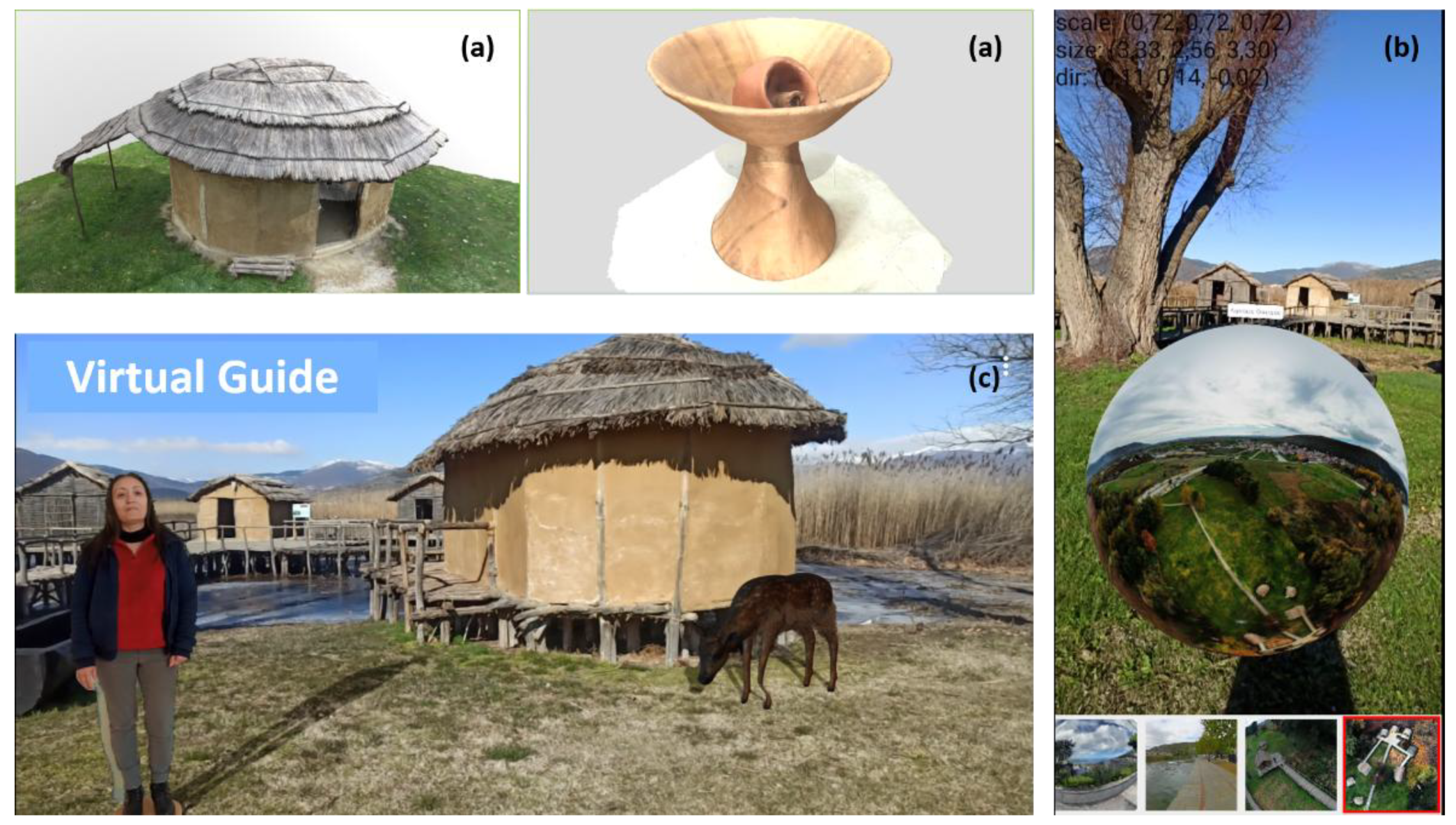
Utilizing the virtual guide, exploring the Lake Settlement of Dispilio is not merely a visit, but an experiential adventure. Participants walk among the huts of the prehistoric era, while around them, three-dimensional representations, videos, and avatar characters come to life, narrating stories from the past (see Figure 5). Each point becomes a gateway to knowledge, where the real landscape meets the digital world, and learning transforms into discovery. Thus, the cultural wealth of the region is presented in an attractive and innovative manner, transforming the visitor from a mere spectator into a traveler through time.
Figure 18.
Introductory images of the application environment «Virtual Guide».
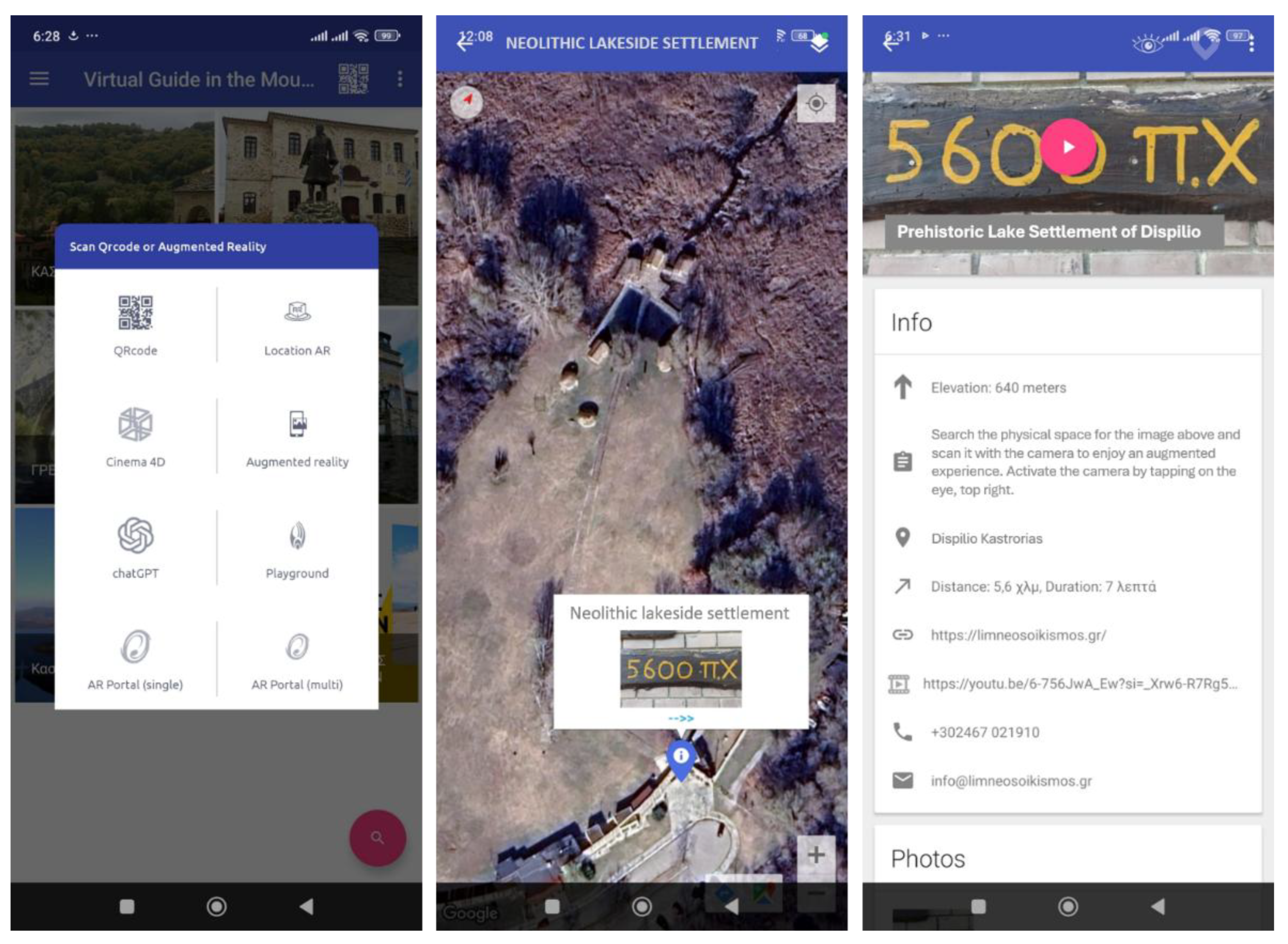
Figure 19.
Sample images from the app «Virtual Guide»: (a) 3d μοντέλα., (b) AR portal, (c) virtual tour guide avatar.
Figure 19.
Sample images from the app «Virtual Guide»: (a) 3d μοντέλα., (b) AR portal, (c) virtual tour guide avatar.
5.5. Virtual Reality (VR) Applications
Furthermore, in addition to the aforementioned applications of mixed and augmented reality, students have the opportunity to wear Oculus glasses and fully immerse themselves in virtual reality (VR) experiences.
Through the specialized glasses and with the assistance of a uniquely designed 3D video created using artificial intelligence (AI) and video editing software, students are transported to a digitally reconstructed environment of the prehistoric lake settlement. Depictions of individuals, animals, and artifacts of the era contribute to a sense of realism and movement, offering a unique opportunity for students to experience the daily life of the prehistoric inhabitants as if they were actually there (see Figure 20).
Within the virtual landscape of the video, the settlement’s area is brought to life:
- The huts are positioned on stilts within the lake, reflecting the architecture of the settlement.
- People are depicted engaging in daily activities such as fishing, cooking, tool-making, etc.
- Animals move through space, capturing the interaction between humans and the environment.
- Objects and tools are presented in a manner that highlights their materials and potential uses.
This experience acts not just as a visual illustration, but it also transforms the student into an active observer of history. The immersion provided by the Oculus glasses enhances the sense of presence, creating the impression that the visitor is within the prehistoric settlement itself. Through the immersion of the video, the understanding of the historical significance of the settlement is enhanced, while the cultural heritage is presented in an attractive and innovative manner.
An additional application, 360° Drone View – “Through the Eyes of a Bird,” offers students the opportunity to explore the area of the Lakeside Settlement of Dispilio from a unique perspective. With the assistance of Oculus glasses, participants can ‘fly’ over the area, enjoying panoramic views throughout all seasons: the snow-covered winter landscape, the lush green landscapes of spring, the radiant light of summer , and the ambiance of autumn.
The 360° panoramic images captured by a drone create a virtual tour video in which students can rotate their view in all directions, observe the changes in the landscape over time, and connect the natural environment of the lake with its historical significance (see Figure 21).
Beyond the pleasure of aesthetics, the experience provides considerable pedagogical value:
- students become familiar with the geographical location of the settlement,
- they recognize the strategic importance of the lake and its surroundings,
- and they gain a better understanding of the conditions under which the prehistoric community developed.
Overall, the VR experience “Through the Eyes of the Bird” enhances the experiential nature of the educational activity, creating a comprehensive learning environment where technology connects the natural and cultural wealth of Dispilio.
Digital applications of virtual reality perfectly complement mixed and augmented reality applications, providing a holistic learning approach that combines research in the real world, interaction with digital elements, and complete immersion in the virtual realm.
The XR applications of the program create a comprehensive learning ecosystem, where the physical space, technology, and cultural heritage complement each other. The educational visit to the Prehistoric Lake Settlement of Dispilio transforms into a journey of knowledge and discovery, where the past is “revived” through technology, creativity, and experiential learning.
6. Evaluation
During the academic year 2024-2025, a total of 163 students from elementary schools, middle schools, and high schools participated in the educational program “Prehistoric Lakeside Settlement of Dispilio.” The students’ impressions and experiences from their involvement in the educational activity were evaluated using a well-structured questionnaire, grounded in the current literature [11,92,99,100,101,102,103], with the objective of capturing quantitative data.
The questionnaire consisted of thirty questions (Appendix A), of which four pertained to the demographic information of the students, four addressed the organization of educational activities, two open-ended questions related to what the students enjoyed the most and what was lacking in the educational program’s activities, while twenty questions focused on the evaluation of XR digital applications.
The twenty questions designed to evaluate XR digital applications were assessed on a 5-point Likert scale (where 1 means strongly disagree and 5 means strongly agree) and focused on six categories: “challenge”, “satisfaction/enjoyment”, “ease of use”, “usefulness/knowledge”, “interaction/collaboration”, and “intention to reuse”.
To be precise, the “challenge” category encompassed 3 questions that depicted the emotions a student experiences as they engage with the games (proud, pleased, excited, etc.) at the initiation of the educational activity. The “satisfaction/enjoyment” category featured 3 questions that examined the extent of satisfaction and enjoyment among students during the educational activity. The category of “ease of use” (4 questions) focused on the usability and familiarity of the specific digital applications, the effort exerted by the students, and the level of assistance or guidance they may have required in order to operate the applications. The category titled “usefulness/knowledge” (3 questions) involved evaluating the usefulness of digital applications for educational aims, their effectiveness in enhancing users’ knowledge about the prehistoric lake settlement, and, in a broader sense, prehistory. The “interaction/collaboration” category consists of three questions that mirror the degree of collaboration fostered among students throughout the experience, along with the incentives offered by the digital application for user cooperation. In conclusion, the category “intention to reuse” (4 questions) evaluated the intent to reuse digital applications or similar ones with either related or different subject matter (Appendix A).
7. Results
7.1. Demographic Statistics and Educational Activity
From the total of 163 pupils in primary and secondary education who took part in the educational program “Prehistoric Lakeside Settlement of Dispilio,” 81 were male and 82 were female. To be precise, the total comprised 60 pupils from Primary School, 50 from Secondary School, and 53 from High School. (see Figure 22).
Among the participants, only 28 students (17%) had engaged in activities related to the program’s theme at their school prior to their involvement in the educational program of the Education Center for the Environment and Sustainability (E.S.E.C.) of Kastoria, while the majority (99%) indicated that the educational program piqued their interest (see Figure 23).
The organization of the educational activity was deemed successful by the participating students, with 132 students (81%) indicating that it was very good, 29 students (18%) rating it as satisfactory, and only 2 students (1%) stating that it was average.
The educational activity fully satisfied the majority of participants, with 55% and 36% respectively indicating that they were “very satisfied” and “satisfied” (see Figure 24).
In response to the open-ended question, “What did you enjoy most about the activities of the educational program?” 111 students (68%) indicated that their favorite aspect was the VR experience, while 41 students (25%) stated that they enjoyed all the activities. The remaining 11 students (7%) either did not respond or provided varied individual answers. To the inquiry, “What do you think was lacking in the educational program?”, 127 students (78%) responded that there was nothing absent from the educational program, while the remaining 22% offered comments that did not pertain directly to the educational program (see Figure 25).
According to the above, the educational program generated significant interest among the participants (almost 99% found it engaging) and satisfied them to a very high degree (over 90% agreed or strongly agreed), while its organization was rated as ‘very good’ by the overwhelming majority (81%). However, only 17% engage in related activities in the classroom, highlighting the necessity to enhance the practical integration of the educational program within the school context. From the open-ended questions, it is evident that the most favored element was VR (68%), while 25% appreciated all activities equally, highlighting the appeal and diversity of the educational program. Additionally, most respondents (78%) reported that nothing was missing, corroborating that the program was considered to be complete and fully developed.
7.2. Data Analysis and Achievement of Research Objectives
To analyze the data and achieve the research objectives, a series of steps were followed, which are described below.
7.2.1. Reliability Analysis (α Cronbach) and Descriptive Statistical Analysis
The responses of the participating students to the evaluation questions regarding the XR digital applications were analyzed for their internal reliability using Cronbach’s alpha, employing SPSS software version 23.0, and demonstrated excellent internal reliability with a value of a = 0.912. All categories/scales demonstrated satisfactory internal reliability (a > 0.7), including “challenge” (a = 0.749), “satisfaction/enjoyment” (a = 0.862), “ease of use” (a = 0.714), “usefulness/knowledge” (a = 0.774), “interaction/collaboration” (a = 0.731), and “intention to reuse” (a = 0.774).
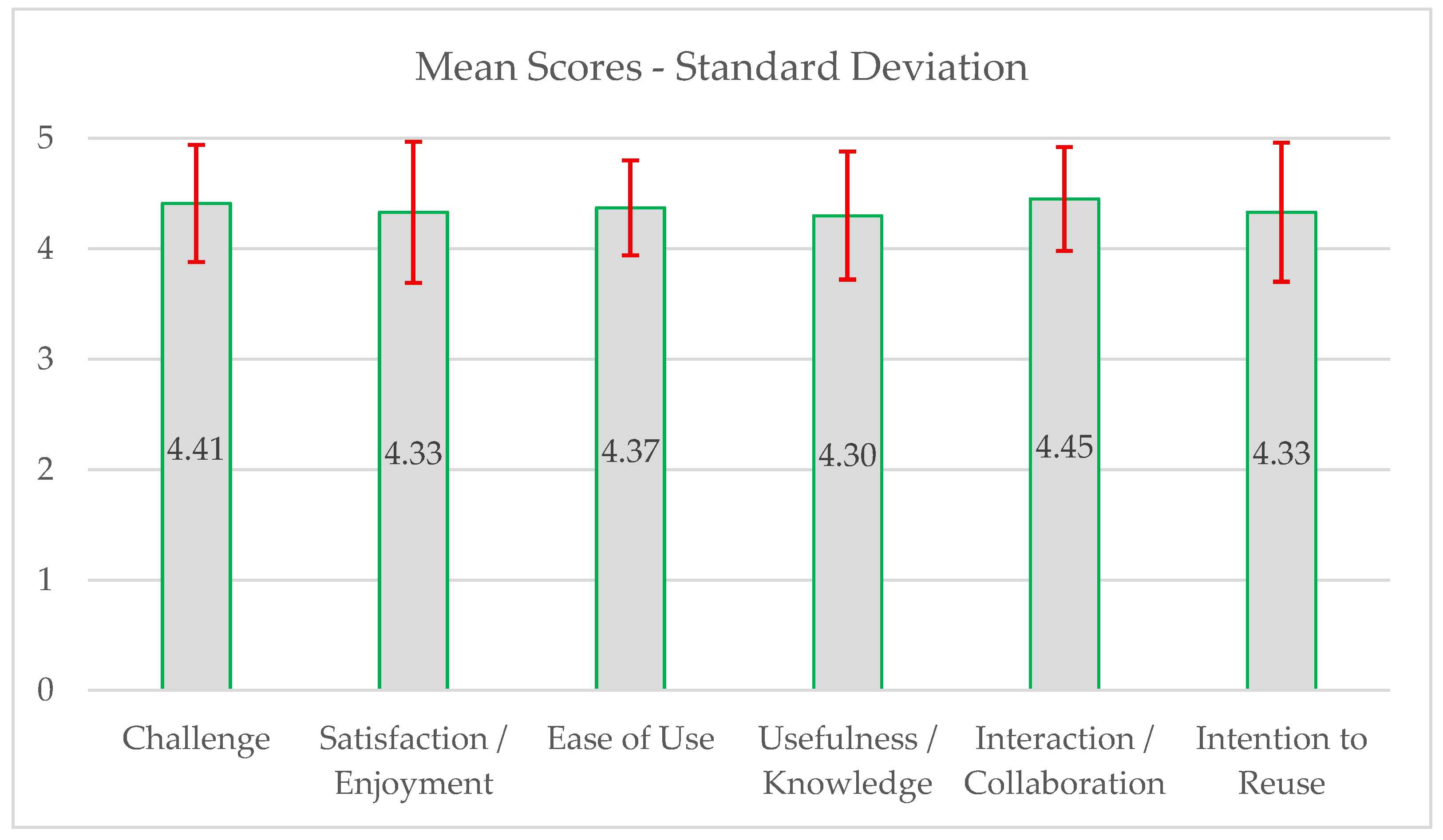
The descriptive statistical values for the six categories mentioned and the questions included are illustrated in Table 1. The average values of the cumulative scales for the six categories are obtained by summing the values of the relevant questions and dividing by the number (count) of questions in each category. Based on the analysis shown in Table 1, and taking into account that the assessment ratings for the questions were on a 5-point Likert scale (1–5), it can be concluded that the mean values of the individual questions were quite high (M > 4.15). The average values are correspondingly high ( > 4.30) in all categories, suggesting that XR digital applications were broadly embraced and generally generated positive emotions and experiences for the participants.
In particular, an analysis of the average values and standard deviations for each category, as illustrated in Figure 18 and Table 1, led to the following conclusions about the participating students.
- Challenge (M = 4.41, SD = 0.53): The responses were generally positive and relatively homogeneous, with minimal variation. The participants felt that the XR digital applications sparked their interest and provided satisfaction.
- Satisfaction / Enjoyment (M = 4.33, SD = 0.64): Participants exhibit a wider range of views concerning the impact of XR digital applications on knowledge enhancement, although the average perspective remains favorable. A number of participants may have considered the XR digital applications to be either less enjoyable or more enjoyable, however, the average evaluation stays elevated.
- Ease of use (M = 4.37, SD = 0.43): The responses were predominantly focused on the positive perspective that XR digital applications were user-friendly. The low standard deviation signifies that most participants had a uniformly positive experience.
- Usefulness / Knowledge (M = 4.30, SD = 0.58): A high and relatively uniform score indicates that collaboration and interaction were among the strengths of the XR digital applications, with few discrepancies in the responses.
- Interaction / Collaboration (M = 4.45, SD = 0.47): A consistently high score reflects that collaboration and interaction were significant strengths of XR digital applications, with only a few deviations in the responses.
- Intention to reuse (M = 4.33, SD = 0.63): There is a broader spectrum of views, but the general direction is optimistic. Some participants may not be as inclined to repeat the XR digital applications (M = 4.15, SD = 1.04); however, they generally exhibit a strong willingness to engage with similar digital applications featuring related or different themes.
Figure 26.
Mean scores and Standard Deviation of constructs.
7.2.2. Normality Testing and Data Correlations
The corresponding values of skewness and kurtosis (Table 2) in the specified categories fall within the acceptable range of -2 to +2, as per George and Mallery (2010). This indicates that the distributions are relatively symmetrical, do not exhibit significant deviations from normality, and are suitable for parametric tests.
The Pearson correlation coefficient (r) was chosen for testing the correlation between the six categories. The Pearson correlation coefficient was calculated to examine the relationship between the categories: challenge, satisfaction/enjoyment, ease of use, usefulness/knowledge, interaction/collaboration, and intention to reuse of digital applications. The findings are displayed in Table 3.
According to Table 3, all correlations are statistically significant at the p < 0.01 level, with a sample size of N = 163.
The Challenge category exhibits a strong positive correlation with Satisfaction / Enjoyment (r = 0.688), indicating that participants who experienced greater challenges likely felt higher levels of satisfaction. Furthermore, it is closely associated with the Intention to Reuse (r = 0.603) and Usefulness / Knowledge (r = 0.591), which implies that a challenging experience boosts the favorable evaluation and the chances of future reuse of comparable digital applications.
There are exceptionally strong positive associations between Satisfaction / Enjoyment and Usefulness / Knowledge (r = 0.649), along with Intention to Reuse (r = 0.651). This indicates that user satisfaction plays a central role in enhancing the perceived value and the intention to reuse digital e-applications. Satisfaction / Enjoyment demonstrates particularly strong positive correlations with Usefulness / Knowledge (r = 0.649) and Intention to Reuse (r = 0.651).
The Ease of Use demonstrates positive yet moderate correlations with other categories, such as Usefulness / Knowledge (r = 0.428), Interaction / Collaboration (r = 0.294), and Intention to Reuse (r = 0.274). The Ease of Use factor exhibits positive correlations of a moderate degree with the remaining categories, such as Usefulness / Knowledge (r = 0.428), Interaction / Collaboration (r = 0.294), and Intention to Reuse (r = 0.274).
Usefulness/knowledge is significantly linked to the intention to reuse (r = 0.648), demonstrating that when participants view an experience as valuable, their inclination to repeat it grows. Additionally, it shows a positive correlation with Interaction / Collaboration (r = 0.525), indicating that collaboration may enhance the perception of usefulness.
A significant relationship exists between the Interaction / Collaboration category and the Intention to Reuse (r = 0.479), suggesting that experiences with high levels of interaction and collaboration have a greater likelihood of being repeated.
To summarize, the strongest correlations are found between Challenge, Satisfaction / Enjoyment, Usefulness / Knowledge, and Intention to Reuse, indicating that positive experiences in terms of emotional response and perceived value are crucial for continued usage. Both Interaction / Collaboration and Ease of Use play a role, though to different extents, in strengthening the previously mentioned categories.
7.2.3. Multiple Regression Analysis
To enhance the exploration of the relationships and interactions between the categories, a series of multiple regressions were performed, grounded in a conceptual framework featuring hypothetical associations (H1 through H15) among the six categories, as depicted in Figure 27.
The primary multiple regression analysis (H1, H2, H3, H4, H5) was performed with the objective of assessing the relationship between intention to reuse, treated as the dependent variable, and the other categories considered as independent variables, as shown in Figure 28.
As per the data shown in Table 4, the multiple regression analysis revealed that the model with five independent categories significantly influences the levels of intention to reuse, (R = 0.737, F(5, 157) = 37.320, p < 0.001), explaining around 54% of the overall variance (R²=0.543, Adjusted R²=0.529).
The further analysis of model 1, based on the values from Table 5, revealed that three out of the five categories were statistically significant. Specifically, the usefulness/knowledge positively predicted the intention to reuse (β = 0.312, p < 0.001), as did satisfaction/enjoyment (β = 0.262, p = 0.002) and challenge (β = 0.206, p = 0.008). The categories of ease of use (β = -0.048, p = 0.424) and interaction/collaboration (β = 0.124, p = 0.060) did not demonstrate a significant contribution, with the latter being marginally non-significant.
In summary, the proposed hypothetical relationships H4, H2, and H1 are prioritized because the related categories of usefulness/knowledge, satisfaction/enjoyment, and challenge serve as important predictors of the intention to reuse. On the other hand, H5 and H3 are dismissed, as depicted in the heat map shown in Figure 29.
The second multiple regression analysis (H6, H7, H8, H9) was carried out to explore the relationship between interaction/collaboration, which is the dependent variable, and the independent variables of challenge, satisfaction/enjoyment, ease of use, and usefulness/knowledge, as represented in Figure 30.
According to the statistics in Table 6, the multiple regression analysis illustrated that the model with four independent categories significantly impacts the levels of interaction/collaboration, (R = 0.561, F(4, 158) = 18.141, p < 0.001), explaining about 32% of the overall variance (R²=0.315, Adjusted R²=0.297).
The subsequent analysis of model 2, referencing the values in Table 7, demonstrated that two of the four categories were statistically significant. Notably, the usefulness/knowledge category positively predicted interaction/collaboration (β = 0.341, p < 0.001), as well as satisfaction/enjoyment (β = 0.245, p = 0.015). The ease of use category (β = 0.073, p = 0.318) and the Challenge category (β = -0.010, p = 0.915) did not reveal a significant contribution.
In summary, the proposed hypothetical associations H9 and H7 are prioritized because the related categories of usefulness/knowledge and satisfaction/enjoyment serve as important predictors of interaction/collaboration. In contrast, H6 and H8 are dismissed, as depicted in the heat map shown in Figure 31.
The third multiple regression analysis (H10, H11, H12) aimed to investigate the relationship between usefulness/knowledge, which serves as the dependent variable, and the independent variables of challenge, satisfaction/enjoyment, and ease of use, as depicted in Figure 32.
Referring to the statistics in Table 8, the multiple regression analysis indicated that the model with three independent categories has a significant effect on the levels of usefulness/knowledge, (R = 0.709, F(3, 159) = 53.441, p < 0.001), accounting for about 40% of the overall variance (R²=0.502, Adjusted R²=0.493).
The further analysis of model 3, based on the values from Table 9, indicated that all three categories were statistically significant. Specifically, ease of use positively predicted usefulness/knowledge (β = 0.217, p < 0.001), as did satisfaction/enjoyment (β = 0.422, p < 0.001) and challenge (β = 0.228, p = 0.004).
In conclusion, the hypothetical relationships H10, H11, and H12 are favored, as the corresponding categories of challenge, satisfaction/enjoyment, and ease of use are significant predictive factors of Usefulness/Knowledge, as notably illustrated in the heat map in Figure 33.
The fourth multiple regression analysis (H13, H14) was performed with the objective of assessing the impact of ease of use, considered as the dependent variable, alongside the categories of challenge and satisfaction/enjoyment, which are the independent variables, as shown in Figure 34.
Based on the data from Table 10, the multiple regression revealed that the two independent category model significantly affects the ease of use levels, (R = 0.356, F(2, 160) = 11.597, p < 0.001), explaining nearly 13% of the overall variance (R²=0.127, Adjusted R²=0.116).
Further scrutiny of model 4, according to the data in Table 11, illustrated that the challenge positively predicted ease of use (β = 0.215, p = 0.037), while satisfaction/enjoyment (β = 0.172, p = 0.093) presented a marginally non-significant positive effect.
To summarize, the hypothetical association H13 is the only one that is selected, since the challenge is a notably significant predictor of ease of use, while H14 is disregarded, as represented in the heat map in Figure 35.
Finally, Figure 28 illustrates the analysis of simple regression, which is related to the model developed for predicting the dependent variable satisfaction/enjoyment based on the independent variable challenge (H15).
Figure 36.
Heat map of standardized regression coefficients (Model 5, Dependent Satisfaction/Enjoyment).
Figure 36.
Heat map of standardized regression coefficients (Model 5, Dependent Satisfaction/Enjoyment).

In accordance with the statistics from Table 12, the simple regression analysis showed that the challenge significantly influences satisfaction/enjoyment (R = 0.688, F(1, 161) = 144.922, p < 0.001), accounting for about 47% of the total variance (R²=0.474, Adjusted R²=0.470).
The regression coefficient (Table 13) was significant (β = .688, p < .001), indicating that for each unit increase in challenge, satisfaction/enjoyment increases by 0.83 units (95% CI [0.69, 0.96]).
In conclusion, only the hypothetical correlation H15 is favored, as the challenge is a significantly important predictive factor of satisfaction/enjoyment, as illustrated in the heat map in Figure 37.
The visual representation of the five models shown in image 38 demonstrates that the strongest and statistically significant relationships are identified between Challenge and Satisfaction/Enjoyment (β = +0.69), as well as between Satisfaction and Usefulness/Knowledge (β = +0.42). Additionally, Usefulness/Knowledge positively predicts both Intention to Reuse (β = +0.31) and Interaction/Collaboration (β = +0.34). Conversely, certain relationships such as Challenge → Interaction (β = –0.01) and Ease of Use → Intention to Reuse (β = –0.05) are not favored, as they are not statistically significant. In conclusion, it appears that Satisfaction/Enjoyment and Usefulness/Knowledge play a decisive role in fostering usage, collaboration, and the intent to reuse the experience, whereas Ease of Use is perceived as a weaker predictive variable.
The final conceptual model is depicted in Image 39, which was shaped after conducting five multiple linear regressions. The diagram represents solely the correlations (hypotheses) that were statistically validated (p < 0.05).
8. Discussion - Conclusions
The integration of extended reality (XR) digital tools—including augmented (AR), mixed (MR), and virtual reality (VR) technologies—into the archaeological site of the reconstructed Neolithic lakeside settlement in Dispilio confirmed the educational potential of such technologies. The applications functioned as a powerful medium for experiential and multisensory learning, significantly enhancing student engagement and contributing to the understanding and interpretation of cultural heritage in a contemporary, appealing, and pedagogically grounded manner.
8.1. Pedagogical Impact and Learning Outcomes
The extended reality (XR) applications fundamentally transform the learning process, shifting the focus from passive information reception to active, inquiry-based, and collaborative learning. Through activities that integrate location-based navigation, interactive exploration, and gamified elements, students become active investigators of space and co-constructors of knowledge rather than mere recipients of information.
Their engagement in processes such as identifying materials, interpreting findings, and analyzing the interaction between humans and the environment fosters critical thinking, cognitive reflection, and self-regulated learning. The spatial dimension of the activities cultivates spatial and temporal intelligence, enabling learners to contextualize cultural evolution in relation to geography and natural surroundings.
This experiential approach enhances conceptual understanding of historical, environmental, and social dimensions, rendering learning multimodal and emotionally engaging. Furthermore, the coexistence of multiple XR modalities —augmented reality (AR), mixed reality (MR), virtual reality (VR), and 360° immersive video— allows learners to navigate seamlessly between physical and virtual contexts. This process promotes multiliteracy, digital fluency, and the capacity to interpret and synthesize information across diverse media format.
In this sense, XR applications serve not simply as technological tools, but also as a means of enhancing the integration of knowledge, experience, collaboration, and creative exploration in authentic cultural environments.
8.2. Student Engagement and Motivation
The integration of gameful mechanics—such as point collection, puzzles, riddles, and cooperative missions—significantly contributes to sustained attention, active participation, and the creation of a flow experience, in which students perceive time and space differently through heightened immersion and intrinsic motivation.
Clear objectives, immediate feedback, and a sense of progression enhance both cognitive engagement and emotional investment in the learning process. The collaborative nature of the tasks fosters essential social and communication skills, including teamwork, negotiation, and collective decision-making.
Moreover, the use of familiar digital devices such as smartphones, tablets, and Oculus headsets establishes a meaningful bridge between entertainment and learning, situating knowledge within an environment that feels natural and engaging to students.
Consequently, the learning experience becomes playful, participatory, and emotionally resonant, promoting creativity, collaboration, and intrinsic motivation in the context of cultural and environmental education.
8.3. Cultural Heritage and Situated Learning
Learning does not take place in an isolated environment but within the very space itself — the reconstructed area of the Prehistoric Lake Settlement of Dispilio functions as an open-air learning laboratory. The XR applications reactivate the archaeological site as a space of cultural narration and experiential exploration, highlighting the connection between past, present, and technology.
The coexistence of the physical environment and the digital layer of content creates a multilayered cognitive and emotional field, where students experience history as a living, dynamic process rather than as static information. This pedagogical approach is theoretically grounded in the principles of situated cognition and context-based learning, according to which knowledge is not simply transmitted but constructed through authentic contexts of action and experience.
Through embodied interaction and emotional engagement with the place, learners gain a deeper understanding of the historical and ecological significance of the site, while simultaneously cultivating a meaningful relationship with cultural heritage as a lived and evolving experience.
8.4. Evaluation and Research Implications
Integrating the results from the multiple regression analysis with the overall quantitative and qualitative findings from the evaluation questionnaire (Appendix A), a coherent picture emerges, highlighting the strong pedagogical value and positive impact of the XR-based educational program implemented at the Prehistoric Lakeside Settlement of Dispilio (Table 1).
Key Insights:
- Virtual Reality (VR) was the most highly appreciated activity, with 68% of students naming it as the most enjoyable component (see Figure 25).
- However, only 17% had previously participated in classroom activities related to prehistoric heritage, underlining the need to better integrate such immersive programs into formal curricula (see Figure 23).
The evaluation instrument demonstrated high internal consistency (Cronbach’s α = 0.912), while all six constructs—challenge, satisfaction/enjoyment, ease of use, usefulness/knowledge, interaction/collaboration, and intention to reuse—scored high average ratings (M > 4.30), reflecting widespread student engagement and a positive overall experience (see Figure 26).
The Pearson correlation analysis (Table 3) revealed several strong and statistically significant relationships:
- Challenge → Satisfaction/Enjoyment (r = 0.688)
- Satisfaction/Enjoyment → Intention to Reuse (r = 0.651)
- Usefulness/Knowledge → Intention to Reuse (r = 0.648)
These correlations were further supported through multiple regression analyses across five models, based on a conceptual framework of hypothesized relationships (H1–H15; see Figure 27). Ten out of fifteen hypotheses were statistically supported (see Figure 31), revealing key predictors of meaningful engagement with XR applications in educational contexts.
Key Insights (see Figure 38):
- The Usefulness / Knowledge emerged as a strong cognitive predictive factor, positively influencing both the Intention to Reuse (H4, β = 0.31) and the Interaction / Collaboration (H9, β = 0.34). This indicates that participants who perceive XR experiences as significantly contributing to knowledge acquisition and content understanding are more inclined to want to utilize the application again and collaborate actively. This relationship is in agreement with the Technology Acceptance Model (TAM) [99], which states that perceived usefulness is the fundamental factor that influences technology acceptance and is the primary determinant of intention to use. The initiative to “reuse” an application signifies that it has been recognized as useful, and it is also considered to potentially offer enduring advantages — which illustrates that its cognitive value is not transient. Consequently, the design of XR activities should emphasize not only technology or the exciting experience but also on the cognitive aspect - meaning how the learners perceive the knowledge they obtain
- The role of Satisfaction / Enjoyment is pivotal as it positively affects the Intention to Reuse (H2, β = 0.26), Interaction / Collaboration (H7, β = 0.25), and significantly contributing to Usefulness / Knowledge (H11, β = 0.42). The enhancement of collaboration can be explained as follows: when students engage in an XR activity, they feel more secure, more active, and more willing to engage with their classmates or accompanying educators. The growth of perceived usefulness through enjoyment indicates that emotional engagement serves as a “bridge” to the cognitive assessment of technology. This relationship validates the Hedonic Motivation System Adoption Model [104], which posits that positive emotional responses enhance cognitive engagement and lead to higher levels of learning. Particularly within the context of XR, aesthetic and emotional enjoyment enhances the flow experience and contributes to the formation of collaborative learning communities. When students enjoy the experience, they are more likely to recognize the knowledge they acquire and are more willing to interact, collaborate, and repeat the experience.
- The Challenge has been shown to be a significant determinant in stimulating Satisfaction / Enjoyment (H15, β = 0.69), while simultaneously enhancing Ease of Use (H13, β = 0.22), Intention to Reuse (H1, β = 0.21), and Usefulness / Knowledge (H10, β = 0.23). The strong correlation between challenge and enjoyment highlights that an appropriate challenge is crucial for engagement. This relationship validates the flow theory [105], which asserts that learning is most enjoyable when the challenge level is in harmony with the abilities of the learner. In the context of XR experiences, a well-targeted challenge captures attention, enhances cognitive effort, and leads to deeper learning [106]. The positive impact of challenge on perceived ease of use can be interpreted as a result of increased cognitive engagement and the attainment of ‘flow’. Participants who face targeted challenges gain a deeper understanding of the system’s functionality, develop a sense of control and self-efficacy, and consequently perceive technology as more user-friendly and enjoyable to use. In this manner, the term “difficult” transforms into “easy,” as the sense of achievement and control reduces cognitive load and enhances usability. The positive impact of challenges on the perceived usefulness and cognitive value of XR experiences is attributed to the fact that it encourages students to think critically, experiment, and solve problems within authentic and contextualized learning environments. When students are asked to engage in challenging yet achievable activities, the process activates cognitive mechanisms for exploration and transformation of experience into meaningful knowledge. According to the principles of constructivist learning theory [19], knowledge is actively constructed through meaningful experiences that stimulate cognitive engagement and a sense of personal achievement, making XR experiences particularly effective in linking theory, practice, and experiential comprehension. Additionally, the challenge has both direct and indirect effects on the intention to reuse, through the emotional and cognitive dimensions it stimulates. When an XR experience presents realistic challenges that reward persistence and discovery, it fosters positive memory and intention for repetition (flow retention). The sensation of accomplishment strengthens intrinsic motivation, which is a powerful predictor of continued interest and future involvement in analogous programmes [107,108].
- The perceived ease of use positively influenced the usefulness/knowledge (H12, β = 0.22), confirming that the smoother and more comprehensible the interface is, the more effectively participants can focus on the cognitive aspect of the experience. However, the lack of immediate impact on Intention to Reuse (H3) or Interaction / Collaboration (H8) indicates that usability alone is insufficient to shape continuity behaviors — it must be combined with emotional engagement and perceived cognitive value [109]. In summary, the ease of use “unlocks” the flow of utilization, yet it does not guarantee long-term reuse or collaborative behavior.
- There was no statistical support for the relationships between Interaction / Collaboration and Intention to Reuse (H5), nor for Challenge and Interaction / Collaboration (H6). This may be attributed to the notion that collaboration by itself, or the challenge that directly results in collaboration, does not necessarily ensure a factor that converts into the intention to reuse. Research indicates that factors such as utility, enjoyment, and challenge serve as more direct predictors of learning behaviors, whereas mere collaboration may necessitate additional conditions (e.g., educational guidance, group design).
Figure 38.
Visual summary of standardized regression coefficients across all 5 models.
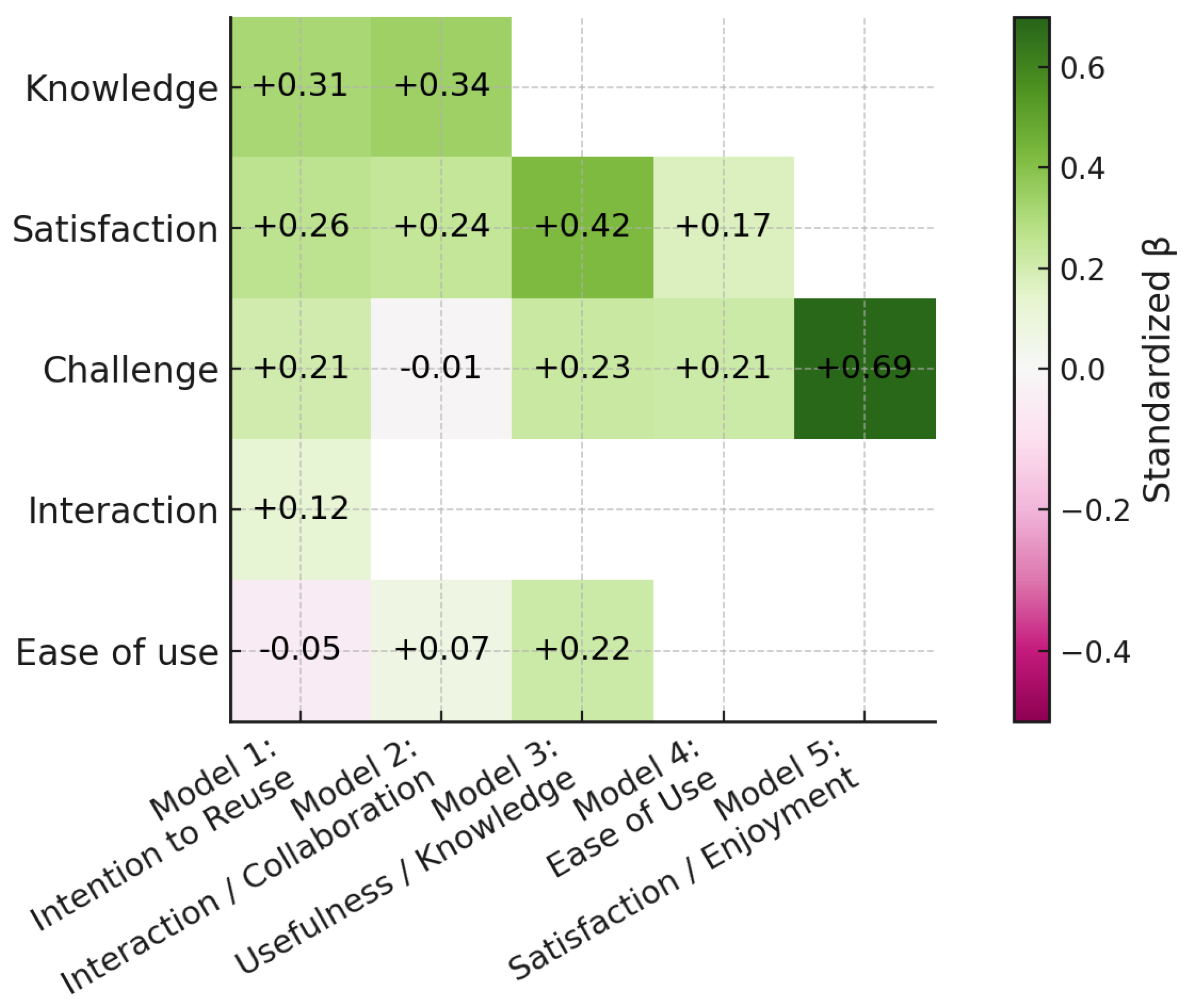
Figure 39.
Correlations: conceptual framework after multiple regression analysis.
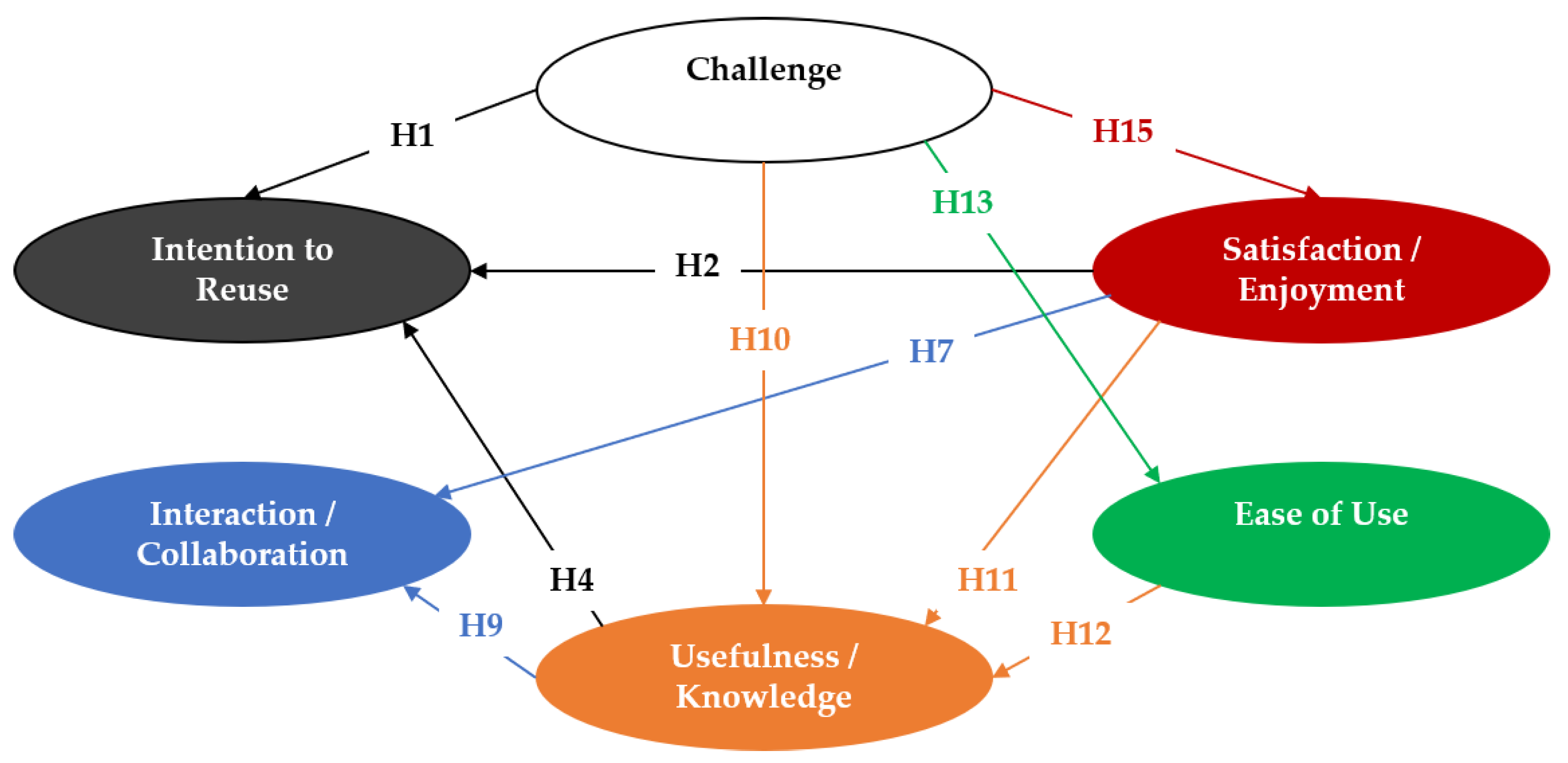
Summarizing:
Open-ended responses echoed the statistical findings. Students described the program as engaging, enjoyable, and well-organized, with VR cited most often as the highlight. Most participants identified no notable shortcomings, with the most common suggestion being greater classroom integration of the XR tools, emphasizing the importance of connecting immersive technologies to the formal curriculum and pedagogical practice.
The final conceptual model convincingly reflects the complex interplay of emotional, cognitive, and functional dimensions of XR learning experiences. Satisfaction, perceived usefulness, and challenge emerged as the primary drivers of student engagement, collaboration, and willingness to reuse or explore similar experiences in the future.
These findings support the broader educational potential of XR technologies in cultural heritage and environmental education and offer valuable design implications for future immersive learning interventions.
8.5. Teachers’ Perspectives on the Pedagogical Value of the XR Educational Program
The results and feedback from the 15 accompanying educators with diverse specializations who participated, along with their students, in the educational program “Prehistoric Lakeside Settlement of Dispilio” are encouraging.
According to the results of the evaluation questionnaire, all educators (100%) rated the program’s content as highly interesting, while also affirming that the teaching and educational methods were appropriate for the students’ age and interests.
Some indicative responses from the accompanying educators to the question, “What did you like most about the pedagogical and teaching approaches?” were:
- “The experiential approach and its functional support through digital XR applications”.
- “The exploratory, discovery-oriented, and collaborative approach to acquiring new knowledge”.
- “The interactive nature of applications and the entertaining method of acquiring knowledge and experiences”.
- “Collaborative work, the utilization of tablets, and self-assessment have enhanced the active participation of students”.
- The students became “archaeologists” and “explorers”, uncovering artifacts and gaining an understanding of the lives of people from the Neolithic era.
The active participation of students, collaborative work, interaction with digital media, and the experiential nature of the program were identified as the most positive aspects of the initiative by the majority of educators.
Additionally, 9 out of 15 educators stated that they would not change anything in the program, while the others suggested minimal improvements (such as enhancing dissemination and broader implementation in more schools).
Regarding the inquiry, “Do you think that your involvement in the educational program will aid you in executing comparable initiatives at your school?”,
- A total of 12 out of 15 educators (80%) answered “Yes, very much”,
- while 3 educators (20%) responded “Yes, to a significant extent.”
The overall responses indicate that educators acknowledged the significant pedagogical value and technological innovation of the program, as well as its potential to serve as a model for experiential education that integrates cultural heritage with modern technology.
The outcomes motivate us to persist in collecting data and qualitatively investigating the attitudes of educators, since one of the program’s indirect objectives is to inspire and empower teachers to integrate innovative XR methods into their instruction. The evidence shows that this aim has started to be fulfilled, even with a restricted number of participants.
8.6. Technical and Pedagogical Challenges
Despite the highly positive outcomes, several technical and pedagogical challenges emerged during the implementation of the XR-based learning activities.Issues of technical reliability—including GPS accuracy, network connectivity, and battery endurance—may occasionally affect the continuity and fluidity of the learning experience, especially in outdoor settings. The organization and supervision of student groups require additional guidance and logistical coordination, while the training and digital readiness of educators constitute a key success factor for the effective use of XR environments.
Additional challenges relate to ensuring equitable access for all learners, including device availability, ergonomic considerations, and inclusive adaptations for students with disabilities. Moreover, the continuous curation and updating of digital content is essential to maintain historical accuracy, scientific validity, and pedagogical coherence
Addressing these challenges calls for interdisciplinary collaboration among educators, archaeologists, digital media specialists, and cultural heritage institutions, within a framework of sustainable and evolving XR learning design.
8.7. Broader Impacts and Sustainability
The extended reality (XR) applications developed for the archaeological site of Dispilio extend the notion of education beyond the boundaries of the classroom, embedding learning within the cultural and natural environment itself. In doing so, they establish an integrated connection between environmental education, cultural heritage, and experiential tourism, promoting new forms of participatory and experiential learning.
The XR implementations serve as a model of best practice for the pedagogically grounded integration of technology into authentic learning environments, where knowledge is linked to place, identity, and cultural experience. Through these applications, local identity, environmental awareness, and social cohesion are strengthened, while opportunities for intergenerational and community-based learning are also created.
For the long-term sustainability and evolution of these XR initiatives, several key actions are required:
- Continuous updating and enrichment of digital content to ensure historical accuracy, pedagogical relevance, and scientific validity,
- Systematic training and ongoing support for educators and facilitators, enabling them to critically and creatively utilize XR technologies; and
- The development of modular and scalable XR systems that can be adapted and replicated in other cultural and environmental sites across Western Macedonia and beyond.
8.8. Conclusions
The extended reality (XR) applications developed and implemented at the Prehistoric Lake Settlement of Dispilio constitute a holistic model of experiential education that effectively integrates research, storytelling, and technology.
Through the combination of augmented reality (AR), mixed reality (MR), and virtual reality (VR), the learning process acquires a multisensory and multidimensional character, enhancing active participation, cognitive engagement, and emotional connection between learners and the cultural environment.
The integration of physical space, historical content, and interactive technologies transforms the archaeological site into a space of inquiry, narration, and discovery, where learning emerges as a lived experience rather than a process of information transmission.
In this case, XR technologies—when applied with scientific accuracy and pedagogical intent—can make a substantial contribution to the preservation, promotion, and understanding of cultural heritage, while simultaneously strengthening students’ connection with place, history, and the local community.
Beyond their pedagogical benefits, the XR applications foster synergies between education, culture, and sustainable tourism, functioning as tools for local development and cultural empowerment.
The applied methodology may serve as a replicable and adaptable model for other archaeological or cultural heritage sites, contributing to the creation of a network of immersive, technology-enhanced educational experiences.
Overall, this educational initiative demonstrates that extended reality is not merely a technological innovation but a pedagogical and cultural medium capable of redefining our relationship with history, knowledge, and place.
Author Contributions
Conceptualization, A.E., M.G. and A.K.; methodology, A.E., software, A.E.; validation, A.E., A.K. formal analysis, A.E.; investigation, A.E., A.K. and M.G.; data curation, A.E.; writing—original draft preparation, A.E.; writing—review and editing, A.E., A.K., M.G. and G.L.; supervision, A.K. All authors have read and agreed to the published version of the manuscript.
Funding
Please add: “This research received no external funding”
Data Availability Statement
Data available on request due to privacy restrictions.
Acknowledgments
During the preparation of this manuscript, the authors used ChatGPT (GPT-5, released 7 August 2025) as an aid in translation and text improvement. Quantitative data were analyzed in SPSS (version 23).
Conflicts of Interest
“The authors declare no conflicts of interest.”
Abbreviations
The following abbreviations are used in this manuscript:
| ESEC. | Education Center for the Environment and Sustainability of Kastoria |
| XR | Extended Reality |
| AR | Augmented Reality |
| MR | Mixed Reality |
| VR | Virtual Reality |
| ADDIE | Analysis, Design, Development, Implementation, Evaluation |
| GPS | Global Positioning System |
| SDGs | Sustainable Development Goals of the UN |
| H1 - H15 | Hypothetical associations (H1 through H15) among the six categories |
| HCI | Human-Computer Interaction |
| UI | User Interface |
| UX | User Experience |
| HMDs | Head-Mounted Displays |
| AI | Artificial Intelligence |
| API | Application Programming Interface |
| SDK | Software Development Kit |
| SLAM | Simultaneous Localization and Mapping |
Appendix A
Evaluation questionnaire of the educational activity
| Evaluation Questionnaire |
| Demographic data |
| 1. Date |
| 2. Gender |
| 3. School grade |
| 4. Age |
| Educational activity |
| 5. Are you implementing an activity with a relevant topic in your classroom. |
| 6. The educational activity you participated in satisfied you. |
| 7. The subject of the educational activity was interesting to you. |
| 8. The organization of the educational activity was. |
| 9. Which aspect of the educational program’s activities did you find most enjoyable? |
| 10. What is your perspective on what was not included in the educational program? |
| Digital application |
| Challenge |
| 9. I feel proud when I advance with success in the games. |
| 10. It feels rewarding to get to the next level of the games. |
| 11. I feel excited when I answer a question correctly. |
| Satisfaction/Enjoyment |
| 12. The games are amusing. |
| 13. The games are pleasant. |
| 14. I am pleased with the games. |
| Ease of use |
| 15. Familiarizing with the game environment demands effort. |
| 16. The games are user-friendly, and familiar in its operation. |
| 17. The interaction with the games is easy, and comprehensible. |
| 18. I needed assistance in order to play the games. |
| Usefulness/Knowledge |
| 19. The games stimulate my curiosity regarding the acquisition of new knowledge. |
| 20. The games assisted me in gaining a better understanding of the Prehistoric Lake Settlement of Dispili. |
| 21. The games contributed to increasing my knowledge about the prehistory of my locality. |
| Interaction/Collaboration |
| 22. The games present an opportunity for collaboration. |
| 23. I collaborated with my classmates while I was playing. |
| 24. The games motivate me to work together with friends in an open-air environment. |
| Intention to reuse |
| 25. I am motivated by the games to discover additional archaeological locations |
| 26. I intend to play the same games again with my friends in the near future. |
| 27. I would like to play similar games in the future για κάποιον άλλον αρχαιολογικό χώρο |
| 28. In the future, I would be interested in engaging in comparable games that explore a different subject, for instance, games centered on the natural environment or a recreational activity such as a treasure hunt. |
References
- Mahrous, K.; ElSabry, E. Unveiling Extended Reality: A Systematic Review of Use Cases across Industries. Technology Analysis & Strategic Management 2025, 1–17. [CrossRef]
- Ziker, C.; Truman, B.; Dodds, H. Cross Reality (XR): Challenges and Opportunities Across the Spectrum. In Innovative Learning Environments in STEM Higher Education; Ryoo, J., Winkelmann, K., Eds.; SpringerBriefs in Statistics; Springer International Publishing: Cham, 2021 pp. 55–77; ISBN 978-3-030-58947-9. [Google Scholar]
- Huang, T.-C.; Tseng, H.-P. Extended Reality in Applied Sciences Education: A Systematic Review. Applied Sciences 2025, 15, 4038. [Google Scholar] [CrossRef]
- Kleftodimos, A.; Evagelou, A. Location-Based Augmented Reality in Education. Encyclopedia 2025, 5, 54. [Google Scholar] [CrossRef]
- Wilkinson, M.; Brantley, S.; Feng, J. A Mini Review of Presence and Immersion in Virtual Reality. Proceedings of the Human Factors and Ergonomics Society Annual Meeting 2021, 65, 1099–1103. [Google Scholar] [CrossRef]
- Crogman, H.T.; Cano, V.D.; Pacheco, E.; Sonawane, R.B.; Boroon, R. Virtual Reality, Augmented Reality, and Mixed Reality in Experiential Learning: Transforming Educational Paradigms. Education Sciences 2025, 15, 303. [Google Scholar] [CrossRef]
- Buragohain, D.; Meng, Y.; Deng, C.; Li, Q.; Chaudhary, S. Digitalizing Cultural Heritage through Metaverse Applications: Challenges, Opportunities, and Strategies. Herit Sci 2024, 12, 295. [Google Scholar] [CrossRef]
- Zhang, J.; Wan Yahaya, W.A.J.; Sanmugam, M. The Impact of Immersive Technologies on Cultural Heritage: A Bibliometric Study of VR, AR, and MR Applications. Sustainability 2024, 16, 6446. [Google Scholar] [CrossRef]
- Hurrell, C.; Chai, A.; Green, H.; Bradley, G. Virtual Reality Facilitates Pro-Environmental Behavioural Intentions. Environmental Education Research 2024, 30, 1856–1883. [Google Scholar] [CrossRef]
- Lah, N.H.C.; Senu, M.S.Z.M.; Jumaat, N.F.; Phon, D.N.E.; Hashim, S.; Zulkifli, N.N. Mobile Augmented Reality in Learning Chemistry Subject: An Evaluation of Science Exploration. IJERE 2024, 13, 1007. [Google Scholar] [CrossRef]
- Evagelou, A.; Kleftodimos, A. Development and Evaluation of a Mobile Augmented Reality Application for Environmental Education. In Extended Reality; De Paolis, L.T., Arpaia, P., Sacco, M., Eds.; Lecture Notes in Computer Science; Springer Nature Switzerland: Cham, 2026 Vol. 15738, pp. 151–171; ISBN 978-3-031-97768-8. [Google Scholar]
- Ki, S.; Ryu, J. Design and Development of XR-Based Data Problem-Solving Content for Sustainable Development in Education. In Immersive Learning Research Network; Krüger, J.M., Pedrosa, D., Beck, D., Bourguet, M.-L., Dengel, A., Ghannam, R., Miller, A., Peña-Rios, A., Richter, J., Eds.; Communications in Computer and Information Science; Springer Nature Switzerland: Cham, 2025 Vol. 2272, pp. 96–106; ISBN 978-3-031-80471-7. [Google Scholar]
- Dick, W.; Carey, L.; Carey, J.O. The Systematic Design of Instruction; 7. ed.; Pearson/Merrill Publishers: Upper Saddle River, NJ, 2009; ISBN 978-0-205-58556-4. [Google Scholar]
- Davis, A.L. Using Instructional Design Principles to Develop Effective Information Literacy Instruction: The ADDIE Model. crln 2013, 74, 205–207. [Google Scholar] [CrossRef]
- Kleftodimos, A.; Moustaka, M.; Evagelou, A. Location-Based Augmented Reality for Cultural Heritage Education: Creating Educational, Gamified Location-Based AR Applications for the Prehistoric Lake Settlement of Dispilio. Digital 2023, 3, 18–45. [Google Scholar] [CrossRef]
- Evagelou, A.; Kleftodimos, A.; Lappas, G. Creating Location-Based Mobile Applications for Tourism: A Virtual AR Guide for Western Macedonia. Digital 2024, 4, 271–301. [Google Scholar] [CrossRef]
- Kolb, D. Experiential Learning: Experience as the Source of Learning and Development.; Prentice-Hall: Englewood Cliffs, New Jersey, 1984. [Google Scholar]
- Kolb, A.Y.; Kolb, D.A. Experiential Learning Theory as a Guide for Experiential Educators in Higher Education. ELTHE 2022, 1, 38. [Google Scholar] [CrossRef]
- Lave, J.; Wenger, E. Situated Learning: Legitimate Peripheral Participation; 1st ed.; Cambridge University Press, 1991; ISBN 978-0-521-41308-4.
- Bruner, J. Acts of Meaning; HARVARD UNIVERSITY PRESS: Cambridge, MA, 1990. [Google Scholar]
- Papert, S. Mindstorms—Children, Computers and Powerful Ideas; Basic Books, Inc. New York, NY, 1980. [Google Scholar]
- UN. General Assembly (70th sess. : 2015-2016) Transforming Our World : The 2030 Agenda for Sustainable Development : Resolution / Adopted by the General Assembly; [New York] : UN, 2015. [Google Scholar]
- Meccawy, M. Creating an Immersive XR Learning Experience: A Roadmap for Educators. Electronics 2022, 11, 3547. [Google Scholar] [CrossRef]
- Abeywardena, I.S. OXREF: Open XR for Education Framework. IRRODL 2023, 24, 185–206. [Google Scholar] [CrossRef]
- Bekele, M.K.; Pierdicca, R.; Frontoni, E.; Malinverni, E.S.; Gain, J. A Survey of Augmented, Virtual, and Mixed Reality for Cultural Heritage. J. Comput. Cult. Herit. 2018, 11, 1–36. [Google Scholar] [CrossRef]
- Wojciechowski, R.; Cellary, W. Evaluation of Learners’ Attitude toward Learning in ARIES Augmented Reality Environments. Computers & Education 2013, 68, 570–585. [Google Scholar] [CrossRef]
- Lee, H.; Jung, T.H.; Tom Dieck, M.C.; Chung, N. Experiencing Immersive Virtual Reality in Museums. Information & Management 2020, 57, 103229. [Google Scholar] [CrossRef]
- Bekele, M.K.; Champion, E. A Comparison of Immersive Realities and Interaction Methods: Cultural Learning in Virtual Heritage. Front. Robot. AI 2019, 6, 91. [Google Scholar] [CrossRef]
- Dordio, A.; Lancho, E.; Merchán, M.J.; Merchán, P. Cultural Heritage as a Didactic Resource through Extended Reality: A Systematic Review of the Literature. MTI 2024, 8, 58. [Google Scholar] [CrossRef]
- Anwar, M.S.; Yang, J.; Frnda, J.; Choi, A.; Baghaei, N.; Ali, M. Metaverse and XR for Cultural Heritage Education: Applications, Standards, Architecture, and Technological Insights for Enhanced Immersive Experience. Virtual Reality 2025, 29, 51. [Google Scholar] [CrossRef]
- Tromp, J.; Schofield, D.; Raeisian Parvari, P.; Poyade, M.; Eaglesham, C.; Torres, J.C.; Johnson, T.; Jürivete, T.; Lauer, N.; Reyes-Lecuona, A.; et al. Designing and Evaluating XR Cultural Heritage Applications Through Human–Computer Interaction Methods: Insights from Ten International Case Studies. Applied Sciences 2025, 15, 7973. [Google Scholar] [CrossRef]
- Lin, C.; Xia, G.; Nickpour, F.; Chen, Y. A Review of Emotional Design in Extended Reality for the Preservation of Culture Heritage. npj Herit. Sci. 2025, 13, 86. [Google Scholar] [CrossRef]
- Innocente, C.; Ulrich, L.; Moos, S.; Vezzetti, E. A Framework Study on the Use of Immersive XR Technologies in the Cultural Heritage Domain. Journal of Cultural Heritage 2023, 62, 268–283. [Google Scholar] [CrossRef]
- Silva, M.; Teixeira, L. eXtended Reality (XR) Experiences in Museums for Cultural Heritage: A Systematic Review. In Intelligent Technologies for Interactive Entertainment; Lv, Z., Song, H., Lecture Notes of the Institute for Computer Sciences, Social Informatics and Telecommunications Engineering, Eds.; Springer International Publishing: Cham, 2022 Vol. 429, pp. 58–79; ISBN 978-3-030-99187-6. [Google Scholar]
- Wang, H.; Du, J.; Li, Y.; Zhang, L.; Li, X. Grand Challenges in Immersive Technologies for Cultural Heritage 2024.
- Radianti, J.; Majchrzak, T.A.; Fromm, J.; Wohlgenannt, I. A Systematic Review of Immersive Virtual Reality Applications for Higher Education: Design Elements, Lessons Learned, and Research Agenda. Computers & Education 2020, 147, 103778. [Google Scholar] [CrossRef]
- S, S.; Shrivastava, A.; Karmakar, S. Identifying Interface Design Factors Impacting User Experience in Digital Learning Platforms- A Pilot Study. Social Sciences & Humanities Open 2025, 11, 101662. [Google Scholar] [CrossRef]
- Xing, Y.; Shell, J.; Fahy, C.; Guan, K.; Zhang, Q.; Xie, T. User Interface Research in Web Extended Reality. In Proceedings of the 2021 IEEE 7th International Conference on Virtual Reality (ICVR); IEEE: Foshan, China, May 20, 2021; pp. 76–81. [Google Scholar]
- Komianos, V. Immersive Applications in Museums: An Analysis of the Use of XR Technologies and the Provided Functionality Based on Systematic Literature Review. JOIV : Int. J. Inform. Visualization 2022, 6, 60. [Google Scholar] [CrossRef]
- Vlachou, E.; Deligiannis, I.; Karydis, I. Museum Education Using XR Technologies: A Survey of Metadata Models. EJENG 2023, 66–77. [Google Scholar] [CrossRef]
- Kourtesis, P. A Comprehensive Review of Multimodal XR Applications, Risks, and Ethical Challenges in the Metaverse. MTI 2024, 8, 98. [Google Scholar] [CrossRef]
- Upadhyay, B.; Hegde, S.; Anderson, D.; Wooldridge, E.; Perez, L.; Presley, D.; Reid, B.; Hodgson, S.; Webb, J.; Madathil, K.C. Factors Affecting the Implementation of Extended Reality Technologies to Support Technical Education in Two-Year Colleges. Community College Journal of Research and Practice 2025, 1–22. [Google Scholar] [CrossRef]
- Davari, S.; Bowman, D.A. Towards Context-Aware Adaptation in Extended Reality: A Design Space for XR Interfaces and an Adaptive Placement Strategy 2024.
- Chandramouli, M.; Zafar, A.; Williams, A. A Detailed Review of the Design and Evaluation of XR Applications in STEM Education and Training. Electronics 2025, 14, 3818. [Google Scholar] [CrossRef]
- Choi, J.; Park, J.; Kim, E.; Jun, H. User-Centered Design (UCD) Based Web VR for the Value of Cultural Heritage.; Singapore, 2024; pp. 303–312.
- Slater, M. Immersion and the Illusion of Presence in Virtual Reality. British J of Psychology 2018, 109, 431–433. [Google Scholar] [CrossRef] [PubMed]
- Cummings, J.J.; Bailenson, J.N. How Immersive Is Enough? A Meta-Analysis of the Effect of Immersive Technology on User Presence. Media Psychology 2016, 19, 272–309. [Google Scholar] [CrossRef]
- Sutcliffe, A. Designing for User Experience and Engagement. In Why Engagement Matters; O’Brien, H., Cairns, P., Eds.; Springer International Publishing: Cham, 2016 pp. 105–126; ISBN 978-3-319-27444-7. [Google Scholar]
- Baceviciute, S.; Cordoba, A.L.; Wismer, P.; Jensen, T.V.; Klausen, M.; Makransky, G. Investigating the Value of Immersive Virtual Reality Tools for Organizational Training: An Applied International Study in the Biotech Industry. Computer Assisted Learning 2022, 38, 470–487. [Google Scholar] [CrossRef]
- Makransky, G.; Lilleholt, L. A Structural Equation Modeling Investigation of the Emotional Value of Immersive Virtual Reality in Education. Education Tech Research Dev 2018, 66, 1141–1164. [Google Scholar] [CrossRef]
- Fernandez, M. Augmented-Virtual Reality: How to Improve Education Systems. High. Learn. Res. Commun. 2017, 7, 1. [Google Scholar] [CrossRef]
- Weech, S.; Kenny, S.; Barnett-Cowan, M. Presence and Cybersickness in Virtual Reality Are Negatively Related: A Review. Front. Psychol. 2019, 10, 158. [Google Scholar] [CrossRef] [PubMed]
- Zallio, M.; Huang, T.; Osaki, Y.; Hong, S.; Chang, X.; Liu, W.; Ohashi, T. The Ethics of Immersion: A Scoping Review of VR and AR Technologies.; 2024.
- Skulmowski, A. Ethical Issues of Educational Virtual Reality. Computers & Education: X Reality 2023, 2, 100023. [Google Scholar] [CrossRef]
- Doukianou, S.; Lalioti, V. Ethical Extended Reality: Bridging Technology and Cultural Heritage. In Proceedings of the 2024 IEEE International Conference on Metrology for eXtended Reality, Artificial Intelligence and Neural Engineering (MetroXRAINE); IEEE: St Albans, United Kingdom, October 21 2024; pp. 301–306. [Google Scholar]
- Muñoz, A.; Climent-Ferrer, J.J.; Martí-Testón, A.; Solanes, J.E.; Gracia, L. Enhancing Cultural Heritage Engagement with Novel Interactive Extended-Reality Multisensory System. Electronics 2025, 14, 2039. [Google Scholar] [CrossRef]
- Shawash, J.; Thibault, M.; Hamari, J. Designing for Immersion: A Cross-Platform Evaluation Framework for XR Heritage Storytelling. In Proceedings of the Proceedings of the 30th International Conference on 3D Web Technology; ACM: Siena Italy, September 9, 2025; pp. 1–9. [Google Scholar]
- Rizvic, S.; Boskovic, D.; Okanovic, V.; Sljivo, S.; Zukic, M. Interactive Digital Storytelling: Bringing Cultural Heritage in a Classroom 2020.
- Roussou, M.; Katifori, A. Flow, Staging, Wayfinding, Personalization: Evaluating User Experience with Mobile Museum Narratives. MTI 2018, 2, 32. [Google Scholar] [CrossRef]
- Dubovi, I. Cognitive and Emotional Engagement While Learning with VR: The Perspective of Multimodal Methodology. Computers & Education 2022, 183, 104495. [Google Scholar] [CrossRef]
- Cummings, J.J.; Tsay-Vogel, M.; Cahill, T.J.; Zhang, L. Effects of Immersive Storytelling on Affective, Cognitive, and Associative Empathy: The Mediating Role of Presence. New Media & Society 2022, 24, 2003–2026. [Google Scholar] [CrossRef]
- Ariya, P.; Wongwan, N.; Worragin, P.; Intawong, K.; Puritat, K. Immersive Realities in Museums: Evaluating the Impact of VR, VR360, and MR on Visitor Presence, Engagement and Motivation. Virtual Reality 2025, 29, 117. [Google Scholar] [CrossRef]
- Song, Z.; Whyke, T.W.; Sun, X.; Evans, L. A Phenomenology Study of Transmedia Museum Storytelling and Gamification through XR Technologies. Digital Applications in Archaeology and Cultural Heritage 2025, 38, e00444. [Google Scholar] [CrossRef]
- Brunetti, R.; Ferrante, S.; Avella, A.M.; Indraccolo, A.; Del Gatto, C. Turning Stories into Learning Journeys: The Principles and Methods of Immersive Education. Front. Psychol. 2024, 15, 1471459. [Google Scholar] [CrossRef] [PubMed]
- Wang, X.; Hsiao, C.; Qiu, S. Promisedland: An XR Narrative Attraction Integrating Diorama-to-Virtual Workflow and Elemental Storytelling. In Proceedings of the 2025 11th International Conference on Virtual Reality (ICVR); IEEE: Wageningen, Netherlands, July 9, 2025; pp. 191–197. [Google Scholar]
- Yang, S. Storytelling and User Experience in the Cultural Metaverse. Heliyon 2023, 9, e14759. [Google Scholar] [CrossRef] [PubMed]
- Chatsiopoulou, A.; Michailidis, P.D. Augmented Reality in Cultural Heritage: A Narrative Review of Design, Development and Evaluation Approaches. Heritage 2025, 8, 421. [Google Scholar] [CrossRef]
- Lee, H. A Unified Conceptual Model of Immersive Experience in Extended Reality. Computers in Human Behavior Reports 2025, 18, 100663. [Google Scholar] [CrossRef]
- Kim, Y.E.; Khajavi, M.J. Exploring the Viewer’s Role in Narrative-Based Animated Virtual Reality Experiences: Strategies for Role Activation and Immersive Storytelling. Animation 2024, 19, 101–128. [Google Scholar] [CrossRef]
- Nakevska, M.; Van Der Sanden, A.; Funk, M.; Hu, J.; Rauterberg, M. Interactive Storytelling in a Mixed Reality Environment: The Effects of Interactivity on User Experiences. Entertainment Computing 2017, 21, 97–104. [Google Scholar] [CrossRef]
- Xu, S.; Jin, X.; Zhang, W.; Qu, H.; Yan, Y. Branch Explorer: Leveraging Branching Narratives to Support Interactive 360° Video Viewing for Blind and Low Vision Users. In Proceedings of the Proceedings of the 38th Annual ACM Symposium on User Interface Software and Technology; ACM: Busan Republic of Korea, September 28, 2025; pp. 1–18. [Google Scholar]
- Skult, N.; Smed, J. Interactive Storytelling in Extended Reality: Concepts for the Design. In Game User Experience And Player-Centered Design; Bostan, B., Ed.; International Series on Computer Entertainment and Media Technology; Springer International Publishing: Cham, 2020; pp. 449–467; ISBN 978-3-030-37642-0. [Google Scholar]
- Sylaiou, S.; Kasapakis, V.; Gavalas, D.; Dzardanova, E. Avatars as Storytellers: Affective Narratives in Virtual Museums. Pers Ubiquit Comput 2020, 24, 829–841. [Google Scholar] [CrossRef]
- Slater, M.; Banakou, D.; Beacco, A.; Gallego, J.; Macia-Varela, F.; Oliva, R. A Separate Reality: An Update on Place Illusion and Plausibility in Virtual Reality. Front. Virtual Real. 2022, 3, 914392. [Google Scholar] [CrossRef]
- Vallance, M.; Towndrow, P.A. Perspective: Narrative Storyliving in Virtual Reality Design. Front. Virtual Real. 2022, 3, 779148. [Google Scholar] [CrossRef]
- Chang, S.; Suh, J. The Impact of Digital Storytelling on Presence, Immersion, Enjoyment, and Continued Usage Intention in VR-Based Museum Exhibitions. Sensors 2025, 25, 2914. [Google Scholar] [CrossRef] [PubMed]
- Münster, S.; Maiwald, F.; Di Lenardo, I.; Henriksson, J.; Isaac, A.; Graf, M.M.; Beck, C.; Oomen, J. Artificial Intelligence for Digital Heritage Innovation: Setting up a R&D Agenda for Europe. Heritage 2024, 7, 794–816. [Google Scholar] [CrossRef]
- Lau, K.H.C.; Yun, B.; Saruba, S.; Bozkir, E.; Kasneci, E. Wrapped in Anansi’s Web: Unweaving the Impacts of Generative-AI Personalization and VR Immersion in Oral Storytelling 2024.
- Sánchez-Martín, J.-M.; Guillén-Peñafiel, R.; Hernández-Carretero, A.-M. Artificial Intelligence in Heritage Tourism: Innovation, Accessibility, and Sustainability in the Digital Age. Heritage 2025, 8, 428. [Google Scholar] [CrossRef]
- Mazzanti, P.; Ferracani, A.; Bertini, M.; Principi, F. Reshaping Museum Experiences with AI: The ReInHerit Toolkit. Heritage 2025, 8, 277. [Google Scholar] [CrossRef]
- Saosing, R.; Nattawuttisit, S. Generative AI for Storytelling in Cultural Tourism: Enhancing Visitor Engagement through AI-Driven Narratives. 2576-8484 2025, 9, 1436–1451. [Google Scholar] [CrossRef]
- Orea-Giner, A.; Muñoz-Mazón, A.; Villacé-Molinero, T.; Fuentes-Moraleda, L. Cultural Tourist and User Experience with Artificial Intelligence: A Holistic Perspective from the Industry 5.0 Approach. JTF 2022. [Google Scholar] [CrossRef]
- Gurel, E. AI-Driven Experiences in Cultural and Creative Industries: A Review of Literature and Development of a Multifaceted Framework. The Service Industries Journal 2025, 1–40. [Google Scholar] [CrossRef]
- Martusciello, F.; Muccini, H.; Bucchiarone, A. A Reference Architecture for Gamified Cultural Heritage Applications Leveraging Generative AI and Augmented Reality 2025.
- Dai, C.-P.; Ke, F.; Pan, Y.; Moon, J.; Liu, Z. Effects of Artificial Intelligence-Powered Virtual Agents on Learning Outcomes in Computer-Based Simulations: A Meta-Analysis. Educ Psychol Rev 2024, 36, 31. [Google Scholar] [CrossRef]
- Lampropoulos, G.; Keramopoulos, E.; Diamantaras, K.; Evangelidis, G. Augmented Reality and Gamification in Education: A Systematic Literature Review of Research, Applications, and Empirical Studies. Applied Sciences 2022, 12, 6809. [Google Scholar] [CrossRef]
- Sangamuang, S.; Wongwan, N.; Intawong, K.; Khanchai, S.; Puritat, K. Gamification in Virtual Reality Museums: Effects on Hedonic and Eudaimonic Experiences in Cultural Heritage Learning. Informatics 2025, 12, 27. [Google Scholar] [CrossRef]
- Wang, H.; Gao, Z.; Zhang, X.; Du, J.; Xu, Y.; Wang, Z. Gamifying Cultural Heritage: Exploring the Potential of Immersive Virtual Exhibitions. Telematics and Informatics Reports 2024, 15, 100150. [Google Scholar] [CrossRef]
- Theodoropoulos, A.; Antoniou, A. VR Games in Cultural Heritage: A Systematic Review of the Emerging Fields of Virtual Reality and Culture Games. Applied Sciences 2022, 12, 8476. [Google Scholar] [CrossRef]
- Srdanović, P.; Skala, T.; Maričević, M. InHeritage—A Gamified Mobile Application with AR and VR for Cultural Heritage Preservation in the Metaverse. Applied Sciences 2024, 15, 257. [Google Scholar] [CrossRef]
- Kleftodimos, A.; Evagelou, A.; Triantafyllidou, A.; Grigoriou, M.; Lappas, G. Location-Based Augmented Reality for Cultural Heritage Communication and Education: The Doltso District Application. Sensors 2023, 23, 4963. [Google Scholar] [CrossRef] [PubMed]
- Evagelou, A.; Kleftodimos, A.; Grigoriou, M.; Lappas, G. Augmented Reality for Natural Heritage Education: A Design Framework for Enhancing Indoor Experiences. Heritage 2025, 8, 191. [Google Scholar] [CrossRef]
- Kleftodimos, A.; Evagelou, A.; Gkoutzios, S.; Matsiola, M.; Vrigkas, M.; Yannacopoulou, A.; Triantafillidou, A.; Lappas, G. Creating Location-Based Augmented Reality Games and Immersive Experiences for Touristic Destination Marketing and Education. Computers 2023, 12, 227. [Google Scholar] [CrossRef]
- Souropetsis, M.; Kyza, E.A. CompARe: Design and Development of a Gamified Augmented Reality Learning Environment for Cultural Heritage Sites. J. Comput. Cult. Herit. 2025, 18, 1–16. [Google Scholar] [CrossRef]
- Vygotsky, L.S. Mind in Society: Development of Higher Psychological Processes; Cole, M., Jolm-Steiner, V., Scribner, S., Souberman, E., Eds.; Harvard University Press, 1980; ISBN 978-0-674-07668-6.
- Facorellis, Y.; Sofronidou, M.; Hourmouziadis, G. Radiocarbon Dating of the Neolithic Lakeside Settlement of Dispilio, Kastoria, Northern Greece. Radiocarbon 2014, 56, 511–528. [Google Scholar] [CrossRef]
- Gibaja, J.F.; Milić, B.; Kita, A.; Bekiaris, T.; Mazzucco, N.; Kotsakis, K. The Lacustrine Settlement of Dispilio (Lake Kastoria, Northern Greece): An Approach to Economic and Craft Activities through a Functional Study of Lithic Tools. Journal of Archaeological Science: Reports 2025, 63, 105091. [Google Scholar] [CrossRef]
- Kotsakis, K.; Giagkoulis, T. Neolithic Lake Settlements in Western Macedonia, Greece: New Evidence from Dispilio and Amindeon Basin. In Prehistoric Wetland Sites of Southern Europe; Ballmer, A., Hafner, A., Tinner, W., Eds.; Natural Science in Archaeology; Springer Nature Switzerland: Cham, 2025; ISBN 978-3-031-52779-1. [Google Scholar]
- Davis, F.D. Perceived Usefulness, Perceived Ease of Use, and User Acceptance of Information Technology. MIS Quarterly 1989, 13, 319. [Google Scholar] [CrossRef]
- Fokides, E.; Atsikpasi, P.; Kaimara, P.; Deliyannis, I. Let Players Evaluate Serious Games. Design and Validation of the Serious Games Evaluation Scale. ICG 2019, 41, 116–137. [Google Scholar] [CrossRef]
- Harrati, N.; Bouchrika, I.; Tari, A.; Ladjailia, A. Exploring User Satisfaction for E-Learning Systems via Usage-Based Metrics and System Usability Scale Analysis. Computers in Human Behavior 2016, 61, 463–471. [Google Scholar] [CrossRef]
- Hamari, J.; Malik, A.; Koski, J.; Johri, A. Uses and Gratifications of Pokémon Go: Why Do People Play Mobile Location-Based Augmented Reality Games? International Journal of Human–Computer Interaction 2019, 35, 804–819. [Google Scholar] [CrossRef]
- Sherry, J.L.; Greenberg, B.; Lucas, K. Book: Playing Video Games: Motives, Responses, and Consequence. Video Game Uses and Gratifications as Predictors of Use and Game Preference; Routledge: New York, NY, USA, 2006. [Google Scholar]
- City University of Hong Kong; Lowry, P. ; Gaskin, J.; Brigham Young University; Twyman, N.; University of Arizona; Hammer, B.; Oklahoma State University; Roberts, T.; Louisiana Technical University Taking “Fun and Games” Seriously: Proposing the Hedonic-Motivation System Adoption Model (HMSAM). JAIS 2013, 14, 617–671. [Google Scholar] [CrossRef]
- Csikszentmihalyi, Mihaly Flow: The Psychology of Optimal Experience; Harper & Row, 1990.
- Makransky, G.; Petersen, G.B. The Cognitive Affective Model of Immersive Learning (CAMIL): A Theoretical Research-Based Model of Learning in Immersive Virtual Reality. Educ Psychol Rev 2021, 33, 937–958. [Google Scholar] [CrossRef]
- Hamari, J.; Shernoff, D.J.; Rowe, E.; Coller, B.; Asbell-Clarke, J.; Edwards, T. Challenging Games Help Students Learn: An Empirical Study on Engagement, Flow and Immersion in Game-Based Learning. Computers in Human Behavior 2016, 54, 170–179. [Google Scholar] [CrossRef]
- Ryan, R.M.; Deci, E.L. Intrinsic and Extrinsic Motivation from a Self-Determination Theory Perspective: Definitions, Theory, Practices, and Future Directions. Contemporary Educational Psychology 2020, 61, 101860. [Google Scholar] [CrossRef]
- Davis, F.D.; Bagozzi, R.P.; Warshaw, P.R. Extrinsic and Intrinsic Motivation to Use Computers in the Workplace1. J Applied Social Pyschol 1992, 22, 1111–1132. [Google Scholar] [CrossRef]
Figure 1.
Extended Reality (XR)– The Case of Dispilio.
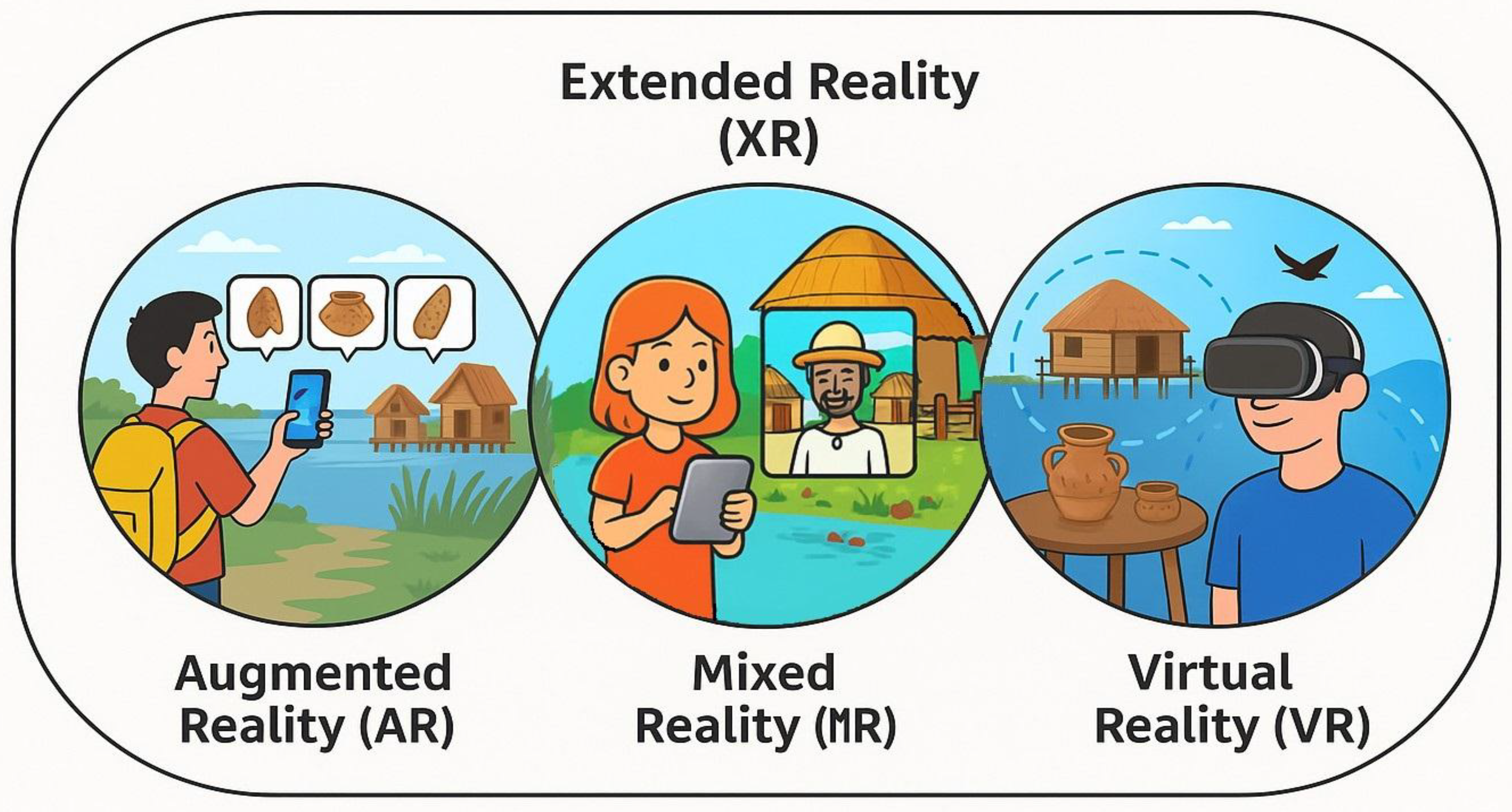
Figure 2.
Holistic XR Educational Model – The Case of Dispilio.
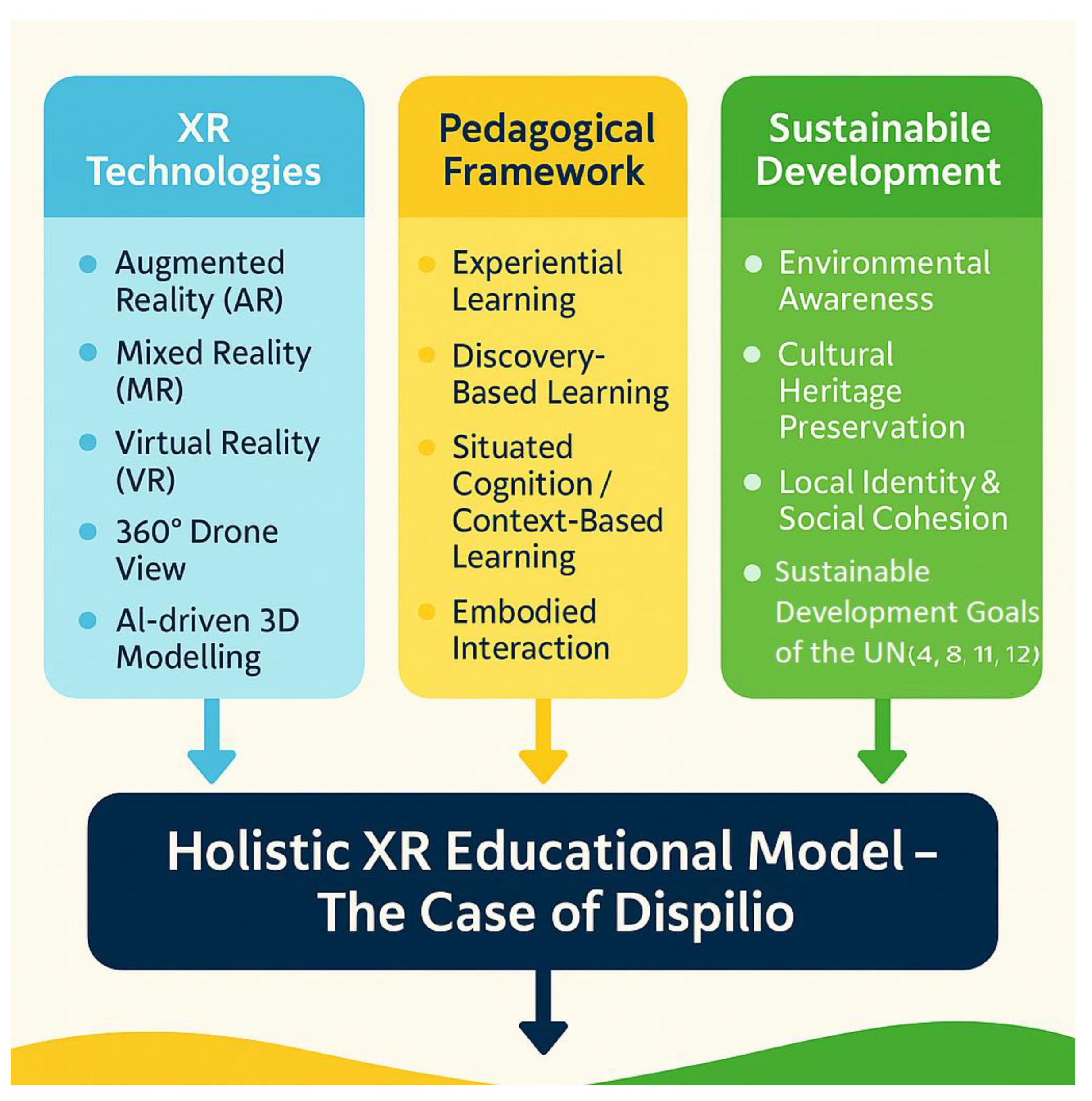
Figure 4.
Groups of students at the site of the representation of the lake settlement at Dispιlio.
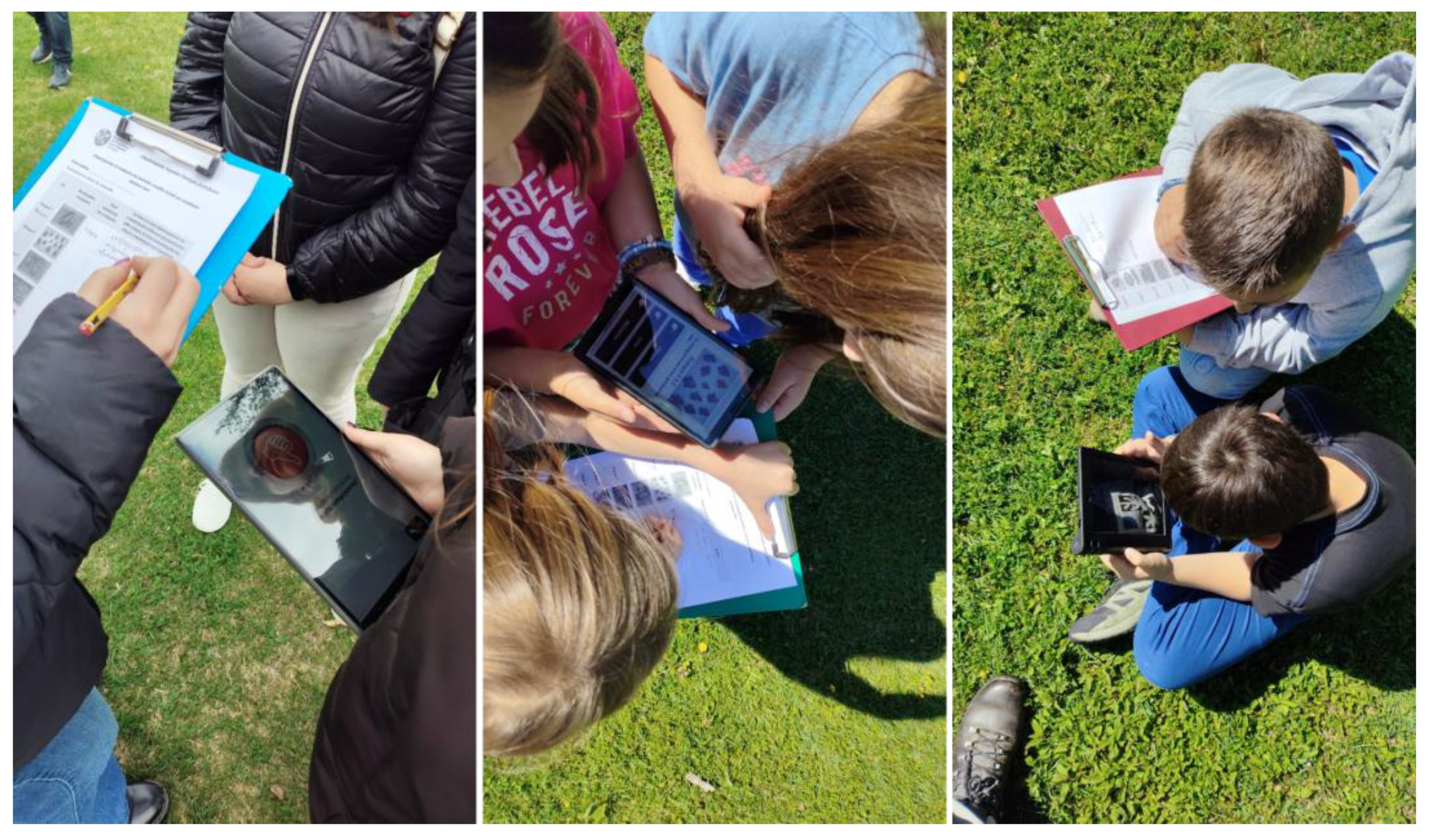
Figure 5.
AR Spot detection at the entrance to the representation of the lake settlement in DispIlio.
Figure 5.
AR Spot detection at the entrance to the representation of the lake settlement in DispIlio.
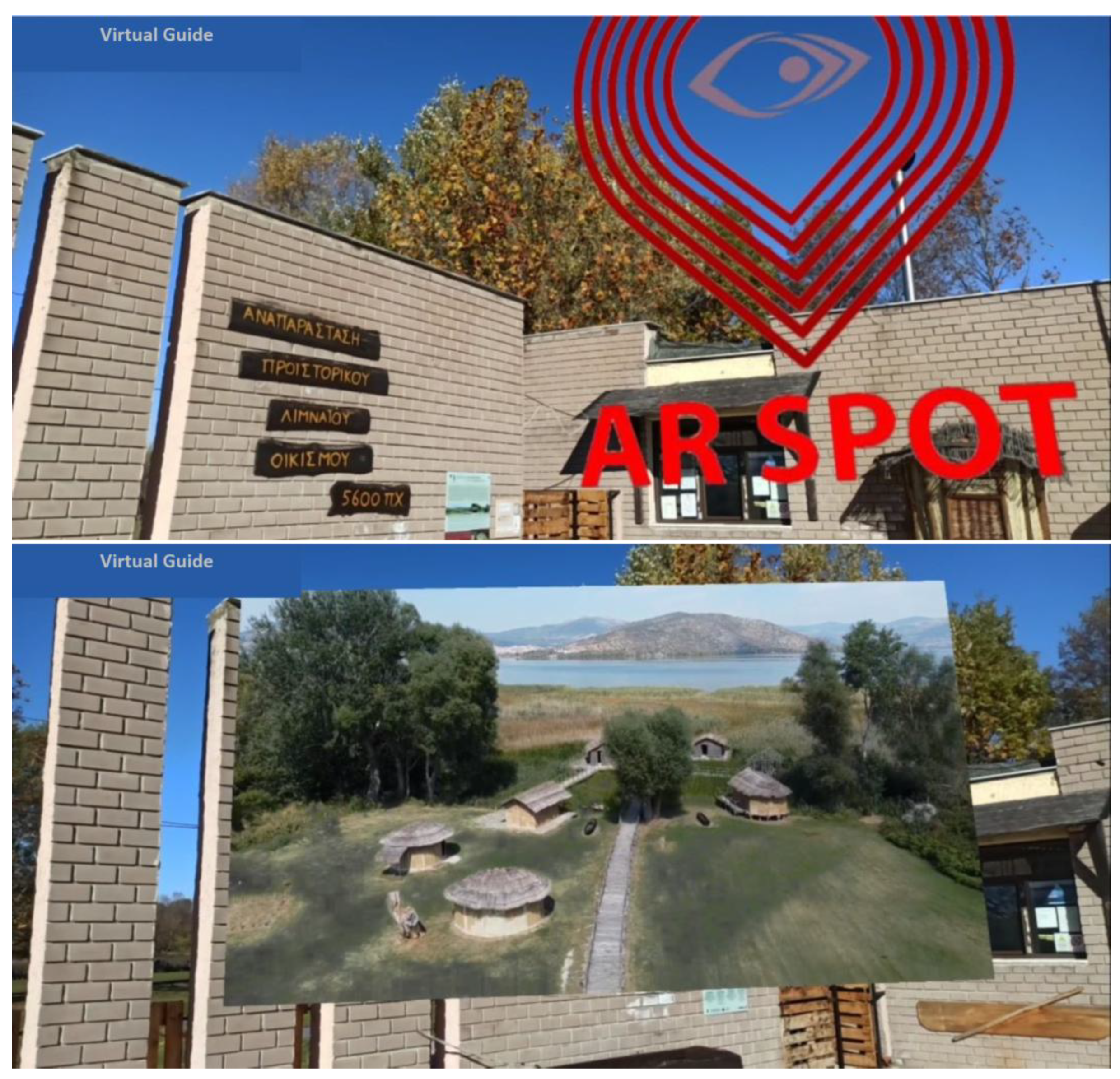
Figure 6.
Figure 6. (VR) Students experience a fully immersive virtual reality (VR) experience.
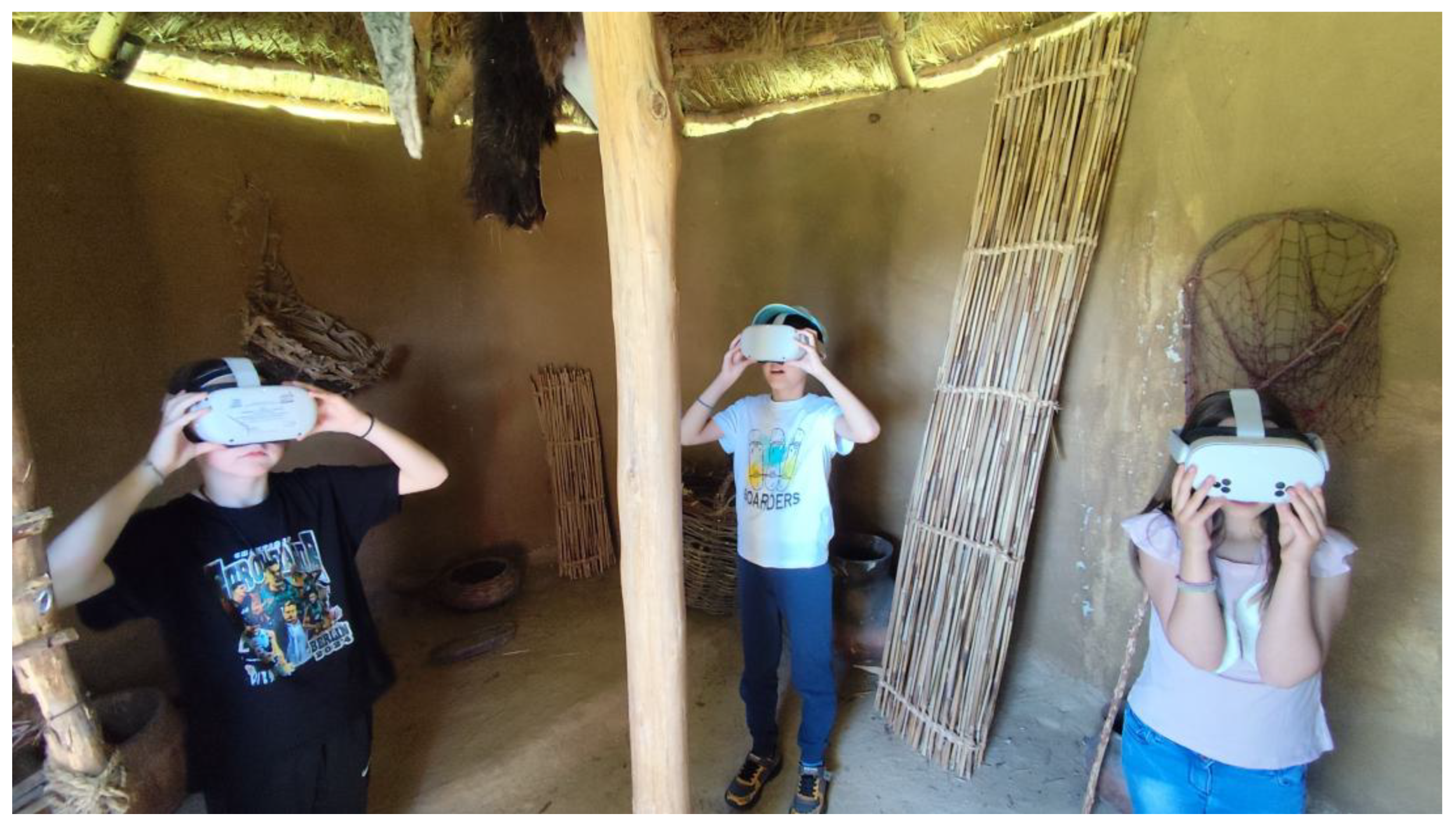
Figure 7.
ADDIE model.
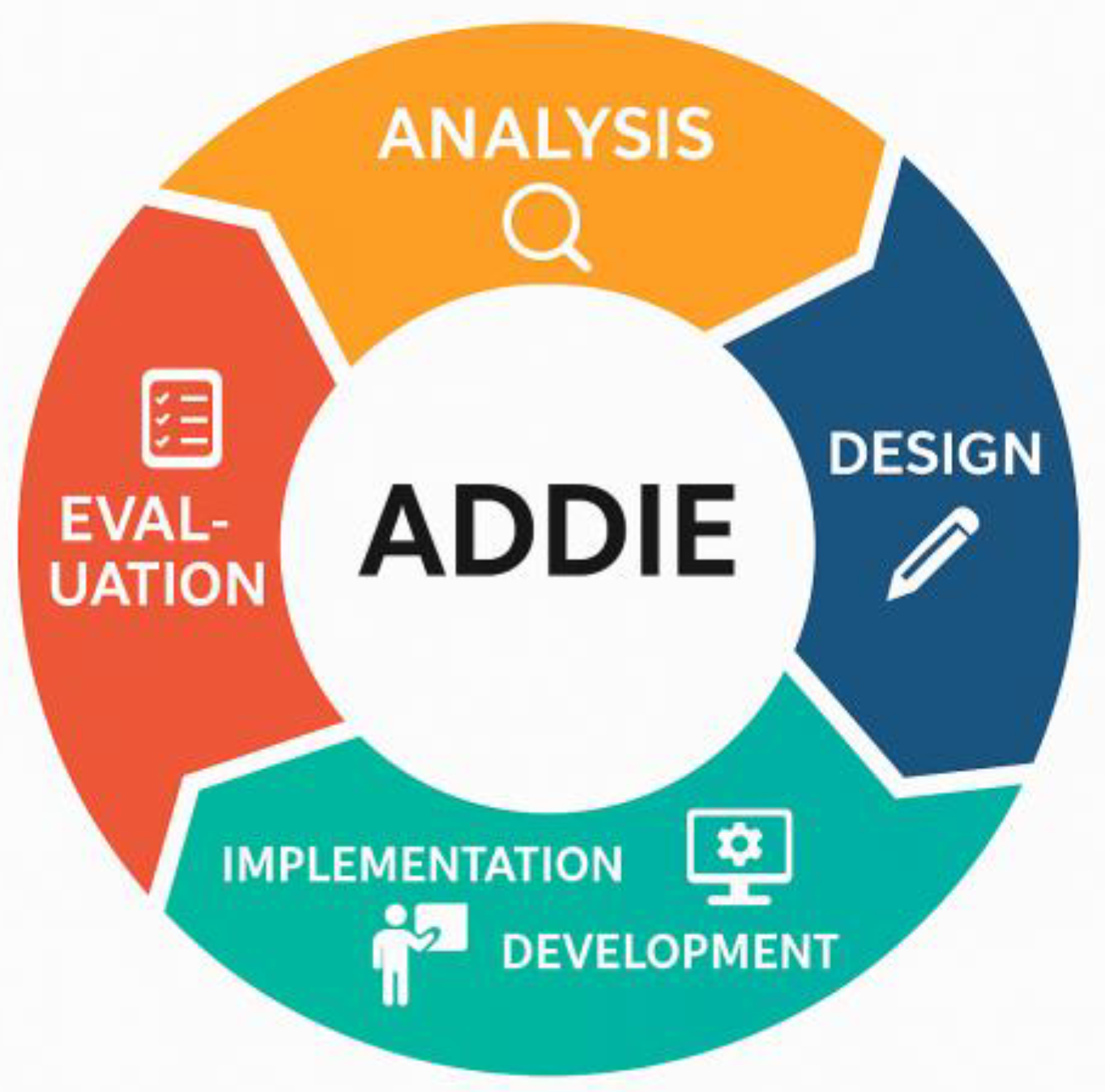
Figure 8.
Screenshot of the development environment: Regions.
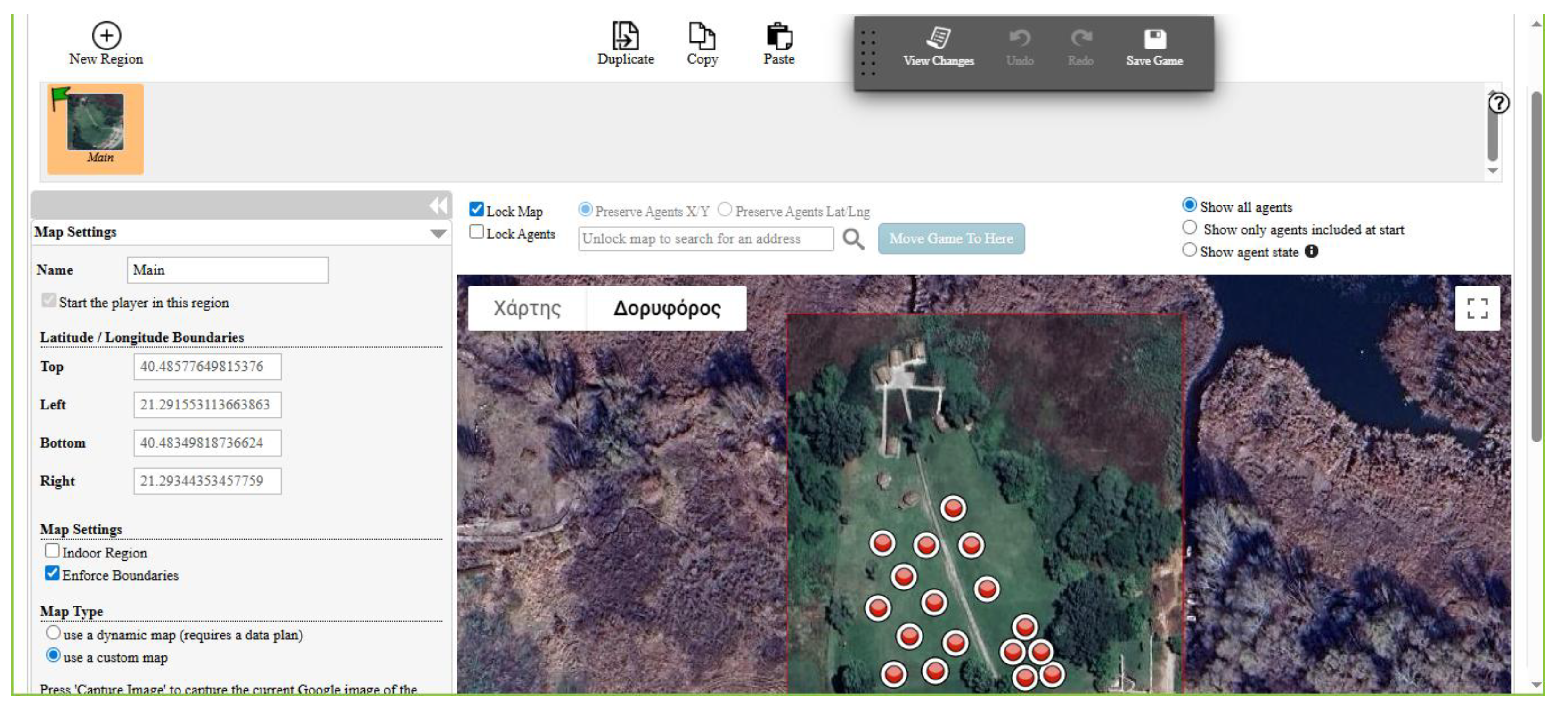
Figure 9.
Screenshot of the development environment: Agents.
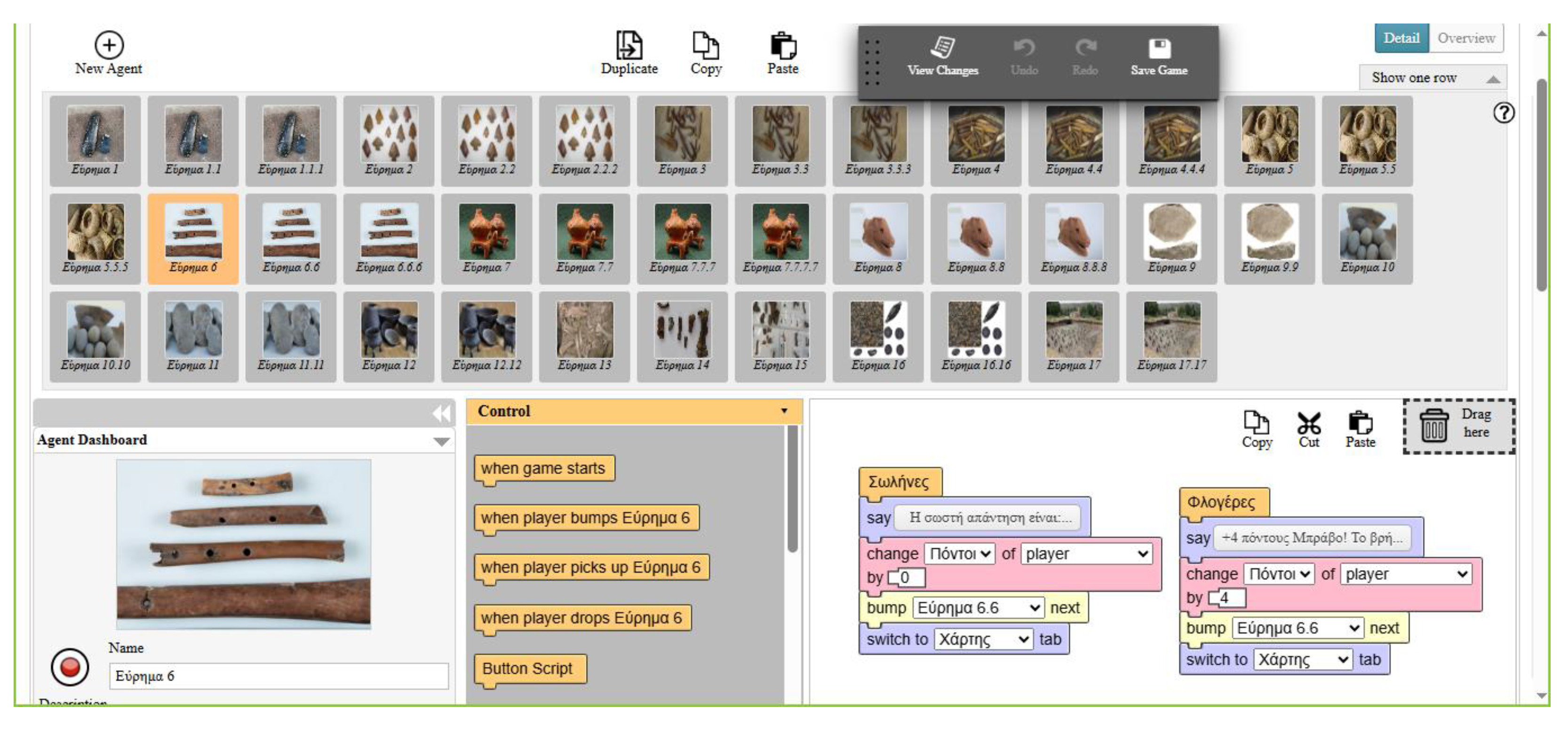
Figure 10.
«Virtual Guide» App FunctionalityAC».
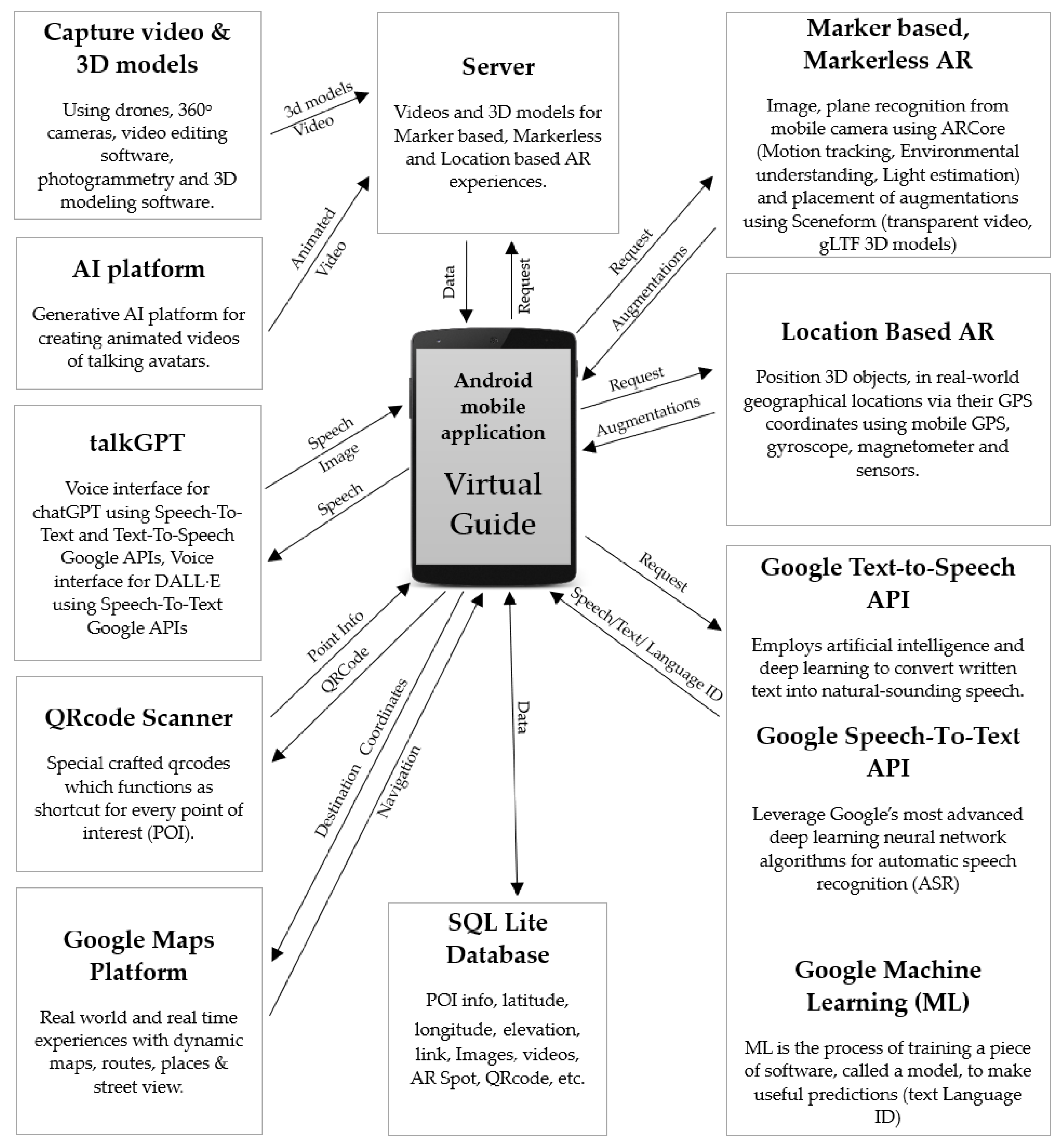
Figure 11.
Screenshot of the development environment: 3DF Zephyr (Accessed on 1 October 2025).
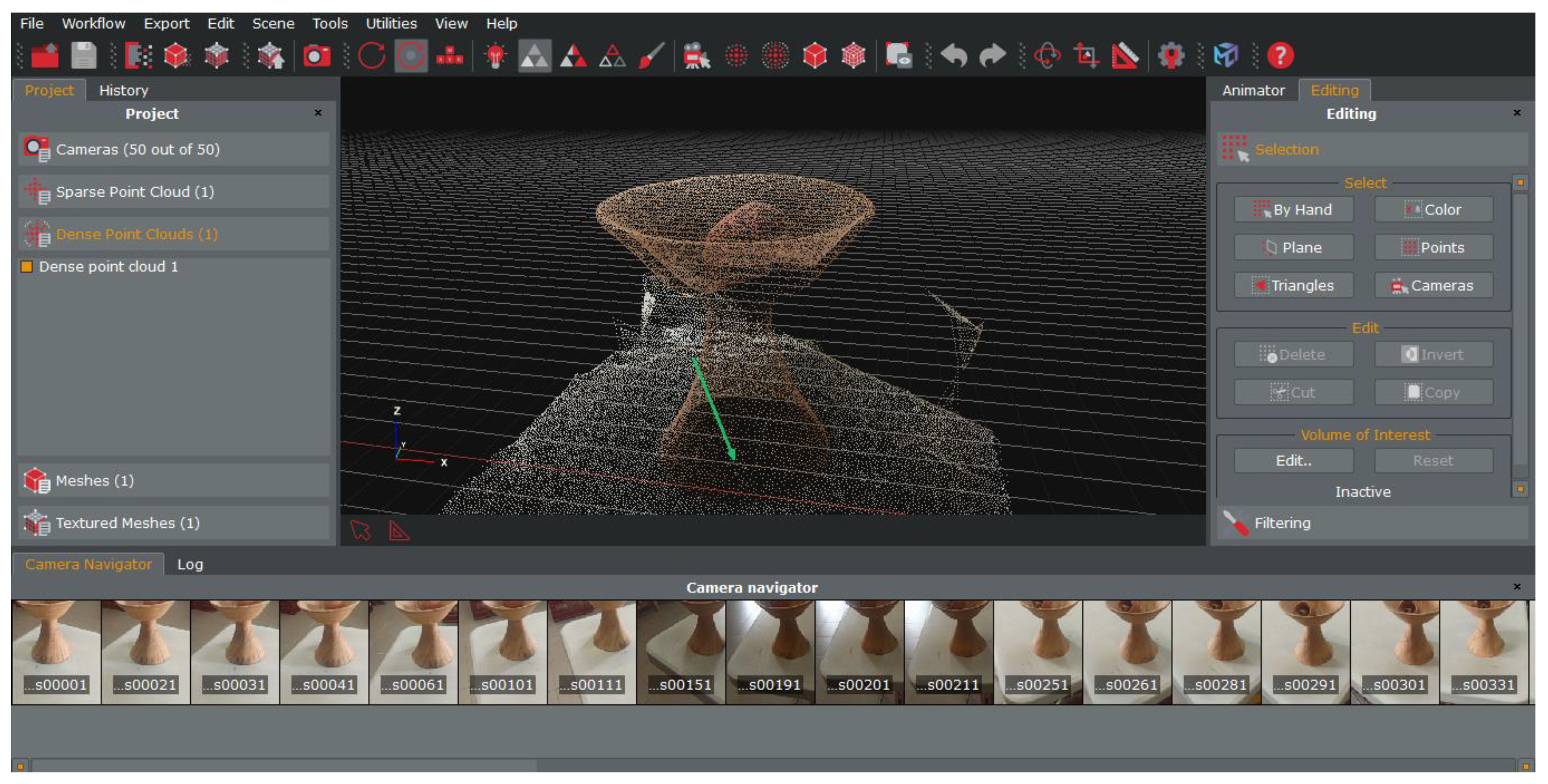
Figure 12.
Screenshot of the development environment: Polycam (Accessed on 1 October 2025).
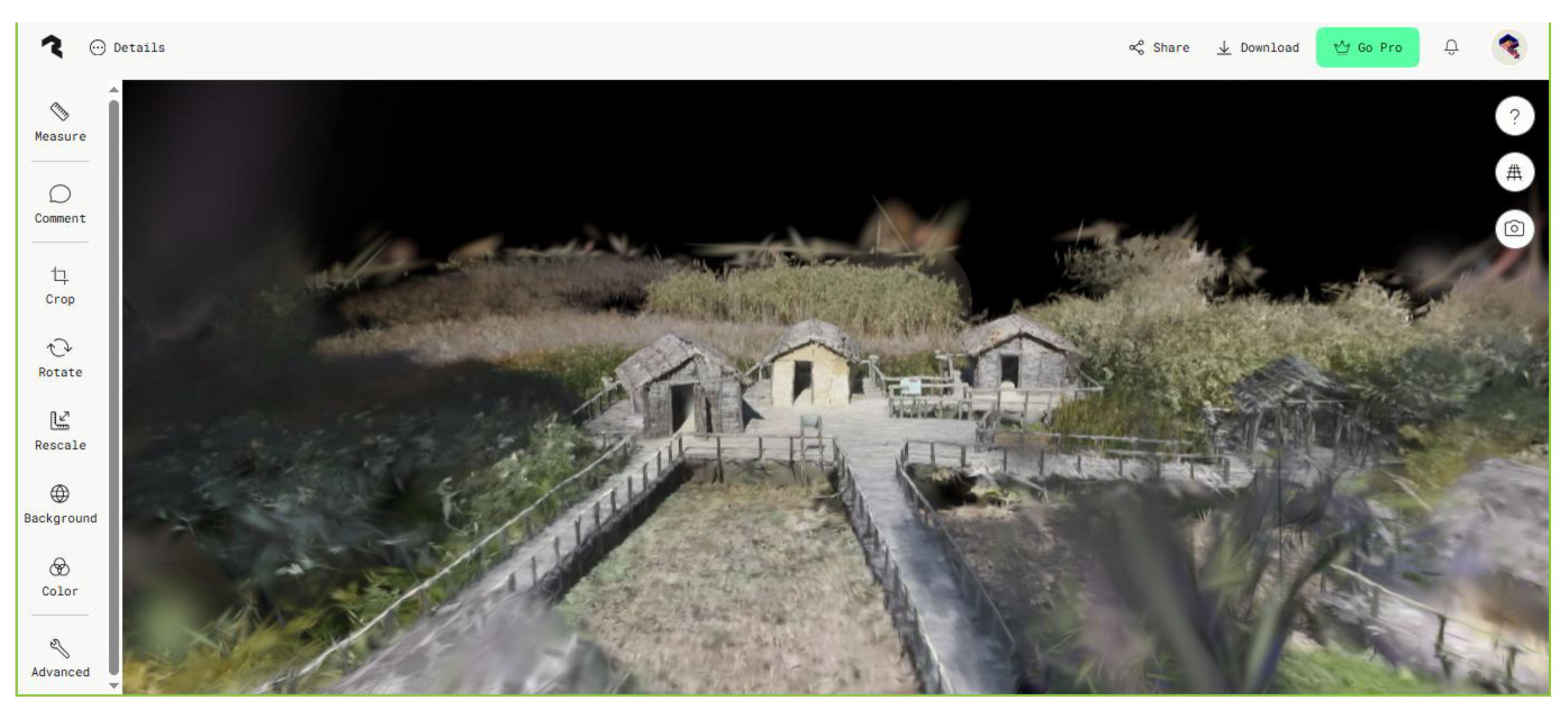
Figure 13.
Screenshot of the development environment: Sketchfab (Accessed on 1 October 2025).
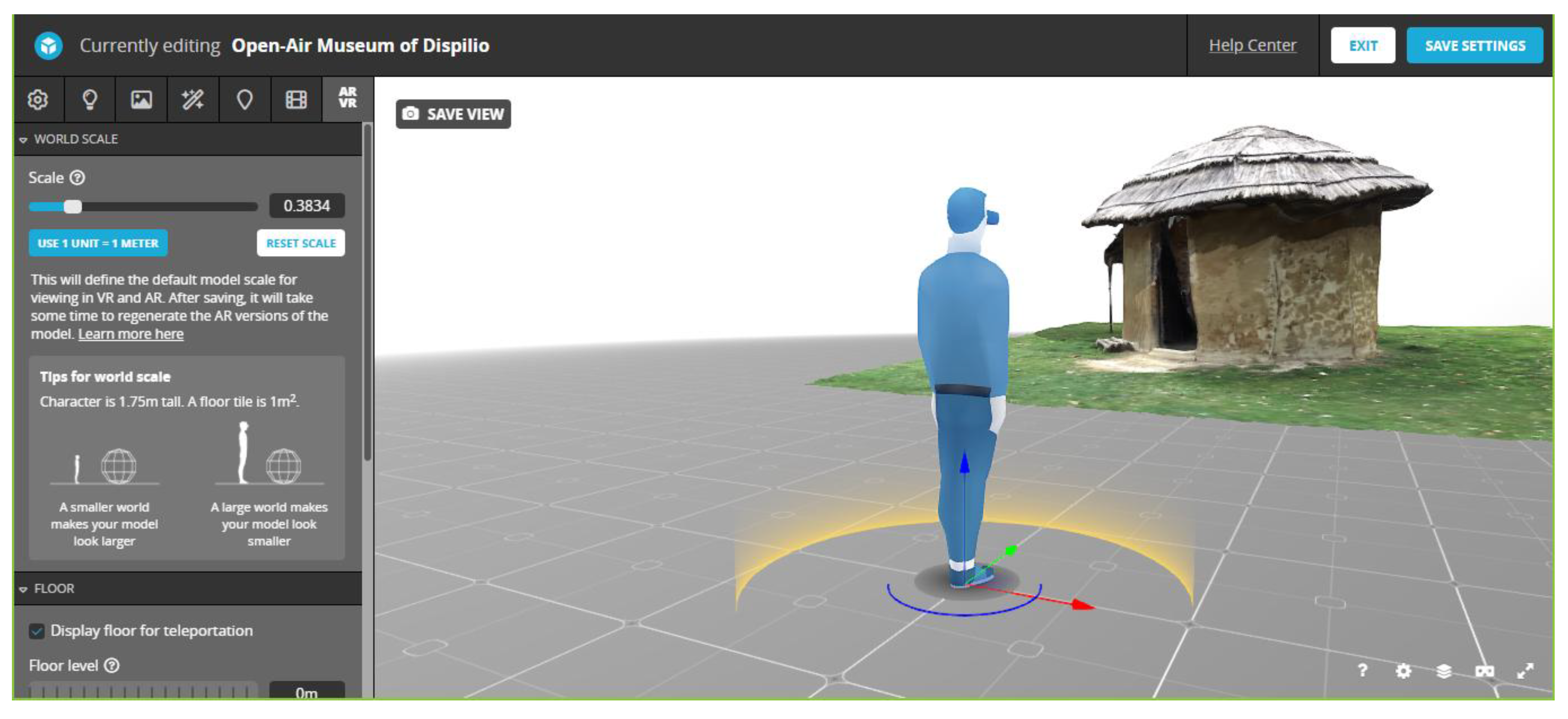
Figure 14.
Screenshot of the development environment: AI Hailuo (Accessed on 1 October 2025).
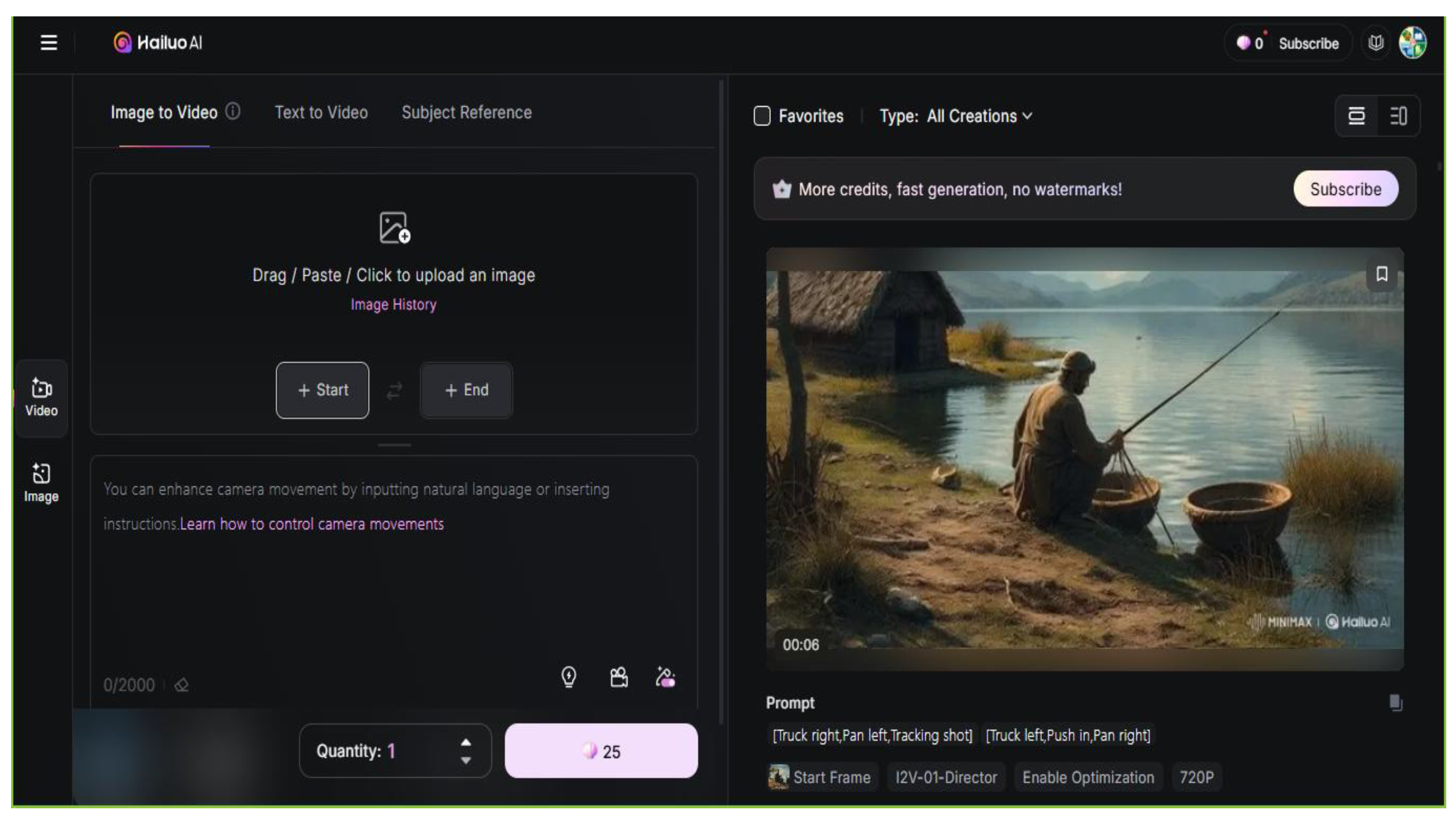
Figure 15.
Sample images from the app «Virtual Findings in Dispilio».
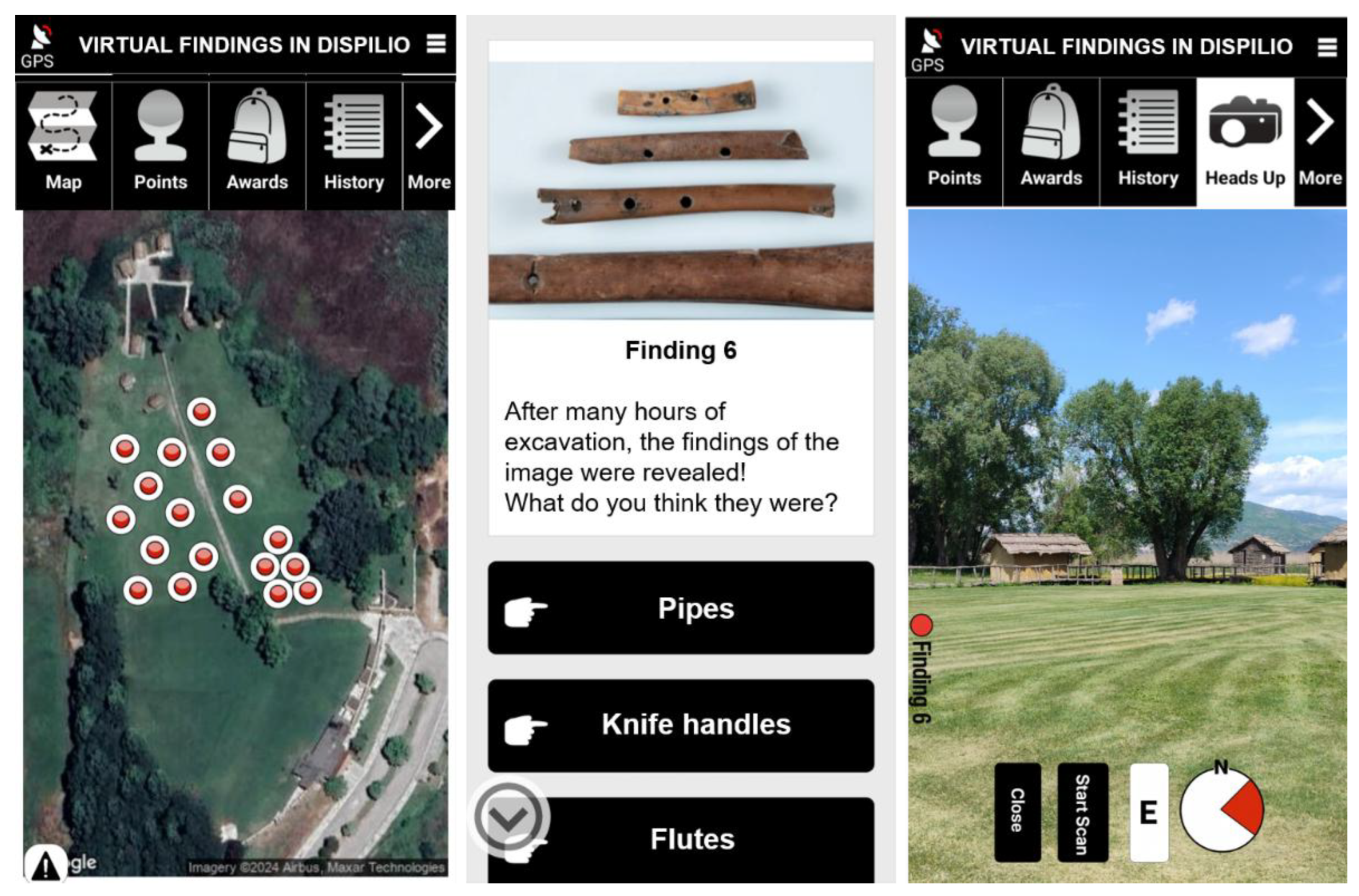
Figure 16.
Sample images from the app «Crime in the Lake Settlement».
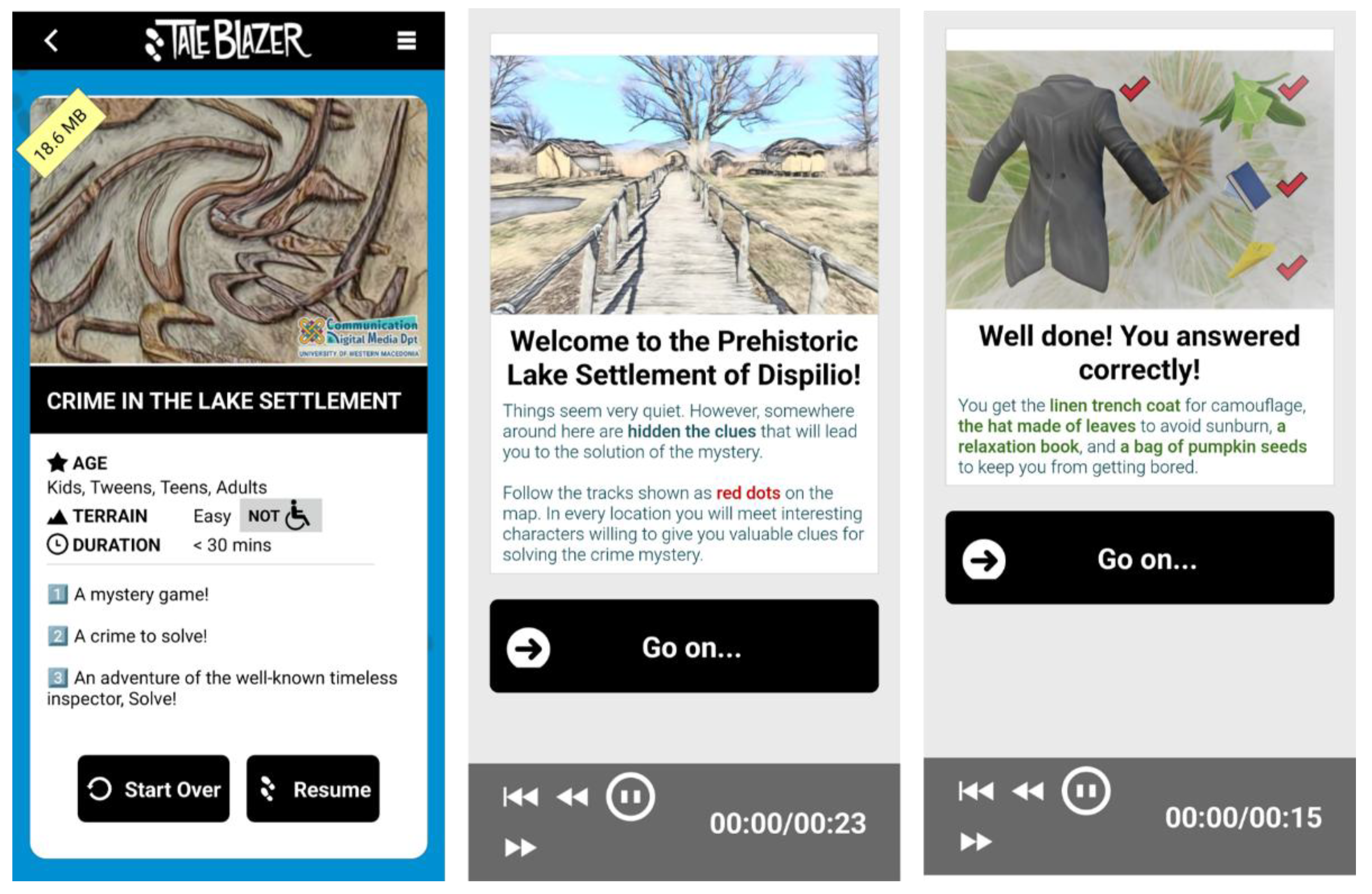
Figure 17.
Sample images from the app «Once upon a Time in Dispilio».
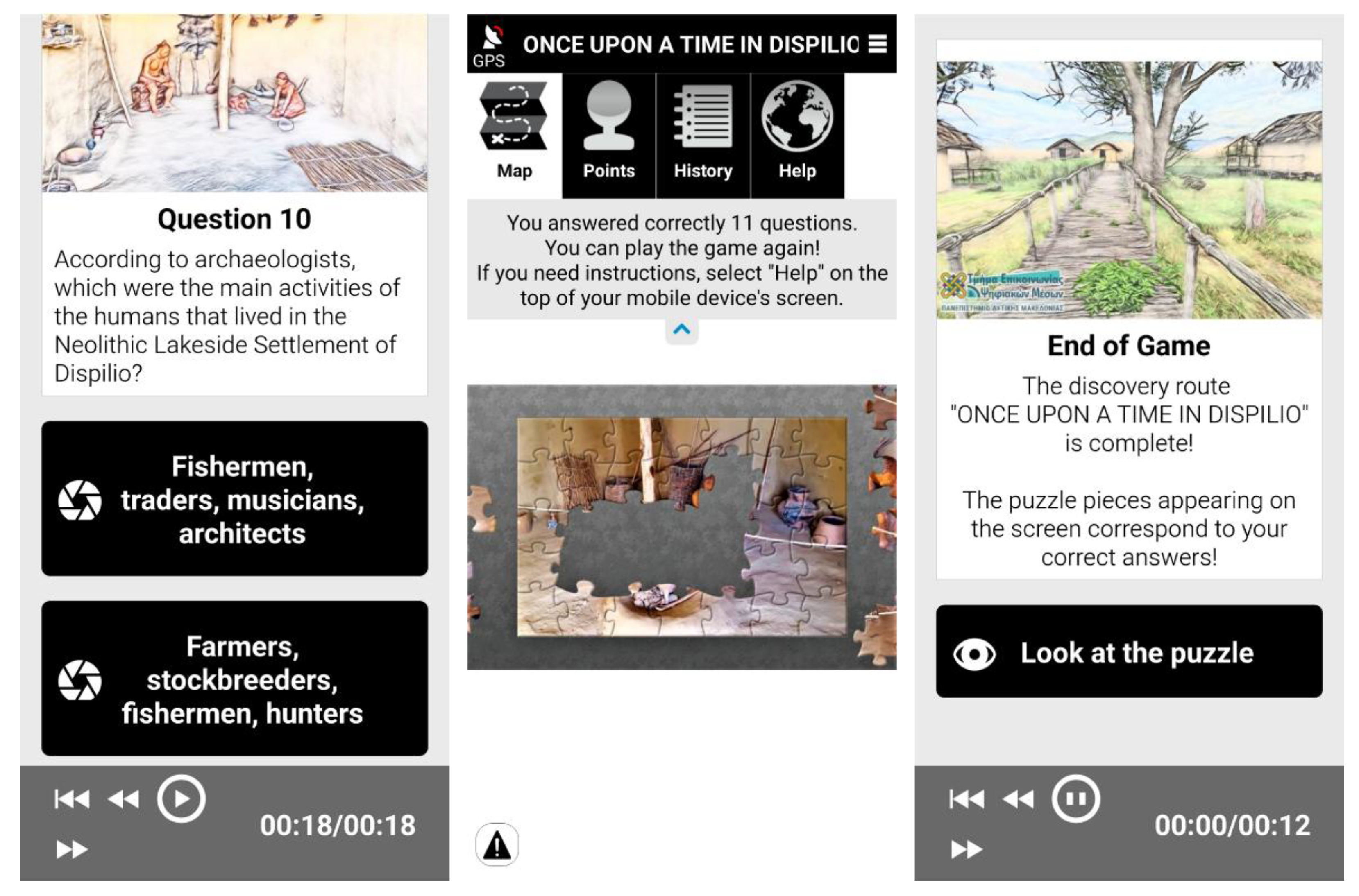
Figure 20.
Sample images from the app «Video 3D».
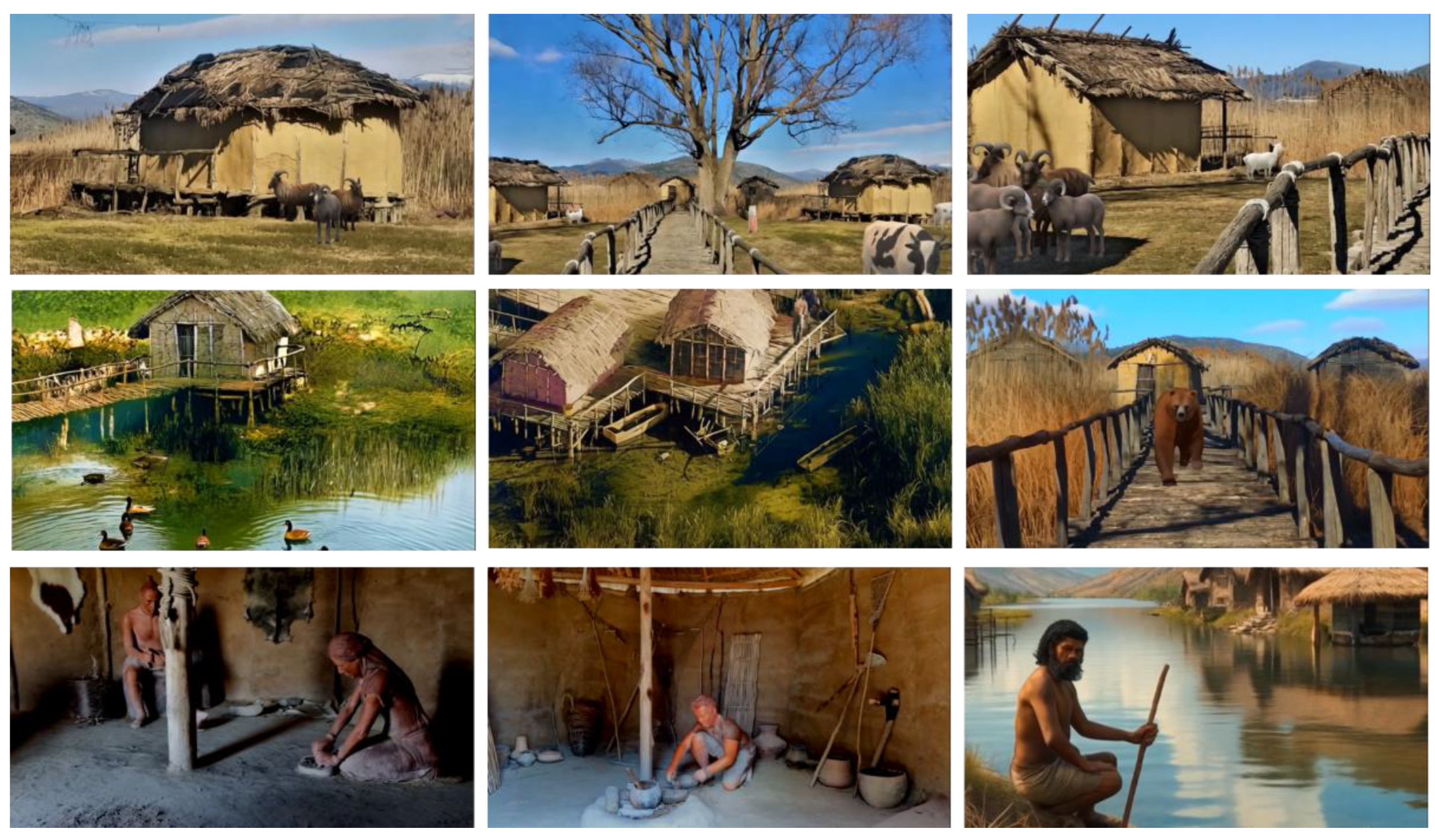
Figure 21.
Sample images from the app «360° Drone View» Representative images from the “360° Drone View” app.
Figure 21.
Sample images from the app «360° Drone View» Representative images from the “360° Drone View” app.
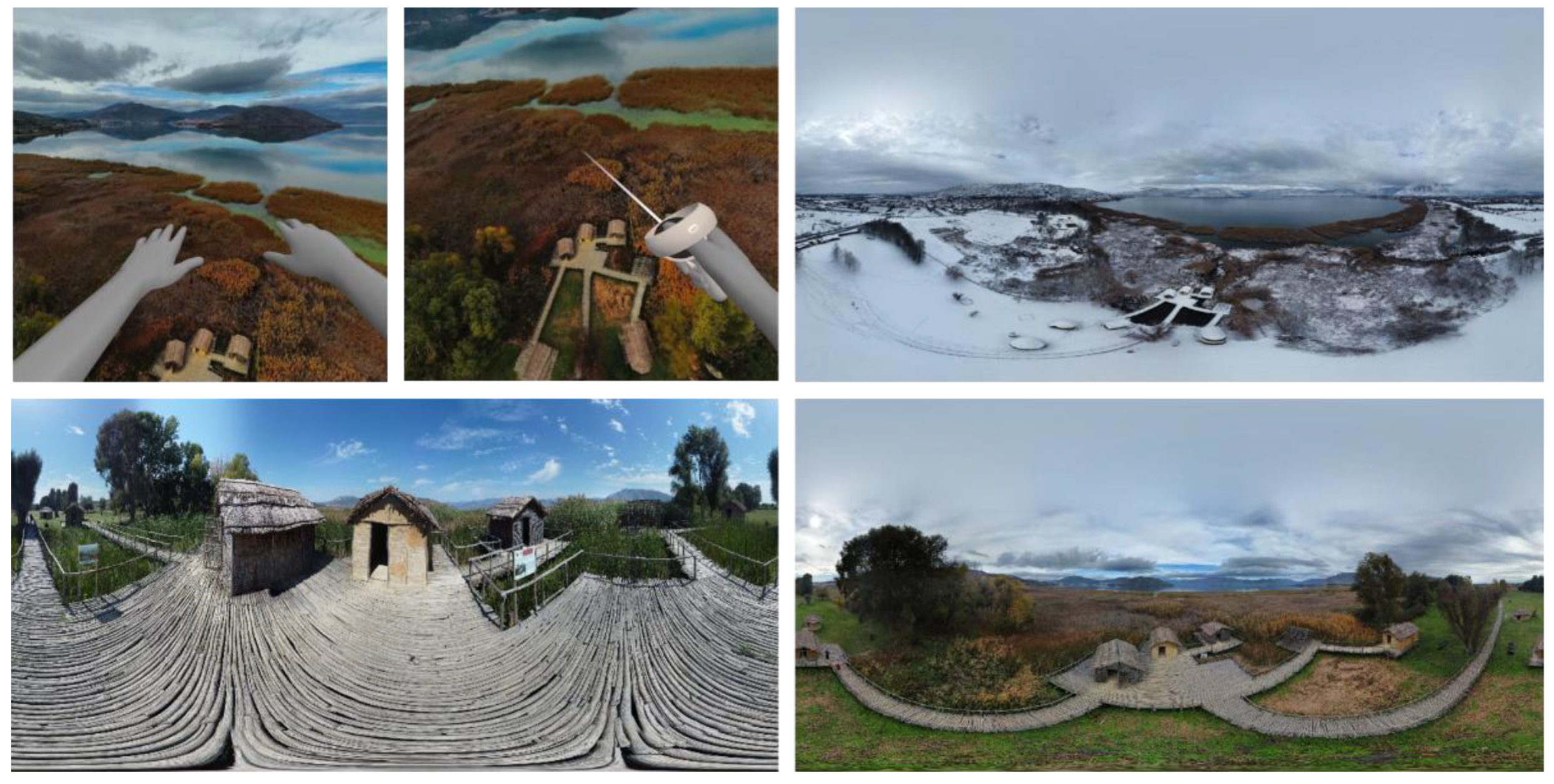
Figure 22.
Figure 22. Gender and educational level of participants.
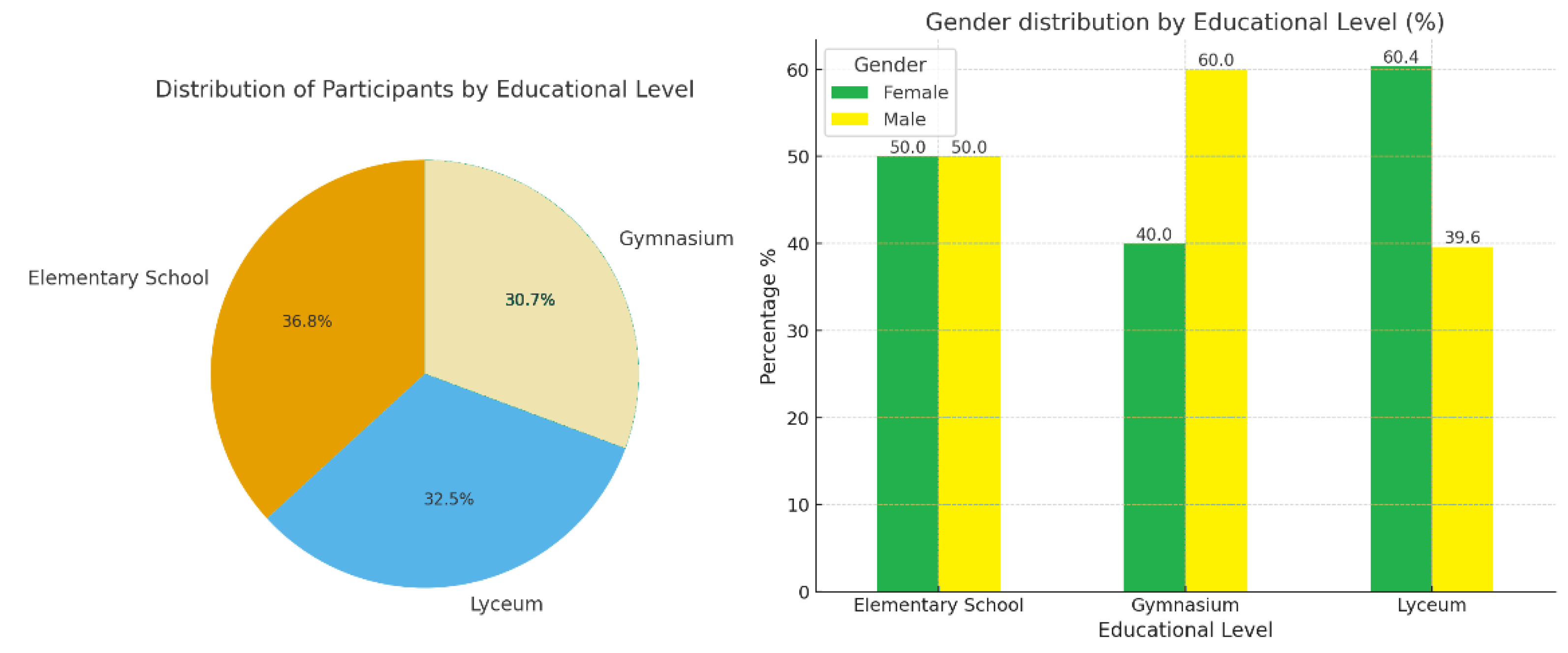
Figure 23.
(a) Implementing an activity with a relevant topic in the classroom, (b) Evaluation of the educational activity regarding the interest of its thematic focus.
Figure 23.
(a) Implementing an activity with a relevant topic in the classroom, (b) Evaluation of the educational activity regarding the interest of its thematic focus.
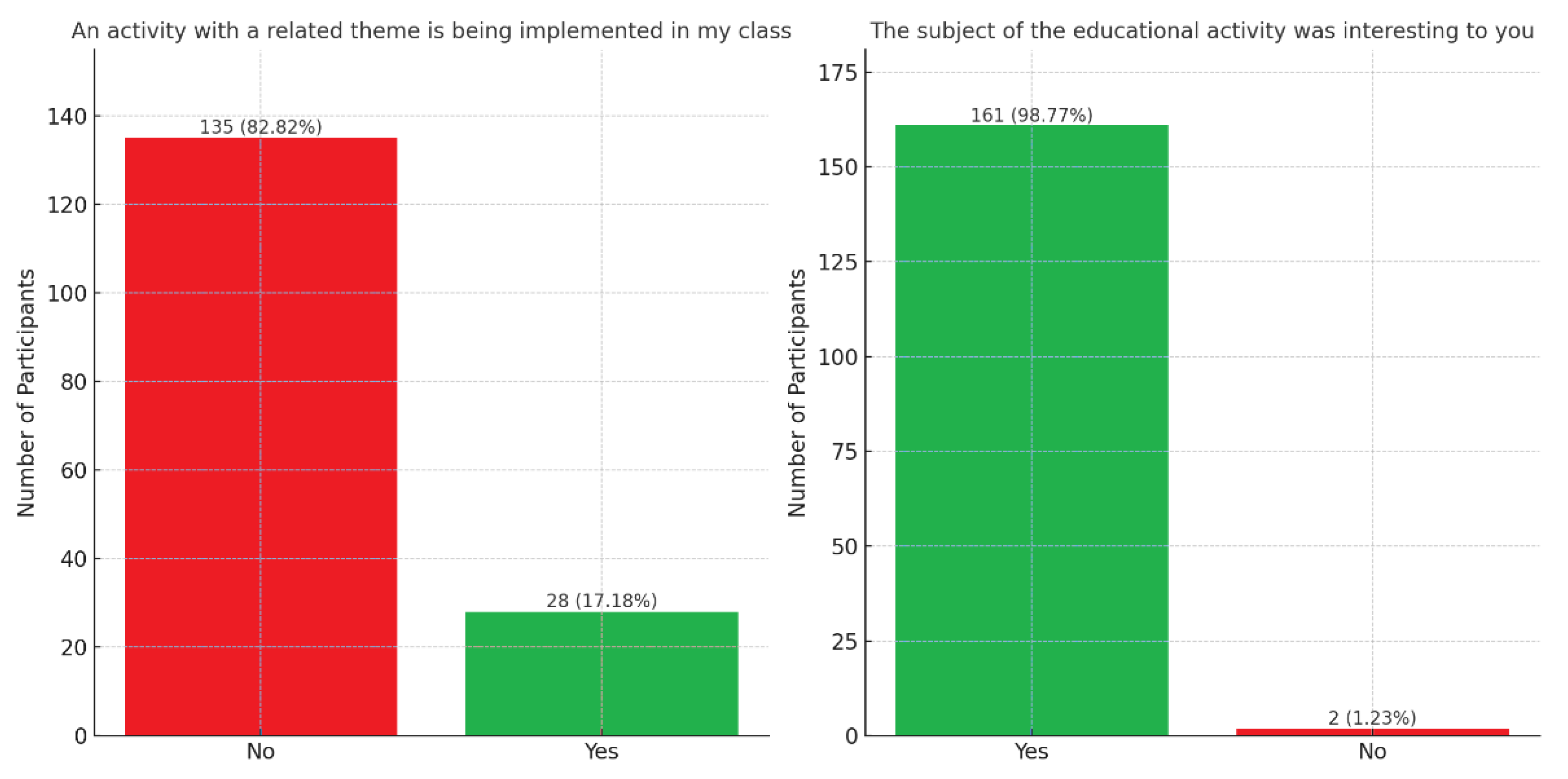
Figure 24.
(a) Evaluation of the organization of the educational activity, (b) Evaluation of the educational activity in terms of the satisfaction it provides to the participants.
Figure 24.
(a) Evaluation of the organization of the educational activity, (b) Evaluation of the educational activity in terms of the satisfaction it provides to the participants.
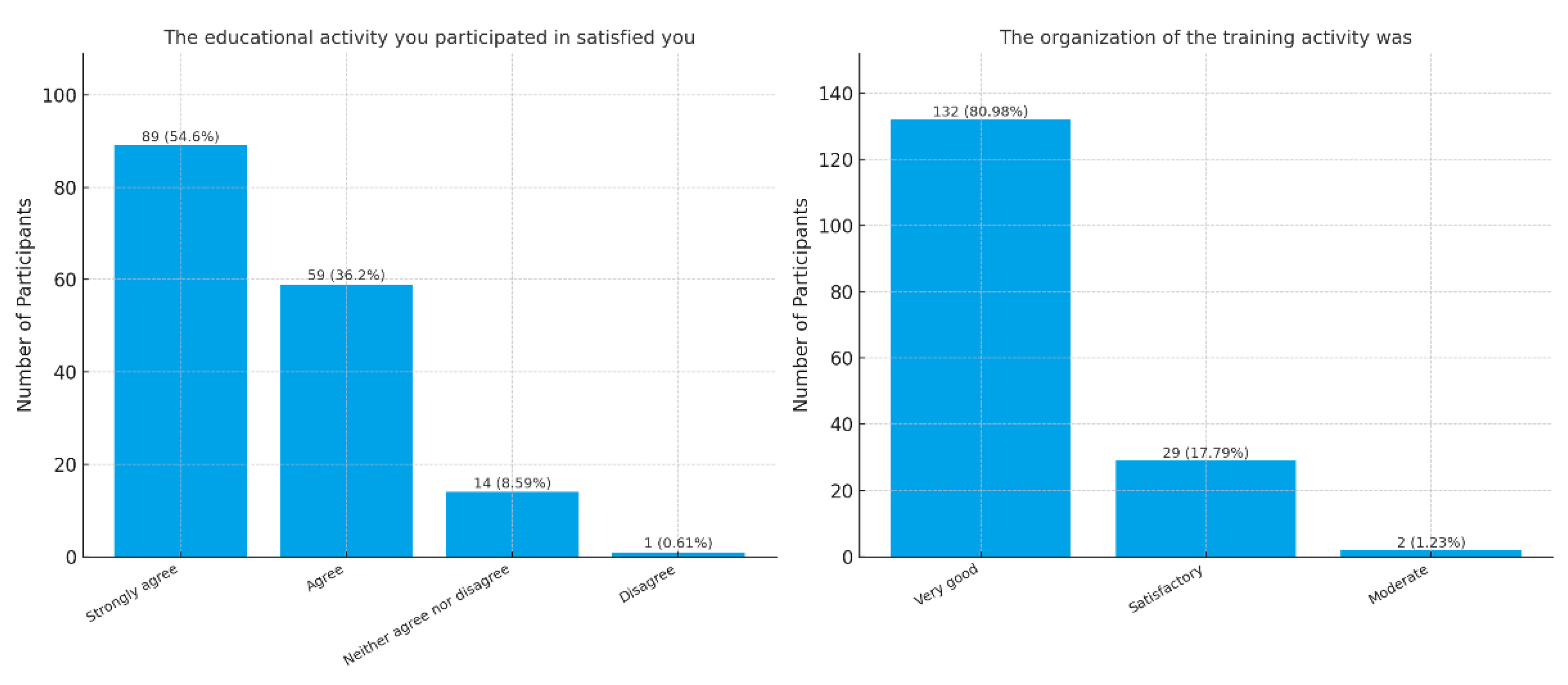
Figure 25.
Figure 25. Assessment of what participants enjoyed the most from the educational program’s activities, along with what was missing.
Figure 25.
Figure 25. Assessment of what participants enjoyed the most from the educational program’s activities, along with what was missing.
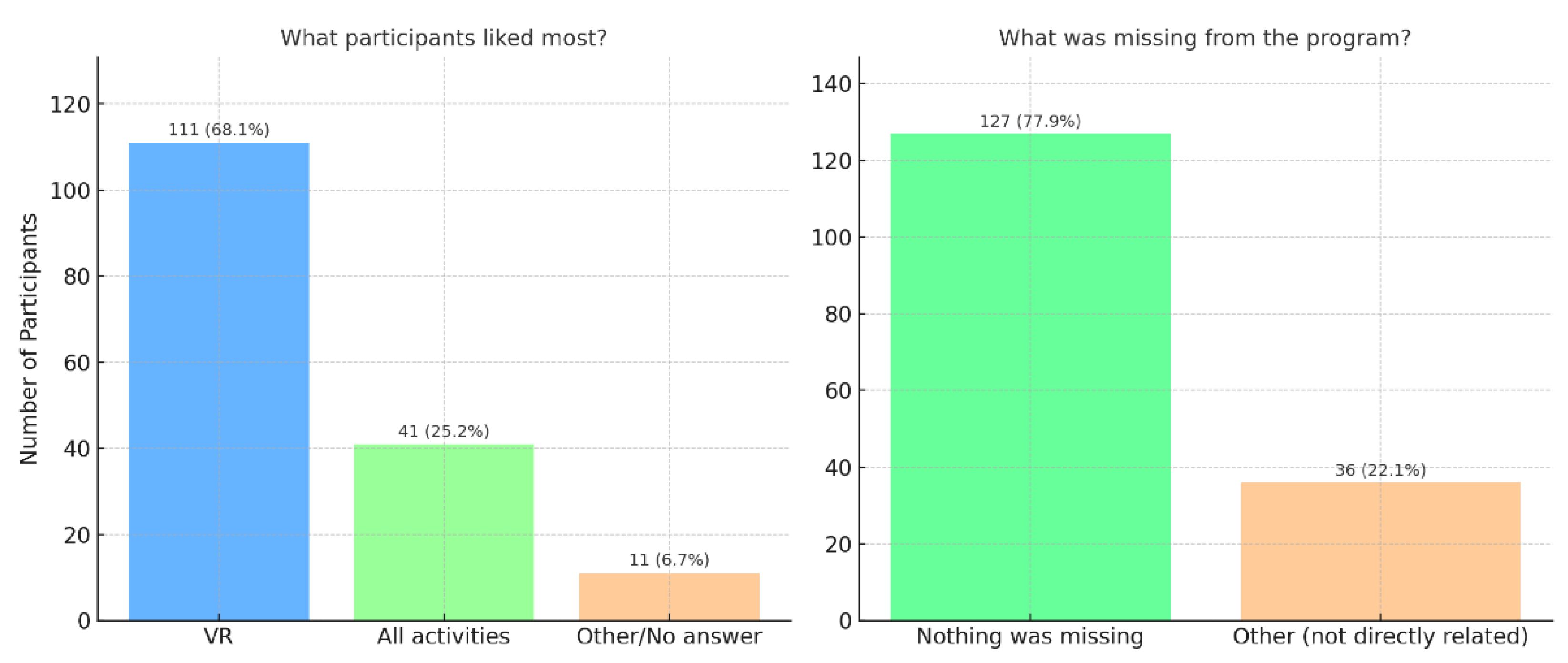
Figure 27.
Hypothetical Correlations: A Conceptual Framework for Multiple Regression Analysis.
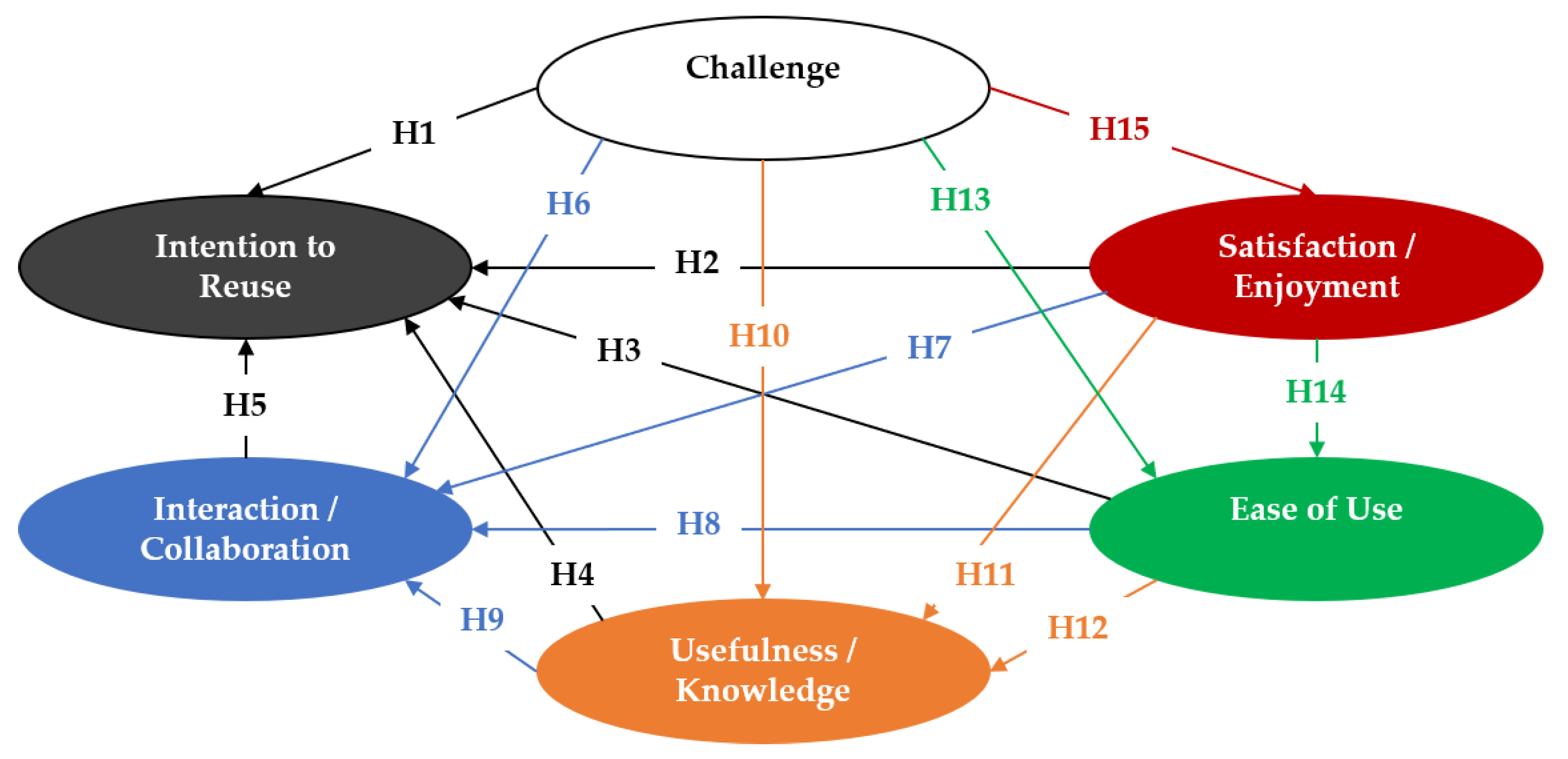
Figure 28.
Conceptual Framework for Multiple Regression Analysis με εξαρτημένη μεταβλητή την Intention to Reuse.
Figure 28.
Conceptual Framework for Multiple Regression Analysis με εξαρτημένη μεταβλητή την Intention to Reuse.
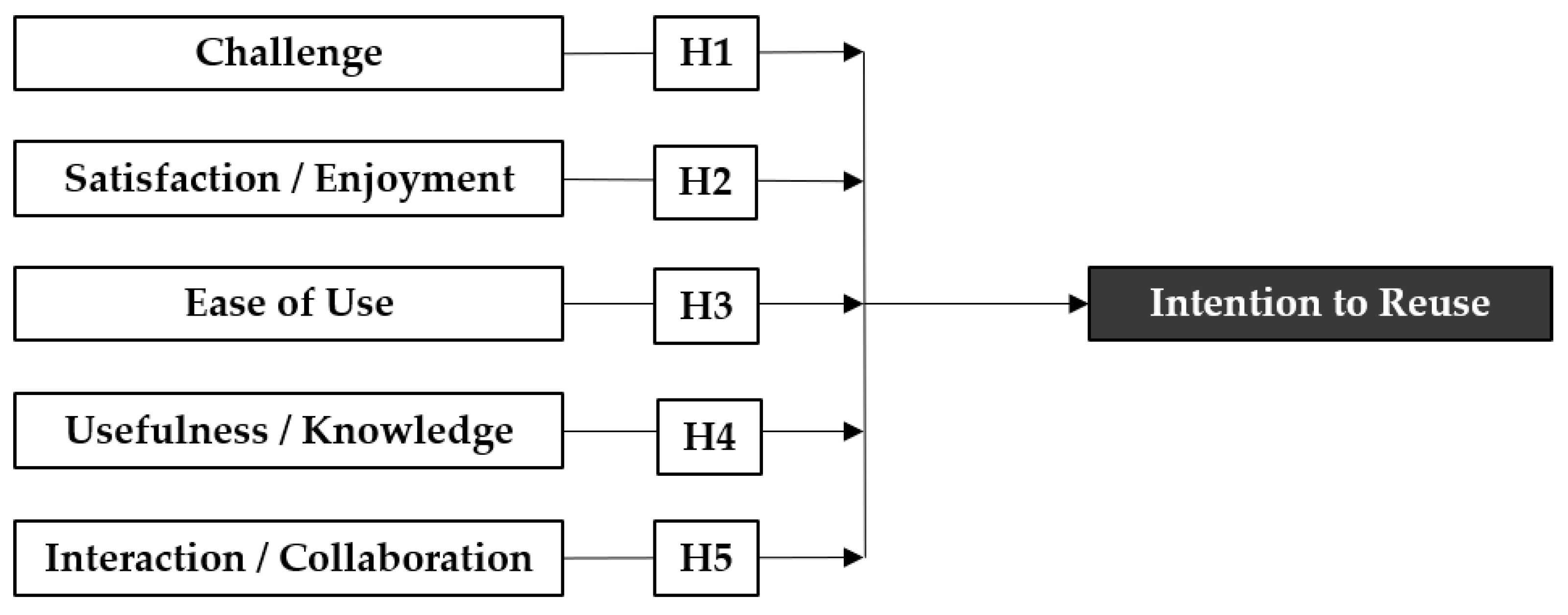
Figure 29.
Heat map of standardized regression coefficients (Model 1, Dependent Variable: Intention to Reuse).
Figure 29.
Heat map of standardized regression coefficients (Model 1, Dependent Variable: Intention to Reuse).
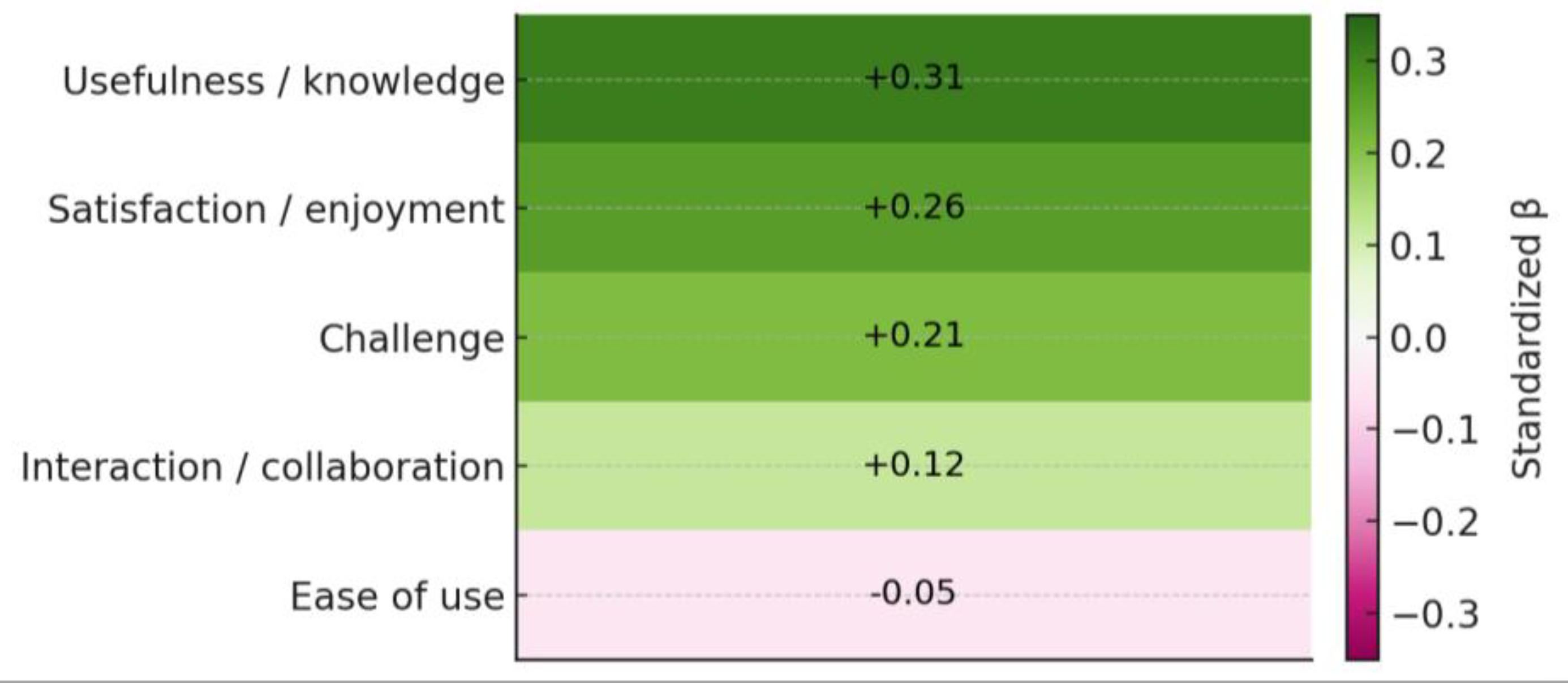
Figure 30.
Conceptual Framework for Multiple Regression Analysis με εξαρτημένη μεταβλητή την interaction/collaboration.
Figure 30.
Conceptual Framework for Multiple Regression Analysis με εξαρτημένη μεταβλητή την interaction/collaboration.
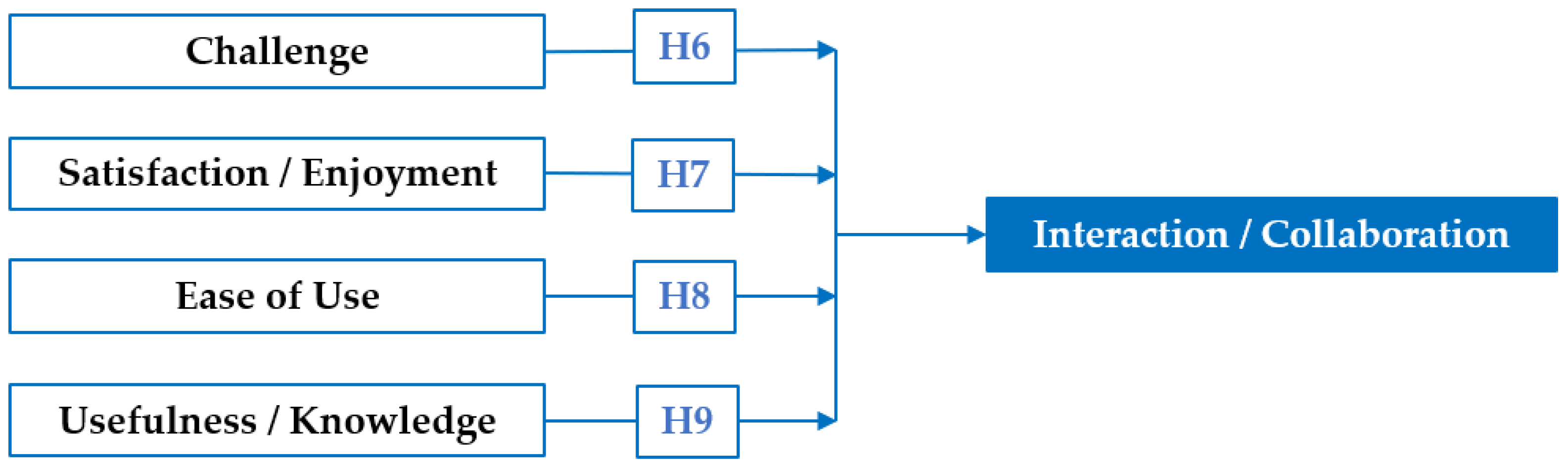
Figure 31.
Heat map of standardized regression coefficients (Model 2, Dependent Variable Interaction / Collaboration).
Figure 31.
Heat map of standardized regression coefficients (Model 2, Dependent Variable Interaction / Collaboration).
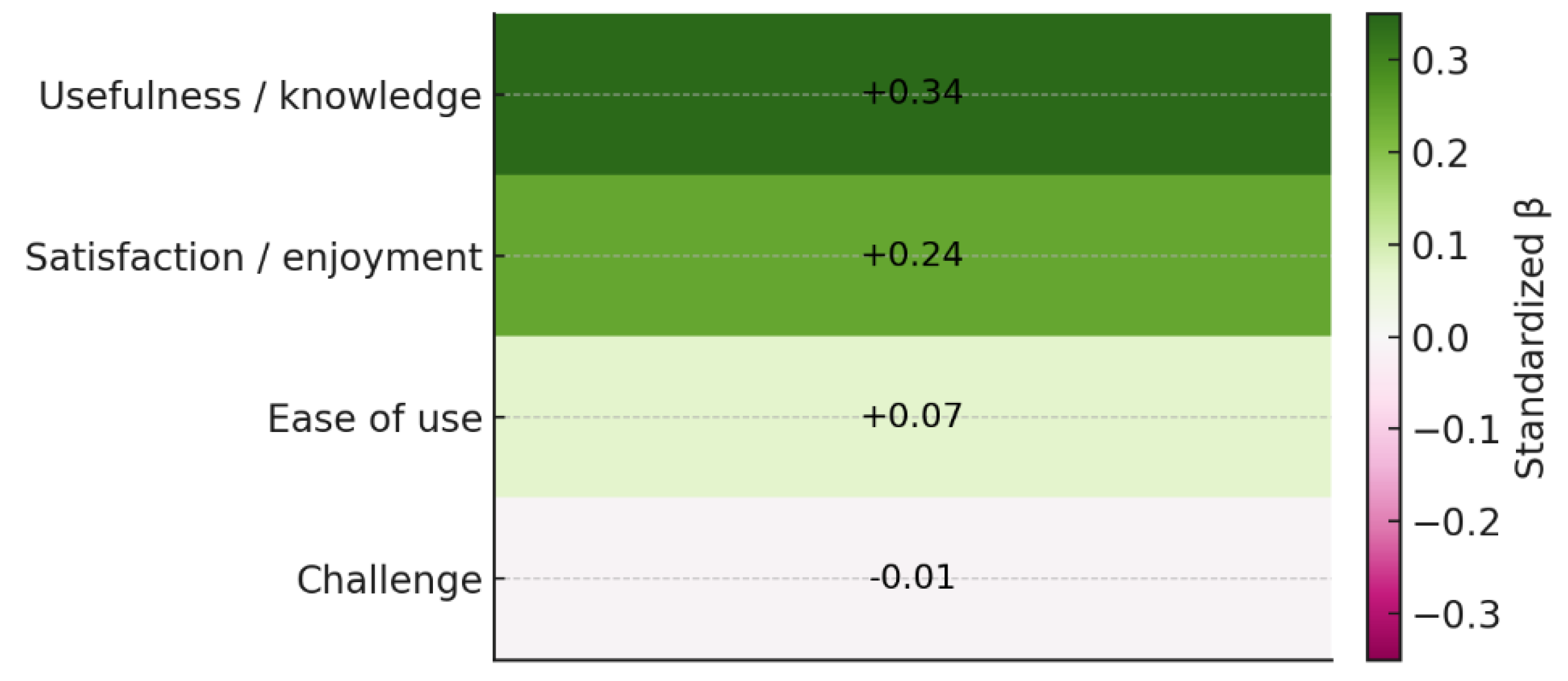
Figure 32.
Heat map of standardized regression coefficients (Model 3, Dependent Variable Usefulness/Knowledge).
Figure 32.
Heat map of standardized regression coefficients (Model 3, Dependent Variable Usefulness/Knowledge).
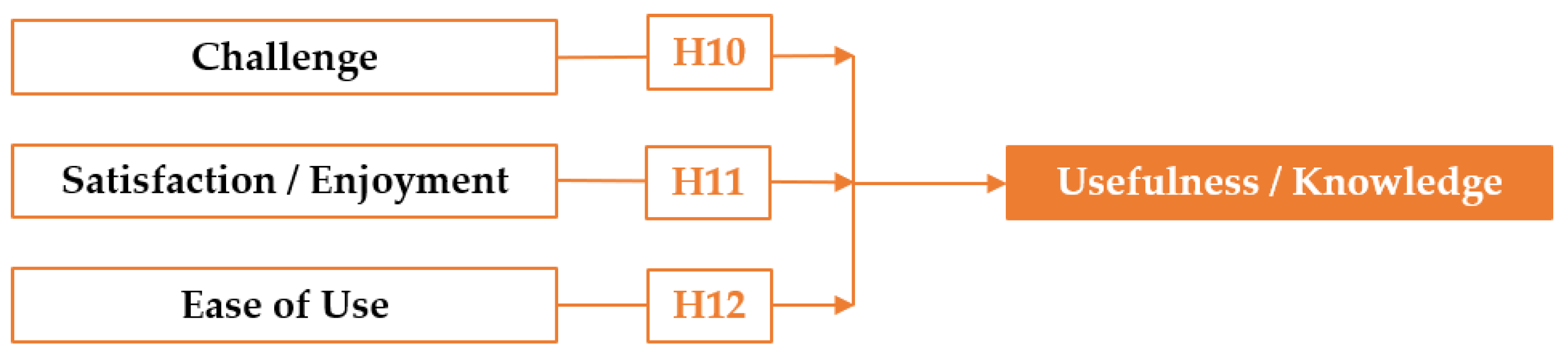
Figure 33.
Heat map of standardized regression coefficients (Model 3, Dependent Variable Usefulness/Knowledge.
Figure 33.
Heat map of standardized regression coefficients (Model 3, Dependent Variable Usefulness/Knowledge.
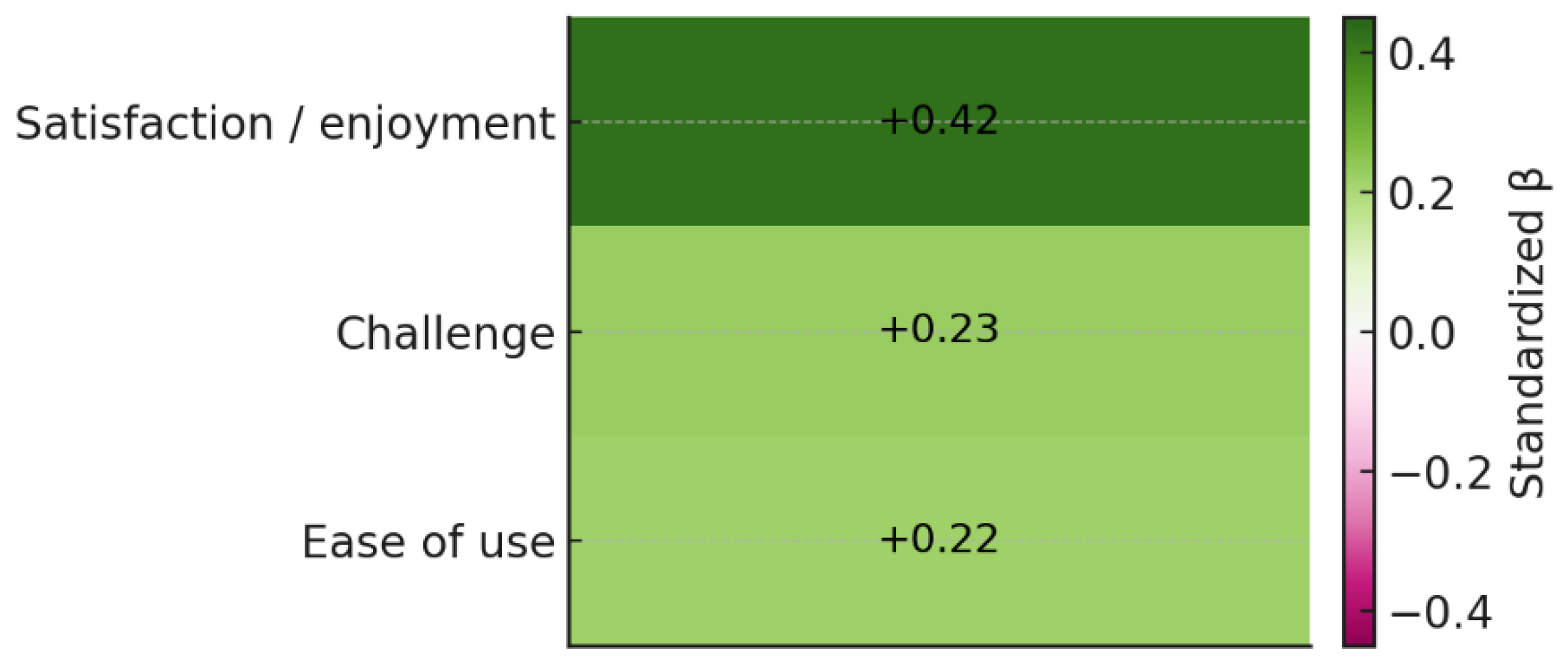
Figure 34.
Heat map of standardized regression coefficients (Model 4, Dependent Variable Ease of Use).
Figure 34.
Heat map of standardized regression coefficients (Model 4, Dependent Variable Ease of Use).

Figure 35.
Heat map of standardized regression coefficients (Model 4, Dependent Variable Ease of Use.
Figure 35.
Heat map of standardized regression coefficients (Model 4, Dependent Variable Ease of Use.
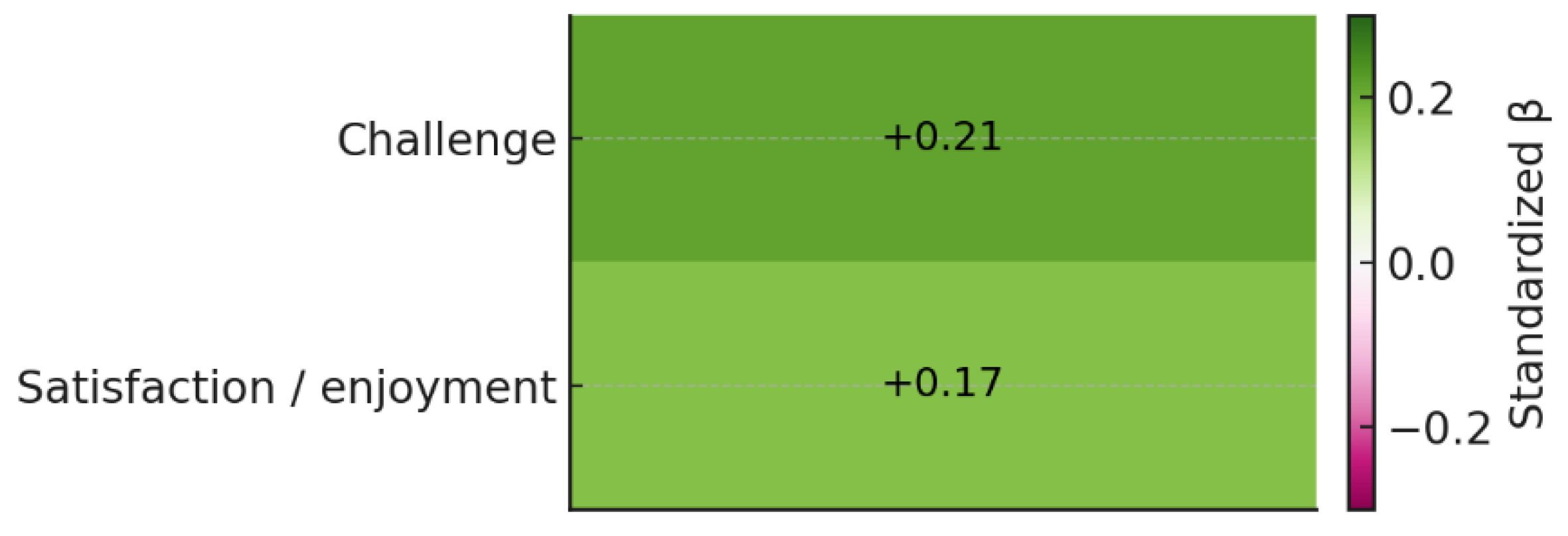
Figure 37.
Heat map of standardized regression coefficients (Model 5, Dependent Variable Satisfaction/Enjoyment).
Figure 37.
Heat map of standardized regression coefficients (Model 5, Dependent Variable Satisfaction/Enjoyment).
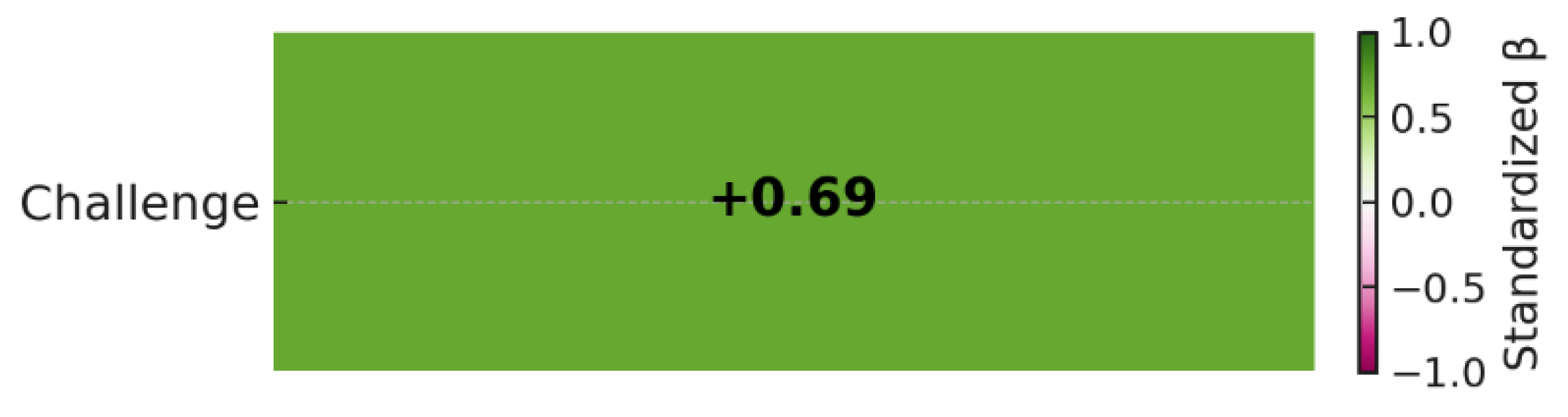

Table 1.
Mean scores, standard deviation.
| Κατηγορία/Ερωτήσεις | Mean Scores | Standard Deviation |
|---|---|---|
| Challenge | 4.41 | 0.53 |
| I feel proud when I advance with success in the games. | 4.31 | 0.67 |
| It feels rewarding to get to the next level of the games. | 4.37 | 0.68 |
| I feel excited when I answer a question correctly. | 4.56 | 0.61 |
| Satisfaction / Enjoyment | 4.33 | 0.64 |
| The games are amusing. | 4.33 | 0.72 |
| The games are pleasant. | 4.28 | 0.75 |
| I am pleased with the games. | 4.36 | 0.69 |
| Ease of use | 4.37 | 0.43 |
| Familiarizing with the game environment demands effort. | 4.33 | 0.56 |
| The games are user-friendly, and familiar in its operation. | 4.33 | 0.51 |
| The interaction with the games is easy, and comprehensible. | 4.29 | 0.61 |
| I needed assistance in order to play the games | 4.51 | 0.65 |
| Usefulness / Knowledge | 4.30 | 0.58 |
| The games stimulate my curiosity regarding the acquisition of new knowledge. | 4.21 | 0.72 |
| The games assisted me in gaining a better understanding of the Prehistoric Lake Settlement of Dispilio. | 4.41 | 0.67 |
| The games contributed to increasing my knowledge about the prehistory of my locality. | 4.29 | 0.70 |
| Interaction / Collaboration | 4.45 | 0.47 |
| The games present an opportunity for collaboration. | 4.21 | 0.81 |
| I collaborated with my classmates while I was playing. | 4.39 | 0.57 |
| The games motivate me to work together with friends in an open-air environment. | 4.52 | 0.58 |
| Intention to reuse | 4.33 | 0.63 |
| I am motivated by the games to discover additional archaeological locations. | 4.45 | 0.60 |
| I intend to play the same games again with my friends in the near future. | 4.15 | 1.04 |
| I am interested in playing comparable games in the future for another archaeological site. | 4.44 | 0.65 |
| In the future, I would be interested in engaging in comparable games that explore a different subject, for instance, games centered on the natural environment or a recreational activity such as a treasure hunt. | 4.52 | 0.71 |
Table 2.
Values for asymmetry and kurtosis.
| Constructs | Skewness | Kurtosis |
|---|---|---|
| Challenge | -0,738 | -0,063 |
| Satisfaction / Enjoyment | -0,867 | 0,743 |
| Ease of Use | -0,474 | 1,118 |
| Usefulness / Knowledge | -0,389 | -0,670 |
| Interaction / Collaboration | -0,693 | 0,147 |
| Intention to Reuse | -1,115 | 1,897 |
Table 3.
Correlations between constructs.
| Relationship 1 | Pearson’s r | Strength of Relationship Between Variables |
|---|---|---|
| Challenge - Satisfaction / Enjoyment | 0,688 | Strong |
| Challenge - Ease of Use | 0,333 | Moderate |
| Challenge - Usefulness / Knowledge | 0,591 | Strong |
| Challenge - Interaction / Collaboration | 0,384 | Moderate |
| Challenge - Intention to Reuse | 0,603 | Strong |
| Satisfaction / Enjoyment - Ease of Use | 0,320 | Moderate |
| Satisfaction / Enjoyment - Usefulness / Knowledge | 0,649 | Strong |
| Satisfaction / Enjoyment - Interaction / Collaboration | 0,482 | Moderate |
| Satisfaction / Enjoyment - Intention to Reuse | 0,651 | Strong |
| Ease of Use - Usefulness / Knowledge | 0,428 | Moderate |
| Ease of Use - Interaction / Collaboration | 0,294 | Weak |
| Ease of Use - Intention to Reuse | 0,274 | Weak |
| Usefulness / Knowledge - Interaction / Collaboration | 0,525 | Strong |
| Usefulness / Knowledge - Intention to Reuse | 0,648 | Strong |
| Interaction / Collaboration - Intention to Reuse | 0,479 | Moderate |
1 Significance: p = 0.000. Correlation is significant at the 0.01 level (2-tailed).
Table 4.
Model Summary 1 (Dependent Variable: Intention to Reuse).
| Model | R | R Square | Adjusted R Square | Std. Error of the Estimate | F Change | df1 | df2 | Sig. F Change |
|---|---|---|---|---|---|---|---|---|
| 1 | 0.737* | 0.543 | 0.529 | 0.43238 | 37.320 | 5 | 157 | 0.000 |
* Predictors: (Constant), Interaction / collaboration, Usefulness / knowledge, Ease of use, Satisfaction / Enjoyment, Challenge.
Table 5.
Coefficients (Model 1, Dependent Variable: Intention to Reuse).
| B 1 | β 2 | t | Sig | Lower Bound 3 | Upper Bound 3 | |
|---|---|---|---|---|---|---|
| (Constant) | 0.255 | 0.586 | 0.558 | -0.603 | 1.113 | |
| (H1) Challenge | 0.244 | 0.206 | 2.666 | 0.008 | 0.063 | 0.425 |
| (H2) Satisfaction / Enjoyment | 0.258 | 0.262 | 3.145 | 0.002 | 0.096 | 0.420 |
| (H3) Ease of use | -0.071 | -0.048 | -0.801 | 0.424 | -0.246 | 0.104 |
| (H4) Usefulness/knowledge | 0.339 | 0.312 | 3.922 | 0.000 | 0.168 | 0.509 |
| (H5) Interaction/collaboration | 0.165 | 0.124 | 1.898 | 0.060 | -0.007 | 0.338 |
1 Unstandardized coefficient, 2 Standardized Coefficients, 3 95.0% Confidence Interval for B.
Table 6.
Model Summary 2 (Dependent Variable Interaction / Collaboration).
| Model | R | R Square | Adjusted R Square | Std. Error of the Estimate | F Change | df1 | df2 | Sig. F Change |
|---|---|---|---|---|---|---|---|---|
| 1 | 0.561* | 0.315 | 0.297 | 0.39475 | 18.141 | 4 | 158 | 0.000 |
* Predictors: (Constant), Usefulness / knowledge, Ease of use, Satisfaction / Enjoyment, Challenge.
Table 7.
Coefficients (Model 2, Dependent Variable: Interaction / Collaboration).
| B 1 | β 2 | t | Sig | Lower Bound 3 | Upper Bound 3 | |
|---|---|---|---|---|---|---|
| (Constant) | 2.168 | 6.073 | 0.000 | 1.463 | 2.873 | |
| (H6) Challenge | -0.009 | -0.010 | -0.107 | 0.915 | -0.174 | 0.156 |
| (H7) Satisfaction / Enjoyment | 0.181 | 0.245 | 2.456 | 0.015 | 0.035 | 0.326 |
| (H8) Ease of use | 0.081 | 0.073 | 1.002 | 0.318 | -0.079 | 0.240 |
| (H9) Usefulness/knowledge | 0.276 | 0.341 | 3.650 | 0.000 | 0.127 | 0.426 |
1 Unstandardized coefficient, 2 Standardized Coefficients, 3 95.0% Confidence Interval for B.
Table 8.
Model Summary 3 (Dependent Variable Usefulness/Knowledge).
| Model | R | R Square | Adjusted R Square | Std. Error of the Estimate | F Change | df1 | df2 | Sig. F Change |
|---|---|---|---|---|---|---|---|---|
| 1 | 0.709* | 0.502 | 0.493 | 0.41360 | 53.441 | 3 | 159 | 0.000 |
* Predictors: (Constant), Ease of use, Satisfaction / Enjoyment, Challenge.
Table 9.
Coefficients (Model 3, Dependent Variable: Usefulness/Knowledge).
| B 1 | β 2 | t | Sig | Lower Bound 3 | Upper Bound 3 | |
|---|---|---|---|---|---|---|
| (Constant) | 0.256 | 0.684 | 0.495 | -0.482 | 0.993 | |
| (H10) Challenge | 0.249 | 0.228 | 2.920 | 0.004 | 0.081 | 0.418 |
| (H11) Satisfaction / Enjoyment | 0.384 | 0.422 | 5.426 | 0.000 | 0.244 | 0.524 |
| (H12) Ease of use | 0.295 | 0.217 | 3.628 | 0.000 | 0.134 | 0.455 |
1 Unstandardized coefficient, 2 Standardized Coefficients, 3 95.0% Confidence Interval for B.
Table 10.
Model Summary 4 (Dependent Variable Ease of Use).
| Model | R | R Square | Adjusted R Square | Std. Error of the Estimate | F Change | df1 | df2 | Sig. F Change |
|---|---|---|---|---|---|---|---|---|
| 1 | 0.356a | 0.127 | 0.116 | 0.40234 | 11.597 | 2 | 160 | 0.000 |
* Predictors: (Constant), Satisfaction / Enjoyment, Challenge.
Table 11.
Coefficients (Model 4, Dependent Variable: Ease of Use).
| B 1 | β 2 | t | Sig | Lower Bound 3 | Upper Bound 3 | |
|---|---|---|---|---|---|---|
| (Constant) | 3.105 | 11.587 | 0.000 | 2.576 | 3.634 | |
| (H13) Challenge | 0.173 | 0.215 | 2.108 | 0.037 | 0.011 | 0.334 |
| (H14) Satisfaction / Enjoyment | 0.115 | 0.172 | 1.691 | 0.093 | -0.019 | 0.250 |
1 Unstandardized coefficient, 2 Standardized Coefficients, 3 95.0% Confidence Interval for B.
Table 12.
Model 5 (Dependent Variable Satisfaction/Enjoyment).
| Model | R | R Square | Adjusted R Square | Std. Error of the Estimate | F Change | df1 | df2 | Sig. F Change |
|---|---|---|---|---|---|---|---|---|
| 1 | 0.688a | 0.474 | 0.470 | 0.46444 | 144.922 | 1 | 161 | 0.000 |
* Predictors: (Constant), Challenge.
Table 13.
Coefficients (Model 5, Dependent Variable: Satisfaction/Enjoyment).
| B 1 | β 2 | t | Sig | Lower Bound 3 | Upper Bound 3 | |
|---|---|---|---|---|---|---|
| (Constant) | 0.685 | 2.249 | 0.026 | 0.084 | 1.287 | |
| (H15) Challenge | 0.825 | 0.688 | 12.038 | 0.000 | 0.690 | 0.961 |
1 Unstandardized coefficient, 2 Standardized Coefficients, 3 95.0% Confidence Interval for B.
Disclaimer/Publisher’s Note: The statements, opinions and data contained in all publications are solely those of the individual author(s) and contributor(s) and not of MDPI and/or the editor(s). MDPI and/or the editor(s) disclaim responsibility for any injury to people or property resulting from any ideas, methods, instructions or products referred to in the content. |
© 2025 by the authors. Licensee MDPI, Basel, Switzerland. This article is an open access article distributed under the terms and conditions of the Creative Commons Attribution (CC BY) license (http://creativecommons.org/licenses/by/4.0/).
Copyright: This open access article is published under a Creative Commons CC BY 4.0 license, which permit the free download, distribution, and reuse, provided that the author and preprint are cited in any reuse.


