

Submitted:
29 October 2025
Posted:
30 October 2025
You are already at the latest version
Abstract
Invasive species and changing thermal structure are widely recognized as drivers of change to freshwater ecosystems, yet the interactions of these two drivers have rarely been studied. This study conducted a secondary analysis of a large federal database (GLANSIS) of literature used in assessing the current risk of potential nonindigenous species to the Great Lakes (watchlist species) to evaluate how increased water temperatures would impact the risk of establishment posed by these species. Our analysis found that 46% of the current watchlist species would pose a higher potential risk while 5% would pose a lower potential risk. Lake Superior and Lake Huron exhibited significant increases in the number of species likely to find suitable habitat.
Keywords:
invasive species
; risk assessment
; Laurentian Great Lakes
1. Introduction
Freshwater ecosystems worldwide have been deeply transformed by invasive species [1,2] and a growing body of literature from an array of freshwater ecosystems have detailed, categorized, and improved our understanding of the environmental and socioeconomic impact of invasive species to these systems [3,4,5,6]. Similarly, recent changes to climate are already documented to have affected freshwater systems worldwide [7], and projections indicate that, if left unchecked, these impacts are likely to accelerate over the next several decades [8,9,10,11,12]. However, studies of the intersections of these two key drivers of ecosystem change remain rare [13,14].
The Laurentian Great Lakes contain 20% of the world’s fresh surface water, span 240,000 square kilometers, and are home to thousands of native fishes, invertebrates, plants, and other species that not only provide recreational and economic value to the region but also hold an important ecological value. With more than 180 aquatic nonindigenous species documented in the region, the Great Lakes basin is considered one of the most heavily-invaded freshwater systems in the world [15,16,17,18]. Climate change is projected to have multiple complex impacts on the Great Lakes, including changes to air temperature [19], surface water temperature [20], precipitation [19], groundwater supply [21], water levels [22], stratification [23], ice cover [24], coastal habitats [25], and species composition [20]. Parallel to the global literature, studies focused on the interaction of climate and invasive species in the Great Lakes have been rare or narrowly focused in scope [26,27,28].
Secondary analysis is the process of reanalyzing existing data collected for other purposes to answer new research questions. Secondary analysis differs from a classic systematic review in that it addresses broader or entirely different review questions rather than specific hypotheses similar to the original papers, it typically relies on sources other than bibliographic databases, it may reinterpret data or conclusions in new contexts, and it may be iterative, revising review questions as new information is added [29]. Secondary analysis also differs from meta-analysis, which synthesizes the results of separate studies, but typically statistically re-analyzing data gathered from studies conducted using similar methods and for similar purposes [30]. Secondary analysis is particularly useful in ecological studies when combining different types of data gathered independently for separate purposes (e.g., species-specific thermal tolerance studies with thermal projections for future water temperatures) and when re-examining historic data in context of new issues (such as the intersection of climate change and invasive species).
The objective of this research was to improve understanding of how changes to environmental temperatures impact invasion risk in general and specifically how previously identified invasion risk to the Great Lakes may alter in the future as water and air temperatures warm. This secondary analysis addresses the questions: Which of the potential invasive species identified as a current risk to the Great Lakes are likely to pose a threat under projected changes to the thermal regime (under 2050 climate scenarios)? Which of these potential invasive species pose a higher (and lower) risk and what is the net change in risk for each species?
2. Materials and Methods
The geographic scope of this study was framed to the Laurentian Great Lakes (Figure 1) below the ordinary high water mark and ordinarily connected wetlands. It does not include information for inland lakes or streams of the larger basin.
We 31. and GLANSIS Watchlist species profiles (available at https://www.glerl.noaa.gov/glansis/). In cooperation with USGS, NOAA’s Great Lakes Environmental Research Laboratory (GLERL) has been tracking nonindigenous aquatic species in the Great Lakes system since 2003 and serving that information through the GLANSIS database [31]. Information in the database includes an overview of the species life history, ecology, and invasion history, comprehensive risk assessment, and overview of management options. All GLANSIS assessments and profiles were developed by NOAA staff and affiliates and subject to external expert review prior to NOAA publication. The GLANSIS criteria for inclusion of species in the watchlist include:
Geographic criterion: Lives in a known donor region (such as rivers adjacent to Great Lakes, inland lakes in the Great Lakes region, western Europe, the Ponto-Caspian region) or in a zone with high specialization, species pool, or climate conditions that match the Great Lakes
Aquatic criterion: GLANSIS includes only aquatic species spending most of their life cycle below water. USDA wetland indicator status is used as a guideline for determining whether wetland plants should be included in the list — Obligate, Facultative Wetland, and Facultative plants are included in this list as aquatic; Facultative Upland and Upland plants are not. GLANSIS does not include mammals or birds but does include amphibians and turtles.
Establishment criterion — Not already established in the Great Lakes, but assessed as 'likely' to become so in peer-reviewed literature or via our assessment [32,37] as follows:
- Vector Subcriterion: A transport vector currently exists that could move the species into the Great Lakes. The species is likely to tolerate/survive transport (including in resting stages) in the identified vector. The species has a probability of being introduced multiple times or in large numbers. And…
- Reproduction and Overwintering Subcriterion: Based on known tolerances or climate matching, the species is likely to be able to successfully reproduce and overwinter in the Great Lakes. And…
- Impact Subcriterion: The species has been known to impact other systems which it has invaded or is assessed as likely to impact the Great Lakes system. OR
- The species has been officially listed as a potential invasive species of concern by federal, state or provincial authorities with jurisdiction in the Great Lakes basin.
3 species included in the GLANSIS Watchlist (Cherax quadricarinatus, Monochoria hastata, and Salvinia minima) were excluded from the current analysis as unlikely to survive to establish in either current or 2050 scenarios. This analysis included all other species (n=94) on the GLANSIS watchlist. Collectively, the GLANSIS bibliographies for watchlist species include 5622 original English language sources at the time of analysis [Supplemental Materials].
While all sections of GLANSIS risk assessments and profiles were used as sources for this secondary analysis, Section B10 of each individual species assessment included information previously collated to answer the question ‘How likely is this species to adapt to or benefit from the predicted effects of climate change on the Great Lakes freshwater ecosystems (e.g., warmer water temperatures, shorter duration of ice cover, altered streamflow patterns, increased salinization)?’ which yielded particularly relevant information for examination of future scenarios.
Current and projected temperatures for the Great Lakes region used in our analysis were previously compiled in part by the Great Lakes Integrated Sciences Assessment (GLISA) program. GLISA datasets include a large number of environmental and socioeconomic factors included in climate change, but we chose to limit our study to just a handful of baseline thermal parameters (Table 1). These thermal parameters are the best available direct projections of temperature included in the basin-wide datasets and best map directly to thermal tolerance information available for the majority of GLANSIS Watchlist species.
Maximum average water temperature for each lake projected for 2050 is based on averaging the IPCC A2 and B2 scenarios for the 2041-2070 period [38]. Due to data limitations, values for maximum average and extreme water temperature are shared between Michigan and Huron. Maximum extreme water temperature for Lakes Michigan and Huron do not take into account that the southern end of Lake Michigan, Green Bay, and Saginaw Bay experience extremes 2-3 degrees higher than the rest of the respective lake [40]. Maximum extreme water temperature for Lake Erie does not take into account nearshore shallow areas such as Sandusky Bay, where surface temperatures are expected to be 1-2C warmer than listed temperature for primarily offshore areas [38]. Days above 10͒C temperatures for Lake Superior is based on open water; inshore temperatures are expected to be more variable [38]. Days above 32.2͒C air temperature for Lake Michigan coastal zones does not reflect the Chicago urban area, which currently experiences much more frequent extreme heat days annually (15 days).

Table 1.
Current conditions and 2050 thermal projections used as criteria for evaluating potential survival of watchlist species (per Table 2). Temperatures in degrees C.
Table 1.
Current conditions and 2050 thermal projections used as criteria for evaluating potential survival of watchlist species (per Table 2). Temperatures in degrees C.
| Parameter | Scenario | Superior | Michigan | Huron | Erie | Ontario | Sources |
|---|---|---|---|---|---|---|---|
| Maximum Average Water Temperature | 2025 | 15.1 | 19.7 | 19.7 | 23.3 | 21.6 | [38] |
| 2050 | 18.6 | 21.8 | 21.8 | 24.8 | 24.0 | [38] | |
| Maximum Extreme Water Temperature | 2025 | 18.1 | 22.7 | 22.7 | 23.3 | 24.6 | [38] |
| 2050 | 21.6 | 24.8 | 24.8 | 27.8 | 27.0 | [38,39,40,41] | |
| Days above 10͒C Water Temperature | 2025 | 85 | 134 | 134 | 184 | 149 | [38] |
| 2050 | 131 | 168 | 168 | 217 | 189 | [38] | |
| Ice Cover (Ice Days) | 2025 | 189 | 182 | 182 | 168 | 175 | [43] |
| 2050 | 159 | 165 | 157 | 148 | 161 | [39,43,44] | |
| Minimum Average Air Temperature | 2025 | -16.2 | -8.4 | -8.4 | -5.8 | -9.7 | [45] |
| 2050 | -12.2 | -4.9 | -4.9 | -2.3 | -6.2 | [45,46] | |
| Max Average Air Temperature | 2025 | 22.6 | 27.2 | 27.2 | 26.4 | 25.2 | [45] |
| 2050 | 25.9 | 30.5 | 30.5 | 29.7 | 28.5 | [45,46] | |
| Days above 32.2͒C Air Temperature |
2025 | 2.15 | 8.2 | 8.2 | 7.5 | 3.4 | [45] |
| 2050 | 12-32 | 18-58 | 28-48 | 28-58 | 23-43 | [47] | |
| Frost-free Season (days) | 2025 | 112-161 | 133-192 | 112-192 | 143-212 | 122-192 | [49] |
| 2050 | 132-181 | 153-212 | 132-212 | 163-232 | 153-212 | [47,50] |
Species-specific information relating to temperature tolerances of the watchlist species were compiled from the individual assessments and profiles previously published for each of these species in GLANSIS. For each species the tolerance data was compared to the current and projected water temperature parameters to determine likelihood that each lake would support survival of the species in current and projected thermal conditions. Likelihood of survival was scored qualitatively using objective criteria (Table 2).
In order to account for species requiring habitat which offers a certain duration of the presence of optimal temperatures (e.g. for purposes of successful reproduction), species whose optimal temperature range is greater than 15C include a condition of at least 175 (offshore species) or 150 (nearshore species) predicted days of surface temperatures above 10C for a lake to fulfill the "yes" grade in that category. A "yes" grade in the category of winter conditions also includes species with recorded oxygen/temperature tolerances necessary for overwintering [32]. Similarly, a "probably" grade in the same category can also be assigned if a species' oxygen or temperature tolerance suggests an ability to overwinter, but requires additionally that no evidence exists that a species would be limited in its survival by the winter conditions of the Great Lakes.
Table 2.
Criteria for qualitative assessment of potential survival of watchlist species based on thermal parameters.
Table 2.
Criteria for qualitative assessment of potential survival of watchlist species based on thermal parameters.
| Parameter | Yes | Probably | Possibly | Unlikely | No |
| Temperature Maximum | Species' water temperature range falls fully within predicted extreme maximum water temperatures. | Species' water temperature range is not known in full, but mostly falls within predicted average high water temperatures, or the species is known to inhabit colder water below the summer thermocline. | Insufficient data, but range indicates a possibility of survival in expected high average water temperatures. | Data is limited, but suggests a low tolerance for expected water temperature maximums; species may engage in adaptive behaviours to avoid high-temperature regions. |
None of the lakes are expected to have cool enough surface temperatures for this species' survival, and they are unlikely to inhabit colder water below the summer thermocline. |
| Optimal Temperature | Species' optimal temperature range or temperature required for reproduction falls within -6C or +2C of expected maximum average temperatures. | Conflicting information exists on species' optimal temperature range, but conditions described by at least one set of data are available. | A lake meets one of the previous qualifications under the "Yes" condition, but not verifiably both. | No lake is likely to consistently meet the species' optimal temperature conditions, but they may be temporarily present, or exist in small and specific areas of a lake. | None of the lakes are reasonably expected to meet the species' optimal temperature conditions. |
| Winter Conditions | The species is known to overwinter in equivalent to or harsher conditions than expected winter conditions. | The species adapts behaviorally to winter conditions and/or is known to overwinter under ice cover conditions that are not as extreme as those expected in the lakes. | Data may be limited, but doesn't contraindicate an ability to overwinter, and/or specific habitat conditions are preferred for successful overwintering. | Data is limited, but suggests a low tolerance for winter conditions. | Data indicates species will not be able to tolerate expected winter conditions. |
| Air Temperature Extremes* | The species' existing range and/or recorded tolerances fully include the expected climatic conditions. | The species' recorded tolerances mostly include the expected climatic conditions such that local variation is likely to provide appropriate habitat. | Data may be limited, but doesn't contraindicate the potential of climatically-appropriate available habitat. |
Data suggests an overall inability to tolerate expected climate conditions in any lake, but species may find habitat in a few specific locations due to variability. | The species is definitively unable to tolerate expected extreme air temperature conditions in the region of any lake. |
| Optimal Climate* | The species' optimal air temperature range, thermal conditions required for growth/reproduction, or necessary frost-free season is consistently present within the area/shoreline. | The species' optimal climate conditions are likely to be present within the region | The species' optimal climate conditions have the potential to be present, but are not expected to be consistently present over multiple years. | No lake region is likely to consistently meet the species' optimal climate conditions, but they may be temporarily present in some years, or exist variably in small pockets of the region. | No lake region is expected to meet the species' optimal climate conditions. |
* Applies only to species likely to be extensively exposed to open-air conditions due to preferred habitat or life cycle.
For each species and each of the parameter pairs (current and 2050) the change in qualitative assessment was assigned as:
- Increased Risk—Based on an increase in overlap over time between lake conditions and species temperature parameters, temperature effects expected as a result of 2050 climate change will make the Great Lakes more hospitable to this species than previously.
- Neutral—The species is equally as likely to establish in 2050 climate conditions as it is currently/historically.
- Decreased Risk—The effects of 2050 climate change will decrease the amount of viable thermal habitat for this species.
- Insufficient information—Data is insufficient to make a judgment.
Separate from the effects of climate change experienced by an individual species as delineated above, a semi-quantitative threat index was used on an individual lake-level basis to assign species to the lakes with varying degrees of potential habitat in current and expected 2050 conditions:
- High—An individual lake was identified as consistently containing viable thermal habitat across parameters for a species.
- Medium—The individual lake was identified as only partially fulfilling a species' thermal habitat requirements in at least one parameter, or doing so inconsistently.
- Low—The individual lake fell entirely outside at least one thermal parameter for a species.
Maps were created using ArcGIS® software by Esri (ArcGIS Pro v3.3, Esri, Redlands, CA.). For Figure 3, a Great Lakes shoreline layer (Source: GLAHF) was first transformed from its original NAD 1983 coordinate system to WGS 1984. The number of species with viable temperature habitat, derived from the analysis, was joined to the shoreline layer's attribute table. This layer was used to create two separate map visualizations portraying the number of species per lake for both current and 2050 temperature projections. Symbology adjusted to a yellow-red color ramp representing the number of species. Both final map layouts were projected using the WGS 1984 Web Mercator coordinate system.
3. Results
3.1. Impact of Lake Warming to the Establishment Risk for Watchlist Species
Ninety-seven species on the current GLANSIS Watchlist were assessed for survival in current and projected thermal regimes. Three of these species (Cherax quadricarinatus, Monochoria hastata, and Salvinia minima) were found to be unlikely to survive in either current or projected temperature conditions and eliminated from further analyses. The remaining 94 species represent a diverse taxonomic assemblage including crustaceans (30%), fish (27%), plants (19%) and other (24%) species that are not native to the Great Lakes basin (Table 3). Insufficient thermal tolerance information was available to assess likelihood of survival for 15 species (16%). Of those for which sufficient information was available, 43 species (54%) were found to pose an increased risk of surviving under projected warmer conditions, while only 6 species (6%) were found to have a decreased risk of survival. Thirty-one species (39%) were neutral to the projected thermal changes (likelihood of survival neither increasing nor decreasing with projected temperature).
Taxonomic groups differ in their thermal tolerances and as a result differ in the change in likelihood of survival under warmer temperature conditions (Figure 2). All non-native herps included in the current watchlist (n=5) benefited from the warmer thermal regime. Almost 75% of current watchlist plants (n=18) also benefited from warmer temperatures and extended growing seasons.
3.2. Geographic Differences in Risk
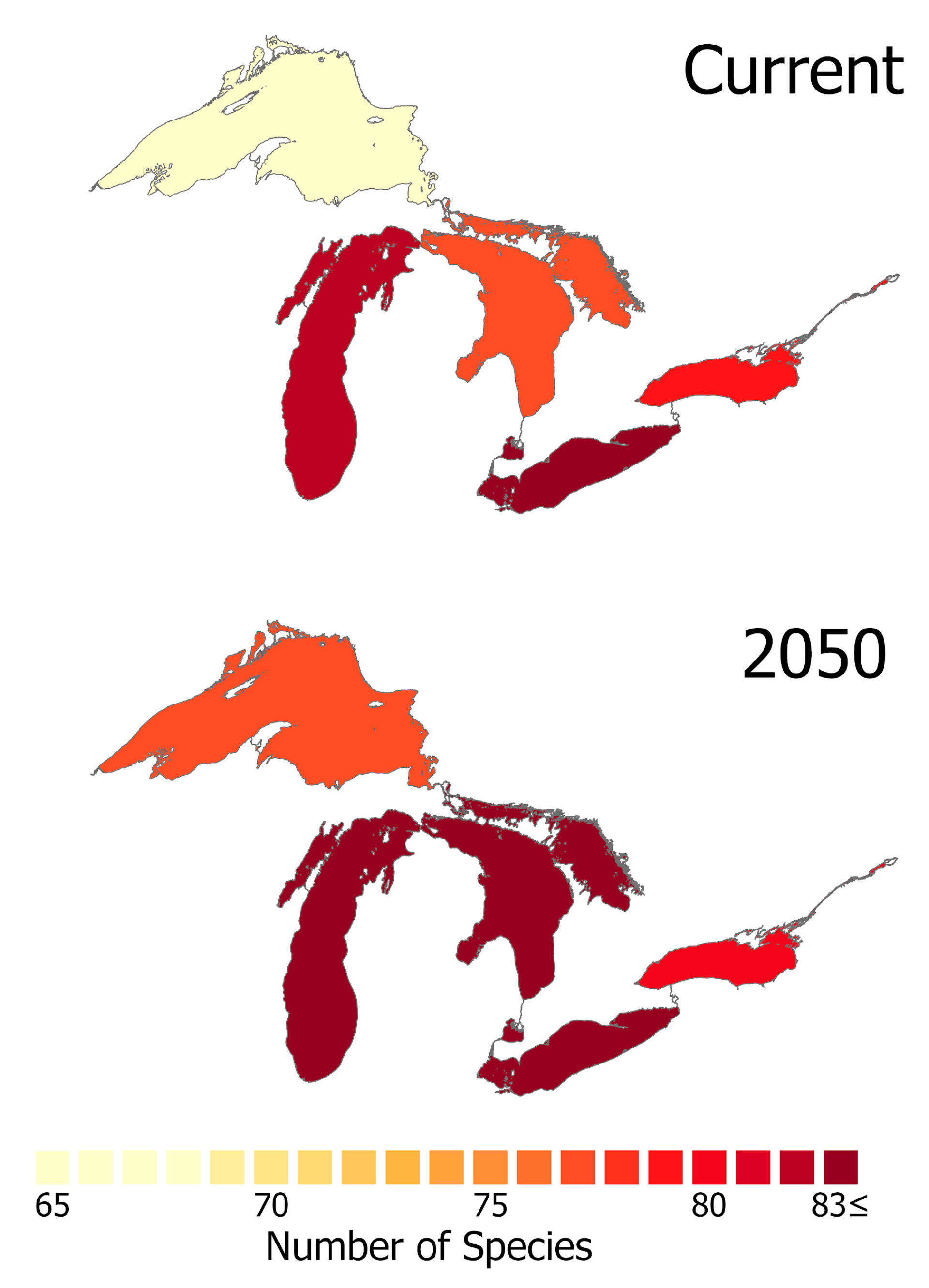
Projected temperature changes differ across the Great Lakes, with northern Lake Superior having slightly greater projected changes than southern reaches. Lake Superior's projected vulnerability increased by 17%, Lake Huron by 8%, Lake Michigan by 5%, Lake Erie by 2% and Lake Ontario by 1%. The projected thermal changes in northern Great Lakes cross the threshold of thermal tolerance for many species; current conditions that create a thermal barrier to the survival of these species in Lake Superior and Lake Huron disappear in the projected thermal conditions. This shift is not equally offset by the potential for ‘too warm’ conditions to create a barrier for survival of these species in the southern portions of the Lakes.
Figure 3.
Paired maps depicting the number of species assessed as posing a medium or high establishment threat to each lake under current and projected thermal regimes.
Figure 3.
Paired maps depicting the number of species assessed as posing a medium or high establishment threat to each lake under current and projected thermal regimes.
4. Discussion
Understanding potential changes to the risk posed by invasive species is critical to the management of the Great Lakes. Binational, federal, state, tribal and local authorities invest significant resources in surveillance for potential invasives and in rapid response to discoveries. To remain efficient, surveillance programs need to adapt and invest resources to pathways, taxa and geographic locations that pose the highest risk. Fifty-four percent of the species analyzed here were found to pose an increased risk of establishing under 2050 projected thermal conditions while only 6% were found to pose a decreased risk. While the sample size was small, the potentially invasive herpetofauna (amphibians and turtles) were universally found to pose an increased risk of establishment under warmer scenarios, and nearly 75% of the potentially invasive aquatic plants were likewise found to pose an increased risk for survival. Geographically, the northern portions of the Great Lakes, especially Lakes Superior and Huron, are projected to become more vulnerable to potential invasion by new species.
Hellman et al. [13] outlines 5 categories of consequences of climate change for invasive species: (1) altered transport of invasive species, (2) altered climatic constraints on invasive species, (3) altered distributions of existing invasive species, (4) altered impact of existing invasive species, and (5) altered effectiveness of management strategies. This study limited its scope to potential direct impacts of changes to the thermal regime on survival/establishment of the watchlist species - firmly within Hellman’s second category. Indirect impacts of climate change (such as elimination of native competitors and changes to habitat – e.g., acidification, stratification, water levels, currents, storm frequency) and potential simultaneous system changes which may not be related to climate change (e.g., human population shifts, changes in vectors, land use changes) were not considered. Such additional future scenarios may either aggravate or counterbalance the direct effects summarized here. Buckley et al. [28] conducted a broader assessment of vulnerability of the Great Lakes (including Canadian inland lakes of the basin) to invasive species (including both already established species and introduction, which we did not consider) in response to the combined effects of climate and human population change; their results reflect ours in that aquatic plants show an increased risk of invasion with northern areas more vulnerable to invasion while planktonic invertebrates exhibit decreased risk in the Great Lakes. They subdivided their assessment of fishes into aquarium fishes, baitfish, and warmwater fishes while excluding coldwater fishes, which may provide a more nuanced explanation for our mixed results (only 40% of the watchlist fishes examined here showed increased potential for establishment under warmer conditions).
The scope of this study was limited to the pre-existing GLANSIS watchlist; a subset of potential invaders for which exhaustive literature reviews had already been conducted. While generated using consistent methods and intended as a representative sample, this watchlist is not exhaustive of all potential invaders to the Great Lakes -- a recent horizon scan conducted by a co-author on this paper [36] has identified an additional 667 species which, based on rapid assessment, may meet listing criteria. Campbell et al. [26] looked at the history of failed fish introductions to the Laurentian Great Lakes and identified 7 fish species from that set (n=34) that were likely to have an increased climate match and increased establishment success under future scenarios. Unfortunately, none of these seven are included in the current GLANSIS watchlist, so were not included in this analysis (4 of the 7 are in the set identified in our horizon scan, Gambusia affinis is reported as already established in Wisconsin waters of Lake Michigan, Morone mississippiensis is native to southern Lake Michigan tributaries, Pycocentrus natteri had been missed in our horizon scan). Additional examination of potential biases in the GLANSIS watchlist and in the literature consulted for these species are available as part of a larger gap analysis conducted on GLANSIS [51].
Very few peer-reviewed studies have included a detailed examination of the influence of climate change on species invasions in the Great Lakes, despite a wealth of readily-available information on the ecology of current and potential invasive species and detailed climate projection models for the region. However, this information is likely to be critical for informing efficient use of limited surveillance and management resources. This current analysis is low-resolution and limited in scope, but we believe it provides insights to guide future research. In the future we hope to partner to similarly address Hellman’s third category of climate consequences to the Great Lakes (altered distributions of existing invasive species) using a more refined geographic framework and existing GLANSIS information. Data and metrics available through GLANSIS impact assessments may also be useful as a baseline in predicting Hellman’s 1st (altered transport of invasive species), 4th (altered impact of existing invasive species), and 5th (altered effectiveness of management strategies) categories, but these would require more extensive modelling and social-science projections not currently available through GLANSIS.
Author Contributions
Conceptualization: R.S.; Methodology, Investigation and Formal Analysis: E.H., Data Visualization: E.H. and C.S.; Writing: R.S. and E.H.; Project Administration: R.S. All authors have read and agreed to the published version of the manuscript.
Funding
Funding for this project was provided by the COOPERATIVE INSTITUTE FOR GREAT LAKES RESEARCH (CIGLR) through the National Oceanic and Atmospheric Administration (NOAA) Cooperative Agreement with the University of Michigan (NA22OAR4320150). This is CIGLR contribution #1271. Michigan Sea Grant contributions to this research were funded under award NA24OARX417C0157-T3-01S001 & 01S005 by the GREAT LAKES RESTORATION INITIATIVE, U.S. ENVIRONMENTAL PROTECTION AGENCY via the NATIONAL OCEANIC AND ATMOSPHERIC ADMINISTRATION, U.S. DEPARTMENT OF COMMERCE through the Regents of the University of Michigan. The statements, findings, conclusions, and recommendations are those of the author(s) and do not necessarily reflect the views of the National Oceanic and Atmospheric Administration, the Department of Commerce, or the Regents of the University of Michigan.
Data Availability Statement
All raw data for species characteristics and environmental limits can be found at GLANSIS (www.glerl.noaa.gov/glansis) - either in the individual species profiles or the risk assessments.
Acknowledgements
Ashley Elgin, NOAA Great Lakes Environmental Research Laboratory, served as fellowship co-mentor for Elias Hanson.
Conflicts of Interest
The authors declare no conflicts of interest. The funders had no role in the design of the study; in the collection, analyses, or interpretation of data; in the writing of the manuscript; or in the decision to publish the results.
Abbreviations
The following abbreviations are used in this manuscript:
| MDPI | Multidisciplinary Digital Publishing Institute |
| DOAJ | Directory of open access journals |
| GLANSIS | Great Lakes Aquatic Nonindigenous Species Information System |
| NOAA | National Oceanic and Atmospheric Administration |
| GLERL | Great Lakes Environmental Research Laboratory |
| USGS | United States Geological Survey |
| USDA | United States Department of Agriculture |
| GLAHF | Great Lakes Aquatic Habitat Framework |
| GLISA | Great Lakes Integrated Sciences and Assessments Center |
| NAD | North American Datum |
| NGS | National Geodetic Survey |
| WGS | World Geodetic System |
References
- Strayer, D.L. Alien species in fresh waters: Ecological effects, interactions with other stressors, and prospects for the future. Freshw. Biol. 2010, 55, 152–174.
- Simberloff, D.; Martin, J.L.; Genovesi, P.; Maris, V.; Wardle, D.A.; Aronson, J.; Curchamp, F.; Galil, B.; García-Bertou, E.; Pascal, M.; et al. Impacts of biological invasions: what’s what and the way forward. Trends Ecol. Evol. 2013, 28, 58–66.
- Polce, C.; Cardosa, A.; Deriu, I.; Gervasini, E.; Tsiamis, K.; Vigiak, O.; Zilian, G.; Maes, J. Invasive alien species of policy concerns show widespread patterns of invasion and potential pressure across European ecosystems. Scientific Reports (2023)13:8124. [CrossRef]
- Haubrock, P; Cuthbert, R.; Ricciardi, A.; Diagne, C.; Courchanp, F. Economic costs of invasive bivalves in freshwater ecosystems. Diversity and Distributions 2022:28:1010-1021. [CrossRef]
- Bolpagni, R. Towards global dominance of invasive alien plants in freshwater ecosystems: the dawn of the Exocene? Hydrobiologia (2021)848:2259-2279. [CrossRef]
- Britton, J. Contemporary perspectives on the ecological impacts of invasive freshwater fishes. Journal of Fish Biology 2023;103:752–764. [CrossRef]
- Woolway, R.; Sharma, S.; Smol, J. Lakes in Hot Water: The Impacts of a Changing Climate in Aquatic Ecosystems. BioScience (2022)72(11)1050-1061.
- Rose, K.; Bierwagen, B.; Bridgham, S.; Carlisle, D.; Hawkins, C.; Poff, N.; Read, J.; Rohr, J.; Saros, J.; Williamson, C. Indicators of the effects of climate change on freshwater ecosystems. Clim Change. 2023 March 01; 173(23): 1–20. [CrossRef]
- Capon, S.; Stewart-Koster, B.; Bunn, S. Future of freshwater ecosystems in a 1.5°C Warmer World. Frontiers in Environmental Science 2021(9)784642. [CrossRef]
- Kundzewicz, Z.; Mata, L.; Arnell, N.; Doll, P.; Jimenez, B.; Miller, K.; Oki, T.; Şen, Z.; Shiklomanov, I. The implications of projected climate change for freshwater resources and their management, Hydrological Sciences Journal (2008) 53:1, 3-10. [CrossRef]
- Doll, P.; Zhang, J. Impact of climate change on freshwater ecosystems: a global-scale analysis of ecologically relevant river flow alterations. Hydrol. Earth Syst. Sci. (2010) 14, 783–799. [CrossRef]
- Poesch, M.; Chavarie, L.; Chu, C.; Pandit, S.; Tonn, W. Climate Change Impacts on Freshwater Fishes: A Canadian Perspective. Fisheries (2016) 41:7, 385-391. [CrossRef]
- Hellmann, J.; Byers, J.; Bierwagen, B.; Duk, J. Five Potential Consequences of Climate Change for Invasive Species. Conservation Biology (2008)22, No. 3, 534–543. [CrossRef]
- Kernan, M. Climate change and the impact of invasive species on aquatic ecosystems. Aquatic Ecosystem Health & Management (2015) 18(3), 321–333. [CrossRef]
- Great Lakes Restoration Initiative (GLRI) Task Force. GLRI Action Plan FY2010-FY2014; US EPA Great Lakes National Program Office: Chicago, IL, USA, 2010.
- Mills, E.L.; Leach, J.H.; Carlton, J.T.; Secor, C.L. Exotic species in the Great Lakes: A history of biotic crises and anthropogenic introductions. J. Great Lakes Res. 1993, 19, 1–54.
- Ricciardi, A. Patterns of invasion in the Laurentian Great Lakes in relation to changes in vector activity. Divers. Distrib. 2006, 12, 425–433.
- Sturtevant, R.; Mason, D.; Rutherford, E.; Elgin, A.; Lower, E.; Martinez, F. Recent history of nonindigenous species in the Laurentian Great Lakes; An update to Mills et al., 1993 (25 years later). Journal of Great Lakes Research (2019) 45(6):1011-1035. [CrossRef]
- Xue, P.; Ye, X.; Pal, J.; Chu, P.; Kayastha, M.; Huang, C. Climate projections over the Great Lakes Region: using two-way coupling of a regional climate model with a 3-D lake model. Geosci. Model Dev. (2022) 15, 4425–4446. [CrossRef]
- Woolway, R.; Jennings, E.; Shatwell, T.; Golub, M.; Pierson, D.; Maberly, S. Lake heatwaves under climate change. Nature (2021) 589:402-407.
- Costa, D.; Zhang, H.; Levison, J. Impacts of climate change on groundwater in the Great Lakes Basin: A review. Journal of Great Lakes Research 47 (2021) 1613–1625. [CrossRef]
- Kayastha, M.; Ye, X.; Huang, C.; Xue, P. Future rise of the Great Lakes water levels under climate change. Journal of Hydrology (2022) Volume 612, Part B, 128205. [CrossRef]
- Woolway, R.; Sharma, S.; Weyhenmeyer, G.; Debolskiy, A.; Golub, M.; Mercado-Bettin, D.; Perroud, M.; Stepanenko, V.; Tan, Z.; Grant, L.; Ladwig, R.; Mesman, J.; Moore, T.; Shatwell, T.; Vanderkelen, I.; Austin, J.; DeGasperi, C.; Dokulil, M.; La Fuente, S.; Mackay, E.; Schladow, S.; Watanabe, S.; Marce, R.; Pierson, D.; Thiery, W.; Jennings, E. Phenological shifts in lake stratification under climate change. Nature Communications 126, e2021JG006247. [CrossRef]
- Ozersky, T.; Bramberger, A.; Elgen, A.; Vanderploeg, H.; Wang, J.; Austin, J.; Carrick, H.; Chavarie, L.; Depew, D.; Fisk, A.; Hampton, S.; Hinchey, E.; North, R,; Wells, M.; Xenopoulos, M.; Coleman, M.; Duhaime, M.; Fujisake-Manome, A.; McKay, R.; Meadows, G.; Rowe, M.; Sharma, S.; Twiss, M.; Zastepa, A. The changing face of winter: Lessons and questions for the Laurentian Great Lakes. Journal of Geophysical Research: Biogeosciences (2021) 126, e2021JG006247. [CrossRef]
- Theuerkauf, T.; Braun, K. Rapid water level rise drives unprecedented coastal habitat loss along the Great Lakes of North America. Journal of Great Lakes Research (2021) 47(4)945-954. [CrossRef]
- Campbell, S.; Hubbard, J.; Mandrak, N. Changing community dynamics and climate alter invasion risk of freshwater fishes historically found in invasion pathways of the Laurentian Great Lakes. Diversity and Distributions 2022;28:1620–1634. [CrossRef]
- Kindree, M.; Elucidating the interactive effects of climate change and invasive species using a lotic fish species pair. Dissertation. Ecology and Evolutionary Biology, University of Toronto. 2022.
- Buckley, J.; Hunt, L.; Rodgers, J.; Drake, A.; Johnson, T. Assessing the vulnerability of Ontario’s Great Lakes and inland lakes to aquatic invasive species under climate change and human population change. 2021. Science and Research Branch, Ontario Ministry of Natural Resources and Forestry, Ontario, Canada.
- Ruggiano, N.; Perry, T. Conducting secondary analysis of qualitative data: Should we, can we, and how? Qual Soc Work. 2019 January ; 18(1): 81–97. [CrossRef]
- Gurevitch, J.; Curtis, P.; Jones, M. Meta-analysis in ecology. Advances in Ecological Research (2001) 32:199-247. [CrossRef]
- NOAA. Great Lakes Aquatic Nonindigenous Species Information System (GLANSIS). Available online: https://www.glerl.noaa.gov/glansis/ (accessed on 1 August 2025).
- Fusaro, A.; Baker, E.; Conard, W.; Davidson, A.; Dettloff, K.; Li, J.; Núñez-Mir, G.; Sturtevant, R.; Rutherford, E. A risk assessment of potential Great Lakes aquatic invaders. NOAA Technical Memorandum GLERL-169. 1640pp.
- Lower, E.; Boucher, N.; Alsip, P.; Davidson, A.; Sturtevant, R. 2018 update to “A risk assessment of potential Great Lakes aquatic invaders.” NOAA Technical Memorandum GLERL-169b. 266pp.
- Lower, E.; Boucher, N.; Davidson, A.; Elgin, A.; Sturtevant, R. 2019 Update to “A risk assessment of potential Great Lakes aquatic invaders.” NOAA Technical Memorandum GLERL-169c. 179pp.
- Lower, E.; Bartos, A.; Sturtevant, R.; Elgin, A. 2020 Update to “A risk assessment of potential Great Lakes Lakes aqautic invaders.” NOAA Technical Memorandum GLERL-169d. 152pp.
- Sturtevant, R.; Lower, E.; Bartos, A.; Johnson, A.; Cameron, C.; Rose, D.; Redinger, J.; Shelly, C.; Van Zeghbroek, J.; Mason, D.; Elgin, A. 2021-2023 Updates to GLANSIS Assessments. NOAA Technical Memorandum GLERL-180. 79pp.
- Davidson, A; Fusaro, A.; Sturtevant, R.; Kashian; D. Development of a risk assessment framework to predict invasive species establishment for multiple taxonomic groups and vectors of introduction. Management of Biological Invasions 8(1)25-36. 2017. [CrossRef]
- Trumpickas, J., B.J. Shuter, and C.K. Minns. Forecasting impacts of climate changes on Great Lakes surface water temperatures. Journal of Great Lakes Research (2009) 35:454-463.
- Xue, P., X. Ye, J. Pal, P. Chu, M. Kayastha, and C. Huang. Climate projections over the Great Lakes region: using two-way coupling of a regional climate model with a 3-D lake model. Geoscientific Model Development (2022) 15:4425-4446.
- Toffolon, M., S. Piccolroaz, and E. Calamita. On the use of averaged indicators to assess lakes’ thermal response to changes in climatic conditions. Environmental Research Letters (2020)15:034060.
- Trumpickas, J., B. Shuter, C. Minns, and H. Cyr. Characterizing patterns of nearshore water temperature variation in the North American Great Lakes and assessing sensitivities to climate change. Journal of Great Lakes Research (2015) 41:53-64.
- Matsumoto. K., K. Tokos, and J. Rippke. Climate projection of Lake Superior under a future warming scenario. J. Limnol. (2019) 78(3):296-309.
- Wang, J., X. Bai, H. Hu, A. Clites, M. Colton, and B. Lofgren. Temporal and spatial variability of Great Lakes ice cover, 1973-2010. Journal of Climate (2012) 25(4):1318.
- Mason, L.A., C. Riseng, A. Gronewold, E. Rutherford, J. Wang, A. Clites, S. Smith, and P. McIntyre. Fine-scale spatial variation in ice cover and surface temperature trends across the surface of the Laurentian Great Lakes. Climatic Change (2016) 138:71-83.
- Zhang, L., Y. Zhao, D. Hein-Griggs, L. Barr, and J. Ciborowski. Projected extreme temperature and precipitation of the Laurentian Great Lakes basin. Global and Planetary Change. (2019) 172:325-335.
- Hayhoe, K., J. VanDorn, T. Corley II, N. Schlegel, and D. Wuebbles. Regional climate change projections for Chicago and the US Great Lakes. Journal of Great Lakes Research (2010) 36:7-21.
- Wuebbles, D.; Fahey, D.; Hibbard, K.; Dokken, D.; Stewart, B.; Maycock, T. Climate Science Special Report: Fourth National Climate Assessment, Volume I; U.S. Global Change Research Program: Washington, DC, USA, 2017.
- Wang, X., G. Huang, B. Baetz and S. Zhao. Probabilistic projections of regional climatic changes over the Great Lakes basin. Climate Dynamics (2016) 49:2237-2247.
- Northern IN National Weather Service. 2024. Fall Frost and Freeze Information for the Northern Indiana Forecast Area. US Department of Commerce, NOAA, National Weather Service.
- Hayhoe, K., S. Sheridan, L. Kalkstein, and S. Greene. Climate change, heat waves and mortality projections for Chicago. Journal of Great Lakes Research (2010) 36:65-73.
- Sturtevant, R., E. Lower, N. Boucher, A. Bartos, D. Mason, E. Rutherford, F. Martinez and A. Elgin. 2020. A Gap Analysis of the State of Knowledge of Great Lakes Nonindigenous Species. NOAA Technical Memorandum GLERL-176. https://www.glerl.noaa.gov/pubs/tech_reports/glerl-176/tm-176.pdf. [CrossRef]
Figure 1.
Study area, Laurentian Great Lakes. Data Layers: Great Lakes Basin boundary (Source: GLAHF), US states (Source: Esri, U.S. Census Bureau, NOAA, NGS), world countries (Source: Esri, Garmin, U.S. Central Intelligence Agency). Inset map included for geographic context.
Figure 1.
Study area, Laurentian Great Lakes. Data Layers: Great Lakes Basin boundary (Source: GLAHF), US states (Source: Esri, U.S. Census Bureau, NOAA, NGS), world countries (Source: Esri, Garmin, U.S. Central Intelligence Agency). Inset map included for geographic context.
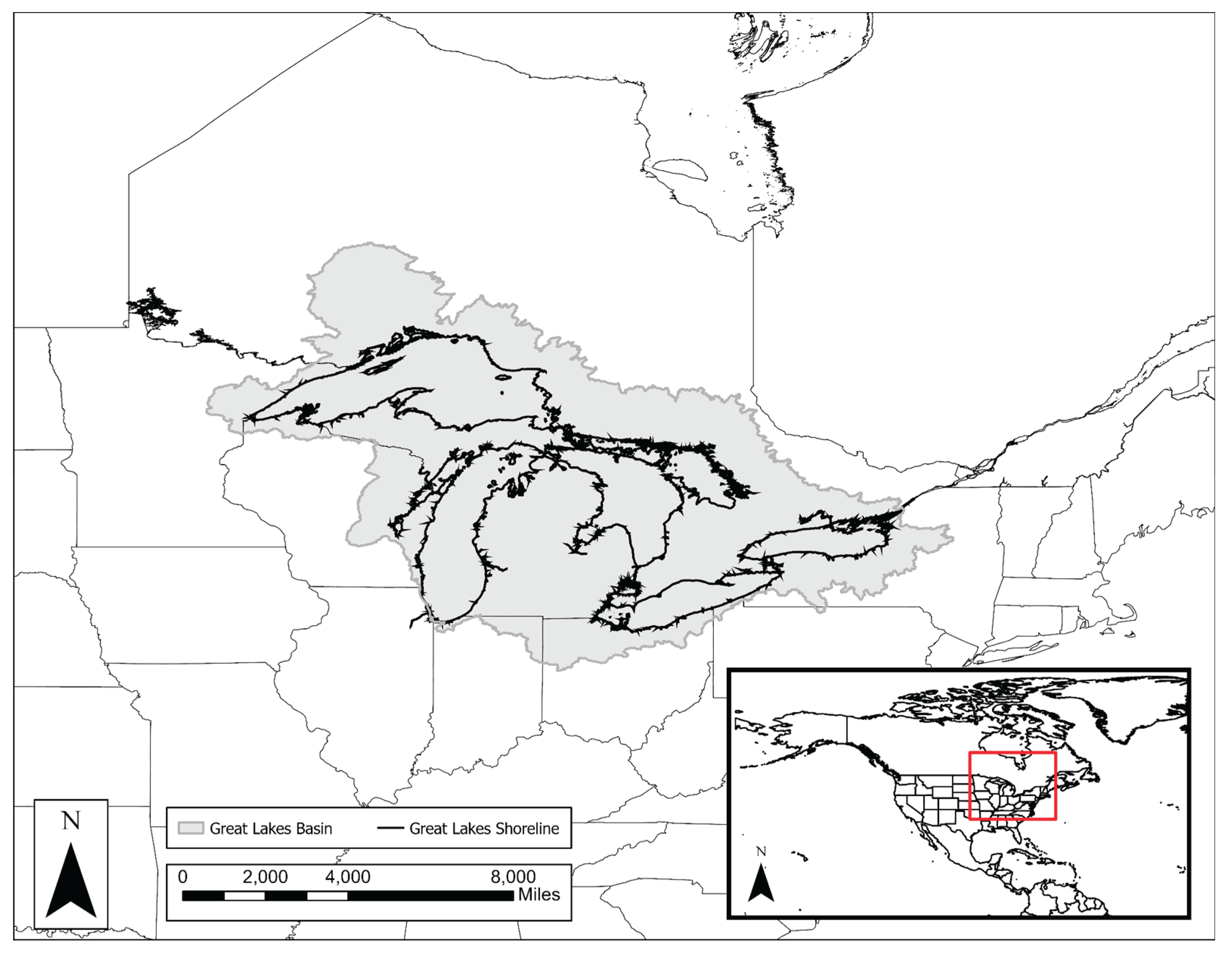
Figure 2.
Taxa posing a greater risk under projected thermal changes.
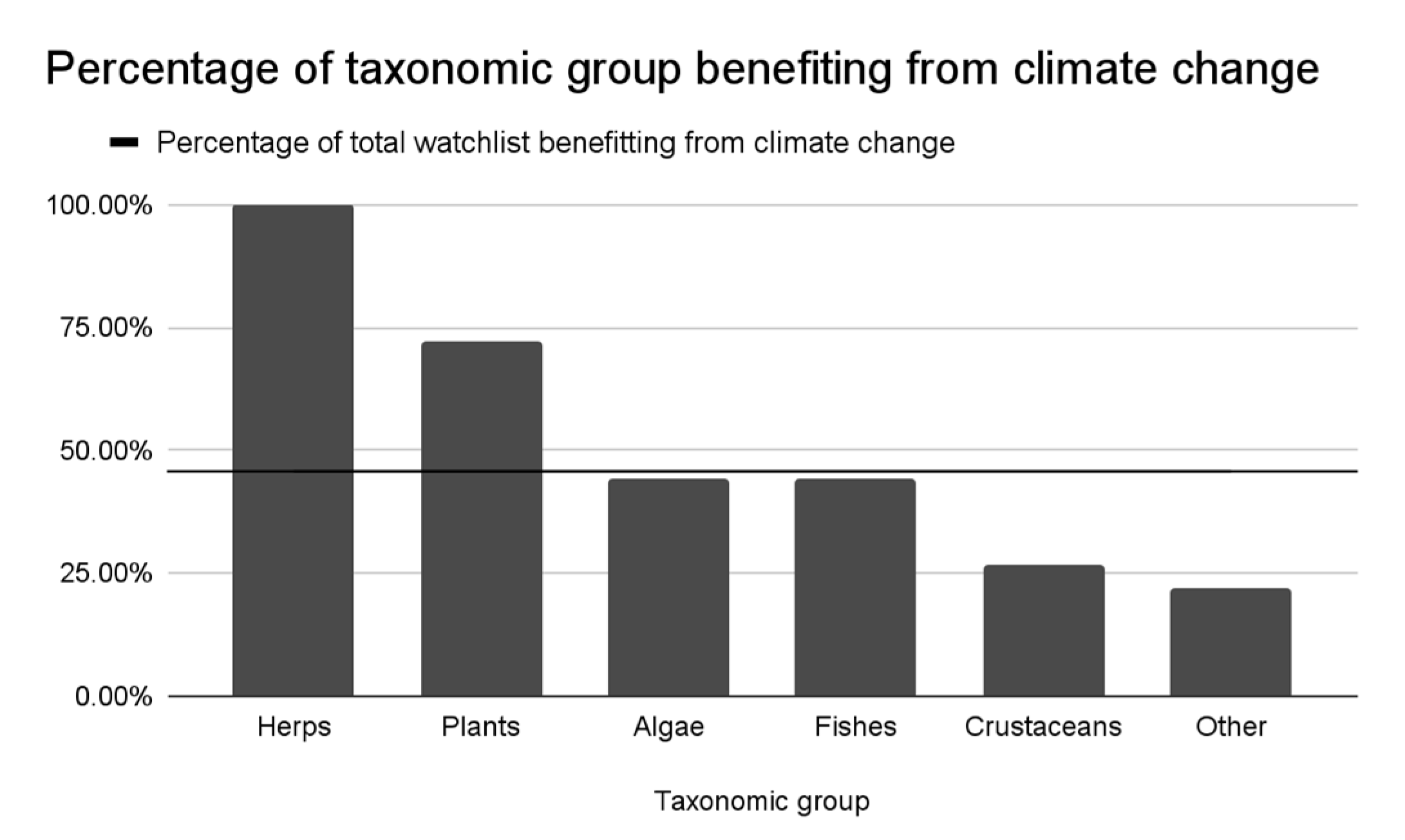
Table 3.
Impact of projected thermal changes to the establishment risk.
| Taxonomic Group | Watchlist Species | Increased Risk | Neutral | Decreased Risk | Insufficient Information |
|---|---|---|---|---|---|
| Algae | Chaetoceros muelleri | x | |||
| (n=9) | Hymenomonas roseola | x | |||
| Pleurosira laevis | x | ||||
| Prymnesium parvum | x | ||||
| Sphacelaria fluviatilis | x | ||||
| Sphacelaria lacustris | x | ||||
| Thalassiosira bramaputrae | x | ||||
| Ulva intestinalis | x | ||||
| Ulva prolifera | x | ||||
| Plants | Alternanthera philoxeroides | x | |||
| (n=18) | Arundo donax | x | |||
| Crassula helmsii | x | ||||
| Egeria densa | x | ||||
| Egeria najas | x | ||||
| Eichhornia crassipes | x | ||||
| Hottonia palustris | x | ||||
| Hygrophila polysperma | x | ||||
| Impatiens balfourii | x | ||||
| Ludwigia grandiflora | x | ||||
| Lysimachia punctata | x | ||||
| Myriophyllum aquaticum | x | ||||
| Lagarosiphon major | x | ||||
| Nelumbo nucifera | x | ||||
| Oenanthe javanica | x | ||||
| Pistia stratiotes | x | ||||
| Sparganium erectum | x | ||||
| Typha laxmannii | x | ||||
| Herps | Kinosternon subrubrum | x | |||
| (n=5) | Pseudemys concinna | x | |||
| Macrochelys temminckii | x | ||||
| Trachemys scripta scripta | x | ||||
| Xenopus laevis | x | ||||
| Fishes | Alburnus alburnus | x | |||
| (n=25) | Alosa chrysochloris | x | |||
| Babka gymnotrachelus | x | ||||
| Carassius carassius | x | ||||
| Channa argus | x | ||||
| Clupeonella cultriventris | x | ||||
| Cyprinella lutrensis | x | ||||
| Cyprinella whipplei | x | ||||
| Hypophthalmichthys molitrix | x | ||||
| Hypophthalmichthys nobilis | x | ||||
| Ictalurus furcatus | x | ||||
| Knipowitschia caucasica | x | ||||
| Lepomis auritus | x | ||||
| Leuciscus idus | x | ||||
| Leuciscus leuciscus | x | ||||
| Mylopharyngodon piceus | x | ||||
| Neogobius fluviatilis | x | ||||
| Osmerus eperlanus | x | ||||
| Perca fluviatilis | x | ||||
| Percottus glenii | x | ||||
| Phoxinus phoxinus | x | ||||
| Rutilus rutilius | x | ||||
| Sander lucioperca | x | ||||
| Syngnathus abaster | x | ||||
| Tinca tinca | x | ||||
| Crustaceans | Apocorophium lacustre | x | |||
| (n=28) | Astacus astacus | x | |||
| Calanipeda aquaedulcis | x | ||||
| Chelicorophium curvispinum | x | ||||
| Cherax destructor | x | ||||
| Cornigerius maeoticus | x | ||||
| Cyclops kolensis | x | ||||
| Daphnia cristata | x | ||||
| Dikerogammarus haemobaphes | x | ||||
| Dikerogammarus villosus | x | ||||
| Echinogammarus warpachowskyi | x | ||||
| Faxonius limosus | x | ||||
| Heterocope appendiculata | x | ||||
| Heterocope caspia | x | ||||
| Limnomysis benedeni | x | ||||
| Obesogammarus crassus | x | ||||
| Obesogammarus obesus | x | ||||
| Pacifastacus leniusculus | x | ||||
| Paraleptastacus spinicaudus | x | ||||
| Paraleptastacus wilsoni | x | ||||
| Paramysis intermedia | x | ||||
| Paramysis lacustris | x | ||||
| Pontogammarus robustoides | x | ||||
| Procambarus virginalis | x | ||||
| Pseudorasbora parva | x | ||||
| Rhithropanopaeus harrisii | x | ||||
| Silurus glanis | x | ||||
| Sinelobus stanfordi | x | ||||
| Other - Annelid (n=1) | Hypania invalida | x | |||
| Other - Bryozoan (n=1) | Fredericella sultana | x | |||
| Other - Mollusks | Hypanis colorata | x | |||
| (n=3) | Limnoperna fortunei | x | |||
| Lithoglyphus naticoides | x | ||||
| Other - Platyhelminthes (n=1) |
Leyogonimus polyoon | x | |||
| Other - Rotifers | Brachionus leydigii | x | |||
| (n=3) | Filinia cornuta | x | |||
| Filinia passa | x |
Disclaimer/Publisher’s Note: The statements, opinions and data contained in all publications are solely those of the individual author(s) and contributor(s) and not of MDPI and/or the editor(s). MDPI and/or the editor(s) disclaim responsibility for any injury to people or property resulting from any ideas, methods, instructions or products referred to in the content. |
© 2025 by the authors. Licensee MDPI, Basel, Switzerland. This article is an open access article distributed under the terms and conditions of the Creative Commons Attribution (CC BY) license (http://creativecommons.org/licenses/by/4.0/).
Copyright: This open access article is published under a Creative Commons CC BY 4.0 license, which permit the free download, distribution, and reuse, provided that the author and preprint are cited in any reuse.


