

Submitted:
29 October 2025
Posted:
30 October 2025
You are already at the latest version
Abstract
Background/Objectives: Human Immunodeficiency Virus (HIV) remains a major public health concern globally and across Europe. Romania’s epidemic has historically followed unique patterns, particularly due to pediatric infections in the late 1980s, but has since evolved to mirror broader European trends. This study provides an updated epidemiological and public health perspective on HIV in Romania compared with Europe, focusing on 2022–2024. Methods: We analyzed national surveillance data from the National Institute of Infectious Diseases “Prof. Dr. Matei Balș” and European Centre for Disease Prevention and Control (ECDC) reports. Key indicators included incidence, mortality, transmission routes, age and gender distribution, and treatment coverage. Comparative analyses were performed between Romania and European Union (EU)/Eastern Europe data. Results: Between 1985 and 2024, Romania registered 28,793 HIV/AIDS cases, with 18,768 people currently living with HIV/AIDS. In 2024, 810 new cases were reported, reflecting a slight increase from 2022–2023. Heterosexual transmission remained predominant (59.4%), followed by MSM (30.5%) and IDU (5.2%). Men accounted for over 75% of new diagnoses. Mortality fluctuated, with 193 HIV/AIDS-related deaths in 2024, compared to 125 in 2023. Despite this, treatment coverage improved, with 16,464 patients on ART by the end of 2024. Compared with Europe, Romania’s incidence (2.51/100,000) remained below the continental average (3.5/100,000), though MSM-related transmission rose sharply, aligning with Eastern European patterns. Conclusions: Romania has made significant progress in HIV care and treatment access, transforming HIV into a manageable chronic condition. However, persistent challenges include the rising burden among MSM, fluctuating mother-to-child transmission, and enduring stigma. Strengthened prevention strategies, expanded testing, and targeted interventions are essential to align Romania with successful European models and sustain progress toward HIV elimination.
Keywords:
HIV
; Romania
; Europe
; Epidemiology
1. Introduction
Human Immunodeficiency Virus (HIV) infection remains a significant global public health challenge, exerting profound social, economic, and political influence. Identified in 1983 as the causative agent of Acquired Immunodeficiency Syndrome (AIDS), HIV has spurred extensive research efforts and the development of comprehensive international programs. These initiatives, such as the Global Programme on HIV/AIDS established by the World Health Organization (WHO) in 1987, are focused on enhancing understanding of the disease, implementing preventive measures, and improving treatment options [1].
While initially limited in Central and Eastern Europe, the spread of HIV in Europe has progressively increased due to delayed implementation of testing and effective prevention strategies. Romania was among the first countries in the region to report the emergence of AIDS to the World Health Organization, documenting its first case in 1985. A pivotal step in strengthening epidemiological surveillance was the issuance of Order 200/1987 by the Romanian Ministry of Health, mandating that all HIV/AIDS cases be centrally reported to the "Dr. Victor Babeș" Hospital for Infectious Diseases in Bucharest. However, early detection of infection was hampered by insufficient diagnostic infrastructure and limited access to testing, which was primarily confined to a few laboratories in Bucharest.
The identification of a substantial number of children infected with HIV between 1987 and 1990 marked a critical turning point in the Romanian HIV epidemic, garnering international attention. Romania experienced a unique episode involving inadequate medical practices and the reuse of contaminated syringes and equipment within hospital and childcare settings. This mode of transmission differed markedly from Western countries, where sexual contact and intravenous drug use predominated. In response, the WHO and the Centers for Disease Control and Prevention (CDC) collaborated with Romanian authorities to implement rapid preventive and diagnostic measures.
During the 1990s, Romania achieved notable advancements in HIV diagnosis and treatment. Testing services were expanded to encompass at-risk populations, including individuals with tuberculosis and sexually transmitted infections. Concurrently, a significant increase in cases of vertical transmission was observed, particularly among children born between 1987 and 1990, leading to a significant cohort of long-term survivors within this population. The rise in vertical transmission post-1994 prompted the national health system to implement enhanced monitoring of pregnant women and strategies to prevent mother-to-child transmission. Mandatory screening for HIV and hepatitis B in donated blood was also instituted in the same year, mitigating the risk of transfusion-related infections.
In 2000, Romania launched the National Plan for Universal Access to Treatment and Care, a landmark initiative that recognized HIV/AIDS as a major public health priority. This plan provided free access to antiretroviral therapy (ART) for HIV-positive individuals, marking a significant advancement in combating the virus. The implementation of more effective prevention and treatment protocols associated with this plan led to increased patient life expectancy and improved quality of life.
The establishment of the National Multisectoral HIV/AIDS Commission in 2002 facilitated coordinated inter-institutional efforts in prevention and patient care. This period also witnessed a shift in the epidemiological profile of the infection, with an increase in heterosexual transmission, especially within the adult population aged 19 to 49 years.
Despite ongoing challenges, Romania has continued to develop strategic interventions to mitigate the impact of HIV/AIDS. In 2023, the Romanian Government approved a new National Strategy for the Surveillance, Control, and Prevention of HIV/AIDS Infection, allocating a budget exceeding 1.2 billion lei (240 million €) to be spent between 2023 - 2026. This program aims to expand access to testing, integrate HIV screening services into primary care settings, enhance health education programs and ensure continuity of antiretroviral treatment. Despite significant progress, insufficient testing and persistent stigma associated with HIV infection remain significant barriers to adequate healthcare access for many [2].
2. Materials and Methods
This retrospective descriptive study analyzed HIV/AIDS surveillance data from Romania (1985–2024), focusing on trends between 2022 and 2024, and compared them with European Union (EU) and Eastern European datasets. National data were obtained from the Department for Monitoring and Evaluation of HIV/AIDS Infection at the “Prof. Dr. Matei Balș” National Institute for Infectious Diseases, while European data were retrieved from the ECDC, UNAIDS, and WHO reports. Indicators examined included incidence, prevalence, mortality, age and gender distribution, transmission routes, and antiretroviral therapy (ART) coverage. Descriptive statistics were applied using Microsoft Excel, and results were presented in tables and figures. The study relied solely on anonymized, publicly available surveillance data and therefore did not require ethical approval.
3. Results
Between 1985 and 2024, Romania recorded 28 793 cases of HIV/AIDS, with 18 881 progressing to AIDS. By 2024, 1 276 individuals had been removed from the registry and 8 749 deaths due to AIDS had been documented. Currently, 18 768 people are living with HIV/AIDS (PLWHA). The number of newly reported HIV/AIDS cases between January 1st, 2022 and December 31, 2024, was 2 233, indicating ongoing viral transmission within the population. Additionally, 553 deaths were recorded during this period (Table 1). The statistical data presented herein are derived from the annual reports of the Department for Monitoring and Evaluation of HIV/AIDS Infection, part of the “Prof. Dr. Matei Balș” National Institute for Infectious Diseases, Bucharest [2].
Globally, approximately 39.9 million people are living with HIV, with 29.8 million (75%) ART. Despite the significant reduction in AIDS-related mortality achieved through current treatments, 630 000 deaths were attributed to the disease worldwide in 2023.
In Romania, 810 new HIV/AIDS cases were registered between January 1 and December 31, 2024, comprising 475 HIV infections and 335 AIDS cases. Compared to 760 new cases reported in 2023 and 757 in 2022, the incidence has shown a slight increase (Table 2) [3].
In 2024, 18 290 HIV/AIDS cases were registered among adults over 20 years of age. In contrast, the number of cases is significantly lower among children in the age group 0 - 14 years, where 141 cases were reported, and among adolescents (age group 15 - 19 years) where 130 cases were reported (Table 3). This stabilization of HIV infection in children marks the end of an important epidemiological episode that began in the late 1980s.
The most common route of transmission in 2024 was heterosexual contact (59.38%), followed by homosexual contact (30.49%) and the use of contaminated injection equipment by intravenous drug users (5.18%)(Table 4). Vertical transmission increased slightly compared to previous years, although it still remains at low level (1.97%). The route of transmission was unknown in six cases (0.74%)[4].
Regarding the gender distribution of new HIV/AIDS cases registered in Romania, in 2023, there was a clear predominance of male patients, representing 77.51% (n=555) of cases, while women represented only 22.49% (n=161) (Figure 1). This trend persisted in 2024, when 75.93% (n = 615) of total registered new cases (810) were men and only 24.07% (n = 195) were women (Figure 2). These values reflect a continuation of the disparity in the gender distribution of HIV/AIDS infection, men remaining the most affected group.
The evolving epidemiology of HIV infection in Romania reveals substantial shifts in the composition of vulnerable populations, underscoring the necessity for adaptive prevention strategies. The proportion of cases attributed to men who have sex with men (MSM) has risen markedly, from 3.91% in 2007 to 32.67% in 2024, signifying a significant change in transmission dynamics. This necessitates broader, non-discriminatory access to preventative services, notably pre-exposure prophylaxis (PrEP). Conversely, the efficacy of risk reduction programs, such as syringe exchange and opioid substitution treatment, is demonstrably correlated with the decline in transmission among IDUs, which has fallen from 32.13% in 2012 to 5.19% in 2024.
The mother-to-child transmission (MTCT) rate, however, presents a more complex picture. While demonstrating a slight decrease in 2023, from 0.8% in 2022, a subsequent increase to 1.98% in 2024 necessitates heightened vigilance in monitoring HIV-positive pregnant women and intensified efforts to prevent vertical transmission. This fluctuation underscores the influence of public health policies on the trajectory of HIV infection and emphasizes the importance of individualized interventions predicated on the continuous assessment of epidemiological trends and risk factors [5] (Figure 3). Several contributing factors warrant consideration. Reduced emphasis on HIV education and awareness programs, particularly regarding MTCT, may negatively impact knowledge within vulnerable groups, potentially diminishing the uptake of preventative services [6]. Furthermore, the increasing influx of immigrants and the presence of women from high-risk groups lacking access to adequate prenatal care may exacerbate transmission risks. Demographic shifts and population mobility can further complicate outreach efforts to vulnerable populations [7]. Moreover, persistent stigmatization surrounding HIV may deter pregnant women from seeking necessary medical assistance or adhering to preventive treatment regimens, thereby increasing the risk of MTCT [4].
Recent data, by the end of December 2024, indicate a relatively stable trend in reported HIV/AIDS-related mortality over the preceding three years, with 185 deaths in 2022, 125 in 2023, and 193 in 2024. However, the absence of a discernible trend and the oscillation in reported mortality warrant further investigation (Figure 4).
The rising incidence of European cases during 2024 suggests an upward trajectory in HIV transmission across the continent, particularly in Eastern Europe. While Romania's incidence remains below the European average, exhibiting relative stability, a slight decline is observed compared to 2023. Although the impact of antiretroviral therapy (ART) has contributed to a decrease in AIDS-related mortality across Europe, a marginal increase in the annual death rate is apparent within Romania (Table 5).
Mortality associated with HIV/AIDS infection serves as a crucial indicator of the effectiveness of therapeutic interventions, healthcare access, and treatment adherence. In Romania, an increase in the number of patients receiving ART is evident, suggesting an expansion of treatment programs and enhanced acceptability (Table 6). Furthermore, the modest increase in the total number of patients under follow-up, coupled with a stable rate of new cases, indicates improved efficacy of retention in care strategies. Consequently, HIV infection in Romania, mirroring the trend in Western nations, has transitioned into a manageable chronic condition, affording a near-normal life expectancy due to the availability of treatment and routine monitoring. This transformation significantly mitigates the impact of a disease previously considered life-threatening [8,9].
4. Discussion
Romania witnessed an increase in new HIV/AIDS cases, rising from 716 in 2023 to 810 in 2024, mirroring a trend observed across Europe. The demographic profile of those affected in Romania closely resembles that of other Eastern European nations, with adults constituting the overwhelming majority. Specifically, 98.55% of individuals receiving HIV/AIDS care in Romania in 2024 were adults, aligning with the patterns observed in Bulgaria (over 99%), Ukraine (approximately 95 - 98%), and Poland (over 97%), where adult HIV prevalence remains high [4,10,11].
Conversely, countries such as Sweden, Norway, and Luxembourg, which have implemented robust sexual education programs and actively promote pre-exposure prophylaxis (PrEP), have witnessed a sustained decline in HIV cases among young people in recent years, demonstrating the efficacy of proactive prevention strategies [12,13,14].
While there is a discernible upward trend in transmission among men who have sex with men (MSM), heterosexual transmission continues to be the predominant route of HIV infection in Romania, representing 59.41% of cases in 2024. This echoes the broader European context, where sexual transmission remains the primary driver of HIV spread [15].
However, transmission among MSM represents a significant concern within Central and Eastern Europe, including Romania, where this group accounted for approximately 32.67% of new infections in 2024. This figure is comparable to those reported in Poland (around 32%), Lithuania (30%), and Bulgaria (30%), highlighting the substantial contribution of MSM to new HIV cases in the region [1,4,16]. Learning from best practices, such as the targeted interventions implemented in the UK, which have demonstrably reduced new infections among MSM through dedicated prevention and testing programs, Romania must prioritize the development and implementation of tailored strategies for this at-risk population [17].
Harm reduction initiatives, including needle exchange programs (NEPs) and opioid substitution therapy (OST), have demonstrably mitigated the transmission of infectious diseases, particularly HIV, among IDUs. This is corroborated by existing literature and epidemiological data. The European Centre for Disease Prevention and Control (ECDC) 2023 report on HIV/AIDS in Europe highlights a significant decline in new HIV infections among IDUs in countries that have implemented comprehensive harm reduction strategies encompassing both syringe distribution and OST. Similarly, the 2022 UNAIDS report indicates that such programs have played a crucial role in stabilizing the global incidence rate of HIV among IDUs, especially in resource-constrained settings [18].
These interventions remain critical for preventing a resurgence of IDU-related infections. Several European countries, notably the Netherlands, Sweden, Germany, France, Belgium, Denmark, and Switzerland, have documented reductions ranging from 15% to 35% in new HIV diagnoses among IDUs over the past five years. The implementation of comprehensive NEPs and OST has been particularly effective in the Netherlands and Sweden, where HIV incidence has decreased by over 30% [4,18].
Conversely, the Eastern Europe and Central Asia (EECA) region continues to experience the fastest growing HIV epidemic globally. New infections increased by 48% between 2011 and 2021, with an overall HIV treatment coverage rate of only 51% in 2022. Limited access to harm reduction services, specifically OST and NEPs, poses a significant challenge in countries such as Kazakhstan, Uzbekistan, and Turkmenistan, where OST coverage remains critically low, in some instances below 5% [19,20]. In Romania, while harm reduction programs are available, IDU-related HIV transmission represents a smaller proportion of the overall burden, accounting for less than 6% of all cases. This underscores the need for sustained and expanded harm reduction efforts globally, particularly in regions with escalating HIV epidemics and limited access to essential prevention and treatment services [21].
The vertical transmission rate in Romania, which was noted for its increase to 1.98% in 2024, after reaching a minimum of 0.8% in 2023, requires improved health education. This includes expanding prenatal screening programs, and strengthening national-level monitoring of HIV-positive pregnant women [22]. Sweden, with its comprehensive public health strategies, maintains one of the lowest vertical transmission rates in Europe (approximately 1% or less), providing a compelling example of effective intervention [1,23]. This success is attributable to widespread access to antiretroviral therapy (ART) for HIV-positive pregnant women, robust testing, prenatal support programs and proactive public health measures ensuring early intervention and continuous monitoring. Conversely, challenges persist in Eastern Europe, where access to healthcare and preventative interventions remains limited. The ongoing conflict and resulting healthcare crisis in Ukraine, for instance, have contributed to an estimated vertical transmission rate of 4-6% [4].
One of the most significant advancements in HIV/AIDS management in Romania has been the marked decline in mortality, reflecting the efficacy of ART and improved access to medical care. The number of deaths decreased from 185 in 2022 to 125 in 2023. This positive trend mirrors developments in Western Europe, where widespread access to ART and comprehensive healthcare systems contribute to continually improving outcomes.
Conversely, countries in Central and Eastern Europe, particularly Ukraine and Belarus, experience higher HIV-related mortality rates. Prior to the escalation of the conflict in Ukraine, annual AIDS-related deaths were estimated at 14,000–16,000, with a mortality rate of approximately 8-10 deaths per 100,000 population in 2022. The period between 2022 and 2024 has witnessed significant disruptions in HIV care, with many patients experiencing interrupted ART due to the destruction of healthcare infrastructure and forced displacement. WHO reported in 2023 that up to 40% of HIV/AIDS treatment centers in conflict-affected areas were either closed or operating at reduced capacity. Consequently, international organizations such as UNAIDS and the WHO project a 20-30% increase in HIV-related mortality in Ukraine in 2024 compared to pre-conflict levels, attributable to treatment disruptions and the chronic immunological stress associated with conflict.
While Romania benefits from a relatively stable treatment system, maintaining universal access to care and optimizing treatment protocols remain crucial for minimizing avoidable deaths. Furthermore, ensuring equitable access to these services for all affected populations is essential.
These findings underscore the need for a comprehensive and integrated public health strategy encompassing prevention, education, and equitable access to personalized healthcare services. Such a strategy aims to mitigate the epidemiological impact of HIV and ensure sustainable management of the infection both within Romania and across Europe.
The epidemiological analysis of HIV/AIDS in Romania from 2022 to 2024 reveals both progress and persistent challenges in managing the epidemic. Understanding the dynamics of transmission, including fluctuations in incidence, distribution of transmission routes, and the impact of preventative and therapeutic interventions, is crucial for informing and forming public health strategies.
While a modest decline in reported new cases between 2022 and 2024 is encouraging, this trend warrants cautious interpretation given the persistence of factors conducive to viral transmission. The increasing proportion of new diagnoses among MSM necessitates targeted prevention programs for this vulnerable population [24]. Such programs should prioritize enhanced health education and improved access to PrEP.
Heterosexual transmission remains a significant driver of new infections, accounting for over 50% of cases. This underscores the critical importance of comprehensive sexual health education, promoting awareness of protective measures, and intensifying screening efforts among high-risk groups. The demonstrable success of harm reduction initiatives, including NSP and OST, in mitigating transmission among IDUs, coupled with school-based education, signifies substantial progress. Continued investment in these evidence-based interventions remains essential [25].
The observed consistent decline in HIV/AIDS-related mortality in recent years reflects the efficacy of ART and improved access to quality healthcare [26]. Maintaining and optimizing treatment adherence remains paramount to halting disease progression and minimizing associated complications.
5. Conclusions
From a public health perspective, evolving epidemiological data necessitate continuous adaptation of HIV control strategies. Strengthening testing and early diagnosis programs, enhancing prevention services, expanding health education capacity, and mitigating the stigma experienced by people living with HIV are all vital components of an effective and inclusive response.
In conclusion, while Romania has achieved notable progress in combating HIV/AIDS, enduring challenges require a comprehensive, integrated, and sustainable approach. Reinforcing prevention efforts, optimizing treatment protocols, and maintaining robust epidemiological surveillance are essential to minimizing the impact of HIV on public health and contributing to the global goal of eliminating HIV/AIDS as a major public health threat.
Author Contributions
Conceptualization, A.C. and L.M.S.; methodology, M.M., C.T.; software, A.C., C.T.; validation, M.M. and A.M.T.; formal analysis, A.C.; investigation, A.I.A, O.G.; resources, M.M.; data curation, M.M.; writing—original draft preparation, A.C., L.M.S.; writing—review and editing, A.M.T., V.A..; visualization, A.C.; supervision, A.M.T., M.M.; project administration, A.G.M., S.I., S.S.A.; funding acquisition, L.M.S., V.A.. All authors have read and agreed to the published version of the manuscript.
Informed Consent Statement
Written informed consent has been obtained from the patient(s) to publish this paper.
Data Availability Statement
Acknowledgments
Publication of this paper was supported by the University of Medicine and Pharmacy Carol Davila, through the institutional program Publish not Perish.
Conflicts of Interest
The authors declare no conflicts of interest.
Abbreviations
The following abbreviations are used in this manuscript:
| HIV | Human Immunodeficiency Virus |
| AIDS | Acquired Immunodeficiency Syndrome |
| ECDC | European Centre for Disease Prevention and Control |
| EU | European Union |
| MSM | men who have sex with men |
| IDU | intravenous drug user |
| ART | antiretroviral therapy |
| WHO | World Health Organisation |
| CDC | Center for Disease Prevention and Control |
| PLWHA | people are living with HIV/AIDS |
| PrEP | pre-exposure prophylaxis |
| MTCT | mother-to-child transmission |
| OST | opioid substitution therapy |
| NEP | needle exchange programs |
| EECA | Eastern Europe and Central Asia |
References
- World Health Organization (WHO). HIV/AIDS: Data and Statistics. 2023. Available online: https://www.hiv.gov/hiv-basics/overview/data-and-trends/global-statistics (accessed on day month year).
- National Institute of Infectious Diseases "Prof. Dr. Matei Balș" (2024). Annual report on HIV/AIDS infection in Romania. https://www.cnlas.ro/images/doc/31122022_rom.
- Ministry of Health, Romania (2023). National Strategy for HIV/AIDS Surveillance, Control, and Prevention 2023-2026. 2022. Available online: https://files.hiv.gov/s3fs-public/NHAS-2022-2025.pdf (accessed on day month year).
- European Centre for Disease Prevention and Control (ECDC) (2023). HIV/AIDS Surveillance in Europe. 2024. Available online: https://www.ecdc.europa.eu/en/publications-data/hiv-aids-surveillance-europe-2024-2023-data (accessed on day month year).
- Iacob, S.; et al. Hepatitis B Prevalence and Referral Rates in Vulnerable Populations Undergoing Community-Based Screening-Results from the LIVE(RO)2 Program. Viruses. 2024 Aug 18;16(8):1318. [CrossRef] [PubMed]
- Beyond Vaccination: Exploring Young Adults' Awareness about Sexual Health in Romania, Roșioară AI, et al. 2023.
- Kamil Całus. Thirty years of crisis: Romania's demographic situation, OSW Commentary, Number 652, 21.03.2025, CENTRE FOR EASTERN STUDIES https://www.osw.waw.pl/sites/default/files/OSW_Commentary_652.
- National Institute of Public Health “Report on the Epidemiology of HIV/AIDS in Romania” 2023 https://cnlas.ro/images/doc/2024/ROMANIA%20LA%2031%20DECEMBRIE%202023-site_old.
- Teymur Noori at, al. Health-related quality of life in people living with HIV, 2022. https://www.europarl.europa.eu/RegData/etudes/IDAN/2022/734011/IPOL_IDA(2022)734011_EN.
- National Center of Infectious and Parasitic Disease (NCIPD), Bulgaria, 2024 https://pipd.ncipd.org/index. 2024.
- UNAIDS Ukraine country report, 2023. Available online: https://www.unaids.org/en/regionscountries/countries/ukraine.
- Swedish Institute for Communicable Disease Control, 2022 https://www.folkhalsomyndigheten.
- Norwegian Institute of Public Health. 2023. Available online: https://www.fhi.no/en/publ/2023/.
- Luxembourg Ministry of Health, 2023 https://m3s.gouvernement.lu/en/le-ministere.
- European AIDS Treatment Group (EATG) (2022). HIV in Central and Eastern Europe: Challenges and Opportunities.
- European AIDS Treatment Group, 2022. Available online: https://www.eatg.org/news/eatg-general-assembly-2022-30-years-european-aids-treatment-group/.
- National Health Service, 2023. Available online: https://www.gov.uk/government/publications/nhs-mandate-2023/the-governments-2023-mandate-to-nhs-england.
- UNAIDS: "Global AIDS Update 2022". Available online: https://www.unaids.org/en/resources/documents/2022/in-danger-global-aids-update.
- Parczewski M, Gökengin D. The HIV epidemic in eastern Europe and central Asia in difficult times: a story of resilience and change. J Int AIDS Soc. 2024 Jul;27 Suppl 3(Suppl 3):e26325. [CrossRef] [PubMed]
- UNODC report on HIV programs and risks among injecting drug users, 2024 http://unodc.org/unodc/en/hiv-aids/new/drug-use_and_HIV.
- European Monitoring Centre for Drugs and Drug Addiction (EMCDDA) (2022). HIV and Drug Use in Europe. Available online: https://www.euda.europa.eu/publications/edr/trends-developments/2022_en.
- United Nations Children's Fund (UNICEF) (2023). HIV and Children: Global and Regional Trends. Available online: http://data.unicef.org/topic/hivaids/global-regional-trends/.
- Public Health Agency of Sweden (Folkhälsomyndigheten), "HIV Surveillance Report 2022". Available online: https://www.folkhalsomyndigheten.se/the-public-health-agency-of-sweden/living-conditions-and-lifestyle/sexual-health/hiv-and-stis/.
- Ministry of Health, Romania (2023). National Strategy for HIV/AIDS Surveillance, Control, and Prevention 2023-2026. Available online: https://ms.ro/ro/minister/organizare/programe-na%C8%9Bionale-de-s%C4%83n%C4%83tate/.
- National Health Service (NHS), UK (2023). HIV Prevention and Treatment in the UK. Available online: https://www.nhs.uk/conditions/hiv-and-aids/.
- UNAIDS (2023). Fact Sheet 2023: Global HIV Statistics. Available online: https://www.humanitarianlibrary.org/sites/default/files/2023/10/UNAIDS_FactSheet_en.pdf.
Figure 1.
Gender distribution in 2023.
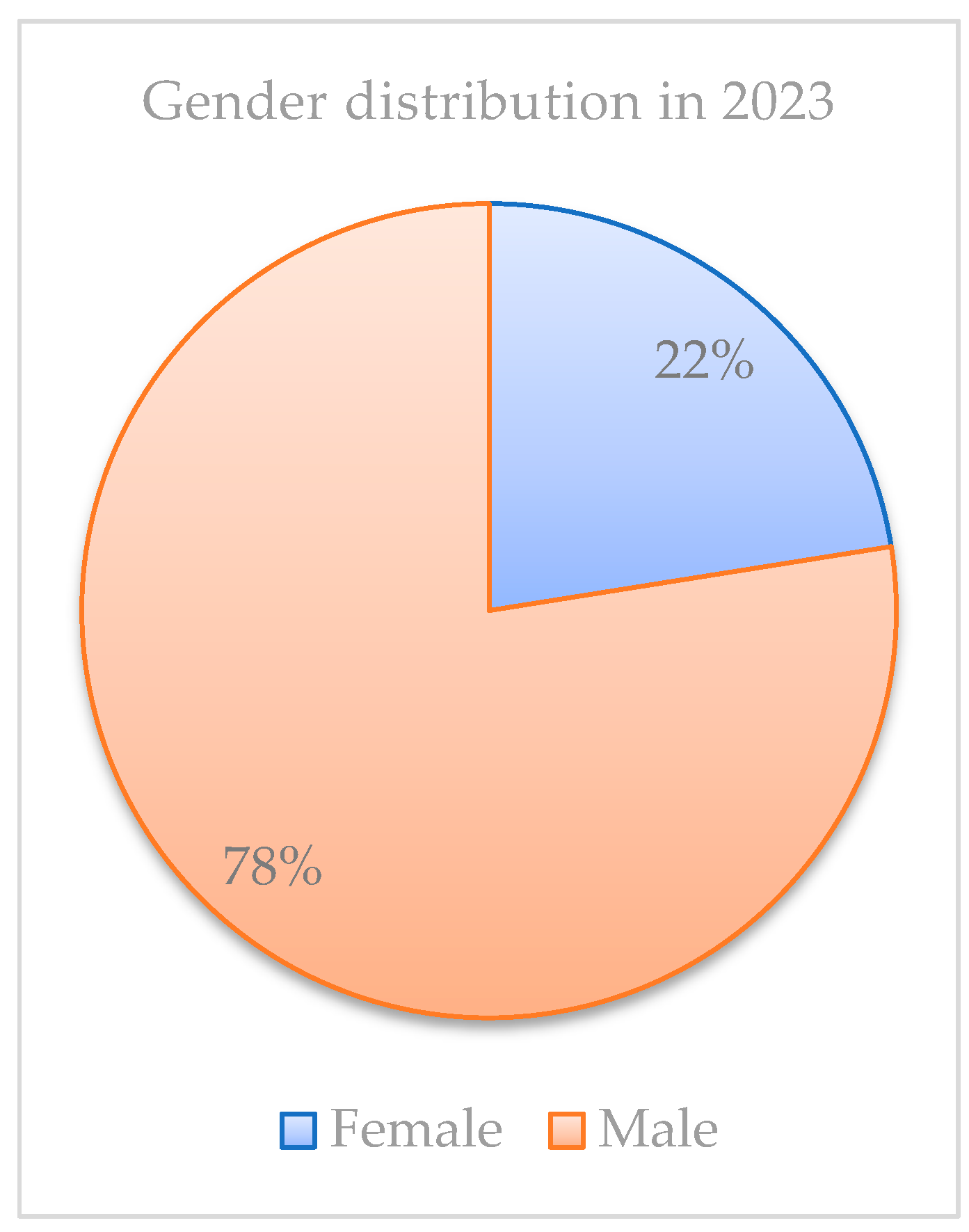
Figure 2.
Gender distribution in 2024.
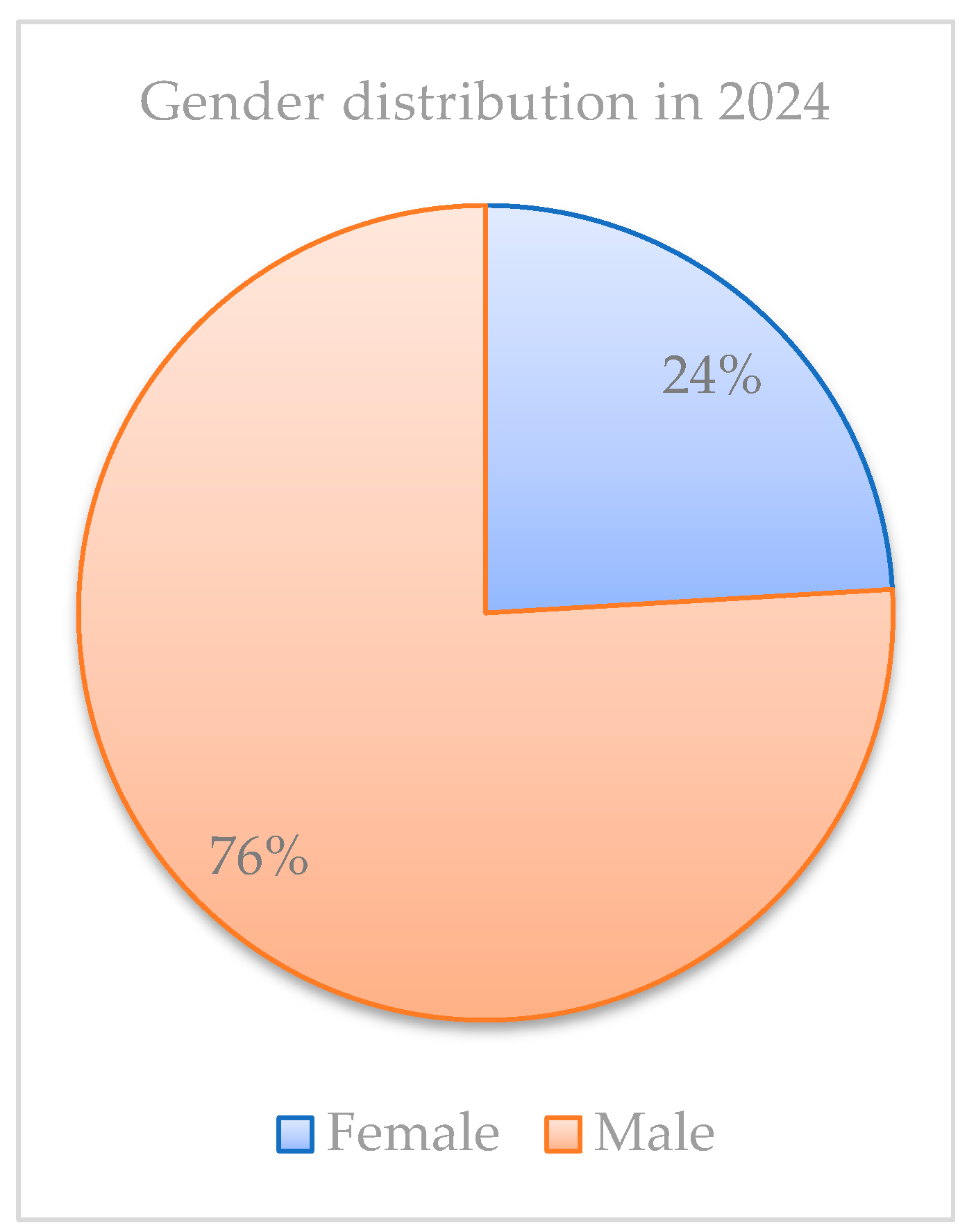
Figure 3.
HIV/AIDS transmission route between 2022 - 2024.
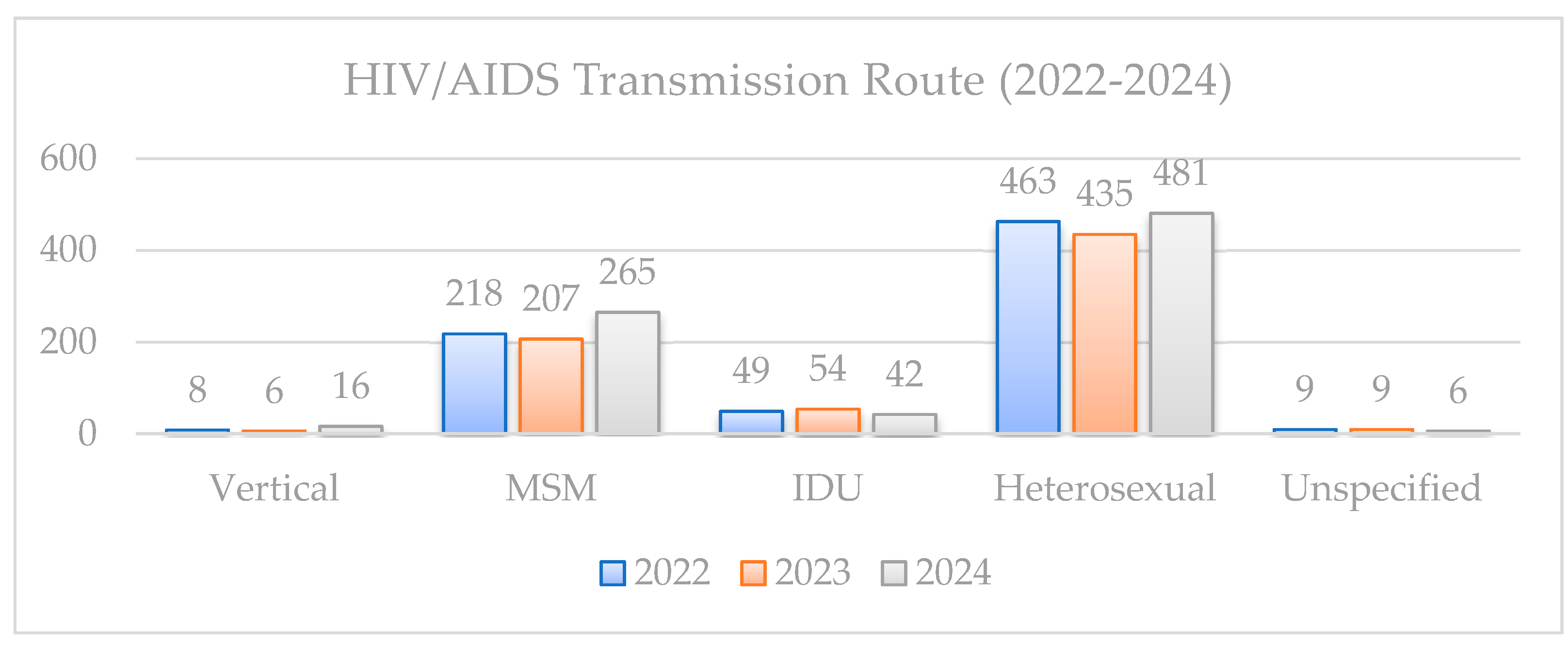
Figure 4.
HIV/AIDS-related mortality.
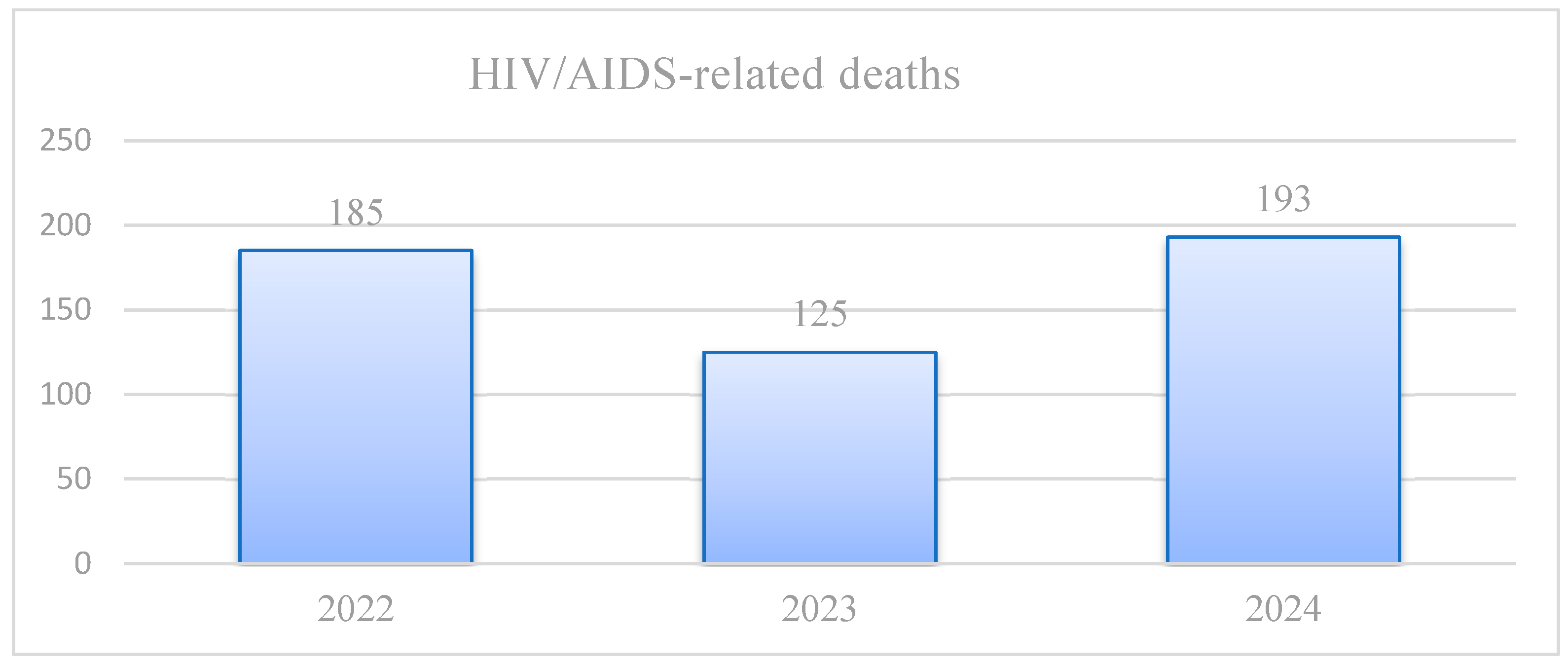

Table 1.
General data on HIV/AIDS infection in Romania (updated on 30th of December 2024).
| Indicator | Number of cases |
|---|---|
| Total HIV/AIDS cases (1985 - 2024) | 28 793 |
| Total AIDS cases (1985 - 2024) | 18 881 |
| Total HIV cases (1992 - 2024) | 9 912 |
| People lost from records | 1 276 |
| Total AIDS deaths (1985 - 2024) | 8 749 |
| People living with HIV/AIDS (PLWHA) | 18 768 |
| New cases (01st of January 2022 – 30th of December 2024) | 2 227 |
| Deaths (01st of January 2022 – 30th of December 2024) | 553 |
Table 2.
New cases reported in Romania between 2022 – 2024.
| Year | Total cases | HIV | AIDS |
|---|---|---|---|
| 2022 | 757 | 425 | 332 |
| 2023 | 760 | 457 | 303 |
| 2024 | 810 | 475 | 335 |
| Total | 2 227 | 1 357 | 970 |
Table 3.
Number of people living with HIV/AIDS by age group in 2024.
| Age group (years) | Number of people living with HIV/AIDS in 2024 | Percentage (%) |
|---|---|---|
| 0 - 14 | 141 | 0.75% |
| 15 - 19 | 130 | 0.70% |
| ≥ 20 | 18 290 | 98.55% |
| Total | 18 560 | 100% |
Table 4.
Trends of transmission of HIV/AIDS between 2022 – 2024.
| Transmission route | 2022 (Number of cases, %) | 2023 (Number of cases, %) | 2024 (Number of cases, %) |
|---|---|---|---|
| Vertical | 8 (1.07%) | 6 (0.84%) | 16 (1.97%) |
| MSM | 220 (29.06%) | 214 (28.15%) | 247 (30.49%) |
| IDUs | 50 (6.6%) | 63 (8.28%) | 42 (5.19%) |
| Heterosexual | 467 (61.7%) | 464 (61.05%) | 481 (59.38) |
| Unspecified | 9 (1.2%) | 7 (0.92%) | 6 (0.74%) |
| Total cases | 757 | 760 | 810 |
Table 5.
HIV incidence in Europe and Romania (2023-2024).
| Indicator | Europe 2023 | Europe 2024 | Romania 2023 | Romania 2024 |
|---|---|---|---|---|
| New HIV cases | 112 883 | 115 000 | 540 | 475 |
| Incidence (cases /100,000 ppl.) | 3,4 | 3,5 | 2,85 | 2,51 |
| Eastern Europe share (%) | 69% | 70% | - | - |
| HIV/AIDS mortality (deaths) | 15 420 | 14 890 | 125 | 193 |
Table 6.
HIV/AIDS statistics for Romania between 2023-2024.
| Indicator | 2023 | 2024 | Δ (%) |
|---|---|---|---|
| AIDS deaths | 125 | 193 | +54,4% |
| Patients followed up | 15.265 | 18.768 | +22,94% |
| Patients on ART | 15.176 | 16.464 | +8,49% |
Disclaimer/Publisher’s Note: The statements, opinions and data contained in all publications are solely those of the individual author(s) and contributor(s) and not of MDPI and/or the editor(s). MDPI and/or the editor(s) disclaim responsibility for any injury to people or property resulting from any ideas, methods, instructions or products referred to in the content. |
© 2025 by the authors. Licensee MDPI, Basel, Switzerland. This article is an open access article distributed under the terms and conditions of the Creative Commons Attribution (CC BY) license (http://creativecommons.org/licenses/by/4.0/).
Copyright: This open access article is published under a Creative Commons CC BY 4.0 license, which permit the free download, distribution, and reuse, provided that the author and preprint are cited in any reuse.


