
Submitted:
27 October 2025
Posted:
28 October 2025
You are already at the latest version
Abstract
Oil palm nurseries generally have two stages: pre-nursery and main nursery. This nursery system requires a large amount of topsoil. To prevent damage to the topsoil ecosystem, this study used ultisol soil mixed with compost and cow manure as the M2, M3, and M4 nursery media. M1, using topsoil, served as a control. The pre-nursery oil palm seedlings grew to a height of 19.0-20.5cm, a stem diameter of 1.0-1.2cm, a leaf number of 4.0-4.3 strands. a root length of 21.6-25.0cm, a root volume of 3.5-3.7mL3, dry weight of stem+ leaves of 1.1-1.3g, and a root dry weight of 0.3-0.4g in M1, M2, M3, and M4 nursery media. The quality index of oil palm seedlings ranges from 0.06 to 0.08 in four types of nursery media. Pre-nursery oil palm seedlings grow and develop in four types media because these media contain 0.12-0.25% N, 10.81-81.81 ppm P2O5, and 0.19-0.35cmolkg-1 K. Ecoenzyme liquid organic fertilizer contains 0.20% N, 0.04% P, and 0.14% K. The best growth and physical quality of pre-nursery oil palm seedlings are in M2 media made from 70% ultisol soil mixed with 30% compost and 100 mL of ecoenzyme liquid fertilizer.
Keywords:
oil palm
; pre nursery
; ultisol soil
; organic matter
; ecoenzyme
1. Introduction
The oil palm plant Elaeis guineensis Jacq. is a crucial plantation commodity for the Indonesian economy. It grows for 20-25 years, with a productive period of 10-20 years. Oil palms that reach 20 years of age are generally no longer productive and require rejuvenation. Rejuvenation requires a large number of oil palm seedlings [1]. The common oil palm nursery system consists of two stages: the initial nursery (pre-nursery) until the seedlings are three months old. The second stage (main nursery) is carried out after the seedlings are three months old, and then they are transferred to large polybags until the seedlings are approximately 12 months old [2]. This two stage oil palm nursery system requires a large amount of nursery media, generally using topsoil as the primary material. According to [3] in [4], to produce one billion seedlings, up to five million cubic meters of topsoil are required if utilization reaches 50 percent. Therefore, topsoil use must be reduced to prevent further damage to the soil ecosystem
Ultisol soil was used as an alternative material for nursery media. Ultisol soil is included in the category of marginal soil that is poor in nutrients and low in organic matter but the area is large and less utilized. According to [5], there are millions of hectares of marginal land spread across various islands in Indonesia, but it requires technological innovation to increase its productivity. [6] Marginal land mixed with compost increases macro and micro nutrients. The nutrients contained in compost are very necessary for plant development and growth. The results of research [7] compost and cow manure mixed into the soil increase the growth and yield of Ginger sp. The results of research [8], organic materials function to improve the soil structure to become crumbly. The more organic material, the lower the bulk density compared to soil that has low organic matter. The use of organic materials to increase soil fertility in oil palm nurseries
Ecoenzyme is a solution resulting from the fermentation of complex organic compounds derived from organic waste such as vegetables and fruits with a mixture of sugar and water [9]. Ecoenzyme products can be used as organic fertilizers because they contain a number of enzymes such as trypsin, amylase, organic acids and a number of plant nutrient minerals such as N, P, and K, and contain bacteria that have the potential to decompose organic materials, stimulate growth, and as agents for controlling pests and plant diseases [10]. Research results [11], ecoenzyme can increase total nitrogen and organic matter in the soil due to the presence of active enzymes, organic matter and micro flora in it. [12] Organic matter in ecoenzyme can support the growth of microorganisms and other soil organisms to stimulate the decomposition process so that ecoenzyme can be used as fertilizer. [13] Organic fertilizer is a fertilizer that plays a role in increasing the biological, chemical, and physical activity of the soil, causing the soil to be fertile and good for plant growth. Research results [14] concluded that the administration of ecoenzyme as a liquid organic fertilizer produced a significant effect on the growth of ‘pakcoy’ plants Brassica rapa including plant height, number of leaves, root length, and wet biomass
2. Materials and Methods
2.1. Research Location, Materials, and Tools
The research was conducted at Baraya, Kalukuang Village, and the Environmental and Marine Sciences Laboratory, Department of Biology, Faculty of Mathematics and Natural Sciences, Hasanuddin University, Makassar, Indonesia, for 5 months in 2025. The materials used were oil palm seeds, topsoil, ultisol soil, cow manure, compost, ecoenzyme solution, and water. The tools used were vernier calipers, measuring tape, digital scales, soil scoops, plastic buckets, watering cans, measuring cylinders, Erlenmeyer flasks, and calculators.
2.2. Ecoenzyme Production
Ecoenzyme is made by fermenting sargassum sp. seaweed waste with brown sugar and water in a plastic bottle. Sargassum sp. seaweed waste of 300g, brown sugar of 100g and 600 ml of water are placed in a 1500 ml plastic bottle. The bottle is then fermented for one month in a room away from direct sunlight. During the fermentation process, the cap of the plastic bottle is opened daily to release the CO2 formed. The fermented product, a brownish-yellow liquid, is then filtered and collected in a plastic container for use as a liquid organic fertilizer.
2.3. Seeding Media Production
The seeding media is made from topsoil, ultisol soil, compost, or cow manure. The nursery media is made by mixing the ingredients with the following compositions: 1) topsoil of 100% (M1), 2) ultisol soil of 70% mixed with 30% compost (M2), 3) ultisol soil of 70% mixed with 30% cow manure (M3), 4) ultisol soil 0f 70% mixed with 15% compost and 15% cow manure (M4). All nursery media are incubated for 15 days and stirred evenly every 7 days.
2.4. Oil Palm Elaeis guineensis Jacq .Pre Nursery
Oil palm nurseries begin by planting oil palm seedlings in the morning. Planting is done with the radicle fully embedded in an upright position. Watering is done evenly using a watering can twice daily, in the morning and evening, until the seedlings reach field capacity. Fertilization is applied to oil palm seedlings four weeks after planting by watering the M1, M2, M3, and M4 nursery media. The fertilizers used are inorganic urea fertilizer in M1 media and liquid organic ecoenzyme fertilizer in M2, M3, and M4 media. The fertilization method is as follows: 1) Dissolve 1.5g of inorganic urea fertilizer in 1 liter of water. Then, 10 mL of the urea fertilizer solution is added to the M1 media. 2) Dilute 10 mL of the ecoenzyme solution in 1 liter of water. Ecoenzyme liquid organic fertilizer was applied at 100 mL each to the M2, M3, and M4 media. Fertilization was carried out once a week until the seedlings were three months old. Furthermore, oil palm nursery maintenance, including manual weeding, was carried out by pulling out grass. Replanting was carried out if the oil palm seedlings grew abnormally or died, and they were replaced with spare seedlings.
2.5. Research Parameters
This study analyzed the growth and physical quality of 3-month-old pre-nursery oil palm seedlings. Growth parameters observed and measured were height (cm), stem diameter (cm), number of leaves (strands), root length (cm), root volume (mL3), root dry weight (g), and dry weight of stem + leaves (g). Root volume was calculated using the method of [14]. The roots were separated from the oil palm seedlings and placed in a 500 ml measuring cylinder filled with 250 ml of water. Root volume was calculated using the formula: VA = V1 - V0, where VA = root volume, V1 = final water volume, VO = initial water volume. Seedling quality was analyzed using the formula [15]:
Note: SQI = Seedling Quality Index; A = Stem and leaf dry weight (g); B = Root dry weight (g); C = Plant height (cm); D = Stem diameter (cm)
SQI = (A + B) / ((C / D + A / B))
2.6. Data Analysis
This study used a completely randomized design with four media treatments. Each treatment was replicated three times, resulting in a total of 12 oil palm seedlings. Each treatment unit was sown with three oil palm seedlings and only one seedling for testing. Data obtained from observations and measurements were subjected to statistical analysis (ANOVA) with the F-test at the 95% level. If any treatment had a significant effect on a parameter, further testing was performed using the Duncan's Multiple Range Test (DMRT)
3. Results
3.1. Growth of Oil Palm Pre Nursery
Plant growth can be described by stable dry weight, which is the relationship between growth time and size. The general pattern is initialized by the actual plant size, followed by a period of high growth followed by a period of declining growth or no growth at all. The growth curve can help identify and assess the general pattern of plant growth and development. Growth is influenced by internal factors: genetics, and external factors: nutrients, water, sunlight, and CO2. This study used oil palm seeds from the Oil Palm Research Center, which provides high-quality seeds with good genetics and proven germination (Figure 1). Analysis of the seedling media showed that the M1, M2, M3, and M4 media contained 0.12-0.25% N; 10.81-18.18 ppm P2O5; and 0.19-0.35 cmol/kg-1 K (Table 1). Meanwhile, the analysis of the liquid organic fertilizer ecoenzyme contained 0.25% N; P 0.04% K 0.14% and micro nutrients: Mn 0.43ppm; Fe 0.38ppm The availability of nutrients in the nursery media and ecoenzyme liquid organic fertilizer is an external factor that supports the growth of pre-nursery oil palm seedlings. The results of pre-nursery oil palm seedlings on M1, M2, M3 and M4 nursery media show very good root, stem and leaf growth (Figure 2).
The results of measuring the growth of 3-month-old pre-nursery oil palm seedlings in M1, M2, M3, and M4 nursery media showed an average height of 19.0 - 20.5 cm, stem diameter of 1.0 - 1.2 cm, number of leaves of 4.0 - 4.3 strands, longest root of 21.6 - 25.0 cm, root volume of 3.5 - 3.7 mL3, dry weight of the upper part (stem and leaves) of 1.1 - 1.3 g and dry weight of roots of 0.3 - 0.4 g. Based on the results of statistical analysis, the growth of height and longest roots of oil palm seedlings in M1, M2, and M3 nursery media was not significantly different. However, the growth of height and longest roots in M1, M2, and M3 nursery media showed a significant difference with the growth in M4 media (Table 2). The highest growth of 3-month-old oil palm seedlings was 20.5 cm in M2 media and the lowest was 19.0 cm in M4 media. Likewise, the longest root growth of oil palm seedlings was 25.0 cm in M2 medium and the shortest was 21.6 cm in M4 medium. The difference in height and longest root growth in M2 and M4 nursery media did not contribute to stem, leaf, and dry weight growth. The results of statistical analysis showed that the growth of stem diameter, number of leaves, root volume, dry weight of the upper part (stem and leaves), and dry weight of roots were not significantly different in M1, M2, M3, and M4 nursery media (Table 2).
3.2. Physical Quality of Oil Palm Pre Nursery
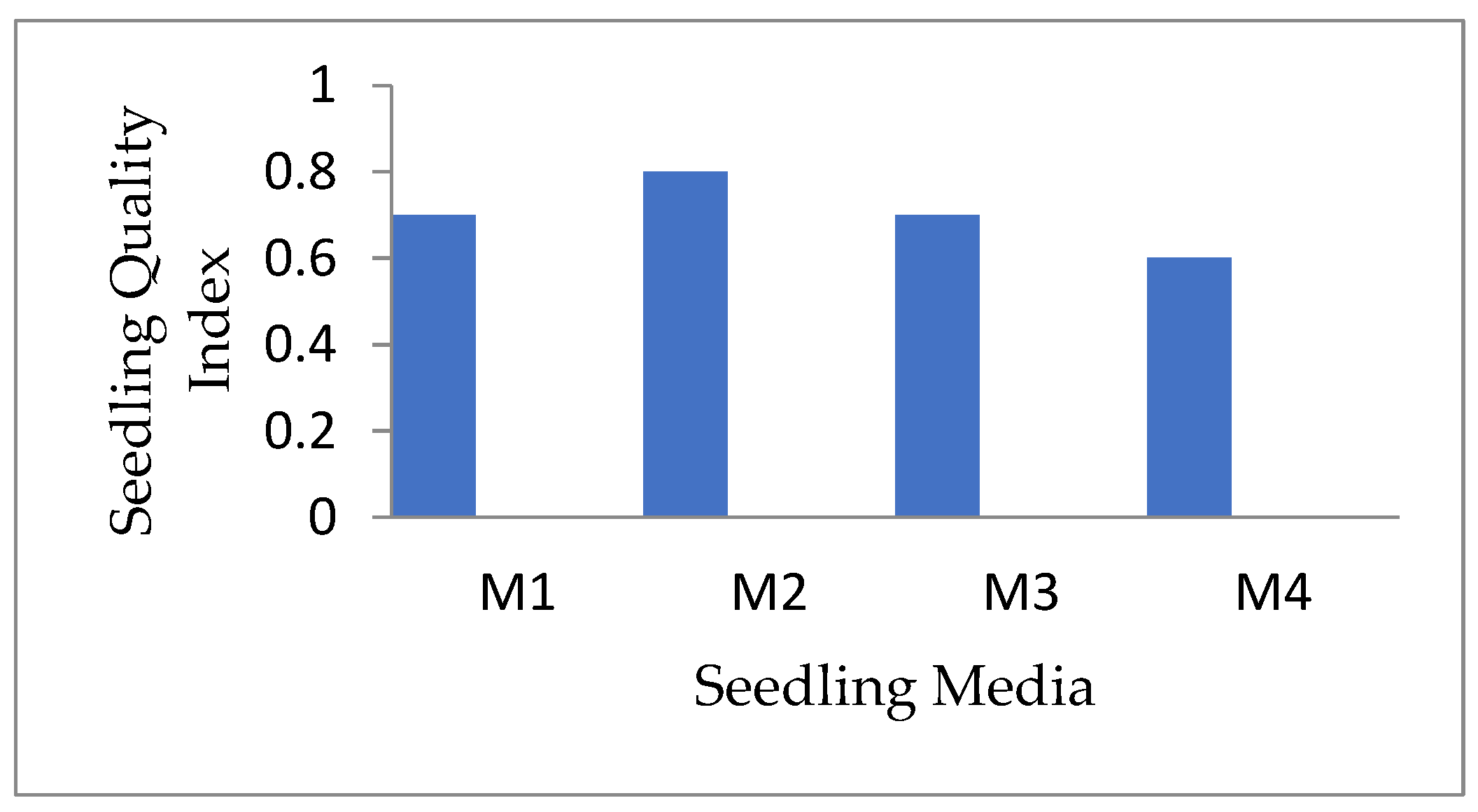
Meanwhile, the physical quality of oil palm seedlings is influenced by the growth of roots, stems, and leaves. The results of observations of root, stem, and leaf growth indicate a correlation between growth parameter values and the physical quality of pre-nursery oil palm seedlings. The growth values of roots, stems, leaves, and dry weight of plant organs determine the quality index of plant seedlings. The results of the calculation of the quality index of 3-month-old pre-nursery oil palm seedlings in the M1, M2, M3, and M4 nursery media ranged from 0.06 to 0.08 (Figure 3). This seedling quality index value indicates that the pre-nursery oil palm seedlings are not yet suitable for transfer to plantation land because the quality index is less than 0.09. Oil palm nurseries are generally carried out in two stages: pre-nursery and main nursery. Pre-nursery nurseries are carried out for 3 months, then transferred to the main nursery until the age of 12 months, then planted on plantation land.

Table 1.
Nutrient content of oil palm seedling media.
| Seedling Media | pHH20 |
Organic C (%) |
N (%) |
C/N |
P2O5 (ppm) |
K (cmolkg-1) |
CEC (cmolkg-1) |
Fertility Status |
| M1 | 6,21 | 3,24 | 0,25 | 13 | 18,81 | 0,35 | 19,22 | Moderate |
| M2 | 6,07 | 2,96 | 0,22 | 13 | 16,30 | 0,22 | 21,21 | Moderate |
| M3 | 5,77 | 1,93 | 0,15 | 13 | 12,26 | 0,19 | 16,81 | Low |
| M4 | 6,17 | 1,22 | 0,12 | 10 | 10,81 | 0,25 | 16,31 | Low |
Table 2.
Average growth of oil palm pre nursery.
| Seedling Media |
Height Nursery (cm) |
Stem Diameter (cm) |
Root Length (cm) |
Number of Leaves (strands) |
Root Volume (mL3) |
Dry Weight of Stem+Leaves (g) |
Dry Weight of Root (g) |
| M1 | 20,3a | 1,1a | 24,8a | 4,0a | 3,6a | 1,2a | 0,4a |
| M2 | 20,5a | 1,2a | 25,0a | 4,3a | 3,7a | 1,3a | 0,4a |
| M3 | 20,3a | 1,1a | 24,8a | 4,0a | 3,6a | 1,2a | 0,4a |
| M4 | 19,0b | 1,0a | 21,6b | 4,0a | 3,5a | 1,1a | 0,3a |
Note: numbers followed by the same letter are not significantly different at the 95% level.
4. Discussion
Oil palms (Elaeis guineensis Jacq) can grow well in various soil types, such as ultisols, latosols, gray hydromorphic, alluvial, or regrosols [16]. This pre-nursery oil palm nursery study used ultisol soil as the nursery medium. The use of ultisol soil is an effort to reduce topsoil use and prevent damage to the topsoil ecosystem from excessive removal. Although ultisol soil is classified as marginal soil, poor in nutrients and low in organic matter, it is widely available and underutilized in Indonesia. According to [17], utilizing marginal soil requires technological inputs such as organic matter. This study used compost and cow manure mixed with ultisol soil to form the pre-nursery oil palm nursery medium. During the nursery, the oil palm seedlings were fertilized weekly with liquid organic fertilizer (ecoenzyme). Growth analysis showed that the roots, stems, and leaves of the pre-nursery oil palm seedlings grew and developed well, but the seedling quality index was not yet suitable for transplanting to plantations.
The longest root growth and largest volume of 3-month-old pre-nursery Elaeis guineensis Jacq oil palm seedlings were observed on M2 media. This root growth was not significantly different from the root growth on M1 and M3 media. However, the longest root growth on M1, M2, and M3 media was significantly different from M4 media, while the root volume on all media was not significantly different (Table 2). Root growth is the process of root elongation and branching that occurs through cell division in the meristematic zone, behind the root cap. This process is essential for absorbing water and nutrients from the soil or nursery media for plant metabolism. Root growth is influenced by various factors, including soil or growing media conditions. A growing medium that is not dense, light, crumbly, and loose allows plant roots to grow and develop easily. These conditions in the nursery media are influenced by the materials used. In this study, the use of compost in M2 media is thought to cause a light and loose medium, resulting in the longest root growth of oil palm seedlings, 25.0 cm, compared to M1 media (24.8 cm), M3 (24.8 cm), and M4 (21.6 cm). According to [18], compost added to the soil media can improve the soil structure, so that the soil becomes crumbly and loose and has the ability to store water (drainage) and good air porosity (aeration). [19] Compost can improve the structure and texture of the media in polybags. This happens because the provision of compost will reduce the density of the media by increasing the pore space in the media. Good structure and texture will stimulate root growth so that the level of nutrient absorption will be higher according to the needs of the plant. M[20] in [21], that the soil media added with compost produces the best teak seedlings compared to the soil media added with rice husks and soil added with cow manure.
Plant roots function to absorb nutrients and water in the soil or growing medium for plant growth and survival. Roots transport water and nutrients absorbed from the growing medium to the upper part of the plant through a vascular system connected to the stem and leaves. The availability of nutrients and water in the medium affects the growth of stems and leaves. The results of chemical analysis of nursery media show that M1, M2, M3 and M4 media contain N, P and K nutrients (Table 1). N, P and K nutrients are needed for plant growth. According to [22], N, P and K nutrients can increase plant growth and also have a role in increasing the production of fronds, stem circumference, leaf area, and frond length of pre-nursery oil palm seedlings. [23] Physiologically, nitrogen plays a role as a component of chlorophyll, amino acids, proteins, alkaloids, and protoplasm. Phosphorus plays a role in energy transfer and storage, and is a component of nucleic acids, nucleotides, and coenzymes. Phosphorus can increase the percentage of photosynthate partition to the roots, resulting in an increase in the root to stem ratio. Low phosphorus availability is a limiting factor for plant growth. Potassium is essential for maintaining osmotic balance, phloem transport, and photosynthesis. Optimal concentrations of potassium in the nutrient solution increase plant height, stem diameter, leaf area, and other growth characteristics. Balanced application of nitrogen, phosphorus, and potassium increases the accumulation of oil palm biomass.
The highest pre-nursery oil palm seedlings were 20.5 cm in M2 media but were not significantly different from the height growth in M1 20.3 cm and M3 20.3 cm. The height growth of oil palm seedlings in the three media M1, M2 and M3 was significantly different from the height growth in M4 media 19.0 cm. Based on chemical analysis of the nursery media, it showed that M4 media contained the lowest N 0.12% compared to M1 media N 0.25%, M2 N 0.22% and M3 N 0.15%. According to research results [24], it states that nitrogen is very much needed during the growth of stems and leaves of pre-nursery oil palm seedlings. [25] N nutrients can increase cytokinin production which can affect cell wall elasticity, the number of meristematic cells, and cell growth, so that it can produce vegetative growth including good height. [26] N nutrients stimulate vegetative growth of plants, one of which is the height of pre-nursery oil palm seedlings. Then the results of the study [27], the highest growth of pre-nursery oil palm seedlings was 25.40 cm which were given Muccuna bracteata extract which contains N, P, K nutrients.
This pre-nursery oil palm nursery uses urea inorganic fertilizer on M1 (control) media and ecoenzyme liquid organic fertilizer on M2, M3 and M4 media. Based on chemical analysis, ecoenzyme liquid organic fertilizer contains N 0.25%, P 0.04% and K 0.14%. The NPK content in the ecoenzyme used in this study is higher than the results of research [28], N 0.09%, P 0.01% and KJ 0.12%. Ecoenzyme fertilization in oil palm nurseries can increase the availability of N, P and K nutrients in the media. According to research results [11], ecoenzyme can increase total nitrogen and organic matter in the soil due to the presence of active enzymes. The results of the analysis of the height of oil palm seedlings ranged from 19.0 - 20.5 cm and root length ranged from 21.6-25.0 cm showing that the growth value was not different from the results of research by several other researchers. The results of research [29], reported that the growth of pre-nursery oil palm seedlings had a height ranging from 19.38-22.54cm and the longest roots ranging from 14.87-20.7cm on 3 types of growing media with nutrient B. The results of research [26], the growth of pre-nursery oil palm seedlings using 20% liquid organic fertilizer from banana peel and 2.50g NPK fertilizer had a height ranging from 18.87-22.67cm and a root length of 16.0-19.32cm. The results of research [27], the growth of pre-nursery oil palm seedlings using organic fertilizer from Muccuna bracteata leaves at several concentrations ranged from 22.43-25.40cm. Then the results of research [30], the growth of pre-nursery oil palm seedlings using several solid doses on clay soil had a height ranging from 20.14-23.32cm and a root length ranging from 19.56-23.82cm
The growth of stems and leaves of pre-nursery oil palm seedlings had an average stem diameter ranging from 1.0-1.2 cm and the number of leaves ranging from 4.0-4.3 strands in M1, M2, M3 and M4 media. The average growth of the largest stem diameter was 1.2 cm and the average number of leaves was 4.3 strands in M2 media. However, based on statistical analysis, there was no significant difference in the average growth of stems and leaves in all M1, M2, M3 and M4 media. Then, based on the chemical fertility analysis, M2 media had organic C, N, P, K and cation exchange capacity (CEC) including medium criteria whose status was the same as M1 media (control). While M3 and M4 media had low fertility status (Table 1). The use of liquid organic fertilizer ecoenzyme is thought to increase media nutrients which caused the growth of stems and leaves of pre-nursery oil palm seedlings in all M1, M2, M3 and M4 media to be no significant difference. The growth of the stem diameter and number of leaves of these oil palm seedlings is better than the results of research [26], the growth of pre-nursery oil palm seedlings that use liquid organic fertilizer from banana peels has a stem diameter ranging from 0.6-0.63 cm and an average number of leaves of 3.75-4.08 strands. The results of research [31] pre-nursery oil palm seedlings that use liquid fertilizer from kepok banana peels have a stem diameter of 0.59-0.66 cm and a number of leaves of 3.41-3.87 strands. Then the results of research [32], the growth response of pre-nursery oil palm seedlings that are given liquid palm waste has a stem diameter of 0.90-0.99 cm and a number of leaves of 3.8-4.8 strands.
Plant growth can also be described by stable dry weight, namely the relationship between time and growth size. The results of weighing the dry weight of oil palm seedlings have a dry weight of the upper part (stems and leaves) ranging from 1.1-1.3g and a dry weight of roots of 0.3-0.4g in media M1, M2, M3 and M4 (Table 2). The results of this dry weight analysis of oil palm seedlings are higher than those of several other researchers. The results of research [29], reported that the dry weight of pre-nursery oil palm seedlings on 3 types of growing media with nutrient B had a dry weight of the upper part (stems and leaves) ranging from 0.77-1.10g and a dry weight of roots ranging from 0.24-0.37g. The results of research [26], the dry weight of pre-nursery oil palm seedlings using liquid organic fertilizer banana peels had a dry weight of the upper part (stems and leaves) of 0.60-0.69g and a dry weight of roots of 0.22-0.30g. Then, according to research results [30], the dry weight of pre-nursery oil palm seedlings that used solids in clay soil had an average dry weight of the upper part (stem and leaves) of 0.93g and root dry weight of 0.23g.
The quality of plant seeds can be determined based on the physical characteristics of the seeds. The physical characteristics of the seeds are the height of the seeds, the diameter of the seedling stem, the number of leaves, the length of the seedling roots and the sturdiness of the seeds. According to [33], the quality of plant seeds is generally determined by the results of calculations or assessments of 3 criteria, namely genetic quality, physical quality (shape), and physiological quality. Genetic quality is seen from the seed source, while physical quality such as sturdiness, stem diameter and number of leaves and plant health. Physiological quality reflects the physiological processes that have implications for the growth and development of plant seeds. According to [34], the quality of seeds can be seen from the value of the seedling quality index. The greater the value of the seedling quality index, the better the quality of the seeds. A seedling quality index value ≥ 0.09 indicates that the seeds are easy to live and have high adaptability when planted in the field. This oil palm nursery has height, stem diameter, root length on media M1, M2, M3 and M4. are not significantly different except for the different height on media M4. The results of statistical analysis show that the dry weight of stems + leaves and dry weight of roots on all media are not significantly different (Table 2). Based on the growth value of the oil palm seedlings, the calculated value of the seedling quality index in the M1 media was 0.07, M2 0.08, M3 0.07 and M4 0.06. The value of the pre-nursery oil palm seedling quality index in all M1, M2, M3 and M4 nursery media indicated that it was not yet suitable to be moved to the plantation land because the seedling quality index was <0.09. This seedling quality index value was low because it still needed time for the nursery. According to [35], the common oil palm nursery system is a two-stage nursery (double stage) consisting of the initial nursery stage (pre-nursery) until the seedlings are 3 months old. After the seedlings are 3 months old, the seedlings are transplanted into large polybags at the main nursery stage until the seedlings are ready to be planted (12 months) on the plantation land.
5. Conclusions
Oil palm Elaeis guineensis Jacq pre nursery seedlings can be grown using ultisol soil mixed with compost or cow manure, and supplemented with Ecoenzyme liquid organic fertilizer. The M1 and M2 seedling media contain moderate nutrient fertility while the M3 and M4 media contain low nutrient fertility.. The best growth and physical quality of 3-month-old of oil palm pre nursery were obtained using 70% ultisol soil mixed with 30% compost (M2) and 100 mL of Ecoenzyme liquid organic fertilizer.
Author Contributions
Investigation and methodology (SS), Design of experiment (SS,RAPS), Data analysis, Statistics (RAPS), Manuscript writing—original draft (SS), Conceptualization, supervision, and validation, Writing—review and editing (SS, RAPS)
Funding
Hasanuddin University Professor Research Grant with Contract Number 42292/UN4.1.2/HK.07.00/2025
Data Availability Statement
Data are contained within the article.
Acknowledgments
Thank you to the Rector of Hasanuddin University for providing research grant funds for professors.
Conflicts of Interest
No conflicts Interest
References
- Sari, V. I. The role of organic fertilizer in increasing the effectiveness of NPK fertilizer on oil palm seedlings in the main nursery. Indonesian Journal of Agronomy, 2015, 43, 153-160.
- Anonymous. Oil palm cultivation. Medan, North Sumatra: Palm Oil Research Center, 2010.
- ITTO. Status of Tropical Forest Management 2005, A Special Edition of The Tropical Forest Update. Yokohama, Japan, 2006.
- Putri, A.I. The effect of organic media on the quality index of sandalwood. Journal of Forest Plant Improvement, 2008, 21, 1-8.
- Yuwono, N.W. Building soil fertility on marginal land. Journal of Soil and Environmental Science, 2009, 9, 137-141.
- Wahyono, S. Review of the benefits of compost and its application in various agricultural fields. Journal of Environmental Engineering, 2010, 6, 29-31.
- Syukur, A. and N. M. Indah. Study of the Effect of Various Organic Fertilizers on the Growth and Yield of Ginger Plants in Inceptisols, Karanganyar. Journal of Soil and Environmental Science, 2006, 6, 124-131.
- Al Farisi H.M.H, S. M. Rohmiyati, Ni Made Titiaryanti. The Effect of Organic Material Volume on the Growth of Pre-Nursery Oil Palm Seedlings in Several Soil Types. Agromast, 2018, 3, 1-11.
- Hemalatha M and Visantini P, Potential Use of Eco-Enzyme for the Treatment of Metal-Based Effluent. IOP Conference Series: Materials Science and Engineering, 2020, 716.
- Susilowati LE, Mansur M, and Zaenal A, Learning About the Utilization of Household Organic Waste as Raw Material for Eco-Enzymes. Journal of Community Service for Master of Science Education, 2021, 4, 356–362.
- Tong Y and Liu B, Test research of different material-made garbage enzymes' effect on soil total nitrogen and organic matter. IOP Conference Series: Earth and Environmental Science, 2020, 510.
- Arifin LW, Syambarkah A, Purbasari HS, Ria R, and Ayu V, Introduction of Eco-Enzyme to Support Organic Farming in Indonesia. Asian Food and Agro-Industry, Special, 2009, S356–S359.
- Nurnawati AA, Syarifuddin RN, and A. Samsu AK, 2022. Reducing Inorganic Fertilizer Dosage in Purple Corn Plants with Liquid Organic Fertilizer Application. Agro Bali: Agricultural Journal, 2022, 5, 137–143.
- Salsabila, R. K., and Winarsih. The Effectiveness of Giving Fruit Peels Ecoenzyme as Liquid Organic Fertilizer on the Growth of Pakchoy Mustard Plant (Brassica rapa L.). LenteraBio, 2023, 12, 50–59.
- Kurniaty, R., B. Budi, and S. Made. The Effect of Media and Shade on the Quality of Suren (Toona sureni Merr) Seedlings. Journal of Plantation Forest Research, 2010, 7, 77–83.
- Mawardati. Palm Oil Agribusiness: Analysis of Technical and Management Aspects of Smallholder Palm Oil Plantations. Unimal Press, 2017.
- Gunadi, S. Technology for Utilizing Marginal Coastal Land. Journal of Environmental Engineering, 2002, 3, pp. 232-236.
- Thesiwati, A.S. The Role of Compost as an Environmentally Friendly Organic Material. Dewantara Community Service Journal, 2018, 1.
- Gusmailina, G. P., and S. Komarayat. Developing the Use of Charcoal for Land Rehabilitation. Bulletin of Forestry Research and Development, 2003, 4, 21-30.
- Mahfudz, Supriyo, Suryanaji, and Supriyanto. The Effect of Biostimulant Use, Media Type, and Volume on Teak Seedling Growth. PPPHT. Yogyakarta, 2005.
- Sudomo, A., R. Encep, and M. Nina. The Quality of Manglid (Manglieta glauca BI) Seedlings on Seven Types of Weaning Media. Journal of Plantation Forest Research, 2010, 7, 265-272.
- Sukmawan, Y., The Role of Organic Fertilizer and Compound NPK on the Growth of TBM 1 Oil Palm on Marginal Land. Indonesian Journal of Agronomy, 2016, 43, 242. [CrossRef]
- Mohidin, H., M. M. Hanafi, Y. M. Rafii, S. N. A. Abdullah, A. S. Idris, S. Man, J.i. Idris, & M. Sahebi. Determination of optimum levels of nitrogen, phosphorus, and potassium of oil palm seedlings in solution culture. Bragantia, Campinas, 2015, 74, 247-254. [CrossRef]
- Asari, Nadhira, A., & Zulkifli, T. B. H. Response of Urea and Cow Urine Fertilizer Application on the Growth of Oil Palm (Elaeis guineensis Jacq.) Seedlings in Early Nurseries. Agrinula: Journal of Agrotechnology and Plantations, 2019, 2, 28-32.
- Razaq, M., Zhang, P., Shen, H. L., & Salahuddin. Influence of nitrogen and phosphorus on the growth and root morphology of Acer mono. PLoS ONE, 2017, 12, 1–13. [CrossRef]
- Setyorini, T., Hartati, R. M., & Damanik, A. L. Growth of Oil Palm Seedlings in a Pre-Nursery with Liquid Organic Fertilizer (Banana Peel) and NPK Fertilizer. Agritrop: Journal of Agricultural Science, 2020, 18, 98-106.
- Purwosetyoko, N.S., Nasruddin, Muhammad Rafli, Faisal, Muhammad Yusuf N. Growth of Oil Palm (Elaeis guineensis Jacq) Seedlings in the Pre-Nursery Phase Using Muccuna Bracteata Leaf Extract. Scientific Journal of Agroecotechnology Students, 2022, 1, 34-38. [CrossRef]
- Hasanah, Y. Ecoenzymes and their benefits for organic rice production and disinfectant. Journal of Science and Technology Transfer, 2021, 3, 119–128. [CrossRef]
- Astuti Y.T.M., , Retni Mardu Hartati, Tejo Triwaluyo. The Growth of Oil Palm Seedlings at Pre-Nursery in the Nutrient Modifications and Various Growing Mediums of a Hydroponic System. AGROISTA Journal of Agrotechnology, 2019, 3, 81-92.
- Riswandi, Sri Manu Rohmiyati, Sri Suryanti. Growth of Pre-Nursery Oil Palm Seedlings on Sandy and Clay Soil with Solid Fertilizer Application. Agroforestech, 2023, 1, 84-89.
- Anhar, T.M.S., Rama R. Sitinjak, Edy Fachrial, Bayu Pratomo. Growth Response of Oil Palm Seedlings in the Pre-Nursery Stage with the Application of Liquid Organic Fertilizer from Kepok Banana Peels. Agrium, 2021, 23, 94-99. [CrossRef]
- Wahyono, D, Fathurrahman, Muh Nur Sangadji. Response Growth of Oil Palm Seedlings (Elaeis guineensis Jacq.) in the Pre-Nursery Towards the Provision of Palm Oil Mill Effluent. Jurnal Agrotech , 2023, 13, 135-143.
- Pramono and H. Suhaendi. Benefits of Seed Source Certification, Seed Quality, and Seedling Quality in Supporting Gerhan. Research . Proceedings. Center for Forestry and Nature Conservation Research and Development. Bogor, 2006.
- Hendromono. 2003. Criteria for Assessing the Quality of Containerized Seedlings Ready for Planting for Forest and Land Rehabilitation. Bulletin of Forestry Research and Development, 2003, 4.
- Corley, R.H.V. & P.B. Tinker. The Oil Palm. Blackwell Science Ltd. Oxford, 2003.
Figure 1.
Oil Palm Seed Sprouts.
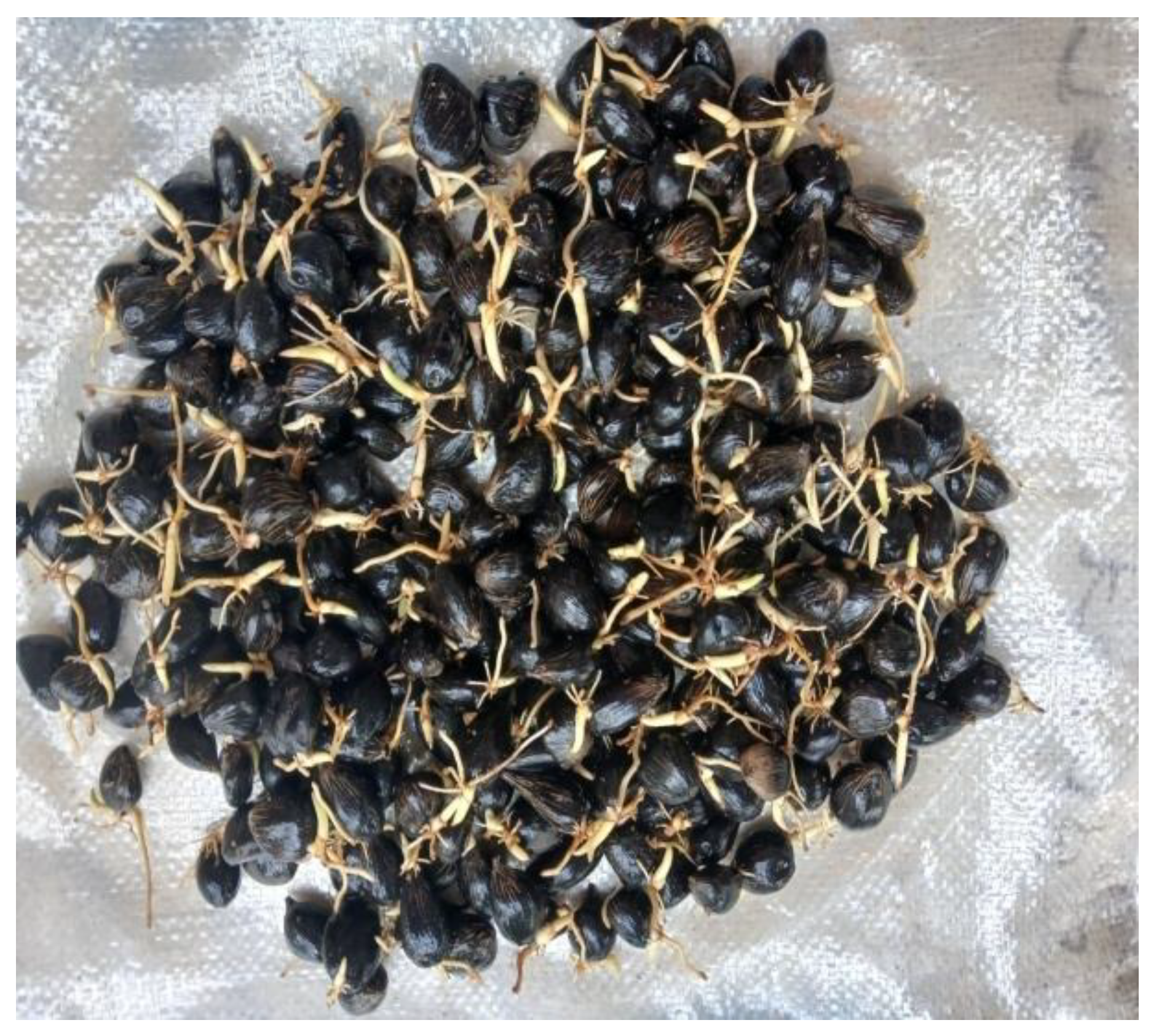
Figure 2.
Growth of 3-month-old oil palm seedlings in 4 types of nursery media.
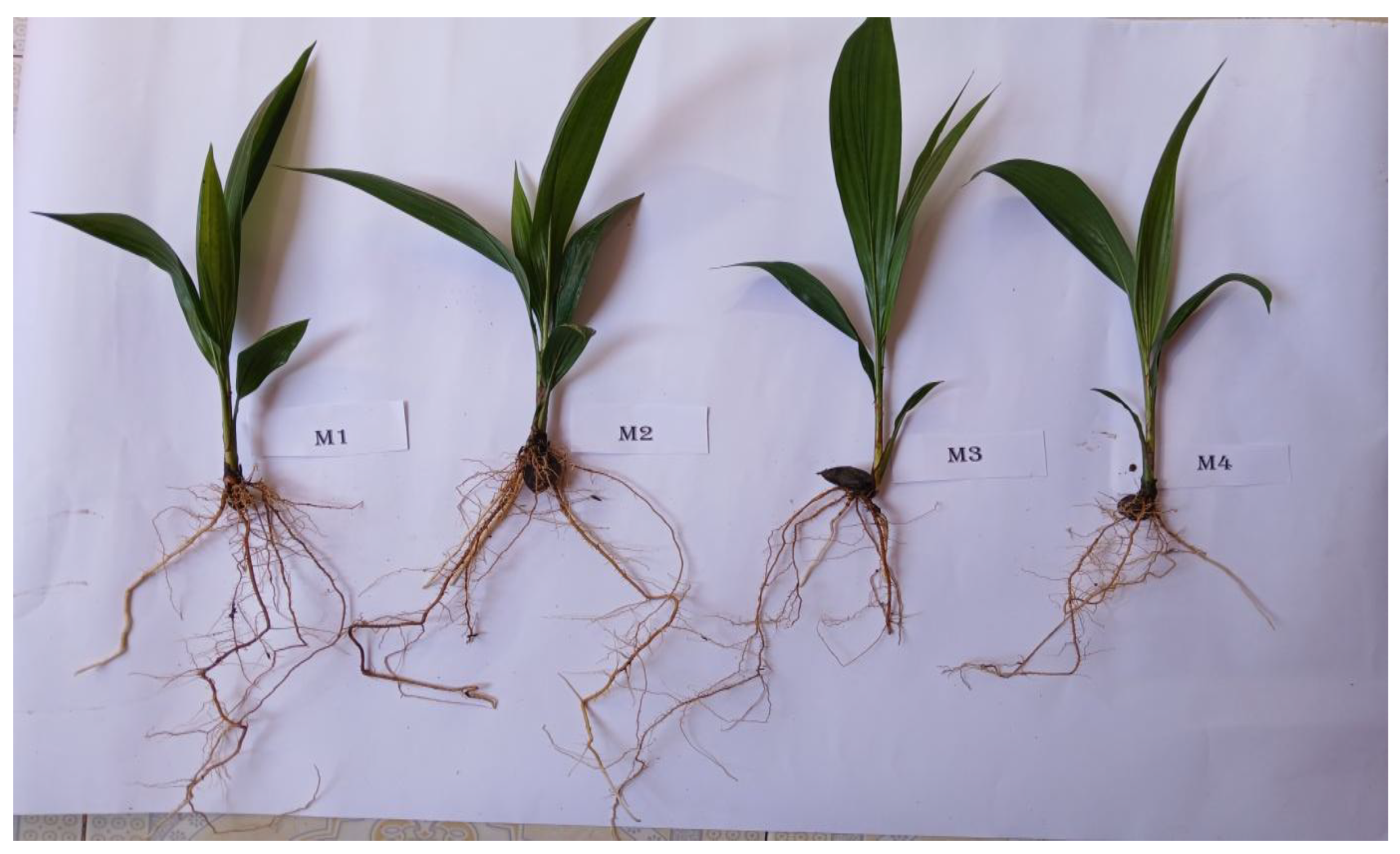
Figure 3.
Physical Quality of Oil Palm Pre Nursery.
Disclaimer/Publisher’s Note: The statements, opinions and data contained in all publications are solely those of the individual author(s) and contributor(s) and not of MDPI and/or the editor(s). MDPI and/or the editor(s) disclaim responsibility for any injury to people or property resulting from any ideas, methods, instructions or products referred to in the content. |
© 2025 by the authors. Licensee MDPI, Basel, Switzerland. This article is an open access article distributed under the terms and conditions of the Creative Commons Attribution (CC BY) license (http://creativecommons.org/licenses/by/4.0/).
Copyright: This open access article is published under a Creative Commons CC BY 4.0 license, which permit the free download, distribution, and reuse, provided that the author and preprint are cited in any reuse.


