

Submitted:
20 October 2025
Posted:
22 October 2025
You are already at the latest version
Abstract
Achieving the United Nations Sustainable Development Goals (SDGs) and the European Green Deal (EGD) requires more efficient pathways that connect learning directly to real-world actions. This review introduces and explores a student-centered digital platform for ecological education, designed to encourage knowledge sharing, collaboration, and practical implementation. Using a mixed-methods approach, we gather insights from existing literature and policies related to SDGs and EGD to define core functional and governance requirements, which are then integrated into the ProSafeNet (the global hub for safety, security, risk, and emergency professionals and scientists) platform. Its architecture brings together curated environmental issues across global, national, and causal layers; structured learning modules aligned with SDG/EGD guidelines; an embedded legal framework at various levels; and networking channels that guide students from identifying problems to developing solutions, culminating in standardized Project Solution Models. In the case study of ProSafeNet, these pathways leverage existing modules such as the Knowledge Base, Training Hub, Events/Forum, Projects, Research Hub, Community Resilience Hub, Policy Practice Lab, and Innovation Lab—allowing immediate testing without the need for additional infrastructure. An evaluation framework is proposed, featuring key performance indicators like learning gains, student engagement, team formation, prototypes or pilots, policy briefs, and progress toward SDG/EGD. The framework also highlights the importance of equity, accessibility, and GDPR-compliant governance. This approach aims to address the issue of “brain drain” by providing visible, credentialed pathways into green practices and funding opportunities, while fostering collaboration across institutions. Overall, this model offers a practical, scalable solution to accelerate student involvement in ecological problem-solving and support measurable progress toward SDG and EGD objectives.
Keywords:
ecological education
; sustainable development
; digital platform
; informal learning
; ProSafeNet
; student engagement
; knowledge sharing
; green innovation
; policy integration
; collaboration
1. Introduction
The involvement of young people in society brings numerous advantages, benefiting both the wider community and future generations—the planet we leave behind (Cvetković & Šišović, 2024; Jakovljević, Cvetković, & Gačić, 2015; Cvetković, 2020). This idea is rooted in Bronfenbrenner's (1979) 'ecological model' of human development. Environmental problems are widespread, and their causes are visible worldwide. However, young people tend to have limited engagement, often only symbolically participating through local organizations. Their active involvement in public policy is essential for effective local governance, especially with initiatives like Agenda 21, which fostered youth participation through 'umbrella organizations' (Gökçe-Kızılkaya & Onursal-Beşgül, 2017). The key question is why, despite their expressed interest, young people are not more involved in shaping and executing local policies.
The Sustainable Development Goals (SDGs) constitute a global initiative to protect the environment, climate, and humanity. These Goals include ending poverty, promoting health, ensuring quality education, achieving gender equality, providing clean water, supporting affordable and clean energy, fostering economic growth, encouraging innovation and industry, developing sustainable cities and communities, advocating sustainable consumption and production, addressing climate change, conserving marine and terrestrial life, and building partnerships for these aims (UN), all aligned with Agenda 2030. This agenda represents ecological reforms consistent with European Union standards. All of these Goals relate to the thirteenth—climate action.
To successfully achieve these goals, widespread participation from the general population is essential (Cvetković & Katarina, 2019; Cvetković, 2016; Ivanov & Cvetković, 2014; Cvetković, 2017; Cvetković & Martinović, 2020; Cvetković, 2019; Cvetković, Renner, & Jakovljević, 2024). The positive perception of the Sustainable Development Goals by ordinary individuals can influence future policy development (Nazneen et al., 2021). The circular economy plays a crucial role in reaching these goals. An individual's decision to participate in the circular economy, as part of the SDGs, is influenced by subjective norms, perceived economic benefits, and positive expectations (Hao et al., 2020). Therefore, increasing awareness among residents about the potential and benefits of the circular economy, as well as the negative consequences of poor resource consumption, is vital. Citizens highly value the quality of public spaces, which directly affects their quality of life (Agboola & Oluyinka, 2019). All areas covered by the Sustainable Development Goals are equally important for successful implementation.
This discussion about these goals is linked to the European Green Deal. The European Green Deal is presented as a solution to environmental degradation on the European Union's official website (www.europa.eu). It serves as a strategic tool for economic growth and development. Adopted by the European Commission in 2019 (Smol et al., 2020), its main objectives are to achieve zero greenhouse gas emissions and decouple economic growth from environmental degradation. The Sustainable Development Goals (UN Serbia) serve as a global call to action to preserve and protect the environment, climate, and humanity. These Goals include ending poverty, promoting health, ensuring quality education, achieving gender equality, providing clean water, supporting affordable and clean energy, fostering economic growth, encouraging industry and innovation, creating sustainable cities and communities, promoting sustainable consumption and production, addressing climate change, conserving marine and terrestrial life, and building partnerships (UN), all aligned with Agenda 2030. This agenda represents ecological reforms consistent with European Union guidelines. All these Goals contribute to the thirteenth goal—climate action.
To reach these targets, broad public participation is crucial (Cvetković et al., 2017; Cvetković & Jakovljević, 2017). When ordinary people view the Sustainable Development Goals positively, it can influence future policies (Nazneen et al., 2021). The circular economy is vital for accomplishing these goals. An individual's choice to participate in the circular economy, as part of the SDGs, depends on subjective norms, perceived economic benefits, and optimistic expectations (Hao et al., 2020). Hence, raising awareness about the benefits of the circular economy and the risks associated with poor resource consumption is essential. Citizens also highly value the quality of public spaces, which directly impacts their quality of life (Agboola & Oluyinka, 2019). All aspects of the Sustainable Development Goals are equally important for successful implementation.
This discussion concerns the European Green Deal, which the European Union promotes as a remedy for environmental decline (www.europa.eu). It functions as a strategic instrument for economic growth and development. Adopted by the European Commission in 2019 (Smol et al., 2020), its primary objectives include reaching zero greenhouse gas emissions, separating economic growth from resource consumption, and ensuring inclusivity by 2050. The Green Deal aims to foster a circular economy, clean polluting industries, cut pollution, and build a sustainable financial future where waste is transformed into valuable renewable resources (Smol et al., 2020). Projections suggest that the Green Deal will enhance the well-being and health of citizens, as well as that of future generations, by promoting economic growth with minimal resource consumption and leaving no one behind.
Building on the researcher's previous conclusions, the focus of the research will be on developing a digital platform for students, fostering networking, enhancing ecological education, and empowering students to actively participate in decision-making on public policies at both local and national levels, aligned with the strategies of the European Green Deal. This approach aims to encourage networking, promote ecological education and education for sustainable development, and work toward preserving and improving the environment. Digital networking platforms would motivate students to create innovative solutions, increase ecological awareness, foster mutual empowerment across generations, and support the communities they live in—all with the ultimate goal of protecting and improving the environment, ultimately benefiting the health of the population.
2. Challenges in Ecological Education and Youth Engagement
The representation of these topics was insufficient in previous educational models, and environmental protection does not hold a significant position in standard higher education courses (Orlović & Lovren, 2021). Suppose the representation of the topic is insufficient in the education of teaching staff. In that case, the question arises as to how they can contribute to the quality of their competencies within the formal education system. The individual is a part of nature. Their health and general well-being depend primarily on the quality and condition of the environment. Knowledge is necessary for the care and preservation of the environment.
Knowledge that is not only acquired through formal education, but also through education throughout one's life. This is also called upon by the fourth Sustainable Development Goal - Quality Education for All (Ensure inclusive and equitable quality education and promote lifelong learning opportunities). It can be argued that environmental and ecological education remains insufficiently emphasized in formal education. A similar situation arises with non-formal education programs (Petrović, et al., 2012; Petrovic, et al., 2014;Petrovic, et al., 2014;Petrović, et al., 2012;Borojevic, Petrovic, & Vuk, 2014;Radaković, et al., 2017;Petrović, Ćirović, & Martins, 2023). Informally, people are becoming increasingly aware of these issues. There is a shortage of skilled professionals with innovative knowledge who can effectively transfer the necessary expertise.
These issues are characteristic of today’s world, emphasizing the need for research into non-formal education in relation to the Sustainable Development Goals, particularly focusing on 'Climate Action' from the Sustainable Development Goals series—urgent efforts to protect the climate and combat climate change. Non-formal and informal learning improve understanding by providing objective data examples and illustrating practical problems. These educational approaches also promote quick implementation through the practical application of solutions. Sustainable development is considered a new ideal, and education supporting it gained importance after the publication of the United Nations World Commission on Environment and Development's report 'Our Common Future' (Orlović Lovren, 2021). This report presented the well-known definition of sustainable development, initially formulated by the Brundtland Commission (Orlović Lovren, 2021).
During the COVID-19 pandemic, online education became a substitute for traditional teaching (Ljujić, 2021), creating opportunities for environmental education to be delivered similarly. The shift from traditional to online education has been complex, with clear challenges identified during implementation (Ljujić, 2021). Digital education is recognized as effective through learning and networking approaches, resulting in successful implementation. The concept of mobile learning (M-learning) encompasses three integrated distance learning models, designed to contribute to the achievement of the Sustainable Development Goals, specifically partnership, quality education, and increased access to education (Kim, 2020). This concept, along with the related provisions and needs outlined in the Sustainable Development Goals, will be examined in this doctoral thesis. Environmental online education is crucial in supporting the achievement of the Sustainable Development Goals, particularly the Climate Action goal, as well as the European Green Deal, especially in research and innovation measures (Zeng & Guo, 2023).
Access to advanced technologies is now available to students, opening up great opportunities to access resources. However, the information is often poorly contextualized, making it challenging for both teachers and students to utilize it effectively (Buitrago & Chiappe, 2019). Several dominant claims have emerged about Net generation students who engage with digital education channels, particularly in higher education: organized technical intelligence, teamwork on tasks, new scientific discoveries, digital revolutions transforming society, acceptance of game-based learning, and the use of technological language as a native tongue, among others (Smith, 2012). The rapid evolution in higher education reflects the increasingly evident technological progress that is becoming evident to all involved in digital transformation efforts (Cerdá Suárez et al., 2021). Additionally, the learning ecology context includes new models of learning and offers a categorization of innovative methods for mastering material (Sangrá et al., 2019). There are transdisciplinary debates and research trends focused on interactions within digital environments and the development of digital literacy (Bhatt et al., 2015).
3. ProSafeNet as an Integrated Digital Platform for Ecological, Safety, Security, and Disaster Education
A platform designed to educate and connect students from various scientific disciplines, aligned with the Sustainable Development Goals and the European Green Deal, would adopt an interdisciplinary approach (Sudar, Cvetković, & Ivanov, 2024; Hussaini, 2020). It would provide students with resources to gain fundamental knowledge, an overview of current environmental challenges, relevant legislation, and more. Additionally, students will have opportunities to contribute to the development of conceptual solutions. Successful implementation depends on access to innovative, up-to-date knowledge and creativity, expressed through project ideas and solutions. Networking would foster a stronger student community by promoting interaction and diversity across professional fields, which could lead to the creation and execution of real, practical projects benefiting both scientific communities and local populations. Given the low engagement of youth, especially students, in environmental problem-solving in the Republic of Serbia—both nationally and locally—this research focuses on identifying conditions necessary for developing a digital platform model that could boost student involvement in tackling environmental issues.
In this context, ProSafeNet—the Global Hub for Safety, Security, Risk, and Emergency Professionals and Scientists (https://prosafenet.com/)—offers a practical framework for implementing such a model. As a well-established digital ecosystem, ProSafeNet connects experts, practitioners, volunteers, and students worldwide, fostering knowledge sharing, training, and research collaboration, while also providing real-time features such as security alerts, events, and job postings. By broadening its scope to incorporate ecological education, ProSafeNet can exemplify the proposed digital platform, enabling students to engage actively in environmental problem-solving within a global professional community. ProSafeNet acts as the global hub for professionals working in safety, security, risk management, and emergency response—including police, firefighters, rescuers, medics, emergency responders, and military personnel—as well as security managers, civil protection teams, volunteers, students, companies, and NGOs. Members share knowledge and experience, connect, train, innovate, communicate, conduct research, respond to emergencies, and access real-time tools—such as news, policy labs, jobs, security alerts, volunteering opportunities, and community resilience hubs—turning expertise into practical actions toward a safer, more resilient world (https://prosafenet.com/). Built by experts for experts, ProSafeNet empowers smarter decisions, faster responses, and stronger global collaboration.
Whether in emergency response, policy design, community initiatives, academic research, or training future generations, ProSafeNet provides the necessary digital infrastructure to support these missions. The following overview highlights the platform’s core features, which have been carefully developed to meet the evolving needs of the global safety and resilience community (https://prosafenet.com/):
- News Feed – Central space for updates, announcements, and professional content across the safety and crisis management community. Supports images, documents, and mentions to increase engagement and visibility.
- Knowledge Base – A repository of expert articles, guides, tools, and practical documents. Users can contribute, comment, and tag resources by topic, ensuring continuous knowledge growth.
- Events – A comprehensive calendar for trainings, webinars, conferences, and collaborative sessions. Events can be filtered by language, location, or sector, with materials and recordings available post-event.
- Companies – Directory of organizations, institutions, and service providers in the safety sector, designed to enhance visibility and foster partnerships.
- Jobs – Employment, volunteering, and contract-based opportunities, allowing users to apply directly or track new openings from organizations they follow.
- Security Alerts – Real-time updates on hazards, infrastructure disruptions, and other risks, improving situational awareness and rapid response.
- Training Hub – Courses, simulations, and digital certificates supporting continuous professional development. Certificates are automatically stored in each user’s profile.
- Emergency Aid Hub – A coordination space for mobilizing urgent support and resources during crises, ensuring transparency and traceability.
- Projects – Module for launching or joining international cooperation projects, supporting collaboration and transparent progress monitoring.
- Research Hub – Dedicated space for academic networking, sharing ideas, and building interdisciplinary and cross-border collaborations.
- Policy Practice Lab – Interface connecting researchers with policymakers, translating academic findings into practical policy and operational solutions.
- Innovation Lab – A collaborative space for testing prototypes, developing solutions, and co-creating innovations through structured challenges.
- Community Resilience Hub – Highlights local initiatives, tools, and stories that strengthen preparedness and public awareness.
- Risk Intelligence Hub – Dashboards, maps, and expert analysis to track emerging risks, with options for community-based reporting.
- Youth & Early-Career Hub – Mentorship, internships, and academic portfolio development, designed to support students and young professionals.
- Shops – Marketplace for safety-related tools, literature, training services, and other professional resources.
- Volunteering Hub – Engagement opportunities with full tracking of contributions and impact, offering certificates and recognition.
- Forum – Moderated discussions, debates, Q&A, and polls, enabling open knowledge exchange across the global community.
Through its wide array of features, ProSafeNet serves not only as a professional hub but also creates opportunities for students and young researchers to integrate ecological education into global networks of safety, risk, and resilience. This makes the platform a practical and innovative case for the implementation of the proposed model of digital ecological education.
Through environmental education and increasing environmental awareness, the platform model would help the mentioned population better understand environmental problems and challenges. It would also emphasize the importance of their involvement in addressing these issues and promote networking among young people to develop alternative solutions. The proposed digital platform for environmental education and student networking is expected to increase student motivation to participate in problem-solving and recognize the urgency of taking action. All of this aligns with the Sustainable Development Goals and the strategies of the European Green Deal, with a primary focus on the climate action goal and the European Green Deal's initiatives for research and innovation.
To achieve global networking, particularly among young people in higher education, global academic networks are proposed to complement the missing data on the topic of sustainable development goals, as suggested by Solis et al. (2018). The sustainable use of the internet is significant for networking among young people, as it enables easy interaction through social media, which young people regularly use, according to Hasim and Salman (2010).
4. Methodology
This review employs a mixed-methods approach by combining (i) a structured literature review of policies, frameworks, and empirical studies related to ecological education, digital learning, and youth engagement; (ii) a conceptual modeling phase to define requirements for a student-centered digital platform aligned with the United Nations Sustainable Development Goals (UN SDGs) and the European Green Deal (EGD); and (iii) a case study where the conceptual model is applied through the ProSafeNet (Global Hub) environment. The objective is to demonstrate the necessity and practicality of a digital platform for ecological education and student networking, which can help accelerate progress toward SDG targets and EGD initiatives.
The conceptual requirements are implemented through ProSafeNet modules that correspond to various learning, engagement, and impact pathways: Knowledge Base and Training Hub (containing learning objects, micro-courses, and certificates), Events and Forum (facilitating peer interaction and expert discussions), Research Hub and Projects (supporting student research groups, project teaming, and mentoring), and Community Resilience Hub/Policy Practice Lab/Innovation Lab (focused on problem briefs, solution prototyping, and interfacing between policy and practice). This operational framework allows for requirement-to-feature traceability, which we assess in the case study.
The primary research method involves collecting and analyzing scientific results, followed by their systematization, to demonstrate the justification and necessity of developing a digital platform for ecological education among students, in line with the Sustainable Development Goals and the strategies outlined in the European Green Deal.
Various methods were applied, including analysis, document analysis, case studies, comparative and deductive methods, surveys, and other suitable approaches for collecting, processing, and analyzing data related to the Sustainable Development Goals, the European Green Deal, the Green Agenda, environmental improvement and protection, circular economy, the Aarhus Convention, the Paris Agreement, green development, the state and enhancement of ecological education methods, public policies for actively engaging citizens in environmental protection, as well as efforts to combat climate change, environmental laws, the National Environmental Protection Program, public health in the field of environmental protection, and the impacts of pollution on the environment and public health.
Empirical evidence for the case application will rely on (i) platform analytics (for example, monthly active users, session duration, module usage, course completions, certificate issuance); (ii) artifact counts (such as events hosted, research briefs, project proposals, prototypes, policy notes); and (iii) standardized pre/post learner surveys that measure knowledge, self-efficacy, and intention to act on sustainability topics. When possible, a convenience sample of students and early-career users (through the Youth & Early-Career Hub) will be invited to participate in short pilots (micro-courses or project sprints) to produce comparable pre- and post-indicators.
This multidisciplinary study covers social, educational, legal, socio-economic, ecological, and organizational aspects. It combines comparative and document analysis, deductive thematic coding, and a feasibility assessment of ProSafeNet’s alignment with SDG/EGD standards, including interoperability, accessibility, multilingual support, and moderation. Ethical procedures adhere to institutional norms and GDPR, ensuring data minimization, informed consent for surveys and pilots, role-based access, content moderation, and audit trails for credentials. No personal data is reported; platform metrics are aggregated and anonymized. The goal is to evaluate whether a ProSafeNet-based approach can effectively support ecological education and student networking at local and national levels, while promoting progress toward relevant SDG targets and EGD measures.
5. Results
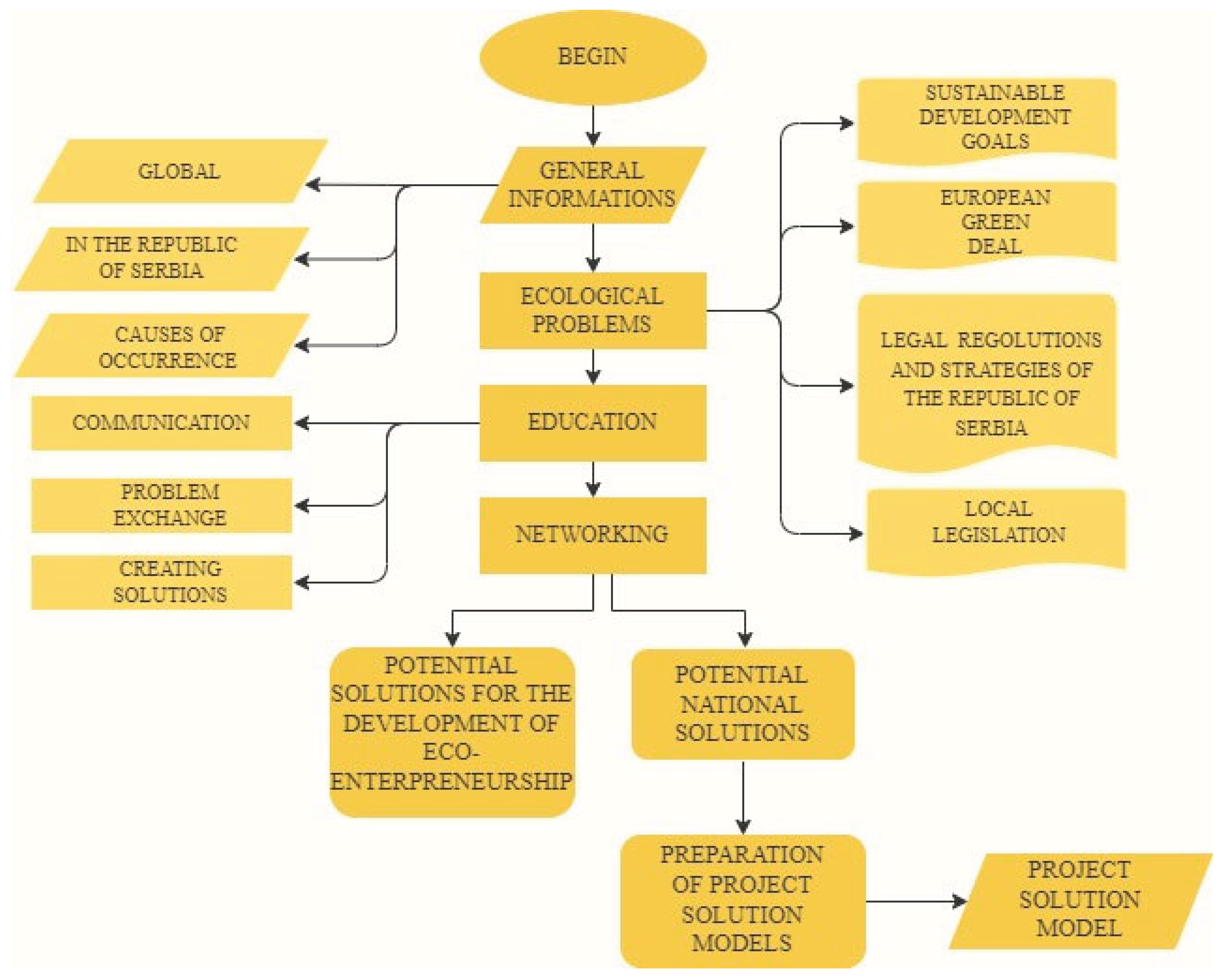
The prototype facilitates a student-focused digital platform designed for ecological education and networking by outlining its information architecture, main workflows, and governance components that enable translating learning into action. It offers organized access to essential knowledge, current environmental issues, legal aspects, and collaboration spaces where students can form teams, co-create solutions, and engage with institutions. Figure 1 and Figure 2 illustrate the two-tier architecture: Level 1 depicts the overall structure, including entry points and key domains, while Level 2 specifies the functional modules and their connections to learning, engagement, and impact.
The draft model of the digital platform (see Figure 2) comprises four functional domains that guide users from initial orientation and learning through to collaboration and solution development. The General Information section outlines the platform's mission, governance, authorship, usage policies, and provides brief onboarding instructions for students, mentors, and institutional partners. The Environmental Problems area features issues across three scales—global, national (specifically the Republic of Serbia), and causal factors—helping learners place local challenges into a broader climate and sustainability context.
Within the Education domain, content is organized around (i) the United Nations Sustainable Development Goals, (ii) the European Green Deal provisions, (iii) national legislation and strategic frameworks of the Republic of Serbia, and (iv) local self-government regulations. This layered structure clarifies how global targets influence national and municipal responsibilities and demonstrates how compliance informs feasible interventions.
The Networking domain fosters collaboration through three consecutive spaces: Communication (for discussions and peer-expert exchanges), Problem Exchange (for identifying and prioritizing current environmental challenges), and Solution Creation (for co-designing concepts and prototypes). Downstream pipelines support Eco-Entrepreneurship (development of early venture ideas) and National-Level Solutions (policy or program proposals). Both pipelines lead to the Preparation of Project Solution Models, which generate standardized dossiers ready for submission to institutions or funding calls.
Across these domains, users can (a) access databases of current hotspots and priority issues, (b) consult an integrated Legal Framework summarizing rights and obligations for individuals and organizations, and (c) explore foundational ecological content (such as biodiversity, water systems, flora, and fauna) linking ecosystem functions to risks and consequences. This information structure converts learning into coordinated action: students identify problems, acquire targeted knowledge, collaborate to develop solutions, and formalize them as project models suitable for implementation.
5.1. User Journeys and Functional Pathways
The prototype supports three main student journeys. First, a learning pathway starts with a topic in Environmental Problems, moves to specific learning objects in Education—such as SDG 13: Climate Action and EGD measures on the circular economy—and concludes with a short assessment and reflection prompt that can be shared with peers or mentors. Second, a collaboration pathway begins with a post in Problem Exchange, initiates team formation in Networking, and uses shared workspaces to draft concept notes and solution sketches. Third, an implementation pathway links mature ideas to the Legal Framework for compliance checks and then to the Eco-entrepreneurship or National-solutions pipelines, where proposals are formatted as Project Solution Models including goals, indicators, partners, and budgets. Collectively, these pathways transform knowledge acquisition into tangible outputs like briefs, pilots, and projects.
5.2. Alignment with ProSafeNet (Case Application)
Within ProSafeNet (Global Hub), the prototype corresponds to existing modules capable of hosting and scaling the listed pathways. Core content is housed in the Knowledge Base and Training Hub, including learning objects, micro-courses, and certificates. Interaction and collaboration are facilitated through Events, Forums, Projects, the Research Hub, and the Youth & Early-Career Hub, which support team formation, mentoring, and artifact sharing. Problem briefs and solution development tie into the Community Resilience Hub, Policy Practice Lab, and Innovation Lab, allowing students to test ideas against real community and policy challenges. In areas where environmental risk is significant, such as heatwaves or floods, the Risk Intelligence Hub and Security Alerts provide situational awareness and data inputs to support tasks and projects. This mapping confirms that the prototype’s core components have a practical host environment and governance model, thereby reducing the time needed to reach a pilot stage.
5.3. Outputs and Early Feasibility Evidence
While this study does not present experimental results, the prototype produces tangible outputs: (i) structured learning objects and checklists aligned with SDG/EGD topics; (ii) problem briefs and concept notes created through the Problem Exchange and Solution Creation flow; (iii) project dossiers formatted as Project Solution Models, including objectives, indicators, legal references, and stakeholder maps; and (iv) a reusable rubric for assessing proposal quality based on relevance, feasibility, expected impact, and SDG/EGD alignment. In the ProSafeNet case, these outputs can be stored, versioned, and reviewed within existing modules, providing an immediate opportunity to pilot with students and mentors from multiple institutions.
5.4. SDG/EGD Linkages and Indicator Readiness
Each module explicitly links to SDG and EGD priorities. The Education and Knowledge Base modules support SDG 4 (Quality Education). The Environmental Problems and Risk Intelligence components inform SDG 11 (Sustainable Cities and Communities) and SDG 13 (Climate Action). The Legal Framework and Policy Practice Lab connect student work with EGD regulatory pillars, such as circular economy and pollution reduction. To facilitate future empirical evaluation, the prototype includes indicator readiness features, such as pre- and post-knowledge assessments in Training Hub objects, engagement and collaboration metrics (active users, team formation, forum participation, event attendance), and innovation/practice metrics (prototypes, pilots, policy briefs, community uptake). These indicators can be gathered via platform analytics and standardized surveys, allowing for rigorous pilot studies without the need to alter the architecture.
6. Discussion
The platform model presented in this paper offers several advantages, including providing information on environmental problems, legal regulations, networking opportunities, and education on environmental topics. Platform users can easily access basic information about environmental education and current issues, and join various interest groups focused on specific goals. These groups share methods for solving and preventing the escalation of environmental problems. The platform also provides data on key environmental concerns. Additionally, users can develop solutions with the platform's support, which is especially relevant to eco-entrepreneurship (Bai et al., 2023; Imansyah, Hartono, & Putranti, 2023), highlighting the platform's significant potential to support environmental protection. A significant benefit is its ability to facilitate networking and the exchange of ideas through effective communication. Users can connect with others who share their interest in environmental issues, share experiences and ideas, and work together to address environmental challenges. Ultimately, this platform can raise environmental awareness and inspire actions that align with the SDGs and EGD targets., Hartono & Putranti, 2023), which can significantly benefit environmental protection.
This model extends beyond simple repositories of environmental information by integrating learning, collaboration, and implementation into a unified workflow: (i) problem sensing with curated issues and local data, (ii) targeted learning modules aligned with SDG/EGD standards, (iii) organized co-creation through Problem Exchange and Solution Creation, and (iv) Project Solution Models ready for institutional submission. In the ProSafeNet case, these stages are seamlessly supported through hosting platforms like the Knowledge Base, Training Hub, Forum/Events, Projects, and the Policy and Innovation Labs. This setup reduces the time needed to pilot projects while ensuring governance, moderation, and accreditation within an existing global network.
One of the primary benefits of this platform is the opportunity for networking and exchanging ideas through effective communication. This enables platform users to connect with other interested parties, share experiences and ideas, and contribute to solving environmental issues. Ultimately, this platform has the potential to raise environmental awareness and motivate people to take actions that support both the SDGs and EGD targets. A key practical insight is that ProSafeNet already offers multi-role governance, moderation, credential audit trails, and cross-border reach. This enables rapid trials across universities and municipalities, eliminating the need to build infrastructure from scratch. Additionally, the Risk Intelligence Hub and Security Alerts place ecological issues within a real-time risk environment, such as floods and heatwaves. This setup can inspire genuine, data-driven student projects and enhance their real-world applicability.
Improving and protecting the environment is the only sure way for young generations to have a secure future, as they inherit the problems of pollution and global warming. Decarbonization, the circular economy, the European Green Deal, and the Sustainable Development Goals are measures that must be implemented quickly and diligently worldwide to prevent pollution from worsening, as it is clear that nature cannot be restored to its original state. Since national education does not cover these areas, the only way to ensure their rapid and effective implementation is through education reform and modernization. Such reform takes time, but our planet does not have that luxury. To secure the future of young people living in these ecologically turbulent and uncertain times, when ecological disasters are emerging, the presented concept offers a way to accelerate implementation and action. For to achieve impact at scale, the platform must ensure equitable access through low-bandwidth options and a mobile-first approach. It should support multiple languages, including those of the Western Balkans and English, and incorporate inclusive teaching methods based on UDL principles and assistive technology compatibility. The Youth & Early-Career Hub can help reduce barriers for first-generation and under-resourced students by combining learning with mentorship, micro-internships, and recognition, such as badges and certificates. This approach aims to enhance student retention and promote progression into green jobs and civic engagement.Ecological disasters cannot be eliminated; nature requires time to regenerate. Similarly, the educational system needs time to develop significantly new and different models for knowledge and educational material delivery.
As a quicker and more immediate solution—where positive effects are visible right away—this concept of a digital platform model for environmental education, aligned with the Sustainable Development Goals and the European Green Deal, is the most effective approach. The concept can be implemented either alongside or even before the start of education reform. Young people are becoming increasingly aware of the challenges caused by human behavior. It is possible to demonstrate to young people the significant consequences of their environmental protection habits, which were often inherited from the older generation, and inspire them to change. By connecting young people across different regions and educational institutions and introducing mandatory training for early childhood educators, preschools, and others, we can enhance the overall knowledge about the environment (Goswami & Ahmad, 2025; Domingo Dela Cruz & Ormilla, 2022; Razia, 2025; Ojha, Bhattarai, & Devkota, 2025; Rico, 2019). The practices of the European Union are reflected in the consistent and active implementation of improvement projects, which the European Bank and other investors fund. These funds are available for developing countries, as in the case of the Republic of Serbia. It is essential to enhance the expertise of professionals in developing and applying project solutions in the field of environmental protection.
The purpose of the digital platform model for environmental education among students, in line with the Sustainable Development Goals and the European Green Deal, is also to enhance networking among young people and foster the creation of innovative solutions. Essentially, it is about empowering their active participation in designing project solutions that directly contribute to improving the state of the environment. Funds for such projects can be secured from the European Union funds, specifically targeted for this purpose.
It can be concluded that these activities simultaneously address multiple important goals. By engaging young academics, the initiative contributes to reducing unemployment while empowering them as a gender-equal group. At the same time, intellectual capital is effectively utilized to counteract the negative effects of “brain drain,” while expanding opportunities for accessing and efficiently using green EU and other funding sources. Through such efforts, the overall quality of life and public health are improved, acute environmental problems are mitigated, the environment is better protected, and valuable natural resources are preserved for future generations.The Sustainable Development Goals and the European Green Deal clearly indicate the need for investment in education, digitalization, and new improvement models, as outlined in their goals, measures, and sub-goals. These facts provide a basic foundation for creating a digital platform model for student education, precisely in accordance with these goals and measures, with a special focus on environmental improvement and protection topics.
The Sustainable Development Goals and the European Green Deal are key drivers of change in sustainable development, environmental protection, and conservation. EU member states and aspiring members will likely achieve positive outcomes by carefully monitoring and implementing these initiatives. The written frameworks serve as excellent guides for overcoming environmental challenges through negotiations in Chapter 27. Since these challenges are caused by everyone—individuals, corporations, and institutions—these frameworks and measures for problem-solving include all groups, ensuring that everyone is involved in efforts to improve and protect the environment. The digital platform for ecological education helps cultivate a new generation of leaders capable of making decisions that support sustainable development and environmental protection, aligned with the goals set by the Sustainable Development Goals and the European Green Deal. This approach is vital for the long-term success of environmental preservation and improvement.
To address the selected problems, it is essential to approach them with care and responsibility, following the guidelines outlined in the Sustainable Development Goals and the European Green Deal. The leaders of these major initiatives provide not only the methodology and space for their development and other innovations but also the necessary financial resources with a clear purpose, all in accordance with the provisions, goals, indicators, and measures. The way problems are solved and funds are received, based on clearly defined purposes, involves development projects that include concrete solutions. To ensure quality implementation, correctness, effective use of resources, and clear communication with service providers, expert project staff with adequate knowledge are necessary. However, basic professional project knowledge alone is not enough and does not guarantee a safe path to securing funds, solutions, and successful project completion. Innovation is crucial for addressing identified needs and problems, and for finding practical solutions. Young residents, particularly students from various faculties in Serbia, represent significant innovation potential.
Several risks need consideration: (i) content drift and inconsistent quality without editorial oversight; (ii) participant fatigue if tasks lack credit or genuine community impact; (iii) fragmentation among institutions without standardized templates and metadata; and (iv) evaluation bias if pilots depend only on self-selected students. While ProSafeNet’s moderation and credentialing help reduce these risks, formal quality assurance measures like rubrics, peer review, and periodic audits are essential.
7. Conclusions
By leveraging the capacity of formal education and a diverse range of high-quality higher education, a select group of students can be encouraged to develop as experts through informal education, specifically via a digital platform model for ecological education aligned with the Sustainable Development Goals and the European Green Deal. After informal education on processes, legislation, and areas covered by these initiatives, students’ innovative solutions to observed problems are reinforced. This approach empowers the group, who often face difficulties in applying their knowledge practically and finding employment. They should be viewed as an intellectual resource susceptible to the phenomenon of "brain drain" in search of opportunities abroad. Consequently, Serbia loses significant potential in its professional and innovative workforce. By providing opportunities and collaborating with this group, substantial progress can be made toward Serbia's economic, environmental, social, and cultural development. The provisions, goals, SDGs, and EGD indicators create space not only for developing such an educational platform but also for ensuring the effective use of financial investments to address current environmental issues. Unfortunately, these problems continue to worsen daily and require urgent attention. The digital platform model proposed in this dissertation offers an opportunity to do so. With a systematic approach, success is inevitable, thereby ensuring Serbia’s progress in addressing pressing environmental challenges. This model supports the development and utilization of a digital platform that enhances students' knowledge, facilitates networking, and informs decision-making in the environmental sector at the project, local, and strategic levels. All these initiatives—covering environmental improvement and protection, including the Sustainable Development Goals, the European Green Deal, and the Green Agenda—are interconnected. The initial step involves identifying the conditions necessary for developing a digital platform model for ecological education and networking among students, to create solutions to environmental protection and enhancement issues. It is essential to prioritize developing and implementing digital platforms for ecological education and networking to address environmental challenges and promote adequate progress towards the SDGs.
ProSafeNet (Global Hub) provides an immediate link from concept to implementation by hosting learning resources (Knowledge Base, Training Hub), collaboration spaces (Forum, Events, Projects, Research Hub), and execution interfaces (Community Resilience Hub, Policy Practice Lab, Innovation Lab). It allows active deployment of the outlined model without needing additional infrastructure. A pilot program, utilizing pre/post knowledge checks, engagement metrics (team formations, mentorships, event participation), and innovation indicators (student project portfolios, prototypes, policy briefs), can offer early evidence of success. This pilot also enhances student visibility, credentials, and opportunities for EU and national green funding. With GDPR-compliant governance and cross-border reach, ProSafeNet can expand its model beyond Serbia, aiding in retaining young talent and advancing SDG and EGD goals.
Funding
This research was funded by the Scientific–Professional Society for Disaster Risk Management, Belgrade, Serbia (https://upravljanje-rizicima.com/, accessed October 13, 2025); the International Institute for Disaster Research, Belgrade, Serbia (https://idr.edu.rs/, accessed October 12, 2025); and ProSafeNet — The Global Hub for Safety, Security, Risk & Emergency Professionals & Scientists, Belgrade, Serbia (https://prosafenet.com/, accessed October 13, 2025).
Acknowledgements
The author acknowledges the use of Grammarly Premium and ChatGPT 4.0 in the process of translating and improving the clarity and quality of the English language in this manuscript. The AI tools assisted in language enhancement but were not involved in developing the scientific content. The authors take full responsibility for the originality, validity, and integrity of the manuscript.
Conflict of Interest
The authors declare that they have no conflict of interest. Although one of the authors is the founder of the ProSafeNet platform mentioned in this paper, the platform is presented solely as a scientific case study to illustrate the proposed model of a digital platform for ecological education. The description and analysis are conducted objectively and without any commercial or financial purpose. The study is academic in nature and aims to contribute to the scientific understanding of digital learning environments aligned with the Sustainable Development Goals and the European Green Deal.
References
- Agboola, O. P., & Oluyinka, S. (2019). Perceptions of ethnic residents' satisfaction: A quest towards the sustainable development of public space in Nigeria. International Journal of Happiness and Development, 5(1), 66–82. [CrossRef]
- Bai, W., Hou, J., Xu, J., & Chen, J. (2023). Does digital economy development successfully drive the quality of green innovation in China? Polish Journal of Environmental Studies, 32(3), 2001–2014. [CrossRef]
- Bhatt, I., de Roock, R., & Adams, J. (2015). Diving deep into digital literacy: Emerging methods for research. Language and Education, 29(6), 477–492. [CrossRef]
- Borojević, T., Petrović, N. B., & Vuk, D. (2014). Youth and environmental education for sustainable development. International Journal of Science and Research (IJSR), 3(9), 57–62.
- Bronfenbrenner, U. (1979). The ecology of human development: Experiments by nature and design. Cambridge, MA: Harvard University Press.
- Buitrago, M., & Chiappe, A. (2019). Representation of knowledge in digital educational environments: A systematic review of literature. Australasian Journal of Educational Technology, 35(4), 27–44. [CrossRef]
- Cerdá Suárez, L. M., Núñez-Valdés, K., & Quirós y Alpera, S. (2021). A systemic perspective for understanding digital transformation in higher education: Overview and subregional context in Latin America as evidence. Sustainability, 13(23), 12956. [CrossRef]
- Cvetković, V. & Šišović, V. (2024). Capacity Building in Serbia for Disaster and Climate Risk Education. Disaster and Climate Risk Education Insights from Knowledge to Action, edited by Ayse Yildiz and Rajib Shaw, book series Disaster Risk Reduction, Springer Nature Singapore Pte Ltd., 152 Beach Road.
- Cvetković, V. (2016). The relationship between educational level and citizen preparedness for responding to natural disasters. Journal of the Geographical Institute “Jovan Cvijić” SASA, 66(2), 237–253. [CrossRef]
- Cvetković, V. (2017). Percepcija rizika od prirodnih katastrofa izazvanih poplavama [Risk perception of natural disasters caused by floods]. Vojno delo, 69(5), 160–175.
- Cvetković, V. (2020). Upravljanje rizicima u vanrednim situacijama [Disaster Risk Management]. Beograd: Naučno-stručno društvo za upravljanje rizicima u vanrednim situacijama.
- Cvetković, V. M. (2019). Risk perception of building fires in Belgrade. International Journal of Disaster Risk Management, 1(1), 81–91. [CrossRef]
- Cvetković, V. M., Renner, R., & Jakovljević, V. (2024). Industrial Disasters and Hazards: From Causes to Consequences—A Holistic Approach to Resilience. International Journal of Disaster Risk Management, 6(2), 149–168. [CrossRef]
- Cvetković, V., & Jakovljević, V. (2017). Činioci uticaja na svest građana o rizicima nastanka vanrednih situacija u Srbiji [Factors influencing public awareness of the risk of emergencies in Serbia]. Peto naučno savetovanje „Upravljanje rizicima“ (pp. 11–20). Požarevac: VTŠSS.
- Cvetković, V., & Katarina, A. (2019). Edukacija građana o smanjenju rizika od katastrofa korišćenjem multimedijalnih sadržaja – društvene igre, kompjuterske igrice i simulacije [Citizen education for disaster risk reduction using multimedia content – board games, computer games and simulations]. Vojno delo, 71(6), 122–151.
- Cvetković, V., & Martinović, J. (2020). Innovative solutions for flood risk management. International Journal of Disaster Risk Management, 2(2), 71–100. [CrossRef]
- Cvetković, V., Tarolli, P., Roder, G., Ivanov, A., Ronan, K., Öcal, A., & Kutub, R. (2017). Citizens education about floods: A Serbian case study. 7th International Scientific Conference “Archibald Reiss Days”, Academy of Criminalistics and Police Studies, Belgrade.
- Domingo Dela Cruz, R., & Ormilla, R. C. G. (2022). Disaster Risk Reduction Management Implementation in the Public Elementary Schools of the Department of Education, Philippines. International Journal of Disaster Risk Management, 4(2), 1–15. [CrossRef]
- Domingo Dela Cruz, R., & Ormilla, R. C. G. (2022). Disaster Risk Reduction Management Implementation in the Public Elementary Schools of the Department of Education, Philippines. International Journal of Disaster Risk Management, 4(2), 1–15. [CrossRef]
- Gökçe-Kızılkaya, S., & Onursal-Beşgül, Ö. (2017). Youth participation in local politics: City councils and youth assemblies in Turkey. Southeast European and Black Sea Studies, 17(1), 97–112. [CrossRef]
- Goswami, T., & Ahmad, A. (2025). Integrating Disability into Disaster Management Education in India: A Critical Review. International Journal of Disaster Risk Management, 7(1), 163–176. [CrossRef]
- Hao, Y., Wang, Y., Wu, Q., Sun, S., Wang, W., & Cui, M. (2020). What affects residents' participation in the circular economy for sustainable development? Evidence from China. Sustainable Development, 28(5), 1251–1268. [CrossRef]
- Hasim, M. S., & Salman, A. (2010). Factors Affecting the Sustainability of Internet Usage Among Youth. The Electronic Library, 28(2), 1–15. [CrossRef]
- Holmes, J., Moraes, O. R., Rickards, L., Steele, W., Hotker, M., & Richardson, A. (2022). Online learning and teaching for the SDGs: Exploring emerging university strategies. International Journal of Sustainability in Higher Education, 23(3), 503–521. [CrossRef]
- Hussaini, A. (2020). Environmental Planning for Disaster Risk Reduction at Kaduna International Airport, Kaduna Nigeria. International Journal of Disaster Risk Management, 2(1), 35–49. [CrossRef]
- Imansyah, M. H., Hartono, D., & Putranti, T. (2023). The impacts of digital economy on green economy: The Indonesian Miyazawa model. Polish Journal of Environmental Studies, 32(2), 1234–1245. [CrossRef]
- Ivanov, A., & Cvetković, V. (2014). The Role of Education in Natural Disaster Risk Reduction. Horizons, International Scientific Journal, 16, 115–131.
- Jakovljević, V., Cvetković, V., & Gačić, J. (2015). Prirodne katastrofe i obrazovanje [Natural Disasters and Education]. Beograd: Fakultet bezbednosti, Univerzitet u Beogradu.
- Kim, J. (2020). Voices of youth in reconceptualising and repositioning the role of mobile learning for sustainable development. Information Technology for Development, 26(4), 711–727. [CrossRef]
- Ljujić, G. B. (2021). Onlajn obrazovanje odraslih: Kada alternativa postane nužnost. In Život u kriznim vremenima – andragoški pogledi (pp. 91–105). Beograd: Filozofski fakultet, Univerzitet u Beogradu.
- Marouli, C. (2021). Sustainability education for the future? Challenges and implications for education and pedagogy in the 21st century. Sustainability, 13(5), 2901. Méndez, D., Méndez, M., & Anguita, J. M. (2022). Digital teaching competence in teacher training as an element to attain SDG 4 of the 2030 Agenda. Sustainability, 14(18), 11387.
- Nazneen, S., Hong, X., Din, N. U., & Jamil, B. (2021). Infrastructure-driven development and sustainable development goals: Subjective analysis of residents’ perception. Journal of Environmental Management, 294, 112931. [CrossRef]
- O’Sullivan, K., Clark, S., Marshall, K., & MacLachlan, M. (2021). A just digital framework to ensure equitable achievement of the Sustainable Development Goals. Nature Communications, 12(1), 6345. [CrossRef]
- Ojha, J. C., Bhattarai, P. C., & Devkota, B. (2025). Teachers’ Perception Towards Responses of COVID-19 Pandemic Management in Gandaki Province of Nepal: A Cross-Sectional Survey. International Journal of Disaster Risk Management, 7(1), 485–494. [CrossRef]
- Orlović Lovren, V. (2021a). Koncept životne sredine u andragoškoj literaturi i univerzitetskom obrazovanju andragoga. Andragoške studije, 1(1), 41–56.
- Orlović Lovren, V. (2021b). Obrazovanje za životnu sredinu i obrazovanje za održivi razvoj – konceptualna rešenja i dileme. Nastava i vaspitanje, 70(1), 7–23.
- Petrović, N., Ćirović, M., & Martins, F. P. (2023). The role of higher education in transition to a circular economy: Journey on the “yellow brick road” to sustainability. In Sustainable Business Change: Project Management Toward Circular Economy (pp. 3–39). Cham: Springer International Publishing.
- Petrović, N., Jeremić, V., Ćirović, M., Radojičić, Z., & Milenković, N. (2014). Facebook versus Moodle in practice. American Journal of Distance Education, 28(2), 117–125. [CrossRef]
- Petrović, N., Jeremić, V., Petrović, D., & Ćirović, M. (2014). Modeling the use of Facebook in environmental higher education. In B. L. McCarthy & M. L. Schugurensky (Eds.), The social classroom: Integrating social network use in education (pp. 100–119). Hershey, PA: IGI Global.
- Petrović, N., Petrović, D., Jeremić, V., Milenković, N., & Ćirović, M. (2012). Possible educational use of Facebook in higher environmental education. In Proceedings of the International Conference on Information Communication Technologies in Education (ICICTE) (pp. 355–362).
- Petrović, N., Snider, A., Ćirović, M., & Milenković, N. (2012). Debate in education for sustainable development. Management, 65, 45–52.
- Radaković, J. A., Petrović, N., Milenković, N., Stanojević, K., & Đoković, A. (2017). Improving students' higher environmental and climate change knowledge: A case study. Polish Journal of Environmental Studies, 26(6), 1231–1240. [CrossRef]
- Razia, B. (2025). Guardians of Safety: Assessing Awareness and Preparedness of Teachers along with School Initiatives for Disaster Risk Reduction. International Journal of Disaster Risk Management, 7(1), 325–338. [CrossRef]
- Rico, G. C. S. (2019). School-Community Collaboration: Disaster Preparedness towards Building Resilient Communities. International Journal of Disaster Risk Management, 1(2), 45–61. [CrossRef]
- Sangrá, A., Raffaghelli, J. E., & Guitert-Catasús, M. (2019). Learning ecologies through a lens: Ontological, methodological and applicative issues. A systematic review of the literature. British Journal of Educational Technology, 50(4), 1619–1638. [CrossRef]
- Smith, E. (2012). The digital native debate in higher education: A comparative analysis of recent literature / Le débat sur les natifs du numérique dans l'enseignement supérieur: Une analyse comparative de la littérature récente. Canadian Journal of Learning and Technology, 38(3), 1–21.
- Smol, M., Marcinek, P., Duda, J., & Szołdrowska, D. (2020). Importance of sustainable mineral resource management in implementing the circular economy (CE) model and the European Green Deal strategy. Resources, 9(5), 55. [CrossRef]
- Solís, P., McCusker, B., Menkiti, N., Cowan, N., & Blevins, C. (2018). Engaging global youth in participatory spatial data creation for the UN Sustainable Development Goals: The case of open mapping for malaria prevention. Applied Geography, 98, 143–155. [CrossRef]
- Sudar, S., Cvetković, V. M., & Ivanov, A. (2024). Harmonization of Soft Power and Institutional Skills: Montenegro’s Path to Accession to the European Union in the Environmental Sector. International Journal of Disaster Risk Management, 6(1), 41–74. [CrossRef]
- United Nations (UN). (2014). Resolution adopted by the General Assembly on 29 January 2014. New York: United Nations.
- Zeng, G., & Guo, H. (2023). Research on satisfaction evaluation and influencing factors of online teaching mode under the background of green sustainability. Polish Journal of Environmental Studies, 32(4), 1500–1512. [CrossRef]
Figure 1.
Draft of a potential model for a digital platform for educating and networking young people - Level 1.
Figure 1.
Draft of a potential model for a digital platform for educating and networking young people - Level 1.
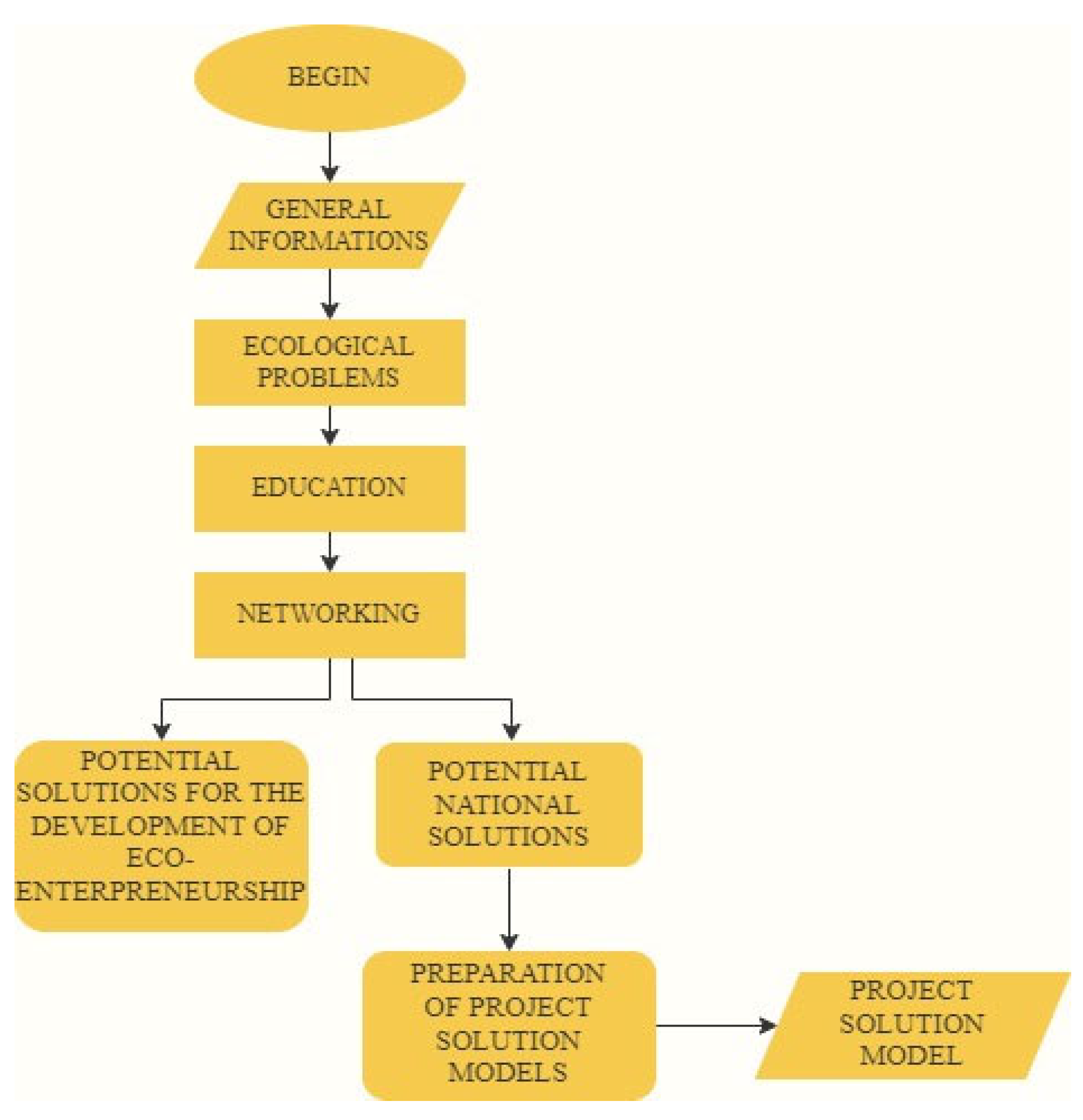
Figure 2.
Draft of a potential model for a digital platform for educating and networking young people - Level 2.
Figure 2.
Draft of a potential model for a digital platform for educating and networking young people - Level 2.
Disclaimer/Publisher’s Note: The statements, opinions and data contained in all publications are solely those of the individual author(s) and contributor(s) and not of MDPI and/or the editor(s). MDPI and/or the editor(s) disclaim responsibility for any injury to people or property resulting from any ideas, methods, instructions or products referred to in the content. |
© 2025 by the authors. Licensee MDPI, Basel, Switzerland. This article is an open access article distributed under the terms and conditions of the Creative Commons Attribution (CC BY) license (http://creativecommons.org/licenses/by/4.0/).
Copyright: This open access article is published under a Creative Commons CC BY 4.0 license, which permit the free download, distribution, and reuse, provided that the author and preprint are cited in any reuse.


