

Submitted:
16 October 2025
Posted:
17 October 2025
You are already at the latest version
Abstract
Efficient water recycling is imperative for the sustainable presence of humans during long-duration and deep-space missions, where resupply from Earth is not a viable option. This study proposes a kombucha-based photobioreactor (Kombucha-PBR) as a novel biological approach for the treatment of wastewater generated in space habitats. Kombucha, a symbiotic microbial consortium of bacteria and yeasts, produces bacterial cellulose and demonstrates high stability and resistance to contamination, making it suitable for closed-loop bioprocessing in microgravity conditions. The reactor was evaluated using synthetic wastewater formulated by NASA, which was representative of spacecraft effluents. Treatment performance was assessed through the removal of chemical oxygen demand (COD) and total nitrogen (TN). Following an initial adaptation phase, the system demonstrated stable performance, with a decrease in ammonia concentrations from 200 mg·L⁻¹ to 44 mg·L⁻¹ (>80% removal efficiency) and an average COD removal of 81% after 30 days. The fixed-bed configuration provided an extensive surface area for the growth of biofilm, thereby enabling simultaneous carbon and nitrogen removal whilst minimising energy requirements and operational complexity. The findings demonstrate that the Kombucha-PBR offers a compact, low-energy, and microgravity-compatible solution for regenerative water recovery. Its integration into spacecraft life support systems has the potential to significantly advance sustainable resource management and autonomy for future long-term space missions.
Keywords:
space life support systems
; wastewater treatment
; kombucha bioreactor
; regenerative water recovery
; closed-loop systems
1. Introduction
As humanity continues to explore space, the importance of sustainable life support systems is becoming increasingly apparent. The necessity for effective solutions for waste management is paramount in the context of long-duration space missions, a fact that is exemplified by the treatment of wastewater [1]. The ingestion of water is of paramount importance for human health and well-being during protracted space missions. Whilst contemporary spacecraft are powered by the combustion of H2 and O2, which generates sufficient amounts of drinking water, future long-term space missions (for example, to Mars) will rely on nuclear energy, thereby eliminating this source of water. Consequently, the necessity for future long-term space missions to purify and reuse water and wastewater to the greatest extent possible is paramount. The International Space Station (ISS) is the most well-known example of extended space missions, with most of its water being recycled through a combination of physical and chemical purification processes. However, in order to meet its water requirements, the ISS continues to rely on resupply from Earth. It is imperative to acknowledge that, in the context of future missions that are projected to travel greater distances from Earth and to endure protracted durations, the utilisation of self-sustaining systems that can reliably and consistently provide water without the necessity of Earth-based resupply assumes a pivotal role [2].
Water of varying degrees of purity will be required for different purposes, including crew consumption, sanitation, laundry, toilet flushing, food preparation, oxygen production, potential food cultivation (e.g. plant growth), and various research activities. It is estimated that for space missions lasting more than 30 days, approximately 2.4 kg of water per crew member per day is required to meet human consumption needs (i.e. potable water) [3]. A viable solution to address water needs would involve the recovery and recycling of water from waste streams, such as urine and hygiene wastewater. For instance, the total wastewater generation rates (kg of water per crew member per day) for various missions have been estimated at 3.7 on the ISS, 4.1 on a transit vehicle, 11.4 at an early planetary base (EPB), and 29.3 at a mature planetary base [4,5,6]. It is evident that the implementation of regenerative water recovery systems has the potential to transform “wastewater” or “used water” into potable water, thereby addressing the need for water reuse in various applications. This process not only ensures the sustainable utilisation of water resources but also facilitates the recovery of valuable by-products (VAPs), which can contribute to enhanced economic and environmental benefits.
The issue of wastewater treatment during long-term space missions is a matter of particular concern, given the marked differences between such systems and their terrestrial counterparts. The treatment process must produce effluent of an extremely high quality, without negatively impacting the habitability of the spacecraft. A further challenge pertains to the design of the process as a whole, with the objective of ensuring its functionality within the confines of microgravity conditions. Conventional aerobic biological wastewater treatment relies on gravity to create buoyant air bubbles for aeration and on gravity-based clarifiers to separate biomass from treated effluent. Consequently, conventional wastewater treatment systems employed on Earth frequently prove to be too large, energy-intensive, or inefficient for the confined and resource-limited environments of spacecraft. In this context, biological treatment systems offer promising alternatives, utilising natural processes for the degradation of contaminants while minimising resource consumption [7,8,9]. The utilisation of biofilms in the context of wastewater treatment in space is a growing trend. Researchers have reported that these systems are highly effective, achieving oxidation efficiencies of 60-65%, TOC removal rates ranging from 35% to as high as 98%, nitrification efficiencies of 60-80%, and denitrification rates of 35-86%. A comprehensive review of the extant literature pertaining to the utilisation of biofilm reactors for the treatment of wastewater in space and extraterrestrial environments, accompanied by an assessment of their efficacy, is provided in the work of Erik J. Espinosa-Ortiz et al. [10].
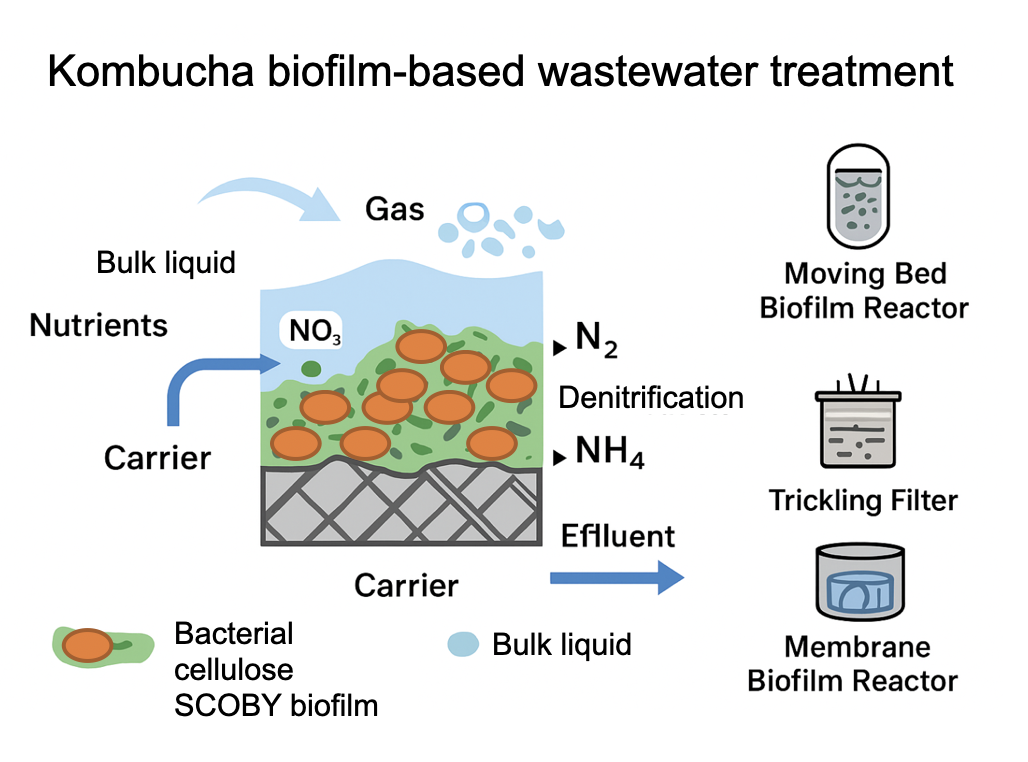
On Earth, the utilisation of attached-growth microbial systems to extract organic carbon and nutrients (e.g., nitrogen and phosphorus) from diverse waste streams has a history that spans over a century [11,12]. These systems are reliant upon the formation of biofilms, wherein microbial cells responsible for the conversion of organic matter and nutrients proliferate in an attached state to a surface (substrate) and are embedded in a self-produced matrix of extracellular polymeric substances (EPS) [13,14]. Biofilm reactors consist of four principal components: the biofilm itself, the surface on which the biofilm grows (i.e. the substrate or carrier), the bulk liquid (e.g. wastewater), and the gas phase if required by the system (e.g. air or oxygen) [15]. The materials utilised in biofilm reactors, designated as “active substrates,” facilitate not only the proliferation of biofilms but also confer supplementary functionalities. For instance, hollow membranes for gas transfer facilitate the supply of electron donors (i.e., chemicals that donate electrons to another compound in redox reactions during microbial growth), while the anode of an electrochemical cell can act as an electron acceptor (substances that accept electrons transferred to them from other compounds) in biofilm reactors [16].
In order to deliberate on the prospect of implementing biofilm reactors in space, it is imperative to possess a comprehensive grasp of the processes involved in biofilm formation and development under space conditions. As demonstrated in a number of studies, the formation of fungal and bacterial biofilms has been observed on various surfaces and in water systems aboard space shuttles, the ISS, and the MIR space station [17,18,19,20,21]. Furthermore, a number of biofilm-forming microorganisms have been isolated from the spaceflight environment, including from water supply and wastewater systems on the ISS [22,23,24]. In comparison with conventional suspended growth systems, biofilm reactors offer a number of advantages, including lower energy requirements, simpler operation and maintenance, increased operational stability, and reduced hydraulic retention time [28,29]. Biofilms provide a large specific surface area, which allows for more efficient utilisation of substrates (i.e. nutrients and contaminants) from the bulk liquid in a smaller space; this reduces the volumetric requirements for biofilm reactors [28]. A bioreactor with a fixed bed for wastewater treatment functions by utilising a solid medium (the “fixed bed”) as a surface for microbial biofilms to grow. These biofilms consist of microorganisms that perform biological treatment by breaking down organic matter and pollutants in the wastewater.
Another pivotal factor in the deployment of bioreactors in space pertains to the selection of the biofilm matrix. Kombucha, a fermented tea produced by a symbiotic culture of bacteria and yeast (SCOBY), has attracted considerable attention in recent years, not only for its health benefits but also for its potential in biotechnological applications [25]. The microbial communities present in kombucha brewing have been shown to possess the capacity to degrade a wide range of organic compounds, suggesting the potential for their utilisation in a bioreactor-based wastewater treatment system, even under the challenging conditions of space. The microbial consortium of kombucha has been subjected to a 18-month testing period on the external panel Kibo on the International Space Station. This testing has yielded promising results regarding the consortium’s resistance to microgravity and cosmic radiation [25,26,27].
The present study explores the feasibility of using a kombucha-based bioreactor for the biological treatment of synthetic wastewater that mimics the composition of waste generated during space missions. The primary focus of this study is to evaluate the capacity of the kombucha culture to degrade organic pollutants and reduce nutrient levels, thereby ensuring the safety of the water for potential reuse in a closed-loop life support system. The objective of this study is to develop a low-energy, effective solution for wastewater treatment in extraterrestrial environments by leveraging the natural metabolic processes of kombucha’s microbial community. The objectives of this research are twofold: firstly, to assess the efficiency of kombucha bioreactors in treating space-mission-relevant wastewater, and secondly, to investigate how factors such as microbial composition and operating conditions impact treatment performance. This research has the potential to inform the development of sustainable, biologically-based water purification technologies for future space missions.
2. Materials and Methods
Experimental Procedure
The pack-bed biofilm reactor (PBR) was utilised for the wastewater treatment process. A bioreactor with a pack-bed for wastewater treatment functions by utilising a solid medium (the “fixed bed”) as a surface for microbial biofilms to grow. These biofilms consist of microorganisms that perform biological treatment by breaking down organic matter and pollutants in the wastewater.
An innovative modification of this experiment was the use of a solid medium in the bioreactor. It is evident that plastic rings, sand, gravel, rocks, ceramics, clay and granular carbon are amongst the most common support materials utilised in PBRs. Nevertheless, alternative materials, including bamboo, have also been employed in wastewater treatment [30]. The medium of the bioreactor is of crucial importance in the process of biological water purification, especially under space conditions, where microgravity, limited space, and the need for resource recycling are fundamental. It is therefore evident that the present study employed bacterial cellulose from kombucha as the solid substrate for the bioreactor. It functions as both a biofilm, which provides a growth surface for fungi and bacteria, and as the solid medium of the bioreactor.
The synthetic wastewater utilised in this study constitutes a modified version of the Early Planetary Base Wastewater Ersatz, as formulated by NASA (see Table 1). The wastewater was utilised in dilute forms to facilitate the manipulation of the COD:N ratio. The same concentrations were utilised by Ruoyu D. Chen et al. in their studies [31]. Wastewater formulations, known as “Ersatz” (German for substitute), have been developed to mimic the composition of different waste streams in space [31]. Ersatz formulations consist of varying proportions of the primary stream sources and are designed to simulate the characteristics of used water generated during a transit mission, on an EPB, as well as EPB wastewater that has undergone various physicochemical and biological treatments [32].
Principle of Operation
The prepared kombucha was then introduced into the reactor. The wastewater was introduced into the bioreactor on a continuous basis. The growth of bacterial cellulose, a biofilm responsible for the degradation of organic matter and contaminants in the wastewater, persisted for a period of two months. The wastewater was subjected to treatment in an up-flow mode configuration. The reactor was operated under aerobic conditions, with air supplied as gas bubbles. Two experiments, each with a duration of 64 days, were conducted within the bioreactor that had been prepared in this manner (see Figure 1). During this period, the process of degradation was observed as wastewater passed through the bioreactor. The presence of microorganisms within the biofilm was found to be instrumental in the metabolism of the organic pollutants, resulting in the conversion of these pollutants into harmless byproducts such as water, carbon dioxide (CO2), and biomass. The technical parameters of the experiment are presented in Table 2. The treated water was collected from the reactor and subsequently analysed.
In instances where wastewater exhibits low levels of organic carbon, the electron donors that facilitate microbial processes may prove inadequate for denitrification, necessitating the incorporation of an external electron donor [33,34]. It was hypothesised that an inorganic growth medium would be effective in enriching for nitrifying bacteria (i.e., an inoculum). The medium was formulated with ammonium sulfate, sodium bicarbonate, sodium phosphate, potassium phosphate, magnesium chloride and calcium chloride [31,35].
Analytical Methods
The determination of Chemical Oxygen Demand (COD) was conducted through the utilisation of Accu-Test vials in the low range, with potassium hydrogen phthalate serving as the standard. Ammonia was measured using the Nessler method, with ammonium chloride used as the standard. The total Kjeldahl nitrogen (TKN) was measured using a Digesdahl digestion apparatus, followed by the Nessler method. The determination of nitrites and nitrates was achieved through the utilisation of a compact ion chromatography system, with sodium nitrite and sodium nitrate serving as standards.
3. Results and Discussion
3.1. First Kombucha-PBR Experiment
The first Kombucha-PBR was fed the full-strength NASA wastewater ersatz for 64 days at a hydraulic residence time (HRT) of 24 hours (see Figure 2). The experiment was designed to simulate the most elementary start-up procedure for the Kombucha-PBR. The effluent COD concentration demonstrated a steady decline during the initial 30 days of operation, after which the Kombucha-PBR performance exhibited reasonable consistency, with a mean COD removal efficiency of 81%. Conversely, no ammonia oxidation was observed during the course of the experiment.
3.2. Second Kombucha-PBR Experiment
Following the initial Kombucha-PBR experiment’s failure to achieve nitrification, the subsequent experiment incorporated a more intricate start-up procedure to enhance performance. In this experiment, an attempt was made to create a nitrifying environment prior to the introduction of the wastewater into the reactor. The second experiment thus consisted of four distinct operational phases, during which the composition of the feed solution was modified, while maintaining an HRT of 24 hours. Initially, the bioreactor was supplied with a solution containing only ammonia in order to establish a nitrifying bacterial community [31]. In the subsequent phase, a diluted version of the wastewater was introduced into the bioreactor with the aim of establishing a heterotrophic bacterial community. Following the observation of elevated removal rates of both COD and NH3, the feed solution was modified to a more concentrated version of the wastewater during the third phase, with a COD ratio that would facilitate simultaneous nitrification/denitrification in the bioreactor. In the concluding phase of the second experiment, the full-strength wastewater from NASA was introduced into the bioreactor.
During Phase 1, ammonia removal efficiency was initially low but eventually stabilized above 80%. The concentration decreased from an initial value of 200 mg·L-1 to an average of 44 mg·L-1. (Figure 3a). In this phase, a clear stoichiometric conversion of ammonia to nitrates was observed. In Phase 2, COD removal remained consistent at the same level (Figure 3b), while ammonia removal efficiency was sustained (Figure 3a). The nitrate concentration in the Kombucha-PBR effluent decreased by approximately 30% during Phase 2 in comparison with Phase 1 (see Figure 3a), indicating that denitrification was occurring to a minor extent. During Phase 3, both COD and NH3 removal remained consistent, but a significant reduction in nitrate levels in the effluent was observed (Figure 3a), corresponding to the removal of over 80% of both COD and total nitrogen species. In Phase 4, a substantial increase in ammonia concentration was observed in the wastewater (Figure 3a), while COD removal remained constant (Figure 3b). As illustrated in Table 3, a comprehensive overview of the experimental outcomes and technical specifications of the Kombucha-PBR is provided.
4. Conclusion
The findings of this study demonstrate that the kombucha-based packed-bed biofilm reactor (Kombucha-PBR) presents a promising biological treatment approach for synthetic space mission wastewater. The integration of bacterial cellulose, produced by the kombucha microbial consortium, as both a biofilm matrix and packing medium enabled efficient microbial colonization and stable organic matter degradation under aerobic conditions. During continuous operation using a NASA-modified early planetary base (EPB) ersatz wastewater, the Kombucha-PBR achieved a mean chemical oxygen demand (COD) removal efficiency of approximately 80%, comparable to other attached-growth systems reported for space applications [7,9,10].
While nitrification was not evident in the initial reactor configuration, the modified start-up strategy adopted in the second experiment successfully enriched nitrifying bacteria, facilitating the oxidation of ammonia and partial denitrification. This outcome is consistent with previous studies highlighting the importance of inoculum acclimation and controlled nitrogen loading in establishing stable microbial communities for combined carbon and nitrogen removal [31,33,34,35]. The dual functionality of kombucha-derived bacterial cellulose—as a structural support and active microbial substrate—proved particularly beneficial under conditions simulating space resource limitations, aligning with previous work that identified bamboo and polymeric materials as effective low-mass biocarriers [30].
Overall, the Kombucha-PBR achieved sustained organic load reduction and partial nitrogen removal, confirming its potential as a low-energy, biologically driven wastewater treatment system suitable for integration into regenerative life support architectures. Future work should aim to (i) optimize oxygen transfer and hydraulic retention time for enhanced nitrification–denitrification coupling, (ii) assess long-term microbial dynamics and system resilience under microgravity, and (iii) evaluate coupling with physicochemical polishing units. These results contribute to the growing evidence supporting biologically based, self-sustaining water recovery technologies for future long-duration space missions [2,10,31].
In summary, the Kombucha-PBR demonstrates the capacity for simultaneous removal of carbon and nitrogen pollutants using components fully compatible with microgravity conditions. For long-term space missions, the Kombucha-PBR is particularly attractive as a bioreactor design because, as a fixed-bed reactor, it offers a large surface area for biofilm growth. This enables more efficient pollutant removal. Compared to conventional systems, these bioreactors require less energy for operation and are simpler to maintain due to fewer moving parts. Additionally, they occupy less space—making them ideal for environments with limited room—since the large biofilm surface area in a smaller reactor allows for compact and efficient wastewater treatment. These systems can be tailored to the specific conditions of space, such as microgravity and limited resource availability. In conclusion, fixed-bed bioreactors offer a promising solution for efficient wastewater treatment in space, contributing to water recycling and enhancing the self-sufficiency of space missions. However, further research is necessary to identify the best approach for treating NASA wastewater, which presents a unique challenge due to its low COD:N ratio.
References
- Zhang K, Choi H, Dionysiou DD, Oerther DB. Application of membrane bioreactors in the preliminary treatment of early planetary base wastewater for long-duration space missions. Water Environ Res. 2008 Dec;80(12):2209-18. [CrossRef] [PubMed]
- Haque A, Kreuzberg K. Bioregenerative life support as self-sustaining ecosystem in space. Microgravity Sci Technol. 1993 Mar;6(1):43-54. [PubMed]
- Walther I. Space bioreactors and their applications. Adv Space Biol Med. 2002;8:197-213. [CrossRef] [PubMed]
- Espinosa-Ortiz EJ, Gerlach R, Peyton BM, Roberson L, Yeh DH. Biofilm reactors for the treatment of used water in space:potential, challenges, and future perspectives. Biofilm. 2023 Jul 15;6:100140. [CrossRef] [PubMed] [PubMed Central]
- Lee H, Diao J, Tian Y, Guleria R, Lee E, Smith A, Savage M, Yeh D, Roberson L, Blenner M, Tang YJ, Moon TS. Developing an alternative medium for in-space biomanufacturing. Nat Commun. 2025 Jan 16;16(1):728. [CrossRef] [PubMed] [PubMed Central]
- Farges B, Poughon L, Creuly C, Cornet JF, Dussap CG, Lasseur C. Dynamic aspects and controllability of the MELiSSA project: a bioregenerative system to provide life support in space. Appl Biochem Biotechnol. 2008 Dec;151(2-3):686-99. [CrossRef] [PubMed]
- Chen RD, Semmens MJ, LaPara TM. Biological treatment of a synthetic space mission wastewater using a membrane-aerated, membrane-coupled bioreactor (M2BR). J Ind Microbiol Biotechnol. 2008 Jun;35(6):465-73. [CrossRef] [PubMed]
- Smith, D. P. et al. (2003). Treatment of Spacecraft Wastewater Using a Hollow Fiber Membrane Biofilm Redox Control Reactor. NASA Research Reports: NASA/ASEE Fellowship Program.
- Shull, S.; Meyer, C.; et al. (2014). Biological Water Processor and Forward Osmosis Secondary Treatment. NASA Technical Report (JSC-CN-32364).
- Espinosa-Ortiz EJ, Rene ER, Gerlach R. Potential use of fungal-bacterial co-cultures for the removal of organic pollutants. Crit Rev Biotechnol. 2022 May;42(3):361-383. [CrossRef] [PubMed]
- Strayer, R., Hummerick, M., Garland, J., Roberts, M. et al., “Treatment of Spacecraft Wastewater in a Submerged-Membrane Biological Reactor,” SAE Technical Paper 2003-01-2556, 2003. [CrossRef]
- Bovendeur J. 1989. Fixed-Biofilm Reactors applied for waste water treatment and aquacultural water recirculating systems. Available online: https://edepot.wur.nl/201970.
- Sheng GP, Yu HQ, Li XY. Extracellular polymeric substances (EPS) of microbial aggregates in biological wastewater treatment systems: a review. Biotechnol Adv. 2010 Nov-Dec;28(6):882-94. [CrossRef] [PubMed]
- Mahto KU, Das S. Bacterial biofilm and extracellular polymeric substances in the moving bed biofilm reactor for wastewater treatment: A review. Bioresour Technol. 2022 Feb;345:126476. [CrossRef] [PubMed]
- Healy L, Zhu X, Dong G, Selli S, Kelebek H, Sullivan C, Tiwari U, Tiwari BK. Investigation into the use of novel pretreatments in the fermentation of Alaria esculenta by Lactiplantibacillus plantarum and kombucha SCOBY. Food Chem. 2024 Jun 1;442:138335. [CrossRef] [PubMed]
- Shi D, Liu T. Versatile Gas-Transfer Membrane in Water and Wastewater Treatment: Principles, Opportunities, and Challenges. ACS Environ Au. 2025 Jan 29;5(2):152-164. [CrossRef] [PubMed] [PubMed Central]
- Hupka M, Kedia R, Schauer R, Shepard B, Granados-Presa M, Vande Hei M, Flores P, Zea L. Morphology of Penicillium rubens Biofilms Formed in Space. Life (Basel). 2023 Apr 13;13(4):1001. [CrossRef] [PubMed] [PubMed Central]
- Nguyen HN, Sharp GM, Stahl-Rommel S, Velez Justiniano YA, Castro CL, Nelman-Gonzalez M, O’Rourke A, Lee MD, Williamson J, McCool C, Crucian B, Clark KW, Jain M, Castro-Wallace SL. Microbial isolation and characterization from two flex lines from the urine processor assembly onboard the international space station. Biofilm. 2023 Mar 2;5:100108. [CrossRef] [PubMed] [PubMed Central]
- Kim W, Tengra FK, Young Z, Shong J, Marchand N, Chan HK, Pangule RC, Parra M, Dordick JS, Plawsky JL, Collins CH. Spaceflight promotes biofilm formation by Pseudomonas aeruginosa. PLoS One. 2013 Apr 29;8(4):e62437. [CrossRef] [PubMed] [PubMed Central]
- Flores P, Luo J, Mueller DW, Muecklich F, Zea L. Space biofilms - An overview of the morphology of Pseudomonas aeruginosa biofilms grown on silicone and cellulose membranes on board the international space station. Biofilm. 2024 Feb 5;7:100182. [CrossRef] [PubMed] [PubMed Central]
- Checinska Sielaff A, Urbaniak C, Mohan GBM, Stepanov VG, Tran Q, Wood JM, Minich J, McDonald D, Mayer T, Knight R, Karouia F, Fox GE, Venkateswaran K. Characterization of the total and viable bacterial and fungal communities associated with the International Space Station surfaces. Microbiome. 2019 Apr 8;7(1):50. [CrossRef] [PubMed] [PubMed Central]
- Gu JD, Roman M, Esselman T, Mitchell R. The role of microbial biofilms in deterioration of space station candidate materials. Int Biodeterior Biodegradation. 1998;41(1):25-33. [CrossRef] [PubMed]
- Diaz, A., Dixit, A. R., Khodadad, C. L. M., Hummerick, M. E., Justiano-Velez, Y. A., Li, W., O’Rourke, A., et al. (2023). Biofilm formation is correlated with low nutrient and simulated microgravity conditions in a Burkholderia isolate from the ISS Water Processor Assembly (WPA). Biofilm, 5, 100110. [CrossRef]
- Zea L, McLean RJC, Rook TA, Angle G, Carter DL, Delegard A, Denvir A, Gerlach R, Gorti S, McIlwaine D, Nur M, Peyton BM, Stewart PS, Sturman P, Velez Justiniano YA. Potential biofilm control strategies for extended spaceflight missions. Biofilm. 2020 May 30;2:100026. [CrossRef] [PubMed] [PubMed Central]
- Ojo, A.O.; de Smidt, O. Microbial Composition, Bioactive Compounds, Potential Benefits and Risks Associated with Kombucha: A Concise Review. Fermentation 2023, 9, 472. [Google Scholar] [CrossRef]
- Podolich O, Zaets I, Kukharenko O, Orlovska I, Reva O, Khirunenko L, Sosnin M, Haidak A, Shpylova S, Rabbow E, Skoryk M, Kremenskoy M, Demets R, Kozyrovska N, de Vera JP. Kombucha Multimicrobial Community under Simulated Spaceflight and Martian Conditions. Astrobiology. 2017 May;17(5):459-469. [CrossRef] [PubMed]
- Santana de Carvalho D, Trovatti Uetanabaro AP, Kato RB, Aburjaile FF, Jaiswal AK, Profeta R, De Oliveira Carvalho RD, Tiwar S, Cybelle Pinto Gomide A, Almeida Costa E, Kukharenko O, Orlovska I, Podolich O, Reva O, Ramos PIP, De Carvalho Azevedo VA, Brenig B, Andrade BS, de Vera JP, Kozyrovska NO, Barh D, Góes-Neto A. The Space-Exposed Kombucha Microbial Community Member Komagataeibacter oboediens Showed Only Minor Changes in Its Genome After Reactivation on Earth. Front Microbiol. 2022 Mar 11;13:782175. [CrossRef] [PubMed] [PubMed Central]
- Boavida-Dias, R.; Silva, J.R.; Santos, A.D.; Martins, R.C.; Castro, L.M.; Quinta-Ferreira, R.M. A Comparison of Biosolids Production and System Efficiency between Activated Sludge, Moving Bed Biofilm Reactor, and Sequencing Batch Moving Bed Biofilm Reactor in the Dairy Wastewater Treatment. Sustainability 2022, 14, 2702. [Google Scholar] [CrossRef]
- Qureshi N, Annous BA, Ezeji TC, Karcher P, Maddox IS. Biofilm reactors for industrial bioconversion processes: employing potential of enhanced reaction rates. Microb Cell Fact. 2005 Aug 25;4:24. [CrossRef] [PubMed] [PubMed Central]
- Forbis-Stokes AA, Rocha-Melogno L, Deshusses MA. Nitrifying trickling filters and denitrifying bioreactors for nitrogen management of high-strength anaerobic digestion effluent. Chemosphere. 2018 Aug;204:119-129. [CrossRef] [PubMed] [PubMed Central]
- Chen RD, Semmens MJ, LaPara TM. Biological treatment of a synthetic space mission wastewater using a membrane-aerated, membrane-coupled bioreactor (M2BR). J Ind Microbiol Biotechnol. 2008 Jun;35(6):465-73. [CrossRef] [PubMed]
- C. E. Verostko, “Ersatz wastewater formulations for testing water recovery systems,” 34th International Conference on Environmental Systems (ICES), Colorado Springs, CO, Society of Automotive Engineers, 2004, Paper #2004-01-2448. [CrossRef]
- Kosgey K, Zungu PV, Bux F, Kumari S. Biological nitrogen removal from low carbon wastewater. Front Microbiol. 2022 Nov 16;13:968812. [CrossRef] [PubMed] [PubMed Central]
- Lin, Y., Lu, X., Zhao, M., Ding, X., Lv, H., Wang, L., & Wu, L. (2023). The impact of external plant carbon sources on nitrogen removal and microbial community structure in vertical flow constructed wetlands. Frontiers in Environmental Science, 11. [CrossRef]
- Kosgey K, Zungu PV, Bux F, Kumari S. Biological nitrogen removal from low carbon wastewater. Front Microbiol. 2022 Nov 16;13:968812. [CrossRef] [PubMed] [PubMed Central]
Figure 1.
Experimental setup for testing kombucha-PBR system. Two bioreactors were filled with waterwaste with microbial kombucha consortium.
Figure 1.
Experimental setup for testing kombucha-PBR system. Two bioreactors were filled with waterwaste with microbial kombucha consortium.
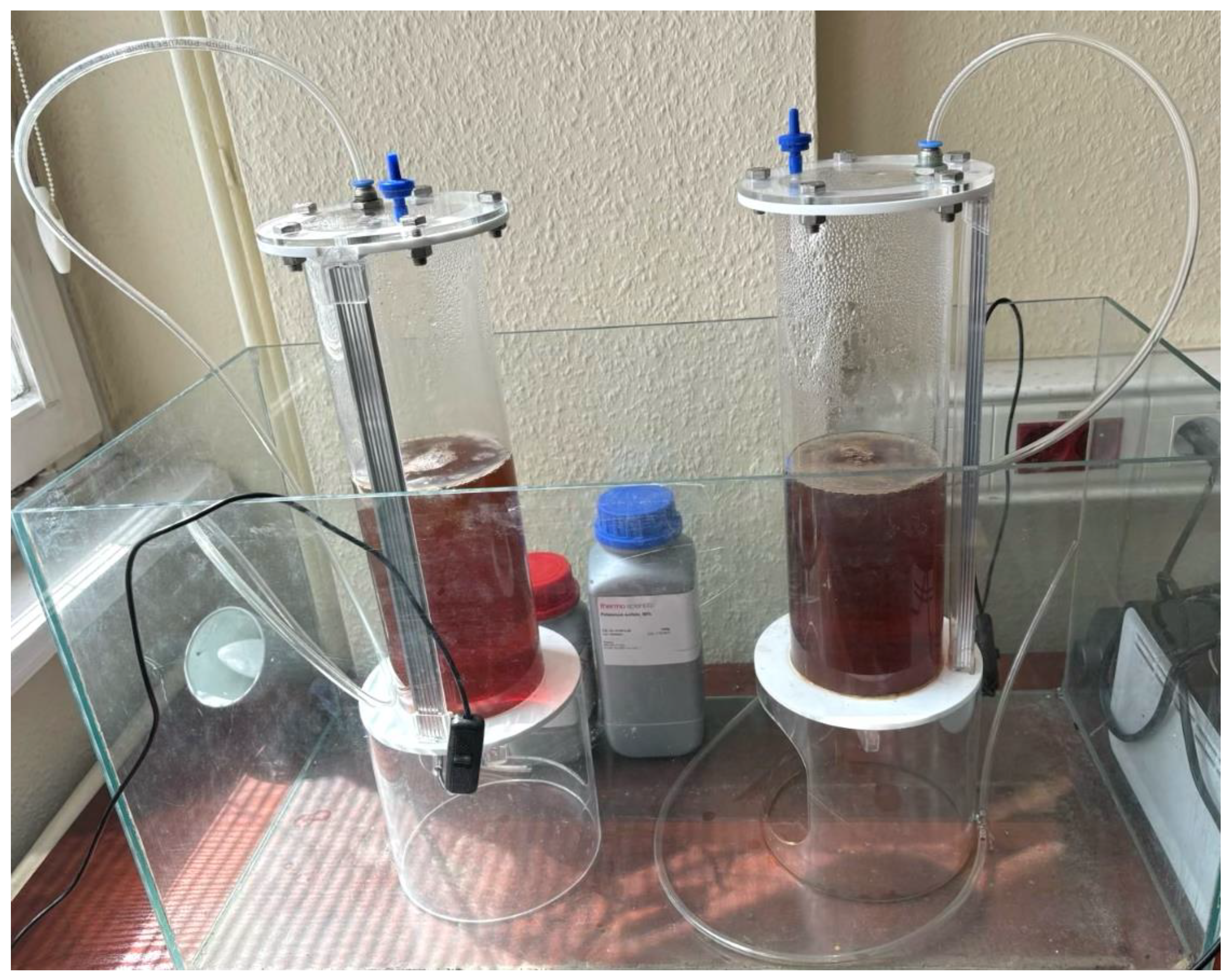
Figure 2.
Effluent concentrations of COD (orange circles) and ammonia (blue circles) during the first experiment. The dotted and dashed lines represent the influent concentrations of COD and ammonia, respectively.
Figure 2.
Effluent concentrations of COD (orange circles) and ammonia (blue circles) during the first experiment. The dotted and dashed lines represent the influent concentrations of COD and ammonia, respectively.
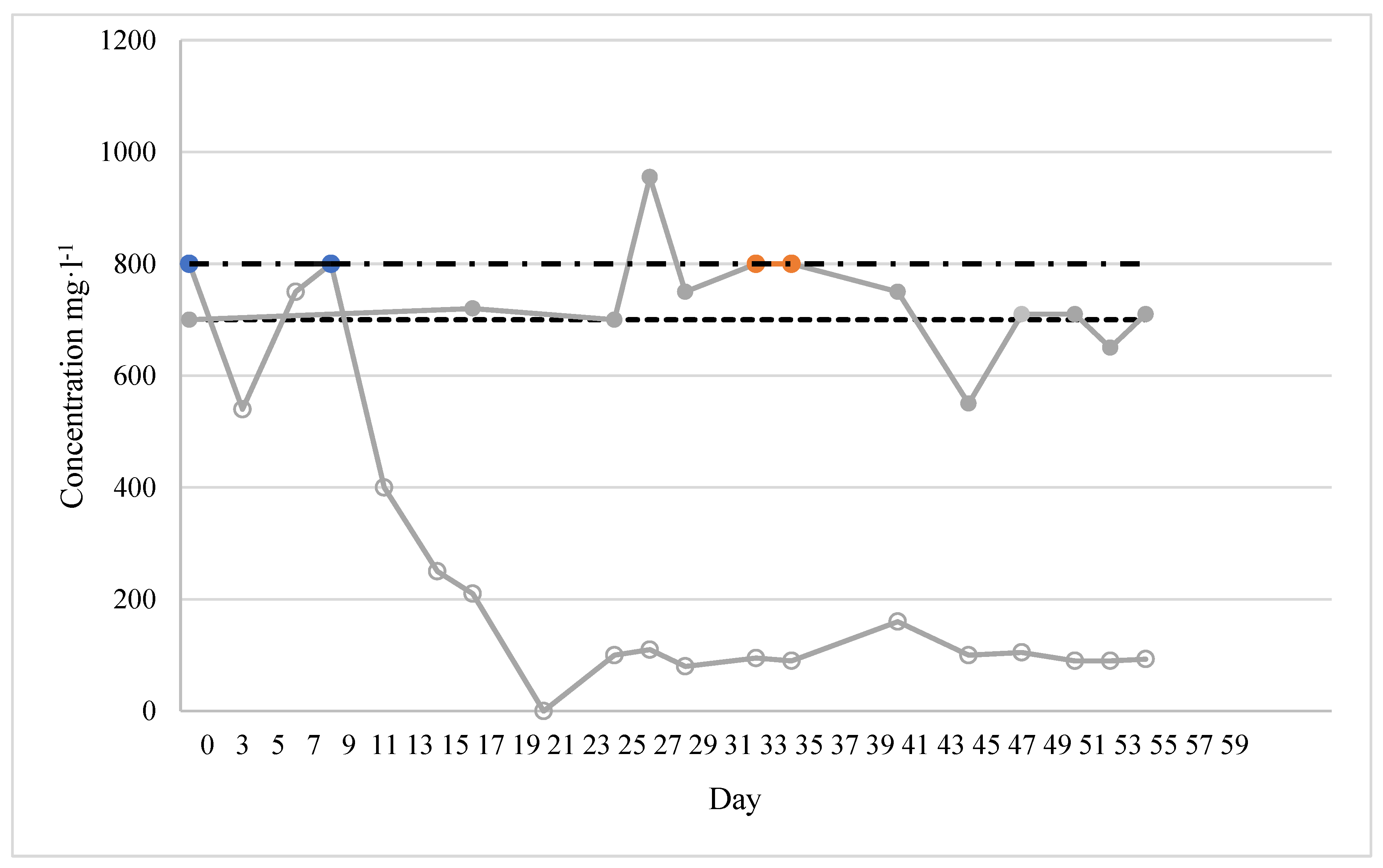
Figure 3.
a (up) An effluent concentration of ammonia (dark gray circles) and nitrate (light gray circles) during the second experiment. The solid line represents the influent ammonia concentration. b (down) Effluent COD concentrations during the second experiment. The solid line represents the influent COD concentration.
Figure 3.
a (up) An effluent concentration of ammonia (dark gray circles) and nitrate (light gray circles) during the second experiment. The solid line represents the influent ammonia concentration. b (down) Effluent COD concentrations during the second experiment. The solid line represents the influent COD concentration.
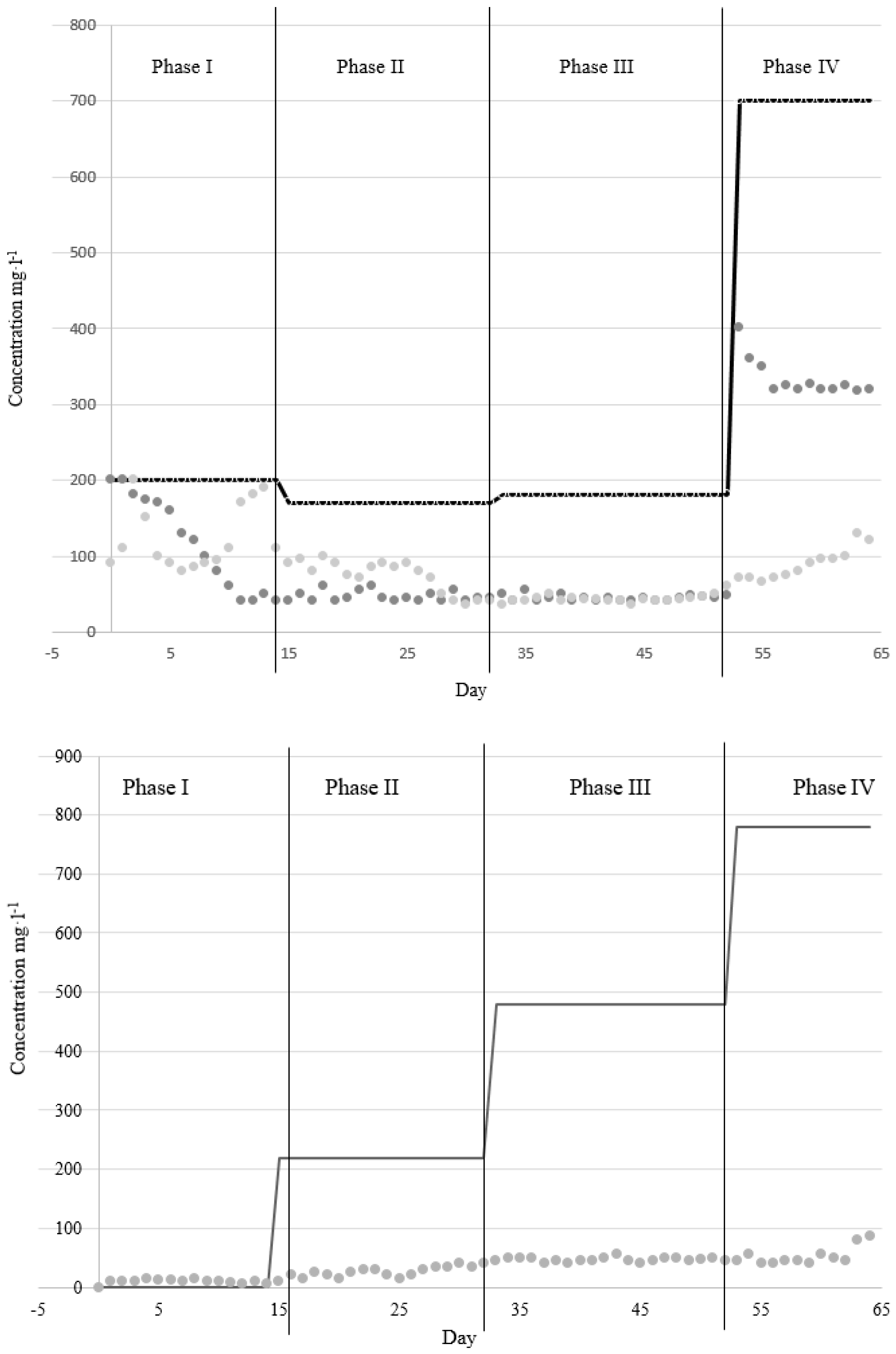

Table 1.
Components of the modified NASA early planetary base wastewater ersatz [32].
Table 1.
Components of the modified NASA early planetary base wastewater ersatz [32].
| Component | Component Quantity (per L) |
|---|---|
| Shampoo (suave for kids) | 300 mg |
| Ammonium bicarbonate | 2.3 g |
| Ammonium hydroxide | 300 mg |
| Ammonium citrate | 370 mg |
| Ammonium formate | 45 mg |
| Ammonium oxalate monohydrate | 20 mg |
| Sodium chloride | 690 mg |
| Potassium chloride | 200 mg |
| Sodium bicarbonate | 200 mg |
| Potassium phosphate monobasic | 166 mg |
| Potassium sulfate | 690 mg |
| Urea | 160 mg |
| Lactic acid | 80 mg |
| Creatinine | 160 mg |
| Histidine | 29 mg |
| Taurine | 17 mg |
| Glutamic acid | 51 mg |
| Glucose | 78 mg |
| Acetic acid | 34 mL |
| Benzoic acid | 1 mg |
| Benzyl alcohol | 5 µL |
| Ethanol | 6.5 mL |
| Acetone | 0.5 µL |
| Caprolactam | 4 mg |
| Phenol | 0.6 mg |
| N,N-dimethylformamide | 0.7 µL |
| Ethylene glycol | 3.3 µL |
| 4-Ethyl morpholine | 1.5 µL |
| Formaldehyde | 3 µL |
| Formic acid | 4.4 µL |
| Methanol | 7.6 µL |
| 1,2-Propanediol | 2 µL |
| Propanol | 2.4 µL |
| Propionic acid | 15 µL |
Table 2.
Technical parameters of the experiment in Kombucha-PBR.
| Reactor |
System configuration
and operational conditions |
|---|---|
| Pack-Bed reactor (PBR) |
System configuration Wastewater: modified EPB Ersatz (DOC 239–272 mg·L-1, 4:1 COD to N ratio, COD 800 mg·L-1, TN 700 mg·L-1). Packed-bed (Up-flow) Reactor: acrylic cylinder; dimensions: ID = X cm, L = Y cm; TV = V m3. Packing material: bacterial cellulose Z m2. Gas supplied: air (1.5 L·min-1); System operation Flow rate to the Kombucha-PBR was adjusted to maintain 1.2 L in the reactor. Different conditions were tested: Experiment 1. Full-strength EPB Ersatz; HRT: 24 h; operation time: 64 d; no biosolids removal. Experiment 2. three phases: phase 1: 21 d; COD 0 mg/L; NH3 200 mg N/L; phase 2: 18 d, COD 220 mg/L, NH3 170 mg N/L; phase 3: 28 d, COD 480 mg/L, NH3 180 mg N/L; |
Table 3.
Summary of the experimental results and technical parameters of the Kombucha-PBR.
| Reactor |
System configuration
and operational conditions |
Application and removal efficiency |
|---|---|---|
| Pack-Bed reactor (PBR) |
System configuration Wastewater: modified EPB Ersatz (DOC 239–272 mg·L-1, 4:1 COD to N ratio, COD 800 mg·L-1, TN 700 mg·L-1). Packed-bed (Up-flow) Reactor: acrylic cylinder; dimensions: ID = X cm, L = Y cm; TV = V m3. Packing material: bacterial cellulose Z m2. Gas supplied: air (1.5 L·min-1); System operation Flow rate to the Kombucha-PBR was adjusted to maintain 1.2 L in the reactor. Different conditions were tested: Experiment 1. Full-strength EPB Ersatz; HRT: 24 h; operation time: 64 d; no biosolids removal. Experiment 2. three phases: phase 1: 14 d; COD 0 mg/L; NH3 200 mg N/L; phase 2: 18 d, COD 220 mg/L, NH3 170 mg/L; phase 3: 20 d, COD 480 mg/L, NH3 180 mg N/L; Phase 4: 12 d, COD 780 mg/L, NH3 700 mg/L; |
COD & N removal: 80%
Experiment 1: COD removal efficiency 81%; NH3 removal efficiency neglectable. Experiment 2:Phase 1: NH3 removal efficiency 80%. Phase 2: COD removal efficiency 80%. Phase 3: 80% removal efficiency COD and TN. Phase 4: COD80% removal efficiency. |
Disclaimer/Publisher’s Note: The statements, opinions and data contained in all publications are solely those of the individual author(s) and contributor(s) and not of MDPI and/or the editor(s). MDPI and/or the editor(s) disclaim responsibility for any injury to people or property resulting from any ideas, methods, instructions or products referred to in the content. |
© 2025 by the authors. Licensee MDPI, Basel, Switzerland. This article is an open access article distributed under the terms and conditions of the Creative Commons Attribution (CC BY) license (http://creativecommons.org/licenses/by/4.0/).
Copyright: This open access article is published under a Creative Commons CC BY 4.0 license, which permit the free download, distribution, and reuse, provided that the author and preprint are cited in any reuse.


