

Submitted:
15 October 2025
Posted:
16 October 2025
You are already at the latest version
Abstract
The integration of Information Technologies has transformed interactions between healthcare professionals and the families of hospitalized patients, enabling more comprehensive, transparent, and patient-centered care. Artificial Intelligence is emerging as a transformative tool to further enhance these interactions; however, its implementation faces challenges associated with access to and availability of basic technological infrastructure. This cross-sectional pilot study, conducted at the Tamaulipas Children's Hospital, Mexico, included 51 healthcare professionals from diverse specialties. It examined the use of digital technologies and perceptions of information systems aimed at optimizing communication with families. Findings indicated that 58.80% reported consistent use of digital devices, whereas only 41.20% had regular internet access. Between 60.00% and 67.00% consistently provided information regarding patients’ health status, treatments, and medical procedures. With respect to a digital system, 37.30% considered its implementation necessary and 39.20% perceived potential benefits, although functions such as multimedia sharing and automated notifications were regarded with caution. The questionnaire demonstrated high reliability (α = 0.835) and acceptable construct validity (KMO = 0.705; Bartlett’s test p < 0.001). These results underscore both the feasibility and the challenges of integrating AI-enabled digital systems into hospital settings, highlighting the critical importance of equitable access to technological infrastructure to ensure sustainable adoption.
Keywords:
healthcare professionals
; interactions
; information technologies
; human–AI interaction
; artificial intelligence
; person centered care
1. Introduction
Communication between healthcare professionals and the families of hospitalized patients is a fundamental pillar of patient-centered care and the patient’s environment. This informational link helps to improve patient and family satisfaction, facilitates shared decision-making, reduces relatives’ anxiety, and strengthens confidence in the treatment [1,2]. In recent decades, Information Technologies (IT) have significantly expanded the tools available for this communication, allowing interaction through instant messaging, video calls, electronic portals, and email, among others [3,4]. Furthermore, the increasing integration of Artificial Intelligence (AI) suggests potential benefits, such as partial automation of informational content, personalized alerts, and support in message generation, which could alleviate the workload of healthcare professionals [5,6]. However, the effective use of IT and its combination with AI in this field still faces significant challenges. Barriers have been reported related to concerns about data privacy and security, unequal technological accessibility, the availability of internet connections in clinical care areas, the digital skills of staff, and the cultural and ethical acceptance of using automated systems [7,8,9]. Likewise, there are divergent hypotheses about the extent to which family members prefer face-to-face interaction versus technology-mediated communication, or how much automation should be allowed without compromising accuracy, empathy, and professional judgment [5,10]. Recent studies have shown that healthcare professionals, although they frequently use digital tools for communication support, do not always utilize them consistently and have not fully integrated systems that provide automated or real-time information [11,12]. A study on nurses’ use of IT during the pandemic examined the use of phone calls, video calls, and messages to maintain communication with family members, while also highlighting a significant emotional and operational burden when these resources were not formalized or adequately supported institutionally [13]. A study conducted in Latin America found that among doctors, there is a high frequency of IT use to communicate with colleagues and patients; however, substantial barriers exist due to time constraints, privacy concerns, and inadequate infrastructure [14].
The present pilot study conducted at the Tamaulipas Children’s Hospital aims to contribute to this emerging field. It investigates how healthcare professionals currently use IT to communicate with family members (health status, treatments, procedures), how frequently and consistently that communication is, and what the perception, acceptance, and expectations are regarding the implementation of an internet-based information system with capabilities (multimedia, automatic notifications, material requests, to mention).
This study provides relevant evidence in a Latin American context that has been little explored in the literature. It highlights clear discrepancies between current practice, expectations, and openness to more automated or AI-assisted systems. Importantly, it underscores the need for flexible tools that respect clinical judgment, empathy, and personalization. These tools should gradually incorporate automation without eroding the trust or the quality of the interaction between healthcare professionals and the families of hospitalized patients.
The aim of this pilot study was to characterize the communication practices of healthcare professionals at the Tamaulipas Children’s Hospital with the families of hospitalized patients through information technologies; to assess the frequency and consistency of these interactions; and to identify perceptions regarding the implementation of an online information system with advanced features, as a preliminary step toward its integration with Artificial Intelligence.
2. Materials and Methods
The study was a descriptive, cross-sectional pilot in two phases [15]; through the application of surveys to 51 health professionals at the Tamaulipas Children’s Hospital. The sampling was subject to the availability of the respondents’ workload. The sample size was determined by convenience, based on the number of participants in pilot studies [16]. The ratios between the sample and the variable were 5:1 and 15:1 [17]. Reliability validation was conducted using Cronbach’s Alpha coefficient [18], and construct validation was performed through factor analysis [19,20,21].
The data were collected using Google Sheets online, stored and coded in Microsoft Excel 2016, and statistically processed with the Statistical Package for the Social Sciences (SPSS) version 25.0.
Ethical considerations: The research was classified as “risk-free research,” as it consisted of administering a questionnaire without considering sensitive aspects of the behavior of the participating individuals, nor any intentional intervention or change in their physiological, psychological, or social variables. Ethical approval was obtained with institutional registration: HIT-INV-2022-3 from the Research Ethics Committee of Tamaulipas Children’s Hospital, with registration number CONBIOETICA-28-CEI-001-20190218, on June 27, 2022. Additionally, approval was obtained from the Research, Teaching, and Library Committee of Tamaulipas Children’s Hospital on August 21, 2022. Digital informed consent was obtained from participants who were willing to participate [22,23]. In accordance with the Declaration of Helsinki, it was emphasized before the interview that participation was voluntary and that the participant could withdraw from the study at any time [24]. The survey was anonymous and confidential.
Inclusion, exclusion, and elimination criteria: To meet the inclusion criterion, health professionals had to be affiliated with Tamaulipas Children’s Hospital. The exclusion criterion was that they could not be located due to work reasons or had workloads that prevented them from responding to the survey request. Finally, the elimination criteria for participants were: incomplete surveys or individuals who decided to withdraw from the study.
Instrument: The survey “Interactions through Information Technologies for Health Professionals” at the Tamaulipas Children’s Hospital includes a text referring to informed consent and consists of an initial question asking the respondent whether they have read, understood, and agree to participate in the study; if their answer is affirmative, we proceed with four sections of questions: Demographic Data (adapted to the interests of the Tamaulipas Children’s Hospital) with five questions, Use of Information Technologies with four questions, Information Needs with four questions, and Interactions (willingness) with six questions [25].
Procedure: The research project protocol was submitted to the Division of Research, Quality, and Planning at Tamaulipas Children’s Hospital, which referred the proposed protocol for evaluation by the Tamaulipas Children’s Hospital Research Ethics Committee, Registration Number: CONBIOETI-CA-28-CEI-001-20190218, and to the Committee on Research, Teaching, and Library. Once the committees accepted the research protocol, the Hospital Management issued a letter to Division and Specialty heads, requesting their support in inviting the staff assigned to their areas to participate in the aforementioned project voluntarily. Health professionals who accepted the invitation accessed the survey by entering the web address manually or via a QR code, completing it individually and without any supervision or assistance.
3. Results
Out of a total of 51 healthcare professionals participating in the pilot study conducted at Tamaulipas Children’s Hospital, 32 (62.70%) were women, representing the higher percentage, and 19 (37.30%) were men. Among the participants, the age range of 30 to 39 years was the most common, representing a significant portion of the total at 37.30% (19 healthcare professionals). Likewise, the data obtained indicate that 49 (96.10%) of the participants reside in urban areas. It is also noteworthy that the profession of specialist physician stands out, accounting for 19 (37.30%) of the counts, followed by the profession of psychologist with 12 (23.50%), while other professions accounted for 2 (3.90%) of the counts. Finally, the hospitalization department and the “other” option account for 12 (23.50%) of the counts, respectively. Detailed information on the demographic data is presented in Table 1.
Regarding the use of information technologies reported by healthcare professionals, only 41.20% “always” use the Internet in their daily professional practice. It is notable that 58.80% “always” use a computer, tablet, or smartphone for their daily professional practice. It is striking that 23.50% indicate “almost always”, and the availability of an Internet connection at the workplace, where these devices are used, is “only sometimes”. Finally, 37.30% report that they “always” use various communication platforms, such as SMS messages, email, WhatsApp, Facebook, Twitter, among others, for their daily professional practice, see Figure 1.
Regarding the information provided by healthcare professionals to meet the informational needs of the families of hospitalized patients, it is noted that 60.80% of respondents “always” inform the families about the health status of their hospitalized patient, 64.70% “always” inform the families about how their hospitalized patient is being medically treated, while 60.80% “always” accurately communicate to the family what is being done medically to the hospitalized patient, and finally, 66.70% “always” inform the families about the reasons for the procedures performed on their hospitalized patient, see Figure 2.
In terms of how healthcare professionals perceive the use of an Internet-based information system across various devices such as computers, tablets, and smartphones, including the ability to communicate via SMS and social media, 37.30% of healthcare professionals “always” stated the need to implement a new information system; 39.20% indicated that it would “always” be beneficial to use a new information system. It is noteworthy that 45.10% “only sometimes” think it is necessary to provide multimedia content (photos and/or videos) through the use of an information system, 33.30% answered that they “only sometimes” find it necessary to make requests for materials (personal hygiene items, clothing, medications, etc.) or documentation. In comparison, 41.20% stated that they would “only sometimes” use a system that incorporates both communication capabilities and informational functions. Finally, 39.20% are “only sometimes” interested in reporting the follow-up of hospitalized patients through the use of an information system that automatically notifies the patient’s family via electronic messages to their preferred social networks, as shown in Figure 3.
Finally, it is worth mentioning that a Cronbach’s Alpha of 0.835, indicating excellent reliability, was obtained for the questionnaire. Regarding the reliability of the dimensions, Cronbach’s Alphas of 0.798, 0.960, and 0.859 were obtained for the use of information technologies, information needs, and interactions, respectively. Concerning validity, a moderate value of 0.705 was obtained for the Kaiser-Meyer-Olkin (KMO) measure, and Bartlett’s test of sphericity was significant (Chi-square = 561.872, df = 91, Sig. < 0.001).
4. Discussion
In this pilot study, the communication practices of healthcare professionals at the Tamaulipas Children’s Hospital with the families of hospitalized patients were characterized through the use of information technologies, evaluating both the frequency and consistency of these interactions. Likewise, perceptions regarding the possible implementation of an online information system with advanced functionalities were explored, conceived as a preliminary stage toward its future integration with Artificial Intelligence tools. The findings obtained allow for outlining an initial overview of how these practices are carried out in the hospital context, identifying relevant patterns and areas of opportunity that could guide subsequent, more extensive research with a focus on the technological optimization of clinical communication, including the implementation of Artificial Intelligence.
In this pilot study, a limited use —below 50.00%— of information technologies was identified, as well as a low willingness among healthcare professionals to employ new communication systems. Nevertheless, the quality of the information provided managed to surpass the average.
Overall, the study revealed that, in their daily professional practice, 41.20% of healthcare professionals use the Internet, 58.80% use devices such as computers, tablets, or smartphones, 23.50% have Internet access at their workplace to use these devices, and 37.30% report using electronic messages. These results are consistent with previous studies that have documented a low level of computer skills and usage habits among healthcare professionals, especially in primary care centers. In this regard, a quantitative cross-sectional study was conducted in Ethiopia with 554 health professionals in the Harari region, including seven hospitals, 19 primary healthcare centers, and 10 private clinics, to evaluate knowledge, computer use, and associated factors [26]. However, in the present study, the participants belong to a tertiary-level hospital institution, which represents a different context. The low percentage of information technology use by professionals could be attributed to the fact that their main priority remains direct patient care rather than the use of technological tools.
This study also highlights the level of information that healthcare professionals provide to the families of hospitalized patients. 60.80% of respondents communicate the patient’s health status, 64.70% inform about the medical treatment being applied, 60.80% explain precisely what is being done medically, and 66.70% indicate the reasons for the procedures performed. It is worth noting that healthcare professionals may need to provide additional information to family members who do not use the Internet, as well as take the time to verify or clarify the information consulted by those who do access online health content [27]. The high level of information communicated by medical staff can be considered a key component of patient-centered care.
Similarly, the pilot study examines health professionals’ perceptions regarding the potential implementation of a new information system. 37.30% of the respondents considered such implementation necessary; 39.20% stated that it would be beneficial; 45.10% indicated the need to include multimedia content (photos and/or videos); 33.30% considered it important to be able to request materials (such as hygiene items, clothing, or medications) or documentation; 41.20% indicated they would use the system for communication functions; and 39.20% expressed interest in the system allowing them to report on the follow-up of hospitalized patients, including automatic notifications to family members via electronic messages. In international contexts, the adoption of digital tools may be facilitated by more robust health policies and more advanced technological infrastructures. In contrast, in developing countries such as Mexico, limitations in basic healthcare can hinder the prioritization of this type of system. Nevertheless, experiences in other countries show positive results. In this regard, a study conducted between May and June 2023 in three hospitals in Ghana used a concurrent mixed-methods approach to explore healthcare professionals’ perceptions of Electronic Medical Records (EMR) systems and identify the factors influencing their acceptance [28]. The results showed that 213 professionals (80.99%) considered that REs benefited the patients and were satisfied with their use; 197 (74.90%) expressed interest in continuing to use them and stated that the REs had improved their processes and workflows, as well as the expected clinical outcomes.
Below, we discuss the findings, highlighting certain aspects of the interactions between healthcare professionals and the families of hospitalized patients from the perspective of healthcare staff, specifically regarding the use of information technologies, information needs, and interactions.
37.30% of healthcare professionals reported using electronic messaging “always” in their daily professional practice, a figure similar to the 32.00% of Argentine pediatricians who agreed with the benefits of this tool in communication with their patients. This information is based on an observational, exploratory, descriptive, and cross-sectional study of electronic medical records and electronic messaging, conducted between July and September 2017, using online surveys applied to 3,468 pediatricians from the Argentine Society of Pediatrics in Argentina [29]. This percentage match may reflect a global trend in the healthcare sector, where technological advances are transforming the way professionals interact not only with their patients but also with family members and other healthcare team members.
Likewise, a study conducted in Israel evaluated the use of SMS technology and its impact on parents and nursing staff, finding that healthcare professionals considered this tool a convenient and easy-to-use means of communication to provide daily updates to parents about the health status of their premature babies [30]. Although SMS is a less sophisticated technology than the messaging integrated into electronic health records, it is valued for its ability to keep parents constantly informed, which reinforces the importance of transparency and continuous communication as fundamental pillars of patient-centered care.
On the other hand, the results showed a prevalence greater than 60.00% in meeting the information needs of the families of hospitalized patients by healthcare professionals, specifically in aspects such as communicating the patient’s health status, providing information about medical treatment, and accurately explaining the procedures performed and their rationale. A possible explanation for this high prevalence is the growing social and ethical demand for transparency in healthcare. In this regard, a descriptive and relational study with a sample of 247 family members of patients admitted to six intensive care units reported that the need for information about the hospitalized infant’s condition constitutes one of the main requirements for coping with the situation in a more manageable way [31]. This need is also reflected in the catalogue of informational demands prioritized by the relatives of hospitalized patients [32].
Regarding the perceptions of the need for healthcare professionals to interact with patients’ families through a two-way information system, accessible via the Internet on a variety of technological devices with automatic sending of electronic messages, it is reported as a need “always” by 37.30% of respondents and would be beneficial to them “almost all the time”. This variation in perceptions may be due to differences in the type of patients treated or the severity of the conditions. In this regard, in a systematic review, they examined how Electronic Health Records measured communication among hospitalized patients, their families, and healthcare professionals, to support patient and family engagement in care, and identified 850 articles on the topic; however, it is stated that few studies were found on communication among the parties involved, and it concludes that implementations of information systems of this type are infrequent in clinical settings [33]. The literature also indicates that information systems accessible from devices are becoming an integral part of modern medical systems, enhancing accessibility, efficiency, and potentially improving the quality of healthcare [34]. However, the percentage of healthcare professionals increases to 45.10% who consider it necessary to provide multimedia content (photos and/or videos) through the use of an information system, while the frequency decreases to “only occasionally”. The interest in using multimedia content can be explained by the ability of this type of information to improve understanding and clarity of what is happening with the hospitalized patient. Photos or videos of medical procedures, images of equipment, or the patient’s condition can offer family members a more tangible representation than texts or verbal explanations. In this regard, it describes the required functionalities of pediatric clinical information systems for hospitalized patients [35].
Regarding the study’s limitations, it is noted that the sample size of 51 healthcare professionals does not constitute a representative sample. However, due to practical considerations and the number of available participants, the sample size is considered sufficient in this type of study to validate the results adequately.
This pilot study contributes empirical evidence to the knowledge about communication practices of healthcare professionals with the families of hospitalized patients through information technologies, highlighting both the frequency and consistency of such interactions as well as perceptions regarding the possible implementation of advanced systems integrated with artificial intelligence. The findings suggest that, although technology-mediated communication represents a strategic tool to strengthen the relationship between healthcare professionals and hospitalized patient families, its effectiveness critically depends on institutional support, the formalization of protocols, and the cultural adaptation of the strategies employed, to promote family-centered care [13,34].
Consequently, it is recommended to move towards the consolidation of innovative models of clinical communication mediated by information technologies and enhanced by artificial intelligence [36], considering that artificial intelligence systems are still unable to reason in the same way as human healthcare professionals, who can rely on common sense or on intuition and experience when interacting with the families of hospitalized patients [37].
Author Contributions
Conceptualization and methodology, Jose-Fidencio Lopez-Luna; software and visualization, Frida Caballero- Rico; validation and supervision, Jorge-Arturo Hernandez-Almazan; formal analysis and investigation, Ruben Machucho and Jose-Fidencio Lopez-Luna; resources and data curation, Ramon Ventura.; writing—original draft preparation and writing—review and editing, Jose-Fidencio Lopez-Luna; project administration and funding acquisition, Hiram Herrera Rivas. All authors have read and agreed to the published version of the manuscript.
References
- Armoiry, X.; Sturt, J.; Phelps, E.E.; Walker, C.-L.; Court, R.; Taggart, F.; Sutcliffe, P.; Griffiths, F.; Atherton, H. Digital Clinical Communication for Families and Caregivers of Children or Young People With Short- or Long-Term Conditions: Rapid Review. J Med Internet Res 2018, 20, e5. [Google Scholar] [CrossRef]
- Bernild, C.; Missel, M.; Berg, S. COVID-19: Lessons Learned About Communication Between Family Members and Healthcare Professionals—A Qualitative Study on How Close Family Members of Patients Hospitalized in Intensive Care Unit With COVID-19 Experienced Communication and Collaboration With Healthcare Professionals. INQUIRY: The Journal of Health Care Organization, Provision, and Financing 2021, 58, 00469580211060005. [Google Scholar] [CrossRef] [PubMed]
- Stamer, T.; Steinhäuser, J.; Flägel, K. Artificial Intelligence Supporting the Training of Communication Skills in the Education of Health Care Professions: Scoping Review. J Med Internet Res 2023, 25, e43311. [Google Scholar] [CrossRef]
- Bernild, C.; Missel, M.; Berg, S. COVID-19: Lessons Learned About Communication Between Family Members and Healthcare Professionals-A Qualitative Study on How Close Family Members of Patients Hospitalized in Intensive Care Unit With COVID-19 Experienced Communication and Collaboration With Healthcare Professionals. Inquiry: a journal of medical care organization, provision and financing 2021, 58, 469580211060005. [Google Scholar] [CrossRef] [PubMed]
- Heo, S.; Jeong, S.; Paeng, H.; Yoo, S.; Son, M.H. Communication challenges and experiences between parents and providers in South Korean paediatric emergency departments: a qualitative study to define AI-assisted communication agents. BMJ Open 2025, 15, e094748. [Google Scholar] [CrossRef]
- Lin, Y.Y.; Tsai, H.H.; Shieh, W.Y.; Weng, L.C.; Huang, H.L.; Liu, C.Y. Expectations of AI-supported communication in nurse-family interactions in nursing homes: Navigating ambiguities in role transformation. Digital health 2025, 11, 20552076251362385. [Google Scholar] [CrossRef] [PubMed]
- Lindberg, B.; Nilsson, C.; Zotterman, D.; Söderberg, S.; Skär, L. Using Information and Communication Technology in Home Care for Communication between Patients, Family Members, and Healthcare Professionals: A Systematic Review. International journal of telemedicine and applications 2013, 2013, 461829. [Google Scholar] [CrossRef]
- Cermak, C.A.; Read, H.; Jeffs, L. Health Care Professionals’ Experiences With Using Information and Communication Technologies in Patient Care During the COVID-19 Pandemic: Qualitative Study. JMIR Form Res 2024, 8, e53056. [Google Scholar] [CrossRef]
- Cherrez-Ojeda, I.; Vanegas, E.; Felix, M.; Mata, V.L.; Jiménez, F.M.; Sanchez, M.; Simancas-Racines, D.; Cherrez, S.; Gavilanes, A.W.D.; Eschrich, J.; et al. Frequency of Use, Perceptions and Barriers of Information and Communication Technologies Among Latin American Physicians: An Ecuadorian Cross-Sectional Study. Journal of multidisciplinary healthcare 2020, 13, 259–269. [Google Scholar] [CrossRef]
- Abd-Alrazaq, A.A.; Alajlani, M.; Ali, N.; Denecke, K.; Bewick, B.M.; Househ, M. Perceptions and Opinions of Patients About Mental Health Chatbots: Scoping Review. J Med Internet Res 2021, 23, e17828. [Google Scholar] [CrossRef]
- Hermansen, A.; Regier, D.A.; Pollard, S. Developing Data Sharing Models for Health Research with Real-World Data: A Scoping Review of Patient and Public Preferences. Journal of Medical Systems 2022, 46, 86. [Google Scholar] [CrossRef]
- Xiberta, P.; Boada, I.; Thió-Henestrosa, S.; Ortuño, P.; Pedraza, S. Introducing Online Continuing Education in Radiology for General Practitioners. Journal of Medical Systems 2020, 44, 55. [Google Scholar] [CrossRef]
- Chen, Y.C.; Li, T.C.; Chang, Y.W.; Liao, H.C.; Huang, H.M.; Huang, L.C. Exploring the relationships among professional quality of life, personal quality of life and resignation in the nursing profession. J Adv Nurs 2021, 77, 2689–2699. [Google Scholar] [CrossRef]
- Li, A.; Jiao, D.; Liu, X.; Zhu, T. A Comparison of the Psycholinguistic Styles of Schizophrenia-Related Stigma and Depression-Related Stigma on Social Media: Content Analysis. J Med Internet Res 2020, 22, e16470. [Google Scholar] [CrossRef] [PubMed]
- Moreno Alestedt, L.T.; Vaca Morales, S.M.; Martínez Changuan, D.I.; Suasnavas Bermúdez, P.R.; Cárdenas Moncayo, I.M.; Gómez García, A.R. Diseño y Validación de un Cuestionario para el Diagnóstico de Riesgos Psicosociales en Empresas Ecuatorianas. Ciencia & trabajo 2018, 20, 160–168. [Google Scholar] [CrossRef]
- García-García, J.A.; Reding-Bernal, A.; López-Alvarenga, J.C. Cálculo del tamaño de la muestra en investigación en educación médica. Investigación en Educación Médica 2013, 2, 217–224. [Google Scholar] [CrossRef]
- Rahman, M.M. Sample Size Determination for Survey Research and Non-Probability Sampling Techniques: A Review and Set of Recommendations. 2023 2023, 11, 21. [Google Scholar]
- Cronbach, L.J. Coefficient alpha and the internal structure of tests. Psychometrika 1951, 16, 297–334. [Google Scholar] [CrossRef]
- Gaskin, C.J.; Happell, B. On exploratory factor analysis: a review of recent evidence, an assessment of current practice, and recommendations for future use. International journal of nursing studies 2014, 51, 511–521. [Google Scholar] [CrossRef]
- Harerimana, A.; Mtshali, N.G. Using Exploratory and Confirmatory Factor Analysis to understand the role of technology in nursing education. Nurse Education Today 2020, 92, 104490. [Google Scholar] [CrossRef]
- Izquierdo, I.; Olea, J.; Abad, F.J. Exploratory factor analysis in validation studies: uses and recommendations. Psicothema 2014, 26, 395–400. [Google Scholar] [CrossRef]
- Chanchalani, G.; Arora, N.; Nasa, P.; Sodhi, K.; Bahrani, M.J.A.; Tayar, A.A.; Hashmi, M.; Jaiswal, V.; Kantor, S.; Lopa, A.J.; et al. Visiting and Communication Policy in Intensive Care Units.
- during COVID-19 Pandemic: A Cross-sectional Survey from.
- South Asia and the Middle East. Indian Journal of Critical Care Medicine 2022, 28. [CrossRef]
- Jones, X.M.; Zimba, O.; Gupta, L. Informed Consent for Scholarly Articles during the COVID-19 Pandemic. Journal of Korean medical science 2021, 36, e31. [Google Scholar] [CrossRef] [PubMed]
- Mundial, A.M. Declaración de Helsinki de la AMM - Principios éticos para las investigaciones médicas en seres humanos. Available online: https://www.wma.net/es/policies-post/declaracion-de-helsinki-de-la-amm-principios-eticos-para-las-investigaciones-medicas-en-seres-humanos/ (accessed on 09/19/2023).
- López Luna, J.F.; Armendáriz Mireles, E.N.; Nuño Maganda, M.A.; Herrera Rivas, H.; Machucho Cadena, R.; Hernández Almazán, J.A. Design and validation of a preliminary instrument to contextualize interactions through information technologies of health professionals. 2024, 30, 14604582241259323. [Google Scholar] [CrossRef] [PubMed]
- Alwan, K.; Awoke, T.; Tilahun, B. Knowledge and Utilization of Computers Among Health Professionals in a Developing Country: A Cross-Sectional Study. JMIR human factors 2015, 2, e4. [Google Scholar] [CrossRef] [PubMed]
- Swoboda, C.M.; Van Hulle, J.M.; McAlearney, A.S.; Huerta, T.R. Odds of talking to healthcare providers as the initial source of healthcare information: updated cross-sectional results from the Health Information National Trends Survey (HINTS). BMC Family Practice 2018, 19, 146. [Google Scholar] [CrossRef]
- Mensah, N.K.; Adzakpah, G.; Kissi, J.; Abdulai, K.; Taylor-Abdulai, H.; Johnson, S.B.; Opoku, C.; Hallo, C.; Boadu, R.O. Health professionals’ perceptions of electronic health records system: a mixed method study in Ghana. BMC Medical Informatics and Decision Making 2024, 24, 254. [Google Scholar] [CrossRef]
- Goldfarb, G.; Nasanovsky, J.; Krynski, L.; Ciancaglini, A.; García Bournissen, F. Use of information and communication technologies by argentine pediatricians. Archivos argentinos de pediatria 2019, 117, S264–s276. [Google Scholar] [CrossRef]
- Globus, O.; Leibovitch, L.; Maayan-Metzger, A.; Schushan-Eisen, I.; Morag, I.; Mazkereth, R.; Glasser, S.; Kaplan, G.; Strauss, T. The use of short message services (SMS) to provide medical updating to parents in the NICU. Journal of perinatology: official journal of the California Perinatal Association 2016, 36, 739–743. [Google Scholar] [CrossRef]
- Ozcelik, H.; Erdogan, N. Relationship Between the Needs of Turkish Relatives of Patients Admitted to an Intensive Care Unit and Their Coping Styles. 2022, 85, 990–1006. [Google Scholar] [CrossRef]
- Velasco Bueno, J.M.; Alonso-Ovies, A.; Heras La Calle, G.; Zaforteza Lallemand, C. Principales demandas informativas de los familiares de pacientes ingresados en Unidades de Cuidados Intensivos. Medicina Intensiva 2018, 42, 337–345. [Google Scholar] [CrossRef] [PubMed]
- Manias, E.; Bucknall, T.; Wickramasinghe, N.; Gray, K.; Schaffer, J.; Rosenfeld, E. Patient and family engagement in communicating with electronic medical records in hospitals: A systematic review. International journal of medical informatics 2020, 134, 104036. [Google Scholar] [CrossRef]
- Siegal, G.; Dagan, E.; Wolf, M.; Duvdevani, S.; Alon, E.E. Medical Information Exchange: Pattern of Global Mobile Messenger Usage among Otolaryngologists. Otolaryngology–Head and Neck Surgery 2016, 155, 753–757. [Google Scholar] [CrossRef] [PubMed]
- Ciancaglini, A.; Nuñez, J.; Jaitt, M.; Otero, P.; Goldfarb, G. The electronic medical record in pediatrics: functionalities and best use practices. Archivos argentinos de pediatria 2021, 119, S236–s245. [Google Scholar] [CrossRef]
- Bajwa, J.; Munir, U.; Nori, A.; Williams, B. Artificial intelligence in healthcare: transforming the practice of medicine. Future healthcare journal 2021, 8, e188–e194. [Google Scholar] [CrossRef] [PubMed]
- Quinn, T.P.; Senadeera, M.; Jacobs, S.; Coghlan, S.; Le, V. Trust and medical AI: the challenges we face and the expertise needed to overcome them. Journal of the American Medical Informatics Association: JAMIA 2021, 28, 890–894. [Google Scholar] [CrossRef]
Figure 1.
Health professionals who incorporate IT in their professional work.
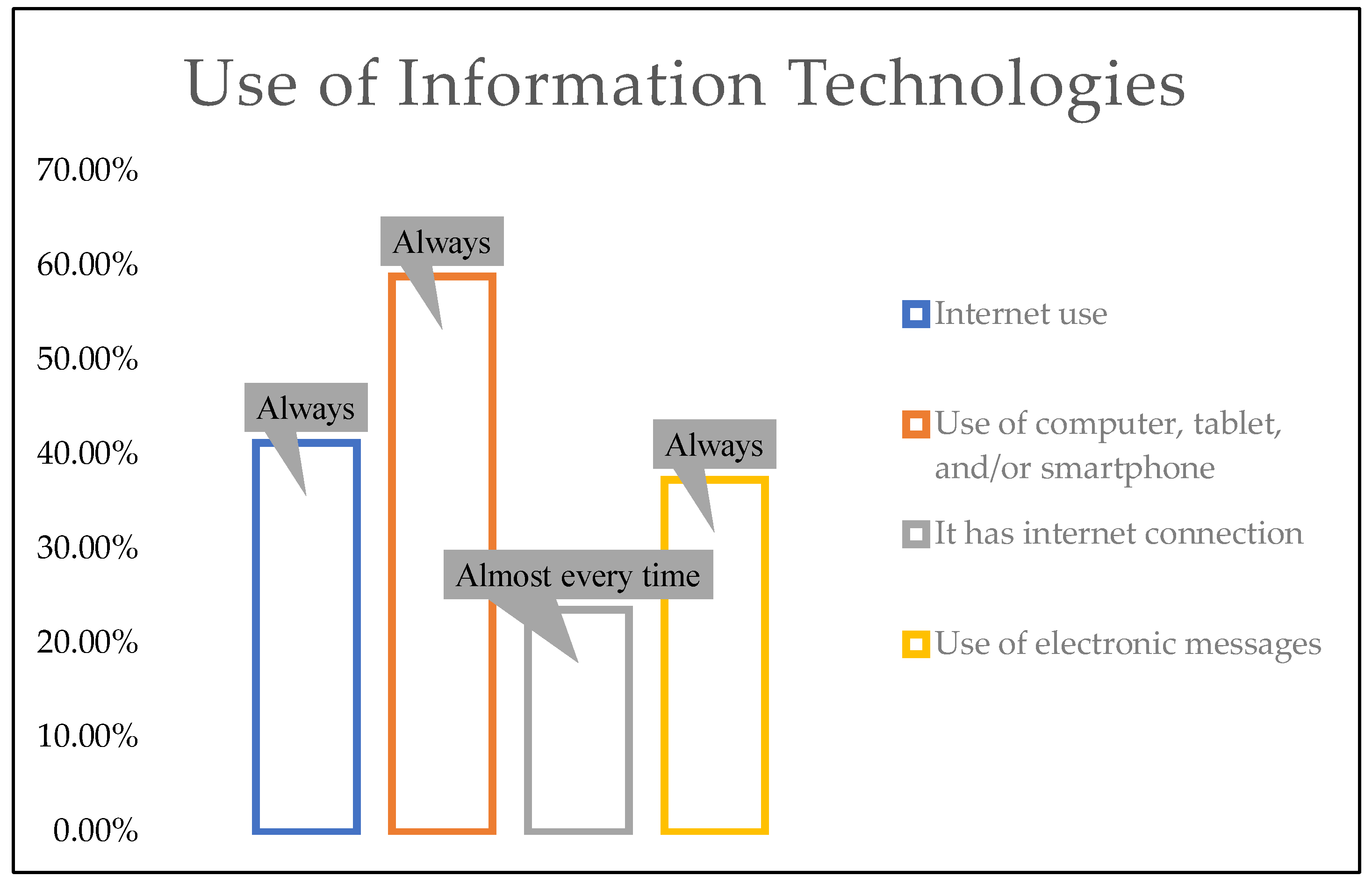
Figure 2.
Information provided by health professionals to the relatives of hospitalized patients.
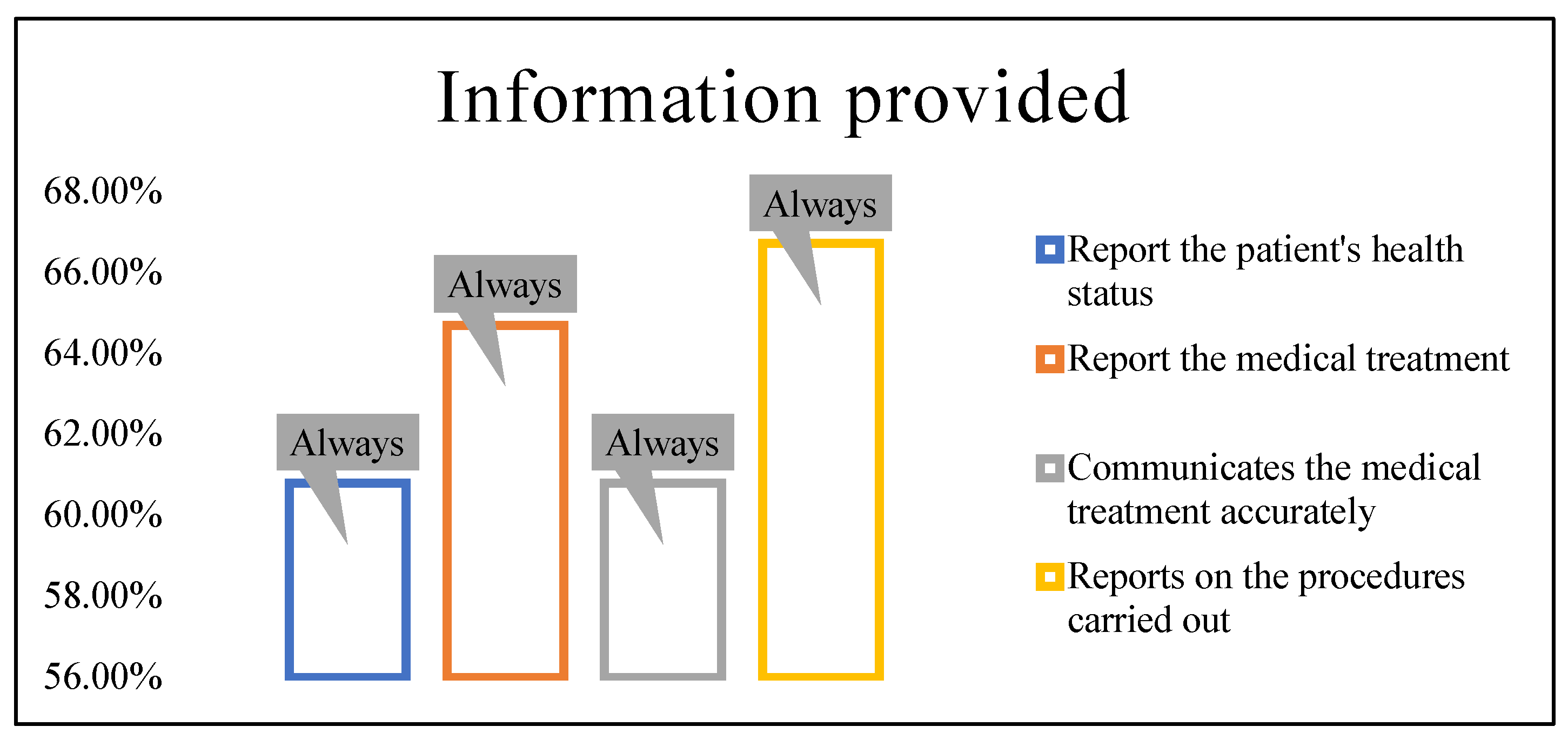
Figure 3.
Professionals’ perceptions of an online information system with advanced features.
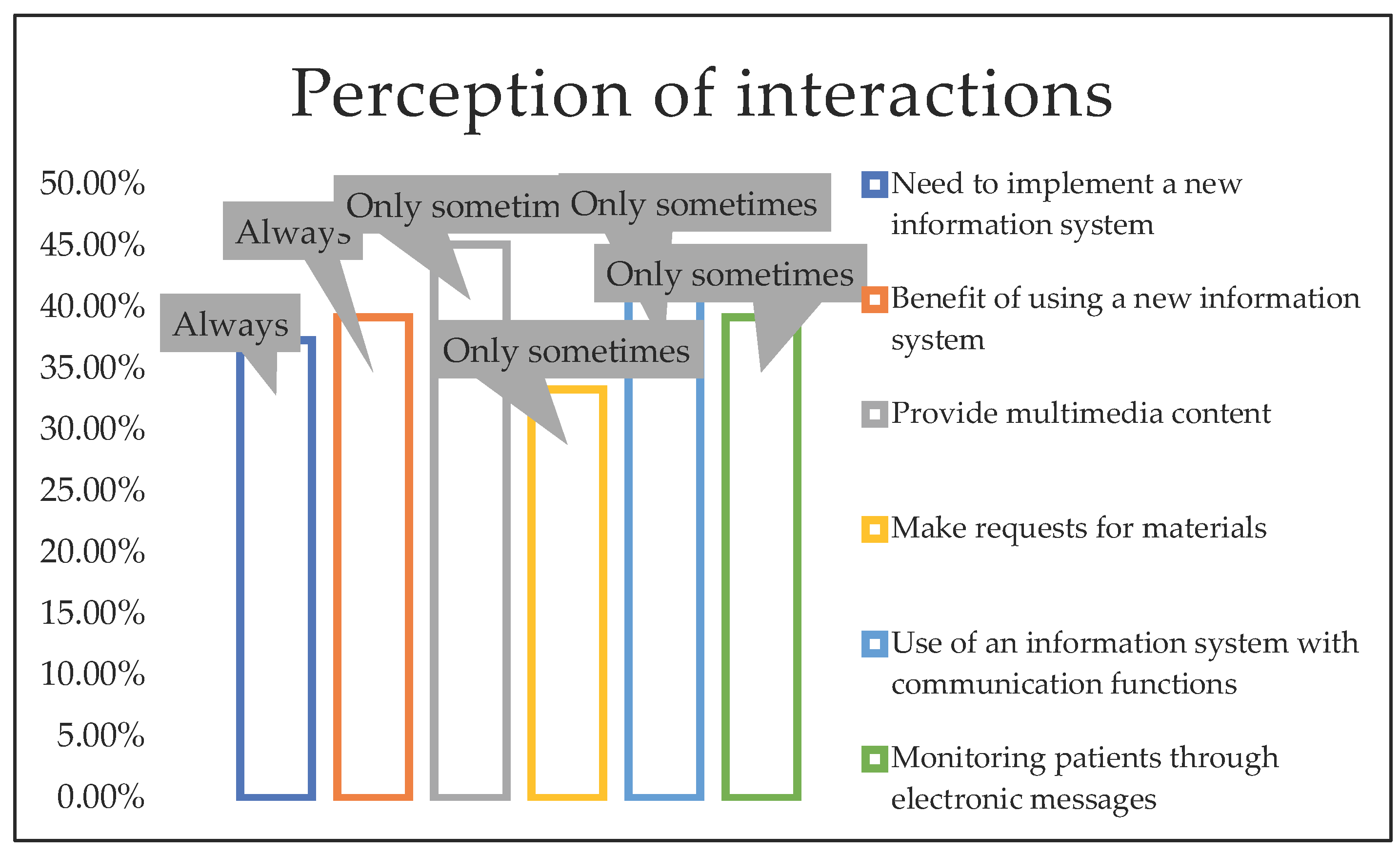

Table 1.
Demographic data of the participants.
| Demographic data | Value | Count | Percentage |
|---|---|---|---|
| Sex | Man | 19 | 37.30% |
| Woman | 32 | 62.70% | |
| Total | 51 | 100.00% | |
| Age | From 18 to 29 years old | 6 | 11.80% |
| From 30 to 39 years old | 19 | 37.30% | |
| From 40 to 49 years old | 15 | 29.40% | |
| From 50 to 59 years old | 8 | 15.70% | |
| From 60 to 69 years old | 2 | 3.90% | |
| Over 69 years | 1 | 2.00% | |
| Total | 51 | 100.00% | |
| Place of residence | Rural | 2 | 3.90% |
| Urban | 49 | 96.1% | |
| Other | 0 | 0.00% | |
| Total | 51 | 100.00% | |
| Profession | Social worker | 0 | 0.00% |
| Nurse | 5 | 9.80% | |
| Specialist doctor | 19 | 37.30% | |
| Resident doctor | 10 | 19.60% | |
| Psychologist | 12 | 23.50% | |
| Nutritionist | 3 | 5.90% | |
| Dentist | 0 | 0.00% | |
| Other | 2 | 3.90% | |
| Total | 51 | 100.0% | |
| Area or department | Neonatal intensive care unit | 6 | 11.80% |
| Pediatric intensive care unit | 4 | 7.80% | |
| Hospitalization | 12 | 23.50% | |
| Emergency | 6 | 11.80% | |
| Surgery | 0 | 0.00% | |
| Oncology and hematology | 10 | 19.60% | |
| Administrative | 1 | 2.00% | |
| Other | 12 | 23.50% | |
| Total | 51 | 100.00% |
Disclaimer/Publisher’s Note: The statements, opinions and data contained in all publications are solely those of the individual author(s) and contributor(s) and not of MDPI and/or the editor(s). MDPI and/or the editor(s) disclaim responsibility for any injury to people or property resulting from any ideas, methods, instructions or products referred to in the content. |
© 2025 by the authors. Licensee MDPI, Basel, Switzerland. This article is an open access article distributed under the terms and conditions of the Creative Commons Attribution (CC BY) license (http://creativecommons.org/licenses/by/4.0/).
Copyright: This open access article is published under a Creative Commons CC BY 4.0 license, which permit the free download, distribution, and reuse, provided that the author and preprint are cited in any reuse.


