

Submitted:
15 October 2025
Posted:
16 October 2025
You are already at the latest version
Abstract
In response to the increasing global emphasis on sustainability, electric vehicles (EVs) have emerged as a promising alternative vehicles. Grounded in the Value-Attitude-Behviour (VAB) model and the Theory of Planned Behaviour (TPB), this study investigates Malaysian consumers’ intention to choose EVs as their preferred mode of transportation. Specifically, the study explores the relationships between price, maintenance cost, infrastructure readiness, consumer attitudes, and purchase intention. Moreover, it examines the mediating role of consumer attitude in the relationships between price, maintenance cost, and infrastructure readiness with the intention to purchase EVs. Data were collected from 252 respondents in Malaysia, using a proportionate stratified sampling method. Out of the seven hypotheses tested, six were supported. The findings reveal that maintenance cost, infrastructure readiness, and attitude have significant positive relationships with consumers’ intention to purchase EVs. The results further indicate that consumer attitude mediates the relationship between price, maintenance cost, and infrastructure readiness with the intention to purchase EVs. Theoretically, this study contributes to the existing body of knowledge by developing a framework that integrates value-based antecedents with attitudinal and behavioral outcomes. Practically, the findings provide valuable insights for marketers and policymakers to formulate effective strategies and policies that can accelerate EV adoption.
Keywords:
Electric Vehicles (EVs)
; Intention to Purchase
; Value-Attitude-Behaviour (VAB) Model
; Theory of Planned Behaviour (TPB)
; Attitude
1. Introduction
The global transportation sector faces immense pressure to mitigate its substantial contribution to greenhouse gas emissions, with road transport being a primary culprit (Lashari et al., 2021). This imperative has catalyzed a worldwide shift towards sustainable mobility solutions, prominently featuring electric vehicles (EVs) as a key technological pathway to decarbonization and improved urban air quality (Degirmenci & Breitner, 2017). However, despite the widely acknowledged environmental benefits, the widespread adoption of EVs remains constrained by a complex interplay of consumer perceptions and market realities (Rafiq et al., 2023). A notable challenge arises from consumers’ mixed emotions regarding EV purchases, often stemming from skepticism about reliability and a lack of essential support infrastructure (Rafiq et al., 2023). Consequently, understanding the factors influencing consumer purchase intention for EVs is crucial for policymakers and manufacturers aiming to accelerate this transition (Wang et al., 2022).
This understanding necessitates a comprehensive examination of various antecedents, encompassing not only EV characteristics and associated policies but also consumer characteristics (Ivanova & Moreira, 2023). This research therefore investigates the integrated effects of price, maintenance cost, infrastructure readiness, and consumer attitude on the intention to purchase EVs, providing a holistic perspective on EV adoption drivers (Ramachandaran et al., 2023).
Many governments worldwide have introduced incentives such as tax rebates, subsidies, and investment in charging infrastructure to encourage consumers to switch from conventional internal combustion engine vehicles to EVs (Ahmad et al., 2024; Wang et al., 2022). Despite these efforts, the pace of EV adoption has been slower than anticipated, particularly in developing countries, where financial, infrastructural, and behavioral barriers remain significant.
Previous studies have identified several critical determinants influencing consumers’ willingness to purchase EVs (Haustein et al., 2018; Karia et al., 2022; Taamneh et al., 2025). Among the most prominent are the high purchase price relative to traditional vehicles (Adepetu & Keshav, 2017; Tissayakorn, 2025), perceived uncertainty in maintenance costs especially regarding battery replacement and long-term servicing and the readiness of charging infrastructure, (Xia et al., 2022; Muzir et al., 2022) which remains uneven and often inadequate. These economic and infrastructural barriers directly influence consumer decision-making and have been widely cited as obstacles to mainstream adoption.
However, consumer behavior is not shaped by objective factors alone; psychological and attitudinal dimensions play a decisive role in translating these external barriers into behavioral intention (Ajzen et al., 2018; Chawla & Jashi, 2019). Attitude, as a central construct in consumer behavior theories, plays a pivotal role in shaping purchase intention, yet its mediating role in the context of EV adoption remains underexplored (Emon & Khan, 2025; Carrión-Bósquez et al., 2025). This gap limits a comprehensive understanding of how economic and infrastructural barriers translate into consumer intentions through attitudinal shifts. Consequently, without addressing this mediating pathway, policymakers and industry stakeholders may not fully capture the behavioral dynamics driving EV adoption.
Attitude, as emphasized in the Theory of Planned Behavior (TPB), is a pivotal construct that mediates how consumers perceive and evaluate external factors before forming purchase intentions (Ajzen & Cote, 2008; Tiwari et al., 2024 ). Despite this, limited research has explored the mediating role of attitude in the relationship between economic and infrastructural determinants and EV purchase intention. Most existing studies examine these determinants in isolation or treat attitude merely as a direct predictor, overlooking its potential function as a psychological bridge between external conditions and behavioral outcomes (Buhmann et al., 2024; García de Blanes Sebastián et al., 2024; Salon et al., 2025).
Furthermore, much of the empirical evidence originates from developed countries, where supportive policies and mature infrastructure reduce adoption barriers (Bösehans, et al., 2023; Singh et al., 2021). In contrast, emerging markets face different challenges, including higher price sensitivity, limited charging facilities, and lower consumer awareness (Hakam & Jumayla, 2024; Jaiswal et al., 2022). These contextual differences highlight the need to examine how economic, infrastructural, and attitudinal factors interact in shaping purchase intention, particularly in contexts where adoption is still in its early stages.
In summary, while previous research has recognized the impact of factors such as price, maintenance cost, and infrastructure readiness on EV adoption, little emphasis has been placed on the mediating influence of consumer attitude in these relationships. This oversight limits a full understanding of how economic and infrastructural conditions translate into behavioral intentions through psychological processes. Therefore, this study seeks to examine the effects of price, maintenance cost, and infrastructure readiness on consumers’ intention to purchase EVs, with a particular focus on the mediating role of attitude. By proposing and validating an integrated model, the study contributes to both theoretical advancements in consumer adoption behavior and practical guidance for policymakers, manufacturers, and other stakeholders aiming to promote sustainable transportation.
The subsequent sections of this article are structured as follows. Section 2 covers the literature review, hypotheses development and research framework. Section 3 concentrates on the methodology. Section 4 focuses on the analysis part while Section 5 covers the discussions. Last but not least, Section 6 presents the conclusion of the research, highlighting its theoretical and practical implications. This section ends with discussion on limitations and future research recommendations.
2. Literature Review and Hypotheses Development
2.1. Underpinning Theories
Comprehending consumers’ intentions to purchase EVs necessitates a theoretical perspective that connects external economic and infrastructural influences with internal psychological mechanisms. Two prominent behavioral frameworks namely the Value Attitude-Behavior (VAB) model (Homer & Kahle, 1988) and the TPB (Ajzen, 1991) offer a strong basis for elucidating this linkage.
The VAB model suggests that individuals’ underlying values shape their attitudes, which in turn influence their behaviors. It highlights that values serve as the foundation for evaluating objects or actions, and these evaluations are manifested as attitudes that determine behavioral intentions (Cheoung & To, 2019). Chaturvedi et al. (2023) addressed that in the context of EV adoption, consumers form assessments based on the perceived values derived from tangible and functional characteristics of EVs. Specifically, price and maintenance cost reflect economic value, indicating affordability and cost efficiency, while infrastructure readiness represents functional value, signifying convenience and ease of use (Wang et al., 2022). When consumers perceive strong economic and functional value, they tend to develop more favorable attitudes toward EVs. Thus, attitude functions as a mediating mechanism that converts perceived values into behavioral intentions. The VAB model, therefore, provides a theoretical rationale for understanding how external economic and infrastructural factors shape consumers’ purchase intentions through internal evaluative judgments.
Complementing this, the TPB provides additional insight into the psychological determinants of behavioral intention. According to TPB, intention to perform a behavior is influenced by attitude toward the behavior, subjective norms, and perceived behavioral control (Shalender & Sharma, 2022). Among these, attitude is the most direct predictor of behavioral intention. In the present study, the TPB framework reinforces the mediating role of attitude, suggesting that favorable evaluations of EVs shaped by perceptions of affordability, low maintenance, and accessible charging infrastructure enhance consumers’ intention to purchase. Furthermore, infrastructure readiness can also strengthen perceived behavioral control, as consumers are more confident in their ability to use EVs when adequate charging facilities are available.
By integrating the VAB model and TPB, this study proposes a comprehensive framework that links external value-based factors (price, maintenance cost, and infrastructure readiness) with internal psychological constructs (attitude and purchase intention). This integration enables a more holistic understanding of how economic and infrastructural considerations are transformed into behavioral intention through the mediating influence of attitude.
This study advances the theoretical understanding of EV adoption by integrating the VAB model (Homer & Kahle, 1988) and the TPB (Ajzen, 1991) into a single framework. While prior studies have examined the influence of price, maintenance cost, or infrastructure readiness individually (Degirmenci & Breitner, 2017; Liu et al., 2021; Ramadhan, 2025) limited attention has been given to how these external factors shape behavioral intention through attitude. By empirically testing the mediating role of attitude, this study extends both VAB and TPB by demonstrating that value perceptions derived from economic and infrastructural attributes are key antecedents of positive attitudes, which subsequently drive purchase intention.
2.2. The Influence of Price, Maintenance Cost and Infrastructure Readiness on Consumers’ Intentions to Purchase EVs.
A substantial body of research has examined the determinants influencing consumers’ intention to purchase EVs, with price emerging as a critical factor. Prior studies consistently indicate that the relatively high upfront purchase cost of EVs, when compared with conventional fuel vehicles (CFVs) of equivalent specifications, represents a primary obstacle to adoption (Adepetu & Keshav, 2016; Barth et al., 2016). Barth et al. (2016) further suggested that consumers with limited knowledge about EV technology tend to base their evaluations predominantly on tangible purchase costs and payback periods, which may lead to less favorable assessments of EVs relative to CFVs. Similarly, Adepetu and Keshav (2016) emphasized that comparative information on ownership costs, usage, and price between CFVs and EVs significantly shapes consumers’ attitudes and behavioral intentions. Consistent with these findings, Ivanova and Moreira (2023) and Dutta and Hwang (2021) reaffirmed that vehicle price remains a dominant determinant in the decision-making process for EV adoption. Overall, empirical evidence strongly supports the hypothesis that price exerts a significant influence on consumers’ intention to purchase electric vehicles. Based on the above mentioned discussion, the following hypothesis is developed:
H1:
Price has a significant effect on consumers’ intention to purchase EVs.
Maintenance cost has also been identified as a salient economic factor influencing consumers’ intention to adopt EVs. Compared to CFVs, EVs generally require lower maintenance due to fewer moving parts and the absence of components such as exhaust systems or oil filters (Liu et al., 2021; Kim & Kang, 2022). Several studies have demonstrated that the perception of reduced maintenance expenses enhances consumers’ evaluation of EVs’ long-term affordability and value for money, thereby strengthening purchase intention (Liu et al., 2021; Krishnan & Koshy, 2021). Conversely, when consumers perceive high or uncertain maintenance costs, their likelihood of adopting EVs decreases (Suttakul et al., 2022). Barth et al. (2016) and Adepetu and Keshav (2016) further noted that limited consumer awareness regarding the actual maintenance savings of EVs may undermine their willingness to purchase. Overall, the existing literature underscores that the perception of maintenance cost plays a significant role in shaping consumers’ economic evaluation and purchase intention toward EV adoption. Thus, the following hypothesized is developed:
H2
: Maintenance cost has a significant effect on consumers’ intention to purchase EVs.
EVs are highly dependent on infrastructure for their working. Infrastructure related issues arise due to the lack of charging points and the inability to retrofit existing infrastructure (Hopkins et al., 2023). The availability and accessibility of charging infrastructure directly affect consumers’ confidence in the practicality and convenience of EV ownership (Pamidimukkala et al., 2023; Wang et al., 2022). Inadequate public charging stations and limited home-charging facilities often create “range anxiety,” which serves as a psychological barrier to EV adoption (Wang et al., 2022). Several empirical studies have confirmed that well-developed charging infrastructure mitigates perceived inconvenience and enhances the attractiveness of EVs (Ledna et al., 2022). Moreover, Barth et al. (2016) highlighted that government and private sector investment in charging networks positively influences consumers’ attitudes and behavioral intentions. Hence, infrastructure readiness is widely recognized as a decisive enabler in promoting consumers’ intention to purchase EVs, as it directly addresses concerns related to accessibility, convenience, and vehicle usability. Numerous studies have found that a lack of infrastructure has a direct impact on consumers’ intentions to purchase an EV (Dutta & Wang, 2021; Pamidimukkala et al., 2023); this not only affects market sales, but it has also risen to the top of the list of arguments against the spread of EVs (Burra et al., 2024). Research indicates that an increase in public charging infrastructure development leads to an increase in EV sales; however, in the early stages of the EV market, private charging options, such as home or workplace charging, have also proven to be significant (Faustino et al., 2023; Potoglou, 2023). Moreover, lower total expenses associated with household charging unit installation and vehicle operation would significantly enhance customer behaviour towards and perceptions of EVs (Li & Jenn, 2022).
Apart from that, Low et al. (2023) indicated that alternative fuel vehicles seemed to compete with other vehicles, as long as the refuelling infrastructure is available. Thus, infrastructure readiness has a vital role to boost attitude and public acceptance of EVs. Therefore, this study posited that infrastructure readiness is a significant variable that links to adoption of EV.
H3
: Infrastructure readiness has a significant effect on consumers’ intention to purchase EVs.
Attitude represents the extent to which an individual consumer makes a favorable or unfavorable evaluation of a particular behavior (Sahoo et al., 2022). Within the context of EV adoption, attitude reflects how positively or negatively consumers perceive EVs in terms of their attributes, benefits, and usability (Lashari et al., 2021). According to the TPB (Ajzen, 1991), a more positive consumer attitude toward a product strengthens the intention to perform the corresponding behavior. Therefore, when consumers hold favorable attitudes toward EVs such as perceiving them as environmentally friendly, cost-effective, or technologically advanced they are more likely to develop a stronger intention to purchase and use them.
Prior studies have consistently demonstrated that attitude is a significant predictor of EV purchase intention (Mohd Noor et al., 2025; Adu-Gyamfi et al., 2022). For instance, consumers who perceive EVs as contributing to environmental sustainability or offering long-term savings tend to show a higher willingness to adopt them (Dutta & Wang, 2021; Toukabri & Boutaleb, 2025). Hence, understanding and promoting positive consumer attitudes toward EVs is crucial in promoting their adoption and supporting the transition toward sustainable mobility. Thus, this study hypothesized that attitude gives significant influence on the purchase intention of EVs.
H4
: Attitude has a significant effect on consumers’ intention to purchase EVs.
2.3. Mediating Effect of Consumers’ Attitudes on the Relationship Between Price, Maintenance Cost, Infrastructure Readiness and Intentions to Purchase EVs
Attitude plays a crucial mediating role in the relationship between consumers’ value perceptions and their intention to purchase EVs (Ali & Naushad, 2022; Hu et al., 2025). According to the VAB model, individuals’ values and evaluations of product attributes influence their attitudes, which in turn shape behavioral intentions (Wang et al., 2022). In the context of EV adoption, perceived economic value (reflected through price and maintenance cost) and functional value (represented by infrastructure readiness) form the evaluative basis upon which attitudes are developed. When consumers perceive EVs as cost-effective, affordable to maintain, and supported by adequate charging infrastructure, they are more likely to develop favorable attitudes toward EV ownership (Gautam & Bolia, 2024; Farinloye et al., 2024). Conversely, perceptions of high cost, uncertain maintenance savings, or insufficient infrastructure can foster negative attitudes that diminish purchase intention. Empirical evidence has shown that attitude serves as a critical psychological mechanism that translates these perceived values into behavioral intentions (Qian & Li, 2024; Sepe et al., 2025). Therefore, the following hypotheses are proposed:
H5:
Consumers’ attitudes mediate the relationship between price, maintenance cost and infrastructure readiness and intentions to purchase EVs.
H5a:
Consumers’ attitudes mediate the relationship between price and intentions to purchase EVs.
H5b:
Consumers’ attitudes mediate the relationship between maintenance cost and intentions to purchase EVs.
H5c:
Consumers’ attitudes mediate the relationship between infrastructure readiness and intentions to purchase EVs.
2.4. Research Model Development
The relevant literature on established theories and previous empirical studies has been reviewed to develop the conceptual model for this study. Price, maintenance cost, and infrastructure readiness are proposed to have a direct influence on consumers’ intention to purchase EVs. In addition, consumer attitude is expected to have a direct relationship with purchase intention and to act as a mediating variable in the relationship between price, maintenance cost, and infrastructure readiness with the intention to purchase EVs. The proposed conceptual framework is illustrated in Figure 1 below.
3. Methodology and Data Collection Procedure
This study adopted a quantitative approach with a cross-sectional design. Data were gathered through a structured questionnaire aimed at examining consumers’ intentions to purchase EVs within the Klang Valley, Malaysia. The Klang Valley was chosen as the study location because of its well-developed transportation network and extensive availability of EV charging facilities, making it an ideal area for exploring EV adoption behavior (An et al., 2024; Umair et al., 2024). The study targeted respondents aged 25 years and above, as this demographic represents potential buyers of high-end products and generally possesses greater disposable income as well as a stronger need for private transportation. Prior studies have indicated that younger consumers, especially those below 45 years of age, are more likely to adopt EVs (Esteves et al., 2021; Ji & Gan, 2022). This inclination is often linked to their openness to technological innovation, positive attitudes toward change, and heightened environmental consciousness. Moreover, younger consumers tend to place considerable importance on attributes such as vehicle performance, value, quality, and perceived risk when making purchasing decisions (De Luca et al., 2024; Lashari & Jang, 2021).
The sampling procedure employed in this study utilized proportionate stratified sampling, in which the population was divided into strata based on the major cities within the Klang Valley, namely Kuala Lumpur, Ampang, Klang, Shah Alam, Subang Jaya, and Petaling Jaya. According to Cohen’s Rules of Thumb, a minimum sample size of 228 is recommended for models with four arrows directed at a single construct in PLS-SEM analysis (Hair et al., 2017). Data were collected using the intercept survey method. During the data collection process, trained interviewers adhered to a systematic sampling protocol by approaching every tenth customer who entered the participating car showrooms that sell EVs in the designated Klang Valley cities and inviting them to participate in the survey. This approach ensured that the sample was selected in a consistent and unbiased manner, thereby minimizing interviewer selection bias and enhancing the representativeness of the data (Ahmed, 2024; Rahman et al., 2022). The intercept method was deemed appropriate for this study as it enabled the researchers to target potential customers at the point of purchase consideration, thereby capturing more accurate and context-specific insights into their attitudes and intentions toward EV adoption.
After obtaining informed consent, respondents were provided with a structured questionnaire to complete. Over a four-month period, a total of 300 questionnaires were distributed. Participants were requested to complete the questionnaire and return it immediately upon completion. Out of the 283 questionnaires successfully collected, only 270 were deemed valid and suitable for subsequent analysis. Eighteen questionnaires were excluded due to incomplete or inconsistent responses that could compromise data quality. After data screening, the final sample of 252 usable responses represented an effective response rate of 84%, which is considered highly acceptable for survey-based research in the social sciences (Holtom et al., 2022). The high response rate also reflects the respondents’ willingness to participate and the appropriateness of the data collection approach employed in this study.
The questionnaire was designed based on previously validated measurement items adapted from past studies to ensure reliability and construct validity. All constructs were measured using a five-point Likert scale ranging from 1 (“strongly disagree”) to 5 (“strongly agree”). The constructs included price, maintenance cost, infrastructure readiness, attitude, and purchase intention toward EVs. The items for each construct were adapted from established sources and refined to suit the EV adoption context.
Five items were used to assess the intention to purchase EVs, adapted from the work of Loudiyi et al. (2022) and Ackaah et al. (2022). Four items were used to assess consumers’ attitudes towards EVs, drawing from the works of Dutta and Hwang (2021). Five items were employed to assess infrastructure readiness, adapted from the work of Sang and Bekhet (2015). Five items were used to maintenance cost and price were adapted from the work of Dutta and Hwang (2021) and Ali and Naushad (2022). A pre-test of the questionnaire was conducted with two academicians from local universities in Malaysia and two from foreign universities. The purpose of the pre-test was to evaluate the clarity, relevance, and appropriateness of the questionnaire items and to establish face validity. Feedback from these experts was carefully reviewed, resulting in minor revisions to the wording, structure, and sequencing of several items to improve readability and ensure that the questions were easily understood by respondents. Following the pre-test, a pilot study was carried out with 30 respondents from a city in northern region Malaysia to assess the reliability and internal consistency of the five measurement items. The results of the pilot test demonstrated the Cronbach’s alpha values ranged from 0.752 to 0.931, exceeding the recommended threshold of 0.70 (Pallant, 2020).
For data analysis, the collected responses were coded and analyzed using the Statistical Package for the Social Sciences (SPSS) for descriptive statistics and data screening. Partial Least Squares Structural Equation Modeling (PLS-SEM) was then employed using SmartPLS software to test the hypothesized relationships among variables. The PLS-SEM approach was chosen due to its suitability for exploratory research and its ability to assess complex models with multiple constructs and mediation effects (Hair et al., 2017).
4. Results
4.1. Respondents’ Profile
The demographic profile of the respondents is summarized in Table 1. Of the 252 valid responses, 148 were male (59%) and 104 were female (41%). The study targeted consumers aged 25 years and above, with the largest proportion of respondents falling within the 41–50 years’ age group (43%), followed by those aged 31–40 years (28%), 25–30 years (20%), and 51 years and above (9%). The majority of respondents were married (72%). In terms of educational attainment, 89 respondents held a bachelor’s degree (39%), 60 held a master’s degree (24%), 52 possessed a diploma (21%), 28 had a secondary school certificate (11%), 11 were Ph.D holders (4%), and 3 held professional qualifications (1%). Regarding employment sector, most respondents were employed in the private sector (65%), followed by the government sector (11%). The remaining respondents comprised self-employed individuals (13%), and others (5%). These results indicate that the sample primarily consisted of mature, well-educated, and professionally active individuals, which aligns with the characteristics of potential adopters of electric vehicles in Malaysia.
4.2. Measurement Model
In this study, the assessment of the measurement model was conducted first to examine the reliability and validity of the collected data. The evaluation employed the PLS Algorithm, which analyzed factor loadings, composite reliability (CR), Cronbach’s alpha (α), and average variance extracted (AVE). According to Hair et al. (2019), factor loadings above 0.70 indicate satisfactory item reliability. In this study, all factor loadings met this threshold, confirming the reliability of individual items. Subsequently, convergent validity was assessed. The results showed that both CR and Cronbach’s alpha values exceeded 0.70, while AVE values were above 0.50, as recommended by Hair et al. (2011). These results confirm that the measurement instruments demonstrated satisfactory reliability and validity. The outcomes of the convergent validity assessment are presented in Table 2 and Figure 2 below.
Next, the study assessed discriminant validity, which determines whether constructs that are theoretically distinct are also empirically different. To evaluate this, the study employed the Heterotrait-Monotrait (HTMT) ratio of correlations, a robust method widely recommended by scholars for assessing discriminant validity. According to Henseler et al. (2015), HTMT values below 0.85 indicate that discriminant validity has been established. In this study, all HTMT values were found to be below the 0.85 threshold, confirming that the constructs are empirically distinct and that no issues of discriminant validity were present. The results of the HTMT assessment are presented in Table 3.
In addition, this study applied the Fornell and Larcker (F&L) criterion to further assess discriminant validity. This method aims to ensure that each latent construct is empirically distinct and measures only its intended concept. According to Fornell and Larcker (1981), discriminant validity is established when the square root of the Average Variance Extracted (AVE) for each construct exceeds its correlations with other constructs. As shown in Table 4, all constructs in this study met this criterion, confirming that the threshold was successfully achieved. Therefore, no issues related to discriminant validity were identified in the dataset.
Finally, this study also examined cross-loadings as part of the discriminant validity assessment. In this approach, each indicator is expected to have a higher loading on its associated latent construct than on any other construct, thereby confirming the distinctiveness of each construct. As presented in Table 5, all indicators demonstrated higher loadings on their respective constructs compared to others, indicating that the cross-loading criteria were satisfactorily met. Consequently, no issues related to discriminant validity were detected in the data.
Furthermore, this study examined the presence of multicollinearity among the independent variables. Multicollinearity occurs when two or more predictors in a model are highly correlated, potentially compromising the reliability and interpretability of the model’s results. To assess this issue, the Variance Inflation Factor (VIF) was employed as a diagnostic tool. According to Hair et al. (2011), VIF values exceeding 5 indicate potential multicollinearity problems, whereas values below this threshold suggest no serious concerns. As shown in Table 6, all VIF values were below 5, confirming that multicollinearity was not an issue in this study’s data.
4.3. Structural Model
After evaluating the detailed findings of the measurement model, this study proceeded with the structural model assessment to examine the relationships among the study variables. For this purpose, PLS bootstrapping with 5,000 subsamples was performed. Following the guidelines of Hair et al. (2011), a relationship is considered significant when the t-value exceeds 1.96 and the p-value is below 0.05. Based on these criteria, the results of the structural model assessment are presented in Table 7 and illustrated in Figure 3.
According to the results for H1, there was no significant relationship between price and consumers’ intention to purchase EVs (t = 1.695, p = 0.090). For H2, the findings revealed a significant relationship between maintenance cost and consumers’ purchase intention toward EVs (t = 2.775, p = 0.006). Similarly, the results for H3 indicated a significant relationship between infrastructure readiness and consumers’ intention to purchase EVs (t = 4.239, p < 0.001). The findings for H4 also confirmed a significant relationship between consumers’ attitude and their intention to purchase EVs (t = 3.347, p = 0.001).
Furthermore, the mediating effects were examined and summarized in Table 8. H5a was found to be significant, indicating that consumers’ attitude mediates the relationship between price and purchase intention (t = 2.649, p = 0.008). Likewise, H5b was supported, suggesting that consumers’ attitude significantly mediates the relationship between maintenance cost and purchase intention (t = 2.270, p = 0.023). Similarly, H5c confirmed that consumers’ attitude mediates the relationship between infrastructure readiness and purchase intention (t = 2.011, p = 0.044).
After the results of structural model assessment, the coefficient of determination (R²) was tested. It is a statistical measure indicating the proportion of the variance in a dependent variable that can be explained by independent variables in a regression model. According to Hair et al. (2007), the value of R2 0.67 is substantial, 0.33 is moderate, and 0.19 is weak. The findings of R2 highlights that there was moderate proportion of variance in consumers’ attitude towards EV (0.464) and consumer behavioral intention to adopt EV (0.429). The findings of R2 are reported in Table 9.
Moreover, this study examined the effect size (f²) of the independent variables on the dependent variables to assess the strength of their relationships. The effect size is a statistical indicator that reflects the magnitude of an observed relationship. According to Cohen (1988), an f² value above 0.02 indicates a small effect, above 0.15 indicates a moderate effect, and above 0.35 indicates a large effect.
The results revealed that consumers’ attitude toward EVs had a small effect on their intention to purchase EVs (f² = 0.055). Similarly, infrastructure readiness (f² = 0.050) and maintenance cost (f² = 0.065) showed small effects on consumers’ attitude, while price demonstrated a moderate effect (f² = 0.190). In addition, infrastructure readiness (f² = 0.083) and maintenance cost (f² = 0.038) exhibited small effects on consumers’ intention to purchase EVs. Conversely, the effect of price on purchase intention was less than small (f² = 0.017). The detailed findings of the effect size analysis are presented in Table 10.
Finally, this study investigated predictive relevance (Q2). It was measured to investigate if the model has predictive relevance or not. This study used PLS Blindfolding method to access predictive relevance. This method is useful to establish the predictive relevance of endogenous constructs. According to Hair et al. (2011), the value of predictive relevance (Q2) above 0 confirms the model has significant predictive power. The findings reported in Figure 4 and Table 11 confirmed that the model of this research has significant predictive power.
5. Discussion
Overall, this study represents an empirical attempt to investigate the underlying factors influencing consumers’ intention to purchase EVs, with particular emphasis on the effects of price, maintenance cost, and infrastructure readiness, as well as the role of consumers’ attitude. In addition, the study examines the mediating effect of attitude on the relationships between price, maintenance cost, and infrastructure readiness with consumers’ intention to purchase EVs.
The findings of this study indicate that price does not have a direct and significant influence on consumers’ intention to purchase EVs. This is contradicts with Thananusak et al. (2017) that pricing was the most influential factor related to green vehicles as those vehicles are expensive in general and will lead to a negative attitude toward purchasing them. However, when mediated by attitude, the relationship between price and purchase intention becomes significant. This suggests that consumers’ attitude play a crucial psychological role in translating price perceptions into purchase intentions. This outcome can be explained through the VAB model, which posits that consumers’ value perceptions influence their attitudes, and these attitudes subsequently determine their purchase intentions. In the context of EV adoption, price represents an economic value that consumers assess based on their perceptions of affordability and value-for-money. Nevertheless, price alone may not be sufficient to motivate purchase intentions, particularly for products like EVs that are often perceived as high-cost and technology-intensive. Instead, consumers are more likely to form favorable attitudes when they perceive that the higher upfront price of EVs is justified by long-term benefits such as fuel savings, lower maintenance costs, government incentives, and environmental advantages. These positive evaluations strengthen their attitudes toward EVs, which in turn enhance their intention to purchase. From the perspective of the TPB, attitude serves as a key determinant of behavioral intention. Thus, price indirectly affects purchase intention through its impact on consumers’ evaluative beliefs and attitudes. This finding aligns with the notion that economic considerations must be framed within a broader attitudinal context to effectively influence purchase behavior.
Contradict with the findings of Chenayah et al. (2024), who found maintenance costs are significant deterrents to uptake of EVs in Malaysia, the results of this study demonstrate that maintenance cost has a significant direct relationship with consumers’ intention to purchase EVs, and this relationship is also mediated by attitude. This supports a study by Ramachandaran et al. (2023) that maintenance cost perceptions significantly affect EV intention and that attitude is an important psychological path. This dual effect suggests that maintenance cost influences consumers’ purchase intentions both directly through perceived economic advantages and indirectly through the development of favorable attitudes toward EVs. This is in line with Mohd Noor et al. (2025) who found that functional value (which includes cost-saving aspects) influences purchase intention of EVs through attitude. Similarly, Lashari et al. (2021) also observed that perceptions of maintenance cost had a substantial effect on intention to purchase EVs, via attitude.
From the perspective of the VAB model, maintenance cost reflects an economic value dimension that consumers consider when evaluating the practicality and long-term affordability of EV ownership. Lower maintenance costs are perceived as a key advantage of EVs compared to conventional fuel vehicles, as EVs require fewer mechanical components, less frequent servicing, and reduced dependence on consumables such as engine oil (He et al., 2025). These tangible cost savings create a positive value perception, which directly enhances consumers’ willingness to purchase EVs. At the same time, favorable evaluations of maintenance cost contribute to the formation of positive attitudes toward EVs (Liu et al., 2021). When consumers perceive that EV ownership will result in lower operating and maintenance expenses, they are likely to view EVs as a cost-effective and convenient alternative to conventional vehicles. This favorable attitude, in turn, strengthens their intention to purchase. This mediating role of attitude aligns with the TPB, which posits that attitudes represent an individual’s overall evaluation of a behavior and are a central predictor of intention.
The findings of this study reveal that infrastructure readiness has a significant direct relationship with consumers’ intention to purchase EVs, and this relationship is partly mediated by attitude. This suggests that the availability, accessibility, and reliability of charging infrastructure influence EV adoption both functionally and psychologically. From the perspective of the VAB model, infrastructure readiness represents an essential functional and situational value that shapes consumers’ evaluations of EV practicality (Cheung & To, 2019). When charging facilities are sufficient, accessible, and conveniently located, consumers perceive EV ownership as feasible and convenient, which directly enhances their intention to purchase. At the same time, adequate infrastructure strengthens positive attitudes toward EVs by reducing perceived barriers such as limited driving range and charging inconvenience. As a result, consumers who recognize the availability of supportive infrastructure tend to develop favorable attitudes toward EVs, which subsequently reinforce their behavioral intentions.
This mediating role of attitude is consistent with the TPB, which posits that attitudes toward a behavior are a primary determinant of intention. Thus, infrastructure readiness exerts both a direct practical effect and an indirect psychological effect on purchase intention. The direct effect arises from consumers’ evaluation of convenience and feasibility, while the indirect effect operates through the formation of positive attitudes that strengthen their motivation to adopt EVs.
These findings are consistent with empirical evidence in Malaysia and other contexts. For instance, Mohd Noor et al. (2025) found that infrastructure readiness significantly influences consumers’ intention to purchase EVs both directly and indirectly through attitude. Similarly, Sahoo et al. (2022) and Chaturvedi et al. (2023) reported that perceived adequacy of charging infrastructure enhances consumers’ attitudes and intentions toward EV adoption. Moreover, a national report by Funke et al. (2019) highlighted that concerns over limited charging infrastructure remain one of the main barriers to EV adoption, reinforcing the importance of strengthening both the physical infrastructure and public perception of readiness.
The findings of this study confirm that attitude is significantly related to consumers’ intention to purchase electric vehicles (EVs). This result aligns with the fundamental assumptions of the TPB (Ajzen, 1991), which posits that attitude toward a behavior represents an individual’s overall positive or negative evaluation of performing that behavior and serves as a key predictor of behavioral intention. In the context of EV adoption, a positive attitude reflects consumers’ favorable evaluations of EVs’ benefits, such as environmental friendliness, cost efficiency, technological innovation, and alignment with personal values (Barbarossa et al., 2017). These favorable evaluations enhance consumers’ willingness to engage in purchase-related behavior.
From the VAB model perspective, attitude functions as a psychological bridge between consumers’ perceived values and their behavioral intentions (Homer & Kahle, 1988). Consumers who perceive that EVs deliver high functional, social, or environmental value are more likely to develop positive attitudes toward them, which subsequently translate into stronger intentions to purchase. Therefore, attitude not only captures the affective evaluation of EVs but also reflects the internalization of consumers’ value perceptions into behavioral motivation.
Empirically, numerous studies support the strong and positive link between attitude and purchase intention in the EV context. Adnan et al. (2018), Sahoo et al. (2022), and Chaturvedi et al. (2023) all report that consumers with more favorable attitudes toward EVs exhibit higher intentions to purchase or adopt them. Positive attitudes emerge when consumers recognize the tangible and intangible advantages of EV ownership such as environmental sustainability, long-term cost savings, driving performance, and government incentives (Femina & Santhi, 2024). These perceptions foster emotional and cognitive approval of EVs, which ultimately enhances purchase intention.
6. Conclusions
This study successfully identified the latent constructs that play a role in the decision-making process for intention to purchase EVs. With the detailed analysis of the path diagram and structural equation modelling using SmartPLS 4.0, it helps to understand behavioural decision-making and important measurements in understanding consumer choice in purchasing EVs.
6.1. Theoretical Contributions
First, this research advances theoretical understanding by integrating the VAB model and the TPB into a single explanatory framework. While the TPB primarily explains behavioral intention through attitudinal and control-based determinants, the VAB model emphasizes how underlying value perceptions shape attitudes and, consequently, behaviors. By combining these frameworks, the present study provides a more comprehensive theoretical model that links value-based antecedents (price, maintenance cost, and infrastructure readiness) to attitudinal and intentional outcomes. This integration bridges the conceptual gap between evaluative values and behavioral intentions, thereby extending the theoretical boundaries of both VAB and TPB in explaining pro-environmental purchase behavior.
Second, the study extends the application of the VAB model to the context of EV adoption, which remains underexplored in the literature. Earlier studies using the VAB framework have mainly focused on ethical, environmental, or tourism-related decisions. By conceptualizing price and maintenance cost as economic values and infrastructure readiness as a contextual or functional value, this study broadens the theoretical scope of the VAB model. It demonstrates that consumers’ evaluations of affordability, operational cost, and infrastructural support meaningfully shape their attitudes toward EVs, thereby confirming that economic and infrastructural factors represent key value-based antecedents in the green technology domain.
Third, the findings underscore the mediating role of attitude in the relationships between price, maintenance cost, infrastructure readiness, and purchase intention. The results reveal that attitude functions as a critical psychological mechanism through which value perceptions translate into behavioral intention. This outcome refines the attitudinal pathway proposed in TPB and strengthens the argument that consumers’ positive attitudes act as a conduit linking perceived value with purchase intention.
6.2. Practical Contributions
From the practical viewpoint, several implications are offered by this study. In addition to its theoretical implications, this study offers several practical contributions for policymakers, EV manufacturers, and stakeholders seeking to promote EV adoption and sustainable transportation. First, the findings highlight the crucial role of price and maintenance cost as determinants of consumers’ purchase intention through their influence on attitudes. This suggests that policymakers and manufacturers should focus on strategies that enhance the perceived economic value of EVs. Incentives such as tax reductions, purchase rebates, low-interest financing, or battery leasing programs could help mitigate perceptions of high upfront costs and encourage positive attitudes toward EV ownership. Likewise, providing transparent information on long-term cost savings and reduced maintenance expenses may strengthen consumers’ value perceptions and willingness to adopt EVs.
Second, the significant role of infrastructure readiness underscores the importance of developing an accessible and reliable charging infrastructure network. The results indicate that consumers’ confidence in adopting EVs is closely tied to the perceived adequacy of public charging facilities. Therefore, government agencies and private sectors should collaborate to expand charging station coverage, integrate charging systems into urban planning, and ensure interoperability across networks. Communicating such infrastructural improvements to the public can further enhance perceptions of convenience and functional value.
Third, the mediating influence of attitude suggests that policies and marketing strategies should prioritize initiatives that shape favorable consumer attitudes toward EVs. Awareness campaigns emphasizing environmental benefits, performance improvements, and technological advancements can foster more positive evaluations and strengthen purchase intentions (Gupta et al., 2024). EV manufacturers should also engage in experience-based marketing, such as test drives, exhibitions, and consumer education programs, to build familiarity and trust in EV technology. Finally, the findings provide actionable insights for policy formulation and market planning. Governments aiming to accelerate EV adoption can use the integrated model proposed in this study as a diagnostic framework to assess which value dimensions i.e economic, infrastructural, or attitudinal most strongly influence purchase intention in their local context. Such evidence-based policy design can lead to more efficient allocation of resources and targeted interventions that maximize public uptake of EVs.
6.3. Limitations and Recommendations for Future Research
Despite its valuable theoretical and practical contributions, this study is not without limitations. Recognizing these limitations provides important avenues for future research to build upon the current findings. First, the study employed a cross-sectional design, which captures consumer perceptions and behavioral intentions at a single point in time. As such, causal relationships among variables cannot be established with complete certainty. Future studies could employ longitudinal or experimental designs to examine how consumers’ attitudes and intentions toward EVs evolve over time or in response to policy interventions and market developments.
Second, the data were collected from respondents within a specific geographical and cultural context, which may limit the generalizability of the findings to other regions or countries. Cultural values, income levels, and governmental policies differ significantly across contexts, potentially influencing the relationships between value perceptions, attitudes, and purchase intentions. Future research should consider cross-country comparative studies or multi-regional samples to validate and extend the applicability of the integrated VAB model and TPB model across diverse settings.
Third, the current study focused on three antecedent factors namely price, maintenance cost, and infrastructure readiness which representing economic and contextual values. While these factors are essential, consumers’ purchase decisions may also be influenced by other dimensions such as environmental concern, perceived risk, technological trust, or social influence. Future studies are encouraged to incorporate additional psychological, social, and environmental variables to enhance the explanatory power of the model and capture the multifaceted nature of EV adoption behavior.
Author Contributions
N.A.M.N.: She conceptualized the research idea and was responsible for developing the introduction, literature review, and the final version of the manuscript. A.M. contributed to the data collection process, with assistance from F.M.I.: M.F.S. handled the study’s methodological design and discussion of implications, while T.N.A.T.A. conducted the data analysis. All authors have reviewed and approved this manuscript for publication.
Funding
This research was fully funded by the Ministry of Higher Education (MOHE) Malaysia through Fundamental Research Grant Scheme (FRGS/1/2023/SS01/UUM/01/1) with project ID 472183-501135.
Institutional Review Board Statement
The Ethics Committee of the School of Business Management, Universiti Utara Malaysia waived the need for ethics approval for this study, as the data collected through non-invasive questionnaires and does not involve sensitive populations, medical procedures, or personal health data.
Informed Consent Statement
Informed consent was obtained from all subjects involved in the study.
Data Availability Statement
The data presented in this study are available on request from the corresponding author. The data are not publicly available due to privacy and confidentiality considerations.
Acknowledgments
This study was supported and funded by the Ministry of Higher Education (MOHE) Malaysia through Fundamental Research Grant Scheme (FRGS/1/2023/SS01/UUM/01/1) with project ID 472183-501135; FRGS 2023-1 and SO Code: 21573.
Conflicts of Interest
The authors declare no conflicts of interest. The funders had no role in the design of the study; in the collection, analyses, or interpretation of data; in the writing of the manuscript; or in the decision to publish the results.
Abbreviations
The following abbreviations are used in this manuscript:
| EVs TPB |
Electric Vehicles Theory of Planned Behaviour |
| VAB | Value–Attitude–Behavior |
| SEM | Structural Equation Modelling |
References
- Ackaah, W., Kanton, A. T., & Osei, K. K. (2022). Factors influencing consumers’ intentions to purchase electric vehicles in Ghana. Transportation Letters, 14(9), 1031-1042. [CrossRef]
- Adepetu, A. , & Keshav, S. (2017). The relative importance of price and driving range on electric vehicle adoption: Los Angeles case study. Transportation, 44, 353–373.
- Adnan, N. , Nordin, S. M., Rahman, I., Vasant, P., & Noor, M. A. (2018). An overview of electric vehicle technology: a vision towards sustainable transportation. Intelligent Transportation and Planning: Breakthroughs in Research and Practice, 292–309.
- Adu-Gyamfi, G. , Song, H., Obuobi, B., Nketiah, E., Wang, H., & Cudjoe, D. (2022). Who will adopt? Investigating the adoption intention for battery swap technology for electric vehicles. Renewable and Sustainable Energy Reviews, 156, 111979. [CrossRef]
- Ahmad, S. , Chaveeesuk, S., & Chaiyasoonthorn, W. The adoption of electric vehicle in Thailand with the moderating role of charging infrastructure: an extension of a UTAUT. International Journal of Sustainable Energy, 2024; 43, 2387908. [Google Scholar] [CrossRef]
- Ahmed, S. K. How to choose a sampling technique and determine sample size for research: A simplified guide for researchers. Oral Oncology Reports, 2024; 12, 100662. [Google Scholar] [CrossRef]
- Ajzen, I. The theory of planned behaviour. Organizational Behavior and Human Decision Processes, 1991; 50, 179–211. [Google Scholar]
- Ajzen, I. , & Cote, N. G. (2008). Attitudes and the prediction of behavior. Attitudes and Attitude Change 13, 289–305.
- Ajzen, I. , Fishbein, M., Lohmann, S., & Albarracín, D. (2018). The influence of attitudes on behavior. The Handbook of Attitudes 1, 197–255.
- Ali, I. , & Naushad, M. (2022). Insights on electric vehicle adoption: Does attitude play a mediating role. Innovative Marketing, 18(1), 104-116. [CrossRef]
- Ali, I. , & Naushad, M. (2022). Insights on electric vehicle adoption: Does attitude play a mediating role. Innovative Marketing, 18(1), 104-116.
- An, K. P. C., & Kamaruddin, N. K. (2024). The Relationship between Perceived Benefit and Perceived Risk Toward Electric Vehicle (EV) Purchase Intention Among Consumers in Kuala Lumpur, Malaysia. Research in Management of Technology and Business. 5, 346–364.
- Barbarossa, C. , De Pelsmacker, P., & Moons, I. (2017). Personal values, green self-identity and electric car adoption. Ecological Economics, 140, 190-200. [CrossRef]
- Barth, M.; Jugert, P.; Fritsche, I. Still underdetected–social norms and collective efficacy predict the ac-ceptance of electric vehicles in Germany. Transp. Res. Part F Traffic Psychol. Behav. 2016. [CrossRef]
- Bösehans, G. , Bell, M., Thorpe, N., & Dissanayake, D. (2023). Something for every one?-An investigation of people’s intention to use different types of shared electric vehicle. Travel Behaviour and Society, 30, 178-191. [CrossRef]
- Buhmann, K. M. , Rialp-Criado, J., & Rialp-Criado, A. (2024). Predicting consumer intention to adopt battery electric vehicles: extending the theory of planned behavior. Sustainability, 16(3), 1284. [CrossRef]
- Burra, L. T. , Al-Khasawneh, M. B., & Cirillo, C. (2024). Impact of charging infrastructure on electric vehicle adoption: A synthetic population approach. Travel Behaviour and Society, 37, 100834. [CrossRef]
- Carrión-Bósquez, N. G. , Ortiz-Regalado, O., Veas-González, I., Naranjo-Armijo, F. G., & Guerra-Regalado, W. F. (2025). The mediating role of attitude and environmental awareness in the influence of green advertising and eco-labels on green purchasing behaviors. Spanish Journal of Marketing-ESIC, 29(3), 330-350. [CrossRef]
- Chaturvedi, A. , Sahoo, S., & Tripathy, S. (2023). Determinants of electric vehicle adoption: The mediating role of attitude and environmental concern. Journal of Cleaner Production, 402, 136903. [CrossRef]
- Chaturvedi, P. , Kulshreshtha, K., Tripathi, V., & Agnihotri, D. (2023). Exploring consumers’ motives for electric vehicle adoption: bridging the attitude–behavior gap. Benchmarking: An International Journal, 30, 4174–4192. [CrossRef]
- Chawla, D. , & Joshi, H. Consumer attitude and intention to adopt mobile wallet in India–An empirical study. International Journal of Bank Marketing, 2019; 37, 1590–1618. [Google Scholar] [CrossRef]
- Chenayah, S. , Devadason, E. S., & Goh, L. T. (2024). Adoption of Electric Vehicles in Malaysia—Consumer Preferences and Cost-Benefit Considerations. The Singapore Economic Review, 69(04), 1395-1414. [CrossRef]
- Cheung, M. F. , & To, W. M. (2019). An extended model of value-attitude-behavior to explain Chinese consumers’ green purchase behavior. Journal of Retailing and Consumer Services, 50, 145-153. [CrossRef]
- Cohen, J. (1988). Statistical power analysis for the behavioural sciences. 2nd edn. Hillsdale, NJ: Lawrence Erlbaum. [CrossRef]
- De Luca, S. , Storani, F., Bruno, F., & Di Pace, R. (2024). Adoption of electric vehicles by young adults in an emerging market: a case study from Argentina. Transportation Planning and Technology, 47(2), 226-257. [CrossRef]
- Degirmenci, K. , & Breitner, M. H. (2017). Consumer purchase intentions for electric vehicles: Is green more important than price and range?. Transportation Research Part D: Transport and Environment, 51, 250-260. [CrossRef]
- Dutta, B. , & Hwang, H. G. (2021). Consumers purchase intentions of green electric vehicles: The influence of consumers technological and environmental considerations. Sustainability, 13(21), 12025. [CrossRef]
- Emon, M. M. H. , & Khan, T. (2025). The mediating role of attitude towards the technology in shaping artificial intelligence usage among professionals. Telematics and Informatics Reports. 17, 100188. [CrossRef]
- Esteves, J. , Alonso-Martínez, D., & de Haro, G. (2021). Profiling spanish prospective buyers of electric vehicles based on demographics. Sustainability, 13(16), 9223. [CrossRef]
- Farinloye, T. , Oluwatobi, O., Ugboma, O., Dickson, O. F., Uzondu, C., & Mogaji, E. (2024). Driving the electric vehicle agenda in Nigeria: The challenges, prospects and opportunities. Transportation Research Part D: Transport and Environment, 130, 104182. [CrossRef]
- Faustino, F. J. , Lopes, J. C., Melo, J. D., Sousa, T., Padilha-Feltrin, A., Brito, J. A., & Garcia, C. O. (2023). Identifying charging zones to allocate public charging stations for electric vehicles. Energy, 283, 128436.
- Femina, E. P. , & Santhi, P. (2024). Effects of perceived value dimensions on customer brand loyalty towards luxury cars. Rajagiri Management Journal 18, 274–286.
- Fornell, C., & Larcker, D. F. (1981). Evaluating structural equation models with unobservable variables and measurement error. Journal of marketing research. 18, 39–50.
- Funke, S. Á. , Sprei, F., Gnann, T., & Plötz, P. (2019). How much charging infrastructure do electric vehicles need? A review of the evidence and international comparison. Transportation research part D: transport and environment, 77, 224-242.
- García de Blanes Sebastián, M. , Sarmiento Guede, J. R., Azuara Grande, A., & Juárez-Varón, D. (2024). Analysis of factors influencing attitude and intention to use electric vehicles for a sustainable future. The Journal of Technology Transfer, 49(4), 1347-1368.
- Gautam, D. , & Bolia, N. Understanding consumer choices and attitudes toward electric vehicles: A study of purchasing behavior and policy implications. Sustainable Development, 2024; 32, 4895–4915. [Google Scholar]
- Gupta, S. , Bansal, R., Bankoti, N., Kar, S. K., Mishra, S. K., Kaur, P., & Harichandan, S. (2024). Factors affecting consumer’s intention to use electric vehicles: Mediating role of awareness and knowledge. Journal of Advanced Transportation, 2024(1), 5922430. [CrossRef]
- Hair Jr, J. F. , Matthews, L. M., Matthews, R. L., & Sarstedt, M. (2017). PLS-SEM or CB-SEM: updated guidelines on which method to use. International Journal of Multivariate Data Analysis, 1, 107–123.
- Hair, J. F. , Money, A. H., Samouel, P., & Page, M. (2007). Research methods for business. Education+ Training, 49, 336–337.
- Hair, J. F. , Ringle, C. M., & Sarstedt, M. (2011). PLS-SEM: Indeed a Silver Bullet. Journal of Marketing Theory and Practice, 19, 139–152. [CrossRef]
- Hair, J. F. , Risher, J. J., Sarstedt, M., & Ringle, C. M. (2019). When to use and how to report the results of PLSSEM. European Business Review 31, 2–24. [CrossRef]
- Hakam, D. F. , & Jumayla, S. (2024). Electric vehicle adoption in Indonesia: Lesson learned from developed and developing countries. Sustainable Futures, 8, 100348. [CrossRef]
- Haustein, S. , & Jensen, A. F. (2018). Factors of electric vehicle adoption: A comparison of conventional and electric car users based on an extended theory of planned behavior. International Journal of Sustainable Transportation, 12, 484–496. [CrossRef]
- He, J. , Chen, X., Ma, M., & Gao, M. (2025). Electric vehicle rental battery replacement and maintenance decisions. ( Energy, 137460. [CrossRef]
- Henseler, J. , Ringle, C. M., & Sarstedt, M. (2015). A new criterion for assessing discriminant validity in variance-based structural equation modeling. Journal of the Academy of Marketing Science, 43, 115–135. [CrossRef]
- Holtom, B. , Baruch, Y., Aguinis, H., & A Ballinger, G. (2022). Survey response rates: Trends and a validity assessment framework. Human relations, 75(8), 1560-1584.
- Homer, P. M. , & Kahle, L. R. (1988). A structural equation test of the value–attitude–behavior hierarchy. Journal of Personality and Social Psychology, 54(4), 638–646. [CrossRef]
- Hopkins, E. , Potoglou, D., Orford, S., & Cipcigan, L. (2023). Can the equitable roll out of electric vehicle charging infrastructure be achieved?. Renewable and Sustainable Energy Reviews, 182, 113398. [CrossRef]
- Hu, X. , Yusof, R. N. R., & Mansor, Z. D. (2025). Consumers’ Purchase Intentions Towards New Energy Vehicles Based on the Theory of Planned Behaviour on Perceived Value: An Empirical Survey of China. World Electric Vehicle Journal, 16(3), 120.Ivanova, G., & Moreira, A. C. (2023). Antecedents of electric vehicle purchase intention from the consumer’s perspective: A systematic literature review. Sustainability, 15(4), 2878.
- Jaiswal, D. , Kaushal, V., Deshmukh, A. K., Kant, R., & Kautish, P. (2022). What drives electric vehicles in an emerging market? Marketing Intelligence & Planning, 40, 738–754. [CrossRef]
- Ji, D. , & Gan, H. (2022). Effects of providing total cost of ownership information on below-40 young consumers’ intent to purchase an electric vehicle: A case study in China. Energy Policy, 165, 112954. [CrossRef]
- Karia, N. , Wong, C. Y., & Asaari, M. H. A. H. (2022). Factors influencing electric vehicle adoption in Malaysia: The role of incentives and infrastructure. Sustainability, 14, 7113.
- Kim, S. Y. Kim, S. Y., & Kang, M. J. (2022). A study on the factors influencing the purchase of electric vehicles. International Journal of Internet, Broadcasting and Communication. 14, 194–200. [PubMed]
- Krishnan, V. V., & Koshy, B. I. (2021). Evaluating the factors influencing purchase intention of electric vehicles in households owning conventional vehicles. Case Studies on Transport Policy. 9, 1122–1129. [CrossRef]
- Lashari, Z. A. , Ko, J., & Jang, J. (2021). Consumers’ intention to purchase electric vehicles: Influences of user attitude and perception. Sustainability, 13, 6778. [CrossRef]
- Ledna, C. , Muratori, M., Brooker, A., Wood, E., & Greene, D. (2022). How to support EV adoption: Tradeoffs between charging infrastructure investments and vehicle subsidies in California. Energy Policy, 165, 112931. [CrossRef]
- Li, X. , & Jenn, A. (2022). An integrated optimization platform for spatial-temporal modeling of electric vehicle charging infrastructure. Transportation Research Part D: Transport and Environment, 104, 103177.
- Liu, R. , Ding, Z., Wang, Y., Jiang, X., Jiang, X., Sun, W.,... & Liu, M. (2021). The relationship between symbolic meanings and adoption intention of electric vehicles in China: The moderating effects of consumer self-identity and face consciousness. Journal of Cleaner Production, 288, 125116.
- Loudiyi, H. , Chetioui, Y., & Lebdaoui, H. (2022). Economics of electric vehicle adoption: An integrated framework for investigating the antecedents of perceived value and purchase intent. International Journal of Economics and Financial Issues, 12, 29–38. [CrossRef]
- Low, J. M. , Haszeldine, R. S., & Mouli-Castillo, J. (2023). Refuelling infrastructure requirements for renewable hydrogen road fuel through the energy transition. Energy Policy, 172, 113300.
- Mohd Noor, N. A. , Abdullah, A., & Rahman, S. (2025). The electric vehicle revolution: How consumption values, consumer attitudes, and infrastructure readiness influence purchase intention in Malaysia. World Electric Vehicle Journal, 16(10), 556. [CrossRef]
- Muzir, N. A. Q. , Mojumder, M. R. H., Hasanuzzaman, M., & Selvaraj, J. (2022). Challenges of electric vehicles and their prospects in Malaysia: A comprehensive review. Sustainability, 14, 8320.
- Pallant, J. (2020). SPSS survival manual: A step by step guide to data analysis using IBM SPSS. Routledge.
- Pamidimukkala, A. , Kermanshachi, S., Rosenberger, J. M., & Hladik, G. (2023). Evaluation of barriers to electric vehicle adoption: A study of technological, environmental, financial, and infrastructure factors. Transportation Research Interdisciplinary Perspectives, 22, 100962.
- Potoglou, D. , Song, R., & Santos, G. (2023). Public charging choices of electric vehicle users: A review and conceptual framework. Transportation Research Part D: Transport and Environment, 121, 103824. [CrossRef]
- Qian, J. , & Li, X. (2024). Perceived value, place identity, and behavioral intention: an investigation on the influence mechanism of sustainable development in rural tourism. Sustainability, 16, 1583. [CrossRef]
- Rafiq, F. , Parthiban, E. S., Rajkumari, Y., Adil, M., Nasir, M., & Dogra, N. (2023). From thinking green to riding green: A study on influencing factors in electric vehicle adoption. Sustainability, 16(1), 194.
- Rahman, M. M. , Tabash, M. I., Salamzadeh, A., Abduli, S., & Rahaman, M. S. (2022). Sampling techniques (probability) for quantitative social science researchers: a conceptual guidelines with examples. Seeu Review, 17, 42–51. [CrossRef]
- Ramachandaran, S. D. , Ng, H., Rajermani, R., & Raman, A. (2023). Factor Influencing Consumer’s Adoption of Electric Car in Malaysia. TEM Journal, 12, 2603.
- Ramadhan, N. (2025). Environmental Knowledge, Awareness, Attitude Toward Purchase Intervention Intervened by Infrastructure Readiness and Price Affordability of Electric Vehicle (Ev): Case in Indonesia. Jurnal Nusantara Aplikasi Manajemen Bisnis, 10(1), 303-316.
- Sahoo, D. , Harichandan, S., & Kar, S. K. (2022). An empirical study on consumer motives and attitude towards adoption of electric vehicles in India: Policy implications for stakeholders. Energy Policy, 165, 112941.
- Sahoo, S. , Adhikari, A., & Chatterjee, P. (2022). Understanding consumer intention toward adoption of electric vehicles: The role of perceived infrastructure readiness and attitude. Transportation Research Part D: Transport and Environment, 105, 103234.
- Salon, D. , Breetz, H. L., Wiers, H., & King, D. A. (2025). Electric vehicles for all? Opportunities and challenges for large-scale adoption. Transportation Research Part D: Transport and Environment, 144, 104776.
- Sang, Y. N & Beckhet, A.B. (2015). Exploring factors influencing electric vehicle usage intention: An empirical study in Malaysia. International Journal of Business and Society, 16, 57–74.
- Sepe, F. , Luongo, S., Di Gioia, L., & Della Corte, V. (2025). Cultural heritage experiences in the metaverse: analyzing perceived value and behavioral intentions. European Journal of Innovation Management, 28(5), 2054-2079.
- Shalender, K. , & Sharma, N. (2022). Integrating strategic flexibility and marketing system to achieve sustainable competitive advantage: Conceptual refinement and framework. World Review of Entrepreneurship, Management and Sustainable Development, 18(1-2), 175-194.
- Singh, S. , & Ru, J. (2023). Goals of sustainable infrastructure, industry, and innovation: a review and future agenda for research. Environmental Science and Pollution Research, 30(11), 28446-28458.
- Suttakul, P. , Wongsapai, W., Fongsamootr, T., Mona, Y., & Poolsawat, K. (2022). Total cost of ownership of internal combustion engine and electric vehicles: A real-world comparison for the case of Thailand. Energy Reports, 8, 545-553. [CrossRef]
- Taamneh, M. M. , & Makahleh, H. Y. (2025). The prospects of adopting electric vehicles in urban contexts: A systematic review of literature. Transportation Research Interdisciplinary Perspectives, 31, 101420.
- Thananusak, T. , Rakthin, S., Tavewatanaphan, T., & Punnakitikashem, P. (2017). Factors affecting the intention to buy electric vehicles: Empirical evidence from Thailand. International Journal of Electric and Hybrid Vehicles, 9(4), 361-381.
- Tissayakorn, K. (2025). Consumers’ decisions to purchase electric vehicles in Bangkok, Thailand. Case Studies on Transport Policy, 101536.
- Tiwari, S. , Mentel, G., Mohammed, K. S., Rehman, M. Z., & Lewandowska, A. (2024). Unveiling the role of natural resources, energy transition and environmental policy stringency for sustainable environmental development: Evidence from BRIC+ 1. Resources Policy, 96, 105204.
- Toukabri, M. , & Boutaleb, B. (2025). Assessing Factors Impacting Electric Vehicle Adoption in Saudi Arabia: Insights on Willingness to Pay, Environmental Awareness, and Perceived Risk. Engineering, Technology & Applied Science Research, 15(1), 19729-19736.
- Umair, M. , Hidayat, N. M., Nik Ali, N. H., Hakomori, T., & Abdullah, E. (2024). A Review of Malaysia’s Current State and Future in Electric Vehicles. Journal of Sustainable Development of Energy, Water and Environment Systems, 12(4), 1-35.
- Wang, N. , Tian, H., Zhu, S., & Li, Y. (2022). Analysis of public acceptance of electric vehicle charging scheduling based on the technology acceptance model. Energy 258, 124804. [CrossRef]
- Wang, Y. , Chi, Y., Xu, J. H., & Yuan, Y. (2022). Consumers’ attitudes and their effects on electric vehicle sales and charging infrastructure construction: An empirical study in China. Energy Policy, 165, 112983. [CrossRef]
- Xia, Z. , Wu, D., & Zhang, L. (2022). Economic, functional, and social factors influencing electric vehicles’ adoption: An empirical study based on the diffusion of innovation theory. Sustainability, 14, 6283. [CrossRef]
Figure 1.
Conceptual framework.
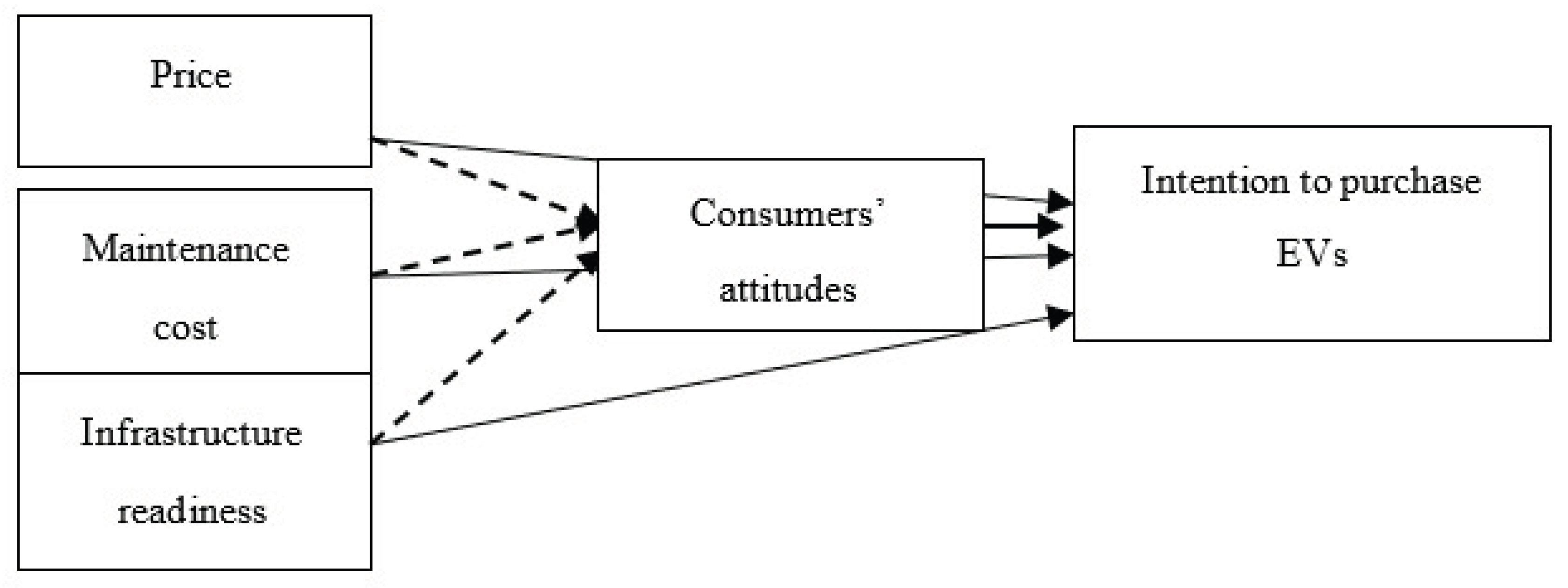
Figure 2.
Measurement Model Assessment.
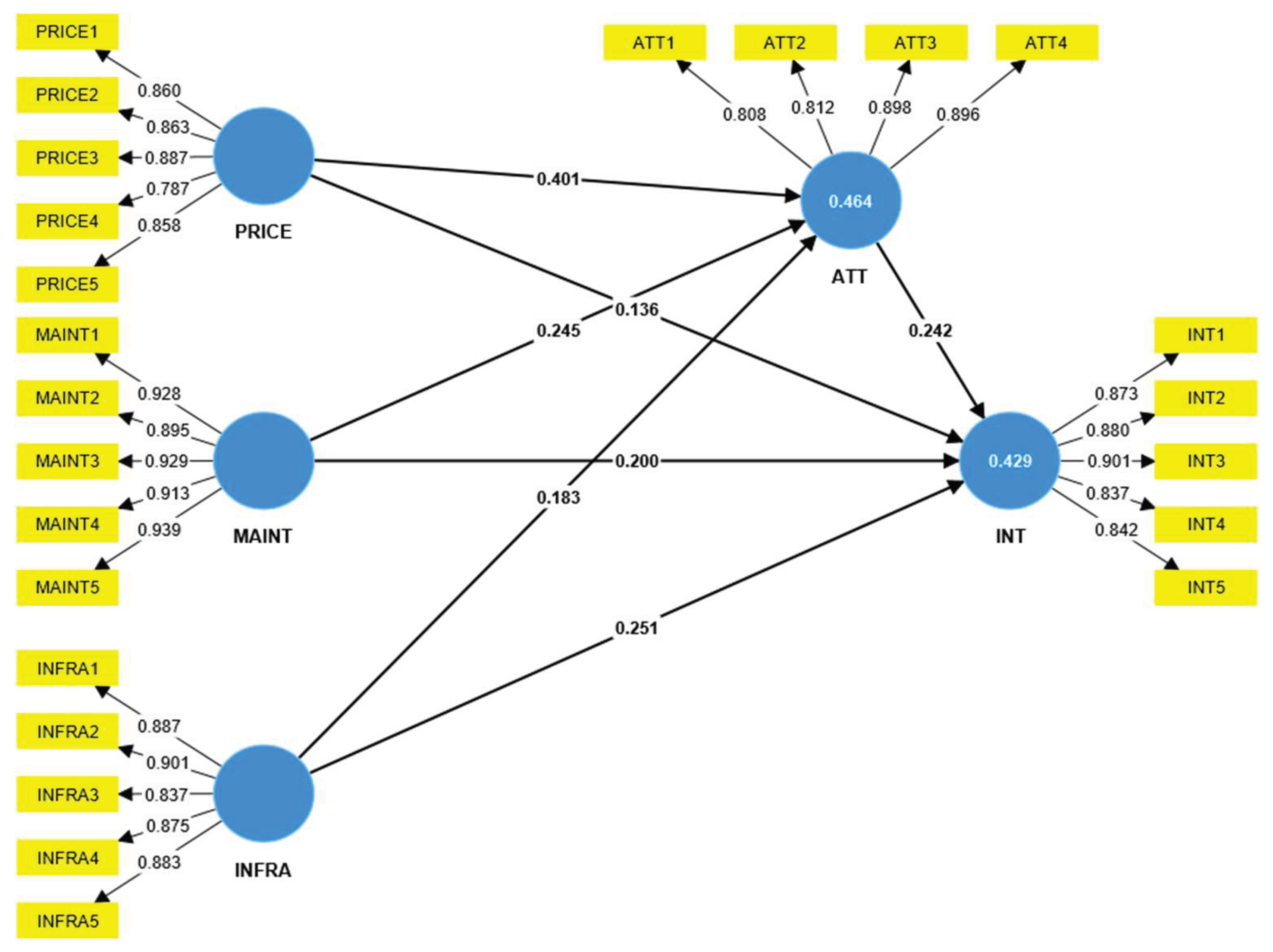
Figure 3.
Structural Model Assessment.
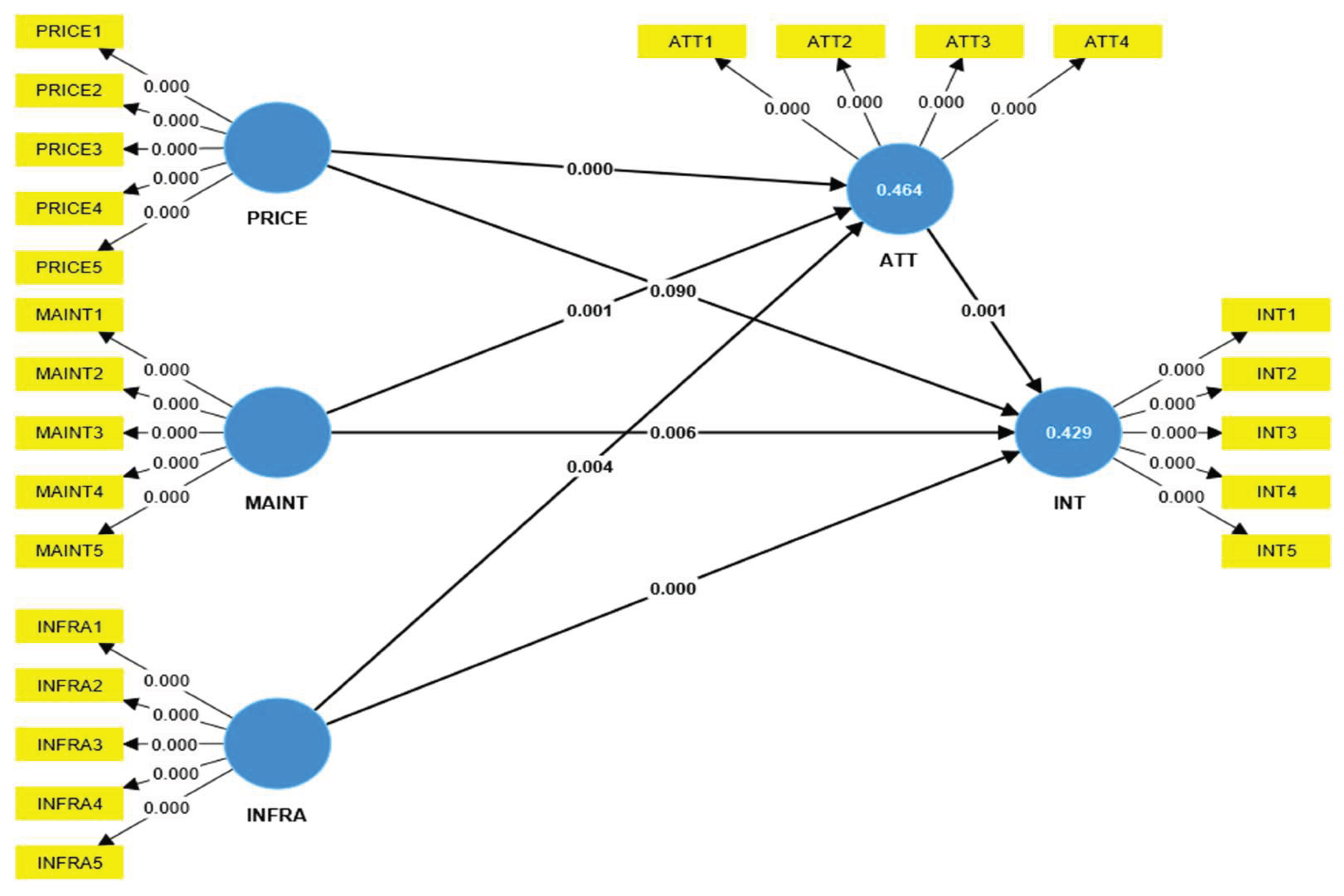
Figure 4.
Predictive Relevance.
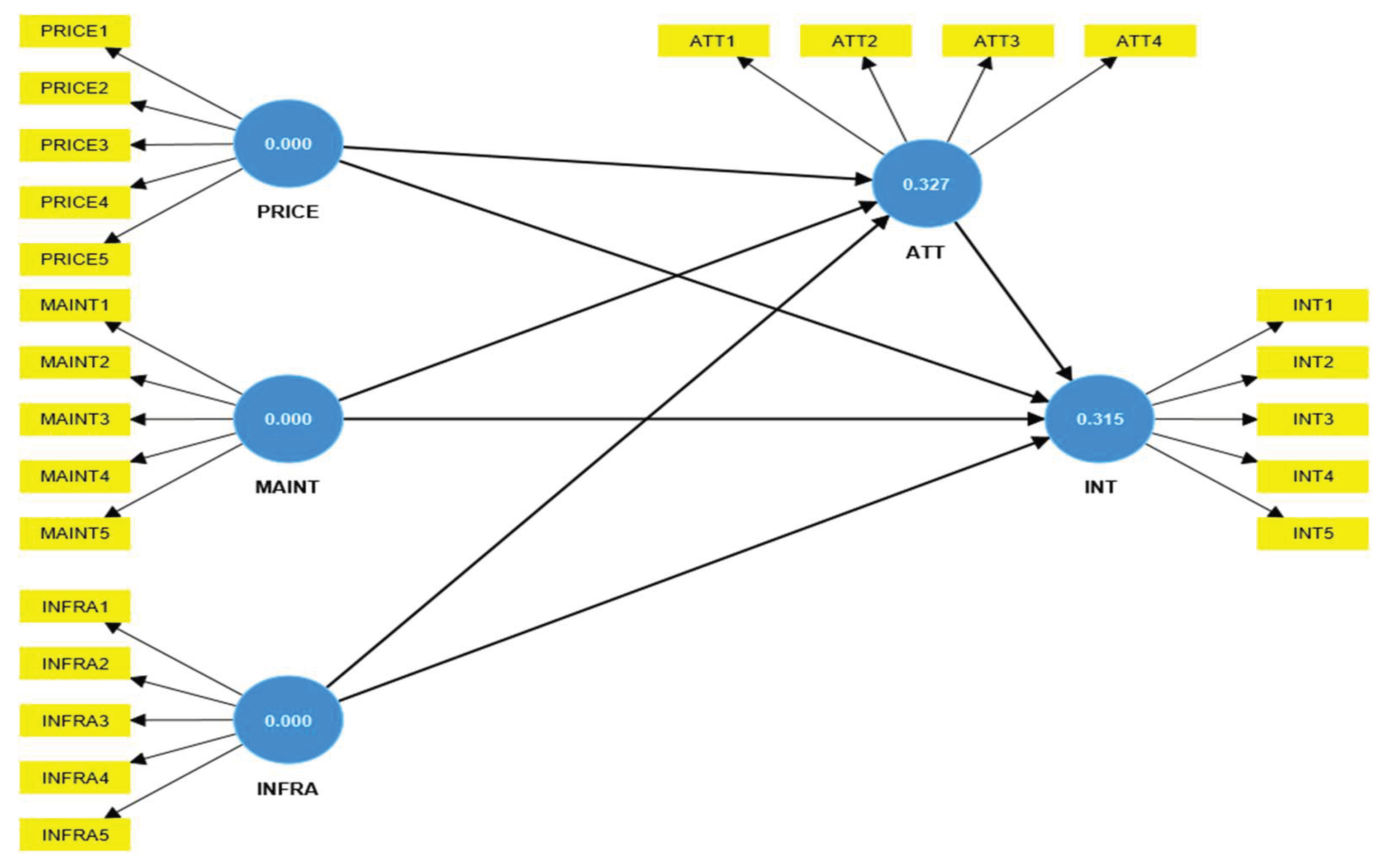

Table 1.
Demographic Profile of Respondents (n = 252).
| Variable | Category | Frequency | Percentage |
|---|---|---|---|
| Gender | Male | 148 | 59 |
| Female | 104 | 41 | |
| Age Category | 25–30 years | 51 | 20 |
| 31–40 years | 70 | 28 | |
| 41–50 years | 108 | 43 | |
| 51 and above | 23 | 9 | |
|
Educational Attainment |
Secondary Level | 28 | 11 |
| Diploma | 52 | 21 | |
| Bachelor’s Degree | 98 | 39 | |
| Master’s Degree | 60 | 24 | |
| Ph.D | 11 | 4 | |
| Others | 3 | 1 | |
| Marital Status | Single | 64 | 25 |
| Married | 181 | 72 | |
| Divorced/Widowed | 7 | 3 | |
|
Employment Sector |
Government | 44 | 17 |
| Private | 165 | 65 | |
| Self-Employed | 32 | 13 | |
| Others | 11 | 5 |
Table 2.
Convergent Validity and Reliability of the Construct.
| Constructs | Indicators | Loadings | Cronbach’s alpha |
Composite reliability | Average variance extracted |
|---|---|---|---|---|---|
| Consumers’ Attitudes (ATT) |
ATT1 ATT2 ATT3 ATT4 |
0.808 0.812 0.898 0.896 |
0.876 | 0.915 | 0.731 |
| Infrastructure Readiness (INFRA) Purchase Intention (INT) Maintenance Cost (MAINT) Price (PRICE) |
INFRA1 INFRA2 INFRA3 INFRA4 INFRA5 INT1 INT2 INT3 INT4 INT5 MAINT1 MAINT2 MAINT3 MAINT4 MAINT5 PRICE1 PRICE2 PRICE3 PRICE4 PRICE5 |
0.887 0.901 0.837 0.875 0.883 0.873 0.880 0.901 0.837 0.842 0.928 0.895 0.929 0.913 0.939 0.860 0.863 0.887 0.787 0.858 |
0.925 0.917 0.955 0.905 |
0.943 0.938 0.965 0.930 |
0.769 0.752 0.848 0.726 |
Table 3.
Discriminant Validity.
| Constructs | ATT | INFRA | INT | MAINT | PRICE |
|---|---|---|---|---|---|
| ATT | |||||
| INFRA | 0.480 | ||||
| INT | 0.611 | 0.531 | |||
| MAINT | 0.619 | 0.475 | 0.564 | ||
| PRICE | 0.686 | 0.384 | 0.536 | 0.642 |
Table 4.
Fornell and Larcker Criterion.
| Constructs | ATT | INFRA | INT | MAINT | PRICE |
|---|---|---|---|---|---|
| ATT | 0.855 | ||||
| INFRA | 0.434 | 0.877 | |||
| INT | 0.547 | 0.493 | 0.867 | ||
| MAINT | 0.567 | 0.447 | 0.531 | 0.921 | |
| PRICE | 0.612 | 0.352 | 0.492 | 0.598 | 0.852 |
Table 5.
Cross-Loadings.
| Items | ATT | INFRA | INT | MAINT | PRICE |
|---|---|---|---|---|---|
| ATT1 | 0.808 | 0.406 | 0.448 | 0.453 | 0.495 |
| ATT2 | 0.812 | 0.315 | 0.443 | 0.478 | 0.531 |
| ATT3 | 0.898 | 0.369 | 0.486 | 0.511 | 0.547 |
| ATT4 | 0.896 | 0.394 | 0.490 | 0.496 | 0.520 |
| INFRA1 | 0.403 | 0.887 | 0.445 | 0.360 | 0.281 |
| INFRA2 | 0.417 | 0.901 | 0.453 | 0.437 | 0.350 |
| INFRA3 | 0.307 | 0.837 | 0.397 | 0.404 | 0.272 |
| INFRA4 | 0.391 | 0.875 | 0.487 | 0.366 | 0.337 |
| INFRA5 | 0.374 | 0.883 | 0.365 | 0.399 | 0.298 |
| INT1 | 0.461 | 0.424 | 0.873 | 0.489 | 0.389 |
| INT2 | 0.488 | 0.395 | 0.880 | 0.452 | 0.437 |
| INT3 | 0.480 | 0.481 | 0.901 | 0.471 | 0.440 |
| INT4 | 0.465 | 0.423 | 0.837 | 0.427 | 0.487 |
| INT5 | 0.477 | 0.411 | 0.842 | 0.460 | 0.377 |
| MAINT1 | 0.534 | 0.414 | 0.487 | 0.928 | 0.557 |
| MAINT2 | 0.530 | 0.429 | 0.559 | 0.895 | 0.557 |
| MAINT3 | 0.531 | 0.406 | 0.438 | 0.929 | 0.532 |
| MAINT4 | 0.513 | 0.448 | 0.516 | 0.913 | 0.565 |
| MAINT5 | 0.498 | 0.353 | 0.428 | 0.939 | 0.540 |
| PRICE1 | 0.537 | 0.319 | 0.417 | 0.508 | 0.860 |
| PRICE2 | 0.560 | 0.259 | 0.426 | 0.513 | 0.863 |
| PRICE3 | 0.550 | 0.310 | 0.471 | 0.525 | 0.887 |
| PRICE4 PRICE 5 |
0.468 0.484 |
0.273 0.341 |
0.327 0.439 |
0.467 0.534 |
0.787 0.858 |
Table 6.
Multicollinearity Assessment.
| Construct | ATT | INT |
|---|---|---|
| ATT | 1.866 | |
| INFRA | 1.268 | 1.330 |
| MAINT | 1.730 | 1.842 |
| PRICE | 1.580 | 1.879 |
Table 7.
Direct Path Findings.
| Hypothesis | Direct Paths | Original sample | Standard deviation |
T statistics | P values |
|---|---|---|---|---|---|
| H1 | PRICE -> INT | 0.136 | 0.080 | 1.695 | 0.090 |
| H2 | MAINT -> INT | 0.200 | 0.072 | 2.775 | 0.006 |
| H3 | INFRA -> INT | 0.251 | 0.059 | 4.239 | 0.000 |
| H4 | ATT -> INT | 0.242 | 0.072 | 3.347 | 0.001 |
Table 8.
Indirect Path Findings.
| Hypothesis | Mediating Paths | Original sample | Standard deviation | T statistics | P values |
|---|---|---|---|---|---|
| H5a | PRICE -> ATT -> INT | 0.097 | 0.037 | 2.649 | 0.008 |
| H5b | MAINT -> ATT -> INT | 0.059 | 0.026 | 2.270 | 0.023 |
| H5c | INFRA -> ATT -> INT | 0.044 | 0.022 | 2.011 | 0.044 |
Table 9.
Coefficient of Determination.
| Variables | R-square | R-square adjusted |
|---|---|---|
| ATT | 0.464 | 0.458 |
| INT | 0.429 | 0.420 |
Table 10.
Effect Size.
| Variables | ATT | INT |
|---|---|---|
| ATT | 0.055 | |
| INFRA | 0.050 | 0.083 |
| MAINT | 0.065 | 0.038 |
| PRICE | 0.190 | 0.017 |
Table 11.
Predictive Relevance.
| Variable | SSO | SSE | Q² (=1-SSE/SSO) |
|
|---|---|---|---|---|
| ATT | 1056.000 | 710.217 | 0.327 | |
| INFRA | 1320.000 | 1320.000 | 0.000 | |
| INT | 1320.000 | 903.700 | 0.315 | |
| MAINT | 1320.000 | 1320.000 | 0.000 | |
| PRICE | 1320.000 | 1320.000 | 0.000 | |
Disclaimer/Publisher’s Note: The statements, opinions and data contained in all publications are solely those of the individual author(s) and contributor(s) and not of MDPI and/or the editor(s). MDPI and/or the editor(s) disclaim responsibility for any injury to people or property resulting from any ideas, methods, instructions or products referred to in the content. |
© 2025 by the authors. Licensee MDPI, Basel, Switzerland. This article is an open access article distributed under the terms and conditions of the Creative Commons Attribution (CC BY) license (http://creativecommons.org/licenses/by/4.0/).
Copyright: This open access article is published under a Creative Commons CC BY 4.0 license, which permit the free download, distribution, and reuse, provided that the author and preprint are cited in any reuse.


