

Submitted:
10 October 2025
Posted:
14 October 2025
You are already at the latest version
Abstract
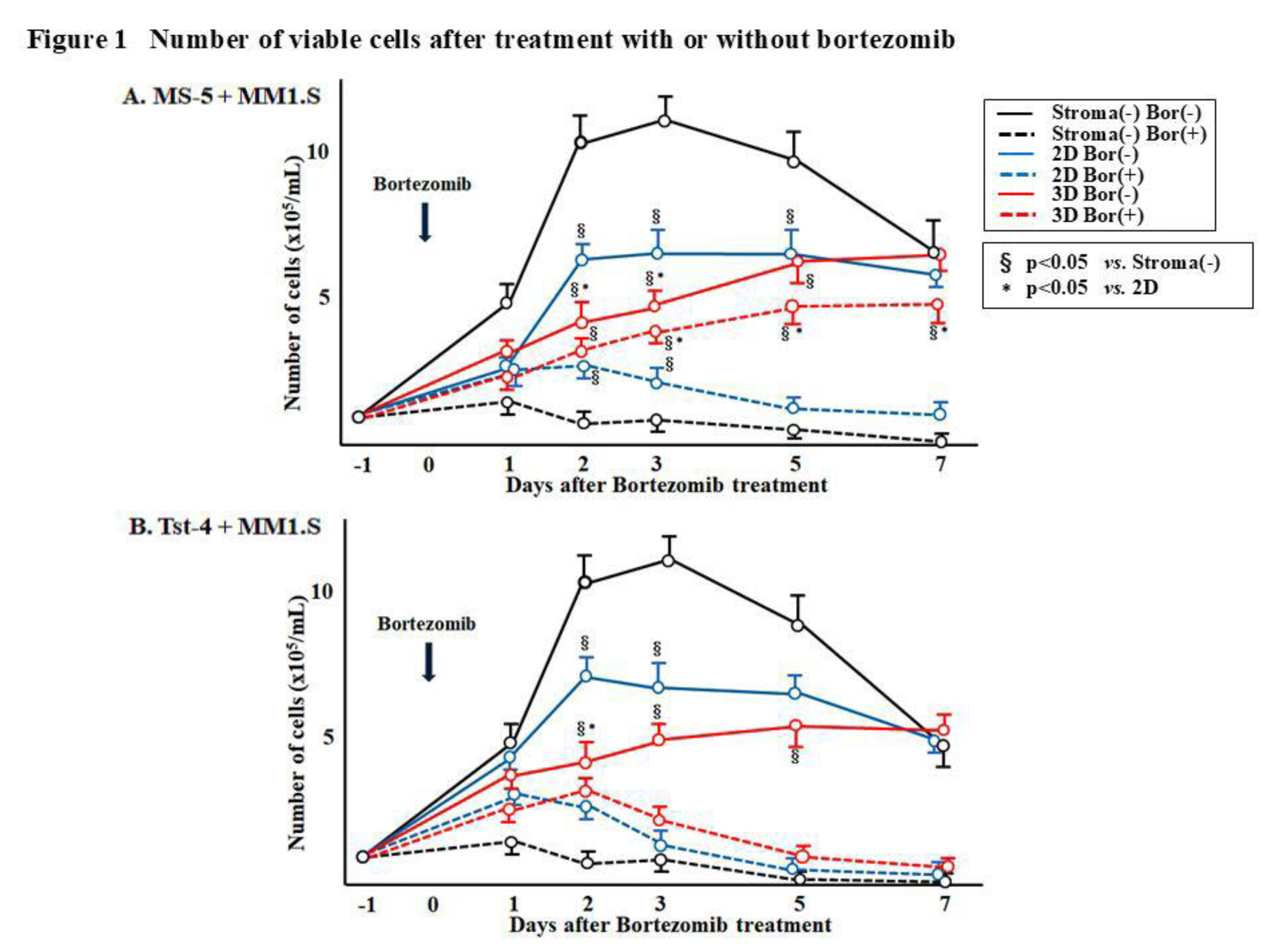
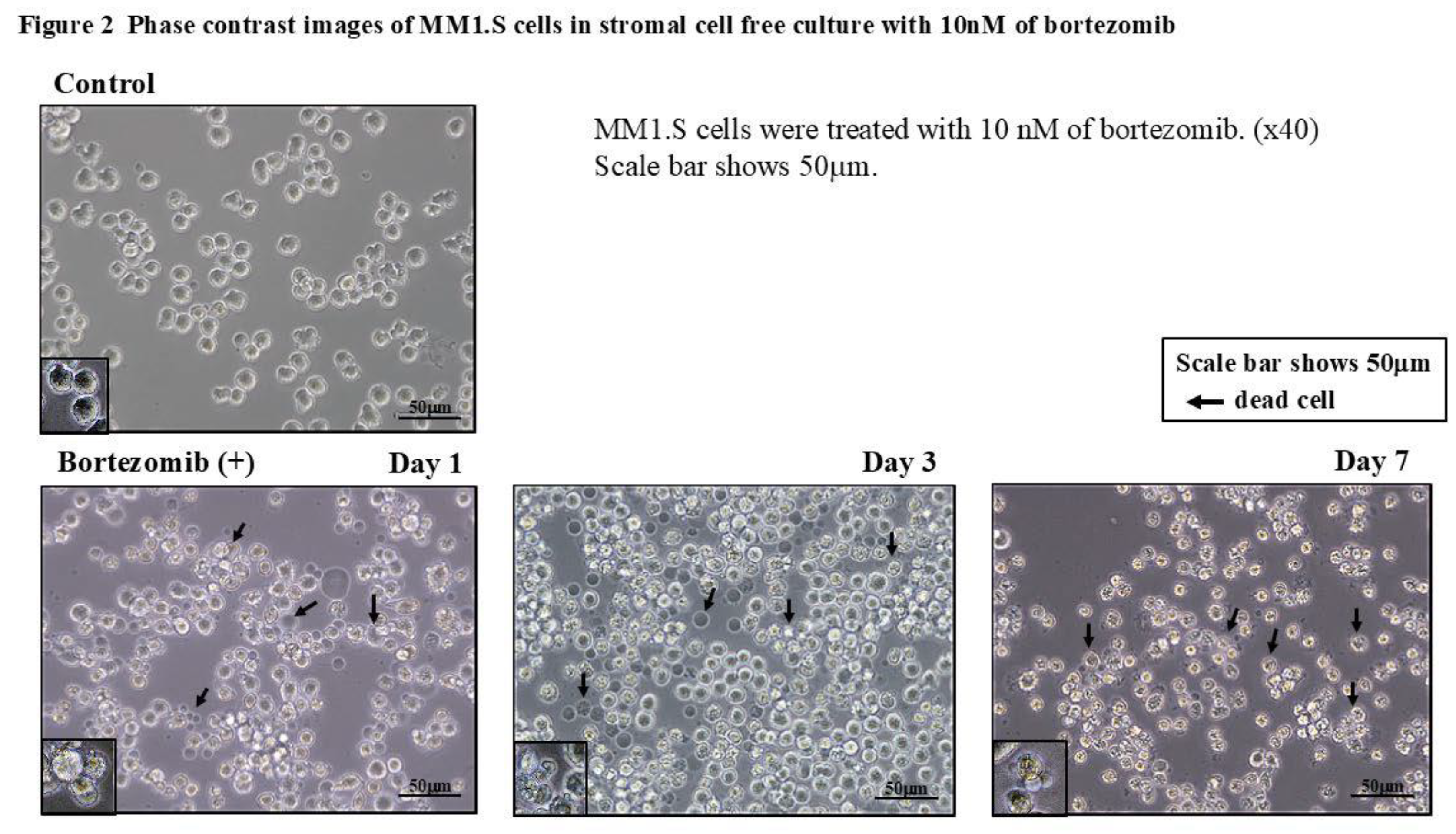
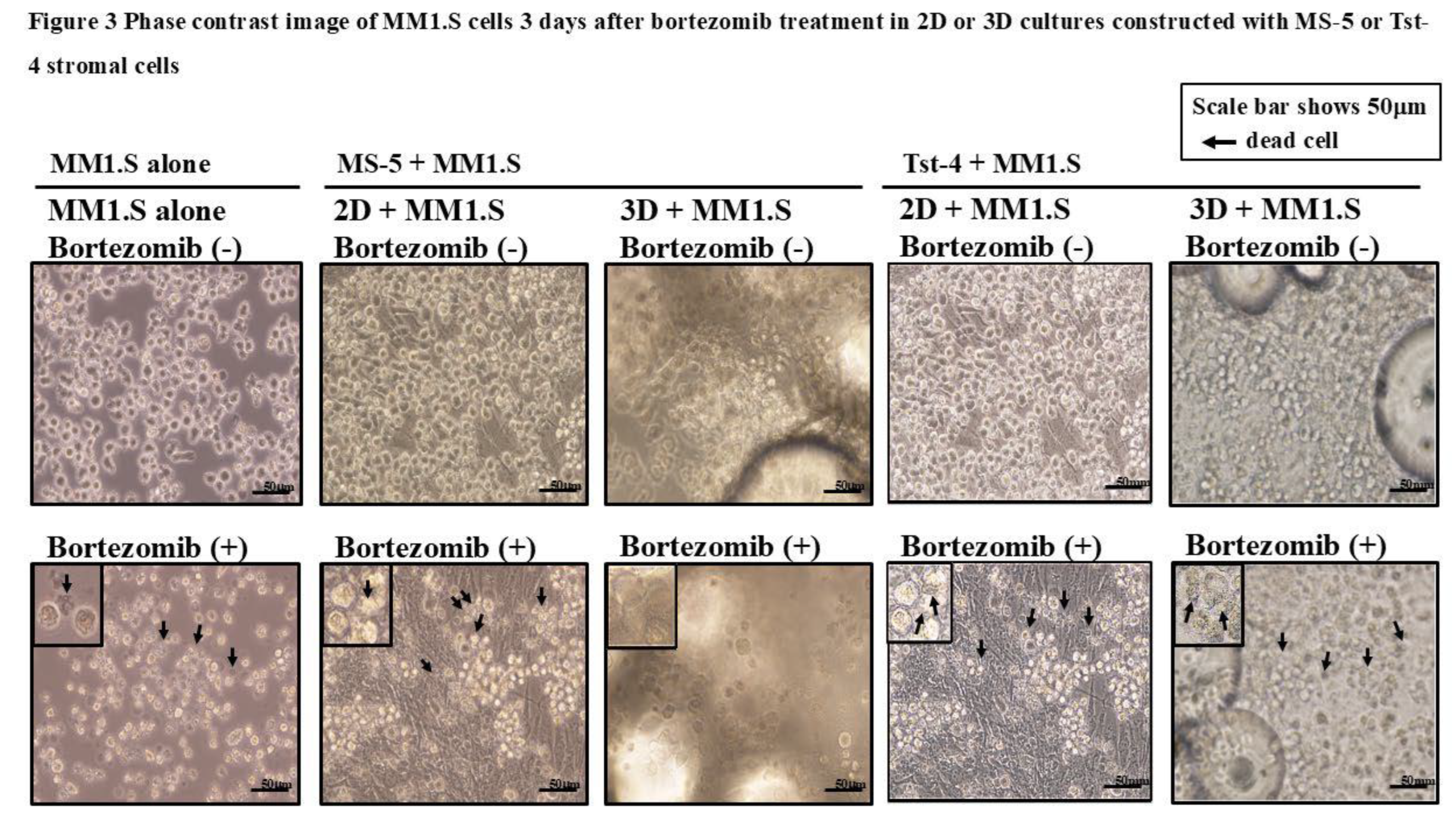
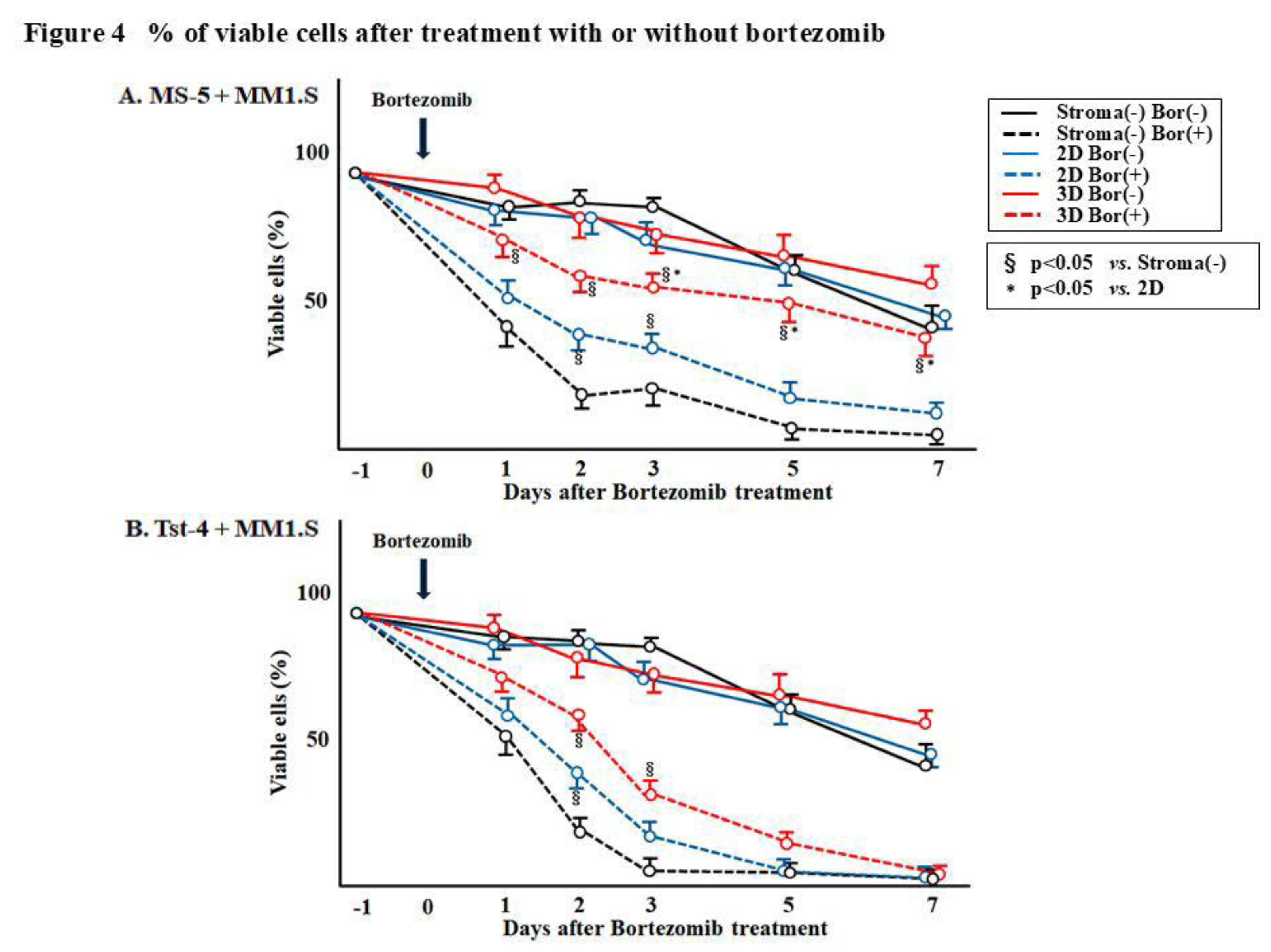
Background: The three-dimensional (3D) culture system that uses polymer particles with a bone marrow stroma cell feeder layer reproduces a biostructural hematopoiesis state effectively as compared to the conventional two-dimensional (2D) culture method. The 3D culture that maintains normal hematopoiesis, including prolongation of the hematopoietic stem cell proliferation and differentiation. The bone marrow stromal cells in a 3D culture, alter leukemic cell growth and protect the leukemic cells from anticancer agents. However, the mechanism of stromal cells on the hematopoietic stem cell proliferation and differentiation and neoplastic cells, including leukemia in the 3D culture, still bear many questions. Methods: We assessed the mechanism of two different bone marrow-derived stromal cells (i.e., MS-5 and Tst-4) bearing different characteristics, by using for a feeder layer in the 3D culture to compare the supportive action to leukemic cells. We focused on the role of the 3D culture constructed with the bone marrow stromal cells on the leukemic cell growth. Multiple myeloma cells are strongly related to the stromal cells in their proliferation; hence, the cloned MM1.S cells derived from multiple myeloma were cocultured in the 3D, and their cell growth was examined. We also examined the effect of the antineoplastic agent, bortezomib, which is a proteasome inhibitor, in the 3D culture system with a different stromal cell feeder. Results and conclusions: When MM1.S myeloma cells were cultured with MS-5 stroma in a 3D condition, the cell growth was found to be slow compared with that in the 2D culture and also with those in both the 2D and 3D cocultures with Tst-4 stroma. The MS-5 cells in the 3D culture protected the MM1.S cells from the cytocidal effect of the bortezomib treatment. Different kinetics of the MM1.S cells were observed depending on the stromal cells, suggesting their inherent and complicated characteristic.
Keywords:
1. Introduction
2. Results
2.1. Growth Patterns of MM1.S Cells Cocultured with MS-5 and Tst-4 in 2D and 3D Culture Constructs
2.2. Growth Patterns of MM1.S Cells Cocultured with MS-5 and Tst-4 Cells in 2D and 3D Culture Constructs Along with Bortezomib Treatment
2.3. Expression of the Apoptotic Maker 7A6 Antigen on the MM1.S Cells After Bortezomib Treatment
3. Discussion
4. Materials and Methods
4.1. Materials
4.2. Preparation of Cell Support with Grafted Polymer Chains
4.3. Culturing of MS-5 and Tst-4 Stromal Cells and MM1.S Cells
4.4. 3D Coculture System
4.5. Bortezomib Treatment
4.6. Cell Surface Antigen Analysis
4.7. Statistical Analysis
5. Conclusion
Author Contributions
Conflicts of interest
References
- Greenberger, JS. The hematopoietic microenvironment. Crit Rev Oncol Hematol 1991, 11, 65–84. [Google Scholar] [CrossRef] [PubMed]
- Mayani H, Guilbert LJ, Janowska-Wieczorek A. Biology of the hemopoietic microenvironment. Eur J Haematol 1992, 49, 225–233. [Google Scholar] [CrossRef] [PubMed]
- Wolf NS, Trentin JJ. Hemopoietic colony studies. V. Effect of hemopoietic organ stroma on differentiation of pluripotent stem cells. J Exp Med 1968, 127, 205–208. [Google Scholar]
- Dexter TM, Allen TD, Lajtha LG. Conditions controlling the proliferation of haematopoietic stem cells in vitro. J Cell Physiol 1977, 91, 335–344. [Google Scholar] [CrossRef]
- Mori KJ, Fujitake H, Okubo H, Dexter TM, Ito Y. Quantitative development of adherent cell colonies in bone marrow cell culture in vitro. Exp Hematol 1979, 7, 171–176. [Google Scholar]
- Aizawa S, Yaguchi M, Nakano M, Toyama K, Inokuchi S, Imai T, Yasuda M, Nabeshima R, Handa H. Hemopoietic supportive function of human bone marrow stromal cell lines established by a recombinant SV40-adenovirus vector. Exp Hematol 1994, 22, 482–487. [Google Scholar]
- Bodo M, Baroni T, Tabilio A. Haemopoietic and stromal stem cell regulation by extracellular matrix components and growth factors. J Stem Cells: 2009, 4, 57–69. [Google Scholar]
- Dormady SP, Bashayan O, Dougherty R, Zhang XM, Basch RS. Immortalized multipotential mesenchymal cells and the hematopoietic microenvironment. J Hematother Stem Cell Res 2001, 10, 125–140. [Google Scholar] [CrossRef]
- Durig J, Rosenthal C, Halfmeyer K, Wiemann M, Novotny J, Bingmann D, Duhrsen U, Schirrmacher K. Intercellular communication between bone marrow stromal cells and CD34+ haematopoietic progenitor cells is mediated by connexin 43-type gap junctions. Br J Haematol 2000, 111, 416–425. [Google Scholar]
- Garrett RW, Emerson SG. The role of parathyroid hormone and insulin-like growth factors in hematopoietic niches: physiology and pharmacology. Mol Cell Endocrinol 2008, 288, 6–10. [Google Scholar] [CrossRef]
- Heard J, Fichekson S, Varet B. Role of colony-stimulating activity in murine long-term bone marrow cultures: Evidence for its production and consumption by the adherent cells. Blood 1982, 59, 761–767. [Google Scholar] [CrossRef]
- Wagner W, Roderburg C, Wein F, Diehlmann A, Frankhauser M, Schubert R, Eckstein V, Ho AD. Molecular and secretory profiles of human mesenchymal stromal cells and their abilities to maintain primitive hematopoietic progenitors. Stem Cells 2007, 25, 2638–2647. [Google Scholar] [CrossRef]
- Can, A. Haematopoietic stem cells niches: interrelations between structure and function. Transfus Apher Sci 2008, 38, 261–268. [Google Scholar] [CrossRef] [PubMed]
- Himburg HA, Harris JR, Ito T, Daher P, Russell JL, Quarmyne M, Doan PL, Helms K, Nakamura M, Fixsen E, Herradon G, Reya T, Chao NJ, Harroch S, Chute JP. Pleiotrophin regulates the retention and self-renewal of hematopoietic stem cells in the bone marrow vascular niche. Cell Rep 2012, 25, 964–975. [Google Scholar]
- Nagasawa T, Omatsu Y, Sugiyama T. Control of hematopoietic stem cells by the bone marrow stromal niche: the role of reticular cells. Trends Immunol 2011, 32, 315–320. [Google Scholar] [CrossRef]
- Renström J, Kröger M, Peschel C, Oostendorp RA. How the niche regulates hematopoietic stem cells. Chem Biol Interact 2010, 184, 7–15. [Google Scholar] [CrossRef] [PubMed]
- Maruyama D, Watanabe T, Heike Y1, Nagase K, Takahashi N, Yamasaki S, Waki F, Yokoyama H, Kim SW, Kobayashi Y, Aizawa S, Tobinai K. Stromal cells in bone marrow play important roles in pro-inflammatory cytokine secretion causing fever following bortezomib administration in patients with multiple myeloma. Int J Hematol 2008, 88, 396–402. [Google Scholar] [CrossRef]
- Li ZW, Dalton WS. Tumor microenvironment and drug resistance in hematologic malignancies. Blood Rev 2006, 20, 333–42. [Google Scholar] [CrossRef]
- Konopleva M, Konoplev S, Hu W, Zaritskey AY, Afanasiev BV, Andreeff M. Stromal cells prevent apoptosis of AML cells by up-regulation of anti-apoptotic proteins. Leukemia. 2002, 16, 1713–24. [Google Scholar] [CrossRef]
- Hirabayashi Y, Hatta Y, Takeuchi J, Tsuboi I, Harada T, Ono K, Glomm WR, Yasuda M, Aizawa S. Novel three-dimensional long-term bone marrow culture system using polymer particles with grafted epoxy-polymer-chains supports the proliferation and differentiation of hematopoietic stem cells. Exp Biol Med 2011, 236, 1342–1350. [Google Scholar] [CrossRef]
- Yasuda M, Kunieda H, Ono K, Ogino H, Iwasaki T, Hiramoto M, Glomm WR, Hirabayashi Y, Aizawa S. Adhesive cell cultivation on polymer particles having grafted epoxy polymer chain. Tissue Cell 2011, 43, 115–124. [Google Scholar] [CrossRef]
- Harada T, Hirabayashi Y, Hatta Y, Tsuboi I, Glomn WR, Yasuda M, Aizawa S. Kinetics of hematopoietic stem cells and supportive activities of stromal cells in a three-dimensional bone marrow culture system. Growth Factors 2015, 33, 347–355. [Google Scholar] [CrossRef]
- Harada, T. , Tsuboi I., Utsunomiya M., Yasuda M., Aizawa S. Kinetics of leukemic cells in 3D culture with stromal cells and with arginine deprivation stress. J Biosci Bioeng 2020, 130, 650–658. [Google Scholar] [CrossRef] [PubMed]
- Ohmura K, Kawamoto H, Fujimoto S, Ozaki S, Nakao K, Katsura Y. Emergence of T, B, and myeloid lineage-committed as well as multipotent hemopoietic progenitors in the aorta-gonad-mesonephros region of day 10 fetuses of the mouse. J Immunol 1999, 163, 4788–95. [Google Scholar] [CrossRef]
- Watanabe Y, Mazda O, Aiba Y, Iwai K, Gyotoku J, IdeyamaS, Miyazaki J, Katsura Y. A murine thymic stromal cell line which may support the differentiation of CD4-8- thymocytes into CD4+CD8- alpha beta T cell receptor positive T cells. Cell Immunol 1992, 142, 385–397. [Google Scholar] [CrossRef] [PubMed]
- Itoh K, Tezuka H, Sakoda H, Konno M, Nagata K, Uchiyama T, Uchino H, Mori KJ. Reproducible establishment of hemopoietic supportive stromal cell lines from murine bone marrow. Exp Hematol 1989, 17, 145–53. [Google Scholar]
- Aizawa S, Hiramoto M, Hoshi H, Toyama K, Shima D, Handa H. Establishment of a stromal cell line from a MDS RA patient which induced an apoptotic change in hematopoietic and leukemic cells in vitro. Exp Hematol 2000, 28, 148–155. [Google Scholar] [CrossRef]
- Goldman-Leikin RE, Salwen HR, Herst CW, Variakojis D, Bian ML, Le Beau MM, Selvanayagan P, Marder R, Anderson R, Weitzman S, Rosen ST. Characterization of a novel myeloma cell line, MM.1S. J. Lab. Clin. Med. 1989, 113, 335–345. [Google Scholar] [CrossRef]
- Chauhan D, Catley L, Li G, Podar K, Hideshima T, Velankar M, Mitsiades C, Mitsiades N, Yasui H, Letai A, Ovaa H, Berkers C, Nicholson B, Chao TH, Neuteboom STC, Richardson P, Palladino MA, Anderson KC. A novel orally active proteasome inhibitor induces apoptosis in multiple myeloma cells with mechanisms distinct from Bortezomib. Cancer Cell 2005, 8, 407–19. [Google Scholar] [CrossRef]
- Hideshima T, Ikeda H, Chauhan D, Okawa Y, Raje N, Podar K, Mitsiades C, Munshi NC, Richardson PG, Carrasco RD, Anderson KC. Bortezomib induces canonical nuclear factor-kappaB activation in multiple myeloma cells. Blood 2009, 30, 1046–52. [Google Scholar] [CrossRef]
- Ri M, Iida S, Nakashima T, Miyazaki H, Mori F, Ito A, Inagaki A, Kusumoto S, Ishida T, Komatsu H, Shiotsu Y, Ueda R. Bortezomib-resistant myeloma cell lines: a role for mutated PSMB5 in preventing the accumulation of unfolded proteins and fatal ER stress. Leukemia 2010, 24, 1506–12. [Google Scholar] [CrossRef]
- Ito, S. Proteasome Inhibitors for the Treatment of Multiple Myeloma. Cancers (Basel) 2020, 22, 265. [Google Scholar] [CrossRef] [PubMed]
- Zhu Y, Zhao X, Zhu X, Wu G, Li Y, Ma Y, Yuan Y, Yang J, Hu Y, Ai L, Gao Q. Design, synthesis, biological evaluation, and structure-activity relationship (SAR) discussion of dipeptidyl boronate proteasome inhibitors, part I: comprehensive understanding of the SAR of alpha-amino acid boronates. J Med Chem 2009, 52, 4192–9. [Google Scholar] [CrossRef] [PubMed]
- Greenstein S, Krett NL, Kurosawa Y, Ma, Chauhan D, Hideshima T, Anderson KCM, Rosen ST. Model system to elucidate the characteristics, behavior, and signaling of steroid-sensitive and -resistant MM cells. Exp Hematol 2003, 31, 271–282. [Google Scholar] [CrossRef]
- Schofield, R. The relationship between the spleen colony-forming cell and the hematopoietic stem cell. Blood Cells 1978, 4, 7–25. [Google Scholar]
- Paraguassu-Braga FH, Borojevic R, Bouzas LF, Barcinski MA, Bonomo A. Bone marrow stroma inhibits proliferation and apoptosis in leukemic cells through gap junction-mediated cell communication. Cell Death Diffe 2003, 10, 1101–1108. [Google Scholar] [CrossRef]
- Aizawa, S. , Hiramoto M., Hoshi H., Nakano M., Iwase O., Yaguchi M., Nabeshima R., Shima D., Handa H., Toyama K. Bone marrow stroma from refractory anemia of myelodysplastic syndrome is defective in its ability to support normal CD34 positive cell growth in vitro. Leukemia Res 1999, 23, 239–246. [Google Scholar] [CrossRef]
- Hideshima T, Chauhan D, Richardson P, Mitsiades C, Mitsiades N, Hayashi T, Munshi N, Dang L, Castro A, Palombella V, Adams J, Anderson AC. NF-kappa B as a therapeutic target in multiple myeloma. J Biol Chem. 2002, 277, 16639–47. [Google Scholar] [CrossRef]
- Nunes A, Annunziata CM. Proteasome inhibitors: structure and function. Semin Oncol 2017, 44, 377–380. [Google Scholar] [CrossRef]
- Fink EE, Mannava S, Bagati A, Bianchi-Smiraglia A, Nair JR, Moparthy K, Lipchick BC, Drokov M, Utley A, Ross J, Mendeleeva LP, Savchenko VG, Lee KP, Nikiforov MA. Mitochondrial thioredoxin reductase regulates major cytotoxicity pathways of proteasome inhibitors in multiple myeloma cells. Leukemia 2015, 30, 104–11. [Google Scholar] [CrossRef]
- Noborio-Hatano K, Kikuchi J, Takatoku M, Shimizu R, Wada T, Ueda M, Nobuyoshi M, Oh I, Sato K, Suzuki T, Ozaki K, Mori M, Nagai T, MuroiK, Kano Y, Furukawa Y, Ozawa K. Bortezomib overcomes cell-adhesion-mediated drug resistance through downregulation of VLA-4 expression in multiple myeloma. Oncogene 2009, 28, 231–42. [Google Scholar] [CrossRef]
- Zhou B, Qin Y, Zhou J, Ruan J, Xiong F, Dong J, Huang X, Yu Z, Gao S. Bortezomib suppresses self-renewal and leukemogenesis of leukemia stem cell by NF-ĸB-dependent inhibition of CDK6 in MLL-rearranged myeloid leukemia. J Cell Mol Med 2021, 25, 3124–3135. [Google Scholar] [CrossRef]
Disclaimer/Publisher’s Note: The statements, opinions and data contained in all publications are solely those of the individual author(s) and contributor(s) and not of MDPI and/or the editor(s). MDPI and/or the editor(s) disclaim responsibility for any injury to people or property resulting from any ideas, methods, instructions or products referred to in the content. |
© 2025 by the authors. Licensee MDPI, Basel, Switzerland. This article is an open access article distributed under the terms and conditions of the Creative Commons Attribution (CC BY) license (http://creativecommons.org/licenses/by/4.0/).