Preprint
Article

This version is not peer-reviewed.

In Vitro Antiproliferative Activity and Selective Cytotoxicity of Sixteen South African Euphorbia Species Against Breast Cancer and Normal Cell Lines

Submitted:

13 October 2025

Posted:

13 October 2025

You are already at the latest version

Abstract

The use of medicinal plants in traditional healthcare systems has a long history, particularly in regions with limited access to modern medical facilities. In South Africa, indigenous knowledge of plant-based remedies has been preserved through oral traditions, making these plants vital resources for local communities. This study investigates sixteen unexplored Euphorbia species for their potential in inhibiting breast cancer cell growth. Due to the small size of the plants, the entire plant was used for each species. A systematic approach was employed, including plant selection, sequential extraction using organic solvents, phytochemical screening, and in vitro cytotoxicity testing using the 3-(4,5-dimethylthiazol-2-yl)-2,5-diphenyl tetrazolium bromide (MTT) assay. High-performance liquid chromatography (HPLC) was used to identify primary metabolites. All sixteen species contained glycosides and triterpenoids. The ethyl acetate (EtOAc) extract of Euphorbia ledienii, dichloromethane (DCM) extract of Euphorbia cooperi, and DCM extract of Euphorbia clavarioides exhibited the highest inhibitory effects on Michigan Cancer Foundation-7 (MCF-7), and M.D. Anderson-Metastatic Breast-231 (MDA-MB-231) cell lines, with cytotoxic concentration (CC₅₀) values of 0.06 μg/mL, 0.07 μg/mL, and 0.23 μg/mL, respectively. Euphorbia tirucalli (DCM extract) and Euphorbia cooperi (hexane extract) displayed selectivity for MDA-MB231 cells, with selectivity index (SI) values of 49.40 and 84.03, respectively. Euphorbia trigona, Euphorbia gorgonis, Euphorbia ledienii, and Euphorbia arabica had similar distribution of secondary metabolites based on HPLC analysis. These findings suggest that certain Euphorbia species exhibit selective cytotoxicity against breast cancer cells while sparing normal cells, highlighting their potential for breast cancer therapy.

Keywords: 
;  ;  ;  ;  ;  

1. Introduction

Breast cancer is the most frequently diagnosed cancer among women worldwide, with approximately 2.3 million new cases reported each year. This accounts for about 11.7% of all new cancer diagnoses globally [1]. This dire situation arises due to the diverse biological markers exhibited by different tumor types, rendering a universal treatment approach ineffective [2,3,4].
Chemotherapy is a widely employed cancer treatment that has limitations such as non-specific drug delivery and lack of selectivity, resulting in high toxicity to healthy cells [5,6,7]. These limitations hinder effective disease control. To address this, complementary therapeutic strategies like the use of herbs and medicinal plants have gained attention. Many plants possess compounds that can enhance cancer treatment efficacy and mitigate toxicity [8]. Medicinal plants' advantages include their affordability, accessibility, and proven success in cancer treatment, prompting global research interest.
Most ethnobotanical assertions, however, have not yet been scientifically examined. Therefore, evaluating these plants for their potential as chemo-preventive and chemotherapeutic agents becomes crucial. For instance, some researchers have isolated and screened some of these medicinal plants for biological active compounds [9]. Some have further analyzed the pathways in which these compounds are able to combat cancer/tumor [10,11]. These isolated compounds can interfere with signals causing normal cells to transform into cancer cells or suppress cell progression [12]. So far, only a few approved anticancer agents (vincristine, irinotecan, etoposide, and paclitaxel) have been derived from plants and have played a crucial role in chemotherapy [13].
Numerous plants within the Euphorbiaceae family are commonly used in various parts of the world as traditional medicinal herbs and some of these plants have shown anticancer properties, as discussed in my recently published article [14,15]. However, the specific traditional uses of the selected 16 Euphorbia species in this study were not explored in detail, as the focus was on their cytotoxic potential against breast cancer cell line. These anticancer properties may be constituted by different secondary metabolites contained in these plants such as proteins (proteases, chitinases, oxidases and lectins), steroids, phenolic, cerebrosides, glycerol, flavonoids, and terpenes [16,17,18]. Antiproliferative activity and selectivity of Euphorbia bupleurifolia (E. bupleurifolia), Euphorbia trigona (E. trigona), Euphorbia gorgonis (E. gorgonis), Euphorbia cooperi (E. cooperi), Euphorbia horrida Var (E. horrida Var) and Euphorbia horrida Indigenous (E. horrida Indigenous), Euphorbia polygona (E. polygona), Euphorbia enopla (E. enopla), Euphorbia Arabica (E. arabica), Euphorbia ammak (E. ammak), Euphorbia stellate (E. stellata), Euphorbia ferox (E. ferox), Euphorbia clavarioides (E. clavarioides), Euphorbia coerulescens (E. coerulescens), Euphorbia tirucalli (E. tirucalli), and Euphorbia ledienii (E. ledienii) against MCF-7, MDA-MB231, and Vero cell lines were yet to be investigated. Hence, the present study was designed to investigate these sixteen Euphorbia species, seeking potential lead compounds capable of effectively and selectively inhibiting breast cancer cell growth.

2. Results

2.1. Phytochemical Investigation

Phytochemical analysis of sixteen Euphorbia plant species is summarized in Table 1. The results revealed the presence of glycosides and triterpenoids in all sixteen plants. Flavonoids and phytosterols were found in all the plant except E. tirucalli. Furthermore, E. horrida Var showed the presence of all 9 secondary metabolites. Alkaloids were present in 11 plants species namely; E. ammak, E. ferox, E. bupleurifolia, E. cooperi, E. gorgonis, E. trigona, E. horrida Var, E. polygona, E. coerulescens, E. ledienii, E. clavaroides. Tannins were present in 12 plants namely; E. bupleurifolia, E. tirucalli, E. enopla, E. cooperi, E. arabica, E. horrida Var, E. horrida indigenous, E. polygona, E. coerulescens, E. ledienii, and E. clavaroi.
Saponins were present in 8 plants namely; E. polygona, E. tirucalli, E. coerulescens, E. bupleurifolia, E. enopla, E. gorgonis, E. horrida Var, E. horrida indigenous. Alkaloids, saponins, and terpernoids which were present in E. bupleurifolia, E. gorgonis, E. horrida Var, E. polygona and E. coerulescens are all believed to have similar pharmacological effects, such as anticancer and antibacterial properties [19,20].
Table 1. Qualitative phytochemical analysis of sixteen selected Euphorbia plant species. Legend: (+) presence of phytochemical compounds; (-) absence of phytochemical compound.
Phytoconstituents Euphorbia sp.
E. ferox E. bupleurifolia E. tirucalli E. ammak E. enopla E. cooperi E. gorgonis E. arabica E. trigona E. horrida Var E.horrida indigenous E. polygona E. coerulescens E. ledienii E. stellata E. clavaroides
Phytosterols + + - + + + + + + + + + + + + +
Pentose + + - - + + + - + + + - + - - -
Tannins - + + - + + - + - + + + + + - +
Glycosides + + + + + + + + + + + + + + + +
Triterpenoids + + + + + + + + + + + + + + + +
Anthraquinones + - - + + + - + + + + - - - - +
Saponins - + + - + - + - - + + + + - - -
Flavonoids + + - + + + + + + + + + + + + +
Alkaloids + + - + - + + - + + - + + + - +

2.2. Cell Growth Inhibition

The cytotoxic effect of the 16 Euphorbia extracts against MCF-7, MDA-MB231, and Vero cell lines determined using the MTT assay was presented in Table 2. The results showed that some extracts inhibited the growth of the tested cell lines while others induced cell proliferation. This may be due to the lack of activity of some extracts against the cell lines. Others showed both proliferation at lower concentrations and inhibition at higher concentrations. This is known as a hormetic dose-response, where the extract or treatment substance has a stimulating effect at a low dose but becomes inhibitory at a higher dose [21]. The CC50 values determined by non-linear regression of MTT assay dose-response data, is essential for evaluating the substance's cytotoxicity. The activity was further categorized using the following interpretation criteria: extracts with CC₅₀ values >100 µg/mL were considered inactive; <100–50 µg/mL indicated low activity; <50–10 µg/mL indicated moderate activity; <10–5 µg/mL reflected good activity; and extracts with CC₅₀ <5 µg/mL were regarded as having potent cytotoxicity. Among the tested species, Euphorbia ledienii (EtOAc extract), Euphorbia cooperi (DCM extract), and Euphorbia clavarioides (DCM extract) exhibited the most potent cytotoxic activity against MCF-7 and MDA-MB231 cell lines, with CC₅₀ values as low as 0.06 µg/mL and 0.006 µg/mL, respectively, and moderate to good selectivity indices. The standard drug (doxorubicin) used in this assay, along with their corresponding IC50 values, are also shown in the Table 2.
To calculate the SI value, the study compared the CC50 (concentration causing cytotoxicity in 50% of cells) values of the plant extract against two breast cancer cell lines, namely MCF-7 and MDA-MB231, with that of Vero cells (likely normal, non-cancerous cells). A SI value greater than 3 suggests that the plant extract has a significantly higher toxicity to the breast cancer cells compared to the normal Vero cells [22], indicating its potential selectivity for cancer cells.
Figure 1 presents the IC50 values for doxorubicin against MCF-7, MDA-MB231, and Vero cell lines. MCF-7 cells were highly sensitive to doxorubicin, with a IC50 value of 4.40 µg/mL, indicating strong toxicity against this cell line. Doxorubicin displayed moderate cytotoxicity against MDA-MB231 cells, with a IC50 value of 20.80 µg/mL. In the case of Vero cells, it required a higher doxorubicin concentration of 100.9 µg/mL compared to MCF-7 and MDA-MB231 cells to achieve a 50% inhibition. These IC50 values offer valuable insights into the cytotoxic effects of doxorubicin on these cell lines, highlighting variations in its potency and selectivity.
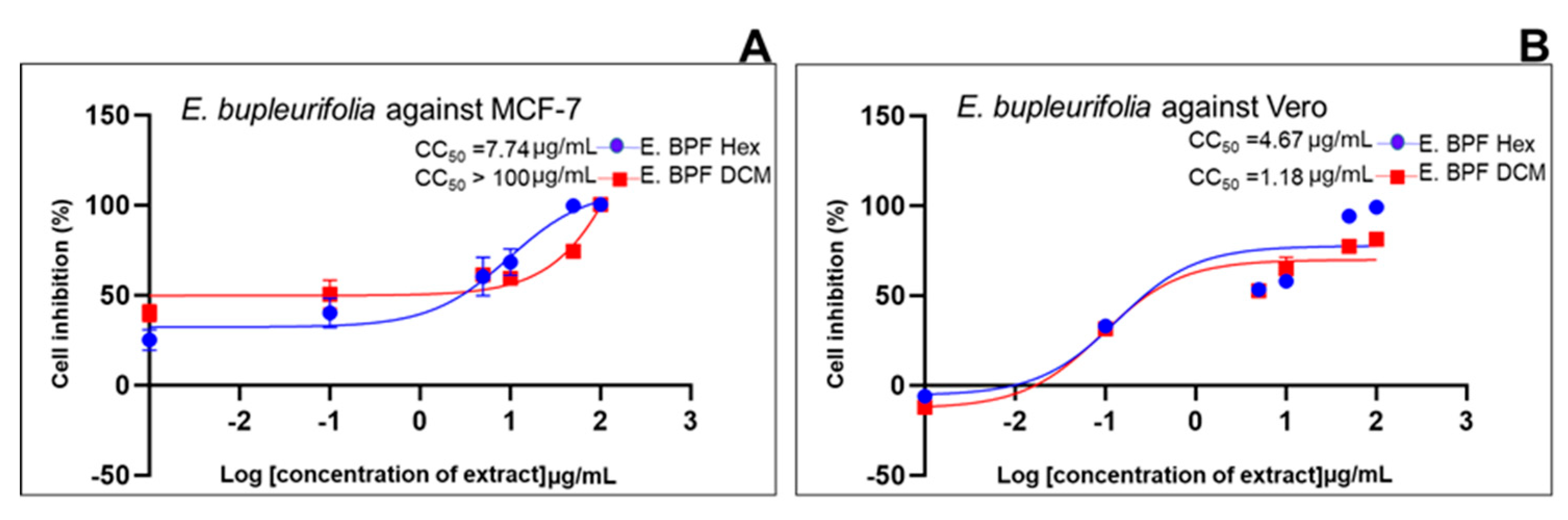
The hexane (Hex) and dichloromethane (DCM) extracts from E. bupleurifolia exhibited varying inhibitory effects on MCF-7 and Vero cells. The CC₅₀ values were 7.74 µg/mL (Hex) and >100 µg/mL (DCM) for MCF-7, and 4.67 µg/mL (Hex) and 1.18 µg/mL (DCM) for Vero cells, respectively (Figure 2 and Table S 1). However, the cytotoxic selectivity of E. bupleurifolia extracts showed that none of the active extracts had selectivity for the breast cancer cell line, as the SI value was lower than 3 (see Table S 1).
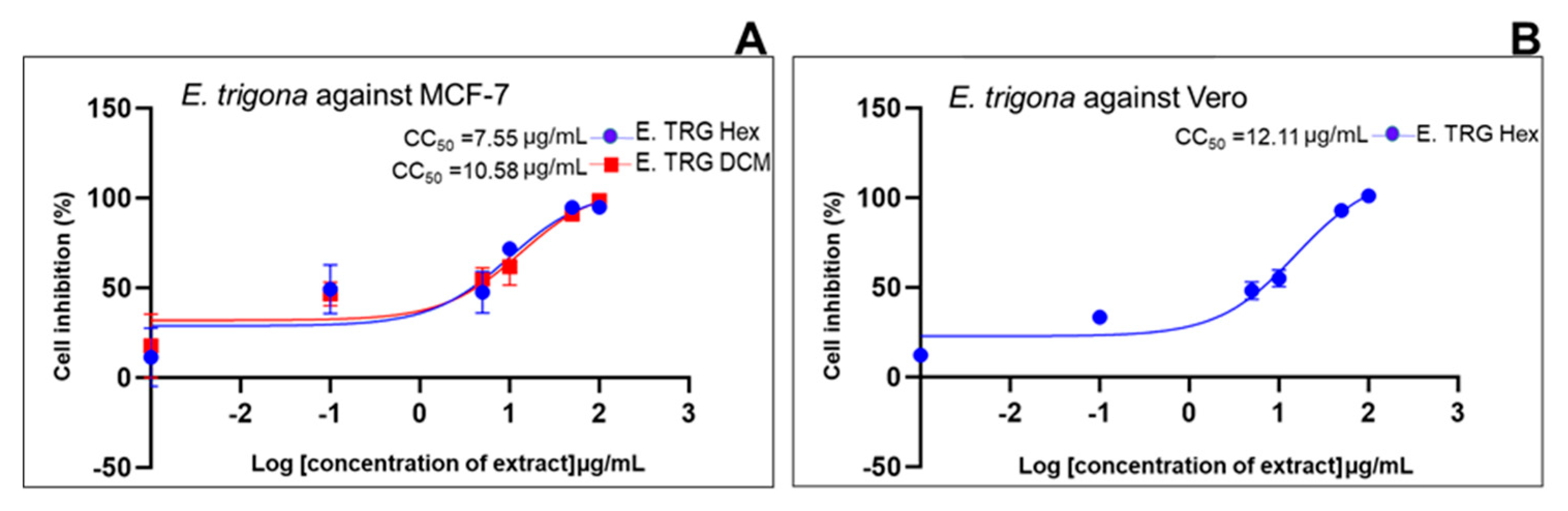
The Hex and DCM extracts of E. trigona showed cell growth inhibition onMCF-7 cells with CC50 values of 7.55 µg/mL and 10.58 µg/mL (Figure 3 and Table S 1), indicating its moderate activity against MCF-7. The Hex extract showed cell growth inhibition of Vero cells with CC50 value of 12.11 µg/mL (Figure 3 and Table S 1), indicating moderate activity against the normal cell line. The DCM extract of E. trigona showed selectivity for the MCF-7 cell line with an SI value of 9.45 (Table S 1).
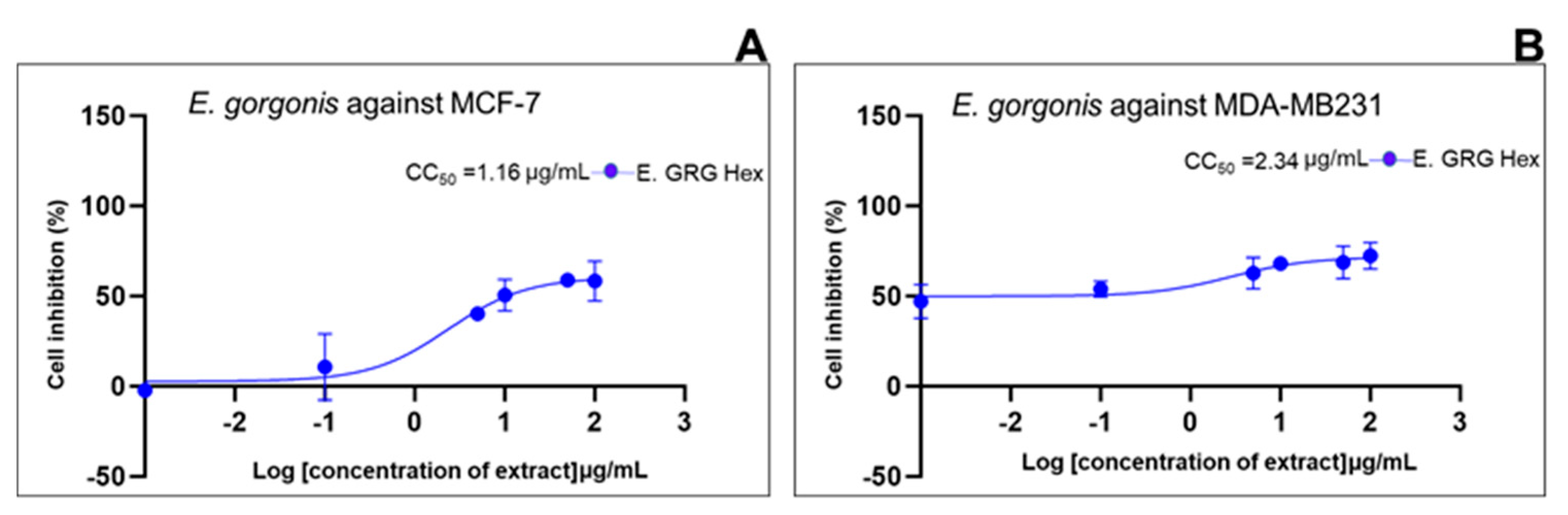
The Hex extract of E. gorgonis displayed the highest cell growth inhibition against MCF-7 and MDA-MB231 with CC50 values of 1.16 µg/mL and 2.34 µg/mL (Figure 4 and Table S 1), demonstrating its potent activity against both cell lines. Moreover, the Hex extract of E. gorgonis exhibited selectivity for MCF-7 and MDA-MB231 cells with an SI values of 85.98 and 42.73 (Table S 1) respectively, affirming its efficacy and specificity.
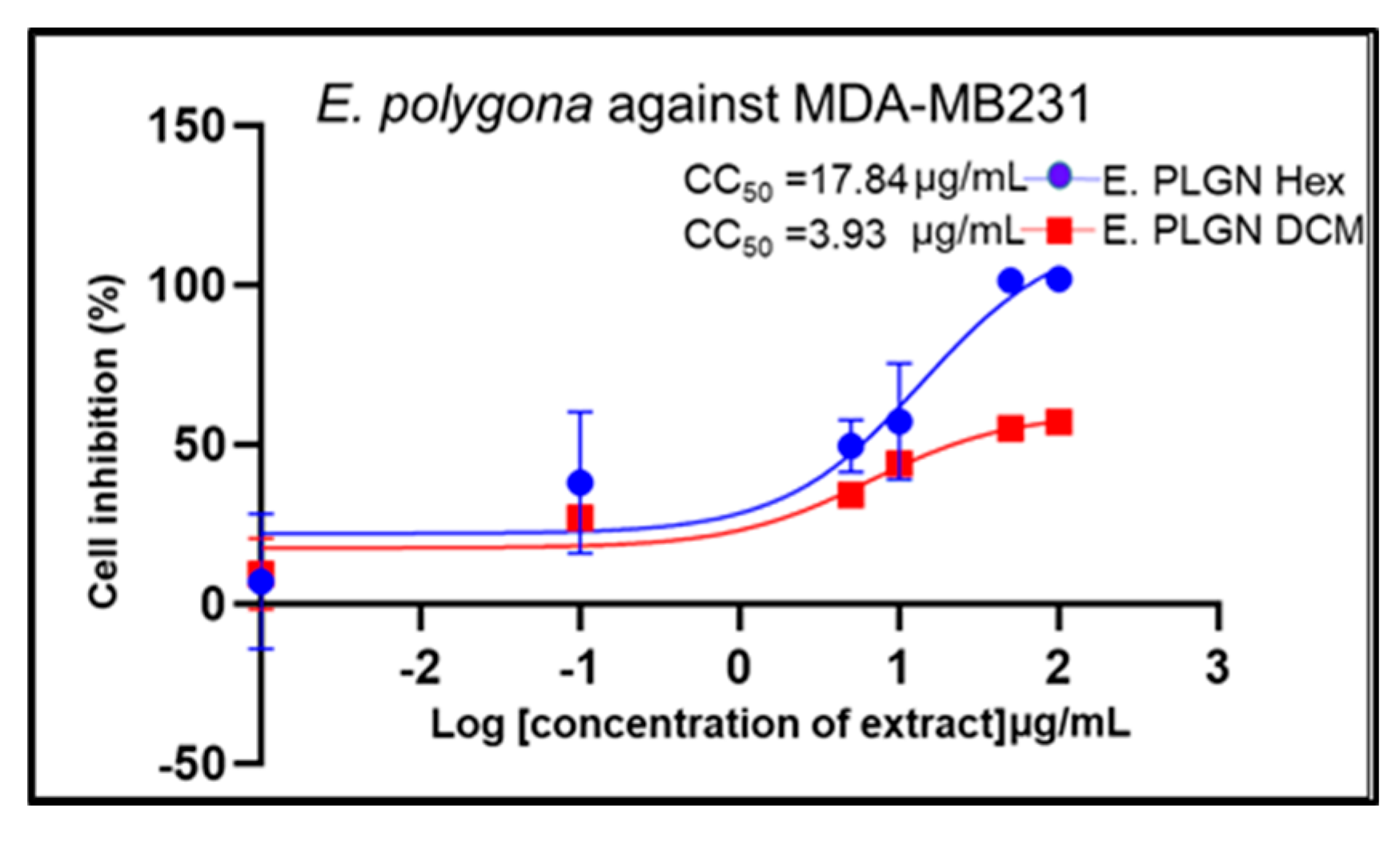
The Hex and DCM extracts of E. polygona demonstrated increased cell growth inhibition of MDA-MB231 cells with CC50 value 17.84 µg/mL and 3.93 µg/mL (Figure 5 and Table S 1), indicating moderate to potent activity against the cell line, respectively. The Hex extract from E. polygona showed selectivity for MDA-MB231 cells, with an SI value of 5.60 and 25.44 (Table S 1).
All extracts from E. horrida Var showed low cell growth inhibition against MCF-7 and MDA-MB231. However, the DCM extract showed cell growth inhibition of Vero with CC50 value of 6.89 µg/mL (Table S 1), indicating its moderate activity towards the normal healthy cells (Table S 1).
Furthermore, extracts from E. horrida Indigenous showed low inhibitory activity against MCF-7 cells and MDA-231 as well. The Hex and DCM extracts demonstrated cell growth inhibition against Vero cells with CC50 values of 4.24 µg/mL and 5.42 µg/mL, indicating moderate to potent activity against the normal cell line, respectively (Table S1).
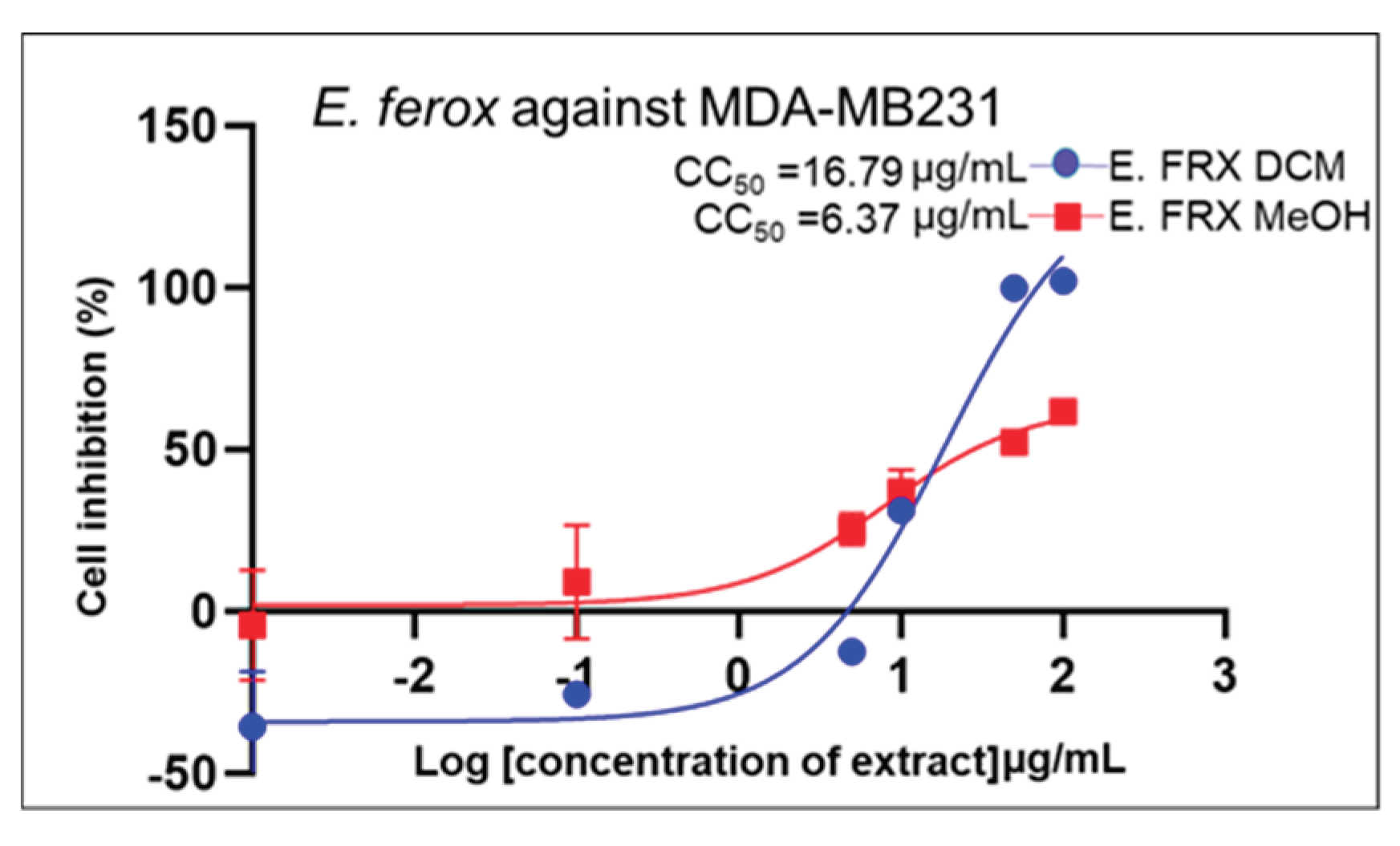
The Hex and MeOH extracts of E. ferox showed cell growth inhibition of MDA-MB231 with CC50 value of 16.79 µg/mL and 6.37 µg/mL, indicating moderate activity against the cell line (Figure 6 and Table S 1). Both the Hex and MeOH of E. ferox extracts showed selectivity for MDA-MB231 cell line, with an SI values of 5.95 and 15.69, respectively (Table S 1).
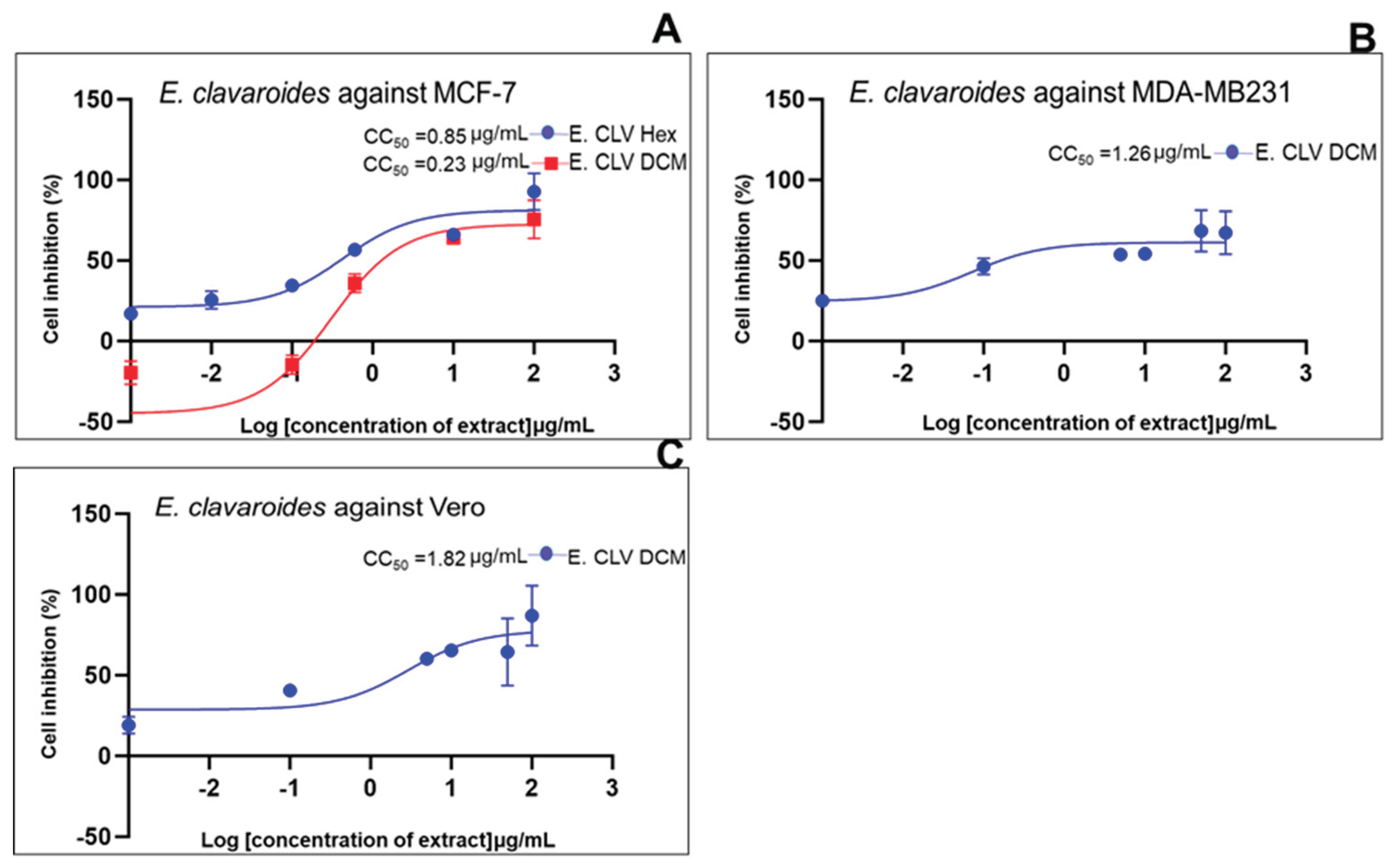
The Hex and DCM extract of E. clavarioides exhibited increased cell growth inhibition of MCF-7 and MDA-MB231 with CC50 value of 0.85 µg/mL, 0.23 µg/mL and 1.26 µg/mL (Figure 7 and Table S 1), indicating its potent activity against the two breast cancer cell lines, respectively. Furthermore, the DCM extract exhibited inhibitory activity of Vero cells, with CC50 values of 1.82 µg/mL (Figure 7 and Table S 1), indicating potent activity against the normal cell line, respectively. The Hex and DCM extracts of E. clavarioides displayed higher selectivity for MCF-7 with an SI values of 7.91 and >100, respectively (Table S 1).
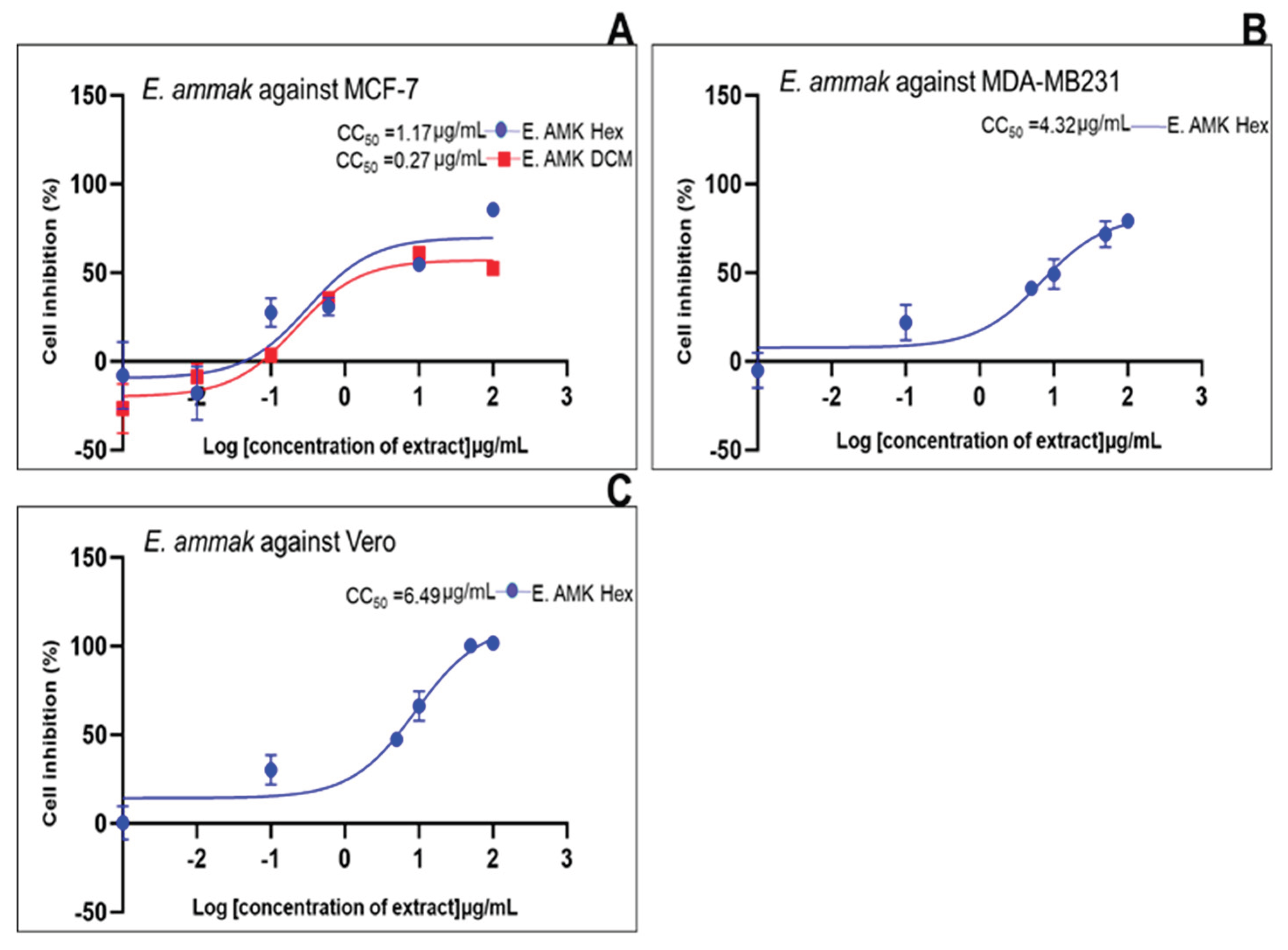
The Hex and DCM extracts of E. ammak exhibited increased cell growth inhibition of MCF-7 and MDA-MB231 with CC50 values of 1.17 µg/mL, 0.27 µg/mL and 4.32 µg/mL (Figure 8 and Table S 1), indicating potent activity against the two breast cancer cell lines. Furthermore, the Hex and DCM extract showed cell growth inhibition of Vero with CC50 value of 6.49 µg/mL and >100 µg/mL (Figure 8 and Table S 1), indicating moderate to low activity against the cell line, respectively. Based on the SI values, the Hex and DCM extracts of E. ammak showed selectivity for MCF-7 cells, with an SI values of 5.54 and > 100, respectively (Table S 1).
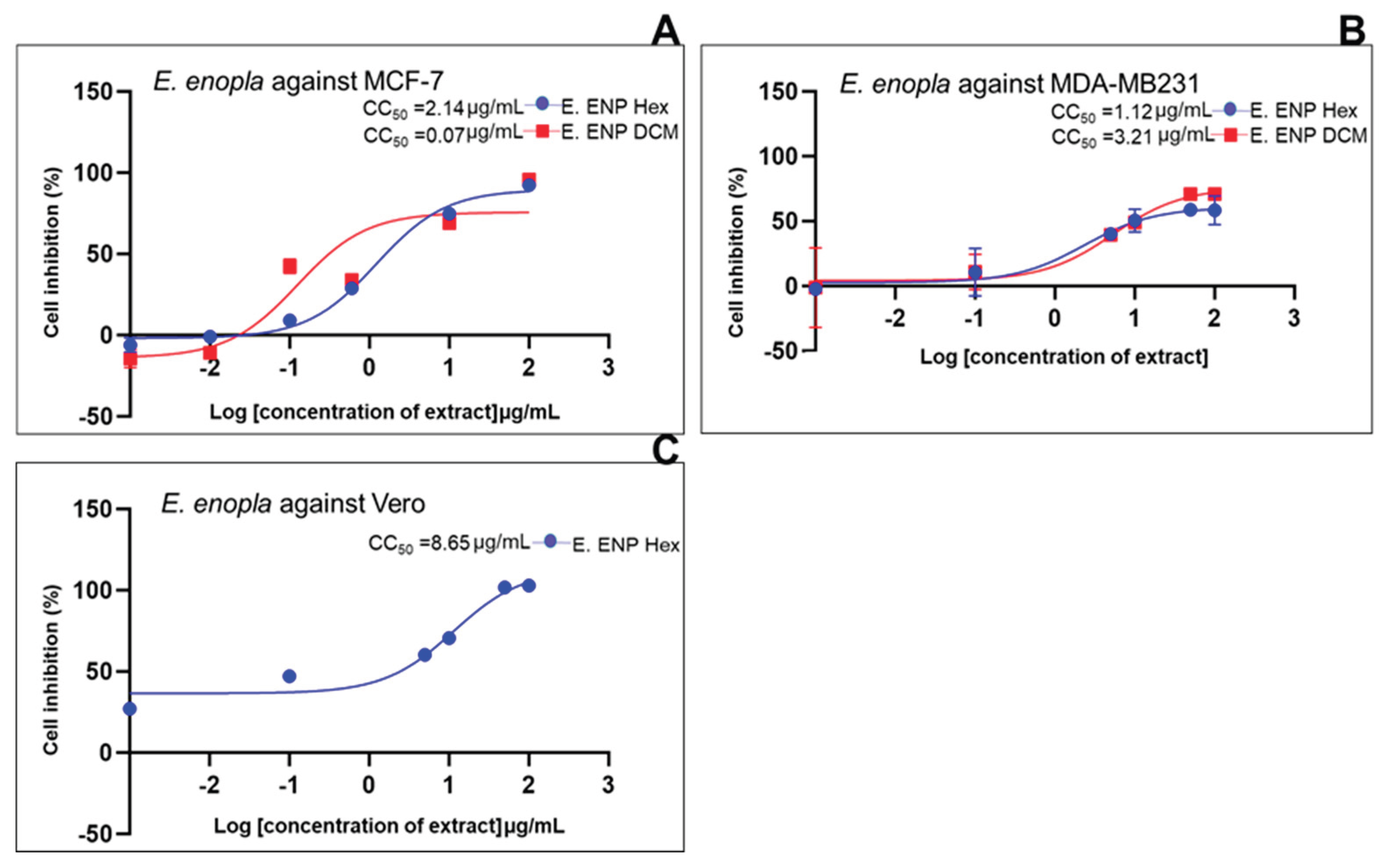
The Hex and DCM extracts from E. enopla exhibited cell growth inhibition of MCF-7 and MDA-MB231 with CC50 values of 2.14 µg/mL, 0.07 µg/mL, 1.12 µg/mL and 3.21 µg/mL (Figure 9 and Table S 1), indicating potent activity towards both cells, respectively. The Hex and DCM extract exhibited cell growth inhibition of Vero with CC50 value of 8.65 µg/mL and >100 µg/mL (Figure 9 and Table S 1), indicating potent to low activity against Vero, respectively. The Hex and DCM extracts of E. enopla showed selectivity for MCF-7 and MDA-MB231 cells, with high SI values of 4.04, > 100, 7.72 and 31.15, respectively (Table S 1).
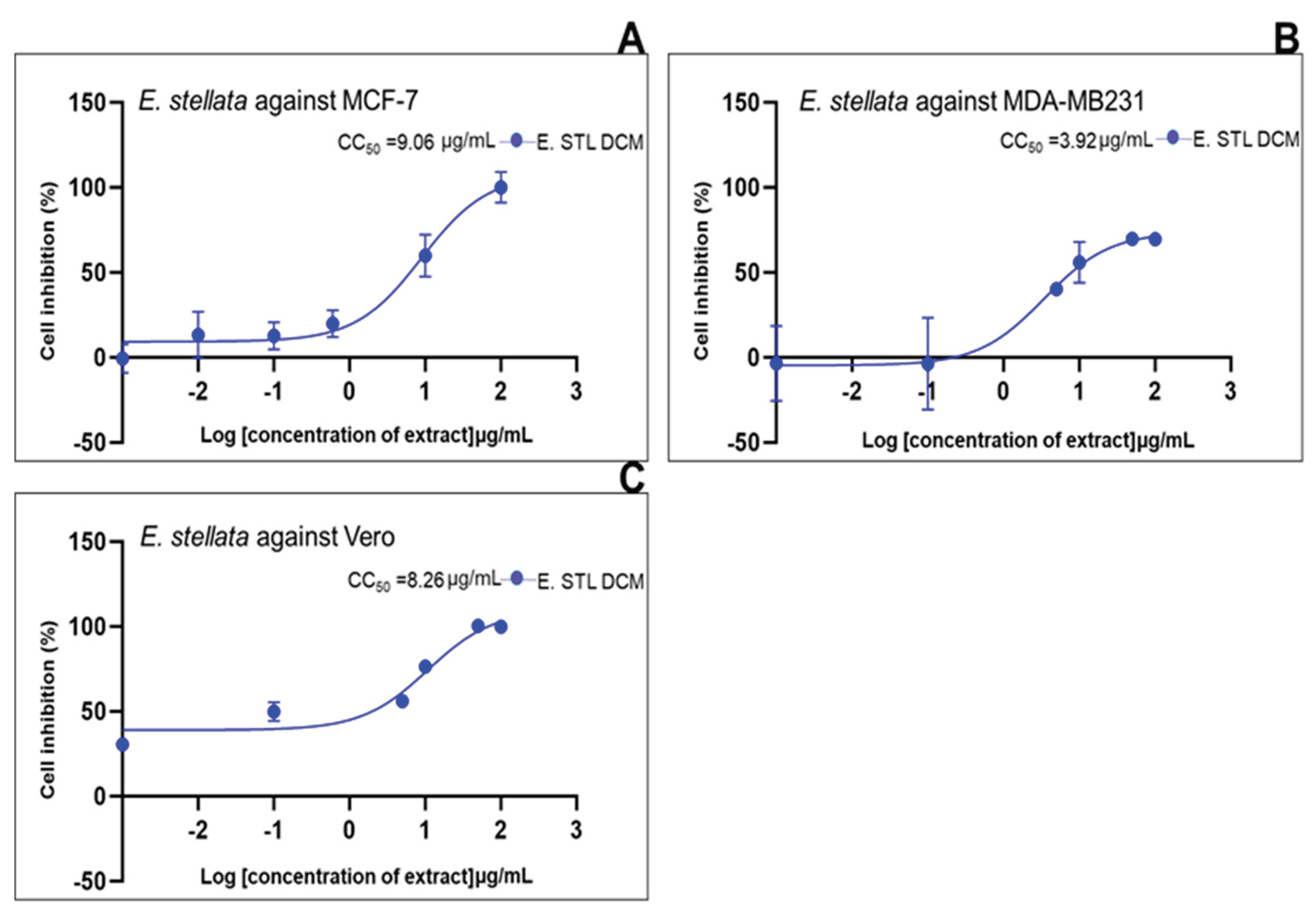
The DCM extract of E. stellata displayed cell growth inhibition of MCF-7 and MDA-MB231 with CC50 values of 9.06 µg/mL and 3.92 µg/mL (Figure 10 and Table S 1), indicating moderate to potent activity against the breast cancer cell lines, respectively. Despite the fact that DCM extract displayed considerable inhibitory activity of MCF-7 and MDA-MB231, this extract did not demonstrate any selectivity for any of the breast cancer cell lines.
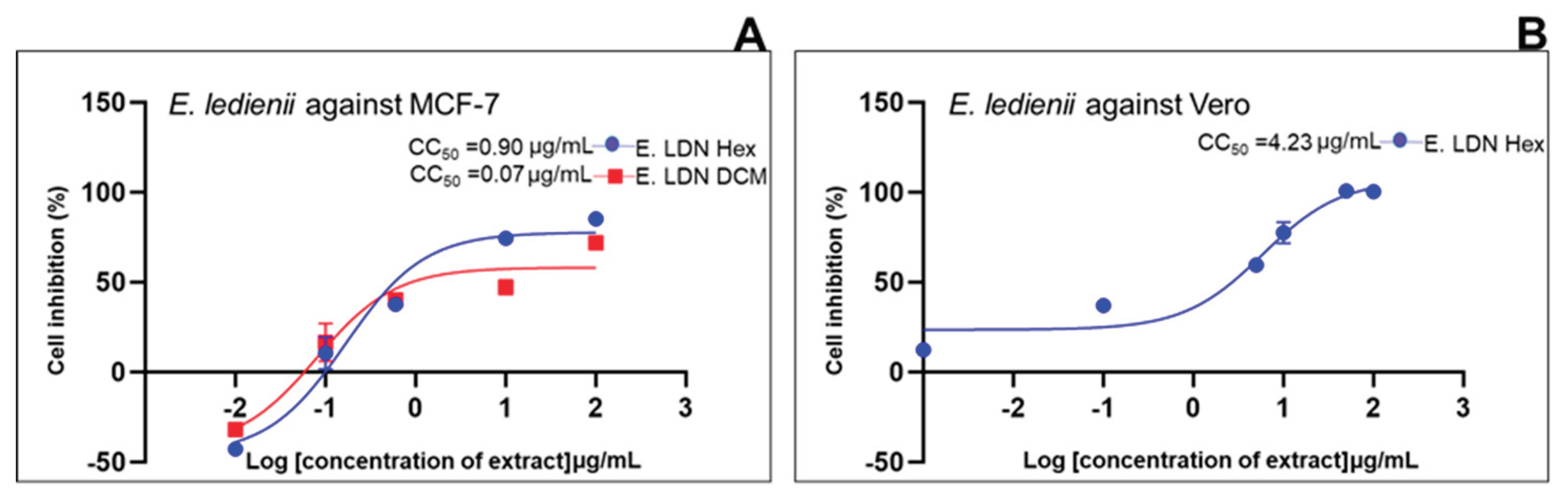
The Hex and EtOAc extracts of E. ledienii showed cell growth inhibition of MCF-7 with CC50 values of 0.90 µg/mL and 0.07 µg/mL (Figure 11 and Table S 1), indicating potent activity towards MCF-7, respectively. The Hex and EtOAc extracts demonstrated cell growth inhibition of Vero cells with CC50 value of 4.23 µg/mL and >100 µg/mL (Figure 11 and Table S 1), respectively. The Hex and EtOAc extracts of E. ledienii showed selectivity for MCF-7, with an SI value of 4.7 and > 100, respectively (Table S 1).
All tested extracts of E. coerulescenes exhibited low cell growth inhibition of MCF-7 and MDA-MB231, while the DCM extract inhibited the cell growth of Vero cells. None of the extracts from E. coerulescenes demonstrated selectivity for MCF-7 and MDA-MB231.
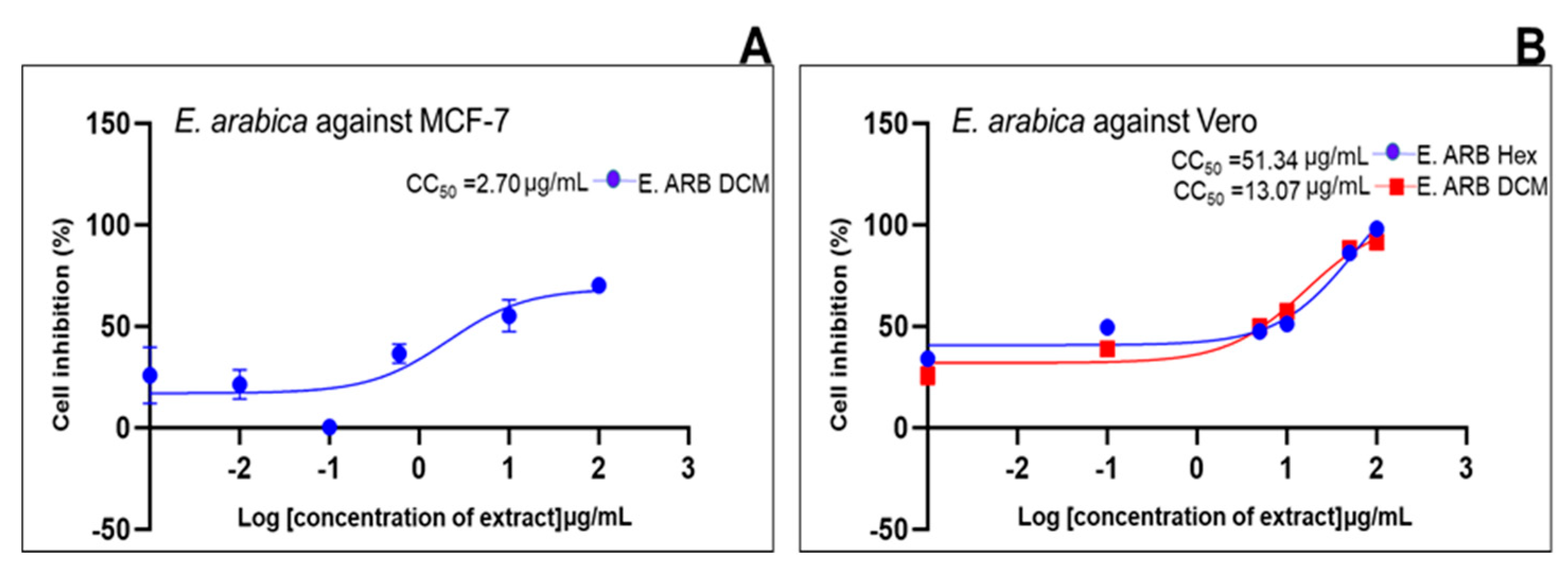
The DCM extract of E. arabica demonstrated cell growth inhibition of MCF-7 with CC50 value of 2.70 µg/mL (Figure 12 and Table S 1), indicating potent activity against MCF-7 cells. Furthermore, the Hex and DCM extracts exhibited cell growth inhibition of Vero with CC50 values of 51.34 µg/mL, and 13.01 µg/mL, indicating its weak to moderate activity against the normal healthy cells (Figure 12 and Table S 1), respectively. The DCM extract of E. arabica showed selectivity for MCF-7 cells with an SI value of 4.81 (Table S 1).
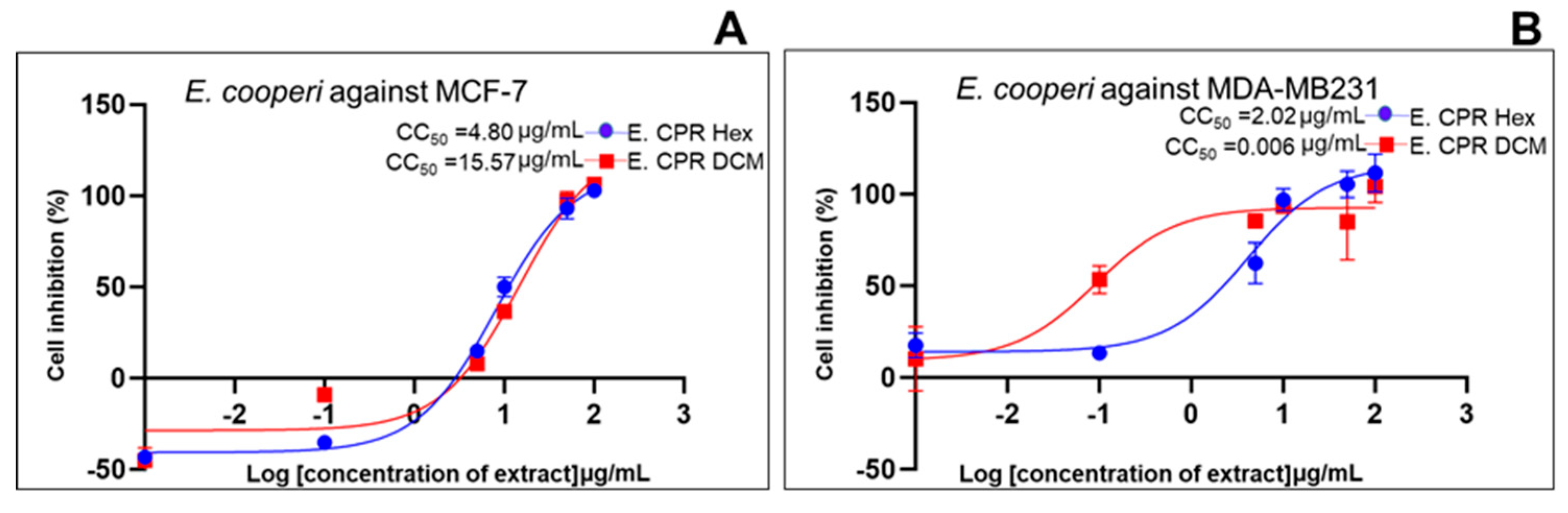
The Hex and DCM extract of E. cooperi showed cell growth inhibition of MCF-7 and MDA-MB231 cells with CC50 value of 4.80 µg/mL, 15.57 µg/mL, 2.02 µg/mL and 0.006 µg/mL (Figure 13 and Table S 1), indicating moderate to potent activity against the breast cancer cell lines, respectively. Moreover, the Hex and DCM extracts of E. cooperi was selectivity for MCF-7 and MDA-MB231 with SI values of 20.83, 6.42, 49,40 and >100 (Figure 13 and Table S 1), respectively. These SI values show considerable selectivity.
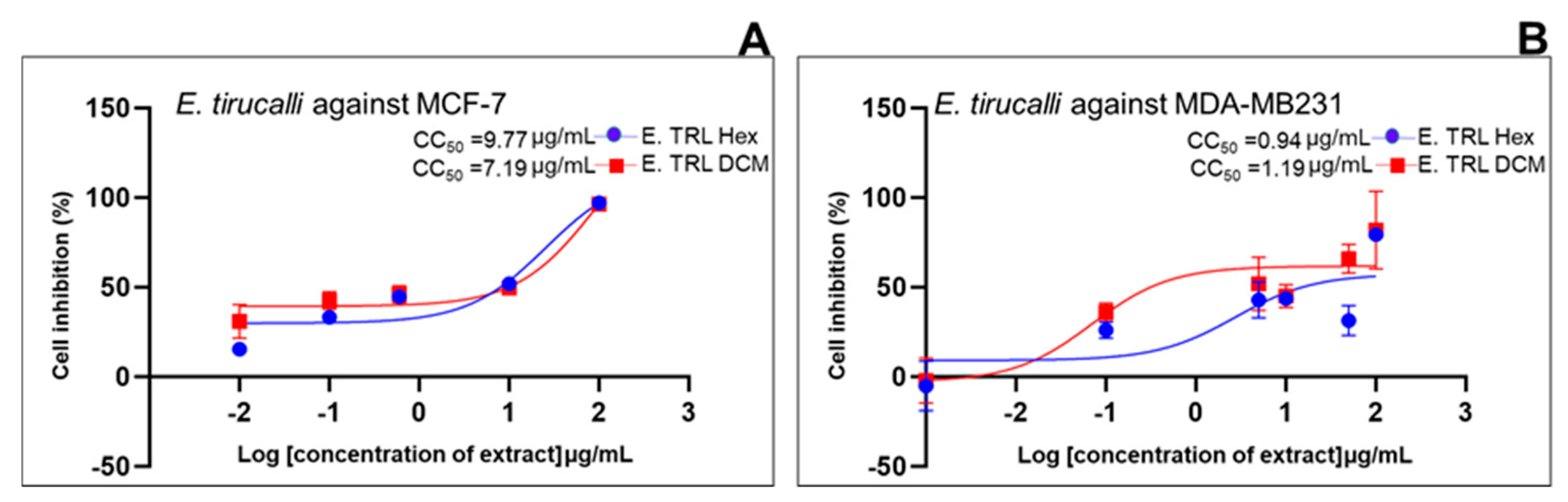
The Hex and DCM extracts of E. tirucalli exhibited cell growth inhibition against MCF-7 and MDA-MB231 cells with CC50 values of 9.77 µg/mL, 7.19 µg/mL, 0.94 µg/mL and 1,19 µg/mL (Figure 14 and Table S 1), demonstrating potent activity against the breast cancer cell lines, respectively. The Hex and DCM extract of E. tirucalli displayed significantly higher selectivity for MCF-7 and MDA-MB231 with SI values of 10.23, 13.90, 84.03 and >100, respectively (Table S 1).

2.3. Identification of Key Metabolites from Eleven Selective Euphorbia Extracts
The utilization of HPLC has proven to be instrumental in the identification of primary metabolites. Within the study, eleven distinct plant extracts were identified, each demonstrating a unique selectivity for the breast cancer cell lines MCF-7 and MDA-MB231. The chromatograms, derived was presented in Figure 15, Figure 16, Figure 17, Figure 18, Figure 19, Figure 20, Figure 21, Figure 22, Figure 23, Figure 24 and Figure 25. Within each active plant extract, distinctive characteristic peaks of significance were readily visible. These peaks likely correspond to secondary metabolites responsible for the observed cytotoxicity. However, due to resource constraints, neither isolation nor tentative identification of these bioactive compounds was performed. This represents a limitation of the present study, as the specific metabolites contributing to the activity remain unknown. Future studies will be conducted aiming to isolate and characterize these compounds to better understand their mechanisms of action.
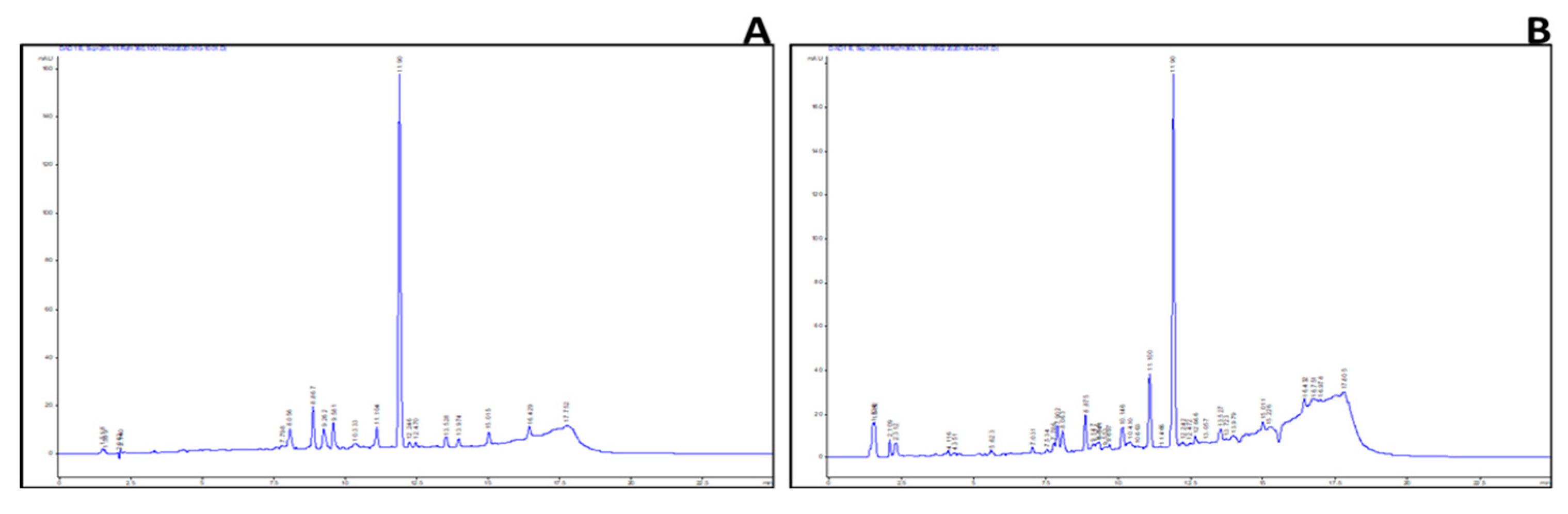
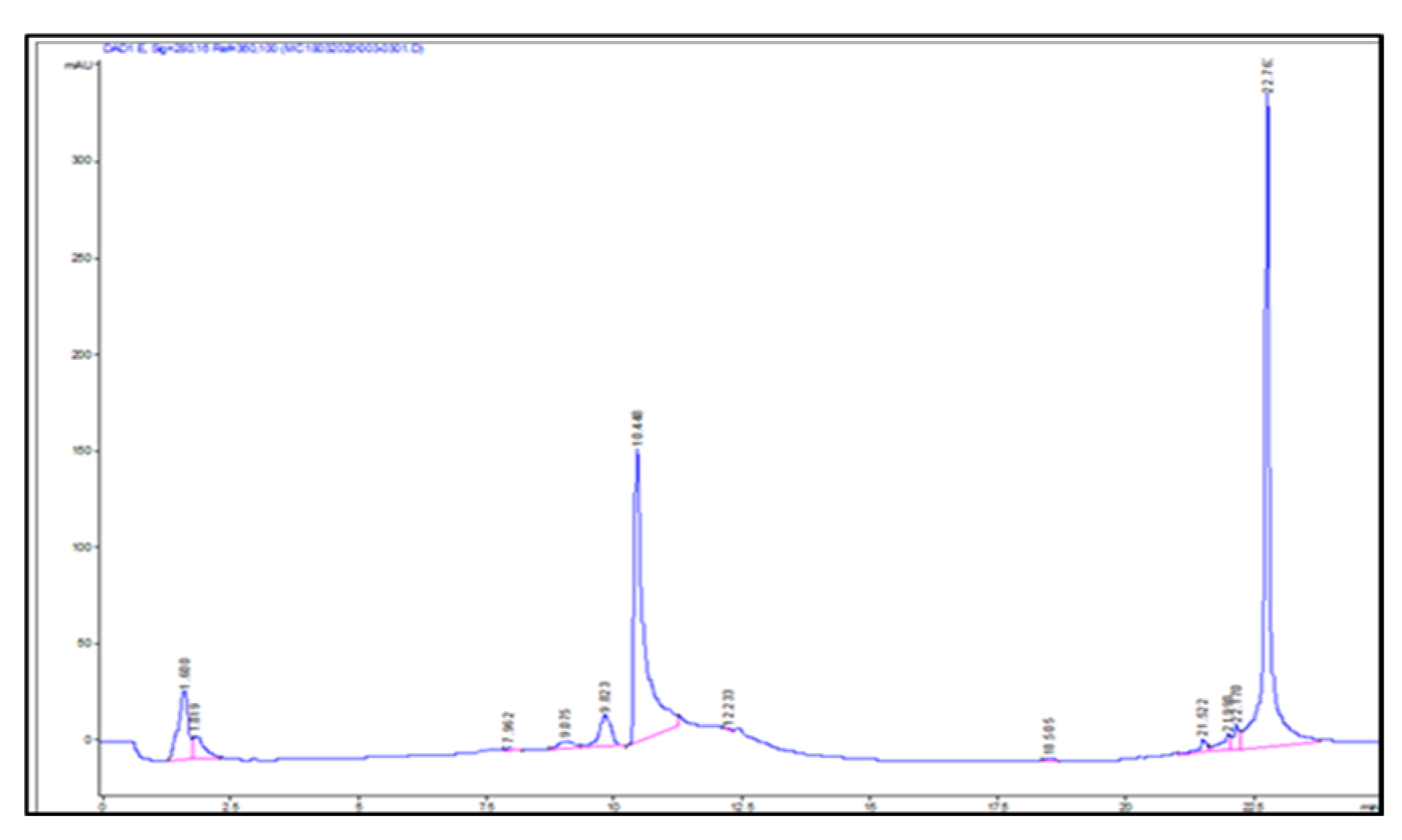
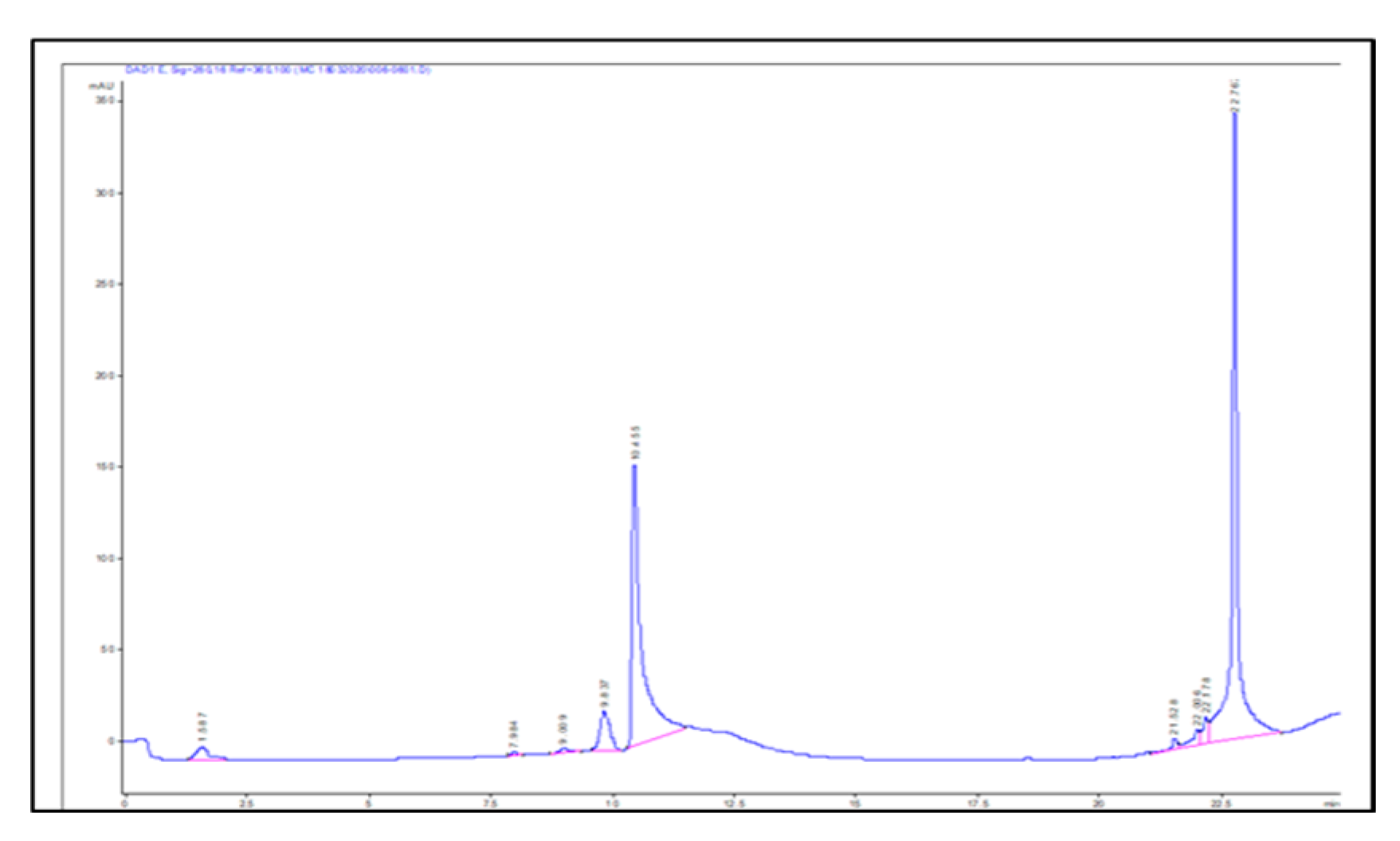
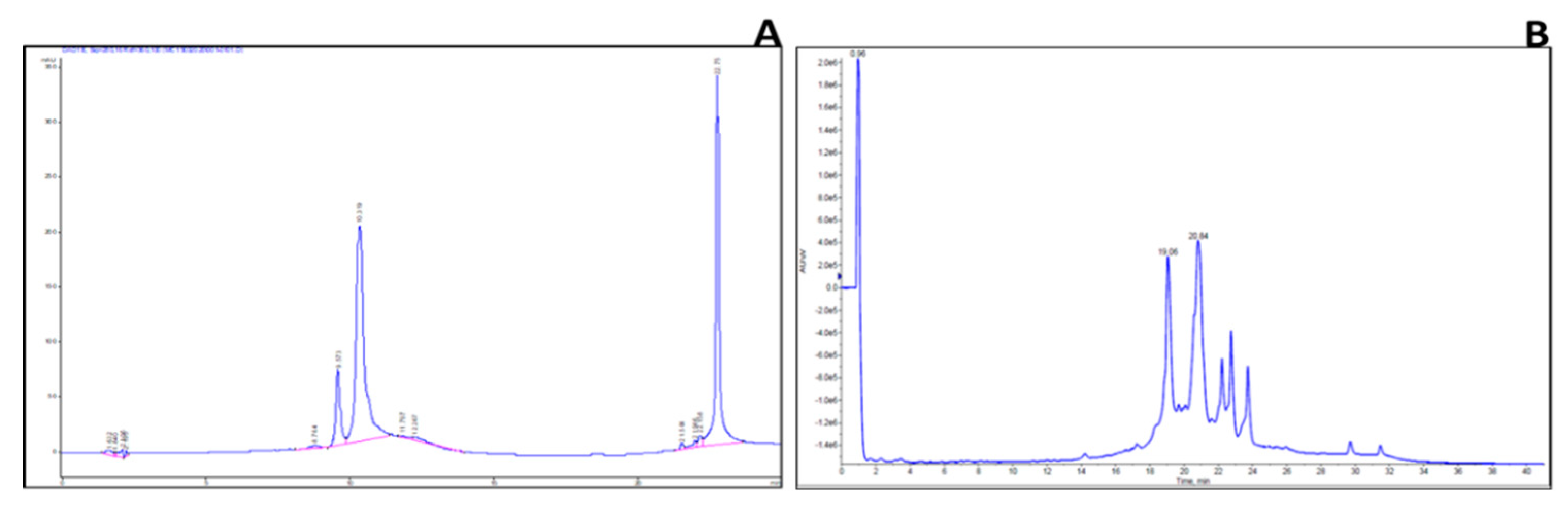
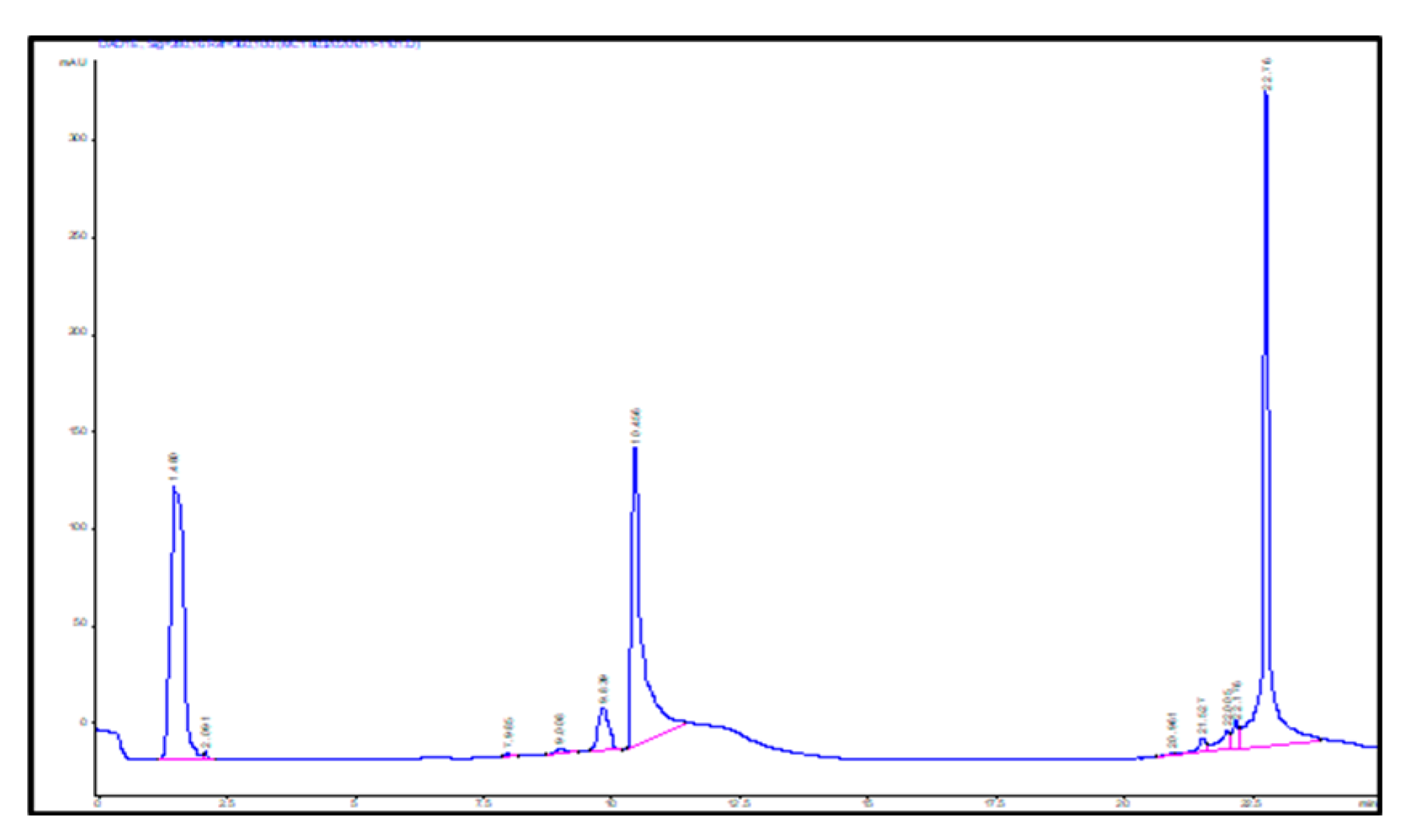
The analysis indicated that the two extracts from E. clavarioides exhibited distinct chemical profile at across retention times, which ranged from 1.51 to 17.52 minutes. Notably, significant peaks were identified at retention times of 8.86, 11.10, and 11.90 minutes, as shown in Figure 15. Similarly, E. trigona DCM, E. gorgonis Hex, E. ledienii Hex, and E. arabica DCM exhibited parallel peaks spanning a retention time of 1.50 to 22.76 minutes, with prominent peaks at 1.58, 9.83, 10.45, and 22.76 minutes for all four extracts (Figure 16, Figure 17, Figure 18 and Figure 19). This shared profile highlights the presence of common phytochemicals such as phytosterols, glycosides, triterpenoids, and flavonoids among these Euphorbia species.
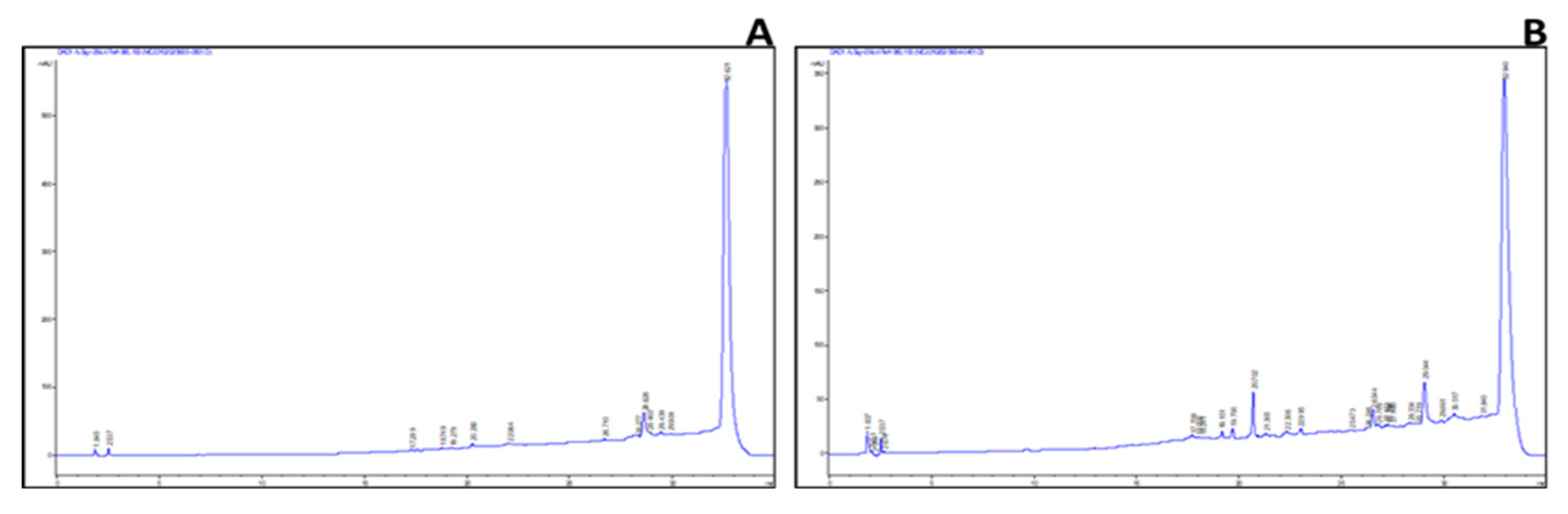
Figure 20. HPLC chromatograms of selective extracts of E. cooperi (A) Hex and (B) DCM for MCF-7 and MDA-MB231.
Preprints 180632 g020
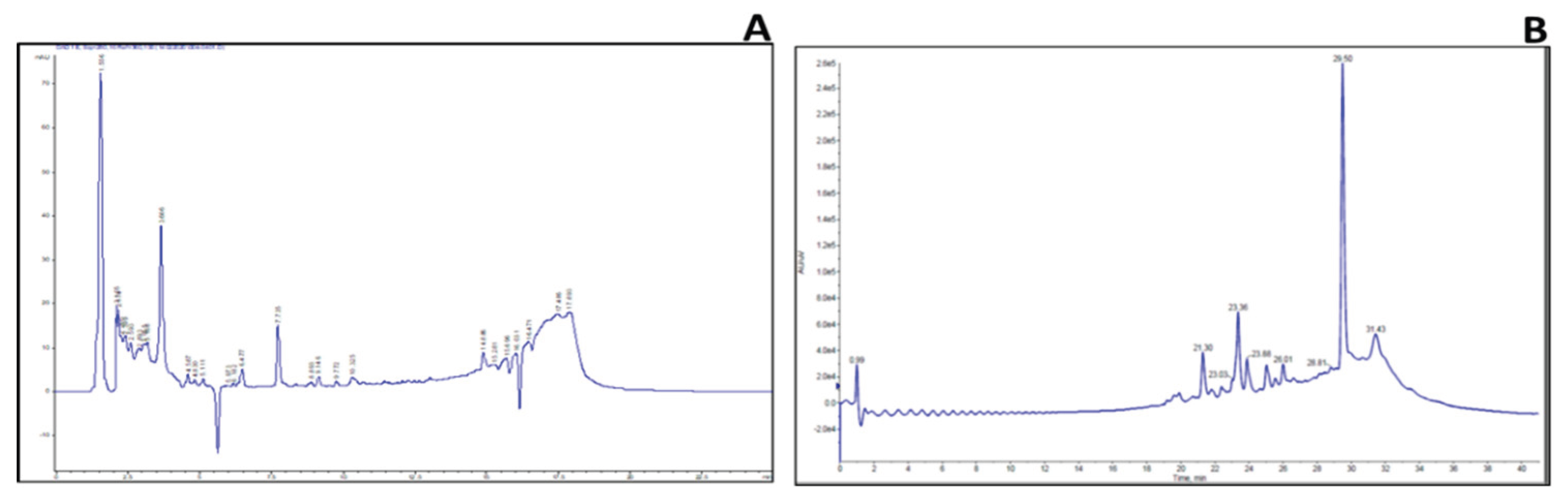
Figure 21. HPLC chromatograms of selective extracts of E. ammak (A) Hex and (B) DCM for MCF-7.
Preprints 180632 g021
Noteworthy observations were made in the extracts from E. cooperi, with peaks manifesting across a range of 1.80 to 32.90 minutes. Specifically, significant peaks were evident at 20.70, 26.54, 28.6, 29.04, and 32.90 minutes, with a more noticeable presence in the E. cooperi DCM extract (Figure 20). Similarly, E. ammak Hex exhibited peaks within a retention time of 1.55 to 17.89 minutes, with major peaks recorded at 1.55, 2.40, 3.66, 7.73, and 14.88 minutes. Conversely, E. ammak DCM featured peaks from 0.99 to 31.43 minutes, with major peaks at 0.99, 21.30, 23.36, and 29.50 minutes (Figure 21).
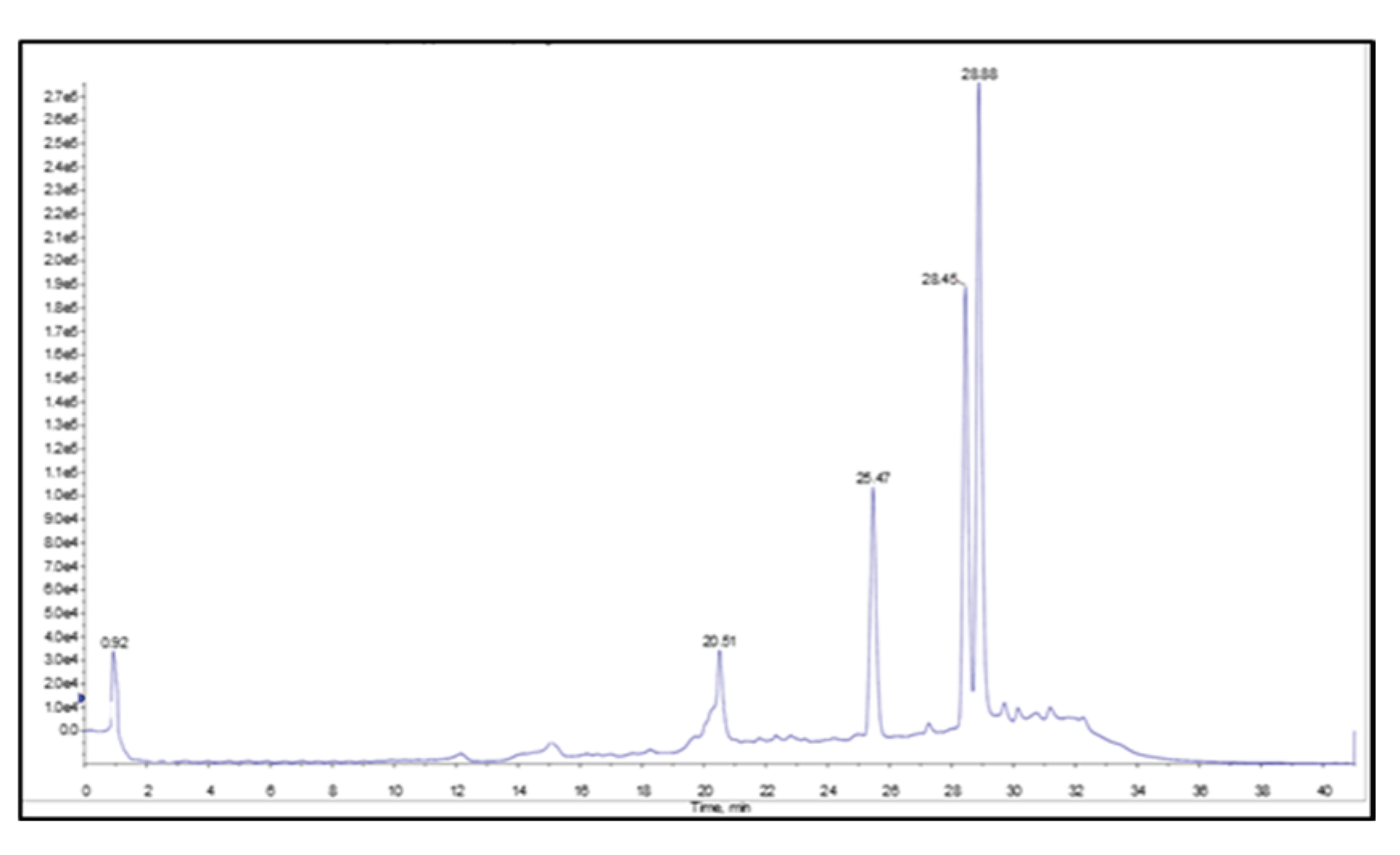
Figure 22. HPLC chromatograms of selective extract E. ferox DCM.
Preprints 180632 g022
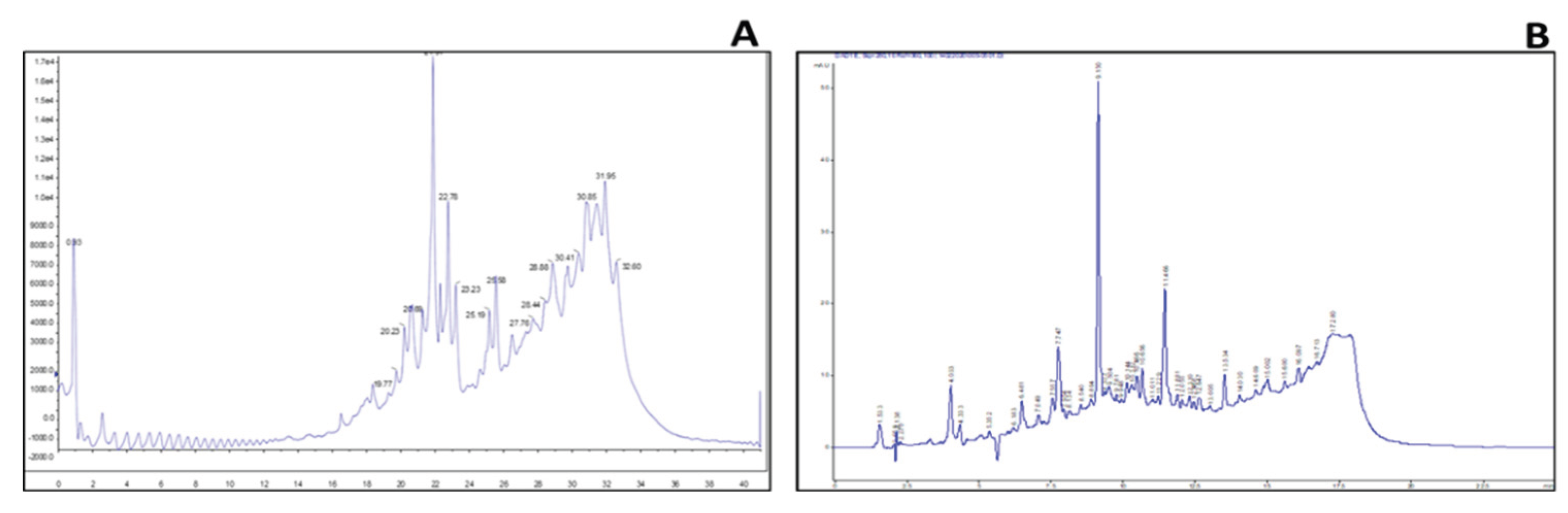
Figure 23. HPLC chromatograms of selective extract of E. polygona (A) Hex and (B) DCM for MDA-MB231.
Preprints 180632 g023
Further investigation unveiled that E. ferox displayed peaks over a retention time range of 0.92 to 28.88 minutes, with major peaks at 0.92, 20.51, 25.47, 28.45, and 28.88 minutes (Figure 22). E. polygona Hex displayed peaks from 0.93 to 32.60 minutes, prominently at 0.93, 21.91, 22.78, 25.58, and 31.95 minutes. In contrast, the DCM extract of E. polygona displayed peaks spanning 1.53 to 17.28 minutes, with major peaks observed at 1.53, 4.03, 7.74, 9.15, 11.46, and 13.54 minutes (Figure 23).
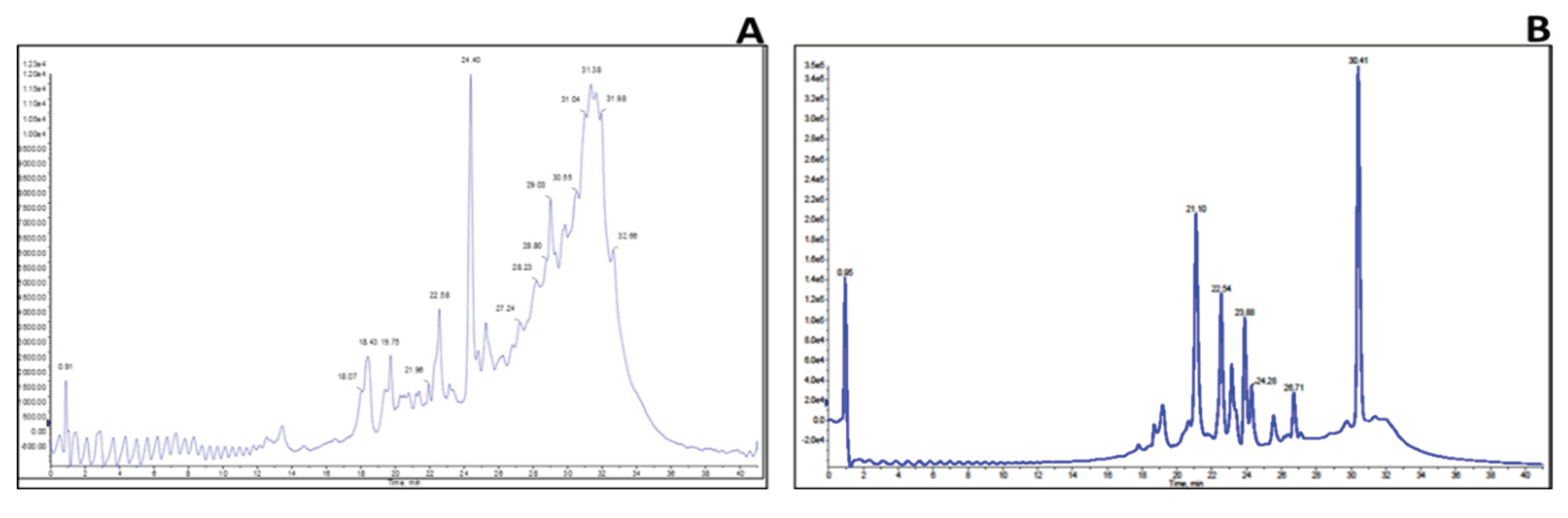
Figure 24. HPLC chromatograms of selective extract E. enopla (A) Hex (B) DCM for MFC-7 and MDA-MB231.
Preprints 180632 g024
Remarkably similar profiles occurred for E. enopla Hex and E. enopla DCM extracts. The former displayed peaks from 0.91 to 32.66 minutes, featuring major peaks at 0.91, 18.43, 22.58, 24.40, and 29.03 minutes. Similarly, the DCM extract of E. enopla displayed peaks within a retention time of 0.95 to 30.41 minutes, notably at 0.95, 21.10, 22.54, 23.88, 26.71, and 30.41 minutes (Figure 24).
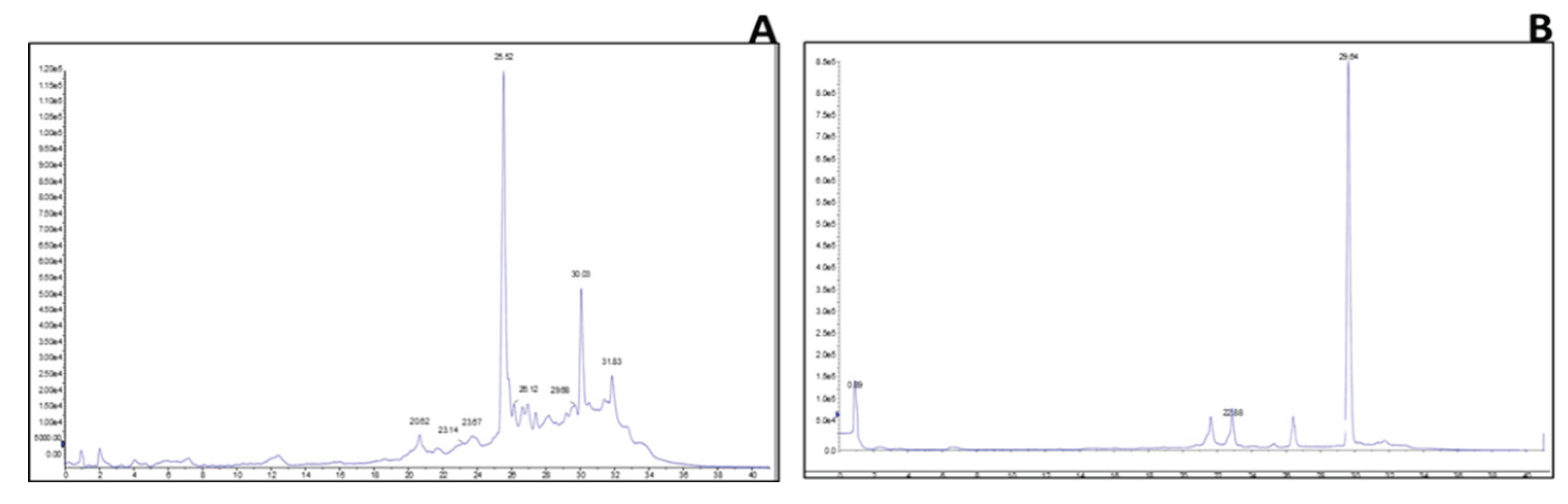
Figure 25. HPLC chromatograms of selective extract E. tirucalli (A) Hex (B) DCM for MFC-7 and MDA-MB231.
Preprints 180632 g025
In the context of E. tirucalli Hex, peaks emerged between 20.62 and 31.83 minutes, with major peaks at 20.62, 25.52, and 30.02 minutes. E. tirucalli DCM, on the other hand, exhibited peaks over a retention time span of 0.89 to 29.64 minutes, featuring major peaks at 0.89, 22.88, and 29.64 minutes (Figure 25).

3. Discussion

The present study focused on evaluating the phytochemical profiles, cytotoxic activity, and selectivity of sixteen Euphorbia plant species against the breast cancer cell lines MCF-7 and MDA-MB231, as well as the normal Vero cells. The results offer valuable insights into the potential anticancer properties of these plant extracts and shed light on their underlying mechanisms. The phytochemical analysis revealed the presence of various secondary metabolites across the studied Euphorbia species.
Glycosides and triterpenoids were found ubiquitously, indicating their wide distribution within this plant group. The presence of these phytochemicals is in support with studies by Shi et al., 2008 [16] which noted the common secondary metabolites found in the Euphorbiaceae family which were also present in all the selected plants in this study. It has also been shown that these two phytochemicals also possess anticancer properties [23]. Furthermore, triterpenoid have proven to possess medicinal properties such as anticarcinogenic, antimalarial, anti-ulcer, hepaticidal, antimicrobial activity, antimalarial and anti-viral [24,25,26,27]. Munro et al., 2015 [28] demonstrated that the tetracyclic triterpene euphol derived from E. tirucalli latex has anticancer properties. Arnidiol is a compound that belongs to the class of pentacyclic triterpenoid diols. It is a natural substance that has been the subject of several studies in the field of cancer research. A study conducted by Hu et al., 2020 [29] to investigate the effects of arnidiol on human breast cancer cells known as MDA-MB-231 cells. The study found that arnidiol was able to induce apoptosis or programmed cell death in these cells. This was achieved through the process of mitochondrial translocation of Drp1 and cofilin, which are proteins that play important roles in cell division and movement. The researchers also observed a correlation between the induction of apoptosis and the reduction of PARP expression, which is a protein involved in DNA repair, and the increase in caspase-3 cleavage, which is a marker of apoptosis.
Stevioside is a naturally occurring diterpenoid glycoside that is commonly found in the leaves of the Stevia rebaudiana (Bertoni) Bertoni plant. It has gained significant attention in recent years due to its potential health benefits. A study conducted by Paul et al., 2012 [30] revealed that stevioside can reduce MMP (mitochondrial membrane potential) and activate the mitochondrial-mediated apoptotic pathway in MCF-7 cells. This indicates that stevioside can effectively induce apoptosis, which is a process of programmed cell death that occurs in damaged or abnormal cells. The study further suggests that stevioside has the potential to become a valuable therapeutic agent for cancer treatment.
Flavonoids and phytosterols were almost universally present, except in E. tirucalli. This suggests that these compounds might play a significant role in the biological activity of these plants. Flavonoids were used to treat various ailments as they possess medicinal properties such as anti-inflammatory activity, enzyme inhibition, antimicrobial activity, estrogenic activity, antiallergic activity and antioxidant activity [28,31,32,33]. Mai et al., 2017 [34] reported that E. helioscopia which had high concentration of flavonoids exhibited cytotoxic activity against a triple negative breast cancer cell line. Zhu and Xue, 2019 [35] conducted a study where they investigated the effect of kaempferol, a flavonoid, on MDA-MB-231 cells. They found that kaempferol induces apoptosis in these cells through a mechanism that involves increasing the expression of cleaved caspase-9/3 and p-ATM. Moreover, in a study conducted by Zhang et al., 2018[36], three flavonoids were isolated from Tephroseris kirilowii (Turcz. ex DC.) Holub - isorhamnetin, genkwanin, and acacetin. These flavonoids were found to have a significant impact on MDA-MB-231 cells. They suppressed cell growth, induced apoptosis, and downregulated the PI3K/AKT/mTOR/p70S6K/ULK signaling pathway. They did this by stimulating the apoptotic pathways, leading to the programmed death of the MDA-MB-231 cancer cells. The downregulation of the PI3K/AKT/mTOR/p70S6K/ULK signaling pathway by these flavonoids is also significant. This pathway is known to play a crucial role in cell survival and growth. The flavonoids were able to suppress this pathway, leading to decreased cell growth and increased sensitivity to apoptosis.
Additionally, phytosterols are considered to have a number of bioactive properties that have a variety of health benefits, including anti-inflammatory, antioxidative, and anticarcinogenic properties, as well as the ability to reduce cholesterol [37,38]. A mixture of phytosterols were able to inhibit tumor development in various cancer forms, including cholangiocarcinoma and breast cancer, at physiological doses [39,40]. Alkaloids were detected in a considerable number of species, further emphasizing the chemical diversity within the Euphorbia genus. It is not surprising that alkaloids were found in almost all selected plants, because the presence of alkaloids in Euphorbiaceae species has been documented in many studies [41,42,43,44]. Extracts from plants containing alkaloids have been used as prescription medicines for many years, and due to the presence of alkaloids they owe their potent effects. Morphine which is currently used as an analgesic was the first alkaloid to be obtained from opium poppy [45]. Furthermore, other alkaloids such as vinblastine, quinine, morphine, atropine, nicotine, caffeine, ephedrine and strychnine are also used in production of medicine [46]. Alkaloids have a number of physiological effects on humans, such as antibacterial, antimitotic, anti-inflammatory, local anesthetic, hypnotic, antitumor activity and several others [47]. Furthermore, they are also of great interest to organic chemists, biologists, biochemists, pharmacologist and pharmacists, typically from plants rather than animals [48]. Berberine is a naturally occurring isoquinoline alkaloid isolated from Cotridis rhizoma. Zhao and colleagues [49] investigated the effect of berberine on triple-negative breast cancer (TNBC) cells. Their findings revealed that berberine activated caspase-9/CytoC-mediated apoptosis in TNBC cells, leading to a significant suppression of cell proliferation both in vitro and in vivo. Tetrandrine is a naturally occurring alkaloid that has shown great potential as an anticancer agent. A study conducted by Bhagya et al. in 2019[50] found that tetrandrine, which was extracted from Cyclea peltata (Lam.) Hook. f. and Thomson, demonstrated cytotoxic and apoptotic effects on MDA-MB-231 cells. The mechanism of action was attributed to an increase in the levels of reactive oxygen species (ROS) and caspase-8/9/3.
Tannins, known for their antioxidant properties, were also detected in several species. The presence of these diverse compounds aligns with the potential bioactivity of Euphorbia plants against cancer cells. The presence of this phytochemicals is in agreement with Aleksandrov et al., 2019 [51], who reported larger number of tannins in E. hirta. Fraga-Corral et al., 2021 [52] reported that topical tannin treatments help to flush all the irritants out of the skin, can also be used as an anti-inflammatory agent and use their antihemorrhagic and antiseptic ability in the treatment of burns and other wounds. In other studies, tannins were utilized in treatment of different diseases as they have been reported to possess high antioxidants, free radical scavenging activity, antimicrobial, antivirals and in cancer chemotherapy [53,54,55,56,57]. Saponins were also detected in some plants investigated. Bigoniya and Rana, 2009 [58] reported the presence of saponins in E. neriifolia. Furthermore, saponins were also reported in E. paralias and E. terracina [59]. The presence of saponins in the above plants is unsurprising, as it is clear that most of the Euphorbiaceae has it. Moreover, they also possess pharmacological and medicinal properties such as cell membrane permeability, hemolyctic activity, antiviral, antifungal, anti-inflammatory and antiallergic [60,61,62]. Furthermore, they have promising uses in the treatment of cancer based on their ability to suppress angiogenesis, decreased invasiveness of cells, cell cycles arrest and apoptosis induction [63]. Along with other antitumor medicines, saponins have been added to enhance their cytotoxicity in tumor treatment [64,65].
The cytotoxicity assays, yielded intriguing findings. The extracts from various Euphorbia species displayed a spectrum of effects on the tested cell lines. Some extracts exhibited potent cell growth inhibition, while others demonstrated little or no activity. This variability could be attributed to differences in chemical composition, concentrations of active compounds, and the mechanisms underlying their actions. Notably, certain extracts were inactive against the cell lines, which might suggest their lack of efficacy or different modes of action. Extracts from E. clavarioides, E. gorgonis, and E. tirucalli showed notably low CC50 values, indicating strong inhibition of cancer cell growth. In the current study, the hexane and DCM extracts of E. tirucalli demonstrated potent antiproliferative activity against breast cancer cells, with CC₅₀ values of 9.77 µg/mL and 7.19 µg/mL against MCF-7, and 0.94 µg/mL and 1.19 µg/mL against MDA-MB-231, respectively. These values compare favorably with the IC₅₀ values reported by Choene and Motadi (2016) [66], who found 15 µg/mL for MCF-7 and 30 µg/mL for MDA-MB-231 using a butanol extract. These findings highlight the potential of these extracts as promising candidates for further investigation and potential development into therapeutic agents. This similarity supports the reliability of the current findings, implying that these extracts possess potent antiproliferative potential against the specific cancer cell lines. The co-occurrence between the two studies strengthens the notion that these extracts could serve as promising candidates for further exploration and potential development into therapeutic agents for breast cancer treatment. In contrast, E. tirucalli was found to be inactive against MCF-7 cells in the study by El-Hawary et al. (2020) [67], with no significant cytotoxicity observed against HEPG2 and CACO2 cell lines. These differences may reflect variations in plant origin, solvent polarity, extraction protocols, or assay conditions. Nevertheless, the consistent antiproliferative activity observed in both the current study and that of Choene and Motadi underscores the therapeutic potential of E. tirucalli extracts, particularly in breast cancer treatment. In the current study, E. trigona hexane and DCM extracts exhibited moderate antiproliferative activity against MCF-7 cells, with CC₅₀ values of 7.55 and 10.58 µg/mL, respectively. These results align with the IC₅₀ value of 16.1 µM reported by El-Hawary et al. (2020) [67], confirming the moderate cytotoxic potential of E. trigona against MCF-7 cells. Additionally, El-Hawary et al. reported cytotoxicity against CACO2 cells (IC₅₀ = 15.6 µM), further supporting its broader anticancer potential. This consistency supports the theory that E. trigona extracts may indeed have biologically relevant activities against breast cancer cells. Additionally, the absence of antiproliferative effects in E. horrida extracts against all tested cell lines in the current study is consistent with the findings reported by El-Hawary et al., 2020 [67], indicating that E. horrida extracts might lack significant cytotoxic effects against the selected breast cancer cell lines. Additionally, E. horrida did not demonstrate any notable cytotoxic effects on HEPG2 and CACO2 cells [67]. This uniformity in results, despite the differences between studies, highlights the strength of the conclusions.
Furthermore, several extracts exhibited strong selectivity toward breast cancer cell lines, as indicated by their high selectivity index (SI) values. Notably, E. gorgonis hexane extract showed exceptional selectivity for both MCF-7 (SI = 85.98) and MDA-MB231 (SI = 42.73) cells. Similarly, E. tirucalli and E. cooperi extracts displayed potent selectivity for MDA-MB231, with SI values reaching up to >100. Other species such as E. clavarioides, E. ammak, E. enopla, E. ledienii, E. polygona, E. arabica, and E. ferox also showed notable selectivity for MCF-7 and/or MDA-MB231, with SI values ranging from 4.04 to >100. In contrast, E. bupleurifolia extracts did not demonstrate selectivity, with SI values below 3. These findings support the idea that certain Euphorbia species contain bioactive compounds that preferentially target breast cancer cells, particularly triple-negative subtypes, and may serve as promising candidates for anticancer drug development with minimized off-target effects.
The HPLC analysis further revealed the complexity of the phytochemical profiles within the tested Euphorbia extracts. Common peaks observed across multiple species indicate shared compounds, such as phytosterols, glycosides, triterpenoids, and flavonoids. This suggests a certain level of structural similarity in these phytochemicals, which may contribute to their observed bioactivities. However, the presence of distinct peaks in specific species indicates individuality in their chemical composition, which might explain the differential activities observed in the cytotoxicity assays. However, the current study faced limitations due to resource constraints, which prevented both the isolation and preliminary identification of these bioactive compounds. Consequently, the specific metabolites responsible for the observed activity remain undetermined.

4. Materials and Methods

4.1. Materials

Hexane, dichloromethane, ethyl acetate, and methanol used for plant extraction were purchased from Merck (South Africa). Human breast cancer cell lines (MCF-7 and MDA-MB231) and the normal Vero cell line were obtained from Cellonex (South Africa). Cell culture reagents, including Dulbecco’s Modified Eagle Medium (DMEM), trypan blue dye, and MTT salt, were sourced from Sigma-Aldrich (South Africa).

4.2. Plant Collection and Processing

In March of 2017, 16 distinct species of Euphorbia plants were utilized. All plant material was sourced from a reputable commercial supplier, Griep Nursery, located in Pretoria, South Africa (GPS coordinates: 25°47'3″S, 28°18'58″E). We interacted with Mr Kotie Retief a representative at Griep Nursery, who facilitated the acquisition of these plants. The Euphorbia species were identified by the expert horticulturists at Griep Nursery. Due to the confidence in the accuracy of the identification, no voucher specimens were deposited in a herbarium. As all plant material was obtained from a commercial nursery, no wild collection was undertaken, and thus, no permits were required. This complies with the Nagoya Protocol and the Biodiversity Act 10 of 2004, of South Africa, as well as our institutional guidelines. No plants were sourced from the wild, and therefore, no collection permits were necessary. Due to the size of the plants, it was not feasible to isolate their roots, stems, and leaves, thus the entire plant was utilized for the study. For further details regarding the commercially acquired Euphorbia plant species, please refer to Table 3.
The plants were rinsed with tap water upon arrival, cut into smaller pieces, air-dried for 14 days, and ground into fine powder. To extract different components from various Euphorbia species, 10 g each of their powdered material was sequentially extracted with hexane, dichloromethane, ethyl acetate, acetone, and methanol in increasing order of polarity. The resulting extracts were subjected to a 48-hour shake at 37°C on an OrbiShake shaker (Labotec) before being filtered through Whatman filter paper. This process was repeated twice, and the resulting filtrates were concentrated under reduced pressure at 45°C using a rotary vacuum evaporator (Buchi Labotech, Switzerland). The extracts were then dried under the LabAire fume hood and stored at 4°C for future use.

4.3. Phytochemical Analysis

A comprehensive qualitative screening was conducted on sixteen species of Euphorbia to evaluate their secondary metabolites, including alkaloids, glycosides, phytosterols, pentose, anthraquinones, flavonoids, phenols, saponins, triterpenoids, and tannins. The methodology followed the protocols established by Yadav and Agarwala (2011) with minor modifications as detailed below. Each test relied on visual observations, specifically changes in color or the formation of precipitates following the introduction of designated reagents.
Detection of Phytosterols
Approximately 0.05 g of powdered plant material was extracted with 10 mL of chloroform. Subsequently, 1 mL of concentrated sulfuric acid (H₂SO₄) was carefully added along the sides of the test tube to form a separate layer. The development of a reddish-brown coloration in the chloroform layer indicated the presence of phytosterols.
Detection of Pentoses
Two grams of powdered plant material were mixed with 40 mL of distilled water and filtered. To 2 mL of the filtrate, 2 mL of hydrochloric acid (HCl) containing a pinch of phloroglucinol was added. The mixture was heated on a hot plate for 5 minutes. The appearance of a red coloration indicated the presence of pentose sugars.
Detection of Tannins
About 0.5 g of powdered plant material was boiled in 20 mL of distilled water and filtered. A few drops of 0.1% ferric chloride (FeCl₃) solution were added to the filtrate. The formation of a brownish-green or blue-black coloration suggested the presence of tannins.
Detection of Glycosides
A total of 0.5 g of powdered sample was mixed with 2 mL of glacial acetic acid, followed by the addition of one drop of 0.1% ferric chloride solution. Carefully, 1 mL of concentrated H₂SO₄ was added to the mixture. A color change from violet to blue to green indicated the presence of glycosides.
Detection of Triterpenoids
Two grams of dried, powdered plant material were extracted with 1 mL of chloroform. To this, 3 mL of concentrated H₂SO₄ was carefully added to form a separate layer. A reddish-brown coloration at the interface confirmed the presence of triterpenoids.
Detection of Anthraquinones
One gram of plant material was boiled in 12 mL of 10% HCl for 5 minutes and filtered. Once cooled, 10 mL of chloroform was added to the filtrate and shaken. The chloroform layer was transferred to a clean tube, and 10 mL of 10% ammonia solution was added. A rose-pink coloration in the upper layer indicated the presence of anthraquinones.
Detection of Saponins
Half a gram (0.5 g) of the powdered material was boiled in 5 mL of distilled water and filtered. To 3 mL of the filtrate, an additional 3 mL of distilled water was added and shaken vigorously for 5 minutes. The formation of a stable froth indicated the presence of saponins.
Detection of Flavonoids
Approximately 0.5 g of powdered sample was mixed with 10 mL of ethyl acetate and heated for 3 minutes. The mixture was filtered, and 1 mL of dilute ammonia solution was added to 4 mL of the filtrate. A yellow precipitate indicated the presence of flavonoids.
Detection of Alkaloids
About 0.2 g of powdered plant material was extracted with 2 mL of 1% hydrochloric acid and filtered. To the filtrate, 1 mL of Mayer’s reagent was added, followed by a few drops of Dragendorff’s reagent. The appearance of a creamy white or orange precipitate was indicative of alkaloids.

4.4. Antiproliferation and Cytotoxic Screening of Euphorbia Extracts

4.4.1. Cell Culture

Two cell lines belonging to human breast cancer, namely MCF-7 and MDA-MB231, along with a green monkey kidney cell line named Vero, were procured from Cellonex in South Africa. These cells were maintained in Dulbecco's modified Eagle's medium (DMEM) that was supplemented with 10% fetal bovine serum (FBS), and were placed in a 5% CO2 incubator that was humidified and kept at a temperature of 37°C. The cells were sub-cultured once they attained a confluency level of 90%.

4.4.2. MTT Assay

After cells had reached the desired confluency of 90% as observed under a microscope, they were rinsed with 10 mL of PBS and harvested using trypsin. The concentration of the live cells was evaluated using typhan blue dye under a cell counter, countess FI, life technology. A total of 1 x 10⁵ cells/mL were seeded into each well in a 96-well microtiter plate and incubated under the same condition for 24 hours to allow attachment.
All cells were treated with 100 μl of a series of dilutions (100-0.1µg/mL) and were in triplicates for 48 hours. Wells with untreated cells served as negative control. Doxorubicin drug was used as positive control. Cell viability was conducted based on tetrazolium dye (MTT assay) method with slight modification [28].

4.4.3. CC50 Determination

Graph Prism 9 software was utilized to analyze the data, with CC50 values being determined through non-linear regression plotting. To improve data visualization, stabilize variances, and normalize data distributions, Prism graphs were generated using log-transformed values. The toxicity of the extracts was assessed using the CC50 standard criteria established by Indrayanto et al. [69], as shown in Table 4.

4.4.4. Selectivity Index

The potential of an extract to inhibit growth of cancerous cells without harming normal cells was evaluated by calculating the selectivity index (SI) of the potent extracts. This was determined by comparing the antiproliferative activity (CC50) of the plant extract against two breast cancer cells (MCF-7 and MDA-MB231) with that from the kidney of an African green monkey cell line (Vero). A SI value greater than 3 indicates potential of safer therapy [70]. For the purpose of calculating SI, extracts that had a growth inhibition of less than 50% and which had an CC50 greater than 100 were taken as 100.
Selectivity index= IC50 calculated for normal cells/ CC50 calculated for cancer cells

4.4.5. High-Performance Liquid Chromatography (HPLC)

The HPLC-diode array detection analysis was performed on the extracts using an Agilent 1100 series (Agilent, Waldbronn, Germany) instrument equipped with photo diode array, autosampler, column thermostat and degasser. A Phenomenex: Luna 5 µm C18 (2) (150 × 4.6 mm; 5 μm particle size) column was used as the stationary phase. Water containing 0.1% of formic acid (A) and acetonitrile (B) served as mobile phases at a flow rate of 1 ml/min. Gradient elution was applied as shown on Table 5:
Temperature was set to 30 °C for column. Extracts were dissolved in HPLC grade methanol (2 mg/mL) and the injection volume was 20.0 μL. Chromatograms were recorded at 254 nm. The elucidation of the chemical structures of the compounds depicted by peaks on the chromatograms falls outside of the scope of this study.

4.4.6. Statistical Analysis

The results are presented as mean ± SD of three independent experimental measurements that are used to calculate the inhibitory concentrations. Graph Pad prism 9 software was used to calculate the IC50/CC50 values.

5. Conclusions

This is the first study of its kind to report on antiproliferative and selectivity of Euphorbia species investigated in this study against MCF-7, MDA-MB231 and Vero cell lines. The findings of this study contribute to the understanding of Euphorbia plant species as potential sources of anticancer agents. The presence of various bioactive compounds suggests their pharmacological relevance. Further research could involve isolating and characterizing these compounds to identify key bioactive constituents responsible for the observed effects. Mechanistic studies could elucidate how these compounds interact with cancer cells and potentially modulate critical pathways involved in cell growth and proliferation. Correlating the identified metabolites with their observed cytotoxic and selective effects could pave the way for targeted drug development. This information might also guide the selection of appropriate extraction methods, yielding higher concentrations of active compounds.
This study highlights the diverse chemical composition and potential anticancer activities of Euphorbia plant species. The combination of phytochemical analysis and cytotoxicity assays provides a valuable foundation for further research aimed at connecting the therapeutic potential of these plants in breast cancer treatment.

Supplementary Materials

The following supporting information can be downloaded at the website of this paper posted on Preprints.org.

Author Contributions

Conceptualization, I.K.R., A.M., S.S. and MP.; sample collections, extraction and isolation, I.K.R., A.M. and MP. The manuscript has been read and agreed upon by all authors.

Funding

This research received financial support from the NRF through grant numbers [105946 and 108456], as well as the Innovation Fund from the Central University of Technology, Free State.

Data Availability Statement

All data are presented in the manuscript.

Acknowledgments

Declared none.

Conflicts of Interest

The authors declare no conflict of interest.

Abbreviations

The following abbreviations are used in this manuscript:
3-(4,5-dimethylthiazol-2-yl)-2,5-diphenyl tetrazolium bromide (MTT) assay
High-performance liquid chromatography HPLC
Ethyl acetate EtOAc
Dichloromethane DCM
Hexane Hex
cytotoxic concentration CC50
selectivity index SI
Euphorbia bupleurifolia E. bupleurifolia
Euphorbia trigona E. trigona
Euphorbia gorgonis E. gorgonis
Euphorbia cooperi E. cooperi
Euphorbia horrida Var E. horrida Var
Euphorbia horrida Indigenous E. horrida Indigenous
Euphorbia polygona E. polygona
Euphorbia enopla E. enopla
Euphorbia arabica E. arabica
Euphorbia ammak E. ammak
Euphorbia stellate E. stellata
Euphorbia ferox E. ferox
Euphorbia clavarioides E. clavarioides
Euphorbia coerulescens E. coerulescens
Euphorbia tirucalli E. tirucalli
Euphorbia ledienii E. ledienii
E. bupleurifolia dichloromethane E.BPF DCM
E. trigona hexane E. TRG Hex
E. trigona dichloromethane -E. TRG DCM
E. gorgonis hexane E. TRG Hex
E. polygona hexane E. PLGN Hex
E. polygona dichloromethane E. PLGN DCM
E. ferox dichloromethane E. FRX DCM
E. clavarioides hexane E. CLV Hex
E. clavarioides dichloromethane E. CLV DCM
E. ammak dichloromethane E. AMK DCM
E. ammak hexane E. AMK Hex
E. ferox methanol E. FRX MeOH
E. enopla hexane E. ENP Hex
E. enopla dichloromethane E. ENP DCM
E. ledienii hexane E. LDN Hex
E. stellata dichloromethane E. STL DCM
E. ledienii dichloromethane E. LDN DCM
E. arabica hexane E. ARB Hex
E. arabica dichloromethane E. ARB DCM
E. cooperi hexane E. CPR Hex
E. cooperi dichloromethane E. CPR DCM
E. tirucalli hexane E. TRL Hex
E. tirucalli dichloromethane E. TRL DCM
E. bupleurifolia hexane E. BPF Hex
Triple-negative breast cancer TNBC
Reactive oxygen species ROS
Dulbecco's modified Eagle's medium DMEM
Fetal bovine serum FBS
Standard deviation SD
Doxorubicin DOX

References

  1. Arnold, M.; Morgan, E.; Rumgay, H.; Mafra, A.; Singh, D.; Laversanne, M.; Vignat, J.; Gralow, J. R.; Cardoso, F.; Siesling, S.; Soerjomataram, I. Current and Future Burden of Breast Cancer: Global Statistics for 2020 and 2040. The Breast 2022, 66 (66). [CrossRef]
  2. Giuliano, A. E.; Connolly, J. L.; Edge, S. B.; Mittendorf, E. A.; Rugo, H. S.; Solin, L. J.; Weaver, D. L.; Winchester, D. J.; Hortobagyi, G. N. Breast Cancer-Major Changes in the American Joint Committee on Cancer Eighth Edition Cancer Staging Manual. CA: A Cancer Journal for Clinicians 2017, 67 (4), 290–303. [CrossRef]
  3. Done, S. ed. "Breast cancer: recent advances in biology, imaging and therapeutics." (2011). Toroto, Canada. pp. 190-196.
  4. Siegel, R. L.; Miller, K. D.; Jemal, A. Cancer Statistics, 2019. CA: a Cancer Journal for Clinicians 2019, 69 (1), 7–34. [CrossRef]
  5. Conte, C. Core-shell sustained release nanosystems for the intravenous delivery of anticancer drugs. Ph.D Thesis, University of Naples Federico II, Italy,2013. core.ac.uk.
  6. Yuan, Y.; Cai, T.; Xia, X.; Zhang, R.; Chiba, P.; Cai, Y. Nanoparticle Delivery of Anticancer Drugs Overcomes Multidrug Resistance in Breast Cancer. Drug Delivery 2016, 23(9), 3350–3357. [Google Scholar] [CrossRef]
  7. Senapati, S.; Mahanta, A. K.; Kumar, S.; Maiti, P. Controlled Drug Delivery Vehicles for Cancer Treatment and Their Performance. Signal Transduction and Targeted Therapy 2018, 3 (1). [CrossRef]
  8. Choudhari, A. S.; Mandave, P. C.; Deshpande, M.; Ranjekar, P.; Prakash, O. Phytochemicals in Cancer Treatment: From Preclinical Studies to Clinical Practice. Frontiers in Pharmacology 2020, 10. [Google Scholar] [CrossRef]
  9. Ugboko, H. U.; Nwinyi, O. C.; Oranusi, S. U.; Fatoki, T. H.; Omonhinmin, C. A. Antimicrobial Importance of Medicinal Plants in Nigeria. The Scientific World Journal 2020, 2020, 1–10. [Google Scholar] [CrossRef] [PubMed]
  10. Tewari, D.; Anu Priya; Anupam Bishayee; Anupam Bishayee. Targeting Transforming Growth Factor-ß Signalling for Cancer Prevention and Intervention: Recent Advances in Developing Small Molecules of Natural Origin. 2022, 12 (4). [CrossRef]
  11. Ismail, N. Z.; Md Saad, S.; Adebayo, I. A.; Md Toha, Z.; Abas, R.; Mohamad Zain, N. N.; Arsad, H. The Antiproliferative and Apoptotic Potential of Clinacanthus Nutans against Human Breast Cancer Cells through Targeted Apoptosis Pathway. Environmental Science and Pollution Research 2022. [Google Scholar] [CrossRef]
  12. George, B. P.; Chandran, R.; Abrahamse, H. Role of Phytochemicals in Cancer Chemoprevention: Insights. Antioxidants 2021, 10(9), 1455. [Google Scholar] [CrossRef] [PubMed]
  13. Huang, M.; Lu, J.-J.; Huang, M.-Q.; Bao, J.-L.; Chen, X.-P.; Wang, Y.-T. Terpenoids: Natural Products for Cancer Therapy. Expert Opinion on Investigational Drugs 2012, 21(12), 1801–1818. [Google Scholar] [CrossRef]
  14. Kgosiemang, I. K. R.; Lefojane, R.; Adegoke, A. M.; Ogunyemi, O.; Mashele, S. S.; Sekhoacha, M. P. Pharmacological Significance, Medicinal Use, and Toxicity of Extracted and Isolated Compounds from Euphorbia Species Found in Southern Africa: A Review. Plants 2025, 14(3), 469. [Google Scholar] [CrossRef]
  15. Mwine, J.; Van Damme, P. Why Do Euphorbiaceae Tick as Medicinal Plants? A Review of ] Family and Its Medicinal Features. Journal of Medicinal Plants Research 2011, 5(5), 652–662. [Google Scholar] [CrossRef]
  16. Shi, Q.-W.; Su, X.-H.; Kiyota, H. Chemical and Pharmacological Research of the Plants in Genus Euphorbia. Chemical Reviews 2008, 108(10), 4295–4327. [Google Scholar] [CrossRef]
  17. Vogg, G. Tumor Promoting Diterpenes from Euphorbia Leuconeura L. Phytochemistry 1999, 51 (2), 289–295. [CrossRef]
  18. Villanueva, J.; Quirós, L. M.; Castañón, S. Purification and Partial Characterization of a Ribosome-Inactivating Protein from the Latex of Euphorbia Trigona Miller with Cytotoxic Activity toward Human Cancer Cell Lines. Phytomedicine 2015, 22 (7-8), 689–695. [CrossRef]
  19. Hanson, J. R. The classes of natural products and their isolation. Natural products: the secondary metabolites. Royal Society of Chemistry, UK, 2003; pp. 1-21.
  20. Berdy, J. Bioactive microbial metabolites. The Journal of antibiotics 2005, 58(1), 1–26. [Google Scholar] [CrossRef]
  21. Iavicoli, I.; Fontana, L.; Leso, V.; Calabrese, E.J. Hormetic dose–responses in nanotechnology studies. Science of The Total Environment 2014, 487, 361–374. [Google Scholar] [CrossRef]
  22. Hago, S.; Lu, T.; Abdelgadir, A. A.; Yassin, S.; Ahmed, E. M.; Xu, H. Phytochemical Constituents and In-Vitro Anticancer Activity of Some Medicinal Plant Extracts Against MCF-7 and MDA-MB-435 Human Breast Cancer Cell Lines. Trop. J. Nat. Prod. Res. 2023, 7(3), 1771. [Google Scholar] [CrossRef]
  23. Liu, Q.; Tang, J.; Hu, M.; Liu, J.; Chen, H.; Gao, H.; Wang, G.; Li, S.-L.; Hao, X.-J.; Zhang, X.; Yao, X.-S. Antiproliferative Cardiac Glycosides from the Latex of Antiaris Toxicaria. Journal of Natural Products 2013, 76(9), 1771–1780. [Google Scholar] [CrossRef] [PubMed]
  24. Langenheim, J. H. Higher Plant Terpenoids: A Phytocentric Overview of Their Ecological Roles. Journal of Chemical Ecology 1994, 20(6), 1223–1280. [Google Scholar] [CrossRef] [PubMed]
  25. Dudareva, N.; Pichersky, E.; Gershenzon, J. Biochemistry of Plant Volatiles. Plant Physiology 2004, 135(4), 1893–1902. [Google Scholar] [CrossRef]
  26. Si, L.; Meng, K.; Tian, Z.-Y.; Sun, J.; Li, H.; Zhang, Z.; Soloveva, V.; Li, H.; Fu, G.; Xia, Q.; Xiao, S.; Zhang, L.; Zhou, D. Triterpenoids Manipulate a Broad Range of Virus-Host Fusion via Wrapping the HR2 Domain Prevalent in Viral Envelopes. Science Advances 2018, 4 (11). [CrossRef]
  27. Sema, Y. A. and Waktola, T. A. Anti-malarial plants in Ethiopia and their activities on drug-resistant malaria 2022. FEMS microbes, 3, xtac001. [CrossRef]
  28. Munro, B.; Vuong, Q.; Chalmers, A.; Goldsmith, C.; Bowyer, M.; Scarlett, C. Phytochemical, Antioxidant and Anti-Cancer Properties of Euphorbia Tirucalli Methanolic and Aqueous Extracts. Antioxidants 2015, 4(4), 647–661. [Google Scholar] [CrossRef]
  29. Hu, J.; Zhang, H.; Li, J.; Jiang, X.; Zhang, Y.; Wu, Q.; Shen, liwen; Shi, J.; Gao, N. ROCK1 Activation-Mediated Mitochondrial Translocation of Drp1 and Cofilin Are Required for Arnidiol-Induced Mitochondrial Fission and Apoptosis. Journal of Experimental & Clinical Cancer Research 2020, 39 (1). [CrossRef]
  30. Paul, S.; Sengupta, S.; Bandyopadhyay, T. K.; Bhattacharyya, A. Stevioside Induced ROS-Mediated Apoptosis through Mitochondrial Pathway in Human Breast Cancer Cell Line MCF-7. Nutrition and Cancer 2012, 64(7), 1087–1094. [Google Scholar] [CrossRef]
  31. Cowan, M. M. Plant Products as Antimicrobial Agents. Clinical Microbiology Reviews 1999, 12(4), 564–582. [Google Scholar] [CrossRef] [PubMed]
  32. Tapas, A.; Sakarkar, D.; Kakde, R. Flavonoids as Nutraceuticals: A Review. Tropical Journal of Pharmaceutical Research 2008, 7 (3). [CrossRef]
  33. Abdel-Hameed, E.-S. S.; Bazaid, S. A.; Salman, M. S. Characterization of the Phytochemical Constituents of Taif Rose and Its Antioxidant and Anticancer Activities. BioMed Research International 2013, 2013, 1–13. [Google Scholar] [CrossRef]
  34. Mai, Z.-P.; Ni, G.; Liu, Y.; Li, L.; Shi, G.-R.; Wang, X.; Li, J.; Yu, D.-Q. Heliosterpenoids a and B, Two Novel Jatrophane-Derived Diterpenoids with a 5/6/4/6 Ring System from Euphorbia Helioscopia. Scientific Reports 2017, 7 (1). [CrossRef]
  35. Zhu, L.; Xue, L. Kaempferol Suppresses Proliferation and Induces Cell Cycle Arrest, Apoptosis, and DNA Damage in Breast Cancer Cells. Oncology Research Featuring Preclinical and Clinical Cancer Therapeutics 2018. [CrossRef]
  36. Zhang, H.-W.; Hu, J.-J.; Fu, R.-Q.; Liu, X.; Zhang, Y.-H.; Li, J.; Liu, L.; Li, Y.-N.; Deng, Q.; Luo, Q.-S.; Ouyang, Q.; Gao, N. Flavonoids Inhibit Cell Proliferation and Induce Apoptosis and Autophagy through Downregulation of PI3Kγ Mediated PI3K/AKT/MTOR/P70S6K/ULK Signaling Pathway in Human Breast Cancer Cells. Scientific Reports 2018, 8(1), 1–13. [Google Scholar] [CrossRef]
  37. Vilahur, G.; Ben-Aicha, S.; Diaz-Riera, E.; Badimon, L.; Padró, T. Phytosterols and Inflammation. Current Medicinal Chemistry 2019, 26(37), 6724–6734. [Google Scholar] [CrossRef]
  38. Vezza, T.; Canet, F.; de Marañón, A. M.; Bañuls, C.; Rocha, M.; Víctor, V. M. Phytosterols: Nutritional Health Players in the Management of Obesity and Its Related Disorders. Antioxidants 2020, 9(12), 1266. [Google Scholar] [CrossRef]
  39. Kazłowska, K.; Lin, H.-T. V.; Chang, S.-H.; Tsai, G.-J. In Vitroandin VivoAnticancer Effects of Sterol Fraction from Red AlgaePorphyra Dentata. Evidence-Based Complementary and Alternative Medicine 2013, 2013, 1–10. [Google Scholar] [CrossRef]
  40. Kangsamaksin, T.; Chaithongyot, S.; Wootthichairangsan, C.; Hanchaina, R.; Tangshewinsirikul, C.; Svasti, J. Lupeol and Stigmasterol Suppress Tumor Angiogenesis and Inhibit Cholangiocarcinoma Growth in Mice via Downregulation of Tumor Necrosis Factor-α. PLOS ONE 2017, 12(12), e0189628. [Google Scholar] [CrossRef]
  41. Kapingu1, M. C.; Mbwambo, Z. H.; M, M. J.; Magadula, J. J. Brine Shrimp Lethality of a Glutarimide Alkaloid from Croton Sylvaticus Hochst. The East and Central African Journal of Pharmaceutical Sciences 2005, 8 (1), 3–5. http://uonjournals.uonbi.ac.ke/ojs/index.php/ecajps/article/view/19.
  42. Tarek, B.; Hichem, L.; Khalfallah, A.; Kabouche, A.; Zahia Kabouche; Brouard, I.; Bermejo, J.; Bruneau, C. A New Alkaloid and Flavonoids from the Aerial Parts of Euphorbia Guyoniana. Natural Product Communications 2010, 5 (1), 1934578X1000500–1934578X1000500. [CrossRef]
  43. Ndam, L. M.; Mih, A. M.; Tening, A. S.; Fongod, A. G. N.; Temenu, N. A.; Fujii, Y. Phytochemical Analysis, Antimicrobial and Antioxidant Activities of Euphorbia Golondrina L.C. Wheeler (Euphorbiaceae Juss.): An Unexplored Medicinal Herb Reported from Cameroon. SpringerPlus 2016, 5 (1). [CrossRef]
  44. Al-Saraireh, Y. M.; Youssef, A. M. M.; Za’al Alsarayreh, A.; Al Hujran, T. A.; Al-Sarayreh, S.; Al-Shuneigat, J. M.; Alrawashdeh, H. M. Phytochemical and Anti-Cancer Properties of Euphorbia Hierosolymitana Boiss. Crude Extracts. Journal of Pharmacy & Pharmacognosy Research 2021, 9 (1), 13–23. [CrossRef]
  45. Demirkapu, M. J. and Yananli, H. R. Opium Alkaloids. Bioactive Compounds in Nutraceutical and Functional Food for Good Human Health; Sharma. K.; Mishra. K.; Senapati. K.K.;Ed.; Intechopen limited.: London, UK, 2020; pp. 203-214. https://scholar.google.com/scholar?hl=en&as_sdt=0%2C5&q=42.%09Demirkapu%2C+M.+J.%2C+%26+Yananli%2C+H.+R.+%282020%29.+Opium+Alkaloids.+Bioactive+Compounds+in+Nutraceutical+and+Functional+Food+for+Good+Human+Health.&btnG=.
  46. Mfengwana, P.M.A.H. Evaluation of Pharmacological Properties of Traditional Medicinal Plants Used for the Treatment of Cancer by South African and Lesotho Communities. Ph.D. Thesis, Central University of Technology, Free State, South Africa, 2019. [Google Scholar]
  47. Molyneux, R. J.; Nash, R. J. and Asano, N. Alkaloids: Chemical and Biological Perspectives; Pelletier. S.W.; Ed.; Pergamon, Oxford,1996; pp. 155-299.
  48. Kurek, J. Introductory chapter. Alkaloids-their importance in nature and for human life; Intechopen limited.: London, UK, 2019; pp. 1–15, 2019. [Google Scholar] [CrossRef]
  49. Zhao, Y.; Jing, Z.; Lv, J.; Zhang, Z.; Lin, J.; Cao, X.; Zhao, Z.; Liu, P.; Mao, W. Berberine Activates Caspase-9/Cytochrome c -Mediated Apoptosis to Suppress Triple-Negative Breast Cancer Cells in Vitro and in Vivo. Biomedicine & Pharmacotherapy 2017, 95, 18–24. [Google Scholar] [CrossRef]
  50. Bhagya, N.; Chandrashekar, K. R.; Prabhu, A.; Rekha, P. D. Tetrandrine Isolated from Cyclea Peltata Induces Cytotoxicity and Apoptosis through ROS and Caspase Pathways in Breast and Pancreatic Cancer Cells. In Vitro Cellular & Developmental Biology – Animal 2019, 55 (5), 331–340. [CrossRef]
  51. Aleksandrov, M.; Maksimova, V.; Koleva Gudeva, L. Review of the Anticancer and Cytotoxic Activity of Some Species from Genus Euphorbia. Agriculturae Conspectus Scientificus 2019, 84 (1), 1–5. https://hrcak.srce.hr/218527.
  52. Fraga-Corral, M.; Otero, P.; Cassani, L.; Echave, J.; Garcia-Oliveira, P.; Carpena, M.; Chamorro, F.; Lourenço-Lopes, C.; Prieto, M. A.; Simal-Gandara, J. Traditional Applications of Tannin Rich Extracts Supported by Scientific Data: Chemical Composition, Bioavailability and Bioaccessibility. Foods 2021, 10(2), 251. [Google Scholar] [CrossRef]
  53. Chung, K.-T.; Wong, T. Y.; Wei, C.-I.; Huang, Y.-W.; Lin, Y. Tannins and Human Health: A Review. Critical Reviews in Food Science and Nutrition 1998, 38(6), 421–464. [Google Scholar] [CrossRef] [PubMed]
  54. Amarowicz, R.; Troszynska, A.; Barylko-pikielna, N.; Shahidi, F. polyphenolics extracts from legume seeds: correlations between total antioxidant activity, total phenolics content, tannins content and astringency. Journal of Food Lipids 2004, 11(4), 278–286. [Google Scholar] [CrossRef]
  55. Ho, P. L. Increasing Resistance of Streptococcus Pneumoniae to Fluoroquinolones: Results of a Hong Kong Multicentre Study in 2000. Journal of Antimicrobial Chemotherapy 2001, 48(5), 659–665. [Google Scholar] [CrossRef] [PubMed]
  56. Buzzini, P.; Arapitsas, P.; Goretti, M.; Branda, E.; Turchetti, B.; Pinelli, P.; Ieri, F.; Romani, A. Antimicrobial and Antiviral Activity of Hydrolysable Tannins. Mini-Reviews in Medicinal Chemistry 2008, 8 (12), 1179–1187. [CrossRef]
  57. Koleckar, V.; Kubikova, K.; Rehakova, Z.; Kuca, K.; Jun, D.; Jahodar, L.; Opletal, L. Condensed and Hydrolysable Tannins as Antioxidants Influencing the Health. Mini-Reviews in Medicinal Chemistry 2008, 8 (5), 436–447. [CrossRef]
  58. Bigoniya, P.; Rana, A. Radioprotective and In-Vitro Cytotoxic Sapogenin from Euphorbia Neriifolia (Euphorbiaceae) Leaf. Tropical Journal of Pharmaceutical Research 2010, 8 (6). [CrossRef]
  59. Jannet, S. B.; Hymery, N.; Bourgou, S.; Jdey, A.; Lachaal, M.; Magné, C. and. Ksouri, R. Antioxidant and Selective Anticancer Activities of Two Euphorbia Species in Human Acute Myeloid Leukemia. Biomedicine & Pharmacotherapy 2017, 90, 375–385. [CrossRef]
  60. Glauert, A. M.; Dingle, J. T.; Lucy, J. A. Action of Saponin on Biological Cell Membranes. Nature 1962, 196(4858), 953–955. [Google Scholar] [CrossRef]
  61. El Izzi, A.; Benie, T.; Thieulant, M. L.; Le Men-Olivier, L.; & Duval, J. Stimulation of LH Release from Cultured Pituitary Cells by Saponins OfPetersianthus Macrocarpus: A Permeabilizing Effect. Planta Medica 1992, 58(03), 229–233. [CrossRef]
  62. Francis, G.; Kerem, Z.; Makkar, H. P. S.; Becker, K. The Biological Action of Saponins in Animal Systems: A Review. British Journal of Nutrition 2002, 88(6), 587–605. [Google Scholar] [CrossRef] [PubMed]
  63. Fuchs, H.; Bachran, D.; Panjideh, H.; Schellmann, N.; Weng, A.; Melzig, M.; Sutherland, M.; Bachran, C. Saponins as Tool for Improved Targeted Tumor Therapies. Current Drug Targets 2009, 10(2), 140–151. [Google Scholar] [CrossRef] [PubMed]
  64. Gaidi, G.; Correia, M.; Chauffert, B.; Beltramo, J.-L.; Wagner, H.; Marie-Aleth Lacaille-Dubois. Saponins-Mediated Potentiation of Cisplatin Accumulation and Cytotoxicity in Human Colon Cancer Cells. Planta Medica 2002. [CrossRef]
  65. Jia, W. W.-G.; Bu, X.; Philips, D.; Yan, H.; Liu, G.; Chen, X.; Bush, J. A.; Li, G. Rh2, a Compound Extracted from Ginseng, Hypersensitizes Multidrug-Resistant Tumor Cells to Chemotherapy. Canadian Journal of Physiology and Pharmacology 2004, 82(7), 431–437. [Google Scholar] [CrossRef]
  66. Choene, M.; Motadi, L. Validation of the Antiproliferative Effects of Euphorbia Tirucalli Extracts in Breast Cancer Cell Lines. Molecular Biology 2016, 50(1), 98–110. [Google Scholar] [CrossRef]
  67. El-Hawary, S. S.; Mohammed, R.; Tawfike, A.; Lithy, N. M.; Sameh AbouZid; Amin, M. N.; Usama Ramadan Abdelmohsen; Amin, E. Cytotoxic Activity and Metabolic Profiling of Fifteen Euphorbia Species. Metabolites 2020, 11 (1), 15–15. [CrossRef]
  68. Yadav, R.N. and Agarwala, M. Phytochemical analysis of some medicinal plants. Journal of Phytology 2011, 3(12),10-14. http://journal-phytology.com/.
  69. Indrayanto, G.; Putra, G.S.; Suhud, F. 2021. Validation of in-vitro bioassay methods: Application in herbal drug research. Profiles of Drug Substances, Excipients and Related Methodology 2021, 46, 273–307. [Google Scholar] [CrossRef]
  70. Mahavorasirikul, W.; Viyanant, V.; Chaijaroenkul, W.; Itharat, A.; Na-Bangchang, K. Cytotoxic Activity of Thai Medicinal Plants against Human Cholangiocarcinoma, Laryngeal and Hepatocarcinoma Cells in Vitro. BMC Complementary and Alternative Medicine 2010, 10 (1). [CrossRef]
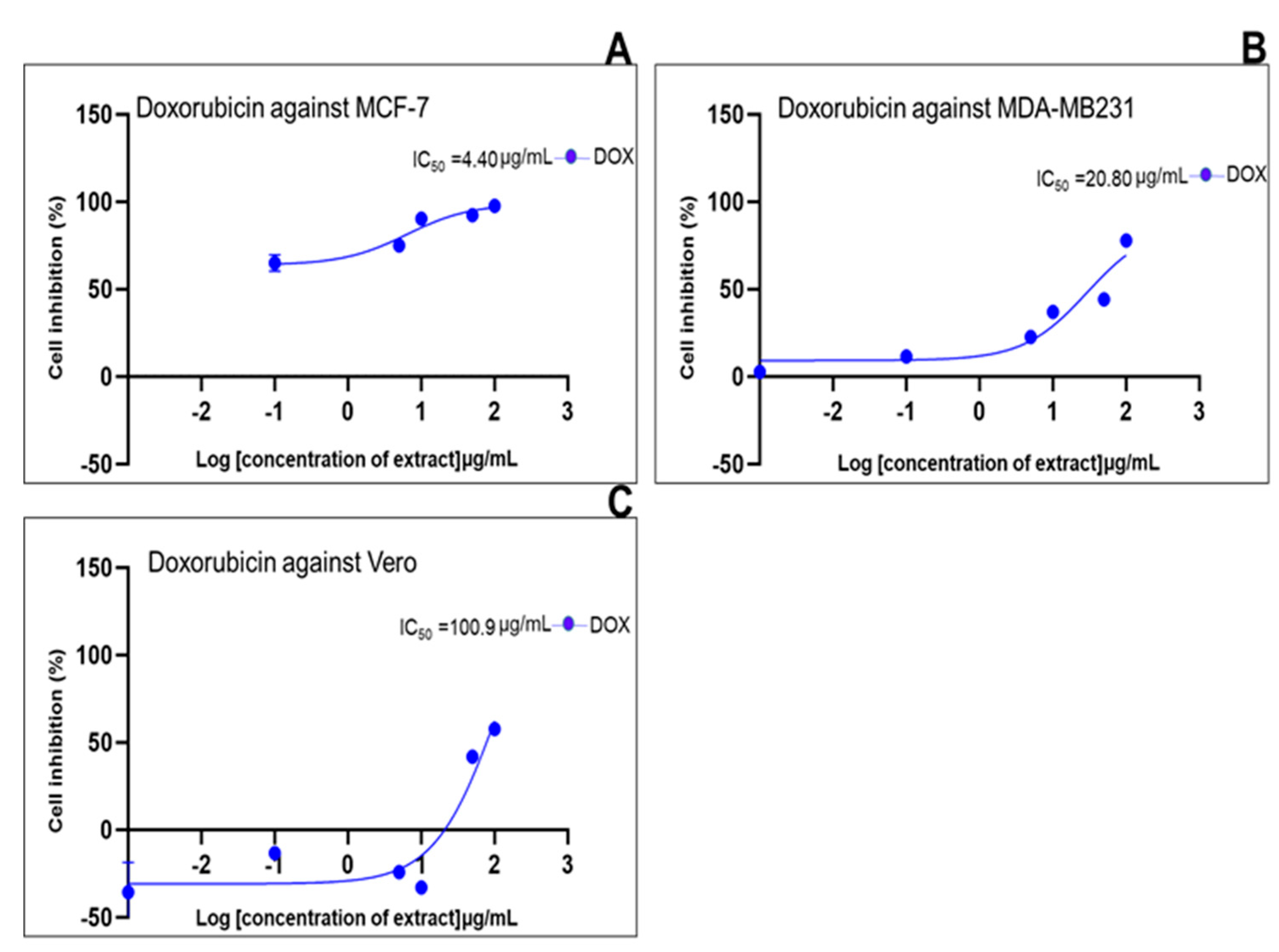
Figure 1. Anti-proliferative effect of doxorubicin on MCF-7 (A), MDA-MB-231 (B), and Vero (C) cell lines, assessed using the MTT assay. IC50 values were determined via nonlinear regression analysis. A concentration-dependent inhibitory effect was observed in (A) and (B), while (C) exhibited a hormetic dose-response. Data are presented as means ± SD from three independent experiments (n = 5 for A; n = 6 for B and C). DOX, doxorubicin.
Preprints 180632 g001
Figure 2. Anti-proliferative effect of E. bupleurifolia extracts on MCF-7 (A) and Vero (B) cell lines using the MTT assay. CC50 values were determined via nonlinear regression analysis. A concentration-dependent inhibitory effect was observed in (A), while (B) showed a hormetic dose-response. Data are means ± SD (n = 6). E. bupleurifolia hexane (E. BPF Hex); dichloromethane (E. BPF DCM).
Preprints 180632 g002
Figure 3. Anti-proliferative effect of E. trigona extracts on MCF-7 (A) and Vero (B) cell lines using the MTT assay. CC50 values were determined via nonlinear regression analysis. Data are means ± SD (n = 6). E. trigona hexane (E. TRG Hex); dichloromethane (E. TRG DCM).
Preprints 180632 g003
Figure 4. Anti-proliferative effect of E. gorgonis extracts on MCF-7 (A) and MDA-MB-231 (B) cell lines using the MTT assay. CC50 values were determined via nonlinear regression analysis. Data are means ± SD (n = 6). E. gorgonis hexane (E. GRG Hex).
Preprints 180632 g004
Figure 5. The anti-proliferative effect of doxorubicin (DOX) on MCF-7 (A), MDA-MB231 (B), and Vero (C) cell lines was assessed using the MTT assay. CC50 values were evaluated via nonlinear regression analysis. Results indicated a concentration-dependent inhibitory effect for A and B, and a hormetic response for C. Data presented as means ± SD from three independent experiments; n = 5 for A, n = 6 for B and C. E. polygona hexane (E. PLGN Hex); E. polygona dichloromethane (E. PLGN DCM).
Preprints 180632 g005
Figure 6. The anti-proliferative effect of E. ferox extract on the MDA-MB231 cell line was evaluated using the MTT assay, revealing concentration-dependent inhibitory effects. CC50 values were determined through nonlinear regression analysis, with results expressed as means ± SD from three independent experiments (n = 6). E. ferox dichloromethane (E. FRX DCM; E. ferox methanol (E. FRX MeOH).
Preprints 180632 g006
Figure 7. The anti-proliferative effects of E. clavarioides extracts on MCF-7 (A), MDA-MB231 (B), and Vero (C) cell lines were evaluated using the MTT assay, with CC50 values determined via nonlinear regression analysis. The results demonstrated a hormetic dose-response in MCF-7 and a concentration-dependent inhibitory effect in MDA-MB231 and Vero cells. Data are presented as means ± SD from three independent experiments (n = 6). E. clavarioides hexane (E. CLV Hex); E. clavarioides dichloromethane (E. CLV DCM).
Preprints 180632 g007
Figure 8. The anti-proliferative effects of E. ammak extracts on breast cancer cell lines MCF-7 (A) and MDA-MB231 (B), as well as the Vero cell line (C), were evaluated using the MTT assay, with CC50 values determined via nonlinear regression analysis. Results indicate a hormetic dose-response effect on MCF-7 (A) and concentration-dependent inhibitory effects on MDA-MB231 (B) and Vero (C). Data are presented as means ± SD from three independent experiments (n = 6). E. ammak hexane (E. AMK Hex); E. ammak dichloromethane (E. AMK DCM).
Preprints 180632 g008
Figure 9. The anti-proliferative effects of E. enopla extracts on MCF-7 and MDA-MB231 cell lines, as well as Vero cells, were evaluated using the MTT assay, with CC50 values determined via nonlinear regression analysis. The results demonstrated a hormetic dose-response effect in the cancer cell lines (MCF-7 and MDA-MB231) and a concentration-dependent inhibitory effect on Vero cells. Data are expressed as means ± SD from three independent experiments (n = 6). E. enopla hexane (E. ENP Hex); E. enopla dichloromethane (E. ENP DCM).
Preprints 180632 g009
Figure 10. The anti-proliferative effect of E. stellata extracts on MCF-7, MDA-MB-231, and Vero cell lines was assessed using the MTT assay to determine CC50 values. Nonlinear regression analysis was employed to calculate these values. The results indicated a concentration-dependent inhibitory effect of the E. stellata extracts. Data are presented as means ± SD from three independent experiments (n = 6). E. stellata dichloromethane (E. STL DCM).
Preprints 180632 g010
Figure 11. The anti-proliferative effects of E. ledienii extracts were evaluated against MCF-7 (A) and Vero (B) cell lines using the MTT assay. The CC50 values for each cell line were determined through nonlinear regression analysis. The results demonstrated a hormetic dose-response effect for MCF-7 cells and a concentration-dependent inhibitory effect for Vero cells. Data represent means ± SD from three independent experiments, with n = 5 for MCF-7 and n = 6 for Vero. E. ledienii hexane (E. LDN Hex); E. ledienii dichloromethane (E. LDN DCM).
Preprints 180632 g011
Figure 12. The anti-proliferative effects of E. arabica extracts on MCF-7 (A) and Vero (B) cell lines was assessed using the MTT assay, with CC50 values determined through nonlinear regression analysis. Results indicate a concentration-dependent inhibitory effect of E. arabica extracts, with values expressed as means ± SD from three independent experiments (n = 6). E. arabica hexane (E. ARB Hex); E. arabica dichloromethane (E. ARB DCM).
Preprints 180632 g012
Figure 13. The anti-proliferative effects of E. cooperi extracts on MCF-7 (A) and MDA-MB-231 (B) cell lines were assessed using the MTT assay, and CC50 values were determined. The MTT assay results revealed a hormetic dose-response effect (A) and a concentration-dependent inhibitory effect (B) of E. cooperi extracts. Data are presented as mean ± SD from three independent experiments, with n = 6. E. cooperi hexane (E. CPR Hex); E. cooperi dichloromethane (E. CPR DCM).
Preprints 180632 g013
Figure 14. The anti-proliferative effects of E. tirucalli extracts on MCF-7 (A) and MDA-MB231 (B) breast cancer cell lines using MTT assay. Results indicate a concentration-dependent inhibition, with CC50 values determined through nonlinear regression analysis. Data are presented as means ± SD from three independent experiments, n = 5 for (A), and n= 6 (B). E. tirucalli hexane (E. TRL Hex); E. tirucalli dichloromethane (E. TRL DCM).
Preprints 180632 g014
Figure 15. HPLC chromatograms of selective extracts of E. clavariodes (A) Hex and (B) DCM for MCF-7.
Preprints 180632 g015
Figure 16. HPLC chromatograms of selective extract of E. trigona DCM for MCF-7.
Preprints 180632 g016
Figure 17. HPLC chromatograms of selective extract of E. gorgonis Hex for MCF-7 and MDA-MB231.
Preprints 180632 g017
Figure 18. HPLC chromatograms of selective extracts of E. ledienii (A) Hex and (B) EtoAC for MCF-7 and MDA-MB231.
Preprints 180632 g018
Figure 19. HPLC chromatograms of selective extract E. arabica DCM for MFC-7 and MDA-MB231.
Preprints 180632 g019
Table 2. Cytotoxicity (IC50 in μg/mL, n=5/6) of doxorubicin against MCF-7, MDA-MB231, and Vero cell lines. The dilutions were in triplicates.
Standard drug IC50 (μg/mL)
(μg/mL, n=5/6)
IC50 SD R2 IC50 SD R2 IC50 SD R2
MCF-7 MDA-MB-231 Vero
Doxorubicin 4.40 13.61 0.909 20.80 26.96 0.8938 100.9 40.50 0.8790
Table 3. List of 16 selected Euphorbia plant species used in this study.
Plant species Abbreviation
Euphorbia ferox E. ferox
Euphorbia bupleurifolia E. bupleurifolia
Euphorbia tirucalli E. tirucalli
Euphorbia clavariodes E. clavarioides
Euphorbia polygona E. polygona
Euphorbia gorgonis E. gorgonis
Euphorbia enopla E. enopla
Euphorbia cooperi E. cooperi
Euphorbia ammak E. ammak
Euphorbia coerulescens E. coerulescens
Euphorbia trigona E. trigona
Euphorbia horrida Var E. horrida Var
Euphorbia horrida Indigenous E. horrida ind
Euphorbia arabica E. arabica
Euphorbia stellata E. stellata
Euphorbia ledienii E. ledienii
Table 4. CC50 criteria for cytotoxicity.
CC50 (µg/mL) Status
>100 µg/mL Inactive
<100≥ 50 µg/mL Low activity
< 50 µg/mL ≥10 µg/mL Moderate activity
< 10 µg/mL ≥ 5 µg/mL Good activity
<5 µg/mL Potent activity
Table 5. HPLC gradient elution.
Time (min) % Solvent A
(0.1% formic acid in H2O)
% Solvent B
(Acetonitrile)
0 95 5
10 90 10
20 70 30
30 50 50
40 95 5
41 STOP
Disclaimer/Publisher’s Note: The statements, opinions and data contained in all publications are solely those of the individual author(s) and contributor(s) and not of MDPI and/or the editor(s). MDPI and/or the editor(s) disclaim responsibility for any injury to people or property resulting from any ideas, methods, instructions or products referred to in the content.
Copyright: This open access article is published under a Creative Commons CC BY 4.0 license, which permit the free download, distribution, and reuse, provided that the author and preprint are cited in any reuse.
Prerpints.org logo

Preprints.org is a free preprint server supported by MDPI in Basel, Switzerland.

Subscribe

Disclaimer

Terms of Use

Privacy Policy

Privacy Settings

© 2025 MDPI (Basel, Switzerland) unless otherwise stated