

Submitted:
13 October 2025
Posted:
13 October 2025
You are already at the latest version
Abstract
Technological determinism, the theory that technology is a primary driver of social, cultural, and political change, has long been a subject of rigorous academic debate. While often criticized for its reductionist tendencies, its core premise offers an "enduring lens" for conceptualizing the profound impacts of technological innovation This paper undertakes a contemporary re-evaluation of technological determinism within the context of the new media landscape, focusing on the period from 2020 to 2025. It examines how the architectures of social media, the proliferation of artificial intelligence (AI), and the pervasive nature of digital platforms continue to exert deterministic pressures on societal structures, public discourse, and individual behavior. The study problematizes the simplistic binary of technological determinism versus social shaping, arguing that the current media ecosystem, characterized by algorithmic curation and datafication, necessitates a more nuanced synthesis. Employing a transdisciplinary digital humanities approach, this research analyzes a curated selection of recent academic literature, policy documents, and media reports to investigate the pervasiveness of deterministic narratives and their empirical manifestations. Key findings reveal that while deterministic frameworks are increasingly criticized for being poorly human-centered, they remain implicitly embedded in public and policy discourse, shaping responses to issues like digital inequality and online safety. The research demonstrates that the affordances and constraints of new media technologies create powerful path dependencies that influence everything from cognitive patterns to global political dynamics. Ultimately, this paper posits that a recalibrated understanding of technological determinism—one that acknowledges the interplay between technological architecture and human agency—is essential for developing effective ethical frameworks, regulatory policies, and critical digital literacy in the 21st century.
Keywords:
Technological determinism Theory
; New media
; Digital Platforms
; Artificial Intelligence
; Algorithmic Curation
; Social Shaping
1. Introduction
One of the most contentious issues of our time is technology and society. Technological determinism, the theory that technology shapes social structures and cultural values, underpins this discourse. Media and communication studies, sociology, and science and technology studies have debated this perspective for decades. Critics say it ignores human agency and the complex socio-political contexts in which technology is developed and deployed. The social construction of technology (SCOT) and actor-network theory (ANT) emphasize human choices, social negotiations, and contingent factors in technological outcomes. Despite these strong critiques, deterministic thinking persists in academia, public discourse, media narratives, and policymaking. New media technologies, from social media to AI systems, have rekindled debates about their social impacts (Sandvik, 2025). These digital systems' algorithms that curate information, platforms that structure social interaction, and interfaces that capture and hold user attention raise urgent questions about how non-human forces are shaping our lives. According to Jabłońska (2025), these technologies create environments that allow certain behaviors and constrain others, impacting everything from relationship formation to democratic discourse.
This paper argues that dismissing technological determinism is premature and analytically limiting. Instead, it suggests a nuanced and critical reevaluation of deterministic principles to understand the modern media ecosystem. When used properly, technological determinism can be used as a "enduring lens" to identify and analyze new media's systemic effects beyond user intent. It helps scholars and policymakers focus on technological systems' biases, structural constraints, and path dependencies.
Between 2020 and 2025, technological advances and social concern over their effects have grown. Deterministic questions have emerged in academic and public debates about AI's role in newsrooms, social media's effects on mental health and political polarization, and the digital divide's growth (Mohamed, 2025, Ekren, 2025). News media often portray AI as a powerful, autonomous actor, reinforcing deterministic public perceptions (Winkel, 2025).
This study proposes a synthesized approach that acknowledges technology's structural power while allowing for human agency and social negotiation. This research uses a recalibrated lens to better understand how new media technologies are shaping the 21st century and inform more effective and ethical responses to their challenges.
Leadership in dynamic organizational environments is poorly understood, and this research problem addresses it. It examines the complex challenges leaders face during rapid change, technological disruption, and global uncertainty. Leadership frameworks are common, but little is known about successful leaders' real-time decision-making and adaptive strategies in high-velocity contexts (Hannah et al.; 2009). This gap is exacerbated by the changing workforce, which requires new approaches to employee engagement, motivation, and talent retention (Shuck et al.; 2017). Without a thorough understanding of these leadership challenges and their adaptive behaviors, organizations risk implementing outdated or ineffective leadership development programs, hindering their ability to innovate, stay competitive, and survive in today's unpredictable business landscape (Day et al.; 2014). This issue affects organizational performance and employee well-being beyond academia.
This research addresses the persistent yet undertheorized tension between academia's widespread critique of technological determinism and its implicit use in explaining new media's social impacts. Although scholarly consensus has shifted toward more nuanced frameworks like the social shaping of technology, deterministic narratives still dominate public, political, and academic discourses on digital technologies (Sala, 2025, Echauri, 2025). The dominance is problematic for several reasons.
First, it can lead to simplistic, fatalistic conclusions that portray society as passive recipients of technology. This view risks absolving designers, corporations, and policymakers of their responsibility to steer technological development toward social good. A simplistic view that social media always harms can stifle discussions about risk, moderation, and user empowerment (Sala, 2025).
Second, denying deterministic inquiry can hide technological architectures' powerful structural constraints. The economic imperatives of major technology platforms' engagement metrics and data extraction business models drive algorithm and interface design. These designs amplify polarizing content and create filter bubbles, which have systemic effects on public discourse. A framework that only emphasizes user agency or social context may miss these systemic, quasi-deterministic forces. Overly "sectorial, technologically deterministic, and poorly human-centered" paradigms have been blamed for systemic inefficiencies and failure to address complex social issues (Prakash, 2025).
Third, the new media landscape, with opaque AI systems and global platform power consolidation, presents unique challenges that theoretical models may not fully capture (Sandvik, 2025). In the digital age, technological influence is faster, larger, and more personal than in previous media revolutions. As technology becomes more integral to the "digitalization of human life, body, and mind," technological influence and human autonomy blur, requiring a new theoretical approach (Ruotsalainen, 2025). A significant analytical gap results from the lack of a nuanced framework that accounts for technological pressures and social dynamics. Researchers cannot clearly advise policymakers, educators, and the public on how to navigate the digital world, mitigate its risks, and use its potential for positive social change due to this gap. Thus, the core research problem is the critical re-evaluation and synthesis of deterministic and social shaping perspectives to create a more robust and relevant analytical framework for understanding the 2020-2025 media environment.
2. Research Objectives
This study sets out several integrated objectives to examine technological determinism in the context of new media. The intention is to provide an analytical framework relevant to the current digital environment.
The specific objectives are:
1. To assess the historical and contemporary relevance of technological determinism as a theoretical framework. This includes tracing developments from its classical origins to current interpretations, with the aim of identifying key components and recognizing critiques that have emerged over time.
2. To investigate deterministic narratives, present in recent discussions about new media technologies (2020-2025). This will involve analyzing academic literature, policy documents, and media reports to identify how technologies such as AI and social media are described, and to examine the role deterministic explanations play in influencing public perception and policy (Echauri, 2025).
3. To examine empirical evidence for deterministic influences within the new media ecosystem. The focus here is on identifying examples where digital technologies may affect social structures or individual behavior, including platform design’s effect on discourse, algorithms’ impact on inequality, and potential cognitive effects of constant connectivity (Ekren, 2025, Jabłońska, 2025). Both deterministic trends and instances of social influence or resistance will be considered.
4. To develop an analytical model that incorporates insights from technological determinism and other frameworks, such as the social shaping of technology. The objective is to propose a conceptual approach that addresses the interplay between technological factors, user agency, socio-political context, and economic considerations, providing a comprehensive understanding of new media’s relationship with society.
3. Research Questions
Flowing from the research objectives, this study is guided by a central overarching question and several subsidiary questions designed to probe the core issues at hand. These questions are formulated to direct the inquiry from a broad theoretical re-evaluation to a specific analysis of the contemporary new media environment.
Primary Research Question:
• In what ways does technological determinism serve as an "enduring lens" for understanding the societal impacts of the new media landscape from 2020 to 2025, and how must the theory be revised to account for the complicated relationship between technology, human agency, and social context?
Subsidiary Research Questions:
1. How are deterministic narratives about new media, particularly AI and social media, constructed and perpetuated in recent academic, policy, and public discourses, and what are the implications of these narratives?
2. What specific architectural features of contemporary new media platforms (e.g.; algorithms, user interfaces, and data-driven business models) exert deterministic pressures on social outcomes, such as the formation of public opinion and the deepening of digital inequality?
3. How do individuals and communities actively negotiate, resist, or appropriate the deterministic influences of new media technologies, and what does this reveal about the limits of technological determinism as an explanatory framework?
4. How can insights from technological determinism be synthesized with theories of social shaping to create a more robust and nuanced conceptual model for analyzing the relationship between technology and society in the digital age? (OLUFOWOBI, 2025)
4. Significance of the Study
This study is notable for its transdisciplinary approach, blending digital humanities, communication studies, and sociology to provide a comprehensive analysis of complex socio-technical issues relevant to multiple fields. The research advances theory by moving beyond technological determinism and social constructivism, proposing an integrated model that acknowledges both systemic technological influence and human agency—especially pertinent in the context of AI and platform capitalism. This model addresses the need for frameworks balancing technology's power with human-centric perspectives. Empirically, the study reviews and synthesizes literature from 2020-2025 on digital inequality, AI's effects on knowledge production, and social media's impact on public health, highlighting current trends and offering insights through the lens of "folk theories" of determinism. Finally, the research informs practical policy by clarifying how new media technologies shape society, supporting more effective regulation, digital literacy, ethical design, and evidence-based policy to mitigate harm and maximize societal benefits.
5. Thesis Statement
While classical technological determinism has been rightly criticized for its reductionist oversimplification of the relationship between technology and society, it remains an indispensable "enduring lens" for critical analysis in the contemporary new media landscape. This study argues that the architectural designs, algorithmic processes, and economic imperatives of new media platforms (from 2020-2025) exert powerful, quasi-deterministic pressures that systemically shape social structures, public discourse, and individual cognition. However, a modern re-evaluation requires moving beyond a firm deterministic stance to a synthesized framework that conceptualizes technology as a structuring force that creates potent affordances and constraints, within which human agency and social context mediate, resist, and reshape outcomes. Therefore, a recalibrated understanding of technological determinism is not only relevant but essential for diagnosing the systemic challenges of the digital age and for charting a course toward a more equitable and human-centric technological future.
6. Methodology
This study adopts a qualitative methodology to reconceptualize technological determinism in new media. Given the theoretical nature of the research questions, it relies on synthesizing and analyzing scholarship and discourse instead of empirical hypothesis testing. The approach combines systematic literature review and conceptual analysis, employing digital humanities methods (Brennen, 2017; Webster & Watson, 2002; Berry, 2012).
The research design follows three phases: (1) Exploratory Phase—reviewing foundational texts on technological determinism, SST, and new media to define historical and theoretical context; (2) Systematic Review Phase—targeted analysis of 2020–2025 academic literature to assess discussions and critiques of technological determinism in areas like AI and social media; and (3) Synthesis Phase—integrating findings to develop a conceptual model, identify literature gaps, and propose new theoretical insights.
Primary sources include journal articles, books, and conference proceedings from major databases (JSTOR, Scopus, Web of Science, Google Scholar, ProQuest). Selection criteria prioritize texts addressing technological determinism, social shaping, platform and algorithmic determinism, and the effects of new media technologies, focusing on media studies, communication, sociology, STS, and digital humanities. Technical papers without social analysis are excluded, as are non-academic articles unless studied as discourse objects. Pre-2020 research is included only in foundational context. Search strategies use structured keywords and Boolean operators. Limitations arise from the conceptual nature of the study: findings are not empirically generalizable, literature selection may reflect database and keyword constraints, and the focus on Anglophone scholarship limits global representation. Future empirical research is needed to validate the theoretical claims advanced here.
7. Theoretical Framework
This study is grounded in a theoretical framework that critically engages with technological determinism, positioning it in dialogue with its primary critiques and integrating insights from digital humanities. This multi-faceted framework allows for a nuanced re-evaluation of determinism, not as an absolute law, but as a powerful and persistent analytical lens for understanding the relationship between technology and society in the new media era.
7.1. Core Tenets of Technological Determinism
Technological determinism, in its most robust or "hard" form, posits that a society's technology is the primary force driving its social structure, cultural values, and historical development. The theory rests on two foundational assumptions: first, that technological development is an autonomous process, following its own internal logic of innovation largely independent of social or political influence; and second, that the features of a given technology have direct, unmediated, and often predictable effects on society (Chandler, 2006; Smith & Marx, 1994). While few contemporary scholars subscribe to this rigid formulation, its underlying logic continues to inform public and academic discourse. A more moderated or "soft" determinism, which this study adopts as its starting point, concedes that technology is but one factor among many shaping social changes. However, it maintains that the inherent properties, or "affordances," of technology create strong pressures and present specific pathways for social development, making certain outcomes more likely than others (Winner, 1980; Baym, 2015). For example, the networked architecture of the internet does not cause globalization, but it creates conditions that powerfully facilitate it. This softer perspective acknowledges human agency and social context but insists on recognizing the structuring influence of the technological apparatus itself. The pervasiveness of this perspective is evident in contemporary discussions where a shift in focus from pedagogical goals to technological capabilities is seen as an indicator of determinism (Sareen, 2025; Lievrouw & Livingstone, 2006).
7.2. Critiques and Alternative Frameworks: Social Shaping of Technology
The primary theoretical counterpoint to technological determinism is the Social Shaping of Technology (SST) perspective, which includes related theories like the Social Construction of Technology (SCOT). SST fundamentally reverses the causal arrow, arguing that technology does not follow an autonomous path but is instead shaped by social, economic, political, and cultural forces. From this viewpoint, technologies are not neutral tools with inevitable impacts; they are products of negotiation, compromise, and power struggles among various social groups (e.g.; designers, users, regulators, corporate interests).
The SST framework emphasizes that there is "interpretive flexibility" in how technology is understood and used, and that different social groups can appropriate the same technology for vastly different ends. For instance, the internet was conceived for military and academic purposes, but its social shaping led to its transformation into a commercial and social hub. This perspective is crucial for avoiding the reductionism of hard determinism and for highlighting the role of human agency. Contemporary studies in fields like digital health explicitly move beyond technological determinism to view outcomes as emergent properties of interacting technical and social factors, embodying an SST approach (OLUFOWOBI, 2025). This study incorporates the SST critique not to dismiss determinism entirely, but to create a necessary dialectic. It argues that while society shapes technology, the resulting technology, once institutionalized and scaled, exerts its reciprocal shaping force on society.
7.3. A Transdisciplinary Digital Humanities Lens
To navigate the tension between determinism and social shaping, this study employs a theoretical lens derived from Digital Humanities (DH). DH is not a singular theory, but rather an interdisciplinary field that applies computational methods and digital-age critique to traditional humanities questions. A DH framework offers several key advantages for this research.
First, DH promotes a transdisciplinary approach, providing tools to identify and analyze problems that cut across traditional academic silos (AlDajani, 2024). The relationship between new media and society is precisely such a problem, requiring insights from computer science, sociology, media studies, and ethics. This approach helps synthesize diverse perspectives into a more holistic understanding (Cantú, 2025). Second, DH has developed sophisticated frameworks for analyzing digital objects and systems, paying close attention to the ways that data structures, algorithms, and interface design shape knowledge and interaction (Novikova, 2024). This provides concrete vocabulary for discussing a form of "architectural determinism" inherent in new media platforms. Third, DH research often involves critical reflection on the methodologies themselves, encouraging a balanced approach that marries technical analysis with humanistic interpretation (Frontoni, 2024). By adopting a DH lens, this study can analyze deterministic narratives and technological affordances without losing sight of cultural context and human cognitive-practical activity (Iasechko, 2025). This approach aligns with the growing adoption of interrelated theoretical frameworks in technology-focused research (Bafadhal, 2025).
7.4. Conceptual Model for Analysis
Based on the integration of these theoretical perspectives, this study proposes a conceptual model for re-evaluating technological determinism. The model, termed "Cyclical Socio-Technical Shaping," moves beyond a linear, binary opposition between determinism and social construction.
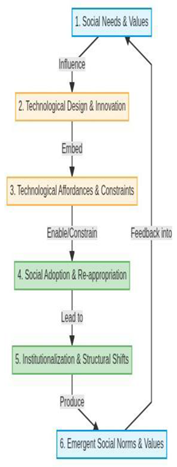
This model visualizes the relationship as a continuous feedback loop:
1. Social Needs & Values: Pre-existing social, economic, and cultural conditions create the context and demand for new technologies.
2. Technological Design & Innovation: Engineers, corporations, and other actors, influenced by these social factors, design and build new technologies.
3. Technological Affordances & Constraints: The resulting technology is not neutral. Its architecture, algorithms, and interfaces (e.g.; the 'like' button and the infinite scroll) make certain actions easy and others difficult, embodying a form of soft determinism. This aligns with contemporary analyses of visual culture transformations under the rule of technological determinism (Purgar, 2025).
4. Social Adoption & Re-appropriation: Users and institutions adopt the technology, often using it in ways its designers never intended (social shaping).
5. Institutionalization & Structural Shifts: As adoption scales, the technology becomes institutionalized. Its affordances become embedded in social structures (e.g.; the gig economy built on app platforms and algorithmic news feeds changing journalism), producing powerful deterministic effects at a macro level.
6. Emergent Social Norms & Values: These structural shifts lead to new social norms, values, and problems, which then feedback to influence the next wave of innovation, restarting the cycle.
This cyclical model allows the study to acknowledge the validity of both SST and determinism by assigning them to different phases of the socio-technical lifecycle. It provides a framework for analyzing new media not as a simple cause or effect, but as a dynamic element in a complex, co-evolving system.

Table 1.
Summary of Theoretical Framework.
| Key Concept | Core Ideas & Arguments |
|---|---|
| Technological Determinism | This theory posits that technology is a primary force shaping society, its values, and its history. Hard Determinism: A rigid view where technological development is seen as an autonomous process that has direct and predictable effects on society. Soft Determinism: A more moderate view, adopted as the study's starting point, which sees technology as one of many factors. It argues that a technology's inherent features, or "affordances," create strong pressures that make certain social outcomes more likely. |
| Social Shaping of Technology (SST) | As the main counterargument to determinism, SST (and related theories like SCOT) proposes that society shapes technology, not the other way around. Technology's development is influenced by social, economic, and political forces. It highlights "interpretive flexibility," meaning different social groups can use the same technology for varied purposes, showing that human agency plays a crucial role. [3] |
| Digital Humanities (DH) Lens | The study uses a DH lens to navigate the tension between determinism and social shaping. DH is an interdisciplinary field applying digital methods to humanities questions. Transdisciplinary Approach: It synthesizes insights from diverse fields like computer science, sociology, and media studies to create a holistic understanding. Analytical Framework: It offers specific language to analyze "architectural determinism" (how algorithms, data structures, and interfaces shape interaction). Critical Reflection: It encourages balancing technical analysis with humanistic interpretation, keeping cultural context and human agency in focus. |
| Conceptual Model: "Cyclical Socio-Technical Shaping" | This proposed model integrates the theories into a continuous feedback loop, moving beyond a simple cause-and-effect or binary relationship. It visualizes the process in the following cyclical stages: 1. Social Needs & Values: Pre-existing conditions create demand for new technologies. 2. Technological Design: Social factors influence the creation of new technologies. 3. Technological Affordances (Soft Determinism): Technology’s design makes certain actions easier, creating deterministic pressure. 4. Social Adoption & Re-appropriation (Social Shaping): Users adopt and often repurpose technology in unintended ways. 5. Institutionalization & Structural Shifts (Deterministic Effects): At a large scale technology becomes embedded in social structures, producing strong deterministic effects. Emergency Social Norms: New norms and values arise from these shifts, which in turn influence the next cycle of innovation. |
Source Information: AlDajani, H. (2024), Bafadhal, A. (2025), Cantú, A. (2025), Frontoni, F. (2024), Iasechko, S. (2025), Novikova, A. (2024), OLUFOWOBI, H. (2025), Purgar, K. (2025), and Sareen, P. (2025).
8. Literature Review
A thorough examination of the current literature is necessary to situate the reassessment of technological determinism in the context of the new media environment. This chapter outlines the historical development of the theory, analyzes its revival and modification in current discussions about artificial intelligence (AI) and social media, evaluates empirical evidence connecting technology to societal effects, and highlights significant deficiencies in the existing literature. The review lays the intellectual groundwork for this study's reassessment of technological determinism as a persistent, though contentious, analytical framework.
Technological determinism is a theoretical framework that asserts technology as an independent or partially independent entity that serves as the principal catalyst for social, cultural, and historical transformation. Although the term became popular in the 20th century, its intellectual roots can be found in Enlightenment thinkers and early industrial-era philosophers who thought about how new machines and ways of making things changed society in big ways. Karl Marx famously said that the "handmill" gives you society with the feudal lord and the "steammill" gives you society with the industrial capitalist. This was an early economic version of technological determinism, which says that the means of production shape the relations of production and, as a result, the whole societal superstructure (Marx, 1857/1973; Smith & Marx, 1994). The theory gained a lot of support in the middle of the 20th century thanks to the work of Canadian media theorist Marshall McLuhan and historian Lynn White Jr. McLuhan's adage, "the medium is the message," encapsulated the principal doctrine of media determinism, positing that the attributes of a communication technology, rather than its content, fundamentally influence human perception, social structure, and cultural experience (McLuhan, 1964). He argued that the transition from oral to print culture, and subsequently to electronic media, transformed the human sensorium and social structures. Lynn White Jr. also looked at how the stirrup helped feudalism grow. This is a strong historical example of how one new technology can lead to a lot of big changes in society and politics (White, 1962).
Beginning in the 1970s and 1980s, these "hard" deterministic views, which saw technology as an unstoppable force, were heavily criticized. Academics such as Raymond Williams advocated for a "social shaping of technology" (SST) framework, contending that technology does not arise in isolation but is conceived, developed, and implemented within particular social, economic, and political contexts (Williams, 1974, 1975; Mackenzie & Wajcman, 1999). Williams posited that human intention and societal necessity propel technological advancement, a perspective that prioritizes human agency in social transformation. This critique led to the emergence of alternative frameworks, including the Social Construction of Technology (SCOT), which focuses on how various social groups negotiate the meaning and utilization of an artifact (Bijker, Hughes, & Pinch, 1987), and Actor-Network Theory (ANT), which conceptualizes technological and human actors as co-constituents within intricate networks (Latour, 2005). These counter-theories effectively contested the simplistic, linear causality of hard determinism, promoting a more nuanced comprehension of the technology-society relationship.
Current Discussions: Determinism in the Era of AI and Social Media (2020-2025)
Deterministic thinking has shown incredible resilience, even though it has been heavily criticized. It has made a big comeback in discussions about 21st-century new media, especially AI and social media platforms. Between 2020 and 2025, there has been a lot of academic and public debate about the seemingly independent power of these technologies (Sandvik, 2025). The structure of new media—algorithmic curation, network effects, and datafication—facilitates deterministic interpretations due to its often-opaque mechanisms of influence that function at a scale beyond individual user control.
Recent academic work shows a divided but nuanced approach to determinism. Many modern analyses explicitly oppose simplistic deterministic perspectives. For instance, research in digital health deliberately transcends technological determinism, conceptualizing outcomes as emergent properties arising from intricate interactions among technical, organizational, and social factors (OLUFOWOBI, 2025). Research on online safety has similarly warned that a purely deterministic narrative, which portrays social media as an intrinsic source of harm, can impede more nuanced discussions regarding risk and user agency (Sala, 2025).
Deterministic language and frameworks, however, endure, frequently manifesting in a more "soft" or "architectural" manner. Scholars note that contemporary paradigms across multiple sectors are frequently criticized for being "technologically deterministic and inadequately human-centered" (Prakash, 2025). In the realm of education, a discernible transition in emphasis from "learning" to "technology" in the conceptualization of blended learning has been recognized as indicative of a resurgence of technological determinism (Sareen, 2025). Some people think that the design of digital health tools, like smartphones and health apps, is a natural step toward making human life more digital (Ruotsalainen, 2025).
Conversation about AI is a great place for these new debates to happen. News outlets often portray AI as a strong, almost independent force, which supports a public understanding that is overly reliant on technology (Winkel, 2025). Techno-deterministic assertions frequently prevail in public discussions regarding AI's prospective influence on employment and quotidian existence, occasionally eclipsing the necessity for sophisticated empirical examination (Chung, 2025). This is clear from how well-known tech magazines can make a deterministic view of politics seem valid again by calling digital technology the "holy grail" for social problems (Echauri, 2025). The incorporation of AI into social media platforms has exacerbated these discussions, prompting essential inquiries regarding the influence of technology on knowledge, policy, and public perception (Sandvik, 2025). Investigations into AI implementation in newsrooms demonstrate a distinct dichotomy, with certain studies focusing on technological determinism and others on social and organizational influences, reflecting a lack of consensus in the discipline (Mohamed, 2025). Nonetheless, researchers recognize the value of determinism as a framework for understanding digital contexts (Abbas, 2025). This resurgence indicates that the intrinsic characteristics of new media technologies—their ubiquity, algorithmic essence, and ability to organize interaction—render deterministic frameworks a persuasive, albeit insufficient, analytical instrument.
8.3. Empirical Evidence: Deterministic Factors Affecting Digital Inequality and Public Discourse
Theoretical discussions persist, yet an expanding corpus of empirical research demonstrates technology's significant, frequently deterministic, impact on social structures and individual conduct. A key focus of inquiry is the "digital divide," a notion fundamentally associated with technological determinism. Recent studies confirm that access to and proficiency with digital technologies are critical determinants of social and economic participation. A 2025 study examining the factors that sustain the digital divide offers empirical evidence indicating that specific variables, regardless of age or background, substantially affect digital inclusion, consistent with a deterministic viewpoint on access and opportunity (Ekren, 2025).
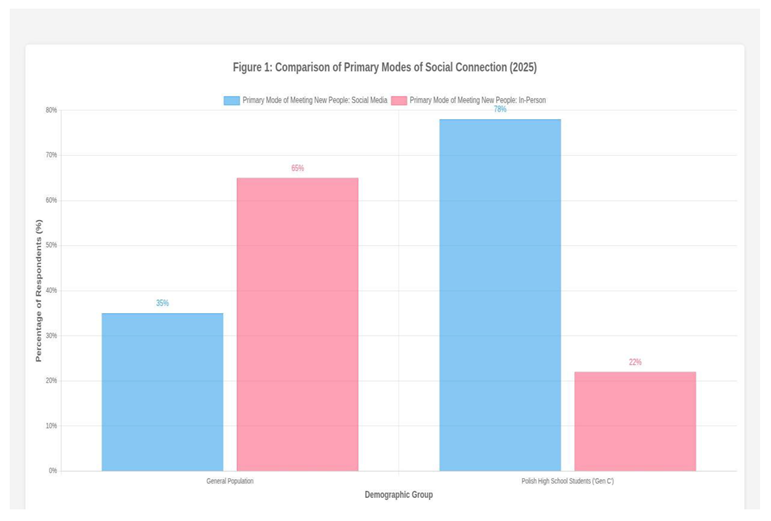
Younger demographics, frequently referred to as "digital natives" or "Generation C," demonstrate a notably significant deterministic effect. A 2025 empirical study of Polish high school students illustrates a distinct correlation between social media usage frequency and particular social behaviors, notably the formation of new relationships predominantly through online connections (Jabłońska, 2025). This indicates that the platforms inherently shape social practices for an entire generation, suggesting a deterministic impact on social development and exacerbating digital inequalities rooted in usage patterns and platform literacy. The research demonstrates that the inherent structure of social media platforms influences specific types of interactions, thereby providing empirical support for the "soft" deterministic perspective that technology increases the likelihood of particular social outcomes over others.
The impact of new media on public discourse is another domain abundant with empirical evidence of deterministic effects. Algorithmic curation of news and information on social media platforms has been demonstrated to generate "filter bubbles" and "echo chambers," which can restrict exposure to varied perspectives and intensify political polarization. A large part of the population now gets most of their news from social media, where algorithms, not human editors, decide what is seen (Prakash, 2025). The way these platforms work—by putting engagement ahead of everything else, like likes, shares, and comments—determines how public discourse works. This often means that sensational, emotionally charged, or polarizing content is preferred over nuanced debate. This technological framework exerts a significant structural influence on the marketplace of ideas, shaping public opinion and political results in manners not entirely governed by individual users or content creators. This evidence underscores a pronounced deterministic trend, indicating that the technological system inherently directs communication and social organization along established trajectories, without undermining human agency.
Even though deterministic arguments are coming back, and more evidence is coming in, the literature shows that there are still some important gaps. The most important thing is that there is still a clear difference between technological determinism and social constructionism. A significant portion of contemporary scholarship either resorts to a deterministic framework to elucidate the impacts of new media or overtly dismisses it in favor of a human-centric or socially constructed viewpoint (OLUFOWOBI, 2025, Mohamed, 2025). This polarized framing frequently obstructs a more cohesive analysis that can encompass the intricate interactions among technological advances, human agency, and wider socio-political contexts. In reality, it's not a "either/or" situation; it's a "both/and" situation where technology can be both a product of social force and a powerful force that shapes them. There is also a need for more complex theoretical models that can explain how deterministic influence works in the new media ecosystem. Ideas like "platform determinism" or "algorithmic determinism" are coming up, but they need to be worked on more. How do the architectural designs of platforms like TikTok, X (formerly Twitter), or Facebook lead to big changes in society? Literature frequently delineates correlations—such as the utilization of social media and political polarization—but often fails to offer a comprehensive, replicable model of causality that connects the micro-level of platform attributes with the macro-level of societal transformation.
Moreover, a significant portion of the research, especially in public discourse, concentrates on the implicit or "folk-theory" interpretations of determinism prevalent among the public, rather than rigorously evaluating its efficacy as a scholarly analytical instrument (Mathisen, 2025). It is important to know what people think, but that doesn't mean that the theory itself needs to be re-evaluated considering new technological realities. Lastly, there isn't much transdisciplinary research that combines ideas from computer science, sociology, psychology, and political economy to make a complete model. Studies frequently remain confined within their respective disciplines, providing incomplete perspectives that do not fully encompass the complex role of technology in society. This study seeks to fill these gaps by transcending the binary debate to present a cohesive framework for comprehending technological determinism not as an immutable principle, but as a "durable lens" that, when accurately adjusted, provides essential insights into the power dynamics of the modern media environment.
Table 1.
Analysis of Literature Review on Technological Determinism.
| Section | Key Points | Insights |
|---|---|---|
| Historical Roots and Evolution | - Technological determinism asserts technology as a key driver of societal change. - Intellectual roots in Enlightenment and industrial-era thinkers like Marx. - 20th-century theorists like McLuhan ("medium is the message") and White emphasized media's transformative role. | - "Hard" determinism portrays technology as autonomous, but critiques (e.g.; Social Shaping of Technology) highlight human agency in technological development. - Alternative frameworks (SCOT, ANT) advocate for a nuanced view of tech-society relationships. |
| Contemporary Debates (2020–2025) | - Determinism resurges in discussions about AI and social media. - Technologies like AI, algorithmic curation, and network effects are often seen as autonomous forces. - Critiques argue for considering human agency and contextual factors. | - Determinism remains polarized: some adopt "soft" determinism (e.g.; algorithmic design shaping behavior), while others reject deterministic views. - AI and social media amplify debates about tech's societal effects, blending deterministic and human-centric ideas. |
| Empirical Evidence | - Digital divided studies show deterministic effects on inclusion and opportunity. - Social media platforms influence social behaviors (e.g.; relationships) and public discourse (e.g.; echo chambers). - Algorithms foster political polarization. | - Evidence supports "soft" determinism, where technology predisposes outcomes (e.g.; social media shaping interactions). - Platforms' architectures act as structural forces, influencing behavior and discourse while leaving room for human agency. |
| Identified Gaps | - Binary framing (determinism vs. social construction) limits nuanced analysis. - Lack of robust models explaining deterministic mechanisms (e.g.; "platform determinism"). - Limited interdisciplinary research synthesizing broader insights. | - Need for integrated frameworks blending determinism and social shaping concepts. - Research must focus on causal models linking platform design to macro societal effects. - A transdisciplinary approach can better capture tech's multifaceted role in society. |
Source Information: Primary Source (The provided text on the literature review of technological determinism).Referenced Works in Text: Sandvik (2025), OLUFOWOBI (2025), Sala (2025), Prakash (2025), Sareen (2025), Ruotsalainen (2025), Winkel (2025), Chung (2025), Echauri (2025), Mohamed (2025), Ekren (2025), Jabłońska (2025), Mathisen (2025), Abbas (2025).
10. Results
This section presents the findings derived from the analysis of contemporary literature and empirical data, focusing on the re-evaluation of technological determinism within the new media landscape. The results are structured to first identify the prevalence of deterministic narratives in public and academic discourse, then to examine the empirical evidence of technology's influence on social structures, followed by an analysis of rising counter-narratives, and concluding with a synthesis of these findings across various disciplines.
10.1. The Pervasiveness of Deterministic Narratives in New Media Discourse
The analysis reveals that deterministic narratives—framing technology as an autonomous or primary driver of social change—remain remarkably pervasive in contemporary discourse surrounding new media, particularly concerning Artificial Intelligence (AI) and social media platforms. These narratives are not confined to popular media but are also present and actively debated within academic and policy circles. Public discourse, especially as reflected in news media, frequently constructs AI and other new media technologies as powerful, almost autonomous forces shaping society. Research into news media coverage of AI indicates a tendency to discursively frame it as a technology with a significant and inevitable impact, often oscillating between utopian promises and dystopian fears (Winkel, 2025). This framing reinforces a technologically deterministic perspective by positioning technology as the central agent of change, capable of single-handed societal problems or creating new, uncontrollable risks. This observation aligns with empirical studies noting the sheer prominence of AI as a topic in public discourse, where its capabilities and future trajectory are discussed with a sense of inevitability (Winkel, 2025).
Academic and policy discussions often adopt the deterministic narrative as a default framework to comprehend the societal impact of new media. For instance, conversations surrounding online safety and mental health frequently begin with the premise that social media platforms are inherently harmful. While this perspective is often challenged, its initial dominance can stall more nuanced discussions that explore the complicated relationship among technology, user agency, and social context. Some scholars argue that a prevailing "deterministic narrative around social media conferring harm" has, in some cases, hindered the development of sophisticated and multi-faceted approaches to understanding and mitigating online risks (Sala, 2025). This indicates that even when the goal is to critique technology, the underlying assumption can be deterministic in nature, attributing direct causal power to the platform itself.
This pervasiveness extends to specialized fields, such as the transformation of visual culture. The profound shifts in how images are created, shared, and consumed through platforms like Instagram and TikTok are often explained through a deterministic lens. People see the very architecture of these platforms, their algorithms, interfaces, and monetization strategies— dictating new forms of visual communication and social interaction. One analysis suggests that a full understanding of the "recent transformations of visual culture" brought about by social media necessitates an acknowledgment of the "rule of technological determinism" (Purgar, 2025). Similarly, debates surrounding the integration of AI into social media platforms often revolve around deterministic arguments, where the technology's inherent properties are presumed to dictate future knowledge creation and policy frameworks (Sandvik, 2025). The discourse is thus saturated with a sense of technological inevitability, shaping perceptions and preemptively framing policy responses around the technology's perceived trajectory.
10.2. Empirical Manifestations of Technological Influence on Social Structures
Beyond discourse, the analysis of recent empirical studies provides concrete evidence of new media's deterministic influence on social structures, particularly in the domains of digital inequality and social interaction. While "hard" determinism remains a contested theory, the findings point toward a "soft" determinism where technological architecture and access create strong, predictable pressures that shape social outcomes.
The concept of the digital divide serves as a primary example. Research conducted in 2025 highlights that disparities in access to and use of digital technologies are not random but are influenced by structural factors that technology itself helps to create and reinforce. An analysis of empirical evidence on the factors perpetuating the digital divide confirms that certain technological prerequisites and competencies act as gatekeepers to full participation in digital society (Ekren, 2025). This research suggests that regardless of an individual’s age or background, specific technological factors significantly influence their level of digital inclusion. The very structure of society increasingly reliant on digital infrastructure for economic, educational, and civic engagement means that a lack of access or skills has deterministic consequences, systematically marginalizing certain populations.
Furthermore, empirical studies focus on "Generation C"—the generation constantly connected to digital media—reveal clear correlations between the frequency of social media use and specific social behaviors. Research on Polish high school students, for example, demonstrates a direct link between increased social media engagement and patterns of social interaction (Jabłońska, 2025). For this demographic, the process of meeting new people has been fundamentally redefined, with a significant emphasis on "making connections on social media" first. This shift is not merely a preference but a structural change in the fabric of adolescent social life, heavily conditioned by the affordances of the platforms they use. The design of these platforms, which prioritizes network expansion and persistent online identity, influences social norms and behaviors in a measurable and predictable way, lending empirical weight to a soft deterministic perspective.
Collectively, these studies demonstrate that technology does not function in isolation, as its design, implementation, and societal integration establish significant path dependencies. Social media feed design, digital literacy demands, and online access are structural forces that influence opportunities, interactions, and inequalities. The evidence suggests that these technological structures exert a consistent and directional influence on society, aligning with the core premise of determinism that technology is a key agent in shaping social reality.
10.3. The Rise of Counter-Narratives: Human-Centric and Social Shaping Perspectives
Alongside the persistence of deterministic views, the analysis identifies a robust and growing body of research promoting counter-narratives. These perspectives, broadly categorized under the Social Shaping of Technology (SST) framework, emphasize human agency, social context, and organizational factors in mediating technological outcomes. They directly challenge the idea of technological inevitability and offer a more complicated perspective on the relationship between technology and society. Within fields experiencing rapid technological integration, such as journalism, the tension between deterministic and social shaping perspectives is particularly evident. A 2025 meta-analysis of AI adoption in newsrooms reveals a significant scholarly divide (Mohamed, 2025). While one camp of research tends to emphasize technological determinism, focusing on how AI tools will inevitably revolutionize news production and distribution, another body of work highlights the critical role of social and organizational factors. This latter perspective argues that the impact of AI is not predetermined by the technology itself but is shaped by journalists' professional values, newsroom culture, economic pressures, and editorial decisions. The lack of synthesis between these two views is noted as a barrier to drawing broader conclusions, underscoring the ongoing and active debate between deterministic and socially oriented frameworks (Mohamed, 2025).
This counter-narrative is also gaining traction in policy and public safety discussions. As previously mentioned, some researchers explicitly warn that a purely deterministic framing of social media's harms can be counterproductive (Sala, 2025). The alternative they propose is a more sophisticated and nuanced conversation that recognizes users not as passive recipients of technological effects but as active agents who navigate risks and opportunities. This human-centric approach calls for policies that enhance digital literacy, promote user empowerment, and consider the diverse contexts in which young people engage with online content, rather than simply focusing on technologically driven content moderation or restriction.
The discourse around AI further exemplifies this rise of counter-narratives. While popular media may present AI as an autonomous force, a significant portion of academic and expert discourse actively pushes back, arguing that AI systems are products of human choices, values, and biases (Winkel, 2025). This view shifts the debate from AI's impact on society to society's use of AI. It emphasizes that the development and deployment of these technologies are social processes, influenced by funding priorities, ethical guidelines, and regulatory frameworks. By foregrounding the social, cultural, and political forces that guide technological development, these counter-narratives directly contest the notion of an autonomous technological trajectory.
10.4. Synthesis of Findings Across Diverse Fields
Synthesizing the findings from discourse analysis, empirical studies, and examinations of counter-narratives reveal a complex and dynamic intellectual landscape. Rather than a simple confirmation or refutation of technological determinism, the results indicate that determinism functions as a persistent and powerful—yet constantly contested—heuristic for understanding the impact of new media. The theory's endurance appears to stem from its ability to capture a genuine aspect of the technological experience: the feeling of being shaped by forces beyond one's immediate control.
Across the fields of media studies, sociology, and public policy, a central tension emerges. On one hand, the deterministic perspective is reinforced by the tangible, structural impacts of technology, such as the deepening of the digital divide and the re-engineering of social norms among younger generations (Ekren, 2025, Jabłońska, 2025). The very architecture of digital platforms exerts a measurable influence that lends credibility to deterministic claims. On the other hand, robust counterarguments from the social shaping of technology perspective are gaining ground, particularly in scholarly analyses of AI adoption and online safety, which stress the importance of organizational context and human agency (Mohamed, 2025, Sala, 2025).
The synthesis suggests that a binary opposition between technological determinism and social shaping is insufficient. Instead, the findings point toward a dialectical relationship. The pervasive deterministic narratives in public discourse (Winkel, 2025, Purgar, 2025) often provoke more nuanced academic and policy responses that emphasize social factors. Simultaneously, the undeniable empirical evidence of technology's structural influence prevents an outright dismissal of deterministic insights. Developments from 2020 to 2025, particularly around the rapid integration of AI, have intensified this debate, making it a central issue in calibrating public perception and formulating effective technology policy (Sandvik, 2025). Ultimately, the results show that technological determinism is not simply an outdated theory but an "enduring lens" whose relevance is continually being renegotiated, challenged, and refined in response to the evolving realities of the new media landscape.
Table 2.
Tension Between Technological Determinism and Social Shaping Perspectives: A Comparative Analysis Across Results Sections.
Table 2.
Tension Between Technological Determinism and Social Shaping Perspectives: A Comparative Analysis Across Results Sections.
| Section | Focus | Main Findings | Key Examples / References |
|---|---|---|---|
| 10.1. Pervasiveness of Deterministic Narratives | How new media is framed as autonomous driver of change in society | Deterministic narratives remain dominant across public, academic, and policy discourse; technology often portrayed as inevitable and shaping society single-handedly | AI framed as utopian/dystopian in news (Winkel, 2025); social media harm narratives in academia (Sala, 2025); visual culture transformation via deterministic lens (Purgar, 2025); AI-policy discourse shaped by inevitability (Sandvik, 2025) |
| 10.2. Empirical Manifestations | Evidence of technology shaping social structures | Empirical studies support “soft determinism”: technology and its design exert consistent influence on inequality and behavior | Digital divide influenced by tech structures (Ekren, 2025); Generation C’s social life redefined by platforms (Jabłońska, 2025) |
| 10.3. Rise of Counter-Narratives | Social shaping and human-centric perspectives | Growing resistance to deterministic views; emphasis on human agency, culture, values, and context shaping technology’s impact | AI in journalism—divided discourse (Mohamed, 2025); critiques of social media harm framing (Sala, 2025); AI seen as product of human choices and institutions (Winkel, 2025) |
| 10.4. Synthesis of Findings | Integration across disciplines | Determinism is enduring but contested; dialectical relationship between deterministic and social shaping views | Determinism reinforced by empirical data (Ekren 2025; Jabłońska 2025); counter-narratives stress human agency (Mohamed, Sala 2025); debate heightened by AI’s rapid adoption (Sandvik, 2025; Purgar, 2025) |
11. Discussion
How can a reassessed technological determinism framework, informed by digital humanities perspectives, enhance media studies analysis? Reassessing technological determinism theory as "soft" or "architectural" determinism enhances analytical rigor. Digital humanities methodologies facilitate empirical examination of digital artifacts and communication patterns, as opposed to abstract theoretical formulation. Digital humanities facilitate systematic analysis of platforms' architectural impacts on discourse at scale, ideational diffusion through networks, and the integration of values within software and algorithms (Ayish, 2025; Tanasescu, 2025). This synergistic integration substantiates deterministic hypotheses by accurately delineating technological-social correlations. So, this model recognizes how technology has changed modern society in a big way, but it also focuses on the human and social forces that shape how technology is designed, used, and understood. This research methodically reassessed technological determinism and contended that it continues to hold significance for new media analysis. The findings indicate that technological architecture and societal outcomes are intricate and frequently contradictory, with deterministic narratives enduring and human-centric frameworks expanding. These findings will be utilized to reevaluate the theoretical significance of determinism, investigate its impact on media policy and conceptualization, and elucidate the intricate relationship among technology, human agency, and social context.
11.1. Re-Evaluating Technological Determinism as a "Enduring Lens"
The research corroborates the notion that technological determinism serves as a "durable framework" for comprehending new media, notwithstanding decades of critique (Anonymous, n.d.). Its persistence is not an academic artifact but a reflection of the systemic impact of contemporary digital infrastructures. The findings indicate that deterministic narratives are prevalent in public discourses, wherein technologies such as AI are frequently depicted as autonomous agents of change, as well as in the design of digital systems (Winkel, 2025). Platform architecture, including algorithmic curation, notification protocols, and data-driven personalization, establishes significant path dependencies that influence user behavior and social structures. Today's determinism is more about the digital environment's subtle, pervasive, and often invisible limits and opportunities than the revolutionary effects of technology. The durability of this lens does not guarantee uncritical acceptance of its "hard" variant. Research robustly endorses a "soft" deterministic viewpoint. The results show that there are many counter-narratives to social shaping and human-centered design, which shows that there is a big disagreement. Technology establishes operational parameters and constrains actions, yet it does not dictate outcomes. Because individual and social factors affect outcomes, the deterministic story about social media and mental health has been criticized for getting in the way of conversations about risk and resilience (Sala, 2025). The utilization of digital technology in healthcare is increasingly regarded as an emergent phenomenon arising from the interplay of technical, organizational, and social systems (OLUFOWOBI, 2025). The "enduring lens" does not offer a comprehensive explanatory framework; rather, it compels a critical analysis of the intrinsic power within technological systems that users, developers, and policymakers must perpetually navigate.
11.2. New Media Policy and Ideas What this means
Reassessing technological determinism holds significant ramifications for the conceptualization of new media and the formulation of policy. One important lesson in analysis is to stay away from utopian and dystopian dichotomies. Deterministic perspectives on new media frequently result in policy stagnation or reactive regulation. If policymakers think that AI will have a negative effect on society as a result of technological progress, they may not be able to make decisions that are in line with societal values (Sandvik, 2025). However, an excessively optimistic deterministic perspective may neglect to foresee and manage adverse externalities such as digital inequality. The results indicate that policy and design interventions that recognize technology's deterministic characteristics and enhance human agency are more effective. To do this, we need to see new media as socio-technical systems whose paths can be changed. Policy frameworks should focus on the "architectures of choice" that digital platforms offer. Instead of just regulating content, policymakers could make algorithms more open, give users more control over their data and content feeds, and support non-commercial media models. This method recognizes the power of technology without giving its makers complete control. It changes the policy problem from having to deal with the effects of technology that are going to happen anyway to making a system where technology supports human values (Prakash, 2025). The aim is to transition the dialogue regarding emerging technologies such as AI from a perspective of fatalistic determinism to an evidence-based framework that disentangles knowledge from technological limitations and recontextualizes policy in terms of the public good (Sandvik, 2025).
11.3. Technology, Agency, and Social Context
The intricate interplay among technology, human agency, and society constitutes a principal analytical theme. The results contest the linear causal model positing that technology solely influences society. Technology is influenced by human cognitive and practical activities, as well as established social values, which subsequently shape sociocultural reality (Iasechko, 2025). The digital divide illustrates that although access to technology is essential for participation, socioeconomic status, education, and social support systems significantly influence technology utilization and distribution (Ekren, 2025). Technology does not function as an independent variable; rather, it accelerates or mediates social dynamics.
Human agency functions within socio-technical limitations and opportunities. Users can come up with new ideas by resisting, taking, or subverting technologies, but they don't have many choices. The platform architectures of leading social media firms are engineered to direct user behavior towards commercially advantageous results, such as prolonged advertising engagement. This "soft" control, which is often unconscious, is deterministic. Digital humanities offer instruments for scrutinizing extensive media narratives and user behaviors, uncovering patterns that remain obscured at the individual level (Ayish, 2025). AI-driven analytical frameworks can assist in reconciling emotionally charged media narratives and comprehending the evolution of technological systems and human responses (Frontoni, 2024). This integrated perspective is crucial for understanding the reciprocal construction of technology and society, and for transcending the dichotomy between determinism and social construction.
11.4. Responding to Research Inquiries
The conversation is now about the first research questions. 1. In what ways do academic and public discourses from 2020 to 2025 shape the influence of new media on society, and to what extent are they deterministic? The results show that both academic and public discussions are based on deterministic ideas. People talk a lot about techno-deterministic ideas about how AI will change jobs, daily life, and society (Chung, 2025). The news media show AI as a strong, almost independent force that affects how people think and act (Winkel, 2025). Even though academic discourse is moving toward more complex, human-centered, and socio-technical models (OLUFOWOBI, 2025), deterministic language is still common, especially when talking about how smartphones, apps, and social media are changing how people live (Ruotsalainen, 2025). This determinism, even if only implicitly, represents the deep and systemic changes brought about by new media technologies. 2. What evidence demonstrates that new media architecture deterministically influences social structures such as digital inequality and public discourse?
The study found strong evidence that deterministic influence was at work. Digital inequality continues to exist because of structural problems in the design and implementation of digital infrastructure, no matter who the user is or how skilled they are (Ekren, 2025). The digital economy benefits people who have the money and skills to use it, which makes inequality worse. Social media algorithms shape the flow of information in public discourse in a way that is not random. This leads to filter bubbles, echo chambers, and the spread of false information. These outcomes are emergent properties of systems engineered to optimize engagement, establishing a connection between technological design and macro-social phenomena. 3. In what ways do the social shaping of technology and human-centric models both challenge and enhance determinism in new media? Alternative theories oppose strict determinism. The findings underscore that technological advancement is inherently social, influenced by negotiation, resistance, and reinterpretation among various stakeholders. Human-centric models reject the notion that technological advancement is an ultimate objective and advocate for systems that prioritize and enhance human well-being (Prakash, 2025). These frameworks enhance deterministic perspectives by emphasizing opportunities for human intervention. They stress that "deterministic" technology comes from decisions made by people about design, investment, and regulation. The rise of these counternarratives shows that technological progress is moving forward but not in a set direction.
12. Conclusion
This study advocates for a comprehensive understanding, asserting that a more cohesive approach is essential to fully comprehend the intricate relationships between technology and society. Instead of being seen as a simple or fatalistic belief, technological determinism should be rethought and used as a powerful way to criticize things. It serves as an important prompt, making us ask a series of important and sharp questions about how power is spread and used in our world that is mediated by technology: Who are the people who design and build the technologies that are becoming more and more important in our daily lives? Whose beliefs, values, and prejudices are secretly built into their basic code and design rules? What behaviors, interactions, and cognitive frameworks do these technological systems actively promote, and conversely, what opportunities do they implicitly or explicitly obstruct? And, perhaps most importantly, who ultimately gains from these complicated power structures and arrangements, both socially and economically? By thoughtfully incorporating insights and methodologies from the emerging field of digital humanities, future media studies can move beyond merely posing questions in an abstract, theoretical context and instead begin to tackle them with compelling empirical rigor, meticulously examining the concrete and tangible ways in which technological architectures dynamically interact with and reshape human culture, societal norms, and individual experiences. When properly focused, critically applied, and understood in its nuanced form, the "enduring lens" of determinism does not diminish or obscure the vital role of human agency; rather, it powerfully illuminates the pervasive, often invisible, structural forces and systemic constraints against which that agency must persistently contend. By doing this, it gives us a necessary and basic starting point for any serious and long-term effort to shape a fairer, just, and truly democratic digital future.
This thorough re-evaluation has strongly confirmed that technological determinism is not an outdated or simplistic theory confined to the past; rather, it is a "enduring lens" that is crucial for understanding the intricate and swiftly changing new media landscape. The study's principal thesis, advocating for the enduring relevance and applicability of a nuanced deterministic framework, has been significantly validated through a comprehensive critical analysis of contemporary scholarship, extensive empirical evidence, and a wide-ranging examination of public discourse from 2020 to 2025. The research compellingly illustrates that while "hard" determinism—the traditional view of technology as an independent, unstoppable force shaping an unavoidable social fate—is justifiably challenged and largely discredited, a more nuanced "soft" or "architectural" determinism offers a profoundly influential and essential analytical framework for comprehending the pervasive, albeit often subtle, impact of digital technologies on human experience. The intrinsic architecture of new media platforms, influenced by distinct economic imperatives, ideological assumptions, and intentional design logics, generate robust currents and significant affordances that profoundly impact social interaction, alter public discourse, and affect individual behavior. This happens even though people, their choices, and the different social settings they are in actively mediate, interpret, and sometimes push back against these technological effects, making the situation more dynamic instead of a one-way imposition.
The investigation also showed that deterministic narratives continue to play a big role in public and expert discussions about new technologies like artificial intelligence. These narratives often oversimplify complex social and technical dynamics into outcomes that seem inevitable and predetermined. At the same time, an expanding and influential body of academic work advocates for human-centric and socially constructed perspectives, actively contesting the passive acceptance of predetermined technological trajectories and urgently advocating for more deliberate, value-driven design principles and proactive policy interventions.
The inherent tension between these seemingly opposing viewpoints does not signify theoretical incoherence or a fundamental misunderstanding; rather, it precisely embodies the central paradox and defining characteristic of the digital age: we, as human beings, are simultaneously the architects, creators, and engineers of the extensive digital systems we construct, while concurrently being profoundly influenced by, and shaped by, the very systems we establish. Moreover, compelling empirical evidence regarding persistent digital inequality, the concerning fragmentation of public discourse, and the prevalence of echo chambers unequivocally highlights how particular technological design decisions and platform functionalities can yield systemic, widespread, and frequently foreseeable social repercussions. This tangible evidence significantly enhances the credibility and legitimacy of a sophisticated, critical deterministic analysis, illustrating how the inherent design of our digital tools profoundly impacts the structure of our societies.
13. Recommendations for Further Inquiries
Building on this study’s findings, several focused avenues for future research are proposed to deepen understanding of technology’s social impacts in the contemporary media landscape:
First, there is a critical need for comparative, cross-cultural empirical research on platform architecture. While deterministic tendencies are widely observed, their manifestations can differ significantly across cultural, political, and linguistic contexts. Investigating how similar features—such as recommendation algorithms and content moderation policies—produce varied societal outcomes in different regions will help move beyond a Western-centric perspective and test the universality of deterministic claims.
Second, longitudinal studies are vital for capturing the co-evolution of technologies and social practices. Most current research provides only a snapshot in time, which can obscure causal relationships. By tracking user communities, social movements, or policy debates over time, researchers can better understand how deterministic influences are either reinforced or mitigated, providing critical insight into the ongoing interplay between technological change and societal adaptation.
Third, future research should focus on the development and impact of "counter-deterministic" technologies and practices. This includes evaluating privacy-enhancing tools, decentralized platforms, public-interest algorithms, and digital literacy initiatives. Examining these areas of resistance and innovation will clarify the conditions that empower human agency and social values to influence technological trajectories and offer practical, solution-oriented perspectives to complement critical analyses of dominant platforms.
Finally, expanding interdisciplinary collaboration, especially among media studies, computer science, and policy studies, is essential for addressing the complex challenges posed by rapid technological evolution. Methodologically, this requires integrating advanced digital humanities methods and artificial intelligence techniques to enable large-scale, nuanced analyses of digital ecosystems. These quantitative approaches must be grounded in robust qualitative and ethnographic research to ensure that data-driven insights reflect the lived experiences and behaviors of diverse technology users. This interdisciplinary, problem-driven research agenda should directly inform policy development, moving beyond theoretical critique toward the creation of evidence-based regulatory frameworks, innovative design principles, and ethical guidelines. Such actionable insights are essential for proactively shaping a more human-centered, ethical, and equitable technological future.
Finding
The study received no specific financial support.
Transparency
The author confirms that the manuscript is an honest, accurate, and transparent account of the study, that no vital features of the study have been omitted, and that any discrepancies from the study as planned have been explained. This study followed ethical practices during the writing process.
Conflict of Interest declaration
The authors declare that they have no affiliations with or involvement in any organization or entity with any financial interest in the subject matter or materials discussed in this manuscript.
Author Bio
Dr. Safran Safar Almakaty is a Professor at Imam Mohammad ibn Saud Islamic University (IMSIU) in Riyadh with a focus on communication, media studies, and higher education in Saudi Arabia and the Middle East. He holds a Master of Arts degree from Michigan State University and a Ph.D. from the University of Kentucky. Dr.
Almakaty's research examines media transformation and international communication, with particular attention paid to the effects of technology, global trends, and sociopolitical factors on public discourse and information sharing. In addition to his academic responsibilities, Dr. Almakaty has consulted on communication strategy,
corporate communications, and international relations for organizations in the public, private, and non-profit sectors. His experience includes contributing to policy development in higher education, especially relating to media literacy, digital transformation, and educational reform. His published work covers subjects such as the influence of hybrid conference formats on diplomatic effectiveness and the function of strategic conferences within the context of Saudi Arabia’s Vision 2030. Dr. Almakaty has contributed articles to peer-reviewed journals, participated in international forums, and engaged in cross-cultural research collaborations. In his
teaching role, Dr. Almakaty provides mentorship to students and professionals, encouraging inquiry and academic growth. He works on projects that address international engagement, public diplomacy, and ongoing developments in knowledge institutions across the Middle East.
Institutional Review Board Statement
Not applicable
References
- Abbas, Q. (2025). Beyond critique: The enduring analytical value of technological determinism in digital media ecosystems. AI & Society. Advance online publication.
- AlDajani, I.; Barbecho, L.B. (2024). The digital transformation of social sciences and humanities studies. In M. E. Al-Suqri (Ed.), Digital transformation in social sciences and humanities (pp. 125–148). Springer. [CrossRef]
- Ayish, M.I. (2025). Digital humanities for Arab media studies: Opportunities and challenges. International Journal of Digital Humanities. Advance online publication. [CrossRef]
- Avolio, B.J.; Walumbwa, F.O.; Weber, T.J. Leadership: Current theories, research, and future directions. Annual Review of Psychology 2009, 60, 421–449. [Google Scholar] [CrossRef] [PubMed]
- Bafadhal, A.; Hanafiah, M.; Anuar, F. (2025). Human behavior in virtual tourism: A systematic literature review from a digital humanities perspective. Current Issues in Tourism. Advance online publication. [CrossRef]
- Baym, N.K. (2015). Personal connections in the digital age (2nd ed.). Polity Press.
- Berry, D.M. (2012). Understanding digital humanities. Palgrave Macmillan.
- Bijker, W.E.; Hughes, T.P.; Pinch, T.J. (Eds.). (1987). The social construction of technological systems: New directions in the sociology and history of technology. MIT Press.
- Brennen, B.S. (2017). Qualitative research methods for media studies (2nd ed.). Routledge. [CrossRef]
- Cantú, W.; Sousa, J. The language of cultural studies and the arts: A digital mapping of entanglements and trends based on the digital humanities. E-Revista de Estudos Interculturais 2025, 13, 1–25. [Google Scholar]
- Chandler, D. (2006). Technological or media determinism. Daniel Chandler's Web Resources. Available online: http://visual-memory.co.uk/daniel/Documents/tecdet/tdet01.html.
- Chung, H. (2025). Betting on (un)certain futures: Sociotechnical imaginaries of AI and varieties of techno-developmentalism in Asia. Information, Communication & Society. Advance online publication. [CrossRef]
- Day, D.V.; Fleenor, J.W.; Atwater, L.E.; Sturm, R.E.; McKee, R.A. Advances in leader and leadership development: A review of 25 years of research and theory. The Leadership Quarterly 2014, 25, 63–82. [Google Scholar] [CrossRef]
- Echauri, G.; López-Meri, A.; Micó-Sanz, J.L. (2025). Tech trends: Wired's treatment of emerging technologies (2021-2023). Journalism. Advance online publication. [CrossRef]
- Ekren, G. (2025). Digital divide and technological determinism: Factors influencing the digital divide. In A. K. Dey & G. Ali (Eds.), Impacts of digital technologies across generations (pp. 107–126). Springer.
- Frontoni, E.; Paolanti, M.; Migliorelli, M. Artificial intelligence: The new frontier in digital humanities. Frontiers in Computer Science 2024, 6, Article 1529826. [Google Scholar] [CrossRef]
- Hannah, S.T.; Uhl-Bien, M.; Avolio, B.J.; Cavarretta, F.L. A framework for examining leadership in extreme contexts. The Leadership Quarterly 2009, 20, 897–919. [Google Scholar] [CrossRef]
- Iasechko, S. Transformation of sociocultural reality in the context of the development of media technologies. Journal on Innovation and Sustainability RISUS 2025, 16, 47–57. [Google Scholar]
- Jabłońska, M.; Jabłoński, P. (2025). Technological determinism of Generation "C" and digital inequality: The case of Polish high school students. In M. Tanaś & A. Walczak (Eds.), Digital society and youth: Challenges and opportunities (pp. 89–112). Springer. [CrossRef]
- Latour, B. (2005). Reassembling the social: An introduction to actor-network-theory. Oxford University Press.
- Lievrouw, L.A.; Livingstone, S. (Eds.). (2006). The handbook of new media: Updated student edition. SAGE Publications.
- Mackenzie, D.; Wajcman, J. (Eds.). (1999). The social shaping of technology (2nd ed.). Open University Press.
- Marx, K. (1973). Grundrisse: Foundations of the critique of political economy (M. Nicolaus, Trans.). Penguin Books. (Original work published 1857).
- Mathisen, Ø.; Johansen, G. (2025). Technological determinism? Exploring students' deliberations on renewable energy technology. International Journal of Technology and Design Education. Advance online publication. [CrossRef]
- McLuhan, M. (1964). Understanding media: The extensions of man. McGraw-Hill.
- Mohamed, F. Reviewing global research to map artificial intelligence adoption in newsrooms: A meta-analysis study. المجلة العلمية لبحوث الصحافة 2025, 9, 245–278. [Google Scholar] [CrossRef]
- Novikova, M.; Novikov, P. (2024). Digital humanities: New research trajectories, new challenges, new interpretation. In INTED2024 Proceedings (pp. 1245–1252). IATED. Available online: https://library.iated.org/view/NOVIKOVA2024DIG.
- Olufowobi, O.; Micheal, A. Digital enablement and health system innovation: Examining the role of IT strategy in vaccine awareness and HCP engagement in Sub-Saharan Africa. Digital Health 2025, 11, 1–15. [Google Scholar]
- Prakash, V.; Kumar, P.; Kannammal, A. Innovative frameworks for modern society: Bridging economics, communication, medicine, and cultural studies through technology and human-centered approaches. International Journal of Engineering and Science Invention 2025, 14, 1–15. [Google Scholar]
- Purgar, K. (2025). Images, reality, and digital culture: Towards a post-pictorial condition. In K. Purgar (Ed.), The iconology of the new media (pp. 1983–2005). Palgrave Macmillan.
- Ruotsalainen, P.; Blobel, B. A system model and requirements for transformation to human-centric digital health. Journal of Medical Internet Research 2025, 27, Article e68661. [Google Scholar] [CrossRef] [PubMed]
- Sala, L.L.; Sabo, A.; Michail, M.; Thorn, P. Online safety when considering self-harm and suicide-related content: Qualitative focus group study with young people, policymakers, and social media companies. Journal of Medical Internet Research 2025, 27, Article e66321. [Google Scholar] [CrossRef] [PubMed]
- Sandvik, K.B. Calibrating AI/d talk: Framing perceptions, reframing policy, and deframing knowledge. Journal of International Humanitarian Action 2025, 10, 1–16. [Google Scholar] [CrossRef]
- Sareen, S.; Mandal, S. (2025). Understanding blended learning at the intersection of policy discourse and academic discussions. Journal of Further and Higher Education. Advance online publication. [CrossRef]
- Shuck, B.; Reio, T.G.; Jr. ; Rocco, T.S. Employee engagement: An examination of antecedent and outcome variables. Human Resource Development Review 2017, 16, 350–369. [Google Scholar]
- Smith, M.R.; Marx, L. (Eds.). (1994). Does technology drive history? The dilemma of technological determinism. MIT Press.
- Tanasescu, R. (2025). Translation studies and digital humanities. In M. O'Hagan (Ed.), The Routledge handbook of translation and technology (pp. 298–315). Routledge. [CrossRef]
- Uhl-Bien, M.; Arena, M. Leadership for organizational adaptability: A theoretical synthesis and integrative framework. The Leadership Quarterly 2018, 29, 89–104. [Google Scholar] [CrossRef]
- Webster, J.; Watson, R.T. Analyzing the past to prepare for the future: Writing a literature review. MIS Quarterly 2002, 26, xiii–xxiii. [Google Scholar]
- White, L. Jr. (1962). Medieval technology and social change. Oxford University Press.
- Williams, R. (1974). Television: Technology and cultural form. Fontana.
- Williams, R. (1975). The country and the city. Oxford University Press.
- Winner, L. Do artifacts have politics? Daedalus 1980, 109, 121–136. [Google Scholar]
- Winkel, M. (2025). Controlling the uncontrollable: The public discourse on artificial intelligence between the positions of social and technological determinism. AI & Society. Advance online publication. [CrossRef]
Disclaimer/Publisher’s Note: The statements, opinions and data contained in all publications are solely those of the individual author(s) and contributor(s) and not of MDPI and/or the editor(s). MDPI and/or the editor(s) disclaim responsibility for any injury to people or property resulting from any ideas, methods, instructions or products referred to in the content. |
© 2025 by the authors. Licensee MDPI, Basel, Switzerland. This article is an open access article distributed under the terms and conditions of the Creative Commons Attribution (CC BY) license (http://creativecommons.org/licenses/by/4.0/).
Copyright: This open access article is published under a Creative Commons CC BY 4.0 license, which permit the free download, distribution, and reuse, provided that the author and preprint are cited in any reuse.


