Preprint
Article

This version is not peer-reviewed.

Beyond the Virus: The Collateral Impact of COVID-19 on Antimicrobial Consumption, Microbial Resistance, and Pharmacoeconomics

A peer-reviewed article of this preprint also exists.

Submitted:

03 October 2025

Posted:

08 October 2025

You are already at the latest version

Abstract

Background: The COVID-19 pandemic had major global repercussions for hospitalized patients, affecting multiple aspects of hospital care. Understanding these effects is important for improving healthcare management and infection control practices. This study aimed to analyze and compare the pandemic’s impact on antimicrobial use in hospitalized patients, with emphasis on therapeutic, microbiological, and pharmacoeconomic aspects. Methods: A retrospective observational study was conducted at a Brazilian tertiary hospital (2018–2022). Adult patients receiving antimicrobials were included. Variables analyzed were antimicrobial consumption, incidence of healthcare-associated infections, resistance profiles, hospital costs, adverse drug reactions, and pharmacy activities. Data were obtained from anonymized institutional records and analyzed using descriptive statistics, time series, and linear regression. Results: Among 268,713 hospitalizations, raw counts of hospitalizations and antimicrobial use were higher during the pandemic, though monthly averages showed no significant increase. Higher consumption of carbapenems, glycopeptides, polymyxins, and echinocandins was linked to more healthcare-associated infections by multidrug-resistant organisms. Clostridioides difficile infections declined. Mortality rose significantly, especially among COVID-19 patients. Costs increased by 39%, with antimicrobial-related expenses up 45.7%. Conclusions: The pandemic intensified antimicrobial use, resistance, and costs. Strengthening antimicrobial stewardship and infection control is essential to reduce future risks.
Keywords: 
;  ;  ;  ;  ;  

1. Introduction

Antimicrobial resistance is one of the most serious threats to global public health. It is defined as the acquired ability of microorganisms, such as bacteria, viruses, fungi, and parasites, to survive and multiply despite exposure to drugs that were previously effective. This phenomenon compromises treatment efficacy, complicates infection control, and increases the risk of resistant pathogens [1,2].
Recent studies estimate that resistant infections directly caused over 1.2 million deaths in 2019, surpassing other major infectious diseases such as HIV/AIDS and malaria. Beyond individual health outcomes, antimicrobial resistance generates significant economic and social burdens by prolonging hospital stays, increasing healthcare costs, and raising mortality rates [3].
In response, the World Health Organization (WHO) stresses the need for coordinated and sustainable strategies to contain antimicrobial resistance. Among these, Antimicrobial Stewardship Programs aim to optimize drug use, ensure appropriate prescribing, and reduce the emergence of resistant strains, thereby improving better clinical outcomes [4].
However, this challenge was exacerbated by the COVID-19 pandemic, declared by the WHO in March 2020. Early uncertainty in clinical management led to widespread use of antimicrobials, even for viral infections. This practice accelerated resistance, heightened adverse events, increased hospital-acquired infections, and raised healthcare costs. Simultaneously, overburdened health systems revealed structural weaknesses that hindered the implementation of effective infection control measures [5,6]
In hospitals, particularly Intensive Care Units (ICUs), the combined risks of invasive devices, prolonged hospital stays, and immunosuppression in critically ill patients fostered the emergence of multidrug-resistant microorganisms. This underscores the importance of evaluating how the pandemic influenced antimicrobial use, resistance rates, healthcare costs, and patient safety [7].
This study aims to assess the impact of COVID-19 on antimicrobial use in hospitalized patients, with emphasis on its association with resistance, nosocomial infections, healthcare-related costs, and pharmacists’ workload. The findings are expected to guide evidence-based antimicrobial stewardship strategies and strengthen post-pandemic health policies.

2. Materials and Methods

This observational, retrospective study was conducted at Hospital Israelita Albert Einstein (São Paulo, Brazil), a private tertiary academic medical center recognized for excellence in clinical care, education, and research. The hospital has 950 beds, including 60 in the adult ICU. Hospitalized adult patients (≥ 18 years old) who received antimicrobials between January 2018 and December 2022 were included. The study period was divided into the “pre-pandemic” phase (January 2018 - December 2019) and the “pandemic” phase (January 2020 - December 2022).
Antimicrobial consumption was monitored monthly and annually using hospital pharmacy records and electronic systems. Two standardized metrics were applied: Defined Daily Dose (DDD/1000 patient-days), a WHO-recommended measure for international comparisons, and Days of Therapy (DOT/1000 patient-days), considered more suitable for assessing clinical impact. Therapeutic classes analyzed included antibacterials (cephalosporins, carbapenems, glycopeptides, macrolides, and polymyxins), antifungals (triazoles, echinocandins, polyenes), and antivirals (acyclovir, ganciclovir, oseltamivir, and remdesivir) [8,9].
Infection rates were obtained from the Hospital Infection Control Service. Infections included ventilator-associated pneumonia per 1,000 ventilator-days, urinary tract infection associated with a urinary catheter per 1,000 catheter-days, bloodstream infection associated with central venous catheter per 1,000 catheter-days, and Clostridioides difficile infections per 10,000 patient-days. We distinguished VAP cases occurring in the step-down unit (SDU) to cases occurring in the ICU because in the SDU, pneumonia was associated with non-invasive ventilation in patients with a tracheostomy, whereas in the ICU, it was associated with invasive mechanical ventilation. However, BSI and UTI data were collected from the entire hospital. Isolated microorganisms were classified by resistance profile (resistant, multidrug-resistant, or susceptible). Special attention was given to the ESKAPE pathogens (Enterococcus faecium, Staphylococcus aureus, Klebsiella pneumoniae, Acinetobacter baumannii, Pseudomonas aeruginosa, and Enterobacter spp.) due to their clinical importance [10].
The Health Economics Unit performed the cost analyses, including total hospitalization costs, specific antimicrobial expenditures, and stratification by COVID-19 diagnosis. The results were expressed in Brazilian reais (R$) and compared between periods. Values were converted from Brazil’s currency the real (R$) to U.S. dollars (US$). The average exchange rate was determined using daily rates published by the Central Bank of Brazil during the last year of the study (2022). On average, US$1 = R$5.16 was used for conversion.
Adverse drug events were recorded by the Medication Safety and Drug Information Service using WHO-standardized terminology. Events were categorized by system-organ class, including cutaneous, gastrointestinal, respiratory, renal, hepatic, hematologic, immunologic, neurologic, psychiatric, and musculoskeletal disorders [11]. The hospital employs approximately 50 clinical pharmacists across multiple specialties. The term "number of pharmaceutical activities" refers to the total count of all documented professional actions performed by clinical pharmacists. This measure serves as a proxy for total clinical workload volume, representing the sum of all recorded interventions without specifying their individual nature, thus reflecting the overall intensity of pharmacy services.
This study was approved by the Ethics Committee of the Hospital Israelita Albert Einstein (protocol 5.464.155; CAAE: 83487924.6.0000.0071). All procedures followed the principles of the Declaration of Helsinki (1975, revised 2013). The Ethics Committee waived the requirement for informed consent.
Graphical analyses and statistical tests were used to evaluate trends, seasonality, and breaks in the time series. Stationarity and consistency were assessed using Cox-Stuart, Fisher, Dickey-Fuller tests, as well as autocorrelation analyses. For the construction of tables and figures, quantitative variables were described using mean, standard deviation, minimum, maximum, median, and quartiles. Qualitative variables were described by frequencies. Given the differing lengths of the pre-pandemic and pandemic periods, monthly means were calculated as the appropriate measure for comparing continuous variables such as hospitalizations, deaths, and antimicrobial consumption over time. The comparison of outcome variables between the two periods was performed using the Mann-Whitney U test or the Student’s t-test, depending on the probability distribution of the dataset. Factors associated with antimicrobial consumption were evaluated with linear regression models (ordinary least squares (OLS) and weighted least squares (WLS)). Models examined correlations between hospitalizations, hospital infections, costs, mortality, pharmacy activities, and adverse reactions. Stepwise adjustments were applied, and diagnostics for autocorrelation and heteroscedasticity were performed using Durbin-Watson and Breusch-Pagan tests. A significance level of 5% was adopted, and analyses were conducted in R (version 4.1.1) [12,13,14,15,16].

3. Results

3.1. Hospitalizations and Mortality

During the study period, 268,713 adult hospitalizations were recorded. When adjusted for the differing period lengths by analyzing monthly means, the average number of hospitalized patients was similar before and during the pandemic (4,848 ± 286 vs. 4,474 ± 874 patients per month, p=0.586). Similarly, the mean monthly number of patients receiving antimicrobials showed no significant changes (2,327 ± 149.1 vs. 2,380 ± 464.4, p=0.399). In raw counts, hospitalizations and antimicrobial use were higher during the longer pandemic period (152,122 [56.6%] and 80,922 [57.2%], respectively compared to the pre-pandemic period (116,591 [43.4%] and 60,502 [42.8%].
The mean monthly number of deaths increased from 33.12 ± 7.7 in the pre-pandemic period to 43.94 ± 13.0 during the pandemic, a difference that was statistically significant (p < 0.001). In raw counts, this corresponded to 1,494 deaths (63.4%) during the pandemic compared to 861 (36.6%) beforehand. Of the deaths during the pandemic period, 449 (30.1%) occurred among patients diagnosed with COVID-19 (Table 1).

3.2. Antimicrobial Use

3.2.1. Defined Daily Dose (DDD)

During the COVID-19 pandemic, the consumption of several antimicrobials’ classes increased significantly (Table 2). First- and second-generation cephalosporins showed a non-significant reduction (p = 0.061) in DDD/1,000 patient-days, with a median of 57.9 (55.37–59.92) to 54.9 (48.30–59.36). Third- to fifth-generation cephalosporins showed a significant increase (p = 0.028), from 39.7 (37.45–41.50) to 42.1 (38.16–48.60). Cephalosporins combined with β-lactamase inhibitors increased significantly (p < 0.001), rising from 1.2 (0–4.21) to 13.3 (11.12–15.89). Carbapenem use also increased (p < 0.001), with medians rising from 27.0 (23.6–29.7) to 30.9 (28.4–34.0), as did glycopeptides (p < 0.001), from 39.3 (35.2–43.0) to 49.2 (45.5–56.0).
Time series analysis of DDD, including decomposition into noise, trends, and seasonality (Figures S1 and S2) revealed that carbapenem and glycopeptide use varied over time. Both series were non-stationary, showing a continuous upward trend in recent years and recurring seasonal patterns. Significant breakpoints coincided with the COVID-19 pandemic, suggesting its strong influence on the consumption of these antimicrobials’ classes. Polymyxin B use increased significantly (p < 0.001), from 4.6 (3.6–6.39) to 14.4 (8.59–24.69), as did echinocandins (p < 0.001), from 17.7 (14.3–20.7) to 26.5 (22.5–31.3).
Analysis of polymyxin B (Figure S3) indicated a significant upward trend over time, with breakpoints in October 2020 and October 2021 suggesting a direct impact of the pandemic on increased consumption. Macrolides (p = 0.128) and triazole (p = 0.166) use remained stable, while antiviral use decreased significantly (p = 0.020), with median falling from 4.1 (3.3–5.9) to 3.1 (1.6–6.2).

3.2.2. Days of Therapy (DOT)

Similar to DDD, DOT data showed increased antimicrobial use during the pandemic (Table S1). First and second-generation cephalosporins decreased significantly (p < 0.001), from 75.3 (73.2–80.0) to 68.5 (58.3–73.8) DOT/1,000 patient-days, whereas third to fifth-generation cephalosporins increased (p < 0.001), from 38.8 (37.4–40.7) to 43.4 (39.2–50.6). Cephalosporins with β-lactamase inhibitors also increased (p < 0.001), from 0.7 (0–3.2) to 11.8 (9.1–14.1). Carbapenem use rose from 31.6 (29.2–34.7) to 38.3 (35.0–40.7) (p < 0.001), and glycopeptides from 39.1 (33.8–42.9) to 50.7 (47.8–55.3) (p < 0.001). Polymyxin B (p < 0.001) increased from 4.3 (3.6–5.4) to 11.1 (6.7–17.9), and echinocandins from 9.6 ± 2.4 to 14.2 ± 4.2 (p < 0.001). Triazoles use remained stable (p = 0.164), while antivirals decreased significantly (p < 0.001), from 8.1 (6.4–9.8) to 4.9 (3.2–7.5).

3.3. Healthcare-Associated Infections

Healthcare-associated infections increased significantly during the pandemic period. The incidence rate rose from 1.12 to 2.30 per 10,000 patient-days (p < 0.001, Table 3). In raw counts, this corresponded to an increase from 40 cases (22.5%) before the pandemic to 138 cases (77.5%) during the pandemic.
Regarding infections associated with invasive devices, the incidence density of ventilator-associated pneumonia expanded from a mean of 0.7 ± 2.16 before the pandemic to 1.0 ± 1.30 during the pandemic (p = 0.016). Central line–associated bloodstream infections rose from 0.2 ± 0.2 to 0.4 ± 0.3, and catheter-associated urinary tract infections from 0.3 ± 0.6 to 0.4 ± 0.4; these differences were not statistically significant (p = 0.216 and p = 0.453, respectively). ESKAPE group infections also increased during the pandemic. The incidence rate rose from 0.59 to 0.97 per 10,000 patient-days (p=0.076, Table 3). In raw counts, this corresponded to an increase from 21 cases (26.6%) before the pandemic to 58 cases (73.4%).
Clostridioides difficile infections declined, with monthly averages decreasing from 9.3 ± 3.5 to 7.3 ± 3.4, median from 9 (6–12.5) to 6 (5–9.5) (p = 0.022), and incidence density per 10,000 patient-days from 6.4 ± 2.4 to 4.3 ± 1.8 (p < 0.001).

3.3.1. Microbiological Profile of Healthcare-Associated Infections

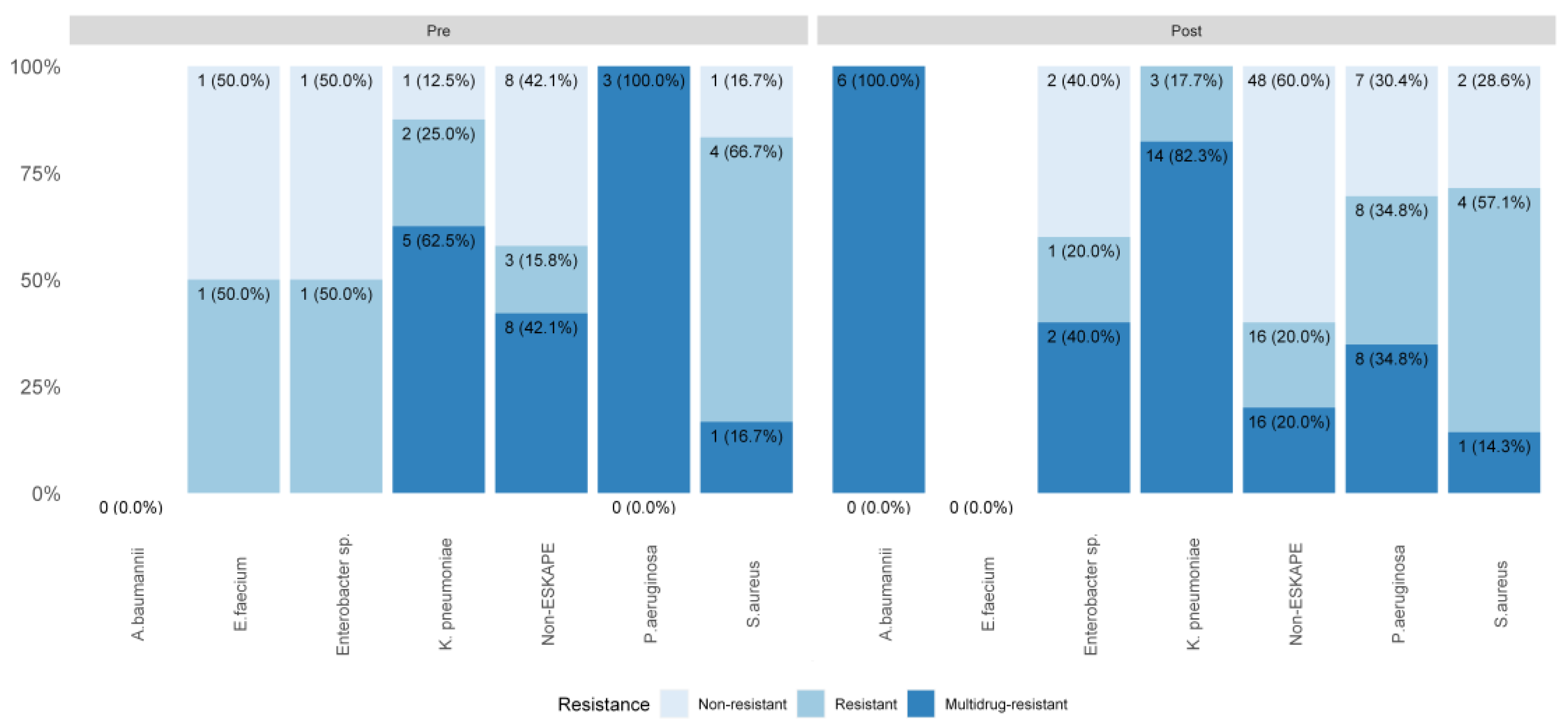
Figure 1 and Figure 2 reveal changes in bacterial resistance profiles in the post-COVID-19 period. There was an increase in cases of multidrug-resistant infections, particularly urinary tract infections (UTI), bloodstream infections (BSI), and ventilator-associated pneumonia in the ICU (VAP-ICU). Overall, multidrug-resistant infections shifted from a limited scenario in the pre-pandemic period (notably Klebsiella pneumoniae with 5 cases and Pseudomonas aeruginosa with 3 cases) to a more diverse and alarming post-pandemic context. K. pneumoniae, for example, increased from 5 to 14 multidrug-resistant cases, representing 29.8% of infections of this type, with a significant distribution in BSI (40%) and UTI (25%). Also, Acinetobacter baumannii infections were absent pre-pandemic, but post-pandemic, they accounted for 12.8% of multidrug-resistant (MDR) isolates overall. In VAP-ICU, they comprised 50% of MDR cases at that site.
Furthermore, there was a significant gain in resistance in bacteria such as Enterobacter spp. and Pseudomonas aeruginosa, although to a lesser extent. P. aeruginosa, for example, went from 3 (17.7%) multidrug-resistant cases in the pre-pandemic period to 8 (17.0%) in the post-pandemic period. The emergence of resistance was also noted in microorganisms not belonging to the ESKAPE group, with an increase in resistant and multidrug-resistant profiles (34% of the total in the post-pandemic period).

3.4. Financial Impact

There was an increase in costs during the pandemic period. Median monthly hospital costs rose 39%, from US$32.4 million (31.2–34.5) to US$53.2 million (43.8–57.0) (p < 0.001). Antimicrobial spending increased 45.7%, from US$4.0 million (3.8–4.3) to US$7.4 million (6.1–8.2) (p < 0.001). The median cost per patient increased from US$7,194 (6,898–7,502) to US$10,840 (10,317–11,365) (p < 0.001), with COVID-19 patients reaching US$49,660 (33,336–76,132), a fivefold increase (Table 4).

3.5. Pharmacist Activities

The median number of monthly pharmaceutical activities increased from 9,488 (8,703.25–10,102.5) in the pre-pandemic period to 11,589.5 (8,061.75–12,504.25) during COVID-19 (p = 0.042). Although the median number of activities per pharmacist increased from 214.66 (197.86–230.95) to 250.92 (164.0–262.2), this difference was not statistically significant (p = 0.131), suggesting that the individual workload may have varied without a consistent pattern. On the other hand, there was a significant increase in the number of pharmacists per day (p < 0.001), with the median rising from 44 (43–44) to 47.5 (45–49).
The number of hospitalized patients per month remained stable (p = 0.586) with a similar median: 4,524.5 (4,265.5–4,706.25) before and 4,582.5 (3,897.25–5,272.5) during the pandemic. This suggests that the increased pharmacist workload may be related more to the complexity of care in the context of COVID-19 than the volume of hospitalizations (Table 5).

3.6. Adverse Drug Reactions

During the COVID-19 pandemic, there was a significant increase in the total number of adverse drug reactions (ADRs), with 772 cases reported, compared to 312 cases pre-pandemic. The monthly average rose from 13.0 ± 8.0 to 21.4 ± 8.7 (p < 0.001). Antimicrobial related reactions specifically increased from 49 (37%) cases before the pandemic to 81 (63%) during the pandemic.
According to the classification by organ system (Table 10), skin tissue disorders were the most frequent in both periods, representing 30.6% of ADRs before COVID-19 and 28.4% during COVID-19. Disorders of the renal and urinary systems increased in absolute number from 11 to 15 cases, although the proportion decreased from 22.5% to 18.5%.
A marked reduction in ADRs affecting the lymphatic and blood systems was observed, decreasing from 8 cases (16.3%) pre-pandemic to 4 (4.9%) during the pandemic. Conversely, ADRs of a vascular nature increased from 8.2% to 12.4%, and the hepatobiliary ADRs from 2.0% to 7.4%. (Table 6)
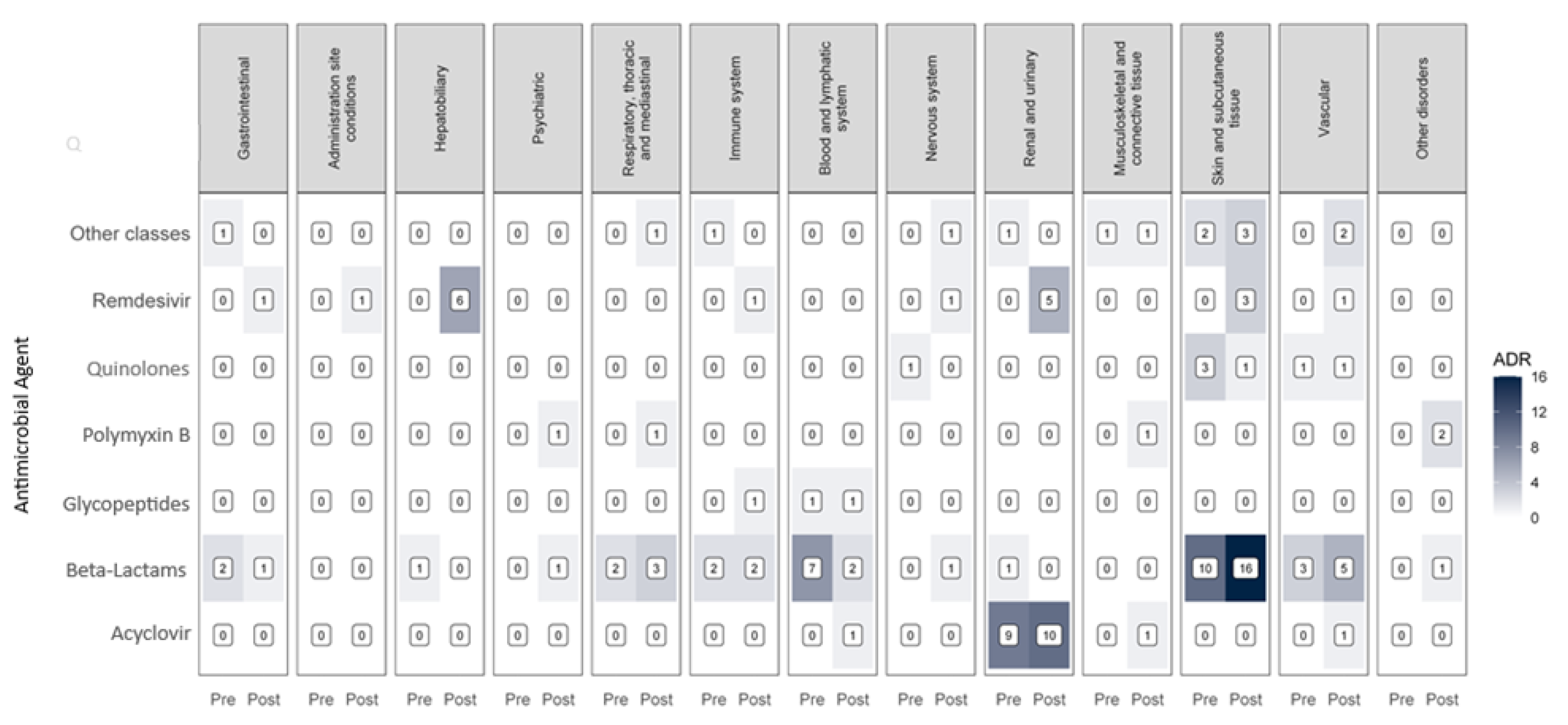
Before the pandemic, β-lactam antibiotics accounted for most ADRs, particularly in skin (10 cases), hematologic (7 cases), and vascular (3 cases) systems. During the pandemic, although β-lactam antibiotics continued to cause several reactions (16 skin, 5 vascular, among others), ADRs associated with remdesivir emerged, as these drugs were not used pre-pandemic. Remdesivir was associated with renal and urinary (5 cases), hepatobiliary (6 cases), and immune system (1 case) reactions, suggesting a toxicity profile for organs involved in excretion and metabolism. Acyclovir caused nephrotoxicity in 10 cases. In contrast, quinolone-associated ADRs decreased from 4 to 2 cases. ADRs involving polymyxins and glycopeptides, previously absent, appeared in small numbers, affecting respiratory, musculoskeletal, and psychiatric systems (Figure 3).
Figure S4 shows that ceftriaxone, remdesivir, acyclovir, and cefepime were the drugs most frequently associated with ADRs. Ceftriaxone caused recurrent ADRs both before and during the pandemic, mainly affecting skin, hematologic, and vascular systems. Cefepime predominantly caused skin and hematologic reactions in the pre-pandemic period. Other drugs, such as cefazolin, clindamycin, and polymyxin B, were less frequently associated with ADRs, affecting skin, nervous system, and musculoskeletal systems.

3.7. Linear Regression Models

Linear regression models evaluated factors associated with mean defined daily dose (DDD) by antimicrobial class. Three covariates showed statistically significant associations across classes: total patient-days, total hospital costs, and COVID-19 deaths. Positive coefficients indicate higher DDD (greater consumption), whereas negative coefficients indicate lower consumption.
Carbapenem (Table S2) and glycopeptide (Table S3) use showed a positive association with total hospital cost. For macrolides, mean DDD was positively associated with COVID-19 deaths and adverse drug reactions (ADRs) reports (Table S4). Polymyxin consumption was also positively associated with the number of COVID-19 deaths (Table S5). Echinocandin DDD increased due to higher hospital costs, multidrug resistance incidence, and pharmaceutical interventions (Table S6). Antiviral use was positively association with ADR reports (Table S7).

4. Discussion

This study highlighted the multiple impacts of the COVID-19 pandemic on hospital dynamics, with changes in clinical care, microbiological profiles, therapeutic practices, and financial indicators. There was a significant increase in hospitalizations, deaths, healthcare-associated infections (HAIs), antimicrobial consumption, and hospital costs. Furthermore, high rates of adverse drug reactions (ADRs) and a significant burden on healthcare professionals, particularly clinical pharmacists, were recorded. The complexity of care imposed by the pandemic reinforced the demand to adopt robust epidemiological surveillance strategies and rational antimicrobial management, especially in health crisis contexts.
Although the rise in hospitalizations during the pandemic did not reach statistical significance, the observed trend suggests relevant care pressures, which may have contributed to changes in the dynamics of hospital admissions and patient flows [17]. Hospital mortality increased significantly, and of the deaths recorded during the pandemic, 449 (30.1%) occurred in patients diagnosed with COVID-19. This increase is consistent with data in the literature, which indicates higher hospital mortality rates during pandemic peaks, often associated with bed shortages, limited response capacity, and overloaded health services [18]. In a study by Piroth et. al, the mortality rate for COVID-19 (16.9%) was significantly higher than that observed for seasonal influenza (5.8%) during the 2018–2019 season, a difference attributed to the greater clinical aggressiveness of COVID-19, including inflammatory and thromboembolic complications, as well as the initial lack of effective therapies [19].
Across antimicrobial classes, DDD and DOT for carbapenems, glycopeptides, polymyxin B, and echinocandins rose, with surges overlapping with pandemic peaks. This behavior, also documented in other studies, [20,21] was influenced by the empirical management of severe COVID-19 cases and the initial difficulty in differentiating pure viral infections from bacterial coinfections. Data support this scenario: there was an increase in the use of broad-spectrum β-lactams (from 78.1 to 142.5 DDD/1,000 patient-days), carbapenems (from 50.9 to 110.1), and colistin (from 4.1 to 13.3), all with p < 0.001 [22,23,24].
Carbapenems and glycopeptides were closely associated with greater clinical severity and correlated with increased hospital costs. This pattern reflects their use in empiric therapy for suspected bacterial coinfections in critically ill patients, often without microbiological confirmation [25]. While understandable in the context of clinical uncertainty, such practices underscore the importance of antimicrobial stewardship programs.
The use of polymyxin B, a last-line antimicrobial, also increased significantly, with mean DDD positively associated with COVID-19 deaths. These findings demonstrate its role in treating infections caused by multidrug-resistant pathogens. Similar patterns have been described in European and Asian, where increased polymyxin consumption was reported in ICUs with high rates of resistant Gram-negative organisms, such as Acinetobacter baumannii and Pseudomonas aeruginosa [26].
Echinocandin use correlated with higher costs, greater number of pharmaceutical interventions, invasive fungal infections and multidrug resistance. This suggests that echinocandins were primarily used in complex cases, such as severe candidemia or coinfections in immunosuppressed patients [27,28].
Macrolides, particularly azithromycin, were widely prescribed early in the pandemic due to their presumed anti-inflammatory and antiviral properties. However, subsequent studies questioned their effectiveness in the absence of bacterial infection and their use became associated with increased COVID-19 mortality and adverse drug responses [25,26].
The use of antivirals showed a significant decline during the pandemic. The antivirals included in this study were ganciclovir, remdesivir, acyclovir, and oseltamivir. The reduction can be explained by protocol revisions and clinical practice adaptations. For example, oseltamivir was abandoned after being deemed ineffective for COVID-19, while ganciclovir and acyclovir were used less frequently due to their narrower clinical indications. Remdesivir emerged as a new therapeutic option but was also linked to renal, hepatic, and immune-related ADRs. Notably, Paxlovid was not included in this study, as it became available only later. This downward trend in antiviral use was also observed in other countries, including the United Kingdom and Australia, where the abandonment of ineffective therapies and revisions of clinical protocols resulted in reduced utilization [29]. The negative correlation between antiviral use and hospital costs may reflect budgetary constraints or substitution with more effective therapies.
Triazole antifungal use remained stable, while overall antiviral use decreased sharply, reinforcing the broader trend of abandoning ineffective treatments and adapting care protocols in light of emerging evidence.
These changes in prescribing patterns reflect overload faced by hospital systems and the partial suspension of antimicrobial stewardship programs during the health crisis, leading to increased antimicrobial use in the absence of well-structured guidelines [30,31].
At the same time, HAIs increased, particularly those associated with invasive devices such as mechanical ventilators, central venous catheters, and urinary catheters. This aligns with international studies linking higher HAI rates to hospital overload and prioritization of emergency measures over routine infection control [32].
Microbiologically, the study observed rising rates of multidrug-resistant organisms, including increased Klebsiella pneumoniae, the emergence of multidrug-resistant Acinetobacter baumannii, and the higher prevalence of Pseudomonas aeruginosa. These trends suggest a reversal of prior gains in antimicrobial-resistance control and align with reviews reporting 15-78% increases in resistant pathogens among COVID-19 patients, with a subsequent impact on mortality [2].
Conversely, a statistically significant reduction in Clostridioides difficile infections was recorded. This may be explained by more stringent infection control measures, such as patient isolation, personal protective equipment, and enhanced sanitation, adopted in hospitals dedicated exclusively to COVID-19 care, which appear to have offset the increased antimicrobial use [33,34].
The pandemic also broadened the scope of work for hospital pharmacists, necessitating team reorganization, expanded responsibilities, and adaptations in internal processes to ensure continuity of care. The findings of this study emphasize the need for workforce expansion to adequately meet the demands arising from increased activity and care complexity [35]. Paudyal et al., in a study across 16 European countries, confirmed this trend, highlighting accelerated adoption of remote practices and the importance of continuous training [36]. Pharmacists increasingly contributed to infection control, antimicrobial management, clinical decision-making, and therapeutic protocol review, while also addressing drug shortages and heightened demands for pharmacovigilance [37,38].
The intensification of care, greater use of high-cost medications, and the need for advanced supportive therapies significantly increased hospitalization costs. International data corroborate these findings: in the United States, the mean cost per inpatient stay rose from US$10,394 in March 2020 to US$13,072 by March 2022, with even higher costs for advanced therapies such as ECMO [39], while in Europe, COVID-19-related costs were especially high in intensive care units [40].
The observed increase in ADRs is consistent with reports linking intensive pharmacological exposure and systemic inflammation in COVID-19 to greater adverse event risks. Skin reactions remained the most common, especially with β-lactams, while hepatobiliary and vascular ADRs increased. Remdesivir was strongly associated with renal, hepatic, and immunological reactions, highlighting the need for pharmacovigilance. The diversity of ADRs observed underscores the risks of extensive empirical antimicrobial use and the importance of active monitoring and cautious prescribing [41,42].
This study has limitations. Conducted in a single quaternary referral hospital, the results may not be generalizable to institutions with different care profiles. The cost analysis focused on overall hospitalization and antimicrobial use, without stratification by department, materials, or procedures. Despite these limitations, the study offers several strengths. It integrates multiple outcomes related to COVID-19 to provide a comprehensive view of the pandemic’s hospital impacts. Its differentiated statistical approach identified significant correlations between variables over time, strengthening the validity of the findings. The results provide useful information for institutional policies on antimicrobial stewardship programs, epidemiological surveillance, and sustainable financial planning in health crises.

5. Conclusions

This study contributes to understanding the systemic effects of the COVID-19 pandemic on the hospital environments and emphasizes the importance of integrated surveillance, rational antimicrobial use, and strengthening multidisciplinary teams. The challenges faced should not be regarded solely as inevitable consequences of a health crisis, but as opportunities to improve practices, prevent setbacks, and build more resilient health systems prepared for future emergencies.

Supplementary Materials

The following supporting information can be downloaded at the website of this paper posted on Preprints.org, Figure S1. Time series of mean DDD of the carbapenems group; Figure S2. Time series of mean DDD of the glycopeptides group; Figure S3. Time series of mean DDD of the polymyxins group; Table S1. Comparison of antimicrobial consumption (DOT) per 1000 patient-days between the periods before and during COVID-19; Figure S4. Heatmap chart of antimicrobial adverse reactions before and during COVID-19; Table S2. Linear regression model (DDD Carbapenem Group); Table S3. Linear regression model (DDD Glycopeptides Group); Table S4. Linear regression model (DDD Macrolides Group); Table S5. Linear regression model (DDD Polymyxins Group); Table S6. Linear regression model (DDD Echinocandins Group); Table S7. Linear regression model (DDD Antivirals Group).

Author Contributions

For research articles with several authors, a short paragraph specifying their individual contributions must be provided. The following statements should be used “Conceptualization, A.G.C. and A.R.M.; methodology, A.G.C. and A.R.M.; validation, A.G.C., A.R.M. and A.L.F.C.; formal analysis, A.P.S., A.G.C. and A.R.M.; investigation, A.G.C., A.R.M., T.A.M., R.G.S., S.M.A., I.L.R., B.B., L.M.S., A.R.T., D.T.M. and A.L.F.C.; resources, A.G.C. and S.M.A.; data curation, A.G.C., E.S.V., and I.L.R.; writing—original draft preparation, A.G.C., A.R.M., I.P. and M.B.E.; writing—review and editing, A.G.C., A.R.M., I.P., A.L.F.C., I.L.R., T.A.M., L.M.S., B.B., A.R.T., R.G.S., D.T.M., A.P.S., E.S,V., M.B.E., S.M.A.; visualization, A.G.C., A.R.M. and I.P.; supervision, A.R.M. and S.M.A.; project administration, A.G.C. and A.R.M.; funding acquisition, A.G.C.,A.R.M. and S.M.A. All authors have read and agreed to the published version of the manuscript.”.

Funding

This research received no external funding.

Institutional Review Board Statement

This study was approved by the Ethics Committee of the Hospital Israelita Albert Einstein (protocol number 5.464.155; CAAE: 83487924.6.0000.0071) on June 11, 2022. All procedures in this study were conducted in accordance with the 1975 Helsinki Declaration, as revised in 2013.

Informed Consent Statement

Patient consent was waived due to the following reasons: (i) as it is a retrospective observational study, which will only use information from medical records, institutional information systems and/or other sources of data and clinical information available at the institution with no provision for the use of biological material; (ii) because all data will be handled and analyzed anonymously, without nominal identification of research participants; (iii) because the results resulting from the study will be presented in aggregate form, not allowing the individual identification of participants; and (iv) because it is a non-interventional study (without clinical interventions) and without changes/influences in the routine/treatment of the research participant and, consequently, without adding risks or harm to the well-being of the members. Furthermore, we will not be able to obtain consent from all participants in this research.

Data Availability Statement

The raw data supporting the conclusions of this article will be made available by the authors, without undue reservation.

Acknowledgments

The authors acknowledge the support and resources provided by the Hospital Israelita Albert Einstein, São Paulo, Brazil, and extend thanks to everyone who contributed to this work.

Conflicts of Interest

All authors report no conflict of interest relevant to this article.

References

  1. Witt, L.S.; Howard-Anderson, J.R.; Jacob, J.T.; Gottlieb, L.B. The Impact of COVID-19 on Multidrug-Resistant Organisms Causing Healthcare-Associated Infections: A Narrative Review. JAC Antimicrob Resist 2022, 5. [Google Scholar] [CrossRef]
  2. Kariyawasam, R.M.; Julien, D.A.; Jelinski, D.C.; Larose, S.L.; Rennert-May, E.; Conly, J.M.; Dingle, T.C.; Chen, J.Z.; Tyrrell, G.J.; Ronksley, P.E.; et al. Antimicrobial Resistance (AMR) in COVID-19 Patients: A Systematic Review and Meta-Analysis (November 2019–June 2021). Antimicrob Resist Infect Control 2022, 11, 45. [Google Scholar] [CrossRef]
  3. Murray, C.J.; Ikuta, K.S.; Sharara, F.; Swetschinski, L.; Robles Aguilar, G.; Gray, A.; Han, C.; Bisignano, C.; Rao, P.; Wool, E.; et al. Global Burden of Bacterial Antimicrobial Resistance in 2019: A Systematic Analysis. Lancet 2022, 399, 629. [Google Scholar] [CrossRef]
  4. Antimicrobial Stewardship Programmes in Health-Care Facilities in Low- and Middle-Income Countries: A WHO Practical Toolkit. JAC Antimicrob Resist 2019, 1, dlz072. [CrossRef]
  5. Pierce, J.; Stevens, M.P. COVID-19 and Antimicrobial Stewardship: Lessons Learned, Best Practices, and Future Implications. International Journal of Infectious Diseases 2021, 113, 103. [Google Scholar] [CrossRef] [PubMed]
  6. Elshenawy, R.A.; Umaru, N.; Alharbi, A.B.; Aslanpour, Z. Antimicrobial Stewardship Implementation before and during the COVID-19 Pandemic in the Acute Care Settings: A Systematic Review. BMC Public Health 2023, 23, 309. [Google Scholar] [CrossRef] [PubMed]
  7. Adrie, C.; Garrouste-Orgeas, M.; Ibn Essaied, W.; Schwebel, C.; Darmon, M.; Mourvillier, B.; Ruckly, S.; Dumenil, A.S.; Kallel, H.; Argaud, L.; et al. Attributable Mortality of ICU-Acquired Bloodstream Infections: Impact of the Source, Causative Micro-Organism, Resistance Profile and Antimicrobial Therapy. Journal of Infection 2017, 74, 131–141. [Google Scholar] [CrossRef] [PubMed]
  8. Anvisa Nota Técnica GVIMS-GGTES No 05-2017. 2017.
  9. ATCDDD - ATC/DDD Index Available online:. Available online: https://atcddd.fhi.no/atc_ddd_index_and_guidelines/atc_ddd_index/ (accessed on 18 August 2025).
  10. Magiorakos, A.P.; Srinivasan, A.; Carey, R.B.; Carmeli, Y.; Falagas, M.E.; Giske, C.G.; Harbarth, S.; Hindler, J.F.; Kahlmeter, G.; Olsson-Liljequist, B.; et al. Multidrug-Resistant, Extensively Drug-Resistant and Pandrug-Resistant Bacteria: An International Expert Proposal for Interim Standard Definitions for Acquired Resistance. Clinical Microbiology and Infection 2012, 18, 268–281. [Google Scholar] [CrossRef]
  11. Sills, J.M. World Health Organization Adverse Reaction Terminology Dictionary. Drug Inf J 1989, 23, 211–216. [Google Scholar] [CrossRef]
  12. Siegel, S.; Para Baixar, D. Estatística Não-Paramétrica Para Ciências Do Comportamento PDF.
  13. KOSAMBI, D.D. An Extension of the Least-Squares Method for Statistical Estimation. Ann Eugen 1947, 13, 257–261. [Google Scholar] [CrossRef]
  14. Charnet R, F.Ca.C.E.B.H. Análise de Modelos de Regressão Linear Com Aplicações. 2008.
  15. Royston, J.P. An Extension of Shapiro and Wilk’s W Test for Normality to Large Samples. Appl Stat 1982, 31, 115. [Google Scholar] [CrossRef]
  16. Pfaff, B. Analysis of Integrated and Cointegrated Time Series with R. Analysis of Integrated and Cointegrated Time Series with R 2008. [Google Scholar] [CrossRef]
  17. Menezes-Filho, N.; Komatsu, B.K.; Villares, L. The Impacts of COVID-19 Hospitalizations on Non-COVID-19 Deaths and Hospitalizations: A Panel Data Analysis Using Brazilian Municipalities. PLoS One 2023, 18, e0295572. [Google Scholar] [CrossRef]
  18. Kadri, S.S.; Sun, J.; Lawandi, A.; Strich, J.R.; Busch, L.M.; Keller, M.; Babiker, A.; Yek, C.; Malik, S.; Krack, J.; et al. Association between Caseload Surge and Covid-19 Survival in 558 u.s. Hospitals, March to August 2020. Ann Intern Med 2021, 174, 1240–1251. [Google Scholar] [CrossRef]
  19. Piroth, L.; Cottenet, J.; Mariet, A.S.; Bonniaud, P.; Blot, M.; Tubert-Bitter, P.; Quantin, C. Comparison of the Characteristics, Morbidity, and Mortality of COVID-19 and Seasonal Influenza: A Nationwide, Population-Based Retrospective Cohort Study. Lancet Respir Med 2021, 9, 251–259. [Google Scholar] [CrossRef]
  20. Langford, B.J.; So, M.; Raybardhan, S.; Leung, V.; Soucy, J.P.R.; Westwood, D.; Daneman, N.; MacFadden, D.R. Antibiotic Prescribing in Patients with COVID-19: Rapid Review and Meta-Analysis. Clinical Microbiology and Infection 2021, 27, 520–531. [Google Scholar] [CrossRef] [PubMed]
  21. Rawson, T.M.; Moore, L.S.P.; Zhu, N.; Ranganathan, N.; Skolimowska, K.; Gilchrist, M.; Satta, G.; Cooke, G.; Holmes, A. Bacterial and Fungal Coinfection in Individuals with Coronavirus: A Rapid Review to Support COVID-19 Antimicrobial Prescribing. Clinical Infectious Diseases 2020, 71, 2459–2468. [Google Scholar] [CrossRef] [PubMed]
  22. Allel, K.; Peters, A.; Conejeros, J.; Martínez, J.R.W.; Spencer-Sandino, M.; Riquelme-Neira, R.; Rivas, L.; Rojas, P.; Orellana Chea, C.; García, P.; et al. Antibiotic Consumption During the Coronavirus Disease 2019 Pandemic and Emergence of Carbapenemase-Producing Klebsiella Pneumoniae Lineages Among Inpatients in a Chilean Hospital: A Time-Series Study and Phylogenomic Analysis. Clinical Infectious Diseases 2023, 77, S20–S28. [Google Scholar] [CrossRef]
  23. Khan, S.; Hasan, S.S.; Bond, S.E.; Conway, B.R.; Aldeyab, M.A. Antimicrobial Consumption in Patients with COVID-19: A Systematic Review and Meta-Analysis. Expert Rev Anti Infect Ther 2022, 20, 749–772. [Google Scholar] [CrossRef] [PubMed]
  24. Grau, S.; Echeverria-Esnal, D.; Gómez-Zorrilla, S.; Navarrete-Rouco, M.E.; Masclans, J.R.; Espona, M.; Gracia-Arnillas, M.P.; Duran, X.; Comas, M.; Horcajada, J.P.; et al. Evolution of Antimicrobial Consumption During the First Wave of COVID-19 Pandemic. Antibiotics 2021, Vol. 10, Page 132 2021, 10, 132. [Google Scholar] [CrossRef]
  25. Pinte, L.; Ceasovschih, A.; Niculae, C.M.; Stoichitoiu, L.E.; Ionescu, R.A.; Balea, M.I.; Cernat, R.C.; Vlad, N.; Padureanu, V.; Purcarea, A.; et al. Antibiotic Prescription and In-Hospital Mortality in COVID-19: A Prospective Multicentre Cohort Study. J Pers Med 2022, 12, 877. [Google Scholar] [CrossRef]
  26. Ul Mustafa, Z.; Salman, M.; Aldeyab, M.; Kow, C.S.; Hasan, S.S. Antimicrobial Consumption among Hospitalized Patients with COVID-19 in Pakistan. SN Compr Clin Med 2021, 3, 1691–1695. [Google Scholar] [CrossRef]
  27. Golli, A.L.; Zlatian, O.M.; Cara, M.L.; Olteanu, M. Pre- and Post-COVID-19 Antimicrobial Resistance Pattern of Pathogens in an Intensive Care Unit. Pharmaceuticals 2024, 17. [Google Scholar] [CrossRef]
  28. Golli, A.L.; Popa, S.G.; Ghenea, A.E.; Turcu, F.L. The Impact of the COVID-19 Pandemic on the Antibiotic Resistance of Gram-Negative Pathogens Causing Bloodstream Infections in an Intensive Care Unit. Biomedicines 2025, 13, 379. [Google Scholar] [CrossRef]
  29. Nie, Z.; Sun, T.; Zhao, F. Safety and Efficacy of Antiviral Drugs for the Treatment of COVID-19: A Systematic Review. Infect Drug Resist 2022, 15, 4457. [Google Scholar] [CrossRef]
  30. AlBahrani, S.; Almogbel, F.; Alanazi, W.; Almutairi, S.H.; Alanazi, M.; Maximos, S.; Azaiez, F.; Osman, A.; Almuthen, S.; Jebakumar, A.Z.; et al. Carbapenem Use Correlates with Percentage of Patients with COVID-19 in Intensive Care Units. Infection 2023, 51, 331–336. [Google Scholar] [CrossRef]
  31. Fukushige, M.; Ngo, N.H.; Lukmanto, D.; Fukuda, S.; Ohneda, O. Effect of the COVID-19 Pandemic on Antibiotic Consumption: A Systematic Review Comparing 2019 and 2020 Data. Front Public Health 2022, 10. [Google Scholar] [CrossRef] [PubMed]
  32. Baccolini, V.; Migliara, G.; Isonne, C.; Dorelli, B.; Barone, L.C.; Giannini, D.; Marotta, D.; Marte, M.; Mazzalai, E.; Alessandri, F.; et al. The Impact of the COVID-19 Pandemic on Healthcare-Associated Infections in Intensive Care Unit Patients: A Retrospective Cohort Study. Antimicrob Resist Infect Control 2021, 10, 1–9. [Google Scholar] [CrossRef] [PubMed]
  33. Vendrik, K.E.W.; Baktash, A.; Goeman, J.J.; Harmanus, C.; Notermans, D.W.; de Greeff, S.C.; Kuijper, E.J. Comparison of Trends in Clostridioides Difficile Infections in Hospitalised Patients during the First and Second Waves of the COVID-19 Pandemic: A Retrospective Sentinel Surveillance Study. The Lancet Regional Health - Europe 2022, 19. [Google Scholar] [CrossRef] [PubMed]
  34. Hilvers, E.; Matizanadzo, J.; McClure, V.; Butterick, P.; Morgan, M. Clostridioides Difficile Infection Following COVID-19: A Nationwide Analysis Using Routine Surveillance Data in Wales. Journal of Hospital Infection 2024, 0. [Google Scholar] [CrossRef]
  35. Pantasri, T. Expanded Roles of Community Pharmacists in COVID-19: A Scoping Literature Review. Journal of the American Pharmacists Association 2021, 62, 649. [Google Scholar] [CrossRef] [PubMed]
  36. Paudyal, V.; Cadogan, C.; Fialová, D.; Henman, M.C.; Hazen, A.; Okuyan, B.; Lutters, M.; Stewart, D. Provision of Clinical Pharmacy Services during the COVID-19 Pandemic: Experiences of Pharmacists from 16 European Countries. Research in Social & Administrative Pharmacy 2020, 17, 1507. [Google Scholar] [CrossRef]
  37. Parreiras Martins, M.A.; Fonseca de Medeiros, A.; Dias Carneiro de Almeida, C.; Moreira Reis, A.M. Preparedness of Pharmacists to Respond to the Emergency of the COVID-19 Pandemic in Brazil: A Comprehensive Overview. Drugs & Therapy Perspectives 2020, 36, 455. [Google Scholar] [CrossRef]
  38. Liu, C.; Patel, K.; Cernero, B.; Baratt, Y.; Dandan, N.; Marshall, O.; Li, H.; Efird, L. Expansion of Pharmacy Services During COVID-19: Pharmacists and Pharmacy Extenders Filling the Gaps Through Telehealth Services. Hosp Pharm 2021, 57, 349. [Google Scholar] [CrossRef]
  39. Kapinos, K.A.; Peters, R.M.; Murphy, R.E.; Hohmann, S.F.; Podichetty, A.; Greenberg, R.S. Inpatient Costs of Treating Patients With COVID-19. JAMA Netw Open 2024, 7, e2350145–e2350145. [Google Scholar] [CrossRef]
  40. Kanerva, M.; Rautava, K.; Kurvinen, T.; Marttila, H.; Finnilä, T.; Rantakokko-Jalava, K.; Pietilä, M.; Mustonen, P.; Kortelainen, M. Economic Impact and Disease Burden of COVID-19 in a Tertiary Care Hospital: A Three-Year Analysis. PLoS One 2025, 20, e0323200. [Google Scholar] [CrossRef]
  41. Marins, T.A.; Marra, A.R.; Edmond, M.B.; Colombo, L.R.P.; Vieira, S.F.; De Oliveira Xavier, F.; Chauvin, A.G.; Pinho, J.R.R.; De Almeida, S.M.; Junior, M.S.D. Adverse Drug Reactions and Drug Interactions in the Treatment of Hospitalized Patients with Coronavirus Disease 2019 (COVID-19). Antimicrobial Stewardship and Healthcare Epidemiology 2021, 1. [Google Scholar] [CrossRef]
  42. Sun, J.; Deng, X.; Chen, X.; Huang, J.; Huang, S.; Li, Y.; Feng, J.; Liu, J.; He, G. Incidence of Adverse Drug Reactions in COVID-19 Patients in China: An Active Monitoring Study by Hospital Pharmacovigilance System. Clin Pharmacol Ther 2020, 108, 791. [Google Scholar] [CrossRef] [PubMed]
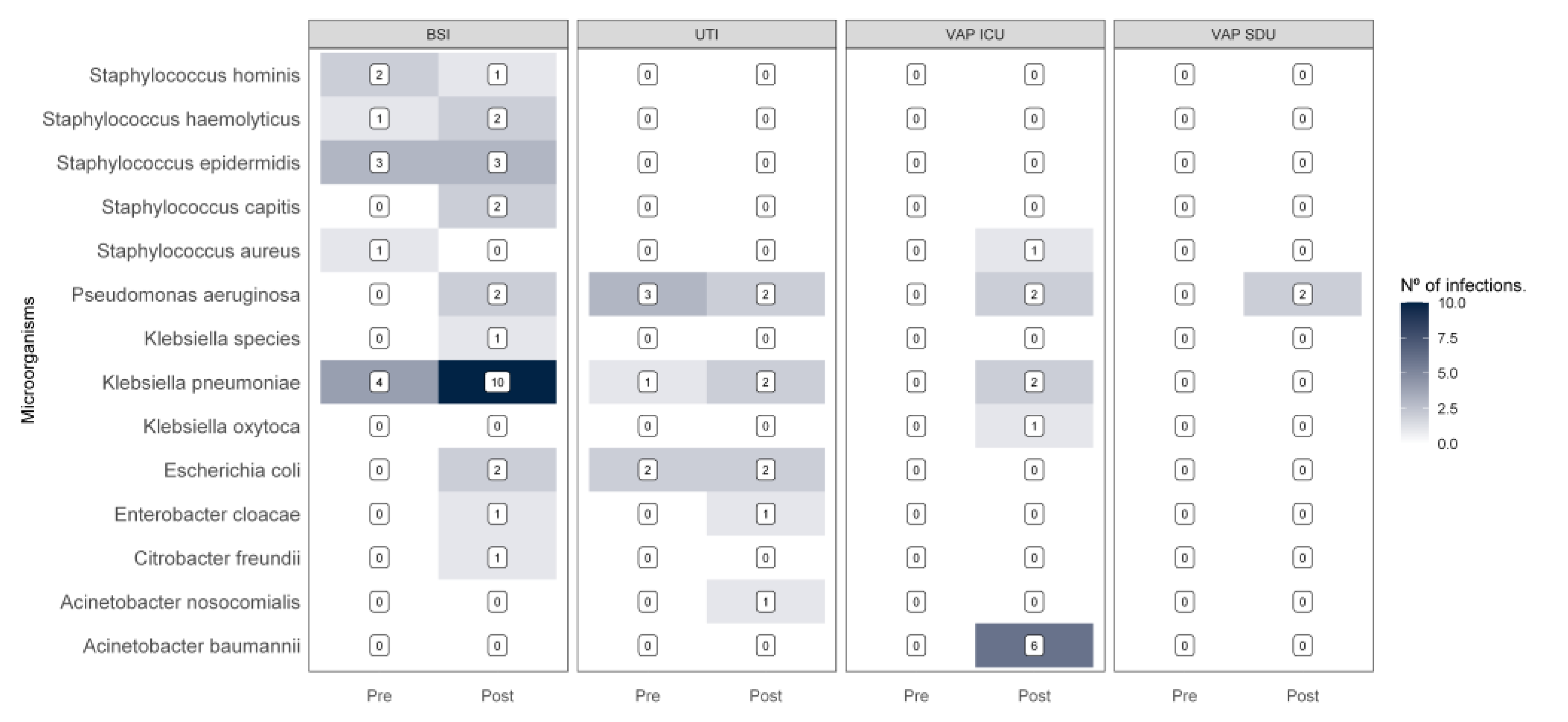
Figure 1. Heatmaps of multidrug-resistant microorganisms at different infection sites, before and during the pandemic. Note: BSI: bloodstream infection; UTI: urinary tract infection; VAP- SDU: ventilator-associated pneumonia in the step-down unit.; VAP-ICU: ventilator-associated pneumonia in the intensive care unit.
Preprints 179463 g001
Figure 2. Microbiological profile regarding antimicrobial resistance before and during the COVID-19 pandemic.
Preprints 179463 g002
Figure 3. Heatmap of adverse reactions by antimicrobial class before and during COVID-19.
Preprints 179463 g003
Table 1. A comparison of hospitalization data, antimicrobial use, and deaths before and during the COVID-19 pandemic.
Before COVID-19 During COVID-19 p-value
N (%) N (%)
Hospitalized patients
Total 116,591 (43.4%) 152,122 (56.6%) -
Monthly mean (± SD) 4,484 (± 286) 4,474 (± 874) 0.586
Hospitalized patients using antimicrobials
Total 60,502 (42.8%) 80,922 (57.2%) -
Monthly mean (± SD) 2,327 (± 149.1) 2,380 (± 464.4) 0.399
Patient/days
Total 415,252 (43.3%) 543,500 (56.7%) -
Monthly mean (± SD) 15,971 (± 1,915.9) 15,985 (± 2,325.2) 0.706
Hospitalized patients with COVID-19 using antimicrobials - 6,936 -
Deaths
Total 861 (36.6%) 1494 (63.4%) -
Monthly mean (± SD 33.12 (± 7.7) 43.94 (± 13.0) <0.001
Deaths in COVID-19 patients - 449 (30.1%) -
Note: n = number; SD: Standard deviation.
Table 2. Antimicrobial consumption (DDD) per 1000 patient-days comparison before and during the COVID-19 pandemic.
Antimicrobial Before COVID-19 After COVID-19 p-value
1st and 2nd generation cephalosporin (Cefazolin, Cephalothin, Cefuroxime)
Mean ± SD 57.2 ± 5.2 52.1 ± 10.4
Median [IQR] 57.8 [55.3 – 59.9] 54.8 [48.3 – 59.3] 0.061
3rd, 4th and 5th cephalosporin (Ceftriaxone, Cefotaxime, Ceftazidime, Cefepime, Ceftaroline)
Mean ± SD 39.7 ± 2.7 44.2 ± 7.6
Median [IQR] 39.7 [37.4 – 41.5] 42.1 [38.1 – 48.60-] 0.028
Cephalosporin + β-lactamase inhibitors
Mean ± SD 2.4 ± 2.8 13.2 ± 4.6
Median [IQR] 1.1 [0 – 4.2] 13.3 [11.1 – 15.8] <0.001
Macrolides
Mean ± SD 20.1 ± 3.3 28.1 ± 15.8
Median [IQR] 19.3 [18.0 – 22.7] 24.3 [16.5 – 32.5] 0.128
Carbapenems
Mean ± SD 26.8 ± 4.0 31.4 ± 4.4
Median [IQR] 26.9 [23.6 – 29.7] 30.8 [28.4 – 34.0] <0.001
Glycopeptides
Mean ± SD 39.2 ± 4.8 52.5 ± 11.4
Median [IQR] 39.2 [35.2 – 43.0] 49.1 [45.5 – 56.0] <0.001
Polymyxin B
Mean ± SD 5.1 ± 2.9 19.1 ± 14.7
Median [IQR] 4.6 [3.6 – 6.3] 14.4 [8.5 – 24.6] <0.001
Echinocandins
Mean ± SD 17.0 ± 5.1 28.4 ± 9.6
Median [IQR] 17.6 [14.3 – 20.7] 26.5 [22.5 – 31.3] <0.001
Triazole Antifungals
Mean ± SD 15.5± 3.3 17.0 ± 4.6 0.166
Median [IQR] 15.7 [13.2 – 18.0] 16.2 [14.0 – 19.8]
Antivirals
Mean ± SD 8.8 ± 10.9 4.8 ± 6.1
Median [IQR] 4.1 [3.3 – 5.9] 3.0 [1.6 – 6.2] 0.020
Note: IQR: Interquartile range (1st and 3rd quartiles); SD: Standard deviation.
Table 3. Antimicrobial consumption (DDD) per 1000 patient-days comparison before and during the COVID-19 pandemic.
Total Before COVID-19 Before
COVID-19
Total During COVID-19 During COVID-19 p-value
N (%) N (%)
Healthcare-associated infections 40 (22.5%) 138 (77.5%)
Healthcare-associated infections incidence rate per 10,000 patient-days - 1.12 - 2.30 <0.001
Bloodstream infections incidence rate per 1000 catheter-days - -
Mean ± SD 0.28 ± 0.29 0.40 ± 0.32
Median [IQR] 0.25 [0.00 – 0.49] 0.34 [0.16 – 0.61] 0.216
Urinary tract infections incidence rate per 1,000 catheter-days - -
Mean ± SD 0.35 ± 0.61 0.40 ± 0.49
Median [IQR] 0.00 [0.00 – 0.83] 0.00 [0.00 – 0.73] 0.453
Ventilator-associated infection incidence rate per 1,000 ventilator-days - -
Mean ± SD 0.72 ± 2.16 1.08 ± 1.30
Median [IQR] 0.0 [0.00 – 0.00] 0.35 [0,00 – 1.97] 0.016
Group ESKAPE infections 21 (26.6%) 58 (73.4%)
Group ESKAPE infections incidence rate per 10,000 patient-days - 0.59 - 0.97 0.076
Note: IQR: Interquartile range (1st and 3rd quartiles); SD: Standard deviation.
Table 4. Hospital financial impact before and during COVID-19 pandemic.
Before
COVID-19
During
COVID-19
Change (%) p-value
Total Costs (millions of US$) 844.52 1,682.93 -
Median monthly [IQR] 32.42 [31.22-34.47] 53.20 [43.82-56.96] 39.0% <0.001
Range 25.82 – 38.16 20.49 - 61.71
Monthly antimicrobial costs (millions of US$)
Median [IQR] 4.03 [3.76-4.34] 7.44 [6.11- 8.22] 45.7% <0.001
Range 3.04 – 5.60 3.37 – 9.46
Cost per patient (US$)
Median [IQR] 7,194 [6,898-7,502] 10,840 [10,317 – 11,365] 33.6% <0.001
Range 6,037 – 8,635 8,311 – 16,750
Total costs of COVID-19 patients (millions of US$)
Median [IQR] - 8.66 [5.56-12.03] -
Range - 0.21-22.77 -
Cost per patient with COVID-19 (US$)
Median [IQR] - 49,660 [33,336 – 76,132] -
Range - 5,302 – 135,866 -
Note: IQR: Interquartile range (1st and 3rd quartiles);.
Table 5. Workload for pharmacist’s comparison before and during COVID-19.
Before COVID-19 During COVID-19 p-value
Monthly pharmaceutical activities
Median [IQR] 9,488 [8,703.25 – 10,102.5] 11,589.5 [8,061.75 – 12,504.25] 0.042
Range 7,072 – 11,324 6,596 – 14,519
Monthly pharmaceutical activities per pharmacist
Median [IQR] 214.66 [197.86 – 230.95] 250.92 [164.07 – 262.25] 0.131
Range 164.5 – 248.6 140.3 – 312.4
N of pharmaceutics / day
Median [IQR] 44 [43 - 44] 47.5 [45 - 49] <0.001
Range 42 - 47 43 - 51
Hospitalized patients / month
Median [IQR] 4,524.5 [4,265.5 – 4,706.25] 4,582.5 [3,897.25 – 5,272.5] 0.586
Range 4,002 – 4,948 1,979 – 5,565
Note: IQR: Interquartile range (1st and 3rd quartiles); SD: Standard deviation.
Table 6. Adverse drug reactions (ADRs) to antimicrobials according to the system organ.
System Total ADRs Before
COVID-19
During COVID-19
Skin tissue 38 15 (30.61%) 23 (28.4%)
Renal and urinary 26 11 (22.45%) 15 (18.52%)
Lymphatic and blood* 12 8 (16.33%) 4 (4.94%)
Vascular* 14 4 (8.16%) 10 (12.35%)
Immune 7 3 (6.12%) 4 (4.94%)
Hepatobiliary 7 1 (2.04%) 6 (7.41%)
Gastrointestinal 5 3 (6.12%) 2 (2.47%)
Respiratory 7 2 (4.08%) 5 (6.17%)
Nervous 4 1 (2.04%) 3 (3.7%)
Connective tissue and musculoskeletal 4 1 (2.04%) 3 (3.7%)
Psychiatric 2 0 (0%) 2 (2.47%)
Others 4 0 (0%) 4 (4,93%)
Note: *Examples of ADRs: Lymphatic and blood system - agranulocytosis (e.g., due to beta-lactams); Vascular system - vasculitis (e.g., drug-induced hypersensitivity vasculitis).
Disclaimer/Publisher’s Note: The statements, opinions and data contained in all publications are solely those of the individual author(s) and contributor(s) and not of MDPI and/or the editor(s). MDPI and/or the editor(s) disclaim responsibility for any injury to people or property resulting from any ideas, methods, instructions or products referred to in the content.
Copyright: This open access article is published under a Creative Commons CC BY 4.0 license, which permit the free download, distribution, and reuse, provided that the author and preprint are cited in any reuse.
Prerpints.org logo

Preprints.org is a free preprint server supported by MDPI in Basel, Switzerland.

Subscribe

Disclaimer

Terms of Use

Privacy Policy

Privacy Settings

© 2025 MDPI (Basel, Switzerland) unless otherwise stated