

Submitted:
05 October 2025
Posted:
06 October 2025
You are already at the latest version
Abstract
The global demand for compost, produced through the bioconversion of organic waste into nutrient-rich soil amendments, is increasing due to the adverse environmental, health, and economic impacts of synthetic fertilizers. Compost use offers a cost-effective and sustainable alternative, improving soil fertility and long-term productivity. However, the potential of tobacco waste as a composting substrate remains insufficiently investigated. This study aimed to evaluate the feasibility of utilizing tobacco waste as a composting feedstock and to develop an optimized composting method. Tobacco waste (scrap leaves and midrib stems) was composted with cow manure in earthen pots to promote decomposition and nutrient mineralization, and its performance was compared with compost produced from cow manure and vegetable waste (vegetable leaves). Vermicomposting, which involves the addition of earthworms to conventional compost treatments, was also implemented to enhance composting efficiency and nutrient release. The final composts, both conventional and vermicompost, were analyzed for organic carbon (OC), nitrogen (N), phosphorus (P), potassium (K), sulfur (S), and the maturity duration. Among the three conventional compost variants, the mixture of cow manure and vegetable waste exhibited a notable nutrient composition, with the highest organic carbon (15.3%) and phosphorus (0.42%) contents. All three vermicompost variants outperformed their conventional counterparts in terms of nutrient concentrations and achieved maturity in shorter durations. The vermicompost, comprising cow manure, vegetable leaves, and earthworms, recorded the highest levels of organic carbon (45.3%) and nitrogen (2.50%), reaching maturity within 40 days. The cow manure with tobacco stem mixed vermicompost was notable for its elevated potassium (1.35%) and sulfur (0.89%) contents. The results indicate that vermicomposting offers a faster and more nutrient-enriched composting approach, particularly with vegetable residues. Incorporating tobacco waste into this process has the potential to produce high-quality compost, presenting a sustainable strategy for waste valorization and enhancing soil fertility.
Keywords:
compost
; vermicompost
; tobacco waste
; organic waste
; soil amendment
1. Introduction
Bangladesh faces a critical issue in its agriculture sector due to the progressive depletion of soil organic matter. Presently, most soils in Bangladesh contain less than 2% organic matter, and about 45% of cultivable land has levels below 1% (Sultana et al., 2020). This alarming depletion occurred due to intensive farming, overuse of chemical fertilizers, and minimal application of organic amendments, leading to reduced soil fertility and stagnating crop productivity in several regions (Das et al., 2018; S. Islam et al., 2017). Moreover, rapid urbanization and industrialization have significantly increased solid waste generation from domestic, commercial, and agro-industrial sectors. This increase in waste, driven by population growth and rising living standards, creates a serious challenge to environmental sustainability (F. A. S. Islam, 2023).
Rice, jute, sugarcane, potato, pulses, wheat, tea, and tobacco are the principal crops of Bangladesh, contributing about 56% of the total agricultural GDP (Golder et al., 2013). The tobacco industry remains economically significant, with about 1% of the national GDP allocated to tobacco-related activities (Hassan et al., 2015). Despite occupying only 0.22% of agricultural land and employing less than 0.5% of the labor force, tobacco remains economically lucrative compared to many staple crops (Karim et al., 2016). During the 2020–2021 cropping year, 100,285 acres of land were cultivated with tobacco, yielding 92,327 metric tons (BBS, 2022).
Globally, tobacco waste was estimated at 1.25 million metric tons in 2005 (Statista, 2023). Tobacco cultivation and manufacturing generate significant amounts of waste, as approximately 30% of the tobacco crops end up as waste (Manthos & Tsigkou, 2025), primarily comprising midribs and scraps (Jokić et al., 2019). The midrib, a central vein, must be removed to prevent manufacturing defects such as holes and altered smoking characteristics (Zielke et al., 1997). Scrap consists of small, broken leaf pieces unsuitable for further processing (Valverde et al., 2000). Tobacco has high nicotine and organic carbon content; it is not suitable for direct landfill disposal (Mumba & Phiri, 2008). Considering the chemical profile, tobacco waste is highly heterogeneous and rich in bioactive compounds, including nicotine, solanesol, chlorogenic acid, and phenolic substances (R. S. Hu et al., 2015). Tobacco waste is a significant issue in developed countries, including Bangladesh, with economic, environmental, and social implications. The unplanned disposal of tobacco waste has led to various environmental issues, including air and water pollution (Novinscak et al., 2008). Due to these factors, tobacco waste management has garnered considerable attention over the past few years (Matharu et al., 2016).
Studies suggest that tobacco waste has potential uses in organic fertilizer production, briquettes for energy, or as feedstock for reconstituted tobacco (Purwono et al., 2011). However, most of these prospects pose environmental risks or require costly pretreatment (Zeng et al., 2011). One of the promising solutions is composting, an aerobic microbial process that transforms organic waste into stable humus and nutrients, thereby improving soil fertility and structure while mitigating environmental risks (Ayilara et al., 2020). Composting usually involves three microbial phases, where bacteria and fungi break down sugars, proteins, and complex compounds into stable organic matter (Zeng et al., 2011). Organic fertilizers, such as compost and manure, have long been used to enhance the soil’s physical, chemical, and biological properties (Odlare et al., 2011). The presence of organic matter in the soil is crucial for maintaining soil fertility and reducing nutrient losses. Thus, composting is a viable option that converts waste into an organic fertilizer, rich in nutrients and organic matter.
However, Traditional composting often requires several months to break down organic waste completely, delaying nutrient availability. Again, poorly managed piles can produce unpleasant odors and release methane or nitrous oxide, contributing to greenhouse gas emissions. In contrast, vermicompost exhibited significantly higher nutrient concentrations than conventional compost, and when incorporated into soil, it supported greater microbial abundance and activity, resulting in enhanced ryegrass yields (Lim et al., 2015). Earthworms and microbes break down waste more rapidly in vermicomposting, producing compost in 1–3 months. Composting is an aerobic decomposition process mediated by microorganisms, while vermicomposting integrates the synergistic activity of microorganisms and earthworms (R. P. Singh et al., 2011). Vermicomposting is often considered superior to conventional composting due to its enhanced pathogen suppression (Nekliudov et al., 2008) and its greater efficacy in improving soil aeration, water-holding capacity, and microbial diversity. Numerous studies have demonstrated that vermicompost can substantially increase crop yield and quality (Karim et al., 2016).
Although tobacco waste has been investigated for uses such as reconstituted tobacco production (Y. Wang et al., 2013), briquettes, or the extraction of valuable compounds (Banožić et al., 2021), its application in soil amendment through composting or vermicomposting has received limited attention. To date, we are not aware of any comprehensive studies that have compared the nutrient profiles of compost and vermicompost produced from tobacco waste.
This study assesses the potential of tobacco processing residues as a feedstock for composting and vermicomposting, in comparison to other locally available raw materials. By transforming this agro-industrial waste into value-added organic fertilizers, this research seeks to deliver dual benefits: reducing environmental pollution from tobacco waste and enhancing soil organic matter to promote sustainable agriculture in Bangladesh and other tobacco-producing regions worldwide.
2. Materials and Methods
2.1. Study Area
The study was conducted in Saptibari, Lalmonirhat District, located in the northern part of Bangladesh. It lies between 25°89 North latitude and 89°39 East longitude. The area experiences tropical weather, receiving approximately 2,500 mm of rain each year, primarily during the monsoon season from June to October, with July and August being the rainiest months (Akter & Ahmed, 2024). The average temperature and precipitation status are described in the appended Figure 1 (Source: World Weather Online).
2.2. Materials Used for Composting
The materials used in the composting study were collected from local sources. Cow manure was collected from local farmers and served as a primary nitrogen source and microbial inoculant. Vegetable leaves, mainly post-harvest residues, were also gathered from the same locality to provide carbon-rich organic matter. Tobacco stems and tobacco leaves were obtained from local tobacco growers. The stems were cut into pieces measuring 1 to 2 cm in size to accelerate decomposition. Earthworms (Eisenia fetida), essential for vermicomposting (Velásquez-Chávez et al., 2025), were collected from the local NGO, RDRS (Rangpur Dinajpur Rural Service). Additionally, traditional earthen pots were purchased from a village market and used as composting containers due to their porous nature, which supports microbial activity. These materials were used for the development of both traditional compost and vermicompost in the study.
2.3. Preparation of the Compost
Compost preparation is a critical process, as it directly influences the quality and effectiveness of the final product (Zapałowska et al., 2025). In this study, the process was carried out through a series of systematic steps. At first, composting materials were selected based on the study design. For conventional compost, three combinations were prepared: (i) cow manure and vegetable leaves, (ii) cow manure and tobacco leaves, and (iii) cow manure and tobacco stems. Similarly, for vermicompost, three mixtures were used: (i) cow manure, vegetable leaves, and earthworms, (ii) cow manure, tobacco leaves, and earthworms, and (iii) cow manure, tobacco stems, and earthworms. Representative samples of each raw material, ranging from 10 to 20 grams, were collected for laboratory analysis prior to full-scale composting (applicable for conventional compost only). The carbon-to-nitrogen (C: N) ratio of each sample was determined. Based on the test results, the C: N ratios were then adjusted using a rational method, as presented in Table 1. Proper adjustment of the C: N ratio ensured optimal decomposition and nutrient balance in the resulting composts, as mentioned in the (C/N Ratio - CORNELL Composting) experiment.
The raw materials were proportioned based on predefined mixing ratios. For conventional compost, the ratio of cow manure to vegetable leaves, tobacco leaves, and tobacco stems was maintained at 4:1. For vermicompost, the proportion of cow manure, plant material (vegetable leaves, tobacco leaves, or stems), and earthworms was 4:1:0.25, ensuring a balanced environment for microbial and worm activity.
After mixing, the composting materials were packed into separate earthen pots. The materials were carefully compacted by hand to maintain moisture content and promote aerobic decomposition. This setup enabled a controlled evaluation of composting performance across different material combinations. Figure 2 shows the workflow of the composting process. A net was used to cover the upper portion of the earthen pots to keep insects away. All earthen pots were inspected once every three days.
2.4. Maturity Determination
The completion of composting and vermicomposting processes was assessed based on a combination of temperature monitoring and physicochemical analysis, depending on the composting method used. For conventional compost, maturity was primarily determined through daily temperature monitoring using a compost thermometer. Temperature served as a simple and effective indicator of microbial activity and compost stability. A practical hand-test was also employed: if a hand could be placed in the compost pile without discomfort, the temperature was considered to be below 130°F; if it caused discomfort within a few seconds, the temperature was considered to exceed 130°F. Sustained temperatures above 160°F were deemed undesirable, as they may lead to the loss of beneficial microbes. The optimal temperature range for thermophilic composting is considered to be between 130°F and 150°F, which supports rapid microbial decomposition, the destruction of weed seeds, and the elimination of pathogens.
In the case of vermicomposting, maturity was assessed through detailed analysis of physicochemical properties before and after the composting process. Approximately 25 grams of each compost sample was collected, air-dried, ground into fine powder, and stored in airtight plastic packets for laboratory analysis. Key parameters analyzed included pH, electrical conductivity (EC), organic carbon (OC), C: N ratio, nitrogen (N), phosphorus (P), potassium (K), sodium (Na), and calcium (Ca). Vermicompost maturity was confirmed when the pH stabilized within the 6.0 to 8.5 range and EC values remained below 4.0 mS/cm, indicating suitability for agricultural use. Upon achieving maturity, final compost samples from each treatment group were collected and analyzed for major nutrients, i.e., N, P, K, S, and OC, to evaluate compost quality and readiness for field application.
2.5. Sample Analysis
The total nitrogen content was measured by the Kjeldahl method, which begins with digestion, where the sample is heated with concentrated sulfuric acid (H2SO4) and a catalyst (K2SO4:CuSO4: 5H2O; Se = 100: 10: 1) to convert all organic nitrogen into ammonium sulfate. Next, in the distillation step, a strong base (NaOH) is added to the mixture, which liberates the nitrogen as ammonia gas. This gas is then distilled and trapped in a solution of boric acid. Finally, the amount of captured ammonia is quantified through titration, where a standard acid is used to neutralize the ammonia, indicated by a color change. The final nitrogen percentage is calculated using a formula (Equation 1) that incorporates the volume of acid used in the titration and the initial weight of the sample (Bremner & Mulvaney, 1982).
where T is the sample titration value (ml) of standard H2SO4, B is the blank titration value (ml) of standard H2SO4, n is the strength of H2SO4, and S is the weight of the dairy waste sample in grams.
Available Phosphorus was extracted from the sample by shaking it with 0.5 M NaHCO3 solutions at pH 8.5 and determined by developing the blue color with SnCl2. Exchangeable Potassium was excreted with 1.0 N NH4 (pH 7) K, which was determined from the extract by a flame photometer and calibrated with a standard K curve (S. M. S. Islam et al., 2023). Available Sulphur was extracted with CaCl2 solution (0.15%) as described by Williams & Steinbergs (1959).
Determining organic carbon in a sample is based on the Walkley-Black chromic acid wet oxidation method (Zahedi & Khalifehzadeh, 2025). The process works through oxidation, where a strong oxidizing agent, potassium dichromate (K2Cr2O7), reacts with the organic matter in the sample. This reaction is initiated by the heat generated when concentrated sulfuric acid (H2SO4) is added. After the reaction is complete, the amount of unreacted potassium dichromate is measured through titration with ferrous sulfate. The amount of organic carbon is then calculated based on the amount of dichromate consumed; therefore, a higher titration value (indicating more leftover dichromate) indicates a lower amount of organic carbon in the original sample.
The C/N ratio was obtained by dividing the C content by the N content of organic material. The C/N ratio is important because microorganisms require approximately 1 part of nitrogen for every 30 parts of carbon for their growth and metabolism. If this ratio exceeds 25:1, the nitrogen will be lacking, and the materials will decompose more slowly, as mentioned in the (C/N Ratio - CORNELL Composting) experiment.
3. Results
3.1. Nutrient Contents in Conventional Composts
The Organic Carbon (OC) content varied across the three conventional compost types. The highest OC concentration was recorded in the compost made from cow manure and vegetable leaves (15.3%). The composts with tobacco leaves and tobacco stems, both of which exhibited the same OC level of 13.0% as shown in Figure 3. This suggests that vegetable leaves contribute more readily to decomposable organic matter than tobacco residues, which may contain more recalcitrant compounds, potentially slowing down the mineralization of organic matter (White et al., 2020). The OC difference for treatments is substantial, suggesting a better potential for soil organic matter enrichment in the vegetable-based compost (Tautges et al., 2019).
Nitrogen content showed a different trend compared to OC. The compost, containing cow manure and tobacco leaves, had the highest nitrogen concentration at 1.45%. The cow manure and tobacco stems had 1.23%, while the cow manure and vegetable leaves compost had the lowest nitrogen content of 0.67% as given in Figure 3. This result suggests that while tobacco-based composts may have a lower OC, they are relatively richer in nitrogen, possibly due to the inherent nitrogenous compounds in tobacco waste (Adediran et al., 2004). The higher nitrogen concentration in tobacco leaf compost compared to the vegetable leaf compost highlights the potential of tobacco residues as a nitrogen source in composting (Nguyen et al., 2022).
The phosphorus level was the highest in the cow manure and vegetable leaves compost, which was 0.42%. The tobacco leaves had 0.32% and the tobacco stems had 0.31% of phosphorus, as shown in Figure 3. Although the differences are not drastic, the vegetable-based compost had more phosphorus than the compost with tobacco stems. This suggests better P availability from vegetable sources, likely due to the higher phosphorus content in leafy greens (Pang et al., 2024) and improved microbial breakdown during composting.
Potassium content displayed that the cow manure and tobacco stem compost had the highest K content of 1.13%, followed by tobacco leaves (0.99%), and the lowest was observed in vegetable leaf compost (0.70%), as shown in Figure 3. This reveals that tobacco residues, particularly stems, are rich in potassium, which is essential for plant physiological processes such as water regulation and enzyme activation. The tobacco stem compost had more potassium than the vegetable-based compost, suggesting its greater suitability for potassium-deficient soils (W. Hu et al., 2019).
Sulphur levels were also found to be higher in the tobacco stem compost compared to the other compost types, with the highest value of 0.56%, followed by tobacco leaves (0.23%), and the lowest in vegetable leaves (0.20%), as shown in Figure 3. The sulfur content in the tobacco stem compost was nearly 2.75 times higher than that in the vegetable-based compost, indicating the potential of tobacco waste, particularly stems, to enhance sulfur availability in soil.
3.2. Duration of Composting
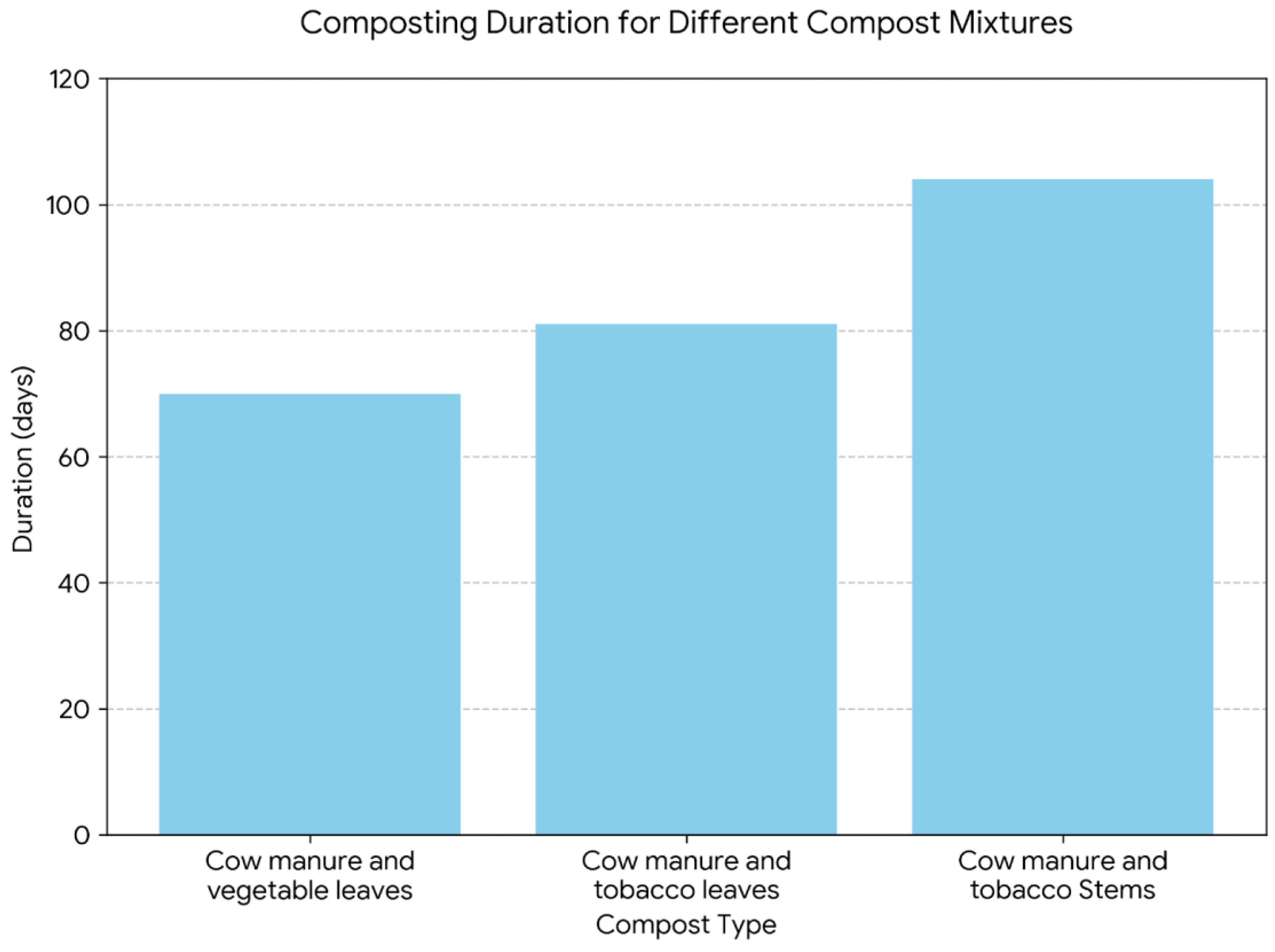
The composting duration varied depending on the materials used. The mixture of cow manure and vegetable leaves decomposed the fastest, completing in 70 days, likely due to the soft, easily degradable nature of vegetable residues. Compost with cow manure and tobacco leaves took 81 days, while cow manure and tobacco stems required the longest time at 104 days, likely due to their higher lignin and cellulose content. These findings suggest that composting soft-green biomass can accelerate the process of composting due to its high moisture content, low C: N ratio, and low lignin levels, whereas fibrous, lignin-rich materials such as tobacco stems, maize stalks, sugarcane bagasse, or jute sticks extend the decomposition period (Goyal et al., 2005).
Figure 4.
Time requirement for conventional composting.
3.3. Nutrient Contents Available in Vermicomposts
Organic carbon levels were the highest in the vermicompost prepared with cow manure, vegetable leaves, and earthworms, which recorded 45.3% OC, followed by tobacco leaves (40.8%) and tobacco stems (38.7%). As shown in Table 3, vegetable-based vermicompost provides greater organic enrichment. This is due to the high degradability of vegetable residues and the active interaction of microbes and worms, as observed by Di et al. (2022). Nitrogen content was highest in the cow manure, tobacco stems, and earthworm mixture (2.68%), followed by vegetable leaves (2.50%) and tobacco leaves (2.23%), as given in Table 3. This indicates that tobacco stems can contribute more nitrogen when processed through vermicomposting, despite their higher lignin content (Altomare et al., 2011). Phosphorus concentrations were relatively close across all treatments, with vegetable leaf-based vermicompost slightly ahead at 1.28%, compared to 1.22% in tobacco leaf and 1.19% tobacco stem composts, as shown in Table 3. This marginal difference suggests that all organic inputs have a similar potential for phosphorus mineralization.
The highest potassium concentration was found in vermicompost made from cow manure, tobacco stems, and earthworms at 1.35%, followed by tobacco leaves (1.28%) and vegetable waste (1.21%), as mentioned in Table 3. This suggests that tobacco residues, particularly stems, are rich in potassium and effective in increasing the K content during vermicomposting (Raman et al., 2014). The sulphur content was also highest in the tobacco stem-based vermicompost, reaching 0.89%, compared to 0.52% in tobacco leaves and 0.40% in vegetable waste, as shown in Table 3. These results suggest that tobacco stems, though slower to decompose, are valuable sources of sulfur in vermicompost production (G. Wang et al., 2020).

Table 3.
Available nutrient contents (OC, N, P, K, S) in three different vermicomposts.
| Name of the vermicompost | Organic Carbon (%) |
N (%) |
P (%) |
K (%) |
S (%) |
|---|---|---|---|---|---|
| Cow manure, vegetable leaves, and earthworms | 45.36 | 2.503 | 1.288 | 1.210 | 0.401 |
| Cow manure, tobacco leaves, and earthworms | 40.81 | 2.232 | 1.222 | 1.281 | 0.521 |
| Cow manure, tobacco stems, and earthworms | 38.72 | 2.680 | 1.199 | 1.352 | 0.896 |
3.4. Duration of Vermicomposting
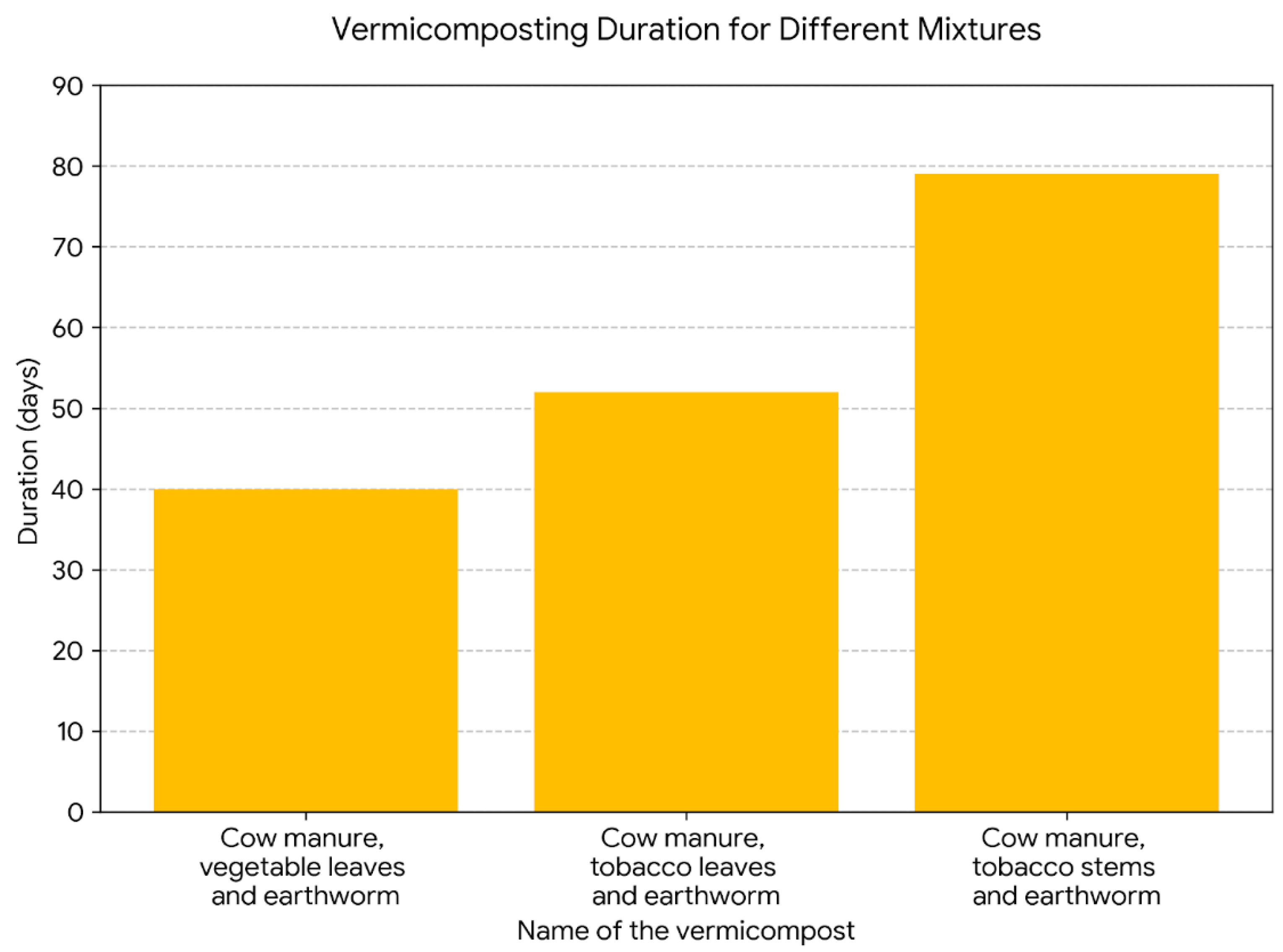
The decomposition period varied significantly among the three vermicompost treatments. The mixture of cow manure, vegetable leaves, and earthworms decomposed the fastest, completing in just 40 days, indicating the high degradability and soft texture of vegetable residues, which promote rapid earthworm activity and microbial action. In contrast, the mixture of cow manure, tobacco leaves, and earthworms required 52 days, while the combination of cow manure, tobacco stems, and earthworms took the longest, 79 days. The extended duration for tobacco stems is likely due to their higher lignin and cellulose content, which slows down the decomposition process even in the presence of earthworms. These findings suggest that while vermicomposting significantly shortens the overall composting time, the choice of organic material still plays a crucial role in determining the maturity period (Goyal et al., 2005).
Figure 5.
Time requirement for different types of vermicomposts.
3.5. Comparison Between Conventional and Vermicomposts
Vermicomposts consistently demonstrated significantly higher organic carbon content than conventional composts. The OC concentration reached 45.3% in the vermicompost with vegetable leaves, followed by 40.8% (vegetable leaves and cow manure) and 38.7% (vegetable stems and cow manure). In contrast, conventional composts had notably lower OC: 15.3% (vegetable leaves and cow manure), 13.0% (tobacco leaves and cow manure), and 13.0% (tobacco stems and cow manure). Nitrogen content was also higher across all vermicompost types. The highest N level was observed in the tobacco stem vermicompost (2.68%), followed by vegetable leaves (2.50%) and tobacco leaves (2.23%). In comparison, conventional composts had much lower N values: 0.67% (vegetable leaves and cow manure), 1.45% (tobacco leaves and cow manure), and 1.23% (tobacco stems and cow manure). Phosphorus concentrations were markedly higher in vermicomposts, particularly in the mixture with vegetable leaves (1.28%), followed by tobacco leaves (1.22%) and tobacco stems (1.19%). The corresponding values for conventional composts were significantly lower: 0.42%, 0.32%, and 0.31%, respectively. Vermicomposts again showed superior potassium content, ranging from 1.21% (vegetable leaves) to 1.35% (tobacco stems), while conventional composts recorded 0.70%, 0.99%, and 1.13%, respectively. Sulphur levels followed a similar trend. Vermicomposts showed 0.89% (tobacco stems and cow manure), 0.52% (tobacco leaves and cow manure), and 0.40% (vegetable leaves and cow manure), while conventional composts ranged much lower at 0.56%, 0.23%, and 0.20%, respectively.
A similar result was found by Degefa et al. (2022) when comparing composted and vermicomposted kitchen waste. It is found that the pH (7.4), Organic Carbon (3.71%), Available Phosphorus (12.3 ppm), Total Nitrogen (0.60%), and Carbon-to-Nitrogen Ratio (20.58) are present in the compost. On the other hand, pH (7.23), Organic Carbon (8.50%), Available Phosphorus (20.1ppm), Total Nitrogen (1.70%), and Carbon Nitrogen Ratio (11.5) in vermicompost kitchen waste. The results demonstrated that Vermicomposting had higher Organic Carbon, Available Phosphorus, and Total Nitrogen, while higher pH and C/N ratios were found in conventional composting.
This clearly demonstrates that vermicomposting enhances organic carbon levels, accelerates nitrogen levels, and enriches the content of potassium, phosphorus, and sulfur more effectively than conventional compost, due to improved microbial activity and the role of earthworms (Ievinsh et al., 2020).
The composting time was significantly reduced in vermicomposting compared to conventional composting across all material combinations. For cow manure and vegetable leaves, the compost matured in 70 days under conventional methods, but required only 40 days with vermicomposting, resulting in a 30-day reduction (43%). Similarly, composting cow manure with tobacco leaves took 81 days conventionally but just 52 days with earthworms, saving 29 days (36.0%). The most prolonged composting was observed with cow manure and tobacco stems, which took 104 days conventionally, whereas vermicomposting shortened the process to 79 days, reducing the duration by 25 days (24.0%). These results confirm that vermicomposting significantly accelerates the decomposition process, regardless of the organic material used (Kauser & Khwairakpam, 2022).
4. Discussion
4.1. Tobacco Waste-Based Compost Performance
There are no previous findings on the performance assessment and comparison of tobacco waste-based vermicompost with conventional compost. This study conducted a unique conceptual analysis aimed at sustainable tobacco waste management, eradicating environmental pollution from tobacco landfills, and reducing the production of low-quality tobacco products for lower-income consumers in Bangladesh. Tobacco waste is also recycled for the production of low-quality tobacco products, such as Bidi, Jorda, and Gul, in Bangladesh. People with low income are the primary consumers of these low-quality tobacco products. These low-quality tobacco products create dangerous health issues for people in Bangladesh. This study has demonstrated the alternative use of tobacco waste, which provides dual benefits by acting as both a compost and a means of protecting the environment and human health. With the findings of this study, tobacco producers will have a new source of income from tobacco waste while reducing their costs of chemical fertilizers.
The findings of this study suggest that tobacco wastes, particularly stems and leaves, hold considerable potential as composting materials when subjected to appropriate processing, primarily through vermicomposting (Kauser & Khwairakpam, 2022). Vermicompost produced from tobacco residues showed enhanced nutrient content, with notably high levels of potassium (up to 1.352%) and sulfur (up to 0.896%), both of which play essential roles in plant health, including disease resistance and protein synthesis (Doan et al., 2015). The presence of earthworms significantly accelerated the breakdown of organic matter, enhancing microbial activity and improving nutrient bioavailability. This aligns with previous findings indicating that vermicomposting improves humus formation, soil structure, and nutrient enrichment compared to conventional composting (Bhat et al., 2016)
Given that Bangladesh is a significant producer of tobacco, large quantities of post-harvest tobacco residues often remain unused or are disposed of in environmentally harmful ways. Composting these wastes could provide a sustainable waste management solution, producing organic fertilizers that help restore declining soil fertility. This practice aligns with the principles of circular economy and climate-smart agriculture, and can benefit smallholder farmers by reducing their dependency on expensive chemical fertilizers (S. Singh et al., 2020). Moreover, vermicomposting notably reduced composting time by up to 43.0% compared to conventional methods, making it a time-efficient option for nutrient recycling (De Castro et al., 2023).
4.2. Tobacco Waste Composting Limitations
Despite these advantages, certain limitations must be acknowledged. The decomposition of tobacco stems is relatively slow due to their lignocellulosic nature, which may delay compost maturity unless mechanical shredding and moisture optimization are applied (Adhikary, 2012). Additionally, phosphorus content in tobacco-based composts was lower than that in vegetable-based counterparts, potentially limiting their use as a balanced fertilizer without supplementation. Another concern is the potential presence of toxic compounds such as nicotine or alkaloids, which may pose risks to soil microbiota, plant health, and food safety if not fully degraded during composting (Lim et al., 2015).
To fully realize the potential of tobacco waste composting in Bangladesh, several future steps are necessary. Pretreatment strategies, including particle size reduction and moisture management, should be adopted to enhance decomposition. The use of microbial inoculants may further improve nutrient mineralization and detoxify harmful substances (Tarım et al., 2018). Long-term field trials across different soil types and cropping systems are required to validate the agronomic performance and safety of these composts. In addition, monitoring for residual nicotine and heavy metals should be included in compost quality assessments to ensure their safe use in food production (Lim et al., 2015). Training and awareness programs are also crucial in promoting the adoption of vermicomposting practices among farmers, particularly in rural tobacco-producing regions.
5. Conclusions
This study demonstrated the effectiveness of composting and vermicomposting as sustainable strategies for managing organic waste, particularly underutilized tobacco wastes, in Bangladesh. The results clearly showed that vermicomposts significantly outperformed conventional composts in terms of nutrient enrichment, particularly organic carbon, nitrogen, potassium, and sulfur, while also reducing composting duration by up to 43.0%. Among all treatments, vermicompost made from cow manure and vegetable leaves yielded the highest organic carbon and nitrogen content, whereas tobacco stem-based vermicompost excelled in potassium and sulfur content.
These findings underscore the dual benefits of using agricultural residues, such as vegetable waste and tobacco waste, not only to restore soil fertility but also to mitigate environmental pollution and reduce landfill pressure. By transforming agricultural waste into high-quality organic fertilizer, this approach supports the principles of the circular economy. It offers a practical, low-cost solution for smallholder farmers, particularly in tobacco-producing regions.
Integrating tobacco industry residues into composting practices not only diverts a significant volume of biomass from the waste stream but also promotes eco-friendly soil management. This aligns with global sustainability goals and provides a replicable model for sustainable agricultural intensification and the recycling of organic waste. However, optimizing composting conditions and addressing safety concerns are essential for the successful integration of tobacco residue composting into mainstream agricultural practices. Future studies should focus on field-level applications and the long-term impacts on soil health to scale up adoption and refine composting protocols for broader environmental and economic benefits.
References
- Adediran, J. A., Mnkeni, P. N. S., Mafu, N. C., & Muyima, N. Y. O. (2004). Changes in chemical properties and temperature during the composting of tobacco waste with other organic materials, and effects of resulting composts on lettuce (Lactuca sativa L.) and Spinach (Spinacea oleracea L.). Biological Agriculture and Horticulture, 22(2), 101–119. [CrossRef]
- Adhikary, S. (2012). Vermicompost, the story of organic gold: A review. Agricultural Sciences, 2012(07), 905–917. [CrossRef]
- Agriculture - Bangladesh Bureau of Statistics-Government of the People\’s Republic of Bangladesh. (n.d.). Retrieved August 8, 2025, from https://bbs.gov.bd/site/page/453af260-6aea-4331-b4a5-7b66fe63ba61/Agriculture.
- Akter, S., & Ahmed, F. (2024). Assessment of Flood Hazards and Vulnerabilities Using Esri Lulc and Fabdem Data: A Case Study of Lalmonirhat Sadar Upazilla, Bangladesh. [CrossRef]
- Altomare, C., Tringovska, I., Altomare, C., Tringovska Maritsa, I., & Lichtfouse, E. (2011). Beneficial Soil Microorganisms, an Ecological Alternative for Soil Fertility Management. 7, 161–214. [CrossRef]
- Ayilara, M. S., Olanrewaju, O. S., Babalola, O. O., & Odeyemi, O. (2020). Waste Management through Composting: Challenges and Potentials. Sustainability 2020, Vol. 12, Page 4456, 12(11), 4456. [CrossRef]
- Banožić, M., Aladić, K., Jerković, I., & Jokić, S. (2021). Volatile organic compounds of tobacco leaves versus waste (scrap, dust, and midrib): extraction and optimization. Wiley Online Library, 101(5), 1822–1832. [CrossRef]
- Bhat, S. A., Singh, J., & Vig, A. P. (2016). Effect on Growth of Earthworm and Chemical Parameters During Vermicomposting of Pressmud Sludge Mixed with Cattle Dung Mixture. Procedia Environmental Sciences, 35, 425–434. [CrossRef]
- Bhuiya, Z. H. (1987). Organic matter status and organic recycling in Bangladesh soils. Resources and Conservation, 13(2–4), 117–124. [CrossRef]
- Bremner, J. M., & Mulvaney, C. S. (1982). Nitrogen—Total. 595–624. [CrossRef]
- C/N Ratio - CORNELL Composting. (n.d.). Retrieved August 9, 2025, from https://www.compost.css.cornell.edu/calc/cn_ratio.html.
- Das, N., Touhidul Islam, M., Symum Islam, M., & M Adham, A. K. (2018). Response of dairy farm’s wastewater irrigation and fertilizer interactions to soil health for maize cultivation in Bangladesh. Asian-Australasian Journal of Bioscience and Biotechnology, 3(1), 33–39. [CrossRef]
- De Castro, F. U.; Aprile, A.; Benedetti, M.; Fanizzi, F. P., Ur Rehman, S., De Castro, F., Aprile, A., Benedetti, M., & Fanizzi, F. P. (2023). Vermicompost: Enhancing Plant Growth and Combating Abiotic and Biotic Stress. Agronomy 2023, Vol. 13, Page 1134, 13(4), 1134. [CrossRef]
- Degefa, K., Tullu, M., & Samuel, N. (2022). Nutrient status of composted and vermicomposted kitchen wastes. International Journal of Soil Science and Agronomy (IJSSA, 9(1), 250–254. www.advancedscholarsjournals.org.
- Di, H., Wang, R., Ren, X., Deng, J., Deng, X., & Bu, G. (2022). Co-composting of fresh tobacco leaves and soil: an exploration on the utilization of fresh tobacco waste in farmland. Environmental Science and Pollution Research, 29(6), 8191–8204. [CrossRef]
- Doan, T. T., Henry-Des-Tureaux, T., Rumpel, C., Janeau, J. L., & Jouquet, P. (2015). Impact of compost, vermicompost, and biochar on soil fertility, maize yield, and soil erosion in Northern Vietnam: A three-year mesocosm experiment. Science of The Total Environment, 514, 147–154. [CrossRef]
- Golder, P. C., Sastry, R. K., & Srinivas, K. (2013). Research priorities in Bangladesh: analysis of crop production trends. SAARC Journal of Agriculture, 11(1), 53–70. [CrossRef]
- Goyal, S., Dhull, S. K., & Kapoor, K. K. (2005). Chemical and biological changes during composting of different organic wastes and assessment of compost maturity. Bioresource Technology, 96(14), 1584–1591. [CrossRef]
- Hassan, M., Parvin, M., of, S. R.-I. J., & 2015, undefined. (n.d.). Farmer’s profitability of tobacco cultivation at Rangpur district in the socio-economic context of Bangladesh: an empirical analysis. Researchgate.NetMM Hassan, MM Parvin, SI ResmiInternational Journal of Economics, Finance and Management Sciences, 2015•researchgate.Net. Retrieved July 26, 2025, from https://www.researchgate.net/profile/Md-Hassan-171/publication/274075851_Farmer’s_Profitability_of_Tobacco_Cultivation_at_Rangpur_District_in_the_Socio-Economic_Context_of_Bangladesh_An_Empirical_Analysis/links/5514f4370cf2eda0df34c42b/Farmers-Profitability-of-Tobacco-Cultivation-at-Rangpur-District-in-the-Socio-Economic-Context-of-Bangladesh-An-Empirical-Analysis.pdf.
- Hu, R. S., Wang, J., Li, H., Ni, H., Chen, Y. F., Zhang, Y. W., Xiang, S. P., & Li, H. H. (2015). Simultaneous extraction of nicotine and solanesol from waste tobacco materials by the column chromatographic extraction method and their separation and purification. Separation and Purification Technology, 146, 1–7. [CrossRef]
- Hu, W., Di, Q., Wang, Z., Zhang, Y., Zhang, J., Liu, J., & Shi, X. (2019). Grafting alleviates potassium stress and improves growth in tobacco. BMC Plant Biology, 19(1), 1–13. [CrossRef]
- Ievinsh, G., Andersone-Ozola, U., & Zeipiņa, S. (2020). Comparison of the effects of compost and vermicompost soil amendments in organic production of four herb species. Biological Agriculture & Horticulture, 36(4), 267–282. [CrossRef]
- Islam, F. A. S. (2023). “The Samiul Turn”: An Inventive Roadway Design Where No Vehicles Have to Stop Even for a Second and There is No Need for Traffic Control. European Journal of Engineering and Technology Research, 8(3), 76–79. [CrossRef]
- Islam, S., Islam, T., Al, S. A., Hossain, M., Adham, A. K. M., Islam, D., & Rahman, M. M. (2017). Impacts of dairy farm’s wastewater irrigation on growth and yield attributes of maize. Fundamental and Applied Agriculture, 2(2), 247–255. https://www.f2ffoundation.org/faa/index.php/home/article/view/174.
- Islam, S. M. S., Hossain, A., Hasan, M., Itoh, K., & Tuteja, N. (2023). Application of Trichoderma spp. as biostimulants to improve soil fertility for enhancing crop yield in wheat and other crops. Biostimulants in Alleviation of Metal Toxicity in Plants: Emerging Trends and Opportunities, 177–206. [CrossRef]
- Jokić, S., Gagić, T., Knez, Ž., Banožić, M., & Škerget, M. (2019). Separation of active compounds from tobacco waste using subcritical water extraction. The Journal of Supercritical Fluids, 153, 104593. [CrossRef]
- Karim, R., Nahar, N., Shirin, T., & Rahman, M. A. (2016). Study on tobacco cultivation and its impacts on health and environment at Kushtia, Bangladesh. J. Biosci. Agric. Res, 08(02), 746–753. [CrossRef]
- Kauser, H., & Khwairakpam, M. (2022). Organic waste management by a two-stage composting process to decrease the time required for vermicomposting. Environmental Technology & Innovation, 25, 102193. [CrossRef]
- Lim, S. L., Wu, T. Y., Lim, P. N., & Shak, K. P. Y. (2015). The use of vermicompost in organic farming: Overview, effects on soil and economics. Journal of the Science of Food and Agriculture, 95(6), 1143–1156. [CrossRef]
- Manthos, G., & Tsigkou, K. (2025). Upscaling of tobacco processing waste management: A review and a proposed valorization approach towards the biorefinery concept. Journal of Environmental Management, 387, 125942. [CrossRef]
- Matharu, A. S., de Melo, E. M., & Houghton, J. A. (2016). Opportunity for high value-added chemicals from food supply chain wastes. Bioresource Technology, 215, 123–130. [CrossRef]
- Mumba, P. P., & Phiri, R. (2008). Environmental impact assessment of tobacco waste disposal. Int. J. Environ. Res, 2(3), 225–230. https://www.sid.ir/EN/VEWSSID/J_pdf/108220080302.pdf.
- Nekliudov, A. D., Fedotov, G. N., & Ivankin, A. N. (2008). Intensification of composting processes by aerobic microorganisms: a review. Prikladnaia Biokhimiia i Mikrobiologiia, 44(1), 9–23. [CrossRef]
- Nguyen, B. T., Dinh, D. H., Hoang, N. B., Do, T. T., Milham, P., Thi Hoang, D., & Cao, S. T. (2022). Composted tobacco waste increases the yield and organoleptic quality of leaf mustard. Agrosystems, Geosciences and Environment, 5(3), e20283. [CrossRef]
- Novinscak, A., Surette, C., Allain, C., & Filion, M. (2008). Application of molecular technologies to monitor the microbial content of biosolids and composted biosolids. Water Science and Technology, 57(4), 471–477. [CrossRef]
- Odlare, M., Arthurson, V., Pell, M., Svensson, K., Nehrenheim, E., & Abubaker, J. (2011). Land application of organic waste – Effects on the soil ecosystem. Applied Energy, 88(6), 2210–2218. [CrossRef]
- Pang, F., Li, Q., Solanki, M. K., Wang, Z., Xing, Y. X., & Dong, D. F. (2024). Soil phosphorus transformation and plant uptake driven by phosphate-solubilizing microorganisms. Frontiers in Microbiology, 15, 1383813. [CrossRef]
- Purwono, S., Murachman, B., Wintoko, J., Simanjuntak, B. A., Sejati, P. P., Permatasari, N. E., & Lidyawati, D. (2011). The Effect of Solvent for Extraction for Removing Nicotine on the Development of Charcoal Briquette from Waste of Tobacco Stem. Journal of Sustainable Energy & Environment, 2(1), 11–13. https://so04.tci-thaijo.org/index.php/JSEE/article/view/8818.
- Rahman, M. M., & Rahman, S. (2020) Adeyeye, Samuel Ayofemi Olalekan, Ton Duc Thang University, Vietnam. Original Research Article Rahman and Rahman. Asian Journal of Applied Chemistry Research, 5(3), 13–21. [CrossRef]
- Raman, G., Mohan, K. N., Manohar, V., & Sakthivel, N. (2014). Biodegradation of nicotine by a novel nicotine-degrading bacterium, Pseudomonas plecoglossicida TND35, and its new biotransformation intermediates. Biodegradation, 25(1), 95–107. [CrossRef]
- Singh, R. P., Embrandiri, A., Ibrahim, M. H., & Esa, N. (2011). Management of biomass residues generated from palm oil mill: Vermicomposting a sustainable option. Resources, Conservation and Recycling, 55(4), 423–434. [CrossRef]
- Singh, S., Singh, J., Kandoria, A., Quadar, J., Bhat, S. A., Chowdhary, A. B., & Vig, A. P. (2020). Bioconversion of different organic waste into fortified vermicompost with the help of earthworm: A comprehensive review. International Journal of Recycling of Organic Waste in Agriculture, 9(4), 423–439. [CrossRef]
- Statista, 2023. Tobacco industry-statistics & facts.... - Google Scholar. (n.d.). Retrieved August 9, 2025, from https://scholar.google.com/scholar?q=Statista%2C%202023.%20Tobacco%20industry-statistics%20%26%20facts.%20https%3A%2F%2Fwww.statista.com%2Ftopics%2F1593%2Ftobacco%2F.
- Sultana, M. M., Kibria, M. G., Jahiruddin, M., Abedin, Md. A., Sultana, M. M., Kibria, M. G., Jahiruddin, M., & Abedin, Md. A. (2020). Composting Constraints and Prospects in Bangladesh: A Review. Journal of Geoscience and Environment Protection, 8(9), 126–139. [CrossRef]
- Tarım, S., Dergisi, G. B., Ceritoğlu, M., Şahin, S., & Erman, M. (2018). Effects of Vermicompost on Plant Growth and Soil Structure. Selcuk Journal of Agriculture and Food Sciences, 32(3), 607–615. [CrossRef]
- Tautges, N. E., Chiartas, J. L., Gaudin, A. C. M., O’Geen, A. T., Herrera, I., & Scow, K. M. (2019). Deep soil inventories reveal that the impacts of cover crops and compost on soil carbon sequestration differ in surface and subsurface soils. Global Change Biology, 25(11), 3753–3766. [CrossRef]
- Valverde, J. L., Curbelo, C., Mayo, O., & Molina, C. B. (2000). Pyrolysis Kinetics of Tobacco Dust. Chemical Engineering Research and Design, 78(6), 921–924. [CrossRef]
- Velásquez-Chávez, T. E., Sáenz-Mata, J., Quezada-Rivera, J. J., Palacio-Rodríguez, R., Muro-Pérez, G., Servín-Prieto, A. J., Hernández-López, M., Preciado-Rangel, P., Salazar-Ramírez, M. T., Ontiveros-Chacón, J. C., & Peña, C. G.-D. la. (2025). Bacterial and Physicochemical Dynamics During the Vermicomposting of Bovine Manure: A Comparative Analysis of the Eisenia fetida Gut and Compost Matrix. Microbiology Research 2025, Vol. 16, Page 177, 16(8), 177. [CrossRef]
- Wang, G., Kong, Y., Liu, Y., Li, D., Zhang, X., Yuan, J., & Li, G. (2020). Evolution of phytotoxicity during the active phase of co-composting of chicken manure, tobacco powder, and mushroom substrate. Waste Management, 114, 25–32. [CrossRef]
- Wang, Y., Chen, K., Mo, L., & Li, J. (2013). Pretreatment of papermaking-reconstituted tobacco slice wastewater by coagulation-flocculation. Journal of Applied Polymer Science, 130(2), 1092–1097. [CrossRef]
- White, K. E., Brennan, E. B., Cavigelli, M. A., & Smith, R. F. (2020). Winter cover crops increase readily decomposable soil carbon, but compost drives total soil carbon during eight years of intensive, organic vegetable production in California. PLoS ONE, 15(2), e0228677. [CrossRef]
- Williams, C. H., & Steinbergs, A. (1959). Soil sulphur fractions as chemical indices of available Sulphur in some Australian soils. Australian Journal of Agricultural Research, 10(3), 340–352. [CrossRef]
- World Weather Online. https://www.worldweatheronline.com/lalmonirhat-weather-averages/bd.aspx.
- Zahedi, S., & Khalifehzadeh, R. (2025). The spatial distribution of Topsoil Organic Carbon in vegetation types of Chehelgazi rangelands, Sanandaj County, Kurdistan province. Watershed Management Research. [CrossRef]
- Zapałowska, A., Jarecki, W., Skwiercz, A., & Malewski, T. (2025). Optimization of Compost and Peat Mixture Ratios for Production of Pepper Seedlings. International Journal of Molecular Sciences, 26(2), 442. [CrossRef]
- Zeng, J., Singh, D., & Chen, S. (2011). Thermal decomposition kinetics of wheat straw treated by Phanerochaete chrysosporium. International Biodeterioration & Biodegradation, 65(3), 410–414. [CrossRef]
- Zielke, D., Liebe, R., TABAKFORSCHUNG, H. A.-B. ZUR, & 1997, undefined. (n.d.). The removal of stems from cut tobacco. Sciendo.ComD Zielke, R Liebe, HM AGBEITRAGE ZUR TABAKFORSCHUNG INTERNATIONAL, 1997•sciendo.Com. Retrieved August 8, 2025, from https://sciendo.com/2/v2/download/issue/CTTR/17/2.zip.
Figure 1.
Average temperature and precipitation of Lalmonirhat, Bangladesh.
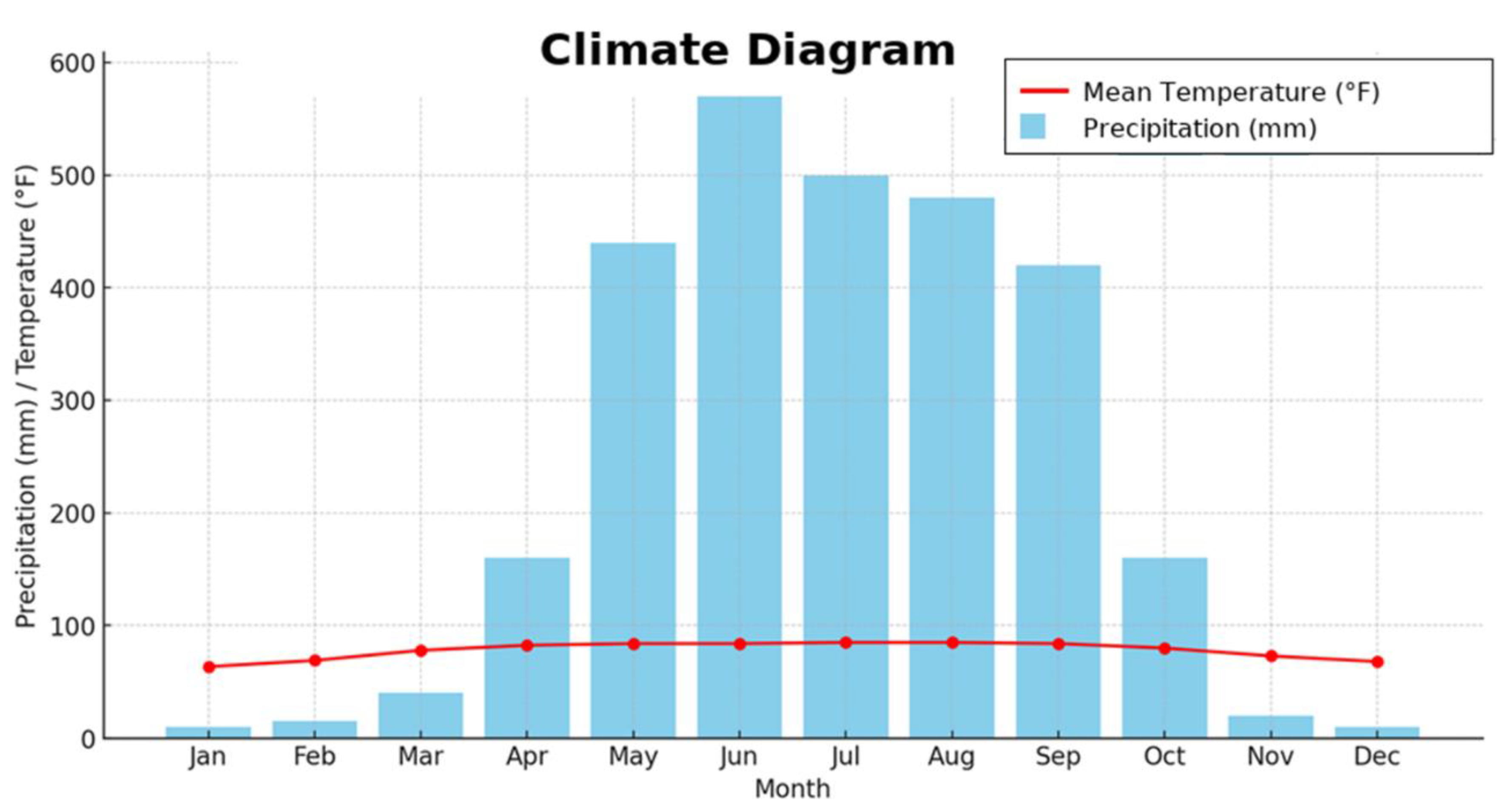
Figure 2.
Workflow of the compost preparation.
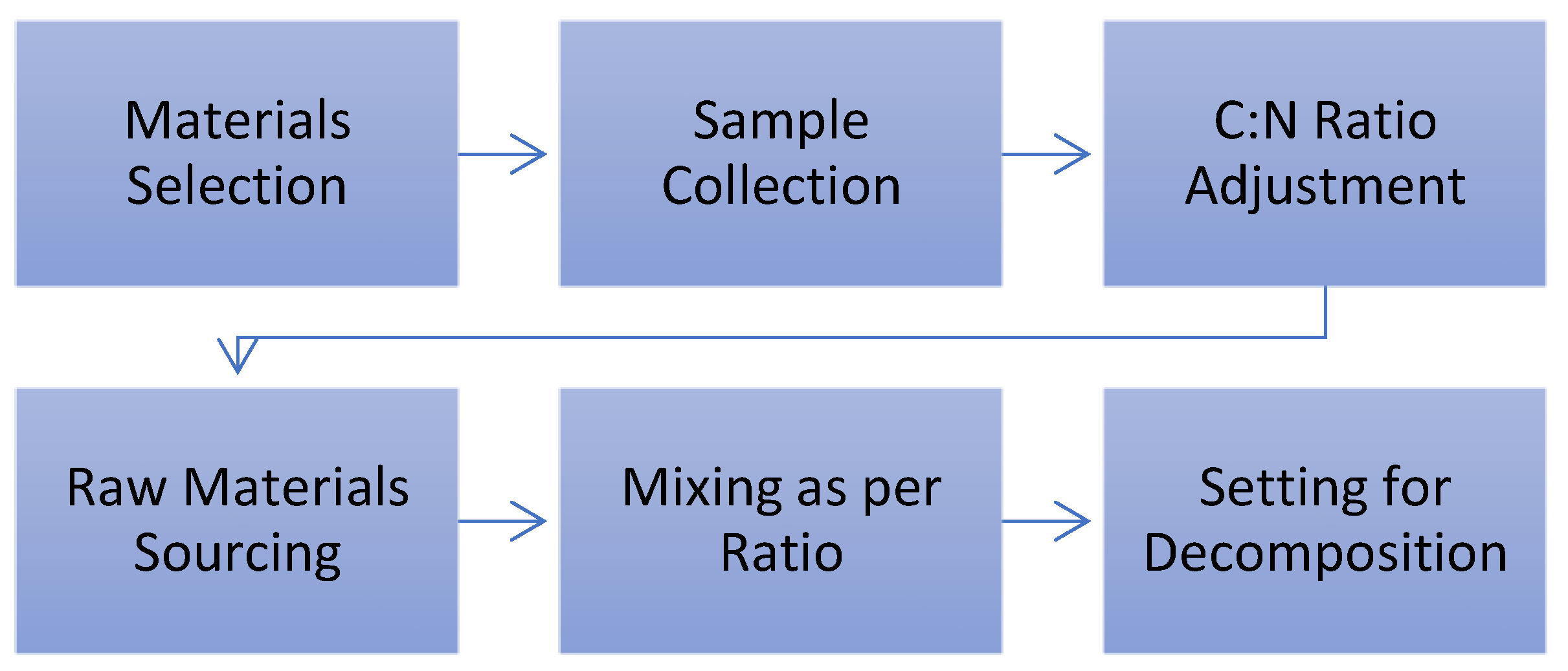
Figure 3.
Nutrient contents available in conventional composts.
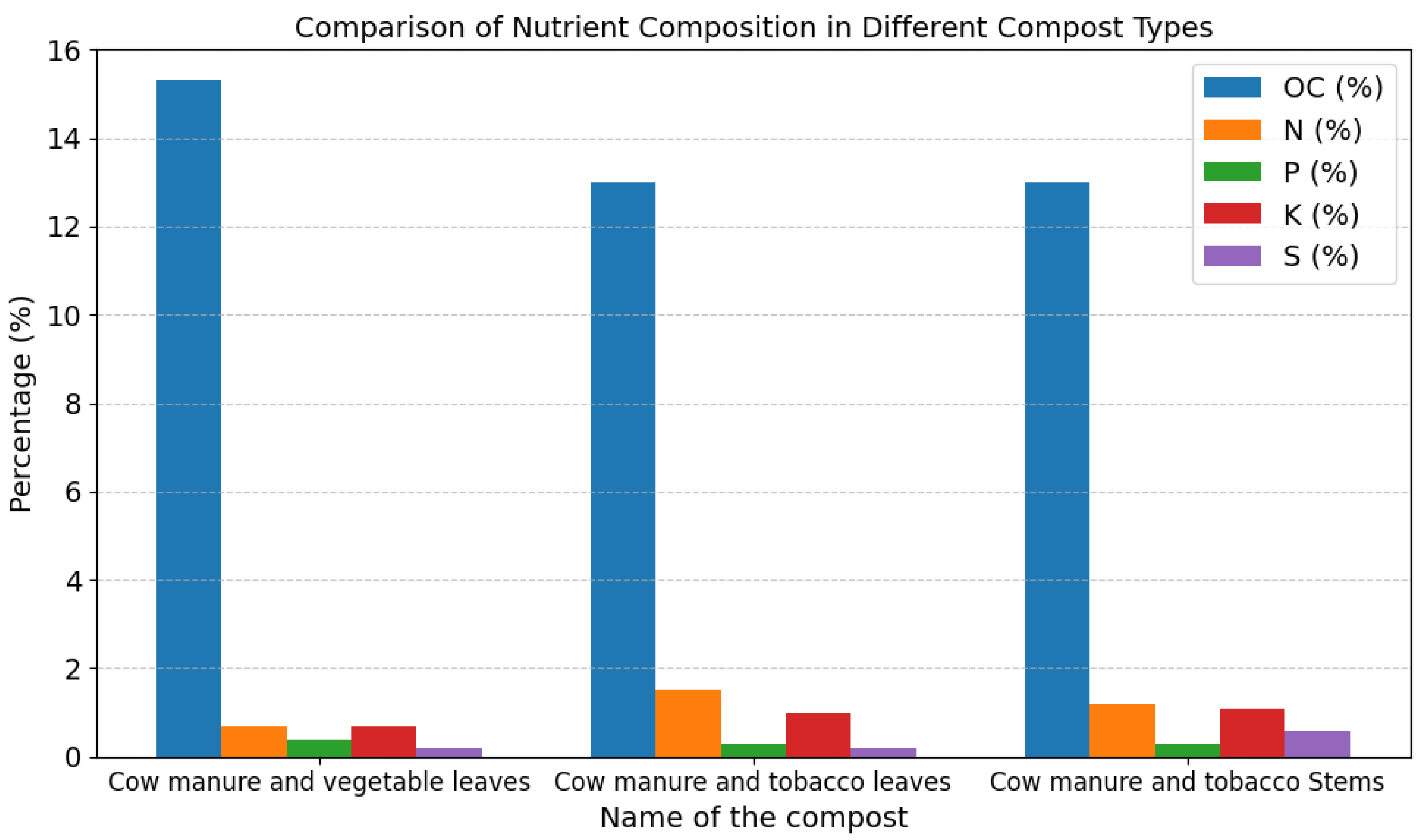
Table 1.
Adjustment of the C-N ratio by the rationing method.
| Compost Type | Used Organic Materials | Average C/N ratio | Mixing ratio (by weight) | Ratio |
|---|---|---|---|---|
| Cow manure and vegetable leaves | Cow manure | 17.5:1 | 4 | 70.2:4 |
| Vegetable leaves | 78.6:1 | 1 | 78.6:1 | |
| Cow manure and tobacco leaves | Cow manure | 17.5:1 | 4 | 70.2:4 |
| Tobacco leaves | 70.6:1 | 1 | 70.6:1 | |
| Cow manure and tobacco stems | Cow manure | 17.5:1 | 4 | 70.2:4 |
| Tobacco stems | 98.7:1 | 1 | 98.7:1 |
Disclaimer/Publisher’s Note: The statements, opinions and data contained in all publications are solely those of the individual author(s) and contributor(s) and not of MDPI and/or the editor(s). MDPI and/or the editor(s) disclaim responsibility for any injury to people or property resulting from any ideas, methods, instructions or products referred to in the content. |
© 2025 by the authors. Licensee MDPI, Basel, Switzerland. This article is an open access article distributed under the terms and conditions of the Creative Commons Attribution (CC BY) license (https://creativecommons.org/licenses/by/4.0/).
Copyright: This open access article is published under a Creative Commons CC BY 4.0 license, which permit the free download, distribution, and reuse, provided that the author and preprint are cited in any reuse.


