
Submitted:
24 September 2025
Posted:
06 October 2025
You are already at the latest version
Abstract
Background: The concept of preparedness for nursing practice encompasses a combination of clinical, cognitive, and functional skills. Students taking on the role of a nurse are positively impacted by the overlap of these characteristics. Therefore, the present study was conducted with an aim to ascertain how well-prepared Nursing Graduates are in terms of their knowledge to work in healthcare facilities amid COVID-19 pandemic. Methods: The study used an exploratory survey design. 305 Nursing Graduates were chosen using the purposive sampling technique of various Nursing Colleges. The tool has two sections: a) Sociodemographic and Clinical Experience of the Participants and b) Structured knowledge questionnaire. Result: Descriptive and inferential statistics were used to analyse the study data. The study showed primarily (82%) of sample fall into the Average category, suggesting a moderate degree of knowledge regarding preparedness in terms of knowledge to work in healthcare facilities amid COVID 19 pandemic, some of participants (18%) possessed poor knowledge indicating a lower level of awareness while none of the respondents had good knowledge. The study revealed poor awareness of Nursing Graduates particularly about preventive measures related to COVID- 19. Conclusion: The study indicated lack of knowledge among Nursing Graduates to work in healthcare facilities during the COVID-19 pandemic and hence has sparked concerns the adequacy of graduating student nurse’s pre-paredness to work in healthcare facilities which may put the patient's life in jeopardy. Therefore, Nursing Graduates must receive extensive educational preparation on pandemic situation before beginning their careers.
Keywords:
preparedness
; nursing graduates
; healthcare facilities
; pandemic
1. Introduction
The concept of readiness for nursing practice encompasses a combination of clinical, cognitive, and functional skills. A student’s perceived self-efficacy in taking on the role of a nurse is positively impacted by the overlap of these characteristics [1]. Both personal and educational aspects are linked to a successful transition from nursing student to graduate nurse. Students’ backgrounds, including prior education, work experience, emotions, and involvement, are examples of individual-level influences. Clinical learning environments are essential for developing professional skills and preparing nursing students to enter the nursing profession and become registered nurses, as nursing is a performance-based profession. As such, clinical education is considered a necessary and essential component of the nursing education program [2]. Clinical experience is a crucial component of the nursing curriculum because it helps student nurses develop their professional skills and fundamental expertise [3].
Nursing practitioners in India have remained committed to patient care despite the resource-constrained working circumstances in hospitals and worries about their personal and family safety. Moreover, the increasing burden on the healthcare system because of the COVID-19 pandemic has led to a rise in the nursing fraternity’s professional collegiality and willingness to make personal sacrifices. Being on the front lines of healthcare, nurses are essential to community safety during the COVID-19 pandemic [4]. Therefore, WHO announced that 2020 World Health Day would be the “Year of the Nurse and Midwife” in support of nurses and midwives. The COVID-19 pandemic was a severe worldwide health disaster that occurred in recent years. The World Health Organization (WHO) declared the virus to be a pandemic in early March 2020 [5].
India has shown a steady rise in COVID-19 cases, with the majority of new infections occurring in Tamil Nadu, Kerala, Maharashtra, and Karnataka although average national figures are still low when compared to previous waves. Since COVID-19 was declared pandemic, routine testing and genome sequencing have significantly decreased [4]. This reduced monitoring could allow infections to spread silently by postponing the identification of new variations and outbreaks. Furthermore, the virus is most likely spreading more easily due to the relaxation of public health rules like mask requirements and social separation, particularly among susceptible groups [5].
COVID-19 pandemic presented a chance to examine the degree of expertise possessed by Nursing Graduates during this worldwide health emergency. Assessing students’ readiness to handle the pandemic, learning about their opinions on the public health policies during the epidemic, and providing information for nursing curriculum that prepare students for future public health emergencies are all extremely significant. In order to be ready for future health emergencies like pandemics and disasters, the study was justified by the need to find the gaps and implement the necessary remedial actions. Thus, this study aimed to explore how well-prepared Nursing students in their final year were, to work in healthcare facilities during COVID-19 pandemic.
2. Materials and Methods
Study Design
Keeping in mind the nature of the problem as well as the objectives of the study, the research approach chosen for the present study was quantitative research approach (non-experimental) and an exploratory survey design with an aim to assess the Preparedness of Nursing Graduates to Work in Healthcare facilities during pandemic outbreak at Nursing Colleges of Delhi & NCR.
Sample
Sample of the study were final year students of the B.Sc. Nursing programme of 5 selected Nursing Colleges in Delhi & NCR. After gaining informed consent, students who satisfied the inclusion criteria were chosen. The inclusion criteria were participants who were present at the time of data collection, participants who were in the final year of B.Sc. Nursing programme, participants who were willing to participate. The sample were selected using a non-probability purposive sampling technique.
Setting of the Study
The study was conducted at the 5 Nursing colleges of Delhi and NCR. The data was collected from the graduating nursing students of Ahilya Bai College of Nursing Lok Nayak Hospital, New Delhi; Rufaida College of Nursing, Jamia Hamdard, Delhi; Batra College of Nursing, Delhi; Kailash Institute of Nursing & Paramedical Sciences Greater Noida; Sharda School of Nursing Sciences and Research, Sharda University Greater Noida. Rationale for selecting the setting were: a) availability of adequate samples, b) feasibility of conducting the study and c) administrative approval and expected cooperation for the study.
Data Collection Tool
The tool used for the data collection procedure was prepared after extensive literature review and consultation with the 11 experts in the file of nursing. The tool has two sections: a) Sociodemographic and Clinical Experience of the Participants and b) Structured knowledge questionnaire having Multiple Choice Questions
Sociodemographic Variables
The investigator collected information like age, gender, clinical attendance, vaccination status, source of information and in-service education attended.
Knowledge Questionnaire
The questionnaire was divided into 6 domains having a total of 34 items: concept of COVID-19 (3 items), nature of disease (5 items), signs and symptoms (6 items), etiology (2 items), diagnostic evaluation (2 items) and preventive measures (16 items). This tool was used to assess the clinical knowledge of the nursing graduates and hence helped them to explore their preparedness in terms of their knowledge to care for the patients during COVID-19 Pandemic. Based on the method of scoring the knowledge score was arbitrarily categorized into three categories of level of knowledge: good (24- 34), average (12- 23) and poor (0-11).
Validity and Reliability of the Tool
The questionnaire’s validity and reliability for item understanding were then evaluated by a pilot test conducted on subjects with comparable characteristics. 11 Experts from the nursing department assessed the questionnaire before it was distributed to respondents in order to determine content validity. Cronbach’s alpha was used to calculate internal consistency. For structured knowledge questionnaire, the reliability coefficient in the range of 0.719 indicating good internal reliability.
Data Collection Method
Data collection was done from the Month of June–December 2023 from the above-mentioned institute and colleges. Nursing Graduates (N=305) those meeting the inclusion criteria were chosen by using purposive sampling. Self-introduction and establishing rapport with the subject were done. The samples were informed of the study’s purpose, a written consent was obtained before the study began, and the anonymity of their answers was assured. Data was collected through paper pencil method from 3 colleges while from the remaining two colleges the data was collected through google form. It took around 15-20 minutes for the sample to fill the questionnaire.
Statistical Analysis
For data analysis Statistical Package for the Social Sciences (SPSS) version 24.0 software was used. Descriptive statistics including frequency and percentage were used to summarise the demographic variables and clinical experience of graduating nursing students. Mean, median, standard deviation, mean percentage were also calculated. Regression analysis chi square test was used to determine the association of knowledge with the selected demographic variables of nursing students.
3. Results
3.1. Frequency and Percentage Distribution of Nursing Graduates According to Their Demographic Variables
The majority of sample were in the age group of 21-25 years (83%). The sample were predominantly female (79%), with males accounting for 21%. A significant majority of participants attended private colleges (95%) The majority of participants (98%), suggesting a high level of clinical exposure, had done so. The majority (98%) of respondents were vaccinated against COVID-19 demonstrating a high vaccination rate within the surveyed population. Majority (56%) of the sample had information about COVID 19 through numerous sources, while some (28%) sample had information through Mass Media. Only half (57%) of the respondents had attended in-service education regarding COVID-19 indicating a moderate level of participation in educational programs till the time of data collection (Table 1).

Table 1.
Frequency and Percentage distribution of Nursing Graduates according to their Demographic Variables. N= 305.
Table 1.
Frequency and Percentage distribution of Nursing Graduates according to their Demographic Variables. N= 305.
| SOCIO DEMOGRAPHIC VARIABLES | f (%) | |
| Age | 16-20 Years | 50 (16) |
| 21-25 Years | 252 (83) | |
| ≥ 26 Years | 3 (1) | |
| Gender | Male | 64 (21) |
| Female | 241 (79) | |
| Type of College | Private | 291 (95) |
| Government | 14 (5) | |
| Clinical Posting Attended | Yes | 299 (98) |
| No | 6 (2) | |
| Vaccinated against COVID 19? | Yes | 300 (98) |
| No | 5 (2) | |
| Source of information about COVID 19 | Family / Peer group | 17 (6) |
| Mass Media | 85 (28) | |
| Formal Education | 10 (3) | |
| Healthcare Provider | 22 (7) | |
| All of the Above | 171 (56) | |
| Any in-service education attended regarding COVID 19? | Yes | 174 (57) |
| No | 131 (43) | |
*N: Sample size; f: frequency; %: Percentage distribution.
Table 2.
Mean, Median, Standard deviation and Mean Percentage of Knowledge Scores of Nursing Graduates to practice in Clinical Facility during pandemic outbreak. N=305.
Table 2.
Mean, Median, Standard deviation and Mean Percentage of Knowledge Scores of Nursing Graduates to practice in Clinical Facility during pandemic outbreak. N=305.
| Mean + SD | Median | Maximum | Minimum | Range | Mean% | |
|
KNOWLEDGE SCORE |
14.21 +3.14 | 14.00 | 22 | 5 | 17 | 41.8 |
Maximum= 34 Minimum= 0. *SD: Standard deviation.
3.2. Knowledge of Nursing Graduates to Practice in Clinical Facility During Pandemic Outbreak
3.2.1. Level of Knowledge of Nursing Graduates to Practice in Healthcare Facilities During Pandemic Outbreak
The study further indicated that the majority (82%) of sample fall into the Average category, suggesting a moderate level of knowledge required to work in healthcare facilities during COVID 19 pandemic, some of participants (18%) had poor knowledge indicating a lower level of understanding or awareness while None of the respondents falls within the “Good” category, indicating that no participant was having awareness regarding COVID 19 and to provide care to patients diagnosed with the disease (Figure 1) .
3.2.2. Areawise Mean, Median, Standard deviation and Mean Percentage of Knowledge Scores of Nursing Graduates to Practice in Clinical Facilityduring Pandemic Outbreak
The knowledge of the Nursing Graduates was assessed in the 6 domains revealing the fact that the students had good awareness about the basic concept of COVID-19 as this domain’s mean score (1.97, 65.79%) is the highest among all sections. Whereas in Diagnostic Evaluation, the mean score (0.66, 32.79%) is the lowest, highlighting poor awareness of diagnostic procedures such as routine lab investigations for COVID 19 suspected cases and priority case to be tested for COVID 19. In the domain of preventive measures, the mean score (5.80, 36.25%) suggests a very low level of knowledge of prevention with the large range (0-12) of scores indicating variation in responses. Preventive measures and management in which the sample showed very poor awareness were Position to be given for COVID 19 positive patients, Covid appropriate behaviour, Alcohol based hand rub should be rubbed, Minimum concentration of alcohol in hand sanitiser, use of PPE, type of mask to be used for oxygen therapy in COVID 19 moderate disease and line of treatment for severe COVID 19 cases (Table 3).
3.2.3. Item Wise Analysis of the Knowledge Score of Graduating Nursing Students to Work in Healthcare Facilities During Pandemic Outbreak
The study further revealed that the Nursing Graduates had the most lack of awareness of COVID 19 and its related concept such as none of the respondents know about the minimum concentration of alcohol in hand sanitiser. The majority (95%) of the sample didn’t know about the use of PPE during Aerosol producing procedure. A vast number (89.5%) of the respondents had no awareness about the facility where moderate cases of COVID 19 should be treated and majority (86.2%) of the sample had not any knowledge about Phases of National Vaccination policy in the current scenario. A large number (85.9%) of the study sample didn’t know about the type of mask to be used for Oxygen therapy in COVID 19 moderate disease. Most (84.3%) of the respondents were unaware about the time duration of rubbing alcohol-based hand rub. Many (84%) study participants lacked awareness about line of treatment for severe COVID 19 cases. A significant number (83.6%) of the study sample didn’t know about the position to be given for COVID 19 positive patients. Many (81.3%) respondents had no awareness about the routine lab investigations for COVID 19 suspected cases and the majority (81%) of the sample didn’t know about Covid appropriate behaviour (Figure 2).
3.2.4. Association Between Knowledge Scores of Nursing Graduates with Their Demographic Variables chosen for the Study
Predictor’s test was done to identify the association between the level of knowledge scores of Nursing Graduates with selected demographic variables. The data collected indicated that, at the 0.05 level of significance, there was not a significant association between the knowledge score levels and any of the Nursing Graduates ‘ demographic characteristics (Table 4)
4. Discussion
Regarding Sociodemographic Variables of Sample
The present study indicates Nursing Graduates were predominantly female (79%), with males accounting for 21% this is attributed to the fact that the nursing profession serves the scope in career for females. The study is similar to the findings of a study that reveals that 16.6% of responders were male and while 83.4% responders were female6 and resemblance of the result is seen with study that indicated that females made up major part (61.05%) of participants [7]. These findings are consistent with research, which found that over half of the participants in their study were female [8].
Present study revealed that the majority (83%) of the sample was in the 21–25 years of age range, with few (16%) coming in between 16-20 years. This could be due to the reason that students join the B Sc nursing programme at the age of 17 or 18 years after completing their senior secondary education and when they are on the verge of completing their graduation, they reach the age of ≥ 21years. This is consistent with a study finding that found 75.26% of nursing students were in the 17–22 years of age range, followed by 18 years old [7]. The results are also similar to a study which observed that academic nursing students enrolled ranged in age from 18-26 years [9].
Present study indicated that a little over half (57%) of the respondents took part in COVID-19 in-service training, demonstrating a moderate level of participation in educational programs which is inconsistent with the study stating that very few (8.68%) participants received COVID-19 training [6]. The study is also inconsistent with the findings that revealed that The Health care professionals’ level of infection control training was far from adequate [10].
The present study found that all the respondents were aware about COVID 19 with the majority (28%) sample had information through Mass Media. This demonstrates the importance of social media in advancing knowledge, particularly in regard to the virus that necessitated a lockdown to prevent infection. The study is similar to a study that revealed almost all (99.2%) of students knew about the outbreak, and the majority (71.0%) learned about COVID-19 mainly from social media [11]. According to a survey, social media was the principal information source on COVID-19 for the majority of academic nursing students [8].
Present study reported that the majority (98%) of the study sample were vaccinated against COVID-19 which is similar with another study outcome which indicated that the majority of participants (81.4%) stated that they had received two or three doses of the COVID-19 vaccine [12]. This finding is consistent with another study that also found that the majority of students had received 2 or 3 doses of the vaccine during data collection [13].
Regarding Knowledge of Nursing Graduates to Work in Clinical Facility Amid COVID-19
The present study outcome indicated that the majority (82%) of study sample fall into the Average category, suggesting a moderate level of knowledge regarding expedience in terms of knowledge to work in clinical facility during COVID 19 pandemic, some of participants (18%) had poor knowledge indicating a lower level of understanding or awareness while None of the respondents falls within the “Good” category due to lack of knowledge of the novel Corona virus during training that may have contributed to their feelings of inadequacy. The study is in accordance with a study which found that the great majority of healthcare workers were generally practicing safely, had a pleasant attitude, and possessed a sufficient degree of knowledge [10]. The study is also resemblant with another study that found that 9.85 was the average score on the knowledge questionnaire which is equivalent to 82.1% [11].
Nursing Graduates preparedness to handle the COVID-19 pandemic was inadequate. They were unprepared to handle the pandemic and were terrified of making mistakes because they had never faced any pandemic situation in their lifetime. This was supported by the findings of the study revealing incompetence and ignorance about the COVID-19 pandemic [14]. While the present study is in opposition of the study that showed that a nearly significant number (73.4%) of nurses possessed high understanding about COVID-19 and 17.63% had fair knowledge6. The study was also inconsistent with another study outcome which indicated that the vast majority of nurses in this survey (96.85%) knew a great deal about COVID- 19. While very few (7.6%) nurses had a poor understanding of prevention, while some nurses (83.2%) claimed to have significant knowledge and skills in this area. pertaining to treatment against COVID-19 [15].
The present study indicated that the Nursing Graduates had the lowest mean score (5.80) in the area of preventive measures for COVID- 19. This could be due to the reason that most of the nations were unprepared to deal with the pandemic when COVID-19 became an emergency, therefore student nurses had to use their basic understanding of standard precautions. The survey from another study showed a similar finding that the use of personal protective equipment (PPE) to prevent transmission was not well understood [16]. A survey of nurses in the US revealed that some of them did not follow the recommended COVID-19 preventive guidelines or use the appropriate PPE [17].
The present study indicated that all (100%) the respondents were lacking the awareness about the minimum concentration of alcohol required in hand sanitizer and maximum (84.3%) of the student nurses were lacking the knowledge about Time duration of rubbing alcohol-based hand rub. This is because most student nurses lacked proper COVID-19 training due to transition in the education system from physical mode to online mode. This is supported by the findings of study showing most (52%) of the health care workers believed there was scope for improvement in their hand hygiene routine whereas the study was inconsistent with the finding of the study revealing that majority (78%) of the study participants were aware that alcohol-Based Hand Sanitizer must be applied for at least 20 seconds in order to eradicate the COVID-19 virus from hands [18].
The present study findings displayed that the majority (81%) of Nursing Graduates didn’t know enough about the Covid appropriate behavior. This may be attributed to the changing guidelines or frequent updates in the information on the official sites. The study was in agreement with the result of another study showing that the majority (85.9%) of nursing students responded incorrectly that wearing a mask is enough to guard against viruses. Most (65.1%) of nursing students replied incorrectly that hot bath water keeps infections at bay. Maximum (77.3) of nursing students gave the wrong reply that hand dryers work well to eradicate the infection [19]. Another study with similar results indicated that only 47.67% understood the correct significance of isolation and quarantine [20].
The present study showed that the majority (85.9%) of the Nursing Graduates lacked awareness about the type of mask to be used for Oxygen therapy in COVID 19 moderate disease. This may be due to lockdown and restricted physical training in clinical areas. This is dissimilar to the result of another study presenting that maximum (95.1%) of the nurses knew correct that to verify if a N95 mask fits properly, grab the mask with both hands, press down on the nasal contact area to make sure it fits snugly, then breathe in and out to make sure there are no leaks [21].
The present study indicated that the maximum (84%) of the Nursing Graduates were having a lack of knowledge about the line of treatment for severe COVID 19 cases. The study result was supported by the result of another study revealing that all (100%) of the nursing students had incomplete correct answers about COVID19 treatment and most (70%) had incomplete correct answers about mode of transmission [17].
Several recommendations have been put forth in response to study findings in order to improve the transition from nursing education to professional practice for example; improving cooperation between academic institutions and medical facilities, offering specialised certificates courses, policy initiatives for ongoing training and education and improving psychological support networks.
5. Conclusions
The present study concludes that Nursing Graduates lack of adequate knowledge to work in clinical facility amid COVID 19 pandemic has raised concerns regarding the adequacy of student’s readiness to work in clinical facility which may cause distressing feelings and thus put the patient’s life in jeopardy. Therefore, Nursing Graduates must receive extensive educational preparation on pandemic situation before beginning their careers. Nursing students represent the future of the nursing profession, and their career transition is crucial. Nursing colleges must develop transition programs to better prepare students for pandemics and other health-related emergencies. When it comes to emergencies, and health related disasters, cooperation between nursing education institutions and health organizations can help close the gap between theory and practice.
The study’s scope was restricted to the Indian context, where the dynamics of pandemic behaviour are impacted by the population density, knowledge, attitudes, and practices of key stakeholders. As a result, the findings cannot be broadly generalized to other countries.
Author Contributions
Rebecca Dillu*: concept, design, definition of intellectual content, literature search, data acquisition, data analysis, statistical analysis, manuscript preparation Dinesh Selvam S: concept, design, definition of intellectual content, statistical analysis, manuscript editing and manuscript review Peekesh Singhal: data acquisition, data analysis, manuscript editing and manuscript review.
Funding
This research received no external funding.
Institutional Review Board Statement
The study was conducted in accordance with the Declaration of Helsinki, and approved by the Institutional Research Ethical committee of Amity University, Gurugram, Haryana on 23rd August 2025 for conducting the study and for collection and management of data in the study. The ethical approval was also obtained by the Principal/Head of the Institution of the selected Nursing Colleges. The sample were ensured about their preparedness to take part in the study and the rationale behind conducting research was informed. Confidentiality was guaranteed to the sample. The sample was made aware that they could withdraw from the study at any stage of the data collection. It did not involve any procedure or steps which could affect their any dimension of health.
Informed Consent Statement
Informed consent was obtained from all subjects involved in the study.
Data Availability Statement
The original contributions presented in this study are included within the article. Further inquiries can be directed to the corresponding author.
Public Involvement Statement
Sample of the study were final year students of the B.Sc. Nursing programme of 5 selected Nursing Colleges in Delhi & NCR. After gaining informed consent, students who satisfied the inclusion criteria were chosen. The inclusion criteria were participants who were present at the time of data collection, participants who were in the final year of B.Sc. Nursing programme, participants who were willing to participate. The sample were selected using a non-probability purposive sampling technique.
Guidelines and Standards Statement
This manuscript was drafted against the Strengthening the Reporting of Observational Studies in Epidemiology (STROBE) Statement: guidelines for reporting observational studies described in Nursing Reports Journal cited as https://www.equator-network.org/reporting-guidelines/strobe/ for observational studies.
Use of Artificial Intelligence:
AI or AI-assisted tools were not used in drafting any aspect of this manuscript.
Acknowledgments
The administration and institutional ethics committee of the Nursing Colleges have given the authors permission to perform this study, for which they are quite grateful. Authors of the present study also thank the subject matter experts for their important assistance in validating the study instruments. Lastly, the authors would like to express their profound gratitude to each and every participant for their cooperation and participation, both of which were critical to the accomplishment of this study.
Conflicts of Interest
The authors declare no conflicts of interest. The funders had no role in the design of the study; in the collection, analyses, or interpretation of data; in the writing of the manuscript; or in the decision to publish the results.
References
- Zhang, J.; Shields, L.; Ma, B.; et al. The clinical learning environment, supervision and future intention to work as a nurse in nursing students: A cross-sectional and descriptive study. BMC Med Educ. 2022, 22. [Google Scholar] [CrossRef]
- Järvinen, T.; Eklöf, N.; Salminen, L. Factors related to nursing students’ preparedness to enter working life - A scoping literature review. Nurse Educ Pract. 2018, 29, 191–9. [Google Scholar] [CrossRef]
- Kramer, M. Reality shock: why nurses leave nursing. St. Louis (MO): C. V. Mosby Co.; 1974.
- Serafin, L.; Pawlak, N.; Strząska-Kliś, Z.; et al. Novice nurses’ preparedness to practice in an ICU: A qualitative study. Nurs Crit Care. 2022, 27, 10–8. [Google Scholar] [CrossRef]
- Finance Commission of India. Report of the Fifteenth Finance Commission (2021–2026) [Internet]. New Delhi: Finance Commission of India; 2021. Available online: https://fincomindia.nic.in/commission-reports-fifteenth (accessed on 29 July 2025).
- Salem, A.H. Exploring student nurses’ preparedness and preparedness to care for critically ill patients and implication for patient’s safety. Int J Nurs Educ. 2023, 13, 31–9, https://www.medicopublication.com/index.php/ijone/article/view/13308. [Google Scholar] [CrossRef]
- World Health Organization. Infection prevention and control (IPC) for novel coronavirus (COVID-19) [Internet]. Geneva: WHO; 2020. Available online: https://openwho.org/courses/COVID-19-IPC-EN (accessed on 29 July 2025).
- Alharbi, J.; Jackson, D.; Usher, K. The potential for COVID-19 to contribute to compassion fatigue in critical care nurses. J Clin Nurs. 2020, 29, 2762–2764. [Google Scholar] [CrossRef] [PubMed]
- Giménez-Espert, M.D.C.; Prado-Gascó, V.; Soto-Rubio, A. Psychosocial risks, work engagement, and job satisfaction of nurses during COVID-19 pandemic. Front Public Health. 2020, 8, 566896. [Google Scholar] [CrossRef]
- Ministry of Health and Family Welfare. COVID-19 Dashboard [Internet]. India: Government of India; [cited 2025 Jul 29]. Available from: https://covid19dashboard.mohfw.gov.
- Mirza, N.; Manankil-Rankin, L.; Prentice, D.; et al. Practice preparedness of new nursing graduates: A concept analysis. Nurse Educ Pract. 2019, 37, 68–74. [Google Scholar] [CrossRef]
- Saqlain, M.; Munir, M.M.; Rehman, S.U.; et al. Knowledge, attitude, practice and perceived barriers among healthcare workers regarding COVID-19: A cross-sectional survey from Pakistan. J Hosp Infect. 2020, 105, 419–23. [Google Scholar] [CrossRef] [PubMed]
- Saha, A.K.; Mittra, C.R.; Khatun, R.A.; Reza, H.M. Nurses’ knowledge and practices regarding prevention and control of COVID-19 infection in a tertiary level hospital. Bangladesh J Infect Dis. 2020, 7, S27–S33. [Google Scholar] [CrossRef]
- Crismon, D.; Mansfield, K.J.; Hiatt, S.O.; Christensen, S.S.; Cloyes, K.G. COVID-19 pandemic impact on experiences and perceptions of nurse graduates. J Prof Nurs. 2021, 37, 857–65. [Google Scholar] [CrossRef]
- Nemati, M.; Ebrahimi, B.; Nemati, F. Assessment of Iranian nurses’ knowledge and anxiety toward COVID-19 during the current outbreak in Iran. Arch Clin Infect Dis. In press. 2020. [Google Scholar] [CrossRef]
- Souli, D.; Dilucca, M. Knowledge, attitude and practice of secondary school students toward COVID-19 epidemic in Italy: A cross-sectional study. bioRxiv [Preprint]. [CrossRef]
- Logunov, D.Y.; Dolzhikova, I.V.; Shcheblyakov, D.V.; et al. Safety and efficacy of an rAd26 and rAd5 vector-based heterologous prime-boost COVID-19 vaccine: An interim analysis of a randomised controlled phase 3 trial in Russia. Lancet. 2021, 397, 671–81. [Google Scholar] [CrossRef] [PubMed]
- Gopalakrishnan, S.; Kandasamy, S.; Abraham, B.; et al. Knowledge, attitude, and practices associated with COVID-19 among healthcare workers in hospitals: A cross-sectional study in India. Front Public Health. 2021, 9, 787845. [Google Scholar] [CrossRef]
- Mohamed, E.; Ahmed, H.; Ibrahim, W.; Ahmed, R. Nursing students’ knowledge assessment regarding COVID-19. Sohag J Nurs Sci. 2023, 2, 1–9. [Google Scholar] [CrossRef]
- Ningsih, D.K.; Ulya, I.; Kartika, A.W.; Monirul Islam, K.M. Assessment of final year nursing students’ willingness and preparedness to work with patients with COVID-19 during the pandemic: A cross-sectional survey. AJPM Focus. 2023, 3, 100157. [Google Scholar] [CrossRef]
- Galanis, P.; Vraka, I.; Fragkou, D.; Bilali, A.; Kaitelidou, D. Nurses’ burnout and associated risk factors during the COVID-19 pandemic: A systematic review and meta-analysis. J Adv Nurs. 2021, 77, 3286–302. [Google Scholar] [CrossRef] [PubMed]
- Sarnkhaowkhom, C.; Promkanya, A.; Pomisrikeaw, S.; Ritthapanya, N. “Novice nurse and novel coronavirus”—Experiences of novice nurses caring for patients diagnosed with COVID-19 in Thailand. Nurs Open. 2022, 9, 2887–98. [Google Scholar] [CrossRef]
- Al-Dossary, R.; Alamri, M.; Albaqawi, H.; et al. Awareness, attitudes, prevention, and perceptions of COVID-19 outbreak among nurses in Saudi Arabia. Int J Environ Res Public Health. 2020, 17, 8269. [Google Scholar] [CrossRef]
- Narayana, G.; Pradeepkumar, B.; Ramaiah, J.D.; et al. Knowledge, perception, and practices towards COVID-19 pandemic among general public of India: A cross-sectional online survey. Curr Med Res Pract. 2020, 10, 153–9. [Google Scholar] [CrossRef]
- Haque, M.; Islam, M.; Khan, K.A.; et al. Knowledge and practices of Bangladesh nurses toward COVID-19: A cross-sectional study. J Multidiscip Healthc. 2020, 13, 903–9. [Google Scholar]
- Mohamed, M.; Mohamed, F.; Taha, N. Nurses’ knowledge, attitude, and practice regarding personal protective equipment for the prevention of COVID-19 in public hospitals Khartoum State Sudan 2022. Open J Nurs. 2023, 13, 181–95. [Google Scholar] [CrossRef]
- Assefa, D.; Melaku, T.; Bayisa, B.; Alemu, S. Knowledge, attitude and self-reported performance and challenges of hand hygiene using alcohol-based hand sanitizers among healthcare workers during COVID-19 pandemic at a tertiary hospital: A cross-sectional study. Infect Drug Resist. 2021, 14, 303–13. [Google Scholar] [CrossRef] [PubMed]
- Aksu, A.; Buldum, A.; Emül, T.G.; Çelebioğlu, A. Nursing students’ knowledge and practices about COVID-19: A cross-sectional survey. Nurs Forum. 2022, 57, 615–23. [Google Scholar] [CrossRef]
- Maraqa, B.; Nazzal, Z.; Rabi, R.; et al. COVID-19 vaccine hesitancy among health care workers in Palestine: A call for action. Prev Med. 2021, 149, 106618. [Google Scholar] [CrossRef]
- Kim, E.J.; Park, Y.H.; Choi, H.R. Factors influencing nurses’ compliance related to the use of personal protective equipment during the COVID-19 pandemic: A descriptive cross-sectional study. Nurs Open. 2024, 11, e2235. [Google Scholar] [CrossRef] [PubMed]
Figure 1.
Bar Diagram showing the percentage distribution of knowledge Scores of Nursing Graduates to practice in Healthcare facilities during pandemic outbreak.
Figure 1.
Bar Diagram showing the percentage distribution of knowledge Scores of Nursing Graduates to practice in Healthcare facilities during pandemic outbreak.
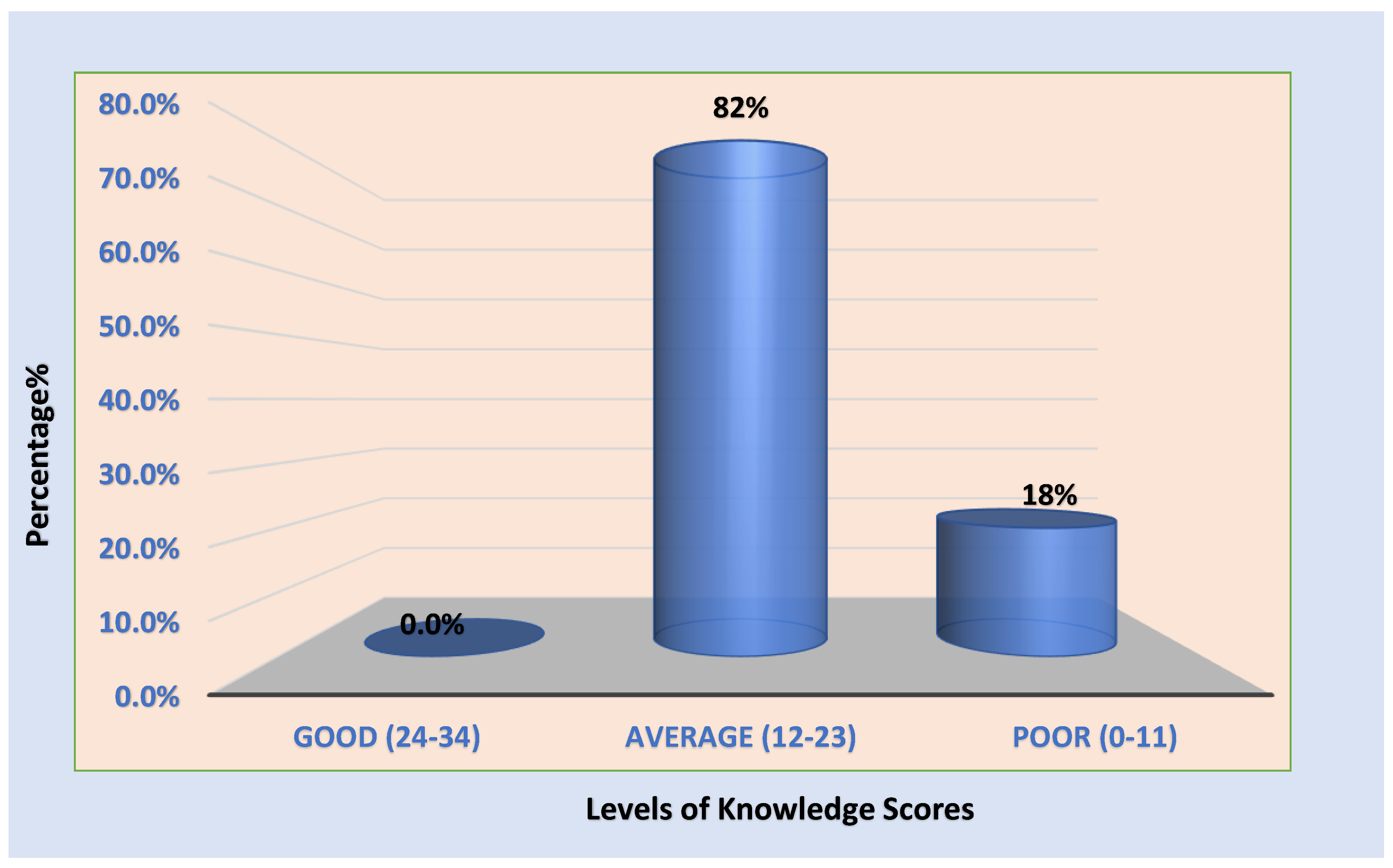
Figure 2.
Bar diagram representing Item wise analysis of the Knowledge Score of Graduating Nursing Students to work in Healthcare facilities during pandemic outbreak.
Figure 2.
Bar diagram representing Item wise analysis of the Knowledge Score of Graduating Nursing Students to work in Healthcare facilities during pandemic outbreak.
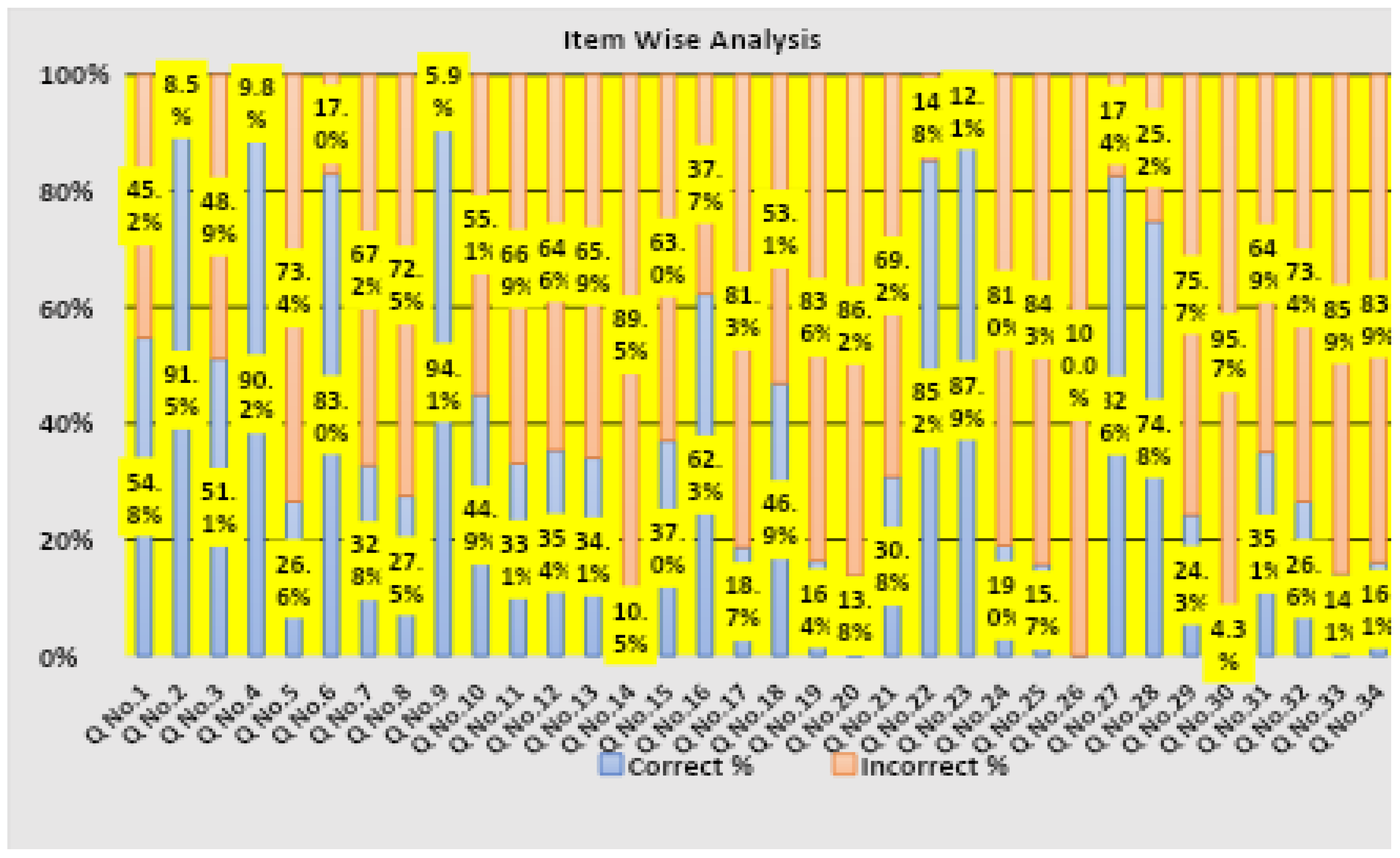
Table 3.
Areawise Mean, Median, Standard deviation and Mean Percentage of Knowledge Scores of Nursing Graduates to practice in Clinical Facility during pandemic outbreak. N=305.
Table 3.
Areawise Mean, Median, Standard deviation and Mean Percentage of Knowledge Scores of Nursing Graduates to practice in Clinical Facility during pandemic outbreak. N=305.
| Areas | Mean + SD | Median | Range | Mean % |
|
Concept of COVID- 19 |
1.97 + 0.803 | 2 | 3 | 65.79 |
| Nature of disease | 2.60 + 0.934 | 3 | 5 | 52.00 |
| Signs & Symptoms | 2.52 + 1.112 | 3 | 5 | 42.02 |
| Etiology | 0.99 + 0.721 | 1 | 2 | 49.67 |
| Diagnostic Evaluation | 0.66 + 0.604 | 1 | 2 | 32.79 |
| Preventive Measures | 5.80 + 1.691 | 6 | 12 | 36.25 |
| Overall | 14.54 + 3.220 | 14 | 18 | 42.78 |
Maximum= 34 Minimum= 0.
Table 4.
Association Between Knowledge Scores of Nursing Graduates with their Demographic Variables chosen for the Study. N= 305.
Table 4.
Association Between Knowledge Scores of Nursing Graduates with their Demographic Variables chosen for the Study. N= 305.
| DEMOGRAPHIC VARIABLES | STATISTICS | |||||||||||||
| LEVEL OF KNOWLEDGE | ||||||||||||||
|
Variable |
Good |
Average |
Poor |
Chi Test |
Table Value | Result | ||||||||
| Age | 16-20 Years | 0 | 35 | 15 | 7.455 | p= 0.059 df= 3 |
7.815 | Not Significant | ||||||
| 21-25 Years | 0 | 214 | 38 | |||||||||||
| ≥ 26 Years | 0 | 2 | 1 | |||||||||||
| Gender | Male | 0 | 53 | 11 | 1.429 | p= 0.232 df=1 |
3.841 | Not Significant | ||||||
| Female | 0 | 198 | 43 | |||||||||||
| Type of College | Private | 0 | 239 | 52 | 0.015 | p= 0.903 df=1 |
3.841 | Not Significant | ||||||
| Government | 0 | 12 | 2 | |||||||||||
| Clinical Posting Attended | Yes | 0 | 247 | 52 | 0.118 | p= 0.732 df=1 |
3.841 | Not Significant | ||||||
| No | 0 | 4 | 2 | |||||||||||
| Vaccinated against COVID 19? | Yes | 0 | 248 | 52 | 1.026 | p= 0.311 df=1 |
3.841 | Not Significant | ||||||
| No | 0 | 3 | 2 | |||||||||||
| Source of information about COVID 19 | Family / Peer group | 0 | 10 | 7 | 1.734 |
p= 0.188 df=1 |
3.841 |
Not Significant |
||||||
| Mass Media | 0 | 71 | 14 | |||||||||||
| Formal Education | 0 | 8 | 2 | |||||||||||
| Healthcare Provider | 0 | 18 | 4 | |||||||||||
| All of the Above | 0 | 144 | 27 | |||||||||||
| Any in-service education attended regarding COVID 19? | Yes | 0 | 140 | 34 | 2.172 | p= 0.141 df=1 |
3.841 | Not Significant | ||||||
| No | 0 | 111 | 20 | |||||||||||
p < 0.05 level of significance. *df: degree of freedom.
Disclaimer/Publisher’s Note: The statements, opinions and data contained in all publications are solely those of the individual author(s) and contributor(s) and not of MDPI and/or the editor(s). MDPI and/or the editor(s) disclaim responsibility for any injury to people or property resulting from any ideas, methods, instructions or products referred to in the content. |
© 2025 by the authors. Licensee MDPI, Basel, Switzerland. This article is an open access article distributed under the terms and conditions of the Creative Commons Attribution (CC BY) license (http://creativecommons.org/licenses/by/4.0/).
Copyright: This open access article is published under a Creative Commons CC BY 4.0 license, which permit the free download, distribution, and reuse, provided that the author and preprint are cited in any reuse.


