

Submitted:
29 September 2025
Posted:
01 October 2025
You are already at the latest version
Abstract
Contract manufacturing is a pivotal strategy for brand owners, yet small-to-medium enterprises (SMEs) in emerging economies struggle to evolve beyond transactional roles into sustainable strategic partners. This study addresses this challenge by applying and refining the Sustainable Contract Manufacturing Maturity Model (SCMC-MM), a framework designed to enhance the holistic sustainability of contract manufacturers. Through a seven-month longitudinal case study grounded in a Design Science Research approach within a South African food manufacturing SME, the model was implemented and evaluated using a mix of assessments, interviews, and operational data. The application led to significant systemic improvements, including a 133% increase in revenue, achieving ISO 22000 certification, and enhanced delivery reliability. Furthermore, the study identified and incorporated novel critical success factors for contract manufacturing companies, such as industrial clustering and transformational leadership, into a refined framework. The results demonstrate that the SCMC-MM offers a practical, scalable tool for fostering sustainable supply chain partnerships. It provides SME managers and consultants with a structured pathway to achieve simultaneous gains in economic resilience, social equity through improved workforce capability, and environmental stewardship via robust safety and health systems, thereby contributing directly to sustainable industrial development in emerging markets.
Keywords:
contract manufacturing
; sustainability
; SMEs
; transformation framework
; case study
; emerging economies
; industrial clustering
1. Introduction
Contract manufacturing has emerged as a strategic model for brand owners seeking flexible production capabilities without the overhead of owning manufacturing assets [1,2,3]. For small-to-medium enterprises (SMEs), contract manufacturing presents both an opportunity and a challenge: the opportunity to participate in established supply chains and the challenge of meeting the operational, quality, and strategic expectations of brand owners [3].
From literature review and experience gained in industry, many contract manufacturers struggle to transition beyond transactional, production-focused service providers to strategic partners who contribute to their clients’ long-term supply chain success [4]. Equally, aspiring firms hoping to enter the contract manufacturing space often lack structured guidance to establish systems and capabilities that ensure competitiveness and sustainability [4,5]. Achieving long-term sustainability in this context extends beyond financial survival; it requires a holistic approach that integrates economic viability (e.g., profitability, cash flow), social responsibility (e.g., workforce capability, ethical practices), and environmental stewardship (e.g., resource efficiency, safety compliance). This triad of concerns is particularly critical for SMEs in emerging economies, where resource constraints are acute and the social impact of business failure is high.
Recognizing this gap, a framework known as the SCMC-MM [6], was developed, aimed specifically at supporting both existing contract manufacturers seeking to reposition as strategic supply chain partners, and SMEs aspiring to enter the contract manufacturing space.
In this study, we apply and refine the SCMC-MM through a practical, real-world case study in a Cape Town-based food manufacturing SME. Our objectives are to validate the framework’s relevance, assess its practical effectiveness in guiding system-wide transformation, and refine its structure based on insights gathered from direct factory engagement. The case study also has the objective of identifying additional success factors that did not emerge from earlier steps, the literature review [4] and the Delphi study [5], that are relevant for sustainable CMCs.
The insights gained contribute not only to manufacturing systems and manufacturing outsourcing research but also offer actionable guidance for industry professionals and consultants supporting sustainable factory improvement efforts. This study contributes to the discourse on sustainable supply chains by providing a validated framework that helps SMEs systematically address the interconnected economic, social, and environmental dimensions of their operations, thereby promoting inclusive and sustainable industrialisation.
2. Literature Review
2.1. Manufacturing Outsourcing and Contract Manufacturing
Manufacturing outsourcing can be defined as the production process of a company undertaken by another company that specialises in manufacturing products that results in benefits such as cost reduction, efficient processes, more technological advance process and technology and better yield of product [3]. Firms that traditionally manufactured their own products are increasingly outsourcing production to contract manufacturing companies (CMCs) to focus instead on product design, research and marketing [7,8] while enjoying the cost advantages brought in by the expertise [9].
Contract manufacturing (CM) is a unique business model that can be used by brand owners to outsource manufacturing of some (or all) production to CMCs [10,11,12] where, in many instances, none of the brand owner’s employees will have physically touched the product they are marketing and selling before it reaches the market [13]. This makes CMCs an integral part of the supply chain because the product leaves their premises straight to the consumer without any value addition by the brand owner.
For this study, CMCs were defined as any manufacturing company that makes finished products ready to go on the shelf for all brand owners, including private label owners [14,15,16] and factoryless goods producers [17,18]. They generally have no production facilities and outsource manufacturing processes entirely to other firms [18], but they own the rights to the intellectual property (IP) or own the design of the products assembled/made by CMCs [19]. Factoryless manufacturing describes the strategic decision by businesses to outsource part or all of their production to a CMC, sometimes overseas, and is an example of the digital economy trend toward renting fixed capital assets rather than owning them [17,19].
CM is a lucrative business with annual revenue projections estimated to be close to the $1 trillion [9] and compound annual growth rate (CAGR) of over 6 during the forecast period between 2018 and 2023 [9]. This presents a potentially lucrative opportunity for manufacturing companies to become CMC services providers and partner brand owners at a strategic level.
2.2. Manufacturing Frameworks
A review of literature revealed that no frameworks based on critical success factors have been developed for CMCs to achieve sustainable success as strategic partners in the brand owners supply chains [4]. This is the gap the study by [6] closed by developing the SCMC-MM [6]. Several authors developed frameworks for manufacturing, namely manufacturing excellence [20,21,22,23], Operations excellence [24], lean manufacturing [25], CSFs for Manufacturing [26], Outsourcing partner selection [27] and manufacturing SMEs [28]. These frameworks provide valuable insights into success factors for manufacturing companies. These factors were useful input in the development of the CMC framework [6]. These frameworks, however, do not address the unique needs of CMCs and none of them provide a guide to management on how CMCs can effectively implement the framework for sustainable success as strategic supply chain partners to brand owners.
2.3. The Gap in CM Literature
As the review above reveals there are several research areas for contract manufacturing and manufacturing outsourcing. [16] identified two research strands on CM. Firstly, the first line of research is concerned with the factors that influence the reasons and choices of contact manufacturing. The second strand explores the impact of contract manufacturing on operational and financial performance of the contract giver [2]. Other authors also researched on the management of the relationships between the brand owner and the CMC [30,31,32] conducted research on the supply side of contract manufacturing relationships and found that most literature on outsourcing focuses only on the buying (outsourcing) company. Their paper highlights the supplier’s side from a relational perspective and stresses the importance of business relationships between suppliers of outsourced activities and their customers [32]. [33] concluded that in outsourcing research there has been much less discussion of the strategic issues for outsourcing service providers, although, in reality, there are major issues to be considered [33]. They also discuss the different types of outsourcing decisions and the drivers for both the brand owner and the outsourcing service provider [33] but offer no framework to guide the service provider.
There is a lack of integrated system-level frameworks that aspiring and existing CMCs can use to create sustainable CMC, which is why the SCMC-MM was developed [6]. The scope of this paper is the application and refinement of this framework in a real food manufacturing company offering CM services in Cape Town, South Africa.
3. Overview of the SCMC-MM
The SCMC-MM was developed to guide traditional manufacturing firms through a system-level transformation to achieve sustainable contract manufacturing competitiveness [6]. The framework is based on maturity model approach [34,35] and integrates core manufacturing subsystems, including quality assurance, supply chain performance, production capability, financial control, and stakeholder engagement, into a unified transformation model [6].
Unlike isolated process improvement models, the SCMC-MM views the manufacturing operation as a coordinated system, where the interdependencies between production scheduling, operational capability, supplier partnerships, and quality systems collectively determine the organization’s success as a contract manufacturer [6]. The framework incorporates both strategic reconfiguration and operational execution tools, enabling management to pursue transformation without losing sight of daily production realities [6].
The SCMC-MM is designed for two key industry segments: existing contract manufacturing companies (CMCs) seeking to transform into strategic partners within brand owners’ supply chains, and aspiring companies aiming to enter the contract manufacturing space. For both segments, the framework offers a structured pathway to assess operational readiness, address systemic deficiencies, and build long-term sustainability.
Key pillars of the framework, as described by [36], include:
- Quality Performance
- Supply Performance
- Financial Performance
- Operational Capability
- Business Partnering
- SHE Performance
- Reputation
- Ethical and Legal Compliance
These are shown in Figure 1.
Each pillar is made up of success factors, classified A, B or C based on the level of consensus each success factor achieved in a Delphi study with experts in CM [5]. The framework for sustainable CM is shown in Figure 2 [6]. The foundation pillars emerged from the AHP ranking process [6].
Each pillar is assessed using a structured sustainability assessment tool, guiding management to identify performance gaps, prioritize interventions, and track progress through defined transformation levels. The transformation levels were defined by [6] as shown in Table 1.
This paper focuses on the empirical application, evaluation, and refinement of the SCMC-MM in a live manufacturing environment, contributing insights from real-world implementation and extending the framework with industry-derived success factors.
4. Research Methodology
4.1. Research Approach
This research was structured around a Design Science Research (DSR) approach, which allows for the development, application, and iterative refinement of practical solutions to real-world industry challenges, ensuring both academic rigor and practical relevance [37,38]. The DSR methodology was used to apply and evaluate the SCMC-MM in a practical setting. Evaluation is an important and crucial activity in the DSR process as it indicates whether an artefact works or not, provides feedback for further development as well as assuring the rigor of the research [39,40,41,42]. DSR was selected DSR for its emphasis on blending theoretical framework development with evidence from actual operational environments. The SCMC-MM was thus tested not in isolation, but through direct application in a functioning factory.
4.2. Case Study Design
A longitudinal case study was conducted within a Cape Town-based food manufacturing SME. This company was selected both for its strategic ambition to grow as a contract manufacturer and for its operational challenges common to many SMEs in emerging economies. Over seven months, we worked alongside factory leadership and operational teams to apply the SCMC-MM, using the case study not only as a validation exercise but also as a learning opportunity to refine the framework based on observed outcomes.
4.3. Data Collection Methods
Our data collection combined formal assessment tools with direct factory interaction, ensuring practical insights supplemented quantitative performance tracking. Data sources included:
- Structured sustainability assessments using the SCMC-MM checklist [6].
- Daily and weekly observations on the factory floor.
- Semi-structured interviews with team leaders, supervisors, and management.
- Review of company documentation (quality reports, supplier logs, production data).
- Performance tracking via radar charts and operational metrics.
By grounding data collection in everyday factory operations, we ensured the research remained practically relevant and actionable.
4.4. Evaluation and Refinement Process
The case study was conducted over a seven-month period. Data from initial assessments identified operational and systemic gaps (Table 6), informing targeted interventions underpinned by the framework (Table 7). Follow-up assessments measured progress and validated changes. Newly identified success factors were incorporated into the framework through iterative refinement
5. Case Study Application
5.1. Selected Company
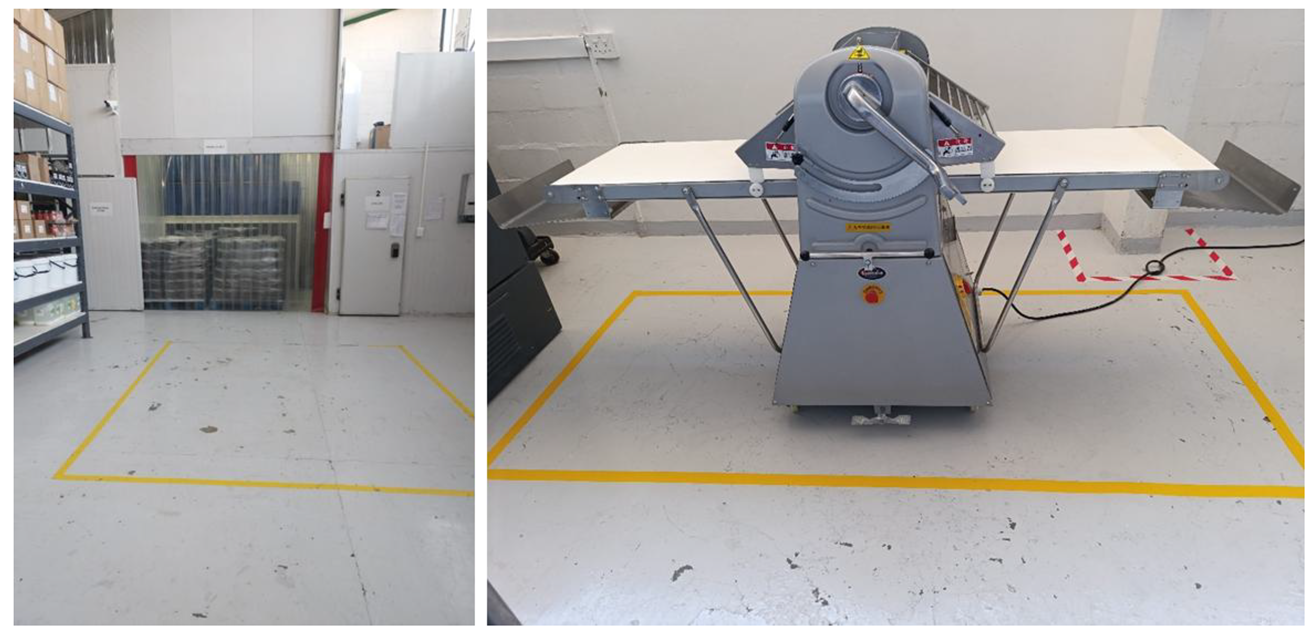
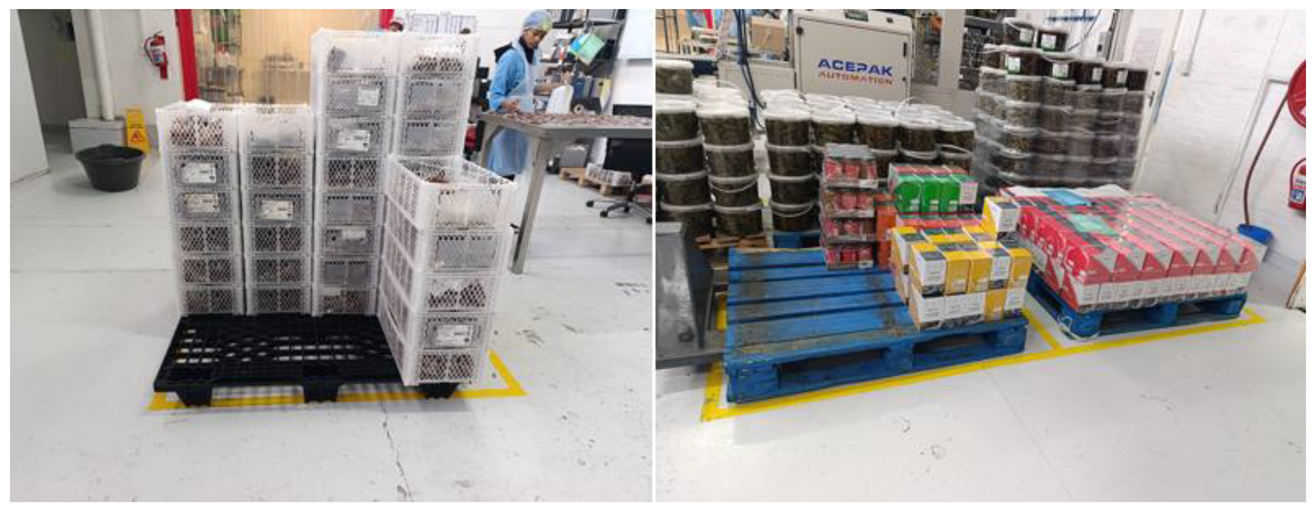
The selected company is a medium-sized food manufacturer located in Cape Town, South Africa, making private label products for local brand owners as well as their own brands. We refer to them in this study as the CMC They have ambitions to establish itself as a leading contract manufacturer serving local, regional and international brand owners. Their goals for the year were to triple their turnover, onboard two major local brand owners as customers and improve capacity utilisation. Prior to the intervention, the CMC operated primarily as an inefficient manufacturer with limited systems integration and ad-hoc production planning. Some are the problems they faced included loss of key customers quality non-conformances, poor housekeeping (See appendix A), poor delivery performance, cashflow challenges and poor management-employee relations. They had lost their major revenue product line, a private label product, and capacity utilisation was at an all-time low, with employees on reduced hours and wages. Leadership recognized the need to reposition the business before it went out of business but lacked a structured pathway to guide the transformation.
5.2. Initial Assessment
Using the SCMC-MM as our guiding tool, we initiated the transformation process with an initial assessment of the factory’s current sustainability level and systemic maturity across each of the framework’s pillars. This assessment revealed significant gaps in supply reliability, operational capability and quality performance, confirming the need for system-wide intervention (Figure 4).
The following emerged from the assessed scores as per the transformation level guideline in Table 1.
- The CMC’s overall assessed core was 2.1, meaning they were at sustainability level 2, Foundation building.
- Four pillars were below level 2 of the transformation level. These are SHE, Quality Performance, Supply Performance and Capability.
- SHE, with a score of 1, had the lowest score driven by the absence of systems to manage occupational safety and health as well as by a complete lack of focus on environmental compliance and resource efficiency, such as waste management, energy consumption monitoring, or water usage policies..
- The Quality Performance score of 1.8 was impacted largely by poor housekeeping, an ineffective and incomplete quality management system, plant layout that was not conducive to quality and food safety compliance, low level of quality and food safety skills and the lack of compliance to good manufacturing practices (GMP).
- Supply performance also scored 1.8 and this was impacted by a record of late deliveries, not having a supply and operations management system in place to track and manage supply performance and not having a continuous improvement structure.
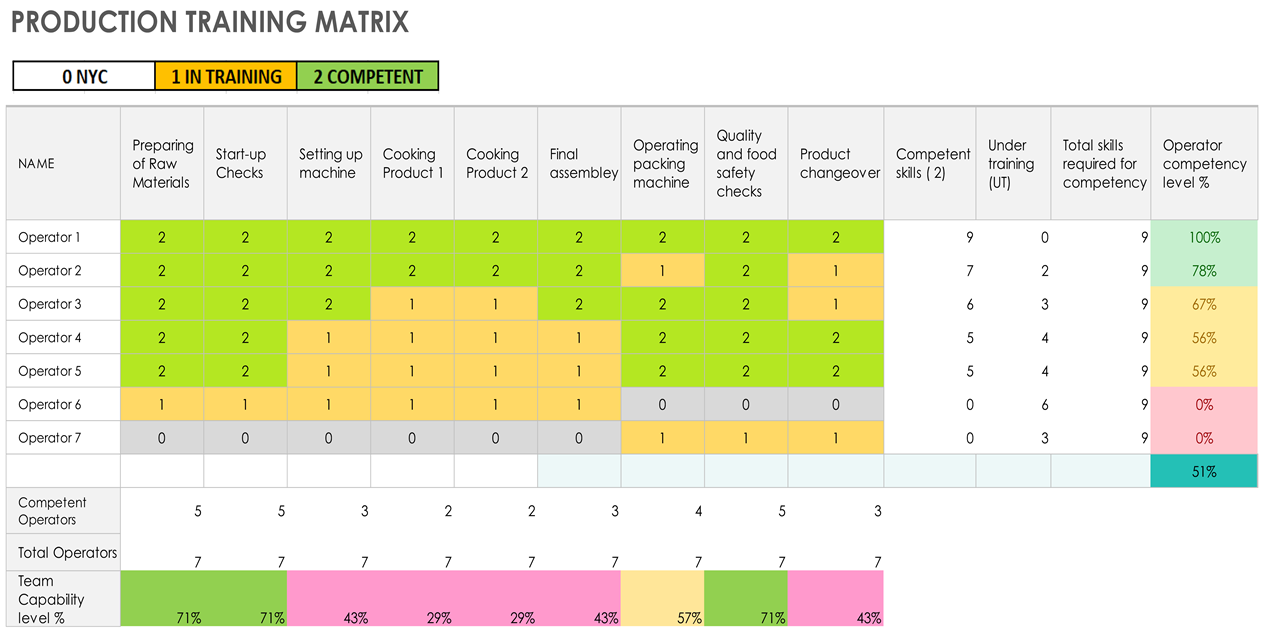
- Capability scored 1.8. The experience levels of management and key roles in Quality and Production scored 3. The lower scores were the absence of a plant performance monitoring system, no documented maintenance management system, poor skills at operational level and limited problem solving skills.
- Three pillars, Ethics and Legal Compliance, Financial Performance and Business Partnering were at level 2.
- Ethics and Legal Compliance scored 2.5. There is no documented ethics management system or policy, which scored 1. However, they have no record of legal or ethics noncompliance, which gave a score of 4.
- Financial performance scored 2.2, mainly impacted by the fact that there was no cost saving program in place, there was no annual budget drawn up and the CMC struggled with cashflow challenges.
- Business Partnering scored 2.3. The CMC has good relations with customers and key suppliers. They, however, did not have service level agreements (SLAs) in place and no performance monitoring and reviews systems in place. There are also no joint problem solving processes implemented and no evidence of technology transfers and technical support from brand owners.
- Reputation was on level 3, the highest score. They have had major quality incidents leading to product recalls, which has impacted on their reputation. They do have a good reputation for supplying good tasting food, maintaining confidentiality, communicating regularly with key customers and suppliers, and donating food for charity purposes.
5.3. Recommendations for Improvement of Level
Based on the assessment scores and observations of activities and practices on site the recommendations in Table 2 were made to the management team for them to transform their operations, move up the sustainability levels and achieve their goals of retaining existing brand owners and bringing on board more customers.
The CMC implemented several of the recommendations in phases, focusing on practical, achievable steps as shown in Table 3.
5.4. Key Actions Taken from Recommendations
Throughout the process, leadership engagement and involvement were maintained through regular feedback sessions and practical support, ensuring interventions were embraced rather than resisted.
By the end of the intervention period, the factory demonstrated measurable improvements in delivery reliability, production efficiency and staff engagement, all aligned to the framework’s sustainability dimensions. Most critically after the certification the CMC onboarded 3 national brand owners as private label customers and grew revenue by 133% in the first month and 95% in the following month. They were in the process of also growing their own brands product portfolio.
The outcomes and the feedback from factory leadership highlighted the framework’s practicality and its ability to provide structured direction to a previously reactive organization.
5.5. Second Assessment
We conducted the second assessment 7 months after the first one and the results are shown in Figure 5.
The following conclusions came from the second assessment and observations:
- The CMC transformed to sustainability level 3.
- The biggest improvements were noted in the pillars of Quality performance, Supply performance, Financial performance, SHE and Business partnering.
- While the CMC had lost a big contract from a leading brand owner they were able to bring on board three national brand owners as customers primarily because of their capability, quality and food safety management system and pricing.
- They have developed a SHE management system that is documented and visible, with tracking of incidents in place.
- They improved supply performance through the development of an operations and supply management system based on integrated supply scheduling. This made it easier for them to commit to supply only when it was possible to do so.
- The culture at the factory has shifted from one of disgruntlement and unhappiness to one of positivity and willingness to contribute, even when they had to work fewer hours after losing a key contract.
5.6. Additional (D) factors emerging from the demonstrations
The additional success factors that emerged from the demonstrations at the CMC are discussed below:
- Business development and marketing of capacity and capabilities so that the loss of one customer or product line does not result in business closure.
- Manufacturing own brands to utilize the capacity and not rely on brand owners only. This is most applicable where the CMC has a narrow customer base and excess capacity.
- Business partnering must be actively practiced not only with the brand owners but suppliers, service providers, regulatory authorities and other key stakeholders, including landlords.
- The CMC collaborated with two other manufacturing companies, who are potentially competitors, capable of making similar products to define a working structure to approach big brand owners for big orders of common products. This is also called industrial clustering. Industrial clusters refer to groups of interconnected businesses and institutions that collaborate to enhance competitiveness and efficiency [46]. These clusters facilitate resource-sharing, innovation, and cost reductions, particularly benefiting small and medium-sized enterprises (SMEs) with limited resources.
- Extending the industrial cluster approach to reduce costs by sharing service providers, resources, equipment and professional services with companies making similar products or in the same geographical area. The CMC shared maintenance and transport service providers with other businesses in the same area to assess professional services at affordable costs.
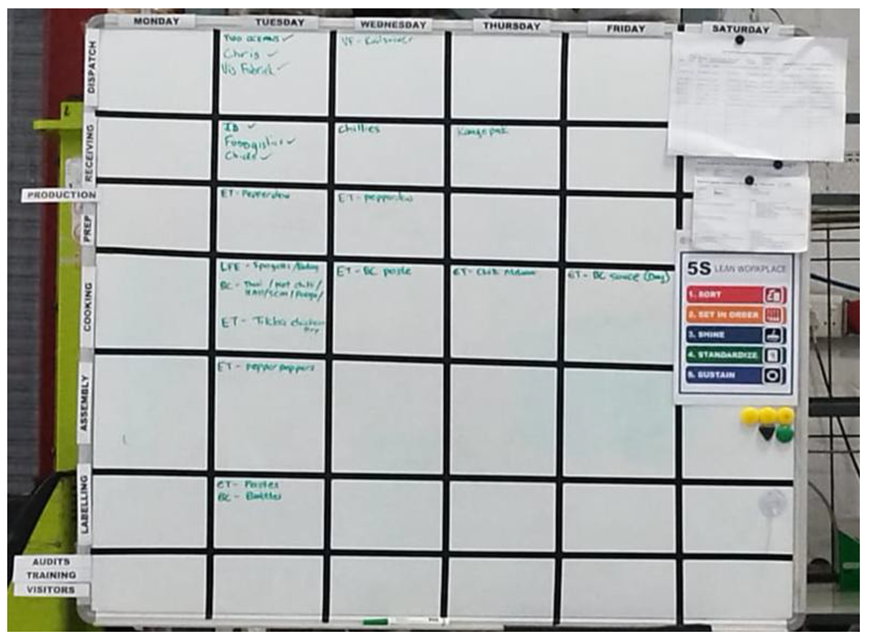
- Daily scheduling and monitoring of all tasks on a weekly basis in an integrated schedule was critical for monitoring and controlling deliveries and improving supply performance.
- CMCs must boldly take their position as partners in the supply chain and have the courage to stand up to brand owners and walk away from business that is not working for them or not sustainable. The CMC informed a brand owner they could not continue supplying a product line which was no longer profitable to them and was costing them money to supply. The brand owner eventually agreed to the CMC’s proposed price.
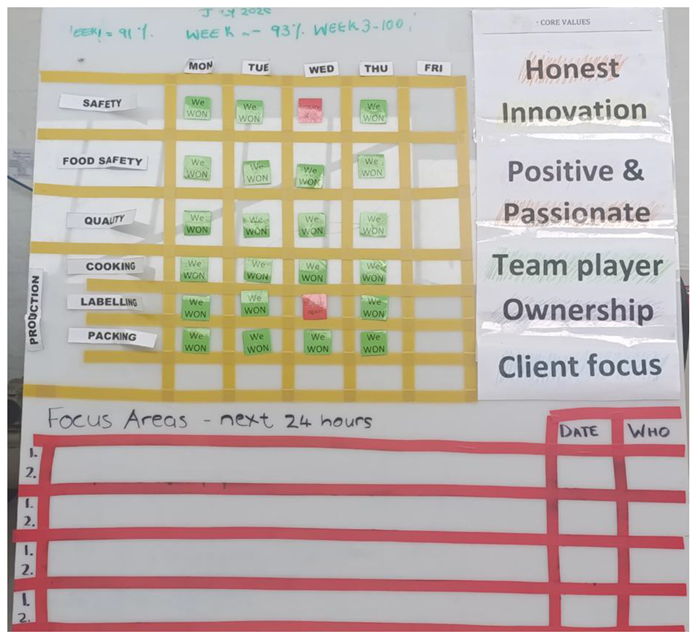
- First impressions matter to visitors and potential customers. The appearance of the facility, the welcome they get, the induction given to them, the practices they observe, and the information displayed on boards had an impact on securing business.
- The CMCs must create an organisational culture of ownership, where they focus all their employees on continuously finding ways to improve their productivity and to cut costs. This must be one of their key leadership competencies.
- CMCs must focus everyone in the company and key stakeholders on continuously keeping the customer satisfied and identifying opportunities to reduce costs.
- Leadership style is critical. In the CMC at the start of the assessment the leadership style being displayed was more autocratic, it was only the leader’s voice that was heard. Production delays due to the team waiting for direction from the leader or waiting for the leader to buy materials were common. A culture of fear was evident. This was different during the second assessment where the culture was more open, with people freely making suggestions to management. This resonated well with the findings of [47] in their study on transformational leadership for SMEs, which described transformational leaders as leadership that prioritises open communication, empathy, and support, creating an environment where employees feel valued and empowered to contribute their best efforts. It is characterized by the ability to articulate a compelling vision, inspire trust and encourage employees to exceed their usual performance levels, fostering a culture of problem solving and continuous improvement [47,48,49,50]. We therefore recommend that to achieve sustainable success the leaders of CMCs must be adopt a transformational leadership style. This is included as a critical success factor.
These D factors were used to refine and update the sustainable CMC framework and are summarised in Table 4, with the pillars they fit in.
The house of sustainable CMCs is, therefore, updated as shown in Figure 6, with the D factors incorporated into the different pillars. The assessment checklists were updated to include these success factors.
5.7. Proposed Final CMC Framework
Based on the demonstration and evaluation and the emergence of the D factors, the framework presented in Figure 2 was updated to show the D factors as the same level of criticality as the A factors, given their criticality to CMC sustainability. This is shown in Figure 7.
Key
A – Success factors that achieved the most importance consensus criteria in the Delphi study [5].
B – Success factors that did not fully meet the most importance consensus criteria but met the second most importance consensus criteria [5].
C – Success factors that did not meet either importance consensus criteria and those that emerged from literature and were not A or B factors. They were not discarded, and their implementation is based on CMC need [36].
D – Factors that emerged from the demonstration in the CMC and confirmed as critical by the CMCs. These were added to the assessment checklist to improve the assessments.
6. Summary
The improvements and changes that occurred are summarised below.
6.1. System-Level Improvements
Application of the SCMC-MM led to systemic changes across the factory. Production scheduling became integrated with supplier delivery schedules, improving raw material availability and reducing downtime. Quality control moved from reactive checks to proactive management, strengthening compliance and customer confidence. These changes reflect system-level transformation, where interdependent processes and capabilities evolved together.
6.2. Operational and Strategic Outcomes
Operational outcomes included a notable increase in delivery reliability, enhanced production scheduling accuracy, and reduced production interruptions. From a strategic perspective, the factory improved its positioning with existing and potential clients by achieving certification to ISO 22000:2018, the food safety management system, formalizing quality standards and operational controls, presenting itself as a reliable contract manufacturing partner. This was demonstrated by their successful listing as suppliers by three leading brand owners after they embarked on their transformation journey.
While the primary driver for the SME was economic survival, the implementation of the framework initiated critical steps toward environmental sustainability through the formalization of the SHE system. Future applications of the MM-CMC-TM could more strongly emphasize green manufacturing initiatives, such as energy-efficient technologies or circular economy practices (e.g., packaging recycling), as a direct pathway to both cost reduction and enhanced environmental performance, further strengthening the sustainability outcomes
6.3. Framework Refinement and New Success Factors
The implementation phase surfaced additional critical factors not originally emphasized in the framework, including leadership communication consistency with customers and suppliers, the role of visual management tools in sustaining change, and the need for partnering with similar manufacturers who are potentially competitors in industrial clusters to access bigger markets and professional services at reduced costs. These factors, named D factors in this study, were incorporated into the refined SCMC-MM to enhance its practical applicability and effectiveness.
6.4. Practical Applicability and Scalability
Leadership feedback and factory outcomes confirmed that the framework offered clear, actionable guidance while remaining adaptable to evolving business contexts. Given its performance in a single factory, there is potential for scaling the framework across other SMEs seeking to transition into or strengthen their contract manufacturing roles.
6.5. Theoretical and Practitioner Contributions
The refined framework contributes to manufacturing systems literature by presenting a systems-level approach specifically tailored for contract manufacturers, an area previously underserved by existing models. For practitioners, the study offers a structured, validated tool that directly addresses common operational and strategic challenges faced by SMEs operating in emerging economies.
The refined framework and management guide can be used by the following users:
- Managers of CMCs to assess their current sustainability level, identify improvement opportunities from the pillars and factors that are at lower levels and determine actions for improvement and moving up the levels towards level 5.
- Brand owners as part of selecting the best CMC as their supply partner. They can use the assessment sheet to compare potential partners and select the one with the factors critical to the brand owners and on a higher level on the sustainability level.
- Brand owners as part of supporting their existing CMC partner to improve their supply performance and sustainability.
- Consultants assisting CMCs to improve their systems and practices towards sustainability. The assessment checklist will identify current gaps and opportunities for improvement and will enable the generation and implementation of improvement plans
6.6. Implications for Sustainability
This case study demonstrates that the SCMC-MM serves as a catalyst for holistic sustainability. Economically, it guided the company to profitability and growth, ensuring its viability. Socially, the transformation led to improved employee engagement, skills development, and a more ethical and safer workplace, contributing positively to the local community. Environmentally, the establishment of a structured SHE system laid the essential groundwork for responsible resource management and compliance. The framework, therefore, provides a structured mechanism for SMEs to pursue the United Nations Sustainable Development Goals (SDGs), particularly SDG 8 (Decent Work and Economic Growth) and SDG 9 (Industry, Innovation, and Infrastructure), by building resilient, inclusive, and sustainable industrial enterprises
7. Conclusions
This study applied, evaluated, and refined the Sustainable Contract Manufacturing Maturity Model (SCMC-MM) within a South African food manufacturing SME. The results demonstrated the framework’s effectiveness as a structured, actionable tool for guiding system-wide transformation, driving improvements in supply performance, production capability, and stakeholder relationships. By addressing both operational execution and strategic positioning, the framework enabled the factory to shift towards becoming a sustainable, reliable contract manufacturing partner.
Theoretically, the study extends manufacturing systems literature by contributing a validated, systems-level transformation model tailored for existing and aspiring contract manufacturers. Practically, it provides consultants, factory managers, and policymakers with a clear pathway for building economically competitive, socially responsible, and environmentally sound contract manufacturing operations in SME environments, thereby contributing to sustainable development in emerging markets.
While the framework showed strong applicability within the case company, its broader applicability across different sectors and regions requires further research. Future work will focus on multi-site validations and adapting the framework for other manufacturing environments and non-food industries.
Author Contributions
Conceptualization, T.T.M. and S.M.; Methodology, T.T.M.; Validation, T.T.M.; Formal Analysis, T.T.M.; Investigation, T.T.M.; Resources, T.T.M. and S.M.; Data Curation, T.T.M.; Writing – Original Draft Preparation, T.T.M.; Writing – Review & Editing, T.T.M. and S.M.; Visualization, T.T.M.; Supervision, S.M.; Project Administration, T.T.M. and S.M. All authors have read and agreed to the published version of the manuscript.
Funding
This research received no external funding.
Institutional Review Board Statement
Not applicable.
Informed Consent Statement
Informed consent was obtained from all subjects involved in the study.
Data Availability Statement
The data presented in this study are available on request from the corresponding author. The data are not publicly available due to privacy and confidentiality agreements with the case study company.
Acknowledgments
The authors would like to thank the management and staff of the company involved in this case study for their cooperation and support.
Conflicts of Interest
The authors declare no conflicts of interest.
Authors:
Trust Taziva Mahove (TTM) – Department of Industrial Engineering, Stellenbosch University. Professor Stephen Matope (SM) - Department of Industrial Engineering, Stellenbosch University
Appendix A1 – Housekeeping and GMP Violations BEFORE
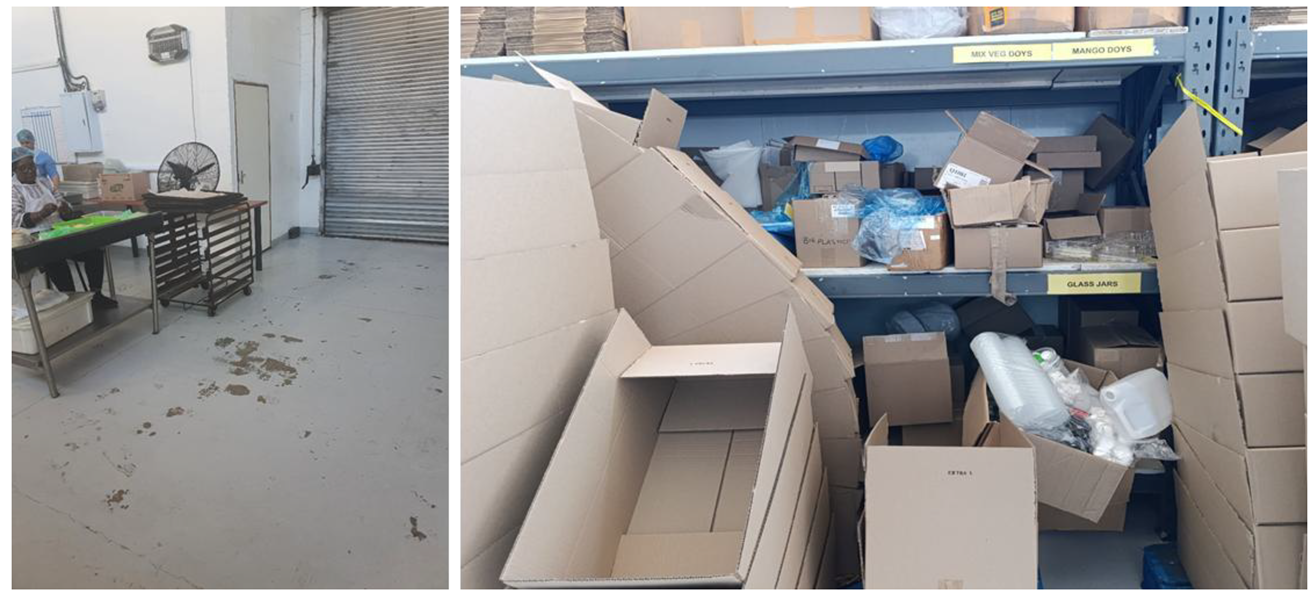
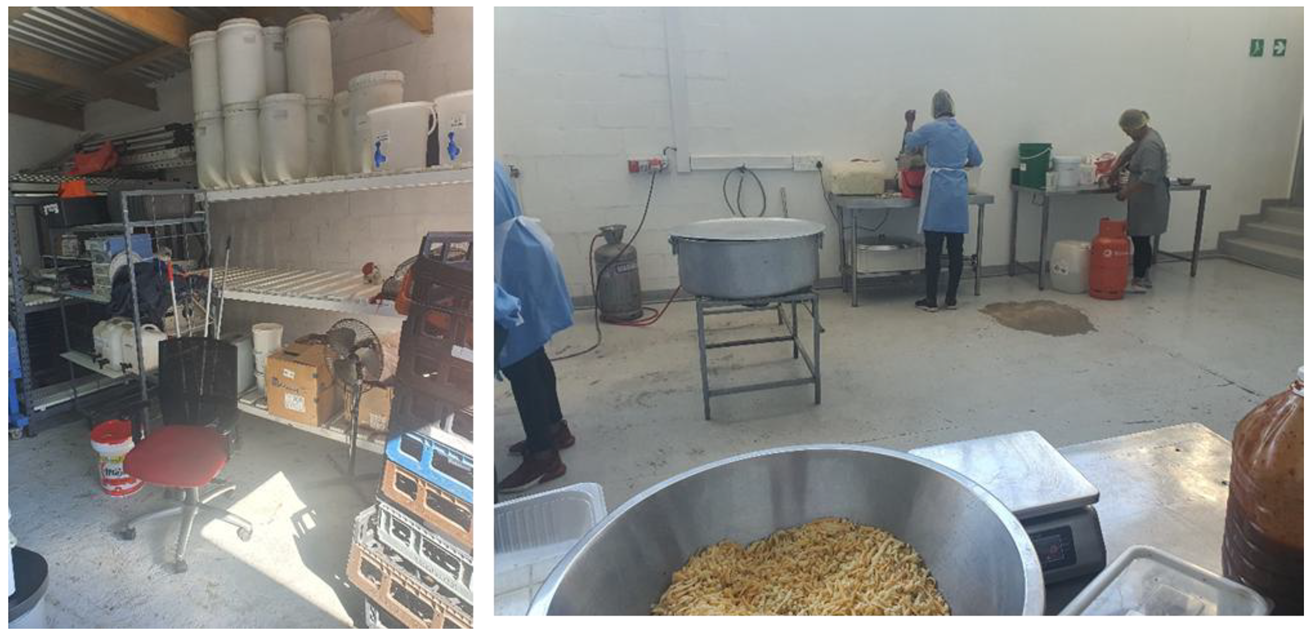
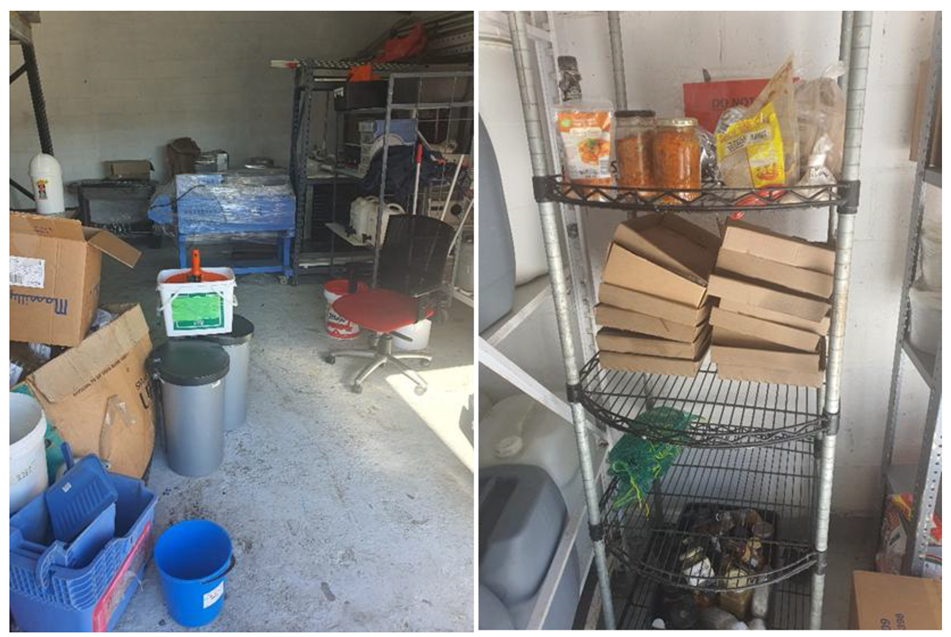
Appendix A2: Housekeeping and GMP Compliance AFTER
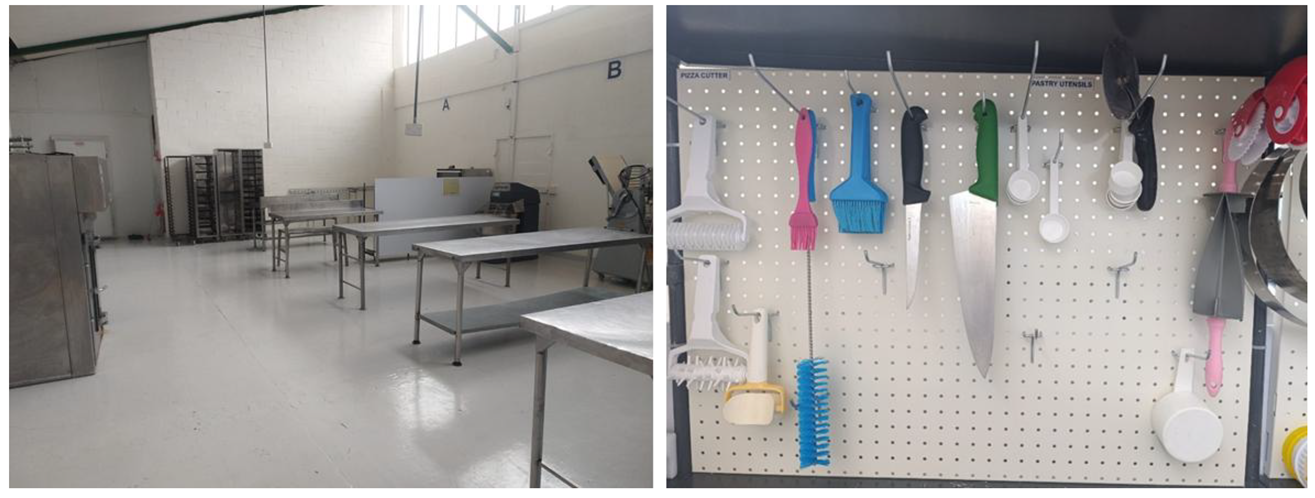
Appendix B
Appendix C
References
- Deng, S.; Xu, J. Manufacturing and procurement outsourcing strategies of competing original equipment manufacturers. Eur J Oper Res. 2022, 308, 2. [Google Scholar] [CrossRef]
- Chang, P.; Phan, T. Optimal manufacturing outsourcing decision based on the degree of manufacturing process standardization. In: Proceedings of the 5th International Conference on Industrial Engineering and Applications (ICIEA); 2018. p. 49–53.
- Shanmugan, M.; Shaharudin, M.S.; Ganesan, Y.; Fernando, Y. Manufacturing outsourcing to achieve organizational performance through manufacturing integrity capabilities. In: FGIC 2nd Conference on Governance and Integrity; 2019. KnE Soc Sci. p. 858–871.
- Mahove, T.T.; Matope, S. A critical success factors framework for sustainable contract manufacturing in the consumer products supply chain in South Africa: A review. In: Proceedings of the International Conference on Industrial Engineering and Operations Management; 2021 Aug 2–5; Rome, Italy. p. 206–1217.
- Mahove, T.T.; Matope, S. Experts’ consensus on critical success factors contract manufacturing. In: Proceedings of the 5th African International Conference on Industrial Engineering and Operations Management; 2024 Apr 23–25; Johannesburg, South Africa. p. 1164–1176.
- Mahove, T.T.; Matope, S. Development of a conceptual framework and management guide for sustainable contract manufacturing companies in South Africa. S Afr J Ind Eng. 2025; [manuscript under review]. [Google Scholar]
- Plambeck, E.L.; Taylor, T.A. Sell the plant? The impact of contract manufacturing on innovation, capacity, and profitability. Manag Sci. 2005, 51, 133–150. [Google Scholar] [CrossRef]
- Pun, H. The more the better? Optimal degree of supply-chain cooperation between competitors. J Oper Res Soc. 2015, 66, 2092–2101. [Google Scholar] [CrossRef]
- Mokhtari, H. Manufacturing operations outsourcing through an artificial team process algorithm. J Intell Fuzzy Syst. 2016, 31, 487–501. [Google Scholar] [CrossRef]
- Urgun, C. Restless contracts [Internet]. 2021 [cited 2025 Jul 24]. Available from: https://curgun.scholar.princeton.edu.
- Szalkai, Z.; Magyar, M. Strategy from the perspective of contract manufacturers. IMP J. 2017, 11, 150–172. [Google Scholar] [CrossRef]
- Singla, B.; Singh, A. Contract manufacturing: the boon for developing economies. Int J Innov Technol Explor Eng. 2019, 8, 367–370. [Google Scholar] [CrossRef]
- Arrunada, B.; Vázquez, X.H. When your contract manufacturer becomes your competitor. Health Aff. 2006, 84, 135–140. [Google Scholar]
- Ndlovu, S.G. Private label brands vs national brands: new battle fronts and future competition. Cogent Bus Manag. 2024, 11, 1–13. [Google Scholar] [CrossRef]
- Silva, P.M.; Veiga, F.C.; Pinto, A.S. Should private-label supply manufacturers invest in digital strategies? A study on Portuguese manufacturers. J Strateg Mark. 2024, 1–25. [Google Scholar]
- Wu, L.; Yang, W.; Wu, J. Private label management: a literature review. J Bus Res. 2021, 125, 368–384. [Google Scholar] [CrossRef]
- Coyle, D.; Nguyen, D. No plant, no problem? Factoryless manufacturing, economic measurement and national manufacturing policies. Rev Int Polit Econ. 2020, 1–21. [Google Scholar] [CrossRef]
- Morikawa, M. Factoryless goods producers in Japan. Jpn World Econ. 2016, 40, 9–15. [Google Scholar] [CrossRef]
- Xing, Y. Factoryless manufacturers and international trade in the age of global value chains. RePEc Working Paper. 2021, 1–20. [Google Scholar]
- Goriwondo, W.M.; Madzivire, A.B. Framework towards successful implementation of world class manufacturing principles: a multiple case study of the fast-moving consumer goods (FMCG) in Zimbabwe. Zimb J Sci Technol. 2015, 10, 163–175. [Google Scholar]
- Sharma, M.; Kodali, R. Development of a framework for manufacturing excellence. Meas Bus Excell. 2008, 12, 50–66. [Google Scholar] [CrossRef]
- Fast, L.E. The 12 Principles of Manufacturing Excellence: A Leader’s Guide to Achieving and Sustaining Excellence. Hoboken (NJ): CRC Press;
- Paranitharan, K.P.; Thangevelu, R.B. An integrated model for achieving sustainability in the manufacturing industry – an empirical study. Int J Bus Excell. 2019, 16, 82–109. [Google Scholar] [CrossRef]
- Rusev, S.J.; Salonitis, K. Operational Excellence Assessment Framework for Manufacturing Companies. Procedia CIRP. 2016, 55, 272–277. [Google Scholar] [CrossRef]
- Yadav, G.; Luthra, S.; Huisingh, D.; Mangla, S.K.; Narkhede, B.E.; Liu, Y. Development of a lean manufacturing framework to enhance its adoption within manufacturing companies in developing economies. J Clean Prod. 2020, 245, 118726. [Google Scholar] [CrossRef]
- Siddique, S.N.; Ganguly, S.K. Critical success factors for manufacturing industries in India: A case study analysis. Int J Appl Eng Res. 2019, 18, 1898–1905. [Google Scholar]
- Chen, K.S.; Chang, T.C.; Lin, Y.T. Developing an outsourcing partner selection model for process with two-sided specification using capability index and manufacturing time performance index. Int J Reliab Qual Saf Eng. 2019, 26, 1950015. [Google Scholar] [CrossRef]
- Löfving, M.; Säfsten, K.; Winroth, M. Manufacturing strategy frameworks suitable for SMEs. J Manuf Technol Manag. 2014, 25, 7–26. [Google Scholar] [CrossRef]
- Cheng, L.C. Evaluating the role and integration of contract manufacturing strategy in supply chain management: an empirical study. Int J Manuf Technol Manag. 2010, 19, 27–46. [Google Scholar] [CrossRef]
- Mandják, T.; Szalkai, Z.; Hlédik, E.; Neumann-Bódi, E.; Magyar, M.; Simon, J. The knowledge interconnection process: evidence from contract manufacturing relationships. J Bus Ind Mark. 2021, 36, 1570–1584. [Google Scholar] [CrossRef]
- Tsay, A.A.; Gray, J.V.; Noh, I.J.; Mahoney, J.T. A review of production and operations management research on outsourcing in supply chains: implications for the theory of the firm. Prod Oper Manag. 2018, 27, 1177–1220. [Google Scholar] [CrossRef]
- Baraldi, E.; Proença, J.F.; Proença, T.; de Castro, L.M. The supplier’s side of outsourcing: taking over activities and blurring organizational boundaries. Ind Mark Manag. 2014, 43, 553–563. [Google Scholar] [CrossRef]
- Hussey, D.; Jenster, P. Outsourcing: the supplier viewpoint. Strateg Change. 2003, 12, 7–20. [Google Scholar] [CrossRef]
- Santos, R.C.; Martinho, J.L. An Industry 4.0 maturity model proposal. J Manuf Technol Manag. 2019, 31, 1023–1043. [Google Scholar] [CrossRef]
- Hansali, O.; Elrhanimi, S.; El Abbadi, L. Supply chain maturity models - a comparative review. LogForum. 2022, 18, 435–450. [Google Scholar] [CrossRef]
- Mahove, T.T.; Matope, S. An empirical study to identify the critical success factors for sustainable contract manufacturing in the consumer products supply chain in South Africa. S Afr J Ind Eng. 2024, 35, 29–48. [Google Scholar] [CrossRef]
- Peffers, K.; Tuunanen, T.; Rothenberger, M.A.; Chatterjee, S. A design science research methodology for information systems research. J Manag Inf Syst. 2007, 24, 45–77. [Google Scholar] [CrossRef]
- Hevner, A.R.; Chatterjee, S. Design research in information systems: theory and practice. New York (NY): Springer;
- Coetzee, R. Towards designing an artefact evaluation strategy for human factors engineering: a lean implementation model case study. S Afr J Ind Eng. 2019, 30, 289–303. [Google Scholar] [CrossRef]
- Herselman, M.; Botha, A. Applying design science research as a methodology in postgraduate studies: a South African perspective. In: Proceedings of the Conference of the South African Institute of Computer Scientists and Information Technologists. (SAICSIT ’20); 2020 Sep 14–16; Cape Town, South Africa. p. 251–258, 2020. [Google Scholar]
- Mdletshe, S.; Motshweneng, O.S.; Oliveira, M.; Twala, B. Design science research application in medical radiation science education: A case study on the evaluation of a developed artifact. J Med Imaging Radiat Sci. 2023, 54, 206–214. [Google Scholar] [CrossRef]
- Venable, J.; Pries-Heje, J.; Baskerville, R. FEDS: A Framework for Evaluation in Design Science Research. Eur J Inf Syst. 2016, 25, 77–89. [Google Scholar] [CrossRef]
- Martins, B.; De Oliveira, E.; Carraro, C.; Entelman, F. FSSC 22000 certification: study of implementation in a Brazilian agroindustrial cooperative located in the Southwest region of the State of Sao Paulo. IOSR J Bus Manag. 2022, 22, 53–66. [Google Scholar]
- Rodríguez-Tineo, R.; Rodríguez-León, A.; Solano-Gaviño, J.C. FSSC 22000 scheme as an effective strategy for producing safe and quality food. Agroind Sci. 2024, 14, 83–96. [Google Scholar] [CrossRef]
- Zamula, V.S.; Kuzlyakina, Y.A. Features of the FSSC 22000 certification scheme when implemented in the meat industry. Meat Ind J. 2021, 1, 33–37. [Google Scholar] [CrossRef]
- Porter, M.E. Clusters and the New Economics of Competition. Harv Bus Rev. 1998, 76, 77–90. [Google Scholar] [PubMed]
- Abdul-Azeez, O.; Ihechere, A.O.; Idemudia, C. Transformational leadership in SMEs: Driving innovation, employee engagement, and business success. World J Adv Res Rev. 2024, 22, 1894–1905. [Google Scholar] [CrossRef]
- Burawat, P. The relationships among transformational leadership, sustainable leadership, lean manufacturing and sustainability performance in Thai SMEs manufacturing industry. Int J Qual Reliab Manag. 2019, 36, 1014–1036. [Google Scholar] [CrossRef]
- Ng, H.S.; Kee, D.M.H. The core competence of successful owner-managed SMEs. Manag Decis. 2018, 56, 252–722. [Google Scholar] [CrossRef]
- Prabhu, H.M.; Srivastava, A.K. CEO Transformational Leadership, Supply Chain Agility and Firm Performance: A TISM Modeling among SMEs. Glob J Flex Syst Manag. 2022, 24, 51–65. [Google Scholar] [CrossRef]
Figure 1.
House of Sustainable CMCs [36].
Figure 1.
House of Sustainable CMCs [36].
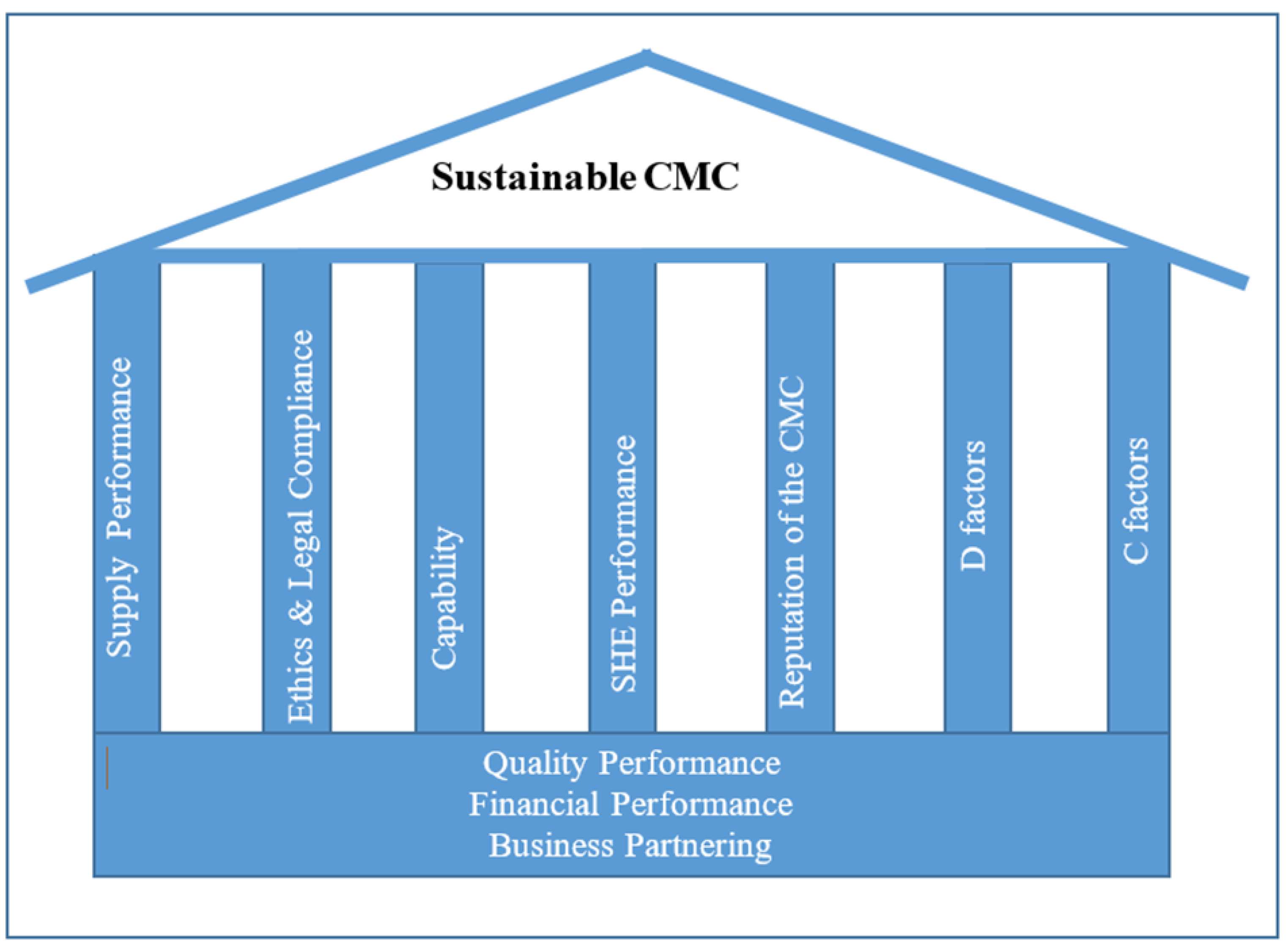
Figure 2.
Sustainable CMC Framework [6].
Figure 2.
Sustainable CMC Framework [6].
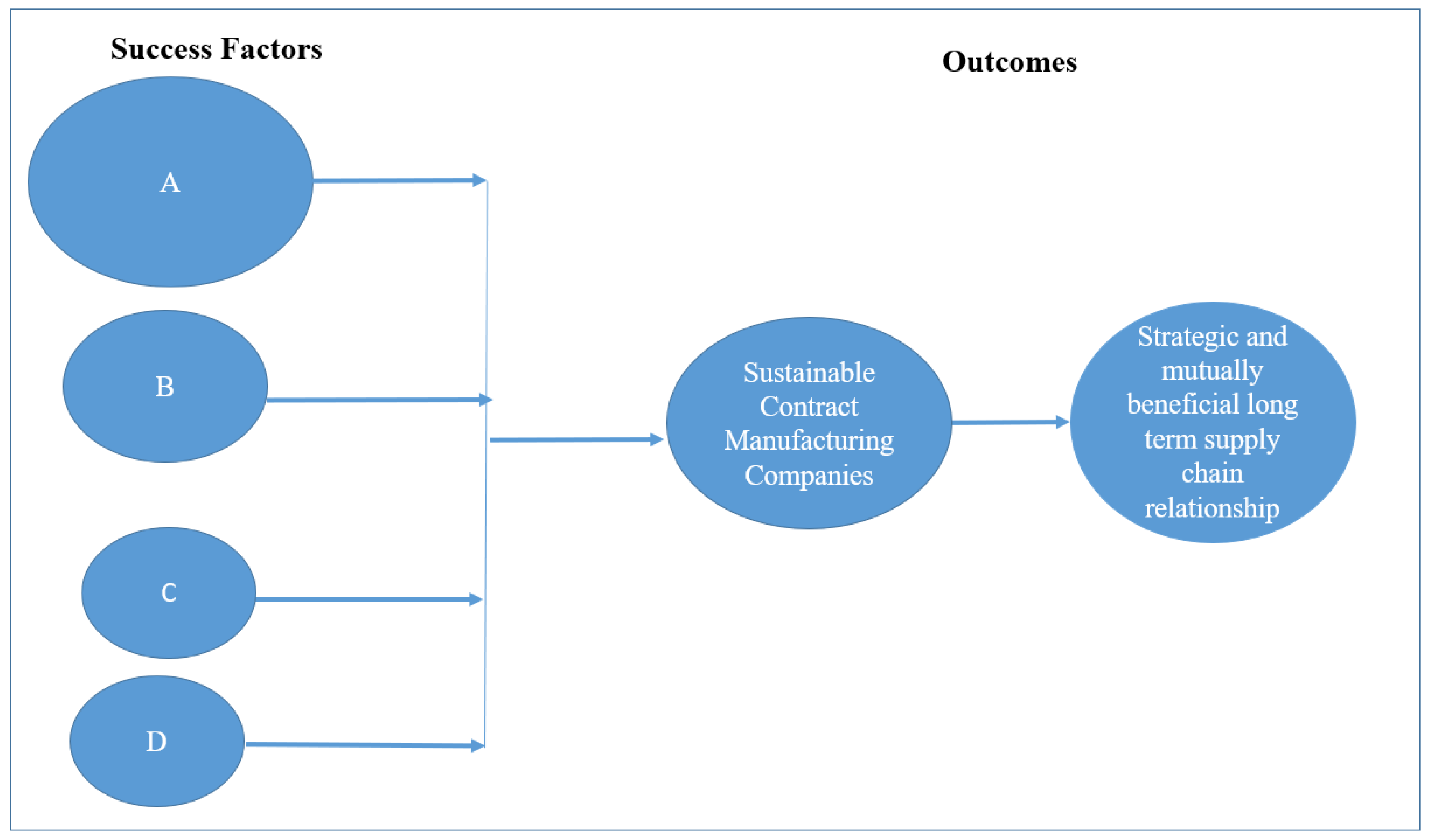
Figure 3.
Design science research framework testing in this research (adapted from [38]).
Figure 3.
Design science research framework testing in this research (adapted from [38]).
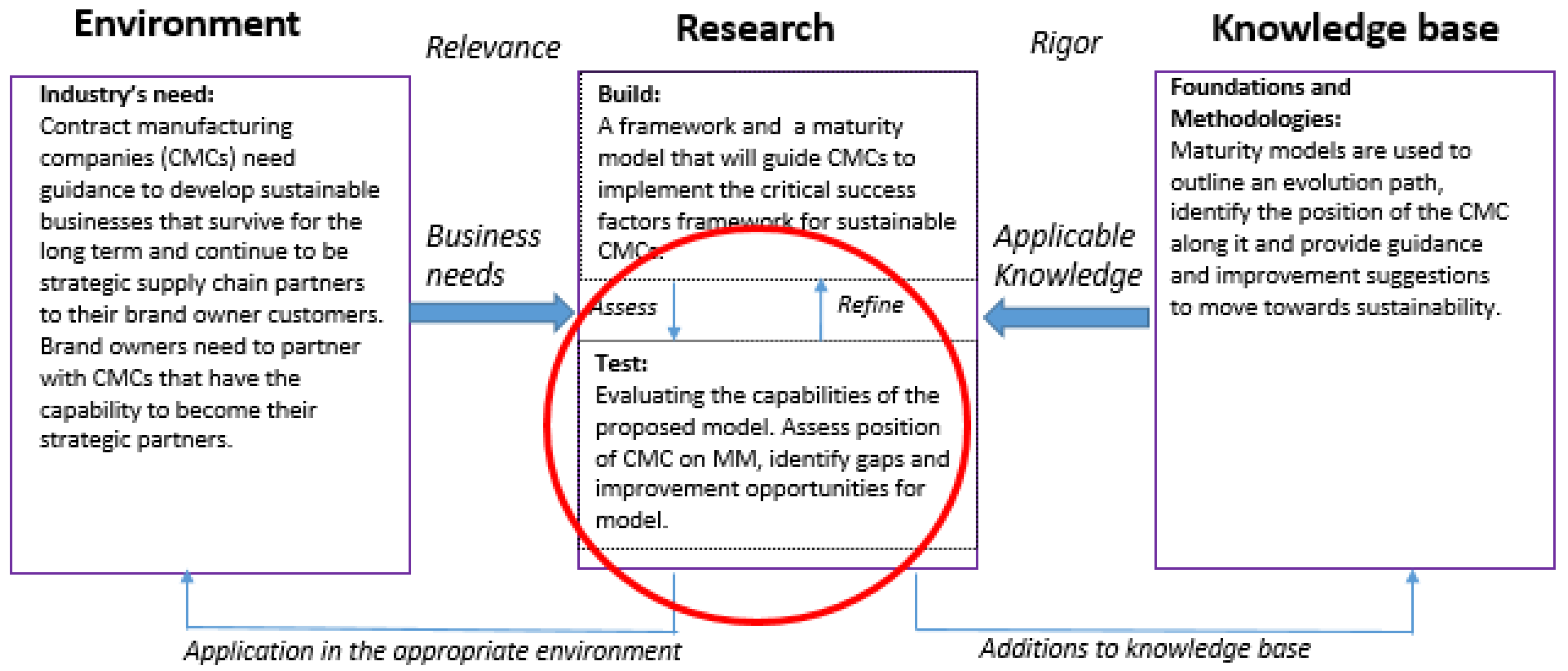
Figure 4.
First sustainability assessment of company (Authors’ own).
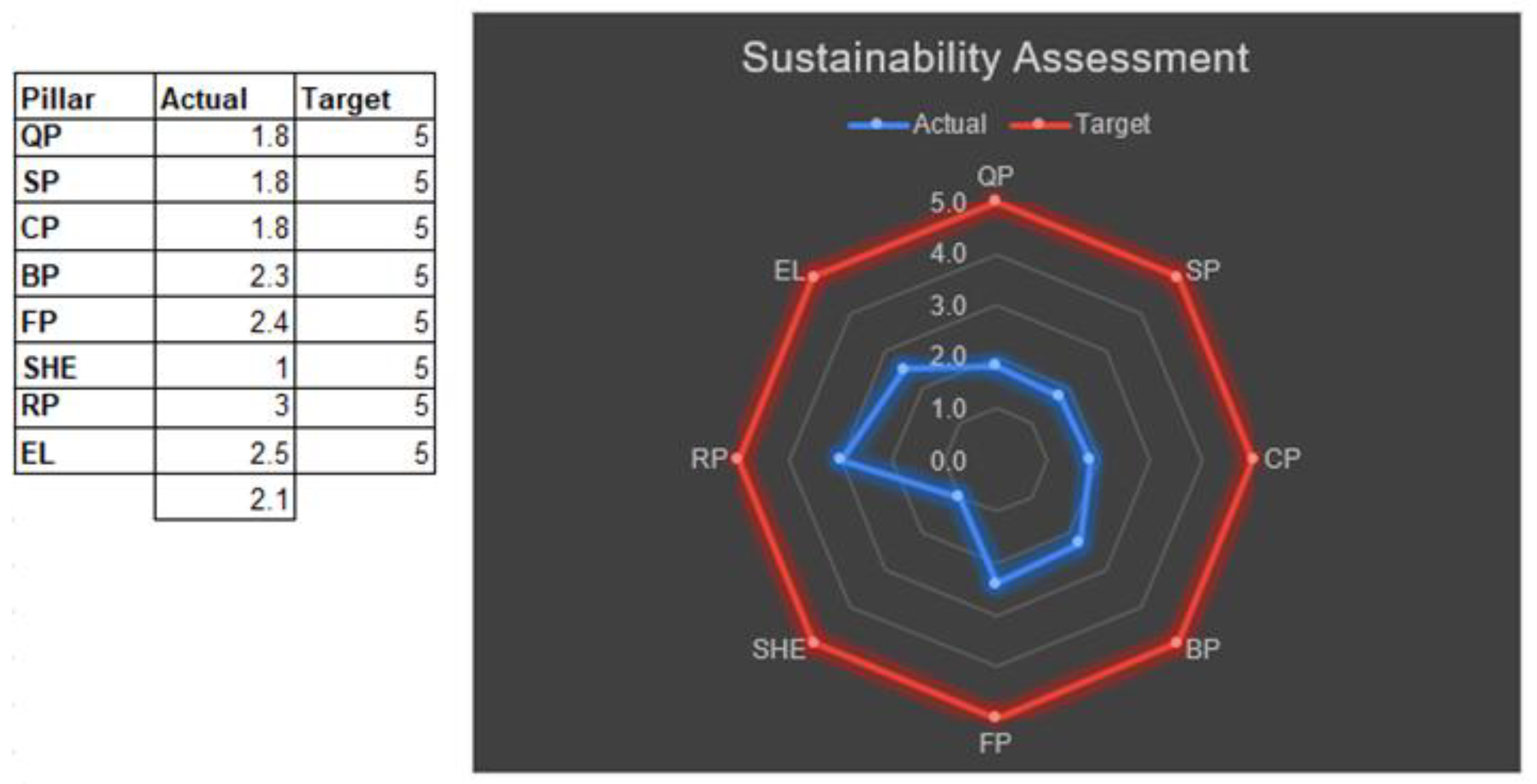
Figure 5.
Second sustainability assessment (Authors’ own).
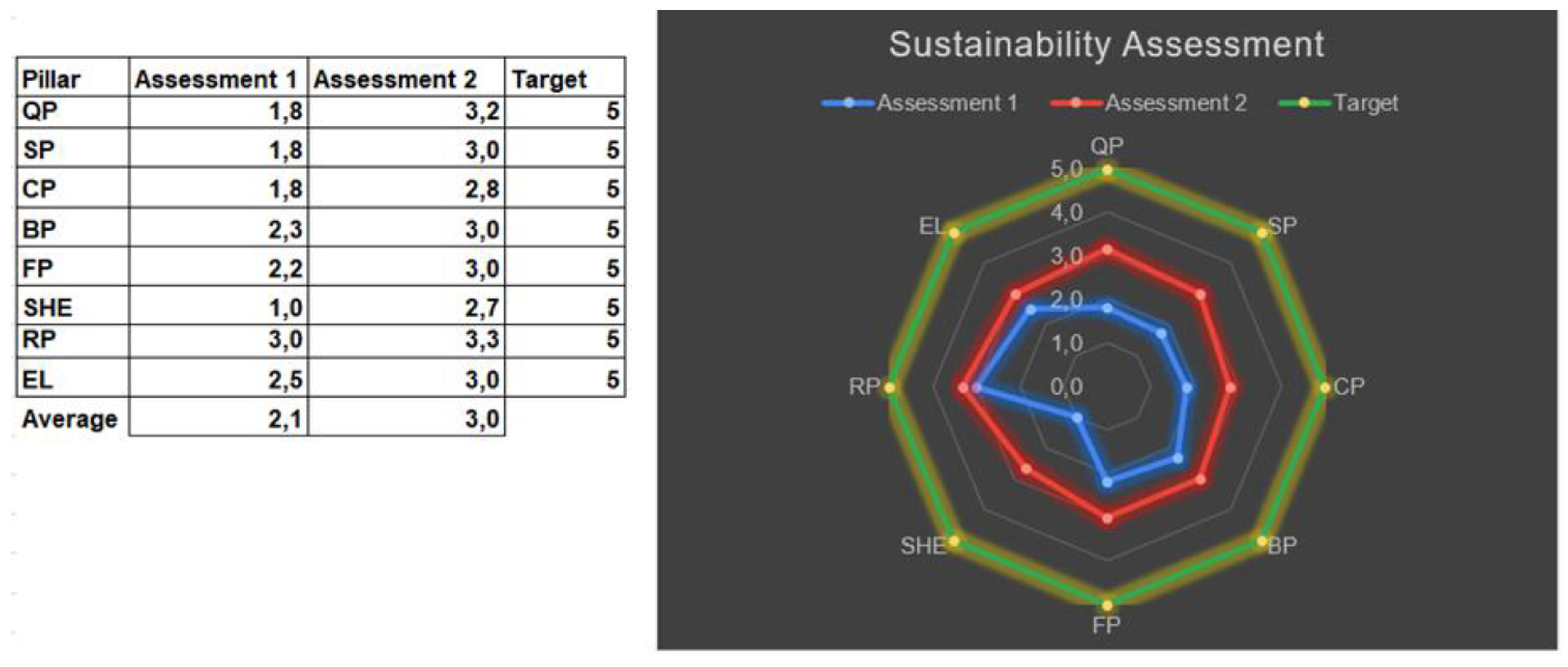
Figure 6.
Final House of Sustainable CMCs (Author’s own).
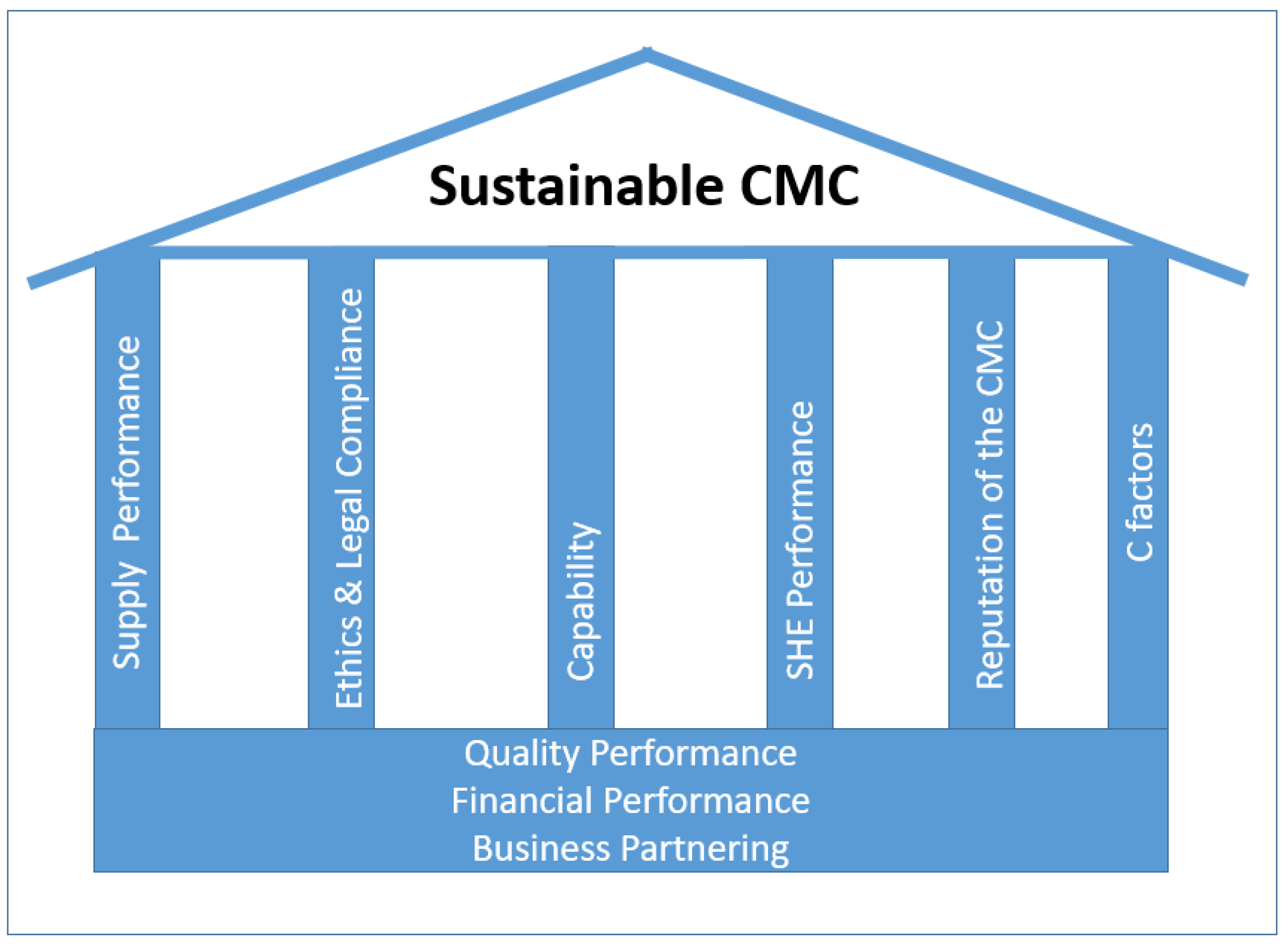
Figure 7.
Final Framework for sustainable CMCs (Author’s own).
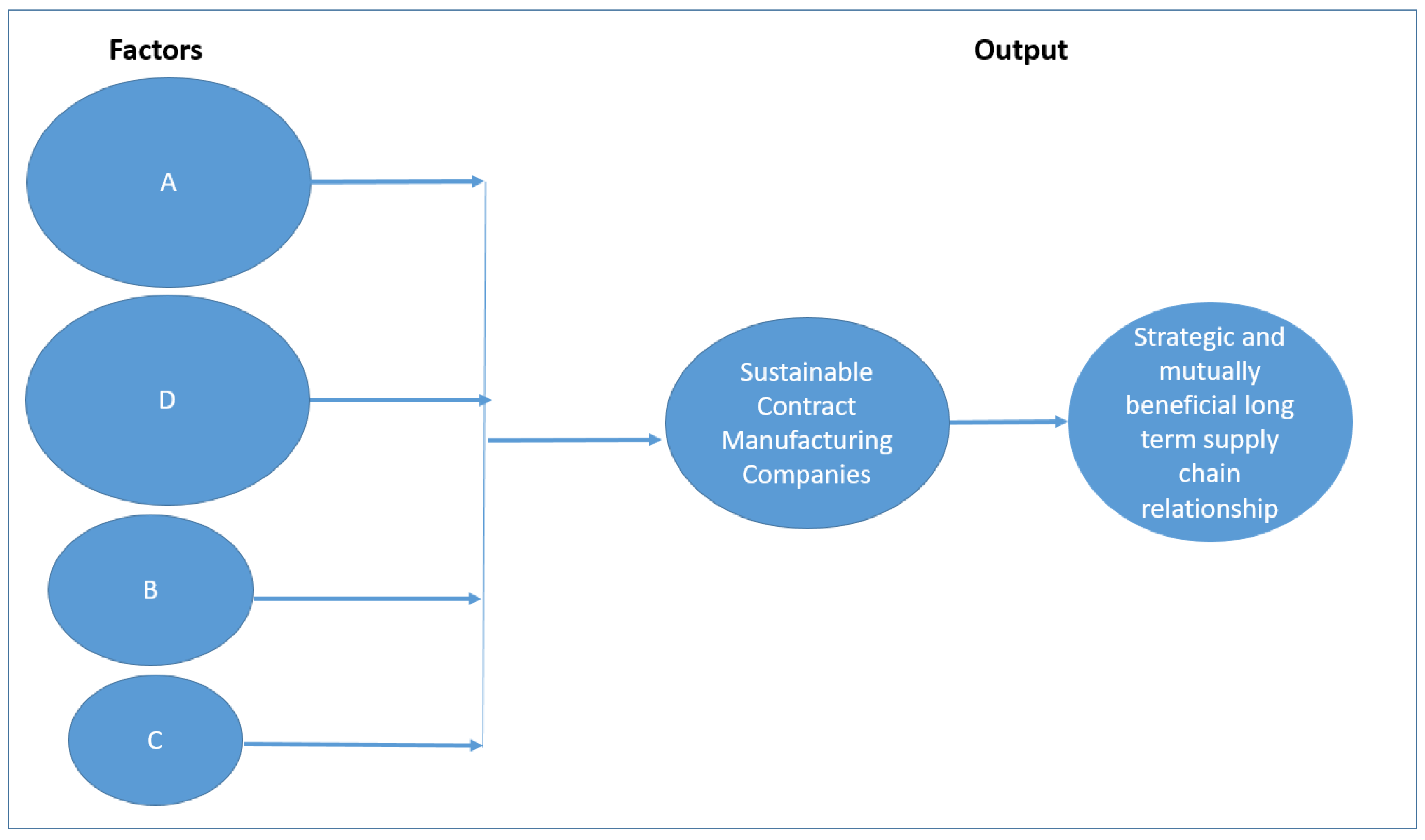

Table 1.
CMC sustainability levels [6].
Table 1.
CMC sustainability levels [6].
| Level | Level descriptor | Activities |
|---|---|---|
| 1 | Starting out | No or very few success factors are in place, no implementation plans. |
| 2 | Foundation building | Some success factors under implementation or in place. Performance on key KPIs below target. |
| 3 | On solid ground | Majority success factors are in place. Performances on some but not all key KPIs on target. |
| 4 | Towards sustainability | Majority success factors are in place. Performances on all key KPIs on target. |
| 5 | Sustainable CMC | All success factors are in place. Performance on key KPIs is on target and improvements are demonstrated. |
Table 2.
Recommendations for transformation of the CMC (Authors’ own).
| Pillar | Observed gaps | Recommendations for transformation |
|---|---|---|
| Quality Performance |
|
|
| Financial Performance |
|
|
| Capability |
|
|
| Business Partnering |
|
|
| Supply Performance |
|
|
| Reputation |
|
|
| SHE Performance |
|
|
| Ethics and Legal Compliance |
|
|
Table 3.
Transformation actions for the CMC taken from recommendations (Authors’ own).
| Actions taken | Observed results |
|---|---|
|
|
|
|
|
|
|
|
|
|
|
|
|
|
Table 4.
D Factors and their pillars (Authors’ own).
| D Factor | Pillar |
|---|---|
| Improve Product and/ or customer base diversification | Capability |
| Partner with businesses in strategic industrial clusters | Business Partnering |
| Sit on the table with brand owners as equal supply chain partners | Business Partnering |
| Keep inventory costs to a bare minimum without disrupting production. | Financial Performance |
| Engage regulators for their support | Business Partnering |
| Focus everyone in the team on customer satisfaction and cost saving | Capability |
| Design and implement integrated scheduling and manage it through management and team routines | Capability |
| Transformational leadership | Capability |
Disclaimer/Publisher’s Note: The statements, opinions and data contained in all publications are solely those of the individual author(s) and contributor(s) and not of MDPI and/or the editor(s). MDPI and/or the editor(s) disclaim responsibility for any injury to people or property resulting from any ideas, methods, instructions or products referred to in the content. |
© 2025 by the authors. Licensee MDPI, Basel, Switzerland. This article is an open access article distributed under the terms and conditions of the Creative Commons Attribution (CC BY) license (http://creativecommons.org/licenses/by/4.0/).
Copyright: This open access article is published under a Creative Commons CC BY 4.0 license, which permit the free download, distribution, and reuse, provided that the author and preprint are cited in any reuse.


