

Submitted:
29 September 2025
Posted:
29 September 2025
You are already at the latest version
Abstract
Many destinations depend significantly on tourists’ future behavioural intention. Hence, comprehending the interaction between cognitive and affective images is vital for obtaining in-depth insights into tourists’ perceptions of a destination. This study examined the differences in the affective and cognitive components of first-time and repeat travellers’ views of the destination image of Thailand and their intent to revisit and endorse it. The interactions between cognitive, affective, and behavioural processes for understanding and predicting between cognitive, affective, and behavioural processes for understanding and predicting human behviour were described using the cognitive-affective-behavioural model. Data were obtained from 392 international travellers. A multigroup analysis (between-group analysis) was done with partial least squares-structural equation modelling. The results demonstrate that repeat and first-time travellers did non have do not significantly differing perceptions of the destination image of Thailand. Destination marketing organisations should develop new marketing strategies, create marketing plans, provide updated information, and offer loyalty programmes or incentives to improved tourist destinations.
Keywords:
first-time travellers
; repeat travellers
; destination image
; destination loyalty
; visitor perceptions
1. Introduction
Many destinations worldwide rely heavily on tourists’ future behavioural intention, which is frequently conecptualised as loyalty (Afshardoost & Eshaghi, 2020). Hence, comprehending the complex relationship between cognitive and affective image is vital for understanding tourists’ observations of a destination (Woosnam et al., 2020). Consequently, tourism destination strive to increase first-time and repeat travellers to their attractions (Rather et al., 2022).
Cognitive image is travellers; knowledge and beliefs regarding a destination. Affective image relates to travellers’ emotions regarding the features of a destinations (Woosnam et al., 2020). The affective and cognitive images are crucial in constructing travellers’ travel decisions and destination-linked behaviour (Guo & and Pesonen, 2022). Perceptions tend to be influenced by experiences, general impressions, and cultural backgrounds (Zou & Yu, 2022). Cognitive and affective images interplay to affect the intent of first-time travellers to endorse a destination and the revisit intention of repeat travellers, and constitute destination loyalty (Lu et al., 2023). Several researchers have investigated the effects of destination image on first-time and repeat visitor behaviours (Lu et al., 2023; Qu et al., 2025; Yoo & Katsumata, 2022).
Destination loyalty integrates travellers’ revisit intention and endorsement intention regarding the destination and is a major marker of its long-term success (C. Li et al., 2023). Frequently, first-time travellers are inspired by novelty (eager for new or different experiences), which creates their travel-connected inspirations and experiences (Y. Zhang et al., 2021). Contrastingly, loyalty (contingent on service quality, brand relationships, and memorable experiences) influences repeat travellers (Tabaeeian et al., 2023). Loyalty and novelty increase travellers’ satisfaction, encourage revisits, and generate word-of-mouth (WOM) that is facourable (Serra-Cantallops et al., 2020).
Thailand has a good climate, beautiful beaches, cultural heritage richness, hospitality that is warm, and all-year tourism potential (Mustafa et al., 2020). The arrival of travellers has ranked Thailand among the top 10 most liked countries worldwide, where there were 39.8 million tourist entries in 2024 (United Nations World Tourism Organization [UNWTO], 2024). Furthermore, Thailand is the leading destination in Southeast Asia. Studies on the Thailand and travellers’ destination loyalty are limited (Erawan, 2020). Therefore, comprehending the effects of tourist’ perceptions of the features of Thailand (cognitive image) and emotional experiences (affective image) on their intent to revisit or endorse Thailand (destination loyalty) is crucial for maintaining its long-term economic and competitive success in global tourism (Duong et al., 2024).
This study bridged the above gap in knowledge through the cognitive-affective-behavioural (CAB) model and investigated the interplay between cognitive, affective, and behavioural processes. This study investigated the cognitive and affective component differences in repeat and first-time travellers’ observations of the destination image of Thailand, and included their intent to revisit or recommend it. Data were obtained from international travellers. Multigroup analysis (MGA) was done with partial least squares-structural equation modelling (PLS-SEM). The MGA is an advanced analytical method that evaluates the differences between sub-groups within identical models (Troiville et al., 2025). Most of the results were interpreted based on a single-population analysis. This study presented a significant methodological contribution as it examined direct and indirect effects across different groups. The results provides valuable understandings for tailoring strategies by destination marketing organisations and policymakers and increasing the appeal of Thailand to varied visitor sectors.
2. Literature Review
2.1. The CAB Model
The CAB model defines the interactions between cognitive, affective, and behavioural processes to comprehend and forecast human behaviour (Lifshitz, 2020). The model underlines the role of the cognitive dimension in affecting behaviour. Simultaneously, the model recognizes that emotion mediates decision-making (X. Zhou et al., 2023). The model tests the supposition of rational decision-making (S. Li et al., 2022) and is used in marine environmental protection (Lin & Tsao, 2023), smart tourism technology (Chang, 2022), and consumer behaviour (Q. Zhang et al., 2024). Nevertheless, its use in tourism destination is limited. In this study, the framework examined tourists’ travel intentions concentrating on cognitive and affective factors (Wang et al., 2020). The CAB model was used to combine the destination image of Thailand and enhance the understanding of international tourists’ behaviours regarding revisiting and recommendation.
2.2. Destination Image
Destination image is defined as “a set of impressions, ideas, expectations, and emotional thoughts an individual has of a specific place” (Stylos et al., 2016, p. 42). Destination image includes the cognitive image (assesses destination qualities) and the affective image (indicates emotional responses or inspirations) (Casali et al., 2021; Fu & Timothy, 2021; Stylidis, 2022). Cognitive and affective images are involved in determining tourists’ perceptions and intent to visit, revisit, or endorse a destination (X. Zhou et al., 2024). The interaction between these dimensions emphasises the effects of rational assessments and emotional connections (M.-S. Kim et al., 2018). The destination perceptions of tourists are frequently formed by integrating cognitive and affective aspects (Afshardoost & Eshaghi, 2020; Guo & and Pesonen, 2022), which forms and inclusive overview that influences their overall view. Positive experiences (meaningful links) enhance connections to destinations and encourage positive impressions (Wu et al., 2021).
Baloglu and McCleary (1999) described the hierarchical link between cognitive and affective images, where cognitive assessments occurred before emotional responses. Various researchers have examined this relationship and emphasized the effects of cognitive valuations on affective responses. For example, Woosnam et al. (2020) reported that affective perceptions were substantially affected by cognitive images. Lam et al. (2024) established that cognitive and affective heritage images were positively linked. Munanura et al. (2024) established that positive cognitive and emotional states were connected, which improved tourism supports.
2.3. Destination Loyalty
Destination loyalty is widely investigated in tourism and involves attitude and behaviour (J. Zhang & Walsh, 2020). Behavioural loyalty refers to the actions of tourist (destination revisits). Attitudinal loyalty places importance on emotional commitment and an attitude that is positive in relation to a destination (Liu et al., 2016; M. Zhou & Yu, 2022). The post-visit attitudinal loyalty gauges include the intention to endorse and WOM, which are important in tourism (Palau-Saumell et al., 2016). Tourism relies greatly on loyalty as it motivates revisit and endorsement decisions (Kanwel et al., 2019). Furthermore, loyalty relies on trust and perceived experiences, which construct the destination cognitive and affective images and affect loyalty (Al-Ansi & Han, 2019; Stylidis, 2022). Revisits, WOM, and electronic recommendations are characteristics of behavioural loyalty, which is frequently connected to tourist experiences that are positive (Kani et al., 2017; Loureiro et al., 2021; Yadav et al., 2021). Comprehending loyalty-promoting factors can aid destinations in creating more in-depth links with travellers and guaranteeing success in competitive tourism regions.
2.4. Revisit Intention
The retention of current customers is substantially advantageous economically, as gaining new customers can be 5-10 times costlier (Xu et al., 2021). A 5% rise in customers who are loyal can grow profit by 25-85% (Lentz et al., 2022). These principles are related to tourism, where experiences that are positive inspire revisiting. The revisit intention is the predisposition of tourists to return to a destination, which is typically created by their affective and cognitive perceptions (Liao et al., 2021). The effects of destination affective and cognitive images on revisit intention have been underscored in numerous studies. Carvalho (2022) and Rasoolimanesh et al. (2025) reported that cognitive images positively affected the revisit intention. Liang and Xue (2021) highlighted the function of affective images in encouraging revisits. These results underscored the importance of augmenting the rational and emotional characteristics in relation to a destination to inspire revisits.
2.5. Intention to Recommend (WOM)
Positive experiences frequently produce informal endorsements that affect the behaviour of potential tourists (Y.-F. Chen & and Law, 2016). The WOM is “informal communication directed at other consumers about the ownership, usage, or characteristics of particular goods and services” (Westbrook, 1987, p. 261) and is a persuasive tourism tool. The WOM promotes trust and emotional links, which enhance the credibility perception of the source of information (Hayes et al., 2016). Hence, WOM is a persuasive external source of information in tourism, where it constructs the attitudes of tourists (Litvin et al., 2008).
Tourists’ experiences and their destination image perceptions are closely linked. A positive destination image improves satisfaction and intensifies the possibility of endorsing the destination to others (Cubillas-Para et al., 2023). Prayag et al. (2017) determined that perceptions of sustainability substantially improved tourist satisfaction and WOM intent. Furthermore, residents with positive perceptions of events are also likelier to endorse their city (Chen et al., 2018). Tourists who are satisfied are also likelier to share feedback that is positive and inspire visits from other tourists (Manthiou et al., 2017; Prayag et al., 2017).
The WOM-linked behaviours of repeat and first-time travellers differ noticeably. Šagovnović and Kovačić (2020) reported that first-time travellers frequently pursued novelty and assurance, which affected their observations and endorsements. Contrastingly, familiarity and satisfaction promoted loyalty in repeat travellers. Therefore, knowledge of these dynamics can ais destination strategy modification in response to varied visitor sectors and amplify the effects of WOM.
Few studies have investigated the effects of destination affective and cognitive images on loyalty and the revisit or endorsement intent in relation to Thailand. This study addressed the knowledge gap by investigating these connections using the CAB model, where internation tourists’ perceptions were referenced and these dynamics were examined through the following hypotheses (H):
H1: First-time and repeat travellers have significantly differing perceptions of the effects of the cognitive destination image of Thailand on the affective destination image.
H2: First-time and repeat travellers have significantly differing perceptions about the effects of the cognitive destination image of Thailand on the intent to revisit.
H3: First-time and repeat travellers have significantly differing perceptions about the effects of the cognitive destination image of Thailand on the intent to recommend.
H4: First-time and repeat travellers have significantly differing perceptions about the effects of the affective destination image of Thailand on the intent to revisit.
H5: First-time and repeat travellers have significantly differing perceptions about the effects of the affective destination image of Thailand on the intent to recommend.
H6: First-time and repeat travellers have significantly differing perceptions about the cognitive and affective components of the destination image of Thailand and intent to revisit and endorse the destination.
This study extended the CAB model to address international tourists’ perceptions about the affective and cognitive destination images, and behavioural loyalty. Figure 1 illustrates the conceptual model.
3. Methodology
3.1. Instrument Development
The questionnaire survey included sections on the respondents’ demographic characteristics (marital status, gender, education level, age, and monthly income), cognitive and affective image aspects, intent to revisit, and intent to recommend. All constructs were measured using a Likert scale of five points [1 (“strongly disagree” to 5 (“strongly agree”)]. Cognitive and affective image were measured using a three-item and five-item scale, respectively adapted from Casali et al. (2021), Jeong and Holland (2012), Kim et al. (2021), and Schofield et al. (2020). The intention to revisit and to recommend were measure using four-item scales adapted from Lam et al. (2022) and Maghrifani et al. (2022).
The English-language instrument was pilot-tested with a sample of 30 international travellers, which aligned with the recommended sample size for normal data distribution (Dolnicar et al., 2014; Tuncer, 2021). The pilot testing respondents were excluded from the main data collection. The questionnaire was modified to clarify misunderstood questions. A purposive sampling strategy (Berndt, 2020) was used to screen respondents using the criteria as follows: (1) ages ≥ 18 years old, (2) non-resident of Thailand and (3) must have visited Thailand within the past three years. Only individuals who met all aforementioned criteria were eligible to proceed with the questionnaire survey. This study was approved by the Institute Ethics Committee of Research Ethics (Social Sciences). Written informed consent was obtained from all participants before date collection began.
3.2. Data Collection
Data were obtained from 392 respondents via face-to-face surveys. A nonprobability sampling technique (purposive sampling) was used to contact only international tourists who were likely to have relevant experiences and opinions about the destination image of Thailand. The survey targeted international tourists at popular destinations (Phuket, Krabi and Phang-Nag), which had been ranked among the top 10 destinations for international tourists in 2022 (Ministry of Tourism and Sports [2023], 2023). The SEM guidelines recommend sample sizes of 150-400 (Dash & Paul, 2021), with 200 typically required for large-sample methods (Nunkoo et al., 2013). However, ethical issues surrounding personal details needed to be considered. Prior to participation, all subjects were informed about the study objectives, procedures, potential risks, and benefits. Written informed consent was obtained from all participants before data collection began.
3.3. Data Analysis
The PLS-SEM is a modern multivariate analysis technique that was used for internal consistency assessment of the latent variable and supports alternative data groups through MGA (F. Hair Jr et al., 2014; Manley et al., 2021). A minimum sample size of 100 is indicated for PLS-SEM (Cheah et al., 2018). This study involved 185 first-time and 207 repeat travellers, which exceeded the recommended thresholds, hence ensuring sufficient data for analysis. The data were analysed usning SmartPLS 4.1.0.9 (Deng & Yu, 2023; Qureshi et al., 2023)
4. Results
4.1. Descriptive Statistics
Table 1 depicts the participants’ demographic profile. First-time travellers had higher mean values for affective image, intent to revisit, and intent to recommend than repeat travellers (Table 2). Nonetheless, both groups had similar mean values for cognitive image. These results highlighted the appeal of Thailand as a tourist destination through its cognitive and affective components. The first-time travellers’ higher affective image and behvioural intent underscored the ability of the country to create strong emotional impressions, particularly for first-time experiences. The consistent cognitive image across both groups reflected the reliable strengths of Thailand, such as its good climate, rich culture, and historical attractions.
4.2. The PLS-SEM Model Assessment
4.2.1. Measurement Model Assessment and Measurement of Invariance
The model of measurement included the constructs cognitive image (CO), affective image (AF), intent to revisit (IV), and intent to recommend (IR). The main evaluation metrics were internal consistency (Cronbach’s alpha and composite reliability [CR]), indicator reliability, construct validity (average variance extracted [AVE]), loadings, and the heterotrait-monotrait [HTMT] radio), and discriminant validity. Indicator reliability was established using factor loading, which exceeded the 0.70 threshold for most indicators (Aburumman et al., 2023). Internal consistency was confirmed based on Cronbach’s alpha of 0.769-0.937, which exceeded the recommended 0.70 threshold (Cham et al., 2022). The CR values were 0.900-0.975, which were supportive of the measurement model reliability. Convergent validity was used to determine the AVE, where the values recorded exceeded the 0.50 threshold for all constructs (Hulland, 1999). Discriminant validity was ascertained through the criterion of HTMT, where all values were below the 0.90 threshold (Hair et al., 2017; Henseler et al., 2015). The full collinearity variance inflation factors (VIFs) were 1000-1.367, which were below the threshold of 3.33 and indicated no significant common method bias (Kock & Lynn, 2012) (Tables 3–6).

Table 3.
Full collinearity results.
| Relationship between constructs | VIF |
|---|---|
| Cognitive image -> Affective image | 1.000 |
| Cognitive image -> Intention to revisit | 1.367 |
| Cognitive image -> Intention to recommend | 1.367 |
| Affective image -> Intention to revisit | 1.367 |
| Affective image -> Intention to recommend | 1.367 |
Group-specific parameter estimates (path coefficients and outer loading and weight) were compared using MGA. Using PLS-SEM, MGA differences were assessed through bootstrapping and permutation tests. The measurement invariance of composite models (MICOM) was evaluated through configural invariance, compositional invariance, and composite equality. The results demonstrated partial measurement invariance between the repeat and first-time travellers.
Table 4.
Measurement model assessment results.
| Constructs or associated items | Loadings | Cronbach’s alpha | CR | AVE | ||||
|---|---|---|---|---|---|---|---|---|
| First-time | Repeat | First-time | Repeat | First-time | Repeat | First-time | Repeat | |
| CO | 0.767 | 0.81 | 0.769 | 0812 | 0.683 | 0.725 | ||
| CO 2 | 0.858 | 0.851 | ||||||
| CO 1 | 0.844 | 0.855 | ||||||
| CO 3 | 0.774 | 0.848 | ||||||
| AF | 0.827 | 0.846 | 0.832 | 0.853 | 0.594 | 0.618 | ||
| AF2 | 0.836 | 0.819 | ||||||
| AF5 | 0.824 | 0.771 | ||||||
| AF1 | 0.748 | 0.814 | ||||||
| AF3 | 0.751 | 0.776 | ||||||
| AF4 | 0.684 | 0.749 | ||||||
| IV | 0.9 | 0.857 | 0.937 | 0.861 | 0.772 | 0.703 | ||
| IV1 | 0.873 | 0.747 | ||||||
| IV2 | 0.945 | 0.902 | ||||||
| IV3 | 0.938 | 0.882 | ||||||
| IV4 | 0.743 | 0.814 | ||||||
| IR | 0.922 | 0.926 | 0.922 | 0.928 | 0.812 | 0.82 | ||
| IR1 | 0.892 | 0.865 | ||||||
| IR2 | 0.939 | 0.931 | ||||||
| IR3 | 0.925 | 0.935 | ||||||
| IR4 | 0.846 | 0.889 | ||||||
Notes: AVE: average variance extracted; CO: cognitive image; CR: composite reliability; AF affective image; IV: intention to revisit; IR: intention to recommend.
4.2.2. Structural Model and MGA Assessment
The structural model evaluation involved bootstrapping (5000 resamples) and permutation testing (1000 permutation) to compare repeat and first-time travellers’ path coefficients. The path coefficients indicated stronger cognitive-to-affective image influence among repeat travellers (β = 0.557, p < 0.001, t = 10.097) compared to first-time travellers (β = 0.520, p < 0.001, t = 8.726) (Table 7). Similarly, cognitive image influenced the intention to recommend more strongly for repeat travellers (β = 0.230, p < 0.001, t = 3.593) as compared to first-time travellers (β = 0.165, p < 0.05, t = 2.578). Affective image significantly influenced the intention to revisit for both groups but was slightly stronger for repeat travellers (β = 0.569, p < 0.001, t = 7.845) as compare to first-time travellers (β = 0.523, p < 0.001, t = 7.727). Contrastingly, the influence of affective image on the intention to recommend was stronger for first-time travllers (β = 0.548, p < 0.001, t = 7.925) as compared to repeat travellers (β = 0.424, p < 0.001, t = 5.539) as compare to first-time travellers (β = 0.001, p < 0.05, t = 0.009), but no significant difference was observed.
The MGA revealed no statistically significant differences between repeat and first-time travellers observations of the destination image of Thailand, cognitive and affective images, or intents to revisit and to recommend. These results confirmed that the appeal of Thailand was consistent across visitor types, which reinforced the strong cognitive and affective characteristics of the destination.
5. Discussion, Implications, and Limitations
5.1. Discussion
The motivation for first-time and repeat visits to a destination can differ, particularly when viewed through the lens of the CAB model. This study investigated the relationship between cognitive, affective, and behavioural processes in determining the destination image of Thailand from international repeat and first-time travellers’ perspectives.
Regarding H1, the MGA results revealed significantly differing effects of cognitive destination image on affective destination image between repeat and first-time travellers. A stronger positive relationship was detected in repeat travellers, which aligned previous demonstrations of how cognitive evaluation create emotional responses to destinations (Lam et al., 2022; Rather et al., 2022; Woosnam et al., 2020). First-time travellers frequently depend on external sources (marketing tools, recommendations, and social media) to form cognitive assessments. Marketing tools, which include social networks, digital media, and mobile applications (Facebook, WhatApp, and TikTok), are vital for forming perceptions, which affect emotions (affective image) regarding Thailand. Contrastingly, repeat travellers depend on experiences and emotional connections, such as nostalgia or unforgettable events, which creates a stronger link between cognitive and affective images.
Regarding H2, the effects of cognitive destination image on intent to revisit did not differ significantly between repeat and first-time travellers. This results aligned with reports that cognitive assessments of attractions, infrastructure, and safety form primary impressions but may not be the main factors in the intention to revisit (Carvalho, 2022; Rather et al., 2022; Ren et al., 2022). First-time travellers’ revisit intention is frequently fostered by emotional stimuli, such as satisfaction in relations to the trip. Conversely, loyalty, nostalgia, or other motivational factors, affect repeat travellers and extend beyond cognitive qualities.
Regarding H3, the cognitive destination image effects on the endorsement intention differed significantly, where repeat travellers demonstrated a stronger association. Nonetheless, both groups had a positive relationship, which agreed with previous studies (N. (Chris) Chen et al., 2018; Cubillas-Para et al., 2023; Prayag et al., 2017). First-time travellers’ endorsements are based on tangible qualities (outdoor activities, cultural sites, and infrastructure) and how their expectations are matched. Nevertheless, the endorsements of repeat travellers involve broader factors, such as experiences and general satisfaction.
Regarding H4, the MGA determined that the effects of affective destination image on the revisit intention was significantly different where repeat travellers demonstrated a slightly stronger association. Similar results have been reported for the positive link between affective image and tourists’ revisit intent (Liang & and Xue, 2021; Rather et al., 2022). First-time travellers’ excitement or satisfaction during the visit affect their decision to revisit. Nonetheless, these emotional responses are frequently limited to the direct trip experience. Contrastingly, repeat travellers’ decisions are motivated by deeper emotional links, such as nostalgia, attachment, and familiarity established over several visits. These emotional factors are stronger revisit motivators.
Regarding H5, the affective destination image significantly influenced the recommend intention of both groups, where first-time travellers recorded slightly higher results. This result aligned with prior studies demonstrating the role of emotions in driving recommendations (Manthiou et al., 2017; Prayag et al., 2017; Rather et al., 2022). For first-time travellers, pleasure, stimulation, interest, comfort, and excitement are central to creating meaningful experiences and contribute positively to the affective destination image.
5.2. Implications
The literature review emphasized the importance of destination image in enhancing destination loyalty among first-time and repeat travellers. Nevertheless, the role of affective and cognitive images in shaping destination loyalty within the context of the destination image of Thailand remains underexplored. This study used the CAB model to investigate differences between repeat and first-time travellers in terms of the effects of cognitive and affective images in relation to destination loyalty. The results contributed to the understanding of the CAB model and the affective and cognitive elements of destination image.
This study compared the perceptions of repeat and first-time travellers and provided unique theorical insights into international tourists’ views. In the context of the destination image of Thailand, particularly concerning the interplay between cognitive, affective, and behavioural processes, the CAB model yielded significant theoretical contributions. Measurement invariance and group-specific differences were assessed through advanced methodologies, such as MGA through PLS-SEM and MICOM. These results reinforced the theoretical importance of integrating cognitive and affective dimensions in destination image research.
This study also presented the following practical implications for stakeholders (destination marketing organisations) managing the destination image of Thailand:
- Tailored marketing strategies should be developed to address first-time and repeat travellers’ unique perceptions and inspirations;
- Plans to endorse new attractions and inspire repeat visits should be created;
- Undated information should be provided to improve first-time travellers’ experiences and encourage their revisit intention;
- Loyalty programs or incentives should be developed to enhance repeat travellers’ emotional links to the destination.
5.3. Limitations of Study
The data were obtained from 392 international travellers visiting the Andaman Sea coastal region of southern Thailand. Thus, the result generalizability to other destinations may have been limited. Second, the focus on the cognitive and affective factors influencing destination loyalty and potential may have neglected other significant variables, such as visitor inspirations or satisfaction. Lastly, broader influences, such as information sources and personal motivations, in forming the destination image were not extensively investigated. These gaps should be addressed by studying diverse regions and additional features that influence destination loyalty.
5. Conclusions
Research on the affective and cognitive factors of destination image and their effects on first-time and repeat travellers’ behavioural loyalty, particularly regarding Thailand, is limited. This study explored the effects of affective and cognitive factors on perception shaping and the intent to revisit and endorse the destination. First-time and repeat travellers’ perceptions of the destination image of Thailand were not significantly different, which underscored its reliable appeal across both groups.
Author Contributions
Ammarn Sodawan: Author Contributions, conceptualization, methodology, formal analysis, investigation, data curation, writing-original, draft preparation, writing-review and editing, visualization, project administration, all authors have read and agreed to the published version of the manuscripts. Robert Li-Wei Hsu: Author Contributions, conceptualization, methodology, validation, writing-review and editing, supervision, all authors have read and agreed to the published version of the manuscripts.
Funding
This research received no external funding.
Institutional Review Board Statement
BTUIRB No. 2568/170(17)
Informed Consent Statement
Informed consent was obtained from all subjects involved in the study.
Conflicts of Interest
The authors have NO affiliations with or involvement in any organization or entity with any financial interest (such as honoraria; educational grants; participation in speakers’ bureaus; membership, employment, consultancies, stock ownership, or other equity interest; and expert testimony or patent-licensing arrangement), or non-financial interest (such as personal or professional relationships, affiliations, knowledge or beliefs) in the subject matter or materials discussed in this manuscript.
References
- Aburumman, A., Abou-Shouk, M., Zouair, N., & Abdel-Jalil, M. (2023). The effect of health-perceived risks on domestic travel intention: The moderating role of destination image. Tourism and Hospitality Research, 14673584231172376. [CrossRef]
- Afshardoost, M., & Eshaghi, M. S. (2020a). Destination image and tourist behavioural intentions: A meta-analysis. Tourism Management, 81, 104154. [CrossRef]
- Afshardoost, M., & Eshaghi, M. S. (2020b). Destination image and tourist behavioural intentions: A meta-analysis. Tourism Management, 81, 1–10. [CrossRef]
- Al-Ansi, A., & Han, H. (2019). Role of halal-friendly destination performances, value, satisfaction, and trust in generating destination image and loyalty. Journal of Destination Marketing & Management, 13, 51–60. [CrossRef]
- Baloglu, S., & McCleary, K. W. (1999). U.S. International Pleasure Travelers’ Images of Four Mediterranean Destinations: A Comparison of Visitors and Nonvisitors. Journal of Travel Research, 38(2), 144–152. [CrossRef]
- Berndt, A. E. (2020). Sampling Methods. 36(2), 1–3. [CrossRef]
- Carvalho, M. A. M. (2022). Factors affecting future travel intentions: Awareness, image, past visitation and risk perception. International Journal of Tourism Cities, 8(3), 761–778. [CrossRef]
- Casali, G. L., Liu, Y., Presenza, A., & Moyle, C.-L. (2021). How does familiarity shape destination image and loyalty for visitors and residents? Journal of Vacation Marketing, 27(2), 151–167. [CrossRef]
- Cham, T.-H., Cheah, J.-H., Ting, H., & Memon, M. A. (2022). Will destination image drive the intention to revisit and recommend? Empirical evidence from golf tourism. International Journal of Sports Marketing and Sponsorship, 23(2), 385–409. [CrossRef]
- Chang, S. (2022). Can smart tourism technology enhance destination image? The case of the 2018 Taichung World Flora Exposition. Journal of Hospitality and Tourism Technology, 13(4), 590–607. [CrossRef]
- Cheah, J.-H., Sarstedt, M., Ringle, C. M., Ramayah, T., & Ting, H. (2018). Convergent validity assessment of formatively measured constructs in PLS-SEM: On using single-item versus multi-item measures in redundancy analyses. International Journal of Contemporary Hospitality Management, 30(11), 3192–3210. [CrossRef]
- Chen, N. (Chris), Dwyer, L., & Firth, T. (2018). Residents’ place attachment and word-of-mouth behaviours: A tale of two cities. Journal of Hospitality and Tourism Management, 36, 1–11. [CrossRef]
- Chen, Y.-F., & Law, R. (2016). A Review of Research on Electronic Word-of-Mouth in Hospitality and Tourism Management. International Journal of Hospitality & Tourism Administration, 17(4), 347–372. [CrossRef]
- Cubillas-Para, C., Cegarra-Navarro, J. G., & Tomaseti-Solano, E. (2023). Linking unlearning with the intention to recommend through destination image. International Journal of Tourism Cities, 9(2), 394–410. [CrossRef]
- Dash, G., & Paul, J. (2021). CB-SEM vs PLS-SEM methods for research in social sciences and technology forecasting. Technological Forecasting and Social Change, 173, 121092. [CrossRef]
- Deng, X., & Yu, Z. (2023). A Meta-Analysis and Systematic Review of the Effect of Chatbot Technology Use in Sustainable Education. Sustainability, 15(4), Article 4. [CrossRef]
- Dolnicar, S., & Ring, A. (2014). Tourism marketing research: Past, present and future. Annals of Tourism Research, 47, 31–47. [CrossRef]
- Erawan, T. (2020). India’s destination image and loyalty perception in Thailand. International Journal of Tourism Cities, 6(3), 565–582. [CrossRef]
- F. Hair Jr, J., Sarstedt, M., Hopkins, L., & G. Kuppelwieser, V. (2014). Partial least squares structural equation modeling (PLS-SEM): An emerging tool in business research. European Business Review, 26(2), 106–121. [CrossRef]
- Fu, Y., & Timothy, D. J. (2021). Social media constraints and destination images: The potential of barrier-free internet access for foreign tourists in an internet-restricted destination. Tourism Management Perspectives, 37, 100771. [CrossRef]
- Guo, X., & Pesonen, J. A. (2022). The role of online travel reviews in evolving tourists’ perceived destination image. Scandinavian Journal of Hospitality and Tourism, 22(4–5), 372–392. [CrossRef]
- Hair, J., Hollingsworth, C. L., Randolph, A. B., & Chong, A. Y. L. (2017). An updated and expanded assessment of PLS-SEM in information systems research. Industrial Management & Data Systems, 117(3), 442–458. [CrossRef]
- Hayes, J. L., King, K. W., & Ramirez, A. (2016). Brands, Friends, & Viral Advertising: A Social Exchange Perspective on the Ad Referral Processes. Journal of Interactive Marketing, 36(1), 31–45. [CrossRef]
- Henseler, J., Ringle, C. M., & Sarstedt, M. (2015). A new criterion for assessing discriminant validity in variance-based structural equation modeling. Journal of the Academy of Marketing Science, 43(1), 115–135. [CrossRef]
- Hulland, J. (1999). Use of partial least squares (PLS) in strategic management research: A review of four recent studies. Strategic Management Journal, 20(2), 195–204.
- Jeong, C., & Holland, S. (2012). Destination Image Saturation. Journal of Travel & Tourism Marketing, 29(6), 501–519. [CrossRef]
- Kani, Y., Aziz, Y. A., Sambasivan, M., & Bojei, J. (2017). Antecedents and outcomes of destination image of Malaysia. Journal of Hospitality and Tourism Management, 32, 89–98. [CrossRef]
- Kanwel, S., Lingqiang, Z., Asif, M., Hwang, J., Hussain, A., & Jameel, A. (2019). The Influence of Destination Image on Tourist Loyalty and Intention to Visit: Testing a Multiple Mediation Approach. Sustainability, 11(22), 1–19. [CrossRef]
- Kim, J.-H., Wang, Y., & Song, H. (2021). Understanding the causes of negative tourism experiences. Current Issues in Tourism, 24(3), 304–320. [CrossRef]
- Kim, M.-S., Thapa, B., & Kim, H. (2017). International Tourists’ Perceived Sustainability of Jeju Island, South Korea. Sustainability, 10(2), 1–13. [CrossRef]
- Kock, N., & Lynn, G. (2012). Lateral Collinearity and Misleading Results in Variance-Based SEM: An Illustration and Recommendations. Journal of the Association for Information Systems, 13(7), 546–580. [CrossRef]
- Krause, R. M., Fatemi, S. M., Nguyen Long, L. A., Arnold, G., & Hofmeyer, S. L. (2023). What is the Future of Survey-Based Data Collection for Local Government Research? Trends, Strategies, and Recommendations. Urban Affairs Review, 10780874231175837.
- Lam, J. M. S., Makhbul, Z. K. M., Aziz, N. A., & Ahmat, M. A. H. (2024). Incorporating multidimensional images into cultural heritage destination: Does it help to explain and analyse better? Journal of Cultural Heritage Management and Sustainable Development, 14(4), 563–580. [CrossRef]
- Lee, S. W., & Xue, K. (2020). A model of destination loyalty: Integrating destination image and sustainable tourism. Asia Pacific Journal of Tourism Research, 25(4), 393–408. [CrossRef]
- Lentz, M., Berezan, O., & Raab, C. (2022). Uncovering the relationship between revenue management and hotel loyalty programs. Journal of Revenue and Pricing Management, 21(3), 306–320. [CrossRef]
- Li, C., Lv, X., & Scott, M. (2023). Understanding the dynamics of destination loyalty: A longitudinal investigation into the drivers of revisit intentions. Current Issues in Tourism, 26(2), 323–340. [CrossRef]
- Li, S., Liu, Y., Dai, S., & Chen, M. (2022). A review of tourism and hospitality studies on behavioural economics. Tourism Economics, 28(3), 843–859. [CrossRef]
- Liang, X., & Xue, J. (2021). Mediating effect of destination image on the relationship between risk perception of smog and revisit intention: A case of Chengdu. Asia Pacific Journal of Tourism Research, 26(9), 1024–1037. [CrossRef]
- Liao, Y. K., Wu, W. Y., Truong, G. N. T., Binh, P. N. M., & Van Vu, V. (2021). A model of destination consumption, attitude, religious involvement, satisfaction, and revisit intention. Journal of Vacation Marketing, 27(3), 330–345. [CrossRef]
- Lifshitz, H. (2020). The Triple CAB Model: Enhancing Cognition, Affect, and Behavior in Adults with Intellectual Disability. In H. Lifshitz (Ed.), Growth and Development in Adulthood among Persons with Intellectual Disability: New Frontiers in Theory, Research, and Intervention (pp. 53–82). Springer International Publishing. [CrossRef]
- Lin, J.-W., & Tsao, H.-C. (2023). Exploring First-Time and Repeat Volunteer Scuba Divers’ Environmentally Responsible Behaviors Based on the C-A-B Model. Sustainability, 15(14), 11425. [CrossRef]
- Litvin, S. W., Goldsmith, R. E., & Pan, B. (2008). Electronic word-of-mouth in hospitality and tourism management. Tourism Management, 29(3), 458–468. [CrossRef]
- Liu, X., Li, J., & Fu, Y. (2016). Antecedents of Tourists’ Behavioral Intentions: The Role and Influence of Tourists’ Perceived Freedom of Choice, Destination Image, and Satisfaction. Tourism Analysis, 21(6), 577–588. [CrossRef]
- Loureiro, S. M. C., Stylos, N., & Bellou, V. (2021). Destination atmospheric cues as key influencers of tourists’ word-of-mouth communication: Tourist visitation at two Mediterranean capital cities. Tourism Recreation Research, 46(1), 85–108. [CrossRef]
- Lu, L., Jiao, M., & Weng, L. (2023). Influence of First-Time Visitors’ Perceptions of Destination Image on Perceived Value and Destination Loyalty: A Case Study of Grand Canal Forest Park, Beijing. Forests, 14(3), 504. [CrossRef]
- Ma, J., Li, F. (Sam), & Shang, Y. (2022). Tourist scams, moral emotions and behaviors: Impacts on moral emotions, dissatisfaction, revisit intention and negative word of mouth. Tourism Review, 77(5), 1299–1321. [CrossRef]
- Maghrifani, D., Liu, F., & Sneddon, J. (2022). Understanding Potential and Repeat Visitors’ Travel Intentions: The Roles of Travel Motivations, Destination Image, and Visitor Image Congruity. Journal of Travel Research, 61(5), 1121–1137. [CrossRef]
- Manley, S. C., Hair, J. F., Williams, R. I., & McDowell, W. C. (2021). Essential new PLS-SEM analysis methods for your entrepreneurship analytical toolbox. International Entrepreneurship and Management Journal, 17(4), 1805–1825. [CrossRef]
- Manthiou, A., Ayadi, K., Lee, S. (Ally), Chiang, L., & Tang, L. (Rebecca). (2017). Exploring the roles of self-concept and future memory at consumer events: The application of an extended Mehrabian–Russell model. Journal of Travel & Tourism Marketing, 34(4), 531–543. [CrossRef]
- Munanura, I. E., Parada, J. A., & Kline, J. D. (2024). A cognitive appraisal theory perspective of residents’ support for tourism. Journal of Ecotourism, 23(3), 308–327. [CrossRef]
- Mustafa, H., Omar, B., & Mukhiar, S. N. S. (2020). Measuring destination competitiveness: An importance-performance analysis (IPA) of six top island destinations in South East Asia. Asia Pacific Journal of Tourism Research, 25(3), 223–243. [CrossRef]
- Nguyen, T. T. T., & Duong, T. D. H. (2024a). The role of nostalgic emotion in shaping destination image and behavioral intentions – An empirical study. Journal of Hospitality and Tourism Insights, ahead-of-print(ahead-of-print). [CrossRef]
- Nguyen, T. T. T., & Duong, T. D. H. (2024b). The role of nostalgic emotion in shaping destination image and behavioral intentions – An empirical study. Journal of Hospitality and Tourism Insights, 8(2), 735–752. [CrossRef]
- Nunkoo, R., Ramkissoon, H., & Gursoy, D. (2013). Use of Structural Equation Modeling in Tourism Research: Past, Present, and Future. Journal of Travel Research, 52(6), 759–771. [CrossRef]
- Palau-Saumell, R., Forgas-Coll, S., Amaya-Molinar, C. M., & Sánchez-García, J. (2016). Examining how country image influences destination image in a behavioral intentions model: The cases of Lloret De Mar (Spain) and Cancun (Mexico). Journal of Travel & Tourism Marketing, 33(7), 949–965. [CrossRef]
- Prayag, G., Hosany, S., Muskat, B., & Del Chiappa, G. (2017). Understanding the relationships between tourists’ emotional experiences, perceived overall image, satisfaction, and intention to recommend. Journal of Travel Research, 56(1), 41–54. [CrossRef]
- Qu, Y., Zhou, Q., Guo, Y., & Yang, H. (2025). Differences in Destination Attachment Representations of First-Time and Repeat Tourists. Journal of Travel Research, 64(2), 360–377. [CrossRef]
- Qureshi, K. M., Mewada, B. G., Kaur, S., & Qureshi, M. R. N. M. (2023). Assessing Lean 4.0 for Industry 4.0 Readiness Using PLS-SEM towards Sustainable Manufacturing Supply Chain. Sustainability, 15(5), Article 5. [CrossRef]
- Rasoolimanesh, S. M., Chee, S. Y., & Ari Ragavan, N. (2023a). Tourists’ perceptions of the sustainability of destination, satisfaction, and revisit intention. Tourism Recreation Research, 1–20. [CrossRef]
- Rasoolimanesh, S. M., Chee, S. Y., & Ari Ragavan, N. (2023b). Tourists’ perceptions of the sustainability of destination, satisfaction, and revisit intention. Tourism Recreation Research, 0(0), 1–20. [CrossRef]
- Rather, R. A., Hollebeek, L. D., & Rasoolimanesh, S. M. (2022). First-Time versus Repeat Tourism Customer Engagement, Experience, and Value Cocreation: An Empirical Investigation. Journal of Travel Research, 61(3), 549–564. [CrossRef]
- Ren, J., Su, K., Zhou, Y., Hou, Y., & Wen, Y. (2022). Why Return? Birdwatching Tourists’ Revisit Intentions Based on Structural Equation Modelling. Sustainability, 14(21), 14632. [CrossRef]
- Šagovnović, I., & Kovačić, S. (2021). Influence of tourists’ sociodemographic characteristics on their perception of destination personality and emotional experience of a city break destination. International Journal of Tourism Cities, 7(1), 200–223. [CrossRef]
- Schofield, P., Coromina, L., Camprubi, R., & Kim, S. (2020). An analysis of first-time and repeat-visitor destination images through the prism of the three-factor theory of consumer satisfaction. Journal of Destination Marketing & Management, 17, 1–12. [CrossRef]
- Serra-Cantallops, A., Ramón Cardona, J., & Salvi, F. (2020). Antecedents of positive eWOM in hotels. Exploring the relative role of satisfaction, quality and positive emotional experiences. International Journal of Contemporary Hospitality Management, 32(11), 3457–3477. [CrossRef]
- Stylidis, D. (2022). Exploring resident–tourist interaction and its impact on tourists’ destination image. Journal of Travel Research, 61(1), 186–201. [CrossRef]
- Stylidis, D., Woosnam, K. M., Ivkov, M., & Kim, S. S. (2020). Destination loyalty explained through place attachment, destination familiarity and destination image. International Journal of Tourism Research, 22(5), 604–616. [CrossRef]
- Stylos, N., Vassiliadis, C. A., Bellou, V., & Andronikidis, A. (2016). Destination images, holistic images and personal normative beliefs: Predictors of intention to revisit a destination. Tourism Management, 53, 40–60. [CrossRef]
- Tabaeeian, R. A., Yazdi, A., Mokhtari, N., & Khoshfetrat, A. (2023). Host-tourist interaction, revisit intention and memorable tourism experience through relationship quality and perceived service quality in ecotourism. Journal of Ecotourism, 22(3), 406–429. [CrossRef]
- Troiville, J., Moisescu, O. I., & Radomir, L. (2025). Using necessary condition analysis to complement multigroup analysis in partial least squares structural equation modeling. Journal of Retailing and Consumer Services, 82, 104018. [CrossRef]
- Tuncer, I. (2021). The relationship between IT affordance, flow experience, trust, and social commerce intention: An exploration using the SOR paradigm. Technology in Society, 65, 1–10. [CrossRef]
- United Nations World Tourism Organization [UNWTO]. (2024). Tourism Statistics Database. https://www.unwto.org/tourism-statistics/tourism-statistics-database.
- Wang, X., Qin, X., & Zhou, Y. (2020). A comparative study of relative roles and sequences of cognitive and affective attitudes on tourists’ pro-environmental behavioral intention. Journal of Sustainable Tourism, 28(5), 727–746. [CrossRef]
- Westbrook, R. A. (1987). Product/Consumption-Based Affective Responses and Postpurchase Processes. Journal of Marketing Research, 24, 258–270.
- Woosnam, K. M., Stylidis, D., & Ivkov, M. (2020). Explaining conative destination image through cognitive and affective destination image and emotional solidarity with residents. Journal of Sustainable Tourism, 28(6), 917–935. [CrossRef]
- Wu, L., He, Z., King, C., & Mattila, A. S. (2021). In darkness we seek light: The impact of focal and general lighting designs on customers’ approach intentions toward restaurants. International Journal of Hospitality Management, 92, 1–10. [CrossRef]
- Xu, T., Ma, Y., & Kim, K. (2021). Telecom churn prediction system based on ensemble learning using feature grouping. Applied Sciences, 11(11), 1–12. [CrossRef]
- Yadav, N., Verma, S., & Chikhalkar, R. D. (2022). eWOM, destination preference and consumer involvement–a stimulus-organism-response (SOR) lens. Tourism Review, 77(4), 1135–1152. [CrossRef]
- Yoo, B., & Katsumata, S. (2023). Sightseeing spot satisfaction of inbound tourists: Comparative analysis of first-time visitors and repeat visitors in Japan. International Journal of Tourism Cities, 9(1), 111–127. [CrossRef]
- Zhang, J., & Walsh, J. (2020). Tourist Experience, Tourist Motivation and Destination Loyalty for Historic and Cultural Tourists. Pertanika Journal of Social Sciences and Humanities, 28(4). [CrossRef]
- Zhang, Q., Wang, Y., & Ariffin, S. K. (2024). Keep scrolling: An investigation of short video users’ continuous watching behavior. Information & Management, 61(6), 104014. [CrossRef]
- Zhang, Y., Li, J., Liu, C.-H., Shen, Y., & Li, G. (2021). The effect of novelty on travel intention: The mediating effect of brand equity and travel motivation. Management Decision, 59(6), 1271–1290. [CrossRef]
- Zhou, M., & Yu, H. (2022). Exploring how tourist engagement affects destination loyalty: The intermediary role of value and satisfaction. Sustainability, 14(3), 1–17. [CrossRef]
- Zhou, X., Ng, S. I., & Deng, W. (2024). Why I revisit a historic town in Chengdu? Roles of cognitive image, affective image and memorable tourism experiences. Asia Pacific Journal of Marketing and Logistics, 36(11), 2869–2888. [CrossRef]
- Zhou, X., Wang, Y., Zhang, X., & Li, L. (2023). The Influence of Decision-Making Logic on Employees’ Innovative Behaviour: The Mediating Role of Positive Error Orientation and the Moderating Role of Environmental Dynamics. Psychology Research and Behavior Management, 16, 2297–2313. [CrossRef]
- Zou, Y., & Yu, Q. (2022). Sense of safety toward tourism destinations: A social constructivist perspective. Journal of Destination Marketing & Management, 24, 100708. [CrossRef]
Figure 1.
Conceptual model.
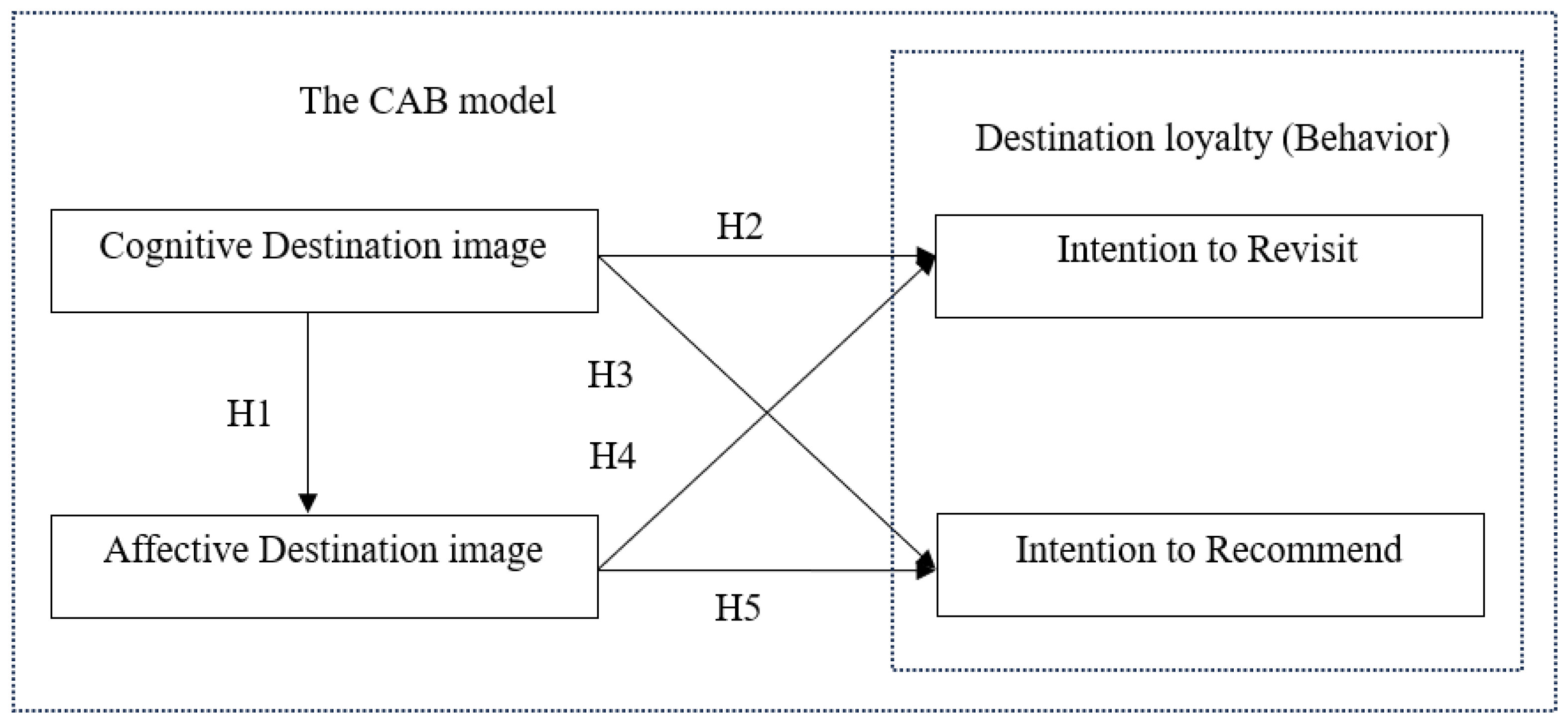
Table 1.
Respondents’ demographic profile.
| Characteristics | Frequency | Percentage (%) | ||
|---|---|---|---|---|
| First-time travellers | Repeat travellers | First-time travellers | Repeat travellers | |
| Gender | ||||
| Male | 101 | 123 | 54.59 | 59.42 |
| Female | 84 | 84 | 45.41 | 40.58 |
| Marital status | ||||
| Single | 76 | 79 | 41.08 | 38.16 |
| Married | 87 | 107 | 47.03 | 51.69 |
| Other | 22 | 21 | 11.89 | 10.14 |
| Age (Years) | ||||
| 19–25 | 48 | 29 | 25.95 | 1401 |
| 26–32 | 58 | 45 | 31.35 | 21.74 |
| 33–39 | 41 | 39 | 22.16 | 18.84 |
| 40–49 | 27 | 53 | 14.59 | 25.60 |
| ≥ 50 | 11 | 41 | 5.95 | 19.81 |
| Education Level | ||||
| High school or secondary | 43 | 46 | 23.24 | 22.22 |
| Vocational college | 10 | 20 | 5.41 | 9.66 |
| Bachelor’s degree | 76 | 72 | 41.08 | 34.78 |
| Master’s degree | 43 | 44 | 23.24 | 21.26 |
| Doctorate or PhD | 7 | 14 | 3.78 | 6.76 |
| Other | 6 | 11 | 3.24 | 5.31 |
| Income per month (USD) | ||||
| < 500 | 36 | 25 | 19.46 | 12.08 |
| 500 - 1000 | 56 | 38 | 30.27 | 18.36 |
| 1001 - 2000 | 29 | 58 | 15.68 | 28.02 |
| 2001 - 3000 | 30 | 43 | 16.22 | 20.77 |
| > 3000 | 34 | 43 | 18.38 | 20.77 |
Table 2.
Measurement model assessment results.
| Constructs or associated items | First-time travellers | Repeat travellers | |||
|---|---|---|---|---|---|
| Mean value | SD | Mean value | SD | ||
| Cognitive image (CO), I guess Thailand… | |||||
| CO1 | has a variety of outdoor activities | 4.28 | 0.762 | 4.21 | 0.726 |
| CO2 | has pleasant weather | 4.07 | 0.973 | 4.08 | 0.929 |
| CO3 | has plentiful cultural and historical sites | 4.02 | 0.824 | 4.14 | 0.756 |
| Affective image (AF), Thailand is… | |||||
| AF1 | a pleasant place | 4.44 | 0.597 | 4.38 | 0.670 |
| AF2 | a stimulating place | 4.05 | 0.812 | 4.02 | 0.812 |
| AF3 | an interesting place | 4.58 | 0.537 | 4.43 | 0.670 |
| AF4 | a comfortable place | 4.25 | 0.628 | 4.16 | 0.710 |
| AF5 | a exciting place | 4.29 | 0.765 | 4.06 | 0.825 |
| Intention to revisit (IV), In the future, | |||||
| IV1 | I intent to visit/revisit Thailand | 4.38 | 0.697 | 4.29 | 0.833 |
| IV2 | I will likely visit/revisit Thailand | 4.35 | 0.659 | 4.29 | 0.727 |
| IV3 | I am interested in visiting/revisiting Thailand | 4.39 | 0.659 | 4.35 | 0.735 |
| IV4 | Thailand will still be my choice travel destination | 4.19 | 0.795 | 4.19 | 0.865 |
| Intention to recommend (IR), In the future, | |||||
| IR1 | I am likely to recommend Thailand to those who want advice on travel | 4.45 | 0.589 | 4.37 | 0.731 |
| IR2 | I will willingly recommend visiting Thailand to others | 4.48 | 0.581 | 4.41 | 0.683 |
| IR3 | I will willingly encourage friends and family to visit Thailand | 4.46 | 0.571 | 4.35 | 0.747 |
| IR4 | I will willingly say positive things about Thailand | 4.48 | 0.553 | 4.41 | 0.690 |
Note: SD: standard deviation.
Table 7.
Structural model and multi-group results.
| Hypothesis | Total | Multigroup hypothesis (H6) | First-time travellers | Repeat travellers | Path coefficient difference | Parametric test |
Welch-Satterthwaite test p-values |
Permutation test p-values |
||||
|---|---|---|---|---|---|---|---|---|---|---|---|---|
| Path coefficient | t-values | Path coefficient | t-values | Path coefficient | t-values | |||||||
| H1 | CO -˃AF | 0.531*** | 12.828 | COF -˃ AFF ≠ COR -˃ AFR | 0.520*** | 8.726 | 0.557*** | 10.097 | -0.037 | 0.648 | 0.649 | 0.656 |
| H2 | CO -˃ IV | 0.021 | 0.426 | COF -˃ IVF ≠ COR -˃ IVR | 0.001 | 0.009 | 0.035 | 0.539 | -0.038 | 0.697 | 0.696 | 0.654 |
| H3 | CO -˃ IR | 0.200*** | 4.306 | COF -˃ IRF ≠ COR -˃ IRR | 0.165** | 2.578 | 0.230*** | 3.593 | -0.067 | 0.462 | 0.461 | 0.487 |
| H4 | AF -˃ IV | 0.547*** | 10.543 | AFF -˃ IVF ≠ AFR -˃ IVR | 0.523*** | 7.727 | 0.569*** | 7.845 | -0.050 | 0.611 | 0.609 | 0.653 |
| H5 | AF -˃ IR | 0.479*** | 8.589 | AFF -˃ IR F≠ AFR -˃ IRR | 0.548*** | 7.925 | 0.424*** | 5.263 | 0.121 | 0.260 | 0.255 | 0.307 |
| Dependent variable | R2 | R2 | R2 | |||||||||
| AF | 28.00% | 26.80% | 30.80% | |||||||||
| IV | 31.10% | 26.80% | 34.90% | |||||||||
| IR | 37.00% | 41.90% | 34.30% | |||||||||
Note: **p < 0.05; *** p < 0.001; AF: affective image; CO: cognitive image; IR: intention to recommend; IV: intention to revisit.
Disclaimer/Publisher’s Note: The statements, opinions and data contained in all publications are solely those of the individual author(s) and contributor(s) and not of MDPI and/or the editor(s). MDPI and/or the editor(s) disclaim responsibility for any injury to people or property resulting from any ideas, methods, instructions or products referred to in the content. |
© 2025 by the authors. Licensee MDPI, Basel, Switzerland. This article is an open access article distributed under the terms and conditions of the Creative Commons Attribution (CC BY) license (http://creativecommons.org/licenses/by/4.0/).
Copyright: This open access article is published under a Creative Commons CC BY 4.0 license, which permit the free download, distribution, and reuse, provided that the author and preprint are cited in any reuse.


