Preprint
Article

This version is not peer-reviewed.

Plasma Cystine as a Marker of Acute Stroke Severity

A peer-reviewed article of this preprint also exists.

Submitted:

23 September 2025

Posted:

23 September 2025

You are already at the latest version

Abstract

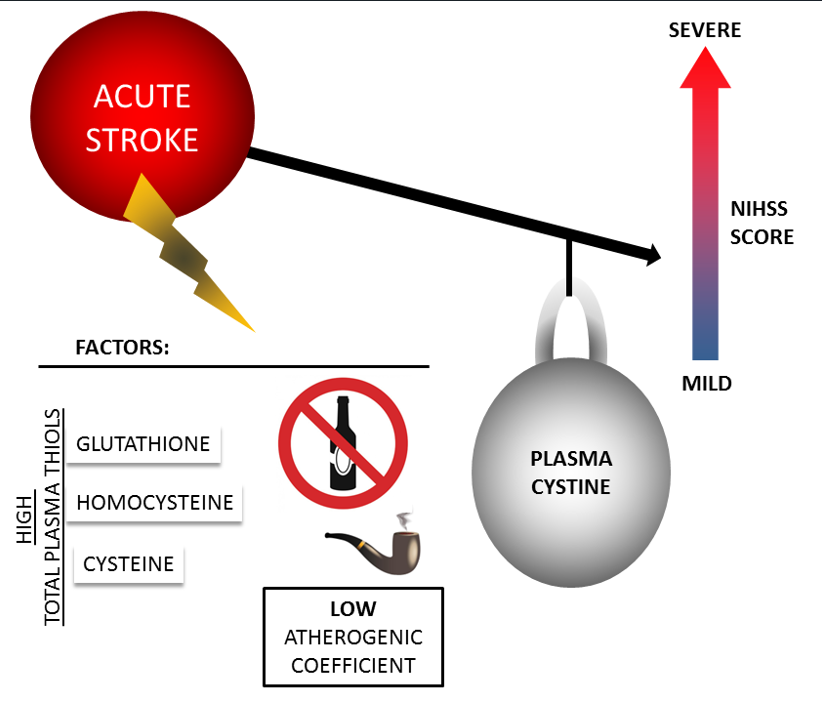
Background/Objectives: The amino acid cysteine (Cys) plays an important role in the neuronal injury process in stroke. Cys is present in blood plasma in various forms. The relationship between Cys and its forms and the severity of acute stroke has not been sufficiently studied. We investigated the total Cys and the levels of two of its forms (reduced Cys and its disulfide (cystine, CysS)) in blood plasma and the influence on stroke severity in patients at admission. Methods: A total of 210 patients (39-59 years old) with ischemic stroke and intracerebral or subarachnoid hemorrhage were examined. The content of the different forms of Cys was determined in the first 10–72 h. Stroke severity was estimated using the National Institutes of Health Stroke Scale (NIHSS) and the modified Rankin Scale (mRs). Results: CysS levels < 54 μM were associated with severe (NIHSS>13) neurological deficit (ischemic stroke: RR=5.58, p=0.0021; hemorrhagic stroke: RR=3.56, p=0.0003). Smoking and high levels of total Cys and other thiols (glutathione and homocysteine) appear to be factors determining this relationship. Conclusions: Low CysS levels may act as a potential biomarker of acute stroke severity.
Keywords: 
;  ;  ;  

1. Introduction

Stroke remains a major medical and social problem due to its high prevalence and severe health consequences. According to the Global Burden of Disease expert estimates, trends in morbidity, mortality, and disability-adjusted life years (DALYs) because of stroke have shown some steady decline in recent decades [1]. The incidence of different types of strokes varies widely. Among them, ischemic stroke (IS) comprises 75-80% and hemorrhages (including subarachnoid) up to 20-25%. According to the international TOAST criteria (Trial of Org 10172 in Acute Stroke Treatment), there are IS associated with the pathology of extra- and intracranial arteries (atherothrombotic stroke), cardiogenic embolic stroke, stroke caused by the pathology of small arteries (lacunar stroke), stroke caused by another cause, and stroke of an unknown etiology or caused by two or more possible causes (cryptogenic stroke) [1,2]. Hemorrhagic stroke (HS) is further divided into intracerebral and subarachnoid hemorrhage. It is proved that the pathogenesis of stroke and the gradual death of neurons are attributed to the universal processes of excitotoxicity, oxidative stress (OS), neuroinflammation, and apoptosis [3].
The most significant risk factors for stroke include arterial hypertension, atherosclerotic stenosis of the internal carotid artery, heart disease (including atrial fibrillation), diabetes mellitus, lipid metabolism disorders, smoking, and excess body weight [2]. The identification of metabolic factors that increase the risk of stroke helps improve our understanding of its causes.
One of the closely related metabolite systems that deserves increasing attention is that of aminothiols (LMWTs) (cysteine—Cys, homocysteine—Hcy, and glutathione—GSH). An elevated level of Hcy in blood plasma, or hyperhomocysteinemia (HHcy), is a prothrombogenic and atherogenic factor and a marker of stroke risk [5,6]. Numerous studies have found a significant correlation between HHcy and stroke severity/adverse outcome [7,8,9]. In contrast, GSH, being the major intracellular thiol, plays a protective role in stroke [10,11,12].
LMWTs are not only linked to each other through metabolic pathways but also form a thiol–disulfide system with the cysteine residues of proteins under the conditions of dynamic equilibrium. The normal status of this system ensures the functioning of many enzymes and counteracts oxidative stress by neutralizing reactive oxygen species (ROS) [13,14,15]. Acute cerebral ischemia causes rapid changes in the thiol–disulfide balance of LMWTs [16].
Cys is a non-essential proteinogenic (unlike Hcy) amino acid obtained mainly from food and partly from methionine. Unlike GSH, Cys is mainly located in the extracellular environment, partly forming disulfide bonds with proteins or LMWTs. Thus, in blood plasma, the average level of total Cys content (tCys) varies significantly (~120~350 μM), while the concentration of cysteine disulfide (cystine, CysS) ranges from 30 to 60 μM, and the level of the native (reduced) form ranges from ~5~15 μM [17,18,19,20].
It should be noted that tCys is the sum of all its fractions, which have different activities and different mechanisms of entry into cells. It has been shown that a Cys higher intake level has a negative impact on stroke risk in women [21]. This corresponds with the results of an experimental study [22], where dose-dependent Cys administration increased the cerebral infarction volume in a rat model of acute IS. However, it was also shown that a Cys-and-methionine-depleted diet led to a decrease in GSH level in the brain of rats, leading to the assumption of an increase in the rats’ sensitivity to OS under hypoxia [23].
Cys is a rate-limiting substrate for GSH synthesis [23,24], which is necessary for protection against oxidative stress. However, under conditions of ischemia, Cys becomes an important source of H2S synthesis at neurotoxic concentrations [25,26,27], as well as an excitotoxic factor that activates NMDA receptors and promotes the release of glutamate from cells [28]. Experimental studies on neuronal cultures have shown that Cys can be neurotoxic at very high concentrations (~1 mM) [29], especially under conditions of oxygen and glucose deprivation (OGD) [30]. Thus, Cys can be involved in both neuroprotective and damaging mechanisms, and its role in stroke pathogenesis is unclear.
Despite the relatively high levels of tCys and its fractions in blood plasma, there are few clinical studies that investigate its association with the risk, severity, and prognosis of stroke. In several metabolic studies [31,32], Cys and methionine (but not Hcy) were included in the pool of major metabolites investigated to reveal the biosignatures associated with stroke.
Based on the fact that stroke patients have a high frequency of HHcy, and their total levels of homocysteine (tHcy) and cysteine (tCys) are often closely correlated, it can be expected that there is an association between tCys and CysS levels and stroke risk, severity, and outcomes. Clinical studies have found an association of tHcy or tCys levels with stroke risk factors such as obesity [33], aortic stiffness [34], coronary heart disease [35,36], and acute coronary death [37]. The level of CysS inversely correlated with endothelial-dependent vasodilation in healthy individuals [38], which may indicate its role in vascular dysfunction development.
A slight increase in tCys levels in patients with atherothrombotic stroke (ATS) compared with the control group was revealed in a single study [39] involving a small sample of patients. On the contrary, according to [31], this indicator was lower in patients with atherothrombotic stroke than in the control group. Other studies did not find a significant effect of plasma tCys levels on the incidence/risk or severity of stroke [4,40,41]. In [22] which examined a small cohort of patients (n=36), it was found that the CysS level in plasma was higher in patients who died or had an unfavorable outcome (2-5 points on the Rankin scale, mRs) within 3 months after a stroke than in patients with a positive outcome (0-1 mRs), which showed the prognostic potential of this indicator.
The aim of this study was to investigate the associative relationships of tCys levels and its fractions (CysS and native or reduced Cys—rCys) with the severity of acute ischemic/hemorrhagic stroke (measured by the National Institutes of Health Stroke Scale, NIHSS), as well as functional outcomes after stroke (measured by the modified Ranking Scale, mRs). Additionally, we aimed to identify factors that could significantly influence these associations.

2. Materials and Methods

2.1. Patients

This study was conducted from 1st November 2023 to 31st May 2024 in accordance with the ethical principles of the Declaration of Helsinki, as outlined by the World Medical Association (1964 and 2004), and with the written voluntary informed consent of all participants. The study protocol was developed in accordance with the CONSORT 2010 recommendations and was approved by the Ethics Committee of the Moscow Regional Research Clinical Institute (protocol No. 7, from 13th July 2023).
This study included a final sample of 210 patients with stroke (aged 39-59) who were admitted to the neurology department of the Moscow Regional Research Clinical Institute within the first 10-72 hours after the onset of the neurological disorder symptoms. The subtype of stroke was determined according to the TOAST (Trial of ORG 10172 in Acute Stroke Treatment) classification criteria. The patients had no history of previous cerebrovascular events, such as cerebral infarct, cerebral hemorrhage, or transient ischemic attack. Information on hypertension, type 2 diabetes mellitus, and heart disease (i.e., coronary heart disease, myocardial infarction, valvular disease, and atrial fibrillation) was obtained from their medical histories and clinical data.
The criteria for patient inclusion in this study were as follows:
  • Men and women aged up to 60 years inclusive;
  • The time from the onset of stroke symptoms to the inclusion in the study was not more than 72 hours;
  • Patients who suffered their first stroke, as verified by magnetic resonance imaging (MRI)/ computer tomography (CT) scan of the brain;
  • Signing and dating an informed consent form by the patient or a disinterested witness (if the patient was unable to sign due to physical limitations).
  • The criteria for non-inclusion of patients from the study were as follows:
  • The time from the onset of acute stroke symptoms to the inclusion in the study was more than 72 hours;
  • Patients with contraindications to CT/MRI (installed pacemaker/neurostimulator/pacemaker; inner ear prosthesis, ferromagnetic or electronic middle ear implants, hemostatic clips, prosthetic heart valves and any other metal-containing structures, ferromagnetic fragments; insulin pumps) or inability to undergo the CT/MRI procedure (pronounced claustrophobia, etc.);
  • The presence of any neuroimaging (CT/MRI) signs of a brain tumor, arteriovenous malformation, brain abscess, cerebral vascular aneurysm, or edema of the infarct zone, leading to the dislocation of brain structures (malignant course of cerebral infarction);
  • Repeated ischemic stroke, hemorrhagic stroke, or a history of unspecified stroke;
  • Traumatic brain injury within the past 6 months before screening;
  • Patients with a history of surgical intervention on the brain or spinal cord;
  • Patients with a history of epilepsy or severe cognitive impairment.
  • The criteria for exclusion of patients from the study were as follows:
  • Positive blood tests for HIV, syphilis, or hepatitis B and/or C detected at the start of the study;
  • The appearance of any diseases or conditions during the study that worsened the patient's prognosis, and made it impossible for the patient to continue participating in the clinical trial;
  • Violation of the study protocol such as incorrect inclusion of patients who did not meet the inclusion criteria, use of prohibited therapy, or other significant protocol violations according to the investigator’s opinion;
  • Patient's refusal to continue participating in the study.
The severity of the neurological disorders was assessed using the NIHSS scale, and the degree of disability and functional independence was assessed using the mRs [42,43].
All patients underwent an MRI of the brain using the Magnetom Verio (Siemens) and Magnetom Symphony (Siemens) devices, with magnetic induction values of 3, 1.5, and 1.5 T, respectively. MRI angiography was performed in 3D-TOF mode to detect intracranial arterial pathology. Brain infarction was identified as a focus of increased MRI signal intensity in the T2, T2 d-f, and Diffusion-Weighted Imaging (DWI) modes, with a decreased diffusion coefficient on the Apparent Diffusion Coefficient (ADC) map.

2.2. Laboratory Studies

Venous blood was collected from the patients into 3 mL K3EDTA tubes (Lab-Vac, Heze, China). A volume of 0.35 mL of 0.5 M citrate Na (pH 4.3) was immediately added to the blood. After mixing, the samples were cooled at 4◦C for 3–4 h. The plasma was obtained through blood centrifugation at 350 g for 10 min at room temperature.
Blood samples for the study of hemostasis parameters were collected by venipuncture from the ulnar veins (~12 mL) using disposable vacuum tubes containing 2.5% sodium citrate. To analyze the biochemical parameters, the blood was collected into a test tube containing a coagulation activator. The samples were processed no later than 30 min after collection. An ACL TOP 700 hemostasis analyzer (IL Werfen, Barcelona, Spain), an AU 680 biochemical analyzer (Beckman Coulter, Brea, CA, USA), and a PENTRA 120 hematology analyzer (Horiba ABX, Montpellier, France) were used.
The atherogenic coefficient was calculated using the following formula: (total cholesterol - high-density lipoprotein cholesterol (HDL-C))/ low-density lipoprotein cholesterol (LDL-C) [44]. For women under the age of 40, the normal value of this indicator is less than 2.5, while at an older age, it can be up to 3.5. For men under and over the age of 40, the normal level of this indicator is less than 2.4 and up to 3.5, respectively.
The determination of total LMWTs in plasma (tCys, tCG, tGSH, and tHcy) was carried out using liquid chromatography with ultraviolet detection as described previously [45]. CysS and rCys levels in plasma were determined by capillary electrophoresis as described in [20].

2.3. Data Processing

Data collection and primary processing (identification and integration of the chromatographic peaks) were performed using MassLynx v4.1 (Waters, Milford, MA, USA) and Elforun software v. 4.2.5 (Lumex, St. Petersburg, Russia). Statistical data analysis was performed using SPSS Statistics v. 22 (IBM, Armonk, NY, USA). Quantitative indicators were expressed as medians (along with the 1st and 3rd quartiles). The optimal cut-off values for the variables were determined using receiver operating characteristic (ROC) analysis. Logistic regression analysis was used to assess the impact of the variables on the NIHSS and mRs scores. To distinguish severe and mild strokes, a cut-off value of NIHSS≥14 or, in some cases, NIHSS>10 was used. We used a cut-off value of mRs≤3 to divide the cohort according to the functional state. A comparison of binomial indicators (variable analysis) was carried out based on the relative risk ratio (RR) and odds ratio (OR); p < 0.05 was considered to indicate a significant difference. The Mann–Whitney test was used to compare the variables between groups. Post hoc analysis was additionally performed to assess the completeness of the sample size (α=0.05). Correlation analysis was performed using the Spearman method. A two-sided critical significance level (p) was used for all comparisons and tests. In the case of multiple comparisons, the Holm–Bonferroni method was used to correct the p-value.

3. Results

The demographic characteristics and laboratory data of the patients are presented in Table 1. The levels of total LMWTs, CysS, and rCys could be determined in 203 (96.7%), 202 (96.2%), and 186 (88.6%) patients, respectively. Most patients were men. This patient cohort displayed a high frequency of smoking, overweight, dyslipidemia, and arterial hypertension. About half of the patients reported regular consumption of alcoholic beverages.
According to the Spearman correlation analysis, none of the LMWT parameters had a statistically significant association with stroke severity as assessed using the NIHSS. The tLMWTs levels were positively associated with each other, except for tGSH and tCys (Table 2). CysS and rCys levels were not associated with each other, but showed statistically significant and multidirectional associations with tHcy and tGSH. When comparing LMWT levels with other clinical and laboratory parameters, only the associations of tGSH level with cholesterol and tCys were found.
When dividing the patient cohort into two groups (IS and HS), we did not find statistically significant differences between them in the levels of tCys and its fractions (CysS, rCys), as well as in other studied parameters, except for tGSH: the tGSH level in the IS group was higher (see Table 1, p=0.01). In addition, the total score as assessed using the NIHSS scale was lower in the IS group compared to the HS group (p=0.019).
When dividing the patient cohort into two groups according to the criterion of mRs 0-3 and mRs > 3, we did not find statistically significant differences regarding any indicators. The univariate logistic analysis also did not reveal a reliable predictor among all the LMWTs studied (data not shown).
CysS was the only parameter among all LMWTs that demonstrated significant differences when dividing the patient cohort into two groups based on the criterion of NIHSS ≤ 13 (Table 3). As shown in the table, the CysS level was higher in the group of patients with NIHSS ≤ 13 than in the group of patients with severe stroke. The univariate logistic analysis also showed that in this case, CysS was the only reliable predictor among all LMWTs (OR=1.036, 95% CI 1.012-1.06, p=0.0033).
The optimal cut-off point for CysS to distinguish between the two groups was determined to be 54 μM based on the ROC analysis (AUC 0.36, 95% CI 0.27 - 0.45, p=0.0063). Using this cutoff point, it was found that patients with high CysS levels (>54 μM) were characterized by a significantly lower risk of severe neurological deficits (NIHSS > 13) compared to patients with CysS levels ≤ 54 μM (Table 4). This was true for both the IS and HS subgroups, but post hoc analysis showed that the sample size was not sufficient for a separate study of these subgroups, especially for HS.
Since LMWTs showed a fairly strong association with each other, we investigated the effect of their levels on the association between CysS and the risk of severe neurological deficit. To achieve this, we first divided the patient cohort into three groups (tertiles) according to the levels of some analytes and then calculated the risk of NIHSS>13 at a CysS cut-off of 54 μM in the first and third tertiles, as shown in Table 5. As shown in this table, for patients with high levels of thiols (tCys, tGSH, and tHcy, but not tCG), the association of CysS level with stroke severity was more pronounced and reliable than in patients with low levels. When dividing the cohort into tertiles based on rCys, we observed an association between CysS level and the risk of NIHSS>13, which was present at both low and high rCys levels. However, the rather low power of the post hoc analysis indicates that a significantly larger sample size is required to confidently detect the effect of thiols on the association of CysS with stroke severity.
The influence of various stroke risk factors on the association between CysS and neurological deficit was also investigated. Among the 21 patients without dyslipidemia and with a CysS level > 54 μM, we did not observe any patients with NIHSS > 9, while among the 38 patients with CysS level ≤ 54 μM and without dyslipidemia, the incidence of NIHSS > 9 was 42.1% (p = 10-4). At the same time, a low CysS level (≤ 54 μM) was not linked to an increased risk of NIHSS > 9 in patients with dyslipidemia (RR = 1.28, p > 0.05). However, when the cut-off point for the NIHSS was increased to 13, we observed a higher risk of severe stroke in patients with dyslipidemia who had a CysS level ≤ 54 μM (Figure 1); however, the sample size was not sufficient to draw a definite conclusion.
The strong association between low CysS levels and an increased risk of NIHSS > 13 was observed in patients with an atherogenic coefficient in the normal range (Figure 1). In patients with an elevated atherogenic coefficient, the same association was also observed but with significantly lower reliability. We found no significant changes in the association of CysS with NIHSS level when dividing the cohort by binary risk factors such as hypertension, DM2, CAD, and atrial fibrillation (Figure 1).
It is important to note that a statistically significant association between CysS level and the risk of NIHSS > 13 was found in the non-drinking group, but not in the group of patients who consumed alcohol (Figure 1). Similarly, the effect of smoking was also investigated. However, since there were no patients with NIHSS > 13 in the non-smoking group with CysS > 54 μM, the cut-off point for neurological deficit was lowered to NIHSS > 10. Nevertheless, as shown in Figure 1, a significant association between a low CysS level and the risk of NIHSS > 10 was only found among smoking patients.

4. Discussion

In the study, we found an association of low (< 54 μM) plasma CysS levels with the development of severe neurological deficit in patients with ischemic and hemorrhagic stroke. This association was observed both in the presence and absence of stroke risk factors, such as dyslipidemia, arterial hypertension, coronary heart disease, and atrial fibrillation. It is likely that this association is more characteristic of patients with high levels of tCys, tHcy or tGSH, but larger-scale studies are required to test this hypothesis. In addition, our results indicate that smoking probably plays a significant role in the association of low CysS levels with the risk of severe stroke. Thus, our data indicate that CysS may function as a protective factor or marker in acute stroke. It should be noted that these results are not consistent with an earlier study [22], which found no association between CysS levels and NIHSS scores on the first day of stroke. The most obvious reason for this difference is the small sample size (36 patients).
CysS can be considered not only as a part of the extracellular Cys pool, but also as a bioavailable form of Cys or an indicator of oxidative processes. On the other hand, an increase or a decrease in its level may reflect the ability of the body to use this metabolite for its own needs or to transport it into cells.
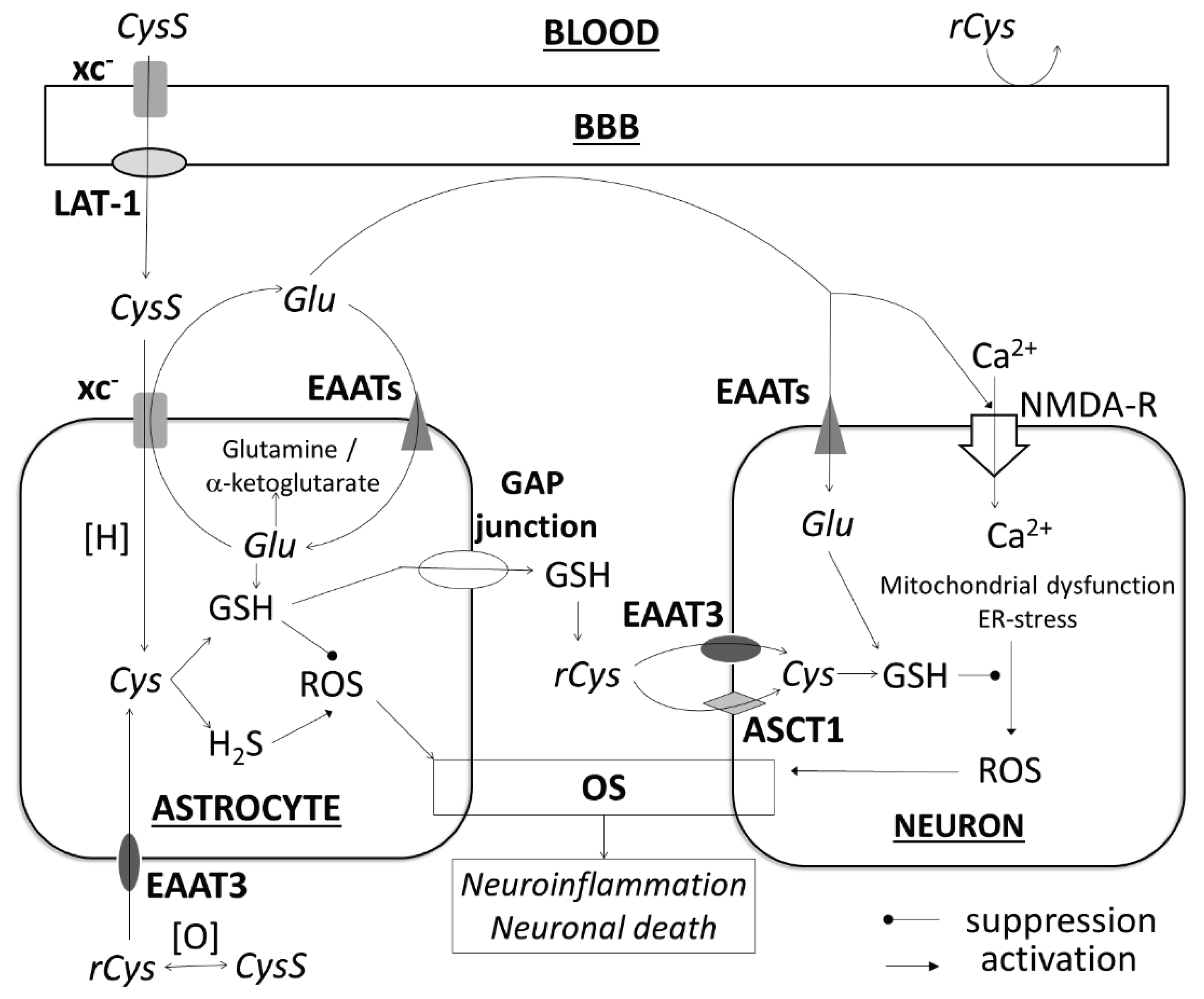
Cys can enter cells in the form of rCys or CysS. The transfer of rCys into cells is mainly carried out by the excitatory amino acid transporter 3 (EAAT3) in humans or the excitatory amino acid carrier 1 (EAAC1, an analog of EAAT3) in rodents [46], as shown in Figure 2. The EAAT family is also involved in the transport of many amino acids, including glutamate. The endocytosis of CysS occurs via the xc- transporter, but in this case, it is exchanged for glutamic acid in a 1:1 ratio [47]. In rats, xc- is expressed in the brain in astrocytes, and in humans and mice, it is additionally expressed in neurons [48]. It is important to note that unlike rCys or GSH, CysS has a high ability to penetrate the blood–brain barrier (BBB) [49]. CysS is captured by the endothelium from the plasma via xc- and is transferred to the intercellular space via the Large Neutral Amino Acid Transporter 1 (LAT-1) [49].
On the one hand, CysS is the main source of cysteine in the brain; on the other hand, the data from experimental studies revealing that CysS and rCys play a primary role in the bioavailability cysteine and in the synthesis of GSH in neurons are not unambiguous. While CysS is the main source for astrocytes with a high level of xc- expression, neurons expressing mainly EAAT3/EAAC1 and the neutral amino acid transporter A (ASCT1) use mainly rCys, which is released by gliocytes in the form of GSH through the Gap junction and hydrolyzed to cysteine in the intercellular space [50]. Thus, the bioavailability of cysteine is generally determined by the rCys, CysS, and GSH transport systems. It was found that in normal mice, the main source of Cys in neurons is rCys, and CysS transport plays a secondary role [51]. In a mouse model deficient in EAAC1 (the human analog of EAAT3), a significant decrease in brain GSH levels and an increased sensitivity to OS were found [49], whereas xc--knockout mice had normal brain GSH levels [52,53]. Genetic deletion of EAAC1 aggravates ischemia-induced neuronal death [50]. Other studies showed that under hypoxia, the observed increase in xc- expression in astrocytes (in vivo and in vitro) plays an important role in maintaining the intracellular GSH pool and protecting against neuronal ferroptosis [54,55,56], indicating an increasing neuroprotective role of CysS during ischemia. Inhibition of xc- expression, on the contrary, leads to the depletion of GSH and a decrease in its redox status [55]. In addition, the leading role of xc- in the expression of the neuroprotector erythropoietin under hypoxic conditions has been reported [55].
At the same time, xc- participates in the mechanisms of neuronal death. More than 99% of total glutamate is located in cells, and xc- provides transport for 60-80% of the entire extracellular glutamate pool in the brain, which makes the activation of this transporter a significant factor in nerve tissue damage [46,57]. This is supported by the fact that in a previous study, xc- inhibition suppressed ischemia/reperfusion-induced elevation of extracellular glutamate and NMDA-receptor activation and attenuated ischemia-gated currents and cell death after OGD [58,59]. In this regard, it can be assumed that if the suppression of CysS uptake has a generally positive effect, and xc- is considered a therapeutic target in stroke, then CysS level can act as a marker: its increase in blood plasma may be associated with less neuronal damage and a milder course of stroke.
The key role of xc- astrocytes in IL-1β-induced neuronal damage was also revealed in a mixed culture of cortical neurons and astrocytes [60]. Different results were obtained in different models of ischemic stroke in mice with xc- light chain knockout. In some cases, there were no changes in cerebral infarction volume and stroke incidence, while in other cases, these indicators were lower in knockout mice than in wild-type animals r[54,58]. It should be noted that in a rat model of ischemic stroke, the use of N-acetylcysteine, which can enter cells bypassing EAATs and xc-, led to a significant suppression of xc- expression and an increase in glutamate transporter-1 (GLT-1) expression, which captures glutamate, leading to a decrease in the extracellular pool of glutamate in the brain [61]. This indicates the presence of a negative control mechanism for CysS transport from the intracellular pool.
It has been previously established that during ischemia, an increase in Cys content in the brain occurs due to the increased degradation and decreased synthesis of GSH [62,63]. The latter, given its high intracellular concentration, can also be considered a depot of glutamate. Therefore, the inhibition of GSH (γ-glutamylcysteine ligase) synthesis is accompanied by an increase in the concentration of cytosolic glutamate in neurons, whereas its activation leads to a decrease in the concentration of glutamate [64]. In this context, if we consider the increase in tCys or CysS levels as a consequence of the disturbance of GSH metabolism during brain injury, then we would expect an association of tCys and/or its fractions with the volume of cerebral infarction or penumbra. However, the absence of such a result means that the release of Cys from damaged brain tissue does not make a significant contribution to the pool of circulating tCys. In addition, the possible increase in tCys levels due to the above-described reason may be compensated by a decrease in the formation of Cys from Hcy due to the mobilization of pyridoxal-5-phosphate (the coenzyme cystathionine beta-synthase (CβS) is necessary for this pathway), which, under conditions of systemic inflammatory reactions, is used primarily for the catabolism of tryptophan [31].
Once inside the cell, Cys is used not just for the synthesis of GSH and proteins, as there are a number of neurotoxic mechanisms directly related to Cys metabolism. Cys can form α-carbamate with CO2 or be oxidized to S-sulfocysteine, cysteine sulfite, and cysteine acid, which are NMDA receptor agonists [28], and the S-cysteinylation of oxidized catecholamines can lead to the formation of, for example, 5-S-cysteinyl dopamine, which is an inhibitor of complex I of the mitochondrial respiratory chain [65]. However, the physiological significance of these reactions has not yet been revealed.
Although the important role of CβS in the pathogenesis of neuronal damage is not in doubt [66], data from experimental studies on the effect of cerebral ischemia on the expression and activity of this enzyme, as well as on the level of H2S, show different results. In a transient 4-vessel arterial occlusion rat model, it was revealed that changes in CβS expression and H2S content in the brain have a complex dynamic and, in all likelihood, region-specific nature [67]. Thus, in the cerebral cortex, following an early (12h) increase in the content of CβS, its mRNA, and H2S, a sharp decrease in the levels of mRNA and H2S was observed after 24h. A week later, despite the increased expression of CβS, the level of H2S was not increased. Increases in the expression of CβS and the level of H2S were also found after 24 hours of induction of hypoxia–ischemia (unilateral carotid ligation) in rats [68,69]. In permanent middle cerebral artery occlusion (MCAO) in rats, despite a decrease in mRNA content, an increase in CβS and H2S brain levels was also noted [25,70]. However, in a transient MCAO mouse model, a decrease in CβS content and a sharp drop in H2S-synthesizing activity in ischemic tissue were detected 24 hours after reperfusion [71].
The main function of CβS is the formation of cystathionine from Hcy, but its H2S-producing activity becomes the most pathogenetically significant in stroke, mainly due to glial cells (microglia and astrocytes). Both Hcy and Cys can act as substrates in this process. In experimental stroke research, it has been found that CβS activity plays both neuroprotective and damaging roles. Thus, deficiency of this enzyme in the MCAO mouse model caused additional activation of the inflammatory factor NF-κB, followed by an increased expression of the cytokines IL-1β, IL-6, and TNFα. Administration of NaHS suppressed this effect [66]. MCAO led to the suppression of CβS expression in the brain, which was associated with the conversion of microglia/macrophages into the pro-inflammatory M1 phenotype, while stimulation of CβS expression shifted these cells to the anti-inflammatory phenotype [71,72]. These findings are also consistent with the results of another study [73] that used the SAH model to demonstrate the neuroprotective effect of intracerebroventricular administration of Cys, which was associated with an increase in the H2S-generating activity of CβS, expressed as a reduction in cerebral edema, improved neurobehavioral function, and attenuated neuronal cell death.
At the same time, several studies have demonstrated the negative role of CβS. In a MCAO rat model, inhibition of CβS led to a decrease in the volume of cerebral infarction, whereas administration of Cys increased the H2S levels in the brain and contributed to an increase in infarction [26,74]. OGD in astrocyte cultures was found to reduce cell survival and was associated with a significant increase in H2S levels [25]. H2S is a second messenger that affects many enzymes and is believed to cause neurotoxicity by inhibiting monoamine oxidase, cholinesterase, Na+/K+-ATPase, and cytochrome c oxidase. It also enhances the effects of glutamate [25,75]. Finally, according to a study examining cerebrospinal fluid (CSF) samples from patients with SAH, the upregulated expression of CβS was closely associated with the inflammatory response and neurological deficits [76].
Additionally, as has been recently shown, the neurotoxic effect of cysteine can be induced through the disruption of mitochondrial respiration by limiting intracellular iron availability through an oxidant-based mechanism [77,78].
Having analyzed the role of Cys in neuronal damage, it becomes obvious that its effect is determined by the balance of its intracellular metabolism and transport mechanisms, which are closely related to glutamate, as schematically shown in Figure 2. As shown in the figure, xc- and EAAT3/EAAC1 form a dynamic system of processes involving glutamate uptake and release by astrocytes, in which an increase in CysS uptake must be compensated by an increase in glutamate uptake in order to prevent the activation of NMDA receptors in neurons. The GSH and H2S synthesis systems also compete for the initial substrate, while H2S can have opposite effects depending on its concentration.
This study had several limitations. The insufficient sample size may explain why we did not find a significant association between low CysS levels and an increased risk of severe stroke in patients with low levels of other LMWTs (tCys, tHcy, and tGSH). Since there was a clear correlation between CysS and these thiols, the low frequency of patients with high CysS levels and low levels of other thiols was the major limiting factor, resulting in the significance level being outside the significance limits. The insufficient sample size likely limited the ability to detect the impact of factors such as dyslipidemia, atrial fibrillation, and smoking on stroke severity in patients with high CysS levels. It should also be noted that elderly patients were not included in this study. Given that plasma Hcy levels increase with age [79], while GSH levels [80] and aminothiol redox status [81] decrease, it can be assumed that an association of CysS levels with stroke severity will be observed in elderly individuals. Thus, additional and larger-scale studies are required to address these issues.

5. Conclusions

In this study, we revealed for the first time that low plasma cystine levels may be a potential biomarker of the severity of both ischemic and hemorrhagic stroke. Smoking and high levels of total thiols (cysteine, glutathione, and homocysteine) appear to be factors determining this relationship. Given the important role of cystine in the excitotoxicity and antioxidant protection mechanisms of nervous tissue, the results obtained indicate the protective potential of cystine in stroke.

Author Contributions

Conceptualization, A.V.I., M.Y.M., M.A.P. and A.A.K.; investigation, A.V.I. and P.A.P.; methodology, A.V.I., M.A.P. and M.P.K.; formal analysis, M.P.G., M.P.K. and V.V.A.; data collection and curation, R.A.M., P.A.P. and V.A.S.; resourses, M.A.P. and E.V.S.; writing—original draft preparation, A.V.I., M.A.P. and M.Y.M.; writing—review and editing, A.V.I., M.Y.M, M.P.G.; supervision, A.V.I. ans M.A.P.; project administration, E.V.S. and A.A.K. All authors have read and agreed to the published version of the manuscript.

Funding

This research received no external funding.

Institutional Review Board Statement

This study was conducted in accordance with the Declaration of Helsinki and approved by the Moscow Regional Research Clinical Institute, Russia (protocol No. 7 from 13 July 2023).

Informed Consent Statement

Informed consent was obtained from all subjects involved in the study.

Data Availability Statement

Complete raw data are not publicly available due to local data protection laws, but de-identified data can be made available upon reasonable request from the corresponding author.

Acknowledgments

None.

Conflicts of Interest

The authors declare no conflicts of interest.

Abbreviations

The following abbreviations are used in this manuscript:
ADC Apparent Diffusion Coefficient
aPTT activated partial thromboplastin time
ASCT1 Neutral amino acid transporter A
AT atherothrombotic stroke
BBB blood-brain barrier
CAD coronary artery disease
CE cardioembolic stroke
CG cysteinylglycine
CRP C-reactive protein
CSF cerebrospinal fluid
CT computer tomography
Cys cysteine
CysS cystine
CβS cystathionine beta-synthase
DM2 type 2 diabetes mellitus
DWI diffusion-weighted imaging
EAAT excitatory amino acid transporter
ER endoplasmic reticulum
EAAC1 Excitatory Amino Acid Carrier 1
GLT-1 Glutamate transporter-1
Glu glutamate
GSH glutathione
Hcy homocysteine
HDL-C high-density lipoprotein cholesterol
HHcy hyperhomocysteinemia
HS hemorrhagic stroke
ICH intracerebral hemorrhage
IL-1β interleukin 1β
IL-6 interleukin 6
IS ischemic stroke
Lac lacunar stroke
LAT-1 Large Neutral Amino Acid Transporter 1
LDL-C low-density lipoprotein cholesterol
LMWTs low-molecular weight aminothiols
MCAO middle cerebral artery occlusion
MRI magnetic resonance imaging
mRs modified Rankin Scale
NF-κB Nuclear Factor Kappa B
NIHSS National Institutes of Health Stroke Scale
NMDA N-methyl-D-aspartate
OGD oxygen and glucose deprivation
OR odds ratio
OS oxidative stress
PLT platelets
rCys reduced cysteine
ROC receiver operating characteristic
ROS reactive oxygen species
RR relative risk ratio
SAH subarachnoid hemorrhage
T1 first tertile
T3 third tertile
tCG total cysteinylglycine
tCys total cysteine
TG triglycerides
tGSH total glutathione
tHcy total homocysteine
TNFα Tumor necrosis factor-alpha
TOAST Trial of ORG 10172 in Acute Stroke Treatment
WBC white blood cells
xc- cystine/glutamate transporter

References

  1. GBD 2019 Stroke Collaborators. Global, regional, and national burden of stroke and its risk factors, 1990-2019: a systematic analysis for the Global Burden of Disease Study 2019. Lancet Neurol. 2021, 20(10), 795-820. [CrossRef]
  2. Zafar, A., Al-Khamis, F.A., Al-Bakr, A.I., Alsulaiman, A.A., Msmar, A.H. Risk factors and subtypes of acute ischemic stroke. A study at King Fahd Hospital of the University. Neurosciences (Riyadh) 2016, 21(3), 246-251. [CrossRef]
  3. Salaudeen, M.A., Bello, N., Danraka, R.N., Ammani, M.L. Understanding the Pathophysiology of Ischemic Stroke: The Basis of Current Therapies and Opportunity for New Ones. Biomolecules 2024, 14(3), 305. [CrossRef]
  4. Vinknes, K.J., Refsum, H., Turner, C., Khaw, K.T., Wareham, N.J., Forouhi, N.G., Imamura, F. Plasma Sulfur Amino Acids and Risk of Cerebrovascular Diseases: A Nested Case-Control Study in the EPIC-Norfolk Cohort. Stroke 2021, 52(1), 172-180. [CrossRef]
  5. Holmen, M., Hvas, A.M., Arendt, J.F.H. Hyperhomocysteinemia and Ischemic Stroke: A Potential Dose-Response Association-A Systematic Review and Meta-analysis. TH Open 2021, 5(3), e420-e437. [CrossRef]
  6. Lehotsky, J., Kovalska, M., Baranovicova, E., Hnilicova, P., Kalenska, D., Kaplan, P. Ischemic Brain Injury in Hyperhomocysteinemia. In: Cerebral Ischemia [Internet]; Pluta R. Eds; Exon Publications: Brisbane, Australia, 2021, Chapter 5.
  7. Harris, S., Rasyid, A., Kurniawan, M., Mesiano, T., Hidayat, R. Association of high blood homocysteine and risk of increased severity of ischemic stroke events. Int J Angiol. 2019, 28(1), 34–38. [CrossRef]
  8. Markišić, M., Pavlović, A.M., Pavlović, D.M. The Impact of homocysteine, vitamin B12, and vitamin D levels on functional outcome after firstever ischaemic stroke. Biomed. Res. Int. 2017, 2017, 5489057..
  9. Li, L., Ma, X., Zeng, L., Pandey, S., Wan, R., Shen, R., Zhang, Q. Impact of homocysteine levels on clinical outcome in patients with acute ischemic stroke receiving intravenous thrombolysis therapy. PeerJ 2020, 8, e9474. [CrossRef]
  10. Kahl, A., Stepanova, A., Konrad, C., Anderson, C., Manfredi, G., Zhou, P., Iadecola, C., Galkin, A. Critical Role of Flavin and Glutathione in Complex I-Mediated Bioenergetic Failure in Brain Ischemia/Reperfusion Injury. Stroke 2018, 49(5), 1223-1231. [CrossRef]
  11. Aoyama, K. Glutathione in the Brain. Int. J. Mol. Sci. 2021, 22(9), 5010. [CrossRef]
  12. Iskusnykh, I.Y., Zakharova, A.A., Pathak, D. Glutathione in Brain Disorders and Aging. Molecules 2022, 27(1), 324. [CrossRef]
  13. Matuz-Mares, D., Riveros-Rosas, H., Vilchis-Landeros, M.M., Vázquez-Meza, H. Glutathione Participation in the Prevention of Cardiovascular Diseases. Antioxidants (Basel) 2021, 10(8), 1220. [CrossRef]
  14. Jones, D.P. Radical-free biology of oxidative stress. Am. J. Physiol. Cell. Physiol. 2008, 295(4), C849-868. [CrossRef]
  15. Włodek, L. Beneficial and harmful effects of thiols. Pol. J. Pharmacol. 2002, 54(3), 215-523.
  16. Ivanov, A.V., Alexandrin, V.V., Paltsyn, A.A., Nikiforova, K.A., Virus, E.D., Luzyanin, B.P., Maksimova, M.Y., Piradov, M.A., Kubatiev, A.A. Plasma low-molecular-weight thiol/disulphide homeostasis as an early indicator of global and focal cerebral ischaemia. Redox report: communications in free radical research 2017, 22(6), 460-466. [CrossRef]
  17. Andersson, A., Isaksson, A., Brattström, L., Hultberg, B. Homocysteine and other thiols determined in plasma by HPLC and thiol-specific postcolumn derivatization. Clin. Chem. 1993, 39(8), 1590-1597..
  18. Williams, R.H., Maggiore, J.A., Reynolds, R.D., Helgason, C.M. Novel approach for the determination of the redox status of homocysteine and other aminothiols in plasma from healthy subjects and patients with ischemic stroke. Clin. Chem. 2001, 47(6), 1031–1039.
  19. Carru, C., Deiana, L., Sotgia, S., Pes, G.M., Zinellu, A. Plasma thiols redox status by laser-induced fluorescence capillary electrophoresis. Electrophoresis 2004, 25(6), 882-889. [CrossRef]
  20. Ivanov, A.V., Popov, M.A., Aleksandrin, V., Pudova, P.A., Galdobina, M.P., Metelkin, A.A., Kruglova, M.P., Maslennikov, R.A., Silina, E.V., Stupin, V.A., Kubatiev, A.A. Simultaneous determination of cysteine and other free aminothiols in blood plasma using capillary electrophoresis with pH-mediated stacking. Electrophoresis 2024, 45(5-6), 411-419. [CrossRef]
  21. Larsson, S.C., Håkansson, N., Wolk, A. Dietary cysteine and other amino acids and stroke incidence in women. Stroke 2015, 46(4), 922-926. [CrossRef]
  22. Wong, P.T., Qu, K., Chimon, G.N., Seah, A.B., Chang, H.M., Wong, M.C., Ng, Y.K., Rumpel, H., Halliwell, B., Chen, C.P. High plasma cyst(e)ine level may indicate poor clinical outcome in patients with acute stroke: possible involvement of hydrogen sulfide. J. Neuropathol. Exp. Neurol. 2006, 65(2), 109-115. [CrossRef]
  23. Paterson, P.G., Lyon, A.W., Kamencic, H., Andersen, L.B., Juurlink B.H. Sulfur amino acid deficiency depresses brain glutathione concentration. Nutr. Neurosci. 2001, 4(3), 213-222. [CrossRef]
  24. Lu, S.C. Glutathione synthesis. Biochim. Biophys. Acta 2013, 1830(5), 3143-3153. [CrossRef]
  25. Chan, S.J., Chai, C., Lim, T.W., Yamamoto, M., Lo, E.H., Lai, M.K., Wong, P.T. Cystathionine β-synthase inhibition is a potential therapeutic approach to treatment of ischemic injury. ASN Neuro. 2015, 7(2), 1759091415578711. [CrossRef]
  26. Qu, K., Lee, S.W., Bian, J.S., Low, C.M., Wong, P.T. Hydrogen sulfide: neurochemistry and neurobiology. Neurochem. Int. 2008, 52(1-2), 155-165. [CrossRef]
  27. Dou, Y., Wang, Z., Chen, G. The role of hydrogen sulfide in stroke. Med. Gas. Res. 2016, 6(2), 79-84. [CrossRef]
  28. Janáky, R., Varga, V., Hermann, A., Saransaari, P., Oja, S.S. Mechanisms of L-cysteine neurotoxicity. Neurochem. Res. 2000, 25(9-10), 1397-1405. [CrossRef]
  29. Olney, J.W., Zorumski, C., Price, M.T., Labruyere, J. L-cysteine, a bicarbonate-sensitive endogenous excitotoxin. Science 1990, 248(4955), 596-599. [CrossRef]
  30. Schurr, A., West, C.A., Heine, M.F., Rigor, B.M. The neurotoxicity of sulfur-containing amino acids in energy-deprived rat hippocampal slices. Brain Res. 1993, 601(1-2), 317-320. [CrossRef]
  31. Goulart, V.A.M., Sena, M.M., Mendes, T.O., Menezes, H.C., Cardeal, Z.L., Paiva, M.J.N., Sandrim, V.C., Pinto, M.C.X., Resende, R.R. Amino Acid Biosignature in Plasma among Ischemic Stroke Subtypes. Biomed. Res. Int. 2019, 2019, 8480468. [CrossRef]
  32. Tao, S., Xiao, X., Li, X., Na, F., Na, G., Wang, S., Zhang, P., Hao, F., Zhao, P., Guo, D., Liu, X., Yang, D.Targeted metabolomics reveals serum changes of amino acids in mild to moderate ischemic stroke and stroke mimics. Front Neurol. 2023, 14, 1153193. [CrossRef]
  33. Elkafrawy, H., Mehanna, R., Ali, F., Barghash, A., Dessouky, I., Jernerén, F., Turner, C., Refsum, H., Elshorbagy, A. Extracellular ysteine influences human preadipocyte differentiation and correlates with fat mass in healthy adults. Amino Acids 2021, 53(10), 1623-1634. [CrossRef]
  34. Ottosson, F., Engström, G., Orho-Melander, M., Melander, O., Nilsson, P.M., Johansson, M. Plasma Metabolome Predicts Aortic Stiffness and Future Risk of Coronary Artery Disease and Mortality After 23 Years of Follow-Up in the General Population. J. Am. Heart. Assoc. 2024, 13(9), e033442. [CrossRef]
  35. Ozkan, Y., Ozkan, E., Simşek, B. Plasma total homocysteine and cysteine levels as cardiovascular risk factors in coronary heart disease. Int. J. Cardiol. 2002, 82(3), 269-277. [CrossRef]
  36. Oda, M., Fujibayashi, K., Wakasa, M., Takano, S., Fujita, W., Kitayama, M., Nakanishi, H., Saito, K., Kawai, Y., Kajinami, K. Increased plasma glutamate in non-smokers with vasospastic angina pectoris is associated with plasma cystine and antioxidant capacity. Scand. Cardiovasc J. 2022, 56(1), 180-186. [CrossRef]
  37. Patel, R.S., Ghasemzadeh, N., Eapen, D.J., Sher, S., Arshad, S., Ko, Y.A., Veledar, E., Samady, H., Zafari, A.M., Sperling, L., Vaccarino, V., Jones, D.P., Quyyumi, A.A. Novel Biomarker of Oxidative Stress Is Associated With Risk of Death in Patients With Coronary Artery Disease. Circulation 2016, 133(4), 361-369. [CrossRef]
  38. Ashfaq, S., Abramson, J.L., Jones, D.P., Rhodes, S.D., Weintraub, W.S., Hooper, W.C., Vaccarino, V., Alexander, R.W., Harrison, D.G., Quyyumi, A.A.Endothelial function and aminothiol biomarkers of oxidative stress in healthy adults. Hypertension 2008, 52(1), 80-85. [CrossRef]
  39. Salemi, G., Gueli, M.C., D'Amelio, M., Saia, V., Mangiapane, P., Aridon, P., Ragonese, P., Lupo, I. Blood levels of homocysteine, cysteine, glutathione, folic acid, and vitamin B12 in the acute phase of atherothrombotic stroke. Neurol. Sci. 2009, 30(4), 361-364. [CrossRef]
  40. Dong, W.C., Guo, J.L., Xu, L., Jiang, X.H., Chang, C.H., Jiang, Y., Zhang, Y.Z. Impact of homocysteine on acute ischemic stroke severity: possible role of aminothiols redox status. BMC Neurol. 2024, 24(1), 175. [CrossRef]
  41. Maksimova, M.Y., Ivanov, A.V., Virus, E.D., Nikiforova, K.A., Ochtova, F.R., Suanova, E.T., Kruglova, M.P., Piradov, M.A., Kubatiev, A.A. Impact of glutathione on acute ischemic stroke severity and outcome: possible role of aminothiols redox status. Redox report : communications in free radical research, 2021, 26(1), 117–123. [CrossRef]
  42. Brott, T., Adams, H. P., Jr, Olinger, C. P., Marler, J. R., Barsan, W. G., Biller, J., Spilker, J., Holleran, R., Eberle, R., & Hertzberg, V. Measurements of acute cerebral infarction: a clinical examination scale. Stroke 1989, 20(7), 864–870. [CrossRef]
  43. Sulter, G., Steen, C., De Keyser, J. Use of the Barthel index and modified Rankin scale in acute stroke trials. Stroke 1999, 30, 1538–1541.
  44. Kaneva, A.M., Potolitsyna, N.N., Bojko, E.R. Range of values for lipid accumulation product (LAP) in healthy residents of the European north of Russia. Obesity and metabolism 2020, 17(2), 179-186. [CrossRef]
  45. Ivanov, A.V., Popov, M.A., Metelkin, A.A., Aleksandrin, V.V., Agafonov, E.G., Kruglova, M.P., Silina, E.V., Stupin, V.A., Maslennikov, R.A., Kubatiev, A.A. Influence of Coronary Artery Bypass Grafts on Blood Aminothiols in Patients with Coronary Artery Disease. Metabolites 2023, 13(6), 743. [CrossRef]
  46. Krzyżanowska, W., Pomierny, B., Filip, M., Pera, J. Glutamate transporters in brain ischemia: to modulate or not? Acta Pharmacol Sin. 2014, 35(4), 444-462. [CrossRef]
  47. Massie, A., Boillée, S., Hewett, S., Knackstedt, L., Lewerenz, J. Main path and byways: non-vesicular glutamate release by system xc(-) as an important modifier of glutamatergic neurotransmission. J. Neurochem. 2015, 135(6), 1062-1079. [CrossRef]
  48. Burdo, J., Dargusch, R., Schubert, D. Distribution of the cystine/glutamate antiporter system xc- in the brain, kidney, and duodenum. J. Histochem. Cytochem. 2006, 54(5), 549-557. [CrossRef]
  49. Aoyama, K., Nakaki, T. Impaired glutathione synthesis in neurodegeneration. Int. J. Mol. Sci. 2013, 14(10), 21021-21044. [CrossRef]
  50. Lee, M., Ko, D.G., Hong, D.K., Lim, M.S., Choi, B.Y., Suh, S.W. Role of Excitatory Amino Acid Carrier 1 (EAAC1) in Neuronal Death and Neurogenesis After Ischemic Stroke. Int. J. Mol. Sci. 2020, 21(16), 5676. [CrossRef]
  51. Kinoshita, C., Aoyama, K. The Role of Non-Coding RNAs in the Neuroprotective Effects of Glutathione. Int. J. Mol. Sci. 2021, 22(8), 4245. [CrossRef]
  52. De Bundel, D., Schallier, A., Loyens, E., Fernando, R., Miyashita, H., Van Liefferinge, J., Vermoesen, K., Bannai, S., Sato, H., Michotte, Y., Smolders, I., Massie, A. Loss of system xI- does not induce oxidative stress but decreases extracellular glutamate in hippocampus and influences spatial working memory and limbic seizure susceptibility. J. Neurosci. 2011, 31(15), 5792-5803. [CrossRef]
  53. Sears, S.M.S., Hewett, J.A., Hewett, S.J. Decreased epileptogenesis in mice lacking the System xc- transporter occurs in association with a reduction in AMPA receptor subunit GluA1. Epilepsia Open 2019, 4(1), 133-143. [CrossRef]
  54. He, Y., Hewett, S.J. The Cystine/Glutamate Antiporter, System xc-, Contributes to Cortical Infarction After Moderate but Not Severe Focal Cerebral Ischemia in Mice. Front. Cell Neurosci. 2022, 16, 821036. [CrossRef]
  55. Lee, B.J., Jun, H.O., Kim, J.H., Kim, J.H. Astrocytic cystine/glutamate antiporter is a key regulator of erythropoietin expression in the ischemic retina. FASEB J. 2019, 33(5), 6045-6054. [CrossRef]
  56. Liu, T., Cui, Y., Dong, S., Kong, X., Xu, X., Wang, Y., Wan, Q., Wang, Q. Treadmill Training Reduces Cerebral Ischemia-Reperfusion Injury by Inhibiting Ferroptosis through Activation of SLC7A11/GPX4. Oxid. Med. Cell. Longev. 2022, 2022, 8693664. [CrossRef]
  57. Heit, B.S., Chu, A., McRay, A., Richmond, J.E., Heckman, C.J., Larson, J. Interference with glutamate antiporter system xc- enables post-hypoxic long-term potentiation in hippocampus. Exp. Physiol. 2024, 109(9), 1572-1592. [CrossRef]
  58. Hsieh, C.H., Lin, Y.J., Chen, W.L., Huang, Y.C., Chang, C.W., Cheng, F.C., Liu, R.S., Shyu, W.C. HIF-1α triggers long-lasting glutamate excitotoxicity via system xc- in cerebral ischaemia-reperfusion. J. Pathol. 2017, 241(3), 337-349. [CrossRef]
  59. Soria, F.N., Pérez-Samartín, A., Martin, A., Gona, K.B., Llop, J., Szczupak, B., Chara, J.C., Matute, C., Domercq, M. Extrasynaptic glutamate release through cystine/glutamate antiporter contributes to ischemic damage. J. Clin. Invest. 2014, 124(8), 3645-3655. [CrossRef]
  60. Fogal, B., Li, J., Lobner, D., McCullough, L.D., Hewett, S.J. System xI- activity and astrocytes are necessary for interleukin-1 beta-mediated hypoxic neuronal injury. J. Neurosci. 2007, 27(38), 10094-10105. [CrossRef]
  61. Krzyżanowska, W., Pomierny, B., Bystrowska, B., Pomierny-Chamioło, L., Filip, M., Budziszewska, B., Pera, J. Ceftriaxone- and N-acetylcysteine-induced brain tolerance to ischemia: Influence on glutamate levels in focal cerebral ischemia. PLoS One 2017, 12(10), e0186243. [CrossRef]
  62. Li, X., Wallin, C., Weber, S.G., Sandberg, M. Net efflux of cysteine, glutathione and related metabolites from rat hippocampal slices during oxygen/glucose deprivation: dependence on gamma-glutamyl transpeptidase. Brain Res. 1999, 815(1), 81-88. [CrossRef]
  63. Slivka, A., Cohen, G. Brain ischemia markedly elevates levels of the neurotoxic amino acid, cysteine. Brain Res. 1993, 608(1), 33-37. [CrossRef]
  64. Sedlak, T.W., Paul, B.D., Parker, G.M., Hester, L.D., Snowman, A.M., Taniguchi, Y., Kamiya, A., Snyder, S.H., Sawa, A. The glutathione cycle shapes synaptic glutamate activity. Proc. Natl. Acad. Sci. USA 2019, 116(7), 2701-2706. [CrossRef]
  65. Montine, T.J., Picklo, M.J., Amarnath, V., Whetsell, W.O. Jr., Graham, D.G. Neurotoxicity of endogenous cysteinylcatechols. Exp. Neurol. 1997, 148(1), 26-33. [CrossRef]
  66. Omorou, M., Liu, N., Huang, Y., Al-Ward, H., Gao, M., Mu, C., Zhang, L., Hui, X. Cystathionine beta-Synthase in hypoxia and ischemia/reperfusion: A current overview. Arch. Biochem Biophys. 2022, 718, 109149. [CrossRef]
  67. Ren, C., Du, A., Li, D., Sui, J., Mayhan, W.G., Zhao, H. Dynamic change of hydrogen sulfide during global cerebral ischemia-reperfusion and its effect in rats. Brain Res. 2010, 1345, 197-205. [CrossRef]
  68. Lechpammer, M., Tran, Y.P., Wintermark, P., Martínez-Cerdeño, V., Krishnan, V.V., Ahmed, W., Berman, R.F., Jensen, F.E., Nudler, E., Zagzag, D. Upregulation of cystathionine β-synthase and p70S6K/S6 in neonatal hypoxic ischemic brain injury. Brain Pathol. 2017, 27(4), 449-458. [CrossRef]
  69. Liu, Y., Zou, L.P., Du, J.B., Wong, V. Electro-acupuncture protects against hypoxic-ischemic brain-damaged immature rat via hydrogen sulfide as a possible mediator. Neurosci. Lett. 2010, 485(1), 74-78. [CrossRef]
  70. Qu, K., Chen, C.P., Halliwell, B., Moore, P.K., Wong, P.T. Hydrogen sulfide is a mediator of cerebral ischemic damage. Stroke 2006, 37(3), 889-893. [CrossRef]
  71. Zhang, M., Wu, X., Xu, Y., He, M., Yang, J., Li, J., Li, Y., Ao, G., Cheng, J., Jia, J. The cystathionine β-synthase/hydrogen sulfide pathway contributes to microglia-mediated neuroinflammation following cerebral ischemia. Brain Behav. Immun. 2017, 66, 332-346. [CrossRef]
  72. Hu, X., Leak, R.K., Shi, Y., Suenaga, J., Gao, Y., Zheng, P., Chen, J. Microglial and macrophage polarization—new prospects for brain repair. Nat. Rev. Neurol. 2015, 11(1), 56-64. [CrossRef]
  73. Li, T., Wang, L., Hu, Q., Liu, S., Bai, X., Xie, Y., Zhang, T., Bo, S., Gao, X., Wu, S., Li, G., Wang, Z. Neuroprotective Roles of l-Cysteine in Attenuating Early Brain Injury and Improving Synaptic Density via the CBS/H2S Pathway Following Subarachnoid Hemorrhage in Rats. Front. Neurol. 2017, 8, 176. [CrossRef]
  74. McCune, C.D., Chan, S.J., Beio, M.L., Shen, W., Chung, W.J., Szczesniak, L.M., Chai, C., Koh, S.Q., Wong, P.T., Berkowitz, D.B. "Zipped Synthesis" by Cross-Metathesis Provides a Cystathionine β-Synthase Inhibitor that Attenuates Cellular H2S Levels and Reduces Neuronal Infarction in a Rat Ischemic Stroke Model. ACS Cent. Sci. 2016, 2(4), 242-252. [CrossRef]
  75. Cheung, N.S., Peng, Z.F., Chen, M.J., Moore, P.K., Whiteman, M. Hydrogen sulfide induced neuronal death occurs via glutamate receptor and is associated with calpain activation and lysosomal rupture in mouse primary cortical neurons. Neuropharmacology 2007, 53(4), 505-514. [CrossRef]
  76. Han, M., Liu, D., Qiu, J., Yuan, H., Hu, Q., Xue, H., Li, T., Ma, W., Zhang, Q., Li, G., Wang, Z. Evaluation of H2S-producing enzymes in cerebrospinal fluid and its relationship with interleukin-6 and neurologic deficits in subarachnoid hemorrhage. Biomed. Pharmacother. 2020, 123, 109722. [CrossRef]
  77. Hughes, C.E., Coody, T.K., Jeong, M.Y., Berg, J.A., Winge, D.R., Hughes, A.L. Cysteine Toxicity Drives Age-Related Mitochondrial Decline by Altering Iron Homeostasis. Cell 2020, 180(2), 296-310. [CrossRef]
  78. Blagov, A., Postnov, A., Sukhorukov, V., Popov, M., Uzokov, J., Orekhov, A. Significance of Mitochondrial Dysfunction in the Pathogenesis of Parkinson's Disease. Front. Biosci. (Landmark Ed) 2024, 29(1), 36. [CrossRef]
  79. Refsum, H., Smith, A.D., Ueland, P.M., Nexo, E., Clarke, R., McPartlin, J., Johnston, C., Engbaek, F., Schneede, J., McPartlin, C., Scott, J.M. Facts and recommendations about total homocysteine determinations: an expert opinion. Clin. Chem. 2004, 50(1), 3-32. [CrossRef]
  80. Kumar, P., Liu, C., Suliburk, J., Hsu, J.W., Muthupillai, R., Jahoor, F., Minard, C.G., Taffet, G.E., Sekhar, R.V. Supplementing Glycine and N-Acetylcysteine (GlyNAC) in Older Adults Improves Glutathione Deficiency, Oxidative Stress, Mitochondrial Dysfunction, Inflammation, Physical Function, and Aging Hallmarks: A Randomized Clinical Trial. J. Gerontol. A Biol. Sci. Med. Sci. 2023, 78(1), 75-89. [CrossRef]
  81. Dröge, W. Aging-related changes in the thiol/disulfide redox state: implications for the use of thiol antioxidants. Exp. Gerontol. 2002, 37(12), 1333-1345. [CrossRef]
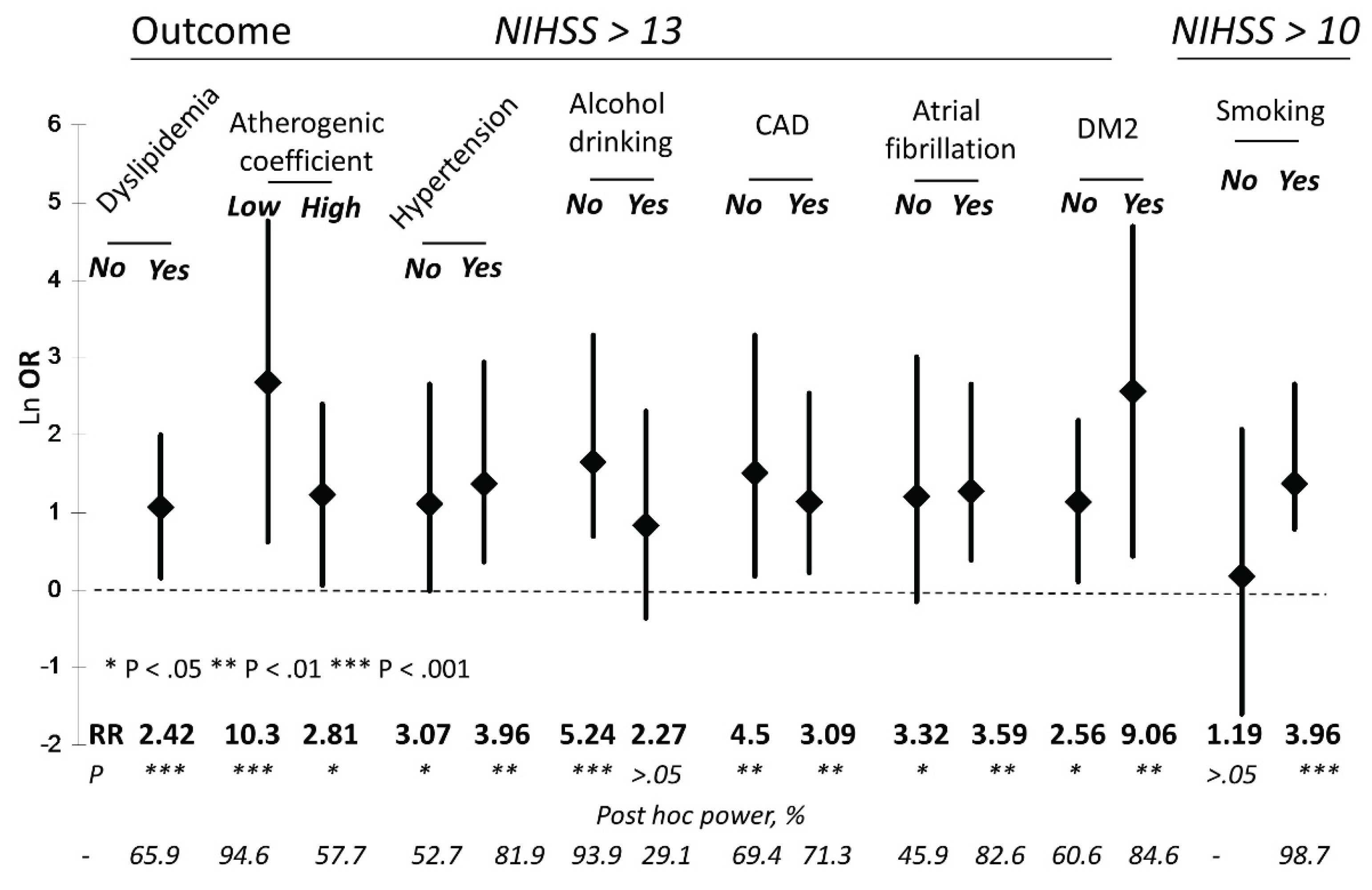
Figure 1. The influence of stroke risk factors on the association of low CysS levels (<54 μM) with neurological deficit. CAD, coronary artery disease; DM2, type 2 diabetes mellitus; Ln OR, odds ratio natural logarithm; RR, relative risk ratio; NIHSS, National Institutes of Health Stroke Scale.
Preprints 177850 g001
Figure 2. The role of cysteine ​​transport in brain damage and glutamate excitotoxicity. ASCT1, Neutral amino acid transporter A; BBB, blood-brain barrier; Cys, cysteine; CysS, cysteine; EAATs, excitatory amino acid transporters; EAAT3, excitatory amino acid transporter 3; ER, endoplasmic reticulum; Glu, glutamate; GSH, glutathione; LAT-1, Large Neutral Amino Acid Transporter 1; NMDA-R, N-methyl-D-aspartate receptor; OS, oxidative stress; rCys, reduced cysteine; ROS, reactive oxygen species; xc-, cystine/glutamate transporter; [O], oxidation.
Preprints 177850 g002
Table 1. Characteristics of patients with stroke included in this study.
Characteristics Total IS HS
Number of patients 210 138 72
Stroke type and subtype AT – 74 (53.6%)
CE – 37 (26.8%)
Lac – 10 (7.2%)
Other – 17 (12.3%)
ICH – 13 (18.1%)
SAH – 59 (81.9%)
Age, years (Q1; Q3) 55 (50; 57) 55 (52; 57) 55 (49; 57)
Male/Female 161/49 103/35 58/14
NIHSS 7.5 (6;10) 7 (6;10) 9 (7;15)*
mRs 3 (2;3) 3 (2;3) 3 (2;3)
Risk factors
Hypertension, n (%) 113 (53.8) 73 (52.9) 40 (55.6)
DM2, n (%) 66 (31.4) 40 (29.0) 26 (36.1)
Dyslipidemia, n (%) 148 (70.5) 95 (68.8) 53 (73.6)
HHcy: tHcy>15 μM (%) 44 (21.7) 31 (23.0) 13 (19.1)
CAD, n (%) 110 (52.4) 73 (52.9) 37 (51.4)
Atrial fibrillation, n (%) 132 (62.9) 91 (65.5) 41 (57.7)
Current cigarette smoking, n (%) 179 (85.2) 115 (82.7) 64 (90.1)
Alcohol drinking, n (%) 104 (49.5) 66 (47.8) 38 (52.8)
Body mass index 27.6 (27.2; 28.0) 28 (27.2; 28) 27.6 (27.2; 28.6)
Body mass index >25 kg/m2, n (%) 198 (94.3) 130 (93.5) 68 (95.8)
Laboratory findings
Total cholesterol, mM 3.5 (1.7; 4.0) 3.5 (1.7; 4.0) 3.5 (1.7; 3.9)
TG, mM 2.1 (1.5; 2.7) 2.1 (1.5; 2.7) 2.1 (1.7; 2.7)
HDL-C, mM 1.2 (1.0; 1.4) 1.2 (1.0; 1.4) 1.2 (1.0; 1.3)
LDL-C, mM 2.4 (2.2; 3.4) 2.4 (2.2; 3.2) 2.4 (2.2; 3.4)
High atherogenic coefficient (%) 116 (55.2) 77 (55.4) 39 (54.9)
Glucose, mM 4.9 (4.2; 5.1) 4.9 (4.7; 6.1) 4.8 (4.7; 5.1)
aPTT, s 33 (27; 35) 33 (27; 35) 33 (27; 35)
Fibrinogen, g/L 3.8 (3.7; 3.9) 3.8 (3.6; 4.0) 3.8 (3.7; 3.9)
WBC,109/L 7.0 (5.25-8.0) 7.0 (5.0-8.0) 7.0 (6.0-8.0)
PLT,109/L 278 (234; 312) 289 (234; 312) 278 (234;311)
CRP, mg/L 4 (3;6) 4 (3;6) 4 (3;7)
IL-6, pg/mL 4 (3;6) 4 (3;6) 4 (3;6)
Ferritin, μg/L 75 (45; 90) 75 (45; 90) 75 (45; 90)
LMWTs
tCys, μM 211 (173; 253) 213 (171; 251) 211 (179;255)
tGSH, μM 2.9 (2.3; 3.8) 3.17 (2.48;3.89) 2.70 (2.09; 3.34)*
tHcy, μM 11.3 (8.2; 14.7) 11.5 (8.6; 14.8) 10.0 (7.8; 14.4)
tCG, μM 20.0 (16.5; 25.0) 20.0 (16.5; 24.8) 20.1 (16.5; 26.1)
rCys, μM 13.7 (9.7; 19.1) 12.9 (9.9; 19.1) 16.6 (9.3; 18.9)
CysS, μM 49.8 (40.1; 58.3) 49.3 (39.6; 57.4) 51.1 (40.9; 61.1)
* corrected p<0.05. aPTT, activated partial thromboplastin time; AT, atherothrombotic stroke; CE, cardioembolic stroke; DM2, type 2 diabetes mellitus; CAD, coronary artery disease; CRP, C-reactive protein; CysS, cysteine; ICH, intracerebral hemorrhage; IL-6, interleukin 6; IS, ischemic stroke; HDL-C, high-density lipoprotein cholesterol; HHcy, hyperhomocysteinemia; HS, hemorrhagic stroke; Lac, lacunar stroke; LDL-C, low-dencity lipoprotein cholesterol; LMWTs, low-molecular weight aminothiols; mRs, modified Rankin Scale; NIHSS, National Institutes of Health Stroke Scale; PLT, platelets; rCys, reduced cysteine; SAH, subarachnoid hemorrhage; tCG, total cysteinylglycine; tCys, total cysteine; TG, triglycerides; tGSH, total glutathione; tHcy, total homocysteine; WBC, white blood cells.
Table 2. Spearman correlation of LMWTs in the whole cohort.
LMWTs tCys CysS rCys tCG tHcy tGSH
tCys - 0.393*** -0.178 0.551*** 0.645*** 0.160
CysS - -0.041 0.041 0.260** 0.229*
rCys - -0.149

-0.360*** -0.230*
tCG - 0.450*** 0.221*
tHcy - 0.371***
Cholesterol 0.173 -0.162 0.077 -0.027 -0.193 -0.208*
* p < 0.05, ** p < 0.01, *** p < 0.001. CysS, cysteine; LMWTs, low-molecular weight aminothiols; rCys, reduced cysteine; tCG, total cysteinylglycine; tCys, total cysteine; tGSH, total glutathione; tHcy, total homocysteine.
Table 3. Comparison of LMWTs levels in patients with different neurological deficits.
Variable NIHSS≤13 (N=168) NIHSS>13 (N=42) PMann-U
Age, years 55 (50.3; 57) 55 (49; 58) 0.72
tCys, μM 216 (172; 254) 204 (173; 252) 0.604
tGSH, μM 2.89 (2.23; 3.85) 3.11 (2.60; 3.52) 0.394
tCG, μM 19.1 (16.4; 24.8) 21.1 (18.3; 28.1) 0.088
tHcy, μM 11.3 (8.0; 14.8) 11.1 (9.0; 14.2) 0.872
CysS, μM 51.1 (41.0; 59.4) 44.7 (34.5; 53.4) 0.0063*
rCys, μM 13.7 (8.9; 18.8) 13.3 (10.0; 20.3) 0.6
* Post hoc power of 92.3%. CysS, cysteine; LMWTs, low-molecular weight aminothiols; NIHSS, National Institutes of Health Stroke Scale; rCys, reduced cysteine; tCG, total cysteinylglycine; tCys, total cysteine; tGSH, total glutathione; tHcy, total homocysteine.
Table 4. Association of CysS level with risk of severe neurological deficit.
CysS, μM Proportion of patients with NIHSS > 13 (%) RR (p) OR (95% CI) Post hoc power, %
Whole cohort
≤54 34 out of 124 (27.4) 3.56
(0.0003)
4.53
(1.80-11.39)
95.3
>54 6 out of 78 (7.7)
IS
≤54 20 out of 87 (23) 5.29
(0.003)
6.57
(1.46-29.51)
84.2
>54 2 out of 46 (4.3)
HS
≤54 14 out of 37 (37.8) 3.12
(0.0069)
4.41
(1.28-15.23)
70.2
>54 4 out of 33 (12.1)
CysS, cysteine; NIHSS, IS, ischemic stroke; HS, hemorrhagic stroke; National Institutes of Health Stroke Scale, OR, odds ratio; RR, relative risk ratio.
Table 5. The influence of LMWTs on the association of CysS with the risk of severe neurological deficit.
Factor NNIHSS>13/
NCysS ≤ 54 μM
NNIHSS>13/
NCysS > 54 μM
RR
(p)
OR
(95% CI)
Post hoc power, %
T1 tGSH
(0.64-2.48 μM)
7 / 43 2 / 23 1.87
(>0.05)
2.042
(0.39-10.75)
n/d
T3 tGSH
(3.42-22.3 μM)
10 / 34 2 / 30 4.41
(0.01)
5.83
(1.16-29.27)
65.2
T1 tHcy
(3.1-9.1 μM)
9 / 50 1 / 16 2.88
(>0.05)
3.29
(0.38-28.24)
n/d
T3 tHcy
(13.3-30.9 μM)
9 / 30 2 / 34 5.1
(0.005)
6.86
(1.35-34.93)
72.6
T1 tCys
(62.4-185 μM)
15 / 54 1 / 12 3.33
(>0.05)
4.23
(0.50-35.67)
n/d
T3 tCys
(239-385 μM)
11 / 30 2 / 34 6.23
(0.0013)
9.26
(1.85-46.34)
87.3
T1 tCG
(9.1-17.0 μM)
6 / 38 3 / 28 1.47
(>0.05)
1.56
(0.36-6.87)
n/d
T3 tCG
(23.6-73.7 μM)
9 / 44 5 / 20 0.82
(>0.05)
0.77
(0.22-2.69)
n/d
T1 rCys
(0.87-10.6 μM)
10 / 34 3 / 28 2.75
(0.036)
3.47
(0.85-14.2)
42
T3 rCys
(17.3-51.6 μM)
14 / 40 2 / 22 3.85
(0.013)
5.39
(1.1-26.46)
62.6
CysS, cysteine; LMWTs, low-molecular weight aminothiols; N, number of patients; NIHSS, National Institutes of Health Stroke Scale; OR, odds ratio; rCys, reduced cysteine; RR, relative risk ratio; T1, first tertile; T3, third tertile; tCG, total cysteinylglycine; tCys, total cysteine; tGSH, total glutathione; tHcy, total homocysteine.
Disclaimer/Publisher’s Note: The statements, opinions and data contained in all publications are solely those of the individual author(s) and contributor(s) and not of MDPI and/or the editor(s). MDPI and/or the editor(s) disclaim responsibility for any injury to people or property resulting from any ideas, methods, instructions or products referred to in the content.
Copyright: This open access article is published under a Creative Commons CC BY 4.0 license, which permit the free download, distribution, and reuse, provided that the author and preprint are cited in any reuse.
Prerpints.org logo

Preprints.org is a free preprint server supported by MDPI in Basel, Switzerland.

Subscribe

Disclaimer

Terms of Use

Privacy Policy

Privacy Settings

© 2025 MDPI (Basel, Switzerland) unless otherwise stated