

Submitted:
22 September 2025
Posted:
24 September 2025
You are already at the latest version
Abstract
It examines the social, economic and cultural impacts that Latin American women face in the face of displacement caused by the climate crisis. Using a multidimensional approach, it analyses how climate disasters exacerbate pre-existing structural inequalities, exposing women to greater risks and limiting their adaptive capacity in contexts characterised by patriarchal structures. It highlights the emergence of women climate refugees as a catego-ry that strains international legal frameworks and poses new challenges for global gov-ernance. The study highlights the need for gender-sensitive policy and institutional re-sponses that recognise women as both vulnerable populations and agents of social change. This contribution broadens the understanding of the links between climate change, gender and forced migration in Latin America.
Keywords:
negotiation
; tension
; intersectionality
; resilience
; gender
; climate
1. Introduction
The aim of this study is to examine the social,
economic and cultural implications of Latin American women's forced
displacement by the climate crisis, configured in spaces of conflict and
negotiation. The intersection of gender, migration and climate change reveals
systematic patterns of differentiated vulnerability (Das, 2024), in which
women, particularly in the Latin American context, experience the impacts of
the global climate crisis (Mijangos, 2023). Against this background, the
research question arises: What are the social, economic and cultural factors
that influence the vulnerability and adaptive capacity of Latin American women
in the face of forced displacement, and what strategies have they developed to
cope?
Forced displacement due to climate change has
become one of the most pressing issues of the 21st century. However, the
analysis of climate migration has tended to focus on the vulnerability of the
displaced, without considering the spaces of conflict and negotiation that
emerge in these processes. From the perspective of 'Arenas of Conflict and
Collective Experiences. Utopian horizons and domination' (Tarrés et al., 2014),
it is possible to reframe this discussion by including the concept of arenas of
conflict, in which affected communities are not just victims, but active
subjects who negotiate, resist and build new forms of organisation.
This reality manifests itself in a scenario where
climate change acts as a multiplier of pre-existing threats, exacerbating
structural inequalities and gender-based power imbalances (United Nations,
2019; Setyorini et al., 2024). The intensification of extreme weather events
(Wen et al. 2023), characterised by droughts, floods and increasingly intense
meteorological phenomena, is reshaping patterns of habitability in many regions
of Latin America, forcing displacement and affecting vulnerable communities (Almulhim
et al., 2024). In this context, climate-related disasters not only represent
immediate humanitarian crises, but also act as catalysts for social
transformations in which women often negotiate, resist and build new forms of
organisation (Ripple et al. 2024).
A gender perspective in the analysis of
climate-induced forced displacement reveals how patriarchal structures
condition women's vulnerability and responsiveness to these crises (Carter,
2015), limiting their access to resources, information and protection (Du,
2024). The emergence of female climate refugees complicates forced migration
(Batista et al., 2024), challenges international legal frameworks and exposes
critical gaps in existing protection systems (Mijangos, 2023). According to
Tarrés et al. (2014), these dynamics are part of disputes over territory and
resources, where restrictive migration policies and border securitisation
function as control mechanisms. Thus, climate refugees not only seek to
survive, but also to contest their existence within established legal
frameworks (Global Report on Internal Displacement, 2024). The geopolitical
implications are manifold: from the reformulation of migration policies to the
emergence of new power dynamics between sending and receiving states (Global Report
on Internal Displacement, 2024). In Latin America, the intersection of
socio-economic inequality, ethnic discrimination and institutional weakness
intensifies the conditions of vulnerability for displaced women (Mai, 2024).
These impacts go beyond material losses, affecting family structures, community
networks and livelihoods (Global Report on Internal Displacement, 2024). As
Solorio (2024) argues, there is an urgent need to look beyond traditional
approaches and consider the gender and power dynamics that shape the experience
of displacement. In this context, new patterns of vulnerability are emerging,
influenced by both climate change and historical gender inequalities, requiring
innovative, culturally sensitive and gender-responsive policy responses (Rojas-Rendon
& Valle, 2024). This issue is embedded in a historical continuum: from
early societies (Wood, 1996; Dean et al., 2001), through evolutionary processes
(Macintosh, Pinhasi & Stock, 2017), to contemporary scenarios of gender
inequality in relation to the environment (Loots & Haysom, 2023; Thakur,
2023; Dev & Manolo, 2023). Using an integrative theoretical-conceptual
framework that articulates gender analysis, climate change studies and
evolutionary perspectives, and a qualitative methodology based on a literature
review and case study, the analysis shows how social norms, historically biased
in favour of men, deepen women's vulnerability to climate change. However, it
also identifies opportunities for empowerment and social transformation in
women's adaptation and resilience processes.
2. Critical Intersectional Theorising
The confluence of analytical perspectives in this
theoretical-conceptual framework establishes a multidimensional prism for
examining gendered displacement in the Latin American context. The integration
of ecofeminist theory, as proposed by Doley (2025), allows us to deconstruct
how patriarchal structures reinforce women's differential vulnerability to
climate shocks, transforming adaptation and resilience into powerful mechanisms
of women's empowerment. This approach reveals the complex interactions between
systems of gender oppression and the asymmetrical impacts of climate change,
positioning women not only as disproportionate victims of these phenomena, but
also as key agents of social and environmental transformation in contexts of
forced mobility. The inclusion of the geopolitical dimension articulated by
Topalidis et al. (2024) enriches the analysis by contextualising the emerging
category of women climate refugees within the regional and global power
dynamics that characterise Latin America. This perspective highlights the
strategies of collective resistance employed by displaced women, who, far from
representing victimised passivity, constitute nuclei of social innovation that
challenge entrenched structural inequalities in the region. The interweaving of
environmental, socio-economic and political factors reveals how women develop
survival mechanisms that go beyond mere adaptation to become transformative
practices that challenge extractivist models and hegemonic power relations.
On the contemporary horizon of development and
human mobility studies, this integrative framework facilitates the
identification of predictive patterns that anticipate gendered climate
displacement. The symbiosis between host communities and displaced women
emerges as a potential catalyst for socio-economic innovation, where the
experiences and knowledge of women climate refugees enrich the host social
fabric. Data analysis and computational modelling technologies, applied with a
gender approach, allow the visualisation of intervention scenarios that enhance
the social, cultural and economic capital of displaced women, while
contributing to the consolidation of more equitable and resilient societies.
This holistic approach reconfigures public policies towards an integrated
continuum that reconciles humanitarian, environmental and development
dimensions, overcoming the historical fragmentation that has hindered effective
gender-sensitive responses to forced displacement in Latin America.
2.1. Climatic History of Women
In the context of the climate crisis, the woman
emerges as a symbol of transformation, embodying both vulnerability and
strength in the face of contemporary environmental challenges. Not only does
she represent a group particularly affected by ecological crises, but she also
stands as a key architect of sustainable solutions, weaving a web where
ancestral knowledge intertwines with modern innovation. This figure embodies
female resilience, adaptability and leadership in multiple spheres, from
community-based natural resource management to the highest levels of
international climate policy (Turquet et al. 2023). Located at the intersection
of the struggle for gender equality and environmental action, this embodiment
serves as an essential catalyst for a just and sustainable future, challenging
and forging new pathways to global resilience.
The relationship between women and climate is
deeply rooted in human evolution, as evidenced by palaeontological findings
such as Lucy (Gibbons, 2024) and studies of species such as Australopithecus
and Homo (Robson & Wood, 2008; Stringer, 2016). From the earliest times,
women have played a key role in adapting to climatic variability through
subsistence strategies and biocultural care (Wood, 1996; Dean et al., 2001;
Davis & Shaw, 2001; Bogin, 2014; Martin, 2007). Technological innovation -
such as the use of fire - and knowledge of the environment reinforced this role
in human expansion (Carmody & Wrangham, 2009; Hublin et al., 2015; de
Lafontaine, 2018). In the Upper Palaeolithic, their mastery of plants and
natural resources was essential to survive the last ice age (Stibel, 2023), and
in the Neolithic they consolidated their central role in agricultural
production and the sustainability of early societies (Betti et al., 2020;
Bolger, 2010). These contributions are reflected in mythologies such as Demeter
(Difabio, 2021), Pachamama (Sayre & Rosenfeld, 2021) and the Totonac
deities (Lugo-Morin, 2020), which symbolise the link between the feminine and
ecological management (Strassmann & Gillespie, 2002). Even after their
exclusion from formal power structures, women maintained ecological knowledge
in local spaces, which became arenas of conflict and negotiation (Johri, 2023;
Hunt & Rabett, 2014). The Caral civilisation and settlements such as Áspero
demonstrate how women led processes of resilience and social cohesion in the
face of climatic migrations over 5000 years ago (Shady, 2006a; 2006b). In the
context of the Anthropocene (Malhi, 2017), this historical role needs to be
reassessed. Gender inequalities increase their vulnerability, especially in
developing countries (Jost et al., 2015), but also position them as key actors
in the fight for climate justice (Loots & Haysom, 2023; Thakur, 2023; Singh
et al., 2021). The integration of traditional and scientific knowledge is a
strategic resource for adaptation (Huyer et al., 2020). This double condition
-vulnerability and leadership- is claimed by currents such as ecofeminism,
which denounces the relationship between patriarchal oppression and
environmental exploitation (Doley, 2025). In the midst of the climate crisis
(Dev & Manolo, 2023), women are emerging as community leaders (Smith, 2022;
Mayka & Smith, 2021), driving transformative action (Turquet et al., 2023)
and proposing inclusive solutions that benefit historically marginalised
sectors. Their role in areas such as climate finance demonstrates multiplier
effects in agriculture, energy and the regenerative economy (Lugo-Morin, 2025),
although their low involvement in high-level decision-making persists. The gap
between commitments and implementation was evident at COP15, where only 83.3 of
the 100 billion pledged was mobilised (Qi & Qian, 2023). In other areas,
urban planning has been key to designing gender-responsive solutions, such as
inclusive transport systems and resilient green spaces (Kerry & Sayeed,
2024; Zavala et al., 2024). For a low-carbon future (Lugo-Morin, 2025), it is
essential to ensure a just transition that fully engages women as agents of
change. This means creating equitable opportunities in the green economy,
redressing inequalities in transition sectors, and preventing climate policies
from deepening existing inequalities (Pinho-Gomes & Woodward, 2024). In
this way, the historical trajectory of the link between women and climate -from
the dawn of humanity to the present day- is consolidated as a fundamental axis
for survival and sustainability on an increasingly unpredictable planet.
2.2. Spaces of Conflict and Negotiation in the Context of Climate Change
Throughout history, climate change has accompanied
human evolution, manifesting itself in natural cycles of warming and cooling
driven by factors such as Earth's orbit, solar activity, volcanic eruptions or
ocean currents (Zalasiewicz & Williams, 2021; Lin & Qian, 2022). In
this evolutionary process, early humans - particularly women - developed
adaptive strategies to ensure collective survival (Macintosh, Pinhasi &
Stock, 2017). Their role in household resource management (Davis & Shaw,
2001; Khanom et al., 2022), agriculture, food security and transmission of
traditional ecological knowledge made them pillars of community resilience. In
addition, women were key to building support networks and local innovations to
cope with climate variability (Okesanya et al., 2024). However, these
contributions have historically coexisted with structural and cultural barriers
that have limited their participation in environmental decision-making.
Research in regions such as the Himalayas and Colombia highlights these limitations
and argues for equitable inclusion in adaptation processes (Barrios et al.,
2025; Das, 2024).
The current climate crisis, which has accelerated
since the industrial revolution, is unprecedented in scale and speed.
Greenhouse gas emissions from the burning of fossil fuels, deforestation and
uncontrolled urbanisation have led to profound changes in global ecosystems
(Barcellos, 2024). This situation is exacerbated by unsustainable consumption
patterns and cascading effects, such as the melting of permafrost and the
intensification of extreme events (Hugelius et al., 2024). In this context,
women are emerging as key actors in formulating resilient responses. Their
ability to lead sustainable practices and strengthen community cohesion is
widely recognised (Ripple et al., 2024). Women's empowerment in climate change
contexts not only contributes to greater equity, but also enhances the
effectiveness of adaptation strategies, particularly in terms of resource
management, food sovereignty and building territorial resilience. However,
climate change not only exacerbates existing vulnerabilities, but also gives
rise to new conflict and negotiation scenarios. Forced migration caused by
environmental disasters and livelihood degradation creates spaces of tension
where state, corporate and community interests converge (Tarrés et al., 2014).
In these spaces of conflict and negotiation, migrant women face particular
challenges: they struggle for access to basic resources, the defence of their
rights and political recognition in contexts marked by exclusion and structural
inequality (Das, 2024; Mijangos, 2023). Their migratory experience, far from
being a simple physical displacement, becomes an expression of resistance to
systems that have historically marginalised them. Understanding these spaces as
scenarios where power relations are reconfigured allows us to make visible
women's agency in processes of adaptation, resistance and social
transformation. Climate migration should therefore be analysed not only from an
environmental perspective, but also from a gender perspective that recognises
and empowers women's agency in the struggle for climate and social justice.
Rising sea levels (Vousdoukas et al., 2023),
salinisation of aquifers (Abd-Elaty et al., 2024), coastal erosion (Pang et al.
2023) and loss of biodiversity (Boakes et al., 2024) are exacerbating pressures
on vulnerable populations, leading to forced migration and geopolitical
tensions (Almulhim et al., 2024). Such displacements, driven by extreme
environmental phenomena, not only expose the structural weaknesses of many
regions - as illustrated by Hurricane Otis in Mexico (Gervacio et al., 2024) -
but also create spaces of conflict and negotiation shaped by pre-existing
inequalities (Tarrés et al., 2014). Women, in particular, face particular
challenges and multiple forms of exclusion in climate-induced migration. Far
from being mere victims, many emerge as agents of transformation. In contexts
of forced displacement, they forge networks of solidarity and resistance that
challenge patriarchal structures and promote new forms of autonomy and
collective organisation (Setyorini et al., 2024). This phenomenon has led to a
shift in climate risk management strategies. In recent decades, the focus has
shifted from disaster management to a resilience and sustainable development
paradigm (Wen et al., 2023). This shift has revalued local action and community
leadership, highlighting the role of women as catalysts for change (Ripple et
al., 2024).
Initiatives such as climate laboratories have
emerged as platforms for social and technological innovation at the community
level. These spaces enable the co-creation of solutions tailored to specific
contexts, promoting territorial resilience, social cohesion and energy
sovereignty. Similarly, climate education that integrates scientific knowledge
with traditional wisdom, alongside technical training for green jobs, has
become a cornerstone strategy for empowering women and increasing their
participation in decision-making (Nusche et al., 2024). The international
response to this crisis finds a critical tool in the climate finance ecosystem.
The Green Climate Fund (GCF), established at COP16 and formalised at COP17
(Green Climate Fund, 2024), aims to finance adaptation and mitigation efforts
in developing countries. Despite unfulfilled commitments such as the $100
billion target for 2020 (Qi & Qian, 2023), the GCF has redefined its
priorities for 2024-2027, focusing on strengthening vulnerable countries, mobilising
the private sector and protecting vulnerable populations. Latin America has
received 24% of the GCF's global portfolio, but faces persistent challenges:
limited regional participation, limited technical capacity, reliance on
intermediaries, and a lack of projects targeting climate-displaced people
(Green Climate Fund, 2024). This gap is worrying given UNHCR's warnings about
the increasing risks faced by those fleeing extreme environmental conditions
(UNHCR, 2024). The recent COP29 in Baku marked a milestone by tripling funding
to $300 billion annually by 2035. This shift in the international financial
architecture provides an unprecedented opportunity to explicitly include
climate migrant women as strategic actors in resource allocation, policy design
and implementation of resilient solutions (Tamasiga et al., 2024). Climate
disasters are not only a growing global threat, but also an emerging arena for
socio-political contestation and negotiation, where displaced women are
redefining their roles, leading community resilience efforts and asserting
their right to live in a just, inclusive and sustainable future.
2.3. Climate-Induced Displacement: Gender, Refugeehood, and the Politics of Geopower
Forced displacement, defined as the involuntary
departure of people from their homes due to external threats to their safety
and livelihoods (Hirsh et al., 2020; Stilz, 2025), is one of the most pressing
phenomena of the current climate crisis. Over the past decade, climate change
has been a central driver of this process: between 2008 and 2018, 265 million
people were displaced by disasters, 85% of which were linked to climate-related
causes (Mustak, 2022). By the end of 2023, almost three-quarters of displaced
people were living in countries highly exposed to climate hazards (Alliance of
Bioversity International and International Centre for Tropical Agriculture,
2024), highlighting a clear link between environmental vulnerability and human
mobility.
The impacts of climate change in Latin America are
severe, with vulnerabilities including droughts, glacial retreat - resulting in
30-50% losses over four decades (WMO, 2022) - heat waves and food insecurity
(Almulhim et al., 2024). These phenomena are exacerbating water scarcity and
causing mass displacement, particularly in countries such as Mexico, Ecuador,
Guatemala, El Salvador, Honduras and Nicaragua (Murray-Tortarolo & Salgado,
2021). Projections suggest that between 5.8 and 10.6 million people will be
internally displaced by 2050 (Almulhim et al., 2024). These processes are
reshaping territories and giving rise to scenarios in which structural
conflicts converge with new social negotiations. In this context, women face a
double condition: increased risks of violence, exploitation and exclusion from
access to resources (United Nations, 2019), while playing an active role in
rebuilding communities (Alliance of Bioversity International and International
Centre for Tropical Agriculture, 2024). Drawing on the concept of 'arenas of
conflict and collective experience' (Tarrés et al., 2014), forced displacement
emerges as a space where women negotiate belonging, leadership and new forms of
organisation. Understanding climate migration from this perspective is crucial
for designing gender-sensitive policies (Ripple et al., 2024).
Climate change acts as a catalyst for crises that
go beyond physical displacement, affecting cultural identities, social cohesion
and mental health (Allen et al., 2024). Host communities face logistical
challenges that can perpetuate exclusion if not addressed equitably (Heslin et
al., 2019). Therefore, cross-sectoral responses that integrate climate justice,
gender equality and community resilience are essential (Khan, 2024). Promoting
equality in decision-making is not only an ethical principle, but also an
effective strategy (Asian Disaster Preparedness Center, 2021). General
Recommendation No. 40 of the Committee on the Elimination of Discrimination
against Women sets a new benchmark of 50% female participation in
decision-making (United Nations, 2024), surpassing the previous threshold of
30%. This shift requires overcoming institutional resistance and
pseudo-feminist rhetoric (Jagernath & Nupen, 2022) through economic
empowerment, gender education and disaggregated data (UN Women, 2024). This approach
not only addresses the consequences of displacement, but also promotes
structural changes towards equity (Castillo & Zickgraf, 2024). In Latin
America, where economic inequality, structural violence and institutional
fragility persist (Mijangos, 2023), the leadership of civil society and women's
movements is paving the way for culturally relevant responses (Global Report on
Internal Displacement, 2024). The active participation of indigenous and
Afro-descendant women, alongside transnational cooperation through CELAC,
MERCOSUR and the Pacific Alliance, is crucial to addressing the issue
regionally (Koomson & Koomson, 2024). Cases such as Ecuador, which
constitutionally recognises the right to protection from climate change, mark
significant progress (Toaquiza, 2024). Climate justice and women's economic and
educational autonomy are pillars of a just climate migration framework (Reeves
et al., 2023; Rojas-Rendon & Valle, 2024).
Climate refugees face triple vulnerability: gender,
displacement and lack of legal recognition (Mijangos, 2023). Nevertheless,
their agency shines through in cooperatives, transnational networks, and
alliances with social movements (Andersen et al., 2017), challenging
extractivist models and opening up new pathways for adaptation (Methmann &
Oels, 2015). From a critical perspective (Tarrés et al., 2014), the territories
they inhabit become arenas of contestation over water, land or housing, shaped
by restrictive migration policies and the securitisation of borders (Allin,
2024; Global Report on Internal Displacement, 2024). This geopolitical
dimension is global. From Bangladesh (Ahmed & Eklund, 2021) to Africa, Asia
and Latin America (Rao et al., 2017; Global Report on Internal Displacement,
2024), millions of women are displaced by climate change. Their lack of legal
recognition is being met with new responses that combine microfinance,
ancestral knowledge, and women-led strategies (Gerhard et al., 2023). These
community-driven and technological solutions are redefining climate governance
through a gender lens (Bharwani et al., 2024), positioning women as leaders of
resilient adaptation.
In Latin America, climate displacement is reshaping
geopolitical tensions and opportunities. Critical regions such as the
Caribbean, the Amazon, the Andes and the Dry Corridor are forcing organisations
such as CELAC, MERCOSUR and the Pacific Alliance to rethink cross-border
cooperation mechanisms (Figueiredo et al., 2024; Solorio, 2024). This includes
proposals such as climate visas, early warning systems and adaptation funds
(Cisneros et al., 2024). A forward-looking approach envisions a comprehensive infrastructure
for climate refugees: digital identity, women-led cooperatives, adaptive legal
frameworks, green microfinance, and sustainable host cities (World Economic
Forum, 2023; Schwab Foundation for Social Entrepreneurship, 2024). These
solutions not only recognise the transformative role of women, but also demand
climate justice and reparations from high emitting countries. Latin America has
a historic opportunity to lead an innovative, intersectional and decolonial
response that places displaced women at the centre of global change.
3. Case Study: What Can Latin America Learn from the Asians?
A study of women displaced by riverbank erosion,
sea level rise and drought in Bangladesh reveals the complexities of migration
(Khanom et al., 2022). While urban migration can expose vulnerabilities linked
to inadequate infrastructure and entrenched patriarchy, women can resist these
issues by forming networks and cooperatives that function as spaces of
negotiation. Policies should involve women in adaptation processes (Tarrés et
al., 2014).
Case study analysis: A thematic analysis focusing
on the intersection between gendered vulnerability and adaptive strategies was
conducted based on the findings of Khanom et al. (2022), integrating recent
data. The qualitative methodology of the study, which involved collecting life
histories and conducting in-depth interviews (n = 52) and focus group
discussions (n = 6) in settlements such as Bhola and Cox's Bazar, revealed that
women face a range of vulnerabilities, from natural disasters to urban risks such
as gender-based violence and labour exploitation. For example, one interviewee,
aged 30, reported experiencing sexual assault in an informal employment
setting, emphasising how migration exacerbates insecurity (quote: 'I was
sexually assaulted there. I could not continue in that job'). Around 70% of
women reported cultural restrictions that limited their mobility, while 80%
developed informal strategies, such as making seashell handicrafts, to generate
income, but these strategies simultaneously perpetuate precarious livelihoods.
Integrating studies such as the Global Report on Internal Displacement (2024),
which documents a 1.3 million increase in cyclone-related displacements in
2023, alongside Ahmed and Eklund (2021), who report a significant number of
internally displaced women, reveals a vicious cycle. This cycle begins with
initial adaptation (migration) and leads to maladaptation (social exclusion).
This dynamic can be quantified through the Gender Vulnerability Index (GVI)
proposed by UN Women (2024):
GVI = (Climatic exposure + Patriarchal norms) /
(Social networks + Economic opportunities). Values greater than 1 indicate high
risk. Applying this to Khanom's data, we find that Bhola has a VGI of 1.5.
These calculations are derived from the work of Khanom et al. (2022), who
describe Bhola as a settlement characterised by severe exposure to riverbank
erosion, sea-level rise and drought — all of which contribute to heightened
climatic vulnerability. The Global Report on Internal Displacement (2024) further
highlights the severity of environmental stressors, noting an increase of 1.3
million people displaced by cyclones. Based on this evidence, Bhola may be
assigned a moderate score of 3 on a normalised scale of 1–5 (with 5
representing extreme exposure), reflecting the acute climatic risks it faces.
In terms of patriarchal norms, the study indicates that 70% of women face
cultural restrictions that limit their mobility. Cases of gender-based
violence, such as sexual assault in informal employment, highlight the
significant constraints imposed by patriarchy. For this dimension, we assign a
score of 3 on the 1–5 scale (where 5 represents the greatest patriarchal
influence). With regard to social networks, although women in Bhola develop
solidarity groups and cooperatives, these are described as being limited in
scope and often insufficient to counteract exclusion. Therefore, a moderate
score of 2 is assigned on a scale of 1–5 (where 5 indicates strong social
support), reflecting networks that are only partially effective. In terms of
economic opportunities, around 80% of women engage in informal activities such
as producing handicrafts. However, these activities perpetuate precarity and
provide only limited economic security. Accordingly, a moderate-to-low score of
2 is assigned on a scale of 1–5 (where 5 indicates abundant opportunities),
indicating scarce economic options.
The Gender Vulnerability Index (GVI) is expressed
as follows:
GVI = (climatic exposure + patriarchal norms) /
(social networks + economic opportunities). Applying the values discussed, we
get: GVI = (3 + 3)/(2 + 2) = 1.5.
These values (3, 3, 2, 2) are consistent with the
qualitative evidence. Bhola faces significant climatic risks and patriarchal
restrictions, and while women’s networks and informal economic activities
provide some mitigation, it is insufficient to reduce vulnerability below the
high-risk threshold (VGI > 1). Khanom et al. (2022) provide a qualitative
basis for these values, detailing a chain of vulnerabilities (e.g. natural
disasters and urban risks such as violence and restricted mobility) and adaptive
strategies (e.g. cooperatives and handicraft production). These findings
correspond to a VGI score of 1.5, indicating high vulnerability due to combined
climatic and patriarchal pressures relative to weaker social and economic
support systems. UN Women (2024) provide the theoretical framework for the VGI,
emphasising its applicability to contexts such as Bhola, where the intersection
of gender and climate amplifies risks. The Global Report on Internal
Displacement (2024) and Ahmed & Eklund (2021) contextualise the scale of
displacement and gender-specific challenges further, thereby reinforcing the
environmental and social factors captured in the VGI calculation.
Application to the Dry Corridor
Climate exposure: Severe droughts and glacier loss
of 30–50% over four decades generate food insecurity and displacement (WMO,
2022; Almulhim et al., 2024). Scores: 4 (high vulnerability due to droughts and
agricultural dependency; WMO, 2022).
Patriarchal norms: Restrictions on land access and
a high incidence of gender-based violence (United Nations, 2019; Mijangos,
2023). Scores: 4 (significant restrictions on access to resources; United
Nations, 2019).
Social Networks: Although cooperatives exist,
displacement limits their effectiveness (Tarrés et al., 2014; Andersen et al.,
2017). Scores: 3 (moderate networks limited by displacement; Tarrés et al.,
2014).
Economic opportunities: Limited access to formal
employment and microfinance leads to dependence on informal activities
(Rojas-Rendon & Valle, 2024). Scores: 4 (limited access to employment and
credit; Rojas-Rendon & Valle, 2024).
Social Networks: 3 (moderate networks limited by
displacement; Tarrés et al., 2014).
Economic Opportunities: 4 (limited access to
employment and credit; Rojas-Rendon & Valle, 2024).
GVI calculation: GVI = 4 + 4 + 3 + 4 = 3.75
Result: A GVI of 3.75 indicates high vulnerability,
surpassing Bangladesh's GVI of 1.5 (Table 1).

Table 1.
Comparisons with Bangladesh.
| Dimension | Bangladesh (Asia) |
Dry Corridor (Latin America) |
Comparison |
|---|---|---|---|
| Climate Exposure | 3 | 4 | Higher in the Dry Corridor due to severe droughts and less adaptation (WMO, 2022) |
| Patriarchal Norms | 3 | 4 | More restrictive in the Dry Corridor due to limited access to land (United Nations, 2019) |
| Social Networks | 2 | 3 | Stronger in Bangladesh due to the presence of NGOs (Khanom et al., 2022) |
| Economic Opportunities | 2 | 4 | Less access to microfinance and employment in the Dry Corridor (Rojas-Rendon & Valle, 2024) |
| GVI | 1.5 | 3.75 | Higher vulnerability in the Dry Corridor |
A comparative analysis of the GVI for displaced
women in the Dry Corridor of Central America (GVI: 3.75) and in Bangladesh
(GVI: 1.5) shows that the Dry Corridor is experiencing greater gender
vulnerability. This is due to more severe climate exposure (4 vs. 3) caused by
prolonged droughts and the loss of agricultural livelihoods (WMO, 2022;
Almulhim et al. , 2024), compared to cyclones in Bangladesh where early warning
systems mitigate the impact (Ahmed & Eklund, 2021). Patriarchal norms are
also more restrictive in the Dry Corridor, where there is limited access to
land and a high incidence of gender-based violence (United Nations, 2019;
Mijangos, 2023). In contrast, Bangladesh has made progress in terms of
community participation (Khanom et al., 2022). Social networks are more robust
in Bangladesh (2 vs 3) thanks to consolidated cooperatives and NGOs compared to
the social fragmentation in the Dry Corridor (Tarrés et al., 2014; Andersen et
al., 2017). Similarly, economic opportunities are more limited in the Dry
Corridor (4 vs. 2), with less access to microfinance and formal employment
(Rojas-Rendon & Valle, 2024) than in Bangladesh, where microcredit
programmes are more prevalent (Khanom et al., 2022). These differences
highlight the need for specific policies in Latin America that strengthen
community networks and economic access by adapting lessons from Bangladesh in
order to reduce gender vulnerability in contexts of climate-induced
displacement.
A comparative analysis of the Central American Dry
Corridor and Bangladesh reveals significant disparities in gender vulnerability
to climate-induced displacement, as indicated by the respective scores on the
GVI: 3.75 for the Dry Corridor and 1.5 for Bangladesh. These disparities stem
from various factors, including political systems, climates, migration patterns
and protection policies, all of which influence the experiences of displaced
women.
Bangladesh's political system, despite facing
corruption challenges, operates under a parliamentary democracy that has
enabled progress in climate adaptation policies and fostered community
participation among women through cooperatives and NGOs (Khanom et al., 2022;
Ahmed & Eklund, 2021). By contrast, countries in the Dry Corridor
(Guatemala, Honduras, El Salvador and Nicaragua) have fragile democracies
characterised by political instability and structural violence. Climate
policies are limited by a lack of resources and coordination, as evidenced by
the SICA Regional Action Plan for Climate Change (Mijangos, 2023; Rojas, 2024).
Furthermore, female representation in decision-making is significantly lower in
the Dry Corridor (20–30% compared to 35% in Bangladesh), which exacerbates the
exclusion of displaced women (UN Women, 2024).
In terms of climate, Bangladesh is exposed to
cyclones, floods and riverbank erosion, with a moderate GVI score of 3. This is
mitigated by early warning systems and adaptation measures such as dikes and
shelters (Ahmed & Eklund, 2021). In contrast, the Dry Corridor experiences
prolonged droughts and agricultural land loss, with severe climate exposure (a
GVI score of 4), exacerbated by phenomena such as El Niño. These events have
caused agricultural losses of up to 60% (WMO, 2022; Almulhim et al., 2024). These
conditions generate greater food and water insecurity in the Dry Corridor,
disproportionately affecting rural women who depend on agriculture for their
livelihood.
Migration patterns differ too: in Bangladesh,
migration is primarily from rural areas to cities such as Dhaka or Cox's Bazar,
where displaced women integrate through community networks, albeit under
precarious conditions (Khanom et al., 2022). In the Dry Corridor, displacements
are both internal and cross-border towards Mexico or the United States. There,
they face legal barriers and risks of violence due to restrictive migration
policies and the securitisation of borders (Murray-Tortarolo & Salgado,
2021; United Nations, 2019).
The greater vulnerability in the Dry Corridor can
also be explained by more restrictive patriarchal norms (a score of 4 compared
to 3 in Bangladesh), which limit women’s access to land and expose them to high
rates of gender-based violence. Indeed, 70% of women face legal barriers to
land ownership (Mijangos, 2023). In Bangladesh, social networks are stronger (a
score of 2 compared to 3) thanks to well-established cooperatives and NGOs. In
contrast, social fragmentation in the Dry Corridor limits community support
(Tarrés et al., 2014; Andersen et al., 2017). Additionally, economic
opportunities are more limited in the Dry Corridor (score of 4 compared to 2),
with less access to microfinance and formal employment. This is in contrast to
Bangladesh, where microcredit programmes such as those of the Grameen Bank are
widespread (Rojas-Rendon & Valle, 2024; Khanom et al., 2022).
To address these vulnerabilities, protection
policies in the Dry Corridor could be adapted based on lessons learned in
Bangladesh. For example, strengthening community networks inspired by women’s
cooperatives in Bhola could promote climate-resilient agriculture and
handicraft activities, supported by local NGOs and programmes such as the
Alliance for the Dry Corridor (Andersen et al., 2017). Digital platforms, such
as blockchain-based identities, could facilitate access to resources (World
Economic Forum, 2023). Secondly, microfinance programmes similar to those in
Bangladesh could focus on green sectors such as agroecology, funded by the
Green Climate Fund (Green Climate Fund, 2024). Thirdly, to combat gender-based
violence, the establishment of safe shelters and mobile technology-based
community alert systems is proposed, combined with educational campaigns
integrating ancestral knowledge (Huyer et al., 2020). Finally, legal frameworks
could be expanded to include the Escazú Agreement or introduce regional
'climate visas', ensuring safe mobility and access to services in line with
global proposals (Cisneros et al., 2024; Madrigal, 2021). By integrating
intersectional approaches, these strategies could reduce GVI in the Dry
Corridor by 20–30%, positioning women as key agents in climate resilience
(Khanom et al., 2022).
4. Materials and Methods
This theoretical research was conducted using a
qualitative approach (Lim, 2025), combining a systematic literature review
(Ebidor & Ikhide, 2024) and a case study (Priya, 2021). Adopting a
critical-interpretative perspective (Elliott & Timulak, 2021), the study
problematises structures of power and explores the intersections between
gender, climate and migration. This methodological complementarity highlights
both the complexity of the academic literature and the disproportionate effects
evidenced in the case study.
The systematic literature review adheres to the
PRISMA (Preferred Reporting Items for Systematic Reviews and Meta-Analyses)
guidelines, as adapted for qualitative and scoping reviews (PRISMA-ScR) (Tricco
et al., 2018). This process ensures rigour, transparency and reproducibility in
the selection of evidence (Figure 1).
Figure 1.
The PRISMA flow diagram illustrates the stages of the review process.
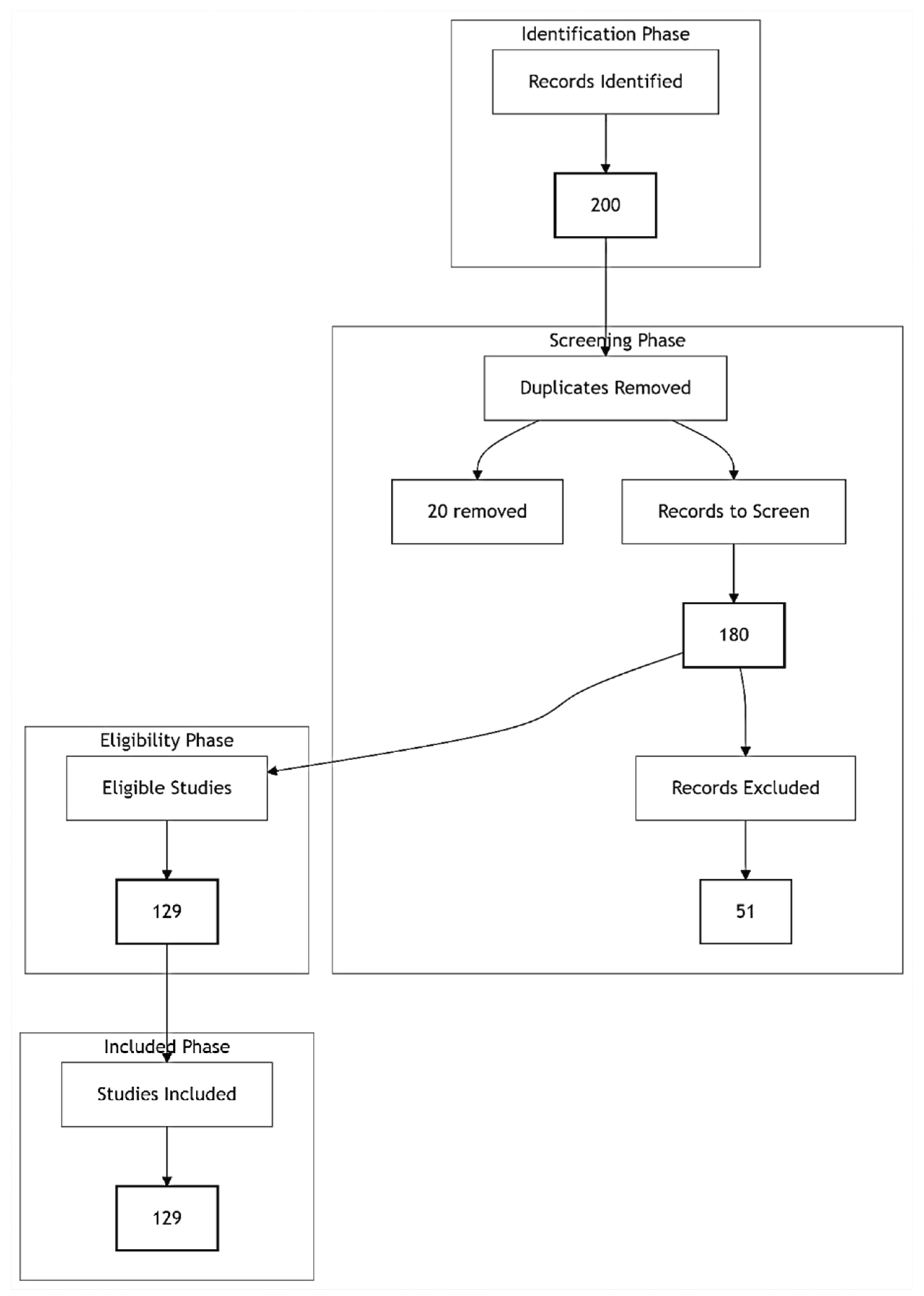
PRISMA process phases:
Identification: Searches were carried out in
academic databases (SpringerLink, PubMed, PLOS, SAGE, MDPI, Oxford Academic,
Cambridge Core and BMC) and on the websites of international organisations.
Keywords included 'gender', 'climate displacement', 'refugee women', and 'Latin
America'. A total of 200 records were identified, after duplicates were
excluded.
Screening: The inclusion criteria were
peer-reviewed articles published between 2014 and 2025 that focused on the
intersection of gender, climate and migration in Latin America or comparable
contexts. Exclusion criteria included non-qualitative studies, irrelevant
research and studies without open access. Of the 180 screened records, 51 were
excluded.
Eligibility: A full review of 129 texts was
conducted to assess quality and relevance, particularly with regard to
differentiated vulnerability.
Inclusion: Ultimately, 129 documents were included
in the thematic analysis.
In addition to the PRISMA protocol, the research
design incorporated a complementary methodological framework comprising three
interrelated phases: heuristics, hermeneutics and theorisation. This
multi-layered approach ensured the rigorous and systematic integration of
diverse forms of knowledge, maintaining a critical and interpretative
perspective throughout the study.
The heuristic phase concentrated on the search,
selection and categorisation of relevant materials (Ozertugrul, 2017). Rather
than functioning as a simple exercise in data collection, this stage aimed to
map the conceptual terrain by engaging with recent academic publications,
policy documents and feminist scholarship. Emerging debates were identified and
epistemological gaps revealed, particularly in relation to the intersection of
gender, climate change, and forced displacement.
Building upon this foundation, the hermeneutic
phase (Butler, 1998) involved conducting an interpretative analysis of the
literature and discourses that had been identified. Categories such as 'climate
woman', 'gendered forced displacement', and 'climate refugees and impacts' were
examined. This phase enabled the interrogation of how language, narrative
practices and relations of power shape the academic and policy framing of
women's differentiated experiences of climate-induced migration. In doing so, the
hermeneutic approach deepened our critical understanding of the structural
inequalities embedded in the discursive construction of vulnerability and
resilience.
The final phase, theorisation, integrated insights
from the previous stages into a coherent explanatory framework. This stage was
concerned not only with synthesis, but also with constructing a critical
account of the historical and political evolution of women’s relationship with
climate. It traced this trajectory from its conceptual origins to its current
articulation in urban and transnational contexts. In this way, the theorisation
stage provided the necessary framework to connect empirical findings with
broader discussions on gender justice, environmental change, and climate
resilience.
The documentary analysis was structured into three
interconnected levels (Ebidor & Ikhide, 2024; Elliott & Timulak, 2021).
The first-order analysis focused on identifying and validating sources to
ensure alignment with the study's objectives. A second-order analysis mapped
argumentative patterns and epistemological ruptures, situating the debates
within critical feminist and climate migration literature. A third-order
analysis then synthesised knowledge through critical discourse analysis and feminist
hermeneutics to produce an interpretative meta-narrative capable of connecting
empirical observations with theoretical innovation. This layered design
combined breadth, through systematic heuristics, and depth, through hermeneutic
and theoretical integration. The result was a nuanced and critical
understanding of the intersection between gender, climate and displacement that
foregrounds the structural asymmetries shaping women's differential
vulnerabilities and forms of resistance.
5. Results
The results of the analysis reveal a worrying
reality: climate change is exacerbating gender inequalities, particularly in
Latin America, leading to forced displacement and making women vulnerable in
situ and ex situ. The literature review revealed a complex interplay of
factors that increase women's vulnerability to displacement. A number of social
barriers have been identified that hinder their adaptive capacity; however,
these women have shown remarkable resilience, relying on community networks and
ancestral knowledge. Nevertheless, these strategies are inadequate given the
scale of the challenges posed by climate change and forced migration. The case
study examined here enriches the understanding gained through documentary
analysis. Empirical evidence shows that in crisis contexts, displaced women
emerge as natural leaders in resource management and community articulation.
These women have created spaces for negotiation from below by organising
themselves into cooperatives, preserving traditional knowledge in urban
contexts and linking up with transnational social movements. Their practices of
resistance open up new possibilities for reconfiguring climate adaptation from
a feminist and territorial perspective. Disputes over resources, migration
controls and the securitisation of borders show how forced displacement creates
spaces of conflict in which women fight not only for survival, but also for the
right to exist and to transform their living conditions. The geopolitical
transformation of forced displacement in Latin America opens up a field of
tensions and opportunities. Areas such as the Caribbean, the Amazon, the Andes
and the Central American Dry Corridor face the combined pressures of natural
disasters and resource conflicts. This reality underscores the urgency of
implementing public policies that not only recognise but also empower women's
proactive role in responding to climate change, capitalising on their ability
to turn adversity into opportunities for social and economic development.
The analysis concludes that without structural
changes, Latin American women in situations of displacement will continue to be
affected by the climate crisis. This vulnerability manifests itself not only in
the loss of their livelihoods, but also in the perpetuation of entrenched
social inequalities and gender gaps. This scenario brings us back to the
question: What are the social, economic and cultural factors that influence the
vulnerability and adaptive capacity of Latin American women in the face of forced
displacement, and what strategies have they developed to cope with it? The
results of the analysis lead us to answer this question:
Women in Latin America face multifaceted challenges
due to climate change. These include entrenched gender roles, economic
inequalities, barriers to accessing resources, legal gaps in international law,
violence, systemic discrimination and exclusion from decision-making processes.
These challenges are further compounded by intersecting inequalities. However,
their traditional knowledge, resource management skills and natural leadership
offer opportunities for climate solutions. These can be enhanced through
international cooperation, specific legal frameworks, gender-focused climate
education, microfinance, job creation, community leadership and inclusive
policies. As key agents of change, they require gender-responsive public
policies, specialised agencies that integrate the environment, equity, and
social development, and strategic economic and educational initiatives to
facilitate a just transition that is aligned with international commitments.
6. Discussion
Intersectionality in women's studies has gained
visibility in the environmental debate, recognising women's historical role in
resource management and adaptation to climate change (Davis & Shaw, 2001).
However, an uncritical perspective can reinforce gender stereotypes and place a
disproportionate burden on women to solve the climate crisis (Turquet et al.,
2023; Pinho-Gomes & Woodward, 2024). This narrative needs to be analysed in
light of the differentiated vulnerabilities women face due to structural inequalities
and access barriers in contexts of institutional fragility. While the category
of climate refugee makes a critical situation visible (Morera & Biderbost,
2023), it lacks international legal recognition (UNHCR, 2001), which limits its
usefulness for effective rights protection (Sussman, 2023). Initiatives such as
'climate labs' (Johri, 2023) or blockchain-based digital identity systems
(World Economic Forum, 2023) may represent innovative advances, but if they do
not address structural inequalities, they risk replicating exclusionary power
dynamics. Proposals such as adaptive hybrid communities (Schwab Foundation for
Social Entrepreneurship, 2024) also offer promising avenues, provided that
women are actively involved in their design and governance as a counterweight
to patriarchal structures (Carter, 2015).
The case of Bangladesh (Khanom et al., 2022) offers
valuable lessons, but also highlights limitations in the direct transferability
of solutions to contexts such as Latin America. The resilience of displaced
women, while remarkable, should not substitute for the responsibility of states
to guarantee rights, nor should it romanticise traditional knowledge without
assessing its applicability in contemporary urban contexts. The discourse on
women's empowerment in climate action must be accompanied by an analysis of the
power structures that perpetuate inequality (Ripple et al. 2024). While women's
participation in decision-making is essential, focusing solely on gender
solutions can distract from the systemic changes needed in governance,
economics and energy policy (Du, 2024).
In Latin America, there has been significant
progress in the legal recognition of climate change. Ecuador has
constitutionalised the right to protection from its effects (Toaquiza, 2024),
and archaeological evidence in Peru shows that women played a central role in
ancient climatic migrations (Shady, 2006a; 2006b). Other countries have enacted
legislation: Mexico, with its General Law on Climate Change; Colombia, through
laws and decrees linking climate change and land use planning (Madrigal, 2021);
and Costa Rica, with its ambitious Decarbonisation Plan 2018-2050 (Banerjee et
al. 2024). Chile enacted its Framework Law on Climate Change in 2022;
Argentina, its National Plan with a gender perspective (Moraga, 2022); while
Brazil, despite its national policy, faces questions about weak implementation
(de Figueiredo Machado, 2024). This convergence between contemporary policy
frameworks and historical evidence highlights the persistence of climate
challenges in Latin America and the evolution of social and legal responses.
However, there is still a need to strengthen protection policies with
intersectional, participatory and transformative approaches to ensure climate
and gender justice in the region.
6.1. Study Limitations
Limitations of the study include biases arising
from the predominance of literature produced in hegemonic knowledge centres,
which may sideline local perspectives (Galdas, 2017). The theoretical nature of
the research imposes constraints on directly capturing lived experiences, while
the selection of sources in Spanish and English may have excluded relevant
material. Moreover, there is a risk of reproducing colonial biases when Latin
American realities are interpreted through Western frameworks. Although the
focus on gender has been central, the omission of other intersecting variables
such as ethnicity or social class limits a more holistic understanding of the
phenomenon.
7. Conclusions
The intersection of gender, migration and climate
change highlights the key role of women as agents of change in contexts of
forced displacement. Their traditional knowledge, combined with modern
adaptation strategies, positions them as pillars in building community
resilience. Although the figure of the female climate refugee lacks
international legal recognition, her situation reflects specific
vulnerabilities that require institutional responses with an intersectional
approach. The case of Bangladesh shows how, despite the challenges, displaced
women develop support networks, leadership and sustainable solutions. For Latin
America, a strategy based on three pillars is proposed: economic empowerment
with adapted financial instruments, strengthening of community networks, and
training that integrates ancestral knowledge and climate innovation. It also
highlights the importance of optimising access to the Green Climate Fund
through institutional strengthening and regional cooperation. The proposal
calls for a multi-level approach with inter-institutional coordination,
innovative financing, cultural awareness and participatory monitoring systems,
supported by political commitment and community participation. Finally, it
highlights the need to integrate gender equity and sustainability into climate
policy, using technologies such as blockchain to ensure transparency and
participation. This is the only way to strengthen regional adaptive capacity
and consolidate women as protagonists of social transformation in the face of
the climate crisis.
Author Contributions
DRLM: Conceptualization, methodology, formal
analysis, investigation, writing—original draft preparation, writing—review and
editing.
Funding
This research received no external funding.
Institutional Review Board Statement
Not applicable
Informed Consent Statement
Not applicable
Data Availability Statement
Dataset available on request from the authors
Acknowledgments
Not applicable
Conflicts of Interest
The author declares no conflicts of interest.
References
- Abd-Elaty, Ismail; Alban, Kuriqi; Ashraf, Ahmed. Assessing salinity hazards in coastal aquifers: implications of temperature boundary conditions on aquifer–ocean interaction. Applied Water Science 2024, 14, 132. [Google Scholar] [CrossRef]
- Ahmed, Saleh; Elizabeth, Eklund. Climate change impacts in coastal Bangladesh: migration, gender and environmental injustice. Asian Affairs 2021, 52(1), 155–74. [Google Scholar] [CrossRef]
- Allen, William; Isabel, Ruiz; Carlos, Vargas-Silva. Policy preferences in response to large forced migration inflows. World Development 2024, 174, 106462. [Google Scholar] [CrossRef]
- Allin, Dana. The Return of Donald Trump. Survival 2024, 66(6), 193–202. [Google Scholar] [CrossRef]
- Alliance of Bioversity International and International Centre for Tropical Agriculture. Forced displacement in the context of the adverse effects of climate change and conflict. Global trends: Forced displacement in 2023; Produced by United Nations High Commissioner for Refugees (UNHCR), 2024; pp. 23–24. [Google Scholar] [CrossRef]
- Almulhim, Abdulaziz; Gabriela, Alverio; Ayyoob, Sharifi; et al. Climate-induced migration in the Global South: an in depth analysis. npj Climate Action 2024, 3, 47. [Google Scholar] [CrossRef]
- Andersen, Lykke; Dorte, Verner; Manfred, Wiebelt. Gender and Climate Change in Latin America: An Analysis of Vulnerability, Adaptation and Resilience Based on Household Surveys. Journal of International Development 2017, 29, 857–876. [Google Scholar] [CrossRef]
- Asian Disaster Preparedness Center. Applying a gender lens to climate actions: why it matters, Climate Talks Series: CARE for South Asia Project, Bangkok, Thailand. 2021. Available online: https://wrd.unwomen.org/sites/default/files/2021-11/2021-q74Xpc-ADPC-Gender_Mainstreaming_Policy_Brief-ADPC.pdf.
- Banerjee, Onil; Martin, Cicowiez; et al. The economics of decarbonizing Costa Rica's agriculture, forestry and other land uses sectors. Ecological Economics 2024, 218, 108115. [Google Scholar] [CrossRef]
- Barcellos; Christovam. Heat waves, climate crisis and adaptation challenges in the global south metropolises. PLOS Climate 2024, 3(3), e0000367. [Google Scholar] [CrossRef]
- Barrios, Andres; Rodrigo, Taborda; Rueda, Ximena. Time Poverty: An Unintended Consequence of Women Participation in Farmers’ Associations. Social Indicators Research 2025, 178, 225–253. [Google Scholar] [CrossRef]
- Batista, Carolina; Knipper Michael; et al. Climate change, migration, and health: perspectives from Latin America and the Caribbean. The Lancet Regional Health – Americas 2024, 40, 100926. [Google Scholar] [CrossRef]
- Betti, Lia; Robert, Beyer; et al. Climate shaped how Neolithic farmers and European hunter-gatherers interacted after a major slowdown from 6,100 BCE to 4,500 BCE. Nature Human Behaviour 2020, 4, 1004–1010. [Google Scholar] [CrossRef]
- Bharwani, Nilofer; Thomas, Hodges; et al. 'Just leader? No, lideresa!' Experiences of female leaders working in climate change disaster risk reduction and environmental sustainability in the global south. Environmental Research: Climate 2024, 3(4), 045008. [Google Scholar] [CrossRef]
- Boakes, Elizabeth; Carole, Dalin; et al. Impacts of the global food system on terrestrial biodiversity from land use and climate change. Nature Communications 2024, 15, 5750. [Google Scholar] [CrossRef] [PubMed]
- Bogin, Barry; Jared, Bragg; Christopher, Kuzawa. Humans Are Not Cooperative Breeders but Practice Biocultural Reproduction. Annals of Human Biology 2014, 41(4), 368–80. [Google Scholar] [CrossRef] [PubMed]
- Bolger, Diane. The Dynamics of Gender in Early Agricultural Societies of the Near East. Signs: Journal of Women in Culture and Society 2010, 35(2), 503–531. [Google Scholar] [CrossRef]
- Difabio, Elbia. Fiestas agrarias en honor de Deméter en la Antigua Grecia. RIVAR (Santiago) 2021, 8(24), 76–87. [Google Scholar] [CrossRef]
- Buben, Radek; Karel, Kouba. Democracy and Institutional Change in Times of Crises in Latin America. Journal of Politics in Latin America 2024, 16(1), 90–109. [Google Scholar] [CrossRef]
- Butler, Tom. Towards a hermeneutic method for interpretive research in information systems. Journal of Information Technology 1998, 13(4), 285–300. [Google Scholar] [CrossRef]
- Carmody, Rachel; Wrangham, Richard. The energetic significance of cooking. Journal of Human Evolution 2009, 57(4), 379–91. [Google Scholar] [CrossRef]
- Carter, Jimmy. Patriarchy and violence against women and girls. The Lancet 2015, 385(9978), e40–e41. [Google Scholar] [CrossRef]
- Castillo, Tatiana; Zickgraf, Caroline. It’s Not Just about Women: Broadening Perspectives in Gendered Environmental Mobilities Research. Climate and Development 2024, 17(6), 483–504. [Google Scholar] [CrossRef]
- Chen, Jie; Shi, Xinyan; et al. Impacts of climate warming on global floods and their implication to current flood defense standards. Journal of Hydrology 2023, 618, 129236. [Google Scholar] [CrossRef]
- Cisneros, Paul; Israel, Solorio; Micaela, Trimble. Thinking climate action from Latin America: a perspective from the local. npj Climate Action 2024, 3, 5. [Google Scholar] [CrossRef]
- Das; Suraj. Women's experiences and sustainable adaptation: a socio-ecological study of climate change in the Himalayas. Climatic Change 2024, 177(4), 59. [Google Scholar] [CrossRef]
- Davis, Margaret; Shaw, Ruth. Range shifts and adaptive responses to Quaternary climate change. Science 2001, 292(5517), 673–9. [Google Scholar] [CrossRef]
- de Figueiredo Machado, Flavia; Marcela, Terra; et al. Beyond COP28: Brazil must act to tackle the global climate and biodiversity crisis. npj biodiversity 2024, 3, 19. [Google Scholar] [CrossRef]
- de Lafontaine; Joseph, Guillaume; Napier; et al. Invoking adaptation to decipher the genetic legacy of past climate change. Ecology 2018, 99(7), 1530–1546. [Google Scholar] [CrossRef] [PubMed]
- Dean, Christopher; Meave, Leakey; et al. Growth processes in teeth distinguish modern humans from Homo erectus and earlier hominins. Nature 2001, 414(6864), 628–31. [Google Scholar] [CrossRef]
- Dev, Debashish; Manalo, Jaime. Gender and Adaptive Capacity in Climate Change Scholarship of Developing Countries: A Systematic Review of Literature. Climate and Development 2023, 15(10), 829–40. [Google Scholar] [CrossRef]
- Doley, Himajyoti. Variants of Ecofeminism: An Overview. International Journal for Multidisciplinary Research 2025, 7(1), 1–7. [Google Scholar]
- Du, Jiaxing. Advancing Gender Equality in the Workplace: Challenges, Strategies, and the Way Forward. Journal of Theory and Practice of Social Science 2024, 4(4), 46–50. [Google Scholar] [CrossRef]
- Ebidor, Lawani-Luwaji; Ilegbedion, Ikhide. Literature Review in Scientific Research: An Overview. East African Journal of Education Studies 2024, 7(2), 211–18. [Google Scholar] [CrossRef]
- Elliott, Robert; Ladislav, Timulak. Essentials of descriptive-interpretive qualitative research: A generic approach. In American Psychological Association; 2021. [Google Scholar] [CrossRef]
- Figueiredo, Beatriz; Aurora, Miho Yanai; et al. Amazon deforestation: A dangerous future indicated by patterns and trajectories in a hotspot of forest destruction in Brazil. Journal of Environmental Management 2024, 354, 120354. [Google Scholar] [CrossRef]
- Galdas, Paul. Revisiting Bias in Qualitative Research: Reflections on Its Relationship With Funding and Impact. International Journal of Qualitative Methods 2017, 16(1), 1–2. [Google Scholar] [CrossRef]
- Gerhard, Michael; Jones-Phillipson, Emma; Xoliswa, Ndeleni. Strategies for gender mainstreaming in climate finance mobilisation in southern Africa. PLOS Climate 2023, 2(11), e0000254. [Google Scholar] [CrossRef]
- Gervacio, Herlinda; Castillo Benjamín; Villerías, Salvador. Huracán Otis en Acapulco, Guerrero: Vulnerabilidad socioeconómica y ambiental ante los impactos del fenómeno hidrometeorológico; México, Comunicación Científica., 2024. [Google Scholar] [CrossRef]
- Gibbons, Ann. Lucy’s world. Video. Science 2024, 384(6691), 20–25. [Google Scholar] [CrossRef] [PubMed]
- Global Report on Internal Displacement (GRID). 2024. Geneve: The Internal Displacement Monitoring Centre. Available online: https://www.internal-displacement.org/global-report/grid2024/ (accessed on 24 October 2024).
- Green Climate Fund. Annual Report 2023. Incheon: GCF. 2024. Available online: https://www.greenclimate.fund/annual-report-2023 (accessed on 29 October 2024).
- Heslin, Alison, Natalie; et al. Displacement and Resettlement: Understanding the Role of Climate Change in Contemporary Migration. In Loss and Damage from Climate Change. Climate Risk Management, Policy and Governance; Mechler, R., Bouwer, L., Schinko, T., Surminski, S., Linnerooth-Bayer, J., Eds.; Springer, 2019. [Google Scholar] [CrossRef]
- Hirsh; Helly; Eizenberg Efrat; Jabareen; Yosef. A New Conceptual Framework for Understanding Displacement: Bridging the Gaps in Displacement Literature between the Global South and the Global North. Journal of Planning Literature 2020, 35(4), 391–407. [Google Scholar] [CrossRef]
- Hublin, Jean-Jacques; Simon, Neubauer; Philipp, Gunz. Brain ontogeny and life history in Pleistocene hominins. Philosophical transactions of the Royal Society of London. Series B, Biological Sciences 2015, 370(1663), 20140062. [Google Scholar] [CrossRef] [PubMed]
- Hugelius, Gustaf; Ramage, J; et al. Permafrost region greenhouse gas budgets suggest a weak CO2 sink and CH4 and N2O sources, but magnitudes differ between top-down and bottom-up methods. Global Biogeochemical Cycles 2024, 38(10), e2023GB007969. [Google Scholar] [CrossRef]
- Hunt, C.O; Rabett, R.J. Holocene landscape intervention and plant food production strategies in island and mainland Southeast Asia. Journal of Archaeological Science 2014, 51, 22–33. [Google Scholar] [CrossRef]
- Huyer, Sophia; Mariola, Acosta; et al. Can We Turn the Tide? Confronting Gender Inequality in Climate Policy. Gender & Development 2020, 28(3), 571–91. [Google Scholar] [CrossRef]
- Jagernath, Jayseema; Dominique, Marié Nupen. Pseudo-feminism vs feminism - Is pseudo-feminism shattering the work of feminists? Proceedings of The Global Conference on Women’s Studies 2023, 1(1), 60–73. [Google Scholar] [CrossRef]
- Johri; Manjari. Feminist Perspective on Patriarchy: Its Impact on the Construction of Femininity and Masculinity. International Journal of Interdisciplinary Studies in Humanities 2023, 4(2), 1–9. [Google Scholar] [CrossRef]
- Jost, Christine; Florence, Kyazze; et al. Understanding gender dimensions of agriculture and climate change in smallholder farming communities. Climate and Development 2015, 8(2), 133–144. [Google Scholar] [CrossRef]
- Kastner, Karen; Matthies, Ellen. On the importance of solidarity for transforming social systems towards sustainability. Journal of Environmental Psychology 2023, 90, 102067. [Google Scholar] [CrossRef]
- Kerry, Vanessa; Sadath, Sayeed. Advancing the climate change and health nexus: The 2024 Agenda. PLOS Global Public Health 2024, 4(3), e0003008. [Google Scholar] [CrossRef]
- Khan, Md. Awal. Jolly, S., Ahmad, N., Scott, M., Eds.; Establishing a Human Rights-Based Approach to Climate Change-Induced Internal Displacement in the Regime of Bangladesh: Challenges and Way Forward. In Climate-Related Human Mobility in Asia and the Pacific. Sustainable Development Goals Series; Springer; Singapore, 2024. [Google Scholar] [CrossRef]
- Khanom, Sufia; Mumita, Tanjeela; Shannon, Rutherford. Climate induced migrant’s hopeful journey toward security: Pushing the boundaries of gendered vulnerability and adaptability in Bangladesh. Frontiers in Climate 2022, 4, 922504. [Google Scholar] [CrossRef]
- Koomson, Paul; Issac, Koomson. Toward Vulnerability-Responsive Climate Adaptation Decision Making: Group Inclusiveness as Prime Driver of Local Participation. Climate and Development 2024, 17(4), 369–382. [Google Scholar] [CrossRef]
- Lim, Weng Marc. What Is Qualitative Research? An Overview and Guidelines. Australasian Marketing Journal 2025, 33(2), 199–229. [Google Scholar] [CrossRef]
- Lin, Jialin; Taotao, Qian. Earth’s Climate History from 4.5 Billion Years to One Minute. Atmosphere-Ocean 2022, 60(3–4), 188–232. [Google Scholar] [CrossRef]
- Lizarralde, Gonzalo; Lisa, Bornstein; et al. Does climate change cause disasters? How citizens, academics, and leaders explain climate-related risk and disasters in Latin America and the Caribbean. International Journal of Disaster Risk Reduction 2021, 58, 102173. [Google Scholar] [CrossRef]
- Loots, Lliane; Lou, Haysom. Climate Justice, Gender and Activisms. Agenda 2023, 37(3), 1–11. [Google Scholar] [CrossRef]
- Lugo-Morin, Diosey Ramon. Indigenous communities and their food systems: a contribution to the current debate. Journal of Ethnic Foods 2020, 7, 6. [Google Scholar] [CrossRef]
- Lugo-Morin, Diosey Ramon. Anthropocene futures: Regeneration as a decarbonization strategy. Sustainable Social Development 2025, 3(1), 3153. [Google Scholar] [CrossRef]
- Macintosh, Alison; Ron, Pinhasi; Jay, Stock. Prehistoric women's manual labor exceeded that of athletes through the first 5500 years of farming in Central Europe. Science Advances 2017, 3(11), eaao3893. [Google Scholar] [CrossRef]
- Madrigal, Mauricio. Cambio climático, Derechos Humanos y Acuerdo De Escazú: Análisis del Acceso a la información en la gestión del Cambio climático de Colombia. Naturaleza y Sociedad. Desafíos Medioambientales 2021, 1, 117–45. [Google Scholar] [CrossRef]
- Mai, Laura. Navigating Transformations: Climate Change and International Law. Leiden Journal of International Law 2024, 37(3), 535–56. [Google Scholar] [CrossRef]
- Malhi; Yadvinder. El concept of the Anthropocene. Annual Review of Environment and Resources 2017, 42, 77–104. [Google Scholar] [CrossRef]
- Martin, Robert. The evolution of human reproduction: a primatological perspective. American Journal of Physical Anthropology 2007, 45, 59–84. [Google Scholar] [CrossRef] [PubMed]
- Mboya, Atieno. Human rights and the global climate change regime. Natural Resources Journal 2018, 58(1), 51–74. [Google Scholar]
- Méndez-Tejeda, Rafael; Hernández-Ayala, Jose. Links between climate change and hurricanes in the North Atlantic. PLOS Climate 2023, 2(4), e0000186. [Google Scholar] [CrossRef]
- Methmann, Chris; Angela, Oels. From ‘Fearing’ to ‘Empowering’ Climate Refugees: Governing Climate-Induced Migration in the Name of Resilience. Security Dialogue 2015, 46(1), 51–68. [Google Scholar] [CrossRef]
- Mijangos, Melissa. Las migraciones climáticas en América Latina y la protección internacional a los desplazados climáticos. GeoGraphos 2023, 14(2), 91–120. [Google Scholar] [CrossRef]
- Mishra, Anurag; Shashvat, Singh. Singh, P., Ao, B., Yadav, A., Eds.; Historical Evolution of Climate Refugee Concepts. In Global Climate Change and Environmental Refugees; Springer; Cham, 2023. [Google Scholar] [CrossRef]
- Moraga, Pilar. Una nueva era del derecho ambiental: La Ley Marco de Cambio Climático en Chile a 50 años de Estocolmo. Revista de Derecho Ambiental 2022, 17, 1–6. [Google Scholar] [CrossRef]
- Morera, Moises; Biderbost, Pablo. Los 40 años de la Declaración de Cartagena sobre los refugiados y la crisis migratoria venezolana. Revista Controversia 2023, 220, 251–87. [Google Scholar] [CrossRef]
- Moyer, Jonathan; Audrey, Pirzadeh; et al. How many people will live in poverty because of climate change? A macro-level projection analysis to 2070. Climatic Change 2023, 176, 137. [Google Scholar] [CrossRef]
- Murray-Tortarolo, Guillermo; Salgado, Mario. Drought as a driver of Mexico-US migration. Climatic Change 2021, 164, 48. [Google Scholar] [CrossRef]
- Mustak, Sk. Siddiqui, A.R., Sahay, A., Eds.; Climate Change and Disaster-Induced Displacement in the Global South: A Review. In Climate Change, Disaster and Adaptations. Sustainable Development Goals Series; Springer; Cham, 2022. [Google Scholar] [CrossRef]
- Myers; Norman. 2005. Environmental Refugees: An Emergent Security Issue Paper EF.NGO/4/05 from 22 May, presented at the 13th Economic Forum, Prague. Available online: https://www.osce.org/files/f/documents/c/3/14851.pdf (accessed on 29 september 2024).
- Naciones Unidas. Los efectos de la migración en las mujeres y las niñas migrantes: una perspectiva de género. A/HRC/41/38. 2019. Available online: https://www.refworld.org/sites/default/files/legacy-pdf/es/2019-4/5cf6ad854.pdf.
- Nusche, Deborah; Marc, Fuster; Simeon, Lauterbach. Rethinking Education in the Context of Climate Change: Leverage Points for Transformative Change. In OECD Education Working Paper No 307; Paris; OECD, 2024; Available online: https://one.oecd.org/document/EDU/WKP(2024)02/en/pdf (accessed on 28 september 2024).
- Okesanya, Olalekan; Khlood, Alnaeem; et al. The intersectional impact of climate change and gender inequalities in Africa. Public Health Challenges 2024, 3, e169. [Google Scholar] [CrossRef]
- Okoth-Obbo, George. Thirty years on: a legal review of the 1969 OAU refugee convention governing the specific aspects of refugee problems in Africa. Refugee Survey Quarterly 2001, 20(1), 79–138. [Google Scholar] [CrossRef]
- Ozertugrul, Engin. A comparative analysis: Heuristic self-search inquiry as self-knowledge and knowledge of society. Journal of Humanistic Psychology 2017, 57(3), 237–251. [Google Scholar] [CrossRef]
- Pang, Tianze; Xiuquan, Wang; et al. Coastal erosion and climate change: A review on coastal-change process and modeling. Ambio 2023, 52, 2034–2052. [Google Scholar] [CrossRef]
- Pinho-Gomes, Ana Catarina; Mark, Woodward. The association between gender equality and climate adaptation across the globe. BMC Public Health 2024, 24, 1394. [Google Scholar] [CrossRef] [PubMed]
- Priya, Arya. Case Study Methodology of Qualitative Research: Key Attributes and Navigating the Conundrums in Its Application. Sociological Bulletin 2020, 70(1), 94–110. [Google Scholar] [CrossRef]
- Qi, Ji; Haoqi, Qian. Climate finance at a crossroads: it is high time to use the global solution for global problems. Carbon Neutrality 2023, 2, 31. [Google Scholar] [CrossRef]
- Rao, Nitya; Lawson, Elaine; et al. Gendered Vulnerabilities to Climate Change: Insights from the Semi-Arid Regions of Africa and Asia. Climate and Development 2017, 11(1), 14–26. [Google Scholar] [CrossRef]
- Reeves, Ellen; Fitz-Gibbon, Kate; et al. Incredible Women: Legal Systems Abuse, Coercive Control, and the Credibility of Victim-Survivors. Violence Against Women 2023, 31(3-4), 767–788. [Google Scholar] [CrossRef] [PubMed]
- Ripple, William; Christopher, Wolf; et al. The 2024 state of the climate report: Perilous times on planet Earth. BioScience 2024, 74(12), 812–824. [Google Scholar] [CrossRef]
- Robson, Shannen; Bernard, Wood. Hominin life history: reconstruction and evolution. Journal of Anatomy 2008, 212(4), 394–425. [Google Scholar] [CrossRef]
- Rojas, Jose Rodrigo. La era de la ebullición global: desafíos y oportunidades para la resiliencia climática en la región centroamericana. Revista de Ciencias Ambientales 2024, 58(2), 1–20. [Google Scholar] [CrossRef]
- Rojas-Rendon, Daliseth; Valle Alex Ivan. El enfoque de género como perspectiva teórica en los Estudios sobre migración climática en américa latina y el Caribe (Siglo XXI). Revista Justicia(s) 2024, 3(1), 13–27. [Google Scholar] [CrossRef]
- Sayre, Matthew; Silvana, Rosenfeld. Staller, J.E., Ed.; Pachamama-A Celebration of Food and the Earth. In Andean Foodways. The Latin American Studies Book Series; Springer; Cham, 2021. [Google Scholar] [CrossRef]
- Schwab Foundation for Social Entrepreneurship. Climate and Health: The Social Innovation Landscape in Latin America and Asia-Pacific; Geneva; World Economic Forum, 2024; Available online: https://www.weforum.org/publications/ (accessed on 20 October 2024).
- Segal, Paul. On the Character and Causes of Inequality in Latin America. Development and Change 2022, 53, 1087–1102. [Google Scholar] [CrossRef]
- Setyorini; Sstyorini, Rahayu Dwi; Sri. Defying the odds: can women truly thrive in a patriarchal world? Journal of Public Health 2024, 46(4), e711–e712. [Google Scholar] [CrossRef]
- Shady, Ruth. La civilización Caral: Sistema social y manejo del territorio y sus recursos. Su trascendencia en el proceso cultural andino. Boletín de Arqueología PUCP 2006a, 10, 59–89. [Google Scholar] [CrossRef]
- Shady, Ruth. Isbell, W.H., Silverman, H., Eds.; America’s First City? The Case of Late Archaic Caral. In Andean Archaeology III; Springer; Boston, MA, 2006b. [Google Scholar] [CrossRef]
- Singh, Chandni; Divya, Solomon; Nitya, Rao. How Does Climate Change Adaptation Policy in India Consider Gender? An Analysis of 28 State Action Plans. Climate Policy 2021, 21(7), 958–75. [Google Scholar] [CrossRef]
- Smith, Amelia (Ed.) Women’s leadership in environmental action. In OECD Environment Working Papers; Paris; OECD Publishing, 2022; Volume No. 193, (accessed on 27 september 2024)Accessed on. [Google Scholar] [CrossRef]
- Solorio, Israel. The ABCs of governmental climate action challenges in Latin America. npj Climate Action 2024, 3, 6. [Google Scholar] [CrossRef]
- Stibel, Jeff Morgan. Climate Change Influences Brain Size in Humans. Brain, Behavior and Evolution 2023, 98(2), 93–106. [Google Scholar] [CrossRef] [PubMed]
- Stilz, Anna. Climate Displacement and Territorial Justice. American Political Science Review 2025, 119(3), 1190–1204. [Google Scholar] [CrossRef]
- Strassmann, Beverly; Gillespie, Brenda. Life-history theory, fertility and reproductive success in humans. Proceedings. Biological Sciences 2002, 269(1491), 553–562. [Google Scholar] [CrossRef]
- Stringer, Christopher. The origin and evolution of Homo sapiens. Philosophical transactions of the Royal Society of London. Series B, Biological Sciences 2016, 371(1698), 20150237. [Google Scholar] [CrossRef]
- Sussman; Claitlan. A Global Migration Framework Under Water: How Can the International Community Protect Climate Refugees? Chicago Journal of International Law Online 2023, 1, 41–68. [Google Scholar]
- Tamasiga, Phemelo; Patricia, Kefilwe; et al. Amplifying Climate Resilience: The Impact of Social Protection, Social Cohesion, and Social Capital on Public Support for Climate Change Action. Sustainable Environment 2024, 10(1), 2361568. [Google Scholar] [CrossRef]
- Tarrés, Maria Luisa; Montes de Oca, Laura; Silva; Diana (Eds.) Arenas de conflicto y experiencias colectivas: horizontes utópicos y dominación; México, D.F.; El Colegio de México, 2014. [Google Scholar]
- Thakur, Nidhi. Munshi, S., Singh, M., Eds.; Women Farmers and Technologies in Agriculture: A Review of Current Practices. In Women Farmers: Unheard Being Heard. Sustainability Sciences in Asia and Africa; Singapore; Springer, 2023. [Google Scholar] [CrossRef]
- Toaquiza, Jhony Marcelo. El Sistema constitucional del Ecuador frente a los derechos de las personas en procesos de migración climática. Revista Justicia(s) 2024, 3(1), 28–51. [Google Scholar] [CrossRef]
- Topalidis, Georgios; Nick, Kartalis; et al. New Developments in Geopolitics: A Reassessment of Theories after 2023. Social Sciences 2024, 13(2), 109. [Google Scholar] [CrossRef]
- Tricco, Andrea; Lillie, Erin; et al. PRISMA extension for scoping reviews (PRISMA-ScR): Checklist and explanation. Annals of Internal Medicine 2018, 169(7), 467–473. [Google Scholar] [CrossRef] [PubMed]
- Turquet, Laura; Constanza, Tabbush; et al. Feminist Climate Justice: A Framework for Action. Conceptual framework prepared for Progress of the World’s Women series. New York: UN-Women. 2023. Available online: https://www.unwomen.org/en/digital-library/publications/2023/11/feminist-climate-justice-a-framework-for-action (accessed on 27 september 2024).
- UN Women. Gender Inequality Index. UN Women Data Hub. 2024. Available online: https://data.unwomen.org/en/data-portal/gender-inequality-index.
- UNHCR. States Parties to the 1951 Convention Relating to the Status of Refugees and the 1967 Protocol. Refugee Survey Quarterly 2001, 20(1), 208–211. [Google Scholar] [CrossRef]
- UNHCR. No escape: On the frontlines of climate change, conflict and forced displacement. Geneva: United Nations High Commissioner for Refugees. 2024. Available online: https://www.unhcr.org/media/no-escape-frontlines-climate-change-conflict-and-forced-displacement?_kx=9J92KSC1igpmoBjMf_jvrg.U4qgRF&_gl=1*1g1gyj9*_gcl_au*MjA2OTYyNjExNC4xNzMxNDQ0OTYy*_rup_ga*MTQxMjQzNTg5OC4xNzMxNDQ0OTYy*_rup_ga_EVDQTJ4LMY*MTczMTQ0NDk2Mi4xLjAuMTczMTQ0NDk2Mi42MC4wLjA.
- United Nations. General recommendation No. 40 on equal and inclusive representation of women in decision-making systems. CEDAW/C/GC/40. 2024. Available online: https://www.ohchr.org/en/press-releases/2024/10/half-power-un-womens-rights-committee-issues-guidance-womens-equal-and (accessed on 24 October 2024).
- Veltmeyer, Henry. Extractivism and beyond: Latin America debates. The Extractive Industries and Society 2022, 11, 101132. [Google Scholar] [CrossRef]
- Vicente, Teresa. Refugiados climáticos, vulnerabilidad y protección internacional. Revista de Filosofía 2020, 19, 63–99. [Google Scholar] [CrossRef]
- Vilović, Iva; Schulze-Makuch Dirk; René, Heller. Variations in climate habitability parameters and their effect on Earth's biosphere during the Phanerozoic Eon. Scientific Reports 2023, 13, 12663. [Google Scholar] [CrossRef] [PubMed]
- Vousdoukas, Michalis; Panagioti, Athanasiou; et al. Small Island Developing States under threat by rising seas even in a 1.5 °C warming world. Nature Sustainability 2023, 6, 1552–1564. [Google Scholar] [CrossRef]
- Walls, Judith; Vogel, Leo. Regenerative economy: A pathway to a future-ready, sustainable Africa. Africa Journal of Management 2023, 9(4), 315–337. [Google Scholar] [CrossRef]
- WMO. State of the Climate in Latin America and the Caribbean; Geneva; WMO, 2022. [Google Scholar]
- Wood, Bernard. Human evolution. BioEssays: news and reviews in molecular, cellular and developmental biology 1996, 18(12), 945–54. [Google Scholar] [CrossRef] [PubMed]
- World Economic Forum. Blockchain for Scaling Climate Action; Geneva; World Economic Forum, 2023; Available online: https://www.weforum.org/publications/ (accessed on 20 October 2024).
- Yuan, Xing; Yumiao, Wang; et al. A global transition to flash droughts under climate change. Science 2023, 380, 187–191. [Google Scholar] [CrossRef] [PubMed]
- Zalasiewicz, Jan; Mark, Williams. Letcher, T. M., Ed.; Climate change through Earth history. 49-65, in Climate change. Observed impacts on planet Earth; Oxford, U.K.; Elsevier B. V, 2021. [Google Scholar] [CrossRef]
- Zavala; Melina; Cejas; Cintia; et al. Gender Inequities in the Impact of Climate Change on Health: A Scoping Review. International Journal of Environmental Research and Public Health 2024, 21(8), 1093. [Google Scholar] [CrossRef] [PubMed]
Disclaimer/Publisher’s Note: The statements, opinions and data contained in all publications are solely those of the individual author(s) and contributor(s) and not of MDPI and/or the editor(s). MDPI and/or the editor(s) disclaim responsibility for any injury to people or property resulting from any ideas, methods, instructions or products referred to in the content. |
© 2025 by the authors. Licensee MDPI, Basel, Switzerland. This article is an open access article distributed under the terms and conditions of the Creative Commons Attribution (CC BY) license (http://creativecommons.org/licenses/by/4.0/).
Copyright: This open access article is published under a Creative Commons CC BY 4.0 license, which permit the free download, distribution, and reuse, provided that the author and preprint are cited in any reuse.


