

Submitted:
19 September 2025
Posted:
22 September 2025
You are already at the latest version
Abstract
The present study explores the role of food as a symbolic, material, and relational device in identity construction and community processes. This study draws on a qualitative case study of a community-based social restaurant located in a mid-sized city in central-northern Italy. The initiative’s objective is to promote the social and labor inclusion of migrant women through training and experiential programs. The research, conducted over a period of nine months from October 2024 to June 2025, was based on a participatory qualitative design, which integrated semi-structured interviews, ecological maps, photointervention, world café, and affective cartography, involving 35 participants including operators, trainees, local community members, and politicians.
The results demonstrate the multifaceted role of food practices at the restaurant, which serve to strengthen internal relationships, regulate community life, construct intercultural narratives, and establish spaces of recognition and agency for the women involved. Moreover, the restaurant has been shown to have the capacity to influence the broader social representations of migration in the urban context, thereby promoting processes of cohesion and belonging.
It is evident that food-related activities manifest as quotidian micro-political practices, which have the capacity to subvert stereotypes, recognize frequently unseen abilities, and generate new forms of inclusive citizenship.
The present study underscores the transformative capacity of initiatives that employ food practices as innovative instruments for fostering empowerment, well-being, and social participation, through the third element of food. The limitations and future prospects of the present situation are discussed, with particular reference to the need to ensure continuity and institutional sustainability for similar experiences.
Keywords:
Food practices
; Migrant communities
; Identity construction
; Empowerment
; Qualitative case study
; Community Psychology
1. Introduction
Within the domain of migration, food assumes the role of a potent medium through which individuals and groups engage in the negotiation of meanings, roles, and a sense of belonging (Gerber & Folta, 2022). It is evident that food traditions, practices, and representations constitute a fundamental core of the personal and collective identity of migrant groups. This offers privileged access to understanding their symbolic and relational worlds (Parasecoli, 2014; Simon-Roberts, 2025). Furthermore, food has been shown to serve as a material field in which complex identities reflect themselves and are co-constructed (Chapman & Beagan, 2013; Aviakan, 2005; Miranda-Nieto & Boccagni, 2020). In this regard, food has been shown to negotiate belonging and boundaries between groups (Guerrón Montero & Gross, 2023; Ren & Fusté-Forné, 2024; Arcadu et al., 2025; Arcadu et al., 2024). In the context of migratory populations, food practices are understood to reflect the process of identity construction, influenced by a range of factors operating at both local and global levels (Appadurai, 1996; Arcadu et al., 2025). The consumption of traditional food from the country of origin can be regarded as a symbolic act of resistance or a means of anchoring identity in the host country for migrants. As demonstrated by numerous studies, food plays a pivotal role in the sustenance of symbolic connections with one's place of origin. Simultaneously, it facilitates the articulation of new belongings within the context of arrival, thereby fostering connections within family and community networks (Duvivier et al., 2023). In this sense, the literature refers to the construct of food acculturation as the process through which individuals or groups acquire and modify their food practices, preferences, habits, and cultural meanings associated with food in response to social interactions and cultural contacts they encounter in the new context (Satia-Abouta et al., 2002). This may encompass the adoption of novel foods or materials in food practices, as well as changes in the skills and meanings associated with these practices (Arcadu et al., 2025).
In this perspective, food plays a crucial role in observing social interactions at the community level (Calvo 1982; Crenn et al., 2010; Fischler 1988; Mescoli 2014). It is important to note that food places, which include restaurants, urban gardens, and shops, are not merely spaces for consumption. Rather, they are actual "socio-material environments permeated by different ways of constructing the collective identities of migrants" (Miranda-Nieto and Boccagni, 2020, p. 1023). These environments facilitate relationships, exchanges, and shared belonging (Amir & Barak-Bianco, 2019; Corrales-Øverlid, 2023; Tat Shum, 2020; Kabanen, 2023). The extant literature highlights the capacity of such collective devices to promote empowerment, belonging, and agency in social contexts characterized by multi-ethnic coexistence (Beauregard et al., 2019; Alfadhli & Drury, 2018; Ballentyne et al., 2021). Participation in community food sites, such as urban gardens, is considered beneficial for social, mental, and physical well-being (Kingsley and Townsend 2006; Parr 2007; Hawkins et al. 2013; Pitt 2014), contributing to the adaptation process of migrants and supporting the process of belonging to a place and community (Sampson and Gifford 2010; Tidball and Krasny 2013; Gómez et al. 2015). From this standpoint, food and community food systems have been shown to promote identity continuity and the activation of new pathways of change by offering migrants the opportunity to maintain previous affiliations and establish new ones (e.g., deriving a sense of familiarity and belonging from familiar flavors, despite being in a different sensory environment). This, in turn, has the effect of strengthening well-being and a coherent sense of self in transformative contexts (Ballentyne et al., 2021; Jetten et al., 2010; Iyer et al., 2009). Furthermore, food plays a pivotal role in facilitating interactions between migrants and local communities, thereby fostering active participation, recognition, and social cohesion (Lugosi et al., 2023; Webster & Forsberg, 2020; Rabikowska, 2010).
Despite the growing attention to the role of food in migration processes and the community practices that derive from it, however, the literature has so far paid little attention to such places as transformative devices capable of fostering belonging, recognition, and empowerment among migrants (Simon-Roberts, 2025). There is a paucity of in-depth reflection on how these spaces are experienced, narrated, and co-constructed by the people who inhabit them, and on the relational and symbolic dynamics that underpin the everyday practices surrounding food (Clarebout & Mescoli, 2023; Pitt, 2014). In this perspective, it can be argued that, within the migratory context, food can be understood not only as a means of preserving cultural identity (Arcadu, 2025) but also as a common project capable of generating meaningful and transformative connections with both the host community and the community of origin.
The present study aims to address these gaps by exploring the role of food and related practices as symbolic, material, and relational elements capable of activating profound community processes within urban food places. Specifically, this article draws on a qualitative case study conducted in a social restaurant located in a medium-sized city in Northern Italy, we analyze how food—understood as a daily practice, embodied knowledge, and shared language—becomes a catalyst for belonging, identity construction, and individual and collective agency within a migratory and intercultural context. The present study employs a qualitative and community-based participatory research (CBPR) approach, thereby promoting collaborative and empowering relationships between community members and researchers (Bond et al., 2017; Lincoln, 1998; Israel et al., 1998; Langhout, 2003; Sánchez et al., 2021).
2. Materials & Methods
2.1. Context
This case study was conducted in a social restaurant located in a central Italian city, established through the initiative of a local non-profit organization promoting the integration of migrant women. Social restaurants, also known as community or solidarity restaurants, are hybrid spaces that operate at the intersection of catering, social inclusion, and community development. They typically combine the provision of meals with broader objectives such as vocational training, social reintegration, and the empowerment of marginalized people, including migrants, women, and people in socioeconomically vulnerable situations (Sousa et al., 2021). These contexts often operate within the third sector or cooperative structures and seek to create inclusive environments where food becomes both a material resource and a relational tool. In line with the principles of community psychology, they serve as enabling contexts where individuals are offered opportunities for participation, capacity building, and recognition. The primary objective of the initiative is to facilitate the social and professional integration of migrant women in vulnerable socio-economic circumstances through integrated training, employment, and active involvement in community life. The program is designed to span a period of four months and is grounded in an experiential learning model. The restaurant is a hybrid space that combines catering, women's empowerment, and community practices, as well as a place for intercultural encounters open to the public. It organizes public events, workshops, cultural initiatives, and participatory activities.
2.2. Study Design
The present study employs an interpretive qualitative design (Stake, 1995), grounded in the theoretical framework of Mead (1966), who posited that social reality is constructed through interactions and processes of meaning. The objective of the present study is to generate a theoretically informed understanding through an in-depth analysis of the case under examination. As Radley (2011) points out, case studies allow us to “understand what the case represents” by providing an analytical space to explore how meanings are constructed within specific social contexts. The case was selected for its representation of a situated social configuration of food practices, community relations, and empowerment pathways in a migratory context. Indeed, experiences of food establishments run by and with migrants – such as social restaurants – have been shown to play a key role in promoting processes of community resilience (Arcadu et al., 2024) and collective identity negotiation (Ballentyne et al., 2021; Alfadhli & Drury, 2018). The analytical focus was on the dynamic set of practices, interactions, meanings, and narratives that traverse the restaurant. The research design incorporated a variety of data collection techniques in accordance with a methodological triangulation logic, with the objective of capturing the plurality of voices and enhancing the ecological validity of the study. The selection of these techniques was made with a view to their alignment with the participatory and co-constructed approach that guided the entire process. The design process was characterized by a flexible and iterative approach, guided by the emergent rhythms and relationships that manifested within the field. This methodology aligns with a conception of research as an ongoing activity that is firmly embedded within its contextual milieu (Welch et al., 2011).
2.3. Data Collection and Procedure
The data collection process was conducted over the period from October 2024 to June 2025. Participants were recruited through a combination of purposive and snowball sampling, with the active collaboration of staff. The first author was responsible for data collection, benefiting from extended access to the field and a relationship of trust that had been established over time with the participants. The activities were audio-recorded with the participants' permission, and subsequently transcribed in full for analysis.
Five different techniques were used:
Semi-structured individual interviews were conducted with eight staff members (operators, cooks, coordinators, and volunteers) out of a total of ten operators active at the time of the research. This technique was chosen to gain an in-depth understanding of subjective points of view and professional experiences. The interviews, which lasted an average of one hour, were conducted in Italian and followed a flexible outline divided into five thematic areas related to the community context in question: (1) the meaning of food; (2) relational and community dynamics; (3) the role of the restaurant in the local context; (4) personal and collective changes; (5) connections between food, migration, and inclusion. The semi-structured interviews were transcribed in full.
Ecological maps were proposed to three key staff members (gatekeepers) to visualize and discuss the ecological dimension of the project and the relationships between the restaurant and other local actors in a participatory manner (Migliorini et al., 2025; Pfefferbaum et al., 2013). The activity involved the construction of a graphic map representing the density and quality of restaurants' connections with local institutions, associations, and informal networks.
Photointervention it is a participatory visual technique developed in the field of social and community psychology (Cantera, 2010; Alencar-Rodrigues, 2016), aimed at promoting critical awareness, collective reflection, and transformative processes on social contexts and dynamics. Two participatory photography workshops were organized with two distinct groups of women participating in the program in two separate stages, one with the trainees active at that time (t1) and one with former trainees (t2). Each session lasted approximately 4 hours. Participants were asked to take photographs that answered the question: According to your role in the restaurant, what meaning does/did food have? At the end of each session, the images were shared and discussed collectively.
World Café and Affective Cartography involved a diverse group of migrant women, institutional representatives, volunteers, and local citizens. The World Café provided an initial opportunity for collective discussion, encouraging dialogue in a horizontal and informal setting (Löhr, 2020). The discussion tables led by facilitators were organized around three central themes: (1) defining the characteristics of a “nurturing place” in an urban context; (2) reflecting on spaces that promote the reception and inclusion of migrants; (3) reflecting on the relationship between gender, food, and social ties in community contexts. The group then co-constructed a shared affective map of places that nourish in the city.
2.4. Participants
The research design involved a total of 35 participants, who were divided into subgroups according to the different techniques used. Table 1 presents the sociodemographic characteristics of the staff members who participated in the interviews.
As illustrated in Table 2, the two groups of participants in the photointervention were distinguished by their respective sociodemographic characteristics. The first group comprised trainees currently enrolled in the training program (time 1), while the second group consisted of former trainees who had previously completed the program (time 2). The division facilitated the investigation of the transformations wrought by the case in question.
Seventeen people took part in the World Café meeting and affective mapping workshop. Their socio-demographic characteristics are presented in Table 3.
2.5. Positionality
The primary author, who was responsible for data collection, is an Italian community psychologist with training in qualitative research applied to migration contexts. She entered the field without any previous collaborations, which required a significant investment in building relationships of trust. The researcher's position was consistently included as an epistemologically relevant element in data collection and analysis. Her awareness of her own socio-cultural identity, including markers of belonging to privileged groups in terms of ethnicity, citizenship, and other identity carachteristics? guided a reflective stance aimed at valuing the voices of those involved and critically questioning the conditions in which those voices take shape.
2.6. Data Analysis
The analysis of the data was conducted using a thematic analysis and narrative thematic analysis approach (Braun & Clarke, 2006; 2021; Riessman, 2008). The combination of the two approaches made it possible to identify both recurring thematic patterns and the discursive dimension of the narratives, thereby highlighting the interactive dynamics of co-construction of meaning. The analytical process was conducted through a series of iterative comparisons between the initial two authors. To facilitate the organization of the materials, NVivo 15 software (Allsop et al., 2022; QSR International, 2014) was used collaboratively. The coding of the interviews and the material produced during the photointervention meetings was initially developed independently by the first two authors and subsequently refined through discussion. The photographs were treated as thematic narrative productions (Cantera, 2016), while the collective discussions were coded through a thematic narrative analysis (Riessman, 2008).
The data collected during the World Café and the affective mapping were subjected to narrative thematic coding by the first author, paying attention to the co-construction of meaning among heterogeneous subjects and valuing the dialogic, participatory, and spatial dynamics produced.
2.7. Ethical Considerations
The present research project has been approved by the Ethics Committee for Research of the University of (blind for peer review) (No. blind for peer review). Prior to participation, all subjects were informed about the objectives of the study, the methods of participation, and the use of the data collected. Informed written consent was obtained from all subjects before they took part in the research.
3. Results
3.1. Interviews and Ecological Maps by Professionals
The findings of the interviews and the ecological maps created with operational staff highlight the role of food practices in fostering internal relationships, acting as operational and strategic tools, opening channels of interaction with the community and the territory, and contributing to the transformation of broader social representations, generating processes of recognition and empowerment.
3.1.1. Food as a Central Feature of the Project: from Personal Experience to Social Interaction
The interviews reveal that food constitutes the symbolic and material center around which the entire identity of the project takes shape. The staff describe food as a vital aspect of community life, a space that fosters cohesion, shares narratives, and reinforces shared values. Food and food-related practices are described primarily as a language that connects different people and facilitates communication even in the absence of a common verbal code. As one of the volunteer workers ”observes: “Food is a relationship, a form of communication. We have found a way to communicate. becausee there are so many different countries, and we don't know each other's languages. Instead, we talk without speaking the same language, but with food. Each woman has her own dish and talks about herself, about her identity.” Or food is described as a language with customers who come from outside, as the dining room assistant explains: “When I talk about the Moroccan dish, I'm not just talking about myself, I'm talking about the Moroccan people and their culture. At the restaurant, I make sure that customers remember that it is not just about eating good, enjoyable food, but that it’s also something else entirely: food gives soul, it heals the soul.” Food is deeply intertwined with the daily life of the project, strengthening the sense of belonging, as the coordinator points out: “Food is really what unites us all, at all times. Even I, who work in the office, arrive, taste something, and there is always the smell of something coming from the kitchen, because we work in the dining room right next to the kitchen. Sharing a meal happens every day, we always do it. And even when we are not there for work, such as during parties, food always plays a huge part, a central role that is never missing.” In addition to its informal dimension, food assumes a ritualized and formalized role in the training program. It is interesting to note that self-presentation through the creation of a meaningful dish constitutes one of the most intense moments of the entire program, as the chef trainer explains: “Food is a bit like history. When we ask new trainees to introduce themselves, they come to this day called ‘Who am I?’ and introduce themselves by preparing a dish: this is a way of getting to know people, not the dish itself or the technique, but what it represents for that person. It moves me because I am meeting them for the first time. Then, from there, we create the menu and get to understand who that person is.” Furthermore, sharing food experiences can open spaces for dialogue on intimate or complex issues, as one interviewee explains: “Food plays a fundamental role here because it reflects our relationships and what we experience. Food is also a way to get to know each other better, to chat through food, and that has led us to talk about topics we wouldn't have touched on if it hadn't been for what we were cooking [...] During the pasta lesson, an intern was telling me about her husband, then we talked about my husband too; the other intern heard and joined in the conversation. So, yes, we got to know each other better starting from the pasta we were making, which led us to talk about cooking at home; something perhaps very simple, which may seem trivial, but which we might not have had the opportunity to talk about otherwise." The initial section underscores the way food assumes the roles of both an identity and a relational instrument within the project, thereby facilitating the establishment of interpersonal connections and fostering openness towards others.
3.1.2. Food as an Operational and Regulative Tool Within the Internal Community of the Project
In this second dimension, food and related practices are described as having an operational function within the project, through which group dynamics are regulated, critical issues are addressed, and strategies for coexistence are built, shaping the daily life of community work. In this sense, food acts as a third device: a material and symbolic tool that invites individuals to engage with each other, make decisions, manage differences, and define common ways of coexisting and collaborating. The first area in which this function manifests itself is the organization of work in the kitchen. Around daily food practices, shared rules are constructed, team-building strategies are tested, intercultural conflicts are addressed, and educational spaces are generated. The shared goal is to build a team: “Three people here and two people on the other side is not a team, it’s not what we want in the kitchen. You have to build a group. We work a lot with team building, with shared rules in the kitchen, with technical classes, with the chef, always together.” Building a collaborative environment also involves addressing the challenges posed by cultural diversity, which can lead to misunderstandings in the kitchen: “Those who don’t know the language very well find it difficult to express themselves, and this makes things very difficult. And when you need to tell someone else what to do in the kitchen, how to do it, that can be very hard for some people, it is perceived and experienced badly.” In addition to interpersonal tensions, the challenges of shared work for the staff become visible and therefore addressable: “It helps us to be clear about our goal with respect to the program: we don’t have to make this space harmonious at all costs. We don’t have to become friends, but I have to point out that when you go to work, if you act this way, it comes back to you. The kitchen is a laboratory.”
The second theme that emerged relates to how food and food practices become operational strategies, formalized and continuously practiced by the team. A first strategy consists of creating informal moments of food sharing—such as lunches or free access to drinks and food—which reinforce the sense of welcome and community and open relational spaces even outside structured activities: “There is a benefit: free coffee, free water. Or having food available in the fridge to eat. Lunch time, for example, after class, opens a moment of sharing that is also very important for those who did not participate in the class, where people from outside can also come.” A second approach is the strategic use of the playful aspect of food. As the trainer chef explains, the humor and lightheartedness associated with cooking become tools for maintaining motivation: "My sous-chef and I create a playful atmosphere in the kitchen, because it's better than silence... I mean, joking around helps a lot! You have to keep the mood up, because (the intern) is someone who woke up at 6 a.m., took four children to different schools, picked them up and then came here." A third strategic use of culinary practices is to use them as a means of dialogue and building shared knowledge: “(...) in the kitchen, while we're doing the activity together, there's a lot of dialogue, and even those who didn't know how to cook churros, for example, now know how to make them, so the strength of the project is precisely the sharing, the exchange of knowledge and enriching each other and producing something new through collaboration: this is what you notice most in the kitchen.” Finally, another strategic use is culinary storytelling as an intentional and collective practice. At the restaurant, every dish is an opportunity to give voice to individual and collective stories, to value the cultures of the participants' origins and to make the training process visible. As one participant explains: “We do research, we have several meetings with the trainees and the head chef, where she gets inspiration to create this menu based on the trainees' backgrounds; and this storytelling of cultures (through the dishes) is so central to the daily work that the whole team is involved in researching and creating these narratives.” Every three months, the narratives of the dishes are constructed and refined during service: “there is this task: ‘this is the menu, now build the narrative around it.’ (All this) reinforces these processes and each person becomes a bit of an ambassador for the narrative itself.” Narratives also contributes to developing a decolonial approach, shifting the focus from technical performance to human experience and the valorization of the subjectivity of those who live in that community. In a context such as Italy, where food takes on a strong identity and normative value, the project works to deconstruct stereotypes and cultural hierarchies and " manages to create this dialogue starting from the story of the person who prepares the dish; I don't come to this restaurant because I want to taste the best Pakistani dish, but to support the project and this woman who is committed to integrating herself and finding work. This is what the restaurant manages to do". The incorporation of food as a narrative strategy thus becomes a pivotal element, facilitating the convergence of values, educational, and community dimensions of the work experience through continuous operational reflection.
3.1.3. From Kitchen to City: Exploring and Transforming the Larger Community Through Food
A further level of analysis emerged from the interviews concerning the connection between the restaurant and the local area, both in terms of its integration into the urban fabric and its transformative function regarding the relationship between migration, citizenship, and community.
In this case, food functions as a catalyst for openness, exploration, and change. From an individual standpoint, employment at the restaurant has furnished the operators with novel insights into the urban milieu: "Here, we talk about lots of places; I discovered a restaurant, for example, which serves Chinese food, which is a bit unusual. Now I have a new map in my head of places that are interesting to try and discover. Much more than I had in my previous jobs.” Working at the restaurant becomes an opportunity to rethink urban geography and forge new connections. One volunteer refers: “I was asked to go and buy something, I went to buy bread at the bakery, I've passed by a thousand times, I'd never noticed it. I have also got to know this area. This has helped me a lot to be able to place things that I couldn't place before.“ The relationships built up through the restaurant's routine and physical proximity to other people in the area are also important: ”We have this relationship with the bar opposite, or with the woman who cleans the library, who came in to ask for information for her sister who was arriving from the Ivory Coast." Finally, food facilitates conversation with outside customers. As the waitress observes: “Maybe... someone tastes something and then they’re curious (and ask), ‘Can you repeat the name, I want to make it at home, what was in it?’ It's a kind of test, which becomes central to the conversation.”
Secondly, the words of the staff highlight the transformative potential that the project has for the wider community. The customer experience at the restaurant is not limited to the purely gastronomic dimension, but triggers deeper transformative processes, as one waitress explains: "When [a customer] comes to eat at the restaurant, they don't just come for the food, but to try something they've never tried before. It has happened many times (that a dish was not liked), but then customers come back because they understand that they didn’t just come to eat.” The culinary experience it offers become concrete references that can influence the representation of migrants, giving them humanity and dignity. The program director says: “Before, there was nothing about migrants in the press, they were almost invisible. Now there is, because at the restaurant this voice is strong, very present, very solid. So now I think people have a physical reference point. It's a very psychological thing, this restaurant gives a lot of humanity, dignity, curiosity, beauty, it's celebratory, it's not sad, it's a very positive voice. And this was absolutely not there before." Dialogue with the community on important issues is kept alive thanks to daily activities, as the director reports: "There is also co-working, which allows for continuous dialogue between the restaurant and the entire community. I see that people are talking more, and this is an important change because addressing this issue at the table [the phenomenon of migration] cannot be avoided, it is real, we are here, there is a huge community that needs to integrate. Integration is precisely communication between the two sides, it’s not, ‘I don’t eat pasta,’ you have to try it first. So, it’s important because it is the beginning of something.” The restaurant therefore takes on value as a social device, promoting encounters, the renegotiation of differences, and the construction of new shared frames of meaning.
3.1.4. Food as a Space for Agency: Practices of Self-Determination and Identity Transformation
The final theme emphasizes the transformative influence that culinary endeavors at the restaurant exert on a broader scale, functioning as a symbolic domain of agency and self-expression for the trainees.
The initial thematic cluster at this level pertains to the potential for individuals to reaffirm their sense of identity through the medium of food, thereby rediscovering the value of their own culture. The restaurant is characterized as a space that facilitates authentic expression: “We have a batter on the menu that in my culture is only made by high-class families. So, I'm proud because I celebrate birthdays with huge batters at the restaurant. I am proud of the food and tradition because before we just ate, we didn't think about these things. Now with this restaurant, I think there is an origin and a story to tell.” Finding oneself allows for a deeper change in one's relationship with the social context: “I think that before I felt I had to become Italian in every way. I discovered while working here that this is completely a lie. I am very proud of the differences I bring to my work and to society. So yes, I have changed a lot... I have gone back to how I was before. I feel very much like myself, which is very nice.”
The second core principle emphasizes the empowerment of migrant women trainees participating in the project. The work undertaken at the restaurant has resulted in a shift in the perception of the kitchen as a space for invisible, privatized and unrecognized gender roles. Instead, it has become a setting for profound social recognition, even for those daily and 'minor' tasks that are reinterpreted as professional and cultural skills. This transformation in perception is indicative of a broader process of social change, whereby the social position of those involved is being redefined. The dining room manager employs an efficacious food metaphor to elucidate: “Before, when women told me about the food they cooked, it was worth nothing. But then they realized that the food they make on the streets in their country is great [valuable]!” In addition, a former intern, now a restaurant manager, recounts how restaurant represented a space in which to give shape and direction to the practical knowledge she already possessed: “It gave me the right ideas. Because it came at a time when I was asking myself, ‘What am I doing here?’ and then I said to myself with this restaurant, ‘I can't stop now.’ Here, I found a place to put the experience I had.”
Finally, the third thematic core highlights the power of cooking to enable the recognition of others as experts, subverting the hierarchies of knowledge typical of Western professionalization. The chef explains: “I follow the recipes, but if I am not sure, I ask how it's done in your country: ‘Come and taste it, I want to know why you know better than me if the taste is the same!’.” The intercultural cooking practices that are promoted and practiced at restaurant become deeply social and political symbolic devices. These devices have the power to promote new narratives about the value of differences and the transformative role of migrant culture in local society.
3.1.5. Ecological Maps
The ecological maps created after the interview by two key operators involved are presented together in Figure 1. The maps highlight some significant convergences in how the social restaurant is perceived as positioned within the broader community fabric. What emerges is the image of a fluid and interconnected device, capable of operating as an interface between heterogeneous social subjects. Among the actors mentioned are organizations promoting internships and job placement, the regional government, the municipality, volunteers, sponsors, suppliers, local restaurants, customers, social services, and local associations. Concurrently, there have been reports of critical or problematic relationships with specific commercial entities, local associations, or customers who are perceived as rigid or unwelcoming.
3.2. Photo-Intervention Experience with Migrant Trainees
A comparison of the outcomes of the photo-intervention workshop conducted with the active trainees (t1) and the former trainees (t2) revealed the evolution of the themes that emerged from a reflection on the meaning of food during the training course. This analysis demonstrated the transformative processes associated with participation in the community project. Thematic analysis revealed common themes between the two groups, both in terms of photo selection and the final product. Furthermore, the analysis revealed variations in the narrative style, the articulation of meanings, and the group dynamics. These variations were found to highlight differences in terms of cohesion, experience, capacity for reflection, sense of community, and social responsibility.
One theme that emerged in both groups concerns the meaning of food as personal growth and future opportunities. Group t1 illustrated how shared food practices open new perspectives for the future. Personal growth, in the early stages of the training experience, takes on the meaning of humility, hard work, and patience “you have to know that we don't know everything [...] We are discovering so many new things and humility is necessary and chef M. has a huge career, yet she comes here and talks to us as if we were friends. She teaches us with patience and humility.” The narratives reveal that culinary learning requires a process of experimentation, error, and repetition, facilitated by teaching practices and a training environment based on respect and relationships in the kitchen. At the same time, personal growth is also articulated through happiness and a sense of self-efficacy derived from the awareness of having acquired new skills and achieved something independently. For group t2, the theme of personal growth also emerges clearly, albeit with a different nuance, linked to food practices such as transformation and rebirth. Many of the women who have experienced migration, often characterized by feelings of loneliness, describe finding an opportunity for “personal blossoming” in their journey at the restaurant. In their narratives, food and food-related practices emerge as powerful agents of freedom to emerge from darkness, discover and rediscover oneself, as this former intern explains while showing her photos, visible in Figure 2: “This is me alone, scared and with so many dreams of flying, of moving forward, but in our culture it is not possible for a woman to leave the house, work or have dreams [...] I am a moon that [used to] always be afraid of the sun. But not now, now I have [come out] during the day, I am the moon in the daytime.”
In this perspective, cooking represents for the participants (t2) not only technical support and satisfaction in creating a dish, as emphasized by the group of trainees (t1), but also an empowering experience and a stimulus for independence and social inclusion (e.g., obtaining a driver's license, finding a job, or learning Italian). This interpretation enriches the value of patience with that of stability (not only economic), allowing personal and professional goals to be achieved. One of the women, showing a photograph, explains, "My dream was to become a chef, but now it is important for me to be independent, for my children [...] I want them to live in freedom—which I didn't have before, but now I have a little bit. This is also this restaurant for me, this bicycle and the flowers: we are women, different, beautiful, independent, and here the restaurant has given us all beautiful things."
In particular, the photographs of the former trainees (t2) provide a more comprehensive and retrospective view of their journey, accompanied by deep gratitude for the project and the opportunities offered by the shared practices.
The theme of food as a relational and cohesive space emerges in the group of trainees (t1), who describe how cooking together with other women has created a dynamic that goes beyond the common benefit of productivity, but which nourishes a feeling of connection, building a community made up of bonds between peers. This concept is expressed in a more complex way in group t2, which, in showing their photographs and commenting on those of others, demonstrates a level of emotional maturity and group cohesion, as well as a keen awareness of the theme of food-related relationships. The theme can be summarized as flourishing with and for each other: “flourishing with” because, through food and cooking, a dynamic of contact and knowledge is established with the other woman, like a “second family” that can nurture, grow, and become a source of support. One recognizes oneself in the other, receiving support and protection from woman to woman. The friendships formed during the journey are described and represented in the photographs as “a gift I received, the hand, the heart, the wonderful companions [...] saved me.” And then “blooming for,” because once stability is achieved, women have the skills and maturity necessary to offer roots to other people, both to one’s own children and family, and to the next project interns and the women with they share the educational journey, as this former intern shows: “We are all here, dry [branches]. The water we take and give to the restaurant to grow... and [thus] we give roots to our children […] for our children we [also] work for the restaurant, we sacrifice ourselves by being ambassadors...”. The metaphorical utilization of food as a medium for self-rediscovery can be linked to the metaphorical transformation of a tree, which is not only stable and anchored to the ground, but also serves as a source of nourishment for others to cultivate their own goals. The practice of sharing food is therefore outlined as a driving force of love, which, through the sharing of the culinary preparation, strengthens the sense of family, emotional, and community belonging. Activities in the kitchen, which frequently necessitateall participants to attend, are regarded as a drive for cohesion, enabling them to overcome feelings of isolation and offering a foundation for emancipation. This process fosters their uniqueness, encompassing both cultural and social dimensions, and facilitates the liberation from predefined social roles when needed.
This cultural aspect of food is best encapsulated by the theme of food as harmony and richness in differences, which emerged in the group of interns (t1). Around food, practices of sharing knowledge related to it are created, allowing everyone to express themselves in their diversity and, at the same time, to understand the richness of their differences. The cultural and knowledge exchange around food fosters a balance between the diverse backgrounds and experiences brought by the interns, as this woman explains while showing her photo (Figure 3): “This represents the flavors we have on the menu: different, very tasty, many, but they go well together. Diversity, even if it sometimes seems strange, the different colors, create an unexpected perfection. I've tried flavors that I had no idea could go together [...] I found them here.”
The opportunity to exchange ideas allows participants to understand that the priorities, meanings, and stories associated with food do not always match those of others. Food is the common thread running through all experiences, as is the identity of migrant women, which unites the participants not only in the present moment as a group, but also creates a continuity of identity over time, as new trainees join the program. The same theme is described in a similar way by group t2, which talks about food as a way of nourishing diversity and promoting dialogue. On the one hand, food emphasizes differences, promoting creativity and self-expression; on the other hand, it erases them, by placing everyone on the same level, overcoming cultural and personality barriers. As a former intern explains, showing a photo of a plate of couscous (see Figure 4): “Food is not for the mouth, I realized that it is us, among ourselves... you from one place, me from another, even if we don't know how to speak, here [food] brings you together, even if you don't know how to speak their language or understand their character in the kitchen, you are in another world, you find many friends, we taste, we do things. For me, cooking is a way that unites everything”.
The former trainees (t2) highlight how food acts as a means of communication with others and, at the same time, as a form of self-expression and creativity.
The last thematic block highlighted in the photointervention process concerns the relationship with the community and cultures, both with respect to the country of origin and the local Italian territory. As far as the interns (t1) are concerned, the importance of food in feeling at home and meeting others emerges. The restaurant, in fact, on the one hand “makes you feel at home through hospitality and food,” but it is also “an opportunity to share your traditions.” In this perspective, the practices and narratives shared around food and the dishes on the menu play a fundamental role in shaping this meaning of food as a bridge between cultures, as this intern clearly illustrates: "it's a responsibility on the one hand, we have to communicate to an audience that is not used to eating these things that it's a beautiful and important thing. I always keep in mind… here they told us, ‘We don't make traditional food, but food that allows us to talk between two cultures through food,’ which is different. Because traditionally they wouldn't be like that... there's the flexibility to say, ‘My dish has to speak to the other person, for a first encounter between two cultures.’ That's what this restaurant means to me." According to former interns (t2), this theme is expressed in different ways, in food as representation, integration, and responsibility. One former intern describes the sense of responsibility to pass on to customers and the local community what she has learned: “In food, we transform who we are, our character, taste, love... everything goes into this dish that we create and give to the customer.” In conclusion, it emerges that food becomes a vehicle for integration, and the shared food practices generate a combination of new flavors thanks to the addition of Italian ingredients, in a metaphor for social inclusion: "In Tunisia, we don't have Parmigiano Reggiano because it's typical of Italy. When I added the Parmigiano, I mixed things up and created something new right here at the restaurant... it became a new dish because it has a special taste."
The final discussion within each group brought out visual narratives, which led to a very similar final material product between the two groups of participants, namely two representations of trees, albeit with different shades of meaning. The group of trainees (t1) describes their tree, Figure 5, as unity and common roots in diversity: “We are all different, we have different dreams, we have different priorities, but there is always, for us women, there is always one thing that unites us. Like this tree, the leaves may be different, but the roots are always the same.” The tree of the former trainees (t2) shown in Figure 5 echoes many of the keywords and suggestions of the previous group, but adds a nuance related to independence, a sense of family, and freedom: “Freedom and trust, the trust that this restaurant has given us through food; through food there are so many other things, integration, family.”
3.3. World Café and Participatory Affective Cartography
The final phase of the project, as illustrated in Figure 6, comprised the World Café and participatory affective mapping activity, which was conducted on International Women's Day at the restaurant. This phase investigated the potential of food practices and the associated spaces to function as resources for fostering urban cohesion and enhancing well-being.
The first theme sought to define the characteristics of a place that nurtures in an urban context. A nurturing place was described as a space that supports, welcomes, and allows people to feel recognized, promoting self-construction and the formation of meaningful bonds. However, obstacles were also identified that limit access to such spaces for the women participants: language barriers, relational insecurities, perceived mistrust on the part of local citizens, and a lack of knowledge of the urban area. The restaurant was spontaneously cited as a concrete example of a public place that offers opportunities for exchange, thanks to its welcoming atmosphere and daily practices that value the culture of the participants. The second theme focused on which spaces promote the reception and inclusion of migrants, with particular reference to the analyzed context. The discussion revealed a connection between urban accessibility, language barriers, and the actual possibility of feeling welcome. Large supermarkets are perceived as less demanding in terms of interaction and more linguistically safe: “I go to the supermarket because I don’t know the city. I don’t go out if I'm a migrant woman. And at the supermarket, I don’t have to talk to anyone.” This reflection led to questions about the isolation that results and how to overcome this distance by promoting truly welcoming food spaces. The city market was mentioned as one of the few places capable of fostering informal intercultural exchange. Experiences of socializing linked to events promoted by associations or convivial moments within specific projects also emerged, including the restaurant, defined as “an exception.” However, these experiences are still fragmented, little known, and difficult to access except through informal networks. The third table worked on the theme of how food places can help build bonds. The discussion highlighted differences between long-term residents with greater familiarity with the local area and more recent migrant arrivals. Two types of places emerged: on the one hand, spaces evocative of family memories (such as pasta shops frequented by grandmothers or mothers); on the other, places run by women as examples of female representation in the food industry. Institutional spaces, such as schools and parishes, were also mentioned, which promote socialization and intercultural openness through food.
Overall, the discussion provided a critical and proactive vision of the city, highlighting the need to rethink food places as meeting points. Based on the content that emerged from the three round tables, the group co-constructed an affective map of food places in the city, shown in Figure 7.
The map facilitated a visual summary of the experience and an exchange of localized knowledge, also allowing participants to discover previously unknown spaces. Significantly, the restaurant was represented with the word “rebirth,” signaling the transformative value attributed to the place and the experiences lived within it.
4. Discussion and Conclusions
The present study examined the case of a social restaurant as a community tool capable of promoting well-being, recognition, empowerment, and social transformation through the food practices on which it is based. The integrated analysis of various qualitative sources has highlighted frequently overlooked ways in which community building processes are fostered in everyday life through food (Corrales-Øverlid, 2023; Lugosi, 2023). Far from being neutral or purely instrumental activities for the satisfaction of basic needs, food practices act as vehicles for generating relationships, belonging, and transformation, revealing a situated, embodied, and innovative way of community-building (Kabaren et al., 2023; Rivera-Navarro et al., 2020). The analysis thus underscores the efficacy of this restaurant as a paradigm for the adept management of quotidian multiculturalism through the medium of food and associated practices. These are conceptualized as the governance of intercultural practices that occur in the context of day-to-day work and coexistence. Firstly, the practices of care through food present serve to reinstate dignity and value to the frequently unrecognized knowledge of migrant women, thereby enabling participants to redefine themselves as competent, visible in the public sphere, and professionally active (Pennisi, 2020; Cazorla-Becerra et al., 2025). In this sense, the community model can generate an enabling environment that allows for the coexistence and articulation of previous, new, and future identities for migrants (Iyer et al., 2009; Jetten et al., 2010). Secondly, the acquisition of social recognition and affirmation in the new country, attributable to the restaurant and food, occurs not only within the working community but also extends to the surrounding area, thereby reinforcing the bond between the participants and the local context (Malberg Dyg et al., 2020; Kudejira, 2021). It is precisely the food and menu at the restaurant that creates opportunities for intercultural contact during meals between the local community and migrant women participating in the program.
These results prompt reflections in the field of community psychology, encouraging the recognition of the importance of socio-material spaces, where food becomes a powerful vehicle for encounter and participation. In accordance with Patgiri's (2022) observations, locales that organize their undertakings around food constitute political and emotional domains wherein roles are deliberated, meaningful relationships are cultivated, and quotidian manifestations of resistance and transformation are instigated. Furthermore, it has been confirmed that catering activities involving migrants contribute significantly to the mental health and quality of life of migrants themselves in their new country (Silva & Pereira, 2023; Lillekroken et al., 2024; Schuch & Wang, 2015). As emphasized by Alfadhli and Drury (2018), collective practices have the potential to engender a sense of empowerment, provided they facilitate mutual recognition, active participation, and the capacity to influence one's own environment. In line with Maton's theoretical framework (1995), the case study also suggests that the social restaurant operates as a community context that promotes empowerment. It promotes growth-oriented values, offers accessible and meaningful roles, provides peer support, and is characterized by inclusive and shared leadership. These characteristics make it a fertile context for empowerment processes, particularly for migrant women. The project analyzed seems to fully embody these dimensions through food and collective eating practices. The analysis of the results confirms the relevance of food practices as tools for intercultural mediation, spaces for agency, and opportunities for re-signification of identity and food as a "platform for expressing multiple and hybrid identities and belonging, as well as for claiming social presence and visibility" (Corrales-Øverlid, 2023, p. 9). The practices observed highlight this transformative potential: cooking, serving, and talking about a traditional dish become acts capable of subverting stigmatising narratives about migration, valuing often invisible skills, and building relationships. In this sense, food practices also take the form of everyday micro-political acts, capable of influencing and generating more inclusive and relational forms of citizenship.
It is therefore essential that programmes and structures are put in place to support the continuity of such projects, in recognition of the value of these food places. While the under analysis project is an exemplar of commendable community practice, a more profound and critical reflection is also necessary on its structural limitations, long-term sustainability, and genuine capacity to exert an impact at the collective level. In the absence of adequate institutional support, similar initiatives risk remaining limited experiences, dependent on the commitment of individuals, and being experienced as places of temporary inclusion rather than structures capable of producing lasting change. Moreover, the symbolic recognition gained in the workplace and community does not invariably translate into concrete future opportunities for all, such as access to stable career paths, active citizenship, or political inclusion. It is therefore essential that such practices do not remain relegated to individual or marginal community experiences, but are recognized as transformative mechanisms that deserve continuity, investment, and recognition in social and urban policy plans. The challenge, therefore, is to provide support for these experiences in order to render them, to the greatest extent possible, transformative practices that are structurally embedded in the social and community fabric.
5. Limits and Future Research
This study has limitations that are important to recognize for a critical reading of the results. Firstly, although the objective of the study was to provide an in-depth understanding, it is a single case study conducted in a specific context, the situated and contextual nature of which precludes the possibility of generalising the results to other contexts. Secondly, the data collection process predominantly focused on the perspectives of the operators and female trainees involved in the project. However, it did not systematically incorporate other relevant perspectives, such as those of clients or institutional actors. The incorporation of such voices could enhance the comprehension of the intersubjective and interinstitutional dynamics instigated by the project, facilitating a more ecological interpretation. Finally, the researcher's proximity to the context and the participatory nature of the research, while a strength in terms of ecological relevance, also require attention. In this sense, the contribution of the second author helped mitigate possible interpretative biases, which, however, cannot be entirely ruled out.
Future research could explore how similar projects fit into broader territorial networks, questioning how community food practices can be supported and institutionalized, what factors most influence the success and sustainability of projects, and what role community psychology can play in facilitating the transition from local practices to systemic transformative devices. In this regard, community psychology is required to extend beyond the conventional boundaries of its domains of intervention and application, embracing novel social challenges that signify pivotal sites of transformation. This suggests the necessity for enhanced communication with public institutions, local authorities, and stakeholders involved in territorial food policies, with the objective of contributing to the establishment of more equitable and inclusive food systems. Finally, it would be beneficial to investigate the educational, therapeutic, and political potential of food as a community language. Longitudinal studies could facilitate a more comprehensive exploration of the participants' identity and professional trajectories over time, in addition to assessing the long-term impact of their involvement in the project on their lives and relationships.
Author Contributions
Martina Arcadu Conceptualization, Data curation, Formal analysis, Investigation, Methodology, Project administration, Resources, Visualization, Writing - original draft, Writing - review & editing. Elena Tubertini Data curation, Formal analysis, Investigation, Methodology, Visualization, Writing - original draft, Writing - review & editing. Maria Isabel Reyes-Espejo Methodology, Supervision, Writing - review & editing. Laura Migliorini Conceptualization, Methodology, Supervision, Writing - review & editing.
Funding
This research did not receive any specific grant from funding agencies in the public, commercial, or not-for-profit sectors.
Institutional Review Board Statement
The study was conducted in accordance with the ethical guidelines of Declaration of Helsinki. Ethical approval was obtained from the Ethics Committee for Research of the University of [BLINDED FOR REVIEW] (Approval No. [BLINDED FOR REVIEW]). Informed consent was obtained from all subjects involved in the study.
Data Availability Statement
The dataset used is currently not openly available in order to guarantee the privacy of the participants involved in the study and not to violate public dissemination of information that could identify participants and violate privacy regulations and ethical standards regarding the protection of personal data.
Conflicts of Interest
The author declares that there is no conflict of interest.
References
- Alencar-Rodrigues, R. D. La fotointervención como instrumento de reflexión sobre la violencia de género e inmigración. Temas em Psicologia 2016, 24(3), 927–945. [Google Scholar] [CrossRef]
- Alfadhli, K.; Drury, J. The role of shared social identity in mutual support among refugees of conflict: An ethnographic study of Syrian refugees in Jordan. Journal of Community & Applied Social Psychology 2018, 28(3), 142–155. [Google Scholar] [CrossRef]
- Allsop, D. B.; Chelladurai, J. M.; Kimball, E. R.; Marks, L. D.; Hendricks, J. J. Qualitative methods with NVivo software: A practical guide for analyzing qualitative data. Psych 2022, 4(2), 142–159. [Google Scholar] [CrossRef]
- Amir, T.; Barak-Bianco, A. Food as a biopower means of control: The use of food in asylum regimes. American Journal of Law & Medicine 2019, 45(1), 57–79. [Google Scholar] [CrossRef]
- Appadurai, A. Modernity at large: Cultural dimensions of globalization; University of Minnesota Press, 1996; Vol. 1. [Google Scholar]
- Arcadu, M.; Migliorini, L. Building shared identities through food: A qualitative analysis of social representations of typical food during early adolescence; Food, Culture & Society, 2024; pp. 1–20. [Google Scholar] [CrossRef]
- Arcadu, M.; Reyes-Espejo, M. I.; Romoli, V.; Migliorini, L. Food and eating practices in migration processes: A scoping review. Appetite 2025a, 215, 108248. [Google Scholar] [CrossRef]
- Arcadu, M.; Zanolin, G.; Migliorini, L. Food identity and migrations: Dynamic processes and local communities. Il capitale culturale. Studies on the Value of Cultural Heritage 2025b, 31, 461–482. [Google Scholar] [CrossRef]
- Avakian, A. V.; Haber, B. (Eds.) From Betty Crocker to feminist food studies: Critical perspectives on women and food; University of Massachusetts Press, 2005; Available online: http://www.jstor.org/stable/j.ctt5vk2tn.
- Ballentyne, S.; Drury, J.; Barrett, E.; Marsden, S. Lost in transition: What refugee post-migration experiences tell us about processes of social identity change. Journal of Community & Applied Social Psychology 2021, 31(5), 501–514. [Google Scholar] [CrossRef]
- Beauregard, J. L.; Bates, M.; Cogswell, M. E.; Nelson, J. M.; Hamner, H. C. Nutrient content of squeeze pouch foods for infants and toddlers sold in the United States in 2015. Nutrients 2019, 11(7), 1689. [Google Scholar] [CrossRef] [PubMed]
- Bond, M. A.; Serrano-García, I. E.; Keys, C. B.; Shinn, M. E. APA handbook of community psychology: Methods for community research and action for diverse groups and issues; American Psychological Association, 2017; Vol. 2, pp. xiv–680. [Google Scholar]
- Braun, V.; Clarke, V. Using thematic analysis in psychology. Qualitative Research in Psychology 2006, 3(2), 77–101. [Google Scholar] [CrossRef]
- Braun, V.; Clarke, V. One size fits all? What counts as quality practice in (reflexive) thematic analysis? Qualitative Research in Psychology 2021, 18(3), 328–352. [Google Scholar] [CrossRef]
- Calvo, M. Migration et alimentation. Social Science Information 1982, 21(3), 383–446. [Google Scholar] [CrossRef]
- Cantera, L. La fotointervención como técnica de concienciación de la violencia de género. In Gênero e saúde (Colección Gênero e Contemporaneidade); EDIPUCRS, 2010. [Google Scholar]
- Cazorla-Becerra, K.; Reyes-Espejo, M. I.; Arcadu, M. Mujeres cuidadoras enfrentadas al movimiento de la ciudad: el caminar como ejercicio de “cuidadanía”. Revista INVI 2025, 40(113), 1–28. [Google Scholar] [CrossRef]
- Chapman, G. E.; Beagan, B. L. Food practices and transnational identities. Food, Culture & Society 2013, 16(3), 367–386. [Google Scholar] [CrossRef]
- Clarebout, A.; Mescoli, E. Food hospitality and the negotiation of subjectivities through meals in the context of migration: Case studies from Belgium; Food, Culture & Society, 2023; pp. 1–17. [Google Scholar] [CrossRef]
- Corrales-Øverlid, A. C. Food as a social weapon: Peruvian immigrant entrepreneurs claiming home, belonging, and distinction in Southern California. Ethnic and Racial Studies 2023, 46(15), 3338–3359. [Google Scholar] [CrossRef]
- Crenn, C.; Hassoun, J. P.; Medina, F. X. Introduction: Repenser et réimaginer l’acte alimentaire en situations de migration. Anthropology of Food 2010, 7. [Google Scholar] [CrossRef]
- Duvivier, P.; Tescar, R. P.; Halliday, C.; Murphy, M. M.; Guell, C.; Howitt, C.; Unwin, N. Differences in income, farm size and nutritional status between female and male farmers in a region of Haiti. Frontiers in Sustainable Food Systems 2023, 8, 1275705. [Google Scholar] [CrossRef]
- Fischler, C. Food, self and identity. Social Science Information 1988, 27(2), 275–292. [Google Scholar] [CrossRef]
- Gerber, S.; Folta, S. You are what you eat... But do you eat what you are? The role of identity in eating behaviours: A scoping review. Nutrients 2022, 14(19), 4110. [Google Scholar] [CrossRef]
- Gómez, E.; Baur, J. W.; Hill, E.; Georgiev, S. Urban parks and psychological sense of community. Journal of Leisure Research 2015, 47(3), 388–398. [Google Scholar] [CrossRef]
- Hawkins, J. L.; Mercer, J.; Thirlaway, K. J.; Clayton, D. A. ‘Doing’ gardening and ‘being’ at the allotment site: Exploring the benefits of allotment gardening for stress reduction and healthy aging. Ecopsychology 2013, 5(2), 110–125. [Google Scholar] [CrossRef]
- Israel, B. A.; Schulz, A. J.; Parker, E. A.; Becker, A. B. Review of community-based research: Assessing partnership approaches to improve public health. Annual Review of Public Health 1998, 19(1), 173–202. [Google Scholar] [CrossRef]
- Iyer, A.; Jetten, J.; Tsivrikos, D.; Postmes, T.; Haslam, S. A. The more (and the more compatible) the merrier: Multiple group memberships and identity compatibility as predictors of adjustment after life transitions. British Journal of Social Psychology 2009, 48(4), 707–733. [Google Scholar] [CrossRef]
- Jetten, J.; Haslam, S. A.; Iyer, A.; Haslam, C. Stürmer, S., Snyder, M., Eds.; Turning to others in times of change: Social identity and coping with stress. In The psychology of prosocial behavior: Group processes, intergroup relations, and helping; Wiley-Blackwell, 2010; pp. 139–156. [Google Scholar]
- Kabanen, I. From Odessa to “little Odessa”: Migration of food and myth. Open Cultural Studies 2023, 7(1), 202–212. [Google Scholar] [CrossRef]
- Kingsley, J. Y.; Townsend, M. ‘Dig in’ to social capital: Community gardens as mechanisms for growing urban social connectedness. Urban Policy and Research 2006, 24(4), 525–537. [Google Scholar] [CrossRef]
- Kudejira, D. The role of “food” in network formation and the social integration of undocumented Zimbabwean migrant farmworkers in the Blouberg-Molemole area of Limpopo, South Africa. Anthropology Southern Africa 2021, 44(1), 16–32. [Google Scholar] [CrossRef]
- Langhout, R. D. Reconceptualizing quantitative and qualitative methods: A case study dealing with place as an exemplar. American Journal of Community Psychology 2003, 32(3–4), 229–244. [Google Scholar] [CrossRef]
- Lillekroken, D.; Bye, A.; Halvorsrud, L.; Terragni, L.; Debesay, J. Food for soul—Older immigrants’ food habits and meal preferences after immigration: A systematic literature review. Journal of Immigrant and Minority Health 2024, 26(4), 775–805. [Google Scholar] [CrossRef]
- Lincoln, Y. S. From understanding to action: New imperatives, new criteria, new methods for interpretative researchers. Theory and Research in Social Education 1998, 26, 12–29. [Google Scholar] [CrossRef]
- Löhr, K.; Weinhardt, M.; Sieber, S. The “World Café” as a participatory method for collecting qualitative data. International Journal of Qualitative Methods 2020, 19, 1–13. [Google Scholar] [CrossRef]
- Lugosi, P.; Allis, T.; Ferreira, M.; Leite, E. P.; Pessoa, A.; Forman, R. Migrant visibility, agency, and identity work in hospitality enterprises. Migration and Society 2023, 6(1), 105–120. [Google Scholar] [CrossRef]
- Malberg Dyg, P.; Christensen, S.; Peterson, C. J. Community gardens and wellbeing amongst vulnerable populations: A thematic review. Health Promotion International 2020, 35(4), 790–803. [Google Scholar] [CrossRef]
- Maton, K. I.; Salem, D. A. Organizational characteristics of empowering community settings: A multiple case study approach. American Journal of Community Psychology 1995, 23(5), 631–656. [Google Scholar] [CrossRef] [PubMed]
- Mead, G. H.; Tettucci, R.; Morris, C. W. Mente, sé e società: dal punto di vista di uno psicologo comportamentista; Universitaria G. Barbera, 1966. [Google Scholar]
- Mescoli, E. Entre recettes du Soi et recettes de l’Autre: Ethnographie de pratiques culinaires marocaines à Sesto San Giovanni. Doctoral dissertation, Università degli Studi di Milano-Bicocca & Université de Liège, 2014. [Google Scholar]
- Migliorini, L.; Olcese, M.; Cardinali, P. Enhancing community resilience in the context of trauma: The Morandi Bridge collapse in Italy. American Journal of Community Psychology 2025, 75, 130–142. [Google Scholar] [CrossRef]
- Miranda-Nieto, A.; Boccagni, P. At home in the restaurant: Familiarity, belonging and material culture in Ecuadorian restaurants in Madrid. Sociology 2020, 54(5), 1022–1040. [Google Scholar] [CrossRef]
- Montero, C. G.; Gross, J. Food consumption and power: Nourishment and identity. In Oxford Research Encyclopedia of Anthropology; 2023. [Google Scholar] [CrossRef]
- Parasecoli, F. Food, identity, and cultural reproduction in immigrant communities. Social Research 2014, 81(2), 415–439. [Google Scholar] [CrossRef]
- Parr, H. Mental health, nature work, and social inclusion; Environment and Planning D; Society and Space, 2007; Volume 25, 3, pp. 537–561. [Google Scholar] [CrossRef]
- Patgiri, R. Community building and exclusion: The role of food in university hostels in New Delhi. Society 2022, 59(6), 714–722. [Google Scholar] [CrossRef]
- Pennisi, G.; Magrefi, F.; Michelon, N.; Bazzocchi, G.; Maia, L.; Orsini, F.; Sanyé-Mengual, E.; Gianquinto, G. Promoting education and training in urban agriculture building on international projects at the Research Centre on Urban Environment for Agriculture and Biodiversity. Acta Horticulturae 2020, 1279, 45–52. [Google Scholar] [CrossRef]
- Pfefferbaum, R. L.; Pfefferbaum, B.; Van Horn, R. L.; Klomp, R. W.; Norris, F. H.; Reissman, D. B. The communities advancing resilience toolkit (CART): An intervention to build community resilience to disasters. Journal of Public Health Management and Practice 2013, 19(3), 250–258. [Google Scholar] [CrossRef]
- Pitt, H. Therapeutic experiences of community gardens: Putting flow in its place. Health & Place 2014, 27, 84–91. [Google Scholar] [CrossRef]
- QSR International. NVivo 10 for Windows: Getting started. 2014. Available online: http://download.qsrinternational.com/Document/NVivo10/NVivo10-Getting-Started-Guide.pdf.
- Rabikowska, M. The ritualisation of food, home and national identity among Polish migrants in London. Social Identities 2010, 16(3), 377–398. [Google Scholar] [CrossRef]
- Radley, A.; Chamberlain, K. The study of the case: Conceptualising case study research. Journal of Community & Applied Social Psychology 2011, 22(5), 390–399. [Google Scholar] [CrossRef]
- Ren, C.; Fusté-Forné, F. Food, national identity and tourism in Greenland. Food, Culture & Society 2024, 27(1), 69–93. [Google Scholar] [CrossRef]
- Riessman, C. K. Narrative methods for the human sciences; Sage, 2008. [Google Scholar]
- Rivera-Navarro, J.; Brey, E.; Franco, M. Immigration and use of public spaces and food stores in a large city: A qualitative study on urban health inequalities. Journal of Migration and Health 2020, 1, 100019. [Google Scholar] [CrossRef]
- Sampson, R.; Gifford, S. M. Place-making, settlement and well-being: The therapeutic landscapes of recently arrived youth with refugee backgrounds. Health & Place 2010, 16(1), 116–131. [Google Scholar] [CrossRef]
- Sánchez, V.; Sanchez-Youngman, S.; Dickson, E.; Burgess, E.; Haozous, E.; Trickett, E.; Wallerstein, N. CBPR implementation framework for community–academic partnerships. American Journal of Community Psychology 2021, 67(3–4), 284–296. [Google Scholar] [CrossRef] [PubMed]
- Satia-Abouta, J.; Patterson, R. E.; Neuhouser, M. L.; Elder, J. Dietary acculturation. Journal of the American Dietetic Association 2002, 102(8), 1105–1118. [Google Scholar] [CrossRef]
- Schuch, J. C.; Wang, Q. Immigrant businesses, place-making, and community development: A case from an emerging immigrant gateway. Journal of Cultural Geography 2015, 32(2), 214–241. [Google Scholar] [CrossRef]
- Silva, P.; Pereira, H. Promoting Psychosocial Well-Being and Empowerment of Immigrant Women: A Systematic Review of Interventions. Behavioral Sciences 2023, 13(7), 579. [Google Scholar] [CrossRef] [PubMed]
- Simon-Roberts, S. I feel like I come home when I come here: Trinbagonian food and identity through the lens of Crown Bakery. Appetite 2025, 208, 107902. [Google Scholar] [CrossRef] [PubMed]
- Sousa, M.; Teixeira, C.; Souza, J.; Costa, P.; Zandonadi, R.; Botelho, R.; Han, H.; Raposo, A.; Ariza-Montes, A.; Araya-Castillo, L.; Akutsu, R. Evaluation of the Effectiveness of Brazilian Community Restaurants for the Dimension of Low-Income People Access to Food. Nutrients 2021, 13. [Google Scholar] [CrossRef]
- Stake, R. Case study research; Springer, 1995. [Google Scholar]
- Tat Shum, T. C. Culinary diaspora space: Food culture and the West African diaspora in Hong Kong. Asian and Pacific Migration Journal 2020, 29(2), 283–311. [Google Scholar] [CrossRef]
- Tidball, K. G.; Krasny, M. E. (Eds.) Greening in the red zone: Disaster, resilience and community greening; Springer, 2013. [Google Scholar]
- Webster, N. A.; Forsberg, G. Spicy meatballs and mango sylt: Exploring food practices as a means to promoting entrepreneurship in rural Sweden. In Dipping into the North: Living, working and traveling in sparsely populated areas; Springer, 2020; pp. 241–263. [Google Scholar] [CrossRef]
- Welch, C.; Piekkari, R.; Plakoyiannaki, E.; Paavilainen-Mäntymäki, E. Marschan-Piekkari, R., Welch, C., Eds.; Theorising from case studies: Towards a pluralist future for international business research. In Research methods in international business; Springer, 2019; pp. 171–220. [Google Scholar] [CrossRef]
Figure 1.
Joint ecological map of two key interviewees.
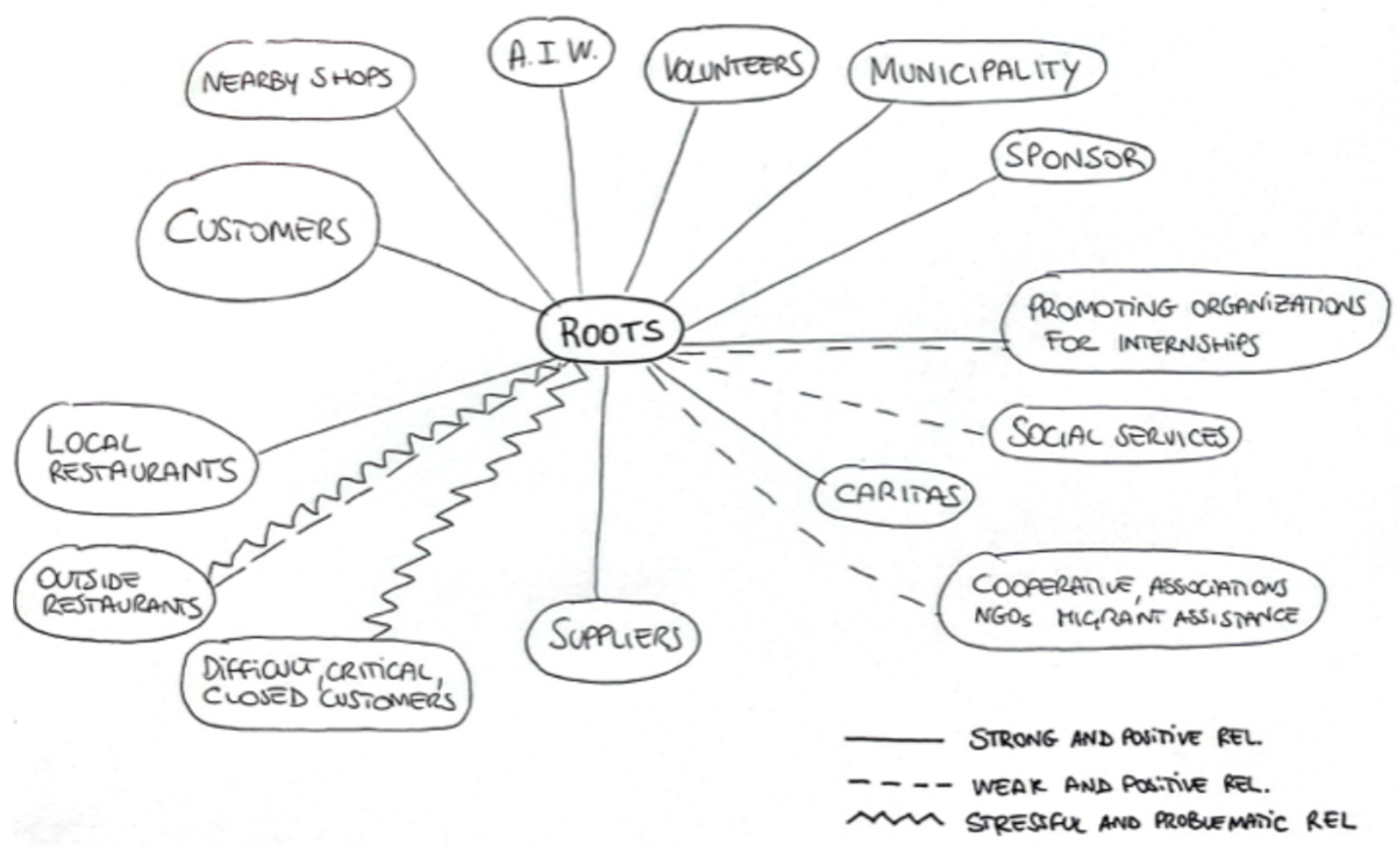
Figure 2.
Food practices as transformation and rebirth (group t2).
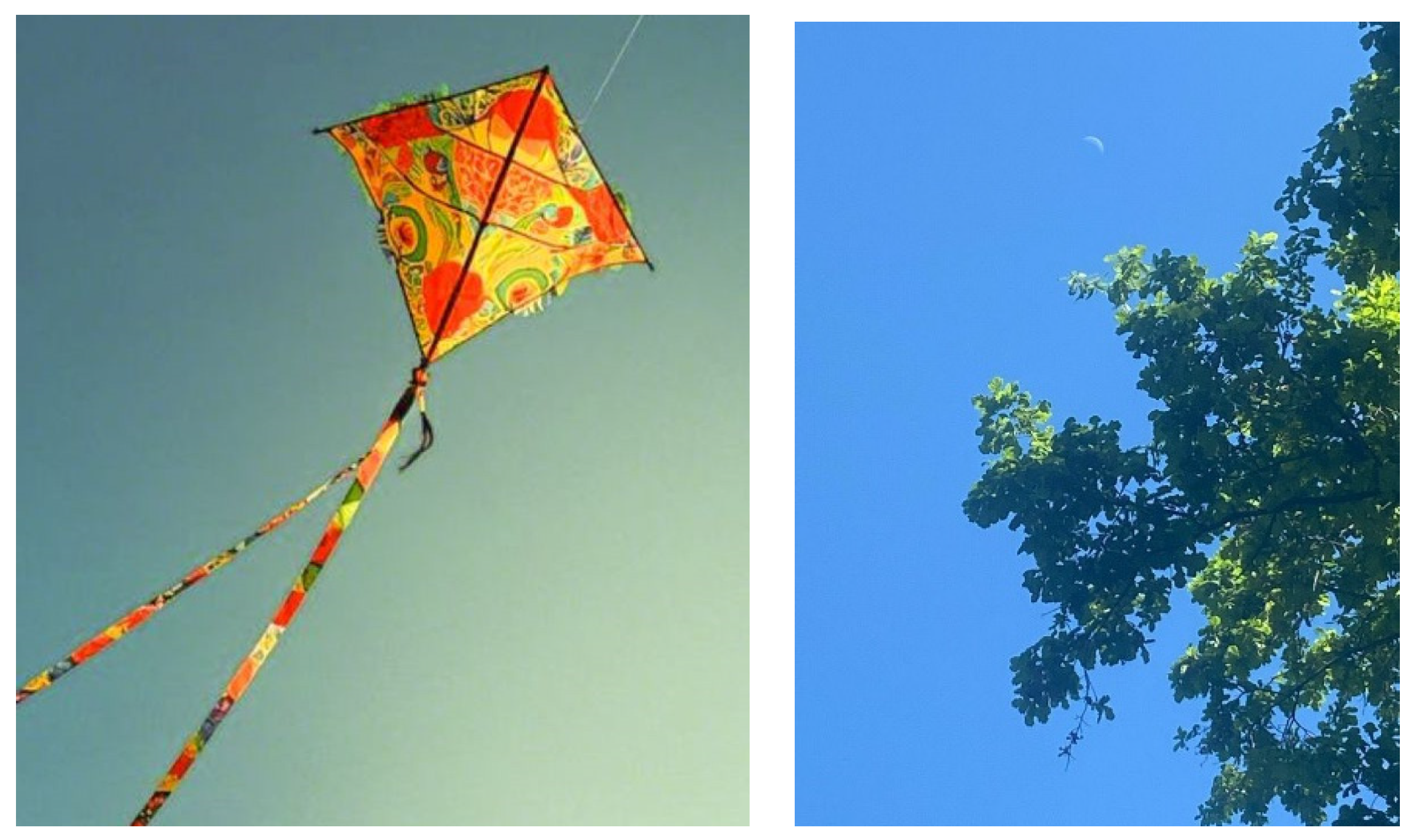
Figure 3.
Food as harmony and richness in diversity (group t1).
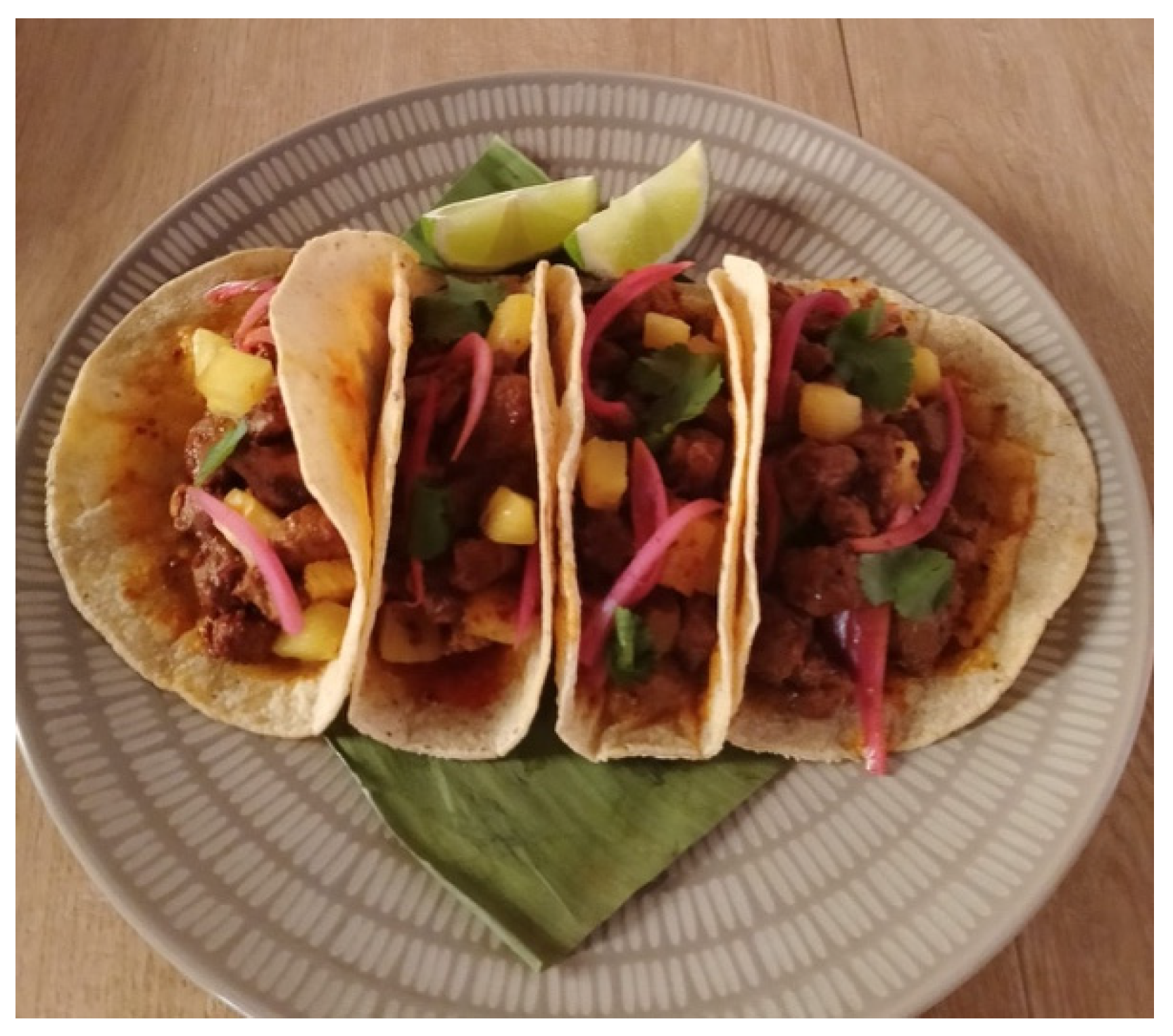
Figure 4.
Food to nourish diversity and promote dialogue (group t2).
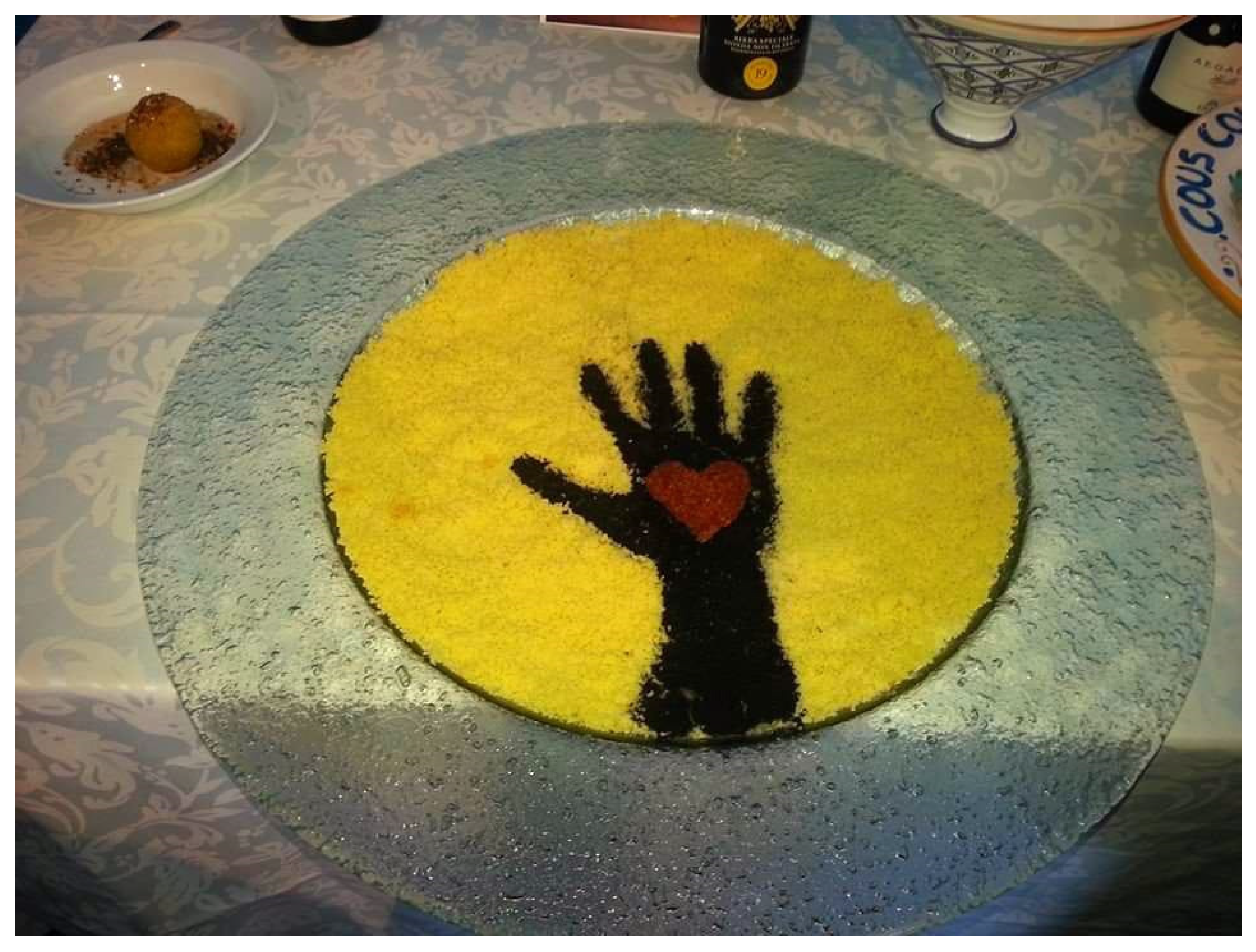
Figure 5.
Final products of the two photo-intervention projects (group t1 on the left, t2 on the right).
Figure 5.
Final products of the two photo-intervention projects (group t1 on the left, t2 on the right).
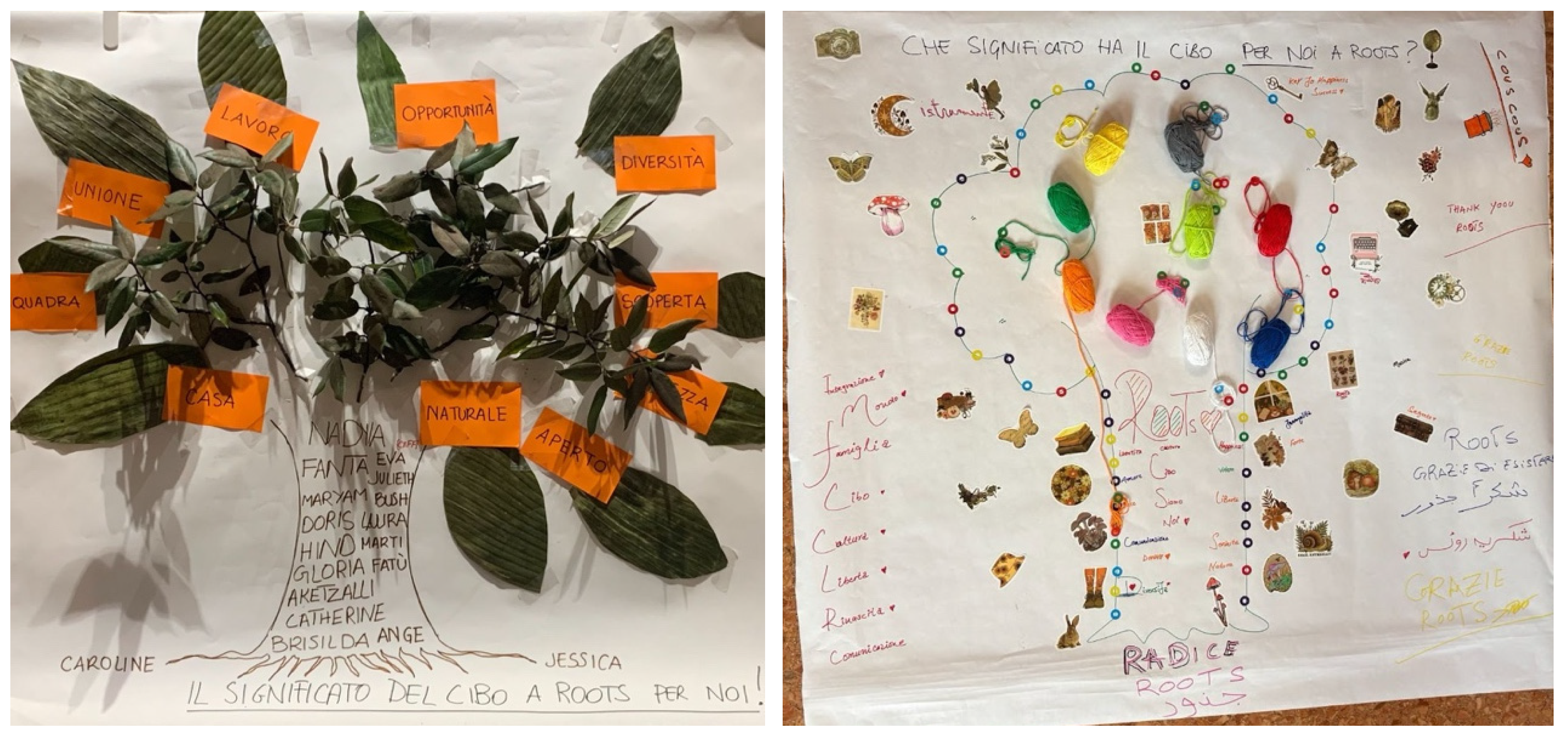
Figure 6.
World Café and participatory affective mapping, on International Women's Day.
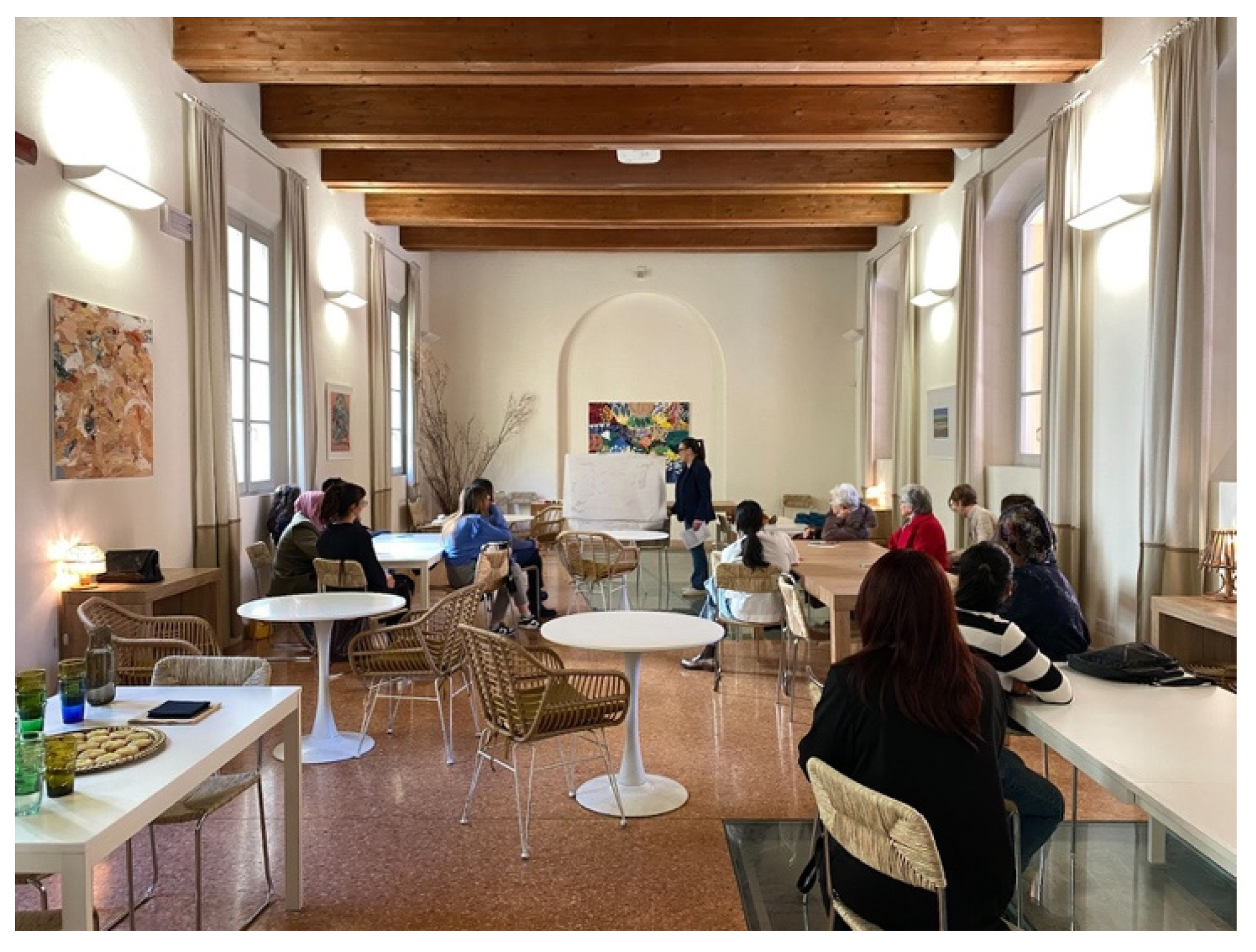
Figure 7.
Collaborative construction of affective mapping of nourishing places in the city.
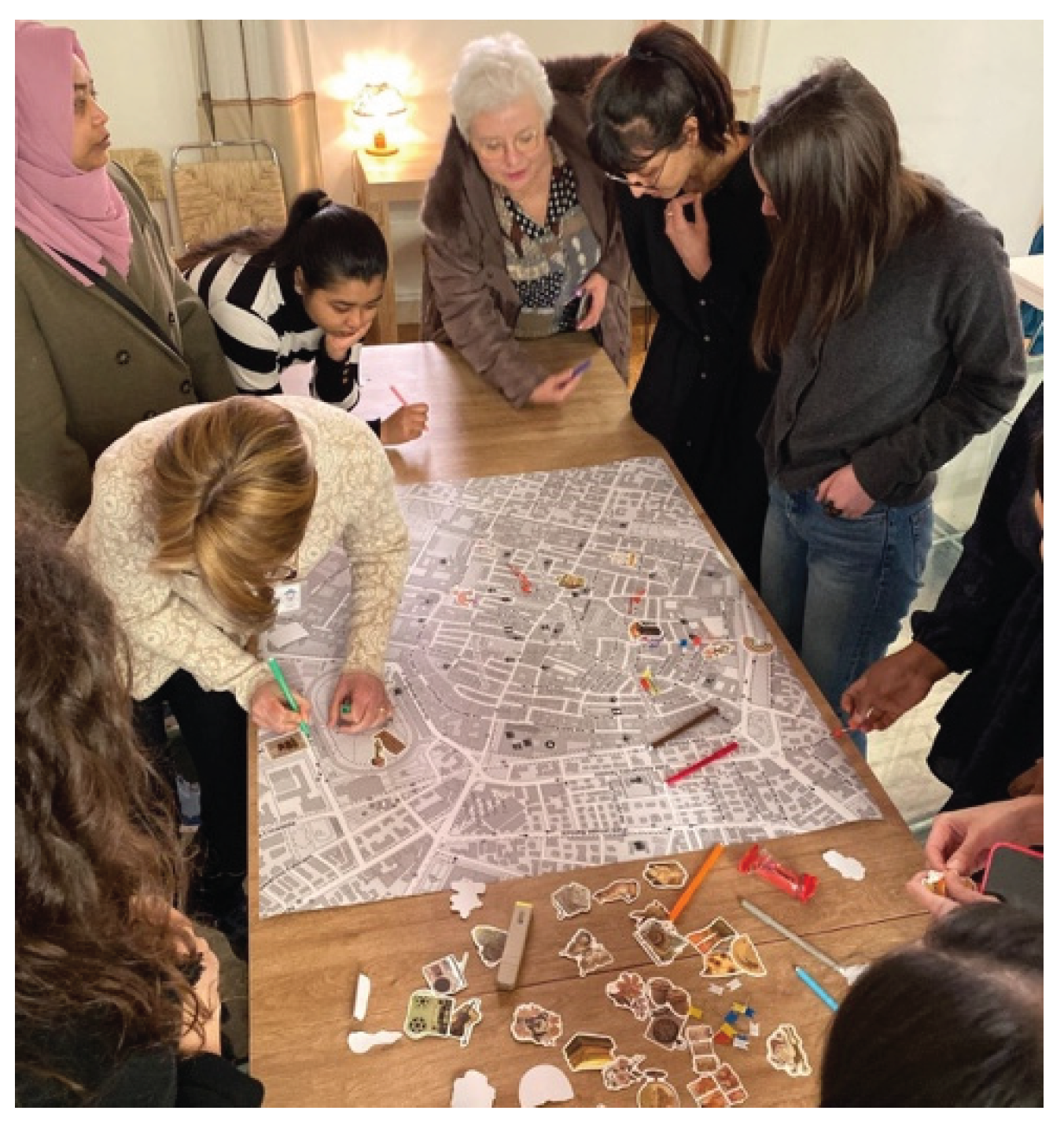

Table 1.
Sociodemographic characteristics of the participants in the staff interviews.
| ID code | Age | Gender | Place of Birth | Years in Italy at the time of data collection | Role in the restaurant | Time in the restaurant (months) |
|---|---|---|---|---|---|---|
| 01 | 47 | Female | Chile | 2011 | Program Coordinator | 12 |
| 02 | 28 | Female | Albania | 2019 | Communication Manager and Program Assistant | 24 |
| 03 | 27 | Female | Italy | NA | Trainee | 1 |
| 04 | 57 | Female | Morocco | 2004 | Dining Room Assistant | 26 |
| 05 | 28 | Female | Missouri, USA | 2018 | Assistant Restaurant Manager | 17 |
| 06 | 33 | Female | Guinea | 2014 | Sous-chef | 36 |
| 07 | 31 | Female | USA | 2017 | President | 48 |
| 08 | 30 | Female | Ukraine | 2016 | Trainer Chef | 18 |
Table 2.
Sociodemographic data of photointervention participants at two stages of the training program (T1 = beginning; T2 = end).
Table 2.
Sociodemographic data of photointervention participants at two stages of the training program (T1 = beginning; T2 = end).
| Group 1 (start of the training) | Group 2 (end of the training) | |||||||
|---|---|---|---|---|---|---|---|---|
| ID code trainee | Age | Gender | Place of Birth | Years in Italy at the time of data collection | Age | Gender | Place of Birth | Years in Italy at the time of data collection |
| 01 | 32 | Female | Pakistan | 15 | 54 | Female | Morocco | 40 |
| 02 | 41 | Female | Morocco | 20 | 32 | Female | Pakistan | 10 |
| 03 | 43 | Female | Ghana | 12 | 32 | Female | Nigeria | 2 |
| 04 | 46 | Female | Ghana | 17 | 51 | Female | Morocco | 22 |
| 05 | 26 | Female | Mexico | 3 | 30 | Female | Tunisia | 9 |
Table 3.
Sociodemographic characteristics of participants involved in the World Café and affective mapping activities.
Table 3.
Sociodemographic characteristics of participants involved in the World Café and affective mapping activities.
| ID code | Age | Gender | Place of Birth | Years in Italy at the time of data collection | Employment |
|---|---|---|---|---|---|
| 01 | 25 | Female | Italy | 25 | Marketing communications manager |
| 02 | 28 | Female | Italy | 28 | Teacher |
| 03 | 27 | Female | Italy | 27 | Student |
| 04 | 33 | Female | Peru | 1 | Unemployed |
| 05 | 63 | Female | Italy | 63 | Retired |
| 06 | 63 | Female | Italy | 63 | Retired |
| 07 | 63 | Female | Italy | 63 | Retired |
| 08 | 54 | Female | Morocco | 40 | Unemployed |
| 09 | 45 | Female | Indonesia | 2 | Employee |
| 10 | 46 | Female | Argentina | 2 | Retired |
| 11 | 53 | Female | Italy | 53 | Tourist reception |
| 12 | 36 | Female | Morocco | 0.3 | Waitress |
| 13 | 25 | Female | Guinea | 1 | Student |
| 14 | 21 | Female | Bangladesh | 3 | Student |
| 15 | 40 | Female | Bangladesh | 3 | Homemaker |
| 16 | 65 | Female | Italy | 65 | Council member |
| 17 | 39 | Female | Italy | 39 | Municipal employee |
Disclaimer/Publisher’s Note: The statements, opinions and data contained in all publications are solely those of the individual author(s) and contributor(s) and not of MDPI and/or the editor(s). MDPI and/or the editor(s) disclaim responsibility for any injury to people or property resulting from any ideas, methods, instructions or products referred to in the content. |
© 2025 by the authors. Licensee MDPI, Basel, Switzerland. This article is an open access article distributed under the terms and conditions of the Creative Commons Attribution (CC BY) license (http://creativecommons.org/licenses/by/4.0/).
Copyright: This open access article is published under a Creative Commons CC BY 4.0 license, which permit the free download, distribution, and reuse, provided that the author and preprint are cited in any reuse.