

Submitted:
08 September 2025
Posted:
09 September 2025
You are already at the latest version
Abstract
The permanent historical-pharmaceutical collection at the Faculty of Pharmacy of the University of Seville (Spain) offers a glimpse into what an apothecary's shop looked like at the turn of the 19th to the 20th century. Pharmacists prepared medicines by hand and stored raw materials in various containers, such as jars, oil cruets, burnias, and albarelos. Each year, the collection receives numerous donations, including a set of pharmacy jars from a private collection. Most of these are albarelos, one of which dates back to the 18th century, while others are more recent and originate from different ceramic facto-ries. This donation was transported from Murcia to Seville, during which the 18th-century jar was broken. Committed to its preservation, we contacted a master potter who re-stored the piece so it could be exhibited and appreciated by both students and visitors outside the pharmaceutical field who are passionate about cultural heritage.
Keywords:
albarelo
; ceramics
; pharmacy
; restoration
; pharmaceutical heritage
; conservation
1. Introduction
At the Faculty of Pharmacy of the University of Seville, a permanent historical-scientific exhibition offers a snapshot of the work of the apothecaries of the past-those who prepared medicines one by one in the backrooms of their pharmacies. All students enrolled in the History of Pharmacy course have to visit this exhibition as part of their seminar-based learning model. However, it is important to emphasize that the exhibition is also open to the general public, allowing visitors to explore the heritage on display while gaining a deeper understanding of the profession, the essence of the word “Pharmacy,” and its intrinsic and irreversible connection to medicine.
Medicine is the physician’s tool for healing. Yet, even when therapeutic remedies were technically well-prepared by pharmacists, effective healing was not possible without a proper understanding of the origin of the disease, a challenge that remained unresolved until the 19th century. Thus, in earlier centuries, true recovery was often elusive.
During the Renaissance, thanks to the influence of Paracelsus (1493–1541), new chemical treatments were introduced. These were added to the already used Eastern plants and the newly discovered American ones, enriching the classical remedies derived from Hellenistic traditions. These were based on Galenic principles (129–216 AD) and included purges, enemas, and bloodletting, all aimed at restoring the balance of the humors and, consequently, health.
To prepare these remedies, pharmacies required appropriate pharmaceutical equipment. Among the most essential items were containers for storing medicinal products, made of glass, clay, or wood. The Arabs introduced glazed ceramics to Spain, adding an enameling stage to the ceramic production process. This prevented the porous ceramic material from absorbing the contents stored within. As the use of plant-based medicines increased, especially after the discovery of the Americas, glazed earthenware containers became increasingly important due to their superior preservation qualities. These vessels, initially made of terracotta and later of glazed earthenware, are collectively known in Spain as pharmaceutical botamen [1].
2. Materials and Methods
Object of Study
The object of study is an 18th-century ceramic albarelo originating from Teruel (Spain), part of a broader donation of pharmacy jars received in 2024 by the Museum of the History of Pharmacy at the Faculty of Pharmacy, University of Seville. The donation comprised eleven pieces spanning the 18th to the 20th centuries. The albarelo under analysis, considered the most historically significant of the set, was wheel-thrown, glazed, and hand-painted, with characteristic cylindrical form and vegetal decoration.
Documentation and Transport
Upon reception of the donation, each piece was photographed, measured, and catalogued. During transportation from Murcia to Seville (523.2 km), the 18th-century albarelo fractured into numerous fragments. A condition report was drafted, including photographic evidence of the breakage and a preliminary assessment of the feasibility of restoration.
Restoration Procedure
Restoration was entrusted to Rafael Muñiz Pérez, a master potter from the Sevillian district of Triana, renowned for its historical ceramic tradition. The intervention followed a five-stage process:
- Cleaning and preparation – removal of previous adhesives and surface dirt.
- Base assembly – gluing of larger fragments to reconstitute the vessel’s main structure.
- Gap filling – use of epoxy putty to reconstruct missing areas and stabilize fractures.
- Fragment joining – reintegration of smaller elements, with interior and exterior reinforcements.
- Final retouching – chromatic reintegration with reversible paints and polishing for aesthetic coherence.
The intervention adhered to conservation principles of minimal intervention and respect for original material, while allowing limited repainting due to the object’s intended didactic display.
Historical and Technical Analysis
To confirm the vessel’s provenance, expert consultation was sought from Prof. María Isabel Álvaro Zamora (University of Zaragoza), specialist in Mudéjar ceramics and Aragonese pottery. Her evaluation corroborated the classification of the piece as an 18th-century Teruel albarelo. Additional stylistic comparisons were made with collections in the Museo de Teruel, the Museo de Artes y Costumbres Populares de Sevilla, and the Faculty of Pharmacy in Granada.
Educational Application
Once restored, the albarelo was incorporated into the permanent exhibition of the Faculty’s Museum of the History of Pharmacy, displayed on late-19th-century pharmacy shelves from Plaza del Salvador (Seville). As part of the undergraduate course “Chemoinformatics, Research, and History of Pharmacy,” the jar was introduced to second-year students during guided visits. Surveys conducted with 200 students highlighted its value as a didactic resource, bridging pharmaceutical history, ceramic artistry, and cultural heritage.
3. Results
3.1. Historical Context and Ceramic Heritage
The pharmacies of Seville’s old hospitals possessed beautiful collections of botamen, as evidenced by inventories from the Hospital de las Cinco Llagas. Today, two 16th-century albarelos decorated with cuerda seca technique and another from the 18th century featuring foliate borders and the five wounds of Christ are preserved in the Museum of Arts and Popular Customs of Seville [2].
Also noteworthy is a blue albarelo bearing the coat of arms of Cardinal Cervantes, housed in the same museum [3]. These pieces combine beauty with utility and, whether from hospital pharmacies or ordinary street apothecaries, gradually became symbols of the healing profession.
A basic inventory of typical pharmacy equipment includes:
Utensils for basic operations: alembics, stills, retorts, ovens, presses, sieves, pulp extractors, mortars, and grinding slabs.
Containers for drug preservation: flasks, syrup jars, pear-shaped jars, Valencian jars, burnias, and orzas.
Weights and measures: balances, weight boxes, oil measures.
Other tools: cauldrons, pots, jars, tins, carafes, water jugs, strainers, funnels, skimmers, and spatulas [1].
Pharmacists acquired raw materials, usually whole or powdered medicinal plants, from establishments known as droguerías. These materials were then analyzed and preserved. This study focuses on the preservation of such medicinal substances, powders, balms, ointments, and pills, through the lens of a significant donation received in 2024 by the Faculty of Pharmacy: a collection of pharmacy jars, primarily albarelos, donated by María Dolores Olmo. These ceramic containers span from the 18th to the 20th century.
3.2. The Pharmacy Jars of Teruel: A Key Chapter in the History of Pharmaceutical Ceramics
Among the donated pieces, the albarelo of greatest historical significance, as previously mentioned, dates from the 18th century and was produced in the city of Teruel (Aragón, Spain), according to the technical description accompanying the piece. These pharmacy jars, made of ceramic in a cylindrical shape, played a fundamental role in the history of pharmacy and, consequently, in the ceramic production of regions like Teruel. They became a distinctive element of apothecaries and a subject of study for researchers and collectors.
Ceramic production in the alfares turolenses (potteries of Teruel) has been documented since the first half of the 13th century. These early pieces were rustic, with simple shapes and utilitarian purposes. The jars were typically cylindrical, often with a slight narrowing at the center to facilitate handling. They were made primarily of fired clay and glazed both inside and out to ensure impermeability. Decoration varied depending on the period and the potter, but geometric and vegetal motifs were common, as well as inscriptions indicating the contents or the owner. The quality of the local clay and the skill of the potters contributed to the creation of pieces of great beauty and functionality. The pottery tradition of Teruel is ancient, and albarelos were among its most notable products [5,6].
Continuing this ceramic tradition, Teruel, along with other Aragonese towns such as Muel, became one of Spain’s most important centers for the production of these containers [7].
Over time, Teruel’s albarelos underwent various transformations in shape, decoration, and materials. However, they always retained their original essence and function. The production of these ceramic vessels in Teruel was influenced by stylistic trends from other regions, such as Talavera ceramics, which enriched their decorative repertoire [8].
Teruel ceramics include a wide range of pieces with diverse uses. Focusing on the pharmaceutical aspect, we can mention orzas, mortars, and albarelos. Within this category, there were also vessels designed to facilitate the administration of medicines, known as escudillas, which could be cuajaderas, de orejetas, or de media naranja, among others [5].
The Museum of Teruel holds an extensive collection of ceramic pieces, including a reconstructed pharmacy with shelves full of albarelos from the 18th and 19th centuries, originally from a pharmacy in the town of Alcalá de la Selva (Teruel) [9]. In Seville, a similar albarelo is exhibited at the Museum of Arts and Popular Customs, dated to the same period and with similar ornamentation [10]. Another notable collection is housed at the Museo de Historia de la Farmacia Prof. José M.ª Suñé Arbussá at the Faculty of Pharmacy in Granada, which preserves a large number of significant pieces, including several albarelos from Teruel with decorations very similar to the one recently added to our collection [11,12].
In Spain, other notable centers of production include Manises and Alcora. The pharmacy jars of Barcelona, Seville, Toledo, and especially Talavera de la Reina, where production was both abundant and of high quality, are also highly regarded. Seville, however, stood out more for its tile production than for pharmacy jars.
3.3. Donation of Albarelos from a Private Collection
In 2024, the Museum of the History of Pharmacy of Seville received a donation from art historian María Dolores Olmo Fernández-Delgado, born and residing in the city of Murcia, Spain. Notably, Murcia does not have museums dedicated exclusively to the pharmaceutical sciences, although, according to Dr. Olmo Fernández-Delgado, there are historical testimonies of the profession in various museums, including a complete apothecary preserved in the Palacio de Guevara in Lorca [13].
The donation consisted of several pharmacy jars, mostly albarelos, some of great historical value and others of artistic interest, particularly those from the 20th century. Some of these were commemorative pieces from pharmaceutical congresses, gifted as souvenirs. Despite their recent origin, they are distinctive jars with unique styles, relevant to the heritage of the healing arts and reflective of the personality of the pharmacy professional.
Moreover, it is noteworthy that many of these more recent albarelos were manufactured in the city of Seville at the Pickman factory, founded in the Andalusian capital in the mid-19th century by the British entrepreneur Charles Pickman. This establishment represents a milestone in the history of Spanish ceramics. The fusion of English manufacturing techniques with Seville’s traditional pottery craftsmanship resulted in pieces of exceptional quality and design, which quickly became a benchmark for luxury ceramics. The factory stood out for its high production standards and innovative designs, earning international acclaim and receiving prestigious awards at various international exhibitions held between 1851 and 1940. Its significance is such that today, a museum in Seville is dedicated exclusively to its ceramics, thoroughly studied by Beatriz Maestre [14,15].
The aforementioned private collection, which was donated to us, belonged to Evaristo Tomás Ros, a graduate in Pharmacy who, according to his niece, never practiced in a community pharmacy. Nevertheless, he developed a passion for collecting containers used in apothecaries, fully aware of the heritage value these objects embody. He appreciated their aesthetic qualities, the professional identity they represent, and the importance of preserving ceramic pieces as works of art in their own right. We know that Evaristo served as a titular representative and head of section at the Santa María del Rosell Health Residence, part of the Social Security system in Cartagena, as stated in:
“Resolución de La Delegación General del Instituto Nacional de Previsión por la que se hace público el Tribunal Provincial que ha de informar en la resolución del concurso libre de méritos para la provisión de plazas de Farmacéuticos de la Residencia Sanitaria ‘Santa María del Rosell’, de Cartagena (Murcia)” [16].
The collection traveled from the city of Murcia to Seville, covering a total distance of 523.2 kilometers. During the journey, the albarelo of greatest historical value was fractured into multiple pieces. According to its accompanying label, it was an 18th-century ceramic albarelo from Teruel (Figure 1).
Description of the piece:
It was made of ceramic paste. The piece was wheel-thrown, glazed, and hand-painted. It has a mouth diameter of 10 cm, a base diameter of 12 cm, and a height of 25 cm.
As an albarelo, it features a cylindrical body with a constriction at the center to facilitate handling, rounded shoulders, and a galbo sharply joined to the body, a straight neck, and a slightly flared mouth and lip. The base is circular.
The exterior is coated with a milky white glaze and decorated with hand-painted parallel bands on the galbo and neck. The bands on the neck frame a zigzag line running through the space between them. On the body, a reserved cartouche is surrounded by brushstrokes forming highly stylized vegetal motifs. The piece shows glaze loss on the body and lip.
As previously mentioned, ceramics from Teruel are characterized by their thick walls, heavy weight, and somewhat coarse finish, features that nonetheless convey strong character. This type of ceramic is traditionally associated with green and purple hues, derived from its Umayyad heritage and dating back to the 13th–15th centuries. It is commonly referred to as bicolor Andalusí ware. Additionally, the Mudéjar style is highly representative of the city of Teruel [5].
The blue pigment, introduced into Teruel ceramics in the late 14th century, continued to be used uninterruptedly until the 19th century [17]. The cobalt blue tones found in Teruel ceramics display a wide chromatic range. This pigment was obtained by calcining cobalt extracted from the vicinity of the Tortajada lagoon in Teruel [5].
In light of this, and considering that Alfonso Pleguezuelo Hernández, Emeritus Professor at the University of Seville, has noted that historians often mistakenly focus on ornamentation rather than on wheel-thrown profiles, we sought to confirm the piece’s origin. To this end, we contacted María Isabel Álvaro Zamora, Professor of Art History and specialist in Mudéjar ceramics and Aragonese pottery, who confirmed that the piece is indeed an 18th-century albarelo from Teruel.
In general, according to the aforementioned Alfonso Pleguezuelo, the study of ceramic heritage lacks a multidisciplinary foundation, which should ideally include the analysis of ornamentation, color, shaping techniques, and clay composition, among other aspects.
Another albarelo of notable historical relevance (Figure 2) was also made of ceramic paste, wheel-thrown, glazed, and hand-painted. It has a mouth diameter of 9.5 cm, a base diameter of 8.4 cm, and a height of 23.8 cm. It is a cylindrical pharmacy jar, constricted at the center for easier handling, with sloped shoulders and galbo merging into the body, a concave neck profile, flared mouth and lip, and a circular base.
The exterior is glazed in white and features polychrome decoration. At the center is a coat of arms with a rampant lion, symbol of the Hieronymite Order, surrounded by scrolls and vegetal motifs. The cartouche is outlined in blue and reserved, with highly stylized floral motifs at the top. Over time, the piece has suffered glaze loss at the mouth and a crack running along the neck and part of the body.
On the base, blue lettering reads Puente del Arzobispo. This piece is dated to the late 19th century. Identifying its place of production is straightforward, as it is indicated on the base, although the handwriting reveals the painter’s limited skill as a calligrapher. Moreover, the form adheres to Talavera typologies, while the decorative layout recalls an albarelo manufactured in Triana in the 18th century. However, the use of pink and emerald green tones are innovations introduced by the workshops of Manises in the late 19th century.
According to Alfonso Pleguezuelo, this decoration is a copy of a Triana piece, originally painted entirely in blue, which the painter from Puente del Arzobispo transformed into a polychrome jar. The profile corresponds to the Talavera–Puente del Arzobispo tradition, and the piece likely dates to the first half of the 20th century. He also notes that the initials “M.A.” most likely refer to the workshop’s name.
Continuing with notable pieces from the donation, one particularly remarkable item, due to its aesthetic value, is a reproduction of the apothecary jars from the pharmacy of the Monastery of Santa María de Montederramo. This piece was commissioned from the Sargadelos factory (Figure 3) to commemorate the inauguration of the College of Pharmacists of Ourense. Once again, it becomes evident that these jars are part of the professional identity of pharmacy. Although this albarelo is not yet a hundred years old, it holds significant artistic and pharmaceutical heritage value.
The jar measures 30 cm in height, with a base and mouth diameter of 9.5 cm. Its cylindrical shape, constricted at the center, was designed to facilitate handling and grip. The exterior is glazed in white and decorated in blue with the coat of arms of the Cistercian Order, divided by a checkered band. This heraldic design was likely shared by the pharmacies of all monasteries belonging to the same order.
In the sinister canton, a hand in a cowl holds a crozier and a fleur-de-lis; in the dexter canton, another fleur-de-lis is depicted. The coat of arms is topped by a mitre and surrounded by acanthus leaves and other vegetal motifs, with parallel blue bands at the lower part of the body. It is particularly interesting to observe how the form of these jars has remained virtually unchanged over the centuries.
The owner of the private collection of apothecary jars received was Evaristo Romo, as confirmed through a personal interview with his niece, María Dolores Olmo, who donated 11 of the jars analyzed in this study (Figure 1, Figure 2, Figure 3, Figure 4, Figure 5, Figure 6), which she had inherited from her uncle.
Evaristo was an avid collector, and after his death, a large number of apothecary pieces were distributed among various relatives. His niece, María Dolores, likely inspired by her uncle’s passion for the pharmaceutical profession and, as an Art Historian, completed a doctoral dissertation that brought together both fields. Her thesis was titled “From the Apothecary to the Pharmacy: Urban Interiors in the Service of Science and Sociability in the Region of Murcia (1860–1931).”
From left to right:
Quassia amara (commonly known as Surinam wood): the root was used in infusions, wine, or extract, and employed as a tonic and febrifuge [18].
Decorated jar reproducing a famous illustration from the Tacuinum Sanitatis, depicting a visit to an apothecary. The shelves are filled with albarelos, and a physician is shown pointing with a stick, questioning the apothecary about the contents. Produced by the La Cartuja earthenware factory in Seville. The base reads: “XXXIII National Congress of the Spanish Association of Hospital Pharmacists, Córdoba, 1988. Pickman Earthenware Factory.”
Dragon’s Blood (a resin from the tree known as Draco) [19].
From left to right:
Pastill. Migran. (likely referring to migraine pills)
Undecorated central jar
X National Congress of Psychiatry. Oviedo, 1970. The base indicates it was produced in San Claudio, a factory specializing in tableware since 1901, known for its advanced underglaze ceramic decoration techniques that ensured long-lasting designs [20].
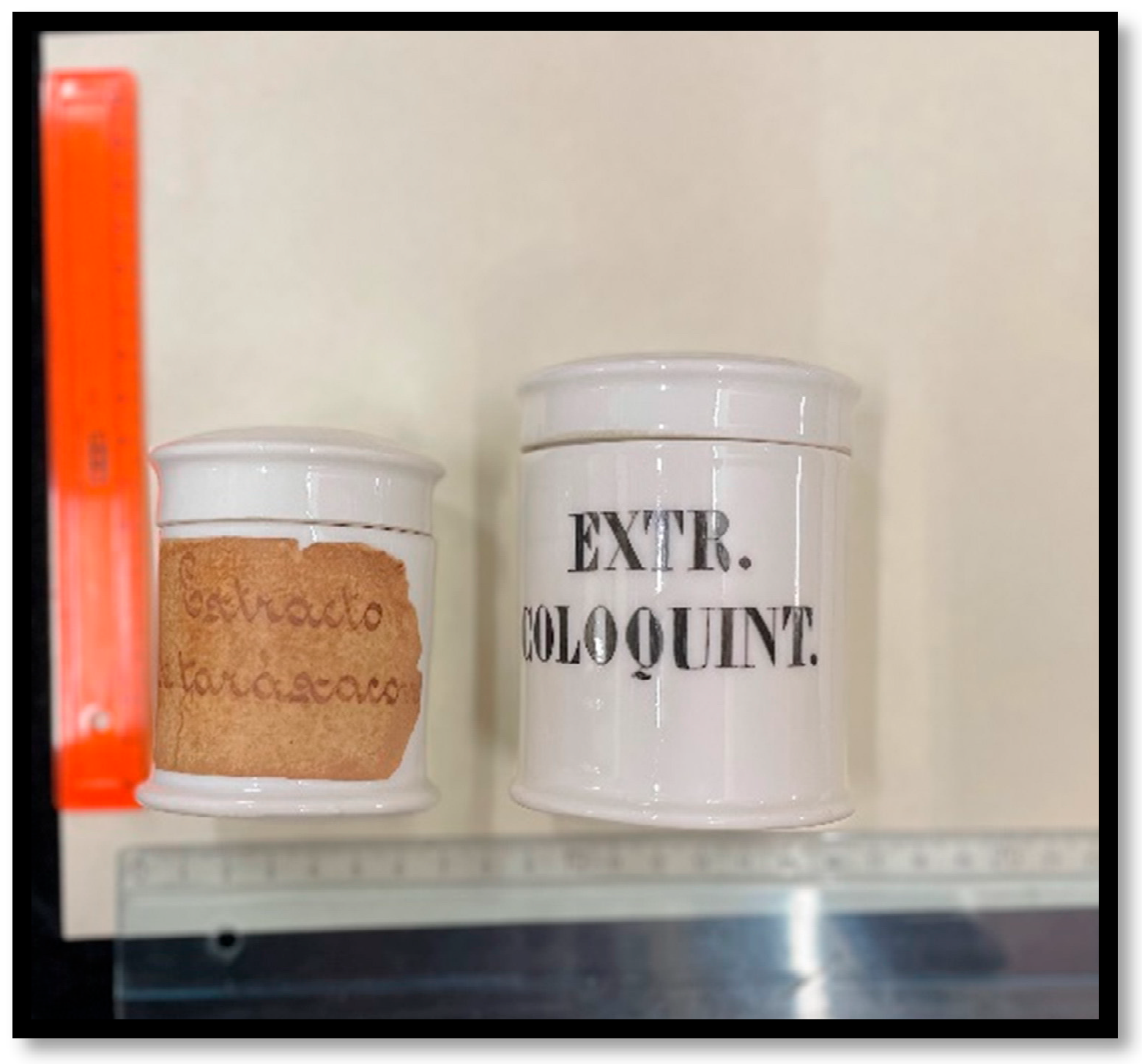
From left to right:
Extract of Taraxacum (commonly known as dandelion)
Extr. Coloquint. (Extract of colocynth)
3.4. Restoration of the Piece
The restoration of the 18th-century albarelo was carried out by Rafael Muñiz Pérez, a ceramicist from the Sevillian neighborhood of Triana, renowned for its pottery tradition. This tradition is well documented in the literature [21], and since the 17th century, especially during the 18th, Triana’s potters produced numerous pharmacy jars for Seville’s apothecaries [5].
From a strict restoration perspective, a more standardized approach might have been followed. However, given that the piece was intended for exhibition, a more flexible method was chosen, including the repainting of certain areas.
The artisan divided the reconstruction process into five stages:
-
Initial observations and comments:“First impression: the albarelo arrived completely shattered into numerous small fragments, making the restoration extremely difficult. Additionally, the piece showed signs of previous repairs, with some fragments bearing traces of old adhesive that were hard to remove. This prevented precise alignment, resulting in slight mismatches in the final assembly.”
Figure 7.
All the fragments into which the piece was broken during transport from Murcia to Seville.
Figure 7.
All the fragments into which the piece was broken during transport from Murcia to Seville.
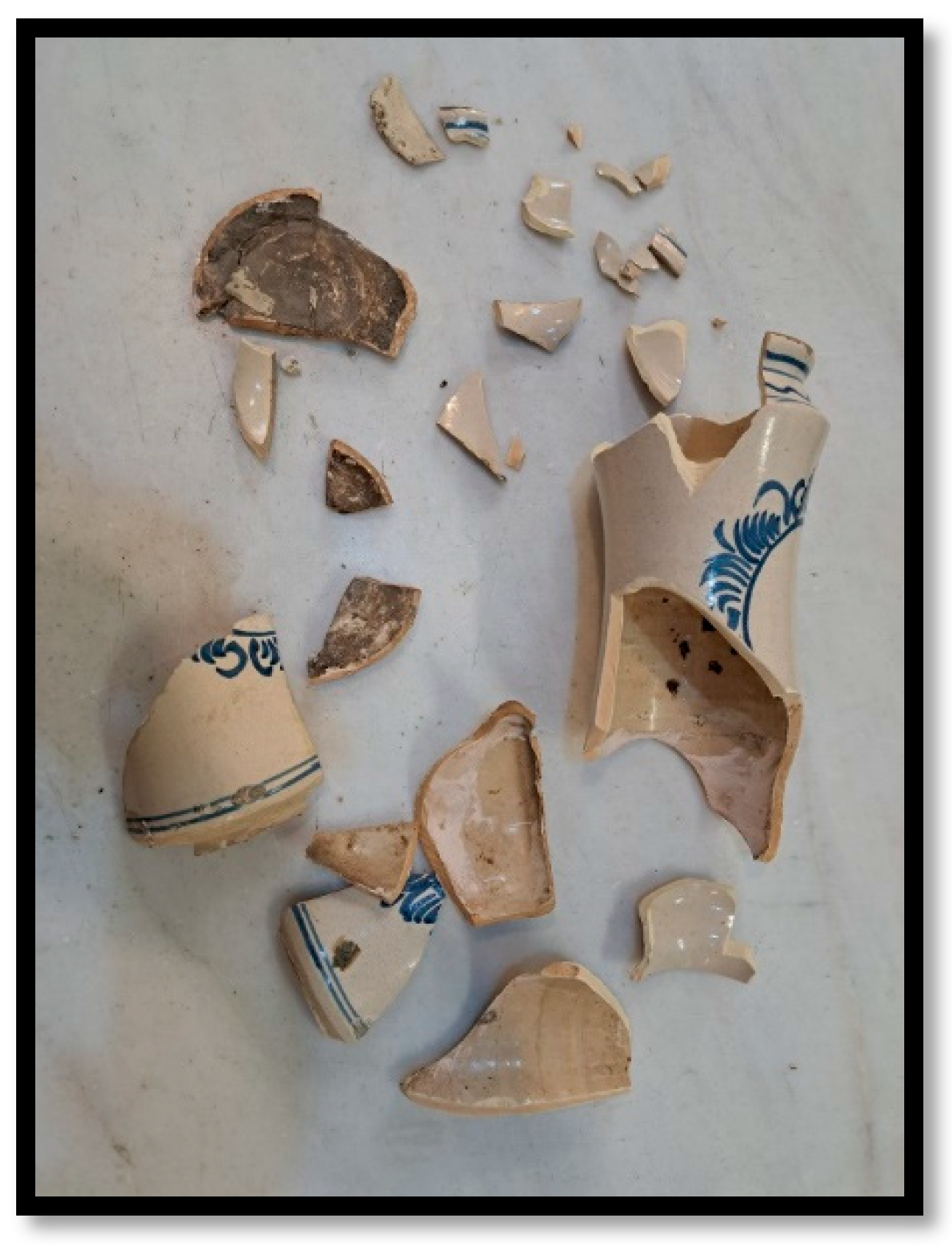
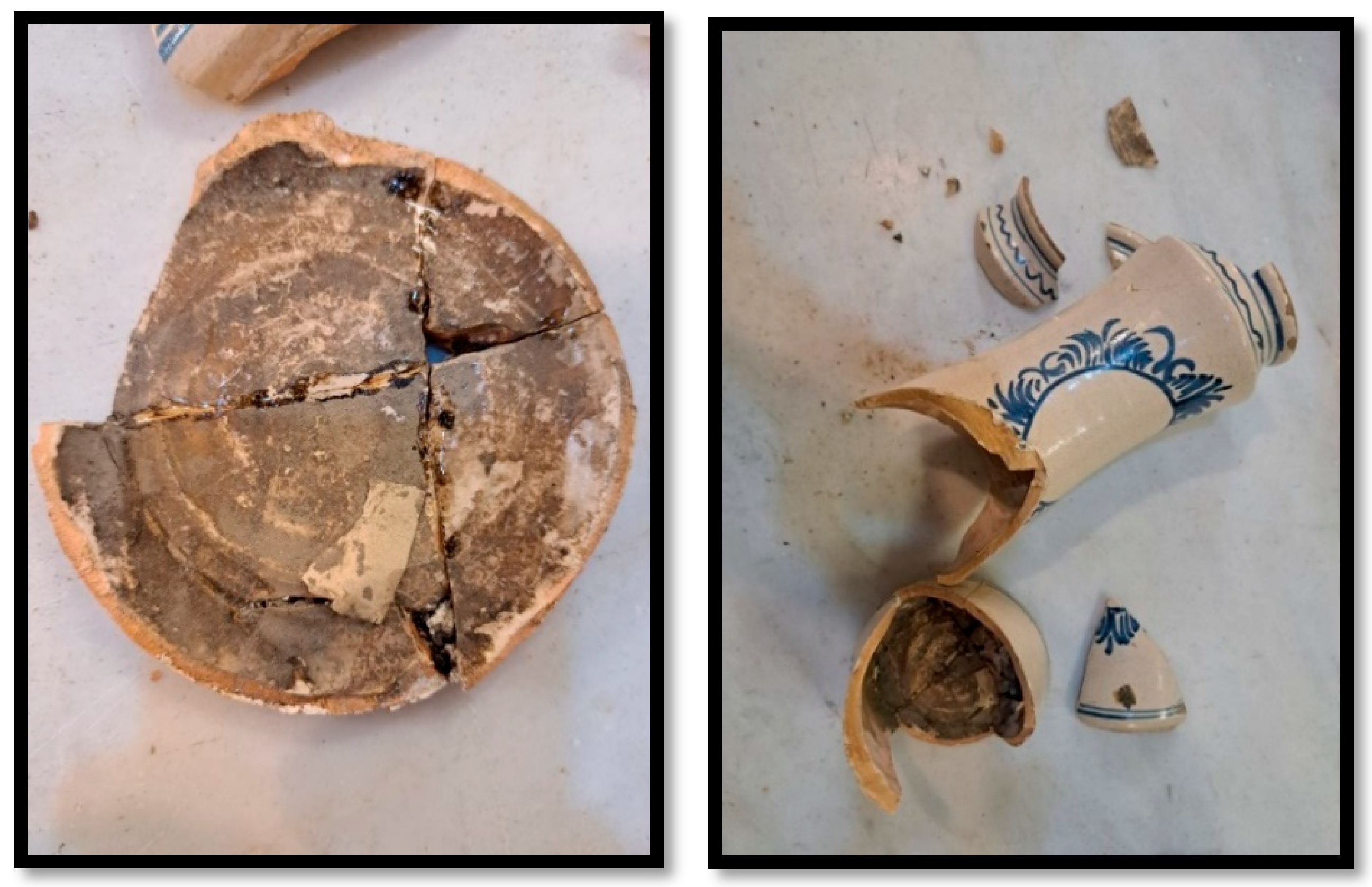
Figure 8 and 9.
Initial stages of the restoration process: base assembly, cleaning, and gluing.
- 2.
- Assembly of the base, cleaning, and gluing. Filling of cracks and gaps with epoxy putty. Shaping of missing forms.
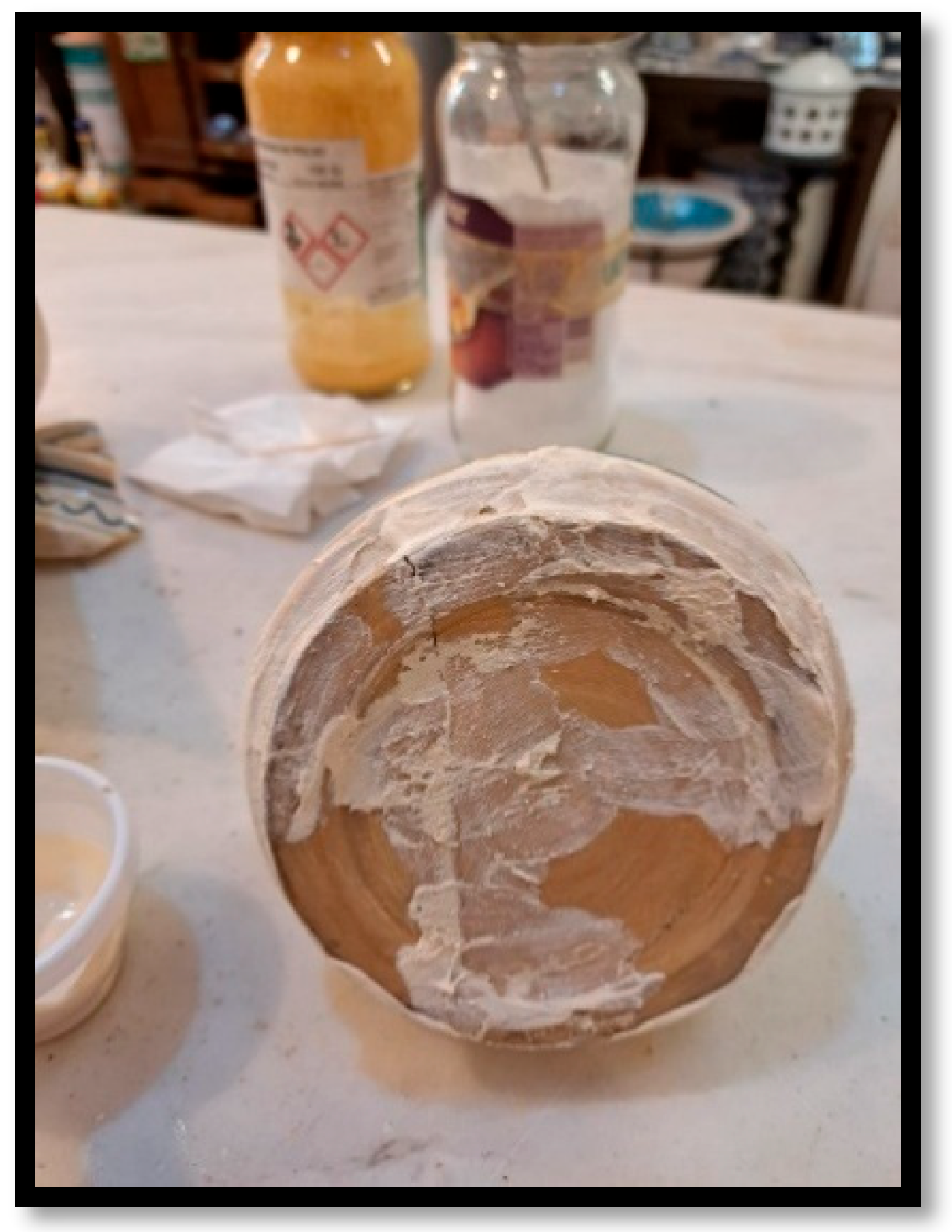
Figure 10.
Image showing the filling process with epoxy putty.
- 3.
- Assembly of main fragments. The mouth and neck were particularly difficult due to the number of small pieces. Interior and exterior gaps were filled. The lower part was assembled with adhesives and fillers. Drying followed.
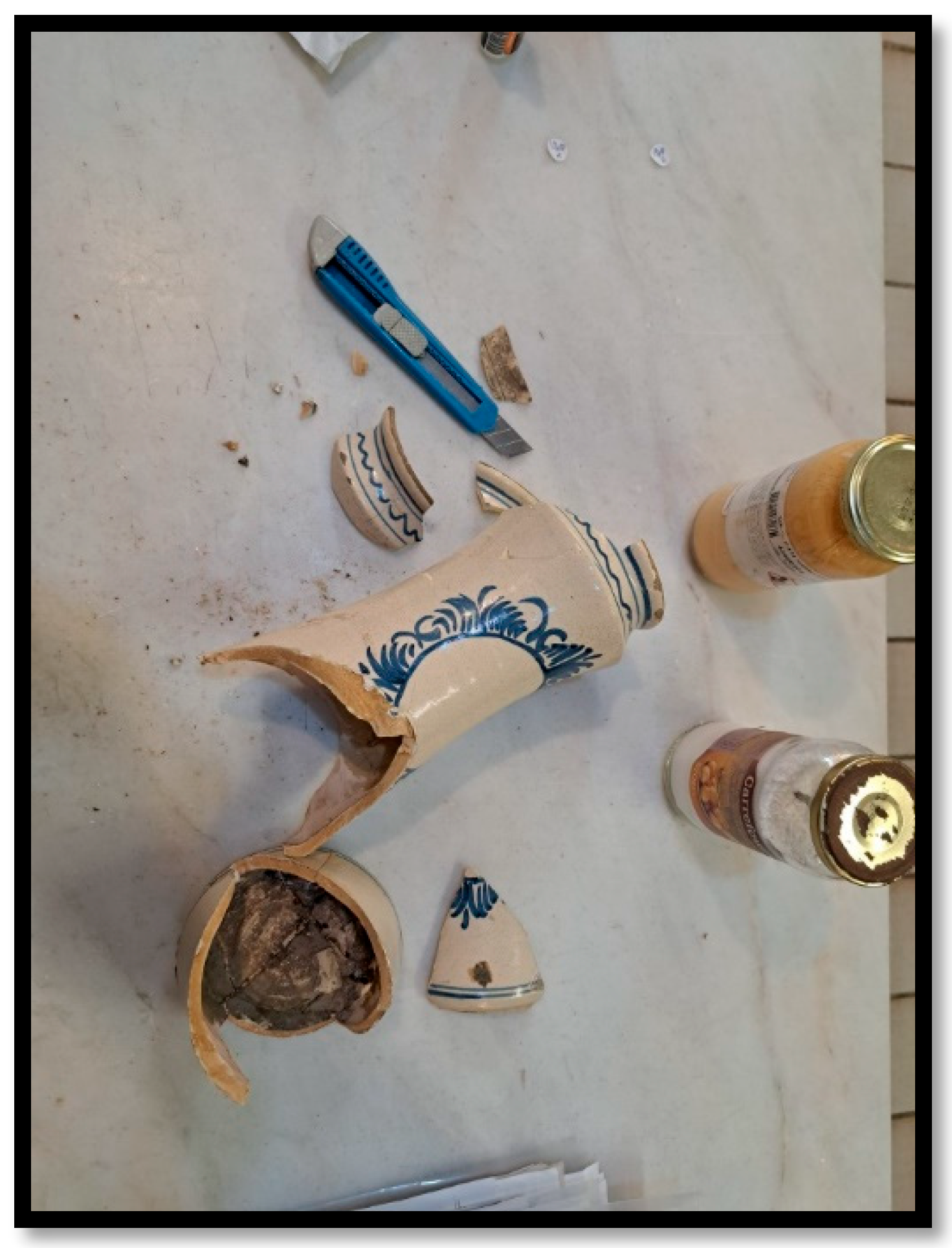
Figure 11.
Assembly work on smaller fragments.
- 4.
- Joining of two main fragments and retouching of cracks and gaps.
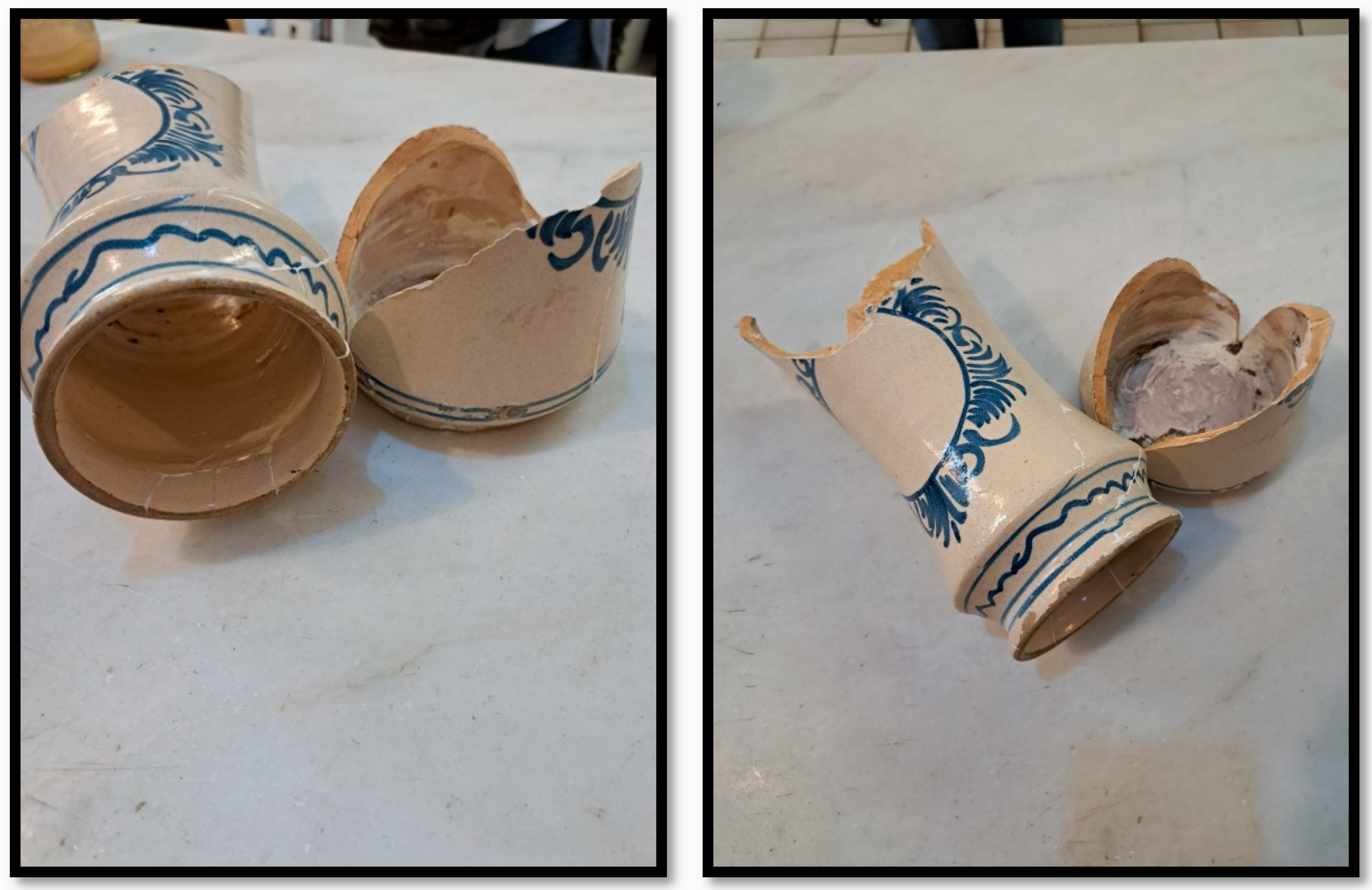
Figure 12 and 13.
Union of the two main parts of the albarelo.
- 5.
- Final step: Cleaning, color retouching with special paint to match tones, and final polishing.
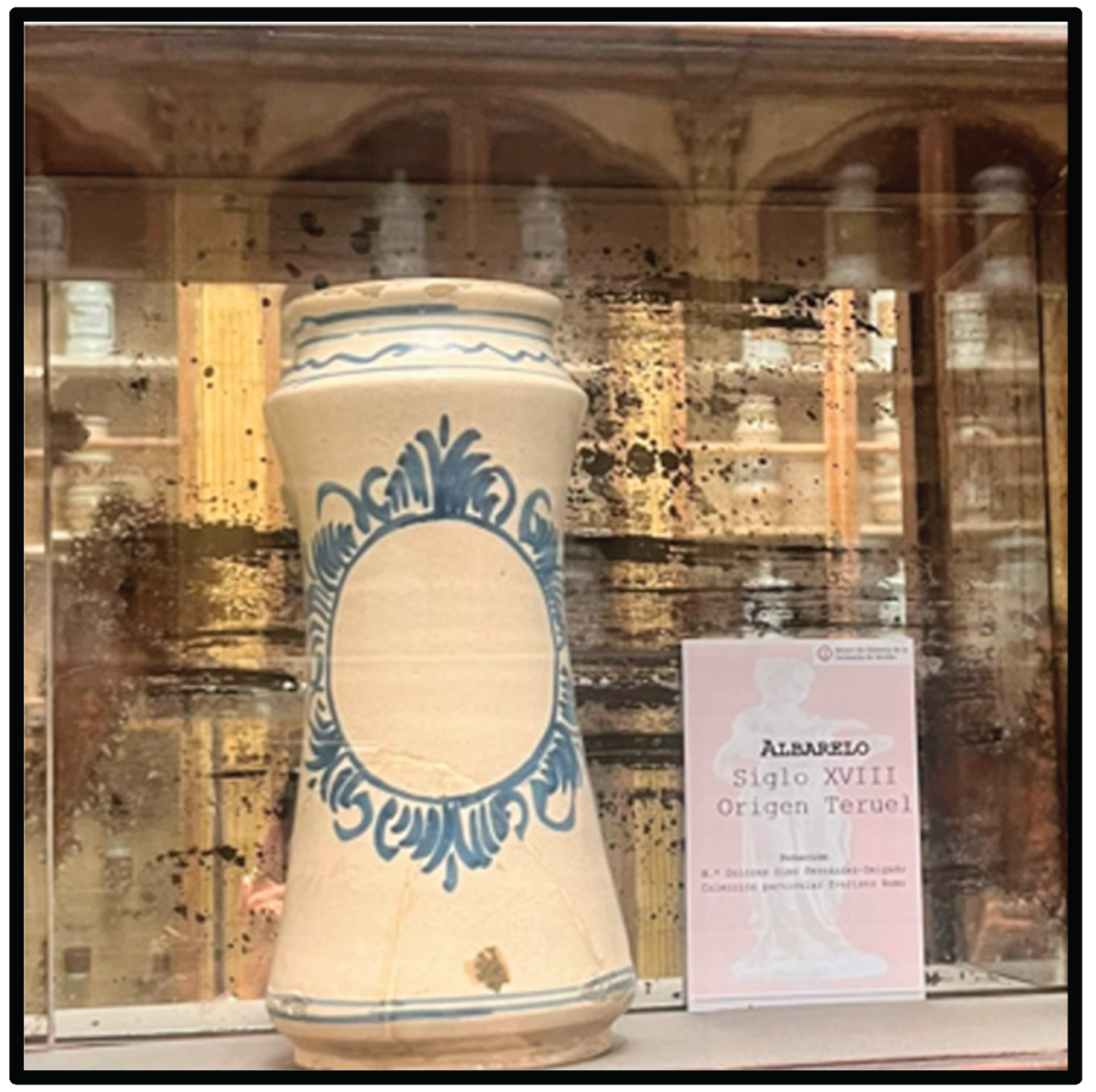
Figure 14.
Restored albarelo displayed on the shelves of the former pharmacy located in Plaza del Salvador (Seville), cabinet dated 1897.
Figure 14.
Restored albarelo displayed on the shelves of the former pharmacy located in Plaza del Salvador (Seville), cabinet dated 1897.
4. Discussion and Conclusions
Focusing first on the importance of preserving pharmaceutical heritage in its own right, we recognize that pharmacy has evolved significantly over the centuries. While today’s pharmacies are primarily clinical spaces with limited compounding equipment, in the past they were filled with pharmaceutical tools, used for preparing medicines, conducting analyses in the backroom, and storing books and remedies, alongside furniture rich in artistic value. Preserving these elements is essential not only for understanding the historical role of pharmacists but also for appreciating the aesthetic beauty that has changed over time.
Based on this reasoning, we affirm that the conservation of pharmaceutical heritage is important for several reasons:
Historical and cultural value:
This heritage is a testament to the history of pharmacy and its role in society. Its preservation allows us to trace the evolution of pharmaceutical practices and knowledge. Not only albarelos over a hundred years old are culturally significant, but even more recent jars, such as those produced for congresses, are valuable for studying the evolving identity of the profession.
Scientific value:
Pharmaceutical heritage can be a valuable and often curious source of information for scientific research. For example, studying old formulations can reveal their composition, enabling critical analysis of their efficacy and safety in their historical context. This opens the door to discussions about the historical use of certain substances compared to modern therapeutics.
Educational value:
As university educators, we place great emphasis on the pedagogical use of this heritage. It serves as a teaching tool to show students (and the general public) how the pharmacy profession has evolved and its societal importance. Our collection supports undergraduate and graduate research, including final projects and doctoral theses. It also forms the basis for mandatory seminars that allow students to explore the humanistic side of their scientific and healthcare training.
During the second semester, as part of the scheduled academic activities for students enrolled in the subject Chemoinformatics, Research and History of Pharmacy, in the second year of the Pharmacy degree at the Faculty of Pharmacy, University of Seville, the teaching staff of the four course groups organized a visit to the Museum of the History of Pharmacy.The purpose of this visit was to enable students to become acquainted with the museum and to appreciate its significance, particularly in relation to the historical artifacts it houses. Special attention was given to the 18th-century albarelo, which constitutes the central focus of this study.
A total of 200 students from groups 1, 2, 3, and 4 of the aforementioned subject completed a questionnaire following the visit. Of these, 165 were female (82.5%) and 35 male (17.5%). Regarding age distribution: 88 students were 19 years old (44%), 68 were 20 (34%), 23 were 21 (11.5%), 10 were 22 (5%), and 11 were 23 or older (5.5%). Excluding the latter group, the average age of the students was 19.8 years.
The survey results underscore the relevance of the 18th-century albarelo from Teruel, displayed on a 19th-century shelf, as a symbolic artifact that bridges science, ceramic artistry, and cultural heritage.
Most students rated its academic value positively, with an average score of 3.6 out of 5. All respondents (100%) agreed that the museum collection enriches the Faculty’s heritage and promotes awareness of pharmaceutical tradition. Furthermore, many students identified the albarelo as a compelling element that enhances understanding of the historical development of pharmacy and highlights the importance of preserving objects that convey professional and cultural identity.
Economic value:
Although not our primary focus as a university collection, pharmaceutical heritage can also have economic value. It can serve as a cultural and tourist attraction, generating income for the community.
Despite these benefits, the conservation of pharmaceutical heritage faces several challenges:
Lack of resources:
In general, heritage conservation is underfunded. Experts believe that ceramics do not receive the attention they deserve, and pharmaceutical heritage is particularly scarce, considering the age of the profession and the materials used over the centuries. In our case, when the albarelo arrived broken, we felt a moral obligation to restore it. The restoration costs were personally covered by the collection’s director, Antonio Ramos.
Lack of specialized personnel:
As pharmacy is primarily a scientific and healthcare discipline, there is a shortage of professionals trained in the restoration, conservation, and management of cultural assets.
Lack of institutional coordination:
There is often inadequate coordination among the various institutions and organizations responsible for preserving pharmaceutical heritage.
According to Alfonso Pleguezuelo Hernández, it would be valuable to compile pharmacy jars from different production centers across Spain and conduct a comparative study. However, he notes that the information is scattered across museums and collections in Spain and Portugal. He also highlights that Catalonia has done significant work in preserving pharmaceutical ceramics.
Strategies for Conservation
To address these challenges, appropriate strategies must be adopted:
Create inventories and catalogs to assess the scope and value of pharmaceutical heritage.
Develop conservation plans that include protection, restoration, and dissemination measures.
Seek funding from both public and private sources.
Promote research and public outreach to raise awareness of the heritage’s value and meaning through exhibitions, publications, and other activities.
This is a vital task that requires collaboration among public institutions, private organizations, conservation professionals, and the general public. By preserving this heritage, we protect a valuable legacy that helps us understand our past, interpret the present, and shape the future.
As a university collection, our role is to gather and safeguard this heritage. The generous donation of pharmacy jars from Murcia demonstrates that our mission as historical-scientific educators is reaching beyond our student body. Thanks to this work, we can continue to preserve, and restore whenever possible, any pharmaceutical heritage materials that come into our care.
Currently, the jars are on display at the Faculty of Pharmacy of Seville, as part of the Museum of the History of Pharmacy, arranged on the shelves of the former pharmacy from Plaza del Salvador in Seville.
Acknowledgments
Autors would like to express our gratitude to María Dolores Olmo Fernández-Delgado for her generous donation and insightful conversations. Special thanks to Rafael Muñiz Pérez for his meticulous work in restoring the piece, and to Alfonso Pleguezuelo Hernández for generously sharing his expertise.
Conflicts of Interest
The authors declare no conflicts of interest.
References
- Moreno Toral, E.; Núñez Roldán, F.; Palomero Páramos, J.; Ramos Carrillo, A. Botica, despensa y arte en los antiguos hospitales sevillanos; Universidad de Sevilla: Sevilla, Spain, 2022.
- Ramos Carrillo, A. La sanidad sevillana en el siglo XIX: el Hospital de las Cinco Llagas; Diputación de Sevilla: Sevilla, Spain, 2003.
- Herrera Dávila, J. El Hospital del Cardenal de Sevilla y el Doctor Hidalgo de Agüero. Visión Histórica del Hospital de San Hermenegildo de Sevilla (1455–1837); Fundación de Cultura Andaluza: Sevilla, Spain, 2010.
- Nogales, L.M. Epopeya farmacéutica. La Farmacia en la Edad Media; Ediciones Universidad de Salamanca: Salamanca, Spain, 2020.
- De Vicente González, J. (Ed.). Antiguas boticas españolas y sus recipientes; tresCtres Ed.: Santiago de Compostela, Spain, 2009.
- Álvaro Zamora, M.I. Cerámica Aragonesa; Vol. III; Ibercaja: Zaragoza, Spain, 2002.
- Cruz Sánchez, P.J. Cerámica de Almazán, de las talaveras a la alfarería popular. Siglos XVI–XX; Ayuntamiento de Almazán: Almazán, Spain, 2023. Available online: https://www.ceramicadealmazan.com/ceramica-de-almazan.pdf (accessed on 27 February 2024).
- Palos Martín, C. Conservación del patrimonio farmacéutico aragonés: regulación, ética y estética. Ph.D. Thesis, Universidad de Barcelona, Barcelona, Spain, 2019. Available online: file:///C:/Users/usuario/Downloads/CPM_TESIS.pdf (accessed on 15 February 2024).
- Museo de Teruel. La cerámica en época moderna y contemporánea, Albarelos y botes de farmacia. Available online: https://museodeteruel.es (accessed on 18 February 2024).
- Red Digital de Colecciones de Museos de España. Museo de Artes y Costumbres Populares de Sevilla. Available online: https://ceres.mcu.es (accessed on 18 February 2024).
- Museo de Historia de la Farmacia Prof. José M.ª Suñé Arbussá. Available online: https://patrimonio.ugr.es/fondo-coleccion/museo-de-la-historia-de-la-farmacia-prof-jose-ma-sune-arbussa/ (accessed on 1 March 2024).
- Sapena Boza, M.C.; Moreno Toral, E.; Ramos Carrillo, A. Las farmacias de Sevilla. La Historia a través del arte; Universidad de Sevilla, Fundación Farmacéutica Avenzoar: Sevilla, Spain, 2011.
- Olmo Fernández-Delgado, M.D. (Ed.). Farmacias de la Región de Murcia: sociedad, cultura y patrimonio; Gráficas el Niño de Mula S.L.: Murcia, Spain, 2021.
- Maestre de León, B. La Cartuja de Sevilla: fábrica de cerámica; Pickman: Sevilla, Spain, 1993.
- Museo de cerámica de la Cartuja-Pickman. Available online: https://www.andalucia.org/es/museo-de-ceramica-de-la-cartuja-pickman (accessed on 18 February 2024).
- BOE nº 37, 12 February 1976, 3391. Available online: https://www.boe.es/boe/dias/1976/02/12/pdfs/A02963-02963.pdf (accessed on 22 February 2024).
- Ortega Ortega, J.M. Cerámica y feudalismo: una aproximación a la cerámica medieval en Teruel. Kalathos 1996, 15, 111–141.
- Soubeiran, E.; Saez y Palacios, R.; Ferrari y Scardini, C. Nuevo tratado de Farmacia teórico y práctico; Librería de la Viuda é Hijos de Mayol: Madrid, Spain, 1845.
- Plans y Pujos, F. Lecciones de historia natural aplicada a la farmacia y de materia farmacéutica, Vol. 1; Imprenta de Jaime Jepús Roviralta: Barcelona, Spain, 1867.
- San Claudio. Fábrica de vajillas desde 1901. Historia. Available online: https://www.sanclaudio.es/nuestra-historia/ (accessed on 18 February 2024).
- Pleguezuelo Hernández, A. Lozas y azulejos de Triana; Instituto de la Cultura y las Artes de Sevilla: Sevilla, Spain, 2011.
- Pleguezuelo Hernández, A. Centro Cerámica Triana; Instituto de la Cultura y las Artes de Sevilla: Sevilla, Spain, 2017.
- Pleguezuelo Hernández, A.; Farwell Gavin, R.; Pierce, D. Cerámica y Cultura: The Story of Spanish and Mexican Mayólica; University of New Mexico Press: Albuquerque, NM, USA, 2003.
Figure 1.
Unpacking process of the 18th-century albarelo at the exhibition site.
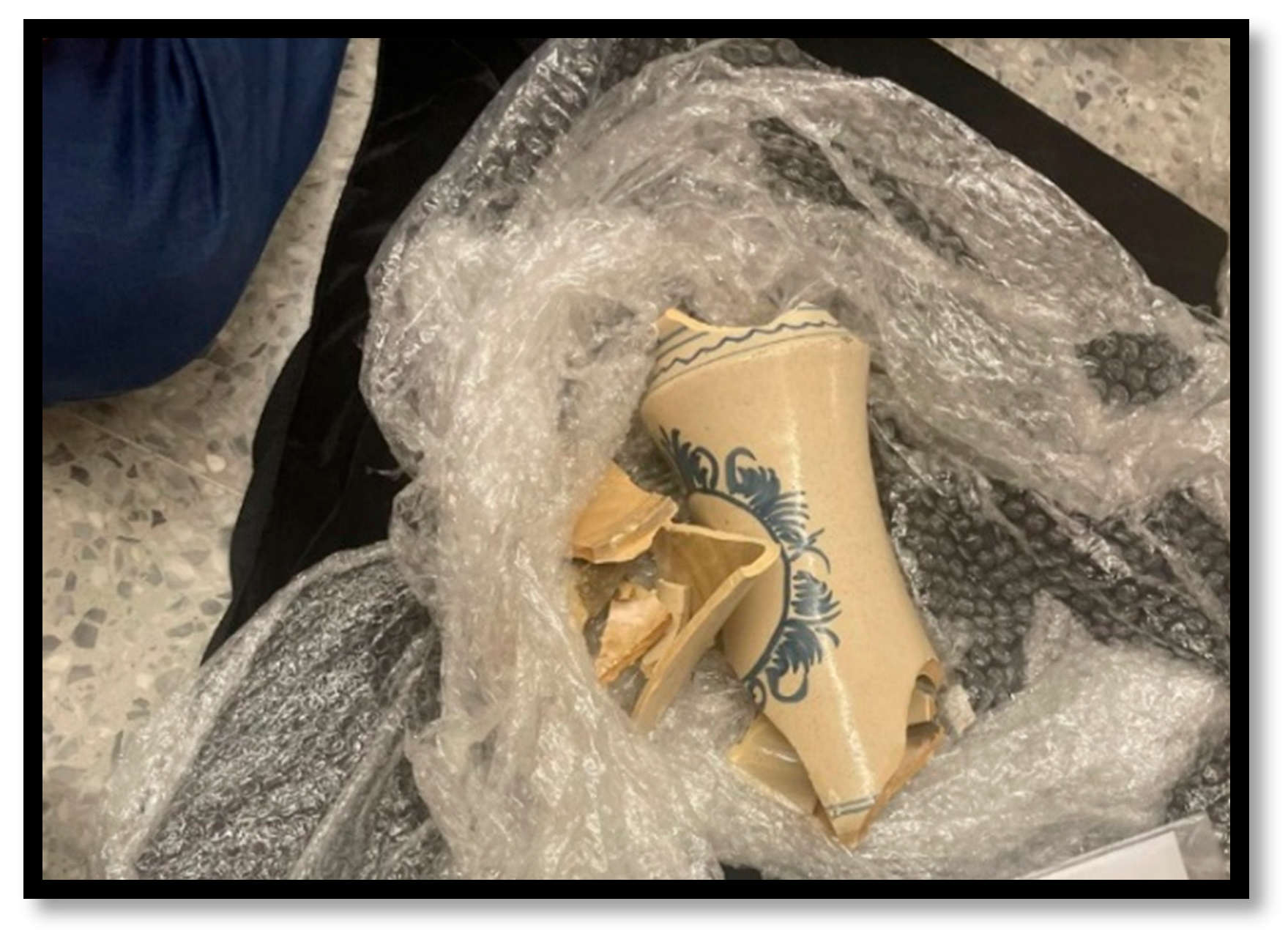
Figure 2.
Unpacking process of the 19th-century albarelo at the exhibition site.
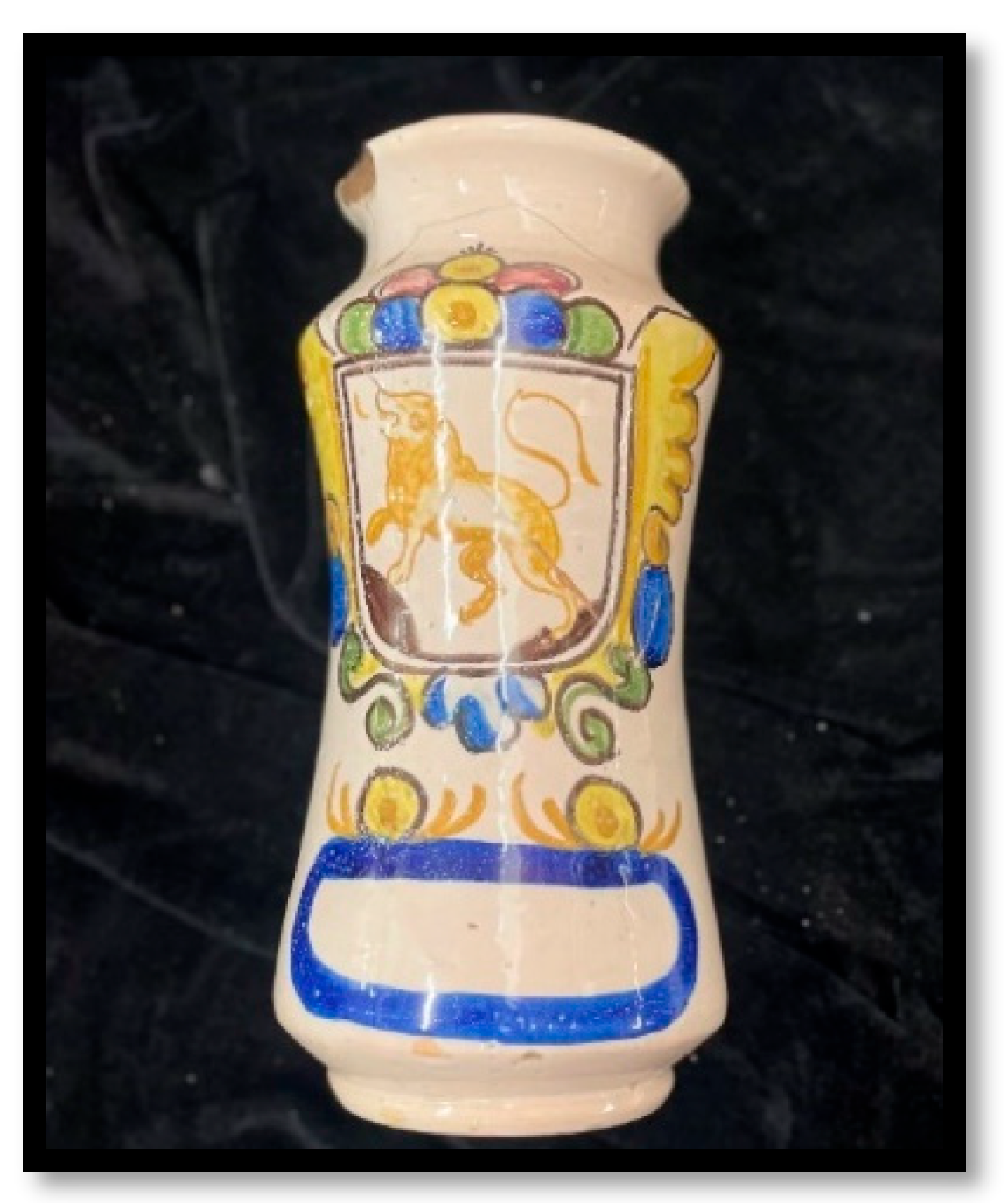
Figure 3.
Pharmacy jar made of porcelain. Year: 1975.
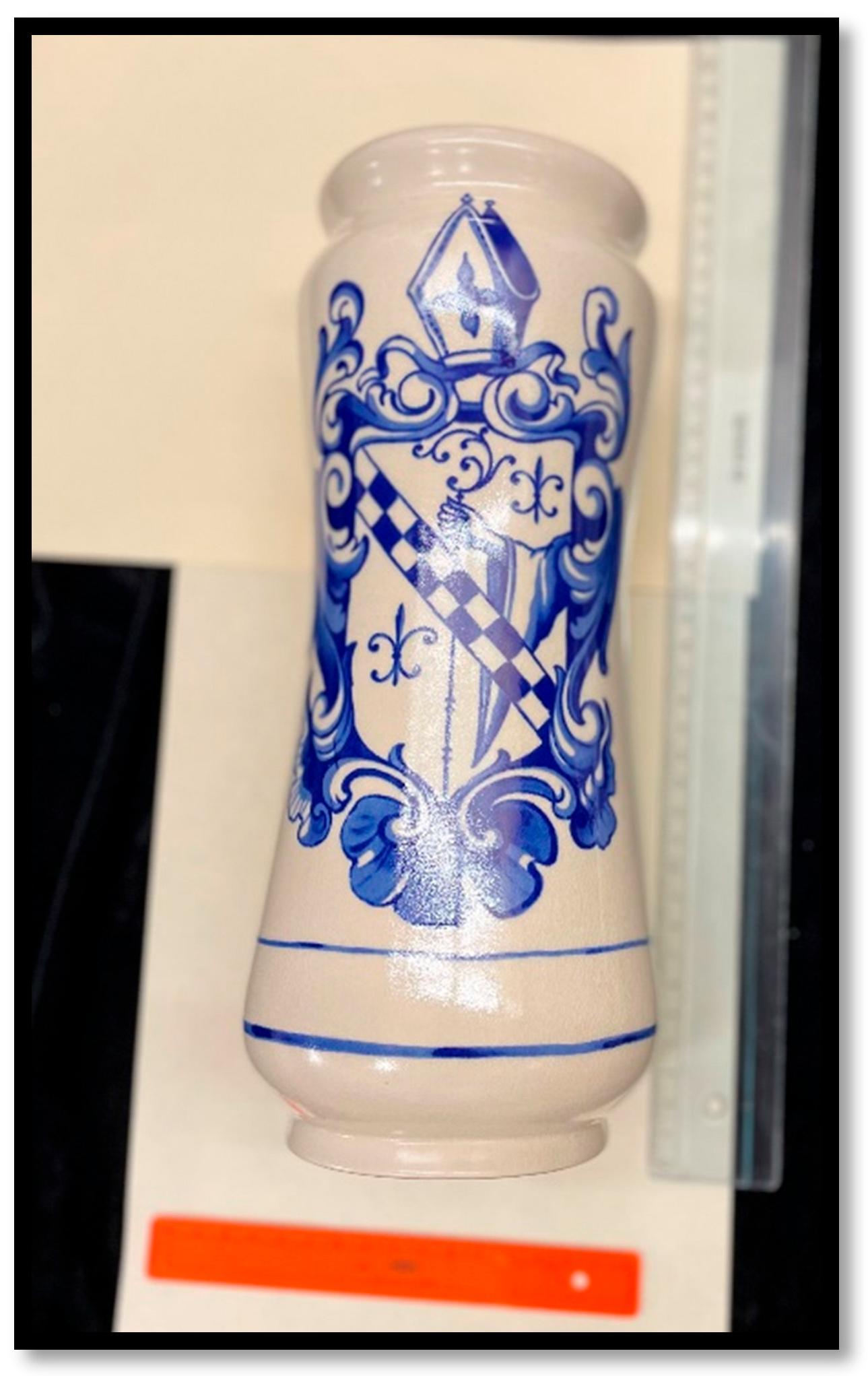
Figure 4.
Part of the collection of albarelos donated from Murcia.
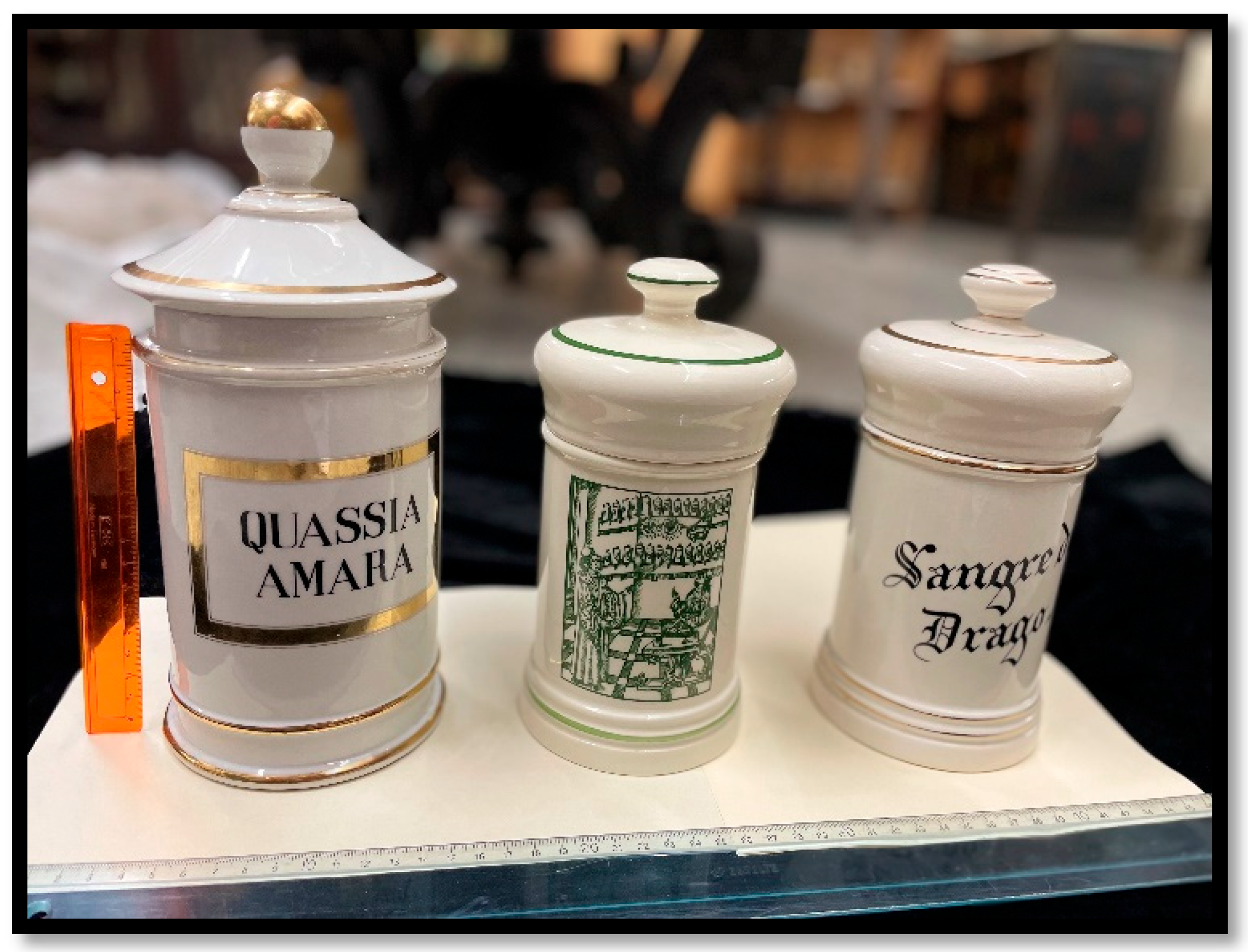
Figure 5.
Part of the collection of albarelos donated from Murcia. All three jars have a raised foot, cylindrical shape, and elevated lid type. Decorated in gold. Dated to the second half of the 20th century.
Figure 5.
Part of the collection of albarelos donated from Murcia. All three jars have a raised foot, cylindrical shape, and elevated lid type. Decorated in gold. Dated to the second half of the 20th century.
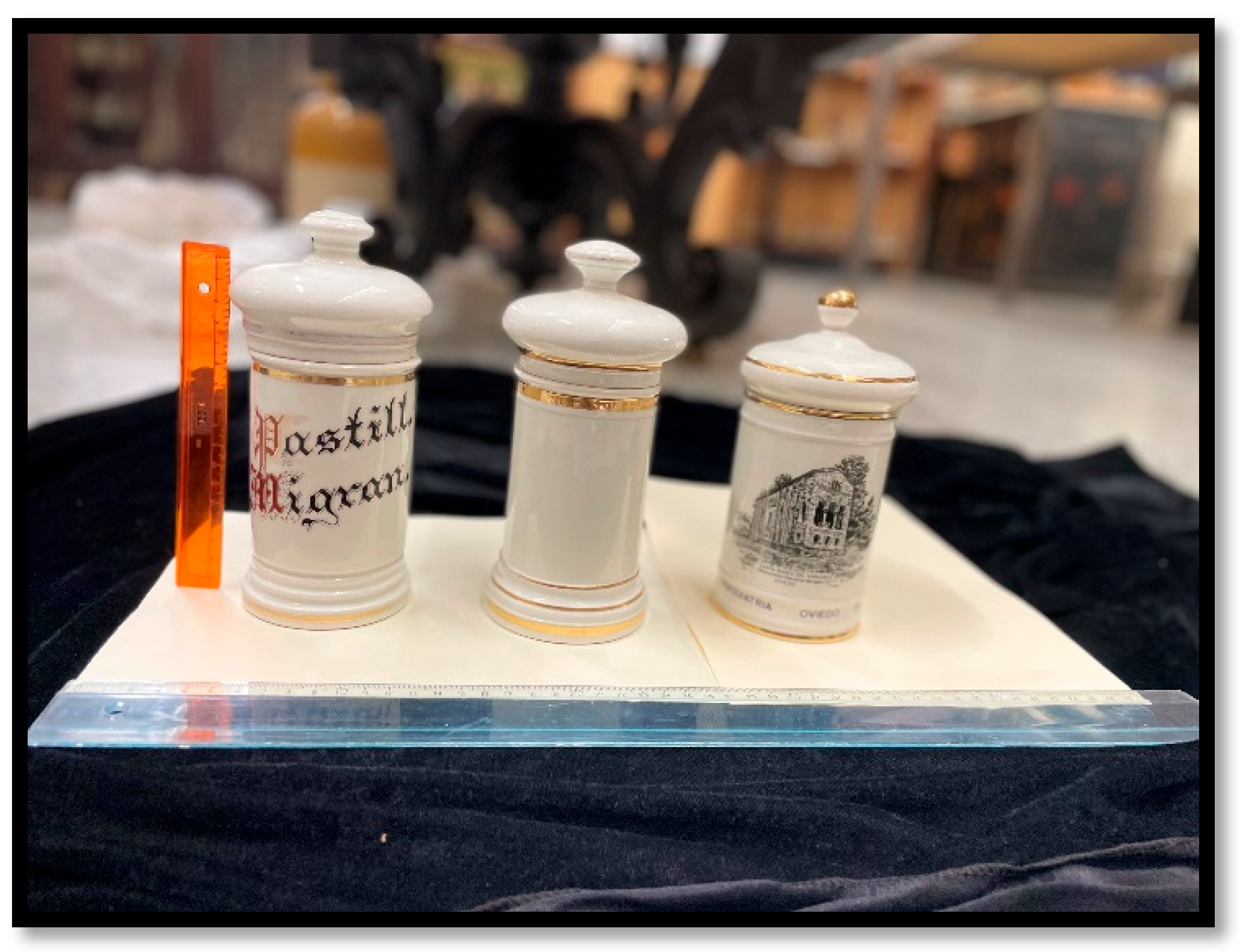
Figure 6.
Pharmacy jars donated from Murcia. In the 19th century, various jars began to appear for the preservation of medicines.
Figure 6.
Pharmacy jars donated from Murcia. In the 19th century, various jars began to appear for the preservation of medicines.
Disclaimer/Publisher’s Note: The statements, opinions and data contained in all publications are solely those of the individual author(s) and contributor(s) and not of MDPI and/or the editor(s). MDPI and/or the editor(s) disclaim responsibility for any injury to people or property resulting from any ideas, methods, instructions or products referred to in the content. |
© 2025 by the authors. Licensee MDPI, Basel, Switzerland. This article is an open access article distributed under the terms and conditions of the Creative Commons Attribution (CC BY) license (http://creativecommons.org/licenses/by/4.0/).
Copyright: This open access article is published under a Creative Commons CC BY 4.0 license, which permit the free download, distribution, and reuse, provided that the author and preprint are cited in any reuse.