

Submitted:
17 December 2024
Posted:
18 December 2024
You are already at the latest version
Abstract
The study analyses the evolution of industrial heritage in the Ciudad Rodrigo region, from its initial form to its current role as a cultural asset within the tourism sector. The study identifies and analyses the old mills in the region, distinguishing between those that have been abandoned and those that have been recovered for tourism purposes. Various historical sources have been used to do so, highlighting the Cadastre of the Marquis of Ensenada (mid-18th century). The aim is to determine the impact of this evolution on the local economy, with special attention to the role of tourism as a driver of territorial development through the enhancement of this industrial heritage using tourist routes. The results emphasise the importance of heritage recovery as a strategy to revitalise rural areas, highlighting the importance of tourism in the local economy, and as a key element for the sustainability of the territory.
Keywords:
Industrial heritage
; Sustainability
; Flour Mills
; Tourism
; Smart Tourism Destination
; Tourist rutes
; Enhancement
; Ciudad Rodrigo
; Spain
1. Introduction
In the context of the valuation of industrial heritage, old flour mills constitute a singular testimony to the relationship between humanity, technology and the environment. In the region of Ciudad Rodrigo, in the province of Salamanca, these spaces have played a fundamental role in the local economy for centuries. Currently, they are the subject of a transformation process that combines their conservation with the creation of a new cultural and tourist dynamic. The buildings were originally constructed for the purpose of grain milling and other industrial activities. They have since become a pivotal resource for the sustainable development of rural areas and the diversification of the regional economy.
The rehabilitation and conservation of this heritage has enabled the preservation of its historical and architectural value, while simultaneously facilitating its adaptation to new uses that enrich the cultural space surrounding the town of Ciudad Rodrigo. The rehabilitated mills have been transformed into a variety of facilities, including interpretation centres, museums and leisure facilities. These have been upgraded and contribute to the creation of innovative and intelligent tourist experiences that value the history, identity of the territory and the environment in which they are located. This transformation also promotes sustainable tourism, in line with global strategies to minimise environmental impact and encourage the involvement of local communities in the use of their heritage.
This article examines the role of these former industrial spaces, including flour mills, fulling mills, and some mills, in the Salamanca region of Ciudad Rodrigo. Through a series of tourist routes, the region is promoting rural development and redefining the cultural landscape of the area. The impact of these initiatives is analysed from an integral perspective, addressing economic, social and environmental aspects, with an emphasis on sustainability and the role of tourism as an engine of transformation. Furthermore, the article reflects on the challenges and opportunities that arise when integrating these spaces into local development strategies, reaffirming their importance as living elements of heritage.
2. Literature Review. Regulatory Framework and Main Industrial Heritage Organisations
Industrial heritage, the most recent of all cultural heritages, is constituted by a set of buildings, machinery and elements used in relatively recent times. In contrast to other forms of heritage, it is not always regarded with the same degree of historical or artistic significance by the general public, as it does not necessarily align with the conventional notion of the 'old'. Nevertheless, the analysis of industrial heritage has been comprehensive and interdisciplinary, encompassing fields such as art history, architecture, anthropology, and geography, which have contributed to its expansion and enrichment beyond the traditional boundaries of these disciplines [1].
Despite its relative youth as a concept, it is of great interest to organisations, associations and administrations, which are working to achieve greater protection, conservation, interpretation, dissemination and enhancement of its value. It is pertinent to highlight some of these at different scales and territorial spheres of action (Figure 1). At the international level, the United Nations Educational, Scientific and Cultural Organisation (UNESCO) and the International Committee for the Conservation and Defence of Industrial Heritage (TICCIH) are of particular significance. At the national level, the National Plan for Industrial Heritage and Law 16/1985 of 25 June 1985 on Spanish Historical Heritage are noteworthy. In the context of our study, which focuses on the region of Castilla y León (Spain), we will also mention Law 7/2024, of 20 June, on Cultural Heritage of Castilla y León. Both the state Law 16/1985 and the regional Law 7/2024, as previously mentioned, refer to Cultural Heritage. However, they are not specific laws on industrial heritage. Industrial heritage is an integral part of cultural heritage.
The United Nations Educational, Scientific and Cultural Organisation (UNESCO) was established in 1945 and currently lists more than 1,200 World Heritage Sites in over 160 countries. Nevertheless, it was not until 1978 that an industrial heritage site was added to the list: the Royal Wieliczka Salt Mine in Poland. This declaration constituted a significant turning point in the appreciation of this type of heritage, leading to its wider recognition and the subsequent addition of new sites to the list, including the Royal Salt Mine of Arc-et-Senans (France, 1982), the 19th-century workers' village of Crespi d'Adda (Italy), and the 19th-century saltworks of Wieliczka and Bochnia (Poland). In 1995, the Derwent Valley Mills in the UK were designated as a World Heritage Site, encompassing 18th and 19th-century cotton spinning mills. Spain's first-century AD gold mines at Las Médulas were inscribed in 1997, showcasing significant evidence of their historical exploitation. In the case of Spain, the first century AD gold mines of Las Médulas (1997) with important traces of their exploitation in Roman times, the Vizcaya metal architecture ferry bridge (Figure 2) built in the Industrial Revolution (2006), and the Almadén Mercury Heritage (2012) with the largest mercury mine in the world, together with Idria in Slovenia. The following examples illustrate the diverse range of industrial heritage sites inscribed on the World Heritage List [2], which has expanded over time. They demonstrate UNESCO's ongoing commitment to this category of heritage, encompassing not only sites associated with the Industrial Revolution but also those from all historical periods.
In particular, the International Committee for the Conservation and Defence of Industrial Heritage (TICCIH) has been responsible for the protection of industrial heritage on a global scale since 1973. Additionally, it provides advisory services to the International Council on Monuments and Sites (ICOMOS). At its meeting held in Moscow on 17 July 2003, the organisation established the definition of industrial heritage as set forth in the Nizhny Tagil Charter on Industrial Heritage [3]. This definition encompasses the remains of industrial culture that possess historical, technological, social, architectural, or scientific value. A legacy that encompasses the entirety of the Industrial Revolution, which commenced at the end of the 18th century and continues to the present day. Such remains encompass a multitude of structures and systems, including factories, machinery, mines, warehouses, transport networks, and energy infrastructure. Additionally, they include spaces of social coexistence linked to industry, such as dwellings, religious temples, and educational institutions. Furthermore, the intangible elements that constitute this heritage, such as ways of life, customs and traditions, are also acknowledged.
The definition proposed by TICCIH is essentially identical to that set forth in the National Plan for Industrial Heritage (PNPI) in Spain, which was approved in 2011 and updated a previous plan that was in force between 2000 and 2010. The plan defines industrial heritage as the set of material goods, real estate and social relations generated by activities such as extraction, transformation, transport, distribution and management derived from the industrial economic model that emerged from the Industrial Revolution in the 18th century. In order to fully comprehend this ensemble, it is essential to consider it within a global framework that encompasses the environment in which it is situated, the industrial relations that shaped it, its architectural structures, the techniques employed in its processes, the archives produced as a result of its activities and the associated symbolic practices.
At the national level, legislation pertaining to heritage is in place, notably Law 16/1985 of 25 June 1985 on Spanish Historical Heritage [5]. While industrial heritage is not explicitly referenced, it is nevertheless encompassed by this legislation, as it falls within the scope of heritage delineated in Article 1.2:
“Integran el Patrimonio Histórico Español los inmuebles y objetos muebles de interés artístico, histórico, paleontológico, arqueológico, etnográfico, científico o técnico. También forman parte del mismo el patrimonio documental y bibliográfico, los yacimientos y zonas arqueológicas, así como los sitios naturales, jardines y parques, que tengan valor artístico, histórico o antropológico.”
At last, we encounter Law 7/2024, of 20 June, on the Cultural Heritage of Castilla y León [6], which makes reference to industrial heritage throughout the text. Point II of the explanatory memorandum of this law elucidates the necessity to incorporate into the regulations of this community the evolution towards new theoretical approaches set out in international and national texts in which industrial heritage is included. Article 12.1 indicates the assets that make up the Cultural Heritage of Castilla y León:
“El Patrimonio Cultural de Castilla y León está integrado por los bienes materiales e inmateriales que posean valores históricos, artísticos, arquitectónicos, arqueológicos, paisajísticos, etnológicos, industriales, científicos y técnicos, incluyendo la arquitectura tradicional y vernácula, así como los paleontológicos relacionados con la historia de la humanidad. También forman parte del mismo el patrimonio documental, bibliográfico y lingüístico.”
This legislation serves to reinforce the importance of industrial heritage and maintains the highest level of protection for Sites of Cultural Interest (BIC) by incorporating a new figure of protection within the heritage areas, which are defined as industrial ensembles. The term 'industrial ensemble' is defined in article 20.1.f as 'the set of assets linked to production, extraction, transformation, transport and distribution activities that must be preserved due to their technical, scientific or historical value'.
3. Theoretical Framework: Industrial Heritage and Its Relation to Tourism
The concept of industrial heritage, defined as the collective set of infrastructures, machinery and architectural features associated with past productive activities, has emerged as a significant tourist attraction. These spaces, restored and adapted, provide visitors with an understanding of the historical processes of industrialisation and their impact on society and the economy. The promotion of industrial tourism allows regions to preserve their cultural heritage while simultaneously creating new opportunities for economic and social development in the wake of deindustrialisation, a process that has affected numerous territories. The consequence of this is that the resulting vacuums sometimes become degraded spaces, and in other cases they are rehabilitated and integrated into the landscape, thereby facilitating the revitalisation of tourism. The revitalisation of these spaces promotes sustainability, as it avoids the demolition of historic buildings and transforms them into tourist attractions that serve to enhance the local identity of the towns in which they are located.
The interconnection between these two concepts is elucidated in the publication Tourism and Industrial Heritage [8], which elucidates the significance of industrial heritage for the advancement of tourism and for local economic growth. This is achieved through the enhancement of industrial heritage elements, including buildings, machinery, transport systems, and so forth. This work presents a variety of case studies from Europe and America, illustrating the diverse forms that industrial heritage can take. These include textile enclaves, salt mines, sugar mills, industrial villages, and railways, among other examples. Such developments are supported by the necessity for programmes and plans designed to stimulate tourism, thereby enhancing the value of this heritage, which is frequently overlooked and segregated from the more traditional cultural heritage of castles, palaces, churches, monasteries, etc.
A substantial body of research exists which elucidates the interrelationship between industrial heritage and tourism. The number of case studies has increased, with examples drawn from urban and rural contexts worldwide. The interest in industrial heritage tourism has increased in recent years and is becoming a well-established typology of cultural tourism. This is due to the growing appreciation of old productive infrastructures and their social and economic history. These sites offer a distinctive experience, allowing visitors to explore the technological evolution and working conditions of bygone eras. This type of tourism not only preserves heritage assets, but also stimulates the economic development of regions that have ceased to be active industrial centres and have become disused spaces.
The development of tourism initiatives linked to industrial heritage encompasses a diverse array of typologies, reflecting the multitude of industrial activities that have emerged over centuries. The specific activity that is most prominent in any given territory depends on the historical development of the area. For instance, in some cases, the focus is on electricity generation, as evidenced by the numerous power stations that were constructed during the Industrial Revolution. In other instances, the emphasis is on sugar production, as exemplified by the numerous mills that were built to process the sugar cane that was grown in the region. Similarly, tobacco factories and navigation channels also stand out as prominent features of many industrial heritage sites. Mines, salt mines, textile factories and railway infrastructure also feature prominently in many cases.
The United Kingdom and central Europe were the epicentres of industrialisation. Consequently, there has been considerable interest in the reconversion of industrial spaces into more attractive areas to live in in these regions. This has involved the modernisation of cities through the occupation of old, disused and even ruined factory buildings with museums, exhibition halls, art galleries and other cultural facilities. In addition, many of these buildings have been converted into libraries, supermarkets and restaurants. In the case of Wales, which was the epicentre of industrial activity during the 19th and 20th centuries, tourist attractions were created by taking advantage of the buildings that were constructed around the mines, mills, railways, and so forth [16]. It is also noteworthy to mention the Belgian case, which was among the first countries to embark on the industrial revolution and has a rich industrial history [17]. Urban regeneration projects have been undertaken in factories situated in city centres, which possess a rich and diverse industrial heritage. The Walloon region is characterised by a legacy of heavy industry, while the textile industry is a prominent feature of Flanders. Nevertheless, the majority of the country's industrial heritage is concentrated in the railway and mining sectors.
The transformation of mining heritage into a tourist destination is a particularly illustrative example of this phenomenon. The principal initiatives undertaken have been the conversion of facilities and constructions into museums and the transformation of their surrounding areas into parks. The objective was to rectify the economic and environmental damage to the surrounding area, which had deteriorated due to the activity being carried out, and to establish a significant role in the identity of the local inhabitants. Two case studies merit particular attention as illustrative examples of this phenomenon in Chile. These are the Arauco Gulf [19] and the mining area of Lota [20].
In the context of railway heritage, a multitude of proposals have been put forth, and the initiatives are highly promising for the advancement of tourism development [21]. In Europe, the Semmering railway line in Austria, which has been designated a World Heritage Site since 1998, is a notable example. It features significant engineering works, including tunnels and viaducts, and is situated in an area of considerable natural value. The track remains operational and serves as a tourist attraction, with visitors travelling the approximately 40 kilometres of the Austrian Southern Railway. However, a considerable number of the original railway tracks are no longer in use and are in a state of disrepair. The objective of restoring disused railway tracks is to preserve their historical and cultural value, transforming them into useful and attractive resources. This has been successfully achieved in a number of cases in Spain, including the Strawberry Train, the Sóller Railway, the Campos de Castilla Train and the Expreso de La Robla. This process typically entails the conversion of disused railway lines into leisure routes, thereby reviving the railway past while simultaneously promoting tourism and sustainable development. In some instances, these initiatives have been successfully implemented, as evidenced by the Trem da Vale in Brazil [22]. In other cases, revitalisation initiatives have been undertaken, such as the proposal to revitalise the Valladolid-Ariza line in Spain, specifically in the Ribera del Duero section in Valladolid, with the wine train [23].
The present study focuses on the hydraulic mills used for the production of energy, which allowed for the grinding of cereals – a crop par excellence in Castile – but which were also widely distributed throughout the peninsular territory. Flour mills were distributed throughout the territory, as their activity was integral to the daily lives of the population. Some works that focus on the industrial activity for which they were conceived, namely the milling of grain, are particularly noteworthy in areas such as La Serena in Extremadura [24], the province of Córdoba [25], along the Tagus river [26], in the Cadiz mountains [27], or in the Duero, specifically in the province of Zamora [28]. A considerable number of these structures have been abandoned and have disappeared, while many others have been restored and transformed into museum spaces, interpretation centres, multicultural enclosures for meetings and congresses, hotels and rural houses [29,30,31]. This has resulted in the mills becoming a significant tourist resource, particularly in rural areas, although there are also mills in cities. A further potential use for these structures is to provide an alternative means of economic development, with a particular focus on tourism. This could be achieved through a variety of means, including the organisation of guided tours of the old installations and the creation of tourist routes, which would offer visitors insights into the construction and historical use of the mills.
4. Study Area: Ciudad Rodrigo Region
In 1985, the Junta de Castilla y León conducted a study with the objective of developing a comarcalisation of the autonomous community. This resulted in a proposal comprising a total of 79 comarcas distributed across the nine provinces (see Table 1). Nevertheless, in 1991, only one comarca, El Bierzo in the province of León, was officially recognised by law [32], resulting in the establishment of a Regional Council. Nevertheless, despite the absence of official recognition, this comarcalisation has been employed in certain instances pertaining to the operational aspects of public services. In this regard, a network of county centres has been established, serving as the primary points of integration within the territory. These centres oversee the coordination of a range of activities, including educational, health, judicial, agricultural, commercial, and others.
With regard to the province of Salamanca, a total of 11 comarcas were established. The resulting administrative divisions were as follows: Vitigudino, Ciudad Rodrigo, La Armuña, Las Villas, Torres de Peñaranda and Las Guareñas, Tierras de Ledesma, Comarca de Guijuelo, Tierra de Alba, Sierra de Béjar, Sierra de Francia and Campo de Salamanca.
The study area of this work is the current district of Ciudad Rodrigo, which is comprised of a total of 53 municipalities (see Figure 3). The district is situated in the south-western extremity of the province of Salamanca, its boundaries defined by the Sierra de Gata to the south and the Arribes del Duero to the west, which marks the frontier with Portugal. The landscape is characterised by the 'Campo Charro', comprising extensive pastures of holm oaks and pastureland used for livestock farming. The principal river is the Águeda, a tributary of the Duero. It flows through the town of Ciudad Rodrigo. The hydrographic basin is comprised of a vast network of rivers, including the Badillo, Roladrón, and Turones, as well as numerous streams, such as La Granja, La Ligiosa, and del Muerto. Additionally, the Ahijal irrigation channel plays a significant role in the region's hydrological system. The aforementioned watercourses have facilitated the establishment of a significant milling industry, with a network of flour and fulling mills capitalising on the presence of these watercourses and the region's topographical characteristics. As stated in the Diccionario Geográfico-estadístico-histórico de España y sus posesiones de ultramar, vol. I (1845), the entry on the River Águeda in this dictionary states the following:
“AGUEDA: r. en la prov. de Salamanca: nace de las aguas que vierte al N. la falda de la sierra de Gata y principalmente en los puertos de Valverde y alta sierra de Jalama, en los confines de Castilla la Vieja y Estremadura (…) La principal utilidad de este r., de arenas de oro, como dice Ponz, y cuyas aguas puras y cristalinas han sido objeto de sonetos y composiciones de muchos poetas célebres, consiste en dar movimiento á algunos batanes y muchos molinos harineros, notables algunos de ellos por la caida de las aguas entre las peñas, cual es entre otros el molino del Diablo: á este servicio se presta con facilidad, por su gran pendiente y por la abundancia de piedra pizarrosa de que se componen sus escarpadas orillas, las cuales impiden que desde Ciudad-Rodrigo en adelante se utilizen para el riego las aguas que hasta alli vienen fertilizando multitud de linares, patatales y todo género de hortalizas. (…)”
Milling activities were of great importance in the plains of Castile, where cereal cultivation played a significant role. These activities have left behind tangible evidence in the form of industrial heritage elements, some of which have become tourist attractions and a source of revitalisation for the rural environment.
5. Results
5.1. Historical Developments
In order to develop a methodological framework for our research, we have chosen to use the current municipalities and supplement them with data from former population centres that were previously located within them. This approach may alter the perception of the entities in question, but it will not affect our representation of the evolution of heritage and its transformation.
In light of the aforementioned considerations, it is evident that the Ensenada Cadastre, which has been preserved, provides evidence that in the mid-18th century, there were a considerable number of flour mills and other mills in the region under analysis. The data provided in the state of the letter E and the 'General Answers' of the Ensenada Cadastre indicate that there were 149 mills in the region, with an estimated value of 46,055 reales de vellón (approximately 12.03% of the province of Salamanca). Additionally, there were six oil mills, which collectively yielded 7,368 reales de vellón (20.81%), and four fulling mills, which produced a total of 543 reales de vellón (4.51%) [34] (Table 2).
A century ago, the data in the Geographical-Statistical-Historical Dictionary of Spain and its overseas possessions, from the mid-19th century, compiled by Pascual Madoz, indicates a lower number of artefacts in many places. However, in others, as in the case of Alba de Yeltes, the number triples to six flour mills in a century. It is also pertinent to consider the developments in Ciudad Rodrigo, which, as the most significant urban centre, will be examined in depth, given that it has been one of the few municipalities capable of reinvigorating the region by adapting its heritage, although not so with those that were previously autonomous and are now within its municipal boundaries [35].
In the mid-18th century, the Cadastre of Ensenada indicates that the following mills were located in Ciudad Rodrigo:
“el molino del Convento de la Charidad, que produce a renta, cada año, ciento y cuarenta fanegas de trigo; el de los Alisos, propio del señor marqués de San Jil, vale de renta noventa fanegas de trigo; el molino de la Cruz, propio del mismo señor marqués de San Jil, renta ciento y diez fanegas de trigo; la azeña llamada del Muradal, propia de don Joachín Arias Pacheco, renta ciento y doce fanegas de trigo; la aceña de Caraveo, propia del marqués de Villacampo, renta ciento y diez fanegas de trigo; y la azeña que llaman de Carbonero que es propia de la viuda, hijos y herederos de Juan Galache, vale de renta al año cien fanegas de trigo”[36]
Figure 4.
Respuestas generales from Ciudad Rodrigo. Source: Archivo General de Simancas. https://pares.mcu.es/Catastro/.
Figure 4.
Respuestas generales from Ciudad Rodrigo. Source: Archivo General de Simancas. https://pares.mcu.es/Catastro/.

Volume II of the Diccionario Geográfico-estadístico-histórico de España y sus posesiones de ultramar indicates that the Agueda river traverses Ciudad Rodrigo.
“sobre el que hay un puente magnífico en esta ciudad, y entran en aquellos distintos regatos. Pasase por diferentes vados, que desde el valle hasta el Pizarral se encuentran el de Cantarranas, el de los molinos de Alisos, el del Puente, el de Barragán, el de Palomar, el del Oro y el del Carbonero” [37].
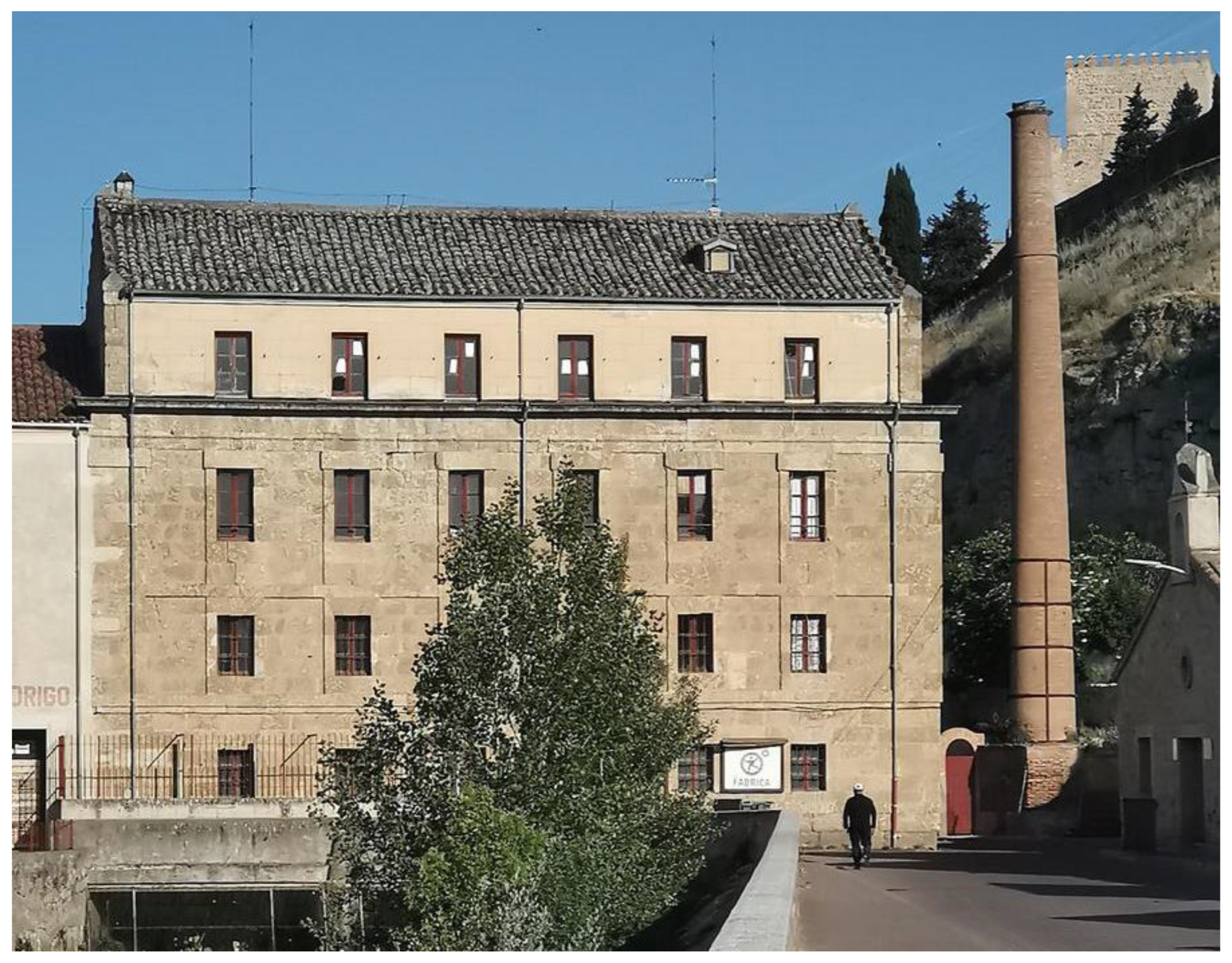
A century later, the number of mills remains similar, with only a single decrease in the number described, despite the absence of further information about them. The rationale for abandonment is attributed to the construction of the Fábrica de la Concha factory adjacent to the city wall. This factory, distinguished by its quality and capacity for flour production, led to the gradual closure of the smaller mills along the Agueda river, compounded by the imposition of higher taxes.
Figure 5.
Fábrica de la Concha. Source: es.wikiloc.com. https://es.wikiloc.com/rutas-senderismo/ciudad-rodrigo-gallegos-de-arganan-134503031/photo-85635017.
Figure 5.
Fábrica de la Concha. Source: es.wikiloc.com. https://es.wikiloc.com/rutas-senderismo/ciudad-rodrigo-gallegos-de-arganan-134503031/photo-85635017.
5.2. Transformation Towards a Cultural Space
Since the 20th century, we can see that these areas have been abandoned and forgotten. If we look at the official documentation of the local entities through the 'Planes Generales de Ordenación Urbana', we can see that most of them have disappeared and there is not even a record of them in these localities. In other words, only a few of the mills along the Agueda river have been restored and transformed so that they can be visited today. Specifically, in Ciudad Rodrigo, where the public documentation dates from 2018 [38], there are mills in need of improvement. One of them is the Rincón mill, which is described as having a rectangular floor plan measuring 14 by 10 square metres and is relatively well preserved despite being abandoned. The Caridad mill, on the other hand, is in need of integral protection, cleaning, conservation and restoration. Others, such as the Caraveo mill, are in good condition, while the Moreta mill, dating from the end of the 19th century, is being restored and requires environmental protection.
This situation led to a rethinking of the use of these spaces, which were deteriorating and being lost. For this reason, policies have been put in place for their recovery, which have led, for example, to the transformation of the Fábrica de la Concha into a socio-cultural and accommodation space. On the other hand, thematic routes have been created to promote the dissemination of the heritage, such as the so-called Route of the Mills, which aims to recover and use these spaces by promoting outdoor activities linked to hiking. This route has been signposted by the Youth Volunteering Programme and goes from La Concha to the Carbonero mill, allowing us to see the Mariego bridge or the Las Chancas mill, which is in ruins. It should not be forgotten, however, that others, such as the mill of La Ceña, have disappeared completely, and even the mill of Marino Risueño disappeared with the construction of the motorway.
Recently, the Integral Strategic Plan of the River Águeda has been launched to integrate, revitalise and restore the spaces of Ciudad Rodrigo, with the aim of adapting and conditioning a 28-kilometre route and connecting them at Sanjuanejo and Molino de Carboneros. The central axis of this route will continue to be the mills and former industrial sites. The aim is to increase the tourist offer and to highlight the importance and environmental and economic benefits of this process of conversion of the area [39].
6. Discussion and Conclussion
The transformation of the industrial heritage into tourism in the region of Ciudad Rodrigo represents both a challenge and an opportunity for sustainable rural development. This process involves not only the conservation of the industrial remains, but also their reinterpretation as cultural and tourist spaces that revitalise the local environment. Despite the progress made, there are still shortcomings and problems that limit the impact of these initiatives. Among the main challenges are the lack of investment in infrastructure, the scarce digitalisation of resources and the need for a comprehensive strategy that combines industrial tourism with the demands of today's tourists.
In this context, the concept of smart destinations emerges as a key solution to overcome these limitations [40,41,42]. The implementation of advanced technologies could optimise the management of the industrial heritage [43], improve the visitor experience and guarantee the economic, social and environmental sustainability of the initiatives undertaken, and thus of the rural environment, which in this study area is in economic and social decline, with a constant loss of population, services, infrastructure and economic activity. However, this requires a joint effort between public institutions, private companies and local bodies to ensure a fair and beneficial development for all stakeholders.
The region of Ciudad Rodrigo has a valuable industrial heritage, with watermills and fulling mills linked to historical economic activities, as has been verified by consulting the historical documentation of the Ensenada Cadastre and by fieldwork carried out in the area. However, many of these elements are not adequately maintained or recognised, many have disappeared and others are in a poor state of conservation, which makes it difficult to include them fully in the tourist circuit. However, there are other water mills that have been rehabilitated and have become an important endogenous development resource. In order to reverse the situation of a large part of this industrial heritage, it is essential to enhance its value through rehabilitation and musealisation processes that respect its authenticity and its link with the natural and cultural environment.
Tourist routes play a fundamental role in this process, acting as catalysts for endogenous development. By linking industrial resources with other local attractions, such as historical-artistic heritage or gastronomy, they promote economic diversification and the dynamisation of the territory. As well as attracting visitors, these routes create jobs and strengthen the cultural identity of rural communities. However, their success depends on proper planning that takes into account sustainability criteria and ensures the active participation of the local population.
In conclusion, the transformation of the industrial heritage in the region of Ciudad Rodrigo into cultural and tourist spaces represents a strategic opportunity for the rural development of this territory. It is necessary to address current shortcomings by adopting innovative models, such as smart tourist destinations, and to strengthen the role of tourist routes as tools for territorial cohesion. It is also essential to raise awareness of the value of industrial heritage, promoting its conservation and use as a driver of economic and social development. Only through an integrated and sustainable approach will it be possible to consolidate the Ciudad Rodrigo region as a competitive tourist destination, while preserving its historical and cultural heritage for future generations.
Author Contributions
For research articles with several authors, a short paragraph specifying their individual contributions must be provided. The following statements should be used “Conceptualization, J. Fernández Portela; methodology, J. Fernández Portela & Á. I. Aguilar Cuesta; software, Á. I. Aguilar Cuesta.; validation, J. Fernández Portela; formal analysis, Á. I. Aguilar Cuesta; investigation, , J. Fernández Portela & Á. I. Aguilar Cuesta; resources, , J. Fernández Portela; data curation, Á. I. Aguilar Cuesta; writing—original draft preparation, . Fernández Portela & Á. I. Aguilar Cuesta; writing—review and editing, J. Fernández Portela.; visualization, Á. I. Aguilar Cuesta; supervision, J. Fernández Portela; project administration, J. Fernández Portela & Á. I. Aguilar Cuesta; funding acquisition, J. Fernández Portela & Á. I. Aguilar Cuesta.
Funding
Please add: The APC was funded by Ministerio de Industria, Comercio y Turismo del Gobierno de España through the Research Project: Los espacios transfronterizos en lucha por sobrevivir: turismo sostenible, población y geotecno-logías en el espacio piloto de Ciudad Rodrigo (Salamanca) (TUR-RETOS2022-089)”.
Data Availability Statement
Data can be requested from the authors of this study via the e-mail addresses provided. Some of the data have been reproduced in full in this study or can be consulted on the websites from which they have been extracted, the links to which appear in the references.
Acknowledgments
This study has been carried out within the framework of the research project: Los espacios transfronterizos en lucha por sobrevivir: turismo sostenible, población y geotecnologías en el espacio piloto de Ciudad Rodrigo (Salamanca) (TUR-RETOS2022-089), funded by the Ministry of Industry, Trade and Tourism and whose principal investigators are C. Camarero Bullón (UAM) and C. J. Pardo Abad (UNED).
Conflicts of Interest
The authors declare no conflicts of interest.
References
- Pardo Abad, c. (2016). El patrimonio industrial en España. Paisajes, Lugares y elementos singulares. Akal.
- https://whc.unesco.org/es/list/.
- https://ticcih.org/wp-content/uploads/2013/04/NTagilSpanish.pdf.
- https://www.cultura.gob.es/planes-nacionales/dam/jcr:eba404cd-e170-419d-b46a-e241ebd1b1b0/04-texto-2016-pnpi-plan-y-anexos.pdf.
- https://www.boe.es/buscar/act.php?id=BOE-A-1985-12534.
- https://www.boe.es/diario_boe/txt.php?id=BOE-A-2024-15102.
- Hidalgo Giralt, C.; Palacios García, A. J. (2008). El patrimonio industrial: un elemento de dinamización del turismo urbano en Madrid. En M.A. Troitiño Vinuesa, J.S. García Marchante, & M. García Hernández (coords.), Destinos turísticos. Viejos problemas, ¿nuevas soluciones? X Coloquio de Geografía del Turismo, Ocio y Recreación (A.G.E.) (pp. 213-226). ISBN 978-84-8427-626-5.
- Pardo Abad, J. (2008). Turismo y patrimonio industrial: un análisis desde la perspectiva territorial. En Gestión turística. Síntesis.
- Fernández Fernández, A.; Fernández Portela, J. (2019). Paisajes y Turismo. UNED.
- Alba Dorado, M.I. (2018). Turismo y patrimonio industrial: los paisajes generados por la decadencia industrial como recursos turísticos. En F.J. Sánchez Jiménez (coord.), II Congreso Internacional de Patrimonio Industrial y de la Obra Pública: Patrimonio Industrial: pasado, presente y futuro (pp. 289-300). ISBN 978-84-0912038-3.
- Capel Sáez, H. (1996). El turismo industrial y el patrimonio histórico de la electricidad. En Catalogación del Patrimonio Histórico (pp. 170-195). Instituto Andaluz del Patrimonio Histórico.
- Salinas Chávez, E.; Sulroca Domínguez, F. (2010). Potencial turístico y recreativo de la agroindustria azucarera cubana. Estudios y Perspectivas en Turismo, 19(1), 123-138.
- Becker, S.R.; Dalri, A.J.; Rossini, D.M. (2022). Do fumo ao fluxo turístico - construções rurais como signo da oferta turística no Sul do Brasil. Interações (Campo Grande), 23(3), 653-668. [CrossRef]
- Pardo Abad, C.; Fernández Portela, J. (2022). El Canal de Castilla: recurso patrimonial del agua y perspectivas de uso e innovación turística. Cuadernos de Turismo, 50, 229-256. [CrossRef]
- Martín Roda, E.M.; Fernández Portela, J. (2023). La recuperación del patrimonio industrial y natural como recurso para el desarrollo turístico en el entorno inmediato al Canal de Castilla. Cuadernos de Turismo, 51, 255-279. [CrossRef]
- Price, W.R. (2021). Mining for tourists: An analysis of industrial tourism and government policy in Wales. Tourism Planning & Development, 18(4), 435-456. [CrossRef]
- Zhang, J.Z.; Cenci, J.; Becue, V.; Koutra, S. (2021). The overview of the conservation and renewal of the industrial Belgian heritage as a vector for cultural regeneration. Information, 12(1), 27. [CrossRef]
- Llurdés Coit, J.C. (1997). El turismo de patrimonio industrial y minero. Una experiencia de turismo interior inexplorada en el estado español. En M. Valenzuela Rubio (coord.), Los turismos de interior: el retorno a la tradición viajera (pp. 197-206). ISBN 84-7477-652-X.
- López, M.; Pérez, L. (2013). Sustentabilidad del turismo en el patrimonio minero: modelo conceptual e indicadores para el exterritorio carbonífero de Lota y Coronel. Eure-Revista Latinoamericana de Estudios Urbanos, 118, 199-231. [CrossRef]
- López Meza, M.I.; Vidal Gutiérrez, C. (2012). Paisaje patrimonial y riesgo ambiental: Reocupación cultural y turística del espacio postminero en Lota, Chile. Revista de Geografía Norte Grande, 52, 145–165. [CrossRef]
- Bhati, A.; Pryce, J.; Chaiechi, T. (2014). Industrial railway heritage trains: The evolution of a heritage tourism genre and its attributes. Journal of Heritage Tourism, 9(2), 114-133. [CrossRef]
- Maia, L.R.; Dias, R. (2013). Turismo y patrimonio ferroviario: un estudio de caso del ferrocarril del valle (Trem da Vale) de Ouro Preto y Mariana, Estados de Mina Gerais, Brasil. Estudios y Perspectivas en Turismo, 19(3), 394-408.
- Fernández Portela, J.; Soria Cáceres, C.H. (2013). Ferrocarril, patrimonio y cultura vitivinícola en la Ribera del Duero vallisoletana (Castilla y León, España). Cuadernos de Turismo, 32, 89-113.
- Soto Gálvez, M.; Guisado López, L.G. (2007). Los molinos hidráulicos y batanes en La Serena. Arqueología industrial y patrimonio cultural. El molino del Capellán. Badajoz: Asociación para la Conservación, Desarrollo y Promoción de La Serena.
- López Rider, J. (2011). Santaella. El patrimonio hidráulico del término municipal de Santaella (Córdoba): los molinos harineros. Boletín de la Asociación de Museos Locales de Córdoba, 12, 249-258.
- Maldonado Escribano, J. (2011). Aceñas, batanes y molinos harineros en el Río Tajo: fuentes documentales para su estudio. Norba: Revista de Arte, 31, 51-65.
- Rivero Lamela, G. (2018). Construcción del paisaje de la Sierra de Cádiz a través de su arquitectura rural: los molinos hidráulicos. Ge-conservación, 14, 64-76.
- Menéndez Jambrina, J.M. (2022). Patrimonio industrial: saltos del Duero, molinos, aceñas, batanes, pisones. En S. Olivero Guidobono (coord.), Artes y humanidades en el centro de los conocimientos. Miradas sobre el patrimonio, la cultura, la historia, la antropología y la demografía (pp. 474-503).
- Calleja García, J. (2012). Gestión patrimonial: La musealización como medio de conservación y difusión del patrimonio industrial papelero. Llámpara: Patrimonio Industrial, 5, 46-57.
- Barrera Cañellas, M.; Melo Pereira, L. (2019). El molino como apuesta innovadora en el turismo de negocios. Actes. XI Congrés Internacional de Molinologia: Memòria, arquitectura, enginyeria i futur, Mallorca, 18-20/X/2018, Aina R. Serrano Espases (coord.), ISBN 978-84-09-13622-3, pp. 399-404.
- Sureda Hueso, M.J. (2019). Molinos y sus nuevos usos. Molinos convertidos en museos en Mallorca. Actes. XI Congrés Internacional de Molinologia: Memòria, arquitectura, enginyeria i futur, Mallorca, 18-20/X/2018, Aina R. Serrano Espases (coord.), ISBN 978-84-09-13622-3, pp. 465-476.
- Ley 1/1991, de 14 de marzo, por la que se crea y regula la Comarca de El Bierzo. https://www.boe.es/eli/es-cl/l/1991/03/14/1/con.
- Almonacid Ramiro, C. (2019). Georreferenciación de cartografía antigua para la web del Servicio de Cartografía de la Universidad Autónoma de Madrid. CT Catastro, (97), 115-130.
- Estos datos han sido extraídos de las Respuestas generales disponibles en: https://pares.mcu.es/Catastro/servlets/ServletController y del Estado de la letra E de la provincia de Salamanca, disponible en: https://www.familysearch.org/ark:/61903/3:1:3Q9M-CS2F-83DB-7?i=121&cat=447799.
- On Ciudad Rodrigo, see the research of: Cabo Alonso, Á. (1990). Ciudad Rodrigo, 1750 según las respuestas generales del catastro de Ensenada. España: Ministerio de Economía y Hacienda, Centro de Gestión Catastral y Cooperación Tributaria. Colección Tabapress, 11. García Juan, L., Bernabé Crespo, M. B., & Camarero Bullón, C. (2023). Una ciudad abaluartada a través de la mirada del ingeniero militar Antonio Gaver: Ciudad Rodrigo y la defensa de la raya salmantina. Documents d'anàlisi geogràfica, 69(3), 589-610.
- Archivo General de Simancas, Dirección General de Rentas, 1ª remesa, leg. 510, fol. 30. Furthermore, thanks to the Libro de lo raíz (properties), we know that one of the owners of the mill called Carbonero was Francisco de Galache, who had a seventh of the property. It also states that it was built on the river Agueda, half a league from the town, and that it had three millstones.
- Madoz, P. (1846-1850). Diccionario geográfico-estadístico-histórico de España y sus posesiones de ultramar (2ª ed.). Madrid: Est. literario-tipográfico de P. Madoz y L. Sagasti. https://bibliotecadigital.jcyl.es/es/consulta/registro.do?id=16877.
- Plan General de Ordenación Urbana in Ciudad Rodrigo (2018). https://www.ciudadrodrigo.es/ayuntamiento/plan-general-de-ordenacion-urbana-municipal/.
- Noticias Ciudad Rodrigo. (2023, March 28). Presentación del Plan Estratégico Integral del Río Águeda. https://noticiasciudadrodrigo.com/2023/03/28/presentacion-del-plan-estrategico-integral-del-rio-agueda/.
- Ballina, F.J. (2022). "Intelligent Concept in Rural Tourism: A Comparison Between Two Periods (2016-2019)." Revista de economia e sociologia rural, Vol 60 (1). [CrossRef]
- García Cabrera, A.M., García Soto, M.G., Cruz, C., & Llinares de Bethencourt, P. (2024). "Innovative Strategies for Tourism Management: Towards a Smart Destination Aligned with the Agenda 2030." En Juana Teresa Aguiar Quintana, Francisca Rosa Álamo Vera, & Jonathon Day (Eds.), Casos de éxito en emprendimiento corporativo de empresas turísticas en los 5 continentes (pp. 339-354).
- Ramos, A. & Campo, L. (2022). "Intelligent Tourist Destinations: Technologies and Tourism in Tandil, Argentina." Ayana: Revista de Investigación en Turismo, 2(2). [CrossRef]
- Pardo Abad, C.J., & Fernández Portela, J. (2022). "El Canal de Castilla: Recurso patrimonial del agua y perspectivas de uso e innovación turística." Cuadernos de Turismo, 50, 229-256. [CrossRef]
Figure 1.
Main organisations and laws linked to Industrial Heritage. Own elaboration.
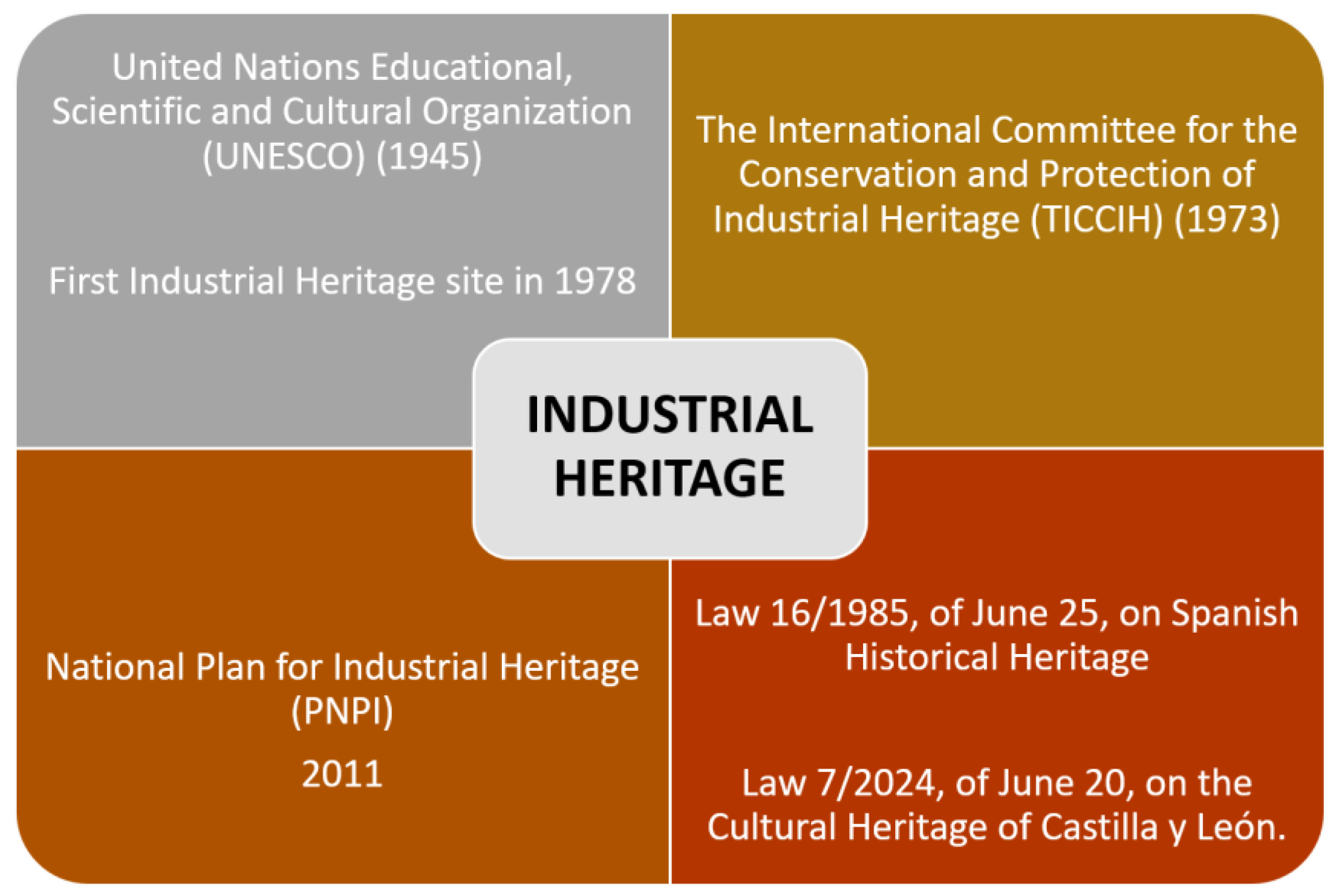
Figure 2.
Portugalete Bridge (Vizcaya, Spain). Own elaboration.
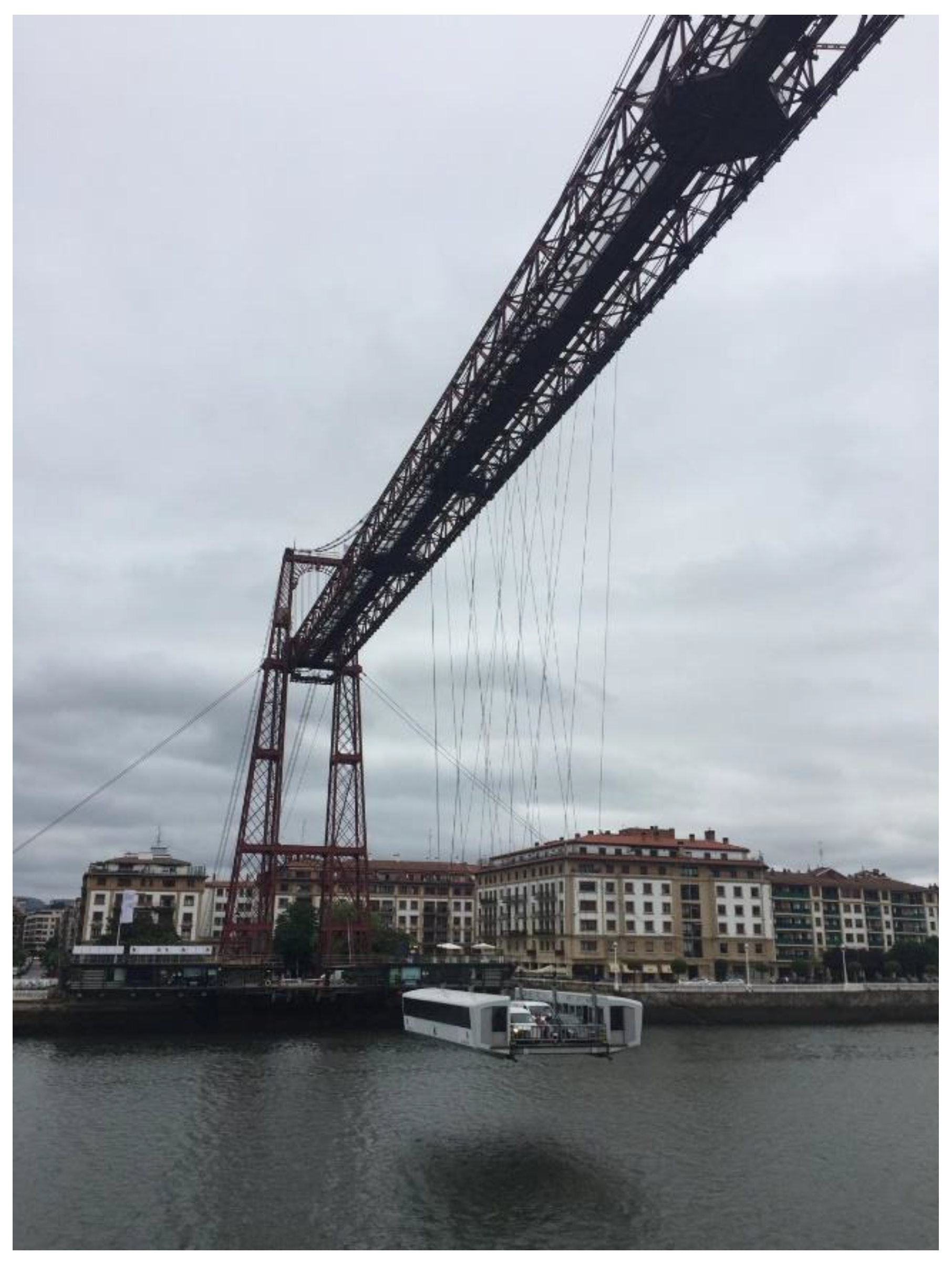
Figure 3.
Study area. Ciudad Rodrigo region. Own elaboration.
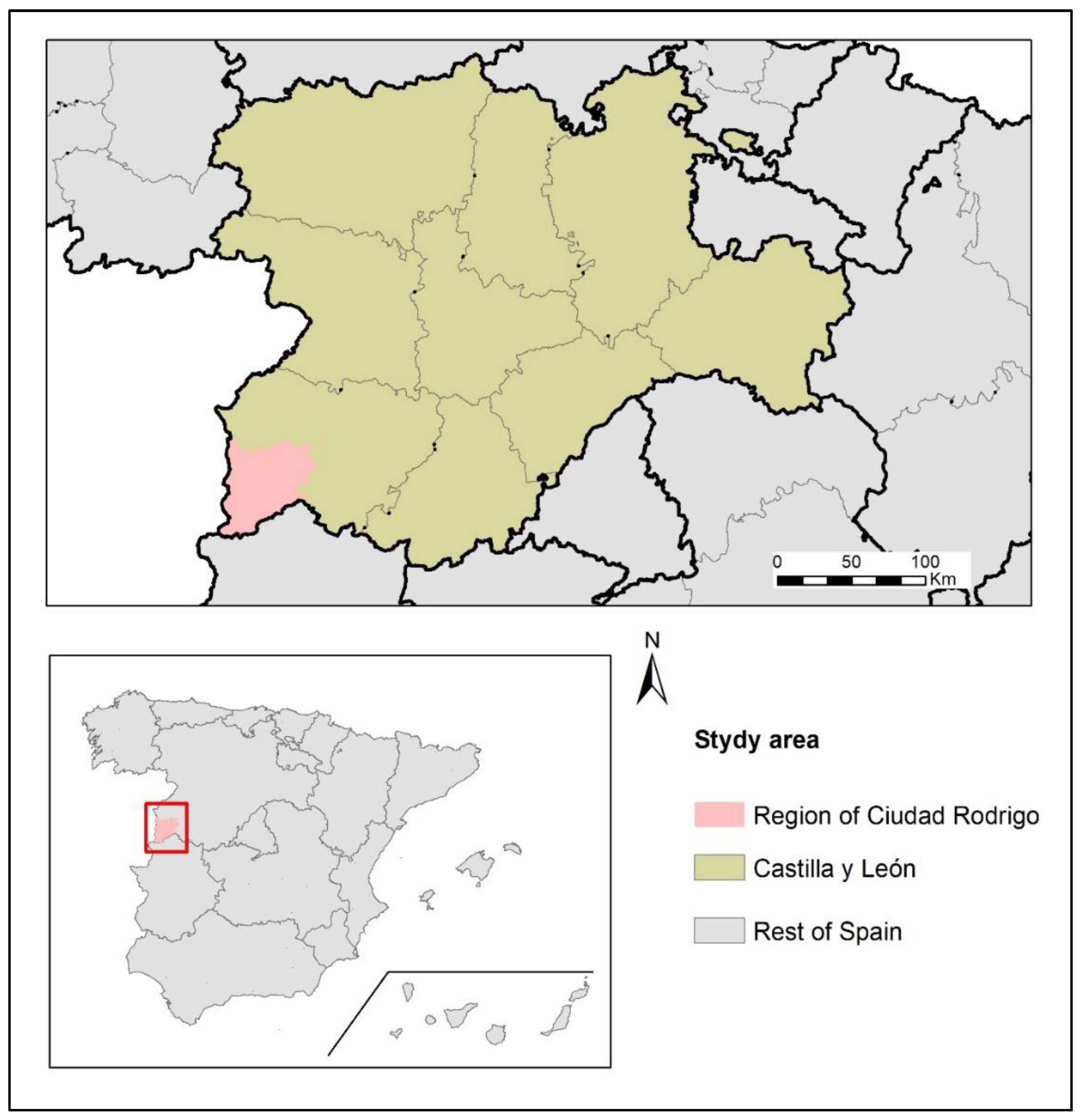

Table 1.
Number of regions by province in Castilla y León.
| Province | Number of regions |
|---|---|
| Ávila | 5 |
| Burgos | 10 |
| León | 10 |
| Palencia | 4 |
| Salamanca | 11 |
| Segovia | 7 |
| Soria | 12 |
| Valladolid | 8 |
| Zamora | 12 |
| Total | 79 |
Source: Wikimedia Commons. Own elaboration.
Table 2.
Number and economic output of industrial artefacts in the Region of Ciudad Rodrigo in the mid-18th century.
Table 2.
Number and economic output of industrial artefacts in the Region of Ciudad Rodrigo in the mid-18th century.
| Location | Flour mills | Oil mills | Fulling mills | |||
|---|---|---|---|---|---|---|
| Reales de vellón | Nº | Reales de vellón | Nº | Reales de vellón | Nº | |
| Abusejo | 0 | 0 | 0 | 0 | 0 | 0 |
| Agallas | 168 | 3 | 0 | 0 | 0 | 0 |
| Alba de Yeltes | 470 | 2 | 0 | 0 | 0 | 0 |
| Aldea del Obispo | 1413 | 4 | 0 | 0 | 0 | 0 |
| Aldehuela de Yeltes | 360 | 2 | 0 | 0 | 0 | 0 |
| Boada | 0 | 0 | 0 | 0 | 0 | 0 |
| Cabrillas | 0 | 0 | 0 | 0 | 0 | 0 |
| Campillo de Azaba | 0 | 0 | 0 | 0 | 0 | 0 |
| Carpio de Azaba | 937 | 2 | 0 | 0 | 0 | 0 |
| Casillas de Flores | 0 | 0 | 0 | 0 | 0 | 0 |
| Castillejo de Martín Viejo | 370 | 3 | 0 | 0 | 0 | 0 |
| Castraz | 375 | 1 | 0 | 0 | 0 | 0 |
| Ciudad Rodrigo | 20306 | 44 | 7368 | 6 | 293 | 2 |
| Dios le Guarde | 437 | 4 | 0 | 0 | 0 | 0 |
| El Bodón | 0 | 0 | 0 | 0 | 0 | 0 |
| El Payo | 150 | 2 | 0 | 0 | 0 | 0 |
| El Sahugo | 826 | 7 | 0 | 0 | 0 | 0 |
| Espeja | 0 | 0 | 0 | 0 | 0 | 0 |
| FuenteGuinaldo | 2230 | 10 | 0 | 0 | 0 | 0 |
| Fuentes de Oñoro | 560 | 3 | 0 | 0 | 0 | 0 |
| Gallegos de Argañán | 1112 | 5 | 0 | 0 | 0 | 0 |
| Herguijuela de Ciudad Rodrigo | 150 | 2 | 0 | 0 | 0 | 0 |
| Ituero de Azaba | 0 | 0 | 0 | 0 | 0 | 0 |
| La Alameda de Gardón | 333 | 2 | 0 | 0 | 0 | 0 |
| La Alamedilla | 24 | 1 | 0 | 0 | 0 | 0 |
| La Alberguería de Argañán | 2112 | 4 | 0 | 0 | 0 | 0 |
| La Bouza | 0 | 0 | 0 | |||
| La Encina | 1295 | 2 | 0 | 0 | 0 | 0 |
| La Fuente de San Esteban | 525 | 2 | 0 | 0 | 0 | 0 |
| Martiago | 490 | 3 | 0 | 0 | 0 | 0 |
| Martín de Yeltes | 0 | 0 | 0 | 0 | 0 | 0 |
| Monsagro | 130 | 2 | 0 | 0 | 0 | 0 |
| Pastores | 0 | 0 | 0 | 0 | 0 | 0 |
| Robleda | 1474 | 9 | 0 | 0 | 0 | 0 |
| Saelices el Chico | 1268 | 3 | 0 | 0 | 0 | 0 |
| Sancti-Spíritus | 440 | 2 | 0 | 0 | 0 | 0 |
| Sepulcro-Hilario | 0 | 0 | 0 | 0 | 0 | 0 |
| Serradilla del Arroyo | 300 | 2 | 0 | 0 | 0 | 0 |
| Serradilla del Llano | 900 | 2 | 0 | 0 | 250 | 2 |
| Tenebrón | 147 | 1 | 0 | 0 | 0 | 0 |
| Villar de Argañán | 2516 | 2 | 0 | 0 | 0 | |
| Villar de Ciervo | 1012 | 6 | 0 | 0 | 0 | 0 |
| Villar de la Yegua | 2913 | 10 | 0 | 0 | 0 | 0 |
| Villasrubias | 312 | 2 | 0 | 0 | 0 | 0 |
| Zamarra | 0 | 0 | 0 | 0 | 0 | 0 |
| Total general | 46055 | 149 | 7368 | 6 | 543 | 4 |
Source: Resumenes generales and Letra E of The Cadaster of Ensenada and Instituto Geográfico Nacional. Own elaboration.
Disclaimer/Publisher’s Note: The statements, opinions and data contained in all publications are solely those of the individual author(s) and contributor(s) and not of MDPI and/or the editor(s). MDPI and/or the editor(s) disclaim responsibility for any injury to people or property resulting from any ideas, methods, instructions or products referred to in the content. |
© 2024 by the authors. Licensee MDPI, Basel, Switzerland. This article is an open access article distributed under the terms and conditions of the Creative Commons Attribution (CC BY) license (http://creativecommons.org/licenses/by/4.0/).
Copyright: This open access article is published under a Creative Commons CC BY 4.0 license, which permit the free download, distribution, and reuse, provided that the author and preprint are cited in any reuse.


