

Submitted:
16 October 2025
Posted:
17 October 2025
Read the latest preprint version here
Preprints on COVID-19 and SARS-CoV-2
Abstract
Long COVID is the consequence of having had COVID. Long COVID has many other names including Long-haul COVID, Post-COVID conditions (PCC), Post-COVID-19 syndrome, Post-acute sequelae of SARS-CoV-2 condition (PASC) and Chronic COVID. Long COVID is the name most frequently used. COVID is not alone in having severe post infection consequences. Influenza, Ebola, Marburg, Dengue, and Lyme Disease are other infections with severe post infection consequences. Long COVID has emerged over the past few years and is ill-defined. Long COVID’s underlying science and treatments are rapidly evolving. There is no diagnostic test for it. The most-often reported lower bound on its prevalence is about 7%. Seven percent doesn’t sound like much, but under the assumption that 75% of the people in the world have had COVID, that means 420 million people in the world have Long COVID which is about 5 times the number of people killed or injured in the 20th and 21st century wars. There are several root causes for Long COVID with inflammation and mitochondrial dysfunction being the two leading villains. Long COVID prevalence goes down with recent variants, COVID vaccination, early antiviral use, being fit, being young, and surprisingly being male. The most important action to reduce the chance of Long COVID is COVID vaccination. The impact of COVID vaccination on Long COVID prevalence is quite uncertain. Papers report 10% to 100% reduction in Long COVID rates from pre-disease vaccination. The average reported reduction is 50%. The impact of vaccination on people with no comorbidities is uncertain with wide ranges being reported. There are no guaranteed treatments for Long COVID; however, some treatments offer either broad or organ-specific relief for many. This paper reviews 179 different Long COVID treatments described in 249 papers. These papers came from the author’s personal data base called The Mouse That Roared of 24,000+ papers that have been accumulated over the last five and a half years. The Mouse That Roared papers cover all aspects COVID including the SARS-CoV-2 virus, the COVID disease, therapeutics, vaccines, behavior, testing, herd immunity, Long COVID, Long COVID Treatment, Politics and National COVID responses, etc. Unlike COVID, there are no excellent treatments, which I call silver bullets, for Long COVID Fortunately, there are some treatments that help some a bit. I will call those “bronze bb’s.” Even with them, healing is very slow. The recovery time with Long COVID is longer than the body’s normal times because COVID’s damage is widespread and because COVID damages our body’s healing process.
Keywords:
long COVID
; COVID
Setting the Stage
Before discussing Long COVID treatment, a review of Long COVID is appropriate.
Long COVID is very different than COVID as summarized in the next table:

Table 1.
COVID as Compared to Long COVID.
| COVID | Long COVID | |
| Date of First Paper | February 3, 2020 Nature – 19,000+ citations Lancet – 12,000+ citations |
November 3, 2020 JAMA – 446 citations |
| What is it? | A disease caused by a virus | The multiple, diverse consequences of a disease |
| Contagious | Yes, very | No |
|
Test |
Yes – PCR and rapid antigen | No |
| % of US afflicted population | ~90% | ~7% of those who had COVID |
|
Length of illness |
Typically, 5-10 days |
Months to years or perhaps permanent |
| Sex prevalence | Male | Female |
| Vaccination Impact | Significant reduction | No Long COVID vaccine and none is likely. However, pre-COVID vaccination helps. Post-COVID vaccination does not help. |
| Therapeutic objective | Avoid severe disease | Repair COVID damage |
| Therapeutic effectiveness tests | Biochemical tests based on the therapeutic type, i.e., antiviral, anti-inflammatory, oxygenation, and blood clots. |
Human trials and highly qualitative studies |
| Therapeutic placebo effect | Some | Can be significant |
Long COVID is similar to the long-term impact from other viral, bacterial and parasite diseases, e.g., Long Ebola, Long Lyme, and influenza. The following table summarizes some of the aspects of various diseases’ post recovery conditions
Table 2.
Disease Post Recovery Impacts.
| Disease / Virus | Common Long-Term Symptoms | Organs/Systems Affected | Duration | Percent Affected |
| COVID-19 | Fatigue, brain fog, postural orthostatic tachycardia syndrome, heart palpitations, gastrointestinal issues | Brain, nerves, lungs, heart, kidney, liver, pancreas, genitals, musculoskeletal, immune system | Months to years |
~5 –15% higher after severe cases |
| Epstein-Barr | Chronic fatigue, memory issues, muscle pain | Brain, immune system, liver | Months to years | ~10–15% chronic fatigue syndrome |
| Influenza | Fatigue, weakness, rare Guillain-Barré syndrome or encephalitis | Nervous system, lungs | Weeks to months | ~1–2% mostly severe cases |
| Coxsackievirus B | Myocarditis, fatigue, chronic inflammation | Heart, muscles | Weeks to lifelong | ~5–10% |
| Zika Virus | Guillain-Barré syndrome, neuropathy, fetal defects if pregnant | Nerves, brain (fetal/adult) | Weeks to lifelong |
<1% Guillain-Barré syndrome, neuropathy ~5–10% mild neurological symptoms |
| SARS / MERS | Lung damage, post-traumatic stress disorder, fatigue | Lungs, nervous system | Months to years | ~25–40% |
| RSV | Wheezing, asthma in kids, chronic cough | Lungs, airway | Months to years | ~30–50% of children with severe RSV |
| Measles | subacute sclerosing panencephalitis (very rare), immune suppression | Brain, immune system | Years later | Rare |
| Chickenpox | Shingles, nerve pain (post theraputic neuralgia) | Nerves, skin | Weeks to years |
20–30% get shingles; ~10–15% of those get postherpetic neuralgia |
COVID and Long COVID comorbidities, other than sex, are very similar. Organ-specific comorbidities, e.g., diabetes and COPD, can increase the risk to organ damage. Sadly, just like COVID, socioeconomic and political context is a Long COVID comorbidity. A particularly surprising one, as reported by Nature [1] in July 2025, is viral rebound. It increases the odds of Long COVID by about 50% whether one has taken an antiviral or not. However, just as there are more COVID papers than Long COVID papers, PubMed lists more COVID comorbidity papers than Long COVID comorbidity papers as shown by Figure 1 which was prepared by the author. Interestingly PubMed listed a Long COVID paper in 2019 though it was not discovered until 2020!
Long COVID
Figure 2 from a National Academies of Sciences, Engineering, and Medicine [2] highlights Long COVID’s major symptoms. Over two hundred different symptoms have been reported in journal papers.
Symptoms tend to fade with time as described by the paper Persistence of Symptoms 15 Months since COVID-19 Diagnosis: Prevalence, Risk Factors and Residual Work Ability, Life, December 2022. [3] However, 1-2% of people with Long COVID in the US are disabled. Getting Social Security Disability benefits is difficult because of the lack of a diagnostic test. Cardiopulmonary testing, however, could give some insight into the degree of disability. Consequently, Social Security doesn’t and can’t report how many people with Long COVID are getting Social Security Disability benefits.
Figure 3 summarizes the slow course of recovery. While several papers [4]- [8] discussed recovery times, it is from reference 4. Notice the normal recover time of a few weeks to a few months for surgeries, bone breaks, etc. Notice the difference in recovery times for hospitalized and nonhospitalized patients which is another clue on the role of COVID severity in Long COVID. Long COVID recovery time is similar to inflammatory illness such as rheumatoid arthritis, lupus, Sjogren’s syndrome, Inflammatory Bowel Disease, etc. As will become clear, Long COVID is also related to inflammatory dysfunction.
Even after a mild COVD case, recovery can take a long time. A Clinical Infectious Disease paper [9] reported the recovery of smell or taste after mild COVID cases. Figure 4 summarizes the paper’s results.
One of the reasons the recovery time with Long COVID is longer than the body’s normal times is that Long COVID damages our body’s healing process. [10]
There were 502 papers in The Mouse that Roared that addressed specific Long COVID impacts. Figure 5, which was prepared by the author, is the distribution of those papers into various categories.
Not surprisingly, neurological and cardiovascular disruptions were at the top of the list as disruptions in these symptoms can lead to the two top Long COVID symptoms which are fatigue and brain fog.
Long COVID Prevalence
The following summary of CDC Pulse study [11] prepared by the author provides one view of Long COVID prevalence in the US.
Figure 6.
US Long COVID Prevalence [11].
Figure 6.
US Long COVID Prevalence [11].
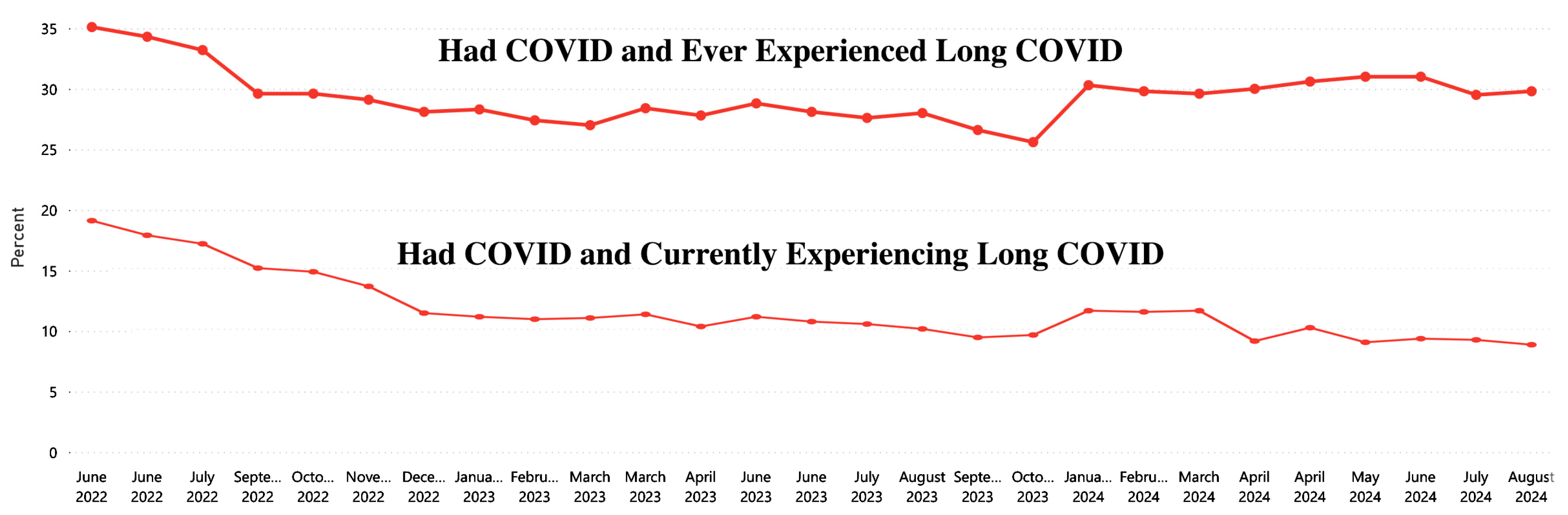
The wide range of prevalence reported in The Mouse that Roared Long COVID papers is summarized in Figure 7.
(The x-axis in the number of papers in each geographical region for each prevalence rate)
Finally, this chart from JAMA in 2021 [12], gives another view of the uncertainty in Long COVID (PASC) prevalence. Notice the huge range in prevalence (Y axis) regardless of when the prevalence was tested after infection (X axis.) The chart is a random scatter plot.
Figure 8.
Long COVID (PASC) Prevalence Versus Time [12].
Figure 8.
Long COVID (PASC) Prevalence Versus Time [12].
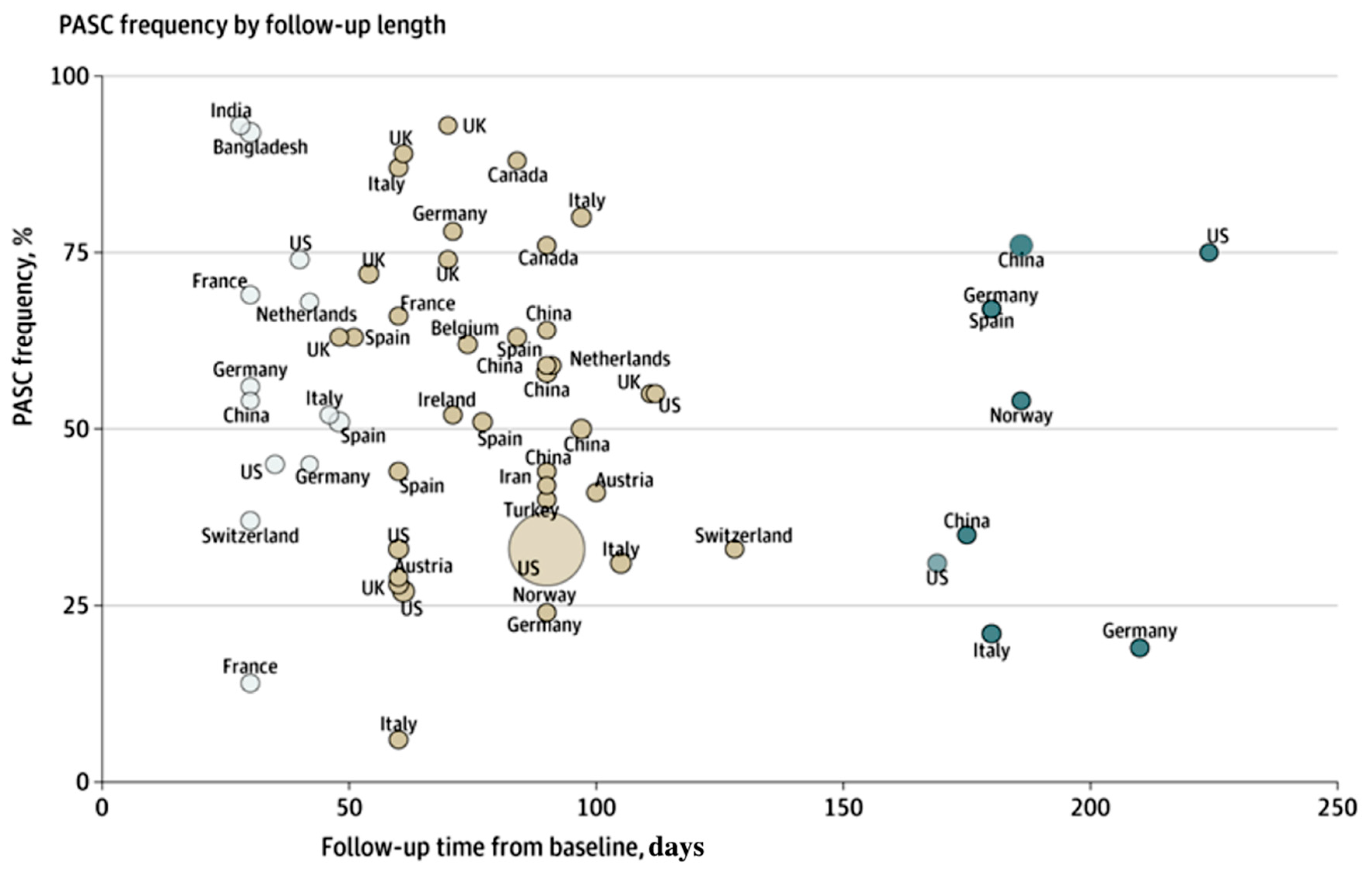
Scatterplot representing each study’s PASC frequency (%) plotted according to length of follow-up from baseline (in days), represented by a circle proportional to the study’s sample size and annotated according to country
Prevalence by age isn’t as one might expect. A 2021 Office of National Statics [13] report included this figure.
In a similar vein, prevalence differs by variant and vaccination status as shown by Figure 9 from a New England Journal of Medicine paper [14].
In Figure 10A, the numbers at the bottom are additional DALY’s as days post-infection increase.
There are many reasons for this high uncertainty in prevalence.
1. First, and most importantly, there is no diagnostic test for Long COVID. Thus, assessment techniques are qualitative. For example,
- i.
- There are self-assessments with different criteria, e.g., walk test or how are you feeling?
- i.
- ii. Frequently there are not controls who also could have Long COVID symptoms, e.g., fatigue or depression.
- i.
- iii. There are mail surveys, on-line forms, phone calls, all of which have low response rates. Someone who doesn’t feel well is more likely to respond than someone who feels great which bias results.
- i.
- iv. There are different measures such as rate, risk ratios, and fully recovered.
- i.
- v. While there is a large symptom base, only a few symptoms are usually measured, usually fatigue or brain fog.
2. The pandemic changed behaviors, e.g., less exercise and sleep, which can result in one having “Long COVID” symptoms.
3. Comorbidities affect the results. The comorbidities include:
- i.
- Pandemic medical impacts, e.g., depression which can overlap with and can exacerbate Long COVID symptoms.
- i.
- ii. Age, sex, BMI, diseases, frailty, genetics
- i.
- iii. Variants
- i.
- iv. Therapeutics
- i.
- v. COVID Vaccination
4. There are different Long COVID definitions.
Reinfection has an interesting impact on Long COVID prevalence. A May 2025, medRxiv preprint [15] reported that Estimated long COVID risk following any COVID-19 infection was similar among 22 496 online survey participants (17.0% [95%CI, 16.3%–17.6%] and 3 978 telephone survey participants (15.9% [14.6%–17.2%]. The cumulative risk increased with the number of infections, but reinfections were associated with three times lower risk of long COVID than first infections.
Of course, just like prevalence, there is great variation on reported reinfection risk. An October 2023, Open Forum Infectious Disease [16] paper reported Long COVID was reported by those ≥16 years at a rate of 4.0% of first and 2.4% of second infection, respectively. The corresponding estimates among those aged <16 years were 1.0% and 0.6%. The adjusted odds ratio for Long COVID after second compared to first infections was 0.72 for those ≥16 years and 0.93 for those <16 years. Thus, again, prevalence is complex.
Long COVID Root Causes
Long COVID has many root causes which are at the heart of Long COVID and the slow recovery from it. The major ones are:
- Inflammation: Inflammation is probably Long COVID’s major root cause. Inflammation includes recruiting white blood cells and the release of cytokines that initiate tissue swelling and injury.
- Persistent viral infection: viral antigens, RNA, and SARS-CoV-2 proteins remain present and active in the body’s tissues following acute infection and continue to damage it.
- Viral particle damage to organs. A COVID case results in 1-30 trillion viral particles in the body. Some proteins, particularly the spike, the nucleocapsid, and the nonstructural protein 1 (nsp1) directly damage organs.
- Autoantibodies: Infection with the SARS-CoV-2 virus can trigger autoimmune diseases.
- Biological processes and organs are damaged.
- a. All our organs are damaged.
- b. Mitochondria, our energy workhorses, are greatly damaged by COVID. This results in fewer oxygen carrying molecules called ATP being generated for our bodies. This is a significant contributor to fatigue and brain fog.
- c. The proteins that are involved in healing are dysregulated.
The following figure which was prepared by the author summaries the number of The Mouse that Roared papers that addressed these root cause damages.
Figure 11.
Long COVID Root Causes – Figure Prepared by Author.
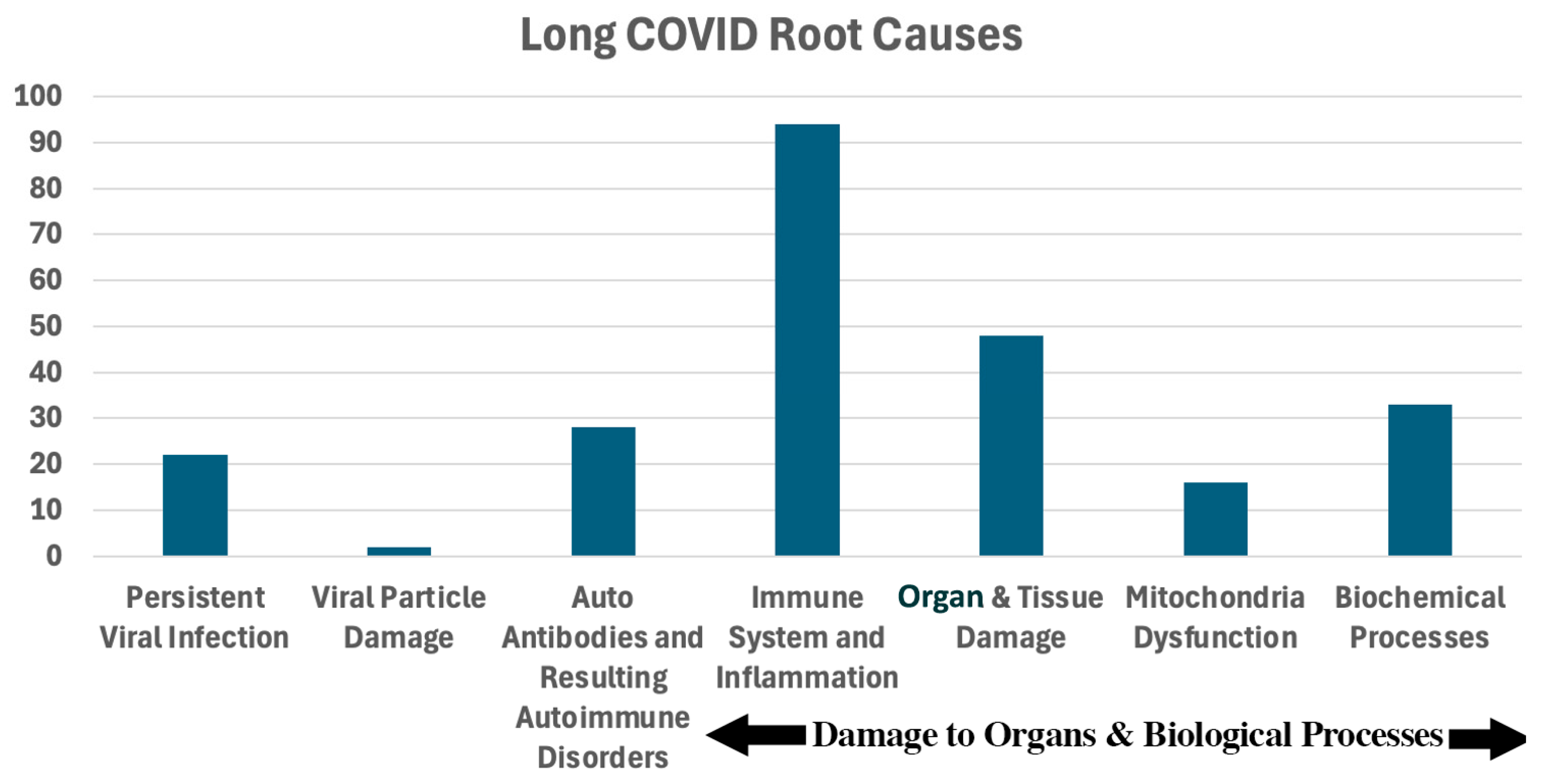
Thus, Long COVID is not a disease; rather, it is the multifaceted consequences of a disease.
Long COVID Biochemical Markers
Though there is no diagnostic test for Long COVID, there are many medical, biochemical and lifestyle markers that provide clues that Long COVID is present. They include but are not limited to biochemical markers for the following long list of symptoms, organs, and body characteristics. This long list is another indication of Long COVID’s broad impact to the body:
Pain
Blood System
Vascular System
Retinal Microcirculation
Musculoskeletal Changes
Orthostatic Dysfunction
Cardiac Changes
Olfactory Bulb Changes
Lung
Diaphragm Weakness
Gut Permeability
Proteins
Metabolites
Bacteria Change
Brain Changes
Bacteria
Autonomic Disfunction
Connectivity
Microglial And Macrophage Activation
Brain Entropy
Kinesiophobia
Reaction Time
Chemosensory Impairment
Neurotransmitters
Serotonin
Protein Markers
Plasma Changes
Changes In Gene Expression
Viral Proteins
Spike Protein
N Protein Anti-Nucleocapsid Igg
Antibodies, Autoantibodies
Antibody Levels
Nasal
Autoantibodies
Coronavirus Imprinting
Immune System
Immune System Dysregulation
Previous Coronavirus Infection
Metabolic Changes
T Cells dysregulation
Monocytes
Tryptophan & Kynurenine
Myeloid Cells
Mitochondria, Oxidative Stress
Genetics
Genes
Epigenetic Changes
Reducing the Chances of Long COVID
As previously noted, the chance of Long COVID increases with COVID severity. Thus, the most important action to reduce the chance of Long COVID is pre-disease COVID vaccination. The assessments of vaccine impact are further complicated by vaccine type, age, variant, whether the person is immunocompromised, etc. The following chart shows the number of COVID vaccination impact on Long COVID papers in The Mouse that Roared.
Notice that even something as simple as the impact of vaccination on Long COVID rates has a wide range of answers. The average is 50%, but studies reported as little as 10% and as much as 100%!
Figure 12.
- Papers Reporting Impact of COVID Vaccination on Long COVID Figure Prepared by Author.
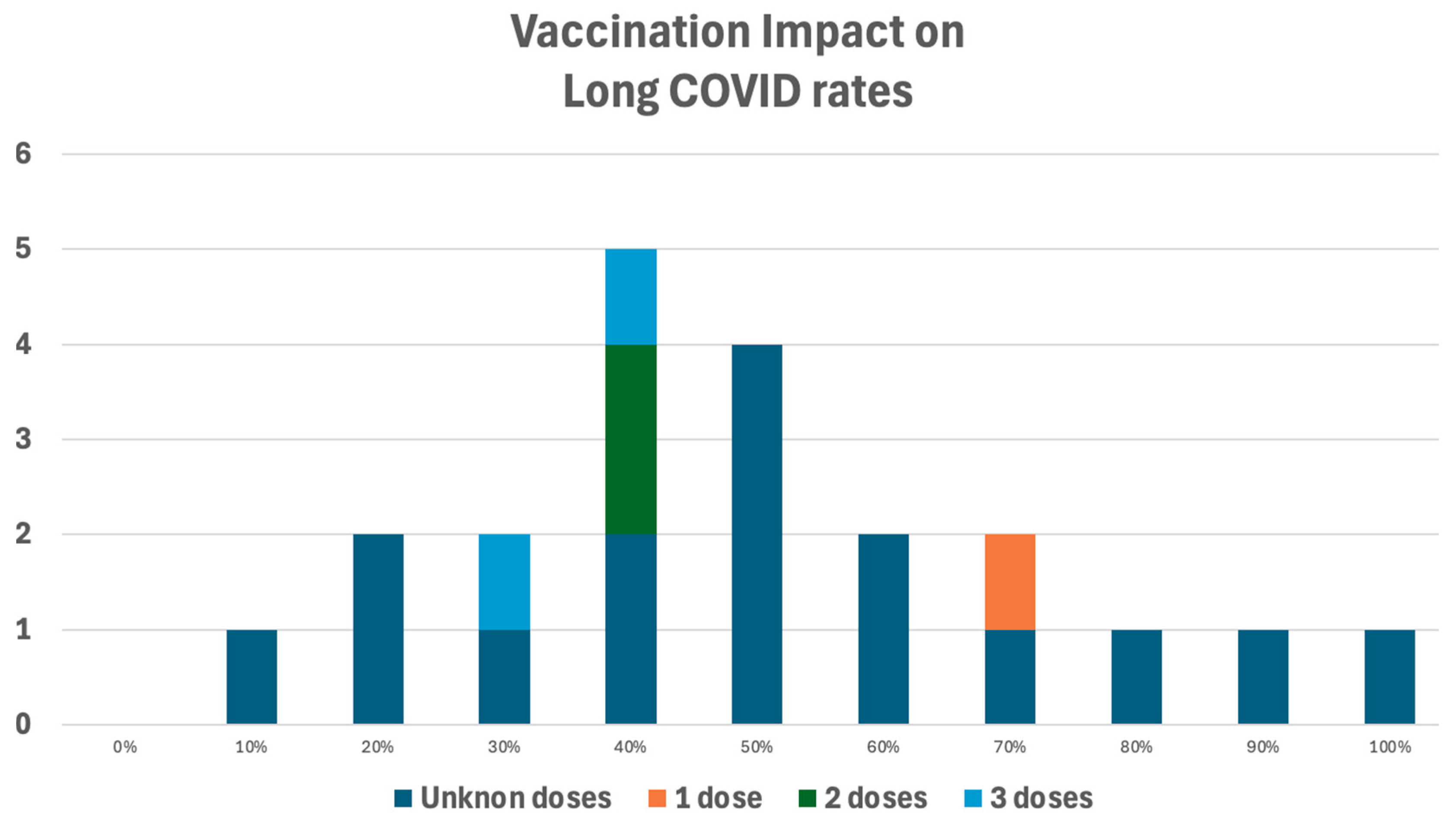
The X-Axis is the number of papers for the reported reduction in Long COVID rates.
Long COVID Treatments
Vaccines and antivirals were COVID has silver bullets. They dramatically reduce COVID prevalence and severity. Long COVID has scattered, specialized therapeutics. None are as effective as COVID vaccines or approved antivirals.
The number of Long COVID versus COVID studies in June 2025 provides some insight into the research base associated with each malady.
Table 3.
Long COVID and COVID Studies.
|
COVID Treatments |
Long COVID Treatments |
|
| FDA clinical treatment trials | 6,000 | 545 |
| PubMed published papersa | 198,000 | 17,000b |
| The Mouse the Roared papersa | 3,800c | 269d |
Procedures, drugs and nutrition. b. The number of papers is likely much smaller than 17,000, as many were just COVID. c. 14 drugs were approved by the FDA for US use. None was discovered during the pandemic. d. 179 unique Long COVID treatments. None have been FDA approved for US use.
One can get further insight into the relative progress of Long COVID treatment by analyzing the FDA Long COVID clinical trials using the FDA Clinical Trial Tracker. As of June 2025, 176 of the 545 trials are in the US. While one trial can address multiple issues, these are the symptoms addressed by the FDA trials:
Table 4.
Long COVID Symptoms Assessed by FDA Clinical Trials.
| Symptom | FDA Clinical Trial |
| Fatigue | 279 |
| Mental Health | 138 |
| Persistent Infection | 106 |
| Inflammation | 66 |
| Brain Fog | 63 |
| Antiviral | 51 |
| Gut Micro biodome | 16 |
| Microclotting | 14 |
| Cognitive Behavioral Therapy to Treat It | 12 |
| SSRI Antidepressants to Treat It | 12 |
| Auto Immune Diseases | 12 |
| Mitochondrial | 11 |
| Dementia | 10 |
As of June 2025, no Long COVID clinical trial had posted clinical results. However, it is important to note that many Long COVID symptoms such as blood clots have approved therapeutics.
Sadly, the Long COVID FDA trial rate decreased in 2024 and 2025.
Table 5.
FDA Clinical Trials.
| Year |
Long COVID Trials Started |
| Pre 2020 | 2a |
| 2020 | 43 |
| 2021 | 120 |
| 2022 | 142 |
| 2023 | 155 |
| 2024 | 83 |
| 2025 - through 8/31 | 57 |
a. This number demonstrates the frailty of the FDA clinical trial search program. One of the two studies was 2018. The other study said Long COVID, though Long COVID didn’t appear until mid 2020.
Nonetheless, there is good reason to hope that progress will be made on Long COVID treatment.
- The scientific community is early in focusing on Long COVID, so clearly other treatments will be discovered.
- The huge, order of $2.3 billion, US Long COVID project called Recover Project is just gathering momentum. This will be a long term, well-funded project if for no other reason than the order of 20 million Americans suffer from Long COVID. This website lists its published papers Recover Project Published Papers.
- Though not as large as the US Recover Project, many countries have large Long COVID projects including, but not limited to the UK, Canada, Australia, China, Japan, South Korea, the European Union, and the Word Health Organization.
- That is, the number of Long COVID treatment papers in The Mouse That Roared dropped precipitously in July and august 2025.
Treatment Strategy
This section will outline the approach one might wish to follow if one believes he/she has Long COVID.
I. Get the Right Set of Doctors
If the impact is focused, e.g., arrythmias, orthostatic hypotension, or loss of smell, then seeing an expert in that illness, who is also expert in Long COVID, is the right approach. If the impact is broad, one should pursue broad, Long COVID care.
II. Go to a Long COVID Clinic
A May 2024, BMC Health Services Research [17] paper noted that the economic and health burden of COVID-19 has transformed the healthcare system in the US. Hospitals have adapted to the heterogeneity in Long COVID symptoms and the sheer number of people affected by this condition by building Long COVID centers and programs.
43 out of 50 of the top hospitals in the US offer Long COVID treatment services. The most common specialties were psychology (n = 25; 58%), neurology (n = 25; 58%), and pulmonary (n = 24; 56%). Sixty-three trials of the 134 Long COVID clinical trials had at least one top hospital listed as a study site.
Thus, if the impact is broad-based, e.g., brain fog and fatigue, one will likely need to see multiple doctors, e.g., a pulmonologist and a rheumatologist (for the inflammatory nature of the condition) at a Long COVID clinic depending on where you live. Johns Hopkins would be a great place to go if you live near Baltimore. It has a well-established Long COVID program. Johns Hopkins Long COVID Program
The Long COVID Clinics website lists 412 Long COVID Clinics. Be sure to go to one associated with one of the top hospitals. Some of the Long COVID Clinics listed on the website only provide specialized treatments such an oxygen chamber.
Starting in 2020, the Veterans Health Administration (VHA), established a national network of Long COVID Clinics (LCCs). A Health Affairs Scholar paper [18] reported a retrospective cohort study of 494,547 veterans with documented SARS-CoV-2 infection from March 2020 to April 2022. Researchers examined trends in the U09.9 ICD-10 diagnosis code used for Long COVID in the VHA up to May 2024. Overall, 5.9% (n=29,195) of patients in the cohort had a documented U09.9 code and 2% had at least one LCC visit. Among Veterans with a U09.9 code, 17.4% used LCCs. LCC use rates were low across all patient subgroups. LCCs were more available to Veterans residing in the South Census region than Veterans in other regions.
In June 2025 the World Health Organization issued guidelines for COVID and Post COVID [9]
World Health Organization COVID and Post COVID Guidelines
U.S. Department of Health and Human Services Actions
In September 2023, the U.S. Department of Health and Human Services allocated major funding to 12 Long COVID clinics across the country.
The Long COVID Alliance is another good LONG COVID resource for understanding LONG COVID research and patience support
III. Consider Having Assessments for Root Causes
As previously discussed, there are several root causes for Long COVID. It could be worth getting tested for them to help guide treatment.
- Persistent Inflammation The main test for inflammation is for the IL-6 cytokine. Persistent Inflammation Test describes the test. Inflammation is probably the most important test as hyperinflammation is a leading cause of severe COVID which leads to the most severe cases of Long COVID.
- 2. Mitochondrial Dysfunction This is probably the second most important test. Initial laboratory tests such as lactate, pyruvate, urine organic acids, and plasma amino acids can inform the clinician about possible mitochondrial dysfunction.
- Persistent Infection The main tests are:
i. Antibody Testing: Persistence of IgM or high IgG titers might indicate ongoing antigen exposure.
ii. T-cell Activation Profiles: Specialized tests can assess T-cell responses to SARS-CoV-2 antigens, indicating ongoing immune activity against the virus.
- 4.
- Autoantibodies Testing for autoantibodies triggered by COVID-19 involves specialized laboratory assays that detect the presence of antibodies targeting the body's own tissues. They are several types.
i. Blood Tests to Detect Specific Autoantibodies
a. Enzyme-Linked Immunosorbent Assay (ELISA): It is used to detect autoantibodies such as anti-nuclear antibodies (ANA), antiphospholipid antibodies, and others.
b. Indirect Immunofluorescence: It is often used for detecting ANA or anti-neutrophil cytoplasmic antibodies (ANCA).
c. Multiplex Autoantibody Panels: These are comprehensive tests that simultaneously evaluate multiple autoantibodies associated with autoimmune diseases.
ii. Functional Assays
a. Neutralization Assays: These check for autoantibodies interfering with normal immune pathways, such as those targeting type I interferons which is linked to severe COVID-19.
b. Complement Activity Assays: These evaluate the activity of autoantibodies against the complement system.
iii. Tissue-Specific Tests
a. Thyroid Function Tests: If autoimmune thyroiditis is suspected, specific antibodies like TPOAb (thyroid peroxidase) can be tested.
b. Liver Function-Related Autoantibodies: For autoimmune hepatitis, testing for anti-LKM1 or ANA might be necessary.
iv. Specialized Tests for COVID-19-Triggered Autoimmunity
a. Anti-Interferon Autoantibody Testing: This is relevant for severe COVID-19 cases as these autoantibodies may impair the immune response to the virus.
b. Anti-Phospholipid Antibodies (aPL): Increased risk of blood clots in some COVID-19 cases can be linked to these autoantibodies.
c. Cytokine Autoantibodies: These assess disruption in immune signaling pathways, especially in post-COVID syndromes.
5. Gut microdome dysfunction – there are many tests.
IV. Summarize Relevant Personal Medical Data
Prepare a summary of your relevant health data. Include:
- Pre-existing health issues being sure to include any autoimmune disease and other COVID comorbidities such as diabetes, active cancer treatment, etc. This is important because as noted above, organ-specific comorbidities can increase the risk of COVID-caused organ damage.
- COVID case data, including COVID dates, tests, severity, and therapeutics.
- COVID vaccination history.
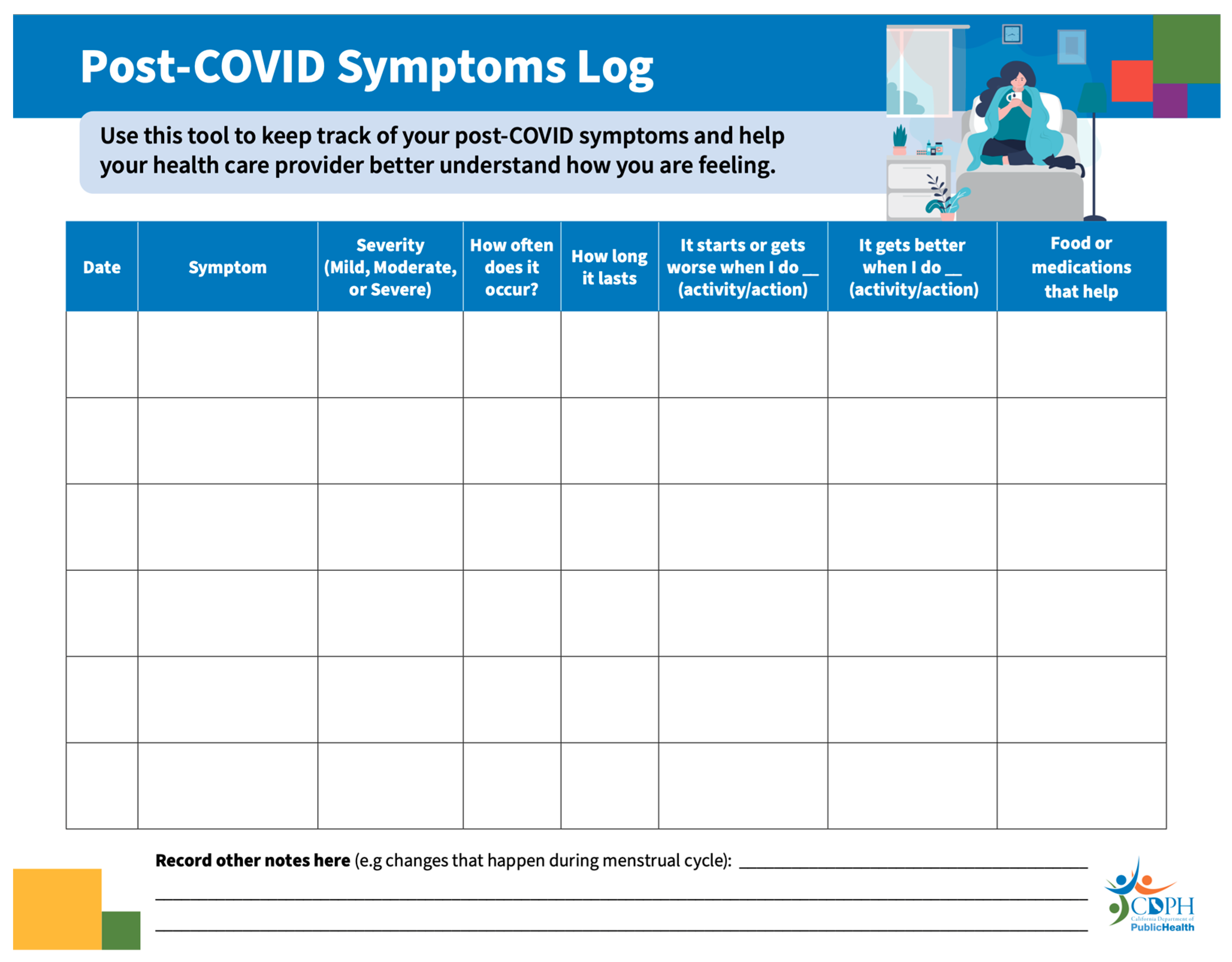
- Long COVID history - start date, symptom trends, and treatments. The Cleveland Clinic’s table is an excellent way to summarize Long COVID symptom data.
Figure 13.
Post COVID Symptom Table from Clevland Clinic.
V. Discuss Candidate Treatments
In going to the Long COVID Clinic, it is worthwhile having an idea of potential treatments. You might wish to discuss them with the doctors at the Long COVID Clinic.
Figure 14, which was prepared by the author, graphs the types of Long COVID treatment papers from The Mouse That Roared versus time.
Three points regarding the chart:
- Most of the root cause papers address inflammation.
- The choice of assigning a paper to Broad Symptoms or Root Cause/Inflammation was a bit arbitrary and was often based on the way the paper’s data was presented.
- Notice how few organ-specific papers were written. This is not surprising as treating arrythmia, for example, induced by Long COVID is likely little different than treating non-COVID arrythmias.
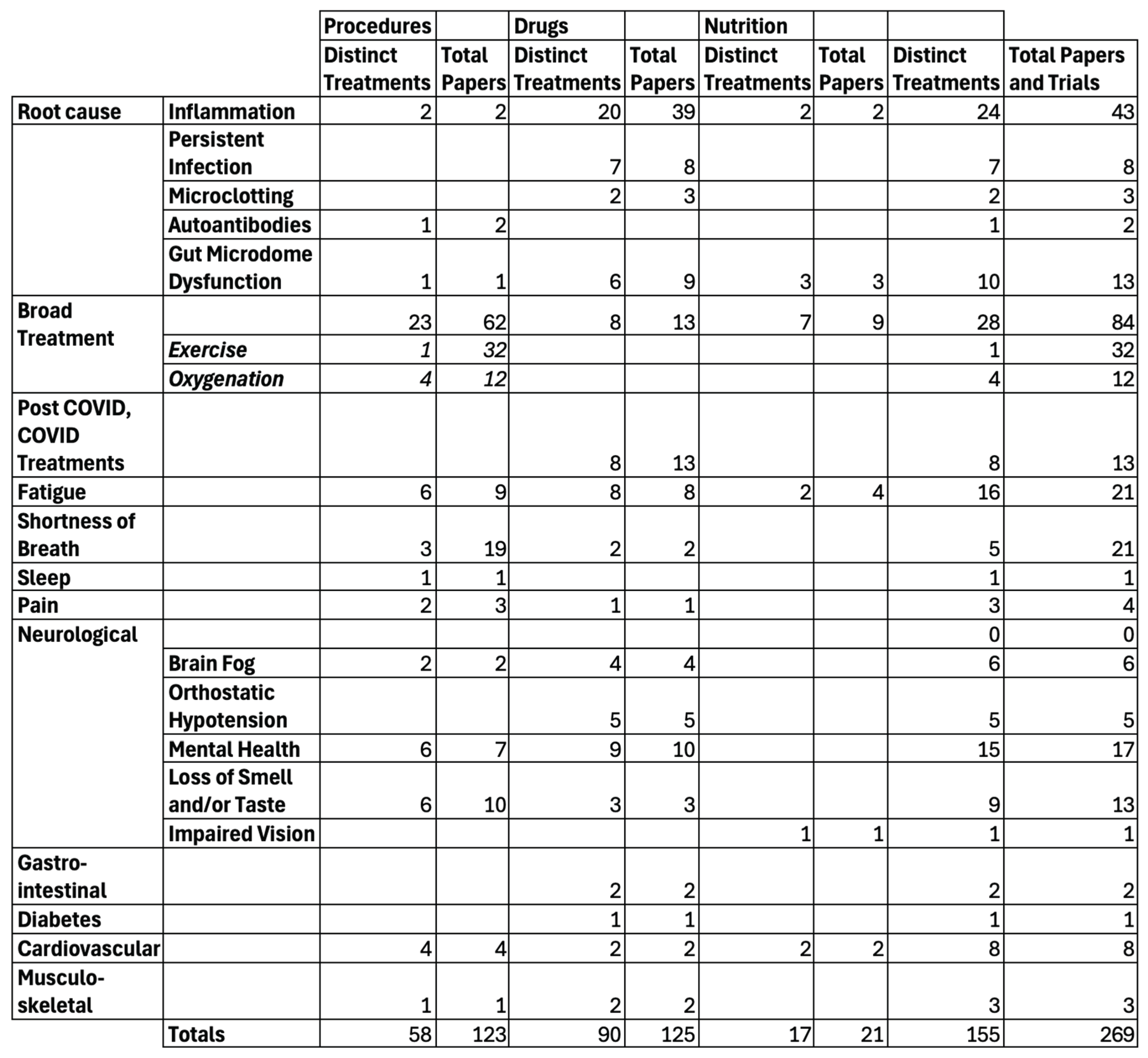
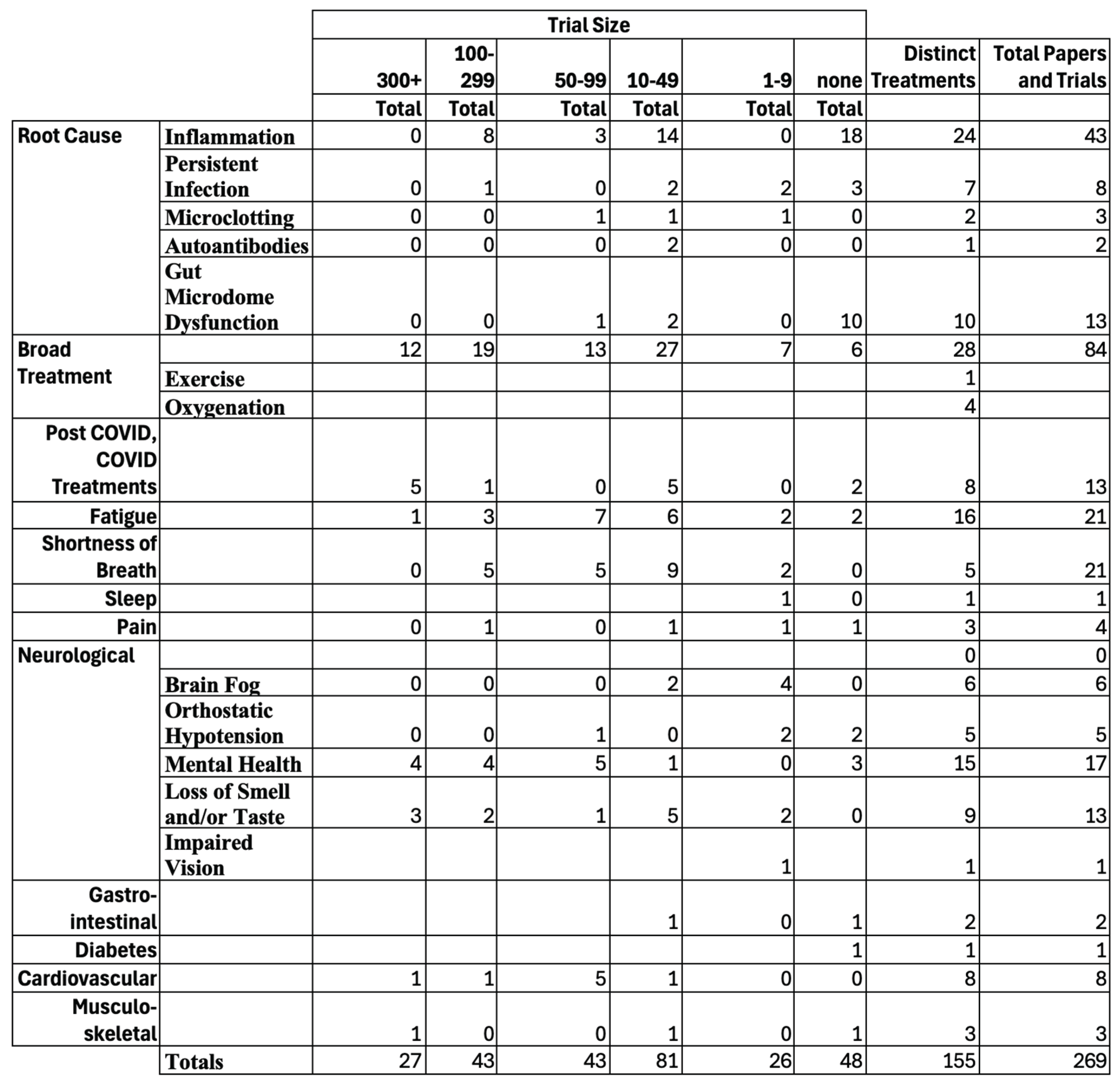
The tables in appendix 1 summarizes the distinct treatments and the total number of papers, including the number of cases reported in the papers as of June 2025. Other more recent papers are included in the later discussion. As of the June 2025 analysis, there were 269 papers covering 168 distinct treatments.
Of them:
- Only 70 papers reported total human trial sizes of 100 or more. This would be the minimum size for an FDA phase 2 trial which determines a treatment’s effectiveness. Only 27 papers reported studies of 300 or more humans in their trials.
- If one combines trials into the group that had the largest number of people in one trial, then exercise studies accounted for more than 10% of the papers.
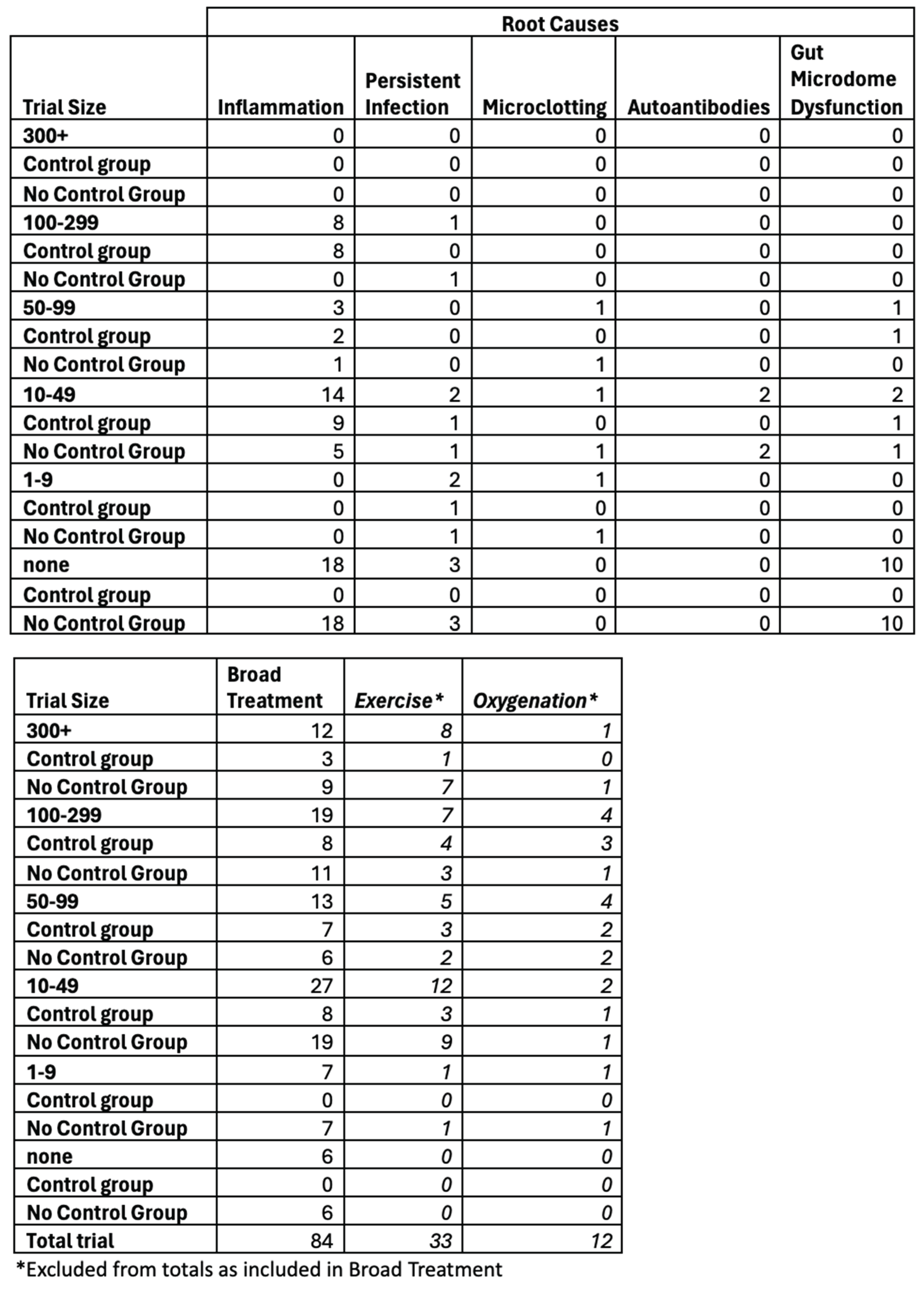
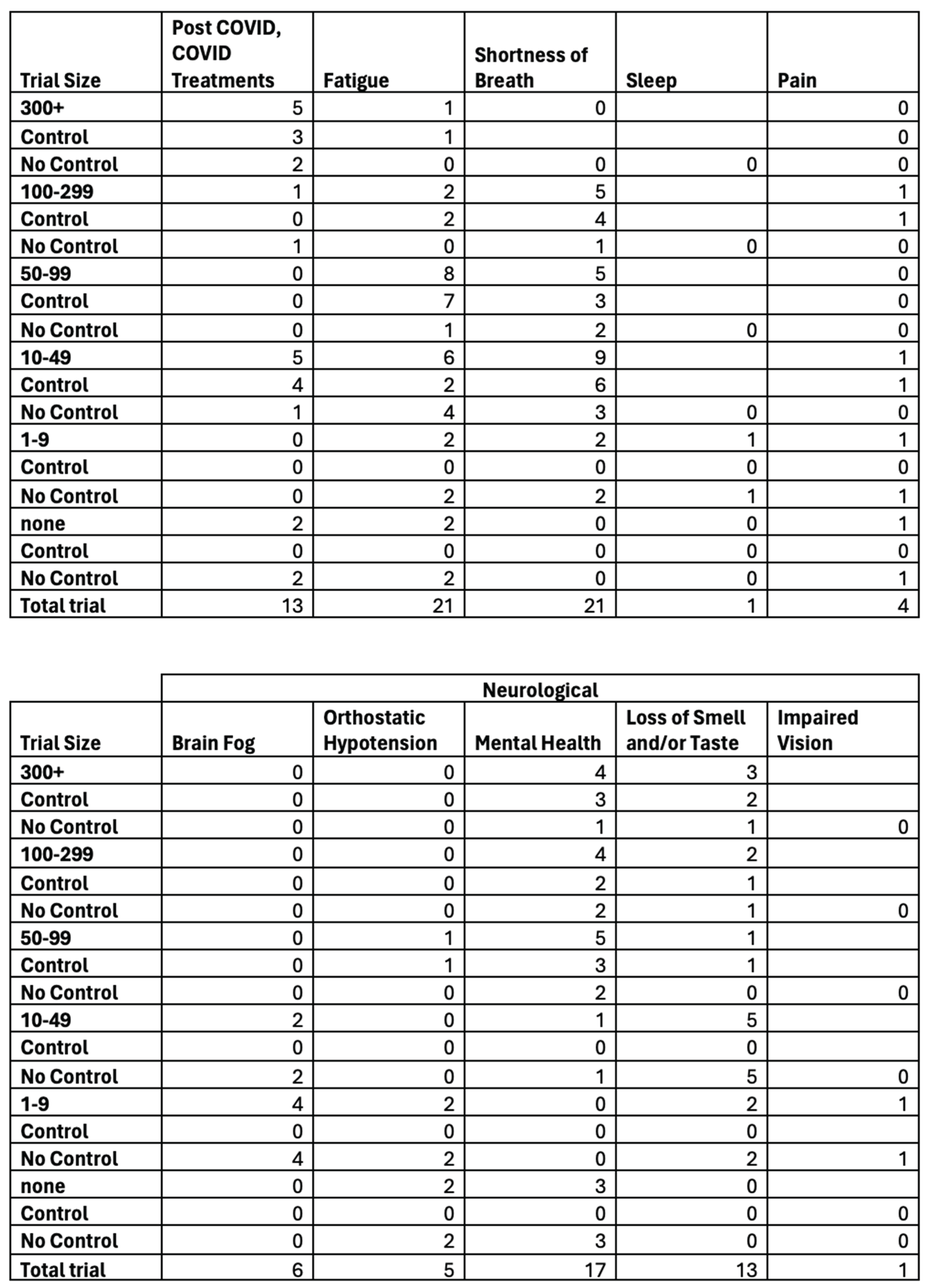
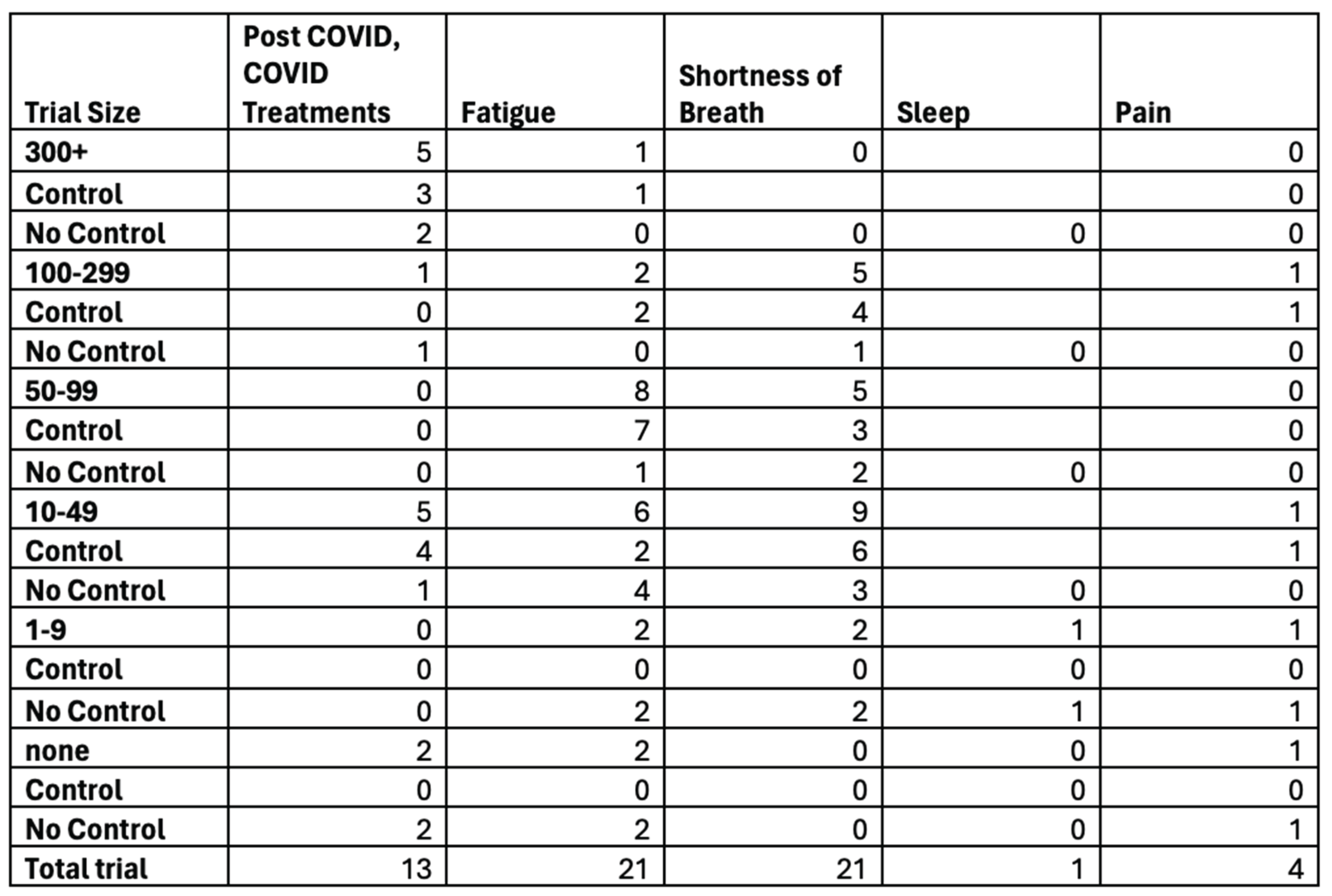
Control groups are always important in assessing treatment effectiveness. For Long COVID treatment, this is particularly important given the natural wanning of symptoms, the lack of a diagnostic test, and the subjectiveness of Long COVID assessment. Nonetheless, as shown by a table in Appendix 2, 69% of the trials had no control group.
Astoundingly, the papers that explicitly addressed root causes didn’t have trials. However, other papers which had trials discussed therapies that addressed the root causes including
- Corticosteroids - prednisone or dexamethasone
- Colchicine
- 3. Low-Dose Naltrexone
- Antihistamines and Mast Cell Stabilizers
- Statins - atorvastatin, rosuvastatin
- Omega-3 fatty acids
- Palmitoylethanolamide
- Curcumin
- Resveratrol
- Q10
Mitochondrial dysfunction is a major root cause. It is associated with sleepiness which can be related to fatigue [20]. A July 2025, Nature paper [21] reported that mitochondria were important for T cell functioning. A May 2024, Nature paper [22] discussed mechanisms and advances in therapies for mitochondrial dysfunction. As can been seen from Figure 15 from the paper, interest in mitochondrial dysfunction has dramatically grown in the last two decades.
The paper reported that notable interventions included: exercise protocols to promote the expression of peroxisome proliferator-activated receptor-gamma coactivator-1 alpha (PGC-1α), dietary supplements to target primary nutrient deficiency, nicotinamide riboside (NR) to augment nicotinamide adenine dinucleotide (NAD) biosynthesis MitoQ for neutralizing mitochondria-derived reactive oxygen species (ROS) the global antioxidant Coenzyme Q10 (CoQ10) N-acetyl cysteine (NAC) and the mitochondrial inhibitor ME-344 (known for its anti-tumor properties). As you will see, many of these treatments were included in Long COVID Treatment Trials.
Trial Sizes for FDA Drug Assessment
In assessing the trials, this is what the FDA considers appropriate for trial sizes:
Phase 1: Safety and dosage
Size: Small, typically 20 to 100 participants who are healthy volunteers or individuals with the disease being studied, depending on the drug.
Purpose: To determine if the drug is safe and well-tolerated, establish the best way to administer the drug, and identify initial dosage range and potential side effects.
Key points: Researchers start with low doses and gradually increase them, carefully monitoring for side effects and drug interactions.
Phase 2: Efficacy and side effects
Size: Typically, from 100 to several hundred participants with the specific disease or condition the drug is intended to treat.
Purpose: To evaluate the drug's effectiveness against the target disease or condition, continue monitoring for safety, and identify any short-term adverse reactions or risks associated with the treatment.
Key points: May involve comparisons with placebo or existing standard treatments, according to the American Cancer Society.
Phase 3: Confirming efficacy and safety
Size: Typically involving hundreds to thousands of participants with the disease or condition across multiple locations, potentially worldwide. While no minimum is specified, the trials normal range from 300 to 3,000 participants. Control groups are always included.
Purpose: To confirm the drug's effectiveness and safety in a larger population, compare it to standard treatments, and collect more data on long-term effects and rare side effects.
Key Points: They are very expensive. A phase 3 vaccine trial costs about $100 million.
Thus, we shall summarize the treatments in four buckets based on the number of people in the treatment trial – 300+, 100-299, 1-99 and none. While these were formal FDA drug trials, one has a qualitative sense of confidence in the trial’s result based on its size.
Only two treatments – exercise and oxygenation – had a significant number of papers – exercise 27 and oxygenation 18. After that it dropped off quickly to:
Table 6.
– Number of Papers Describing a Treatment.
| Number of papers describing a treatment | Number of treatments |
| 6 | 1 |
| 5 | 1 |
| 4 | 1 |
| 3 | 6 |
| 2 | 18 |
| 1 | 107 |
I shall now discuss each of treatments. Treatments that lead to broad improvements generally attacked the underlying causes for Long COVID such as inflammation and/or microconidia damage. Those that address specific symptoms such as smell typically addressed a specific organ. A treatment could be a procedure (e.g., exercise), a drug (e.g., aspirin), or nutrition (e.g., probiotics.)
Procedures
At Least One 300+ Trial
Broad Improvements
Exercise can reduce Long COVID symptoms by:
- Reducing inflammation.
- Stimulating mitochondrial biogenesis and improve ATP production, which can reduce fatigue.
- Improving vascular tone, oxygen delivery, and tissue perfusion, potentially easing symptoms like brain fog or muscle aches.
- Rebalancing the autonomic nervous system through designed recumbent or supine exercise (e.g., rowing, swimming, recumbent cycling) which may help recondition the cardiovascular system and reduce orthostatic symptoms.
- Promoting neuroplasticity, potentially helping with cognitive symptoms (e.g., brain fog).
- Promoting lymphatic flow and helping clear cellular debris and immune complexes.
- Support fluid and waste clearance in the brain, helping with cognitive symptoms and sleep quality.
The trick is not to over exercise which can exacerbate symptoms.
There were many ways to increase oxygen in the body, either through direct oxygen or specialized breathing programs. Oxygenation helps reduce Long COVID symptoms by:
- Significantly increasing the amount of oxygen dissolved in the blood plasma, allowing more oxygen to reach tissues that may be oxygen-deprived or poorly cleared of fluids.
- Helping to reduce inflammation immune response.
- Promoting a more balanced immune function.
- Improving mitochondrial function, potentially increasing ATP production, reducing mitochondrial apoptosis signaling, and reducing oxidative stress. This leads to a boost in energy production and reduced fatigue.
- Stimulating the growth of new neurons and improved neuroplasticity thereby potentially improving cognitive function.
Therapy and drugs improved mental health. Other therapies like exercise and oxygenation also improved mental health. Improving mental health reduces Long COVID symptoms by:
- Reducing chronic stress which increases inflammatory cytokines which are already elevated in Long COVID.
- Improving mood and symptom perception which may help people feel better, even if the underlying pathology remains.
- Improving sleep quality which can significantly reduce daily symptom burden and improve mitochondrial function.
- Regulating the autonomic nervous system which is linked to fatigue, and breathlessness.
- Improving cognitive function which can help cope with brain fog and develop compensatory strategies, even if they don't reverse the cause.
There were broad improvements since hot water can reduce inflammation and sooth pain.
Speleotherapy [85]
There was no improvement in sense of smell
There was major improvement in fatigue, cognitive dysfunction, shortness of breath, and joint and muscle pains.
Drugs
Broad Improvements
2/3 reported improved overall symptoms.
Brexpiprazole + sertraline [92]
2/3 reported reduced PTSD symptoms
It reduced new atrial fibrillation as well as incidence of sudden cardiac death.
P2Y12 Inhibitor [95]
There was improved quality of life at 90 days.
Prospekta [96]
It led to significant, broad improvement.
Ensitrelvir [97]
It improved smell and taste by 39%.
It improved biochemicals and heart parameters.
Oral Zinc [100]
It interfered with improvement
It improved chest tightness and insomnia
Cyclobenzaprine Hydrochloride [103]
It improved fatigue and sleep
SIM01 - Gut Microbiota-Derived Formula [104]
Fatigue, memory loss, difficulty in concentration, gastrointestinal upset and general unwellness were all alleviated.
Transcutaneous Nicotine [105]
73.5% of patients reported a significant improvement in the symptoms.
COVID Vaccination Post Long COVID [106]
A discussed earlier, COVID vaccination reduces the chances of Long COVID and even if Long COVID emerges, it reduces its severity. However, the results from the post COVID vaccination papers were uneven and contradictory.
Nutrition
Broad Improvement
It provided broad inflammation-resolving effects
Mediterranean Diet [109]
It led to better health markers linked to significant improvements in inflammatory and oxidative stress markers.
There was a decrease in symptoms
Trials with 100-299 patients
Weight Loss [112]
There were broad improvements.
There were significant reductions in levels of perceived stress, anxiety, and insomnia
Pressing Needle Therapy [115]
It improved mental health and sleep quality.
Speech Language Hearing Therapy [116]
It improved swallowing but less so in in those who were frail.
There were mixed results on whether it helped improve sense of smell and taste.
Drugs
Patients who received oral dexamethasone for hospitalized COVID-19 were less likely to experience persistent symptoms at 8-month follow-up.
Vortioxetine [128]
There were broad improvements.
Donepezil [129]
There were broad improvements.
There was little improvement
RSLV-132 - catalytically active human RNase1 fused to human IgG1 Fc [134]
There was no long term improvement.
Deupirfenidone [135]
It improved the 6-min walk times.
Organ Specific Improvement
17.9%. in treatment group had normal lung CT images at month 12, but none in the placebo group.
Fuzheng Huayu [138]
The traditional Chinese medicine led to minor improvement in some measures.
Temelimab [139]
It showed no improvement.
Nutrition
Broad Improvement
Bufei Huoxue [140]
It reduced fatigue.
Ficus pumila L. extract [141]
It reduced insulin in diabetic patients.
Apportal [142]
There was broad improvement.
Vitamin K/D3 [142]
There was some improvement, particularly in inflammation.
Pycnogenol [144]
It did not improve health status compared to placebo over 12 weeks.
Echinacea angustifolia, rosehip, propolis, royal jelly and zinc [145]
It reduced fatigue.
These are the treatments from the smaller human trials.
Table 7.
– Moderate Sized Trials.
| Procedures | |||
| Trial Size | Treatment | Improvement | |
| 50-99 | Fecal Transplant [146] Enhanced External Counter Pulsation [147] Spinal Cord Transcutaneous Stimulation & Respiratory Training [148] Digital Cognitive Training [149] Unified Phycological Protocol [150] Wearable Brain Activity Sensing Device [151] Trained With Orange, Lavender, Clove And Peppermint Oils [152]- [3] Contracting And Relaxing Pneumatic Cuffs 0n The Calves, Thighs, And Lower Hip [154] |
Sleep Broad Lung Fatigue And Concentration Broad Broad Broad Impact Broad Impact |
|
| 25-49 | Immunoadsorption [155] Vagus Nerve Stimulation [156]- [158] Transcutaneous Electrical Nerve Stimulation [159]- [161] Tragus Nerve Stimulation [162]- [163] Matt Pilates [164] Photobiomodulation [165]- [166] Stellate Ganglion Block [167]- [171] Ropinirole [172] Acupuncture [173] Expectation Management [174] |
Broad Broad Neurological Pain And Fatigue Broad Fatigue Pain And Fatigue Smell And Broad Restless Leg Syndrome Well Tolerated, No Measures On Outcomes Minor Broad |
|
| 10-24 | Dance [175] Aripiprazole [176] Continuous Positive Airway Pressure [177] Olfactory Training With Vitamin A [178] Functional Septorhinoplasty [179] Virtual Reality Training [180] Neuromodulation [181] |
Broad Reduced sleep duration Cognition No Impact Smell No Impact No Apparent Impact |
|
| 1-9 | Oronasal Drainage [182] Plasmapheresis [183]- [184] Light To Restore Circadian Rhythm [185] Neural Feedback [186] Plasma Exchange Therapy [187] |
Broad Cognition Sleep More Alert No Impact |
|
| Drugs | |||
| Trial Size | Treatment | Improvement | |
| 50-99 | Leronlimab [188] Sea Urchin Eggs [189] Co-UltraPEALut [190] Naltrexone [191]- [193] Antihistamines [194]- [195] Amantadine [196] Propranolol [197] Lithium [198] Metoprolol [199] Rintatolimod [200] Gabapentin [201] |
Inflammation Pain Memory & Fatigue Broad & Tremors Broad But Uneven Fatigue Orthostatic Hypotension No Improvement Cardiovascular No Impact No Impact |
|
| 25-49 | Valtrex + Celecoxib [202] AXA1125 [203] Plasma [204]- [205] Treamid [206] Palmitoylethanolamide Co-Ultramicronized With Luteolin [207]- [208] Phosphatidylcholine [209] Aripiprazole [210] Hochuekkito [211] |
Broad Fatigue Smell Improved Lung Capacity Improved Smell Improved Inconclusive Reduced Sleep Needs Reduced Fatigue |
|
| 10-24 | Creatine [212] | Fatigue | |
| 1-9 | Casirivimab/Imdevimab [213] Nicotine Patch [214] Bupropion [215] Methylphenidate [216] Guanfacine [217] Intravascular Immunoglobulin Therapy [218] Ivabradine [219] Minocycline [220] Epipharyngeal Abrasive Therapy [221] |
Complete Remission Broad And Major Broad Broad Cognition Orthostatic Hypotension Orthostatic Hypotension Orthostatic Hypotension Cleared Viral RNA |
|
| Nutrients | |||
| Trial Size | Treatment | Improvement | |
| 50-99 | Nutritional Supplements Plus Exercise222 Ayurveda System Of Medicine [223] Astragalus Root Extract [224] Marine Oils [225] Endocalyx [226] Glycocalyx Dietary Supplement [227] |
Broad Diarrhea And Broad Fatigue Fatigue Cardiovascular Cardiovascular |
|
| 25-49 | Beet Juice [228]- [229] Probiotics [230]- [231] Maraviroc And Pravastatin [232] |
Fatigue And Sleep Inflammation Broad |
|
| 10-24 | Salmon Oil [233] Tinospora Cordifolia [234] |
Inflammation Inflammation |
|
Naltrexone is of unusual interest. Several review papers highlighted it as an important treatment though there were no large studies justifying their recommendations. Naltrexone is approved by the Food and Drug Administration (FDA) to treat both opioid use disorder (OUD) and alcohol use disorder (AUD).
These are treatments that had no human trials
Table 8.
– No Human Trials.
| Procedures | ||
| Infrared light [235] | Cell cultures | Two ten minute exposures led to 80% IL-6 reduction in gene assay. |
| Hyperthermia [236] | Review/ hypothosis | Modulates necroinflammation. |
| Drugs | ||
| Tocilizumab [237] | Trial underway | Reduce inflammation |
| Baricitinib [238] | Trial underway | Reduce inflammation |
| Peptide LTI-2355 [239] | Cell cultures | Mitigated inflammation in the respiratory tract. |
| CB2R agonists [240] | Hypothosis | Reduce inflammation |
| Ginkgolide B-loaded lubosomes And vesicular LNPS [241] | Human cell cultures | May protect against cell death |
| SPIKENET, SPK [242] |
Mice | Reversed the development of severe inflammation, oxidative stress, tissue edema, and animal death. Recall, vaccines in humans didn’t help. |
| Fermentable fiber [243] | Hypothesis | Reduce autoantibodies |
| Polyphenols [244] | Hypothesis | Reduce autoantibodies |
| Resveratrol [245] | Hypothesis | Reduce gut microdome dysfunction |
| Boost nicotinamide adenine dinucleotide (NAD+) [246] | Hypothesis | Reduce gut microdome dysfunction |
| Gamunex-C [247] | Proposed trial | Broad relief |
| Paracetamol and Dexketoprofen Trometamol [248] | Analytic technique | Broad relief when administered with rivaroxaban |
| Modafinil [249] | Literature search | Broad relief |
| Kyungok-go [250] | Proposed trial | Broad relief |
| Cyclobenzapring Hydochloride [251] |
Company annoucement | Reduce pain and improved sleep |
| Ivabradine and midodrine [252] | Review of 32 studies | Reduced brain fog |
| Omega-3 fatty acids [252] | Review | Improve mental health |
| Aspartate or Asparagine [253]- [254] | Hypothosis | Improve vision |
| Macitentan [255] | Hamsters | Restored bone loss |
| Tanshinone IIA [256] | Chemical evaluation | Inflammation |
| Epigallocatechin-3-gallate-palmitate [257] | Cell culture |
Neurological |
| Tuning Organelle Balance In Human Mesenchymal Stem Cell [258] | Cell Study | Major mitochondrial production |
| L-carnitine [259] | Theory | Fatigue |
| Niclosamide [260] | Review | Broad |
| Larazotide [261] | Proposed trial | Broad |
| Ecstasy [262] | FDA Vote | Too risky |
| Sodium Pyruvate Nasal Spray [263] | Proposed trial of drug useful in flu | Broad |
| Nutrients | ||
| Korean Herbs [264] | Mice cell cultures | Decreased nitrous oxide levels in some cell types. |
| Melatonin [265]- [268] | Hypothesis -3, Literature search | Reduce inflammation |
| Flavonoids Nobiletin & Eriodictyol [269] | Human cells | Reduced pathogen-stimulated release of inflammatory mediators. |
| Herbs [270] | Safety test | Broad improvements |
| Vitamin B12 [271] | Hypothesis | Improve vision |
What Should I Consider If I Don’t Want to or Can’t Go to a Long COVID Clinic?
Let’s assume:
- I believe I have Long COVID.
- I have the typical broad symptoms such as brain fog and fatigue.
- I have a fine GP who is not expert in Long COVID.
- I can’t get root cause diagnostic tests.
Then I would try Pascal Wager Long COVID broad treatments, that is those with a potential upside but no downside. These are the ones I would review with my GP.
- Exercise – I would get a script to get physical therapy or use the Pace Me application
- Oxygenation – I would try to get to a hyperbaric chamber but if I couldn’t, I would do home oxygenation.
- Improve Mental Health – I would get Cognitive Behavioral therapy
- Spa & Hot Spring Bathing – Sure, why not! Fun and relaxing
- Mediterranean Diet – It has been shown to be good for one’s health, so why not?
- Fasting diet, no sugar – I would try it as it would be good for my general health
- Weight Loss - If I was overweight, definitely as it is good for one’s health
- Yoga – if I am healthy, I would pursue as part of my exercise program
- Contracting and Relaxing Pneumatic Cuffs on The Calves, Thighs, and Lower Hip – I would consider it even though it was a small trial
I would check with my GP on the following therapeutics.
- SSRI Inhibitors
- Traditional Chinese Medicine
- SIM01 - Gut Microbiota-Derived Formula
- Transcutaneous Nicotine
- P2Y12 Inhibitor
- Prospekta
- Cyclobenzaprine Hydrochloride
- Vortioxetine
- Donepezil
- Bufei Huoxue
- Apportal
- L-carnitine - mitochondrial dysfunction though not reported in the papers discussed here.
- Q10 – though the trials were uneven, it has been shown to be good for mitochondrial dysfunction.
Finally, I would discuss possible treatments for inflammation that have yet to have Long COVID treatment trials such as COVID hyperinflammatory treatments, e.g., baricitinib, anakinra, and tocilizumab; and rheumatoid arthritis treatments, e.g., NSAIDS and steroids.
Conclusions
Long COVID is nasty. It is the post disease consequence of COVID. COVID is not alone in having severe post pathogen infection consequences. Influenza, Ebola, Marburg, Dengue, and Lyme Disease are other infections with severe post infection consequences.
Long COVID symptoms lessen with time, but much slower than other human non-viral illness or surgeries. While there are no magic bullet treatments, there are treatments that offer relief for many people. With time, more should become available.
There are several treatments that were assessed by 300+ trials that had control groups, e.g., exercise and oxygenation. Interestingly, many papers did not have a control group and there were no trials of the 100+ treatments that directly addressed Long COVID’s root causes such as inflammation and mitochondrial dysfunction.
If one has Long COVID’s broad symptoms, it is best to go to a Long COVID Clinic at a large national hospital.
Given the huge role that inflammation and mitochondrial dysfunction play in Long COVID, I think research into how to treat them should be Long COVID treatment top research priority.
Acknowledgements
I would like to acknowledge the careful and thoughtful comments by Mitch Ericson, Neal Friedberg, Ann Martin and Dan Sanzione.
Appendix 1 – Summary of Long COVID Treatment Papers, Including Trial Sizes
Appendix 2 – Summary of Long COVID Treatments and Control Groups
References
- Ka Chun Chong, Yuchen Wei, Katherine Min Jia, Christopher Boyer, Guozhang Lin, Huwen Wang et al, SARS-CoV-2 rebound and post-acute mortality and hospitalization among patients admitted with COVID-19: cohort study (2025) https://www.nature.com/articles/s41467-025-61737-7.
- Washington University School of Medicine in, St. Louis, National Academies of Sciences, Engineering, and Medicine. 2024. Long-Term Health Effects of COVID-19: Disability and Function Following SARS-CoV-2 Infection Washington, DC: The National Academies Press. [CrossRef]
- Sudre, C.H.; Murray, B.; Varsavsky, T.; Graham, M.S.; Penfold, R.S.; Bowyer, R.C.; Pujol, J.C.; Klaser, K.; Antonelli, M.; Canas, L.S.; et al. Attributes and Predictors of Long COVID. Nat. Med. 2021, 27, 626–631. [Google Scholar] [CrossRef]
- Davis, H.E.; Assaf, G.S.; McCorkell, L.; Wei, H.; Low, R.J.; Re'Em, Y.; Redfield, S.; Austin, J.P.; Akrami, A. Characterizing long COVID in an international cohort: 7 months of symptoms and their impact. eClinicalMedicine 2021, 38, 101019. [Google Scholar] [CrossRef]
- Nasserie, T.; Hittle, M.; Goodman, S.N. Assessment of the Frequency and Variety of Persistent Symptoms Among Patients With COVID-19. JAMA Netw. Open 2021, 4, e2111417–e2111417. [Google Scholar] [CrossRef]
- CDC, Long COVID Signs and Symptoms, CDC (2025). https://www.cdc.gov/long-covid/signs-symptoms/index.
- Taquet, M.; Geddes, J.R.; Husain, M.; Luciano, S.; Harrison, P.J. 6-month neurological and psychiatric outcomes in 236 379 survivors of COVID-19: a retrospective cohort study using electronic health records. Lancet Psychiatry 2021, 8, 416–427. [Google Scholar] [CrossRef] [PubMed]
- Lambert N, Survivor Corps. (2021). COVID-19 “Long Hauler” Symptoms Survey Report. Preprint. [CrossRef]
- Paolo Boscolo-Rizzo, Giacomo Spinato, Rebecca De Colle, Antonino Maniaci, Luigi Angelo Vaira, Enzo Emanuelli et al (2025) Five-Year Longitudinal Assessment of Self-reported COVID-19–Related Chemosensory Dysfunction, clinical Infectious Diseases https://academic.oup.com/cid/advance-article/doi/10. 1093.
- Ewing, A.G.; Salamon, S.; Pretorius, E.; Joffe, D.; Fox, G.; Bilodeau, S.; Bar-Yam, Y. Review of organ damage from COVID and Long COVID: a disease with a spectrum of pathology. Med Rev. 2024, 5, 66–75. [Google Scholar] [CrossRef] [PubMed]
- CDC National Center for Health Statistics, Long COVID Pulse Study, (2024), https://www.cdc.gov/nchs/covid19/pulse/long-covid.
- Groff D, Sun A, Ssentongo AE, et al. (2021) Short-term and Long-term Rates of Post Acute Sequelae of SARS-CoV-2 Infection: A Systematic Review. JAMA Network Open. Volume 4, Issue 10: e2128568. https://jamanetwork. 2784.
- Winter COVID Analysis Team, (2024) Self-reported coronavirus (COVID-19) infections and associated symptoms, England and Scotland: 23 to March 2024, Office for National Statistics, https://www.ons.gov. 20 November 2023.
- Xie, Y.; Choi, T.; Al-Aly, Z. Postacute Sequelae of SARS-CoV-2 Infection in the Pre-Delta, Delta, and Omicron Eras. New Engl. J. Med. 2024, 391, 515–525. [Google Scholar] [CrossRef] [PubMed]
- Sara Carazo, Manale Ouakki, Nektaria Nicolakakis, Emilia Liana Falcone, Danuta M Skowronski, Marie-José Durand, Marie-France Coutu, Simon Décary et. A. 20 May; 25. [CrossRef]
- Bosworth, M.L.; Shenhuy, B.; Walker, A.S.; Nafilyan, V.; A Alwan, N.; E O’hara, M.; Ayoubkhani, D. Risk of New-Onset Long COVID Following Reinfection With Severe Acute Respiratory Syndrome Coronavirus 2: A Community-Based Cohort Study. Open Forum Infect. Dis. 2023, 10. [Google Scholar] [CrossRef]
- Haslam, A.; Prasad, V. Long COVID clinics and services offered by top US hospitals: an empirical analysis of clinical options as of May 2023. BMC Heal. Serv. Res. 2024, 24, 1–7. [Google Scholar] [CrossRef]
- Bui, D.P.; Bast, E.; Trinh, H.; Fox, A.; Berkowitz, T.S.Z.; Palacio, A.; Wander, P.L.; O’hAre, A.M.; Boyko, E.J.; Ioannou, G.N.; et al. Use of Long COVID Clinics in the Veterans Health Administration: Implications for the path forward. Heal. Aff. Sch. 2025, 3, qxaf080. [Google Scholar] [CrossRef]
- World Health Organization, Clinical Management of COVID-19: living guilders https://iris.who.int/bitstream/handle/10665/381920/B09467-eng.pdf?
- Raffaele Sarnataro, Cecilia D. Velasco, Nicholas Monaco, Anissa Kempf & Gero Miesenböck (2025) Mitochondrial origins of the pressure to sleep, Nature https://www.nature. 4158.
- T cells require mitochondria to proliferate, function and generate memory, Nature https://www.nature. 4159.
- Zong, Y.; Li, H.; Liao, P.; Chen, L.; Pan, Y.; Zheng, Y.; Zhang, C.; Liu, D.; Zheng, M.; Gao, J. Mitochondrial dysfunction: mechanisms and advances in therapy. Signal Transduct. Target. Ther. 2024, 9, 124. [Google Scholar] [CrossRef]
- Rodrigues, K.B.; Weng, Z.; Graham, Z.A.; Lavin, K.; McAdam, J.; Tuggle, S.C.; Peoples, B.; Seay, R.; Yang, S.; Bamman, M.M.; et al. Exercise intensity and training alter the innate immune cell type and chromosomal origins of circulating cell-free DNA in humans. Proc. Natl. Acad. Sci. 2025, 122. [Google Scholar] [CrossRef]
- Corna, S. , Arcolin, I., Giardini, M., Bellotti, L., Godi, M., & Corna, M. Effects of adding an online exercise program on physical function in individuals hospitalized by COVID 19: A randomized controlled trial. International Journal of Environmental Research and Public Health, 19(24), 16619. https://www.mdpi.com/1660-4601/19/24/16619 (2022, December 10).
- Kim, K.-H.; Kim, D.-H. Effects of Maitland Thoracic Joint Mobilization and Lumbar Stabilization Exercise on Diaphragm Thickness and Respiratory Function in Patients with a History of COVID-19. Int. J. Environ. Res. Public Heal. 2022, 19, 17044. [Google Scholar] [CrossRef]
- Kupferschmitt, A. , Langheim, E., Tüter, H., Etzrodt, F., Loew, T. H., & Köllner, V. First results from post COVID inpatient rehabilitation: An observational study comparing post COVID, psychosomatic, and psychocardiological patients. Frontiers in Rehabilitation Science. https://www.frontiersin.org/articles/10.3389/fresc.2022.1093871/full (2023, ). 23 January.
- Feng, B. , Li, H., Wang, X., Zhao, Y., Guo, S., & Zhang, J. et al. Post-hospitalization rehabilitation alleviates long-term immune repertoire alteration in COVID-19 convalescent patients. Cell Proliferation, 56(3), e13450. https://pubmed.ncbi.nlm.nih.gov/36938980/ (2023, March).
- Zhou, L. , Jamshidi, N., Huang, Q., Li, Y., Chen, X., et al. Correction of immune repertoire alteration by post hospital rehabilitation in convalescent COVID 19 patients. Cell Proliferation, 57(2), e13345. [CrossRef]
- Romanet, C. , Wormser, J., Fels, A., Lucas, P., Prudat, C., Sacco, E., et al. Effectiveness of exercise training rehabilitation on dyspnoea in individuals with long COVID following COVID 19 related acute respiratory distress syndrome: A multicentre randomized controlled trial. Annals of Physical and Rehabilitation Medicine, 66(5), 101765. https://pubmed.ncbi.nlm.nih.gov/37271020/ (2023, June).
- Al Zaabi, E. , Balushi, W., Al-Falahi, E., Al Balushi, Y., & Singh, R. Effects of a 6 week telerehabilitation program on functional capacity and pulmonary function in individuals with Long COVID. medRxiv. https://www.medrxiv.org/content/10.1101/2023.09.27. 2329. [Google Scholar]
- (2023).
- Dubey, A. , Desvaux, G., Sahuquillo-Arce, I., Bonnet, G., Fartoukh, M., et al. Endurance training versus standard physiotherapy for breathlessness after COVID 19 acute respiratory distress syndrome: assessor blinded randomized controlled trial. Annals of Physical and Rehabilitation Medicine, 66(6), 101280. https://pmc.ncbi.nlm.nih.gov/articles/PMC10237688/ (2023).
- Gravina, F. , Zampogna, E., Hu, C., Camicioli, F., Turano, I., et al. Continuous versus interval aerobic endurance training improves physical capacity and wellbeing in post COVID syndrome patients. Journal of Clinical Medicine, 12(10), 3478. https://www.mdpi.com/2077-0383/12/21/6739 (2023).
- François-Michel Boisvert, André M Cantin, Hugues Allard-Chamard Mohammad, Mobarak H Chowdhury, Isabelle J Dionne Marie-Noelle Fontaine, Marc-André Limoges, et al Impact of a tailored exercise regimen on physical capacity and plasma proteome profile in post-COVID-19 condition. https://pmc.ncbi.nlm.nih. 20 August 1137.
- REGAIN collaborators, S. Rehabilitation Exercise and psychological support After covid-19 Infection (REGAIN): randomized trial of home based rehabilitation. BMJ, 382, 070742 https://bmjopen.bmj. 0859. [Google Scholar]
- Wang, X.; Ma, H.; He, X.; Gu, X.; Ren, Y.; Yang, H.; Tong, Z. Efficacy of early pulmonary rehabilitation in severe and critically ill COVID-19 patients: a retrospective cohort study. BMC Pulm. Med. 2025, 25, 1–12. [Google Scholar] [CrossRef]
- Serena Cerfoglio, Federica Verme, Paolo Capodaglio, Paolo Rossi, Viktoria Cvetkova, Gabriele Boldini et al Home based tele rehabilitation enhances respiratory and motor function post COVID: 3 week program evaluation. Preprints.org. https://www.preprints.org/manuscript/202406. 0424.
- Giulia Di Martino, Marco Centorbi, Andrea Buonsenso, Giovanni Fiorilli, Carlo Della Valle, Giuseppe Calcagno et al Post Traumatic Stress Disorder 4 Years after the COVID 19 Pandemic in Children and Adolescents – Is an Active Lifestyle Protective? Int J Environ Res Public Health. 21(8):975. https://pubmed.ncbi.nlm.nih. 3920.
- Binabaji B, et al. Effects of physical training on coagulation parameters, interleukin-6 and angiotensin-converting enzyme 2 in COVID 19 survivors. Nat Sci Rep. 8:67522. https://www.nature. 4159.
- Rasmussen, I.E.; Løk, M.; Durrer, C.G.; Lytzen, A.A.; Foged, F.; Schelde, V.G.; Budde, J.B.; Rasmussen, R.S.; Høvighoff, E.F.; Rasmussen, V.; et al. Impact of a 12-week high-intensity interval training intervention on cardiac structure and function after COVID-19 at 12-month follow-up. Exp. Physiol. 2024. [Google Scholar] [CrossRef] [PubMed]
- Zoe Sirotiak, Duck-Chul Lee, Angelique G Brellenthin Associations between physical activity, long COVID symptom intensity, and perceived health among individuals with long COVID. Front Psychol. 15:1498900. https://pubmed.ncbi.nlm.nih. 3950.
- Kieffer, S.; Krüger, A.-L.; Haiduk, B.; Grau, M. Individualized and Controlled Exercise Training Improves Fatigue and Exercise Capacity in Patients with Long-COVID. Biomedicines 2024, 12, 2445. [Google Scholar] [CrossRef]
- León-Herrera, S.; Oliván-Blázquez, B.; Sánchez-Recio, R.; Méndez-López, F.; Magallón-Botaya, R.; Sánchez-Arizcuren, R. Effectiveness of an online multimodal rehabilitation program in long COVID patients: a randomized clinical trial. Arch. Public Heal. 2024, 82, 1–13. [Google Scholar] [CrossRef] [PubMed]
- Jiménez, García; et al. “Increased physical performance and reduced fatigue after personalised physiotherapy and nutritional counselling in Long COVID.” Research Square. Preprint. https://www.researchsquare.com/article/rs-4914245/v1 (Dec 2024).
- Barz A, Berger J, Speicher M, et al. “Effects of a symptom titrated exercise program on fatigue and quality of life in people with post COVID condition – a randomized controlled trial.” Sci Rep. 2024;14(1):82584. https://www.nature. 4159.
- Tania Janaudis-Ferreira, Marla K. Beauchamp, Amanda Rizk, Catherine M. Tansey, Maria Sedeno, Laura Barreto et al “Virtual rehabilitation for individuals with Long COVID: a randomized controlled trial.” fullhttps://www.medrxiv.org/content/10.1101/2024.11.24. 2431.
- Belinda Godfrey, Jenna Shardha, Sharon Witton, Rochelle Bodey, Fachel Tarrant, Darren C. Greenwood et al. “A Personalised Pacing and Active Rest Rehabilitation Programme using an 8 week WHO Borg CR 10 protocol in long COVID.” J Clin Med. 2024;13(1):97. https://www.mdpi. 2077.
- PoCoRe Study Group (Kerling A, et al.). “Neuropsychological outcome of indoor rehabilitation in post COVID condition.” Front Neurol. https://www.frontiersin.org/journals/neurology/articles/10.3389/fneur.2024.1486751/full (2025).
- Bileviciute-Ljungar, I.; Apelman, A.; Braconier, L.; Östhols, S.; Norrefalk, J.-R.; Borg, K. A First Randomized Eight-Week Multidisciplinary Telerehabilitation Study for the Post-COVID-19 Condition: Improvements in Health- and Pain-Related Parameters. J. Clin. Med. 2025, 14, 486. [Google Scholar] [CrossRef]
- Colin Berry, Gemma McKinley, Hannah Bayes, David Anderson, Chim Lang, Adam Gill, Andrew Morrow, et al. “Resistance Exercise Therapy for Long COVID: a Randomized, Controlled Trial.” Research Square. https://www.researchgate. 20 March 3903.
- Stijn Roggeman, Berenice Jimenez Garcia, Lynn Leemans, Elisabeth De Waele, et al. Faster functional performance recovery after individualized nutrition therapy combined with a patient-tailored physical rehabilitation program versus standard physiotherapy in patients with long COVID: a pilot study for a randomized, controlled single-center tria https://www.researchgate.net/publication/370149175_Faster_functional_performance_recovery_after_individualized_nutrition_therapy_combined_with_a_patient-tailored_physical_rehabilitation_program_versus_standard_physiotherapy_in_patients_with_long_COVID (22). 20 December.
- Yakpogoro, N.; Huskey, A.; Kennedy, K.; Grandner, M.; Green, S.; Killgore, W. 1409 Exercise Modality and Sleep-Related Interference of Daily Functioning in COVID-19: Comparative Effects of Cardio and Strength Training. Sleep 2025, 48, A606–A606. [Google Scholar] [CrossRef]
- Arslan, S.; Gürbüz, A. Investigation of respiratory muscle strength, exercise capacity and sleep quality level in post-COVID-19 Individuals: case-control study. Adv. Rehabilitation 2025, 39. [Google Scholar] [CrossRef]
- Allison Maher, Michelle Bennett, Hsin-Chia Carol Huang, Philip Gaughwin, Mary Johnson, Madeleine Brady et al Personalized Exercise Prescription in Long COVID: A Practical Toolbox for a Multidisciplinary Approach URL: https://www.ncbi.nlm.nih.gov/pmc/articles/PMC11330745/ (24). 20 August.
- FDS Clinical Trial Nutrition and LOComotoric Rehabilitation in Long COVID-19). URL: https://clinicaltrials.gov/study/NCT05254301 (Registered Feb 24, 2022).
- Grzegorz Onik, Katarzyna Knapik, Dariusz Górka & Karolina Sieroń Health Resort Treatment Mitigates Neuropsychiatric Symptoms in Long COVID Patients: A Retrospective Study. Healthcare, 13(2), 52. https://www.mdpi. 2227.
- Carpallo-Porcar, B.; Beamonte, E.d.C.; Jiménez-Sánchez, C.; Córdova-Alegre, P.; la Cruz, N.B.-D.; Calvo, S. Multimodal Telerehabilitation in Post COVID-19 Condition Recovery: A Series of 12 Cases. Reports 2025, 8, 35. [Google Scholar] [CrossRef]
- León-Herrera, S.; Samper-Pardo, M.; Oliván-Blázquez, B.; Magallón-Botaya, R.; Casado-Vicente, V.; Sánchez-Recio, R.; Sánchez-Arizcuren, R. Effectiveness of ReCOVery APP to Improve the Quality of Life of Long COVID Patients: A 6-Month Follow-Up Randomized Clinical Trial. Int. J. Clin. Pr. 2025, 2025. [Google Scholar] [CrossRef]
- Sanal-Hayes, N. E. M., Hayes, L. D., Mair, J. L., Dello Iacono, A., Ingram, J., Ormerod, J., et al. A digital platform with activity tracking for energy management support in long COVID: A randomised controlled trial. SSRN. Retrieved from https://papers.ssrn.com/sol3/papers.cfm?abstract_id=5122498 (2025, February).
- Maccarone, M.C.; Contessa, P.; Passarotto, E.; Regazzo, G.; Masiero, S. Balance rehabilitation and Long Covid syndrome: effectiveness of thermal water treatment vs. home-based program. Front. Rehabilitation Sci. 2025, 6, 1588940. [Google Scholar] [CrossRef]
- McMullan, C.; Haroon, S.; Turner, G.; Aiyegbusi, O.L.; Hughes, S.E.; Flanagan, S.; Subramanian, A.; Nirantharakumar, K.; Davies, E.H.; Frost, C.; et al. Mixed methods study of views and experience of non-hospitalised individuals with long COVID of using pacing interventions. Sci. Rep. 2025, 15, 1–11. [Google Scholar] [CrossRef]
- Gagnon, C.; Vincent, T.; Bherer, L.; Gayda, M.; Cloutier, S.-O.; Nozza, A.; Guertin, M.-C.; Blaise, P.; Cloutier, I.; Kamada, A.; et al. Oxygen supplementation and cognitive function in long-COVID. PLOS ONE 2024, 19, e0312735. [Google Scholar] [CrossRef]
- Doehner, W.; Fischer, A.; Alimi, B.; Muhar, J.; Springer, J.; Altmann, C.; Schueller, P.O. Intermittent Hypoxic–Hyperoxic Training During Inpatient Rehabilitation Improves Exercise Capacity and Functional Outcome in Patients With Long Covid: Results of a Controlled Clinical Pilot Trial. J. Cachex- Sarcopenia Muscle 2024, 15, 2781–2791. [Google Scholar] [CrossRef] [PubMed]
- Kapel, J.S.; Stokholm, R.; Elmengaard, B.; Nochi, Z.; Olsen, R.J.; Foldager, C.B. Individualized Algorithm-Based Intermittent Hypoxia Improves Quality of Life in Patients Suffering from Long-Term Sequelae After COVID-19 Infection. J. Clin. Med. 2025, 14, 1590. [Google Scholar] [CrossRef]
- Zilberman-Itskovich, S.; Catalogna, M.; Sasson, E.; Elman-Shina, K.; Hadanny, A.; Lang, E.; Finci, S.; Polak, N.; Fishlev, G.; Korin, C.; et al. Hyperbaric oxygen therapy improves neurocognitive functions and symptoms of post-COVID condition: randomized controlled trial. Sci. Rep. 2022, 12, 1–10. [Google Scholar] [CrossRef]
- Leitman, M.; Fuchs, S.; Tyomkin, V.; Hadanny, A.; Zilberman-Itskovich, S.; Efrati, S. The effect of hyperbaric oxygen therapy on myocardial function in post-COVID-19 syndrome patients: a randomized controlled trial. Sci. Rep. 2023, 13, 1–9. [Google Scholar] [CrossRef] [PubMed]
- Hadanny, A.; Zilberman-Itskovich, S.; Catalogna, M.; Elman-Shina, K.; Lang, E.; Finci, S.; Polak, N.; Shorer, R.; Parag, Y.; Efrati, S. Long term outcomes of hyperbaric oxygen therapy in post covid condition: longitudinal follow-up of a randomized controlled trial. Sci. Rep. 2024, 14, 1–10. [Google Scholar] [CrossRef]
- Philip, K.E.J.; Owles, H.; McVey, S.; Pagnuco, T.; Bruce, K.; Brunjes, H.; Banya, W.; Mollica, J.; Lound, A.; Zumpe, S.; et al. An online breathing and wellbeing programme (ENO Breathe) for people with persistent symptoms following COVID-19: a parallel-group, single-blind, randomised controlled trial. Lancet Respir. Med. 2022, 10, 851–862. [Google Scholar] [CrossRef] [PubMed]
- del Corral, T. , Fabero-Garrido, R., Plaza Manzano, G., Fernández de las Peñas, C., Navarro Santana, M. J., & López de Uralde Villanueva, I. Minimal clinically important differences in inspiratory muscle function variables after a respiratory muscle training programme in individuals with long term post COVID 19 symptoms. Journal of Clinical Medicine, 12(7), Article 2720. https://www.mdpi. 2077. [Google Scholar]
- Lee, Y.-J. Thoracic Mobilization and Respiratory Muscle Endurance Training Improve Diaphragm Thickness and Respiratory Function in Patients with a History of COVID-19. Medicina 2023, 59, 906. [Google Scholar] [CrossRef]
- Rodrigo Muñoz-Cofré, María Fernanda del Valle, Gabriel Nasri Marzuca-Nassr, Jorge Valenzuela, Mariano del Sol, Constanza Díaz Canales et al A pulmonary rehabilitation program is an effective strategy to improve forced vital capacity, muscle strength and functional exercise capacity similarly in adults and older people with post severe COVID 19 who required mechanical ventilation. Research Square (preprint). https://www.researchgate. 3795.
- Elyazed, T.I.A.; Alsharawy, L.A.; Salem, S.E.; Helmy, N.A.; El-Hakim, A.A.E.-M.A. Effect of home-based pulmonary rehabilitation on exercise capacity in post COVID-19 patients: a randomized controlled trail. J. Neuroeng. Rehabilitation 2024, 21, 1–10. [Google Scholar] [CrossRef] [PubMed]
- Mauro, M.; Zulian, E.; Bestiaco, N.; Polano, M.; Filon, F.L. Slow-Paced Breathing Intervention in Healthcare Workers Affected by Long COVID: Effects on Systemic and Dysfunctional Breathing Symptoms, Manual Dexterity and HRV. Biomedicines 2024, 12, 2254. [Google Scholar] [CrossRef] [PubMed]
- Parisi, M.C.; Di Corrado, D.; Mingrino, O.; Crescimanno, C.; Longo, F.; Pegreffi, F.; Francavilla, V.C. SpiroTiger and KS Brief Stimulator: Specific Devices for Breathing and Well-Being in Post-COVID-19 Patients. J. Funct. Morphol. Kinesiol. 2024, 9, 203. [Google Scholar] [CrossRef]
- Muñoz-Cofré, R.; del Valle, M.F.; Marzuca-Nassr, G.N.; Valenzuela, J.; del Sol, M.; Canales, C.D.; Lizana, P.A.; Valenzuela-Aedo, F.; Lizama-Pérez, R.; Escobar-Cabello, M. A pulmonary rehabilitation program is an effective strategy to improve forced vital capacity, muscle strength, and functional exercise capacity similarly in adults and older people with post-severe COVID-19 who required mechanical ventilation. BMC Geriatr. 2024, 24, 1–7. [Google Scholar] [CrossRef]
- Páez-Mora, C.D.; Zona, D.C.; Angarita-Sierra, T.; E Rojas-Paredes, M.; Cano-Trejos, D. Changes in lung function and dyspnea perception in Colombian Covid-19 patients after a 12-week pulmonary rehabilitation program. PLOS ONE 2024, 19, e0300826. [Google Scholar] [CrossRef]
- Brandao-Rangel, M.A.R.; Brill, B.; Furtado, G.E.; Freitas-Rolim, C.C.L.; Silva-Reis, A.; Souza-Palmeira, V.H.; Moraes-Ferreira, R.; Lopes-Silva, V.; Albertini, R.; Fernandes, W.S.; et al. Exercise-Driven Comprehensive Recovery: Pulmonary Rehabilitation’s Impact on Lung Function, Mechanics, and Immune Response in Post-COVID-19 Patients. Infect. Dis. Rep. 2025, 17, 1. [Google Scholar] [CrossRef]
- P, R.; Saravanan, A.; Maheshkumar, K.; ThamaraiSelvi, K.; Praba, P.K.; Prabhu, V. Effects of Bhramari and Sheetali Pranayama on Cardio Respiratory Function in Post-COVID Patients: A Randomised Controlled Study. Ann. Neurosci. 2025. [Google Scholar] [CrossRef]
- Casciaro, M. , Di Micco, P., Tonacci, A., Vatrano, M., Russo, V., & Siniscalchi, C. Non invasive ventilation improves lung function and exercise capacity in adults after COVID 19 infection. Clinical Practice, 15(4), Article 72. https://www.mdpi. 2039. [Google Scholar]
- Promsrisuk, T.; Srithawong, A.; Kongsui, R.; Sriraksa, N.; Thongrong, S.; Kloypan, C.; Muangritdech, N.; Khunkitti, K.; Thanawat, T.; Chachvarat, P. Therapeutic Effects of Slow Deep Breathing on Cardiopulmonary Function, Physical Performance, Biochemical Parameters, and Stress in Older Adult Patients with Long COVID in Phayao, Thailand. Ann. Geriatr. Med. Res. 2025, 29, 240–253. [Google Scholar] [CrossRef]
- A Kuut, T.; Müller, F.; Csorba, I.; Braamse, A.; Aldenkamp, A.; Appelman, B.; Assmann-Schuilwerve, E.; E Geerlings, S.; Gibney, K.B.; A A Kanaan, R.; et al. Efficacy of Cognitive-Behavioral Therapy Targeting Severe Fatigue Following Coronavirus Disease 2019: Results of a Randomized Controlled Trial. Clin. Infect. Dis. 2023, 77, 687–695. [Google Scholar] [CrossRef] [PubMed]
- Nerli, T.F. , Selvakumar, J., Cvejic, E., Heier, I., Pedersen, M., Johnsen, T.L., & Wyller, V.B. Brief outpatient rehabilitation program for post–COVID 19 condition: A randomized clinical trial. JAMA Network Open, 7(12), e2450744. https://pubmed.ncbi.nlm.nih.gov/39699896/ (2024).
- Aghaei, A.; Qiao, S.; Tam, C.C.; Yuan, G.; Li, X. Role of self-esteem and personal mastery on the association between social support and resilience among COVID-19 long haulers. Heliyon 2024, 10, e31328. [Google Scholar] [CrossRef]
- Ovejero, D.; Ribes, A.; Villar-García, J.; Trenchs-Rodriguez, M.; Lopez, D.; Nogués, X.; Güerri-Fernandez, R.; Garcia-Giralt, N. Balneotherapy for the treatment of post-COVID syndrome: a randomized controlled trial. BMC Complement. Med. Ther. 2025, 25, 1–13. [Google Scholar] [CrossRef]
- Ferrara, E.; Scaramuzzino, M.; Murmura, G.; D’addazio, G.; Sinjari, B. Emerging Evidence on Balneotherapy and Thermal Interventions in Post-COVID-19 Syndrome: A Systematic Review. Healthcare 2025, 13, 96. [Google Scholar] [CrossRef]
- Garbsch, R.; Kotewitsch, M.; Schäfer, H.; Teschler, M.; Mooren, F.C.; Schmitz, B. Use of speleotherapy in patients with post-COVID-19 syndrome. Front. Med. 2025, 12, 1566235. [Google Scholar] [CrossRef] [PubMed]
- Fornazieri, M.A.; Cunha, B.M.; Nicácio, S.P.; Anzolin, L.K.; da Silva, J.L.B.; Neto, A.F.; Neto, D.B.; Voegels, R.L.; Pinna, F.D.R. Effect of drug therapies on self-reported chemosensory outcomes after COVID-19. World J. Otorhinolaryngol. - Head Neck Surg. 2024, 10, 88–96. [Google Scholar] [CrossRef] [PubMed]
- Pretorius, E. , Venter, C., Laubscher, G., Kell, D. B., & et al. Treatment of Long COVID symptoms with triple anticoagulant therapy: Dual antiplatelet therapy (clopidogrel + aspirin) and apixaban resolved persistent symptoms by reducing microclot burden and platelet hyperactivation. Research Square (Preprint). https://www.researchgate.net/publication/369427800_Treatment_of_Long_COVID_symptoms_with_triple_anticoagulant_therapy (2023, March).
- Pretorius, E.; Venter, C.; Laubscher, G.J.; Kotze, M.J.; Oladejo, S.O.; Watson, L.R.; Rajaratnam, K.; Watson, B.W.; Kell, D.B. Prevalence of symptoms, comorbidities, fibrin amyloid microclots and platelet pathology in individuals with Long COVID/Post-Acute Sequelae of COVID-19 (PASC). Cardiovasc. Diabetol. 2022, 21, 1–17. [Google Scholar] [CrossRef]
- Idelette Nutma, Carla Rus, J. J. Sandra Kooij, Bert de Vries & Ingmar E.J. de Vries. Treatment and outcomes of 95 post-Covid patients with an antidepressant and neurobiological explanations. https://www.researchgate.net/publication/372334231_Treatment_and_outcomes_of_95_post-Covid_patients_with_an_antidepressant_and_neurobiological_explanations (2023).
- Treatment of 95 post-Covid patients with SSRIs: exploratory questionnaire study of post-COVID syndrome patients. Nature. Available at: https://pubmed.ncbi.nlm.nih.gov/37919310/ (2023, November).
- Bradley, J.; Tang, F.; Tosi, D.; Resendes, N.; Hammel, I.S. The Effects of SSRIs and Antipsychotics on Long COVID Development in a Large Veteran Population. COVID 2024, 4, 1694–1703. [Google Scholar] [CrossRef]
- Davis, L. L., Behl, S., Lee, D., Zeng, H., Skubiak, T., Weaver, S. et al. Brexpiprazole and sertraline for the treatment of posttraumatic stress disorder: A randomized clinical trial. JAMA, 332(21), 2144–2154. https://jamanetwork.com/journals/jamapsychiatry/fullarticle/2827796 (2024).
- Augustin, M.; Stecher, M.; Wüstenberg, H.; Di Cristanziano, V.; de Silva, U.S.; Picard, L.K.; Pracht, E.; Rauschning, D.; Gruell, H.; Klein, F.; et al. 15-month post-COVID syndrome in outpatients: Attributes, risk factors, outcomes, and vaccination status - longitudinal, observational, case-control study. Front. Immunol. 2023, 14, 1226622. [Google Scholar] [CrossRef]
- Fiedler, L.; Motloch, L.J.; Dieplinger, A.-M.; Jirak, P.; Davtyan, P.; Gareeva, D.; Badykova, E.; Badykov, M.; Lakman, I.; Agapitov, A.; et al. Prophylactic rivaroxaban in the early post-discharge period reduces the rates of hospitalization for atrial fibrillation and incidence of sudden cardiac death during long-term follow-up in hospitalized COVID-19 survivors. Front. Pharmacol. 2023, 14, 1093396. [Google Scholar] [CrossRef] [PubMed]
- Wahid, L.; Hade, E.M.; Cushman, M.; Gong, M.N.; Renard, V.; Ko, E.R.; Der, T.; Kornblith, L.Z.; Lawler, P.R.; Reynolds, H.; et al. Abstract 14153: P2Y12 Inhibitors and Quality of Life Outcomes in Critically Ill Patients Hospitalized for COVID-19: A Pre-Specified Secondary Analysis of the ACTIV4a Randomized Clinical Trial. Circulation 2023, 148. [Google Scholar] [CrossRef]
- linical Trial of Efficacy and Safety of Prospekta in the Treatment of Post-COVID-19 Asthenia. https://pubmed.ncbi.nlm.nih.gov/39599626/ (2023).
- Ohmagari, N. , Yotsuyanagi, H., Doi, Y., Yamato, M., Imamura, T., Sakaguchi, H., Yamanaka, H., Imaoka, R., Fukushi, A., Ichihashi, G., Sanaki, T., Tsuge, Y., Uehara, T., & Mukae, H. Efficacy and safety of ensitrelvir for asymptomatic or mild COVID 19: An exploratory phase 2b/3 multicenter randomized clinical trial. Influenza and Other Respiratory Viruses, 18(6), e13338. https://onlinelibrary.wiley.com/doi/10.1111/irv.1333 (2024, June).
- Li, X. , Wu, L., Sun, S., Dong, H., & Luo, J. Association between electrolyte supplementation and cardiac injury in Long COVID 19: A retrospective cohort study. Frontiers in Cardiovascular Medicine. https://www.s4me.info/threads/association-between-electrolyte-supplementation-and-cardiac-injury-in-long-covid-19.43008/ (2025, March 8).
- Li, X. , Wu, L., Sun, S., Dong, H., & Luo, J. Association between electrolyte supplementation and cardiac injury in Long COVID 19: A retrospective cohort study. Frontiers in Cardiovascular Medicine. https://www.s4me.info/threads/association-between-electrolyte-supplementation-and-cardiac-injury-in-long-covid-19.43008/ (2025, March 8).
- Fornazieri, M.A.; Cunha, B.M.; Nicácio, S.P.; Anzolin, L.K.; da Silva, J.L.B.; Neto, A.F.; Neto, D.B.; Voegels, R.L.; Pinna, F.D.R. Effect of drug therapies on self-reported chemosensory outcomes after COVID-19. World J. Otorhinolaryngol. - Head Neck Surg. 2024, 10, 88–96. [Google Scholar] [CrossRef]
- Louis A Kazal Jr, Karen L Huyck & Brendan Kelly 3. Classical Chinese Medicine (CCM) for Long COVID: Case series and treatment rationale. Encinitas. https://pubmed.ncbi.nlm.nih.gov/40171061/ (2025).
- Wang, Y.; Li, X.; Hui, H.; Yang, D. Efficacy and safety of traditional Chinese medicine for post-COVID-19 syndrome: a systematic review and meta-analysis. J. Transl. Med. 2025, 23, 1–13. [Google Scholar] [CrossRef]
- Tonix Pharmaceuticals. Tonix Pharmaceuticals announces highly statistically significant and clinically meaningful topline results in second positive Phase 3 clinical trial of TNX-102 SL for fibromyalgia. Press release. https://ir.tonixpharma.com/news-events/press-releases/detail/1443/tonix-pharmaceuticals-announces-highly-statistically(2023, December 20).
- Lau, R. I., Su, Q., Lau, I. S. F., Ching, J. Y. L., Wong, M. C. S., & Lau, et al A synbiotic preparation (SIM01) for post acute COVID 19 syndrome in Hong Kong (RECOVERY): A randomised, double blind, placebo controlled trial. The Lancet Infectious Diseases, 24(3), 256–265 (2024) https://www.thelancet. 1473. [Google Scholar]
- Leitzke, M. Is the post-COVID-19 syndrome a severe impairment of acetylcholine-orchestrated neuromodulation that responds to nicotine administration? Bioelectron. Med. 2023, 9, 1–15. [Google Scholar] [CrossRef]
- Connor B Grady, Bornali Bhattacharjee, Julio Silva,Jillian Jaycox, Lik Wee Lee, Valter Silva Monteiro et al Impact of COVID-19 vaccination on symptoms and immune phenotypes in vaccine-naïve individuals with Long COVID; Nature https://www.nature. 4385.
- Crawford Currie, Tor Age Myklebust, Christian Bjerknes & Bomi FramroxeAssessing the Potential of an Enzymatically Liberated Salmon Oil to Support Immune Health Recovery from Acute SARS-CoV-2 Infection via Change in the Expression of Cytokine, Chemokine and Interferon-Related Genes, International Journal of Molecular Sciences, 25(13) https://www.mdpi. 1422.
- Mørk, T. Å., Blomhoff, C., Fredriksen, B., Cuda, C., Kiecolt Glaser, D. A., Wilson, M. C., et al. Assessing the potential of an enzymatically liberated salmon oil for immunomodulation in adults with mild to moderate COVID 19: A pilot randomized controlled trial. International Journal of Molecular Sciences, 25(13), 691. https://www.mdpi.com/1422-0067/25/13/6917 (2024, June 15).
- Nuria Suárez-Moreno, Leticia Gómez-Sánchez, Alicia Navarro-Caceres, Silvia Arroyo-Romero, Andrea Domínguez-Martín, Cristina Lugones-Sánchez et al Association of Mediterranean Diet with Cardiovascular Risk Factors and with Metabolic Syndrome in Subjects with Long COVID: BioICOPER Study Nutrients, https://pubmed.ncbi.nlm.nih.gov/40004984/ (2025).
- Aroca, J.P.; Cardoso, P.M.d.F.; Favarão, J.; Zanini, M.M.; Camilotti, V.; Busato, M.C.A.; Mendonça, M.J.; Alanis, L.R.A. Auricular acupuncture in TMD — A sham-controlled, randomized, clinical trial. Complement. Ther. Clin. Pr. 2022, 48, 101569. [Google Scholar] [CrossRef] [PubMed]
- Takacs, M.; Frass, M.; Pohl-Schickinger, A.; Fibert, P.; Lechleitner, P.; Oberbaum, M.; Leisser, I.; Panhofer, P.; Chandak, K.; Weiermayer, P. Use of Homeopathy in Patients Suffering from Long COVID-19 (LONGCOVIHOM): A Case Series. OBM Integr. Complement. Med. 2024, 09, 1–21. [Google Scholar] [CrossRef]
- Combet, E.; Haag, L.; Richardson, J.; Haig, C.E.; Cunningham, Y.; Fraser, H.L.; Brosnahan, N.; Ibbotson, T.; Ormerod, J.; White, C.; et al. Remotely delivered weight management for people with long COVID and overweight: the randomized wait-list-controlled ReDIRECT trial. Nat. Med. 2025, 31, 258–266. [Google Scholar] [CrossRef] [PubMed]
- Bhargav, H.; Raghavan, V.; Rao, N.P.; Gulati, K.; Binumon, K.V.; Anu, K.N.; Ravi, S.; Jasti, N.; Holla, B.; Varambally, S.; et al. Validation and efficacy of a tele-yoga intervention for improving psychological stress, mental health and sleep difficulties of stressed adults diagnosed with long COVID: a prospective, multi-center, open-label single-arm study. Front. Psychol. 2024, 15, 1436691. [Google Scholar] [CrossRef]
- Cheshire, A. & Cartwright, T. Perceptions, acceptability and experiences of yoga to support long COVID: A survey of people living with long COVID. BMC Complementary Medicine and Therapies, 25, 123. https://www.researchgate.net/publication/393046575_Perceptions_acceptability_and_experiences_of_yoga_to_support_long-COVID_A_survey_of_people_living_with_long-COVID (2025).
- Liang, R.; Tang, L.; Li, L.; Zhao, N.; Yu, X.; Li, J.; Wang, Q.; Cun, H.; Gao, X.; Yang, W. The effect of pressing needle therapy on depression, anxiety, and sleep for patients in convalescence from COVID-19. Front. Neurol. 2024, 15, 1481557. [Google Scholar] [CrossRef]
- Watanabe, S.; Sakurai, T.; Kanaya, T.; Iwasaki, T.; Oshima, H.; Furukawa, T.; Yoshikawa, T.; Nakahashi, S. Impact of Frailty on the Duration and Type of Speech-Language-Hearing Therapy for Patients With COVID-19. Cureus 2025, 17, e81976. [Google Scholar] [CrossRef] [PubMed]
- Delgado-Lima, A.H.; Bouhaben, J.; Delgado-Losada, M.L. Maximizing Participation in Olfactory Training in a Sample with Post-COVID-19 Olfactory Loss. Brain Sci. 2024, 14, 730. [Google Scholar] [CrossRef]
- Akbarpour, M. H., Zandi, M., Sedighi, L., & Ghanbari Ghalesar, M. Evaluating the effect of olfactory training on improving the sense of smell in patients with COVID 19 with olfactory disorders: A randomized clinical trial study. BMC Health and Quality of Life Outcomes, 21(1), 215. https://www.ncbi.nlm.nih.gov/pmc/articles/PMC9510568/ (2023).
- Pendolino, A. L., Scarpa, B., & Andrews, P. J. The effectiveness of functional septorhinoplasty in improving COVID 19-related olfactory dysfunction: a prospective controlled study. Facial Plastic Surgery, 41(1), 1–9. https://pubmed.ncbi.nlm.nih.gov/39929248/ (2025).
- Thiago, L. I. Serrano, Marcelo A. Antonio, Lorena T. Giacomin, et al. Effect of olfactory training with essential versus odor free placebo oils in COVID 19 induced smell loss: A randomized controlled trial. The Laryngoscope, 135(5), 325–333. https://pubmed.ncbi.nlm.nih.gov/40371997 (2025).
- Paranhos, A. C. M., Dias, A. R. N., Koury, G. V. H., Domingues, M. M., dos Santos, L. P. M., da Silva, L. M., Oliveira, F. L. R. V., Lima, W. T. A., Quaresma, J., Magno Falcão, L. F., & Souza, G. S. Olfactory Training in Long COVID: A Randomized Clinical Trial. SSRN. https://papers.ssrn.com/sol3/papers.cfm?abstract_id=5186634 (2025, March 26).
- Mogensen, D. G., Aanaes, K., Andersen, I. B., & Jarden, M. Effect of olfactory training in COVID 19-related olfactory dysfunction: a randomized placebo-controlled trial. The Laryngoscope, 135(5), 325–333. https://pubmed.ncbi.nlm.nih.gov/40371997/ (2025).
- Blagova, O.; Yuliya, L.; Savina, P.; Kogan, E. Corticosteroids are effective in the treatment of viruspositive post-COVID myoendocarditis with high autoimmune activity. Clin. Cardiol. 2023, 46, 352–354. [Google Scholar] [CrossRef]
- Milne, A.; Maskell, S.; Sharp, C.; Hamilton, F.W.; Arnold, D.T. Impact of dexamethasone on persistent symptoms of COVID-19: an observational study. Wellcome Open Res. 2023, 8, 145. [Google Scholar] [CrossRef]
- Li, Y.-Q.; Wu, M.; Wang, Y.-J.; Zhang, Y.-X.; Lu, J.; Zhao, Y.-N.; Ji, B.-F.; Chen, Z.-Q.; Tang, R.-N.; Liu, B.-C. The analysis of low-dose glucocorticoid maintenance therapy in patients with primary nephrotic syndrome suffering from COVID-19. Front. Mol. Biosci. 2024, 10, 1326111. [Google Scholar] [CrossRef]
- Xie, P.-P.; Zhang, Y.; Niu, W.-K.; Tu, B.; Yang, N.; Fang, Y.; Shi, Y.-H.; Wang, F.-S.; Yuan, X. Clinical characteristics and effects of inhaled corticosteroid in patients with post-COVID-19 chronic cough during the Omicron variant outbreak. BMC Pulm. Med. 2024, 24, 1–10. [Google Scholar] [CrossRef] [PubMed]
- Giannakopoulos, S.; Pak, J.; Bakse, J.; A Ward, M.; Nerurkar, V.R.; Tallquist, M.D.; Verma, S. SARS-CoV-2-induced cytokine storm drives prolonged testicular injury and functional impairment in mice that are mitigated by dexamethasone. PLOS Pathog. 2025, 21, e1012804. [Google Scholar] [CrossRef] [PubMed]
- Wan, A.T.H. , Teopiz, C.M., West, J., & McIntyre, R.S. The impact of cognitive function on health related quality of life in persons with post COVID 19 condition and the moderating role of vortioxetine: A randomized controlled trial. medRxiv. https://www.medrxiv.org/content/10.1101/2024.03.18.24304375v1 (2024, ). 18 March.
- Nakamura, K. , Kondo, K., Oka, N., Yamakawa, K., Ie, K., Goto, T., & Fujitani, S. Donepezil for fatigue and psychological symptoms in post–COVID 19 condition: A randomized clinical trial. JAMA Network Open, 8(3), e250728. https://pubmed.ncbi.nlm.nih.gov/40094666/ (2025).
- Mohammad Fakhrolmobasheri, Mahnaz-Sadat Hosseini, Seyedeh-Ghazal Shahrokh, Zahra Mohammadi, Mohammad-Javad Kahlani, Seyed-Erfan Majidi et al. Coenzyme Q10 and Its Therapeutic Potencies Against COVID 19: A Molecular Review. Advanced Pharmaceutical Bulletin, 13(2), 235–244. https://pubmed.ncbi.nlm.nih.gov/37342382/ (2023).
- Hansen, K.S.; Mogensen, T.H.; Agergaard, J.; Schiøttz-Christensen, B.; Østergaard, L.; Vibholm, L.K.; Leth, S. High-dose coenzyme Q10 therapy versus placebo in patients with post COVID-19 condition: a randomized, phase 2, crossover trial. Lancet Reg. Heal. - Eur. 2022, 24, 100539. [Google Scholar] [CrossRef]
- Barletta, M.A.; Marino, G.; Spagnolo, B.; Bianchi, F.P.; Falappone, P.C.F.; Spagnolo, L.; Gatti, P. Coenzyme Q10 + alpha lipoic acid for chronic COVID syndrome. Clin. Exp. Med. 2022, 23, 667–678. [Google Scholar] [CrossRef] [PubMed]
- Hansen, K.S.; Mogensen, T.H.; Agergaard, J.; Schiøttz-Christensen, B.; Østergaard, L.; Vibholm, L.K.; Leth, S. High-dose coenzyme Q10 therapy versus placebo in patients with post COVID-19 condition: a randomized, phase 2, crossover trial. Lancet Reg. Heal. - Eur. 2022, 24, 100539. [Google Scholar] [CrossRef]
- Andrews JS, Boonyaratanakornkit JB, Krusinska E, Allen S, Posada JA. Assessment of the Impact of RNase in Patients With Severe Fatigue Related to PASC: A Randomized Phase 2 Trial (RSLV-132). Clinincal Infectious Diseases.79(3):635-642. https://academic.oup.com/cid/article/79/3/635/7668392? 2025.
- Tejaswini Kulkarni, Joel Santiaguel, Raminder Aul, Mark Harnett, Julie Krop, Michael C. Chen et al, double-blind RCT; antifibrotic deupirfenidone in PASC with respiratory involvement. ERJ Open Research (2025) https://publications.ersnet.org/content/erjor/11/4/01142-2024. 2025.
- Wiegand, C.; Hipler, U.-C.; Elsner, P.; Tittelbach, J. Keratinocyte and Fibroblast Wound Healing In Vitro Is Repressed by Non-Optimal Conditions but the Reparative Potential Can Be Improved by Water-Filtered Infrared A. Biomedicines 2021, 9, 1802. [Google Scholar] [CrossRef]
- Yuan, M.-Q.; Song, L.; Wang, Z.-R.; Zhang, Z.-Y.; Shi, M.; He, J.; Mo, Q.; Zheng, N.; Yao, W.-Q.; Zhang, Y.; et al. Long-term outcomes of mesenchymal stem cell therapy in severe COVID-19 patients: 3-year follow-up of a randomized, double-blind, placebo-controlled trial. Stem Cell Res. Ther. 2025, 16, 1–12. [Google Scholar] [CrossRef]
- Jing, F.; Wang, W.; Ke, J.; Huang, T.; Jiang, B.; Qiu, Q.; Huang, J.; Zhan, S.; Zhang, W.; Wu, H.; et al. Fuzheng Huayu tablets for treating pulmonary fibrosis in post-COVID-19 patients: a multicenter, randomized, double-blind, placebo-controlled trial. Front. Pharmacol. 2025, 16, 1508276. [Google Scholar] [CrossRef]
- GeNeuro, SA. Top-line Phase 2 results of GNC 501 (temelimab) in post COVID neuropsychiatric syndromes show no clinically meaningful benefit. GeNeuro Press Release. https://geneuro.ch/en/geneuro-news/geneuro-announces-the-results-of-the-gnc-501-in-post-covid-19-syndrome/ (2024, ). 28 June.
- Hou, C.; Xing, Y.; Chen, Y.; Wang, T.; Qi, J.; Jia, X.; Zeng, X.; Bai, J.; Lu, W.; Deng, Y.; et al. A Subgroup Reanalysis of the Efficacy of Bufei Huoxue Capsules in Patients With “Long-Covid-19”. Pulm. Circ. 2025, 15. [Google Scholar] [CrossRef]
- Gonda, K.; Hai, T.; Suzuki, K.; Ozaki, A.; Shibusa, T.; Takenoshita, S.; Maejima, Y.; Shimomura, K. Effect of Ficus pumila L. on Improving Insulin Secretory Capacity and Resistance in Elderly Patients Aged 80 Years Old or Older Who Develop Diabetes After COVID-19 Infection. Nutrients 2025, 17, 290. [Google Scholar] [CrossRef]
- Efficacy of Apportal® nutritional supplement in reducing post COVID fatigue: A study of 232 patients. Restorative Neurology and Neuroscience. https://pubmed.ncbi.nlm.nih.gov/34857243/ (2021).
- Atieh, O.; Daher, J.; Durieux, J.C.; Abboud, M.; Labbato, D.; Baissary, J.; Koberssy, Z.; Ailstock, K.; Cummings, M.; Funderburg, N.T.; et al. Vitamins K2 and D3 Improve Long COVID, Fungal Translocation, and Inflammation: Randomized Controlled Trial. Nutrients 2025, 17, 304. [Google Scholar] [CrossRef] [PubMed]
- Kopp, J. , Kuenzi, L., Rueegg, S., Braun, J., Rasi, M., Anagnostopoulos, A., Puhan, M. A., Fehr, J. S., & Radtke, T. Effects of Pycnogenol® in post COVID 19 condition (PYCNOVID): A single center, placebo controlled, quadruple blind, randomized trial. medRxiv. https://www.medrxiv.org/content/10.1101/2025.06.12.25329489v1 (2025, June 12).
- Noce, A.; Marrone, G.; Di Lauro, M.; Vita, C.; Montalto, G.; Giorgino, G.; Chiaramonte, C.; D’agostini, C.; Bernardini, S.; Pieri, M. Potential Anti-Inflammatory and Anti-Fatigue Effects of an Oral Food Supplement in Long COVID Patients. Pharmaceuticals 2024, 17, 463. [Google Scholar] [CrossRef] [PubMed]
- Lau, R.I.; Su, Q.; Ching, J.Y.; Lui, R.N.; Chan, T.T.; Wong, M.T.; Lau, L.H.; Wing, Y.K.; Chan, R.N.; Kwok, H.Y.; et al. Fecal Microbiota Transplantation for Sleep Disturbance in Post-acute COVID-19 Syndrome. Clin. Gastroenterol. Hepatol. 2024, 22, 2487–2496.e6. [Google Scholar] [CrossRef] [PubMed]
- Fox, J.; Ali, F.; Lopez, M.; Shah, S.A.; Schmidt, C.W.; Quesada, O.; Henry, T.D.; Verduzco-Gutierrez, M. Enhanced External Counterpulsation Improves Dyspnea, Fatigue, and Functional Capacity in Patients with Long COVID. COVID 2024, 4, 1379–1385. [Google Scholar] [CrossRef]
- Ovechkin, A.; Moshonkina, T.; Shamantseva, N.; Lyakhovetskii, V.; Suthar, A.; Tharu, N.; Ng, A.; Gerasimenko, Y. Spinal Neuromodulation for Respiratory Rehabilitation in Patients with Post-Acute COVID-19 Syndrome. Life 2024, 14, 1518. [Google Scholar] [CrossRef]
- Victoria, L.W.; Oberlin, L.E.; Ilieva, I.P.; Jaywant, A.; Kanellopoulos, D.; Mercaldi, C.; Stamatis, C.A.; Farlow, D.N.; Kollins, S.H.; Tisor, O.; et al. A digital intervention for cognitive deficits following COVID-19: a randomized clinical trial. Neuropsychopharmacology 2024, 50, 472–479. [Google Scholar] [CrossRef]
- Martínez-Borba, V.; Peris-Baquero, Ó.; Prieto-Rollán, I.; Osma, J.; del Corral-Beamonte, E. Preliminary feasibility and clinical utility of the Unified Protocol for the transdiagnostic treatment of emotional disorders in people with long COVID-19 condition: A single case pilot study. PLOS ONE 2025, 20, e0329595. [Google Scholar] [CrossRef]
- Hurt, R.T.; Ganesh, R.; Schroeder, D.R.; Hanson, J.L.; Fokken, S.C.; Overgaard, J.D.; Bauer, B.A.; Thilagar, B.P.; Aakre, C.A.; Pruthi, S.; et al. Using a Wearable Brain Activity Sensing Device in the Treatment of Long COVID Symptoms in an Open-Label Clinical Trial. J. Prim. Care Community Heal. 2025, 16. [Google Scholar] [CrossRef]
- Hawkins, J.; Hires, C.; Keenan, L.; Dunne, E. Aromatherapy blend of thyme, orange, clove bud, and frankincense boosts energy levels in post-COVID-19 female patients: A randomized, double-blinded, placebo controlled clinical trial. Complement. Ther. Med. 2022, 67, 102823–102823. [Google Scholar] [CrossRef]
- Chavda, V.P.; Balar, P.C.; Jogi, G.; Marwadi, S.; Patel, A.; Doshi, A.; Ajabiya, J.; Vora, L. The potential role of essential oils in boosting immunity and easing COVID-19 symptoms. Clin. Tradit. Med. Pharmacol. 2024, 5. [Google Scholar] [CrossRef]
- Shah, S. A., Varanasi, S., Sathyamoorthy, M., Teal, A., Verduzco-Gutierrez, M., & Cabrera, J. Enhanced external counterpulsation offers potential treatment option for Long COVID patients. American College of Cardiology Press Release. https://www.acc.org/About-ACC/Press-Releases/2022/02/14/14/25/Enhanced-External-Counterpulsation-Offers-Potential-Treatment-Option-for-Long-COVID-Patients (2022, February 14).
- Stein, E.; Heindrich, C.; Wittke, K.; Kedor, C.; Kim, L.; Freitag, H.; Krüger, A.; Tölle, M.; Scheibenbogen, C. Observational Study of Repeat Immunoadsorption (RIA) in Post-COVID ME/CFS Patients with Elevated ß2-Adrenergic Receptor Autoantibodies—An Interim Report. J. Clin. Med. 2023, 12, 6428. [Google Scholar] [CrossRef] [PubMed]
- Badran, B.W.; Huffman, S.M.; Dancy, M.; Austelle, C.W.; Bikson, M.; Kautz, S.A.; George, M.S. A pilot randomized controlled trial of supervised, at-home, self-administered transcutaneous auricular vagus nerve stimulation (taVNS) to manage long COVID symptoms. Bioelectron. Med. 2022, 8, 1–10. [Google Scholar] [CrossRef]
- Natelson, B.H.; Blate, M.; Soto, T. Transcutaneous Vagus Nerve Stimulation in the Treatment of Long Covid- Chronic Fatigue Syndrome. Arch. Clin. Biomed. Res. 2023, 07, 239–241. [Google Scholar] [CrossRef]
- Zheng, Z.S.; Simonian, N.; Wang, J.; Rosario, E.R. Transcutaneous vagus nerve stimulation improves Long COVID symptoms in a female cohort: a pilot study. Front. Neurol. 2024, 15, 1393371. [Google Scholar] [CrossRef]
- Vestito, L.; Ponzano, M.; Mori, L.; Trompetto, C.; Bandini, F.; Canta, R.; De Giovanni, A.; Strano, S.; Pagani, A. A randomized controlled trial of anodal transcranial direct current stimulation (A-tDCS) and olfactory training in persistent COVID-19 anosmia. Brain Stimul. 2025, 18, 1106–1112. [Google Scholar] [CrossRef]
- Zulbaran-Rojas, A.; Bara, R.O.; Lee, M.; Bargas-Ochoa, M.; Phan, T.; Pacheco, M.; Camargo, A.F.; Kazmi, S.M.; Rouzi, M.D.; Modi, D.; et al. Transcutaneous electrical nerve stimulation for fibromyalgia-like syndrome in patients with Long-COVID: a pilot randomized clinical trial. Sci. Rep. 2024, 14, 1–11. [Google Scholar] [CrossRef] [PubMed]
- Sabel, B. A., Zhou, W., Huber, F., Schmidt, F., Sabel, K., Gonschorek, A., & Bilc, M. Non invasive brain microcurrent stimulation therapy of Long COVID 19 reduces vascular dysregulation and improves visual and cognitive impairment: Two case studies. Restorative Neurology and Neuroscience, 39(6), 393–408. (2021, December). https://pubmed.ncbi.nlm.nih. 3492. [Google Scholar]
- Wang, Z.; Zhu, T.; Li, X.; Lai, X.; Chen, M. Tragus Nerve Stimulation Attenuates Postural Orthostatic Tachycardia Syndrome in Post COVID-19 Infection. Clin. Cardiol. 2025, 48, e70110. [Google Scholar] [CrossRef]
- Cosmo, C.; Zandvakili, A.; Petrosino, N.J.; Berlow, Y.A.; Philip, N.S. Repetitive Transcranial Magnetic Stimulation for Treatment-Resistant Depression: Recent Critical Advances in Patient Care. Curr. Treat. Options Psychiatry 2021, 8, 47–63. [Google Scholar] [CrossRef] [PubMed]
- Cunha, A.C.R.; Silva, J.C.; Garcês, C.P.; Sisconeto, T.M.; Nascimento, J.L.R.; Amaral, A.L.; Cunha, T.M.; Mariano, I.M.; Puga, G.M. Online and Face-to-Face Mat Pilates Training for Long COVID-19 Patients: A Randomized Controlled Trial on Health Outcomes. Int. J. Environ. Res. Public Heal. 2024, 21, 1385. [Google Scholar] [CrossRef] [PubMed]
- Pereira PC, de Lima CJ, Villaverde AB, Fernandes AB, Zângaro RA, et al. Photobiomodulation in the treatment of pulmonary fibrosis after COVID-19: a prospective study. Research Square (preprint). https://www.researchsquare.com/article/rs-5483003/v1(2024, ). 25 November.
- Campos, M.C.V.; Schuler, S.S.V.; Lacerda, A.J.; Mazzoni, A.C.; Silva, T.; Rosa, F.C.S.; Martins, M.D.; Fernandes, K.P.S.; Fonseca, E.S.; Mesquita-Ferrari, R.A.; et al. Evaluation of vascular photobiomodulation for orofacial pain and tension type headache following COVID 19 in a pragmatic randomized clinical trial. Sci. Rep. 2024, 14, 1–11. [Google Scholar] [CrossRef]
- Najafi B., Zulbaran A., Lee M., Bara R. O. et al. Transcutaneous electrical nerve stimulation for fibromyalgia like syndrome in patients with Long COVID: a pilot randomized clinical trial. Nature Scientific Reports. (2024). https://www.nature. 4159.
- Chauhan, G.; Upadhyay, A.; Khanduja, S.; Emerick, T. Stellate Ganglion Block for Anosmia and Dysgeusia Due to Long COVID. Cureus 2022, 14, e27779. [Google Scholar] [CrossRef]
- Liu, L.D.; Duricka, D.L. Stellate ganglion block reduces symptoms of Long COVID: A case series. J. Neuroimmunol. 2021, 362, 577784–577784. [Google Scholar] [CrossRef] [PubMed]
- Lisa Pearson, Alfred Maina, Taylor Compratt, Sherri Harden, Abbey Aaroe, Whitney Copas & Leah Thompson R. Stellate Ganglion Block Relieves Long COVID-19 Symptoms in 86% of Patients: A Retrospective Cohort Study Cureus (2023). https://www.cureus.com/articles/184194-stellate-ganglion-block-relieves-long-covid-19-symptoms-in-86-of-patients-a-retrospective-cohort-study?fbclid=IwAR3Wo1cdeheoLLMCrM8ht2SvoxElieU44VIEmJy-LFA3shdbOcmKqmA22nw#!
- Duricka, D.; Liu, L. Reduction of long COVID symptoms after stellate ganglion block: A retrospective chart review study. Auton. Neurosci. 2024, 254, 103195. [Google Scholar] [CrossRef]
- Singh, R. , Kumar, A., Mehra, S., Sharma, V., & Verma, P. Evaluation of usefulness of ropinirole in the treatment of post COVID 19 restless legs syndrome: A quasi experimental study. Journal of Pharmaceutical Negative Results, 13, 2603–2606. (2022, June). https://www.pnrjournal.com/index. 4336. [Google Scholar]
- Armstrong, M.F.; O’bYrne, T.J.; Calva, J.J.; Mallory, M.J.; Bublitz, S.E.; Do, A.; Neto, C.D.P.; Choby, G.W.; O’bRien, E.K.; Bauer, B.A.; et al. The Feasibility of Investigating Acupuncture in Patients With COVID-19 Related Olfactory Dysfunction. Glob. Adv. Integr. Med. Heal. 2025, 14. [Google Scholar] [CrossRef]
- Funk, M.; Reinke, M.; Löwe, B.; Engelmann, P. Development of an expectation management intervention for patients with Long COVID: A focus group study with affected patients. PLOS ONE 2025, 20, e0317905. [Google Scholar] [CrossRef]
- Philip, K.E.J.; Burton, A.; Lewis, A.; Buttery, S.C.; Williams, P.J.; I Polkey, M.; Fancourt, D.; Hopkinson, N. Participant experience of Scottish Ballet’s online dance based long COVID support programme: A mixed methods study. ERS Congress 2024 abstracts. LOCATION OF CONFERENCE, COUNTRYDATE OF CONFERENCE; p. OA2766.
- Yamaguchi K, Saito Y, Tanaka H, et al. Aripiprazole for treating post-COVID-19 hypersomnolence in adolescents: A case series. Sleep, 48(Suppl 1): A365. (2025, May). https://academic.oup. 8135.
- Krishnamurthy, V.; Wilckens, K.; Garbioglu, P.; Vaidya, S.; Swanger, S.; Whitehead, A.; Patel, S. 1410 Effect of CPAP on Cognitive Fog in Post COVID Patients with Obstructive Sleep Apnea. Sleep 2025, 48, A606–A606. [Google Scholar] [CrossRef]
- Chung, T. W.-H., Zhang, H., Wong, F. K.-C., Sridhar, S., Lee, T. M.-C., Leung, G. K.-K. et al. Short course oral vitamin A and aerosolised diffuser olfactory training for the treatment of smell loss in long COVID: A pilot study. Brain Sciences, 13(7), 1014. (2023). https://www.ncbi.nlm.nih. 1037. [Google Scholar]
- Pendolino, A. L., Scarpa, B., & Andrews, P. J. The effectiveness of functional septorhinoplasty in improving COVID 19 related olfactory dysfunction: Prospective controlled study. Facial Plastic Surgery. (2025, February 24). https://pubmed.ncbi.nlm.nih. 3992. [Google Scholar]
- Cano, N.; Casas, O.; Ariza, M.; Gelonch, O.; Plana, Y.; Porras-Garcia, B.; Garolera, M. Effects of a Multimodal Immersive Virtual Reality Intervention on Heart Rate Variability in Adults with Post-COVID-19 Syndrome. Appl. Sci. 2025, 15, 4111. [Google Scholar] [CrossRef]
- Melián-Ortíz, A.; Zurdo-Sayalero, E.; Perpiñá-Martínez, S.; Delgado-Lacosta, A.; Jiménez-Antona, C.; Fernández-Carnero, J.; Laguarta-Val, S. Superficial Neuromodulation in Dysautonomia in Women with Post-COVID-19 Condition: A Pilot Study. Brain Sci. 2025, 15, 510. [Google Scholar] [CrossRef] [PubMed]
- Claudia Loren and Roland Frankenberger Oronasal drainage (OND): A novel treatment approach for Long COVID symptoms. Viruses (2025) https://www.mdpi. 1999.
- Oesch Régeni, B. , Germann, N., Hafer, G., Schmid, D., & Arn, N. Effect on quality of life of therapeutic plasmapheresis in Myalgic Encephalomyelitis/Chronic Fatigue Syndrome patients with elevated β adrenergic and M3 muscarinic receptor antibodies – a pilot study. Preprints.org. (2025)https://www.preprints.org/manuscript/202504. 0228. [Google Scholar]
- Kamel, T.; Toppen, W.; Salahmand, Y. Successful Treatment of Post-coronavirus Disease 2019 (COVID-19) Autoimmune Encephalitis With Plasmapheresis After a Failed Trial of Steroids. Cureus 2025, 17. [Google Scholar] [CrossRef]
- Willis, G.L.; Endo, T.; Sakoda, S. Circadian re-set repairs long-COVID in a prodromal Parkinson’s parallel: a case series. J. Med Case Rep. 2024, 18, 1–14. [Google Scholar] [CrossRef]
- AbouAssaly JR, Masuko T, Sasai-Masuko H, Strale FJ Jr (2025). Neurofeedback for COVID-19 brain fog: a secondary analysis. Cureus, 17(2): e79222. (2025) https://pubmed.ncbi.nlm.nih. 4011.
- España-Cueto, S.; Loste, C.; Lladós, G.; López, C.; Santos, J.R.; Dulsat, G.; García, A.; Carmezim, J.; Carabia, J.; Ancochea, Á.; et al. Plasma exchange therapy for the post COVID-19 condition: a phase II, double-blind, placebo-controlled, randomized trial. Nat. Commun. 2025, 16, 1–10. [Google Scholar] [CrossRef] [PubMed]
- Gaylis, N.B.; Ritter, A.; A Kelly, S.; Pourhassan, N.Z.; Tiwary, M.; Sacha, J.B.; Hansen, S.G.; Recknor, C.; O Yang, O. Reduced Cell Surface Levels of C-C Chemokine Receptor 5 and Immunosuppression in Long Coronavirus Disease 2019 Syndrome. Clin. Infect. Dis. 2022, 75, 1232–1234. [Google Scholar] [CrossRef]
- Akanchise, T.; Angelov, B.; Angelova, A. Nanomedicine-mediated recovery of antioxidant glutathione peroxidase activity after oxidative-stress cellular damage: Insights for neurological long COVID. J. Med Virol. 2024, 96, e29680. [Google Scholar] [CrossRef]
- Valentina Cenacchi, Giovanni Furlanis, Alina Menichelli, Alberta Lunardelli, Valentina Pesavento, Paolo Manganotti Co-ultraPEALut in Subjective Cognitive Impairment Following SARS-CoV-2 Infection: An Exploratory Retrospective Study. Brain Sciences (2024) https://pubmed.ncbi.nlm.nih. 3853.
- Sasso, E.M.; Muraki, K.; Eaton-Fitch, N.; Smith, P.; Jeremijenko, A.; Griffin, P.; Marshall-Gradisnik, S. Investigation into the restoration of TRPM3 ion channel activity in post-COVID-19 condition: a potential pharmacotherapeutic target. Front. Immunol. 2024, 15, 1264702. [Google Scholar] [CrossRef]
- Sasso, E.M.; Eaton-Fitch, N.; Smith, P.; Muraki, K.; Marshall-Gradisnik, S. Low-Dose naltrexone restored TRPM3 ion channel function in natural killer cells from long COVID patients. Front. Mol. Biosci. 2025, 12, 1582967. [Google Scholar] [CrossRef]
- Hector Bonilla, Lu Tian, Vincent C. Marconi, Robert Shafer, Grace A. McComsey, Mitchel Miglis et al Low dose naltrexone for post acute sequelae of SARS CoV 2 infection: A retrospective clinical cohort study. medRxiv (2023) https://www.medrxiv.org/content/10.1101/2023.06.08. 2329.
- Glynne, P.; Tahmasebi, N.; Gant, V.; Gupta, R. Long COVID following Mild SARS-CoV-2 Infection: Characteristic T Cell Alterations and Response to Antihistamines. J. Investig. Med. 2021, 70, 61–67. [Google Scholar] [CrossRef]
- Paul Glynne, Natasha Tahmasebi, Vanya Gant, Rajeev Gupta Long COVID following mild SARS-CoV-2 infection: characteristic T cell alterations and response to antihistamines Journal of Investigated Medicine (2022) https://pubmed.ncbi.nlm.nih. 3461.
- Harandi, A.A.; Pakdaman, H.; Medghalchi, A.; Kimia, N.; Kazemian, A.; Siavoshi, F.; Barough, S.S.; Esfandani, A.; Hosseini, M.H.; Sobhanian, S.A. A randomized open-label clinical trial on the effect of Amantadine on post Covid 19 fatigue. Sci. Rep. 2024, 14, 1–6. [Google Scholar] [CrossRef]
- Raj, S.R.; Black, B.K.; Biaggioni, I.; Paranjape, S.Y.; Ramirez, M.; Dupont, W.D.; Robertson, D. Propranolol Decreases Tachycardia and Improves Symptoms in the Postural Tachycardia Syndrome. Circulation 2009, 120, 725–734. [Google Scholar] [CrossRef]
- Guttuso, T. , Zhu, J., & Wilding, G. E. (2024). Lithium aspartate for long COVID fatigue and cognitive dysfunction: A randomized clinical trial. JAMA Network Open, 7(10), e2436874 (2024) https://pubmed.ncbi.nlm.nih. 3935. [Google Scholar]
- Landers, D.B.; Yousafzai, O.K.; Klinkhammer, B.; Tancredi, J.; Turi, Z.; Jamal, S.; Glotzer, T.V.; Hollenberg, S.M.; Rockett, G.; Cofini, N.; et al. BETA-BLOCKER THERAPY IMPROVES CARDIOVASCULAR SYMPTOMS IN PATIENTS WITH REFRACTORY POST-ACUTE SEQUELAE OF COVID-19 (PASC OR LONG COVID). Circ. 2024, 83, 2468. [Google Scholar] [CrossRef]
- Strayer, D.R.; Young, D.; Mitchell, W.M. Effect of disease duration in a randomized Phase III trial of rintatolimod, an immune modulator for Myalgic Encephalomyelitis/Chronic Fatigue Syndrome. PLOS ONE 2020, 15, e0240403. [Google Scholar] [CrossRef]
- Mahadev, A.; Hentati, F.; Miller, B.; Bao, J.; Perrin, A.; Kallogjeri, D.; Piccirillo, J.F. Efficacy of Gabapentin For Post–COVID-19 Olfactory Dysfunction. Arch. Otolaryngol. Neck Surg. 2023, 149, 1111–1119. [Google Scholar] [CrossRef]
- Gendreau, R. M. , Bateman, L., Duncan, G., Vernon, S., Sullivan, K., & Gendreau, R., et al. Low-dose IMC 2 (valacyclovir 750 mg + celecoxib 200 mg BID) improves fatigue and sleep disruption in long COVID: A randomized, double-blind, placebo-controlled investigator-initiated study. BioSpace. (2024) https://www.biospace.
- Finnigan, L.E.; Cassar, M.P.; Koziel, M.J.; Pradines, J.; Lamlum, H.; Azer, K.; Kirby, D.; Montgomery, H.; Neubauer, S.; Valkovič, L.; et al. Efficacy and tolerability of an endogenous metabolic modulator (AXA1125) in fatigue-predominant long COVID: a single-centre, double-blind, randomised controlled phase 2a pilot study. eClinicalMedicine 2023, 59, 101946. [Google Scholar] [CrossRef] [PubMed]
- Rosen, D. Thomas Jefferson University explores platelet rich plasma to restore smell after COVID 19. ABC News. (2022) https://6abc. 1163. [Google Scholar]
- Yan, C. H., Jang, S. S., Lin, H. C. F., et al. Use of platelet rich plasma for COVID 19–related olfactory loss: A randomized controlled trial. International Forum of Allergy and Rhinology, 13(6), 989–997 (2022) https://pubmed.ncbi.nlm.nih. 3650. [Google Scholar]
- Bazdyrev, E.; Panova, M.; Brachs, M.; Smolyarchuk, E.; Tsygankova, D.; Gofman, L.; Abdyusheva, Y.; Novikov, F. Efficacy and safety of Treamid in the rehabilitation of patients after COVID-19 pneumonia: a phase 2, randomized, double-blind, placebo-controlled trial. J. Transl. Med. 2022, 20, 1–13. [Google Scholar] [CrossRef] [PubMed]
- Di Stadio, A.; Bernitsas, E.; La Mantia, I.; Brenner, M.J.; Ralli, M.; Vaira, L.A.; Colizza, A.; Cavaliere, C.; Laudani, M.; Frohman, T.C.; et al. Targeting Neuroinflammation to Alleviate Chronic Olfactory Dysfunction in Long COVID: A Role for Investigating Disease-Modifying Therapy (DMT)? Life 2023, 13, 226. [Google Scholar] [CrossRef]
- Pirro, M.; Ferri, L.; Piccioni, L.; Bellucci, A.M.; Bartolucci, F.; Russo, A.; Piga, A.; Ciaramaglia, P.L.; Lucangeli, M.; Russo, A.M.; et al. What Is the Role of Palmitoylethanolamide Co-Ultramicronized with Luteolin on the Symptomatology Reported by Patients Suffering from Long COVID? A Retrospective Analysis Performed by a Group of General Practitioners in a Real-Life Setting. Nutrients 2023, 15, 3701. [Google Scholar] [CrossRef]
- Hotz, J.F.; Kellerberger, S.; Jöchlinger, S.E.; Danielova, I.; Temizsoy, H.; Ötsch, S.; Goller, J.; Yacob, M.; Zifko, U.; Tsch, S. Exploring cognitive impairments and the efficacy of phosphatidylcholine and computer-assisted cognitive training in post-acute COVID-19 and post-acute COVID-19 Vaccination Syndrome. Front. Neurol. 2024, 15, 1419134. [Google Scholar] [CrossRef] [PubMed]
- Sudo-Konno, Y.; Chiba, S.; Okubo, T.; Nemoto, T.; Honaga, T.; Shirai, K.; Iwabuchi, E.; Takahashi, S.; Tachikawa, H.; Kanbayashi, T. 0841 Aripiprazole for Treating Post-COVID-19 Hypersomnolence in Adolescents: A Case Series. Sleep 2025, 48, A365–A365. [Google Scholar] [CrossRef]
- Tokumasu, K.; Matsuki, N.; Otsuka, Y.; Sakamoto, Y.; Ueda, K.; Matsuda, Y.; Sakurada, Y.; Honda, H.; Nakano, Y.; Hasegawa, T.; et al. Course of General Fatigue in Patients with Post-COVID-19 Conditions Who Were Prescribed Hochuekkito: A Single-Center Exploratory Pilot Study. J. Clin. Med. 2025, 14, 1391. [Google Scholar] [CrossRef]
- Slankamenac, J. , Ranisavljev, M., Todorovic, N., Ostojic, J., Stajer, V., & Ostojic, S. M., et al. Effects of six-month creatine supplementation on patient- and clinician-reported outcomes, and tissue creatine levels in patients with post COVID 19 fatigue syndrome. Food Science & Nutrition, 11(11), 6899–6906 (2023) https://pubmed.ncbi.nlm.nih.gov/37970399/(2023).
- Scheppke, K. , Peluso, M. J., Klimas, N. G., Yaffe, K., Chigbo, C., & Levine, H., et al. Remission of severe forms of “long COVID” following casirivimab/imdevimab monoclonal antibody infusion: A report of signal index cases and call for targeted research. American Journal of Emergency Medicine, 64, 9–12 (2024) https://ohsu.elsevierpure.
- Juan Facundo Chrestia, Ana Sofia Oliveira, Adrian J Mulholland, Timothy Gallagher, Isabel Bermúdez & Cecilia Bouzat Exploring functional interaction between SARS CoV 2 spike protein and α7 nicotinic acetylcholine receptors: A patch clamp and preclinical model study [Preprint]. Research Square (2025) https://www.researchsquare.com/article/rs-938911/v2 (2025, March 22).
- Reinfeld, S. Can bupropion treat COVID-19–induced brain fog? A case series. Int. Clin. Psychopharmacol. 2022, 38, 189–191. [Google Scholar] [CrossRef]
- Bhattacharjee, D.; H. K., S.P.; Chakraborty, A. Methylphenidate in COVID-19 Related Brain Fog: A Case Series. Indian J. Psychol. Med. 2024, 47, 86–88. [Google Scholar] [CrossRef] [PubMed]
- Kondo, T.; Higa, R.; Kuniba, M.; Shinzato, H.; Takaesu, Y. Successful treatment with guanfacine in a long-COVID case manifesting marked cognitive impairment. Neuropsychopharmacol. Rep. 2024, 44, 585–590. [Google Scholar] [CrossRef] [PubMed]
- Theiler, K.; Bronchain, M.; Grouzmann, E.; Duflon, S.; Hirt, L.; Du Pasquier, R.; Waeber, G.; Wuerzner, G.; Diserens, K.; Bally, J.F. Case report: Treatable immune-mediated severe orthostatic hypotension in SARS-CoV-2 infection. Front. Neurosci. 2025, 18, 1505727. [Google Scholar] [CrossRef]
- Saunders, D.; Arnold, T.B.; Lavender, J.M.; Bi, D.; Alcover, K.; Hellwig, L.D.; Leazer, S.T.; Mohammed, R.; Markos, B.; Perera, K.; et al. Comparative cohort study of post-acute COVID-19 infection with a nested, randomized controlled trial of ivabradine for those with postural orthostatic tachycardia syndrome (the COVIVA study). Front. Neurol. 2025, 16, 1550636. [Google Scholar] [CrossRef]
- Miwa, K. Oral Minocycline Challenge as a Potential First-Line Therapy for Myalgic Encephalomyelitis and Long COVID-19 Syndrome: A Case Report. Annals of Clinical and Medical Case Reports, 8(7), 1–4 (2022) https://acmcasereports.com/articles/ACMCR-v8-1710.
- Nishi, K.; Yoshimoto, S.; Tanaka, T.; Kimura, S.; Tsunoda, T.; Watanabe, A.; Teranaka, K.; Oguma, Y.; Ogawa, H.; Kumai, T.; et al. Spatial transcriptomics of the epipharynx in long COVID identifies SARS-CoV-2 signalling pathways and the therapeutic potential of epipharyngeal abrasive therapy. Sci. Rep. 2025, 15, 1–14. [Google Scholar] [CrossRef]
- Joaquín, C. , Bretón, I., Ocón Bretón, M. J., Burgos, R., Bellido, D., Matía Martín, P., Martínez Olmos, M. Á., Zugasti, A., Riestra, M., Botella, F., & García Almeida, J. M. Nutritional and physical rehabilitation in post ICU COVID 19 patients: Prospective results from the NutriEcoMuscle study. Nutrients, 17(10) 1722 https://pubmed.ncbi.nlm.nih. 4043. [Google Scholar]
- Kumar, S.; Ramaraju, K.; Kakarla, M.S.; Eranezhath, S.S.; Chenthamarakshan, C.; Alagesan, M.; Unniappan, I.; Wilhalme, H.; Pīrāgs, V.; Furst, D.E.; et al. Evaluating Personalized Add-On Ayurveda Therapy in Oxygen-Dependent Diabetic COVID-19 Patients: A 60-Day Study of Symptoms, Inflammation, and Radiological Changes. Cureus 2024, 16. [Google Scholar] [CrossRef]
- Joung, J.-Y.; Lee, J.-S.; Choi, Y.; Kim, Y.J.; Oh, H.-M.; Seo, H.-S.; Son, C.-G. Evaluating myelophil, a 30% ethanol extract of Astragalus membranaceus and Salvia miltiorrhiza, for alleviating fatigue in long COVID: a real-world observational study. Front. Pharmacol. 2024, 15, 1394810. [Google Scholar] [CrossRef]
- Asun Gracia Aznar, Fernando Moreno Egea, Rafael Gracia Banzo, Rocio Gutierrez, Jose Miguel Rizo, Pilar Rodriguez-Ledo et al Pro resolving inflammatory effects of a marine oil enriched in specialized pro resolving mediators (SPMs) supplement and its implication in patients with post COVID syndrome (PCS). Biomedicines, (2024) https://www.mdpi. 2227.
- Ikonomidis, I.; Pavlidis, G.; Kountouri, A.; Katogiannis, K.; Kostelli, G.; Pliouta, L.; Thymis, J.; Korakas, E.; Michalopoulou, E.; Prentza, V.; et al. The effect of a dietary supplement containing glycosaminoglycans and fucoidanon endothelial glycocalyx integrity and vascular function in patients after COVID-19 infection. Eur. Hear. J. - Cardiovasc. Imaging 2025, 26. [Google Scholar] [CrossRef]
- Pavlidis, G.; Kountouri, A.; Katogiannis, K.; Thymis, J.; Nikolaou, P.E.; Chania, C.; Karalis, J.; Kostelli, G.; Michalopoulou, E.; Katsanaki, E.; et al. Effects of 4-month treatment with glycocalyx dietary supplement on endothelial glycocalyx and vascular function after COVID-19 infection. Eur. J. Clin. Investig. 2025, 55, e70058. [Google Scholar] [CrossRef]
- Marzetti, E.; Coelho-Júnior, H.J.; Calvani, R.; Girolimetti, G.; Di Corato, R.; Ciciarello, F.; Galluzzo, V.; Di Mario, C.; Tolusso, B.; Santoro, L.; et al. Mitochondria-Derived Vesicles and Inflammatory Profiles of Adults with Long COVID Supplemented with Red Beetroot Juice: Secondary Analysis of a Randomized Controlled Trial. Int. J. Mol. Sci. 2025, 26, 1224. [Google Scholar] [CrossRef]
- Calvani, R.; Giampaoli, O.; Marini, F.; Del Chierico, F.; De Rosa, M.; Conta, G.; Sciubba, F.; Tosato, M.; Picca, A.; Ciciarello, F.; et al. Beetroot juice intake positively influenced gut microbiota and inflammation but failed to improve functional outcomes in adults with long COVID: A pilot randomized controlled trial. Clin. Nutr. 2024, 43, 344–358. [Google Scholar] [CrossRef]
- Igor Łoniewski, Karolina Skonieczna-Żydecka, Joanna Sołek-Pastuszka & Wojciech Marlicz Gut Microbiota and Probiotics in Post-COVID-19 Recovery: An Exploratory Study. International Journal of Molecular Sciences, 24(8), 7417. (2022) https://www.mdpi. 2077.
- Horvath, A.; Habisch, H.; Prietl, B.; Pfeifer, V.; Balazs, I.; Kovacs, G.; Foris, V.; John, N.; Kleinschek, D.; Feldbacher, N.; et al. Alteration of the Gut–Lung Axis After Severe COVID-19 Infection and Modulation Through Probiotics: A Randomized, Controlled Pilot Study. Nutrients 2024, 16, 3840. [Google Scholar] [CrossRef] [PubMed]
- Patterson, B.K.; Yogendra, R.; Guevara-Coto, J.; Mora-Rodriguez, R.A.; Osgood, E.; Bream, J.; Parikh, P.; Kreimer, M.; Jeffers, D.; Rutland, C.; et al. Case series: Maraviroc and pravastatin as a therapeutic option to treat long COVID/Post-acute sequelae of COVID (PASC). Front. Med. 2023, 10, 1122529. [Google Scholar] [CrossRef] [PubMed]
- Crawford Currie, Tor Åge Myklebust, Christian Bjerknes & Bomi Framroze1Assessing the Potential of an Enzymatically Liberated Salmon Oil for Immunomodulation in Adults with Mild to Moderate COVID-19: A Pilot Randomized Controlled Trial. International Journal of Molecular Sciences, 25(13) (2024) https://www.mdpi. 1422.
- Sigamani, A. , Naik, K. S., & Kumar, S. S. Post acute sequelae SARS CoV 2 (PASC) infection and molecular signaling – A quasi experimental study evaluating a natural supplement. 2023. [Google Scholar] [CrossRef]
- Aguida, B.; Pooam, M.; Ahmad, M.; Jourdan, N. Infrared light therapy relieves TLR-4 dependent hyper-inflammation of the type induced by COVID-19. Commun. Integr. Biol. 2021, 14, 200–211. [Google Scholar] [CrossRef] [PubMed]
- Theoharides, T.C.; Kempuraj, D. Role of SARS-CoV-2 Spike-Protein-Induced Activation of Microglia and Mast Cells in the Pathogenesis of Neuro-COVID. Cells 2023, 12, 688. [Google Scholar] [CrossRef]
- ISRCTN. A research trial to find out if tocilizumab helps adults with Long Covid feel better ISRCTN (2025) https://www.isrctn. 4645.
- Olve, M. E. New Clinical Trial Will Test How Baricitinib Improves Neurocognitive Function in Patients with Long Covid. (2025) https://solvecfs.
- Creyns, B.; MacKenzie, B.; Sa, Y.A.P.J.; Coelho, A.L.; Christensen, D.; Parimon, T.; Windsor, B.; Hogaboam, C.M. Caveolin Scaffolding Domain (CSD) Peptide LTI-2355 Modulates the Phagocytic and Synthetic Activity of Lung-Derived Myeloid Cells in Idiopathic Pulmonary Fibrosis (IPF) and Post-Acute Sequelae of COVID Fibrosis (PASC-F). Biomedicines 2025, 13, 796. [Google Scholar] [CrossRef]
- Francavilla, F.; Intranuovo, F.; La Spada, G.; Lacivita, E.; Catto, M.; Graps, E.A.; Altomare, C.D. Inflammaging and Immunosenescence in the Post-COVID Era: Small Molecules, Big Challenges. ChemMedChem 2024, 20, e202400672. [Google Scholar] [CrossRef]
- Akanchise, T.; Angelov, B.; Angelova, A. Nanomedicine-mediated recovery of antioxidant glutathione peroxidase activity after oxidative-stress cellular damage: Insights for neurological long COVID. J. Med Virol. 2024, 96, e29680. [Google Scholar] [CrossRef]
- Elumalai, N.; Hussain, H.; Sampath, N.; Shamaladevi, N.; Hajjar, R.; Druyan, B.Z.; Rashed, A.B.; Ramamoorthy, R.; Kenyon, N.S.; Jayakumar, A.R.; et al. SPIKENET: An Evidence-Based Therapy for Long COVID. Viruses 2024, 16, 838. [Google Scholar] [CrossRef] [PubMed]
- Darby, F. The Gut Health Advantage: How Fiber May Reduce Risk for Long COVID. Yale Medicine (2024) https://www.yalemedicine.
- Staff Report, Breakthrough Long COVID ‘Brain Fog’ Drug Being Developed by Augusta University Researchers. Augusta CEO (2022, ) https://augustaceo. 2 December 2022.
- Fernandes, I.G.; Oliveira, L.d.M.; Andrade, M.M.d.S.; Alberca, R.W.; Lima, J.C.; de Sousa, E.S.A.; Pietrobon, A.J.; Pereira, N.Z.; Branco, A.C.C.C.; Duarte, A.J.d.S.; et al. Resveratrol Upregulates Antioxidant Factors Expression and Downmodulates Interferon-Inducible Antiviral Factors in Aging. Int. J. Mol. Sci. 2025, 26, 2345. [Google Scholar] [CrossRef]
- Omran, H.M.; Almaliki, M.S. Influence of NAD+ as an ageing-related immunomodulator on COVID 19 infection: A hypothesis. J. Infect. Public Heal. 2020, 13, 1196–1201. [Google Scholar] [CrossRef]
- Thadani-Mulero, M. , Ramos, P. S., Dhamija, R., Felsenstein, S., Grieb, B. J., & Petracek, L. UVA Health joins national trials testing Long COVID treatments. UVA Health Newsroom (2025, ) https://newsroom.uvahealth. 20 March 2025. [Google Scholar]
- Medhat, P. M. , Fouad, M. M., Monir Hunter, H. H., & Ghoniem, N. S. Simultaneous quantification of paracetamol, dexketoprofen trometamol, and rivaroxaban used in post COVID 19 syndrome via sustainable, green HPLC PDA. Scientific Reports, 14, Article 26222 (2024, October 28) https://www.nature. 4159. [Google Scholar]
- Pliszka, A.G. Modafinil: A Review and Its Potential Use in the Treatment of Long COVID Fatigue and Neurocognitive Deficits. Am. J. Psychiatry Resid. J. 2022, 17, 5–7. [Google Scholar] [CrossRef]
- Yoon, J.; Kim, S.; Kwon, C.-Y.; Kang, J.W.; Kim, T.-H.; Kwon, S. Kyungok-go for fatigue in patients with long COVID: Double-blind, randomized, multicenter, pilot clinical study protocol. PLOS ONE 2025, 20, e0319459. [Google Scholar] [CrossRef]
- DrugBank. Cyclobenzaprine Completed Phase 2 Trials for Post-Acute Sequelae of SARS-CoV-2 (PASC) Infection / Post-Acute COVID-19 Syndrome / Long Haul COVID / Coronavirus Disease 2019 (COVID 19) Treatment. Drug Bank (2024) https://go.drugbank.com/drugs/DB00924/clinical_trials? 0129.
- Pierson MJ, Apilado CE, Franzos NM, Allard JP, Mancuso A, Tribble BD, Saunders JT, Koehlmoos TP. Oral medications for the treatment of postural orthostatic tachycardia syndrome (POTS): a systematic review of studies before and during the COVID-19 pandemic. 2024.
- Pierson, B.C.; Apilado, K.; Franzos, M.A.; Allard, R.; Mancuso, J.D.; Tribble, D.; Saunders, D.; Koehlmoos, T.P. Oral medications for the treatment of postural orthostatic tachycardia syndrome; a systematic review of studies before and during the COVID-19 pandemic. Front. Neurol. 2025, 15, 1515486. [Google Scholar] [CrossRef]
- Chun-Pai Yang, Ching-Mao Chang, Cheng-Chia Yang, Carmine M. Pariante, & Kuan-Pin Su Long COVID and long chain fatty acids (LCFAs): Psychoneuroimmunity implication of omega-3 LCFAs in delayed consequences of COVID-19 Brain, Behavior, and Immunity, 103, 1–13 (2022) https://www.sciencedirect.com/science/article/pii/S0889159122000952?
- Li, G.-H.; Han, F.-F.; Kalafatis, E.; Kong, Q.-P.; Xiao, W. Systems Modeling Reveals Shared Metabolic Dysregulation and Potential Treatments in ME/CFS and Long COVID. Int. J. Mol. Sci. 2025, 26, 6082. [Google Scholar] [CrossRef] [PubMed]
- Au, M.T.; Ni, J.; Tang, K.; Wang, W.; Zhang, L.; Wang, H.; Zhao, F.; Li, Z.; Luo, P.; Lau, L.C.-M.; et al. Blockade of endothelin receptors mitigates SARS-CoV-2-induced osteoarthritis. Nat. Microbiol. 2024, 9, 2538–2552. [Google Scholar] [CrossRef]
- Fan, C.; Zhang, Z.; Lai, Z.; Yang, Y.; Li, J.; Liu, L.; Chen, S.; Hu, X.; Zhao, H.; Cui, S. Chemical Evolution and Biological Evaluation of Natural Products for Efficient Therapy of Acute Lung Injury. Adv. Sci. 2023, 11, e2305432. [Google Scholar] [CrossRef]
- Frank, N. , Dickinson, D., Garcia, W., Xiao, L., Xayaraj, A., & Lee, L. H., et al. Evaluation of epigallocatechin-3-gallate palmitate (EC16) nasal nanoformulations against human coronavirus for potential long COVID treatment. Research Gate (2024, January) https://www.researchgate. 3699. [Google Scholar]
- Chen, X.; Zhou, Y.; Yao, W.; Gao, C.; Sha, Z.; Yi, J.; Wang, J.; Liu, X.; Dai, C.; Zhang, Y.; et al. Organelle-tuning condition robustly fabricates energetic mitochondria for cartilage regeneration. Bone Res. 2025, 13, 1–15. [Google Scholar] [CrossRef]
- Vaziri-Harami, R.; Delkash, P. Can l-carnitine reduce post-COVID-19 fatigue? Ann. Med. Surg. 2021, 73, 103145. [Google Scholar] [CrossRef]
- N, S.R.; Choi, G.; Jin, G.; Choy, J. Transforming Niclosamide through Nanotechnology: A Promising Approach for Long COVID Management. Small 2025, 21, e2410345. [Google Scholar] [CrossRef]
- Mass General Brigham. AT1001 for the Treatment of Long COVID (Larazotide Acetate, Phase 2a randomized, double blind, placebo controlled trial) (2023, March) https://clinicaltrials. 0574.
- Reardon, S. MDMA therapy for PTSD rejected by FDA panel. Nature 2024. [Google Scholar] [CrossRef] [PubMed]
- EmphyCorp/Cellular Sciences Inc. Effects of Sodium Pyruvate Nasal Spray in COVID 19 Long Haulers [Clinical trial NCT04871815]. ClinicalTrials.gov. (2021) https://clinicaltrials.gov/study/NCT04871815?
- Yu, G.-R. , Lim, D., & Park, W.-H. Evaluation of Korean herbal prescriptions on long COVID inflammation: In vitro and network pharmacology approaches. Preprints.org. 2024. [Google Scholar]
- https://www.preprints.org/manuscript/202408. 0306.
- Jarrott, B.; Head, R.; Pringle, K.G.; Lumbers, E.R.; Martin, J.H. “LONG COVID”—A hypothesis for understanding the biological basis and pharmacological treatment strategy. Pharmacol. Res. Perspect. 2022, 10, e00911. [Google Scholar] [CrossRef] [PubMed]
- Xerfan, E.M.S.; Morelhao, P.K.; Arakaki, F.H.; Facina, A.d.S.; Tomimori, J.; Xavier, S.D.; Tufik, S.; Andersen, M.L. Could melatonin have a potential adjuvant role in the treatment of the lasting anosmia associated with COVID-19? A review. Int. J. Dev. Neurosci. 2022, 82, 465–470. [Google Scholar] [CrossRef]
- Daniel, P. Cardinali, Gregory M. Brown & Seithikurippu R. Pandi-Perumal. Possible application of melatonin in long COVID: A narrative review highlighting neuroprotective and chronobiotic functions. Biomolecules, 12(11), 1646 (2022, ) https://www.mdpi. 9 November 2218. [Google Scholar]
- Yehia, A.; Abulseoud, O.A. Melatonin: a ferroptosis inhibitor with potential therapeutic efficacy for the post-COVID-19 trajectory of accelerated brain aging and neurodegeneration. Mol. Neurodegener. 2024, 19, 1–31. [Google Scholar] [CrossRef]
- Tsilioni, I.; Kempuraj, D.; Theoharides, T.C. Nobiletin and Eriodictyol Suppress Release of IL-1β, CXCL8, IL-6, and MMP-9 from LPS, SARS-CoV-2 Spike Protein, and Ochratoxin A-Stimulated Human Microglia. Int. J. Mol. Sci. 2025, 26, 636. [Google Scholar] [CrossRef]
- Prazanowska, K.H.; Kim, T.-H.; Kang, J.W.; Jin, Y.-H.; Kwon, S.; Bin Lim, S. A single-cell RNA sequencing dataset of peripheral blood cells in long COVID patients on herbal therapy. Sci. Data 2025, 12, 1–12. [Google Scholar] [CrossRef]
- Cassiano, L.M.G.; de Paula, J.J.; Rosa, D.V.; Miranda, D.M.; Romano-Silva, M.A.; Coimbra, R.S. Vitamin B12 as an epidrug for regulating peripheral blood biomarkers in long COVID-associated visuoconstructive deficit. Sci. Rep. 2025, 15, 1–11. [Google Scholar] [CrossRef] [PubMed]
Figure 1.
Ratios of COVID/Long COVID papers in the PubMed Paper Database.
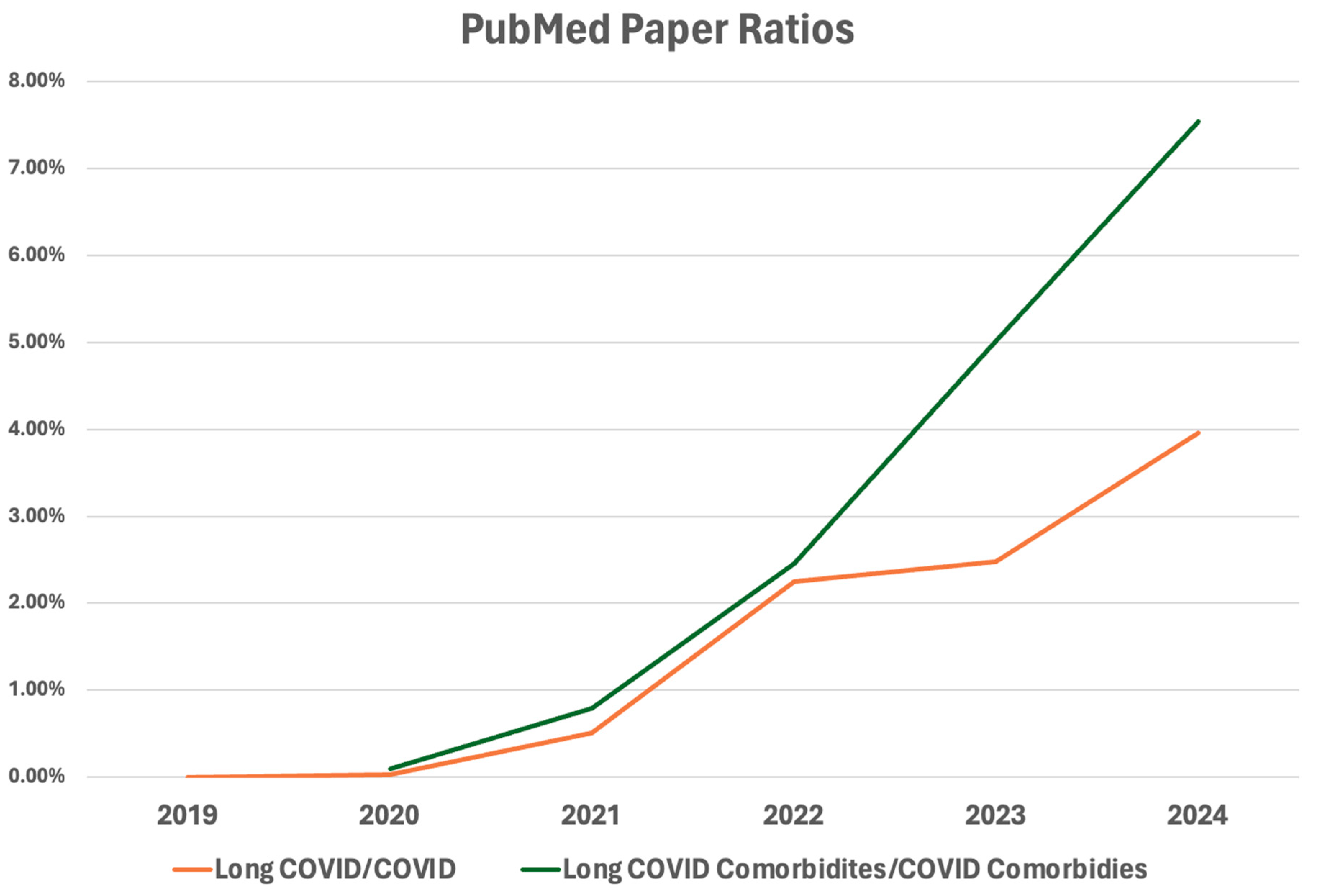
Figure 2.
Long COVID’s Major Symptoms.
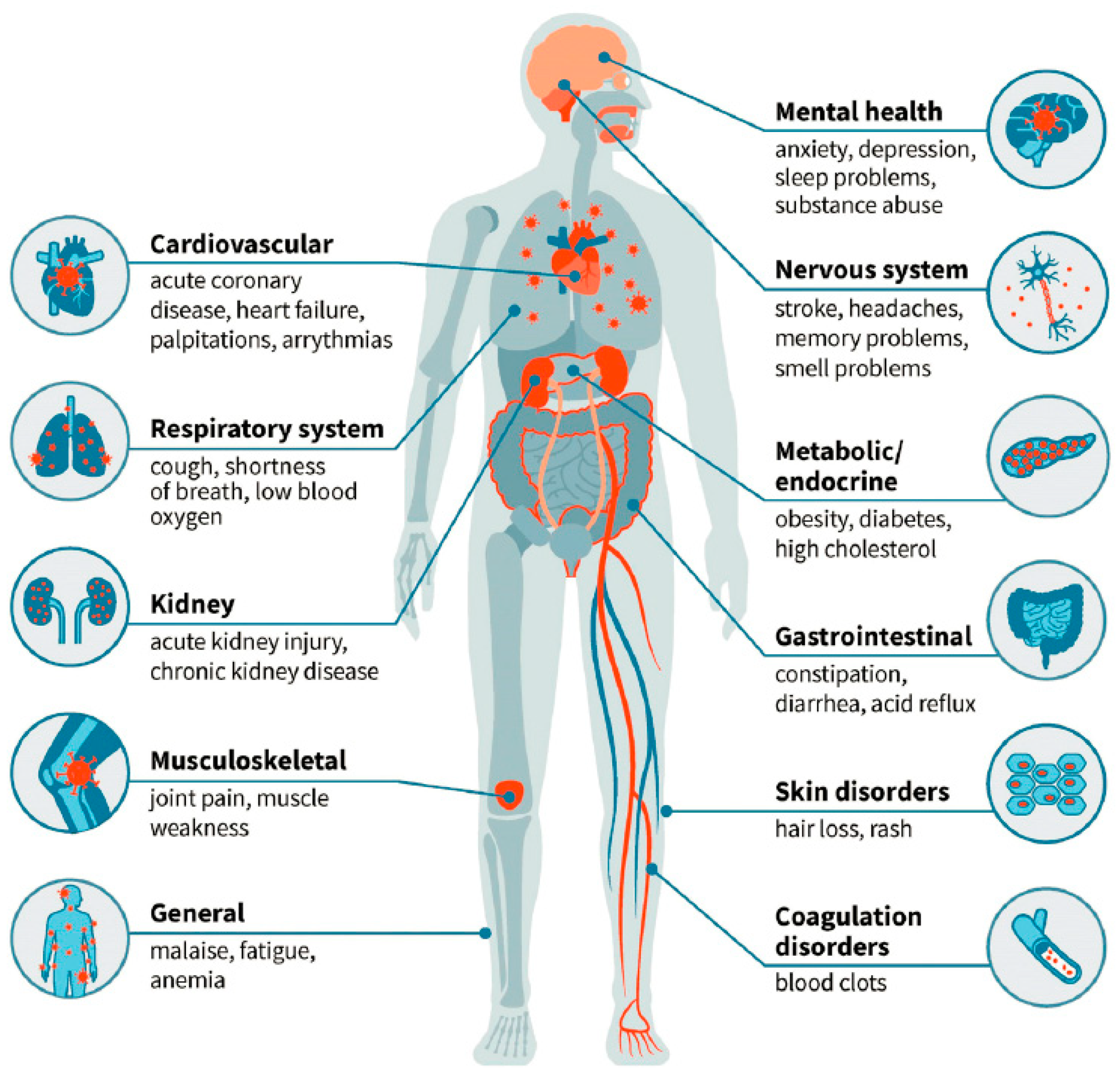
Figure 3.
Long COVID Symptom Prevalence Over Time.
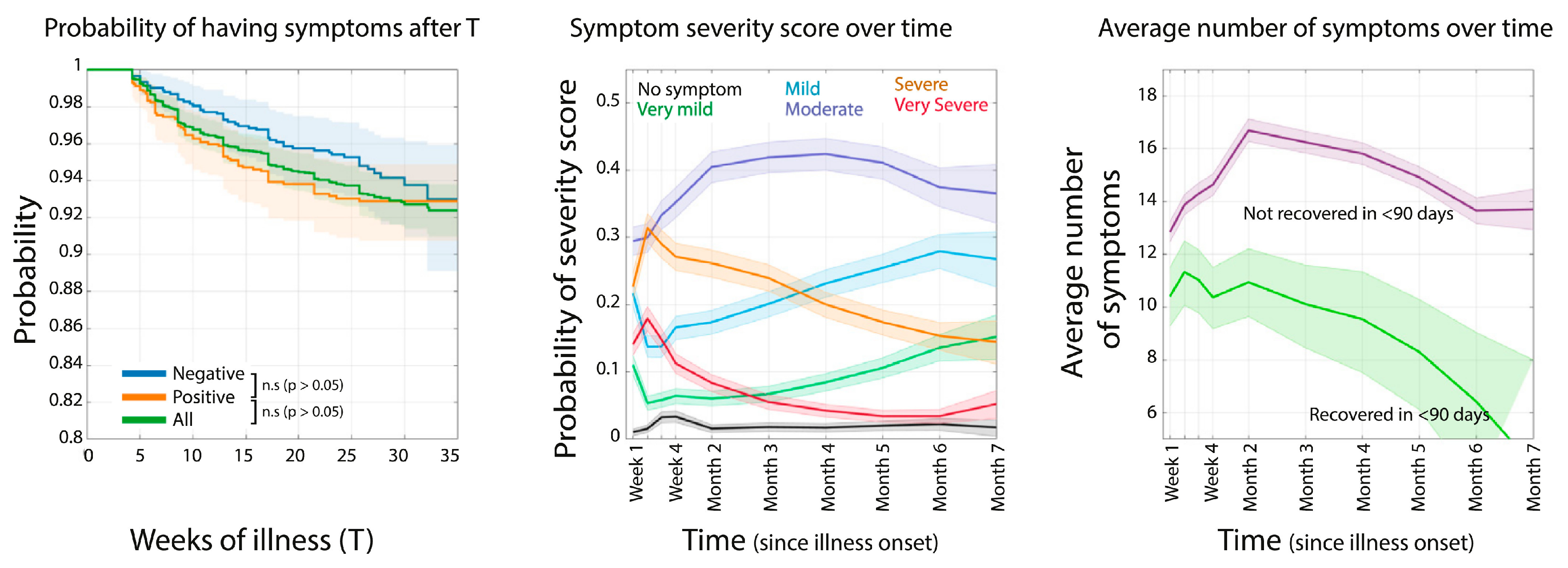
Figure 4.
Smell or Taste Recovery Time After a Mild COVID Case. SNOT-22 is a Sino-Nasal Outcome Test.
Figure 4.
Smell or Taste Recovery Time After a Mild COVID Case. SNOT-22 is a Sino-Nasal Outcome Test.
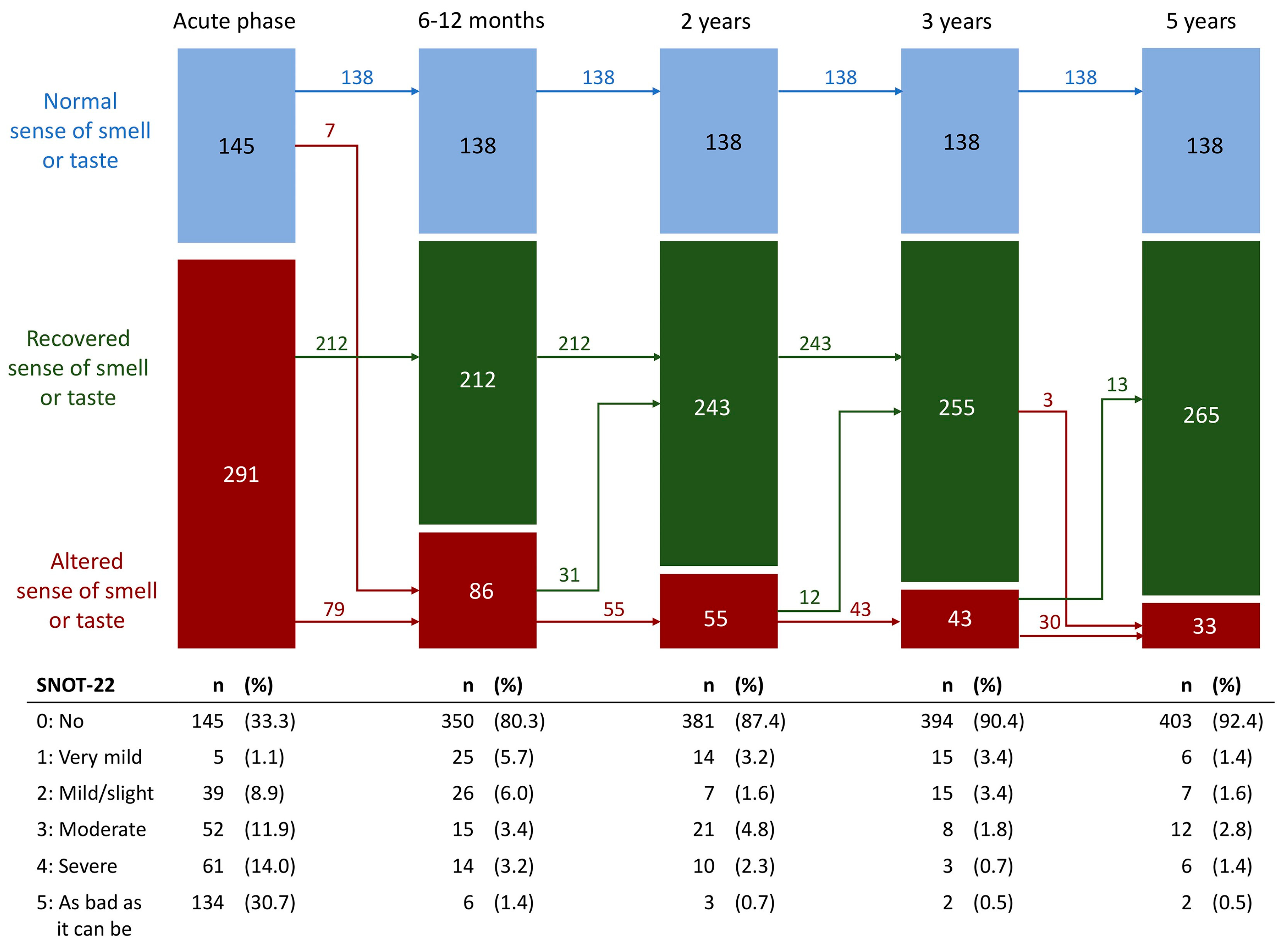
Figure 5.
Long COVID Organ Disruption Papers in The Mouse That Roared.
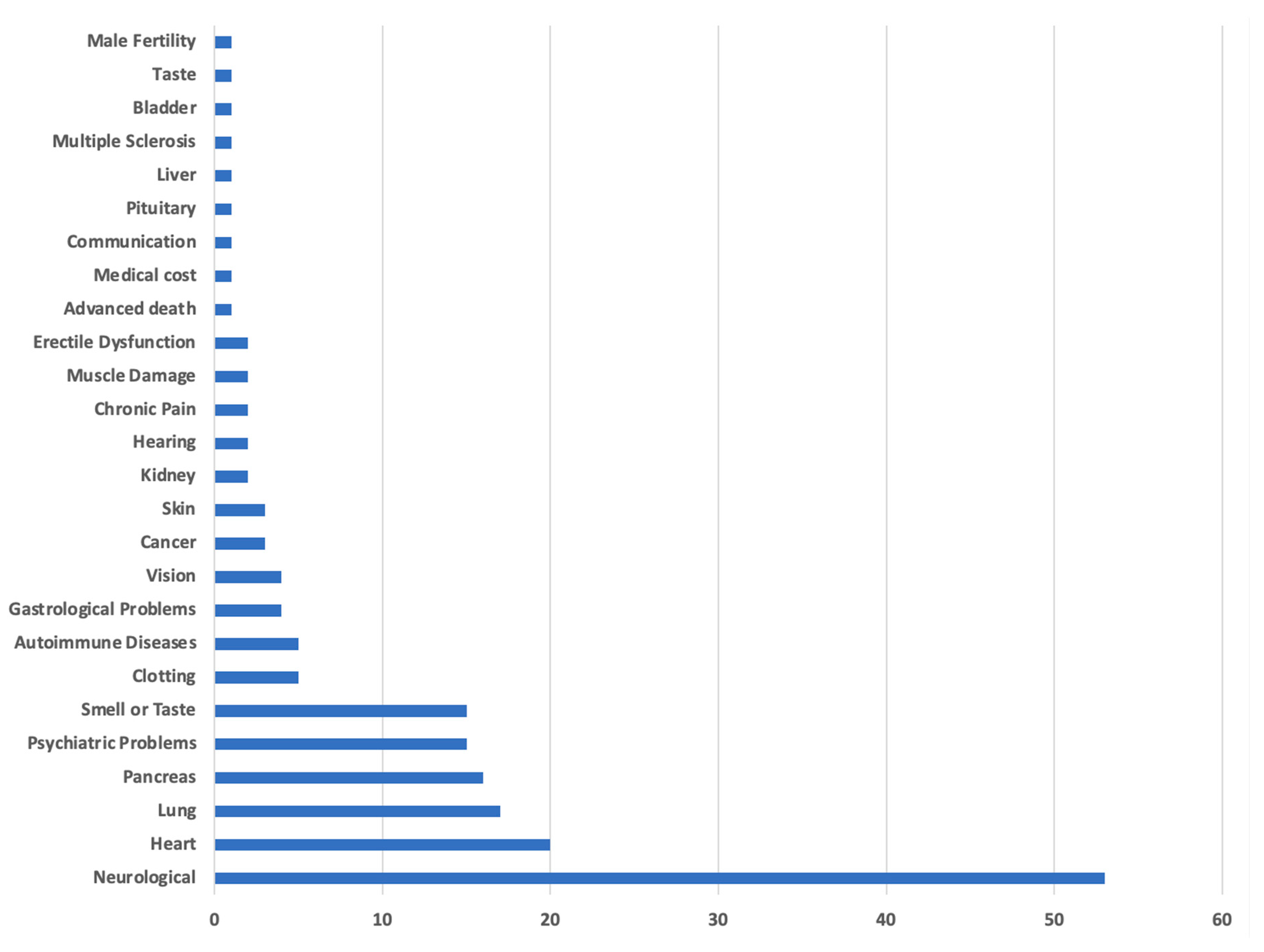
Figure 7.
Number of Papers Reporting Differing Long COVID Prevalence.
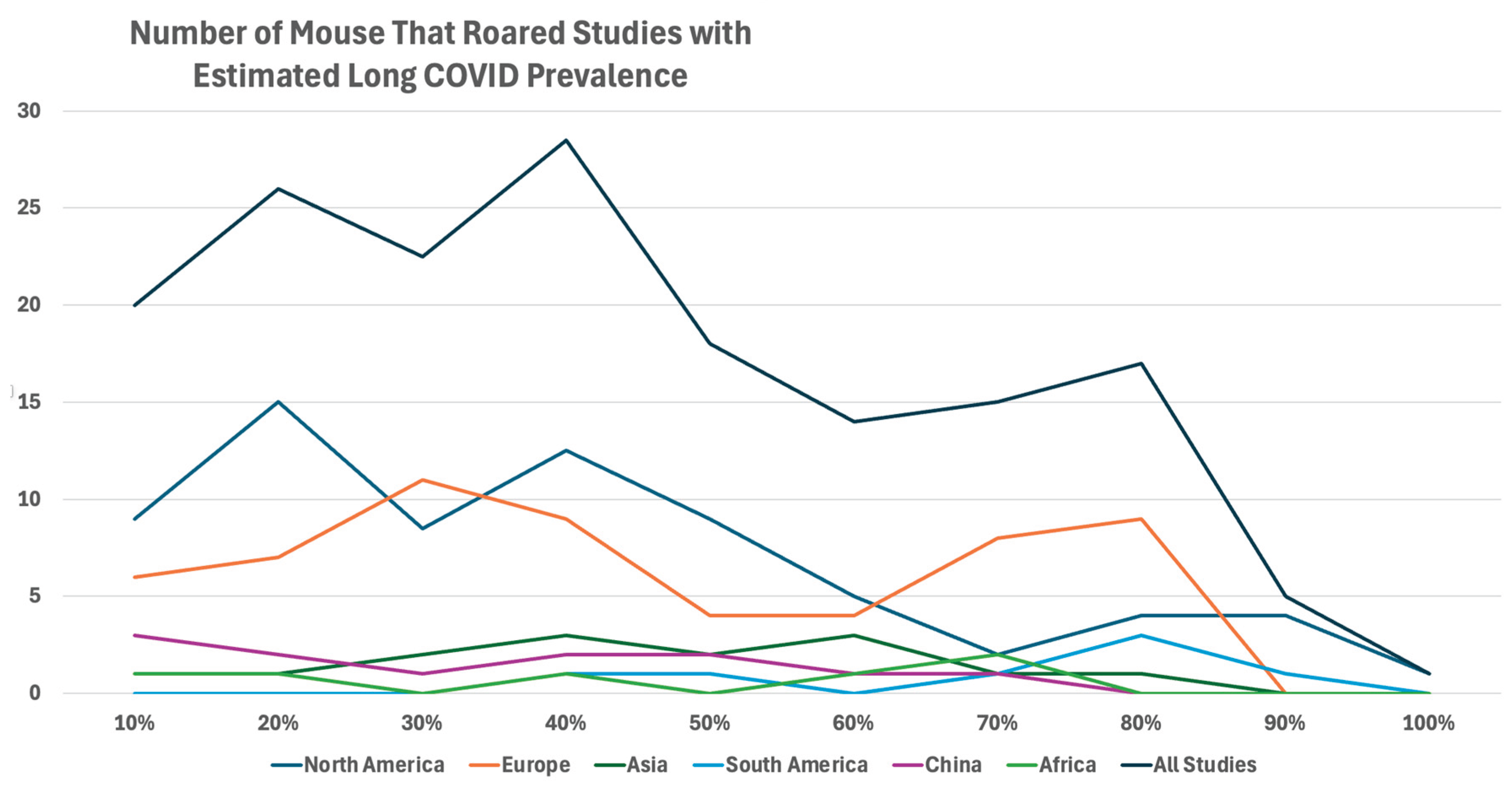
Figure 9.
Percent of People with Long COVID – March 2024.
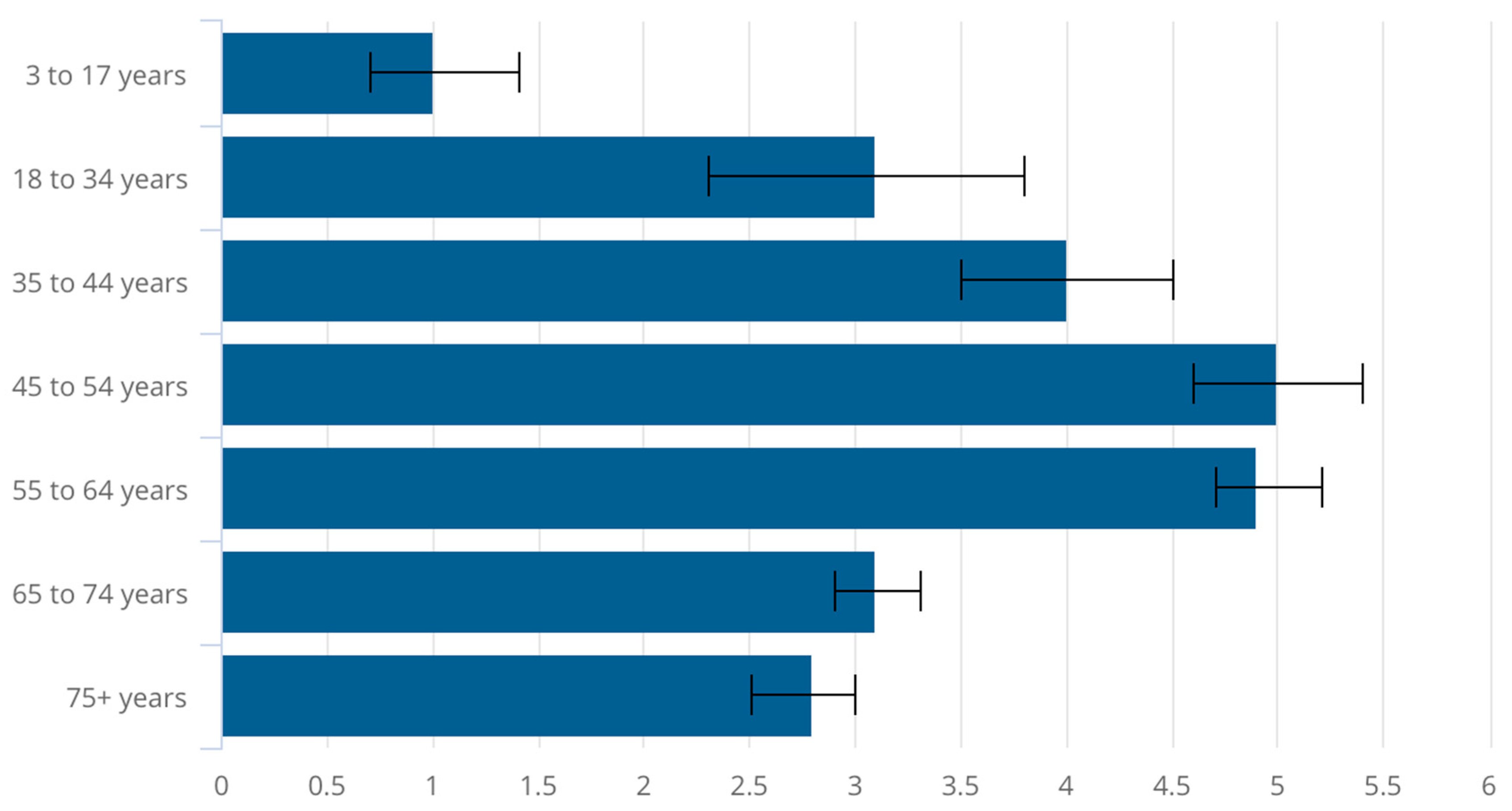
Figure 10.
Long COVID Rates by Variant and Vaccination Status. DALYs - Disability-Adjusted Life Years.
Figure 10.
Long COVID Rates by Variant and Vaccination Status. DALYs - Disability-Adjusted Life Years.
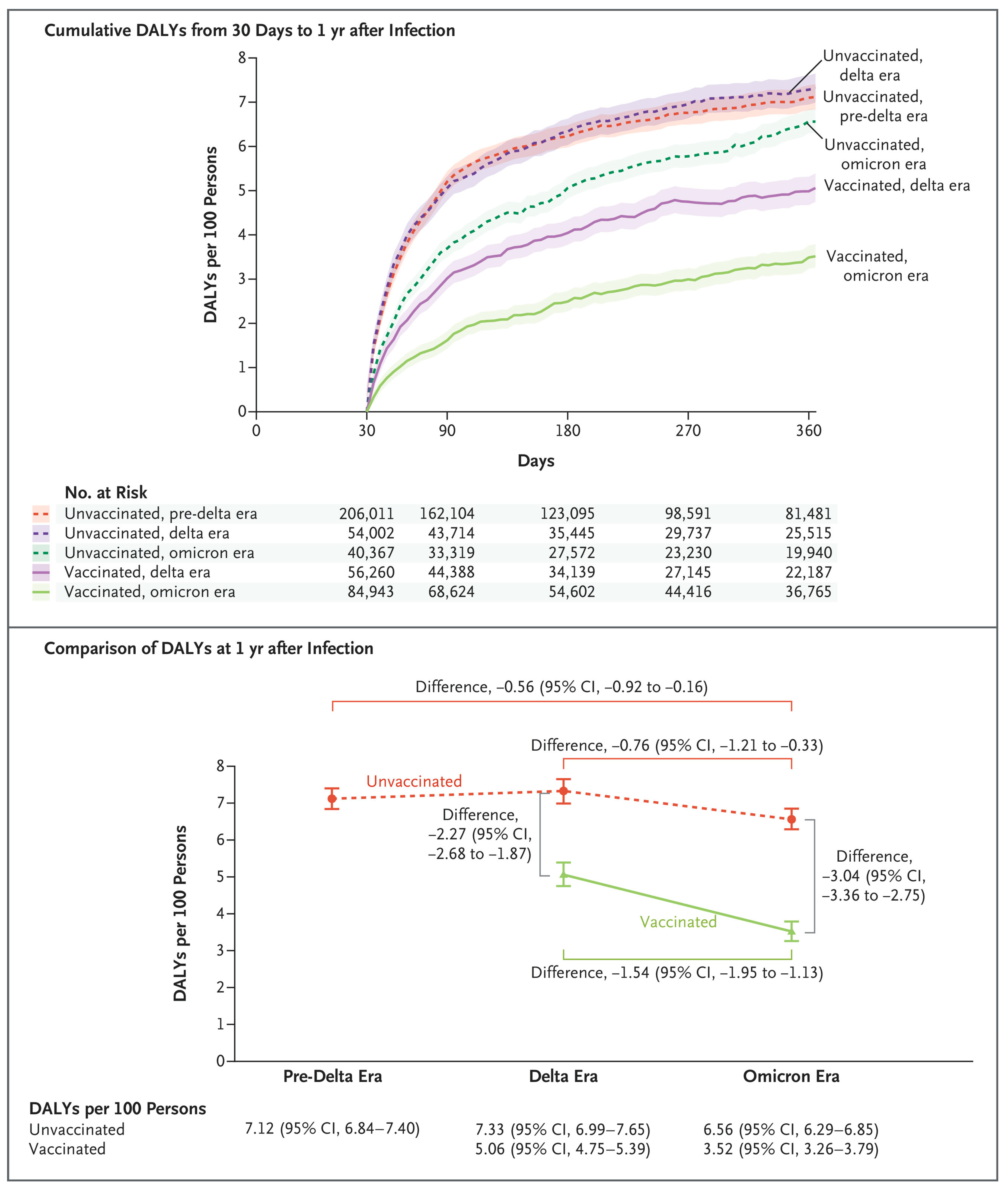
Figure 14.
- Types of Long COVID Treatments.
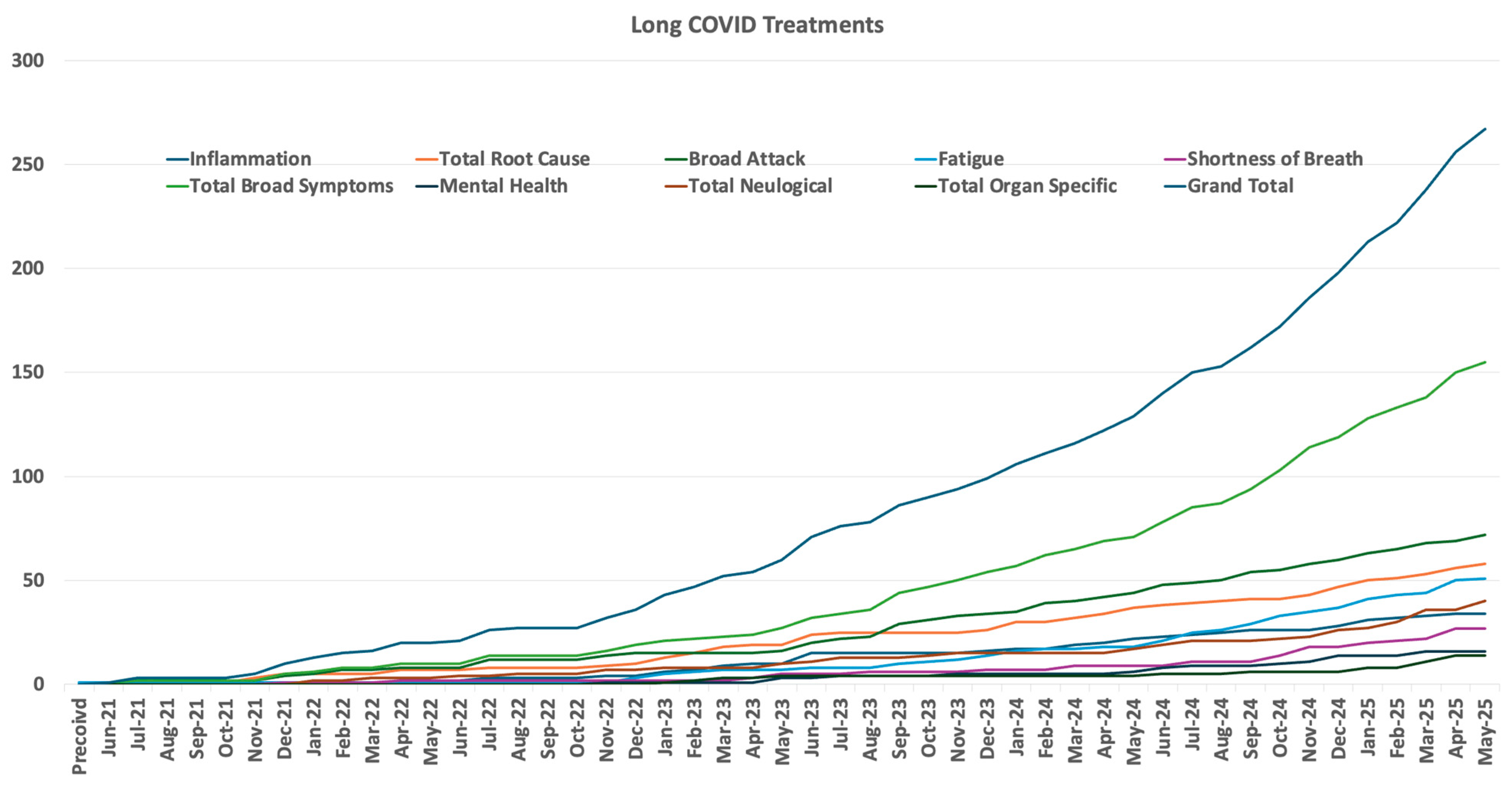
Figure 15.
Medical Papers on Mitochondrial Dysfunction.
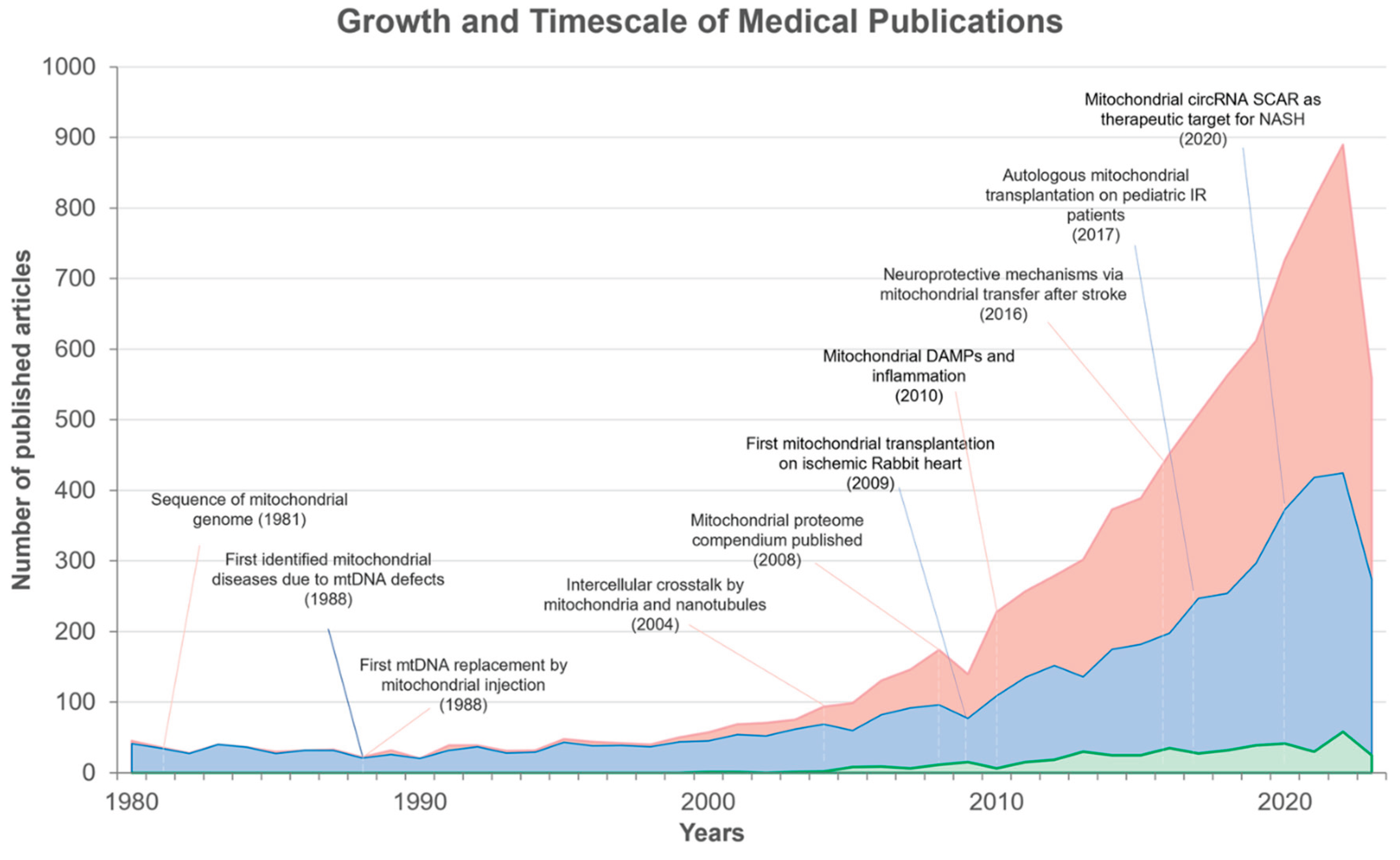
Disclaimer/Publisher’s Note: The statements, opinions and data contained in all publications are solely those of the individual author(s) and contributor(s) and not of MDPI and/or the editor(s). MDPI and/or the editor(s) disclaim responsibility for any injury to people or property resulting from any ideas, methods, instructions or products referred to in the content. |
© 2025 by the author. Licensee MDPI, Basel, Switzerland. This article is an open access article distributed under the terms and conditions of the Creative Commons Attribution (CC BY) license (https://creativecommons.org/licenses/by/4.0/).
Copyright: This open access article is published under a Creative Commons CC BY 4.0 license, which permit the free download, distribution, and reuse, provided that the author and preprint are cited in any reuse.