

Submitted:
02 September 2025
Posted:
03 September 2025
You are already at the latest version
Abstract
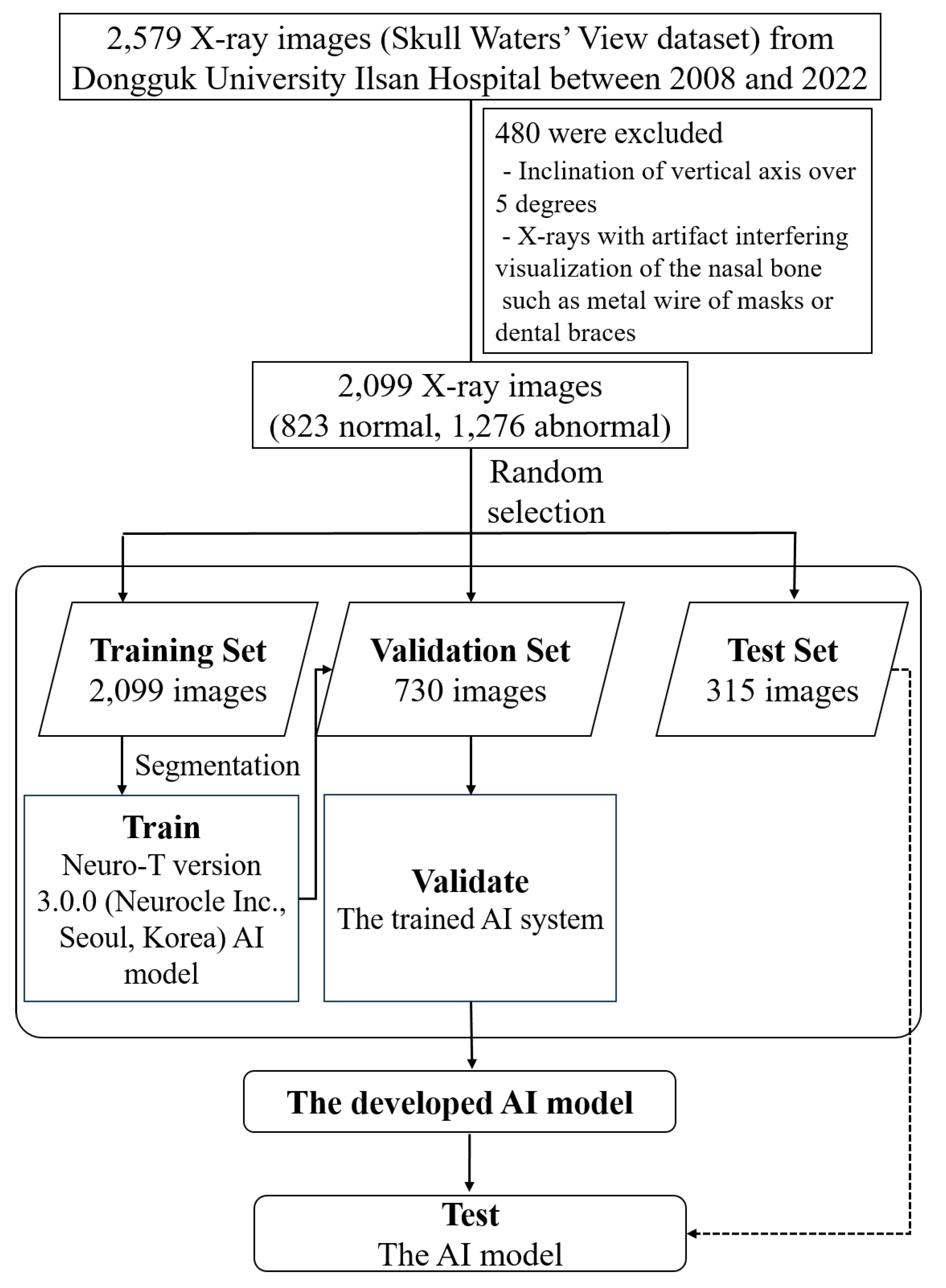
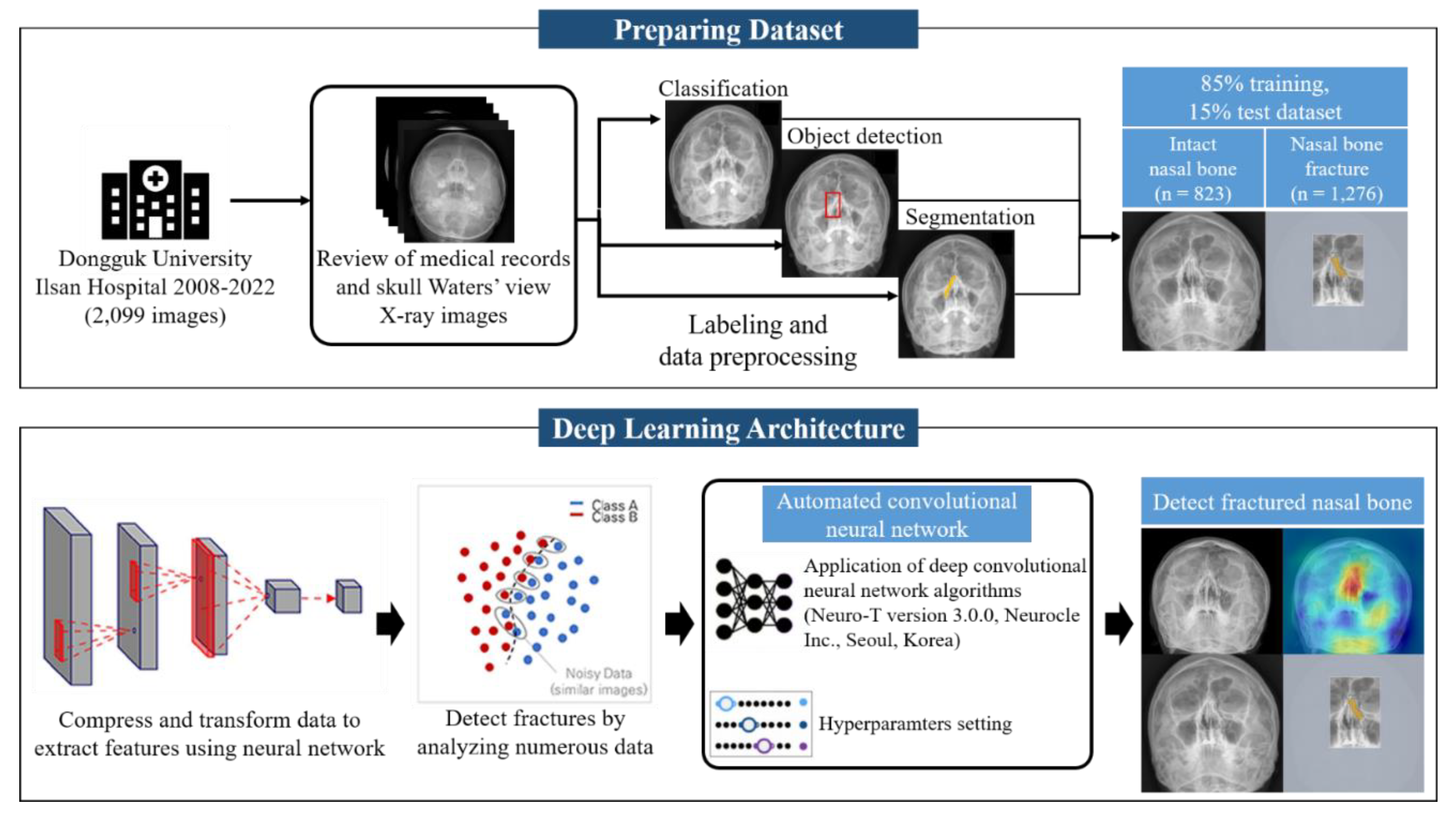
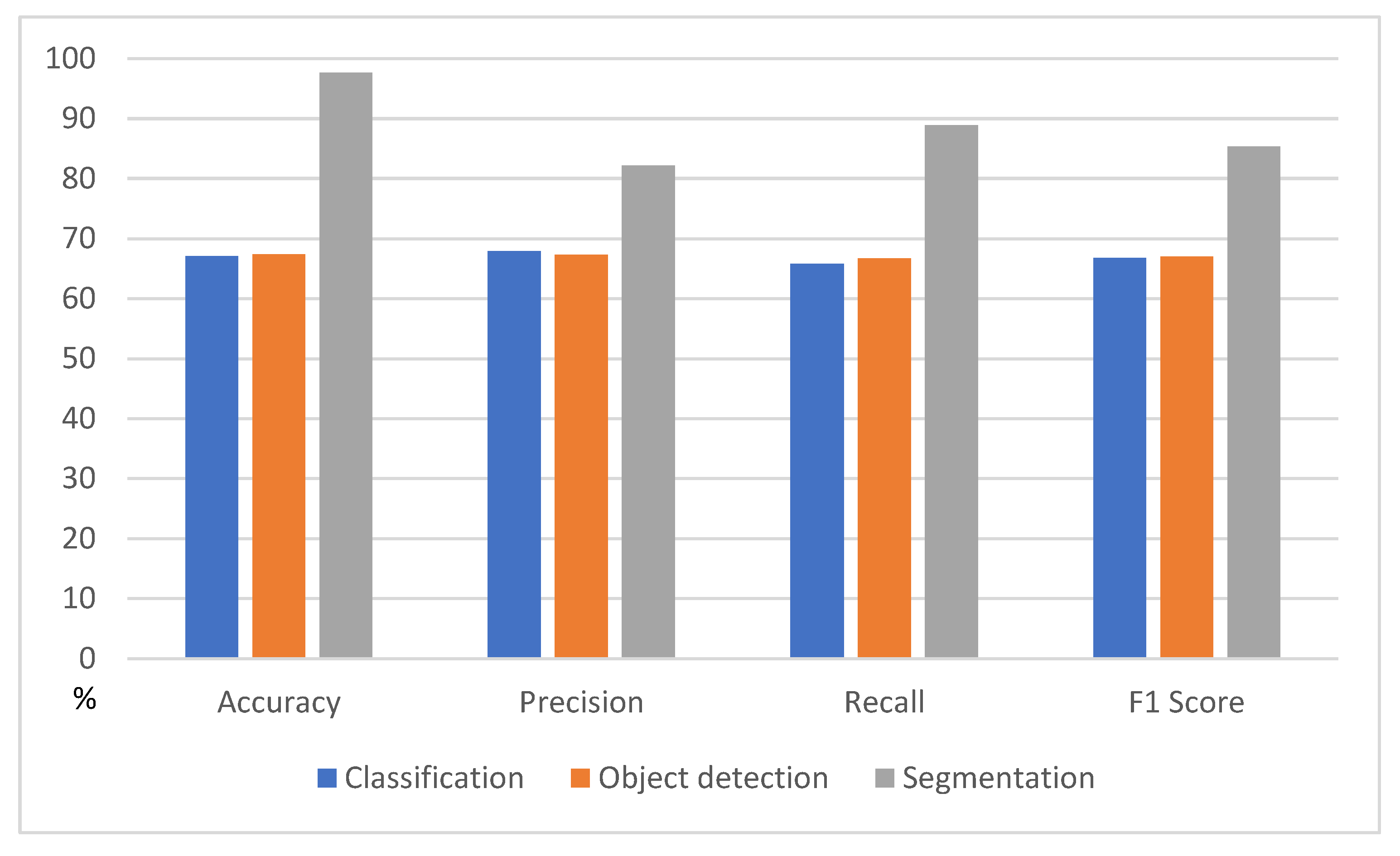
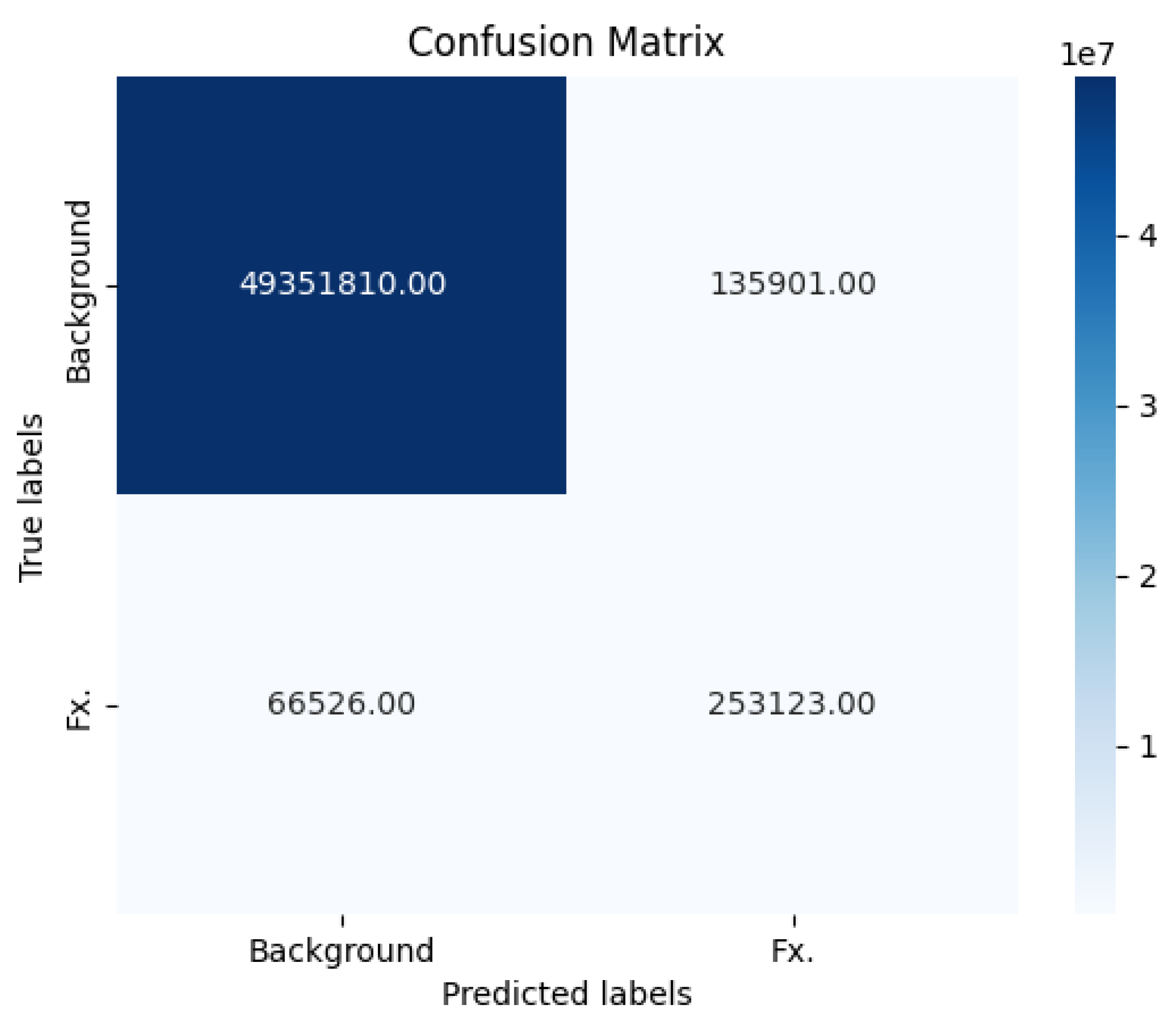
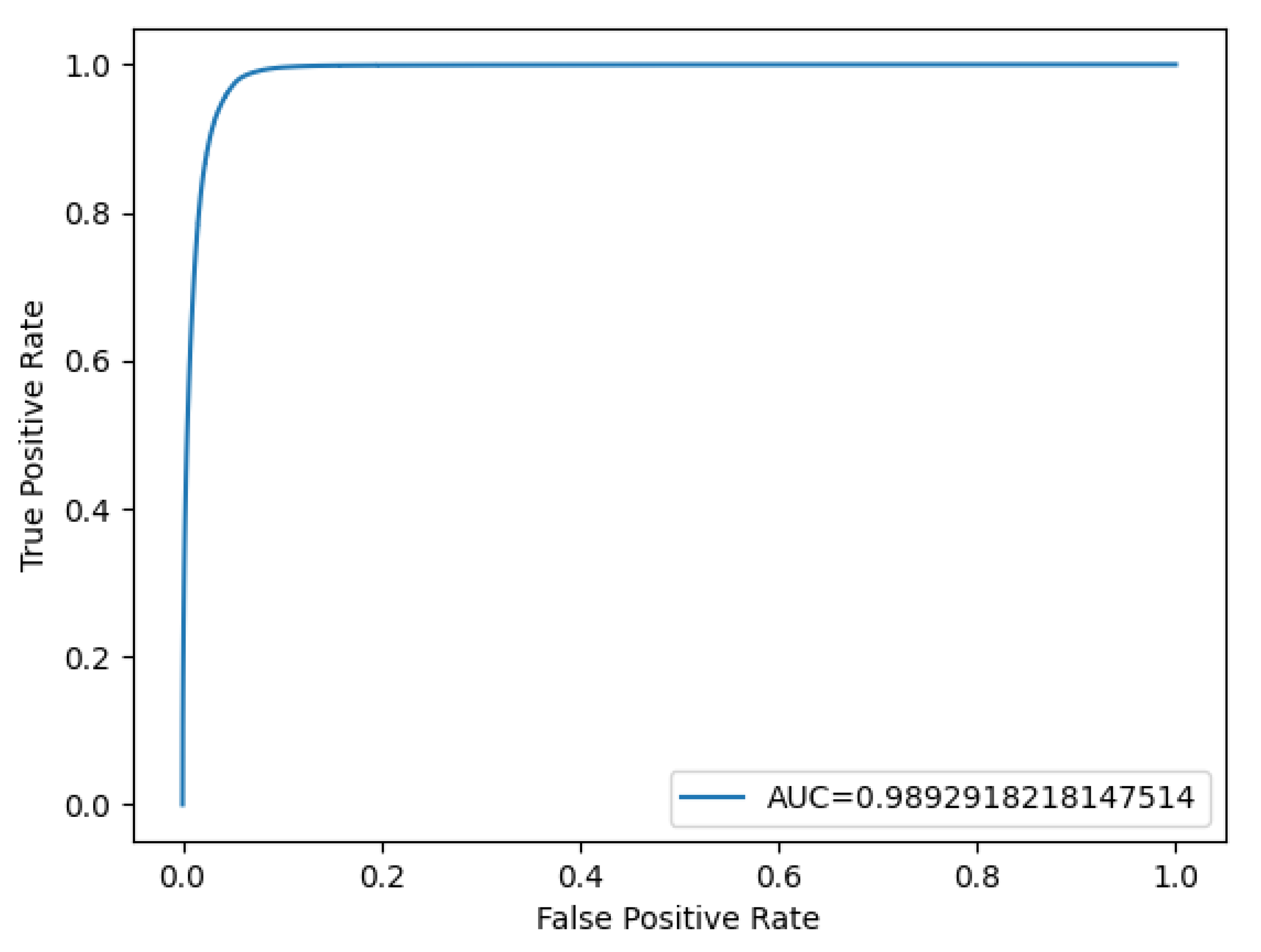
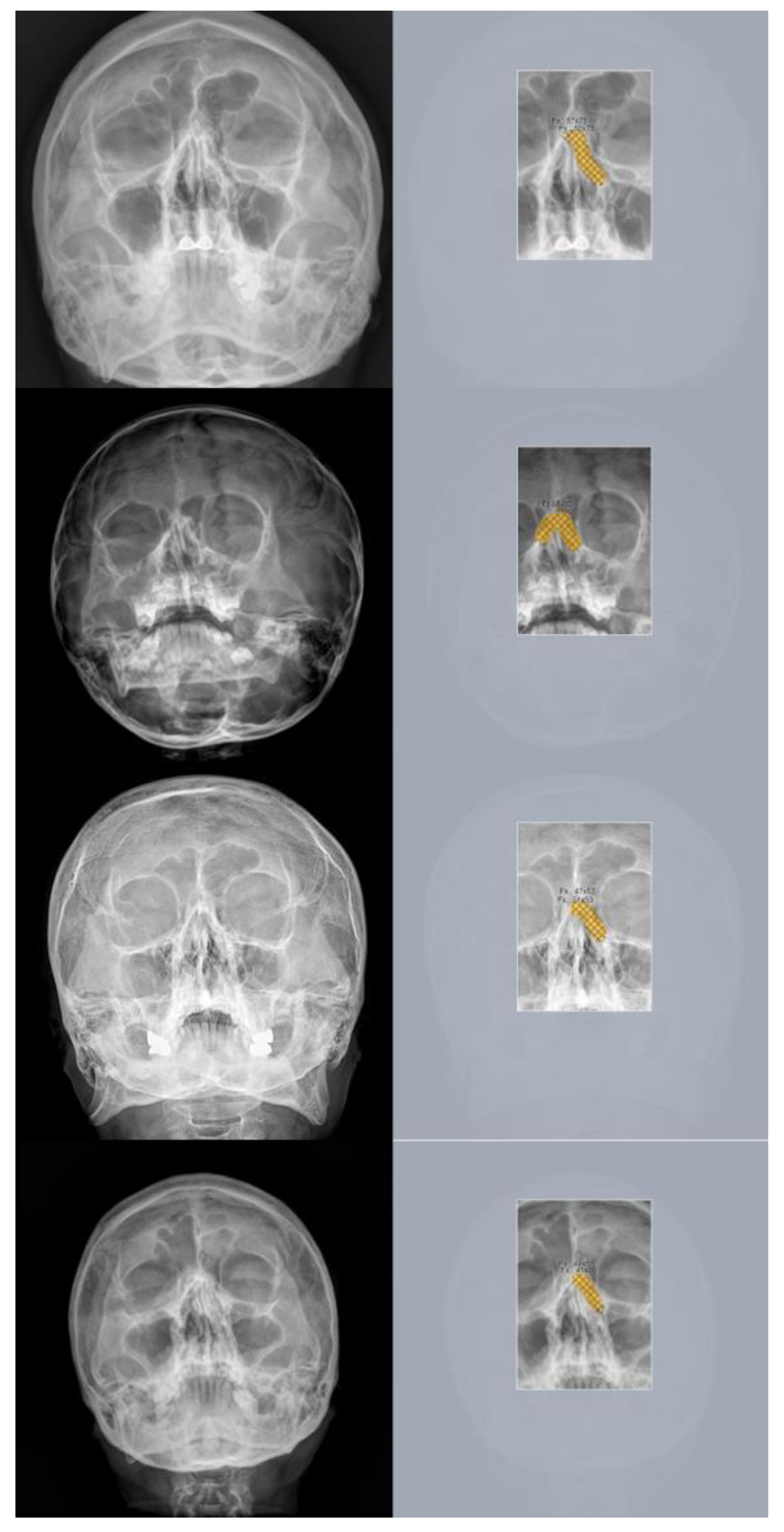
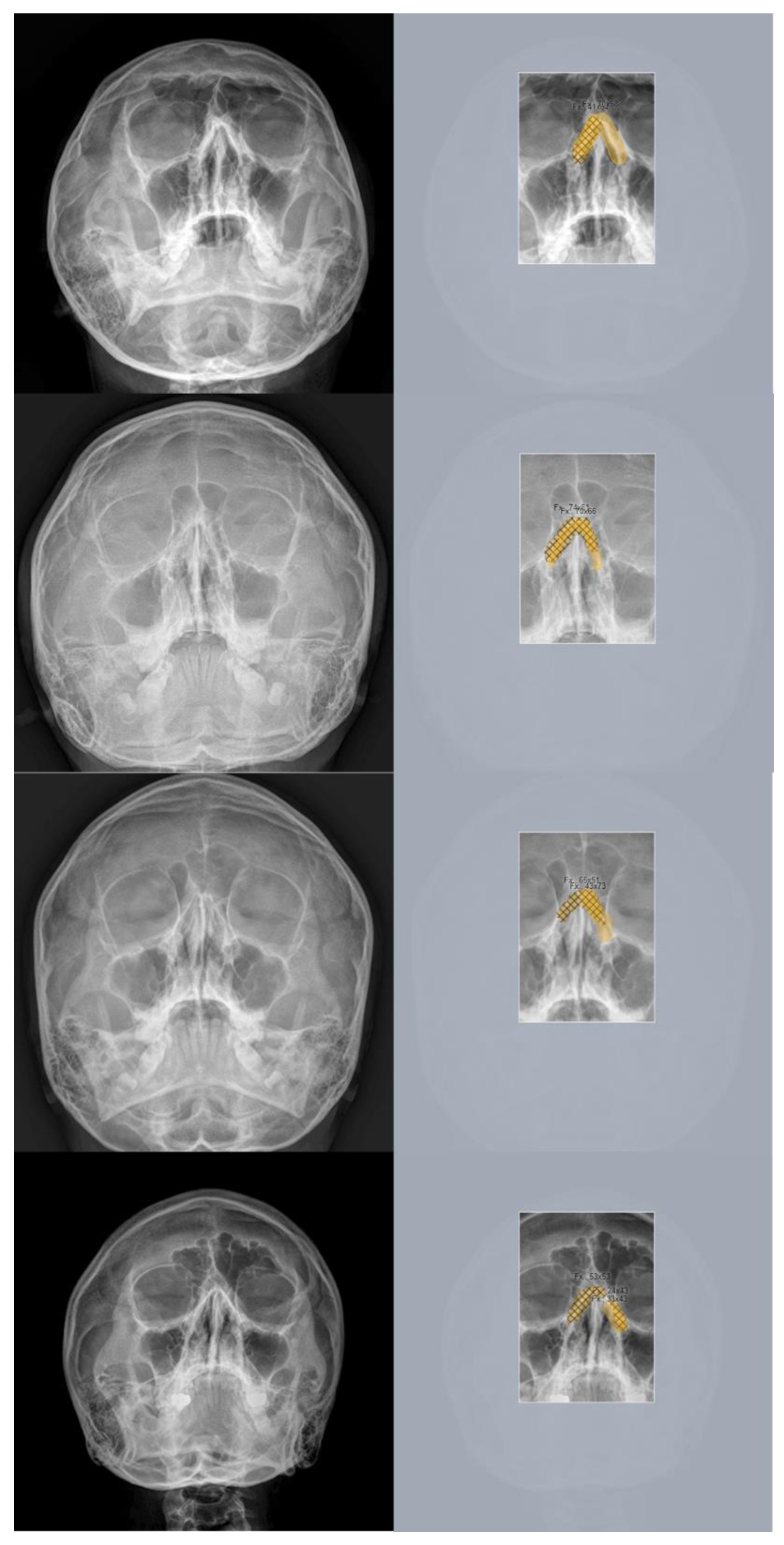
Background/Objectives: The nasal bone is critical to both functional integrity and aesthetic contour of the facial skeleton. Nasal bone fractures constitute the most prevalent facial fracture presentation in emergency departments. Identification of these fractures and determination of immediate intervention requirements pose significant challenges for inexperienced residents, potentially leading to oversight. Methods: A retrospective analysis was conducted on facial trauma patients undergoing cranial radiography (Waters’ view) during initial emergency department assessment between March 2008 and July 2022. This study incorporated 2,099 radiographic images. Surgical indications comprised displacement angle, interosseous gap size, soft tissue swelling thickness, and subcutaneous emphysema. A deep learning-based artificial intelligence (AI) algorithm was designed, trained, and validated for fracture detection on radiographic images. Model performance was quantified through accuracy, precision, recall, and F1 score. Hyperparameters included: batch size (20), epochs (70), 50-layer network architecture, Adam optimizer, and initial learning rate (0.001). Results: The deep learning AI model employing segmentation labeling demonstrated 97.68% accuracy, 82.2% precision, 88.9% recall, and an 85.4% F1 score in nasal bone fracture identification. These outcomes informed the development of a predictive algorithm for guiding conservative versus surgical management decisions. Conclusions: The proposed AI-driven algorithm and criteria exhibit high diagnostic accuracy and operational efficiency in both detecting nasal bone fractures and predicting surgical indications, establishing its utility as a clinical decision-support tool in emergency settings.
Keywords:
1. Introduction
1.1. Research Objective
1.2. Research Scope and Methods
1.3. Research Scope
1.4. Patients and Methods
1.4. Automated Deep Learning Tool for Model Establishment
1.5. Hyperparameter
2. Theoretical Background
2.1. Diagnosis of Nasal Bone Fracture
2.2. Artificial Intelligence (AI) in Fracture Diagnosis
3. Results
3.1. Patients
3.2. Diagnostic Performance of Deep Learning Model.
3.3. True Positive and False Positive of Deep Learning Models
4. Discussion
5. Conclusions
Author Contributions
Funding
Institutional Review Board Statement
Informed Consent Statement
Data Availability Statement
Acknowledgments
Conflicts of Interest
Abbreviations
| AI | Artificial intelligence |
| DCNN | Deep convolutional neural networks |
| CNN | Convolutional neural network |
| CT | Computed tomography |
| ROI | Region of interest |
| ROC | Receiver operating characteristic |
| NPV | Negative predictive value |
| AUC | Area under the curve |
| CAM | Class activation mapping |
References
- Dong, S.X.; Shah, N.; Gupta, A. Epidemiology of nasal bone fractures. Facial Plast. Surg. Aesthet. Med. 2022, 24, 27–33. [Google Scholar] [CrossRef]
- Chukwulebe, S.; Hogrefe, C. The diagnosis and management of facial bone fractures. Emerg. Med. Clin. North Am. 2019, 37, 137–151. [Google Scholar] [CrossRef]
- Manson, P.N.; Markowitz, B.; Mirvis, S.; Dunham, M.; Yaremchuk, M. Toward CT-based facial fracture treatment. Plast. Reconstr. Surg. 1990, 85, 202–12; [Google Scholar] [CrossRef]
- Erfanian, R.; Farahbakhsh, F.; Firouzifar, M.; Sohrabpour, S.; Irani, S.; Heidari, F. Factors related to successful closed nasal bone reduction: a longitudinal cohort study. Br. J. Oral Maxillofac. Surg. 2022, 60, 974–977. [Google Scholar] [CrossRef] [PubMed]
- Chou, C.; Chen, C.W.; Wu, Y.C.; Chen, K.K.; Lee, S.S. Refinement treatment of nasal bone fracture: A 6-year study of 329 patients. Asian J. Surg. 2015, 38, 191–198. [Google Scholar] [CrossRef] [PubMed]
- Choi, E.; Leonard, K.W.; Jassal, J.S.; Levin, A.M.; Ramachandra, V.; Jones, L.R. Artificial intelligence in facial plastic surgery: a review of current applications, future applications, and ethical considerations. Facial Plast. Surg. 2023, 39, 454–459. [Google Scholar] [CrossRef] [PubMed]
- Mir, M.A. Artificial intelligence revolutionizing plastic surgery scientific publications. Cureus 2023, 15. [Google Scholar] [CrossRef]
- Wheeler, D.R. Art, Artificial intelligence, and aesthetics in plastic surgery. Plast. Reconstr. Surg. 2021, 148, 529e–530e. [Google Scholar] [CrossRef]
- Torosdagli, N.; Anwar, S.; Verma, P.; Liberton, D.K.; Lee, J.S.; Han, W.W.; Bagci, U. Relational reasoning network for anatomical landmarking. J. Med. Imaging (Bellingham) 2023, 10. [Google Scholar] [CrossRef]
- Seol, Y.J.; Kim, Y.J.; Kim, Y.S.; Cheon, Y.W.; Kim, K.G. A study on 3D deep learning-based automatic diagnosis of nasal fractures. Sensors (Basel) 2022, 22. [Google Scholar] [CrossRef]
- Yang, C.; Yang, L.; Gao, G.D.; Zong, H.Q.; Gao, D. Assessment of artificial intelligence-aided reading in the detection of nasal bone fractures. Technol. Health Care 2023, 31, 1017–1025. [Google Scholar] [CrossRef] [PubMed]
- Nam, Y.; Choi, Y.; Kang, J.; Seo, M.; Heo, S.J.; Lee, M.K. Diagnosis of nasal bone fractures on plain radiographs via convolutional neural networks. Sci. Rep. 2022, 12. [Google Scholar] [CrossRef] [PubMed]
- Prescher, A.; Meyers, A.; Gerf von Keyserlingk, D. Neural net applied to anthropological material: a methodical study on the human nasal skeleton. Ann. Anat. 2005, 187, 261–269. [Google Scholar] [CrossRef]
- Kuo, R.Y.L.; Harrison, C.; Curran, T.A.; Jones, B.; Freethy, A.; Cussons, D.; Stewart, M.; Collins, G.S.; Furniss, D. Artificial intelligence in fracture detection: A systematic review and meta-analysis. Radiology 2022, 304, 50–62. [Google Scholar] [CrossRef]
- Guermazi, A.; Tannoury, C.; Kompel, A.J.; Murakami, A.M.; Ducarouge, A.; Gillibert, A.; Li, X.; Tournier, A.; Lahoud, Y.; Jarraya, M.; Lacave, E.; Rahimi, H.; Pourchot, A.; Parisien, R.L.; Merritt, A.C.; Comeau, D.; Regnard, N.E.; Hayashi, D. Improving radiographic fracture recognition performance and efficiency using artificial intelligence. Radiology 2022, 302, 627–636. [Google Scholar] [CrossRef]
- Duron, L.; Ducarouge, A.; Gillibert, A.; Lainé, J.; Allouche, C.; Cherel, N.; Zhang, Z.; Nitche, N.; Lacave, E.; Pourchot, A.; Felter, A.; Lassalle, L.; Regnard, N.E.; Feydy, A. Assessment of an AI aid in detection of adult appendicular skeletal fractures by emergency physicians and radiologists: A multicenter cross-sectional diagnostic study. Radiology 2021, 300, 120–129. [Google Scholar] [CrossRef]
- Zhang, X.; Yang, Y.; Shen, Y.W.; Zhang, K.R.; Jiang, Z.K.; Ma, L.T.; Ding, C.; Wang, B.Y.; Meng, Y.; Liu, H. Diagnostic accuracy and potential covariates of artificial intelligence for diagnosing orthopedic fractures: a systematic literature review and meta-analysis. Eur. Radiol. 2022, 32, 7196–7216. [Google Scholar] [CrossRef]
- Anderson, P.G.; Baum, G.L.; Keathley, N.; Sicular, S.; Venkatesh, S.; Sharma, A.; Daluiski, A.; Potter, H.; Hotchkiss, R.; Lindsey, R.V.; Jones, R.M. Deep learning assistance closes the accuracy gap in fracture detection across clinician types. Clin. Orthop. Relat. Res. 2023, 481, 580–588. [Google Scholar] [CrossRef]
- Li, Y.C.; Chen, H.H.; Horng-Shing Lu, H.; Hondar Wu, H.T.; Chang, M.C.; Chou, P.H. Can a deep-learning model for the automated detection of vertebral fractures approach the performance level of human subspecialists? Clin. Orthop. Relat. Res. 2021, 479, 1598–1612. [Google Scholar] [CrossRef]
- Cohen, M.; Puntonet, J.; Sanchez, J.; Kierszbaum, E.; Crema, M.; Soyer, P.; Dion, E. Artificial intelligence vs. radiologist: accuracy of wrist fracture detection on radiographs. Eur. Radiol. 2023, 33, 3974–3983. [Google Scholar] [CrossRef] [PubMed]
- Zech, J.R.; Santomartino, S.M.; Yi, P.H. Artificial intelligence (AI) for fracture diagnosis: an overview of current products and considerations for clinical adoption, from the AJR special series on AI applications. A.J.R. Am. J. Roentgenol. 2022, 219, 869–878. [Google Scholar] [CrossRef]
- Tuan, H.N.A.; Hai, N.D.X.; Thinh, N.T. Shape prediction of nasal bones by digital 2D-photogrammetry of the nose based on convolution and back-propagation neural network. Comput. Math. Methods Med. 2022, 2022, 5938493. [Google Scholar] [CrossRef]
- Seo, J.; Yang, I.H.; Choi, J.Y.; Lee, J.H.; Baek, S.H. Three-dimensional facial soft tissue changes after orthognathic surgery in cleft patients using artificial intelligence-assisted landmark autodigitization. J. Craniofac. Surg. 2021, 32, 2695–2700. [Google Scholar] [CrossRef]
- Jung, S.K.; Kim, T.W. New approach for the diagnosis of extractions with neural network machine learning. Am. J. Orthod. Dentofacial Orthop. 2016, 149, 127–133. [Google Scholar] [CrossRef] [PubMed]
- Tang, J.; Han, J.; Xie, B.; Xue, J.; Zhou, H.; Jiang, Y.; Hu, L.; Chen, C.; Zhang, K.; Zhu, F.; Lu, L. The two-stage ensemble learning model based on aggregated facial features in screening for fetal genetic diseases. Int. J. Environ. Res. Public Health 2023, 20, 2377. [Google Scholar] [CrossRef]
- Li, Y.; Liu, X.; Zhuang, X.H.; Wang, M.J.; Song, X.F. Assessment of low-dose paranasal sinus CT imaging using a new deep learning image reconstruction technique in children compared to adaptive statistical iterative reconstruction V (ASiR-V). B.M.C. Med. Imaging 2022, 22, 106. [Google Scholar] [CrossRef] [PubMed]
- Lamassoure, L.; Giunta, J.; Rosi, G.; Poudrel, A.S.; Meningaud, J.P.; Bosc, R.; Haïat, G. Anatomical subject validation of an instrumented hammer using machine learning for the classification of osteotomy fracture in rhinoplasty. Med. Eng. Phys. 2021, 95, 111–116. [Google Scholar] [CrossRef]
- Nakagawa, J.; Fujima, N.; Hirata, K.; Tang, M.; Tsuneta, S.; Suzuki, J.; Harada, T.; Ikebe, Y.; Homma, A.; Kano, S.; Minowa, K.; Kudo, K. Utility of the deep learning technique for the diagnosis of orbital invasion on CT in patients with a nasal or sinonasal tumor. Cancer Imaging 2022, 22, 52. [Google Scholar] [CrossRef] [PubMed]
- Wang, Y.; Liu, C.; Zhang, X.; Deng, W. Synthetic CT generation based on T2 weighted MRI of nasopharyngeal carcinoma (NPC) using a Deep Convolutional Neural Network (DCNN). Front. Oncol. 2019, 9, 1333. [Google Scholar] [CrossRef]
- Smith, E.B.; Patel, L.D.; Dreizin, D. Postoperative computed tomography for facial fractures. Neuroimaging Clin. N. Am. 2022, 32, 231–254. [Google Scholar] [CrossRef]

 |
| Labeling methods | Accuracy | Precision | Sensitivity | F1 Score |
| Classification | 67.09 | 67.90 | 65.80 | 66.80 |
| Object detection | 67.41 | 67.30 | 66.70 | 67.00 |
| Segmentation | 97.68 | 82.2 | 88.9 | 85.4 |
 |
 |
Disclaimer/Publisher’s Note: The statements, opinions and data contained in all publications are solely those of the individual author(s) and contributor(s) and not of MDPI and/or the editor(s). MDPI and/or the editor(s) disclaim responsibility for any injury to people or property resulting from any ideas, methods, instructions or products referred to in the content. |
© 2025 by the authors. Licensee MDPI, Basel, Switzerland. This article is an open access article distributed under the terms and conditions of the Creative Commons Attribution (CC BY) license (http://creativecommons.org/licenses/by/4.0/).


