
Submitted:
01 September 2025
Posted:
01 September 2025
You are already at the latest version
Abstract
This study examined the implementation and impact of a series of extension activities and instructional innovations designed to integrate the STEAM approach and promote ocean literacy in conjunction with English, Mathematics, and Science. The programs emphasized contextualized learning, particularly for the seven coastal municipalities where marine ecosystems such as mangroves, coral reefs, and fisheries form part of daily life and livelihood. Evaluation results revealed that the extension programs were rated excellent by stakeholders, reflecting their effectiveness, relevance, and alignment with both academic and community needs. Teachers, parents or guardians, and Barangay Officials reported improvements in both cognitive and affective learning outcomes, while the inclusion of parents and guardians expanded the reach and sustainability of the initiatives. The integration of art in science teaching, the promotion of action research across ranks, and the cascading of topics from general education to marine-focused content proved highly effective in fostering engagement and knowledge retention. The findings affirm the critical role of higher education institutions in bridging education, research, and community action. The study contributes to the global discourse on the United Nations Sustainable Development Goals, particularly SDG 4 (Quality Education), SDG 13 (Climate Action), and SDG 14 (Life Below Water).
Keywords:
ocean literacy
; steam approach
; extension programs
; community engagement
; sustainable development goals (SDGs)
1. Introduction
The call for ocean literacy has become increasingly urgent as the world faces escalating environmental, social, and economic challenges linked to the ocean. This paper traces its roots to the Japan Society for the Promotion of Science (JSPS) project at Hokkaido University of Education, Hakodate, Japan, where the concept of ocean literacy began to emerge between 2019 and 2021. The first published study focused on the diverse marine resources in Northern Iloilo, Philippines—including mangroves, coral reefs, seagrasses, and fisheries—and highlighted their potential integration into instructional materials for science education (Tupas & Matsuura, 2020). Respondents affirmed the relevance of these materials to the Department of Education’s curriculum, underscoring the need to bridge local ecological knowledge with classroom learning.
Despite these advances, several gaps remain. While initial instructional materials enhanced curriculum integration, they lacked immersive and sustainable platforms for long-term community engagement. To address this, the lead proponent introduced the idea of establishing a Marine Ecosystem Museum to serve as a hub for conservation, education, and public awareness. Early feedback revealed strong interest from stakeholders but also emphasized the importance of adopting a digital and technological approach to make the museum more interactive, accessible, and future-ready (Tupas et al., 2023).
Between 2021 and 2022, efforts expanded to incorporate Science, Technology, Engineering, and Mathematics (STEM) education enriched with the Arts (STEAM) in an integrated school in Carles, Iloilo. These initiatives laid the groundwork for a more holistic educational framework that does not only promote ocean literacy but also strengthens cultural identity and creativity. In 2024, the vision for a marine ecosystem museum took a regional dimension when it was formally organized at the Southeast Asian Ministers of Education Organisation–Regional Centre for Education in Science and Mathematics (SEAMEO RECSAM), demonstrating its potential to serve as a model for Southeast Asia.
The novelty of this study lies in its interdisciplinary and transnational approach, which advances education, environmental stewardship, and cultural preservation while being strongly aligned with the 17 United Nations Sustainable Development Goals (SDGs). Specifically, it contributes to SDG 4 (Quality Education) by creating inclusive and relevant instructional materials, SDG 13 (Climate Action) and SDG 14 (Life Below Water) by promoting awareness and action for marine ecosystems, and SDG 17 (Partnerships for the Goals) through regional and international collaborations. Equally, it addresses socio-economic dimensions such as SDG 8 (Decent Work and Economic Growth) by envisioning eco-tourism opportunities, and SDG 11 (Sustainable Cities and Communities) by strengthening local identity and resilience.
This integrated framework not only fills the gap between curriculum-based materials and community-wide awareness but also pioneers an innovative model of a digital, community-rooted, and globally informed marine museum. Such an approach ensures that ocean literacy is not confined to academic spaces but is extended into society, bridging local realities with global sustainability goals.
This study is anchored in the Blue Carbon Academy Project of the Institute of Technology Sepuluh Nopember (ITS), Surabaya, Indonesia. The initiative underscores the critical role of education and social engagement in promoting sustainable practices and strengthening community impact. By integrating scientific knowledge with social awareness, the project aims to foster greater understanding of blue carbon ecosystems, enhance stewardship, and build long-term strategies that contribute to both environmental sustainability and community resilience.
Thus, this study was formulated. The paper illustrates an approach to enhance marine education through creative outputs across Northern Iloilo State University (NISU) community outreach program to various stakeholders in Northern Iloilo, Philippines. Figure 1 shows conceptual framework of the study.
1.1. Ocean Literacy: Bridging Science, Education, and Community Action
Ocean literacy is broadly defined as an understanding of the ocean’s influence on people, and people’s influence on the ocean. It is not only about knowing scientific facts about marine ecosystems but also about developing the capacity to make informed and responsible decisions regarding the ocean and its resources. An ocean-literate individual recognizes the interconnectedness of the ocean with climate, biodiversity, culture, economy, and human well-being (United Nations Educational, Scientific and Cultural Organization (UNESCO)2, (2025).
The idea of ocean literacy moves beyond the traditional classroom approach to science learning. It calls for a holistic framework where education, stewardship, and action are integrated. By understanding that the ocean regulates climate, provides food and livelihoods, sustains biodiversity, and shape’s cultural identity, learners and communities become more aware of the urgency to protect it. At the same time, recognizing human influence on the ocean—such as overfishing, pollution, and coastal development—highlights the responsibility of individuals and societies to mitigate negative impacts and promote sustainability (Tuva, 2024; Kelly et al., 2022).
This dual perspective—the ocean’s influence on us and our influence on the ocean—creates a powerful educational paradigm. It emphasizes reciprocity, accountability, and shared stewardship UNESCO1, 2025). Anchored in the United Nations’ 17 Sustainable Development Goals, ocean literacy contributes to SDG 4 (Quality Education) through curriculum integration, SDG 13 (Climate Action) and SDG 14 (Life Below Water) by fostering environmental responsibility, and SDG 17 (Partnerships for the Goals) by encouraging international and local collaboration (UN2, 2025).
In practice, advancing ocean literacy involves innovative strategies such as developing localized instructional materials, creating interactive platforms like museums and digital hubs, and embedding marine issues into community-based education. These efforts ensure that ocean literacy is not only an academic pursuit but also a way of life that empowers communities to become custodians of the marine environment (McCauley et al., 2021).Thus, ocean literacy stands as both a knowledge framework and an action agenda—enabling societies to understand, value, and sustain the ocean for present and future generations.
One study about ocean and coastal literacy in Brazil showed it is very uncommon among elementary learners. Extension activities like informal learning revealed that they increase students’ critical thinking as future defenders of our dying ecosystem (Stefanelli-Silva et al., 2019). Just like in the Philippines, marine biodiversity is also vanishing; thus, without any intervention from other sectors like academe, this problem will continue to arise. Northern Iloilo is located along the Visayan Sea, but studies along this marine ecosystem indicated heavy exploitation of aquatic species. The Visayan Sea is the fishing ground and distributor of different fish resources in the Philippines (Bagsit et al., 2021; Bacalso et al., 2023). But this marine biodiversity is in great danger.
1.2. Integrating Science, Technology, Engineering, Arts, and Mathematics for Holistic Learning
A recent global forecast reveals that 85% of the professions in 2030 do not yet exist, and many of these are expected to be rooted in STEAM-related fields. This highlights the urgent need for an educational paradigm that not only inspires students to shape the world around them but also equips them with the knowledge and skills to address complex challenges, such as those faced by our oceans (European School Education Platform, 2025).
The STEAM approach—integrating Science, Technology, Engineering, Arts, and Mathematics—offers a powerful framework for advancing ocean literacy. Beyond fostering creativity and innovation, STEAM provides personalized and engaging learning experiences that connect scientific knowledge with real-world contexts. By embedding marine issues into interdisciplinary learning, students are encouraged to explore how human actions influence the ocean and how the ocean, in turn, sustains life and communities (Chapell et al., 2025; Spyropoulou & Kameas, 2024).
This study positions STEAM as a vital tool for ocean literacy, enabling educators to design meaningful classroom activities, project-based learning, and ICT-driven simulations that mirror real-world marine and environmental challenges. For instance, students may engage in projects such as designing sustainable coastal communities, creating digital models of coral reef ecosystems, or producing art that communicates the urgency of climate action.
By doing so, learners develop not only academic competence but also essential 21st-century skills—problem-solving, inquiry, collaboration, systems thinking, and creativity. These are the very competencies required to cultivate the next generation of leaders, innovators, and stewards who will safeguard the future of our oceans.
Furthermore, studies on the STEAM approach reveal that it is highly effective in enhancing both cognitive and affective learning, as it not only strengthens students’ critical thinking and problem-solving skills but also fosters motivation, creativity, and positive attitudes toward learning (Kang, 2019).
1.3. Key Stakeholders in Advancing STEAM-Integrated Ocean Literacy
Green Mentors emphasize the importance of enhancing ocean literacy and advancing sustainable practices through both educational and community-based initiatives. Their programs integrate marine conservation topics into school curricula, thereby providing students with early exposure to critical environmental issues. In addition, they conduct community workshops that raise public awareness and encourage local participation in marine stewardship. By collaborating with local and international partners, Green Mentors foster a multi-sectoral approach to ocean education that bridges formal instruction with community engagement. Such initiatives not only deepen the understanding of ocean-related challenges but also empower individuals and groups to take meaningful, actionable steps toward sustainability. This aligns with global calls to promote ocean literacy as a foundation for achieving long-term ecological resilience and meeting relevant Sustainable Development Goals (SDGs) (UN1, 2025).
A study on the experiences of visitors to coastal areas may focus on collecting information about how exposure to marine and coastal environments influences human health and well-being (McKinley et al., 2023). Furthermore, ocean literacy plays a vital role in shaping human behaviors and practices, fostering greater awareness, responsibility, and action toward achieving ocean sustainability (Shellock et al., 2024). Thus, it is essential to raise awareness and provide knowledge to different stakeholders through activities such as teaching with the STEAM approach in the context of Ocean Literacy, with a strong integration of English, Mathematics, and Science. Such initiatives equip stakeholders with a deeper understanding and empower them to become advocates and protectors of local marine biodiversity. This knowledge and sense of responsibility can then be passed on to future generations, ensuring continuity of stewardship. Incorporating indigenous knowledge into marine education further strengthens this approach. For example, instead of using apples or oranges in teaching basic mathematics, educators may use local marine resources, making learning more contextualized, meaningful, and culturally relevant.
In this study, stakeholders refer specifically to teachers, parents or guardians, and barangay officials. These individuals play a critical role in promoting Ocean Literacy through the implementation of the STEAM approach, serving as key facilitators in fostering awareness, knowledge, and sustainable practices within their communities.
1.4. The Blue Carbon Academy: A Platform for Education and Sustainability
The Blue Carbon Academy is not an entirely new concept, as several countries have already recognized its significance and implemented initiatives tailored to their local contexts. Various nations have developed and adopted their own educational programs, community activities, and research endeavors under the Blue Carbon framework, highlighting its global relevance and adaptability. What makes the concept continually novel, however, is its dynamic application—where each country contextualizes the Academy to address specific ecological, educational, and social needs, thereby creating unique pathways toward ocean sustainability and climate action (Fair Carbon, 2025).
Blue carbon refers to the carbon captured and stored by ocean and coastal ecosystems, including mangrove forests, seagrass meadows, and salt marshes. These ecosystems act as significant carbon sinks, sequestering atmospheric carbon dioxide and mitigating climate change. As such, blue carbon represents a crucial tool in global efforts to combat environmental degradation and promote ecosystem-based climate solutions (Seven Seas Media, Org., 2024). The term ‘Blue Carbon’ was introduced nearly 17 years ago and has since been associated with high-impact initiatives aimed at addressing climate change through the conservation and restoration of coastal and marine ecosystems (Murray et al., 2023). One study suggests that enhancing carbon storage within blue carbon ecosystems—through protection, restoration, and effective management—can significantly influence atmospheric greenhouse gas levels and contribute to climate change mitigation (Howard et al., 2023).
In this study, Blue Carbon refers to the various activities directed at selected stakeholders aimed at protecting marine biodiversity through educational initiatives and social impact programs.
2. Methods
This study employed a mixed-methods approach to provide a comprehensive understanding of the research objectives. For the quantitative component, a survey questionnaire was administered to participants from the Office of Extension Services to gather structured data on their knowledge, perceptions, and involvement in Blue Carbon-related activities. For the qualitative component, interviews, focus group discussions (FGDs), and reflective journal writing were conducted to explore participants’ experiences, insights, and perspectives in greater depth.
- Participants were purposively selected to include teachers, parents or guardians, and barangay officials, as these stakeholders play a critical role in promoting Ocean Literacy through the STEAM approach.
- Data Analysis involved statistical analysis of survey responses to identify trends and patterns, while qualitative data from interviews, FGDs, and journals were thematically analyzed to extract key themes and insights.
- Ethical Considerations included obtaining informed consent from all participants, ensuring confidentiality, and adhering to institutional guidelines for research involving human subjects.
This combined methodology allowed the study to capture both quantitative trends and qualitative experiences, enhancing the rigor, novelty, and scholarly contribution of the research.
3. Results
Table 1 shows the main proponents’ extension activities in different areas in Northern Iloilo, Philippines.
Upon the approval of the Board of Trustees of Northern Iloilo State University (NISU), a series of extension activities was immediately implemented to strengthen community engagement and knowledge dissemination. The number of participants was contingent upon the budget allocation approved by the university’s accounting office, underscoring the importance of institutional support in sustaining outreach initiatives.
The extension programs followed a structured progression, cascading from broad educational themes to more specialized topics in marine education. This gradual approach ensured that participants first developed a general understanding of scientific and environmental concepts before delving into focused discussions on marine ecosystems, conservation, and sustainability. By scaffolding learning in this manner, the programs were able to accommodate diverse participants—from students and teachers to local community members—while maintaining relevance to their varying levels of knowledge and interest.
4. Discussion
This initiative highlights the critical role of higher education institutions in advancing community-based learning and promoting ocean literacy. Extension programs, when properly supported by governance and financial structures, serve as a bridge between academic research and grassroots application. The cascading model of instruction reflects best practices in curriculum development, aligning with constructivist theories that emphasize building knowledge from foundational to complex concepts.
Moreover, the focus on marine education resonates strongly with the United Nations Sustainable Development Goals (SDGs), particularly SDG 4 (Quality Education), SDG 13 (Climate Action), and SDG 14 (Life Below Water). By contextualizing global sustainability issues within local realities, the NISU extension activities not only enhance scientific literacy but also cultivate a sense of stewardship among participants. Such efforts empower communities to recognize their roles in marine conservation and contribute to building resilient coastal societies.
Science education aims to understand the concept of how science works. However, various problems experienced by many science teachers are one of the restrictions of the science curriculum (Valente et al., 2020). Thus, universities, especially those offering teacher education courses, create mechanisms to help the basic education curriculum by extending training and workshops as extension activities and programs. Another study exposed that science teaching is more linked to storytelling. This approach promotes three creative thinking sub-skills (Nasir, Faizal, 2022). Just like storytelling, the art-integrated method has a significant impact on the science curriculum.
Importantly, integrating the concept of Blue Carbon into these extension programs provides an additional layer of environmental and climate relevance. By teaching stakeholders about the role of mangroves, seagrass meadows, and salt marshes in sequestering carbon, participants gain practical knowledge about how local ecosystems contribute to climate change mitigation. This integration not only strengthens marine literacy but also empowers communities to actively participate in preserving biodiversity while addressing global climate challenges. Figure 2 shows the first extension program on an art-integrated approach to teaching marine education in the Philippines.
With the collaboration of a professional artist, the researchers developed instructional materials that employ an artistic approach to teaching marine biodiversity within the basic education curriculum. This integration of arts and science provides a visually engaging and creative medium through which students can explore complex ecological concepts. Out of the eleven (11) municipalities under study, seven (7) are coastal areas; therefore, instructional topics were deliberately designed to emphasize ocean and coastal biodiversity, ecosystems, and resource management. This contextualization ensures that learning is relevant to the local environment and community livelihoods.
The use of art in instructional design aligns with the STEAM (Science, Technology, Engineering, Arts, Mathematics) framework, which has been shown to enhance both cognitive and affective learning outcomes. By integrating visual and creative elements, students are more likely to retain knowledge, engage with the content emotionally, and develop critical thinking skills. In the context of marine biodiversity education, the artistic approach allows learners to visualize complex ecological interactions—such as coral reef dynamics, mangrove habitats, and fish population networks—in ways that traditional textbooks often cannot convey.
Focusing on coastal municipalities ensures that education is locally relevant and culturally responsive, which is critical for fostering environmental stewardship and sustainable practices. By emphasizing the relationships between communities and their marine resources, students develop a deeper understanding of human impacts on ecosystems and the importance of conservation. This approach also contributes to the development of ocean literacy, empowering learners to make informed decisions and take action toward preserving coastal and marine environments.
In sum, combining art with marine science not only enriches the learning experience but also strengthens the connection between knowledge, creativity, and environmental responsibility, providing a model for effective and engaging ocean literacy education in basic education.
Arts is essential in studying science even though they are opposites. Creativity involves imagination. Imagination is visualization. And they are linked to solving scientific problems. The rule of arts in science is understanding the world and creating a masterpiece. For instance, the Invertebrate Zoology Department of the National Museum of Natural History comprises artistic outputs. The displays are unified with imagination and history. Thus, art helps the beauty of the invertebrates of the oceans (Gamar, 2022). An art-science collaboration has a common cause: to grasp and illustrate the world. The study focused on innovation and was called the “Catching a Wave Case Study.” The purpose is to understand oceans and coasts as an ecosystem where humans interact. The results showed a significant effect on understanding the importance of marine biodiversity (Paterson et al., 2022).
Furthermore, in Structural and Molecular Biology, the arts have the most vital manifestation in learning the two areas due to visual presentation. SciArts plays a crucial role in visualization and understanding the concepts of molecules from size to shape (Goodsell, 2021). In Biology, the arts are always significant, from cells to DNA.
Finally, the integration of the Blue Carbon concept into these instructional activities adds a critical environmental dimension. By teaching participants about the role of mangroves, seagrass meadows, and salt marshes in sequestering carbon, students and stakeholders gain practical knowledge about how local ecosystems contribute to climate change mitigation. This not only reinforces marine biodiversity education but also cultivates a sense of environmental responsibility, empowering communities to actively participate in preserving coastal ecosystems while addressing global climate challenges. Figure 3 shows the different activities in the selected schools in the 5th District of Iloilo, Philippines.
A series of extension activities and programs were successfully conducted in the adopted schools following the signing of a Memorandum of Agreement (MOA) between key officials of Northern Iloilo State University (NISU) and the principals of the partner schools. The implementation of these programs began with action research, emphasizing its growing importance in basic education. Teachers, irrespective of rank or position, were encouraged to actively engage in action research, fostering reflective practice and data-driven decision-making in the classroom.
In June 2025, the College of Education, NISU – Ajuy Campus, Iloilo, Philippines, officially extended these programs to include active participation from parents and guardians. The extension initiatives were implemented in Mangorocoro Elementary School, Adcadarao Integrated School, and Puente Buglas Integrated School within the Municipality of Ajuy. This inclusive approach ensured that learning and community engagement were not limited to students alone but extended to the broader school community, enhancing the overall impact of the programs.
The parents and guardians expressed great enthusiasm and excitement about the integration of the STEAM approach in Ocean Literacy, particularly in the areas of English, Science, and Mathematics. Many shared that this method was new to them, yet they felt empowered by the opportunity to engage in teaching their children using local marine resources. One parent remarked, “This is something new to us, and we are excited to learn how to use our coastal resources to teach our children. It makes learning more meaningful and connected to our community.” Overall, participants highlighted that the approach not only enhances their understanding of marine ecosystems but also gives them practical tools to support their children’s education in a creative and locally relevant way.
The barangay officials expressed their gratitude and delight for being included in the Ocean Literacy activities. They emphasized their appreciation for the opportunity to participate, stating that the programs were both informative and engaging. One official noted, “We are thankful for being chosen to be part of this activity. We are very delighted to learn new ways to support ocean conservation and use this knowledge to benefit our community.” Overall, the officials recognized the value of the initiative in strengthening local environmental stewardship and fostering collaboration between the community and educational institutions.
The results highlight the critical role of institutional collaboration and community involvement in the successful implementation of educational outreach. By integrating action research into extension activities, teachers not only enhance their professional practice but also contribute to improving learning outcomes and school-based interventions. The inclusion of parents and guardians reflects a holistic approach to education, aligning with contemporary models of community-engaged learning and reinforcing the home-school connection.
Moreover, the adoption of these programs across multiple schools underscores the scalability and replicability of the model, demonstrating its potential to enhance STEAM-based and ocean literacy education in coastal communities. Such initiatives are consistent with global educational priorities, including SDG 4 (Quality Education), as they promote innovative teaching practices, community participation, and sustainable learning environments that empower students, teachers, and families alike.
A series of extension activities and programs were conducted in the adopted school upon the memorandum of agreement signed between NISU key officials and the Bancal Integrated School principal. The activities started with action research, which is essential now in basic education. Regardless of rank, teachers are encouraged to conduct action research.
According to the participants, a study about the impact of action research positively influenced teaching and learning methodology. Doing action research helps in professional development and providing curriculum. However, lack of financial support is common (Abrenica and Cascolan, 2022). However, as a researcher, you can conduct action research anytime you want, even without monetary funding. Thus, it is essential to teach in one’s mind that any innovations created and adopted must be tested for effectiveness. Further, one study suggests that problems encountered inside the curriculum could be solved by doing action research (Albani and Johnson, 2022).
Also, aside from motivating teachers, school heads were trained in how to use localization and contextualization in science teaching. The primary purpose of these activities is to boost understanding of localization and contextualization. With all the positive reviews on localization and contextualization, school heads should give one hundred percent support to these practices.
After training the critical officials in cluster 2 of the District of Bangcal, Carles, and Iloilo, science teachers were invited. This time, they were prepared to create instructional materials using local resources focused on marine resources. Many enjoyed the activities, and most became advocates of localization and contextualization. The scarcity of equipment and facilities for science teaching, localization, and contextualization is the key solution to the perennial problems of the Philippine education system.
After all the participants have created instructional materials for science teaching, we plan to display them. The next training was about the Learning Resource Center (LRC). The content of the learning resource center can improve the quality of learning. Thus, academic institutions are inspired to utilize learning resource centers as answers to improve the quality of Learning (Rahmant et al., 2023). Table 2 shows the participants’ ratings of the different extension activities conducted.
The evaluation of eight (8) extension activities and programs conducted in the districts of Carles and Ajuy yielded an overall rating of excellent. This outcome reflects the high level of effectiveness, relevance, and impact of the initiatives as perceived by the participants and stakeholders.
The excellent evaluation results highlight the significant contribution of university-led extension programs in strengthening community engagement and advancing educational outcomes. In particular, the activities addressed both academic and practical needs, integrating STEAM approaches and ocean literacy themes into local contexts. Such outcomes demonstrate the value of designing programs that are not only academically grounded but also responsive to the realities of coastal communities.
The findings also affirm the importance of participatory approaches in extension work. By actively involving teachers, students, parents, and community members, the programs fostered a sense of ownership and collective responsibility. This aligns with contemporary models of community-based education, which emphasize collaboration between higher education institutions and local stakeholders.
Moreover, the consistently excellent ratings underscore the potential of these extension initiatives to contribute to broader sustainable development goals. Specifically, they support SDG 4 (Quality Education) by enhancing teaching and learning practices, SDG 13 (Climate Action) and SDG 14 (Life Below Water) by promoting awareness of environmental and marine issues, and SDG 17 (Partnerships for the Goals) through multi-sectoral collaboration.
In summary, the evaluation results not only confirm the success of the eight extension activities but also highlight their scalability and replicability as a model for other communities seeking to integrate education, sustainability, and community empowerment.
Higher education conducts extension activities and programs as one of the key thrusts that match instruction and research. Universities and communities should mutually benefit (Magnaye and Ylagan, 2021).
5. Conclusions
The results of the study affirm the effectiveness of integrating extension activities, instructional innovations, and community partnerships in advancing both STEAM education and ocean literacy. The excellent evaluations of the eight extension programs in the districts of Carles and Ajuy demonstrate that university-led initiatives, when anchored on community needs and sustainable practices, create meaningful impacts in both teaching and learning. The use of artistic approaches in instructional material development, the introduction of action research in schools, and the active participation of parents and guardians all highlight the importance of holistic and inclusive engagement. Furthermore, the findings underscore that extension activities are not only instrumental in improving cognitive outcomes—such as critical thinking, problem-solving, and scientific understanding—but also in fostering affective outcomes, including creativity, motivation, and environmental stewardship. By contextualizing education within the realities of coastal municipalities, these initiatives empower communities to better understand their relationship with marine ecosystems and to act as custodians of their environment. Overall, the study concludes that higher education institutions, through well-designed extension programs, play a vital role in bridging research, education, and community action. These efforts directly contribute to several United Nations Sustainable Development Goals (SDGs), particularly in the areas of quality education, climate action, and life below water. The success of the initiatives in Carles and Ajuy provides a replicable model for other regions, reinforcing the idea that sustainable development is best achieved when education, community, and environmental stewardship are integrated into a shared vision.
Author Contributions
Conceptualization, X.X. and Y.Y.; methodology, X.X.; software, X.X.; validation, X.X., Y.Y. and Z.Z.; formal analysis, X.X.; investigation, X.X.; resources, X.X.; data curation, X.X.; writing—original draft preparation, X.X.; writing—review and editing, X.X.; visualization, X.X.; supervision, X.X.; project administration, X.X.; funding acquisition, Y.Y. All authors have read and agreed to the published version of the manuscript.
Funding
This research received no external funding or This research was funded by [name of funder] grant number [xxx] And The APC was funded by [XXX]. Information regarding the funder and the funding number should be provided. Please check the accuracy of funding data and any other information carefully.
Informed Consent Statement
Any research article describing a study involving humans should contain this statement. Please add “Informed consent was obtained from all subjects involved in the study.” OR “Patient consent was waived due to REASON (please provide a detailed justification).” OR “Not applicable.” for studies not involving humans.
Data Availability Statement
Suggested Data Availability Statements are available in section “MDPI Research Data Policies” at https://www.mdpi.com/ethics.
Conflicts of Interest
The authors declare no conflict of interest.
References
- Abrenica, T. T.; Cascolan, H. M. S. Impact of Action research in education: Experiences and challenges faced by teachers. International Journal of Scientific and Management Research 2022, 5(2);1-15. http://doi.org/10.37502/IJSMR.2022.5201.
- Albalawi, A.; Johnson, L. N. Action research skills among public school teachers: A cross-cultural study. International Journal of Research in Education and Science 2022, 8(2), 286-310. [CrossRef]
- Chappell, K.; Hetherington, L.; Juillard, S.; Aguirre, C.; Duca, E. A framework for effective STEAM education: Pedagogy for responding to wicked problems. International Journal of Educational Research Open 2025, 9:00474. [CrossRef]
- STEAM (Science, Technology, Engineering, Arts, Mathematics) - Holistic Approach in Education. /: https.
- Gamar, U. Why is art vital to the study of science? (2022). https://www.pranjalarts.com/blog/why-art-is-vital-to-the-study-of-science.
- Goodsell, D.S. Art as a tool for science. Nature Structural and Molecular Biology 2021, 28; 402–403. [CrossRef]
- Kang, N. A review of the effect of integrated STEM or STEAM (science, technology, engineering, arts, and mathematics) education in South Korea. Asia-Pacific Science Education 2019, 5(1). [CrossRef]
- Kelly, R., Evans; K., Alexander, K.; Bettiol, S, Corney, S.; et al. ( Connecting to the oceans: supporting ocean literacy and public engagement. Rev Fish Biol Fish 2022, 32(1):123-143. [CrossRef]
- Magnaye, R. P.; Ylagan, A. P. Effectiveness and Impact of Community Extension Program of One Philippine Higher Education Institution as Basis for Sustainability. Asia Pacific Journal of Academic Research in Business Administratio 2021, 7(1):7-16. https://apjarba.apjmr.com/wp-content/uploads/2021/09/2-APJARBA-2021-27.pdf.
- McCauley, V.; Davison, K.; Mchugh, P.; Domegan, C.; Grehan, A. J. Innovative education strategies to advance ocean literacy. ocean literacy: 21st century challenges. Springer Nature 2021. [CrossRef]
- Nasir, W. M.; Faizal, W. M. Strategies in promoting creative thinking skills in science classroom: A systematic review. Cypriot Journal of Educational Sciences 2022, 17(12);4839-4855. [CrossRef]
- Paterson, S. K.; Tissier, M.; Whyte, H.; et al. Examining the potential of art-science collaborations in the anthropocene: a case study of catching a wave. Frontier in Marine Science 2020, 7. [CrossRef]
- Rahmat, S. T.; Muslim, S.; Situmorang, R.; Sukardjo, M.; Ferdina. (2023). The importance of developing learning resource centers to improve the quality of learning in remote, disadvantaged, leading areas. ASSEHR, 2023, 708:772–784. [CrossRef]
- Spyropoulou, N.; Kameas, A. Augmenting the impact of STEAM Education by developing a competence framework for STEAM educators for effective teaching and learning. Educ. Sci. 2024, 14(25). [CrossRef]
- Tupas, F. P.; Matsuura, T. Integrating arts in the basic science curriculum: in the context of local marine resources in the Visayan sea, Indian Journal of Science and Technology 2020, 12(11):1248-1258. [CrossRef]
- Tupas, F. P.; Matsuura, T.; Gabinete, S., et. al. Graces from the sea: Strengthening Science curriculum through a marine museum. Indian Journal of Science and Technology 2023, 16(45): 4200-4210. [CrossRef]
- Tuva, V. M. Assessing the role of ocean literacy in fostering sustainable practices and conser actices and conservation in K ation in Kenya: secondar a: secondary school teachers’ y school teachers’ perspectives. The Marine Commons: Digital Repository of the World Marine University 2024. https://commons.wmu.se/cgi/viewcontent.cgi?article=3423&context=all_dissertations.
- United Nations (UN)1. (2025). Advancing ocean literacy and sustainable practices through education and community engagement. https://sdgs.un.
- United Nations (UN). (2025). 17 Goals to Transform Our World. https://www.un.
- United Nations Educational, Scientific and Cultural Organization (UNESCO)1. A global effort to foster an ocean-literate society — through education, collaboration, and action 2025. https://oceanliteracy.unesco.org/about.
- United Nations Educational, Scientific and Cultural Organization (UNESCO)2. Ocean Literacy for all. 2025. https://www.unesco.org/en/node/82173#:~:text=Ocean%20literacy%20is%20defined%20as,your%20influence%20on%20the%20ocean.
- Valente, B.; Maurício, P.; Faria, C. The Influence of Real-Context Scientific Activities on Preservice Elementary Teachers’ Thinking and Practice of Nature of Science and Scientific Inquiry. Sci & Educ 2022. [CrossRef]
Figure 1.
The Conceptual Framework of the Research Study.
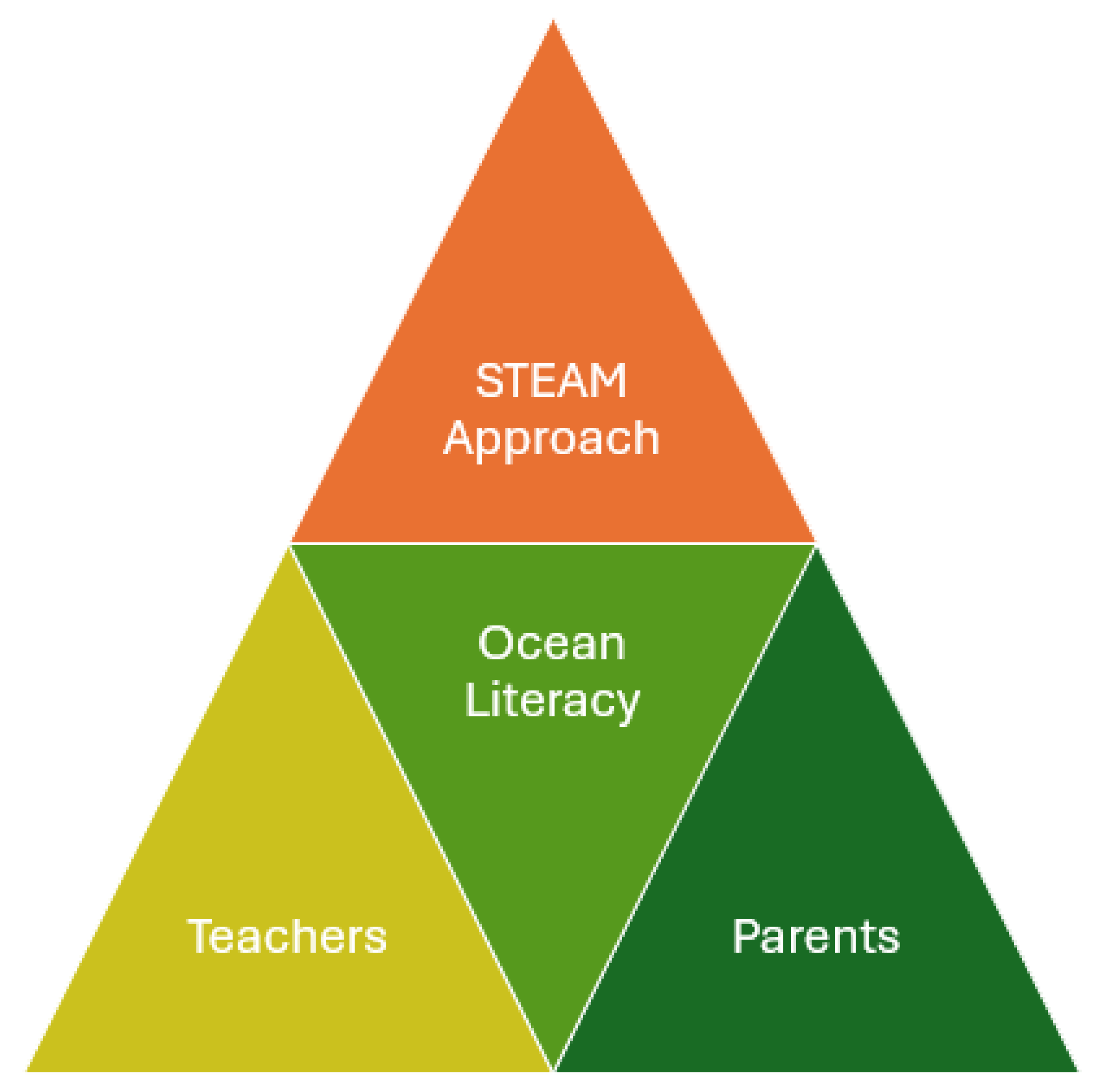
Figure 2.
Evaluation of Instructional Materials in Teaching Marine Education.
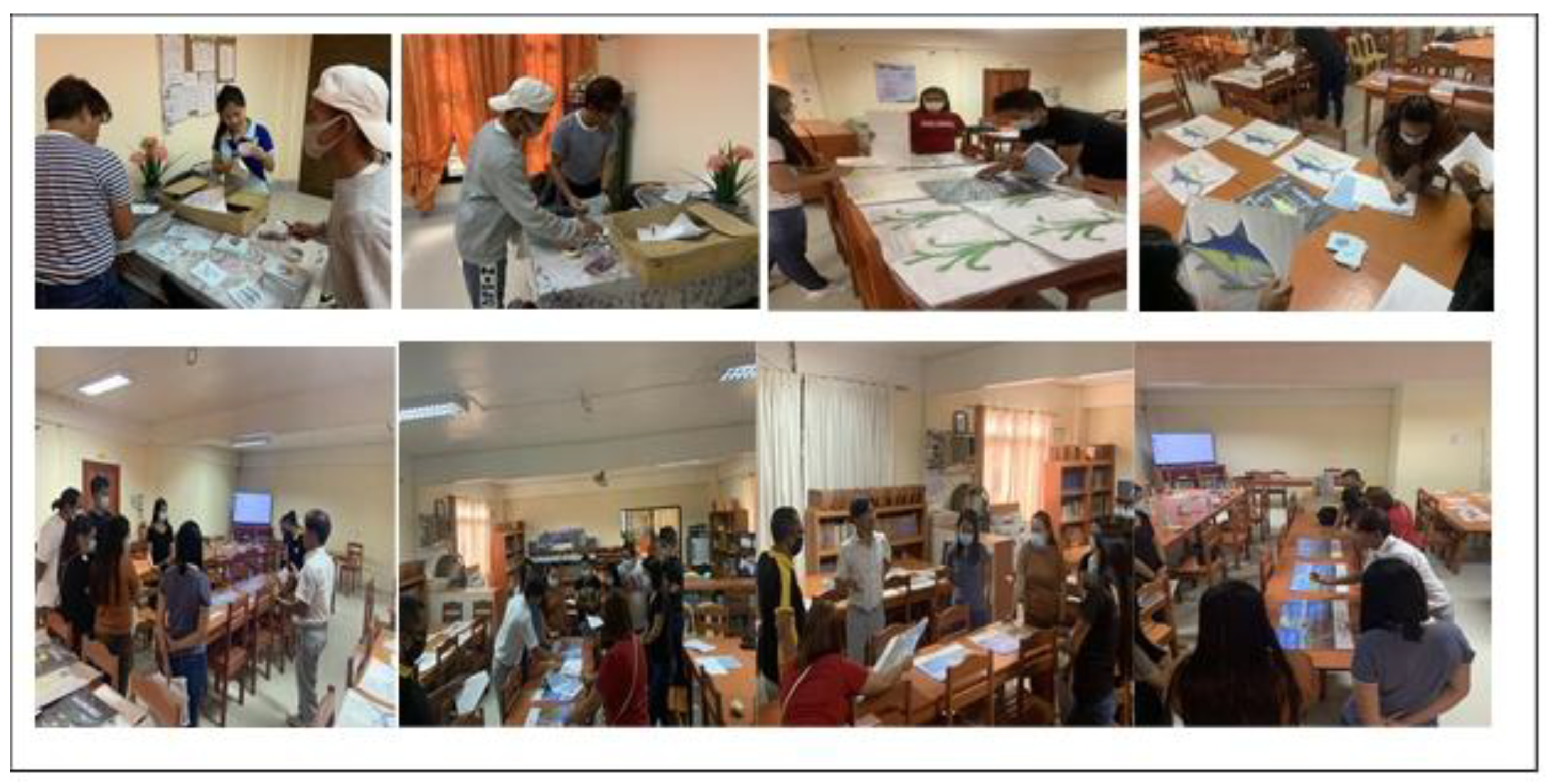
Figure 3.
The Different Activities Conducted in Bancal Integrated School, Bancal, Carles, Iloilo, Philippines.
Figure 3.
The Different Activities Conducted in Bancal Integrated School, Bancal, Carles, Iloilo, Philippines.
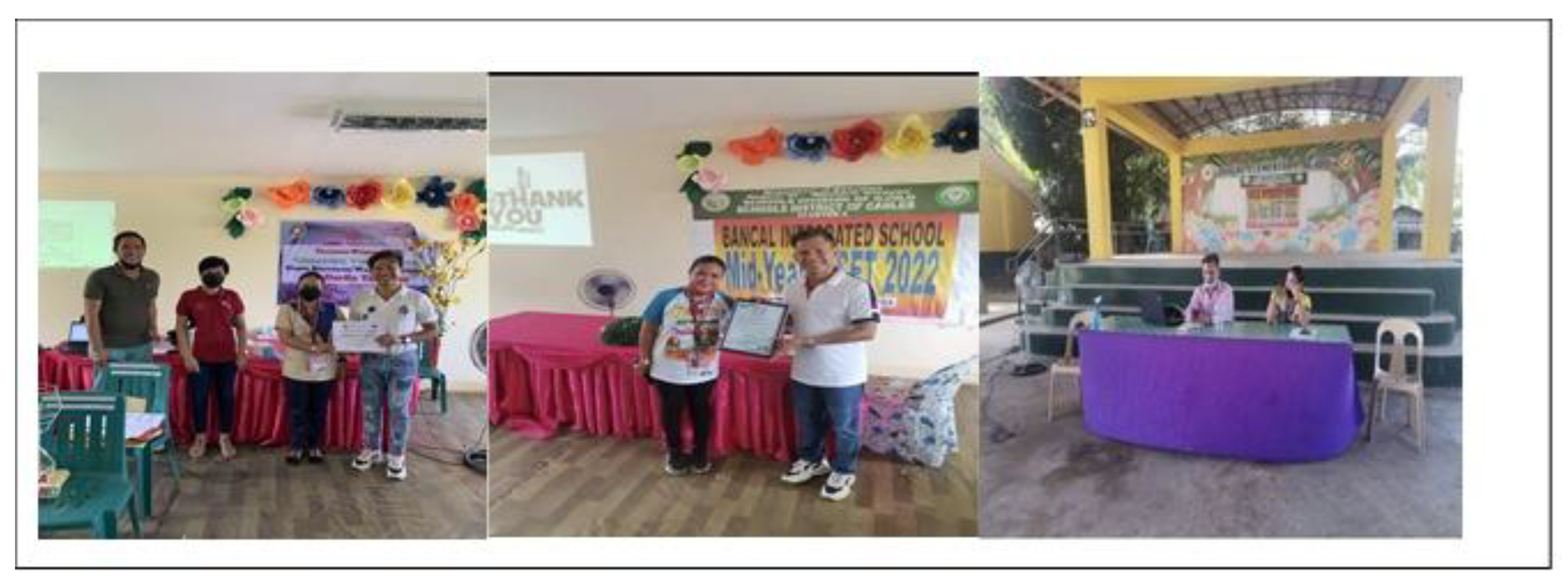

Table 1.
The Extension Activities Conducted by the Main Proponent.
| Extension Activities | Date | Venue | Total of Beneficiaries | |
|---|---|---|---|---|
| A | Evaluating Instructional Materials in Marine Education | October 23, 2020 | NISU-Ajuy Campus | 25 |
| B | Training-Workshop on Creating Visual Aids Using Recycled/waste Materials for DepEd | March 28-29, 2022 | Bancal Integrated School | 30 |
| C | Teaching and Learning: A Seminar-Workshop on Action Research for Science and Mathematics Teachers | March 21-22, 2022 | Bancal Integrated School | 30 |
| D | Seminar on Using Localization and Contextualization of Learning Materials for Principals and School Heads | July 14-15, 2022 | Bancal Integrated School | 30 |
| E | Seminar -Workshop on Learning Resources Center (LRC) in the District of Carles | August 25-26, 2022 | Bancal Integrated School | 60 |
| F | Creating Innovative Approach in Enhancing Science Curriculum | December 1, 2022 | Alejo Posadas Memorial Elementary School and Pili Elementary School | 75 |
| G | Poster Presentation: A Journey of Preservice Teachers | February 16, 2023 | NISU – Ajuy Campus | 95 |
Table 2.
Extension Activities Conducted.
| Extension Activities | Total of Beneficiaries | Rating | |
|---|---|---|---|
| A | Evaluating Instructional Materials in Marine Education | 25 | 98.68 |
| B | Training-Workshop on Creating Visual Aids Using Recycled/waste Materials for DepEd | 30 | 97.40 |
| C | Teaching and Learning: A Seminar-Workshop on Action Research for Science and Mathematics Teachers | 30 | 92.60 |
| D | Seminar on Using Localization and Contextualization of Learning Materials for Principals and School Heads | 30 | 98.60 |
| E | Seminar -Workshop on Learning Resources Center (LRC) in the District of Carles | 60 | 98.80 |
| F | Creating Innovative Approach in Enhancing Science Curriculum | 75 | 97.96 |
| G | Poster Presentation: A Journey of Preservice Teachers | 95 | 98.00 |
Scale: 84.00-100.00 (Excellent), 83.80-68.00 (Very Satisfactory); 67.80 – 52.00 (Satisfactory); 51.80 – 36.00 (Fair); 35.80 – 20.00 (Poor).
Disclaimer/Publisher’s Note: The statements, opinions and data contained in all publications are solely those of the individual author(s) and contributor(s) and not of MDPI and/or the editor(s). MDPI and/or the editor(s) disclaim responsibility for any injury to people or property resulting from any ideas, methods, instructions or products referred to in the content. |
© 2025 by the authors. Licensee MDPI, Basel, Switzerland. This article is an open access article distributed under the terms and conditions of the Creative Commons Attribution (CC BY) license (http://creativecommons.org/licenses/by/4.0/).
Copyright: This open access article is published under a Creative Commons CC BY 4.0 license, which permit the free download, distribution, and reuse, provided that the author and preprint are cited in any reuse.


