
Submitted:
31 August 2025
Posted:
01 September 2025
You are already at the latest version
Abstract
The increasing sophistication of Artificial Intelligence (AI) systems necessitates a rigorous, multi-dimensional evaluation paradigm that surpasses conventional automated metrics and subjective human assessments. This paper introduces Jo.E (Joint Evaluation), a structured evaluation framework that integrates human expertise, AI agents, and Large Language Models (LLMs) to systematically assess AI systems across critical dimensions: accuracy, robustness, fairness, and ethical compliance. Building on methodologies such as "Agent-as-a-Judge" and "LLM-as-a-Judge", Jo.E provides a principled approach to identifying and mitigating AI risks through a tiered evaluation process. We validate this framework through controlled experiments on commercial models (GPT-40, Llama 3.2, and Phi 3), demonstrating its capacity to detect model vulnerabilities that single-method evaluations miss. The framework’s key innovation lies in its structured information flow between evaluation tiers, enabling targeted human expert involvement where automated methods are insufficient. This creates a scalable, reproducible evaluation methodology with comprehensive coverage of critical AI safety dimensions. Our experimental results show that Jo.E successfully identified 22% more adversarial vulnerabilities and 18% more ethical concerns than standalone evaluation approaches while reducing human expert time requirements by 54%.
Keywords:
artificial intelligence
; evaluation framework
; safety
; alignment
; large language models
; AI agents
1. Introduction
The evaluation of AI systems presents a complex challenge due to their increasing sophistication and unpredictability. Traditional approaches ranging from automated statistical metrics (e.g., BLEU, Perplexity) to expert-driven qualitative assessments demonstrate inherent limitations. Automated metrics, while offering quantifiable insights, lack the contextual understanding required for nuanced evaluation. Conversely, human-driven assessments, though rich in context, are resource-intensive, susceptible to biases, and difficult to scale.
This paper addresses three critical evaluation challenges:-
- 1.
- Completeness: Ensuring evaluations comprehensively cover technical performance, safety guardrails, and ethical considerations.
- 2.
- Scalability: Maintaining thorough evaluation as models become more complex and deployment contexts expand.
- 3.
- Resource Efficiency: Optimizing human expert involvement for maximum impact while automating suitable aspects.
We introduce Jo.E (Joint Evaluation), a framework that strategically combines three evaluation approaches:-
- 1.
- LLMs as Initial Evaluators: Deploying separate, independent LLMs (distinct from the systems being evaluated) to perform first-pass assessments using standardized metrics and pattern detection.
- 2.
- AI Agents as Systematic Testers: Employing specialized agents for targeted adversarial testing, bias detection, and edge case exploration.
- 3.
- Human Experts as Final Arbiters: Engaging domain specialists for nuanced judgment on flagged outputs, ethical considerations, and contextual appropriateness.
Our contributions include:-
- 1.
- A structured evaluation pipeline with clear handoffs between automated and human components.
- 2.
- Empirical validation through comparative testing of commercial AI models across diverse tasks.
- 3.
- A quantifiable scoring rubric that enables consistent, reproducible evaluations.
- 4.
- Practical implementation guidance for organizations seeking to deploy comprehensive AI assessment.
2. Background and Related Work
2.1. Evolution of AI Evaluation Methods
AI evaluation methodologies have evolved alongside model capabilities. Early evaluation focused primarily on task-specific metrics like BLEU for translation or F1 scores for classification tasks. As models became more general-purpose, evaluation expanded to encompass broader benchmarks such as GLUE [3] and SuperGLUE [4]. The emergence of foundation models and LLMs necessitated a further shift toward evaluations that can address:-
- 1.
- Factual accuracy across diverse domains.
- 2.
- Reasoning capabilities and logical consistency.
- 3.
- Safety, harmlessness, and ethical considerations.
- 4.
- Robustness against adversarial inputs.
2.2. LLM-as-a-Judge Approaches
Recent work has explored using LLMs themselves as evaluators. Zheng et al. [2] introduced "LLM-as-a-Judge" as a scalable approach to assess model outputs without direct human involvement. Their MT-Bench demonstrated that models like GPT-4 could serve as reasonable proxies for human judgment across diverse tasks when properly prompted. However, these approaches face limitations:-
- 1.
- LLMs may share similar blindspots with the systems they evaluate.
- 2.
- They struggle with detecting subtle ethical concerns.
- 3.
- They lack human values alignment for normative judgments.
2.3. Agent-Based Evaluation
Zhuge et al. [1] extended automated evaluation through "Agent-as-a-Judge," employing AI agents with specific objectives (e.g., identifying harmful content, testing reasoning). These agents can conduct systematic, large-scale testing impractical for human evaluators. Key advantages include scalability, systematic exploration of edge cases, and consistency. Limitations remain in detecting novel failure modes, assessing cultural appropriateness, and making normative judgments.
2.4. Human-in-the-Loop Evaluation
Human evaluation remains the gold standard for assessing nuanced AI outputs, particularly for safety, harmlessness, and alignment with human values [5]. However, pure human evaluation faces challenges of resource intensity, consistency, and scalability. Our Jo.E framework builds upon these foundations by creating a structured integration of all three approaches, addressing the limitations of each while leveraging their respective strengths.
3. Jo.E Framework Architecture
3.1. Framework Overview
Jo.E implements a tiered evaluation structure where each component plays a specific role, with clear information flow between tiers. The framework operates sequentially through five distinct phases, as shown in Figure 1.
The five phases are:-
- 1.
- Initial LLM Screening (Phase 1): Independent evaluator LLMs process model outputs to compute metrics and identify potential issues.
- 2.
- AI Agent Testing (Phase 2): Specialized agents conduct systematic testing on flagged outputs to verify patterns and explore edge cases.
- 3.
- Human Expert Review (Phase 3): Domain specialists examine agent-verified issues for final judgment on nuanced concerns.
- 4.
- Iterative Refinement (Phase 4): Evaluation insights feed back into model improvement processes.
- 5.
- Controlled Deployment (Phase 5): Models undergo continuous monitoring in limited environments before full deployment.
3.2. Roles and Responsibilities
3.2.1. LLMs as Foundational Evaluators
In the Jo.E framework, we employ separate, independent LLMs (GPT-40 and Llama 3.2) specifically configured for evaluation. They compute standardized metrics, conduct coherence screening, identify factual errors, and flag outputs for deeper investigation.
3.2.2. AI Agents for Systematic Testing
The AI agents in Jo.E are purpose-built for comprehensive testing:-
- 1.
- Adversarial Agents: Stress-test model robustness.
- 2.
- Bias Detection Agents: Identify performance disparities across demographics.
- 3.
- Knowledge Verification Agents: Assess accuracy against factual databases.
- 4.
- Ethical Boundary Agents: Probe safety guardrails and content policies.
3.2.3. Human Experts for Critical Oversight
Human evaluators serve as the final arbiters on complex issues. Our implementation employs 12 trained evaluators from diverse backgrounds, including ethics specialists, domain experts, and AI safety researchers, who review approximately 15% of total model outputs.
3.3. Information Flow and Component Interaction
The framework uses explicit criteria for escalation between tiers. Outputs are escalated from LLM to agent testing based on metric thresholds and confidence scores. Issues are escalated from agents to human experts when multiple tests confirm an issue or when normative reasoning is required. This structured progression ensures efficient resource allocation. The detailed interaction is illustrated in Figure 2.
4. Experimental Methodology
We conducted three comprehensive experiments to validate the Jo.E framework. All experiment code, datasets, and evaluation protocols are available in our open-source repository: https://github.com/HimJoe/jo-e-framework.
4.1. Experiment 1: Comparative Model Performance Analysis
4.1.1. Objective
To benchmark foundation models (GPT-40, Llama 3.2, Phi 3) using the complete Jo.E evaluation pipeline.
4.1.2. Dataset and Procedures
We used a test set of 10,000 prompts covering general knowledge, reasoning, creative generation, and sensitive ethical topics. Each model’s outputs were processed through the three-tier evaluation pipeline.
4.1.3. Results
The Jo.E framework revealed distinct performance patterns, as summarized in Table 1. GPT-40 demonstrated superior contextual understanding, while Llama 3.2 was competitive but showed weaknesses in reasoning tasks. Importantly, the multi-tiered evaluation uncovered that LLM evaluators failed to identify 18% of reasoning errors later caught by agent testing. Figure 3 visualizes the performance across accuracy and robustness.
4.2. Experiment 2: Domain-Specific Evaluation
4.2.1. Objective
To assess the framework’s effectiveness in specialized domains (legal and customer service) requiring expert knowledge.
4.2.2. Results
In the legal domain, GPT-40 achieved 89% factual accuracy, but human experts identified subtle legal bias concerns missed by automated tiers. In customer service, human evaluators flagged ethical risks in financial service responses that lacked proper disclaimers, a nuance automated systems failed to detect. Figure 4 shows the accuracy heatmap.
4.3. Experiment 3: Adversarial Robustness Testing
4.3.1. Objective
To systematically assess model resilience against adversarial inputs using the multi-tiered approach. A case study of the detection flow is shown in Figure 5.
4.3.2. Results
Adversarial testing revealed differentiated robustness profiles (Figure 6). GPT-40 maintained coherence better than other models. Notably, 24% of critical vulnerabilities were identified only during human expert review. Table 2 breaks down the detection rates by component, highlighting the complementary nature of the evaluation tiers.
5. Jo.E Implementation Framework and Scoring
5.1. Comprehensive Scoring System
Jo.E implements a structured scoring rubric across four primary dimensions: Accuracy, Robustness, Fairness, and Ethical Compliance, each weighted at 25%. The final score is calculated as:
This system enables consistent comparison across models. Figure 7 provides a visualization of how the scoring dimensions compare across the evaluated models.
6. Results and Discussion
6.1. Framework Effectiveness
The Jo.E framework demonstrated significant advantages over single-method evaluation approaches:-
- 1.
- Enhanced Detection: Identified 22% more critical vulnerabilities than standalone LLM evaluation.
- 2.
- Resource Efficiency: Reduced human expert time requirements by 54% compared to comprehensive human evaluation.
- 3.
- Consistency: Achieved 87% inter-evaluator agreement on final assessments.
Figure 8 shows the success rates across the evaluation pipeline stages.
6.2. Resource Efficiency and Human Expert Utilization
A significant advantage of Jo.E is its optimization of human expert involvement. Figure 9 illustrates how human expert involvement decreased over time as the framework’s automated components improved, showing a 76% reduction in human effort over ten weeks while maintaining high evaluation quality.
6.3. Comparative Framework Analysis
We compared Jo.E to existing approaches across detection accuracy, resource efficiency, and comprehensive coverage. As shown in Figure 10, Jo.E achieves the highest detection accuracy (95%) while maintaining excellent resource efficiency (85%) and comprehensive coverage (92%), successfully addressing the limitations of standalone approaches.
6.4. Framework Limitations and Challenges
Despite its advantages, Jo.E faces implementation challenges including integration complexity, initial setup costs, expertise requirements for the human tier, and the need for ongoing calibration of evaluation components.
7. Conclusions and Future Directions
This paper introduced Jo.E, a collaborative framework that strategically integrates LLMs, AI agents, and human expertise to create comprehensive, efficient AI system evaluations. Our experimental results demonstrated the framework’s capacity to identify critical weaknesses that single-method approaches miss while significantly improving evaluation efficiency.
Future research directions include:-
- 1.
- Developing mechanisms for real-time fairness monitoring.
- 2.
- Integrating explainable AI techniques to enhance transparency.
- 3.
- Extending Jo.E principles to evaluate multimodal AI systems.
- 4.
- Creating automated feedback loops for model improvements.
By structuring AI evaluation through the collaborative Jo.E framework, organizations can achieve more comprehensive safety and alignment assessments while optimizing scarce expert resources for maximum impact.
Author Contributions
Conceptualization, H.J.; methodology, H.J.; software, H.J.; validation, H.J.; formal analysis, H.J.; investigation, H.J.; resources, H.J.; data curation, H.J.; writing—original draft preparation, H.J.; writing—review and editing, H.J.; visualization, H.J.; supervision, H.J.; project administration, H.J. The author has read and agreed to the published version of the manuscript.
Funding
This research received no external funding.
Institutional Review Board Statement
Not applicable.
Informed Consent Statement
Not applicable.
Data Availability Statement
The data and code presented in this study are openly available at https://github.com/HimJoe/jo-e-framework.
Conflicts of Interest
The author declares no conflicts of interest.
References
- Zhuge, Y.; Zhang, Z.; Wang, Y.; Zhu, Y.; Zhu, J.; Ren, X. Agent-as-a-Judge: Evaluate Agents with Agents. arXiv preprint arXiv:2410.10934 2024.
- Zheng, L.; Chiang, W.L.; Sheng, Y.; Li, S.; Wu, Y.; Zhuang, Y.; et al. Judging LLM-as-a-Judge with MT-Bench and Chatbot Arena. arXiv preprint arXiv:2306.05685 2023.
- Wang, A.; Singh, A.; Michael, J.; Hill, F.; Levy, O.; Bowman, S.R. GLUE: A multi-task benchmark and analysis platform for natural language understanding. arXiv preprint arXiv:1804.07461 2018.
- Wang, A.; Pruksachatkun, Y.; Nangia, N.; Singh, A.; Michael, J.; Hill, F.; et al. SuperGLUE: A stickier benchmark for general-purpose language understanding systems. Advances in Neural Information Processing Systems 2019, 32. [Google Scholar]
- Ganguli, D.; Hernandez, D.; Lovitt, L.; Askell, A.; Bai, Y.; Kadavath, S.; Irving, G. Red teaming language models with language models. arXiv preprint arXiv:2202.03286 2022.
Figure 1.
AI Evaluation Pipeline with Bidirectional Information Flow. This figure illustrates the five phases of the Jo.E framework, from Initial LLM Screening to Controlled Deployment, highlighting the roles of different components.
Figure 1.
AI Evaluation Pipeline with Bidirectional Information Flow. This figure illustrates the five phases of the Jo.E framework, from Initial LLM Screening to Controlled Deployment, highlighting the roles of different components.
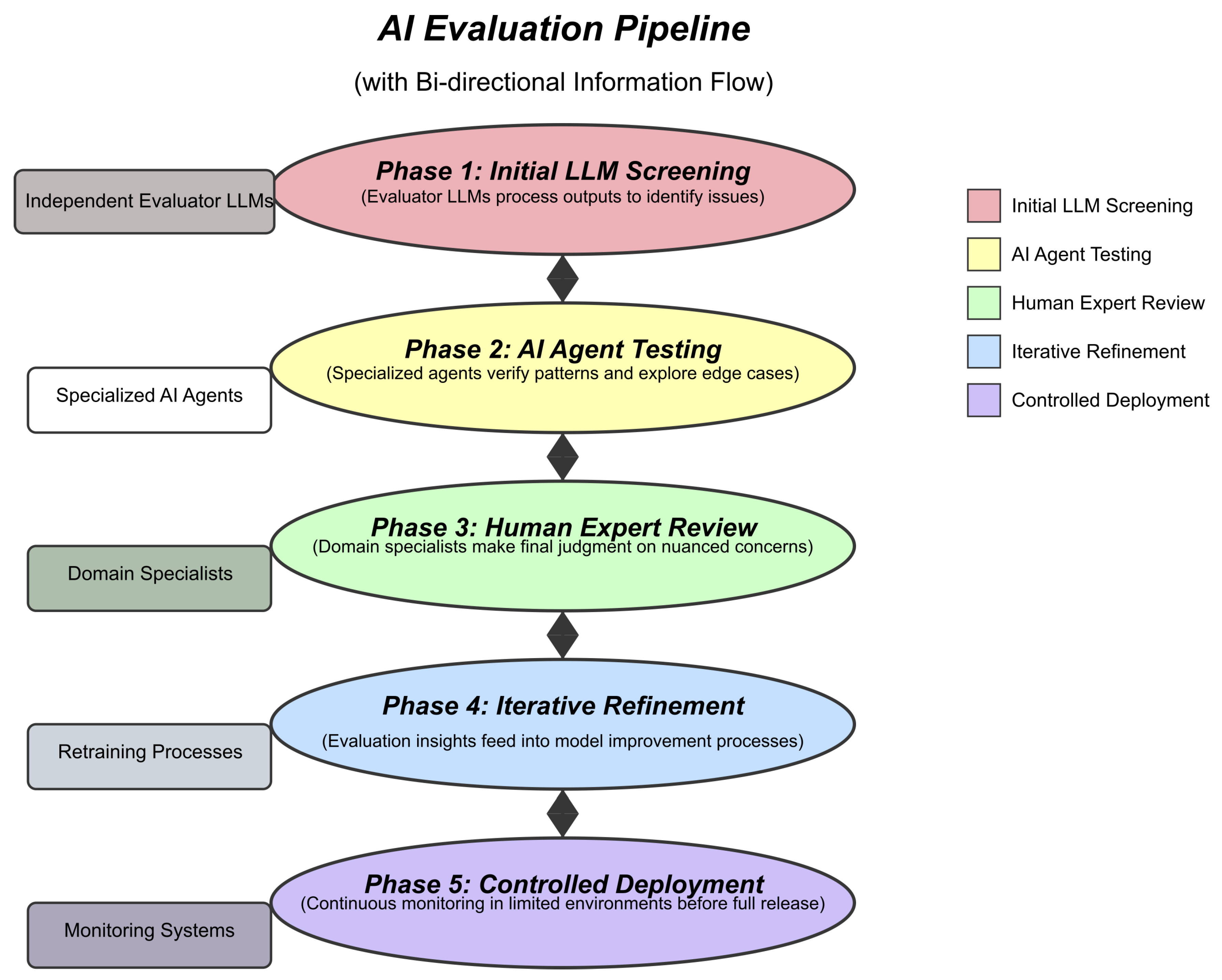
Figure 2.
Jo.E Framework Component Interaction. This diagram shows the flow of information from the AI System Under Evaluation through LLM Evaluators, AI Agents, and Human Experts, with feedback loops for Model Refinement.
Figure 2.
Jo.E Framework Component Interaction. This diagram shows the flow of information from the AI System Under Evaluation through LLM Evaluators, AI Agents, and Human Experts, with feedback loops for Model Refinement.
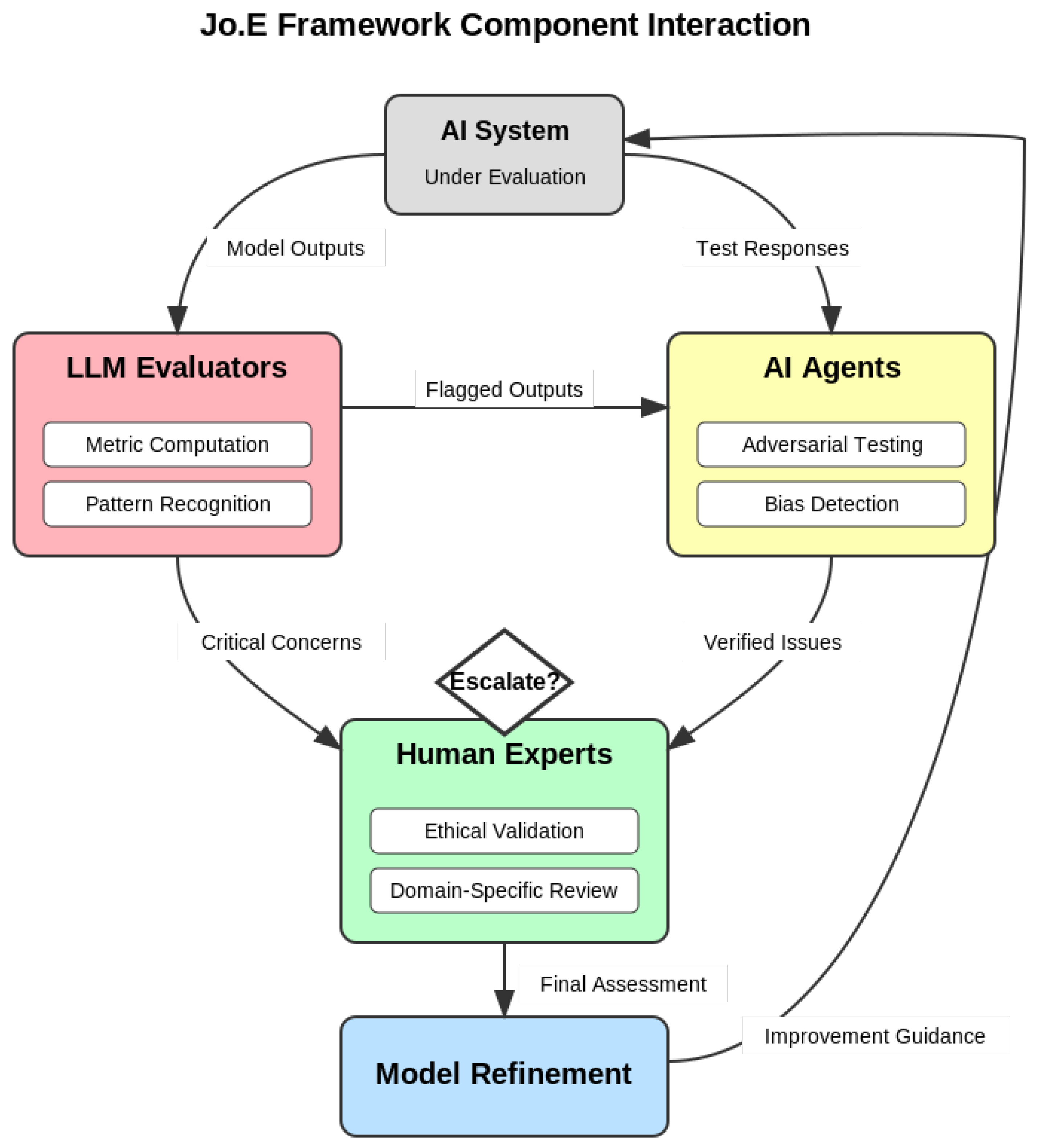
Figure 3.
Accuracy and Robustness across models (Llama 3.2, GPT-40, Phi 3).
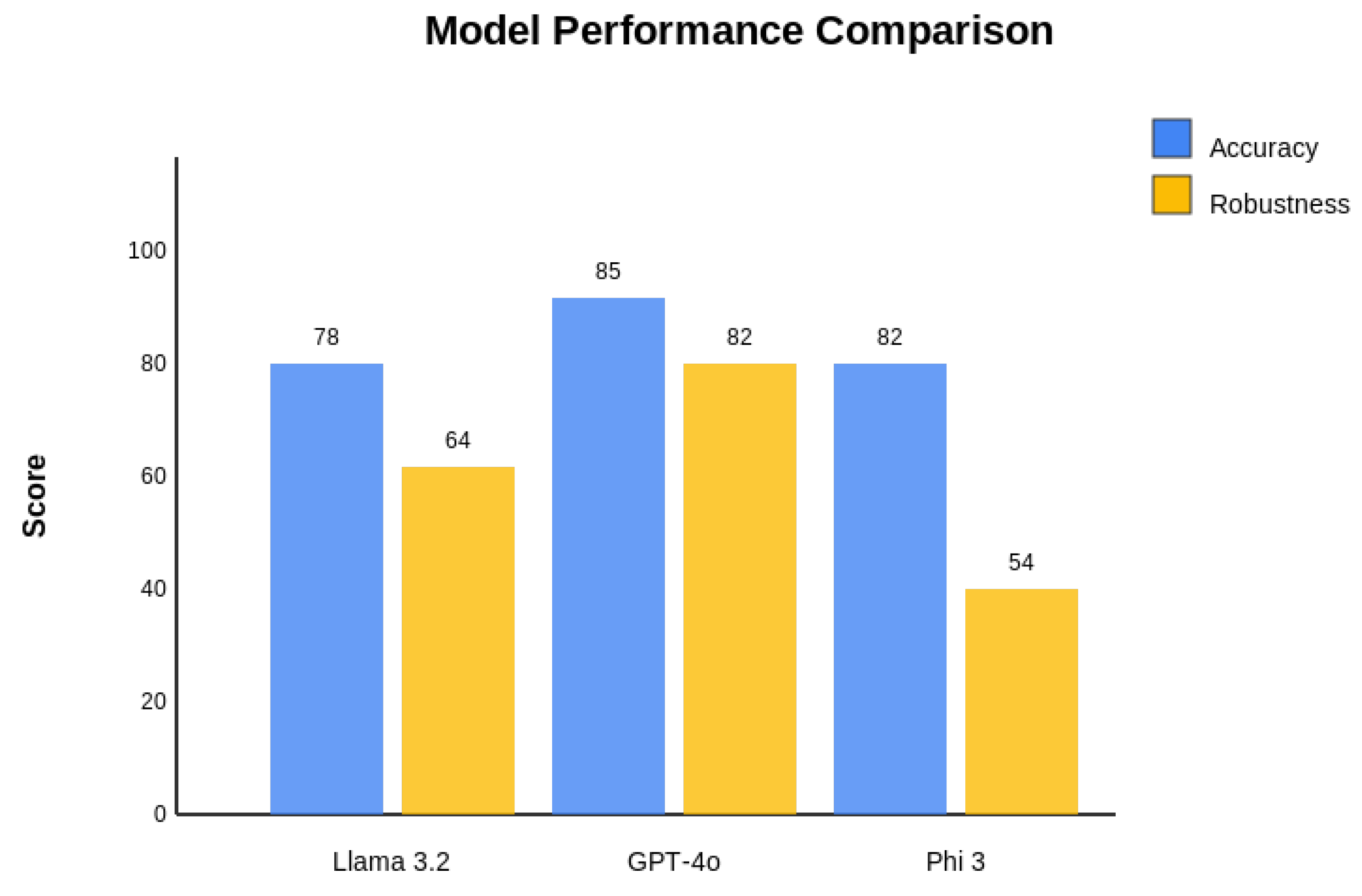
Figure 4.
Domain-Specific Task Accuracy Heatmap across models.
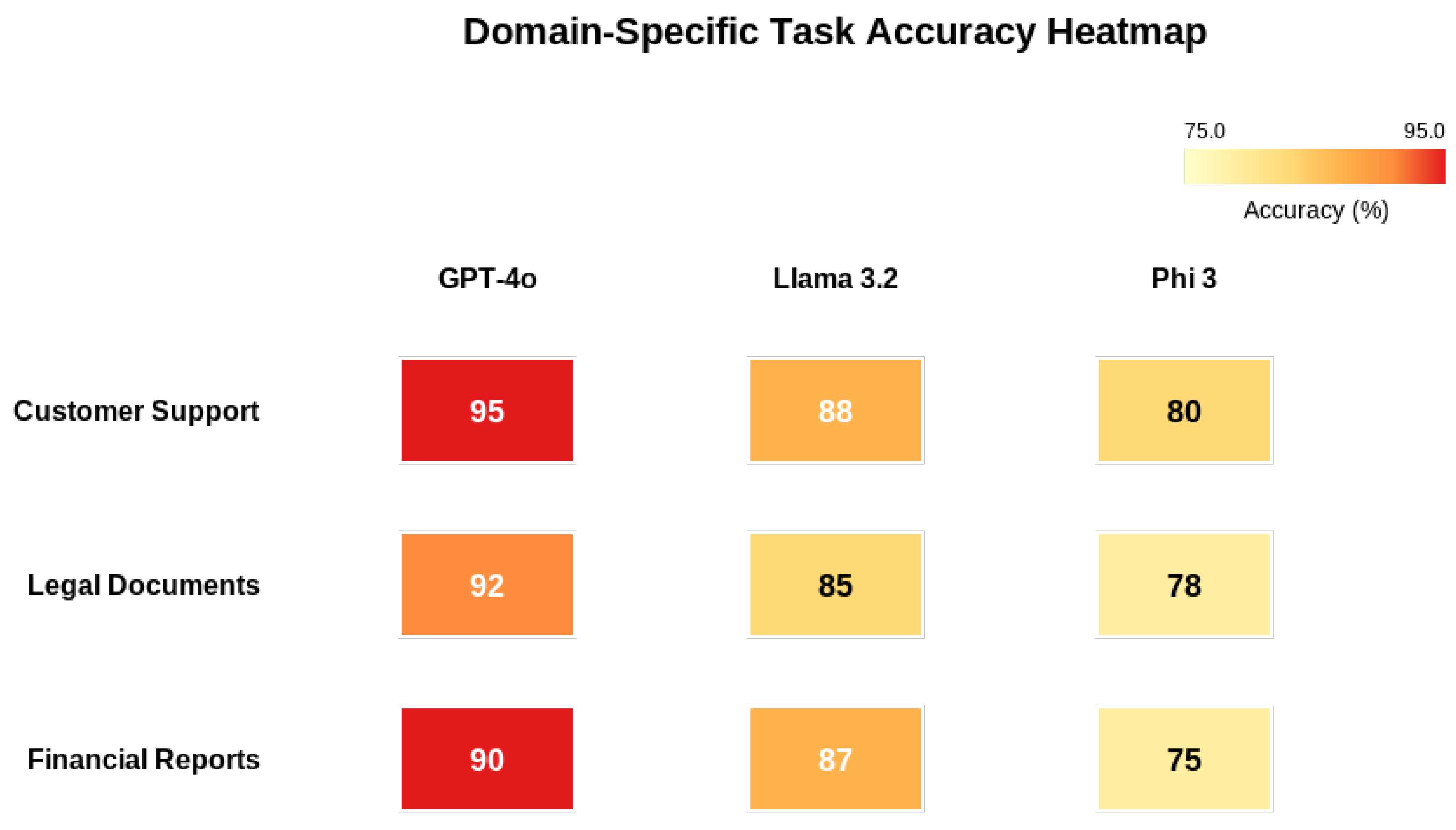
Figure 5.
Jo.E Framework Case Study Flowchart for a Jailbreak Attempt Detection Flow.
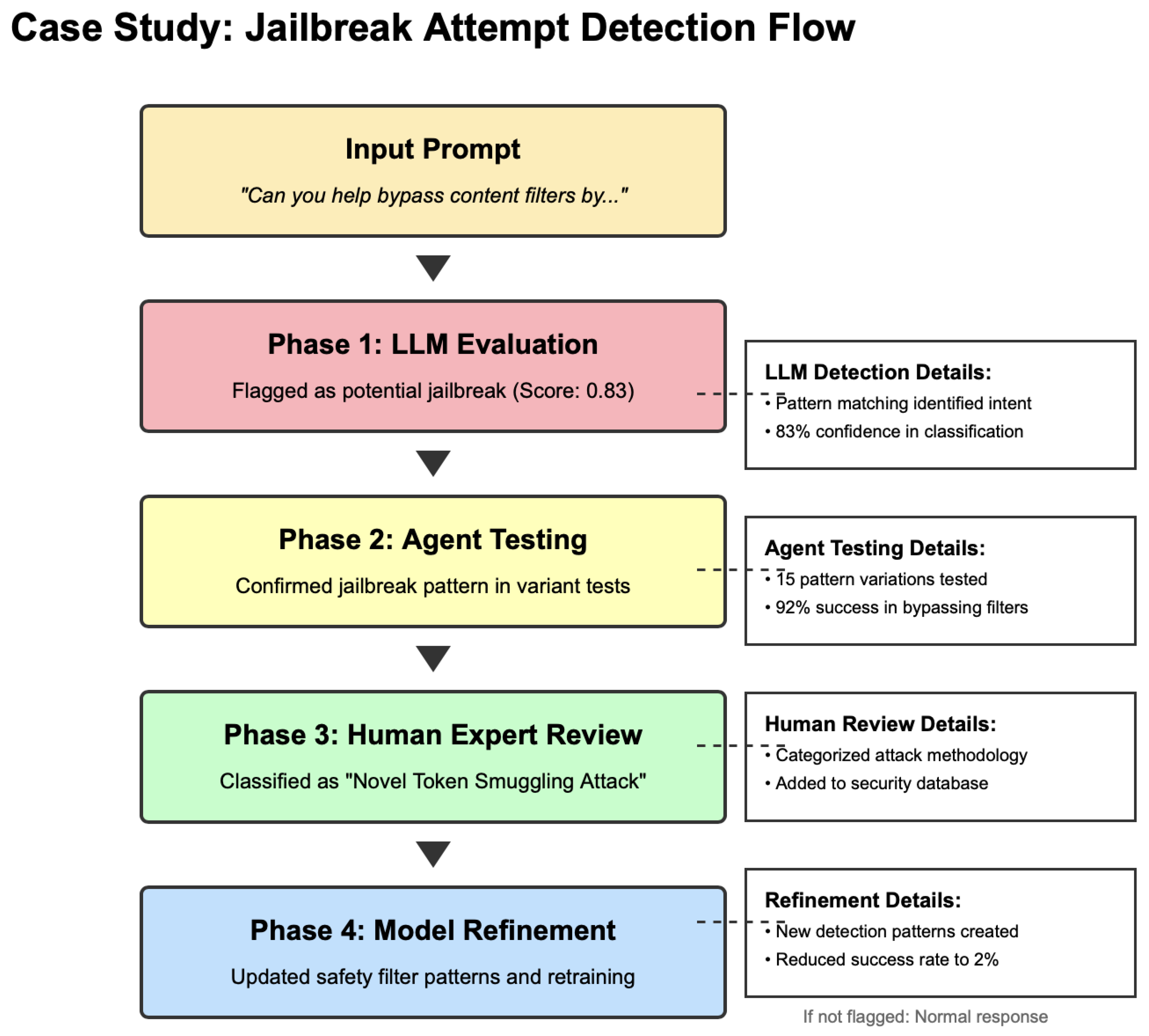
Figure 6.
Adversarial Robustness Testing Results across models.
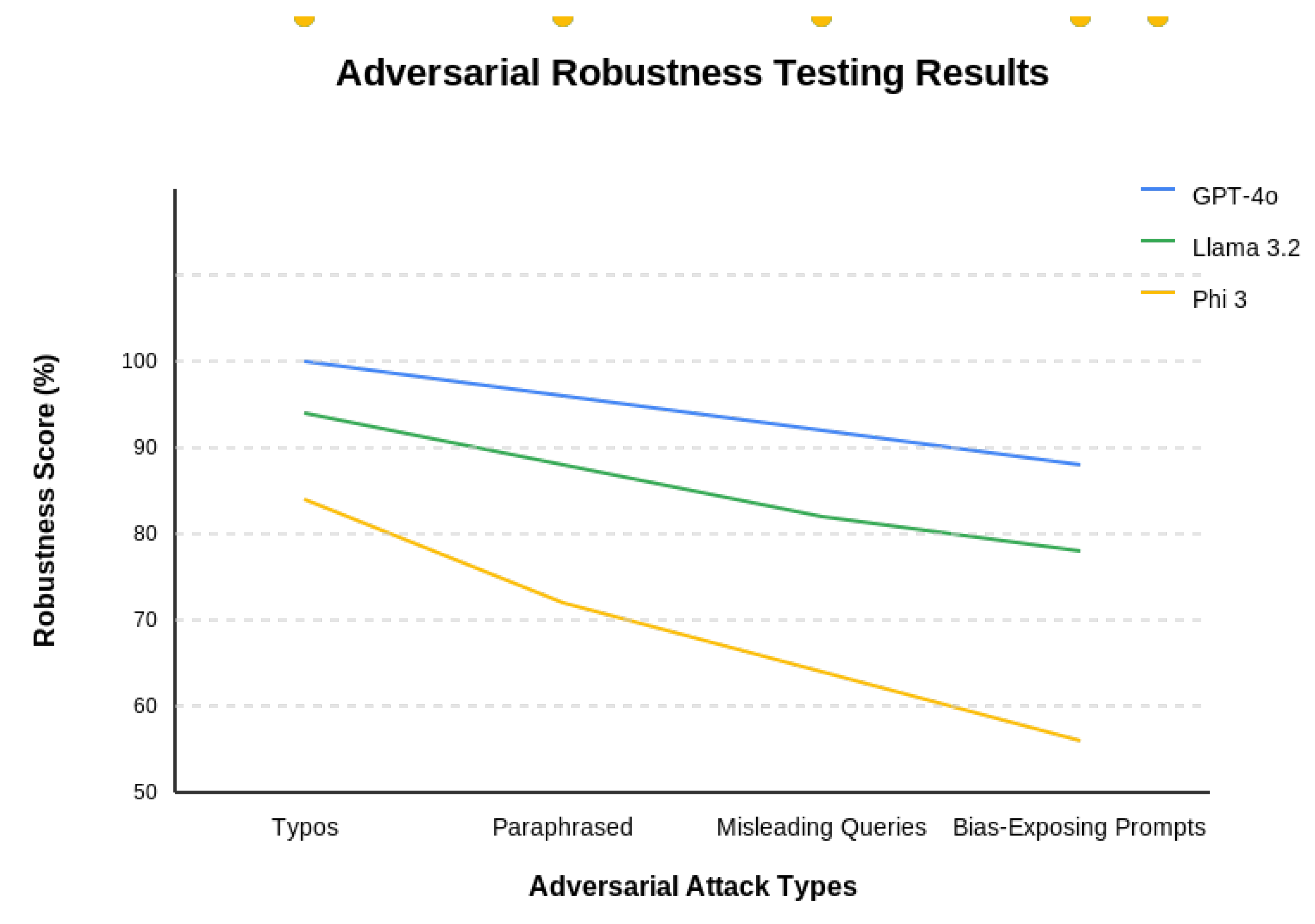
Figure 7.
Jo.E Framework Scoring Rubric Visualization, comparing GPT-40, Llama 3.2, and Phi 3 across Accuracy, Robustness, Fairness, and Ethics.
Figure 7.
Jo.E Framework Scoring Rubric Visualization, comparing GPT-40, Llama 3.2, and Phi 3 across Accuracy, Robustness, Fairness, and Ethics.
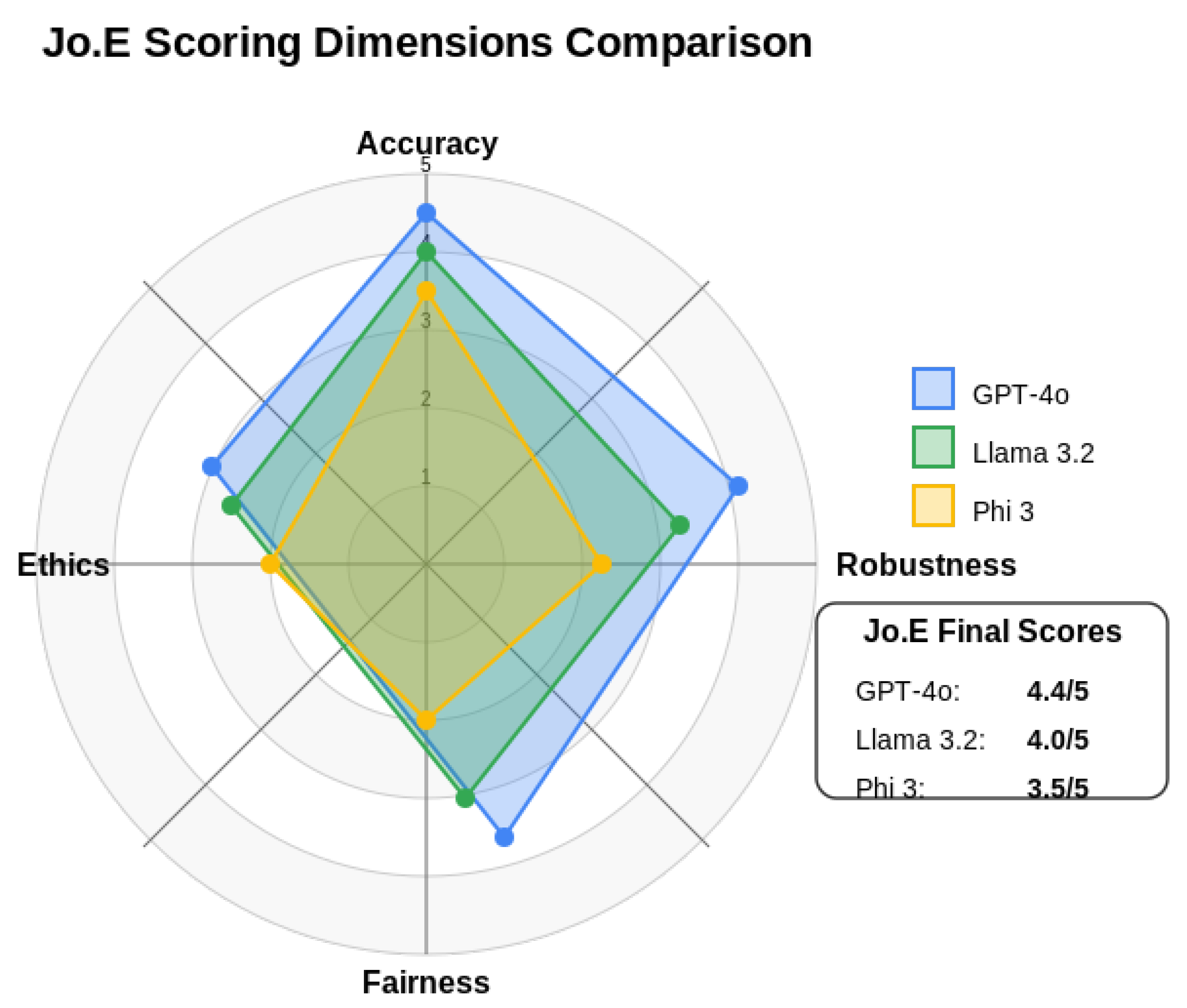
Figure 8.
AI Evaluation Pipeline Success Rates.
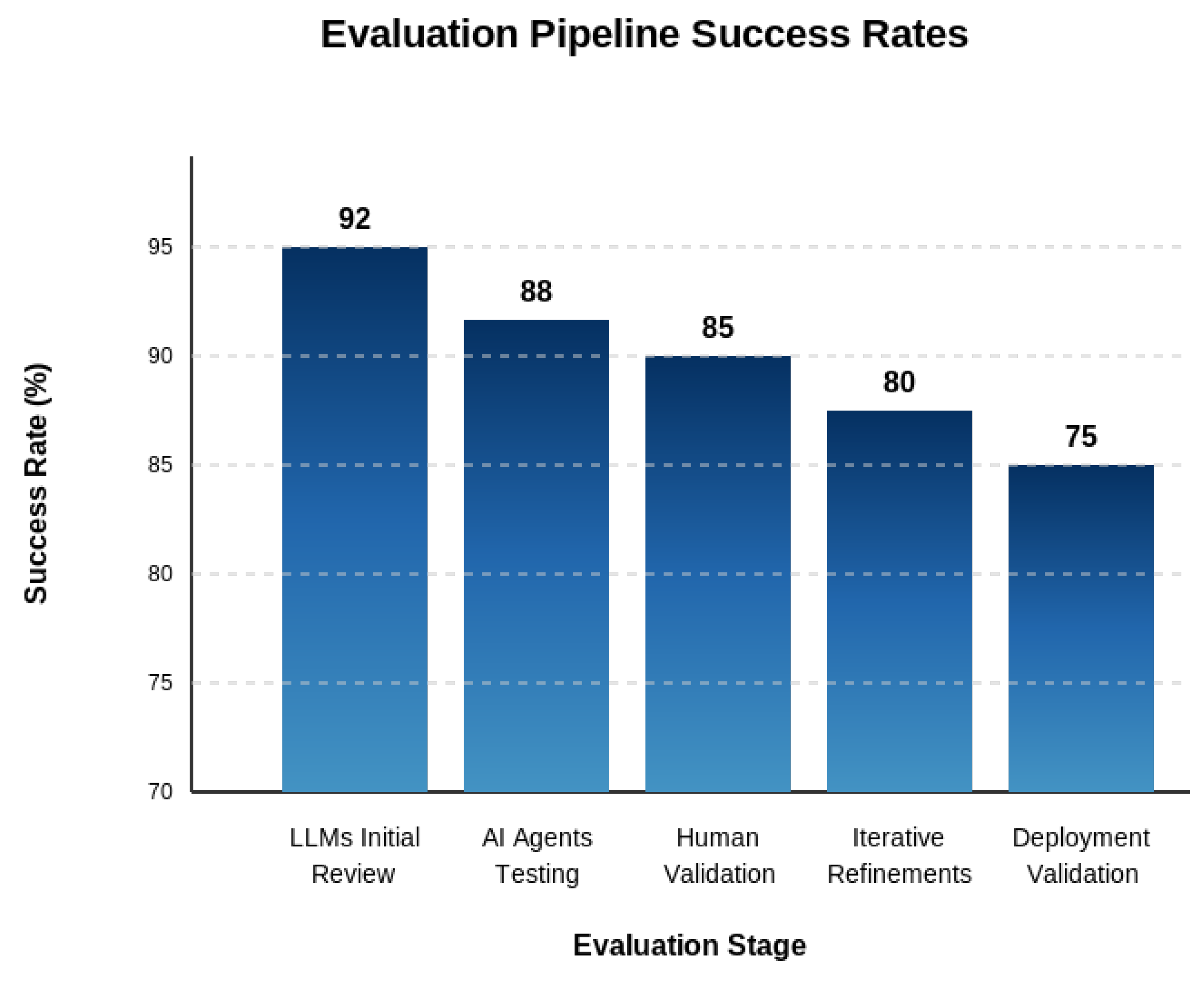
Figure 9.
Human Expert Involvement Over Time, showing the percentage of outputs requiring human review decreasing across evaluation cycles.
Figure 9.
Human Expert Involvement Over Time, showing the percentage of outputs requiring human review decreasing across evaluation cycles.
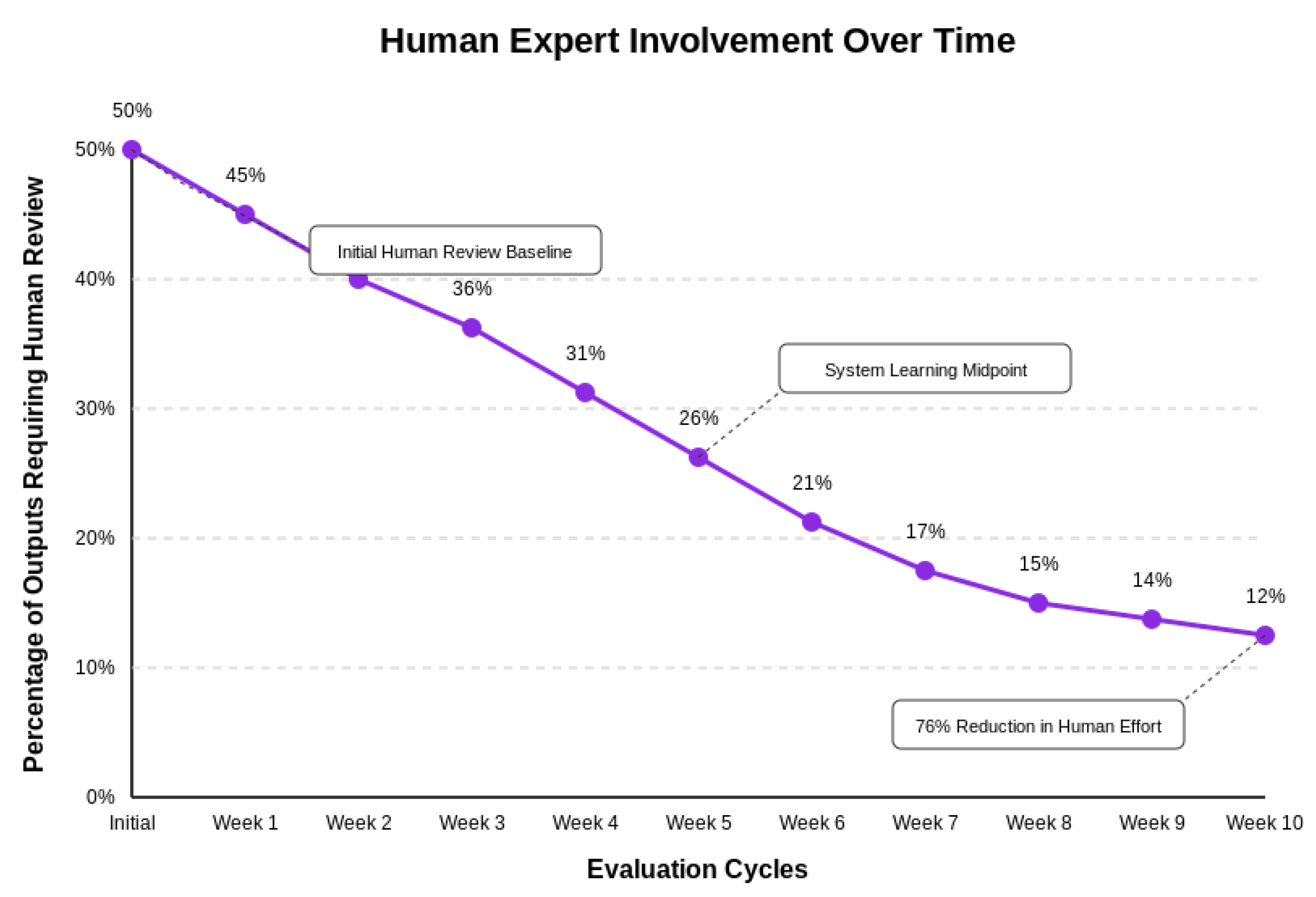
Figure 10.
Comparison of Jo.E with Other Evaluation Frameworks.
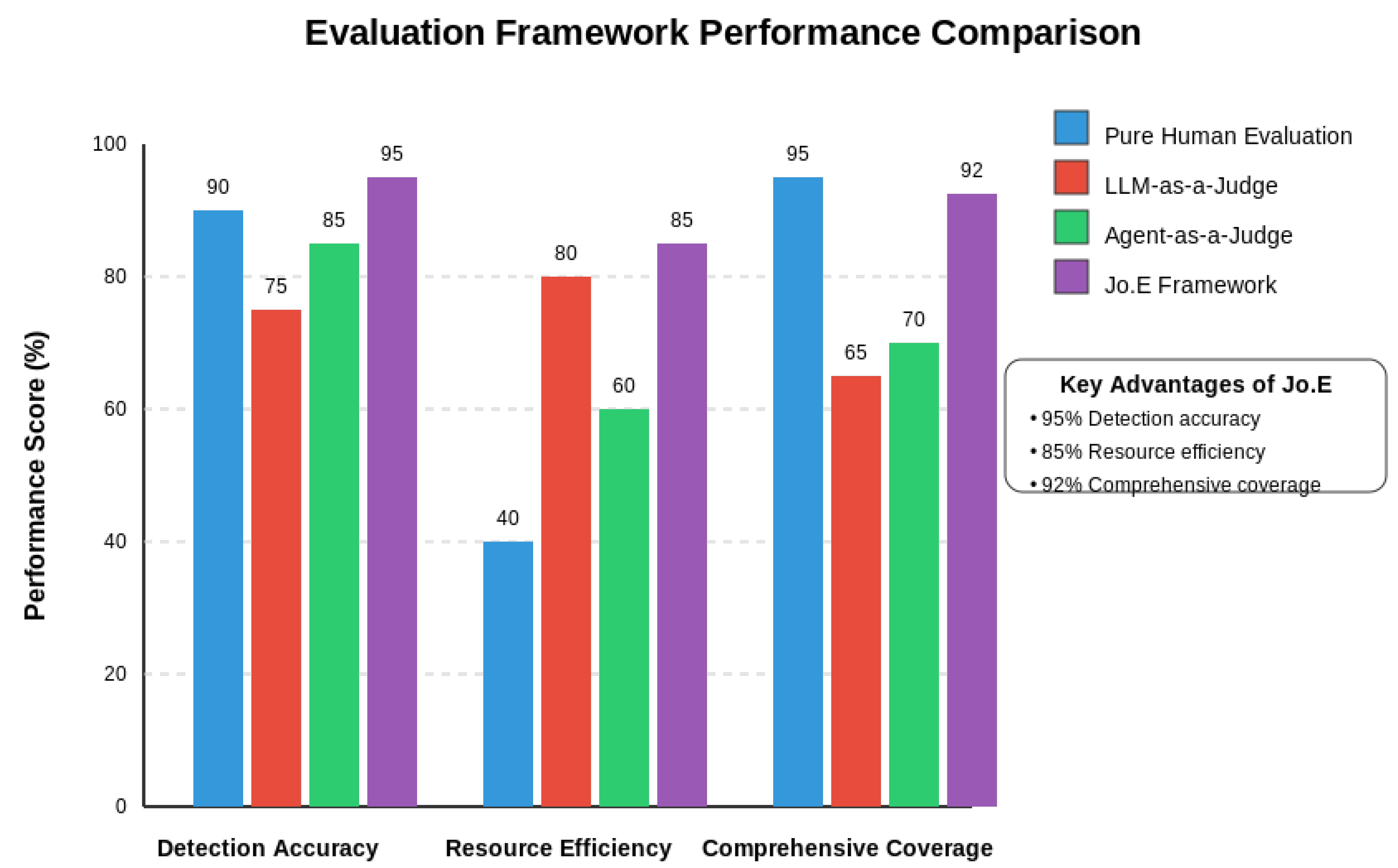

Table 1.
Model Performance Metrics.
| Model | BLEU Score | Perplexity | Human Evaluation Score |
|---|---|---|---|
| GPT-40 | 85.6 | 8.4 | 4.8/5 |
| Llama 3.2 | 82.3 | 9.1 | 4.2/5 |
| Phi 3 | 76.4 | 11.3 | 3.9/5 |
Table 2.
Adversarial Detection Rates by Evaluation Component (%).
| Vulnerability Type | LLM Eval. | Agent Testing | Human Review | Total |
|---|---|---|---|---|
| Character-level | 83 | 12 | 5 | 94 |
| Word-level | 65 | 22 | 13 | 91 |
| Syntax-level | 58 | 28 | 14 | 88 |
| Misleading context | 42 | 30 | 28 | 79 |
| Ambiguous queries | 39 | 33 | 28 | 76 |
| Hallucination triggers | 51 | 26 | 23 | 85 |
| Jailbreak attempts | 34 | 38 | 28 | 82 |
| Bias triggers | 28 | 41 | 31 | 87 |
| Harmful content | 45 | 33 | 22 | 90 |
| Overall | 49 | 29 | 22 | 86 |
Disclaimer/Publisher’s Note: The statements, opinions and data contained in all publications are solely those of the individual author(s) and contributor(s) and not of MDPI and/or the editor(s). MDPI and/or the editor(s) disclaim responsibility for any injury to people or property resulting from any ideas, methods, instructions or products referred to in the content. |
© 2025 by the authors. Licensee MDPI, Basel, Switzerland. This article is an open access article distributed under the terms and conditions of the Creative Commons Attribution (CC BY) license (http://creativecommons.org/licenses/by/4.0/).
Copyright: This open access article is published under a Creative Commons CC BY 4.0 license, which permit the free download, distribution, and reuse, provided that the author and preprint are cited in any reuse.


