

Submitted:
28 August 2025
Posted:
01 September 2025
You are already at the latest version
Abstract
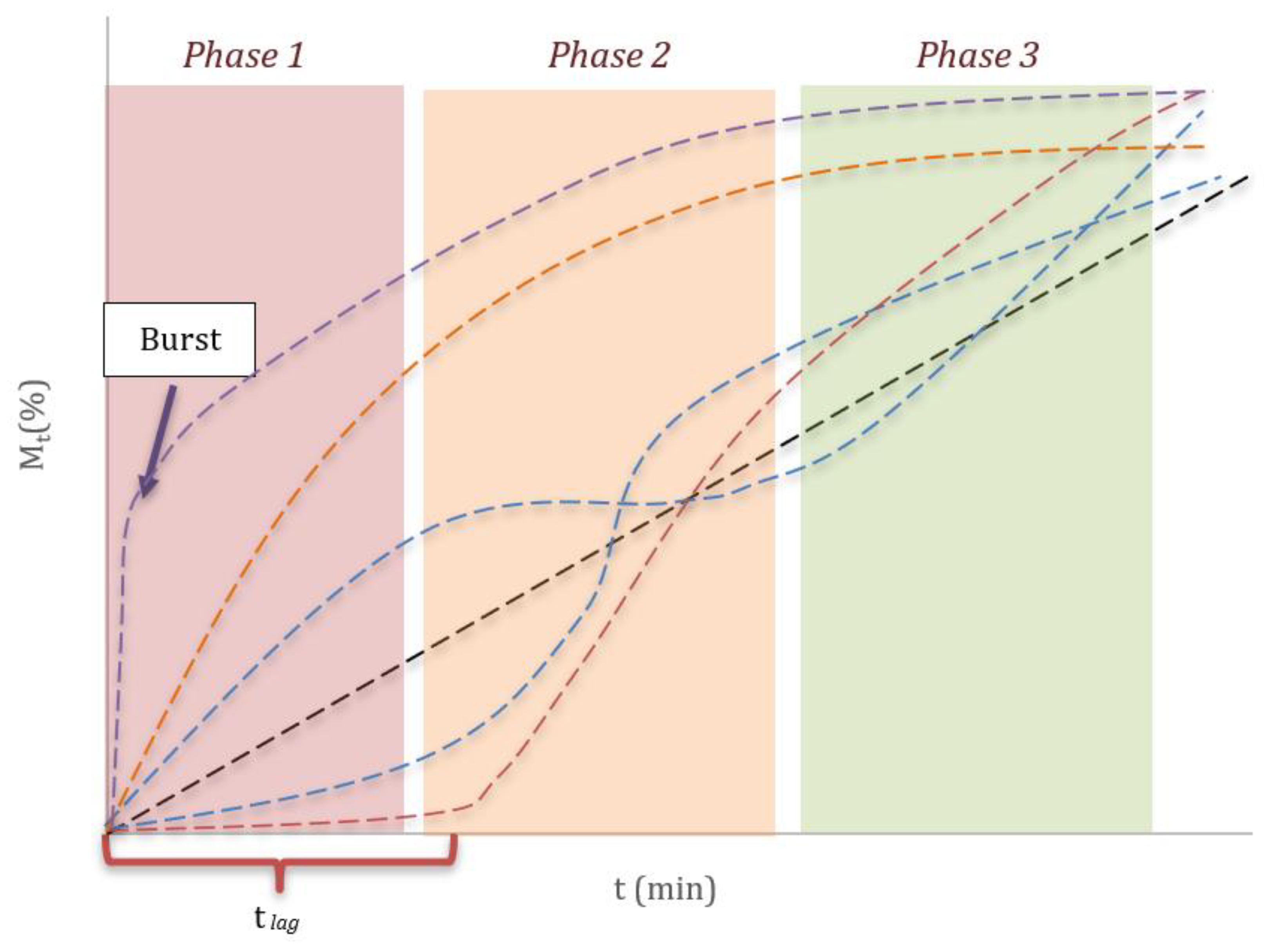
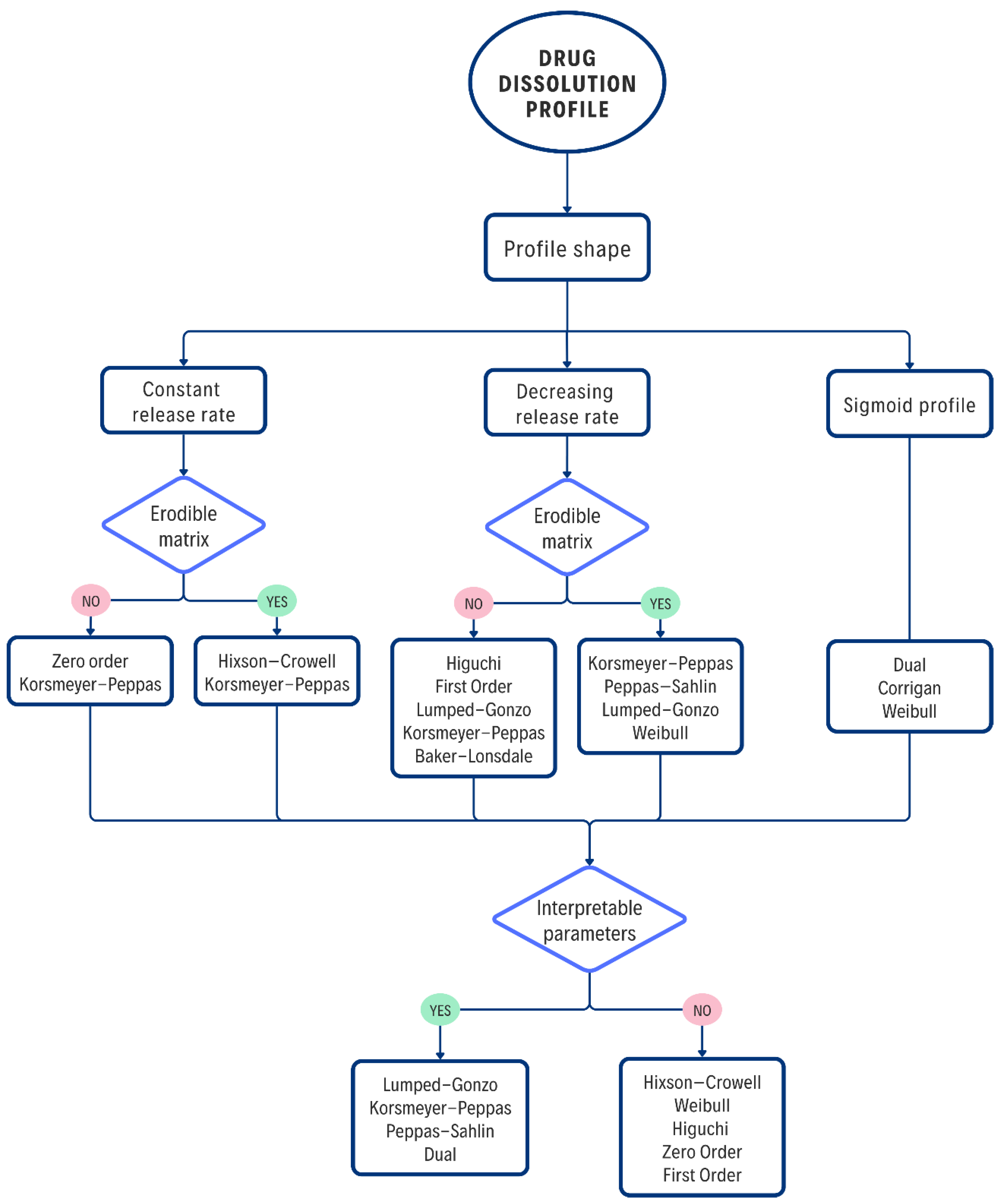
Background/Objectives: In vitro dissolution tests are an essential tool in pharmaceutical development, allowing for the analysis of biopharmaceutical properties, understanding release mechanisms, and comparing formulations. The wide variety of mathematical models available for interpreting the profiles obtained creates ambiguity and difficulty in their selection and application. The objective of this work was to develop a decision tree algorithm that, based on the initial observation of the experimental profile, rationally guides the selection of the most appropriate mathematical model, considering their advantages and limitations. Methods: A review of classical and recent dissolution/release models was conducted, highlighting their constraints and parameters of pharmaceutical relevance. Based on this information, a decision tree was designed, integrating observational (curve shape, burst or lag time phenomena), statistical (R², AIC), and interpretability criteria. The algorithm was validated using topical and oral representative systems: hydrogels, polymeric films, modular systems (Dome Matrix), and 3D-printed pills. Results: The decision tree allowed reducing the number of candidate models and guiding the selection toward equations consistent with the observed phenomena. The usefulness of the Lumped–Gonzo model, capable of fitting complete profiles and providing physically meaningful parameters, was highlighted compared to classic models such as Weibull or Korsmeyer–Peppas. The methodology proved to be versatile and applicable to different release mechanisms. Conclusions: The proposed algorithm constitutes a flexible and practical tool that facilitates the rational selection of mathematical models. It does not replace the researcher's judgment, but rather complements it, promoting a more efficient use of mathematical modeling in the development of dosage forms.
Keywords:
1. Introduction
2. Materials and Methods
2.1. Mathematical Models
2.2. Parameters of Pharmaceutical Relevance
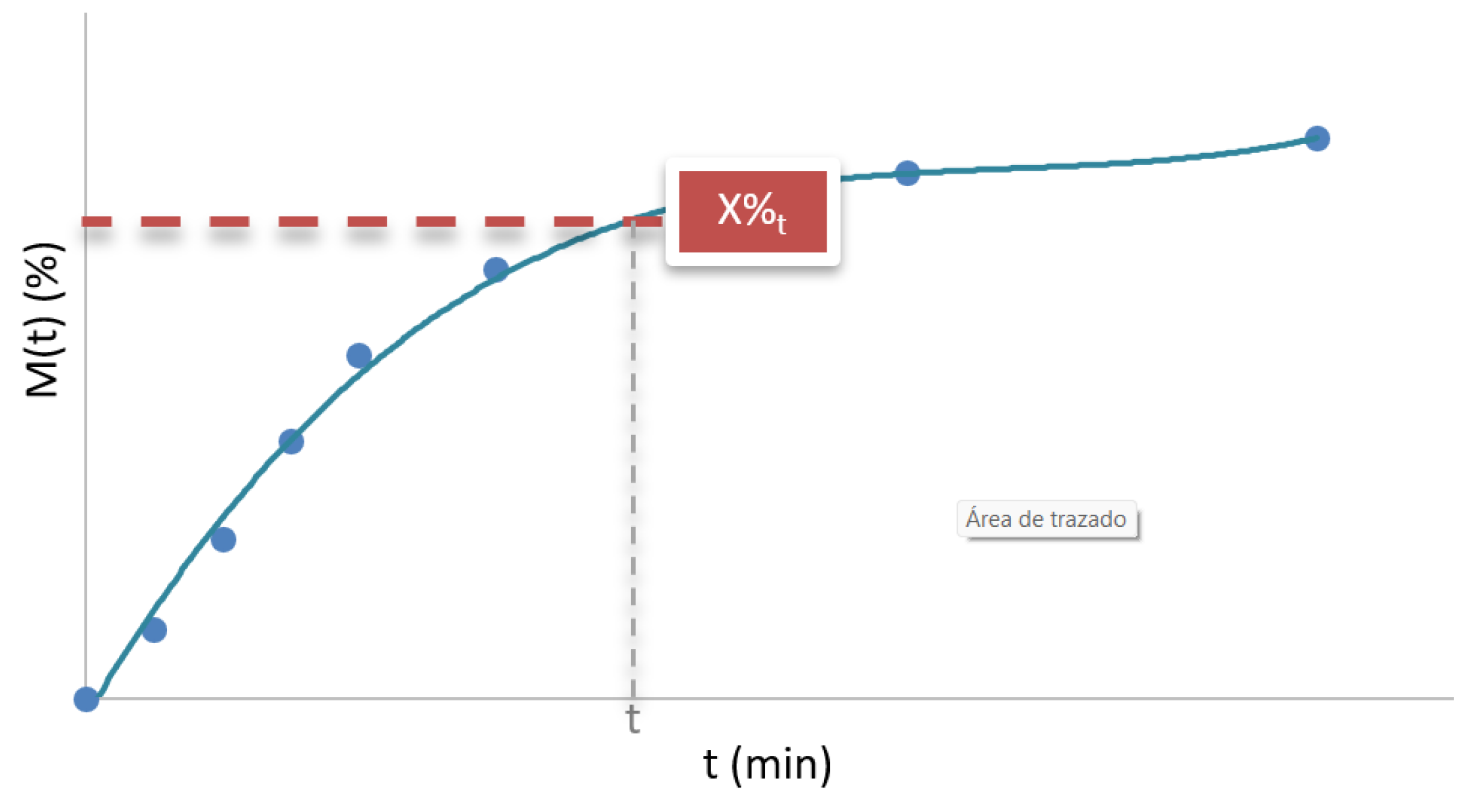
2.2.1. Drug Released at a Given Time
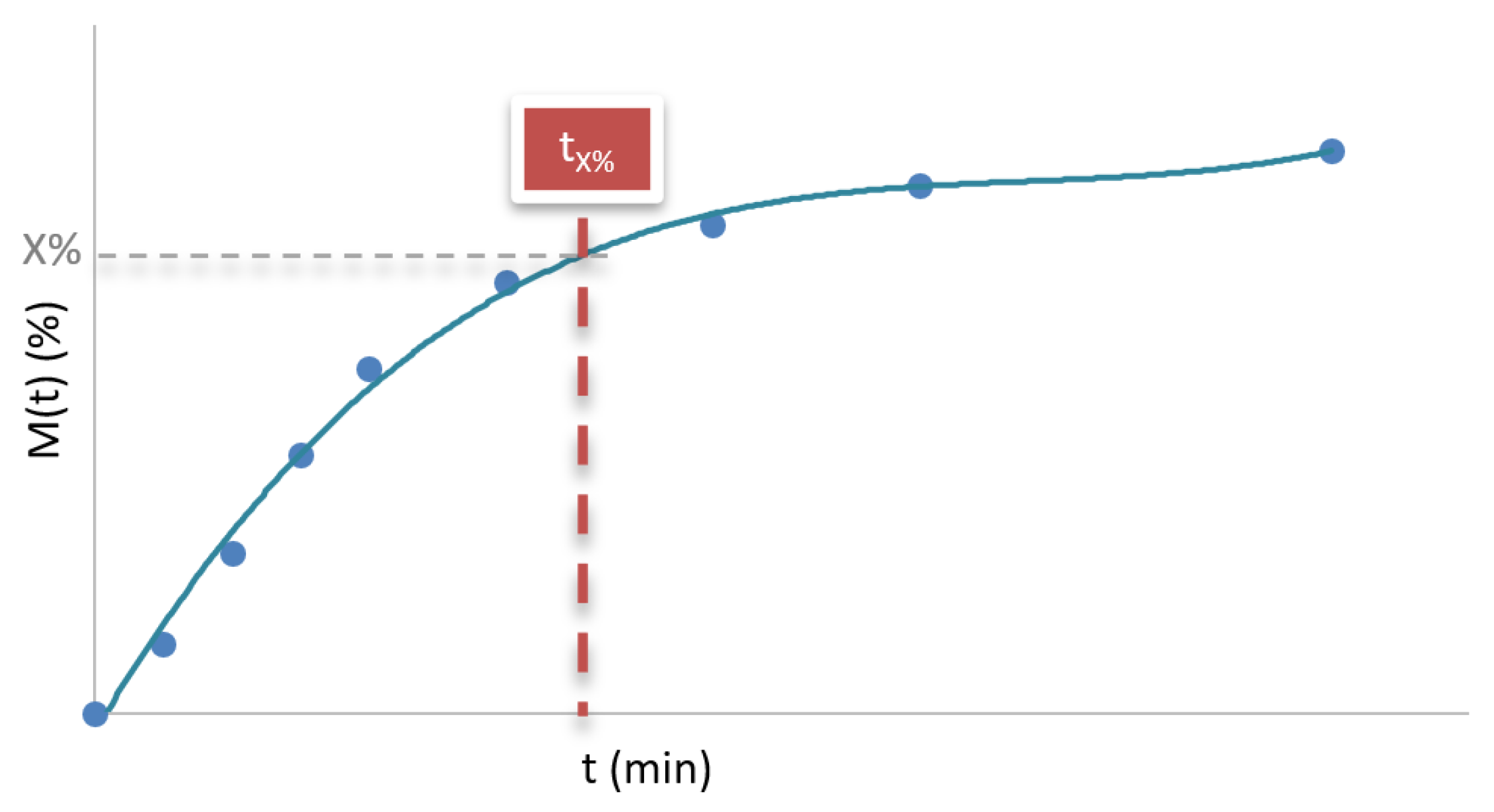
2.2.2. Time Required to Release a Percentage of the Drug
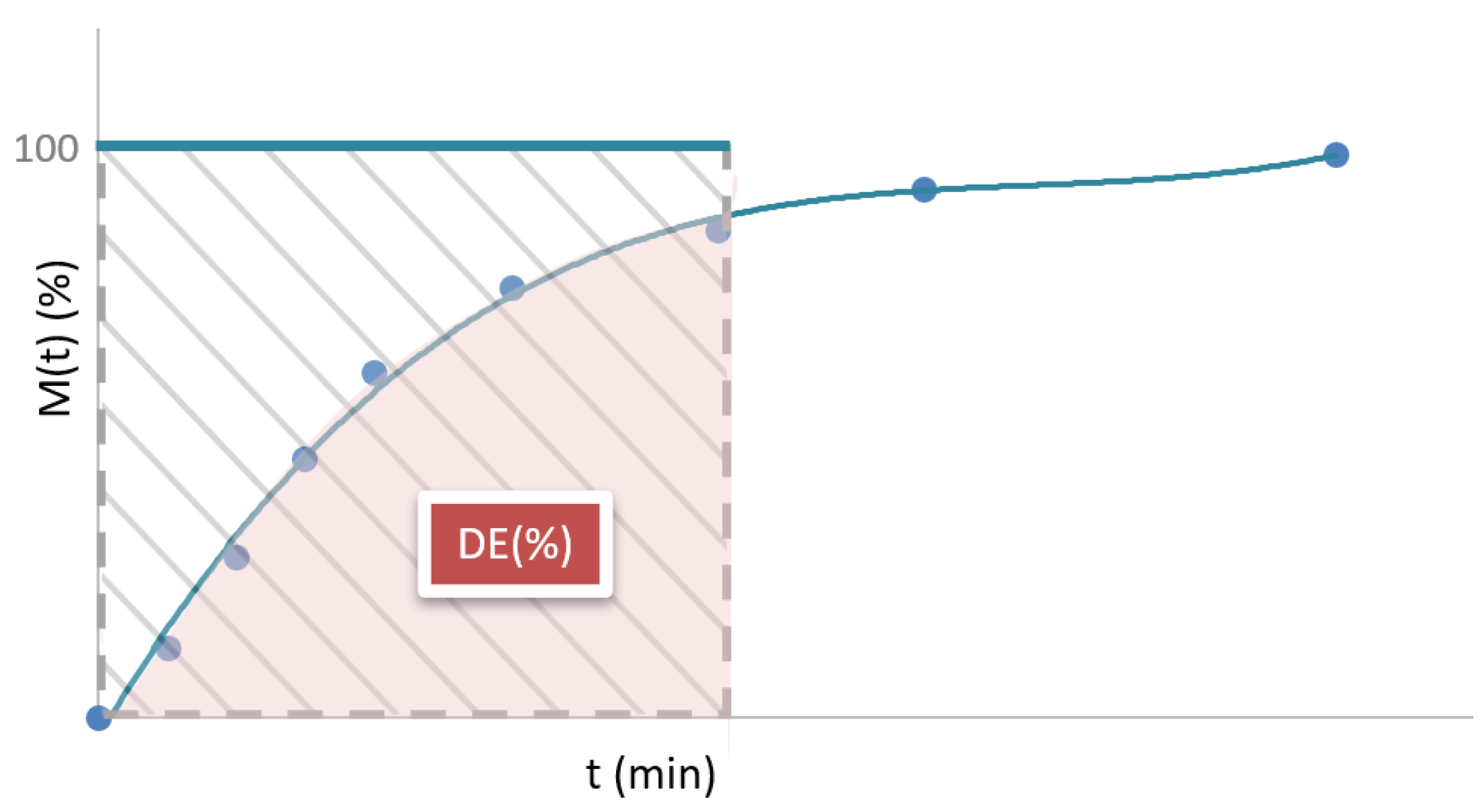
2.2.3. Dissolution Efficiency
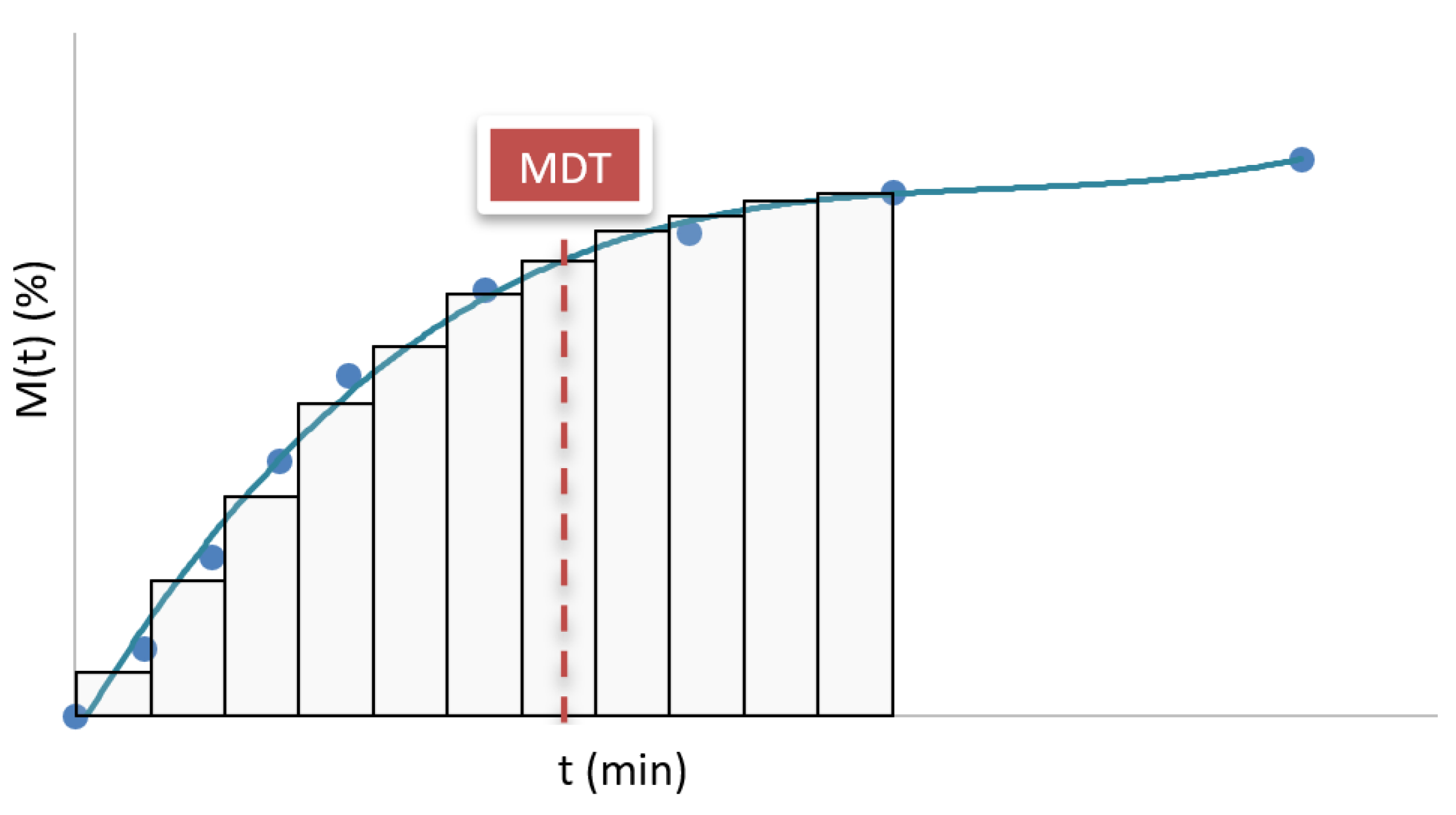
2.2.4. Mean Dissolution Time
2.3. Pharmaceutical Systems for Algorithm Validation
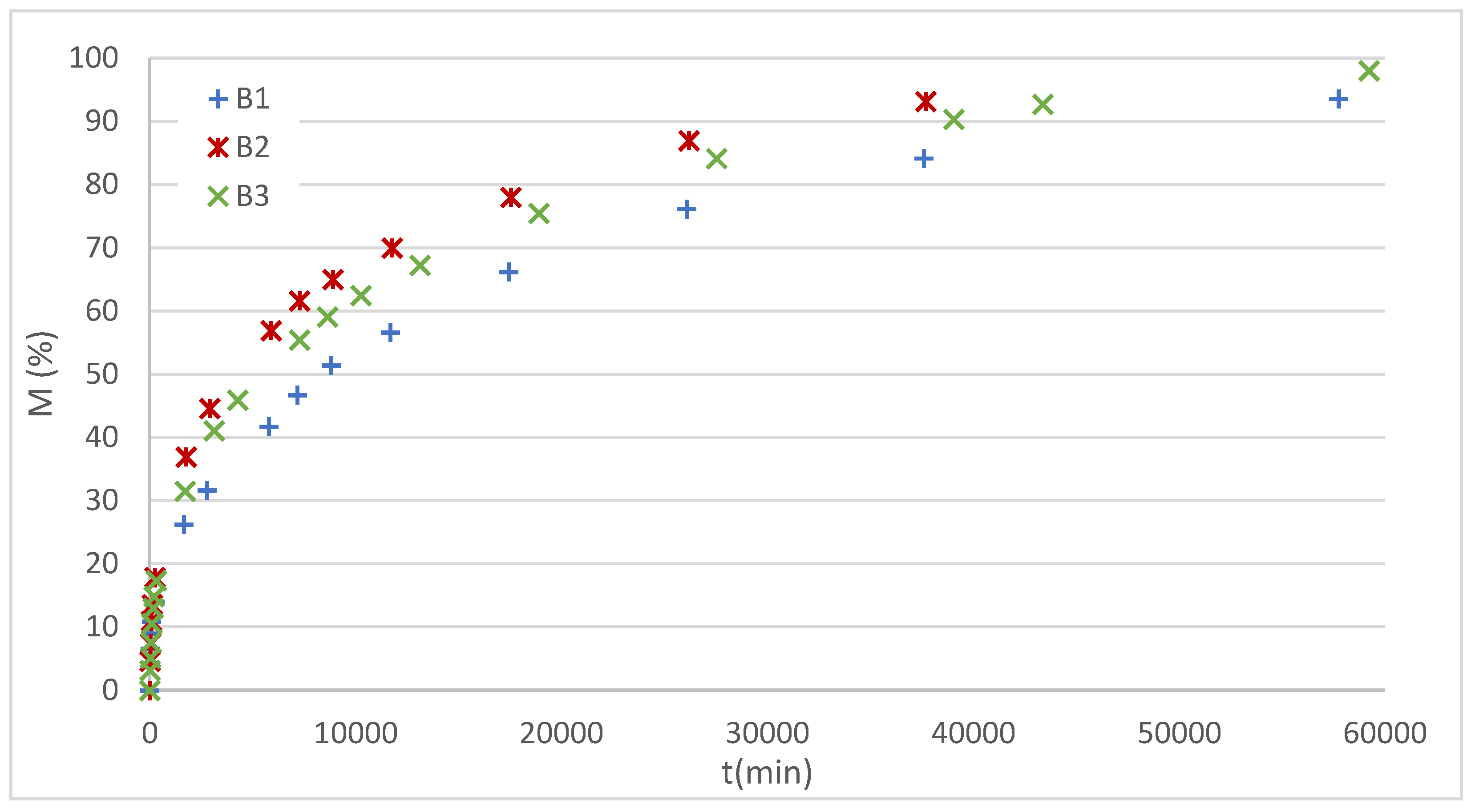
2.3.1. Case Study A—Hydrogels
2.3.2. Case Study B—Films
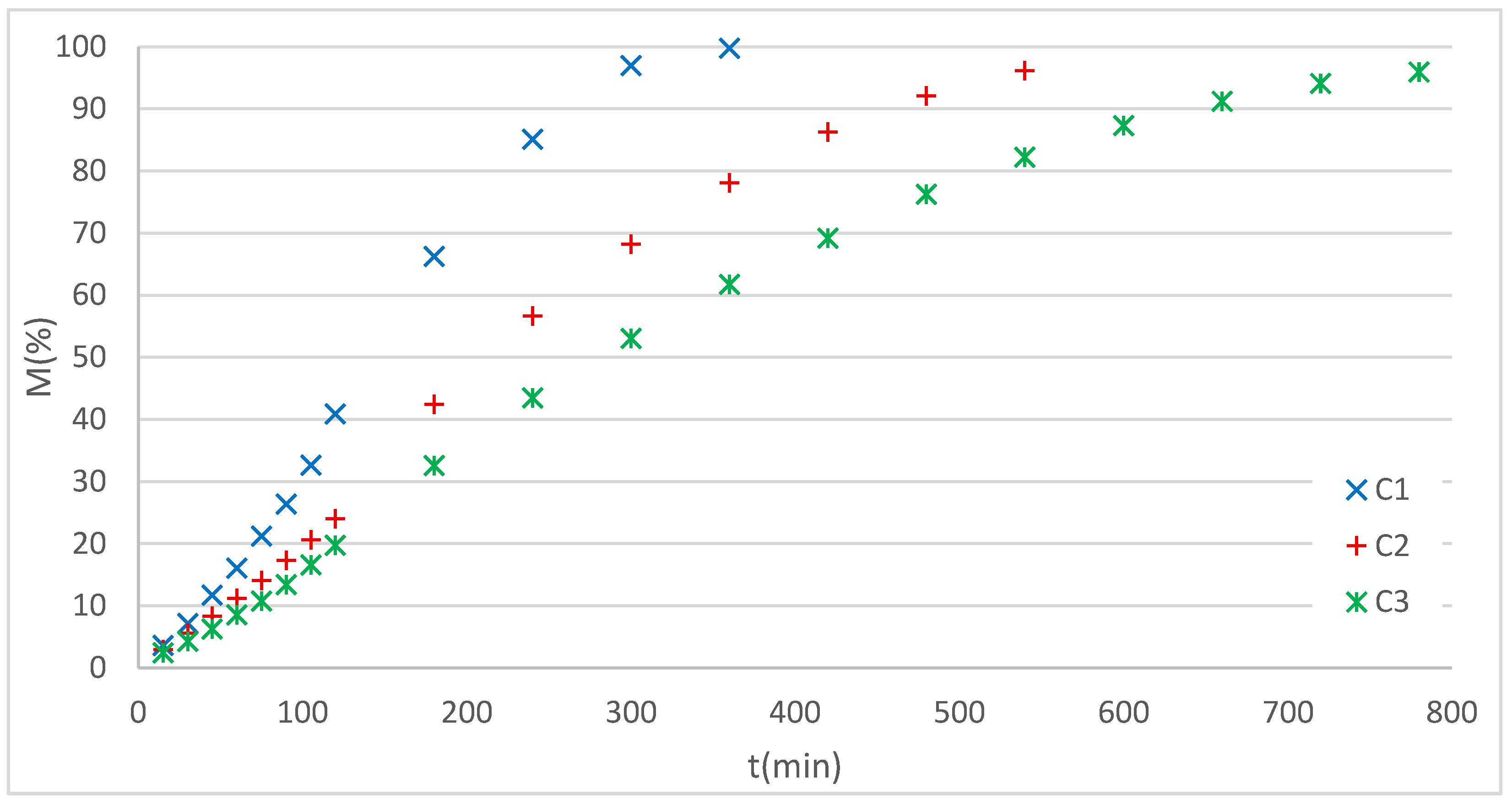
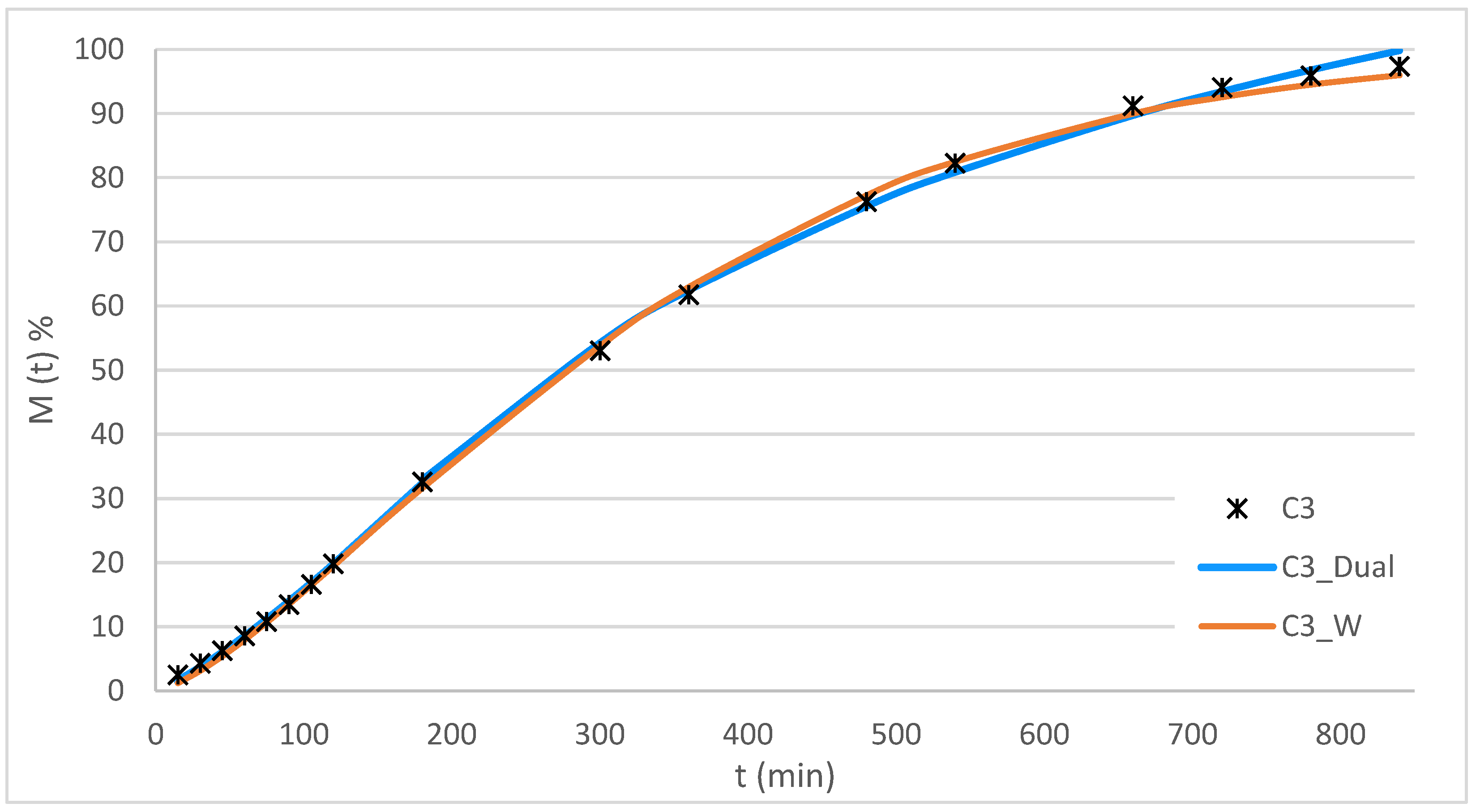
2.3.3. Case Study C—Dome Matrix
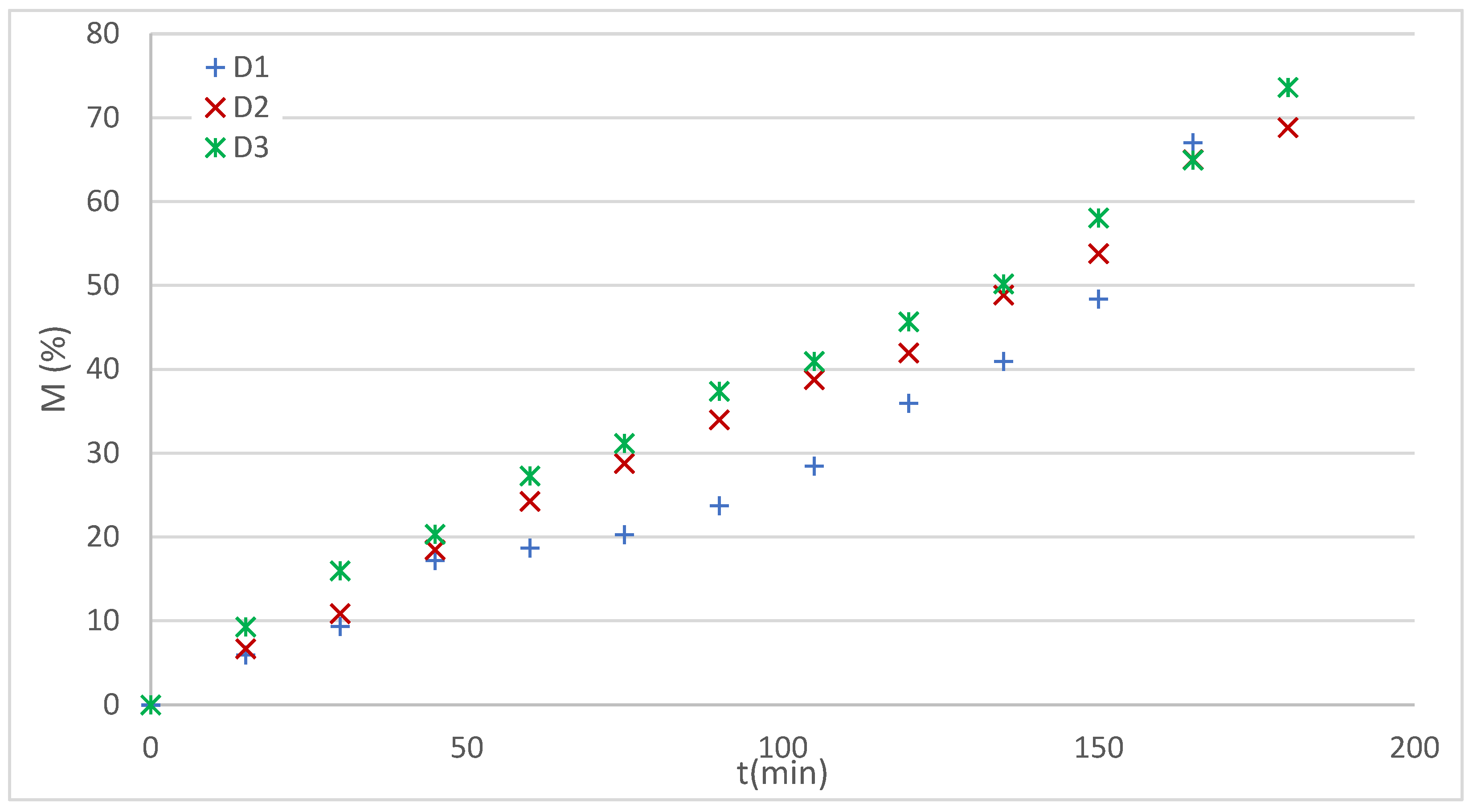
2.3.4. Case Study D—3D-Printed Tablets
3. Results
3.1. Decision Tree
3.2. Validación del Árbol de Decisión
3.2.1. Case Study A—Hydrogels
3.2.2. Case Study B—Films
3.2.3. Case Study C—Dome Matrix
3.2.4. Case Study D—3D-Printed Tablets
4. Discussion
5. Conclusions
Author Contributions
Funding
Institutional Review Board Statement
Informed Consent Statement
Data Availability Statement
Acknowledgments
Conflicts of Interest
References
- Thomas, F. The Fundamentals of Dissolution Testing. Pharm. Technol. 2019, 43. [Google Scholar]
- Gregory, K. Webster, X.S., and Paul D. Curry, Jr. A Staged Approach to Pharmaceutical Dissolution Testing. In Poorly Soluble Drugs; Jenny Stanford Publishing: 2016.
- Costa, P.; Sousa Lobo, J.M. Modeling and comparison of dissolution profiles. Eur. J. Pharm. Sci. 2001, 13, 123–133. [Google Scholar] [CrossRef]
- Zhang, Y.; Huo, M.; Zhou, J.; Zou, A.; Li, W.; Yao, C.; Xie, S. DDSolver: an add-in program for modeling and comparison of drug dissolution profiles. Aaps j 2010, 12, 263–271. [Google Scholar] [CrossRef]
- Romero, A.I.; Villegas, M.; Cid, A.G.; Parentis, M.L.; Gonzo, E.E.; Bermúdez, J.M. Validation of kinetic modeling of progesterone release from polymeric membranes. Asian Journal of Pharmaceutical Sciences 2018, 13, 54–62. [Google Scholar] [CrossRef]
- Trucillo, P. Drug Carriers: A Review on the Most Used Mathematical Models for Drug Release. Processes 2022, 10, 1094. [Google Scholar] [CrossRef]
- Askarizadeh, M.; Esfandiari, N.; Honarvar, B.; Sajadian, S.A.; Azdarpour, A. Kinetic Modeling to Explain the Release of Medicine from Drug Delivery Systems. ChemBioEng Reviews 2023, 10. [Google Scholar] [CrossRef]
- Kamaly, N.; Yameen, B.; Wu, J.; Farokhzad, O.C. Degradable Controlled-Release Polymers and Polymeric Nanoparticles: Mechanisms of Controlling Drug Release. Chem. Rev. 2016, 116, 2602–2663. [Google Scholar] [CrossRef] [PubMed]
- Siepmann, J.; Peppas, N.A. Modeling of drug release from delivery systems based on hydroxypropyl methylcellulose (HPMC). Advanced Drug Delivery Reviews 2001, 48, 139–157. [Google Scholar] [CrossRef]
- 5 - Mathematical models of drug release. In Strategies to Modify the Drug Release from Pharmaceutical Systems, Bruschi, M.L., Ed.; Woodhead Publishing: 2015; pp. 63–86.
- Gibaldi, G.; Perrier, D. Pharmacokinetics 2nd edition Marcel Dekker Inc. New York, New York.
- Higuchi, T. Rate of Release of Medicaments from Ointment Bases Containing Drugs in Suspension. J. Pharm. Sci. 1961, 50, 874–875. [Google Scholar] [CrossRef]
- Higuchi, T. Mechanism of sustained-action medication. Theoretical analysis of rate of release of solid drugs dispersed in solid matrices. J. Pharm. Sci. 1963, 52, 1145–1149. [Google Scholar] [CrossRef]
- Korsmeyer, R.W.; Peppas, N.A. Effect of the morphology of hydrophilic polymeric matrices on the diffusion and release of water soluble drugs. J. Membr. Sci. 1981, 9, 211–227. [Google Scholar] [CrossRef]
- Korsmeyer, R.W.; Gurny, R.; Doelker, E.; Buri, P.; Peppas, N.A. Mechanisms of solute release from porous hydrophilic polymers. Int. J. Pharm. 1983, 15, 25–35. [Google Scholar] [CrossRef]
- Ritger, P.L.; Peppas, N.A. A simple equation for description of solute release I. Fickian and non-fickian release from non-swellable devices in the form of slabs, spheres, cylinders or discs. Journal of Controlled Release 1987, 5, 23–36. [Google Scholar] [CrossRef]
- Peppas, N.A.; Sahlin, J.J. A simple equation for the description of solute release. III. Coupling of diffusion and relaxation. Int. J. Pharm. 1989, 57, 169–172. [Google Scholar] [CrossRef]
- Hixson, A.W.; Crowell, J.H. Dependence of Reaction Velocity upon surface and Agitation. Ind. Eng. Chem. 1931, 23, 923–931. [Google Scholar] [CrossRef]
- Weibull, W. A statistical distribution function of wide applicability. Journal of applied mechanics 1951. [Google Scholar] [CrossRef]
- Langenbucher, F. Letters to the Editor: Linearization of dissolution rate curves by the Weibull distribution. Journal of Pharmacy and Pharmacology 1972, 24, 979–981. [Google Scholar] [CrossRef]
- Romero, A.I.; Bermudez, J.M.; Villegas, M.; Dib Ashur, M.F.; Parentis, M.L.; Gonzo, E.E. Modeling of Progesterone Release from Poly(3-Hydroxybutyrate) (PHB) Membranes. AAPS PharmSciTech 2016, 17, 898–906. [Google Scholar] [CrossRef] [PubMed]
- Shabestari, S.M.; Pourmadadi, M.; Abdouss, H.; Ghanbari, T.; Abdouss, M.; Rahdar, A.; Cambón, A.; Taboada, P. pH-responsive chitosan-sodium alginate nanocarriers for curcumin delivery against brain cancer. Colloids and Surfaces B: Biointerfaces 2025, 255, 114875. [Google Scholar] [CrossRef] [PubMed]
- Baker, R.W. Controlled release: mechanisms and rates. In Controlled release of biologically active agents, Tanquary, A.C., Ed.; Plenum Press: New York, 1974; pp. 15–71. [Google Scholar]
- Corrigan, O.I.; Li, X. Quantifying drug release from PLGA nanoparticulates. Eur. J. Pharm. Sci. 2009, 37, 477–485. [Google Scholar] [CrossRef]
- Tsirigotis-Maniecka, M.; Szyk-Warszyńska, L.; Maniecki, Ł.; Szczęsna, W.; Warszyński, P.; Wilk, K.A. Tailoring the composition of hydrogel particles for the controlled delivery of phytopharmaceuticals. Eur. Polym. J. 2021, 151, 110429. [Google Scholar] [CrossRef]
- Lamarra, J.; Calienni, M.N.; Rivero, S.; Pinotti, A. Electrospun nanofibers of poly(vinyl alcohol) and chitosan-based emulsions functionalized with cabreuva essential oil. Int. J. Biol. Macromol. 2020, 160, 307–318. [Google Scholar] [CrossRef]
- Huang, X.; Brazel, C.S. On the importance and mechanisms of burst release in matrix-controlled drug delivery systems. Journal of Controlled Release 2001, 73, 121–136. [Google Scholar] [CrossRef]
- Romero, A.I.; Cid, A.G.; Minetti, N.E.; Briones Nieva, C.A.; García Bustos, M.F.; Gonzo, E.E.; Villegas, M.; J, M.B. Sustained-release hydrogels of ivermectin as alternative systems to improve the treatment of cutaneous leishmaniasis. Ther. Deliv. 2020, 11, 779–790. [Google Scholar] [CrossRef] [PubMed]
- Khan, K.A. The concept of dissolution efficiency. Journal of Pharmacy and Pharmacology 1975, 27, 48–49. [Google Scholar] [CrossRef] [PubMed]
- Nep, E.I.; Asare-Addo, K.; Ghori, M.U.; Conway, B.R.; Smith, A.M. Starch-free grewia gum matrices: Compaction, swelling, erosion and drug release behaviour. Int. J. Pharm. 2015, 496, 689–698. [Google Scholar] [CrossRef]
- Al-Hamidi, H.; Asare-Addo, K.; Desai, S.; Kitson, M.; Nokhodchi, A. The dissolution and solid-state behaviours of coground ibuprofen–glucosamine HCl. Drug Development and Industrial Pharmacy 2015, 41, 1682–1692. [Google Scholar] [CrossRef]
- Pillay, V.; Fassihi, R. Evaluation and comparison of dissolution data derived from different modified release dosage forms: an alternative method. J. Control. Release 1998, 55, 45–55. [Google Scholar] [CrossRef]
- Dugar, R.P.; Gajera, B.Y.; Dave, R.H. Fusion Method for Solubility and Dissolution Rate Enhancement of Ibuprofen Using Block Copolymer Poloxamer 407. AAPS PharmSciTech 2016, 17, 1428–1440. [Google Scholar] [CrossRef]
- Villegas, M.; Cid, A.G.; Briones, C.A.; Romero, A.I.; Pistán, F.A.; Gonzo, E.E.; Gottifredi, J.C.; Bermúdez, J.M. Films based on the biopolymer poly(3-hydroxybutyrate) as platforms for the controlled release of dexamethasone. Saudi Pharmaceutical Journal 2019, 27, 694–701. [Google Scholar] [CrossRef] [PubMed]
- Cid, A.G.; Sonvico, F.; Bettini, R.; Colombo, P.; Gonzo, E.; Jimenez-Kairuz, A.F.; Bermúdez, J.M. Evaluation of the Drug Release Kinetics in Assembled Modular Systems Based on the Dome Matrix Technology. J. Pharm. Sci. 2020, 109, 2819–2826. [Google Scholar] [CrossRef] [PubMed]
- Briones Nieva, C.A.; Real, J.P.; Campos, S.N.; Romero, A.I.; Villegas, M.; Gonzo, E.E.; Bermúdez, J.M.; Palma, S.D.; Cid, A.G. Modeling and evaluation of ivermectin release kinetics from 3D-printed tablets. Ther. Deliv. 2024, 15, 845–858. [Google Scholar] [CrossRef] [PubMed]


| Model | Equation | Parameters | Application | Advantages | Restrictions | Ref |
| Zero order | : constant | Constant release rate over time Large amount of drug in the matrix |
Simple Useful for systems with constant release (e.g., osmotic pumps) |
Constant area: no erosion or swelling | [10] | |
| First order | : constant | Release rate proportional to the remaining drug | Applicable to simple pharmaceutical forms. Used in the release of soluble drugs from porous matrices. | There are no phenomena of erosion or swelling. | [11] | |
| Higuchi | D: diffusion coefficient of the drug in the matrix A: amount of drug in the matrix Cs: solubility of the drug in the matrix |
One-dimensional diffusion from a homogeneous matrix D constant |
Classic model useful in flat matrix systems | It is not intended for highly porous matrices, erosion phenomena, swelling, or changes in geometry | [12,13] | |
| Korsmeyer–Peppas | a: constant n: exponential constant related to the type of mechanism |
Applicable to a wide variety of systems with different geometries | n allows the predominant release mechanism to be interpreted. It can be used for different geometries. |
Valid up to 60% of the release. The system must be understood in order to interpret n, as it varies with geometry. The interpretation of k and n may change. |
[14,15,16] |
|
| Peppas–Sahlin | k1: Fickian diffusion kinetic constant k2: kinetic constant due to relaxation effect m: diffusional exponent |
Superposition of Fickian diffusion and polymer relaxation. | Allows separation of contributions from diffusion and relaxation | Parameters must be physically consistent Originally used up to a disolved fraction of 80% |
[17] | |
| Hixson and Crowell | k: constant | Systems where the dimensions vary, but not the shape. Equal dissolution rate over the entire surface |
Suitable when there is geometric changes and erosion. Can be applied to particulate systems of uniform sizes. Can model non-erodible systems. |
The matrix should not change its shape significantly (this generally occurs up to 75–85% of dissolution). It does not consider matrix partitioning or swelling. |
[18] | |
| Weibull | a: temporal parameter b: shape parameter : lag time |
Flexible statistical model (empirical fit) Does not take into account phenomena that may occur |
Excellent fit in many cases, for sigmoid types | Does not provide mechanistic information Parameters do not have clear physical meaning |
[19,20] | |
| Lumped–Gonzo | a, b : model parameters | Overall second-order kinetics: the rate of release depends on the amount of drug remaining. | Adjust the entire profile Parameters with physical meanings Applicable to various types of systems |
It takes into account several mechanisms, so it does not discriminate against specific mechanisms. | [5,21] | |
| Baker & Lonsdale |
: diffusion coefficient : solubility of the drug in the matrix : radius of the spherical matrix : initial drug concentration in the matrix |
Spherical geometry Non-porous matrix Diffusion as the dominant mechanism |
Adjust the profile for the entire range Parameters can be grouped into a single one |
Constant diffusion coefficient Non-erodible matrix |
[22,23] | |
| Corrigan |
: fraction of drug available for release at the surface : time to reach maximum release speed. k: velocity constant for maximum release speed : release rate constant |
Two-stage release. The first stage is burst release from the surface, and the second stage involves polymer degradation as the main effect |
Allows complex sigmoid profiles to be worked on. Clearly differentiates between the terms of the two stages of libration. Application in biodegradable polymers in various systems (nano and microparticles, gels) |
Large number of parameters | [24,25,26] |
| Systems | Models | R2 | R2adjusted | AIC | Parameters |
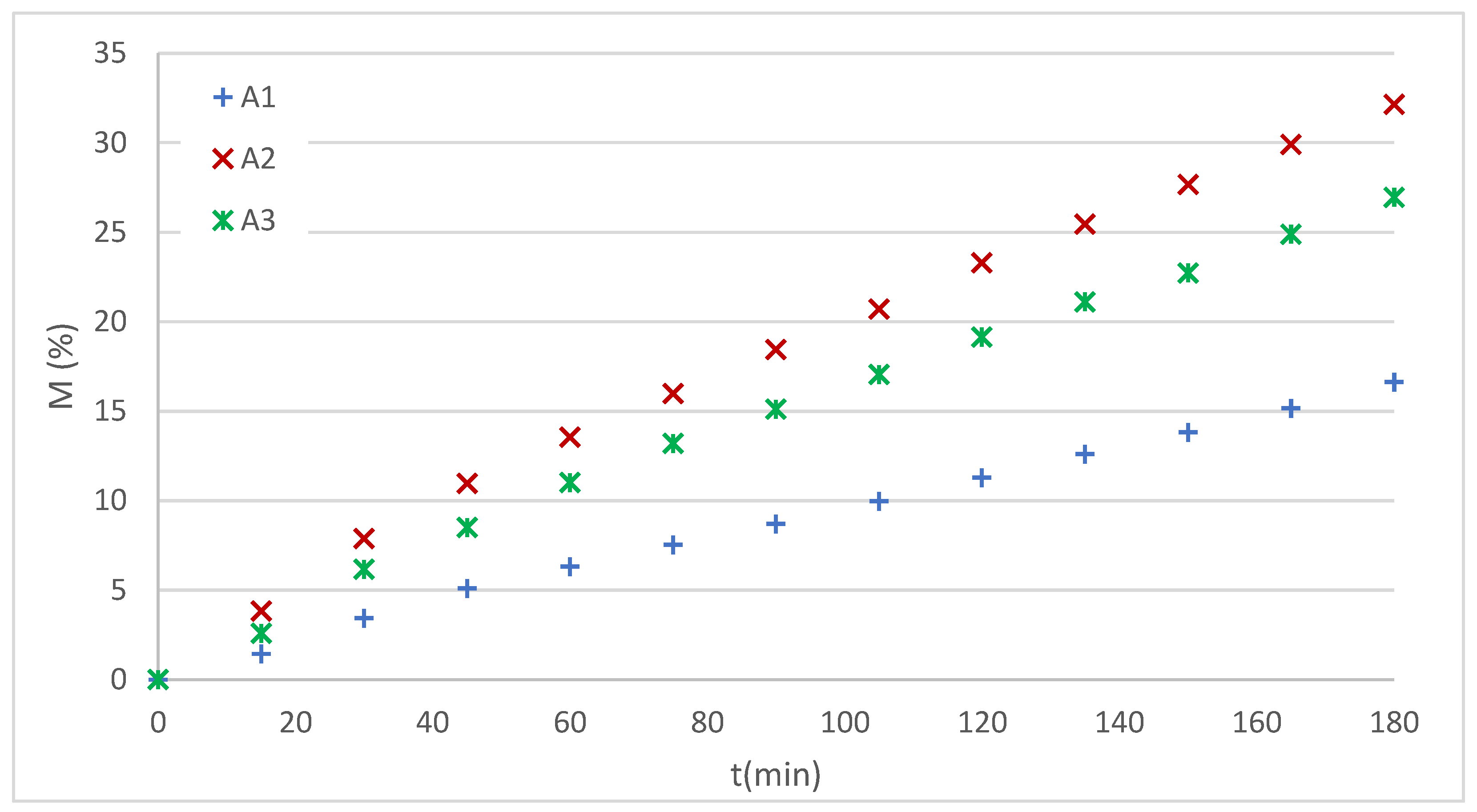
| A1 | Z-O | 0.9984 | 0.9984 | -0.5446 | a=0.0583 |
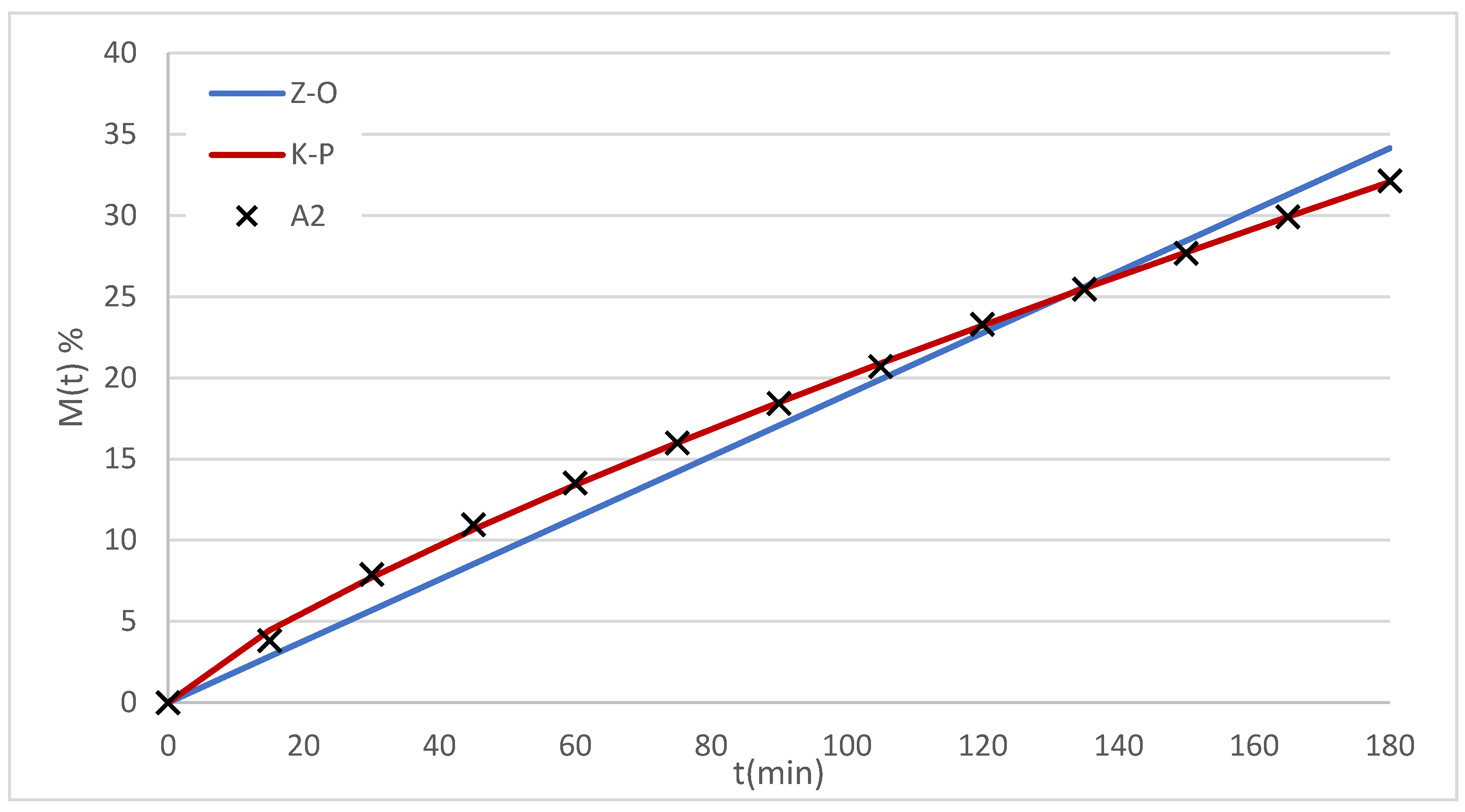
| K-P | 0.9994 | 0.9994 | -20.6930 | a=0.0985 n=0.8930 |
|
| A2 | Z-O | 0.9963 | 0.9963 | 11.5175 | a=0.0615 |
| K-P | 0.9995 | 0.9994 | -21.3945 | a=0.1392 n=0.8329 |
|
| A3 | Z-O | 0.9953 | 0.9953 | 22.3936 | a=0.0773 |
| K-P | 0.9998 | 0.9997 | -26.5760 | a=0.2106 n=0.7948 |
| Systems | Models | t10% (min) | DE120min (%) | MDT10% (min) |
| A1 | Z-O | 171.50 | 3.50 | 85.00 |
| K-P | 176.64 | 3.74 | 82.55 | |
| A2 | Z-O | 162.67 | 3.68 | 42.20 |
| K-P | 169.40 | 4.09 | 34.13 | |
| A3 | Z-O | 129.44 | 4.63 | 51.05 |
| K-P | 128.64 | 5.27 | 42.87 |
| Systems | Models | R2 | R2adjusted | AIC | Parámetros |
| B1 | H | 0.9867 | 0.9867 | 102.65 | k=0.45746 |
| FO | 0.9896 | 0.9896 | 106.82 | k=7.62x10⁻⁵ | |
| L-G | 0.9912 | 0.9905 | 96.684 | a=0.013 b=1.3x10⁻⁴ |
|
| K-P | 0.9979 | 0.9976 | 30.003 | a=1.9103 n=0.3599 |
|
| B2 | H | 0.9634 | 0.9634 | 125.47 | k=2.66 x 10⁻⁵ |
| FO | 0.9861 | 0.9861 | 116.06 | k=1.264 x 10⁻⁴ | |
| L-G | 0.9924 | 0.9919 | 102.8 | a=0.024 b=2.4x10⁻⁴ |
|
| K-P | 0.9992 | 0.9991 | 25.138 | a=1.6826 n=0.4059 |
|
| B3 | H | 0.9776 | 0.9776 | 124.43 | k=2.31 x 10⁻⁵ |
| FO | 0.9901 | 0.9901 | 121.28 | a=8.97 x 10⁻⁵ | |
| L-G | 0.9947 | 0.9943 | 103.94 | a=0.01612 b=1.612 x 10⁻⁴ |
|
| K-P | 0.9997 | 0.9996 | 16.63 | a=1.2903 n=0.41526 |
| Systems | Models | t80% (min) | DE20días (%) | MDT80% (min) |
| B1 | H | 30585 | 51.93 | 10123 |
| F-O | 21130 | 46.67 | 7043 | |
| L-G | 30370 | 58.80 | 7690 | |
| K-P | - | - | - | |
| B2 | H | 23165 | 59.67 | 5540 |
| F-O | 12730 | 63.61 | 4243 | |
| L-G | 16620 | 70.25 | 4203 | |
| K-P | - | - | - | |
| B3 | H | 29260 | 53.10 | 8267 |
| F-O | 17935 | 53.54 | 5978 | |
| L-G | 24800 | 62.88 | 5141 | |
| K-P | - |
| Systems | Models | R2 | R2adjusted | AIC | Parameters |
| C1 | Dual (KP-LG) |
0.9993 | 0.9989 | 39.3669 | a=0.0306 n=1.4877 ti=120 a=1.2473 b=8.76x10⁻³ |
| Weibull | 0.9987 | 0.9986 | 49.4303 | a=1.8001 | |
| C2 | Dual (KP-LG) |
0.9998 | 0.9998 | 17.2018 | a=0.0785 n=1.1856 a=0.5019 ti=120 b=3.06x10⁻³ |
| Weibull | 0.9994 | 0.9994 | 50.1587 | a=1.5109 | |
| C3 | Dual (KP-LG) |
0.9993 | 0.9989 | 39.3669 | a=0.0282 n=1.3502 ti=180 a=0.3676 b=1.26 x 10⁻³ |
| Weibull | 0.9987 | 0.9986 | 49.4303 | a=1.8001 |
| Systems | Models | t80% (min) | DE350min (%) | MDT80% (min) |
| C1 | Dual (KP-LG) | 222.00 | 57.90 | 114.9 |
| Weibull | 220.25 | 57.38 | 117.0 | |
| C2 | Dual (KP-LG) | 377.00 | 39.40 | 178.3 |
| Weibull | 368.75 | 39.34 | 178.2 | |
| C3 | Dual (KP-LG) | 530.00 | 30.70 | 238.7 |
| Weibull | 510.00 | 30.27 | 234.5 |
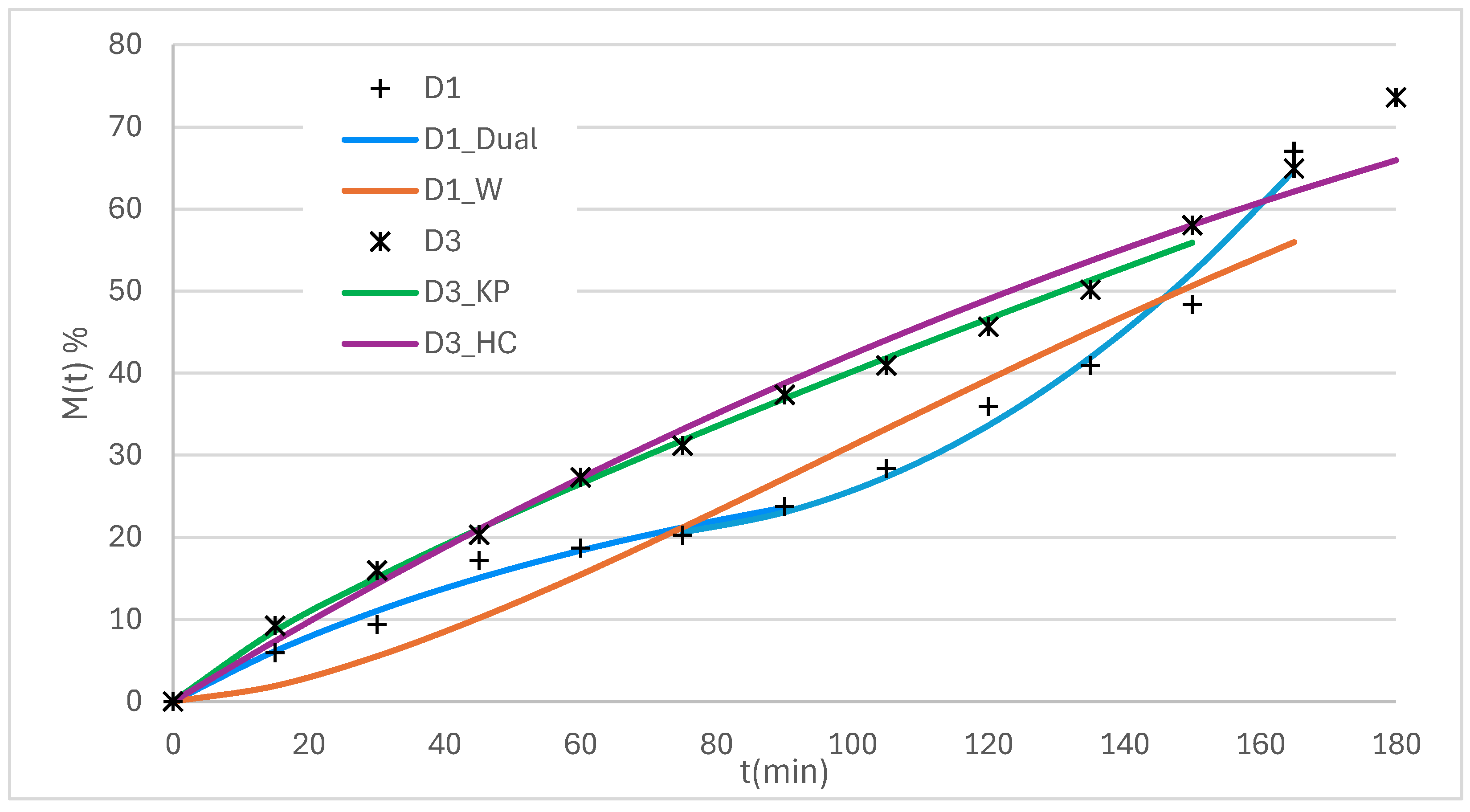
| Systems | Models | R2 | R2adjusted | AIC | Parameters |
| D1 | Dual (LG-KP) |
0.9954 | 0.9928 | 52.139 | a=0.459 b=8.32x10⁻³ ti=60 a=2.43x10⁻³ n=2.11 |
| Weibull | 0.9667 | 0.9634 | 72.713 | a=1.8001 | |
| D2 | H-C | 0.9908 | 0.9908 | 64.72 | a=0.0015 |
| K-P | 0.9987 | 0.9985 | 13.658 | a=0.5709 n=0.9057 |
|
| D3 | H-C | 0.9904 | 0.9904 | 63.42 | a=0.0017 |
| K-P | 0.999 | 0.9988 | 11.815 | a=0.9521 n=0.8127 |
| Systems | Models | t45% (min) | DE150min (%) | MDT45% (min) |
| D1 | Dual (LG-KP) | 142.92 | 21.99 | 75.28 |
| Weibull | 134.9 | 22.37 | 76.37 | |
| D2 | H-C | 116.75 | 29.75 | 57.74 |
| K-P | 124.25 | 28.01 | 55.49 | |
| D3 | H-C | 107.83 | 31.781 | 50.36 |
| K-P | 114.9 | 30.62 | 51.52 |
Disclaimer/Publisher’s Note: The statements, opinions and data contained in all publications are solely those of the individual author(s) and contributor(s) and not of MDPI and/or the editor(s). MDPI and/or the editor(s) disclaim responsibility for any injury to people or property resulting from any ideas, methods, instructions or products referred to in the content. |
© 2025 by the authors. Licensee MDPI, Basel, Switzerland. This article is an open access article distributed under the terms and conditions of the Creative Commons Attribution (CC BY) license (http://creativecommons.org/licenses/by/4.0/).


