

Submitted:
25 August 2025
Posted:
01 September 2025
You are already at the latest version
Abstract
Social farming combines agricultural, social, and healthcare functions, and Ani-mal-Assisted Interventions (AAIs) are increasingly applied within this framework. Despite their potential, cattle are excluded from Italian guidelines and rarely studied. This pilot study explored the feasibility, effects, and economic sustainability of cow-assisted interventions within social farming in Umbria, Italy. Four Red Pied Valdostana cows were involved in 11 structured sessions with three groups: adolescents removed from families, young adults with mental health disorders, and individuals with eating disorders. Activities included observation, feeding, grooming, problem solving and leading. Human outcomes were assessed across emotional, relational, and behavioral dimensions, while animal welfare was continuously monitored. A cost analysis was also conducted for Animal-Assisted Activity (AAA), Animal-Assisted Education (AAE), and Animal-Assisted Therapy (AAT). Participants reported improved self-esteem, emotional expression, and social interaction; the eating disorder group showed greater openness toward dairy consumption. Animal welfare remained stable with high tolerance to handling. Costs were driven mainly by professional staff rather than animal care, with average hourly costs of €74.51 (AAA), €144.99 (AAE), and €172.41 (AAT). Cow-assisted interventions proved safe, feasible, and beneficial, supporting their potential inclusion in Italian guidelines on AAIs.
Keywords:
animal-assisted interventions
; social farming
; cow
; animal welfare
; mental health disorders
; eating disorders
; adolescents removed from families
; cost analysis
1. Introduction
Social farming is one of the many expressions of the multifunctionality of agricultural enterprises. At the same time, it is increasingly recognized not only as a productive activity but also as a tool for reinforcing the socio-economic fabric of rural areas by promoting social inclusion and local development. Historically, agriculture has always had a social dimension. The life cycle of farming families and the dense network of relationships within rural communities shaped the evolution of farms. Today, the intersection of agriculture and social engagement has acquired renewed significance.
On one hand, social farming broadens the multifunctional scope of the profit-driven agricultural sector, allowing it to reclaim its social function—once fulfilled by traditional forms of mutual aid, solidarity, and assistance that characterized rural life. On the other hand, it offers new opportunities for collaboration with non-profit organizations and the public sector. This synergy allows social agriculture to generate public goods related to community life and territorial identity, support the labor inclusion of marginalized individuals, and provide educational and cultural services to families and institutions [1,2,3]. In this light, social farming should not be seen as a mere “virtuous practice” but as a foundational element of a new model of rural development and participatory welfare [4,5].
Welfare systems today are increasingly challenged by population aging, migration, economic restructuring, social fragmentation, and resource constraints. In this context, social farming functions as a small-scale laboratory of experimentation. It integrates agricultural production systems and rural development with the perspective of the social economy, social policy, and health services [1]. While agriculture expresses the needs of enterprises and territories, the social sector addresses the demands of families, social workers, and institutions. Their convergence fosters a "One Welfare" approach—an evolution of the One Health model—that emphasizes the interdependence of human, animal, and environmental well-being, and promotes social and relational sustainability. In the wake of the COVID-19 pandemic, social farming has gained renewed relevance as a space where rural development goals intersect with social cohesion and community participation, aligning with the ambitions of the United Nations (UN) 2030 Agenda and the European Green Deal. European Union (EU) policies increasingly emphasize inclusive growth in rural areas and the need to develop innovative social services that also generate employment [6].
Italy stands out as the only EU country with dedicated legislation on social farming: Law No. 141 of August 18, 2015. This law promotes social farming as a multifunctional practice that delivers social, healthcare, educational, and work integration services. It seeks to ensure equitable access to essential services, particularly in rural and disadvantaged areas. According to the law, social farming can be practiced by agricultural entrepreneurs (as defined in Article 2135 of the Civil Code), either individually or in association, and by social cooperatives whose revenues derive primarily from agricultural activities. Among the four types of activities recognized by the law is one specifically involving “services that support and assist medical, psychological, and rehabilitation therapies, including the aid of farmed animals and the cultivation of plants.” This provision establishes a legal and practical foundation for integrating Animal-Assisted Interventions (AAIs) within social farming. Although social farming and AAIs emerged from different traditions, they can be highly complementary—especially in rural contexts. AAIs offer therapeutic and educational benefits that enrich social farming projects, while farms provide ideal settings for these interventions. This relationship is codified in Italian Ministerial Decree No. 12550 of 2018, which defines the operational standards of social farming in Italy.
The International Association of Human-Animal Interaction Organizations (IAHAIO) defines AAIs as structured, goal-oriented interventions in healthcare, education, and social services that intentionally incorporate animals to achieve therapeutic outcomes in humans [7,8]. These interventions address a wide range of populations, including individuals with physical, psychomotor, cognitive, or psychiatric conditions, as well as children and the elderly [9,10,11].
The Italian Guidelines on AAIs, published by the Ministry of Health in 2015, identify three forms of intervention: Animal-Assisted Therapy (AAT), Animal-Assisted Education (AAE), and Animal-Assisted Activities (AAA). These are differentiated by their goals, target groups, and the professional teams involved. AAT and AAE, in particular, require multidisciplinary teams and a certified training path that includes preparatory, basic, and advanced courses. While AAIs in Italy traditionally involve companion animals like dogs and cats—and occasionally horses, rabbits, and donkeys—there is little research on the role of farm animals, particularly cattle, in such programs. Notably absent is any investigation into the cognitive effects of therapeutic work on farm animals themselves [12].
One emerging practice, cow cuddling or koe knuffelen, originated in the Netherlands and is based on the soothing presence of cows—their body temperature, mass, and calm demeanour are said to promote relaxation [13,14]. While it has gained popular attention, the scientific basis for such practices remains limited. Cows (members of the subfamily Bovinae) have coexisted with humans for approximately 10,000 years [15,16], yet their historic role has often been defined by utility rather than empathy—reflected in the etymological root of “cattle” as movable property [17]. Even today, cows are frequently viewed through an economic lens, which can obscure their emotional and cognitive capacities [18,19]. However, ethological research increasingly recognizes cows as intelligent, emotionally complex, and socially sophisticated animals [20,21]. Despite this, they remain underrepresented in structured AAI programs, often grouped generically as “farm animals,” with their therapeutic potential largely unexplored in isolation.
Recent literature reflects a growing but fragmented interest in cow-assisted interventions within the broader Green Care movement [22,23,24]. While cows may offer significant therapeutic potential, their roles remain poorly characterized, and their welfare is often underreported. Research to date is limited by small sample sizes, lack of standardized methodologies, and inconsistent outcome measures. A paradigm shift is needed to recognize cows not merely as passive participants, but as active therapeutic partners—whose well-being is integral to program success. This calls for species-specific protocols, ethical oversight, and rigorous, high-quality research.
The concept of multifunctional agriculture further supports the inclusion of cow-assisted activities as part of a diversified approach to farming—combining food production with social, educational, and environmental goals [25]. Some pilot studies even link cow-assisted activities with biodiversity preservation through the use of indigenous breeds [4,26]. Reported breeds in such programs include Holstein steers [12], Norwegian Red dairy cows [27], and Polish white-backed cattle [26]. Some farmers prefer docile breeds like Lakenvelders, while others report challenges with more nervous breeds such as Jerseys and Ayrshires, because of their smaller size [28]. Although early findings are encouraging, the field suffers from a lack of standardization and methodological rigor. Multiple reviews have called for consistent protocols and robust outcome measures [29,30,31]. At the same time, excessive regulation may compromise the authenticity of AAI programs. A balanced approach is needed—one that preserves the organic nature of farm-based therapy while ensuring reproducibility and ethical integrity.
This study aims to explore the feasibility of integrating cattle into AAI programs—an approach that holds promise but also presents unique challenges due to the animals’ large size and strength. Cows are particularly well-suited for human interaction, yet underutilized in therapeutic contexts. This pilot study is intended to contribute to addressing this gap.
2. Materials and Methods
2.1. Case Study
The pilot study was conducted at Forme dell’Anima (hereafter “the Cooperative”), a non-profit organization that has developed innovative models of social farming for over a decade. The Cooperative is an organic, multifunctional farm rooted in a spiritual research community and guided by the principles of mutuality, solidarity, democracy, and strong territorial ties.
Its activities integrate: (i) the traditional social role of farming, (ii) social agriculture initiatives consistent with national legislation, (iii) close interaction with urban and rural communities, and (iv) a strong emphasis on animal welfare and the human–animal relationship. Farming practices are based on biodynamics, synergistic agriculture, and permaculture, supporting environmental protection and high-quality agri-food chains. The Cooperative produces cereals, vegetables, legumes, dairy, and honey, and also promotes training, environmental education, and social tourism initiatives.
Cows, central to both production and community life, inspired the development of a pioneering form of AAI using bovines. Project activities were co-designed with stakeholders, with the Cooperative acting as a local development agent and innovator in welfare systems. Agricultural resources were reinterpreted within a multifunctional framework: dairy farming was seen as co-producing food (economic value), therapy and inclusion (social value), and environmental benefits (ecological value). This approach reflects the One Health and One Welfare perspectives, emphasizing the interconnectedness of human, animal, and environmental well-being.
The project, “Pilot and Evaluation of Cow Therapy Activities for the Well-being of Humans and Animals in Social Farming”, was implemented within the Umbria Rural Development Programme 2014–2020 (Measure 16.9). It established a network of public, private, and third-sector actors in the Narni-Amelia area (Umbria, Italy) to deliver innovative social services grounded in sustainable agricultural processes.
A multidisciplinary team was established at the start of the project, in accordance with national guidelines and after completing the three required training levels. The project involved 4 Valdostana Red Pied cows from the small, well-managed herd of the Forme dell’Anima community farm. The animals, mostly born within the cooperative, were accustomed to handling and human interaction, showing docility, sociability, and adaptability. As cattle are not included among the five species recognized by national AAIs guidelines (dogs, cats, rabbits, horses, and donkeys), authorization for their use in AAT/AAE was requested from the National Reference Center and the Ministry of Health. The request was denied, mainly for safety reasons related to the animals’ size. Consequently, the project was limited to recreational AAA activities, in line with Ministry of Health Note No. 1373/2024, which allows the use of other domestic species for AAA without prior authorization.
In accordance with national AAI guidelines, the animals involved had been raised and habituated from an early stage to human presence and interaction. At Forme dell’Anima, cattle and calves were accustomed to handling, feeding (also by unfamiliar people), receiving care, playing, and being led with a halter inside and outside the paddock. Each animal was individually named from birth and generally responded to the call of its handler.
In line with national AAI guidelines, interventions were monitored with respect to both users and animals. Assessments were conducted at baseline, at the end of the project, and after each session, recording relational, emotional, and behavioral parameters, as well as user–animal interactions and care. Animals were monitored for emotional state and behavior during activities. A risk monitoring system was also implemented, which included informing participants of potential risks and behavioral rules, followed by an evaluation of their understanding. The service was developed by combining the expertise of a veterinarian specialized in AAIs with knowledge of the behavioral habits of the cattle raised at the cooperative. The initial design was refined through an experimental, trial-and-adjustment approach, taking into account the reactions of both users (e.g., limited engagement in some activities) and animals (e.g., preference for conspecifics or grazing over interaction), as well as factors related to the activity setting.
During the pilot, several adjustments were made regarding group size and session duration. It was found that groups of 4–6 participants were optimal, as larger groups created downtime for users and excessive workload for the cow. Sessions never exceeded one hour for the animal and often lasted less. Interactions included both individual (e.g., grooming) and group activities (e.g., problem-solving tasks). Interventions took place outdoors or in semi-open environments (paddock or stable), and were therefore scheduled mainly in mild seasons to ensure participant comfort and safety. Flexibility in session management was essential to adapt to the needs of both users (e.g., health conditions, mood changes) and animals (e.g., estrous cycle, herd-seeking behavior, resistance to handling).
2.2. The Beneficiaries
The AAIs were designed for three categories of beneficiaries: i) adolescents removed from their families by order of the Juvenile Court; ii) young adults with mental health problems; iii) individuals with eating disorders.
The adolescents were hosted at the “Bethel Community” in Amelia. These are children and adolescents who have been temporarily or permanently removed from their families due to situations of neglect, abuse, parental psychiatric disorders, substance addictions, or other conditions that endanger their well-being. The group also included unaccompanied foreign minors.
The young adults with mental health issues were recruited through the day center “Si Può Fare” in Narni, run by Intermunicipal Consortium for Social Services (CIPSS), which provides community-based programs for patients aged 18–30 under the care of local mental health services. The group, consisting mainly of individuals with personality disorders (bipolar, borderline) and, in some cases, a history of psychotic episodes or substance abuse, meets twice weekly. Additional participants with similar conditions were included from the residential facility “Casa Avigliano”.
The third group consisted of young women with eating disorders, hosted at the therapeutic–rehabilitation community “Città Giardino” in Terni, managed by the Assistance and Solidarity Cooperative for Vulnerable Groups (Casaligha, in Italian). This semi-residential program provides intensive, multidisciplinary treatment combining psychotherapy, nutritional rehabilitation, assisted meals, and social skills development.
2.3. Experimental Operational Protocol of Cow Therapy
The experimental cow therapy protocol consisted of 11 structured sessions, all conducted outdoors in the cattle area (preferably in the covered paddock) (Table 1). Activities combined educational, observational, and relational components, progressively guiding participants from an introduction to the project and cattle behavior, to direct care and interaction (feeding, grooming, leading with a halter), creative and sensory experiences (art, music), and practical farm activities (cheese-making, milking). The protocol was designed to foster trust, empathy, collaboration, and awareness of animal welfare, while ensuring participant safety and comfort.
The sessions followed a progressive structure: initial meetings focused on understanding cattle behavior and safe interaction within the farm setting, beginning with observation through a fence, followed by feeding, and gradually moving to direct contact and more complex activities. This stepwise approach allowed participants to build confidence while ensuring respect for the animals’ pace.
Risk management was a core component of the protocol. At the first session, participants were informed about the animals’ characteristics and potential risks (size, weight, horns), and behavioral rules were reiterated throughout the program (e.g., avoiding loud noises, sudden movements, open footwear, food near animals, or leaning on fences). Compliance was consistently observed.
Handlers, who had strong, trusting relationships with the cattle, played a central role in guaranteeing safety for both animals and users. Cattle were always managed on a halter during sessions, and separate entry/exit routes for people and animals facilitated safe handling. First-aid equipment was available on-site, and all staff were trained in emergency procedures.
Potential sanitary risks were addressed through regular veterinary monitoring, biosecurity measures (disinfestation, disinfection, antiparasitic treatments), restricted animal contact outside the farm, and immediate diagnostic and therapeutic intervention in case of suspected disease. Hygiene and preventive rules were systematically applied, with appropriate training provided to both staff and participants.
The development of the experimental operational protocol for cow therapy resulted in a structured pathway designed to safeguard the well-being of both humans and animals. The protocol is articulated into ten core principles: (1) gradual progression of activities to allow participants and animals to adapt at their own pace; (2) a cycle of 10–12 sessions to build continuity in the human–animal relationship; (3) diversified activities addressing physical, emotional, and creative dimensions; (4) inclusive participation, with group size tailored to optimize benefits for both animals and people; (5) careful preparation of spaces to ensure a safe and functional setting; (6) continuous attention to animal welfare, including physical and emotional state; (7) adaptation of activities to weather and environmental conditions; (8) a balance of individual and group interactions; (9) operational flexibility to respond to emerging needs and animal reactions; and (10) systematic risk assessment and management to ensure safety.
2.4. Monitoring Tools
To systematically assess both beneficiaries’ progress and the welfare of the animals involved, a set of structured monitoring tools was developed and applied throughout the cow-assisted therapy sessions. These instruments were designed to capture different dimensions of the intervention, ranging from individual progress and emotional responses to nutritional attitudes and animal welfare.
Specifically, the monitoring protocol included six forms as detailed in Table 2.
All monitoring instruments, together with the informed consent form, were reviewed and approved by the Bioethics Committee of the University of Perugia.
2.5. Cost Analysis
The cost analysis was based on direct and indirect expenses associated with the implementation of AAIs. Direct costs included staff time, animal-related expenses, and user transportation, while indirect costs covered overheads such as administration, utilities, and insurance. Costs were estimated per 15-session cycle (45–60 minutes per session), with each item calculated on the basis of actual resource use and standard unit costs (Table 3).
The economic sustainability of cattle-assisted activities for the cooperative was estimated on the basis of the willingness to pay, by private clients or public health services, a price covering the activity costs plus a 10% margin to account for business risk. Financial sustainability of the investment was then assessed, both at the private scale (cooperative) and the public scale (funding Region), using the Net Present Value (NPV) method.
3. Results
The following section presents the empirical findings of the cow-assisted therapy program, derived from the systematic monitoring of both beneficiaries and bovines. Results are organized into five main domains: psychological, emotional, relational, and nutritional outcomes for the three typologies of beneficiaries; animal welfare indicators; and an economic analysis of intervention costs. Data are reported through descriptive summaries and structured tables, providing a comprehensive overview of the observed changes and economic resource implications, while leaving their interpretation to the subsequent Discussion.
3.1. From Monitoring to Evidence: Main Findings
As required by the Italian guidelines on AAIs and in line with the study objectives, both participants and cows were systematically monitored during each session. The intervention coordinator was responsible for monitoring the participants, while the animal handler monitored the cow. At every encounter, both figures carefully assessed and facilitated the well-being of all actors involved.
Beyond the collection of quantitative data, qualitative observations made by staff, assistants, and researchers revealed that many beneficiaries expressed genuine enjoyment in attending the weekly sessions at Forme dell’Anima. Whether due to a change of environment, the contact with nature, the interaction with the animals, or the activities themselves, participants frequently reported appreciation for the program.
Monitoring was conducted to document, whenever possible, participants’ progress across relational, behavioral, psychological, and nutritional dimensions, as well as the welfare of the animals involved. The monitoring results for the three types of beneficiaries are reported in Table 4, while Table 5 presents the monitoring results on animal welfare.
3.1.1. Outcomes for Adolescents Removed from Families
Table 4 reports the results of the observational evaluation conducted with four adolescents from the Bethel Community, who participated in a cycle of nine sessions within the cow-assisted therapy project. The areas assessed included psychological, relational, and emotional dimensions, with a specific focus on interaction with and care for the animal. Data are presented as mean values at two time points: baseline (November 2024) and follow-up (March 2025). Scores were normalized against a maximum value specific to each domain, with percentages shown alongside absolute values.
In the psychological domain (anxiety, phobia, depressed mood, obsessive behaviors), a slight improvement was observed, with mean scores decreasing from 5.0 to 4.5 out of 16 (31% to 28%), suggesting a modest attenuation of symptoms over time. Positive self-esteem, although showing a small decline (from 9.8 to 8.5 out of 12), remained high relative to the maximum threshold (81% to 71%), indicating that participants continued to maintain a generally good self-perception. In parallel, negative self-esteem decreased slightly (from 2.8 to 2.5 out of 8), consistent with a general improvement in self-perception.
In the emotional domain, positive emotional expressions (e.g., joy, satisfaction) increased significantly, from 3.0 to 3.8 out of 4 (75% to 94%), reflecting greater positive affect. Conversely, negative emotional expressions (disgust, anger, fear, avoidance) decreased from 6.5 to 5.0 out of 16 (41% to 31%), indicating an overall improvement in the emotional profile.
In the relational domain, positive relationships with peers improved (from 6.3 to 6.8 out of 8, 78% to 84%), while negative relationships with peers decreased from 3.0 to 2.5 (38% to 31%), suggesting increased participation and social openness.
Findings regarding the interaction with the animal were particularly relevant. Positive interaction (visual and tactile contact, play) remained high, with scores slightly decreasing from 13.0 to 12.2 out of 16 (81% to 77%), confirming stable engagement. Negative interaction (discomfort or rejection of contact) remained low, shifting from 1.0 to 1.3 out of 4 (25% to 31%), staying within a non-critical range. Finally, animal care behaviors (grooming, affectionate contact, feeding) showed improvement, increasing from 14.2 to 14.9 out of 16 (approximately 89% to 93%), indicating greater responsibility and interest toward the animal.
3.1.2. Outcomes for Young Adults with Mental Health Disorders
Table 4 presents the results of the observational evaluation conducted with seven users of the day-care center “Si può fare” and five residents of the family-home “Casa Avigliano”. Participants took part in a cycle of fifteen and fifty-six sessions, respectively, within the cow-assisted therapy project.
In the psychological domain, a slight improvement was observed, with mean scores decreasing from 6.4 to 5.5 out of 16 (40% to 34%), suggesting a modest attenuation of anxiety, depression, and obsessive behaviors. Positive self-esteem increased from 7.4 to 7.6 out of 12 (62% to 63%), indicating a stable perception of self as capable and active. At the same time, negative self-esteem declined from 3.7 to 3.3 out of 8 (47% to 41%), reflecting a reduction in feelings of insecurity and passivity.
In the emotional domain, positive emotional expressions (e.g., contentment) increased slightly, from 2.9 to 3.0 out of 4 (73% to 75%), whereas negative emotions (e.g., anger, fear, avoidance) showed a more marked reduction, from 5.7 to 4.6 out of 16 (36% to 29%), highlighting an overall improvement in emotional well-being.
In the relational domain, positive relationships with peers improved from 5.9 to 6.4 out of 8 (74% to 80%), while negative relationships decreased from 3.0 to 2.5 out of 8 (38% to 31%), suggesting greater social participation and reduced difficulties in interpersonal interactions.
The most relevant finding concerns the interaction with the animal. Positive interaction (visual/tactile contact, play) increased substantially from 11.0 to 13.6 out of 16 (69% to 85%), confirming participants’ strong engagement with the animal. Negative interaction remained very low, with a slight reduction from 1.3 to 1.2 out of 4 (33% to 30%), indicating minimal signs of discomfort or avoidance. Finally, animal care behaviors (grooming, petting, feeding, showing interest) improved markedly, from 12.6 to 13.9 out of 16 (79% to 87%), pointing to increased responsibility and affection toward the animal.
3.1.3. Outcomes for Individuals with Eating Disorders
Table 4 summarizes the observational results obtained for two groups of users from the “Città Giardino” Eating Disorder (ED) Community: the first group included 11 participants evaluated between November 2023 and February 2024, while the second group consisted of 4 users observed from November 2024 to March 2025, for a total of 56 sessions. The evaluation domains were consistent with those used in other modules of the cow-assisted therapy project, with the addition of a section specifically focused on attitudes toward the consumption of milk and dairy products, considered particularly relevant in adolescents with eating disorders.
In the psychological domain, a clear improvement was observed, with scores decreasing from 12.0 to 8.8 out of 16 (75% to 55%), indicating a marked reduction in anxiety, depressed mood, and obsessive behaviors. Positive self-esteem increased from 6.0 to 7.4 out of 12 (50% to 62%), while negative self-esteem decreased slightly from 4.8 to 3.9 out of 8 (60% to 49%), suggesting an overall improvement in self-perception.
In the emotional domain, positive emotional expressions remained stable at relatively modest levels (1.7 to 1.7 out of 4; 43%), while negative emotions (disgust, anger, fear, avoidance) also remained unchanged at 6.8 out of 16 (43%). This stability suggests that in this subgroup, emotional development may require longer or more targeted support.
In the relational domain, positive interactions with peers increased from 4.6 to 5.6 out of 8 (58% to 70%), while negative relationships decreased from 4.3 to 3.3 out of 8 (53% to 41%), indicating greater openness to group participation and improved social skills.
Regarding the interaction with the animal, positive interaction increased substantially from 9.9 to 11.4 out of 16 (62% to 71%), while negative interaction decreased slightly from 2.0 to 1.9 out of 4. Animal care behaviors (grooming, petting, feeding) showed a more notable improvement, from 9.1 to 10.7 out of 16 (57% to 67%), reflecting a greater willingness to care for another living being, a potentially therapeutic element in ED treatment pathways.
Finally, a particularly relevant finding concerns attitudes toward milk and dairy products, an area specifically targeted for this population. The mean score increased from 12.5 to 17.0 out of 24 (52% to 71%), highlighting a positive change in terms of variety, frequency, and openness to foods often avoided in ED contexts. This improvement may be interpreted as one of the most significant indirect effects of animal-mediated interaction, as the experiential and relational context appears to facilitate a renegotiation of the relationship with food.
3.1.4. Cows and Animal Welfare
Alongside the monitoring of participant outcomes, the cow-assisted therapy project also included a structured assessment of animal welfare, focusing on the four cows involved in the activities. The evaluation domains covered both ethological and physiological parameters, assessed using qualitative standards on a 1–5 scale (where 1 represents the least desirable condition and 5 the optimal one), with the exception of the Body Condition Score (BCS), which specifically reflects nutritional and, accordingly, a general health status (Table 5).
Stress signs remained constant at 1.8 out of 5 (35% of the maximum threshold) from the beginning to the end of the year. This suggests a stable but contained level of stress, warranting further exploration through possible adaptations in animal engagement strategies. Importantly, the score did not increase, indicating no deterioration in welfare.
Inter-specific sociability (interaction with humans such as the handler, staff, and beneficiaries) showed a slight decrease from 12.8 to 12.0 out of 15 (85% to 80%). Despite this reduction, values remained high, confirming a good predisposition to interspecific interaction, which is crucial for the effectiveness of Animal-Assisted Interventions (AAIs).
Intra-specific sociability, referring to the animal’s behavior within the herd, declined slightly from 5.0 to 4.0 out of 5 (100% to 80%). Although still high, this change suggests a possible variation in group dynamics that warrants further environmental and management observation.
Tolerance to handling (evaluated in both routine and potentially stressful conditions, such as veterinary visits) also showed a slight decrease, from 17.0 to 16.0 out of 20 (85% to 80%). Tolerance nonetheless remained high, confirming positive behavioral resilience despite the minor decline.
Finally, the BCS, which assesses the animal’s nutritional status on a scale from 1 (severe undernutrition) to 5 (obesity), remained stable: increasing slightly from 3.6 to 3.8, consistent with an optimal or slightly above-average condition (75%).
3.2. Cost Analysis
3.2.1. Cost Analysis of Animal-Assisted Activities (AAA) and Animal-Assisted Education (EAA) Conducted with Cows
Table 6 presents the estimated costs of AAA and AAE conducted with cows, calculated for a cycle of 15 sessions and expressed also as the average cost per session. The analysis considers both human and animal-related resources, as well as indirect and logistical expenses, providing a comprehensive picture of the financial requirements of such interventions.
The main cost items are represented by project design, including fees for both the veterinary expert (€200) and the project coordinator (€200). Among recurring costs, the animal handler, intervention coordinator, and accompanying staff represented the most significant expenditure (€75.75/session). In the case of AAA, the presence of the intervention coordinator is not required by national guidelines, while the presence of an accompanying operator is not systematically required; therefore, their costs were not included.
The most significant cost components are related to professional human resources. The animal handler, the intervention coordinator, and the accompanying operator each account for 25.25 € per session, while the veterinary expert and project manager contribute a further 13.33 € each. Together, these roles represent the largest proportion of the total costs, underlining the professional expertise required to ensure both educational value and participant safety.
Animal-related costs are relatively modest. This highlights that, although animal care is indispensable, the overall economic burden of AAA and AAE is primarily determined by human resources rather than animal upkeep.
Daily maintenance and training of the cow were estimated at €2.50/session, with an additional €150 allocated for healthcare expenses. These additional health costs are required to ensure that the cow employed in cow-assisted interventions complies with the hygienic and sanitary standards established by the national guidelines on AAI. The most relevant item concerns the periodic Polymerase Chain Reaction (PCR) testing of hair samples for dermatophytosis (52€ every two months), which represents a critical preventive measure against zoonotic transmission. In the event of a positive result, a confirmatory sequencing analysis (20€) is required, constituting an occasional but necessary additional expense. The fecal analysis by coprological sedimentation (8€ every six months) ensures the detection of intestinal parasites, thereby further reducing potential health risks for both animals and beneficiaries. Finally, the mandatory veterinary health certification (70€) provides formal assurance of the animal’s fitness to participate in assisted interventions, in compliance with veterinary public health standards. Given the timing of the analyses, additional veterinary expenses are incurred on average every 30 sessions (€5.0/session).
Adding together personnel and animal costs, the subtotal reaches 59.42 € per session for AAA and 109.92 € per session for AAE. When overheads (14%) are included, the figure rises to 67.74 € and 125.31 €, respectively. Importantly, the calculation also incorporates transportation costs for beneficiary and operator (estimated at 6.50 € per session, based on 10 km at 0.65 €/km), which are often underestimated in program planning but can significantly affect feasibility in rural or decentralized contexts.
In total, the overall cost per session amounts to 74.24 €, corresponding to 1,113.53 € for 15 sessions for AAA, and to 131.81 €, corresponding to 1,977.08 € for 15 sessions for EAA.
3.2.2. Cost Analysis of Animal-Assisted Therapy (AAT) Conducted with Cows
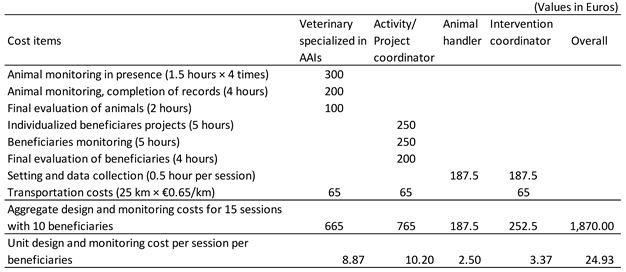
In the case of AAT activities, the hourly cost of a session is obtained by adding the hourly cost of an AAE session (€131.81) to the cost of monitoring and final evaluation of individual beneficiaries and animals, estimated at €24.93 (Table 7). All these costs refer to specialized staff. The table presents the breakdown of monitoring and evaluation costs for a cycle of 15 AAT sessions with 10 users. On the animal side, costs include in-presence monitoring, record-keeping, and a final evaluation of the cattle. On the user side, costs cover individualized project planning, user monitoring, and final evaluation. Additional components include setting and data collection, transportation costs, and the professional time of the veterinarian, project coordinator, animal handler, and intervention coordinator.
The largest shares are attributable to the project coordinator (€765) and the veterinarian expert (€665), together accounting for more than 75% of the total. Lower but still significant contributions come from the intervention coordinator (€252.5) and the animal handler (€187.5). Transportation expenses are marginal, at about €65 per professional involved. The total cost of monitoring and evaluation amounts to €1,870 for 15 sessions with 10 users, corresponding to an average of €24.93 per user per session.
Therefore, based on the assumptions made, the overall cost for a single AAT session amounts to €156.74.
Overall, the monitoring revealed improvements across several psychological, emotional, and relational domains among participants, alongside stable and generally high indicators of animal welfare. The cost analysis further highlighted the relative affordability of cow-assisted activities compared to more structured educational and therapeutic models. These findings provide a solid basis for interpreting the effectiveness, feasibility, and sustainability of cow-assisted interventions, which will be further elaborated in the Discussion.
4. Discussion
4.1. Beneficiaries’ Reactions and Human–Animal Dynamics
Although cattle are considered “domestic animals,” having been domesticated for over 10,000 years [15,16], many participants reported never having approached or touched a cow. Even the project coordinator noted that she herself had never regarded cattle as “domestic” in the everyday sense of the term. Beneficiaries within each group showed diverse attitudes and responses toward the cows.
Some participants expressed fear or discomfort. For example, one adolescent and one adult woman appeared visibly tense in the presence of the animal. Other participants responded with immediate curiosity and engagement. Several took numerous photographs of the cows, often posing with them, suggesting enthusiasm and a positive attitude toward interaction.
Ambivalent reactions were also observed, particularly among participants with family backgrounds in livestock farming or butchery. For these individuals, cattle appeared to carry complex and emotionally charged associations, resulting in mixed feelings.
Participants’ emotional states directly influenced the animal’s behavior. In one case, a visibly frightened participant entered the stall for a grooming activity. Their tension was evident, with abrupt reactions to minor animal movements, and the cow correspondingly displayed alert and restrained behavior. Immediately afterwards, another participant entered with a calm and confident approach. During grooming, the cow showed clear signs of relaxation—lowering its head, half-closing its eyes, and loosening its muscles.
This contrast highlighted the significant role of nonverbal communication and emotional state in shaping animal behavior during human-animal interactions.
Our results indicate that participants’ emotional states directly influenced the cattle’s behavior, confirming that animals are able to perceive and respond to human emotions [32]. This finding aligns with previous studies highlighting the central role of the human–animal bond in AAIs [33] and the importance of the relational and welfare context for effective interventions [34]. Such reciprocal effects may also be explained by neurophysiological mechanisms, such as oxytocin release, which fosters calmness, trust, and social bonding during human–animal interactions [35].
Approaching, touching, and even leading a cow—with its imposing size and strength—is far from self-evident, particularly for individuals experiencing significant levels of insecurity or fear. Yet, over the course of the intervention, surprising transformations were observed. One particularly significant case involved a boy who, at the beginning of the project, openly declared his fear of dogs and animals in general. Despite this, he consistently engaged in all proposed activities and ultimately completed the program by confidently leading the cow with a rope, without hesitation. Similarly, a girl who was initially reluctant to make physical contact with the cows gradually found her own respectful way of interacting and eventually was also able to guide the cow calmly.
The scientific literature supports the idea that working with large animals can positively affect self-esteem [24,36]. Taking a small dog by the leash is one thing, but leading a cow, with its weight and presence, is an entirely different experience—more demanding, yet profoundly rewarding.
Overall, the data suggest a positive evolution in the emotional and relational dimensions of the adolescents, with a general reduction in problematic aspects. Interaction with the cow emerged as a central catalyst of the observed changes, consistent with evidence in the literature on the beneficial effects of AAIs in educational and rehabilitative contexts.
The project appears effective in promoting emotional well-being, strengthening self-esteem, and fostering social and affective interaction for adults with mental health issues. The cow once again emerges as a central catalyst of positive change and inclusion. The longer duration of the intervention for the family-home group may have contributed positively to some outcomes, suggesting a potential relationship between session intensity and effectiveness.
Moreover, the data confirm the effectiveness of the cow-assisted therapy program in the field of eating disorders, not only in emotional and relational dimensions, but also in relation to specific nutritional and behavioral objectives. The synergy between animal-assisted activity and clinical observation appears particularly promising in this context.
Overall, the findings confirm that animal welfare was safeguarded and continuously monitored, with generally high values and no evidence of deterioration.
The integration of a systematic assessment of animal welfare within an AAI project represents a fundamental quality element, both ethically and operationally, and strengthens the sustainability of the intervention. In particular, attention to interspecific relationships and tolerance to handling provides a guarantee of safety for both operators and beneficiaries, as well as serving as a key indicator of the quality of the human–animal relationship established.
Our findings are consistent with previous evidence on the beneficial effects of AAIs in educational and rehabilitative contexts. Improvements observed in adolescents in terms of emotional and relational dimensions, along with a reduction in problematic aspects, mirror results from meta-analyses and experimental studies demonstrating that AAIs foster self-esteem, social skills, and emotional well-being in young people [37,38]. Similarly, the positive changes and enhanced inclusion observed among young adults with mental health problems align with systematic reviews highlighting the potential of AAIs to promote psychosocial functioning in clinical populations [39]. The effectiveness of the cow-assisted program for individuals with eating disorders is also consistent with prior work suggesting that AAIs can support motivational, relational, and even nutritional goals in psychiatric contexts [40]. Importantly, our data also confirmed that animal welfare was safeguarded throughout the intervention, reinforcing literature that identifies continuous monitoring of therapy animals’ well-being as an ethical and operational cornerstone of sustainable AAI practice [34,41].
Our findings highlight that the safety and effectiveness of cow-assisted activities largely depended on the quality of the relationship between the cows and their handlers. The animals consistently turned to the handler for reassurance in situations of uncertainty, underscoring the central role of trust in the human–animal dyad. Similar observations have been reported in other AAIs, where the handler is recognized as a key mediator of safety and animal welfare. In particular, studies on dog- and horse-assisted interventions emphasize that the handler not only prevents accidents but also provides emotional stability to both the animal and the participants [34,41,42,43]. These parallels suggest that, regardless of species, the handler’s expertise and bond with the animal represent a critical factor for minimizing risks and ensuring a positive therapeutic environment.
4.2. Economic Sustainability of AAIs Conducted with Cows
The cost analysis highlights that the largest share of costs does not derive from animal care (approximately €7.50/session, including feeding, training, and healthcare), but rather from professional and human resources (veterinary expert, coordinator, handler, and staff). At the same time, the relatively low direct costs for the animal confirm the centrality of human-animal interaction as a professionalized and structured activity, rather than a simple extension of animal husbandry.
A cross-model comparison of the three animal-assisted intervention formats—AAA, AAE, and AAT—highlights substantial differences in cost structures, largely reflecting the varying degrees of professional involvement, personalization, and therapeutic intensity.
The comparative analysis demonstrates that while AAA can be implemented at relatively lower cost (this reflects the lighter structure of AAA, which emphasizes recreational and relational benefits rather than formal therapeutic goals), AAE represents a more resource-intensive model. This is justified by its stronger educational focus, the need for structured pedagogical planning, and the involvement of a larger multidisciplinary team.
Monitoring and evaluation represent a substantial share of the total costs of AAT, mainly due to the involvement of highly specialized professionals. This highlights the importance of professional expertise in ensuring the quality and safety of the interventions, but also raises the issue of economic sustainability if the service is to be replicated or scaled up. Overall, the analysis confirms that the financial sustainability of AAT is strongly dependent on qualified professional involvement, while direct animal-related expenses remain modest. The structure demonstrates how AAT programs prioritize safety, personalization, and ethical standards, justifying the relatively higher costs compared to other forms of animal-assisted interventions. The therapeutic model represents the most resource-intensive approach. The higher costs are driven by individualized project planning, continuous user monitoring, and systematic animal welfare assessments. Professional expertise accounts for the majority of expenditures, particularly the project manager and veterinary expert, reflecting the clinical rigor and ethical standards required for TAA. Animal-related expenses remain secondary but are nonetheless explicitly integrated, underscoring the dual attention to user outcomes and animal well-being.
While AAA is the most cost-efficient due to its lighter structure, AAE introduces educational complexity and logistical costs, and AAT is the most professionally demanding, requiring intensive monitoring and individualized care. The comparative analysis demonstrates a clear trade-off: as the intervention shifts from recreational (AAA) to educational (AAE) and finally to therapeutic (AAT), the financial investment increases in parallel with the level of professionalization, personalization, and expected clinical outcomes.
In all three models, animal-related costs remained modest, confirming that the financial sustainability of cow-assisted interventions is primarily determined by human resources and professional expertise rather than direct animal upkeep.
Once the costs of the individual AAI activities were identified, the economic sustainability for the cooperative was defined by the willingness to pay, either by private individuals or by public health services, a price covering the costs of the activity plus a 10% margin to account for business risk. This would imply that a user should be willing to pay €74.51 for one hour of AAA, €144.99 for one hour of AAE, and €172.41 for one hour of AAT. These prices refer to activities conducted with a single user, although such interventions are often carried out with groups.
Based on its resources and acquired expertise, the cooperative is capable of offering cow-assisted activities across all three types of AAIs. Assuming the availability of four cattle providing one session per day for 150 days per year, the annual supply amounts to 600 hours. If these hours are evenly distributed across the three types of activities, total revenues would reach €78,384 against costs of €71,258. These flows would generate an operating profit of around €7,000, in addition to the profit from the cooperative’s other activities.
When assessing the sustainability of the €150,000 investment made under project 16.9 solely in terms of the economic flows achievable by the cooperative over the next five years, the results indicate unsustainability. Indeed, the estimated Net Present Value (NPV), calculated over a 7-year horizon (with the first two years devoted to the investment) and assuming a 2% cost of capital, yields a negative result of approximately –€115,000. The investment would have been sustainable for the cooperative only with a contribution of €26,000, equal to 18% of the total investment.
It is therefore relevant to assess the sustainability of the investment from the perspective of the Umbria Region, which funded the project. Assuming that the experimentation and results attract the attention of national authorities in charge of drafting and revising AAI guidelines, the investment becomes fully sustainable if, in addition to the cooperative, at least four other farms could adopt the results and implement the activities in the same way. Under this scenario, the NPV would reach about €16,000, and the Internal Rate of Return (IRR) would be 11%. Hence, the results of the project—and in particular the cow-assisted intervention model developed—if made replicable through regulation, would allow the public expenditure on this project to be considered both effective and efficient.
Our findings indicate that the largest share of costs in cow-assisted interventions is linked to professional and human resources rather than to the direct expenses of animal care. This pattern is consistent with the wider literature on AAIs, which repeatedly highlights that the financial sustainability of such programs is primarily determined by the level of professional involvement, clinical supervision, and systematic monitoring, while direct animal-related costs remain modest [44,45]. A cross-model comparison also supports previous evidence: AAA is generally more cost-efficient due to its lighter structure and recreational focus, whereas AAE requires greater pedagogical planning and resources, and AAT represents the most resource-intensive model, demanding continuous monitoring, individualized planning, and specialized staff [39,46]. These differences in cost structure mirror the increasing degree of professionalization, personalization, and therapeutic rigor, which justify the higher costs of AAT compared to AAA and AAE [47]. Overall, the results of our cost analysis align with the literature in showing that while animal welfare and direct animal management are important and integrated into all activities, it is the human component—expertise, supervision, and professional care—that drives both quality and economic sustainability in AAIs.
Our findings are consistent with previous studies that highlight the benefits of animal-assisted interventions in promoting emotional well-being, self-esteem, and social functioning [39,44,45,46,47]. However, the present study represents an innovative contribution by focusing on cow-assisted interventions, a scarcely explored field within the AAI literature, and by systematically integrating both human and animal welfare assessments as key indicators of intervention quality and sustainability. Furthermore, this is the first time that the economic sustainability of cow-assisted AAIs has been addressed.
5. Conclusions
Introducing a “new” species into Animal-Assisted Interventions (AAIs) was not straightforward, as it meant taking a path that was both unknown and difficult to validate. Yet the results were significant. In light of the outcomes obtained through cow-assisted activities, the expert team proposes repeating the experience in the form of cow-assisted therapies, subject to approval by the Ministry of Health. To achieve this goal, three steps will be required: i) submission to the Ministry of Health, by the veterinary AAI expert, of a report documenting the results in terms of safety and absence of incidents; ii) development of a project involving the same animals, already proven to be reliable and docile; iii) approval of the project by the regional ethics committee and the regional service responsible for public hygiene and safety. It will also be beneficial to invite public decision-makers to visit the cooperative and to participate, together with beneficiaries, in cow-assisted activities, thus experiencing first-hand the type of human–animal relationship that these animals are able to foster.
Beyond the clinical and relational aspects, the long-term success of cow-assisted interventions requires effective governance. Social farming, which integrates agricultural activities with social, educational, or healthcare interventions, depends on coordinated action among public institutions, the third sector, farms, and beneficiaries. Governance can be structured locally to create networks, foster participation, and ensure sustainability.
For cow-assisted interventions, governance operates on three levels. At the project level, it relies on shared processes and practices among partners. At the institutional level, it requires recognition by Local Health Authorities and the inclusion of AAIs within the range of services offered, ideally as part of the Individualized Assistance Plan. Municipalities could also play a crucial role by supporting and financing AAI initiatives in collaboration with local farms. At the regulatory level, however, a major obstacle remains: Italy is currently the only country that restricts the species of animals permitted in AAIs. The promising results of cow-assisted interventions should therefore be taken into account in future revisions of the national guidelines.
Finally, further research is needed to confirm these preliminary findings, to explore the long-term effects of cow-assisted therapies in different target groups, and to deepen the analysis of their economic sustainability. By combining scientific validation, ethical attention to animal welfare, and institutional support, cow-assisted interventions could become a replicable and sustainable model within the broader framework of Animal-Assisted Interventions.
Abbreviation
The following abbreviations are used in this manuscript:
| AAIs | Animal-Assisted Interventions |
| AAA | Animal-Assisted Activity |
| AAE | Animal-Assisted Education |
| AAT | Animal-Assisted Therapy |
| UN | United Nations |
| EU | European Union |
| IAHAIO | International Association of Human-Animal Interaction Organizations |
| NPV | Net Present Value |
| ED | Eating Disorder |
| BCS | Body Condition Score |
| PCR | Polymerase Chain Reaction |
| IRR | Internal Rate on Return |
Author Contributions
For research articles with several authors, a short paragraph specifying their individual contributions must be provided. The following statements should be used “Conceptualization, B.T. and S.D.; methodology, B.T. and S.D.; software, B.T. and G.A.; validation, B.T., S.D. and G.A.; formal analysis, B.T.; investigation, G.A.; resources, B.T.; data curation, G.A. and B.T.; writing—original draft preparation, B.T. and G.A.; writing—review and editing, B.T.; visualization, B.T.; supervision, B.T. and S.D.; project administration, B.T.; funding acquisition, B.T.. All authors have read and agreed to the published version of the manuscript.”
Funding
This research was funded by Rural Development Programme for Umbria 2014–2022 (RDP Umbria 2014–2022), grant number 240066958.
Institutional Review Board Statement
Ethical approval for this study was obtained from the Ethics Committee of the University of Perugia (Approval Number: 41/2024). The study was approved on September 13, 2024.
Informed Consent Statement
Informed consent was obtained from all subjects involved in the study.
Data Availability Statement
The dataset generated during the current study will be made available from the corresponding author on reasonable request.
Acknowledgments
The authors wish to thank the team of experts whose contribution made this pilot study possible: Damiano Stufara, Lorella Panarese, Stefano Crocelli, Laura Boggiani, Michela Placidi, and Carla Giovenali. The authors acknowledge the use of ChatGPT 4, which is a generative AI tool, for preparing this manuscript. ChatGPT was used to assist with language translation and grammar corrections. All content generated by ChatGPT was reviewed and edited by the authors to ensure accuracy and coherence with the overall research objectives. The authors have reviewed and edited the output and take full responsibility for the content of this publication.
Conflicts of Interest
The authors declare no conflicts of interest
References
- Di Iacovo, F.; Moruzzo, R.; Rossignoli, C.; Scarpellini, P. Transition management and social innovation in rural areas: Lessons from social farming. J. Agric. Educ. Ext. 2014, 20, 327–347. [Google Scholar] [CrossRef]
- Nowack, W.; Schmid, J. C.; Grethe, H. Social dimensions of multifunctional agriculture in Europe-towards an interdisciplinary framework. Int. J. Agric. Sustain. 2021, 20, 758–773. [Google Scholar] [CrossRef]
- Torquati, B.; Stefani, G.; Massini, G.; Cecchini, L.; Chiorri, M.; Paffarini, C. Social farming and work inclusion initiatives for adults with autism spectrum disorders: A pilot study. NJAS Wageningen J. Life Sci. 2019, 88, 10–20. [Google Scholar] [CrossRef]
- Moruzzo, R.; Granai, G.; De Benedictis, C.; Galardi, M.; Colosimo, V.; Sforzi, J.; Di Iacovo, F. The Development of Sustainable Social Farming in Italy: A Case Studies Analysis. Sustainability 2022, 14, 14878. [Google Scholar] [CrossRef]
- Nicolosi, A.; Laganà, V. R.; Di Gregorio, D.; Privitera, D. Social farming in the virtuous system of the circular economy. An exploratory research. Sustainability 2021, 13, 989. [Google Scholar] [CrossRef]
- Hassink, J.; Hulsink, W.; Grin, J. Care Farms in the Netherlands: An Underexplored Example of Multifunctional Agriculture-Toward an Empirically Grounded, Organization-Theory-Based Typology. ” Rural Sociol. 2012, 77, 569–600. [Google Scholar] [CrossRef]
- Fine, A. H.; Tedeschi, P.; Elvove, E. Forward thinking: The evolving field of human–animal interactions. Handbook on animal-assisted therapy, 2015: 21-35. Academic Press. [CrossRef]
- IAHAIO. White Paper on Animal Assisted Interventions. 2018. Available online: https://iahaio.org/best-practice/white-paper-on-animal-assisted-interventions/ (accessed on 13 November 2024).
- Sempik, J. Green care: A natural resource for therapeutic communities? Ther. Communities 2008, 29, 221–7. [Google Scholar]
- Hine R, Peacock J, Pretty J. Care farming in the UK: contexts, benefits and links with therapeutic communities. Ther. Communities. 2008, 29, 245–260.
- Haubenhofer, D.K.; Elings, M.; Hassink, J.; Hine, R.E. The Development of Green Care in Western European Countries. Explore 2010, 6, 106–111. [Google Scholar] [CrossRef]
- Compitus, K.; Bierbower, S. M. Cow cuddling: Cognitive considerations in bovine-assisted therapy. Hum. Anim. Interact. 2024, 12, 1. [Google Scholar] [CrossRef]
- McGiffin, E. The Laudable Cow: Poetics of Human/Cattle Relationships. In: I. Bencke, J. Bruhn (eds.). Multispecies Storytelling in Intermedial Practices. 2022. Goleta: Punctum Books, pp. 77-95.
- Sharma, S. Cow cuddling: psychotherapy to reduce stress and anxiety. Int. J. Indian Psychol. 2021, 9, 1. [Google Scholar] [CrossRef]
- Hackmann, T. J.; Spain, J. N. Invited review: Ruminant ecology and evolution: perspectives useful to ruminant livestock research and production. J. Dairy Sci. 2010, 93, 1320–1334. [Google Scholar] [CrossRef]
- Bollongino, R.; Burger, J.; Powell, A.; Mashkour, M.; Vigne, J.D.; Thomas, M.G. Modern taurine cattle descended from a small number of Near-Eastern founders. Mol. Biol. Evol. 2012, 29, 2101–2104. [Google Scholar] [CrossRef] [PubMed]
- Harper, D. Cattle. In: Online Etymological Dictionary. Oxford University Press, Oxford, UK. 2001.
- Herzog, H.; Foster, M. Some we love, some we hate, some we eat. Tantor Audio. 2010.
- Joy, M. Why we love dogs, eat pigs and wear cows: An introduction to carnism, the belief system that enables us to eat some animals and not others. San Francisco: Conari Press, an imprint of Red Wheel/Weiser, LLC. 2010.
- de la Torre, M.P.; Mcelligott, A.G. Vocal communication and the importance of mother-offspring relations in cattle: commentary on Marino and Allen (2017). The psychology of cows. Anim. Behav. Cogn. 2017, 4, 522–525. [Google Scholar] [CrossRef]
- Marino, L.; Allen, K. The psychology of cows. Anim. Behav. Cogn. 2017, 4, 474–498. [Google Scholar] [CrossRef]
- Bokkers, E. A. M. Effects of interactions between humans and domesticated animals. In Farming for Health. Green-Care Farming Across Europe and the United States of America, 2006. 31–41, ed. J. Hassink and M. v. Dijk. Dordrecht: Wageningen UR Frontis Series.
- Galardi, M.; De Santis, M.; Moruzzo, R.; Mutinelli, F.; Contalbrigo, L. Animal Assisted Interventions in the Green Care Framework: A Literature Review. Int. J. Environ. Res. Public Health 2021, 18, 9431. [Google Scholar] [CrossRef]
- Hassink, J.; De Bruin, S.R.; Berget, B.; Elings, M. Exploring the Role of Farm Animals in Providing Care at Care Farms. Animals 2017, 7, 45. [Google Scholar] [CrossRef]
- Vatn, A. Transaction costs and multifunctionality. In OECD Workshop on Multifunctionality. 2001.Paris, Vol. 2, N. 3.7.
- Szczucka, E. Providing cow-assisted therapy in the context of Polish realities. Turystyka i Rozwój Regionalny. 2024, (21), 115-126. https://orcid. 0000. [Google Scholar]
- Berget, B.; Vas, J.; Pedersen, G.; Uvnäs-Moberg, K.; Newberry, R.C. Oxytocin levels and self-reported anxiety during interactions between humans and cows. Front. Psychol. 2023, 14, 1252463. [Google Scholar] [CrossRef]
- Hassink, J. Combining agricultural production and care for persons with disabilities: a new role of agriculture and farm animals. In Farming and rural systems research and extension. Local identities and globalisation. Florence: Wageningen University/Fifth IFSA European Symposium. 2003, 332-341.
- Schuurmans, L.; Enders-Slegers, M.J.; Verheggen, T.; Schols, J. Animal-Assisted Interventions in Dutch Nursing Homes: A Survey. J. Am. Med. Dir. Assoc. 2016, 17, 647–653. [Google Scholar] [CrossRef]
- Spattini, L.; Mattei, G.; Raisi, F.; Ferrari, S.; Pingani, L.; Galeazzi, G.M. Efficacy of animal-assisted therapy on people with mental disorders: an update on the evidence. Minerva Psichiatr. 2018, 59, 54–66. [Google Scholar] [CrossRef]
- Sargsyan, A.; Beebe, L.H. Animal-assisted green care farming for patients with mental and physical disorders: A narrative review. Creative Nursing. 2023, 29, 192–196. [Google Scholar] [CrossRef]
- Albuquerque, N.; Guo, K.; Wilkinson, A.; Savalli, C.; Otta, E.; Mills, D. Dogs recognize dog and human emotions. Biology Letters. 2016, 12, 20150883. [Google Scholar] [CrossRef]
- Oosthuizen, K.; Haase, B.; Ravulo, J.; Lomax, S.; Ma, G. The role of human-animal bonds for people experiencing crisis situations. Animals 2023, 13, 941. [Google Scholar] [CrossRef]
- Glenk, L. M. Current perspectives on therapy dog welfare in animal-assisted interventions. Animals. 2017, 7, 7. [Google Scholar] [CrossRef] [PubMed]
- Beetz, A.; Uvnäs-Moberg, K.; Julius, H.; Kotrschal, K. Psychosocial and psychophysiological effects of human–animal interactions: The possible role of oxytocin. Front. in Psychol. 2012, 3, 234. [Google Scholar] [CrossRef] [PubMed]
- Kaley, A. Green care in agriculture (Interim Report). Lancaster University. PhD Thesis, 2015.
- Nimer, J.; Lundahl, B. Animal-assisted therapy: A meta-analysis. Anthrozoös. 2007, 20, 225–238. [Google Scholar] [CrossRef]
- Pendry, P.; Vandagriff, J. L. Animal visitation program (AVP) reduces cortisol levels of university students: A randomized controlled trial. AERA Open. 2019, 5. [Google Scholar] [CrossRef]
- Hoagwood, K. E.; Acri, M.; Morrissey, M.; Peth-Pierce, R. Animal-assisted therapies for youth with or at risk for mental health problems: A systematic review. Appl. Dev. Sci. 2017, 21, 1–13. [Google Scholar] [CrossRef]
- Dimitrijević, I. Animal-assisted therapy – a new trend in the treatment of children and adults. Psychiatr Danub. 2009, 21, 236–241. [Google Scholar] [PubMed]
- Ng, Z.; Albright, J.; Fine, A. H.; Peralta, J. Our ethical and moral responsibility: Ensuring the welfare of therapy animals. In A. H. Fine (Ed.), Handbook on animal-assisted therapy: Foundations and guidelines for animal-assisted interventions. 2015, 4th ed., 357–376. Academic Press. [CrossRef]
- Pandey, R.P.; Mukherjee, R.; Chang, C.M. The role of animal-assisted therapy in enhancing patients’ well-being: Systematic study of the qualitative and quantitative evidence. Jmirx med. 2024, 5, e51787. [Google Scholar] [CrossRef] [PubMed]
- Dell, C.A.; Chalmers, D.; Dell, D.; Sauve, E.; MacKinnon, T. Horse as healer: an examination of equine-assisted learning in the healing of First Nations youth from solvent abuse. Pimatisiwin. 2008, 6. [Google Scholar]
- Berget, B. , Ekeberg, Ø. , & Braastad, B.O. Animal-assisted therapy with farm animals for persons with psychiatric disorders: Effects on self-efficacy, coping ability and quality of life. Clin. Pract. Epidemiol. Ment. Health. 2008, 4, 1–7. [Google Scholar] [CrossRef]
- Borgi, M.; Cirulli, F. Pet face: Mechanisms underlying human–animal relationships. Front. Psychol. 2016, 7, 298. [Google Scholar] [CrossRef]
- Muñoz Lasa, S.; Ferriero, G.; Brigatti, E.; Valero, R.; Franchignoni, F. Animal-assisted interventions in internal and rehabilitation medicine: A review of the recent literature. Panminerva Med. 2011, 53, 129–136. [Google Scholar] [PubMed]
- Kamioka, H.; Okada, S.; Tsutani, K.; Park, H.; Okuizumi, H.; Handa, S. ; .. & Mutoh, Y. Effectiveness of animal-assisted therapy: A systematic review of randomized controlled trials. Complement. Ther. Med. 2014, 22, 371–390. [Google Scholar] [CrossRef]

Table 1.
Structure of the experimental cow therapy protocol.
| Session | Content and Activities |
|---|---|
| 1. Introduction to the project and the human–animal bond | Presentation of the project, objectives, and activities; exploration of the human–animal relationship with focus on mutual care; sharing stories and experiences to establish an emotional connection. |
| 2. Getting to know cattle and their behavior | Introduction to cattle ethology (herd dynamics, human interactions); guided observation of cows in their environment; first direct but protected contact. |
| 3. Personal experiences and first close contact | Participants shared past experiences with animals; initial gestures of care through the fence to strengthen trust and confidence. |
| 4. Cattle in art, history, and creativity | Exploration of cultural and symbolic representations of cattle; creation of artworks using natural farm materials; further care and interaction through the fence. |
| 5. Continuous care and strengthening the bond | Practical interaction focused on feeding and grooming through the fence, reinforcing the relationship. |
| 6. Milk and its products | Learning about nutritional properties of milk; observation and participation in cheesemaking, highlighting its role in rural tradition. |
| 7. Feeding and observing | Preparation of vegetables and hay for the cows; observation of animal behavior, preferences, and reactions to foster empathy and mindful observation. |
| 8. Sound experiences and music therapy | Entry into paddock with live music; observation of cattle responses; animal care activities with music to create a calming atmosphere. |
| 9. Animal welfare and collaboration | Reflection on physical, mental, and relational aspects of animal welfare; problem-solving activity with cattle to encourage respectful collaboration. |
| 10. Leading the cow | With handler support, participants guided a cow with a halter along a short path, practicing trust, respect, and cooperation. |
| 11. Milking | Introduction to the milking process; observation of mechanical milking and possible practice of manual milking; symbolic conclusion of the cycle through ancestral milk collection. |
Table 2.
Monitoring tools used in the study.
| Instrument | Objective | Target |
|---|---|---|
| Individual session monitoring form | Record the progress of each session and participant-specific observations | All beneficiaries |
| Emotional expression and social interaction form | Assess ability to recognize, express, and share emotions; evaluate quality of social interactions | All beneficiaries |
| Animal interaction form | Document quality, frequency, and modalities of contact and engagement with the cow | All beneficiaries |
| Psychological symptoms and self-esteem form | Evaluate changes in psychological symptoms and self-confidence | All beneficiaries |
| Nutritional form | Monitor attitudes toward milk and dairy products, reduction of anxieties/resistances, and inclusion of new foods | Specifically designed for participants with eating disorders (EDs) |
| Animal welfare assessment form | Ensure continuous monitoring of the cow’s health and comfort | Cow involved in the intervention |
Table 3.
Cost components of AAIs (15-session cycle, 45–60 min each).
| Cost item | Description |
|---|---|
| Program design and planning | Involves the veterinary AAI expert and the project coordinator for designing the 15-session cycle |
| Operational staff | Cost of the animal handler |
| Beneficiary support staff | Cost of the operator accompanying the beneficiary (if required) |
| Animal-related costs | Daily maintenance, training, and additional veterinary care to ensure animal welfare |
| General overheads | Administrative expenses, utilities, and insurance |
| Beneficiary transportation | Costs for transferring beneficiaries to and from the facility |
Table 4.
Outcomes for adolescents removed from families, young adults with mental health problems, and individuals with eating disorders.
Table 4.
Outcomes for adolescents removed from families, young adults with mental health problems, and individuals with eating disorders.
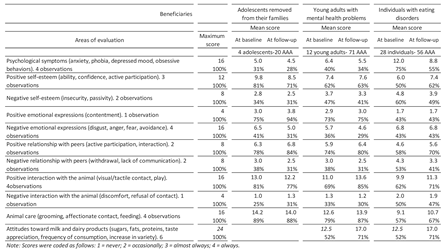 |
Table 5.
Outcomes of monitoring on Animal welfare.
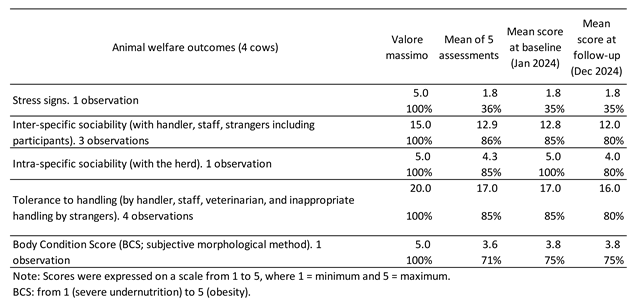 |
Table 6.
Cost analysis of Animal-Assisted Activities (AAA) and Animal-Assisted Education (AAE) conducted with cows.
Table 6.
Cost analysis of Animal-Assisted Activities (AAA) and Animal-Assisted Education (AAE) conducted with cows.
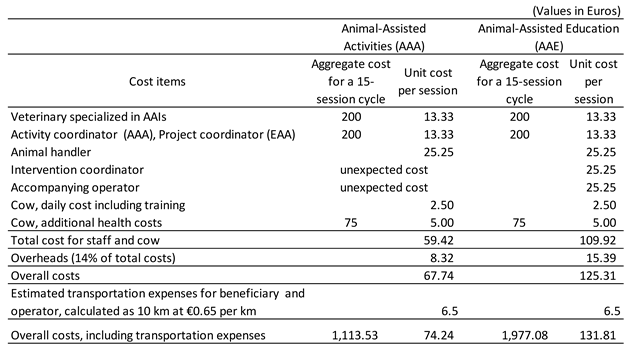 |
Table 7.
Cost breakdown for monitoring and evaluation in Animal-Assisted Therapy (AAT).
 |
Disclaimer/Publisher’s Note: The statements, opinions and data contained in all publications are solely those of the individual author(s) and contributor(s) and not of MDPI and/or the editor(s). MDPI and/or the editor(s) disclaim responsibility for any injury to people or property resulting from any ideas, methods, instructions or products referred to in the content. |
© 2025 by the authors. Licensee MDPI, Basel, Switzerland. This article is an open access article distributed under the terms and conditions of the Creative Commons Attribution (CC BY) license (http://creativecommons.org/licenses/by/4.0/).
Copyright: This open access article is published under a Creative Commons CC BY 4.0 license, which permit the free download, distribution, and reuse, provided that the author and preprint are cited in any reuse.


